EP4574798A1 - Composition d'accélération pour accélérer le durcissement de ciments d'aluminate de calcium - Google Patents
Composition d'accélération pour accélérer le durcissement de ciments d'aluminate de calcium Download PDFInfo
- Publication number
- EP4574798A1 EP4574798A1 EP23217702.2A EP23217702A EP4574798A1 EP 4574798 A1 EP4574798 A1 EP 4574798A1 EP 23217702 A EP23217702 A EP 23217702A EP 4574798 A1 EP4574798 A1 EP 4574798A1
- Authority
- EP
- European Patent Office
- Prior art keywords
- component
- expediting
- denotes
- group
- present
- Prior art date
- Legal status (The legal status is an assumption and is not a legal conclusion. Google has not performed a legal analysis and makes no representation as to the accuracy of the status listed.)
- Pending
Links
Images





Classifications
-
- C—CHEMISTRY; METALLURGY
- C04—CEMENTS; CONCRETE; ARTIFICIAL STONE; CERAMICS; REFRACTORIES
- C04B—LIME, MAGNESIA; SLAG; CEMENTS; COMPOSITIONS THEREOF, e.g. MORTARS, CONCRETE OR LIKE BUILDING MATERIALS; ARTIFICIAL STONE; CERAMICS; REFRACTORIES; TREATMENT OF NATURAL STONE
- C04B28/00—Compositions of mortars, concrete or artificial stone, containing inorganic binders or the reaction product of an inorganic and an organic binder, e.g. polycarboxylate cements
- C04B28/02—Compositions of mortars, concrete or artificial stone, containing inorganic binders or the reaction product of an inorganic and an organic binder, e.g. polycarboxylate cements containing hydraulic cements other than calcium sulfates
- C04B28/06—Aluminous cements
-
- C—CHEMISTRY; METALLURGY
- C04—CEMENTS; CONCRETE; ARTIFICIAL STONE; CERAMICS; REFRACTORIES
- C04B—LIME, MAGNESIA; SLAG; CEMENTS; COMPOSITIONS THEREOF, e.g. MORTARS, CONCRETE OR LIKE BUILDING MATERIALS; ARTIFICIAL STONE; CERAMICS; REFRACTORIES; TREATMENT OF NATURAL STONE
- C04B40/00—Processes, in general, for influencing or modifying the properties of mortars, concrete or artificial stone compositions, e.g. their setting or hardening ability
- C04B40/0028—Aspects relating to the mixing step of the mortar preparation
- C04B40/0039—Premixtures of ingredients
-
- C—CHEMISTRY; METALLURGY
- C04—CEMENTS; CONCRETE; ARTIFICIAL STONE; CERAMICS; REFRACTORIES
- C04B—LIME, MAGNESIA; SLAG; CEMENTS; COMPOSITIONS THEREOF, e.g. MORTARS, CONCRETE OR LIKE BUILDING MATERIALS; ARTIFICIAL STONE; CERAMICS; REFRACTORIES; TREATMENT OF NATURAL STONE
- C04B2111/00—Mortars, concrete or artificial stone or mixtures to prepare them, characterised by specific function, property or use
- C04B2111/00474—Uses not provided for elsewhere in C04B2111/00
- C04B2111/00715—Uses not provided for elsewhere in C04B2111/00 for fixing bolts or the like
Definitions
- the present invention relates to the field of expediting compositions for calcium aluminate cements, the use thereof for accelerating the hardening of calcium aluminate cements, mortars comprising said expediting compositions, and the use of such expediting compositions in said mortars.
- CACs Calcium aluminate cements
- OPC ordinary Portland cement
- CACs are hydraulic binders with higher temperature resistance, a higher resilience to sulfate attack and a faster strength development (cf. Scrivener et al., Capmas in Lea's Chemistry of Cement and Concrete, 1998, p. 713-782 ). Due to mentioned properties the calcium aluminate cements can be used as a dental material, repair mortar, and as a type of geothermal well cement for production of refractory fast setting, non-shrinking, acidproof concretes.
- CACs are typically used in fast curing/rapid hardening applications, such as floor levelling or repair (cf. Scrivener et al., Capmas in Lea's Chemistry of Cement and Concrete, 1998, p. 713-782 ). Nevertheless, it is always a general desire to further accelerate the curing/hardening process.
- CACs are enhanced by additives, which can accelerate the hardening reaction, thereby minimizing the time window for the hydraulic binder to harden.
- accelerator additives include a Lithium source (cf. WO 2017/067953 A1 , Scrivener et al., Capmas in Lea's Chemistry of Cement and Concrete, 1998, p. 713-782 and H. Pöllmann, Reviews in Mineralogy and Geochemistry, Vol. 74, 2012, p. 1-82 ).
- this approach has the disadvantage that Lithium as raw material is not readily available and faces a high demand from the growing battery industry. Hence, this material is expected to have decreasing availability and increasing prices in the future (cf.
- inorganic minerals with high specific surface area such as Al 2 O 3 , Al(OH) 3 , or CaCO 3
- inorganic minerals with high specific surface area such as Al 2 O 3 , Al(OH) 3 , or CaCO 3
- these additives have the drawback of less pronounced accelerating effects.
- An alternative inorganic material that accelerates the CAC hydration is mayenite (C 12 A 7 ) (cf. Koehler et al., Cement and Concrete Research, 2022, 162, p. 106972 , and Sawkow et al., Journal of Thermal Analysis and Calorimetry, 2003, 74, p. 451-458 ).
- the process for preparing mayenite includes high temperatures. Therefore, the desire for finding more energy and, thus, cost efficient processes for preparing materials for acceleration is still present.
- CAH 10 , C 2 AH 8 , AH 3 , and C 3 AH 6 The main hydrate phases occurring in CAC are CAH 10 , C 2 AH 8 , AH 3 , and C 3 AH 6 (katoite).
- CAH 10 and C 2 AH 8 are metastable and convert into the more stable hydrate phases AH 3 and C 3 AH 6 .
- Goergens et al. described the addition of prehydrated CAC, which comprises mainly C 2 AH x and AH 3 to CAC at 10 °C (cf. Goergens et al., Cement and Concrete Research, 2020, 136, p. 106160 ).
- the prehydrated CAC acts as a source of C 2 AH x , which alters the reaction by a "seeding" effect. Still, no accelerating effect has been observed.
- Baltakys et al. reported on the accelerating effect of substituting parts of the CAC with the stable calcium aluminate hydrate phase C 3 AH 6 . (cf. Baltakys et al., Ceramics International, 2019, 45, p. 2881-2886 ). Nevertheless, the preparation of katoite is also complex.
- suspensions as shown in these references have either a high viscosity or a low load of solid material, therefore being not feasible to be used in a fluid-fluid two-component system.
- compositions which have improved acceleration effect in view of hardening CAC and the use thereof in a two-component mortar system.
- an expediting composition suitable for accelerating the curation of a mortar comprising aluminous cement obtainable by a process, wherein the process comprises mixing the following components A) aluminous cement, B) at least one dispersant agent for dispersing inorganic particles in water, and C) water, wherein the weight ratio of component A) to component C) is in the range of from 1.5:1 to 1:70, and wherein the weight ratio of component A) to component B) is more than 20:1.
- composition according to the present invention for accelerating the curing of a mortar comprising aluminous cement, preferably a cement selected from a list consisting of a mixture of Al(OH) 3 with CaO and/or Ca(OH) 2 , calcium aluminate cement, or a mixture thereof.
- a two-component mortar system comprising a curable aqueous-phase aluminous cement component and an activator component in aqueous-phase suitable for initiating the curing process, wherein the activator component comprises, preferably consists of, the expediting composition according to the present invention.
- the particular advantage of the present invention lies in improved accelerating effect of the expediting composition of the hardening of CAC cement, even though a simplification for the preparation process for an expediting composition suitable for accelerating the curation of a mortar comprising aluminous cement, in particular a simplification up to a one-pot reaction, is used.
- dispersant denotes a substance, preferably a surfactant, that is suitable to improve the separation of particles in a suspension of solid or liquid particles in a liquid, such as a colloid or emulsion, and to prevent settling or clumping of the particles over the time.
- Dispersants are used as plasticizers or superplasticizers in concrete formulations to lower the use of water while retaining the needed slump (flow) property. A lower water content makes the concrete stronger and more impervious to water penetration.
- dispersants are used as plasticizers in gypsum slurry during wallboard manufacture, to reduce the amount of water used. The lower water usage allows lower energy use to dry the wallboard.
- mortar denotes a workable paste, which binds after a given time.
- mortars comprise cement and becomes hard when cured, resulting in a rigid aggregate structure.
- mortar comprises sand, a binder, such as cement, and water.
- the most common binder since the early 20th century is Portland cement.
- aluminous cement denotes a calcium aluminate cement that consists predominantly of hydraulic active calcium aluminates. Alternative names are “high-alumina cement” or “Ciment fondu” in French.
- the main active constituent of calcium aluminate cements is monocalcium aluminate (CaAl 2 O 4 , CaO ⁇ Al 2 O 3 , or CA in the cement chemist notation).
- shelf life denotes the time during which a component stays in the form of a more or less fluid aqueous suspension of solid products, capable of coming back to the aqueous suspension by mechanical means, without setting or losing its reactivity.
- initiator denotes a compound or composition that modifies the chemical environment to start a particular chemical reaction.
- the initiator modifies the pH-value of the mortar suspension thereby deblocking the hydraulic binder in the final mixture.
- retarder denotes a compound or composition that modifies the chemical environment to delay a particular chemical reaction.
- the retarder modifies the hydration ability of the calcium aluminate cement of the mortar suspension thereby delaying the hydraulic binder action in the final mixture.
- the present invention is concerned in a first aspect with an expediting composition obtainable by a process comprising the step of mixing the following components A) aluminous cement, B) at least one dispersant agent for dispersing inorganic particles in water, and C) water, wherein the weight ratio of component A) to component C) is in the range of from 1.5:1 to 1:70, and wherein the weight ratio of component A) to component B) is more than 20:1, in a second aspect with a use of the expediting composition according to the present invention to accelerate the hardening reaction of CAC, in a third aspect with a two-component mortar system comprising CAC and the expediting composition according to the present invention, and in a fourth aspect with a use of a two-component mortar system according to the invention for chemical fastening of anchoring means in mineral surfaces.
- the present invention is concerned with an expediting composition suitable for accelerating the curing of a mortar comprising aluminous cement obtainable by a process, wherein the process comprises mixing the following components:
- the aluminous cement according to the first aspect of the present invention comprises at least monocalcium aluminate and dicalciumaluminate, more preferably consists of monocalcium aluminate and dicalcium aluminate, even more preferably consists of monocalcium aluminate in an amount higher than 50 wt.-% with respect to the weight of the aluminous cement and dicalciumaluminate in an amount higher than 15 wt.-% with respect to the total weight of the aluminous cement, and most preferably of monocalcium aluminate in an amount in the range of from 55 wt.-% to 80 wt.-% with respect to the total weight of the aluminous cement and dicalcium aluminate in an amount in the range of from 20 wt.-% to 45 wt.-% with respect to the total amount of the aluminous cement.
- the aluminous cement in the process of the present invention leads to the formation of active species such as CAH 10 , C 2 AH 8 , AH 3 , and C 3 AH 6 (katoite), wherein CAH 10 and C 2 AH 8 are metastable and most likely convert into the more stable hydrate phases AH 3 and C 3 AH 6 , which are able to efficiently accelerate the hardening reaction of CAC.
- the calcium aluminate cement which can be used in the present invention is characterized by rapid set and rapid hardening, rapid drying, excellent resistance to corrosion and shrinkage.
- Such a calcium aluminate cement suitable to be used in the present invention is for example Ternal ® White (Kerneos, France).
- the process for obtaining the expediting composition according to the first aspect of the present invention uses at least on dispersant.
- the role of the dispersant is to help forming a fine suspension of CAC in water.
- a fine dispersion of the CAC in water helps to provide nano-sized particles of CAC and its hydrates having a high specific surface. It is further believed that the smaller the particles are and the higher the specific surface is, not only the hydration rate at the surface will be higher, but also the acceleration effect will be more significant.
- the at least one dispersant of the process for obtaining the expedition composition according to the first aspect of the present invention is a water-soluble polymer having polyether groups according to the structural unit (I), *-U-(C(O)) k -X-(AlkO) n -W (I) wherein
- the at least one dispersant of the process for obtaining the expediting composition according to the first aspect of the present invention comprises at least one functional group selected from the list consisting of carboxyester-, carboxy-, phosphono-, sulfino-, sulfo-, sulfamido-, sulfoxy-, sulfoalkyloxy-, sulfinoalkyloxy- and phosphonooxy group.
- the at least one dispersant comprises a polycondensation product comprising
- the polycondensation product according to the first aspect of the present invention preferably comprises a further structural unit (IV) represented by the following formula wherein
- R 5 and R 6 are preferably identical or different and represented by H, CH 3 , COOH, substituted or unsubstituted, aromatic or heteroaromatic compound having 5 to carbons.
- R 5 and R 6 here in structural unit (IV) are independently of one another preferably represented by H, COOH and/or methyl.
- R 5 and R 6 are represented by H.
- the molar ratio of the structural units (II), (III), and (IV) in the phosphated polycondensation product used in the of the process for obtaining the expediting composition according to the first aspect of the invention may be varied within wide ranges. It has proven useful for the molar ratio of the structural units [(II) + (III)]:(IV) to be 1:0.8 to 3, preferably 1:0.9 to 2, and more preferably 1:0.95 to 1.2.
- the molar ratio of the structural units (II): (III) is normally 1:10 to 10:1, preferably 1:7 to 5:1, and more preferably 1:5 to 3:1.
- the groups A and D in the structural units (II) and (III) in the polycondensation product are usually represented by phenyl, 2-hydroxyphenyl, 3-hydroxyphenyl, 4hydroxyphenyl, 2-methoxyphenyl, 3-methoxyphenyl, 4-methoxyphenyl, naphthyl, 2hydroxynaphthyl, 4-hydroxynaphthyl, 2-methoxynaphthyl, 4-methoxynaphthyl, preferably phenyl, and A and D may be selected independently of one another and may also each consist of a mixture of the stated compounds.
- the groups X and E are represented independently of one another preferably by 0.
- n in structural unit (I) is represented by an integer from 5 to 280, more particularly 10 to 160, and very preferably 12 to 120
- b in structural unit (III) is represented by an integer from 0 to 10, preferably 1 to 7, and more preferably 1 to 5.
- the representative radicals whose length is defined by n and b may consist here of uniform structural groups, though it may also be useful for them to comprise a mixture of different structural groups.
- the radicals of the structural units (II) and (III) may independently of one another each have the same chain length, with n and b in each case being represented by one number. In general, however, it will be useful for these each to be mixtures having different chain lengths, and so the radicals of the 5 structural units in the polycondensation product have different numerical values for n and, independently for b.
- the present invention further envisages a sodium, potassium, ammonium and/or calcium salt, and preferably a sodium and/or potassium salt, of the phosphated polycondensation product.
- the phosphated polycondensation product used in the process for obtaining the expediting composition according to of the invention frequently has a weight average molecular weight of 5000 g/mol to 150 000 g/mol, preferably 10 000 to 100 000 g/mol, and more preferably 20 000 to 75 000 g/mol.
- the dispersant comprises at least one copolymer which is obtainable by polymerization of a mixture of monomers comprising (V) at least one ethylenically unsaturated monomer which comprises at least one radical from the series of carboxylic acid, carboxylic salt, carboxylic ester, carboxylic amide, carboxylic anhydride, and carboxylic imide and (VI) at least one ethylenically unsaturated monomer comprising a polyether group, the polyether group being represented preferably by the structural unit (I).
- copolymers used in the process for obtaining the expediting composition according to the first aspect of present invention contain at least two monomer units. It may, however, also be advantageous to use copolymers having three or more monomer units.
- the at least one dispersant comprises at least one copolymer obtainable by polymerization of a mixture of monomers comprising
- the ethylenically unsaturated monomer (V) is represented by at least one of the following general formulae selected from the group consisting of (Va), (Vb) and (Vc) wherein
- the ethylenically unsaturated monomer (VI) is represented by the following general formulae (VIa) in which all the radicals having the definitions above.
- the ethylenically unsaturated monomer (VI) is represented by the following general formulae (Vlb) where
- the copolymer preferably has an average molecular weight (Mw) of 5000 g/mol, or more, more preferably 10,000 g/mol or more, and most preferably 15,000 g/mol or more.
- the copolymer preferably has an average molecular weight (Mw) of 150,000 g/mol or less, more preferably of 80,000 g/mol or less, and most preferably of 60,000 g/mol or less.
- a particularly preferred range of the average molecular weight (Mw) is between 5000 and 150,000 g/mol, more preferably 10,000 to 80,000 g/mol, and most preferably 15,000 to 60,000 g/mol.
- the average molecular weight (Mw) of the copolymer is determined by gel permeation chromatography.
- the weight ratio of component C) to component A) is 5:1 or more, more preferably 7:1 or more, and most preferably 9:1 or more. Moreover, preferably, the weight ratio of component C) to component A) is 15:1 or less, preferably 13:1 or less, and most preferably 11:1 or less. A particularly preferred range for the weight ratio of component C) to component A) is from 5:1 to 15:1, more preferably from 7:1 to 13:1, and most preferably from 9:1 to 11:1.
- the solids content of the expediting composition is in the range of from 4% to 45%, more preferably in the range of from 5% to 25%, even more preferably in the range of from 10% to 20%, and most preferably in the range of from 12% to 18%.
- the particle thickness of the nano-sized particles of the expediting composition according to the fifth aspect of the present invention is in the range of from 3 to 8 nm, preferably from 4 to 6 nm, and most preferably 5 nm, measured according to the method as set out under the section measurement methods herein.
- the particles of the expediting composition according to the fifth aspect of the present invention have a foil-like or a flake-like structure.
- the present invention is concerned with the use of an expediting composition according to the first aspect of the present invention for accelerating the curing of a mortar comprising aluminous cement.
- the aluminous cement is selected from the list consisting of a mixture of Al(OH) 3 with CaO and/or Ca(OH) 2 , calcium aluminate cement, and a mixture thereof.
- the mortar further comprises at least one component selected from the list consisting of Portland cement, calcium sulfate, slag, preferably granulated blast furnace slag, lime cement, limestone calcined clay cement, fly ash, silica flour, metakaolin, natural pozzolans, calcined oil shale.
- the present invention is concerned with a two-component mortar system comprising a curable aqueous-phase aluminous cement component X and an activator component Y in aqueous-phase suitable for initiating the curing process, wherein component Y comprises an expediting composition according to any of the embodiments of the first aspect of the present invention.
- the two-component mortar system according to the third aspect of the present invention is suitable for chemical fastening of anchoring means in mineral surfaces.
- component X further comprises at least one blocking agent, at least one plasticizer and water
- component Y further comprises an initiator, at least one retarder, at least one mineral filler and water.
- Component Y according to the third aspect of the present invention is based on an aqueous-phase aluminous cement.
- the aluminous cement according to the third aspect of the present invention comprises at least monocalcium aluminate and dicalciumaluminate, more preferably consists of monocalcium aluminate and dicalcium aluminate, even more preferably consists of monocalcium aluminate in an amount higher than 50 wt.-% with respect to the weight of the aluminous cement and dicalciumaluminate in an amount higher than 15 wt.-% with respect to the total weight of the aluminous cement, and most preferably of monocalcium aluminate in an amount in the range of from 55 wt.-% to 80 wt.-% with respect to the total weight of the aluminous cement and dicalcium aluminate in an amount in the range of from 20 wt.-% to 45 wt.-% with respect to the total amount of the aluminous cement.
- the calcium aluminate cement which can be used in the present invention is characterized by rapid set and rapid hardening, rapid drying, excellent resistance to corrosion and shrinkage.
- a calcium aluminate cement suitable to be used in the present invention is for example Ternal ® White (Kerneos, France).
- the two-component mortar system component X further comprises at least one blocking agent selected from the group consisting of phosphoric acid, metaphosphoric acid, phosphorous acid and phosphonic acids, preferably is phosphoric acid or metaphosphoric acid, most preferably is phosphoric acid, in particular an 85% aqueous solution of phosphoric acid.
- at least one blocking agent selected from the group consisting of phosphoric acid, metaphosphoric acid, phosphorous acid and phosphonic acids, preferably is phosphoric acid or metaphosphoric acid, most preferably is phosphoric acid, in particular an 85% aqueous solution of phosphoric acid.
- Component X comprises at least 0.1 wt.-%, preferably at least 0.3 wt.-%, more preferably at least 0.4 wt.-%, most preferably at least 0.5 wt.-%, from 0.1 wt.-% to 20 wt.-%, preferably from 0.1 wt.-% to 15 wt.-%, more preferably from 0.1 wt.-% to 10 wt.-%, most preferably from 0.3 wt.-% to 10 wt.-% of said blocking agent, based on the total weight of component X.
- component X comprises from 0.3 wt.-% to 10 wt.-% of 85% aqueous solution of phosphoric acid, based on the total weight of component X.
- the amounts of aluminous cement by weight relative to the hydraulic binder total weight are higher than any of the following values: 50%, 60%, 70%, 80%, 90%, 95%, 99% or are 100%.
- component Y further comprises a mineral filler, wherein the mineral filler is preferably selected from the group consisting of limestone fillers, sand, corundum, dolomite, baryt, alkaline-resistant glass, crushed stones, gravels, pebbles, and mixtures thereof.
- the mineral filler is preferably selected from the group consisting of limestone fillers, sand, corundum, dolomite, baryt, alkaline-resistant glass, crushed stones, gravels, pebbles, and mixtures thereof.
- Component X preferably comprises at least one filler, in particular an organic or mineral filler.
- the mineral filler is resistant to acidic pH.
- the filler is preferably selected from the list consisting of sand, corundum, baryt, alkaline-resistant glass, crushed stones, gravels, pebbles, and mixtures thereof.
- Component X comprises at least 1 wt.-%, preferably at least 2 wt.-%, more preferably at least 5 wt.-%, most preferably at least 8 wt.-%, from 1 wt.-% to 50 wt.-%, preferably from 2 wt.-% to 40 wt.-%, more preferably from 5 wt.-% to 30 wt.-%, most preferably from 8 wt.-% to 20 wt.-% of said at least one filler, based on the total weight of component X.
- the plasticizer comprised in component X according to the third aspect of the present invention is preferably selected from the group consisting of low molecular weight (LMW) polyacrylic acid polymers, superplasticizers from the family of polyphosphonate polyox and polycarbonate polyox, and ethacryl superplasticizers from the polycarboxylate ether group, and mixtures thereof, for example Ethacryl TM G (Coatex, Arkema Group, France), Acumer TM 1051 (Rohm and Haas, U.K.), or Sika ® ViscoCrete ® -20 HE (Sika, Germany). Suitable plasticizers are commercially available products.
- LMW low molecular weight
- Component X comprises at least 0.2 wt.-%, preferably at least 0.3 wt.-%, more preferably at least 0.4 wt.-%, most preferably at least 0.5 wt.-%, from 0.2 wt.-% to 20 wt.-%, preferably from 0.3 wt.-% to 15 wt.-%, more preferably from 0.4 wt.-% to 10 wt.-%, most preferably from 0.5 wt.-% to 5 wt.-% of said plasticizer, based on the total weight of component X.
- component X further comprises the following characteristics, taken alone or in combination.
- Component X may additionally comprise a thickening agent.
- the thickening agents which can be used in the present invention may be selected from the group consisting of organic products, such as xanthan gum, welan gum or DIUTAN ® gum (CPKelko, USA), starched-derived ethers, guar-derived ethers, polyacrylamide, carrageenan, agar agar, and mineral products, such as clay, and their mixtures. Suitable thickening agents are commercially available products.
- Component X comprises at least 0.01 wt.-%, preferably at least 0.1 wt.-%, more preferably at least 0.2 wt.-%, most preferably at least 0.3 wt.-%, from 0.01 wt.-% to 10 wt.-%, preferably from 0.1 wt.-% to 5 wt.-%, more preferably from 0.2 wt.-% to 1 wt.-%, most preferably from 0.3 wt.-% to 0.7 wt.-% of said thickening agent, based on the total weight of component X.
- Component X may further comprise an antibacterial or biocidal agent.
- the antibacterial or biocidal agents which can be used in the present invention may be selected from the group consisting of compounds of the isothiazolinone family, such as methylisothiazolinone (MIT), octylisothiazolinone (OIT) and benzoisothiazolinone (BIT) and their mixtures.
- Suitable antibacterial or biocidal agents are commercially available products. Exemplarily mentioned are Ecocide K35R (Progiven, France) and Nuosept OB 03 (Ashland, The Netherlands).
- Component X comprises at least 0.001 wt.-%, preferably at least 0.005 wt.-%, more preferably at least 0.01 wt.-%, most preferably at least 0.015 wt.-%, from 0.001 wt.-% to 1.5 wt.-%, preferably from 0.005 wt.-% to 0.1 wt.-%, more preferably from 0.01 wt.-% to 0.075 wt.-%, most preferably from 0.015 wt.-% to 0.03 wt.-% of said antibacterial or biocidal agent, based on the total weight of component X.
- component X comprises from 0.015 wt.-% to 0.03 wt.-% of Nuosept OB 03, based on the total weight of component X.
- the water content comprised In component X is at least 1 wt.-%, preferably at least 5 wt.-%, more preferably at least 10 wt.-%, most preferably at least 20 wt.-%, from 1 wt.-% to 50 wt.-%, preferably from 5 wt.-% to 40 wt.-%, more preferably from 10 wt.-% to 30 wt.-%, most preferably from 15 wt.-% to 25 wt.-%, based on the total weight of component X.
- Component X comprising the aluminous cement is present in aqueous-phase, preferably in form of a slurry or paste.
- component Y further comprises an initiator, at least one retarder, at least one mineral filler and water.
- Component Y comprises at least 0.01 wt.-%, preferably at least 0.05 wt.-%, more preferably at least 0.1 wt.-%, most preferably at least 1.0 wt.-%, from 0.01 wt.-% to 25 wt.-%, preferably from 0.05 wt.-% to 20 wt.-%, more preferably from 0.1 wt.-% to 15 wt.-%, most preferably from 1.0 wt.-% to 10 wt.-% of said expediting component, based on the total weight of component Y.
- the initiator preferably comprises a mixture of alkali and/or alkaline earth metal salts or mixtures thereof, more preferably the initiator comprises an alkali and/or earth alkali hydroxide and/or carbonate. Even more preferably, the initiator comprises a mixture of lithium metal salts.
- the initiator further comprises an activator component and/or an accelerator component.
- the activator component preferably comprises at least one alkali and/or alkaline earth metal salt selected from the list consisting of hydroxides, chlorides, sulfates, phosphates, monohydrogen phosphates, dihydrogen phosphates, nitrates, carbonates and mixtures thereof.
- the activator component is an alkali or alkaline earth metal salt, more preferably is a calcium metal salt, such as calcium hydroxide, calcium sulfate, calcium carbonate or calcium phosphate, a sodium metal salt, such as sodium hydroxide, sodium sulfate, sodium carbonate or sodium phosphate, or a lithium metal salt, such as lithium hydroxide, lithium sulfate, lithium carbonate or lithium phosphate, most preferably is lithium hydroxide.
- the lithium hydroxide used in component Y is a 10% aqueous solution of lithium hydroxide.
- Component Y preferably comprises at least 0.01 wt.-%, preferably at least 0.02 wt.-%, more preferably at least 0.05 wt.-%, most preferably at least 1 wt.-%, from 0.01 wt.-% to 40 wt.-%, preferably from 0.02 wt.-% to 35 wt.-%, more preferably from 0.05 wt.-% to 30 wt.-%, most preferably from 1 wt.-% to 25 wt.-% of said activator component, based on the total weight of component Y.
- the activator is comprised of water and lithium hydroxide.
- the water content comprised in component Y is at least 1 wt.-%, preferably at least 5 wt.-%, more preferably at least 10 wt.-%, most preferably at least 20 wt.-%, from 1 wt.-% to 60 wt.-%, preferably from 5 wt.-% to 50 wt.-%, more preferably from 10 wt.-% to 40 wt.-%, most preferably from 15 wt.-% to 30 wt.-%, based on the total weight of component Y.
- the lithium hydroxide content comprised in component Y is at least 0.1 wt.-%, preferably at least 0.5 wt.-%, more preferably at least 1.0 wt.-%, most preferably at least 1.5 wt.-%, from 0.1 wt.-% to 5 wt.-%, preferably from 0.5 wt.-% to 4 wt.-%, more preferably from 1.0 wt.-% to 3 wt.-%, most preferably from 1.5 wt.-% to 2.5 wt.-%, based on the total weight of component Y.
- component Y comprises from 2.0 wt.-% to 20 wt.-% of a 10% aqueous solution of lithium hydroxide, based on the total weight of component Y.
- the accelerator component is constituted of at least one alkali and/or earth alkaline metal salt selected from the group consisting of hydroxides, chlorides, sulfates, phosphates, monohydrogen phosphates, dihydrogen phosphates, nitrates, carbonates and mixtures thereof, preferably the accelerator component is an alkali or earth alkaline metal salt, still preferably is a water-soluble alkali or earth alkaline metal salt, more preferably is a calcium metal salt, such as calcium hydroxide, calcium sulfate, calcium carbonate, calcium chloride, calcium formate or calcium phosphate, a sodium metal salt, such as sodium hydroxide, sodium sulfate, sodium carbonate, sodium chloride, sodium formate or sodium phosphate, or a lithium metal salt, such as lithium hydroxide, lithium sulfate, lithium sulfate monohydrate, lithium carbonate, lithium chloride, lithium formate or lithium phosphate, most preferably is lithium sulfate or lithium sul
- Component Y comprises at least 0.01 wt.-%, preferably at least 0.05 wt.-%, more preferably at least 0.1 wt.-%, most preferably at least 1.0 wt.-%, from 0.01 wt.-% to 25 wt.-%, preferably from 0.05 wt.-% to 20 wt.-%, more preferably from 0.1 wt.-% to 15 wt.-%, most preferably from 1.0 wt.-% to 10 wt.-% of said accelerator component, based on the total weight of component Y.
- the expediting composition present in the two-component mortar system according to the third aspect of the present invention should replace the lithium comprising accelerator component as much as possible, preferably entirely.
- the combined amount of accelerator component and expediting composition comprised in component Y is at least 0.01 wt.-%, preferably at least 0.05 wt.-%, more preferably at least 0.1 wt.-%, most preferably at least 1.0 wt.-%, from 0.01 wt.-% to 25 wt.-%, preferably from 0.05 wt.-% to 20 wt.-%, more preferably from 0.1 wt.-% to 15 wt.-%, most preferably from 1.0 wt.-% to 10 wt.-%, based on the total weight of component Y.
- the ratio of 10% aqueous solution of lithium hydroxide/lithium sulfate or lithium sulfate monohydrate is 7/1 or 6/1.
- the at least one retarder comprised in component Y according to the present invention is selected from the group consisting of citric acid, tartaric acid, lactic acid, salicylic acid, gluconic acid and mixtures thereof, preferably is a mixture of citric acid and tartaric acid.
- Component Y comprises at least 0.1 wt.-%, preferably at least 0.2 wt.-%, more preferably at least 0.5 wt.-%, most preferably at least 1.0 wt.-%, from 0.1 wt.-% to 25 wt.-%, preferably from 0.2 wt.-% to 15 wt.-%, more preferably from 0.5 wt.-% to 15 wt.-%, most preferably from 1.0 wt.-% to 10 wt.-% of said retarder, based on the total weight of component Y.
- the ratio of citric acid/tartaric acid is 1.6/1.
- the at least one mineral filler comprised in component Y is selected from the group consisting of limestone fillers, sand, crushed stones, gravels, pebbles and mixtures thereof, preferred are limestone fillers, such as various calcium carbonates.
- the at least one mineral filler is preferably selected from the group consisting of limestone fillers or quartz fillers, such as quartz powder Millisil W12 or W6 (Quarzwerke GmbH, Germany) and quartz sand.
- the at least one mineral filler of component Y is most preferably a calcium carbonate or a mixture of calcium carbonates.
- Component Y comprises at least 30 wt.-%, preferably at least 40 wt.-%, more preferably at least 50 wt.-%, still more preferably at least 60 wt.-%, most preferably at least 70 wt.-%, from 30 wt.-% to 95 wt.-%, preferably from 35 wt.-% to 90 wt.-%, more preferably from 40 wt.-% to 85 wt.-%, still more preferably from 45 wt.-% to 80 wt.-%, most preferably from 50 wt.-% to 75 wt.-% of at least one mineral filler, based on the total weight of component Y.
- the at least one mineral filler is chosen to obtain a particle size complementary to that of the aluminous cement.
- the at least one mineral filler comprised in component Y is mixture of three different calcium carbonates, i.e. calcium carbonate fines, such as different Omyacarb ® types (Omya International AG, Germany).
- the first calcium carbonate has an average particle size (d50%) of 3.2 ⁇ m and a residue of 0.05% on a 45 ⁇ m sieve (determined according to ISO 787/7).
- the second calcium carbonate has an average particle size (d50%) of 7.3 ⁇ m and a residue of 0.5% on a 140 ⁇ m sieve (determined according to ISO 787/7).
- the third calcium carbonate has an average particle size (d50%) of 83 ⁇ m and a residue of 1.0% on a 315 ⁇ m sieve (determined according to ISO 787/7).
- the ratio of first calcium carbonate/second calcium carbonate/third calcium carbonate is 1/1.5/2 or 1/1.4/2.2.
- the at least one mineral filler comprised in component Y is mixture of three different quartz fillers.
- the first quartz filler is a quartz sand having an average particle size (d50%) of 240 ⁇ m.
- the second quartz filler is a quartz powder having an average grain size (d50%) of 40 ⁇ m.
- the third quartz filler is a quartz powder having an average grain size (d50%) of 15 ⁇ m.
- the ratio of first quartz filler/second quartz filler/third quartz filler is 3/2/1.
- component Y further comprises the following characteristics, taken alone or in combination.
- Component Y may additionally comprise a thickening agent.
- the thickening agent to be used in the present invention may be selected from the group consisting of bentonite, silicon dioxide, quartz, thickening agents based on acrylate, such as alkali-soluble or alkali-swellable emulsions, fumed silica, clay and titanate chelating agents.
- PVA polyvinyl alcohol
- HASE hydrophobically modified alkali soluble emulsions
- HEUR hydrophobically modified ethylene oxide urethane polymers
- cellulosic thickeners such as hydroxymethyl cellulose (HMC), hydroxyethyl cellulose (HEC), hydrophobically-modified hydroxy ethyl cellulose (HMHEC), sodium carboxymethyl cellulose (SCMC), sodium carboxymethyl 2-hydroxyethyl cellulose, 2-hydroxypropyl methyl cellulose, 2-hydroxyethyl methyl cellulose, 2-hydroxybutyl methyl cellulose, 2-hydroxyethyl ethyl cellulose, 2-hydroxypropyl cellulose, attapulgite clay, and mixtures thereof.
- HMC hydroxymethyl cellulose
- HEC hydroxyethyl cellulose
- HHEC hydrophobically-modified hydroxy ethyl cellulose
- SCMC sodium carboxymethyl cellulose
- 2-hydroxyethyl cellulose 2-hydroxypropyl
- Component Y comprises at least 0.01 wt.-%, preferably at least 0.05 wt.-%, more preferably at least 0.1 wt.-%, most preferably at least 0.3 wt.-%, from 0.01 wt.-% to 15 wt.-%, preferably from 0.05 wt.-% to 10 wt.-%, more preferably from 0.1 wt.-% to 5 wt.-%, most preferably from 0.3 wt.-% to 1 wt.-% of said thickening agent, based on the total weight of component Y.
- Component Y comprising the initiator and retarder is present in aqueous-phase, preferably in form of a slurry or paste.
- the pH-value of component Y is above 10, more preferably above 11 and most preferably is above 12, in particular in the range between 10 and 14, preferably between 11 and 13.
- the proportion of lithium in component Y is chosen so that the lithium to aluminous cement ratio (Li/CAC), in the product obtained by mixing components X and Y is lower than 0.05, preferably between 0.001 and 0.05, most preferably between 0.005 and 0.01.
- the proportion of retarder in component Y is chosen so that the citric acid/tartaric acid to aluminous cement ratio, in the product obtained by mixing components X and Y is lower than 0.5, preferably between 0.01 and 0.4, most preferably between 0.1 and 0.2.
- Component X of the present invention may be prepared as follows: The blocking agent is mixed with water, so that the pH-value of the resulting mixture is 2. Plasticizer is added and the mixture homogenized. Aluminous cement, optionally calcium sulfate, and optionally mineral filler are premixed and added stepwise to the mixture whilst increasing the stirring speed, so that the pH-value of the resulting mixture is 4. Finally, thickening agent and antibacterial/biocidal agent are added and mixed until complete homogenization of the mixture.
- Component Y of the present invention may be prepared as follows: The accelerator component is dissolved in an aqueous solution of an activator component, followed by subsequent addition of retarder and homogenization of the mixture. The filler(s) is/are added stepwise whilst increasing the stirring speed until the mixture homogenizes. Finally, the thickening agent is added until complete homogenization of the mixture.
- Component X and Y are present in aqueous phase, preferably in form of a slurry or paste.
- components X and Y have a pasty to fluid aspect according to their respective compositions.
- component X and component Y are in paste form thereby preventing sagging at the time of mixing the two components.
- the weight ratio between component X and component Y (NB) is preferentially comprised between 7/1 and 1/3, preferably is 3/1.
- the composition of the mixture comprises 75 wt.-% of component X and 25 wt.-% of component Y.
- the composition of the mixture comprises 25 wt.-% of component X and 75 wt.-% of component Y.
- the two-component system is of mineral nature, which is not affected by the presences of additional thickening agents of other agents.
- the shelf life of the two-component system depends on the individual shelf life of each of the respective components, in particular component X as well as component Y has a shelf life of at least six months at ambient temperature so as to protect the system from the storing and supply delays. Most preferably, component X and Y are individually stable for at least six months.
- the component X and Y were stored in tightly closed containers to avoid evaporation of water at 40 °C. and checked for any changes in fluidity, homogeneity, whether sedimentation occurs, and pH-value after several time intervals. The properties of all components remained unaffected after 6 months, thus the shelf life is at least 6 months at 40 °C.
- the volume ratio of cementitious component X to initiator component Y is 1:1 to 7:1, preferably is 3:1. In an alternative embodiment, the volume ratio of cementitious component X to initiator component Y is 1:3 to 1:2.
- the two-component mortar system of the present invention is preferably a ready-for-use system, whereby component X and Y are separately arranged from each other in a multi-chamber device, such as a multi-chamber cartridge and/or a multi-chamber cylinder or in two-component capsules, preferably in a two-chamber cartridge or in two-component capsules.
- the multi-chamber system preferably includes two or more foil bags for separating curable component X and initiator component Y.
- the contents of the chambers or bags which are mixed together by a mixing device, preferably via a static mixer, can be injected into a borehole.
- the assembly in multiple chamber cartridges or pails or sets of buckets is also possible.
- the present invention is concerned with the use of a two-component mortar system according to the third aspect of the present invention for chemical fastening of anchoring means in mineral surfaces.
- the hardening aluminous cement prepared by mixing components X and Y of the two-component mortar system according to the third aspect of the present invention is inserted directly into the borehole, which is required accordingly for fastening the anchoring means, and has been initially introduced into the mineral surface, during the chemical fastening of anchoring means, whereupon the construction element to be fastened, for example an anchor rod, is inserted and adjusted, whereupon the mortar composition sets and hardens.
- the two-component system of the present invention is to be considered as a chemical anchor for fastening metal elements.
- the two-component mortar system according to the third aspect of the present invention can be used for chemical fastening of anchoring means, preferably of metal elements, such as anchor rods, in particular threaded rods, bolts, steel reinforcement bars or the like into mineral surfaces, such as structures made of brickwork, concrete, pervious concrete or natural stone.
- the two-component mortar system according to the third aspect of the present invention can be used for chemical fastening of anchoring means, such as metal elements, in boreholes.
- anchoring purposes can be preferably used for anchoring purposes encompassing an increase in the load capacity at temperatures above room temperature or at elevated temperatures, such as above 80° C, and/or encompassing an increase in the bond stress in the cured state.
- An increased temperature resistance results in a better operational capability for anchoring purposes also at higher temperatures, such as temperatures being present in the area of a borehole of facade anchorages, which are exposed to strong sunlight or otherwise elevated temperatures.
- the two-component mortar system according to the third aspect of the present invention may be preferably used for the attachment of fibers, scrims, fabrics or composites, in particular of high-modulus fibers, preferably of carbon fibers, in particular for the reinforcement of building structures, for example walls or ceilings or floors, or further for mounting components, such as plates or blocks, e.g. made of stone, glass or plastic, on buildings or structural elements.
- the solid content was measured with a moisture analyzer.
- the sample is put into an ampoule, the ampoule is sealed and placed into the calorimeter within a time period of 10 min after mixing the sample.
- the main objective of the measurement is to determine the speed of the hydration of CAC.
- a fast curing of the paste can be derived from an early heat evolution event in the isothermal calorimeter.
- the start of the main heat evolution in the cement (t onset ) is determined by the intersection of two straight lines (cf. Figure 1 ).
- the first line describes the level at the minimum plateau between the initial dissolution of the cement paste and the main heat evolution.
- the second line presents the maximum slope of the main heat evolution.
- the difference between the respective t onset value of the inventive or comparative example and the t onset value of the reference/blank sample yields ⁇ t (cf. Table 6).
- a negative value indicates an accelerating effect of the applied example and a positive value a decelerating effect.
- XRD patters were recorded on a Bruker AXS D8 Advance instrument (Bruker, Düsseldorf, Germany) with a Bragg-Brentano ⁇ -2 ⁇ geometry equipped with a V°ANTEC-1 LPSD detector (12° 2 ⁇ detector opening) and Cu K ⁇ 1,2 source (1.5406 ⁇ , 32 kV, 40 mA). Data was collected between 7° and 42° 2 ⁇ as all relevant reflexes appear within this range.
- the suspensions of IE1-4 were centrifuged. The supernatant was decanted, and the sediment was dried in vacuum to obtain a dry specimen. The specimens were gently crushed using a pistil and a mortar. The powders were transferred onto a sample holder and the XRD patterns were recorded using the Bruker AXS D8 Advance.
- the specimens were placed on a copper grid with 300 mesh and then observed with JEOL JEM-1400 Plus TEM (JEOL) at 120 kV (equipped with a RUBY CCD camera).
- JEOL JEM-1400 Plus TEM JEOL
- the Feret diameter (described by the longest dimension of the particles between two tangents on opposite sides of the particles) is used, which is commonly applied to irregular shaped crystals, grains, etc. (cf. K. Scrivener, R. Snelling, B. Lothenbach, A Practical Guide to Microstructural Analysis of Cementitious Materials, CRC Press, 2016 ; Test Method 2B.5 Analysis of Calcium Aluminate Cement Hydrates by Thermal Gravimetric Analysis, University of Sydney, Marjorie Valix, 2020 .)
- the image is loaded into the software and the correct scale is applied (Analyze - > Set scale).
- a particle with recognizable edges and properly color contrast is selected with the "freehand selection” and added to the result file (the software automatically returns the Feret diameter for this particle).
- the last step is repeated until no further particle is visible to the operator.
- the straight-line tool is used to determine the thickness of the particles.
- the last step is repeated until no further flake was visible to the operator. Octahedral shaped crystals with several hundred nanometers in diameter are not considered in the evaluation (cf. Figure 14 for a graphical illustration of the image analysis procedure).
- FD w ⁇ i n FD i 2 FD i
- T w ⁇ i n T i 2 T i
- FD n and T n the number average particle size (FD n and T n ) and median particle size (FD m and T m ) are determined.
- the ratio of FD w /FD n (or T w /T n ) displays the dispersity (polydispersity index, PDI) and describes the width of this distribution.
- PDI polydispersity index
- Thermal gravimetric analysis is usually used to follow the hydration process of cementitious materials by recording the weight loss of a material. It is also used to calculate the amount of a single material in a mixture of solids.
- Samples for TGA measurements were prepared according to the following procedure. 3 g of the respective expediting composition (in suspension) were mixed with 7 g cold (5 °C) isopropanol. The mixture was vigorously shaken by hand for two to three minutes and then placed in an overhead shaker (15 rpm) for 15 min. Subsequently, the mixture was centrifuged for 5 min at 8500 g. The clear supernatant was decanted, and the remaining solvent was removed in vacuum overnight. The dried powder was gently crushed using a pistil and mortar and characterized with TGA as soon as possible.
- the observed DTG data was deconvoluted using a pseudo-Voigt profile (PVP).
- PVP pseudo-Voigt profile
- the thermal analysis was performed on a STA 409 TG-MS instrument (Netzsch, Selb, Germany) from 30 °C to 1000 °C at a heating rate of 10 °C/min in Argon flow. 10 mg of sample was placed in the aluminum oxide crucible. The crucible was covered with a lid, which had a small opening in it.
- the DTG curves were iteratively adjusted until the R 2 score was higher than 0.98 and the found ratio between the different phases for each suspension was in an acceptable range.
- the maximum position of the individual phases wass adapted from the literature ( Test Method 2B.5 Analysis of Calcium Aluminate Cement Hydrates by Thermal Gravimetric Analysis, University of Sydney, Marjorie Valix, 2020 ; N. Ukrainczyk, T. Matusinovic, S. Kurajica, B. Zimmerman, J. Sipusic, Dehydration of layered double hydroxide - C2AH8, Thermochimica Acta 464 (2007) 7 - 15 )).
- the used polymer was also characterized in its air-dried form by TGA showing its maximum value at 400 °C (decomposition of polymer).
- the ratio between the different phases can be determined.
- Theoretical amount of CAH 10 MW CAH 10 / MW CAH 10 + MW C 2 AH 8 + MW AH 3
- Theoretical amount of C 2 AH 8 MW C 2 AH 8 / MW CAH 10 + MW C 2 AH 8 + MW AH 3
- Theoretical amount of AH 3 MW AH 3 / MW CAH 10 + MW C 2 AH 8 + MW AH 3
- the reaction of the slowly reacting calcium aluminate phase CA 2 (Grossite) is not considered in the equation.
- the amount of polymer is determined based on the area for the polymer in relation to the total area.
- the amount of the different phases is based on the pseudo-Voigt profiles in combination with the water loss of the respective phases.
- Water and polymer solution (A) (cf. Table 1) were placed in a 100 mL beaker and stirred at 300 rpm using a cylindrical shaped magnetic stirrer.
- the polymer solution (A) is a commercially available polymer solution (comb-shaped copolymer) with a solid content of 45% (Melpers ® 0045).
- a calcium solution (C) and an aluminum solution (B) were added dropwise in a time period of 10 min into the beaker and the mixture was stirred for additional 5 min after the addition had been finished.
- Al 3+ source a NaAlO 2 solution (B) was used, with a solid content of 29%.
- a Ca/AI molar ratio of 1 was chosen.
- the polymer amount in the aqueous polymer solution refers to 10 wt.-% with respect to the amount of calcium and aluminum ions added.
- the amount of water present in the beaker is adjusted to reach a final solid content of 15%.
- the samples were stored in glass vials at room temperature and their solid content is determined after one day after synthesis. In all comparative examples CE1-2 white, opaque suspensions that show sedimentation over time have been achieved.
- the comparative examples have been prepared according to the common preparation method as described above under considerations of the amounts given in Table 1.
- Table 1 Details of synthesis conditions use for CE1-2 (co-precipitation method).
- water A B C1 C2 solid content [g] [g] [g] [g] [g] [g] [%] CE1 14.62 0.30 5.65 13.13 0.00 14.9 CE2 11.79 0.30 5.65 0.00 8.88 15.5
- polymer solution (A) (cf. Table 2) were placed in a 1 L round bottom flask and stirred at 800 rpm using an ellipse shaped magnetic stirrer.
- the polymer solution (A) is a commercially available polymer solution (comb-shaped copolymer) with a solid content of 45% (Melpers ® 0045).
- white calcium aluminate cement (CAC) commercially available as Ternal ® White was added into the reaction mixture.
- the weight ratio of water to CAC is kept at 10 for IE1, at 8.2 for IE2, at 8.25 for IE3, and at 8.3 for IE4.
- the solid polymer content in the polymer solution is adjusted to obtain a weight ratio of polymer to CAC of 9.99:1, 19.98:1, 505.05:1, 49.94:1, 33.42:1, and 24.97 for examples CE4, CE5, IE1, IE2, IE3, and IE4 while example CE3 does not comprise any polymer.
- the suspensions were stirred for 48 h with 800 rpm at room temperature and subsequently stored in polyethylene containers at room temperature. The solid content of the respective suspensions is determined one day after synthesis.
- inventive examples and comparative example 3 have been prepared according to the common preparation method as described above under considerations of the amounts given in Table 2. The appearance of the respective reaction mixtures is also described in Table 2. Table 2 Details of synthesis conditions for the comparative examples and inventive examples using the dissolution method. A: polymer solution (solid content: 45 %).
- PXRD powder X-ray diffraction
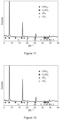
- the XRD patterns of IE1, CE3-5 show that the main clinker phase of calcium aluminate cement, calcium aluminate (CA), has completely hydrated after 48 h (main reflex 30.08 2 ⁇ ).
- the second main clinker phase of the CAC, calcium dialuminate (CA 2 ) is still present to some extent (main reflex 25.46 2 ⁇ ) after 48 h.
- IE4 (cf. Figure 9 ) shows the hydrate phase C 2 AH 8 (main reflex 8.26 2 ⁇ , reflex position adapted from N. Ukrainczyk, T. Matusinovic, S. Kurajica, B. Zimmermann, J.
- Table shows respective results obtained via TGA.
- Table 1 Quantitative analysis of phase distribution for the different calcium aluminate cement suspension obtained from TGA measurement and pseudo-Voigt profiles.
- IE1 IE2 IE3 IE4 CE3 CE4 CE5 CAH 10 [wt.-%] 32 - - - 34 - - C 2 AH 8 [wt.-%] 49 63 68 66 47 68 70 AH 3 [wt.-%] 19 33 27 26 19 24
- the morphology of the found solid particles can be described as irregular flakes (straight and buckled ones) with varying sizes in the nanometer regime for both polymer-free and polymer-containing samples.
- the flakes have the tendency to agglomerate and build larger flocks of flakes in the micrometer regime.
- additional, large, octahedral crystals with the size of several hundred nanometers up to a few micrometers have been observed. It is believed that they concern katoite phase (C 3 AH 6 ), which was not detected by the XRD measurements. These octahedral crystals were not observed in the serum of the polymer-containing sample.
- Table 4 Feret diameter values of the particles of the expediting compositions.
- Table 5 Particles thickness values determined for the particles of the expediting compositions.
- t onset values describe the start of the main heat event and ⁇ t presents the effect of used additive sample (negative values show an accelerating effect, positive values show a retarding effect).
- Expediting composition CAC Al 2 O 3 Water t onset ⁇ t [g] [g] [g] [g] [h] [h] RE1 none none 9.00 6.00 6.00 4.50 - IE5 IE1 3.03 9.00 6.00 3.33 1.00 -3.50 IE6 IE2 2.51 9.00 6.00 3.86 1.00 -3.50 IE7 IE3 2.49 9.00 6.00 3.88 1.25 -3.25 IE8 IE4 2.55 9.00 6.00 3.82 1.25 -3.25 CE6 CE1 2.42 9.00 6.00 3.94 17.0 12.5 CE7 CE2 2.33 9.00 6.00 4.03 36.0 31.5 CE8 CE3 2.37 9.00 6.00 3.99 1.50 -3.00 CE9 CE4 3.00 9.00 6.00 3.36 1.25 -3.25 CE10 CE5 3.11 9.00 6.00 3.25
Landscapes
- Chemical & Material Sciences (AREA)
- Engineering & Computer Science (AREA)
- Ceramic Engineering (AREA)
- Materials Engineering (AREA)
- Structural Engineering (AREA)
- Organic Chemistry (AREA)
- Chemical Kinetics & Catalysis (AREA)
- Inorganic Chemistry (AREA)
- Curing Cements, Concrete, And Artificial Stone (AREA)
Priority Applications (2)
| Application Number | Priority Date | Filing Date | Title |
|---|---|---|---|
| EP23217702.2A EP4574798A1 (fr) | 2023-12-18 | 2023-12-18 | Composition d'accélération pour accélérer le durcissement de ciments d'aluminate de calcium |
| PCT/EP2024/084455 WO2025131686A1 (fr) | 2023-12-18 | 2024-12-03 | Composition accélératrice destinée à accélérer le durcissement de ciments d'aluminate de calcium |
Applications Claiming Priority (1)
| Application Number | Priority Date | Filing Date | Title |
|---|---|---|---|
| EP23217702.2A EP4574798A1 (fr) | 2023-12-18 | 2023-12-18 | Composition d'accélération pour accélérer le durcissement de ciments d'aluminate de calcium |
Publications (1)
| Publication Number | Publication Date |
|---|---|
| EP4574798A1 true EP4574798A1 (fr) | 2025-06-25 |
Family
ID=89223823
Family Applications (1)
| Application Number | Title | Priority Date | Filing Date |
|---|---|---|---|
| EP23217702.2A Pending EP4574798A1 (fr) | 2023-12-18 | 2023-12-18 | Composition d'accélération pour accélérer le durcissement de ciments d'aluminate de calcium |
Country Status (2)
| Country | Link |
|---|---|
| EP (1) | EP4574798A1 (fr) |
| WO (1) | WO2025131686A1 (fr) |
Citations (6)
| Publication number | Priority date | Publication date | Assignee | Title |
|---|---|---|---|---|
| WO2006042709A1 (fr) | 2004-10-15 | 2006-04-27 | Construction Research & Technology Gmbh | Produit de polycondensation a base de composes aromatiques ou heteroaromatiques, procede de production et utilisation de ce produit |
| WO2010026155A1 (fr) * | 2008-09-02 | 2010-03-11 | Construction Research & Technology Gmbh | Composition d'un accélérateur de durcissement contenant un plastifiant |
| WO2010040612A1 (fr) | 2008-10-06 | 2010-04-15 | Construction Research & Technology Gmbh | Produit de polycondensation phosphaté, son procédé de production et son utilisation |
| WO2017032719A1 (fr) * | 2015-08-21 | 2017-03-02 | Basf Se | Composition accélératrice |
| WO2017067953A1 (fr) | 2015-10-20 | 2017-04-27 | Hilti Aktiengesellschaft | Système de mortier à deux constituants à base de ciment alumineux, et son utilisation |
| WO2023280572A1 (fr) | 2021-07-08 | 2023-01-12 | Hilti Aktiengesellschaft | Utilisation d'un carbonate de calcium de haute pureté et présentant une surface spécifique élevée dans un système de mortier inorganique à base de ciment alumineux pour accélérer l'hydratation d'un ciment d'aluminate de calcium |
-
2023
- 2023-12-18 EP EP23217702.2A patent/EP4574798A1/fr active Pending
-
2024
- 2024-12-03 WO PCT/EP2024/084455 patent/WO2025131686A1/fr active Pending
Patent Citations (6)
| Publication number | Priority date | Publication date | Assignee | Title |
|---|---|---|---|---|
| WO2006042709A1 (fr) | 2004-10-15 | 2006-04-27 | Construction Research & Technology Gmbh | Produit de polycondensation a base de composes aromatiques ou heteroaromatiques, procede de production et utilisation de ce produit |
| WO2010026155A1 (fr) * | 2008-09-02 | 2010-03-11 | Construction Research & Technology Gmbh | Composition d'un accélérateur de durcissement contenant un plastifiant |
| WO2010040612A1 (fr) | 2008-10-06 | 2010-04-15 | Construction Research & Technology Gmbh | Produit de polycondensation phosphaté, son procédé de production et son utilisation |
| WO2017032719A1 (fr) * | 2015-08-21 | 2017-03-02 | Basf Se | Composition accélératrice |
| WO2017067953A1 (fr) | 2015-10-20 | 2017-04-27 | Hilti Aktiengesellschaft | Système de mortier à deux constituants à base de ciment alumineux, et son utilisation |
| WO2023280572A1 (fr) | 2021-07-08 | 2023-01-12 | Hilti Aktiengesellschaft | Utilisation d'un carbonate de calcium de haute pureté et présentant une surface spécifique élevée dans un système de mortier inorganique à base de ciment alumineux pour accélérer l'hydratation d'un ciment d'aluminate de calcium |
Non-Patent Citations (13)
| Title |
|---|
| BALTAKYS ET AL., CERAMICS INTERNATIONAL, vol. 45, 2019, pages 2881 - 2886 |
| ENGBERT ET AL., JACS, vol. 104, 2021, pages 1067 - 1075 |
| GOERGENS ET AL., CEMENT AND CONCRETE RESEARCH, vol. 136, 2020, pages 106160 |
| H. DARWEESH, CERAMICS INTERNATIONAL, vol. 30, 2004, pages 145 - 150 |
| H. PBLLMANN, REVIEWS IN MINERALOGY AND GEOCHEMISTRY, vol. 74, 2012, pages 1 - 82 |
| K. D. LECHNERK. GEHRKEE. H. NORDMEIER: "Materialwissenschaftler und Verfahrenstechniker", 2014, SPRINGER, article "Makromolekulare Chemie: ein Lehrbuch für Chemiker, Physiker" |
| K. SCRIVENERR. SNELLINGB. LOTHENBACH: "A Practical Guide to Microstructural Analysis of Cementitious Materials", 2016, CRC PRESS |
| KOEHLER ET AL., CEMENT AND CONCRETE RESEARCH, vol. 162, 2022, pages 106972 |
| N. UKRAINCZYKT. MATUSINOVICS. KURAJICAB. ZIMMERMANJ. SIPUSIC: "Dehydration of layered double hydroxide - C2AH8", THERMOCHIMICA ACTA, vol. 464, 2007, pages 7 - 15 |
| N. UKRAINCZYKT. MATUSINOVICS. KURAJICAB. ZIMMERMANNJ. SIPUSIC, THERMOCHIMICA ACTA, vol. 464, 2007, pages 7 - 15 |
| SAWKOW ET AL., JOURNAL OF THERMAL ANALYSIS AND CALORIMETRY, vol. 74, 2003, pages 451 - 458 |
| SCRIVENER ET AL., CAPMAS IN LEA'S CHEMISTRY OF CEMENT AND CONCRETE, 1998, pages 713 - 782 |
| YANG ET AL., ENERGY STORAGE MATERIALS, vol. 36, 2021, pages 186 - 212 |
Also Published As
| Publication number | Publication date |
|---|---|
| WO2025131686A1 (fr) | 2025-06-26 |
Similar Documents
| Publication | Publication Date | Title |
|---|---|---|
| RU2648382C2 (ru) | Добавка для масс, которые схватываются гидравлически | |
| EP4204382B1 (fr) | Ciment-argilo calciné-calcaire (lc3) composition de construction | |
| WO2017212044A1 (fr) | Mélange régulateur d'hydratation pour compositions de mortier et de ciment | |
| CA3079307A1 (fr) | Composition de regulation de prise destinee a des systemes cimentaires | |
| EP3956273B1 (fr) | Composition de gunite | |
| US20240294431A1 (en) | Use of a calcium carbonate of high purity and having a high specific surface area in an inorganic mortar system based on aluminous cement to accelerate calcium aluminate cement hydration | |
| WO2020244981A1 (fr) | Utilisatoin d'un kit additif dans l'impression 3d d'une composition de matériau de construction | |
| RU2743031C2 (ru) | Добавка для строительных химических композиций | |
| JP7731364B2 (ja) | 改善された初期強度を有する環境配慮型建設用材料組成物 | |
| US10144673B2 (en) | Method for producing a calcium silicate hydrate-comprising hardening accelerator in powder form | |
| WO2023025929A1 (fr) | Utilisation d'un matériau hybride inorganique polymère colloïdal en tant qu'additif de composition de construction | |
| EP4574798A1 (fr) | Composition d'accélération pour accélérer le durcissement de ciments d'aluminate de calcium | |
| JP7693696B2 (ja) | 無電荷の粘土不活化剤 | |
| EP4574797A1 (fr) | Composition d'accélération pour accélérer le durcissement de ciments d'aluminate de calcium | |
| EP4574796A1 (fr) | Procédé de préparation d'une composition d'accélération appropriée pour accélérer le durcissement de ciments d'aluminate de calcium | |
| KR20240033253A (ko) | 부하 값 증가를 위해 알루미늄 시멘트에 기초한 무기 모르타르 시스템에서 높은 비표면적을 갖는 고순도의 탄산칼슘의 사용 | |
| WO2023025585A1 (fr) | Compositions de matériau de construction ayant une résistance initiale et tardive élevée | |
| WO2024180241A1 (fr) | Compositions de béton projeté améliorées | |
| WO2023217567A1 (fr) | Composition de mortier sec contenant un sel métallique d'un polyol |
Legal Events
| Date | Code | Title | Description |
|---|---|---|---|
| PUAI | Public reference made under article 153(3) epc to a published international application that has entered the european phase |
Free format text: ORIGINAL CODE: 0009012 |
|
| STAA | Information on the status of an ep patent application or granted ep patent |
Free format text: STATUS: THE APPLICATION HAS BEEN PUBLISHED |
|
| AK | Designated contracting states |
Kind code of ref document: A1 Designated state(s): AL AT BE BG CH CY CZ DE DK EE ES FI FR GB GR HR HU IE IS IT LI LT LU LV MC ME MK MT NL NO PL PT RO RS SE SI SK SM TR |
|
| STAA | Information on the status of an ep patent application or granted ep patent |
Free format text: STATUS: THE APPLICATION IS DEEMED TO BE WITHDRAWN |