EP4575491A1 - Procédé de détection de composés organiques volatils dans l'odeur des matières fécales - Google Patents
Procédé de détection de composés organiques volatils dans l'odeur des matières fécales Download PDFInfo
- Publication number
- EP4575491A1 EP4575491A1 EP23220189.7A EP23220189A EP4575491A1 EP 4575491 A1 EP4575491 A1 EP 4575491A1 EP 23220189 A EP23220189 A EP 23220189A EP 4575491 A1 EP4575491 A1 EP 4575491A1
- Authority
- EP
- European Patent Office
- Prior art keywords
- spme
- absorber
- response
- microbiota
- faecal
- Prior art date
- Legal status (The legal status is an assumption and is not a legal conclusion. Google has not performed a legal analysis and makes no representation as to the accuracy of the status listed.)
- Pending
Links
Images
Classifications
-
- G—PHYSICS
- G01—MEASURING; TESTING
- G01N—INVESTIGATING OR ANALYSING MATERIALS BY DETERMINING THEIR CHEMICAL OR PHYSICAL PROPERTIES
- G01N33/00—Investigating or analysing materials by specific methods not covered by groups G01N1/00 - G01N31/00
- G01N33/0004—Gaseous mixtures, e.g. polluted air
- G01N33/0009—General constructional details of gas analysers, e.g. portable test equipment
- G01N33/0027—General constructional details of gas analysers, e.g. portable test equipment concerning the detector
- G01N33/0031—General constructional details of gas analysers, e.g. portable test equipment concerning the detector comprising two or more sensors, e.g. a sensor array
- G01N33/0034—General constructional details of gas analysers, e.g. portable test equipment concerning the detector comprising two or more sensors, e.g. a sensor array comprising neural networks or related mathematical techniques
-
- G—PHYSICS
- G01—MEASURING; TESTING
- G01N—INVESTIGATING OR ANALYSING MATERIALS BY DETERMINING THEIR CHEMICAL OR PHYSICAL PROPERTIES
- G01N1/00—Sampling; Preparing specimens for investigation
- G01N1/28—Preparing specimens for investigation including physical details of (bio-)chemical methods covered elsewhere, e.g. G01N33/50, C12Q
- G01N1/40—Concentrating samples
- G01N1/405—Concentrating samples by adsorption or absorption
-
- G—PHYSICS
- G01—MEASURING; TESTING
- G01N—INVESTIGATING OR ANALYSING MATERIALS BY DETERMINING THEIR CHEMICAL OR PHYSICAL PROPERTIES
- G01N33/00—Investigating or analysing materials by specific methods not covered by groups G01N1/00 - G01N31/00
- G01N33/48—Biological material, e.g. blood, urine; Haemocytometers
- G01N33/483—Physical analysis of biological material
- G01N33/497—Physical analysis of biological material of gaseous biological material, e.g. breath
- G01N33/4977—Metabolic gas from microbes, cell cultures or plant tissues
Definitions
- the present invention relates to the field of microbiology, bioinformatics and the microbiota research a method for determining most important time points for the changes in the microbiota after various interventions for further sequence analyses.
- gas sensors offer a cost-effective and rapid alternative to monitor microbiota changes by detecting alterations in metabolites/compounds [7].
- Various types of gas sensors including resistive metal oxide, electrochemical, optical, conducting polymer, quartz crystal microbalance, and pellistor/calorimetric sensors, present promising avenues for this purpose.
- WO2016063148A1 an array of chemoresistive sensors has been utilized for screening colorectal cancer/adenomas by measuring VOCs in faecal gases.
- the proposed method shares similarities with the gas sensor system utilized in WO2016063148A1 .
- the analysis of the samples is conducted in vitro, making it non-invasive.
- a significant divergence emerges in the methodology applied for diagnostic or change detection output.
- WO2016063148A1 a specific algorithm provides either positive or negative diagnosis.
- the proposed method introduces an innovative feature by capturing and considering the continuous change of parameters.
- the proposed method diverges in its utilization of Solid-Phase Microextraction (SPME) absorbers for the collection of VOCs components, deviating from the conventional approach of relying on airflow through the container.
- SPME Solid-Phase Microextraction
- the goal of the present invention is to establish a cost-effective and time-efficient methodology for pointing key time points that denote shifts in microbiota in response to diverse interventions, ranging from alterations in bacterial compositions to dietary changes and beyond.
- the present invention is a method for determining the time point when the microbiota of the mammal, for example, mice or humans, begins to change after various interventions such as change of the feeding, and/or physical activity, the faecal microbiota transplantation, medication treatment, pro-, pre-, post-biotics administration, but not limited to.
- the proposed method is comparably cheap and fast.
- the method is used for the time points identification of microbiota changes.
- microbiota samples from individual mice involved the careful isolation of each mouse within dedicated chambers. Specifically, when obtaining faecal samples, a deliberate effort was made to exclude urine, a practice crucial for mitigating the impact of strong odours on volatile component measurements. By eliminating the influence of urinary components, the acquired signals are attributed solely to faecal matter, enhancing the precision and reliability of the research outcomes.
- a method for mammalian faecal matter odour detection and classification comprising the steps: A gas sensor selection from commercially available such as Figaro USA, Inc. TGS2603 and laboratory made resistive tin oxide chemical sensors for the measurement system based on the highest dynamic resistance response signal value change to the vapour of alcohol liquids such as ethyl, propyl, isopropyl.
- a procedure for selecting a Solid-Phase Microextraction (SPME) absorber for odour detection sensors comprising: 1) Collecting volatile organic compounds from the volume containing faecal matter using a commercially available SPME absorbers; 2) Monitoring the resistance response signal parameters of commercially available odour detection sensors such as those produced by Figaro USA, Inc. during the desorption process of the collected volatile organic compounds for a duration of 10 minutes; 3) Selecting an SPME absorber based on the resistance response signal parameters, ensuring optimal desorption efficiency of volatile organic compounds associated with faecal odours.
- SPME Solid-Phase Microextraction
- a calibration procedure of selecting the most different by signal parameter chemical sensors configured to detect volatile organic compounds (VOCs) extracted from the SPME absorber based on the sensor sensitivity and selectivity to ethyl and isopropyl alcohols;
- VOCs volatile organic compounds
- a signal acquisition procedure volatile organic compounds extraction from the faecal matter and adsorption on SPME absorber, measurements parameter such as sampling rate, desorption conditions (such as absorber heating temperature);
- SPME solid phase microextraction
- SPME absorber was chosen based on the resistance response signal parameters (signal amplitude, response and decay times). Signal amplitude should be at least 1.5 times higher than the initial one, response time constant should be less than 30 s and response decay time constant should be less than 400 s.
- mice faecal matter was deposited into a small container, coexisting with an SPME sorbent strategically positioned nearby. Extraction time was meticulously tailored, ensuring an optimal 10-minute duration for the comprehensive collection of volatile components constituting the odour.
- the SPME absorber now enriched with volatile compounds, was transferred to a chamber housing eight gas sensors reliant on metal oxide films. To enhance the signal-to-noise ratio, these gas sensors were subjected to local heating, reaching temperatures between 350 and 400°C.
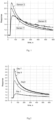
- the resistance of each individual gas sensor was diligently measured for up to 1 minute. Subsequently, the end of the SPME absorber, laden with volatile components from the mice faecal sample, underwent sudden controlled heating up to 100°C. This facilitated the efficient desorption of volatile compounds from the sorbent, triggering a pronounced and rapid change in the resistance of each gas sensor. These alterations were promptly recorded at speed of 0.2 seconds per sample and stored in the computer's memory disk for further signal processing. The resistive response to the volatile components was consistently monitored for a minimum of 10 minutes, ensuring a thorough evaluation of the dynamic changes in the gas sensor array. Typical resistance response of 3 individual sensors is shown in Fig.1 .
- mice microbiota To identify changes in the mice microbiota, the resistance response to samples of individual mice faecal matter was measured both before and after modifying the mice's diet. Daily measurements were conducted to pinpoint the specific time at which the response, and consequently the microbiota, underwent changes. This ongoing and systematic comparative analysis of resistance responses serves as a crucial indicator for discerning microbiota variations in response to dietary modifications, among the other factors Fig 2 .
Landscapes
- Life Sciences & Earth Sciences (AREA)
- Health & Medical Sciences (AREA)
- Engineering & Computer Science (AREA)
- Chemical & Material Sciences (AREA)
- Physics & Mathematics (AREA)
- Analytical Chemistry (AREA)
- Pathology (AREA)
- Immunology (AREA)
- General Physics & Mathematics (AREA)
- General Health & Medical Sciences (AREA)
- Biochemistry (AREA)
- Biomedical Technology (AREA)
- Medicinal Chemistry (AREA)
- Food Science & Technology (AREA)
- Molecular Biology (AREA)
- Urology & Nephrology (AREA)
- Hematology (AREA)
- Biophysics (AREA)
- Artificial Intelligence (AREA)
- Evolutionary Computation (AREA)
- Mathematical Physics (AREA)
- Combustion & Propulsion (AREA)
- Investigating Or Analysing Biological Materials (AREA)
Priority Applications (1)
| Application Number | Priority Date | Filing Date | Title |
|---|---|---|---|
| EP23220189.7A EP4575491A1 (fr) | 2023-12-22 | 2023-12-22 | Procédé de détection de composés organiques volatils dans l'odeur des matières fécales |
Applications Claiming Priority (1)
| Application Number | Priority Date | Filing Date | Title |
|---|---|---|---|
| EP23220189.7A EP4575491A1 (fr) | 2023-12-22 | 2023-12-22 | Procédé de détection de composés organiques volatils dans l'odeur des matières fécales |
Publications (1)
| Publication Number | Publication Date |
|---|---|
| EP4575491A1 true EP4575491A1 (fr) | 2025-06-25 |
Family
ID=89430338
Family Applications (1)
| Application Number | Title | Priority Date | Filing Date |
|---|---|---|---|
| EP23220189.7A Pending EP4575491A1 (fr) | 2023-12-22 | 2023-12-22 | Procédé de détection de composés organiques volatils dans l'odeur des matières fécales |
Country Status (1)
| Country | Link |
|---|---|
| EP (1) | EP4575491A1 (fr) |
Citations (7)
| Publication number | Priority date | Publication date | Assignee | Title |
|---|---|---|---|---|
| WO2016063148A1 (fr) | 2014-10-20 | 2016-04-28 | Università degli Studi di Ferrara | Dispositif pour un dépistage préliminaire d'un adénome du côlon-rectum |
| US20170360848A1 (en) | 2016-06-15 | 2017-12-21 | Arizona Board Of Regents On Behalf Of Arizona State University | Methods for treating autism spectrum disorder and associated symptoms |
| US20190358274A1 (en) | 2018-05-25 | 2019-11-28 | Arizona Board Of Regents On Behalf Of Arizona State University | Methods for treating autism spectrum disorder and associated symptoms |
| US20200061148A1 (en) | 2015-05-22 | 2020-02-27 | Arizona Board Of Regents On Behalf Of Arizona State University | Methods for treating autism spectrum disorder and associated symptoms |
| EA034795B1 (ru) | 2013-09-06 | 2020-03-23 | Софар С.П.А. | Способ определения изменений фекальной микробиоты индивида после приема композиции, содержащей микроорганизмы |
| WO2023102450A1 (fr) | 2021-11-30 | 2023-06-08 | Arizona Board Of Regents On Behalf Of Arizona State University | Procédés de surveillance de l'impact d'une thérapie de transfert de microbiote dans un trouble du spectre autistique (tsa) |
| US20230220494A1 (en) | 2012-05-25 | 2023-07-13 | Arizona Board Of Regents On Behalf Of Arizona State University | Microbiome markers and therapies for autism spectrum disorders |
-
2023
- 2023-12-22 EP EP23220189.7A patent/EP4575491A1/fr active Pending
Patent Citations (7)
| Publication number | Priority date | Publication date | Assignee | Title |
|---|---|---|---|---|
| US20230220494A1 (en) | 2012-05-25 | 2023-07-13 | Arizona Board Of Regents On Behalf Of Arizona State University | Microbiome markers and therapies for autism spectrum disorders |
| EA034795B1 (ru) | 2013-09-06 | 2020-03-23 | Софар С.П.А. | Способ определения изменений фекальной микробиоты индивида после приема композиции, содержащей микроорганизмы |
| WO2016063148A1 (fr) | 2014-10-20 | 2016-04-28 | Università degli Studi di Ferrara | Dispositif pour un dépistage préliminaire d'un adénome du côlon-rectum |
| US20200061148A1 (en) | 2015-05-22 | 2020-02-27 | Arizona Board Of Regents On Behalf Of Arizona State University | Methods for treating autism spectrum disorder and associated symptoms |
| US20170360848A1 (en) | 2016-06-15 | 2017-12-21 | Arizona Board Of Regents On Behalf Of Arizona State University | Methods for treating autism spectrum disorder and associated symptoms |
| US20190358274A1 (en) | 2018-05-25 | 2019-11-28 | Arizona Board Of Regents On Behalf Of Arizona State University | Methods for treating autism spectrum disorder and associated symptoms |
| WO2023102450A1 (fr) | 2021-11-30 | 2023-06-08 | Arizona Board Of Regents On Behalf Of Arizona State University | Procédés de surveillance de l'impact d'une thérapie de transfert de microbiote dans un trouble du spectre autistique (tsa) |
Non-Patent Citations (9)
| Title |
|---|
| BRIAN D. HOSFIELD: "The assessment of microbiome changes and fecal volatile organic compounds during experimental necrotizing enterocolitis", JOURNAL OF PEDIATRIC SURGERY., vol. 56, no. 6, 24 February 2021 (2021-02-24), pages 1220 - 1225, XP093165552, ISSN: 0022-3468, DOI: 10.1016/j.jpedsurg.2021.02.043 * |
| BUROKAS A.MOLONEY R.D.DINAN T.G.CRYAN J.F.: "Microbiota Regulation of the Mammalian Gut-Brain Axis", ADVANCES IN APPLIED MICROBIOLOGY, vol. 91, 2015, pages 1 - 621198291 |
| CAI H.CHEN X.BUROKAS A.MALDONADO R.: "Editorial: Gut microbiota as a therapeutic target in neuropsychiatric disorders: current status and future directions", FRONTIERS IN NEUROSCIENCE, 2023, pages 17 |
| CARMONA E.N., SBERVEGLIERI V., PONZONI A., GALSTYAN V., ZAPPA D., PULVIRENTI A. AND COMINI E.: "Detection of food and skin pathogen microbiota by means of an electronic nose based on metal oxide chemiresistors", SENSORS AND ACTUATORS B: CHEMICAL, vol. 238, 2017, pages 1227 - 1230 |
| DIXON EMMA ET AL: "Solid-Phase Microextraction and the Human Fecal VOC Metabolome", PLOS ONE, vol. 6, no. 4, 8 April 2011 (2011-04-08), pages e18471, XP093165329, ISSN: 1932-6203, DOI: 10.1371/journal.pone.0018471 * |
| EL MANOUNI EL HASSANI, S.SOERS, R.J.BERKHOUT, D.J.C.NIEMARKT H.J.WEDA H.NIJSEN T.BENNINGA M.A.DE BOER N.K.H.DE MEIJ T.G.J.KNOBEL H: "Optimized sample preparation for fecal volatile organic compound analysis by gas chromatography-mass spectrometry", METABOLOMICS, vol. 16, 2020, pages 112, XP037283506, DOI: 10.1007/s11306-020-01735-6 |
| FRICKER A.M.PODLESNY D.FRICKE W.F.: "What is new and relevant for sequencing-based microbiome research? A mini-review", JOURNAL OF ADVANCED RESEARCH, vol. 19, 2019, pages 105 - 112, XP085727867, DOI: 10.1016/j.jare.2019.03.006 |
| KETOLA R.A.KIURU J.T.TARKIAINEN V.KOKKONEN J.T.RASANEN J.KOTIAHO T.: "Detection of volatile organic compounds by temperature-programmed desorption combined with mass spectrometry and Fourier transform infrared spectroscopy", ANALYTICA CHIMICA ACTA, vol. 562, 2006, pages 245 - 251, XP025047172, DOI: 10.1016/j.aca.2006.01.069 |
| MOORE J.G.JESSOP L.D.OSBORNE D.N.: "Gas-chromatographic and mass-spectrometric analysis of the odor of human feces", GASTROENTEROLOGY, vol. 93, 1987, pages 1321 - 1329 |
Similar Documents
| Publication | Publication Date | Title |
|---|---|---|
| Zetola et al. | Diagnosis of pulmonary tuberculosis and assessment of treatment response through analyses of volatile compound patterns in exhaled breath samples | |
| CN111487336B (zh) | 一种头发中37种芬太尼类新精神活性物质的分析方法 | |
| Cuevas-Glory et al. | A review of volatile analytical methods for determining the botanical origin of honey | |
| Armenta et al. | A review of recent, unconventional applications of ion mobility spectrometry (IMS) | |
| Deng et al. | Determination of acetone in human breath by gas chromatography–mass spectrometry and solid-phase microextraction with on-fiber derivatization | |
| EP2502065B1 (fr) | Appareil et procédé d'analyse d'échantillons pour le diagnostic de maladies | |
| CN105122057B (zh) | 用于对呼气进行取样和分析的设备和方法 | |
| Statheropoulos et al. | Preliminary investigation of using volatile organic compounds from human expired air, blood and urine for locating entrapped people in earthquakes | |
| Bianchi et al. | Fully automated solid-phase microextraction–fast gas chromatography–mass spectrometry method using a new ionic liquid column for high-throughput analysis of sarcosine and N-ethylglycine in human urine and urinary sediments | |
| JPS62858A (ja) | 呼気・尿中代謝物同時測定装置 | |
| EP1906183A1 (fr) | Procédé et analyse de la différence métabolique entre deux prélèvements biologiques utilisant un spectromètre de masse chromatographique à gaz | |
| KR20150122191A (ko) | 기체 크로마토그래피/질량 분석법에 의해 생물학적 샘플에서 박테리아 종을 동정하는 방법 | |
| Cho et al. | Two-step preconcentration for analysis of exhaled gas of human breath with electronic nose | |
| Sekine et al. | Determination of acetaldehyde and acetone emanating from human skin using a passive flux sampler—HPLC system | |
| Pirsa et al. | Rapid determination of pyridine derivatives by dispersive liquid–liquid microextraction coupled with gas chromatography/gas sensor based on nanostructured conducting polypyrrole | |
| Franchina et al. | Impact of the adsorbent material on volatile metabolites during in vitro and in vivo bio-sampling | |
| Peters et al. | Human scent characterization: A review | |
| Ueta et al. | Determination of breath isoprene and acetone concentration with a needle-type extraction device in gas chromatography–mass spectrometry | |
| Vautz et al. | Exemplar application of multi-capillary column ion mobility spectrometry for biological and medical purpose | |
| Wen et al. | A novel approach for determination of paraquat based on dried blood spot (DBS) extraction and UHPLC-HRMS analysis | |
| Maniscalco et al. | Metabolomics of exhaled breath condensate by nuclear magnetic resonance spectroscopy and mass spectrometry: a methodological approach | |
| Zlatkis et al. | Analysis of trace volatile metabolites in serum and plasma | |
| US20210318208A1 (en) | Method of Detection of Diseases Related to Coronavirus Infection by Breath Analysis | |
| Drabińska et al. | A targeted metabolomic protocol for quantitative analysis of volatile organic compounds in urine of children with celiac disease | |
| Gomes et al. | Innovative disposable pipette extraction for concurrent analysis of fourteen psychoactive substances in drug users’ sweat |
Legal Events
| Date | Code | Title | Description |
|---|---|---|---|
| PUAI | Public reference made under article 153(3) epc to a published international application that has entered the european phase |
Free format text: ORIGINAL CODE: 0009012 |
|
| STAA | Information on the status of an ep patent application or granted ep patent |
Free format text: STATUS: THE APPLICATION HAS BEEN PUBLISHED |
|
| AK | Designated contracting states |
Kind code of ref document: A1 Designated state(s): AL AT BE BG CH CY CZ DE DK EE ES FI FR GB GR HR HU IE IS IT LI LT LU LV MC ME MK MT NL NO PL PT RO RS SE SI SK SM TR |
|
| STAA | Information on the status of an ep patent application or granted ep patent |
Free format text: STATUS: THE APPLICATION IS DEEMED TO BE WITHDRAWN |