EP4575882A1 - Verfahren und vorrichtung zur sicherung eines grossen sprachmodells - Google Patents
Verfahren und vorrichtung zur sicherung eines grossen sprachmodells Download PDFInfo
- Publication number
- EP4575882A1 EP4575882A1 EP24221019.3A EP24221019A EP4575882A1 EP 4575882 A1 EP4575882 A1 EP 4575882A1 EP 24221019 A EP24221019 A EP 24221019A EP 4575882 A1 EP4575882 A1 EP 4575882A1
- Authority
- EP
- European Patent Office
- Prior art keywords
- character string
- filtering
- fragment
- dictionary
- words
- Prior art date
- Legal status (The legal status is an assumption and is not a legal conclusion. Google has not performed a legal analysis and makes no representation as to the accuracy of the status listed.)
- Pending
Links
Images


Classifications
-
- G—PHYSICS
- G06—COMPUTING OR CALCULATING; COUNTING
- G06F—ELECTRIC DIGITAL DATA PROCESSING
- G06F40/00—Handling natural language data
- G06F40/20—Natural language analysis
- G06F40/232—Orthographic correction, e.g. spell checking or vowelisation
-
- G—PHYSICS
- G06—COMPUTING OR CALCULATING; COUNTING
- G06F—ELECTRIC DIGITAL DATA PROCESSING
- G06F21/00—Security arrangements for protecting computers, components thereof, programs or data against unauthorised activity
- G06F21/50—Monitoring users, programs or devices to maintain the integrity of platforms, e.g. of processors, firmware or operating systems
- G06F21/55—Detecting local intrusion or implementing counter-measures
- G06F21/554—Detecting local intrusion or implementing counter-measures involving event detection and direct action
-
- G—PHYSICS
- G06—COMPUTING OR CALCULATING; COUNTING
- G06F—ELECTRIC DIGITAL DATA PROCESSING
- G06F40/00—Handling natural language data
- G06F40/20—Natural language analysis
- G06F40/237—Lexical tools
- G06F40/242—Dictionaries
-
- G—PHYSICS
- G06—COMPUTING OR CALCULATING; COUNTING
- G06F—ELECTRIC DIGITAL DATA PROCESSING
- G06F40/00—Handling natural language data
- G06F40/30—Semantic analysis
- G06F40/35—Discourse or dialogue representation
Definitions
- the present invention relates to a method for securing a large language model, previously trained by machine learning to provide information following a request formulated in written form.
- a template evasion attack involves adding tokens to a query, typically at the end of the query as a suffix, or at the beginning of the query as a prefix, to overcome template framing.
- the added tokens are generated by machine learning for this purpose.
- a query modification it would be possible to obtain, for example, information relating to the hacking of a banking network.
- a malicious third party can use a large language model for illegal purposes.
- the proposed security method makes it possible to filter requests so as to delete fragments generated by machine processing, in particular fragments generated on the basis of the BPE mechanism, and in this way to minimize the risk of departing from the initially intended scope of the large language model.
- the proposed method is fast and automatic.
- the method further comprises determining the membership of each fragment in a second complementary list called a black list, and selecting a second filtering mode based on a result of said determination.
- the method further comprises a display on a graphical interface of fragments not belonging to said dictionary of words authorized for correction by a user.
- the invention applies to any type of large language model or LLM, trained by machine learning to provide information following a request formulated in written form, and applied for example in conversational agent type software.
- LLM large language model
- the invention applies to any LLM produced in the form of a deep neural network (in English "deep learning").
- FIG. 1 represents a device 2 for securing a large language model 4, also referred to as the LLM model.
- one of the objectives of the invention is to avoid any provision of information useful for a malicious action, for example hacking a computer system.
- the LLM model 4 is executed by the device 2, or by a programmable electronic device external to the device 2, for example connected to the device 2 via a communication network.
- the electronic memory 6 stores a dictionary 14 of authorized words in one or more predetermined natural language(s).
- the dictionary 14 of authorized words is stored in a database external to the device 2, the device 2 being connected to the external database, for example through the communication interface 12.
- the electronic memory 6 further stores a first complementary list 16, also called white list 16, of authorized words, which supplements the dictionary 14 of authorized words, and a second complementary list 18, also called black list 18, of words considered dangerous, which could potentially lead to illegal requests, going beyond the initial framework of the model.
- the presence of the extracted fragment(s) in the first complementary list 16 and/or in the second complementary list 18 is verified.
- the processed character string obtained by the implementation of these modules forms a secure query to be provided as input to the LLM 4 model.
- the device is further configured to execute the LLM model by providing the obtained secure query as input. This advantageously ensures that the result provided by the execution of the LLM model is consistent with the model framework.
- the modules 20, 22, 24, 26 are implemented in the form of software instructions forming a computer program, which, when executed by a programmable electronic device, implements a method for securing a large language model as described.
- the modules 20, 22, 24, 26 are each produced in the form of programmable logic components, such as FPGAs ( Field Programmable Gate Array ), microprocessors, GPGPU components ( General-purpose processing on graphics processing ), or even dedicated integrated circuits, such as ASICs ( Application Specific Integrated Circuit ) .
- programmable logic components such as FPGAs ( Field Programmable Gate Array ), microprocessors, GPGPU components ( General-purpose processing on graphics processing ), or even dedicated integrated circuits, such as ASICs ( Application Specific Integrated Circuit ) .
- the computer program comprising software instructions is further capable of being recorded on a non-transitory, computer-readable information recording medium.
- This computer-readable medium is, for example, a medium capable of storing electronic instructions and of being coupled to a bus of a computer system.
- this medium is an optical disk, a magneto-optical disk, a ROM memory, a RAM memory, any type of non-volatile memory (for example EPROM, EEPROM, FLASH, NVRAM), a magnetic card or an optical card.
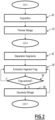
- FIG. 2 is a flowchart of the main steps of a first embodiment of the method for securing a large language model. The method is implemented by a processor of a programmable electronic device 2 as described with reference to the Figure 1 .
- the method comprises a first step 30 of acquiring a request, addressed to the LLM model, in the form of an initial character string CH-i.
- the initial character string CH-i is provided via an I/O interface, by user input, or passed by another software application.
- the expression character string refers to a sequence of characters coded according to a chosen coding format, in a set of characters comprising letters of a given alphabet, for example the Latin alphabet, and grouped to form words in a language or possibly several predetermined languages which are written with the alphabet used, separated by space characters or spaces, as well as numbers and so-called special characters.
- Special characters include punctuation marks and symbols with a known meaning (e.g., symbols representing currencies, physical units, etc.). Special characters are listed in advance.
- the request is therefore formulated in written form.
- step 30 the initial character string CH-i is stored in a memory unit of the programmable electronic device implementing the method.
- the method then comprises a step 32 of implementing a first filtering of the initial character string CH-i.
- the first filtering 32 involves a detection of special characters in the initial character string CH-i, and a replacement of each special character detected by a space.
- the first filtering step 32 includes replacing successive spaces with a single space.
- FIG. 3 illustrates an example of an initial character string CH-i, a first filtered character string CH-f1 resulting from the initial character string CH-i after removing special characters, and a second filtered character string CH-f2 obtained from the first filtered character string CH-f1 by replacing multiple spaces with single spaces.
- the method further comprises a step 34 of separating the filtered character string into fragments, each fragment being a grouping of characters preceded and/or followed by a space.
- the method then comprises an extraction 36 of a fragment in a traversal of the fragments in a given traversal order, and for each extracted fragment, a verification 38 of the presence of the fragment in the dictionary of authorized words, optionally increased by the words from the first complementary list or white list.
- the presence in the dictionary of authorized words or in the first complementary list (white list) means that the processed fragment is an authorized fragment.
- the order of reading is typically the order in which words are read in the language being used.
- the presence check step 38 is followed by the extraction 36 of a following fragment, up to the end of the list of fragments of the filtered character string.
- steps 36 and 38 are applied to all fragments, and unauthorized fragments are marked.
- the method comprises a second filtering 40 of the initial character string, by deleting at least the fragment absent from the dictionary of authorized words or unauthorized fragment.
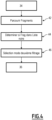
- the fragments are scanned (step 42) and it is determined in step 44 whether one of the fragments belongs to the second complementary list or blacklist. This then means that the query includes words considered as likely to lead to illegal queries, outside the initial framework of the model.
- the blacklist includes words like "pirate”, "piracy”.
- the processed character string CH-T is provided as a secure query as input to the large language model.
- the proposed method allows to automatically thwart a possible “model evasion” attack.
- the proposed method is simple, automatic and efficient, and does not require the implementation of complex interpretations of sentence or grammatical structures, nor of complex models, while being effective in avoiding use outside the initial scope of the large language model.
- the cybersecurity of large language models is improved.
- the special characters are preserved, which allows good performance of the LLM model to be maintained.
Landscapes
- Engineering & Computer Science (AREA)
- Theoretical Computer Science (AREA)
- General Engineering & Computer Science (AREA)
- General Physics & Mathematics (AREA)
- Physics & Mathematics (AREA)
- Artificial Intelligence (AREA)
- Health & Medical Sciences (AREA)
- Audiology, Speech & Language Pathology (AREA)
- Computational Linguistics (AREA)
- General Health & Medical Sciences (AREA)
- Software Systems (AREA)
- Computer Security & Cryptography (AREA)
- Computer Hardware Design (AREA)
- Machine Translation (AREA)
Applications Claiming Priority (1)
| Application Number | Priority Date | Filing Date | Title |
|---|---|---|---|
| FR2314479A FR3156945A1 (fr) | 2023-12-19 | 2023-12-19 | Procédé et dispositif de sécurisation d'un modèle de langage de grande taille |
Publications (1)
| Publication Number | Publication Date |
|---|---|
| EP4575882A1 true EP4575882A1 (de) | 2025-06-25 |
Family
ID=91248611
Family Applications (1)
| Application Number | Title | Priority Date | Filing Date |
|---|---|---|---|
| EP24221019.3A Pending EP4575882A1 (de) | 2023-12-19 | 2024-12-18 | Verfahren und vorrichtung zur sicherung eines grossen sprachmodells |
Country Status (2)
| Country | Link |
|---|---|
| EP (1) | EP4575882A1 (de) |
| FR (1) | FR3156945A1 (de) |
Citations (1)
| Publication number | Priority date | Publication date | Assignee | Title |
|---|---|---|---|---|
| US20130018895A1 (en) * | 2011-07-12 | 2013-01-17 | Harless William G | Systems and methods for extracting meaning from speech-to-text data |
-
2023
- 2023-12-19 FR FR2314479A patent/FR3156945A1/fr active Pending
-
2024
- 2024-12-18 EP EP24221019.3A patent/EP4575882A1/de active Pending
Patent Citations (1)
| Publication number | Priority date | Publication date | Assignee | Title |
|---|---|---|---|---|
| US20130018895A1 (en) * | 2011-07-12 | 2013-01-17 | Harless William G | Systems and methods for extracting meaning from speech-to-text data |
Non-Patent Citations (3)
| Title |
|---|
| AOUNON KUMAR ET AL: "Certifying LLM Safety against Adversarial Prompting", ARXIV.ORG, CORNELL UNIVERSITY LIBRARY, 201 OLIN LIBRARY CORNELL UNIVERSITY ITHACA, NY 14853, 6 September 2023 (2023-09-06), XP091606787 * |
| ERFAN SHAYEGANI ET AL: "Survey of Vulnerabilities in Large Language Models Revealed by Adversarial Attacks", ARXIV.ORG, CORNELL UNIVERSITY LIBRARY, 201 OLIN LIBRARY CORNELL UNIVERSITY ITHACA, NY 14853, 16 October 2023 (2023-10-16), XP091637780 * |
| JURAFSKY DANIEL ET AL: "Speech and Language Processing - Third Edition draft - Chapter 2 - Regular Expressions, Text Normalization, Edit Distance", 7 February 2022 (2022-02-07), XP093140606, Retrieved from the Internet <URL:https://web.archive.org/web/20220207180613if_/https://web.stanford.edu/~jurafsky/slp3/ed3book_jan122022.pdf> [retrieved on 20240312] * |
Also Published As
| Publication number | Publication date |
|---|---|
| FR3156945A1 (fr) | 2025-06-20 |
Similar Documents
| Publication | Publication Date | Title |
|---|---|---|
| US11494648B2 (en) | Method and system for detecting fake news based on multi-task learning model | |
| US10031952B2 (en) | Corpus augmentation system | |
| EP1364316A2 (de) | Informationsextraktionssystem und -methode zur erzeugung und erweiterung einer wissensbasis | |
| Millière | Adversarial attacks on image generation with made-up words | |
| FR2982388A1 (fr) | Systeme et procede pour la generation productive de mots composes dans une traduction automatique statistique | |
| US10291629B2 (en) | Cognitive detection of malicious documents | |
| US20150261867A1 (en) | Method and system of managing cues for conversation engagement | |
| EP3545449B1 (de) | Verfahren zum extrahieren von daten aus einer datenbank, die nach einem reversiblen wasserzeichenmechanismus mit wasserzeichen versehen ist | |
| WO2006075001A1 (fr) | Procédé de recherche, reconnaissance et localisation dans l'encre, dispositif, programme et langage correspondants | |
| US11500999B2 (en) | Testing simulation sequence using industry specific parameters | |
| US10944569B2 (en) | Comparison and validation of digital content using contextual analysis | |
| EP3100176A1 (de) | Verfahren zur semantischen analyse eines textes | |
| US7356463B1 (en) | System and method for detecting and decoding semantically encoded natural language messages | |
| EP4575882A1 (de) | Verfahren und vorrichtung zur sicherung eines grossen sprachmodells | |
| FR3059446B1 (fr) | Procede d'insertion de donnees a la volee dans une base de donnees tatouees et dispositif associe. | |
| CN119849507A (zh) | 一种基于Longformer_BERT模型的语义选取方法 | |
| EP4300326A1 (de) | Verfahren zum abgleich einer zu untersuchenden anordnung und einer referenzliste, entsprechende paarungsmaschine und computerprogramm | |
| US12572742B1 (en) | Heuristic-based multilanguage tokenizer | |
| FR2986882A1 (fr) | Procede d'identification d'un ensemble de phrases d'un document numerique, procede de generation d'un document numerique, dispositif associe | |
| EP4715664A1 (de) | Verfahren und vorrichtung zur kontrollierten modifizierung eines modells der generativen künstlichen intelligenz sowie verfahren und vorrichtung zur verwendung davon | |
| CN112989838B (zh) | 文本联系实体提取方法、装置、设备及可读存储介质 | |
| WO2018015515A1 (fr) | Procedes de partage d'opinion, equipements et programmes d'ordinateur pour la mise en oeuvre des procedes | |
| Gras et al. | Connaître avec les modèles de langage: une rupture paradigmatique | |
| RALEM AHMED IBRAHIM | Détection de points de vue sur Twitter | |
| WO2026002787A1 (fr) | Procédé et module de traitement de chaîne de caractères |
Legal Events
| Date | Code | Title | Description |
|---|---|---|---|
| PUAI | Public reference made under article 153(3) epc to a published international application that has entered the european phase |
Free format text: ORIGINAL CODE: 0009012 |
|
| STAA | Information on the status of an ep patent application or granted ep patent |
Free format text: STATUS: THE APPLICATION HAS BEEN PUBLISHED |
|
| AK | Designated contracting states |
Kind code of ref document: A1 Designated state(s): AL AT BE BG CH CY CZ DE DK EE ES FI FR GB GR HR HU IE IS IT LI LT LU LV MC ME MK MT NL NO PL PT RO RS SE SI SK SM TR |
|
| STAA | Information on the status of an ep patent application or granted ep patent |
Free format text: STATUS: REQUEST FOR EXAMINATION WAS MADE |
|
| 17P | Request for examination filed |
Effective date: 20251127 |