EP4576026A2 - Benutzerschnittstellen für berechtigungsnachweise für digitale identifizierung - Google Patents
Benutzerschnittstellen für berechtigungsnachweise für digitale identifizierung Download PDFInfo
- Publication number
- EP4576026A2 EP4576026A2 EP25175055.0A EP25175055A EP4576026A2 EP 4576026 A2 EP4576026 A2 EP 4576026A2 EP 25175055 A EP25175055 A EP 25175055A EP 4576026 A2 EP4576026 A2 EP 4576026A2
- Authority
- EP
- European Patent Office
- Prior art keywords
- information
- electronic device
- digital
- user
- digital identification
- Prior art date
- Legal status (The legal status is an assumption and is not a legal conclusion. Google has not performed a legal analysis and makes no representation as to the accuracy of the status listed.)
- Pending
Links
Images















Classifications
-
- G—PHYSICS
- G06—COMPUTING OR CALCULATING; COUNTING
- G06F—ELECTRIC DIGITAL DATA PROCESSING
- G06F21/00—Security arrangements for protecting computers, components thereof, programs or data against unauthorised activity
- G06F21/30—Authentication, i.e. establishing the identity or authorisation of security principals
- G06F21/31—User authentication
- G06F21/34—User authentication involving the use of external additional devices, e.g. dongles or smart cards
- G06F21/35—User authentication involving the use of external additional devices, e.g. dongles or smart cards communicating wirelessly
-
- G—PHYSICS
- G06—COMPUTING OR CALCULATING; COUNTING
- G06F—ELECTRIC DIGITAL DATA PROCESSING
- G06F21/00—Security arrangements for protecting computers, components thereof, programs or data against unauthorised activity
- G06F21/30—Authentication, i.e. establishing the identity or authorisation of security principals
- G06F21/31—User authentication
-
- G—PHYSICS
- G06—COMPUTING OR CALCULATING; COUNTING
- G06F—ELECTRIC DIGITAL DATA PROCESSING
- G06F21/00—Security arrangements for protecting computers, components thereof, programs or data against unauthorised activity
- G06F21/30—Authentication, i.e. establishing the identity or authorisation of security principals
- G06F21/31—User authentication
- G06F21/32—User authentication using biometric data, e.g. fingerprints, iris scans or voiceprints
-
- G—PHYSICS
- G06—COMPUTING OR CALCULATING; COUNTING
- G06F—ELECTRIC DIGITAL DATA PROCESSING
- G06F21/00—Security arrangements for protecting computers, components thereof, programs or data against unauthorised activity
- G06F21/30—Authentication, i.e. establishing the identity or authorisation of security principals
- G06F21/31—User authentication
- G06F21/34—User authentication involving the use of external additional devices, e.g. dongles or smart cards
-
- G—PHYSICS
- G06—COMPUTING OR CALCULATING; COUNTING
- G06F—ELECTRIC DIGITAL DATA PROCESSING
- G06F21/00—Security arrangements for protecting computers, components thereof, programs or data against unauthorised activity
- G06F21/30—Authentication, i.e. establishing the identity or authorisation of security principals
- G06F21/44—Program or device authentication
-
- G—PHYSICS
- G06—COMPUTING OR CALCULATING; COUNTING
- G06F—ELECTRIC DIGITAL DATA PROCESSING
- G06F21/00—Security arrangements for protecting computers, components thereof, programs or data against unauthorised activity
- G06F21/30—Authentication, i.e. establishing the identity or authorisation of security principals
- G06F21/45—Structures or tools for the administration of authentication
-
- G—PHYSICS
- G06—COMPUTING OR CALCULATING; COUNTING
- G06F—ELECTRIC DIGITAL DATA PROCESSING
- G06F3/00—Input arrangements for transferring data to be processed into a form capable of being handled by the computer; Output arrangements for transferring data from processing unit to output unit, e.g. interface arrangements
- G06F3/01—Input arrangements or combined input and output arrangements for interaction between user and computer
- G06F3/048—Interaction techniques based on graphical user interfaces [GUI]
-
- G—PHYSICS
- G06—COMPUTING OR CALCULATING; COUNTING
- G06F—ELECTRIC DIGITAL DATA PROCESSING
- G06F3/00—Input arrangements for transferring data to be processed into a form capable of being handled by the computer; Output arrangements for transferring data from processing unit to output unit, e.g. interface arrangements
- G06F3/01—Input arrangements or combined input and output arrangements for interaction between user and computer
- G06F3/048—Interaction techniques based on graphical user interfaces [GUI]
- G06F3/0481—Interaction techniques based on graphical user interfaces [GUI] based on specific properties of the displayed interaction object or a metaphor-based environment, e.g. interaction with desktop elements like windows or icons, or assisted by a cursor's changing behaviour or appearance
- G06F3/0482—Interaction with lists of selectable items, e.g. menus
-
- G—PHYSICS
- G06—COMPUTING OR CALCULATING; COUNTING
- G06F—ELECTRIC DIGITAL DATA PROCESSING
- G06F3/00—Input arrangements for transferring data to be processed into a form capable of being handled by the computer; Output arrangements for transferring data from processing unit to output unit, e.g. interface arrangements
- G06F3/01—Input arrangements or combined input and output arrangements for interaction between user and computer
- G06F3/048—Interaction techniques based on graphical user interfaces [GUI]
- G06F3/0487—Interaction techniques based on graphical user interfaces [GUI] using specific features provided by the input device, e.g. functions controlled by the rotation of a mouse with dual sensing arrangements, or of the nature of the input device, e.g. tap gestures based on pressure sensed by a digitiser
- G06F3/0488—Interaction techniques based on graphical user interfaces [GUI] using specific features provided by the input device, e.g. functions controlled by the rotation of a mouse with dual sensing arrangements, or of the nature of the input device, e.g. tap gestures based on pressure sensed by a digitiser using a touch-screen or digitiser, e.g. input of commands through traced gestures
- G06F3/04886—Interaction techniques based on graphical user interfaces [GUI] using specific features provided by the input device, e.g. functions controlled by the rotation of a mouse with dual sensing arrangements, or of the nature of the input device, e.g. tap gestures based on pressure sensed by a digitiser using a touch-screen or digitiser, e.g. input of commands through traced gestures by partitioning the display area of the touch-screen or the surface of the digitising tablet into independently controllable areas, e.g. virtual keyboards or menus
-
- G—PHYSICS
- G06—COMPUTING OR CALCULATING; COUNTING
- G06V—IMAGE OR VIDEO RECOGNITION OR UNDERSTANDING
- G06V40/00—Recognition of biometric, human-related or animal-related patterns in image or video data
- G06V40/10—Human or animal bodies, e.g. vehicle occupants or pedestrians; Body parts, e.g. hands
- G06V40/16—Human faces, e.g. facial parts, sketches or expressions
- G06V40/172—Classification, e.g. identification
-
- G—PHYSICS
- G06—COMPUTING OR CALCULATING; COUNTING
- G06V—IMAGE OR VIDEO RECOGNITION OR UNDERSTANDING
- G06V40/00—Recognition of biometric, human-related or animal-related patterns in image or video data
- G06V40/20—Movements or behaviour, e.g. gesture recognition
-
- G—PHYSICS
- G06—COMPUTING OR CALCULATING; COUNTING
- G06V—IMAGE OR VIDEO RECOGNITION OR UNDERSTANDING
- G06V40/00—Recognition of biometric, human-related or animal-related patterns in image or video data
- G06V40/40—Spoof detection, e.g. liveness detection
- G06V40/45—Detection of the body part being alive
-
- G—PHYSICS
- G06—COMPUTING OR CALCULATING; COUNTING
- G06V—IMAGE OR VIDEO RECOGNITION OR UNDERSTANDING
- G06V40/00—Recognition of biometric, human-related or animal-related patterns in image or video data
- G06V40/70—Multimodal biometrics, e.g. combining information from different biometric modalities
-
- G—PHYSICS
- G06—COMPUTING OR CALCULATING; COUNTING
- G06F—ELECTRIC DIGITAL DATA PROCESSING
- G06F2221/00—Indexing scheme relating to security arrangements for protecting computers, components thereof, programs or data against unauthorised activity
- G06F2221/21—Indexing scheme relating to G06F21/00 and subgroups addressing additional information or applications relating to security arrangements for protecting computers, components thereof, programs or data against unauthorised activity
- G06F2221/2133—Verifying human interaction, e.g., Captcha
-
- G—PHYSICS
- G06—COMPUTING OR CALCULATING; COUNTING
- G06F—ELECTRIC DIGITAL DATA PROCESSING
- G06F9/00—Arrangements for program control, e.g. control units
- G06F9/06—Arrangements for program control, e.g. control units using stored programs, i.e. using an internal store of processing equipment to receive or retain programs
- G06F9/44—Arrangements for executing specific programs
- G06F9/451—Execution arrangements for user interfaces
Definitions
- the present disclosure relates generally to computer user interfaces, and more specifically to techniques for enrolling, managing, and using digital credentials, including digital identification credentials.
- Some techniques for enrolling, managing, and using digital credentials using electronic devices are generally cumbersome and inefficient. For example, some existing techniques use a complex and time-consuming user interface, which may include multiple key presses or keystrokes. Existing techniques require more time than necessary, wasting user time and device energy. This latter consideration is particularly important in battery-operated devices.
- the present technique provides electronic devices with faster, more efficient methods and interfaces for enrolling, managing, and using digital credentials.
- Such methods and interfaces optionally complement or replace other methods for enrolling, managing, and using digital credentials.
- Such methods and interfaces reduce the cognitive burden on a user and produce a more efficient human-machine interface.
- For battery-operated computing devices, such methods and interfaces conserve power and increase the time between battery charges.
- a method comprises: at a computer system that is in communication with a display generation component and one or more input devices: detecting, via the one or more input devices, one or more user inputs corresponding to a request to add a digital identification credential to the computer system; subsequent to detecting the one or more user inputs: displaying, via the display generation component, a liveness check user interface including one or more directions for a user to provide liveness check information; receiving, via the one or more input devices, liveness check information; displaying, via the display generation component, an identity check user interface including one or more directions for a user to provide identity check information; and receiving, via the one or more input devices, identity check information; and subsequent to receiving the liveness check information and the identity check information: in accordance with a determination that the liveness check information satisfies a set of liveness check criteria and that the identity check information satisfies a set of identity check criteria: adding the digital identification credential to the computer system; and in accordance with
- a non-transitory computer-readable storage medium stores one or more programs configured to be executed by one or more processors of a computer system that is in communication with a display generation component and one or more input devices, the one or more programs including instructions for: detecting, via the one or more input devices, one or more user inputs corresponding to a request to add a digital identification credential to the computer system; subsequent to detecting the one or more user inputs: displaying, via the display generation component, a liveness check user interface including one or more directions for a user to provide liveness check information; receiving, via the one or more input devices, liveness check information; displaying, via the display generation component, an identity check user interface including one or more directions for a user to provide identity check information; and receiving, via the one or more input devices, identity check information; and subsequent to receiving the liveness check information and the identity check information: in accordance with a determination that the liveness check information satisfies a set
- a transitory computer-readable storage medium stores one or more programs configured to be executed by one or more processors of a computer system that is in communication with a display generation component and one or more input devices, the one or more programs including instructions for: detecting, via the one or more input devices, one or more user inputs corresponding to a request to add a digital identification credential to the computer system; subsequent to detecting the one or more user inputs: displaying, via the display generation component, a liveness check user interface including one or more directions for a user to provide liveness check information; receiving, via the one or more input devices, liveness check information; displaying, via the display generation component, an identity check user interface including one or more directions for a user to provide identity check information; and receiving, via the one or more input devices, identity check information; and subsequent to receiving the liveness check information and the identity check information: in accordance with a determination that the liveness check information satisfies a set of liveness check
- a computer system configured to communicate with a display generation component and one or more input devices, and comprises: one or more processors; and memory storing one or more programs configured to be executed by the one or more processors, the one or more programs including instructions for: detecting, via the one or more input devices, one or more user inputs corresponding to a request to add a digital identification credential to the computer system; subsequent to detecting the one or more user inputs: displaying, via the display generation component, a liveness check user interface including one or more directions for a user to provide liveness check information; receiving, via the one or more input devices, liveness check information; displaying, via the display generation component, an identity check user interface including one or more directions for a user to provide identity check information; and receiving, via the one or more input devices, identity check information; and subsequent to receiving the liveness check information and the identity check information: in accordance with a determination that the liveness check information satisfies a set of liveness check criteria and that
- a computer system configured to communicate with a display generation component and one or more input devices, and comprises: means for detecting, via the one or more input devices, one or more user inputs corresponding to a request to add a digital identification credential to the computer system; means for, subsequent to detecting the one or more user inputs: displaying, via the display generation component, a liveness check user interface including one or more directions for a user to provide liveness check information; receiving, via the one or more input devices, liveness check information; displaying, via the display generation component, an identity check user interface including one or more directions for a user to provide identity check information; and receiving, via the one or more input devices, identity check information; and means for, subsequent to receiving the liveness check information and the identity check information: in accordance with a determination that the liveness check information satisfies a set of liveness check criteria and that the identity check information satisfies a set of identity check criteria: adding the digital identification credential to the computer system
- a computer program product comprises one or more programs configured to be executed by one or more processors of a computer system that is in communication with a display generation component and one or more input devices, the one or more programs including instructions for: detecting, via the one or more input devices, one or more user inputs corresponding to a request to add a digital identification credential to the computer system; subsequent to detecting the one or more user inputs: displaying, via the display generation component, a liveness check user interface including one or more directions for a user to provide liveness check information; receiving, via the one or more input devices, liveness check information; displaying, via the display generation component, an identity check user interface including one or more directions for a user to provide identity check information; and receiving, via the one or more input devices, identity check information; and subsequent to receiving the liveness check information and the identity check information: in accordance with a determination that the liveness check information satisfies a set of liveness check criteria and that the identity check information satis
- a method comprises: at a computer system that is in communication with a display generation component and one or more input devices: receiving, via the one or more input devices, a request for digital identification from an external electronic device that is separate from the computer system; in response to receiving the request for digital identification from the external electronic device: in accordance with a determination that the external electronic device is authorized to receive digital identification credential information: displaying, via the display generation component, a first user interface that identifies one or more pieces of digital identification credential information being requested by the external electronic device; subsequent to displaying the first user interface that identifies one or more pieces of digital identification credential information being requested by the external electronic device, detecting, via the one or more input devices, one or more user inputs; and in response to detecting the one or more user inputs: in accordance with a determination that the one or more user inputs satisfy one or more information transmission criteria, transmitting the one or more pieces of digital identification credential information requested by the external electronic device to the external electronic device, wherein the
- a non-transitory computer-readable storage medium stores one or more programs configured to be executed by one or more processors of a computer system that is in communication with a display generation component and one or more input devices, the one or more programs including instructions for: receiving, via the one or more input devices, a request for digital identification from an external electronic device that is separate from the computer system; in response to receiving the request for digital identification from the external electronic device: in accordance with a determination that the external electronic device is authorized to receive digital identification credential information: displaying, via the display generation component, a first user interface that identifies one or more pieces of digital identification credential information being requested by the external electronic device; subsequent to displaying the first user interface that identifies one or more pieces of digital identification credential information being requested by the external electronic device, detecting, via the one or more input devices, one or more user inputs; and in response to detecting the one or more user inputs: in accordance with a determination that the one or
- a transitory computer-readable storage medium stores one or more programs configured to be executed by one or more processors of a computer system that is in communication with a display generation component and one or more input devices, the one or more programs including instructions for: receiving, via the one or more input devices, a request for digital identification from an external electronic device that is separate from the computer system; in response to receiving the request for digital identification from the external electronic device: in accordance with a determination that the external electronic device is authorized to receive digital identification credential information: displaying, via the display generation component, a first user interface that identifies one or more pieces of digital identification credential information being requested by the external electronic device; subsequent to displaying the first user interface that identifies one or more pieces of digital identification credential information being requested by the external electronic device, detecting, via the one or more input devices, one or more user inputs; and in response to detecting the one or more user inputs: in accordance with a determination that the one or more user inputs
- a computer system configured to communicate with a display generation component and one or more input devices, and comprises: one or more processors; and memory storing one or more programs configured to be executed by the one or more processors, the one or more programs including instructions for: receiving, via the one or more input devices, a request for digital identification from an external electronic device that is separate from the computer system; in response to receiving the request for digital identification from the external electronic device: in accordance with a determination that the external electronic device is authorized to receive digital identification credential information: displaying, via the display generation component, a first user interface that identifies one or more pieces of digital identification credential information being requested by the external electronic device; subsequent to displaying the first user interface that identifies one or more pieces of digital identification credential information being requested by the external electronic device, detecting, via the one or more input devices, one or more user inputs; and in response to detecting the one or more user inputs: in accordance with a determination that the one or more user inputs satisfy one or
- a computer system configured to communicate with a display generation component and one or more input devices, and comprises: means for receiving, via the one or more input devices, a request for digital identification from an external electronic device that is separate from the computer system; means for, in response to receiving the request for digital identification from the external electronic device: in accordance with a determination that the external electronic device is authorized to receive digital identification credential information: displaying, via the display generation component, a first user interface that identifies one or more pieces of digital identification credential information being requested by the external electronic device; means for, subsequent to displaying the first user interface that identifies one or more pieces of digital identification credential information being requested by the external electronic device, detecting, via the one or more input devices, one or more user inputs; and means for, in response to detecting the one or more user inputs: in accordance with a determination that the one or more user inputs satisfy one or more information transmission criteria, transmitting the one or more pieces of digital identification credential information requested by the external electronic device
- a method comprises: at a computer system that is in communication with a display generation component and one or more input devices: displaying, via the display generation component, a first user interface that includes one or more representations of digital identification credentials stored on the computer system including a representation of a first digital identification credential; while displaying the first user interface, detecting, via the one or more input devices, one or more user inputs corresponding to selection of the representation of the first digital identification credential; in response to detecting the one or more user inputs corresponding to selection of the representation of the first digital identification credential, displaying, via the display generation component, a second user interface corresponding to the first digital identification credential, wherein: the second user interface includes representations of a plurality of information transmission instances associated with the first digital identification credential, including a representation of a first transmission instance and a representation of a second transmission instance, the first transmission instance corresponds to a first instance in which a first set of digital credential information associated with the first digital identification credential was transmitted
- a non-transitory computer-readable storage medium stores one or more programs configured to be executed by one or more processors of a computer system that is in communication with a display generation component and one or more input devices, the one or more programs including instructions for: displaying, via the display generation component, a first user interface that includes one or more representations of digital identification credentials stored on the computer system including a representation of a first digital identification credential; while displaying the first user interface, detecting, via the one or more input devices, one or more user inputs corresponding to selection of the representation of the first digital identification credential; in response to detecting the one or more user inputs corresponding to selection of the representation of the first digital identification credential, displaying, via the display generation component, a second user interface corresponding to the first digital identification credential, wherein: the second user interface includes representations of a plurality of information transmission instances associated with the first digital identification credential, including a representation of a first transmission instance and a
- a computer system configured to communicate with a display generation component and one or more input devices, and comprises: one or more processors; and memory storing one or more programs configured to be executed by the one or more processors, the one or more programs including instructions for: displaying, via the display generation component, a first user interface that includes one or more representations of digital identification credentials stored on the computer system including a representation of a first digital identification credential; while displaying the first user interface, detecting, via the one or more input devices, one or more user inputs corresponding to selection of the representation of the first digital identification credential; in response to detecting the one or more user inputs corresponding to selection of the representation of the first digital identification credential, displaying, via the display generation component, a second user interface corresponding to the first digital identification credential, wherein: the second user interface includes representations of a plurality of information transmission instances associated with the first digital identification credential, including a representation of a first transmission instance and a representation of a second transmission instance
- a computer system configured to communicate with a display generation component and one or more input devices, and comprises: means for displaying, via the display generation component, a first user interface that includes one or more representations of digital identification credentials stored on the computer system including a representation of a first digital identification credential; means for, while displaying the first user interface, detecting, via the one or more input devices, one or more user inputs corresponding to selection of the representation of the first digital identification credential; means for, in response to detecting the one or more user inputs corresponding to selection of the representation of the first digital identification credential, displaying, via the display generation component, a second user interface corresponding to the first digital identification credential, wherein: the second user interface includes representations of a plurality of information transmission instances associated with the first digital identification credential, including a representation of a first transmission instance and a representation of a second transmission instance, the first transmission instance corresponds to a first instance in which a first set of digital credential information associated with the first
- a computer program product comprises one or more programs configured to be executed by one or more processors of a computer system that is in communication with a display generation component and one or more input devices, the one or more programs including instructions for: displaying, via the display generation component, a first user interface that includes one or more representations of digital identification credentials stored on the computer system including a representation of a first digital identification credential; while displaying the first user interface, detecting, via the one or more input devices, one or more user inputs corresponding to selection of the representation of the first digital identification credential; in response to detecting the one or more user inputs corresponding to selection of the representation of the first digital identification credential, displaying, via the display generation component, a second user interface corresponding to the first digital identification credential, wherein: the second user interface includes representations of a plurality of information transmission instances associated with the first digital identification credential, including a representation of a first transmission instance and a representation of a second transmission instance, the first transmission instance corresponds
- Executable instructions for performing these functions are, optionally, included in a non-transitory computer-readable storage medium or other computer program product configured for execution by one or more processors. Executable instructions for performing these functions are, optionally, included in a transitory computer-readable storage medium or other computer program product configured for execution by one or more processors.
- devices are provided with faster, more efficient methods and interfaces for enrolling, managing, and using digital credentials, thereby increasing the effectiveness, efficiency, and user satisfaction with such devices.
- Such methods and interfaces may complement or replace other methods for enrolling, managing, and using digital credentials.
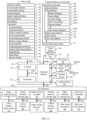
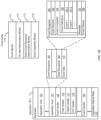
- FIGS. 1A-1B , 2 , 3 , 4A-4B , and 5A-5B provide a description of exemplary devices for performing the techniques for managing event notifications.
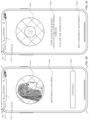
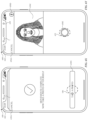
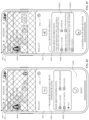
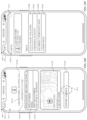
- FIGS. 6A-6AF illustrate exemplary user interfaces for enrolling a digital identification credential.
- FIG. 7 is a flow diagram illustrating methods of enrolling a digital identification credential in accordance with some embodiments. The user interfaces in FIGS. 6A-6AF are used to illustrate the processes described below, including the processes in FIG. 7 .
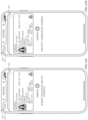
- FIGS. 8A-8H illustrate exemplary user interfaces for using a digital identification credential.
- FIG. 9 is a flow diagram illustrating methods of using a digital identification credential in accordance with some embodiments. The user interfaces in FIGS.
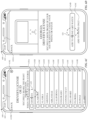
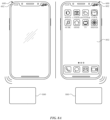
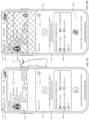
- FIGS. 10A-10J illustrate exemplary user interfaces for managing digital identification credentials.
- FIGS. 11A-11B are a flow diagram illustrating methods of managing digital identification credentials in accordance with some embodiments. The user interfaces in FIGS. 10A-10J are used to illustrate the processes described below, including the processes in FIGS. 11A-11B .
- the processes described below enhance the operability of the devices and make the user-device interfaces more efficient (e.g., by helping the user to provide proper inputs and reducing user mistakes when operating/interacting with the device) through various techniques, including by providing improved visual feedback to the user, reducing the number of inputs needed to perform an operation, providing additional control options without cluttering the user interface with additional displayed controls, performing an operation when a set of conditions has been met without requiring further user input, providing improved and/or enhanced security, and/or additional techniques. These techniques also reduce power usage and improve battery life of the device by enabling the user to use the device more quickly and efficiently.
- system or computer readable medium contains instructions for performing the contingent operations based on the satisfaction of the corresponding one or more conditions and thus is capable of determining whether the contingency has or has not been satisfied without explicitly repeating steps of a method until all of the conditions upon which steps in the method are contingent have been met.
- a system or computer readable storage medium can repeat the steps of a method as many times as are needed to ensure that all of the contingent steps have been performed.
- first means "first,” “second,” etc. to describe various elements, these elements should not be limited by the terms. These terms are only used to distinguish one element from another.
- a first touch could be termed a second touch, and, similarly, a second touch could be termed a first touch, without departing from the scope of the various described embodiments.
- the first touch and the second touch are both touches, but they are not the same touch.
- if is, optionally, construed to mean “when” or “upon” or “in response to determining” or “in response to detecting,” depending on the context.
- phrase “if it is determined” or “if [a stated condition or event] is detected” is, optionally, construed to mean “upon determining” or “in response to determining” or “upon detecting [the stated condition or event]” or “in response to detecting [the stated condition or event],” depending on the context.
- the device is a portable communications device, such as a mobile telephone, that also contains other functions, such as PDA and/or music player functions.
- portable multifunction devices include, without limitation, the iPhone ® , iPod Touch ® , and iPad ® devices from Apple Inc. of Cupertino, California.
- Other portable electronic devices such as laptops or tablet computers with touch-sensitive surfaces (e.g., touch screen displays and/or touchpads), are, optionally, used.
- the device is not a portable communications device, but is a desktop computer with a touch-sensitive surface (e.g., a touch screen display and/or a touchpad).
- the electronic device is a computer system that is in communication (e.g., via wireless communication, via wired communication) with a display generation component.
- the display generation component is configured to provide visual output, such as display via a CRT display, display via an LED display, or display via image projection.
- the display generation component is integrated with the computer system. In some embodiments, the display generation component is separate from the computer system.
- displaying includes causing to display the content (e.g., video data rendered or decoded by display controller 156) by transmitting, via a wired or wireless connection, data (e.g., image data or video data) to an integrated or external display generation component to visually produce the content.
- content e.g., video data rendered or decoded by display controller 1566
- data e.g., image data or video data
- an electronic device that includes a display and a touch-sensitive surface is described. It should be understood, however, that the electronic device optionally includes one or more other physical user-interface devices, such as a physical keyboard, a mouse, and/or a joystick.
- the device typically supports a variety of applications, such as one or more of the following: a drawing application, a presentation application, a word processing application, a website creation application, a disk authoring application, a spreadsheet application, a gaming application, a telephone application, a video conferencing application, an e-mail application, an instant messaging application, a workout support application, a photo management application, a digital camera application, a digital video camera application, a web browsing application, a digital music player application, and/or a digital video player application.
- applications such as one or more of the following: a drawing application, a presentation application, a word processing application, a website creation application, a disk authoring application, a spreadsheet application, a gaming application, a telephone application, a video conferencing application, an e-mail application, an instant messaging application, a workout support application, a photo management application, a digital camera application, a digital video camera application, a web browsing application, a digital music player application, and/or a digital video player application.
- the various applications that are executed on the device optionally use at least one common physical user-interface device, such as the touch-sensitive surface.
- One or more functions of the touch-sensitive surface as well as corresponding information displayed on the device are, optionally, adjusted and/or varied from one application to the next and/or within a respective application.
- a common physical architecture (such as the touch-sensitive surface) of the device optionally supports the variety of applications with user interfaces that are intuitive and transparent to the user.
- FIG. 1A is a block diagram illustrating portable multifunction device 100 with touch-sensitive display system 112 in accordance with some embodiments.
- Touch-sensitive display 112 is sometimes called a "touch screen” for convenience and is sometimes known as or called a "touch-sensitive display system.”
- Device 100 includes memory 102 (which optionally includes one or more computer-readable storage mediums), memory controller 122, one or more processing units (CPUs) 120, peripherals interface 118, RF circuitry 108, audio circuitry 110, speaker 111, microphone 113, input/output (I/O) subsystem 106, other input control devices 116, and external port 124.
- Device 100 optionally includes one or more optical sensors 164.
- Device 100 optionally includes one or more contact intensity sensors 165 for detecting intensity of contacts on device 100 (e.g., a touch-sensitive surface such as touch-sensitive display system 112 of device 100).
- Device 100 optionally includes one or more tactile output generators 167 for generating tactile outputs on device 100 (e.g., generating tactile outputs on a touch-sensitive surface such as touch-sensitive display system 112 of device 100 or touchpad 355 of device 300). These components optionally communicate over one or more communication buses or signal lines 103.
- the term "intensity" of a contact on a touch-sensitive surface refers to the force or pressure (force per unit area) of a contact (e.g., a finger contact) on the touch-sensitive surface, or to a substitute (proxy) for the force or pressure of a contact on the touch-sensitive surface.
- the intensity of a contact has a range of values that includes at least four distinct values and more typically includes hundreds of distinct values (e.g., at least 256).
- Intensity of a contact is, optionally, determined (or measured) using various approaches and various sensors or combinations of sensors. For example, one or more force sensors underneath or adjacent to the touch-sensitive surface are, optionally, used to measure force at various points on the touch-sensitive surface.
- force measurements from multiple force sensors are combined (e.g., a weighted average) to determine an estimated force of a contact.
- a pressure-sensitive tip of a stylus is, optionally, used to determine a pressure of the stylus on the touch-sensitive surface.
- the size of the contact area detected on the touch-sensitive surface and/or changes thereto, the capacitance of the touch-sensitive surface proximate to the contact and/or changes thereto, and/or the resistance of the touch-sensitive surface proximate to the contact and/or changes thereto are, optionally, used as a substitute for the force or pressure of the contact on the touch-sensitive surface.
- the substitute measurements for contact force or pressure are used directly to determine whether an intensity threshold has been exceeded (e.g., the intensity threshold is described in units corresponding to the substitute measurements).
- the substitute measurements for contact force or pressure are converted to an estimated force or pressure, and the estimated force or pressure is used to determine whether an intensity threshold has been exceeded (e.g., the intensity threshold is a pressure threshold measured in units of pressure).
- intensity of a contact as an attribute of a user input allows for user access to additional device functionality that may otherwise not be accessible by the user on a reduced-size device with limited real estate for displaying affordances (e.g., on a touch-sensitive display) and/or receiving user input (e.g., via a touch-sensitive display, a touch-sensitive surface, or a physical/mechanical control such as a knob or a button).
- the term "tactile output” refers to physical displacement of a device relative to a previous position of the device, physical displacement of a component (e.g., a touch-sensitive surface) of a device relative to another component (e.g., housing) of the device, or displacement of the component relative to a center of mass of the device that will be detected by a user with the user's sense of touch.
- a component e.g., a touch-sensitive surface
- another component e.g., housing
- the tactile output generated by the physical displacement will be interpreted by the user as a tactile sensation corresponding to a perceived change in physical characteristics of the device or the component of the device.
- a touch-sensitive surface e.g., a touch-sensitive display or trackpad
- movement of a touch-sensitive surface is, optionally, interpreted by the user as a "down click" or "up click" of a physical actuator button.
- a user will feel a tactile sensation such as an "down click” or “up click” even when there is no movement of a physical actuator button associated with the touch-sensitive surface that is physically pressed (e.g., displaced) by the user's movements.
- movement of the touch-sensitive surface is, optionally, interpreted or sensed by the user as "roughness" of the touch-sensitive surface, even when there is no change in smoothness of the touch-sensitive surface. While such interpretations of touch by a user will be subject to the individualized sensory perceptions of the user, there are many sensory perceptions of touch that are common to a large majority of users.
- a tactile output is described as corresponding to a particular sensory perception of a user (e.g., an "up click,” a “down click,” “roughness")
- the generated tactile output corresponds to physical displacement of the device or a component thereof that will generate the described sensory perception for a typical (or average) user.
- device 100 is only one example of a portable multifunction device, and that device 100 optionally has more or fewer components than shown, optionally combines two or more components, or optionally has a different configuration or arrangement of the components.
- the various components shown in FIG. 1A are implemented in hardware, software, or a combination of both hardware and software, including one or more signal processing and/or application-specific integrated circuits.
- Memory 102 optionally includes high-speed random access memory and optionally also includes non-volatile memory, such as one or more magnetic disk storage devices, flash memory devices, or other non-volatile solid-state memory devices.
- Memory controller 122 optionally controls access to memory 102 by other components of device 100.
- Peripherals interface 118 can be used to couple input and output peripherals of the device to CPU 120 and memory 102.
- the one or more processors 120 run or execute various software programs (such as computer programs (e.g., including instructions)) and/or sets of instructions stored in memory 102 to perform various functions for device 100 and to process data.
- peripherals interface 118, CPU 120, and memory controller 122 are, optionally, implemented on a single chip, such as chip 104. In some other embodiments, they are, optionally, implemented on separate chips.
- RF (radio frequency) circuitry 108 receives and sends RF signals, also called electromagnetic signals.
- RF circuitry 108 converts electrical signals to/from electromagnetic signals and communicates with communications networks and other communications devices via the electromagnetic signals.
- RF circuitry 108 optionally includes well-known circuitry for performing these functions, including but not limited to an antenna system, an RF transceiver, one or more amplifiers, a tuner, one or more oscillators, a digital signal processor, a CODEC chipset, a subscriber identity module (SIM) card, memory, and so forth.
- an antenna system an RF transceiver, one or more amplifiers, a tuner, one or more oscillators, a digital signal processor, a CODEC chipset, a subscriber identity module (SIM) card, memory, and so forth.
- SIM subscriber identity module
- RF circuitry 108 optionally communicates with networks, such as the Internet, also referred to as the World Wide Web (WWW), an intranet and/or a wireless network, such as a cellular telephone network, a wireless local area network (LAN) and/or a metropolitan area network (MAN), and other devices by wireless communication.
- the RF circuitry 108 optionally includes well-known circuitry for detecting near field communication (NFC) fields, such as by a short-range communication radio.
- NFC near field communication
- the wireless communication optionally uses any of a plurality of communications standards, protocols, and technologies, including but not limited to Global System for Mobile Communications (GSM), Enhanced Data GSM Environment (EDGE), high-speed downlink packet access (HSDPA), high-speed uplink packet access (HSUPA), Evolution, Data-Only (EV-DO), HSPA, HSPA+, Dual-Cell HSPA (DC-HSPDA), long term evolution (LTE), near field communication (NFC), wideband code division multiple access (W-CDMA), code division multiple access (CDMA), time division multiple access (TDMA), Bluetooth, Bluetooth Low Energy (BTLE), Wireless Fidelity (Wi-Fi) (e.g., IEEE 802.11a, IEEE 802.11b, IEEE 802.11g, IEEE 802.11n, and/or IEEE 802.11ac), voice over Internet Protocol (VoIP), Wi-MAX, a protocol for e-mail (e.g., Internet message access protocol (IMAP) and/or post office protocol (POP)), instant messaging (e.
- Audio circuitry 110, speaker 111, and microphone 113 provide an audio interface between a user and device 100.
- Audio circuitry 110 receives audio data from peripherals interface 118, converts the audio data to an electrical signal, and transmits the electrical signal to speaker 111.
- Speaker 111 converts the electrical signal to human-audible sound waves.
- Audio circuitry 110 also receives electrical signals converted by microphone 113 from sound waves.
- Audio circuitry 110 converts the electrical signal to audio data and transmits the audio data to peripherals interface 118 for processing. Audio data is, optionally, retrieved from and/or transmitted to memory 102 and/or RF circuitry 108 by peripherals interface 118.
- audio circuitry 110 also includes a headset jack (e.g., 212, FIG. 2 ). The headset jack provides an interface between audio circuitry 110 and removable audio input/output peripherals, such as output-only headphones or a headset with both output (e.g., a headphone for one or both ears) and input (e.g., a microphone
- I/O subsystem 106 couples input/output peripherals on device 100, such as touch screen 112 and other input control devices 116, to peripherals interface 118.
- I/O subsystem 106 optionally includes display controller 156, optical sensor controller 158, depth camera controller 169, intensity sensor controller 159, haptic feedback controller 161, and one or more input controllers 160 for other input or control devices.
- the one or more input controllers 160 receive/send electrical signals from/to other input control devices 116.
- the other input control devices 116 optionally include physical buttons (e.g., push buttons, rocker buttons, etc.), dials, slider switches, joysticks, click wheels, and so forth.
- input controller(s) 160 are, optionally, coupled to any (or none) of the following: a keyboard, an infrared port, a USB port, and a pointer device such as a mouse.
- the one or more buttons optionally include an up/down button for volume control of speaker 111 and/or microphone 113.
- the one or more buttons optionally include a push button (e.g., 206, FIG. 2 ).
- the electronic device is a computer system that is in communication (e.g., via wireless communication, via wired communication) with one or more input devices.
- the one or more input devices include a touch-sensitive surface (e.g., a trackpad, as part of a touch-sensitive display).
- the one or more input devices include one or more camera sensors (e.g., one or more optical sensors 164 and/or one or more depth camera sensors 175), such as for tracking a user's gestures (e.g., hand gestures) as input.
- the one or more input devices are integrated with the computer system. In some embodiments, the one or more input devices are separate from the computer system.
- a quick press of the push button optionally disengages a lock of touch screen 112 or optionally begins a process that uses gestures on the touch screen to unlock the device, as described in U.S. Patent Application 11/322,549, "Unlocking a Device by Performing Gestures on an Unlock Image," filed December 23, 2005 , U.S. Pat. No. 7,657,849 , which is hereby incorporated by reference in its entirety.
- a longer press of the push button e.g., 206) optionally turns power to device 100 on or off.
- the functionality of one or more of the buttons are, optionally, user-customizable.
- Touch screen 112 is used to implement virtual or soft buttons and one or more soft keyboards.
- Touch-sensitive display 112 provides an input interface and an output interface between the device and a user.
- Display controller 156 receives and/or sends electrical signals from/to touch screen 112.
- Touch screen 112 displays visual output to the user.
- the visual output optionally includes graphics, text, icons, video, and any combination thereof (collectively termed "graphics"). In some embodiments, some or all of the visual output optionally corresponds to user-interface objects.
- Touch screen 112 has a touch-sensitive surface, sensor, or set of sensors that accepts input from the user based on haptic and/or tactile contact.
- Touch screen 112 and display controller 156 (along with any associated modules and/or sets of instructions in memory 102) detect contact (and any movement or breaking of the contact) on touch screen 112 and convert the detected contact into interaction with user-interface objects (e.g., one or more soft keys, icons, web pages, or images) that are displayed on touch screen 112.
- user-interface objects e.g., one or more soft keys, icons, web pages, or images
- a point of contact between touch screen 112 and the user corresponds to a finger of the user.
- Touch screen 112 optionally uses LCD (liquid crystal display) technology, LPD (light emitting polymer display) technology, or LED (light emitting diode) technology, although other display technologies are used in other embodiments.
- Touch screen 112 and display controller 156 optionally detect contact and any movement or breaking thereof using any of a plurality of touch sensing technologies now known or later developed, including but not limited to capacitive, resistive, infrared, and surface acoustic wave technologies, as well as other proximity sensor arrays or other elements for determining one or more points of contact with touch screen 112.
- touch sensing technologies now known or later developed, including but not limited to capacitive, resistive, infrared, and surface acoustic wave technologies, as well as other proximity sensor arrays or other elements for determining one or more points of contact with touch screen 112.
- projected mutual capacitance sensing technology is used, such as that found in the iPhone ® and iPod Touch ® from Apple Inc. of Cupertino, California.
- a touch-sensitive display in some embodiments of touch screen 112 is, optionally, analogous to the multi-touch sensitive touchpads described in the following U.S. Patents: 6,323,846 (Westerman et al. ), 6,570,557 (Westerman et al. ), and/or 6,677,932 (Westerman ), and/or U.S. Patent Publication 2002/0015024A1 , each of which is hereby incorporated by reference in its entirety.
- touch screen 112 displays visual output from device 100, whereas touch-sensitive touchpads do not provide visual output.
- a touch-sensitive display in some embodiments of touch screen 112 is described in the following applications: (1) U.S. Patent Application No. 11/381,313, "Multipoint Touch Surface Controller,” filed May 2, 2006 ; (2) U.S. Patent Application No. 10/840,862, “Multipoint Touchscreen,” filed May 6, 2004 ; (3) U.S. Patent Application No. 10/903,964, "Gestures For Touch Sensitive Input Devices," filed July 30, 2004 ; (4) U.S. Patent Application No. 11/048,264, “Gestures For Touch Sensitive Input Devices,” filed January 31, 2005 ; (5) U.S. Patent Application No.
- Touch screen 112 optionally has a video resolution in excess of 100 dpi. In some embodiments, the touch screen has a video resolution of approximately 160 dpi.
- the user optionally makes contact with touch screen 112 using any suitable object or appendage, such as a stylus, a finger, and so forth.
- the user interface is designed to work primarily with finger-based contacts and gestures, which can be less precise than stylus-based input due to the larger area of contact of a finger on the touch screen.
- the device translates the rough finger-based input into a precise pointer/cursor position or command for performing the actions desired by the user.
- device 100 in addition to the touch screen, device 100 optionally includes a touchpad for activating or deactivating particular functions.
- the touchpad is a touch-sensitive area of the device that, unlike the touch screen, does not display visual output.
- the touchpad is, optionally, a touch-sensitive surface that is separate from touch screen 112 or an extension of the touch-sensitive surface formed by the touch screen.
- Power system 162 for powering the various components.
- Power system 162 optionally includes a power management system, one or more power sources (e.g., battery, alternating current (AC)), a recharging system, a power failure detection circuit, a power converter or inverter, a power status indicator (e.g., a light-emitting diode (LED)) and any other components associated with the generation, management and distribution of power in portable devices.
- power sources e.g., battery, alternating current (AC)
- AC alternating current
- a recharging system e.g., a recharging system
- a power failure detection circuit e.g., a power failure detection circuit
- a power converter or inverter e.g., a power converter or inverter
- a power status indicator e.g., a light-emitting diode (LED)
- Device 100 optionally also includes one or more optical sensors 164.
- FIG. 1A shows an optical sensor coupled to optical sensor controller 158 in I/O subsystem 106.
- Optical sensor 164 optionally includes charge-coupled device (CCD) or complementary metal-oxide semiconductor (CMOS) phototransistors.
- CCD charge-coupled device
- CMOS complementary metal-oxide semiconductor
- Optical sensor 164 receives light from the environment, projected through one or more lenses, and converts the light to data representing an image.
- imaging module 143 also called a camera module
- optical sensor 164 optionally captures still images or video.
- an optical sensor is located on the back of device 100, opposite touch screen display 112 on the front of the device so that the touch screen display is enabled for use as a viewfinder for still and/or video image acquisition.
- an optical sensor is located on the front of the device so that the user's image is, optionally, obtained for video conferencing while the user views the other video conference participants on the touch screen display.
- the position of optical sensor 164 can be changed by the user (e.g., by rotating the lens and the sensor in the device housing) so that a single optical sensor 164 is used along with the touch screen display for both video conferencing and still and/or video image acquisition.
- FIG. 1A shows a depth camera sensor coupled to depth camera controller 169 in I/O subsystem 106.
- Depth camera sensor 175 receives data from the environment to create a three dimensional model of an object (e.g., a face) within a scene from a viewpoint (e.g., a depth camera sensor).
- a viewpoint e.g., a depth camera sensor.
- depth camera sensor 175 is optionally used to determine a depth map of different portions of an image captured by the imaging module 143.
- a depth camera sensor is located on the front of device 100 so that the user's image with depth information is, optionally, obtained for video conferencing while the user views the other video conference participants on the touch screen display and to capture selfies with depth map data.
- the depth camera sensor 175 is located on the back of device, or on the back and the front of the device 100.
- the position of depth camera sensor 175 can be changed by the user (e.g., by rotating the lens and the sensor in the device housing) so that a depth camera sensor 175 is used along with the touch screen display for both video conferencing and still and/or video image acquisition.
- Device 100 optionally also includes one or more contact intensity sensors 165.
- FIG. 1A shows a contact intensity sensor coupled to intensity sensor controller 159 in I/O subsystem 106.
- Contact intensity sensor 165 optionally includes one or more piezoresistive strain gauges, capacitive force sensors, electric force sensors, piezoelectric force sensors, optical force sensors, capacitive touch-sensitive surfaces, or other intensity sensors (e.g., sensors used to measure the force (or pressure) of a contact on a touch-sensitive surface).
- Contact intensity sensor 165 receives contact intensity information (e.g., pressure information or a proxy for pressure information) from the environment.
- contact intensity information e.g., pressure information or a proxy for pressure information
- At least one contact intensity sensor is collocated with, or proximate to, a touch-sensitive surface (e.g., touch-sensitive display system 112). In some embodiments, at least one contact intensity sensor is located on the back of device 100, opposite touch screen display 112, which is located on the front of device 100.
- a touch-sensitive surface e.g., touch-sensitive display system 112
- at least one contact intensity sensor is located on the back of device 100, opposite touch screen display 112, which is located on the front of device 100.
- Device 100 optionally also includes one or more proximity sensors 166.
- FIG. 1A shows proximity sensor 166 coupled to peripherals interface 118. Alternately, proximity sensor 166 is, optionally, coupled to input controller 160 in I/O subsystem 106. Proximity sensor 166 optionally performs as described in U.S. Patent Application Nos.
- Device 100 optionally also includes one or more tactile output generators 167.
- FIG. 1A shows a tactile output generator coupled to haptic feedback controller 161 in I/O subsystem 106.
- Tactile output generator 167 optionally includes one or more electroacoustic devices such as speakers or other audio components and/or electromechanical devices that convert energy into linear motion such as a motor, solenoid, electroactive polymer, piezoelectric actuator, electrostatic actuator, or other tactile output generating component (e.g., a component that converts electrical signals into tactile outputs on the device).
- Contact intensity sensor 165 receives tactile feedback generation instructions from haptic feedback module 133 and generates tactile outputs on device 100 that are capable of being sensed by a user of device 100.
- At least one tactile output generator is collocated with, or proximate to, a touch-sensitive surface (e.g., touch-sensitive display system 112) and, optionally, generates a tactile output by moving the touch-sensitive surface vertically (e.g., in/out of a surface of device 100) or laterally (e.g., back and forth in the same plane as a surface of device 100).
- a touch-sensitive surface e.g., touch-sensitive display system 112
- at least one tactile output generator sensor is located on the back of device 100, opposite touch screen display 112, which is located on the front of device 100.
- Device 100 optionally also includes one or more accelerometers 168.
- FIG. 1A shows accelerometer 168 coupled to peripherals interface 118.
- accelerometer 168 is, optionally, coupled to an input controller 160 in I/O subsystem 106.
- Accelerometer 168 optionally performs as described in U.S. Patent Publication No. 20050190059 , "Acceleration-based Theft Detection System for Portable Electronic Devices," and U.S. Patent Publication No. 20060017692 , “Methods And Apparatuses For Operating A Portable Device Based On An Accelerometer,” both of which are incorporated by reference herein in their entirety.
- information is displayed on the touch screen display in a portrait view or a landscape view based on an analysis of data received from the one or more accelerometers.
- Device 100 optionally includes, in addition to accelerometer(s) 168, a magnetometer and a GPS (or GLONASS or other global navigation system) receiver for obtaining information concerning the location and orientation (e.g., portrait or landscape) of device 100.
- GPS or GLONASS or other global navigation system
- the software components stored in memory 102 include operating system 126, communication module (or set of instructions) 128, contact/motion module (or set of instructions) 130, graphics module (or set of instructions) 132, text input module (or set of instructions) 134, Global Positioning System (GPS) module (or set of instructions) 135, and applications (or sets of instructions) 136.
- memory 102 FIG. 1A or 370 ( FIG. 3 ) stores device/global internal state 157, as shown in FIGS. 1A and 3 .
- Device/global internal state 157 includes one or more of: active application state, indicating which applications, if any, are currently active; display state, indicating what applications, views or other information occupy various regions of touch screen display 112; sensor state, including information obtained from the device's various sensors and input control devices 116; and location information concerning the device's location and/or attitude.
- Operating system 126 e.g., Darwin, RTXC, LINUX, UNIX, OS X, iOS, WINDOWS, or an embedded operating system such as VxWorks
- Operating system 126 includes various software components and/or drivers for controlling and managing general system tasks (e.g., memory management, storage device control, power management, etc.) and facilitates communication between various hardware and software components.
- Communication module 128 facilitates communication with other devices over one or more external ports 124 and also includes various software components for handling data received by RF circuitry 108 and/or external port 124.
- External port 124 e.g., Universal Serial Bus (USB), FIREWIRE, etc.
- USB Universal Serial Bus
- FIREWIRE FireWire
- the external port is a multi-pin (e.g., 30-pin) connector that is the same as, or similar to and/or compatible with, the 30-pin connector used on iPod ® (trademark of Apple Inc.) devices.
- Contact/motion module 130 optionally detects contact with touch screen 112 (in conjunction with display controller 156) and other touch-sensitive devices (e.g., a touchpad or physical click wheel).
- Contact/motion module 130 includes various software components for performing various operations related to detection of contact, such as determining if contact has occurred (e.g., detecting a finger-down event), determining an intensity of the contact (e.g., the force or pressure of the contact or a substitute for the force or pressure of the contact), determining if there is movement of the contact and tracking the movement across the touch-sensitive surface (e.g., detecting one or more finger-dragging events), and determining if the contact has ceased (e.g., detecting a finger-up event or a break in contact).
- Contact/motion module 130 receives contact data from the touch-sensitive surface. Determining movement of the point of contact, which is represented by a series of contact data, optionally includes determining speed (magnitude), velocity (magnitude and direction), and/or an acceleration (a change in magnitude and/or direction) of the point of contact. These operations are, optionally, applied to single contacts (e.g., one finger contacts) or to multiple simultaneous contacts (e.g., "multitouch"/multiple finger contacts). In some embodiments, contact/motion module 130 and display controller 156 detect contact on a touchpad.
- contact/motion module 130 uses a set of one or more intensity thresholds to determine whether an operation has been performed by a user (e.g., to determine whether a user has "clicked" on an icon).
- at least a subset of the intensity thresholds are determined in accordance with software parameters (e.g., the intensity thresholds are not determined by the activation thresholds of particular physical actuators and can be adjusted without changing the physical hardware of device 100). For example, a mouse "click" threshold of a trackpad or touch screen display can be set to any of a large range of predefined threshold values without changing the trackpad or touch screen display hardware.
- a user of the device is provided with software settings for adjusting one or more of the set of intensity thresholds (e.g., by adjusting individual intensity thresholds and/or by adjusting a plurality of intensity thresholds at once with a system-level click "intensity" parameter).
- Contact/motion module 130 optionally detects a gesture input by a user.
- Different gestures on the touch-sensitive surface have different contact patterns (e.g., different motions, timings, and/or intensities of detected contacts).
- a gesture is, optionally, detected by detecting a particular contact pattern.
- detecting a finger tap gesture includes detecting a finger-down event followed by detecting a finger-up (liftoff) event at the same position (or substantially the same position) as the finger-down event (e.g., at the position of an icon).
- detecting a finger swipe gesture on the touch-sensitive surface includes detecting a finger-down event followed by detecting one or more finger-dragging events, and subsequently followed by detecting a finger-up (liftoff) event.
- Graphics module 132 includes various known software components for rendering and displaying graphics on touch screen 112 or other display, including components for changing the visual impact (e.g., brightness, transparency, saturation, contrast, or other visual property) of graphics that are displayed.
- graphics includes any object that can be displayed to a user, including, without limitation, text, web pages, icons (such as user-interface objects including soft keys), digital images, videos, animations, and the like.
- graphics module 132 stores data representing graphics to be used. Each graphic is, optionally, assigned a corresponding code. Graphics module 132 receives, from applications etc., one or more codes specifying graphics to be displayed along with, if necessary, coordinate data and other graphic property data, and then generates screen image data to output to display controller 156.
- Haptic feedback module 133 includes various software components for generating instructions used by tactile output generator(s) 167 to produce tactile outputs at one or more locations on device 100 in response to user interactions with device 100.
- Text input module 134 which is, optionally, a component of graphics module 132, provides soft keyboards for entering text in various applications (e.g., contacts 137, e-mail 140, IM 141, browser 147, and any other application that needs text input).
- applications e.g., contacts 137, e-mail 140, IM 141, browser 147, and any other application that needs text input).
- GPS module 135 determines the location of the device and provides this information for use in various applications (e.g., to telephone 138 for use in location-based dialing; to camera 143 as picture/video metadata; and to applications that provide location-based services such as weather widgets, local yellow page widgets, and map/navigation widgets).
- applications e.g., to telephone 138 for use in location-based dialing; to camera 143 as picture/video metadata; and to applications that provide location-based services such as weather widgets, local yellow page widgets, and map/navigation widgets).
- Applications 136 optionally include the following modules (or sets of instructions), or a subset or superset thereof:
- Examples of other applications 136 that are, optionally, stored in memory 102 include other word processing applications, other image editing applications, drawing applications, presentation applications, JAVA-enabled applications, encryption, digital rights management, voice recognition, and voice replication.
- contacts module 137 are, optionally, used to manage an address book or contact list (e.g., stored in application internal state 192 of contacts module 137 in memory 102 or memory 370), including: adding name(s) to the address book; deleting name(s) from the address book; associating telephone number(s), e-mail address(es), physical address(es) or other information with a name; associating an image with a name; categorizing and sorting names; providing telephone numbers or e-mail addresses to initiate and/or facilitate communications by telephone 138, video conference module 139, e-mail 140, or IM 141; and so forth.
- an address book or contact list e.g., stored in application internal state 192 of contacts module 137 in memory 102 or memory 370
- telephone module 138 are optionally, used to enter a sequence of characters corresponding to a telephone number, access one or more telephone numbers in contacts module 137, modify a telephone number that has been entered, dial a respective telephone number, conduct a conversation, and disconnect or hang up when the conversation is completed.
- the wireless communication optionally uses any of a plurality of communications standards, protocols, and technologies.
- video conference module 139 includes executable instructions to initiate, conduct, and terminate a video conference between a user and one or more other participants in accordance with user instructions.
- e-mail client module 140 includes executable instructions to create, send, receive, and manage e-mail in response to user instructions.
- e-mail client module 140 makes it very easy to create and send e-mails with still or video images taken with camera module 143.
- the instant messaging module 141 includes executable instructions to enter a sequence of characters corresponding to an instant message, to modify previously entered characters, to transmit a respective instant message (for example, using a Short Message Service (SMS) or Multimedia Message Service (MMS) protocol for telephony-based instant messages or using XMPP, SIMPLE, or IMPS for Internet-based instant messages), to receive instant messages, and to view received instant messages.
- SMS Short Message Service
- MMS Multimedia Message Service
- XMPP extensible Markup Language
- SIMPLE Session Initiation Protocol
- IMPS Internet Messaging Protocol
- transmitted and/or received instant messages optionally include graphics, photos, audio files, video files and/or other attachments as are supported in an MMS and/or an Enhanced Messaging Service (EMS).
- EMS Enhanced Messaging Service
- instant messaging refers to both telephony-based messages (e.g., messages sent using SMS or MMS) and Internet-based messages (e.g., messages sent using XMP
- workout support module 142 includes executable instructions to create workouts (e.g., with time, distance, and/or calorie burning goals); communicate with workout sensors (sports devices); receive workout sensor data; calibrate sensors used to monitor a workout; select and play music for a workout; and display, store, and transmit workout data.
- create workouts e.g., with time, distance, and/or calorie burning goals
- communicate with workout sensors sports devices
- receive workout sensor data calibrate sensors used to monitor a workout
- select and play music for a workout and display, store, and transmit workout data.
- camera module 143 includes executable instructions to capture still images or video (including a video stream) and store them into memory 102, modify characteristics of a still image or video, or delete a still image or video from memory 102.
- image management module 144 includes executable instructions to arrange, modify (e.g., edit), or otherwise manipulate, label, delete, present (e.g., in a digital slide show or album), and store still and/or video images.
- modify e.g., edit
- present e.g., in a digital slide show or album
- browser module 147 includes executable instructions to browse the Internet in accordance with user instructions, including searching, linking to, receiving, and displaying web pages or portions thereof, as well as attachments and other files linked to web pages.
- calendar module 148 includes executable instructions to create, display, modify, and store calendars and data associated with calendars (e.g., calendar entries, to-do lists, etc.) in accordance with user instructions.
- widget modules 149 are mini-applications that are, optionally, downloaded and used by a user (e.g., weather widget 149-1, stocks widget 149-2, calculator widget 149-3, alarm clock widget 149-4, and dictionary widget 149-5) or created by the user (e.g., user-created widget 149-6).
- a widget includes an HTML (Hypertext Markup Language) file, a CSS (Cascading Style Sheets) file, and a JavaScript file.
- a widget includes an XML (Extensible Markup Language) file and a JavaScript file (e.g., Yahoo! Widgets).
- the widget creator module 150 are, optionally, used by a user to create widgets (e.g., turning a user-specified portion of a web page into a widget).
- search module 151 includes executable instructions to search for text, music, sound, image, video, and/or other files in memory 102 that match one or more search criteria (e.g., one or more user-specified search terms) in accordance with user instructions.
- search criteria e.g., one or more user-specified search terms
- video and music player module 152 includes executable instructions that allow the user to download and play back recorded music and other sound files stored in one or more file formats, such as MP3 or AAC files, and executable instructions to display, present, or otherwise play back videos (e.g., on touch screen 112 or on an external, connected display via external port 124).
- device 100 optionally includes the functionality of an MP3 player, such as an iPod (trademark of Apple Inc.).
- notes module 153 includes executable instructions to create and manage notes, to-do lists, and the like in accordance with user instructions.
- map module 154 are, optionally, used to receive, display, modify, and store maps and data associated with maps (e.g., driving directions, data on stores and other points of interest at or near a particular location, and other location-based data) in accordance with user instructions.
- maps e.g., driving directions, data on stores and other points of interest at or near a particular location, and other location-based data
- online video module 155 includes instructions that allow the user to access, browse, receive (e.g., by streaming and/or download), play back (e.g., on the touch screen or on an external, connected display via external port 124), send an e-mail with a link to a particular online video, and otherwise manage online videos in one or more file formats, such as H.264.
- instant messaging module 141 rather than e-mail client module 140, is used to send a link to a particular online video.
- modules and applications corresponds to a set of executable instructions for performing one or more functions described above and the methods described in this application (e.g., the computer-implemented methods and other information processing methods described herein).
- modules e.g., sets of instructions
- These modules need not be implemented as separate software programs (such as computer programs (e.g., including instructions)), procedures, or modules, and thus various subsets of these modules are, optionally, combined or otherwise rearranged in various embodiments.
- video player module is, optionally, combined with music player module into a single module (e.g., video and music player module 152, FIG. 1A ).
- memory 102 optionally stores a subset of the modules and data structures identified above.
- memory 102 optionally stores additional modules and data structures not described above.
- device 100 is a device where operation of a predefined set of functions on the device is performed exclusively through a touch screen and/or a touchpad.
- a touch screen and/or a touchpad as the primary input control device for operation of device 100, the number of physical input control devices (such as push buttons, dials, and the like) on device 100 is, optionally, reduced.
- the predefined set of functions that are performed exclusively through a touch screen and/or a touchpad optionally include navigation between user interfaces.
- the touchpad when touched by the user, navigates device 100 to a main, home, or root menu from any user interface that is displayed on device 100.
- a "menu button" is implemented using a touchpad.
- the menu button is a physical push button or other physical input control device instead of a touchpad.
- FIG. 1B is a block diagram illustrating exemplary components for event handling in accordance with some embodiments.
- memory 102 FIG. 1A
- 370 FIG. 3
- event sorter 170 e.g., in operating system 126
- application 136-1 e.g., any of the aforementioned applications 137-151, 155, 380-390.
- Event sorter 170 receives event information and determines the application 136-1 and application view 191 of application 136-1 to which to deliver the event information.
- Event sorter 170 includes event monitor 171 and event dispatcher module 174.
- application 136-1 includes application internal state 192, which indicates the current application view(s) displayed on touch-sensitive display 112 when the application is active or executing.
- device/global internal state 157 is used by event sorter 170 to determine which application(s) is (are) currently active, and application internal state 192 is used by event sorter 170 to determine application views 191 to which to deliver event information.
- application internal state 192 includes additional information, such as one or more of: resume information to be used when application 136-1 resumes execution, user interface state information that indicates information being displayed or that is ready for display by application 136-1, a state queue for enabling the user to go back to a prior state or view of application 136-1, and a redo/undo queue of previous actions taken by the user.
- Event monitor 171 receives event information from peripherals interface 118.
- Event information includes information about a sub-event (e.g., a user touch on touch-sensitive display 112, as part of a multi-touch gesture).
- Peripherals interface 118 transmits information it receives from I/O subsystem 106 or a sensor, such as proximity sensor 166, accelerometer(s) 168, and/or microphone 113 (through audio circuitry 110).
- Information that peripherals interface 118 receives from I/O subsystem 106 includes information from touch-sensitive display 112 or a touch-sensitive surface.
- event monitor 171 sends requests to the peripherals interface 118 at predetermined intervals. In response, peripherals interface 118 transmits event information. In other embodiments, peripherals interface 118 transmits event information only when there is a significant event (e.g., receiving an input above a predetermined noise threshold and/or for more than a predetermined duration).
- event sorter 170 also includes a hit view determination module 172 and/or an active event recognizer determination module 173.
- Hit view determination module 172 provides software procedures for determining where a sub-event has taken place within one or more views when touch-sensitive display 112 displays more than one view. Views are made up of controls and other elements that a user can see on the display.
- the application views (of a respective application) in which a touch is detected optionally correspond to programmatic levels within a programmatic or view hierarchy of the application. For example, the lowest level view in which a touch is detected is, optionally, called the hit view, and the set of events that are recognized as proper inputs are, optionally, determined based, at least in part, on the hit view of the initial touch that begins a touch-based gesture.
- Active event recognizer determination module 173 determines which view or views within a view hierarchy should receive a particular sequence of sub-events. In some embodiments, active event recognizer determination module 173 determines that only the hit view should receive a particular sequence of sub-events. In other embodiments, active event recognizer determination module 173 determines that all views that include the physical location of a sub-event are actively involved views, and therefore determines that all actively involved views should receive a particular sequence of sub-events. In other embodiments, even if touch sub-events were entirely confined to the area associated with one particular view, views higher in the hierarchy would still remain as actively involved views.
- Event dispatcher module 174 dispatches the event information to an event recognizer (e.g., event recognizer 180). In embodiments including active event recognizer determination module 173, event dispatcher module 174 delivers the event information to an event recognizer determined by active event recognizer determination module 173. In some embodiments, event dispatcher module 174 stores in an event queue the event information, which is retrieved by a respective event receiver 182.
- an event recognizer e.g., event recognizer 180.
- event dispatcher module 174 delivers the event information to an event recognizer determined by active event recognizer determination module 173.
- event dispatcher module 174 stores in an event queue the event information, which is retrieved by a respective event receiver 182.
- operating system 126 includes event sorter 170.
- application 136-1 includes event sorter 170.
- event sorter 170 is a stand-alone module, or a part of another module stored in memory 102, such as contact/motion module 130.
- application 136-1 includes a plurality of event handlers 190 and one or more application views 191, each of which includes instructions for handling touch events that occur within a respective view of the application's user interface.
- Each application view 191 of the application 136-1 includes one or more event recognizers 180.
- a respective application view 191 includes a plurality of event recognizers 180.
- one or more of event recognizers 180 are part of a separate module, such as a user interface kit or a higher level object from which application 136-1 inherits methods and other properties.
- a respective event handler 190 includes one or more of: data updater 176, object updater 177, GUI updater 178, and/or event data 179 received from event sorter 170.
- Event handler 190 optionally utilizes or calls data updater 176, object updater 177, or GUI updater 178 to update the application internal state 192.
- one or more of the application views 191 include one or more respective event handlers 190.
- one or more of data updater 176, object updater 177, and GUI updater 178 are included in a respective application view 191.
- a respective event recognizer 180 receives event information (e.g., event data 179) from event sorter 170 and identifies an event from the event information.
- Event recognizer 180 includes event receiver 182 and event comparator 184.
- event recognizer 180 also includes at least a subset of: metadata 183, and event delivery instructions 188 (which optionally include sub-event delivery instructions).
- Event receiver 182 receives event information from event sorter 170.
- the event information includes information about a sub-event, for example, a touch or a touch movement.
- the event information also includes additional information, such as location of the sub-event.
- the event information optionally also includes speed and direction of the sub-event.
- events include rotation of the device from one orientation to another (e.g., from a portrait orientation to a landscape orientation, or vice versa), and the event information includes corresponding information about the current orientation (also called device attitude) of the device.
- the double tap for example, comprises a first touch (touch begin) on the displayed object for a predetermined phase, a first liftoff (touch end) for a predetermined phase, a second touch (touch begin) on the displayed object for a predetermined phase, and a second liftoff (touch end) for a predetermined phase.
- the definition for event 2 (187-2) is a dragging on a displayed object.
- the dragging for example, comprises a touch (or contact) on the displayed object for a predetermined phase, a movement of the touch across touch-sensitive display 112, and liftoff of the touch (touch end).
- the event also includes information for one or more associated event handlers 190.
- event definition 187 includes a definition of an event for a respective user-interface object.
- event comparator 184 performs a hit test to determine which user-interface object is associated with a sub-event. For example, in an application view in which three user-interface objects are displayed on touch-sensitive display 112, when a touch is detected on touch-sensitive display 112, event comparator 184 performs a hit test to determine which of the three user-interface objects is associated with the touch (sub-event). If each displayed object is associated with a respective event handler 190, the event comparator uses the result of the hit test to determine which event handler 190 should be activated. For example, event comparator 184 selects an event handler associated with the sub-event and the object triggering the hit test.
- the definition for a respective event (187) also includes delayed actions that delay delivery of the event information until after it has been determined whether the sequence of sub-events does or does not correspond to the event recognizer's event type.
- a respective event recognizer 180 determines that the series of sub-events do not match any of the events in event definitions 186, the respective event recognizer 180 enters an event impossible, event failed, or event ended state, after which it disregards subsequent sub-events of the touch-based gesture. In this situation, other event recognizers, if any, that remain active for the hit view continue to track and process sub-events of an ongoing touch-based gesture.
- event delivery instructions 188 include sub-event delivery instructions that deliver event information about a sub-event without activating an event handler. Instead, the sub-event delivery instructions deliver event information to event handlers associated with the series of sub-events or to actively involved views. Event handlers associated with the series of sub-events or with actively involved views receive the event information and perform a predetermined process.
- data updater 176 creates and updates data used in application 136-1. For example, data updater 176 updates the telephone number used in contacts module 137, or stores a video file used in video player module.
- object updater 177 creates and updates objects used in application 136-1. For example, object updater 177 creates a new user-interface object or updates the position of a user-interface object.
- GUI updater 178 updates the GUI. For example, GUI updater 178 prepares display information and sends it to graphics module 132 for display on a touch-sensitive display.
- event handler(s) 190 includes or has access to data updater 176, object updater 177, and GUI updater 178.
- data updater 176, object updater 177, and GUI updater 178 are included in a single module of a respective application 136-1 or application view 191. In other embodiments, they are included in two or more software modules.
- event handling of user touches on touch-sensitive displays also applies to other forms of user inputs to operate multifunction devices 100 with input devices, not all of which are initiated on touch screens.
- mouse movement and mouse button presses optionally coordinated with single or multiple keyboard presses or holds; contact movements such as taps, drags, scrolls, etc. on touchpads; pen stylus inputs; movement of the device; oral instructions; detected eye movements; biometric inputs; and/or any combination thereof are optionally utilized as inputs corresponding to sub-events which define an event to be recognized.
- FIG. 2 illustrates a portable multifunction device 100 having a touch screen 112 in accordance with some embodiments.
- the touch screen optionally displays one or more graphics within user interface (UI) 200.
- UI user interface
- a user is enabled to select one or more of the graphics by making a gesture on the graphics, for example, with one or more fingers 202 (not drawn to scale in the figure) or one or more styluses 203 (not drawn to scale in the figure).
- selection of one or more graphics occurs when the user breaks contact with the one or more graphics.
- the gesture optionally includes one or more taps, one or more swipes (from left to right, right to left, upward and/or downward), and/or a rolling of a finger (from right to left, left to right, upward and/or downward) that has made contact with device 100.
- inadvertent contact with a graphic does not select the graphic.
- a swipe gesture that sweeps over an application icon optionally does not select the corresponding application when the gesture corresponding to selection is a tap.
- Device 100 optionally also include one or more physical buttons, such as "home" or menu button 204.
- menu button 204 is, optionally, used to navigate to any application 136 in a set of applications that are, optionally, executed on device 100.
- the menu button is implemented as a soft key in a GUI displayed on touch screen 112.
- FIG. 3 is a block diagram of an exemplary multifunction device with a display and a touch-sensitive surface in accordance with some embodiments.
- Device 300 need not be portable.
- device 300 is a laptop computer, a desktop computer, a tablet computer, a multimedia player device, a navigation device, an educational device (such as a child's learning toy), a gaming system, or a control device (e.g., a home or industrial controller).
- Device 300 typically includes one or more processing units (CPUs) 310, one or more network or other communications interfaces 360, memory 370, and one or more communication buses 320 for interconnecting these components.
- Communication buses 320 optionally include circuitry (sometimes called a chipset) that interconnects and controls communications between system components.
- open application or "executing application” refer to a software application with retained state information (e.g., as part of device/global internal state 157 and/or application internal state 192).
- An open or executing application is, optionally, any one of the following types of applications:
- closing an application refers to software applications without retained state information (e.g., state information for closed applications is not stored in a memory of the device). Accordingly, closing an application includes stopping and/or removing application processes for the application and removing state information for the application from the memory of the device. Generally, opening a second application while in a first application does not close the first application. When the second application is displayed and the first application ceases to be displayed, the first application becomes a background application.
- UI user interfaces
- portable multifunction device 100 such as portable multifunction device 100, device 300, or device 500.
- FIG. 6A depicts electronic device 600, which is a smartphone with touch-sensitive display 602.
- electronic device 600 includes one or more features of devices 100, 300, and/or 500.
- Electronic device 600 depicts wallet user interface 604.
- Wallet user interface 604 includes representations of digital credentials 606A-606E that are stored on electronic device 600 (e.g., in a secure element of electronic device 600).
- Digital credential representations 606A-606E include digital payment credential representations 606A-606C (e.g., digital credentials that can be used to make payments for goods and services), and digital access credential representations 606D-606E (e.g., digital credentials that can be used for a user to gain access to goods and services, such as airline flights, events, and the like).
- Wallet user interface 604 also includes option 606F that is selectable to initiate a process for adding a new digital credential to electronic device 600 (e.g., for enrolling a new digital credential on electronic device 600).
- electronic device detects user input 608 corresponding to selection of option 606F.
- electronic device 600 displays user interface 610.
- User interface 610 includes a plurality of options 612A-612E for adding different types of digital credentials to electronic device 600 (e.g., enrolling different types of digital credentials on electronic device 600).
- Option 612A is selectable to apply for a new digital payment credential (e.g., apply for a new payment card that will be added as a digital payment credential).
- Option 612B is selectable to add a digital account balance credential to electronic device 600.
- Option 612C is selectable to add a digital payment credential to electronic device 600.
- Option 612D is selectable to add a digital transit credential to electronic device 600.
- Option 612E is selectable to add a digital identification credential to electronic device 600.
- User interface 610 also includes option 612F that is selectable to close user interface 610, and return to wallet user interface 604.
- electronic device 600 detects user input 614 corresponding to selection of option 612E.
- electronic device 600 displays user interface 616.
- User interface 616 includes option 618L that is selectable to close user interface 616 and return to wallet user interface 604, and option 618M that is selectable to return to user interface 610.
- User interface 616 also includes geographic region options 618A-618K that are selectable by a user to indicate a geographic region for the digital identification credential the user wishes to add to electronic device 600.
- geographic region options 618A-618K correspond to respective different states.
- electronic device 600 detects user input 620 corresponding to selection of geographic option 618A, which corresponds to the geographic region (e.g., state) of Georgia.
- electronic device 600 displays user interface 622.
- User interface 622 includes option 624A that is selectable to cease displaying user interface 622 and return to user interface 616.
- User interface 622 also includes options 624B-624C.
- Option 624B is selectable to enroll the new digital identification credential on electronic device 600 and an additional electronic device (in this case, a smartwatch (e.g., a smartwatch corresponding to and/or associated with electronic device 600).
- Option 624C is selectable to enroll the new digital identification credential on only electronic device 600, without enrolling the new digital identification credential on any other electronic devices.
- electronic device 600 detects user input 626 corresponding to selection of option 624B.
- electronic device 600 displays physical identification capture user interface 627.
- Physical identification capture user interface 627 includes cancel option 628B that is selectable to close physical identification capture user interface 627 and return to wallet user interface 604 (e.g., selectable to cancel enrollment of the new digital identification credential).
- Physical identification capture user interface 627 also includes instructions 628A instructing a user to use a camera on electronic device 600 to capture an image of the front of a physical identification credential (e.g., a physical identification card) corresponding to the digital identification credential the user wishes to add to electronic device 600.
- identification capture user interface 627 automatically includes a viewfinder of a camera of electronic device 600.
- the user has placed physical identification credential 630 in front of the camera of electronic device 600, and physical identification capture user interface 627 displays camera capture region 628C, which depicts image data being captured and/or received (e.g., a viewfinder) via the camera of electronic device 600.
- electronic device 600 detects that the front of physical identification credential 630 is in a field-of-view of the camera (e.g., detects that camera capture region 628C depicts an object that has a shape that is recognized as potentially being a physical identification credential), and automatically captures an image of the front of physical identification credential 630.
- physical identification capture user interface 627 includes a shutter button so that the user can provide a user input for electronic device 600 to capture the image of the front of physical identification credential 630.
- user interface 627 in response to electronic device 600 capturing the image of the front of physical identification credential 630, user interface 627 displays the captured image in camera capture region 628C. User interface 627 also displays option 628D that is selectable to indicate that the captured image is acceptable (e.g., is sufficiently clear and captures the front of physical identification credential 630), and option 628E that is selectable to return to user interface 627 of FIG. 6F in order to capture a new image of the front of physical identification credential 630.
- electronic device 600 detects user input 632 corresponding to selection of option 628D.
- electronic device 600 updates user interface 627 with updated instructions 628F, which instruct a user to take a picture of a back side of physical identification credential 630.
- the user has flipped over physical identification credential 630, and camera capture region 628C again depicts image data being captured and/or received via the camera of electronic device 600.
- electronic device 600 detects that the back of physical identification credential 630 is in the field-of-view of the camera (e.g., detects that camera capture region 628C depicts an object that has a shape that is recognized as potentially being a physical identification credential), and automatically captures an image of the back of physical identification credential 630.
- user interface 627 includes a shutter button so that the user can provide a user input for electronic device 600 to capture the image of the back of physical identification credential 630.
- Identity check user interface 648 includes option 650A that is selectable to close identity check user interface 648 and return to wallet user interface 604 (e.g., selectable to cancel enrollment of the new digital identification credential).
- Identity check user interface 648 also includes camera capture region 650C, which depicts image data being received and/or captured via camera 639 of electronic device 600, flash option 650D that is selectable to turn a flash on or off, and shutter button 650E that is selectable to capture an image.
- electronic device 600 detects user input 652 corresponding to selection of shutter button 650E.
- electronic device 600 displays user interface 654.
- User interface 654 includes notification 656A that informs a user that some of the information that was received during the enrollment process will be transmitted a third party. Notification 656A identifies what pieces of information will be transmitted to the third party (e.g., front of driver's license, back of driver's license, and the self-photo captured during the identity check portion of enrollment).
- User interface 654 includes cancel option 650A that is selectable to cancel enrollment of the new digital identification credential, and option 656B that is selectable to proceed with enrollment of the new digital identification credential, including transmitting the identified information to the third party.
- electronic device 600 detects user input 658 corresponding to selection of option 656B.
- electronic device displays user interface 660.
- User interface 660 includes notification 662A that informs a user that the digital identification credential will be bound to a biometric profile (e.g., a facial scan profile, a fingerprint scan profile, and/or an eye scan profile) and that biometric authentication will be required to use the digital identification credential after it is enrolled on electronic device 600.
- User interface 660 includes cancel option 650A that is selectable to cancel enrollment of the new digital identification credential, and option 662B that is selectable to proceed with enrollment of the new digital identification credential, including binding the new digital identification credential to a biometric profile.
- electronic device 600 detects user input 664 corresponding to selection of option 662B.
- electronic device 600 displays user interface 666 indicating that information is being transmitted to a third party.
- electronic device 600 displays user interface 668 indicating that the user's identity has been verified by the third party.
- the third party verifies the user's identity by comparing an image depicted on physical identification credential 630 with the self-image taken of the user during the identity check process (e.g., FIG. 6Y ).
- electronic device 600 displays user interface 670 which displays indication 672A that the digital identification credential has been successfully added to electronic device 600, and a corresponding smartwatch.
- User interface 670 also includes option 672B that is selectable to close user interface 670.
- electronic device 600 detects user input 674 corresponding to selection of option 672B.
- electronic device 600 displays wallet user interface 604, which now includes a representation of digital identification credential 606G, as well as confirmation indication 676 indicating that the new digital identification credential has been successfully added to electronic device 600.
- the digital identification credential stored on electronic device 600 includes all information that is associated with physical identification credential 300 (e.g., all information that is verifiable using and/or provided by physical identification credential 300).
- FIG. 7 is a flow diagram illustrating a method for enrolling a digital identification credential using a computer system in accordance with some embodiments.
- Method 700 is performed at a computer system (e.g., 100, 300, 500, 600) (e.g., a smart phone, a smart watch, and/or a tablet) that is in communication with a display generation component (e.g., a display controller; a touch-sensitive display system; and/or a display (e.g., integrated and/or connected)) and one or more input devices (e.g., a touch-sensitive surface (e.g., a touch-sensitive display); a mouse; a keyboard; a camera; and/or a remote control).
- a display generation component e.g., a display controller; a touch-sensitive display system; and/or a display (e.g., integrated and/or connected)
- input devices e.g., a touch-sensitive surface (e.g., a touch-sensitive display
- method 700 provides an intuitive way for enrolling a digital identification credential.
- the method reduces the cognitive burden on a user for enrolling a digital identification credential, thereby creating a more efficient human-machine interface.
- the computer system detects (702), via the one or more input devices, one or more user inputs (e.g., one or more tap user inputs and/or one or more non-tap user inputs) (e.g., 608, 614) corresponding to a request to add a digital identification credential to the computer system.
- one or more user inputs e.g., one or more tap user inputs and/or one or more non-tap user inputs
- non-tap user inputs e.g., 608, 614
- the computer system displays (706), via the display generation component, a liveness check user interface (e.g., 636) including one or more (e.g., textual, graphical, and/or audio) directions for a user to provide liveness check information (e.g., 638D, 638E).
- a liveness check user interface e.g., 636
- the one or more directions include one or more directions for the user to perform a gesture (e.g., one or more directions to perform a gesture in front of a camera and/or capture the gesture using the camera).
- the computer system receives (708), via the one or more input devices, liveness check information (e.g., 638C) (e.g., image and/or video information captured by a camera).
- liveness check information e.g., 638C
- the liveness check information is received while displaying the liveness check user interface.
- the computer system displays (710), via the display generation component, an identity check user interface (e.g., 648) including one or more directions for a user to provide identity check information (e.g., 648 in FIG. 6X instructing the user to take a photo of themselves).
- the one or more directions include one or more directions for the user to capture an image of a physical identification credential (e.g., a physical identification credential corresponding to the digital identification credential the user has requested to add to the computer system) (e.g., using a camera).
- the one or more directions include one or more directions for the user to capture a self-photograph (e.g., capture an image of the user).
- the computer system receives (712), via the one or more input devices, identity check information (e.g., 628C (e.g., photos of front and/or back of physical identification credential), 650C (e.g., photo of user)) (e.g., image information captured by a camera).
- identity check information e.g., 628C (e.g., photos of front and/or back of physical identification credential), 650C (e.g., photo of user)
- identity check information is received while displaying the identity check user interface.
- the computer system displays a visual indication that the liveness check information does not satisfy the set of liveness check criteria and/or that the identify check information does not satisfy the set of identity check criteria. Forgoing adding the digital identification credential to the computer system if the liveness check information does not satisfy the set of liveness check criteria and/or the identity check information does not satisfy the identity check criteria provides enhanced security and can prevent unauthorized users from initiating sensitive operations.
- the computer system receives a first selection input (e.g., 626) (e.g., one or more tap user inputs and/or one or more non-tap user inputs).
- a first selection input e.g., 626
- tap user inputs e.g., one or more tap user inputs and/or one or more non-tap user inputs.
- the computer system subsequent to receiving the liveness check information (e.g., 638C) and the identity check information (e.g., 628C and/or 650C), and in accordance with a determination that the first selection input corresponds to selection of the first option, that the liveness check information satisfies a set of liveness check criteria, and that the identity check information satisfies a set of identity check criteria, the computer system (e.g., 600) adds the digital identification credential to the first external electronic device (e.g., FIGS. 6AE-6AF , adding the digital identification credential to the smartwatch in addition to electronic device 600).
- the first external electronic device e.g., FIGS. 6AE-6AF
- the computer system subsequent to receiving the liveness check information (e.g., 638C) and the identity check information (e.g., 628C and/or 650C), and in accordance with a determination that the first selection input corresponds to selection of the second option (e.g., even if the liveness check and identity check are satisfied; and/or regardless of whether liveness check and identity check are satisfied), the computer system (e.g., 600) forgoes adding the digital identification credential to the first external electronic device. In some embodiments, the computer system forgoes adding the digital identification credential to any electronic device other than the computer system.
- the liveness check information e.g., 638C
- the identity check information e.g., 628C and/or 650C
- the computer system receives, via the one or more input devices, information (e.g., 628C) about (e.g., taking an image and/or a photograph of and/or reading information from the physical identification credential via NFC) (e.g., via a camera of the computer system and/or via an NFC reader of the computer system) a physical identification credential (e.g., 630) (e.g., a physical driver's license, state identification card, employee identification card, benefits identification card, rewards card, and/or passport) corresponding to the digital identification credential.
- information e.g., 628C
- information e.g., 628C
- a physical identification credential e.g., 630
- a physical driver's license e.g., a physical driver's license, state identification card, employee identification card, benefits identification card, rewards card, and/or passport
- the computer system receives first information about (e.g., a first scan of) the physical identification credential (e.g., a scan of the front of the physical identification credential) and receives second information about (e.g., a second scan of) the physical identification credential (e.g., a scan of the back of the physical identification credential).
- first information about e.g., a first scan of
- second information about e.g., a second scan of the physical identification credential
- Receiving information about the physical identification credential corresponding to the digital identification credential enables the computer system to have access to information about the user, thereby providing enhanced security and helping to prevent unauthorized users from initiating sensitive operations.
- the one or more directions for a user to provide liveness check information includes one or more directions instructing a user to perform a predefined gesture (e.g., a first predefined gesture selected from a plurality of predefined gestures and/or performed within a field of view of a camera of the computer system).
- receiving liveness check information includes receiving video content (e.g., 638C) (e.g., recording video content and/or receiving video content recorded by (e.g., using a camera of) the computer system) (e.g., video content captured by a camera subsequent to (e.g., while) displaying the one or more directions for the user to provide liveness check information).
- the determination that the liveness check information satisfies the set of liveness check criteria includes a determination that the video content depicts a user performing the predefined gesture. In some embodiments, the determination that the video content depicts a user performing the predefined gesture is performed based on a machine learning model. In some embodiments, the set of liveness check criteria includes a first criterion that is not satisfied if the video does not depict a user performing the predefined gesture. In some embodiments, the one or more directions for the user to provide liveness check information includes a demonstration (e.g., a video demonstration and/or an animated demonstration) of the predefined gesture. Determining whether the video content depicts a user performing the predefined gesture provides enhanced security and can prevent unauthorized users from initiating sensitive operations.
- a demonstration e.g., a video demonstration and/or an animated demonstration
- the predefined gesture includes one or more head movements (e.g., turn head up, down, left, and/or right; and/or tilt head left and/or right) (e.g., FIGS. 6M-6W ). Determining whether the video content depicts a user performing the predefined gesture, including one or more head movements, provides enhanced security and can prevent unauthorized users from initiating sensitive operations.
- head movements e.g., turn head up, down, left, and/or right; and/or tilt head left and/or right
- the predefined gesture includes one or more facial movements (e.g., smile, frown, open mouth, open eyes, close eyes, and/or raise eyebrows) (e.g., FIGS. 6U-6W ). Determining whether the video content depicts a user performing the predefined gesture, including one or more facial movements, provides enhanced security and can prevent unauthorized users from initiating sensitive operations.
- facial movements e.g., smile, frown, open mouth, open eyes, close eyes, and/or raise eyebrows
- displaying the one or more directions for the user to provide liveness check information includes displaying, via the display generation component, a demonstration (e.g., 638E) (e.g., a video demonstration and/or an animated demonstration) of the predefined gesture.
- a demonstration e.g., 638E
- Displaying a demonstration of the predefined gesture provides the user with feedback about the current state of the device (e.g., the device is detecting the predefined gesture that is displayed in the demonstration).
- the computer system displays, via the display generation component, a video capture user interface (e.g., 638C in FIG. 6P ) that depicts video content being captured (e.g., a viewfinder) by a camera (e.g., a camera that is in communication with the computer system and/or a camera of the computer system).
- a video capture user interface e.g., 638C in FIG. 6P
- a camera e.g., a camera that is in communication with the computer system and/or a camera of the computer system.
- the computer system while displaying the demonstration of the predefined gesture, the computer system detects and/or determines that the demonstration of the predefined gesture has been displayed for a threshold period of time; and in response to detecting and/or determining that the demonstration of the predefined gesture has been displayed for the threshold period of time, the computer system displays the video capture user interface (e.g., replaces display of the demonstration of the predefined gesture with the video capture user interface). Displaying a video capture user interface that depicts video content being captured by the camera provides the user with feedback about the current state of the device (e.g., the device is capturing video content).
- the computer system redisplays, via the display generation component, the demonstration of the predefined gesture (e.g., 638E in FIG. 6S ).
- the computer system in accordance with a determination that the predefined gesture has been detected (e.g., has been detected as being depicted in the video content captured by the camera) prior to the video capture user interface being displayed for the second threshold period of time, the computer system outputs an indication that the predefined gesture has been detected (e.g., a visual output, an audio output, and/or a haptic output). Re-displaying the demonstration of the predefined gesture if the predefined gesture has not been detected for a threshold period of time provides the user with feedback about the current state of the device (e.g., the device has not detected the predefined gesture).
- an indication that the predefined gesture has been detected e.g., a visual output, an audio output, and/or a haptic output.
- the computer system subsequent to receiving the video content (e.g., 638E), and in response to determining that the video content depicts the user successfully performing the predefined gesture, the computer system (e.g., 600) outputs a haptic output (e.g., FIG. 6R , electronic device 600 outputs a haptic output) (e.g., a haptic output indicating that the computer system has determined that a user has successfully performed the predefined gesture).
- the computer system outputs the haptic output while displaying the video content being captured (e.g., a viewfinder) by a camera.
- Providing a haptic output when the computer system determines that the video content depicts the user performing the predefined gesture provides the user with feedback about the current state of the device (e.g., the device has detected the predefined gesture).
- the liveness check information e.g., captured video content
- a machine learning model trained to determine whether or not the liveness check information satisfies the set of liveness check criteria e.g., trained to determine whether captured video content depicts a user performing one or more predefined gestures
- the liveness check determination can be performed locally on the computer system without transmitting the liveness check information to an external device.
- Performing the liveness check locally on the computer system without transmitting liveness check information to any external device provides enhanced security and can prevent unauthorized users from initiating sensitive operations and/or accessing sensitive data.
- the computer system detects a first set of user inputs (e.g., 644) (e.g., one or more tap inputs and/or one or more non-tap inputs) corresponding to a request to initiate capture of video content, wherein receiving the video content comprises capturing video content in response to detecting the first set of user inputs (e.g., displaying camera capture region 638C in response to user input 644 in FIG. 6V ).
- capturing video content includes initiating capture of video content by a camera (e.g., a camera in communication with the computer system).
- the computer system in response to detecting the first set of user inputs, displays a video capture user interface that depicts video content being captured by the camera.
- displaying the liveness check user interface includes displaying a demonstration (e.g., a video demonstration and/or an animated demonstration) of the predefined gesture.
- displaying the liveness check user interface includes displaying (e.g., repeatedly displaying) the demonstration of the predefined gesture until the first set of user inputs corresponding to the request to initiate video capture is detected.
- the computer system in response to detecting the first set of user inputs, ceases displaying the demonstration of the predefined gesture.
- capture of video content is not initiated (e.g., video content is not recorded and/or stored and/or the camera is not activated) until a set of user inputs corresponding to a request to initiate video capture is detected.
- Initiating capture of video content by a camera in response to a set of user inputs corresponding to a request to initiate video capture allows a user to control when video capture is initiated, thereby providing additional control of the device.
- initiating the process for transmitting credential authentication information to the external electronic device includes, prior to transmitting the credential authentication information to the external electronic device, displaying, via the display generation component, a notification (e.g., 654, 656A) that credential authentication information will be transmitted to a third party.
- displaying the notification that credential authentication information will be transmitted to a third party includes displaying a notification identifying the information that will be transmitted to the third party (e.g., one or more self-photographs captured as part of the identity check information and/or one or more scans of a physical identification credential corresponding to the digital identification credential).
- the computer system stores multiple biometric profiles that have access to unlock the computer system and have access to one or more of the same credentials (e.g., of payment accounts) of the computer system.
- binding the digital identification credential to a particular biometric profile limits access to the digital identification credential to just that particular biometric profile. Binding the digital identification credential to a biometric profile stored on the computer system provides enhanced security and can prevent unauthorized users from initiating sensitive operations and/or accessing sensitive data (e.g., by preventing an unauthorized user from utilizing the digital identification credential).
- binding the digital identification credential to the biometric profile stored on the computer system includes: receiving, via the one or more input devices, biometric information (e.g., FIGS. 6AA-6AB ) (e.g., a facial scan, a fingerprint scan, and/or a periocular and/or eye scan) (e.g., biometric information captured after the determination that the liveness check information satisfies the set of liveness check information and that the identity check information satisfies the set of identity check information); determining that the received biometric information corresponds to (e.g., matches) a first biometric profile stored on the computer system (e.g., a first biometric profile of a plurality of biometric profiles stored on the computer system); and in response to determining that the received biometric information corresponds to the first biometric profile, binding the digital identification credential to the first biometric profile (e.g., binding the digital identification credential to only the first biometric profile and/or without binding the digital identification credential to any other biometric
- binding the digital identification credential to the biometric profile stored on the computer system includes: receiving, via the one or more input devices, biometric information (e.g., a facial scan, a fingerprint scan, and/or a periocular and/or eye scan) (e.g., biometric information captured after the determination that the liveness check information satisfies the set of liveness check information and that the identity check information satisfies the set of identity check information); and in response to receiving the biometric information: in accordance with a determination that the biometric information corresponds to (e.g., matches) a first biometric profile stored on the computer system (e.g., a first biometric profile of a plurality of biometric profiles stored on the computer system), binding the digital identification credential to the first biometric profile (without binding the digital identification credential to the second biometric profile); and in accordance with a determination that the biometric information corresponds to (e.g., matches) a second biometric profile stored on the computer system (e.g.,
- binding the digital identification credential to the biometric profile stored on the computer system includes binding the digital identification credential to a first facial scan profile of a plurality of facial scan profiles stored on the computer system (e.g., FIGS. 6AA-6AB ) (in some embodiments, without binding the digital identification credential to any other facial scan profiles of the plurality of facial scan profiles stored on the computer system). Binding the digital identification credential to a facial scan biometric profile stored on the computer system provides enhanced security and can prevent unauthorized users from initiating sensitive operations and/or accessing sensitive data (e.g., by preventing an unauthorized user from utilizing the digital identification credential).
- binding the digital identification credential to the biometric profile stored on the computer system includes binding the digital identification credential to a first fingerprint scan profile of a plurality of fingerprint scan profiles stored on the computer system (in some embodiments, without binding the digital identification credential to any other fingerprint scan profiles of the plurality of fingerprint scan profiles stored on the computer system). Binding the digital identification credential to a fingerprint scan biometric profile stored on the computer system provides enhanced security and can prevent unauthorized users from initiating sensitive operations and/or accessing sensitive data (e.g., by preventing an unauthorized user from utilizing the digital identification credential).
- FIGS. 8A-8H illustrate exemplary user interfaces for using a digital credential, in accordance with some embodiments.
- the user interfaces in these figures are used to illustrate the processes described below, including the processes in FIG. 9 .
- FIG. 8A depicts electronic device 600, which is a smartphone with touch-sensitive display 602.
- electronic device 600 includes one or more features of devices 100, 300, and/or 500.
- FIG. 8A depicts electronic device 600 in a sleep state (left) in which it is not displaying any content, and in an awake state (right) in which it is displaying user interface 802.
- electronic device 600 detects external reader device 800 (e.g., detects external reader device 800 within a threshold proximity and/or at a threshold signal strength).
- External reader device 800 is a device that is requesting digital credential information corresponding to a digital identification credential stored on electronic device 600.
- electronic device 600 in response to detecting external reader device 800, displays user interface 804 indicating that electronic device 600 is establishing a secure connection with external reader device 800.
- electronic device 600 goes from the sleep state to a wake state to display user interface 804.
- electronic device 600 displays user interface 804 overlaid on user interface 802.
- user interface 802 is visually deemphasized (e.g., shown at a darker brightness and/or blurred).
- user interface 804 also displays representation 808D of a digital identification credential corresponding to the digital credential information being requested by the external reader device 800.
- electronic device 600 displays user interface 806.
- User interface 806 includes entity indication 808A which indicates the entity that is requesting the digital credential information (in this case, the Transportation Security Administration).
- User interface 806 also includes requested information indication 808B, which identifies all information that is being requested by external reader device 800.
- external reader device 800 is requesting the user's full name, date of birth, ID photo, sex, and ID information (e.g., a driver's license number). All of the requested information corresponds to, is part of, and/or is stored as part of the digital identification credential.
- User interface 806 includes close option 808C that is selectable to close user interface 806 (and forgo transmitting digital credential information to external reader device 800).
- User interface 806 instructs a user to provide an input via side button 809 to approve transmission of the requested digital credential information to external reader device 800.
- electronic device 600 detects user input 810 via side button 809.
- electronic device 600 collects biometric information from the user, as indicated by indication 808E.
- electronic device 600 collects facial scan information (e.g., via camera 639 and/or a depth sensor of electronic device 600), fingerprint scan information, and/or eye scan information.
- the digital identification credential is bound to a biometric profile on electronic device 600 (e.g., a facial scan profile, a fingerprint scan profile, and/or an eye scan profile).
- electronic device 600 confirms that the biometric information collected from the user matches the biometric profile that corresponds to the digital identification credential.
- electronic device 600 transmits the requested digital credential information to external reader device 800 (e.g., without transmitting any other digital credential information that is not requested by external reader device 800), as indicated by indication 808F.
- digital credential information is transmitted to an external reader device, information pertaining to that transmission instance is recorded and/or stored on electronic device 600, as will be described in greater detail below with reference to FIGS. 10A-10J .
- electronic device 600 does not transmit digital credential information to external reader device 800 if the biometric information collected from the user does not match the biometric profile that corresponds to the digital identification credential.
- electronic device 600 establishes a first connection with external reader device 800 to receive information from external reader device 800 (e.g., entity information and what types of digital credential information are being requested by external reader device 800), and establishes a separate, second connection with external reader device 800 to transmit digital credential information to external reader device 800.
- information from external reader device 800 e.g., entity information and what types of digital credential information are being requested by external reader device 800
- a user provides one or more inputs (e.g., input 810 via side button 809) and also provides biometric information in order to authorize electronic device 600 to transmit digital credential information to external reader device 800.
- Authorizing the device to transmit information to an external reader device can also be referred to as “arming" the device.
- some types of digital credentials such as digital payment credentials, can be "pre-armed,” such that a user can provide one or more inputs (e.g., one or more touch inputs and/or button inputs and/or biometric inputs) to authorize transmission of information to an external reader even before the external reader is detected.
- electronic device 600 when electronic device 600 detects the external reader, electronic device 600 is already authorized to transmit digital credential information (e.g., payment information) to the external reader without further user input.
- digital credential information e.g., payment information
- some types of digital credentials such as digital identification credentials, cannot be pre-armed, such that a user cannot provide (e.g., is not permitted to provide) authorization inputs (e.g., one or more touch inputs and/or button inputs and/or biometric inputs) authorizing transmission of digital credential information to an external reader until electronic device 600 has detected the external reader, has connected to the external reader, has received information from the external reader (e.g., entity information and information identifying the digital credential information that the external reader is requesting), and displayed user interface 806 which displays the entity information and the information identifying the digital credential information being requested by the external reader.
- authorization inputs e.g., one or more touch inputs and/or button inputs and/or biometric inputs
- FIG. 8C illustrated a first example scenario in which the TSA requested certain types of information.
- FIG. 8F illustrates another example scenario, in which a pharmacy, Allgreens Pharmacy, is using external reader device 800 to request certain types of digital credential information.
- User interface 806 indicates that Allgreens Pharmacy is requesting the user's full name, address, date of birth, ID information (e.g., driver's license number), and ID photo. However, in FIG. 8F , user interface 806 also indicates a first set of information 808B-1 that will be stored by Allgreens Pharmacy (e.g., will be stored by Allgreens Pharmacy even after a transaction is completed and/or will be stored by Allgreens Pharmacy for a set number of days, weeks, months, and/or years and/or indefinitely), and also a second set of information 808B-2 that will be transmitted to Allgreens Pharmacy, but will not be stored by Allgreens Pharmacy (e.g., will not be stored by Allgreens Pharmacy other than being stored in temporary memory to display to Allgreens Pharmacy and/or will not be stored by Allgreens Pharmacy after completion of a transaction, and/or for more than 30 seconds and/or a minute) (e.g., will not be stored by Allgreens Pharmacy in persistent storage).
- Allgreens Pharmacy
- FIG. 8G illustrates an example scenario in which a store called Liquor Store is using external reader device 800 to request certain types of digital credential information.
- Liquor Store is requesting an indication (e.g., a binary indication, yes vs. no) of whether or not the user is over 21 (e.g., without requesting the user's actual date of birth), as well as the user's ID Photo.
- FIG. 8H illustrates an example scenario in which external reader device 800 is not a recognized and/or is not an authorized external reader (e.g., has not been authorized by one or more authorizing entities).
- electronic device 600 displays indication 812, and also displays options 814A and 814B.
- Option 814A is selectable to resume transmission of digital credential information to external reader device 800 (e.g., selectable to display user interface 806 identifying the types of digital credential information being requested by unauthorized external reader device 800), and option 814B is selectable to cancel (e.g., deny) transmission of digital credential information to unauthorized external reader device 800.
- FIG. 9 is a flow diagram illustrating a method for using a digital identification credential using a computer system in accordance with some embodiments.
- Method 900 is performed at a computer system (e.g., 100, 300, 500, 600) (e.g., a smart phone, a smart watch, and/or a tablet) that is in communication with a display generation component (e.g., a display controller; a touch-sensitive display system; and/or a display (e.g., integrated and/or connected)) and one or more input devices (e.g., a touch-sensitive surface (e.g., a touch-sensitive display); a mouse; a keyboard; a remote control; a wireless communication input device (e.g., Bluetooth and/or NFC); a biometric input device (e.g., a fingerprint scanner, retina scanner, and/or a camera); and/or a camera).
- a computer system e.g., 100, 300, 500, 600
- a display generation component
- the computer system receives (902), via the one or more input devices, a request for digital identification from an external electronic device (e.g., 800) (e.g., a digital credential reader, and/or an NFC-enabled contactless reader) that is separate from the computer system.
- an external electronic device e.g., 800
- the request is received from the external electronic device based on the computer system having been placed into an RF field (e.g., an NFC RF field) generated by the external electronic device.
- Displaying the first user interface that identifies one or more pieces of digital identification credential information being requested by the external electronic device provides the user with feedback about the current state of the device (e.g., that the device has received a request for one or more pieces of digital identification credential information from an external electronic device) and provides the user with feedback about what information will be transmitted if the user proceeds with the process.
- the first indication and the second indication are concurrently displayed. Displaying an indication of which pieces of information will be stored by the external electronic device and which pieces of information will not be stored by the external electronic device provides enhanced security and can prevent unauthorized users from initiating sensitive operations and/or accessing sensitive information.
- Displaying the first user interface that identifies one or more pieces of digital identification credential information being requested by the external electronic device provides the user with feedback about the current state of the device (e.g., that the device has received a request for one or more pieces of digital identification credential information from an external electronic device). Forgoing displaying any content, and then displaying the first user interface in response to receiving the request for digital identification from the external electronic device, provides the user with feedback about the current state of the device (e.g., that the device has received a request for one or more pieces of digital identification credential information from an external electronic device).
- the computer system displays, via the display generation component, a second user interface (e.g., 802) different from the first user interface (in some embodiments, the computer system receives the request for digital identification from the external electronic device while displaying the second user interface).
- displaying the first user interface includes displaying the first user interface overlaid on the second user interface (e.g., 802) (e.g., the first user interface partially covers, overlays onto, and/or obscures the second user interface).
- the second user interface while displaying the first user interface, is visually deemphasized (e.g., is darkened and/or blurred) (e.g., relative to the first user interface and/or relative to display of the second user interface prior to display of the first user interface).
- Displaying the first user interface overlaid on the second user interface provides the user with feedback about the current state of the device (e.g., that the device will return to the second user interface after transmission of content to the external electronic device is completed and/or canceled).
- the computer system in response to receiving the request for digital identification credential information from the external electronic device, and prior to displaying the first user interface, the computer system (e.g., 600) displays a third user interface (e.g., 804), different from the first user interface, indicating that a connection (e.g., a secure connection) is being established with the external electronic device.
- a connection e.g., a secure connection
- digital identification credential information is not transmitted to the external electronic device while displaying the third user interface.
- digital identification credential information is not transmitted to the external electronic device prior to the determination that the one or more user inputs satisfy the one or more information transmission criteria. Displaying the third user interface indicating that a connection is being established with the external electronic device provides the user with feedback about the current state of the device (e.g., that the device is establishing a connection with the external electronic device ).
- Requiring biometric authentication prior to transmitting the digital identification credential information to the external electronic device provides enhanced security and can prevent unauthorized users from initiating sensitive operations and/or accessing sensitive information (e.g., by preventing an unauthorized user from utilizing the digital identification credential and/or transmitting digital identification credential information).
- the first transmission instance information includes one or more of the following: date and/or time of transmission; a requesting entity associated with the external electronic device; the one or more pieces of digital identification credential information requested by and transmitted to the external electronic device; identification of one or more pieces of digital identification credential information that was transmitted to the external electronic device but was not stored by the external electronic device (e.g., an entity associated with the external electronic device); and/or identification of one or more pieces of digital identification credential information that was transmitted to the external electronic device and was stored by the external electronic device (e.g., an entity associated with the external electronic device).
- the transmission instance information can be accessed (e.g., can be displayed) via one or more user interfaces on the computer system. Automatically storing first transmission instance information corresponding to the transmitting the one or more pieces of digital identification credential information to the external electronic device allows a user to store the transmission instance information without requiring further user inputs.
- the computer system In response to detecting the third set of user inputs, the computer system (e.g., 600) displays, via the display generation component, at least a subset of the first transmission instance information (e.g., FIGS. 10C-10E ) (e.g., some or all of the first transmission instance information).
- the computer system receives a series of user inputs and displays, in response to the series of user inputs, details about a specific transaction (e.g., as part of a wallet application).
- the details about the specific transaction includes details about what information was transmitted and will not be stored, what information was transmitted and will be stored, and/or what information was not transmitted.
- the first transmission instance information includes: identification of one or more pieces of digital identification credential information that was transmitted to the external electronic device but was not stored by the external electronic device (e.g., 1012E) (e.g., an entity associated with the external electronic device); and identification of one or more pieces of digital identification credential information that was transmitted to the external electronic device and was stored by the external electronic device (e.g., 1012D) (e.g., an entity associated with the external electronic device).
- the external electronic device e.g., 1012E
- 1012D e.g., an entity associated with the external electronic device
- the digital identification credential (e.g., 606G) is a digital credential of a first type (e.g., an identification credential and/or a non-identification credential).
- the computer system stores one or more digital credentials of the first type, and the computer system stores one or more digital credentials of a second type (e.g., 606A-606C) (e.g., different from the first type, a payment credential, and/or a non-payment credential such as a loyalty account credential).
- the one or more digital credentials of the second type are configured to be authorized for transmission of digital information to an external device (e.g., 800) before and/or after the computer system detects a nearby external device (e.g., before or after the computer system detects a request for information by the external device) (e.g., digital credentials of the second type can be "pre-armed" (e.g., pre-authorized by a user) to transmit digital information to an external device even before the computer system detects a request from an external device).
- an external device e.g. 800
- a nearby external device e.g., before or after the computer system detects a request for information by the external device
- digital credentials of the second type can be "pre-armed" (e.g., pre-authorized by a user) to transmit digital information to an external device even before the computer system detects a request from an external device).
- the one or more digital credentials of the first type are not configured to be authorized to transmit digital information to an external device until the external device has been detected by the computer system, and the computer system has displayed, via the display generation component, digital information being requested by the external device (e.g., 806, 808B) (e.g., digital credentials of the first type cannot be "pre-armed” (e.g., pre-authorized by a user) to transmit digital information to an external device) (e.g., digital credentials of the first type must first receive a request for digital information from an external device, and must first display the digital information being requested by the external device, prior to receiving authorization from a user to transmit the digital information to the external device (e.g., prior to receiving one or more user inputs that satisfy the information transmission criteria)).
- digital information being requested by the external device e.g. 806, 808B
- digital credentials of the first type cannot be "pre-armed” (e.g., pre-authorized by a user) to transmit digital information to an external device)
- the computer system will not transmit the one or more digital credentials of the first type without receiving explicit user authorization for the transaction after the computer system has received a request from the external electronic device for that transaction (e.g., the computer system does not allow pre-arming and/or pre-approving a transaction before the transaction request has been received and details of the transaction are displayed for the user).
- the computer systems helps to prevent a user from authorizing a transaction without first recognizing the information that will be transmitted as part of the transaction.
- the computer system will transmit one or more digital credentials of the second type if the user has provided prior authorization (prior to receiving the request for the transaction) for transfers of the second type.
- Preventing digital credentials of the first type from being authorized to transmit digital information to an external device until the external device has been detected by the computer system and until digital information being requested by the external device is displayed on the display generation component provides enhanced security and can prevent unauthorized users from initiating sensitive operations and/or accessing sensitive information (e.g., by ensuring that private information is not mistakenly or improperly being transmitted to external devices without explicit user authorization).
- the computer system receives, via the one or more input devices, a second request for digital credential information from a second external electronic device (e.g., 800) (e.g., a digital credential reader, and/or an NFC-enabled contactless reader) that is separate from the computer system, wherein the second request for digital credential information is received via a first connection channel (e.g., a first wireless connection channel, and/or a first connection channel of a first type);
- the second request is received from the second external electronic device based on the computer system having been placed into an RF field (e.g., an NFC RF field) generated by the second external electronic device.
- the computer system In response to receiving the second request for digital credential information from the second external electronic device, and in accordance with a determination that the second request for digital credential information corresponds to a request for digital credential information corresponding to a digital credential of a second type (e.g., a digital payment credential) and that a first set of transmission conditions have been satisfied, the computer system (e.g., 600) transmits digital credential information to the second external electronic device via the first connection channel; and in accordance with a determination that the second request for digital credential information corresponds to a request for digital credential information from a digital credential of a first type (e.g., a digital identification credential) and that a second set of transmission conditions have been satisfied (e.g., different from the first set of transmission conditions) (e.g., the same as the first set of transmission conditions), the computer system (e.g., 600) transmits digital credential information to the second external electronic device via a second connection channel separate from the first connection channel (e.g.,
- credentials are transmitted using the same communication channel and/or communication protocol on which the request was received. In some embodiments, when the digital credential information is of the second type, credentials are transmitted using a different communication channel and/or communication protocol than on which the request was received.
- Receiving a request for information from an external device via a first channel, and transmitting digital credential information to the external device via a second channel provides enhanced security and can prevent unauthorized users from initiating sensitive operations and/or accessing sensitive information (e.g., by transmitting digital credential information via a more secure channel), such as by transmitting the digital credential information using a channel that is more secure, faster, and/or more stable.
- methods 700 and/or 1100 optionally include one or more of the characteristics of the various methods described above with reference to method 900.
- the digital identification credential that is enrolled in method 700 may be the digital identification credential that is used in method 900 and/or that is managed in method 1100. For brevity, these details are not repeated below.
- FIGS. 10A-10J illustrate exemplary user interfaces for managing digital credentials, in accordance with some embodiments.
- the user interfaces in these figures are used to illustrate the processes described below, including the processes in FIGS. 11A-11B .
- FIG. 10A electronic device 600, which is a smartphone with touch-sensitive display 602.
- electronic device 600 includes one or more features of devices 100, 300, and/or 500.
- Electronic device 600 depicts wallet user interface 604, which was discussed above with reference to FIGS. 6A and 6AF .
- Wallet user interface 604 includes representations of a plurality of digital credentials stored on electronic device 600, including representation 606G representative of a first digital identification credential (e.g., a digital Georgia driver's license).
- a first digital identification credential e.g., a digital Georgia driver's license
- electronic device 600 displays user interface 1002 corresponding to the first digital identification credential.
- User interface 1002 displays a graphical representation 1004A of the first digital identification credential.
- User interface 1002 also includes representations of transmission instances 1004B, 1004C, 1004D. Each representation 1004B, 1004C, 1004D is representative of an instance in which digital credential information corresponding to the first digital identification credential was transmitted to an external device (e.g., external reader device 800).
- User interface 1002 also includes done option 1006A, that is selectable to return to wallet user interface 604, and menu option 1006B, that is selectable to display digital credential information corresponding to the first digital identification credential.
- done option 1006A that is selectable to return to wallet user interface 604, and menu option 1006B, that is selectable to display digital credential information corresponding to the first digital identification credential.
- electronic device 600 detects user input 1008A, corresponding to selection of representation 1004B, user input 1008B, corresponding to selection of representation 1004C, user input 1008C, corresponding to selection of representation 1004D, and user input 1008D, corresponding to selection of option 1006B.
- user input 1008A corresponding to selection of representation 1004B
- user input 1008B corresponding to selection of representation 1004C
- user input 1008C corresponding to selection of representation 1004D
- user input 1008D corresponding to selection of option 1006B.
- Representation 1004B corresponds to a first transmission instance in which digital credential information was transmitted to an external device that is associated with Allgreens Pharmacy. Accordingly, in FIG. 10C , in response to user input 1008A in FIG. 10B corresponding to selection of representation 1004B, electronic device 600 displays user interface 1010. Representation 1004B corresponds to a first transmission instance in which digital credential information was transmitted to an external device that is associated with Allgreens Pharmacy. Accordingly, in FIG.
- user interface 1010 displays entity information 1012A corresponding to the first transmission instance identifying an entity that requested and received digital certificate information; transmission location information 1012B corresponding to the first transmission instance identifying a location at which the information transmission occurred; transmission time information 1012C corresponding to the first transmission instance identifying a date and time at which the transmission occurred; a first set of digital credential information 1012D identifying types of digital credential information that were transmitted in the first transmission instance and was stored by the requesting entity; and a second set of digital credential information 1012E identifying types of digital credential information that were transmitted in the first transmission instance and were not stored by the requesting entity.
- entity information 1012A corresponding to the first transmission instance identifying an entity that requested and received digital certificate information
- transmission location information 1012B corresponding to the first transmission instance identifying a location at which the information transmission occurred
- transmission time information 1012C corresponding to the first transmission instance identifying a date and time at which the transmission occurred
- a first set of digital credential information 1012D identifying types of digital cred
- Allgreens Pharmacy was transmitted to Allgreens Pharmacy in Buckhead Georgia at 10:15AM on December 13, 2020. Allgreens Pharmacy requested and received the user's full name, date of birth, address, and ID information (e.g., driver's license number), and stored this information, and Allgreens Pharmacy also requested and received the user's ID photo, but did not store this information.
- User interface 1010 in FIG. 10C also includes map 1012F which visually displays the location at which the first transmission instance occurred.
- User interface 1010 in FIG. 10C also includes option 1012G that is selectable to report issues with the first transmission instance.
- User interface 1010 also includes option 1011 that is selectable to return to user interface 1002.
- Representation 1004C corresponds to a second transmission instance in which digital credential information was transmitted to an external device that is associated with the Transportation Security Administration (TSA). Accordingly, in FIG.
- TSA Transportation Security Administration
- user interface 1010 displays entity information 1012A corresponding to the second transmission instance identifying an entity that requested and received digital certificate information; transmission location information 1012B corresponding to the second transmission instance identifying a location at which the information transmission occurred; transmission time information 1012C corresponding to the second transmission instance identifying a date and time at which the transmission occurred; a first set of digital credential information 1012D identifying types of digital credential information that were transmitted in the second transmission instance and was stored by the requesting entity; and a second set of digital credential information 1012E identifying types of digital credential information that were transmitted in the second transmission instance and were not stored by the requesting entity.
- entity information 1012A corresponding to the second transmission instance identifying an entity that requested and received digital certificate information
- transmission location information 1012B corresponding to the second transmission instance identifying a location at which the information transmission occurred
- transmission time information 1012C corresponding to the second transmission instance identifying a date and time at which the transmission occurred
- a first set of digital credential information 1012D identifying types of digital cred
- User interface 1010 in FIG. 10D also includes map 1012F which visually displays the location at which the second transmission instance occurred.
- User interface 1010 in FIG. 10D also includes option 1012G that is selectable to report issues with the second transmission instance.
- Representation 1004D corresponds to a third transmission instance in which digital credential information was transmitted to an external device that is associated with a store called "Liquor Store.” Accordingly, in FIG. 10E , in response to user input 1008C in FIG. 10B corresponding to selection of representation 1004D, electronic device 600 displays user interface 1010.
- Representation 1004D corresponds to a third transmission instance in which digital credential information was transmitted to an external device that is associated with a store called "Liquor Store.” Accordingly, in FIG.
- user interface 1010 displays entity information 1012A corresponding to the third transmission instance identifying an entity that requested and received digital certificate information; transmission location information 1012B corresponding to the third transmission instance identifying a location at which the information transmission occurred; transmission time information 1012C corresponding to the third transmission instance identifying a date and time at which the transmission occurred; a first set of digital credential information 1012D identifying types of digital credential information that were transmitted in the third transmission instance and was stored by the requesting entity; and a second set of digital credential information 1012E identifying types of digital credential information that were transmitted in the third transmission instance and were not stored by the requesting entity.
- entity information 1012A corresponding to the third transmission instance identifying an entity that requested and received digital certificate information
- transmission location information 1012B corresponding to the third transmission instance identifying a location at which the information transmission occurred
- transmission time information 1012C corresponding to the third transmission instance identifying a date and time at which the transmission occurred
- a first set of digital credential information 1012D identifying types of digital cred
- FIG. 10E information was transmitted to Liquor Store in Atlanta, Georgia on February 20, 2020 at 5:15AM. Liquor Store requested and received a binary determination of whether the user is over 21, and also the user's ID photo, but did not store any information.
- User interface 1010 in FIG. 10E also includes map 1012F which visually displays the location at which the third transmission instance occurred.
- User interface 1010 in FIG. 10E also includes option 1012G that is selectable to report issues with the second transmission instance.
- electronic device detects user input 1014 corresponding to selection of option 1012G.
- User interface 1016 includes option 1018A, that is selectable to return to user interface 1010 of FIG. 10E .
- User interface 1016 also includes option 1018B that is selectable to report a data usage violation for the third transmission instance (e.g., to report that Liquor Store is using data in an improper way); option 1018C that is selectable to report unknown activity (e.g., to report that the user does not believe he or she authorized the data transmission of the third transmission instance); option 1018D that is selectable to report incorrect merchant information (e.g., to report that the entity information 1012A associated with the third transmission instance is incorrect); and option 1018E to report other types of issues.
- option 1018A that is selectable to return to user interface 1010 of FIG. 10E .
- User interface 1016 also includes option 1018B that is selectable to report a data usage violation for the third transmission instance (e.g., to report that Liquor Store is using data in an improper way); option 1018C that is selectable to report unknown activity (e.
- electronic device 600 displays user interface 1020.
- User interface 1020 identifies digital credential information (e.g., all digital credential information) corresponding to (e.g., stored as part of) the first digital identification credential (e.g., the Georgia driver's license).
- digital credential information corresponding to the first digital identification credential includes a set of information that corresponds to a physical identification credential (e.g., physical identification credential 1030) (e.g., a physical Georgia driver's license).
- the digital identification credential is a digital representation of the physical identification credential.
- FIG. 10H displays a different embodiment of user interface 1020 of FIG. 10G .
- user interface 1020 includes option 1022 that is selectable to initiate a process for changing a biometric profile associated with (e.g., bound to) the first digital identification credential.
- a digital identification credential is bound to a biometric profile, such that transmission of digital identification information corresponding to the digital identification credential requires receipt of biometric information that matches the biometric profile.
- electronic device 600 can allow for biometric profiles of different types, such as facial scan profiles and fingerprint scan profiles.
- user interface 1020 does not include option 1022 (e.g., as shown in FIG. 10G ), but if the first digital identification credential is bound to a biometric profile of a second type (e.g., a fingerprint scan profile), user interface 1020 does include option 1022 (e.g., as shown in FIG. 10H ).
- a biometric profile of a first type e.g., a facial scan profile
- user interface 1020 does not include option 1022 (e.g., as shown in FIG. 10G )
- option 1022 e.g., as shown in FIG. 10H
- the user if the first digital identification credential is bound to a biometric profile of a first type (e.g., a facial scan profile), the user is not able to change the biometric profile that is bound to the first digital identification credential, but if the first digital identification credential is bound to a biometric profile of a second type (e.g., a fingerprint scan profile), the user is permitted and/or able to change the biometric profile that is bound to the first digital identification credential.
- electronic device 600 detects user input 1024 corresponding to selection of option 1022.
- electronic device 600 displays notification 1026 requesting that the user profile biometric information corresponding to the biometric profile that is currently bound to the first digital identification credential.
- electronic device 600 receives biometric information (e.g., fingerprint input 1028).
- biometric information e.g., fingerprint input 1028.
- electronic device 600 displays instruction 1030 requesting that the user provide new biometric information for binding the first digital identification credential to a different and/or new biometric profile.
- electronic device 600 receives updated and/or new biometric information, and, in accordance with a determination that the new biometric information corresponds to (e.g., matches) a second biometric profile stored on electronic device 600, electronic device 600 binds the first digital identification credential to the second biometric profile (and the first digital identification credential is no longer bound to the previous biometric profile).
- FIGS. 11A-11B are a flow diagram illustrating a method for managing digital credentials using a computer system in accordance with some embodiments.
- Method 1100 is performed at a computer system (e.g., 100, 300, 500, 600) (e.g., a smart phone, a smart watch, and/or a tablet) that is in communication with a display generation component (e.g., a display controller; a touch-sensitive display system; and/or a display (e.g., integrated and/or connected)) and one or more input devices (e.g., a touch-sensitive surface (e.g., a touch-sensitive display); a mouse; a keyboard; and/or a remote control).
- a display generation component e.g., a display controller; a touch-sensitive display system; and/or a display (e.g., integrated and/or connected)
- input devices e.g., a touch-sensitive surface (e.g., a touch-sensitive display); a mouse
- method 1100 provides an intuitive way for managing digital credentials.
- the method reduces the cognitive burden on a user for managing digital credentials, thereby creating a more efficient human-machine interface.
- the computer system displays (1102), via the display generation component, a first user interface (e.g., 604) that includes one or more (e.g., one or multiple) representations of digital identification credentials (e.g., 606G) stored on the computer system including a representation of a first digital identification credential (e.g., 606G).
- the first user interface includes one or more representations of digital credentials stored on the computer system, including one or more digital identification credentials and one or more other digital credentials (e.g., one or more payment credentials, one or more loyalty account credentials, and/or one or more transit account credentials).
- the first user interface does not include representations of information transmission instances associated with (e.g., corresponding to) the first digital identification credential.
- the computer system detects (1106), via the one or more input devices, one or more user inputs (e.g., 1000) (e.g., one or more tap inputs and/or one or more non-tap inputs) corresponding to selection of (e.g., tap input on) the representation of the first digital identification credential.
- one or more user inputs e.g., 1000
- tap inputs and/or one or more non-tap inputs e.g., tap input on
- the computer system In response to detecting the one or more user inputs corresponding to selection of the representation of the first digital identification credential (1108), the computer system (e.g., 600) displays (1110), via the display generation component, a second user interface (e.g., 1002) (e.g., a second user interface different from the first user interface) (e.g., replacing display of the first user interface with the second user interface) corresponding to (e.g., corresponding uniquely to) the first digital identification credential.
- a second user interface e.g., 1002
- a second user interface different from the first user interface e.g., replacing display of the first user interface with the second user interface
- 10C (e.g., name, date of birth, age, above/below specified (non-zero) age threshold (e.g., older than or not older than 18 years old, without specifying an age), gender, ID photo, height, weight, eye color, hair color, organ donor status, veteran status, and/or address) associated with (e.g., corresponding to) the first digital identification credential was transmitted to a first external electronic device (e.g., a wireless reader, an NFC reader) (1114).
- the second transmission instance corresponds to a second instance (e.g., different from the first instance) in which a second set of digital credential information (e.g., 1012D, 1012E in FIG.
- the first set of digital credential information (e.g., 1012D, 1012E in FIG. 10C ) includes a first subset of (e.g., less than all of) a set of credential information that includes: name, address, date of birth, identification photo, gender, height, identification issue date, identification expiration date, and an age threshold determination (e.g., a binary determination of whether a person associated with the digital identification credential satisfies a minimum age requirement); and the second set of digital credential information (e.g., 1012D, 1012E in FIG. 10D ) includes a second subset of (e.g., less than all of) the set of credential information different from the first subset.
- Storing a record of various transmission instances and types of information that was transmitted to an external electronic device in each of those transmission instances provides enhanced security by providing the user with a history of private information that has been transmitted to external devices.
- displaying representations of the second set of digital credential information that was transmitted to the second external electronic device in the second instance includes: displaying, via the display generation component, a third indication that a third subset of the second set of digital credential information was transmitted to the second external electronic device but was not stored by the second external electronic device (e.g., was not stored by an entity associated with the second external electronic device) (e.g., was not stored in a non-transitory computer readable medium (e.g., was only stored temporarily in a transitory computer readable medium)); and displaying (e.g., concurrently displaying), via the display generation component, a fourth indication that a fourth subset of the second set of digital credential information was transmitted to the second external electronic device and was stored by the second external electronic device (e.g., was stored by an entity associated with the second external electronic device) (e.g., was stored in a non-transitory computer readable medium) (e.g., was stored in a computer-readable medium in
- the computer system e.g., 600
- entity information identifying the first entity is displayed concurrently with the representations of the first set of digital credential information.
- the entity information identifying the second entity is displayed concurrently with the representations of the second set of digital credential information. Storing a record of various transmission instances, including a record of the information requesting entity associated with each transmission instance, provides enhanced security and provides the user with visual feedback about the entity to which information was transmitted.
- the computer system in response to detecting the one or more selection inputs (e.g., 1008A, 1008B, 1008C): in accordance with a determination that the one or more selection inputs correspond to selection of the representation of the first transmission instance (e.g., 1004B), the computer system (e.g., 600) displays, via the display generation component, a first selectable option (e.g., 1012G in FIG.
- a first selectable option e.g., 1012G in FIG.
- the computer system e.g., 600
- displays, via the display generation component, a second selectable option e.g., 1012G in FIG. 10D ) that is selectable to initiate a process for reporting an issue corresponding to the second transmission instance (e.g., data usage violation, unknown activity, incorrect merchant info, and/or other issues).
- the first selectable option is displayed concurrently with the representations of the first set of digital credential information.
- the second selectable option is displayed concurrently with the representations of the second set of digital credential information. Displaying a selectable option that is selectable to initiate a process for reporting an issue corresponding to a transmission instance, provides enhanced security and can prevent unauthorized users from initiating sensitive operations and/or accessing sensitive information (e.g., by allowing a user to report an unauthorized or otherwise inappropriate transmission instance).
- the second user interface (e.g., 1002) further includes a third selectable option (e.g., 1006B) that is selectable to display digital credential information corresponding to the first digital identification credential.
- the third selectable option is displayed concurrently with the representation of the first transmission instance and the representation of the second transmission instance.
- the computer system in response to detecting the one or more selection inputs (e.g., 1008D): in accordance with a determination that the one or more selection inputs (e.g., 1008D) correspond to selection of the third selectable option (e.g., 1006B), the computer system (e.g., 600) displays, via the display generation component, a fourth user interface (e.g., 1020) different from the first, second, and third user interfaces.
- the fourth user interface displays digital credential information corresponding to the first digital identification credential. Displaying a fourth user interface in response to detecting the one or more selection inputs provides the user with feedback about the current state of the device (e.g., the device has detected the one or more selection inputs).
- the fourth user interface displays digital credential information corresponding to the first digital identification credential.
- digital credential information corresponding to the first digital identification credential includes one or more of: name, address, date of birth, identification photo, gender, height, identification issue date, identification expiration date, a geographic region associated with the digital identification credential, one or more commercial licenses associated with the digital identification credential, voter registration status, organ donor status, eye color, hair color, and veteran status.
- the fourth user interface displays all digital credential information that can be provided to an external electronic device using the first digital identification credential. Displaying a fourth user interface that displays digital credential information corresponding to the first digital identification credential provides the user with feedback about the current state of the device (e.g., the device has associated the first digital identification credential with the information displayed in the fourth user interface).
- the computer system (e.g., 600) stores a plurality of biometric profiles (e.g., a plurality of facial scan profiles, fingerprint scan profiles, and/or periocular and/or eye scan profiles); and the first digital identification credential (e.g., 606G) is bound to a first biometric profile of the plurality of biometric profiles (e.g., bound exclusively to the first biometric profile, and/or is bound to the first biometric profile and is not bound to any of the other biometric profiles stored on the computer system).
- transmission of digital credential information corresponding to the first digital identification credential requires biometric authentication based on the first biometric profile. Binding the digital identification credential to a biometric profile stored on the computer system provides enhanced security and can prevent unauthorized users from initiating sensitive operations and/or accessing sensitive data (e.g., by preventing an unauthorized user from utilizing the digital identification credential).
- the 10H includes a fifth selectable option (e.g., 1022) that is selectable to initiate a process for changing the biometric profile that is bound to the first digital identification credential (e.g., to a fingerprint of a different finger).
- the fifth user interface e.g., 1020 in FIG. 10G
- the fifth selectable option does not include the fifth selectable option that is selectable to initiate a process for changing the biometric profile that is bound to the first digital identification credential (e.g., does not include any selectable option that is selectable to change the biometric profile that is bound to the first digital identification credential).
- the computer system while displaying the fifth selectable option (e.g., 1022), the computer system (e.g., 600) detects, via the one or more input devices, a second set of selection inputs (e.g., 1024) (e.g., one or more tap inputs and/or one or more non-tap inputs) corresponding to selection of the fifth selection option.
- a second set of selection inputs e.g., 1024
- the computer system displays, via the display generation component, a sixth user interface (e.g., 1026) requesting the user to provide biometric information corresponding to the first biometric profile (e.g., requesting the user to provide a fingerprint corresponding to the fingerprint scan profile that is currently bound to the first digital identification credential).
- the computer system subsequent to (e.g., while) displaying the sixth user interface (e.g., 1026), receives, via the one or more input devices, biometric information from a user (e.g., fingerprint input 1028).
- biometric information e.g., fingerprint input 1028
- the computer system displays a seventh user interface (e.g., 1030) requesting the user to provide updated biometric information to be bound to the first digital identification credential.
- the computer system receives, via the one or more input devices, updated biometric information from the user.
- the computer system receives, via the one or more input devices, updated biometric information from the user.
- the computer system in response to receiving the updated biometric information from the user: in accordance with a determination that the updated biometric information corresponds to a second biometric profile stored on the computer system (e.g., 600) (e.g., different from the first biometric profile), the computer system (e.g., 600) binds the first digital identification credential to the second biometric profile; and in accordance with a determination that the updated biometric information corresponds to a third biometric profile stored on the computer system (e.g., different from the first and second biometric profiles), the computer system (e.g., 600) binds the first digital identification credential to the third biometric profile.
- binding the first digital identification credential to a different biometric profile also causes the first digital identification credential to no longer be bound to the first biometric profile.
- Binding the digital identification credential to a biometric profile stored on the computer system provides enhanced security and can prevent unauthorized users from initiating sensitive operations and/or accessing sensitive data (e.g., by preventing an unauthorized user from utilizing the digital identification credential). Requiring that a user provide biometric information corresponding to a currently applied biometric profile prior to changing the biometric profile bound to the digital identification credential provides enhanced security and can prevent unauthorized users from initiating sensitive operations and/or accessing sensitive data (e.g., by preventing an unauthorized user from changing the biometric profile that is applied to the digital identification credential).
- methods 700 and/or 900 optionally include one or more of the characteristics of the various methods described above with reference to method 1100.
- the digital identification credential that is enrolled in method 700 may be the digital identification credential that is used in method 900 and/or that is managed in method 1100. For brevity, these details are not repeated below.
- this gathered data may include personal information data that uniquely identifies or can be used to contact or locate a specific person.
- personal information data can include demographic data, location-based data, telephone numbers, email addresses, twitter IDs, home addresses, data or records relating to a user's health or level of fitness (e.g., vital signs measurements, medication information, exercise information), date of birth, or any other identifying or personal information.
- the present disclosure recognizes that the use of such personal information data, in the present technology, can be used to the benefit of users.
- the personal information data can be used to enroll, use, and/or manage digital identification credentials.
- other uses for personal information data that benefit the user are also contemplated by the present disclosure.
- health and fitness data may be used to provide insights into a user's general wellness, or may be used as positive feedback to individuals using technology to pursue wellness goals.
- the present disclosure contemplates that the entities responsible for the collection, analysis, disclosure, transfer, storage, or other use of such personal information data will comply with well-established privacy policies and/or privacy practices.
- such entities should implement and consistently use privacy policies and practices that are generally recognized as meeting or exceeding industry or governmental requirements for maintaining personal information data private and secure.
- Such policies should be easily accessible by users, and should be updated as the collection and/or use of data changes.
- Personal information from users should be collected for legitimate and reasonable uses of the entity and not shared or sold outside of those legitimate uses. Further, such collection/sharing should occur after receiving the informed consent of the users. Additionally, such entities should consider taking any needed steps for safeguarding and securing access to such personal information data and ensuring that others with access to the personal information data adhere to their privacy policies and procedures.
- policies and practices should be adapted for the particular types of personal information data being collected and/or accessed and adapted to applicable laws and standards, including jurisdiction-specific considerations. For instance, in the US, collection of or access to certain health data may be governed by federal and/or state laws, such as the Health Insurance Portability and Accountability Act (HIPAA); whereas health data in other countries may be subject to other regulations and policies and should be handled accordingly. Hence different privacy practices should be maintained for different personal data types in each country.
- HIPAA Health Insurance Portability and Accountability Act
- the present disclosure also contemplates embodiments in which users selectively block the use of, or access to, personal information data. That is, the present disclosure contemplates that hardware and/or software elements can be provided to prevent or block access to such personal information data.
- the present technology can be configured to allow users to select to "opt in” or “opt out” of participation in the collection of personal information data during registration for services or anytime thereafter.
- users can select not to provide sensitive and/or personalized information during enrollment, use, and management of digital credentials.
- the present disclosure contemplates providing notifications relating to the access or use of personal information. For instance, a user may be notified upon downloading an app that their personal information data will be accessed and then reminded again just before personal information data is accessed by the app.
- personal information data should be managed and handled in a way to minimize risks of unintentional or unauthorized access or use. Risk can be minimized by limiting the collection of data and deleting data once it is no longer needed.
- data de-identification can be used to protect a user's privacy. De-identification may be facilitated, when appropriate, by removing specific identifiers (e.g., date of birth, etc.), controlling the amount or specificity of data stored (e.g., collecting location data a city level rather than at an address level), controlling how data is stored (e.g., aggregating data across users), and/or other methods.
- the present disclosure broadly covers use of personal information data to implement one or more various disclosed embodiments, the present disclosure also contemplates that the various embodiments can also be implemented without the need for accessing such personal information data. That is, the various embodiments of the present technology are not rendered inoperable due to the lack of all or a portion of such personal information data.
- digital credentials can be enrolled and/or used by a user by inferring preferences based on non-personal information data or a bare minimum amount of personal information, such as the content being requested by the device associated with a user, other non-personal information available to the digital credential services, or publicly available information.
- Exemplary methods, computer systems, computer program products, and non-transitory computer-readable storage media are set out in the following items.
Landscapes
- Engineering & Computer Science (AREA)
- Theoretical Computer Science (AREA)
- Physics & Mathematics (AREA)
- General Physics & Mathematics (AREA)
- Computer Security & Cryptography (AREA)
- General Engineering & Computer Science (AREA)
- Human Computer Interaction (AREA)
- Software Systems (AREA)
- Computer Hardware Design (AREA)
- Multimedia (AREA)
- Health & Medical Sciences (AREA)
- General Health & Medical Sciences (AREA)
- Computer Vision & Pattern Recognition (AREA)
- Psychiatry (AREA)
- Social Psychology (AREA)
- Oral & Maxillofacial Surgery (AREA)
- Computer Networks & Wireless Communication (AREA)
- Telephone Function (AREA)
- User Interface Of Digital Computer (AREA)
- Financial Or Insurance-Related Operations Such As Payment And Settlement (AREA)
- Hydrogenated Pyridines (AREA)
- Telephonic Communication Services (AREA)
Applications Claiming Priority (5)
| Application Number | Priority Date | Filing Date | Title |
|---|---|---|---|
| US202163197432P | 2021-06-06 | 2021-06-06 | |
| US17/485,098 US11526591B1 (en) | 2021-06-06 | 2021-09-24 | Digital identification credential user interfaces |
| US17/485,086 US11663309B2 (en) | 2021-06-06 | 2021-09-24 | Digital identification credential user interfaces |
| PCT/US2022/030567 WO2022260851A2 (en) | 2021-06-06 | 2022-05-23 | Digital identification credential user interfaces |
| EP22732745.9A EP4226338B1 (de) | 2021-06-06 | 2022-05-23 | Benutzerschnittstellen für digitale identifikationsnachweise |
Related Parent Applications (2)
| Application Number | Title | Priority Date | Filing Date |
|---|---|---|---|
| EP22732745.9A Division EP4226338B1 (de) | 2021-06-06 | 2022-05-23 | Benutzerschnittstellen für digitale identifikationsnachweise |
| EP22732745.9A Division-Into EP4226338B1 (de) | 2021-06-06 | 2022-05-23 | Benutzerschnittstellen für digitale identifikationsnachweise |
Publications (2)
| Publication Number | Publication Date |
|---|---|
| EP4576026A2 true EP4576026A2 (de) | 2025-06-25 |
| EP4576026A3 EP4576026A3 (de) | 2025-08-20 |
Family
ID=87143578
Family Applications (2)
| Application Number | Title | Priority Date | Filing Date |
|---|---|---|---|
| EP22732745.9A Active EP4226338B1 (de) | 2021-06-06 | 2022-05-23 | Benutzerschnittstellen für digitale identifikationsnachweise |
| EP25175055.0A Pending EP4576026A3 (de) | 2021-06-06 | 2022-05-23 | Benutzerschnittstellen für berechtigungsnachweise für digitale identifizierung |
Family Applications Before (1)
| Application Number | Title | Priority Date | Filing Date |
|---|---|---|---|
| EP22732745.9A Active EP4226338B1 (de) | 2021-06-06 | 2022-05-23 | Benutzerschnittstellen für digitale identifikationsnachweise |
Country Status (4)
| Country | Link |
|---|---|
| EP (2) | EP4226338B1 (de) |
| JP (2) | JP7450124B2 (de) |
| KR (2) | KR20250159731A (de) |
| CN (3) | CN116529788A (de) |
Families Citing this family (1)
| Publication number | Priority date | Publication date | Assignee | Title |
|---|---|---|---|---|
| US12615253B2 (en) | 2022-03-10 | 2026-04-28 | Honeywell International Inc. | System and method of sharing user credentials |
Citations (10)
| Publication number | Priority date | Publication date | Assignee | Title |
|---|---|---|---|---|
| US3859005A (en) | 1973-08-13 | 1975-01-07 | Albert L Huebner | Erosion reduction in wet turbines |
| US4826405A (en) | 1985-10-15 | 1989-05-02 | Aeroquip Corporation | Fan blade fabrication system |
| US6323846B1 (en) | 1998-01-26 | 2001-11-27 | University Of Delaware | Method and apparatus for integrating manual input |
| US6570557B1 (en) | 2001-02-10 | 2003-05-27 | Finger Works, Inc. | Multi-touch system and method for emulating modifier keys via fingertip chords |
| US6677932B1 (en) | 2001-01-28 | 2004-01-13 | Finger Works, Inc. | System and method for recognizing touch typing under limited tactile feedback conditions |
| US20050190059A1 (en) | 2004-03-01 | 2005-09-01 | Apple Computer, Inc. | Acceleration-based theft detection system for portable electronic devices |
| US20060017692A1 (en) | 2000-10-02 | 2006-01-26 | Wehrenberg Paul J | Methods and apparatuses for operating a portable device based on an accelerometer |
| US7657849B2 (en) | 2005-12-23 | 2010-02-02 | Apple Inc. | Unlocking a device by performing gestures on an unlock image |
| WO2013169849A2 (en) | 2012-05-09 | 2013-11-14 | Industries Llc Yknots | Device, method, and graphical user interface for displaying user interface objects corresponding to an application |
| WO2014105276A1 (en) | 2012-12-29 | 2014-07-03 | Yknots Industries Llc | Device, method, and graphical user interface for transitioning between touch input to display output relationships |
Family Cites Families (21)
| Publication number | Priority date | Publication date | Assignee | Title |
|---|---|---|---|---|
| US8078885B2 (en) * | 2007-07-12 | 2011-12-13 | Innovation Investments, Llc | Identity authentication and secured access systems, components, and methods |
| US9082117B2 (en) * | 2008-05-17 | 2015-07-14 | David H. Chin | Gesture based authentication for wireless payment by a mobile electronic device |
| US9203831B2 (en) * | 2009-11-25 | 2015-12-01 | Red Hat, Inc. | SSL client authentication |
| US8826030B2 (en) * | 2010-03-22 | 2014-09-02 | Daon Holdings Limited | Methods and systems for authenticating users |
| US20140187147A1 (en) * | 2012-12-27 | 2014-07-03 | Haim Rochberger | Method and system of generating nfc-transaction remotely |
| US9294475B2 (en) | 2013-05-13 | 2016-03-22 | Hoyos Labs Ip, Ltd. | System and method for generating a biometric identifier |
| US20160057138A1 (en) * | 2014-03-07 | 2016-02-25 | Hoyos Labs Ip Ltd. | System and method for determining liveness |
| CN206193905U (zh) * | 2014-05-29 | 2017-05-24 | 苹果公司 | 电子设备 |
| CN106415559B (zh) * | 2014-05-30 | 2019-07-26 | 苹果公司 | 健康数据聚合器 |
| EP3159820B1 (de) * | 2014-06-19 | 2025-01-22 | Nec Corporation | Authentifizierungsvorrichtung, authentifizierungssystem, authentifizierungsverfahren und programmspeichermedium |
| US10616226B2 (en) * | 2015-04-03 | 2020-04-07 | United Services Automobile Association (Usaa) | Digital identification system |
| US9940637B2 (en) * | 2015-06-05 | 2018-04-10 | Apple Inc. | User interface for loyalty accounts and private label accounts |
| US20170091765A1 (en) * | 2015-09-30 | 2017-03-30 | Bank Of America Corporation | Non-intrusive geo-location determination associated with transaction authorization |
| CN106453341B (zh) * | 2016-10-21 | 2019-11-15 | 腾讯科技(北京)有限公司 | 信息处理方法及装置 |
| US11588813B2 (en) * | 2016-12-08 | 2023-02-21 | Mastercard International Incorporated | Systems and methods for biometric authentication using existing databases |
| MX2019009228A (es) * | 2017-02-02 | 2019-12-11 | Notarize Inc | Sistema y metodo para sincronizar interacciones de juntas notariales entre multiples clientes de software. |
| US10387632B2 (en) | 2017-05-17 | 2019-08-20 | Bank Of America Corporation | System for provisioning and allowing secure access to a virtual credential |
| US11108757B2 (en) * | 2017-12-21 | 2021-08-31 | Mastercard International Incorporated | Systems and methods relating to digital identities |
| KR102044749B1 (ko) | 2019-07-30 | 2019-11-15 | 주식회사 바스랩 | 블록체인 기반 인증을 위한 일회성 인증정보 획득방법 |
| US11669607B2 (en) | 2019-08-29 | 2023-06-06 | PXL Vision AG | ID verification with a mobile device |
| CN112819475B (zh) * | 2021-02-09 | 2024-08-16 | 中国银联股份有限公司 | 信息处理方法、装置、电子设备、服务器及介质 |
-
2022
- 2022-05-23 EP EP22732745.9A patent/EP4226338B1/de active Active
- 2022-05-23 EP EP25175055.0A patent/EP4576026A3/de active Pending
- 2022-05-23 KR KR1020257035371A patent/KR20250159731A/ko active Pending
- 2022-05-23 KR KR1020237018460A patent/KR102877006B1/ko active Active
- 2022-05-23 CN CN202280007446.XA patent/CN116529788A/zh active Pending
- 2022-05-23 CN CN202410869730.9A patent/CN118796327B/zh active Active
- 2022-05-23 CN CN202310865934.0A patent/CN116991521B/zh active Active
- 2022-05-23 JP JP2023528157A patent/JP7450124B2/ja active Active
-
2024
- 2024-03-04 JP JP2024032427A patent/JP2024088633A/ja active Pending
Patent Citations (11)
| Publication number | Priority date | Publication date | Assignee | Title |
|---|---|---|---|---|
| US3859005A (en) | 1973-08-13 | 1975-01-07 | Albert L Huebner | Erosion reduction in wet turbines |
| US4826405A (en) | 1985-10-15 | 1989-05-02 | Aeroquip Corporation | Fan blade fabrication system |
| US6323846B1 (en) | 1998-01-26 | 2001-11-27 | University Of Delaware | Method and apparatus for integrating manual input |
| US20020015024A1 (en) | 1998-01-26 | 2002-02-07 | University Of Delaware | Method and apparatus for integrating manual input |
| US20060017692A1 (en) | 2000-10-02 | 2006-01-26 | Wehrenberg Paul J | Methods and apparatuses for operating a portable device based on an accelerometer |
| US6677932B1 (en) | 2001-01-28 | 2004-01-13 | Finger Works, Inc. | System and method for recognizing touch typing under limited tactile feedback conditions |
| US6570557B1 (en) | 2001-02-10 | 2003-05-27 | Finger Works, Inc. | Multi-touch system and method for emulating modifier keys via fingertip chords |
| US20050190059A1 (en) | 2004-03-01 | 2005-09-01 | Apple Computer, Inc. | Acceleration-based theft detection system for portable electronic devices |
| US7657849B2 (en) | 2005-12-23 | 2010-02-02 | Apple Inc. | Unlocking a device by performing gestures on an unlock image |
| WO2013169849A2 (en) | 2012-05-09 | 2013-11-14 | Industries Llc Yknots | Device, method, and graphical user interface for displaying user interface objects corresponding to an application |
| WO2014105276A1 (en) | 2012-12-29 | 2014-07-03 | Yknots Industries Llc | Device, method, and graphical user interface for transitioning between touch input to display output relationships |
Also Published As
| Publication number | Publication date |
|---|---|
| CN116529788A (zh) | 2023-08-01 |
| CN118796327B (zh) | 2025-12-05 |
| KR20250159731A (ko) | 2025-11-11 |
| JP7450124B2 (ja) | 2024-03-14 |
| JP2024088633A (ja) | 2024-07-02 |
| EP4576026A3 (de) | 2025-08-20 |
| CN116991521A (zh) | 2023-11-03 |
| KR20240019056A (ko) | 2024-02-14 |
| CN118796327A (zh) | 2024-10-18 |
| CN116991521B (zh) | 2024-07-26 |
| KR102877006B1 (ko) | 2025-10-27 |
| EP4226338A2 (de) | 2023-08-16 |
| JP2023548913A (ja) | 2023-11-21 |
| EP4226338B1 (de) | 2025-06-18 |
Similar Documents
| Publication | Publication Date | Title |
|---|---|---|
| US11663309B2 (en) | Digital identification credential user interfaces | |
| US12277205B2 (en) | User interfaces for digital identification | |
| WO2021242537A1 (en) | Configuring an account for a second user identity | |
| US12596774B2 (en) | User interfaces for account management | |
| US20250217466A1 (en) | User interfaces for digital identification | |
| EP4226338B1 (de) | Benutzerschnittstellen für digitale identifikationsnachweise | |
| US12524512B2 (en) | Digital identification credential user interfaces | |
| WO2022260851A2 (en) | Digital identification credential user interfaces | |
| US12619705B2 (en) | Digital identification credential user interfaces | |
| US20240104188A1 (en) | Digital identification credential user interfaces | |
| US20240320673A1 (en) | Contactless account information transfer user interface | |
| EP4511758A1 (de) | Benutzerschnittstellen für berechtigungsnachweise für digitale identifizierung | |
| WO2025188878A1 (en) | Security of physical account cards | |
| WO2026064222A1 (en) | User interfaces for managing digital identification information | |
| WO2025254790A1 (en) | User interfaces for managing car key credentials | |
| EP4684343A1 (de) | Benutzerschnittstelle zur kontaktlosen übertragung von kontoinformationen | |
| WO2023235350A9 (en) | User interfaces for account management | |
| WO2024253878A9 (en) | User interfaces for managing digital identification information |
Legal Events
| Date | Code | Title | Description |
|---|---|---|---|
| PUAI | Public reference made under article 153(3) epc to a published international application that has entered the european phase |
Free format text: ORIGINAL CODE: 0009012 |
|
| STAA | Information on the status of an ep patent application or granted ep patent |
Free format text: STATUS: REQUEST FOR EXAMINATION WAS MADE |
|
| 17P | Request for examination filed |
Effective date: 20250508 |
|
| AC | Divisional application: reference to earlier application |
Ref document number: 4226338 Country of ref document: EP Kind code of ref document: P |
|
| AK | Designated contracting states |
Kind code of ref document: A2 Designated state(s): AL AT BE BG CH CY CZ DE DK EE ES FI FR GB GR HR HU IE IS IT LI LT LU LV MC MK MT NL NO PL PT RO RS SE SI SK SM TR |
|
| PUAL | Search report despatched |
Free format text: ORIGINAL CODE: 0009013 |
|
| AK | Designated contracting states |
Kind code of ref document: A3 Designated state(s): AL AT BE BG CH CY CZ DE DK EE ES FI FR GB GR HR HU IE IS IT LI LT LU LV MC MK MT NL NO PL PT RO RS SE SI SK SM TR |
|
| RIC1 | Information provided on ipc code assigned before grant |
Ipc: G06V 40/40 20220101AFI20250711BHEP Ipc: G06F 21/00 20130101ALI20250711BHEP Ipc: G06V 40/16 20220101ALI20250711BHEP Ipc: G06F 21/31 20130101ALI20250711BHEP Ipc: G06F 21/32 20130101ALI20250711BHEP Ipc: G06F 21/34 20130101ALI20250711BHEP Ipc: G06F 21/44 20130101ALI20250711BHEP Ipc: G06F 21/45 20130101ALI20250711BHEP Ipc: G06V 40/20 20220101ALI20250711BHEP Ipc: G06V 40/70 20220101ALI20250711BHEP |