EP4576109A1 - Commande intelligente de l'administration de médicament commandée par le patient - Google Patents
Commande intelligente de l'administration de médicament commandée par le patient Download PDFInfo
- Publication number
- EP4576109A1 EP4576109A1 EP24219303.5A EP24219303A EP4576109A1 EP 4576109 A1 EP4576109 A1 EP 4576109A1 EP 24219303 A EP24219303 A EP 24219303A EP 4576109 A1 EP4576109 A1 EP 4576109A1
- Authority
- EP
- European Patent Office
- Prior art keywords
- drug
- patient
- delivery
- control device
- infusion
- Prior art date
- Legal status (The legal status is an assumption and is not a legal conclusion. Google has not performed a legal analysis and makes no representation as to the accuracy of the status listed.)
- Pending
Links
Images




Classifications
-
- A—HUMAN NECESSITIES
- A61—MEDICAL OR VETERINARY SCIENCE; HYGIENE
- A61M—DEVICES FOR INTRODUCING MEDIA INTO, OR ONTO, THE BODY; DEVICES FOR TRANSDUCING BODY MEDIA OR FOR TAKING MEDIA FROM THE BODY; DEVICES FOR PRODUCING OR ENDING SLEEP OR STUPOR
- A61M5/00—Devices for bringing media into the body in a subcutaneous, intra-vascular or intramuscular way; Accessories therefor, e.g. filling or cleaning devices, arm-rests
- A61M5/14—Infusion devices, e.g. infusing by gravity; Blood infusion; Accessories therefor
- A61M5/168—Means for controlling media flow to the body or for metering media to the body, e.g. drip meters, counters ; Monitoring media flow to the body
-
- A—HUMAN NECESSITIES
- A61—MEDICAL OR VETERINARY SCIENCE; HYGIENE
- A61M—DEVICES FOR INTRODUCING MEDIA INTO, OR ONTO, THE BODY; DEVICES FOR TRANSDUCING BODY MEDIA OR FOR TAKING MEDIA FROM THE BODY; DEVICES FOR PRODUCING OR ENDING SLEEP OR STUPOR
- A61M5/00—Devices for bringing media into the body in a subcutaneous, intra-vascular or intramuscular way; Accessories therefor, e.g. filling or cleaning devices, arm-rests
- A61M5/14—Infusion devices, e.g. infusing by gravity; Blood infusion; Accessories therefor
- A61M5/168—Means for controlling media flow to the body or for metering media to the body, e.g. drip meters, counters ; Monitoring media flow to the body
- A61M5/172—Means for controlling media flow to the body or for metering media to the body, e.g. drip meters, counters ; Monitoring media flow to the body electrical or electronic
- A61M5/1723—Means for controlling media flow to the body or for metering media to the body, e.g. drip meters, counters ; Monitoring media flow to the body electrical or electronic using feedback of body parameters, e.g. blood-sugar, pressure
-
- A—HUMAN NECESSITIES
- A61—MEDICAL OR VETERINARY SCIENCE; HYGIENE
- A61M—DEVICES FOR INTRODUCING MEDIA INTO, OR ONTO, THE BODY; DEVICES FOR TRANSDUCING BODY MEDIA OR FOR TAKING MEDIA FROM THE BODY; DEVICES FOR PRODUCING OR ENDING SLEEP OR STUPOR
- A61M5/00—Devices for bringing media into the body in a subcutaneous, intra-vascular or intramuscular way; Accessories therefor, e.g. filling or cleaning devices, arm-rests
- A61M5/14—Infusion devices, e.g. infusing by gravity; Blood infusion; Accessories therefor
- A61M5/142—Pressure infusion, e.g. using pumps
-
- A—HUMAN NECESSITIES
- A61—MEDICAL OR VETERINARY SCIENCE; HYGIENE
- A61M—DEVICES FOR INTRODUCING MEDIA INTO, OR ONTO, THE BODY; DEVICES FOR TRANSDUCING BODY MEDIA OR FOR TAKING MEDIA FROM THE BODY; DEVICES FOR PRODUCING OR ENDING SLEEP OR STUPOR
- A61M5/00—Devices for bringing media into the body in a subcutaneous, intra-vascular or intramuscular way; Accessories therefor, e.g. filling or cleaning devices, arm-rests
- A61M5/14—Infusion devices, e.g. infusing by gravity; Blood infusion; Accessories therefor
- A61M5/168—Means for controlling media flow to the body or for metering media to the body, e.g. drip meters, counters ; Monitoring media flow to the body
- A61M5/16804—Flow controllers
-
- G—PHYSICS
- G05—CONTROLLING; REGULATING
- G05B—CONTROL OR REGULATING SYSTEMS IN GENERAL; FUNCTIONAL ELEMENTS OF SUCH SYSTEMS; MONITORING OR TESTING ARRANGEMENTS FOR SUCH SYSTEMS OR ELEMENTS
- G05B19/00—Program-control systems
- G05B19/02—Program-control systems electric
- G05B19/04—Program control other than numerical control, i.e. in sequence controllers or logic controllers
-
- G—PHYSICS
- G16—INFORMATION AND COMMUNICATION TECHNOLOGY [ICT] SPECIALLY ADAPTED FOR SPECIFIC APPLICATION FIELDS
- G16H—HEALTHCARE INFORMATICS, i.e. INFORMATION AND COMMUNICATION TECHNOLOGY [ICT] SPECIALLY ADAPTED FOR THE HANDLING OR PROCESSING OF MEDICAL OR HEALTHCARE DATA
- G16H20/00—ICT specially adapted for therapies or health-improving plans, e.g. for handling prescriptions, for steering therapy or for monitoring patient compliance
- G16H20/10—ICT specially adapted for therapies or health-improving plans, e.g. for handling prescriptions, for steering therapy or for monitoring patient compliance relating to drugs or medications, e.g. for ensuring correct administration to patients
- G16H20/17—ICT specially adapted for therapies or health-improving plans, e.g. for handling prescriptions, for steering therapy or for monitoring patient compliance relating to drugs or medications, e.g. for ensuring correct administration to patients delivered via infusion or injection
-
- G—PHYSICS
- G16—INFORMATION AND COMMUNICATION TECHNOLOGY [ICT] SPECIALLY ADAPTED FOR SPECIFIC APPLICATION FIELDS
- G16H—HEALTHCARE INFORMATICS, i.e. INFORMATION AND COMMUNICATION TECHNOLOGY [ICT] SPECIALLY ADAPTED FOR THE HANDLING OR PROCESSING OF MEDICAL OR HEALTHCARE DATA
- G16H40/00—ICT specially adapted for the management or administration of healthcare resources or facilities; ICT specially adapted for the management or operation of medical equipment or devices
- G16H40/60—ICT specially adapted for the management or administration of healthcare resources or facilities; ICT specially adapted for the management or operation of medical equipment or devices for the operation of medical equipment or devices
- G16H40/63—ICT specially adapted for the management or administration of healthcare resources or facilities; ICT specially adapted for the management or operation of medical equipment or devices for the operation of medical equipment or devices for local operation
-
- G—PHYSICS
- G16—INFORMATION AND COMMUNICATION TECHNOLOGY [ICT] SPECIALLY ADAPTED FOR SPECIFIC APPLICATION FIELDS
- G16H—HEALTHCARE INFORMATICS, i.e. INFORMATION AND COMMUNICATION TECHNOLOGY [ICT] SPECIALLY ADAPTED FOR THE HANDLING OR PROCESSING OF MEDICAL OR HEALTHCARE DATA
- G16H40/00—ICT specially adapted for the management or administration of healthcare resources or facilities; ICT specially adapted for the management or operation of medical equipment or devices
- G16H40/60—ICT specially adapted for the management or administration of healthcare resources or facilities; ICT specially adapted for the management or operation of medical equipment or devices for the operation of medical equipment or devices
- G16H40/67—ICT specially adapted for the management or administration of healthcare resources or facilities; ICT specially adapted for the management or operation of medical equipment or devices for the operation of medical equipment or devices for remote operation
-
- G—PHYSICS
- G16—INFORMATION AND COMMUNICATION TECHNOLOGY [ICT] SPECIALLY ADAPTED FOR SPECIFIC APPLICATION FIELDS
- G16H—HEALTHCARE INFORMATICS, i.e. INFORMATION AND COMMUNICATION TECHNOLOGY [ICT] SPECIALLY ADAPTED FOR THE HANDLING OR PROCESSING OF MEDICAL OR HEALTHCARE DATA
- G16H70/00—ICT specially adapted for the handling or processing of medical references
- G16H70/40—ICT specially adapted for the handling or processing of medical references relating to drugs, e.g. their side effects or intended usage
-
- A—HUMAN NECESSITIES
- A61—MEDICAL OR VETERINARY SCIENCE; HYGIENE
- A61M—DEVICES FOR INTRODUCING MEDIA INTO, OR ONTO, THE BODY; DEVICES FOR TRANSDUCING BODY MEDIA OR FOR TAKING MEDIA FROM THE BODY; DEVICES FOR PRODUCING OR ENDING SLEEP OR STUPOR
- A61M5/00—Devices for bringing media into the body in a subcutaneous, intra-vascular or intramuscular way; Accessories therefor, e.g. filling or cleaning devices, arm-rests
- A61M5/14—Infusion devices, e.g. infusing by gravity; Blood infusion; Accessories therefor
- A61M2005/1401—Functional features
-
- A—HUMAN NECESSITIES
- A61—MEDICAL OR VETERINARY SCIENCE; HYGIENE
- A61M—DEVICES FOR INTRODUCING MEDIA INTO, OR ONTO, THE BODY; DEVICES FOR TRANSDUCING BODY MEDIA OR FOR TAKING MEDIA FROM THE BODY; DEVICES FOR PRODUCING OR ENDING SLEEP OR STUPOR
- A61M2205/00—General characteristics of the apparatus
- A61M2205/33—Controlling, regulating or measuring
-
- A—HUMAN NECESSITIES
- A61—MEDICAL OR VETERINARY SCIENCE; HYGIENE
- A61M—DEVICES FOR INTRODUCING MEDIA INTO, OR ONTO, THE BODY; DEVICES FOR TRANSDUCING BODY MEDIA OR FOR TAKING MEDIA FROM THE BODY; DEVICES FOR PRODUCING OR ENDING SLEEP OR STUPOR
- A61M2205/00—General characteristics of the apparatus
- A61M2205/35—Communication
-
- A—HUMAN NECESSITIES
- A61—MEDICAL OR VETERINARY SCIENCE; HYGIENE
- A61M—DEVICES FOR INTRODUCING MEDIA INTO, OR ONTO, THE BODY; DEVICES FOR TRANSDUCING BODY MEDIA OR FOR TAKING MEDIA FROM THE BODY; DEVICES FOR PRODUCING OR ENDING SLEEP OR STUPOR
- A61M2205/00—General characteristics of the apparatus
- A61M2205/50—General characteristics of the apparatus with microprocessors or computers
- A61M2205/502—User interfaces, e.g. screens or keyboards
Definitions
- This application relates generally to control of infusion devices.
- PCA Patient-controlled analgesia
- the method typically involves using a syringe pump programmed to allow for delivery of a predefined amount of analgesia (e.g., a bolus dose) when the patient desires it.
- Some implementations of PCA include a device for the patient to request delivery of the analgesia.
- a patient should not receive a dose of a drug (e.g., analgesia).
- analgesia e.g., analgesia
- the patient may be unconscious or otherwise in an unstable condition, over-sedated, or someone may be diverting the drug away from the patient.
- safety features for stopping administration of medication are limited and may only be designed for particular devices implementing such features.
- PCA control devices that implement drug-control algorithms to control drug delivery, such as by conventional syringe pumps.
- the present disclosure discusses various implementations of devices, systems, and methods for implementing a pause control (e.g., via a drug-control algorithm) at various drug-delivery apparatuses (e.g., conventional syringe pumps, fluid infusion pumps) by determining which devices (e.g., sensor devices) are in the systems containing the drug-delivery apparatuses, and the identity of the patients using the systems.
- systems include a patient-controlled drug-requesting device and one or more drug-delivery apparatuses that are in operable communication with the patient-controlled drug-requesting device.
- An infusion control device can interchangeably couple to any of the various patient care systems and implement pause control of drugs that a patient of the system is able to request.
- a clinician may couple the infusion control device to a patient care system that includes a conventional syringe pump, and a patient-controlled drug-requesting device with an input that the patient can use to request doses from the syringe.
- the infusion control device can implement a drug-control algorithm to control the patient's use of the patient-controlled drug-requesting device by authorizing requests for drug delivery by the patient.
- the devices, systems, and methods described herein include various technical improvements over conventional PCA systems. Although the present disclosure will explicitly recite some technical improvements, it will also make other improvements apparent to those of skill in the art by virtue of the disclosed implementations. For example, implementations described herein provide interoperability to PCA systems by implementing pause control at systems that include appropriate sensors, data, and components for controlling delivery of a drug, even when the system does not include any particular software for implementing the control of delivery of the drug.
- implementations of systems, devices, and methods described herein can improve the functioning of computers and/or computing devices being used in various implementations of PCA systems by optimizing the computing and power requirements of a system that requires pause control for more than one drug and/or when there is more than one way to implement pause control for a particular drug. For example, certain implementations may determine that one or more sensor devices that are in operable communication with a patient care system can provide data for use by drug-control algorithms to control delivery of more than one drug and can reduce power to sensor devices that do not need to be used based on the drugs that the patients can request and/or the drug-control algorithms selected. Further, systems can use the implementations described to control drug delivery in conjunction with other devices (e.g., lockboxes, multi-parameter monitors) that may be separately restricting or otherwise controlling patient access to aspects of the patient care system.
- other devices e.g., lockboxes, multi-parameter monitors
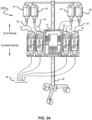
- the functional module 16 may communicate to the interface unit 14 that a syringe pump comprising the functional module 16 is not working properly, and the interface unit 14 may provide that information to the infusion control device 300 (e.g., through the lockbox control interface 304).
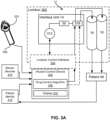
- the infusion control device 300 determines the algorithms that are required based on the drugs associated with the patient 48 (e.g., in a patient profile accessed based on the patient's identity), the types of drug-delivery apparatuses connected to the device 300, and/or the sensor data that can be obtained by the infusion control device 300 (e.g., via connected sensors) while the patient 48 is using the patient-controlled drug-requesting device 306.
- the infusion control device 300 detects that the patient care device 12 includes multiple types of drug-delivery apparatuses.
- the patient care device 12 may include a first type of drug-delivery apparatus such as a syringe configured to be manually depressed to inject a first drug into the patient 48 and a second type of drug-delivery apparatus such as an intravenous infusion pump that is integrally coupled with an electronic actuating system (e.g., including mechanical fingers) for causing doses of a second drug to be delivered to the patient 48.
- the drug-control algorithm 308 may then be selected based on the two drug-delivery apparatuses detected and identified by the infusion control device 300.
- determining whether a delivery-control criterion is satisfied may include determining an estimated effect that the drug is likely to have on the patient 48 based on a dose requested by the patient 48, patient demographics, and the pharmacokinetic properties of the drug and, based on the estimated effect, determining whether the delivery of the drug to the patient 48 would cause a biological indicator of the patient to meet or exceed a patient health threshold.
- determining whether a delivery-control criterion is satisfied may include first determining a mechanical state of one of the drug-delivery apparatuses of the patient care device 12. The delivery-control criterion may be satisfied based on determining that mechanical components of a drug-delivery apparatus are properly functioning and capable of delivering a dose of a drug to the patient 48.
- Satisfaction of drug-delivery criteria may be based on a biometric verification of the patient identity 316 and/or other data collected about the patient 48 besides biological indicators (e.g., historical data about previous deliveries of the drug to the patient 48, such as a pain assessment performed after a previous dose of the drug was delivered to the patient 48).
- biological indicators e.g., historical data about previous deliveries of the drug to the patient 48, such as a pain assessment performed after a previous dose of the drug was delivered to the patient 48.
- subsequent requests by the patient 48 for delivery of doses of the drug may require additional credentials and/or biometric indicators to verify the requester (e.g., patient 48) as corresponding to the patient identity 316.
- Satisfaction of a delivery-control criterion may be based on verifying that additional biometric data of the patient 48 corresponds to the patient identity 316.
- satisfaction of a delivery-control criterion may be based on verifying that a pain assessment performed by the patient 48 after a prior dose was consistent with assessments done after one or more further doses.
- the infusion control device 300 determines whether the requested dose is authorized for delivery to the patient 48, the infusion control device 300 communicates with the patient care device 12. Such communication may be performed via the lockbox control interface 304, in accordance with some implementations.
- the infusion control device 300 may communicate directly to the pump control interface 318, which is an interface internal to the patient care device 12, that the patient 48 is not authorized to receive the requested dose, in addition or alternatively to communicating the failed request to the patient care device 12. Communication by the infusion control device 300 with the pump control interface 318 may include instructions for implementing pause control at the drug-delivery apparatus corresponding to the functional module 16.
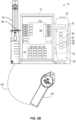
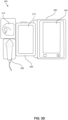
- FIGS. 3B to 3E illustrate example configurations of the infusion control device 300.
- the components e.g., body 334, sub-assemblies 332-A and 332-B, etc.
- the example configurations described with respect to FIGS. 3A to 3E are not the only configurations and/or layouts that the infusion control device 300 may be used in, and that additional configurations and/or layouts not illustrated herein may also be realized.
- the infusion control device 300 provides technical improvements by affording flexibility and adaptability to accommodate different sets of electronic devices that may be required to provide care to a patient 48.
- the infusion control device 300 may electronically couple to an interface unit 14 of a patient care device 12, which may include proprietary software distinct from the default software of the infusion control device 300.
- the infusion control device 300 may be configured to identify aspects of the interface unit 14 and its connected functional modules for control and or interaction with a drug-control algorithm 308 utilized by the interface unit 14.
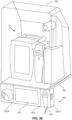
- a first type of sub-assembly, a sub-assembly 332-A for housing the drug-requesting device 306 may be coupled to a universal coupling receptacle 330-1 or 330-2 disposed on a right side of the body 334 and a second type of sub-assembly, a sub-assembly 332-B, may be coupled to a universal coupling receptacle 330-1 or 330-2 on a left side of the body 334 of the infusion control device 300.
- the infusion control device 300 identifies one or more drug-control algorithms 308 and/or patient care software operations that are relevant to the electronic device.
- the infusion control device 300 may automatically identify one or more drug-control algorithms 308 to implement that are specific to patient-controlled analgesia that is deliverable via drug requests from the patient-controlled drug-requesting device 306.
- the control device 300 when the infusion control device 300 is connected to a specific drug-requesting device 306 and a patient care device 12 (e.g., to interface unit 14), the control device may automatically identify a drug-control algorithm 308 for controlling drug delivery (e.g., initiating a bolus) from the patient care device 12 using the specific patient-controlled drug-requesting device 306.
- a drug-control algorithm 308 for controlling drug delivery (e.g., initiating a bolus) from the patient care device 12 using the specific patient-controlled drug-requesting device 306.
- FIG. 3C illustrates a second example configuration of the infusion control device 300, which includes the same sub-assemblies 332-A and 332-B shown in FIG. 3B .
- the sub-assemblies 332-A and 332-B are coupled to different universal coupling receptacles 330-1 and 330-2 (e.g., that were not coupled to any sub-assemblies in the first example configuration illustrated in FIG. 3B ).
- the infusion control device 300 recognizes the coupled modules in the same manner as in the configuration of FIG. 3B (or another arrangement) and becomes capable of performing in the same manner, as described above.
- the universal coupling receptacle 330-3 is uncoupled from any sub-assemblies.
- the coupling receptacle 330-3 can be coupled to one or more of: (i) a different sub-assembly comprising a different electronic component configured to be used with the infusion control device 300, (ii) a connector of the patient care device 12, and/or (iii) a connector of the lockbox 302 and/or the lockbox control interface 304.
- the display module 310 can be configured in a vertical or horizontal fashion.
- the infusion control device 300 can identify, based on the configuration of connections to the universal coupling receptacles 330, whether user interfaces of the infusion control device 300 should be presented in a display mode corresponding to the vertical configuration (e.g., a portrait display mode) or a display mode corresponding to the horizontal configuration (e.g., a landscape display mode).
- the infusion control device 300 may provide efficient and intuitive means for adjusting user interfaces (and corresponding component arrangement) for use of the infusion control device 300 with a variety of infusion devices and modules.
- FIG. 3D illustrates a third example configuration of the infusion control device 300, which includes the sub-assemblies 332-A and 332-B shown in FIGS. 3B and 3C , and the infusion control device 300 is coupled to an interface unit 14 of a patient care device 12, which may include a display 6a that is separate from the display module 310 on the body 334 of the infusion control device 300.
- the patient care device 12 can be configured to perform any of the previously described software operations in conjunction with the infusion control device 300.
- the infusion control device 300 is capable of interacting with the proprietary software of the patient care device 12 (e.g., via an electronic handshake with the patient care unit) in order to identify drug-control algorithms 308 or other software operations that are relevant to respective electronic components of the patient care device 12.
- the infusion control device 300 may identify that the patient care device 12 includes the display 6a that is configured to display user interfaces related to patient care.
- the infusion control device 300 may be configured to cause user interfaces to be presented at the display 6a of the patient care device 12 (or cause user interfaces of the patient care device 12 to be presented at the display module 310 on the body 334 of the infusion control device 300).
- the infusion control device 300 is configured to receive signals from one or more sensor devices 314 or other electronic components that are not physically connected to the infusion control device 300 (e.g., via a Bluetooth connection).
- FIG. 3E illustrates a fourth example configuration of the infusion control device 300, in which the body 334 and or the sub-assemblies 332-A and 332-B are coupled to a hardware shelf 350 of the lockbox 302, which may be configured with further corresponding coupling receptacles 330 (shown on FIG. 3C ) for electronically coupling the infusion control device 300 to the lockbox control interface 304.
- the hardware shelf 350 may house wires for coupling the coupling receptacles 330 (not shown) provided by the shelf to the lockbox 302 and/or the patient care unit that is housed within the lockbox 302.
- the lockbox control interface 304 forms a part of, or is disposed on, a lower surface of the hardware shelf 350.
- the display module 310 in response to the infusion control device 300 being coupled to the lockbox 302 (e.g., via the hardware shelf 350), the display module 310 displays one or more authentication user interfaces for providing patient and/or care provider credentials to the lockbox control interface 304.
- the patient 48 may provide credentials to the lockbox 302 via one or more electronic components of the patient-controlled drug-requesting device 306 (e.g., via a fingerprint scan, an iris scan, and/or facial recognition enabled by one or more imaging sensors located on the patient-controlled drug-requesting device 306).
- door access to the lockbox 302 (e.g., to add, remove, or change medications of the patient care device 12) can be activated directly through user interfaces of the infusion control device 300 (e.g., without requiring a physical lock and key).
- one or more sensor devices of the patient-controlled drug-requesting device 306 begin collecting the identity or physiological data when the patient 48 initiates the request for the drug to be delivered, and the selected drug-control algorithm determines whether the request is authorized based on the received data.
- bus 508 also couples electronic system 500 to a network (not shown) through network interfaces 516.
- Network interfaces 516 may include, e.g., a wireless access point (e.g., Bluetooth or WiFi) or radio circuitry for connecting to a wireless access point.
- Network interfaces 516 may also include hardware (e.g., Ethernet hardware) for connecting the computer to a part of a network of computers such as a local area network ("LAN”), a wide area network (“WAN”), wireless LAN, or an Intranet, or a network of networks, such as the Internet.
- LAN local area network
- WAN wide area network
- wireless LAN wireless local area network
- Intranet or a network of networks, such as the Internet.
- Any or all components of electronic system 500 can be used in conjunction with the subject disclosure. These functions described above can be implemented in computer software, firmware, or hardware.
- Clause 4 The infusion control device of any one of Clauses 1 through 3, wherein the operations further comprise, prior to identifying the one or more drug-delivery apparatuses: forming an electronic communication connection with a lockbox control interface configured to enclose and prevent access to at least a portion of the one or more drug-delivery apparatuses; receiving a wireless credential at an input interface of the infusion control device; transmitting, by the infusion control device, the wireless credential to the one or more drug-delivery apparatuses via the electronic communication connection with the lockbox control interface; receiving an indication from the one or more drug-delivery apparatuses via the electronic communication connection, after the transmitting, whether the patient is authorized to request doses of the drug to be delivered; and in accordance with receiving an indication that the patient is authorized to request doses of the drug to be delivered, using the drug-control algorithm to determine if a drug request submitted by the patient is an authorized drug request.
- Clause 6 The infusion control device of any one of Clauses 1 through 5, wherein the operations further comprise: determining one or more therapies that the patient-controlled drug-requesting device is able to receive drug requests for from the patient; based on determining the one or more therapies enabled by the patient-controlled drug-requesting device, selecting one or more drug-control algorithms for each respective therapy of the one or more therapies; and providing each respective drug-control algorithm of the one or more drug-control algorithms for use in conjunction with the patient-controlled drug-requesting device.
- Clause 7 The infusion control device of any one of Clauses 1 through 6, wherein the operations further comprise, after the drug-control algorithm is selected: detecting electronic connection of a different device to the infusion control device; identifying a second drug-control algorithm, associated with the different device and distinct from the drug-control algorithm, for authorizing requests for doses of the drug to the patient; and replacing a selected drug-control algorithm with the second drug-control algorithm.
- a UI may be implemented in whole or in part using technologies such as hyper-text mark-up language (HTML), FLASH TM , JAVA TM , .NET TM , web services, or rich site summary (RSS).
- HTTP hyper-text mark-up language
- FLASH TM FLASH TM
- JAVA TM JAVA TM
- .NET TM web services
- RSS rich site summary
- a UI may be included in a stand-alone client (for example, thick client, fat client) configured to communicate (e.g., send or receive data) in accordance with one or more of the aspects described.
- the communication may be to or from a medical device, diagnostic device, monitoring device, or server in communication therewith.
Landscapes
- Health & Medical Sciences (AREA)
- Engineering & Computer Science (AREA)
- General Health & Medical Sciences (AREA)
- Public Health (AREA)
- Biomedical Technology (AREA)
- Epidemiology (AREA)
- Medical Informatics (AREA)
- Primary Health Care (AREA)
- Anesthesiology (AREA)
- Animal Behavior & Ethology (AREA)
- Life Sciences & Earth Sciences (AREA)
- Veterinary Medicine (AREA)
- Hematology (AREA)
- Heart & Thoracic Surgery (AREA)
- Vascular Medicine (AREA)
- Bioinformatics & Cheminformatics (AREA)
- Chemical & Material Sciences (AREA)
- Medicinal Chemistry (AREA)
- General Business, Economics & Management (AREA)
- Business, Economics & Management (AREA)
- Diabetes (AREA)
- Pharmacology & Pharmacy (AREA)
- Toxicology (AREA)
- Physics & Mathematics (AREA)
- General Physics & Mathematics (AREA)
- Automation & Control Theory (AREA)
- Infusion, Injection, And Reservoir Apparatuses (AREA)
Applications Claiming Priority (1)
| Application Number | Priority Date | Filing Date | Title |
|---|---|---|---|
| US202363612544P | 2023-12-20 | 2023-12-20 |
Publications (1)
| Publication Number | Publication Date |
|---|---|
| EP4576109A1 true EP4576109A1 (fr) | 2025-06-25 |
Family
ID=93923417
Family Applications (1)
| Application Number | Title | Priority Date | Filing Date |
|---|---|---|---|
| EP24219303.5A Pending EP4576109A1 (fr) | 2023-12-20 | 2024-12-12 | Commande intelligente de l'administration de médicament commandée par le patient |
Country Status (5)
| Country | Link |
|---|---|
| US (1) | US20250205424A1 (fr) |
| EP (1) | EP4576109A1 (fr) |
| CN (1) | CN120168779A (fr) |
| AU (1) | AU2024278333A1 (fr) |
| CA (1) | CA3259699A1 (fr) |
Citations (2)
| Publication number | Priority date | Publication date | Assignee | Title |
|---|---|---|---|---|
| US20210361863A1 (en) * | 2020-05-19 | 2021-11-25 | Carefusion 303, Inc. | Secure patient-controlled analgesia |
| WO2023122514A1 (fr) * | 2021-12-22 | 2023-06-29 | Icu Medical, Inc. | Systèmes de pompe et de récipient à double mode et hybrides |
-
2024
- 2024-12-12 EP EP24219303.5A patent/EP4576109A1/fr active Pending
- 2024-12-12 AU AU2024278333A patent/AU2024278333A1/en active Pending
- 2024-12-16 CA CA3259699A patent/CA3259699A1/fr active Pending
- 2024-12-17 US US18/983,987 patent/US20250205424A1/en active Pending
- 2024-12-17 CN CN202411859693.XA patent/CN120168779A/zh active Pending
Patent Citations (2)
| Publication number | Priority date | Publication date | Assignee | Title |
|---|---|---|---|---|
| US20210361863A1 (en) * | 2020-05-19 | 2021-11-25 | Carefusion 303, Inc. | Secure patient-controlled analgesia |
| WO2023122514A1 (fr) * | 2021-12-22 | 2023-06-29 | Icu Medical, Inc. | Systèmes de pompe et de récipient à double mode et hybrides |
Also Published As
| Publication number | Publication date |
|---|---|
| US20250205424A1 (en) | 2025-06-26 |
| CA3259699A1 (fr) | 2025-10-31 |
| CN120168779A (zh) | 2025-06-20 |
| AU2024278333A1 (en) | 2025-07-10 |
Similar Documents
| Publication | Publication Date | Title |
|---|---|---|
| US20240299659A1 (en) | Secure patient-controlled analgesia | |
| US20220223249A1 (en) | System and method for reduced infusion administration line error | |
| WO2024039748A1 (fr) | Système de gestion en boucle fermée à pompes multiples | |
| EP4576109A1 (fr) | Commande intelligente de l'administration de médicament commandée par le patient | |
| US20250135098A1 (en) | Automatic selection of a disposable infusion container | |
| EP4565298A1 (fr) | Gestion de défaillances en matière d'administration de médicament | |
| AU2023458219A1 (en) | Handheld electronic drug-requesting device for use with patient-controlled analgesia | |
| US20260102564A1 (en) | Systems, methods, and devices for target controlled infusion | |
| US20240374811A1 (en) | Infusion device automated programming mitigation | |
| AU2022483600A1 (en) | Modular infusion control device and method | |
| EP4619999A1 (fr) | Programmation automatisée sans balayage de dispositifs de perfusion | |
| WO2025063952A1 (fr) | Dispositifs, systèmes et procédés de complémentation de demandes de programmation automatisées | |
| EP4721093A1 (fr) | Dispositif, système et procédé pour la détermination et l'augmentation d'un engagement de praticien par rapport à des dispositifs de perfusion | |
| CN120898250A (zh) | 用于自动协议引导的系统和方法 |
Legal Events
| Date | Code | Title | Description |
|---|---|---|---|
| PUAI | Public reference made under article 153(3) epc to a published international application that has entered the european phase |
Free format text: ORIGINAL CODE: 0009012 |
|
| STAA | Information on the status of an ep patent application or granted ep patent |
Free format text: STATUS: THE APPLICATION HAS BEEN PUBLISHED |
|
| AK | Designated contracting states |
Kind code of ref document: A1 Designated state(s): AL AT BE BG CH CY CZ DE DK EE ES FI FR GB GR HR HU IE IS IT LI LT LU LV MC ME MK MT NL NO PL PT RO RS SE SI SK SM TR |
|
| STAA | Information on the status of an ep patent application or granted ep patent |
Free format text: STATUS: REQUEST FOR EXAMINATION WAS MADE |
|
| 17P | Request for examination filed |
Effective date: 20260102 |