EP4576312A1 - Module de batterie et procédé de fonctionnement - Google Patents
Module de batterie et procédé de fonctionnement Download PDFInfo
- Publication number
- EP4576312A1 EP4576312A1 EP23218409.3A EP23218409A EP4576312A1 EP 4576312 A1 EP4576312 A1 EP 4576312A1 EP 23218409 A EP23218409 A EP 23218409A EP 4576312 A1 EP4576312 A1 EP 4576312A1
- Authority
- EP
- European Patent Office
- Prior art keywords
- battery module
- battery
- data
- secure element
- interface unit
- Prior art date
- Legal status (The legal status is an assumption and is not a legal conclusion. Google has not performed a legal analysis and makes no representation as to the accuracy of the status listed.)
- Pending
Links
Images




Classifications
-
- H—ELECTRICITY
- H02—GENERATION; CONVERSION OR DISTRIBUTION OF ELECTRIC POWER
- H02J—ELECTRIC POWER NETWORKS; CIRCUIT ARRANGEMENTS OR SYSTEMS FOR SUPPLYING OR DISTRIBUTING ELECTRIC POWER; SYSTEMS FOR STORING ELECTRIC ENERGY
- H02J7/00—Circuit arrangements for charging or discharging batteries or for supplying loads from batteries
- H02J7/50—Circuit arrangements for charging or discharging batteries or for supplying loads from batteries acting upon multiple batteries simultaneously or sequentially
-
- H—ELECTRICITY
- H01—ELECTRIC ELEMENTS
- H01M—PROCESSES OR MEANS, e.g. BATTERIES, FOR THE DIRECT CONVERSION OF CHEMICAL ENERGY INTO ELECTRICAL ENERGY
- H01M10/00—Secondary cells; Manufacture thereof
- H01M10/42—Methods or arrangements for servicing or maintenance of secondary cells or secondary half-cells
- H01M10/425—Structural combination with electronic components, e.g. electronic circuits integrated to the outside of the casing
- H01M10/4257—Smart batteries, e.g. electronic circuits inside the housing of the cells or batteries
-
- G—PHYSICS
- G01—MEASURING; TESTING
- G01R—MEASURING ELECTRIC VARIABLES; MEASURING MAGNETIC VARIABLES
- G01R31/00—Arrangements for testing electric properties; Arrangements for locating electric faults; Arrangements for electrical testing characterised by what is being tested not provided for elsewhere
- G01R31/36—Arrangements for testing, measuring or monitoring the electrical condition of accumulators or electric batteries, e.g. capacity or state of charge [SoC]
- G01R31/371—Arrangements for testing, measuring or monitoring the electrical condition of accumulators or electric batteries, e.g. capacity or state of charge [SoC] with remote indication, e.g. on external chargers
-
- G—PHYSICS
- G01—MEASURING; TESTING
- G01R—MEASURING ELECTRIC VARIABLES; MEASURING MAGNETIC VARIABLES
- G01R31/00—Arrangements for testing electric properties; Arrangements for locating electric faults; Arrangements for electrical testing characterised by what is being tested not provided for elsewhere
- G01R31/36—Arrangements for testing, measuring or monitoring the electrical condition of accumulators or electric batteries, e.g. capacity or state of charge [SoC]
- G01R31/392—Determining battery ageing or deterioration, e.g. state of health
-
- H—ELECTRICITY
- H01—ELECTRIC ELEMENTS
- H01M—PROCESSES OR MEANS, e.g. BATTERIES, FOR THE DIRECT CONVERSION OF CHEMICAL ENERGY INTO ELECTRICAL ENERGY
- H01M10/00—Secondary cells; Manufacture thereof
- H01M10/42—Methods or arrangements for servicing or maintenance of secondary cells or secondary half-cells
- H01M10/4207—Methods or arrangements for servicing or maintenance of secondary cells or secondary half-cells for several batteries or cells simultaneously or sequentially
-
- H—ELECTRICITY
- H01—ELECTRIC ELEMENTS
- H01M—PROCESSES OR MEANS, e.g. BATTERIES, FOR THE DIRECT CONVERSION OF CHEMICAL ENERGY INTO ELECTRICAL ENERGY
- H01M10/00—Secondary cells; Manufacture thereof
- H01M10/42—Methods or arrangements for servicing or maintenance of secondary cells or secondary half-cells
- H01M10/425—Structural combination with electronic components, e.g. electronic circuits integrated to the outside of the casing
-
- H—ELECTRICITY
- H01—ELECTRIC ELEMENTS
- H01M—PROCESSES OR MEANS, e.g. BATTERIES, FOR THE DIRECT CONVERSION OF CHEMICAL ENERGY INTO ELECTRICAL ENERGY
- H01M10/00—Secondary cells; Manufacture thereof
- H01M10/42—Methods or arrangements for servicing or maintenance of secondary cells or secondary half-cells
- H01M10/48—Accumulators combined with arrangements for measuring, testing or indicating the condition of cells, e.g. the level or density of the electrolyte
- H01M10/482—Accumulators combined with arrangements for measuring, testing or indicating the condition of cells, e.g. the level or density of the electrolyte for several batteries or cells simultaneously or sequentially
-
- H—ELECTRICITY
- H02—GENERATION; CONVERSION OR DISTRIBUTION OF ELECTRIC POWER
- H02J—ELECTRIC POWER NETWORKS; CIRCUIT ARRANGEMENTS OR SYSTEMS FOR SUPPLYING OR DISTRIBUTING ELECTRIC POWER; SYSTEMS FOR STORING ELECTRIC ENERGY
- H02J7/00—Circuit arrangements for charging or discharging batteries or for supplying loads from batteries
- H02J7/40—Circuit arrangements for charging or discharging batteries or for supplying loads from batteries characterised by the exchange of charge or discharge related data
-
- H—ELECTRICITY
- H02—GENERATION; CONVERSION OR DISTRIBUTION OF ELECTRIC POWER
- H02J—ELECTRIC POWER NETWORKS; CIRCUIT ARRANGEMENTS OR SYSTEMS FOR SUPPLYING OR DISTRIBUTING ELECTRIC POWER; SYSTEMS FOR STORING ELECTRIC ENERGY
- H02J7/00—Circuit arrangements for charging or discharging batteries or for supplying loads from batteries
- H02J7/60—Circuit arrangements for charging or discharging batteries or for supplying loads from batteries including safety or protection arrangements
-
- H—ELECTRICITY
- H02—GENERATION; CONVERSION OR DISTRIBUTION OF ELECTRIC POWER
- H02J—ELECTRIC POWER NETWORKS; CIRCUIT ARRANGEMENTS OR SYSTEMS FOR SUPPLYING OR DISTRIBUTING ELECTRIC POWER; SYSTEMS FOR STORING ELECTRIC ENERGY
- H02J7/00—Circuit arrangements for charging or discharging batteries or for supplying loads from batteries
- H02J7/80—Circuit arrangements for charging or discharging batteries or for supplying loads from batteries including monitoring or indicating arrangements
-
- H—ELECTRICITY
- H02—GENERATION; CONVERSION OR DISTRIBUTION OF ELECTRIC POWER
- H02J—ELECTRIC POWER NETWORKS; CIRCUIT ARRANGEMENTS OR SYSTEMS FOR SUPPLYING OR DISTRIBUTING ELECTRIC POWER; SYSTEMS FOR STORING ELECTRIC ENERGY
- H02J7/00—Circuit arrangements for charging or discharging batteries or for supplying loads from batteries
- H02J7/80—Circuit arrangements for charging or discharging batteries or for supplying loads from batteries including monitoring or indicating arrangements
- H02J7/84—Control of state of health [SOH]
-
- H—ELECTRICITY
- H04—ELECTRIC COMMUNICATION TECHNIQUE
- H04L—TRANSMISSION OF DIGITAL INFORMATION, e.g. TELEGRAPHIC COMMUNICATION
- H04L9/00—Cryptographic mechanisms or cryptographic arrangements for secret or secure communications; Network security protocols
- H04L9/32—Cryptographic mechanisms or cryptographic arrangements for secret or secure communications; Network security protocols including means for verifying the identity or authority of a user of the system or for message authentication, e.g. authorization, entity authentication, data integrity or data verification, non-repudiation, key authentication or verification of credentials
- H04L9/3263—Cryptographic mechanisms or cryptographic arrangements for secret or secure communications; Network security protocols including means for verifying the identity or authority of a user of the system or for message authentication, e.g. authorization, entity authentication, data integrity or data verification, non-repudiation, key authentication or verification of credentials involving certificates, e.g. public key certificate [PKC] or attribute certificate [AC]; Public key infrastructure [PKI] arrangements
- H04L9/3265—Cryptographic mechanisms or cryptographic arrangements for secret or secure communications; Network security protocols including means for verifying the identity or authority of a user of the system or for message authentication, e.g. authorization, entity authentication, data integrity or data verification, non-repudiation, key authentication or verification of credentials involving certificates, e.g. public key certificate [PKC] or attribute certificate [AC]; Public key infrastructure [PKI] arrangements using certificate chains, trees or paths; Hierarchical trust model
-
- H—ELECTRICITY
- H01—ELECTRIC ELEMENTS
- H01M—PROCESSES OR MEANS, e.g. BATTERIES, FOR THE DIRECT CONVERSION OF CHEMICAL ENERGY INTO ELECTRICAL ENERGY
- H01M10/00—Secondary cells; Manufacture thereof
- H01M10/42—Methods or arrangements for servicing or maintenance of secondary cells or secondary half-cells
- H01M10/425—Structural combination with electronic components, e.g. electronic circuits integrated to the outside of the casing
- H01M2010/4271—Battery management systems including electronic circuits, e.g. control of current or voltage to keep battery in healthy state, cell balancing
-
- H—ELECTRICITY
- H01—ELECTRIC ELEMENTS
- H01M—PROCESSES OR MEANS, e.g. BATTERIES, FOR THE DIRECT CONVERSION OF CHEMICAL ENERGY INTO ELECTRICAL ENERGY
- H01M10/00—Secondary cells; Manufacture thereof
- H01M10/42—Methods or arrangements for servicing or maintenance of secondary cells or secondary half-cells
- H01M10/425—Structural combination with electronic components, e.g. electronic circuits integrated to the outside of the casing
- H01M2010/4278—Systems for data transfer from batteries, e.g. transfer of battery parameters to a controller, data transferred between battery controller and main controller
-
- H—ELECTRICITY
- H01—ELECTRIC ELEMENTS
- H01M—PROCESSES OR MEANS, e.g. BATTERIES, FOR THE DIRECT CONVERSION OF CHEMICAL ENERGY INTO ELECTRICAL ENERGY
- H01M2220/00—Batteries for particular applications
- H01M2220/20—Batteries in motive systems, e.g. vehicle, ship, plane
-
- Y—GENERAL TAGGING OF NEW TECHNOLOGICAL DEVELOPMENTS; GENERAL TAGGING OF CROSS-SECTIONAL TECHNOLOGIES SPANNING OVER SEVERAL SECTIONS OF THE IPC; TECHNICAL SUBJECTS COVERED BY FORMER USPC CROSS-REFERENCE ART COLLECTIONS [XRACs] AND DIGESTS
- Y02—TECHNOLOGIES OR APPLICATIONS FOR MITIGATION OR ADAPTATION AGAINST CLIMATE CHANGE
- Y02E—REDUCTION OF GREENHOUSE GAS [GHG] EMISSIONS, RELATED TO ENERGY GENERATION, TRANSMISSION OR DISTRIBUTION
- Y02E60/00—Enabling technologies; Technologies with a potential or indirect contribution to GHG emissions mitigation
- Y02E60/10—Energy storage using batteries
Definitions
- the present disclosure relates to a battery module. Furthermore, the present disclosure relates to a corresponding method of operating a battery module.
- Battery modules may be used in different systems and applications.
- a battery module may be defined as a component of a battery pack, which includes one or more battery cells as well as a battery module controller which is coupled to said battery cells.
- electric vehicles typically contain battery packs, which in turn contain a plurality of battery modules.
- battery modules may be used in smart home environments. It is desirable to enable reusing such battery modules. For example, when battery modules reach a certain age they can no longer be used in an electric vehicle, but they may still be used in a smart home. In particular, such battery modules may be resold. However, current resale solutions for used battery modules may not be user-friendly and secure enough.
- a battery module comprising: one or more battery cells; a battery module controller operatively coupled to the battery cells, wherein said battery module controller is configured to determine a state of the battery cells; a secure element operatively coupled to the battery module controller, wherein the secure element is configured to store data indicative of the state of the battery cells as determined by the battery module controller; an interface unit operatively coupled to the secure element, wherein said interface unit is configured to receive a request for evaluating said data from an external user device.
- the secure element is configured to perform an evaluation of the data in response to receiving said request from the interface unit.
- the secure element is configured to perform said evaluation by comparing the stored data with reference data received from the external device and by concluding that the evaluation has a positive result if the stored data match with the reference data within a predefined error margin.
- the interface unit is further configured to transmit an evaluation result to the external user device, wherein said evaluation result is indicative of the evaluation performed on the data.
- the data indicative of the state of the battery cells includes data indicative of a state of health of the battery cells, data indicative of a lifecycle of the battery cells, data indicative of re-charging cycles of the battery cells, and/or data indicative of a manufacturer of the battery module.
- the secure element contains signed certificates issued by a root certificate authority.
- the interface unit is integrated with the secure element.
- the interface unit is a near field communication (NFC) interface unit.
- NFC near field communication
- the battery module controller is integrated with the secure element.
- a battery module resale system comprises: a battery module of the kind set forth; a user device configured to transmit a request for evaluating data to the battery module, wherein said data are indicative of the state of the battery cells included in the battery module.
- the user device is an NFC-enabled user device.
- a method of operating a battery module comprising: determining, by a battery module controller included in the battery module, a state of one or more battery cells included in the battery module; storing, by a secure element included in the battery module, data indicative of the state of the battery cells as determined by the battery module controller; receiving, by an interface unit included in the battery module, a request for evaluating said data from an external user device.
- the secure element performs an evaluation of the data in response to receiving said request from the interface unit.
- the secure element performs said evaluation by comparing the stored data with reference data received from the external device and by concluding that the evaluation has a positive result if the stored data match with the reference data within a predefined error margin.
- the interface unit further transmits an evaluation result to the external user device, wherein said evaluation result is indicative of the evaluation performed on the data.
- Fig. 1 shows an example of an electric vehicle 100.
- the vehicle 100 comprises a battery pack 106 and a battery management system 102, which are operatively coupled to each other.
- the battery pack 106 comprises two or more battery modules 108, 116.
- Each of the battery modules 108, 116 comprises two or more battery cells 112, 114, 120, 122 and a battery module controller 110, 118 operatively coupled to the battery cells 112, 114.
- the battery management system 102 comprises a microcontroller 104. It is desirable to enable reusing the battery modules 108, 116. For example, when the battery modules 108, 116 reach a certain age they can no longer be used in the electric vehicle 100, but they may still be used in another system or application, for example in a smart home. Reusing the battery modules 108, 116 may be facilitated by trading platforms via which the battery modules 108, 116 can be resold.
- Fig. 2 shows an example of a smart home 200.
- the smart home 200 comprises a battery pack 206 and a battery management system 202, which are operatively coupled to each other.
- the battery pack 206 comprises two or more battery modules 208, 216.
- Each of the battery modules 208, 216 comprises two or more battery cells 212, 214, 220, 222 and a battery module controller 210, 218 operatively coupled to the battery cells 212, 214, 220, 222.
- the battery management system 202 comprises a microcontroller 204.
- the battery modules 208, 216 may be modules that have been used in another system or application, for example as a power source for an electric vehicle. In particular, the battery modules 208, 216 may have been resold. However, as mentioned above, current resale solutions for used battery modules may not be user-friendly and secure enough.
- Fig. 3 shows an illustrative embodiment of a battery module 300.
- the battery module 300 contains a battery module controller 302, battery cells 304, 306, a secure element 308, and an interface unit 310.
- the battery module controller 302 is operatively coupled to the battery cells 304, 306 and is configured to determine a state of the battery cells 304, 306.
- the secure element 308 is operatively coupled to the battery module controller 302 and is configured to store data indicative of the state of the battery cells 304, 306 as determined by the battery module controller 302.
- the interface unit 310 is operatively coupled to the secure element 308 and is configured to receive a request for evaluating said data from an external user device (not shown).
- a secure element may be defined as a tamper-resistant integrated circuit with installed applications, which have a prescribed functionality and a prescribed level of security.
- a secure element may implement security functions, such as cryptographic functions and authentication functions.
- the interface unit 310 is shown as a separate unit that is coupled to the secure element 308, it may also be integrated into another one of the components (e.g., the secure element 308) or it may be coupled to another one of the components (e.g., the battery module controller 302).
- the interface unit 310 may be implemented, for example, as a typical NFC interface included in or connected to a secure element which is powered by the field.
- the interface unit 310 may be a Bluetooth low energy (BLE) interface unit, a Wi-Fi interface unit, or another wireless interface unit.
- BLE Bluetooth low energy
- the interface unit 310 may act as a host for both the secure element 308 and the battery module controller 302.
- the secure element is configured to perform an evaluation of the data in response to receiving said request from the interface unit.
- the battery module may autonomously and securely perform an evaluation of the state of the battery cells.
- the battery module may autonomously and securely perform a diagnostic check of the state of the battery cells, which may be relevant for a sales offer or a purchase of the battery module.
- the secure element is configured to perform said evaluation by comparing the stored data with reference data received from the external device and by concluding that the evaluation has a positive result if the stored data match with the reference data within a predefined error margin. In this way, the output of the evaluation may easily be verified against an expected result, which for example facilitates performing a diagnostic check.
- the interface unit is further configured to transmit an evaluation result to the external user device, wherein said evaluation result is indicative of the evaluation performed on the data.
- the user may easily be informed about the evaluation result, for example through a user interface embedded in the user device.
- newly stored data may be compared with reference data that reflects a previous state of health of the battery module. In that case, the newly stored data is expected to indicate a state of health which is not better than or approximately equal to the previous state of health.
- the reference data may reflect data (e.g., so-called "big data") that has been collected from other battery modules.
- the data indicative of the state of the battery cells includes data indicative of a state of health of the battery cells, data indicative of a lifecycle of the battery cells, data indicative of re-charging cycles of the battery cells, and/or data indicative of a manufacturer of the battery module.
- the secure element contains signed certificates issued by a root certificate authority. In this way, communications between the battery module and the user device, as well as between the user device and a service provider to which the relevant data may be forwarded, may be carried out in a secure manner.
- the interface unit is integrated with the secure element.
- the level of security may be further increased, since all communications through the interface unit are carried out in the protected environment of the secure element.
- the interface unit is a near field communication (NFC) interface unit.
- NFC near field communication
- the user convenience is further increased.
- using an NFC interface unit may enable powering the secure element by the field, such that battery-relevant data can still be read from said secure element.
- the battery module controller is integrated with the secure element. In this way, the level of security may be further increased, since determining the state of the battery cells is carried out in the protected environment of the secure element.
- a battery module resale system comprises a battery module of the kind set forth, as well as a user device configured to transmit a request for evaluating data to the battery module, wherein said data are indicative of the state of the battery cells included in the battery module.
- the user device is an NFC-enabled user device. In this way, the user convenience is further increased.
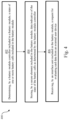
- Fig. 4 shows an illustrative embodiment of a method 400 of operating a battery module.
- the method 400 comprises the following steps.
- a battery module controller included in a battery module determines a state of one or more battery cells included in the battery module.
- a secure element included in the battery module stores data indicative of the state of the battery cells as determined by the battery module controller.
- an interface unit included in the battery module receives a request for evaluating said data from an external user device.
- the method 400 facilitates providing a resale solution for used battery modules that is user-friendly as well as secure.
- battery modules that are embedded in electric vehicles have a high potential for a second-life use case.
- reusing a battery module typically requires a complex offline check of the battery modules to verify their value, in particular by performing a check of the state of the battery cells included in the modules.
- the presently disclosed battery module and corresponding operating method make this check easier to perform, and also provides sufficient security, among others by making it difficult to tamper with the state information.
- using a secure element within the battery module facilitates implementing a public key infrastructure (PKI) scheme, which enables an optimized application flow.
- PKI public key infrastructure
- the presently disclosed battery module and corresponding operating method may improve the user experience due to a simplification of the resale process.
- an increased trust may be achieved by adding a high level of security to the battery module. Also, the costs may be reduced, because an offline check may no longer be needed and therefore there may be no need to ship the battery modules to an external party for an external verification. Finally, a high flexibility may be achieved due to trust provisioning.
- Fig. 5 shows an illustrative embodiment of a PKI scheme 500.
- the root certificate authority 502 is an authority that issues root certificates; this authority may for example be a consortium of car original equipment manufacturers (OEMs), battery manufactures, smart home module manufactures, semiconductor companies, or governmental departments.
- the battery OEM 504 may be a company that produces battery modules.
- the SE manufacturer 508 may a chip manufacturer, which applies secure trust provisioning.
- the cloud (service provider SP) 506 may be chosen and authorized by the root CA 502, specifically to sign and certify the requests from the SE manufacturer 508 and the battery OEM 504.
- Users A, B to X 510, 512, 514 are end users that buy battery modules, also if these assembled inside a car or in a complete smart home power bank, for example.
- a car OEM or a smart home battery system vendor can also be a user and sell its systems to the end user.
- User A 510 may be an owner of an electronic vehicle, who wants to sell a battery module of the vehicle via the battery trading platform 528 maintained by user B 512. In that case, user A 510 may also be registered at the trading platform 528 of user B 512, which registration may be cross-signed based on credentials provided by the cloud (SP) 506.
- SP cloud
- user B 512 may maintain a battery trading platform 528, and may also be a registered user (e.g., with special trading permissions) at the cloud (SP) 506.
- Users A and X 510, 514 can also register at this platform 528 as authorized users, since they are anyway authorized users of the overall PKI scheme 500. Again, this registration may be cross-signed based on credentials provided by the cloud (SP) 506.
- user X 514 may be a potential buyer of a battery module via the battery trading platform 528 of user B 512.
- User X 514 is also registered at the battery trading platform 528 of user B 512, which registration may also be cross-signed based on credentials provided by the cloud (SP) 506.
- Fig. 6 shows an illustrative embodiment of a resale process 600.
- customers may be able to sell their battery modules via an online resale process 608 or via an offline resale process 612.
- the online process 608 may be used if the battery module is equipped with a properly provisioned secure element. If the battery module contains a secure element, the battery module's lifecycle and current state as stored in said element can be trusted, and it is possible to perform a cost-effective self-check 610, directly by the person who wants to sell the module.
- This self-check 610 can be performed by, for example, authenticating via a mobile phone (e.g., NFC touch of NFC-enabled secure element mounted on or embedded in the battery module) and running the diagnosis as instructed by the trading platform.
- the diagnosis data can be synchronized with the trading platform backend server (cloud). If the check was successful, the battery module's value can be determined, and the module can be shipped directly to the potential buyer (or to the trading platform distribution platform).
- this online process 608 is faster, cheaper and offers a better user experience.
- the whole module should be shipped 614 to the reseller/trading platform's service location first.
- an offline diagnosis 616 of the state-of-health of the battery can be done and the value of the battery module can be determined. If the battery module has a specific value, it can be shipped to a potential buyer. In that case additional shipments are required, staff and facility should be paid and many other logistics aspects should be considered when re-selling a battery module without a secure element.
- a secure element may be added to the battery module, thereby enabling that the module can be resold in the online process 608 in the future. This will be explained with reference to Fig. 9 below.
- Fig. 7 shows an illustrative embodiment of an online resale scenario 700 for user A.
- user A should be registered 704 at the online trading platform (which can be operated and owned by user B, for example).
- This registration may easily be performed via a smartphone application, i.e. a so-called "app”.
- one or more battery modules are registered 706 by user A, for example via the NFC touch of an NFC-enabled secure element mounted on or embedded in the battery module.
- This information is then sent to the cloud via the app.
- the information received will be cross-checked with the battery module records available from the cloud (SP). Once all the data is verified, the app will ask the user to perform another NFC touch to trigger the battery module diagnostic self-check 708.
- all the battery module-specific data (e.g., ownership status, lifecycle, re-charging cycles, state-of-health, manufacturer information) may be evaluated and an estimated price of the battery module may be displayed to user A.
- the secure element may also transition to a diagnostic state. If the user is not satisfied with the price, another NFC touch may be required to enable the usage of the battery module. Internally, the secure element will then transition out of the diagnostic state and allow the normal use of the module. If the user is satisfied with the price, another NFC touch may be required to lock 714 the secure element, so that the battery module can no longer be used, and its current state is locked and ready to be shipped.
- Fig. 8 shows an illustrative embodiment of an online purchasing scenario 800 for user X.
- user X should register 804 himself at the online trading platform maintained by user B, which can be done easily via a smartphone application (i.e., an app). Via the app, user X can browse through all the battery modules available for purchasing. The complete module information along with price may also be shown, so that the user can make an informed decision. To increase the level of security, the information may be based on the secure trusted data fetch from a secure element, and it may also be verified by the battery service provider. If the user agrees with the price, he or she will select 804 the battery module and decide to buy 808 it.
- the battery module in the same condition as shown on the online trading platform.
- it should be plugged in to an already working BMS unit, and then an NFC touch may trigger the execution of a pairing operation 814.
- the module details may also be synchronized at the root CA cloud server.
- Fig. 9 shows an illustrative embodiment of a process 900 of enabling an online resale of a battery module.
- a secure element may be added to the battery module, thereby enabling that the module can be resold in an online resale process in the future.
- a reseller or trading platform provider may add a secure element to the battery module to increase its reliability and authenticity for future trading options.
- a pre-provisioned secure element (with signed certificates directly from the root CA or indirectly via an entitled intermediate CA) can be embedded 920 into the module to enhance its overall value and make a future resale cheaper and more efficient.
- the reseller can then trigger the execution of a full diagnostic check of the battery module via the secure element (e.g., using NFC between a smartphone and a passive NFC interface of the secure element), and then the final price of the module can be calculated.
- the battery module will then become available 922 on the online resale platform, so that any interested user (e.g., User X) can buy it.
- the new owner e.g., user X
- the new owner decides to resell the battery module
- he or she can do so via a faster and more efficient online path (i.e., an online resale process 908 of the kind set forth above).
Landscapes
- Engineering & Computer Science (AREA)
- General Chemical & Material Sciences (AREA)
- Manufacturing & Machinery (AREA)
- Chemical & Material Sciences (AREA)
- Chemical Kinetics & Catalysis (AREA)
- Electrochemistry (AREA)
- Power Engineering (AREA)
- Microelectronics & Electronic Packaging (AREA)
- Computer Security & Cryptography (AREA)
- Physics & Mathematics (AREA)
- General Physics & Mathematics (AREA)
- Computer Networks & Wireless Communication (AREA)
- Signal Processing (AREA)
- Charge And Discharge Circuits For Batteries Or The Like (AREA)
- Battery Mounting, Suspending (AREA)
Priority Applications (3)
| Application Number | Priority Date | Filing Date | Title |
|---|---|---|---|
| EP23218409.3A EP4576312A1 (fr) | 2023-12-20 | 2023-12-20 | Module de batterie et procédé de fonctionnement |
| CN202411634235.6A CN120184407A (zh) | 2023-12-20 | 2024-11-15 | 电池组模块和操作方法 |
| US18/982,110 US20250210736A1 (en) | 2023-12-20 | 2024-12-16 | Battery module and operating method |
Applications Claiming Priority (1)
| Application Number | Priority Date | Filing Date | Title |
|---|---|---|---|
| EP23218409.3A EP4576312A1 (fr) | 2023-12-20 | 2023-12-20 | Module de batterie et procédé de fonctionnement |
Publications (1)
| Publication Number | Publication Date |
|---|---|
| EP4576312A1 true EP4576312A1 (fr) | 2025-06-25 |
Family
ID=89224145
Family Applications (1)
| Application Number | Title | Priority Date | Filing Date |
|---|---|---|---|
| EP23218409.3A Pending EP4576312A1 (fr) | 2023-12-20 | 2023-12-20 | Module de batterie et procédé de fonctionnement |
Country Status (3)
| Country | Link |
|---|---|
| US (1) | US20250210736A1 (fr) |
| EP (1) | EP4576312A1 (fr) |
| CN (1) | CN120184407A (fr) |
Citations (3)
| Publication number | Priority date | Publication date | Assignee | Title |
|---|---|---|---|---|
| US9819060B2 (en) * | 2015-07-31 | 2017-11-14 | Gerard O'Hora | Portable and modular energy storage with adjustable waveform characteristics for electric vehicles |
| US20200055421A1 (en) * | 2018-08-14 | 2020-02-20 | Michal Sastinsky | Power cell tracking and optimization system |
| US20230019408A1 (en) * | 2017-08-04 | 2023-01-19 | Global Battery Solutions Llc | Battery monitor system and method |
-
2023
- 2023-12-20 EP EP23218409.3A patent/EP4576312A1/fr active Pending
-
2024
- 2024-11-15 CN CN202411634235.6A patent/CN120184407A/zh active Pending
- 2024-12-16 US US18/982,110 patent/US20250210736A1/en active Pending
Patent Citations (3)
| Publication number | Priority date | Publication date | Assignee | Title |
|---|---|---|---|---|
| US9819060B2 (en) * | 2015-07-31 | 2017-11-14 | Gerard O'Hora | Portable and modular energy storage with adjustable waveform characteristics for electric vehicles |
| US20230019408A1 (en) * | 2017-08-04 | 2023-01-19 | Global Battery Solutions Llc | Battery monitor system and method |
| US20200055421A1 (en) * | 2018-08-14 | 2020-02-20 | Michal Sastinsky | Power cell tracking and optimization system |
Also Published As
| Publication number | Publication date |
|---|---|
| CN120184407A (zh) | 2025-06-20 |
| US20250210736A1 (en) | 2025-06-26 |
Similar Documents
| Publication | Publication Date | Title |
|---|---|---|
| US9058566B2 (en) | Control device, control method, and computer program product | |
| CN109240838A (zh) | 接口调用方法、装置、计算机设备及存储介质 | |
| EP3570058A1 (fr) | Système et procédé de surveillance de batteries | |
| US10361864B2 (en) | Enabling a secure OEM platform feature in a computing environment | |
| JP5659844B2 (ja) | 電池識別装置 | |
| CN107590714A (zh) | 移动电源租借方法、系统、租借终端及可读存储介质 | |
| KR102574694B1 (ko) | 사용자 단말을 통해 차량용 배터리의 정품인증을 수행하는 시스템 및 그 방법 | |
| JP5751103B2 (ja) | バッテリ保守システム、及びバッテリ保守方法 | |
| US10524299B1 (en) | Peer-to-peer configuration | |
| WO2012004597A2 (fr) | Appareil et système de traitement de données | |
| CN113706261A (zh) | 一种基于区块链的电力交易方法、装置及系统 | |
| CN108053012B (zh) | 一种蓝牙智能卡及其控制交易风险的方法 | |
| JP2024514859A (ja) | ブロックチェーンマイクロトランザクション | |
| TWI483220B (zh) | 用以在充電站與電動車輛之間通訊的方法、裝置和系統,以及用以保全從充電站取得之能源量之收費功能的方法、裝置和系統 | |
| CN113874246B (zh) | 使用区块链为电动车辆(ev)充电的方法和系统 | |
| CN108540335B (zh) | 设备分析报告的管理方法及管理装置 | |
| McCarthy et al. | Cybersecurity framework profile for electric vehicle extreme fast charging infrastructure | |
| EP4576312A1 (fr) | Module de batterie et procédé de fonctionnement | |
| CN107682376A (zh) | 风控数据交互方法及装置 | |
| EP3786870A1 (fr) | Procédé et système post-paiement pour terminaux déconnectés multi-usages | |
| CN105959249A (zh) | 电子设备的管理方法及系统 | |
| CN105957255B (zh) | 电动汽车分时租赁系统租车费用支付方法 | |
| KR20230107529A (ko) | 차량용 배터리의 정품인증 방법 및 이를 적용한 충전스테이션 | |
| Zhdanova | Security and Trust in Safety Critical Infrastructures | |
| US20240413645A1 (en) | Battery systems and battery management server |
Legal Events
| Date | Code | Title | Description |
|---|---|---|---|
| PUAI | Public reference made under article 153(3) epc to a published international application that has entered the european phase |
Free format text: ORIGINAL CODE: 0009012 |
|
| STAA | Information on the status of an ep patent application or granted ep patent |
Free format text: STATUS: THE APPLICATION HAS BEEN PUBLISHED |
|
| AK | Designated contracting states |
Kind code of ref document: A1 Designated state(s): AL AT BE BG CH CY CZ DE DK EE ES FI FR GB GR HR HU IE IS IT LI LT LU LV MC ME MK MT NL NO PL PT RO RS SE SI SK SM TR |
|
| STAA | Information on the status of an ep patent application or granted ep patent |
Free format text: STATUS: REQUEST FOR EXAMINATION WAS MADE |
|
| 17P | Request for examination filed |
Effective date: 20260102 |