EP4576736A2 - Application sécurisée pour accéder à des ressources web - Google Patents
Application sécurisée pour accéder à des ressources web Download PDFInfo
- Publication number
- EP4576736A2 EP4576736A2 EP25158125.2A EP25158125A EP4576736A2 EP 4576736 A2 EP4576736 A2 EP 4576736A2 EP 25158125 A EP25158125 A EP 25158125A EP 4576736 A2 EP4576736 A2 EP 4576736A2
- Authority
- EP
- European Patent Office
- Prior art keywords
- user device
- user
- web
- content
- internet content
- Prior art date
- Legal status (The legal status is an assumption and is not a legal conclusion. Google has not performed a legal analysis and makes no representation as to the accuracy of the status listed.)
- Pending
Links
Images



Classifications
-
- G—PHYSICS
- G06—COMPUTING OR CALCULATING; COUNTING
- G06F—ELECTRIC DIGITAL DATA PROCESSING
- G06F21/00—Security arrangements for protecting computers, components thereof, programs or data against unauthorised activity
- G06F21/30—Authentication, i.e. establishing the identity or authorisation of security principals
- G06F21/31—User authentication
-
- G—PHYSICS
- G06—COMPUTING OR CALCULATING; COUNTING
- G06Q—INFORMATION AND COMMUNICATION TECHNOLOGY [ICT] SPECIALLY ADAPTED FOR ADMINISTRATIVE, COMMERCIAL, FINANCIAL, MANAGERIAL OR SUPERVISORY PURPOSES; SYSTEMS OR METHODS SPECIALLY ADAPTED FOR ADMINISTRATIVE, COMMERCIAL, FINANCIAL, MANAGERIAL OR SUPERVISORY PURPOSES, NOT OTHERWISE PROVIDED FOR
- G06Q20/00—Payment architectures, schemes or protocols
- G06Q20/02—Payment architectures, schemes or protocols involving a neutral party, e.g. certification authority, notary or trusted third party [TTP]
- G06Q20/027—Payment architectures, schemes or protocols involving a neutral party, e.g. certification authority, notary or trusted third party [TTP] involving a payment switch or gateway
-
- G—PHYSICS
- G06—COMPUTING OR CALCULATING; COUNTING
- G06Q—INFORMATION AND COMMUNICATION TECHNOLOGY [ICT] SPECIALLY ADAPTED FOR ADMINISTRATIVE, COMMERCIAL, FINANCIAL, MANAGERIAL OR SUPERVISORY PURPOSES; SYSTEMS OR METHODS SPECIALLY ADAPTED FOR ADMINISTRATIVE, COMMERCIAL, FINANCIAL, MANAGERIAL OR SUPERVISORY PURPOSES, NOT OTHERWISE PROVIDED FOR
- G06Q20/00—Payment architectures, schemes or protocols
- G06Q20/08—Payment architectures
- G06Q20/12—Payment architectures specially adapted for electronic shopping systems
- G06Q20/123—Shopping for digital content
-
- G—PHYSICS
- G06—COMPUTING OR CALCULATING; COUNTING
- G06Q—INFORMATION AND COMMUNICATION TECHNOLOGY [ICT] SPECIALLY ADAPTED FOR ADMINISTRATIVE, COMMERCIAL, FINANCIAL, MANAGERIAL OR SUPERVISORY PURPOSES; SYSTEMS OR METHODS SPECIALLY ADAPTED FOR ADMINISTRATIVE, COMMERCIAL, FINANCIAL, MANAGERIAL OR SUPERVISORY PURPOSES, NOT OTHERWISE PROVIDED FOR
- G06Q20/00—Payment architectures, schemes or protocols
- G06Q20/38—Payment protocols; Details thereof
- G06Q20/40—Authorisation, e.g. identification of payer or payee, verification of customer or shop credentials; Review and approval of payers, e.g. check credit lines or negative lists
-
- H—ELECTRICITY
- H04—ELECTRIC COMMUNICATION TECHNIQUE
- H04L—TRANSMISSION OF DIGITAL INFORMATION, e.g. TELEGRAPHIC COMMUNICATION
- H04L41/00—Arrangements for maintenance, administration or management of data switching networks, e.g. of packet switching networks
- H04L41/08—Configuration management of networks or network elements
- H04L41/0803—Configuration setting
- H04L41/0813—Configuration setting characterised by the conditions triggering a change of settings
- H04L41/082—Configuration setting characterised by the conditions triggering a change of settings the condition being updates or upgrades of network functionality
-
- H—ELECTRICITY
- H04—ELECTRIC COMMUNICATION TECHNIQUE
- H04L—TRANSMISSION OF DIGITAL INFORMATION, e.g. TELEGRAPHIC COMMUNICATION
- H04L41/00—Arrangements for maintenance, administration or management of data switching networks, e.g. of packet switching networks
- H04L41/08—Configuration management of networks or network elements
- H04L41/085—Retrieval of network configuration; Tracking network configuration history
- H04L41/0853—Retrieval of network configuration; Tracking network configuration history by actively collecting configuration information or by backing up configuration information
-
- H—ELECTRICITY
- H04—ELECTRIC COMMUNICATION TECHNIQUE
- H04L—TRANSMISSION OF DIGITAL INFORMATION, e.g. TELEGRAPHIC COMMUNICATION
- H04L41/00—Arrangements for maintenance, administration or management of data switching networks, e.g. of packet switching networks
- H04L41/08—Configuration management of networks or network elements
- H04L41/0893—Assignment of logical groups to network elements
-
- H—ELECTRICITY
- H04—ELECTRIC COMMUNICATION TECHNIQUE
- H04L—TRANSMISSION OF DIGITAL INFORMATION, e.g. TELEGRAPHIC COMMUNICATION
- H04L43/00—Arrangements for monitoring or testing data switching networks
- H04L43/08—Monitoring or testing based on specific metrics, e.g. QoS, energy consumption or environmental parameters
- H04L43/0876—Network utilisation, e.g. volume of load or congestion level
-
- H—ELECTRICITY
- H04—ELECTRIC COMMUNICATION TECHNIQUE
- H04L—TRANSMISSION OF DIGITAL INFORMATION, e.g. TELEGRAPHIC COMMUNICATION
- H04L63/00—Network architectures or network communication protocols for network security
- H04L63/02—Network architectures or network communication protocols for network security for separating internal from external traffic, e.g. firewalls
- H04L63/0272—Virtual private networks
-
- H—ELECTRICITY
- H04—ELECTRIC COMMUNICATION TECHNIQUE
- H04L—TRANSMISSION OF DIGITAL INFORMATION, e.g. TELEGRAPHIC COMMUNICATION
- H04L63/00—Network architectures or network communication protocols for network security
- H04L63/04—Network architectures or network communication protocols for network security for providing a confidential data exchange among entities communicating through data packet networks
- H04L63/0407—Network architectures or network communication protocols for network security for providing a confidential data exchange among entities communicating through data packet networks wherein the identity of one or more communicating identities is hidden
-
- H—ELECTRICITY
- H04—ELECTRIC COMMUNICATION TECHNIQUE
- H04L—TRANSMISSION OF DIGITAL INFORMATION, e.g. TELEGRAPHIC COMMUNICATION
- H04L67/00—Network arrangements or protocols for supporting network services or applications
- H04L67/01—Protocols
- H04L67/02—Protocols based on web technology, e.g. hypertext transfer protocol [HTTP]
-
- H—ELECTRICITY
- H04—ELECTRIC COMMUNICATION TECHNIQUE
- H04L—TRANSMISSION OF DIGITAL INFORMATION, e.g. TELEGRAPHIC COMMUNICATION
- H04L67/00—Network arrangements or protocols for supporting network services or applications
- H04L67/50—Network services
- H04L67/56—Provisioning of proxy services
- H04L67/561—Adding application-functional data or data for application control, e.g. adding metadata
-
- H—ELECTRICITY
- H04—ELECTRIC COMMUNICATION TECHNIQUE
- H04L—TRANSMISSION OF DIGITAL INFORMATION, e.g. TELEGRAPHIC COMMUNICATION
- H04L43/00—Arrangements for monitoring or testing data switching networks
- H04L43/16—Threshold monitoring
-
- H—ELECTRICITY
- H04—ELECTRIC COMMUNICATION TECHNIQUE
- H04L—TRANSMISSION OF DIGITAL INFORMATION, e.g. TELEGRAPHIC COMMUNICATION
- H04L67/00—Network arrangements or protocols for supporting network services or applications
- H04L67/01—Protocols
- H04L67/10—Protocols in which an application is distributed across nodes in the network
- H04L67/1097—Protocols in which an application is distributed across nodes in the network for distributed storage of data in networks, e.g. transport arrangements for network file system [NFS], storage area networks [SAN] or network attached storage [NAS]
Definitions
- the instructions may cause the at least one processing device to further perform the operations of: receiving, from the user device located in the second location, a request to delete the logged data; and deleting, based on the request to delete the logged data, the logged data associated with the at least one of the request for the Internet content from the user device located in the second location, the location associated with the user device, and the enterprise network associated with the user device.
- the instructions may cause the at least one processing device to further perform the operations of: receiving, from the user device located in the second location, a request for a location of the logged data; and transmitting, to the user device, the location of the logged data associated with the at least one of the request for the Internet content from the user device located in the second location, the location associated with the user device, and the enterprise network associated with the user device.
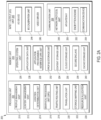
- the operating system unit 226 may further store various pieces of information and/or data associated with operation of the operating system and/or the computing environment 200 as a whole, such as a status of computing resources (e.g., processing power, memory availability, resource utilization, and/or the like), runtime information, modules to direct execution of operations described herein, user permissions, security credentials, and/or the like.
- a status of computing resources e.g., processing power, memory availability, resource utilization, and/or the like
- runtime information e.g., modules to direct execution of operations described herein
- user permissions e.g., user permissions, security credentials, and/or the like.
- the cloud browser may throttle the utilization of computing resources to maintain operation of the cloud browser and associated features during a browsing session.
- the cloud browser may terminate a browsing session, temporarily pause a browsing session, enable retrieval, transmission, access, and/or display of only a portion of web content being requested by the user, and/or deploy another computing resource safeguard.
- a browsing session may terminate after a period of inactivity.
- the cloud browser may continuously monitor for user input and/or user activity to determine whether the user is inactive.
- the duration of inactivity that triggers termination of a browsing session and/or one or more communication connections associated with a browsing session may be configurable by a user.
- file objects may be diverted through an organization's and/or third-party's pre-existing file analysis software stack in order to perform file analysis prior to download and/or upload (e.g. to filter for malicious, proprietary, and/or offensive content).
- a cloud browser application and/or cloud browser environment may provide an API to an organization and/or third party for facilitating file object transmission during a cloud browser session.
- a third party may refer to an organization and/or an entity not associated with a cloud browser application provider and/or cloud browser environment.
- a computing device e.g. a server
- for processing a file portion may be located at an organization, associated with an organization, co-located with a computing device (e.g. a server) executing a remote cloud browsing session, and/or associated with a remote cloud browsing session.
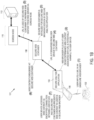
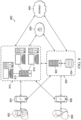
- the cloud browser may utilize a secure web container, a siloed computing device and/or server located remotely to the user device (e.g., secure web container 106 of FIGs. 1A and 1B ), may retrieve and render web content. By rendering web content at an arm's length from the user device, the user device itself is not exposed to potentially harmful files and/or other web content.
- the cloud browser may also utilize a secure analysis application (e.g., secure analysis application 104 of FIGs. 1A and 1B ) running on the user device to provide the user with a downstream view of the web content rendered at the secure location.
- the user may view the rendered web content over an encrypted communication connection between the user device and the secure web container.
- the cloud browser may generate one or more image files of the web content rendered at the secure web container.
- the cloud browser may transmit generated image files of the web content to the user device. In this manner, and in accordance with various embodiments described herein, the cloud browser may provide a layer of security beyond mere browser isolation.
- a user may desire to download content directly onto his user device, or upload content from his user device.
- Policy controls may enable an administrator to authorize individual users and/or groups of users for downloading and/or uploading of content. This authorization may be provided on a per-person, per-project, per-session, per-organization, and/or temporal basis.
- the user may request to download a file included in web content that is rendered at the secure web container.
- the request may include a selection of the file, and/or any other user input.
- the cloud browser may determine whether the user is authorized to download the content.
- Authorization may be provided based on a user status as described above, a content type, a time and/or a day, device characteristics, and/or any other administrative policy. Determining whether the user is authorized may include comparing identification information received from the user device and associated with the user to a plurality of identification records stored in an identification database and determining whether there is a match between the identification information and an identification record in the identification database.
- the identification information may be associated with the user, the user device, a cloud browser, a browsing session, and/or the like.
- the cloud browser may access and/or communicate with one or more policy databases and/or identification databases comprising a blacklist of unauthorized users and/or devices, a whitelist of authorized users and/or devices, and/or the like.
- the cloud browser may transmit the desired content from the secure web container and/or a web server to the user device. Upon receipt, the user may then download and/or save the content directly to the user device and/or another storage medium.
- content e.g., a file, a video and/or file object, text, an image, and/or the like
- the cloud browser may transmit only an image representation of web content to the user on the user device, and may not actually transmit the web content itself to the user device, content that is to be downloaded at a user device may be separated from the transcoded image representations of web content.
- the content to be downloaded may be transmitted on a different communication connection than the one between the secure analysis application running on the user device and the secure web container and/or web server.
- the cloud browser may establish a second communication connection for this content download.
- the content to be downloaded may be transmitted on the same encrypted communication connection between the secure analysis application running on the user device and the secure web container and/or web server.
- content that is to be downloaded to the user device may pass through a file analysis procedure. Passing a file through the file analysis procedure may occur prior to transmitting and/delivering the desired content to be downloaded, prior to downloading the content, and/or the like.
- the file analysis procedure may be deployed by the cloud browser at the secure web container and/or by the secure analysis application at the user device.
- the cloud browser may deploy the file analysis procedure using a processing device of the secure web container and/or the user device.
- the cloud browser may inspect the content to be downloaded for viruses, malware, ransomware, and/or other potential threats. Inspecting the content may include performing one or more scans of the content. If a potentially harmful object is identified based on a scan, the cloud browser may not transmit the desired content for download to the user device. If no potentially harmful object is identified, or if a potentially harmful object was identified but determined to not be harmful, then the cloud browser may proceed with transmitting the web content directly to the user device for download.
- the file analysis procedure may be operated by a third party device (e.g., a device not included in the secure web container and/or the user device).
- the cloud browser may transmit the content from the secure web container and/or the web server to a third party processing unit.
- the cloud browser may include and/or utilize an API (e.g., API gateway 250 of FIGs. 2A and 2B ) for routing the content to the third party processing unit.
- the cloud browser may integrate seamlessly with existing document scanning and/or malware detection programs.
- the file inspection procedures disclosed herein may occur remotely to the user device so that the user device remains unaffected by any potentially harmful files and/or objects.
- inspection of files and/or software may be referred to as a "forked" integration, third-party file inspection, off-site file inspection, file analysis malware detection (e.g. for downloading content), and/or confidential, proprietary, objectionable, and/or offensive content detection (e.g. for uploading content).
- file analysis malware detection e.g. for downloading content
- offensive content detection e.g. for uploading content
- the third party processing unit may include any of the computing elements, units, and/or subunits described herein, particularly with reference to FIGs. 2A and 2B .
- the third party processing unit may inspect, scan, and/or otherwise analyze the content for potentially harmful artifacts (e.g., viruses, malware, threats, and/or the like).
- the third party processing unit may or may not identify one or more harmful artifacts in the content. If the third party processing unit does not identify any potentially harmful artifacts, then the third party processing unit may transmit a signal acknowledging the same.
- the cloud browser may then transmit the content directly to the user device for download.
- the third party processing unit may transmit a signal acknowledging the same. If the third party processing unit determines the identified potentially harmful artifact is not harmful, then the cloud browser may then transmit the content directly to the user device for download. Alternatively, if the third party processing unit identifies a potentially harmful artifact that is actually potentially harmful, then the third party processing unit may transmit a signal acknowledging the same. In that case, the cloud browser may not transmit the content to the user device for download.
- the cloud browser and/or the third party processing unit may add a record associated with the detected artifact to a database of known harmful artifacts. This database may be referenced by comparison and/or matching processes when determining whether an identified artifact is potentially harmful.
- Content determined to not be potentially harmful may be received at the user device.
- the user may then download the content directly to the user device and/or in another storage location. Contrasted with the encrypted image representation delivery method, content for download is provided to the user device in its original form.
- a first secure analysis application running on a user device of a first type may emulate a second secure analysis application and/or other applications running on a second device (e.g., a second user device of a second type, an application hosting server, and/or the like).
- running the secure analysis application on a particular device type may include virtualizing one or more mobile applications and/or other applications native to devices of that device type. In this manner, the secure analysis application may enable a user of a particular device type to utilize features native to that device type without exposing the user's user device to potential harms.
- an emulated multi-tenant mobile environment may stream applications (e.g. mobile applications) and/or interaction data thereof during, within, and/or separate from a secure browsing session.
- data and/or software may be executed remotely for one or more applications by a server farm and/or virtualized mobile application farm.
- native mobile application code corresponding to a mobile application may be replaced with and/or redirect to native mobile device code operable to stream and/or interact with a cloud server and/or remote computing device.
- a remote cloud browsing session may transmit the second Internet content to more than one device simultaneously (e.g. a second user device could request to monitor and/or receive a duplicate of the transactions with a first user device requesting Internet content from the remote cloud browsing session).
- a first user device may begin a remote cloud browsing session and a second user device may end a remote cloud browsing session.
- a remote cloud browsing session may service more than one user device at substantially the same time.
- the cloud browser may identify a device type of the user device. The cloud browser may then select a secure web container of the same type and/or a type that is otherwise compatible with the user device.
- the secure web container may include an emulator and/or a virtual machine that is accessed as described herein by the user device.
- information rendered at the secure web container may be displayed on the user device using one or more transcoding protocols.
- the transcoding protocols used may include instructions for generating and/or displaying image representations of web content.
- the transcoding protocols may also include a specific frame rate, sample rate, display characteristics, and/or the like for generating image representations.
- image representations may include auditory representations (e.g., samples of audio content). These audio files may be screened for potentially harmful artifacts just like an image, a video, text, and/or other files would be.
- the cloud browser may utilize one or more secure web containers during a browsing session.
- a first secure web container may be dedicated to operating and/or processing in accordance with a first type of device (e.g., mobile devices), whereas a second secure web container may be dedicated to operating and/or processing in accordance with a second type of device (e.g., laptops).
- Multiple secure web containers utilized in a common web browsing session may communicate with each other to provide a substantially seamless web browsing experience across multiple devices.
- the cloud browser may direct a particular secure web container to retrieve, process, and/or present web content for display at the user device.
- a device type may include an operating system type.
- the cloud browser as described herein may fully comply with governmental regulations across the world, especially those related to data privacy (e.g., General Data Protection Regulation (GDPR)).
- GDPR General Data Protection Regulation
- an administrative portal may enable an administrator to set policy controls governing the logging of browser data, the storage of user data, the separation of personal browsing data from work-related browsing data, the regionalization of data storage, and/or the like.
- the cloud browser may track one or more pieces of data associated with a browsing session and/or a user.
- the cloud browser may store pieces of information such as an IP address of a user device, an IP address of a secure web container, an IP address of an egress node, an IP address of a web server, a masked and/or manipulated IP address, a device identification number, a user identification number, a browsing session number, a time and/or day of browsing session initiation and/or termination, personal information associated with a user, purchase information used during a web browsing session, user authentication credentials, an image of the user, a video of the user, a sound clip of the user, a website URL, an amount of computing resources utilized during a particular process, metadata associated with content, content, text, images, video, audio, files, documents, and/or malware, and/or any other piece of information associated with a user, web content, a device, a content file, and/or the like.
- tracking data includes tracking data across all mediums the data may contact throughout its life.
- tracking data may include noting storage locations in which the data has been stored, devices that have processed the data, network nodes through which the data has been routed, and/or the like.
- the cloud browser may also store timestamps associated with receipt, retrieval, transmission, processing, storage, and/or any other operation performed by the cloud browser or a third party device external to the cloud browser.
- the cloud browser may store every piece of information relating to a browsing session.
- the cloud browser may selectively store information of a first information type, file type, file size, and/or the like. Again, storage of information may be dictated based on policy controls in the administrator portal and/or in another menu location.
- a user may be enabled to toggle and/or select which pieces of data are being tracked and/or stored, as well as the method, location, and/or duration of storage.
- the tracked and/or stored data may be referred to as a history or log of data. Histories and/or logs may be stored in a storage location so as to be accessible by one or more users at a later date.
- the cloud browser may additionally include an option that enables a user to turn off this data tracking feature.
- the cloud browser may not store one or more pieces of information.
- no history or log of browsing and/or personal data may be created by the cloud browser.
- Turning off data tracking may be a feature accessible to some users, but not accessible to other users. This policy control may be set based on a user status, a user location, an organization type, and/or the like.
- a user and/or end user may specify and/or modify data tracking requirements and/or configurations.
- a cloud browser application and/or cloud browser session may notify a user (e.g. a user of the cloud browser session) of data and/or types of data being logged and/or stored (e.g. before, at the time of, and/or after such data is logged and/or stored), may notify a user of the purpose of data tracking and/or logging, may present a user an option to allow and/or disallow logging and/or storing of data (e.g. user-identifying information), and/or may require a user accept and/or approve of a data tracking and/or logging policy before tracking, logging, and/or storing data.
- a cloud browser application may handle requests for accessing and/or deleting personal browsing data.
- a cloud browser application may select and/or execute a "no log policy", e.g. at the request of the user or without a user request, in which data associated with a cloud browsing session may not be tracked, logged, and/or stored by a user device, organization, and/or cloud browser application.
- an encrypted log policy may be selected and/or executed.
- data e.g. user-identifying data
- an encrypted log policy may allow access based on organization status, user request, geographic location, regulatory (e.g. GDPR) compliance.
- the storage of web browsing session data and/or personal data may be regionalized.
- web browsing data generated by a user located in a European country may be stored at a storage location located in that same European country.
- data generated by a European user in any location around the world may be stored and/or logged in a European server location.
- a European user may be traveling in Asia. While working in Asia, the European user may generate browsing data.
- the cloud browser may utilize one or more computing elements located in Asia to create and/or otherwise provide a secure cloud browsing experience, the data generated by the European user may still be stored and/or logged in a European storage location.
- data generated in a first location may be stored at a storage location that is compliant with regulations.
- the remote cloud browsing session may directly and/or indirectly (e.g. via computing instruction) determine an appropriate geographic and/or network storage location of data associated with the user device and the remote cloud browsing session.
- the storage location of data associated with the user device and the remote cloud browsing session may be constant despite a user device being located in one or more countries during interaction with one or more remote cloud browsing sessions.
- a cloud browser may facilitate regulatory compliance and/or regionalized storage of personal (e.g. user- and/or organization-identifying) data.
- typical browser may require and/or default to client-side (e.g. at the user device) downloads of content (e.g., including user information).
- a cloud browser may allow and/or facilitate storage and/or downloading of content to jurisdictions and/or geographies compliant with regulations.
- the storage and/or downloading may be regionalized, e.g. based on user-identifying data, organization-identifying data, employee status, and/or user location.
- the tracking of data may include identifying a location (e.g., an IP address) of a device from which a request for initiation of a browsing session is received.
- the cloud browser may identify one or more storage locations for storing data that is to be tracked based on one or more policy controls.
- the cloud browser may receive a user selection of one or more pieces of information to be tracked and/or stored, excluded from tracking and/or storage, and/or the like.
- Data may be tracked and/or stored based on the received user inputs.
- the cloud browser may store tracked data in a storage location comprised in the one or more compliant storage locations. The cloud browser may also determine which storage location is most efficient for storage based on location, computing resources, and/or the like.
- the data being tracked and/or stored may be received by the cloud browser and/or one or more computing elements described herein from a user device, a secure web container, an egress node, a web server, a storage location, a third party processor, and/or any other device.
- the cloud browser may encrypt received information as it is being tracked and/or stored for security purposes.
- the cloud browser may separate different types of data for different processing and/or storage.
- the cloud browser may separate personal information and/or personal browsing session data from work-related browsing session data.
- the cloud browser may identify a source (e.g., a URL from which data and/or content was obtained, a device identification, and/or the like) of received data, and based on the source, determine a type for the data. Determining the type for the data may include assigning a tag to the data, wherein the tag directs the cloud browser to process, track, and/or store the data in a particular way. For example, personal contact information may not be stored by the cloud browser, whereas personal browsing session data may be temporarily stored, and work-related browsing session data may be permanently stored.
- users associated with the cloud browser may have access to only a portion of stored browsing session and/or person data.
- some data that is tracked and/or stored by the cloud browser may remain private to the user and/or organization associated with the user that generated the data (e.g., an employer and/or client), being accessible only to the user and/or his organization.
- a password may be required for accessing particular pieces of information being tracked and/or stored by the cloud browser, where the password is known only to the user and/or organization responsible for generating the information.
- the cloud browser may designate particular storage locations for certain users, organizations, and/or projects based on one or more policy controls.
- access to stored and/or downloaded data may be limited and/or prevented based on user-identifying data, organization-identifying data, employee status, and/or user location.
- a hierarchical rule-based system may be employed, with access privileges specified and/or modified by an administrator. Such a hierarchical rule-based system may be employed in conjunction with a cloud browser application and/or session.
- data may be accessible using public key encryption.
- the cloud browser may be used for all personal browsing sessions, whereas a second browser may be used for work-related browsing sessions. In this manner, data privacy may be maximized.
- consent may be required for data to be tracked and/or stored.
- the cloud browser may request authorization for tracking, logging, and/or storing one or more pieces of information.
- the cloud browser may proceed with tracking, logging, and/or storing browsing session data and/or other information. If consent is not provided, the cloud browser may not track and/or store at least a portion of incoming data.
- the cloud browser may enable the user to request and/or obtain a list of information pieces being tracked, logged, and/or stored with ease. The user may also be enabled to quickly request, delete, and/or obtain the actual information that is being or already has been tracked, logged, and/or stored.
- the cloud browser may transmit a copy of the requested information to the user device and/or another device (e.g., a publicly-accessible server). Alternatively, the cloud browser may transmit the original information from a storage location to the user device and/or another device.
- the cloud browser may delete one or more records associated with the requested information. In some embodiments, all records associated with the requested information may be deleted.
- transmitting the requested information includes transforming the requested information into a consumable data format.
- the method 400 may include transmitting, using the secure analysis application and from the secure web container, a request for the web content to a web server, wherein the request is routed through the egress node.
- the method 400 may include receiving, at the secure web container, the web content, wherein the web content is transmitted from the web server and to the secure web container through the egress node.
- the method 400 may include accessing, using the secure analysis application and on the user device, the web content at the secure web container.
- FIG. 5 shows an exemplary method 500 for performing operations associated with translating web content obtained at an "arm's length" in a secure browsing session as described herein.
- the method 500 may include receiving, at a secure web container, web content.
- the method 500 may include identifying, at the secure web container, text included in the web content and defining a first language.
- the method 500 may include extracting, at the secure web container, the text from the web content.
- the method 500 may include transmitting, from the secure web container, the text to a translation service.
- the method 500 may include receiving, from the translation service and at the secure web container, translated text defining a second language different than the first language.
- the method 500 may include providing, at the secure web container, modified web content comprising the translated text.
- FIG. 6 shows an exemplary method 600 for performing operations associated with utilizing URL forwarding to initiate a secure web browsing session as described herein.
- the method 600 may include receiving, at a user device, a request for web content.
- the method 600 may include determining the requested web content is potentially harmful to the user device.
- the method 600 may include initializing, using a secure analysis application, a secure web container to be used to access the web content.
- the method 600 may include establishing, using the secure analysis application, an encrypted communication connection between the user device and the initialized secure web container.
- the method 600 may include transmitting, via the encrypted communication connection, a web address associated with the requested web content from the user device to the initialized secure web container, wherein the initialized secure web container uses the web address to retrieve the requested web content.
- the method 600 may include providing access to the requested web content at the user device via the encrypted communication connection, wherein the requested web content is rendered at the initialized secure web container.
- FIGS. 7A and 7B illustrate an exemplary method 700 for performing operations associated with insulating a user device from Internet content.
- Step 702 may comprise receiving a request for Internet content from a user device, wherein the user device executes an Internet application associated with a remote cloud browsing session, and wherein the Internet content is associated with the remote cloud browsing session and is derived from an Internet content source.
- Step 704 may comprise determining at least one of a location and an enterprise network associated with the user device.
- Step 706 may comprise communicating with the Internet content source to access the Internet content, such that the user device is insulated from communicating directly with the Internet content source.
- Step 708 may comprise identifying, prior to transmitting the second Internet content associated with the remote cloud browsing session to the user device, the first content portion of the Internet content and the second content portion of the Internet content.
- Step 710 may comprise generating the second Internet content based on the second content portion of the Internet content.
- Step 712 may comprise transmitting second Internet content associated with the remote cloud browsing session to the user device, wherein the transmitted second Internet content comprises an image representation of at least a portion of the Internet content accessed from the Internet content source, and wherein the user device initiates display of, using a graphical processing unit (GPU) comprised in the user device, the second Internet content to a user of the user device.
- GPU graphical processing unit
- Step 714 may comprise transmitting to the user device, prior to determining the configuration of the digital switch, a request for a configuration associated with the digital switch.
- Step 716 may comprise receiving, from the user device, the configuration associated with the digital switch.
- Step 718 may comprise updating, based on the configuration associated with the digital switch, the configuration of the digital switch.
- Step 720 may comprise receiving, from the user device located in the second location, a request for the logged data.
- Step 722 may comprise transmitting, to the user device, the logged data associated with the at least one of the request for the Internet content from the user device located in the second location, the location associated with the user device, and the enterprise network associated with the user device.
- Step 724 may comprise determining a configuration of a digital switch associated with the remote cloud browsing session.
- step 724 may directly follow step 712 (e.g. without performing steps 714, 716, 718, 720, and/or 722).
- Steps 728, 730, and 732 may be performed in response to determining the digital switch is in a first configuration (step 724).
- Step 728 may comprise encrypting data associated with at least one of the request for the Internet content from the user device located in the second location, the location associated with the user device, and the enterprise network associated with the user device.
- Step 730 may comprise logging the encrypted data associated with the at least one of the request for the Internet content from the user device located in the second location, the location associated with the user device, and the enterprise network associated with the user device.
- Step 732 may comprise providing an encryption key for decrypting the encrypted data to at least one of the user device and the enterprise network associated with the user device. In some embodiments, all, some, or none of the steps of method 700 may be employed. Additionally or alternatively, steps comprised in method 700 may be performed one or more times, and in any order.
- a cloud browser may operate as a web proxy, perform code isolation, operate as a web firewall, operate as an organizational web gateway, perform organizational cleansing and/or filtering of web data by data analysis, transcode "active" and/or raw web content into a "benign" (e.g. stripped, filtered, and/or isolated) web content, operate as an inline proxy, and/or operate as an add-on and/or plug-in to locally executed (i.e. on a user device or by an organizational computing resource) browser.
- a web proxy perform code isolation, operate as a web firewall, operate as an organizational web gateway, perform organizational cleansing and/or filtering of web data by data analysis, transcode "active" and/or raw web content into a "benign" (e.g. stripped, filtered, and/or isolated) web content, operate as an inline proxy, and/or operate as an add-on and/or plug-in to locally executed (i.e. on a user device or by an organizational computing resource) browser.
Landscapes
- Engineering & Computer Science (AREA)
- Computer Networks & Wireless Communication (AREA)
- Signal Processing (AREA)
- Computer Security & Cryptography (AREA)
- Business, Economics & Management (AREA)
- Theoretical Computer Science (AREA)
- Physics & Mathematics (AREA)
- Accounting & Taxation (AREA)
- General Physics & Mathematics (AREA)
- General Engineering & Computer Science (AREA)
- Computer Hardware Design (AREA)
- General Business, Economics & Management (AREA)
- Strategic Management (AREA)
- Finance (AREA)
- Computing Systems (AREA)
- Software Systems (AREA)
- Library & Information Science (AREA)
- Environmental & Geological Engineering (AREA)
- Computer And Data Communications (AREA)
- Management, Administration, Business Operations System, And Electronic Commerce (AREA)
Applications Claiming Priority (3)
| Application Number | Priority Date | Filing Date | Title |
|---|---|---|---|
| US16/181,324 US10542031B2 (en) | 2015-02-20 | 2018-11-05 | Secure application for accessing web resources |
| EP23199498.9A EP4274180B1 (fr) | 2018-11-05 | 2018-12-14 | Application sécurisée pour accéder à des ressources web |
| EP18212536.9A EP3648431B1 (fr) | 2018-11-05 | 2018-12-14 | Application sécurisée pour accéder à des ressources web |
Related Parent Applications (2)
| Application Number | Title | Priority Date | Filing Date |
|---|---|---|---|
| EP23199498.9A Division EP4274180B1 (fr) | 2018-11-05 | 2018-12-14 | Application sécurisée pour accéder à des ressources web |
| EP18212536.9A Division EP3648431B1 (fr) | 2018-11-05 | 2018-12-14 | Application sécurisée pour accéder à des ressources web |
Publications (2)
| Publication Number | Publication Date |
|---|---|
| EP4576736A2 true EP4576736A2 (fr) | 2025-06-25 |
| EP4576736A3 EP4576736A3 (fr) | 2025-07-23 |
Family
ID=64755122
Family Applications (3)
| Application Number | Title | Priority Date | Filing Date |
|---|---|---|---|
| EP18212536.9A Active EP3648431B1 (fr) | 2018-11-05 | 2018-12-14 | Application sécurisée pour accéder à des ressources web |
| EP23199498.9A Active EP4274180B1 (fr) | 2018-11-05 | 2018-12-14 | Application sécurisée pour accéder à des ressources web |
| EP25158125.2A Pending EP4576736A3 (fr) | 2018-11-05 | 2018-12-14 | Application sécurisée pour accéder à des ressources web |
Family Applications Before (2)
| Application Number | Title | Priority Date | Filing Date |
|---|---|---|---|
| EP18212536.9A Active EP3648431B1 (fr) | 2018-11-05 | 2018-12-14 | Application sécurisée pour accéder à des ressources web |
| EP23199498.9A Active EP4274180B1 (fr) | 2018-11-05 | 2018-12-14 | Application sécurisée pour accéder à des ressources web |
Country Status (3)
| Country | Link |
|---|---|
| EP (3) | EP3648431B1 (fr) |
| ES (2) | ES2966531T3 (fr) |
| WO (1) | WO2020097104A1 (fr) |
Families Citing this family (9)
| Publication number | Priority date | Publication date | Assignee | Title |
|---|---|---|---|---|
| WO2022051791A1 (fr) * | 2020-09-11 | 2022-03-17 | Jentis Gmbh | Procédé de suivi d'interactions d'utilisateur avec des pages web |
| US11190550B1 (en) | 2021-04-22 | 2021-11-30 | Netskope, Inc. | Synthetic request injection to improve object security posture for cloud security enforcement |
| US11178188B1 (en) * | 2021-04-22 | 2021-11-16 | Netskope, Inc. | Synthetic request injection to generate metadata for cloud policy enforcement |
| US11336698B1 (en) | 2021-04-22 | 2022-05-17 | Netskope, Inc. | Synthetic request injection for cloud policy enforcement |
| US11184403B1 (en) | 2021-04-23 | 2021-11-23 | Netskope, Inc. | Synthetic request injection to generate metadata at points of presence for cloud security enforcement |
| US11303647B1 (en) | 2021-04-22 | 2022-04-12 | Netskope, Inc. | Synthetic request injection to disambiguate bypassed login events for cloud policy enforcement |
| US11271972B1 (en) | 2021-04-23 | 2022-03-08 | Netskope, Inc. | Data flow logic for synthetic request injection for cloud security enforcement |
| US11271973B1 (en) | 2021-04-23 | 2022-03-08 | Netskope, Inc. | Synthetic request injection to retrieve object metadata for cloud policy enforcement |
| US11943260B2 (en) | 2022-02-02 | 2024-03-26 | Netskope, Inc. | Synthetic request injection to retrieve metadata for cloud policy enforcement |
Family Cites Families (5)
| Publication number | Priority date | Publication date | Assignee | Title |
|---|---|---|---|---|
| US7770230B2 (en) * | 2002-04-22 | 2010-08-03 | Arvato Digital Services Canada, Inc. | System for dynamically encrypting content for secure internet commerce and providing embedded fulfillment software |
| US6081900A (en) * | 1999-03-16 | 2000-06-27 | Novell, Inc. | Secure intranet access |
| US10019570B2 (en) * | 2007-06-14 | 2018-07-10 | Microsoft Technology Licensing, Llc | Protection and communication abstractions for web browsers |
| US9819648B1 (en) * | 2014-10-21 | 2017-11-14 | Amazon Technologies, Inc. | Secure content delivery |
| WO2018165602A1 (fr) * | 2017-03-09 | 2018-09-13 | Authentic8, Inc. | Application d'analyse sécurisée pour accès à des ressources web par l'intermédiaire de réexpédition d'url |
-
2018
- 2018-12-14 EP EP18212536.9A patent/EP3648431B1/fr active Active
- 2018-12-14 EP EP23199498.9A patent/EP4274180B1/fr active Active
- 2018-12-14 ES ES18212536T patent/ES2966531T3/es active Active
- 2018-12-14 EP EP25158125.2A patent/EP4576736A3/fr active Pending
- 2018-12-14 ES ES23199498T patent/ES3024085T3/es active Active
-
2019
- 2019-11-05 WO PCT/US2019/059901 patent/WO2020097104A1/fr not_active Ceased
Also Published As
| Publication number | Publication date |
|---|---|
| EP3648431B1 (fr) | 2023-11-08 |
| EP4274180B1 (fr) | 2025-02-19 |
| EP4576736A3 (fr) | 2025-07-23 |
| EP4274180A2 (fr) | 2023-11-08 |
| EP3648431A1 (fr) | 2020-05-06 |
| ES2966531T3 (es) | 2024-04-22 |
| WO2020097104A1 (fr) | 2020-05-14 |
| EP4274180A3 (fr) | 2023-12-27 |
| EP4274180C0 (fr) | 2025-02-19 |
| ES3024085T3 (en) | 2025-06-03 |
Similar Documents
| Publication | Publication Date | Title |
|---|---|---|
| US12192227B2 (en) | Secure application for accessing web resources | |
| US10542031B2 (en) | Secure application for accessing web resources | |
| US11310260B2 (en) | Secure analysis application for accessing web resources | |
| US11356412B2 (en) | Secure analysis application for accessing web resources | |
| EP4274180B1 (fr) | Application sécurisée pour accéder à des ressources web | |
| CA3216776A1 (fr) | Systeme de navigateur d'entreprise | |
| US12476940B1 (en) | Transparent web browsing recorder | |
| WO2018165602A1 (fr) | Application d'analyse sécurisée pour accès à des ressources web par l'intermédiaire de réexpédition d'url | |
| US20250047638A1 (en) | Secure analysis application for accessing web resources | |
| US11831631B2 (en) | Single sign-on for mobile applications using direct brokering for identity authentication | |
| JP2022504499A (ja) | 中間デバイスのシステムオンチップを介したトラフィック最適化のためのシステムおよび方法 |
Legal Events
| Date | Code | Title | Description |
|---|---|---|---|
| PUAI | Public reference made under article 153(3) epc to a published international application that has entered the european phase |
Free format text: ORIGINAL CODE: 0009012 |
|
| STAA | Information on the status of an ep patent application or granted ep patent |
Free format text: STATUS: THE APPLICATION HAS BEEN PUBLISHED |
|
| REG | Reference to a national code |
Ref country code: DE Ref legal event code: R079 Free format text: PREVIOUS MAIN CLASS: H04L0067020000 Ipc: H04L0012460000 |
|
| PUAL | Search report despatched |
Free format text: ORIGINAL CODE: 0009013 |
|
| AC | Divisional application: reference to earlier application |
Ref document number: 3648431 Country of ref document: EP Kind code of ref document: P Ref document number: 4274180 Country of ref document: EP Kind code of ref document: P |
|
| AK | Designated contracting states |
Kind code of ref document: A2 Designated state(s): AL AT BE BG CH CY CZ DE DK EE ES FI FR GB GR HR HU IE IS IT LI LT LU LV MC MK MT NL NO PL PT RO RS SE SI SK SM TR |
|
| AK | Designated contracting states |
Kind code of ref document: A3 Designated state(s): AL AT BE BG CH CY CZ DE DK EE ES FI FR GB GR HR HU IE IS IT LI LT LU LV MC MK MT NL NO PL PT RO RS SE SI SK SM TR |
|
| RIC1 | Information provided on ipc code assigned before grant |
Ipc: H04L 12/46 20060101AFI20250616BHEP Ipc: G06F 21/31 20130101ALI20250616BHEP Ipc: G06Q 20/10 20120101ALI20250616BHEP Ipc: G06Q 20/40 20120101ALI20250616BHEP Ipc: G06Q 30/02 20230101ALI20250616BHEP Ipc: H04N 1/00 20060101ALI20250616BHEP Ipc: G06F 16/958 20190101ALI20250616BHEP Ipc: G06F 16/955 20190101ALI20250616BHEP Ipc: G06Q 20/02 20120101ALI20250616BHEP Ipc: G06Q 20/12 20120101ALI20250616BHEP Ipc: H04L 41/0893 20220101ALI20250616BHEP Ipc: H04L 41/082 20220101ALI20250616BHEP Ipc: H04L 9/40 20220101ALI20250616BHEP Ipc: H04L 43/16 20220101ALI20250616BHEP Ipc: H04L 67/561 20220101ALI20250616BHEP Ipc: H04L 41/0853 20220101ALI20250616BHEP Ipc: H04L 43/0876 20220101ALI20250616BHEP Ipc: H04L 67/02 20220101ALI20250616BHEP |
|
| STAA | Information on the status of an ep patent application or granted ep patent |
Free format text: STATUS: REQUEST FOR EXAMINATION WAS MADE |
|
| 17P | Request for examination filed |
Effective date: 20260122 |