EP4576882A1 - Procédé de traitement de données, station de base et support d'enregistrement - Google Patents
Procédé de traitement de données, station de base et support d'enregistrement Download PDFInfo
- Publication number
- EP4576882A1 EP4576882A1 EP23856057.7A EP23856057A EP4576882A1 EP 4576882 A1 EP4576882 A1 EP 4576882A1 EP 23856057 A EP23856057 A EP 23856057A EP 4576882 A1 EP4576882 A1 EP 4576882A1
- Authority
- EP
- European Patent Office
- Prior art keywords
- information
- energy
- target network
- cell
- saving strategy
- Prior art date
- Legal status (The legal status is an assumption and is not a legal conclusion. Google has not performed a legal analysis and makes no representation as to the accuracy of the status listed.)
- Pending
Links
Images

Classifications
-
- H—ELECTRICITY
- H04—ELECTRIC COMMUNICATION TECHNIQUE
- H04W—WIRELESS COMMUNICATION NETWORKS
- H04W52/00—Power management, e.g. Transmission Power Control [TPC] or power classes
- H04W52/02—Power saving arrangements
-
- H—ELECTRICITY
- H04—ELECTRIC COMMUNICATION TECHNIQUE
- H04W—WIRELESS COMMUNICATION NETWORKS
- H04W24/00—Supervisory, monitoring or testing arrangements
- H04W24/08—Testing, supervising or monitoring using real traffic
-
- H—ELECTRICITY
- H04—ELECTRIC COMMUNICATION TECHNIQUE
- H04W—WIRELESS COMMUNICATION NETWORKS
- H04W24/00—Supervisory, monitoring or testing arrangements
- H04W24/10—Scheduling measurement reports ; Arrangements for measurement reports
-
- H—ELECTRICITY
- H04—ELECTRIC COMMUNICATION TECHNIQUE
- H04W—WIRELESS COMMUNICATION NETWORKS
- H04W52/00—Power management, e.g. Transmission Power Control [TPC] or power classes
- H04W52/02—Power saving arrangements
- H04W52/0203—Power saving arrangements in the radio access network or backbone network of wireless communication networks
- H04W52/0206—Power saving arrangements in the radio access network or backbone network of wireless communication networks in access points, e.g. base stations
-
- H—ELECTRICITY
- H04—ELECTRIC COMMUNICATION TECHNIQUE
- H04W—WIRELESS COMMUNICATION NETWORKS
- H04W72/00—Local resource management
- H04W72/50—Allocation or scheduling criteria for wireless resources
- H04W72/52—Allocation or scheduling criteria for wireless resources based on load
-
- H—ELECTRICITY
- H04—ELECTRIC COMMUNICATION TECHNIQUE
- H04W—WIRELESS COMMUNICATION NETWORKS
- H04W72/00—Local resource management
- H04W72/50—Allocation or scheduling criteria for wireless resources
- H04W72/53—Allocation or scheduling criteria for wireless resources based on regulatory allocation policies
-
- Y—GENERAL TAGGING OF NEW TECHNOLOGICAL DEVELOPMENTS; GENERAL TAGGING OF CROSS-SECTIONAL TECHNOLOGIES SPANNING OVER SEVERAL SECTIONS OF THE IPC; TECHNICAL SUBJECTS COVERED BY FORMER USPC CROSS-REFERENCE ART COLLECTIONS [XRACs] AND DIGESTS
- Y02—TECHNOLOGIES OR APPLICATIONS FOR MITIGATION OR ADAPTATION AGAINST CLIMATE CHANGE
- Y02D—CLIMATE CHANGE MITIGATION TECHNOLOGIES IN INFORMATION AND COMMUNICATION TECHNOLOGIES [ICT], I.E. INFORMATION AND COMMUNICATION TECHNOLOGIES AIMING AT THE REDUCTION OF THEIR OWN ENERGY USE
- Y02D30/00—Reducing energy consumption in communication networks
- Y02D30/70—Reducing energy consumption in communication networks in wireless communication networks
Definitions
- 5G base stations have entered the stage of large-scale deployment.
- 5G base stations can provide more powerful communication services, the accompanying high energy consumption also greatly increases the operating cost of mobile operators. Therefore, how to reduce the energy consumption of 5G base stations has become an urgent problem to be solved by mobile operators.
- Base station energy-saving technologies commonly used in the industry include, but not limited to, symbol-level sleep, slot-level sleep, and long-term sleep. Long-term sleep can shut down the base station components to the greatest extent and therefore can obtain the greatest energy-saving benefits, but also require the longest wake-up time.
- Embodiments of the present disclosure provide a data processing method, a base station, and a storage medium.
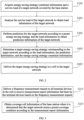
- the data processing method is applied to a base station and include: acquiring energy-saving strategy constraint information and a service load of a target network covered by the base station, where the energy-saving strategy constraint information is used for representing a constraint condition that the target network needs to meet to achieve an energy-saving intention, and the energy-saving intention is formulated by a cell in a region where the target network is located; analyzing the service load of the target network to obtain load information of the target network; performing prediction for the target network according to a preset energy-saving strategy and the load information to obtain prediction information of the target network; determining a target energy-saving strategy corresponding to the target network according to the load information, the prediction information, and the energy-saving strategy constraint information; and delivering the target energy-saving strategy to a cell in the target network.
- an embodiment provides a base station, including: a memory, a processor, and a computer program stored in the memory and executable by the processor, where the computer program, when executed by the processor, causes the processor to implement the data processing method in accordance with the first aspect.
- an embodiment provides a computer-readable storage medium, storing a computer-executable program which, when executed by a computer, causes the computer to implement the data processing method in accordance with the first aspect and the second aspect.
- the character "/" generally indicates an "or" relation between the associated objects.
- functional modules have been divided in the schematic diagrams of apparatuses and logical orders have been shown in the flowcharts, in some cases, the modules may be divided in a different manner, or the steps shown or described may be executed in an order different from the orders as shown in the flowcharts.
- Embodiments of the present disclosure provide a data processing method, an apparatus, and a storage medium.
- energy-saving strategy constraint information and a service load of a target network covered by a base station are acquired, such that a constraint condition that the target network needs to meet to achieve an energy-saving intention can be determined.
- the service load of the target network is analyzed to obtain load information of the target network.
- prediction is performed for the target network according to a preset energy-saving strategy and the load information to obtain prediction information of the target network under each preset energy-saving strategy, thus obtaining a communication quality status and the like of the target network.
- a target energy-saving strategy corresponding to the target network is determined according to the load information, the prediction information, and the energy-saving strategy constraint information.
- energy consumption power, quality of service, etc., of a designated network can be guaranteed, and a target energy-saving strategy can be delivered to a cell in the target network, such that the base station can provide better network service quality while saving energy, and the energy consumption of the base station and the quality of service of terminal devices can be balanced, thereby improving user experience.
- FIG. 2 is a flowchart of a data processing method according to an embodiment of the present disclosure.
- the data processing method is applied to, for example, but not limited to, a base station, and includes, but not limited to, the following steps S100 to S500.
- the service load includes cell-level load information and network-level load information of the target network.
- the energy-saving intention may be a communication rate goal, a daily average energy consumption goal, a data traffic goal, or the like specified by the cell, and is not particularly limited in this embodiment.
- the service load of the target network is analyzed to obtain load information of the target network.
- prediction is performed for the target network according to a preset energy-saving strategy and the load information to obtain prediction information of the target network.
- prediction is performed for the target network according to a preset energy-saving strategy and the load information to obtain prediction information of the target network, for subsequently formulating an energy-saving strategy corresponding to the target network.
- the preset energy-saving strategy is not a strategy of a single energy-saving function, but a strategy rule set.
- the strategy rule set includes various scenarios in which the preset energy-saving strategy occurs, conditions for executing the preset energy-saving strategy, goals to be achieved by the preset energy-saving strategy, etc.
- the predicted energy-saving strategy may also be an energy-saving mode of a cell in an energy-saving period.
- the energy-saving mode may be one or a combination of symbol off, channel off, carrier off, and deep sleep, and is not particularly limited in this embodiment.
- a target energy-saving strategy corresponding to the target network is determined according to the load information, the prediction information, and the energy-saving strategy constraint information.
- the target energy-saving strategy is delivered to a cell in the target network.
- energy-saving strategy constraint information and a service load of a target network covered by a base station are acquired, such that a constraint condition that the target network needs to meet to achieve an energy-saving intention can be determined.
- the service load of the target network is analyzed to obtain load information of the target network, thus obtaining information such as network quality of the target network.
- prediction is performed for the target network according to a preset energy-saving strategy and the load information to obtain prediction information of the target network under each preset energy-saving strategy, thus obtaining a communication quality status and the like of the target network.
- a target energy-saving strategy corresponding to the target network is determined according to the load information, the prediction information, and the energy-saving strategy constraint information.
- energy consumption power, quality of service, etc., of a designated network can be guaranteed, and a target energy-saving strategy can be delivered to a cell in the target network, such that the base station can provide better network service quality while saving energy, and a balance can be struck between the energy consumption of the base station and the quality of service of terminal devices, thereby improving user experience of the target network.
- the energy-saving strategy constraint information includes at least one of: intention cell information, where the intention cell information is a list of cells in the target network that have achieved the energy-saving intention; or target scenario information, where the target scenario information is used for representing an energy-saving intention to be achieved by the target network in each scenario; or intention constraint information, where the intention constraint information is used for defining a condition for the target network to achieve the energy-saving intention under the target scenario information.
- the intention cell information is a list of cells in the target network that have achieved an energy-saving intention.
- the list of cells includes information of the first cell, information of the second cell, and information of the third cell.
- the information of the first cell, the information of the second cell, and the information of the third cell each include, but not limited to, an identifier of the cell, an energy-saving parameter of the cell, and the like.
- the target scenario information is an energy-saving intention that the target network needs to achieve in each scenario. Energy-saving intentions achieved by different target networks in different scenarios may be the same or different.
- an energy-saving intention that the target network needs to achieve in scenario A is that average daily energy consumption of the base station should not exceed 200 kWh
- an energy-saving intention that the target network needs to achieve in scenario B is that average daily energy consumption of the base station should not exceed 350 kWh
- an energy-saving intention that the target network needs to achieve in scenario C is that an average communication rate of terminal devices in a cell is not lower than 8 megabits per second.
- the intention constraint information is used for defining a constraint condition that the target network needs to meet in each scenario, and is not particularly limited in this embodiment.
- an energy-saving intention that the target network needs to achieve is that average daily energy consumption of the base station should not exceed 200 kWh; in scenario B, when average daily energy consumption of the base station is required to not exceed 200 kWh, an energy-saving intention that the target network needs to achieve is that an average communication rate of terminal devices in a cell should be not lower than 6 megabits per second.
- the target scenario information may include an energy-saving goal, a context, etc.
- the intention constraint information may include an intention constraint condition, a context, etc.
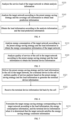
- FIG. 3 is a flowchart of a data processing method according to another embodiment of the present disclosure. The method includes, but not limited to, the following steps S210 to S220.
- a frequency measurement request is delivered to all terminal devices in the cell to receive measurement report information fed back by the terminal devices based on the frequency measurement request.
- coverage cell information of the base station is obtained when it is determined that the target network meets a preset coverage condition according to the measurement report information.
- the preset coverage condition is used for representing that when any one of cells covered by the target network is off, every neighboring two of the remaining cells covered by the target network overlap with each other.
- a frequency measurement request is delivered to all terminal devices in the cell for coverage analysis of the target network, and measurement report information fed back by the terminal devices based on the frequency measurement request is received; and coverage cell information of the base station is obtained when it is determined that the target network meets a preset coverage condition according to the measurement report information. As such, it can be determined whether a coverage hole or weak coverage occurs after any cell is turned off.
- the coverage analysis of the target network refers to analyzing measurement report information of all terminal devices in a region where the target network is located within a period of time.
- the measurement report information includes intra-frequency measurement information, inter-frequency measurement information, inter-system measurement information, etc., of all the terminal devices.
- the process of analyzing the service load of the target network to obtain the load information of the target network first, the service load of the target network is analyzed to obtain analysis information; then, the target network is analyzed according to the preset energy-saving strategy and the coverage cell information to obtain load prediction information, such that load information of the target network under each preset energy-saving strategy can be obtained; and finally, the analysis information and the load prediction information are integrated to obtain the load information of the target network.
- the change in the load of the target network under each preset energy-saving strategy can be accurately predicted.
- the service load includes cell-level load information and network-level load information of the target network.
- FIG. 5 shows a further description of S300 in FIG. 2 .
- S300 includes, but not limited to, the following steps S310 to S320.
- energy consumption of the target network is analyzed according to the preset energy-saving strategy and the load information to obtain the energy consumption information of the target network.
- quality of service of the cell in the target network is analyzed according to the preset energy-saving strategy and the load information to obtain the terminal device information.
- analyzing the energy consumption of the target network refers to performing an analysis based on software information and hardware information of the target network
- analyzing the quality of service of the cell refers to analyzing the quality of service of all the terminal devices in the cell.
- FIG. 6 shows a further description of S320 in FIG. 5 .
- S320 includes, but not limited to, the following steps S321 to S322.
- the preset energy-saving strategy and the load information are delivered to the cell in the target network, for a terminal device in the cell to perform quality of service analysis based on the preset energy-saving strategy and the load information to generate the terminal device information.
- the terminal device information fed back by the cell is received.
- the preset energy-saving strategy and the load information are delivered to the cell in the target network, such that the cell can predict the quality of service of all the terminal devices in the cell based on the preset energy-saving strategy and the load information, to obtain the terminal device information.
- the quality of service of all the terminal devices in the cell under each preset energy-saving strategy can be accurately predicted, and the energy consumption and quality of service under each preset energy-saving strategy can be predicted.
- FIG. 7 shows a further description of S400 in FIG. 2 .
- S400 includes, but not limited to, a following step S410.
- the target energy-saving strategy corresponding to the target network is formulated according to the load information, the energy consumption information, and the terminal device information when it is determined that the target network satisfies the energy-saving strategy constraint information.
- the target energy-saving strategy corresponding to the target network is formulated according to the load information, the energy consumption information, and the terminal device information when it is determined that the target network satisfies the energy-saving strategy constraint information.
- the base station can provide better network service quality while saving energy, thereby improving user experience.
- the method further includes: receiving a progress request sent by the cell, and feeding back achievement status information of the target energy-saving strategy to the cell; or sending the achievement status information of the target energy-saving strategy to the cell based on a preset time interval.
- a progress request sent by the cell is received, and achievement status information of the target energy-saving strategy is fed back to the cell, so as to determine whether there is an abnormal phenomenon or the like in the process of executing the target energy-saving strategy by the cell.
- the base station may also periodically send the achievement status information of the target energy-saving strategy to the cell.
- the achievement status information includes communication quality, network rate, user experience, alarm information, energy consumption analysis information, and the like in the process of the terminal executing the target energy-saving strategy, which is not particularly limited in this embodiment.
- step 1 energy-saving strategy constraint information and a service load of the target network covered by the base station are acquired.
- the target network in the energy-saving strategy constraint information is "5G base station in region A”
- the target scenario information is "average daily energy consumption of the 5G base station in region A should not exceed 200 kWh in any scenario”
- the intention constraint information is "a percentage of a cell-level downlink average user rate of the 5G base station being not lower than 8 megabits per second at a granularity of 15 minutes in region A in any scenario does not exceed 98%".
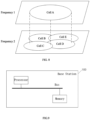
- a coverage analysis is performed for the target network.
- the coverage analysis of the target network refers to analyzing measurement report information, e.g., intra-frequency measurement information, inter-frequency measurement information, and inter-system measurement information, of all users in a region where the target network is located within a period of time, to determine whether a coverage hole or weak coverage occurs after any cell in the target network is turned off, and determine overlapping coverage information of any cell in the target network and its neighboring cells.
- measurement report information e.g., intra-frequency measurement information, inter-frequency measurement information, and inter-system measurement information
- the coverage cell information of the base station is obtained, and when it is determined that the target network does not meet the preset coverage condition according to the measurement report information, the following operations will not be executed.
- FIG. 8 is a schematic diagram of a coverage analysis of a target network according to an embodiment of the present disclosure.
- service loads of the five cells in the region A in the next day are analyzed to obtain an analysis result.
- only average downlink PRB usage of the cell at a granularity of 15 minutes is considered.
- other load-related indicators at other granularities e.g., uplink PRB usage or the number of connected users or the number of active users of the cell at a granularity of 1 minute, may also be considered.
- Load statuses of the five cells in region A when no energy-saving strategy is enabled, when an energy-saving strategy 1 is enabled, and when an energy-saving strategy 2 is enabled are analyzed.
- an energy-saving strategy is not merely enabling and disabling a single energy-saving function, but is a rule set of "what energy-saving strategy combination is to be enabled in a scenario”.
- step 4 energy consumption of the target network is analyzed based on software and hardware information of the target network to obtain energy consumption analysis information, and an energy consumption status of the target network under any energy-saving strategy is accurately estimated and predicted with reference to the energy consumption analysis information and the load analysis result, to obtain energy consumption information.
- the present disclosure only considers normalized energy consumption of the cells at a granularity of 15 minutes.
- the cell A consumes a lot of energy because of its large network bandwidth.
- Energy consumption statuses of the five cells in region A when no energy-saving strategy is enabled, when an energy-saving strategy 1 is enabled, and when an energy-saving strategy 2 is enabled are analyzed.
- the energy-saving strategy 1 a strategy such as symbol-level sleep and slot-level sleep of the cell is enabled when the load of the cell is low, and energy consumption of the cell is significantly reduced in these periods compared with the case where no energy-saving strategy is enabled.
- the cell A is in a long-term sleep state for a lot of time. In this case, energy consumption of the cell A reaches a minimum, but because the other four cells bear part of the load of the cell A, energy consumption of the four cells at the frequency 2 in some periods is increased compared with the case where the energy-saving strategy 1 is enabled.
- step 5 quality of service of the target network is analyzed to obtain terminal device analysis information, and the terminal device analysis information of the target network under any energy-saving strategy is accurately estimated and predicted with reference to the load information, to obtain terminal device information.
- only an average downlink user rate of the cell at a granularity of 15 minutes is considered.
- other user experience-related indicators at other granularities e.g., uplink user rate at a granularity of 1 minute, may also be considered.
- Quality of service of the target network when no energy-saving strategy is enabled, when an energy-saving strategy 1 is enabled, and when an energy-saving strategy 2 is enabled for the five cells are respectively analyzed.
- the energy-saving strategy 1 a strategy such as symbol-level sleep and slot-level sleep of the cell is enabled when the load of the cell is low, and the quality of service of the target network is significantly reduced in these periods compared with the case where no energy-saving strategy is enabled.
- a target energy-saving strategy corresponding to the target network is determined according to the load information, the prediction information, and the energy-saving strategy constraint information, and is sent to the cell in the target network.
- An energy-saving strategy that can most probably achieve an intended goal while meeting the energy-saving strategy constraint information is selected based on the analysis result in step 2, and executed.
- the average daily energy consumption of the 5G base station in region A is 222.1 kWh, and a percentage of the cell-level downlink average user rate being not lower than 8 megabits per second at a granularity of 15 minutes is 99.8%; when the energy-saving strategy 1 is enabled, the average daily energy consumption of the 5G base station in region A is 184.78 kWh, and a percentage of the cell-level downlink average user rate being not lower than 8 megabits per second at a granularity of 15 minutes is 98.1%; and when the energy-saving strategy 2 is enabled, the average daily energy consumption of the 5G base station in region A is 170.88 kWh, and a percentage of the cell-level downlink average user rate being not lower than 8 megabits per second at a granularity of 15 minutes is 97.7%.
- the energy-saving strategy 1 is selected according to the energy-saving strategy constraint information, and executed.
- the base station is triggered periodically or by an event to feed back an intention achievement status to the intention initiator.
- energy-saving strategy constraint information and a service load of a target network covered by a base station are acquired, such that a constraint condition that the target network needs to meet to achieve an energy-saving intention can be determined.
- the service load of the target network is analyzed to obtain load information of the target network, thus obtaining information such as network quality of the target network.
- an analysis is performed for the target network according to a preset energy-saving strategy and the load information to obtain prediction information sent by the target network and the cells in the target network according to the preset energy-saving strategy and the load information, thus obtaining a communication quality status and the like of the target network.
- a target energy-saving strategy corresponding to the target network is determined according to the load information, the prediction information, and sent to the cell.
- the base station can provide better network service quality while saving energy, and a balance can be struck between the energy consumption of the base station and the quality of service of terminal devices, thereby improving user experience of the target network.
- an embodiment of the present disclosure provides a base station.
- the base station 100 includes: one or more processors and one or more memories.
- FIG. 9 uses one processor and one memory as an example.
- the processor and the memory may be connected by a bus or in other ways. Connection by a bus is used as an example in FIG. 9 .
Landscapes
- Engineering & Computer Science (AREA)
- Computer Networks & Wireless Communication (AREA)
- Signal Processing (AREA)
- Mobile Radio Communication Systems (AREA)
Applications Claiming Priority (2)
| Application Number | Priority Date | Filing Date | Title |
|---|---|---|---|
| CN202211010766.9A CN117693056B (zh) | 2022-08-23 | 2022-08-23 | 一种数据处理方法、基站及存储介质 |
| PCT/CN2023/083211 WO2024040961A1 (fr) | 2022-08-23 | 2023-03-22 | Procédé de traitement de données, station de base et support d'enregistrement |
Publications (2)
| Publication Number | Publication Date |
|---|---|
| EP4576882A1 true EP4576882A1 (fr) | 2025-06-25 |
| EP4576882A4 EP4576882A4 (fr) | 2025-12-24 |
Family
ID=90012300
Family Applications (1)
| Application Number | Title | Priority Date | Filing Date |
|---|---|---|---|
| EP23856057.7A Pending EP4576882A4 (fr) | 2022-08-23 | 2023-03-22 | Procédé de traitement de données, station de base et support d'enregistrement |
Country Status (4)
| Country | Link |
|---|---|
| EP (1) | EP4576882A4 (fr) |
| KR (1) | KR20250050097A (fr) |
| CN (1) | CN117693056B (fr) |
| WO (1) | WO2024040961A1 (fr) |
Families Citing this family (3)
| Publication number | Priority date | Publication date | Assignee | Title |
|---|---|---|---|---|
| CN118984484B (zh) * | 2024-09-12 | 2025-11-04 | 中国移动通信集团浙江有限公司 | 基站节能方法、装置及设备 |
| CN121728536A (zh) * | 2024-09-24 | 2026-03-24 | 中国移动通信有限公司研究院 | 节能控制方法、装置、电子设备、计算机可读存储介质及程序产品 |
| CN120018223B (zh) * | 2025-02-12 | 2025-12-02 | 中国联合网络通信集团有限公司 | 一种同覆盖小区的栅格匹配方法、装置及介质 |
Family Cites Families (7)
| Publication number | Priority date | Publication date | Assignee | Title |
|---|---|---|---|---|
| CN102065448A (zh) * | 2011-01-06 | 2011-05-18 | 大唐移动通信设备有限公司 | 一种覆盖区域补偿、恢复的方法及装置 |
| CN114071661A (zh) * | 2020-07-31 | 2022-02-18 | 大唐移动通信设备有限公司 | 一种基站节能控制方法和装置 |
| CN114269007B (zh) * | 2020-09-15 | 2025-02-28 | 中国电信股份有限公司 | 基站节能策略确定方法、装置以及方法存储介质 |
| CN112561728B (zh) * | 2020-10-28 | 2023-07-11 | 西安交通大学 | 基于注意力机制lstm的综合能耗费用优化方法、介质及设备 |
| CN112312531B (zh) * | 2020-11-18 | 2022-09-27 | 中国联合网络通信集团有限公司 | 基站节能方法和装置 |
| CN112804739B (zh) * | 2021-02-24 | 2023-04-28 | 中国联合网络通信集团有限公司 | 一种基站节能方法、装置、设备及系统、存储介质 |
| CN114339971A (zh) * | 2021-12-28 | 2022-04-12 | 中国电信股份有限公司 | 基站节能控制方法、装置、存储介质及电子设备 |
-
2022
- 2022-08-23 CN CN202211010766.9A patent/CN117693056B/zh active Active
-
2023
- 2023-03-22 WO PCT/CN2023/083211 patent/WO2024040961A1/fr not_active Ceased
- 2023-03-22 EP EP23856057.7A patent/EP4576882A4/fr active Pending
- 2023-03-22 KR KR1020257008647A patent/KR20250050097A/ko active Pending
Also Published As
| Publication number | Publication date |
|---|---|
| CN117693056B (zh) | 2026-01-02 |
| WO2024040961A1 (fr) | 2024-02-29 |
| EP4576882A4 (fr) | 2025-12-24 |
| CN117693056A (zh) | 2024-03-12 |
| KR20250050097A (ko) | 2025-04-14 |
Similar Documents
| Publication | Publication Date | Title |
|---|---|---|
| EP4576882A1 (fr) | Procédé de traitement de données, station de base et support d'enregistrement | |
| EP2122929B1 (fr) | Système de commande orienté réseau de configuration et d'optimisation automatiques de mesures | |
| JP7834196B2 (ja) | 機械学習モデル訓練のための通信方法および装置 | |
| US9763138B2 (en) | Load balancing apparatus and method for wireless communications system, and base station | |
| US20240267784A1 (en) | Network capacity optimization method, apparatus, and system | |
| EP4436286B1 (fr) | Procédé et appareil d'attribution de ressources, et serveur et support de stockage | |
| US20120164955A1 (en) | Method and Apparatus for Cell Control | |
| EP4462840A1 (fr) | Procédé et appareil d'exploration de vulnérabilité de sécurité de protocole d'interface radio, et terminal mobile | |
| US9066294B2 (en) | Real time event-driven automation for energy management in a wireless network | |
| CN112752319A (zh) | 网络切换方法、装置、终端及存储介质 | |
| US20250267077A1 (en) | Communication method and apparatus | |
| EP2750427B1 (fr) | Procédé et appareil de coordination de la compensation d'indisponibilité de cellules et d'optimisation de la capacité et de la couverture | |
| CN116709481B (zh) | 小区去激活方法、系统、电子设备及存储介质 | |
| WO2025077748A1 (fr) | Procédé et appareil de configuration de csi-rs, station de base satellite et ue | |
| CN111741452A (zh) | 一种NB-IoT基站剩余容量预测的方法和装置 | |
| CN115767506A (zh) | 用户数据订阅方法、上报方法及装置 | |
| US20240292257A1 (en) | Method for determining a coverage layer cell, electronic device, and computer-readable medium | |
| KR20250062045A (ko) | 단말 및 uai 전송 방법 | |
| WO2025152938A1 (fr) | Procédé et dispositif de gestion d'intention | |
| CA3247068A1 (fr) | Procédé de communication pour entraînement de modèle d’apprentissage automatique et appareil |
Legal Events
| Date | Code | Title | Description |
|---|---|---|---|
| STAA | Information on the status of an ep patent application or granted ep patent |
Free format text: STATUS: THE INTERNATIONAL PUBLICATION HAS BEEN MADE |
|
| PUAI | Public reference made under article 153(3) epc to a published international application that has entered the european phase |
Free format text: ORIGINAL CODE: 0009012 |
|
| STAA | Information on the status of an ep patent application or granted ep patent |
Free format text: STATUS: REQUEST FOR EXAMINATION WAS MADE |
|
| 17P | Request for examination filed |
Effective date: 20250318 |
|
| AK | Designated contracting states |
Kind code of ref document: A1 Designated state(s): AL AT BE BG CH CY CZ DE DK EE ES FI FR GB GR HR HU IE IS IT LI LT LU LV MC ME MK MT NL NO PL PT RO RS SE SI SK SM TR |
|
| DAV | Request for validation of the european patent (deleted) | ||
| DAX | Request for extension of the european patent (deleted) | ||
| A4 | Supplementary search report drawn up and despatched |
Effective date: 20251124 |
|
| RIC1 | Information provided on ipc code assigned before grant |
Ipc: H04W 52/02 20090101AFI20251118BHEP |