EP4578286A1 - Procédé de préparation d'agents désinfectants et stérilisants exempts d'eau et leur utilisation - Google Patents
Procédé de préparation d'agents désinfectants et stérilisants exempts d'eau et leur utilisation Download PDFInfo
- Publication number
- EP4578286A1 EP4578286A1 EP23383392.0A EP23383392A EP4578286A1 EP 4578286 A1 EP4578286 A1 EP 4578286A1 EP 23383392 A EP23383392 A EP 23383392A EP 4578286 A1 EP4578286 A1 EP 4578286A1
- Authority
- EP
- European Patent Office
- Prior art keywords
- sterilisation
- water
- disinfection
- agent
- free
- Prior art date
- Legal status (The legal status is an assumption and is not a legal conclusion. Google has not performed a legal analysis and makes no representation as to the accuracy of the status listed.)
- Withdrawn
Links
Images
Classifications
-
- A—HUMAN NECESSITIES
- A01—AGRICULTURE; FORESTRY; ANIMAL HUSBANDRY; HUNTING; TRAPPING; FISHING
- A01N—PRESERVATION OF BODIES OF HUMANS OR ANIMALS OR PLANTS OR PARTS THEREOF; BIOCIDES, e.g. AS DISINFECTANTS, AS PESTICIDES OR AS HERBICIDES; PEST REPELLANTS OR ATTRACTANTS; PLANT GROWTH REGULATORS
- A01N47/00—Biocides, pest repellants or attractants, or plant growth regulators containing organic compounds containing a carbon atom not being member of a ring and having no bond to a carbon or hydrogen atom, e.g. derivatives of carbonic acid
- A01N47/02—Biocides, pest repellants or attractants, or plant growth regulators containing organic compounds containing a carbon atom not being member of a ring and having no bond to a carbon or hydrogen atom, e.g. derivatives of carbonic acid the carbon atom having no bond to a nitrogen atom
- A01N47/06—Biocides, pest repellants or attractants, or plant growth regulators containing organic compounds containing a carbon atom not being member of a ring and having no bond to a carbon or hydrogen atom, e.g. derivatives of carbonic acid the carbon atom having no bond to a nitrogen atom containing —O—CO—O— groups; Thio analogues thereof
-
- A—HUMAN NECESSITIES
- A01—AGRICULTURE; FORESTRY; ANIMAL HUSBANDRY; HUNTING; TRAPPING; FISHING
- A01N—PRESERVATION OF BODIES OF HUMANS OR ANIMALS OR PLANTS OR PARTS THEREOF; BIOCIDES, e.g. AS DISINFECTANTS, AS PESTICIDES OR AS HERBICIDES; PEST REPELLANTS OR ATTRACTANTS; PLANT GROWTH REGULATORS
- A01N25/00—Biocides, pest repellants or attractants, or plant growth regulators, characterised by their forms, or by their non-active ingredients or by their methods of application, e.g. seed treatment or sequential application; Substances for reducing the noxious effect of the active ingredients to organisms other than pests
- A01N25/02—Biocides, pest repellants or attractants, or plant growth regulators, characterised by their forms, or by their non-active ingredients or by their methods of application, e.g. seed treatment or sequential application; Substances for reducing the noxious effect of the active ingredients to organisms other than pests containing liquids as carriers, diluents or solvents
-
- C—CHEMISTRY; METALLURGY
- C01—INORGANIC CHEMISTRY
- C01B—NON-METALLIC ELEMENTS; COMPOUNDS THEREOF; METALLOIDS OR COMPOUNDS THEREOF NOT COVERED BY SUBCLASS C01C
- C01B15/00—Peroxides; Peroxyhydrates; Peroxyacids or salts thereof; Superoxides; Ozonides
- C01B15/01—Hydrogen peroxide
- C01B15/022—Preparation from organic compounds
- C01B15/026—Preparation from organic compounds from alcohols
Definitions
- the gas plasma precursor 56% hydrogen peroxide (HP)
- HP is supplied in cartridges containing single-dose vials, which are punctured at the beginning of the sterilisation cycle.
- HP is classified as a dual-use substance. This means it can be used to make explosives for malicious purposes.
- European authorities implemented legislative measures in 2019 in order to restrict the sale of HP with concentrations of 12% or higher to the general public.
- HP is classified as a hazardous substance due to its potential to violently decompose and originate fires during storage and transportation. Risks posed by HP increase with the concentration of its commercial solutions.
- Steris Europe Inc in US10293068B2 provides a system based on vaporized hydrogen peroxide.
- This technology can be used for the disinfection of clean rooms in pharmaceutical facilities, for example, in the production of vaccines.
- the room must be aerated after the treatment.
- the method requires a relative humidity of 30% in the entire volume of the room prior to the delivery of the vaporized hydrogen peroxide WO2008134290A1 . This is time consuming and energy intensive.
- Nitrogen dioxide sterilisation may leave residues on treated surfaces. Residual nitrogen dioxide or by-products could potentially affect the functionality or safety of medical devices or other sensitive equipment.
- Material Compatibility Some materials may not be compatible with nitrogen dioxide sterilisation due to its corrosive nature. This corrosive property limit its applicability to specific types of materials and devices.
- Validation Challenges Achieving proper validation for sterilisation processes involving nitrogen oxides can be challenging. Ensuring consistent and effective sterilization while considering the safety of both the product and personnel requires thorough testing and validation procedures.
- Ozone has also found application as sterilisation agent due to its oxidizing properties.
- the TsO3 company obtained limited FDA clearance for the sterilisation of certain medical devices.
- WO2008046214A1 and WO2008052332A1 detail a sterilisation process that involves sequentially exposing an article under vacuum first to a gaseous conditioning agent, like hydrogen peroxide, and then to a sterilant, preferably ozone. The process is designed to enhance sterilisation efficiency and reduce the amount of sterilant required, as well as the cycle times.
- Ozone is a respiratory irritant, and exposure to elevated levels can cause irritation to the eyes, nose, and throat. Prolonged exposure or exposure to high concentrations may lead to more severe respiratory issues. Ozone is considered a potential lung irritant and can exacerbate existing respiratory conditions.
- Ozone sterilisation cycles may take longer compared to other sterilisation methods, such as steam or ethylene oxide. This longer cycle time can impact the efficiency and throughput of sterilisation processes.
- Ozone Decomposition Ozone is inherently unstable and can decompose over time. The shelf life of ozone can be limited, and the concentration of ozone in a sterilisation system may decrease over time, affecting its effectiveness. Continuous monitoring and maintenance of ozone generators are necessary to ensure consistent sterilization performance.
- Equipment Costs The equipment required for ozone sterilisation can be complex and costly to install and maintain. This includes ozone generators and monitoring systems. The initial investment and ongoing operational costs may be higher compared to other sterilisation methods.
- Carbon dioxide (CO 2 ) has been used in certain sterilisation applications, particularly in the form of supercritical or dense phase CO 2 ( US7108832B2 and US8388944B2 ).
- the main advantages are the ability of carbon dioxide to leave no hard to remove residue and its lack of toxicity at low concentrations. However, it also has limitations that may make it less suitable for certain applications. Here are some of the drawbacks:.
- Temperature Sensitivity The sterilising effectiveness of carbon dioxide is highly dependent on pressure and temperature. Achieving the necessary conditions for effective sterilisation may require precise control and monitoring of these parameters. This temperature sensitivity can limit the types of materials that can be safely sterilised.
- Supercritical carbon dioxide exhibits solvent-like characteristics and is not compatible with several materials, including polystyrene and polyethylene terephtalate.
- Carbon dioxide has limited penetration ability compared to other sterilants. This limitation can be a challenge in sterilising complex devices with intricate geometries or densely packed materials, where ensuring that the sterilant reaches all surfaces is crucial.
- Equipment Complexity and Cost The equipment required for carbon dioxide sterilisation, especially in its supercritical form, can be complex and costly. Specialized chambers and systems are needed to maintain the required pressure and temperature conditions. The initial investment and ongoing maintenance costs may be higher compared to some other sterilisation methods.
- Residuals and Degradation Some polymers may swell, degrade, or undergo changes in mechanical properties when exposed to supercritical carbon dioxide. Polymers such as polyethylene and polypropylene are generally considered more resistant, while some elastomers and thermoplastic polymers may be sensitive. Some polymers may swell, which can impact dimensional stability. This swelling behaviour is important to consider, especially when dealing with precision components or products with tight tolerances. Residuals from the process may also be a consideration. Materials used in the construction of medical devices and other items contain additives, processing aids, or surface treatments. Supercritical carbon dioxide may interact with and potentially extract these substances during the sterilisation process, leading to the presence of residuals. Understanding the composition of materials is crucial for assessing potential residuals and thorough validation is necessary to ensure that the sterilisation process leaves no harmful residues on the sterilised items.
- Table 2 Desired attributes of sterilisation agents in the food and beverage sector. Attribute Comments Rapid microbicidal activity The agent should be capable of inactivating viruses, bacteria, fungi, and spores Ease of application Automated delivery of the disinfectant should be possible.
- Disinfectants play a crucial role in this sector by mitigating the risk of pathogenic microorganisms, thereby extending the shelf life of processed foods.
- the increasing food and beverage market demand for disinfectants is primarily caused by the rising need for processed foods.
- a noteworthy trend is the increasing preference for safer alternatives, replacing potentially harmful chemical disinfectants.
- Packaging is becoming an essential part of the food production process, enhancing food suitability and safeguarding it against microbial, biological, and chemical alterations, thus extending the shelf life of packaged goods.
- it is crucial to sterilize both the packaging materials and all surfaces that come into contact with the food, especially in the aseptic packaging of food items.
- This sterilisation process can be carried out through various methods, including heat, hydrogen peroxide, irradiation, infrared light, and combinations thereof.
- Liquid hydrogen peroxide aqueous solutions are equally effective methods and are the preferred method of sterilisation in aseptic packaging. However, they still require hot air at 80°C to achieve effective sterilisation.
- Another disadvantage is that the precursor solution of hydrogen peroxide is concentrated and classified as dual-use substance.
- peracetic acid is capable of inactivating resistant spores and unlike hydrogen peroxide, it is stable against catalases.
- the main disadvantage of peracetic acid liquid solutions is that it can generate a vapour that contains acetic acid, which is irritating and can produce off-flavors (vinegar odor). This is why peracetic acid is not widely used in aseptic packaging sterilisation.
- Irradiation methods like UV light and gamma rays are alsoeffective in the sterilisation of packaging. These methods leave no residue and can be operated at low temperature.
- the main disadvantage for food packaging sterilisation is that radiations are harmful to workers.
- the present invention proposes new disinfection and sterilisation agent compositions that overcome the limitations present in the disinfectants and sterililants known in the state of the art.
- the invention also discloses a method and system to obtain said agents on demand and in situ from simple, commercially available, cheap and non-toxic chemical precursors.
- the present invention relates to a method for the production and use of both a water-free disinfection agent comprising hydrogen peroxide and a water-free sterilisation agent comprising a peroxycarbonic acid alkyl ester and hydrogen peroxide.
- the disinfection/sterilisation agents are made from non-toxic organic precursors.
- the invention relates to the use of the water-free disinfection and sterilisation agents and compositions described below.
- the disinfection and sterilisation agents and their corresponding fluid solutions can be used in cleaning, sanitation, disinfection and sterilisation processes like the disinfection of rooms in pharmaceutical and healthcare facilities, public water facilities like pools, industrial water disinfection such as refrigeration circuits, the disinfection of foods like fruits and vegetables, food packaging materials, food surfaces, the disinfection of animals and animal farm equipment and facilities, the sterilisation of surfaces in pharmaceutical and healthcare facilities, medical devices, surgical instruments, the cleaning and sterilisation of reprocessed medical items and devices, and the sterilisation of food packaging materials.
- the use requirements of disinfection or sterilisation agents vary. Different formulations are presented in this invention to maximize effectiveness, ensure safety, and enhance the user experience. This tailored approach is essential for achieving optimal results in various contexts, whether in healthcare settings, laboratory environments, or industrial processes.
- Each application demands a unique solution that balances the agent's properties with the requirements of the task at hand.
- a first aspect of the invention relates to a method for producing a water-free disinfection agent and a water-free sterilisation agent. This method completely avoids the use of water at any stage, ensuring that the resulting disinfection or sterilisation agent is entirely devoid of water or contains only negligible traces. Additionally, there is no water treatment or dilution involved in this procedure.
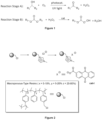
- the method for the preparation of a water-free active solution intended for use as disinfection and/or sterilisation agent comprises the following stages:
- This stage b) enables the production of a water-free sterilisation agent, which preferably comprises:
- the oxygen used in step a) can be pure O 2 or can come from air. More preferably, air at atmospheric pressure (1 atm) is used.
- steps a) and b) are carried out simultaneously in a two step, one-pot process in the same reactor containing the photocatalyst and the catalyst of the perhydrolysis reaction, at a temperature between 25°C and 80°C, in the presence of oxygen and UV light.
- the liquid mixture of primary or secondary alcohol and a dialkyl carbonate is placed in contact with the two catalysts.
- the starting mixture in stage a) comprises between 20-80% w/w of alcohol and the rest (up to 100%w/w) of dialkyl carbonate. More preferably, between 30-50% w/w of the alcohol.
- the primary or secondary alcohol has a standard oxidation potential in acetonitrile (vs. reference Ferrocene 0/1+ electrode) of less than 0.15 V.
- the standard oxidation potential is calculated as described by Speelman et al., Energy Environ. Sci., 2022, 15, 4015-4024 and references therein.
- the first term in the right hand side of the equation is the equilibrium potential for the hydrogen evolution reaction in organic solvents, measured by the ferrocenium/ferrocene (Fc +/0 ) couple.
- the first term in the numerator is the gas phase standard free energy of hydrogenation of the ketone or aldehyde to obtain the alcohol.
- the second term in the numerator is the difference between the standard free energies of solvation of the alcohol and the ketone or aldehyde, and F is the Faraday constant.
- the dialkyl carbonate has a saturation vapour pressure of not less than 0.015 bar at 303.15 K and not less than 0.05 bar at 323.15 K determined using the static method, in which a small quantity of the organic liquid is placed in a container (Knudsen cell) with a small pinhole or orifice. The cell is maintained at a constant temperature in a vacuum chamber. As the organic liquid evaporates through the pinhole, the vapor molecules escape into the vacuum. By measuring the rate of effusion and knowing the temperature, the vapor pressure is determined using the Knudsen equation.
- the primary or secondary alcohol has the following formula: R 1 -CH(OH)-R 2 , where R 1 is H or a C1-C10 alkyl group, preferably, C1-C4 alkyl and R 2 is a C1-C4 alkyl.
- the primary or secondary alcohol is selected from the list comprising: isopropanol, ethanol, methanol and butanol. More preferably, the alcohol is isopropanol or ethanol.
- the alkyl group is preferably a C1-C10 alkyl group, more preferably, C1-C4 alkyl.
- the alkyl group can be optionally substituted by one or several -OH groups.
- the alkylene group is preferably a C1-C5 alkylene group, more preferably, C2-C3 alkylene group.
- the alkylene group can be optionally substituted by one or several -OH groups
- the dialkyl carbonate is selected from the list comprising: dimethyl carbonate, diethyl carbonate, propylene carbonate, ethylene carbonate, and glycerol carbonate.
- dialkyl carbonates as peroxycarbonic acid alkyl ester precursors is advantageous, as they are excellent solvents for a wide variety of organic and inorganic materials and, as such, are used in a variety of applications and compositions, including, but not limited to, cleaners, degreasers, dyes, fibres, plastics, batteries, as a gelling agent for clays, and as a curing agent/accelerator for foundry sand resins. They are economical, non-toxic, safe, non-corrosive and non-irritating, therefore suitable for use in applications involving human contact.
- dialkyl carbonate and alcohol precursors do not pose acute toxicity risks, as their lethal doses (50% mortality) exceed 4000 mg/kg. They are not identified as endocrine disruptors and are not categorized as carcinogenic or mutagenic substances. Furthermore, dialkyl carbonate and alcohol do not exhibit toxicity in terms of reproductive effects.
- stage a) of the method hydrogen peroxide (H 2 O 2 ) and an aldehyde or ketone are generated by a photocatalytic process of hydrogen transfer from an H donor (alcohol) to dissolved O 2 through the help of an excited photocatalyst.
- This reaction is preferably carried out in a photocatalytic reactor.
- the photocatalyst can be immobilised in an insoluble support or can be dissolved in the starting alcohol/dialkyl carbonate mixture.
- the photocatalyst used in stage a) is selected from the list comprising: anthraquinone, 2-bromomethylanthraquinone, 1,8-dihydroxyanthraquinone, anthraquinone-2-carboxylic acid, anthraquinone 2-sulphonate sodium, 2-tert-butylanthraquinone, 2-methylanthraquinone, 2-ethylanthraquinone or heterogenous version of thereof.
- the photocatalyst is used in a concentration between 5 and 10 mM.
- the photocatalyst is immobilised in a polymeric resin, which may or may not contain ionic liquids.
- a polymeric resin which may or may not contain ionic liquids.
- the molar ratio photocatalyst to the primary or secondary alcohol of the initial liquid mixture is between 0.01 % mol/mol and 10% mol/mol.
- the polymeric resin is a chloride functionalised divinylbenzene crosslinked polystyrene resin. More preferably, the polymeric resin is Merrifield resin (2% divinylbenzene crosslinked polystyrene and chloride functionalised).
- an “ionic liquid” is understood to be a chemical entity made up of ions, that is, salts that have a melting temperature below the boiling point of water (100 °C at sea level) and that are thermally and chemically stable. These liquid units can be immobilised on resin by chemical adsorption or by covalent bonding.
- the light administered for the production of said photochemical reaction it is in the UV range as indicated above, more preferably, the light administered is of a wavelength between 300 nm and 500 nm.
- the wavelength is preferably between 370 and 450 nm, more preferably, between 420 and 450 nm.
- An LED lamp or any UV light lamp can be used for this.
- the reaction of stage a) is carried out at room temperature (approx. 18-25°C) and/or for a period between 10 minutes and 3 hours, more preferably, between 30 minutes and 1 hour.
- the molar ratio oxygen/ primary or secondary alcohol in the reacting mixture is maintained below 1.
- the reaction of the hydrogen peroxide generated in stage a) with the dialkyl carbonate takes place to give the corresponding peroxycarbonic acid alkyl ester.
- This reaction takes place in the presence of either a non-enzymatic or enzymatic catalyst.
- a non-enzymatic catalyst this may be a catalyst containing Lewis acid groups.
- a heterogeneous catalyst containing acid groups e.g., strongly acidic cation exchange resins of the acrylate type or sulphonated polystyrene such as amberlite, nafion, or MOFs, i.e., metal organic frameworks.
- it can be a lipase enzyme, such as Fusarium solani pisi lipase, Candida antarctica lipase, Geobacillus thermoleovorans IHI-91 lipase, Kurtzmanomyces spec. lipase.
- a lipase enzyme such as Fusarium solani pisi lipase, Candida antarctica lipase, Geobacillus thermoleovorans IHI-91 lipase, Kurtzmanomyces spec. lipase.
- CALB lipase Candida antarctica lipase B
- CALB lipase immobilised on a polymer support Preferably, CALB lipase immobilised on a polymer support.
- stage b) is carried out in a fixed bed reactor.
- the amount of the catalyst, preferably an enzyme, and ever more preferably CALB, is between 0.1 and 0.6 g/mL of the reactant mixture.
- reaction of stage b) is carried out at a temperature between 35 and 45°C, more preferably at 40°C.
- reaction of stage b) is carried out for a time of between 20 and 30 minutes.
- the method is carried out continuously and/or at the point of use of the solution.
- continuously supplying a flow of reagents it is possible to carry out the method continuously without the need to carry out any separation and/or purification stage.
- the method of the present invention can be carried out in a system configured to be able to carry out the method continuously.
- the system can comprise:
- the system can comprise flow sensors, located at the inlet and outlet of each reactor, to control the supply of reagents to the system. Furthermore, it may comprise a light sensor connected to the UV light source in order to control the light applied to the photocatalytic reactor.
- the reactors are linked, and the pumps and regulators, which can operate automatically and be programmed, control the continuous flow of reagents.
- This configuration enables the production of the disinfection agent from the photocatalytic reactor's outlet and the sterilisation agent from the biocatalytic second reactor's outlet as needed, on-site, without necessitating additional separation or purification stages.
- a second aspect of the invention relates to a water-free disinfection agent, obtainable in stage a), that comprises a primary or secondary alcohol, a dialkyl carbonate, hydrogen peroxide, and an aldehyde or ketone.
- the primary or secondary alcohol and the dialkyl carbonate are as defined in the first aspect of the present invention and the aldehyde or ketone is the oxidation product of said primary or secondary alcohol.
- the water-free disinfection agent comprises between 20% w/w and 60% w/w of a primary or secondary alcohol, between 40% w/w and 80% w/w of a dialkyl carbonate, between 0.1% w/w and 10% w/w of hydrogen peroxide, and between 0.2% w/w and 20% w/w of aldehyde or ketone.
- the water-free disinfection agent comprises between 25% w/w to 50% w/w of a primary or secondary alcohol, between 50% w/w and 70% w/w of a dialkyl carbonate, between 0.5% w/w and 5% w/w of hydrogen peroxide, and between 0.5% w/w and 10% w/w of aldehyde or ketone (w/w refers to "by weight").
- a third aspect of the invention relates to a water-free sterilisation agent, obtainable in stage b), that comprises a primary or secondary alcohol, a dialkyl carbonate, hydrogen peroxide, a peroxycarbonic acid alkyl ester, an aldehyde or ketone, and an alcohol derived from the reaction between the dialkyl carbonate and the hydrogen peroxide.
- the primary or secondary alcohol and the dialkyl carbonate are as defined in the first aspect of the present invention.
- the water-free sterilisation agent comprises between 20% w/w and 60% w/w of a primary or secondary alcohol, between 40% w/w and 80% w/w of a dialkyl carbonate, between 0.1 and 10% w/w of hydrogen peroxide, between 0.05% w/w and 5% w/w of a peroxycarbonic acid alkyl ester, between 0.1% w/w and 20% w/w of an aldehyde or ketone, and between 0.01% w/w and 3% w/w of an alcohol derived from the dialkyl carbonate.
- the water-free sterilisation agent comprises between 25% w/w to 50% w/w of a primary or secondary alcohol, between 50% w/w and 70% w/w of a dialkyl carbonate, between 0.3% w/w and 5% w/w of hydrogen peroxide, between 0.1% w/w and 3% w/w of a peroxycarbonic acid alkyl ester, between 0.5% w/w and 10% w/w of an aldehyde or ketone, and between 0.03% w/w and 1% w/w of an alcohol derived from the dialkyl carbonate.
- the alkyl group can be optionally substituted by one or several -OH groups (This is the case, for example, when the peroxycarbonic acid alkyl ester derived from cyclic carbonates such as ethylene carbonate, propylene carbonate or glycerol carbonate).
- the peroxycarbonic acid alkyl ester is selected from the list comprising: peroxycarbonic acid methyl ester (CH 3 -O-COO-OH), peroxycarbonic acid ethyl ester (CH 3 -CH 2 -O-COO-OH), peroxycarbonic acid 2-propyl ester ((CH 3 ) 2 -CH-O-COO-OH), peroxycarbonic acid 2-hydroxy-1-methyl ethyl ester ((CH 2 OH)(CH 3 )-CH-O-COO-OH) and peroxycarbonic acid 2,3-dihydroxypropil ester (CH 2 OH-CHOH-CH 2 -O-COO-OH).
- the sterilisation agent composition combines the powerful microbicidal properties of the peroxycarbonic acid alkyl ester / hydrogen peroxide pair with the bacteriostatic properties of the alcohol / dialkyl carbonate pair.
- the oxidative mechanism of action inactivates efficiently the more resistant forms of pathogenic microorganisms (e.g., spores) in very short periods of time.
- the water-free composition is soluble in water, which enables the delivery of the sterilisation agent into water systems for the treatment of common pathogenic microbes found in public pools, irrigation systems, industrial refrigeration circuits, cleaning in place (CIP) pipes, food surfaces and food packaging materials and other objects in general that are used in fields such as food and beverage manufacturing and water treatment.
- CIP cleaning in place
- a fourth aspect of the invention relates to a water-free disinfection/sterilisation formulation
- a water-free disinfection/sterilisation formulation comprising the water-free disinfection/sterilisation agent defined in the second/third aspect of the invention, respectively, and a liquid carrier fluid, wherein the carrier is a liquid solvent, being said liquid solvent other than water or, alternatively, being water said liquid solvent.
- liquid solvents other than water are organic solvents that preferably include: oxygenated solvents such as, but not limited to, lactic acid, ethyl lactate, 2-ethyhexyl lactate, glycerol carbonate, triacetin, dibasic esters (DBE) that are a mixture of the dimethyl esters of adipic, glutaric, and succinic acids, propylene carbonate, dimethyl carbonate, N,N -dimethyl octanamide, N,N -dimethyl octanamide, methanol, ethanol, n -propanol, n -butanol, n -pentanol, and n -hexanol, and isomers thereof, solketal, ethylene glycol, propylene glycol, butylene glycol, dimethyl carbonate, diethyl carbonate, liquid carbon dioxide, ethylene glycol monopropyl ether, ethylene glycol monobutyl ether, ethylene
- liquid solvents are selected from the list comprising: ethyl lactate, 2-ethyhexyl lactate, glycerol carbonate, triacetin, dimethyl succinate, diethyl succinate, propylene carbonate, dimethyl carbonate, N,N -dimethyl octanamide, N,N -dimethyl octanamide, ethanol, n -propanol, n -hexanol, and isomers thereof, solketal, propylene glycol, dimethyl carbonate, diethyl carbonate, and liquid carbon dioxide, and mixtures thereof.
- a water-miscible organic solvent can be selected as a carrier fluid.
- the key advantages of a formulation comprising the water-free disinfection/sterilisation agent and said water-miscible organic solvent include: i) Improved Solubility: water-miscible organic solvents can dissolve substances that aren't soluble in water. This property makes them excellent carriers for specific disinfecting or sterilizing agents, broadening the range of substances that can be effectively used in these formulations, ii) enhanced penetration: These solvents have a superior ability to penetrate microbial cells compared to water.
- This characteristic enhances the efficacy of the disinfecting agent, making it more effective in destroying or inhibiting the growth of microorganisms, iii) evaporation rate: many water-miscible organic solvents have a high evaporation rate.
- This feature is advantageous as it allows the active agent to remain on the surface for the necessary contact time without leaving a residue. It ensures that the disinfecting or sterilizing agent is effective while minimizing mess and cleanup, and iv) compatibility with water: The ability to be easily diluted or cleaned with water is a significant advantage. This compatibility offers flexibility in application and makes these formulations more user-friendly, especially in settings where water is readily available for cleanup or dilution.
- the volume proportion of the water-free disinfection agent in the formulations is between 0.01 % v/v and 70% v/v. More preferably, the volume proportion is between 0.1% v/v and 40% v/v. And the volume proportion of the water-free sterilisation agent in the formulations is between 0.1% v/v and 30% v/v. More preferably, the volume proportion is between 0.5% v/v and 20% v/v.
- the water-free disinfection or sterilisation agent as defined in the second or third aspect of the invention, or the water-free disinfection or sterilisation formulations, as defined in the fourth aspect of the invention, also comprises an additive selected from: anticorrosive agents, cleaning agents, gelling agents and fragances.
- the anti-corrosive agents are preferably selected from different type of chelating agents. These additives agents bind with metal ions which can catalyze the decomposition of hydrogen peroxide. Hydrogen peroxide is relatively stable but can decompose in the presence of light, heat, or certain contaminants. Furthermore, they prevent ions from interfering with disinfection/sterilisation operations, enhancing the effectiveness of final composition.
- Citric Acid EDTA (ethylenediaminetetraacetic acid), HEDP (1-hydroxyethylidene-1,1-diphosphonic acid) DTPA (Diethylenetriaminepentaacetic Acid), NTA (Nitrilotriacetic Acid), EGTA (Ethylene Glycol Tetraacetic Acid), HEDTA (Hydroxyethyl Ethylenediaminetriacetic Acid).
- Citric Acid Citric Acid
- EDTA ethylenediaminetetraacetic acid
- HEDP 1-hydroxyethylidene-1,1-diphosphonic acid
- DTPA Diethylenetriaminepentaacetic Acid
- NTA Netrilotriacetic Acid
- EGTA Ethylene Glycol Tetraacetic Acid
- HEDTA Hydroethyl Ethylenediaminetriacetic Acid
- the cleaning agents are selected based on the nature of the surfaces being cleaned, and compatibility with the sterilisation process and selected from different type of surfactants anionic, nonionic, cationic, or amphoteric that reduce surface tension, helping to remove organic matter from surfaces while produce the disinfection / esteriliation.
- Silicone-based Surfactants such as Silwet TM , modified silicone oils such as Dow Corning and Wacker Chemie, cationic surfactants such as Quaternary Ammonium Salts (Quats) like BTC@, Anionic Surfactants: such as alkyl sulfates and sulfonates, amphoteric surfactants such as betaines and aminoxides like Amphitol ® and Amphoterge ® , Ester-based Surfactants such as lactate esters and citrate esters.
- Enzymes cleaning agents which enhance their ability to break down various types of organic soils such as proteins, fats, and carbohydrates, can be used.
- the enzymes cleaning agents are selected from proteases, lipases, amilases, cellulases and mannanases or mixtures thereof.
- the gelling agents are preferably selected from: fumed silica as a form of silicon dioxide that can gel organic solvents such as Aerosil ® and Cab-O-Sil ® , organoclays such Bentone ® or Cloisite ® , natural waxes such as Thixcin ® R or Castorwax ® .
- fumed silica as a form of silicon dioxide that can gel organic solvents such as Aerosil ® and Cab-O-Sil ®
- organoclays such Bentone ® or Cloisite ®
- natural waxes such as Thixcin ® R or Castorwax ® .
- the presence of these additives is used to modify thixotropy and rheology.
- the fragrances are preferably selected from: tea tree oil, eucalyptus oil, cinnamon oil, and thyme oil. These fragrances typically obtained from essential oils are known for their antimicrobial properties. These oils not only impart a pleasant aroma but also contribute to reducing bacterial presence, making them suitable for use in products where both fragrance and disinfection are desired.
- the additives are present in the water-free disinfection or sterilisation agents or compositions in a concentration between 0.01% w/w and 5% w/w.
- the disinfection/sterilisation formulations are prepared by mixing the corresponding disinfection/sterilisation agent with the fluid carrier and the optional additives if present.
- the water-free disinfection/sterilisation agent or formulation can be applied to a target treatment area or material.
- the application is carried out by spraying.
- the disinfection/sterilisation agent could also be mixed with water to form an aqueous disinfection/sterilisation composition.
- the present invention also relates to an aqueous disinfection/sterilisation composition comprising water-free disinfection or sterilisation agent, as defined in the second or third aspect of the invention, and water, wherein the content of water is less than 90%v/v, more preferably, less than 85% v/v.
- the present invention also relates to an aqueous disinfection/sterilisation composition
- an aqueous disinfection/sterilisation composition comprising water-free disinfection or sterilisation agent, as defined in the second or third aspect of the invention, water and an additive selected from: anticorrosive agents, cleaning agents, gelling agents and fragances or combinations thereof.
- anticorrosive agents, cleaning agents, gelling agents and fragrances are as defined above.
- a fifth aspect of the invention relates to a water-free disinfection/sterilisation formulation comprising the water-free disinfection/sterilisation agent or formulation defined in the second/third and fourth aspects of the invention, respectively, and a gaseous carrier fluid.
- the gaseous carrier fluid is selected form air, nitrogen, carbon dioxide (CO 2 ), propane, butane, isobutane, dimethyl ether, and 1,1-difluoroethane or combinations thereof.
- Formulations of the water-free disinfection/sterilisation agent with gaseous carrier fluids can be prepared in three different ways:
- the temperature of the gaseous formulation after the disinfection/sterilization agent is injected to the stream of gaseous carrier fluid and evaporated, according to method a), is between 30°C and 80°C, and the volumetric ratio between the gaseous carrier fluid and the liquid disinfection/sterilisation agent is between 100 v/v and 6000 v/v.
- the concentration of the disinfection/sterilisation agent in the supercritical carbon dioxide formulation, according to method b), is between 0.5% w/w and 40% w/w. More preferably, the concentration is between 1% w/w and 30% w/w, and the temperature is maintained between 31°C and 80°C, more preferably, between 31°C and 60°C and the pressure is between 74 bar and 150 bar, more preferably, between 80 bar and 120 bar.
- the concentration of the gas carrier in the pressurized composition, according to method c), is between 10% w/w and 90% w/w.
- the gaseous carrier fluids when homogeneously mixed with the components of the disinfection/sterilisation agent, aid in the penetration of active species (hydrogen peroxide and peroxycarbonic acid alkyl esters) inside packages and lumen-containing objects and other items with intricate shapes. This includes medical equipment like endoscopes. Additionally, these active substances have the ability to permeate through the standard materials used in sterilisation packages and wraps, such as medical-grade paper.
- the microbial inactivation mechanism of both hydrogen peroxide and the peroxycarbonic acid alkyl ester is oxidative and does not leave low volatility residues or corrosive by-products.
- the decomposition products are oxygen, water, carbon dioxide and alcohol, being innocuous and volatile.
- a last aspect of the invention relates to the use of the water-free disinfection and sterilisation agents and formulations described above.
- the disinfection and sterilisation agents and their corresponding fluid formulations can be used in cleaning, sanitation, disinfection and sterilisation processes like the disinfection of rooms in pharmaceutical and healthcare facilities, public water facilities like pools, industrial water disinfection such as refrigeration circuits, the disinfection of foods like fruits and vegetables, food packaging materials, food surfaces, the disinfection of animals and animal farm equipment and facilities, the sterilisation of surfaces in pharmaceutical and healthcare facilities, medical devices, surgical instruments, the cleaning and sterilisation of reprocessed medical items and devices, and the sterilisation of food packaging materials.
- the disinfection and sterilisation agents and their corresponding formulations can be used in combination with ultraviolet light to enhance the microbicidal action.
- primary alcohol relates to an alcohol having the hydroxyl group attached to a primary carbon atom. It can also be defined as a molecule containing a "-CH 2 OH” group.
- second alcohol relates to an alcohol that has the hydroxyl group connected to a secondary carbon atom. It can also be defined as a molecule that contains a "-CHOH” group.
- alkyl relates in the present invention to a radical formed by an aliphatic, linear or branched hydrocarbon chain, for example, methyl, ethyl, n-propyl, i-propyl, n-butyl, tert-butyl, sec-butyl, n-pentyl, etc.
- a C1-C10 alkyl is an alkyl having between 1 and 10 carbon atoms.
- the term "alkyl” include alkyl groups optionally substituted with one or more -OH groups.
- alkoxy relates to an -O-alkyl radical such as, for example, methoxy, ethoxy, or propoxy.
- a C1-C4 alkoxide relates to an -O-alkyl group where the alkyl group has between 1 and 4 carbon atoms.
- sterilisation agent is defined as a biocidal solution that provides the desired sterilisation effect, inactivating or destroying completely microorganisms, when delivered directly or in combination with carrier fluids.
- the sterilisation agent is composed of chemical substances that collectively show the ability to inactivate or destroy microorganisms and, simultaneously, the ability to dissolve in carrier and auxiliary fluids allowing its transport and diffusion through target treatment areas and materials.
- Sterilisation agent aims for a 6-log or greater reduction, indicating a reduction of the number of live microorganisms by at least a factor of 1,000,000. It is intended to destroy all forms of microbial life, including spores.
- carrier fluid is defined as a liquid or gas that is able to dissolve the disinfecting or the sterilisation agent to form a formulation that exhibit biocidal properties, in particular sterilisation properties.
- the term “disinfection” relates to the destruction or elimination of microorganisms to a level that is not harmful to health and safe to handle. This process does not necessarily include the destruction of bacterial spores.
- the term “disinfectant” relates to an agent that kills all vegetative cells, including cells of pathogenic microorganisms.
- sterilisation relates to the complete destruction or elimination of microorganisms, including bacterial spores.
- Step state means to be free of viable microorganisms.
- a validated sterilisation process is used to obtain a product free of viable microorganisms.
- water-free used in the present invention with respect to an agent or composition means that the content of water in said agent or composition is less than 0.5 % w/w.
- Example 1 Preparation of a water free sterilisation agent
- HPLC method Column C18 Agilent, wavelength 238 nm, injection volume: 20 ⁇ L, eluent: 65% acetonitrile - 35% water, flow rate: 1 mL/min, column temperature: 30°C.
- Samples containing peroxycarbonic acid methyl ester and H 2 O 2 were processed as follows: First step: 10 ⁇ L of sample were mixed with 490 ⁇ L of phosphate buffer 5 mM (pH 6.5), 210 ⁇ L of acetonitrile and 140 ⁇ L of MTS solution (20 mM in acetonitrile). The solution was stirred for 10 minutes.
- Stage a 0.102 g of a heterogeneous photocatalyst, designated as Cat I, are suspended in 20 mL of a 50/50 v/v solution of isopropanol / dimethyl carbonate (DMC). Once the suspension is prepared, it is subjected to continuous stirring.
- UV-Vis ultraviolet-visible
- a heterogeneous photocatalyst designated as Cat-1
- DMC isopropanol / dimethyl carbonate
- the key feature of this method involves the irradiation of the suspension with ultraviolet-visible (UV-Vis) light. This is achieved using two lamps, each emitting light at a wavelength of 365 nm. The irradiation process is maintained for a total duration of 3 hours at ambient room temperature while an air stream is bubbled through the suspension to facilitate the reaction process.
- UV-Vis ultraviolet-visible
- This dried resin was then immersed in 20 mL of a 25% ammonia solution and stirred at room temperature for 2 hours. Post this treatment, it was washed with methanol (three times with 25 mL each) and exposed to a solution of N,N-dimethylformamide containing 1.5772 g of anthraquinone-2-carboxylic acid. This mixture was stirred orbitally at room temperature (150 rpm) for 24 hours. The resultant polymeric resin was then filtered and washed with DMF (three times with 25 mL each), acetonitrile (three times with 25 mL each), and methanol (three times with 25 mL each). Finally, the catalyst was dried under vacuum overnight at 50°C, preparing it for subsequent use in hydrogen peroxide photosynthesis.
- Example 2 Bactericidal properties of the disinfection and sterilisation agents
- the bactericidal activity of the disinfection and sterilisation agents has been evaluated according to the European Standard UNE EN 13727:2012+A2:2015.
- This standard corresponds to a quantitative method for the determination of bactericidal activity in the medical area under the conditions in which the active substances or their commercial formulations are used. The conditions may be clean or dirty. It specifies the minimum requirements for bactericidal activity of chemical disinfectant and antiseptic products that form a homogeneous, physically stable preparation when diluted with hard water. It applies to products that are used in the fields of hygienic handrub, hygienic handwash, surgical handrub, surgical handwash, instrument disinfection by immersion, and surface disinfection by wiping, spraying, flooding or other means.
- the disinfection agent is introduced into a culture medium hosting an initial microorganism population. Following a specific exposure duration, such as 60 minutes in this instance, surviving microorganisms are counted. Typically, a range of disinfectant solutions is prepared by successive dilutions with water, ensuring each solution is halved with respect to the preceding one.
- the minimum bactericidal concentration is the concentration at which the microorganism population has diminished by 5 logarithmic units.
- composition Test Result Disinfection agent defined in the second aspect of the invention
- the tested sample of the disinfection agent when diluted to 40% in hard water, shows bactericidal activity (5 log reduction), based on UNE EN 13727:2012+A2:2015, under clean conditions (aqueous bovine solution 0.3 g/L) at 20°C, for 60 minutes of contact.
- Example 5 Penetration properties of disinfection/sterilisation agents in a CO 2 formulation
- the capacity of CO 2 as a carrier gas to transport the disinfection/sterilisation agent to the subject placed inside sterilisation pouches is assessed.
- a chemical indicator for peracids is placed inside sterilisation pouches. The indicator undergoes a colour change when subjected to the specified sterilisation conditions, offering a visual verification of the permeation of the chemical active component responsible for sterilisation through the pouches. The confirmation is made through a visual comparison of the test strip's reaction zone with the colour scale fields.
- Two test strips of the chemical indicator MQuant ® Peracetic acid are placed inside the sterilisation pouch ensuring that the indicators are positioned in a location that represents the most challenging conditions for sterilisation within the pouch.
- the pouch is sealed following the manufacturer's instructions (Sanisus Medical https://sanisusmedical.com/producto/bolsas-para-esterilizar-autosellantes-9x26cm/) verifying its integrity.
- the pouch is placed into a high-pressure and thermostated stainless-steel 190 mL capacity chamber together with a vial containing 5 mL of sample. CO 2 is introduced isothermally (50°C) into the mixing chamber until the pressure reaches the specified value.
- the exposure time is 60 minutes.
Landscapes
- Life Sciences & Earth Sciences (AREA)
- General Health & Medical Sciences (AREA)
- Health & Medical Sciences (AREA)
- Dentistry (AREA)
- Pest Control & Pesticides (AREA)
- Plant Pathology (AREA)
- Engineering & Computer Science (AREA)
- Agronomy & Crop Science (AREA)
- Wood Science & Technology (AREA)
- Zoology (AREA)
- Environmental Sciences (AREA)
- Chemical & Material Sciences (AREA)
- Organic Chemistry (AREA)
- Toxicology (AREA)
- Inorganic Chemistry (AREA)
- Apparatus For Disinfection Or Sterilisation (AREA)
Priority Applications (2)
| Application Number | Priority Date | Filing Date | Title |
|---|---|---|---|
| EP23383392.0A EP4578286A1 (fr) | 2023-12-28 | 2023-12-28 | Procédé de préparation d'agents désinfectants et stérilisants exempts d'eau et leur utilisation |
| PCT/EP2024/088106 WO2025141000A1 (fr) | 2023-12-28 | 2024-12-20 | Procédé de préparation d'agents de désinfection et de stérilisation exempts d'eau et utilisation associée |
Applications Claiming Priority (1)
| Application Number | Priority Date | Filing Date | Title |
|---|---|---|---|
| EP23383392.0A EP4578286A1 (fr) | 2023-12-28 | 2023-12-28 | Procédé de préparation d'agents désinfectants et stérilisants exempts d'eau et leur utilisation |
Publications (1)
| Publication Number | Publication Date |
|---|---|
| EP4578286A1 true EP4578286A1 (fr) | 2025-07-02 |
Family
ID=89573819
Family Applications (1)
| Application Number | Title | Priority Date | Filing Date |
|---|---|---|---|
| EP23383392.0A Withdrawn EP4578286A1 (fr) | 2023-12-28 | 2023-12-28 | Procédé de préparation d'agents désinfectants et stérilisants exempts d'eau et leur utilisation |
Country Status (2)
| Country | Link |
|---|---|
| EP (1) | EP4578286A1 (fr) |
| WO (1) | WO2025141000A1 (fr) |
Citations (22)
| Publication number | Priority date | Publication date | Assignee | Title |
|---|---|---|---|---|
| US3383163A (en) | 1964-01-24 | 1968-05-14 | Little Inc A | Treatment of surfaces |
| GB1237885A (en) * | 1968-05-20 | 1971-06-30 | Petrocarbon Dev Ltd | Liquid phase production of a solution of a percarboxylic acid |
| US4751015A (en) * | 1987-03-17 | 1988-06-14 | Lever Brothers Company | Quaternary ammonium or phosphonium substituted peroxy carbonic acid precursors and their use in detergent bleach compositions |
| US4756882A (en) | 1985-06-21 | 1988-07-12 | Surgikos Inc. | Hydrogen peroxide plasma sterilization system |
| WO1995034537A1 (fr) | 1994-06-16 | 1995-12-21 | Solvay Interox Limited | Compositions de peroxygene |
| WO1998028267A1 (fr) | 1996-12-21 | 1998-07-02 | Solvay Interox Limited | Solutions d'acide percarboxylique |
| WO2001010215A1 (fr) | 1999-08-05 | 2001-02-15 | Steris Inc. | Synthese electrolytique de l'acide peracetique |
| US7108832B2 (en) | 2003-06-23 | 2006-09-19 | Novasterilis Inc. | Sterialization methods and apparatus which employ additive-containing supercritical carbon dioxide sterilant |
| US7351684B2 (en) * | 2005-02-25 | 2008-04-01 | Solutions Biomed, Llc | Aqueous disinfectants and sterilants including colloidal transition metals |
| WO2008046214A1 (fr) | 2006-10-18 | 2008-04-24 | Tso3 Inc. | Procédé et appareil de stérilisation à l'ozone |
| WO2008047263A2 (fr) | 2006-10-18 | 2008-04-24 | Ecolab Inc. | Appareil et procédé de fabrication d'un acide peroxycarboxylique |
| WO2008052332A1 (fr) | 2006-10-31 | 2008-05-08 | Tso3 Inc. | Procédé et appareil de stérilisation à l'ozone |
| WO2008134290A1 (fr) | 2007-04-27 | 2008-11-06 | American Sterilizer Company | Système de décontamination au peroxyde d'hydrogène vaporisé présentant un mode de réglage de concentration |
| US20110274583A1 (en) | 2009-03-12 | 2011-11-10 | Saian Corporation | Sterilization Method |
| US8388944B2 (en) | 2003-06-23 | 2013-03-05 | Novasterilis Inc. | Inactivating organisms using carbon dioxide at or near its supercritical pressure and temperature conditions |
| US8546449B2 (en) | 2011-03-24 | 2013-10-01 | Enviro Tech Chemical Services, Inc. | Methods and compositions for the generation of peracetic acid on site at the point-of-use |
| US20180021466A1 (en) | 2016-07-19 | 2018-01-25 | Eniware, LLC. | Gas generation module |
| US20180289004A1 (en) * | 2015-09-29 | 2018-10-11 | Ecolab Usa Inc. | Stable liquid volatile peroxy acid and alcohol containing sporicidal disinfecting composition |
| US10293068B2 (en) | 2015-02-13 | 2019-05-21 | Steris Europe, Inc. Suomen Sivuliike | Method and device for hydrogen peroxide sterilization |
| WO2019191387A1 (fr) | 2018-03-29 | 2019-10-03 | Safe Foods Corporation | Production en ligne de peroxyde organique à l'aide d'un lit catalytique |
| US20210238135A1 (en) | 2020-01-31 | 2021-08-05 | Ecolab Usa Inc. | Generation of peroxyhydroxycarboxylic acid and the use thereof |
| WO2024003436A1 (fr) * | 2022-06-30 | 2024-01-04 | Universitat Jaume I | Procédé et système pour la production de solutions de désinfection et de stérilisation |
-
2023
- 2023-12-28 EP EP23383392.0A patent/EP4578286A1/fr not_active Withdrawn
-
2024
- 2024-12-20 WO PCT/EP2024/088106 patent/WO2025141000A1/fr active Pending
Patent Citations (23)
| Publication number | Priority date | Publication date | Assignee | Title |
|---|---|---|---|---|
| US3383163A (en) | 1964-01-24 | 1968-05-14 | Little Inc A | Treatment of surfaces |
| GB1237885A (en) * | 1968-05-20 | 1971-06-30 | Petrocarbon Dev Ltd | Liquid phase production of a solution of a percarboxylic acid |
| US4756882A (en) | 1985-06-21 | 1988-07-12 | Surgikos Inc. | Hydrogen peroxide plasma sterilization system |
| US4751015A (en) * | 1987-03-17 | 1988-06-14 | Lever Brothers Company | Quaternary ammonium or phosphonium substituted peroxy carbonic acid precursors and their use in detergent bleach compositions |
| WO1995034537A1 (fr) | 1994-06-16 | 1995-12-21 | Solvay Interox Limited | Compositions de peroxygene |
| WO1998028267A1 (fr) | 1996-12-21 | 1998-07-02 | Solvay Interox Limited | Solutions d'acide percarboxylique |
| WO2001010215A1 (fr) | 1999-08-05 | 2001-02-15 | Steris Inc. | Synthese electrolytique de l'acide peracetique |
| US7108832B2 (en) | 2003-06-23 | 2006-09-19 | Novasterilis Inc. | Sterialization methods and apparatus which employ additive-containing supercritical carbon dioxide sterilant |
| US8388944B2 (en) | 2003-06-23 | 2013-03-05 | Novasterilis Inc. | Inactivating organisms using carbon dioxide at or near its supercritical pressure and temperature conditions |
| US7351684B2 (en) * | 2005-02-25 | 2008-04-01 | Solutions Biomed, Llc | Aqueous disinfectants and sterilants including colloidal transition metals |
| WO2008047263A2 (fr) | 2006-10-18 | 2008-04-24 | Ecolab Inc. | Appareil et procédé de fabrication d'un acide peroxycarboxylique |
| WO2008046214A1 (fr) | 2006-10-18 | 2008-04-24 | Tso3 Inc. | Procédé et appareil de stérilisation à l'ozone |
| WO2008052332A1 (fr) | 2006-10-31 | 2008-05-08 | Tso3 Inc. | Procédé et appareil de stérilisation à l'ozone |
| WO2008134290A1 (fr) | 2007-04-27 | 2008-11-06 | American Sterilizer Company | Système de décontamination au peroxyde d'hydrogène vaporisé présentant un mode de réglage de concentration |
| US20110274583A1 (en) | 2009-03-12 | 2011-11-10 | Saian Corporation | Sterilization Method |
| US8546449B2 (en) | 2011-03-24 | 2013-10-01 | Enviro Tech Chemical Services, Inc. | Methods and compositions for the generation of peracetic acid on site at the point-of-use |
| US10293068B2 (en) | 2015-02-13 | 2019-05-21 | Steris Europe, Inc. Suomen Sivuliike | Method and device for hydrogen peroxide sterilization |
| US20180289004A1 (en) * | 2015-09-29 | 2018-10-11 | Ecolab Usa Inc. | Stable liquid volatile peroxy acid and alcohol containing sporicidal disinfecting composition |
| US20180021466A1 (en) | 2016-07-19 | 2018-01-25 | Eniware, LLC. | Gas generation module |
| WO2019191387A1 (fr) | 2018-03-29 | 2019-10-03 | Safe Foods Corporation | Production en ligne de peroxyde organique à l'aide d'un lit catalytique |
| US20210009515A1 (en) * | 2018-03-29 | 2021-01-14 | Safe Foods Corporation | Online production of organic peroxide using a catalyst bed |
| US20210238135A1 (en) | 2020-01-31 | 2021-08-05 | Ecolab Usa Inc. | Generation of peroxyhydroxycarboxylic acid and the use thereof |
| WO2024003436A1 (fr) * | 2022-06-30 | 2024-01-04 | Universitat Jaume I | Procédé et système pour la production de solutions de désinfection et de stérilisation |
Non-Patent Citations (4)
| Title |
|---|
| HUILIN HOU ET AL: "Production of Hydrogen Peroxide by Photocatalytic Processes", ANGEWANDTE CHEMIE INTERNATIONAL EDITION, VERLAG CHEMIE, HOBOKEN, USA, vol. 59, no. 40, 18 May 2020 (2020-05-18), pages 17356 - 17376, XP072096158, ISSN: 1433-7851, DOI: 10.1002/ANIE.201911609 * |
| JOSE M. CAMPOS-MARTIN ET AL., ANGEW. CHEM. INT. ED., vol. 45, 2006, pages 6962 - 6984 |
| KRAÏEM JAMIL ET AL: "Hydrogen peroxide/dimethyl carbonate: a green system for epoxidation of N-alkylimines and N-sulfonylimines. One-pot synthesis of N-alkyloxaziridines from N-alkylamines and (hetero)aromatic aldehydes", GREEN CHEMISTRY, vol. 18, no. 18, 25 June 2016 (2016-06-25), GB, pages 4859 - 4864, XP093076801, ISSN: 1463-9262, DOI: 10.1039/C6GC01394E * |
| SPEELMAN ET AL., ENERGY ENVIRON. SCI., vol. 15, 2022, pages 4015 - 4024 |
Also Published As
| Publication number | Publication date |
|---|---|
| WO2025141000A1 (fr) | 2025-07-03 |
Similar Documents
| Publication | Publication Date | Title |
|---|---|---|
| Epelle et al. | Ozone decontamination of medical and nonmedical devices: an assessment of design and implementation considerations | |
| McKeen | Introduction to food irradiation and medical sterilization | |
| US6036918A (en) | Vapor sterilization | |
| ES2246076T3 (es) | Metodo para la produccion in situ de un sistema desinfectante de acido peracetico. | |
| Lerouge | Sterilization and cleaning of metallic biomaterials | |
| US20030070691A1 (en) | Biocide formation via ozonation | |
| KR20190023052A (ko) | 살균 방법 및 살균 시스템 | |
| US20130065958A1 (en) | Methods for disinfecting or sterilizing articles | |
| Joslyn | Gaseous chemical sterilization | |
| Gordon et al. | Gaseous decontamination methods in high-containment laboratories | |
| EP4549429A1 (fr) | Procédé et système pour la production de solutions de désinfection et de stérilisation | |
| AU756015B2 (en) | Multi-part anti-microbial sterilization compositions and methods | |
| EP1803350A2 (fr) | Procédé de préparation de solution aqueuse pour la stérilisation | |
| WO2025141000A1 (fr) | Procédé de préparation d'agents de désinfection et de stérilisation exempts d'eau et utilisation associée | |
| Eylath et al. | Successful sterilization using chlorine dioxide gas | |
| WO2019004137A1 (fr) | Procédé de décontamination utilisant du dioxyde de chlore gazeux | |
| Lerouge | Non-traditional sterilization techniques for biomaterials and medical devices | |
| McDonnell | Gas plasma sterilization | |
| Walsh et al. | Principles of sterilization | |
| EP2095714B1 (fr) | Solution désinfectante et stérilisante à froid | |
| Dusseau1 et al. | Gaseous sterilization | |
| Shintani | Application of vapor phase hydrogen peroxide sterilization to endoscope | |
| KR20220089469A (ko) | 장기안정성이 향상된 이산화염소수의 제조와 이를 이용한 친환경 살균소독탈취제 및 이의 제조방법 | |
| Reverchon et al. | Medical device sterilization using supercritical CO2 based mixtures | |
| Schneider | COPY. RIGHT Pn VB� |
Legal Events
| Date | Code | Title | Description |
|---|---|---|---|
| PUAI | Public reference made under article 153(3) epc to a published international application that has entered the european phase |
Free format text: ORIGINAL CODE: 0009012 |
|
| STAA | Information on the status of an ep patent application or granted ep patent |
Free format text: STATUS: THE APPLICATION HAS BEEN PUBLISHED |
|
| AK | Designated contracting states |
Kind code of ref document: A1 Designated state(s): AL AT BE BG CH CY CZ DE DK EE ES FI FR GB GR HR HU IE IS IT LI LT LU LV MC ME MK MT NL NO PL PT RO RS SE SI SK SM TR |
|
| STAA | Information on the status of an ep patent application or granted ep patent |
Free format text: STATUS: REQUEST FOR EXAMINATION WAS MADE |
|
| 17P | Request for examination filed |
Effective date: 20251231 |
|
| STAA | Information on the status of an ep patent application or granted ep patent |
Free format text: STATUS: THE APPLICATION IS DEEMED TO BE WITHDRAWN |
|
| 18D | Application deemed to be withdrawn |
Effective date: 20260103 |