EP4578450A2 - Formes solides d'un inhibiteur de cdk4 - Google Patents
Formes solides d'un inhibiteur de cdk4 Download PDFInfo
- Publication number
- EP4578450A2 EP4578450A2 EP25153633.0A EP25153633A EP4578450A2 EP 4578450 A2 EP4578450 A2 EP 4578450A2 EP 25153633 A EP25153633 A EP 25153633A EP 4578450 A2 EP4578450 A2 EP 4578450A2
- Authority
- EP
- European Patent Office
- Prior art keywords
- ppm
- cancer
- values
- crystalline form
- anhydrous crystalline
- Prior art date
- Legal status (The legal status is an assumption and is not a legal conclusion. Google has not performed a legal analysis and makes no representation as to the accuracy of the status listed.)
- Withdrawn
Links
Images







Classifications
-
- C—CHEMISTRY; METALLURGY
- C07—ORGANIC CHEMISTRY
- C07D—HETEROCYCLIC COMPOUNDS
- C07D405/00—Heterocyclic compounds containing both one or more hetero rings having oxygen atoms as the only ring hetero atoms, and one or more rings having nitrogen as the only ring hetero atom
- C07D405/14—Heterocyclic compounds containing both one or more hetero rings having oxygen atoms as the only ring hetero atoms, and one or more rings having nitrogen as the only ring hetero atom containing three or more hetero rings
-
- A—HUMAN NECESSITIES
- A61—MEDICAL OR VETERINARY SCIENCE; HYGIENE
- A61K—PREPARATIONS FOR MEDICAL, DENTAL OR TOILETRY PURPOSES
- A61K31/00—Medicinal preparations containing organic active ingredients
- A61K31/33—Heterocyclic compounds
- A61K31/395—Heterocyclic compounds having nitrogen as a ring hetero atom, e.g. guanethidine or rifamycins
- A61K31/495—Heterocyclic compounds having nitrogen as a ring hetero atom, e.g. guanethidine or rifamycins having six-membered rings with two or more nitrogen atoms as the only ring heteroatoms, e.g. piperazine or tetrazines
- A61K31/505—Pyrimidines; Hydrogenated pyrimidines, e.g. trimethoprim
- A61K31/506—Pyrimidines; Hydrogenated pyrimidines, e.g. trimethoprim not condensed and containing further heterocyclic rings
-
- A—HUMAN NECESSITIES
- A61—MEDICAL OR VETERINARY SCIENCE; HYGIENE
- A61P—SPECIFIC THERAPEUTIC ACTIVITY OF CHEMICAL COMPOUNDS OR MEDICINAL PREPARATIONS
- A61P35/00—Antineoplastic agents
-
- C—CHEMISTRY; METALLURGY
- C07—ORGANIC CHEMISTRY
- C07B—GENERAL METHODS OF ORGANIC CHEMISTRY; APPARATUS THEREFOR
- C07B2200/00—Indexing scheme relating to specific properties of organic compounds
- C07B2200/13—Crystalline forms, e.g. polymorphs
Definitions
- This invention relates to solid forms of 1,5-anhydro-3-( ⁇ 5-chloro-4-[4-fluoro-2-(2-hydroxypropan-2-yl)-1-(propan-2-yl)-1 H -benzimidazol-6-yl]pyrimidin-2-yl ⁇ amino)-2,3-dideoxy-D-threo-pentitol (also referred to herein as PF-07220060), to pharmaceutical compositions comprising such solid forms, and to use of such solid forms and pharmaceutical compositions for the treatment of cancer.
- the compound 1,5-anhydro-3-( ⁇ 5-chloro-4-[4-fluoro-2-(2-hydroxypropan-2-yl)-1-(propan-2-yl)-1 H -benzimidazol-6-yl]pyrimidin-2-yl ⁇ amino)-2,3-dideoxy-D- threo -pentitol (PF-07220060) is a potent inhibitor of cyclin dependent kinase 4 (CDK4), having the structure:
- the invention provides a crystalline form of PF-07220060 monohydrate (Form 2), as further described herein.
- the term "essentially the same” means that variability typical for the particular method is taken into account.
- the term “essentially the same” means that typical variability in peak position and intensity are taken into account.
- the peak positions (2 ⁇ ) will show some variability, typically as much as ⁇ 0.2° (2 ⁇ ) for crystalline forms, or ⁇ 0.5° (2 ⁇ ) for amorphous forms.
- relative peak intensities will show inter-apparatus variability, as well as variability due to the degree of crystallinity, preferred orientation, prepared sample surface, and other factors known to those skilled in the art and should be taken as qualitative measures only.
- Raman spectrum wavenumber (cm -1 ) values show variability, typically as much as ⁇ 2 cm -1
- 13 C and 19 F solid state NMR spectrum (ppm) show variability, typically as much as ⁇ 0.2 ppm for crystalline forms, or ⁇ 0.5 ppm for amorphous forms.
- amorphous refers to a solid substance which (1) lacks order in three dimensions, or (2) exhibits order in less than three dimensions, order only over short distances (e.g., less than 10 ⁇ ), or both.
- Amorphous solids give diffuse PXRD patterns typically comprising one or two broad peaks.
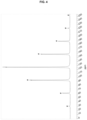
- the invention provides a crystalline form of PF-07220060 monohydrate (Form 2) having a powder X-ray diffraction (PXRD) pattern comprising peaks at 2 ⁇ values of: 9.6, 11.8, 12.4, 14.7 and 21.0 °2 ⁇ ⁇ 0.2 °2 ⁇ .
- PXRD powder X-ray diffraction
- the invention provides a crystalline form of PF-07220060 monohydrate (Form 2) having a powder X-ray diffraction (PXRD) pattern comprising peaks at 2 ⁇ values of: 9.6, 11.8 and 14.7 °2 ⁇ ⁇ 0.2 °2 ⁇ ; and one or two peaks selected from the group consisting of: 12.4 and 21.0 °2 ⁇ ⁇ 0.2 °2 ⁇ .
- Form 2 PF-07220060 monohydrate having a powder X-ray diffraction (PXRD) pattern comprising peaks at 2 ⁇ values of: 9.6, 11.8 and 14.7 °2 ⁇ ⁇ 0.2 °2 ⁇ ; and one or two peaks selected from the group consisting of: 12.4 and 21.0 °2 ⁇ ⁇ 0.2 °2 ⁇ .
- PXRD powder X-ray diffraction
- the invention provides a crystalline form of PF-07220060 monohydrate (Form 2) having a PXRD pattern comprising three or more peaks at 2 ⁇ values selected from the group consisting of: 9.6, 11.8, 12.4, 14.7 and 21.0 °2 ⁇ ⁇ 0.2 °2 ⁇ .
- the invention provides a crystalline form of PF-07220060 monohydrate (Form 2) characterized by a Raman spectrum.
- the invention provides a crystalline form of PF-07220060 monohydrate (Form 2) having a Raman spectrum comprising wavenumber (cm -1 ) values of: 1484, 1555 and 1587 cm -1 ⁇ 2 cm -1 .
- the invention provides a crystalline form of PF-07220060 monohydrate (Form 2) having a Raman spectrum comprising wavenumber (cm -1 ) values of: 1387, 1484, 1555 and 1587 cm -1 ⁇ 2 cm -1 .
- the invention provides a crystalline form of PF-07220060 monohydrate (Form 2) having a Raman spectrum comprising wavenumber (cm -1 ) values of: 1387, 1395, 1484, 1555 and 1587 cm -1 ⁇ 2 cm -1 .
- the invention provides a crystalline form of PF-07220060 monohydrate (Form 2) having a Raman spectrum comprising wavenumber (cm -1 ) values of: 1484, 1555 and 1587 cm -1 ⁇ 2 cm -1 ; and one or two peaks selected from the group consisting of: 1387 and 1395 cm -1 ⁇ 2 cm -1
- the invention provides a crystalline form of PF-07220060 monohydrate (Form 2) having a Raman spectrum comprising: (a) one, two, three, four, five, or more than five wavenumber (cm -1 ) values selected from the group consisting of the values in Table 2 in cm -1 ⁇ 2 cm -1 ; or (b) wavenumber (cm -1 ) values essentially the same as in FIG. 2 .
- the invention provides a crystalline form of PF-07220060 monohydrate (Form 2) characterized by a 13 C solid state NMR spectrum.
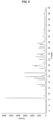
- the invention provides a crystalline form of PF-07220060 monohydrate (Form 2) having a 13 C solid state NMR spectrum comprising resonance (ppm) values of: 22.8, 129.1 and 163.0 ppm ⁇ 0.2 ppm.
- the invention provides a crystalline form of PF-07220060 monohydrate (Form 2) having:
- the invention provides a pharmaceutical composition
- a pharmaceutical composition comprising the crystalline form of PF-07220060 monohydrate (Form 2), according to the aspects or embodiments described herein, and a pharmaceutically acceptable carrier or excipient.
- the invention provides a method of treating cancer in a subject in need thereof, comprising administering to the subject a therapeutically effective amount of the crystalline form of PF-07220060 monohydrate (Form 2), or a pharmaceutical composition comprising the crystalline form of PF-07220060 monohydrate (Form 2), according to the aspects or embodiments described herein.
- the invention provides a method of treating cancer in a subject in need thereof, comprising administering to the subject an amount of the crystalline form of PF-07220060 monohydrate (Form 2), or a pharmaceutical composition comprising the crystalline form of PF-07220060 monohydrate (Form 2), according to the aspects or embodiments described herein, and an amount of an additional anticancer agent, wherein the amounts of PF-07220060 monohydrate (Form 2) and the additional anticancer agent together are effective in treating cancer.
- the invention provides use of the crystalline form of PF-07220060 monohydrate (Form 2), or a pharmaceutical composition comprising the crystalline form of PF-07220060 monohydrate (Form 2), according to the aspects or embodiments described herein, for the treatment of cancer.
- the invention provides the crystalline form of PF-07220060 monohydrate (Form 2) or a pharmaceutical composition comprising the crystalline form of PF-07220060 monohydrate (Form 2), according to the aspects or embodiments described herein, for use in the treatment of cancer.
- the crystalline form may be a substantially pure crystalline form of PF-07220060 monohydrate (Form 2).
- the invention provides an amorphous form of PF-07220060 (Form 8).
- the amorphous form of PF-07220060 (Form 8) is characterized by its powder X-ray diffraction (PXRD) pattern.
- the amorphous form of PF-07220060 (Form 8) is characterized by differential scanning calorimetry (DSC) scan.
- the amorphous form of PF-07220060 (Form 8) is characterized by a combination of PXRD and DSC.
- the amorphous form of PF-07220060 (Form 8) is characterized by its Raman spectrum.
- the amorphous form of PF-07220060 is characterized by its 13 C solid state NMR spectrum. In still other embodiments, the amorphous form of PF-07220060 (Form 8) is characterized by its 19 F solid state NMR spectrum. In further embodiments, the amorphous form of PF-07220060 (Form 8) is characterized by any combination of two or more of these methods. In some such embodiments, the amorphous form of PF-07220060 (Form 8) is characterized by 19 F solid state NMR and 13 C solid state NMR.
- the invention provides an amorphous form of PF-07220060 (Form 8). In another embodiment, the invention provides an amorphous form of PF-07220060 (Form 8) characterized by its powder X-ray diffraction (PXRD) pattern. In some such embodiments, the invention provides an amorphous form of PF-07220060 (Form 8) having a powder X-ray diffraction (PXRD) pattern (2 ⁇ ) comprising: (a) a broad peak at diffraction angles (2 ⁇ ) from about 4 to about 40 °2 ⁇ ⁇ 0.5 °2 ⁇ ; or (b) peaks at 2 ⁇ values essentially the same as in FIG. 8 .
- PXRD powder X-ray diffraction
- the invention provides an amorphous form of PF-07220060 (Form 8) characterized by DSC.
- the invention provides an amorphous form of PF-07220060 (Form 8) having: (a) a glass transition temperature (Tg) of about 102°C as measured by DSC at a ramp rate of 2 °C/min; or (b) a DSC thermogram essentially the same as in FIG. 9 .
- the invention provides an amorphous form of PF-07220060 (Form 8) characterized by a Raman spectrum.
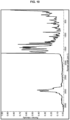
- the invention provides an amorphous form of PF-07220060 (Form 8) having a Raman spectrum comprising wavenumber (cm -1 ) values of: 1430 and 1453 cm -1 ⁇ 2 cm -1 . In one embodiment, the invention provides an amorphous form of PF-07220060 (Form 8) having a Raman spectrum comprising wavenumber (cm -1 ) values of: 1430 and 1574 cm -1 ⁇ 2 cm -1 . In one embodiment, the invention provides an amorphous form of PF-07220060 (Form 8) having a Raman spectrum comprising wavenumber (cm -1 ) values of: 1430, 1453 and 1574 cm -1 ⁇ 2 cm -1 .
- the invention provides amorphous form of PF-07220060 (Form 8) having a Raman spectrum comprising: (a) one, two, three, four, five, or more than five wavenumber (cm -1 ) values selected from the group consisting of the values in Table 7 in cm -1 ⁇ 2 cm -1 ; or (b) wavenumber (cm -1 ) values essentially the same as in FIG. 10 .
- the invention provides an amorphous form of PF-07220060 (Form 8) characterized by a 13 C solid state NMR spectrum.
- the invention provides an amorphous form of PF-07220060 (Form 8) having a 13 C solid state NMR spectrum comprising resonance (ppm) values of: 20.9, 49.3 and 116.6 ppm ⁇ 0.5 ppm. In one embodiment, the invention provides an amorphous form of PF-07220060 (Form 8) having a 13 C solid state NMR spectrum comprising resonance (ppm) values of: 20.9 and 49.3 ppm ⁇ 0.5 ppm. In one embodiment, the invention provides an amorphous form of PF-07220060 (Form 8) having a 13 C solid state NMR spectrum comprising resonance (ppm) values of: 20.9 and 116.6 ppm ⁇ 0.5 ppm. In one embodiment, the invention provides an amorphous form of PF-07220060 (Form 8) having a 13 C solid state NMR spectrum comprising resonance (ppm) values of: 49.3, and 116.6 ppm ⁇ 0.5 ppm.
- the invention provides an amorphous form of PF-07220060 (Form 8) having a 13 C solid state NMR spectrum (ppm) comprising: (a) one, two, three, four, five, or more than five resonance (ppm) values selected from the group consisting of the values in Table 8 in ppm ⁇ 0.5 ppm; or (b) resonance (ppm) values essentially the same as in FIG. 11 .
- the invention provides an amorphous form of PF-07220060 (Form 8) characterized by a 19 F solid state NMR spectrum.
- the invention provides an amorphous form of PF-07220060 (Form 8) having a 19 F solid state NMR spectrum comprising a resonance (ppm) value of: -127.5 ppm ⁇ 0.5 ppm.
- the invention provides an amorphous form of PF-07220060 (Form 8) having a 19 F solid state NMR spectrum (ppm) comprising: (a) the resonance (ppm) value in Table 9 in ppm ⁇ 0.5 ppm; or (b) resonance (ppm) values essentially the same as shown in FIG. 12 .
- the invention provides an amorphous form of PF-07220060 (Form 8) having a 19 F solid state NMR spectrum comprising a resonance (ppm) value of: -127.5 ppm ⁇ 0.5 ppm; and a 13 C solid state NMR spectrum comprising resonance (ppm) values of: (a) 20.9, 49.3 and 116.6 ppm ⁇ 0.5 ppm; (b) 20.9 and 49.3 ppm ⁇ 0.5 ppm; (c) 20.9 and 116.6 ppm ⁇ 0.5 ppm; or (d) 49.3 and 116.6 ppm ⁇ 0.5 ppm.
- the invention provides an amorphous form of PF-07220060 (Form 8) having:
- the invention provides a pharmaceutical composition
- a pharmaceutical composition comprising an amorphous form of PF-07220060 (Form 8), according to the aspects or embodiments described herein, and a pharmaceutically acceptable carrier or excipient.
- the invention provides a method of treating cancer in a subject in need thereof, comprising administering to the subject a therapeutically effective amount of an amorphous form of PF-07220060 (Form 8), or a pharmaceutical composition comprising an amorphous form of PF-07220060 (Form 8), according to the aspects or embodiments described herein.
- the invention provides a method of treating cancer in a subject in need thereof, comprising administering to the subject an amount of an amorphous form of PF-07220060 (Form 8), or a pharmaceutical composition comprising an amorphous form of PF-07220060 (Form 8), according to the aspects or embodiments described herein, and an amount of an additional anticancer agent, wherein the amounts of PF-07220060 and the additional anticancer agent together are effective in treating cancer.
- the invention provides use of an amorphous form of PF-07220060 (Form 8), or a pharmaceutical composition comprising an amorphous form of PF-07220060 (Form 8), according to the aspects or embodiments described herein, for the treatment of cancer.
- the invention provides use of an amorphous form of PF-07220060 (Form 8), or a pharmaceutical composition comprising an amorphous form of PF-07220060 (Form 8), according to the aspects or embodiments described herein, in the manufacture of a medicament for the treatment of cancer.
- the amorphous form may be a substantially pure amorphous form of PF-07220060 (Form 8).
- the invention provides an anhydrous crystalline form of PF-07220060 (Form 6).
- the anhydrous crystalline form of PF-07220060 (Form 6) is characterized by its powder X-ray diffraction (PXRD) pattern.
- the anhydrous crystalline form of PF-07220060 (Form 6) is characterized by its Raman spectrum.
- the anhydrous crystalline form of PF-07220060 (Form 6) is characterized by its 13 C solid state NMR spectrum.
- the anhydrous crystalline form of PF-07220060 (Form 6) is characterized by its 19 F solid state NMR spectrum.
- anhydrous crystalline PF-07220060 (Form 6) is characterized by any combination of two or more of these methods. Exemplary combinations including two or more of the following are provided herein: powder X-ray diffraction (PXRD) pattern (2 ⁇ ); Raman spectrum wavenumber values (cm -1 ); 13 C solid state NMR spectrum (ppm); or 19 F solid state NMR spectrum (ppm).
- PXRD powder X-ray diffraction
- Raman spectrum wavenumber values cm -1
- 13 C solid state NMR spectrum ppm
- 19 F solid state NMR spectrum ppm.
- anhydrous crystalline PF-07220060 (Form 6) is characterized by PXRD and Raman.
- anhydrous crystalline PF-07220060 (Form 6) is characterized by PXRD and 13 C solid state NMR.
- anhydrous crystalline PF-07220060 is characterized by PXRD and 19 F solid state NMR. In other embodiments anhydrous crystalline PF-07220060 (Form 6) is characterized by 19 F solid state NMR and Raman. In other embodiments anhydrous crystalline PF-07220060 (Form 6) is characterized by 19 F solid state NMR and 13 C solid state NMR. In other embodiments anhydrous crystalline PF-07220060 (Form 6) is characterized by PXRD, 19 F solid state NMR and 13 C solid state NMR. In other embodiments anhydrous crystalline PF-07220060 (Form 6) is characterized by PXRD, Raman and 19 F solid state NMR.
- the invention provides an anhydrous crystalline form of PF-07220060 (Form 6) characterized by a powder X-ray diffraction (PXRD) pattern.
- the invention provides an anhydrous crystalline form of PF-07220060 (Form 6) having a powder X-ray diffraction (PXRD) pattern comprising peaks at 2 ⁇ values of: 6.8, 10.1 and 12.2 °2 ⁇ ⁇ 0.2 °2 ⁇ .
- PXRD powder X-ray diffraction
- the invention provides an anhydrous crystalline form of PF-07220060 (Form 6) having a powder X-ray diffraction (PXRD) pattern comprising peaks at 2 ⁇ values of: 8.5, 10.1 and 13.8 °2 ⁇ ⁇ 0.2 °2 ⁇ .
- PXRD powder X-ray diffraction
- the invention provides an anhydrous crystalline form of PF-07220060 (Form 6) having a powder X-ray diffraction (PXRD) pattern comprising peaks at 2 ⁇ values of: 6.8, 8.5, 10.1 and 13.8 °2 ⁇ ⁇ 0.2 °2 ⁇ .
- PXRD powder X-ray diffraction
- the invention provides an anhydrous crystalline form of PF-07220060 (Form 6) having a PXRD pattern comprising three or more peaks at 2 ⁇ values selected from the group consisting of: 6.8, 8.5, 10.1, 12.2, 13.8 and 17.8 °2 ⁇ ⁇ 0.2 °2 ⁇ .
- the invention provides an anhydrous crystalline form of PF-07220060 (Form 6) having a PXRD pattern comprising: (a) one, two, three, four, five, or more than five peaks selected from the group consisting of the peaks in Table 10 in °2 ⁇ ⁇ 0.2 °2 ⁇ ; or (b) peaks at 2 ⁇ values essentially the same as in FIG. 13 .
- the invention provides an anhydrous crystalline form of PF-07220060 (Form 6) characterized by a Raman spectrum.
- the invention provides an anhydrous crystalline form of PF-07220060 (Form 6) having a Raman spectrum comprising a wavenumber (cm -1 ) value of: 1436 cm -1 ⁇ 2 cm -1 .
- the invention provides an anhydrous crystalline form of PF-07220060 (Form 6) having a Raman spectrum comprising wavenumber (cm -1 ) values of: 1436 and 1566 cm -1 ⁇ 2 cm -1 .
- the invention provides an anhydrous crystalline form of PF-07220060 (Form 6) having a Raman spectrum comprising wavenumber (cm -1 ) values of: 1436 and 1465 cm -1 ⁇ 2 cm -1 .
- the invention provides an anhydrous crystalline form of PF-07220060 (Form 6) having a Raman spectrum comprising wavenumber (cm -1 ) values of: 1436, 1465 and 1566 cm -1 ⁇ 2 cm -1 .
- the invention provides an anhydrous crystalline form of PF-07220060 (Form 6) having a Raman spectrum comprising: (a) one, two, three, four, five, or more than five wavenumber (cm -1 ) values selected from the group consisting of the values in Table 11 in cm -1 ⁇ 2 cm -1 ; or (b) wavenumber (cm -1 ) values essentially the same as in FIG. 14 .
- the invention provides an anhydrous crystalline form of PF-07220060 (Form 6) characterized by a 13 C solid state NMR spectrum.
- the invention provides an anhydrous crystalline form of PF-07220060 (Form 6) having a 13 C solid state NMR spectrum comprising resonance (ppm) values of: 54.7 and 112.6 ppm ⁇ 0.2 ppm.
- the invention provides an anhydrous crystalline form of PF-07220060 (Form 6) having a 13 C solid state NMR spectrum comprising resonance (ppm) values of: 54.7 and 132.8 ppm ⁇ 0.2 ppm.
- the invention provides an anhydrous crystalline form of PF-07220060 (Form 6) having a 13 C solid state NMR spectrum comprising resonance (ppm) values of: 112.6 and 132.8 ppm ⁇ 0.2 ppm.
- the invention provides an anhydrous crystalline form of PF-07220060 (Form 6) having a 13 C solid state NMR spectrum comprising resonance (ppm) values of: 54.7, 112.6 and 132.8 ppm ⁇ 0.2 ppm.
- the invention provides an anhydrous crystalline form of PF-07220060 (Form 6) having a 13 C solid state NMR spectrum comprising resonance (ppm) values of: 49.2, 54.7 and 112.6 ppm ⁇ 0.2 ppm.
- the invention provides an anhydrous crystalline form of PF-07220060 (Form 6) having a 13 C solid state NMR spectrum comprising resonance (ppm) values of: 49.2, 54.7 and 132.8 ppm ⁇ 0.2 ppm.
- the invention provides an anhydrous crystalline form of PF-07220060 (Form 6) having a 13 C solid state NMR spectrum comprising resonance (ppm) values of: 49.2, 54.7, 112.6 and 132.8 ppm ⁇ 0.2 ppm.
- the invention provides an anhydrous crystalline form of PF-07220060 (Form 6) having a 13 C solid state NMR spectrum comprising resonance (ppm) value of: 54.7 and 112.6 ppm ⁇ 0.2 ppm; and one or two resonance (ppm) values selected from the group consisting of: 49.2 and 132.8 ppm ⁇ 0.2 ppm.
- the invention provides an anhydrous crystalline form of PF-07220060 (Form 6) having a 13 C solid state NMR spectrum comprising resonance (ppm) value of: 54.7 ppm ⁇ 0.2 ppm; and one, two or three resonance (ppm) values selected from the group consisting of: 49.2, 112.6 and 132.8 ppm ⁇ 0.2 ppm.
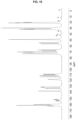
- the invention provides an anhydrous crystalline form of PF-07220060 (Form 6) having a 13 C solid state NMR spectrum (ppm) comprising: (a) one, two, three, four, five, or more than five resonance (ppm) values selected from the group consisting of the values in Table 12 in ppm ⁇ 0.2 ppm; or (b) resonance (ppm) values essentially the same as in FIG. 15 .
- the invention provides an anhydrous crystalline form of PF-07220060 (Form 6) having a 19 F solid state NMR spectrum comprising a resonance (ppm) value of: -132.4 ppm ⁇ 0.2 ppm.
- the invention provides an anhydrous crystalline form of PF-07220060 (Form 6) having a 19 F solid state NMR spectrum comprising a resonance (ppm) value of: -131.1 ppm ⁇ 0.2 ppm.
- the invention provides an anhydrous crystalline form of PF-07220060 (Form 6) having a 19 F solid state NMR spectrum comprising resonance (ppm) values of: -131.1 and -132.4 ppm ⁇ 0.2 ppm.
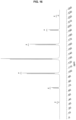
- the invention provides an anhydrous crystalline form of PF-07220060 (Form 6) having a 19 F solid state NMR spectrum (ppm) comprising: (a) one or two resonance (ppm) values selected from the group consisting of the values in Table 13 in ppm ⁇ 0.2 ppm; or (b) resonance (ppm) values essentially the same as shown in FIG. 16 .
- the invention provides an anhydrous crystalline form of PF-07220060 (Form 6) having:
- the invention provides a pharmaceutical composition
- a pharmaceutical composition comprising an anhydrous crystalline form of PF-07220060 (Form 6), according to the aspects or embodiments described herein, and a pharmaceutically acceptable carrier or excipient.
- the invention provides a method of treating cancer in a subject in need thereof, comprising administering to the subject a therapeutically effective amount of the anhydrous crystalline form of PF-07220060 (Form 6), or a pharmaceutical composition comprising an anhydrous crystalline form of PF-07220060 (Form 6), according to the aspects or embodiments described herein.
- the invention provides a method of treating cancer in a subject in need thereof, comprising administering to the subject an amount of an anhydrous crystalline form of PF-07220060 (Form 6), or a pharmaceutical composition comprising an anhydrous crystalline form of PF-07220060 (Form 6), according to the aspects or embodiments described herein, and an amount of an additional anticancer agent, wherein the amounts of anhydrous crystalline PF-07220060 (Form 6) and the additional anticancer agent together are effective in treating cancer.
- the invention provides use of an anhydrous crystalline form of PF-07220060 (Form 6), or a pharmaceutical composition comprising an anhydrous crystalline form of PF-07220060 (Form 6), according to the aspects or embodiments described herein, for the treatment of cancer.
- the invention provides use of an anhydrous crystalline form of PF-07220060 (Form 6), according to the aspects or embodiments described herein, in the manufacture of a medicament for the treatment of cancer.
- the invention provides an anhydrous crystalline form of PF-07220060 (Form 6) or a pharmaceutical composition comprising an anhydrous crystalline form of PF-07220060 (Form 6), according to the aspects or embodiments described herein, for use in the treatment of cancer.
- the invention provides an anhydrous crystalline form of PF-07220060 (Form 11).
- the anhydrous crystalline form of PF-07220060 (Form 11) is characterized by its powder X-ray diffraction (PXRD) pattern.
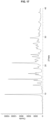
- the invention provides an anhydrous crystalline form of PF-07220060 (Form 11) having a PXRD pattern comprising peaks at 2 ⁇ values essentially the same as in FIG. 17 .
- the invention provides a pharmaceutical composition
- a pharmaceutical composition comprising an anhydrous crystalline form of PF-07220060 (Form 11), according to the aspects or embodiments described herein, and a pharmaceutically acceptable carrier or excipient.
- the invention provides a method of treating cancer in a subject in need thereof, comprising administering to the subject a therapeutically effective amount of the anhydrous crystalline form of PF-07220060 (Form 11), or a pharmaceutical composition comprising an anhydrous crystalline form of PF-07220060 (Form 11), according to the aspects or embodiments described herein.
- the invention provides use of an anhydrous crystalline form of PF-07220060 (Form 11), according to the aspects or embodiments described herein, in the manufacture of a medicament for the treatment of cancer.
- the cancer is advanced or metastatic cancer. In some embodiments of the methods and uses described herein, the cancer is early stage or non-metastatic cancer.
- the cancer is characterized by amplification or overexpression of CDK4, CDK6 and/or cyclin D1 (CCND1).
- the cancer is RB-positive or RB-proficient.
- the cancer is resistant to a therapeutic agent or class of agents, such as a standard of care agent or class for the particular cancer.
- the cancer is characterized by innate or acquired resistance to a therapeutic agent or class of agents.
- the cancer is resistant to treatment with antiandrogens, taxanes, platinum agents, aromatase inhibitors, selective estrogen receptor degraders (SERDs), selective estrogen receptor modulators (SERMs), or CDK4/6 inhibitors.
- the cancer is breast cancer.
- the breast cancer is androgen-dependent breast cancer.
- the breast cancer is AR+ breast cancer.
- the breast cancer is advanced or metastatic breast cancer. In some embodiments of the methods and uses described herein, the breast cancer is early stage or non-metastatic breast cancer.
- the breast cancer is characterized by amplification or overexpression of CDK4, CDK6 and/or cyclin D1 (CCND1). In some embodiments, the breast cancer is characterized as RB-positive, RB-proficient, or RB wild type.
- the breast cancer is BRCA1- or BRCA2-mutated breast cancer.
- the breast cancer is PIK3CA-mutated cancer breast cancer.
- the breast cancer is refractory or resistant to treatment with, or has progressed on, one or more standard of care agents.
- the breast cancer is refractory or resistant to treatment with, or has progressed on, an antiestrogen, such as an aromatase inhibitor, SERD, or a SERM.
- the breast cancer is refractory or resistant to treatment with, or has progressed on, a CDK4/6 inhibitor, such as palbociclib or a pharmaceutically acceptable salt thereof.
- the breast cancer is refractory or resistant to treatment with, or has progressed on, treatment with antineoplastic chemotherapeutic agents such as taxanes, platinum agents, anthracyclines or anti-metabolites.
- the breast cancer is hormone receptor (HR)-positive (HR+) breast cancer, i.e., the breast cancer is estrogen receptor (ER)-positive (ER+) and/or progesterone receptor (PR)-positive (PR+).
- HR hormone receptor
- ER estrogen receptor
- PR progesterone receptor
- the breast cancer is hormone receptor (HR)-negative (HR-), i.e., the breast cancer is estrogen receptor (ER)-negative (ER-) and progesterone receptor (PR)-negative (PR-).
- HR- hormone receptor
- ER estrogen receptor
- PR progesterone receptor
- the breast cancer is human epidermal growth factor receptor 2 (HER2)-positive (HER2+).
- HER2 human epidermal growth factor receptor 2
- HER2+ human epidermal growth factor receptor 2
- the breast cancer is human epidermal growth factor receptor 2 (HER2)-negative (HER2-). In some such embodiments, the breast cancer is is estrogen receptor alpha (ER ⁇ )-negative.
- HER2 human epidermal growth factor receptor 2
- ER ⁇ estrogen receptor alpha
- the breast cancer is triple negative breast cancer (TNBC), i.e., the breast cancer is ER-, PR- and HER2-.
- TNBC triple negative breast cancer
- the breast cancer is selected from the group consisting of HR+/HER2- breast cancer, HR+/HER2+ breast cancer, HR-/HER2+ breast cancer, and triple negative breast cancer (TNBC).
- the breast cancer is androgen-dependent or AR+ breast cancer.
- the breast cancer is BRCA1- or BRCA2-mutated breast cancer.
- the breast cancer is HR+/HER2- breast cancer.
- the HR+/HER2- breast cancer is advanced or metastatic HR+/HER2-breast cancer.
- the HR+/HER2- breast cancer is early or non-metastatic HR+/HER2- breast cancer.
- the HR+/HER2- breast cancer is characterized by amplification or overexpression of CDK4, CDK6 and/or cyclin D1 (CCND1). In some embodiments, the HR+/HER2- breast cancer is characterized as RB-positive, RB-proficient, or RB wild type.
- the HR+/HER2- breast cancer is BRCA1- or BRCA2-mutated breast cancer.
- the HR+/HER2- breast cancer is PIK3CA-mutated cancer breast cancer
- the HR+/HER2- breast cancer is refractory or resistant to treatment with, or has progressed on, a standard of care agent, e.g., an antiestrogen such as an aromatase inhibitor, a SERD, or a SERM.
- a standard of care agent e.g., an antiestrogen such as an aromatase inhibitor, a SERD, or a SERM.
- the HR+/HER2- breast cancer is refractory or resistant to treatment with, or has progressed on, a CDK4/6 inhibitor, such as palbociclib or a pharmaceutically acceptable salt thereof.
- the HR+/HER2- breast cancer is refractory or resistant to treatment an antiestrogen such as an aromatase inhibitor, a SERD, or a SERM.
- the HR+/HER2- breast cancer is refractory or resistant to treatment with a CDK4/6 inhibitor, such as palbociclib or a pharmaceutically acceptable salt thereof.
- the HR+/HER2- breast cancer is refractory or resistant to treatment with a CDK4/6 inhibitor, such as palbociclib or a pharmaceutically acceptable salt thereof, in further combination with an antiestrogen, e.g., letrozole or fulvestrant.
- the breast cancer is HR+/HER2+ breast cancer. In some embodiments, the breast cancer is HR-/HER2+ breast cancer.
- the methods and uses described herein further comprise an additional anti-cancer agent.
- the additional anti-cancer agent is an antiestrogen, such as an aromatase inhibitor, a SERD, or a SERM.
- the antiestrogen is letrozole or fulvestrant.
- the additional anti-cancer agent is a CDK4/6 inhibitor, such as palbociclib or a pharmaceutically acceptable salt thereof.
- the additional anti-cancer agent is a CDK4/6 inhibitor, such as palbociclib or a pharmaceutically acceptable salt thereof, in further combination with an antiestrogen, e.g., letrozole or fulvestrant.
- the additional anti-cancer agent is a PI3K inhibitor, e.g., alpelisib.
- the methods and uses described herein further comprise an additional anti-cancer agent.
- the additional anti-cancer agent is a HER2-targeted agent, e.g., trastuzumab emtansine, fam-trastuzumab deruxtecan, pertuzumab, lapatinib, neratinib or tucatinib, or an agent targeting the PI3K/AKT/mTOR molecular pathway, e.g., ipatasertib.
- the TNBC is BRCA1- or BRCA2-mutated TNBC.
- DoR duration of response
- the terms “objective response” and “overall response” refer to a measurable response, including complete response (CR) or partial response (PR).
- the term “overall response rate” (ORR) refers to the sum of the complete response (CR) rate and the partial response (PR) rate.
- partial response refers to a decrease in the size of one or more tumors or lesions, or in the extent of cancer in the body, in response to treatment.
- PR refers to at least a 30% decrease in the sum of the longest diameters (SLD) of target lesions, taking as reference the baseline SLD.
- progression free survival refers to the length of time during and after treatment during which the disease being treated (e.g., cancer) does not get worse.
- PFS also referred to as “Time to Tumor Progression” may include the amount of time patients have experienced a CR or PR, as well as the amount of time patients have experienced SD.
- PR refers to at least a 20% increase in the SLD of target lesions, taking as reference the smallest SLD recorded since the treatment started, or to the presence of one or more new lesions.
- stable disease refers to a cancer that is neither decreasing nor increasing in extent or severity.
- the term "sustained response" refers to the sustained effect on reducing tumor growth after cessation of a treatment.
- the tumor size may be the same size or smaller as compared to the size at the beginning of the medicament administration phase.
- the sustained response has a duration of at least the same as the treatment duration, at least 1.5-, 2-, 2.5-, or 3-times the length of the treatment duration, or longer.
- the anti-cancer effect of the method of treating cancer including "objective response,” “complete response,” “partial response,” “progressive disease,” “stable disease,” “progression free survival,” “duration of response,” as used herein, may be defined and assessed by the investigators using RECIST v1.1 ( Eisenhauer et al., New response evaluation criteria in solid tumours: Revised RECIST guideline (version 1.1), Eur J of Cancer, 2009; 45(2):228-47 ).
- the invention relates to neoadjuvant therapy, adjuvant therapy, first-line therapy, second-line therapy, second-line or later lines of therapy, or third-line or later lines of therapy.
- the cancer may be localized, advanced or metastatic, and the intervention may occur at point along the disease continuum (i.e., at any stage of the cancer).
- the treatment regimen for a compound of the invention that is effective to treat a cancer patient may vary according to factors such as the disease state, age, and weight of the patient, and the ability of the therapy to elicit an anti-cancer response in the subject. While an embodiment of any of the aspects of the invention may not be effective in achieving a positive therapeutic effect in every subject, it should do so in a statistically significant number of subjects as determined by any statistical test known in the art such as the Student's t-test, the chi2-test the U-test according to Mann and Whitney, the Kruskal-Wallis test (H-test), Jonckheere-Terpstrat-testy and the Wilcon on-test.
- any statistical test known in the art such as the Student's t-test, the chi2-test the U-test according to Mann and Whitney, the Kruskal-Wallis test (H-test), Jonckheere-Terpstrat-testy and the Wilcon on-test.
- treatment regimen may be used interchangeably to refer to the dose and timing of administration of the crystalline or amorphous form of PF-07220060, or a pharmaceutical composition comprising the crystalline or amorphous form of PF-07220060, as described herein, alone or in combination with an additional anticancer agent.
- the treatment regimen relates to crystalline PF-07220060 monohydrate (Form 2).
- the treatment regimen relates to anhydrous crystalline PF-07220060 (Form 6), anhydrous crystalline PF-07220060 (Form 11), or amorphous PF-07220060 (Form 8).
- Abnormal cell growth refers to cell growth that is independent of normal regulatory mechanisms (e.g., loss of contact inhibition). Abnormal cell growth may be benign (not cancerous), or malignant (cancerous). In frequent embodiments of the methods provided herein, the abnormal cell growth is cancer.
- Abnormal cell growth includes the abnormal growth of: (1) tumors characterized by amplification or overexpression of CDK4, CDK6 and/or cyclin D1 (CCND1); (2) tumors that proliferate by aberrant CDK4 activation; and (3) tumors that are resistant to endocrine therapy, CDK4 and/or CDK6 inhibition, HER2 antagonists, taxanes, platinum agents, or other standard of care agents.
- the additional anti-cancer agent is an antiestrogen, wherein the antiestrogen is an aromatase inhibitor, a SERD, or a SERM.
- the antiestrogen is an aromatase inhibitor.
- the aromatase inhibitor is selected from the group consisting of letrozole, anastrozole, and exemestane.
- the aromatase inhibitor is letrozole.
- the antiestrogen is a SERD.
- the SERD is selected from the group consisting of fulvestrant, elacestrant (RAD-1901, Radius Health), SAR439859 (Sanofi), RG6171 (Roche), AZD9833 (AstraZeneca), AZD9496 (AstraZeneca), rintodestrant (G1 Therapeutics), ZN-c5 (Zentalis), LSZ102 (Novartis), D-0502 (Inventisbio), LY3484356 (Lilly), and SHR9549 (Jiansu Hengrui Medicine).
- the SERD is fulvestrant.
- the antiestrogen is a SERM.
- the SERM is selected from the group consisting of tamoxifen, raloxifene, toremifene, lasofoxifene, apeledoxifene and afimoxifene. In some such embodiments, the SERM is tamoxifen or raloxifene.
- the additional anti-cancer agent is an antiandrogen, such as abiraterone, apalutamide, bicalutamide, cyproterone, enzalutamide, flutamide, or nilutamide.
- the method or use further comprises androgen deprivation therapy (ADT), e.g., a luteinizing hormone-releasing hormone (LHRH) agonist, a LHRH antagonist, a gonadotropin releasing hormone (GnRH) agonist or a GnRH antagonist.
- ADT androgen deprivation therapy
- the methods and uses of the present invention further comprise one or more additional anti-cancer agents selected from the following:
- Anti-angiogenesis agents include, for example, VEGF inhibitors, VEGFR inhibitors, TIE-2 inhibitors, PDGFR inhibitors, angiopoetin inhibitors, PKC ⁇ inhibitors, COX-2 (cyclooxygenase II) inhibitors, integrins (alpha-v/beta-3), MMP-2 (matrix-metalloproteinase 2) inhibitors, and MMP-9 (matrix-metalloproteinase 9) inhibitors.
- VEGF inhibitors include, for example, VEGF inhibitors, VEGFR inhibitors, TIE-2 inhibitors, PDGFR inhibitors, angiopoetin inhibitors, PKC ⁇ inhibitors, COX-2 (cyclooxygenase II) inhibitors, integrins (alpha-v/beta-3), MMP-2 (matrix-metalloproteinase 2) inhibitors, and MMP-9 (matr
- Signal transduction inhibitors include, for example, kinase inhibitors (e.g., inhibitors of tyrosine kinases, serine/threonine kinases or cyclin dependent kinases), proteasome inhibitors, PI3K/AKT/mTOR pathway inhibitors, phosphoinositide 3-kinase (PI3K) inhibitors, isocitrate dehydrogenase 1 and 2 (IDH1 and IDH2) inhibitors, B-cell lymphoma 2 (BCL2) inhibitors, neurotrophin receptor kinase (NTRK) inhibitors, Rearranged during Transfection (RET) inhibitors, Notch inhibitors, PARP inhibitors, Hedgehog pathway inhibitors, and selective inhibitors of nuclear export (SINE).
- kinase inhibitors e.g., inhibitors of tyrosine kinases, serine/threonine kinases or cyclin dependent kinases
- proteasome inhibitors e.g.,
- signal transduction inhibitors include, but are not limited to: acalabrutinib, afatinib, alectinib, alpelisib, axitinib, binimetinib, bortezomib, bosutinib, brigatinib, cabozantinib, carfilzomib, ceritinib, cobimetinib, copanlisib, crizotinib, dabrafenib, dacomitinib, dasatinib, duvelisib, enasidenib, encorafenib, entrectinib, erlotinib, gefitinib, gilteritinib, glasdegib, ibrutinib, idelalisib, imatinib, ipatasertib, ivosidenib, ixazomib, lapatini
- Antineoplastic agents include, for example, alkylating agents, platinum coordination complexes, cytotoxic antibiotics, antimetabolies, biologic response modifiers, histone deacetylate (HDAC) inhibitors, hormonal agents, monoclonal antibodies, growth factor inhibitors, taxanes, topoisomerase inhibitors, Vinca alkaloids and miscellaneous agents.
- HDAC histone deacetylate
- Alkylating agents include: altretamine, bendamustine, busulfan, carmustine, chlorambucil, cyclophosphamide, dacarbazine, ifosfamide, lomustine, mechlorethamine, melphalan, procarbazine, streptozocin, temozolomide, thiotepa, and trabectedin.
- Platinum coordination complexes include: carboplatin, cisplatin, and oxaliplatin.
- Cytotoxic antibiotics include: bleomycin, dactinomycin, daunorubicin, doxorubicin, epirubicin, idarubicin, mitomycin, mitoxantrone, plicamycin, and valrubicin.
- Antimetabolites include: antifolates, such as methotrexate, pemetrexed, pralatrexate, and trimetrexate; purine analogues, such as azathioprine, cladribine, fludarabine, mercaptopurine, and thioguanine; and pyrimidine analogues such as azacitidine, capecitabine, cytarabine, decitabine, floxuridine, fluorouracil, gemcitabine, and trifluridine/tipracil.
- antifolates such as methotrexate, pemetrexed, pralatrexate, and trimetrexate
- purine analogues such as azathioprine, cladribine, fludarabine, mercaptopurine, and thioguanine
- pyrimidine analogues such as azacitidine, capecitabine, cytarabine, decitabine, floxuridine, fluor
- Biologic response modifiers include: aldesleukin (IL-2), denileukin diftitox, and interferon gamma.
- Histone deacetylase inhibitors include belinostat, panobinostat, romidepsin, and vorinostat.
- Hormonal agents include antiandrogens, antiestrogens, gonadotropin releasing hormone (GnRH) analogues and peptide hormones.
- antiestrogens include: aromatase inhibitors, such as letrozole, anastrozole, and exemestane; SERDs, such as fulvestrant, elacestrant (RAD-1901, Radius Health), SAR439859 (Sanofi), RG6171 (Roche), AZD9833 (AstraZeneca), AZD9496 (AstraZeneca), rintodestrant (G1 Therapeutics), ZN-c5 (Zentalis), LSZ102 (Novartis), D-0502 (Inventisbio), LY3484356 (Lilly), SHR9549 (Jiansu Hengrui Medicine); and SERMs, such as tamoxifen, raloxifene, toremifene, lasofoxifene, chili salt
- GnRH analogues examples include: degarelix, goserelin, histrelin, leuprolide, and triptorelin.
- peptide hormones include: lanreotide, octreotide, and pasireotide.
- antiandrogens include: abiraterone, apalutamide, bicalutamide, cyproterone, enzalutamide, flutamide, and nilutamide, and pharmaceutically acceptable salts and solvates thereof.
- Monoclonal antibodies include: alemtuzumab, atezolizumab, avelumab, bevacizumab, blinatumomab, brentuximab, cemiplimab, cetuximab, daratumumab, dinutuximab, durvalumab, elotuzumab, gemtuzumab, inotuzumab ozogamicin, ipilimumab, mogamulizumab, moxetumomab pasudotox, necitumumab, nivolumab, ofatumumab, olaratumab, panitumumab, pembrolizumab, pertuzumab, ramucirumab, rituximab, tositumomab, and trastuzumab.
- Taxanes include: cabazitaxel, docetaxel, paclitaxel and paclitaxel albumin-stabilized nanoparticle formulation (Nab-paclitaxel).
- Topoisomerase inhibitors include: etoposide, irinotecan, teniposide, and topotecan.
- Vinca alkaloids include: vinblastine, vincristine, and vinorelbine, and pharmaceutically acceptable salts thereof.
- Miscellaneous antineoplastic agents include: asparaginase (pegaspargase), bexarotene, eribulin, everolimus, hydroxyurea, ixabepilone, lenalidomide, mitotane, omacetaxine, pomalidomide, tagraxofusp, telotristat, temsirolimus, thalidomide, and venetoclax.
- asparaginase pegaspargase
- bexarotene bexarotene
- eribulin everolimus
- hydroxyurea ixabepilone
- lenalidomide mitotane
- omacetaxine pomalidomide
- tagraxofusp telotristat
- temsirolimus thalidomide
- venetoclax venetoclax
- the additional anti-cancer agent is selected from the group consisting of: abiraterone acetate; acalabrutinib; ado-trastuzumab emtansine; afatinib dimaleate; afimoxifene; aldesleukin; alectinib; alemtuzumab; alpelisib; amifostine; anastrozole; apalutamide; aprepitant; arsenic trioxide; asparaginase erwinia chrysanthemi; atezolizumab; avapritinib; avelumab; axicabtagene ciloleucel; axitinib; azacitidine; AZD9833 (AstraZeneca); AZD9496 (AstraZeneca); apeledoxifene; belinostat; bendamustine hydrochloride; bevacizumab;
- cancer refers to or describe malignant and/or invasive growth or tumor caused by abnormal cell growth.
- cancer refers to solid tumors named for the type of cells that form them, as well as cancer of blood, bone marrow, or the lymphatic system. Examples of solid tumors include but not limited to sarcomas and carcinomas. Examples of cancers of the blood include but not limited to leukemias, lymphomas and myeloma.
- cancer includes but is not limited to a primary cancer that originates at a specific site in the body, a metastatic cancer that has spread from the place in which it started to other parts of the body, a recurrence from the original primary cancer after remission, and a second primary cancer that is a new primary cancer in a person with a history of previous cancer of different type from latter one.
- the efficacy of the methods and uses described herein in certain tumors may be enhanced by combination with other approved or experimental cancer therapies, e.g., radiation, surgery, chemotherapeutic agents, targeted therapies, agents that inhibit other signaling pathways that are dysregulated in tumors, and other immune enhancing agents, such as PD-1 or PD-L1 antagonists and the like.
- cancer therapies e.g., radiation, surgery, chemotherapeutic agents, targeted therapies, agents that inhibit other signaling pathways that are dysregulated in tumors, and other immune enhancing agents, such as PD-1 or PD-L1 antagonists and the like.
- the methods and uses of the current invention may further comprise one or more additional anti-cancer agents.
- Administration of crystalline or amorphous forms of the invention may be affected by any method that enables delivery of the compound to the site of action. These methods include oral routes, intraduodenal routes, parenteral injection (including intravenous, subcutaneous, intramuscular, intravascular or infusion), topical, and rectal administration.
- Dosage regimens may be adjusted to provide the optimum desired response.
- the crystalline or amorphous form of the present invention may be administered as a single bolus, as several divided doses administered over time, or the dose may be proportionally reduced or increased as indicated by the exigencies of the therapeutic situation. It may be particularly advantageous to formulate a therapeutic agent in a dosage unit form for ease of administration and uniformity of dosage.
- Dosage unit form refers to physically discrete units suited as unitary dosages for the mammalian subjects to be treated; each unit containing a predetermined quantity of active compound calculated to produce the desired therapeutic effect in association with the required pharmaceutical carrier.
- dosage unit forms of the invention may be dictated by and directly dependent on (a) the unique characteristics of the solid form and the particular therapeutic or prophylactic effect to be achieved, and (b) the limitations inherent in the art of compounding such an active compound for the treatment of sensitivity in individuals.
- the dose and dosing regimen is adjusted in accordance with methods well-known in the therapeutic arts. That is, the maximum tolerable dose may be readily established, and the effective amount providing a detectable therapeutic benefit to a subject may also be determined, as can the temporal requirements for administering each agent to provide a detectable therapeutic benefit to the subject. Accordingly, while certain dose and administration regimens are exemplified herein, these examples in no way limit the dose and administration regimen that may be provided to a subject in practicing the present invention.
- dosage values may vary with the type and severity of the condition to be alleviated and may include single or multiple doses. It is to be further understood that for any particular subject, specific dosage regimens should be adjusted over time according to the individual need and the professional judgment of the person administering or supervising the administration of the compounds or pharmaceutical compositions, taking into consideration factors such as the severity of the disorder or condition, the rate of administration, the disposition of the compound and the discretion of the prescribing physician.
- the dosage ranges set forth herein are exemplary only and are not intended to limit the scope or practice of the claimed solid form or pharmaceutical composition. For example, doses may be adjusted based on pharmacokinetic or pharmacodynamic parameters, which may include clinical effects such as toxic effects and/or laboratory values.
- the present invention encompasses intra-patient dose-escalation as determined by the skilled artisan. Determining appropriate dosages and regimens for administration of the chemotherapeutic agent are well-known in the relevant art and would be understood to be encompassed by the skilled artisan once provided the teachings disclosed herein
- the dosage of the crystalline or amorphous form of the invention is typically in the range of from about 0.001 to about 100 mg per kg body weight per day, preferably about 1 to about 35 mg/kg/day, in single or divided doses. For a 70 kg human, this would amount to about 0.01 to about 7 g/day, preferably about 0.02 to about 2.5 g/day. In some instances, dosage levels below the lower limit of the aforesaid range may be more than adequate, while in other cases still larger doses may be employed without causing any harmful side effects, provided that such larger doses are first divided into several small doses for administration throughout the day.
- the dosage may be administered as a single dose (QD), or optionally may be subdivided into smaller doses, suitable for BID (twice daily), TID (three times daily) or QID (four times daily) administration.
- the dosage regimen may be adjusted to provide the optimal therapeutic response. For example, the dose may be proportionally reduced or increased as indicated by the exigencies of the therapeutic situation, including temporary or permanent dose reductions if required to ameliorate or prevent side effects.
- a "continuous dosing schedule" as used herein is an administration or dosing regimen without dose interruptions, e.g., without days off treatment. Repetition of 21 day or 28 day treatment cycles without dose interruptions between the treatment cycles is an example of a continuous dosing schedule.
- the crystalline or amorphous form of the invention is administered at a daily dosage of from about 1 mg to about 1000 mg per day. In some embodiments, the crystalline or amorphous form of the invention is administered at a daily dosage from about 10 mg to about 500 mg per day, and in some embodiments, it is administered at a dosage of from about 25 mg to about 300 mg per day.
- it is administered at dosages of about 1, 2, 5, 10, 15, 20, 25, 30, 35, 40, 45, 50, 55, 60, 65, 70, 75, 80, 85, 90, 95, 100, 105, 110, 115, 120, 125, 130, 135, 140, 145, 150, 155, 160, 165, 170, 175, 180, 185, 190, 195, 200, 205, 210, 215, 220, 225, 230, 235, 240, 245, 250, 260, 270, 275, 280, 290, 300, 325, 350, 375, 400, 425, 450, 475 or 500 mg on a QD, BID, TID or QID schedule.
- An "intermittent dosing schedule” refers to an administration or dosing regimen that includes a period of dose interruption, e.g. days off treatment. Repetition of 14 or 21 day treatment cycles with a 7 day treatment interruption between the treatment cycles is an example of an intermittent dosing schedule. Such schedules, with 2 or 3 weeks on treatment and 1 week off treatment, are sometimes referred to as a 2/1-week or 3/1-week treatment cycle, respectively. Alternatively, intermittent dosing may comprise a 7 day treatment cycle, with 5 days on treatment and 2 days off treatment.
- a “continuous dosing schedule” as used herein is an administration or dosing regimen without dose interruptions, e.g. without days off treatment. Repetition of 21 or 28 day treatment cycles without dose interruptions between the treatment cycles is an example of a continuous dosing schedule.
- the crystalline or amorphous form of the invention is administered in an intermittent dosing schedule. In other embodiments, the crystalline or amorphous form of the invention is administered in a continuous dosing schedule.
- a “pharmaceutical composition” refers to a mixture of one or more of the therapeutic agents described herein, or a pharmaceutically acceptable salt, solvate, hydrate or prodrug thereof as an active ingredient, and at least one pharmaceutically acceptable carrier or excipient.
- the pharmaceutical composition comprises two or more pharmaceutically acceptable carriers and/or excipients.
- a "pharmaceutically acceptable carrier” refers to a carrier or diluent that does not cause significant irritation to an organism and does not abrogate the biological activity and properties of the active compound or therapeutic agent.
- the pharmaceutical acceptable carrier may comprise any conventional pharmaceutical carrier or excipient.
- the choice of carrier and/or excipient will to a large extent depend on factors such as the particular mode of administration, the effect of the excipient on solubility and stability, and the nature of the dosage form.
- the invention relates to a pharmaceutical composition
- a pharmaceutical composition comprising crystalline PF-07220060 monohydrate (Form 2), and a pharmaceutically acceptable carrier or excipient.
- this invention relates to a pharmaceutical composition
- a pharmaceutical composition comprising amorphous PF-07220060 and a pharmaceutically acceptable carrier or excipient.
- Suitable pharmaceutical carriers include inert diluents or fillers, water and various organic solvents (such as hydrates and solvates).
- the pharmaceutical compositions may, if desired, contain additional ingredients such as flavorings, binders, excipients and the like.
- excipients such as citric acid
- disintegrants such as starch, alginic acid and certain complex silicates
- binding agents such as sucrose, gelatin and acacia.
- excipients include calcium carbonate, calcium phosphate, various sugars and types of starch, cellulose derivatives, gelatin, vegetable oils and polyethylene glycols.
- lubricating agents such as magnesium stearate, sodium lauryl sulfate and talc are often useful for tableting purposes.
- Solid pharmaceutical compositions of a similar type may also be employed in soft and hard filled gelatin capsules.
- Non-limiting examples of materials therefore, include lactose or milk sugar and high molecular weight polyethylene glycols.
- the active compound therein may be combined with various sweetening or flavoring agents, coloring matters or dyes and, if desired, emulsifying agents or suspending agents, together with diluents such as water, ethanol, propylene glycol, glycerin, or combinations thereof.
- compositions of the present invention may, for example, be in a form suitable for oral administration as a tablet, capsule, pill, powder, sustained release formulations, solution, suspension, for parenteral injection as a sterile solution, suspension or emulsion, for topical administration as an ointment or cream or for rectal administration as a suppository.
- the pharmaceutical composition may be in unit dosage forms suitable for single administration of precise dosages.
- the pharmaceutical composition will include a conventional pharmaceutical carrier or excipient and a compound according to the invention as an active ingredient. In addition, it may include other medicinal or pharmaceutical agents, carriers, adjuvants, etc.
- Exemplary parenteral administration forms include solutions or suspensions of active compounds in sterile aqueous solutions, for example, aqueous propylene glycol or dextrose solutions. Such dosage forms can be suitably buffered, if desired.
- the crystalline and amorphous forms of the invention may be administered orally.
- Oral administration may involve swallowing, so that the therapeutic agent enters the gastrointestinal tract, or buccal or sublingual administration may be employed by which the therapeutic agent enters the blood stream directly from the mouth.
- Formulations suitable for oral administration include solid formulations such as tablets, capsules containing particulates, liquids, or powders, lozenges (including liquid-filled), chews, multi- and nano-particulates, gels, solid solution, liposome, films (including muco-adhesive), ovules, sprays and liquid formulations.
- Liquid formulations include suspensions, solutions, syrups and elixirs. Such formulations may be used as fillers in soft or hard capsules and typically include a carrier, for example, water, ethanol, polyethylene glycol, propylene glycol, methylcellulose, or a suitable oil, and one or more emulsifying agents and/or suspending agents. Liquid formulations may also be prepared by the reconstitution of a solid, for example, from a sachet.
- a carrier for example, water, ethanol, polyethylene glycol, propylene glycol, methylcellulose, or a suitable oil
- emulsifying agents and/or suspending agents may also be prepared by the reconstitution of a solid, for example, from a sachet.
- the crystalline and amorphous forms of the invention may also be used in fast-dissolving, fast-disintegrating dosage forms such as those described in Expert Opinion in Therapeutic Patents, 11 (6), 981-986 by Liang and Chen (2001 ), the disclosure of which is incorporated herein by reference in its entirety.
- the crystalline or amorphous form of PF-07220060 may make up from 1 wt% to 80 wt% of the dosage form, more typically from 5 wt% to 60 wt% of the dosage form.
- tablets generally contain a disintegrant.
- disintegrants include sodium starch glycolate, sodium carboxymethyl cellulose, calcium carboxymethyl cellulose, croscarmellose sodium, crospovidone, polyvinylpyrrolidone, methyl cellulose, microcrystalline cellulose, lower alkyl-substituted hydroxypropyl cellulose, starch, pregelatinized starch and sodium alginate.
- the disintegrant may comprise from 1 wt% to 25 wt%, preferably from 5 wt% to 20 wt% of the dosage form.
- Binders are generally used to impart cohesive qualities to a tablet formulation. Suitable binders include microcrystalline cellulose, gelatin, sugars, polyethylene glycol, natural and synthetic gums, polyvinylpyrrolidone, pregelatinized starch, hydroxypropyl cellulose and hydroxypropyl methylcellulose. Tablets may also contain diluents, such as lactose (monohydrate, spray-dried monohydrate, anhydrous and the like), mannitol, xylitol, dextrose, sucrose, sorbitol, microcrystalline cellulose, starch and dibasic calcium phosphate dihydrate.
- lactose monohydrate, spray-dried monohydrate, anhydrous and the like
- mannitol xylitol
- dextrose sucrose
- sorbitol microcrystalline cellulose
- starch dibasic calcium phosphate dihydrate
- Tablets may also optionally include surface active agents, such as sodium lauryl sulfate and polysorbate 80, and glidants such as silicon dioxide and talc.
- surface active agents such as sodium lauryl sulfate and polysorbate 80
- glidants such as silicon dioxide and talc.
- surface active agents are typically in amounts of from 0.2 wt% to 5 wt% of the tablet, and glidants typically from 0.2 wt% to 1 wt% of the tablet.
- Tablets also generally contain lubricants such as magnesium stearate, calcium stearate, zinc stearate, sodium stearyl fumarate, and mixtures of magnesium stearate with sodium lauryl sulphate.
- Lubricants generally are present in amounts from 0.25 wt% to 10 wt%, preferably from 0.5 wt% to 3 wt% of the tablet.
- Exemplary tablets may contain from about 1 wt% to about 80 wt% active agent, from about 10 wt% to about 90 wt% binder, from about 0 wt% to about 85 wt% diluent, from about 2 wt% to about 10 wt% disintegrant, and from about 0.25 wt% to about 10 wt% lubricant.
- Capsules made, for example, from gelatin or HPMC
- blisters and cartridges for use in an inhaler or insufflator may be formulated to contain a powder mix of the therapeutic agent, a suitable powder base such as lactose or starch and a performance modifier such as l-leucine, mannitol, or magnesium stearate.
- the lactose may be anhydrous or in the form of the monohydrate, preferably the latter.
- Other suitable excipients include dextran, glucose, maltose, sorbitol, xylitol, fructose, sucrose and trehalose.
- solubility of therapeutic agents used in the preparation of parenteral solutions may potentially be increased by the use of appropriate formulation techniques, such as the incorporation of solubility-enhancing agents.
- Powder X-ray diffraction analysis was conducted using a Bruker AXS D8 Endeavor diffractometer equipped with a copper radiation source.
- the divergence slit was set at 15 mm continuous illumination.
- Diffracted radiation was detected by a PSD-Lynx Eye detector, with the detector PSD opening set at 2.99 degrees.
- the X-ray tube voltage and amperage were set to 40 kV and 40 mA respectively.
- a step size of 0.01 degrees and a step time of 1.0 second was used for Form 2, Form 6 and Form 8.
- the intensity scale was normalized to 1 prior to peak picking. Peaks were manually identified using the Thermo Nicolet Omnic 9.7.46 software. Peak position was picked at the peak maximum, and peaks were only identified as such, if there was a slope on each side; shoulders on peaks were not included. For neat PF-07220060 Form 2 an absolute threshold of 0.06 with a sensitivity of 75 was utilized during peak picking. The peak position has been rounded to the nearest whole number using standard practice (0.5 rounds up, 0.4 rounds down). Peaks with normalized peak intensity between (1-0.75), (0.74-0.30), (0.29-0) were labeled as strong, medium and weak, respectively.
- Solid-state NMR (ssNMR) analysis was conducted on a CPMAS probe positioned into a Bruker-BioSpin Avance III 500 MHz ( 1 H frequency) NMR spectrometer. Material was packed into a 4 mm rotor. A magic angle spinning rate of 15.0 kHz was used. Spectra were collected at ambient temperature (temperature uncontrolled).
- 13 C ssNMR spectra were collected using a proton decoupled cross-polarization magic angle spinning (CPMAS) experiment.
- CPMAS proton decoupled cross-polarization magic angle spinning
- a phase modulated proton decoupling field of 80-100 kHz was applied during spectral acquisition.
- the cross-polarization contact time was set to 2 ms.
- Spectra were collected with a recycle delay of 3.25 seconds for Form 1 and 3.5 seconds for Form 2, Form 6 and Form 8. The number of scans was adjusted to obtain an adequate signal to noise ratio.
- the 13 C chemical shift scale was referenced using a 13 C CPMAS experiment on an external standard of crystalline adamantane, setting its up-field resonance to 29.5 ppm.
- 19 F ssNMR spectra were collected using a proton decoupled magic angle spinning (MAS) experiment.
- a phase modulated proton decoupling field of 80-100 kHz was applied during spectral acquisition.
- a recycle delay of 5.25 second was used for the Form 1 spectrum.
- a recycle delay of 45 seconds was used for the Form 2 spectrum.
- Spectra were collected with a recycle delay of 29 seconds for Form 6, and 5 seconds for Form 8. The number of scans was adjusted to obtain an adequate signal to noise ratio.
- the 19 F chemical shift scale was referenced using a 19 F MAS experiment on an external standard of trifluoroacetic acid and water (50%/50% v/v), setting its resonance to - 76.54 ppm.
- Thermogravimetric analysis was conducted using a Discovery TGA (TA instruments) thermogravimetric analyzer. Samples of approximately 10 mg were weighed into aluminum pans and heated from ambient ( ⁇ 20°C) to 250 °C at 10 °C/minute heating rate under nitrogen purge (10 mL/min for both sample chamber and balance).
- DSC Differential scanning calorimetry
- DSC measurements were performed with Discovery DSC (TA instruments) equipped with a refrigerated cooling accessory. All the experiments were performed in standard/Tzero aluminum pans. The cell constant was determined using indium and temperature calibration was performed using indium and tin as standards. All the measurements were done under continuous dry nitrogen purge (50 mL/min). Approximately 7 mg of solid sample was weighed into a Tzero aluminum pan, sealed non-hermetically and heated from -40°C to 165°C using a modulate temperature amplitude of ⁇ 1°C, a modulation period of 100s, and a ramp rate of 2°C/min. The experimental data were analyzed using commercially available software (TA Universal Analysis 2000/Trios software, TA Instruments).
- reaction mixture for each vial was transferred to a round bottom flask and the volume was reduced by one-third, then stirred at room temperature for 1 hour. The mixture was filtered to remove precipitated inorganic solids.
- the filtrate was seeded with ⁇ 1 mg of seed crystals of PF-07220060 hydrate (Form 1) prepared as described in Example A94 of U.S. Patent No. 10,233,188 . After a few minutes, a cloudy suspension formed. The mixture was stirred slowly at room temperature for 2 days. The thick slurry was filtered, and the flask was rinsed with a small volume of acetonitrile to facilitate the transfer, and the solids were rinsed with 10% MeCN/diisopropyl ether (DIPE).
- DIPE MeCN/diisopropyl ether
- the MeCN/DIPE filtrate was concentrated to dryness and the solids were dried in a vacuum oven at 55°C for about 1 hour to give 1.8 g of a slightly sticky, off-white solid.
- LCMS and 1 H NMR analysis showed the solids were contaminated with DIPEA hydrochloride.
- the solids were resuspended in 18 mL of 10% MeCN/water to give a thick slurry, which was further diluted with an additional 18 mL portion of 10% MeCN/water. The thick mixture was stirred at room temperature for 20 minutes, then filtered and rinsed with 130 mL of 10% MeCN/water.
- Step 1 1,5-anhydro-3-( ⁇ 5-chloro-4-[4-fluoro-2-(2-hydroxypropan-2-yl)-1-(propan-2-yl)-1H-benzimidazol-6-yl]pyrimidin-2-yl ⁇ amino)-2,3-dideoxy-D-threo-pentitol (PF-07220060).
- a 200 L reactor purged with nitrogen was charged with acetonitrile (45 L, 5 vol).
- the reactor was set to a jacket temperature (Tj) of 25°C ⁇ 5°C and 2-[6-(2,5-dichloropyrimidin-4-yl)-4-fluoro-1-(propan-2-yl)-1H-benzimidazol-2-yl]propan-2-ol (Int. 1, 9 kg, 23.34 mol) and 3-amino-1,5-anhydro-2,3-dideoxy-D-threo-pentitol (Int. 2B, 3.867 kg, 32.68 mol, 1.4 equiv) were charged.
- the mixture was stirred at medium speed for a minimum of 10 min.
- DIPEA 8.132 L, 46.68 mol, 2 equiv
- the reactor was set to a Tj of 80°C ⁇ 5°C and the reaction was heated for 36 h under nitrogen atmosphere.
- a second charge of DIPEA (2 L, 11.67 mol, 0.5 equiv) was required to push to 97% reaction completion after heating for another 6 h at a Tj of 80°C ⁇ 5°C.
- Process water (45.00 L, 5 vol) was charged over 20 min while maintaining a temperature of 75°C ⁇ 10°C and the reaction was cooled to 25°C ⁇ 5°C over 60 min, and held at this temperature for 18 h.
- the solvent was reduced under mild vacuum to approximately 35 volumes and the resulting solution was seeded with crystalline material generated outside the reactor by cooling/scratching a 30 mL aliquot. After crystallization occurred, the resulting mixture was granulated at room temperature over 18 h.
- the crude product PF-07220060 was collected by filtration through a Nutsche filter and the cake was rinsed with MeCN/water (45 L, 10 vol, 1:1 mixture), and pulled dry under nitrogen to give the crude 1,5-anhydro-3-( ⁇ 5-chloro-4-[4-fluoro-2-(2-hydroxypropan-2-yl)-1-(propan-2-yl)-1H-benzimidazol-6-yl]pyrimidin-2-yl ⁇ amino)-2,3-dideoxy-D-threo-pentitol (PF-07220060) as a light brown solid (10 kg, 94.38% yield, 97% purity by UPLC).
- Step 1R 1,5-anhydro-3-( ⁇ 5-chloro-4-[4-fluoro-2-(2-hydroxypropan-2-yl)-1-(propan-2-yl)-1H-benzimidazol-6-yl]pyrimidin-2-yl ⁇ amino)-2,3-dideoxy-D-threo-pentitol monohydrate (PF-07220060) (Form 2).
- particulate filter process water (135 L, 13.5 volumes) was charged.
- the reactor was set to a Tj of 40°C ⁇ 5°C and the isopropanol solution containing the product was added to the reactor through a polypropylene particulate filter while distilling under vacuum.
- the transfer rate and reactor pressure were adjusted as needed to distill isopropanol while maintaining a constant volume of about 135 L in the 200 L vessel and an approximate ratio of 85/15 water to isopropanol.
- the product was granulated for 48 h and the particle size reduced using high shear wet milling.
- PF-07220060 monohydrate (Form 2) prepared according to Example 2 was characterized as follows:
- FIG. 1 shows PXRD data for PF-07220060 monohydrate (Form 2), collected according to General Method 1A.
- a list of PXRD peaks at diffraction angles 2-Theta ° (°2 ⁇ ) ⁇ 0.2 °2 ⁇ and their relative intensities is provided in Table 1.
- FIG. 2 shows the FT-Raman spectrum of PF-07220060 monohydrate (Form 2), collected according to General Method 2.
- Table 2 FT Raman Peak list for PF-07220060 monohydrate (Form 2) (cm -1 ) Peak position cm -1 ⁇ 2 cm -1 Normalized intensity Classification Peak position cm -1 ⁇ 2 cm -1 Normalized intensity Classification 99 0.39 m 963 0.07 w 124 0.41 m 980 0.23 w 163 0.18 w 996 0.10 w 191 0.33 m 1033 0.25 w 229 0.12 w 1042 0.15 w 245 0.24 w 1060 0.06 w 273 0.17 w 1073 0.15 w 293 0.11 w 1097 0.10 w 313 0.12 w 1107 0.19 w 328 0.12 w 1125 0.08 w 347 0.07 w 1140 0.17 w 364 0.06 w 1165 0.12 w 372 0.06 w 1186 0.25 w 400 0.17 w 1218 0.37 m 421 0.06 w 1244 0.38 m 439 0.10 w 1274 0.44 m 449 0.
- FIG. 3 shows the carbon CPMAS spectrum of PF-07220060 monohydrate (Form 2), which was collected according to General Method 3. Chemical shifts are expressed in parts per million (ppm) and are referenced to external sample of solid phase adamantane at 29.5 ppm. A list of ssNMR 13 C chemical shifts (ppm) for Form 2 is provided in Table 3 in ppm ⁇ 0.2 ppm.
- FIG. 4 shows the 19 F ssNMR spectrum of PF-07220060 monohydrate (Form 2), which was collected according to General Method 3. Chemical shifts are expressed in parts per million (ppm) and are referenced to external standard of trifluoroacetic acid and water (50/50 volume/volume), setting its resonance to -76.54 ppm (as determined from neat TMS). Table 4. 19 F solid state NMR peak list for PF-07220060 monohydrate (Form 2) (ppm). 19 F Chemical Shifts ppm ⁇ 0.2 ppm Relative Intensity (%) -126.1 100 -125.6 95
- PF-07220060 hydrate (Form 1) was prepared as a white crystalline solid according to the procedure described in Example A94 of U.S. Patent No. 10,233,188 .
- the crystalline solid was determined to be a hydrate having undefined stoichiometry and identified as PF-07220060 hydrate (Form 1).
- Example 5A Crystalline PF-07220060 monohydrate (Form 2) (348 mg) prepared as described in Example 2 and acetonitrile (3.00 mL) were stirred at room temperature. After stirring approximately 24 hours, a small aliquot ( ⁇ 0.1 mL) was removed from the mixture for analysis with PXRD. The remaining material was stirred for another day. After stirring for a total of two days, the white solid was collected with vacuum filtration and washed with acetonitrile (2 ⁇ 0.500 mL). 282 mg, 81%. The solid was confirmed by PXRD to have converted to PF-07220060 hydrate (Form 1).
- Example 5B PF-07220060 monohydrate (Form 2) (1.01529 g) prepared as described in Example 2 was combined with acetonitrile (10.0 mL). After stirring for 3 days, the solid was collected with vacuum filtration and dried on the filter frit. The crystalline solid was determined to be PF-07220060 hydrate (Form 1).
- PF-07220060 hydrate (Form 1) prepared as described in Example 5B was characterized as follows:
- FIG. 5 shows PXRD data for PF-07220060 hydrate (Form 1), collected according to General Method 1B.
- FIG. 6 shows the carbon CPMAS spectrum of PF-07220060 hydrate (Form 1), which was collected according to General Method 3. Chemical shifts are expressed in parts per million (ppm) and are referenced to external sample of solid phase adamantane at 29.5 ppm. A list of ssNMR 13 C chemical shifts (ppm) for Form 1 is provided in Table 5 in ppm ⁇ 0.2 ppm.
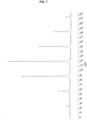
- FIG. 7 shows the 19 F ssNMR spectrum of PF-07220060 hydrate (Form 1), which was collected according to General Method 3. Chemical shifts are expressed in parts per million (ppm) and are referenced to external standard of trifluoroacetic acid and water (50/50 volume/volume), setting its resonance to -76.54 ppm (as determined from neat TMS).
- a list of ssNMR 19 F chemical shifts (ppm) for Form 1 is provided in Table 6 in ppm ⁇ 0.2 ppm. Table 6.
- PF-07220060 monohydrate (Form 2) (331.7 mg), prepared as described in Example 2, was melted in a small aluminum pan at approximately 165°C. The resulting pale-yellow liquid was placed in ice water and cooled rapidly. The liquid became a pale-yellow, transparent solid. The solid was transferred to a vial and crushed with a spatula into a pale-yellow powder, which was determined by PXRD to be amorphous PF-07220060 (Form 8) (294.2 mg, 89%).
- PF-07220060 monohydrate (Form 2) ( ⁇ 2g), prepared as described in Example 2, and acetonitrile (100 mL) was combined and sonicated for 15 minutes. The sample was then placed in a 50°C water batch for 15 minutes until the solid fully dissolved. Water (5.0 mL) was added before the sample was sonicated for 5 more minutes. The resulting solution was filtered through a 0.20 mm PTFE filter. The filtrate was frozen with a dry ice/acetone bath and placed onto a Labconco FreezeZone -105°C freeze dryer. The sample was kept on the freeze dryer until all solvent was removed.
- Amorphous PF-07220060 (Form 8), prepared as described in Example 9, was characterized as follows:
- FIG. 8 shows PXRD data for amorphous PF-07220060 (Form 8), collected according to General Method 1A.
- DSC Differential scanning calorimetry
- FIG. 9 shows a modulated DSC scan of amorphous PF-07220060 (Form 8) collected according to General Method 5B, showing a glass transition temperature (Tg) of 102°C ⁇ 5°C.
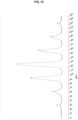
- FIG. 10 shows the FT-Raman spectrum of amorphous PF-07220060 (Form 8), collected according to General Method 2.
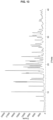
- FIG. 11 shows the carbon CPMAS spectrum of amorphous PF-07220060 (Form 8), which was collected according to General Method 3. Chemical shifts are expressed in parts per million (ppm) and are referenced to external sample of solid phase adamantane at 29.5 ppm. A list of ssNMR 13 C chemical shifts (ppm) for Form 8 is provided in Table 8 in ppm ⁇ 0.2 ppm. Table 8.
- Amorphous PF-07220060 (Form 8) (991.94 mg), prepared as described in Example 9, was added to a 20 mL vial with a stir bar. Toluene (7.50 mL) was added and the mixture warmed to 100°C. After stirring for 1 hour at 100°C, the solid was collected (while still hot) with vacuum filtration and dried under vacuum at 50°C to provide anhydrous crystalline PF-07220060 (Form 6). 614 mg, 62%.
- FIG. 13 shows PXRD data collected according to General Method 1A.
- a list of PXRD peaks at diffraction angles 2-Theta ° (°2 ⁇ ) ⁇ 0.2 °2 ⁇ and their relative intensities is provided in Table 10.
- Table 10 PXRD peak list for anhydrous crystalline PF-07220060 (Form 6) (2-Theta °) Angle (2-theta °) ⁇ 0.2 °2 ⁇ Relative Intensity (%) Angle (2 theta °) ⁇ 0.2 °2 ⁇ Relative Intensity (%) 6.8 12.0 22.2 23.2 8.5 22.3 22.9 57.1 10.1 91.1 24.4 30.0 10.7 4.0 26.2 12.5 12.2 40.7 26.6 29.9 13.6 81.4 27.1 32.9 13.8 79.5 27.5 20.5 14.5 36.4 28.9 21.9 15.0 33.2 29.8 14.5 16.6 5.5 30.3 36.1 16.8 57.3 30.6 27.4 17.0 47.5 31.5 23.9 17.6 13.2 32.0 1
- FIG. 14 shows the FT-Raman spectrum of anhydrous crystalline PF-07220060 (Form 6), collected according to General Method 2.
- Table 11 FT Raman peak list for anhydrous crystalline PF-07220060 (Form 6) (cm -1 ) Peak position cm-1 ⁇ 2 cm -1 Normalized intensity Classification Peak position cm-1 ⁇ 2 cm -1 Normalized intensity Classification 202 0.22 w 1124 0.23 w 243 0.23 w 1149 0.16 w 270 0.52 m 1173 0.20 w 303 0.23 w 1187 0.16 w 318 0.32 m 1220 0.34 m 340 0.09 w 1245 0.17 w 371 0.09 w 1268 0.60 m 389 0.08 w 1295 0.15 w 402 0.21 w 1316 0.70 m 427 0.10 w 1330 0.18 w 442 0.13 w 1346 0.15 w 448 0.12 w 1356 0.16 w 460 0.15 w 1377 0.35 m 504 0.12 w 1384 0.28 w 519 0.16 w 1409 0.82 s 566 0.44 m 1436 0.87
- FIG. 15 shows the carbon CPMAS spectrum of anhydrous crystalline PF-07220060 (Form 6), which was collected according to General Method 3. Chemical shifts are expressed in parts per million (ppm) and are referenced to external sample of solid phase adamantane at 29.5 ppm. A list of ssNMR 13 C chemical shifts (ppm) for Form 6 is provided in Table 12 in ppm ⁇ 0.2 ppm.
- FIG. 16 shows the 19 F ssNMR spectrum of anhydrous crystalline PF-07220060 (Form 6), which was collected according to General Method 3. Chemical shifts are expressed in parts per million (ppm) and are referenced to external standard of trifluoroacetic acid and water (50/50 volume/volume), setting its resonance to -76.54 ppm (as determined from neat TMS).
- a list of ssNMR 19 F chemical shifts (ppm) for Form 6 is provided in Table 13 in ppm ⁇ 0.2 ppm. Table 13.
- PF-07220060 monohydrate (1.8g), prepared as described in Example 2, was dehydrated under vacuum at 75°C for 4 days to provide anhydrous crystalline PF-07220060 (Form 11).
- FIG. 17 shows PXRD data for anhydrous crystalline PF-07220060 (Form 11), collected according to General Method 1A.
- PF-07220060 monohydrate Accelerated solid state chemical stability and photostability of PF-07220060 monohydrate (Form 2) was investigated. Solid state chemical/humidity stability of PF-07220060 monohydrate (Form 2) was evaluated by UPLC (ultra performance liquid chromatography) analysis after storage at 70°C/5%RH and 70°C/75%RH for one week, and at 40°C/5%RH and 40°C/75%RH for 6 weeks. The percentage of identified impurity peaks at the indicated RRT (relative retention time) values were determined under the challenge conditions versus a control sample stored at ambient temperature. RRT is calculated by dividing the retention time (RT) of the impurity by the RT of Form 2.
- Table 14 and Table 15 Data at 70°C/5%RH and 70°C/75%RH for one week are provided in Table 14 and Table 15, respectively.
- Table 14 Stability Testing of PF-07220060 Monohydrate (Form 2) at 70°C/5%RH % impurity Storage condition RRT 0.89 RRT 1.31 70°C/5%RH (one week) 0.57 % 0.99% Control 0.57% 1.00%
- Table 15 Stability Testing of PF-07220060 Monohydrate (Form 2) at 70°C/75%RH % impurity Storage condition RRT 0.89 RRT 1.31 70°C/75%RH (one week) 0.58% 1.00% control 0.57% 1.00%
- Powder X-ray diffraction was used to assess the solid form of the control and the stressed samples. No form change was detected upon storage of PF-07220060 monohydrate (Form 2) at 70°C/75% RH for one week or at 40°C/75%RH for six weeks. Slight disorder was observed at 70°C/5% RH for one week and disorder was observed at 40°C/5% RH for six weeks of storage of PF-07220060 monohydrate (Form 2) under conditions of elevated temperature and low humidity.
- PF-07220060 hydrate (Form 1) (64.3 mg), PF-07220060 monohydrate (Form 2) (67.7 mg), 2-propanol (0.990 mL) and water (0.010 mL) were stirred at room temperature for 15 hours. The solids were collected with vacuum filtration and analyzed with PXRD. PXRD data was consistent with PF-07220060 monohydrate (Form 2).
- Form 1 and Form 6 converted to Form 2 in competitive slurries in 2-propanol/1% water.
- Form 2 was thermodynamically stable above 15% RH based on the competition slurry experiments.
- Table 20 Summary of Competitive Slurry Experiments in 2-propanol/1% water. Entry In-going form Out-going form 1 Form 1 + Form 2 Form 2 2 Form 6 + Form 2 Form 2
- Thermal stability data were obtained through thermogravimetric analysis (TGA) according to General Method 4, and Differential Scanning Calorimetry (DSC) scan according to General Method 5A. Data is shown in Table 21. Form 6 and Form 2 showed improved thermal stability relative to Form 1 and Form 8. Table 21. Thermal Stability Data for Forms 1, 2, 6 and 8 PF-07220060 Form Thermal stability via DSC (°C) Thermal stability via TGA (°C) Form 8 (amorphous) -10 20 Form 1 (hydrate) 0 20 Form 2 (monohydrate) 50 60 Form 6 (anhydrous) 195 195 195 195
Landscapes
- Chemical & Material Sciences (AREA)
- Organic Chemistry (AREA)
- Health & Medical Sciences (AREA)
- Life Sciences & Earth Sciences (AREA)
- General Health & Medical Sciences (AREA)
- Veterinary Medicine (AREA)
- Public Health (AREA)
- Pharmacology & Pharmacy (AREA)
- Medicinal Chemistry (AREA)
- Animal Behavior & Ethology (AREA)
- Chemical Kinetics & Catalysis (AREA)
- General Chemical & Material Sciences (AREA)
- Nuclear Medicine, Radiotherapy & Molecular Imaging (AREA)
- Epidemiology (AREA)
- Pharmaceuticals Containing Other Organic And Inorganic Compounds (AREA)
- Plural Heterocyclic Compounds (AREA)
- Medicines That Contain Protein Lipid Enzymes And Other Medicines (AREA)
- Fats And Perfumes (AREA)
- Acyclic And Carbocyclic Compounds In Medicinal Compositions (AREA)
Applications Claiming Priority (4)
| Application Number | Priority Date | Filing Date | Title |
|---|---|---|---|
| US202063078636P | 2020-09-15 | 2020-09-15 | |
| US202163240268P | 2021-09-02 | 2021-09-02 | |
| EP21783049.6A EP4214202B1 (fr) | 2020-09-15 | 2021-09-13 | Formes solides d'un inhibiteur de cdk4 |
| PCT/IB2021/058320 WO2022058871A1 (fr) | 2020-09-15 | 2021-09-13 | Formes solides d'un inhibiteur de cdk4 |
Related Parent Applications (2)
| Application Number | Title | Priority Date | Filing Date |
|---|---|---|---|
| EP21783049.6A Division EP4214202B1 (fr) | 2020-09-15 | 2021-09-13 | Formes solides d'un inhibiteur de cdk4 |
| EP21783049.6A Division-Into EP4214202B1 (fr) | 2020-09-15 | 2021-09-13 | Formes solides d'un inhibiteur de cdk4 |
Publications (2)
| Publication Number | Publication Date |
|---|---|
| EP4578450A2 true EP4578450A2 (fr) | 2025-07-02 |
| EP4578450A3 EP4578450A3 (fr) | 2025-07-16 |
Family
ID=78000744
Family Applications (2)
| Application Number | Title | Priority Date | Filing Date |
|---|---|---|---|
| EP25153633.0A Withdrawn EP4578450A3 (fr) | 2020-09-15 | 2021-09-13 | Formes solides d'un inhibiteur de cdk4 |
| EP21783049.6A Active EP4214202B1 (fr) | 2020-09-15 | 2021-09-13 | Formes solides d'un inhibiteur de cdk4 |
Family Applications After (1)
| Application Number | Title | Priority Date | Filing Date |
|---|---|---|---|
| EP21783049.6A Active EP4214202B1 (fr) | 2020-09-15 | 2021-09-13 | Formes solides d'un inhibiteur de cdk4 |
Country Status (17)
| Country | Link |
|---|---|
| US (1) | US12570641B2 (fr) |
| EP (2) | EP4578450A3 (fr) |
| JP (2) | JP7260606B2 (fr) |
| KR (1) | KR20230069983A (fr) |
| CN (1) | CN116507620B (fr) |
| AU (1) | AU2021345531B2 (fr) |
| DK (1) | DK4214202T3 (fr) |
| ES (1) | ES3022913T3 (fr) |
| FI (1) | FI4214202T3 (fr) |
| HU (1) | HUE070846T2 (fr) |
| MX (1) | MX2023003054A (fr) |
| PL (1) | PL4214202T3 (fr) |
| PT (1) | PT4214202T (fr) |
| SI (1) | SI4214202T1 (fr) |
| TW (2) | TW202334125A (fr) |
| WO (1) | WO2022058871A1 (fr) |
| ZA (1) | ZA202303655B (fr) |
Families Citing this family (17)
| Publication number | Priority date | Publication date | Assignee | Title |
|---|---|---|---|---|
| CN111655295B (zh) | 2018-08-29 | 2024-05-28 | 荣昌生物制药(烟台)股份有限公司 | 抗her2抗体药物偶联物在治疗尿路上皮癌中的用途 |
| WO2021041348A1 (fr) | 2019-08-26 | 2021-03-04 | Arvinas Operations, Inc. | Procédés de traitement du cancer du sein avec des dérivés de tétrahydronaphtalène en tant qu'agents de dégradation du récepteur des œstrogènes |
| MX2023003054A (es) | 2020-09-15 | 2023-04-05 | Pfizer | Formas solidas de un inhibidor de cdk4. |
| AU2022400308B2 (en) * | 2021-12-02 | 2026-02-12 | Pfizer Inc. | Cdk4 inhibitor for the treatment of cancer |
| JP2025533719A (ja) | 2022-07-29 | 2025-10-09 | ファイザー・インク | がんの治療のためのkat6阻害剤を含む投与レジメン |
| KR20250054814A (ko) * | 2022-09-05 | 2025-04-23 | 티와이케이 메디슨즈, 인코포레이티드 | Cdk4 키나아제 억제제로 사용되는 화합물 및 이의 용도 |
| KR20250164842A (ko) | 2023-03-30 | 2025-11-25 | 화이자 인코포레이티드 | Kat6a 억제제에 의한 치료를 위한 예측 바이오마커로서의 kat6a 및 이의 치료 방법 |
| WO2024201340A1 (fr) | 2023-03-30 | 2024-10-03 | Pfizer Inc. | Kat6a en tant que biomarqueur prédictif pour le traitement du cancer du sein avec un inhibiteur de cdk4 et un anti-œstrogène et méthodes de traitement associées |
| EP4719405A1 (fr) | 2023-06-02 | 2026-04-08 | Pfizer Inc. | Méthodes et schémas posologiques modifiés comprenant un inhibiteur de cdk4 pour le traitement du cancer |
| JP2026519559A (ja) | 2023-06-02 | 2026-06-16 | ファイザー・インク | エストロゲン受容体分解薬およびcdk4阻害剤の組合せ |
| TW202513069A (zh) | 2023-07-21 | 2025-04-01 | 美商冰洲石生物科技公司 | 作為週期蛋白依賴性激酶抑制劑之胺基嘧啶衍生物 |
| WO2025104624A1 (fr) | 2023-11-14 | 2025-05-22 | Pfizer Inc. | Synthèse de 1,5-anhydro-3-(5-chloro-4-[4-fluoro-2-(2-hydroxypropan-2-yl)-1-(propan-2-yl)-1h-benzimidazol-6-yl]pyrimidin-2-yl}amino)-2,3-didésoxy-d-thréo-pentitol |
| WO2025202900A1 (fr) | 2024-03-27 | 2025-10-02 | Pfizer Inc. | Inhibiteurs de cdk4 destinés à être utilisés dans le traitement d'un lymphome à cellules du manteau |
| WO2025202871A1 (fr) | 2024-03-27 | 2025-10-02 | Pfizer Inc. | Procédés d'identification de biomarqueurs de réponse à un traitement et leur utilisation avec un inhibiteur de cdk4 |
| WO2025202854A1 (fr) | 2024-03-27 | 2025-10-02 | Pfizer Inc. | Inhibiteurs de cdk4 et combinaisons avec des inhibiteurs de cdk2 ou d'autres agents destinés à être utilisés dans le traitement du cancer |
| WO2026025013A2 (fr) | 2024-07-26 | 2026-01-29 | Pfizer Inc. | Polythérapie utilisant des inhibiteurs de cdk4 pour des traitements contre le cancer |
| WO2026133192A1 (fr) | 2024-12-20 | 2026-06-25 | Pfizer Inc. | Polythérapies utilisant des inhibiteurs de cdk4 avec des antagonistes de liaison à l'axe pd-1 |
Citations (4)
| Publication number | Priority date | Publication date | Assignee | Title |
|---|---|---|---|---|
| WO2000035298A1 (fr) | 1996-11-27 | 2000-06-22 | Wm. Wrigley Jr. Company | Chewing-gum contenant des agents medicamenteux actifs |
| US6106864A (en) | 1995-09-15 | 2000-08-22 | Pfizer Inc. | Pharmaceutical formulations containing darifenacin |
| US10233188B2 (en) | 2016-08-15 | 2019-03-19 | Pfizer Inc. | CDK2/4/6 inhibitors |
| WO2019207463A1 (fr) | 2018-04-26 | 2019-10-31 | Pfizer Inc. | Dérivés de 2-amino-pyridine ou de 2-amino-pyrimidine utilisés en tant qu'inhibiteurs de kinases dépendantes des cyclines |
Family Cites Families (5)
| Publication number | Priority date | Publication date | Assignee | Title |
|---|---|---|---|---|
| TW201105669A (en) | 2009-07-30 | 2011-02-16 | Irm Llc | Compounds and compositions as Syk kinase inhibitors |
| TW201444820A (zh) | 2013-03-13 | 2014-12-01 | Abbvie Inc | 吡啶cdk9激酶抑制劑 |
| CN105111191B (zh) | 2015-07-21 | 2018-06-08 | 上海皓元生物医药科技有限公司 | 一种用于合成cdk9抑制剂的关键中间体及其制备方法和用途 |
| SG11201900328WA (en) | 2016-07-13 | 2019-02-27 | Jason Marineau | Inhibitors of cyclin-dependent kinase 7 (cdk7) |
| MX2023003054A (es) | 2020-09-15 | 2023-04-05 | Pfizer | Formas solidas de un inhibidor de cdk4. |
-
2021
- 2021-09-13 MX MX2023003054A patent/MX2023003054A/es unknown
- 2021-09-13 EP EP25153633.0A patent/EP4578450A3/fr not_active Withdrawn
- 2021-09-13 PT PT217830496T patent/PT4214202T/pt unknown
- 2021-09-13 AU AU2021345531A patent/AU2021345531B2/en active Active
- 2021-09-13 DK DK21783049.6T patent/DK4214202T3/da active
- 2021-09-13 EP EP21783049.6A patent/EP4214202B1/fr active Active
- 2021-09-13 HU HUE21783049A patent/HUE070846T2/hu unknown
- 2021-09-13 CN CN202180071477.7A patent/CN116507620B/zh active Active
- 2021-09-13 SI SI202130288T patent/SI4214202T1/sl unknown
- 2021-09-13 ES ES21783049T patent/ES3022913T3/es active Active
- 2021-09-13 JP JP2021148619A patent/JP7260606B2/ja active Active
- 2021-09-13 FI FIEP21783049.6T patent/FI4214202T3/fi active
- 2021-09-13 KR KR1020237012766A patent/KR20230069983A/ko not_active Ceased
- 2021-09-13 WO PCT/IB2021/058320 patent/WO2022058871A1/fr not_active Ceased
- 2021-09-13 PL PL21783049.6T patent/PL4214202T3/pl unknown
- 2021-09-13 US US18/245,039 patent/US12570641B2/en active Active
- 2021-09-14 TW TW112102545A patent/TW202334125A/zh unknown
- 2021-09-14 TW TW110134168A patent/TWI809503B/zh active
-
2022
- 2022-10-27 JP JP2022172594A patent/JP7291839B2/ja active Active
-
2023
- 2023-03-16 ZA ZA2023/03655A patent/ZA202303655B/en unknown
Patent Citations (4)
| Publication number | Priority date | Publication date | Assignee | Title |
|---|---|---|---|---|
| US6106864A (en) | 1995-09-15 | 2000-08-22 | Pfizer Inc. | Pharmaceutical formulations containing darifenacin |
| WO2000035298A1 (fr) | 1996-11-27 | 2000-06-22 | Wm. Wrigley Jr. Company | Chewing-gum contenant des agents medicamenteux actifs |
| US10233188B2 (en) | 2016-08-15 | 2019-03-19 | Pfizer Inc. | CDK2/4/6 inhibitors |
| WO2019207463A1 (fr) | 2018-04-26 | 2019-10-31 | Pfizer Inc. | Dérivés de 2-amino-pyridine ou de 2-amino-pyrimidine utilisés en tant qu'inhibiteurs de kinases dépendantes des cyclines |
Non-Patent Citations (6)
| Title |
|---|
| "Remington's Pharmaceutical Sciences", 1995, MACK PUBLISHING COMPANY |
| EISENHAUER ET AL.: "New response evaluation criteria in solid tumours: Revised RECIST guideline (version 1.1", EUR J OF CANCER, vol. 45, no. 2, 2009, pages 228 - 47, XP025841550, DOI: 10.1016/j.ejca.2008.10.026 |
| ISHIJI, T, J DERMATOL., vol. 27, 2000, pages 73 - 86 |
| LIANGCHEN, EXPERT OPINION IN THERAPEUTIC PATENTS, vol. 11, no. 6, 2001, pages 981 - 986 |
| VERMA ET AL.: "Current Status of Drug Delivery Technologies and Future Directions", PHARMACEUTICAL TECHNOLOGY ON-LINE, vol. 25, 2001, pages 1 - 14, XP055119110 |
| W. A. WEBER: "Assessing tumor response to therapy", J. NUCL. MED, vol. 50, 2009, XP055156561, DOI: 10.2967/jnumed.108.057174 |
Also Published As
| Publication number | Publication date |
|---|---|
| TW202216698A (zh) | 2022-05-01 |
| AU2021345531B2 (en) | 2024-02-29 |
| ZA202303655B (en) | 2024-09-25 |
| JP7260606B2 (ja) | 2023-04-18 |
| EP4214202A1 (fr) | 2023-07-26 |
| JP2022049005A (ja) | 2022-03-28 |
| CN116507620B (zh) | 2025-11-18 |
| TWI809503B (zh) | 2023-07-21 |
| HUE070846T2 (hu) | 2025-07-28 |
| US12570641B2 (en) | 2026-03-10 |
| PT4214202T (pt) | 2025-04-11 |
| AU2021345531A1 (en) | 2023-04-20 |
| ES3022913T3 (en) | 2025-05-29 |
| PL4214202T3 (pl) | 2025-05-19 |
| JP7291839B2 (ja) | 2023-06-15 |
| CN116507620A (zh) | 2023-07-28 |
| EP4214202B1 (fr) | 2025-02-26 |
| TW202334125A (zh) | 2023-09-01 |
| WO2022058871A1 (fr) | 2022-03-24 |
| JP2022186995A (ja) | 2022-12-15 |
| DK4214202T3 (da) | 2025-03-31 |
| CA3195063A1 (fr) | 2022-03-24 |
| MX2023003054A (es) | 2023-04-05 |
| BR112023004713A2 (pt) | 2023-04-18 |
| KR20230069983A (ko) | 2023-05-19 |
| FI4214202T3 (fi) | 2025-04-25 |
| SI4214202T1 (sl) | 2025-05-30 |
| US20230357211A1 (en) | 2023-11-09 |
| EP4578450A3 (fr) | 2025-07-16 |
Similar Documents
| Publication | Publication Date | Title |
|---|---|---|
| EP4214202B1 (fr) | Formes solides d'un inhibiteur de cdk4 | |
| AU2021404974B2 (en) | Solid forms of a cdk2 inhibitor | |
| US12030873B2 (en) | 6-pyrimidin-isoindole derivative as ERK1/2 inhibitor | |
| BR112021004546A2 (pt) | formas cristalinas de um composto de quinazol e seus sais de cloridrato | |
| CA3195063C (fr) | Formes solides d'un inhibiteur de cdk4 | |
| RU2856216C1 (ru) | Твердые формы ингибитора cdk4 | |
| RU2850825C1 (ru) | Твердые формы ингибитора cdk2 | |
| HK40096368A (en) | Solid forms of a cdk2 inhibitor | |
| HK40087859A (en) | Solid forms of a cdk4 inhibitor | |
| BR112023004713B1 (pt) | Formas sólidas de um inibidor de cdk4 e sua composição farmacêutica | |
| HK40023945B (en) | 6-pyrimidin-isoindole derivative as erk1/2 inhibitor | |
| HK40023945A (en) | 6-pyrimidin-isoindole derivative as erk1/2 inhibitor | |
| BR112019019948B1 (pt) | Forma cristalina de derivado de 6-pirimidina-isoindol, seu processo de produção, sal amorfo, composição farmacêutica, e seus usos para fabricação de um medicamento |
Legal Events
| Date | Code | Title | Description |
|---|---|---|---|
| PUAI | Public reference made under article 153(3) epc to a published international application that has entered the european phase |
Free format text: ORIGINAL CODE: 0009012 |
|
| STAA | Information on the status of an ep patent application or granted ep patent |
Free format text: STATUS: THE APPLICATION HAS BEEN PUBLISHED |
|
| REG | Reference to a national code |
Ref country code: DE Ref legal event code: R079 Free format text: PREVIOUS MAIN CLASS: A61K0031506000 Ipc: C07D0405140000 |
|
| PUAL | Search report despatched |
Free format text: ORIGINAL CODE: 0009013 |
|
| AC | Divisional application: reference to earlier application |
Ref document number: 4214202 Country of ref document: EP Kind code of ref document: P |
|
| AK | Designated contracting states |
Kind code of ref document: A2 Designated state(s): AL AT BE BG CH CY CZ DE DK EE ES FI FR GB GR HR HU IE IS IT LI LT LU LV MC MK MT NL NO PL PT RO RS SE SI SK SM TR |
|
| AK | Designated contracting states |
Kind code of ref document: A3 Designated state(s): AL AT BE BG CH CY CZ DE DK EE ES FI FR GB GR HR HU IE IS IT LI LT LU LV MC MK MT NL NO PL PT RO RS SE SI SK SM TR |
|
| RIC1 | Information provided on ipc code assigned before grant |
Ipc: C07D 405/14 20060101AFI20250606BHEP Ipc: A61P 35/00 20060101ALI20250606BHEP Ipc: A61K 31/506 20060101ALI20250606BHEP |
|
| STAA | Information on the status of an ep patent application or granted ep patent |
Free format text: STATUS: THE APPLICATION IS DEEMED TO BE WITHDRAWN |
|
| 18D | Application deemed to be withdrawn |
Effective date: 20260117 |