EP4578461A2 - Verfahren zur behandlung von morbus parkinson durch verabreichung von apomorphin an die mundschleimhaut - Google Patents
Verfahren zur behandlung von morbus parkinson durch verabreichung von apomorphin an die mundschleimhaut Download PDFInfo
- Publication number
- EP4578461A2 EP4578461A2 EP25157078.4A EP25157078A EP4578461A2 EP 4578461 A2 EP4578461 A2 EP 4578461A2 EP 25157078 A EP25157078 A EP 25157078A EP 4578461 A2 EP4578461 A2 EP 4578461A2
- Authority
- EP
- European Patent Office
- Prior art keywords
- apomorphine
- film
- unit dosage
- dosage form
- pharmaceutical unit
- Prior art date
- Legal status (The legal status is an assumption and is not a legal conclusion. Google has not performed a legal analysis and makes no representation as to the accuracy of the status listed.)
- Pending
Links
Images





Classifications
-
- A—HUMAN NECESSITIES
- A61—MEDICAL OR VETERINARY SCIENCE; HYGIENE
- A61K—PREPARATIONS FOR MEDICAL, DENTAL OR TOILETRY PURPOSES
- A61K31/00—Medicinal preparations containing organic active ingredients
- A61K31/33—Heterocyclic compounds
- A61K31/395—Heterocyclic compounds having nitrogen as a ring hetero atom, e.g. guanethidine or rifamycins
- A61K31/435—Heterocyclic compounds having nitrogen as a ring hetero atom, e.g. guanethidine or rifamycins having six-membered rings with one nitrogen as the only ring hetero atom
- A61K31/47—Quinolines; Isoquinolines
- A61K31/473—Quinolines; Isoquinolines ortho- or peri-condensed with carbocyclic ring systems, e.g. acridines, phenanthridines
-
- A—HUMAN NECESSITIES
- A61—MEDICAL OR VETERINARY SCIENCE; HYGIENE
- A61K—PREPARATIONS FOR MEDICAL, DENTAL OR TOILETRY PURPOSES
- A61K45/00—Medicinal preparations containing active ingredients not provided for in groups A61K31/00 - A61K41/00
- A61K45/06—Mixtures of active ingredients without chemical characterisation, e.g. antiphlogistics and cardiaca
-
- A—HUMAN NECESSITIES
- A61—MEDICAL OR VETERINARY SCIENCE; HYGIENE
- A61K—PREPARATIONS FOR MEDICAL, DENTAL OR TOILETRY PURPOSES
- A61K47/00—Medicinal preparations characterised by the non-active ingredients used, e.g. carriers or inert additives; Targeting or modifying agents chemically bound to the active ingredient
- A61K47/02—Inorganic compounds
-
- A—HUMAN NECESSITIES
- A61—MEDICAL OR VETERINARY SCIENCE; HYGIENE
- A61K—PREPARATIONS FOR MEDICAL, DENTAL OR TOILETRY PURPOSES
- A61K47/00—Medicinal preparations characterised by the non-active ingredients used, e.g. carriers or inert additives; Targeting or modifying agents chemically bound to the active ingredient
- A61K47/06—Organic compounds, e.g. natural or synthetic hydrocarbons, polyolefins, mineral oil, petrolatum or ozokerite
- A61K47/08—Organic compounds, e.g. natural or synthetic hydrocarbons, polyolefins, mineral oil, petrolatum or ozokerite containing oxygen, e.g. ethers, acetals, ketones, quinones, aldehydes, peroxides
- A61K47/10—Alcohols; Phenols; Salts thereof, e.g. glycerol; Polyethylene glycols [PEG]; Poloxamers; PEG/POE alkyl ethers
-
- A—HUMAN NECESSITIES
- A61—MEDICAL OR VETERINARY SCIENCE; HYGIENE
- A61K—PREPARATIONS FOR MEDICAL, DENTAL OR TOILETRY PURPOSES
- A61K47/00—Medicinal preparations characterised by the non-active ingredients used, e.g. carriers or inert additives; Targeting or modifying agents chemically bound to the active ingredient
- A61K47/06—Organic compounds, e.g. natural or synthetic hydrocarbons, polyolefins, mineral oil, petrolatum or ozokerite
- A61K47/08—Organic compounds, e.g. natural or synthetic hydrocarbons, polyolefins, mineral oil, petrolatum or ozokerite containing oxygen, e.g. ethers, acetals, ketones, quinones, aldehydes, peroxides
- A61K47/14—Esters of carboxylic acids, e.g. fatty acid monoglycerides, medium-chain triglycerides, parabens or PEG fatty acid esters
-
- A—HUMAN NECESSITIES
- A61—MEDICAL OR VETERINARY SCIENCE; HYGIENE
- A61K—PREPARATIONS FOR MEDICAL, DENTAL OR TOILETRY PURPOSES
- A61K47/00—Medicinal preparations characterised by the non-active ingredients used, e.g. carriers or inert additives; Targeting or modifying agents chemically bound to the active ingredient
- A61K47/06—Organic compounds, e.g. natural or synthetic hydrocarbons, polyolefins, mineral oil, petrolatum or ozokerite
- A61K47/16—Organic compounds, e.g. natural or synthetic hydrocarbons, polyolefins, mineral oil, petrolatum or ozokerite containing nitrogen, e.g. nitro-, nitroso-, azo-compounds, nitriles, cyanates
- A61K47/18—Amines; Amides; Ureas; Quaternary ammonium compounds; Amino acids; Oligopeptides having up to five amino acids
- A61K47/183—Amino acids, e.g. glycine, EDTA or aspartame
-
- A—HUMAN NECESSITIES
- A61—MEDICAL OR VETERINARY SCIENCE; HYGIENE
- A61K—PREPARATIONS FOR MEDICAL, DENTAL OR TOILETRY PURPOSES
- A61K47/00—Medicinal preparations characterised by the non-active ingredients used, e.g. carriers or inert additives; Targeting or modifying agents chemically bound to the active ingredient
- A61K47/06—Organic compounds, e.g. natural or synthetic hydrocarbons, polyolefins, mineral oil, petrolatum or ozokerite
- A61K47/26—Carbohydrates, e.g. sugar alcohols, amino sugars, nucleic acids, mono-, di- or oligo-saccharides; Derivatives thereof, e.g. polysorbates, sorbitan fatty acid esters or glycyrrhizin
-
- A—HUMAN NECESSITIES
- A61—MEDICAL OR VETERINARY SCIENCE; HYGIENE
- A61K—PREPARATIONS FOR MEDICAL, DENTAL OR TOILETRY PURPOSES
- A61K47/00—Medicinal preparations characterised by the non-active ingredients used, e.g. carriers or inert additives; Targeting or modifying agents chemically bound to the active ingredient
- A61K47/30—Macromolecular organic or inorganic compounds, e.g. inorganic polyphosphates
- A61K47/36—Polysaccharides; Derivatives thereof, e.g. gums, starch, alginate, dextrin, hyaluronic acid, chitosan, inulin, agar or pectin
-
- A—HUMAN NECESSITIES
- A61—MEDICAL OR VETERINARY SCIENCE; HYGIENE
- A61K—PREPARATIONS FOR MEDICAL, DENTAL OR TOILETRY PURPOSES
- A61K47/00—Medicinal preparations characterised by the non-active ingredients used, e.g. carriers or inert additives; Targeting or modifying agents chemically bound to the active ingredient
- A61K47/30—Macromolecular organic or inorganic compounds, e.g. inorganic polyphosphates
- A61K47/36—Polysaccharides; Derivatives thereof, e.g. gums, starch, alginate, dextrin, hyaluronic acid, chitosan, inulin, agar or pectin
- A61K47/38—Cellulose; Derivatives thereof
-
- A—HUMAN NECESSITIES
- A61—MEDICAL OR VETERINARY SCIENCE; HYGIENE
- A61K—PREPARATIONS FOR MEDICAL, DENTAL OR TOILETRY PURPOSES
- A61K9/00—Medicinal preparations characterised by special physical form
- A61K9/0012—Galenical forms characterised by the site of application
- A61K9/0053—Mouth and digestive tract, i.e. intraoral and peroral administration
- A61K9/006—Oral mucosa, e.g. mucoadhesive forms, sublingual droplets; Buccal patches or films; Buccal sprays
-
- A—HUMAN NECESSITIES
- A61—MEDICAL OR VETERINARY SCIENCE; HYGIENE
- A61K—PREPARATIONS FOR MEDICAL, DENTAL OR TOILETRY PURPOSES
- A61K9/00—Medicinal preparations characterised by special physical form
- A61K9/70—Web, sheet or filament bases ; Films; Fibres of the matrix type containing drug
- A61K9/7007—Drug-containing films, membranes or sheets
-
- A—HUMAN NECESSITIES
- A61—MEDICAL OR VETERINARY SCIENCE; HYGIENE
- A61P—SPECIFIC THERAPEUTIC ACTIVITY OF CHEMICAL COMPOUNDS OR MEDICINAL PREPARATIONS
- A61P25/00—Drugs for disorders of the nervous system
- A61P25/14—Drugs for disorders of the nervous system for treating abnormal movements, e.g. chorea, dyskinesia
- A61P25/16—Anti-Parkinson drugs
Definitions
- this invention relates to methods of, and pharmaceutical compositions for, treating Parkinson's disease.
- the methods may involve administering to an oral mucosa of a subject a therapeutic dose of apomorphine.
- Parkinson's disease is a progressive degenerative disease of the central nervous system. The risk of developing Parkinson's disease increases with age, and afflicted individuals are usually adults over 40. Parkinson's disease occurs in all parts of the world, and affects more than 1.5 million individuals in the United States alone.
- Parkinson's disease While the primary cause of Parkinson's disease is not known, it is characterized by degeneration of dopaminergic neurons of the substantia nigra.
- the substantia nigra is a portion of the lower brain, or brain stem that helps control voluntary movements.
- the shortage of dopamine in the brain caused by the loss of these neurons is believed to cause the observable disease symptoms.
- the symptoms of PD vary from patient to patient.
- the most common symptom is a paucity of movement and rigidity, characterized by an increased stiffness of voluntary skeletal muscles. Additional symptoms include resting tremor, bradykinesia (slowness of movement), poor balance, and walking problems.
- Common secondary symptoms include depression, sleep disturbance, dizziness, stooped posture, dementia, problems with speech, breathing, and swallowing. The symptoms become progressively worse with time and ultimately result in death.
- levodopa a dopamine precursor. While levodopa administration can result in a dramatic improvement in symptoms, patients can experience serious side-effects, including nausea and vomiting. Moreover, many patients develop involuntary choreiform movements which are the result of excessive activation of dopamine receptors. These movements usually affect the face and limbs and can become very severe. Such movements disappear if the dose of dopamine precursor (e.g., levodopa) or dopamine agonist is reduced, but this typically causes rigidity to return. Moreover, the margin between the beneficial and the unwanted effects (i.e., the therapeutic window) appears to become progressively narrower as the period of treatment lengthens.
- dopamine precursor e.g., levodopa
- dopamine agonist e.g., dopamine agonist
- a further complication of long-term treatment with certain dopamine receptor modulators is the development of rapid fluctuations in clinical state where the patient switches suddenly between mobility and immobility for periods ranging from a few minutes to a few hours.
- the fluctuations are of several general types.
- "Wearing-off" phenomena are deteriorations in the relief afforded by a dose of levodopa before the next dose takes effect ( Van Laar T., CNS Drugs, 17:475, 2003 ). Because they are related to a patient's dose schedule, such periods are often relatively predictable ( Dewey RB Jr., Neurology, 62(suppl 4):S3-S7, 2004 ).
- apomorphine has proved to be effective in the treatment of "on-off" fluctuations in Parkinson's disease within 7 to 23 minutes, and last for 45 to 90 minutes. Trials have shown consistent reversal of "off" period akinesia. Advantages over other dopamine agonists include a quick onset of action and lower incidence of psychological complications. For a "rescue therapy” in patients with “on-off” fluctuations, apomorphine also has the advantage over other dopamine agonists, as it has a relatively short half-life.
- the invention features methods of, and pharmaceutical unit dosage forms for, treating Parkinson's disease (e.g., for treating an "off" episode in a subject having Parkinson's disease).
- the invention features a method of treating Parkinson's disease in a subject (e.g., an "off" episode in a subject having Parkinson's disease), the method involves:
- the film contains 10 ⁇ 2.5 mg, 12.5 ⁇ 2.5 mg, or 15 ⁇ 2.5 mg (e.g., 12.5 ⁇ 2.5 mg) of an acid addition salt of apomorphine (e.g., when administered to the subjects have high sublingual uptake in response to apomorphine administered to oral mucosa (e.g., sublingually)).
- the film contains 15.0 ⁇ 2.5 mg, 20.0 ⁇ 2.5 mg, or 25.0 ⁇ 2.5 mg (e.g., 17.5 ⁇ 2.5 mg) of an acid addition salt of apomorphine (e.g., when administered to the subjects have medium sublingual uptake in response to apomorphine administered to oral mucosa (e.g., sublingually)).
- the film contains 30.0 ⁇ 5.0 mg, 35.0 ⁇ 5.0 mg, or 40.0 ⁇ 5.0 mg (e.g., 25.0 ⁇ 5.0 mg) of an acid addition salt of apomorphine (e.g., when administered to the subjects have low sublingual uptake in response to apomorphine administered to oral mucosa (e.g., sublingually)).
- step (a) involves determining responsiveness of the subject to apomorphine by titration (e.g., uptitration).
- the invention features a method of treating Parkinson's disease in a subject (e.g., an "off" episode in a subject having Parkinson's disease).
- the method involves:
- the present invention relates to methods and compositions for treating Parkinson's disease in a subject (e.g,, hypomobility or an "off" episode in a subject having Parkinson's disease).
- the methods are based on the discovery that subjects receiving apomorphine treatment via oral mucosa (e.g., sublingually) do not appear to exhibit a narrowing of the apomorphine therapeutic window with disease progression in contrast to those undergoing therapy with certain other dopamine receptor modulators. Further, subject-to-subject variations in apomorphine dosing efficacy appear to relate to the individual capability of each subject to uptake apomorphine or an acid addition salt thereof via oral mucosa.
- occurrence of adverse effects can be reduced by administering lower dosages of apomorphine or an acid addition salt thereof to the oral mucosa of a subject showing high apomorphine uptake via oral mucosa; and, without risking a high rate of adverse effects related to high plasma concentration of apomorphine, a higher dosage of apomorphine or an acid addition salt thereof can be administered to the oral mucosa of a subject showing low apomorphine uptake via oral mucosa.
- the invention features a method of treating Parkinson's disease in a subject (e.g., treating hypomobility or an "off" episode" in a subject having Parkinson's disease).
- the method involves administering to oral mucosa of a subject (e.g., sublingually) an oral apomorphine film having a first portion including particles containing apomorphine or an acid addition salt thereof and a second portion containing a pH neutralizing agent.
- a subject e.g., sublingually
- an oral apomorphine film having a first portion including particles containing apomorphine or an acid addition salt thereof and a second portion containing a pH neutralizing agent.
- the subject Prior to administering the film, the subject may have been identified as having low uptake; medium uptake; or high uptake of apomorphine via oral mucosa (e.g., sublingual uptake).
- the film administered in accordance with the methods of the invention can be selected from a plurality of predetermined doses of varying strength having sufficient apomorphine content to produce at least the minimum effective concentration of apomorphine (i.e., at least 2.64 ng/mL). All embodiments of the pharmaceutical unit dosage forms described herein can be used in accordance with the methods of the invention.
- the subject treated in accordance with the methods of the invention may be identified as having low uptake; medium uptake; or high uptake of apomorphine administered via oral mucosa (e.g., sublingually).
- the identification of the subject may be performed using methods known in the art, e.g., titration.
- titration is uptitration.
- Uptitration may involve administering to oral mucosa of a subject a first predetermined dosage of apomorphine (e.g., 12.5 ⁇ 2.5 mg of an acid addition salt of apomorphine), and determining if an effective amount of apomorphine was administered; if the amount of administered apomorphine was an effective amount, the subject is identified as having a high uptake of apomorphine via oral mucosa (e.g., sublingual uptake).
- apomorphine e.g., 12.5 ⁇ 2.5 mg of an acid addition salt of apomorphine
- a second predetermined dosage of apomorphine (e.g., 20.0 ⁇ 5.0 mg of an acid addition salt of apomorphine) is administered to the oral mucosa of the subject, and it is determined if an effective amount of apomorphine was administered with the second predetermined dosage. If the amount of apomorphine administered with the second predetermined is determined to be not an effective amount, a third predetermined dosage of apomorphine (e.g., 30.0 ⁇ 5.0 mg of an acid addition salt of apomorphine) is administered to the oral mucosa of the subject, and it is determined if an effective amount of apomorphine was administered with the third predetermined dosage.
- a third predetermined dosage of apomorphine e.g., 30.0 ⁇ 5.0 mg of an acid addition salt of apomorphine
- third predetermined dosage contains more acid addition salt of apomorphine than the second predetermined dosage, which contains more acid addition salt of apomorphine than the first predetermined dosage.
- the determination if an effective amount of apomorphine was administered in any one of the above uptitration steps can be executed in accordance with methods known in the art, e.g., by evaluating UPDRS (e.g., UPDRS Part III) for the subject within a predetermined period (e.g., 30 minutes or 45 minutes) after administering apomorphine or by measuring apomorphine plasma concentration in a blood sample obtained from the subject within a predetermined period (e.g., 30 minutes or 45 minutes) after administering apomorphine.
- UPDRS e.g., UPDRS Part III
- Pharmaceutical unit dosage forms of the invention are films containing a first portion and a second portion.
- the films can be flexible.
- a pharmaceutical unit dosage form of the invention may contain an acid addition salt of apomorphine and pharmaceutically acceptable excipients, such as a pharmaceutically acceptable polymer, a permeation enhancer, a hydrolyzed starch, an antioxidant, a plasticizing agent, a flavoring agent, and a coloring agent.
- pharmaceutically acceptable excipients such as a pharmaceutically acceptable polymer, a permeation enhancer, a hydrolyzed starch, an antioxidant, a plasticizing agent, a flavoring agent, and a coloring agent.
- References to a single pharmaceutically acceptable excipient include mixtures of pharmaceutically acceptable excipients within the scope of the recited type.
- the pharmaceutical unit dosage forms of the invention may possess mechanical properties acceptable for ease of handling, e.g., toughness greater than or equal to 100 g ⁇ mm (e.g., greater than or equal to 150 g ⁇ mm).
- toughness of the pharmaceutical unit dosage forms of the invention may be in the range from 100 g ⁇ mm to 1000 g ⁇ mm (e.g., from 100 g ⁇ mm to 800 g ⁇ mm or from 150 g ⁇ mm to 800 g ⁇ mm).
- the pharmaceutical unit dosage forms can be flexible. Flexibility of pharmaceutical unit dosage forms may be controlled by varying the content of a plasticizing agent (e.g., glycerol) as described below. Toughness of the pharmaceutical unit dosage forms can be enhanced further by using pharmaceutically acceptable polymers of the invention as described below.
- the portions in the pharmaceutical unit dosage forms can be domains or layers. In some embodiments, the portions are layers.
- the first portion may be free of the pH neutralizing agent to prevent premature neutralization of the acid addition salt of apomorphine, thereby enhancing the film shelf-life by preventing oxidative degradation of neutralized apomorphine.
- the first portion may contain a pharmaceutically acceptable high molecular weight polymer having a weight average molecular weight (M w ) of 60 kDa or greater (e.g., from 60 kDa to 1,000 kDa).
- the second portion may contain a pharmaceutically acceptable high molecular weight polymer having a weight average molecular weight (M w ) of 60 kDa or greater (e.g., from 60 kDa to 1,000 kDa).
- the pharmaceutically acceptable high molecular weight polymer has a weight average molecular weight (M w ) from 60 kDa to 500 kDa.
- the first portion may contain a pharmaceutically acceptable low molecular weight polymer having a weight average molecular weight (M w ) less than 60 kDa (e.g., from 5 kDa to 50 kDa).
- the second portion may contain a pharmaceutically acceptable low molecular weight polymer having a weight average molecular weight (M w ) less than 60 kDa (e.g., from 5 kDa to 50 kDa).
- the second portion is free of an added polymer having a weight average molecular weight less than 60 kDa (e.g., a pharmaceutically acceptable cellulose derivative having a weight average molecular weight less than 60 kDa).
- Each pharmaceutically acceptable polymer can be independently carboxymethylcellulose, hydroxypropyl cellulose (HPC, such as Nisso HPC SSL, Nippon Soda Co., Ltd., Japan), hydroxypropyl methyl cellulose (also known as hypromellose or HPMC; commercially available under the tradename Methocel TM from Dow Chemical Company, Midland, MI), hydroxyethyl cellulose (HEC, commercially available from Hercules Incorporated, Aqualon Division under the tradename NATROSOL TM ), or methyl cellulose (such as Methocel TM , Dow Chemical Company, Midland, MI), or a combination thereof.
- HPC hydroxypropyl cellulose
- HPMC hypromellose
- HPMC hypromellose
- HEC hydroxyethyl cellulose
- NATROSOL TM hydroxyethyl cellulose
- methyl cellulose such as Methocel TM , Dow Chemical Company, Midland, MI
- the pharmaceutical unit dosage forms of the invention can include a plasticizing agent.
- Plasticizers will generally modify the feel, softness, flexibility (in an un-wetted state) of the unit dosage forms of the invention.
- plasticizers include, without limitation, glycerol, propylene glycol, fatty acid esters, such as glyceryl oleate, polyalcohols, sorbitan esters, citric acid esters, polyethylene glycol (e.g., PEG 400), polyvinyl alcohol, polyvinyl methyl ether, triacetin; mannitol, xylitol, and sorbitol.
- the plasticizing agent is glycerol.
- Permeation enhancers can be used to improve the permeability of the dopamine agonist at the mucosal membrane in the unit dosage forms of the invention.
- One or more permeation enhancers maybe used to modulate the rate of mucosal absorption of the dopamine agonist.
- any effective permeation enhancers may be used including, for example, ionic surfactants, nonionic surfactants, bile salts, such as sodium cholate, sodium glycocholate, sodium glycodeoxycholate, taurodeoxycholate, sodium deoxycholate, sodium lithocholate chenocholate, chenodeoxycholate, ursocholate, ursodeoxy-cholate, hyodeoxycholate, dehydrocholate, glycochenocholate, taurochenocholate, and taurochenodeoxycholate; sodium dodecyl sulfate (SDS), dimethyl sulfoxide (DMSO), N-lauroyl sacrcosine, sorbitan monolaurate, stearyl methacrylate, N-dodecylazacycloheptan-2-one, N-dodecyl-2-pyrrolidinone, N-dodecyl-2-piperidinone, 2-(1-nonyl
- the pH neutralizing agent can be a non-polymeric additive incorporated into a unit dosage form of the invention.
- the pH neutralizing agent can be an inorganic base (e.g., aluminum hydroxide, aluminosilicates, calcium hydroxide, magnesium hydroxide, potassium hydroxide, sodium hydroxide, calcium carbonate, iron carbonate, magnesium carbonate, zinc carbonate, sodium carbonate, potassium carbonate, sodium bicarbonate, potassium bicarbonate, sodium phosphate monobasic, sodium phosphate dibasic, sodium phosphate tribasic, potassium phosphate monobasic, potassium phosphate dibasic, potassium phosphate tribasic, or a mixture thereof).
- aluminum hydroxide, aluminosilicates e.g., aluminum hydroxide, aluminosilicates, calcium hydroxide, magnesium hydroxide, potassium hydroxide, sodium hydroxide, calcium carbonate, iron carbonate, magnesium carbonate, zinc carbonate, sodium carbonate, potassium carbonate, sodium bicarbonate, potassium
- the pH neutralizing agent can be an organic base (e.g., acetate salts, citrate salts, stearate salts, laurate salts, proprionate salts, lactate salts, succinate salts, oxalate salts, tartrate salts, glycolate salts, galacturonate salts, glucuronate salts, alginate salts, sorbate salts, caprylate salts, carboxymethyl cellulose, polyacrylate; or amines, such as pyridoxine, meglumine, lysine, Eudragit E, diethanolamine, glycine, citrate, acetate, histidine, N-methyl glucamine, or tris(hydroxymethyl)aminomethane, or a mixture thereof).
- organic base e.g., acetate salts, citrate salts, stearate salts, laurate salts, proprionate salts, lactate salts, succinate salts, oxalate salts, tartrate salts
- a sweetener, flavoring agent and/or odorant can be added to the unit dosage forms of the invention to make them more palatable.
- At least one flavoring agent or odorant composition may be used. Any effective flavor or odor may be rendered.
- the flavoring agents may be natural, artificial, or a mixture thereof.
- the flavoring agent gives a flavor that is will help to reduce the undesirable taste of the active ingredient.
- the flavoring agent may give the flavor of mint, menthol, honey lemon, orange, lemon lime, grape, cranberry, vanilla berry, bubble gum, or cherry.
- the barrier when the portions are layers, can be a third layer interposed between the first portion (first layer) and the second portion (second layer).
- the barrier can be a rapidly dissolving coating on the surface of a particulate component in the unit dosage form, such as a coated particulate base coated onto, or embedded within, a first portion of the unit dosage form.
- the barrier can be a rapidly dissolving coating on the surface of apomorphine particles in the unit dosage form.
- Pharmaceutical unit dosage forms of the invention include an acid addition salt of apomorphine.
- acids that may be used in acid addition salts of apomorphine include organic acids such as acetic, lactic, pamoic, maleic, citric, malic, ascorbic, succinic, benzoic, palmitic, suberic, salicylic, tartaric, methanesulfonic, toluenesulfonic, or trifluoroacetic acids; polymeric acids such as tannic acid, carboxymethyl cellulose, or alginic acid; and inorganic acid such as hydrochloric acid, hydrobromic acid, sulfuric acid, or phosphoric acid.
- the acid addition salt of apomorphine is apomorphine hydrochloride.
- a pharmaceutical unit dosage form of the invention may contain from 2 mg to 60 mg of an acid addition salt of apomorphine (e.g., from 8 mg to 45 mg of an acid addition salt of apomorphine).
- Certain exemplary pharmaceutical unit dosage forms may contain 10.0 ⁇ 2.0 mg, 12.5 ⁇ 2.5 mg, 15.0 ⁇ 2.5 mg, 17.5 ⁇ 2.5 mg, 20.0 ⁇ 5.0 mg, 25.0 ⁇ 5.0 mg, 30.0 ⁇ 10.0 mg, 30.0 ⁇ 5.0 mg, 35.0 ⁇ 10.0 mg, or 35.0 ⁇ 5.0 mg of an acid addition salt of apomorphine.
- the first portion may contain from 20% (w/w) to 60% (w/w) of an acid addition salt of apomorphine (e.g., from 30% (w/w) to 60% (w/w) or from 40% (w/w) to 60% (w/w)) relative to the weight of the dry first portion.
- the film may contain 50 ⁇ 10% (w/w) (e.g., 54 ⁇ 10% (w/w)) or an acid addition salt of apomotphine.
- the pharmaceutical unit dosage forms of the invention can exhibit toughness as described herein.
- the desirable toughness of the pharmaceutical unit dosage forms of the invention can be achieved, e.g., as described herein.
- apomorphine particles can be made by using any method known in the art for achieving the desired particle sizes.
- Useful methods include, for example, milling, homogenization, supercritical fluid fracture, or precipitation techniques. Exemplary methods are described in U.S. Patent Nos. 4,540,602 ; 5,145,684 ; 5,518,187 ; 5,718,388 ; 5,862,999 ; 5,665,331 ; 5,662,883 ; 5,560,932 ; 5,543,133 ; 5,534,270 ; and 5,510,118 ; 5,470,583 , each of which is specifically incorporated by reference.
- Sodium metabisulfite, disodium EDTA, propylene glycol, disintegrant, and sucralose are added to water and the mixture stirred. Acetone and menthol are then added to this solution, and the mixture stirred. Apomorphine hydrochloride is added to the mixture with stirring, forming a clear solution. Polysaccharide is then added slowly with stirring. The resultant mixture is placed under vacuum to eliminate air bubbles, cast as a uniform layer unto an inert support, and then dried in an oven to produce a film comprising a solid solution of apomorphine hydrochloride.
- the particulate apomorphine hydrochloride is suspended in the solution and a solvent-cast mucoadhesive film is prepared by casting a thin film of the mixture onto a sheet. Evaporation of the solvent (e.g., water/acetone) can be accomplished by drying at 60 °C for 30 minutes producing a film.
- the solvent e.g., water/acetone
- the two layer film can be made to optimize its efficacy per unit dosage for individual PD patients based on their therapeutic window, while simultaneously minimizing its toxicity per unit dosage.
- the two-layer film is cut into strips, each strip containing the equivalent of from 2 mg to 60 mg of apomorphine (free base mass).
- the strips can be administered to a subject for the treatment of Parkinson's disease.
- the mole ratio of solid solution apomorphine to microparticulate apomorphine in the final dosage form can be controlled by varying the amount of apomorphine included in each layer and/or by controlling the relative size of each layer incorporated into the final dosage form.
- the ration can be from 1:9 to 9:1; 1:9 to 1:1, 1:1 to 9:1, 1:7 to 7:1; 1:7 to 1:1, 1:1 to 7:1, 1:5 to 5:1; 1:5 to 1:1, 1:1 to 5:1, 1:4 to 4:1; 1:4 to 1:1, or 1:1 to 4:1.
- a first layer containing a rapid release solid solution of apomorphine hydrochloride, and a second layer that contains a slow release apomorphine hydrochloride particles are prepared as described in Example 1.
- Ethyl cellulose, poly(ethylene oxide), and hydroxypropylcellulose are dissolved in anhydrous ethanol to form a solution.
- a pH modifying agent i.e., pyridoxine
- a solvent-cast mucoadhesive film is prepared by casting a thin film of the solution onto the first layer. Evaporation of the solvent (ethanol) can be accomplished by drying at 60 °C for 30 minutes.
- the 3 layers may be laminated together by applying a spray of ethanol between each pair of layers, assembling them as desired, and then drying them in an oven to form the final tri-layer film.
- the resultant dry tri-layer film includes (i) a first layer containing a rapid release solid solution of apomorphine hydrochloride, (ii) a second layer that contains a slow release apomorphine hydrochloride particles, and (iii) a third layer that contains a pH neutralizing agent.
- EXAMPLE 3 Single layer Apomorphine Film Coated With Apomorphine Particulates.
- the particle-coated film can be cut into strips, each strip containing the equivalent of from 2 mg to 100 mg of apomorphine (free base mass).
- the strips can be administered to a subject for the treatment of Parkinson's disease.
- the mole ratio of solid solution apomorphine to microparticulate apomorphine in the final dosage form can be controlled by varying the amount of apomorphine included in the rapid release layer and/or by controlling the amount of particulate apomorphine added to the first layer.
- the ratio can be from 1:9 to 9:1; 1:9 to 1:1, 1:1 to 9:1, 1:7 to 7:1; 1:7 to 1:1, 1:1 to 7:1, 1:5 to 5:1; 1:5 to 1:1, 1:1 to 5:1, 1:4 to 4:1; 1:4 to 1:1, or 1:1 to 4:1.
- Sodium hydroxide, pyridoxine hydrochloride, sodium metabisulfite, disodium EDTA dehydrate, glycerin, maltodextrin (e.g., maltodextrin M180), and, optionally, sucralose were then all added, and the mixture was stirred.
- Acetone and, optionally, glyceryl monostearate and menthol were added to this solution, and the mixture was stirred, until a uniform, clear, viscous liquid was produced.
- the resulting mixture was placed under vacuum to eliminate air bubbles.
- the viscous liquid was then cast as a uniform layer onto an inert support and dried in an oven.
- Table B1 Component Dry film (mg/100 mg) Dry film (mg) sodium metabisulfite 1.899 0.711 disodium EDTA dihydrate 1.895 0.709 apomorphine hydrochloride 21.38 8 menthol 4.814 1.8 glyceryl monostearate 1.202 0.45 glycerin 3.332 1.25 maltodextrin M180 40.27 15.1 sucralose 1.869 0.699 Natrosol 250 L 22.27 8.33 Methocel E5 1.067 0.399 Total mass (mg) 100 37.448
- Film M was prepared according to the same procedure as that described for films D-F with the exception of including only 3 mg of apomorphine hydrochloride per 100 mg of dry film. Film M was entirely transparent containing fully dissolved apomorphine hydrochloride. The solubility of apomorphine in the films appears to be somewhere between 3 and 7 mg per film.
- Period 1 Film A was placed on underside of tongue, drug layer away from tissue.
- Period 2 the drug was placed on underside of tongue, drug layer toward the tissue.
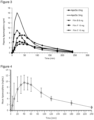
- Tables 1 and 2 below provide the non-compartmental PK results obtained using WinNonlin (Bill Wargin, ClinPharm Consulting, RTP, NC) and PK values from Apokyn ® NDA 21-264 (study APO-0083).
- Table 1 shows the results of Period 1.
- Table 2 shows Period 2 results.
- one subject's plasma profile was deemed in error (Subject #13) due to a very anomalous PK profile and a Tmax result that was >2SD outside the norm. It is believed that the sample set may have been inverted and PK-AE correlations might support that assumption.
- Table 12 provides the comparison of the PK profiles for Films D-F (the data for Films E and F were from the study described above).
- the C max and AUC values indicate that apomorphine exposure was slightly lower than dose proportional, as the dose was raised from 15 to 25 mg. The shortfall in exposure was not large and fell within one standard deviation of the mean values.
- the data for Film E may have been the outlier on the curve based on its supraproportional exposure.
Landscapes
- Health & Medical Sciences (AREA)
- Chemical & Material Sciences (AREA)
- Life Sciences & Earth Sciences (AREA)
- Medicinal Chemistry (AREA)
- Pharmacology & Pharmacy (AREA)
- Animal Behavior & Ethology (AREA)
- General Health & Medical Sciences (AREA)
- Public Health (AREA)
- Veterinary Medicine (AREA)
- Epidemiology (AREA)
- Engineering & Computer Science (AREA)
- General Chemical & Material Sciences (AREA)
- Chemical Kinetics & Catalysis (AREA)
- Bioinformatics & Cheminformatics (AREA)
- Oil, Petroleum & Natural Gas (AREA)
- Inorganic Chemistry (AREA)
- Neurosurgery (AREA)
- Biomedical Technology (AREA)
- Neurology (AREA)
- Psychology (AREA)
- Nuclear Medicine, Radiotherapy & Molecular Imaging (AREA)
- Organic Chemistry (AREA)
- Biochemistry (AREA)
- Molecular Biology (AREA)
- Nutrition Science (AREA)
- Physiology (AREA)
- Proteomics, Peptides & Aminoacids (AREA)
- Pharmaceuticals Containing Other Organic And Inorganic Compounds (AREA)
- Medicinal Preparation (AREA)
Applications Claiming Priority (3)
| Application Number | Priority Date | Filing Date | Title |
|---|---|---|---|
| US201562150624P | 2015-04-21 | 2015-04-21 | |
| PCT/US2016/028265 WO2016172095A1 (en) | 2015-04-21 | 2016-04-19 | Methods of treating parkinson's disease by administration of apomorphine to an oral mucosa |
| EP16783684.0A EP3285771B1 (de) | 2015-04-21 | 2016-04-19 | Verfahren zur behandlung von morbus parkinson durch verabreichung von apomorphin an eine mundschleimhaut |
Related Parent Applications (1)
| Application Number | Title | Priority Date | Filing Date |
|---|---|---|---|
| EP16783684.0A Division EP3285771B1 (de) | 2015-04-21 | 2016-04-19 | Verfahren zur behandlung von morbus parkinson durch verabreichung von apomorphin an eine mundschleimhaut |
Publications (2)
| Publication Number | Publication Date |
|---|---|
| EP4578461A2 true EP4578461A2 (de) | 2025-07-02 |
| EP4578461A3 EP4578461A3 (de) | 2025-09-03 |
Family
ID=57143420
Family Applications (2)
| Application Number | Title | Priority Date | Filing Date |
|---|---|---|---|
| EP25157078.4A Pending EP4578461A3 (de) | 2015-04-21 | 2016-04-19 | Verfahren zur behandlung von morbus parkinson durch verabreichung von apomorphin an die mundschleimhaut |
| EP16783684.0A Active EP3285771B1 (de) | 2015-04-21 | 2016-04-19 | Verfahren zur behandlung von morbus parkinson durch verabreichung von apomorphin an eine mundschleimhaut |
Family Applications After (1)
| Application Number | Title | Priority Date | Filing Date |
|---|---|---|---|
| EP16783684.0A Active EP3285771B1 (de) | 2015-04-21 | 2016-04-19 | Verfahren zur behandlung von morbus parkinson durch verabreichung von apomorphin an eine mundschleimhaut |
Country Status (7)
| Country | Link |
|---|---|
| US (3) | US10449146B2 (de) |
| EP (2) | EP4578461A3 (de) |
| JP (2) | JP7211706B2 (de) |
| CA (2) | CA3019769C (de) |
| ES (1) | ES3015535T3 (de) |
| PT (1) | PT3285771T (de) |
| WO (1) | WO2016172095A1 (de) |
Families Citing this family (7)
| Publication number | Priority date | Publication date | Assignee | Title |
|---|---|---|---|---|
| PT2651357T (pt) | 2010-12-16 | 2020-06-17 | Sunovion Pharmaceuticals Inc | Películas sublinguais |
| EP4578461A3 (de) | 2015-04-21 | 2025-09-03 | Sumitomo Pharma America, Inc. | Verfahren zur behandlung von morbus parkinson durch verabreichung von apomorphin an die mundschleimhaut |
| CA3091443A1 (en) * | 2018-02-22 | 2019-08-29 | Avior, Inc. | Transmucosal film composition and methods of making and using the same |
| JP7365409B2 (ja) | 2018-06-28 | 2023-10-19 | エイアールエックス エルエルシー | 溶解性単位用量膜構造物を製造するための分配方法 |
| EP3840754A4 (de) * | 2018-08-23 | 2022-09-14 | Sunovion Pharmaceuticals Inc. | Säureadditionssalze von apomorphin, pharmazeutische zusammensetzungen damit und verfahren zu deren verwendung |
| EP3917502A4 (de) * | 2019-01-28 | 2022-10-12 | Sunovion Pharmaceuticals Inc. | Verfahren zur behandlung eines patienten mit morbus parkinson |
| WO2020264337A1 (en) | 2019-06-27 | 2020-12-30 | Sunovion Pharmaceuticals Inc. | Child-resistant dispensers for thin strip medications |
Citations (14)
| Publication number | Priority date | Publication date | Assignee | Title |
|---|---|---|---|---|
| US4540602A (en) | 1979-04-13 | 1985-09-10 | Freund Industry Company, Limited | Process for the preparation of activated pharmaceutical compositions |
| US4746508A (en) | 1983-06-06 | 1988-05-24 | Beth Israel Hospital Assn. | Drug administration |
| US5145684A (en) | 1991-01-25 | 1992-09-08 | Sterling Drug Inc. | Surface modified drug nanoparticles |
| US5470583A (en) | 1992-12-11 | 1995-11-28 | Eastman Kodak Company | Method of preparing nanoparticle compositions containing charged phospholipids to reduce aggregation |
| US5510118A (en) | 1995-02-14 | 1996-04-23 | Nanosystems Llc | Process for preparing therapeutic compositions containing nanoparticles |
| US5518187A (en) | 1992-11-25 | 1996-05-21 | Nano Systems L.L.C. | Method of grinding pharmaceutical substances |
| US5534270A (en) | 1995-02-09 | 1996-07-09 | Nanosystems Llc | Method of preparing stable drug nanoparticles |
| US5543133A (en) | 1995-02-14 | 1996-08-06 | Nanosystems L.L.C. | Process of preparing x-ray contrast compositions containing nanoparticles |
| US5560932A (en) | 1995-01-10 | 1996-10-01 | Nano Systems L.L.C. | Microprecipitation of nanoparticulate pharmaceutical agents |
| US5662883A (en) | 1995-01-10 | 1997-09-02 | Nanosystems L.L.C. | Microprecipitation of micro-nanoparticulate pharmaceutical agents |
| US5665331A (en) | 1995-01-10 | 1997-09-09 | Nanosystems L.L.C. | Co-microprecipitation of nanoparticulate pharmaceutical agents with crystal growth modifiers |
| US5718388A (en) | 1994-05-25 | 1998-02-17 | Eastman Kodak | Continuous method of grinding pharmaceutical substances |
| US5862999A (en) | 1994-05-25 | 1999-01-26 | Nano Systems L.L.C. | Method of grinding pharmaceutical substances |
| US20090023766A1 (en) | 2005-05-06 | 2009-01-22 | Amarin Pharmaceuticals Ireland Limited | Pharmaceutical formulation of apomorphine for buccal administration |
Family Cites Families (87)
| Publication number | Priority date | Publication date | Assignee | Title |
|---|---|---|---|---|
| GB1482151A (en) | 1973-07-19 | 1977-08-10 | Kennecott Copper Corp | Processes for selectively recovering nickel valves |
| US3972995A (en) | 1975-04-14 | 1976-08-03 | American Home Products Corporation | Dosage form |
| US4614545A (en) | 1985-08-15 | 1986-09-30 | The Dow Chemical Company | Hydroxypropyl methyl cellulose thickening agents for organic liquids |
| US5047244A (en) | 1988-06-03 | 1991-09-10 | Watson Laboratories, Inc. | Mucoadhesive carrier for delivery of therapeutical agent |
| DE4018247A1 (de) | 1990-06-07 | 1991-12-12 | Lohmann Therapie Syst Lts | Herstellungsverfahren fuer schnellzerfallende folienfoermige darreichungsformen |
| US5292520A (en) | 1990-09-13 | 1994-03-08 | Akzo N.V. | Stabilized solid pharmaceutical composition containing acid addition salts of a basic drug and an alkaline stabilizer |
| DE69326461T2 (de) | 1992-06-11 | 2000-05-04 | Theratech Inc., Salt Lake City | Verwendung von glyzerin zur dämpfung der transdermalen arzneimittelverabreichung |
| WO1995005416A2 (en) | 1993-08-19 | 1995-02-23 | Cygnus Therapeutic Systems | Water-soluble pressure-sensitive mucoadhesive and devices provided therewith for emplacement in a mucosa-lined body cavity |
| WO1995028930A1 (en) | 1994-04-22 | 1995-11-02 | Pentech Pharmaceuticals, Inc. | Dosage forms and method for ameliorating male erectile dysfunction |
| US6566368B2 (en) | 1994-04-22 | 2003-05-20 | Pentech Pharmaceuticals, Inc. | Apomorphine-containing dosage form for ameliorating male erectile dysfunction |
| US6395744B1 (en) | 1994-04-22 | 2002-05-28 | Queen's University At Kingston | Method and compositions for the treatment or amelioration of female sexual dysfunction |
| US6121276A (en) | 1994-04-22 | 2000-09-19 | Pentech Pharmaceuticals, Inc. | Apomorphine-containing dosage forms for ameliorating male erectile dysfunction |
| US5523090A (en) | 1995-02-24 | 1996-06-04 | Chesebrough-Pond's Usa Co., Division Of Conopco, Inc. | Skin treatment composition |
| US5624677A (en) | 1995-06-13 | 1997-04-29 | Pentech Pharmaceuticals, Inc. | Controlled release of drugs delivered by sublingual or buccal administration |
| US5888534A (en) | 1995-06-13 | 1999-03-30 | Pentech Pharmaceuticals, Inc. | Controlled release of drugs delivered by sublingual or buccal administration |
| GB9517062D0 (en) | 1995-08-18 | 1995-10-25 | Scherer Ltd R P | Pharmaceutical compositions |
| US5800832A (en) | 1996-10-18 | 1998-09-01 | Virotex Corporation | Bioerodable film for delivery of pharmaceutical compounds to mucosal surfaces |
| US20010006677A1 (en) | 1996-10-29 | 2001-07-05 | Mcginity James W. | Effervescence polymeric film drug delivery system |
| DE19646392A1 (de) | 1996-11-11 | 1998-05-14 | Lohmann Therapie Syst Lts | Zubereitung zur Anwendung in der Mundhöhle mit einer an der Schleimhaut haftklebenden, Pharmazeutika oder Kosmetika zur dosierten Abgabe enthaltenden Schicht |
| DE19652268C2 (de) | 1996-12-16 | 2000-06-29 | Lohmann Therapie Syst Lts | Arzneizubereitung für die Freisetzung von Apomorphin in der Mundhöhle |
| US6667056B2 (en) | 1997-07-23 | 2003-12-23 | Chiesi Farmaceutici S.P.A. | Pharmaceutical compositions containing an effervescent acid-base couple |
| US5945117A (en) | 1998-01-30 | 1999-08-31 | Pentech Pharmaceuticals, Inc. | Treatment of female sexual dysfunction |
| US6974590B2 (en) | 1998-03-27 | 2005-12-13 | Cima Labs Inc. | Sublingual buccal effervescent |
| US7087240B1 (en) | 1998-06-25 | 2006-08-08 | Lavipharm Laboratories Inc. | Device and method for the treatment of erectile dysfunction |
| US5994363A (en) | 1998-08-24 | 1999-11-30 | Pentech Pharmaceuticals, Inc. | Amelioration of apomorphine adverse effects |
| GB9826192D0 (en) | 1998-12-01 | 1999-01-20 | Controlled Theraputics Scotlan | Oral transmucosal delivery |
| US6486207B2 (en) | 1998-12-10 | 2002-11-26 | Nexmed (Holdings), Inc. | Compositions and methods for amelioration of human female sexual dysfunction |
| US6552024B1 (en) | 1999-01-21 | 2003-04-22 | Lavipharm Laboratories Inc. | Compositions and methods for mucosal delivery |
| US6087362A (en) | 1999-03-16 | 2000-07-11 | Pentech Pharmaceuticals, Inc. | Apomorphine and sildenafil composition |
| US6375963B1 (en) | 1999-06-16 | 2002-04-23 | Michael A. Repka | Bioadhesive hot-melt extruded film for topical and mucosal adhesion applications and drug delivery and process for preparation thereof |
| US6264981B1 (en) | 1999-10-27 | 2001-07-24 | Anesta Corporation | Oral transmucosal drug dosage using solid solution |
| DE19954245A1 (de) | 1999-11-11 | 2001-07-19 | Lohmann Therapie Syst Lts | Mehrschichtige filmförmige Zubereitung aus hydrophilen Polymeren zur schnellen Freisetzung von Wirkstoffen |
| DE19954421A1 (de) | 1999-11-12 | 2001-05-31 | Lohmann Therapie Syst Lts | Filmförmige Zubereitung zur biphasigen Freisetzung pharmakologisch wirksamer oder anderer Substanzen |
| SE0002934D0 (sv) | 2000-08-17 | 2000-08-17 | Axon Biochemicals Bv | New aporphine esters and in their use in therapy |
| SE0102036D0 (sv) | 2001-06-08 | 2001-06-08 | Axon Biochemicals Bv | Pharmaceutical formulation for the efficient administration of apomorphine, 6aR- (-) -N- Propyl- norapomorphine and their derivatives and pro-drugs thereof |
| ATE430558T1 (de) | 2000-10-27 | 2009-05-15 | Baxter Healthcare Sa | Herstellung von mikrokügelchen |
| PL361875A1 (en) * | 2000-11-15 | 2004-10-04 | Tap Pharmaceutical Products, Inc. | Treatment of anti-depression drug-induced sexual dysfunction with apomorphine |
| US6756051B1 (en) | 2000-11-15 | 2004-06-29 | Li-Lan H. Chen | Bioadhesive, closed-cell foam film, sustained release, delivery devices and methods of making and using same |
| EP1365740A1 (de) | 2001-02-08 | 2003-12-03 | Pharmacia Corporation | Arzneizmittel mit schnellem wirkungseintritt zur behandlung von sexuellen dysfunktion |
| US20040063742A1 (en) * | 2001-02-15 | 2004-04-01 | Dan Peters | Treatment of parkinson's disease by the combined action of a compound with neurotrophic activity and a compound enhancing the dopamine activity |
| US20040028613A1 (en) | 2001-06-25 | 2004-02-12 | Nastech Pharmaceutical Company Inc | Dopamine agonist formulations for enhanced central nervous system delivery |
| US20030068356A1 (en) | 2001-07-10 | 2003-04-10 | Pather S. Indiran | Sequential drug delivery systems |
| US20080050422A1 (en) | 2001-10-12 | 2008-02-28 | Monosolrx, Llc. | Method of administering a film product containing a drug |
| US8663687B2 (en) | 2001-10-12 | 2014-03-04 | Monosol Rx, Llc | Film compositions for delivery of actives |
| US7666337B2 (en) | 2002-04-11 | 2010-02-23 | Monosol Rx, Llc | Polyethylene oxide-based films and drug delivery systems made therefrom |
| US8765167B2 (en) | 2001-10-12 | 2014-07-01 | Monosol Rx, Llc | Uniform films for rapid-dissolve dosage form incorporating anti-tacking compositions |
| US8603514B2 (en) | 2002-04-11 | 2013-12-10 | Monosol Rx, Llc | Uniform films for rapid dissolve dosage form incorporating taste-masking compositions |
| US7425292B2 (en) | 2001-10-12 | 2008-09-16 | Monosol Rx, Llc | Thin film with non-self-aggregating uniform heterogeneity and drug delivery systems made therefrom |
| US20070281003A1 (en) | 2001-10-12 | 2007-12-06 | Fuisz Richard C | Polymer-Based Films and Drug Delivery Systems Made Therefrom |
| US7357891B2 (en) | 2001-10-12 | 2008-04-15 | Monosol Rx, Llc | Process for making an ingestible film |
| US20110033542A1 (en) | 2009-08-07 | 2011-02-10 | Monosol Rx, Llc | Sublingual and buccal film compositions |
| US7910641B2 (en) | 2001-10-12 | 2011-03-22 | Monosol Rx, Llc | PH modulated films for delivery of actives |
| FR2832311B1 (fr) | 2001-11-21 | 2004-04-16 | Besins Int Belgique | Poudre filmogene, compositions la comprenant, leurs procedes de preparation et leurs utilisations |
| US8017150B2 (en) | 2002-04-11 | 2011-09-13 | Monosol Rx, Llc | Polyethylene oxide-based films and drug delivery systems made therefrom |
| JP2004043450A (ja) | 2002-05-16 | 2004-02-12 | Kyukyu Yakuhin Kogyo Kk | 速溶性フィルム状製剤 |
| DE10224612A1 (de) | 2002-06-04 | 2003-12-24 | Lohmann Therapie Syst Lts | Wirkstoffhaltige filmförmige Zubereitungen mit verbesserter chemischer Stabilität, und Verfahren zu deren Herstellung |
| GB0221711D0 (en) | 2002-09-19 | 2002-10-30 | Ardana Bioscience Ltd | Methods |
| US9561182B2 (en) | 2003-08-22 | 2017-02-07 | Cure Pharmaceutical Corporation | Edible films for administration of medicaments to animals, methods for their manufacture and methods for their use for the treatment of animals |
| US8999372B2 (en) | 2002-11-14 | 2015-04-07 | Cure Pharmaceutical Corporation | Methods for modulating dissolution, bioavailability, bioequivalence and drug delivery profile of thin film drug delivery systems, controlled-release thin film dosage formats, and methods for their manufacture and use |
| WO2004045537A2 (en) | 2002-11-14 | 2004-06-03 | Zengen, Inc. | Edible film for relief of cough or symptoms associated with pharyngitis |
| ATE553746T1 (de) | 2003-01-30 | 2012-05-15 | Monosolrx Llc | Verfahren zur herstellung eines dünnen films, thermolabile wirkstoffe enthaltend |
| US20040204439A1 (en) | 2003-04-14 | 2004-10-14 | Staniforth John Nicholas | Composition, device, and method for treating sexual dysfunction via inhalation |
| EP2716284A3 (de) | 2003-05-28 | 2014-11-05 | MonoSol RX LLC | Polyethylenoxidbasierte Folien und daraus hergestellte Arzneimittelabgabesysteme |
| JP2005021124A (ja) * | 2003-07-02 | 2005-01-27 | Kyukyu Yakuhin Kogyo Kk | 口腔用フィルム製剤 |
| BRPI0412752B8 (pt) | 2003-07-24 | 2021-05-25 | Glaxosmithkline Llc | composição de filme de dissolução oral |
| WO2005039499A2 (en) | 2003-10-24 | 2005-05-06 | Adhesives Research, Inc. | Rapidly disintegrating film |
| US9248146B2 (en) | 2003-10-24 | 2016-02-02 | Adhesives Research, Inc. | Dissolvable adhesive films for delivery of pharmaceutical or cosmetic agents |
| US7862833B2 (en) | 2003-12-31 | 2011-01-04 | Cima Labs, Inc. | Effervescent oral opiate dosage forms and methods of administering opiates |
| RU2380092C2 (ru) | 2004-01-30 | 2010-01-27 | Кориум Интернэшнл, Инк. | Быстро растворяющаяся пленка для доставки активного агента |
| EP1715853A4 (de) | 2004-02-17 | 2012-07-18 | Transcept Pharmaceuticals Inc | Zusammensetzungen zur abgabe von hypnotika im bereich der mundschleimhäute und verwendungsverfahren davon |
| JP4413665B2 (ja) | 2004-03-19 | 2010-02-10 | 救急薬品工業株式会社 | 口腔内粘膜フィルム剤 |
| CA2581851C (en) | 2004-09-30 | 2016-11-01 | Monosolrx Llc | Multi-layer films having uniform content |
| RU2283650C1 (ru) | 2005-02-24 | 2006-09-20 | Закрытое Акционерное Общество "Канонфарма Продакшн" | Твердая лекарственная форма для улучшения мужской эректильной функции |
| DE102005041860A1 (de) | 2005-09-02 | 2007-03-08 | Schering Ag | Nanopartikulärer Einschluss- und Ladungskomplex für pharmazeutische Formulierungen |
| CN101316579A (zh) | 2005-09-09 | 2008-12-03 | 莫诺索尔克斯有限公司 | 含有抗粘组合物的用于快速溶解剂型的均匀膜 |
| EP1971312A1 (de) | 2005-12-06 | 2008-09-24 | MonoSol Rx LLC | Topische filmzusammensetzungen zur abgabe von wirkstoffen |
| CN101346135A (zh) | 2005-12-27 | 2009-01-14 | 莫诺索尔克斯有限公司 | 用于活性剂递送的已调节pH的膜 |
| DK2054031T3 (en) | 2006-07-21 | 2016-05-17 | Biodelivery Sciences Int Inc | Transmucosal delivery devices with improved uptake |
| CA2664986C (en) | 2006-10-02 | 2015-09-22 | Labtec Gesellschaft Fuer Technologische Forschung Und Entwicklung Mbh | Non-mucoadhesive film dosage forms |
| US20100035886A1 (en) | 2007-06-21 | 2010-02-11 | Veroscience, Llc | Parenteral formulations of dopamine agonists |
| WO2009052421A1 (en) | 2007-10-19 | 2009-04-23 | Innozen, Inc. | Composition for administering an active ingredient and method for making and using the same |
| ES2699077T3 (es) | 2009-06-12 | 2019-02-07 | Sunovion Pharmaceuticals Inc | Apomorfina sublingual |
| WO2012053006A2 (en) * | 2010-10-18 | 2012-04-26 | Panacea Biotec Ltd | Improved oral fast dissolving films comprising combination of polymers and method of preparation thereof |
| PT2651357T (pt) | 2010-12-16 | 2020-06-17 | Sunovion Pharmaceuticals Inc | Películas sublinguais |
| GB201217419D0 (en) | 2012-09-28 | 2012-11-14 | Innotesto Bvba | Improvements in or relating to oromucosal apomorphine compositions |
| EP4578461A3 (de) | 2015-04-21 | 2025-09-03 | Sumitomo Pharma America, Inc. | Verfahren zur behandlung von morbus parkinson durch verabreichung von apomorphin an die mundschleimhaut |
| EP3917502A4 (de) * | 2019-01-28 | 2022-10-12 | Sunovion Pharmaceuticals Inc. | Verfahren zur behandlung eines patienten mit morbus parkinson |
-
2016
- 2016-04-19 EP EP25157078.4A patent/EP4578461A3/de active Pending
- 2016-04-19 ES ES16783684T patent/ES3015535T3/es active Active
- 2016-04-19 WO PCT/US2016/028265 patent/WO2016172095A1/en not_active Ceased
- 2016-04-19 PT PT167836840T patent/PT3285771T/pt unknown
- 2016-04-19 CA CA3019769A patent/CA3019769C/en active Active
- 2016-04-19 EP EP16783684.0A patent/EP3285771B1/de active Active
- 2016-04-19 CA CA3127926A patent/CA3127926A1/en not_active Abandoned
- 2016-04-19 JP JP2017555387A patent/JP7211706B2/ja active Active
-
2017
- 2017-10-20 US US15/789,528 patent/US10449146B2/en active Active
-
2019
- 2019-09-09 US US16/564,864 patent/US10959943B2/en not_active Expired - Fee Related
-
2021
- 2021-02-18 US US17/179,053 patent/US20210205208A1/en not_active Abandoned
- 2021-03-17 JP JP2021042988A patent/JP2021105006A/ja not_active Ceased
Patent Citations (14)
| Publication number | Priority date | Publication date | Assignee | Title |
|---|---|---|---|---|
| US4540602A (en) | 1979-04-13 | 1985-09-10 | Freund Industry Company, Limited | Process for the preparation of activated pharmaceutical compositions |
| US4746508A (en) | 1983-06-06 | 1988-05-24 | Beth Israel Hospital Assn. | Drug administration |
| US5145684A (en) | 1991-01-25 | 1992-09-08 | Sterling Drug Inc. | Surface modified drug nanoparticles |
| US5518187A (en) | 1992-11-25 | 1996-05-21 | Nano Systems L.L.C. | Method of grinding pharmaceutical substances |
| US5470583A (en) | 1992-12-11 | 1995-11-28 | Eastman Kodak Company | Method of preparing nanoparticle compositions containing charged phospholipids to reduce aggregation |
| US5862999A (en) | 1994-05-25 | 1999-01-26 | Nano Systems L.L.C. | Method of grinding pharmaceutical substances |
| US5718388A (en) | 1994-05-25 | 1998-02-17 | Eastman Kodak | Continuous method of grinding pharmaceutical substances |
| US5662883A (en) | 1995-01-10 | 1997-09-02 | Nanosystems L.L.C. | Microprecipitation of micro-nanoparticulate pharmaceutical agents |
| US5560932A (en) | 1995-01-10 | 1996-10-01 | Nano Systems L.L.C. | Microprecipitation of nanoparticulate pharmaceutical agents |
| US5665331A (en) | 1995-01-10 | 1997-09-09 | Nanosystems L.L.C. | Co-microprecipitation of nanoparticulate pharmaceutical agents with crystal growth modifiers |
| US5534270A (en) | 1995-02-09 | 1996-07-09 | Nanosystems Llc | Method of preparing stable drug nanoparticles |
| US5543133A (en) | 1995-02-14 | 1996-08-06 | Nanosystems L.L.C. | Process of preparing x-ray contrast compositions containing nanoparticles |
| US5510118A (en) | 1995-02-14 | 1996-04-23 | Nanosystems Llc | Process for preparing therapeutic compositions containing nanoparticles |
| US20090023766A1 (en) | 2005-05-06 | 2009-01-22 | Amarin Pharmaceuticals Ireland Limited | Pharmaceutical formulation of apomorphine for buccal administration |
Non-Patent Citations (5)
| Title |
|---|
| DEFFOND ET AL., J. NEUROL. NEUROSURG. PSYCHIATRY, vol. 56, 1993, pages 101 |
| KOLLER ET AL., NEUROLOGY, vol. 62, 2004, pages S22 |
| ONDO ET AL., CLINICAL NEUROPHARMACOLOGY, vol. 22, 1999, pages 1 - 4 |
| PRIETZ ET AL., J. NEUROL. NEUROSURG. PSYCHIATRY, vol. 65, 1998, pages 709 |
| VAN LAAR ET AL., CLIN. NEUROPHARMACOL., vol. 21, 1998, pages 152 - 158 |
Also Published As
| Publication number | Publication date |
|---|---|
| CA3019769C (en) | 2021-10-12 |
| US10449146B2 (en) | 2019-10-22 |
| CA3019769A1 (en) | 2016-10-27 |
| EP4578461A3 (de) | 2025-09-03 |
| US10959943B2 (en) | 2021-03-30 |
| JP2021105006A (ja) | 2021-07-26 |
| US20180133146A1 (en) | 2018-05-17 |
| EP3285771A1 (de) | 2018-02-28 |
| EP3285771B1 (de) | 2025-02-12 |
| CA3127926A1 (en) | 2016-10-27 |
| US20200069571A1 (en) | 2020-03-05 |
| ES3015535T3 (en) | 2025-05-06 |
| PT3285771T (pt) | 2025-03-31 |
| JP2018513869A (ja) | 2018-05-31 |
| US20210205208A1 (en) | 2021-07-08 |
| EP3285771A4 (de) | 2018-12-05 |
| JP7211706B2 (ja) | 2023-01-24 |
| WO2016172095A1 (en) | 2016-10-27 |
Similar Documents
| Publication | Publication Date | Title |
|---|---|---|
| US10959943B2 (en) | Methods of treating Parkinson's disease by administration of apomorphine to an oral mucosa | |
| US11419769B2 (en) | Sublingual films | |
| EP4076380B1 (de) | Transmukosales therapeutisches system mit agomelatin | |
| EP4076381B1 (de) | Transmukosales therapeutisches system mit agomelatin | |
| HK40110942A (en) | Transmucosal therapeutic system containing agomelatine | |
| HK40082930A (en) | Transmucosal therapeutic system containing agomelatine | |
| HK40082930B (en) | Transmucosal therapeutic system containing agomelatine | |
| HK40082929A (en) | Transmucosal therapeutic system containing agomelatine | |
| HK40082929B (en) | Transmucosal therapeutic system containing agomelatine | |
| HK40042390A (en) | Sublingual films |
Legal Events
| Date | Code | Title | Description |
|---|---|---|---|
| PUAI | Public reference made under article 153(3) epc to a published international application that has entered the european phase |
Free format text: ORIGINAL CODE: 0009012 |
|
| STAA | Information on the status of an ep patent application or granted ep patent |
Free format text: STATUS: THE APPLICATION HAS BEEN PUBLISHED |
|
| AC | Divisional application: reference to earlier application |
Ref document number: 3285771 Country of ref document: EP Kind code of ref document: P |
|
| AK | Designated contracting states |
Kind code of ref document: A2 Designated state(s): AL AT BE BG CH CY CZ DE DK EE ES FI FR GB GR HR HU IE IS IT LI LT LU LV MC MK MT NL NO PL PT RO RS SE SI SK SM TR |
|
| REG | Reference to a national code |
Ref country code: DE Ref legal event code: R079 Free format text: PREVIOUS MAIN CLASS: A61K0047360000 Ipc: A61K0031473000 |
|
| PUAL | Search report despatched |
Free format text: ORIGINAL CODE: 0009013 |
|
| AK | Designated contracting states |
Kind code of ref document: A3 Designated state(s): AL AT BE BG CH CY CZ DE DK EE ES FI FR GB GR HR HU IE IS IT LI LT LU LV MC MK MT NL NO PL PT RO RS SE SI SK SM TR |
|
| RIC1 | Information provided on ipc code assigned before grant |
Ipc: A61K 31/473 20060101AFI20250728BHEP Ipc: A61K 9/70 20060101ALI20250728BHEP Ipc: A61K 47/02 20060101ALI20250728BHEP Ipc: A61K 9/00 20060101ALI20250728BHEP |
|
| STAA | Information on the status of an ep patent application or granted ep patent |
Free format text: STATUS: REQUEST FOR EXAMINATION WAS MADE |
|
| 17P | Request for examination filed |
Effective date: 20260303 |