EP4578512A2 - Malassezin et ses analogues comme agents d'éclaircissement de la peau - Google Patents
Malassezin et ses analogues comme agents d'éclaircissement de la peau Download PDFInfo
- Publication number
- EP4578512A2 EP4578512A2 EP25151546.6A EP25151546A EP4578512A2 EP 4578512 A2 EP4578512 A2 EP 4578512A2 EP 25151546 A EP25151546 A EP 25151546A EP 4578512 A2 EP4578512 A2 EP 4578512A2
- Authority
- EP
- European Patent Office
- Prior art keywords
- compound
- cosmetically
- pharmaceutically acceptable
- group
- compounds
- Prior art date
- Legal status (The legal status is an assumption and is not a legal conclusion. Google has not performed a legal analysis and makes no representation as to the accuracy of the status listed.)
- Withdrawn
Links
Images




















Classifications
-
- C—CHEMISTRY; METALLURGY
- C07—ORGANIC CHEMISTRY
- C07D—HETEROCYCLIC COMPOUNDS
- C07D209/00—Heterocyclic compounds containing five-membered rings, condensed with other rings, with one nitrogen atom as the only ring hetero atom
- C07D209/02—Heterocyclic compounds containing five-membered rings, condensed with other rings, with one nitrogen atom as the only ring hetero atom condensed with one carbocyclic ring
- C07D209/04—Indoles; Hydrogenated indoles
- C07D209/10—Indoles; Hydrogenated indoles with substituted hydrocarbon radicals attached to carbon atoms of the hetero ring
- C07D209/12—Radicals substituted by oxygen atoms
-
- A—HUMAN NECESSITIES
- A61—MEDICAL OR VETERINARY SCIENCE; HYGIENE
- A61K—PREPARATIONS FOR MEDICAL, DENTAL OR TOILETRY PURPOSES
- A61K8/00—Cosmetics or similar toiletry preparations
- A61K8/18—Cosmetics or similar toiletry preparations characterised by the composition
- A61K8/30—Cosmetics or similar toiletry preparations characterised by the composition containing organic compounds
- A61K8/49—Cosmetics or similar toiletry preparations characterised by the composition containing organic compounds containing heterocyclic compounds
- A61K8/4906—Cosmetics or similar toiletry preparations characterised by the composition containing organic compounds containing heterocyclic compounds with one nitrogen as the only hetero atom
- A61K8/4913—Cosmetics or similar toiletry preparations characterised by the composition containing organic compounds containing heterocyclic compounds with one nitrogen as the only hetero atom having five membered rings, e.g. pyrrolidone carboxylic acid
- A61K8/492—Cosmetics or similar toiletry preparations characterised by the composition containing organic compounds containing heterocyclic compounds with one nitrogen as the only hetero atom having five membered rings, e.g. pyrrolidone carboxylic acid having condensed rings, e.g. indol
-
- A—HUMAN NECESSITIES
- A61—MEDICAL OR VETERINARY SCIENCE; HYGIENE
- A61Q—SPECIFIC USE OF COSMETICS OR SIMILAR TOILETRY PREPARATIONS
- A61Q19/00—Preparations for care of the skin
- A61Q19/02—Preparations for care of the skin for chemically bleaching or whitening the skin
-
- C—CHEMISTRY; METALLURGY
- C07—ORGANIC CHEMISTRY
- C07D—HETEROCYCLIC COMPOUNDS
- C07D487/00—Heterocyclic compounds containing nitrogen atoms as the only ring hetero atoms in the condensed system, not provided for by groups C07D451/00 - C07D477/00
- C07D487/02—Heterocyclic compounds containing nitrogen atoms as the only ring hetero atoms in the condensed system, not provided for by groups C07D451/00 - C07D477/00 in which the condensed system contains two hetero rings
- C07D487/04—Ortho-condensed systems
Definitions
- the present invention relates to chemical analogs of compounds produced by a Malassezia yeast.
- the invention includes compositions comprising compounds produced by a Malassezia yeast as well as chemical analogs of compounds produced by a Malassezia yeast. Methods of using the compounds (including analogs thereof) and compositions of the present invention are also contemplated.
- Malassezia is a genus of lipophilic yeast commonly found in the normal flora of human skin. Malassezia is responsible for a number of skin diseases, including tinea versicolor (pityriasis versicolor), seborrheic dermatitis, and atopic dermatitis.
- Tinea versicolor is a non-contagious skin disease caused by Malassezia overgrowth that locally alters pigmentation levels.
- Malassezia yeasts have two metabolic pathways for synthesizing melanin and tryptophan-derived indole pigments.
- the indole pigments include malassezin, a tryptophan metabolite of Malassezia that may elicit melanocyte apoptosis and contribute to the depigmentation characteristic of Malassezia overgrowth.
- the invention disclosed herein utilizes compounds produced by Malassezia yeast, including malassezin, and chemical analogs thereof, as the basis for safe and efficacious skin brightening compositions.
- One embodiment of the present invention is a compound for brightening skin.
- the compound is a chemical analog of a compound produced by a Malassezia yeast, or a crystalline form, hydrate, or cosmetically or pharmaceutically acceptable salt thereof.
- Another embodiment of the present invention is a compound for inducing melanocyte apoptosis.
- the compound is a chemical analog of a compound produced by a Malassezia yeast, or a crystalline form, hydrate, or cosmetically or pharmaceutically acceptable salt thereof.
- a further embodiment of the present invention is a compound for modulating melanocyte activity.
- the compound is a chemical analog of a compound produced by a Malassezia yeast, or a crystalline form, hydrate, or cosmetically or pharmaceutically acceptable salt thereof.
- An additional embodiment of the present invention is a compound for agonizing the arylhydrocarbon receptor (AhR).
- the compound is a chemical analog of a compound produced by a Malassezia yeast, or a crystalline form, hydrate, or cosmetically or pharmaceutically acceptable salt thereof.
- Another embodiment of the present invention is a compound for improving hyperpigmentation caused by a hyperpigmentation disorder.
- the compound is a chemical analog of a compound produced by a Malassezia yeast, or a crystalline form, hydrate, or cosmetically or pharmaceutically acceptable salt thereof.
- An additional embodiment of the present invention is a compound for modulating melanosome biogenesis.
- the compound is a chemical analog of a compound produced by a Malassezia yeast, or a crystalline form, hydrate, or cosmetically or pharmaceutically acceptable salt thereof.
- Another embodiment of the present invention is a compound for modulating melanosome transfer.
- the compound is a chemical analog of a compound produced by a Malassezia yeast, or a crystalline form, hydrate, or cosmetically or pharmaceutically acceptable salt thereof.
- a further embodiment of the present invention is a composition.
- the composition comprises a Malassezia yeast and a cosmetically or pharmaceutically acceptable vehicle, diluent or carrier.
- composition comprises a compound isolated or isolatable from a Malassezia yeast and a cosmetically or pharmaceutically acceptable vehicle, diluent or carrier.
- compositions comprising any of the compounds, including analogs, disclosed herein and a cosmetically or pharmaceutically acceptable vehicle, diluent or carrier.
- a further embodiment of the present invention is a method of brightening skin in a subject.
- the method comprises contacting the subject with any of the compounds or compositions disclosed herein.
- An additional embodiment of the present invention is a method for inducing melanocyte apoptosis in a subject.
- the method comprises contacting the subject with any of the compounds or compositions disclosed herein.
- Another embodiment of the present invention is a method for modulating melanocyte activity in a subject.
- the method comprises contacting the subject with any of the compounds or compositions disclosed herein.
- a further embodiment of the present invention is a method for agonizing an arylhydrocarbon receptor (AhR) in a subject.
- the method comprises contacting the subject with any of the compounds or compositions disclosed herein.
- An additional embodiment of the present invention is a method for improving hyperpigmentation caused by a hyperpigmentation disorder in a subject in need thereof.
- the method comprises contacting the subject with any of the compounds or compositions disclosed herein.
- Another embodiment of the present invention is a method for modulating melanin production in a subject.
- the method comprises contacting the subject with any of the compounds or compositions disclosed herein.
- a further embodiment of the present invention is a method for modulating melanosome biogenesis in a subject.
- the method comprises contacting the subject with any of the compounds or compositions disclosed herein.
- An additional embodiment of the present invention is a method for modulating melanosome transfer in a subject.
- the method comprises contacting the subject with any of the compounds or compositions disclosed herein.
- Another embodiment of the present invention is a compound.
- the compound has the structure of formula (II): wherein: R1, R2, R3, R4, R5, R6, R7, R8, R9, R10, and R11 are independently selected from the group consisting of hydrogen and methyl, and at least one of R1, R2, R3, R4, R5, R6, R7, R8, R9, R10 and R11 is methyl; or a crystalline form, hydrate, or cosmetically or pharmaceutically acceptable salt thereof.
- a further embodiment of the present invention is a compound.
- the compound has the structure of formula (III): wherein: R1, R2, R3, R4, R5, R6, R7, R8, R9, and R10 are independently selected from the group consisting of hydrogen and methyl, and at least one of R1, R2, R3, R4, R5, R6, R7, R8, R9, and R10 is methyl; or a crystalline form, hydrate, or cosmetically or pharmaceutically acceptable salt thereof.
- An additional embodiment of the present invention is a compound for brightening skin.
- the compound has the structure of formula (II): wherein: R1, R2, R3, R4, R5, R6, R7, R8, R9, R10, and R11 are independently selected from the group consisting of hydrogen and methyl; or a crystalline form, hydrate, or cosmetically or pharmaceutically acceptable salt thereof.
- Another embodiment of the present invention is a compound for brightening skin.
- the compound has the structure of formula (III): wherein: R1, R2, R3, R4, R5, R6, R7, R8, R9, and R10 are independently selected from the group consisting of hydrogen and methyl; or a crystalline form, hydrate, or cosmetically or pharmaceutically acceptable salt thereof.
- a further embodiment of the present invention is a compound for inducing melanocyte apoptosis.
- the compound has the structure of formula (II): wherein: R1, R2, R3, R4, R5, R6, R7, R8, R9, R10, and R11 are independently selected from the group consisting of hydrogen and methyl; or a crystalline form, hydrate, or cosmetically or pharmaceutically acceptable salt thereof.
- An additional embodiment of the present invention is a compound for inducing melanocyte apoptosis.
- the compound has the structure of formula (III): wherein: R1, R2, R3, R4, R5, R6, R7, R8, R9, and R10 are independently selected from the group consisting of hydrogen and methyl; or a crystalline form, hydrate, or cosmetically or pharmaceutically acceptable salt thereof.
- Another embodiment of the present invention is a compound for agonizing the arylhydrocarbon receptor (AhR).
- the compound has the structure of formula (II): wherein: R1, R2, R3, R4, R5, R6, R7, R8, R9, R10, and R11 are independently selected from the group consisting of hydrogen and methyl; or a crystalline form, hydrate, or cosmetically or pharmaceutically acceptable salt thereof.
- a further embodiment of the present invention is a compound for agonizing the arylhydrocarbon receptor (AhR).
- the compound has the structure of formula (III): wherein: R1, R2, R3, R4, R5, R6, R7, R8, R9, and R10 are independently selected from the group consisting of hydrogen and methyl; or a crystalline form, hydrate, or cosmetically or pharmaceutically acceptable salt thereof.
- composition comprises a compound having the structure of formula (II): wherein: R1, R2, R3, R4, R5, R6, R7, R8, R9, R10, and R11 are independently selected from the group consisting of hydrogen and methyl; or a crystalline form, hydrate, or cosmetically or pharmaceutically acceptable salt thereof, and a cosmetically or pharmaceutically acceptable vehicle, diluent or carrier.
- compositions comprising a compound having the structure of formula (III): wherein: R1, R2, R3, R4, R5, R6, R7, R8, R9, and R10 are independently selected from the group consisting of hydrogen and methyl; or a crystalline form, hydrate, or cosmetically or pharmaceutically acceptable salt thereof, and a cosmetically or pharmaceutically acceptable vehicle, diluent or carrier.
- a further embodiment of the present invention is a method for brightening skin in a subject.
- the method comprises: contacting the subject with a compound having the structure of formula (II): wherein: R1, R2, R3, R4, R5, R6, R7, R8, R9, R10, and R11 are independently selected from the group consisting of hydrogen and methyl; or a crystalline form, hydrate, or cosmetically or pharmaceutically acceptable salt thereof.
- An additional embodiment of the present invention is a method for brightening skin in a subject.
- the method comprises: contacting the subject with a compound having the structure of formula (III): wherein: R1, R2, R3, R4, R5, R6, R7, R8, R9, and R10 are independently selected from the group consisting of hydrogen and methyl; or a crystalline form, hydrate, or cosmetically or pharmaceutically acceptable salt thereof.
- Another embodiment of the present invention is a method for inducing melanocyte apoptosis in a subject.
- the method comprises: contacting the subject with a compound having the structure of formula (II): wherein: R1, R2, R3, R4, R5, R6, R7, R8, R9, R10, and R11 are independently selected from the group consisting of hydrogen and methyl; or a crystalline form, hydrate, or cosmetically or pharmaceutically acceptable salt thereof.
- a further embodiment of the present invention is a method for agonizing an arylhydrocarbon receptor (AhR) in a subject.
- the method comprises: contacting the subject with a compound having the structure of formula (III): wherein: R1, R2, R3, R4, R5, R6, R7, R8, R9, and R10 are independently selected from the group consisting of hydrogen and methyl; or a crystalline form, hydrate, or cosmetically or pharmaceutically acceptable salt thereof.
- aliphatic means a group composed of carbon and hydrogen atoms that does not contain aromatic rings. Accordingly, aliphatic groups include alkyl, alkenyl, alkynyl, and carbocyclyl groups.
- Hyperpigmentation can also be related with infectious diseases (measles, syphilis, and Malassezia furfur) and syndromes (von Recklinghausen's disease, Sotos syndrome, POEMS syndrome, Naegeli syndrome, Cantu syndrome, McCune-Albright syndrome, Watson syndrome, and Bloom syndrome). (Yamaguchi, et al., 2014) .
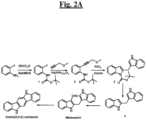
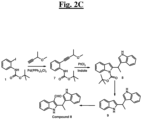
- the compound is a chemical analog of malassezin.
- a further embodiment of the present invention is a compound for modulating melanin production.
- the compound is a chemical analog of a compound produced by a Malassezia yeast, or a crystalline form, hydrate, or cosmetically or pharmaceutically acceptable salt thereof.
- Melanin is a naturally produced pigment that gives color to skin and hair.
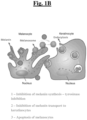
- a schematic diagram of the skin is shown in Fig. 1A .
- Melanin is produced by melanocytes in organelles known as melanosomes.
- a compound or composition of the present invention modulates melanin production in a subject by, for example, modulating melanosome biogenesis and directly or indirectly inhibiting melanin synthesis at the enzymatic level.
- Stage I is characterized by pre-melanosomes, which are essentially non-pigmented vacuoles.
- pre-melanosomes develop striations on which melanin is deposited in stage III.
- Stage IV results in mature melanosomes that are rich in melanin content.
- Compounds and compositions of the present invention modulate melanosome biogenesis by inhibiting or attenuating the biological processes that normally promote any or all of these stages. (Wasmeier, et al., 2008).
- Melanin synthesis primarily involves three enzymes: tyrosinase, tyrosinase related protein-1, and dopachrome tautomerase. Additional factors that affect intracellular trafficking of these enzymes include, but are not limited to, BLOC-1, OA1, and SLC45A2.
- the compounds and compositions of the present invention can modulate melanin production by, for example, inhibiting or attenuating the activity of any of these enzymes or factors. (Yamaguchi, et al., 2014).
- the compound produced by a Malassezia yeast has the structure of formula (I):
- the compound is a chemical analog of malassezin.
- An additional embodiment of the present invention is a compound for modulating melanosome biogenesis.
- the compound is a chemical analog of a compound produced by a Malassezia yeast, or a crystalline form, hydrate, or cosmetically or pharmaceutically acceptable salt thereof.
- the compound produced by a Malassezia yeast has the structure of formula (I):
- the compound is a chemical analog of malassezin.
- Another embodiment of the present invention is a compound for modulating melanosome transfer.
- the compound is a chemical analog of a compound produced by a Malassezia yeast, or a crystalline form, hydrate, or cosmetically or pharmaceutically acceptable salt thereof.
- the compound produced by a Malassezia yeast has the structure of formula (I):
- the compound is a chemical analog of malassezin.
- a further embodiment of the present invention is a composition.
- the composition comprises a Malassezia yeast and a cosmetically or pharmaceutically acceptable vehicle, diluent or carrier.
- composition comprises a compound isolated or isolatable from a Malassezia yeast and a cosmetically or pharmaceutically acceptable vehicle, diluent or carrier.
- a compound isolated from a Malassezia yeast of the present invention necessarily exists, before isolation, in a Malassezia yeast or is produced by a Malassezia yeast. Therefore, a compound isolated from a Malassezia yeast is derived from actual yeast cells. Standard protocols for extracting compounds from cellular material are known to those of skill in the art.
- compositions comprising any of the compounds disclosed herein, including analogs, and a cosmetically or pharmaceutically acceptable vehicle, diluent or carrier.
- a further embodiment of the present invention is a method of brightening skin in a subject.
- the method comprises contacting the subject with any of the compounds or compositions disclosed herein.
- contacting and grammatical variations thereof refer to bringing two or more materials into close enough proximity that they can interact.
- a compound of the present invention can contact a melanocyte by, for example, interacting with a receptor on the surface of the melanocyte.
- a composition of the present invention can contact a human subject by, for example, being applied directly to the subject's skin.
- a "subject” means a mammalian cell, tissue, organism, or populations thereof.
- Subjects of the present invention are preferably human, including human cells, tissues, and beings, but otherwise include, primates, farm animals, domestic animals, laboratory animals, etc.
- Some examples of agricultural animals include cows, pigs, horses, goats, etc.
- Some examples of domestic animals include dogs, cats, etc.
- Some examples of laboratory animals include primates, rats, mice, rabbits, guinea pigs, etc.
- An additional embodiment of the present invention is a method for inducing melanocyte apoptosis in a subject.
- the method comprises contacting the subject with any of the compounds or compositions disclosed herein.
- Another embodiment of the present invention is a method for modulating melanocyte activity in a subject.
- the method comprises contacting the subject with any of the compounds or compositions disclosed herein.
- a further embodiment of the present invention is a method for agonizing an arylhydrocarbon receptor (AhR).
- the method comprises contacting the subject with any of the compounds or compositions disclosed herein.
- An additional embodiment of the present invention is a method for improving hyperpigmentation caused by a hyperpigmentation disorder in a subject in need thereof.
- the method comprises contacting the subject with any of the compounds or compositions disclosed herein.
- a subject "in need" of improvement in hyperpigmentation caused by a hyperpigmentation disorder includes subjects with a real or perceived need of improvement.
- Another embodiment of the present invention is a method for modulating melanin production in a subject.
- the method comprises contacting the subject with any of the compounds or compositions disclosed herein.
- An additional embodiment of the present invention is a method for modulating melanosome transfer in a subject.
- the method comprises contacting the subject with any of the compounds or compositions disclosed herein.
- the compound is selected from the group consisting of: and
- a further embodiment of the present invention is a compound.
- the compound has a structure of formula (III): wherein: R1, R2, R3, R4, R5, R6, R7, R8, R9, and R10 are independently selected from the group consisting of hydrogen and methyl, and at least one of R1, R2, R3, R4, R5, R6, R7, R8, R9, and R10 is methyl; or a crystalline form, hydrate, or cosmetically or pharmaceutically acceptable salt thereof.
- the compound is:
- Another embodiment of the present invention is a compound for brightening skin.
- the compound has the structure of formula (III): wherein: R1, R2, R3, R4, R5, R6, R7, R8, R9, and R10 are independently selected from the group consisting of hydrogen and methyl; or a crystalline form, hydrate, or cosmetically or pharmaceutically acceptable salt thereof.
- the compound is selected from the group consisting of: and
- the compound is selected from the group consisting of: and
- An additional embodiment of the present invention is a compound for inducing melanocyte apoptosis.
- the compound has the structure of formula (III): wherein: R1, R2, R3, R4, R5, R6, R7, R8, R9, and R10 are independently selected from the group consisting of hydrogen and methyl; or a crystalline form, hydrate, or cosmetically or pharmaceutically acceptable salt thereof.
- the compound is selected from the group consisting of: and
- Another embodiment of the present invention is a compound for agonizing the arylhydrocarbon receptor (AhR).
- the compound has the structure of formula (II): wherein: R1, R2, R3, R4, R5, R6, R7, R8, R9, R10, and R11 are independently selected from the group consisting of hydrogen and methyl; or a crystalline form, hydrate, or cosmetically or pharmaceutically acceptable salt thereof.
- the compound is selected from the group consisting of: and
- a further embodiment of the present invention is a compound for agonizing the arylhydrocarbon receptor (AhR).
- the compound has the structure of formula (III): wherein: R1, R2, R3, R4, R5, R6, R7, R8, R9, and R10 are independently selected from the group consisting of hydrogen and methyl; or a crystalline form, hydrate, or cosmetically or pharmaceutically acceptable salt thereof.
- the compound is selected from the group consisting of: and
- the compound is selected from the group consisting of: and
- composition means an entity comprising a compound of the present invention, as well as any entity which results, directly or indirectly, from combinations of a compound of the present invention with other ingredients.
- compositions of the present invention can be used as, for example, in vitro or in vivo research reagents.
- Compositions of the present invention can also be applied directly to the skin of a human or non-human subject for a cosmetic effect.
- a composition of the present invention may be administered in any desired and effective manner: for oral ingestion or for parenteral or other administration in any appropriate manner such as intraperitoneal, subcutaneous, topical, intradermal, inhalation, intrapulmonary, rectal, vaginal, sublingual, intramuscular, intravenous, intraarterial, intrathecal, or intralymphatic. Further, a composition of the present invention may be administered in conjunction with other compositions. A composition of the present invention may be encapsulated or otherwise protected against gastric or other secretions, if desired.
- Cosmetically or pharmaceutically acceptable carriers suitable for topical application are known to those of skill in the art and include cosmetically or pharmaceutically acceptable liquids, creams, oils, lotions, ointments, gels, or solids, such as conventional cosmetic night creams, foundation creams, suntan lotions, sunscreens, hand lotions, make-up and make-up bases, masks and the like.
- Carriers suitable for a selected dosage form and intended route of administration are well known in the art, and acceptable carriers for a chosen dosage form and method of administration can be determined using ordinary skill in the art.
- Non-limiting cosmetically or pharmaceutically acceptable vehicles, diluents and carriers of the present invention include sugars (e.g., lactose, sucrose, mannitol, and sorbitol), starches, cellulose preparations, calcium phosphates (e.g., dicalcium phosphate, tricalcium phosphate and calcium hydrogen phosphate), sodium citrate, water, aqueous solutions (e.g., saline, sodium chloride injection, Ringer's injection, dextrose injection, dextrose and sodium chloride injection, lactated Ringer's injection), alcohols (e.g., ethyl alcohol, propyl alcohol, and benzyl alcohol), polyols (e.g., glycerol, propylene glycol, and polyethylene glycol), organic esters (e.g., ethyl oleate and triglycerides), biodegradable polymers (e.g., polylactide-polyglycolide
- compositions of the invention may, optionally, contain additional ingredients and/or materials commonly used in cosmetic compositions.
- ingredients and materials are well known in the art and include, for example, (1) fillers or extenders, such as starches, lactose, sucrose, glucose, mannitol, and silicic acid; (2) binders, such as carboxymethylcellulose, alginates, gelatin, polyvinyl pyrrolidone, hydroxypropylmethyl cellulose, sucrose and acacia; (3) humectants, such as glycerol; (4) disintegrating agents, such as agar-agar, calcium carbonate, potato or tapioca starch, alginic acid, certain silicates, sodium starch glycolate, cross-linked sodium carboxymethyl cellulose and sodium carbonate; (5) solution retarding agents, such as paraffin; (6) absorption accelerators, such as quaternary ammonium compounds; (7) wetting agents, such as cetyl alcohol and glycerol monostearate; (8) absorbent
- Solid dosage forms for oral administration may be prepared, e.g., by mixing the active ingredient(s) with one or more cosmetically or pharmaceutically acceptable carriers and, optionally, one or more fillers, extenders, binders, humectants, disintegrating agents, solution retarding agents, absorption accelerators, wetting agents, absorbents, lubricants, and/or coloring agents.
- Solid compositions of a similar type may be employed as fillers in soft and hard-filled gelatin capsules using a suitable excipient.
- a tablet may be made by compression or molding, optionally with one or more accessory ingredients.
- Preferred assistants originate from the group comprising preservatives, antioxidants, stabilisers, solubilisers, vitamins, colorants, odour improvers, film formers, thickeners and humectants.
- compositions according to the invention may also be in the form of emulsifier-free, disperse preparations. They can be, for example, hydrodispersions or Pickering emulsions.
- Pastes, ointments, gels and creams may comprise conventional vehicles, for example animal and vegetable fats, waxes, paraffins, starch, tragacanth, cellulose derivatives, polyethylene glycols, silicones, bentonites, silicic acid, talc and zinc oxide, or mixtures of these substances.
- conventional vehicles for example animal and vegetable fats, waxes, paraffins, starch, tragacanth, cellulose derivatives, polyethylene glycols, silicones, bentonites, silicic acid, talc and zinc oxide, or mixtures of these substances.
- Face and body oils may comprise the conventional vehicles, such as synthetic oils, such as fatty acid esters, fatty alcohols, silicone oils, natural oils, such as vegetable oils and oily plant extracts, paraffin oils, lanolin oils, or mixtures of these substances.
- synthetic oils such as fatty acid esters, fatty alcohols, silicone oils, natural oils, such as vegetable oils and oily plant extracts, paraffin oils, lanolin oils, or mixtures of these substances.
- compositions of the present invention suitable for parenteral administrations comprise one or more compounds in combination with one or more cosmetically or pharmaceutically acceptable sterile isotonic aqueous or non-aqueous solutions, dispersions, suspensions or emulsions, or sterile powders which may be reconstituted into sterile injectable solutions or dispersions just prior to use, which may contain suitable antioxidants, buffers, solutes which render the formulation isotonic with the blood of the intended recipient, or suspending or thickening agents.
- sterile injectable solutions or dispersions may contain suitable antioxidants, buffers, solutes which render the formulation isotonic with the blood of the intended recipient, or suspending or thickening agents.
- Proper fluidity can be maintained, for example, by the use of coating materials, by the maintenance of the required particle size in the case of dispersions, and by the use of surfactants.
- the rate of absorption of the active agent/drug then depends upon its rate of dissolution which, in turn, may depend upon crystal size and crystalline form.
- delayed absorption of a parenterally-administered composition may be accomplished by dissolving or suspending the active composition in an oil vehicle.
- injectable depot forms may be made by forming microencapsule matrices of the active ingredient in biodegradable polymers. Depending on the ratio of the active ingredient to polymer, and the nature of the particular polymer employed, the rate of active ingredient release can be controlled. Depot injectable formulations are also prepared by entrapping the drug in liposomes or microemulsions which are compatible with body tissue. The injectable materials can be sterilized for example, by filtration through a bacterial-retaining filter.
- compositions of the present invention may be presented in unit-dose or multi-dose sealed containers, for example, ampules and vials, and may be stored in a lyophilized condition requiring only the addition of the sterile liquid carrier, for example water for injection, immediately prior to use.
- sterile liquid carrier for example water for injection
- Extemporaneous injection solutions and suspensions may be prepared from sterile powders, granules and tablets of the type described above.
- crystalline form means the crystal structure of a compound.
- a compound may exist in one or more crystalline forms, which may have different structural, physical, pharmacological, or chemical characteristics. Different crystalline forms may be obtained using variations in nucleation, growth kinetics, agglomeration, and breakage. Nucleation results when the phase-transition energy barrier is overcome, thereby allowing a particle to form from a supersaturated solution.
- Crystal growth is the enlargement of crystal particles caused by deposition of the chemical compound on an existing surface of the crystal. The relative rate of nucleation and growth determine the size distribution of the crystals that are formed.
- the thermodynamic driving force for both nucleation and growth is supersaturation, which is defined as the deviation from thermodynamic equilibrium.
- Agglomeration is the formation of larger particles through two or more particles (e.g., crystals) sticking together and forming a larger crystalline structure.
- hydrate means a solid or a semi-solid form of a chemical compound containing water in a molecular complex.
- the water is generally in a stoichiometric amount with respect to the chemical compound.
- cosmetically or pharmaceutically acceptable salt refers to a derivative of the compounds disclosed herein wherein the compounds are modified by making acid or base salts thereof.
- cosmetically or pharmaceutically acceptable salts include, but are not limited to, mineral or organic acid salts of basic residues such as amines; alkali or organic salts of acidic residues such as carboxylic acids; and the like.
- Candidate compounds are diluted in DMSO and mixed directly into melanocyte cultures. Equivalent volumes of pure DMSO are used as controls. Cytotoxicity assays known to those of skill in the art are performed according to manufacturer's instructions. Cytotoxicity assays that are used in the present invention include, but are not limited to, CellTox TM Green Cytotoxicity Assay, Apo-ONE fluorescent caspase assays, ApoTox-Glo TM assay, and Caspase-Glo ® assays (Promega, Madison, WI). Fluorescence detection is accomplished using standard FACS or microscopy assays known to those in the art, including those described in Krämer, et al., 2005.
- the compounds and compositions of the present invention will be at least as effective as malassezin for brightening skin and improving hyperpigmentation caused by hyperpigmentation disorders. It is further expected that the compounds and compositions of the present invention will exhibit favorable pharmacokinetic profiles in terms of, for example, half-life and absorption. Certain compounds will exhibit a longer half-life, whereas others will exhibit a shorter half-life. Similarly, certain compounds will exhibit different absorption profiles, with some compounds taking longer to be fully absorbed and others taking less time to be fully absorbed.
- Annexin V-FITC assay kit was purchased from Beyotime Biotechnology, RPMI 1640 medium and Dulbecco's modified Eagle medium (“DMEM”) were purchased from Gibco, fetal bovine serum (“FBS”) was purchased from Invitrogen, stabilized antibiotic antimycotic solution (100x) was purchased from Sigma, and 0.25% trypsin-EDTA (1X), phenol red was purchased from Invitrogen.
- DMEM Dulbecco's modified Eagle medium
- FBS fetal bovine serum
- stabilized antibiotic antimycotic solution 100x
- trypsin-EDTA (1X) phenol red was purchased from Invitrogen.
- MeWo (ATCC ® HTB-65 TM ) and WM115 (ATCC ® CRL-1675) cells were purchased from ATCC (Manassas, VA) and maintained in the following: for MeWo: DMEM supplemented with 10% FBS; for WM115: RPMI 1640 supplemented with 10% FBS (10% FBS, 1% stabilized antibiotic anti-mycotic solution).
- PS phosphatidylserine
- Highly fluorescent annexin V conjugates provide quick and reliable detection methods for studying the externalization of PS.
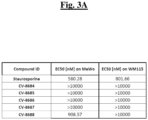
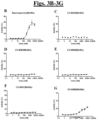
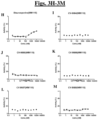
- both MeWo and WM115 cells were treated with test compounds at 10 doses starting from 100 ⁇ M with 3-fold dilution. Staurosporine was used as positive control. After 6-hour treatment, cell apoptosis was assessed using an annexin V assay. The test compounds evaluated were CV-8684, CV-8685, CV-8686, CV-8687, and CV-8688.
- cells were harvested and the cell number was determined using Countess ® cell counter. Cells were then diluted with culture medium to the desired density. 40 ⁇ L of cell suspension per well was added to the required number of wells in a 384-well plate (Corning 3712 - clear bottom plate). The final cell density was 6,000 cells / well. After plating, the plates were incubated at 37°C and 5% CO 2 overnight.
- each test compound was dissolved in DMSO to 10 mM stock. 3-fold serial dilution was performed using an EVO200 TM liquid handler (TECAN) to generate ten concentrations of test compound. 0.1% DMSO was employed as vehicle (negative) control. The compound source plate was then spun at room temperature at 1,000 RPM for 1 minute and agitated using a plate shaker for 2 minutes.
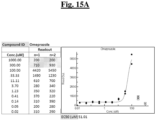
- CV-8688 markedly increased annexin V staining of MeWo cells, with an EC 50 of 908.57 nM.
- Staurosporine the positive control, greatly increased annexin V staining in both cell lines. ( Figs. 3A-3M ).
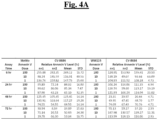
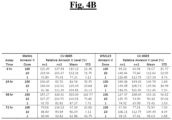
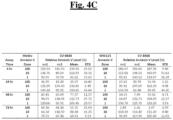
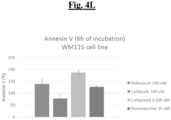
- test compounds were carried out on both MeWo and WM115 cells. Both cell types were treated with test compounds at 3 doses (100 ⁇ M, 10 ⁇ M, and 1 ⁇ M). Staurosporine was used as a positive control. After the desired treatment period (6, 24, 48, or 72 hours), apoptosis was assessed by measuring percentages of cells demonstrating annexin V binding after exposure to the test compounds. The test compounds evaluated were CV-8684, CV-8685, and CV-8688.
- Cell seeding was performed as discussed above with the following exceptions: the final cell density was 4,000 cells / well for 6-hour and 24-hour detections, whereas 2,000 cells / well were used for 48-hour and 72-hour detections. For each time point, 384-well clear bottom plates (Corning 3712) and solid white bottom plates (Corning 3570) were prepared. The plates were incubated as discussed above.
- each test compound was dissolved in DMSO to 10 mM stock. Two additional concentrations were generations by 10-fold dilution to 1 mM and 0.1 mM. Staurosporine was used as positive control and 1% DMSO was employed as vehicle (negative) control.
- the compound source plate was spun at room temperature at 1,000 RPM for 1 minute and agitated using a plate shaker for 2 minutes.
- test compound 400 nL was transferred from the compound source plate to 384-well culture plates using Echo550 liquid handler. After 6, 24, 48, and 72 hours, the plates were removed from the incubator for detections.
- CV-8684 induced apoptosis at the highest concentration tested after 6 hours of treatment on both MeWo and WM115 cells.
- CV-8685 showed the induction effect with 24 hours of treatment on WM115, whereas 48 hours of treatment appeared to elicit apoptosis in both cell types.
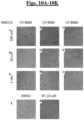
- CV-8688 showed the induction effect within 6 hours of treatment in a dose-dependent manner in both cell types. ( Figs. 4A-4L ).
- CellTiter-Glo ® 2.0 assay was purchased from Promega. Cell seeding, preparation of the compound source plate, and exposure of cells to test compounds were performed as described in Example 8.
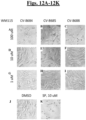
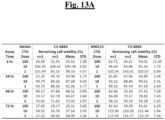
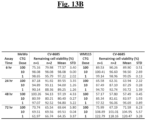
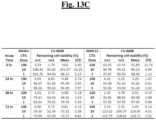
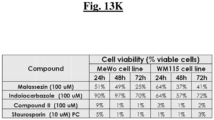
- CV-8684 showed dose-dependent inhibition of cell viability in both cell lines tested, though the inhibitory effect appeared to be more potent in MeWo cells.
- CV-8685 exhibited the inhibitory effect on WM115 cell viability in a dose-dependent manner only after 24-hour treatment.
- CV-8688 inhibited viability of both cell types in a dose-dependent manner.
- Staurosporine the positive control, exerted 100% inhibition of cell viability in both cell lines after 24-hour treatment. ( Figs. 13A-13K ).
- the LDH assay quantitatively measures lactate dehydrogenase ("LDH”) released into the media from damaged cells as a biomarker for cytotoxicity and cytolysis.
- LDH lactate dehydrogenase
- CytoTox-ONE TM Homogenous Membrane Integrity Assay was purchased from Promega. Cell seeding, preparation of the compound source plate, and exposure of cells to test compounds were performed as described in Example 8.
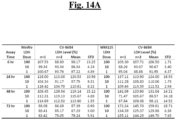
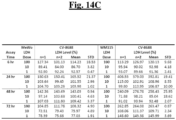
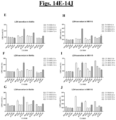
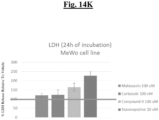
- CV-8684 did not induce significant release in either cell line after 72-hour incubation.
- CV-8685 showed a dose-dependent induction effect on LDH release from WM115, but not MeWo, cells after 24-hour treatment.
- CV-8688 induced LDH release at the highest concentration tested. ( Figs. 14A-14L ).
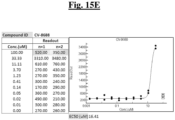
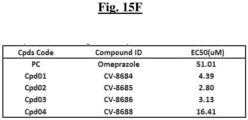
- HepG2-AhR-Luc cells were cultured in T-75 flasks at 37°C, 5% CO 2 , and 95% relative humidity. Cells were allowed to reach 80-90% confluence before detachment and splitting.
- the cell suspension was transferred to a conical tube and centrifuged at 120 g for 10 minutes to pellet the cells. Cells were resuspended in seeding media at a proper density. 40 ⁇ L of cells were transferred to a 384-well culture plate (5 x 10 3 cells / well). Plates were placed in the incubator at 37°C for 24 hours.
- the plate was removed from the incubator and allowed to cool at ambient temperature. 30 ⁇ L One-Glo reagent equal to that of the culture medium was added in each well. Cells were allowed to lyse for at least 3 minutes, and then measured in a luminometer.
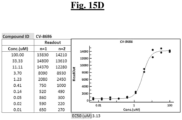
- Dose responses were graphed using the non-linear regression analysis in XLfit, and EC 50 values were also calculated.
- NHMs localized in the basal cell layer of MelanoDerm TM tissues are dendritic and spontaneously produce melanin granules which progressively populate the layers of the tissue.
- the test system may be used to screen for materials which may inhibit or stimulate the production of melanin relative to the negative controls.
- the experimental design of this study consists of the determination of the pH of the neat test article if possible (and/or dosing solution as appropriate) and a definitive assay to determine the relative tissue viability after repeated exposures.
- the MelanoDerm TM Skin Model will be exposed to the test article for a total of 7 days.
- the test article will be topically applied to the MelanoDerm TM Skin Model every 48 hours (within a timeframe of 48 ⁇ 2 hours from previous treatment).
- the toxicity of the test article will be determined by the NAD(P)H-dependent microsomal enzyme reduction of MTT (and, to a lesser extent, by the succinate dehydrogenase reduction of MTT) in control and test article-treated tissues. (Berridge et al., 1996). Data will be presented in the form of relative survival (MTT conversion relative to the negative control).
- CMF-DPBS Free Dulbecco's Phosphate Buffered Saline
- Test articles will generally be tested neat or as directed by the Sponsor (see Protocol Attachment 1). Ten microliters (10 ⁇ L) or 25 ⁇ L of each test article will be applied directly on the tissue so as to cover the upper surface. Depending on the nature of the test article (liquids, gels, creams, foams, etc.), the use of a dosing device, mesh or other aid to allow the uniform spreading of the test article over the surface of the tissue may be necessary.
- each test article will be diluted at least 200-fold using the appropriate volume of EPI-100-LLMM (or alternate solvent as determined during the solubility testing).
- a fresh dilution in EPI-100-LLMM will be prepared for each dosing.
- the final dilution to be performed for dosing solution preparation will be determined from the solubility assessment above and documented in the study workbook.
- DMSO diluted as 0.5% (v/v) in EPI-100-LLMM will be used as vehicle control and dosed onto the tissues (10 ⁇ L and 25 ⁇ L doses) based on the same procedure used for the test articles and assay controls.
- test articles will be applied topically to the MelanoDerm TM tissue every 48 hours (within a timeframe of 48 ⁇ 2 hours from previous treatment) during a 7-day trial. Ten and 25 microliters, respectively, of each test article will be applied to each tissue. Twenty five microliters of the positive and negative controls, respectively, will be applied to each tissue.
- the pH of the neat liquid test article (and/or dosing solution as appropriate) will be determined, if possible.
- the pH will be determined using pH paper (for example, with a pH range of 0 - 14 to estimate, and/or a pH range of 5 - 10 to determine a more precise value).
- the typical pH increments on the narrower range pH paper are approximately 0.3 to 0.5 pH units.
- the maximum increment on the pH paper is 1.0 pH units.
- the definitive assay will include a negative control and a positive control.
- the MelanoDerm TM tissues designated to the assay negative control will be treated with 25 ⁇ L of sterile, deionized water. Twenty five microliters of 1% Kojic acid (prepared in sterile, deionized water and filtered at the time of preparation) will be used to dose the tissues designated to the assay positive control. The 1% Kojic acid will be stored in a tube covered with aluminum foil until used within 2 hours of preparation. The negative and positive control exposure times will be identical to those used for the test articles.
- a 1.0 mg/mL MTT solution will be prepared in MTT Addition Medium as described below. Approximately 25 ⁇ L of the test article will be added to 1 mL of the MTT solution and the mixture incubated in the dark at 37oC ⁇ 1oC for one to three hours. A negative control, 25 ⁇ L of sterile, deionized water, will be tested concurrently. If the MTT solution color turns blue/purple, the test article is presumed to have reduced the MTT. Water insoluble test materials may show direct reduction (darkening) only at the interface between the test article and the medium.
- the MTT direct reduction test for the test article(s) may have been previously performed in an independent study. In such cases, the results of the MTT direct reduction test may be used for this specific study and the initial study will be referenced.
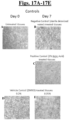
- Tissue Exposure At least 16 hours after initiating the cultures, two MelanoDerm TM tissues (considered untreated at Day 0) will be photographed using a digital camera to aid in the visual assessment of the degree of pigmentation of the tissues at time zero of the assay. The exact procedures used to collect images of the tissues will be specified in the study workbook and report.
- the MelanoDerm TM tissues will be rinsed with CMF-DPBS, will be blotted dry on sterile absorbent paper and cleared of excess liquid.
- the MelanoDerm TM tissues will be transferred to the appropriate MTT containing wells after rinsing and processed in the MTT assay as described in the MTT Assay section.
- the tissues will be moved on a new 6-well plate containing 0.9 mL of fresh, pre-warmed EPI-100-LLMM.
- the trial will be conducted over a 7-day timeframe.
- Two tissues will be treated topically on the first day, and every 48 hours (within a timeframe of 48 +/-2 hours from previous treatment) with 10 and 25 microliters, respectively, of each test article.
- the medium will be refreshed daily (within a timeframe of 24 +/- 2 hours from previous refeeding); the tissues will be moved to a new 6-well plate containing 0.9 mL of fresh, pre-warmed EPI-100-LLMM.
- Two tissues will be treated topically on the first day, and every 48 hours (within a timeframe of 48 +/- 2 hours from previous treatment) with 25 ⁇ L of positive and negative controls, respectively.
- the medium will be refreshed daily (within a timeframe of 24 +/- 2 hours from previous refeeding); the tissues will be moved to a new 6-well plate containing 0.9 mL of fresh, pre-warmed EPI-100-LLMM.
- the tissues will be incubated at 37 ⁇ 1oC in a humidified atmosphere of 5 ⁇ 1% CO2 in air (standard culture conditions) for the appropriate exposure times.
- MTC Maximum Tolerable Concentration
- lethality curves will be generated by plotting % lethality vs concentration using EXCEL software. To obtain mean and SD of MTC, experiments will be performed 3 times.
- Zebrafish skin pigment cells including xanthophores, iridophores, and melanophores (melanocytes) originate from neural crest cells.
- differentiated skin pigment precursor cells express pigment at ⁇ 24 hpf.
- melanocytes which express melanin, the black pigment on the surface of the skin.
- Melanocytes initially appear as small patches of black color in the dorsal head region.
- the number of patches increase and fuse to form bands which extend to the tail region.
- mutant albino zebrafish exhibit sparse skin pigmentation.
- Compounds will be administered at 2 dpf, to assess if compounds arrest the continuous process of embryonic pigmentation, which is completed by 5 dpf. Three concentrations, MTC, 50% MTC, and 25% MTC, will be tested for each compound.
- Phylonix wild-type AB zebrafish Thirty 2 dpf self-hatched Phylonix wild-type AB zebrafish will be treated with each compound concentration for 3 days. Untreated and 0.1% DMSO treated zebrafish will be used as controls. Positive control: phenylthiourea (PTU, 0.03%).
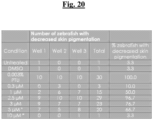
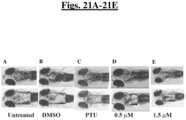
- Zebrafish will be visually examined daily using a dissecting light microscope; compound and PTU treated zebrafish will be compared to untreated and vehicle treated control zebrafish. Number of zebrafish exhibiting decreased pigmentation will be counted daily and expressed as % of test animals; a representative image will be provided. To identify optimum compound concentration and treatment time for decreased pigmentation, a kinetic curve will be generated by plotting % zebrafish exhibiting decreased skin pigmentation vs. time (dpf). Fisher's exact test will be used to determine if compound effect is significant (P ⁇ 0.05).
- Quantitate compound effect on zebrafish skin pigmentation Based on results from the visual assessment, we will use the optimum conditions (concentration, compound treatment time) to quantitate compound effect on zebrafish skin pigmentation.
- Phylonix wild-type AB zebrafish at the optimum stage determined by results from the visual assessment will be treated with optimum compound concentration. Untreated and 0.1% DMSO treated zebrafish will be used as controls. Positive control: phenylthiourea (PTU, 0.03%).
- Untreated and vehicle treated zebrafish are expected to exhibit similar FS to demonstrate that vehicle does not have an effect.
- PTU treated zebrafish are expected to exhibit low FS to validate the assay.
- Compound treated zebrafish will be compared with vehicle treated control zebrafish.
- mean FS for compound treated zebrafish will be compared to mean FS of vehicle treated zebrafish using Student's t test.
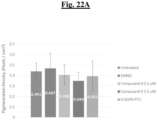
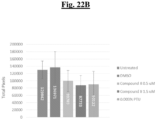
- Phylonix wild-type AB zebrafish Twenty 2 dpf Phylonix wild-type AB zebrafish will be treated with 0.5 and 1.5 ⁇ M compound concentration. Untreated and 0.1% DMSO treated zebrafish will be used as controls. Positive control: phenylthiourea (PTU, 0.003%).
- Dorsal view image of whole zebrafish will be captured using a SPOT camera at 2X.
- Dorsal head region will be defined as region of interest (ROI) using Adobe Photoshop selection function.
- Black skin pigmentation in the ROI will be highlighted using Photoshop highlighting function.
- Total pigment signal (PS) in pixels will be determined using the Photoshop histogram function.
- Untreated and vehicle treated zebrafish are expected to exhibit similar FS to confirm no effect of vehicle.
- PTU treated zebrafish are expected to exhibit low FS, validating the assay.
- Compound treated zebrafish will be compared with vehicle treated control zebrafish.
- mean FS for compound treated zebrafish will be compared to mean FS of vehicle treated zebrafish using Student's t test.
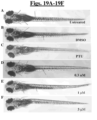
- FIG. 18A-18F Visual assessment results for zebrafish exposed to compound II are shown in Figs. 18A-18F and Figs. 19A-19F .
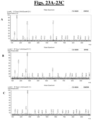
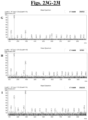
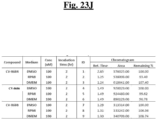
- Tested compounds were prepared at 100 ⁇ M in DMSO and culture medium. The solutions were incubated at room temperature for 2 hours and analyzed using LC-MS. The peak area was used to evaluate the compound remaining in the solvent.
- LC-MS results are shown in Figs. 23A-23J .
- the results indicate that the compounds are stable in culture medium after 2-hour incubation.
Landscapes
- Organic Chemistry (AREA)
- Chemical & Material Sciences (AREA)
- Health & Medical Sciences (AREA)
- Life Sciences & Earth Sciences (AREA)
- Veterinary Medicine (AREA)
- Animal Behavior & Ethology (AREA)
- General Health & Medical Sciences (AREA)
- Public Health (AREA)
- Dermatology (AREA)
- Birds (AREA)
- Epidemiology (AREA)
- Pharmaceuticals Containing Other Organic And Inorganic Compounds (AREA)
- Cosmetics (AREA)
- Nitrogen Condensed Heterocyclic Rings (AREA)
- Indole Compounds (AREA)
- Acyclic And Carbocyclic Compounds In Medicinal Compositions (AREA)
- Nitrogen And Oxygen Or Sulfur-Condensed Heterocyclic Ring Systems (AREA)
- Heterocyclic Carbon Compounds Containing A Hetero Ring Having Nitrogen And Oxygen As The Only Ring Hetero Atoms (AREA)
- Medicines That Contain Protein Lipid Enzymes And Other Medicines (AREA)
Applications Claiming Priority (3)
| Application Number | Priority Date | Filing Date | Title |
|---|---|---|---|
| US201662306468P | 2016-03-10 | 2016-03-10 | |
| EP17711992.2A EP3426658B1 (fr) | 2016-03-10 | 2017-03-10 | Malassezine et analogues correspondants en tant qu'agents d'éclaircissement de la peau |
| PCT/US2017/021843 WO2017156424A1 (fr) | 2016-03-10 | 2017-03-10 | Malassezine et analogues correspondants en tant qu'agents d'éclaircissement de la peau |
Related Parent Applications (1)
| Application Number | Title | Priority Date | Filing Date |
|---|---|---|---|
| EP17711992.2A Division EP3426658B1 (fr) | 2016-03-10 | 2017-03-10 | Malassezine et analogues correspondants en tant qu'agents d'éclaircissement de la peau |
Publications (2)
| Publication Number | Publication Date |
|---|---|
| EP4578512A2 true EP4578512A2 (fr) | 2025-07-02 |
| EP4578512A3 EP4578512A3 (fr) | 2025-09-03 |
Family
ID=58358990
Family Applications (2)
| Application Number | Title | Priority Date | Filing Date |
|---|---|---|---|
| EP17711992.2A Active EP3426658B1 (fr) | 2016-03-10 | 2017-03-10 | Malassezine et analogues correspondants en tant qu'agents d'éclaircissement de la peau |
| EP25151546.6A Withdrawn EP4578512A3 (fr) | 2016-03-10 | 2017-03-10 | Malassezin et ses analogues comme agents d'éclaircissement de la peau |
Family Applications Before (1)
| Application Number | Title | Priority Date | Filing Date |
|---|---|---|---|
| EP17711992.2A Active EP3426658B1 (fr) | 2016-03-10 | 2017-03-10 | Malassezine et analogues correspondants en tant qu'agents d'éclaircissement de la peau |
Country Status (22)
| Country | Link |
|---|---|
| US (4) | US10131631B2 (fr) |
| EP (2) | EP3426658B1 (fr) |
| JP (4) | JP6745365B2 (fr) |
| KR (2) | KR102453221B1 (fr) |
| CN (2) | CN109311884B (fr) |
| AU (4) | AU2017229970B2 (fr) |
| BR (1) | BR112018068293B1 (fr) |
| CA (1) | CA3017352C (fr) |
| DK (1) | DK3426658T3 (fr) |
| EA (1) | EA201892030A1 (fr) |
| ES (1) | ES3018759T3 (fr) |
| FI (1) | FI3426658T3 (fr) |
| HU (1) | HUE070779T2 (fr) |
| IL (2) | IL287141B2 (fr) |
| MA (1) | MA43730A (fr) |
| MX (1) | MX393122B (fr) |
| PH (1) | PH12018501926A1 (fr) |
| PL (1) | PL3426658T3 (fr) |
| PT (1) | PT3426658T (fr) |
| SG (1) | SG11201807773QA (fr) |
| WO (1) | WO2017156424A1 (fr) |
| ZA (1) | ZA201806087B (fr) |
Families Citing this family (8)
| Publication number | Priority date | Publication date | Assignee | Title |
|---|---|---|---|---|
| KR102453221B1 (ko) | 2016-03-10 | 2022-10-07 | 마이클 아인지거 | 피부 브라이트닝제로서의 말라세진 및 이의 유사체 |
| IL277940B2 (en) | 2018-04-12 | 2024-11-01 | Michael EINZIGER | Photoprotective compositions containing malassezia-derived compounds and/or chemical analogs thereof |
| JP2021523156A (ja) * | 2018-05-07 | 2021-09-02 | マイケル アインジガー, | マラセチア由来の化合物および/またはその化学的類縁体を含有する光保護組成物 |
| WO2019241706A1 (fr) * | 2018-06-15 | 2019-12-19 | Einziger Michael | Compositions de photoprotection contenant des composés dérivés de malassezia et/ou des analogues chimiques de ceux-ci |
| CN113795494A (zh) * | 2018-08-24 | 2021-12-14 | M·因泽格 | 含有马拉色氏霉菌属衍生的化合物和/或其化学类似物的光防护性组合物 |
| EA202092467A1 (ru) * | 2018-10-08 | 2021-02-12 | Майкл Айнцигер | Фотозащитные композиции, содержащие полученные из malassezia соединения и/или их химические аналоги |
| CN118203650B (zh) * | 2024-01-26 | 2025-04-29 | 上海萨丽斐生物科技有限公司 | 一种用于治疗色素沉着的药物 |
| WO2026132600A1 (fr) | 2024-12-20 | 2026-06-25 | Dsm Ip Assets B.V. | Nouvelle composition comprenant des postbiotiques de malassezia, procédé et utilisation |
Family Cites Families (7)
| Publication number | Priority date | Publication date | Assignee | Title |
|---|---|---|---|---|
| DE10109005A1 (de) * | 2001-02-23 | 2002-09-05 | Peter Mayser | Indolderivate mit inhibitorischer Wirkung auf Phenoloxidasen |
| FR2900334B1 (fr) | 2006-04-28 | 2008-06-27 | Oreal | Procede de depigmentation de la peau |
| EP2023910B1 (fr) | 2006-05-03 | 2013-06-19 | Symrise AG | ANTAGONISTES DES RéCEPTEURS D'AH |
| EP2082736A1 (fr) | 2008-01-23 | 2009-07-29 | Jean Hilaire Saurat | Composition pharmaceutique à usage topique |
| JP2010037251A (ja) | 2008-08-04 | 2010-02-18 | Ezaki Glico Co Ltd | 皮膚外用剤 |
| US9969686B2 (en) * | 2014-08-05 | 2018-05-15 | Wisconsin Alumni Research Foundation | Synthesis of diindolylmethanes and indolo[3,2-b]carbazoles, compounds formed thereby, and pharmaceutical compositions containing them |
| KR102453221B1 (ko) | 2016-03-10 | 2022-10-07 | 마이클 아인지거 | 피부 브라이트닝제로서의 말라세진 및 이의 유사체 |
-
2017
- 2017-03-10 KR KR1020217023318A patent/KR102453221B1/ko active Active
- 2017-03-10 CA CA3017352A patent/CA3017352C/fr active Active
- 2017-03-10 EP EP17711992.2A patent/EP3426658B1/fr active Active
- 2017-03-10 KR KR1020187029239A patent/KR102282974B1/ko active Active
- 2017-03-10 CN CN201780027267.1A patent/CN109311884B/zh active Active
- 2017-03-10 BR BR112018068293-4A patent/BR112018068293B1/pt active IP Right Grant
- 2017-03-10 IL IL287141A patent/IL287141B2/en unknown
- 2017-03-10 US US15/455,932 patent/US10131631B2/en active Active
- 2017-03-10 PL PL17711992.2T patent/PL3426658T3/pl unknown
- 2017-03-10 HU HUE17711992A patent/HUE070779T2/hu unknown
- 2017-03-10 MX MX2018010962A patent/MX393122B/es unknown
- 2017-03-10 EP EP25151546.6A patent/EP4578512A3/fr not_active Withdrawn
- 2017-03-10 WO PCT/US2017/021843 patent/WO2017156424A1/fr not_active Ceased
- 2017-03-10 ES ES17711992T patent/ES3018759T3/es active Active
- 2017-03-10 PT PT177119922T patent/PT3426658T/pt unknown
- 2017-03-10 AU AU2017229970A patent/AU2017229970B2/en active Active
- 2017-03-10 JP JP2018567024A patent/JP6745365B2/ja active Active
- 2017-03-10 MA MA043730A patent/MA43730A/fr unknown
- 2017-03-10 FI FIEP17711992.2T patent/FI3426658T3/fi active
- 2017-03-10 SG SG11201807773QA patent/SG11201807773QA/en unknown
- 2017-03-10 CN CN202110981583.0A patent/CN113698336B/zh active Active
- 2017-03-10 DK DK17711992.2T patent/DK3426658T3/da active
- 2017-03-10 EA EA201892030A patent/EA201892030A1/ru unknown
-
2018
- 2018-09-04 US US16/121,353 patent/US11104644B2/en active Active
- 2018-09-10 PH PH12018501926A patent/PH12018501926A1/en unknown
- 2018-09-11 ZA ZA2018/06087A patent/ZA201806087B/en unknown
- 2018-09-12 IL IL261699A patent/IL261699B/en unknown
-
2020
- 2020-08-03 JP JP2020131521A patent/JP7261771B2/ja active Active
-
2021
- 2021-08-23 US US17/409,702 patent/US11987555B2/en active Active
- 2021-09-15 AU AU2021232745A patent/AU2021232745B2/en active Active
-
2023
- 2023-04-10 JP JP2023063407A patent/JP7642011B2/ja active Active
- 2023-12-05 AU AU2023278002A patent/AU2023278002B2/en active Active
- 2023-12-08 US US18/534,253 patent/US12428374B2/en active Active
-
2025
- 2025-02-25 JP JP2025028231A patent/JP2025081634A/ja active Pending
- 2025-12-25 AU AU2025287378A patent/AU2025287378A1/en active Pending
Non-Patent Citations (28)
Also Published As
Similar Documents
| Publication | Publication Date | Title |
|---|---|---|
| AU2021232745B2 (en) | Malassezin and analogs thereof as skin brightening agents | |
| US12497385B2 (en) | Photoprotective compositions containing Malassezia-derived compounds and/or chemical analogs thereof | |
| HK40129096A (en) | Malassezin and analogs thereof as skin brightening agents | |
| HK40001737B (en) | Malassezin and analogs thereof as skin brightening agents | |
| HK40001737A (en) | Malassezin and analogs thereof as skin brightening agents | |
| HK40064605A (en) | Malassezin and analogs thereof as skin brightening agents | |
| EA044823B1 (ru) | Малассезин и его аналоги в качестве осветляющих кожу агентов | |
| NZ786010A (en) | Malassezin and analogs thereof as skin brightening agents |
Legal Events
| Date | Code | Title | Description |
|---|---|---|---|
| PUAI | Public reference made under article 153(3) epc to a published international application that has entered the european phase |
Free format text: ORIGINAL CODE: 0009012 |
|
| STAA | Information on the status of an ep patent application or granted ep patent |
Free format text: STATUS: THE APPLICATION HAS BEEN PUBLISHED |
|
| AC | Divisional application: reference to earlier application |
Ref document number: 3426658 Country of ref document: EP Kind code of ref document: P |
|
| AK | Designated contracting states |
Kind code of ref document: A2 Designated state(s): AL AT BE BG CH CY CZ DE DK EE ES FI FR GB GR HR HU IE IS IT LI LT LU LV MC MK MT NL NO PL PT RO RS SE SI SK SM TR |
|
| REG | Reference to a national code |
Ref country code: DE Ref legal event code: R079 Free format text: PREVIOUS MAIN CLASS: A61Q0019020000 Ipc: C07D0487040000 |
|
| PUAL | Search report despatched |
Free format text: ORIGINAL CODE: 0009013 |
|
| AK | Designated contracting states |
Kind code of ref document: A3 Designated state(s): AL AT BE BG CH CY CZ DE DK EE ES FI FR GB GR HR HU IE IS IT LI LT LU LV MC MK MT NL NO PL PT RO RS SE SI SK SM TR |
|
| RIC1 | Information provided on ipc code assigned before grant |
Ipc: C07D 487/04 20060101AFI20250729BHEP Ipc: C07D 209/12 20060101ALI20250729BHEP Ipc: A61K 8/49 20060101ALI20250729BHEP Ipc: A61Q 19/02 20060101ALI20250729BHEP |
|
| REG | Reference to a national code |
Ref country code: HK Ref legal event code: DE Ref document number: 40129096 Country of ref document: HK |
|
| STAA | Information on the status of an ep patent application or granted ep patent |
Free format text: STATUS: REQUEST FOR EXAMINATION WAS MADE |
|
| 17P | Request for examination filed |
Effective date: 20260303 |
|
| STAA | Information on the status of an ep patent application or granted ep patent |
Free format text: STATUS: THE APPLICATION IS DEEMED TO BE WITHDRAWN |
|
| 18D | Application deemed to be withdrawn |
Effective date: 20260304 |