EP4579370A1 - System und verfahren zur kontinuierlichen risikobewertung für mobile roboter - Google Patents
System und verfahren zur kontinuierlichen risikobewertung für mobile roboter Download PDFInfo
- Publication number
- EP4579370A1 EP4579370A1 EP24461607.4A EP24461607A EP4579370A1 EP 4579370 A1 EP4579370 A1 EP 4579370A1 EP 24461607 A EP24461607 A EP 24461607A EP 4579370 A1 EP4579370 A1 EP 4579370A1
- Authority
- EP
- European Patent Office
- Prior art keywords
- robot
- data
- monitor
- module
- computing server
- Prior art date
- Legal status (The legal status is an assumption and is not a legal conclusion. Google has not performed a legal analysis and makes no representation as to the accuracy of the status listed.)
- Pending
Links
Images


Classifications
-
- G—PHYSICS
- G05—CONTROLLING; REGULATING
- G05D—SYSTEMS FOR CONTROLLING OR REGULATING NON-ELECTRIC VARIABLES
- G05D1/00—Control of position, course, altitude or attitude of land, water, air or space vehicles, e.g. using automatic pilots
- G05D1/20—Control system inputs
- G05D1/22—Command input arrangements
- G05D1/221—Remote-control arrangements
- G05D1/222—Remote-control arrangements operated by humans
- G05D1/224—Output arrangements on the remote controller, e.g. displays, haptics or speakers
- G05D1/2244—Optic
- G05D1/2245—Optic providing the operator with a purely computer-generated representation of the environment of the vehicle, e.g. virtual reality
- G05D1/2246—Optic providing the operator with a purely computer-generated representation of the environment of the vehicle, e.g. virtual reality displaying a map of the environment
-
- G—PHYSICS
- G05—CONTROLLING; REGULATING
- G05D—SYSTEMS FOR CONTROLLING OR REGULATING NON-ELECTRIC VARIABLES
- G05D1/00—Control of position, course, altitude or attitude of land, water, air or space vehicles, e.g. using automatic pilots
- G05D1/60—Intended control result
- G05D1/617—Safety or protection, e.g. defining protection zones around obstacles or avoiding hazards
- G05D1/622—Obstacle avoidance
-
- G—PHYSICS
- G05—CONTROLLING; REGULATING
- G05D—SYSTEMS FOR CONTROLLING OR REGULATING NON-ELECTRIC VARIABLES
- G05D2101/00—Details of software or hardware architectures used for the control of position
- G05D2101/10—Details of software or hardware architectures used for the control of position using artificial intelligence [AI] techniques
- G05D2101/15—Details of software or hardware architectures used for the control of position using artificial intelligence [AI] techniques using machine learning, e.g. neural networks
-
- G—PHYSICS
- G05—CONTROLLING; REGULATING
- G05D—SYSTEMS FOR CONTROLLING OR REGULATING NON-ELECTRIC VARIABLES
- G05D2105/00—Specific applications of the controlled vehicles
- G05D2105/20—Specific applications of the controlled vehicles for transportation
- G05D2105/28—Specific applications of the controlled vehicles for transportation of freight
-
- G—PHYSICS
- G05—CONTROLLING; REGULATING
- G05D—SYSTEMS FOR CONTROLLING OR REGULATING NON-ELECTRIC VARIABLES
- G05D2107/00—Specific environments of the controlled vehicles
- G05D2107/70—Industrial sites, e.g. warehouses or factories
-
- G—PHYSICS
- G05—CONTROLLING; REGULATING
- G05D—SYSTEMS FOR CONTROLLING OR REGULATING NON-ELECTRIC VARIABLES
- G05D2109/00—Types of controlled vehicles
- G05D2109/10—Land vehicles
Definitions
- the invention pertains to an expert system and method for performing continuous risk assessment of mobile robots in their working environment using artificial intelligence (AI) technology.
- AI artificial intelligence
- Mobile robots also known as autonomous mobile robots (AMRs) or automated guided vehicles (AGVs), are industrial devices capable of moving and performing tasks in various environments without direct human control. These robots are widely used in applications such as warehouse logistics, where they transport and move goods, thereby eliminating the need for manual handling.
- AMRs autonomous mobile robots
- AGVs automated guided vehicles
- Council Directive 2009/104/EC regulates the minimum requirements for the safety and health protection of workers using work equipment, including mobile robots. Employers are mandated to conduct detailed risk assessments based on their specific operating conditions, installation requirements, and working environments.
- the present invention addresses the technical problem of ensuring the safe operation of mobile robots in dynamic and potentially hazardous environments.
- Traditional risk assessment methods are often static and periodic, failing to account for real-time changes in the operating conditions of mobile robots.
- This invention leverages artificial intelligence (AI) to provide continuous, real-time risk assessment, thereby enhancing the safety and operational efficiency of mobile robots.
- AI artificial intelligence
- the present invention solves at least some of the problems outlined above by providing a continuous risk assessment system and method for mobile robots using artificial intelligence (AI) technology.
- This system provides a decision-making tool in the risk assessment of a mobile robot.
- the proposed system uses artificial intelligence (AI) technology to learn and calculate the risk assessment of a mobile robot.
- AI artificial intelligence
- the system can predict hazardous situations based on the analysis of sensor data and past experiences collected from a large dataset in cloud computing.
- the system may generate a set of recommendations in the form of technical and organizational protection measures, such as: physical separation of vehicle traffic, use of vehicle speed limiters, use of laser scanners to detect the presence of people, and automatic stopping of vehicle traffic in narrow areas to minimize mobile robot operation.
- technical and organizational protection measures such as: physical separation of vehicle traffic, use of vehicle speed limiters, use of laser scanners to detect the presence of people, and automatic stopping of vehicle traffic in narrow areas to minimize mobile robot operation.
- AI artificial intelligence
- the system integrates artificial intelligence (AI) technology for real-time risk assessment of mobile robots' operations.
- AI artificial intelligence
- the system can analyze data from environment monitoring components, predict potential risks, and generate recommendations for safety measures. This approach is innovative as it enables proactive risk management and enhances safety in dynamic work environments where conditions may change rapidly.
- Cloud computing for data management and analysis by leveraging cloud computing technology, the system can efficiently collect, store, and analyze vast amounts of data generated by environment monitoring components. This cloud-based approach enables seamless scalability and facilitates collaborative risk management efforts across multiple locations or organizations.
- the system's AI capabilities enable it to adapt to changing environmental conditions and operational requirements.
- the system can continuously improve its risk assessment models based on feedback from past experiences and interactions with the environment. This adaptability ensures that the system remains effective and relevant over time, even as work environments evolve and new challenges arise.
- the main components of the intelligent system are a robot monitor, a user interface and a computing server.
- the robot monitor is configured to monitor the environment of the mobile robot and send information about the robot's environment to a computing server.
- the information scope of the monitoring includes: speed of the robot, distances to obstacles (where, according to the standard, there are limits to the speed of the robot depending on the distance to obstacles), detection of people and other vehicles causing potential dangerous situations, inclination of the robot's movement, shocks of the robot - potential crossings of expansion joints and bumps, monitoring of pick-up, carriage, and put-down of goods.
- the robot monitor contains hardware elements in the form of one or more components installed on the mobile robot. Further, the robot monitor includes software elements that perform telemetry functions, identifying and tracking objects in the robot's environment through the application of artificial intelligence technology.
- the software of the monitoring component must process data in real-time, preferably with a processing time of no more than 2 seconds to allow for rapid response to changing environmental conditions. It should provide minimal false alarms (preferably, less than 2%) and missing objects (preferably, less than 3%) to ensure effective monitoring of the robot's environment with minimal risk of data misinterpretation.
- Data transmitted between the robot and the computing server should be encrypted to ensure the confidentiality and integrity of the information to avoid potential risks of unauthorized access or data manipulation. Data from the robot monitor is sent to the computing server.
- the user interface functions as a user environment that allows interaction with the system using a graphical user interface (GUI) with elements such as icons, buttons, windows, and menus, instead of text commands.
- GUI graphical user interface
- Two types of user interaction are implemented using the tool.
- the first includes data input by the mobile robot user, such as: information about the environment in which the mobile robots are moving, relevant to the risk assessment of the mobile robot, input of the mobile robot's movement zones according to the relevant standard, such as EN/ISO 3691-4:2023, i.e.: operational, restricted, confined, load transfer, public, marking of technical protection measures: barriers, horizontal/vertical markings, safety scanners, etc.; introduction of technical data and characteristics of the safety system of the mobile robot: range of zones monitored by the robot, location of safety buttons, possibility to easily move the robot in manual mode during a dangerous situation.
- the second includes presentation of a real-time mobile robot risk assessment (based on continuous and up-to-date data).
- a real-time mobile robot risk assessment based on continuous and up-to-date data.
- the system will automatically generate an alarm and notify the relevant persons or safety management systems.
- This tool is used for data entry and display, wherein all calculations are performed by the computing server.
- the computing server is configured to collect and store monitoring data sent from the robot monitors. It acts as a central platform to which information from the monitoring components of the robot monitors is transferred. It is further configured to perform a risk analysis of the movement of mobile robots, and provide recommendations for measures to protect mobile robots.
- the server uses artificial intelligence technology to learn robot movements and interactions with the environment. The system can predict dangerous situations based on the analysis of sensor data and past experiences from other robots as well. In addition, it can generate a set of recommendations in the form of technical protection measures, such as the physical separation of vehicle traffic, the use of vehicle speed limiters, the use of laser scanners to detect the presence of people, and the automatic stopping of vehicle traffic in narrow corridors.
- the system of the present invention enables continuous assessment and management of risk in real-time, providing users with an effective tool to monitor and ensure the safety of mobile robots in their working environments.
- the results of the risk assessment can be used to manually reorganize the operation of the robots, or can be fed to a facility automation system (such as a fleet management system) for further processing such that the facility automation system adapts the operation of the robots to reduce the risk factors indicated in the risk assessment.
- a facility automation system such as a fleet management system
- This can be seen as a feedback loop mechanism, wherein there is a closed loop of monitoring of robots' operation, generating risk assessment, and rearranging operation of the robots, aimed to minimize the risks (while keeping other factors, such as operation efficiency, within specified limits).
- the continuous risk assessment system and method for mobile robots are applicable in various industrial sectors, including manufacturing, logistics, and warehousing.
- the system enhances the safety and efficiency of mobile robot operations, making it particularly useful in environments where robots operate alongside human workers.
- the system helps organizations comply with safety standards and guidelines, thereby reducing the risk of accidents and improving overall operational safety.
- a continuous risk assessment system for mobile robots comprising: at least one robot monitor, configured to monitor the environment of the mobile robot and send sensor data representative of the robot's environment to a computing server, the robot monitor comprising a central processing unit configured to receive sensor data from at least one sensor installed on the robot; the computing server, configured to collect and store sensor data received from the at least one robot monitor and to perform the robot's operation risk assessment by means of an artificial intelligence data processing module trained based on historical data of the robot's operation to generate hazard information relevant to safety guidelines; the user interface module configured to provide a graphical user interface for user interaction with the system, allowing input of the safety guidelines and presenting the hazard information.
- the robot monitor may comprise at least: one or more cameras for capturing visual data, one or more laser scanners for measuring distances to obstacles, one or more motion sensors for detecting movement and monitoring speed, one or more inclination sensors for monitoring the angle of the slope, one or more shock sensors for detecting vibrations and shocks, and one or more goods handling sensors for monitoring the pick-up, transport, and put-down processes of goods.
- the computing server may comprise a data collection module for aggregating data from at least one robot monitor and a data storage module for storing the collected data.
- Shock sensors 105 can be integrated into each mobile robot to detect vibrations and shocks experienced during movement. These sensors are essential for identifying potential hazards such as crossing expansion joints or bumps, which could affect the robot's stability and operation.
- Goods handling sensors 106 dedicated to monitoring the pick-up, transport, and put-down processes of goods can be installed on each mobile robot. These sensors ensure that the robot handles goods safely and efficiently, minimizing the risk of accidents during material handling operations.
- Each sensor 101-106 is connected to the robot's central processing unit (CPU) 107, which processes the data and communicates with the software part of the monitoring component.
- the CPU 107 ensures that the data is encrypted before transmission to the computing server 300 to maintain confidentiality and integrity.
- the robot monitor 100 further contains a communication interface 108 connected with the CPU 107.
- This interface is responsible for facilitating communication between the mobile robot and the computing server 300. It ensures that the processed data is securely transmitted to the computing server 300 for further analysis and storage.
- Well-known communication interfaces preferably wireless, can be used, such as WiFi, GSM, or any interface suitable for operation in the robot's environment.
- the type and number of sensors 101-106 installed on a specific robot can be selected depending on the type of the robot, the type of operations performed, and requirements of industrial safety standards or guidelines. It is important that at least one dedicated or robot's own sensor 101-106 is used for monitoring the robot's operation.
- the data collected by these sensors is transmitted to the computing server 300 for real-time processing.
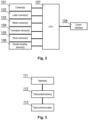
- FIG. 3 a flowchart of the software part of the robot monitor 100 is illustrated. This flowchart details the data processing modules operable by the CPU 107, including telemetry functions, object identification, and tracking.
- the software modules interact with the hardware modules described in Fig. 2 to ensure comprehensive monitoring and risk assessment for each robot's dedicated monitoring component.
- a telemetry module 111 is responsible for processing real-time data collected from one or more sensors installed on each mobile robot, such as the cameras 101, laser scanners 102, motion sensors 103, inclination sensors 104, shock sensors 105, and goods handling sensors 106. This module captures critical parameters such as the speed of the robot, distances to obstacles, detection of people and other vehicles, inclination of the robot's movement, shocks experienced by the robot, and the process of picking up, transporting, and putting down goods.
- a data preprocessing module 112 receives raw telemetry data from the telemetry module 111 and performs necessary preprocessing steps. These steps may include data normalization, noise reduction, and filtering to ensure the data is clean and suitable for further analysis. The preprocessing module 112 ensures that the data is in a consistent format and free from errors that could affect the accuracy of subsequent processing stages.
- a data communication module 113 ensures the secure transmission of preprocessed data from the robot monitor 100 via the communication interface 108 to the computing server 300. This module encrypts the data to maintain confidentiality and integrity, preventing unauthorized access or data manipulation during transmission.
- the computing server architecture is designed to support the continuous risk assessment system for mobile robots by providing a scalable and efficient platform for data management, analysis, and storage.
- the hardware components of the computing server are according to any standard server computer, either a standalone computer or a set of cloud computing and communication resources. The key functional components of the computing server architecture are explained below.
- a data collection module 301 is responsible for receiving and aggregating data from various robot monitors 100. This module ensures that data from multiple sources is collected in real-time and stored in a centralized database. The data includes telemetry information, object identification and tracking data, and risk assessment results. The data collection module 301 also ensures the confidentiality and integrity of the data transmitted between the robot monitors 100 and the computing server 300 by handling access control mechanisms to ensure that information can be received only from authorized robot monitors 100.
- a data storage module 302 provides a secure and scalable storage solution for the vast amounts of data generated by the robot monitors 100. This module utilizes cloud storage technologies to ensure that data is stored efficiently and can be accessed quickly for analysis. The storage system is designed to handle large datasets and support high availability and redundancy.
- the data storage module 302 further contains user-defined safety guidelines. A user may input specific safety guideline definitions or select from a predefined list of guidelines compliant with specific general guidelines or standards, such as EN/ISO 3691-4:2023.
- An artificial intelligence (AI) data processing module 303 is responsible for analyzing the collected data using AI technology, including machine learning algorithms. This module processes the data to identify patterns, predict hazardous situations, and perform risk assessments.
- the data processing module 303 leverages cloud computing resources to perform complex computations and ensure real-time analysis.
- the AI data processing module 303 contains one or more AI models trained based on historical data to improve accuracy and adaptability.
- the historical data may include expert-annotated trajectories of movement of robots which are considered correct, as well as incorrect in relation to specific guidelines.
- the AI models can be updated systematically based on the most recent data, which are input as data of correct operation in case no manual alerts were indicated during operation of the system and as data of incorrect operation in case a manual alert was input or an accident was detected.
- the trained AI models are therefore used to predict potential hazards and generate corresponding hazard information.
- Any known AI models can be used for this purpose, wherein the mechanisms of training and reasoning are known to persons skilled in the art.
- one or more AI models can be trained to analyze the proximity of identified objects to each mobile robot, the speed and direction of movement, and other relevant factors to calculate the risk level. The risk assessment is based on the user-defined safety guidelines.
- a recommendation generation module 304 uses the hazard information generated by the AI data processing module 303 to generate recommendations for safety measures. These recommendations are based on the current risk assessment and historical data. These recommendations may include introducing protection measures (such as barriers, horizontal/vertical markings, safety scanners installation, etc.) or change of procedures (such as reduction of speed of movement, altering movement paths), change of area types (such as operational, restricted, confined, load transfer, public areas).
- the module provides context-specific recommendations, such as reducing the robot's speed, altering its path, or stopping its movement to avoid potential hazards, as explained in more detail with respect to Fig. 5 .
- the computing server 300 provides a robust and scalable platform.
- the architecture ensures that data is collected, stored, and analyzed efficiently, enabling real-time risk assessment and proactive safety management.
- the use of AI technology enhances the system's ability to predict hazardous situations and generate effective recommendations, ensuring a safe working environment for personnel and equipment.
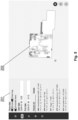
- a map 202 of the monitored facility where the robots operate can be presented, with routes traveled by the monitored robots and problematic areas indicated as colored circles, with the color of the circle corresponding to the risk level assessed by the AI data processing module 303.
Landscapes
- Engineering & Computer Science (AREA)
- Aviation & Aerospace Engineering (AREA)
- Radar, Positioning & Navigation (AREA)
- Remote Sensing (AREA)
- Physics & Mathematics (AREA)
- General Physics & Mathematics (AREA)
- Automation & Control Theory (AREA)
- Control Of Position, Course, Altitude, Or Attitude Of Moving Bodies (AREA)
Priority Applications (1)
| Application Number | Priority Date | Filing Date | Title |
|---|---|---|---|
| EP24461607.4A EP4579370A1 (de) | 2024-07-31 | 2024-07-31 | System und verfahren zur kontinuierlichen risikobewertung für mobile roboter |
Applications Claiming Priority (1)
| Application Number | Priority Date | Filing Date | Title |
|---|---|---|---|
| EP24461607.4A EP4579370A1 (de) | 2024-07-31 | 2024-07-31 | System und verfahren zur kontinuierlichen risikobewertung für mobile roboter |
Publications (1)
| Publication Number | Publication Date |
|---|---|
| EP4579370A1 true EP4579370A1 (de) | 2025-07-02 |
Family
ID=92208680
Family Applications (1)
| Application Number | Title | Priority Date | Filing Date |
|---|---|---|---|
| EP24461607.4A Pending EP4579370A1 (de) | 2024-07-31 | 2024-07-31 | System und verfahren zur kontinuierlichen risikobewertung für mobile roboter |
Country Status (1)
| Country | Link |
|---|---|
| EP (1) | EP4579370A1 (de) |
Cited By (1)
| Publication number | Priority date | Publication date | Assignee | Title |
|---|---|---|---|---|
| CN121366302A (zh) * | 2025-12-22 | 2026-01-20 | 帕西尼感知科技(深圳)有限公司 | 智能体的真机数据处理方法及其相关设备 |
Citations (3)
| Publication number | Priority date | Publication date | Assignee | Title |
|---|---|---|---|---|
| US20220276650A1 (en) * | 2019-08-01 | 2022-09-01 | Telefonaktiebolaget Lm Ericsson (Publ) | Methods for risk management for autonomous devices and related node |
| US20230102048A1 (en) * | 2019-11-05 | 2023-03-30 | Strong Force Vcn Portfolio 2019, Llc | Component-Inventory-Based Robot Fleet Management in Value Chain Networks |
| US20230144646A1 (en) * | 2021-11-08 | 2023-05-11 | 11712381 Canada Corporation | System and method for remote robotic oversight |
-
2024
- 2024-07-31 EP EP24461607.4A patent/EP4579370A1/de active Pending
Patent Citations (3)
| Publication number | Priority date | Publication date | Assignee | Title |
|---|---|---|---|---|
| US20220276650A1 (en) * | 2019-08-01 | 2022-09-01 | Telefonaktiebolaget Lm Ericsson (Publ) | Methods for risk management for autonomous devices and related node |
| US20230102048A1 (en) * | 2019-11-05 | 2023-03-30 | Strong Force Vcn Portfolio 2019, Llc | Component-Inventory-Based Robot Fleet Management in Value Chain Networks |
| US20230144646A1 (en) * | 2021-11-08 | 2023-05-11 | 11712381 Canada Corporation | System and method for remote robotic oversight |
Cited By (1)
| Publication number | Priority date | Publication date | Assignee | Title |
|---|---|---|---|---|
| CN121366302A (zh) * | 2025-12-22 | 2026-01-20 | 帕西尼感知科技(深圳)有限公司 | 智能体的真机数据处理方法及其相关设备 |
Similar Documents
| Publication | Publication Date | Title |
|---|---|---|
| Sherafat et al. | Automated methods for activity recognition of construction workers and equipment: State-of-the-art review | |
| Kulinan et al. | Advancing construction site workforce safety monitoring through BIM and computer vision integration | |
| KR102005188B1 (ko) | 실시간 위치 추적 및 gis를 이용한 인공지능 기반 산업현장 안전관리 시스템, 그리고 산업현장 안전관리 방법 | |
| CN118761712B (zh) | 基于物联网的智能仓储管理方法、装置、设备及存储介质 | |
| KR102635902B1 (ko) | Ai 로봇을 이용한 건설 현장의 작업 공정별 상황 인식 및 안전 관리 시스템 | |
| CN110163485A (zh) | 一种机房巡检系统 | |
| US11059177B1 (en) | Method and system for facility monitoring and reporting to improve safety using robots | |
| JP2022548009A (ja) | 物体移動システム | |
| US12430916B2 (en) | Safety compliance system and method | |
| Botti et al. | A framework for preventing and managing risks in confined spaces through IOT technologies | |
| EP4579370A1 (de) | System und verfahren zur kontinuierlichen risikobewertung für mobile roboter | |
| CN120279488B (zh) | 一种用于特种作业实物考场的智能巡检方法及系统 | |
| CN119741754A (zh) | 一种基于机器视觉的电气作业现场安全监测与干预系统 | |
| CN120397751A (zh) | 一种斗轮机防撞系统以及防撞方法 | |
| CN120544112A (zh) | 一种面向盾构施工的物料智能运输及安全监测系统和方法 | |
| Pohontu et al. | Artificial intelligence in maritime domain awareness applications: Trends and prospects | |
| Bruemmer et al. | Intelligent robots for use in hazardous DOE environments | |
| Ravi et al. | IoT-Enabled Advanced Foam Firefighting E-Vehicle | |
| KR20250134152A (ko) | 멀티 모달 기반 타워크레인 공사현장 사고예방 시스템 | |
| CN112541656A (zh) | 一种具有风险隐患预测能力的智能安防集成平台 | |
| CN119380258A (zh) | 一种基于多传感器融合的有限空间作业智能监测系统 | |
| KR20240110157A (ko) | 산업현장에서의 안전사고 감시를 위한 디지털 트윈 기반의 현장 관리 서버 및 현장 관리 방법 | |
| KR102508731B1 (ko) | 딥러닝을 이용한 근로자 사고예방분석시스템 | |
| Meharunissa et al. | MINEGUARDIAN: IoT Enabled Advanced Sensor Integration for Mine Safety Enhancement | |
| KR102889358B1 (ko) | 유해물질 취급 사업장 공간 정보 기반의 대피 방향 알람 시스템 |
Legal Events
| Date | Code | Title | Description |
|---|---|---|---|
| PUAI | Public reference made under article 153(3) epc to a published international application that has entered the european phase |
Free format text: ORIGINAL CODE: 0009012 |
|
| STAA | Information on the status of an ep patent application or granted ep patent |
Free format text: STATUS: THE APPLICATION HAS BEEN PUBLISHED |
|
| AK | Designated contracting states |
Kind code of ref document: A1 Designated state(s): AL AT BE BG CH CY CZ DE DK EE ES FI FR GB GR HR HU IE IS IT LI LT LU LV MC ME MK MT NL NO PL PT RO RS SE SI SK SM TR |
|
| STAA | Information on the status of an ep patent application or granted ep patent |
Free format text: STATUS: THE APPLICATION IS DEEMED TO BE WITHDRAWN |