EP4579602A1 - Dispositif de traitement d'information, système de traitement d'informations, procédé de traitement d'informations et programme informatique - Google Patents
Dispositif de traitement d'information, système de traitement d'informations, procédé de traitement d'informations et programme informatique Download PDFInfo
- Publication number
- EP4579602A1 EP4579602A1 EP23857371.1A EP23857371A EP4579602A1 EP 4579602 A1 EP4579602 A1 EP 4579602A1 EP 23857371 A EP23857371 A EP 23857371A EP 4579602 A1 EP4579602 A1 EP 4579602A1
- Authority
- EP
- European Patent Office
- Prior art keywords
- target space
- data
- information processing
- processing apparatus
- processing unit
- Prior art date
- Legal status (The legal status is an assumption and is not a legal conclusion. Google has not performed a legal analysis and makes no representation as to the accuracy of the status listed.)
- Pending
Links
Images






Classifications
-
- G—PHYSICS
- G06—COMPUTING OR CALCULATING; COUNTING
- G06T—IMAGE DATA PROCESSING OR GENERATION, IN GENERAL
- G06T19/00—Manipulating three-dimensional [3D] models or images for computer graphics
- G06T19/006—Mixed reality
-
- G—PHYSICS
- G06—COMPUTING OR CALCULATING; COUNTING
- G06F—ELECTRIC DIGITAL DATA PROCESSING
- G06F30/00—Computer-aided design [CAD]
- G06F30/10—Geometric CAD
- G06F30/12—Geometric CAD characterised by design entry means specially adapted for CAD, e.g. graphical user interfaces [GUI] specially adapted for CAD
-
- G—PHYSICS
- G06—COMPUTING OR CALCULATING; COUNTING
- G06F—ELECTRIC DIGITAL DATA PROCESSING
- G06F30/00—Computer-aided design [CAD]
- G06F30/20—Design optimisation, verification or simulation
- G06F30/27—Design optimisation, verification or simulation using machine learning, e.g. artificial intelligence, neural networks, support vector machines [SVM] or training a model
-
- G—PHYSICS
- G06—COMPUTING OR CALCULATING; COUNTING
- G06F—ELECTRIC DIGITAL DATA PROCESSING
- G06F30/00—Computer-aided design [CAD]
- G06F30/20—Design optimisation, verification or simulation
- G06F30/28—Design optimisation, verification or simulation using fluid dynamics, e.g. using Navier-Stokes equations or computational fluid dynamics [CFD]
-
- G—PHYSICS
- G06—COMPUTING OR CALCULATING; COUNTING
- G06V—IMAGE OR VIDEO RECOGNITION OR UNDERSTANDING
- G06V10/00—Arrangements for image or video recognition or understanding
- G06V10/40—Extraction of image or video features
- G06V10/44—Local feature extraction by analysis of parts of the pattern, e.g. by detecting edges, contours, loops, corners, strokes or intersections; Connectivity analysis, e.g. of connected components
-
- G—PHYSICS
- G06—COMPUTING OR CALCULATING; COUNTING
- G06V—IMAGE OR VIDEO RECOGNITION OR UNDERSTANDING
- G06V20/00—Scenes; Scene-specific elements
- G06V20/20—Scenes; Scene-specific elements in augmented reality scenes
-
- G—PHYSICS
- G06—COMPUTING OR CALCULATING; COUNTING
- G06V—IMAGE OR VIDEO RECOGNITION OR UNDERSTANDING
- G06V20/00—Scenes; Scene-specific elements
- G06V20/50—Context or environment of the image
- G06V20/52—Surveillance or monitoring of activities, e.g. for recognising suspicious objects
-
- G—PHYSICS
- G06—COMPUTING OR CALCULATING; COUNTING
- G06V—IMAGE OR VIDEO RECOGNITION OR UNDERSTANDING
- G06V20/00—Scenes; Scene-specific elements
- G06V20/60—Type of objects
- G06V20/64—Three-dimensional [3D] objects
-
- G—PHYSICS
- G06—COMPUTING OR CALCULATING; COUNTING
- G06F—ELECTRIC DIGITAL DATA PROCESSING
- G06F2111/00—Details relating to CAD techniques
- G06F2111/10—Numerical modelling
-
- G—PHYSICS
- G06—COMPUTING OR CALCULATING; COUNTING
- G06F—ELECTRIC DIGITAL DATA PROCESSING
- G06F2119/00—Details relating to the type or aim of the analysis or the optimisation
- G06F2119/08—Thermal analysis or thermal optimisation
-
- G—PHYSICS
- G06—COMPUTING OR CALCULATING; COUNTING
- G06T—IMAGE DATA PROCESSING OR GENERATION, IN GENERAL
- G06T2210/00—Indexing scheme for image generation or computer graphics
- G06T2210/04—Architectural design, interior design
-
- G—PHYSICS
- G06—COMPUTING OR CALCULATING; COUNTING
- G06V—IMAGE OR VIDEO RECOGNITION OR UNDERSTANDING
- G06V2201/00—Indexing scheme relating to image or video recognition or understanding
- G06V2201/07—Target detection
Definitions
- the present disclosure relates to an information processing apparatus, an information processing system, an information processing method, and a computer program.
- PTL 1 discloses a technique of creating model data indicating a shape of an object based on three-dimensional point group data and of performing fluid flow calculation using the created model data.
- PTL 2 discloses a technique of creating a database in which three-dimensional point group data and images are combined with each other and of performing matching between the database and an image in which a target object is imaged to identify a position of the target object.
- a model for fluid flow calculation for performing fluid flow analysis When a model for fluid flow calculation for performing fluid flow analysis is to be prepared, it has taken many time to measure a size of and to model a shape inside a room or a fixture and to set conditions for those including a heat source, for example. Even when a conventional technique is used, it has taken many time to set various conditions.
- An object of the present disclosure is, for example, to provide an information processing apparatus capable of outputting an attribute and a position of an object included in a target space in an associated manner based on target space data acquired as measurement is performed inside the target space from a plurality of positions.
- An information processing apparatus includes: an acquisition unit that acquires target space data acquired as measurement is performed inside a target space from a plurality of positions; and a processing unit that processes the acquired data, the processing unit recognizing, from the acquired target space data, an attribute and a position of an object in the target space, the object affecting an environment in the target space, and outputting the attribute and the position of the object in the target space in association with the target space data.
- An information processing apparatus is the information processing apparatus according to the first aspect, in which, based on the target space data acquired by the acquisition unit and the attribute and the position of the object in the target space, an augmented reality image of the target space in which the attribute and the position of the object in the target space, the object affecting the environment in the target space, are reflected is created.
- An information processing apparatus is the information processing apparatus according to the first aspect or the second aspect, in which, based on the target space data acquired by the acquisition unit and the attribute and the position of the object in the target space, a three-dimensional space model of the target space in which the attribute and the position of the object in the target space, the object affecting the environment in the target space, are reflected is created.
- An information processing apparatus includes: an acquisition unit that acquires target space data acquired as measurement is performed inside a target space from a plurality of positions; and a processing unit, the processing unit recognizing, based on the target space data acquired by the acquisition unit, an attribute and a position of an object affecting an environment in the target space, and outputting, based on the target space data acquired by the acquisition unit and the attribute and the position of the object, the attribute and the position of the object with respect to the environment in the target space in an associated manner.
- An information processing apparatus is the information processing apparatus according to any one of the first to third, 1-2th, and 2-2th aspects, in which the three-dimensional space model is a model for predicting the environment in the target space.
- An information processing apparatus is the information processing apparatus according to any one of the first to fourth, 1-2th, and 2-2th aspects, in which the object in the target space includes at least one of an object affecting an airflow in the target space, an object affecting a thermal environment in the target space, an object affecting air quality in the target space, and an object controlling the environment in the target space.
- An information processing apparatus is the information processing apparatus according to any one of the first to fifth, 1-2th, and 2-2th aspects, in which a type, a capability, a position, or control of air conditioning is changed to perform trial calculation of an improvement effect in the target space.
- An information processing apparatus is the information processing apparatus according to any one of the first to fifth, 1-2th, and 2-2th aspects, in which the object in the target space includes at least one of a fixture, a fitting, a person, an industrial machine, a plant, an air conditioner, and a ventilation device.
- An information processing apparatus is the information processing apparatus according to any one of the first to sixth, 1-2th, and 2-2th aspects, in which the object in the target space includes an air conditioner or a ventilation device, and the processing unit recognizes an air control port of the air conditioner or the ventilation device, and discriminates whether the air control port is a suction port or a blow-out port.
- An information processing apparatus is the information processing apparatus according to any one of the first to seventh, 1-2th, and 2-2th aspects, in which the processing unit acquires duct system data representing a duct system related to the suction port or the blow-out port in the target space, and discriminates the suction port or the blow-out port in the target space based on the acquired duct system data.
- An information processing apparatus is the information processing apparatus according to any one of the first to eighth, 1-2th, and 2-2th aspects, in which the duct system data includes orientation information and outer shape information indicating, respectively, an orientation and an outer shape of the duct system, and the processing unit acquires orientation information related to an orientation in the target space, and, based on the acquired orientation information, information representing an outer shape in the target space based on the target space data, and the duct system data, aligns the target space represented by the target space data and the duct system represented by the duct system data in position with each other.
- An information processing apparatus is the information processing apparatus according to any one of the first to ninth, 1-2th, and 2-2th aspects, in which the processing unit acquires thermography data of the target space, and discriminates the suction port or the blow-out port based on the acquired thermography data.
- An information processing apparatus is the information processing apparatus according to any one of the first to tenth, 1-2th, and 2-2th aspects, in which the target space data includes image data of the target space, and the processing unit calculates a feature amount related to the suction port or the blow-out port based on the acquired image data, and discriminates the suction port or the blow-out port based on the calculated feature amount.
- An information processing apparatus is the information processing apparatus according to any one of the first to eleventh, 1-2th, and 2-2th aspects, in which the attribute of the object in the target space includes at least one of a dimension and a shape of the object and sensible heat, latent heat, an air quantity, a direction of wind, and a wind speed in the target space.
- An information processing apparatus is the information processing apparatus according to any one of the first to twelfth, 1-2th, and 2-2th aspects, in which the processing unit creates the three-dimensional space model including thermal boundary conditions in accordance with the attribute of the object in the target space.
- An information processing apparatus is the information processing apparatus according to any one of the first to thirteenth, 1-2th, and 2-2th aspects, in which the processing unit acquires piping system data representing a piping system of an air conditioner in the target space, and creates the three-dimensional space model including thermal boundary conditions for the air conditioner based on the acquired piping system data.
- An information processing apparatus is the information processing apparatus according to any one of the first to fourteenth, 1-2th, and 2-2th aspects, in which the piping system data includes orientation information and outer shape information indicating, respectively, an orientation and an outer shape of the piping system, and the processing unit acquires orientation information related to an orientation in the target space, and aligns, based on the acquired orientation information, information representing an outer shape in the target space based on the target space data, and the piping system data, the target space represented by the target space data and the piping system represented by the piping system data in position with each other.
- An information processing apparatus is the information processing apparatus according to any one of the first to fifteenth, 1-2th, and 2-2th aspects, in which the processing unit acquires thermography data of the target space, and creates, based on the acquired thermography data, the three-dimensional space model including a temperature of the object as a thermal boundary condition.
- An information processing apparatus is the information processing apparatus according to any one of the first to sixteenth, 1-2th, and 2-2th aspects, in which the processing unit acquires thermography data of the target space, outside air temperature data of the target space, solar radiation amount data, and thickness data of a fitting, and creates the three-dimensional space model including a heat transmission coefficient of the fitting as a thermal boundary condition based on each piece of the acquired data.
- An information processing apparatus is the information processing apparatus according to any one of the first to eighteenth, 1-2th, and 2-2th aspects, in which the processing unit accepts addition of an object in the target space to change the three-dimensional space model.
- An information processing apparatus is the information processing apparatus according to any one of the first to nineteenth aspects, 1-2th, and 2-2th aspects, in which the acquisition unit acquires the target space data acquired when a measuring device that measures a physical quantity related to a shape inside the target space is moved or rotated.
- An information processing apparatus is the information processing apparatus according to any one of the first to twentieth, 1-2th, and 2-2th aspects, in which the processing unit uses self-position estimation processing or visual line direction estimation processing to identify the target space and the position of the object in the target space.
- An information processing apparatus is the information processing apparatus according to any one of the first to twenty first, 1-2th, and 2-2th aspects, in which the acquisition unit acquires orientation information related to an orientation in the target space, and the processing unit creates the three-dimensional space model including the orientation information acquired by the acquisition unit or information based on the orientation information.
- An information processing apparatus is the information processing apparatus according to any one of the first to twenty second, 1-2th, and 2-2th aspects, in which the orientation information is information based on a latitude and a longitude of and a time in the target space and a position of a celestial body or information based on the latitude and the longitude of and the time in the target space and a direction of a shadow in a room and a length of the shadow.
- An information processing apparatus is the information processing apparatus according to any one of the first to twenty third, 1-2th, and 2-2th aspects, in which the target space data includes red, green, and blue (RGB) data and time data, and the processing unit identifies an orientation in the target space based on the RGB data and the time data, and creates the three-dimensional space model including orientation information indicating the identified orientation or information based on the orientation information.
- the target space data includes red, green, and blue (RGB) data and time data
- RGB red, green, and blue
- An information processing apparatus is the information processing apparatus according to any one of the first to twenty fourth, 1-2th, and 2-2th aspects, in which the target space data includes RGB data and time data, and the processing unit identifies a utilization scene of the target space based on the RGB data and the time data.
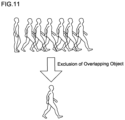
- An information processing apparatus is the information processing apparatus according to any one of the first to twenty fifth, 1-2th, and 2-2th aspects, in which the processing unit discriminates whether or not the target space data includes the object in the target space in an overlapping manner.
- An information processing apparatus is the information processing apparatus according to any one of the first to twenty sixth, 1-2th, and 2-2th aspects, in which the processing unit excludes, when the object included in the target space is recognized in an overlapping manner, the overlapping object.
- An information processing apparatus is the information processing apparatus according to any one of the first to twenty seventh, 1-2th, and 2-2th aspects, in which an attribute and a position of a confidential target object in the target space is recognized based on the target space data acquired by the acquisition unit, based on the target space data acquired by the acquisition unit, the attribute and the position of the object in the target space, and the attribute and the position of the confidential target object in the target space, the three-dimensional space model of the target space, in which the attributes and the positions of the object and the confidential target object with respect to the environment in the target space are reflected, is created, and the confidential target object is processed.
- An information processing system includes: the information processing apparatus according to any one of the first to twenty eighth, 1-2th, and 2-2th aspects; and a measuring device that measures a physical quantity related to a shape inside the target space, in which the information processing apparatus acquires the target space data from the measuring device.
- An information processing system includes: an acquisition unit that acquires target space data acquired as measurement is performed inside a target space from a plurality of positions; and a processing unit that processes the acquired data, the processing unit recognizing an attribute and a position of an object in the target space, the object affecting an environment in the target space, and outputting the attribute and the position of the object in the target space in association with the target space data.
- An information processing method includes: acquiring target space data acquired as measurement is performed inside a target space from a plurality of positions; recognizing an attribute and a position of an object in the target space, the object affecting an environment in the target space; and outputting the attribute and the position of the object in the target space in association with the target space data.
- a computer program causes a computer to execute a process including: acquiring target space data acquired as measurement is performed inside a target space from a plurality of positions; recognizing an attribute and a position of an object in the target space, the object affecting an environment in the target space; and outputting the attribute and the position of the object in the target space in association with the target space data.
- An information processing system includes: an acquisition unit that acquires target space data acquired as measurement is performed inside a target space from a plurality of positions; and a processing unit, the processing unit recognizing, based on the target space data acquired by the acquisition unit, an attribute and a position of an object affecting an environment in the target space, and outputting, based on the target space data acquired by the acquisition unit and the attribute and the position of the object, the attribute and the position of the object with respect to the environment in the target space in an associated manner.
- An information processing method includes: acquiring target space data acquired as measurement is performed inside a target space from a plurality of positions; recognizing, based on the acquired target space data, an attribute and a position of an object affecting an environment in the target space, and outputting, based on the acquired target space data and the attribute and the position of the object, the attribute and the position of the object with respect to the environment in the target space in an associated manner.
- a computer program causes a computer to execute a process including: acquiring target space data acquired as measurement is performed inside a target space from a plurality of positions; recognizing, based on the acquired target space data, an attribute and a position of an object affecting an environment in the target space, and outputting, based on the acquired target space data and the attribute and the position of the object, the attribute and the position of the object with respect to the environment in the target space in an associated manner.
- a method of automatically creating a model for fluid flow calculation is proposed.
- a hand-held depth camera, a camera, a thermography, or a module integrated into a smartphone is used to capture images while walking in a space, and depth images and other images of those inside the space are stored in the smartphone.
- Data stored in the smartphone is transferred to an information processing apparatus 1, and software for three-dimensional reconstruction is used to create three-dimensional point group data.
- a floor, walls, and a ceiling are detected from the three-dimensional point group data, and a model for fluid flow calculation, which is a space model of a surface, is created.
- a type air conditioner or fixture, for example
- a position of an object are identified by performing image recognition based on learning performed in advance through machine learning on the captured images, and are reflected in the three-dimensional space model.
- a cleaning robot or a drone, for example may be used to capture images, instead of urging a person holding a camera to capture images.
- Fig. 1 is a block diagram illustrating a configuration example of an information processing system according to the present embodiment
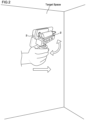
- Fig. 2 is a perspective view illustrating a configuration example and a usage example of a measuring device 2 according to the present embodiment
- the information processing system according to the present embodiment includes the information processing apparatus 1, the measuring device 2, and a terminal device 3.
- the information processing system is one used to perform imaging and distance measurement in a space having a surface at least partially to semi-automatically create a three-dimensional space model for predicting an environment in the space based on data acquired through the measurement.
- a space that is subject to modelling will be hereinafter referred to as a target space.
- the target space includes one object or a plurality of objects that may affect an environment in the target space.
- Example objects include at least one of an object affecting an airflow in a target space, an object affecting a thermal environment in the target space, an object affecting air quality in the target space, and an object controlling an environment in the target space.
- example objects include at least one of a fixture, a fitting, a person, an industrial machine, a plant, an air conditioner, and a ventilation device.
- Example fixtures include at least one of a computer, a monitor, a lighting fixture, a heater, and a chair.
- Example fittings include at least one of a window, a blind, a partition, and a door.
- Example air conditioners include an air purifier.
- the target space includes a duct system for ventilation.
- the duct system includes a suction port or a blow-out port of an air conditioner or a ventilation device.
- the target space includes a piping system for an air conditioner.
- example objects include a confidential target object having confidentiality and a non-confidential target object having no confidentiality.
- Example confidential target objects include at least one of a display device, a person, an industrial machine, a document, a destination display board, a notice, a whiteboard, a blackboard, a tag, and a mail item.
- the measuring device 2 is a device that includes a red, green, and blue (RGB) sensor 21, a depth sensor 22, an infrared (IR) projector 23, an infrared camera 24, a gripper, and a terminal holder, and measures a physical quantity related to a shape inside the target space.
- the gripper is a member gripped by a user of the measuring device 2.
- the gripper is, for example, a rod-shaped member.
- the terminal holder is a member used to hold the terminal device 3.
- the RGB sensor 21 is, for example, a camera that includes an imaging element such as a complementary metal-oxide semiconductor (CMOS) sensor or a charge-coupled device (CCD) sensor, and captures a color image of the target space.
- CMOS complementary metal-oxide semiconductor
- CCD charge-coupled device
- the RGB sensor 21 is able to capture a video.
- the RGB sensor 21 outputs time-series image data (RGB data) acquired through imaging of the target space. It is assumed that time-series image data forming a video includes time data indicating date and time of imaging.
- the depth sensor 22 measures distances (depths) from the measuring device 2 to wall surfaces in the target space and various objects included in the target space.
- the depth sensor 22 outputs depth data representing a depth acquired through distance measurement.
- the IR projector 23 is an element for projecting infrared rays onto the target space and an object to acquire more accurate depth data.
- the measuring device 2 configured as described above outputs image data, depth data, and thermography image data to the terminal device 3.
- the measuring device 2 may be configured to output image data, depth data, and thermography image data to an external portable storage device for storage.
- the measuring device 2 may be configured to transmit image data, depth data, and thermography image data directly to the information processing apparatus 1.
- Image data and depth data will be hereinafter referred to as target space data.
- the terminal device 3 is, for example, a portable information processing terminal such as a smartphone, a mobile phone, a tablet terminal, or a personal digital assistant (PDA).
- the terminal device 3 includes an input interface to which image data, depth data, a thermography image, and orientation data are to be inputted. Furthermore, the terminal device 3 includes an orientation sensor 31.
- the orientation sensor 31 is, for example, an azimuth meter such as an electronic compass, and outputs orientation data indicating an orientation of the measuring device 2.
- the processing unit 11 reads and executes a computer program (program product) P stored in the storage unit 12 to create a three-dimensional space model of the target space.
- a computer program program product
- Each of the functional units related to the creation of a three-dimensional space model may be achieved in a software manner or may be partially or wholly achieved in a hardware manner.
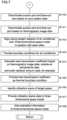
- the processing unit 11 in the information processing apparatus 1 acquires the target space data, the thermography image data, and the orientation data outputted from the terminal device 3 (step S115).
- the processing unit 11 may perform arithmetic processing to convert the orientation data into data directly indicating the orientation.
- the processing unit 11 calculates data indicating an orientation based on a latitude and a longitude of and a time in the target space and a direction of a shadow in a room and a length of the shadow.
- processing unit 11 may calculate data indicating an orientation in a three-dimensional space based on image data and time data.
- the processing unit 11 acquires duct system diagram data from the external device (step S116), and acquires piping system diagram data (step S117).
- the processing unit 11 acquires outside air temperature time-series data from the external device (step S118).
- the processing unit 11 acquires solar radiation amount time-series data from the external device (step S119).
- processing unit 11 may be configured to acquire, for example, outside air temperature time-series data and solar radiation amount time-series data from an external server that distributes weather information including the pieces of data.
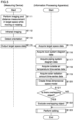
- Figs. 6 and 7 are flowcharts illustrating a creation processing procedure for a three-dimensional space model
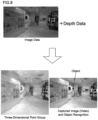
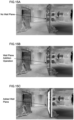
- Fig. 8 is an explanatory diagram illustrating an example of a three-dimensional point group and a captured image
- Fig. 9 is an explanatory diagram illustrating an example of a three-dimensional space model
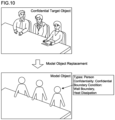
- Fig. 10 is a conceptual diagram illustrating confidentializing processing for a confidential target object.
- An outline of the processing is as follows. To create a three-dimensional space model for fluid flow analysis, image data and depth data are analyzed and a three-dimensional point group data of the target space is created, and a type and a position, in the three-dimensional point group data, of an element such as a heat source that needs to be taken into consideration when the fluid flow analysis is to be performed are identified from a captured image using the learning model 16 having undergone learning in advance and are reflected in the three-dimensional space model.
- the processing unit 11 in the information processing apparatus 1 reconstructs a three-dimensional point group in the target space based on the image data and the depth data (step S131).
- an upper drawing illustrates the image data and the depth data
- a lower left drawing illustrates the three-dimensional point group data
- a lower right diagram illustrates the image data corresponding to the three-dimensional point group data.
- the processing unit 11 uses the self-position estimation technique and the visual line direction estimation technique to create a three-dimensional space model for fluid flow calculation based on the three-dimensional point group data (step S132).
- the processing unit 11 is able to use the self-position estimation technique and the visual line direction estimation technique to identify planes corresponding to wall surfaces, a floor surface, and a ceiling surface in the target space, planes corresponding to outer surfaces of objects such as various devices and fixtures, and positions of the planes to create a three-dimensional space model formed by the plurality of planes.
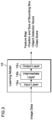
- the processing unit 11 inputs the image data into the learning model 16 to detect objects (non-confidential target objects and confidential target objects) to recognize positions and classes of the objects (step S133). Furthermore, the processing unit 11 recognizes dimensions of the objects. The processing unit 11 uses the classes as keys, refers to the object DB 18, and recognizes whether or not each of the detected objects corresponds to a confidential target object.
- the processing unit 11 may be configured to read the character-related information to acquire information related to an attribute of the object and thermal boundary conditions.
- the processing unit 11 identifies boundary conditions for the non-confidential target objects and the confidential target objects based on a result of recognition of the objects (step S134). Specifically, the processing unit 11 reads parameters for the boundary conditions, which correspond to classes of the non-confidential target objects and the confidential target objects to identify values of the boundary conditions.
- the processing unit 11 provides the boundary conditions for the non-confidential target objects and the confidential target objects to the three-dimensional space model (step S135). Positions at which the boundary conditions are set in the three-dimensional space are identified based on the positions and the dimensions of the objects recognized in step S132 and the three-dimensional point group.
- the processing unit 11 may provide thermal boundary conditions for a person to the object of the chair.
- the storage unit 12 in the information processing apparatus 1 has stored typical predetermined thermal boundary conditions for objects of persons such as sensible heat and latent heat, and the processing unit 11 may provide the thermal boundary conditions to the object of the chair.
- the processing unit 11 identifies temperatures, amounts of heat, or temperature characteristics of the non-confidential target objects and the confidential target objects based on the thermography image data to provide heating conditions for the objects (step S136).
- thermography is used to perform measurement to calculate and reflect, in a model for fluid flow calculation, a temperature or an amount of heat of an object.
- the confidential target objects included in the three-dimensional space model are replaced with model objects including no confidential information (step S137).
- a shape of a model object it may be an object having a substantially rectangular parallelepiped shape surrounding a confidential target object or may be an object having a shape corresponding to the confidential target object.
- the storage unit 12 may be configured to store a model object in association with a class of a confidential target object.
- the processing unit 11 reads a model object corresponding to a class of a confidential target object to replace the confidential target object with the read model object.
- the method of replacing a confidential target object with a model object is an example of a method of confidentializing a confidential target object.
- Such a configuration may be applied that a confidential target object be processed with a desired method as long as it is possible to confidentialize the confidential target object.
- the information processing apparatus 1 includes a terminal computer and a server apparatus
- execution may be performed in the terminal computer or execution may be performed in the server apparatus.
- the terminal device 3 be configured to execute processing of confidentializing a confidential target object.
- step S138 an example in which a machine learning model is used to discriminate the suction port and the blow-out port has been described, such a configuration may be applied that feature amounts related to a suction port and a blow-out port be calculated based on image data of an air control port to discriminate whether the air control port be the suction port or the blow-out port based on the calculated feature amounts.
- steps S138 to S141 in the processing may be omitted.
- the processing unit 11 aligns the target space represented by the target space data and the duct system represented by the duct system data in position with each other based on the acquired orientation data related to the orientation in the target space, the acquired information representing the outer shape in the target space based on the target space data, and the acquired duct system diagram data (step S139).
- a target space and a duct system be aligned in position with each other by referring to a position of one whose accurate position is objectively known and unchanged, such as an elevator, a staircase, or a pillar.
- the processing unit 11 discriminates whether the air control port is the suction port or the blow-out port based on the acquired duct system diagram data (step S140).
- step S140 a duct-type suction port and a duct-type blow-out port, which are pieces of information that are difficult to determine through image recognition, are determined using a duct system diagram.
- step S140 using a duct system diagram when a three-dimensional space model is to be created makes it possible to recognize the duct system of the air conditioner or the ventilation device to support setting of thermal boundary conditions for the suction port and the blow-out port.
- the acquired thermal boundary conditions for the air conditioner based on the piping system diagram data are provided to the three-dimensional space model (step S143). Since the piping system of the air conditioner and the target space have been aligned in position with each other, the processing unit 11 is able to identify a relationship between the object of the air conditioner included in the target space and the piping system. The processing unit 11 is able to identify information related to the thermal boundary conditions for the piping system corresponding to the object of the air conditioner, and is able to provide the thermal boundary conditions for the object to the three-dimensional space model.
- steps S142 and S143 the system information of the air conditioner becomes important when airflow analysis is to be performed.
- the piping system diagram may be displayed in a superimposed manner on the three-dimensional space model.
- the processing unit 11 calculates a heat transmission coefficient of a fitting based on the thermography image data, the outside air temperature time-series data of the target space, the solar radiation amount time-series data, and thickness data of the fitting (step S144).
- the processing unit 11 provides the calculated heat transmission coefficient as a thermal boundary condition for the fitting (step S145).
- a thickness of the fitting is acquired through the image recognition processing in step S133.
- the processing unit 11 may be configured to combine a result of the image recognition processing in step S133 and data of the three-dimensional point group to calculate the thicknesses of the fitting.
- thermography image outside air temperature time-series data, and insolation amount time-series data makes it possible to calculate a heat transmission coefficient of a fitting such as a wall or a window to support input of a thermal boundary condition.
Landscapes
- Engineering & Computer Science (AREA)
- Physics & Mathematics (AREA)
- Theoretical Computer Science (AREA)
- General Physics & Mathematics (AREA)
- Computer Hardware Design (AREA)
- General Engineering & Computer Science (AREA)
- Geometry (AREA)
- Multimedia (AREA)
- Evolutionary Computation (AREA)
- Software Systems (AREA)
- Computer Vision & Pattern Recognition (AREA)
- Computer Graphics (AREA)
- Mathematical Analysis (AREA)
- Mathematical Optimization (AREA)
- Pure & Applied Mathematics (AREA)
- Computing Systems (AREA)
- Architecture (AREA)
- Human Computer Interaction (AREA)
- Computational Mathematics (AREA)
- Artificial Intelligence (AREA)
- Mathematical Physics (AREA)
- Medical Informatics (AREA)
- Fluid Mechanics (AREA)
- Algebra (AREA)
- Image Analysis (AREA)
- Processing Or Creating Images (AREA)
Applications Claiming Priority (2)
| Application Number | Priority Date | Filing Date | Title |
|---|---|---|---|
| JP2022132598 | 2022-08-23 | ||
| PCT/JP2023/030258 WO2024043263A1 (fr) | 2022-08-23 | 2023-08-23 | Dispositif de traitement d'information, système de traitement d'informations, procédé de traitement d'informations et programme informatique |
Publications (2)
| Publication Number | Publication Date |
|---|---|
| EP4579602A1 true EP4579602A1 (fr) | 2025-07-02 |
| EP4579602A4 EP4579602A4 (fr) | 2025-12-24 |
Family
ID=90013371
Family Applications (1)
| Application Number | Title | Priority Date | Filing Date |
|---|---|---|---|
| EP23857371.1A Pending EP4579602A4 (fr) | 2022-08-23 | 2023-08-23 | Dispositif de traitement d'information, système de traitement d'informations, procédé de traitement d'informations et programme informatique |
Country Status (6)
| Country | Link |
|---|---|
| US (1) | US20250191317A1 (fr) |
| EP (1) | EP4579602A4 (fr) |
| JP (1) | JP7502702B2 (fr) |
| CN (1) | CN119731702A (fr) |
| AU (1) | AU2023329569A1 (fr) |
| WO (1) | WO2024043263A1 (fr) |
Families Citing this family (2)
| Publication number | Priority date | Publication date | Assignee | Title |
|---|---|---|---|---|
| JP7854246B2 (ja) | 2024-03-04 | 2026-05-01 | 国立研究開発法人産業技術総合研究所 | 圧電素子およびその圧電素子を用いたmemsデバイス |
| JP7717208B1 (ja) | 2024-03-08 | 2025-08-01 | 東芝プラントシステム株式会社 | 配置設計自動化システム、および、配置設計方法 |
Family Cites Families (12)
| Publication number | Priority date | Publication date | Assignee | Title |
|---|---|---|---|---|
| JP2003162219A (ja) * | 2001-11-29 | 2003-06-06 | Nti:Kk | 3次元地図情報検索システム |
| KR101310653B1 (ko) * | 2012-04-05 | 2013-09-24 | 연세대학교 산학협력단 | 열화상 카메라를 이용한 빔(bim)기반 상황 인지 시스템 |
| JP5870958B2 (ja) * | 2012-04-27 | 2016-03-01 | キヤノンマーケティングジャパン株式会社 | 情報処理システム、その制御方法、及びプログラム、並びに情報処理装置、その制御方法、及びプログラム |
| JP2013246589A (ja) * | 2012-05-24 | 2013-12-09 | Sharp Corp | 空間情報生成装置、空間情報利用システム、空間情報生成方法、制御プログラム、および、記録媒体 |
| JP6286902B2 (ja) | 2013-07-10 | 2018-03-07 | 株式会社Ihi | 解析装置及び流体解析手法 |
| US9013286B2 (en) * | 2013-09-23 | 2015-04-21 | Volkswagen Ag | Driver assistance system for displaying surroundings of a vehicle |
| JP2015148410A (ja) * | 2014-02-07 | 2015-08-20 | 株式会社東芝 | 空調制御装置、空調制御システム、空調制御方法及びプログラム |
| JP6348763B2 (ja) * | 2014-04-18 | 2018-06-27 | 日立ジョンソンコントロールズ空調株式会社 | 空気調和機 |
| JP6624852B2 (ja) * | 2015-08-27 | 2019-12-25 | キヤノン株式会社 | 画像情報生成装置、画像情報生成方法、画像処理システム及びプログラム |
| JP6610640B2 (ja) | 2016-10-28 | 2019-11-27 | Jfeスチール株式会社 | 位置認識方法およびシステム、ならびに異常判定方法およびシステム |
| CN112507799B (zh) * | 2020-11-13 | 2023-11-24 | 幻蝎科技(武汉)有限公司 | 基于眼动注视点引导的图像识别方法、mr眼镜及介质 |
| US12482206B2 (en) * | 2020-11-30 | 2025-11-25 | Maxell, Ltd. | Augmented reality processing system, information display device, and augmented reality processing method |
-
2023
- 2023-08-09 JP JP2023130305A patent/JP7502702B2/ja active Active
- 2023-08-23 WO PCT/JP2023/030258 patent/WO2024043263A1/fr not_active Ceased
- 2023-08-23 EP EP23857371.1A patent/EP4579602A4/fr active Pending
- 2023-08-23 CN CN202380060203.7A patent/CN119731702A/zh active Pending
- 2023-08-23 AU AU2023329569A patent/AU2023329569A1/en active Pending
-
2025
- 2025-02-21 US US19/060,618 patent/US20250191317A1/en active Pending
Also Published As
| Publication number | Publication date |
|---|---|
| EP4579602A4 (fr) | 2025-12-24 |
| WO2024043263A1 (fr) | 2024-02-29 |
| CN119731702A (zh) | 2025-03-28 |
| JP7502702B2 (ja) | 2024-06-19 |
| JP2024031861A (ja) | 2024-03-07 |
| AU2023329569A1 (en) | 2025-03-20 |
| US20250191317A1 (en) | 2025-06-12 |
Similar Documents
| Publication | Publication Date | Title |
|---|---|---|
| US12400049B2 (en) | System and method for generating computerized models of structures using geometry extraction and reconstruction techniques | |
| US20230138762A1 (en) | Automated Building Floor Plan Generation Using Visual Data Of Multiple Building Images | |
| US20250191317A1 (en) | Information processing apparatus, information processing system information processing method, and computer program | |
| US10679046B1 (en) | Machine learning systems and methods of estimating body shape from images | |
| US11842464B2 (en) | Automated exchange and use of attribute information between building images of multiple types | |
| CN116091914B (zh) | 对图像的视觉数据进行自动化分析的计算机实施的方法、系统和非暂时性计算机可读介质 | |
| US12175562B2 (en) | Automated inter-image analysis of multiple building images for building information determination | |
| US12204821B2 (en) | Floorplan generation system and methods of use | |
| CN104182747A (zh) | 基于多个立体相机的对象检测跟踪方法及装置 | |
| EP4394701B1 (fr) | Analyse inter-image automatisée de multiples images de construction pour la génération de plan de sol de construction | |
| EP4579601A1 (fr) | Dispositif de traitement d'informations, système de traitement d'informations, procédé de traitement d'informations et programme d'ordinateur | |
| JP7568958B1 (ja) | 情報処理装置、情報処理方法、及びコンピュータプログラム | |
| Chang et al. | Using line consistency to estimate 3D indoor Manhattan scene layout from a single image | |
| Oharazawa et al. | Resolving Shape Ambiguities using Heat Conduction and Shading | |
| Richardson et al. | Towards Urban Heat Loss Modeling Using Building Digital Twin | |
| Olmschenk et al. | Mobile real-time single image 3D corridor reconstruction using J-Linkage |
Legal Events
| Date | Code | Title | Description |
|---|---|---|---|
| STAA | Information on the status of an ep patent application or granted ep patent |
Free format text: STATUS: THE INTERNATIONAL PUBLICATION HAS BEEN MADE |
|
| PUAI | Public reference made under article 153(3) epc to a published international application that has entered the european phase |
Free format text: ORIGINAL CODE: 0009012 |
|
| STAA | Information on the status of an ep patent application or granted ep patent |
Free format text: STATUS: REQUEST FOR EXAMINATION WAS MADE |
|
| 17P | Request for examination filed |
Effective date: 20250226 |
|
| AK | Designated contracting states |
Kind code of ref document: A1 Designated state(s): AL AT BE BG CH CY CZ DE DK EE ES FI FR GB GR HR HU IE IS IT LI LT LU LV MC ME MK MT NL NO PL PT RO RS SE SI SK SM TR |
|
| DAV | Request for validation of the european patent (deleted) | ||
| DAX | Request for extension of the european patent (deleted) | ||
| A4 | Supplementary search report drawn up and despatched |
Effective date: 20251125 |
|
| RIC1 | Information provided on ipc code assigned before grant |
Ipc: G06T 17/00 20060101AFI20251119BHEP Ipc: G06T 7/00 20170101ALI20251119BHEP Ipc: G06T 7/70 20170101ALI20251119BHEP Ipc: G06V 10/77 20220101ALI20251119BHEP Ipc: G06V 20/64 20220101ALI20251119BHEP Ipc: G06V 20/52 20220101ALI20251119BHEP |