EP4580096A2 - Procédés et appareil d'envoi et de réception de trame radio - Google Patents
Procédés et appareil d'envoi et de réception de trame radio Download PDFInfo
- Publication number
- EP4580096A2 EP4580096A2 EP25157590.8A EP25157590A EP4580096A2 EP 4580096 A2 EP4580096 A2 EP 4580096A2 EP 25157590 A EP25157590 A EP 25157590A EP 4580096 A2 EP4580096 A2 EP 4580096A2
- Authority
- EP
- European Patent Office
- Prior art keywords
- field
- frame
- station information
- bytes
- sta
- Prior art date
- Legal status (The legal status is an assumption and is not a legal conclusion. Google has not performed a legal analysis and makes no representation as to the accuracy of the status listed.)
- Pending
Links
Images




Classifications
-
- H—ELECTRICITY
- H04—ELECTRIC COMMUNICATION TECHNIQUE
- H04L—TRANSMISSION OF DIGITAL INFORMATION, e.g. TELEGRAPHIC COMMUNICATION
- H04L1/00—Arrangements for detecting or preventing errors in the information received
- H04L1/0078—Avoidance of errors by organising the transmitted data in a format specifically designed to deal with errors, e.g. location
- H04L1/0083—Formatting with frames or packets; Protocol or part of protocol for error control
-
- H—ELECTRICITY
- H04—ELECTRIC COMMUNICATION TECHNIQUE
- H04B—TRANSMISSION
- H04B7/00—Radio transmission systems, i.e. using radiation field
- H04B7/02—Diversity systems; Multi-antenna system, i.e. transmission or reception using multiple antennas
- H04B7/04—Diversity systems; Multi-antenna system, i.e. transmission or reception using multiple antennas using two or more spaced independent antennas
- H04B7/0413—MIMO systems
- H04B7/0452—Multi-user MIMO systems
-
- H—ELECTRICITY
- H04—ELECTRIC COMMUNICATION TECHNIQUE
- H04B—TRANSMISSION
- H04B7/00—Radio transmission systems, i.e. using radiation field
- H04B7/02—Diversity systems; Multi-antenna system, i.e. transmission or reception using multiple antennas
- H04B7/04—Diversity systems; Multi-antenna system, i.e. transmission or reception using multiple antennas using two or more spaced independent antennas
- H04B7/06—Diversity systems; Multi-antenna system, i.e. transmission or reception using multiple antennas using two or more spaced independent antennas at the transmitting station
- H04B7/0613—Diversity systems; Multi-antenna system, i.e. transmission or reception using multiple antennas using two or more spaced independent antennas at the transmitting station using simultaneous transmission
- H04B7/0615—Diversity systems; Multi-antenna system, i.e. transmission or reception using multiple antennas using two or more spaced independent antennas at the transmitting station using simultaneous transmission of weighted versions of same signal
- H04B7/0617—Diversity systems; Multi-antenna system, i.e. transmission or reception using multiple antennas using two or more spaced independent antennas at the transmitting station using simultaneous transmission of weighted versions of same signal for beam forming
-
- H—ELECTRICITY
- H04—ELECTRIC COMMUNICATION TECHNIQUE
- H04L—TRANSMISSION OF DIGITAL INFORMATION, e.g. TELEGRAPHIC COMMUNICATION
- H04L1/00—Arrangements for detecting or preventing errors in the information received
-
- H—ELECTRICITY
- H04—ELECTRIC COMMUNICATION TECHNIQUE
- H04L—TRANSMISSION OF DIGITAL INFORMATION, e.g. TELEGRAPHIC COMMUNICATION
- H04L1/00—Arrangements for detecting or preventing errors in the information received
- H04L1/0001—Systems modifying transmission characteristics according to link quality, e.g. power backoff
- H04L1/0006—Systems modifying transmission characteristics according to link quality, e.g. power backoff by adapting the transmission format
-
- H—ELECTRICITY
- H04—ELECTRIC COMMUNICATION TECHNIQUE
- H04L—TRANSMISSION OF DIGITAL INFORMATION, e.g. TELEGRAPHIC COMMUNICATION
- H04L1/00—Arrangements for detecting or preventing errors in the information received
- H04L1/0001—Systems modifying transmission characteristics according to link quality, e.g. power backoff
- H04L1/0006—Systems modifying transmission characteristics according to link quality, e.g. power backoff by adapting the transmission format
- H04L1/0007—Systems modifying transmission characteristics according to link quality, e.g. power backoff by adapting the transmission format by modifying the frame length
-
- H—ELECTRICITY
- H04—ELECTRIC COMMUNICATION TECHNIQUE
- H04L—TRANSMISSION OF DIGITAL INFORMATION, e.g. TELEGRAPHIC COMMUNICATION
- H04L1/00—Arrangements for detecting or preventing errors in the information received
- H04L1/0001—Systems modifying transmission characteristics according to link quality, e.g. power backoff
- H04L1/0015—Systems modifying transmission characteristics according to link quality, e.g. power backoff characterised by the adaptation strategy
-
- H—ELECTRICITY
- H04—ELECTRIC COMMUNICATION TECHNIQUE
- H04L—TRANSMISSION OF DIGITAL INFORMATION, e.g. TELEGRAPHIC COMMUNICATION
- H04L1/00—Arrangements for detecting or preventing errors in the information received
- H04L1/0001—Systems modifying transmission characteristics according to link quality, e.g. power backoff
- H04L1/0023—Systems modifying transmission characteristics according to link quality, e.g. power backoff characterised by the signalling
-
- H—ELECTRICITY
- H04—ELECTRIC COMMUNICATION TECHNIQUE
- H04L—TRANSMISSION OF DIGITAL INFORMATION, e.g. TELEGRAPHIC COMMUNICATION
- H04L1/00—Arrangements for detecting or preventing errors in the information received
- H04L1/0001—Systems modifying transmission characteristics according to link quality, e.g. power backoff
- H04L1/0023—Systems modifying transmission characteristics according to link quality, e.g. power backoff characterised by the signalling
- H04L1/0028—Formatting
-
- H—ELECTRICITY
- H04—ELECTRIC COMMUNICATION TECHNIQUE
- H04L—TRANSMISSION OF DIGITAL INFORMATION, e.g. TELEGRAPHIC COMMUNICATION
- H04L1/00—Arrangements for detecting or preventing errors in the information received
- H04L1/004—Arrangements for detecting or preventing errors in the information received by using forward error control
- H04L1/0075—Transmission of coding parameters to receiver
-
- H—ELECTRICITY
- H04—ELECTRIC COMMUNICATION TECHNIQUE
- H04L—TRANSMISSION OF DIGITAL INFORMATION, e.g. TELEGRAPHIC COMMUNICATION
- H04L1/00—Arrangements for detecting or preventing errors in the information received
- H04L1/0078—Avoidance of errors by organising the transmitted data in a format specifically designed to deal with errors, e.g. location
- H04L1/0079—Formats for control data
-
- H—ELECTRICITY
- H04—ELECTRIC COMMUNICATION TECHNIQUE
- H04L—TRANSMISSION OF DIGITAL INFORMATION, e.g. TELEGRAPHIC COMMUNICATION
- H04L1/00—Arrangements for detecting or preventing errors in the information received
- H04L1/02—Arrangements for detecting or preventing errors in the information received by diversity reception
- H04L1/06—Arrangements for detecting or preventing errors in the information received by diversity reception using space diversity
-
- H—ELECTRICITY
- H04—ELECTRIC COMMUNICATION TECHNIQUE
- H04L—TRANSMISSION OF DIGITAL INFORMATION, e.g. TELEGRAPHIC COMMUNICATION
- H04L27/00—Modulated-carrier systems
- H04L27/26—Systems using multi-frequency codes
- H04L27/2601—Multicarrier modulation systems
- H04L27/2602—Signal structure
-
- H—ELECTRICITY
- H04—ELECTRIC COMMUNICATION TECHNIQUE
- H04L—TRANSMISSION OF DIGITAL INFORMATION, e.g. TELEGRAPHIC COMMUNICATION
- H04L5/00—Arrangements affording multiple use of the transmission path
- H04L5/0001—Arrangements for dividing the transmission path
- H04L5/0003—Two-dimensional division
- H04L5/0005—Time-frequency
- H04L5/0007—Time-frequency the frequencies being orthogonal, e.g. OFDM(A) or DMT
-
- H—ELECTRICITY
- H04—ELECTRIC COMMUNICATION TECHNIQUE
- H04L—TRANSMISSION OF DIGITAL INFORMATION, e.g. TELEGRAPHIC COMMUNICATION
- H04L5/00—Arrangements affording multiple use of the transmission path
- H04L5/003—Arrangements for allocating sub-channels of the transmission path
- H04L5/0053—Allocation of signalling, i.e. of overhead other than pilot signals
-
- H—ELECTRICITY
- H04—ELECTRIC COMMUNICATION TECHNIQUE
- H04W—WIRELESS COMMUNICATION NETWORKS
- H04W84/00—Network topologies
- H04W84/02—Hierarchically pre-organised networks, e.g. paging networks, cellular networks, WLAN [Wireless Local Area Network] or WLL [Wireless Local Loop]
- H04W84/10—Small scale networks; Flat hierarchical networks
- H04W84/12—WLAN [Wireless Local Area Networks]
-
- H—ELECTRICITY
- H04—ELECTRIC COMMUNICATION TECHNIQUE
- H04W—WIRELESS COMMUNICATION NETWORKS
- H04W88/00—Devices specially adapted for wireless communication networks, e.g. terminals, base stations or access point devices
- H04W88/08—Access point devices
Definitions
- Embodiments of the present invention relate to communications technologies, and in particular, to radio frame sending and receiving methods and an apparatus.
- OFDM Orthogonal Frequency Division Multiplexing, orthogonal frequency division multiplexing
- LTE Long Term Evolution
- WiMAX Wireless Fidelity
- WiFi Wireless Fidelity
- OFDM is further applied to fixed network transmission, for example, transmission manners such as a fiber, a copper stranded wire, and a cable.
- a basic principle of OFDM is as follows: Subcarrier spacing is compressed to a minimum in an allowable range of subcarrier orthogonality. On the one hand, this can ensure that multiple parallel paths that do not interfere with each other are formed; on the other hand, this can improve frequency utilization efficiency of a system.
- OFDM Orthogonal Frequency Division Multiple Access, orthogonal frequency division multiple access
- data sending means that a transmit end sends, to multiple receive ends associated with subcarriers/subchannels corresponding to the receive ends, data of the receive ends by using the subcarriers/subchannels.
- data on the subcarriers/subchannels needs to be synchronously sent. Data of users keeps orthogonal by using subcarriers/subchannels of the users during synchronous sending.
- OFDMA can flexibly and conveniently schedule multiple users to perform simultaneous transmission, and this helps use OFDMA to implement a multiuser diversity effect.
- OFDMA can conveniently support multiple discrete subchannels, and therefore, OFDMA can more effectively use a blank frequency band.
- the receive end For UL MU-MIMO, the receive end needs to use channel state information to form a receiving beam, and multiple spatial flows are distinguished at the receive end.
- the transmit end in order that the transmit end can obtain the channel state information, the transmit end needs to send a training sequence, so that multiple receive ends estimate a channel, and feed back the estimated channel state information to the transmit end.
- a sequence characteristic of a WLAN is a data transmission method in a unit of a frame (frame). That is, a frame structure that can make full use of the characteristic of OFDMA is required, so as to implement highly efficient transmission.
- Embodiments of the present invention provide a radio frame transmission method, to overcome disadvantages in the prior art, and improve efficiency of radio frame communication.
- a radio frame sending method includes:
- a radio frame receiving method includes:
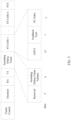
- FIG. 1 is a simple schematic structural diagram of a wireless local area network WLAN.
- the WLAN includes an access station or an access point 101, and one or more stations 102.
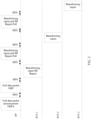
- FIG. 2 is a simple schematic diagram of a process of feeding back channel state information of multiple users.
- An AP continuously sends an NDPA (Null Data Packet Announcement, null data packet announcement) and an NDP (Null Data Packet, null data packet).
- a receive end estimates channel state information according to an indication of the NDPA and an LTF (Long training field, long training field) of the NDP, generates a beamforming report (Beamforming Report, BF Report) frame, and feeds back the estimated channel state information to the AP (Access Point, access point).
- NDPA Null Data Packet Announcement, null data packet announcement
- NDP Null Data Packet, null data packet
- a receive end estimates channel state information according to an indication of the NDPA and an LTF (Long training field, long training field
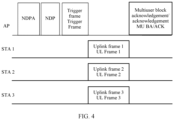
- FIG. 4 is a simple schematic diagram of an uplink OFDMA/MU-MIMO transmission process.
- UL OFDMA is introduced into the process to implement parallel transmission of BF reports of multiple users.
- UL OFDMA requires a trigger frame (Trigger Frame) to implement synchronization and indication of information such as uplink resource allocation.
- Trigger Frame Trigger Frame
- a characteristic of OFDMA is introduced into the next-generation standard, i.e. 802.11ax, and a STA may need to measure information of partial channel(s)in an entire bandwidth. Therefore, an AP may indicate, in an NDPA frame, bandwidth information that a STA needs to measure, and this part of information may be indicated by an extra bit.
- a user information part in a current VHT NDPA frame has only 16 bits, and the 16 bits all carry useful information. Therefore, in 802.11ax standard, a radio frame (such as an HE NDPA frame) that complies with the 802.11ax standard needs to implement highly efficient transmission, by using the characteristic of OFDMA.
- the VHT STA When parsing the frame, the VHT STA is able to determine, based on the value of the bit B16j+11 or the value of the bit B16j, that the STA info field does not carry related information of the VHT STA. That is, by the indication of that a bit at the foregoing location is 1, the VHT STA determines that the STA info field does not carry information of the VHT STA. Therefore, the VHT STA may no longer continue to process the STA info field. (This is described in detail in the following example.)
- a transmit end generates an HE NDPA frame.
- the HE NDPA frame includes n STA info fields, and n is a natural number.
- Each STA info field includes or carries three fields: an association identifier field(AID12), a feedback type field (Feedback Type) , and an index of number of columns field (Nc index) , and may further include or carry another field, for example, one of or any combination of fields such as an index of number of rows field (Nr index), a codebook information field, a number of subcarriers in group field (grouping Ng), and a partial bandwidth information field(partial BW info).
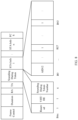
- FIG. 5 is a simple schematic diagram of an HE NDPA frame.
- Each STA info field of the HE NDPA frame in an example in FIG. 5 is 4 bytes.
- the front 12 bits of the third and fourth bytes in each STA info field are named as a first information field.
- a value at a most significant bit of the first information field is set to 1, i.e. the 28 th bit (or referred to as B27) of each STA info field is set to 1 (when the most significant bit is on a right side).
- the most significant bit of the first information field is the 17 th bit (B16).
- Remaining 11 bits in the first information field may carry other information, such as one or more types of information in the Nr index field, the codebook information field, the grouping Ng field, or the partial BW info field.
- the VHT STA When a VHT STA receives and parses the HE NDPA frame, the VHT STA theoretically expects the first information field as an AID12 field. However, in this embodiment of the present invention, the most significant bit (Maximum Significant Bit, MSB) in the first information field is set to 1. In this way, when the VHT STA parses the first information field, a value of the first information field is greater than or equal to 2048. However, a value limitation of the AID for a VHT STA should be within 1 to 2007.Therefore, it implicitly indicates to the VHT STA that the first information field is not an AID 12 field, and the VHT STA does not need to continue to process the information, thereby preventing wrongly determining by the VHT STA.
- MSB Maximum Significant Bit
- a most significant bit in an AID12 information field in each STA info field may be set to 0 or 1.
- the most significant bit When the most significant bit is set to 0, it indicates that the STA info field is the same as a STA info field in a VHT NDPA, which is 2 bytes.
- the most significant bit of the AID12 information field When the most significant bit of the AID12 information field is set to 1, it indicates that the STA info field has a length that is of a TA info field and specified in the 802.11ax standard, for example, the length is 4 bytes in this embodiment of the present invention.
- the bit may be referred to as a VHT/HE field, as shown in FIG. 6 .
- a length of an STA info field is 4 bytes.
- the VHT STA When a receiver receives the HE NDPA frame, if the receiver is a VHT STA, as the VHT STA take each STA info field as 2 bytes by default, the VHT STA firstly parses an AID12 information field, and continues to parse next 2 bytes if a parsed value does not match an AID of the VHT STA. The VHT STA does not obtain, from subsequent 4 bits, information sent to the VHT STA, until the parsed value matches the AID of the VHT STA.
- the STA info field of an HE NDPA frame includes 4 bytes. Different from this, in this example, the STA info field of the HE NDPA frame may include 6 bytes, 8 bytes, 10 bytes, or the like. Similar to Example 1, in this example, except the first 2 bytes, an MSB of the front 12 bits is set to 1, in every other 2 bytes.
- each STA info field is 2 bytes.
- the VHT STA firstly parses an AID12 information field, and continues to parse next 2 bytes if a parsed value does not match an AID of the VHT STA.
- the VHT STA does not obtain, from subsequent 4 bits, information sent to the VHT STA, until the parsed value matches the AID of the VHT STA. If the receiver is an HE STA, when a value of the VHT/HE field is 0, the HE STA performs receiving according to a receiving process of a VHT STA.
- Example 1 and Example 2 A difference between Example 1 and Example 2 lies in that, defined lengths of an STA info field of the HE NDPA frame are different. However, compared with Example 3, the STA info field in Example 1 and Example 2 has a fixed length. In Example 3, an HE NDPA frame having a variable length is provided. A STA info field of the HE NDPA frame is changeable, and may be 4 bytes, 6 bytes, 8 bytes, 10 bytes, or the like. In order that a receive end obtain a length of the STA info field, an HE NDPA frame may carry a first indication information, to indicate the length of the STA info field. The first indication information should be located before all STA info fields.
- the first indication information may be in a reserved field in a sounding dialog token.
- 1 bit in the reserved field is used to carry the first indication information. When a value of the 1 bit is 0, it indicates that the length of the STA info field is 4 bytes. When a value of the 1 bit is 1, it indicates that the length of the STA info field is 6 bytes. As shown in FIG. 9 , a length field in FIG. 9 is the first indication information.
- the first indication information (that is, the length of the STA info field) is a length of the STA info field when a value of a VHT/HE field (refer to FIG. 6 ) in an AID12 field is HE (specifically, a bit value is 1, or a bit value is 0).
- the first indication information indicates the length of the STA info field.
- a frame in the foregoing embodiments is not limited to an NDPA frame, but may be another frame other than the NDPA frame.
- the another frame has the following characteristics:
- the another frame includes a common information part and a user information part, and an AID field is the first field in each user information part.
- a trigger frame (trigger frame, TF) is a type of the another frame, as shown in FIG. 10 .
- the present invention further provides a data transmission apparatus that may perform the foregoing method (including a sending method and a receiving method).
- FIG. 11 is an apparatus for transmitting wireless local area network data according to an embodiment of the present invention.
- the apparatus includes a transmitter 1001, a receiver 1002, a memory 1003, and a processor 1004 that are configured to perform a method for sending wireless local area network data or a method for receiving wireless local area network data.
- the apparatus is used on a transmit side, and includes:
- the apparatus is used on a receive side and includes the receiver 1002.
- the receiver 1002 is configured to receive the radio frame in the foregoing embodiment.
- the processor is configured to parse the radio frame. For detailed processing of the radio frame, refer to the foregoing embodiment. Details are not described herein again.
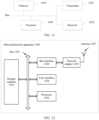
- FIG. 12 is an example of a schematic structural diagram of a data transmission apparatus according to an embodiment of the present invention (such as an access point, a station, or a chip, and some components in the figure are optional).
- a data transmission apparatus 1200 may be implemented by using a bus 1201 as a general bus architecture.
- the bus 1201 may include any quantity of interconnect buses and bridges.
- the bus 1201 connects various circuits together, and these circuits include a processor 1202, a storage medium 1203, and a bus interface 1204.
- the data transmission apparatus 1200 uses the bus interface 1204 to connect a network adapter 1205 and the like by means of the bus 1201.
- the network adapter 1205 may be configured to implement a signal processing function of a physical layer in a wireless local area network, and send and receive a radio frequency signal by using an antenna 1207.
- a user interface 1206 may connect to a user terminal, such as a keyboard, a display, a mouse, or a joystick.
- the bus 1201 may further connect to various other circuits, such as a timing source, a peripheral device, a voltage regulator, and a power management circuit. These circuits are well-known in the art, and are not described in detail herein.
- the data transmission apparatus 1200 may also be configured as a general processing system.
- the general processing system includes one or more microprocessors that provide a processor function, and an external memory that provides at least a part of the storage medium 1203. All these are connected to other supporting circuits by using an external bus architecture.
- the data transmission apparatus 1200 may be implemented by using an ASIC (application-specific integrated circuit) having the processor 1202, the bus interface 1204, and the user interface 1206, or by using at least a part of the storage medium 1203 integrated into a single chip; or the data transmission apparatus 1200 may be implemented by using one or more FPGAs (field programmable gate arrays), a PLD (programmable logic device), a controller, a state machine, gate logic, a discrete hardware component, any other appropriate circuit, a circuit capable of performing functions described in the present invention, or any combination thereof.
- ASIC application-specific integrated circuit
- the processor 1202 is responsible for managing the bus and general processing (including executing software stored in the storage medium 1203).
- the processor 1202 may be implemented by using one or more general purpose processors and/or dedicated processors. Examples of the processors include a microprocessor, a microcontroller, a DSP processor, and other circuits capable of executing software.
- the software should be broadly construed as representation of instructions, data or any combination thereof regardless of whether the software is referred to as software, firmware, middleware, microcode, hardware description language, or others.
- the processor 1202 can implement the foregoing embodiments, and details are not described herein.
- the program may be stored in a computer readable storage medium.
- the foregoing storage medium includes: any medium that can store program code, such as a ROM, a RAM, a magnetic disk, or an optical disc. Further embodiments of the present invention are provided in the following. It should be noted that the numbering used in the following section does not necessarily need to comply with the numbering used in the previous sections.
Landscapes
- Engineering & Computer Science (AREA)
- Signal Processing (AREA)
- Computer Networks & Wireless Communication (AREA)
- Quality & Reliability (AREA)
- Mobile Radio Communication Systems (AREA)
- Communication Control (AREA)
- Detection And Prevention Of Errors In Transmission (AREA)
- Time-Division Multiplex Systems (AREA)
Applications Claiming Priority (5)
| Application Number | Priority Date | Filing Date | Title |
|---|---|---|---|
| CN201610305870.9A CN107359960B (zh) | 2016-05-10 | 2016-05-10 | 无线帧的发送与接收方法与装置 |
| PCT/CN2017/082167 WO2017193818A1 (fr) | 2016-05-10 | 2017-04-27 | Procédé et appareil pour envoyer et recevoir une trame sans fil |
| EP20163476.3A EP3761541B1 (fr) | 2016-05-10 | 2017-04-27 | Procédé et appareil de transmission de trames ndpa |
| EP17795436.9A EP3407518B1 (fr) | 2016-05-10 | 2017-04-27 | Procédé et appareil pour envoyer et recevoir une trame sans fil |
| EP23172737.1A EP4243310B1 (fr) | 2016-05-10 | 2017-04-27 | Procédé et appareil de réception de trames ndpa |
Related Parent Applications (3)
| Application Number | Title | Priority Date | Filing Date |
|---|---|---|---|
| EP20163476.3A Division EP3761541B1 (fr) | 2016-05-10 | 2017-04-27 | Procédé et appareil de transmission de trames ndpa |
| EP23172737.1A Division EP4243310B1 (fr) | 2016-05-10 | 2017-04-27 | Procédé et appareil de réception de trames ndpa |
| EP17795436.9A Division EP3407518B1 (fr) | 2016-05-10 | 2017-04-27 | Procédé et appareil pour envoyer et recevoir une trame sans fil |
Publications (2)
| Publication Number | Publication Date |
|---|---|
| EP4580096A2 true EP4580096A2 (fr) | 2025-07-02 |
| EP4580096A3 EP4580096A3 (fr) | 2025-10-08 |
Family
ID=60266357
Family Applications (4)
| Application Number | Title | Priority Date | Filing Date |
|---|---|---|---|
| EP23172737.1A Active EP4243310B1 (fr) | 2016-05-10 | 2017-04-27 | Procédé et appareil de réception de trames ndpa |
| EP25157590.8A Pending EP4580096A3 (fr) | 2016-05-10 | 2017-04-27 | Procédés et appareil d'envoi et de réception de trame radio |
| EP20163476.3A Active EP3761541B1 (fr) | 2016-05-10 | 2017-04-27 | Procédé et appareil de transmission de trames ndpa |
| EP17795436.9A Active EP3407518B1 (fr) | 2016-05-10 | 2017-04-27 | Procédé et appareil pour envoyer et recevoir une trame sans fil |
Family Applications Before (1)
| Application Number | Title | Priority Date | Filing Date |
|---|---|---|---|
| EP23172737.1A Active EP4243310B1 (fr) | 2016-05-10 | 2017-04-27 | Procédé et appareil de réception de trames ndpa |
Family Applications After (2)
| Application Number | Title | Priority Date | Filing Date |
|---|---|---|---|
| EP20163476.3A Active EP3761541B1 (fr) | 2016-05-10 | 2017-04-27 | Procédé et appareil de transmission de trames ndpa |
| EP17795436.9A Active EP3407518B1 (fr) | 2016-05-10 | 2017-04-27 | Procédé et appareil pour envoyer et recevoir une trame sans fil |
Country Status (15)
| Country | Link |
|---|---|
| US (1) | US10924227B2 (fr) |
| EP (4) | EP4243310B1 (fr) |
| JP (1) | JP6692927B2 (fr) |
| KR (1) | KR102209419B1 (fr) |
| CN (4) | CN107359960B (fr) |
| AU (1) | AU2017262875B2 (fr) |
| BR (1) | BR112018073044B1 (fr) |
| CA (1) | CA3023848C (fr) |
| ES (3) | ES2814551T3 (fr) |
| MX (1) | MX386114B (fr) |
| MY (1) | MY201372A (fr) |
| PL (3) | PL3761541T3 (fr) |
| RU (1) | RU2712122C1 (fr) |
| WO (1) | WO2017193818A1 (fr) |
| ZA (1) | ZA201807813B (fr) |
Families Citing this family (7)
| Publication number | Priority date | Publication date | Assignee | Title |
|---|---|---|---|---|
| CN113747576B (zh) * | 2020-05-29 | 2026-01-30 | 华为技术有限公司 | 发送/接收空数据分组声明帧的方法及装置 |
| WO2021256832A1 (fr) * | 2020-06-15 | 2021-12-23 | 엘지전자 주식회사 | Procédé et dispositif pour effectuer une détection dans un système lan sans fil |
| CN118175660A (zh) | 2020-07-03 | 2024-06-11 | 华为技术有限公司 | 多链路建立方法及通信装置 |
| US20240283510A1 (en) * | 2021-06-22 | 2024-08-22 | Lg Electronics Inc. | Measurement report method and device with respect to sensing in wireless local area network system |
| CN115733590A (zh) * | 2021-08-28 | 2023-03-03 | 华为技术有限公司 | Ndpa帧的传输方法及相关装置 |
| CN114667753B (zh) * | 2022-02-16 | 2026-06-23 | 北京小米移动软件有限公司 | 通信方法及装置、电子设备及存储介质 |
| US20240323055A1 (en) * | 2023-03-21 | 2024-09-26 | Huawei Technologies Co., Ltd. | Methods and systems for non-trigger based sounding |
Family Cites Families (24)
| Publication number | Priority date | Publication date | Assignee | Title |
|---|---|---|---|---|
| US6115394A (en) * | 1998-03-04 | 2000-09-05 | Ericsson Inc. | Methods, apparatus and computer program products for packet transport over wireless communication links |
| EP3267610B1 (fr) * | 2009-10-01 | 2020-04-08 | Interdigital Patent Holdings, Inc. | Transmission de données de commande de liaison montante |
| CN104486281B (zh) * | 2009-12-03 | 2018-04-20 | Lg电子株式会社 | 在无线ran系统中发送帧的方法和装置 |
| US10389479B2 (en) | 2010-01-29 | 2019-08-20 | Qualcomm Incorporated | Method and apparatus for signaling expansion and backward compatibility preservation in wireless communication systems |
| WO2011115408A2 (fr) * | 2010-03-15 | 2011-09-22 | Lg Electronics Inc. | Procédé et appareil de transmission d'une trame dans un système wlan |
| US9337961B2 (en) * | 2010-06-15 | 2016-05-10 | Qualcomm Incorporated | Method and apparatus for sending very high throughput WLAN acknowledgment frames |
| US9882624B2 (en) * | 2010-09-29 | 2018-01-30 | Qualcomm, Incorporated | Systems and methods for communication of channel state information |
| KR101099345B1 (ko) * | 2010-12-01 | 2011-12-26 | 엘지전자 주식회사 | 무선랜 시스템에서 채널 사운딩 방법 및 장치 |
| US9220061B2 (en) * | 2011-01-16 | 2015-12-22 | Lg Electronics Inc. | Method for communication based on identifying information assignment and apparatus for the same |
| EP2852228B1 (fr) * | 2011-05-31 | 2018-01-03 | LG Electronics, Inc. | Procédé de transmission et de réception d'unité de données de protocole de procédure de convergence de couche physique dans un système de réseau local sans fil prenant en charge un fonctionnement en mode d'économie d'énergie, et appareil correspondant |
| CN102843755B (zh) | 2011-06-24 | 2014-12-24 | 华为技术有限公司 | 节省功耗的方法及站点设备 |
| CN103001681B (zh) * | 2011-09-14 | 2015-02-04 | 华为技术有限公司 | 一种探测方法、系统及设备 |
| CN103002478A (zh) * | 2011-09-16 | 2013-03-27 | 华为技术有限公司 | 一种ndpa帧发送、处理方法、及站点 |
| CN103095426B (zh) * | 2011-10-31 | 2015-06-03 | 华为技术有限公司 | 一种信道测量反馈请求方法、站点装置及服务集系统 |
| CN103516461B (zh) * | 2012-06-18 | 2019-02-12 | 中兴通讯股份有限公司 | 无线帧处理方法及系统 |
| WO2015120488A1 (fr) * | 2014-02-10 | 2015-08-13 | Mediatek Inc. | Méthode d'identification de bss de source dans un wlan |
| KR102082027B1 (ko) * | 2014-05-13 | 2020-02-27 | 주식회사 윌러스표준기술연구소 | 클리어 채널 할당을 위한 무선 통신 방법 및 이를 이용한 무선 통신 단말 |
| US20150372795A1 (en) * | 2014-06-18 | 2015-12-24 | Mediatek Singapore Pte. Ltd. | CSI Feedback Modes and Indication for Sub Channel Feedback in OFDMA Systems |
| WO2016003037A1 (fr) * | 2014-07-03 | 2016-01-07 | 엘지전자(주) | Procédé et dispositif pour transmettre des données multiutilisateur de liaison montante dans un système de communication sans fil |
| GB2596241B (en) * | 2014-08-21 | 2022-06-01 | Lg Electronics Inc | Data transmission method in wireless communication system, and apparatus therefor |
| KR102367780B1 (ko) * | 2014-09-12 | 2022-02-25 | 삼성전자주식회사 | 무선 통신시스템의 채널 정보 피드백을 위한 장치 및 방법 |
| US10111132B2 (en) * | 2015-03-02 | 2018-10-23 | Qualcomm Incorporated | Methods and apparatus for channel state information sounding and feedback |
| WO2017030295A1 (fr) * | 2015-08-19 | 2017-02-23 | 엘지전자(주) | Procédé de rétroaction d'état de canal dans un système de communication sans fil et appareil associé |
| US10517006B2 (en) * | 2016-04-13 | 2019-12-24 | Qualcomm Incorporated | Techniques for reporting channel feedback in wireless communications |
-
2016
- 2016-05-10 CN CN201610305870.9A patent/CN107359960B/zh active Active
- 2016-05-10 CN CN202310403494.7A patent/CN116527088B/zh active Active
- 2016-05-10 CN CN201810251768.4A patent/CN108599823B/zh active Active
- 2016-05-10 MY MYPI2018704208A patent/MY201372A/en unknown
- 2016-05-10 CN CN202311386999.3A patent/CN117879659A/zh active Pending
-
2017
- 2017-04-27 ES ES17795436T patent/ES2814551T3/es active Active
- 2017-04-27 BR BR112018073044-0A patent/BR112018073044B1/pt active IP Right Grant
- 2017-04-27 EP EP23172737.1A patent/EP4243310B1/fr active Active
- 2017-04-27 PL PL20163476.3T patent/PL3761541T3/pl unknown
- 2017-04-27 CA CA3023848A patent/CA3023848C/fr active Active
- 2017-04-27 AU AU2017262875A patent/AU2017262875B2/en active Active
- 2017-04-27 PL PL23172737.1T patent/PL4243310T3/pl unknown
- 2017-04-27 EP EP25157590.8A patent/EP4580096A3/fr active Pending
- 2017-04-27 WO PCT/CN2017/082167 patent/WO2017193818A1/fr not_active Ceased
- 2017-04-27 KR KR1020187035506A patent/KR102209419B1/ko active Active
- 2017-04-27 MX MX2018013821A patent/MX386114B/es unknown
- 2017-04-27 JP JP2018559385A patent/JP6692927B2/ja active Active
- 2017-04-27 EP EP20163476.3A patent/EP3761541B1/fr active Active
- 2017-04-27 ES ES20163476T patent/ES3024970T3/es active Active
- 2017-04-27 ES ES23172737T patent/ES3027635T3/es active Active
- 2017-04-27 PL PL17795436T patent/PL3407518T3/pl unknown
- 2017-04-27 RU RU2018143349A patent/RU2712122C1/ru active
- 2017-04-27 EP EP17795436.9A patent/EP3407518B1/fr active Active
-
2018
- 2018-11-09 US US16/186,095 patent/US10924227B2/en active Active
- 2018-11-20 ZA ZA2018/07813A patent/ZA201807813B/en unknown
Also Published As
Similar Documents
| Publication | Publication Date | Title |
|---|---|---|
| US10924227B2 (en) | Radio frame sending and receiving methods and apparatus | |
| US11832263B2 (en) | Communication method and apparatus | |
| US20240032063A1 (en) | Methods and Apparatuses for Physical Uplink Shared Channel For Multi Transmit-Receive-Point Communications in a Wireless Communications Network | |
| US10819471B2 (en) | Protocols for multiple user frame exchanges | |
| US9961510B2 (en) | Protocols for multiple user frame exchanges | |
| US10383092B2 (en) | Beamforming report structure | |
| KR102684578B1 (ko) | 채널 결합을 위한 레거시 호환가능한 시그널링 | |
| US10560240B2 (en) | Method for supporting flexible resource allocation in wireless communication system, and device therefor | |
| US10231148B2 (en) | Signaling data unit format parameters for multi-user transmissions |
Legal Events
| Date | Code | Title | Description |
|---|---|---|---|
| PUAI | Public reference made under article 153(3) epc to a published international application that has entered the european phase |
Free format text: ORIGINAL CODE: 0009012 |
|
| STAA | Information on the status of an ep patent application or granted ep patent |
Free format text: STATUS: THE APPLICATION HAS BEEN PUBLISHED |
|
| AC | Divisional application: reference to earlier application |
Ref document number: 3407518 Country of ref document: EP Kind code of ref document: P Ref document number: 3761541 Country of ref document: EP Kind code of ref document: P Ref document number: 4243310 Country of ref document: EP Kind code of ref document: P |
|
| AK | Designated contracting states |
Kind code of ref document: A2 Designated state(s): AL AT BE BG CH CY CZ DE DK EE ES FI FR GB GR HR HU IE IS IT LI LT LU LV MC MK MT NL NO PL PT RO RS SE SI SK SM TR |
|
| REG | Reference to a national code |
Ref country code: DE Ref legal event code: R079 Free format text: PREVIOUS MAIN CLASS: H04L0001060000 Ipc: H04L0001000000 |
|
| PUAL | Search report despatched |
Free format text: ORIGINAL CODE: 0009013 |
|
| AK | Designated contracting states |
Kind code of ref document: A3 Designated state(s): AL AT BE BG CH CY CZ DE DK EE ES FI FR GB GR HR HU IE IS IT LI LT LU LV MC MK MT NL NO PL PT RO RS SE SI SK SM TR |
|
| RIC1 | Information provided on ipc code assigned before grant |
Ipc: H04L 1/00 20060101AFI20250902BHEP Ipc: H04B 5/00 20240101ALI20250902BHEP Ipc: H04L 1/06 20060101ALI20250902BHEP |
|
| STAA | Information on the status of an ep patent application or granted ep patent |
Free format text: STATUS: REQUEST FOR EXAMINATION WAS MADE |
|
| 17P | Request for examination filed |
Effective date: 20260408 |