EP4580121A1 - Procédé et appareil de traitement de demande de service, et dispositif électronique et support d'enregistrement - Google Patents
Procédé et appareil de traitement de demande de service, et dispositif électronique et support d'enregistrement Download PDFInfo
- Publication number
- EP4580121A1 EP4580121A1 EP23856526.1A EP23856526A EP4580121A1 EP 4580121 A1 EP4580121 A1 EP 4580121A1 EP 23856526 A EP23856526 A EP 23856526A EP 4580121 A1 EP4580121 A1 EP 4580121A1
- Authority
- EP
- European Patent Office
- Prior art keywords
- service
- interception
- account
- target account
- target
- Prior art date
- Legal status (The legal status is an assumption and is not a legal conclusion. Google has not performed a legal analysis and makes no representation as to the accuracy of the status listed.)
- Pending
Links
Images



Classifications
-
- H—ELECTRICITY
- H04—ELECTRIC COMMUNICATION TECHNIQUE
- H04L—TRANSMISSION OF DIGITAL INFORMATION, e.g. TELEGRAPHIC COMMUNICATION
- H04L63/00—Network architectures or network communication protocols for network security
- H04L63/14—Network architectures or network communication protocols for network security for detecting or protecting against malicious traffic
- H04L63/1441—Countermeasures against malicious traffic
-
- H—ELECTRICITY
- H04—ELECTRIC COMMUNICATION TECHNIQUE
- H04L—TRANSMISSION OF DIGITAL INFORMATION, e.g. TELEGRAPHIC COMMUNICATION
- H04L63/00—Network architectures or network communication protocols for network security
- H04L63/02—Network architectures or network communication protocols for network security for separating internal from external traffic, e.g. firewalls
- H04L63/0227—Filtering policies
-
- H—ELECTRICITY
- H04—ELECTRIC COMMUNICATION TECHNIQUE
- H04L—TRANSMISSION OF DIGITAL INFORMATION, e.g. TELEGRAPHIC COMMUNICATION
- H04L63/00—Network architectures or network communication protocols for network security
- H04L63/10—Network architectures or network communication protocols for network security for controlling access to devices or network resources
-
- H—ELECTRICITY
- H04—ELECTRIC COMMUNICATION TECHNIQUE
- H04L—TRANSMISSION OF DIGITAL INFORMATION, e.g. TELEGRAPHIC COMMUNICATION
- H04L63/00—Network architectures or network communication protocols for network security
- H04L63/10—Network architectures or network communication protocols for network security for controlling access to devices or network resources
- H04L63/102—Entity profiles
-
- H—ELECTRICITY
- H04—ELECTRIC COMMUNICATION TECHNIQUE
- H04L—TRANSMISSION OF DIGITAL INFORMATION, e.g. TELEGRAPHIC COMMUNICATION
- H04L63/00—Network architectures or network communication protocols for network security
- H04L63/10—Network architectures or network communication protocols for network security for controlling access to devices or network resources
- H04L63/104—Grouping of entities
-
- Y—GENERAL TAGGING OF NEW TECHNOLOGICAL DEVELOPMENTS; GENERAL TAGGING OF CROSS-SECTIONAL TECHNOLOGIES SPANNING OVER SEVERAL SECTIONS OF THE IPC; TECHNICAL SUBJECTS COVERED BY FORMER USPC CROSS-REFERENCE ART COLLECTIONS [XRACs] AND DIGESTS
- Y02—TECHNOLOGIES OR APPLICATIONS FOR MITIGATION OR ADAPTATION AGAINST CLIMATE CHANGE
- Y02D—CLIMATE CHANGE MITIGATION TECHNOLOGIES IN INFORMATION AND COMMUNICATION TECHNOLOGIES [ICT], I.E. INFORMATION AND COMMUNICATION TECHNOLOGIES AIMING AT THE REDUCTION OF THEIR OWN ENERGY USE
- Y02D10/00—Energy efficient computing, e.g. low power processors, power management or thermal management
Definitions
- unauthorized activities such as cyber attacks, information theft, ransomware scams and the like implemented by using Internet technologies are increasing, for example, promoting unauthorized websites, posting fraud information and the like on an Internet social platform, so that unauthorized income is obtained.
- the unauthorized activities above are performed usually by automatically sending the service request to the platform server by using the Internet technologies, so that accounts being registered on the Internet social platform in batches, and the accounts masquerading as real users to post unauthorized content.
- the social platform usually identified the service request based on a rule, and then an unauthorized account sending an unauthorized request is intercepted at a fixed service node to prevent such unauthorized accounts from continuing to send unauthorized requests.
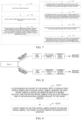
- FIG. 2 is a schematic flowchart 1 of a method for service request processing according to an embodiment of the present disclosure.
- the method in this embodiment may be applied to a server, and the method for service request processing includes: Step S101: obtain a target account that is an account having a risk of initiating an unauthorized request to a target service, the target service having at least two service nodes.
- a target account(s) is a subset of all accounts registered at the server, more specifically, unauthorized accounts in the above application scenario.
- the target account in this embodiment is aggregated accounts that are registered in batches by an attacker (unauthorizedly gang) and have similar features in one or more dimensions.
- the target account may refer to an account which has a record of sending an unauthorized request, or has a possibility of sending an unauthorized request based on evaluation.
- the unauthorized request is a service request sending to a server including unauthorized content, and the unauthorized content is, for example, fraud information, unauthorized website information, and the like. After the unauthorized request is responded by the server, the unauthorized information is displayed on the corresponding network platform.
- the target account may be obtained based on account data predetermined in the server, or may be determined after real time detecting and evaluating of the service requests sent by different accounts, which is not specifically limited herein.
- the unauthorized request initiated by the target account corresponds to the target service
- the target service is, for example, a service such as posting a status and posting a comment on a social platform.
- the target service has at least two service nodes, for example, the target service is posting a status on a social platform, and the service node corresponding to the target service includes: "account registration", "login account”, "following friends", and "posting status".
- the target account needs to respectively send a service request to each of the service nodes, so as to finally implement the purpose of sending an unauthorized request to the target service (posting a status containing unauthorized content on a social platform).
- Step S102 determine, based on the target account, a corresponding key service node, the key service node being a service node among the at least two service nodes that has a best interception effect for performing access interception on an unauthorized request initiated by the target account.
- a corresponding key service node is determined, that is, the service node with the best interception effect when intercepting the unauthorized request initiated by the target account.
- the service node with the best interception effect for example, a service node with the highest interception rate of unauthorized requests, for example, a service node with a minimum computing resource consumption during the interception process; furthermore, a service node having a maximum effective interception duration of intercepting unauthorized requests.
- step S102 includes: Step S1021: obtain a first service request sent by the target account.
- the service request sent by the target account is detected.
- the first service request is intercepted at different service nodes, and the interception effect, i.e., the interception gain, is evaluated.
- the interception effect i.e., the interception gain
- the attacker which sends the unauthorized request bypasses the access interception at the A service node by changing the parameter.
- the attacker which sends the unauthorized request bypasses the access interception at the B service node by changing the parameter. That is, the effective interception duration at the B service node is longer, and the interception gain is higher.
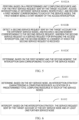
- the first service request sent to the "login node” is intercepted (that is, the first sub-request is intercepted), so that the accounts in the account set A is intercepted at the "login node", and account login cannot be performed;
- access interception is not performed at the "login node”, and the first service request sent to the "status editing node” is intercepted (that is, the second sub-request is intercepted), so that the accounts in the account set B is intercepted at the "status editing node", that is, account login can be performed, but the status content cannot be edited;
- access interception is not performed at the "login node” or the "status editing node", and the first service request sent to the "status display node” is intercepted (that is, the third sub-request is intercepted), so that the accounts in the account set C is intercepte
- the target account is intercepted respectively at different service nodes, so that the target account cannot perform the solution for the target service.
- an attacker who sends an unauthorized request by using the target account may change a parameter in the sent service request by adjusting a modification program script and the like, for example, change a content keyword, login information, and the like in the service request, to avoid the interception, and achieve a purpose of normally triggering a target service (for example, posting a status containing unauthorized information on a social platform).
- time cost and computing resource cost of the attacker which sends the unauthorized request to identify the interception rule and avoid the interception are different.
- the attacker may directly re-register a new account to initiate an attack through a program script, so the attacker avoids the time cost for intercepting and the computing resource cost is relatively low, that is, the effective interception duration is short;
- the attacker needs to send the request to a plurality of nodes such as the "login node” and the "status editing node” in sequence through the target account, and at the same time, the attacker needs to analyze the reason and the rule why the unauthorized content unable to be displayed on the social platform to avoid the interception, thus more computing resource cost and time cost are required, that is, the effective interception duration is long.
- the interception gain corresponding to each of the service nodes may be determined by detecting the actual effective interception duration of each of the service nodes.
- an implementation of step S1022 includes: Step S1022A: perform, based on a predetermined unit computing resource and for the first service request sent by the target account, access interceptions at different service nodes, respectively, and record a first moment corresponding to each of the service nodes, the first moment being a start moment of the access interception.
- Step S1022B detect a second service request sent by the target account for the different service nodes, and record a second moment corresponding to the second service request, wherein the second service request is a service request for bypassing the access interception, and the second moment is a moment at which the second service request is received.
- Step S1022C determine, based on the first moment and the second moment, the interception gain corresponding to each of the service nodes.
- Step S1023 determine the key service node based on the interception gain.
- the unauthorized information included in the first service request is "www.xxx.cn" (for example, a fraud website); the server intercepts the first service request at the "status display node", and replaces the unauthorized information "www.xxx.cn” with a character string "######"; then the attacker modifies the request parameter, modifies the unauthorized information "www.xxx.cn” to "www(/).xxx(/).cn(/)", and further generates the second service request based on the modified unauthorized information to avoid the server's identification of the unauthorized information "www.xxx.cn" in the first service request, thereby achieving the purpose of bypassing the access interception.
- the server based on an artificial or pre-trained recognition model, detects content such as "www(/).xxx(/).cn(/)" in the service request, it is considered that the service request is the second service request. For specific recognition methods, details are not described herein again.
- the effective interception duration of the access interception at the corresponding service node may be determined, thereby the interception gain is obtained. Further, the service node with the largest interception gain is determined as the key service node.
- Step S103 perform, based on the key service node, access interception on a service request sent by the target account.
- the interception efficiency is dynamically maximized.
- the key service node is a service node "following friends" in the social platform
- the attacker may register the "target account" in batches through the program script, and perform operations such as user login and like by sending the service request, but cannot "following friends”; and after the attacker sends the unauthorized request again by modifying the parameters, the key service node may change accordingly based on the interception gains corresponding to each of the service nodes, for example, the key service node is changed to the service node "posting information" in the social platform, that is, the attacker may perform operations such as user login and following friends by sending the service request, but cannot post information. Therefore, dynamic access interception of the target account is realized.
- the risk control server needs to process a large amount of request data in real time, and there are a plurality of attackers that send unauthorized requests to the platform at the same time. Therefore, the interception strategy of unauthorized requests needs to consider the overall computing resource allocation of the risk control server to ensure the real-time processing of the service requests.
- the target service by obtaining the target account that is an account having a risk of initiating an unauthorized request to the target service, and the target service has at least two service nodes; determine, based on the target account, a corresponding key service node, the key service node is a service node that has a best interception effect for performing access interception on an unauthorized request initiated by the target account; and perform, based on the key service node, access interception on a service request sent by the target account.
- the key service node with better interception effect in the target service is evaluated, and then at the key service node, an access interception is performed on the unauthorized request initiated by the target account, the interception accuracy of the unauthorized request is improved, meanwhile, dynamic interception for the target account is formed, the difficulty of bypassing the interception by changing the access parameter of the target account is increased, and the efficiency of the computing resource is improved.
- the risk control server may perform indiscriminate or random detection on service requests sent by the user to the risk control server through the terminal device, to obtain service requests, that is, daily service requests, sent by different accounts. Then, the multi-dimensional features corresponding to the daily service request are obtained, for example, the multi-dimensional features include at least two of the following: account features, device features, behavior features, or content features, and features are described in detail below.
- the account feature that is, a feature of an account sending the daily service request, for example, an account identifier (e.g., an account name, an account profile picture), an account creation time, account registration information (e.g., information of age, gender, residence, etc. setting in an account), or the like.
- the daily service requests may contain identification information of an account sending the requests, and the account feature may be further determined by using the identification information.
- the device feature that is, a feature of a device logged in by an account which sends the daily service requests, for example, a device identifier, a device model, a device login time, a device network address, or the like.
- the daily service requests may contain identification information of the device sending the requests, and the device feature may be further determined by using the identification information.
- the behavior feature characterizes an order of daily service requests sent by the same account for different service nodes, that is, an order of sending service requests to each of the service nodes of the target service, that is, triggers a time order of each of the service nodes.
- the behavior feature may be determined by using specific content information of a plurality of daily service requests.
- FIG. 8 is a schematic diagram of a behavior feature an embodiment of the present disclosure, as shown in FIG.
- the behavior feature corresponding to the daily service request A is a behavior feature a; and if the daily service request(s) B(a set of service requests) sent by the account sequentially triggers the "user login", “enter the trending topic", “comment in topic section” service nodes, the behavior feature corresponding to the daily service request B is a behavior feature b.
- the content feature that is, a feature of the content in the sent daily service request, for example, a specific keyword, and a sentence including the specific keyword, and/or the behavior content for the behavior feature, for example, the daily service request is used to trigger the service node "following friends", and the corresponding content feature is the account identifier of the friend to be followed.
- the content feature may be determined by using specific content information in the daily service request.
- the multi-dimensional feature refers to a combination of at least two of the foregoing four features, and more specifically, the multi-dimensional feature may include a plurality of subclasses in each type of feature (the account feature, the device feature, the behavior feature, and the content feature), to obtain more combination of dimensions, for example, the multi-dimensional feature may include features of 500 dimensions, thereby a more accurate description for the service request is achieved.
- Step S203 cluster, based on the multi-dimensional features, accounts corresponding to the daily service requests to obtain a plurality of clustered accounts, the clustered accounts being a set of a plurality of accounts having a same clustering feature, wherein the clustering feature is a subset of the multi-dimensional features.
- Step S204 determine, based on the number of accounts in each of the clustered accounts, a target clustered account, an account in the target clustered account being the target account.
- Step S205 determine, based on the target account, a corresponding key service node, the key service node being a service node that has a best interception effect for performing access interception on an unauthorized request initiated by the target account.
- Step S206 obtain appeal data, the appeal data being appeal information for the access interception sent by the target account.
- Step S207 update, based on the appeal data, the target account and/or an interception strategy, and return to step S201, wherein the interception strategy is a strategy for performing access interception on the service request sent by the target account.
- the interception strategy is a strategy for performing access interception on the service request sent by the target account.
- Appeal data that is, a set of appeal information submitted to the Internet platform for the target account, and after obtaining the appeal data, the server analyzes the appeal data, and could determine the real appeal information that is sent by the user and reflects the mis-interception condition, also could determine the false appeal information sent by using the program script. Afterwards, the processing model providing the interception strategy is further trained by using the real appeal information and the false appeal information, so that the target account previously determined as the unauthorized account is updated, and / or the interception strategy for the target account is updated, wherein the specific implementation of the interception strategy may refer to the related description in the embodiment shown in FIG. 6 , and details are not described herein again.
- step S207 includes:
- FIG. 10 is a structural block diagram of an apparatus for service request processing according to an embodiment of the present disclosure. For ease of illustration, only portions related to embodiments of the present disclosure are shown. Referring to FIG. 10 , the apparatus for service request processing 3 includes:
- the obtaining module 31, the determining module 32, and the intercepting module 33 are connected in sequence.
- the apparatus for service request processing 3 provided in this embodiment may perform the technical solutions of the foregoing method embodiments, and implementation principles and technical effects are similar, and details are not described herein again in this embodiment.
- FIG. 11 is a schematic structural diagram of an electronic device according to an embodiment of the present disclosure. As shown in FIG. 11 , the electronic device 3 comprises:
- the electronic device 900 may include a processing device (e.g., a central processing unit, a graphics processor, etc.) 901, that may perform various suitable actions and processes in accordance with a program stored in a read only memory (ROM) 902 or a program loaded into a random access memory (RAM) 903 from a storage device 908.
- a processing device e.g., a central processing unit, a graphics processor, etc.
- ROM read only memory
- RAM random access memory
- Various programs and data required for the operation of the electronic device 900 are also stored in the RAM 903.
- the processing device 901, the ROM 902, and the RAM 903 are connected to each other via a bus 904.
- An input/output (I/O) interface 905 is also connected to the bus 904.
- the following device may be connected to the I/O interface 905: an input device 906 including, for example, a touchscreen, a touchpad, a keyboard, a mouse, a camera, a microphone, an accelerometer, a gyroscope, or the like; an output device 907 including, for example, a liquid crystal display (LCD), a speaker, a vibrator, or the like; a storage device 908 including, for example, a magnetic tape, a hard disk, or the like; and a communication device 909.
- the communication device 909 may enable the electronic device 900 to wirelessly or wired communicate with other devices to exchange data.
- FIG. 12 shows the electronic device 900 comprising various devices, it should be understood that it is not required that all of the devices shown in the figure shall be implemented or equipped. More or fewer devices may be alternatively implemented or equipped.
- the computer readable storage medium may include, but are not limited to, an electrical connection having one or more wires, a portable computer diskette, a hard disk, a random access memory (RAM), a read-only memory (ROM), an erasable programmable read-only memory (EPROM), or a flash memory, an optical fiber, a compact disc read only memory (CD-ROM), an optical storage device, a magnetic storage device, or any suitable combination of the foregoing.
- a computer readable storage medium may be any tangible medium that may contain or store a program for use by or in connection with an instruction execution system, apparatus, or device.
- a computer readable signal medium may include a propagated data signal with computer readable program code embodied therein, for example, in baseband or as part of a carrier wave. Such a propagated signal may take any of a variety of forms, including, but not limited to, electro-magnetic, optical, or any suitable combination thereof.
- a computer readable signal medium may also be any computer readable medium that is not a computer readable storage medium and that may communicate, propagate, or transport a program for use by or in connection with an instruction execution system, apparatus, or device.
- Program code embodied on a computer readable medium may be transmitted using any appropriate medium, including, but not limited to, wireline, optical fiber cable, Radio Frequency (RF), etc., or any suitable combination of the foregoing.
- RF Radio Frequency
- the computer readable medium may be included in the electronic device, or may exist separately and not be installed in the electronic device.
- the computer readable medium carries one or more programs which when being executed by the electronic device, cause the electronic device to execute the method illustrated in the above-mentioned embodiments.
- Computer program code for carrying out operations for aspects of the present disclosure may be written in any combination of one or more programming languages, including an object-oriented programming language such as Java, Smalltalk, C++ or the like and conventional procedural programming languages, such as the "C" programming language or similar programming languages.
- the program code may execute entirely on the user's computer, partly on the user's computer, as a stand-alone software package, partly on the user's computer and partly on a remote computer or entirely on the remote computer or server.
- the remote computer may be connected to the user's computer through any type of network, including a local area network (LAN) or a wide area network (WAN), or the connection may be made to an external computer (for example, through the Internet using an Internet Service Provider).
- LAN local area network
- WAN wide area network
- Internet Service Provider for example, AT&T, MCI, Sprint, EarthLink, MSN, GTE, etc.
- each block in the flowchart or block diagrams may represent a module, segment, or portion of code, which comprises one or more executable instructions for implementing the specified logical function(s).
- the functions noted in the blocks may occur out of the order noted in the figures. For example, two blocks shown in succession may, in fact, be executed substantially concurrently, or the blocks may sometimes be executed in the reverse order, depending upon the functionality involved.
- the unit(s) involved in the embodiments of the present disclosure may be implemented through software or hardware.
- the name of a unit does not constitute a limitation to the unit itself in some cases, for example, the first acquisition unit may also be described as "unit to acquire at least two internet protocol addresses".
- FPGAs Field-programmable Gate Arrays
- ASICs Application Specific Integrated Circuits
- ASSPs Application Specific Standard Parts
- SOCs System-On-chip systems
- CPLDs Complex Programmable Logic Devices
- machine-readable storage media would include an electrical connection based on one or more wires, a portable computer diskette, a hard disk, a random access memory (RAM), a read-only memory (ROM), an erasable programmable read-only memory (EPROM or Flash memory), an optical fiber, a compact disc read-only memory (CD-ROM), an optical storage device, a magnetic storage device, or any suitable combination of the foregoing.
- RAM random access memory
- ROM read-only memory
- EPROM or Flash memory erasable programmable read-only memory
- CD-ROM compact disc read-only memory
- magnetic storage device or any suitable combination of the foregoing.
- a method for service request processing including: obtaining a target account that is an account having a risk of initiating an unauthorized request to a target service, the target service having at least two service nodes; determining, based on the target account, a corresponding key service node, the key service node being a service node among the at least two service nodes that has a best interception effect for performing access interception on an unauthorized request initiated by the target account; and performing, based on the key service node, access interception on a service request sent by the target account.
- determining the corresponding key service node based on the target account includes: obtaining a first service request sent by the target account; determining, based on the first service request, an interception gain corresponding to each of the service nodes, wherein the interception gain characterizes, based on a unit computing resource, an effective interception duration for intercepting an attacker of the target account at a corresponding service node; and determining, based on the interception gain, the key service node.
- determining the interception gain corresponding to each of the service nodes based on the first service request includes: performing, based on a predetermined unit computing resource and for the first service request sent by the target account, access interceptions at different service nodes, respectively, and recording a first moment corresponding to each of the service nodes, the first moment being a start moment of the access interception; detecting a second service request sent by the target account for the different service nodes, and recording a second moment corresponding to the second service request, wherein the second service request is a service request for bypassing the access interception, and the second moment is a moment at which the second service request is received; and determining, based on the first moment and the second moment, the interception gain corresponding to each of the service nodes.
- performing, based on the key service node, access interception on the service request sent by the target account includes: determining, based on the key service node, an interception strategy characterizing a computing resource allocation of a predetermined total computing resource at each of the service nodes; and intercepting, based on the interception strategy, the service request sent by the target account at the key service node and at least one further service node.
- identifying the target account based on the multi-dimensional features of the daily service requests includes: obtaining the multi-dimensional features of the daily service requests; clustering, based on the multi-dimensional features, accounts corresponding to the daily service requests to obtain a plurality of clustered accounts, the clustered accounts being a set of a plurality of accounts having a same clustering feature, wherein the clustering feature is a subset of the multi-dimensional features; and determining, based on the number of accounts in each of the clustered accounts, a target clustered account, an account in the target clustered account being the target account.
- the multi-dimensional features include at least two of the following: an account feature, a device feature, a behavior feature, or a content feature.
- the method further comprises: obtaining appeal data, the appeal data being appeal information for the access interception sent by the target account; and updating, based on the appeal data, the target account and/or an interception strategy, wherein the interception strategy is a strategy for performing access interception on the service request sent by the target account.
- an apparatus for service request processing is provided based on one or more embodiments of the present disclosure, including:
- the determining module when determining the interception gain corresponding to each of the service nodes based on the first service request, is specifically configured for: performing, based on a predetermined unit computing resource and for the first service request sent by the target account, access interceptions at different service nodes, respectively, and recording a first moment corresponding to each of the service nodes, the first moment being a start moment of the access interception; detecting a second service request sent by the target account for the different service nodes, and recording a second moment corresponding to the second service request, wherein the second service request is a service request for bypassing the access interception, and the second moment is a moment at which the second service request is received; and determining, based on the first moment and the second moment, the interception gain corresponding to each of the service nodes.
- the interception module is specifically configured for: determining, based on the key service node, an interception strategy characterizing a computing resource allocation of a predetermined total computing resource at each of the service nodes; and intercepting, based on the interception strategy, the service request sent by the target account at the key service node and at least one further service node.
- the obtaining module when identifying a target account based on the multi-dimensional feature of the daily service request, is specifically configured for: obtaining the multi-dimensional features of the daily service requests; clustering, based on the multi-dimensional features, accounts corresponding to the daily service requests to obtain a plurality of clustered accounts, the clustered accounts being a set of a plurality of accounts having a same clustering feature, wherein the clustering feature is a subset of the multi-dimensional features; and determining, based on the number of accounts in each of the clustered accounts, a target clustered account, an account in the target clustered account being the target account.
- the multi-dimensional features includes at least two of the following: an account feature, a device feature, a behavior feature, or a content feature.
- the obtaining module is further configured for: obtaining appeal data, the appeal data being appeal information for the access interception sent by the target account; and updating, based on the appeal data, the target account and/or an interception strategy, wherein the interception strategy is a strategy for performing access interception on the service request sent by the target account.
- the obtaining module when updating the target account and/or the interception strategy based on the appeal data, is specifically configured for: clustering based on content of the appeal data to obtain a first appeal sample and a second appeal sample, wherein the first appeal sample is appeal information sent by a normal account, and the second appeal sample is an account having a risk of initiating an unauthorized request to the target service; and updating, based on the first appeal sample and/or the second appeal sample, the target account and/or the interception strategy.
- an electronic device including: a processor, and a memory communicatively connected to the processor;
- a computer readable storage medium based on one or more embodiments of the present disclosure, wherein the computer readable storage medium stores computer executable instructions, and when performed by a processor, implementing the method for service request processing in accordance with the first aspect and various possible designs of the first aspect is implemented.
- an embodiment of the present disclosure provides a computer program product, including a computer program, wherein the computer program, performed by a processor, implementing the method for service request processing in accordance with the first aspect and various possible designs of the first aspect.
- an embodiment of the present disclosure provides a computer program, wherein the computer program, when performed by a processor, implementing the method for service request processing in accordance with the first aspect and various possible designs of the first aspect.
Landscapes
- Engineering & Computer Science (AREA)
- Computer Security & Cryptography (AREA)
- Computer Hardware Design (AREA)
- Computing Systems (AREA)
- General Engineering & Computer Science (AREA)
- Computer Networks & Wireless Communication (AREA)
- Signal Processing (AREA)
- Management, Administration, Business Operations System, And Electronic Commerce (AREA)
Applications Claiming Priority (2)
| Application Number | Priority Date | Filing Date | Title |
|---|---|---|---|
| CN202211037837.4A CN117675242A (zh) | 2022-08-26 | 2022-08-26 | 业务请求处理方法、装置、电子设备及存储介质 |
| PCT/CN2023/113405 WO2024041436A1 (fr) | 2022-08-26 | 2023-08-16 | Procédé et appareil de traitement de demande de service, et dispositif électronique et support d'enregistrement |
Publications (1)
| Publication Number | Publication Date |
|---|---|
| EP4580121A1 true EP4580121A1 (fr) | 2025-07-02 |
Family
ID=90012450
Family Applications (1)
| Application Number | Title | Priority Date | Filing Date |
|---|---|---|---|
| EP23856526.1A Pending EP4580121A1 (fr) | 2022-08-26 | 2023-08-16 | Procédé et appareil de traitement de demande de service, et dispositif électronique et support d'enregistrement |
Country Status (5)
| Country | Link |
|---|---|
| US (1) | US20260106889A1 (fr) |
| EP (1) | EP4580121A1 (fr) |
| JP (1) | JP2025531707A (fr) |
| CN (1) | CN117675242A (fr) |
| WO (1) | WO2024041436A1 (fr) |
Families Citing this family (2)
| Publication number | Priority date | Publication date | Assignee | Title |
|---|---|---|---|---|
| CN118313941B (zh) * | 2024-04-26 | 2025-03-07 | 九科信息技术(深圳)有限公司 | 抛账业务请求的处理方法、设备及存储介质 |
| CN118748601B (zh) * | 2024-06-17 | 2026-03-31 | 恒安嘉新(北京)科技股份公司 | 异常流量的拦截方法、装置、设备、介质及产品 |
Family Cites Families (11)
| Publication number | Priority date | Publication date | Assignee | Title |
|---|---|---|---|---|
| US10666620B1 (en) * | 2012-11-30 | 2020-05-26 | United Services Automobile Association (Usaa) | Private network request forwarding |
| US20140283115A1 (en) * | 2013-03-15 | 2014-09-18 | International Business Machines Corporation | Method and system for monitoring access attempts of shared memory of databases |
| CN105791255B (zh) * | 2014-12-23 | 2020-03-13 | 阿里巴巴集团控股有限公司 | 基于账户聚类的计算机风险识别方法及其系统 |
| CN106210057A (zh) * | 2016-07-13 | 2016-12-07 | 成都知道创宇信息技术有限公司 | 一种基于cdn的云安全防护方法 |
| CN110351345B (zh) * | 2019-06-25 | 2021-10-12 | 创新先进技术有限公司 | 用于业务请求处理的方法及装置 |
| CN112270011B (zh) * | 2020-11-19 | 2022-04-01 | 北京炼石网络技术有限公司 | 对现存应用系统的业务及数据安全防护方法、装置及系统 |
| CN113378899B (zh) * | 2021-05-28 | 2024-05-28 | 百果园技术(新加坡)有限公司 | 非正常账号识别方法、装置、设备和存储介质 |
| CN113379422B (zh) * | 2021-08-12 | 2021-10-15 | 腾讯科技(深圳)有限公司 | 基于智能合约的数据处理方法、设备以及可读存储介质 |
| CN113626807A (zh) * | 2021-08-13 | 2021-11-09 | 张可 | 基于大数据的计算机信息安全处理方法及系统 |
| CN114760121B (zh) * | 2022-03-31 | 2023-08-01 | 腾讯科技(深圳)有限公司 | 访问频率控制的方法和访问频率控制系统 |
| CN114697288A (zh) * | 2022-03-31 | 2022-07-01 | 中国工商银行股份有限公司 | 消息通知方法、装置、计算机设备和存储介质 |
-
2022
- 2022-08-26 CN CN202211037837.4A patent/CN117675242A/zh active Pending
-
2023
- 2023-08-16 WO PCT/CN2023/113405 patent/WO2024041436A1/fr not_active Ceased
- 2023-08-16 US US19/106,832 patent/US20260106889A1/en active Pending
- 2023-08-16 JP JP2025512132A patent/JP2025531707A/ja active Pending
- 2023-08-16 EP EP23856526.1A patent/EP4580121A1/fr active Pending
Also Published As
| Publication number | Publication date |
|---|---|
| WO2024041436A1 (fr) | 2024-02-29 |
| CN117675242A (zh) | 2024-03-08 |
| JP2025531707A (ja) | 2025-09-25 |
| US20260106889A1 (en) | 2026-04-16 |
Similar Documents
| Publication | Publication Date | Title |
|---|---|---|
| US11184359B2 (en) | Automated access control policy generation for computer resources | |
| US10740411B2 (en) | Determining repeat website users via browser uniqueness tracking | |
| US10958657B2 (en) | Utilizing transport layer security (TLS) fingerprints to determine agents and operating systems | |
| US8805995B1 (en) | Capturing data relating to a threat | |
| EP4580121A1 (fr) | Procédé et appareil de traitement de demande de service, et dispositif électronique et support d'enregistrement | |
| US20250030723A1 (en) | Automated actions in a security platform | |
| US12526293B2 (en) | Method, apparatus, system, and non-transitory computer readable medium for identifying and prioritizing network security events | |
| US20260003959A1 (en) | Method, device, and storage medium for detecting intrusion of container environment | |
| CN117768200A (zh) | 一种威胁风险指数分析方法、装置、电子设备及存储介质 | |
| CN116595523A (zh) | 基于动态编排的多引擎文件检测方法、系统、设备及介质 | |
| CN114329612A (zh) | 敏感数据识别方法、装置、电子设备和存储介质 | |
| CN111262842B (zh) | 网页防篡改方法、装置、电子设备、及存储介质 | |
| CN115828256B (zh) | 一种越权与未授权逻辑漏洞检测方法 | |
| CN119312320A (zh) | 文件防护方法、装置、设备、存储介质和程序产品 | |
| CN118316656A (zh) | 数据包处理方法、装置、电子设备及存储介质 | |
| CN117744071B (zh) | 一种攻击行为检测方法、装置、设备及存储介质 | |
| CN116248340B (zh) | 接口攻击的检测方法、装置、电子设备及存储介质 | |
| CN113596051B (zh) | 检测方法、检测装置、电子设备、介质和计算机程序 | |
| CN116094772B (zh) | 接口攻击的检测方法、装置、电子设备及存储介质 | |
| CN119226332B (zh) | 数据处理方法、装置、设备及存储介质 | |
| CN110990469A (zh) | 基于数据仓库的数据授权和数据自助提取的方法和装置 | |
| CN119544339A (zh) | 接口安全保护方法、装置、存储介质以及终端 | |
| US20230101198A1 (en) | Computer-implemented systems and methods for application identification and authentication | |
| CN117294470A (zh) | 网络攻击检测方法、装置、电子设备及存储介质 | |
| CN117640159A (zh) | 异常访问检测方法、装置、设备、介质及程序产品 |
Legal Events
| Date | Code | Title | Description |
|---|---|---|---|
| STAA | Information on the status of an ep patent application or granted ep patent |
Free format text: STATUS: THE INTERNATIONAL PUBLICATION HAS BEEN MADE |
|
| PUAI | Public reference made under article 153(3) epc to a published international application that has entered the european phase |
Free format text: ORIGINAL CODE: 0009012 |
|
| STAA | Information on the status of an ep patent application or granted ep patent |
Free format text: STATUS: REQUEST FOR EXAMINATION WAS MADE |
|
| 17P | Request for examination filed |
Effective date: 20250225 |
|
| AK | Designated contracting states |
Kind code of ref document: A1 Designated state(s): AL AT BE BG CH CY CZ DE DK EE ES FI FR GB GR HR HU IE IS IT LI LT LU LV MC ME MK MT NL NO PL PT RO RS SE SI SK SM TR |
|
| DAV | Request for validation of the european patent (deleted) | ||
| DAX | Request for extension of the european patent (deleted) |