EP4580157A1 - Procédé et dispositif de marquage d'encombrement l4s, de signalement et de rétroaction locale dans un système de communication sans fil - Google Patents
Procédé et dispositif de marquage d'encombrement l4s, de signalement et de rétroaction locale dans un système de communication sans fil Download PDFInfo
- Publication number
- EP4580157A1 EP4580157A1 EP23873225.9A EP23873225A EP4580157A1 EP 4580157 A1 EP4580157 A1 EP 4580157A1 EP 23873225 A EP23873225 A EP 23873225A EP 4580157 A1 EP4580157 A1 EP 4580157A1
- Authority
- EP
- European Patent Office
- Prior art keywords
- congestion
- upf
- ecn
- smf
- policy
- Prior art date
- Legal status (The legal status is an assumption and is not a legal conclusion. Google has not performed a legal analysis and makes no representation as to the accuracy of the status listed.)
- Pending
Links
Images




Classifications
-
- H—ELECTRICITY
- H04—ELECTRIC COMMUNICATION TECHNIQUE
- H04W—WIRELESS COMMUNICATION NETWORKS
- H04W28/00—Network traffic management; Network resource management
- H04W28/02—Traffic management, e.g. flow control or congestion control
-
- H—ELECTRICITY
- H04—ELECTRIC COMMUNICATION TECHNIQUE
- H04L—TRANSMISSION OF DIGITAL INFORMATION, e.g. TELEGRAPHIC COMMUNICATION
- H04L47/00—Traffic control in data switching networks
- H04L47/10—Flow control; Congestion control
- H04L47/11—Identifying congestion
-
- H—ELECTRICITY
- H04—ELECTRIC COMMUNICATION TECHNIQUE
- H04L—TRANSMISSION OF DIGITAL INFORMATION, e.g. TELEGRAPHIC COMMUNICATION
- H04L47/00—Traffic control in data switching networks
- H04L47/10—Flow control; Congestion control
- H04L47/11—Identifying congestion
- H04L47/115—Identifying congestion using a dedicated packet
-
- H—ELECTRICITY
- H04—ELECTRIC COMMUNICATION TECHNIQUE
- H04L—TRANSMISSION OF DIGITAL INFORMATION, e.g. TELEGRAPHIC COMMUNICATION
- H04L47/00—Traffic control in data switching networks
- H04L47/10—Flow control; Congestion control
- H04L47/19—Flow control; Congestion control at layers above the network layer
-
- H—ELECTRICITY
- H04—ELECTRIC COMMUNICATION TECHNIQUE
- H04L—TRANSMISSION OF DIGITAL INFORMATION, e.g. TELEGRAPHIC COMMUNICATION
- H04L47/00—Traffic control in data switching networks
- H04L47/10—Flow control; Congestion control
- H04L47/20—Traffic policing
-
- H—ELECTRICITY
- H04—ELECTRIC COMMUNICATION TECHNIQUE
- H04L—TRANSMISSION OF DIGITAL INFORMATION, e.g. TELEGRAPHIC COMMUNICATION
- H04L47/00—Traffic control in data switching networks
- H04L47/10—Flow control; Congestion control
- H04L47/24—Traffic characterised by specific attributes, e.g. priority or QoS
- H04L47/2408—Traffic characterised by specific attributes, e.g. priority or QoS for supporting different services, e.g. a differentiated services [DiffServ] type of service
-
- H—ELECTRICITY
- H04—ELECTRIC COMMUNICATION TECHNIQUE
- H04L—TRANSMISSION OF DIGITAL INFORMATION, e.g. TELEGRAPHIC COMMUNICATION
- H04L47/00—Traffic control in data switching networks
- H04L47/10—Flow control; Congestion control
- H04L47/26—Flow control; Congestion control using explicit feedback to the source, e.g. choke packets
-
- H—ELECTRICITY
- H04—ELECTRIC COMMUNICATION TECHNIQUE
- H04L—TRANSMISSION OF DIGITAL INFORMATION, e.g. TELEGRAPHIC COMMUNICATION
- H04L47/00—Traffic control in data switching networks
- H04L47/10—Flow control; Congestion control
- H04L47/26—Flow control; Congestion control using explicit feedback to the source, e.g. choke packets
- H04L47/263—Rate modification at the source after receiving feedback
-
- H—ELECTRICITY
- H04—ELECTRIC COMMUNICATION TECHNIQUE
- H04L—TRANSMISSION OF DIGITAL INFORMATION, e.g. TELEGRAPHIC COMMUNICATION
- H04L47/00—Traffic control in data switching networks
- H04L47/10—Flow control; Congestion control
- H04L47/31—Flow control; Congestion control by tagging of packets, e.g. using discard eligibility [DE] bits
-
- H—ELECTRICITY
- H04—ELECTRIC COMMUNICATION TECHNIQUE
- H04W—WIRELESS COMMUNICATION NETWORKS
- H04W28/00—Network traffic management; Network resource management
- H04W28/02—Traffic management, e.g. flow control or congestion control
- H04W28/0268—Traffic management, e.g. flow control or congestion control using specific QoS parameters for wireless networks, e.g. QoS class identifier [QCI] or guaranteed bit rate [GBR]
-
- H—ELECTRICITY
- H04—ELECTRIC COMMUNICATION TECHNIQUE
- H04W—WIRELESS COMMUNICATION NETWORKS
- H04W28/00—Network traffic management; Network resource management
- H04W28/02—Traffic management, e.g. flow control or congestion control
- H04W28/0284—Traffic management, e.g. flow control or congestion control detecting congestion or overload during communication
-
- H—ELECTRICITY
- H04—ELECTRIC COMMUNICATION TECHNIQUE
- H04W—WIRELESS COMMUNICATION NETWORKS
- H04W28/00—Network traffic management; Network resource management
- H04W28/02—Traffic management, e.g. flow control or congestion control
- H04W28/0289—Congestion control
Definitions
- the gNB supports functions such as functions for radio resource management (i.e., radio bearer control, radio admission control, connection mobility control, dynamic allocation of resources (i.e., scheduling) to the UE in the uplink/downlink, Internet protocol (IP) header compression, encryption and integrity protection of user data streams, selection of the AMF upon attachment of the UE in the case that routing to the AMF from information provided to the UE is not determined, routing of user plane data to the UPF(s), routing of control plane information to the AMF, connection setup and release, scheduling and transmission of paging messages (originating from the AMF), scheduling and transmission of system broadcast information (originating from the AMF or operation and maintenance (O&M)), measurement and measurement reporting configuration for mobility and scheduling, transport level packet marking in the uplink, session management, support for network slicing, QoS flow management and mapping to data radio bearers, support for UEs in an inactive mode, distribution of NAS messages, NAS node selection, radio access network sharing, dual connectivity, and tight interworking between the NR and the E
- the NEF 111 provides a means for securely exposing services and capabilities provided by 3GPP network functions, for example, for 3rd party, internal exposure/re-exposure, application functions, edge computing.
- the NEF 111 receives information from other NF(s) (based on exposed capability(s) of the other NF(s)).
- the NEF 111 may store received information as structured data using a standardized interface to a data storage network function. The stored information may be re-exposed by the NEF 111 to other NF(s) and AF(s) and be utilized for other purposes such as analysis.
- the EASDF (not illustrated) is an NF that may add an ECS option that may be expressed as an address of a DNS server to forward a DNS request of a UE for each FQDN, and an IP subnet address that should be added when forwarding a DNS request of the UE.
- the EASDF receives EAS domain configuration information from an EDR (not illustrated), and processes a DNS request message received from the UE according to the received information.
- the EASDF (not illustrated) is an NF that performs a function of receiving a UE IP address and location information of the UE within 3GPP, and a DNS message processing rule and a DNS message reporting rule from the SMF 105, processing a DNS query message received from the UE, a DNS response message received from the DNS server, and transmitting information in a DNS message and statistical information that processes the information to the SMF 105 according to the DNS message reporting rule.
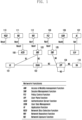
- All NFs illustrated in FIG. 5 may perform an interaction with an NRF 112, as needed.
- the network repository function (NRF) 112 supports a service discovery function.
- the NRF 112 receives an NF discovery request from an NF instance and provides information of a found NF instance to the NF instance. Further, the NRF 112 maintains available NF instances and services in which they support.
- FIG. 1 illustrates a reference model for the case that the UE 101 accesses one DN 110 using one PDU session, but the disclosure is not limited thereto.
- the UE 101 may simultaneously access two (i.e., local and central) data networks using multiple PDU sessions.
- two SMFs may be selected for different PDU sessions.
- each SMF may have a capability that may control both the local UPF and the central UPF within the PDU session.
- a conceptual link connecting NFs within a 5G system is defined as a reference point.
- a reference point(s) included in the 5G system 100 of FIG. 1 is(are) as follows.
- the time taken to transmit the feedback packet becomes longer.
- the UE Even in a congestion situation, the UE continues to transmit data at a high transmission rate to aggravate the congestion situation.
- a backhaul network may exist together with a 5GG system on a path between the UE and an application layer server, and a plurality of routers may exist in the backhaul network.
- the AS cannot detect the fact that congestion has occurred in the 5G network.
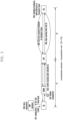
- FIG. 4 is a table illustrating an explicit congestion notification (ECN) bit in a type of service (TOS) field of an IP header.
- ECN explicit congestion notification
- TOS type of service
- upper 6 bits of the TOS field may be used as differentiated service code point (DSCP), and lower 2 bits thereof may be used as bits for marking ECN congestion.
- the ECN congestion bits may be encoded into the following values.
- the disclosure may solve the above-described two problems by supporting the following three functions.
- the AF request or the provider determines a policy for congestion marking and marks it when congestion occurs.
- an intermediate router in a backhaul network resets an ECN bit
- an application server cannot identify this; thus, the application server may request a notification of congestion occurrence to a control plane through an AF request and receive the notification.
- the above functions may be solved by providing functions such as an AF request, NEF service provision, congestion marking in the PCF, a determination process of a congestion marking policy, a congestion reporting policy, a congestion local feedback policy in the PCF, generation and transfer of N4 rule and RAN congestion profile in the SMF, congestion detection and marking in the RAN and the UPF, reflective feedback marking in the UPF, reporting of congestion occurrence in the UPF to the SMF, and reporting to the AF through the PCF and the NEF.
- functions such as an AF request, NEF service provision, congestion marking in the PCF, a determination process of a congestion marking policy, a congestion reporting policy, a congestion local feedback policy in the PCF, generation and transfer of N4 rule and RAN congestion profile in the SMF, congestion detection and marking in the RAN and the UPF, reflective feedback marking in the UPF, reporting of congestion occurrence in the UPF to the SMF, and reporting to the AF through the PCF and the NEF.
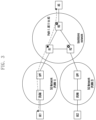
- FIG. 5 is a diagram schematically illustrating operations according to an embodiment of the disclosure. Contents described with reference to FIG. 5 are a summarized description of descriptions of FIGS. 6A to 6C , and the operations described with reference to FIG. 5 are described in more detail with reference to FIGS. 6A to 6C . The order of the operations illustrated in FIG. 5 is the same as the order of operations illustrated in FIGS. 6A to 6C .
- the UE has a RAN and 3GPP wireless connection interface as a modem implemented therein, and the APP refers to an application program implemented in the UE.
- the 5G network includes a RAN, AMF, SMF, PCF, NEF, and UPF.
- An application program of the UE is connected to a data network through a user plane of the 5G network, and an AS exists on the data network.
- the AF and the AS may be the same network entity, or may be separate network entities.
- the AF and the AS may be operated by an application provider.
- the AF may transmit an AF request for a service provided by the AS to the NEF.
- the AF may transmit a congestion marking request, a congestion reporting request, and a local feedback request to the NEF.
- the NEF may request the PCF to approve congestion marking, congestion reporting and local feedback policies.
- the PCF may transmit a PCC rule including a congestion marking policy, congestion reporting policy, and local feedback policy to the SMF according to a provider policy configured by itself or a request that receives the AF request through the NEF.
- the SMF may receive a congestion marking policy, a congestion reporting policy, and a local feedback policy from the PCF, and perform a procedure of updating the N4 rule in the UPF, as in a process of step 507.
- the UPF that has received this may then detect congestion for QOS flow of the UE corresponding to the user plane, and in the case that congestion occurs, the UPF may perform an operation of marking an ECN field in an IP header according to the congestion marking policy. Further, when a congestion situation occurs, the UPF may report a congestion state to the SMF or to an NF designated by the SMF.
- the UPF may detect congestion of uplink traffic from the UE or in the case that the UPF receives a packet with congestion marking detected by the RAN, the UPF may perform marking that congestion has occurred in a transport layer of the corresponding downlink traffic. For example, in the case that the transport layer is a TCP, the UPF may configure an ECN echo flag of the TCP.
- the SMF may generate and transmit a congestion profile for each QoS flow in the RAN through the AMF.
- the RAN that has received the congestion profile may then detect congestion occurrence and perform marking according to the designated policy in the ENC field in the IP header according to a marking policy, when a congestion situation occurs.
- the UE When traffic occurs in the APP of the UE, the UE generates uplink traffic in the RAN.
- the RAN may detect congestion, and when congestion is detected, the RAN may transmit a CE marked packet to the UPF.
- a congestion marked packet is transmitted to the AS, and the transport layer of the AS or an upper layer may transmit feedback on congestion occurrence to the downlink in response thereto.
- it is taken a time of at least T1+T2 in order for the APP of the UE to detect congestion.
- the transmission rate is R1
- traffic transmitted from the APP continues to be transmitted by an amount R1 x (T1+T2) even in a congested situation.
- the UPF instead of the AS transmits feedback from the transport layer
- the time in which the transmission side of the transport layer receives feedback when a congestion situation occurs is reduced to T1; thus, an operation of adjusting a transmission amount may be taken more quickly in the congestion situation.
- the amount of traffic generated in the congestion situation is less than the existing R1 x (T1 + T2) by R1 x T2, the overall congestion situation may be escaped more quickly.
- the UPF When the UPF detects occurrence of congestion, the UPF may report congestion situation occurrence to the control plane. Because the backhaul network does not support ECN or L4S, even in the case that the IP header does not mark in-band, congestion control may be performed using only functions within 5GC, and the AS server may also receive a report on this.
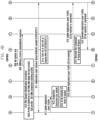
- FIGS. 6A to 6C are message flow diagrams illustrating a procedure according to an embodiment of the disclosure. Hereinafter, the procedure of FIGS. 6A to 6C will be described step by step in order to describe the detailed operation of the disclosure.
- Step 601. Determination on the request of the AF
- the AF may know in advance whether L4S/ECN is supported in a backhaul connection network between a data center where the AF exists and a provider network and in a provider network through a prior agreement with the provider or through its own network deployment.
- the AF may know in advance whether an L4S or ECN function is supported through a TCP connection procedure between the UE and an application provider network.
- An application service provider may determine whether classic ECN or L4S is supported on a 5G network and a router passing through a path between the UE (UE1) and an application server (a path expressed by the dotted line between the UE1 and the AS in the drawing) during a process of configuring a transport layer or application layer session between the UE and the application server.
- the TCP SYN packet passes through the RAN and the UPF of the 5G network and reaches the AS via R1 and R3.
- a value of an ECN field of a TOS field of an IP header of a transmitting TCP SYN packet may be marked as ECT(0) and transmitted in the case that the UE supports a classic ECN, and be marked as ECT(1) and transmitted in the case that the UE supports L4S.
- a value of ECN in the intermediate router may be reset to no ECT support and transmitted.
- the AS that has received the TCP SYN packet along the path may know whether ECN/L4S is supported on the path with the UE.
- an application service provider may know in advance whether the 5G network managed by the mobile communication provider supports ECN/L4S, and know whether an intermediate backhaul network supports ECN/L4S through an agreement or through the method described in the above example.
- Steps 602 and 603. Transmit the AF request
- the AF may request an AF session request including QoS related parameters to the 5G network for the following purposes.
- the application service provider represented by the AF wants to utilize an ECN/L4S function
- the application service provider may transmit the AF request to the NEF in the following scenario.
- the AF may request the support for an L4S service to the 5G network for IP flows used or intended to be used by the application service provider.
- the AF may provide information that may distinguish the corresponding traffic or service requesting L4S support.
- the AF may request L4S marking following the L4S specification or request marking that performs an operation consistent with classic ECN.
- the content proposed in the disclosure may be used in the case that the backhaul network does not support ECN/L4S marking, in the case that feedback on data transmitted in the uplink is not transmitted, or even in the case that the backhaul network supports ECN/L4S marking, because a lot of round trip delay time is consumed in the backhaul network on a path between the UE and the AS, in the case that congestion occurs in the uplink in the RAN within the 5GC, and in the case that it is desired to quickly feed this back to the UE.
- the NEF may verify subscriber information for a request to the AF in the UDM.
- subscriber information included in the AF request is subscriber group information and may be replaced with a list of multiple subscriber information
- the NEF may request such replacement through the UDM.
- the NEF may request approval for an AF request to the UDM.
- the NEF transmits a policy approval subscription request to the PCF.
- a policy approval subscription request message may include the following information and be transmitted.
- the NEF may request congestion occurrence statistics information.
- the congestion occurrence statistics information may include information on a period during which congestion has occurred during a congestion occurrence monitoring period.
- the congestion occurrence statistics information may include information such as the number of congestions that have occurred during the congestion occurrence monitoring period, the frequency of congestion that have occurred during a unit period, and the period during which congestion has occurred above a designated congestion level during the monitoring period.
- Step 605. Determination of L4S/ECN congestion control policy of the PCF
- the PCF may perform an SM policy control update notification procedure.
- the PCF may include an L4S/ECN related PCC rule in a SM policy control update notification request message and transmit the SM policy control update notification request message to the SMF.
- the L4S/ECN related PCC rule may include the following information.
- Service data flow information It is information that may identify a service flow to which L4S/ECN is to be applied. It may be expressed as a service data flow template. It may be expressed as an IP sender/destination address or range, a sender/receiver port number or range, or an FQDN value or FQDN range, for example, a range of FQDNs expressed in a regular expression format.
- L4S/ECN marking related information may include an L4S/ECN marking policy and an L4S/ECN congestion experience bit marking policy.
- the L4S/ECN marking policy may have policies including whether L4S/ECN marking is supported, L4S/ECN marking version, and transparent L4S/ECN marking support.
- the L4S/ECN marking policy may include information configuring an ECT bit. For example, marking for an ECN bit of an IP TOS may be indicated as follows.
- the ECT(0) indicates a value that encodes ECN bits in the TOS field of the IP header into 01.
- ECT(1) capable Allow only ECT(1) indicating L4S.
- the ECT(1) indicates a value that encodes the ECN bits in the TOS field of the IP header into 10.
- Bypass ECT Passes ECT(0) and ECT(1) without modification.
- L4S/ECN marking policy is not configured separately, it may be regarded as a bypass ECT policy.
- the L4S/ECN congestion experience bit marking policy may include the following information.
- Directionality Information indicating uplink or downlink.
- Congestion level threshold information Indicator information requesting marking in the case that the congestion level is higher than the threshold indicated by this information.
- L4S/ECN local feedback indicator Indicator that requests to configure a congestion experience bit for the corresponding downlink traffic in the case that the congestion bit of L4S/ECN is marked for the uplink.
- QoS flow identifier QoS flow identifier or 5QI information
- An indicator that may designate a PDU session that should apply local feedback is an indicator that may designate a PDU session that should apply local feedback.
- L4S/ECN congestion reporting related policy information may include an indicator requesting congestion reporting and associated parameters.
- Parameters associated with congestion reporting may designate conditions for congestion reporting.
- Conditions for congestion reporting may include a threshold value of a congestion level.
- the PCF may monitor whether congestion in the user plane or whether the congestion level is equal to or greater than the threshold, either by the SMF itself or from the RAN or the UPF, and in the case that the congestion level is equal to or greater than the threshold, the PCF may perform a reporting procedure for congestion experience thereto or to a notification address designated by the PCF.
- congestion reporting conditions may include a reporting type or a reporting method for congestion reporting when congestion occurs.
- the congestion reporting type may be one-time reporting or continuous reporting.
- the continuous reporting type may additionally designate a time that detects congestion reporting from a current time or a last time reporting a congestion situation.
- Congestion reporting related parameters may include the following information on the congestion reporting.
- Information related to a UE group to be a congestion reporting target It indicates information on the UE group.
- An identifier of the subscriber group (external group ID) or an identifier of a subscriber group within a 5GC (internal group ID).
- the UPF may receive congestion information including whether RAN congestion or a RAN congestion level from the RAN, and determine whether congestion in consideration of the congestion information.
- the SMF may transmit a QoS profile for congestion experience reporting to the RAN.
- the SMF reports a state indicating whether congestion.
- the SMF may report a congestion level.
- the congestion level may have a value representing a congestion level from 0 to 9. In the case that the congestion level has a specific value, it may indicate a non-congestion state. For example, 0 may indicate a non-congestion state, and the congestion level may be expressed as a value from 1, which is a low congestion level value to 9, which indicates a very congestion state.
- congestion in a specific congestion level In the case that congestion in a specific congestion level is detected above a designated congestion level, it may be reported immediately.
- Congestion experience reporting request may add time period information.
- congestion above a designated level is experienced during a designated time period, it may be reported.
- the designated time period and the designated congestion level may be included in the reporting policy or may have values configured by the SMF.
- ⁇ May include an address (e.g., URL or server address) that receives congestion experience reporting.
- an address e.g., URL or server address
- the SMF may request to report information on a change in a current congestion value to the UPF.
- the SMF may request UPF congestion state change reporting in order to perform a report notifying this at a time point of the start or end of congestion experience.
- the SMF may receive a PCC rule and instruct the UPF to perform transport layer congestion experience feedback.
- An UL transport layer congestion experience feedback indicator in which the SMF instructs to the UPF may be indicated in units of a QoS flow, and the transport layer congestion experience feedback indicator may be transmitted together with QER or be transmitted to the UPF together with an indicator indicating QoS flow.
- the SMF may provide, to the UPF, protocol information designating bits that should be marked in the transport layer protocol and the transport layer protocol that provides feedback when congestion for a UL QoS flow occurs together with a transport layer congestion experience feedback indicator.
- a TCP transport layer protocol may include the following information and be transmitted.
- Transport layer protocol type TCP
- the type of the transport layer protocol and a series of feedback execution methods that should be performed in the designated transport layer protocol may be defined in advance, and congestion feedback index information that indicates this may be transmitted together.
- the first congestion index may perform a feedback operation in which an end node should perform in the network in the case that the designated transport layer protocol receives a CE marked packet.
- the TCP transport layer protocol may perform an operation of marking an ECE echo bit in a TCP response message thereof and transmitting the TCP response message.
- Step 609 SM policy control update notification response reply
- the SMF transmits, to the PCF, a response message for the SM policy control update notification request received at step 606.
- Step 610 PDU session update operation
- the SMF performs a PDU session update procedure to the base station.
- the SMF transmits a QoS profile to the RAN, and transmits an ECN/L4S congestion control profile within the QoS profile.
- the ECN/L4S congestion control profile may include the following information.
- ⁇ 5QI A 5QI value in which a detailed value of the congestion control profile is standardized and defined in advance, or an index that indicates a congestion control profile defined in advance by the provider.
- L4S marking Mark with a CE bit when congestion occurs above the congestion level for incoming IP packets marked as ECT(1).
- Bypass ECN field Transmit the ECN marked content as it is without changing.
- the congestion level threshold may have separate values in the case of L4S marking and class ECN marking.
- the application layer/transport layer program of the UE transmits uplink traffic.
- the UPF may reset ECE marking of the TCP transport layer and transmit a TCP packet to the UE.
- the UPF may report congestion occurrence.
- the UPF When the UPF receives information including a congestion level threshold in the N4 congestion experience reporting rule, in the case that congestion occurring within the UPF or a congestion level received from the RAN is equal to or greater than a congestion level threshold included in the reporting rule, the UPF may perform a reporting procedure thereof.
- the UPF may immediately report the current congestion level.
- the N4 congestion reporting message reported by the UPF may include statistical information on the congestion report.
- the statistical information of the congestion report may include the following information.
- IPs and port numbers of transmitting/receiving addresses of congestion packets are marked as congestion experience, i.e., IPs and port numbers of transmitting/receiving addresses of congestion packets.
- the UPF may perform congestion reporting to the NF included in the notification address.
- the NF other than SMF may be an NWDAF, and the NWDAF may request congestion statistics information to the UPF and receive a report thereof.
- Step 624 Congestion report of the SMF
- the SMF receives a congestion report from the UPF.
- the SMF may transmit a corresponding congestion reporting message.
- the SMF may transmit a congestion reporting message to the congestion reporting notification address configured at step 606.
- the congestion reporting message transmitted by the SMF may include the following information.
- the SMF may report immediately congestion information in a current state, i.e., a congestion level currently received from the UPF.
- Congestion experience occurrence information In the case that congestion occurs in the UPF, the SMF may perform a reporting procedure thereof.
- the SMF may report the congestion statistics information.
- Congestion statistics information may include statistical information related to congestion such as the number of congestions that has occurred during a congestion reporting period, an average congestion level during a congestion reporting period, the number of packets marked as congestion experience during the congestion reporting period, information on IP flows marked as congestion experience during the congestion reporting period, i.e., the IP and port numbers of the transmitting/receiving addresses of congestion packets.
- Congestion statistics information may be sent separately as congestion statistics information in the RAN and congestion statistics information in the UPF.
- the SMF may transmit a congestion reporting message to the PCF.
- Step 625 Report on congestion experiences and statistics.
- the PCF may receive congestion experience information or congestion statistics information from the SMF.
- the PCF may transmit reports on congestion experiences or congestion statistics to the NEF.
- the NEF may transmit reports on congestion experiences or congestion statistics to the AF.
- FIG. 7 is a block diagram illustrating a structure of a UE according to an embodiment of the disclosure.
- the UE may include a transceiver 710, a controller 720, and a storage 730.
- the controller may be defined as a circuit, an application-specific integrated circuit, or at least one processor.
- the transceiver 710 may transmit and receive signals to and from other network entities.
- the transceiver 710 may, for example, receive system information from the base station and receive a synchronization signal or a reference signal.
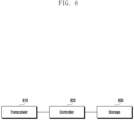
- FIG. 8 is a block diagram illustrating a structure of a network entity according to an embodiment of the disclosure.
- the UE may include a transceiver 810, a controller 820, and a storage 830.
- the controller may be defined as a circuit, an application-specific integrated circuit, or at least one processor.
- the transceiver 810 may transmit and receive signals to and from other network entities.
- the transceiver 810 may, for example, receive system information from the base station and receive a synchronization signal or a reference signal.
- the controller 820 may control the overall operation of the UE according to the embodiment proposed in the disclosure.
Landscapes
- Engineering & Computer Science (AREA)
- Computer Networks & Wireless Communication (AREA)
- Signal Processing (AREA)
- Mobile Radio Communication Systems (AREA)
Applications Claiming Priority (2)
| Application Number | Priority Date | Filing Date | Title |
|---|---|---|---|
| KR1020220124124A KR20240044732A (ko) | 2022-09-29 | 2022-09-29 | 무선 통신 시스템에서 l4s 혼잡 마킹, 보고 및 로컬 피드백 방법 및 장치 |
| PCT/KR2023/015060 WO2024072116A1 (fr) | 2022-09-29 | 2023-09-27 | Procédé et dispositif de marquage d'encombrement l4s, de signalement et de rétroaction locale dans un système de communication sans fil |
Publications (2)
| Publication Number | Publication Date |
|---|---|
| EP4580157A1 true EP4580157A1 (fr) | 2025-07-02 |
| EP4580157A4 EP4580157A4 (fr) | 2025-11-05 |
Family
ID=90478685
Family Applications (1)
| Application Number | Title | Priority Date | Filing Date |
|---|---|---|---|
| EP23873225.9A Pending EP4580157A4 (fr) | 2022-09-29 | 2023-09-27 | Procédé et dispositif de marquage d'encombrement l4s, de signalement et de rétroaction locale dans un système de communication sans fil |
Country Status (5)
| Country | Link |
|---|---|
| US (1) | US20260101235A1 (fr) |
| EP (1) | EP4580157A4 (fr) |
| KR (1) | KR20240044732A (fr) |
| CN (1) | CN119968830A (fr) |
| WO (1) | WO2024072116A1 (fr) |
Families Citing this family (4)
| Publication number | Priority date | Publication date | Assignee | Title |
|---|---|---|---|---|
| WO2025230286A1 (fr) * | 2024-04-29 | 2025-11-06 | 삼성전자 주식회사 | Procédé et dispositif de signalisation d'informations de congestion pour prendre en charge l4s dans un système de communication |
| WO2026015055A1 (fr) * | 2024-07-10 | 2026-01-15 | Telefonaktiebolaget Lm Ericsson (Publ) | Procédés et appareils pour déterminer des flux de trafic |
| CN121418903A (zh) * | 2024-07-26 | 2026-01-27 | 维沃移动通信有限公司 | 信息传输方法、装置、终端及网络侧设备 |
| CN120264341B (zh) * | 2025-06-05 | 2025-08-05 | 中国电子科技集团公司第二十八研究所 | 一种无人机混合通信管理系统 |
Family Cites Families (3)
| Publication number | Priority date | Publication date | Assignee | Title |
|---|---|---|---|---|
| KR102898489B1 (ko) * | 2019-02-15 | 2025-12-11 | 삼성전자주식회사 | 무선 통신 시스템에서 데이터를 전송하기 위한 방법 및 장치 |
| US12500850B2 (en) * | 2020-04-24 | 2025-12-16 | Telefonaktiebolaget Lm Ericsson (Publ) | Virtual dual queue core stateless active queue management (AQM) for communication networks |
| CN115516907B (zh) * | 2020-05-06 | 2025-01-24 | Lg电子株式会社 | 与拥塞控制相关的通信 |
-
2022
- 2022-09-29 KR KR1020220124124A patent/KR20240044732A/ko active Pending
-
2023
- 2023-09-27 EP EP23873225.9A patent/EP4580157A4/fr active Pending
- 2023-09-27 US US19/115,026 patent/US20260101235A1/en active Pending
- 2023-09-27 CN CN202380069852.3A patent/CN119968830A/zh active Pending
- 2023-09-27 WO PCT/KR2023/015060 patent/WO2024072116A1/fr not_active Ceased
Also Published As
| Publication number | Publication date |
|---|---|
| WO2024072116A1 (fr) | 2024-04-04 |
| US20260101235A1 (en) | 2026-04-09 |
| EP4580157A4 (fr) | 2025-11-05 |
| CN119968830A (zh) | 2025-05-09 |
| KR20240044732A (ko) | 2024-04-05 |
Similar Documents
| Publication | Publication Date | Title |
|---|---|---|
| EP4580157A1 (fr) | Procédé et dispositif de marquage d'encombrement l4s, de signalement et de rétroaction locale dans un système de communication sans fil | |
| EP4608008A1 (fr) | Procédé et dispositif permettant de fournir des informations de congestion dans un système de communication | |
| US12457542B2 (en) | Method and apparatus for verifying compliance with UE route selection policy | |
| KR20230139683A (ko) | 무선 통신 시스템에서 어플리케이션 데이터를 처리하는 장치 및 방법 | |
| US20250168281A1 (en) | Method and apparatus for traffic processing using traffic classification in wireless communication system | |
| US20240155418A1 (en) | Method and apparatus for connecting qos flow based terminal in wireless communication system | |
| US20240298245A1 (en) | Session management method and device in mobile communication system | |
| KR20240149729A (ko) | 테더드 디바이스의 전송 지연을 고려한 상향 링크 스케쥴링 지원 방법 및 장치 | |
| KR20240110408A (ko) | 무선 통신 시스템에서 어플리케이션 특성에 기반한 패킷 스케쥴링을 위한 방법 및 장치 | |
| KR20240167333A (ko) | 무선 통신 시스템에서 에너지 사용을 제어하기 위한 방법 및 장치 | |
| KR20240149680A (ko) | 단말 경로 선택 정책과 세션 정보의 불일치 해소 방법 | |
| EP4607884A1 (fr) | Procédé et appareil de transmission d'informations sur la base d'un changement de caractéristique de trafic dans un système de communication sans fil | |
| US20250056317A1 (en) | Apparatus and method for forward error correction packet scheduling in wireless communication system | |
| EP4697668A1 (fr) | Procédé et appareil de gestion de session dans un système de communication sans fil | |
| US20250106165A1 (en) | Method and apparatus for processing multiplexed data in a wireless communication system | |
| EP4645938A1 (fr) | Procédé et dispositif de prise en charge d'un service de collecte et d'analyse de données de tranche liées à une politique de terminal | |
| EP4622335A1 (fr) | Procédé et dispositif de rapport de congestion tenant compte de la mobilité d'un équipement utilisateur dans un système de communication sans fil | |
| KR20250151092A (ko) | 무선 통신 시스템에서 동적 트래픽 특성을 기반으로 트래픽을 관리하는 방법 및 장치 | |
| KR20260011920A (ko) | 멀티플렉싱된 서비스 데이터 플로우의 처리를 위한 방법 및 장치 | |
| KR20250126577A (ko) | 무선 통신 시스템에서 엣지 서비스 리소스 선택을 위한 방법 및 장치 | |
| KR20250164995A (ko) | 멀티플렉싱된 서비스 데이터 플로어의 처리를 위한 방법 및 장치 | |
| KR20250027079A (ko) | 트래픽 패턴을 고려한 fec 보호 기법 선택 방법 및 장치 | |
| KR20260013815A (ko) | 무선 통신 시스템에서 PDU set 기반 트래픽 관리 방법 및 장치 | |
| KR20250113679A (ko) | 테더링 디바이스 관련 트래픽 관리 방법 및 장치 | |
| KR20240110395A (ko) | 서비스 특성을 고려한 세션 관리 방법 및 장치 |
Legal Events
| Date | Code | Title | Description |
|---|---|---|---|
| STAA | Information on the status of an ep patent application or granted ep patent |
Free format text: STATUS: THE INTERNATIONAL PUBLICATION HAS BEEN MADE |
|
| PUAI | Public reference made under article 153(3) epc to a published international application that has entered the european phase |
Free format text: ORIGINAL CODE: 0009012 |
|
| STAA | Information on the status of an ep patent application or granted ep patent |
Free format text: STATUS: REQUEST FOR EXAMINATION WAS MADE |
|
| 17P | Request for examination filed |
Effective date: 20250327 |
|
| AK | Designated contracting states |
Kind code of ref document: A1 Designated state(s): AL AT BE BG CH CY CZ DE DK EE ES FI FR GB GR HR HU IE IS IT LI LT LU LV MC ME MK MT NL NO PL PT RO RS SE SI SK SM TR |
|
| A4 | Supplementary search report drawn up and despatched |
Effective date: 20251009 |
|
| RIC1 | Information provided on ipc code assigned before grant |
Ipc: H04L 47/263 20220101AFI20251002BHEP Ipc: H04L 47/11 20220101ALI20251002BHEP Ipc: H04L 47/19 20220101ALI20251002BHEP Ipc: H04L 47/20 20220101ALI20251002BHEP Ipc: H04L 47/2408 20220101ALI20251002BHEP Ipc: H04W 28/02 20090101ALI20251002BHEP |
|
| DAV | Request for validation of the european patent (deleted) | ||
| DAX | Request for extension of the european patent (deleted) |