EP4580197A1 - Procédé et appareil de traitement vidéo en continu en direct, dispositif, et support - Google Patents
Procédé et appareil de traitement vidéo en continu en direct, dispositif, et support Download PDFInfo
- Publication number
- EP4580197A1 EP4580197A1 EP23856656.6A EP23856656A EP4580197A1 EP 4580197 A1 EP4580197 A1 EP 4580197A1 EP 23856656 A EP23856656 A EP 23856656A EP 4580197 A1 EP4580197 A1 EP 4580197A1
- Authority
- EP
- European Patent Office
- Prior art keywords
- effect
- user
- identification
- image
- display
- Prior art date
- Legal status (The legal status is an assumption and is not a legal conclusion. Google has not performed a legal analysis and makes no representation as to the accuracy of the status listed.)
- Pending
Links
Images




Classifications
-
- H—ELECTRICITY
- H04—ELECTRIC COMMUNICATION TECHNIQUE
- H04N—PICTORIAL COMMUNICATION, e.g. TELEVISION
- H04N21/00—Selective content distribution, e.g. interactive television or video on demand [VOD]
- H04N21/40—Client devices specifically adapted for the reception of or interaction with content, e.g. set-top-box [STB]; Operations thereof
- H04N21/43—Processing of content or additional data, e.g. demultiplexing additional data from a digital video stream; Elementary client operations, e.g. monitoring of home network or synchronising decoder's clock; Client middleware
- H04N21/431—Generation of visual interfaces for content selection or interaction; Content or additional data rendering
- H04N21/4312—Generation of visual interfaces for content selection or interaction; Content or additional data rendering involving specific graphical features, e.g. screen layout, special fonts or colors, blinking icons, highlights or animations
-
- H—ELECTRICITY
- H04—ELECTRIC COMMUNICATION TECHNIQUE
- H04N—PICTORIAL COMMUNICATION, e.g. TELEVISION
- H04N21/00—Selective content distribution, e.g. interactive television or video on demand [VOD]
- H04N21/20—Servers specifically adapted for the distribution of content, e.g. VOD servers; Operations thereof
- H04N21/21—Server components or server architectures
- H04N21/218—Source of audio or video content, e.g. local disk arrays
- H04N21/2187—Live feed
-
- H—ELECTRICITY
- H04—ELECTRIC COMMUNICATION TECHNIQUE
- H04N—PICTORIAL COMMUNICATION, e.g. TELEVISION
- H04N21/00—Selective content distribution, e.g. interactive television or video on demand [VOD]
- H04N21/40—Client devices specifically adapted for the reception of or interaction with content, e.g. set-top-box [STB]; Operations thereof
- H04N21/43—Processing of content or additional data, e.g. demultiplexing additional data from a digital video stream; Elementary client operations, e.g. monitoring of home network or synchronising decoder's clock; Client middleware
- H04N21/431—Generation of visual interfaces for content selection or interaction; Content or additional data rendering
-
- H—ELECTRICITY
- H04—ELECTRIC COMMUNICATION TECHNIQUE
- H04N—PICTORIAL COMMUNICATION, e.g. TELEVISION
- H04N21/00—Selective content distribution, e.g. interactive television or video on demand [VOD]
- H04N21/40—Client devices specifically adapted for the reception of or interaction with content, e.g. set-top-box [STB]; Operations thereof
- H04N21/43—Processing of content or additional data, e.g. demultiplexing additional data from a digital video stream; Elementary client operations, e.g. monitoring of home network or synchronising decoder's clock; Client middleware
- H04N21/431—Generation of visual interfaces for content selection or interaction; Content or additional data rendering
- H04N21/4312—Generation of visual interfaces for content selection or interaction; Content or additional data rendering involving specific graphical features, e.g. screen layout, special fonts or colors, blinking icons, highlights or animations
- H04N21/4314—Generation of visual interfaces for content selection or interaction; Content or additional data rendering involving specific graphical features, e.g. screen layout, special fonts or colors, blinking icons, highlights or animations for fitting data in a restricted space on the screen, e.g. EPG data in a rectangular grid
-
- H—ELECTRICITY
- H04—ELECTRIC COMMUNICATION TECHNIQUE
- H04N—PICTORIAL COMMUNICATION, e.g. TELEVISION
- H04N21/00—Selective content distribution, e.g. interactive television or video on demand [VOD]
- H04N21/40—Client devices specifically adapted for the reception of or interaction with content, e.g. set-top-box [STB]; Operations thereof
- H04N21/43—Processing of content or additional data, e.g. demultiplexing additional data from a digital video stream; Elementary client operations, e.g. monitoring of home network or synchronising decoder's clock; Client middleware
- H04N21/431—Generation of visual interfaces for content selection or interaction; Content or additional data rendering
- H04N21/4312—Generation of visual interfaces for content selection or interaction; Content or additional data rendering involving specific graphical features, e.g. screen layout, special fonts or colors, blinking icons, highlights or animations
- H04N21/4316—Generation of visual interfaces for content selection or interaction; Content or additional data rendering involving specific graphical features, e.g. screen layout, special fonts or colors, blinking icons, highlights or animations for displaying supplemental content in a region of the screen, e.g. an advertisement in a separate window
-
- H—ELECTRICITY
- H04—ELECTRIC COMMUNICATION TECHNIQUE
- H04N—PICTORIAL COMMUNICATION, e.g. TELEVISION
- H04N21/00—Selective content distribution, e.g. interactive television or video on demand [VOD]
- H04N21/40—Client devices specifically adapted for the reception of or interaction with content, e.g. set-top-box [STB]; Operations thereof
- H04N21/43—Processing of content or additional data, e.g. demultiplexing additional data from a digital video stream; Elementary client operations, e.g. monitoring of home network or synchronising decoder's clock; Client middleware
- H04N21/431—Generation of visual interfaces for content selection or interaction; Content or additional data rendering
- H04N21/4318—Generation of visual interfaces for content selection or interaction; Content or additional data rendering by altering the content in the rendering process, e.g. blanking, blurring or masking an image region
-
- H—ELECTRICITY
- H04—ELECTRIC COMMUNICATION TECHNIQUE
- H04N—PICTORIAL COMMUNICATION, e.g. TELEVISION
- H04N21/00—Selective content distribution, e.g. interactive television or video on demand [VOD]
- H04N21/40—Client devices specifically adapted for the reception of or interaction with content, e.g. set-top-box [STB]; Operations thereof
- H04N21/47—End-user applications
- H04N21/472—End-user interface for requesting content, additional data or services; End-user interface for interacting with content, e.g. for content reservation or setting reminders, for requesting event notification, for manipulating displayed content
- H04N21/47205—End-user interface for requesting content, additional data or services; End-user interface for interacting with content, e.g. for content reservation or setting reminders, for requesting event notification, for manipulating displayed content for manipulating displayed content, e.g. interacting with MPEG-4 objects, editing locally
-
- H—ELECTRICITY
- H04—ELECTRIC COMMUNICATION TECHNIQUE
- H04N—PICTORIAL COMMUNICATION, e.g. TELEVISION
- H04N21/00—Selective content distribution, e.g. interactive television or video on demand [VOD]
- H04N21/40—Client devices specifically adapted for the reception of or interaction with content, e.g. set-top-box [STB]; Operations thereof
- H04N21/47—End-user applications
- H04N21/478—Supplemental services, e.g. displaying phone caller identification, shopping application
- H04N21/4788—Supplemental services, e.g. displaying phone caller identification, shopping application communicating with other users, e.g. chatting
-
- H—ELECTRICITY
- H04—ELECTRIC COMMUNICATION TECHNIQUE
- H04N—PICTORIAL COMMUNICATION, e.g. TELEVISION
- H04N21/00—Selective content distribution, e.g. interactive television or video on demand [VOD]
- H04N21/80—Generation or processing of content or additional data by content creator independently of the distribution process; Content per se
- H04N21/81—Monomedia components thereof
- H04N21/8146—Monomedia components thereof involving graphical data, e.g. 3D object, 2D graphics
Definitions
- a live video processing apparatus includes:
- the memory is configured to store instructions or computer programs.
- a computer program product includes computer programs/instructions.
- the computer programs/instructions when executed by a processor, implement the method according to the first aspect.
- a first display image corresponding to a first user and a second display image corresponding to a second user are displayed on a live streaming room interface of the first user. If the second display image is provided with a first effect image, a first effect identification associated with the first effect image is displayed on the live streaming room interface of the first user. The first effect image is displayed on the first display image in response to a triggering operation of the first user on the first effect identification. That is, by displaying the first effect identification associated with the first effect image on the live streaming room interface of the first user, the first user is provided with a quick access to reuse the first effect image without tedious operations of the first user, improving the user experience. In addition, it is conducive to improving the interactive atmosphere in a scenario of online interaction, especially PK scenario, of multiple users, since the users can quickly use multiple identical effect images to enrich the interaction in the live streaming room.
- FIG. 1 For example, in the scenario of a live streaming room interface shown in Figure 1 , illustration is made by taking the case of multiple hosts co-hosting as an example. There are three hosts in the live streaming room, and the description is exemplarily made from the view of host A.
- a navigation bar is displayed at the bottom of a live streaming room interface of host A.
- the navigation bar includes an interactive control 201, a sharing control 202, an enhancement control 203 and a "more" control 204.
- the interactive control 201 is used for the interaction between host A and audiences in the live streaming room
- the sharing control 202 is used for host A to share the current live streaming room to other users
- the enhancement control 203 is used for enhancement processing of the display image of the current host A
- the "more" control 204 is used to display more functional controls that may be triggered in response to a triggering operation of host A.
- Figure 1 it can be seen from Figure 1 that in a case that host A wants to reuse an effect image, first the enhancement control 203 is clicked to display an enhancement panel.
- the enhancement panel includes a retouching control, an effect control and a sticker control.
- the effect panel is displayed in response to the triggering on the effect control by host A.
- the effect panel includes various effect identifications.
- Host A needs to click an effect identification (for example, an effect identification of an effect image used by Host B) to trigger the use of the effect image corresponding to the effect identification. It can be seen that the path for host A to reuse an effect image is long, which affects the use experience.
- an effect identification for example, an effect identification of an effect image used by Host B
- a live video processing method includes: displaying a live streaming room interface of a first user, the live streaming room interface including a first display image of the first user and a second display image corresponding to a second user.
- a first effect identification associated with the first effect image is displayed on the live streaming room interface of the first user.
- the first effect identification provides the first user with an access to quickly use the first effect image.
- the first effect image is displayed on the first display image in response to the triggering operation of the first user on the first effect identification.
- the first user by displaying the first effect identification on the live streaming room interface of the first user, the first user is provided with an access to quickly use the first effect image, so that the first effect image is displayed on the first display image by the first user triggering the first effect identification, which improves the user experience.
- a live video processing method is provided according to an embodiment of the present disclosure.
- the method may be performed by a live streaming client, and the live streaming client is a live streaming client of the first user and may be installed in an electronic device.
- the electronic device may include devices with communication functions, such as mobile phones, tablets, notebooks, desktops, vehicle terminals, wearable electronic devices, all-in-one computers, smart home devices and the like, or may be virtual machines or devices simulated by a simulator.
- the method may include steps S201 to S203.
- a live streaming room interface is displayed, and the live streaming room interface includes a first display image corresponding to a first user and a second display image corresponding to a second user.
- the live streaming room interface including the first display image of the first user and the second display image of the second user is displayed.
- the live streaming room interface may be a co-hosting live streaming room interface.
- the first user and the second user are users participating in co-hosting.
- the first user may be a host or a guest in the live streaming room, who may be an initiator/inviter of the co-hosting, or the invitee of the co-hosting.
- the second user may be an initiator of the co-hosting, or an invitee of the co-hosting.
- a scenario of co-hosting by hosts is described below. It is described by taking the first user being an inviter of the interaction and the second/third/fourth/fifth user being the invitee of the interaction as an example.
- the first effect image is displayed on the second display image.
- the first effect identification associated with the first effect image is displayed on the live streaming room interface of the first user. It should be noted that in a case that the first user does not use the first effect image, the first effect identification associated with the first effect image is displayed on the live streaming room interface of the first user.
- Displaying the first effect identification on the live streaming room interface of the first user may include displaying the first effect identification on a navigation bar of the live streaming room interface of the first user. Further, the first effect identification may be displayed on a first control displayed in the navigation bar.
- the first control is used to perform enhancement processing on the first display image, and the enhancement processing may include one or more of retouching, filter and effect processing.
- the first control is displayed on the live streaming room interface, and the first effect identification is displayed on the first control in response to the second display image being provided with the first effect image.
- the first control includes an access to an effect panel.
- a user identification of the second user may also be displayed on the first effect identification displayed on the live streaming room interface of the first user.
- the user identification may be an avatar of the second user, a thumbnail of the second display image, a nickname, or the like.
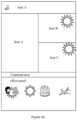
- an avatar of host B is displayed on the effect identification.
- a display position of the user identification on the first effect identification may be set according to the actual application. For example, as shown in Figure 3b , the avatar of host B is displayed on the upper left corner of the first effect identification.
- the duration for displaying the first effect image on the second display image may be counted. If the duration is greater than or equal to a second preset duration, the first effect identification is displayed on the live streaming room interface of the first user, and thus the stability of information displayed on the live streaming room interface is ensured. For example, in the case that the second preset duration is 10 seconds, if the second user uses the first effect image for more than 10 seconds, the first effect identification is displayed on the live streaming room interface of the first user.
- the first effect image is displayed on the first display image in response to a triggering operation of the first user on the first effect identification.
- the first effect image is displayed on the first display image. That is, the first user is provided with an access to quickly use the first effect image through the first effect identification.
- the live streaming room interface displays the first display image of the first user and the second display image of the second user and the second display image is provided with the first effect image
- the first effect identification associated with the first effect image is displayed on the live streaming room interface of the first user.
- the first effect image is displayed on the first display image in response to the triggering operation of the first user on the first effect identification. That is, by displaying the first effect identification associated with the first effect image on the live streaming room interface of the first user, the first user is provided with a quick access to reuse the first effect image without tedious operations of the first user, improving the user experience.
- it is conducive to improving the interactive atmosphere in a scenario of co-hosting, especially PK scenario, of multiple users, since the users can quickly use multiple identical effect images to enrich the interaction in the live streaming room.
- Displaying the first effect image on the first display image based on the triggering operation of the first user on the first effect identification may be achieved as follows.
- the first effect image is displayed on the first display image in response to a click operation of the first user on the first effect identification. That is, once the click operation of the first user on the first effect identification is detected, it indicates that the first user wants to use the first effect image, and the first effect image is added to the first display image.
- an effect panel is displayed in response to the triggering operation of the first user on the first effect identification, and the effect panel includes the first effect identification; and the first effect image is displayed on the first display image in response to the triggering operation of the first user on the first effect identification on the effect panel. That is, when the triggering operation of the first user on the first effect identification displayed on the live streaming room interface is detected, the effect panel is called up, and the first user triggers a confirmation operation with respect to the first effect identification on the effect panel, to display the first effect image on the first display image. That is, a way to quickly call up the effect panel is provided according to this embodiment provides, so that the first user may quickly reuse the first effect image, improving the use experience.
- a user identification of the second user may also be displayed on the first effect identification displayed on the effect panel.
- host A calls up the effect panel by triggering the first effect identification displayed on the live streaming room interface.
- the first effect identification is displayed on the effect panel, and an avatar of host B is displayed on the first effect identification.
- the method further includes: displaying the user identification of the third user on the first effect identification displayed on the effect panel. That is, in a case that other users in the live streaming room also use the first effect image, user identifications of all users using the first effect image are displayed on the first effect identification displayed on the effect panel.
- the user identification of the second user and the user identification of the third user may be displayed on different positions of the first effect identification.
- the display positions of the two user identifications do not overlap.
- the avatar of host B is displayed in the upper left corner of the first effect identification
- the avatar of host C is displayed in the upper right corner of the first effect identification. Display areas for the two avatars do not overlap.
- a display position of each of the user identifications may be determined based on a start time when a user starts using the first effect image, and then the user identification of the user is displayed at the display position. That is, a correspondence relationship between different start times and display positions may be set in advance, and then a matching display position may be determined based on the correspondence relationship. For example, a user identification of a user who uses the first effect image at the latest is displayed at the upper left corner of the first effect identification, and a user identification of a user who uses the first effect image at the earliest is displayed at the lower right corner of the first effect identification.
- the threshold for the number of the user identifications to be displayed may be set in advance. In a case that the number of users using the first effect image is greater than the threshold, users in the number equal to the threshold are determined in accordance with time sequence, and user identifications of these users, whose number is equal to the threshold, are displayed on the first effect identification.
- the user identifications may alternatively be displayed by: displaying the user identification of the third user and the user identification of the second user on the first effect identification in an overlapped manner.
- the display area occupied by the user identification of the second user on the first effect identification and the display area occupied by the user identification of the third user on the first effect identification are partially overlapped. Further, it is also possible to determine the position where the user identification of the third user overlaps with the user identification of the second user based on the time when the third user enables the first effect image and the time when the second user enables the first effect image.
- the user identification of the second user is displayed over the user identification of the third user in an overlapped manner.
- the avatar of host B and the avatar of host C are displayed on the first effect identification. Since the time when host C uses the first effect image is earlier than the time when host B uses the first effect image, the avatar of host B is displayed over the avatar of host C in a staggered manner.
- the method further includes: canceling the display of the first effect identification on the live streaming room interface in response to the first user not triggering the first effect identification within a first preset duration. That is, the duration allowed for the first effect identification to be displayed on the live streaming room interface may be set in advance. After the displaying of the first effect identification lasts for duration equal to the first preset duration, the display will be automatically canceled.
- displaying the first effect identification on the live streaming room interface includes: displaying, on the live streaming room interface, the first effect identification and a second effect identification associated with the second effect image in an alternating manner. That is, in a case that multiple users except for the first user are using different effect images in the live streaming room, the effect identifications associated with different effect images will be displayed in an alternating manner on the live streaming room interface of the first user, so as to provide the first user with a quick access to reuse each of the effect images, improving the user experience.
- the first effect identification and the second effect identification are displayed on the live streaming room interface in an overlapped manner.
- the first effect image and the second effect image are displayed on the first display image in response to the triggering operation of the first user on the first effect identification. That is, through one triggering operation, multiple effect images may be added to the first display image, improving the convenience of adding multiple effect images.
- the effect panel may be displayed in response to a triggering of the first user on the first effect identification.
- the effect panel is used to display multiple effect identifications including the first effect identification.
- the first effect image displayed on the first display image is replaced with a third effect image associated with the third effect identification in response to a selection operation triggered by the first user on the third effect identification displayed on the effect panel. That is, in a case that the triggering operation of the first user on the first effect identification is detected, the effect panel is called up. Therefore, the effect panel is quickly accessed, and the user can acquire an effect image of interest more efficiently, improving the user experience.
- the live streaming room interface further includes a fifth display image corresponding to a fifth user, and the fifth display image is provided with a fourth effect image.
- the method further includes: acquiring a first enabling time when a second host starts to use the first effect image and a second enabling time when the fifth user starts to use the second effect image; determining display positions of the first effect identification and the fourth effect identification on the effect panel based on the first enabling time and the second enabling time; displaying the first effect identification at the display position of the first effect identification and displaying the fourth effect identification at the display position of the fourth effect identification.
- the display position of the effect identification on the effect panel may be determined based on the time when each of the effect images is enabled, and then the effect identification is displayed on the corresponding display position.
- the effect identifications associated with the effect images used by users are displayed in the sequence of being enabled from the latest to the earliest, so as to intuitively understand the time sequence of the use of effect images. For example, if the time when host B starts using effect 1 is earlier than the time when host C starts using effect 2, effect 2 is firstly displayed on the effect panel and then effect 1 is displayed on the effect panel.
- the fourth effect identification may also be displayed on the live streaming room interface to provide the first user with an access to quickly reuse a fourth effect image.
- the fourth effect identification and the related implementation of displaying the fourth effect image on the first display image please refer to the description of the first effect identification in S201 to S203 above. This embodiment will not be repeated here.
- a live video processing apparatus and a device are provided according to embodiments of the present disclosure.
- the apparatus and the device will be described below in conjunction with the accompanying drawings.
- Figure 5 is a structural diagram of a live video processing apparatus according to an embodiment of the present disclosure.
- the apparatus may include a first display unit 501, a second display unit 502, and a third display unit 503.
- the first display unit 501 is configured to display a live streaming room interface, and the live streaming room interface includes a first display image corresponding to a first user and a second display image corresponding to a second user.
- the second display unit 502 is configured to, in response to the second display image being provided with a first effect, display, on the live streaming room interface, a first effect identification associated with the first effect image.
- the third display unit 503 is configured to display the first effect image on the first display image in response to a triggering operation of the first user on the first effect identification.
- the second display unit 502 is further configured to display a user identification of the second user on the first effect identification displayed on the live streaming room interface.
- the third display unit 503 is configured to: display an effect panel in response to the triggering operation of the first user on the first effect identification, the effect panel including the first effect identification; display the first effect image on the first display image in response to the triggering operation of the first user on the first effect identification on the effect panel.
- the apparatus further includes: a fourth display unit.
- the live streaming room interface further includes a third display image corresponding to a third user, and the third display image is provided with the first effect image.
- the fourth display unit is further configured to display a user identification of the third user on the first effect identification displayed on the effect panel.
- the fourth display unit is configured to display the user identification of the third user and the user identification of the second user on the first effect identification in an overlapped manner where a display area occupied by the user identification of the second user on the first effect identification partially overlaps a display area occupied by the user identification of the third user on the first effect identification.
- the live streaming room interface further includes a fourth display image corresponding to a fourth user, and the fourth display image is provided with a second effect image.
- the second display unit 502 is configured to display, on the live streaming room interface, the first effect identification and a second effect identification associated with the second effect image in an alternating manner.
- the apparatus in response to the triggering operation of the first user on the first effect identification, the apparatus further includes a fifth display unit.
- the fifth display unit is configured to display the effect panel, the effect panel displays multiple effect identifications, and the multiple effect identifications include the first effect identification.
- the third display unit 503 is further configured to replace the first effect image displayed on the first display image with a third effect image associated with a third effect identification in response to a selection operation triggered by the first user on the third effect identification displayed on the effect panel.
- the live streaming room interface further includes a fifth display image corresponding to a fifth user, and the fifth display image is provided with a fourth effect image.
- the apparatus further includes: an acquisition unit, a determination unit, and a sixth display unit.
- the acquisition unit is configured to acquire a first enabling time when the second user starts to use the first effect image and a second enabling time when the fifth user starts to use the fourth effect image.
- the determining unit is configured to determine, based on the first enabling time and the second enabling time, a display position of the first effect identification and a display position of the fourth effect identification on the effect panel.
- the sixth display unit is configured to display the first effect identification at the display position of the first effect identification and the fourth effect identification at the display position of the fourth effect identification.
- the live streaming room interface displays a first control.
- the second display unit 502 is configured to display the first effect identification associated with the first effect image on the first control in response to the second display image being provided with the first effect image.
- the first control is configured to perform enhancement processing on the first display image.
- the apparatus further includes a processing unit.
- the processing unit is configured to cancel the display of the first effect identification in the live streaming room interface in response to a first host not triggering the first effect identification within a first preset duration.
- each of units in this embodiment reference may be made to the relevant description in the embodiments of the method described above.
- the units in the embodiment of the present disclosure are divided exemplarily, which are divided only based on a logical function. There may be other division methods in practical application.
- all function units according to the embodiment of the present disclosure may be integrated into one processing unit, or may be a physically separate unit, or may be one unit that is integrated by two or more units.
- a processing unit and a sending unit may be the same unit, or may be different units.
- the integrated units may be implemented in a form of hardware or in a form of a software functional unit.
- Figure 6 shows a structural diagram of an electronic device 600 suitable for implementing the embodiments of the present disclosure.
- the terminal device may include, but are not limited to, mobile terminals, such as mobile phones, laptops, digital broadcast receivers, PDAs (personal digital assistants), PADs (tablets), PMPs (portable multimedia players), vehicle-mounted terminals (such as in-vehicle navigation terminals), and fixed terminals such as digital TVs, desktop computers, etc.
- the electronic device shown in Figure 6 is only exemplary, and should not put any limitation to the function and scope of application of the embodiments of the present disclosure.
- the electronic device 600 may include a processing apparatus 601, such as a central processing unit or a graphics processor, which may execute various operations and processing based on a program stored in a Read Only Memory (ROM) 602 or a program loaded from storage 608 into a Random Access Memory (RAM) 603.
- the RAM 603 is further configured to store various programs and data required by the electronic device 600.
- the processing apparatus 601, the ROM 602 and the RAM 603 are connected to each other through a bus 604.
- An Input/output (I/O) interface 605 is also connected to the bus 604.
- the I/O interface 605 may be connected to: an input apparatus 606, such as a touch screen, a touch panel, a keyboard, a mouse, a camera, a microphone, an accelerometer, and a gyroscope; an output apparatus 607, such as a liquid crystal display (LCD), a speaker, and a vibrator; a storage apparatus 608 such as a magnetic tape and a hard disk; and a communication apparatus 609.
- the communication apparatus 609 enables wireless or wired communication between the electronic device 600 and other devices for data exchanging.
- Figure 6 shows an electronic device 600 having various apparatus, it should be understood that the illustrated apparatus are not necessarily required to all be implemented or embodied. Alternatively, more or fewer apparatus may be implemented or included.
- the process described above in conjunction with flowcharts may be implemented as a computer program.
- a computer program product is further provided as an embodiment in the present disclosure, including a computer program carried on a non-transitory computer readable medium.
- the computer program includes program code for performing the method shown in the flowchart.
- the computer program may be downloaded and installed from the network via the communication apparatus 609, or installed from the storage apparatus 608, or installed from the ROM 602.
- the processing apparatus 601 the functions defined by the method according to the embodiment of the present disclosure are performed.
- a computer storage medium storing a computer program is provided according to the embodiment of the present disclosure.
- the program when executed by a processor, performs the method according to the embodiments described above.
- the computer readable medium mentioned herein may be a computer readable signal medium or a computer readable storage medium or any combination thereof.
- the computer readable storage medium may be but is not limited to, a system, an apparatus, or a device in an electronic, magnetic, optical, electromagnetic, infrared, or semi-conductive form, or any combination thereof.
- the computer readable storage medium may be, but is not limited to, an electrical connection with one or more wires, a portable computer disk, a hard disk, a random access memory (RAM), a read-only memory (ROM) , an erasable programmable read-only memory (EPROM or a flash memory), an optical fiber, a portable compact disc read-only memory (CD-ROM) , a light storage device, a magnetic storage device or any proper combination thereof.
- the computer readable storage medium may be any tangible medium containing or storing a program, and the program may be used by or in combination with an instruction execution system, apparatus, or device.
- the computer readable signal medium may be a data signal transmitted in a baseband or transmitted as a part of a carrier wave and carrying computer readable program codes.
- the transmitted data signal may be in various forms, including but not limited to an electromagnetic signal, an optical signal or any proper combination thereof.
- the computer readable signal medium may be any computer readable medium other than the computer readable storage medium, and can send, propagate or transmit programs to be used by or in combination with an instruction execution system, apparatus or device.
- the program codes stored in the computer readable medium may be transmitted via any proper medium including but not limited to: wire, optical cable, radio frequency and the like, or any proper combination thereof.
- a client and a server may communicate with each other using any currently known network protocol such as HTTP (Hyper Text Transfer Protocol) or a future developed network protocol, and may communicate and interconnect with digital data in any form or medium (for example, a communication network).
- a communication network include a local area network ("LAN”), a wide area network ("WAN”), the Internet Work (for example, the Internet), and a peer-to-peer network (for example, an ad hoc peer-to-peer network), as well as any currently known network or a future developed network.
- LAN local area network
- WAN wide area network
- the Internet Work for example, the Internet
- peer-to-peer network for example, an ad hoc peer-to-peer network
- the computer readable medium may be incorporated in the electronic device, or may exist alone without being assembled into the electronic device.
- the computer-readable medium carries one or more programs.
- the one or more programs when executed by the electronic device, cause the electronic device to implement the method described above.
- Computer program codes for performing operations of the present disclosure may be written in one or more programming languages, including but not limited to object-oriented programming languages, such as Java, Smalltalk, and C++, and conventional procedural programming languages, such as the "C" language or similar programming languages.
- the program code may be executed entirely on a user computer, or partly on a user computer, or as a stand-alone software package, or partly on a user computer and partly on a remote computer, or entirely on a remote computer or server.
- the remote computer may be connected to a user's computer through any kind of network, including a local area network (LAN) or a wide area network (WAN), or may be connected to an external computer (e.g., using Internet connection provided by an Internet service provider).
- LAN local area network
- WAN wide area network
- Internet service provider e.g., using Internet connection provided by an Internet service provider
- a Flowchart and a block chart in the drawings illustrate the architecture, functions and operations that can be implemented by the system, method and computer program product according to the embodiments of the present disclosure.
- Each block in a flowchart or a block chart may represent a module, a program segment, or a part of code, and part of the module, program segment, or part of code contains one or more executable instructions for implementing the specified logical function.
- the functions marked in blocks may be performed in an order different from the order shown in the drawings. For example, two blocks shown in succession may actually be executed in parallel, or sometimes may be executed in a reverse order, which depends on the functions involved.
- each of the blocks in the block chart and/or flowchart and a combination of the blocks in the block chart and/or flowchart may be implemented by a dedicated hardware-based system that performs specified functions or actions, or may be realized by a combination of dedicated hardware and computer instructions.
- exemplary hardware logic components include: Field Programmable Gate Arrays (FPGAs), Application Specific Integrated Circuits (ASICs), Application Specific Standard Products (ASSPs), Systems on Chips (SOCs), Complex Programmable Logical Devices (CPLDs) and the like.
- FPGAs Field Programmable Gate Arrays
- ASICs Application Specific Integrated Circuits
- ASSPs Application Specific Standard Products
- SOCs Systems on Chips
- CPLDs Complex Programmable Logical Devices
- a machine-readable medium may be a tangible medium that may contain or store a program for use by or in connection with an instruction execution system, apparatus, or device.
- the machine-readable medium may be a machine-readable signal medium or a machine-readable storage medium.
- Machine-readable medium may include, but is not limited to, a system, an apparatuses, or a device in an electronic, magnetic, optical, electromagnetic, infrared, or semiconductor form, or any proper combination thereof.
- machine-readable storage medium include one or more wire-based electrical connections, a portable computer disk, a hard disk, a random access memory (RAM), a read only memory (ROM), an erasable programmable read only memory (EPROM or a flash memory), a fiber optic, a portable compact disk read only memory (CD-ROM), an optical storage device, a magnetic storage device, or any proper combination thereof.
- RAM random access memory
- ROM read only memory
- EPROM or a flash memory erasable programmable read only memory
- CD-ROM compact disk read only memory
- optical storage device a magnetic storage device, or any proper combination thereof.
- the steps of the method or algorithm described according to the embodiments disclosed herein may be implemented in forms of hardware, a software module executed by a processor or the combination of the both.
- the software module may be stored in a Random Access Memory (RAM), a memory, a Read-Only Memory (ROM), an electrical programmable ROM, an electrically erasable programmable ROM, a register, a hardware disk, a removable magnetic disk, a CD-ROM, or any other forms of storage medium well known in the art.
Landscapes
- Engineering & Computer Science (AREA)
- Multimedia (AREA)
- Signal Processing (AREA)
- Databases & Information Systems (AREA)
- Human Computer Interaction (AREA)
- General Engineering & Computer Science (AREA)
- Computer Graphics (AREA)
- Business, Economics & Management (AREA)
- Marketing (AREA)
- User Interface Of Digital Computer (AREA)
- Two-Way Televisions, Distribution Of Moving Picture Or The Like (AREA)
- Information Transfer Between Computers (AREA)
Applications Claiming Priority (2)
| Application Number | Priority Date | Filing Date | Title |
|---|---|---|---|
| CN202211014041.7A CN115396716B (zh) | 2022-08-23 | 2022-08-23 | 一种直播视频处理方法、装置、设备及介质 |
| PCT/CN2023/114440 WO2024041568A1 (fr) | 2022-08-23 | 2023-08-23 | Procédé et appareil de traitement vidéo en continu en direct, dispositif, et support |
Publications (1)
| Publication Number | Publication Date |
|---|---|
| EP4580197A1 true EP4580197A1 (fr) | 2025-07-02 |
Family
ID=84120702
Family Applications (1)
| Application Number | Title | Priority Date | Filing Date |
|---|---|---|---|
| EP23856656.6A Pending EP4580197A1 (fr) | 2022-08-23 | 2023-08-23 | Procédé et appareil de traitement vidéo en continu en direct, dispositif, et support |
Country Status (7)
| Country | Link |
|---|---|
| US (1) | US12556780B2 (fr) |
| EP (1) | EP4580197A1 (fr) |
| JP (1) | JP7819358B2 (fr) |
| KR (1) | KR20240162097A (fr) |
| CN (1) | CN115396716B (fr) |
| AU (1) | AU2023327991A1 (fr) |
| WO (1) | WO2024041568A1 (fr) |
Families Citing this family (1)
| Publication number | Priority date | Publication date | Assignee | Title |
|---|---|---|---|---|
| CN115396716B (zh) * | 2022-08-23 | 2024-01-26 | 北京字跳网络技术有限公司 | 一种直播视频处理方法、装置、设备及介质 |
Family Cites Families (32)
| Publication number | Priority date | Publication date | Assignee | Title |
|---|---|---|---|---|
| KR100681900B1 (ko) * | 2005-02-24 | 2007-02-12 | 에스케이 텔레콤주식회사 | 화상 통화를 위한 감정표현 애니메이션 서비스 시스템 및방법과 이를 위한 이동 통신 단말 |
| US8947491B2 (en) | 2012-06-28 | 2015-02-03 | Microsoft Corporation | Communication system |
| CN106789543A (zh) * | 2015-11-20 | 2017-05-31 | 腾讯科技(深圳)有限公司 | 会话中实现表情图像发送的方法和装置 |
| CN106303354B (zh) * | 2016-08-18 | 2020-04-28 | 北京奇虎科技有限公司 | 一种脸部特效推荐方法及电子设备 |
| US20180234708A1 (en) * | 2017-02-10 | 2018-08-16 | Seerslab, Inc. | Live streaming image generating method and apparatus, live streaming service providing method and apparatus, and live streaming system |
| US10158828B2 (en) | 2017-04-05 | 2018-12-18 | Facebook, Inc. | Customized graphics for video conversations |
| CN109391792B (zh) * | 2017-08-03 | 2021-10-29 | 腾讯科技(深圳)有限公司 | 视频通信的方法、装置、终端及计算机可读存储介质 |
| CN107770596A (zh) * | 2017-09-25 | 2018-03-06 | 北京达佳互联信息技术有限公司 | 一种特效同步方法、装置及移动终端 |
| CN109660570B (zh) * | 2017-10-10 | 2021-09-07 | 武汉斗鱼网络科技有限公司 | 一种道具发放方法、存储介质、设备及系统 |
| CN110457104B (zh) | 2018-05-07 | 2024-12-06 | 苹果公司 | 多参与者实时通信用户界面 |
| CN109104586B (zh) * | 2018-10-08 | 2021-05-07 | 北京小鱼在家科技有限公司 | 特效添加方法、装置、视频通话设备以及存储介质 |
| CN109729374B (zh) * | 2018-12-27 | 2022-02-18 | 广州方硅信息技术有限公司 | 礼物打赏方法、移动终端以及计算机存储介质 |
| JP7094216B2 (ja) * | 2018-12-28 | 2022-07-01 | グリー株式会社 | 配信ユーザの動きに基づいて生成されるキャラクタオブジェクトのアニメーションを含む動画をライブ配信する動画配信システム、動画配信方法及び動画配信プログラム |
| CN113366865B (zh) | 2019-02-13 | 2023-03-21 | 杜比实验室特许公司 | 用于音频对象聚类的自适应响度规范化 |
| CN110124310B (zh) * | 2019-05-20 | 2022-10-04 | 网易(杭州)网络有限公司 | 游戏中的虚拟道具信息分享方法、装置、设备 |
| CN110944235B (zh) * | 2019-11-22 | 2022-09-16 | 广州方硅信息技术有限公司 | 直播互动方法、装置、系统、电子设备及存储介质 |
| CN113038287B (zh) * | 2019-12-09 | 2022-04-01 | 上海幻电信息科技有限公司 | 多人视频直播业务实现方法、装置、计算机设备 |
| CN112087652A (zh) * | 2020-08-03 | 2020-12-15 | 北京达佳互联信息技术有限公司 | 视频的制作方法、共享方法、装置、电子设备及存储介质 |
| US11809507B2 (en) * | 2020-09-30 | 2023-11-07 | Snap Inc. | Interfaces to organize and share locations at a destination geolocation in a messaging system |
| JP7001796B1 (ja) | 2020-11-13 | 2022-01-20 | グリー株式会社 | 情報処理プログラム、情報処理方法及び情報処理システム |
| CN112788275B (zh) | 2020-12-31 | 2023-02-24 | 北京字跳网络技术有限公司 | 视频通话方法、装置、电子设备和存储介质 |
| WO2022246399A1 (fr) * | 2021-05-19 | 2022-11-24 | Snap Inc. | Entrée par pavé tactile pour dispositif d'affichage à réalité augmentée |
| CN113411624B (zh) | 2021-06-15 | 2023-03-21 | 北京达佳互联信息技术有限公司 | 游戏直播互动方法、装置、电子设备及存储介质 |
| CN113542902B (zh) * | 2021-07-13 | 2023-02-24 | 北京字跳网络技术有限公司 | 一种视频处理方法、装置、电子设备和存储介质 |
| CN113573092B (zh) * | 2021-07-30 | 2022-09-30 | 北京达佳互联信息技术有限公司 | 直播数据处理方法、装置、电子设备及存储介质 |
| CN113727132A (zh) * | 2021-08-31 | 2021-11-30 | 广州方硅信息技术有限公司 | 虚拟礼物显示方法、服务器、存储介质及计算机设备 |
| CN114025180A (zh) * | 2021-09-30 | 2022-02-08 | 北京达佳互联信息技术有限公司 | 一种游戏操作同步系统、方法、装置、设备及存储介质 |
| CN113938700B (zh) | 2021-10-27 | 2024-03-12 | 广州方硅信息技术有限公司 | 直播间切换方法、装置及计算机设备 |
| CN114466213B (zh) * | 2022-02-07 | 2023-03-28 | 腾讯科技(深圳)有限公司 | 信息同步方法、装置、计算机设备、存储介质及程序产品 |
| CN114650440B (zh) * | 2022-03-16 | 2024-07-26 | 广州方硅信息技术有限公司 | 直播间的虚拟道具共享方法、装置、计算机设备及介质 |
| US11949527B2 (en) * | 2022-04-25 | 2024-04-02 | Snap Inc. | Shared augmented reality experience in video chat |
| CN115396716B (zh) * | 2022-08-23 | 2024-01-26 | 北京字跳网络技术有限公司 | 一种直播视频处理方法、装置、设备及介质 |
-
2022
- 2022-08-23 CN CN202211014041.7A patent/CN115396716B/zh active Active
-
2023
- 2023-08-23 US US18/454,590 patent/US12556780B2/en active Active
- 2023-08-23 WO PCT/CN2023/114440 patent/WO2024041568A1/fr not_active Ceased
- 2023-08-23 AU AU2023327991A patent/AU2023327991A1/en active Pending
- 2023-08-23 JP JP2024560233A patent/JP7819358B2/ja active Active
- 2023-08-23 EP EP23856656.6A patent/EP4580197A1/fr active Pending
- 2023-08-23 KR KR1020247033683A patent/KR20240162097A/ko active Pending
Also Published As
| Publication number | Publication date |
|---|---|
| CN115396716A (zh) | 2022-11-25 |
| US20240073488A1 (en) | 2024-02-29 |
| US12556780B2 (en) | 2026-02-17 |
| KR20240162097A (ko) | 2024-11-14 |
| JP7819358B2 (ja) | 2026-02-24 |
| WO2024041568A1 (fr) | 2024-02-29 |
| AU2023327991A1 (en) | 2024-10-24 |
| JP2025513043A (ja) | 2025-04-22 |
| CN115396716B (zh) | 2024-01-26 |
Similar Documents
| Publication | Publication Date | Title |
|---|---|---|
| EP4274237A1 (fr) | Procédé et appareil d'affichage d'informations, et dispositif et support | |
| CN109618177A (zh) | 视频处理方法、装置、电子设备及计算机可读存储介质 | |
| CN111790148B (zh) | 游戏场景中的信息交互方法、设备及计算机可读介质 | |
| CN115379105B (zh) | 视频拍摄方法、装置、电子设备和存储介质 | |
| CN109992732A (zh) | 信息分享方法、装置、电子设备及存储介质 | |
| CN110619100B (zh) | 用于获取数据的方法和装置 | |
| CN109753332B (zh) | 用于展现信息的方法和装置 | |
| EP4616919A1 (fr) | Procédé et appareil de traitement de ressources, dispositif et support | |
| EP4610797A1 (fr) | Procédé et appareil de gestion de collecte, dispositif et support | |
| JP2026505849A (ja) | 情報生成方法、情報表示方法、装置、機器と記憶媒体 | |
| JP2025540813A (ja) | インタラクション方法、装置、機器、記憶媒体、及びコンピュータプログラム | |
| CN111309416B (zh) | 应用界面的信息显示方法、装置、设备及可读介质 | |
| JP2025522414A (ja) | ライブ配信ページの表示方法、装置、機器、記憶媒体及びプログラム | |
| JP2026506948A (ja) | インタラクティブ方法、装置、電子機器、及び記憶媒体 | |
| CN117492615A (zh) | 信息展示方法、装置、电子设备和存储介质 | |
| US12556780B2 (en) | Live video processing method and apparatus, device and medium | |
| CN112333462A (zh) | 直播间页面跳转方法、返回方法、装置及电子设备 | |
| CN110673886A (zh) | 用于生成热力图的方法和装置 | |
| CN117714765A (zh) | 视频的推送处理方法、装置、设备及介质 | |
| CN118656004B (zh) | 信息展示方法、装置、设备、存储介质及产品 | |
| CN118672701B (zh) | 信息展示方法、装置、电子设备、存储介质和程序产品 | |
| CN114417214A (zh) | 信息展示方法、装置和电子设备 | |
| JP7655639B2 (ja) | データ処理方法、装置、電子機器及び記憶媒体 | |
| EP4645121A1 (fr) | Procédé et appareil d'affichage d'informations, dispositif, et support | |
| CN109992733A (zh) | 信息分享的方法、装置、电子设备及存储介质 |
Legal Events
| Date | Code | Title | Description |
|---|---|---|---|
| STAA | Information on the status of an ep patent application or granted ep patent |
Free format text: STATUS: THE INTERNATIONAL PUBLICATION HAS BEEN MADE |
|
| PUAI | Public reference made under article 153(3) epc to a published international application that has entered the european phase |
Free format text: ORIGINAL CODE: 0009012 |
|
| STAA | Information on the status of an ep patent application or granted ep patent |
Free format text: STATUS: REQUEST FOR EXAMINATION WAS MADE |
|
| 17P | Request for examination filed |
Effective date: 20241003 |
|
| AK | Designated contracting states |
Kind code of ref document: A1 Designated state(s): AL AT BE BG CH CY CZ DE DK EE ES FI FR GB GR HR HU IE IS IT LI LT LU LV MC ME MK MT NL NO PL PT RO RS SE SI SK SM TR |
|
| DAV | Request for validation of the european patent (deleted) | ||
| DAX | Request for extension of the european patent (deleted) |