EP4580201A1 - Dispositif électronique pour traiter des images acquises à l'aide d'une méta-lentille, et son procédé de fonctionnement - Google Patents
Dispositif électronique pour traiter des images acquises à l'aide d'une méta-lentille, et son procédé de fonctionnement Download PDFInfo
- Publication number
- EP4580201A1 EP4580201A1 EP23863337.4A EP23863337A EP4580201A1 EP 4580201 A1 EP4580201 A1 EP 4580201A1 EP 23863337 A EP23863337 A EP 23863337A EP 4580201 A1 EP4580201 A1 EP 4580201A1
- Authority
- EP
- European Patent Office
- Prior art keywords
- model
- image
- metalens
- trained
- electronic device
- Prior art date
- Legal status (The legal status is an assumption and is not a legal conclusion. Google has not performed a legal analysis and makes no representation as to the accuracy of the status listed.)
- Pending
Links
Images








Classifications
-
- G—PHYSICS
- G06—COMPUTING OR CALCULATING; COUNTING
- G06V—IMAGE OR VIDEO RECOGNITION OR UNDERSTANDING
- G06V10/00—Arrangements for image or video recognition or understanding
- G06V10/10—Image acquisition
- G06V10/12—Details of acquisition arrangements; Constructional details thereof
- G06V10/14—Optical characteristics of the device performing the acquisition or on the illumination arrangements
- G06V10/147—Details of sensors, e.g. sensor lenses
-
- G—PHYSICS
- G06—COMPUTING OR CALCULATING; COUNTING
- G06N—COMPUTING ARRANGEMENTS BASED ON SPECIFIC COMPUTATIONAL MODELS
- G06N3/00—Computing arrangements based on biological models
- G06N3/02—Neural networks
- G06N3/04—Architecture, e.g. interconnection topology
- G06N3/045—Combinations of networks
-
- G—PHYSICS
- G02—OPTICS
- G02B—OPTICAL ELEMENTS, SYSTEMS OR APPARATUS
- G02B1/00—Optical elements characterised by the material of which they are made; Optical coatings for optical elements
- G02B1/002—Optical elements characterised by the material of which they are made; Optical coatings for optical elements made of materials engineered to provide properties not available in nature, e.g. metamaterials
-
- G—PHYSICS
- G03—PHOTOGRAPHY; CINEMATOGRAPHY; ANALOGOUS TECHNIQUES USING WAVES OTHER THAN OPTICAL WAVES; ELECTROGRAPHY; HOLOGRAPHY
- G03B—APPARATUS OR ARRANGEMENTS FOR TAKING PHOTOGRAPHS OR FOR PROJECTING OR VIEWING THEM; APPARATUS OR ARRANGEMENTS EMPLOYING ANALOGOUS TECHNIQUES USING WAVES OTHER THAN OPTICAL WAVES; ACCESSORIES THEREFOR
- G03B29/00—Combinations of cameras, projectors or photographic printing apparatus with non-photographic non-optical apparatus, e.g. clocks or weapons; Cameras having the shape of other objects
-
- G—PHYSICS
- G03—PHOTOGRAPHY; CINEMATOGRAPHY; ANALOGOUS TECHNIQUES USING WAVES OTHER THAN OPTICAL WAVES; ELECTROGRAPHY; HOLOGRAPHY
- G03B—APPARATUS OR ARRANGEMENTS FOR TAKING PHOTOGRAPHS OR FOR PROJECTING OR VIEWING THEM; APPARATUS OR ARRANGEMENTS EMPLOYING ANALOGOUS TECHNIQUES USING WAVES OTHER THAN OPTICAL WAVES; ACCESSORIES THEREFOR
- G03B30/00—Camera modules comprising integrated lens units and imaging units, specially adapted for being embedded in other devices, e.g. mobile phones or vehicles
-
- G—PHYSICS
- G06—COMPUTING OR CALCULATING; COUNTING
- G06N—COMPUTING ARRANGEMENTS BASED ON SPECIFIC COMPUTATIONAL MODELS
- G06N3/00—Computing arrangements based on biological models
- G06N3/02—Neural networks
-
- G—PHYSICS
- G06—COMPUTING OR CALCULATING; COUNTING
- G06N—COMPUTING ARRANGEMENTS BASED ON SPECIFIC COMPUTATIONAL MODELS
- G06N3/00—Computing arrangements based on biological models
- G06N3/02—Neural networks
- G06N3/04—Architecture, e.g. interconnection topology
-
- G—PHYSICS
- G06—COMPUTING OR CALCULATING; COUNTING
- G06N—COMPUTING ARRANGEMENTS BASED ON SPECIFIC COMPUTATIONAL MODELS
- G06N3/00—Computing arrangements based on biological models
- G06N3/02—Neural networks
- G06N3/04—Architecture, e.g. interconnection topology
- G06N3/0464—Convolutional networks [CNN, ConvNet]
-
- G—PHYSICS
- G06—COMPUTING OR CALCULATING; COUNTING
- G06N—COMPUTING ARRANGEMENTS BASED ON SPECIFIC COMPUTATIONAL MODELS
- G06N3/00—Computing arrangements based on biological models
- G06N3/02—Neural networks
- G06N3/04—Architecture, e.g. interconnection topology
- G06N3/047—Probabilistic or stochastic networks
-
- G—PHYSICS
- G06—COMPUTING OR CALCULATING; COUNTING
- G06N—COMPUTING ARRANGEMENTS BASED ON SPECIFIC COMPUTATIONAL MODELS
- G06N3/00—Computing arrangements based on biological models
- G06N3/02—Neural networks
- G06N3/08—Learning methods
-
- G—PHYSICS
- G06—COMPUTING OR CALCULATING; COUNTING
- G06N—COMPUTING ARRANGEMENTS BASED ON SPECIFIC COMPUTATIONAL MODELS
- G06N3/00—Computing arrangements based on biological models
- G06N3/02—Neural networks
- G06N3/08—Learning methods
- G06N3/084—Backpropagation, e.g. using gradient descent
-
- G—PHYSICS
- G06—COMPUTING OR CALCULATING; COUNTING
- G06V—IMAGE OR VIDEO RECOGNITION OR UNDERSTANDING
- G06V10/00—Arrangements for image or video recognition or understanding
- G06V10/70—Arrangements for image or video recognition or understanding using pattern recognition or machine learning
- G06V10/74—Image or video pattern matching; Proximity measures in feature spaces
- G06V10/761—Proximity, similarity or dissimilarity measures
-
- G—PHYSICS
- G06—COMPUTING OR CALCULATING; COUNTING
- G06V—IMAGE OR VIDEO RECOGNITION OR UNDERSTANDING
- G06V10/00—Arrangements for image or video recognition or understanding
- G06V10/70—Arrangements for image or video recognition or understanding using pattern recognition or machine learning
- G06V10/764—Arrangements for image or video recognition or understanding using pattern recognition or machine learning using classification, e.g. of video objects
-
- G—PHYSICS
- G06—COMPUTING OR CALCULATING; COUNTING
- G06V—IMAGE OR VIDEO RECOGNITION OR UNDERSTANDING
- G06V10/00—Arrangements for image or video recognition or understanding
- G06V10/70—Arrangements for image or video recognition or understanding using pattern recognition or machine learning
- G06V10/77—Processing image or video features in feature spaces; using data integration or data reduction, e.g. principal component analysis [PCA] or independent component analysis [ICA] or self-organising maps [SOM]; Blind source separation
- G06V10/7715—Feature extraction, e.g. by transforming the feature space, e.g. multi-dimensional scaling [MDS]; Mappings, e.g. subspace methods
-
- G—PHYSICS
- G06—COMPUTING OR CALCULATING; COUNTING
- G06V—IMAGE OR VIDEO RECOGNITION OR UNDERSTANDING
- G06V10/00—Arrangements for image or video recognition or understanding
- G06V10/70—Arrangements for image or video recognition or understanding using pattern recognition or machine learning
- G06V10/77—Processing image or video features in feature spaces; using data integration or data reduction, e.g. principal component analysis [PCA] or independent component analysis [ICA] or self-organising maps [SOM]; Blind source separation
- G06V10/774—Generating sets of training patterns; Bootstrap methods, e.g. bagging or boosting
-
- G—PHYSICS
- G06—COMPUTING OR CALCULATING; COUNTING
- G06V—IMAGE OR VIDEO RECOGNITION OR UNDERSTANDING
- G06V10/00—Arrangements for image or video recognition or understanding
- G06V10/70—Arrangements for image or video recognition or understanding using pattern recognition or machine learning
- G06V10/77—Processing image or video features in feature spaces; using data integration or data reduction, e.g. principal component analysis [PCA] or independent component analysis [ICA] or self-organising maps [SOM]; Blind source separation
- G06V10/778—Active pattern-learning, e.g. online learning of image or video features
-
- G—PHYSICS
- G06—COMPUTING OR CALCULATING; COUNTING
- G06V—IMAGE OR VIDEO RECOGNITION OR UNDERSTANDING
- G06V10/00—Arrangements for image or video recognition or understanding
- G06V10/70—Arrangements for image or video recognition or understanding using pattern recognition or machine learning
- G06V10/77—Processing image or video features in feature spaces; using data integration or data reduction, e.g. principal component analysis [PCA] or independent component analysis [ICA] or self-organising maps [SOM]; Blind source separation
- G06V10/80—Fusion, i.e. combining data from various sources at the sensor level, preprocessing level, feature extraction level or classification level
- G06V10/809—Fusion, i.e. combining data from various sources at the sensor level, preprocessing level, feature extraction level or classification level of classification results, e.g. where the classifiers operate on the same input data
- G06V10/811—Fusion, i.e. combining data from various sources at the sensor level, preprocessing level, feature extraction level or classification level of classification results, e.g. where the classifiers operate on the same input data the classifiers operating on different input data, e.g. multi-modal recognition
-
- G—PHYSICS
- G06—COMPUTING OR CALCULATING; COUNTING
- G06V—IMAGE OR VIDEO RECOGNITION OR UNDERSTANDING
- G06V10/00—Arrangements for image or video recognition or understanding
- G06V10/70—Arrangements for image or video recognition or understanding using pattern recognition or machine learning
- G06V10/82—Arrangements for image or video recognition or understanding using pattern recognition or machine learning using neural networks
-
- G—PHYSICS
- G06—COMPUTING OR CALCULATING; COUNTING
- G06V—IMAGE OR VIDEO RECOGNITION OR UNDERSTANDING
- G06V10/00—Arrangements for image or video recognition or understanding
- G06V10/70—Arrangements for image or video recognition or understanding using pattern recognition or machine learning
- G06V10/87—Arrangements for image or video recognition or understanding using pattern recognition or machine learning using selection of the recognition techniques, e.g. of a classifier in a multiple classifier system
-
- G—PHYSICS
- G06—COMPUTING OR CALCULATING; COUNTING
- G06V—IMAGE OR VIDEO RECOGNITION OR UNDERSTANDING
- G06V10/00—Arrangements for image or video recognition or understanding
- G06V10/94—Hardware or software architectures specially adapted for image or video understanding
- G06V10/95—Hardware or software architectures specially adapted for image or video understanding structured as a network, e.g. client-server architectures
-
- G—PHYSICS
- G06—COMPUTING OR CALCULATING; COUNTING
- G06V—IMAGE OR VIDEO RECOGNITION OR UNDERSTANDING
- G06V40/00—Recognition of biometric, human-related or animal-related patterns in image or video data
- G06V40/10—Human or animal bodies, e.g. vehicle occupants or pedestrians; Body parts, e.g. hands
- G06V40/16—Human faces, e.g. facial parts, sketches or expressions
- G06V40/161—Detection; Localisation; Normalisation
-
- G—PHYSICS
- G02—OPTICS
- G02B—OPTICAL ELEMENTS, SYSTEMS OR APPARATUS
- G02B1/00—Optical elements characterised by the material of which they are made; Optical coatings for optical elements
-
- G—PHYSICS
- G06—COMPUTING OR CALCULATING; COUNTING
- G06F—ELECTRIC DIGITAL DATA PROCESSING
- G06F21/00—Security arrangements for protecting computers, components thereof, programs or data against unauthorised activity
- G06F21/60—Protecting data
- G06F21/62—Protecting access to data via a platform, e.g. using keys or access control rules
- G06F21/6218—Protecting access to data via a platform, e.g. using keys or access control rules to a system of files or objects, e.g. local or distributed file system or database
- G06F21/6245—Protecting personal data, e.g. for financial or medical purposes
-
- G—PHYSICS
- G06—COMPUTING OR CALCULATING; COUNTING
- G06V—IMAGE OR VIDEO RECOGNITION OR UNDERSTANDING
- G06V10/00—Arrangements for image or video recognition or understanding
- G06V10/40—Extraction of image or video features
- G06V10/60—Extraction of image or video features relating to illumination properties, e.g. using a reflectance or lighting model
Definitions
- an electronic device for obtaining a result of recognizing an object from an image obtained through a metalens.
- the electronic device may include a metalens having a pattern formed on a surface thereof and consisting of a plurality of pillars or pins having different shapes, heights, and areas from each other, and having optical properties that modulate a phase of light reflected from the object through the pattern on the surface.
- the electronic device may include an image sensor configured to obtain a coded image by receiving light reflected from the object and phase-modulated by penetrating through the metalens and converting the received light into electrical signals.
- a method, performed by an electronic device, of recognizing an object from an image obtained through a metalens may include obtaining a coded image by receiving light reflected from the object and phase-modulated by penetrating through the metalens and converting the received light into electrical signals.
- the method may include inputting the coded image to an Al model, and obtaining a label indicating the result of recognizing the object by performing inference using the Al model.
- a 'metalens' is a lens that includes a metasurface composed of a pattern consisting of nano-sized pillars or pins and has optical properties that modulate a phase of light reflected from an object.
- a metasurface may be formed by a plurality of pillars or pins having different shapes, heights, and areas from each other.
- a 'coded image' is an image obtained using light of which the phase is modulated by penetrating through a metalens.
- an image sensor may receive light of which the phase is modulated by penetrating through the metalens and obtain a coded image by converting the received light into electrical signals.
- the processor may be configured as one or a plurality of processors.
- the one or plurality of processors may be a general-purpose processor such as a CPU, an AP, a digital signal processor (DSP), etc., a dedicated graphics processor such as a graphics processing unit (GPU), a vision processing unit (VPU), etc., or a dedicated Al processor such as a neural processing unit (NPU).
- the one or plurality of processors control input data to be processed according to predefined operation rules or Al model stored in the memory.
- the dedicated Al processor may be designed with a hardware structure specialized for processing a particular Al model.
- An artificial neural network model may include a deep neural network (DNN), such as a convolutional neural network (CNN), a recurrent neural network (RNN), a restricted Boltzmann machine (RBM), a deep belief network (DBN), a bidirectional recurrent DNN (BRDNN), or a deep Q-network (DQN), but is not limited thereto.
- DNN deep neural network
- CNN convolutional neural network
- RNN restricted Boltzmann machine
- DNN deep belief network
- BDN bidirectional recurrent DNN
- DQN deep Q-network
- 'vision recognition' refers to image signal processing that involves inputting a red, green, and blue (RGB) image or a coded image to an Al model and detecting an object in the input image, classifying the object into a specific category, or segmenting the object via inferencing using the Al model.
- RGB red, green, and blue
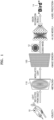
- FIG. 1 is a conceptual diagram illustrating operations in which an electronic device obtains a coded image 12 by using a metalens 110 and outputs a vision recognition result by using an Al model 200, according to an embodiment of the present disclosure.
- the metalens 110 is a lens including a metasurface composed of nano-sized pillars or pins.
- the metasurface is a three-dimensional (3D) surface having a pattern composed of a plurality of pillars or a plurality of pins having different heights and areas from each other, and a distance between the plurality of pillars or the plurality of pins may be different.
- the metalens 110 may have optical properties that encode light by changing the amount of light reflected from an object 10 and penetrating through the metasurface. In an embodiment of the present disclosure, the metalens 110 may induce a phase delay of light and modulate a phase of light by changing a refractive index of the light according to the pattern composed of the plurality of pillars or pins included in the metasurface.
- the height and area of the plurality of pillars or pins included in the metasurface and the distance therebetween may be determined by parameter values of a mathematically modeled model such as a point spread function (PSF) according to a result of training the Al model 200.
- PSF point spread function
- the image sensor 120 is configured to receive light of which the phase is modulated by penetrating through the metalens 110 and obtain a coded image 12 by converting the received light into electrical signals.
- the image sensor 120 may consist of a complementary metal-oxide-semiconductor (CMOS), but is not limited thereto.
- CMOS complementary metal-oxide-semiconductor
- the light reflected by the object 10 is phase-modulated by the metalens 110 due to a change in a refractive index, and the phase-modulated light is received by a specific pixel of the image sensor 120.
- the image sensor 120 may obtain the coded image 12 by converting the received light into an electrical signal.
- the coded image 12 is an image obtained by light reflected from the object 10 being phase-modulated by the metalens 110 and the modulated light being received by the image sensor 120.
- the coded image 12 may be an image that is out of focus or distorted or modulated so that a shape of the object 10 cannot be identified by a human eye, unlike an RGB image.
- the electronic device may input the coded image 12 to the Al model 200, and obtain a label 14 indicating a result of recognition of the coded image 12 by performing inferencing using the Al model 200.
- the Al model 200 may be a neural network model trained via supervised learning to obtain a simulated image by inputting an RGB image to a model reflecting the optical properties of the metalens 110 and to output a label indicating a ground truth for the input RGB image as a result of recognition of the obtained simulated image.
- the Al model 200 may be implemented as a CNN model, but is not limited thereto.
- the Al model 200 may be implemented as, for example, an RNN, an RBM, a DBN, a BRDNN, a DQN, or the like. A specific embodiment related to training the Al model 200 is described in detail with reference to FIG. 2 .
- the electronic device may obtain a label of 'bird', which is a result of vision recognition of the coded image 12 input to the Al model 200, through inferencing using the trained Al model 200.
- the present disclosure is directed to provide an electronic device and an operation method thereof for obtaining the coded image 12 that is not visually identifiable to a human by using the metalens 110, and obtaining a vision recognition result from the coded image 12 in order to protect personal privacy and enhance security when a camera is used for monitoring or the like.
- the electronic device obtains the coded image 12 that cannot be visually identified and verified by a human by modulating light reflected from the object 10 via the metalens 110, thereby providing a technical effect of preventing the risk of leakage of personal information in advance and enhancing security even when used indoors such as at home. Furthermore, according to an embodiment of the present disclosure, the electronic device obtains a vision recognition result from the coded image 12 through inferencing using the trained Al model 200, thereby improving a recognition rate compared to existing methods (e.g., event cameras, etc.). In addition, because the metalens 110 does not require a plurality of lenses to receive light, unlike conventional camera lenses, the electronic device according to an embodiment of the present disclosure provides the effect of reducing lens thickness and implementing a small form factor by using the metalens 110.
- FIG. 2 is a diagram illustrating a method of training the Al model 200, according to an embodiment of the present disclosure.
- the Al model 200 illustrated in FIG. 2 may be included on-device within an electronic device.
- the present disclosure is not limited thereto, and in another embodiment of the present disclosure, the Al model 200 may be stored on a server or an external device.
- the Al model 200 may be a model trained using supervised learning to output a label 22 corresponding to a ground truth paired with an RGB image 20 when the RGB image 20 is input.
- the Al model 200 may be an end-to-end neural network model trained to minimize a loss that is a difference between a label predicted from the RGB image 20 and the label corresponding to the ground truth.
- the Al model 200 may include a first Al model 210 and a second AI model 220.
- the first Al model 210 may be a model trained to output a simulated image from the input RGB image 20 by reflecting the optical properties of the metalens (110 of FIG. 1 ).
- the first Al model 210 may include a differentiable mathematical model that mathematically models the optical properties of the metalens 110.
- the first Al model 210 may output a simulated image by inputting the RGB image 20 to the differentiable mathematical model.
- the first Al model 210 may model RGB image data via a mathematical equation by reflecting phase modulation by the metasurface of the metalens 110, and obtain a simulated image by performing convolution of the modeled RGB image 20 with a PSF that mathematically models focus distortion or modulation for each pixel of the RGB image 20.
- the second Al model 220 may be a neural network model trained to output a predicted label according to a result of vision recognition from the input simulated image.
- the second Al model 220 may be implemented as a CNN model.
- the present disclosure is not limited thereto, and in another embodiment of the present disclosure, the second Al model 220 may be implemented as, for example, an RNN, an RBM, a DBN, a BRDNN, a DQN, or the like.
- the Al model 200 may be a neural network model trained to update and optimize a plurality of weights of neural network layers included in the first Al model 210 and the second Al model 220 via backpropagation performed by applying a loss 26 that is a difference between a label 22, which is a ground truth of the input RGB image 20, and a label 24, which is predicted from the RGB image 20, to the first Al model 210 and the second Al model 220.
- the Al model 200 may be an end-to-end neural network model trained to output the label 22 that is the ground truth from the input RGB image 20.
- the correlation e.g., the cross entropy (or CE)
- CE cross entropy
- a method of minimizing the Kullback-Leibler divergence which mathematically represents dissimilarity in a correlation between a distribution of the input RGB image 20 in a vector space and a distribution of the simulated image in a vector space, may be used to minimize the correlation between the RGB image 20 and the simulated image during the training process of the first Al model 210.
- KL-divergence Kullback-Leibler divergence
- the Al model 200 may further include a third Al model for computing the value of the mutual information loss 28 between the RGB image 20 and the simulated image.
- the third Al model may include a reconstruction model trained to generate a fake image that imitates the RGB image 20 based on the simulated image, and a discriminator model that determines whether the input image is the RGB image 20 or the fake image generated by the reconstruction model.
- the third Al model may calculate the value of the mutual information loss 28 based on output values of the reconstruction model and the discriminator model.
- the first Al model 210 may be trained to minimize the value of the mutual information loss 28 via backpropagation that applies the mutual information loss 28. A specific embodiment in which the first Al model 210 is trained by applying the value of the mutual information loss 28 calculated by the third Al model is described in more detail with reference to FIG. 8 .
- the electronic device 100 may include a metalens 110, an image sensor 120, a processor 130, and a memory 140.
- the image sensor 120, the processor 130, and the memory 140 may be electrically and/or physically connected to each other.
- FIG. 3 illustrates only essential components for describing operations of the electronic device 100, and the components included in the electronic device 100 are not limited to those shown in FIG. 3 .
- the electronic device 100 may further include a depth sensor or an audio sensor.
- the electronic device 100 may further include a battery that supplies power to the image sensor 120 and the processor 130.
- the electronic device 100 may further include a communication interface (150 of FIG. 4 ) configured to perform data communication with a server or an external device.
- a communication interface 150 of FIG. 4
- An embodiment in which the electronic device 100 includes the communication interface 150 is described in more detail with reference to FIG. 4 .
- the metalens 110 is a lens having optical properties that change the amount of light reflected from the object and penetrating therethrough and modulate or distort the phase of light by refracting or diffracting the light.
- the metalens 110 may include a metasurface composed of a plurality of pillars or pins having a nanoscale size.
- the metasurface is a 3D surface having a pattern composed of a plurality of pillars or a plurality of pins having different heights and areas from each other, and a distance between the plurality of pillars or the plurality of pins may be different.
- the metalens 110 may have optical properties that encode light reflected from an object 10 through the metasurface.
- the image sensor 120 is configured to receive light of which the phase is modulated by penetrating through the metalens 110 and obtain a coded image by converting the received light into electrical signals.
- the image sensor 120 may consist of a CMOS, but is not limited thereto.
- the light reflected by the object 10 is phase-modulated by the metalens 110 due to a change in a refractive index, and the phase-modulated light is received by a specific pixel in the image sensor 120.
- the image sensor 120 may obtain the coded image by converting the received light into electrical signals.
- the image sensor 120 may provide image data of the obtained coded image to the processor 130.
- the memory 140 may include at least one type of storage medium, i.e., at least one of, for example, a flash memory-type memory, a hard disk-type memory, a multimedia card micro-type memory, a card-type memory (e.g., a Secure Digital (SD) card or an eXtreme Digital (XD) memory), random access memory (RAM), static RAM (SRAM), read-only memory (ROM), electrically erasable programmable ROM (EEPROM), PROM, or an optical disc.
- a flash memory-type memory e.g., a Secure Digital (SD) card or an eXtreme Digital (XD) memory
- RAM random access memory
- SRAM static RAM
- ROM read-only memory
- EEPROM electrically erasable programmable ROM
- PROM or an optical disc.
- the memory 140 may store instructions related to operations in which the electronic device 100 obtains a vision recognition result from a coded image obtained through the metalens 110 and the image sensor 120.
- the memory 140 may store at least one of instructions, algorithms, data structures, program code, and application programs readable by the processor 130.
- the instructions, algorithms, data structures, and program code stored in the memory 140 may be implemented in programming or scripting languages such as C, C++, Java, assembler, etc.
- the processor 130 may obtain a coded image through the metalens 110 and the image sensor 120.
- the processor 130 may input the coded image to the Al model 200, and obtain a label indicating a result of recognition of the coded image by performing inference using the Al model 200.
- a 'label' obtained as a result of inference through the Al model 200 may be classification information of an object included in an input coded image.
- the Al model 200 may output a probability value indicating a likelihood that the object is classified as a label indicating 'cat'.
- the processor 130 may detect an object from a coded image or segment the object, as a result of vision recognition using the Al model 200.
- the processor 130 may select, among the plurality of head networks, a head network optimized according to the purpose or use of the vision task, and change a head network of the Al model 200 to the selected head network.
- a head network optimized according to the purpose or use of the vision task when the head network is changed according to the purpose or use of the vision task, the same backbone network may be applied regardless of the vision task.
- a structure of the backbone network may also be shared by the changed head network.
- the Al model 200 may further include a metalens profiler model used to recognize replacement or change of the metalens 110 by a user.
- the processor 130 may recognize replacement or change of the metalens 110 by the user via the metalens profiler model.
- the processor 130 may identify a vision task corresponding to the replaced or changed metalens 110, and change the backbone network and head network of the Al model 200 to a backbone network and a head network that are predetermined as models optimized for the identified vision task.
- FIGS. 12 and 13 A specific embodiment in which the processor 130 changes the backbone network and head network of the Al model 200 according to replacement or change of the metalens 110 by the user is described in more detail with reference to FIGS. 12 and 13 .
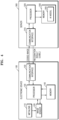
- FIG. 4 is a block diagram illustrating components of the electronic device 100 and a server 300, according to an embodiment of the present disclosure.
- the electronic device 100 may further include the communication interface 150 that performs data communication with the server 300.
- the metalens 110, the image sensor 120, and the processor 130 included in the electronic device 100 are substantially the same as the metalens 110, the image sensor 120, and the processor 130 illustrated in FIG. 3 , respectively, and therefore, redundant descriptions are omitted.
- the communication interface 150 may transmit and receive data to and from the server 300 over a network that conforms to mobile communication standards such as code division multiple access (CDMA), wideband CDMA (WCDMA), 3rd generation (3G), 4th generation (4G), 5th generation (5G), and/or a communication method using millimeter waves (mmWave).
- CDMA code division multiple access
- WCDMA wideband CDMA
- 3G 3rd generation
- 4G 4th generation
- 5G 5th generation
- mmWave millimeter waves
- the server 300 may include a communication interface 310 for communicating with the electronic device 100, a memory 330 for storing at least one instruction or program code, and a processor 320 configured to execute the at least one instruction or program code stored in the memory 330.
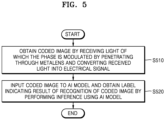
- FIG. 5 is a flowchart of a method, performed by the electronic device 100, of obtaining a vision recognition result from an image obtained using a metalens, according to an embodiment of the present
- the electronic device 100 obtains a coded image by receiving light of which the phase is modulated by penetrating through the metalens and converting the received light into electrical signals.
- Light reflected by an object to be captured may be phase-modulated by the metalens (110 of FIGS. 1 , 3 , and 4 ) due to a change in refractive index.
- the phase-modulated light is received by a specific pixel in the image sensor (120 of FIGS. 1 , 3 , and 4 ), and the electronic device 100 may obtain a coded image by converting the light received through the image sensor 120 into an electrical signal.
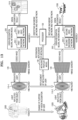
- L M.I . which represents a value of the mutual information loss 840, may be calculated through expected values (expectation (E) operation) of values obtained by taking logarithmic functions for R(X), which is the output value of the reconstruction model 232, and D(X), which is the output value of the discriminator model 234.
- the coded image When a coded image obtained through the metalens (110 of FIGS. 1 and 3 ) and the image sensor (120 of FIGS. 1 and 3 ) is similar to an RGB image of an object captured using a general lens, the coded image may be hijacked from the image sensor 120, or hacked and leaked to the outside so that the RGB image may be reconstructed from the coded image. In this case, there is a problem in that personal information may be leaked to the outside and privacy may be violated.
- Operations S910 and S920 illustrated in FIG. 9 are detailed operations of operation S520 illustrated in FIG. 5 . Operation S910 of FIG. 9 may be performed after operation S510 illustrated in FIG. 5 is performed.
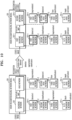
- FIG. 10 is a diagram illustrating an operation in which the electronic device 100 changes a configuration of the second Al model 220 based on the purpose or use of a vision task, according to an embodiment of the present disclosure.
- the backbone network 222 is a neural network model trained to extract feature values from the input coded image and obtain a feature map by using the extracted feature values.
- the backbone network 222 may be implemented as, for example, GoogleNet, ResNet, VGG, DarkNet, ImageNet, or U-Net, but is not limited thereto.
- the head network 224 is a neural network model trained to output a label indicating the result of recognition of the coded image from the feature map output from the backbone network 222.
- the head network 224 may be implemented as, for example, embedding & softmax, pixel-wise softmax, YOLO, or YOLO & embedding, but is not limited thereto.
- the processor (130 of FIG. 3 ) of the electronic device 100 may change at least one of the backbone network 222 and the head network 224 of the Al model based on the purpose or use of a vision task.
- a 'vision task' refers to a task that outputs a vision recognition result from an input image.
- the vision task may include, but is not limited to, object detection, classification, segmentation, face identification, pose estimation, depth estimation, or the like.
- a plurality of backbone networks 222-1 to 222-n may be models optimized and trained for different vision tasks, respectively.
- the 'optimized model' refers to a neural network model that outputs prediction results with high accuracy and requires short processing time depending on the amount of training data and the purpose and use of the vision task.
- the first backbone network 222-1 may be a ResNet optimized for 'detection'
- the second backbone network 222-2 may be a VGG optimized for 'classification'
- the third backbone network 222-3 may be a U-Net optimized for 'segmentation', but they are not limited thereto.
- the processor 130 may select a backbone network optimized for the purpose or use of the vision task from among the plurality of backbone networks 222-1 to 222-n. For example, when the purpose or use of the vision task is 'detection' of the object, the processor 130 may select the first backbone network 222-1 optimized for the 'detection' from among the plurality of backbone networks 222-1 to 222-n. The processor 130 may change the backbone network 222 to the first backbone network 222-1 by replacing the existing backbone network 222 with the selected first backbone network 222-1.
- the electronic device 100 outputs a label indicating a result of recognition of the coded image by inputting the coded image to the Al model in which the at least one of the backbone network and the head network has been changed.
- the second Al model 220 may include the first backbone network 222-1 and the second head network 224-2.
- a feature map may be extracted from the coded image by the first backbone network 222-1.
- the extracted feature map may be input to the second head network 224-2, and a label indicating a result of recognition of the coded image may be output by the second head network 224-2.
- the output label may be a vector value indicating a result of detection of the object.
- FIG. 11 is a diagram illustrating an operation in which the electronic device 100 changes a configuration of an Al model based on the purpose or use of a vision task, according to an embodiment of the present disclosure.
- the second Al model 220 is a vision recognition neural network model trained to output a result of vision recognition of the coded image when the coded image is input.
- the second Al model 220 may include a first backbone network 222-1 and a head network 224. Because the first backbone network 222-1 and the head network 224 are the same as those described with reference to FIG. 10 , redundant descriptions are omitted herein.
- the backbone network of the second Al model 220 is determined to be the first backbone network 222-1 and may not be changed according to the purpose or use of the vision task.
- the head network 224 may be changed.
- a plurality of head networks 224-1 to 224-n may be models optimized and trained for different vision tasks, respectively.
- the first head network 224-1 may be a pixel-wise softmax optimized for 'segmentation'
- the second head network 224-2 may be a YOLO optimized for 'detection'
- the third head network 224-3 may be a YOLO & embedding model optimized for 'face identification'.
- the processor (130 of FIG. 3 ) of the electronic device 100 may select a head network optimized for the purpose or use of the vision task among the plurality of head networks 224-1 to 224-n, and replace the existing head network 224 with the selected head network.
- the processor 130 may select the second head network 224-2 optimized for the 'detection' from among the plurality of head networks 224-1 to 224-n, and replace the existing head network 224 with the selected second head network 224-2.
- model parameters of the first backbone network 222-1 may remain unchanged regardless of the changed head network 224.
- weights of the first backbone network 222-1 may be shared (shared weights) for the head network 224 changed according to the purpose or use of the vision task.
- model parameters of the first backbone network 222-1 may be changed according to a vision task of the changed head network 224.
- the processor 130 may change the head network 224 to the third head network 224-3, and replace the weights of the first backbone network 222-1 with weights optimized for face identification.
- the electronic device 100 changes at least one of the backbone network 222 and the head network 224 according to the purpose or use of the vision task, such as 'object detection', 'classification', 'segmentation', 'face identification', or 'depth estimation', thereby providing a technical effect of improving the accuracy of a vision recognition result and reducing the processing time.
- FIG. 12 is a flowchart of a method, performed by the electronic device 100, of changing a configuration of an Al model in response to replacement or change of a metalens being recognized, according to an embodiment of the present disclosure.
- Operations corresponding to operations S1210 to S1230 illustrated in FIG. 12 may be performed after operation S510 illustrated in FIG. 5 is performed. After an operation corresponding to operation S1230 illustrated in FIG. 12 is performed, operation S520 of FIG. 5 may be performed.
- FIG. 13 is a diagram illustrating an operation in which the electronic device 100 changes a configuration of the second Al model 220 in response to replacement or change of the metalens 110 being recognized, according to an embodiment of the present disclosure.
- a user may replace or change the metalens 110 depending on the purpose or use of vision recognition.
- a metalens may have specific optical properties according to the purpose or use of vision recognition.
- a coded image is obtained due to the optical properties of hardware, such as a surface pattern of a metalens, and the accuracy of a result of vision recognition, such as object detection, classification, segmentation, face identification, and situation recognition, may be determined according to characteristics of the coded image.
- a first metalens 110-1 may be a lens optimized for obtaining a coded image for 'face identification'
- a second metalens 110-2 may be a lens optimized for obtaining a coded image for 'situation recognition'.
- the user may replace the first metalens 110-1 with the second metalens 110-2 in accordance with a change in the purpose of vision recognition.
- the electronic device 100 may recognize the replacement of the metalens by the user.
- the electronic device 100 may further include a metalens profiler model 160, and the processor (130 of FIG. 3 ) may recognize a metalens replacement from the first metalens 110-1 to the second metalens 110-2 by using the metalens profiler model 160.
- the image sensor 120 may receive light that is reflected from an object 1300 and then phase-modulated by penetrating through the metalens 110-1 and the metalens is replaced with the second metalens 110-2 by a user input, the image sensor 120 may receive light that is reflected from an object 1320 and then phase-modulated by penetrating through the second metalens 110-2.
- the metalens profiler model 160 may be a neural network model trained, via supervised learning, by applying, as an input, a coded image obtained by the image sensor 120 receiving light of which the phase is modulated by a specific metalens and applying a vector value representing the specific metalens as a ground truth.
- a metalens may have an encoded structure with a unique pattern, and the metalens profiler model 160 may be implemented as a classifier model that identifies a specific metalens through an encoded structure.
- the metalens profiler model 160 may provide a signal indicating that the replacement of the metalens has been recognized to the processor 130.
- the electronic device 100 identifies a vision task corresponding to the replaced or changed metalens.
- the processor 130 may identify a vision task optimized for the replaced metalens.
- a 'vision task optimized for the metalens' may refer to a vision task for which, when the coded image obtained by the image sensor 120 receiving light of which the phase is modulated by penetrating through a specific metalens is input to the second Al model 220, an output vision recognition result is highly accurate and short processing time is required.
- the first metalens 110-1 may be a metalens optimized for 'face identification' among vision tasks
- the second metalens 110-2 may be a metalens optimized for 'situation recognition'.
- the electronic device 100 changes a backbone network and a head network of an Al model to a backbone network and a head network optimized for the identified vision task.
- the second Al model 220 may include the first backbone network 222-1 and the first head network 224-1. Because detailed descriptions of the backbone network and the head network are the same as those described with reference to FIGS. 9 to 11 , redundant descriptions are omitted herein.
- the first backbone network 222-1 and the first head network 224-1 may be neural network models optimized for performing 'face identification' among vision tasks.
- the first backbone network 222-1 may be GoogleNet, and the first head network 224-1 may be YOLO, but they are not limited thereto.
- the processor 130 may identify the first backbone network 222-1 and the first head network 224-1 included in the second Al model 220. In an embodiment of the present disclosure, the processor 130 may identify which vision task the identified first backbone network 222-1 and the first head network 224-1 are optimized for.
- the processor 130 may respectively replace the first backbone network 222-1 and the first head network 224-1 with a second backbone network 222-2 and a second head network 224-2 optimized for a vision task 'situation recognition' corresponding to the second metalens 110-2 replaced by the user.
- the second backbone network 222-2 may be ResNet
- the second head network 224-2 may be SoftMax, but they are not limited thereto.
- the electronic device 100 may input a coded image to a changed second Al model 220, and obtain a vision recognition result by performing inference using the second Al model 220.
- a face identification result 1310 with faces marked with bounding boxes may be obtained as an inference result when the coded image is input to the second Al model 220.
- the second Al model 220 includes the second backbone network 222-2 and the second head network 224-2, and when the coded image is input to the second Al model 220, a label indicating a specific situation (e.g., "Fire” or "Danger”) may be obtained as an inference result.
- a label indicating a specific situation e.g., "Fire” or "Danger
- the multi-model transformer 190 may obtain depth value information of the object 1400 from the depth sensor 170 and obtain the audio signal from the audio sensor 180.
- the multi-model transformer 190 may convert the depth value information and the audio signal into n-dimensional vector values by respectively performing embeddings on the depth value information and the audio signal.
- the multi-model transformer 190 may input the embedding vectors to the Al model 200.
- FIG. 15 is a diagram illustrating an operation in which the electronic device 100 obtains a vision recognition result by using the depth sensor 170 and the audio sensor 180, as well as a camera system including the metalens 110, according to an embodiment of the present disclosure.
- the present disclosure provides an electronic device 100 for obtaining a recognition result of an object from an image obtained through a metalens 110.
- the electronic device 100 may include the metalens 110 having a pattern formed on a surface thereof and consisting of a plurality of pillars or pins having different shapes, heights, and areas from each other, and having optical properties that modulate a phase of light reflected from an object through the pattern on the surface.
- the electronic device 100 may include an image sensor 120 configured to obtain a coded image by receiving light reflected from the object and phase-modulated by penetrating through the metalens 110 and converting the received light into electrical signals.
- the electronic device 100 may include at least one processor 130 configured to input the coded image to an Al model 200, and obtain a label indicating a result of recognizing the object by performing inference using the Al model 200.
- the Al model 200 may be a neural network model trained to obtain a simulated image by inputting a red, green, and blue (RGB) image to a model reflecting the optical properties of the metalens 110 and to output a label indicating a ground truth for the input RGB image as a result of recognition of the obtained simulated image.
- the Al model 200 may be trained to minimize information indicating similarity between the RGB image and the simulated image.
- the shapes, heights, and areas of the plurality of pillars or pins forming the pattern on the surface of the metalens 110 may be formed based on mathematical modeling parameters according to a result of training the Al model 200.
- the first Al model 210 may be trained by updating weights via backpropagation that applies mutual information representing similarity between the RGB image and the simulated image as a loss so that the mutual information is minimized.
- the Al model 200 may include a backbone network trained to extract a feature map from the input coded image and a head network trained to output a label indicating a result of recognition of the coded image from the feature map.
- the at least one processor 130 may change at least one of the backbone network and the head network based on a purpose or use of a vision task to be recognized by using the Al model 200.
- the Al model 200 may further include a metalens profiler model configured to recognize replacement or change of the metalens 110 by a user.
- the at least one processor 130 may be configured to identify a vision task corresponding to the replaced or changed metalens 110.
- the at least one processor 130 may be configured to change the backbone network and the head network of the Al model 200 to a backbone network and a head network that are predetermined as models optimized for the identified vision task.
- the present disclosure provides a method, performed by an electronic device 100, of recognizing an object from an image obtained through a metalens 110.
- the method may include obtaining a coded image by receiving light reflected from the object and phase-modulated by penetrating through the metalens 110 and converting the received light into electrical signals (S510).
- the method may include inputting the coded image to an Al model 200, and obtaining a label indicating a result of recognizing the object by performing inference using the Al model 200 (S520).
- the Al model 200 may further include a third Al model 230 configured to compute a loss representing dissimilarity between the RGB image and the simulated image.
- the third Al model 230 may include a reconstruction model trained to generate a fake image that imitates the RGB image based on the simulated image, and a discriminator model trained to determine whether an input image is the RGB image or the fake image generated by the reconstruction model.
- a program executed by the electronic device 100 described in this specification may be implemented as a hardware component, a software component, and/or a combination of the hardware component and the software component.
- the program may be executed by any system capable of executing computer-readable instructions.
- the software may be implemented as a computer program including instructions stored in computer-readable storage media.
- Examples of the computer-readable recording media include magnetic storage media (e.g., ROM, RAM, floppy disks, hard disks, etc.), optical recording media (e.g., compact disc (CD)-ROM and a digital versatile disc (DVD)), etc.
- the computer-readable recording media may be distributed over computer systems connected through a network so that computer-readable code may be stored and executed in a distributed manner.
- the media may be readable by a computer, stored in a memory, and executed by a processor.
- a computer-readable storage medium may be provided in the form of a non-transitory storage medium.
- the term 'non-transitory' only means that the storage medium does not include a signal and is a tangible device, and the term does not differentiate between where data is semi-permanently stored in the storage medium and where the data is temporarily stored in the storage medium.
- the 'non-transitory storage medium' may include a buffer in which data is temporarily stored.
- the computer program product may include a storage medium of the server or a storage medium of the electronic device 100.
- the computer program product may include a storage medium of the third device.
- the computer program product may include a software program itself that is transmitted from the electronic device 100 to the third device or that is transmitted from the third device to the electronic device.
- one of the electronic device 100 and the third device may execute the computer program product to perform methods according to disclosed embodiments.
- at least one of the electronic device 100 or the third device may execute the computer program product to perform the methods according to the disclosed embodiments in a distributed manner.
- the third device may execute the computer program product to control an electronic device communicatively connected to the third device to perform the methods according to the disclosed embodiments.
- the third device may download the computer program product from the electronic device 100 and execute the downloaded computer program product.
- the third device may execute the computer program product that is pre-loaded therein to perform the methods according to the disclosed embodiments.
Landscapes
- Engineering & Computer Science (AREA)
- Theoretical Computer Science (AREA)
- Physics & Mathematics (AREA)
- General Physics & Mathematics (AREA)
- Health & Medical Sciences (AREA)
- General Health & Medical Sciences (AREA)
- Software Systems (AREA)
- Evolutionary Computation (AREA)
- Artificial Intelligence (AREA)
- Computing Systems (AREA)
- Computer Vision & Pattern Recognition (AREA)
- Multimedia (AREA)
- Databases & Information Systems (AREA)
- Medical Informatics (AREA)
- General Engineering & Computer Science (AREA)
- Biophysics (AREA)
- Data Mining & Analysis (AREA)
- Mathematical Physics (AREA)
- Life Sciences & Earth Sciences (AREA)
- Biomedical Technology (AREA)
- Molecular Biology (AREA)
- Computational Linguistics (AREA)
- Bioethics (AREA)
- Computer Hardware Design (AREA)
- Computer Security & Cryptography (AREA)
- Vascular Medicine (AREA)
- Human Computer Interaction (AREA)
- Oral & Maxillofacial Surgery (AREA)
- Optics & Photonics (AREA)
- Probability & Statistics with Applications (AREA)
- Image Analysis (AREA)
Applications Claiming Priority (3)
| Application Number | Priority Date | Filing Date | Title |
|---|---|---|---|
| KR20220114496 | 2022-09-08 | ||
| KR1020220173058A KR20240035296A (ko) | 2022-09-08 | 2022-12-12 | 메타 렌즈를 이용하여 획득한 이미지를 처리하는 전자 장치 및 그 동작 방법 |
| PCT/KR2023/010687 WO2024053856A1 (fr) | 2022-09-08 | 2023-07-24 | Dispositif électronique pour traiter des images acquises à l'aide d'une méta-lentille, et son procédé de fonctionnement |
Publications (2)
| Publication Number | Publication Date |
|---|---|
| EP4580201A1 true EP4580201A1 (fr) | 2025-07-02 |
| EP4580201A4 EP4580201A4 (fr) | 2025-12-03 |
Family
ID=90191530
Family Applications (1)
| Application Number | Title | Priority Date | Filing Date |
|---|---|---|---|
| EP23863337.4A Pending EP4580201A4 (fr) | 2022-09-08 | 2023-07-24 | Dispositif électronique pour traiter des images acquises à l'aide d'une méta-lentille, et son procédé de fonctionnement |
Country Status (4)
| Country | Link |
|---|---|
| US (1) | US20250209771A1 (fr) |
| EP (1) | EP4580201A4 (fr) |
| CN (1) | CN120036006A (fr) |
| WO (1) | WO2024053856A1 (fr) |
Families Citing this family (2)
| Publication number | Priority date | Publication date | Assignee | Title |
|---|---|---|---|---|
| US12548165B2 (en) * | 2022-11-29 | 2026-02-10 | Samsung Electronics Co., Ltd | Temporal semantic boundary loss for video semantic segmentation networks |
| CN121357294B (zh) * | 2025-12-18 | 2026-04-07 | 苏州山河光电科技有限公司 | 多通道隐私成像器件及其设计方法和装置 |
Family Cites Families (5)
| Publication number | Priority date | Publication date | Assignee | Title |
|---|---|---|---|---|
| KR101887216B1 (ko) * | 2017-11-24 | 2018-08-09 | 한태재 | 이미지 재구성 서버 및 방법 |
| KR101975186B1 (ko) * | 2018-07-04 | 2019-05-07 | 광운대학교 산학협력단 | 객체 검출을 위한 생성적 적대 신경망 기반의 데이터 생성 장치 및 방법 |
| KR102660735B1 (ko) * | 2020-04-03 | 2024-04-25 | 한국전자통신연구원 | 코딩된 위상 마스크를 이용한 3차원 이미지 생성 장치, 방법 및 시스템 |
| US20210360154A1 (en) * | 2020-05-14 | 2021-11-18 | David Elliott Slobodin | Display and image-capture device |
| EP4288816A4 (fr) * | 2021-02-05 | 2024-12-25 | University of Washington | Nano-optique neuronale pour imagerie à lentille mince de haute qualité |
-
2023
- 2023-07-24 EP EP23863337.4A patent/EP4580201A4/fr active Pending
- 2023-07-24 CN CN202380064525.9A patent/CN120036006A/zh active Pending
- 2023-07-24 WO PCT/KR2023/010687 patent/WO2024053856A1/fr not_active Ceased
-
2025
- 2025-03-07 US US19/073,859 patent/US20250209771A1/en active Pending
Also Published As
| Publication number | Publication date |
|---|---|
| US20250209771A1 (en) | 2025-06-26 |
| CN120036006A (zh) | 2025-05-23 |
| EP4580201A4 (fr) | 2025-12-03 |
| WO2024053856A1 (fr) | 2024-03-14 |
Similar Documents
| Publication | Publication Date | Title |
|---|---|---|
| US20250209771A1 (en) | Electronic device for processing images acquired using meta-lens, and operation method thereof | |
| KR102933526B1 (ko) | 스테레오 카메라들로부터의 손 포즈 추정 | |
| Lyu et al. | ChipNet: Real-time LiDAR processing for drivable region segmentation on an FPGA | |
| KR102308871B1 (ko) | 객체의 속성에 기반하여 객체를 인식 및 트레이닝하는 방법 및 장치 | |
| CN110168477B (zh) | 用于长方体检测的深度学习系统 | |
| EP3023911B1 (fr) | Procédé et appareil de reconnaissance d'objet et procédé et appareil de reconnaissance d'apprentissage | |
| EP3324339B1 (fr) | Procédé et appareil pour effectuer une reconnaissance de matériaux et formation de reconnaissance de matériaux | |
| KR20220081261A (ko) | 객체 포즈 추정 방법 및 장치 | |
| CN111008631B (zh) | 图像的关联方法及装置、存储介质和电子装置 | |
| EP3853764A1 (fr) | Entraînement de réseaux neuronaux pour ré-identification de véhicules | |
| EP4414862B1 (fr) | Procédé de traitement de données de nuage en points, procédé d'apprentissage de réseau neuronal et dispositif associé | |
| KR20150111641A (ko) | 계층적 패턴 구조에 기반한 기술자 생성 방법 및 이를 이용한 객체 인식 방법과 장치 | |
| US20240273742A1 (en) | Depth completion using image and sparse depth inputs | |
| EP4290459A1 (fr) | Procédé de réalité augmentée et dispositif associé | |
| KR20220074715A (ko) | 이미지 처리 방법 및 장치 | |
| CN114863257A (zh) | 图像处理方法、装置、设备及存储介质 | |
| KR20230069607A (ko) | 셀프 어텐션 기반의 영상 인식 방법 및 장치 | |
| KR20240059365A (ko) | 뉴럴 네트워크 기반의 영상 처리 방법 및 장치 | |
| CN121263824A (zh) | 使用来自多个相机姿势的图像的平面网格重建 | |
| US20260112049A1 (en) | Object detection method and related device thereof | |
| KR20170057118A (ko) | 오브젝트 인식 방법 및 장치, 인식 모델 학습 방법 및 장치 | |
| KR20240035296A (ko) | 메타 렌즈를 이용하여 획득한 이미지를 처리하는 전자 장치 및 그 동작 방법 | |
| US20250104262A1 (en) | Acquiring head dimensions using common devices | |
| US20260010835A1 (en) | Slice-based methods for optimizing validation and subsequent retraining procedures of machine learning models | |
| US12505569B2 (en) | Disparity-based depth refinement using confidence information and stereoscopic depth information |
Legal Events
| Date | Code | Title | Description |
|---|---|---|---|
| STAA | Information on the status of an ep patent application or granted ep patent |
Free format text: STATUS: THE INTERNATIONAL PUBLICATION HAS BEEN MADE |
|
| PUAI | Public reference made under article 153(3) epc to a published international application that has entered the european phase |
Free format text: ORIGINAL CODE: 0009012 |
|
| STAA | Information on the status of an ep patent application or granted ep patent |
Free format text: STATUS: REQUEST FOR EXAMINATION WAS MADE |
|
| 17P | Request for examination filed |
Effective date: 20250325 |
|
| AK | Designated contracting states |
Kind code of ref document: A1 Designated state(s): AL AT BE BG CH CY CZ DE DK EE ES FI FR GB GR HR HU IE IS IT LI LT LU LV MC ME MK MT NL NO PL PT RO RS SE SI SK SM TR |
|
| A4 | Supplementary search report drawn up and despatched |
Effective date: 20251031 |
|
| RIC1 | Information provided on ipc code assigned before grant |
Ipc: H04N 23/55 20230101AFI20251027BHEP Ipc: H04N 23/54 20230101ALI20251027BHEP Ipc: G03B 17/12 20210101ALI20251027BHEP Ipc: G02B 1/00 20060101ALI20251027BHEP Ipc: G06N 3/08 20230101ALI20251027BHEP Ipc: G06V 10/774 20220101ALI20251027BHEP Ipc: G06V 20/70 20220101ALI20251027BHEP Ipc: G06V 10/80 20220101ALI20251027BHEP Ipc: G06N 3/045 20230101ALI20251027BHEP |
|
| DAV | Request for validation of the european patent (deleted) | ||
| DAX | Request for extension of the european patent (deleted) |