EP4580202A1 - Procédé de création de fichier d'image et dispositif de création de fichier d'image - Google Patents
Procédé de création de fichier d'image et dispositif de création de fichier d'image Download PDFInfo
- Publication number
- EP4580202A1 EP4580202A1 EP23857095.6A EP23857095A EP4580202A1 EP 4580202 A1 EP4580202 A1 EP 4580202A1 EP 23857095 A EP23857095 A EP 23857095A EP 4580202 A1 EP4580202 A1 EP 4580202A1
- Authority
- EP
- European Patent Office
- Prior art keywords
- image
- main
- thumbnail
- accessory
- correction processing
- Prior art date
- Legal status (The legal status is an assumption and is not a legal conclusion. Google has not performed a legal analysis and makes no representation as to the accuracy of the status listed.)
- Pending
Links
Images














Classifications
-
- H—ELECTRICITY
- H04—ELECTRIC COMMUNICATION TECHNIQUE
- H04N—PICTORIAL COMMUNICATION, e.g. TELEVISION
- H04N9/00—Details of colour television systems
- H04N9/64—Circuits for processing colour signals
-
- G—PHYSICS
- G06—COMPUTING OR CALCULATING; COUNTING
- G06F—ELECTRIC DIGITAL DATA PROCESSING
- G06F21/00—Security arrangements for protecting computers, components thereof, programs or data against unauthorised activity
- G06F21/60—Protecting data
- G06F21/602—Providing cryptographic facilities or services
-
- G—PHYSICS
- G06—COMPUTING OR CALCULATING; COUNTING
- G06F—ELECTRIC DIGITAL DATA PROCESSING
- G06F21/00—Security arrangements for protecting computers, components thereof, programs or data against unauthorised activity
- G06F21/60—Protecting data
- G06F21/62—Protecting access to data via a platform, e.g. using keys or access control rules
- G06F21/6209—Protecting access to data via a platform, e.g. using keys or access control rules to a single file or object, e.g. in a secure envelope, encrypted and accessed using a key, or with access control rules appended to the object itself
-
- H—ELECTRICITY
- H04—ELECTRIC COMMUNICATION TECHNIQUE
- H04N—PICTORIAL COMMUNICATION, e.g. TELEVISION
- H04N1/00—Scanning, transmission or reproduction of documents or the like, e.g. facsimile transmission; Details thereof
- H04N1/32—Circuits or arrangements for control or supervision between transmitter and receiver or between image input and image output device, e.g. between a still-image camera and its memory or between a still-image camera and a printer device
- H04N1/32101—Display, printing, storage or transmission of additional information, e.g. ID code, date and time or title
- H04N1/32128—Display, printing, storage or transmission of additional information, e.g. ID code, date and time or title attached to the image data, e.g. file header, transmitted message header, information on the same page or in the same computer file as the image
-
- H—ELECTRICITY
- H04—ELECTRIC COMMUNICATION TECHNIQUE
- H04N—PICTORIAL COMMUNICATION, e.g. TELEVISION
- H04N1/00—Scanning, transmission or reproduction of documents or the like, e.g. facsimile transmission; Details thereof
- H04N1/387—Composing, repositioning or otherwise geometrically modifying originals
- H04N1/393—Enlarging or reducing
-
- H—ELECTRICITY
- H04—ELECTRIC COMMUNICATION TECHNIQUE
- H04N—PICTORIAL COMMUNICATION, e.g. TELEVISION
- H04N23/00—Cameras or camera modules comprising electronic image sensors; Control thereof
- H04N23/60—Control of cameras or camera modules
- H04N23/63—Control of cameras or camera modules by using electronic viewfinders
- H04N23/631—Graphical user interfaces [GUI] specially adapted for controlling image capture or setting capture parameters
-
- H—ELECTRICITY
- H04—ELECTRIC COMMUNICATION TECHNIQUE
- H04N—PICTORIAL COMMUNICATION, e.g. TELEVISION
- H04N23/00—Cameras or camera modules comprising electronic image sensors; Control thereof
- H04N23/60—Control of cameras or camera modules
- H04N23/667—Camera operation mode switching, e.g. between still and video, sport and normal or high- and low-resolution modes
-
- H—ELECTRICITY
- H04—ELECTRIC COMMUNICATION TECHNIQUE
- H04N—PICTORIAL COMMUNICATION, e.g. TELEVISION
- H04N23/00—Cameras or camera modules comprising electronic image sensors; Control thereof
- H04N23/80—Camera processing pipelines; Components thereof
Definitions
- One embodiment of the present invention relates to an image file creation method and an image file creation device.
- an accessory image such as a thumbnail image as accessory information related to a main image is stored in an image file along with the main image (for example, see JP2009-20266A ).
- the accessory image is used, for example, in a case in which a content of the main image is simply checked, such as with the thumbnail image.
- the accessory image can be more effectively used as long as the correction execution can be understood from the accessory image.
- One embodiment of the present invention is to solve the above-described problem of the related art, and an object of the present invention is to provide an image file creation method and an image file creation device for more effectively using an accessory image as accessory information of a main image.
- an aspect of the present invention relates to an image file creation method of creating an image file including a main image and an accessory image as accessory information related to the main image, the image file creation method comprising: a type reception step of receiving a type of the accessory image in association with correction processing on the main image; and an acquisition step of acquiring the accessory image that is not changed in conjunction with a change in the main image caused by the correction processing, based on the type.
- the acquisition step may be carried out in a case in which the correction processing is executed on the main image.
- correction processing may be executed in an imaging device that captures the main image.
- the type reception step at least one of a first accessory image, a second accessory image, or a third accessory image may be received as the type.
- the first accessory image may be generated based on a first image obtained by executing development correction processing for development on a RAW image as the main image.
- the second accessory image may be generated based on a second image obtained by executing color correction processing including color correction on the main image.
- the third accessory image may be generated based on a third image obtained by executing process correction processing for processing a subject in the main image on the main image.
- the development correction processing may not include a portion of a plurality of pieces of the color correction that are executable in the color correction processing.
- the image file creation method may further comprise a decision step of deciding whether or not to carry out the acquisition step of acquiring the third accessory image based on a correction content of the main image in a case in which the process correction processing is executed on the main image.
- the correction processing may be executed in the imaging device that captures the main image MP, or may be executed by the information processing terminal or the like that takes the main image MP from the imaging device.
- the correction processing may be executed based on an operation performed by the user, or may be automatically executed by a function of the imaging device or the information processing terminal.
- the main image MP that is a target of the correction processing may include a RAW image before the development.
- the main image MP before the correction may be deleted from the image file.
- the main image MP before the correction may remain in the image file as a backup image (thumbnail image).
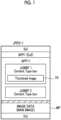
- the accessory information AD is information related to the main image MP. Specifically, the accessory information AD can be written in a header region of the image file.
- the accessory information AD can be written in a header region of the image file.
- marker segments "APP1" and "APP11" as the header regions in which the accessory information can be written are provided as shown in Fig. 1 .
- APP1 accessory information related to an imaging date and time, an imaging location, the imaging conditions, and the like of the main image MP is stored as tag information.
- the "APP11” includes JPEG Universal Metadata Box Format (JUMBF) boxes as metadata storage regions, specifically, JUMBF1 and JUMBF2 boxes. Examples of the standard related to the accessory information in JPEG include an exchangeable image file format (Exif).
- the thumbnail image TP is acquired in conjunction with a change in the main image MP caused by the correction processing, and, specifically, the thumbnail image TP based on the main image MP after the change is generated in conjunction with the change in the main image MP.
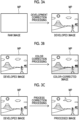
- the thumbnail image TP based on the developed image (hereinafter, a developed thumbnail image) is generated in conjunction with the change in the main image MP (specifically, the RAW image) caused by the development correction processing.
- the thumbnail image TP based on the color-corrected image (hereinafter, a color-corrected thumbnail image) is generated in conjunction with the change in the main image MP caused by the color correction processing.
- the thumbnail image TP based on the processed image (hereinafter, a processed thumbnail image) is generated in conjunction with the change in the main image MP caused by the process correction processing.
- the thumbnail image TP may be an image obtained by reducing the entire main image MP.
- the thumbnail image TP may be an image obtained by reducing an extracted image obtained by extracting a part of the main image MP, for example, a region of the main subject.
- the main subject is a subject that is selected based on, for example, a positional relationship with a focus position of the imaging device or a position of a visual line position of the user during the imaging, from among the subjects in the main image MP.
- the main subject may be selected based on an image quality such as resolution perception (specifically, a degree of blurriness or shake) or the sharpness of the main image MP.
- the subject designated by the user in the main image MP may be selected as the main subject.
- the accessory information AD may store management information related to the thumbnail image TP.
- the management information includes, for example, information related to a creation history (creation date and time) of the thumbnail image, information related to the type of the thumbnail image, and the like.
- the information related to the type of the thumbnail image is information indicating whether the thumbnail image stored in the image file is the developed thumbnail image, the color-corrected thumbnail image, or the processed thumbnail image.
- the information may be text information describing the type of the thumbnail image or may be information consisting of an identification code corresponding to the type of the thumbnail image.
- the accessory information AD may include information obtained by encrypting the thumbnail image for the purpose of preventing the thumbnail image from being tampered with.
- the accessory information AD may include a hash value obtained by hashing the thumbnail image.
- the information stored in the image file for the purpose of tampering prevention is not limited to the hash value, and may be information obtained by encrypting or encoding the thumbnail image by using a method other than hashing.
- the accessory information AD may include information related to the type of the main image MP stored in the image file.
- the information indicates whether the main image MP is the developed image, the color-corrected image, or the processed image.
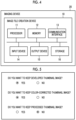
- the image file creation device (hereinafter, an image file creation device 10) according to one embodiment of the present invention comprises a processor 11, a memory 12, and a communication interface 13 as shown in Fig. 4 .
- the image file creation device 10 can communicate with another device via the communication interface 13, and transmit and receive data to and from the device.
- the image file creation device 10 further comprises an input device 14 and an output device 15 as shown in Fig. 4 .
- the input device 14 includes a device that receives the operation of the user, such as a touch panel and a cursor button.
- the output device 15 includes a display device, such as a display.
- the acquisition (generation) of the thumbnail image TP is carried out.
- the developed thumbnail image is generated based on the developed main image, that is, the developed image.
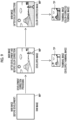
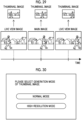
- a setting screen shown in Fig. 5 is displayed on the display of the imaging device 20.
- the developed thumbnail image, the color-corrected thumbnail image, and the processed thumbnail image as the type of the thumbnail image are displayed in a selectable manner.
- the user designates one or more types of the thumbnail images on the setting screen.
- the type of the thumbnail image is not limited to a case of being received in advance in a stage before the capturing of the main image MP, and, for example, may be received at a point in time of the execution of the correction processing on the main image MP or immediately after the execution of the correction processing.
- the user may be asked whether or not to generate the thumbnail image corresponding to the correction processing.
- the thumbnail image further includes a second thumbnail image in addition to the first thumbnail image.
- the second thumbnail image is generated by reducing the entirety or a part of the main image MP at the point in time of the generation of the thumbnail image.
- the second thumbnail image is an image that is changed in conjunction with the change in the main image MP caused by the correction processing in a case in which the correction processing is executed on the main image MP that is the original image. That is, the second thumbnail image corresponds to a variable accessory image that is changed in conjunction with the change in the main image MP caused by the correction processing.
- embodiments of the present invention may be a combination of two or more embodiments among a plurality of embodiments (first to fourth embodiments) described later.
- the image file creation device 10 includes a type reception unit 21, a first generation unit 22, a correction unit 23, a decision unit 24, a selection acquisition unit 25, a second generation unit 26, and a creation unit 27.
- These functional units are implemented by cooperation between a hardware device of the image file creation device 10 and software including the image file creation program.
- some functions may be implemented by using artificial intelligence (AI).
- AI artificial intelligence
- the type reception unit 21 receives the type of the thumbnail image TP in association with the correction processing on the main image MP.
- the type reception unit 21 displays, for example, the setting screen of Fig. 5 on the display of the imaging device 20.
- the developed thumbnail image, the color-corrected thumbnail image, and the processed thumbnail image are displayed in a selectable manner as the types of the thumbnail images.
- the type reception unit 21 receives a designation result as the type of the thumbnail image.
- the user can designate two or more types from among the three types of the thumbnail images, and in this case, the type reception unit 21 receives the two or more types.
- a timing at which the type reception unit 21 receives the type of the thumbnail image can be optionally decided on as long as the timing is before the thumbnail image corresponding to the type is generated.
- the type reception unit 21 may receive the designated type of the correction processing as the type of the thumbnail image.
- the correction unit 23 executes the correction processing on the main image MP automatically or in accordance with an instruction of the user. For example, in a case in which the RAW image is generated as the main image MP, the correction unit 23 executes the development correction on the RAW image. In addition, in a case in which the user issues an instruction to execute the color correction on the developed image as the main image MP, the correction unit 23 executes the color correction processing corresponding to the instruction of the user on the developed image. In addition, in a case in which the user performs a process operation on the developed image or the color-corrected image as the main image MP, the correction unit 23 executes the process correction processing on the developed image or the color-corrected image based on the process operation of the user.
- the image file creation device 10 including the correction unit 23 is mounted in the imaging device 20. Therefore, in the first embodiment, the correction processing via the correction unit 23 is executed in the imaging device 20 that captures the main image MP. Since the correction processing is executed in the imaging device 20 in this manner, the user can more easily correct the main image MP.
- the decision unit 24 decides whether or not to generate (acquire) the processed thumbnail image, that is, whether or not to carry out an acquisition step described later. That is, in the first embodiment, the processed thumbnail image is generated only in a case in which the process correction processing is executed and the decision unit 24 decides to generate the processed thumbnail image. As a result, the burden of the data processing is reduced as compared to a case in which the processed thumbnail image is generated each time the process correction processing is executed. In addition, by suppressing the number of generated processed thumbnail images, it is possible to reduce the required data capacity.
- the decision unit 24 automatically decides whether or not to generate the processed thumbnail image (that is, whether or not to carry out the acquisition step) based on the correction content in the process correction processing.
- the correction content is a content in which the subject or the angle of view of the main image MP is changed by the process correction processing, and is, specifically, a degree of change (correction amount) in the main image MP caused by the correction processing.
- the correction content can be quantitatively specified, for example, by comparing the main images MP before and after the correction and calculating the change amount.
- the decision unit 24 automatically decides to acquire the processed thumbnail image in conjunction with the execution of the process correction processing.
- the decision unit 24 acquires the selection of the user regarding whether or not to generate (acquire) the processed thumbnail image, and makes a decision.
- the decision unit 24 automatically makes a decision or the selection acquisition unit 25 acquires the selection of the user regarding whether or not to generate (acquire) the processed thumbnail image.
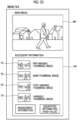
- a selection screen shown in Fig. 7 is displayed on the display of the imaging device 20.
- options of whether or not to generate the processed thumbnail image are displayed.
- the selection acquisition unit 25 acquires the selection of the user regarding the generation of the processed thumbnail image through the selection screen.
- the processed thumbnail image is generated only in a case in which the process correction processing is executed and the user selects the generation of the processed thumbnail image.
- the burden of the data processing is reduced as compared to a case in which the processed thumbnail image is generated each time the process correction processing is executed.
- by suppressing the number of generated processed thumbnail images it is possible to reduce the required data capacity.
- the selection acquisition unit 25 acquires the selection of the user regarding whether or not to acquire the processed thumbnail image.
- the second generation unit 26 generates the processed thumbnail image in accordance with the selection.
- the creation unit 27 creates the image file, specifically, creates the image file in the file format that is initially set or selected by the user.
- the image file is created, for example, at the point in time at which the main image MP is acquired.
- the main image MP in the image file is replaced with the corrected image each time the correction processing is executed on the main image MP.
- the process correction processing is executed on the developed image or the color-corrected image as the main image MP included in the image file, to acquire the processed image.
- the creation unit 27 replaces the main image MP included in the image file with the processed image from the developed image or the color-corrected image.
- the creation unit 27 includes the generated accessory information in the image file. Specifically, in a case in which the second generation unit 26 generates the thumbnail image TP based on the main image MP, the creation unit 27 stores the thumbnail image TP in the "APP11" that is the header region of the image file.
- the newly generated thumbnail image TP is added to the image file. That is, in the first embodiment, in a case in which two or more types of the thumbnail images among the developed thumbnail image, the color-corrected thumbnail image, and the processed thumbnail image are generated, the image file includes the two or more types of the thumbnail images.
- the thumbnail image TP included in the image file includes the first thumbnail image that is not changed in conjunction with the correction of the main image MP.
- the thumbnail image TP in the image file may include the second thumbnail image as the variable accessory image that is changed in conjunction with the correction of the main image MP, in addition to the first thumbnail image.
- the image file may include information other than the thumbnail image TP generated by the second generation unit 26, specifically, the information related to the type of the thumbnail image, the hash value of the thumbnail image, and the like (see Fig. 2 ).
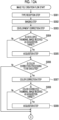
- Each step in the image file creation flow according to the first embodiment is carried out in an order shown in Figs. 12A and 12B by the processor 11 provided in the image file creation device 10. That is, the processor 11 executes, in each step in the image file creation flow, processing corresponding to each step among pieces of the data processing defined by the image file creation program.
- the processor 11 carries out a type reception step (S001).
- the type reception step the screen shown in Fig. 5 is displayed on the display of the imaging device 20, and the type of the thumbnail that is an acquisition target is received in association with the correction processing for the main image MP.
- the type reception step at least one of the developed thumbnail image, the color-corrected thumbnail image, or the processed thumbnail image is received as the type of the acquisition target.
- the type reception step may be carried out, for example, after the imaging device 20 is activated, or may be carried out immediately after an imaging step or each correction step described later.
- the processor 11 carries out the imaging step at the point in time at which the release button is pressed (S002).
- the imaging step each unit of the imaging device 20 is controlled to image the subject within the imaging range, so that the main image MP is acquired.
- the main image MP acquired at a point in time of the imaging step is an undeveloped RAW image.
- the image file including the main image MP is created in conjunction with the acquisition of the main image MP.
- the processor 11 carries out a development correction step, and in this step, executes the development correction processing on the RAW image obtained in the imaging step (S003). As a result, the developed image is acquired as the main image MP.
- the processor 11 carries out the acquisition step in conjunction with the carried-out development correction step (S005).
- the acquired developed thumbnail image is generated by the function of the imaging device 20 based on the entirety or a part of the developed image.
- the developed thumbnail image is acquired, and the developed thumbnail image is stored in the header region of the image file as the accessory information of the main image MP.
- the acquired developed thumbnail image is the first thumbnail image, and is stored in the image file in an aspect in which the developed thumbnail image is not changed in conjunction with the change in the main image MP even in a case in which the main image MP is corrected afterwards.
- the second thumbnail image that is changed in conjunction with the change in the main image MP may be acquired along with the first thumbnail image as the developed thumbnail image.
- the processor 11 carries out a color correction step in accordance with the operation of the user (S007).
- the color correction processing is executed on the developed image to acquire the color-corrected image as the main image MP.
- the main image MP in the image file is replaced with the color-corrected image from the developed image.
- the processor 11 carries out the acquisition step in conjunction with the carried-out color correction step (S009).
- the acquisition step the color-corrected thumbnail image is generated by the function of the imaging device 20 based on the entirety or a part of the color-corrected image.
- the color-corrected thumbnail image is acquired, and the color-corrected thumbnail image is stored in the image file as the accessory information of the main image MP.
- the acquired color-corrected thumbnail image is the first thumbnail image, and is stored in the image file in an aspect in which the color-corrected thumbnail image is not changed in conjunction with the change in the main image MP even in a case in which the main image MP is corrected afterwards.
- the second thumbnail image that is changed in conjunction with the change in the main image MP may be acquired along with the first thumbnail image as the color-corrected thumbnail image.
- the processor 11 displays the display screen shown in Fig. 7 on the display of the imaging device 20 and acquires the selection of the user regarding whether or not to acquire the processed thumbnail image. Then, in a case in which the user selects the acquisition of the processed thumbnail image, the processor 11 carries out the acquisition step of the processed thumbnail image in accordance with the selection.
- the thumbnail image TP acquired in the first embodiment includes at least the first thumbnail image.
- the first thumbnail image is not changed in conjunction with the conversion of the main image caused by the correction processing even in a case in which the correction processing is executed on the main image after the first thumbnail image is generated.
- Such a first thumbnail image can be used as evidence for proving what kind of image the main image before the correction is in a case in which the main image that is the original image is changed by the correction processing. That is, in the first embodiment, the thumbnail image having excellent credibility and high utility value can be acquired as the accessory information of the main image.
- An image file creation device 10X has a function of executing combining processing as the correction processing of the main image MP.
- combining processing two or more images including the main image MP are combined to acquire a new main image MP.
- base image an image before being combined
- one of the plurality of base images used in the first mode is an image captured with an exposure amount (overexposure) larger than a standard exposure amount (exposure amount set to an appropriate value at that point in time).
- the other base images are images captured with an exposure amount (underexposure) smaller than the standard exposure amount.
- the base image with the overexposure and the base image with the underexposure are combined such that portions that are appropriately exposed in the respective base images are connected.
- the composite image obtained in this manner is an image in which bright portions and dark portions within the angle of view are appropriately expressed (that is, an image in which the overexposure and the underexposure are eliminated).
- the present invention is not limited to a case in which, in the first mode, the plurality of base images having different exposure amounts are used, and a plurality of images having different imaging conditions other than the exposure amount, specifically, the ISO sensitivity, the focus position at the point in time of the imaging, and the focal length may be used as the base images.
- a mode of the combining processing for the super-resolution (hereinafter, a second mode) a plurality of base images captured by shifting the imaging position of the imaging element in the imaging device 20 by one pixel or half a pixel by using the pixel shift function of the imaging device 20 are combined.
- the composite image obtained in this manner has a higher resolution than the base image as shown in Fig. 13B .
- the time interval in a case of capturing the plurality of base images by using the pixel shift function is, for example, about 1/100 seconds.
- methods disclosed in JP2020-096301A and JP2019-161564A are known.
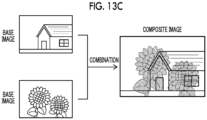
- a mode of the combining processing for the multiple-exposure (hereinafter, a third mode) the plurality of base images captured by the imaging device 20 at different locations are combined.
- the remaining base images are superimposed on one of the plurality of base images in a state in which the transparency is set to be smaller than a normal value.
- the transparency is a degree of transparency of the background in a case in which the image is displayed, and can be freely adjusted in a range of 0% to 100% by the function of the imaging device 20.
- the composite image obtained in this manner is an image in which the subjects of the plurality of base images captured at different locations are collectively shown, as shown in Fig. 13C .
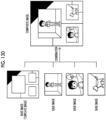
- a mode of the combining processing for the collage (hereinafter, a fourth mode) the plurality of base images are combined in an arranged manner. Specifically, as shown in Fig. 13D , the composite image is acquired by arranging the base images other than a template image that is the background of the composite image among the plurality of base images in accordance with the image layout defined in the template image. In the fourth mode, sizes of the base images other than the template image are enlarged or reduced as appropriate in accordance with a size of the template image.
- the plurality of base images used in the fourth mode may be images selected by the user or may be images automatically selected in a case in which the subject in the image satisfies a predetermined condition.
- the image file is created in which the composite image is used as the main image MP.
- the accessory information related to the composite image that is the main image MP is stored.
- the accessory information includes the thumbnail image (accessory image).
- the thumbnail image TP is created based on at least one of the plurality of base images used for the combining processing. Specifically, in a case in which the composite image is generated based on the image generation mode designated by the user, the thumbnail image TP is generated based on a portion or all of the plurality of base images used for the generation of the composite image in accordance with the image generation mode. As a result, it is possible to recognize, from the thumbnail image TP, the base image from which the composite image is generated, that is, the base image used as a material of the composite image.
- thumbnail image TP based on the base image may be generated after the execution of the combining processing or may be generated before the execution of the combining processing.
- thumbnail image TP based on the composite image may be generated along with the thumbnail image TP based on the base image.
- the thumbnail image generated in the second embodiment is an image that is not changed in conjunction with the change in the composite image in a case in which the composite image is changed by the color correction processing, the process correction processing, or the like.
- a correctable thumbnail image that is, the thumbnail image (variable accessory image) that is changed in conjunction with the change in the composite image caused by the correction processing may be generated.
- a hardware configuration of the image file creation device 10X according to the second embodiment is the same as a hardware configuration of the first embodiment, and software such as the image file creation program is installed in the image file creation device 10X.
- the image file creation device 10X includes, as shown in Fig. 14 , a third generation unit 121, a reception unit 122, an image decision unit 123, a combining unit 124, a fourth generation unit 125, and a creation unit 126. These functional units are implemented by cooperation between a hardware device of the image file creation device 10X and software including the image file creation program. In addition, some functions may be implemented by using artificial intelligence (AI). Hereinafter, each of the functional units will be described.
- AI artificial intelligence
- the third generation unit 121 generates the base image used for the combining processing. Since a procedure of generating the base image is the same as a procedure of generating the developed image, the color-corrected image, or the processed image in the first embodiment, the description of the procedure of generating the base image will be omitted. In addition, the third generation unit 121 may add, to the base image, information (hereinafter, availability information) indicating whether or not the image is an image used for the generation of the thumbnail image. The availability information is stored as the accessory information in, for example, the image file of the base image.
- the image decision unit 123 decides on the base image used for the generation of the thumbnail image from among the plurality of base images.
- the image decision unit 123 may decide on the base image used for the generation of the thumbnail image (hereinafter, referred to as a generation base image as necessary) by receiving the designation of the generation base image from the user, or the image decision unit 123 may automatically decide on the generation base image.
- a generation base image as necessary
- the image decision unit 123 may automatically decide on the generation base image.
- the plurality of base images used for the generation of the composite image are displayed so as to be designated.
- the fourth generation unit 125 may generate the thumbnail image based on each of the plurality of generation base images for each generation base image. In this case, it is possible to acquire the thumbnail image based on the generation base image for each of the plurality of generation base images involved in the generation of the composite image.
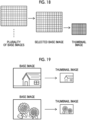
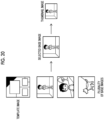
- the fourth generation unit 125 may generate the thumbnail image based on a portion of the plurality of base images. Specifically, as shown in Fig. 20 , the fourth generation unit 125 generates the thumbnail image based only on a portion of the generation base images among the plurality of base images arranged in a predetermined layout on the template image.
- the base image from which the thumbnail image is generated may be, for example, the template image, that is, an image in which a disposition layout of the base image to be combined is known.
- the fourth generation unit 125 may select a portion of the plurality of base images (strictly speaking, an image other than the template image) from among the plurality of base images based on the sizes of the plurality of base images in the composite image. In such a case, the fourth generation unit 125 may generate the thumbnail image based on the selected base image. As a result, for example, the thumbnail image can be acquired for the base image having a large influence on the composite image, such as an image having a relatively large size in the composite image.
- the fourth generation unit 125 may calculate a score for each of the plurality of base images in the composite image.
- the score may be calculated based on the resolution perception such as the blurriness, the shake, or the like of the subject in the base image, the facial expression of the subject, the brightness (luminance) of each part of the subject, the size of the base image in the template image, and the like.
- the fourth generation unit 125 may select a portion of the generation base images (strictly speaking, an image other than the template image) from among the plurality of base images based on the calculated scores, to generate the thumbnail image based on the selected generation base image.
- the thumbnail image can be acquired for the base image having a large influence on the composite image, such as an image having a high score in the composite image.
- the fourth generation unit 125 may generate the thumbnail image based on all of the plurality of base images. It should be noted that the number of base images serving as a reference in a case of deciding whether or not to generate the thumbnail image based on all of the plurality of base images can be set to be any number.
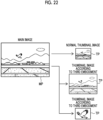
- the fourth generation unit 125 may generate the thumbnail image based on at least one of the plurality of base images and the thumbnail image based on the composite image. In a case in which the thumbnail image is generated for each of the images before and after the combination, it is possible to appropriately recognize which composite image is generated from which base image.
- the main image MP is the composite image, and in this case, the base image may not be required.
- the thumbnail image (first thumbnail image) based on the composite image need only be generated, and the setting may be made such that the thumbnail image based on the base image is not generated.
- the fourth generation unit 125 may generate the thumbnail image that is not changed in conjunction with the change in the composite image caused by the correction processing, as the thumbnail image. As a result, it is possible to acquire the thumbnail image that has excellent credibility as the accessory information related to the composite image and that has high utility value.
- the creation unit 126 creates the image file of the composite image.
- the image file includes the composite image as the main image MP and the accessory information related to the composite image, and the accessory information includes the thumbnail image TP generated by the fourth generation unit 125.
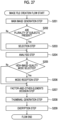
- Each step in the image file creation flow according to the second embodiment is carried out by the processor 11 provided in the image file creation device 10X in an order shown in Fig. 21 . That is, the processor 11 executes, in each step in the image file creation flow, processing corresponding to each step among pieces of the data processing defined by the image file creation program.
- the image file creation flow according to the second embodiment is a processing flow in a case in which the composite image is generated by combining the plurality of base images.
- the processor 11 carries out the reception step (S102).
- the processor 11 displays the mode designation screen shown in Fig. 15 on the display of the imaging device 20, and receives any image generation mode designated by the user from among the plurality of image generation modes. It should be noted that the reception step need only be carried out before the combining step is carried out, and, for example, may be carried out after the imaging device 20 is activated.
- the processor 11 carries out an image decision step, and, in this step, decides on the generation base image used for the generation of the thumbnail image from among the plurality of base images to be combined (S103). It should be noted that, depending on the image generation mode received in the reception step, the image decision step may be omitted.
- the processor 11 carries out the combining step (S104).
- the processor 11 executes the combining processing corresponding to the image generation mode received in the reception step, to combine the plurality of base images and generate the composite image.
- the processor 11 sets the composite image as the main image MP and creates the image file including the main image MP in conjunction with the generation of the composite image.
- the processor 11 carries out a generation step B (S105).
- the processor 11 generates the thumbnail image TP based on at least one of the plurality of base images used in the combining step in accordance with the image generation mode received in the reception step.
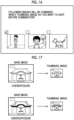
- the processor 11 may generate one or more thumbnail images based on a portion of the plurality of base images. More specifically, in the generation step B, the processor 11 may generate two or more thumbnail images based on at least two or more of the plurality of base images having different exposure amounts during the imaging. In this case, it is preferable to generate the thumbnail image corresponding to each of the base images based on each of the base images with the overexposure and the base images with the underexposure (see Fig. 17 ).
- the processor 11 may generate the thumbnail image based on all of the plurality of images. Specifically, in the generation step B, the processor 11 may generate the thumbnail image based on each of the plurality of base images for each base image.
- the processor 11 may generate the thumbnail image based only on a portion of the plurality of base images (see Fig. 20 ). In this case, the processor 11 may generate the thumbnail image corresponding to the generation base image decided on in accordance with the designation of the user received in the image decision step.
- a target of the analysis processing is not limited to the subject of the main image MP, and may be the subject of the live view image captured earlier in time than the capturing of the main image MP.
- a first generation step is carried out (S306).
- a setting reception step is carried out before the first generation step is carried out (S304 and S305).
- the processor 11 receives the setting of increasing the resolution of at least the main thumbnail image among the plurality of thumbnail images generated in the subsequent first generation step. More specifically, the processor 11 receives the selection of the high-resolution mode performed by the user as the setting.
- a second generation step is carried out along with the first generation step (S307).
- the processor 11 generates the variable thumbnail image based on the main image MP.
- the variable thumbnail image is an image (variable accessory image) that is changed in conjunction with the change in the main image MP caused by the correction processing.
- thumbnail image TP itself is tampered with, and, for example, in a case in which the thumbnail image TP based on the main image MP is tampered with, the credibility of the thumbnail image TP that proves the content of the main image MP is impaired.
- the image file creation device is mounted in the imaging device.
- the imaging device is the digital camera that can be carried by the user, or the information processing terminal such as a smartphone or a tablet terminal having a camera function.
- the present invention is not limited to this, and the imaging device may be a fixed imaging device, such as a security camera, an imaging device having a plurality of imaging units (image sensors), or the like.
- the image file including the main image MP and the accessory information is created by the imaging device that captures the main image MP.
- the present invention is not limited to this, and the image file may be created by a device different from the imaging device, specifically, an information processing terminal such as a PC, a smartphone, or a tablet terminal connected to the imaging device.
- the main image MP is captured by the imaging device, and then the main image MP is transmitted from the imaging device to the information processing terminal.
- the information processing terminal that receives the main image MP executes image processing such as the correction processing or the combining processing on the main image MP, and generates the accessory information including the thumbnail image TP.
- the processor provided in the image file creation device includes various processors.
- Examples of the various processors include a CPU, which is a general-purpose processor that executes software (programs) to function as various processing units.
- processors described above also include a dedicated electric circuit, which is a processor having a circuit configuration specially designed for executing specific processing, such as an application-specific integrated circuit (ASIC).
- ASIC application-specific integrated circuit
- one functional unit of the image file creation device may be configured by one of the various processors.
- one functional unit of the image file creation device may be configured by a combination of two or more processors of the same type or different types, for example, a combination of a plurality of FPGAs, a combination of an FPGA and a CPU, or the like.
- a plurality of functional units provided in the image file creation device may be configured by one of the various processors, or may be configured by one processor in which two or more of the plurality of functional units are combined.
- one processor is configured by a combination of one or more CPUs and software, and the processor functions as the plurality of functional units.
- SoC system-on-chip
- a processor which implements the functions of the entire system including the plurality of functional units in the image file creation device according to the embodiment of the present invention with one integrated circuit (IC) chip.
- IC integrated circuit
- a hardware configuration of the various processors may be an electric circuit (circuitry) in which circuit elements, such as semiconductor elements, are combined.
Landscapes
- Engineering & Computer Science (AREA)
- Multimedia (AREA)
- Signal Processing (AREA)
- Theoretical Computer Science (AREA)
- General Engineering & Computer Science (AREA)
- Computer Security & Cryptography (AREA)
- General Health & Medical Sciences (AREA)
- Computer Hardware Design (AREA)
- Bioethics (AREA)
- Software Systems (AREA)
- Physics & Mathematics (AREA)
- Health & Medical Sciences (AREA)
- General Physics & Mathematics (AREA)
- Human Computer Interaction (AREA)
- Image Processing (AREA)
- Processing Or Creating Images (AREA)
Applications Claiming Priority (2)
| Application Number | Priority Date | Filing Date | Title |
|---|---|---|---|
| JP2022133162 | 2022-08-24 | ||
| PCT/JP2023/027393 WO2024042979A1 (fr) | 2022-08-24 | 2023-07-26 | Procédé de création de fichier d'image et dispositif de création de fichier d'image |
Publications (2)
| Publication Number | Publication Date |
|---|---|
| EP4580202A1 true EP4580202A1 (fr) | 2025-07-02 |
| EP4580202A4 EP4580202A4 (fr) | 2025-11-26 |
Family
ID=90013275
Family Applications (1)
| Application Number | Title | Priority Date | Filing Date |
|---|---|---|---|
| EP23857095.6A Pending EP4580202A4 (fr) | 2022-08-24 | 2023-07-26 | Procédé de création de fichier d'image et dispositif de création de fichier d'image |
Country Status (5)
| Country | Link |
|---|---|
| US (1) | US20250193355A1 (fr) |
| EP (1) | EP4580202A4 (fr) |
| JP (1) | JPWO2024042979A1 (fr) |
| CN (1) | CN119790661A (fr) |
| WO (1) | WO2024042979A1 (fr) |
Families Citing this family (1)
| Publication number | Priority date | Publication date | Assignee | Title |
|---|---|---|---|---|
| WO2026048519A1 (fr) * | 2024-08-30 | 2026-03-05 | 富士フイルム株式会社 | Dispositif de traitement d'informations, dispositif d'imagerie, procédé de commande et programme de commande |
Family Cites Families (9)
| Publication number | Priority date | Publication date | Assignee | Title |
|---|---|---|---|---|
| US7453498B2 (en) * | 1998-03-26 | 2008-11-18 | Eastman Kodak Company | Electronic image capture device and image file format providing raw and processed image data |
| JP3814565B2 (ja) * | 2002-06-10 | 2006-08-30 | キヤノン株式会社 | 記録装置 |
| JP2006340120A (ja) * | 2005-06-03 | 2006-12-14 | Sony Corp | 撮像装置、撮像結果の処理方法、画像処理装置、撮像結果の処理方法のプログラム、撮像結果の処理方法のプログラムを記録した記録媒体及び撮像結果の処理システム |
| JP4720387B2 (ja) * | 2005-09-07 | 2011-07-13 | ソニー株式会社 | 撮像装置、画像処理装置、および方法、並びにコンピュータ・プログラム |
| JP5086711B2 (ja) | 2007-07-11 | 2012-11-28 | シャープ株式会社 | 映像表示装置 |
| JP2012178820A (ja) * | 2011-01-31 | 2012-09-13 | Sanyo Electric Co Ltd | 電子機器 |
| JP6974162B2 (ja) | 2017-12-27 | 2021-12-01 | 富士フイルム株式会社 | 撮影制御システム、撮影制御方法、プログラムおよび記録媒体 |
| JP2019161564A (ja) | 2018-03-16 | 2019-09-19 | 株式会社リコー | 画像処理装置、画像処理方法、画像処理プログラム、撮影装置、撮影方法及び撮影プログラム |
| JP2020096301A (ja) | 2018-12-13 | 2020-06-18 | オリンパス株式会社 | 撮像装置 |
-
2023
- 2023-07-26 WO PCT/JP2023/027393 patent/WO2024042979A1/fr not_active Ceased
- 2023-07-26 EP EP23857095.6A patent/EP4580202A4/fr active Pending
- 2023-07-26 CN CN202380060675.2A patent/CN119790661A/zh active Pending
- 2023-07-26 JP JP2024542689A patent/JPWO2024042979A1/ja active Pending
-
2025
- 2025-02-20 US US19/058,908 patent/US20250193355A1/en active Pending
Also Published As
| Publication number | Publication date |
|---|---|
| JPWO2024042979A1 (fr) | 2024-02-29 |
| EP4580202A4 (fr) | 2025-11-26 |
| US20250193355A1 (en) | 2025-06-12 |
| CN119790661A (zh) | 2025-04-08 |
| WO2024042979A1 (fr) | 2024-02-29 |
Similar Documents
| Publication | Publication Date | Title |
|---|---|---|
| JP5791336B2 (ja) | 画像処理装置及びその制御方法 | |
| JP2009171318A (ja) | 画像処理装置及び画像処理方法並びに撮像装置 | |
| US10382671B2 (en) | Image processing apparatus, image processing method, and recording medium | |
| US8441554B2 (en) | Image capturing apparatus capable of extracting subject region from captured image | |
| JP2009038498A (ja) | 画像処理装置及び画像処理方法 | |
| US9253406B2 (en) | Image capture apparatus that can display review image, image capture method, and storage medium | |
| JP2011146799A (ja) | 画像処理装置及び画像処理プログラム | |
| JP2022002376A (ja) | 画像処理装置、画像処理方法およびプログラム | |
| US20250193355A1 (en) | Image file creation method and image file creation device | |
| JP4612845B2 (ja) | 画像処理装置およびその方法 | |
| JP5381498B2 (ja) | 画像処理装置、画像処理プログラムおよび画像処理方法 | |
| US20250148675A1 (en) | Image generation method, image file creation method, and image generation device | |
| US20250166151A1 (en) | Image file creation method and image file creation device | |
| US20250139863A1 (en) | Image file creation method and image file creation device | |
| CN110033421B (zh) | 图像处理方法、装置、存储介质及电子设备 | |
| US12614253B2 (en) | Imaging device, image generation method, and recording medium for generating composite image from two or more images | |
| JP7458806B2 (ja) | 画像処理装置および画像処理方法 | |
| JP2019032654A (ja) | 画像処理装置、及び、画像処理方法、コンピュータプログラム | |
| JP2016129281A (ja) | 画像処理装置 | |
| JP2014165876A (ja) | 画像処理装置、撮像装置及び画像処理プログラム | |
| JP2021047653A (ja) | 学習モデル生成装置、画像補正装置、学習モデル生成プログラム、及び画像補正プログラム | |
| JP2008312177A (ja) | 映像階調変換装置、映像階調変換方法、映像階調変換プログラム | |
| JP5740934B2 (ja) | 被写体検出装置、被写体検出方法及びプログラム | |
| US20130016242A1 (en) | Electronic camera | |
| JP6668646B2 (ja) | 画像処理装置、画像処理方法及びプログラム |
Legal Events
| Date | Code | Title | Description |
|---|---|---|---|
| STAA | Information on the status of an ep patent application or granted ep patent |
Free format text: STATUS: THE INTERNATIONAL PUBLICATION HAS BEEN MADE |
|
| PUAI | Public reference made under article 153(3) epc to a published international application that has entered the european phase |
Free format text: ORIGINAL CODE: 0009012 |
|
| STAA | Information on the status of an ep patent application or granted ep patent |
Free format text: STATUS: REQUEST FOR EXAMINATION WAS MADE |
|
| 17P | Request for examination filed |
Effective date: 20250221 |
|
| AK | Designated contracting states |
Kind code of ref document: A1 Designated state(s): AL AT BE BG CH CY CZ DE DK EE ES FI FR GB GR HR HU IE IS IT LI LT LU LV MC ME MK MT NL NO PL PT RO RS SE SI SK SM TR |
|
| A4 | Supplementary search report drawn up and despatched |
Effective date: 20251028 |
|
| RIC1 | Information provided on ipc code assigned before grant |
Ipc: H04N 23/60 20230101AFI20251022BHEP Ipc: H04N 1/393 20060101ALI20251022BHEP Ipc: H04N 9/64 20230101ALI20251022BHEP Ipc: H04N 1/32 20060101ALI20251022BHEP Ipc: G06F 21/62 20130101ALI20251022BHEP |
|
| DAV | Request for validation of the european patent (deleted) | ||
| DAX | Request for extension of the european patent (deleted) |