EP4580242A1 - Verfahren und vorrichtung zur herstellung einer qos-regel - Google Patents
Verfahren und vorrichtung zur herstellung einer qos-regel Download PDFInfo
- Publication number
- EP4580242A1 EP4580242A1 EP23867073.1A EP23867073A EP4580242A1 EP 4580242 A1 EP4580242 A1 EP 4580242A1 EP 23867073 A EP23867073 A EP 23867073A EP 4580242 A1 EP4580242 A1 EP 4580242A1
- Authority
- EP
- European Patent Office
- Prior art keywords
- rule
- service
- network element
- qos
- information
- Prior art date
- Legal status (The legal status is an assumption and is not a legal conclusion. Google has not performed a legal analysis and makes no representation as to the accuracy of the status listed.)
- Pending
Links
Images



Classifications
-
- H—ELECTRICITY
- H04—ELECTRIC COMMUNICATION TECHNIQUE
- H04L—TRANSMISSION OF DIGITAL INFORMATION, e.g. TELEGRAPHIC COMMUNICATION
- H04L47/00—Traffic control in data switching networks
- H04L47/10—Flow control; Congestion control
- H04L47/24—Traffic characterised by specific attributes, e.g. priority or QoS
-
- H—ELECTRICITY
- H04—ELECTRIC COMMUNICATION TECHNIQUE
- H04L—TRANSMISSION OF DIGITAL INFORMATION, e.g. TELEGRAPHIC COMMUNICATION
- H04L12/00—Data switching networks
- H04L12/02—Details
- H04L12/14—Charging, metering or billing arrangements specially adapted for data communications, e.g. authentication, authorisation and accounting [AAA] framework
- H04L12/1403—Architecture for metering, charging or billing
- H04L12/1407—Policy-and-charging control [PCC] architecture
-
- H—ELECTRICITY
- H04—ELECTRIC COMMUNICATION TECHNIQUE
- H04L—TRANSMISSION OF DIGITAL INFORMATION, e.g. TELEGRAPHIC COMMUNICATION
- H04L65/00—Network arrangements, protocols or services for supporting real-time applications in data packet communication
- H04L65/1066—Session management
- H04L65/1069—Session establishment or de-establishment
-
- H—ELECTRICITY
- H04—ELECTRIC COMMUNICATION TECHNIQUE
- H04M—TELEPHONIC COMMUNICATION
- H04M15/00—Arrangements for metering, time-control or time indication ; Metering, charging or billing arrangements for voice wireline or wireless communications, e.g. VoIP
- H04M15/66—Policy and charging system
-
- H—ELECTRICITY
- H04—ELECTRIC COMMUNICATION TECHNIQUE
- H04W—WIRELESS COMMUNICATION NETWORKS
- H04W28/00—Network traffic management; Network resource management
- H04W28/02—Traffic management, e.g. flow control or congestion control
-
- H—ELECTRICITY
- H04—ELECTRIC COMMUNICATION TECHNIQUE
- H04W—WIRELESS COMMUNICATION NETWORKS
- H04W28/00—Network traffic management; Network resource management
- H04W28/02—Traffic management, e.g. flow control or congestion control
- H04W28/0268—Traffic management, e.g. flow control or congestion control using specific QoS parameters for wireless networks, e.g. QoS class identifier [QCI] or guaranteed bit rate [GBR]
-
- H—ELECTRICITY
- H04—ELECTRIC COMMUNICATION TECHNIQUE
- H04W—WIRELESS COMMUNICATION NETWORKS
- H04W4/00—Services specially adapted for wireless communication networks; Facilities therefor
- H04W4/24—Accounting or billing
Definitions
- the core network device needs to perform awareness and matching on a flow-by-flow basis.
- the core network device for example, a user plane network element
- the core network device frequently initiates the creation procedure or the update procedure of the QoS flow, to respectively establish QoS rules for the concurrent service flows. Consequently, a signaling storm may be caused.
- the session management network element may determine the corresponding QoS information based on the identifier of the first rule, and establish the QoS rule of the QoS flow corresponding to the first service based on the QoS information and the flow description information of the first service, to effectively trigger establishment of the QoS rule of the QoS flow corresponding to the first service and improve actual service experience.
- the session management network element receives first event information from the user plane network element.
- the first event information indicates that the first service starts.
- the session management network element establishes the QoS rule of the QoS flow corresponding to the first service based on the QoS information and the flow description information of the first service
- the session management network element establishes the QoS rule of the QoS flow corresponding to the first service based on the QoS information, the flow description information of the first service, and the first event information.
- the session management network element receives a policy and charging control rule from a policy control network element.
- the policy and charging control rule includes first indication information and a first condition.
- the first indication information indicates to trigger, when the first service occurs, establishment of the QoS rule of the QoS flow corresponding to the first service.
- the first condition includes that service duration is greater than or equal to a duration threshold, and/or a service transmission rate is greater than or equal to a transmission rate threshold.
- the session management network element determines the first rule and a second rule according to the policy and charging control rule.
- the first rule includes the first indication information.
- the second rule includes the first condition.
- the session management network element sends the first rule and the second rule to the user plane network element.
- the session management network element may map the policy and charging control rule from the policy control network element to the first rule and the second rule, and send the first rule and the second rule to the user plane network element.
- the session management network element receives a name of a first predefined rule from a policy control network element.
- the session management network element sends a second rule to the user plane network element.
- the second rule includes the name of the first predefined rule.
- the first predefined rule is one of a plurality of predefined rules obtained by the user plane network element.
- the first predefined rule includes the first rule and a first condition.
- the first rule includes first indication information.
- the first indication information indicates to trigger, when the first service occurs, establishment of the QoS rule of the QoS flow corresponding to the first service.
- the first condition includes that service duration is greater than or equal to a duration threshold, and/or a service transmission rate is greater than or equal to a transmission rate threshold.
- the session management network element may map first predefined rule of the policy and charging control rule from the policy control network element to the second rule, and send the second rule to the user plane network element.
- the first rule is a usage reporting rule
- the second rule is a packet detection rule
- the first indication information indicates to trigger, when the first service stops, deletion of the QoS rule.
- the session management network element receives the flow description information of the first service, the identifier of the first rule, and second event information from the user plane network element.
- the second event information indicates that the first service stops.
- the session management network element determines the QoS rule based on the identifier of the first rule and the flow description information of the first service.
- the session management network element deletes the QoS rule based on the second event information.
- the session management network element may trigger, based on the flow description information of the first service, the identifier of the first rule, and the second event information that are reported by the user plane network element, deletion of the QoS rule when the first service stops.
- an embodiment of this application provides a communication apparatus.
- the communication apparatus may be the user plane network element in the first aspect.
- the communication apparatus has a function of the foregoing user plane network element.
- the communication apparatus is, for example, the user plane network element, or a function module in the user plane network element.
- the communication apparatus includes a processing unit (which may also be referred to as a processing module) and a transceiver unit (which may also be referred to as a transceiver module).
- the transceiver unit can implement a sending function and a receiving function.
- the transceiver unit may be referred to as a sending unit (which may also be referred to as a sending module).
- the transceiver unit When the transceiver unit implements the receiving function, the transceiver unit may be referred to as a receiving unit (which may also be referred to as a receiving module).
- the sending unit and the receiving unit may be a same function module.
- the function module is referred to as the transceiver unit, and the function module can implement the sending function and the receiving function.
- the sending unit and the receiving unit may be different function modules, and the transceiver unit is a general term for the function modules.
- the processing unit is configured to obtain first indication information.
- the first indication information indicates to trigger, when a first service occurs, establishment of a QoS rule of a QoS flow corresponding to the first service.
- the transceiver unit is configured to: when the first service meets a first condition, send flow description information of the first service and an identifier of a first rule to a session management network element.
- the first rule corresponds to the first indication information.
- the first rule is used to establish the QoS rule.
- the processing unit is configured to: when obtaining the first indication information, obtain the first indication information and the first condition.
- the transceiver unit is configured to: when obtaining the first indication information and the first condition, receive the first rule and a second rule from the session management network element.
- the first rule includes the first indication information.
- the second rule includes the first condition.
- the processing unit is configured to obtain a plurality of predefined rules.
- the transceiver unit is configured to: when obtaining the first indication information and the first condition, receive a second rule from the session management network element.
- the second rule includes a name of a first predefined rule.
- the first predefined rule is one of the plurality of predefined rules.
- the first predefined rule includes the first rule and the first condition.
- the first rule includes the first indication information.
- the processing unit is configured to determine the first predefined rule from the plurality of predefined rules based on the name of the first predefined rule.
- the transceiver unit is configured to: when obtaining the first indication information and the first condition, receive the first rule and a second rule from the session management network element.
- the first rule includes an application detection and control event subscription information element.
- the application detection and control event subscription information element indicates the first indication information.
- the second rule includes the first condition.
- the first rule is a usage reporting rule
- the second rule is a packet detection rule
- the transceiver unit is configured to: when the first service meets the first condition, send first event information to the session management network element.
- the first event information indicates that the first service starts.
- the flow description information of the first service includes 5-tuple information of the first service.
- the processing unit is further configured to obtain first information.
- the first information is used to determine the first service.
- the first information includes an application identifier of the first service and/or the service flow description information of the first service.
- the transceiver unit is configured to receive first event information from the user plane network element.
- the first event information indicates that the first service starts.
- the processing unit is configured to: when establishing the QoS rule of the QoS flow corresponding to the first service based on the QoS information and the flow description information of the first service, establish the QoS rule of the QoS flow corresponding to the first service based on the QoS information, the flow description information of the first service, and the first event information.
- the transceiver unit is configured to receive the flow description information of the first service, the identifier of the first rule, and second event information from the user plane network element.
- the second event information indicates that the first service stops.
- this application provides a method for establishing a quality of service QoS rule.
- the method includes:
- a policy control network element sends a policy and charging control rule to the session management network element.
- the policy and charging control rule includes the first indication information and the first condition.
- the first indication information indicates to trigger, when the first service occurs, establishment of the QoS rule of the QoS flow corresponding to the first service.
- the first condition includes that service duration is greater than or equal to a duration threshold, and/or a service transmission rate is greater than or equal to a transmission rate threshold.
- the session management network element determines the first rule and a second rule according to the policy and charging control rule.
- the first rule includes the first indication information.
- the second rule includes the first condition.
- the session management network element sends the first rule and the second rule to the user plane network element.
- a policy control network element sends a policy and charging control rule to the session management network element.
- the policy and charging control rule includes an application detection and control event subscription information element and a first condition.
- the session management network element sends the first rule and a second rule to the user plane network element.
- the first rule includes the application detection and control event subscription information element.
- the application detection and control event subscription information element indicates the first indication information.
- the second rule includes the first condition.
- the user plane network element when the first service meets the first condition, sends first event information to the session management network element.
- the first event information indicates that the first service starts.
- the session management network element establishes the QoS rule of the QoS flow corresponding to the first service based on the QoS information and the flow description information of the first service
- the session management network element establishes the QoS rule of the QoS flow corresponding to the first service based on the QoS information, the flow description information of the first service, and the first event information.
- the flow description information of the first service includes 5-tuple information of the first service.
- the user plane network element further obtains first information.
- the first information is used to determine the first service.
- the first information includes an application identifier of the first service and/or service flow description information of the first service.
- an embodiment of this application provides a communication apparatus, configured to perform the method according to the first aspect or the method according to the second aspect.
- an embodiment of this application provides a communication device, including at least one processing element and at least one storage element.
- the at least one storage element is configured to store a program and data
- the at least one processing element is configured to read and execute the program and the data that are stored in the storage element, to enable the method according to the first aspect or the second aspect in this application to be implemented.
- an embodiment of this application further provides a computer program product.
- the computer program product runs on a computer, the computer is enabled to perform the method according to any one of the foregoing aspects.
- an embodiment of this application further provides a computer-readable storage medium.
- the computer-readable storage medium stores a computer program.
- the computer program When the computer program is executed by a computer, the computer is enabled to perform the method according to any one of the foregoing aspects.
- FIG. 1 is a diagram of an architecture of a 5G communication system formulated in the 3 rd generation partnership project (3 rd generation partnership project, 3GPP) standard.
- the communication system includes a terminal device (for example, user equipment (user equipment, UE)), a radio access network (radio access network, RAN), and a core network (Core network, CN).
- a terminal device for example, user equipment (user equipment, UE)
- radio access network radio access network
- CN core network
- network elements of the core network may be divided into two parts: a user plane and a control plane.
- the control plane is responsible for mobile network management, and the user plane is responsible for service data transmission.
- the RAN is deployed near the terminal device, provides a network access function for an authorized user in a specific area, and can determine transmission tunnels of different quality based on a user level, a service requirement, and the like to transmit user data.
- the RAN can manage resources of the RAN, properly use the resources, provide an access service for the terminal device on demand, and is responsible for forwarding the control signal and the user data between the terminal device and the core network.
- the core network is responsible for maintaining subscription data of the mobile network, managing a network element of the mobile network, and providing functions such as session management, mobility management, policy management, and security authentication for the terminal device.
- the core network provides network access authentication for the terminal device when the terminal device is attached, allocates a network resource to the terminal device when the terminal device has a service request, updates the network resource for the terminal device when the terminal device moves, provides a fast recovery mechanism for the terminal device when the terminal device is idle, releases the network resource for the terminal device when the terminal device is detached, and provides a data routing function for the terminal device when the terminal device has service data, for example, forwards uplink data to the data network, or receives downlink data of the terminal device from the data network and forwards the downlink data to the RAN, so that the RAN sends the downlink data to the terminal device.
- the data network (data network, DN) is a data network that provides a service for the user.
- DN data network
- the data network may be a private network, for example, a local area network, or may be an external network that is not managed or controlled by an operator, for example, the Internet (Internet), or may be a dedicated network jointly deployed by operators, for example, a network that provides an IP multimedia network subsystem (IP multimedia core network subsystem, IMS) service.
- IP multimedia network subsystem IP multimedia core network subsystem
- a network architecture of a next generation core network device is readjusted based on the 5G network architecture.
- the control plane uses a service-based interface to provide a related function externally.
- the control plane and the user plane exchange a message through an N4 interface to implement delivery of a user policy from the control plane to the user plane and event reporting from the user plane to the control plane.
- a policy control network element is responsible for functions of defining, delivering, and updating a user policy subscribed by the user, and a session management network element needs to be responsible for selection of a user plane network element, policy delivery, event reporting, and non-session-level management functions such as heartbeat checking of the user plane network element, and load reporting of the user plane network element.
- the user plane network element is responsible for performing service awareness, rule and policy matching, charging and control policy execution, and the like on a data packet of the user based on a session context established by the session management network element for the terminal device and according to a policy of the terminal device.
- a core network user plane includes a user plane function (user plane function, UPF).
- a core network control plane includes an access and mobility management function (access and mobility management function, AMF), a session management function (session management function, SMF), a network exposure function (network exposure function, NEF), a network function repository function (NF repository function, NRF), unified data management (unified data management, UDM), a policy control function (policy control function, PCF), an application function (application function, AF), an authentication server function (authentication server function, AUSF), and a network slice selection function (network slice selection function, NSSF).
- the core network control plane uses a service-based architecture.
- Control plane network elements interact with each other in a service invoking manner to replace a point-to-point communication manner in a conventional architecture.
- the control plane network element exposes a service to another control plane network element, so that the another control plane network element invokes the service.
- point-to-point communication a communication interface between control plane network elements stores a set of specific messages, and the messages can be used only when the control plane network elements at two ends of the interface perform communication.
- the core network may further include another network element. This is not limited in this application.
- QoS flow ID QoS flow ID
- QFI quality of service flow identifier
- 5G QoS is classified into two types: a guaranteed bit rate flow (GBR QoS Flow) and a non-guaranteed bit rate flow (Non-GBR QoS Flow), and may specifically include but is not limited to the following parameters: a 5G QoS identifier (5G QoS identifier, 5QI) (corresponding to a QoS level) and an allocation and retention priority (allocation and retention priority, ARP).
- 5G QoS identifier 5G QoS identifier, 5QI
- ARP allocation and retention priority
- the guaranteed bit rate flow may include but is not limited to the following dedicated parameters: a guaranteed bit flow rate, a maximum bit flow rate, notification control (notification control), a maximum tolerable packet loss rate (uplink or downlink voice media) (maximum packet loss rate-UL/DL (voice media)), and the like.
- the non-guaranteed bit rate flow may include but is not limited to the following dedicated parameters: a total maximum bit rate of a single PDU session (session-AMBR), a total maximum bit rate of UE (UE-AMBR), a reflective QoS attribute (reflective QoS attribute, RQA), and the like.
- the UPF maps a data packet to a QoS flow based on a service data flow (service data flow, SDF) template, and marks a QFI in an N3 tunnel header.
- An access network (access network, AN) device maps the data packet to a data radio bearer (data radio bearer, DBR) based on the QFI, and transmits the data packet to the UE.
- DBR data radio bearer
- a non-access stratum (non-access stratum, NAS) layer of the UE maps a data packet to a QoS flow according to a QoS rule, and an access stratum (access stratum, AS) layer is responsible for mapping the QoS flow to a DRB.
- the QoS rule includes a QFI corresponding to the QoS flow, a packet filtering set, and a priority value.
- the AN marks the QFI in an N3 tunnel header based on the QFI of the data packet received on the DRB.
- the UPF receives the data packet sent by the AN, and performs verification.
- a signaling control QoS mechanism and a reflective QoS mechanism (used only for a QoS flow of the non-guaranteed bit rate flow type) are supported.
- a QoS rule of a QoS flow may be established by using a QoS flow creation procedure or a QoS flow update procedure.
- the QoS flow creation procedure is triggered, to establish the QoS rule of the QoS flow.
- the QoS flow update procedure is triggered, to add a new QoS rule for the QoS flow.
- Each QoS flow may include one or more QoS rules.
- Service duration is greater than or equal to a duration threshold
- a service transmission rate is greater than or equal to a transmission rate threshold
- a service bandwidth is greater than or equal to a bandwidth threshold
- a service type is a preset service type (for example, a game or a video).
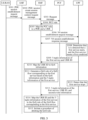
- the session management network element may determine, based on the first event information, that the first service starts, determine the QoS information based on the identifier of the first rule, further generate the QoS rule of the QoS flow corresponding to the first service based on the flow description information of the first service and the QoS information, and send the QoS rule to the terminal device.
- the first rule can be used to determine the QoS information, and may be further used to establish the QoS rule corresponding to the QoS flow of the first service.
- the embodiment shown in FIG. 2 may be further applied to a 4G communication system.
- the user plane network element may be replaced with a PGW-U
- the QoS flow may be replaced with a dedicated bearer
- the session management network element may be replaced with a PGW-C
- the policy control network element may be replaced with a PCRF.
- a PDU session in the following embodiments may be another type of session, and a name is not limited.
- S301 UE sends a PDU session establishment request (PDU Session Establishment Request) message to an AMF.
- PDU Session Establishment Request PDU Session Establishment Request
- the AMF sends a PDU session create session management context request (Nsmf_PDUSession_Creat-eSMContext Request) message to the SMF.
- Nsmf_PDUSession_Creat-eSMContext Request PDU session create session management context request
- the SMF sends a request message to a PCF, where the request message is used to request a PCC rule.
- the SMF sends a session management policy control create request (Npcf_SMPolicy-Control_Create Request) message to the PCF through an N7 interface.
- Npcf_SMPolicy-Control_Create Request a session management policy control create request
- the PCF sends a session management policy control create response (Npcf_SMPolicy-Control_Create Response) message to the SMF through the N7 interface, where the message includes the PCC rule.
- Npcf_SMPolicy-Control_Create Response a session management policy control create response
- the PCC rule includes a first condition and first indication information.
- the PCC rule may further include an application identifier and/or service flow description information of a first service. The following provides descriptions by using only an example in which the PCC rule includes the application identifier of the first service.
- the PCC rule may further include QoS information.
- S305 The SMF maps the PCC rule to the PDR and the URR.
- the PDI in the PDR includes the application identifier of the first service and the first condition.
- the URR includes the first indication information.
- the PDR is associated with the URR, and the PDR includes a URR ID.
- the SMF sends an N4 session establishment request (N4 Session Establishment/Modification Request) message to the UPF, where the message includes the PDR and the URR that are determined in S305.
- N4 Session Establishment/Modification Request N4 Session Establishment/Modification Request
- the UPF sends an N4 session establishment response (N4 Session Establishment/Modification Response) message to the SMF.
- N4 Session Establishment/Modification Response N4 Session Establishment/Modification Response
- N4 session establishment request message in S306 may be further replaced with an N4 session modification request (N4 Session Modification Request) message.
- N4 session modification request N4 Session Modification Request
- N4 session establishment response message in S307 may be further replaced with an N4 session modification response (N4 Session Establishment/Modification Response) message.
- the UPF may use the application identifier of the first service as a condition of service awareness, record the application identifier of the first service in a context of the PDR, start service identification, and collect statistics on service duration and a service transmission rate.
- S308 The UPF determines that it is detected that the first service starts, and the first service meets the first condition.
- the UPF detects a service packet accessed by the UE, determines, based on the service packet, whether an application identifier corresponding to the service packet matches the application identifier of the first service. If the application identifier corresponding to the service packet matches the application identifier of the first service, the UPF determines that the first service starts. If duration of the first service is greater than a duration threshold, and/or a transmission rate of the first service is greater than a transmission rate threshold, the UPF determines that the first service meets the first condition.
- step 210 refers to the descriptions of step 210 in the embodiment shown in FIG. 2 . Details are not described again.
- the UPF sends 5-tuple information of the first service and the URR ID to the SMF based on the first indication information.
- the UPF may send an N4 session reporting request (N4 Session Reporting Request) message to the SMF, where the message includes the 5-tuple information of the first service and the URR ID.
- N4 Session Reporting Request N4 Session Reporting Request
- that the UPF detects that the first service stops may also be described as that the UPF senses that the first service ends. For example, if the UPF receives no service packet of the first service within a preset time period, the UPF determines that the first service stops.
- the UPF sends the 5-tuple information of the first service, the URR ID, and second event information to the SMF.
- S314 The SMF maps the URR ID and the 5-tuple information of the first service to the QoS rule of the QoS flow of the first service. There is a mapping relationship between the QoS rule and the URR ID, and a mapping relationship between the QoS rule and the 5-tuple information of the first service.
- the SMF may trigger a deletion procedure of the QoS flow of the first service. If the QoS flow corresponding to the first service includes a plurality of QoS rules, the SMF may trigger the update procedure of the QoS flow of the first service, and further delete the QoS rule.
- the UPF also completes the deletion or update procedure of the QoS flow of the first service, to delete or update the QoS flow of the first service of the UE on the UPF side. This ensures successful end-to-end deletion or update of the QoS flow.
- the UPF may trigger the creation procedure or the update procedure of the QoS flow by using the first indication information, and establish the QoS rule of the QoS flow.
- a signaling storm problem can be resolved by determining whether the first service meets the first condition, to ensure that the service is executed according to the configured QoS rule. This improves actual service experience.
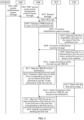
- FIG. 4 shows a specific procedure of triggering establishment or deletion of a QoS rule.
- a procedure of a method is specifically described by using an example in which a session management network element is an SMF, a user plane network element is a UPF, a first rule is a URR, and a second rule is a PDR.
- the method may include the following steps.
- S405 The SMF generates the PDR based on the name of the first predefined rule.
- the PDR includes the name of the first predefined rule.
- the UPF determines the first predefined rule based on the name of the first predefined rule.
- the UPF may use the application identifier of the first service as a condition of service awareness, record the application identifier of the first service in a context of the PDR, start service identification, and collect statistics on service duration and a service transmission rate.
- the UPF sends an N4 session establishment response message to the SMF.
- N4 session establishment request message in S406 may be further replaced with an N4 session modification request message.
- the N4 session establishment response message in S408 may be further replaced with an N4 session modification response message.
- S409 The UPF determines that it is detected that the first service starts, and the first service meets the first condition.
- the UPF sends 5-tuple information of the first service and a URR ID to the SMF based on the first indication information.
- S411 The SMF maps the URR ID to QoS information.
- the SMF determines the first predefined rule stored in the SMF based on the name of the first predefined rule.
- the first predefined rule stored in the SMF includes the QoS information. There is an association relationship between the URR ID and the QoS information.
- the SMF generates a QoS rule of a QoS flow corresponding to the first service based on the QoS information and the 5-tuple information of the first service.
- the UPF sends the 5-tuple information of the first service, the URR ID, and second event information to the SMF.
- the first predefined rule on the UPF side may include the first indication information and the first condition.
- the UPF may trigger a creation procedure or an update procedure of the QoS flow by using the first indication information, and establish the QoS rule of the QoS flow.
- a signaling storm problem can be resolved by determining whether the first service meets the first condition, to ensure that the service is executed according to a configured QoS policy. This improves actual service experience.
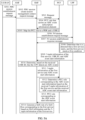
- FIG. 5A and FIG. 5B show a specific procedure of triggering establishment or deletion of a QoS rule in a 5G communication system.
- a procedure of a method is specifically described by using an example in which a session management network element is an SMF, a user plane network element is a UPF, a first rule is a URR, and a second rule is a PDR.
- the method may include the following steps.
- S501 UE sends a PDU session establishment request message to an AMF.
- S502 The AMF sends a PDU session create session management context request message to the SMF.
- S503 The SMF sends a request message to a PCF, where the request message is used to request a PCC rule.
- the SMF sends a session management policy control create request message to the PCF through an N7 interface.
- the SMF sends an N4 session establishment request message to the UPF, where the message includes the PDR and the URR.
- the UPF sends an N4 session establishment response message to the SMF.
- N4 session establishment request message in S506 may be further replaced with an N4 session modification request message.
- the N4 session establishment response message in S507 may be further replaced with an N4 session modification response message.
- S508 The UPF determines that it is detected that the first service starts, and the first service meets the first condition.
- the UPF sends 5-tuple information of the first service, the URR ID, and ADC event start information to the SMF based on the ADC event subscription information element.
- the UPF may send an N4 session reporting request message to the SMF, where the message includes the 5-tuple information of the first service, the URR ID, and the ADC event start information.
- step 210 For S509, refer to the descriptions of step 210 in the embodiment shown in FIG. 2 . Details are not described herein again.
- the SMF determines, based on the received URR ID, that the UPF detects the ADC event.
- the SMF sends a session management policy control update request (Npcf_SMPolicy-Control_UpdateRequest) message to the PCF, where the message includes the 5-tuple information of the first service and the ADC event start information.
- Npcf_SMPolicy-Control_UpdateRequest session management policy control update request
- the SMF sends the session management policy control update request message to the PCF, where the message includes the 5-tuple information of the first service and the ADC event end information.
- the PCF sends the session management policy control update response message to the SMF, where the message includes the PCC rule corresponding to the ADC event end information.
- FIG. 6 is a block diagram of a possible example of a communication apparatus according to an embodiment of this application.
- the apparatus 600 includes a transceiver module 620 and a processing module 610.
- the transceiver module 620 may include a receiving unit and a sending unit.
- the processing module 610 is configured to control and manage an action of the apparatus 600.
- the transceiver module 620 is configured to support the apparatus 600 in communicating with another network entity.
- the apparatus 600 may further include a storage unit.
- the storage unit is configured to store program code and data of the apparatus 600.
- the processing module 610 may be a processor or a controller, for example, may be a general-purpose central processing unit (central processing unit, CPU), a general-purpose processor, a digital signal processor (digital signal processor, DSP), an application-specific integrated circuit (application-specific integrated circuit, ASIC), a field programmable gate array (field programmable gate array, FPGA) or another programmable logic device, a transistor logic device, a hardware component, or any combination thereof.
- the processing module may implement or execute various example logical blocks, modules, and circuits described with reference to content disclosed in embodiments of this application.
- the processor may alternatively be a combination of processors implementing a computing function, for example, a combination of one or more microprocessors, or a combination of the DSP and a microprocessor.
- the transceiver module 620 may be a communication interface, a transceiver, a transceiver circuit, or the like.
- the communication interface is a general term. During specific implementation, the communication interface may include a plurality of interfaces.
- the storage unit may be a memory.
- the processing module 610 in the apparatus 600 may support the apparatus 600 in performing actions of the user plane network element in the foregoing method examples, for example, may support the apparatus 600 in performing step 200 in FIG. 2 .
- the processing module 610 invokes the transceiver module 620 to perform the following actions: obtaining first indication information, where the first indication information indicates to trigger, when a first service occurs, establishment of a QoS rule of a QoS flow corresponding to the first service; and when the first service meets a first condition, sending flow description information of the first service and an identifier of a first rule to the session management network element, where the first rule corresponds to the first indication information, and the first rule is used to establish the QoS rule.
- the transceiver module 620 is configured to: obtain a plurality of predefined rules; when obtaining the first indication information and the first condition, receive a second rule from the session management network element, where the second rule includes a name of a first predefined rule, the first predefined rule is one of the plurality of predefined rules, the first predefined rule includes the first rule and the first condition, and the first rule includes the first indication information; and determine the first predefined rule in the plurality of predefined rules based on the name of the first predefined rule.
- the transceiver module 620 is configured to: when obtaining the first indication information and the first condition, receive the first rule and a second rule from the session management network element.
- the first rule includes an application detection and control event subscription information element.
- the application detection and control event subscription information element indicates the first indication information.
- the second rule includes the first condition.
- the first rule is a usage reporting rule
- the second rule is a packet detection rule
- the transceiver module 620 is configured to: when the first service meets the first condition, send first event information to the session management network element.
- the first event information indicates that the first service starts.
- the transceiver module 620 is configured to receive flow description information of a first service and an identifier of a first rule from the user plane network element.
- apparatus 700 may be further configured to perform other steps and/or operations on the user plane network element side in the foregoing embodiments. For brevity, details are not described herein again.
Landscapes
- Engineering & Computer Science (AREA)
- Computer Networks & Wireless Communication (AREA)
- Signal Processing (AREA)
- Business, Economics & Management (AREA)
- General Business, Economics & Management (AREA)
- Multimedia (AREA)
- Accounting & Taxation (AREA)
- Mobile Radio Communication Systems (AREA)
Applications Claiming Priority (2)
| Application Number | Priority Date | Filing Date | Title |
|---|---|---|---|
| CN202211160985.5A CN117750398A (zh) | 2022-09-22 | 2022-09-22 | 一种建立QoS规则的方法及装置 |
| PCT/CN2023/104998 WO2024060778A1 (zh) | 2022-09-22 | 2023-06-30 | 一种建立QoS规则的方法及装置 |
Publications (2)
| Publication Number | Publication Date |
|---|---|
| EP4580242A1 true EP4580242A1 (de) | 2025-07-02 |
| EP4580242A4 EP4580242A4 (de) | 2025-11-19 |
Family
ID=90253286
Family Applications (1)
| Application Number | Title | Priority Date | Filing Date |
|---|---|---|---|
| EP23867073.1A Pending EP4580242A4 (de) | 2022-09-22 | 2023-06-30 | Verfahren und vorrichtung zur herstellung einer qos-regel |
Country Status (4)
| Country | Link |
|---|---|
| US (1) | US20250219950A1 (de) |
| EP (1) | EP4580242A4 (de) |
| CN (1) | CN117750398A (de) |
| WO (1) | WO2024060778A1 (de) |
Families Citing this family (1)
| Publication number | Priority date | Publication date | Assignee | Title |
|---|---|---|---|---|
| CN121056344A (zh) * | 2024-05-23 | 2025-12-02 | 华为技术有限公司 | 通信方法、装置及系统 |
Family Cites Families (6)
| Publication number | Priority date | Publication date | Assignee | Title |
|---|---|---|---|---|
| RU2696950C1 (ru) * | 2015-10-28 | 2019-08-07 | Хуавэй Текнолоджиз Ко., Лтд. | Способ и система обработки канала-носителя и связанное устройство |
| CN109392013B (zh) * | 2017-08-14 | 2020-11-24 | 电信科学技术研究院 | 一种服务质量QoS的调整方法及通信装置 |
| CN109756430B (zh) * | 2017-11-07 | 2021-08-03 | 华为技术有限公司 | 一种规则的处理方法及装置 |
| CN111770531B (zh) * | 2019-04-01 | 2022-03-29 | 华为技术有限公司 | 获取数据包延迟参数的方法、系统和装置 |
| EP3949270B1 (de) * | 2019-04-02 | 2024-02-14 | Nokia Technologies Oy | Funktionssteuerung auf lokaler benutzerebene |
| WO2022064269A1 (en) * | 2020-09-24 | 2022-03-31 | Telefonaktiebolaget Lm Ericsson (Publ) | Methods supporting usage reporting rules with and without associated reporting rules and related network nodes |
-
2022
- 2022-09-22 CN CN202211160985.5A patent/CN117750398A/zh active Pending
-
2023
- 2023-06-30 WO PCT/CN2023/104998 patent/WO2024060778A1/zh not_active Ceased
- 2023-06-30 EP EP23867073.1A patent/EP4580242A4/de active Pending
-
2025
- 2025-03-21 US US19/086,566 patent/US20250219950A1/en active Pending
Also Published As
| Publication number | Publication date |
|---|---|
| WO2024060778A1 (zh) | 2024-03-28 |
| US20250219950A1 (en) | 2025-07-03 |
| CN117750398A (zh) | 2024-03-22 |
| EP4580242A4 (de) | 2025-11-19 |
Similar Documents
| Publication | Publication Date | Title |
|---|---|---|
| CN110366132B (zh) | 通信方法及装置 | |
| KR101868070B1 (ko) | 서비스 계층 사우스바운드 인터페이스 및 서비스 품질 | |
| CN110049533B (zh) | 一种本地数据网络的指示方法及装置 | |
| EP4027684A1 (de) | Dienstkonfigurationsverfahren, kommunikationsvorrichtung und kommunikationssystem | |
| EP3720183B1 (de) | Datenübertragungsverfahren, kommunikationsvorrichtung und funktionseinheit auf benutzerebene | |
| US12127096B2 (en) | Method for performing access control on user equipment, network system, and related device | |
| WO2019033901A1 (zh) | 一种会话管理方法、异系统互操作的方法及网络装置 | |
| CN109474954B (zh) | 一种会话建立方法及装置 | |
| EP4044685A1 (de) | Netzwerkzugangsverfahren und kommunikationseinrichtung | |
| JP7290197B2 (ja) | ユーザ機器、コアネットワークノード、及び制御方法 | |
| US12133096B2 (en) | Data transmission method, apparatus, and device | |
| EP3681182B1 (de) | Verfahren, gerät und vorrichtung zum bestimmen des zustands eines endgerätes | |
| WO2018170747A1 (zh) | 一种通信方法及装置 | |
| CN114173384A (zh) | QoS控制方法、装置及处理器可读存储介质 | |
| US20190191353A1 (en) | Method for processing information or message, and network device | |
| WO2024051313A1 (zh) | 通信资源管理方法、装置、系统及存储介质 | |
| KR20220133250A (ko) | QoS 통지를 위한 방법 및 네트워크 노드 | |
| US20250106680A1 (en) | Systems and methods for l4s-enablement in wireless networks | |
| CN111092937A (zh) | 会话创建方法、控制方法、会话创建系统、网元及介质 | |
| CN115348585A (zh) | 确定安全保护开启方式的方法、通信方法及通信装置 | |
| US20250310264A1 (en) | Service flow scheduling method and apparatus | |
| CN107005537B (zh) | 一种承载处理方法、系统及相关装置 | |
| WO2022012361A1 (zh) | 一种通信方法及装置 | |
| US20250219950A1 (en) | Method and Apparatus for Establishing QOS Rule | |
| US20250184832A1 (en) | Communication method and apparatus |
Legal Events
| Date | Code | Title | Description |
|---|---|---|---|
| STAA | Information on the status of an ep patent application or granted ep patent |
Free format text: STATUS: THE INTERNATIONAL PUBLICATION HAS BEEN MADE |
|
| PUAI | Public reference made under article 153(3) epc to a published international application that has entered the european phase |
Free format text: ORIGINAL CODE: 0009012 |
|
| STAA | Information on the status of an ep patent application or granted ep patent |
Free format text: STATUS: REQUEST FOR EXAMINATION WAS MADE |
|
| 17P | Request for examination filed |
Effective date: 20250325 |
|
| AK | Designated contracting states |
Kind code of ref document: A1 Designated state(s): AL AT BE BG CH CY CZ DE DK EE ES FI FR GB GR HR HU IE IS IT LI LT LU LV MC ME MK MT NL NO PL PT RO RS SE SI SK SM TR |
|
| REG | Reference to a national code |
Ref country code: DE Ref legal event code: R079 Free format text: PREVIOUS MAIN CLASS: H04W0024020000 Ipc: H04L0012140000 |
|
| A4 | Supplementary search report drawn up and despatched |
Effective date: 20251017 |
|
| RIC1 | Information provided on ipc code assigned before grant |
Ipc: H04L 12/14 20240101AFI20251013BHEP Ipc: H04L 47/24 20220101ALI20251013BHEP Ipc: H04W 24/02 20090101ALI20251013BHEP Ipc: H04W 28/02 20090101ALI20251013BHEP |
|
| DAV | Request for validation of the european patent (deleted) | ||
| DAX | Request for extension of the european patent (deleted) |