EP4580257A1 - Kommunikationsverfahren und -vorrichtung - Google Patents
Kommunikationsverfahren und -vorrichtung Download PDFInfo
- Publication number
- EP4580257A1 EP4580257A1 EP22959083.1A EP22959083A EP4580257A1 EP 4580257 A1 EP4580257 A1 EP 4580257A1 EP 22959083 A EP22959083 A EP 22959083A EP 4580257 A1 EP4580257 A1 EP 4580257A1
- Authority
- EP
- European Patent Office
- Prior art keywords
- ssb
- cell
- terminal device
- sending
- handover
- Prior art date
- Legal status (The legal status is an assumption and is not a legal conclusion. Google has not performed a legal analysis and makes no representation as to the accuracy of the status listed.)
- Pending
Links
Images







Classifications
-
- H—ELECTRICITY
- H04—ELECTRIC COMMUNICATION TECHNIQUE
- H04W—WIRELESS COMMUNICATION NETWORKS
- H04W36/00—Hand-off or reselection arrangements
- H04W36/08—Reselecting an access point
-
- H—ELECTRICITY
- H04—ELECTRIC COMMUNICATION TECHNIQUE
- H04W—WIRELESS COMMUNICATION NETWORKS
- H04W36/00—Hand-off or reselection arrangements
- H04W36/0005—Control or signalling for completing the hand-off
- H04W36/0055—Transmission or use of information for re-establishing the radio link
- H04W36/0072—Transmission or use of information for re-establishing the radio link of resource information of target access point
-
- H—ELECTRICITY
- H04—ELECTRIC COMMUNICATION TECHNIQUE
- H04W—WIRELESS COMMUNICATION NETWORKS
- H04W48/00—Access restriction; Network selection; Access point selection
- H04W48/08—Access restriction or access information delivery, e.g. discovery data delivery
- H04W48/12—Access restriction or access information delivery, e.g. discovery data delivery using downlink control channel
-
- H—ELECTRICITY
- H04—ELECTRIC COMMUNICATION TECHNIQUE
- H04W—WIRELESS COMMUNICATION NETWORKS
- H04W56/00—Synchronisation arrangements
-
- H—ELECTRICITY
- H04—ELECTRIC COMMUNICATION TECHNIQUE
- H04W—WIRELESS COMMUNICATION NETWORKS
- H04W56/00—Synchronisation arrangements
- H04W56/001—Synchronization between nodes
Definitions
- This application relates to the field of communication technologies, and in particular, to a communication method and apparatus.
- the first cell may separately send the first SSB used for initial access and the second SSB used for cell handover or cell reselection.
- the first cell may send the first SSB; and when the terminal device needs to hand over or reselect to the first cell, the first cell may send the second SSB, so that the SSB may be sent based on a requirement. This reduces overheads for sending the SSB and improves efficiency of measuring the SSB by the terminal device.
- the first cell may further send configuration information to a second cell, where the configuration information may indicate a configuration of sending the second SSB by the first cell.
- the second cell may send the configuration information to a terminal device in the second cell.
- the first cell may send, to another cell (for example, a neighboring cell of the first cell), the configuration of sending the second SSB by the first cell.
- the terminal device in the another cell may receive the second SSB based on the configuration information, so that the terminal device can be prevented from blind detection for the second SSB. This can further reduce energy consumption of the terminal device.
- sending time of the first SSB and sending time of the second SSB do not overlap.
- the first SSB and the second SSB are sent in a time division manner.
- the first SSB and the second SSB do not overlap in time domain, so that interference between the first SSB and the second SSB can be reduced.
- a sending period of the first SSB is less than a sending period of the second SSB.
- the sending period of the first SSB is one of the following: 5 ms, 10 ms, 20 ms, 40 ms, 80 ms, and 160 ms; and the sending period of the second SSB is several to hundreds of seconds.
- the sending period of the first SSB is less than the sending period of the second SSB, so that overheads for sending the second SSB can be reduced.
- both the first SSB and the second SSB are NR SSBs.
- the first SSB and the second SSB may reuse a pattern of the NR SSB.
- the pattern of the NR SSB can be reused, so that availability of the solution is improved, and the solution is easy to implement.
- the first SSB is a CD-SSB
- the second SSB is an NCD-SSB.
- the first SSB may reuse the pattern of the NR SSB, occupy a time window of the NR SSB, and use a sequence number of the NR SSB.
- the second SSB may not occupy the time window of the NR SSB, and does not use the sequence number of the NR SBB.
- the second SSB does not use the time window and the sequence number of the NR SSB, so that more available SSBs can be obtained through extension. This improves the efficiency of cell reselection and cell handover.
- the NCD-SSB corresponds to a resource used for handover and/or a random access preamble used for handover.
- a correspondence between the NCD-SSB and the resource used for handover and/or the random access preamble used for handover may be preset, or may be determined by a network device (for example, a first satellite or a network device located on the ground).
- the NCD-SSB may be associated with the dedicated handover resource and/or the random access preamble used for handover, and is used for uplink random access during group handover. This can further improve efficiency of group handover.
- the handover resource associated with the NCD-SSB is used, so that the terminal device does not need to obtain resource configuration information used for group handover.
- the random access preamble associated with the NCD-SSB is used, so that a conflict between the random access preamble used for handover and a random access preamble used for initial access can be avoided. This further improves a success rate of group handover.
- the first cell may send a first offset indication to the second cell, where the first offset indication indicates a time offset between the sending time of the second SSB and the sending time of the first SSB adjacent to the second SSB.
- the second cell may send the first offset indication to the terminal device in the second cell.
- the terminal device may receive the first SSB from the first cell based on the first offset indication and time at which the second SSB is received, so that the terminal device does not need to perform blind detection for the first SSB, and the second cell does not need to send configuration information of the first SSB to the terminal device. This can further reduce the energy consumption of the terminal device, and reduce overheads for obtaining the configuration information of the first SSB.
- the first cell may further update the configuration of sending the second SSB by the first cell, but does not update an SIB of the first cell.
- the first cell when updating the configuration of sending the second SSB by the first cell, the first cell does not update the SIB of the first cell, so that overheads required for updating the SIB can be reduced.
- an embodiment of this application provides a communication method.
- the method includes: After receiving a third SSB from a second cell, a terminal device accesses the second cell based on the third SSB, where the third SSB is an SSB used for initial access. In this case, the terminal device may be in a connected state. After receiving a second SSB from a first cell, the terminal device may send a measurement report to the second cell based on the second SSB, where the second SSB is an SSB used for cell handover or cell reselection.
- both the first SSB and the second SSB are NR SSBs.
- the first SSB and the second SSB may reuse a pattern of the NR SSB.
- the pattern of the NR SSB can be reused, so that availability of the solution is improved, and the solution is easy to implement.
- the first SSB is a CD-SSB
- the second SSB is an NCD-SSB.
- the first SSB may reuse the pattern of the NR SSB, occupy a time window of the NR SSB, and use a sequence number of the NR SSB.
- the second SSB may not occupy the time window of the NR SSB, and does not use the sequence number of the NR SBB.
- the second SSB does not use the time window and the sequence number of the NR SSB, so that more available SSBs can be obtained through extension. This improves efficiency of cell reselection and cell handover.
- an embodiment of this application provides a communication method.
- the method includes: A terminal device receives a second synchronization signal block SSB from a first cell, where the second SSB is an SSB used for cell handover or cell reselection.
- the terminal device may further receive a first offset indication, where the first offset indication indicates a time offset between sending time of the second SSB and sending time of a first SSB adjacent to the second SSB, and the first SSB is an SSB used for initial access.
- the terminal device may receive the first SSB from the first cell based on time at which the second SSB is received and the first offset indication.
- the terminal device in an idle state may reselect to the first cell based on the second SSB.
- efficiency of group reselection can be improved.
- the first SSB is not used for cell handover or cell reselection. In this way, a terminal device that receives the first SSB does not hand over or reselect to the first cell based on the first SSB.
- the second SSB is not used for initial access. In this way, a terminal device that receives the second SSB does not initially access the first cell based on the second SSB.
- the sending time of the first SSB and the sending time of the second SSB do not overlap.
- the first SSB and the second SSB are sent in a time division manner.
- the first SSB and the second SSB do not overlap in time domain, so that interference between the first SSB and the second SSB can be reduced.
- a sending period of the first SSB is less than a sending period of the second SSB.
- the sending period of the first SSB is one of the following: 5 ms, 10 ms, 20 ms, 40 ms, 80 ms, and 160 ms; and the sending period of the second SSB is several to hundreds of seconds.
- the sending period of the first SSB is less than the sending period of the second SSB, so that overheads for sending the second SSB can be reduced.
- both the first SSB and the second SSB are NR SSBs.
- the first SSB and the second SSB may reuse a pattern of the NR SSB.
- the pattern of the NR SSB can be reused, so that availability of the solution is improved, and the solution is easy to implement.
- an embodiment of this application provides a communication apparatus, including at least one processing element and at least one storage element.
- the at least one storage element is configured to store a program and data
- the at least one processing element is configured to read and execute the program and data that are stored in the storage element, so that the method according to any one of the foregoing aspects of this application is implemented.
- an embodiment of this application provides a communication system, including a first cell configured to perform the method according to the first aspect, and a terminal device configured to perform the method according to the second aspect or the third aspect.
- the terminal device may be a handheld device having a wireless connection function, or may be a vehicle or a vehicle-mounted device (for example, a vehicle-mounted communication apparatus or a vehicle-mounted communication chip) having a communication function, a wearable device, a computing device, or another processing device connected to a wireless modem.
- a vehicle or a vehicle-mounted device for example, a vehicle-mounted communication apparatus or a vehicle-mounted communication chip having a communication function, a wearable device, a computing device, or another processing device connected to a wireless modem.
- An SSB may include a primary synchronization signal (primary synchronization signal, PSS), a secondary synchronization signal (secondary synchronization signal, SSS), and a physical broadcast channel (physical broadcast channel, PBCH).
- PSS primary synchronization signal
- SSS secondary synchronization signal
- PBCH physical broadcast channel
- the PSS may be used to transmit a cell identity
- the SSS may be used to transmit a cell group identity.
- the cell identity and the cell group identity jointly determine a plurality of physical cell identities (physical cell identities, PCIs) in a mobile communication system.
- the first cell may send the second SSB based on configuration information of the second SSB (referred to as second configuration information below).
- the second configuration information may include at least one of the following: a time domain length of the second SSB, a sending period of the second SSB, an SSB bitmap of the second SSB, a measurement window configuration of the second SSB, a measurement window offset of the second SSB, and a reference point location of the second SSB.
- a time domain length of the second SSB a sending period of the second SSB
- an SSB bitmap of the second SSB a measurement window configuration of the second SSB
- a measurement window offset of the second SSB a measurement window offset of the second SSB
- the first SSB and the second SSB do not overlap in time domain, so that interference between the first SSB and the second SSB can be reduced.
- the sending period of the first SSB is less than the sending period of the second SSB.
- the sending period of the first SSB is one of the following: 5 ms, 10 ms, 20 ms, 40 ms, 80 ms, and 160 ms; and the sending period of the second SSB is several to hundreds of seconds.
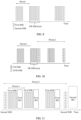
- each NR SSB burst includes the first SSB, and some NR SSB bursts include the second SSB.
- the sending period of the first SSB is less than the sending period of the second SSB, so that overheads for sending the second SSB can be reduced.
- a first random access occasion (random access channel (random access channel, RACH) occasion, RO) associated with the first SSB is different from a second RO associated with the second SSB.
- the first RO is an access occasion associated with the first SSB, and the terminal device may perform, on the first RO, access related to initial random access, beam recovery, a data transmission request, or the like.
- the second RO is an access occasion associated with the second SSB, and the terminal device after group handover may perform access on the second RO.
- the RO may indicate a resource (for example, a time domain position and/or a time length) occupied for sending a random access preamble.
- At least one of the following parameters of the first RO and the second RO is different:
- the method includes the following steps.
- the second cell sends a third SSB to the terminal device.
- the terminal device receives the third SSB from the second cell.
- the third SSB is an SSB used for initial access.
- the third SSB may be used in an initial random access procedure.
- the third SSB may be further used in a procedure other than cell handover or cell reselection, for example, a procedure like beam failure recovery, uplink data transmission, or RRC connection reestablishment.
- the second cell may send the third SSB based on configuration information of the third SSB (referred to as third configuration information below).
- the third configuration information may include at least one of the following: a time domain length of the third SSB, a period of the third SSB, an SSB bitmap of the third SSB, a measurement window configuration of the third SSB, a measurement window offset of the third SSB, and a reference point location of the third SSB.
- a time domain length of the third SSB a period of the third SSB
- an SSB bitmap of the third SSB a measurement window configuration of the third SSB
- a measurement window offset of the third SSB a measurement window offset of the third SSB
- the second cell may explicitly or implicitly indicate that the third SSB is the SSB used for initial access.
- the third SSB is the SSB used for initial access.
- the first SSB is replaced with the third SSB. Details are not described herein again.
- the third SSB is not used for cell handover or cell reselection. In this way, a terminal device that receives the third SSB does not hand over or reselect to the second cell based on the third SSB.
- the terminal device accesses the second cell based on the third SSB.
- the terminal device may be the terminal device in the second region.
- the second region may be included in the region in which the second cell sends the data signal.
- specific content of the second region refer to the descriptions of the second region in the method shown in FIG. 7A . Details are not described herein again.
- a specific process in which the terminal device accesses the second cell based on the third SSB is not limited in this application. After accessing the second cell, the terminal device is in a connected state.
- the first cell sends the second SSB.
- the terminal device receives the second SSB from the first cell.
- the second cell may determine to hand over the terminal device to the first cell, and hand over the terminal device from the second cell to the first cell by using the method shown in S605 to S608.
- the second configuration information indicates a configuration of sending the second SSB by the first cell.
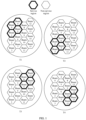
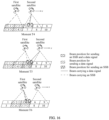
- the beam that is sent by the first cell and that includes the NCD-SSB covers beam positions 6 and 8, and the beam that is sent by the first cell and that includes the CD-SSB covers the beam position 2, the beam position 4, the beam position 5, and the beam position 7.
- UE 1 is located in the beam position 5.
- the UE 1 may measure the NCD-SSB from the first cell, and at the moment T2, the UE 1 may measure the CD-SSB from the first cell. Because there is the specific time domain offset between the sending time of the NCD-SSB and the sending time of the CD-SSB, the UE 1 may determine, based on time at which the NCD-SSB is received, expected time at which the CD-SSB is received.
- the terminal device communicates with the first cell by using a resource used for handover and/or a random access preamble used for handover that correspond/corresponds to the NCD-SSB.
- the NCD-SSB may correspond to the resource used for handover and/or the random access preamble used for handover.
- a correspondence between the NCD-SSB and the resource used for handover and/or the random access preamble used for handover may be preset, or may be determined by a network device (for example, a first satellite or a network device located on the ground).
- the terminal device may store the correspondence.
- the terminal device may obtain the correspondence from the network device.
- the terminal device may send a random access message to the first cell by using the resource.
- the terminal device may send, to the first cell, the random access preamble corresponding to the NCD-SSB.
- the NCD-SSB may be associated with the dedicated handover resource and/or the random access preamble used for handover, and is used for uplink random access during group handover. This can further improve the efficiency of group handover.
- the handover resource associated with the NCD-SSB is used, so that the terminal device does not need to obtain resource configuration information used for group handover. This can further reduce overheads.
- the random access preamble associated with the NCD-SSB is used, so that a conflict between the random access preamble used for handover and a random access preamble used for initial access can be avoided. This further improves a success rate of group handover.
- the method includes the following steps.
- the first offset indication indicates the time offset between the sending time of the second SSB and the sending time of the first SSB adjacent to the second SSB.
- the terminal device may be a terminal device in an idle state in the second region.
- the second region may be included in the region in which the second cell sends the data signal.
- specific content of the second region refer to the descriptions of the second region in the method shown in FIG. 7A .
- the first cell sends the second SSB.
- the terminal device receives the second SSB from the first cell.
- S1403 The terminal device reselects to the first cell based on the second SSB.
- a process in which the terminal device reselects to the first cell based on the second SSB is not limited in this application. For example, when the terminal device determines, based on the second SSB, that the signal quality from the first cell is greater than the specified signal quality threshold, the terminal device may reselect to the first cell.
- the terminal device receives the first SSB from the first cell based on the time at which the second SSB is received and the first offset indication.
- step D For specific content of S1404, refer to step D3. Repeated parts are not described again.
- the terminal device may search for an SSB in a to-be-detected synchronization raster (synchronization raster). If the terminal device determines, in the explicit or the implicit manner in S701, that the received SSB is the first SSB, the terminal device may perform access and camping based on the first SSB.
- a to-be-detected synchronization raster synchronization raster
- the terminal device in the idle state may reselect to the first cell based on the second SSB.
- efficiency of group reselection can be improved.
- the terminal device may receive the first SSB from the first cell based on the first offset indication and the time at which the second SSB is received, so that the terminal device does not need to perform blind detection for the first SSB, and the second cell does not need to send the configuration information of the first SSB to the terminal device. This can further reduce the energy consumption of the terminal device, and reduce the overheads for obtaining the configuration information of the first SSB.
- An embodiment of this application provides a communication method.
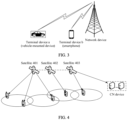
- the method may be applied to the communication system shown in FIG. 3 or FIG. 4 .
- a first cell sends a data signal and an SSB in a third region in a first time period.
- a terminal device in the third region may receive the data signal and the SSB from the first cell.
- a moment T4 belongs to the first time period.
- the first cell sends the data signal and the SSB in a beam position 1 to a beam position 4.
- a beam used to send the data signal and a beam used to send the SSB that are of the first cell may cover the beam position 1 to the beam position 4.
- the beam used to send the data signal may be referred to as a traffic beam.
- the beam used to send the SSB may be referred to as a broadcast beam.
- a second cell of a second satellite sends a data signal and an SSB in a beam position 5 to a beam position 8.
- a traffic beam and a broadcast beam of the second cell may cover the beam position 5 to the beam position 8.
- the first satellite and the second satellite move to the right.
- the first cell sends a data signal in the third region, and sends an SSB in a fourth region in a second time period.
- the terminal device in the third region may receive the data signal from the first cell
- a terminal device in the fourth region may receive the SSB from the first cell.
- a moment T5 belongs to the second time period.
- the first cell sends the data signal in the beam position 1 to the beam position 4, and sends the SSB in the beam position 2, the beam position 4, the beam position 5, and the beam position 7.
- the second cell sends the data signal in the beam position 5 to the beam position 8, and sends the SSB in the beam position 6, the beam position 8, a beam position 9, and a beam position 10.
- terminal devices in the beam position 5 and the beam position 7 may hand over or reselect to the first cell.
- the first cell directly sends the third configuration information to the terminal device.
- the terminal device is located in the beam position 2, and the first cell may send the third configuration information by using a broadcast message, or send the third configuration information to a terminal device in a connected state by using a unicast message.
- the terminal device receives the SSB from the first cell based on the fourth configuration information.
- the terminal device may further determine, based on the third configuration information and the fourth configuration information, time (referred to as service time for short below) at which the first cell can provide a service for the terminal device.
- the terminal device does not detect a signal from the first cell beyond the service time.
- the terminal device is located in the beam position 5.
- the third configuration information indicates the first cell to send the data signal in the beam position 1 to the beam position 4 in 0 to 5 seconds.
- the fourth configuration information indicates the first cell to send the SSB in the beam position 1 to the beam position 4 in 0 to 5 seconds, and sends the SSB in the beam position 2, the beam position 4, the beam position 5, and the beam position 7 in 6 to 11 seconds.
- the fifth configuration information may be the third configuration information in step F1.
- step G1 refer to step F1.
- the fifth configuration information may be the fourth configuration information in step F3.
- step G2 refer to step F3.
- the terminal device receives the first signal from the first cell based on the fifth configuration information.
- step G2 When the first signal is the data signal, for step G2, refer to step F2.
- step G2 When the first signal is the SSB, for step G2, refer to step F4.
- G3 The first cell sends the second offset indication.
- the terminal device receives the second offset indication.
- the first cell directly sends the second offset indication to the terminal device.
- the terminal device is located in the beam position 2, and the first cell may send the second offset indication by using a broadcast message, or send the second offset indication to a terminal device in a connected state by using a unicast message.
- the first cell may send the second offset indication to the terminal device through another cell.
- the terminal device is located in the beam position 5, and the first cell forwards the second offset indication to the terminal device through the second cell of the second satellite.
- the terminal device receives the second signal from the first cell based on the fifth configuration information and the second offset indication.
- the fifth configuration information includes indication information of the second time period and indication information of the fourth region. If the second time period is 6 to 11 seconds, and a time offset indicated by the second offset indication is 6 seconds, the terminal device may determine to receive the data signal from the first cell in the fourth region in 12 to 17 seconds.
- the terminal device may determine, based on configuration information of the first signal and the second offset indication, time for receiving the second signal, and does not need to receive configuration information of the second signal. This can further reduce overheads.
- the terminal device may also determine, based on the fifth configuration information and the second offset indication, time (referred to as service time for short below) at which the first cell can provide a service for the terminal device.
- the terminal device does not detect a signal from the first cell beyond the service time. According to the method, the power consumption of the terminal device can be reduced.
- a first transmit beam of the first cell may be paired with a first receive beam of the terminal device.
- the fourth time period is a time period in which the first transmit beam and the first receive beam are paired.
- the first cell may directly send the indication information of the fourth time period to the terminal device.
- the terminal device is located in the beam position 2, and the first cell may send the indication information of the fourth time period by using a broadcast message, or send the indication information of the fourth time period to a terminal device in a connected state by using a unicast message.
- the first cell may send the indication information of the fourth time period to the terminal device through another cell.
- the terminal device is located in the beam position 5, and the first cell forwards the indication information of the fourth time period to the terminal device through the second cell of the second satellite.
- the terminal device may receive the data signal and/or the SSB from the first cell by using the first receive beam.
- the terminal device receives the data signal and/or the SSB from the first cell by using the first receive beam in the fourth time period indicated by the first cell.
- the first receive beam is paired with the first transmit beam of the first cell. Therefore, communication quality can be improved in the method.
- the terminal device does not need to detect a beam that can be paired with the transmit beam of the first cell. This can further improve communication efficiency.
- an embodiment of this application provides a communication apparatus shown in FIG. 17 , and the communication apparatus may be configured to perform functions of related steps in the foregoing method embodiments.
- the function may be implemented by hardware, or may be implemented by software or by hardware executing corresponding software.
- the hardware or the software includes one or more modules corresponding to the function.
- a structure of the communication apparatus is shown in FIG. 17 , and includes a communication unit 1701 and a processing unit 1702.
- the communication apparatus 1700 may be used in the network device, the satellite, or the terminal device in the communication system shown in FIG. 3 or FIG. 4 , and may implement the communication method provided in the foregoing embodiments and instances of this application. The following describes functions of the units in the communication apparatus 1700.
- the communication unit 1701 is configured to receive and send data.
- the communication unit 1701 may be implemented by using a transceiver, for example, a mobile communication module.
- the mobile communication module may include at least one antenna, at least one filter, a switch, a power amplifier, a low noise amplifier (low noise amplifier, LNA), and the like.
- the processing unit 1702 may be configured to support the communication apparatus 1700 in performing a processing action in the foregoing method embodiments.
- the processing unit 1702 may be implemented by a processor.
- the processor may be a central processing unit (central processing unit, CPU), may be another general-purpose processor, a digital signal processor (digital signal processor, DSP), an application-specific integrated circuit (application-specific integrated circuit, ASIC), a field programmable gate array (field programmable gate array, FPGA), another programmable logic device, a transistor logic device, a hardware component, or any combination thereof.
- the general-purpose processor may be a microprocessor or any conventional processor.
- the communication apparatus 1700 is used in the network device or the satellite in the communication system shown in FIG. 3 or FIG. 4 .
- the processing unit 1702 is configured to: send a first SSB by using the communication unit 1701, where the first SSB is an SSB used for initial access; and send a second SSB by using the communication unit 1701, where the second SSB is an SSB used for cell handover or cell reselection.
- the first SSB is not used for cell handover or cell reselection, and the second SSB is not used for initial access.
- the processing unit 1702 is specifically configured to send configuration information to a second cell by using the communication unit 1701, where the configuration information indicates a configuration of sending the second SSB by the first cell.
- a sending period of the first SSB is less than a sending period of the second SSB.
- the processing unit 1702 is specifically configured to send a first offset indication to the second cell by using the communication unit 1701, where the first offset indication indicates a time offset between the sending time of the second SSB and the sending time of the first SSB adjacent to the second SSB.
- the processing unit 1702 is specifically configured to: receive configuration information from the second cell by using the communication unit 1701, where the configuration information indicates a configuration of sending the second SSB by the first cell; and receive the second SSB from the first cell based on the configuration information by using the communication unit 1701.
- the second SSB is an NCD-SSB
- the processing unit 1702 is specifically configured to communicate, by using the communication unit 1701, with the first cell by using a resource used for handover and/or a random access preamble used for handover that correspond/corresponds to the NCD-SSB.
- the processing unit 1702 is specifically configured to: receive a handover command from the second cell by using the communication unit 1701, where the handover command indicates the terminal device to hand over to the first cell; and receive a first SSB from the first cell by using the communication unit 1701, where the first SSB is an SSB used for initial access.
- the processing unit 1702 is specifically configured to: receive a first offset indication by using the communication unit 1701, where the first offset indication indicates a time interval between sending time of the second SSB and sending time of the first SSB adjacent to the second SSB; and receive, by using the communication unit 1701, the first SSB from the first cell based on the first offset indication and time at which the second SSB is received.
- the first SSB is not used for cell handover or cell reselection, and the second SSB is not used for initial access.
- the sending time of the first SSB and the sending time of the second SSB do not overlap.
- both the first SSB and the second SSB are NR SSBs.
- the processing unit 1702 is configured to: receive a second SSB from a first cell by using the communication unit 1701, where the second SSB is an SSB used for cell handover or cell reselection; receive a first offset indication by using the communication unit 1701, where the first offset indication indicates a time offset between sending time of the second SSB and sending time of a first SSB adjacent to the second SSB, and the first SSB is an SSB used for initial access; reselect to the first cell based on the second SSB; and receive, by using the communication unit 1701, the first SSB from the first cell based on time at which the second SSB is received and the first offset indication.
- the first SSB is not used for cell handover or cell reselection, and the second SSB is not used for initial access.
- the sending time of the first SSB and the sending time of the second SSB do not overlap.
- a sending period of the first SSB is less than a sending period of the second SSB.
- both the first SSB and the second SSB are NR SSBs.
- the first SSB is a CD-SSB
- the second SSB is an NCD-SSB.
- division into the modules is an example, is merely logical function division, and may be other division in an actual implementation.
- functional units in embodiments of this application may be integrated into one processing unit, may exist alone physically, or two or more units may be integrated into one unit.
- the integrated unit may be implemented in a form of hardware, or may be implemented in a form of a software functional unit.
- the integrated unit When the integrated unit is implemented in the form of the software functional unit and sold or used as an independent product, the integrated unit may be stored in a computer-readable storage medium. Based on such an understanding, the technical solutions of this application essentially, or the part contributing to the conventional technology, or all or some of the technical solutions may be implemented in the form of a software product.
- the computer software product is stored in a storage medium, and includes several instructions for instructing a computer device (which may be a personal computer, a server, or a network device) or a processor (processor) to perform all or some of the steps of the methods described in embodiments of this application.
- the communication module 1801 is configured to receive and send data, to implement communication and interaction with another device.
- the communication module 1801 may be implemented through a physical interface, a communication module, a communication interface, or an input/output interface.
- the processor 1802 may be configured to support the communication apparatus 1800 in performing a processing action in the foregoing method embodiments. When the communication apparatus 1800 is configured to implement the foregoing method embodiment, the processor 1802 may be further configured to implement the functions of the processing unit 1702.
- the processor 1802 may be a CPU, or may be another general-purpose processor, a DSP, an ASIC, an FPGA or another programmable logic device, a transistor logic device, a hardware component, or any combination thereof.
- the general-purpose processor may be a microprocessor or any conventional processor.
- the communication apparatus 1800 is used in the network device or the satellite in the communication system shown in FIG. 3 or FIG. 4 .
- the processor 1802 is specifically configured to: send a first SSB by using the communication module 1801, where the first SSB is an SSB used for initial access; and send a second SSB by using the communication module 1801, where the second SSB is an SSB used for cell handover or cell reselection.
- the communication apparatus 1800 is used in the terminal device in the communication system shown in FIG. 3 or FIG. 4 .
- the processor 1802 is specifically configured to: receive a third SSB from a second cell by using the communication module 1801, where the third SSB is an SSB used for initial access; access the second cell based on the third SSB; receive a second SSB from a first cell by using the communication module 1801, where the second SSB is an SSB used for cell handover or cell reselection; and send a measurement report to the second cell based on the second SSB by using the communication module 1801.
- the communication apparatus 1800 is used in the terminal device in the communication system shown in FIG. 3 or FIG. 4 .
- the processor 1802 is specifically configured to: receive a second SSB from a first cell by using the communication module 1801, where the second SSB is an SSB used for cell handover or cell reselection; receive a first offset indication by using the communication module 1801, where the first offset indication indicates a time offset between sending time of the second SSB and sending time of a first SSB adjacent to the second SSB, and the first SSB is an SSB used for initial access; reselect to the first cell based on the second SSB; and receive, by using the communication module 1801, the first SSB from the first cell based on time at which the second SSB is received and the first offset indication.
- processor 1802 For specific functions of the processor 1802, refer to the descriptions in the communication method provided in the foregoing embodiments and instances of this application, and the specific function descriptions of the communication apparatus 1700 in the embodiment of this application shown in FIG. 17 . Details are not described herein again.
- the memory 1803 is configured to store program instructions, data, and the like.
- the program instructions may include program code, and the program code includes computer operation instructions.
- the memory 1803 may include a RAM, and may further include a non-volatile memory (non-volatile memory), for example, at least one disk memory.
- the processor 1802 executes the program instructions stored in the memory 1803, and uses the data stored in the memory 1803, to implement the foregoing function, so as to implement the communication method provided in the foregoing embodiments of this application.
- the memory 1803 in FIG. 18 of this application may be a volatile memory or a non-volatile memory, or may include both a volatile memory and a non-volatile memory.
- the non-volatile memory may be a ROM, a programmable read-only memory (Programmable ROM, PROM), an erasable programmable read-only memory (Erasable PROM, EPROM), an electrically erasable programmable read-only memory (Electrically EPROM, EEPROM), or a flash memory.
- the volatile memory may be a RAM, and serves as an external cache.
- RAMs may be used, for example, a static random access memory (Static RAM, SRAM), a dynamic random access memory (Dynamic RAM, DRAM), a synchronous dynamic random access memory (Synchronous DRAM, SDRAM), a double data rate synchronous dynamic random access memory (Double Data Rate SDRAM, DDR SDRAM), an enhanced synchronous dynamic random access memory (Enhanced SDRAM, ESDRAM), a synchlink dynamic random access memory (Synchlink DRAM, SLDRAM), and a direct rambus random access memory (Direct Rambus RAM, DR RAM).
- Static RAM static random access memory
- DRAM dynamic random access memory
- DRAM synchronous dynamic random access memory
- SDRAM synchronous dynamic random access memory
- Double data rate synchronous dynamic random access memory Double Data Rate SDRAM, DDR SDRAM
- Enhanced SDRAM, ESDRAM enhanced synchronous dynamic random access memory
- Synchlink dynamic random access memory Synchlink dynamic random access memory
- SLDRAM direct rambus random access memory
- Direct Rambus RAM
- an embodiment of this application further provides a computer program.
- the computer program When the computer program is run on a computer, the computer is enabled to perform the methods provided in the foregoing embodiments.
- an embodiment of this application further provides a computer-readable storage medium.
- the computer-readable storage medium stores a computer program.
- the computer program When the computer program is executed by a computer, the computer is enabled to perform the methods provided in the foregoing embodiments.
- the storage medium may be any usable medium that can be accessed by the computer.
- the following provides an example but does not impose a limitation:
- the computer-readable medium may include a RAM, a ROM, an EEPROM, a CD-ROM, another optical disc storage, a disk storage medium, another magnetic storage device, or any other medium that can carry or store expected program code in a form of an instruction or a data structure and can be accessed by a computer.
- an embodiment of this application further provides a chip.
- the chip is configured to read a computer program stored in a memory, to implement the method provided in the foregoing embodiments.
- an embodiment of this application provides a chip system.
- the chip system includes a processor configured to support a computer apparatus in implementing functions related to devices in the foregoing embodiments.
- the chip system further includes a memory, and the memory is configured to store a program and data that are necessary for the computer apparatus.
- the chip system may include a chip, or may include a chip and another discrete component.
- a first cell may send a first SSB, where the first SSB is an SSB used for initial access.
- the first cell may further send a second SSB, where the second SSB is an SSB used for cell handover or cell reselection.
- the first cell may separately send the first SSB used for initial access and the second SSB used for cell handover or cell reselection.
- the first cell when a terminal device needs to access the first cell, the first cell may send the first SSB; and when the terminal device needs to hand over or reselect to the first cell, the first cell may send the second SSB, so that the SSB may be sent based on a requirement. This reduces overheads for sending the SSB and improves efficiency of measuring the SSB by the terminal device.
- this application may be provided as a method, a system, or a computer program product. Therefore, this application may use a form of hardware only embodiments, software only embodiments, or embodiments with a combination of software and hardware. In addition, this application may use a form of a computer program product that is implemented on one or more computer-usable storage media (including but not limited to a disk memory, a CD-ROM, an optical memory, and the like) that include computer-usable program code.
- computer-usable storage media including but not limited to a disk memory, a CD-ROM, an optical memory, and the like
- the computer program instructions may be provided for a general-purpose computer, a dedicated computer, an embedded processor, or a processor of another programmable data processing device to generate a machine, so that the instructions executed by a computer or a processor of another programmable data processing device generate an apparatus for implementing a specific function in one or more processes in the flowcharts and/or in one or more blocks in the block diagrams.
- the computer program instructions may alternatively be stored in a computer-readable memory that can indicate a computer or another programmable data processing device to work in a specific manner, so that the instructions stored in the computer-readable memory generate an artifact that includes an instruction apparatus.
- the instruction apparatus implements a specific function in one or more processes in the flowcharts and/or in one or more blocks in the block diagrams.
Landscapes
- Engineering & Computer Science (AREA)
- Computer Networks & Wireless Communication (AREA)
- Signal Processing (AREA)
- Computer Security & Cryptography (AREA)
- Mobile Radio Communication Systems (AREA)
Applications Claiming Priority (1)
| Application Number | Priority Date | Filing Date | Title |
|---|---|---|---|
| PCT/CN2022/120250 WO2024060072A1 (zh) | 2022-09-21 | 2022-09-21 | 通信方法及装置 |
Publications (2)
| Publication Number | Publication Date |
|---|---|
| EP4580257A1 true EP4580257A1 (de) | 2025-07-02 |
| EP4580257A4 EP4580257A4 (de) | 2025-11-12 |
Family
ID=90453726
Family Applications (1)
| Application Number | Title | Priority Date | Filing Date |
|---|---|---|---|
| EP22959083.1A Pending EP4580257A4 (de) | 2022-09-21 | 2022-09-21 | Kommunikationsverfahren und -vorrichtung |
Country Status (4)
| Country | Link |
|---|---|
| US (1) | US20250220532A1 (de) |
| EP (1) | EP4580257A4 (de) |
| CN (1) | CN119732116A (de) |
| WO (1) | WO2024060072A1 (de) |
Families Citing this family (2)
| Publication number | Priority date | Publication date | Assignee | Title |
|---|---|---|---|---|
| US20250119804A1 (en) * | 2023-10-10 | 2025-04-10 | Qualcomm Incorporated | Mobility procedures for non-terrestrial network (ntn) devices |
| CN120935705A (zh) * | 2024-05-11 | 2025-11-11 | 华为技术有限公司 | 通信方法和通信装置 |
Family Cites Families (5)
| Publication number | Priority date | Publication date | Assignee | Title |
|---|---|---|---|---|
| WO2019022574A1 (ko) * | 2017-07-28 | 2019-01-31 | 엘지전자 주식회사 | 동기 신호 블록을 송수신하는 방법 및 이를 위한 장치 |
| US11546052B2 (en) * | 2019-10-18 | 2023-01-03 | Qualcomm Incorporated | Beam configuration and parameter management for non-terrestrial networks |
| CN114071644B (zh) * | 2020-07-31 | 2023-06-16 | 维沃移动通信有限公司 | 接入控制方法、装置及通信设备 |
| CN114071688B (zh) * | 2020-07-31 | 2025-07-08 | 华为技术有限公司 | 一种同步信号块的传输方法和通信装置 |
| CN114339958B (zh) * | 2020-09-29 | 2023-07-07 | 维沃移动通信有限公司 | 网络接入方法、网络接入装置、终端和网络侧设备 |
-
2022
- 2022-09-21 CN CN202280099285.1A patent/CN119732116A/zh active Pending
- 2022-09-21 WO PCT/CN2022/120250 patent/WO2024060072A1/zh not_active Ceased
- 2022-09-21 EP EP22959083.1A patent/EP4580257A4/de active Pending
-
2025
- 2025-03-20 US US19/085,606 patent/US20250220532A1/en active Pending
Also Published As
| Publication number | Publication date |
|---|---|
| WO2024060072A1 (zh) | 2024-03-28 |
| CN119732116A (zh) | 2025-03-28 |
| EP4580257A4 (de) | 2025-11-12 |
| US20250220532A1 (en) | 2025-07-03 |
Similar Documents
| Publication | Publication Date | Title |
|---|---|---|
| US11284241B2 (en) | Method and apparatus for performing cell specification procedure for network slice-based NR in wireless communication system | |
| CN112787712B (zh) | 面向低轨道卫星基站-飞行器用户终端的通信连接建立方法 | |
| US12408091B2 (en) | Method and apparatus for wireless communication | |
| US20190349819A1 (en) | Method and apparatus for supporting beam in wireless communication system | |
| US12477493B2 (en) | Transmission method, terminal, and network device | |
| US20250220532A1 (en) | Communication method and apparatus | |
| US12495341B1 (en) | Cell handover method, terminal device, and network device | |
| US12035290B2 (en) | Communication control device, wireless communication device, method and program | |
| CN117917127B (zh) | 用于无线通信的方法、终端设备及网络设备 | |
| US20230164685A1 (en) | Access Control Method and Apparatus for Terminal Device | |
| CN117397292A (zh) | 用于非地面网络卫星切换的方法、终端设备及网络设备 | |
| US20250203473A1 (en) | Handover method and communication apparatus | |
| US20230292275A1 (en) | Transceiver device, network entity and base station | |
| EP4539355A1 (de) | Verfahren, vorrichtung und system zur kommunikation über nichtterrestrisches netzwerk | |
| US11924741B2 (en) | Auxiliary routing method, terminal device, and network device | |
| CN117397284A (zh) | 用于非地面网络卫星切换的方法、终端设备及网络设备 | |
| EP4557845A1 (de) | Kommunikationsverfahren und zugehörige vorrichtung | |
| CN117397295A (zh) | 小区切换的方法、网络设备及终端设备 | |
| US20250240760A1 (en) | Measurement method and terminal device | |
| US20250016563A1 (en) | Authorization method and apparatus | |
| US20240414616A1 (en) | Communication method and network device | |
| JP7648058B2 (ja) | ネットワークノード、基地局及び通信方法 | |
| US20190260561A1 (en) | Communication control device, wireless communication device, method and program | |
| US20250247177A1 (en) | Communication method, and device | |
| CN121013138A (zh) | 通信方法及相关装置 |
Legal Events
| Date | Code | Title | Description |
|---|---|---|---|
| STAA | Information on the status of an ep patent application or granted ep patent |
Free format text: STATUS: THE INTERNATIONAL PUBLICATION HAS BEEN MADE |
|
| PUAI | Public reference made under article 153(3) epc to a published international application that has entered the european phase |
Free format text: ORIGINAL CODE: 0009012 |
|
| STAA | Information on the status of an ep patent application or granted ep patent |
Free format text: STATUS: REQUEST FOR EXAMINATION WAS MADE |
|
| 17P | Request for examination filed |
Effective date: 20250326 |
|
| AK | Designated contracting states |
Kind code of ref document: A1 Designated state(s): AL AT BE BG CH CY CZ DE DK EE ES FI FR GB GR HR HU IE IS IT LI LT LU LV MC MK MT NL NO PL PT RO RS SE SI SK SM TR |
|
| REG | Reference to a national code |
Ref country code: DE Ref legal event code: R079 Free format text: PREVIOUS MAIN CLASS: H04W0036040000 Ipc: H04W0036000000 |
|
| A4 | Supplementary search report drawn up and despatched |
Effective date: 20251010 |
|
| RIC1 | Information provided on ipc code assigned before grant |
Ipc: H04W 36/00 20090101AFI20251006BHEP Ipc: H04W 48/12 20090101ALI20251006BHEP Ipc: H04W 56/00 20090101ALI20251006BHEP |
|
| DAV | Request for validation of the european patent (deleted) | ||
| DAX | Request for extension of the european patent (deleted) |