EP4581930A1 - Procédé d'inactivation et inactivateur pour bactéries ou virus, et matériau de base antiviral l'utilisant - Google Patents
Procédé d'inactivation et inactivateur pour bactéries ou virus, et matériau de base antiviral l'utilisant Download PDFInfo
- Publication number
- EP4581930A1 EP4581930A1 EP23860343.5A EP23860343A EP4581930A1 EP 4581930 A1 EP4581930 A1 EP 4581930A1 EP 23860343 A EP23860343 A EP 23860343A EP 4581930 A1 EP4581930 A1 EP 4581930A1
- Authority
- EP
- European Patent Office
- Prior art keywords
- azado
- bacteria
- compound
- viruses
- ring
- Prior art date
- Legal status (The legal status is an assumption and is not a legal conclusion. Google has not performed a legal analysis and makes no representation as to the accuracy of the status listed.)
- Pending
Links
Images





Classifications
-
- A—HUMAN NECESSITIES
- A01—AGRICULTURE; FORESTRY; ANIMAL HUSBANDRY; HUNTING; TRAPPING; FISHING
- A01N—PRESERVATION OF BODIES OF HUMANS OR ANIMALS OR PLANTS OR PARTS THEREOF; BIOCIDES, e.g. AS DISINFECTANTS, AS PESTICIDES OR AS HERBICIDES; PEST REPELLANTS OR ATTRACTANTS; PLANT GROWTH REGULATORS
- A01N33/00—Biocides, pest repellants or attractants, or plant growth regulators containing organic nitrogen compounds
- A01N33/16—Biocides, pest repellants or attractants, or plant growth regulators containing organic nitrogen compounds containing nitrogen-to-oxygen bonds
- A01N33/24—Biocides, pest repellants or attractants, or plant growth regulators containing organic nitrogen compounds containing nitrogen-to-oxygen bonds only one oxygen atom attached to the nitrogen atom
-
- A—HUMAN NECESSITIES
- A01—AGRICULTURE; FORESTRY; ANIMAL HUSBANDRY; HUNTING; TRAPPING; FISHING
- A01N—PRESERVATION OF BODIES OF HUMANS OR ANIMALS OR PLANTS OR PARTS THEREOF; BIOCIDES, e.g. AS DISINFECTANTS, AS PESTICIDES OR AS HERBICIDES; PEST REPELLANTS OR ATTRACTANTS; PLANT GROWTH REGULATORS
- A01N43/00—Biocides, pest repellants or attractants, or plant growth regulators containing heterocyclic compounds
- A01N43/34—Biocides, pest repellants or attractants, or plant growth regulators containing heterocyclic compounds having rings with one nitrogen atom as the only ring hetero atom
- A01N43/40—Biocides, pest repellants or attractants, or plant growth regulators containing heterocyclic compounds having rings with one nitrogen atom as the only ring hetero atom six-membered rings
-
- A—HUMAN NECESSITIES
- A01—AGRICULTURE; FORESTRY; ANIMAL HUSBANDRY; HUNTING; TRAPPING; FISHING
- A01N—PRESERVATION OF BODIES OF HUMANS OR ANIMALS OR PLANTS OR PARTS THEREOF; BIOCIDES, e.g. AS DISINFECTANTS, AS PESTICIDES OR AS HERBICIDES; PEST REPELLANTS OR ATTRACTANTS; PLANT GROWTH REGULATORS
- A01N33/00—Biocides, pest repellants or attractants, or plant growth regulators containing organic nitrogen compounds
- A01N33/16—Biocides, pest repellants or attractants, or plant growth regulators containing organic nitrogen compounds containing nitrogen-to-oxygen bonds
-
- A—HUMAN NECESSITIES
- A01—AGRICULTURE; FORESTRY; ANIMAL HUSBANDRY; HUNTING; TRAPPING; FISHING
- A01N—PRESERVATION OF BODIES OF HUMANS OR ANIMALS OR PLANTS OR PARTS THEREOF; BIOCIDES, e.g. AS DISINFECTANTS, AS PESTICIDES OR AS HERBICIDES; PEST REPELLANTS OR ATTRACTANTS; PLANT GROWTH REGULATORS
- A01N43/00—Biocides, pest repellants or attractants, or plant growth regulators containing heterocyclic compounds
- A01N43/34—Biocides, pest repellants or attractants, or plant growth regulators containing heterocyclic compounds having rings with one nitrogen atom as the only ring hetero atom
- A01N43/36—Biocides, pest repellants or attractants, or plant growth regulators containing heterocyclic compounds having rings with one nitrogen atom as the only ring hetero atom five-membered rings
-
- A—HUMAN NECESSITIES
- A01—AGRICULTURE; FORESTRY; ANIMAL HUSBANDRY; HUNTING; TRAPPING; FISHING
- A01N—PRESERVATION OF BODIES OF HUMANS OR ANIMALS OR PLANTS OR PARTS THEREOF; BIOCIDES, e.g. AS DISINFECTANTS, AS PESTICIDES OR AS HERBICIDES; PEST REPELLANTS OR ATTRACTANTS; PLANT GROWTH REGULATORS
- A01N43/00—Biocides, pest repellants or attractants, or plant growth regulators containing heterocyclic compounds
- A01N43/34—Biocides, pest repellants or attractants, or plant growth regulators containing heterocyclic compounds having rings with one nitrogen atom as the only ring hetero atom
- A01N43/40—Biocides, pest repellants or attractants, or plant growth regulators containing heterocyclic compounds having rings with one nitrogen atom as the only ring hetero atom six-membered rings
- A01N43/42—Biocides, pest repellants or attractants, or plant growth regulators containing heterocyclic compounds having rings with one nitrogen atom as the only ring hetero atom six-membered rings condensed with carbocyclic rings
-
- A—HUMAN NECESSITIES
- A01—AGRICULTURE; FORESTRY; ANIMAL HUSBANDRY; HUNTING; TRAPPING; FISHING
- A01N—PRESERVATION OF BODIES OF HUMANS OR ANIMALS OR PLANTS OR PARTS THEREOF; BIOCIDES, e.g. AS DISINFECTANTS, AS PESTICIDES OR AS HERBICIDES; PEST REPELLANTS OR ATTRACTANTS; PLANT GROWTH REGULATORS
- A01N43/00—Biocides, pest repellants or attractants, or plant growth regulators containing heterocyclic compounds
- A01N43/72—Biocides, pest repellants or attractants, or plant growth regulators containing heterocyclic compounds having rings with nitrogen atoms and oxygen or sulfur atoms as ring hetero atoms
- A01N43/84—Biocides, pest repellants or attractants, or plant growth regulators containing heterocyclic compounds having rings with nitrogen atoms and oxygen or sulfur atoms as ring hetero atoms six-membered rings with one nitrogen atom and either one oxygen atom or one sulfur atom in positions 1,4
-
- A—HUMAN NECESSITIES
- A01—AGRICULTURE; FORESTRY; ANIMAL HUSBANDRY; HUNTING; TRAPPING; FISHING
- A01N—PRESERVATION OF BODIES OF HUMANS OR ANIMALS OR PLANTS OR PARTS THEREOF; BIOCIDES, e.g. AS DISINFECTANTS, AS PESTICIDES OR AS HERBICIDES; PEST REPELLANTS OR ATTRACTANTS; PLANT GROWTH REGULATORS
- A01N43/00—Biocides, pest repellants or attractants, or plant growth regulators containing heterocyclic compounds
- A01N43/90—Biocides, pest repellants or attractants, or plant growth regulators containing heterocyclic compounds having two or more relevant hetero rings, condensed among themselves or with a common carbocyclic ring system
-
- A—HUMAN NECESSITIES
- A01—AGRICULTURE; FORESTRY; ANIMAL HUSBANDRY; HUNTING; TRAPPING; FISHING
- A01N—PRESERVATION OF BODIES OF HUMANS OR ANIMALS OR PLANTS OR PARTS THEREOF; BIOCIDES, e.g. AS DISINFECTANTS, AS PESTICIDES OR AS HERBICIDES; PEST REPELLANTS OR ATTRACTANTS; PLANT GROWTH REGULATORS
- A01N57/00—Biocides, pest repellants or attractants, or plant growth regulators containing organic phosphorus compounds
- A01N57/10—Biocides, pest repellants or attractants, or plant growth regulators containing organic phosphorus compounds having phosphorus-to-oxygen bonds or phosphorus-to-sulfur bonds
- A01N57/16—Biocides, pest repellants or attractants, or plant growth regulators containing organic phosphorus compounds having phosphorus-to-oxygen bonds or phosphorus-to-sulfur bonds containing heterocyclic radicals
-
- A—HUMAN NECESSITIES
- A01—AGRICULTURE; FORESTRY; ANIMAL HUSBANDRY; HUNTING; TRAPPING; FISHING
- A01N—PRESERVATION OF BODIES OF HUMANS OR ANIMALS OR PLANTS OR PARTS THEREOF; BIOCIDES, e.g. AS DISINFECTANTS, AS PESTICIDES OR AS HERBICIDES; PEST REPELLANTS OR ATTRACTANTS; PLANT GROWTH REGULATORS
- A01N59/00—Biocides, pest repellants or attractants, or plant growth regulators containing elements or inorganic compounds
- A01N59/16—Heavy metals; Compounds thereof
- A01N59/20—Copper
-
- A—HUMAN NECESSITIES
- A01—AGRICULTURE; FORESTRY; ANIMAL HUSBANDRY; HUNTING; TRAPPING; FISHING
- A01P—BIOCIDAL, PEST REPELLANT, PEST ATTRACTANT OR PLANT GROWTH REGULATORY ACTIVITY OF CHEMICAL COMPOUNDS OR PREPARATIONS
- A01P1/00—Disinfectants; Antimicrobial compounds or mixtures thereof
-
- A—HUMAN NECESSITIES
- A01—AGRICULTURE; FORESTRY; ANIMAL HUSBANDRY; HUNTING; TRAPPING; FISHING
- A01P—BIOCIDAL, PEST REPELLANT, PEST ATTRACTANT OR PLANT GROWTH REGULATORY ACTIVITY OF CHEMICAL COMPOUNDS OR PREPARATIONS
- A01P3/00—Fungicides
-
- A—HUMAN NECESSITIES
- A61—MEDICAL OR VETERINARY SCIENCE; HYGIENE
- A61L—METHODS OR APPARATUS FOR STERILISING MATERIALS OR OBJECTS IN GENERAL; DISINFECTION, STERILISATION OR DEODORISATION OF AIR; CHEMICAL ASPECTS OF BANDAGES, DRESSINGS, ABSORBENT PADS OR SURGICAL ARTICLES; MATERIALS FOR BANDAGES, DRESSINGS, ABSORBENT PADS OR SURGICAL ARTICLES
- A61L2/00—Disinfection or sterilisation of materials or objects, in general; Accessories therefor
- A61L2/16—Disinfection or sterilisation of materials or objects, in general; Accessories therefor using chemical substances
- A61L2/18—Liquid substances
-
- A—HUMAN NECESSITIES
- A61—MEDICAL OR VETERINARY SCIENCE; HYGIENE
- A61L—METHODS OR APPARATUS FOR STERILISING MATERIALS OR OBJECTS IN GENERAL; DISINFECTION, STERILISATION OR DEODORISATION OF AIR; CHEMICAL ASPECTS OF BANDAGES, DRESSINGS, ABSORBENT PADS OR SURGICAL ARTICLES; MATERIALS FOR BANDAGES, DRESSINGS, ABSORBENT PADS OR SURGICAL ARTICLES
- A61L2/00—Disinfection or sterilisation of materials or objects, in general; Accessories therefor
- A61L2/16—Disinfection or sterilisation of materials or objects, in general; Accessories therefor using chemical substances
- A61L2/22—Phase substances, e.g. smokes or aerosols
-
- A—HUMAN NECESSITIES
- A61—MEDICAL OR VETERINARY SCIENCE; HYGIENE
- A61L—METHODS OR APPARATUS FOR STERILISING MATERIALS OR OBJECTS IN GENERAL; DISINFECTION, STERILISATION OR DEODORISATION OF AIR; CHEMICAL ASPECTS OF BANDAGES, DRESSINGS, ABSORBENT PADS OR SURGICAL ARTICLES; MATERIALS FOR BANDAGES, DRESSINGS, ABSORBENT PADS OR SURGICAL ARTICLES
- A61L2103/00—Materials or objects being the target of disinfection or sterilisation
- A61L2103/23—Containers other than laboratory or medical, e.g. bottles or mail
-
- A—HUMAN NECESSITIES
- A61—MEDICAL OR VETERINARY SCIENCE; HYGIENE
- A61L—METHODS OR APPARATUS FOR STERILISING MATERIALS OR OBJECTS IN GENERAL; DISINFECTION, STERILISATION OR DEODORISATION OF AIR; CHEMICAL ASPECTS OF BANDAGES, DRESSINGS, ABSORBENT PADS OR SURGICAL ARTICLES; MATERIALS FOR BANDAGES, DRESSINGS, ABSORBENT PADS OR SURGICAL ARTICLES
- A61L2103/00—Materials or objects being the target of disinfection or sterilisation
- A61L2103/50—Textiles, e.g. bedwear or towels
-
- A—HUMAN NECESSITIES
- A61—MEDICAL OR VETERINARY SCIENCE; HYGIENE
- A61L—METHODS OR APPARATUS FOR STERILISING MATERIALS OR OBJECTS IN GENERAL; DISINFECTION, STERILISATION OR DEODORISATION OF AIR; CHEMICAL ASPECTS OF BANDAGES, DRESSINGS, ABSORBENT PADS OR SURGICAL ARTICLES; MATERIALS FOR BANDAGES, DRESSINGS, ABSORBENT PADS OR SURGICAL ARTICLES
- A61L2103/00—Materials or objects being the target of disinfection or sterilisation
- A61L2103/75—Room floors or walls
-
- D—TEXTILES; PAPER
- D06—TREATMENT OF TEXTILES OR THE LIKE; LAUNDERING; FLEXIBLE MATERIALS NOT OTHERWISE PROVIDED FOR
- D06M—TREATMENT, NOT PROVIDED FOR ELSEWHERE IN CLASS D06, OF FIBRES, THREADS, YARNS, FABRICS, FEATHERS OR FIBROUS GOODS MADE FROM SUCH MATERIALS
- D06M13/00—Treating fibres, threads, yarns, fabrics or fibrous goods made from such materials, with non-macromolecular organic compounds; Such treatment combined with mechanical treatment
- D06M13/322—Treating fibres, threads, yarns, fabrics or fibrous goods made from such materials, with non-macromolecular organic compounds; Such treatment combined with mechanical treatment with compounds containing nitrogen
- D06M13/388—Amine oxides
-
- D—TEXTILES; PAPER
- D06—TREATMENT OF TEXTILES OR THE LIKE; LAUNDERING; FLEXIBLE MATERIALS NOT OTHERWISE PROVIDED FOR
- D06M—TREATMENT, NOT PROVIDED FOR ELSEWHERE IN CLASS D06, OF FIBRES, THREADS, YARNS, FABRICS, FEATHERS OR FIBROUS GOODS MADE FROM SUCH MATERIALS
- D06M16/00—Biochemical treatment of fibres, threads, yarns, fabrics, or fibrous goods made from such materials, e.g. enzymatic
Definitions
- the present invention relates to a method and an agent for inactivating bacteria or viruses, and an antiviral base material using the same.
- Ventilation and introduction of outside air are recommended to remove viruses.
- ventilation and introduction of outside air disturb the temperature and humidity environment adjusted by air conditioning, and thus, from an energy-saving perspective, it is desirable to quickly inactivate viruses by internal air circulation.
- a filter or an interior material having antimicrobial and antiviral properties By using a filter or an interior material having antimicrobial and antiviral properties, inactivation of bacteria and viruses in the internal air circulation can be expected.
- a technique for inducing conventional antimicrobial and antiviral properties a technique for exhibiting antimicrobial and antiviral effects using metal ions has been proposed in Japanese Patent No. 4584339 and Japanese Patent Application Laid-Open No. 2017-133137 .
- an inorganic oxide system a system that functions as a photocatalyst has also been proposed.
- the inorganic metal systems disclosed in Japanese Patent No. 4584339 and Japanese Patent Application Laid-Open No. 2017-133137 exhibit an action by protein denaturation on the premise of sustained release of metal ions, but there is a problem that there is a concern about an adverse effect on the environment.
- silver and copper which are considered to be particularly highly effective, are not only useful as noble metals but also expensive. Further, it is necessary to dissolve and diffuse the metal ions for sustained release of the metal ions, and there is also a problem that it takes time until an antimicrobial and antiviral effect is obtained.
- an inorganic oxide-based (photocatalyst) does not function unless light exists, there is a problem that a light irradiation device is separately required when the inorganic oxide-based (photocatalyst) is used in a situation where light such as sunlight is applied or when the inorganic oxide-based (photocatalyst) is used in a dark place.
- an object of the present invention is to provide inexpensive means capable of exhibiting an inactivation effect on microorganisms without assuming the presence of light while minimizing the burden on the environment.
- microorganisms can be inactivated by bringing a compound having a predetermined redox mechanism into contact with a target suspected to be contaminated by microorganisms, and have completed the present invention.
- one aspect of the present invention is a method for inactivating bacteria or viruses, including bringing a compound having the following redox mechanism into contact with a target suspected to be contaminated by bacteria or viruses.
- X - represents a counteranion
- a broken line represents a bonding position with another atom.
- one aspect of the present invention is a method for inactivating bacteria or viruses, including bringing a compound (hereinafter also referred to as "compound of the present aspect") having the above redox mechanism into contact with a target suspected to be contaminated by bacteria or viruses. Therefore, according to the present invention, there is provided inexpensive means capable of exhibiting an inactivation effect on microorganisms without assuming the presence of light while minimizing the burden on the environment.
- the compound of the present aspect is conventionally known as "organic nitroxyl radical".
- the nitroxyl radical is a stable organic free radical molecule, and is widely used as an oxidation catalyst in the field of organic synthesis.
- the organic nitroxyl radical exhibits bidirectional reactivity of oxidation and reduction, and as shown in the above reaction formula, a reaction occurs in which a one-electron reduction generates hydroxylamine, and a reaction occurs in which a one-electron oxidation generates an oxoammonium ion.
- Oxoammonium ions generated by oxidation of nitroxyl radicals have a strong oxidizing power, and give hydroxylamine after a two-electron oxidation of a substrate.
- the compound of the present aspect acts as an oxidizing agent on proteins of bacteria and viruses, oxidizes the proteins, and reduces or eliminates the functions thereof. Accordingly, an action of inactivating bacteria and viruses is exhibited.
- the mass transfer involved in the redox mechanism is only H ⁇ , proton (H+), and electron (e - ), and a reaction faster than the redox of metal ions such as Ag and Cu proposed in the related art occurs, and thus more rapid inactivation of bacteria and viruses can be achieved.
- the method for inactivating microorganisms according to the present aspect is based on an oxidation reaction, and since bacteria and viruses are composed of proteins, there is also an advantage that an inactivation action can be exhibited regardless of bacterial species and fungal species, and regardless of the presence or absence of an envelope of virus species, or the like.
- a reactant that promotes reoxidation of the hydroxylamine is added to regenerate the oxoammonium ion, and accordingly, the cycle can be completed to function as a catalyst.
- the compound of the present aspect may have the above-described redox mechanism, and the specific structure thereof is not limited at all.
- the compound of the present aspect may be a hydroxyamine form, a nitroxyl radical form, or an oxoammonium form in the redox mechanism described above. Among them, a hydroxyamine form or a nitroxyl radical form is preferable, and a nitroxyl radical form is particularly preferable.
- the standard redox potential (25°C) between the nitroxyl radical form and the oxoammonium form for the compound of the present aspect is preferably +100 mV to +1000 mV [Ag/Ag + ], and more preferably +130 mV to +600 mV [Ag/Ag + ].
- the standard redox potential is measured by cyclic voltammetry (CV) under a temperature condition of 25°C.
- the measurement is performed by a three-electrode method using a glassy carbon electrode (inner diameter: 3 mm) as a working electrode, a reference electrode (Ag/Ag + ), and a counter electrode (platinum wire), and the sweep rate of the potential is 50 mV/s.
- a glassy carbon electrode inner diameter: 3 mm
- a reference electrode Ag/Ag +
- a counter electrode platinum wire
- the sweep rate of the potential is 50 mV/s.
- the hydroxyamine forms of the compounds of the present invention are generally unstable and rapidly oxidized into nitroxyl radical forms.
- the value of the standard redox potential measured by the above method is the value between the nitroxyl radical form and the oxoammonium form.
- Fig. 1 shows a cyclic voltammogram obtained by measuring the standard redox potential (E 0 @25°C) between the nitroxyl radical form and the oxoammonium form by the method using cyclic voltammetry described above for four compounds of (a) TEMPO, (b) AZADO, (c) 1-methyl AZADO, and (d) 1,3-dimethyl AZADO.
- the E 0 values for these compounds were (d) 136 mV ⁇ (c) 186 mV ⁇ (b) 236 mV ⁇ (a) 294 mV, respectively.
- the cyclic voltammogram shown in Fig. 1 the cyclic voltammogram was stably maintained even after repeating 100 or more cycles of measurement, and thus it is observed that the compound of the present aspect has very high durability as an oxidizing agent.
- the nitroxyl radical form of the compound of the present aspect is preferably represented by the following Chemical Formula 1.
- R 1 to R 4 , Y 1 , and Y 2 are each independently a hydrogen atom or an optionally substituted monovalent organic group.
- the monovalent organic group is not particularly limited, and examples thereof include a substituted or unsubstituted alkyl group, a substituted or unsubstituted alkenyl group, a substituted or unsubstituted alkynyl group, a substituted or unsubstituted aryl group, a substituted or unsubstituted heteroaryl group, and the like.
- R 1 to R 4 , Y 1 , and Y 2 may be the same or different.
- Each of the alkyl group, the alkenyl group, and the alkynyl group as the monovalent organic group may be linear, branched, or cyclic, but is preferably linear.
- the number of carbon atoms in the alkyl group is not particularly limited, but is preferably 1 or more and 20 or less, more preferably 1 or more and 10 or less, and still more preferably 1 or more and 4 or less.
- the number of carbon atoms in each of the alkenyl group and the alkynyl group is not particularly limited, but is preferably 2 or more and 20 or less, more preferably 2 or more and 10 or less, and still more preferably 2 or more and 4 or less.
- the aryl group as the monovalent organic group is a group derived from a hydrocarbon ring having aromaticity as a part or the whole.
- the aryl group includes two or more hydrocarbon rings having aromaticity as a part or a whole, these rings may be bonded or fused to each other by a single bond.
- the aryl group contains two or more hydrocarbon rings having aromaticity as a part or a whole, one atom may also serve as a ring-forming atom of any two of these rings to form a spiro ring.
- the number of carbon atoms in the aryl group is not particularly limited, but is preferably 6 or more and 30 or less.
- the number of carbon atoms in the aryl group is more preferably 6 or more and 12 or less, and still more preferably 6.
- the aryl group is preferably a monovalent group derived from an aromatic hydrocarbon ring having 6 or more ring-forming atoms.
- the heteroaryl group as a monovalent organic group is a group derived from a heterocyclic ring having aromaticity as a part or as a whole.
- the heteroaryl group includes two or more heterocyclic rings having aromaticity as a part or a whole, some or all of these rings may be bonded to each other by a single bond.
- the heteroaryl group includes two or more heterocyclic rings having aromaticity as a part or a whole, or other rings, these rings may be fused to each other.
- the heteroaryl group includes two or more heterocyclic rings having aromaticity as a part or the whole, or other rings, one atom may also serve as a ring-forming atom of these rings.
- the heteroatom included in the heteroaryl group is not particularly limited, and examples thereof include one or more heteroatoms (for example, a nitrogen atom (N), an oxygen atom (O), a phosphorus atom (P), a sulfur atom (S), a silicon atom (Si), a selenium atom (Se), and a germanium atom (Ge)) and the like as a ring-forming atom.
- the number of carbon atoms in the heteroaryl group is preferably 3 or more and 30 or less.
- the number of ring-forming atoms of the heteroaryl group is not particularly limited, but is preferably 5 or more and 30 or less.
- the number of ring-forming atoms of the heteroaryl group is more preferably 5 or more and 14 or less, and still more preferably 5 or more and 13 or less.
- the number of heteroatoms in the heteroaryl group is not particularly limited, but is preferably 1 or more and 3 or less.
- the number of heteroatoms of the heteroaryl group is more preferably 1 or more and 2 or less, and still more preferably 1.
- the heteroaryl group is preferably a monovalent group derived from an aromatic heterocyclic ring having 5 or more ring-forming atoms.
- Y 1 and Y 2 may be bonded to each other to form an optionally substituted nitrogen-containing monocyclic ring containing a 5- or 6-membered ring, and further, R 1 and R 3 may be bonded to each other to form a nitrogen-containing bicyclic ring containing a 5- or 6-membered ring which may be substituted, or two rings constituting the nitrogen-containing bicyclic ring may further be crosslinked to form a nitrogen-containing tricyclic ring containing a 5- or 6-membered ring which may be substituted. That is, in a preferred embodiment of the present aspect, the nitroxyl radical form of the compound of the present aspect is represented by the following Chemical Formula 2.
- Examples of the nitrogen-containing monocyclic ring as Z include aliphatic heterocyclic rings such as a pyrrolidine ring, a piperidine ring, a morpholine ring, and a pyrroline ring, and aromatic heterocyclic rings such as a pyrrole ring and an imidazole ring.
- examples of the nitrogen-containing bicyclic ring formed by further bonding R 1 and R 3 to each other include a 9-azabicyclo[3.3.1]nonane ring and a 9-aza-3-oxabicyclo[3.3.1]nonane ring.
- examples of the nitrogen-containing tricyclic ring formed by further crosslinking the two rings constituting the nitrogen-containing bicyclic ring include a 2-azaadamantane ring, a 2,6-diazaadamantane ring, a 6-aza-2-oxaadamantane ring, and a 9-aza-6-noradamantane ring.
- the compounds are preferably TEMPO, 4-hydroxy TEMPO, 4-methoxy TEMPO, 4-acetylamino TEMPO, 4-oxoTEMPO, 4-carboxy TEMPO, 4-amino TEMPO, 4-phosphono TEMPO, 4-(2-bromoacetamido) TEMPO, AZADO, 1-methyl AZADO, 1,3-dimethyl AZADO, 1-fluoro AZADO, 5-fluoro AZADO, 5,7-difluoro AZADO, 5-fluoro-1-methyl AZADO, 5,7-difluoro-1-methyl AZADO, 5-methoxy AZADO, 5-methoxy-1-methyl AZADO, 5,7-dimethoxy AZADO, oxa-AZADO, TsN-AZADO, and di-AZADO or Nor-AZADO, more preferably, AZADO, 1-methyl AZADO, 1,3-dimethyl AZADO, 1-fluoro AZADO, 5-fluoro AZADO
- the inactivation method according to the present aspect preferably brings the compound of the present aspect into contact with a target in the presence of a cocatalyst containing a transition metal.
- the cocatalyst of the present aspect contains an ion of a transition metal (that is, a salt containing a transition metal) or a simple substance of a transition metal.
- the transition metal that can be contained in the cocatalyst of the present aspect is not particularly limited as long as the transition metal is a metal element classified into Group 3 elements to Group 12 elements in the periodic table of elements.
- the transition metal preferably contains one or more selected from the group consisting of Ag, Au, Pt, Pd, Ni, Mn, Fe, Ti, Al, Zn, and Cu, and more preferably contains ions (salts) thereof.
- the transition metal further preferably contains Ag or Cu, particularly preferably contains Ag or Cu ions (salts), and most preferably contains Ag ions or divalent Cu ions (Cu(II) ions).
- the counteranion of the ion is not particularly limited.
- the salt containing a transition metal as a cocatalyst include a sulfate, a sulfite, a hyposulfite, a persulfate, a thiosulfate, a carbonate, a phosphate, pyrophosphoric acid, a hydrochloride, a nitrate, a nitrite, a halide (for example, fluoride, chloride, bromide, or iodide), a trifluoromethanesulfonate, and the like.
- the amounts of the compound and the transition metal used are not particularly limited, but from the viewpoint of excellent inactivation activity of microorganisms, the molar ratio of the amounts of these components used is preferably 1 : 2 to 4 : 1 (compound : transition metal), and more preferably 2 : 3 to 3 : 2.
- the method for inactivating bacteria or viruses according to the present aspect includes bringing the compound of the present aspect into contact with a target suspected to be contaminated by bacteria or viruses. That is, according to another aspect of the present invention, there is also provided an agent for inactivating bacteria or viruses containing the compound described above.
- the inactivation of microorganisms using the compound or the inactivating agent of the present aspect can be used by bringing the compound or the inactivating agent into contact with a target suspected to be contaminated by bacteria or viruses, for example, kitchen (kitchen space such as floors and walls of kitchen, and the like), sink, food handling areas such as refrigerators, cooking utensils such as knives and pots, tableware such as plates, refrigerator, toilet, bath, washroom, living spaces such as living rooms and bedrooms, textile products such as sofas, cushions, bedding, and curtains, and the like.
- bacteria and viruses, which are targets of inactivation are also not particularly limited, and exhibit an inactivation action on various bacteria, fungi, and viruses.
- bacteria examples include gram-negative bacteria such as Escherichia species such as Escherichia coli; Pseudomonas species such as Pseudomonas aeruginosa; Salmonella species such as Salmonella choleraesuis; Moraxella species such as Moraxella catarrhalis; and Legionella species such as Legionella pneumophila, gram-positive bacteria such as staphylococcus species such as Staphylococcus aureus; Clostridium species such as Clostridium botulinum and Clostridium perfringens, and the like.
- Escherichia species such as Escherichia coli
- Pseudomonas species such as Pseudomonas aeruginosa
- Salmonella species such as Salmonella choleraesuis
- Moraxella species such as Moraxella catarrhalis
- Legionella species such as Legionella pneumophila
- gram-positive bacteria such as staphylococcus species
- molds include Aspergillus species such as Aspergillus niger and Aspergillus penicilloides; Paecilomyces species such as Paecilomyces variotii; Penicillium species such as Penicillium pinophilum and Penicillium citrinum; Trichoderma species such as Trichoderma virens; Chaetomium species such as Chaetomium globosum; Eurotium species such as Eurotium tonophilum; Rhizopus species such as Rhizopus oryzae; Cladosporium species such as Cladosporium cladosporioides; Aureobasidium species such as Aureobasidium pullulans; Myrothecium species such as Myrothecium verrucaria; and the like.
- the virus may be an enveloped virus or a non-enveloped virus.
- the enveloped virus include coronaviruses (including SARS-CoV-2), influenza viruses, herpesviruses, rubella viruses, and the like.
- the non-enveloped virus include norovirus, rotavirus, and the like.
- the target virus is preferably an enveloped virus, more preferably a coronavirus, and particularly preferably a SARS-CoV-2.
- the inactivation method according to the present aspect preferably inactivates viruses by inducing oxidative damage to a spike protein constituting the virus.
- the target of inactivation is bacteria, and the bacteria is either bacterial or fungal.
- the contact is not particularly limited, and examples thereof include a form in which the compound of the present aspect or a composition containing the compound (for example, liquid compositions) is directly sprayed to the target, or a form in which the compound of the present aspect or the composition is filled in a spraying device such as a trigger or an aerosol and sprayed.
- a spraying device such as a trigger or an aerosol and sprayed.
- the compound of the present aspect can be distributed over a wide range.
- the contact time between the compound of the present aspect and the target is not limited, and is, for example, preferably 5 seconds or more, more preferably 1 minute or more, and still more preferably 30 minutes or more.
- the upper limit of the contact time is also not particularly limited, but is preferably 24 hours or less, more preferably 12 hours or less, and still more preferably 6 hours or less.
- the form of use when the compound of the present aspect is brought into contact with a target is not particularly limited.
- the compound can be liquid, gel, or paste.
- the compound in the case of a liquid form, can be used particularly as a spray, a lotion, or the like.
- a known spray container such as a trigger spray container (direct pressure or pressure accumulation type) or a dispenser type pump spray container is filled, and the spray amount is adjusted such that the compound can be sprayed to a place where bacteria or viruses are present or suspected to be present.
- an antimicrobial or antiviral base material in which a base material is supported or coated with the inactivating agent according to one aspect of the present invention described above and, if necessary, a cocatalyst.
- the inactivating agent can be easily used for various applications.
- the base material constituting the antimicrobial base material examples include a woven fabric, a nonwoven fabric, a filter, a urethane foam, and the like as a material that is inexpensive and can easily support and coat the inactivating agent.
- the method for supporting or coating the compound and, if necessary, the cocatalyst on these base materials is not particularly limited.
- the antiviral activity value (Mv) against influenza virus or feline calicivirus measured based on JIS L 1922:2016 (antiviral test method for textile products) is preferably 2.0 or more, more preferably 2.2 or more, and still more preferably 2.5 or more.
- Such an antimicrobial base material can be suitably used for applications such as a mask, a medical textile product, an air conditioner, an air cleaner, a refrigerator, a temperature controller, a dehumidifier, a humidifier, and a suction vacuum cleaner filter. It is needless to say that the antimicrobial base material is also used for other applications.
- FCov feline coronavirus
- CRFK feline kidney-derived immortalized cells
- the culture supernatant after culturing CRFK cells infected with FCoV for 3 days was diluted 20 times with PBS to prepare a stock solution of the FCoV solution.
- this stock solution was serially diluted 10 times at a time with PBS to 10 10 times to prepare FCoV solutions at respective dilution ratios.
- CRFK cells suspended using 10% (v/v) FBS-containing DMEM medium were seeded at 100 ⁇ L/well to be 1 ⁇ 10 4 cells/well in a 96 well plate, and cultured for 4 days. After 4 days of culture, the medium was replaced with 100 ⁇ L/well of 2% (v/v) FBS-containing DMEM medium, and the FCoV solution at each dilution ratio prepared above was added at 100 ⁇ L/well, followed by further culture for 24 hours. Thereafter, the medium was replaced with 200 ⁇ L/well of 2% (v/v) FBS-containing DMEM medium, and the cells were cultured for 2 days or 3 days.
- CPE cytopathic effect
- 0.03 mmol (10.9 mg) of Cu(OTf) 2 , 0.03 mmol (4.7 mg) of bpy, and 0.03 mmol (4.6 mg) of AZADO were each added to a 5 mL vial, dissolved in 3 mL of acetonitrile, and added to a 300 mL eggplant-shaped flask containing 90 mL of acetonitrile. After each reagent was added, the vial wall was washed with acetonitrile and added to the flask. Subsequently, 100 mg of Denka Black (DB) as a carbon support was added to the flask and dispersed with ultrasonic waves for 30 minutes, and then the mixture was stirred at room temperature for 30 minutes.
- DB Denka Black
- a catalyst support (Cu(bpy)/DB) in which only the cocatalyst was supported was also prepared by performing the same method without using AZADO.
- Each sample was prepared by the same method as described above. However, the amount of AZADO-Oxo aqueous solution (concentration 100 mM) added was 2.5 ⁇ L.
- each sample was allowed to stand at room temperature for 18 hours, and then centrifuged at 15000 ⁇ g for 3 minutes at room temperature. Then, 80 ⁇ L of the supernatant of each sample was transferred to another tube, 20 ⁇ L of 5 ⁇ SB was added, and then the mixture was allowed to stand at 95°C for 5 minutes to prepare a supernatant sample. In addition, for the sample containing the catalyst support (C), the supernatant remaining after the centrifugation was discarded, washed twice with 1 mL of pure water, and resuspended in 80 ⁇ L of pure water. Then, 20 ⁇ L of 5 ⁇ SB was added, and then the mixture was allowed to stand at 95°C for 5 minutes to prepare a residue sample.
- the supernatant sample and the residue sample obtained in this manner were subjected to electrophoresis together with a molecular weight marker, and CBB staining was performed.
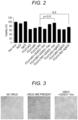
- the results are shown in Fig. 10 .
- the same results as in Fig. 9 were confirmed for the supernatant sample.
- an extremely strong band of OVA was confirmed in the sample to which Cu(bpy)/DB was added ("OVA+Cu(bpy)/DB" in Fig. 10 ) among the residue samples. From this, it is considered that Cu(bpy)/DB strongly adsorbed OVA.
- Escherichia coli Escherichia coli ATCC 43895, serotype O157:H7, verotoxin type I and II producing strain
- Staphylococcus aureus subsp. aureus NBRC 12732 Staphylococcus aureus subsp. aureus NBRC 12732
- Penicillium citrinum NBRC 6352
- Penicillium citrinum the preculture was performed on Potato Dextrose Agar (produced by Difco) at 25°C ⁇ 1°C for 7 to 10 days. Then, a bacterial suspension was prepared using purified water for Escherichia coli, using physiological saline for Staphylococcus aureus, and using a 0.005% sodium dioctyl sulfosuccinate solution for Penicillium citrinum.
- the concentration of the compound in the aqueous solution was 10 mM or 20 mM in the test of Escherichia coli, 0.1 mM or 1 mM in the test of Staphylococcus aureus, and 0.1 mM or 10 mM in the test of Penicillium citrinum.
- the solution was sampled to such an extent that the number of grown colonies could be counted, and diluted with an SCDLP medium (produced by SHIOTANI M.S. CO.,LTD) to neutralize the compound. Thereafter, the neutralized sample was applied to an SCDLP agar medium (produced by SHIOTANI M.S. CO.,LTD) for Escherichia coli and Staphylococcus aureus, and a GPLP agar medium (produced by SHIOTANI M.S.
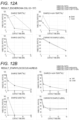
- the minimum inhibitory concentration (MIC) against Escherichia coli was measured by the following method.
- Escherichia coli DH5 ⁇ strain; AMP+
- Escherichia coli stock solution was diluted 1000 times with PBS to obtain a diluted solution.
- this diluted solution was used as a comparative example.
- AZADO + NO 3 - was added to the diluted solution obtained above to have a final concentration of 1 ⁇ M, 10 ⁇ M, 100 ⁇ M, 1 mM, or 10 mM, respectively, and the obtained mixture was allowed to stand at room temperature for 15 minutes. Thereafter, for the purpose of deactivating AZADO + NO 3 - , the diluted solution was further diluted 10 times using LB medium as a reaction stop solution. Finally, 25 ⁇ L of the reaction solution obtained in this manner was applied to LB agar medium, and cultured at 37°C for 1 day. Then, the number of colonies on the agar medium after culture was counted, and the colony forming unit (CFU/mL) per mL was calculated.
- CFU/mL colony forming unit
- Fig. 13 shows a photograph of the agar medium after culture using a sample having a final concentration of AZADO + NO 3 - of 1 mM.
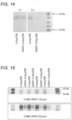
- a carbon material (AZADO-Cu(bpy)/DB) that supports a nitroxyl radical (AZADO) and a cocatalyst (Cu) was evaluated by the following method using a sprayer, using the degradation action of S-RBD as an index.
- aqueous solution containing S-RBD in an amount of 125 pmol or 250 pmol was sprayed from the tip of the microchip using a micro sprayer (Micro FPS, produced by Toray Precision Co., Ltd.), and incubated at room temperature for 24 hours. Thereafter, the amount of S-RBD remaining on the filter was evaluated by the SDS-PAGE method and the silver staining method. The results (electrophoretic photographs) are shown in Fig. 15 .
Landscapes
- Life Sciences & Earth Sciences (AREA)
- Environmental Sciences (AREA)
- Plant Pathology (AREA)
- Engineering & Computer Science (AREA)
- Wood Science & Technology (AREA)
- Zoology (AREA)
- Pest Control & Pesticides (AREA)
- Health & Medical Sciences (AREA)
- General Health & Medical Sciences (AREA)
- Dentistry (AREA)
- Agronomy & Crop Science (AREA)
- Chemical & Material Sciences (AREA)
- Chemical Kinetics & Catalysis (AREA)
- General Chemical & Material Sciences (AREA)
- Microbiology (AREA)
- Mycology (AREA)
- Epidemiology (AREA)
- Animal Behavior & Ethology (AREA)
- Public Health (AREA)
- Veterinary Medicine (AREA)
- Inorganic Chemistry (AREA)
- Agricultural Chemicals And Associated Chemicals (AREA)
Applications Claiming Priority (2)
| Application Number | Priority Date | Filing Date | Title |
|---|---|---|---|
| JP2022136098 | 2022-08-29 | ||
| PCT/JP2023/031213 WO2024048581A1 (fr) | 2022-08-29 | 2023-08-29 | Procédé d'inactivation et inactivateur pour bactéries ou virus, et matériau de base antiviral l'utilisant |
Publications (2)
| Publication Number | Publication Date |
|---|---|
| EP4581930A1 true EP4581930A1 (fr) | 2025-07-09 |
| EP4581930A4 EP4581930A4 (fr) | 2026-03-04 |
Family
ID=90099494
Family Applications (1)
| Application Number | Title | Priority Date | Filing Date |
|---|---|---|---|
| EP23860343.5A Pending EP4581930A4 (fr) | 2022-08-29 | 2023-08-29 | Procédé d'inactivation et inactivateur pour bactéries ou virus, et matériau de base antiviral l'utilisant |
Country Status (6)
| Country | Link |
|---|---|
| US (1) | US20260083122A1 (fr) |
| EP (1) | EP4581930A4 (fr) |
| JP (1) | JPWO2024048581A1 (fr) |
| KR (1) | KR20250041060A (fr) |
| CN (1) | CN119789786A (fr) |
| WO (1) | WO2024048581A1 (fr) |
Family Cites Families (5)
| Publication number | Priority date | Publication date | Assignee | Title |
|---|---|---|---|---|
| DE2410603C2 (de) * | 1974-03-06 | 1982-12-23 | Basf Ag, 6700 Ludwigshafen | Fungizid für den Holzschutz |
| EP2243360A4 (fr) | 2008-02-20 | 2011-06-01 | Daiwabo Holdings Co Ltd | Substance antivirale, fibre antivirale et structure de fibre antivirale |
| JP6689613B2 (ja) | 2016-01-29 | 2020-04-28 | 株式会社Csl | 繊維用抗菌・抗ウイルス性組成物および繊維製品 |
| US10096681B2 (en) | 2016-05-23 | 2018-10-09 | General Electric Company | Electric field shielding in silicon carbide metal-oxide-semiconductor (MOS) device cells |
| US12408668B2 (en) * | 2019-06-03 | 2025-09-09 | Chemicrea Inc. | Stable microbicide composition |
-
2023
- 2023-08-29 JP JP2024544284A patent/JPWO2024048581A1/ja active Pending
- 2023-08-29 KR KR1020257006575A patent/KR20250041060A/ko active Pending
- 2023-08-29 WO PCT/JP2023/031213 patent/WO2024048581A1/fr not_active Ceased
- 2023-08-29 EP EP23860343.5A patent/EP4581930A4/fr active Pending
- 2023-08-29 CN CN202380062958.0A patent/CN119789786A/zh active Pending
- 2023-08-29 US US19/107,489 patent/US20260083122A1/en active Pending
Also Published As
| Publication number | Publication date |
|---|---|
| JPWO2024048581A1 (fr) | 2024-03-07 |
| WO2024048581A1 (fr) | 2024-03-07 |
| CN119789786A (zh) | 2025-04-08 |
| EP4581930A4 (fr) | 2026-03-04 |
| KR20250041060A (ko) | 2025-03-25 |
| US20260083122A1 (en) | 2026-03-26 |
Similar Documents
| Publication | Publication Date | Title |
|---|---|---|
| Riduan et al. | Recent advances of zinc‐based antimicrobial materials | |
| Tang et al. | Preparation of a porphyrin metal–organic framework with desirable photodynamic antimicrobial activity for sustainable plant disease management | |
| EP1064845B1 (fr) | Composition virucide et sporicide | |
| Fujimori et al. | Novel antiviral characteristics of nanosized copper (I) iodide particles showing inactivation activity against 2009 pandemic H1N1 influenza virus | |
| CA2665920C (fr) | Revetement bioactif contenant du ruthenium, et dispositif correspondant | |
| Shi et al. | Surface-grafted viologen for precipitation of silver nanoparticles and their combined bactericidal activities | |
| CN1679400B (zh) | 抗菌组合物及其制备和使用方法 | |
| CA2343325C (fr) | Compositions antimicrobiennes dermiques topiques | |
| EP2962561A1 (fr) | Procédé de production d'un liquide antibactérien à base d'ions argent, liquide antibactérien à base d'ions argent produit par ledit procédé et produit à base d'ions argent contenant ledit liquide antibactérien | |
| Wang et al. | When worlds collide: interactions at the interface between biological systems and synthetic cationic conjugated polyelectrolytes and oligomers | |
| Shen et al. | Electrochemical regulation of antibacterial activity using ferrocene-containing antibiotics | |
| Porosa et al. | UV-curable contact active benzophenone terminated quaternary ammonium antimicrobials for applications in polymer plastics and related devices | |
| Maldonado et al. | The role of coordination compounds in virus research. Different approaches and trends | |
| Hegemann et al. | Plasma‐deposited AgOx‐doped TiOx coatings enable rapid antibacterial activity based on ROS generation | |
| EP4581930A1 (fr) | Procédé d'inactivation et inactivateur pour bactéries ou virus, et matériau de base antiviral l'utilisant | |
| Eshghi et al. | Synthesis and antimicrobial activity of some new macrocyclic bis-sulfonamide and disulfides | |
| JP2018521134A (ja) | 内生胞子に対する効能を有する抗菌性組成物 | |
| EP4169899A1 (fr) | Composition contenant de l'hydrogénocitrate de diargent, son procédé de production, agent antibactérien ou agent antiviral l'utilisant, et son procédé de production | |
| JP3197308B2 (ja) | 殺菌剤 | |
| Călinescu et al. | Synthesis and characterization of new copper (II) complex compounds with chlorhexidine. Part I | |
| JP4228175B2 (ja) | 殺菌剤組成液及び殺菌方法 | |
| JP5603701B2 (ja) | 抗菌性組成物及びその用途 | |
| US11882831B2 (en) | Substituted thiophene oligomers and polymers | |
| JPH0558813A (ja) | 菌類の攻撃から材料を保護するある種のトリアゾールの使用、製品及び組成物 | |
| US20150112080A1 (en) | Zinc salt of isothiazolone compound, method for reducing irritation caused by isothiazolone compound, antibacterial and antifungal method using zinc salt of isothiazolone compound, and antibacterial and antifungal composition |
Legal Events
| Date | Code | Title | Description |
|---|---|---|---|
| STAA | Information on the status of an ep patent application or granted ep patent |
Free format text: STATUS: THE INTERNATIONAL PUBLICATION HAS BEEN MADE |
|
| PUAI | Public reference made under article 153(3) epc to a published international application that has entered the european phase |
Free format text: ORIGINAL CODE: 0009012 |
|
| STAA | Information on the status of an ep patent application or granted ep patent |
Free format text: STATUS: REQUEST FOR EXAMINATION WAS MADE |
|
| 17P | Request for examination filed |
Effective date: 20250227 |
|
| AK | Designated contracting states |
Kind code of ref document: A1 Designated state(s): AL AT BE BG CH CY CZ DE DK EE ES FI FR GB GR HR HU IE IS IT LI LT LU LV MC ME MK MT NL NO PL PT RO RS SE SI SK SM TR |
|
| DAV | Request for validation of the european patent (deleted) | ||
| DAX | Request for extension of the european patent (deleted) | ||
| A4 | Supplementary search report drawn up and despatched |
Effective date: 20260130 |
|
| RIC1 | Information provided on ipc code assigned before grant |
Ipc: A01N 43/42 20060101AFI20260126BHEP Ipc: A01N 43/36 20060101ALI20260126BHEP Ipc: A01N 43/40 20060101ALI20260126BHEP Ipc: A01N 43/90 20060101ALI20260126BHEP Ipc: A01P 1/00 20060101ALI20260126BHEP Ipc: A01P 3/00 20060101ALI20260126BHEP Ipc: A61L 9/00 20060101ALI20260126BHEP Ipc: A61L 9/01 20060101ALI20260126BHEP Ipc: D06M 13/388 20060101ALI20260126BHEP |