EP4582014A1 - System und verfahren zur verbesserung der schlafqualität - Google Patents
System und verfahren zur verbesserung der schlafqualität Download PDFInfo
- Publication number
- EP4582014A1 EP4582014A1 EP24217602.2A EP24217602A EP4582014A1 EP 4582014 A1 EP4582014 A1 EP 4582014A1 EP 24217602 A EP24217602 A EP 24217602A EP 4582014 A1 EP4582014 A1 EP 4582014A1
- Authority
- EP
- European Patent Office
- Prior art keywords
- sleep
- sleep stage
- person
- stage
- input
- Prior art date
- Legal status (The legal status is an assumption and is not a legal conclusion. Google has not performed a legal analysis and makes no representation as to the accuracy of the status listed.)
- Pending
Links
Images


Classifications
-
- A—HUMAN NECESSITIES
- A61—MEDICAL OR VETERINARY SCIENCE; HYGIENE
- A61B—DIAGNOSIS; SURGERY; IDENTIFICATION
- A61B5/00—Measuring for diagnostic purposes; Identification of persons
- A61B5/02—Detecting, measuring or recording for evaluating the cardiovascular system, e.g. pulse, heart rate, blood pressure or blood flow
- A61B5/0205—Simultaneously evaluating both cardiovascular conditions and different types of body conditions, e.g. heart and respiratory condition
- A61B5/02055—Simultaneously evaluating both cardiovascular condition and temperature
-
- A—HUMAN NECESSITIES
- A61—MEDICAL OR VETERINARY SCIENCE; HYGIENE
- A61B—DIAGNOSIS; SURGERY; IDENTIFICATION
- A61B5/00—Measuring for diagnostic purposes; Identification of persons
- A61B5/48—Other medical applications
- A61B5/4806—Sleep evaluation
- A61B5/4809—Sleep detection, i.e. determining whether a subject is asleep or not
-
- A—HUMAN NECESSITIES
- A61—MEDICAL OR VETERINARY SCIENCE; HYGIENE
- A61B—DIAGNOSIS; SURGERY; IDENTIFICATION
- A61B5/00—Measuring for diagnostic purposes; Identification of persons
- A61B5/48—Other medical applications
- A61B5/4806—Sleep evaluation
- A61B5/4812—Detecting sleep stages or cycles
-
- A—HUMAN NECESSITIES
- A61—MEDICAL OR VETERINARY SCIENCE; HYGIENE
- A61B—DIAGNOSIS; SURGERY; IDENTIFICATION
- A61B5/00—Measuring for diagnostic purposes; Identification of persons
- A61B5/48—Other medical applications
- A61B5/4836—Diagnosis combined with treatment in closed-loop systems or methods
-
- A—HUMAN NECESSITIES
- A61—MEDICAL OR VETERINARY SCIENCE; HYGIENE
- A61B—DIAGNOSIS; SURGERY; IDENTIFICATION
- A61B5/00—Measuring for diagnostic purposes; Identification of persons
- A61B5/72—Signal processing specially adapted for physiological signals or for diagnostic purposes
- A61B5/7235—Details of waveform analysis
- A61B5/7264—Classification of physiological signals or data, e.g. using neural networks, statistical classifiers, expert systems or fuzzy systems
- A61B5/7267—Classification of physiological signals or data, e.g. using neural networks, statistical classifiers, expert systems or fuzzy systems involving training the classification device
-
- A—HUMAN NECESSITIES
- A61—MEDICAL OR VETERINARY SCIENCE; HYGIENE
- A61M—DEVICES FOR INTRODUCING MEDIA INTO, OR ONTO, THE BODY; DEVICES FOR TRANSDUCING BODY MEDIA OR FOR TAKING MEDIA FROM THE BODY; DEVICES FOR PRODUCING OR ENDING SLEEP OR STUPOR
- A61M16/00—Devices for influencing the respiratory system of patients by gas treatment, e.g. ventilators; Tracheal tubes
- A61M16/021—Devices for influencing the respiratory system of patients by gas treatment, e.g. ventilators; Tracheal tubes operated by electrical means
- A61M16/022—Control means therefor
- A61M16/024—Control means therefor including calculation means, e.g. using a processor
- A61M16/026—Control means therefor including calculation means, e.g. using a processor specially adapted for predicting, e.g. for determining an information representative of a flow limitation during a ventilation cycle by using a root square technique or a regression analysis
-
- A—HUMAN NECESSITIES
- A61—MEDICAL OR VETERINARY SCIENCE; HYGIENE
- A61M—DEVICES FOR INTRODUCING MEDIA INTO, OR ONTO, THE BODY; DEVICES FOR TRANSDUCING BODY MEDIA OR FOR TAKING MEDIA FROM THE BODY; DEVICES FOR PRODUCING OR ENDING SLEEP OR STUPOR
- A61M21/00—Other devices or methods to cause a change in the state of consciousness; Devices for producing or ending sleep by mechanical, optical, or acoustical means, e.g. for hypnosis
- A61M21/02—Other devices or methods to cause a change in the state of consciousness; Devices for producing or ending sleep by mechanical, optical, or acoustical means, e.g. for hypnosis for inducing sleep or relaxation, e.g. by direct nerve stimulation, hypnosis, analgesia
-
- G—PHYSICS
- G06—COMPUTING OR CALCULATING; COUNTING
- G06N—COMPUTING ARRANGEMENTS BASED ON SPECIFIC COMPUTATIONAL MODELS
- G06N3/00—Computing arrangements based on biological models
- G06N3/02—Neural networks
- G06N3/08—Learning methods
- G06N3/088—Non-supervised learning, e.g. competitive learning
-
- G—PHYSICS
- G06—COMPUTING OR CALCULATING; COUNTING
- G06N—COMPUTING ARRANGEMENTS BASED ON SPECIFIC COMPUTATIONAL MODELS
- G06N3/00—Computing arrangements based on biological models
- G06N3/02—Neural networks
- G06N3/08—Learning methods
- G06N3/09—Supervised learning
-
- A—HUMAN NECESSITIES
- A61—MEDICAL OR VETERINARY SCIENCE; HYGIENE
- A61B—DIAGNOSIS; SURGERY; IDENTIFICATION
- A61B2562/00—Details of sensors; Constructional details of sensor housings or probes; Accessories for sensors
- A61B2562/02—Details of sensors specially adapted for in-vivo measurements
- A61B2562/0219—Inertial sensors, e.g. accelerometers, gyroscopes, tilt switches
-
- A—HUMAN NECESSITIES
- A61—MEDICAL OR VETERINARY SCIENCE; HYGIENE
- A61B—DIAGNOSIS; SURGERY; IDENTIFICATION
- A61B2562/00—Details of sensors; Constructional details of sensor housings or probes; Accessories for sensors
- A61B2562/02—Details of sensors specially adapted for in-vivo measurements
- A61B2562/0271—Thermal or temperature sensors
-
- A—HUMAN NECESSITIES
- A61—MEDICAL OR VETERINARY SCIENCE; HYGIENE
- A61B—DIAGNOSIS; SURGERY; IDENTIFICATION
- A61B5/00—Measuring for diagnostic purposes; Identification of persons
- A61B5/01—Measuring temperature of body parts ; Diagnostic temperature sensing, e.g. for malignant or inflamed tissue
-
- A—HUMAN NECESSITIES
- A61—MEDICAL OR VETERINARY SCIENCE; HYGIENE
- A61B—DIAGNOSIS; SURGERY; IDENTIFICATION
- A61B5/00—Measuring for diagnostic purposes; Identification of persons
- A61B5/02—Detecting, measuring or recording for evaluating the cardiovascular system, e.g. pulse, heart rate, blood pressure or blood flow
- A61B5/021—Measuring pressure in heart or blood vessels
-
- A—HUMAN NECESSITIES
- A61—MEDICAL OR VETERINARY SCIENCE; HYGIENE
- A61B—DIAGNOSIS; SURGERY; IDENTIFICATION
- A61B5/00—Measuring for diagnostic purposes; Identification of persons
- A61B5/02—Detecting, measuring or recording for evaluating the cardiovascular system, e.g. pulse, heart rate, blood pressure or blood flow
- A61B5/024—Measuring pulse rate or heart rate
- A61B5/02405—Determining heart rate variability
-
- A—HUMAN NECESSITIES
- A61—MEDICAL OR VETERINARY SCIENCE; HYGIENE
- A61B—DIAGNOSIS; SURGERY; IDENTIFICATION
- A61B5/00—Measuring for diagnostic purposes; Identification of persons
- A61B5/08—Measuring devices for evaluating the respiratory organs
- A61B5/0816—Measuring devices for examining respiratory frequency
-
- A—HUMAN NECESSITIES
- A61—MEDICAL OR VETERINARY SCIENCE; HYGIENE
- A61B—DIAGNOSIS; SURGERY; IDENTIFICATION
- A61B5/00—Measuring for diagnostic purposes; Identification of persons
- A61B5/24—Detecting, measuring or recording bioelectric or biomagnetic signals of the body or parts thereof
- A61B5/25—Bioelectric electrodes therefor
- A61B5/279—Bioelectric electrodes therefor specially adapted for particular uses
- A61B5/28—Bioelectric electrodes therefor specially adapted for particular uses for electrocardiography [ECG]
-
- A—HUMAN NECESSITIES
- A61—MEDICAL OR VETERINARY SCIENCE; HYGIENE
- A61B—DIAGNOSIS; SURGERY; IDENTIFICATION
- A61B5/00—Measuring for diagnostic purposes; Identification of persons
- A61B5/24—Detecting, measuring or recording bioelectric or biomagnetic signals of the body or parts thereof
- A61B5/25—Bioelectric electrodes therefor
- A61B5/279—Bioelectric electrodes therefor specially adapted for particular uses
- A61B5/291—Bioelectric electrodes therefor specially adapted for particular uses for electroencephalography [EEG]
-
- A—HUMAN NECESSITIES
- A61—MEDICAL OR VETERINARY SCIENCE; HYGIENE
- A61B—DIAGNOSIS; SURGERY; IDENTIFICATION
- A61B5/00—Measuring for diagnostic purposes; Identification of persons
- A61B5/48—Other medical applications
- A61B5/4848—Monitoring or testing the effects of treatment, e.g. of medication
-
- A—HUMAN NECESSITIES
- A61—MEDICAL OR VETERINARY SCIENCE; HYGIENE
- A61M—DEVICES FOR INTRODUCING MEDIA INTO, OR ONTO, THE BODY; DEVICES FOR TRANSDUCING BODY MEDIA OR FOR TAKING MEDIA FROM THE BODY; DEVICES FOR PRODUCING OR ENDING SLEEP OR STUPOR
- A61M21/00—Other devices or methods to cause a change in the state of consciousness; Devices for producing or ending sleep by mechanical, optical, or acoustical means, e.g. for hypnosis
- A61M2021/0005—Other devices or methods to cause a change in the state of consciousness; Devices for producing or ending sleep by mechanical, optical, or acoustical means, e.g. for hypnosis by the use of a particular sense, or stimulus
- A61M2021/0022—Other devices or methods to cause a change in the state of consciousness; Devices for producing or ending sleep by mechanical, optical, or acoustical means, e.g. for hypnosis by the use of a particular sense, or stimulus by the tactile sense, e.g. vibrations
-
- A—HUMAN NECESSITIES
- A61—MEDICAL OR VETERINARY SCIENCE; HYGIENE
- A61M—DEVICES FOR INTRODUCING MEDIA INTO, OR ONTO, THE BODY; DEVICES FOR TRANSDUCING BODY MEDIA OR FOR TAKING MEDIA FROM THE BODY; DEVICES FOR PRODUCING OR ENDING SLEEP OR STUPOR
- A61M2205/00—General characteristics of the apparatus
- A61M2205/33—Controlling, regulating or measuring
- A61M2205/332—Force measuring means
-
- A—HUMAN NECESSITIES
- A61—MEDICAL OR VETERINARY SCIENCE; HYGIENE
- A61M—DEVICES FOR INTRODUCING MEDIA INTO, OR ONTO, THE BODY; DEVICES FOR TRANSDUCING BODY MEDIA OR FOR TAKING MEDIA FROM THE BODY; DEVICES FOR PRODUCING OR ENDING SLEEP OR STUPOR
- A61M2205/00—General characteristics of the apparatus
- A61M2205/50—General characteristics of the apparatus with microprocessors or computers
-
- A—HUMAN NECESSITIES
- A61—MEDICAL OR VETERINARY SCIENCE; HYGIENE
- A61M—DEVICES FOR INTRODUCING MEDIA INTO, OR ONTO, THE BODY; DEVICES FOR TRANSDUCING BODY MEDIA OR FOR TAKING MEDIA FROM THE BODY; DEVICES FOR PRODUCING OR ENDING SLEEP OR STUPOR
- A61M2210/00—Anatomical parts of the body
- A61M2210/06—Head
-
- A—HUMAN NECESSITIES
- A61—MEDICAL OR VETERINARY SCIENCE; HYGIENE
- A61M—DEVICES FOR INTRODUCING MEDIA INTO, OR ONTO, THE BODY; DEVICES FOR TRANSDUCING BODY MEDIA OR FOR TAKING MEDIA FROM THE BODY; DEVICES FOR PRODUCING OR ENDING SLEEP OR STUPOR
- A61M2210/00—Anatomical parts of the body
- A61M2210/08—Limbs
- A61M2210/083—Arms
-
- A—HUMAN NECESSITIES
- A61—MEDICAL OR VETERINARY SCIENCE; HYGIENE
- A61M—DEVICES FOR INTRODUCING MEDIA INTO, OR ONTO, THE BODY; DEVICES FOR TRANSDUCING BODY MEDIA OR FOR TAKING MEDIA FROM THE BODY; DEVICES FOR PRODUCING OR ENDING SLEEP OR STUPOR
- A61M2210/00—Anatomical parts of the body
- A61M2210/10—Trunk
- A61M2210/1007—Breast; mammary
-
- A—HUMAN NECESSITIES
- A61—MEDICAL OR VETERINARY SCIENCE; HYGIENE
- A61M—DEVICES FOR INTRODUCING MEDIA INTO, OR ONTO, THE BODY; DEVICES FOR TRANSDUCING BODY MEDIA OR FOR TAKING MEDIA FROM THE BODY; DEVICES FOR PRODUCING OR ENDING SLEEP OR STUPOR
- A61M2230/00—Measuring parameters of the user
- A61M2230/005—Parameter used as control input for the apparatus
-
- A—HUMAN NECESSITIES
- A61—MEDICAL OR VETERINARY SCIENCE; HYGIENE
- A61M—DEVICES FOR INTRODUCING MEDIA INTO, OR ONTO, THE BODY; DEVICES FOR TRANSDUCING BODY MEDIA OR FOR TAKING MEDIA FROM THE BODY; DEVICES FOR PRODUCING OR ENDING SLEEP OR STUPOR
- A61M2230/00—Measuring parameters of the user
- A61M2230/04—Heartbeat characteristics, e.g. ECG, blood pressure modulation
-
- A—HUMAN NECESSITIES
- A61—MEDICAL OR VETERINARY SCIENCE; HYGIENE
- A61M—DEVICES FOR INTRODUCING MEDIA INTO, OR ONTO, THE BODY; DEVICES FOR TRANSDUCING BODY MEDIA OR FOR TAKING MEDIA FROM THE BODY; DEVICES FOR PRODUCING OR ENDING SLEEP OR STUPOR
- A61M2230/00—Measuring parameters of the user
- A61M2230/04—Heartbeat characteristics, e.g. ECG, blood pressure modulation
- A61M2230/06—Heartbeat rate only
-
- A—HUMAN NECESSITIES
- A61—MEDICAL OR VETERINARY SCIENCE; HYGIENE
- A61M—DEVICES FOR INTRODUCING MEDIA INTO, OR ONTO, THE BODY; DEVICES FOR TRANSDUCING BODY MEDIA OR FOR TAKING MEDIA FROM THE BODY; DEVICES FOR PRODUCING OR ENDING SLEEP OR STUPOR
- A61M2230/00—Measuring parameters of the user
- A61M2230/08—Other bio-electrical signals
- A61M2230/10—Electroencephalographic signals
-
- A—HUMAN NECESSITIES
- A61—MEDICAL OR VETERINARY SCIENCE; HYGIENE
- A61M—DEVICES FOR INTRODUCING MEDIA INTO, OR ONTO, THE BODY; DEVICES FOR TRANSDUCING BODY MEDIA OR FOR TAKING MEDIA FROM THE BODY; DEVICES FOR PRODUCING OR ENDING SLEEP OR STUPOR
- A61M2230/00—Measuring parameters of the user
- A61M2230/30—Blood pressure
-
- A—HUMAN NECESSITIES
- A61—MEDICAL OR VETERINARY SCIENCE; HYGIENE
- A61M—DEVICES FOR INTRODUCING MEDIA INTO, OR ONTO, THE BODY; DEVICES FOR TRANSDUCING BODY MEDIA OR FOR TAKING MEDIA FROM THE BODY; DEVICES FOR PRODUCING OR ENDING SLEEP OR STUPOR
- A61M2230/00—Measuring parameters of the user
- A61M2230/40—Respiratory characteristics
- A61M2230/42—Rate
-
- A—HUMAN NECESSITIES
- A61—MEDICAL OR VETERINARY SCIENCE; HYGIENE
- A61M—DEVICES FOR INTRODUCING MEDIA INTO, OR ONTO, THE BODY; DEVICES FOR TRANSDUCING BODY MEDIA OR FOR TAKING MEDIA FROM THE BODY; DEVICES FOR PRODUCING OR ENDING SLEEP OR STUPOR
- A61M2230/00—Measuring parameters of the user
- A61M2230/50—Temperature
-
- A—HUMAN NECESSITIES
- A61—MEDICAL OR VETERINARY SCIENCE; HYGIENE
- A61M—DEVICES FOR INTRODUCING MEDIA INTO, OR ONTO, THE BODY; DEVICES FOR TRANSDUCING BODY MEDIA OR FOR TAKING MEDIA FROM THE BODY; DEVICES FOR PRODUCING OR ENDING SLEEP OR STUPOR
- A61M2230/00—Measuring parameters of the user
- A61M2230/63—Motion, e.g. physical activity
Definitions
- the present invention generally relates to a method of controlling a sleep enhancing device or system, for improving sleep quality for a sleeping person; a system for carrying out that method; and a method of generating, by a machine learning model, control data for controlling a sleep enhancing device or system for improving sleep quality.
- Sleep is essential for everyone, but it does not always come easily. A person may have difficulty getting to sleep, difficulty staying asleep, difficulty waking up, difficulty getting back to sleep after waking up, or may still feel tired after waking up, or a combination of any of these.
- stage 1 N1
- sleep stage 4 REM
- a complete sleep cycle in adults lasts between 90 to 110 minutes.
- the first or initial sleep cycles include relatively short periods of REM sleep and relatively long periods of deep sleep.
- the periods of REM sleep increase in length, and those of deep sleep become shorter.
- a person who is asleep for a night will generally have four to six sleep cycles, meaning that they experience the various sleep stages several times.
- the first sleep stage is stage 1, which is considered to be 'light' sleep where the body has not fully relaxed yet.
- Sleep stage 1 (N1) can last about 5 to 10 minutes and represents the beginning of the transition from wakefulness to sleep.
- the next sleep stage 2 can last for 10 to 25 minutes during the first sleep cycle (i.e. the first instance of sleep stage 2 after having fallen asleep).
- Each sleep stage 2 can become longer during the course of the person's time asleep.
- a person typically spends about 50% of their total sleep in sleep stage 2. Eye movements stop and brain waves slow down more during sleep stage 2.
- Sleep stage 3 (N3) is deep sleep and represents approximately 20% of the total sleep time. Sleep stage 3 is the most important for rest and regeneration. In this phase, no muscle activity is registered, and the brain emits slow brain waves, called delta waves, associated with states of rest and deep regeneration. A healthy person spends the longest time in sleep stage 3 during the first half of the night. During the initial sleep cycles, sleep stage 3 usually lasts for 20 to 40 minutes. Throughout the night, instances of sleep stage 3 become shorter and more time is spent in stage 4 instead.
- Sleep stage 4 is REM sleep (where REM means rapid eye movement) and represents approximately 25% of the total sleep time. Sleep stage 4 is the stage in which dreams occur. Sleep stage 4 plays a role in strengthening memory, processing emotions, and general regeneration of the body.
- REM sleep stage 4
- the brain waves are active, and the breathing and heart rate increase and become more variable than in other sleep stages, which implies that the body does not rest during the REM sleep. If the amount of time spent in REM sleep during the night is too long, which implies a lack of deep sleep in sleep stage 3, the subject will feel tired in the morning.
- each person has a different sensitivity to rocking or oscillatory motion. If this movement is in excess for a given person, there is a risk that that person will feel dizzy or even sick or nauseous. This is far from ideal for a relatively fit and healthy person, and may present a real danger to an elderly or more vulnerable person.
- a sleep enhancing device or system e.g. on or next to a bed
- the method comprising the steps of:
- the invention has major advantages for improving overall sleep quality, such as allowing a person to have more restorative sleep.
- the invention can prolong sleep duration in a particular sleep state and/or reduce sleep duration in another particular sleep state. That is, the time spent in one sleep stage can be controlled relative to the time spent in another sleep stage.
- the invention allows for the time spent in deep sleep and/or REM to be maximised.
- the invention can allow a person to have a controllably reduced proportion of their time spent asleep whilst in sleep stage 1 (N1) and sleep stage 2 (N2) relative to sleep stage 3 (N3) and/or sleep stage 4 (REM).
- the invention may allow a person to achieve or reach sleep stage 3 (N3) more quickly than would otherwise occur.
- the method aims to maintain a state of deep sleep for the bed user, while minimising possible adverse effects experienced due to the bed oscillatory motion. That is, the bed motion is tailored to the person and/or controlled (preferably automatically) in a way that depends on the sleep stage that the person is estimated to be in.
- the instruction or decision to start and/or stop and/or adjust the input provided by the device/system is preferably determined by an artificial intelligence (Al) algorithm or machine learning model that has been trained on a suitable number of data sets.
- Al artificial intelligence
- the number of data sets may be about at least about 10000, for example.
- the algorithm or model can precisely estimate of the sleep stage that the person is in and provide an instruction / decision accordingly.
- the invention may utilise AI algorithm(s) which, based on information received from sensors during a person's time asleep, can learn the patterns and/or sleep stages of a person's sleep cycles (for example based on data acquired over several nights of that person's sleep). Based on that information, the AI algorithm(s) may then make predictions and determinations as to when an input from a sleep enhancing device/system ought to be started and/or stopped and/or adjusted for improving that person's sleep quality.
- AI algorithm(s) which, based on information received from sensors during a person's time asleep, can learn the patterns and/or sleep stages of a person's sleep cycles (for example based on data acquired over several nights of that person's sleep). Based on that information, the AI algorithm(s) may then make predictions and determinations as to when an input from a sleep enhancing device/system ought to be started and/or stopped and/or adjusted for improving that person's sleep quality.
- the invention is suitable for any person who suffers from a sleep disorder and/or from any secondary health effects that have arisen or worsened due to a lack of sleep.
- the invention is also suitable for any person who does not have any sleep problems/disorders, for example if they wish to reduce their total required sleep time. That is, to achieve a restful sleep in a shorter time.
- the time spent by a sleeping person in sleep stages 1 and 2 should be reduced to a minimum, whilst the time spent in sleep stage 3 should be quickly entered, maintained for longer than normal and alternated with sleep stage 4 (REM) which is important for the memory regeneration.
- REM sleep stage 4
- the method may therefore prioritise initiation and/or maintenance of sleep stage 3 and provide input(s) to achieve this.
- the method may also or instead prioritise artificially lengthened and/or artificially ended periods for either or both of sleep stages 3 and 4 for controlled transfer of the person between sleep stages 3 and 4, whilst minimising time spent in sleep stages 1 and 2, by providing input(s) to achieve this.
- the sleep enhancing device or system may be a bed rocking device or system.
- the bed rocking may be achieved using a device/system similar to that presented in the Applicant's patent application WO2018083153 or the Applicant's patent application EP4137008 .
- the method may include estimating whether sleep stage 3 (N3) and/or sleep stage 4 (REM) has elapsed by a predetermined extent.
- the method may include starting or adjusting (optionally gradually starting/adjusting) the input provided by the sleep enhancing device or system when the relevant sleep stage is estimated to have elapsed by the relevant predetermined extent.
- the predetermined extent for sleep stage 3 may correspond to a few minutes (perhaps up to 10 minutes) before a predicted end of that sleep stage 3.
- the sleep enhancing device or system may be programmable with a predetermined input start time for sleep stage 3 (N3).
- the input may start at the predetermined input start time when the person is estimated to be in sleep stage 3 (N3).
- the sleep enhancing device or system may be programmable with clinical information for the person. Any one or more of the following input parameters may be controlled based at least in part on the clinical information: input type, input intensity, input start time, input end time, input duration, input pattern.
- a doctor or other medical / care professional can provide the relevant information to the device/system, which may affect its operation. For example, if the person has a diagnosed sleep condition / disorder then this overrides or takes precedence over what the control data or instructions may contain.
- the sleep enhancing device or system may be programmable with a sleep duration value.
- the sleep duration value may be measured beginning from a clock time or a time when the person is detected as having fallen asleep.
- the sleep enhancing device or system and the associated input may be stopped and may not restart when the person enters any subsequent sleep stage before they are awake.
- a consumer or medical device may integrate sensors for monitoring vital parameters which provide information about the sleep stages. Examples of such devices include any or more of the following for provision in the sleep enhancing system.
- a bracelet or wristwatch may be provided which includes sensor(s) for any one, some or all of: motion, temperature, measure heart rate / pulse, electrocardiogram (ECG), blood pressure.
- sensor(s) for any one, some or all of: motion, temperature, measure heart rate / pulse, electrocardiogram (ECG), blood pressure.
- ECG electrocardiogram
- a chest belt may be provided which includes sensor(s) for any one, some or all of: movement, temperature, heart rate/pulse measurement, electrocardiogram (ECG), heart rate variability.
- sensor(s) for any one, some or all of: movement, temperature, heart rate/pulse measurement, electrocardiogram (ECG), heart rate variability.
- ECG electrocardiogram
- a head band may be provided which includes sensor(s) for any one, some or all of: motion, temperature, and EEG (electro encephalogram).
- a mat-type sensor may be provided for placement on or under a mattress.
- the mat-type sensor may include sensor(s) for any one, some or all of: motion, breathing rate, heart rate / pulse, heart rate variability.
- An accelerometer type sensor may be provided for positioning on the mattress for sensing motion.
- the purpose of this sensor is to sense movement of the person on the mattress, which may happen when the person on the mattress changes their lying position, for example by turning over.
- the accelerometer type sensor may not be used to sense a lateral movement of the mattress caused by a bed rocking apparatus or device, for example.
- All of the above sensors have various advantages and disadvantages due to their positioning in relation to the person's body during sleep. Some of them may be uncomfortable during sleep (such as the chest belt or head band). Whichever device(s) are provided and worn by a person during sleep, the positioning of each device in relation to the person's body and the type of device used affects the accuracy and hence utility of the readings taken of the person's vital parameters.
- the system may be configured to perform the method of the first aspect of the invention.
- the system may include any feature or features presented with respect to the first aspect of the invention.
- the processing step may include estimating, by the trained machine learning model, when the sensor readings indicate that the person enters one of sleep stage 3 (N3), sleep stage 4 (REM) or another sleep stage.
- the control data may include instructions to, when the person is estimated to have entered sleep stage 3 (N3) or sleep stage 4 (REM), stop or adjust the input provided by the sleep enhancing device or system.
- the one or more other sleep stages may include sleep stage 1 (N1) and/or sleep stage 2 (N2).
- the control data generated may be based on the estimates of when the sensor readings indicate that the person is in any one of sleep stage 3 (N3), sleep stage 4 (REM), and sleep stage 1 (N1) and/or sleep stage 2 (N2).
- the instructions in the control data may correspond to various features of the first aspect of the invention.
- the sensor readings may be acquired when the person was or is asleep in an oscillating or reciprocating bed.
- the sensor readings may be from any one, two or more, three or more, four or more, five or more, or six or more of the following types of sensor: motion sensor, body temperature sensor, heart rate or pulse sensor, blood pressure sensor, EEG sensor, breathing rate sensor, ECG sensor, heart rate variability sensor.
- Any aspect of the invention may include any feature or independently selected combination of features presented with respect to any other aspect of the invention.
- a bed is indicated generally at 10.
- a person 12 is shown lying in the bed 10.
- the bed 10 has a mattress, a pillow, a headboard and a base.
- bed legs 11 are provided under the four corners of the base.
- the bed legs 11 are motion imparting legs that can impart a reciprocating lateral rocking motion to the bed 10 so that it rocks back and forth in a horizontal plane when the legs are operating. Examples of the type of leg that can achieve this are presented in the Applicant's patent application WO2018083153 or the Applicant's patent application EP4137008 , the disclosures of each of which are incorporated by reference.
- the legs 11 can be interconnected (e.g. wirelessly) and preferably operate in a synchronised manner, so that the legs 11 at the left side of the bed 10 work antagonistically with the legs 11 on the right side of the bed 10 in rocking the bed.
- the bed 10 can be displaced laterally left and right in a reciprocating manner within the limits of displacement provided by the legs.
- the bed arrangement depicted has five different types of sensor device for sensing various parameters related to the person 12, for use in estimating which stage of sleep they are in at a given time during a sleeping episode.
- the sensor devices in this embodiment include: a wristwatch or bracelet 14, a chest belt 16, a headband 18, a mat sensor 20, and an accelerometer 22. It will be appreciated that the form of each type of device is not limited only to the depicted versions.
- the bracelet or wristwatch 14 can have sensors for any of motion, temperature, measure heart rate / pulse, electrocardiogram (ECG), and blood pressure.
- the chest belt 16 can have sensors for any of movement, temperature, heart rate/pulse measurement, electrocardiogram (ECG), and heart rate variability (which can be derived from ECG).
- the head band 18 can have sensors for any of motion, temperature, and EEG (electro encephalogram).
- the mat-type sensor 20 can have sensors for any of motion, breathing rate, heart rate / pulse, and heart rate variability.
- any one, two, three or four, or all five, sensor types of the sensor devices may be used in any embodiment, but that it is preferred to use multiple sensors in some cases. It will also be appreciated that some of the sensor devices could be provided in a combined device, where a given sensor device has sensors common to two of the different ones illustrated. Examples of other sensor devices include a smartphone and a pulse oximeter.
- An arrangement of this type can be used for a number of different people to record sleep data covering a wide range of body parameters during a series of sleep cycles.
- the following tables show the mapping of the information that is derived from each type of sensor in relation to each of the sleep stages (N1, N2, N3, REM).
- the ECG and heart rate variability sensors currently require specialised analysis algorithms (optionally using Al) to interpret how the sensor reading corresponds to sleep stage and so are not summarised below.
- Table I Correspondence between sleep stage and relative expected sensor reading value for motion sensor, body temperature sensor and heart rate / pulse sensor Sleep stage Motion sensor Body temperature sensor Heart rate / pulse sensor Stage 1 high activity temperature drops slightly (relative to being awake) heart rate starts to drop slightly (relative to being awake) Stage 2 moderate activity temperature drops (relative to stage 1) heart rate drops (relative to stage 1) Stage 3 very low activity temperature drops (relative to stage 2) heart rate drops (relative to stage 2) Stage 4 very low activity temperature raises (relative to stages 1, 2 and 3) heart rate rises to levels that are similar to being awake Table II - Correspondence between sleep stage and relative expected sensor reading value for blood pressure sensor, EEG sensor and breathing rate sensor Sleep stage Blood pressure sensor EEG sensor Breathing rate sensor Stage 1 it drops (relative to being awake) more than 50% of the alpha waves are replaced with low-amplitude mixed-frequency waves (LAMF, 4-7 Hz) it slows down (relative to being awake) Stage 2 it drops (relative to stage 1) low
- the AI algorithm is told which sleep stage is attributed to each sensor reading for those sensors in the tables.
- a doctor or a Smart AI software which can analyse the sleep data e.g. from a whole night
- the ECG and/or heart rate variability data and the corresponding sleep stage for each epoch (30 or 60 seconds) can be fed to the AI algorithm for supervised training.
- the data can be used as part of training a machine learning model to estimate which sleep stage a sleeping person is in based on sensor readings from one or more sensors.
- the machine learning model may be provided with the sensor data and corresponding sleep stage information (e.g. derived from the sensor data or determined by a doctor).
- the sensor data may be replaced or supplemented by polysomnogram data. This is advantageous because the sleep stage information derived from a polysomnogram is much more accurate, thus improving the training of the machine learning model.
- the machine learning model may be trained without having sleep stage information inputted, so that the output of the model / Al algorithm is the determination or estimation of the sleep stage attributable to each sensor reading.
- this is currently less accurate than sleep stage information determined by other means noted above, and so supervised learning for the machine learning model can result in better outcomes.
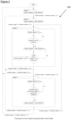
- FIG. 2 depicts a flow chart 100 of the general steps required for this process.
- the chart 100 corresponds to a proposed predictive model learning method that implements artificial intelligence and machine learning algorithms.
- the method generates predictive models from the input data that is fetched from sensors (optionally along with instantaneous bed oscillatory speed information), and produces, as an output, the control data which sets a bed rocking motion speed value.
- the instantaneous sleep stage of the analysed subject in each case can be accurately estimated by using known methods in somnology (i.e. by a medically trained professional / doctor, or by smart AI software - preferably utilising polysomnogram data), in order to derive the sleep stage level starting from the specific and particular information provided by each type of sensor.
- a polysomnogram for use in the case of supervised training, along with data from any of the above sensors.
- a polysomnogram very accurately captures the vital parameters of a person's body, and deriving sleep stage information based on the polysomnogram (and not from the other sensors above) can result in a more accurately trained model.
- sensor readings / signals such as EEG and ECG
- EEG and ECG could be pre-processed and/or transformed, for example into a frequency domain, with the aim of improving the accuracy of a model (once trained on the data).
- Automatic sleep stage classification by analysing EEG and ECG signals may be beneficial as part of the process, if available.
- the sleep stage at which the various sensor readings were recorded could be determined automatically by a software program, or determined manually by a trained specialist (such as a doctor).
- the sensor readings and the sleep stage information could be fed to the AI algorithms for supervised training.
- EEG and ECG sensors may have a sampling frequency (i.e. rate of taking readings) in the range 200 Hz to 500 Hz.
- Sensors for motion, body temperature, heart rate / pulse, heart rate variability, breathing rate and/or bed oscillatory motion speed may have a sampling frequency of about 1Hz.
- EEG, ECG and/or motion sensor readings may be the range -1.0 to +1.0.
- Sensor readings for heart rate / pulse, heart rate variability and/or breathing rate may be in the range 0 to 256.
- Sensor readings for body temperature may be in the range 35 to 41 degrees Celsius or 95 to 106 degrees Fahrenheit.
- Sensor readings for bed oscillatory motion speed may be in the range 0 to 100 (which may correlate to: 0 to about 10 mm per second).
- the data clean-up and normalisation module may use:
- the data clean-up and module can also handle windowing of the incoming data into a standard length set (e.g. processing frame size). This may correspond to 30 seconds or 60 seconds, for example, although the window size value could be set to another value instead. In view of the large quantity of data accumulated over time by running an AI algorithm, this may reduce the system large memory requirements by down sampling data that carries redundant information.
- a standard length set e.g. processing frame size
- the next module represents a person (e.g. supervisor or AI software engineer) who classifies data for supervised or unsupervised processing by setting appropriate flags. This is done for producing training, test, blind and run time data sets, which are respectively used for the creation, testing, verification/validation and real time run of the machine learning model / algorithm. Each of these is a well known step for building data sets for a machine learning model.
- a person e.g. supervisor or AI software engineer
- control rules for the classification module are:
- control flags for the classification module are:
- Each of the modules immediately after the classification module is a well-known type of AI algorithm which can predict with a certain confidence and satisfies the requirements for training a machine learning model on the sleep data set: clustering, case-based reasoning, data mining, LSTM (Long Short-Term Memory) neural network.
- the clustering module is capable of user sleep classification into clusters which cover sleep disorders/dysfunctions and normal types of sleep behaviour.
- the case-based reasoning module is capable of addressing new problems by retrieving stored 'cases' describing similar prior problem-solving episodes and adapting the solutions to fit the new needs.
- the data mining module is capable of extracting, deriving or abstracting rules from large quantities of data.
- the input may be a user-selected preset which has a non-zero value.
- a sleep enhancing device including a motion imparting device for reciprocating rocking of the bed
- a non-zero speed for bed reciprocation may be used.
- Figure 3 (flow chart 200) and Table III set out the behaviour of the generation module that generates the bed motion control data.
- Table III Example bed oscillation / reciprocation speed values and modulation thereof according to sleep stage Sleep stage Bed oscillatory/reciprocating speed criteria
- Stage 1 Set by the user to a value between 0 and 100%
- Stage 2 Set by the user to a value between 0 and 100%
- Stage 3 Fade out the bed motion speed to 0% (stop) after the onset of sleep stage 3. Keep it stopped until the motion "switch on" flag for the sleep stage 3 is triggered by the decision engine.
- a sleep data set acquired using some or all of the sensors or sensor devices can be processed or analysed by the trained model. This may be done for the first time by having the AI model estimate sleep stage as the person 12 sleeps, or the AI model may be provided with data corresponding to one or several nights worth of sleep for the person 12.
- the AI model can then, according to its training, take the sensor readings from the available sensors and assess the likelihood that the person 12 is/was in a state corresponding to sleep stage 1 (N1), sleep stage 2 (N2), sleep stage 3 (N3), or sleep stage 4 (REM), and can provide a confidence stage/level for each of these.
- the confidence levels for all four sleep stages (that is, the probability that a particular sleep stage is the 'active' sleep stage at a given time) must always sum to 100%. It should be noted that only one sleep stage may be active at a time, but there might be edge cases when two of them are assigned equally large confidence levels.
- the AI model can also, according to its training, take the sensor readings from the available sensors and identify markers or indications in the data that signal the onset and end of the various sleep stages, and in particular: markers or indications in the data that signal the onset of sleep stage 3, markers or indications in the data that signal the onset of sleep stage 4, markers or indications in the data that signal the end of sleep stage 3, and markers or indications in the data that signal the end of sleep stage 4.
- markers or indications in the data that signal the onset of sleep stage 3 markers or indications in the data that signal the onset of sleep stage 4
- markers or indications in the data that signal the end of sleep stage 3 markers or indications in the data that signal the end of sleep stage 4.
- Control data can be generated by the trained machine learning model based on the data corresponding to the person 12.
- the control data include instructions concerning when to start an input and/or when to stop an input and/or when to adjust (increase/decrease/change) an input, which in this case is a motion speed imparted by the bed legs 11.
- the control data thus prepared can be used to control the input provided by the bed legs 11 each time that the person 12 sleeps on the bed 10, so that the bed legs 11 rock the bed 10 in a way that improves that person's sleep cycles and relative abundance of sleep stages within those cycles.
- the control data is intended to improve the duration of sleep stage 3 (N3) for the person when they sleep and to relatively controllably alternate between sleep stage 3 (N3) and sleep stage 4 (REM) for the person 12 when they sleep.
- the algorithm(s) could run locally on a processor of the rocking bed 10 (or the legs 11 thereof), or on a server located on the internet (e.g. in the cloud) which could include bidirectional data communication and control between the moving bed 10 and the cloud.
- captured real-time data from sensors could be sent to the cloud optionally along with the bed's instantaneous oscillatory movement parameters (e.g. speed), and in the other direction real-time commands/instructions with the bed's motion parameters (e.g. bed oscillatory motion speed information) can be sent from the cloud to the moving bed 10.
- instantaneous oscillatory movement parameters e.g. speed
- real-time commands/instructions with the bed's motion parameters e.g. bed oscillatory motion speed information
- the sensors can be connected directly to the rocking bed (e.g. to the processor) or the sensors to communicate through other methods (e.g. the internet) with the cloud in which the artificial intelligence algorithms could run.
- a hardware platform that support algorithms for neural network computation may be used to implement the invention.
- the functional blocks of the method may be independently operated on a microservice platform.
- the invention has potential applications to provide better sleep in various different scenarios. This includes scenarios beyond sleeping in a bed.
- implementing the invention in a seat in a vehicle such a plane or train or boat may help improve sleep quality for a passenger.
Landscapes
- Health & Medical Sciences (AREA)
- Life Sciences & Earth Sciences (AREA)
- Engineering & Computer Science (AREA)
- Physics & Mathematics (AREA)
- General Health & Medical Sciences (AREA)
- Biomedical Technology (AREA)
- Veterinary Medicine (AREA)
- Public Health (AREA)
- Heart & Thoracic Surgery (AREA)
- Animal Behavior & Ethology (AREA)
- Molecular Biology (AREA)
- Biophysics (AREA)
- Anesthesiology (AREA)
- Medical Informatics (AREA)
- Surgery (AREA)
- Pathology (AREA)
- Artificial Intelligence (AREA)
- Hematology (AREA)
- Pain & Pain Management (AREA)
- Acoustics & Sound (AREA)
- Psychology (AREA)
- Theoretical Computer Science (AREA)
- Physiology (AREA)
- Cardiology (AREA)
- Mathematical Physics (AREA)
- Evolutionary Computation (AREA)
- Pulmonology (AREA)
- General Physics & Mathematics (AREA)
- Computational Linguistics (AREA)
- Data Mining & Analysis (AREA)
- Computing Systems (AREA)
- General Engineering & Computer Science (AREA)
- Software Systems (AREA)
- Fuzzy Systems (AREA)
- Computer Vision & Pattern Recognition (AREA)
- Signal Processing (AREA)
- Psychiatry (AREA)
- Emergency Medicine (AREA)
- Measurement Of The Respiration, Hearing Ability, Form, And Blood Characteristics Of Living Organisms (AREA)
- Measuring Pulse, Heart Rate, Blood Pressure Or Blood Flow (AREA)
Applications Claiming Priority (1)
| Application Number | Priority Date | Filing Date | Title |
|---|---|---|---|
| GB2400080.4A GB2637011A (en) | 2024-01-03 | 2024-01-03 | System and methods for improving sleep quality |
Publications (1)
| Publication Number | Publication Date |
|---|---|
| EP4582014A1 true EP4582014A1 (de) | 2025-07-09 |
Family
ID=89843838
Family Applications (1)
| Application Number | Title | Priority Date | Filing Date |
|---|---|---|---|
| EP24217602.2A Pending EP4582014A1 (de) | 2024-01-03 | 2024-12-04 | System und verfahren zur verbesserung der schlafqualität |
Country Status (4)
| Country | Link |
|---|---|
| US (1) | US20250213124A1 (de) |
| EP (1) | EP4582014A1 (de) |
| CN (1) | CN119607364A (de) |
| GB (1) | GB2637011A (de) |
Citations (6)
| Publication number | Priority date | Publication date | Assignee | Title |
|---|---|---|---|---|
| US7007327B2 (en) * | 2002-09-11 | 2006-03-07 | Sanyo Electric Co., Ltd. | Adjustable bed |
| WO2018083153A1 (en) | 2016-11-03 | 2018-05-11 | Adiva Sprl | Modular rocking bed with programmable control |
| US20190223612A1 (en) * | 2018-01-22 | 2019-07-25 | Icon Health And Fitness, Inc. | Rockable Bed Frame |
| US20220265207A1 (en) * | 2019-07-31 | 2022-08-25 | ResMed Pty Ltd | Systems and methods for tailoring therapy provided by respiratory systems based on sleep stage |
| EP4137008A1 (de) | 2021-08-18 | 2023-02-22 | ADIVA Wellness SRL | Verbesserte schaukelbeine für ein bett |
| US20230302253A1 (en) * | 2020-08-21 | 2023-09-28 | Stimscience Inc. | Systems, methods, and devices for measurement, identification, and generation of sleep state models |
Family Cites Families (5)
| Publication number | Priority date | Publication date | Assignee | Title |
|---|---|---|---|---|
| US9474876B1 (en) * | 2012-12-14 | 2016-10-25 | DPTechnologies, Inc. | Sleep aid efficacy |
| JP7383723B2 (ja) * | 2019-03-28 | 2023-11-20 | コーニンクレッカ フィリップス エヌ ヴェ | 前頭部脳活動モニタリングセンサからの情報に基づいた深い睡眠の強化 |
| WO2021115861A1 (en) * | 2019-12-10 | 2021-06-17 | Koninklijke Philips N.V. | System and method to enhance dream recall |
| WO2022109192A1 (en) * | 2020-11-18 | 2022-05-27 | Proactive Life, Inc. | Systems, methods, and apparatus for monitoring sleep |
| CN116603151A (zh) * | 2023-05-23 | 2023-08-18 | 厦门理工学院 | 一种基于生理数据的睡眠改善方法 |
-
2024
- 2024-01-03 GB GB2400080.4A patent/GB2637011A/en active Pending
- 2024-11-19 US US18/952,706 patent/US20250213124A1/en active Pending
- 2024-12-04 EP EP24217602.2A patent/EP4582014A1/de active Pending
- 2024-12-12 CN CN202411827716.9A patent/CN119607364A/zh active Pending
Patent Citations (7)
| Publication number | Priority date | Publication date | Assignee | Title |
|---|---|---|---|---|
| US7007327B2 (en) * | 2002-09-11 | 2006-03-07 | Sanyo Electric Co., Ltd. | Adjustable bed |
| WO2018083153A1 (en) | 2016-11-03 | 2018-05-11 | Adiva Sprl | Modular rocking bed with programmable control |
| US20190290011A1 (en) * | 2016-11-03 | 2019-09-26 | Adiva Sprl | Modular rocking bed with programmable control |
| US20190223612A1 (en) * | 2018-01-22 | 2019-07-25 | Icon Health And Fitness, Inc. | Rockable Bed Frame |
| US20220265207A1 (en) * | 2019-07-31 | 2022-08-25 | ResMed Pty Ltd | Systems and methods for tailoring therapy provided by respiratory systems based on sleep stage |
| US20230302253A1 (en) * | 2020-08-21 | 2023-09-28 | Stimscience Inc. | Systems, methods, and devices for measurement, identification, and generation of sleep state models |
| EP4137008A1 (de) | 2021-08-18 | 2023-02-22 | ADIVA Wellness SRL | Verbesserte schaukelbeine für ein bett |
Also Published As
| Publication number | Publication date |
|---|---|
| GB202400080D0 (en) | 2024-02-14 |
| CN119607364A (zh) | 2025-03-14 |
| US20250213124A1 (en) | 2025-07-03 |
| GB2637011A (en) | 2025-07-09 |
Similar Documents
| Publication | Publication Date | Title |
|---|---|---|
| CN114041752B (zh) | 用于监测睡眠状况的方法及装置、智能睡眠系统 | |
| CN112005311B (zh) | 用于基于睡眠架构模型向用户递送感官刺激的系统和方法 | |
| US8979730B2 (en) | Method and system for providing behavioural therapy for insomnia | |
| CN104780831B (zh) | 用于取决于睡眠阶段而控制装置的电子开关 | |
| US20180125418A1 (en) | Device and method for monitoring a physiological state of a subject | |
| EP3766410A1 (de) | Herzfrequenzvariabilität mit schlaferkennung | |
| US20220031181A1 (en) | Pulse shape analysis | |
| US12053288B2 (en) | Sensing system with features for determining and predicting brain age and other electrophysiological metrics of a subject | |
| JP2021514768A (ja) | 睡眠段階検出のための方法、コンピューティングデバイス、およびウェアラブルデバイス | |
| CN113272908B (zh) | 用于利用感官刺激增强rem睡眠的系统和方法 | |
| US20230293084A1 (en) | Time domain processing of periodic physiological signals | |
| KR102767002B1 (ko) | 개인 단말기 측정 정보 기반의 개인 생체리듬 맞춤형 약물 섭취 정보의 제공 및 관리 시스템 | |
| US20230329631A1 (en) | Systems and methods involving sleep management | |
| CN115171850A (zh) | 一种睡眠方案生成方法、装置、终端设备及存储介质 | |
| US20230277106A1 (en) | Hot flash multi-sensor circuit system | |
| CN120345344A (zh) | 用于家具制品的温度调节的系统和方法 | |
| CN120617735A (zh) | 一种咳痰辅助控制方法及装置 | |
| CN119055879A (zh) | 一种无线输液泵智能调控系统以及介质 | |
| EP4582014A1 (de) | System und verfahren zur verbesserung der schlafqualität | |
| EP4328931A1 (de) | Vorhersage des lieferdatums | |
| KR102805054B1 (ko) | 인공지능 기반의 수면 케어 시스템 및 방법 | |
| JP2022025644A (ja) | 生体コンディション管理装置、生体コンディション管理システム、生体コンディション管理方法、及びコンピュータプログラム | |
| WO2024195551A1 (en) | Method of controlling wakefulness, system for controlling wakefulness, information processing device, and wearable device | |
| EP4014842A1 (de) | Vorrichtung und verfahren zur steuerung einer schmerzlindernden schlafunterstützungsvorrichtung | |
| EP3932296A1 (de) | System zur schlafrestriktionstherapie |
Legal Events
| Date | Code | Title | Description |
|---|---|---|---|
| PUAI | Public reference made under article 153(3) epc to a published international application that has entered the european phase |
Free format text: ORIGINAL CODE: 0009012 |
|
| STAA | Information on the status of an ep patent application or granted ep patent |
Free format text: STATUS: THE APPLICATION HAS BEEN PUBLISHED |
|
| AK | Designated contracting states |
Kind code of ref document: A1 Designated state(s): AL AT BE BG CH CY CZ DE DK EE ES FI FR GB GR HR HU IE IS IT LI LT LU LV MC ME MK MT NL NO PL PT RO RS SE SI SK SM TR |
|
| STAA | Information on the status of an ep patent application or granted ep patent |
Free format text: STATUS: REQUEST FOR EXAMINATION WAS MADE |
|
| 17P | Request for examination filed |
Effective date: 20260109 |