EP4582577A2 - Wärme- und korrosionsbeständige legierung auf eisenbasis mit verbesserter luftabschreckbarkeit - Google Patents
Wärme- und korrosionsbeständige legierung auf eisenbasis mit verbesserter luftabschreckbarkeit Download PDFInfo
- Publication number
- EP4582577A2 EP4582577A2 EP24218138.6A EP24218138A EP4582577A2 EP 4582577 A2 EP4582577 A2 EP 4582577A2 EP 24218138 A EP24218138 A EP 24218138A EP 4582577 A2 EP4582577 A2 EP 4582577A2
- Authority
- EP
- European Patent Office
- Prior art keywords
- iron
- alloy
- based alloy
- content
- nickel
- Prior art date
- Legal status (The legal status is an assumption and is not a legal conclusion. Google has not performed a legal analysis and makes no representation as to the accuracy of the status listed.)
- Pending
Links
Images


Classifications
-
- C—CHEMISTRY; METALLURGY
- C22—METALLURGY; FERROUS OR NON-FERROUS ALLOYS; TREATMENT OF ALLOYS OR NON-FERROUS METALS
- C22C—ALLOYS
- C22C38/00—Ferrous alloys, e.g. steel alloys
- C22C38/18—Ferrous alloys, e.g. steel alloys containing chromium
- C22C38/40—Ferrous alloys, e.g. steel alloys containing chromium with nickel
- C22C38/54—Ferrous alloys, e.g. steel alloys containing chromium with nickel with boron
-
- C—CHEMISTRY; METALLURGY
- C21—METALLURGY OF IRON
- C21D—MODIFYING THE PHYSICAL STRUCTURE OF FERROUS METALS; GENERAL DEVICES FOR HEAT TREATMENT OF FERROUS OR NON-FERROUS METALS OR ALLOYS; MAKING METAL MALLEABLE, e.g. BY DECARBURISATION OR TEMPERING
- C21D1/00—General methods or devices for heat treatment, e.g. annealing, hardening, quenching or tempering
- C21D1/02—Hardening articles or materials formed by forging or rolling, with no further heating beyond that required for the formation
-
- C—CHEMISTRY; METALLURGY
- C21—METALLURGY OF IRON
- C21D—MODIFYING THE PHYSICAL STRUCTURE OF FERROUS METALS; GENERAL DEVICES FOR HEAT TREATMENT OF FERROUS OR NON-FERROUS METALS OR ALLOYS; MAKING METAL MALLEABLE, e.g. BY DECARBURISATION OR TEMPERING
- C21D1/00—General methods or devices for heat treatment, e.g. annealing, hardening, quenching or tempering
- C21D1/18—Hardening; Quenching with or without subsequent tempering
-
- C—CHEMISTRY; METALLURGY
- C21—METALLURGY OF IRON
- C21D—MODIFYING THE PHYSICAL STRUCTURE OF FERROUS METALS; GENERAL DEVICES FOR HEAT TREATMENT OF FERROUS OR NON-FERROUS METALS OR ALLOYS; MAKING METAL MALLEABLE, e.g. BY DECARBURISATION OR TEMPERING
- C21D1/00—General methods or devices for heat treatment, e.g. annealing, hardening, quenching or tempering
- C21D1/18—Hardening; Quenching with or without subsequent tempering
- C21D1/19—Hardening; Quenching with or without subsequent tempering by interrupted quenching
- C21D1/22—Martempering
-
- C—CHEMISTRY; METALLURGY
- C21—METALLURGY OF IRON
- C21D—MODIFYING THE PHYSICAL STRUCTURE OF FERROUS METALS; GENERAL DEVICES FOR HEAT TREATMENT OF FERROUS OR NON-FERROUS METALS OR ALLOYS; MAKING METAL MALLEABLE, e.g. BY DECARBURISATION OR TEMPERING
- C21D1/00—General methods or devices for heat treatment, e.g. annealing, hardening, quenching or tempering
- C21D1/56—General methods or devices for heat treatment, e.g. annealing, hardening, quenching or tempering characterised by the quenching agents
-
- C—CHEMISTRY; METALLURGY
- C21—METALLURGY OF IRON
- C21D—MODIFYING THE PHYSICAL STRUCTURE OF FERROUS METALS; GENERAL DEVICES FOR HEAT TREATMENT OF FERROUS OR NON-FERROUS METALS OR ALLOYS; MAKING METAL MALLEABLE, e.g. BY DECARBURISATION OR TEMPERING
- C21D1/00—General methods or devices for heat treatment, e.g. annealing, hardening, quenching or tempering
- C21D1/62—Quenching devices
-
- C—CHEMISTRY; METALLURGY
- C21—METALLURGY OF IRON
- C21D—MODIFYING THE PHYSICAL STRUCTURE OF FERROUS METALS; GENERAL DEVICES FOR HEAT TREATMENT OF FERROUS OR NON-FERROUS METALS OR ALLOYS; MAKING METAL MALLEABLE, e.g. BY DECARBURISATION OR TEMPERING
- C21D6/00—Heat treatment of ferrous alloys
- C21D6/004—Heat treatment of ferrous alloys containing Cr and Ni
-
- C—CHEMISTRY; METALLURGY
- C21—METALLURGY OF IRON
- C21D—MODIFYING THE PHYSICAL STRUCTURE OF FERROUS METALS; GENERAL DEVICES FOR HEAT TREATMENT OF FERROUS OR NON-FERROUS METALS OR ALLOYS; MAKING METAL MALLEABLE, e.g. BY DECARBURISATION OR TEMPERING
- C21D6/00—Heat treatment of ferrous alloys
- C21D6/02—Hardening by precipitation
-
- C—CHEMISTRY; METALLURGY
- C21—METALLURGY OF IRON
- C21D—MODIFYING THE PHYSICAL STRUCTURE OF FERROUS METALS; GENERAL DEVICES FOR HEAT TREATMENT OF FERROUS OR NON-FERROUS METALS OR ALLOYS; MAKING METAL MALLEABLE, e.g. BY DECARBURISATION OR TEMPERING
- C21D9/00—Heat treatment, e.g. annealing, hardening, quenching or tempering, adapted for particular articles; Furnaces therefor
- C21D9/0068—Heat treatment, e.g. annealing, hardening, quenching or tempering, adapted for particular articles; Furnaces therefor for particular articles not mentioned below
-
- C—CHEMISTRY; METALLURGY
- C22—METALLURGY; FERROUS OR NON-FERROUS ALLOYS; TREATMENT OF ALLOYS OR NON-FERROUS METALS
- C22C—ALLOYS
- C22C33/00—Making ferrous alloys
- C22C33/04—Making ferrous alloys by melting
-
- C—CHEMISTRY; METALLURGY
- C22—METALLURGY; FERROUS OR NON-FERROUS ALLOYS; TREATMENT OF ALLOYS OR NON-FERROUS METALS
- C22C—ALLOYS
- C22C38/00—Ferrous alloys, e.g. steel alloys
- C22C38/001—Ferrous alloys, e.g. steel alloys containing N
-
- C—CHEMISTRY; METALLURGY
- C22—METALLURGY; FERROUS OR NON-FERROUS ALLOYS; TREATMENT OF ALLOYS OR NON-FERROUS METALS
- C22C—ALLOYS
- C22C38/00—Ferrous alloys, e.g. steel alloys
- C22C38/002—Ferrous alloys, e.g. steel alloys containing In, Mg, or other elements not provided for in one single group C22C38/001 - C22C38/60
-
- C—CHEMISTRY; METALLURGY
- C22—METALLURGY; FERROUS OR NON-FERROUS ALLOYS; TREATMENT OF ALLOYS OR NON-FERROUS METALS
- C22C—ALLOYS
- C22C38/00—Ferrous alloys, e.g. steel alloys
- C22C38/02—Ferrous alloys, e.g. steel alloys containing silicon
-
- C—CHEMISTRY; METALLURGY
- C22—METALLURGY; FERROUS OR NON-FERROUS ALLOYS; TREATMENT OF ALLOYS OR NON-FERROUS METALS
- C22C—ALLOYS
- C22C38/00—Ferrous alloys, e.g. steel alloys
- C22C38/04—Ferrous alloys, e.g. steel alloys containing manganese
-
- C—CHEMISTRY; METALLURGY
- C22—METALLURGY; FERROUS OR NON-FERROUS ALLOYS; TREATMENT OF ALLOYS OR NON-FERROUS METALS
- C22C—ALLOYS
- C22C38/00—Ferrous alloys, e.g. steel alloys
- C22C38/18—Ferrous alloys, e.g. steel alloys containing chromium
- C22C38/34—Ferrous alloys, e.g. steel alloys containing chromium with more than 1.5% by weight of silicon
-
- C—CHEMISTRY; METALLURGY
- C22—METALLURGY; FERROUS OR NON-FERROUS ALLOYS; TREATMENT OF ALLOYS OR NON-FERROUS METALS
- C22C—ALLOYS
- C22C38/00—Ferrous alloys, e.g. steel alloys
- C22C38/18—Ferrous alloys, e.g. steel alloys containing chromium
- C22C38/40—Ferrous alloys, e.g. steel alloys containing chromium with nickel
- C22C38/42—Ferrous alloys, e.g. steel alloys containing chromium with nickel with copper
-
- C—CHEMISTRY; METALLURGY
- C22—METALLURGY; FERROUS OR NON-FERROUS ALLOYS; TREATMENT OF ALLOYS OR NON-FERROUS METALS
- C22C—ALLOYS
- C22C38/00—Ferrous alloys, e.g. steel alloys
- C22C38/18—Ferrous alloys, e.g. steel alloys containing chromium
- C22C38/40—Ferrous alloys, e.g. steel alloys containing chromium with nickel
- C22C38/44—Ferrous alloys, e.g. steel alloys containing chromium with nickel with molybdenum or tungsten
-
- C—CHEMISTRY; METALLURGY
- C22—METALLURGY; FERROUS OR NON-FERROUS ALLOYS; TREATMENT OF ALLOYS OR NON-FERROUS METALS
- C22C—ALLOYS
- C22C38/00—Ferrous alloys, e.g. steel alloys
- C22C38/18—Ferrous alloys, e.g. steel alloys containing chromium
- C22C38/40—Ferrous alloys, e.g. steel alloys containing chromium with nickel
- C22C38/46—Ferrous alloys, e.g. steel alloys containing chromium with nickel with vanadium
-
- C—CHEMISTRY; METALLURGY
- C22—METALLURGY; FERROUS OR NON-FERROUS ALLOYS; TREATMENT OF ALLOYS OR NON-FERROUS METALS
- C22C—ALLOYS
- C22C38/00—Ferrous alloys, e.g. steel alloys
- C22C38/18—Ferrous alloys, e.g. steel alloys containing chromium
- C22C38/40—Ferrous alloys, e.g. steel alloys containing chromium with nickel
- C22C38/48—Ferrous alloys, e.g. steel alloys containing chromium with nickel with niobium or tantalum
-
- C—CHEMISTRY; METALLURGY
- C22—METALLURGY; FERROUS OR NON-FERROUS ALLOYS; TREATMENT OF ALLOYS OR NON-FERROUS METALS
- C22C—ALLOYS
- C22C38/00—Ferrous alloys, e.g. steel alloys
- C22C38/18—Ferrous alloys, e.g. steel alloys containing chromium
- C22C38/40—Ferrous alloys, e.g. steel alloys containing chromium with nickel
- C22C38/50—Ferrous alloys, e.g. steel alloys containing chromium with nickel with titanium or zirconium
-
- C—CHEMISTRY; METALLURGY
- C22—METALLURGY; FERROUS OR NON-FERROUS ALLOYS; TREATMENT OF ALLOYS OR NON-FERROUS METALS
- C22C—ALLOYS
- C22C38/00—Ferrous alloys, e.g. steel alloys
- C22C38/18—Ferrous alloys, e.g. steel alloys containing chromium
- C22C38/40—Ferrous alloys, e.g. steel alloys containing chromium with nickel
- C22C38/52—Ferrous alloys, e.g. steel alloys containing chromium with nickel with cobalt
-
- C—CHEMISTRY; METALLURGY
- C22—METALLURGY; FERROUS OR NON-FERROUS ALLOYS; TREATMENT OF ALLOYS OR NON-FERROUS METALS
- C22C—ALLOYS
- C22C38/00—Ferrous alloys, e.g. steel alloys
- C22C38/18—Ferrous alloys, e.g. steel alloys containing chromium
- C22C38/40—Ferrous alloys, e.g. steel alloys containing chromium with nickel
- C22C38/56—Ferrous alloys, e.g. steel alloys containing chromium with nickel with more than 1.7% by weight of carbon
-
- C—CHEMISTRY; METALLURGY
- C22—METALLURGY; FERROUS OR NON-FERROUS ALLOYS; TREATMENT OF ALLOYS OR NON-FERROUS METALS
- C22C—ALLOYS
- C22C38/00—Ferrous alloys, e.g. steel alloys
- C22C38/18—Ferrous alloys, e.g. steel alloys containing chromium
- C22C38/40—Ferrous alloys, e.g. steel alloys containing chromium with nickel
- C22C38/58—Ferrous alloys, e.g. steel alloys containing chromium with nickel with more than 1.5% by weight of manganese
-
- F—MECHANICAL ENGINEERING; LIGHTING; HEATING; WEAPONS; BLASTING
- F01—MACHINES OR ENGINES IN GENERAL; ENGINE PLANTS IN GENERAL; STEAM ENGINES
- F01L—CYCLICALLY OPERATING VALVES FOR MACHINES OR ENGINES
- F01L3/00—Lift-valve, i.e. cut-off apparatus with closure members having at least a component of their opening and closing motion perpendicular to the closing faces; Parts or accessories thereof
- F01L3/02—Selecting particular materials for valve-members or valve-seats; Valve-members or valve-seats composed of two or more materials
-
- F—MECHANICAL ENGINEERING; LIGHTING; HEATING; WEAPONS; BLASTING
- F01—MACHINES OR ENGINES IN GENERAL; ENGINE PLANTS IN GENERAL; STEAM ENGINES
- F01L—CYCLICALLY OPERATING VALVES FOR MACHINES OR ENGINES
- F01L3/00—Lift-valve, i.e. cut-off apparatus with closure members having at least a component of their opening and closing motion perpendicular to the closing faces; Parts or accessories thereof
- F01L3/02—Selecting particular materials for valve-members or valve-seats; Valve-members or valve-seats composed of two or more materials
- F01L3/04—Coated valve members or valve-seats
-
- F—MECHANICAL ENGINEERING; LIGHTING; HEATING; WEAPONS; BLASTING
- F16—ENGINEERING ELEMENTS AND UNITS; GENERAL MEASURES FOR PRODUCING AND MAINTAINING EFFECTIVE FUNCTIONING OF MACHINES OR INSTALLATIONS; THERMAL INSULATION IN GENERAL
- F16C—SHAFTS; FLEXIBLE SHAFTS; ELEMENTS OR CRANKSHAFT MECHANISMS; ROTARY BODIES OTHER THAN GEARING ELEMENTS; BEARINGS
- F16C19/00—Bearings with rolling contact, for exclusively rotary movement
-
- C—CHEMISTRY; METALLURGY
- C21—METALLURGY OF IRON
- C21D—MODIFYING THE PHYSICAL STRUCTURE OF FERROUS METALS; GENERAL DEVICES FOR HEAT TREATMENT OF FERROUS OR NON-FERROUS METALS OR ALLOYS; MAKING METAL MALLEABLE, e.g. BY DECARBURISATION OR TEMPERING
- C21D2211/00—Microstructure comprising significant phases
- C21D2211/004—Dispersions; Precipitations
-
- C—CHEMISTRY; METALLURGY
- C21—METALLURGY OF IRON
- C21D—MODIFYING THE PHYSICAL STRUCTURE OF FERROUS METALS; GENERAL DEVICES FOR HEAT TREATMENT OF FERROUS OR NON-FERROUS METALS OR ALLOYS; MAKING METAL MALLEABLE, e.g. BY DECARBURISATION OR TEMPERING
- C21D2211/00—Microstructure comprising significant phases
- C21D2211/008—Martensite
-
- F—MECHANICAL ENGINEERING; LIGHTING; HEATING; WEAPONS; BLASTING
- F16—ENGINEERING ELEMENTS AND UNITS; GENERAL MEASURES FOR PRODUCING AND MAINTAINING EFFECTIVE FUNCTIONING OF MACHINES OR INSTALLATIONS; THERMAL INSULATION IN GENERAL
- F16C—SHAFTS; FLEXIBLE SHAFTS; ELEMENTS OR CRANKSHAFT MECHANISMS; ROTARY BODIES OTHER THAN GEARING ELEMENTS; BEARINGS
- F16C2204/00—Metallic materials; Alloys
- F16C2204/60—Ferrous alloys, e.g. steel alloys
- F16C2204/66—High carbon steel, i.e. carbon content above 0.8 wt%, e.g. through-hardenable steel
-
- F—MECHANICAL ENGINEERING; LIGHTING; HEATING; WEAPONS; BLASTING
- F16—ENGINEERING ELEMENTS AND UNITS; GENERAL MEASURES FOR PRODUCING AND MAINTAINING EFFECTIVE FUNCTIONING OF MACHINES OR INSTALLATIONS; THERMAL INSULATION IN GENERAL
- F16C—SHAFTS; FLEXIBLE SHAFTS; ELEMENTS OR CRANKSHAFT MECHANISMS; ROTARY BODIES OTHER THAN GEARING ELEMENTS; BEARINGS
- F16C2204/00—Metallic materials; Alloys
- F16C2204/60—Ferrous alloys, e.g. steel alloys
- F16C2204/70—Ferrous alloys, e.g. steel alloys with chromium as the next major constituent
- F16C2204/72—Ferrous alloys, e.g. steel alloys with chromium as the next major constituent with nickel as further constituent, e.g. stainless steel
Definitions
- EGR exhaust gas recirculation
- NOx nitric oxide
- Alloy J130 (available from L.E. Jones Company, and described in U.S. Patent No. 6,702,905 ) has been widely used for valvetrain component applications due to its high wear resistant performance at elevated temperature and sustainable materials and manufacturing cost compared to conventional valvetrain component alloys such as nickel-based J70, J96 and J100 and cobalt-based alloys J3 and J10. Alloy J130 contains fine solidification substructure that can be quenched and tempered into tempered martensitic structure in intragranular region. The intergranular region is strengthened by borides and precipitation carbides during tempering treatment. Alloy J130 is air quenchable that the process is preferred compared to popular solvent quenching practice from an environmentally friendly process, safety operation, and automation easy considerations. However, despite the improvements in materials performance to date, there is still need for high performance materials having improved compressive yield strength at elevated temperatures.
- an iron-based alloy having a martensitic microstructure including primary and secondary carbides comprises, in weight percent (wt.%): about 0.005 to 0.5% boron; about 1.2 to 1.8% carbon; about 0.7 to 1.5% vanadium; about 7 to 11% chromium; about 1 to 3.5% niobium; about 6 to 11% molybdenum; about 3 to 10% nickel; and balance including about 60 to 80% iron and incidental impurities.
- an iron-based alloy having a martensitic microstructure including primary and secondary carbides consists essentially of, in weight percent (wt.%): about 0.005 to 0.5% boron; about 1.2 to 1.8% carbon; about 0.7 to 1.5% vanadium; about 7 to 11% chromium; about 1 to 3.5% niobium; about 6 to 11% molybdenum; about 3 to 10% nickel; and balance including about 60 to 80% iron and incidental impurities.
- an iron-based alloy having a martensitic microstructure including primary and secondary carbides consists of, in weight percent (wt.%): about 0.005 to 0.5% boron; about 1.2 to 1.8% carbon; about 0.7 to 1.5% vanadium; about 7 to 11% chromium; about 1 to 3.5% niobium; about 6 to 11% molybdenum; about 3 to 10% nickel; and balance including about 60 to 80% iron and incidental impurities.
- the alloy is tungsten-free, the nickel content is about 4 to 9% and the iron content is about 60 to 80%, (b) the alloy includes up to about 1.6% Si and/or up to about 2% Mn, (c) the boron content is about 0.
- the iron content is about 60 to 70%;
- the carbon content is about 1.4 to 1.8% and the nickel content is about 4 to 8%;
- the vanadium content is about 0.8 to 1%;
- the chromium content is about 9 to 11%;
- the niobium content is about 1 to 2.5%;
- the molybdenum content is about 8 to 10%;
- the alloy includes up to about 4% cobalt;
- the alloy includes about 1.5 to 2.5% cobalt;
- copper is substituted partially or completely for cobalt;
- the contents, in weight percent, of the boron, vanadium and niobium are represented by B, V and Nb, respectively, and satisfy the following condition: 1.9% ⁇ (B+V+Nb) ⁇ 4.3%;
- the alloy is in a hardened and tempered condition;
- the primary carbides have a width smaller than about 10 microns and the secondary carbides are smaller than about 1 micron;
- the alloy is in a hardened and tempered condition and exhibits a high temperature compressive yield strength at 800° F. of at least about 190 ksi; and/or (s) the alloy exhibits a dimensional stability of less than about 0.5 ⁇ 10-3 inches after 20 hours at 1200° F.
- a part for an internal combustion engine comprises the iron-based alloy described above optionally in the form of a casting, pressed and sintered compact, coating or part such as a ball bearing.
- the part can be a valve seat insert for an engine such as a diesel engine optionally using EGR.
- the J130 alloy system is investigated with a goal of achieving higher hardenability for wear resistant related applications. This idea is supported by fundamental metallurgical principles that a stabilized austenite stage prior to a quenching process benefits consistency of quenching result. It is also based upon the basic metallurgy of austenitic stainless steels that martensite will not form when the nickel content reaches to a certain level. Hence, in the following discussion, nickel additions are evaluated from both a hardness/strength and toughness enhancement aspect. An alloy system with enhanced wear resistance can make a significant contribution to performance of valvetrain designs in internal combustion ("IC") engine applications including methanol and hydrogen fueled IC engines.
- IC internal combustion
- Heat 3B17A (4.95wt.% Ni) displayed the highest melting temperature at approximate 1306°C while Heat 3B02XA (7.63wt.% Ni) displayed the lowest melting temperature at approximate 1299°C followed by Heat 3B16XA (2.56wt.% Ni) at approximate among the heats evaluated.
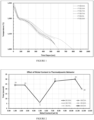
- the time between major liquid to solid (1285° ⁇ 1305°C) and solid to solid phase transformation was measured for the six heats adopted for the latent heat investigation with the results shown in Figure 2 .
- the nickel content showing most effective reduction in time between two major phase transformations was between 2.65wt.% Ni and 7.41wt.% Ni, most likely in the vicinity of the Experimental heat with 4.95wt.% Ni.
- a shorter time span between the liquid-solid and primary solid-solid phase transformation implies that fewer solid-state phase transformation is involved. For instance, only austenite to martensitic phase transformation occurred within the time span. Hence, a higher percentage of martensitic phase could be achieved in the alloy system containing approximate 5 wt.% of nickel owing to a martensitic phase formation from austenite which is not a diffusion-controlled process.
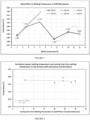
- Figure 3 shows the melting point as a function of nickel content.
- Heat 3B17XA possessed the highest melting point while 3B07XA possessed the lowest melting point.
- the highest melting temperature should exist in the alloy system with a nickel content range between 2.0wt.% and 5.0wt.%, such as between 4.0wt.% and 4.25wt%.
- the time elapse between the melting point to the primary solid state phase transformation for the alloy reaches the shortest time span when the nickel content is within the range of 4.00 wt.% to 4.25 wt.%.
- Figure 4 shows the correlation between time elapse from melting temperature to the primary solid state phase transformation. As revealed in Figure 4 , it was essentially no simple correlation between melting temperature and the time elapse from melting temperature to primary solid state phase transformation. The results demonstrate that the variation of melting temperatures in these experiments did not have a major effect on cooling time between liquid-solid and primary solid-solid phase transformations in the alloy system.
- the effect of nickel content on temper response was evaluated with seven different heats from 25°C through 900°C and a total of three hours thermal soaking was applied for all the tests.
- the samples used for this temper response investigation were in a ring shape with dimensions of 1.935" OD, 1.750" ID, and 0.3050" height. Radial crush tests were conducted by pressing on the OD surface applying a tensile tester until the sample was ruptured.
- Figure 5 shows bulk hardness as a function of tempering temperature for samples made with seven Experiments and a Reference J130.
- the nickel content was 10.62wt.% and 11.68wt.%, respectively.
- Both samples exhibited a gradual change in bulk hardness as tempering temperature increased. It is believed that the increment of bulk hardness for these two samples was related to a precipitation hardening phenomenon without involving bulk matrix solid phase transformation.
- Heat 3B07XA showed constantly higher hardness through the entire tempering temperature range applied compared to Heat 3B10XA. It appears that the overall hardness and strength of these two samples were involved in both solid solution strengthening and precipitation strengthening mechanisms.
- Experiments 3A23XA and Reference showed a significant bulk phase transformation within the thermal treatment.
- bulk hardness lowered sharply and continuously starting at approximate 550°C.
- Experiments 3A25XA (4.08wt.% Ni), 3A25XB (4.88wt.% Ni), and 3B 16XA (2.56wt.% Ni) along with Reference (slightly) exhibited a "U" bulk hardness curve in the tempering temperature range between 550°C and 825°C likely due to rehardening when the thermal treatment temperature was above approximately 760°C.
- Figure 6 shows the effect of Ni on radial crush toughness in the alloy system evaluated.
- Two heats containing greater than 10 wt.% Ni show an obviously greater radial crush toughness than the heats with lower than 10 wt.% Ni content.
- the other four heats displayed a similar radial crush toughness although Heat 3B02XB with 7.63wt.% Ni resided, at large, on a high position of the five radial crush toughness versus tempering temperature band.
- Air quench-ability analysis was carried out using the air quench-ability test method developed at LEJ.
- the test specimen is with a dimension of 3.5" long and 1.0" in diameter cylinder in as-cast condition.
- the sample is placed in laboratory oven for one hour thermal soaking at 850°C then followed by a test end quench with compressed air for five minutes.
- the compressed air is applied on the quench end of the cylinder samples with at 5.6 m/s flow rate.
- the bulk hardness measurements were carried out from quenching end to opposite end with a small flat area prepared on the OD surface adopting water cooled grinding process.
- Figures 7 and 8 show the effect of nickel content on the alloy system quench-ability. As manifested in these figures, when nickel content was at or greater than 7.63wt.%Ni, the hardness and quench-ability were relatively low. When nickel was within a range of 0.09wt.% to 5.08wt.%, an increment in nickel content increased in hardenability of the alloy system.
- Figure 9 displays a comparation of air quench-ability of J130M experiments, reference J130, J120V, and J160 alloys. Clearly, the samples of J130M with 2.5 to 5.0wt.% of nickel addition demonstrated the highest quench-ability among the alloys assessed.
- a standard LEJ Plint test method was applied for the wear resistance evaluation and the test procedures include 100,000 duration cycles, 20N applied load, 1.0 mm reciprocating distance, 20Hz reciprocating frequency, and non-lubrication test condition.
- Figure 10 shows Plint wear resistant test results for Reference 7B15G (J130 - 1.07wt.% Ni production heat) and Experiments 3B07XA (10.62wt.% Ni) and 3A25XB (4.88wt.% Ni) in terms of total materials loss (pin plus plate wear) as paired with a common nickel-based valve material, Inconel 751.
- a preferred alloy includes about 0.005 to 0.5wt.% B, about 1.2 to 1.8wt.% C, about 0.7 to 1.5wt.% V, about 7 to 11wt.% Cr, about 1 to 3.5wt.% Nb, about 6 to 11wt.% Mo, about 4 to 8wt.% Ni, and balance about 60 to 70wt.% Fe and incidental impurities.
- Example 22 The iron-based alloy of example 21, wherein the primary carbides have a width smaller than about 10 microns and the secondary carbides are smaller than about 1 micron.
- Example 23 The iron-based alloy of example 1 or according to any of the preceding examples, wherein the alloy is in the form of a casting.
- Example 24 The iron-based alloy of example 1 or according to any of the preceding examples, wherein the alloy is in a hardened and tempered condition having a hardness of at least about 42 Rockwell C.
- Example 25 The iron-based alloy of example 1 or according to any of the preceding examples, wherein the alloy is in a hardened and tempered condition and exhibits a Vickers hot hardness at a temperature of 800° F. of at least about 475.
- Example 26 The iron-based alloy of example 1 or according to any of the preceding examples, wherein the alloy is in a hardened and tempered condition and exhibits a high temperature compressive yield strength at 800° F. of at least about 100 ksi.
- Example 27 The iron-based alloy of example 1 or according to any of the preceding examples, wherein the alloy exhibits a dimensional stability of less than about 0.5 ⁇ 10-3 inches after 20 hours at 1200° F.
- Example 28 A part for an internal combustion engine comprising the iron-based alloy of example 1 or according to any of the preceding examples.
- Example 29 A valve seat insert comprising the iron-based alloy of example 1 or according to any of the examples 1 to 27.
- Example 30 A valve seat insert for a diesel engine comprising the iron-based alloy of example 1 or according to any of the examples 1 to 27.
- Example 31 A valve seat insert for a diesel engine using EGR comprising the iron-based alloy of example 1 or according to any of the examples 1 to 27.
- Example 32 A valve seat insert comprising the iron-based alloy of example 1 or according to any of the examples 1 to 27, wherein the valve seat insert is in the form of a casting.
- Example 33 A valve seat insert comprising the iron-based alloy of example 1 or according to any of the examples 1 to 27, wherein the valve seat insert is in the form of a pressed and sintered compact.
- Example 35 A valve seat insert comprising the iron-based alloy of example 1 or according to any of the examples 1 to 27, having a Vickers hardness of at least about 475 and a compressive yield strength of at least about 190 ksi at a temperature of 800° F.
- Example 36 A ball bearing comprising the alloy of example 1 or according to any of the examples 1 to 27.
- Example 37 A cast iron-based tungsten-free alloy having a martensitic microstructure including primary and secondary carbides comprising, consisting essentially of, or consisting of, in weight percent: about 0.1 to 0.3% boron; about 1.4 to 1.8% carbon; about 0.7 to 1.3% silicon, about 0.8 to 1.5% vanadium; about 9 to 11% chromium; about 0.2 to 0.7% manganese; about 0 to 4% cobalt; about 3 to 10% nickel; about 1 to 2.5% niobium; about 8 to 10% molybdenum, and the balance including about 60 to 80% iron and incidental impurities.
- primary and secondary carbides comprising, consisting essentially of, or consisting of, in weight percent: about 0.1 to 0.3% boron; about 1.4 to 1.8% carbon; about 0.7 to 1.3% silicon, about 0.8 to 1.5% vanadium; about 9 to 11% chromium; about 0.2 to 0.7% manganese; about 0 to 4% cobalt; about 3 to 10% nickel;
- Example 38 A method of making an iron-based alloy comprising, consisting essentially of, or consisting of, in weight percent: about 0.005 to 0.5% boron; about 1.2 to 1.8% carbon; about 0.7 to 1.5% vanadium; about 7 to 11% chromium; about 1 to 3.5% niobium; about 6 to 11% molybdenum, about 3 to 10% nickel and the balance including about 60 to 80% iron and incidental impurities, wherein the alloy is cast from a melt at a temperature of from about 2800 to 3000° F.
- Example 39 The method of example 38, wherein the alloy is cast from a melt at a temperature of from about 2850 to 2925° F.
- Example 40 A method of making an iron-based alloy comprising, consisting essentially of, or consisting of, in weight percent: about 0.005 to 0.5% boron; from about 1.2 to 1.8% carbon; about 0.7 to 1.5% vanadium; about 7 to 11% chromium; about 1 to 3.5% niobium; about 6 to 11% molybdenum, about 3 to 10% nickel and the balance including about 60 to 80% iron and incidental impurities, wherein the alloy is heated at a temperature of from about 1550 to 2100° F., quenched and tempered at a temperature of from about 1200 to 1400° F.
- Example 41 An iron-based alloy having a martensitic microstructure including primary and secondary carbides comprising, consisting essentially of, or consisting of, in weight percent: about 0.005 to 0.5% boron; about 1.2 to 1.8% carbon; about 0.7 to 1.5% vanadium; about 7 to 11% chromium; about 6 to 11% molybdenum; about 3 to 10% nickel, at least one element selected from the group consisting of titanium, zirconium, niobium, hafnium and tantalum, represented by Ti, Zr, Nb, Hf and Ta, respectively, and the balance including about 60 to80% iron and incidental impurities, such that 1% ⁇ (Ti+Zr+Nb+Hf+Ta) ⁇ 3.5%.
Landscapes
- Chemical & Material Sciences (AREA)
- Engineering & Computer Science (AREA)
- Mechanical Engineering (AREA)
- Materials Engineering (AREA)
- Metallurgy (AREA)
- Organic Chemistry (AREA)
- Crystallography & Structural Chemistry (AREA)
- Thermal Sciences (AREA)
- Physics & Mathematics (AREA)
- General Engineering & Computer Science (AREA)
- Heat Treatment Of Articles (AREA)
- Powder Metallurgy (AREA)
- Lift Valve (AREA)
Applications Claiming Priority (1)
| Application Number | Priority Date | Filing Date | Title |
|---|---|---|---|
| US18/534,501 US20250188582A1 (en) | 2023-12-08 | 2023-12-08 | Iron-Based Heat and Corrosion Resistant Alloy With Enhanced Air Quenchability |
Publications (2)
| Publication Number | Publication Date |
|---|---|
| EP4582577A2 true EP4582577A2 (de) | 2025-07-09 |
| EP4582577A3 EP4582577A3 (de) | 2026-03-04 |
Family
ID=93842108
Family Applications (1)
| Application Number | Title | Priority Date | Filing Date |
|---|---|---|---|
| EP24218138.6A Pending EP4582577A3 (de) | 2023-12-08 | 2024-12-06 | Wärme- und korrosionsbeständige legierung auf eisenbasis mit verbesserter luftabschreckbarkeit |
Country Status (3)
| Country | Link |
|---|---|
| US (1) | US20250188582A1 (de) |
| EP (1) | EP4582577A3 (de) |
| CN (1) | CN120119186A (de) |
Citations (1)
| Publication number | Priority date | Publication date | Assignee | Title |
|---|---|---|---|---|
| US6702905B1 (en) | 2003-01-29 | 2004-03-09 | L. E. Jones Company | Corrosion and wear resistant alloy |
Family Cites Families (3)
| Publication number | Priority date | Publication date | Assignee | Title |
|---|---|---|---|---|
| US7611590B2 (en) * | 2004-07-08 | 2009-11-03 | Alloy Technology Solutions, Inc. | Wear resistant alloy for valve seat insert used in internal combustion engines |
| US10677109B2 (en) * | 2017-08-17 | 2020-06-09 | I. E. Jones Company | High performance iron-based alloys for engine valvetrain applications and methods of making and use thereof |
| US11566299B2 (en) * | 2021-02-01 | 2023-01-31 | L.E. Jones Company | Martensitic wear resistant alloy strengthened through aluminum nitrides |
-
2023
- 2023-12-08 US US18/534,501 patent/US20250188582A1/en active Pending
-
2024
- 2024-12-06 EP EP24218138.6A patent/EP4582577A3/de active Pending
- 2024-12-09 CN CN202411795978.1A patent/CN120119186A/zh active Pending
Patent Citations (1)
| Publication number | Priority date | Publication date | Assignee | Title |
|---|---|---|---|---|
| US6702905B1 (en) | 2003-01-29 | 2004-03-09 | L. E. Jones Company | Corrosion and wear resistant alloy |
Also Published As
| Publication number | Publication date |
|---|---|
| CN120119186A (zh) | 2025-06-10 |
| EP4582577A3 (de) | 2026-03-04 |
| US20250188582A1 (en) | 2025-06-12 |
Similar Documents
| Publication | Publication Date | Title |
|---|---|---|
| US11215090B2 (en) | High performance iron-based alloys for engine valvetrain applications and methods of making and use thereof | |
| US8940110B2 (en) | Corrosion and wear resistant iron based alloy useful for internal combustion engine valve seat inserts and method of making and use thereof | |
| US8479700B2 (en) | Iron-chromium alloy with improved compressive yield strength and method of making and use thereof | |
| US8430075B2 (en) | Superaustenitic stainless steel and method of making and use thereof | |
| JP2719892B2 (ja) | 高温用表面浸炭ステンレス鋼合金及びそれから作られる製品及びその製造方法 | |
| EP2038444B1 (de) | Verschleissfeste hochttemperaturlegierung | |
| EP1614762A2 (de) | Verschleissfeste Legierung für Ventilsitzeinsätze | |
| US12018343B2 (en) | Martensitic wear resistant alloy strengthened through aluminum nitrides | |
| KR101799844B1 (ko) | 우수한 탕류성, 내가스 결함성, 인성 및 피삭성을 가지는 페라이트계 내열 주강, 및 이들로 이루어지는 배기계 부품 | |
| EP2371980A1 (de) | Hitzebeständiger Stahl für Abgasventil | |
| KR0151154B1 (ko) | 침전경화 페라이트-피얼라이트 강 | |
| EP4582577A2 (de) | Wärme- und korrosionsbeständige legierung auf eisenbasis mit verbesserter luftabschreckbarkeit | |
| JP3748586B2 (ja) | 耐久性に優れた燃料噴射弁装置及びその製造方法 | |
| EP0957182A2 (de) | Martensitischer, hitzebeständiger Stahl | |
| EP4438754A1 (de) | Intermetallische niob-kobalt-legierung für hochtemperaturanwendungen | |
| JP3559307B2 (ja) | 燃料噴射弁の弁体または弁座 | |
| JP7754373B2 (ja) | 高圧水素環境用マルテンサイト系ステンレス鋼 | |
| JP7810312B2 (ja) | 高圧水素環境用マルテンサイト鋼 | |
| TW200538559A (en) | The crank shaft excellent in bending fatigue strength | |
| HK40074086A (en) | Martensitic wear resistant alloy strengthened through aluminum nitrides | |
| HK40077639A (en) | High performance iron-based alloys for engine valvetrain applications and methods of making and use thereof | |
| HK40077639B (zh) | 用於发动机气阀机构应用的高性能基於铁的合金、其制备方法及其用途 | |
| HK40000431B (en) | High performance iron-based alloys for engine valvetrain applications and methods of making and use thereof | |
| HK40000431A (en) | High performance iron-based alloys for engine valvetrain applications and methods of making and use thereof | |
| JP2005082820A (ja) | 疲労強度改善鋼とその製造方法 |
Legal Events
| Date | Code | Title | Description |
|---|---|---|---|
| PUAI | Public reference made under article 153(3) epc to a published international application that has entered the european phase |
Free format text: ORIGINAL CODE: 0009012 |
|
| STAA | Information on the status of an ep patent application or granted ep patent |
Free format text: STATUS: THE APPLICATION HAS BEEN PUBLISHED |
|
| AK | Designated contracting states |
Kind code of ref document: A2 Designated state(s): AL AT BE BG CH CY CZ DE DK EE ES FI FR GB GR HR HU IE IS IT LI LT LU LV MC ME MK MT NL NO PL PT RO RS SE SI SK SM TR |
|
| PUAL | Search report despatched |
Free format text: ORIGINAL CODE: 0009013 |
|
| AK | Designated contracting states |
Kind code of ref document: A3 Designated state(s): AL AT BE BG CH CY CZ DE DK EE ES FI FR GB GR HR HU IE IS IT LI LT LU LV MC ME MK MT NL NO PL PT RO RS SE SI SK SM TR |
|
| RIC1 | Information provided on ipc code assigned before grant |
Ipc: C22C 38/42 20060101ALI20260127BHEP Ipc: C22C 33/04 20060101ALI20260127BHEP Ipc: C21D 6/00 20060101ALI20260127BHEP Ipc: C21D 6/02 20060101ALI20260127BHEP Ipc: C21D 1/18 20060101ALI20260127BHEP Ipc: C21D 1/22 20060101ALI20260127BHEP Ipc: C21D 1/56 20060101ALI20260127BHEP Ipc: C21D 1/02 20060101ALI20260127BHEP Ipc: C21D 9/00 20060101ALI20260127BHEP Ipc: C22C 38/44 20060101AFI20260127BHEP Ipc: C22C 38/46 20060101ALI20260127BHEP Ipc: C22C 38/48 20060101ALI20260127BHEP Ipc: C22C 38/54 20060101ALI20260127BHEP Ipc: C22C 38/02 20060101ALI20260127BHEP Ipc: C22C 38/04 20060101ALI20260127BHEP Ipc: C22C 38/00 20060101ALI20260127BHEP Ipc: C22C 38/56 20060101ALI20260127BHEP Ipc: C22C 38/50 20060101ALI20260127BHEP Ipc: C22C 38/52 20060101ALI20260127BHEP |
|
| STAA | Information on the status of an ep patent application or granted ep patent |
Free format text: STATUS: REQUEST FOR EXAMINATION WAS MADE |