EP4583247A1 - Procédé et système de recyclage de métal de batterie secondaire au lithium - Google Patents
Procédé et système de recyclage de métal de batterie secondaire au lithium Download PDFInfo
- Publication number
- EP4583247A1 EP4583247A1 EP24223479.7A EP24223479A EP4583247A1 EP 4583247 A1 EP4583247 A1 EP 4583247A1 EP 24223479 A EP24223479 A EP 24223479A EP 4583247 A1 EP4583247 A1 EP 4583247A1
- Authority
- EP
- European Patent Office
- Prior art keywords
- aluminum
- adsorption resin
- treatment liquid
- distilled water
- resin column
- Prior art date
- Legal status (The legal status is an assumption and is not a legal conclusion. Google has not performed a legal analysis and makes no representation as to the accuracy of the status listed.)
- Pending
Links
Images

Classifications
-
- C—CHEMISTRY; METALLURGY
- C01—INORGANIC CHEMISTRY
- C01D—COMPOUNDS OF ALKALI METALS, i.e. LITHIUM, SODIUM, POTASSIUM, RUBIDIUM, CAESIUM, OR FRANCIUM
- C01D15/00—Lithium compounds
- C01D15/02—Oxides; Hydroxides
-
- H—ELECTRICITY
- H01—ELECTRIC ELEMENTS
- H01M—PROCESSES OR MEANS, e.g. BATTERIES, FOR THE DIRECT CONVERSION OF CHEMICAL ENERGY INTO ELECTRICAL ENERGY
- H01M10/00—Secondary cells; Manufacture thereof
- H01M10/54—Reclaiming serviceable parts of waste accumulators
-
- B—PERFORMING OPERATIONS; TRANSPORTING
- B01—PHYSICAL OR CHEMICAL PROCESSES OR APPARATUS IN GENERAL
- B01J—CHEMICAL OR PHYSICAL PROCESSES, e.g. CATALYSIS OR COLLOID CHEMISTRY; THEIR RELEVANT APPARATUS
- B01J43/00—Amphoteric ion-exchange, i.e. using ion-exchangers having cationic and anionic groups; Use of material as amphoteric ion-exchangers; Treatment of material for improving their amphoteric ion-exchange properties
-
- B—PERFORMING OPERATIONS; TRANSPORTING
- B01—PHYSICAL OR CHEMICAL PROCESSES OR APPARATUS IN GENERAL
- B01J—CHEMICAL OR PHYSICAL PROCESSES, e.g. CATALYSIS OR COLLOID CHEMISTRY; THEIR RELEVANT APPARATUS
- B01J45/00—Ion-exchange in which a complex or a chelate is formed; Use of material as complex or chelate forming ion-exchangers; Treatment of material for improving the complex or chelate forming ion-exchange properties
-
- B—PERFORMING OPERATIONS; TRANSPORTING
- B01—PHYSICAL OR CHEMICAL PROCESSES OR APPARATUS IN GENERAL
- B01J—CHEMICAL OR PHYSICAL PROCESSES, e.g. CATALYSIS OR COLLOID CHEMISTRY; THEIR RELEVANT APPARATUS
- B01J47/00—Ion-exchange processes in general; Apparatus therefor
- B01J47/02—Column or bed processes
-
- C—CHEMISTRY; METALLURGY
- C08—ORGANIC MACROMOLECULAR COMPOUNDS; THEIR PREPARATION OR CHEMICAL WORKING-UP; COMPOSITIONS BASED THEREON
- C08J—WORKING-UP; GENERAL PROCESSES OF COMPOUNDING; AFTER-TREATMENT NOT COVERED BY SUBCLASSES C08B, C08C, C08F, C08G or C08H
- C08J11/00—Recovery or working-up of waste materials
- C08J11/04—Recovery or working-up of waste materials of polymers
-
- C—CHEMISTRY; METALLURGY
- C22—METALLURGY; FERROUS OR NON-FERROUS ALLOYS; TREATMENT OF ALLOYS OR NON-FERROUS METALS
- C22B—PRODUCTION AND REFINING OF METALS; PRETREATMENT OF RAW MATERIALS
- C22B21/00—Obtaining aluminium
- C22B21/0007—Preliminary treatment of ores or scrap or any other metal source
-
- C—CHEMISTRY; METALLURGY
- C22—METALLURGY; FERROUS OR NON-FERROUS ALLOYS; TREATMENT OF ALLOYS OR NON-FERROUS METALS
- C22B—PRODUCTION AND REFINING OF METALS; PRETREATMENT OF RAW MATERIALS
- C22B21/00—Obtaining aluminium
- C22B21/0015—Obtaining aluminium by wet processes
-
- C—CHEMISTRY; METALLURGY
- C22—METALLURGY; FERROUS OR NON-FERROUS ALLOYS; TREATMENT OF ALLOYS OR NON-FERROUS METALS
- C22B—PRODUCTION AND REFINING OF METALS; PRETREATMENT OF RAW MATERIALS
- C22B21/00—Obtaining aluminium
- C22B21/0015—Obtaining aluminium by wet processes
- C22B21/0023—Obtaining aluminium by wet processes from waste materials
-
- C—CHEMISTRY; METALLURGY
- C22—METALLURGY; FERROUS OR NON-FERROUS ALLOYS; TREATMENT OF ALLOYS OR NON-FERROUS METALS
- C22B—PRODUCTION AND REFINING OF METALS; PRETREATMENT OF RAW MATERIALS
- C22B21/00—Obtaining aluminium
- C22B21/02—Obtaining aluminium with reducing
-
- C—CHEMISTRY; METALLURGY
- C22—METALLURGY; FERROUS OR NON-FERROUS ALLOYS; TREATMENT OF ALLOYS OR NON-FERROUS METALS
- C22B—PRODUCTION AND REFINING OF METALS; PRETREATMENT OF RAW MATERIALS
- C22B23/00—Obtaining nickel or cobalt
- C22B23/04—Obtaining nickel or cobalt by wet processes
- C22B23/0407—Leaching processes
-
- C—CHEMISTRY; METALLURGY
- C22—METALLURGY; FERROUS OR NON-FERROUS ALLOYS; TREATMENT OF ALLOYS OR NON-FERROUS METALS
- C22B—PRODUCTION AND REFINING OF METALS; PRETREATMENT OF RAW MATERIALS
- C22B23/00—Obtaining nickel or cobalt
- C22B23/04—Obtaining nickel or cobalt by wet processes
- C22B23/0453—Treatment or purification of solutions, e.g. obtained by leaching
-
- C—CHEMISTRY; METALLURGY
- C22—METALLURGY; FERROUS OR NON-FERROUS ALLOYS; TREATMENT OF ALLOYS OR NON-FERROUS METALS
- C22B—PRODUCTION AND REFINING OF METALS; PRETREATMENT OF RAW MATERIALS
- C22B26/00—Obtaining alkali, alkaline earth metals or magnesium
- C22B26/10—Obtaining alkali metals
- C22B26/12—Obtaining lithium
-
- C—CHEMISTRY; METALLURGY
- C22—METALLURGY; FERROUS OR NON-FERROUS ALLOYS; TREATMENT OF ALLOYS OR NON-FERROUS METALS
- C22B—PRODUCTION AND REFINING OF METALS; PRETREATMENT OF RAW MATERIALS
- C22B3/00—Extraction of metal compounds from ores or concentrates by wet processes
- C22B3/02—Apparatus therefor
-
- C—CHEMISTRY; METALLURGY
- C22—METALLURGY; FERROUS OR NON-FERROUS ALLOYS; TREATMENT OF ALLOYS OR NON-FERROUS METALS
- C22B—PRODUCTION AND REFINING OF METALS; PRETREATMENT OF RAW MATERIALS
- C22B3/00—Extraction of metal compounds from ores or concentrates by wet processes
- C22B3/04—Extraction of metal compounds from ores or concentrates by wet processes by leaching
-
- C—CHEMISTRY; METALLURGY
- C22—METALLURGY; FERROUS OR NON-FERROUS ALLOYS; TREATMENT OF ALLOYS OR NON-FERROUS METALS
- C22B—PRODUCTION AND REFINING OF METALS; PRETREATMENT OF RAW MATERIALS
- C22B3/00—Extraction of metal compounds from ores or concentrates by wet processes
- C22B3/20—Treatment or purification of solutions, e.g. obtained by leaching
- C22B3/22—Treatment or purification of solutions, e.g. obtained by leaching by physical processes, e.g. by filtration, by magnetic means, or by thermal decomposition
- C22B3/24—Treatment or purification of solutions, e.g. obtained by leaching by physical processes, e.g. by filtration, by magnetic means, or by thermal decomposition by adsorption on solid substances, e.g. by extraction with solid resins
-
- C—CHEMISTRY; METALLURGY
- C22—METALLURGY; FERROUS OR NON-FERROUS ALLOYS; TREATMENT OF ALLOYS OR NON-FERROUS METALS
- C22B—PRODUCTION AND REFINING OF METALS; PRETREATMENT OF RAW MATERIALS
- C22B3/00—Extraction of metal compounds from ores or concentrates by wet processes
- C22B3/20—Treatment or purification of solutions, e.g. obtained by leaching
- C22B3/26—Treatment or purification of solutions, e.g. obtained by leaching by liquid-liquid extraction using organic compounds
- C22B3/28—Amines
-
- C—CHEMISTRY; METALLURGY
- C22—METALLURGY; FERROUS OR NON-FERROUS ALLOYS; TREATMENT OF ALLOYS OR NON-FERROUS METALS
- C22B—PRODUCTION AND REFINING OF METALS; PRETREATMENT OF RAW MATERIALS
- C22B3/00—Extraction of metal compounds from ores or concentrates by wet processes
- C22B3/20—Treatment or purification of solutions, e.g. obtained by leaching
- C22B3/42—Treatment or purification of solutions, e.g. obtained by leaching by ion-exchange extraction
-
- C—CHEMISTRY; METALLURGY
- C22—METALLURGY; FERROUS OR NON-FERROUS ALLOYS; TREATMENT OF ALLOYS OR NON-FERROUS METALS
- C22B—PRODUCTION AND REFINING OF METALS; PRETREATMENT OF RAW MATERIALS
- C22B47/00—Obtaining manganese
-
- C—CHEMISTRY; METALLURGY
- C22—METALLURGY; FERROUS OR NON-FERROUS ALLOYS; TREATMENT OF ALLOYS OR NON-FERROUS METALS
- C22B—PRODUCTION AND REFINING OF METALS; PRETREATMENT OF RAW MATERIALS
- C22B7/00—Working up raw materials other than ores, e.g. scrap, to produce non-ferrous metals and compounds thereof; Methods of a general interest or applied to the winning of more than two metals
- C22B7/001—Dry processes
- C22B7/002—Dry processes by treating with halogens, sulfur or compounds thereof; by carburising, by treating with hydrogen (hydriding)
-
- C—CHEMISTRY; METALLURGY
- C22—METALLURGY; FERROUS OR NON-FERROUS ALLOYS; TREATMENT OF ALLOYS OR NON-FERROUS METALS
- C22B—PRODUCTION AND REFINING OF METALS; PRETREATMENT OF RAW MATERIALS
- C22B7/00—Working up raw materials other than ores, e.g. scrap, to produce non-ferrous metals and compounds thereof; Methods of a general interest or applied to the winning of more than two metals
- C22B7/006—Wet processes
-
- H—ELECTRICITY
- H01—ELECTRIC ELEMENTS
- H01M—PROCESSES OR MEANS, e.g. BATTERIES, FOR THE DIRECT CONVERSION OF CHEMICAL ENERGY INTO ELECTRICAL ENERGY
- H01M10/00—Secondary cells; Manufacture thereof
- H01M10/05—Accumulators with non-aqueous electrolyte
- H01M10/052—Li-accumulators
-
- H—ELECTRICITY
- H01—ELECTRIC ELEMENTS
- H01M—PROCESSES OR MEANS, e.g. BATTERIES, FOR THE DIRECT CONVERSION OF CHEMICAL ENERGY INTO ELECTRICAL ENERGY
- H01M4/00—Electrodes
- H01M4/02—Electrodes composed of, or comprising, active material
- H01M4/36—Selection of substances as active materials, active masses, active liquids
- H01M4/48—Selection of substances as active materials, active masses, active liquids of inorganic oxides or hydroxides
- H01M4/52—Selection of substances as active materials, active masses, active liquids of inorganic oxides or hydroxides of nickel, cobalt or iron
- H01M4/525—Selection of substances as active materials, active masses, active liquids of inorganic oxides or hydroxides of nickel, cobalt or iron of mixed oxides or hydroxides containing iron, cobalt or nickel for inserting or intercalating light metals, e.g. LiNiO2, LiCoO2 or LiCoOxFy
-
- Y—GENERAL TAGGING OF NEW TECHNOLOGICAL DEVELOPMENTS; GENERAL TAGGING OF CROSS-SECTIONAL TECHNOLOGIES SPANNING OVER SEVERAL SECTIONS OF THE IPC; TECHNICAL SUBJECTS COVERED BY FORMER USPC CROSS-REFERENCE ART COLLECTIONS [XRACs] AND DIGESTS
- Y02—TECHNOLOGIES OR APPLICATIONS FOR MITIGATION OR ADAPTATION AGAINST CLIMATE CHANGE
- Y02E—REDUCTION OF GREENHOUSE GAS [GHG] EMISSIONS, RELATED TO ENERGY GENERATION, TRANSMISSION OR DISTRIBUTION
- Y02E60/00—Enabling technologies; Technologies with a potential or indirect contribution to GHG emissions mitigation
- Y02E60/10—Energy storage using batteries
-
- Y—GENERAL TAGGING OF NEW TECHNOLOGICAL DEVELOPMENTS; GENERAL TAGGING OF CROSS-SECTIONAL TECHNOLOGIES SPANNING OVER SEVERAL SECTIONS OF THE IPC; TECHNICAL SUBJECTS COVERED BY FORMER USPC CROSS-REFERENCE ART COLLECTIONS [XRACs] AND DIGESTS
- Y02—TECHNOLOGIES OR APPLICATIONS FOR MITIGATION OR ADAPTATION AGAINST CLIMATE CHANGE
- Y02W—CLIMATE CHANGE MITIGATION TECHNOLOGIES RELATED TO WASTEWATER TREATMENT OR WASTE MANAGEMENT
- Y02W30/00—Technologies for solid waste management
- Y02W30/50—Reuse, recycling or recovery technologies
- Y02W30/84—Recycling of batteries or fuel cells
Definitions
- a second treatment liquid including aluminum desorbed from the first treatment liquid is produced.
- a content of aluminum included in the second treatment liquid may be 200 ppm or more.
- the method may further include producing a third treatment liquid formed by evaporating the second treatment liquid; and recycling the third treatment liquid as the first treatment liquid.
- an amount of the distilled water fraction may be 0.01 wt% to 5 wt% based on a total weight of the distilled water included in the second treatment liquid.
- the first treatment liquid may be injected at a flow rate of 1,000 L/hr to 1,200 L/hr.
- the first treatment liquid may be injected at a linear speed of 8 m/hr to 13 m/hr.
- the aluminum adsorption resin column may include a resin including an amine group and a hydroxyl group.
- the resin including an amine group and a hydroxyl group may include a methylglucosylamine group.
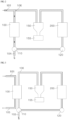
- a system for recycling a metal from a lithium secondary battery including an aluminum adsorption resin column; a flow rate control unit configured to supply distilled water to the aluminum adsorption resin column; an evaporation treatment unit configured to evaporate the distilled water passing through the aluminum adsorption resin column to produce water vapor; a distilled water regeneration unit configured to collect the distilled water from the water vapor generated from the evaporation treatment unit; and a distilled water supply unit configured to supply the distilled water regenerated from the distilled water regeneration unit to the flow rate control unit.
- the evaporation treatment unit may include a discharge unit from which an untreated distilled water fraction into water vapor and aluminum are discharged.
- aluminum may be efficiently desorbed while maintaining an ion exchange capacity of an aluminum adsorption resin column through distilled water injected at a flow rate in a predetermined range. Therefore, metals may be continuously recycled from the lithium secondary battery.
- metals may be efficiently recycled from the lithium secondary battery in an eco-friendly manner.
- the embodiments of the present disclosure provide a method for recycling a metal from a lithium secondary battery, which includes adsorption and desorption of aluminum using an aluminum adsorption resin column.
- a system for recycling a metal from a lithium secondary battery using an aluminum adsorption resin column is provided.
- first As used herein, the terms “first,” “second,” “third,” and the like are used to distinguish each material, and do not distinguish the importance, order, etc. of each material.
- the aluminum adsorption resin may include an amine group and a hydroxyl group.
- the aluminum adsorption resin column 100 may have a volume of 1.0 L to 350L.
- a lithium precursor aqueous solution in a volume of 5 to 30 times the volume of the aluminum adsorption resin column 100 may be injected.
- the lithium precursor aqueous solution may be injected until an excess amount of aluminum metal is produced.
- the excess amount of aluminum metal may mean aluminum metal generated by exceeding an aluminum adsorption capacity of the aluminum adsorption resin.
- the lithium precursor aqueous solution may be injected only in a volume as needed.
- the lithium precursor aqueous solution may be injected into one surface of the aluminum adsorption resin column 100 through a lithium precursor aqueous solution injection conduit 101.
- the lithium precursor aqueous solution may be discharged through a composite conduit 104 connected to the other surface on a side opposite to the one surface into which the lithium precursor aqueous solution is injected.
- the lithium precursor aqueous solution may flow in a single direction in the aluminum adsorption resin column 100.
- a first treatment liquid including distilled water may be injected into the other surface of the aluminum adsorption resin column 100 through the composite conduit 104.
- the first treatment liquid may be injected into the aluminum adsorption resin column 100 with a flow rate controlled through a flow rate control unit 110.
- the first treatment liquid may desorb aluminum from the aluminum adsorption resin column 100 and be discharged through a treatment liquid discharge conduit 106 connected to the one surface on a side opposite to the other surface into which the first treatment liquid is injected.
- the first treatment liquid may flow in a single direction in the aluminum adsorption resin column 100.
- conduit connected to the aluminum adsorption resin column 100 may be fluidly connected to both the lithium precursor aqueous solution injection conduit 101 and the treatment liquid discharge conduit 106.
- the lithium precursor aqueous solution injection conduit 101 and the treatment liquid discharge conduit 106 connected to the aluminum adsorption resin column 100 may be divided by valves (for example, portions indicated by dotted lines in FIG. 2 ).
- the direction in which the lithium precursor aqueous solution flows and the direction in which the treatment liquid flows are opposite to each other, such that the system for recycling a metal from a lithium secondary battery may be efficiently implemented.
- the first treatment liquid may include distilled water.
- the first treatment liquid may include distilled water of 95% by weight (“wt%") or more, 98 wt% or more, or 99 wt% or more based on a total weight thereof.
- the flow rate control unit 110 may control the flow rate of the treatment liquid injected into the aluminum adsorption resin column 100.
- the flow rate control unit 110 may include a device for controlling the flow rate, such as a valve, a pump, a fan, a blower, etc., and may adjust an injection speed of the first treatment liquid injected into the aluminum adsorption resin column 100 through the device.
- a device for controlling the flow rate such as a valve, a pump, a fan, a blower, etc.
- the injection speed of the first treatment liquid may be controlled by adjusting a diameter, a length, etc. of the conduit connecting the flow rate control unit 110 and the aluminum adsorption resin column 100.
- the first treatment liquid may be injected into the aluminum adsorption resin column 100 at a flow rate of 100 L/hr to 1,200 L/hr, 500 L/hr to 1,200 L/hr, or 1,000 L/hr to 1,200 L/hr.
- a liquid hourly space velocity (LHSV) of the distilled water may be 1 or more and 10 or less, 1.5 or more and 9 or less, or 4 or more and 8 or less.
- the LHSV may represent a flow rate of the first treatment liquid to a volume of the aluminum adsorption resin column 100.
- an aluminum content in the first treatment liquid may be 15 ppm or less.
- the aluminum content in the distilled water which is injected into the aluminum adsorption resin column 100 before aluminum desorption may be 10 ppm or less.
- the first treatment liquid may desorb aluminum from the aluminum adsorption resin column 100, thus, to produce a second treatment liquid including the desorbed aluminum.
- the first treatment liquid may have a pH of 6.5 to 7.5, or 6.7 to 7.3.
- the aluminum adsorbed onto the aluminum adsorption resin column may be efficiently desorbed without additional chemical substances.
- a functional group of the aluminum adsorption resin may not be recovered, thereby decreasing a capacity retention rate of the aluminum adsorption resin, and making it impossible to repeatedly recycle metal from the lithium precursor.
- the aluminum adsorbed onto the aluminum adsorption resin may be strongly bound to the aluminum adsorption resin in the form of Al(OFT) 4 - , such that the aluminum desorption efficiency of the aluminum adsorption resin may be decreased. Accordingly, repeatedly recycling metals from the lithium precursor may be impossible.
- the capacity retention rate of the aluminum adsorption resin column 100 by the first treatment liquid of the aluminum adsorption resin column 100 may be 70% or more, or 75% or more.
- the capacity retention rate may mean an exchange capacity after regeneration of the aluminum adsorption resin column by the first treatment liquid relative to an exchange capacity after regeneration of the aluminum adsorption resin column by a sulfuric acid aqueous solution and a sodium hydroxide aqueous solution.
- the content of aluminum included in the second treatment liquid may be 200 ppm or more, or 210 ppm or more.
- the aluminum desorption efficiency of the lithium precursor aqueous solution which is reinjected may be reduced.
- the aluminum adsorption resin column 100 may be connected to an evaporation treatment unit 150 through a conduit 106.
- the evaporation treatment unit 150 may be connected to a discharge unit 155 from which aluminum is discharged.
- the evaporation treatment unit 150 may be connected to a distilled water regeneration unit 200 through a conduit.
- the distilled water regeneration unit 200 may be connected to a distilled water supply unit 120 connected to the flow rate control unit 110 through a conduit.
- the second treatment liquid may be evaporated through the evaporation treatment unit 150 to produce a third treatment liquid containing no aluminum.
- the evaporation treatment unit 150 may evaporate the distilled water included in the second treatment liquid.
- the evaporation method is not particularly limited, and for example, the distilled water may be evaporated by a method such as direct heating, indirect heating electricity, or microwave.
- the aluminum may be removed through a predetermined distilled water fraction of the second treatment liquid, and the aluminum may be collected through evaporation of the second treatment liquid.
- the aluminum may be discharged in the discharge unit 155 through the distilled water fraction, and a third treatment liquid containing no impurities may be supplied to the distilled water regeneration unit 200. Accordingly, the purity of the water included in the third treatment liquid may be increased, and the third treatment liquid may be recycled as the first treatment liquid.
- the recycling efficiency of the treatment liquid through the third treatment liquid may be improved while sufficiently discharging the aluminum.
- the third treatment liquid evaporated from the evaporation treatment unit 150 may be flown into the distilled water regeneration unit 200 in the form of water vapor.
- the flown third treatment liquid may be cooled in the distilled water regeneration unit 200 and recycled as distilled water.
- the distilled water cooled in the distilled water regeneration unit 200 may be reinjected into the flow rate control unit 110 through the distilled water supply unit 120.
- the recycled treatment liquid may be reinjected into the aluminum adsorption resin column 100 without a separate chemical treatment or additional process, such that the aluminum adsorption resin column 100 may be efficiently regenerated.
- the distilled water regeneration unit 200 may be maintained in a temperature range of 10°C to 40°C.
- the third treatment liquid flown first into the distilled water regeneration unit 200 within the above temperature range may be recycled as distilled water.
- the distilled water regeneration unit 200 may be connected to the flow rate control unit 110 through the distilled water supply unit 120.
- the distilled water supply unit 120 may include a pump, a control valve, etc.
- the distilled water may be moved to the flow rate control unit 110 through the distilled water supply unit 120.
- the treatment liquid may be reinjected into the aluminum adsorption resin column 100 from the distilled water regeneration unit 200 through the distilled water supply unit 120 via the flow rate control unit 110 in a state where impurities in the treatment liquid are removed, the above-described effects may be repeatedly achieved.
- a cathode active material mixture containing lithium is prepared.
- a lithium precursor is produced by reducing the cathode active material mixture.
- a lithium precursor aqueous solution is formed by dissolving the lithium precursor in water.
- the lithium precursor aqueous solution passes through an aluminum adsorption resin column (100) to adsorb aluminum to the aluminum adsorption resin column (100).
- a first treatment liquid including distilled water into the aluminum adsorption resin column (100) is injected at a flow rate of 100 L/hr to 1,200 L/hr to obtain a regenerated aluminum adsorption resin column (100) from which aluminum is desorbed.
- the lithium precursor may be obtained through a crystallization process of lithium hydroxide dissolved in the above-described aqueous lithium precursor solution from which aluminum is removed.
- lithium may be recovered in the form of the lithium precursor substantially consisting of lithium hydroxide.
- the regenerated aluminum adsorption resin column (100) is reused in the operation of adsorbing aluminum.
- a second treatment liquid including aluminum desorbed from the first treatment liquid is produced in the operation of obtaining a regenerated aluminum adsorption resin column (100).
- a content of aluminum included in the second treatment liquid is 200 ppm or more.
- the operation of producing a third treatment liquid may include removing a predetermined distilled water fraction from the second treatment liquid together with the desorbed aluminum.
- an amount of the distilled water fraction may be 0.01 wt% to 5 wt% based on a total weight of the distilled water included in the second treatment liquid.
- the first treatment liquid may be injected at a linear speed of 8 m/hr to 13 m/hr.
- the aluminum adsorption resin column (100) may include a resin including an amine group and a hydroxyl group.
- flow rate control unit (110) may be configured to inject a first treatment liquid including distilled water into the aluminum adsorption resin column (100) at a flow rate of 100 L/hr to 1200 L/hr or 1000 L/hr to 1200 L/hr at a linear speed of 8 m/hr to 13 m/hr.
- the lithium precursor aqueous solution was passed through a 180 L aluminum adsorption resin column (chamber) including 125 L of aluminum adsorption resin (AmberLite UP7530 from Dupont).
- the lithium precursor aqueous solution was passed through the aluminum adsorption resin column to adsorb aluminum thereto.
- a treatment liquid was introduced into the aluminum adsorption resin column at a flow rate of 1,000 L/hr for 70 minutes to desorb the aluminum adsorbed onto the aluminum adsorption resin column.
- the adsorbed aluminum was desorbed in the same manner as in Example 1, except that distilled water was introduced into the aluminum adsorption resin column at a flow rate of 1,200 L/hr for 60 minutes, in order to maintain the same amount of distilled water introduced into the aluminum adsorption resin column.
- the adsorbed aluminum was desorbed in the same manner as in Example 1, except that distilled water was introduced into the aluminum adsorption resin column at a flow rate of 200 L/hr for 350 minutes, in order to maintain the same amount of distilled water introduced into the aluminum adsorption resin column.
- the adsorbed aluminum was desorbed in the same manner as in Example 1, except that distilled water was introduced into the aluminum adsorption resin column at a flow rate of 500 L/hr for 140 minutes, in order to maintain the same amount of distilled water introduced into the aluminum adsorption resin column.
- the adsorbed aluminum was desorbed in the same manner as in Example 1, except that a sulfuric acid aqueous solution was introduced into the aluminum adsorption resin column at a flow rate of 1,000 L/hr for 70 minutes.
Landscapes
- Chemical & Material Sciences (AREA)
- Engineering & Computer Science (AREA)
- Organic Chemistry (AREA)
- Manufacturing & Machinery (AREA)
- Materials Engineering (AREA)
- Mechanical Engineering (AREA)
- Metallurgy (AREA)
- Life Sciences & Earth Sciences (AREA)
- Geology (AREA)
- Environmental & Geological Engineering (AREA)
- General Life Sciences & Earth Sciences (AREA)
- Geochemistry & Mineralogy (AREA)
- Chemical Kinetics & Catalysis (AREA)
- Electrochemistry (AREA)
- General Chemical & Material Sciences (AREA)
- Inorganic Chemistry (AREA)
- Sustainable Development (AREA)
- Medicinal Chemistry (AREA)
- Polymers & Plastics (AREA)
- Health & Medical Sciences (AREA)
- Manufacture And Refinement Of Metals (AREA)
- Secondary Cells (AREA)
Applications Claiming Priority (1)
| Application Number | Priority Date | Filing Date | Title |
|---|---|---|---|
| KR20240000368 | 2024-01-02 |
Publications (1)
| Publication Number | Publication Date |
|---|---|
| EP4583247A1 true EP4583247A1 (fr) | 2025-07-09 |
Family
ID=94128577
Family Applications (1)
| Application Number | Title | Priority Date | Filing Date |
|---|---|---|---|
| EP24223479.7A Pending EP4583247A1 (fr) | 2024-01-02 | 2024-12-27 | Procédé et système de recyclage de métal de batterie secondaire au lithium |
Country Status (5)
| Country | Link |
|---|---|
| US (1) | US20250215522A1 (fr) |
| EP (1) | EP4583247A1 (fr) |
| JP (1) | JP2025106170A (fr) |
| KR (1) | KR20250106247A (fr) |
| CN (1) | CN120249665A (fr) |
Citations (4)
| Publication number | Priority date | Publication date | Assignee | Title |
|---|---|---|---|---|
| US20140037521A1 (en) * | 2010-02-17 | 2014-02-06 | Simbol Inc. | Processes for Preparing Highly Pure Lithium Carbonate and Other Highly Pure Lithium Containing Compounds |
| US9243308B2 (en) * | 2010-04-22 | 2016-01-26 | Haruo Uehara | Apparatus and method for recovering lithium |
| WO2022065702A1 (fr) * | 2020-09-22 | 2022-03-31 | 에스케이이노베이션 주식회사 | Procédé de récupération de métal actif de batterie secondaire au lithium |
| JP2023174586A (ja) * | 2022-05-27 | 2023-12-07 | ツー-シックス デラウェア インコーポレイテッド | 合理化されたリチウムイオン電池廃棄物のリサイクル |
-
2024
- 2024-12-27 EP EP24223479.7A patent/EP4583247A1/fr active Pending
- 2024-12-30 US US19/004,453 patent/US20250215522A1/en active Pending
- 2024-12-31 CN CN202411977250.0A patent/CN120249665A/zh active Pending
-
2025
- 2025-01-02 KR KR1020250000542A patent/KR20250106247A/ko active Pending
- 2025-01-06 JP JP2025001831A patent/JP2025106170A/ja active Pending
Patent Citations (4)
| Publication number | Priority date | Publication date | Assignee | Title |
|---|---|---|---|---|
| US20140037521A1 (en) * | 2010-02-17 | 2014-02-06 | Simbol Inc. | Processes for Preparing Highly Pure Lithium Carbonate and Other Highly Pure Lithium Containing Compounds |
| US9243308B2 (en) * | 2010-04-22 | 2016-01-26 | Haruo Uehara | Apparatus and method for recovering lithium |
| WO2022065702A1 (fr) * | 2020-09-22 | 2022-03-31 | 에스케이이노베이션 주식회사 | Procédé de récupération de métal actif de batterie secondaire au lithium |
| JP2023174586A (ja) * | 2022-05-27 | 2023-12-07 | ツー-シックス デラウェア インコーポレイテッド | 合理化されたリチウムイオン電池廃棄物のリサイクル |
Also Published As
| Publication number | Publication date |
|---|---|
| CN120249665A (zh) | 2025-07-04 |
| KR20250106247A (ko) | 2025-07-09 |
| US20250215522A1 (en) | 2025-07-03 |
| JP2025106170A (ja) | 2025-07-14 |
Similar Documents
| Publication | Publication Date | Title |
|---|---|---|
| JP7508724B2 (ja) | 高純度の炭酸リチウム、及び他の高純度のリチウム含有化合物を調製するためのプロセス | |
| Li et al. | A green and cost-effective method for production of LiOH from spent LiFePO4 | |
| AU2020323485B2 (en) | Rechargeable battery using iron negative electrode and manganese oxide positive electrode | |
| Li et al. | Recovery of lithium, iron, and phosphorus from spent LiFePO4 batteries using stoichiometric sulfuric acid leaching system | |
| CN100530813C (zh) | 锂电池处理方法 | |
| KR101126286B1 (ko) | 고순도 탄산리튬의 제조 방법 | |
| CN102460812A (zh) | 由原料制备流通电池电解质 | |
| KR20150002147A (ko) | 폐리튬이온전지로부터 ncm계 양극활물질의 재생방법과 이 방법에 의해 제조된 ncm계 양극활물질 | |
| KR20140068852A (ko) | 전이금속 질화물을 함유하는 전극을 지닌 울트라커패시터 | |
| EP4725900A1 (fr) | Précurseur de phosphate de fer-manganèse et phosphate de fer-manganèse-lithium, leurs procédés de préparation et leur utilisation | |
| CN114572953B (zh) | 脱除磷酸亚铁酸性溶液中金属杂质的方法及应用 | |
| EP4583247A1 (fr) | Procédé et système de recyclage de métal de batterie secondaire au lithium | |
| CN114380281A (zh) | 一种磷酸铁锂材料及其制备方法 | |
| EP4216338A1 (fr) | Procédé de récupération de métal actif de batterie secondaire au lithium | |
| Liu et al. | Production of LiOH from spent LiFePO4 using selective electrodialysis with bipolar membrane | |
| US20230203678A1 (en) | Salt-splitting electrolysis system comprising flow electrodes and methods of operating such systems | |
| KR102706591B1 (ko) | 바나듐 전해액 제조방법 및 바나듐 전해액을 포함하는 전지 | |
| KR20250030256A (ko) | 금속 유기 골격체 및 킬레이트제로 코팅된 리튬 이차 전지용 캐소드 | |
| KR102617868B1 (ko) | 옥시수산화질산철의 제조방법 | |
| CN114728808A (zh) | 生产用于可再充电锂电池的阴极材料的方法 | |
| KR102822212B1 (ko) | 잔류 나트륨이 감소된, 코발트를 포함하지 않는 니켈-망간 폐전구체의 재생 방법 | |
| EP4621083A1 (fr) | Procédé de récupération de carbonate de lithium à partir d'un matériau de cathode d'une batterie lithium-ion perdue | |
| KR102930888B1 (ko) | 이산화망간의 회수방법 | |
| EP4729473A1 (fr) | Complément au lithium et son procédé de fabrication, plaque de cathode et batterie secondaire | |
| KR20250028908A (ko) | 고순도 황산리튬의 제조방법 및 이를 위한 제조 시스템 |
Legal Events
| Date | Code | Title | Description |
|---|---|---|---|
| PUAI | Public reference made under article 153(3) epc to a published international application that has entered the european phase |
Free format text: ORIGINAL CODE: 0009012 |
|
| STAA | Information on the status of an ep patent application or granted ep patent |
Free format text: STATUS: REQUEST FOR EXAMINATION WAS MADE |
|
| 17P | Request for examination filed |
Effective date: 20241227 |
|
| AK | Designated contracting states |
Kind code of ref document: A1 Designated state(s): AL AT BE BG CH CY CZ DE DK EE ES FI FR GB GR HR HU IE IS IT LI LT LU LV MC ME MK MT NL NO PL PT RO RS SE SI SK SM TR |