EP4583285A1 - Batterie und elektrische vorrichtung - Google Patents
Batterie und elektrische vorrichtung Download PDFInfo
- Publication number
- EP4583285A1 EP4583285A1 EP22959007.0A EP22959007A EP4583285A1 EP 4583285 A1 EP4583285 A1 EP 4583285A1 EP 22959007 A EP22959007 A EP 22959007A EP 4583285 A1 EP4583285 A1 EP 4583285A1
- Authority
- EP
- European Patent Office
- Prior art keywords
- accommodating cavity
- battery
- body portion
- box body
- box
- Prior art date
- Legal status (The legal status is an assumption and is not a legal conclusion. Google has not performed a legal analysis and makes no representation as to the accuracy of the status listed.)
- Pending
Links
Images


Classifications
-
- H—ELECTRICITY
- H01—ELECTRIC ELEMENTS
- H01M—PROCESSES OR MEANS, e.g. BATTERIES, FOR THE DIRECT CONVERSION OF CHEMICAL ENERGY INTO ELECTRICAL ENERGY
- H01M50/00—Constructional details or processes of manufacture of the non-active parts of electrochemical cells other than fuel cells, e.g. hybrid cells
- H01M50/20—Mountings; Secondary casings or frames; Racks, modules or packs; Suspension devices; Shock absorbers; Transport or carrying devices; Holders
- H01M50/233—Mountings; Secondary casings or frames; Racks, modules or packs; Suspension devices; Shock absorbers; Transport or carrying devices; Holders characterised by physical properties of casings or racks, e.g. dimensions
- H01M50/24—Mountings; Secondary casings or frames; Racks, modules or packs; Suspension devices; Shock absorbers; Transport or carrying devices; Holders characterised by physical properties of casings or racks, e.g. dimensions adapted for protecting batteries from their environment, e.g. from corrosion
-
- H—ELECTRICITY
- H01—ELECTRIC ELEMENTS
- H01M—PROCESSES OR MEANS, e.g. BATTERIES, FOR THE DIRECT CONVERSION OF CHEMICAL ENERGY INTO ELECTRICAL ENERGY
- H01M10/00—Secondary cells; Manufacture thereof
- H01M10/42—Methods or arrangements for servicing or maintenance of secondary cells or secondary half-cells
- H01M10/425—Structural combination with electronic components, e.g. electronic circuits integrated to the outside of the casing
-
- H—ELECTRICITY
- H01—ELECTRIC ELEMENTS
- H01M—PROCESSES OR MEANS, e.g. BATTERIES, FOR THE DIRECT CONVERSION OF CHEMICAL ENERGY INTO ELECTRICAL ENERGY
- H01M50/00—Constructional details or processes of manufacture of the non-active parts of electrochemical cells other than fuel cells, e.g. hybrid cells
- H01M50/20—Mountings; Secondary casings or frames; Racks, modules or packs; Suspension devices; Shock absorbers; Transport or carrying devices; Holders
- H01M50/204—Racks, modules or packs for multiple batteries or multiple cells
-
- H—ELECTRICITY
- H01—ELECTRIC ELEMENTS
- H01M—PROCESSES OR MEANS, e.g. BATTERIES, FOR THE DIRECT CONVERSION OF CHEMICAL ENERGY INTO ELECTRICAL ENERGY
- H01M50/00—Constructional details or processes of manufacture of the non-active parts of electrochemical cells other than fuel cells, e.g. hybrid cells
- H01M50/20—Mountings; Secondary casings or frames; Racks, modules or packs; Suspension devices; Shock absorbers; Transport or carrying devices; Holders
- H01M50/249—Mountings; Secondary casings or frames; Racks, modules or packs; Suspension devices; Shock absorbers; Transport or carrying devices; Holders specially adapted for aircraft or vehicles, e.g. cars or trains
-
- H—ELECTRICITY
- H01—ELECTRIC ELEMENTS
- H01M—PROCESSES OR MEANS, e.g. BATTERIES, FOR THE DIRECT CONVERSION OF CHEMICAL ENERGY INTO ELECTRICAL ENERGY
- H01M50/00—Constructional details or processes of manufacture of the non-active parts of electrochemical cells other than fuel cells, e.g. hybrid cells
- H01M50/20—Mountings; Secondary casings or frames; Racks, modules or packs; Suspension devices; Shock absorbers; Transport or carrying devices; Holders
- H01M50/271—Lids or covers for the racks or secondary casings
-
- H—ELECTRICITY
- H01—ELECTRIC ELEMENTS
- H01M—PROCESSES OR MEANS, e.g. BATTERIES, FOR THE DIRECT CONVERSION OF CHEMICAL ENERGY INTO ELECTRICAL ENERGY
- H01M50/00—Constructional details or processes of manufacture of the non-active parts of electrochemical cells other than fuel cells, e.g. hybrid cells
- H01M50/20—Mountings; Secondary casings or frames; Racks, modules or packs; Suspension devices; Shock absorbers; Transport or carrying devices; Holders
- H01M50/284—Mountings; Secondary casings or frames; Racks, modules or packs; Suspension devices; Shock absorbers; Transport or carrying devices; Holders with incorporated circuit boards, e.g. printed circuit boards [PCB]
-
- H—ELECTRICITY
- H01—ELECTRIC ELEMENTS
- H01M—PROCESSES OR MEANS, e.g. BATTERIES, FOR THE DIRECT CONVERSION OF CHEMICAL ENERGY INTO ELECTRICAL ENERGY
- H01M50/00—Constructional details or processes of manufacture of the non-active parts of electrochemical cells other than fuel cells, e.g. hybrid cells
- H01M50/20—Mountings; Secondary casings or frames; Racks, modules or packs; Suspension devices; Shock absorbers; Transport or carrying devices; Holders
- H01M50/289—Mountings; Secondary casings or frames; Racks, modules or packs; Suspension devices; Shock absorbers; Transport or carrying devices; Holders characterised by spacing elements or positioning means within frames, racks or packs
-
- H—ELECTRICITY
- H01—ELECTRIC ELEMENTS
- H01M—PROCESSES OR MEANS, e.g. BATTERIES, FOR THE DIRECT CONVERSION OF CHEMICAL ENERGY INTO ELECTRICAL ENERGY
- H01M50/00—Constructional details or processes of manufacture of the non-active parts of electrochemical cells other than fuel cells, e.g. hybrid cells
- H01M50/50—Current conducting connections for cells or batteries
- H01M50/502—Interconnectors for connecting terminals of adjacent batteries; Interconnectors for connecting cells outside a battery casing
- H01M50/519—Interconnectors for connecting terminals of adjacent batteries; Interconnectors for connecting cells outside a battery casing comprising printed circuit boards [PCB]
-
- H—ELECTRICITY
- H01—ELECTRIC ELEMENTS
- H01M—PROCESSES OR MEANS, e.g. BATTERIES, FOR THE DIRECT CONVERSION OF CHEMICAL ENERGY INTO ELECTRICAL ENERGY
- H01M50/00—Constructional details or processes of manufacture of the non-active parts of electrochemical cells other than fuel cells, e.g. hybrid cells
- H01M50/50—Current conducting connections for cells or batteries
- H01M50/572—Means for preventing undesired use or discharge
- H01M50/574—Devices or arrangements for the interruption of current
- H01M50/583—Devices or arrangements for the interruption of current in response to current, e.g. fuses
-
- H—ELECTRICITY
- H01—ELECTRIC ELEMENTS
- H01M—PROCESSES OR MEANS, e.g. BATTERIES, FOR THE DIRECT CONVERSION OF CHEMICAL ENERGY INTO ELECTRICAL ENERGY
- H01M10/00—Secondary cells; Manufacture thereof
- H01M10/42—Methods or arrangements for servicing or maintenance of secondary cells or secondary half-cells
- H01M10/425—Structural combination with electronic components, e.g. electronic circuits integrated to the outside of the casing
- H01M2010/4271—Battery management systems including electronic circuits, e.g. control of current or voltage to keep battery in healthy state, cell balancing
-
- H—ELECTRICITY
- H01—ELECTRIC ELEMENTS
- H01M—PROCESSES OR MEANS, e.g. BATTERIES, FOR THE DIRECT CONVERSION OF CHEMICAL ENERGY INTO ELECTRICAL ENERGY
- H01M10/00—Secondary cells; Manufacture thereof
- H01M10/42—Methods or arrangements for servicing or maintenance of secondary cells or secondary half-cells
- H01M10/425—Structural combination with electronic components, e.g. electronic circuits integrated to the outside of the casing
- H01M2010/4278—Systems for data transfer from batteries, e.g. transfer of battery parameters to a controller, data transferred between battery controller and main controller
-
- H—ELECTRICITY
- H01—ELECTRIC ELEMENTS
- H01M—PROCESSES OR MEANS, e.g. BATTERIES, FOR THE DIRECT CONVERSION OF CHEMICAL ENERGY INTO ELECTRICAL ENERGY
- H01M2220/00—Batteries for particular applications
- H01M2220/20—Batteries in motive systems, e.g. vehicle, ship, plane
-
- Y—GENERAL TAGGING OF NEW TECHNOLOGICAL DEVELOPMENTS; GENERAL TAGGING OF CROSS-SECTIONAL TECHNOLOGIES SPANNING OVER SEVERAL SECTIONS OF THE IPC; TECHNICAL SUBJECTS COVERED BY FORMER USPC CROSS-REFERENCE ART COLLECTIONS [XRACs] AND DIGESTS
- Y02—TECHNOLOGIES OR APPLICATIONS FOR MITIGATION OR ADAPTATION AGAINST CLIMATE CHANGE
- Y02E—REDUCTION OF GREENHOUSE GAS [GHG] EMISSIONS, RELATED TO ENERGY GENERATION, TRANSMISSION OR DISTRIBUTION
- Y02E60/00—Enabling technologies; Technologies with a potential or indirect contribution to GHG emissions mitigation
- Y02E60/10—Energy storage using batteries
Definitions
- the present application relates to the technical field of batteries, and more specifically relates to a battery and an electrical apparatus.
- Batteries are widely used in electronic devices, such as a mobile phone, a laptop, a battery cart, an electric vehicle, an electric plane, an electric ship, an electric toy car, an electric toy ship, an electric toy plane, and an electric tool.
- Battery cells may include, e.g., cadmium-nickel battery cells, nickel-hydrogen battery cells, lithium-ion battery cells, and secondary alkaline zinc-manganese battery cells.
- the present application provides a battery and an electrical apparatus, which can improve safety performance of the battery.
- the first accommodating cavity and the second accommodating cavity are arranged to be isolated from each other, the battery cell is accommodated within the first accommodating cavity, and the electrical element is accommodated within the second accommodating cavity.
- the access port of the box communicates the second accommodating cavity with the outside of the box, and the access cover covers the access port. During inspection of the electrical element within the second accommodating cavity, the access cover is opened for inspection of the electrical element through the access port.
- the electrical apparatus comprises a compartment, the second accommodating cavity is located below the compartment along a gravity direction, and the access cover is adjacent to the compartment and is arranged towards one side of the compartment. In this way, it is convenient for an operator to operate, within the compartment, the electrical element within the second accommodating cavity, and is conducive to reducing the difficulty in the inspection of the electrical element within the second accommodating cavity.
- the same reference signs denote the same components, and for the sake of brevity, detailed descriptions of the same components are omitted in different embodiments. It should be understood that the thickness, length, width and other dimensions of the various components in the embodiments of the present application shown in the drawings, as well as the overall thickness, length, width and other dimensions of an integrated apparatus, are for illustrative purposes only, and should not constitute any limitation to the present application.
- the battery cell may comprise, e.g., a lithium-ion secondary battery cell, a lithium-ion primary battery cell, a lithium-sulfur battery cell, or a sodium/lithium-ion battery cell, a sodium-ion battery cell, or a magnesium-ion battery cell, which is not limited in the embodiments of the present application.
- the battery cell may be, e.g., a cylinder, a flat body, a cuboid, or other shape, which is not limited in the embodiments of the present application.
- the battery cells are generally classified into three types depending on the way of package: cylindrical battery cells, prismatic battery cells and pouch battery cells, which are also not limited in the embodiments of the present application.
- the battery mentioned in the embodiments of the present application refers to a single physical module including one or more battery cells to provide a higher voltage and capacity.
- the battery mentioned in the present application may include a battery module or a battery pack, etc.
- the battery generally includes a box for packaging one or more battery cells. The box can prevent liquid or other foreign matters from affecting charging or discharging of the battery cell.
- the battery cell comprises an electrode assembly and an electrolyte solution, and the electrode assembly comprises a positive electrode plate, a negative electrode plate, and a spacer.
- the battery cell works mainly relying on movement of metal ions between the positive electrode plate and the negative electrode plate.
- the positive electrode plate comprises a positive electrode current collector and a positive electrode active material layer, the positive electrode active material layer is coated on a surface of the positive electrode current collector;
- the positive electrode current collector comprises a positive electrode current collecting assembly and a positive electrode protrusion protruding from the positive electrode current collecting assembly, the positive electrode current collecting assembly is coated with the positive electrode active material layer, at least a part of the positive electrode protrusion is not coated with the positive electrode active material layer, and the positive electrode protrusion serves as a positive tab.
- the material of the positive electrode current collector may be aluminum, and the positive electrode active material layer comprises a positive electrode active material, which may be, e.g., lithium cobalt oxide, lithium iron phosphate, ternary lithium, or lithium manganate.
- a positive electrode active material which may be, e.g., lithium cobalt oxide, lithium iron phosphate, ternary lithium, or lithium manganate.
- the negative electrode plate comprises a negative electrode current collector and a negative electrode active material layer, the negative electrode active material layer is coated on a surface of the negative electrode current collector;
- the negative electrode current collector comprises a negative electrode current collecting assembly and a negative electrode protrusion protruding from the negative electrode current collecting assembly, the negative electrode current collecting assembly is coated with the negative electrode active material layer, at least a part of the negative electrode protrusion is not coated with the negative electrode active material layer, and the negative electrode protrusion serves as a negative tab.
- the material of the negative electrode current collector may be copper, and the negative electrode active material layer comprises a negative electrode active material, which may be, e.g., carbon or silicon.
- the battery has a distribution box with an electrical element therein.
- the electrical element usually comprises a component, such as a relay, a fuse, a current sensor, or a precharged resistor.
- the battery is connected to an electrical apparatus through the distribution box to rationally distribute electrical energy of the battery to various electrical devices of the electrical apparatus, such as a motor controller, a vehicle heater, and an air conditioning compressor.
- the electrical element within the distribution box tends to fail, and the electrical element within the distribution box needs to be inspected in a timely manner.
- the inventors have improved the structure of the battery.
- the technical solutions described in the embodiments of the present application are applicable to a battery cell, a battery comprising the battery cell, and an electrical apparatus using the battery.
- the battery provided according to an embodiment of the present application comprises a box, a battery cell, and an electrical element.
- the box has a first accommodating cavity and a second accommodating cavity that are isolated from each other, and the battery cell is accommodated within the first accommodating cavity.
- the electrical element is accommodated within the second accommodating cavity, and is electrically connected to the battery cell.
- the box further has an access port and an access cover. The access port communicates the second accommodating cavity with outside of the box, and the access cover covers the access port.
- the first accommodating cavity and the second accommodating cavity are arranged to be isolated from each other, the battery cell is accommodated within the first accommodating cavity, and the electrical element is accommodated within the second accommodating cavity.
- the access port of the box communicates the second accommodating cavity with the outside of the box, and the access cover covers the access port. During inspection of the electrical element within the second accommodating cavity, the access cover is opened for inspection of the electrical element through the access port.
- the first accommodating cavity can still maintain good sealing performance, and impurities such as outside air can hardly enter the first accommodating cavity through the access port and the second accommodating cavity, thereby reducing the risk of corroding the battery cell within the first accommodating cavity, which is conductive to improving the safety performance of the battery.
- the electrical apparatus may be, e.g., a vehicle, a mobile phone, a portable device, a laptop, a ship, a spacecraft, an electric toy, and an electric tool.
- the vehicle may be a fuel vehicle, a gas vehicle, or a new energy vehicle.
- the new energy vehicle may be an all-electric vehicle, a hybrid electric vehicle, an extended-range electric vehicle, or the like.
- the spacecraft includes a plane, a rocket, a space shuttle, a spaceship, and the like.
- the electric toy includes a fixed or mobile electric toy, such as a game console, an electric car toy, an electric ship toy, and an electric aircraft toy.
- the electric tool includes a metal cutting electric tool, a grinding electric tool, an assembly electric tool, and a railway electric tool, such as an electric drill, an electric grinder, an electric wrench, an electric a screwdriver, an electric hammer, an impact drill, a concrete vibrator, and an electric planer.
- the electrical apparatus is not specially limited in the embodiments of the present application.
- the electrical apparatus is, for example, a vehicle.
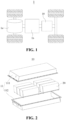
- a battery 10 is provided inside a vehicle 1.
- the battery 10 may be arranged at the bottom or head or tail of the vehicle 1.
- the battery 10 may be configured to power the vehicle 1, for example, the battery 10 may serve as an operating power source of the vehicle 1.
- the vehicle 1 may further comprise a controller 1b and a motor 1a.
- the controller 1b is configured to control the battery 10 to power the motor 1a, for example, serve to satisfy operating power demand when the vehicle 1 is starting, navigating, and running.
- the battery 10 not only can serve as an operating power source of the vehicle 1, but also can serve as a driving power source of the vehicle 1, to provide a driving power for the vehicle 1 in place of or partially in place of fuel or natural gas.
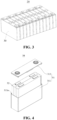
- the battery 10 comprises a battery cell (not shown in FIG. 2 ).
- the battery 10 may further comprise a box configured to accommodate the battery cell.
- the box 11 is configured to accommodate the battery cell, and the box 11 may have various structural forms.
- the box 11 may comprise a first box body portion 111 and a second box body portion 112.
- the first box body portion 111 and the second box body portion 112 cover each other.
- the first box body portion 111 and the second box body portion 112 jointly define an accommodating space for accommodating the battery cell.
- the second box body portion 112 may have a hollow structure with one opening end, the first box body portion 111 is a platy structure, the first box body portion 111 covers the opening side of the second box body portion 112 to form a box 11 having an accommodating space; and the first box body portion 111 and the second box body portion 112 each may be a hollow structure with one opening side.
- the opening side of the first box body portion 111 covers the opening side of the second box body portion 112 to form the box 11 having the accommodating space.
- the first box body portion 111 and the second box body portion 112 may be various shapes, such as a cylinder or a cuboid.
- a sealing element such as a sealant or a sealing ring, may be further arranged between the first box body portion 111 and the second box body portion 112.
- the battery 10 there may be one battery cell, or there may be a plurality of battery cells. If there are a plurality of battery cells, there may be series connection, or parallel connection, or parallel-series connection among the plurality of battery cells.
- the parallel-series connection means that there is both series connection and parallel connection among the plurality of battery cells.
- the plurality of battery cells may be directly connected together by series connection or parallel connection or parallel-series connection, and then an entirety composed of the plurality of battery cells is accommodated within the box 11, or the plurality of battery cells may also be first connected by series connection or parallel connection or parallel-series connection to form a battery module 20.
- the plurality of battery modules 20 are then connected by series connection or parallel connection or parallel-series connection to form an entirety, which is accommodated within the box 11.
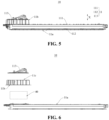
- FIG. 3 is a schematic structural diagram of the battery module 20 shown in FIG. 2 .
- the battery module 20 there are a plurality of battery cells 30.
- the plurality of battery cells 30 are first connected by series connection or parallel connection or parallel-series connection to form a battery module 20.
- the plurality of battery modules 20 are then connected by series connection or parallel connection or parallel-series connection to form an entirety, which is accommodated within the box 11.
- the plurality of battery cells 30 in the battery module 20 may be electrically connected through a bus component, so that the plurality of battery cells 30 in the battery module 20 are connected by parallel connection or series connection or parallel-series connection.
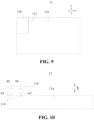
- FIG. 4 is a schematic exploded diagram of the battery cell 30 shown in FIG. 3 .
- the battery cell 30 provided in an embodiment of the present application comprises an electrode assembly 32 and a shell 31.
- the shell 31 has an accommodating cavity, and the electrode assembly 32 is accommodated within the accommodating cavity.
- the shell 31 may comprise a case 311 and an end cover 312.
- the case 311 is a hollow structure with an opening 311a on one side.
- the end cover 312 covers the opening 311a of the case 311 and forms a sealed connection to form a sealed space for accommodating the electrode assembly 32 and an electrolyte.
- the shell 31 may be further configured to accommodate an electrolyte, such as an electrolyte solution.
- the shell 31 may have various structural forms.
- the electrical element 40 comprises at least one of a relay, a fuse, and a sensor.
- the relay and the fuse are used for over-current or over-temperature protection. Specifically, when the voltage or current provided by the battery 10 to the electrical apparatus is overloaded, the relay and the fuse break the circuit to protect the battery 10 or relevant electrical devices of the electrical apparatus.
- the sensor can be configured to collect information such as voltage or current in the circuit to determine whether a relevant component is in a normal working status. In this way, the electrical element 40 can be configured with relevant components as needed to ensure normal operation of the electrical element 40.
- the first accommodating cavity 11a and the second accommodating cavity 11b may be arranged in any appropriate form, as long as the independence of their sealing performances is maintained.
- the box 11 comprises a first box body portion 111 and a second box body portion 112, and the first box body portion 111 covers the second box body portion 112 along a first direction X, to form the first accommodating cavity 11a and the second accommodating cavity 11b.
- the second accommodating cavity 11b is located on a side of the first accommodating cavity 11a along a second direction Y, and is arranged in parallel with the first accommodating cavity 11a, and the first direction X intersects with the second direction Y.
- first direction X and the second direction Y may be perpendicular to each other.
- the first box body portion 111 may be an integral structure, and covers the second box body portion 112, or there may be two first box body portions 111, which cover positions of the second box body portion 112 corresponding to the first accommodating cavity 11a and the second accommodating cavity 11b respectively.
- the access port 11c may be arranged in the first box body portion 111, or the access port 11c may be arranged in the second box body portion 112, which may be arranged based on actual requirements.
- the box 11 comprises a first box body portion 111 and a second box body portion 112, and the first box body portion 111 covers the second box body portion 112 along the first direction X, to form the first accommodating cavity 11a and the second accommodating cavity 11b.
- the second accommodating cavity 11b is located at an end of the box 11 along a second direction Y and a third direction Z, and the first direction X, the second direction Y, and the third direction Z intersect pairwise.
- the first direction X, the second direction Y, and the third direction Z are pairwise perpendicular.
- the access port 11c may be formed in the first box body portion 111, or at a position of the second box body portion 112 corresponding to the second accommodating cavity 11b along the second direction Y and the third direction Z.
- the volume of the second accommodating cavity 11b is relatively small
- the second accommodating cavity 11b is arranged at the end of the first accommodating cavity 11a along the second direction Y and the third direction Z
- the size of the second accommodating cavity 11b can be rationally distributed along the second direction Y and the third direction Z respectively based on the volume of the electrical element 40 within the second accommodating cavity 11b
- the first accommodating cavity 11a and the second accommodating cavity 11b have appropriate sizes at corresponding positions, so that the first accommodating cavity 11a accommodates more battery cells 30 by rational use of the space of the first accommodating cavity 11a, which is thus conductive to improving the energy density of the battery 10.
- the box 11 comprises a first box body portion 111 and a second box body portion 112, and the first box body portion 111 covers the second box body portion 112 along the first direction X, to form the first accommodating cavity 11a and the second accommodating cavity 11b.
- the second accommodating cavity 11b is located on one side of the first accommodating cavity 11a along the first direction X, an orthographic projection of the second accommodating cavity 11b along the first direction X is located within an orthographic projection of the first accommodating cavity 11a along the second direction Y, and the first direction X intersects with the second direction Y.
- An angle between the first direction X and the second direction Y may be an acute angle or a right angle.
- the first direction X is perpendicular to the third direction Z.
- the orthographic projection of the second accommodating cavity 11b along the first direction X is located within an orthographic projection of the first accommodating cavity 11a along the first direction X, and an edge of the orthographic projection of the second accommodating cavity 11b along the first direction X overlaps with an edge of the orthographic projection of the first accommodating cavity 11a along the first direction X, or an edge of the orthographic projection of the second accommodating cavity 11b along the first direction X is located within the orthographic projection of the first accommodating cavity 11a along the first direction X.
- first box body portions 111 which cover positions of the first box body portion 111 corresponding to the first accommodating cavity 11a and the second accommodating cavity 11b respectively, to form the first accommodating cavity 11a and the second accommodating cavity 11b that are isolated from each other.
- the access port 11c may be formed in the first box body portion 111 corresponding to the second accommodating cavity 11b, or be formed in the second box body portion 112 corresponding to the second accommodating cavity 11b.
- the second accommodating cavity 11b is located on one side of the first accommodating cavity 11a along the first direction X, the first accommodating cavity 11a can be regularly arranged along the second direction Y and the third direction Z, and the presence of the second accommodating cavity 11b will not affect the shape and size of the first accommodating cavity 11a along the second direction Y and the third direction Z. In this way, the size and shape of the first accommodating cavity 11a can be rationally arranged as needed.
- the battery 10 further comprises a battery management system unit 50, the battery management system unit 50 is accommodated within the second accommodating cavity 11b, and is electrically connected to the battery cell 30, and the battery management system unit 50 is configured to exchange information with the battery cell 30.
- the battery 10 further comprises a second connecting terminal 62, the second connecting terminal 62 is arranged on the partition 114, and the second connecting terminal 62 is configured to electrically connect the battery cell 30 to the battery management system unit 50.
- the battery management system unit 50 within the second accommodating cavity 11b needs to be electrically connected to the battery cell 30 within the first accommodating cavity 11a, and respective sealing of the first accommodating cavity 11a and the second accommodating cavity 11b also needs to maintained. Therefore, the second connecting terminal 62 is arranged, the battery management system unit 50 may be connected to one end of the second connecting terminal 62 close to the second accommodating cavity 11b through a wire harness, and the battery cell 30 is connected to one end of the second connecting terminal 62 close to the first accommodating cavity 11a through a wire harness such as a flexible printed circuit.
- arrangement of the second connecting terminal 62 is conductive to electrical connection between the battery cell 30 within the first accommodating cavity 11a and the battery management system unit 50 within the second accommodating cavity 11b on the premise that the first accommodating cavity 11a and the second accommodating cavity 11b are isolated from each other.
- the electrical apparatus provided according to an embodiment of the present application comprises the battery 10 provided in any one of the above embodiments, and the battery 10 is configured to provide electrical energy.
- the electrical apparatus provided according to an embodiment of the present application has same technical effects, and will not be repeated here.
- the access port 11c in the related art is usually provided at the bottom of an electrical apparatus such as a vehicle. Therefore, when the electrical element 40 needs to be repaired, the entire vehicle needs to be elevated for repair. For the case where the vehicle cannot be elevated in the wild or in some particular environments, it is difficult to quickly repair the electrical element 40.
- the second accommodating cavity 11b is arranged to be located below the compartment 70 along the gravity direction G, and the access cover 113 is adjacent to the compartment 701 and is arranged towards one side of the compartment 70, which is convenient for the operator to operate, within the compartment 70, the electrical element 40 within the second accommodating cavity 11b, and is conducive to reducing the difficulty in the inspection of the electrical element 40 within the second accommodating cavity 11b.
- the movable member 80 may be a structure such as a shelf or a seat 81 within the compartment 70, and the movable member 80 may be a structure separated from the compartment 70.
- the movable member 80 is a part of the bottom plate of the compartment 70.
- the movable member 80 is merely a component movable relative to the compartment 70, so that the movable member 80 can be removed, when necessary, thus providing enough operating space to inspect the electrical element 40 within the second accommodating cavity 11b.
- the movable member 80 is movably installed in the compartment 70, and the movable member 80 may be detachably installed in the compartment 70, or the movable member 80 may slide relative to the compartment 70.
- the movable member 80 is arranged, and the movable member 80 is located above a second accommodating member.
- the movable member 80 can be moved, so that the electrical element 40 can be conveniently inspected. In this way, it is conducive to further improving the convenience of the inspection operation on the electrical element 40 within the second accommodating cavity 11b.
- the movable member 80 comprises a seat 81, and the seat 81 is movably installed in the compartment 70.
- the compartment 70 may comprise a passenger compartment for carrying passengers, or a cab 71 for carrying a driver.
- the seat 81 may be installed in the passenger compartment, or the seat 81 may be installed within the cab 71.
- the seat 81 is movably installed in the compartment 70, and the seat 81 may be detachably connected to the compartment 70, or the seat 81 can slide relative to the compartment 70, to avoid the space where the access cover 113 is located, and reserve enough space for the repair operation of the electrical element 40.
- the access cover 113 is located below the seat 81 along the gravity direction G, which can use the space under the seat 81 to accommodate at least a part of the second accommodating cavity 11b, which is conducive to rational use of the space within the compartment 70. Moreover, the repair operation on the electrical element 40, when necessary, can be conveniently performed by removing the seat 81, which is conducive to improving the convenience of the repair operation on the electrical element 40.
- the compartment 70 comprises a cab 71, and the seat 81 is installed within the cab 71.
- the seat 81 within the cab 71 is higher than the seats 81 in the passenger compartment, and there is more space under the seat 81 within the cab 71 to accommodate at least a part of the second accommodating cavity 11b.
- an engineering vehicle such as a truck and a tractor
- only the cab 71 is provided with a seat 81, and the battery 10 is usually located below the cab 71 of the vehicle, so that the battery 10 is connected to a structure such as an actuator.
- the second accommodating cavity 11b is arranged below the seat 81 within the cab 71, which is convenient to rationally configure positions of the battery 10 and the second accommodating cavity 11b according to the arrangement of the battery 10 in the vehicle while ensuring the convenience of repair of the electrical element 40 within the second accommodating cavity 11b.
- the second accommodating cavity 11b is located below the seat 81 within the cab 71 along the gravity direction G, and the second accommodating cavity 11b is located within the cab 71.
- the first accommodating cavity 11a is located below the second accommodating cavity 11b along the gravity direction G, sizes of the second accommodating cavity 11b along the second direction Y and along the third direction Z are each smaller than the size of the first accommodating cavity 11a, and the second direction Y, the third direction Z and the gravity direction G are pairwise perpendicular, that is, the second accommodating cavity 11b is arranged to protrude from a part of the first accommodating cavity 11a along the gravity direction G.
- the access port 11c is located at the top of the second accommodating cavity 11b along the gravity direction G, and the access cover 113 covers the access port 11c.
Landscapes
- Chemical & Material Sciences (AREA)
- Chemical Kinetics & Catalysis (AREA)
- Electrochemistry (AREA)
- General Chemical & Material Sciences (AREA)
- Engineering & Computer Science (AREA)
- Microelectronics & Electronic Packaging (AREA)
- Manufacturing & Machinery (AREA)
- Aviation & Aerospace Engineering (AREA)
- Battery Mounting, Suspending (AREA)
Applications Claiming Priority (1)
| Application Number | Priority Date | Filing Date | Title |
|---|---|---|---|
| PCT/CN2022/119797 WO2024059995A1 (zh) | 2022-09-20 | 2022-09-20 | 电池以及用电装置 |
Publications (2)
| Publication Number | Publication Date |
|---|---|
| EP4583285A1 true EP4583285A1 (de) | 2025-07-09 |
| EP4583285A4 EP4583285A4 (de) | 2025-12-31 |
Family
ID=87338830
Family Applications (1)
| Application Number | Title | Priority Date | Filing Date |
|---|---|---|---|
| EP22959007.0A Pending EP4583285A4 (de) | 2022-09-20 | 2022-09-20 | Batterie und elektrische vorrichtung |
Country Status (4)
| Country | Link |
|---|---|
| US (1) | US20250202005A1 (de) |
| EP (1) | EP4583285A4 (de) |
| CN (2) | CN116583991A (de) |
| WO (1) | WO2024059995A1 (de) |
Families Citing this family (8)
| Publication number | Priority date | Publication date | Assignee | Title |
|---|---|---|---|---|
| WO2024059995A1 (zh) * | 2022-09-20 | 2024-03-28 | 宁德时代新能源科技股份有限公司 | 电池以及用电装置 |
| CN222126757U (zh) * | 2024-01-31 | 2024-12-06 | 惠州亿纬锂能股份有限公司 | 一种电池包 |
| CN121359293A (zh) * | 2024-03-01 | 2026-01-16 | 宁德时代新能源科技股份有限公司 | 电池、用电装置及储能装置 |
| DE212024000110U1 (de) * | 2024-03-27 | 2025-07-21 | Eve Energy Co., Ltd. | Batteriepaket |
| CN222813841U (zh) * | 2024-03-27 | 2025-04-29 | 惠州亿纬锂能股份有限公司 | 电池包 |
| WO2026025228A1 (zh) * | 2024-07-29 | 2026-02-05 | 宁德时代新能源科技股份有限公司 | 电池装置及用电装置 |
| CN223273408U (zh) * | 2024-09-03 | 2025-08-26 | 宁德时代新能源科技股份有限公司 | 电池装置、用电装置及车辆 |
| CN223273409U (zh) * | 2024-09-03 | 2025-08-26 | 宁德时代新能源科技股份有限公司 | 电池装置、用电装置及车辆 |
Family Cites Families (9)
| Publication number | Priority date | Publication date | Assignee | Title |
|---|---|---|---|---|
| JP4062932B2 (ja) * | 2002-02-19 | 2008-03-19 | 新神戸電機株式会社 | 電池モジュール |
| JP6244392B2 (ja) * | 2016-03-17 | 2017-12-06 | 本田技研工業株式会社 | 車両 |
| US20180170209A1 (en) * | 2016-12-16 | 2018-06-21 | Ford Global Technologies, Llc | Traction battery pack service panel |
| CN206422123U (zh) * | 2017-02-09 | 2017-08-18 | 宁德时代新能源科技股份有限公司 | 电池包 |
| DE202018100239U1 (de) * | 2018-01-17 | 2018-01-25 | Stöcklin Logistik Ag | Batteriestromversorgung für ein in einem explosionsgefährdeten Bereich eingesetztes Flurförderfahrzeug |
| CN209016124U (zh) * | 2018-09-30 | 2019-06-21 | 宁德时代新能源科技股份有限公司 | 一种电池模组 |
| CN209045650U (zh) * | 2018-11-09 | 2019-06-28 | 宁德时代新能源科技股份有限公司 | 电池包的盖体和电池包壳体 |
| CN216958352U (zh) * | 2022-03-24 | 2022-07-12 | 浙江极氪智能科技有限公司 | 电池箱、电池模组和车辆 |
| WO2024059995A1 (zh) * | 2022-09-20 | 2024-03-28 | 宁德时代新能源科技股份有限公司 | 电池以及用电装置 |
-
2022
- 2022-09-20 WO PCT/CN2022/119797 patent/WO2024059995A1/zh not_active Ceased
- 2022-09-20 CN CN202280005883.8A patent/CN116583991A/zh active Pending
- 2022-09-20 EP EP22959007.0A patent/EP4583285A4/de active Pending
- 2022-12-01 CN CN202223210239.0U patent/CN219436019U/zh active Active
-
2025
- 2025-03-05 US US19/070,850 patent/US20250202005A1/en active Pending
Also Published As
| Publication number | Publication date |
|---|---|
| CN219436019U (zh) | 2023-07-28 |
| CN116583991A (zh) | 2023-08-11 |
| WO2024059995A1 (zh) | 2024-03-28 |
| EP4583285A4 (de) | 2025-12-31 |
| US20250202005A1 (en) | 2025-06-19 |
Similar Documents
| Publication | Publication Date | Title |
|---|---|---|
| EP4583285A1 (de) | Batterie und elektrische vorrichtung | |
| EP4131631B1 (de) | Elektrodenanordnung, batteriezelle, batterie und stromverbrauchende vorrichtung | |
| US20240250347A1 (en) | Battery cell, battery and electric-powered device | |
| CN116250129B (zh) | 电池单体、电池、用电设备及电池的制造方法和设备 | |
| CN216250985U (zh) | 电池单体、电池和用电设备 | |
| US20240213594A1 (en) | End cover assembly, battery cell, battery, and power consumption device | |
| EP4407758A1 (de) | Batteriezelle, batterie, elektrische vorrichtung sowie verfahren und vorrichtung zur herstellung der batteriezelle | |
| CN218919088U (zh) | 电池单体的端盖组件、电池单体、电池以及用电装置 | |
| KR20220139384A (ko) | 전극 어셈블리, 전지 셀, 전지 및 전력 소비 장치 | |
| US20250192375A1 (en) | Battery and electrical apparatus | |
| US11830996B1 (en) | Battery, power consuming apparatus, and method and apparatus for manufacturing battery | |
| US20240283109A1 (en) | Battery cell, method and system for manufacturing battery cell, battery and electrical apparatus | |
| WO2023207619A1 (zh) | 电池、用电设备以及电池的线束的二次利用方法 | |
| CN217719885U (zh) | 电池及用电装置 | |
| CN219017807U (zh) | 电池以及用电装置 | |
| US20250079535A1 (en) | Electrode assembly, battery cell, battery, and electrical device | |
| US20250015452A1 (en) | Battery cell, battery, and electrical device | |
| US20240266694A1 (en) | Electrode terminal, pole assembly, battery, and electric device | |
| EP4564553A1 (de) | Batterie und elektrische vorrichtung | |
| EP4354598A1 (de) | Batteriezelle und herstellungsverfahren und herstellungssystem dafür sowie batterie und elektrische vorrichtung | |
| JP2025508463A (ja) | 電池セル、電池及び電力消費装置 | |
| CN223843122U (zh) | 电池装置和用电设备 | |
| CN218996992U (zh) | 盖体、电池和用电装置 | |
| CN221994665U (zh) | 电池单体、电池装置、用电装置及储能装置 | |
| US20240258618A1 (en) | Battery cell, battery, power consumption apparatus, and method and apparatus for preparing battery |
Legal Events
| Date | Code | Title | Description |
|---|---|---|---|
| STAA | Information on the status of an ep patent application or granted ep patent |
Free format text: STATUS: THE INTERNATIONAL PUBLICATION HAS BEEN MADE |
|
| PUAI | Public reference made under article 153(3) epc to a published international application that has entered the european phase |
Free format text: ORIGINAL CODE: 0009012 |
|
| STAA | Information on the status of an ep patent application or granted ep patent |
Free format text: STATUS: REQUEST FOR EXAMINATION WAS MADE |
|
| 17P | Request for examination filed |
Effective date: 20250401 |
|
| AK | Designated contracting states |
Kind code of ref document: A1 Designated state(s): AL AT BE BG CH CY CZ DE DK EE ES FI FR GB GR HR HU IE IS IT LI LT LU LV MC MK MT NL NO PL PT RO RS SE SI SK SM TR |
|
| DAV | Request for validation of the european patent (deleted) | ||
| DAX | Request for extension of the european patent (deleted) | ||
| A4 | Supplementary search report drawn up and despatched |
Effective date: 20251127 |
|
| RIC1 | Information provided on ipc code assigned before grant |
Ipc: H01M 50/284 20210101AFI20251121BHEP Ipc: H01M 10/42 20060101ALI20251121BHEP Ipc: H01M 50/204 20210101ALI20251121BHEP Ipc: H01M 50/271 20210101ALI20251121BHEP |