EP4583437A1 - Informationsübertragungsverfahren und -vorrichtung - Google Patents
Informationsübertragungsverfahren und -vorrichtung Download PDFInfo
- Publication number
- EP4583437A1 EP4583437A1 EP23881500.5A EP23881500A EP4583437A1 EP 4583437 A1 EP4583437 A1 EP 4583437A1 EP 23881500 A EP23881500 A EP 23881500A EP 4583437 A1 EP4583437 A1 EP 4583437A1
- Authority
- EP
- European Patent Office
- Prior art keywords
- terminal
- carrier
- carrier group
- information
- consecutive
- Prior art date
- Legal status (The legal status is an assumption and is not a legal conclusion. Google has not performed a legal analysis and makes no representation as to the accuracy of the status listed.)
- Pending
Links
Images



Classifications
-
- H—ELECTRICITY
- H04—ELECTRIC COMMUNICATION TECHNIQUE
- H04W—WIRELESS COMMUNICATION NETWORKS
- H04W24/00—Supervisory, monitoring or testing arrangements
- H04W24/02—Arrangements for optimising operational condition
-
- H—ELECTRICITY
- H04—ELECTRIC COMMUNICATION TECHNIQUE
- H04W—WIRELESS COMMUNICATION NETWORKS
- H04W76/00—Connection management
- H04W76/20—Manipulation of established connections
- H04W76/23—Manipulation of direct-mode connections
-
- H—ELECTRICITY
- H04—ELECTRIC COMMUNICATION TECHNIQUE
- H04L—TRANSMISSION OF DIGITAL INFORMATION, e.g. TELEGRAPHIC COMMUNICATION
- H04L1/00—Arrangements for detecting or preventing errors in the information received
- H04L1/12—Arrangements for detecting or preventing errors in the information received by using return channel
- H04L1/16—Arrangements for detecting or preventing errors in the information received by using return channel in which the return channel carries supervisory signals, e.g. repetition request signals
- H04L1/18—Automatic repetition systems, e.g. Van Duuren systems
- H04L1/1867—Arrangements specially adapted for the transmitter end
- H04L1/1893—Physical mapping arrangements
-
- H—ELECTRICITY
- H04—ELECTRIC COMMUNICATION TECHNIQUE
- H04L—TRANSMISSION OF DIGITAL INFORMATION, e.g. TELEGRAPHIC COMMUNICATION
- H04L1/00—Arrangements for detecting or preventing errors in the information received
- H04L1/12—Arrangements for detecting or preventing errors in the information received by using return channel
- H04L1/16—Arrangements for detecting or preventing errors in the information received by using return channel in which the return channel carries supervisory signals, e.g. repetition request signals
- H04L1/18—Automatic repetition systems, e.g. Van Duuren systems
- H04L1/1867—Arrangements specially adapted for the transmitter end
- H04L1/1896—ARQ related signaling
-
- H—ELECTRICITY
- H04—ELECTRIC COMMUNICATION TECHNIQUE
- H04W—WIRELESS COMMUNICATION NETWORKS
- H04W72/00—Local resource management
- H04W72/04—Wireless resource allocation
- H04W72/044—Wireless resource allocation based on the type of the allocated resource
- H04W72/0453—Resources in frequency domain, e.g. a carrier in FDMA
-
- H—ELECTRICITY
- H04—ELECTRIC COMMUNICATION TECHNIQUE
- H04W—WIRELESS COMMUNICATION NETWORKS
- H04W72/00—Local resource management
- H04W72/20—Control channels or signalling for resource management
- H04W72/25—Control channels or signalling for resource management between terminals via a wireless link, e.g. sidelink
-
- H—ELECTRICITY
- H04—ELECTRIC COMMUNICATION TECHNIQUE
- H04W—WIRELESS COMMUNICATION NETWORKS
- H04W76/00—Connection management
- H04W76/20—Manipulation of established connections
- H04W76/28—Discontinuous transmission [DTX]; Discontinuous reception [DRX]
-
- H—ELECTRICITY
- H04—ELECTRIC COMMUNICATION TECHNIQUE
- H04L—TRANSMISSION OF DIGITAL INFORMATION, e.g. TELEGRAPHIC COMMUNICATION
- H04L1/00—Arrangements for detecting or preventing errors in the information received
- H04L1/12—Arrangements for detecting or preventing errors in the information received by using return channel
- H04L1/16—Arrangements for detecting or preventing errors in the information received by using return channel in which the return channel carries supervisory signals, e.g. repetition request signals
- H04L1/18—Automatic repetition systems, e.g. Van Duuren systems
- H04L1/1867—Arrangements specially adapted for the transmitter end
- H04L1/1874—Buffer management
- H04L1/1877—Buffer management for semi-reliable protocols, e.g. for less sensitive applications like streaming video
-
- H—ELECTRICITY
- H04—ELECTRIC COMMUNICATION TECHNIQUE
- H04W—WIRELESS COMMUNICATION NETWORKS
- H04W24/00—Supervisory, monitoring or testing arrangements
- H04W24/04—Arrangements for maintaining operational condition
-
- H—ELECTRICITY
- H04—ELECTRIC COMMUNICATION TECHNIQUE
- H04W—WIRELESS COMMUNICATION NETWORKS
- H04W92/00—Interfaces specially adapted for wireless communication networks
- H04W92/16—Interfaces between hierarchically similar devices
- H04W92/18—Interfaces between hierarchically similar devices between terminal devices
Definitions
- the sidelink supports unicast communication, multicast communication, and broadcast communication.
- unicast communication can be performed only between two terminals that have established a unicast connection.
- Both unicast communication and multicast communication on the sidelink support hybrid automatic repeat request (hybrid automatic repeat request, HARQ) feedback.
- HARQ hybrid automatic repeat request
- SL carriers may be classified into a low-frequency carrier and a high-frequency carrier.
- the terminal records a consecutive DTX count for each unicast connection, and communication link statuses of the low-frequency carrier and the high-frequency carrier cannot be distinguished.
- SL carriers may alternatively be classified into a licensed carrier and an unlicensed carrier.
- the terminal records a consecutive DTX count for each unicast connection, and communication link statuses of the licensed carrier and the unlicensed carrier cannot be distinguished.
- SL carriers may alternatively be classified into a primary carrier and a secondary carrier. The terminal records a consecutive DTX count for each unicast connection, and communication link statuses of the primary carrier and the secondary carrier cannot be distinguished.
- This application provides an information transmission method and an apparatus, to improve reliability of information transmission on a sidelink.
- an information transmission method may be performed by a chip or a chip system on a terminal side.
- the method is used by a first terminal to perform unicast communication with a second terminal over a sidelink.
- the method includes: The first terminal receives configuration information from a network device, where the configuration information includes a first consecutive discontinuous transmission DTX threshold and a second consecutive DTX threshold, the first consecutive DTX threshold is associated with a first carrier group, and the second consecutive DTX threshold is associated with a second carrier group; the first terminal sends first information to the second terminal by using a carrier in the first carrier group; the first terminal sends second information to the second terminal by using a carrier in the second carrier group; and the first terminal stops performing information transmission by using the first carrier group if a quantity of times that the first terminal consecutively fails to detect a first hybrid automatic repeat request HARQ feedback message corresponding to the first information is greater than or equal to the first consecutive DTX threshold; and/or the first terminal stops performing information transmission by using the
- the first terminal records the quantity of times that the first HARQ feedback message is consecutively not detected in a process of sending the first information to the second terminal by using the carrier in the first carrier group, and records the quantity of times that the second HARQ feedback message is consecutively not detected in a process of sending the second information to the second terminal by using the carrier in the second carrier group.
- the first terminal stops performing information transmission by using the first carrier group and may continue to perform information transmission by using the second carrier group if the quantity of times that the first terminal consecutively fails to detect the first HARQ feedback message corresponding to the first information is greater than or equal to the first consecutive DTX threshold and the quantity of times that the first terminal consecutively fails to detect the second HARQ feedback message corresponding to the second information is less than the second consecutive DTX threshold.
- the first terminal stops performing information transmission by using the second carrier group and may continue to perform information transmission by using the first carrier group if the quantity of times that the first terminal consecutively fails to detect the first HARQ feedback message corresponding to the first information is less than the first consecutive DTX threshold and the quantity of times that the first terminal consecutively fails to detect the second HARQ feedback message corresponding to the second information is greater than or equal to the second consecutive DTX threshold.
- the technical solution in this embodiment of this application can improve reliability of information transmission on the sidelink.
- the second consecutive DTX threshold is greater than the first consecutive DTX threshold.
- the first carrier group includes the licensed spectrum carrier
- the second carrier group includes the unlicensed spectrum carrier
- a probability of sent resource collision is higher, and a quantity of information transmission failures is greater. Therefore, when the second consecutive DTX threshold is greater than the first consecutive DTX threshold, reliability of performing information transmission by using the unlicensed spectrum carrier can be improved.
- the first carrier group includes a primary carrier
- the second carrier group includes a secondary carrier
- that the first terminal stops performing information transmission by using the first carrier group if a quantity of times that the first terminal consecutively fails to detect a first HARQ feedback message corresponding to the first information is greater than or equal to the first consecutive DTX threshold includes: The first terminal stops performing information transmission by using the first carrier group and the second carrier group if the quantity of times that the first terminal consecutively fails to detect the first HARQ feedback message corresponding to the first information is greater than or equal to the first consecutive DTX threshold.
- the primary carrier includes the primary carrier
- the second carrier group includes the secondary carrier
- the primary carrier is used to send control signaling and data
- the secondary carrier is used to send data
- a PSSCH resource for sending data by using the secondary carrier needs to be scheduled by using the primary carrier. If information transmission is stopped to be performed by using the primary carrier group, information transmission cannot be performed by using the secondary carrier.
- the method further includes: The first terminal releases the unicast connection between the first terminal and the second terminal if the quantity of times that the first terminal consecutively fails to detect the first HARQ feedback message corresponding to the first information is greater than or equal to the first consecutive DTX threshold.
- the method further includes: The first terminal sends first indication information to the network device if the quantity of times that the first terminal consecutively fails to detect the second HARQ feedback message corresponding to the second information is greater than or equal to the second consecutive DTX threshold, where the first indication information indicates that the second carrier group is invalid.
- the first terminal sends second indication information to the second terminal if the quantity of times that the first terminal consecutively fails to detect the second HARQ feedback message corresponding to the second information is greater than or equal to the second consecutive DTX threshold, where the second indication information indicates that the second carrier group is invalid.
- the first terminal sends second indication information to the second terminal if the quantity of times that the first terminal consecutively fails to detect the first HARQ feedback message corresponding to the first information is greater than or equal to the first consecutive DTX threshold, where the second indication information indicates that the first carrier group is invalid.
- the first terminal stops performing information transmission by using the FR2-1 carrier group if the value of the second numConsecutiveDTX recorded by the first terminal is greater than or equal to the second consecutive DTX threshold.
- the first terminal stops performing information transmission by using the FR2-2 carrier group if the value of the third numConsecutiveDTX recorded by the first terminal is greater than or equal to the second consecutive DTX threshold.
- the first carrier group includes a primary carrier
- the second carrier group includes a secondary carrier.
- the first carrier group may be referred to as a primary carrier group
- the second carrier group may be referred to as a secondary carrier group.
- the primary carrier group includes one carrier
- the secondary carrier group includes one or more carriers.
- the first terminal stops performing information transmission by using the first carrier group if the quantity of times that the first terminal consecutively fails to detect the first HARQ feedback message corresponding to the first information is greater than or equal to the first consecutive DTX threshold; and/or the first terminal stops performing information transmission by using the second carrier group if the quantity of times that the first terminal consecutively fails to detect the second HARQ feedback message corresponding to the second information is greater than or equal to the second consecutive DTX threshold; and/or the first terminal stops performing information transmission by using the third carrier group if a quantity of times that the first terminal consecutively fails to detect the third HARQ feedback message corresponding to the third information is greater than or equal to the third consecutive DTX threshold; and/or the first terminal stops performing information transmission by using the fourth carrier group if a quantity of times that the first terminal consecutively fails to detect the fourth HARQ feedback message corresponding to the fourth information is greater than or equal to the fourth consecutive DTX threshold.
- a sending terminal is the foregoing first terminal
- a receiving terminal is the foregoing second terminal.
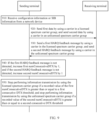
- FIG. 8 is a schematic interaction flowchart of an example of the information transmission method according to an embodiment of this application.
- the sending terminal maintains a consecutive DTX counter corresponding to an FR1 carrier group and a consecutive DTX counter corresponding to an FR2 carrier group. It may be understood that the sending terminal records a value of first numConsecutiveDTX corresponding to the FR1 carrier group and a value of second numConsecutiveDTX corresponding to the FR2 carrier group. Specific steps are as follows.
- the configuration information or the SIB information sent by the network device to the first terminal includes an sl-maxNumConsecutiveDTX_FR1 field and an sl-maxNumConsecutiveDTX_FR2 field, the sl-maxNumConsecutiveDTX_FR1 field indicates the first consecutive DTX threshold, and the sl-maxNumConsecutiveDTX_FR2 field indicates the second consecutive DTX threshold.
- the first consecutive DTX threshold and the second consecutive DTX threshold may be the same or may be different.
- the receiving terminal receives the first data from the sending terminal; and if the first data from the sending terminal is received by the receiving terminal, the receiving terminal sends a first HARQ feedback message corresponding to the first data to the sending terminal by using a carrier in the FR1 carrier group; or if the first data from the sending terminal is not received by the receiving terminal, the receiving terminal does not send a first HARQ feedback message; and the receiving terminal receives the second data from the sending terminal; and if the second data from the sending terminal is received by the receiving terminal, the receiving terminal sends a second HARQ feedback message corresponding to the second data to the sending terminal by using a carrier in the FR2 carrier group; or if the second data from the sending terminal is not received by the receiving terminal, the receiving terminal does not send a second HARQ feedback message.
- the sending terminal After sending the first data to the receiving terminal, the sending terminal detects the first HARQ feedback message corresponding to the first data; and if the sending terminal fails to detect the first HARQ feedback message corresponding to the first data, the sending terminal increases the first numConsecutiveDTX by 1; and after sending the second data to the receiving terminal, the sending terminal detects the second HARQ feedback message corresponding to the second data; and if the sending terminal fails to detect the second HARQ feedback message corresponding to the second data, the sending terminal increases the second numConsecutiveDTX by 1.
- the sending terminal sends a plurality of pieces of first data to the receiving terminal by using a plurality of carriers in the FR1 carrier group, and the sending terminal sends a plurality of pieces of second data to the receiving terminal by using a plurality of carriers in the FR2 carrier group.
- the sending terminal records the value of the first numConsecutiveDTX corresponding to the FR1 carrier group and the value of the second numConsecutiveDTX corresponding to the FR2 carrier group.
- the sending terminal stops performing transmission on information/data and control signaling by using the FR1 carrier group if the value of the first numConsecutiveDTX recorded by the sending terminal is greater than or equal to the first consecutive DTX threshold; and the sending terminal stops performing transmission on information/data and control signaling by using the FR2 carrier group if the value of the second numConsecutiveDTX recorded by the sending terminal is greater than or equal to the second consecutive DTX threshold.
- the value of the first numConsecutiveDTX recorded by the sending terminal may be understood as a quantity of times that the sending terminal consecutively fails to detect the first HARQ feedback message corresponding to the first data.
- the value of the second numConsecutiveDTX recorded by the sending terminal may be understood as a quantity of times that the sending terminal consecutively fails to detect the second HARQ feedback message corresponding to the second data.
- the sending terminal releases a unicast connection between the sending terminal and the receiving terminal if the value of the first numConsecutiveDTX recorded by the sending terminal is greater than or equal to the first consecutive DTX threshold and the value of the second numConsecutiveDTX recorded by the sending terminal is greater than or equal to the second consecutive DTX threshold.
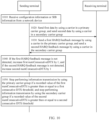
- FIG. 9 is a schematic interaction flowchart of an example of the information transmission method according to an embodiment of this application.
- the sending terminal maintains a consecutive DTX counter corresponding to a licensed spectrum carrier group and a consecutive DTX counter corresponding to an unlicensed spectrum carrier group. It may be understood that the sending terminal records a value of first numConsecutiveDTX corresponding to the licensed spectrum carrier group and a value of second numConsecutiveDTX corresponding to the unlicensed spectrum carrier group. Specific steps are as follows.
- a network device sends configuration information or SIB information to the sending terminal, and correspondingly, the sending terminal receives the configuration information or the SIB information from the network device.
- the configuration information or the SIB information includes a first consecutive DTX threshold and a second consecutive DTX threshold.
- the first consecutive DTX threshold is associated with the licensed spectrum carrier group
- the second consecutive DTX threshold is associated with the unlicensed spectrum carrier group.
- the configuration information or the SIB information sent by the network device to the first terminal includes an sl-maxNumConsecutiveDTX_lic field and an sl-maxNumConsecutiveDTX_unlic field, the sl-maxNumConsecutiveDTX_lic field indicates the first consecutive DTX threshold, and the sl-maxNumConsecutiveDTX_unlic field indicates the second consecutive DTX threshold.
- the first consecutive DTX threshold and the second consecutive DTX threshold may be the same or may be different.
- the configuration information or the SIB information sent by the network device to the first terminal includes an sl-maxNumConsecutiveDTX field, and the first consecutive DTX threshold and the second consecutive DTX threshold are equal to a consecutive DTX threshold indicated by the sl-maxNumConsecutiveDTX field.
- the first consecutive DTX threshold is the same as the second consecutive DTX threshold.
- the sending terminal sends first data to the receiving terminal by using a carrier in the licensed spectrum carrier group; and the sending terminal sends second data to the receiving terminal by using a carrier in the unlicensed spectrum carrier group.
- the sending terminal After sending the first data to the receiving terminal, the sending terminal detects the first HARQ feedback message corresponding to the first data; and if the sending terminal fails to detect the first HARQ feedback message corresponding to the first data, the sending terminal increases the first numConsecutiveDTX by 1; and after sending the second data to the receiving terminal, the sending terminal detects the second HARQ feedback message corresponding to the second data; and if the sending terminal fails to detect the second HARQ feedback message corresponding to the second data, the sending terminal increases the second numConsecutiveDTX by 1.
- the sending terminal releases a unicast connection between the sending terminal and the receiving terminal if the value of the first numConsecutiveDTX recorded by the sending terminal is greater than or equal to the first consecutive DTX threshold and the value of the second numConsecutiveDTX recorded by the sending terminal is greater than or equal to the second consecutive DTX threshold.
- FIG. 11 is a schematic interaction flowchart of an example of the information transmission method according to an embodiment of this application.
- the sending terminal maintains a consecutive DTX counter corresponding to a low-frequency carrier group of a licensed spectrum carrier, a consecutive DTX counter corresponding to a high-frequency carrier group of the licensed spectrum carrier, a consecutive DTX counter corresponding to a low-frequency carrier group of an unlicensed spectrum carrier, and a consecutive DTX counter corresponding to a high-frequency carrier group of the unlicensed spectrum carrier.
- the sending terminal records a value of first numConsecutiveDTX corresponding to the low-frequency carrier group of the licensed spectrum carrier, a value of second numConsecutiveDTX corresponding to the high-frequency carrier group of the licensed spectrum carrier, a value of third numConsecutiveDTX corresponding to the low-frequency carrier group of the unlicensed spectrum carrier, and a value of fourth numConsecutiveDTX corresponding to the high-frequency carrier group of the unlicensed spectrum carrier.
- the sending terminal sends first data to the receiving terminal by using a carrier in the low-frequency carrier group of the licensed spectrum carrier; the sending terminal sends second data to the receiving terminal by using a carrier in the high-frequency carrier group of the licensed spectrum carrier; the sending terminal sends third data to the receiving terminal by using a carrier in the low-frequency carrier group of the unlicensed spectrum carrier; and the sending terminal sends fourth data to the receiving terminal by using a carrier in the high-frequency carrier group of the unlicensed spectrum carrier.
- the sending terminal stops performing transmission on information/data and control signaling by using the low-frequency carrier group of the licensed spectrum carrier if the value of the first numConsecutiveDTX recorded by the sending terminal is greater than or equal to the first consecutive DTX threshold; the sending terminal stops performing transmission on information/data and control signaling by using the high-frequency carrier group of the licensed spectrum carrier if the value of the second numConsecutiveDTX recorded by the sending terminal is greater than or equal to the second consecutive DTX threshold; the sending terminal stops performing transmission on information/data and control signaling by using the low-frequency carrier group of the unlicensed spectrum carrier if the value of the third numConsecutiveDTX recorded by the sending terminal is greater than or equal to the third consecutive DTX threshold; and the sending terminal stops performing transmission on information/data and control signaling by using the high-frequency carrier group of the unlicensed spectrum carrier if the value of the fourth numConsecutiveDTX recorded by the sending terminal is greater than or equal to the fourth consecutive DTX threshold
- the value of the first numConsecutiveDTX recorded by the sending terminal may be understood as a quantity of times that the sending terminal consecutively fails to detect the first HARQ feedback message corresponding to the first data.
- the value of the second numConsecutiveDTX recorded by the sending terminal may be understood as a quantity of times that the sending terminal consecutively fails to detect the second HARQ feedback message corresponding to the second data.
- the value of the third numConsecutiveDTX recorded by the sending terminal may be understood as a quantity of times that the sending terminal consecutively fails to detect the third HARQ feedback message corresponding to the third data.
- the value of the fourth numConsecutiveDTX recorded by the sending terminal may be understood as a quantity of times that the sending terminal consecutively fails to detect the fourth HARQ feedback message corresponding to the fourth data.
- the sending terminal releases a unicast connection between the sending terminal and the receiving terminal if the value of the first numConsecutiveDTX recorded by the sending terminal is greater than or equal to the first consecutive DTX threshold, the value of the second numConsecutiveDTX recorded by the sending terminal is greater than or equal to the second consecutive DTX threshold, the value of the third numConsecutiveDTX recorded by the sending terminal is greater than or equal to the third consecutive DTX threshold, and the value of the fourth numConsecutiveDTX recorded by the sending terminal is greater than or equal to the fourth consecutive DTX threshold.
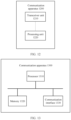
- FIG. 12 is a block diagram of a communication apparatus 1200 according to an embodiment of this application.
- the apparatus may be used in or deployed in the first terminal in the method embodiments of this application.
- the apparatus performs unicast communication with a second terminal over a sidelink.
- the communication apparatus 1200 includes:
- the processing unit 1220 is further configured to release a unicast connection between the apparatus and the second terminal if the quantity of times that the apparatus consecutively fails to detect the first HARQ feedback message corresponding to the first information is greater than or equal to the first consecutive DTX threshold and the quantity of times that the apparatus consecutively fails to detect the second HARQ feedback message corresponding to the second information is greater than or equal to the second consecutive DTX threshold.
- the first carrier group includes a low-frequency carrier, and the second carrier group includes a high-frequency carrier; or the first carrier group includes a licensed spectrum carrier, and the second carrier group includes an unlicensed spectrum carrier.
- the first carrier group includes a primary carrier
- the second carrier group includes a secondary carrier
- the processing unit 1220 is specifically configured to stop performing information transmission by using the first carrier group and the second carrier group if the quantity of times that the apparatus consecutively fails to detect the first HARQ feedback message corresponding to the first information is greater than or equal to the first consecutive DTX threshold.
- the configuration information further includes a third consecutive DTX threshold and a fourth consecutive DTX threshold, the third consecutive DTX threshold is associated with a third carrier group, and the fourth consecutive DTX threshold is associated with a fourth carrier group;
- the processor 1310 may be an integrated circuit chip and has a signal processing capability. In an implementation process, steps in the foregoing method embodiments can be implemented by using a hardware integrated logic circuit in the processor, or by using instructions in a form of software.
- the processor may be a general-purpose processor, a digital signal processor (digital signal processor, DSP), an application-specific integrated circuit (application specific integrated circuit, ASIC), a field programmable gate array (field programmable gate array, FPGA) or another programmable logic device, a discrete gate or transistor logic device, or a discrete hardware component.
- DSP digital signal processor
- ASIC application specific integrated circuit
- FPGA field programmable gate array
- the processor may implement or perform the methods, steps, and logical block diagrams that are disclosed in embodiments of this application.
- the general-purpose processor may be a microprocessor, or the processor may be any conventional processor or the like.
- the steps in the methods disclosed with reference to embodiments of this application may be directly performed and completed by a hardware decoding processor, or may be performed and completed by using a combination of hardware and software modules in a decoding processor.
- the software module may be located in a mature storage medium in the art, for example, a random access memory, a flash memory, a read-only memory, a programmable read-only memory, an electrically erasable programmable memory, or a register.
- the storage medium is located in the memory, and the processor reads information in the memory and completes the steps in the foregoing methods in combination with hardware of the processor.
- a and/or B may indicate the following three cases: Only A exists, both A and B exist, and only B exists.
- the character "/" in this specification usually indicates an "or” relationship between the associated objects.
- the term "at least one” may indicate “one” and "two or more”.
- at least one of A, B, and C may indicate the following seventh cases: Only A exists, only B exists, only C exists, both A and B exist, both A and C exist, both C and B exist, and A, B, and C all exist.
- the units described as separate parts may or may not be physically separate, and parts displayed as units may or may not be physical units, to be specific, may be located in one location, or may be distributed on a plurality of network units. Some or all of the units may be selected according to actual requirements to achieve the objectives of the solutions of embodiments.
- the functions When the functions are implemented in a form of software functional unit and sold or used as an independent product, the functions may be stored in a computer-readable storage medium. Based on such an understanding, the technical solutions of this application essentially, or a part contributing to a conventional technology, or some of the technical solutions may be implemented in a form of software product.
- the computer software product is stored in a storage medium and includes several instructions for instructing a computer device (which may be a personal computer, a server, a network device, or the like) to perform all or some of the steps of the methods in embodiments of this application.
- the foregoing storage medium includes any medium that can store program code, such as a USB flash drive, a removable hard disk, a read-only memory (read-only memory, ROM), a random access memory (random access memory, RAM), a magnetic disk, or an optical disc.
- program code such as a USB flash drive, a removable hard disk, a read-only memory (read-only memory, ROM), a random access memory (random access memory, RAM), a magnetic disk, or an optical disc.
Landscapes
- Engineering & Computer Science (AREA)
- Computer Networks & Wireless Communication (AREA)
- Signal Processing (AREA)
- Mobile Radio Communication Systems (AREA)
Applications Claiming Priority (2)
| Application Number | Priority Date | Filing Date | Title |
|---|---|---|---|
| CN202211323013.3A CN117998382A (zh) | 2022-10-27 | 2022-10-27 | 信息传输的方法和装置 |
| PCT/CN2023/118303 WO2024087919A1 (zh) | 2022-10-27 | 2023-09-12 | 信息传输的方法和装置 |
Publications (2)
| Publication Number | Publication Date |
|---|---|
| EP4583437A1 true EP4583437A1 (de) | 2025-07-09 |
| EP4583437A4 EP4583437A4 (de) | 2025-11-12 |
Family
ID=90829969
Family Applications (1)
| Application Number | Title | Priority Date | Filing Date |
|---|---|---|---|
| EP23881500.5A Pending EP4583437A4 (de) | 2022-10-27 | 2023-09-12 | Informationsübertragungsverfahren und -vorrichtung |
Country Status (4)
| Country | Link |
|---|---|
| US (1) | US20250240847A1 (de) |
| EP (1) | EP4583437A4 (de) |
| CN (1) | CN117998382A (de) |
| WO (1) | WO2024087919A1 (de) |
Families Citing this family (1)
| Publication number | Priority date | Publication date | Assignee | Title |
|---|---|---|---|---|
| JP2025531636A (ja) * | 2023-08-07 | 2025-09-25 | インターデイジタル パテント ホールディングス インコーポレイテッド | 認可及び未認可を含むマルチキャリアにおけるsl rlf |
Family Cites Families (8)
| Publication number | Priority date | Publication date | Assignee | Title |
|---|---|---|---|---|
| US11438794B2 (en) * | 2019-05-02 | 2022-09-06 | Mediatek Inc. | Radio link monitoring in sidelink communications |
| US11528768B2 (en) * | 2019-11-06 | 2022-12-13 | FG Innovation Company Limited | Method of sidelink radio link failure control and related device |
| JP7324369B2 (ja) * | 2019-11-07 | 2023-08-09 | エルジー エレクトロニクス インコーポレイティド | 無線通信システムにおけるサイドリンク無線リンク失敗を表示する方法及び装置 |
| KR20210098128A (ko) * | 2020-01-31 | 2021-08-10 | 삼성전자주식회사 | 무선 통신 시스템에서 사이드링크 보조 캐리어를 제어하는 장치 및 방법 |
| JP7462797B2 (ja) * | 2020-05-13 | 2024-04-05 | エルジー エレクトロニクス インコーポレイティド | Nr v2xにおいてdtxベースのrlf動作を実行する方法及び装置 |
| CN116686388A (zh) * | 2021-01-01 | 2023-09-01 | 高通股份有限公司 | 用于使用载波聚集的侧链路控制连接的技术 |
| EP4418582A4 (de) * | 2021-10-12 | 2024-12-11 | Fujitsu Limited | Verfahren und vorrichtung zum senden/empfangen von signalen und kommunikationssystem |
| US20250016638A1 (en) * | 2021-10-29 | 2025-01-09 | Telefonaktiebolaget Lm Ericsson (Publ) | Radio link failure trigger and recovery in case of sidelink carrier aggregation |
-
2022
- 2022-10-27 CN CN202211323013.3A patent/CN117998382A/zh active Pending
-
2023
- 2023-09-12 EP EP23881500.5A patent/EP4583437A4/de active Pending
- 2023-09-12 WO PCT/CN2023/118303 patent/WO2024087919A1/zh not_active Ceased
-
2025
- 2025-04-09 US US19/173,918 patent/US20250240847A1/en active Pending
Also Published As
| Publication number | Publication date |
|---|---|
| EP4583437A4 (de) | 2025-11-12 |
| WO2024087919A1 (zh) | 2024-05-02 |
| CN117998382A (zh) | 2024-05-07 |
| US20250240847A1 (en) | 2025-07-24 |
Similar Documents
| Publication | Publication Date | Title |
|---|---|---|
| JP7230898B2 (ja) | 無線端末、無線局、及びこれらの方法、並びに無線通信システム | |
| US11632197B2 (en) | Methods and apparatuses for handling retransmission on configured uplink grant resources | |
| US11589384B2 (en) | Data transmission method, terminal device, and network device | |
| CN109644498B (zh) | 针对频谱共享的新无线电先听后讲设计 | |
| CN111108800B (zh) | 一种通信方法和装置 | |
| CN107182126B (zh) | 上行反馈信息的传输方法及装置 | |
| US12089260B2 (en) | Random access method, terminal device and network device | |
| CN107852611A (zh) | 对于通过共享频谱的lte的与服务质量相关的增强 | |
| US20240251438A1 (en) | Channel access method, and device and storage medium | |
| EP3820233B1 (de) | Direktzugriffsverfahren, endgerätevorrichtung und netzwerkvorrichtung | |
| US10986651B2 (en) | Information transmission method and apparatus | |
| WO2021217363A1 (zh) | 无线通信方法、终端设备和网络设备 | |
| US20240032028A1 (en) | Cg resource processing method, terminal device, and network device | |
| WO2017152645A1 (zh) | 上行反馈信息的传输方法及装置 | |
| US20250240847A1 (en) | Information transmission method and apparatus | |
| EP3964008B1 (de) | Verfahren für mehrfache parallele nachrichtenanzeige | |
| WO2022087836A1 (zh) | 传输方法和终端设备 | |
| US20240306090A1 (en) | Sidelink communication method and related apparatus | |
| CN114402649B (zh) | 无线通信方法、装置和系统 | |
| WO2021243920A1 (zh) | 无线通信的方法、终端设备和网络设备 | |
| KR20220035874A (ko) | 무선 통신 방법, 단말 장치 및 네트워크 장치 | |
| EP4543119A1 (de) | Ressourcenkonfigurationsverfahren und -vorrichtung | |
| WO2022110178A1 (zh) | 传输方法和终端设备 |
Legal Events
| Date | Code | Title | Description |
|---|---|---|---|
| STAA | Information on the status of an ep patent application or granted ep patent |
Free format text: STATUS: THE INTERNATIONAL PUBLICATION HAS BEEN MADE |
|
| PUAI | Public reference made under article 153(3) epc to a published international application that has entered the european phase |
Free format text: ORIGINAL CODE: 0009012 |
|
| STAA | Information on the status of an ep patent application or granted ep patent |
Free format text: STATUS: REQUEST FOR EXAMINATION WAS MADE |
|
| 17P | Request for examination filed |
Effective date: 20250401 |
|
| AK | Designated contracting states |
Kind code of ref document: A1 Designated state(s): AL AT BE BG CH CY CZ DE DK EE ES FI FR GB GR HR HU IE IS IT LI LT LU LV MC ME MK MT NL NO PL PT RO RS SE SI SK SM TR |
|
| REG | Reference to a national code |
Ref country code: DE Ref legal event code: R079 Free format text: PREVIOUS MAIN CLASS: H04L0001180000 Ipc: H04W0076230000 |
|
| A4 | Supplementary search report drawn up and despatched |
Effective date: 20251014 |
|
| RIC1 | Information provided on ipc code assigned before grant |
Ipc: H04W 76/23 20180101AFI20251008BHEP Ipc: H04L 1/1867 20230101ALI20251008BHEP Ipc: H04W 92/18 20090101ALI20251008BHEP Ipc: H04W 76/28 20180101ALI20251008BHEP Ipc: H04W 24/04 20090101ALI20251008BHEP Ipc: H04W 72/25 20230101ALI20251008BHEP |
|
| DAV | Request for validation of the european patent (deleted) | ||
| DAX | Request for extension of the european patent (deleted) |