EP4583438A1 - Procédé de communication et appareil de communication - Google Patents
Procédé de communication et appareil de communication Download PDFInfo
- Publication number
- EP4583438A1 EP4583438A1 EP23870815.0A EP23870815A EP4583438A1 EP 4583438 A1 EP4583438 A1 EP 4583438A1 EP 23870815 A EP23870815 A EP 23870815A EP 4583438 A1 EP4583438 A1 EP 4583438A1
- Authority
- EP
- European Patent Office
- Prior art keywords
- terminal device
- pssch
- time period
- candidate
- harq feedback
- Prior art date
- Legal status (The legal status is an assumption and is not a legal conclusion. Google has not performed a legal analysis and makes no representation as to the accuracy of the status listed.)
- Pending
Links
Images


Classifications
-
- H—ELECTRICITY
- H04—ELECTRIC COMMUNICATION TECHNIQUE
- H04L—TRANSMISSION OF DIGITAL INFORMATION, e.g. TELEGRAPHIC COMMUNICATION
- H04L5/00—Arrangements affording multiple use of the transmission path
- H04L5/003—Arrangements for allocating sub-channels of the transmission path
- H04L5/0053—Allocation of signalling, i.e. of overhead other than pilot signals
- H04L5/0055—Physical resource allocation for ACK/NACK
-
- H—ELECTRICITY
- H04—ELECTRIC COMMUNICATION TECHNIQUE
- H04L—TRANSMISSION OF DIGITAL INFORMATION, e.g. TELEGRAPHIC COMMUNICATION
- H04L1/00—Arrangements for detecting or preventing errors in the information received
- H04L1/12—Arrangements for detecting or preventing errors in the information received by using return channel
- H04L1/16—Arrangements for detecting or preventing errors in the information received by using return channel in which the return channel carries supervisory signals, e.g. repetition request signals
- H04L1/18—Automatic repetition systems, e.g. Van Duuren systems
- H04L1/1829—Arrangements specially adapted for the receiver end
- H04L1/1861—Physical mapping arrangements
-
- H—ELECTRICITY
- H04—ELECTRIC COMMUNICATION TECHNIQUE
- H04L—TRANSMISSION OF DIGITAL INFORMATION, e.g. TELEGRAPHIC COMMUNICATION
- H04L1/00—Arrangements for detecting or preventing errors in the information received
- H04L1/12—Arrangements for detecting or preventing errors in the information received by using return channel
- H04L1/16—Arrangements for detecting or preventing errors in the information received by using return channel in which the return channel carries supervisory signals, e.g. repetition request signals
- H04L1/18—Automatic repetition systems, e.g. Van Duuren systems
- H04L1/1829—Arrangements specially adapted for the receiver end
- H04L1/1864—ARQ related signaling
-
- H—ELECTRICITY
- H04—ELECTRIC COMMUNICATION TECHNIQUE
- H04L—TRANSMISSION OF DIGITAL INFORMATION, e.g. TELEGRAPHIC COMMUNICATION
- H04L1/00—Arrangements for detecting or preventing errors in the information received
- H04L1/12—Arrangements for detecting or preventing errors in the information received by using return channel
- H04L1/16—Arrangements for detecting or preventing errors in the information received by using return channel in which the return channel carries supervisory signals, e.g. repetition request signals
- H04L1/18—Automatic repetition systems, e.g. Van Duuren systems
- H04L1/1867—Arrangements specially adapted for the transmitter end
- H04L1/1896—ARQ related signaling
-
- H—ELECTRICITY
- H04—ELECTRIC COMMUNICATION TECHNIQUE
- H04L—TRANSMISSION OF DIGITAL INFORMATION, e.g. TELEGRAPHIC COMMUNICATION
- H04L5/00—Arrangements affording multiple use of the transmission path
- H04L5/003—Arrangements for allocating sub-channels of the transmission path
- H04L5/0053—Allocation of signalling, i.e. of overhead other than pilot signals
-
- H—ELECTRICITY
- H04—ELECTRIC COMMUNICATION TECHNIQUE
- H04W—WIRELESS COMMUNICATION NETWORKS
- H04W72/00—Local resource management
- H04W72/04—Wireless resource allocation
- H04W72/044—Wireless resource allocation based on the type of the allocated resource
- H04W72/0446—Resources in time domain, e.g. slots or frames
-
- H—ELECTRICITY
- H04—ELECTRIC COMMUNICATION TECHNIQUE
- H04W—WIRELESS COMMUNICATION NETWORKS
- H04W74/00—Wireless channel access
- H04W74/08—Non-scheduled access, e.g. ALOHA
- H04W74/0808—Non-scheduled access, e.g. ALOHA using carrier sensing, e.g. carrier sense multiple access [CSMA]
-
- H—ELECTRICITY
- H04—ELECTRIC COMMUNICATION TECHNIQUE
- H04W—WIRELESS COMMUNICATION NETWORKS
- H04W76/00—Connection management
- H04W76/20—Manipulation of established connections
- H04W76/28—Discontinuous transmission [DTX]; Discontinuous reception [DRX]
-
- H—ELECTRICITY
- H04—ELECTRIC COMMUNICATION TECHNIQUE
- H04L—TRANSMISSION OF DIGITAL INFORMATION, e.g. TELEGRAPHIC COMMUNICATION
- H04L1/00—Arrangements for detecting or preventing errors in the information received
- H04L1/12—Arrangements for detecting or preventing errors in the information received by using return channel
- H04L1/16—Arrangements for detecting or preventing errors in the information received by using return channel in which the return channel carries supervisory signals, e.g. repetition request signals
- H04L1/18—Automatic repetition systems, e.g. Van Duuren systems
- H04L1/1812—Hybrid protocols; Hybrid automatic repeat request [HARQ]
-
- H—ELECTRICITY
- H04—ELECTRIC COMMUNICATION TECHNIQUE
- H04W—WIRELESS COMMUNICATION NETWORKS
- H04W72/00—Local resource management
- H04W72/20—Control channels or signalling for resource management
- H04W72/25—Control channels or signalling for resource management between terminals via a wireless link, e.g. sidelink
Definitions
- a communication method is provided.
- the method may be performed by a first terminal device, or may be performed by a component (for example, a chip or a circuit) of the first terminal device. This is not limited.
- the following uses an example in which the method is performed by the first terminal device for description.
- the first terminal device can learn, based on the third indication information from the second terminal device, that the second terminal device cannot send the HARQ feedback information because continuous LBT failures occur.
- that the first terminal device determines a start moment of the first time period includes: The first terminal device determines that the start moment of the first time period is in one slot after the PSSCH; and the first terminal device sends fourth indication information to the second terminal device, where the fourth indication information indicates the start moment of the first time period.
- the start moment of the first time period may be a plurality of time domain positions, thereby increasing flexibility of the solution for determining the start moment of the first time period.
- the method further includes: The first terminal device starts timing from the start moment of the first time period, and determines that timeout occurs when a time difference exceeds the first time period.
- the method further includes: The first terminal device starts timing in the slot in which the PSSCH is located, or the 1 st symbol in the slot in which the PSSCH is located, or the 1 st slot after the PSSCH, or the 1 st symbol in the slot after the PSSCH, and the first terminal device determines that timeout occurs when a time difference exceeds the first time period.
- the method further includes: The first terminal device stops timing when receiving the HARQ feedback information in the first time period.
- the method further includes: The first terminal device determines a duration of the first time period.
- the first terminal device may determine the duration of the first time period, thereby increasing diversity of solutions for determining the duration of the first time period.
- the method further includes: The first terminal device sends the duration of the first time period to the second terminal device.
- the first terminal device may notify the second terminal device of the determined duration of the first time period, thereby increasing diversity of solutions for determining the duration of the first time period.
- the method further includes: The first terminal device receives the duration of the first time period from the second terminal device.
- a communication method is provided.
- the method may be performed by a second terminal device, or may be performed by a component (for example, a chip or a circuit) of the second terminal device. This is not limited.
- the following uses an example in which the method is performed by the second terminal device for description.
- the method may include: The second terminal device receives first information from a first terminal device, where the first information is carried on a physical sidelink shared channel PSSCH, the first terminal device is connected to the second terminal device through a sidelink, the PSSCH corresponds to at least two candidate physical sidelink feedback channel PSFCH resources, and the at least two candidate PSFCH resources are used to send hybrid automatic repeat request HARQ feedback information corresponding to the PSSCH; and the second terminal device determines whether to send the HARQ feedback information to the first terminal device in a first time period, where the first time period indicates a time domain range of the at least two candidate PSFCH resources.
- the second terminal device can determine whether to send the HARQ feedback information to the first terminal device at a position of a PSFCH resource corresponding to a PSSCH resource and/or in the first time period, so that the first terminal device determines, based on whether the HARQ feedback information corresponding to the PSSCH is received at positions of all PSFCH resources corresponding to PSSCH resources and/or in the first time period, whether DTX occurs.
- DTX occurs when HARQ feedback information of a PSFCH is not received only once, thereby improving accuracy of determining the DTX, and improving SL communication quality.
- the HARQ feedback information includes identification information of the PSSCH.
- the identification information of the PSSCH includes any one of the following: a time domain resource position of the PSSCH, identification information of the first terminal device, and a PSFCH check code.
- the HARQ feedback information sent by the second terminal device includes the identification information of the PSSCH, and the PSSCH corresponding to the HARQ feedback information can be determined based on the identification information of the PSSCH.
- that the PSSCH corresponds to the at least two candidate PSFCH resources includes: The second terminal device receives first indication information from the first terminal device, where the first indication information indicates positions of the at least two candidate PSFCH resources corresponding to the PSSCH; or the second terminal device obtains second indication information, where the second indication information indicates that the PSSCH corresponds to the at least two candidate PSFCH resources; or the second terminal device obtains a mapping relationship, where the mapping relationship is a correspondence between the PSSCH and the at least two candidate PSFCH resources; and the second terminal device determines the at least two candidate PSFCH resources based on the mapping relationship.
- the second terminal device can learn, based on an indication manner, a mapping manner, or a manner determined by the first terminal device, that the PSSCH corresponds to the at least two candidate PSFCH resources, thereby increasing diversity of solutions for learning that the PSSCH corresponds to the at least two candidate PSFCH resources.
- that the second terminal device determines whether to send the HARQ feedback information to the first terminal device includes: The second terminal device determines whether to send the HARQ feedback information to the first terminal device at the positions of the at least two candidate PSFCH resources and/or in the first time period.
- that the second terminal device determines whether to send the HARQ feedback information to the first terminal device in a first time period includes: The second terminal device performs LBT detection on the at least two candidate PSFCH resources corresponding to the PSSCH, and sends the HARQ feedback information at a position of a candidate PSFCH resource on which the LBT detection succeeds.
- the second terminal device determines, by performing LBT detection on all candidate PSFCH resources, whether to send the HARQ feedback information to the first terminal device, thereby increasing a quantity of times that the second terminal device sends the HARQ feedback information.
- that the second terminal device determines whether to send the HARQ feedback information to the first terminal device in a first time period includes: The second terminal device performs, in a time sequence, LBT detection on the at least two candidate PSFCH resources corresponding to the PSSCH, and sends the HARQ feedback information at a position of a 1 st candidate PSFCH resource on which the LBT detection succeeds; and the second terminal device stops the LBT detection.
- the second terminal device determines, by performing LBT detection on all candidate PSFCH resources in a time sequence, whether to send the HARQ feedback information to the first terminal device, thereby increasing a quantity of times that the second terminal device sends the HARQ feedback information.
- that the second terminal device determines whether to send the HARQ feedback information to the first terminal device in a first time period includes: When the LBT detection performed by the second terminal device on the at least two candidate PSFCH resources corresponding to the PSSCH fails, the second terminal device determines at least one first PSFCH in the first time period; the second terminal device performs LBT detection on the at least one first PSFCH resource, and sends the HARQ feedback information at a position of a first PSFCH resource on which the LBT detection succeeds; or the second terminal device performs LBT detection on the at least one first PSFCH resource in a time sequence, and sends the HARQ feedback information at a position of a 1 st first PSFCH resource on which the LBT detection succeeds; and the second terminal device stops the LBT detection.
- the second terminal device can determine a plurality of PSFCHs in one first time period, and then perform LBT detection on the plurality of PSFCHs in the first time period to determine whether to send the HARQ feedback information to the first terminal device, thereby increasing a quantity of times that the second terminal device sends the HARQ feedback information.
- that the second terminal device determines whether to send the HARQ feedback information to the first terminal device in a first time period includes: The second terminal device performs, in the first time period starting from a start moment of the first time period, LBT detection on the at least two candidate PSFCH resources corresponding to the PSSCH, and sends the HARQ feedback information at a position of a candidate PSFCH resource on which the LBT detection succeeds.
- the second terminal device determines, by performing LBT detection on all candidate PSFCH resources in the first time period, whether to send the HARQ feedback information to the first terminal device, thereby increasing a quantity of times that the second terminal device sends the HARQ feedback information.
- that the second terminal device determines whether to send the HARQ feedback information to the first terminal device in a first time period includes: The second terminal device performs, in a time sequence in the first time period starting from a start moment of the first time period, LBT detection on the at least two candidate PSFCH resources corresponding to the PSSCH, and sends the HARQ feedback information at a position of a 1 st candidate PSFCH resource on which the LBT detection succeeds; and the second terminal device stops the LBT detection.
- the second terminal device determines, by performing LBT detection on all candidate PSFCH resources in the first time period in a time sequence, whether to send the HARQ feedback information to the first terminal device, thereby increasing a quantity of times that the second terminal device sends the HARQ feedback information.
- the method further includes: The second terminal device determines a start moment of the first time period.
- that the second terminal device determines a start moment of the first time period includes: The second terminal device determines the start moment of the first time period based on a time domain position of the PSSCH.
- the start moment of the first time period is in any one of the following: a slot in which the PSSCH is located, a 1 st symbol in the slot in which the PSSCH is located, a 1 st slot after the PSSCH, a 1 st symbol in a slot after the PSSCH, a slot in which a last candidate PSFCH corresponding to the PSSCH is located, a 1 st symbol in the slot in which the last candidate PSFCH corresponding to the PSSCH is located, a 1 st slot after the last candidate PSFCH corresponding to the PSSCH, and a 1 st symbol in a slot after the last candidate PSFCH corresponding to the PSSCH.
- the start moment of the first time period may be located at a plurality of time domain positions, thereby increasing flexibility for determining the start moment of the first time period.
- the method further includes: The second terminal device starts timing at the start moment of the first time period or at the time domain position of the PSSCH.
- the second terminal device can start timing at the plurality of time domain positions, thereby increasing diversity of timing solutions.
- the method further includes: The second terminal device starts timing from the start moment of the first time period, and determines that timeout occurs when a time difference exceeds the first time period.
- the HARQ feedback information includes identification information of the PSSCH.
- the identification information of the PSSCH includes any one of the following: a time domain resource position of the PSSCH, identification information of the first terminal device, and a PSFCH check code.
- the first terminal device can start timing at the plurality of time domain positions, thereby increasing diversity of timing solutions.
- the method further includes: The first terminal device starts timing from the start moment of the first time period, and determines that timeout occurs when a time difference exceeds the first time period.
- the method further includes: The first terminal device starts timing in the slot in which the PSSCH is located, or the 1 st symbol in the slot in which the PSSCH is located, or the 1 st slot after the PSSCH, or the 1 st symbol in the slot after the PSSCH, and the first terminal device determines that timeout occurs when a time difference exceeds the first time period.
- the method further includes: The first terminal device stops timing when receiving the HARQ feedback information in the first time period.
- the method further includes: The first terminal device determines a duration of the first time period.
- the first terminal device may determine the duration of the first time period, thereby increasing diversity of solutions for determining the duration of the first time period.
- the method further includes: The first terminal device sends the duration of the first time period to the second terminal device.
- the first terminal device may notify the second terminal device of the determined duration of the first time period, thereby increasing diversity of solutions for determining the duration of the first time period.
- the method further includes: The first terminal device receives the duration of the first time period from the second terminal device.
- the first terminal device may receive the duration, of the first time period, determined by the second terminal device, thereby increasing diversity of solutions for determining the duration of the first time period.
- a communication method is provided.
- the method may be performed by a second terminal device, or may be performed by a component (for example, a chip or a circuit) of the second terminal device. This is not limited.
- the following uses an example in which the method is performed by the second terminal device for description.
- the method may include: The second terminal device receives first information from a first terminal device, where the first information is carried on a physical sidelink shared channel PSSCH, the first terminal device is connected to the second terminal device through a sidelink, the PSSCH corresponds to at least two candidate physical sidelink feedback channel PSFCH resources, and the at least two candidate PSFCH resources are used to send hybrid automatic repeat request HARQ feedback information corresponding to the PSSCH; and the second terminal device determines whether to send the HARQ feedback information to the first terminal device at positions of the at least two candidate PSFCH resources and/or in a first time period, where a duration of the first time period is a maximum duration between sending the PSSCH and receiving the at least two candidate PSFCHs.
- the second terminal device can determine whether to send the HARQ feedback information to the first terminal device at a position of a PSFCH resource corresponding to a PSSCH resource and/or in the first time period, so that the first terminal device determines, based on whether the HARQ feedback information corresponding to the PSSCH is received at positions of all PSFCH resources corresponding to PSSCH resources and/or in the first time period, whether DTX occurs.
- DTX occurs when HARQ feedback information of a PSFCH is not received only once, thereby improving accuracy of determining the DTX, and improving SL communication quality.
- the HARQ feedback information includes identification information of the PSSCH.
- the identification information of the PSSCH includes any one of the following: a time domain resource position of the PSSCH, identification information of the first terminal device, and a PSFCH check code.
- the HARQ feedback information sent by the second terminal device includes the identification information of the PSSCH, and the PSSCH corresponding to the HARQ feedback information can be determined based on the identification information of the PSSCH.
- the second terminal device determines, by performing LBT detection on all candidate PSFCH resources, whether to send the HARQ feedback information to the first terminal device, thereby increasing a quantity of times that the second terminal device sends the HARQ feedback information.
- the second terminal device determines, by performing LBT detection on all candidate PSFCH resources in a time sequence, whether to send the HARQ feedback information to the first terminal device, thereby increasing a quantity of times that the second terminal device sends the HARQ feedback information.
- the communication apparatus includes: a transceiver unit, configured to send first information to a second terminal device, where the first information is carried on a physical sidelink shared channel PSSCH, the first terminal device is connected to the second terminal device through a sidelink, the PSSCH corresponds to at least two candidate physical sidelink feedback channel PSFCH resources, and the at least two candidate PSFCH resources are used to send hybrid automatic repeat request HARQ feedback information corresponding to the PSSCH; and a processing unit, configured to determine, based on a first condition and/or a second condition, whether discontinuous transmission DTX occurs, where the first condition is whether the first terminal device receives the HARQ feedback information at positions of the at least two candidate PSFCH resources; and the second condition is whether the first terminal device receives the HARQ feedback information in a first time period, and a duration of the first time period is a maximum duration between sending the PSSCH and receiving the at least two candidate PSFCHs.
- a transceiver unit configured to send first information to a second terminal device, where the first
- the HARQ feedback information includes identification information of the PSSCH.
- the identification information of the PSSCH includes any one of the following: a time domain resource position of the PSSCH, identification information of the first terminal device, and a PSFCH check code.
- the method may further include: The first terminal device determines, based on the identification information of the PSSCH, the PSSCH corresponding to the first time period.
- the processing unit when the first terminal device receives at least one piece of HARQ feedback information at the positions of the at least two candidate PSFCH resources, the processing unit is further configured to determine that the DTX does not occur; or when the first terminal device receives at least one piece of HARQ feedback information in the first time period, the processing unit is further configured to determine that the DTX occurs; or when the first terminal device does not receive the HARQ feedback information at the positions of the at least two candidate PSFCH resources, and the first terminal device receives at least one piece of HARQ feedback information in the first time period, the processing unit is further configured to determine that the DTX does not occur.
- the processing unit is further configured to determine the positions of the at least two candidate PSFCH resources.
- the transceiver unit is further configured to send first indication information to the second terminal device, where the first indication information indicates the positions of the at least two candidate PSFCH resources corresponding to the PSSCH.
- the transceiver unit is further configured to obtain second indication information, where the second indication information indicates that the PSSCH corresponds to the at least two candidate PSFCH resources.
- the transceiver unit is further configured to obtain a mapping relationship, where the mapping relationship is a correspondence between the PSSCH and the at least two candidate PSFCH resources.
- the processing unit is further configured to determine the at least two candidate PSFCH resources based on the mapping relationship.
- the transceiver unit is further configured to receive third indication information from the second terminal device, where the third indication information indicates that the LBT detection performed by the second terminal device fails.
- the processing unit is further configured to determine, based on the third indication information, that the DTX does not occur.
- the processing unit is further configured to determine a start moment of the first time period.
- the processing unit is further configured to determine the start moment of the first time period based on a time domain position of the PSSCH.
- the start moment of the first time period is in any one of the following: a slot in which the PSSCH is located, a 1 st symbol in the slot in which the PSSCH is located, a 1 st slot after the PSSCH, a 1 st symbol in a slot after the PSSCH, a slot in which a last candidate PSFCH corresponding to the PSSCH is located, a 1 st symbol in the slot in which the last candidate PSFCH corresponding to the PSSCH is located, a 1 st slot after the last candidate PSFCH corresponding to the PSSCH, and a 1 st symbol in a slot after the last candidate PSFCH corresponding to the PSSCH.
- the processing unit is further configured to start timing at the start moment of the first time period or at the time domain position of the PSSCH.
- the processing unit is further configured to start timing from the start moment of the first time period, and determine that timeout occurs when a time difference exceeds the first time period.
- the processing unit is further configured to start timing in the slot in which the PSSCH is located, or the 1 st symbol in the slot in which the PSSCH is located, or the 1 st slot after the PSSCH, or the 1 st symbol in the slot after the PSSCH, and the processing unit is configured to determine that timeout occurs when a time difference exceeds the first time period.
- the processing unit is further configured to stop when receiving the HARQ feedback information in the first time period.
- the processing unit is further configured to determine a duration of the first time period.
- the transceiver unit is further configured to send the duration of the first time period to the second terminal device.
- the transceiver unit is further configured to receive the duration of the first time period from the second terminal device.
- a communication apparatus includes a unit configured to perform the method according to the second aspect.
- the communication apparatus may be a second terminal device, or may be implemented by a chip or a circuit disposed in the second terminal device. This is not limited in this application.
- the communication apparatus includes: a transceiver unit, configured to receive first information from a first terminal device, where the first information is carried on a physical sidelink shared channel PSSCH, the first terminal device is connected to the second terminal device through a sidelink, the PSSCH corresponds to at least two candidate physical sidelink feedback channel PSFCH resources, and the at least two candidate PSFCH resources are used to send hybrid automatic repeat request HARQ feedback information corresponding to the PSSCH; and a processing unit, configured to determine whether to send the HARQ feedback information to the first terminal device at positions of the at least two candidate PSFCH resources and/or in a first time period, where a duration of the first time period is a maximum duration between sending the PSSCH and receiving the at least two candidate PSFCHs.
- a transceiver unit configured to receive first information from a first terminal device, where the first information is carried on a physical sidelink shared channel PSSCH, the first terminal device is connected to the second terminal device through a sidelink, the PSSCH corresponds to at least two candidate physical sidelink feedback
- the transceiver unit is further configured to receive first indication information from the first terminal device, where the first indication information indicates positions of the at least two candidate PSFCH resources corresponding to the PSSCH.
- the transceiver unit is further configured to obtain second indication information, where the second indication information indicates that the PSSCH corresponds to the at least two candidate PSFCH resources.
- the transceiver unit is further configured to obtain a mapping relationship, where the mapping relationship is a correspondence between the PSSCH and the at least two candidate PSFCH resources.
- the processing unit is further configured to determine the at least two candidate PSFCH resources based on the mapping relationship.
- the processing unit is further configured to perform LBT detection on the at least two candidate PSFCH resources corresponding to the PSSCH, and send the HARQ feedback information at a position of a candidate PSFCH resource on which the LBT detection succeeds.
- the processing unit is further configured to perform, in a time sequence, LBT detection on the at least two candidate PSFCH resources corresponding to the PSSCH, and send the HARQ feedback information at a position of a 1 st candidate PSFCH resource on which the LBT detection succeeds; and the processing unit is further configured to stop the LBT detection.
- the processing unit when the LBT detection performed by the second terminal device on the at least two candidate PSFCH resources corresponding to the PSSCH fails, the processing unit is further configured to determine at least one first PSFCH in the first time period. Alternatively, the processing unit is further configured to perform LBT detection on the at least one first PSFCH resource, and send the HARQ feedback information at a position of a first PSFCH resource on which the LBT detection succeeds. Alternatively, the processing unit is further configured to perform LBT detection on the at least one first PSFCH resource in a time sequence, and send the HARQ feedback information at a position of a 1 st first PSFCH resource on which the LBT detection succeeds. The processing unit is further configured to stop the LBT detection.
- the processing unit is further configured to perform, in the first time period, LBT detection on the at least two candidate PSFCH resources corresponding to the PSSCH, and send the HARQ feedback information at a position of a candidate PSFCH resource on which the LBT detection succeeds.
- the processing unit is further configured to determine the start moment of the first time period based on a time domain position of the PSSCH.
- the processing unit is further configured to start timing at the start moment of the first time period or at the time domain position of the PSSCH.
- the processing unit is further configured to start timing from the start moment of the first time period, and determine that timeout occurs when a time difference exceeds the first time period.
- the processing unit is further configured to start timing in the slot in which the PSSCH is located, or the 1 st symbol in the slot in which the PSSCH is located, or the 1 st slot after the PSSCH, or the 1 st symbol in the slot after the PSSCH, and the processing unit is configured to determine that timeout occurs when a time difference exceeds the first time period.
- the transceiver unit is further configured to send third indication information to the first terminal device, where the third indication information indicates that the LBT detection performed by the second terminal device fails.
- a communication apparatus includes: a memory, configured to store a program; and at least one processor, configured to execute the computer program or instructions stored in the memory, to perform the method according to the possible implementations of the first aspect, the second aspect, the fifth aspect, or the sixth aspect.
- the apparatus is a first terminal device.
- the apparatus is a chip, a chip system, or a circuit used in the first terminal device.
- this application provides a processor, configured to perform the methods according to the foregoing aspects.
- the operations may be understood as operations such as outputting, receiving, and inputting performed by the processor, or may be understood as sending and receiving operations performed by a radio frequency circuit and an antenna. This is not limited in this application.
- a computer-readable storage medium stores program code to be executed by a device, and the program code is used to perform the method according to the possible implementations of the first aspect, the second aspect, the fifth aspect, or the sixth aspect.
- a computer program product including instructions is provided.
- the computer program product is run on a computer, the computer is enabled to perform the method according to the possible implementations of the first aspect, the second aspect, the fifth aspect, or the sixth aspect.
- a chip includes a processor and a communication interface.
- the processor reads, through the communication interface, instructions stored in a memory, to perform the method according to the possible implementations of the first aspect, the second aspect, the fifth aspect, or the sixth aspect.
- the chip further includes the memory.
- the memory stores a computer program or instructions.
- the processor is configured to execute the computer program or the instructions stored in the memory.
- the processor is configured to perform the method according to the possible implementations of the first aspect, the second aspect, the fifth aspect, or the sixth aspect.
- a communication system includes one or both of the foregoing first terminal device and the foregoing second terminal device.
- the to-be-indicated information may be indirectly indicated by indicating other information, and there is an association relationship between the other information and the to-be-indicated information.
- only a part of the to-be-indicated information may be indicated, and the other part of the to-be-indicated information is known or pre-agreed on.
- specific information may alternatively be indicated by using an arrangement sequence of a plurality of pieces of information that is pre-agreed on (for example, protocol-specified), to reduce indication overheads to some extent.
- a configuration of the radio bearer is configurations of a PDCP entity, an RLC entity, and a logical channel of the radio bearer.
- the configuration of the radio bearer needs to meet a quality of service (quality of service, QoS) requirement of a service transmitted through the radio bearer.
- QoS quality of service
- the configuration of the radio bearer is configured by the network device for the terminal.
- the unlicensed spectrum is a shared spectrum, and different operators or organizations can use the unlicensed spectrum. A capacity is increased and data connectivity is improved in some cases, so that the unlicensed spectrum may be used as a supplement to the licensed spectrum.
- a new radio unlicensed (new radio unlicensed, NR-U) spectrum is a 5G technology that operates in an unlicensed spectrum.
- a basic design is based on a new radio (new radio, NR) design and combines a regulatory requirement on an unlicensed frequency band.
- Type 1 LBT LBT
- Type 2 LBT LBT
- a Type 1 LBT channel access procedure may be energy detection based on a fallback mechanism.
- a window is defined for a specific bandwidth.
- a range of a quantity of detected slots is defined in the window.
- the communication device randomly selects a value A in the window (or the value range). After the communication device detects at least A idle energy detection slots, it is considered that a channel is idle, and the communication device can use the idle channel to transmit data. Otherwise, it is considered that the channel is busy, and the communication device does not use the busy channel to transmit data.
- the idle energy detection indicates that signal energy received in a fixed duration is less than or equal to a preset threshold.
- the LBT process actually has two phases. In a phase 1, a fallback process is performed; and in a phase 2, a sensing slot of a channel is detected. When both the phases are idle, the data can be sent.
- Type 2 LBT channel access procedure There may be three types of LBT in a Type 2 LBT channel access procedure: Type 2A, Type 2B, and Type 2C. If a time domain gap between a preceding resource and a following resource is at least 25 ⁇ s, the network device indicates the terminal device to perform Type 2A LBT, in other words, the terminal device can access a channel in the unlicensed spectrum only when the terminal device needs to sense that the channel is in an idle state for at least 25 ⁇ s.
- the network device indicates the terminal device to perform Type 2B LBT, in other words, the terminal device can access a channel in the unlicensed spectrum only when the terminal device needs to sense that the channel is in an idle state for at least 16 ⁇ s. If a time domain gap between a preceding resource and a following resource is less than 16 ⁇ s, the network device indicates the terminal device to perform Type 2C LBT, in other words, the terminal device directly uses a channel in the unlicensed spectrum.
- the RX UE successfully sends the HARQ feedback information to the TX UE at a next (for example, a 4 th ) PSFCH resource position, it indicates that the PSSCH sent by the TX UE is actually received by the RX UE, that is, the DTX does not occur in the current multi-PSFCH transmission.
- This application provides a communication method, to determine whether SL DTX occurs by detecting HARQ feedback statuses corresponding to all PSFCHs in a multi-PSFCH mechanism, to avoid a problem that in the SL-U multi-PSFCH transmission mechanism, a TX UE incorrectly determines that a HARQ feedback failure caused by an LBT failure of a PSFCH resource is the SL DTX, thereby improving SL communication quality.
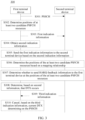
- FIG. 2 is a diagram of a communication method 200 according to an embodiment of this application.
- the method 200 may include the following steps.
- a first terminal device sends first information to a second terminal device.
- the second terminal device receives the first information from the first terminal device.
- the first terminal device is connected to the second terminal device through a sidelink.
- the first terminal device may be a transmission terminal device (transmission UE, TX UE), and the second terminal device may be a reception terminal device (reception UE, RX UE). This is not limited in this application.
- the first information is carried on a first channel.
- the first channel may be a channel used to carry information.
- the first channel may be a PSSCH
- the first channel may be a PSBCH
- the first channel may be a PSCCH, or the like. This is not limited in this application. It should be understood that in this application, an example in which the first channel is a PSSCH is used for description, that is, an example in which the first information is carried on the PSSCH is used for description.
- the first channel corresponds to at least two candidate second channel resources.
- a second channel may be a channel used to carry feedback information.
- the second channel may be a PSFCH. This is not limited in this application. It should be understood that in this application, an example in which the second channel is a PSFCH is used for description, that is, an example in which the PSSCH corresponds to at least two candidate PSFCH resources is used for description.
- the second channel is used to carry feedback information of the first channel.
- the feedback information may be HARQ feedback information, or the feedback information may be measurement report information.
- the feedback information is HARQ feedback information is used for description, that is, an example in which at least two candidate PSFCHs corresponding to the PSSCH are used to carry the HARQ feedback information of the first information is used for description.
- the first terminal device sends the first information to the second terminal device, where the first information is carried on the PSSCH, the PSSCH corresponds to the at least two candidate PSFCH resources, and the at least two candidate PSFCH resources are used to send the HARQ feedback information corresponding to the PSSCH.
- the first terminal device and the second terminal device may learn, in the following several manners, that the PSSCH corresponds to the at least two candidate PSFCH resources.
- the first terminal device determines positions of the at least two candidate PSFCH resources.
- the first terminal device determines the positions of the at least two candidate PSFCH resources corresponding to the PSSCH, and sends first indication information to the second terminal device, where the first indication information indicates the positions of the at least two candidate PSFCH resources corresponding to the PSSCH.
- the first terminal device learns, based on second indication information, that the PSSCH corresponds to the at least two candidate PSFCH resources.
- a first network device corresponding to the first terminal device determines the second indication information, where the second indication information indicates that the PSSCH corresponds to the at least two candidate PSFCH resources; the first network device sends the second indication information to the first terminal device; and the first terminal device learns, based on the second indication information, that the PSSCH corresponds to the at least two candidate PSFCH resources.
- the first terminal device and the second terminal device determine, based on a mapping relationship, the at least two candidate PSFCH resources corresponding to the PSSCH.
- the first terminal device and the second terminal device obtain the mapping relationship, where the mapping relationship is a correspondence between the PSSCH and the at least two candidate PSFCH resources; and the first terminal device and the second terminal device determine the at least two candidate PSFCH resources based on the mapping relationship.
- mapping relationship may be a (pre)configured mapping relationship.
- the 1 st symbol in the slot in which the PSSCH is located is a moment indicated by the 1 st symbol in the slot in which the PSSCH is currently located.
- the duration of the first time period may be from a configuration value of a system-level base station, or may be a fixed value (for example, a specified value).
- the first terminal device receives the duration of the first time period from the second terminal device.
- the second terminal device determines the duration of the first time period, and the second terminal device sends the duration of the first time period to the first terminal device.
- the first terminal device may simultaneously perform S250 and S260; or the first terminal device may first perform S250 and then perform S260; or the first terminal device may first perform S260 and then perform S250.
- no limitation is constituted on a sequence of determining, by the first terminal device and the second terminal device, the start moment of the first time period in S250 and learning, by the first terminal device and the second terminal device, of the duration of the first time period in S260.
- the first terminal device determines the PSSCH corresponding to the first time period.
- the method 200 may further include S270.
- the first terminal device determines, based on the identification information of the PSSCH, the PSSCH corresponding to the first time period.
- the first terminal device determines, based on the identification information of the PSSCH, the PSSCH corresponding to the current first time period.
- a first terminal device sends a PSSCH to a second terminal device.
- mapping relationship may be a (pre)configured mapping relationship.
- the identification information of the PSSCH includes any one of the following: a time domain resource position of the PSSCH, identification information of the first terminal device, and a PSFCH check code.
- the first terminal device can determine, based on the identification information of the PSSCH in the HARQ feedback information, the PSSCH corresponding to the HARQ feedback information.
- the second terminal device performs, in a time sequence, LBT detection on the at least two candidate PSFCH resources corresponding to the PSSCH, and sends the HARQ feedback information at a position of a 1 st candidate PSFCH resource on which the LBT detection succeeds. Then, the second terminal device stops the LBT detection.
- the second terminal device when one PSSCH corresponds to four candidate PSFCH resources, the second terminal device sequentially performs LBT detection on the four candidate PSFCH resources in a time sequence, and LBT detection on a 2 nd candidate PSFCH resource succeeds, the second terminal device sends the HARQ feedback information to the first terminal device at a position of the 2 nd candidate PSFCH resource.
- the second terminal device For a 3 rd candidate PSFCH resource and a 4 th candidate PSFCH resource, the second terminal device does not preset to send the HARQ message at the position. Therefore, the second terminal device does not perform LBT detection on the 3 rd candidate PSFCH resource and the 4 th candidate PSFCH resource. In other words, in this case, the first terminal device can receive one piece of HARQ feedback information.
- the second terminal device determines whether to send the HARQ feedback information to the first terminal device at the positions of the at least two candidate PSFCH resources is merely an example. This is not limited in this application.
- the second information is that the first terminal device does not receive the HARQ feedback information at the positions of the at least two candidate PSFCH resources.
- the first terminal device determines that the DTX occurs in the current PSSCH transmission.
- the first terminal device determines that the DTX occurs in the current PSSCH transmission.
- the first terminal device determines that the DTX does not occur in the current PSSCH transmission.
- the second terminal device when the second terminal device fails to perform LBT on all the at least two candidate PSFCH resources corresponding to the PSSCH, the second terminal device sends third indication information to the first terminal device.
- the method 300 may further include S309 and S310.
- the second terminal device sends the third indication information to the first terminal device.
- the first terminal device receives the third indication information from the second terminal device.
- the third indication information indicates that the LBT detection performed by the second terminal device fails.
- the second terminal device fails to perform LBT detection on all the at least two candidate PSFCH resources corresponding to the PSSCH, the second terminal device cannot send the HARQ feedback information at the positions of the at least two candidate PSFCH resources.
- the second terminal device After the second terminal device successfully communicates with the first terminal device subsequently, the second terminal device sends the third indication information to the first terminal device.
- the first terminal device learns, based on the third indication information in the current PSSCH transmission, that a reason for not sending the HARQ feedback information by the second terminal device at the positions of the at least two candidate PSFCH resources corresponding to the PSSCH is that LBT detection performed by the second terminal device fails. In this case, the first terminal device determines that the DTX does not occur in current sending of the PSSCH.
- the first terminal device determines, based on the third indication information, that a reason for not receiving the HARQ feedback information at the positions of the at least two candidate PSFCH resources is that the LBT detection performed by the second terminal device fails, that is, the DTX does not occur in the current DTX counting on the PSSCH. In this case, the first terminal device cancels the current DTX counting on the PSSCH.
- the first terminal device in an unlicensed spectrum multi-PSFCH scenario, can determine, based on whether the HARQ feedback information is received at the positions of the at least two candidate PSFCH resources corresponding to the PSSCH, whether the DTX occurs in the current DTX counting.
- the TX UE determines that the DTX occurs when the TX UE does not receive the HARQ feedback information of the PSFCH only once, a case in which the second terminal device (RX UE) fails to perform LBT is not considered.
- the TX UE incorrectly determines that a HARQ feedback failure caused by an LBT failure of a PSFCH resource is SL DTX, thereby improving SL communication quality.
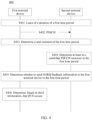
- S401 Learn of a duration of a first time period.
- the first terminal device may be a TX UE
- the second terminal device may be an RX UE. This is not limited in this application.
- S403 Determine a start moment of the first time period.
- the first terminal device and the second terminal device determine the start moment of the first time period.
- the first terminal device and the second terminal device determine the start moment of the first time period according to a pre-specified protocol.
- the start moment of the first time period may be in any one of the following: a slot in which the PSSCH is located, a 1 st symbol in the slot in which the PSSCH is located, a 1 st slot after the PSSCH, and a 1 st symbol in a slot after the PSSCH.
- the first terminal device determines the start moment of the first time period based on sending time of the PSSCH, and indicates the start moment to the second terminal device.
- the first terminal device determines a specific slot after the PSSCH as the start moment of the first time period, and the first terminal device sends fourth indication information to the second terminal device, where the fourth indication information indicates the start moment of the first time period.
- S404 The second terminal device determines the at least two candidate PSFCH resources in the first time period.
- the second terminal device determines, in the first time period starting from the start moment of the first time period, the at least two candidate PSFCH resources corresponding to the PSSCH, where the at least two candidate PSFCH resources are used to send HARQ feedback information corresponding to the PSSCH.
- the HARQ feedback information includes identification information of the PSSCH.
- the first terminal device and the second terminal device start timing from the start moment of the first time period, the first terminal device and the second terminal device stop timing when a time difference exceeds the first time period.
- the second terminal device presets to send the HARQ information at the positions of the at least two candidate PSFCH resources corresponding to the PSSCH; and further the second terminal device performs LBT detection on the candidate PSFCH resource corresponding to the PSSCH, and sends the HARQ feedback information at a position of a candidate PSFCH resource on which the LBT detection succeeds.
- the duration of the first time period is 5 seconds
- one PSSCH corresponds to four candidate PSFCH resources
- the four candidate PSFCH resources are all in the first time period starting from the start moment of the first time period
- the second terminal device presets to send the HARQ information at all positions of the four candidate PSFCH resources
- the second terminal device performs LBT detection on all the four candidate PSFCH resources.
- LBT detection on three candidate PSFCH resources succeeds in the first time period
- the second terminal device separately sends the HARQ feedback information to the first terminal device at positions of the three candidate PSFCH resources.
- the first terminal device can receive three pieces of HARQ feedback information.
- the second terminal device performs, in a time sequence in the first time period starting from the start moment of the first time period, LBT detection on the at least two candidate PSFCH resources corresponding to the PSSCH, and the second terminal device sends the HARQ feedback information at a position of a 1 st candidate PSFCH resource on which the LBT detection succeeds. Then, the second terminal device stops the LBT detection.
- the second terminal device sequentially performs LBT detection on the four candidate PSFCH resources in the first time period of the 5 seconds in a time sequence.
- LBT detection on a 2 nd candidate PSFCH resource succeeds, the second terminal device sends the HARQ feedback information to the first terminal device at a position of the 2 nd candidate PSFCH resource.
- the second terminal device does not preset to send the HARQ message at the position. Therefore, the second terminal device does not perform LBT detection on the 3 rd candidate PSFCH resource and the 4 th candidate PSFCH resource. In other words, in this case, the first terminal device can receive one piece of HARQ feedback information.
- the second terminal device determines, in the first time period, whether to send the HARQ feedback information to the first terminal device is merely an example. This is not limited in this application.
- the first terminal device determines, based on third information, that DTX occurs.
- the third information is that the first terminal device does not receive the HARQ feedback information in the first time period.
- the first terminal device determines that the DTX occurs in the current PSSCH transmission.
- the duration of the first time period is 5 seconds.
- the first terminal device determines that the DTX occurs in the current PSSCH transmission.
- the first terminal device in an unlicensed spectrum multi-PSFCH scenario, can determine, in a specific duration negotiated with an RX UE, whether the DTX occurs in the current PSSCH transmission based on whether the HARQ feedback information is received at a position of a candidate PSFCH resource corresponding to the PSSCH in the specific duration and whether the HARQ feedback information is received at positions of all PSFCH resources.
- the TX UE determines that the DTX occurs when the TX UE does not receive the HARQ feedback information of the PSFCH only once
- a case in which the second terminal device (RX UE) fails to perform LBT is not considered.
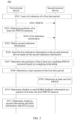
- the first time period indicates positions of at least two candidate PSFCH resources.
- the second terminal device receives the PSSCH from the first terminal device.
- the first terminal device and the second terminal device may learn, in the following several manners, that the PSSCH corresponds to the at least two candidate PSFCH resources.
- the first terminal device determines positions of the at least two candidate PSFCH resources, and notifies the second terminal device of the positions by using first indication information.
- the method 500 may further include S503 and S504.
- the first terminal device determines the positions of the at least two candidate PSFCH resources.
- S504 The first terminal device sends the first indication information to the second terminal device.
- the second terminal device receives the first indication information from the first terminal device.
- the first indication information indicates the positions of the at least two candidate PSFCH resources corresponding to the PSSCH.
- the first terminal device obtains indication information indicating that the PSSCH corresponds to the at least two candidate PSFCH resources.
- the method 500 may further include S505 and S506.
- S505 The first terminal device obtains second indication information.
- the second indication information indicates that the PSSCH corresponds to the at least two candidate PSFCH resources.
- a first network device corresponding to the first terminal device determines the second indication information, where the second indication information indicates that the PSSCH corresponds to the at least two candidate PSFCH resources; the first network device sends the second indication information to the first terminal device; and the first terminal device learns, based on the second indication information, that the PSSCH corresponds to the at least two candidate PSFCH resources.
- the first terminal device learns that the PSSCH corresponds to the at least two candidate PSFCH resources, and further the first terminal device sends the first indication information to the second terminal device, where the first indication information indicates the positions of the at least two candidate PSFCH resources corresponding to the PSSCH.
- Manner 3 The first terminal device and the second terminal device determine, based on a mapping relationship, the positions of the at least two candidate PSFCH resources corresponding to the PSSCH.
- the first terminal device and the second terminal device obtain the mapping relationship, where the mapping relationship is a correspondence between the PSSCH and the at least two candidate PSFCH resources; and the first terminal device and the second terminal device determine the at least two candidate PSFCH resources based on the mapping relationship.
- mapping relationship may be a (pre)configured mapping relationship.
- the first terminal device includes the first time period in SCI in the PSSCH, and sends the SCI to the second terminal device.
- S508 Determine a start moment of the first time period.
- the second terminal device performs LBT detection on the at least two candidate PSFCH resources corresponding to the PSSCH.
- LBT detection on all candidate PSFCH resources corresponding to the PSSCH fails, the second terminal device determines the start moment of the first time period.
- the first terminal device determines the start moment of the first time period.
- the first terminal device and the second terminal device determine the start moment of the first time period according to a pre-specified protocol.
- the start moment of the first time period is in any one of the following: a slot in which a last candidate PSFCH corresponding to the PSSCH is located, a 1 st symbol in the slot in which the last candidate PSFCH corresponding to the PSSCH is located, a 1 st slot after the last candidate PSFCH corresponding to the PSSCH, and a 1 st symbol in a slot after the last candidate PSFCH corresponding to the PSSCH.
- the first terminal device and the second terminal device start timing at the start moment of the first time period or at a time domain position of the PSSCH.
- the first terminal device and the second terminal device start timing when the start moment of the first time period arrives.
- the second terminal device determines the at least one first PSFCH in the first time period starting from the start moment of the first time period, where the at least one first PSFCH is used to send the HARQ feedback information corresponding to the PSSCH.
- the second terminal device determines whether to send the HARQ feedback information to the first terminal device at a position of at least one first PSFCH resource.
- the second terminal device after determining the at least one first PSFCH in the first time period starting from the start moment of the first time period, the second terminal device performs LBT detection on the at least one first PSFCH resource, to determine whether to send the HARQ feedback information to the first terminal device in the first time period.
- the first terminal device can determine, based on the identification information of the PSSCH in the HARQ feedback information, the PSSCH corresponding to the HARQ feedback information.
- the second terminal device performs LBT detection on the at least one first PSFCH resource in the first time period starting from the start moment of the first time period, and sends the HARQ feedback information at a position of a first PSFCH resource on which the LBT detection succeeds.
- the second terminal device determines four first PSFCHs in the first time period starting from the start moment of the first time period, and the second terminal device presets to send the HARQ information at positions of the four first PSFCH resources; and further the second terminal device performs LBT detection on the four first PSFCH resources.
- LBT detection on three first PSFCH resources succeeds, the second terminal device separately sends the HARQ feedback information to the first terminal device at positions of the three first PSFCH resources.
- the first terminal device can receive three pieces of HARQ feedback information.
- the second terminal device performs LBT detection on the at least one first PSFCH resource in a time sequence in the first time period starting from the start moment of the first time period, and the second terminal device sends the HARQ feedback information at a position of a 1 st first PSFCH resource on which the LBT detection succeeds. Then, the second terminal device stops the LBT detection.
- the second terminal device does not preset to send the HARQ message at a position of another first PSFCH resource following the first PSFCH resource. Therefore, the second terminal device does not perform LBT detection on the another first PSFCH resource following the first PSFCH resource. This may also be understood as that the second terminal device stops the LBT detection in this case.
- the second terminal device determines four first PSFCHs in the first time period starting from the start moment of the first time period, and the second terminal device sequentially performs LBT detection on the four first PSFCH resources in a time sequence.
- LBT detection on a 2 nd first PSFCH resource succeeds, the second terminal device sends the HARQ feedback information to the first terminal device at a position of the 2 nd first PSFCH resource.
- the second terminal device does not preset to send the HARQ message at the position. Therefore, the second terminal device does not perform LBT detection on the 3 rd first PSFCH resource and the 4 th first PSFCH resource. In other words, in this case, the first terminal device can receive one piece of HARQ feedback information.
- the second terminal device determines whether to send the HARQ feedback information to the first terminal device at the positions of the at least two candidate PSFCH resources and in the first time period is merely an example. This is not limited in this application.
- the first terminal device determines, based on second information and third information, that DTX occurs.
- the second information is that the first terminal device does not receive the HARQ feedback information at the positions of the at least two candidate PSFCH resources.
- the third information is that the first terminal device does not receive the HARQ feedback information in the first time period.
- the first terminal device in an unlicensed spectrum multi-PSFCH scenario, can determine, based on whether the HARQ feedback information is received at positions of all PSFCH resources and in a specific duration negotiated with an RX UE, whether the DTX occurs in the current PSSCH transmission based on whether the HARQ feedback information is received at a position of a candidate PSFCH resource corresponding to the PSSCH in the specific duration.
- the TX UE determines that the DTX occurs when the TX UE does not receive the HARQ feedback information of the PSFCH only once
- RX UE fails to perform LBT is not considered.
- the TX UE incorrectly determines that a HARQ feedback failure caused by an LBT failure of a PSFCH resource is SL DTX, thereby improving SL communication quality.
- the method and the operation implemented by the terminal device may also be implemented by a component (for example, a chip or a circuit) of the terminal device.
- the method and the operation implemented by the network device may also be implemented by a component (for example, a chip or a circuit) of the network device.
- a component for example, a chip or a circuit
- embodiments of this application further provide corresponding apparatuses.
- the apparatuses include corresponding modules configured to perform the foregoing method embodiments.
- the module may be software, hardware, or a combination of software and hardware. It may be understood that the technical features described in the method embodiments are also applicable to the following apparatus embodiments.
- the apparatus 600 further includes a storage unit.
- the storage unit may be configured to store instructions and/or data.
- the processing unit 620 may read the instructions and/or the data in the storage unit, so that the apparatus implements actions of different terminal devices in the foregoing method embodiments, for example, actions of the first terminal device or the second terminal device.
- the apparatus 600 may be configured to perform actions performed by the first terminal device or the second terminal device in the foregoing method embodiments.
- the apparatus 600 may be the first terminal device or the second terminal device, or a component of the first terminal device or the second terminal device.
- the transceiver unit 610 is configured to perform sending and receiving related operations of the first terminal device or the second terminal device in the foregoing method embodiments.
- the processing unit 620 is configured to perform a processing related operation of the first terminal device or the second terminal device in the foregoing method embodiments.
- the apparatus 600 herein is embodied in a form of a functional unit.
- the term "unit" herein may be an application-specific integrated circuit (application-specific integrated circuit, ASIC), an electronic circuit, a processor (for example, a shared processor, a dedicated processor, or a group processor) configured to execute one or more software or firmware programs, a memory, a merged logic circuit, and/or another appropriate component that supports the described function.
- ASIC application-specific integrated circuit
- ASIC application-specific integrated circuit
- processor for example, a shared processor, a dedicated processor, or a group processor configured to execute one or more software or firmware programs, a memory, a merged logic circuit, and/or another appropriate component that supports the described function.
- the apparatus 600 may be specifically the first terminal device or the second terminal device in the foregoing embodiments, and may be configured to perform procedures and/or steps corresponding to the first terminal device or the second terminal device in the foregoing method embodiments; or the apparatus 600 may be specifically the first terminal device or the second terminal device in the foregoing embodiments, and may be configured to perform procedures and/or steps corresponding to the first terminal device or the second terminal device in the foregoing method embodiments. To avoid repetition, details are not described herein again.
- the apparatus 600 in the foregoing solutions has a function of implementing corresponding steps performed by the first terminal device or the second terminal device in the foregoing methods, or the apparatus 600 in the foregoing solutions has a function of implementing corresponding steps performed by the first terminal device or the second terminal device in the foregoing methods.
- the function may be implemented by hardware, or may be implemented by hardware executing corresponding software.
- the hardware or the software includes one or more modules corresponding to the foregoing function.
- the transceiver unit may be replaced by a transceiver (where for example, a sending unit in the transceiver unit may be replaced by a transmitter, and a receiving unit in the transceiver unit may be replaced by a receiver), and another unit, for example, the processing unit, may be replaced by a processor, to respectively perform sending and receiving operations and a processing related operation in the method embodiments.
- a transceiver where for example, a sending unit in the transceiver unit may be replaced by a transmitter, and a receiving unit in the transceiver unit may be replaced by a receiver
- another unit for example, the processing unit, may be replaced by a processor, to respectively perform sending and receiving operations and a processing related operation in the method embodiments.
- the transceiver unit 610 may alternatively be a transceiver circuit (for example, may include a receiving circuit and a sending circuit), and the processing unit may be a processing circuit.
- an embodiment of this application further provides another communication apparatus 700.
- the apparatus 700 includes a processor 710.
- the processor 710 is coupled to a memory 720, the memory 720 is configured to store a computer program or instructions and/or data, and the processor 710 is configured to: execute the computer program or the instructions stored in the memory 720, or read the data stored in the memory 720, to perform the methods in the foregoing method embodiments.
- the memory 720 and the processor 710 are integrated together, or are disposed separately.
- the apparatus 700 further includes a transceiver 730, and the transceiver 730 is configured to receive and/or send a signal.
- the processor 710 is configured to control the transceiver 730 to receive and/or send the signal.
- the apparatus 700 is configured to implement the operations performed by the first terminal device or the second terminal device in the foregoing method embodiments.
- the processor 710 is configured to execute the computer program or the instructions stored in the memory 720, to implement related operations of the first terminal device in the foregoing method embodiments, for example, the first terminal device in any one of the embodiments shown in FIG. 2 to FIG. 5 , or the method of the first terminal device in any one of the embodiments shown in FIG. 2 to FIG. 5 .
- the processor mentioned in embodiments of this application may be a central processing unit (central processing unit, CPU), or may be another general-purpose processor, a digital signal processor (digital signal processor, DSP), an application-specific integrated circuit (application-specific integrated circuit, ASIC), a field programmable gate array (field programmable gate array, FPGA) or another programmable logic device, a discrete gate or a transistor logic device, a discrete hardware component, or the like.
- the general-purpose processor may be a microprocessor, or the processor may be any conventional processor or the like.
- the memory mentioned in embodiments of this application may be a volatile memory and/or a nonvolatile memory.
- the nonvolatile memory may be a read-only memory (read-only memory, ROM), a programmable read-only memory (programmable ROM, PROM), an erasable programmable read-only memory (erasable PROM, EPROM), an electrically erasable programmable read-only memory (electrically EPROM, EEPROM), or a flash memory.
- the volatile memory may be a random access memory (random access memory, RAM).
- the RAM may be used as an external cache.
- the RAM includes the following plurality of forms: a static random access memory (static RAM, SRAM), a dynamic random access memory (dynamic RAM, DRAM), a synchronous dynamic random access memory (synchronous DRAM, SDRAM), a double data rate synchronous dynamic random access memory (double data rate SDRAM, DDR SDRAM), an enhanced synchronous dynamic random access memory (enhanced SDRAM, ESDRAM), a synchlink dynamic random access memory (synchlink DRAM, SLDRAM), and a direct rambus random access memory (direct rambus RAM, DR RAM).
- processor when the processor is a general-purpose processor, a DSP, an ASIC, an FPGA or another programmable logic device, a discrete gate or a transistor logic device, or a discrete hardware component, a memory (a storage module) may be integrated into the processor.
- an embodiment of this application provides a chip system 800.
- the chip system 800 (or may be referred to as a processing system) includes a logic circuit 810 and an input/output interface (input/output interface) 820.
Landscapes
- Engineering & Computer Science (AREA)
- Signal Processing (AREA)
- Computer Networks & Wireless Communication (AREA)
- Mobile Radio Communication Systems (AREA)
Applications Claiming Priority (2)
| Application Number | Priority Date | Filing Date | Title |
|---|---|---|---|
| CN202211213243.4A CN117811706A (zh) | 2022-09-30 | 2022-09-30 | 通信方法和通信装置 |
| PCT/CN2023/121570 WO2024067587A1 (fr) | 2022-09-30 | 2023-09-26 | Procédé de communication et appareil de communication |
Publications (2)
| Publication Number | Publication Date |
|---|---|
| EP4583438A1 true EP4583438A1 (fr) | 2025-07-09 |
| EP4583438A4 EP4583438A4 (fr) | 2025-12-24 |
Family
ID=90420679
Family Applications (1)
| Application Number | Title | Priority Date | Filing Date |
|---|---|---|---|
| EP23870815.0A Pending EP4583438A4 (fr) | 2022-09-30 | 2023-09-26 | Procédé de communication et appareil de communication |
Country Status (4)
| Country | Link |
|---|---|
| US (1) | US20250227732A1 (fr) |
| EP (1) | EP4583438A4 (fr) |
| CN (1) | CN117811706A (fr) |
| WO (1) | WO2024067587A1 (fr) |
Family Cites Families (4)
| Publication number | Priority date | Publication date | Assignee | Title |
|---|---|---|---|---|
| KR102745002B1 (ko) * | 2018-02-11 | 2024-12-19 | 광동 오포 모바일 텔레커뮤니케이션즈 코포레이션 리미티드 | 업링크 제어 정보를 전송하는 방법 및 기기 |
| CN108650709B (zh) * | 2018-05-11 | 2022-07-19 | 中国信息通信研究院 | 一种上行传输功率分配方法和移动通信系统 |
| US11601930B2 (en) * | 2021-02-02 | 2023-03-07 | Qualcomm Incorporated | Early termination of PUSCH transmission |
| CN115002787B (zh) * | 2022-08-03 | 2022-12-20 | 合肥移瑞通信技术有限公司 | 通信方法及终端设备 |
-
2022
- 2022-09-30 CN CN202211213243.4A patent/CN117811706A/zh active Pending
-
2023
- 2023-09-26 WO PCT/CN2023/121570 patent/WO2024067587A1/fr not_active Ceased
- 2023-09-26 EP EP23870815.0A patent/EP4583438A4/fr active Pending
-
2025
- 2025-03-28 US US19/094,403 patent/US20250227732A1/en active Pending
Also Published As
| Publication number | Publication date |
|---|---|
| WO2024067587A1 (fr) | 2024-04-04 |
| US20250227732A1 (en) | 2025-07-10 |
| CN117811706A (zh) | 2024-04-02 |
| EP4583438A4 (fr) | 2025-12-24 |
Similar Documents
| Publication | Publication Date | Title |
|---|---|---|
| CN110741710B (zh) | 设备对设备通信的方法和终端设备 | |
| US11997658B2 (en) | Method and device for information transmission, and non-transitory computer readable storage medium | |
| US12089260B2 (en) | Random access method, terminal device and network device | |
| EP3820233B1 (fr) | Procédés d'accès aléatoire, dispositif terminal et dispositif réseau | |
| EP4064749A1 (fr) | Procédé et appareil permettant de déterminer une durée d'évaluation pendant une inspection de qualité de transmission de liaison descendante | |
| EP3820209B1 (fr) | Procédés et appareils de détermination et d'attribution de ressources | |
| WO2021138866A1 (fr) | Procédé de détermination d'informations, procédé d'indication d'informations, dispositif terminal et dispositif réseau | |
| KR20200111232A (ko) | 경쟁 윈도우의 결정 방법 및 디바이스 | |
| US12021636B2 (en) | Method for determining HARQ codebook, terminal apparatus, and network apparatus | |
| CN115836573B (zh) | 先侦听后传输失败上报的方法、终端设备和网络设备 | |
| US11792831B2 (en) | Method and device for signal transmission | |
| EP3755082A1 (fr) | Procédé et appareil de transmission de canal, et support de stockage informatique | |
| EP4583438A1 (fr) | Procédé de communication et appareil de communication | |
| CN116436572A (zh) | 一种harq信息的传输方法及装置、计算机存储介质 | |
| CN113645011B (zh) | 一种harq信息的传输方法及装置、计算机存储介质 | |
| US11381991B2 (en) | Measuring method, network device, and terminal device | |
| US20250185064A1 (en) | Communication method, apparatus, and system | |
| BR112020015731B1 (pt) | Dispositivo e método de transmissão de informações |
Legal Events
| Date | Code | Title | Description |
|---|---|---|---|
| STAA | Information on the status of an ep patent application or granted ep patent |
Free format text: STATUS: THE INTERNATIONAL PUBLICATION HAS BEEN MADE |
|
| PUAI | Public reference made under article 153(3) epc to a published international application that has entered the european phase |
Free format text: ORIGINAL CODE: 0009012 |
|
| STAA | Information on the status of an ep patent application or granted ep patent |
Free format text: STATUS: REQUEST FOR EXAMINATION WAS MADE |
|
| 17P | Request for examination filed |
Effective date: 20250404 |
|
| AK | Designated contracting states |
Kind code of ref document: A1 Designated state(s): AL AT BE BG CH CY CZ DE DK EE ES FI FR GB GR HR HU IE IS IT LI LT LU LV MC ME MK MT NL NO PL PT RO RS SE SI SK SM TR |
|
| A4 | Supplementary search report drawn up and despatched |
Effective date: 20251126 |
|
| RIC1 | Information provided on ipc code assigned before grant |
Ipc: H04L 1/1812 20230101AFI20251120BHEP Ipc: H04L 1/1867 20230101ALI20251120BHEP |
|
| DAV | Request for validation of the european patent (deleted) | ||
| DAX | Request for extension of the european patent (deleted) |