EP4583453A1 - Procédé et dispositif de transmission d'un signal dans un système de communication sans fil - Google Patents
Procédé et dispositif de transmission d'un signal dans un système de communication sans fil Download PDFInfo
- Publication number
- EP4583453A1 EP4583453A1 EP23873292.9A EP23873292A EP4583453A1 EP 4583453 A1 EP4583453 A1 EP 4583453A1 EP 23873292 A EP23873292 A EP 23873292A EP 4583453 A1 EP4583453 A1 EP 4583453A1
- Authority
- EP
- European Patent Office
- Prior art keywords
- symbol
- pdsch
- valid
- slot
- subband
- Prior art date
- Legal status (The legal status is an assumption and is not a legal conclusion. Google has not performed a legal analysis and makes no representation as to the accuracy of the status listed.)
- Pending
Links
Images






Classifications
-
- H—ELECTRICITY
- H04—ELECTRIC COMMUNICATION TECHNIQUE
- H04L—TRANSMISSION OF DIGITAL INFORMATION, e.g. TELEGRAPHIC COMMUNICATION
- H04L5/00—Arrangements affording multiple use of the transmission path
- H04L5/0091—Signalling for the administration of the divided path, e.g. signalling of configuration information
- H04L5/0094—Indication of how sub-channels of the path are allocated
-
- H—ELECTRICITY
- H04—ELECTRIC COMMUNICATION TECHNIQUE
- H04L—TRANSMISSION OF DIGITAL INFORMATION, e.g. TELEGRAPHIC COMMUNICATION
- H04L27/00—Modulated-carrier systems
- H04L27/26—Systems using multi-frequency codes
- H04L27/2601—Multicarrier modulation systems
- H04L27/2602—Signal structure
- H04L27/26025—Numerology, i.e. varying one or more of symbol duration, subcarrier spacing, Fourier transform size, sampling rate or down-clocking
-
- H—ELECTRICITY
- H04—ELECTRIC COMMUNICATION TECHNIQUE
- H04L—TRANSMISSION OF DIGITAL INFORMATION, e.g. TELEGRAPHIC COMMUNICATION
- H04L27/00—Modulated-carrier systems
- H04L27/26—Systems using multi-frequency codes
- H04L27/2601—Multicarrier modulation systems
- H04L27/2647—Arrangements specific to the receiver only
- H04L27/2655—Synchronisation arrangements
- H04L27/2656—Frame synchronisation, e.g. packet synchronisation, time division duplex [TDD] switching point detection or subframe synchronisation
-
- H—ELECTRICITY
- H04—ELECTRIC COMMUNICATION TECHNIQUE
- H04L—TRANSMISSION OF DIGITAL INFORMATION, e.g. TELEGRAPHIC COMMUNICATION
- H04L5/00—Arrangements affording multiple use of the transmission path
- H04L5/0001—Arrangements for dividing the transmission path
- H04L5/0003—Two-dimensional division
- H04L5/0005—Time-frequency
-
- H—ELECTRICITY
- H04—ELECTRIC COMMUNICATION TECHNIQUE
- H04L—TRANSMISSION OF DIGITAL INFORMATION, e.g. TELEGRAPHIC COMMUNICATION
- H04L5/00—Arrangements affording multiple use of the transmission path
- H04L5/003—Arrangements for allocating sub-channels of the transmission path
- H04L5/0044—Allocation of payload; Allocation of data channels, e.g. PDSCH or PUSCH
-
- H—ELECTRICITY
- H04—ELECTRIC COMMUNICATION TECHNIQUE
- H04L—TRANSMISSION OF DIGITAL INFORMATION, e.g. TELEGRAPHIC COMMUNICATION
- H04L5/00—Arrangements affording multiple use of the transmission path
- H04L5/003—Arrangements for allocating sub-channels of the transmission path
- H04L5/0048—Allocation of pilot signals, i.e. of signals known to the receiver
- H04L5/005—Allocation of pilot signals, i.e. of signals known to the receiver of common pilots, i.e. pilots destined for multiple users or terminals
-
- H—ELECTRICITY
- H04—ELECTRIC COMMUNICATION TECHNIQUE
- H04L—TRANSMISSION OF DIGITAL INFORMATION, e.g. TELEGRAPHIC COMMUNICATION
- H04L5/00—Arrangements affording multiple use of the transmission path
- H04L5/003—Arrangements for allocating sub-channels of the transmission path
- H04L5/0053—Allocation of signalling, i.e. of overhead other than pilot signals
-
- H—ELECTRICITY
- H04—ELECTRIC COMMUNICATION TECHNIQUE
- H04L—TRANSMISSION OF DIGITAL INFORMATION, e.g. TELEGRAPHIC COMMUNICATION
- H04L5/00—Arrangements affording multiple use of the transmission path
- H04L5/14—Two-way operation using the same type of signal, i.e. duplex
-
- H—ELECTRICITY
- H04—ELECTRIC COMMUNICATION TECHNIQUE
- H04L—TRANSMISSION OF DIGITAL INFORMATION, e.g. TELEGRAPHIC COMMUNICATION
- H04L5/00—Arrangements affording multiple use of the transmission path
- H04L5/14—Two-way operation using the same type of signal, i.e. duplex
- H04L5/1469—Two-way operation using the same type of signal, i.e. duplex using time-sharing
-
- H—ELECTRICITY
- H04—ELECTRIC COMMUNICATION TECHNIQUE
- H04W—WIRELESS COMMUNICATION NETWORKS
- H04W72/00—Local resource management
- H04W72/04—Wireless resource allocation
- H04W72/044—Wireless resource allocation based on the type of the allocated resource
- H04W72/0446—Resources in time domain, e.g. slots or frames
-
- H—ELECTRICITY
- H04—ELECTRIC COMMUNICATION TECHNIQUE
- H04W—WIRELESS COMMUNICATION NETWORKS
- H04W72/00—Local resource management
- H04W72/04—Wireless resource allocation
- H04W72/044—Wireless resource allocation based on the type of the allocated resource
- H04W72/0453—Resources in frequency domain, e.g. a carrier in FDMA
-
- H—ELECTRICITY
- H04—ELECTRIC COMMUNICATION TECHNIQUE
- H04W—WIRELESS COMMUNICATION NETWORKS
- H04W72/00—Local resource management
- H04W72/12—Wireless traffic scheduling
- H04W72/1263—Mapping of traffic onto schedule, e.g. scheduled allocation or multiplexing of flows
- H04W72/1273—Mapping of traffic onto schedule, e.g. scheduled allocation or multiplexing of flows of downlink data flows
-
- H—ELECTRICITY
- H04—ELECTRIC COMMUNICATION TECHNIQUE
- H04W—WIRELESS COMMUNICATION NETWORKS
- H04W72/00—Local resource management
- H04W72/20—Control channels or signalling for resource management
- H04W72/23—Control channels or signalling for resource management in the downlink direction of a wireless link, i.e. towards a terminal
- H04W72/231—Control channels or signalling for resource management in the downlink direction of a wireless link, i.e. towards a terminal the control data signalling from the layers above the physical layer, e.g. RRC or MAC-CE signalling
-
- H—ELECTRICITY
- H04—ELECTRIC COMMUNICATION TECHNIQUE
- H04W—WIRELESS COMMUNICATION NETWORKS
- H04W72/00—Local resource management
- H04W72/20—Control channels or signalling for resource management
- H04W72/23—Control channels or signalling for resource management in the downlink direction of a wireless link, i.e. towards a terminal
- H04W72/232—Control channels or signalling for resource management in the downlink direction of a wireless link, i.e. towards a terminal the control data signalling from the physical layer, e.g. DCI signalling
-
- H—ELECTRICITY
- H04—ELECTRIC COMMUNICATION TECHNIQUE
- H04W—WIRELESS COMMUNICATION NETWORKS
- H04W74/00—Wireless channel access
- H04W74/002—Transmission of channel access control information
- H04W74/004—Transmission of channel access control information in the uplink, i.e. towards network
-
- H—ELECTRICITY
- H04—ELECTRIC COMMUNICATION TECHNIQUE
- H04W—WIRELESS COMMUNICATION NETWORKS
- H04W74/00—Wireless channel access
- H04W74/08—Non-scheduled access, e.g. ALOHA
- H04W74/0833—Random access procedures, e.g. with 4-step access
-
- H—ELECTRICITY
- H04—ELECTRIC COMMUNICATION TECHNIQUE
- H04L—TRANSMISSION OF DIGITAL INFORMATION, e.g. TELEGRAPHIC COMMUNICATION
- H04L1/00—Arrangements for detecting or preventing errors in the information received
- H04L1/0001—Systems modifying transmission characteristics according to link quality, e.g. power backoff
- H04L1/0023—Systems modifying transmission characteristics according to link quality, e.g. power backoff characterised by the signalling
- H04L1/0026—Transmission of channel quality indication
-
- H—ELECTRICITY
- H04—ELECTRIC COMMUNICATION TECHNIQUE
- H04L—TRANSMISSION OF DIGITAL INFORMATION, e.g. TELEGRAPHIC COMMUNICATION
- H04L1/00—Arrangements for detecting or preventing errors in the information received
- H04L1/08—Arrangements for detecting or preventing errors in the information received by repeating transmission, e.g. Verdan system
-
- H—ELECTRICITY
- H04—ELECTRIC COMMUNICATION TECHNIQUE
- H04L—TRANSMISSION OF DIGITAL INFORMATION, e.g. TELEGRAPHIC COMMUNICATION
- H04L1/00—Arrangements for detecting or preventing errors in the information received
- H04L1/12—Arrangements for detecting or preventing errors in the information received by using return channel
- H04L1/16—Arrangements for detecting or preventing errors in the information received by using return channel in which the return channel carries supervisory signals, e.g. repetition request signals
- H04L1/1607—Details of the supervisory signal
- H04L1/1671—Details of the supervisory signal the supervisory signal being transmitted together with control information
Definitions
- the disclosure relates to a wireless communication system. Particularly, the disclosure relates to a method of transmitting a signal in a wireless communication system, and a device using the same.
- 5G communication systems After commercialization of 4th generation (4G) communication system, in order to meet the increasing demand for wireless data traffic, efforts are being made to develop new 5th generation (5G) communication systems.
- the 5G communication system is called as a beyond 4G network communication system, a post LTE system, or a new radio (NR) system.
- 5G communication systems include systems operated using the millimeter wave (mmWave) band of 6 GHz or more, and include a communication system operated using a frequency band of 6 GHz or less in terms of ensuring coverage so that implementations in base stations and terminals are under consideration.
- mmWave millimeter wave
- a 3rd generation partnership project (3GPP) NR system enhances spectral efficiency of a network and enables a communication provider to provide more data and voice services over a given bandwidth. Accordingly, the 3GPP NR system is designed to meet the demands for high-speed data and media transmission in addition to supports for large volumes of voice.
- the advantages of the NR system are to have a higher throughput and a lower latency in an identical platform, support for frequency division duplex (FDD) and time division duplex (TDD), and a low operation cost with an enhanced end-user environment and a simple architecture.
- dynamic TDD of the NR system may use a method for varying the number of orthogonal frequency division multiplexing (OFDM) symbols that may be used in an uplink and downlink according to data traffic directions of cell users. For example, when the downlink traffic of the cell is larger than the uplink traffic, the base station may allocate a plurality of downlink OFDM symbols to a slot (or subframe). Information about the slot configuration should be transmitted to the terminals.
- OFDM orthogonal frequency division multiplexing
- cloud RAN cloud radio access network
- D2D device to device communication
- V2X vehicle to everything communication
- NTN non-terrestrial network communication
- CoMP coordinated multi-points
- FQAM FSK and QAM modulation
- SWSC sliding window superposition coding
- ACM advanced coding modulation
- FBMC filter bank multi-carrier
- NOMA non-orthogonal multiple access
- SCMA sparse code multiple access
- IoT Internet of Things
- IoE Internet of Everything
- sensing technology wired/wireless communication and network infrastructure, service interface technology, and security technology
- M2M machine to machine
- MTC machine type communication
- IoT environment an intelligent internet technology (IT) service that collects and analyzes data generated from connected objects to create new value in human life can be provided.
- IT internet technology
- 5G communication system to the IoT network.
- technologies such as a sensor network, a machine to machine (M2M), and a machine type communication (MTC) are implemented by techniques such as beamforming, MIMO, and array antennas.
- M2M machine to machine
- MTC machine type communication
- the application of the cloud RAN as the big data processing technology described above is an example of the fusion of 5G technology and IoT technology.
- a mobile communication system has been developed to provide voice service while ensuring the user's activity.
- the mobile communication system is gradually expanding not only the voice but also the data service, and now it has developed to the extent of providing high-speed data service.
- a more advanced mobile communication system is required due to a shortage phenomenon of resources and a high-speed service demand of users.
- An aspect of the present disclosure is to provide a method for efficiently transmitting a signal in a wireless communication system and a device using the same. Specifically, an aspect of the present disclosure is to provide a method for determining a valid RO in a wireless communication system and a device using the same. Furthermore, an aspect of the present disclosure is to provide a method for transmitting and receiving signals based on a valid RO and a device using the same.
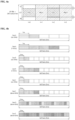
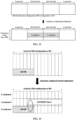
- a UE used in a wireless communication system including: a communication module; and a processor configured to control the communication module, wherein the processor is configured to: receive a cell-specific (cell-common) radio resource control (RRC) signal regarding a slot format, the slot format including information about a type of symbol, and the type of symbol including at least one of a downlink (DL) symbol, a flexible symbol, and an uplink (UL) symbol; determine whether a RACH occasion (RO) in a physical random access channel (PRACH) slot is valid, the determination including determining whether the RO is valid based on whether the RO starts at least N gap symbols after a last DL symbol; and perform UL transmission or DL reception based on whether the RO is valid, wherein in at least one slot, multiple subbands are configured within one frequency band, the multiple subbands including a DL subband and a UL subband, and in case that the RO is present in the UL subband, the last DL symbol is determined based
- a method used by a UE in a wireless communication system may include: receiving a cell-specific (cell-common) radio resource control (RRC) signal regarding a slot format, the slot format including information about a type of symbol, and the type of symbol including at least one of a downlink (DL) symbol, a flexible symbol, and an uplink (UL) symbol; determining whether an RACH occasion (RO) in a physical random access channel (PRACH) slot is valid, the determination including determining whether the RO is valid based on whether the RO starts at least N gap symbols after a last DL symbol; and performing UL transmission or DL reception based on whether the RO is valid, wherein in at least one slot, multiple subbands are configured within one frequency band, the multiple subbands including a DL subband and a UL subband, and in case that the RO is present in the UL subband, the last DL symbol is determined based on DL symbols configured by the cell-specific RRC signal, excluding symbols in which the UL
- RRC radio resource control
- the cell-specific RRC signal may include common time division duplex (TDD) UL-DL configuration information.
- TDD time division duplex
- the determination may include determining that the RO is valid in case that the RO is within the UL subband, the RO does not precede a synchronization signal/physical broadcast channel (SS/PBCH) block within the PRACH slot in a time domain, starts at least N gap symbols after the last DL symbol, and starts at least N gap symbols after a last SS/PBCH block reception symbol.
- SS/PBCH synchronization signal/physical broadcast channel
- the determination may include determining that the RO is valid in case that the RO is present on a UL symbol set configured by the cell-specific RRC signal.
- SCS subcarrier spacing
- the PRACH may be transmitted in the RO in case that the RO is valid.
- reception of the PDSCH is determined based on whether the PDSCH has been scheduled by downlink control information (DCI) or a higher layer (e.g., RRC).
- DCI downlink control information
- RRC higher layer
- the PDSCH physical downlink shared channel
- the PDSCH may be received normally, and PRACH transmission may not be allowed in the RO.
- the PDSCH may be rate-matched and received based on overlapping resources in the time domain, and PRACH transmission may be allowed in the RO.
- the overlapping resources in the time domain may include at least one symbol.
- the PDSCH scheduled by the higher layer may include a semi-static persistent scheduling (SPS) PDSCH.
- SPS semi-static persistent scheduling
- the present disclosure provides a method for efficiently transmitting a signal in a wireless communication system and a device using the same. Furthermore, the present disclosure provides a method for determining a valid RO in a wireless communication system and a device using the same. Furthermore, the present disclosure provides a method for transmitting and receiving signals based on a valid RO and a device using the same.
- the following technology may be used in various wireless access systems, such as code division multiple access (CDMA), frequency division multiple access (FDMA), time division multiple access (TDMA), orthogonal frequency division multiple access (OFDMA), single carrier-FDMA (SC-FDMA), and the like.
- CDMA may be implemented by a wireless technology such as universal terrestrial radio access (UTRA) or CDMA2000.
- the TDMA may be implemented by a wireless technology such as global system for mobile communications (GSM)/general packet radio service (GPRS)/enhanced data rates for GSM evolution (EDGE).
- GSM global system for mobile communications
- GPRS general packet radio service
- EDGE enhanced data rates for GSM evolution
- the OFDMA may be implemented by a wireless technology such as IEEE 802.11(Wi-Fi), IEEE 802.16(WiMAX), IEEE 802-20, evolved UTRA (E-UTRA), and the like.
- the UTRA is a part of a universal mobile telecommunication system (UMTS).
- 3rd generation partnership project (3GPP) long term evolution (LTE) is a part of an evolved UMTS (E-UMTS) using evolved-UMTS terrestrial radio access (E-UTRA) and LTE-advanced (A) is an evolved version of the 3GPP LTE.
- 3GPP new radio (NR) is a system designed separately from LTE/LTE-A, and is a system for supporting enhanced mobile broadband (eMBB), ultra-reliable and low latency communication (URLLC), and massive machine type communication (mMTC) services, which are requirements of IMT-2020.
- eMBB enhanced mobile broadband
- URLLC ultra-reliable and low latency communication
- mMTC massive machine type communication
- a base station may refer to a next generation node B (gNB) as defined in 3GPP NR.
- a terminal may refer to a user equipment (UE).
- UE user equipment
- the configuration of the UE may indicate configuration by the base station. Specifically, the base station may transmit a channel or signal to the UE to configure an operation of the UE or a parameter value used in a wireless communication system.
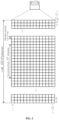
- FIG. 1 illustrates an example of a wireless frame structure used in a wireless communication system.
- the wireless frame (or radio frame) used in the 3GPP NR system may have a length of 10 ms ( ⁇ fmax N f / 100) * T c ).
- the wireless frame includes 10 subframes (SFs) having equal sizes.
- ⁇ f max 480*10 3 Hz
- N f 4096
- T c 1/( ⁇ f ref *N f,ref )
- ⁇ f ref 15*10 3 Hz
- N f,ref 2048.
- Numbers from 0 to 9 may be respectively allocated to 10 subframes within one subframe.
- Each subframe has a length of 1 ms and may include one or more slots according to a subcarrier spacing.
- One subframe having a length of 1 ms may include 2 ⁇ slots. In this case, the length of each slot is 2 - ⁇ ms. Numbers from 0 to 2 ⁇ -1 may be respectively allocated to 2 ⁇ slots within one wireless frame. In addition, numbers from 0 to 10*2 ⁇ -1 may be respectively allocated to slots within one subframe.
- the time resource may be distinguished by at least one of a wireless frame number (also referred to as a wireless frame index), a subframe number (also referred to as a subframe number), and a slot number (or a slot index).
- the base station may perform communication with the UE by activating some or all of the serving CCs of the UE or deactivating some CCs.
- the base station can change the CC to be activated/deactivated, and change the number of CCs to be activated/deactivated. If the base station allocates a CC available for the UE as to be cell-specific or UE-specific, at least one of the allocated CCs can be deactivated, unless the CC allocation for the UE is completely reconfigured or the UE is handed over.
- PCC Primary CC
- PCell primary cell
- SCC Secondary CC
- SCell secondary cell
- a cell is defined as a combination of DL resources and UL resources, that is, a combination of DL CC and UL CC.
- a cell may be configured with DL resources alone, or a combination of DL resources and UL resources.
- the linkage between the carrier frequency of the DL resource (or DL CC) and the carrier frequency of the UL resource (or UL CC) may be indicated by system information.
- the carrier frequency refers to the center frequency of each cell or CC.
- a cell corresponding to the PCC is referred to as a PCell, and a cell corresponding to the SCC is referred to as an SCell.
- the carrier corresponding to the PCell in the DL is the DL PCC
- the carrier corresponding to the PCell in the UL is the UL PCC
- the carrier corresponding to the SCell in the DL is the DL SCC
- the carrier corresponding to the SCell in the UL is the UL SCC.
- the serving cell(s) may be configured with one PCell and zero or more SCells. In the case of UEs that are in the RRC_CONNECTED state but not configured for carrier aggregation or that do not support carrier aggregation, there is only one serving cell configured only with PCell.
- the term "cell” used in carrier aggregation is distinguished from the term "cell” which refers to a certain geographical area in which a communication service is provided by one base station or one antenna group. That is, one component carrier may also be referred to as a scheduling cell, a scheduled cell, a primary cell (PCell), a secondary cell (SCell), or a primary SCell (PScell).
- a cell of a carrier aggregation is referred to as a CC
- a cell of a geographical area is referred to as a cell.
- FIG. 10 is a diagram showing an example in which a cross carrier scheduling technique is applied.
- the control channel transmitted through the first CC may schedule a data channel transmitted through the first CC or the second CC using a carrier indicator field (CIF).
- the CIF is included in the DCI.
- a scheduling cell is set, and the DL grant/UL grant transmitted in the PDCCH area of the scheduling cell schedules the PDSCH/PUSCH of the scheduled cell. That is, a search area for the plurality of component carriers exists in the PDCCH area of the scheduling cell.
- a PCell may be basically a scheduling cell, and a specific SCell may be designated as a scheduling cell by an upper layer.
- DL component carrier #0 is DL PCC (or PCell)
- DL component carrier #1 and DL component carrier #2 are DL SCCs (or SCell).
- the DL PCC is set to the PDCCH monitoring CC.
- cross-carrier scheduling is not configured by UE-specific (or UE-group-specific or cell-specific) higher layer signaling, a CIF is disabled, and each DL CC can transmit only a PDCCH for scheduling its PDSCH without the CIF according to an NR PDCCH rule (non-cross-carrier scheduling, self-carrier scheduling).
- cross-carrier scheduling is configured by UE-specific (or UE-group-specific or cell-specific) higher layer signaling
- a CIF is enabled, and a specific CC (e.g., DL PCC) may transmit not only the PDCCH for scheduling the PDSCH of the DL CC A using the CIF but also the PDCCH for scheduling the PDSCH of another CC (cross-carrier scheduling).
- a PDCCH is not transmitted in another DL CC.
- the UE monitors the PDCCH not including the CIF to receive a self-carrier scheduled PDSCH depending on whether the cross-carrier scheduling is configured for the UE, or monitors the PDCCH including the CIF to receive the cross-carrier scheduled PDSCH.
- FIGS. 9 and 10 illustrate the subframe structure of the 3GPP LTE-A system, and the same or similar configuration may be applied to the 3GPP NR system.
- the subframes of FIGS. 9 and 10 may be replaced with slots.
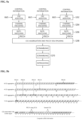
- FIG. 11 is a block diagram showing the configurations of a UE and a base station according to an embodiment of the present disclosure.
- the UE may be implemented with various types of wireless communication devices or computing devices that are guaranteed to be portable and mobile.
- the UE may be referred to as a User Equipment (UE), a Station (STA), a Mobile Subscriber (MS), or the like.
- the base station controls and manages a cell (e.g., a macro cell, a femto cell, a pico cell, etc.) corresponding to a service area, and performs functions of a signal transmission, a channel designation, a channel monitoring, a self diagnosis, a relay, or the like.
- the base station may be referred to as next Generation NodeB (gNB) or Access Point (AP).
- gNB next Generation NodeB
- AP Access Point
- a UE 100 may include a processor 110, a communication module 120, a memory 130, a user interface 140, and a display unit 150.
- the cellular communication interface card 122 may transmit or receive a radio signal with at least one of the base station 200, an external device, and a server by using a mobile communication network and provide a cellular communication service in a second frequency band based on the instructions from the processor 110.
- the cellular communication interface card 122 may include at least one NIC module using a frequency band of more than 6 GHz.
- At least one NIC module of the cellular communication interface card 122 may independently perform cellular communication with at least one of the base station 200, an external device, and a server in accordance with cellular communication standards or protocols in the frequency bands of 6 GHz or more supported by the corresponding NIC module.
- the unlicensed band communication interface card 123 transmits or receives a radio signal with at least one of the base station 200, an external device, and a server by using a third frequency band which is an unlicensed band, and provides an unlicensed band communication service based on the instructions from the processor 110.
- the unlicensed band communication interface card 123 may include at least one NIC module using an unlicensed band.
- the unlicensed band may be a band of 2.4 GHz, 5 GHz, 6GHz, 7GHz, or above 52.6GHz.
- At least one NIC module of the unlicensed band communication interface card 123 may independently or dependently perform wireless communication with at least one of the base station 200, an external device, and a server according to the unlicensed band communication standard or protocol of the frequency band supported by the corresponding NIC module.
- the user interface 140 includes various kinds of input/output means provided in the UE 100.
- the user interface 140 may receive a user input using various input means, and the processor 110 may control the UE 100 based on the received user input.
- the user interface 140 may perform an output based on instructions from the processor 110 using various kinds of output means.
- the display unit 150 outputs various images on a display screen.
- the display unit 150 may output various display objects such as content executed by the processor 110 or a user interface based on control instructions from the processor 110.
- the base station 200 may include a processor 210, a communication module 220, and a memory 230.
- the processor 210 may execute various instructions or programs, and process internal data of the base station 200.
- the processor 210 may control the entire operations of units in the base station 200, and control data transmission and reception between the units.
- the processor 210 may be configured to perform operations according to embodiments described in the present disclosure.
- the processor 210 may signal slot configuration and perform communication according to the signaled slot configuration.
Landscapes
- Engineering & Computer Science (AREA)
- Signal Processing (AREA)
- Computer Networks & Wireless Communication (AREA)
- Physics & Mathematics (AREA)
- Mathematical Physics (AREA)
- Mobile Radio Communication Systems (AREA)
Applications Claiming Priority (3)
| Application Number | Priority Date | Filing Date | Title |
|---|---|---|---|
| KR20220125787 | 2022-09-30 | ||
| KR20220146613 | 2022-11-05 | ||
| PCT/KR2023/015220 WO2024072185A1 (fr) | 2022-09-30 | 2023-10-04 | Procédé et dispositif de transmission d'un signal dans un système de communication sans fil |
Publications (2)
| Publication Number | Publication Date |
|---|---|
| EP4583453A1 true EP4583453A1 (fr) | 2025-07-09 |
| EP4583453A4 EP4583453A4 (fr) | 2026-01-07 |
Family
ID=90478804
Family Applications (1)
| Application Number | Title | Priority Date | Filing Date |
|---|---|---|---|
| EP23873292.9A Pending EP4583453A4 (fr) | 2022-09-30 | 2023-10-04 | Procédé et dispositif de transmission d'un signal dans un système de communication sans fil |
Country Status (6)
| Country | Link |
|---|---|
| US (1) | US20250227773A1 (fr) |
| EP (1) | EP4583453A4 (fr) |
| JP (1) | JP2025534375A (fr) |
| KR (1) | KR20250059464A (fr) |
| CN (1) | CN120077606A (fr) |
| WO (1) | WO2024072185A1 (fr) |
Families Citing this family (4)
| Publication number | Priority date | Publication date | Assignee | Title |
|---|---|---|---|---|
| US20250247888A1 (en) * | 2024-01-31 | 2025-07-31 | Qualcomm Incorporated | Techniques for random access in sub-band full duplex symbol |
| WO2025050659A1 (fr) * | 2024-04-23 | 2025-03-13 | 深圳传音控股股份有限公司 | Procédé de traitement, dispositif de communication et support de stockage |
| WO2025264001A1 (fr) * | 2024-06-19 | 2025-12-26 | 엘지전자 주식회사 | Procédé et appareil de réalisation d'une communication dans un système de communication sans fil |
| US20260107313A1 (en) * | 2024-10-11 | 2026-04-16 | Qualcomm Incorporated | Physical random access channel occasion validity for sub-band full duplex and paging monitoring occasions |
Family Cites Families (10)
| Publication number | Priority date | Publication date | Assignee | Title |
|---|---|---|---|---|
| KR20250026384A (ko) * | 2017-06-16 | 2025-02-25 | 주식회사 윌러스표준기술연구소 | 무선 통신 시스템에서 데이터 채널 및 제어 채널의 송수신 방법, 장치, 및 시스템 |
| US11638302B2 (en) * | 2019-08-15 | 2023-04-25 | Qualcomm Incorporated | Channel occupancy time (COT)-structure indication |
| US11737135B2 (en) * | 2019-09-13 | 2023-08-22 | Samsung Electronics Co., Ltd. | Method and apparatus for uplink transmissions in frame-based equipment NR unlicensed |
| US12506584B2 (en) * | 2019-10-14 | 2025-12-23 | Qualcomm Incorporated | Systems and methods for physical uplink shared channel (PUSCH) occasion validation for 2-step random access channel (RACH) |
| CN113543360A (zh) * | 2020-04-22 | 2021-10-22 | 北京三星通信技术研究有限公司 | 一种传输方法和设备 |
| US11765756B2 (en) * | 2020-04-29 | 2023-09-19 | Qualcomm Incorporated | User equipment (UE) requested control resource set (CORESET)/search space (SS) sets |
| WO2022010209A1 (fr) * | 2020-07-06 | 2022-01-13 | Samsung Electronics Co., Ltd. | Procédé et appareil de transmission de petites données |
| AU2021359327A1 (en) * | 2020-10-15 | 2023-04-27 | Lenovo (Singapore) Pte. Ltd. | Random access procedure in a non-terrestrial network |
| CN115333704B (zh) * | 2021-05-10 | 2024-11-22 | 维沃移动通信有限公司 | 传输控制方法、装置、终端及可读存储介质 |
| KR20230153138A (ko) * | 2022-04-28 | 2023-11-06 | 삼성전자주식회사 | 무선통신시스템에서 랜덤 액세스 방법 및 장치 |
-
2023
- 2023-10-04 JP JP2025518716A patent/JP2025534375A/ja active Pending
- 2023-10-04 CN CN202380069948.XA patent/CN120077606A/zh active Pending
- 2023-10-04 EP EP23873292.9A patent/EP4583453A4/fr active Pending
- 2023-10-04 WO PCT/KR2023/015220 patent/WO2024072185A1/fr not_active Ceased
- 2023-10-04 KR KR1020257010143A patent/KR20250059464A/ko active Pending
-
2025
- 2025-03-29 US US19/094,902 patent/US20250227773A1/en active Pending
Also Published As
| Publication number | Publication date |
|---|---|
| CN120077606A (zh) | 2025-05-30 |
| US20250227773A1 (en) | 2025-07-10 |
| JP2025534375A (ja) | 2025-10-15 |
| EP4583453A4 (fr) | 2026-01-07 |
| WO2024072185A1 (fr) | 2024-04-04 |
| KR20250059464A (ko) | 2025-05-02 |
Similar Documents
| Publication | Publication Date | Title |
|---|---|---|
| US11290218B2 (en) | Method for generating HARQ-ACK codebook in wireless communication system and device using same | |
| US11729788B2 (en) | Method for multiplexing uplink control information in wireless communication system, and apparatus using same | |
| EP4391432B1 (fr) | Procédé de transmission de canal partagé de liaison montante dans un système de communication sans fil et dispositif faisant appel à celui-ci | |
| EP3739795B1 (fr) | Dispositif de communication sans fil en utilisant un multiplexage du canal de transmission | |
| EP4373191B1 (fr) | Procédé de transmission de données et procédé de réception pour système de communication sans fil et dispositif l'utilisant | |
| US20240073965A1 (en) | Method for transmitting uplink channel in wireless communication system and apparatus therefor | |
| EP4492716A2 (fr) | Procédé, dispositif et système de transmission montante et de réception descendante dans un système de communication sans fil | |
| US12302351B2 (en) | Method, device, and system for cancelling uplink transmission in wireless communication system | |
| US20250294538A1 (en) | Method for configuring subband in wireless communication system, and device therefor | |
| US12342338B2 (en) | Method for configuring subband in wireless communication system and device therefor | |
| EP4178144A1 (fr) | Procédé de transmission de canal de commande de liaison descendante physique et dispositif pour ledit procédé dans un système de communication sans fil | |
| EP4485834B1 (fr) | Procédé et dispositif permettant d'effectuer une transmission de liaison montante dans un système de communication sans fil | |
| EP4554129A1 (fr) | Procédé et dispositif de transmission de signaux dans un système de communication sans fil | |
| US12426061B2 (en) | Method for receiving physical control channel in wireless communication system, and device using same | |
| US12526121B2 (en) | Method and device for transmitting signals in wireless communication system | |
| EP4583453A1 (fr) | Procédé et dispositif de transmission d'un signal dans un système de communication sans fil | |
| US12284635B2 (en) | Method for transmitting uplink channel in wireless communication system and apparatus therefor |
Legal Events
| Date | Code | Title | Description |
|---|---|---|---|
| STAA | Information on the status of an ep patent application or granted ep patent |
Free format text: STATUS: THE INTERNATIONAL PUBLICATION HAS BEEN MADE |
|
| PUAI | Public reference made under article 153(3) epc to a published international application that has entered the european phase |
Free format text: ORIGINAL CODE: 0009012 |
|
| STAA | Information on the status of an ep patent application or granted ep patent |
Free format text: STATUS: REQUEST FOR EXAMINATION WAS MADE |
|
| 17P | Request for examination filed |
Effective date: 20250404 |
|
| AK | Designated contracting states |
Kind code of ref document: A1 Designated state(s): AL AT BE BG CH CY CZ DE DK EE ES FI FR GB GR HR HU IE IS IT LI LT LU LV MC ME MK MT NL NO PL PT RO RS SE SI SK SM TR |
|
| P01 | Opt-out of the competence of the unified patent court (upc) registered |
Free format text: CASE NUMBER: UPC_APP_9269_4583453/2025 Effective date: 20251007 |
|
| REG | Reference to a national code |
Ref country code: DE Ref legal event code: R079 Free format text: PREVIOUS MAIN CLASS: H04L0005140000 Ipc: H04L0005000000 |
|
| A4 | Supplementary search report drawn up and despatched |
Effective date: 20251205 |
|
| DAV | Request for validation of the european patent (deleted) | ||
| DAX | Request for extension of the european patent (deleted) | ||
| RIC1 | Information provided on ipc code assigned before grant |
Ipc: H04L 5/00 20060101AFI20251201BHEP Ipc: H04L 5/14 20060101ALI20251201BHEP Ipc: H04L 27/26 20060101ALI20251201BHEP Ipc: H04W 74/0833 20240101ALI20251201BHEP Ipc: H04L 1/00 20060101ALN20251201BHEP Ipc: H04L 1/08 20060101ALN20251201BHEP Ipc: H04L 1/1607 20230101ALN20251201BHEP Ipc: H04L 1/18 20230101ALN20251201BHEP |