EP4583502A1 - Procédé de gestion de multimédia dans un système de conférence virtuelle, système associé, module de gestion de multimédia associé et serveur de conférence virtuelle associé - Google Patents
Procédé de gestion de multimédia dans un système de conférence virtuelle, système associé, module de gestion de multimédia associé et serveur de conférence virtuelle associé Download PDFInfo
- Publication number
- EP4583502A1 EP4583502A1 EP24150257.4A EP24150257A EP4583502A1 EP 4583502 A1 EP4583502 A1 EP 4583502A1 EP 24150257 A EP24150257 A EP 24150257A EP 4583502 A1 EP4583502 A1 EP 4583502A1
- Authority
- EP
- European Patent Office
- Prior art keywords
- client devices
- subset
- audio signal
- active
- remote
- Prior art date
- Legal status (The legal status is an assumption and is not a legal conclusion. Google has not performed a legal analysis and makes no representation as to the accuracy of the status listed.)
- Pending
Links
Images


Classifications
-
- H—ELECTRICITY
- H04—ELECTRIC COMMUNICATION TECHNIQUE
- H04M—TELEPHONIC COMMUNICATION
- H04M3/00—Automatic or semi-automatic exchanges
- H04M3/42—Systems providing special services or facilities to subscribers
- H04M3/56—Arrangements for connecting several subscribers to a common circuit, i.e. affording conference facilities
- H04M3/568—Arrangements for connecting several subscribers to a common circuit, i.e. affording conference facilities audio processing specific to telephonic conferencing, e.g. spatial distribution, mixing of participants
-
- H—ELECTRICITY
- H04—ELECTRIC COMMUNICATION TECHNIQUE
- H04M—TELEPHONIC COMMUNICATION
- H04M3/00—Automatic or semi-automatic exchanges
- H04M3/002—Applications of echo suppressors or cancellers in telephonic connections
-
- H—ELECTRICITY
- H04—ELECTRIC COMMUNICATION TECHNIQUE
- H04M—TELEPHONIC COMMUNICATION
- H04M3/00—Automatic or semi-automatic exchanges
- H04M3/42—Systems providing special services or facilities to subscribers
- H04M3/56—Arrangements for connecting several subscribers to a common circuit, i.e. affording conference facilities
- H04M3/568—Arrangements for connecting several subscribers to a common circuit, i.e. affording conference facilities audio processing specific to telephonic conferencing, e.g. spatial distribution, mixing of participants
- H04M3/569—Arrangements for connecting several subscribers to a common circuit, i.e. affording conference facilities audio processing specific to telephonic conferencing, e.g. spatial distribution, mixing of participants using the instant speaker's algorithm
Definitions
- the present invention relates to a method for managing multimedia in a virtual conferencing system, a related system, a related multimedia management module, a related client device and a related virtual conferencing server.
- a virtual conference can be defined as a live communication between several users (participants) linked by a virtual conference service (VCS) using a telecommunication network.
- VCS virtual conference service
- the VCS supports virtual conference by providing audio, possibly and optionally accompanied by video and/or data services. Therefore, the term virtual conference is taken to include videoconferences (audio and video), audio conferences (only audio), web conferences and other forms of mixed media conferences.
- Virtual conferences may be held involving multiple participants located inside the same acoustic enclosure further referred to as co-located participants, such as the same conference room or the same classroom, with other participants located at a remote location.
- co-located participants such as the same conference room or the same classroom
- other participants located at a remote location.
- audio-enabled device When the participants like to join the call with their devices, they experience audio issues that arises from the fact that generally only one actual device with audio can participate the virtual conference from each shared locale (referred to as audio-enabled device). In such scenarios, this sole audio-enabled device will inevitably be further from some participants in the room than others. This results in varied intelligibility of participants based solely on how near or far the participants are from the single active microphone. Further, the experience of those participants in the shared locale itself is also less than ideal since those furthest from the device are often left struggling to hear the single in-room device's speaker output that generates the voice of the remote participants.
- Room acoustic imperfections in the local room can worsen the problem as it might worsen the already mentioned problem of low intelligibility for participants sitting further away from the active microphone.
- Such a system is in particular disadvantageous in that the introduction of echo due to the plurality of feedback-loops reduces the users' communication quality of experience (QoE) and leaves the remote participants with poor sense of engagement in the virtual conference.
- QoE quality of experience
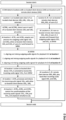
- embodiments of the present invention relate to a method for managing multimedia signals in a virtual conferencing system comprising a virtual conference server and a plurality of client devices coupled to said virtual conference server, said plurality of client devices comprising a first subset of co-located client devices (100 1 ,100 2 , 100 3 ) and a second subset of remote devices (300 1 , 300 2 ), said method comprising the steps of:
- Another relevant embodiment of the present invention relates to the step of controlling, by a playback control means, synchronization of a received incoming audio signal from at least one remote client device of said second subset of remote client devices, at, at least one active co-located client device for playback at co-located client devices of said first subset of co-located client devices.
- Another relevant embodiment of the present invention relates to a method for Mixing, by a Multimedia Routing means (MRM) (which can be executed at said virtual conference server and/or at said client devices), the outgoing audio signal-(105) of each of said at least one active co-located device of said first subset of co-located client devices (100 1 ,100 2 , 100 3 ), to generate an incoming audio signal (306) for playback at, at least one client device of said second subset of remote client devices (300 1 , 300 2 ).
- MRM Multimedia Routing means
- Still another relevant embodiment of the present invention relates to a method for Mixing, by a Multimedia Routing means (MRM) (which can be executed at said virtual conference server and/or at said client devices), the outgoing audio signal (305)-of at least one remote client device of said second subset of remote client devices (300 1 , 300 2 ), to generate an incoming audio signal (106) for playback at each co-located client device of said first subset of co-located client devices (100 1 ,100 2 , 100 3 ).
- MRM Multimedia Routing means
- a further relevant embodiment of the present invention relates to a method for Mixing, by said Multimedia Routing means (MRM), said outgoing audio signal-(105) of each of said at least one active co-located device of said first subset of co-located client devices (100 1 ,100 2 , 100 3 ) and said outgoing audio signal (305)-of at least one remote client device of said second subset of remote client devices (300 1 , 300 2 ), to generate an incoming audio signal (106) for playback at, at least one co-located client devices of said first subset of co-located client devices (100 1 ,100 2 , 100 3 ).
- MRM Multimedia Routing means
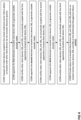
- Still another relevant embodiment of the present invention relates to a method for managing multimedia signals in a virtual conferencing system according to claim 1-5, wherein said method further comprises before said step of detecting, by an Active client detection means (108), at least one active client device the step of:
- Still a further relevant embodiment of the present invention relates to a method for managing multimedia signals in a virtual conferencing system according to claim 6, wherein said method further comprises the steps of:
- Another relevant embodiment of the present invention relates to a method for managing multimedia signals in a virtual conferencing system according to claim 7, wherein said method further comprises the steps of:
- a further relevant embodiment of the present invention relates to a method for managing multimedia signals in a virtual conferencing system according to claim 1, wherein said method further comprises before said step of forwarding of said outgoing audio signal, the steps of:
- Still a further relevant embodiment relates to a method for managing multimedia signals in a virtual conferencing system according to claim 2, wherein said method further comprises before said step of synchronization of said incoming audio signal, the steps of:
- Another relevant embodiment of the present invention relates to a method for managing multimedia signals in a virtual conferencing system according to claim 1, 3 and 4, wherein said method further comprises the steps of:
- the received incoming audio signal is ensured to only contain the audio from said second subset of remote client devices.
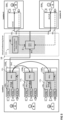
- Virtual conferences may be held involving multiple participants located inside the same acoustic enclosure further referred to as co-located client devices 100 1 , 100 2 , 100 3 such as the same conference room or the same classroom, with other participants located at a remote location further referred to as remote client devices 300 1 , 300 2 .
- co-located participant client devices 100 1 , 100 2 , 100 3 like to join the call with their devices, they experience audio issues that arises primarily because 1) typical acoustic echo cancellation methods fail to operate in the presence of variable-latency audio playback signals at different co-located devices, and 2) the playback of co-located microphones via co-located loudspeakers lead to acoustic feedback and instability of the system.
- Such issues therefore force that only one actual device with audio participate the virtual conference from each shared locale.
- Such devices joining with audio will be referred to as audio-enabled devices.
- this sole audio-enabled client device will inevitably be further from some participants in the room than others. This results in varied intelligibility of participants based solely on how near or far the participants are from the single active microphone. Further, the experience of those participants in the shared locale itself is also less than ideal since those furthest from the sole audio-enabled client device are often left struggling to hear the single in-room device's loudspeaker output that generates the voice of the remote participants.
- a first essential element of the virtual conferencing service VCS is a virtual conferencing server (10) which computing device may be implemented at a local or distributed server system for supporting a virtual conferencing service for bringing premises-based video, audio, and web communication together to meet the collaboration needs of all coupled virtual conferencing devices.
- Basic functionalities of the virtual conferencing server of a virtual conferencing service VCS may comprise functionality to: 1) initiate the meeting session (on demand of the client users) 1) connect the participant to the correct video meeting 2) arrange the multimedia (audio and video and text) routing to the different connected participants (examples are Selective Forwarding Unit (SFU), MCU (Multipoint Control Unit) or a Traversal Using Relays around NAT (TURN) server) 3) take care of authentication of the connected users 4) connecting with the other virtual conferencing servers in a distributed server systems
- SFU Selective Forwarding Unit
- MCU Multipoint Control Unit
- TURN Traversal Using Relays around NAT
- Such virtual conference server 10 may allow various types of conferencing devices to run a specific version of a virtual conferencing application for supporting such virtual conference service VCS and forward multimedia to other clients coupled to said virtual conference server 10.
- these ANPDs are considered as potential external peripherals coupled to at least one of the APDs defined in the following paragraph. Hence the ANPDs will not be changing the dynamics of the present multimedia management system (including the embodiments).
- Each of these such client devices may be coupled to the virtual conferencing server 10 over a communication network such as, but are not limited to, mobile communication networks such as 2G, 3G, 4G or 5G cellular networks, (wireless) LAN networks, using various communications infrastructure, such as Ethernet, Wi-Fi, a personal area network (PAN), a wireless PAN, Bluetooth, near-field communication (NFC), the like and Fixed communications networks. Further examples of such communications networks may be home networks, corporate networks, school networks, public networks (shops, airports, stations, etc.)
- the current virtual conferencing system comprises a first subset of co-located client devices (100 1 ,100 2 ,100 3 ), being client devices that are located inside the same acoustic enclosure referred to as co-located participants 100 1 , 100 2 , 100 3 , for instance within the same conference room or the same classroom.
- Each of the client devices 100 1 , 100 2 , 100 3 300 1 , 300 2 may comprise a Virtual conferencing client module (not shown for reasons of simplicity) comprising virtual client functionality for supporting the virtual conference service VCS, by means of a client application, e.g. as a softphone or a VCS client software that can also connect to a specific VCS platform and stream video (e.g., Zoom, Microsoft Teams, Google Meet, CISCO Webex).
- the co-located client devices 100 1 , 100 2 , 100 3 according to the present invention further may comprise:
- sensors for extracting these distinctive attributes may be aacoustic sensors such as microphones/image sensors such as cameras /Optical and light sensors/ (ultrasonic/optic) proximity sensors/motion sensors/location and position sensors such as GPS or Gyroscopes/environmental sensors, such as temperature, humidity, pressure sensors, connected (WiFi) network identifier and/or any combination thereof.
- aacoustic sensors such as microphones/image sensors such as cameras /Optical and light sensors/ (ultrasonic/optic) proximity sensors/motion sensors/location and position sensors such as GPS or Gyroscopes/environmental sensors, such as temperature, humidity, pressure sensors, connected (WiFi) network identifier and/or any combination thereof.
- the co-located client devices 100 1 , 100 2 , 100 3 further may additionally or alternatively comprise:
- Said virtual conferencing server 10 may implement all or part of the functionality of a multimedia management module 11 for use in the virtual conferencing system according to the present invention comprising a virtual conference server.
- Each of the multimedia management module 110 1 , 110 2 , 110 3 of such co-located client devices (100 1 , 100 2 , 100 3 ) and a multimedia management module 11 of a virtual conferencing server 10 may be coupled by means of a peer-to peer coupling further referred to as P2P-communications network.
- P2P communication links may also be realized as part of a Local Area Network (LAN) using various communications infrastructure, such as Ethernet, Wi-Fi, a personal area network (PAN), a wireless PAN, Bluetooth, near-field communication (NFC), and the like.
- P2P network may also be realized through a mobile communications network (LTE, 3G, 4G, 5G). The goal is to allow such multimedia management modules communicate with each other via local networks that has a lower latency compared to the links connecting the client devices to said virtual conferencing server 10.
- Such P2P communication network may also be implemented by connecting devices directly via a direct link (e.g., WiFi direct) or alternatively via a relay server device. Furthermore, P2P communication may be performed over the already used virtual conferencing links from the clients to the servers.
- Such a multimedia management module 110 1 110 2 ,110 3 , 11 may be distributed over the each of the co-located client devices, the virtual conferencing server 10 and/or a further coupled network-connected conferencing element such as a dedicated conferencing device.
- the co-location status may be determined by the Co-located Client Detection Means (CCDM) - FIG 4 , or manually assigned by the users of respective client devices via the user interface, e.g. joining the same virtual room identified by a unique ID and exploiting a discovery server providing each client device or APD with the IP addresses of the other client devices.
- CCDM Co-located Client Detection Means
- users A, B and C are sharing the same location and are associated with the co-located client device 100 1 , 100 2 , 100 3 , while users D and E are joining from separate locations and associated with the remote client devices 300 1 , 300 2 , respectively.
- An active client detection means ACDM 1 at the client device 100 detects that client device 100, (associated with user A) of co-located client devices is active.
- an active client detection means ACDM 3 at the client device 100 3 detects that client device 100 3 (associated with user C) of co-located client devices is active.
- Such detection of activity is performed based on measured input signal associated to a user of said each said co-located client device and/or other distinctive attributes extracted from at least one sensor coupled to each said co-located client device, for instance:
- co-located client devices 100 1 , 100 2 , 100 3 may optionally exchange data with each other (for example over a P2P network that can offer a lower latency than the network connecting the client devices to the virtual conferencing server 10).
- the detected active status of users A, C of co-located client devices 100 1 , 100 3 determined by ACDM 1 and ACDM 3 is then shared across the co-located devices and the multimedia management module (for instance via the P2P network coupling each co-located devices).
- the active client detection means ACDM may be located at any co-located device, or any dedicated conferencing device, but also at the multimedia management module 11 on the virtual conference server 10.
- the acquisition control means ACM is configured to control an acquisition of an outgoing audio signal exclusively from each of the active co-located client device. Therefore, the acquisition control means ACM 1 of the active co-located client device 100 1 , and the acquisition control means ACM 3 of the active co-located client device 100 3 , first optionally process (for example to reduce acoustic echo, suppress background noise, reduce room effects and enhance speech quality) outgoing audio signal 105 1 , and 105s, to obtain a processed (with enhanced audio quality) outgoing audio signal and then forward said processed outgoing audio signals 105 1 , and 105 3 from each of said at least one active client device 100 1 , and 100 3 to the multimedia routing means (5) for playback of said processed signal at each client device of said second subset of remote client devices (300 1 , 300 2 ).
- process for example to reduce acoustic echo, suppress background noise, reduce room effects and enhance speech quality
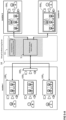
- multimedia routing means may be incorporated within the co-located client devices, in which case the step of mixing is carried out on one of active co-located client devices to generate a single outgoing audio signal.
- An example of this embodiment is illustrated in FIG 3 .
- said Multimedia Routing means 5 at said virtual conference server 10 may mix (or forward for mixing at the co-located client devices (100 1 ,100 2 , 100 3 )) the outgoing audio signal (305)-of at least one remote client device of said second subset of remote client devices (300 1 , 300 2 ), to generate an incoming audio signal (106) for playback at each co-located client device of said first subset of co-located client devices (100 1 ,100 2 , 100 3 ).
- the playback control means PCM 1 , PCM 2 and PCM 3 that is configured to control the synchronization of said received incoming audio signal 106 1 , 106 2 and 106 3 from at least one remote client device of said second subset of remote client devices (300 1 , 300 2 ), at, at least one active device, for playback at co-located client devices of said first subset of co-located client devices (100 1 , 100 2 ).
- the different communication delays are compensated so that the playback at the various co-located client devices is performed synchronously.
Landscapes
- Engineering & Computer Science (AREA)
- Multimedia (AREA)
- Signal Processing (AREA)
- Telephonic Communication Services (AREA)
- Data Exchanges In Wide-Area Networks (AREA)
Priority Applications (1)
| Application Number | Priority Date | Filing Date | Title |
|---|---|---|---|
| EP24150257.4A EP4583502A1 (fr) | 2024-01-03 | 2024-01-03 | Procédé de gestion de multimédia dans un système de conférence virtuelle, système associé, module de gestion de multimédia associé et serveur de conférence virtuelle associé |
Applications Claiming Priority (1)
| Application Number | Priority Date | Filing Date | Title |
|---|---|---|---|
| EP24150257.4A EP4583502A1 (fr) | 2024-01-03 | 2024-01-03 | Procédé de gestion de multimédia dans un système de conférence virtuelle, système associé, module de gestion de multimédia associé et serveur de conférence virtuelle associé |
Publications (1)
| Publication Number | Publication Date |
|---|---|
| EP4583502A1 true EP4583502A1 (fr) | 2025-07-09 |
Family
ID=89473360
Family Applications (1)
| Application Number | Title | Priority Date | Filing Date |
|---|---|---|---|
| EP24150257.4A Pending EP4583502A1 (fr) | 2024-01-03 | 2024-01-03 | Procédé de gestion de multimédia dans un système de conférence virtuelle, système associé, module de gestion de multimédia associé et serveur de conférence virtuelle associé |
Country Status (1)
| Country | Link |
|---|---|
| EP (1) | EP4583502A1 (fr) |
Citations (3)
| Publication number | Priority date | Publication date | Assignee | Title |
|---|---|---|---|---|
| US20140329511A1 (en) * | 2011-12-20 | 2014-11-06 | Nokia Corporation | Audio conferencing |
| US20210058517A1 (en) * | 2019-08-19 | 2021-02-25 | Teamport Inc. | Multiple device conferencing with improved destination playback |
| US20230421702A1 (en) * | 2022-06-24 | 2023-12-28 | Microsoft Technology Licensing, Llc | Distributed teleconferencing using personalized enhancement models |
-
2024
- 2024-01-03 EP EP24150257.4A patent/EP4583502A1/fr active Pending
Patent Citations (3)
| Publication number | Priority date | Publication date | Assignee | Title |
|---|---|---|---|---|
| US20140329511A1 (en) * | 2011-12-20 | 2014-11-06 | Nokia Corporation | Audio conferencing |
| US20210058517A1 (en) * | 2019-08-19 | 2021-02-25 | Teamport Inc. | Multiple device conferencing with improved destination playback |
| US20230421702A1 (en) * | 2022-06-24 | 2023-12-28 | Microsoft Technology Licensing, Llc | Distributed teleconferencing using personalized enhancement models |
Similar Documents
| Publication | Publication Date | Title |
|---|---|---|
| US20230216965A1 (en) | Audio Conferencing Using a Distributed Array of Smartphones | |
| US9894213B2 (en) | Acoustic echo cancellation for audio system with bring your own devices (BYOD) | |
| US11418758B2 (en) | Multiple simultaneous framing alternatives using speaker tracking | |
| US8379076B2 (en) | System and method for displaying a multipoint videoconference | |
| US20230282215A1 (en) | Transcription presentation of communication sessions | |
| US8606249B1 (en) | Methods and systems for enhancing audio quality during teleconferencing | |
| US9094524B2 (en) | Enhancing conferencing user experience via components | |
| CN103096024B (zh) | 作为视频会议外围设备的便携式设备 | |
| US9203633B2 (en) | Mobile group conferencing with portable devices | |
| US9509953B2 (en) | Media detection and packet distribution in a multipoint conference | |
| EP3070876A1 (fr) | Procédé et système permettant d'améliorer des services de téléconférence | |
| US11425258B2 (en) | Audio conferencing in a room | |
| US9549154B1 (en) | Multipoint communication system and method | |
| US12481479B2 (en) | Identifying co-located devices within a teleconferencing session | |
| EP4583502A1 (fr) | Procédé de gestion de multimédia dans un système de conférence virtuelle, système associé, module de gestion de multimédia associé et serveur de conférence virtuelle associé | |
| KR20250140081A (ko) | 근접성 기반 오디오 회의 | |
| US20240406621A1 (en) | Distributed teleconferencing using adaptive microphone selection | |
| EP4300918A1 (fr) | Procédé de gestion de son dans un système de conférence virtuel, système associé, module de gestion acoustique associé, dispositif client associé | |
| JP2006339869A (ja) | 映像信号と音響信号の統合装置 |
Legal Events
| Date | Code | Title | Description |
|---|---|---|---|
| PUAI | Public reference made under article 153(3) epc to a published international application that has entered the european phase |
Free format text: ORIGINAL CODE: 0009012 |
|
| STAA | Information on the status of an ep patent application or granted ep patent |
Free format text: STATUS: THE APPLICATION HAS BEEN PUBLISHED |
|
| AK | Designated contracting states |
Kind code of ref document: A1 Designated state(s): AL AT BE BG CH CY CZ DE DK EE ES FI FR GB GR HR HU IE IS IT LI LT LU LV MC ME MK MT NL NO PL PT RO RS SE SI SK SM TR |
|
| STAA | Information on the status of an ep patent application or granted ep patent |
Free format text: STATUS: THE APPLICATION IS DEEMED TO BE WITHDRAWN |