EP4583573A1 - Datenpaketablösungsverfahren und zugehörige vorrichtung - Google Patents
Datenpaketablösungsverfahren und zugehörige vorrichtung Download PDFInfo
- Publication number
- EP4583573A1 EP4583573A1 EP23870138.7A EP23870138A EP4583573A1 EP 4583573 A1 EP4583573 A1 EP 4583573A1 EP 23870138 A EP23870138 A EP 23870138A EP 4583573 A1 EP4583573 A1 EP 4583573A1
- Authority
- EP
- European Patent Office
- Prior art keywords
- unit set
- data unit
- protocol data
- packet
- packet loss
- Prior art date
- Legal status (The legal status is an assumption and is not a legal conclusion. Google has not performed a legal analysis and makes no representation as to the accuracy of the status listed.)
- Pending
Links
Images



Classifications
-
- H—ELECTRICITY
- H04—ELECTRIC COMMUNICATION TECHNIQUE
- H04W—WIRELESS COMMUNICATION NETWORKS
- H04W28/00—Network traffic management; Network resource management
- H04W28/02—Traffic management, e.g. flow control or congestion control
- H04W28/06—Optimizing the usage of the radio link, e.g. header compression, information sizing, discarding information
-
- H—ELECTRICITY
- H04—ELECTRIC COMMUNICATION TECHNIQUE
- H04W—WIRELESS COMMUNICATION NETWORKS
- H04W80/00—Wireless network protocols or protocol adaptations to wireless operation
- H04W80/02—Data link layer protocols
-
- H—ELECTRICITY
- H04—ELECTRIC COMMUNICATION TECHNIQUE
- H04L—TRANSMISSION OF DIGITAL INFORMATION, e.g. TELEGRAPHIC COMMUNICATION
- H04L47/00—Traffic control in data switching networks
- H04L47/10—Flow control; Congestion control
- H04L47/24—Traffic characterised by specific attributes, e.g. priority or QoS
-
- H—ELECTRICITY
- H04—ELECTRIC COMMUNICATION TECHNIQUE
- H04L—TRANSMISSION OF DIGITAL INFORMATION, e.g. TELEGRAPHIC COMMUNICATION
- H04L47/00—Traffic control in data switching networks
- H04L47/10—Flow control; Congestion control
- H04L47/28—Flow control; Congestion control in relation to timing considerations
-
- H—ELECTRICITY
- H04—ELECTRIC COMMUNICATION TECHNIQUE
- H04L—TRANSMISSION OF DIGITAL INFORMATION, e.g. TELEGRAPHIC COMMUNICATION
- H04L47/00—Traffic control in data switching networks
- H04L47/10—Flow control; Congestion control
- H04L47/29—Flow control; Congestion control using a combination of thresholds
-
- H—ELECTRICITY
- H04—ELECTRIC COMMUNICATION TECHNIQUE
- H04L—TRANSMISSION OF DIGITAL INFORMATION, e.g. TELEGRAPHIC COMMUNICATION
- H04L47/00—Traffic control in data switching networks
- H04L47/10—Flow control; Congestion control
- H04L47/32—Flow control; Congestion control by discarding or delaying data units, e.g. packets or frames
-
- H—ELECTRICITY
- H04—ELECTRIC COMMUNICATION TECHNIQUE
- H04L—TRANSMISSION OF DIGITAL INFORMATION, e.g. TELEGRAPHIC COMMUNICATION
- H04L69/00—Network arrangements, protocols or services independent of the application payload and not provided for in the other groups of this subclass
- H04L69/28—Timers or timing mechanisms used in protocols
-
- H—ELECTRICITY
- H04—ELECTRIC COMMUNICATION TECHNIQUE
- H04L—TRANSMISSION OF DIGITAL INFORMATION, e.g. TELEGRAPHIC COMMUNICATION
- H04L69/00—Network arrangements, protocols or services independent of the application payload and not provided for in the other groups of this subclass
- H04L69/30—Definitions, standards or architectural aspects of layered protocol stacks
- H04L69/32—Architecture of open systems interconnection [OSI] 7-layer type protocol stacks, e.g. the interfaces between the data link level and the physical level
- H04L69/322—Intralayer communication protocols among peer entities or protocol data unit [PDU] definitions
-
- H—ELECTRICITY
- H04—ELECTRIC COMMUNICATION TECHNIQUE
- H04W—WIRELESS COMMUNICATION NETWORKS
- H04W28/00—Network traffic management; Network resource management
- H04W28/02—Traffic management, e.g. flow control or congestion control
- H04W28/0231—Traffic management, e.g. flow control or congestion control based on communication conditions
- H04W28/0236—Traffic management, e.g. flow control or congestion control based on communication conditions radio quality, e.g. interference, losses or delay
Definitions
- the first data packet in the protocol data unit set may include: a data packet whose sequence number is 1 in the protocol data unit, or a START data packet in the protocol data unit set, such as a data packet having a START identifier.
- the method further includes: when transmission time of the protocol data unit set exceeds packet loss timing time of the packet loss timer, discarding the protocol data unit set or the data packet.
- that transmission of the protocol data unit set or the data packet is not completed specifically includes: there is a data packet in the protocol data unit set at the transmitting end.
- the method when the determining basis used in the preset determining manner is the first attribute information corresponding to the protocol data unit set and/or the second attribute information corresponding to the data packet, the method specifically includes:
- the method further includes:
- the method when the determining basis used in the preset determining manner is the dependency relationship between the protocol data unit set and another protocol data unit set, the method specifically includes:
- the obtaining the at least one second protocol data unit set that has the dependency relationship with the first protocol data unit set specifically includes:
- the method further includes:
- the method further includes: when a protocol layer entity of the transmitting end device determines to discard the protocol data unit set or the data packet, if the data packet of the protocol data unit set has been transmitted to a next layer corresponding to the protocol layer, sending, by the protocol layer entity, a notification message to a protocol layer entity of the next layer, where the notification message indicates the protocol layer entity of the next layer to discard the data packet.
- a data packet discarding method is provided, and is applied to a transmitting end.
- the method includes:
- the triggering discarding of the protocol data unit set or discarding of the data packet in the protocol data unit set at a protocol layer may mean triggering a packet discarding processing function of the protocol layer.
- the protocol layer may perform the method according to any implementation of the first aspect.
- a data packet discarding method is provided, and is applied to a transmitting end.
- the method includes:
- a data structure of the configuration information is a sequence structure.
- a protocol data unit set may be used as a data unit during data transmission, one protocol data unit set includes one or more data packets, each data packet may carry a payload for constituting an information unit, and an application layer of a receiving end may obtain a complete information unit such as information corresponding to a video frame or picture frame based on payloads carried in all PDUs in the protocol data unit set.
- the data unit may include a frame and a video slice.
- the frame may be understood as a carrier for transmitting data
- the video slice may be understood as a data unit of a specific type in a video service.
- one protocol data unit set may correspond to one frame; and from a perspective of a type of transmitted data, in some cases, in the video traffic, data carried by one protocol data unit set may correspond to one video slice.
- the application layer of the receiving end needs to receive all packets in a protocol data unit set to obtain a complete information unit, and discarding one or more packets may result in the receiving end not being able to obtain the entire information unit.
- the application layer of the receiving end may also calculate data of the discarded part based on data of obtained PDUs by using some algorithms, so that even if some (for example, a small number of or less important) PDUs are discarded, the application layer of the receiving end can still recover all or a part of the information unit.
- PDU set is composed of one or more PDUs carrying the payload of one unit of information generated at the application level (e.g. a frame or video slice for XRM Services, as used in TR 26.926 [27]).
- the application layer can still recover parts or all of the information unit, when some PDUs are missing.
- one PDU set includes one or more PDUs, and the PDUs carry payloads of an information unit such as a frame or video slice generated at the application layer.
- the application layer needs to receive all PDUs in the PDU set obtain the information unit; or in another implementation, when some PDUs are discarded, the application layer may still recover all or a part of the information unit.
- Various types of attribute information about the protocol data unit set and/or the data packet are defined in the SA, for example, including: a sequence number of the protocol data unit set, a total number of data packets included in the protocol data unit set, an importance level of the protocol data unit set, a priority of the protocol data unit set, a dependency/dependency relationship of the protocol data unit set, a sequence number of the data packet in the protocol data unit set, a position of the data packet in the protocol data unit set (for example, a start packet/an end packet), an importance level of the data packet, a priority of the data packet, and the like.
- the protocol data unit set is a PDU set is used as an example.
- Attribute information corresponding to the PDU set may be represented, for example, as: (1) a PDU set sequence number (PDU Sequence number, SN); (2) a start PDU/an end PDU in the PDU set (Start/End PDU of the PDU set); (3) a PDU sequence number in the PDU set (PDU SN within a PDU set); (4) a number of PDUs in the PDU set (Number of PDUs within a PDU set); (5) PDU set importance (PDU set importance); or (6) a dependency/dependency relationship of the PDU set (PDU set dependency).
- the foregoing attribute information may be configured by the receiving end, or may be configured by a transmitting end, for example, is configured by an application layer, a transport layer, or a higher layer of the transmitting end, or by a core network.
- the importance level of the data packet may mean that PDUs in a same protocol data unit set may have different importance levels.
- importance of the first data packet (namely, the start data packet) in the protocol data unit set is higher than importance of the last data packet (namely, the last or the end data packet).
- the dependency of the protocol data unit set may mean that some protocol data unit sets may depend on other protocol data unit sets.
- the dependency of the protocol data unit set may be represented as follows: Whether a video slice is useful depends on whether a previous video slice is successfully received.
- the dependency of the protocol data unit set may be represented as follows: Two video slices belong to a same frame, the frame can be correctly decoded only when all video slices in the frame are successful decoded, and in this case, transmission of a subsequent video slice (protocol data unit set) is meaningful only when transmission of a previous video slice (protocol data unit set) is successful.
- a protocol data unit set structure in which the protocol data unit set is a PDU set and the data packet is a PDU is used as an example.
- the PDU set includes eight PDUs, to be specific, the number of PDUs in the PDU set (Number of PDUs within a PDU set) is 8, and PDU sequence numbers (PDU SNs) of the eight PDUs may be denoted, for example, as a PDU SN1, a PDU SN2, ..., and a PDU SN8 respectively. It should be understood that the number of PDUs included in the protocol data unit set and the representation of the PDU sequence numbers shown in FIG. 1 are merely examples, and embodiments of this application are not limited thereto.
- FIG. 3 is a schematic diagram of a protocol data unit set transmission process according to an embodiment of this application.
- determining may be performed based on the following determining basis: a number of discarded data packets in the protocol data unit set, a packet loss timer of the protocol data unit set, first attribute information corresponding to the protocol data unit set, second attribute information corresponding to the data packet, and a dependency between the protocol data unit set and another protocol data unit set, where the attribute information is associated with allowing to be discarded or not allowing to be discarded.
- determining basis a number of discarded data packets in the protocol data unit set, a packet loss timer of the protocol data unit set, first attribute information corresponding to the protocol data unit set, second attribute information corresponding to the data packet, and a dependency between the protocol data unit set and another protocol data unit set, where the attribute information is associated with allowing to be discarded or not allowing to be discarded.
- the operation of discarding the protocol data unit set or the data packet included in the protocol data unit set may alternatively be performed in the protocol layer when it is determined to discard the protocol data unit set or the data packet included in the protocol data unit set.
- the protocol layer herein may be specifically any one of an SDAP layer, a PDCP layer, an RLC layer, or a MAC layer. This is not limited in embodiments of this application.
- the protocol layer needs to sense which protocol data unit set (or referred to as sub-QoS flow) the data packet in the protocol layer is in.
- the manner of realizing the sensing may include: The protocol layer obtains attribute information of a data packet from a higher layer, and then determines, based on the attribute information, to which protocol data unit set the data packet in the protocol layer belongs.
- the higher layer herein may include an application layer or a transport layer.
- the attribute information herein may include information defined for the protocol data unit set in the SA, such as: a sequence number of the protocol data unit set, a start data packet and an end data packet in the protocol data unit set, a sequence number of each data packet in the protocol data unit set, an importance level of the data packet, a priority of the data packet, a total number of data packets in the protocol data unit set, an importance level of the protocol data unit set, a priority of the protocol data unit set, and a dependency of the protocol data unit set.
- the protocol layer may further obtain QoS requirement information such as a latency budget of the protocol data unit set and error tolerance of the protocol data unit set from the higher layer.
- the QoS requirement information may be requirement information corresponding to a QoS flow for transmitting a protocol data unit set.
- the protocol layer may obtain the attribute information in a plurality of manners, for example: Manner 1: An upper layer of the protocol layer may carry the attribute information in a data packet for transmission to the protocol layer; and Manner 2: An upper layer of the protocol layer may transmit attribute information corresponding to a data packet to the protocol layer when or after transmitting the data packet.
- Manner 1 An upper layer of the protocol layer may carry the attribute information in a data packet for transmission to the protocol layer
- Manner 2 An upper layer of the protocol layer may transmit attribute information corresponding to a data packet to the protocol layer when or after transmitting the data packet.
- a specific manner in which the protocol layer obtains the foregoing attribute information is not limited in this application.
- the protocol layer may be any one of the SDAP layer, the PDCP layer, the RLC layer, or the MAC layer, the protocol layer may obtain the attribute information of the protocol data unit set in the following manners:
- a discarding condition may be determined from one or more of the number of lost packets of the protocol data unit set, the packet loss timer of the protocol data unit set, the first attribute information corresponding to the protocol data unit set, the second attribute information corresponding to the data packet, and the dependency between the protocol data unit set and another protocol data unit set.
- the discarding condition may be specifically determined in the following determining manners:
- the transmitting end is a user equipment (user equipment, UE) and the receiving end is a network device.
- UE user equipment
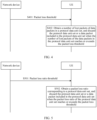
- FIG. 4 is a schematic flowchart of a data packet discarding method according to an embodiment of this application.
- a manner of determining whether to discard a packet may correspond to the foregoing determining manner 1, to be specific, whether to discard a protocol data unit set or a data packet included in the protocol data unit set is determined based on the number of lost packets of the protocol data unit set.
- the procedure may include the following steps: S401: A network device sends a packet loss threshold to a UE.
- That the network device sends a packet loss threshold to the UE may alternatively be understood as that the network device configures the packet loss threshold to the UE.
- the packet loss threshold indicates a maximum threshold of a number data packets allowed to be discarded in the protocol data unit set.
- the maximum threshold for the number of data packets allowed to be discarded in the protocol data unit set herein means that when the number of discarded data packets in the protocol data unit set is less than the threshold, obtaining, by the application layer of the network device, an information unit carried by the protocol data unit set may not be affected. For example, when the number of discarded data packets is small, the network device may obtain content carried in discarded data packets through calculation based on content of data packets that are not discarded, thereby obtaining the complete information unit. When the number of discarded data packets in the protocol data unit set is greater than or equal to the threshold, the network device may not be able to obtain the complete information unit based on payloads carried in the remaining data packets.
- the foregoing type of the protocol data unit set may be an importance level of the protocol data unit set, a priority of the protocol data unit set, or a sequence number of the protocol data unit set. This is not limited in this embodiment of this application.
- the discarding a data packet that is in the protocol data unit set and that is not discarded may include two cases: (1) a client (for example, a protocol layer of the client) discards a data packet in the protocol data unit set that has been received; or (2) a client (for example, a protocol layer of the client) discards a data packet in the protocol data unit set that has not been received, in other words, once it is determined that the protocol data unit set needs to be discarded, the protocol data unit set may be directly discarded when receiving a data packet subsequent to the protocol data unit set.
- the UE may release the count value of the packet loss counter or clear the count value of the packet loss counter when the count value of the packet loss counter reaches the packet loss threshold.
- the UE may alternatively release the count value of the packet loss counter or clear the count value of the packet loss counter when the transmission of the protocol data unit set is completed and the count value of the packet loss counter corresponding to the protocol data unit set does not reach the packet loss threshold.
- the packet loss is not counted into the packet loss counter because the packet loss in this case does not affect obtaining of the information unit by the network device. In other words, the packet loss counter does not count a data packet discarded after successful transmission.
- the packet loss counter is configured in an acknowledged mode.
- the acknowledged mode includes receiving, after transmitting a data packet, indication information (or a status report) fed back by a receiving end, where the indication information indicates whether the data packet is successfully transmitted or whether the data packet needs to be retransmitted.
- the acknowledged mode may be an AM mode, a HARQ transmission mode, or an SN status report, and this is not limited in this application.
- a discarding process according to the foregoing determining manner 1 is further described by using an example in which the entity is a PDCP entity and the protocol data unit set is a PDU set.
- a PDCP entity of the UE may determine, based on a PDU set sequence number (assumed to be 1) corresponding to the PDCP SDU, that a PDU set to which the PDCP SDU belongs is a PDU set 1, and may determine, based on a PDU SN (assumed to be 1) corresponding to the PDCP SDU, that the PDCP SDU is the first data packet in the PDU set 1. Then, the UE starts a discard timer (discard timer) corresponding to the PDCP SDU, and maintains a packet loss counter for the PDU set 1. Subsequently, the PDCP entity of the UE continues to receive other PDCP SDUs in the PDU set 1, and the PDCP entity starts a corresponding discard timer (discard timer) for each PDCP SDU.
- the discard timer herein may be timed for the UE to receive a status report fed back by the network device for a data packet, or may be timed for time at which the UE discards the data packet buffered in the UE.
- the network device receives the data packet (in other words, the data packet is successfully transmitted to the network device)
- the network device feeds back a status report (or referred to as a feedback message) corresponding to the data packet to the UE, and informs the UE that the data packet has been successfully transmitted.
- the UE discards the data packet buffered in the UE. If the UE discards the corresponding data packet when the discard timer (discard timer) expires, it means that the data packet is not successfully transmitted.
- the PDCP if receiving a status report that corresponds to the PDCP SDU and indicates that the PDCP SDU is successfully transmitted, the PDCP discards the PDCP SDU. In this case, packet loss occurs after successful transmission of the data packet, and therefore, the packet loss is not counted by the packet loss counter. In other words, the counter in embodiments of this application counts a packet loss in a case of unsuccessful transmission.
- the PDCP SDU if a discard timer corresponding to a PDCP SDU expires, the PDCP SDU is discarded. It may be noted that, if the PDCP does not receive a status report fed back by the network device for the PDCP SDU when the discard timer expires, the PDCP entity may determine that the PDCP SDU is discarded in the case of unsuccessful transmission.
- the packet loss counter counts the packet loss, and the count value increases by one.
- the discard processing may include: (1) discarding a data packet in the PDU set 1 that has been received and that is not discarded; (2) for a subsequently received data packet, determining if the data packet belongs to the PDU set 1, and if the data packet belongs to the PDU set 1, discarding the data packet.
- the UE may release or clear the packet loss counter if transmission of data packets in the PDU set 1 is completed and a number of discarded data packets does not exceed the packet loss threshold.
- the data packet discarding method when a packet loss occurs during transmission of protocol data unit sets, whether it is necessary to transmit a remaining data packet or protocol data unit set is determined through calculation based on information about the number of lost packets, information about time of arrival of the data packet, and the dependency between the protocol data unit sets; and when there is no need to continue transmission, the protocol data unit set or data packet is discarded.
- This method can avoid transmission of invalid data packets or protocol data unit sets, thereby saving air interface resources.
- FIG. 5 is a schematic flowchart of another data packet discarding method according to an embodiment of this application.
- a manner of determining whether to discard a packet may correspond to the foregoing determining manner 2, to be specific, whether to discard a protocol data unit set or a data packet included in the protocol data unit set is determined based on the packet loss ratio of the protocol data unit set.
- the procedure may include the following steps: S501: A network device sends a packet loss ratio threshold to a UE.
- That the network device sends a packet loss ratio threshold to the UE may alternatively be understood as that the network device configures the packet loss ratio threshold to the UE.
- the packet loss ratio threshold indicates a maximum proportion of data packets allowed to be discarded in the protocol data unit set.
- the maximum proportion of data packets allowed to be discarded in the protocol data unit set herein means that when a ratio of a number of discarded data packets in the protocol data unit set to a total number of data packets in the protocol data unit set is less than the packet loss ratio threshold, obtaining, by the application layer of the network device, an information unit carried by the protocol data unit set may not be affected. For example, when the number of discarded data packets is small, the network device may obtain content carried in discarded data packets through calculation based on content of data packets that are not discarded, thereby obtaining the complete information unit.
- the network device may not be able to obtain the complete information unit based on payloads carried in the remaining data packets.
- the embodiment of FIG. 5 in this application provides the process of configuring the packet loss ratio threshold by the network device, but in actual applications, the packet loss ratio threshold may alternatively be configured by a higher layer (such as an application layer or a transport layer) of the UE, or may alternatively be configured by a core network. This is not limited in this embodiment of this application.
- the packet loss ratio threshold is configured at a granularity of each data radio bearer (data radio bearer, DRB), in other words, a configuration granularity is per DRB, to be specific, the packet loss ratio threshold is included in a DRB configuration, and different DRBs may correspond to different packet loss ratio thresholds.
- the packet loss ratio threshold is configured at a granularity of each protocol layer entity, to be specific, the packet loss ratio threshold is included in a protocol layer entity configuration, and different types of protocol layer entities (such as an SDAP, a PDCP, and an RLC) may correspond to different packet loss ratio thresholds.
- the packet loss ratio threshold is configured at a granularity of each protocol data unit set, in other words, the configuration granularity is per protocol data unit set, to be specific, the packet loss ratio threshold is included in a protocol data unit set configuration, and different protocol data unit sets may correspond to different packet loss ratio thresholds.
- the packet loss ratio threshold is configured at a granularity of each type of protocol data unit set, to be specific, the packet loss ratio threshold is included in a type configuration of the protocol data unit set, and different types of protocol data unit sets may correspond to different packet loss ratio thresholds.
- the configuration granularity of the packet loss ratio threshold is not specifically limited in embodiments of this application.
- the foregoing type of the protocol data unit set may be an importance level of the data unit set, a priority of the protocol data unit set, a sequence number of the protocol data unit set, or the like. This is not limited in this embodiment of this application.
- the packet loss ratio threshold configured by the network device may be included in a data radio bearer (data radio bearer, DRB) or a protocol layer entity configuration.
- S502 Obtain a packet loss ratio corresponding to the protocol data unit set, and discard the protocol data unit set or the data packet included in the protocol data unit set when the packet loss ratio of the protocol data unit set reaches or exceeds the packet loss ratio threshold.
- the packet loss ratio also increases.
- the UE may discard a data packet that is included in the protocol data unit set and that is not discarded.
- the protocol data unit set is not discarded.
- the data packets that are not discarded in the protocol data unit set and that may be discarded by the UE may include: (1) a data packet in the protocol data unit set that has been received by a protocol layer; and (2) a data packet in the protocol data unit set that has not been received by the protocol layer, in other words, once it is determined that the protocol data unit set needs to be discarded, the protocol layer may directly discard the protocol data unit set when receiving a data packet subsequent to the protocol data unit set.
- the UE may release the count value of the packet loss counter or clear the count value of the packet loss counter when the packet loss ratio reaches the packet loss ratio threshold.
- the UE may alternatively release the count value of the packet loss counter or clear the count value of the packet loss counter when the transmission of the protocol data unit set is completed and the packet loss ratio corresponding to the protocol data unit set does not reach the packet loss ratio threshold.
- the packet loss is not counted into the packet loss counter reflected by a because the packet loss in this case does not affect obtaining of the information unit by the network device. In other words, the packet loss counter does not count a data packet discarded after successful transmission.
- whether transmission of the protocol data unit set is completed may be determined in a plurality of manners, such as: Manner 1: depending on whether the last data packet in the protocol data unit set has been received or has been transmitted to a next layer, and if yes, it is determined that the transmission is completed; and Manner 2: determining, based on received data packets that belong to the protocol data unit set, whether the last data packet in the protocol data unit set has been received and whether transmission of all data packets in the protocol data unit set is completed, where the all data packets includes data packets that have been successfully transmitted and that are actively discarded after a feedback message is received from the network device and data packets that have been discarded based on the discard timer, or the all data packets includes data packets that have been successfully transmitted and that are actively discarded by the protocol layer after receiving a feedback message from the network device and data packets that are transmitted to the next layer.
- a PDCP entity of the UE may determine, based on a PDU set sequence number (assumed to be 1) corresponding to the PDCP SDU, that a PDU set to which the PDCP SDU belongs is a PDU set 1, and may determine, based on a PDU SN (assumed to be 1) corresponding to the PDCP SDU, that the PDCP SDU is the first data packet in the PDU set 1. Then, the UE starts a discard timer (discard timer) corresponding to the PDCP SDU, and maintains a packet loss counter for the PDU set 1. Subsequently, the PDCP entity of the UE continues to receive other PDCP SDUs in the PDU set 1, and the PDCP entity starts a corresponding discard timer (discard timer) for each PDCP SDU.
- the PDCP if receiving a status report that corresponds to the PDCP SDU and indicates that the PDCP SDU is successfully transmitted, the PDCP discards the PDCP SDU. In this case, packet loss occurs after successful transmission of the data packet, and therefore, the packet loss is not counted by the packet loss counter. In other words, the counter in embodiments of this application counts a packet loss in a case of unsuccessful transmission.
- the PDCP SDU if a discard timer corresponding to a PDCP SDU expires, the PDCP SDU is discarded. It may be noted that, if the PDCP does not receive a status report fed back by the network device for the PDCP SDU when the discard timer expires, the PDCP entity may determine that the PDCP SDU is discarded in the case of unsuccessful transmission.
- the packet loss counter counts the packet loss, and the count value increases by one.
- the discard processing may include: (1) discarding a data packet in the PDU set 1 that has been received and that is not discarded; (2) for a subsequently received data packet, determining if the data packet belongs to the PDU set 1, and if the data packet belongs to the PDU set 1, discarding the data packet.
- the UE may release or clear the packet loss counter if transmission of data packets in the PDU set 1 is completed and a ratio of the number of lost packets to the total number of PDCP PDUs does not exceed the packet loss threshold.
- the data packet discarding method when a packet loss occurs during transmission of protocol data unit sets, whether it is necessary to transmit a remaining data packet or protocol data unit set is determined through calculation based on information about the number of lost packets, information about time of arrival of the data packet, and the dependency between the protocol data unit sets; and when there is no need to continue transmission, the protocol data unit set or data packet is discarded.
- This method can avoid transmission of invalid data packets or protocol data unit sets, thereby saving air interface resources.
- FIG. 6 is a schematic flowchart of still another data packet discarding method according to an embodiment of this application.
- a manner of determining whether to discard a packet may correspond to the foregoing determining manner 3, to be specific, whether to discard a protocol data unit set or a data packet included in the protocol data unit set is determined depending on whether a packet loss timer set for the protocol data unit set expires.
- the procedure may include the following steps: S601: A network device sends a packet loss timer to a UE.
- That the network device sends a packet loss timer to the UE may alternatively be understood as that the network device configures the packet loss timer to the UE.
- the packet loss timer is configured at a granularity of each data radio bearer (data radio bearer, DRB), in other words, a configuration granularity is per DRB, to be specific, the packet loss timer is included in a DRB configuration, and different DRBs may correspond to different packet loss timers.
- the packet loss timer is configured at a granularity of each protocol layer entity, to be specific, the packet loss timer is included in a protocol layer entity configuration, and different types of protocol layer entities (such as an SDAP, a PDCP, and an RLC) may correspond to different packet loss timers.
- the network device may configure the packet loss timer through RRC signaling, a MAC CE, or DCI.
- the packet loss timer is started when the first data packet in the protocol data unit set is received.
- a manner of determining that a received data packet is the first data packet in the protocol data unit set may include: after receiving a data packet, determining whether the data packet is a start data packet of the protocol data unit set, and if yes, it indicates that the data packet is the first data packet in the protocol data unit set; or after receiving a data packet, determining whether a data packet sequence number corresponding to the data packet is the first data packet in the protocol data unit set; or if after receiving a data packet, a protocol layer entity determines that a data packet in the protocol data unit set has not been received previously, then the data packet is the first data packet in the protocol data unit set. This is not limited in this application.
- the protocol data unit set or the data packet included in the protocol data unit set is discarded when the packet loss timer expires and transmission of data packets in the protocol data unit set is not completed.
- the protocol data unit set or the data packet included in the protocol data unit set may be discarded when the packet loss timer expires.
- That a data packet in the protocol data unit set has not been transmitted may be determined in the following manners: In some embodiments, whether transmission of the protocol data unit set is completed may be determined in a plurality of manners, such as: Manner 1: depending on whether the last data packet in the protocol data unit set has been received or has been transmitted to a next layer, and if yes, it is determined that the transmission is completed; and Manner 2: determining, based on received data packets that belong to the protocol data unit set, whether the last data packet in the protocol data unit set has been received and whether transmission of all data packets in the protocol data unit set is completed, where the all data packets includes data packets that have been successfully transmitted and that are actively discarded after a feedback message is received from the network device and data packets that have been discarded based on the discard timer, or the all data packets includes data packets that have been successfully transmitted and that are actively discarded by the protocol layer after receiving a feedback message from the network device and data packets that are transmitted to the next layer.
- Manner 1
- the packet loss timer may be stopped, or the packet loss timer may be released, or the packet loss timer may be cleared.
- a PDCP entity of the UE may determine, based on a protocol data unit set sequence number (assumed to be 1) corresponding to the PDCP SDU, that a protocol data unit set to which the PDCP SDU belongs is a protocol data unit set 1, and may determine, based on a PDU SN (assumed to be 1) corresponding to the PDCP SDU, that the PDCP SDU is the first data packet in the protocol data unit set 1. Then, the UE starts a discard timer (discard timer) corresponding to the PDCP SDU, and starts a corresponding packet loss timer for the protocol data unit set 1. Subsequently, the PDCP entity of the UE continues to receive other PDCP SDUs in the protocol data unit set 1, and the PDCP entity starts a corresponding discard timer (discard timer) for each PDCP SDU.
- a protocol data unit set sequence number assumed to be 1
- PDU SN assumed to be 1
- the packet loss timer is stopped if transmission of all data packets in the protocol data unit set 1 is completed (including data packets that have been discarded by the PDCP entity or data packets that are successfully transmitted). In a mode in which a data packet is unacknowledged, the packet loss timer is stopped if transmission of all data packets in the protocol data unit set 1 is completed (all the data packets have been transmitted to a next layer or discarded).
- FIG. 7 is a schematic flowchart of still another data packet discarding method according to an embodiment of this application.
- a manner of determining whether to discard a packet may correspond to the foregoing determining manner 4, to be specific, whether to discard a protocol data unit set or a data packet included in the protocol data unit set is determined comprehensively based on the number of lost packets of the protocol data unit set and the packet loss timer corresponding to the protocol data unit set.
- the procedure may include the following steps: S701: A network device sends a packet loss threshold and a packet loss timer to a UE.
- That the network device sends a packet loss threshold and a packet loss timer to the UE may alternatively be understood as that the network device configures the packet loss threshold and the packet loss timer to the UE.
- the packet loss threshold and the packet loss timer refer to the descriptions in the embodiment of FIG. 4 and the embodiment of FIG. 6 . This is not described in detail herein again.
- the embodiment of FIG. 7 in this application provides the process of configuring the packet loss threshold by the network device, but in actual applications, the packet loss threshold may alternatively be configured by a higher layer (such as an application layer or a transport layer) of the UE, or may alternatively be configured by a core network device. This is not limited in this embodiment of this application.
- S702 Discard the protocol data unit set or the data packet included in the protocol data unit set when the packet loss timer expires and transmission of the protocol data unit set or the data packet is not completed; and/or when the number of lost packets in the protocol data unit set reaches or exceeds the packet loss threshold.
- the UE comprehensively determines whether to discard the protocol data unit set by using the following two manners: using the packet loss counter to count whether the number of lost packets in the protocol data unit set reaches the packet loss threshold and using the packet loss timer to count whether transmission of the data packets in the protocol data unit set is completed during timing time.
- the protocol data unit set or the data packet included in the protocol data unit set may be discarded.
- the protocol data unit set or the data packet included in the protocol data unit set may be discarded. In other words, the protocol data unit set can be discarded when at least one of the two discarding conditions is satisfied.
- the discarding processing in embodiments of this application may mean discarding the protocol data unit set or the data packet included in the protocol data unit set.
- the protocol data unit set is a PDU set and the data packet is a PDU.
- an example process may include the following steps: (1) determining a packet loss threshold and a packet loss timer of the PDU set, and when a number of discarded data packet in the PDU set (in other words, a number of lost packets in the PDU set) reaches (or exceeds) the packet loss threshold, directly discarding the data packet in the PDU set; or when the packet loss timer expires, discarding the data packet that is in the PDU set and that is not discarded; (2) starting the packet loss timer after receiving the first data packet in the PDU set, where a manner of determining the first data packet includes receiving a start PDU (a data packet identifying the start) in the PDU set, or receiving the first data packet that belongs to the PDU set; (3) maintaining a packet loss counter for the PDU set when the packet loss timer is started, where the packet loss counter increases by one when a
- the data packet discarding method when a packet loss occurs during transmission of protocol data unit sets, whether it is necessary to transmit a remaining data packet or protocol data unit set is determined through calculation based on information about the number of lost packets, information about time of arrival of the data packet, and the dependency between the protocol data unit sets; and when there is no need to continue transmission, the protocol data unit set is discarded.
- This method can avoid transmission of invalid data packets or protocol data unit sets, thereby saving air interface resources.
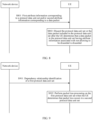
- FIG. 8 is a schematic flowchart of still another data packet discarding method according to an embodiment of this application.
- a manner of determining whether to discard a packet may correspond to the foregoing determining manner 5, to be specific, whether to discard a protocol data unit set or a data packet included in the protocol data unit set is determined depending on whether a data packet having specific attribute information included in the protocol data unit set is discarded, where the specific attribute is associated with not allowing to be discarded.
- the procedure may include the following steps: S801: A network device sends first attribute information corresponding to the protocol data unit set and/or second attribute information corresponding to the data packet to a UE.
- second protocol data unit sets on which the first protocol data unit set depends, when any one of the second protocol data unit sets is discarded, the first protocol data unit set does not need to be transmitted subsequently, and the first protocol data unit set may be discarded.
- the transmitting end device may enable, in response to the discard indication information, a service of discarding the protocol data unit set.
- a service of discarding the protocol data unit set when it is determined that the protocol data unit set satisfies a condition for discarding processing, discarding of the protocol data unit set may be triggered at a protocol layer.
- the method when the determining basis used in the preset determining manner is the number of lost packets corresponding to the protocol data unit set, the method specifically includes: obtaining a packet loss threshold corresponding to the protocol data unit set; obtaining the number of lost packets corresponding to the protocol data unit set; and if the number of lost packets reaches or exceeds the packet loss threshold, discarding the protocol data unit set or the data packet.
- the method further includes: skipping, by the packet loss counter, counting a discarded data packet that is successfully transmitted.
- the method when the determining basis used in the preset determining manner is the packet loss timer of the protocol data unit set, the method specifically includes: obtaining the packet loss timer corresponding to the protocol data unit set; and when the packet loss timer expires, discarding the protocol data unit set or the data packet; or when the packet loss timer expires, if transmission of the protocol data unit set or the data packet is not completed, discarding the protocol data unit set or the data packet.
- the method further includes: when transmission time of the protocol data unit set exceeds packet loss timing time of the packet loss timer, discarding the protocol data unit set or the data packet.
- the obtaining the packet loss timer corresponding to the protocol data unit set specifically includes: receiving fifth configuration information sent by a receiving end, where the fifth configuration information indicates the packet loss timer, and the receiving end is configured to receive the data packet; obtaining the packet loss timer preconfigured by the transmitting end; receiving, by using a protocol layer of the transmitting end, the packet loss timer sent by a higher layer of the transmitting end; or receiving sixth configuration information sent by a core network, where the sixth configuration information indicates the packet loss timer.
- the method when the determining basis used in the preset determining manner is the first attribute information corresponding to the protocol data unit set and/or the second attribute information corresponding to the data packet, the method specifically includes: when the first attribute information corresponding to the protocol data unit set is associated with not allowing to be discarded, if a protocol data unit set having the first attribute information is discarded, discarding the protocol data unit set or the data packet; or when the second attribute information corresponding to the data packet is associated with not allowing to be discarded, if a data packet having the second attribute information is discarded, discarding the protocol data unit set or the data packet.
- the method further includes: obtaining seventh configuration information sent by a receiving end, where the seventh configuration information indicates the first attribute information corresponding to the protocol data unit set and/or the second attribute information corresponding to the data packet, and the receiving end is configured to receive the data packet; obtaining the first attribute information corresponding to the protocol data unit set and/or the second attribute information corresponding to the data packet that are/is preconfigured by the transmitting end; receiving, by using a protocol layer of the transmitting end, the first attribute information corresponding to the protocol data unit set and/or the second attribute information corresponding to the data packet that are/is sent by a higher layer of the transmitting end; or receiving eighth configuration information sent by a core network, where the eighth configuration information indicates the first attribute information corresponding to the protocol data unit set and/or the second attribute information corresponding to the data packet.
- the method when the determining basis used in the preset determining manner is the dependency relationship between the protocol data unit set and another protocol data unit set, specifically includes: obtaining that there is a dependency relationship between a first protocol data unit set and at least one second protocol data unit set; and based on the dependency relationship, if obtaining that the second protocol data unit set is discarded, discarding the first protocol data unit set or a data packet included in the first protocol data unit set; or based on the dependency relationship, if obtaining that a number of discarded second protocol data unit sets reaches a preset threshold, discarding the first protocol data unit set or a data packet included in the first protocol data unit set.
- the obtaining the at least one second protocol data unit set that has the dependency relationship with the first protocol data unit set specifically includes: receiving ninth configuration information sent by a receiving end, where the ninth configuration information indicates a dependency relationship identifier, and the receiving end is configured to receive the data packet transmitted by the transmitting end; obtaining a dependency relationship identifier preconfigured by the transmitting end; receiving, by using a protocol layer of the transmitting end, a dependency relationship identifier sent by a higher layer of the transmitting end; or receiving tenth configuration information sent by a core network, where the tenth configuration information indicates a dependency relationship identifier, and the dependency relationship identifier indicates another protocol data unit set interdependent with the protocol data unit set.
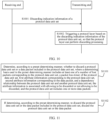
- the method further includes: receiving packet loss indication information sent by the receiving end or the higher layer of the transmitting end, where the packet loss indication information indicates the transmitting end to trigger discarding of the protocol data unit set or discarding of the data packet; and triggering discarding of the protocol data unit set or discarding of the data packet at the protocol layer.
- the if determining, according to the preset determining manner, to discard the protocol data unit set or the data packet included in the protocol data unit set, discarding the protocol data unit set or the data packet included in the protocol data unit set specifically includes: if the protocol layer of the transmitting end device determines, according to the preset determining manner, to discard the protocol data unit set or the data packet included in the protocol data unit set, discarding the protocol data unit set or the data packet.
- the method further includes: when a protocol layer entity of the transmitting end device determines to discard the protocol data unit set or the data packet, if the data packet of the protocol data unit set has been transmitted to a next layer corresponding to the protocol layer, sending, by the protocol layer entity, a notification message to a protocol layer entity of the next layer, where the notification message indicates the protocol layer entity of the next layer to discard the data packet.
- an embodiment of this application further provides a data packet discarding method applied to a receiving end.
- the method includes: sending configuration information to a transmitting end, so that the transmitting end determines, based on at least one of the configuration information according to a preset determining manner, whether to discard a protocol data unit set or a data packet included in the protocol data unit set, where the configuration information includes at least one of a packet loss threshold, a packet loss ratio threshold, a packet loss timer, first attribute information corresponding to the protocol data unit set, second attribute information corresponding to the data packet, and a dependency relationship identifier.
- the method further includes: configuring the configuration information at a granularity of a protocol layer entity; configuring the configuration information at a granularity of a DRB; configuring the configuration information at a granularity of the protocol data unit set; or configuring the configuration information at a granularity of a type of the protocol data unit set, where the type of the protocol data unit set is at least one of a priority of the protocol data unit set, an importance level of the protocol data unit set, and a sequence number of the protocol data unit set.
- a data structure of the configuration information is a sequence structure.
- an embodiment of this application further provides a data packet discarding method applied to a transmitting end.
- the method includes: receiving packet loss indication information sent by a receiving end, where the packet loss indication information indicates the transmitting end to trigger discarding of the protocol data unit set or discarding of the data packet; and triggering discarding of the protocol data unit set or discarding of the data packet in the protocol data unit set at a protocol layer, where the protocol data unit set includes at least one data packet.
- an embodiment of this application further provides a data packet discarding method applied to a transmitting end.
- the method includes: receiving packet loss indication information sent by a receiving end, where the packet loss indication information indicates the transmitting end to trigger discarding of the protocol data unit set or discarding of the data packet; and triggering a protocol layer to perform the data packet discarding method according to any one of the foregoing embodiments.
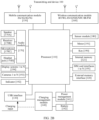
- an embodiment of this application further provides a transmitting end device, including: one or more processors; and one or more memories.
- the one or more memories store one or more computer programs, the one or more computer programs include instructions, and when the instructions are executed by the one or more processors, the transmitting end is enabled to perform one or more steps in any one of the foregoing methods.
- an embodiment of this application further provides a communication system including a transmitting end device and a receiving end device, where the transmitting end device is configured to perform one or more steps in any one of the foregoing methods, and the receiving end is configured to receive the data packet in the protocol data unit set transmitted by the transmitting end.
- an embodiment of this application further provides a computer-readable storage medium, the computer-readable storage medium stores computer-executable program instructions, and when the computer-executable program instructions are run on a computer, the computer or a processor is enabled to perform one or more steps in any one of the foregoing methods.
- the computer instructions may be transmitted from a website, a computer, a server, or a data center to another website, computer, server, or data center in a wired (for example, a coaxial cable, an optical fiber, or a digital subscriber line) or wireless (for example, infrared, radio, or microwave) manner.
- the computer-readable storage medium may be any usable medium accessible by a computer, or a data storage device, such as a server or a data center, integrating one or more usable media.
Landscapes
- Engineering & Computer Science (AREA)
- Computer Networks & Wireless Communication (AREA)
- Signal Processing (AREA)
- Computer Security & Cryptography (AREA)
- Data Exchanges In Wide-Area Networks (AREA)
- Communication Control (AREA)
- Mobile Radio Communication Systems (AREA)
Applications Claiming Priority (2)
| Application Number | Priority Date | Filing Date | Title |
|---|---|---|---|
| CN202211176858.4A CN117812637B (zh) | 2022-09-26 | 2022-09-26 | 一种数据包丢弃的方法及相关设备 |
| PCT/CN2023/116090 WO2024066898A1 (zh) | 2022-09-26 | 2023-08-31 | 一种数据包丢弃的方法及相关设备 |
Publications (2)
| Publication Number | Publication Date |
|---|---|
| EP4583573A1 true EP4583573A1 (de) | 2025-07-09 |
| EP4583573A4 EP4583573A4 (de) | 2025-12-03 |
Family
ID=90428639
Family Applications (1)
| Application Number | Title | Priority Date | Filing Date |
|---|---|---|---|
| EP23870138.7A Pending EP4583573A4 (de) | 2022-09-26 | 2023-08-31 | Datenpaketablösungsverfahren und zugehörige vorrichtung |
Country Status (6)
| Country | Link |
|---|---|
| US (1) | US20250227550A1 (de) |
| EP (1) | EP4583573A4 (de) |
| JP (1) | JP2025534991A (de) |
| KR (1) | KR20250069671A (de) |
| CN (2) | CN117812637B (de) |
| WO (1) | WO2024066898A1 (de) |
Families Citing this family (2)
| Publication number | Priority date | Publication date | Assignee | Title |
|---|---|---|---|---|
| CN120186668A (zh) * | 2023-12-19 | 2025-06-20 | 华为技术有限公司 | 处理数据包的方法和通信装置 |
| WO2025234615A1 (en) * | 2024-05-08 | 2025-11-13 | Lg Electronics Inc. | Method and apparatus of performing retransmission of last missed data unit based on status report in wireless communication system |
Family Cites Families (7)
| Publication number | Priority date | Publication date | Assignee | Title |
|---|---|---|---|---|
| WO2008133577A1 (en) * | 2007-04-27 | 2008-11-06 | Telefonaktiebolaget Lm Ericsson (Publ) | Method for selectively discarding data units in a radio communication system |
| CN101483505B (zh) * | 2008-01-08 | 2013-02-27 | 中兴通讯股份有限公司 | 一种服务数据单元丢弃方法 |
| US20090190544A1 (en) * | 2008-01-25 | 2009-07-30 | Qualcomm Incorporated | Method and apparatus for channel identification in a wireless communication system |
| CN103167553A (zh) * | 2011-12-13 | 2013-06-19 | 华为技术有限公司 | 用于无线通信的方法和装置以及基站 |
| CN110326357B (zh) * | 2017-04-01 | 2021-06-22 | 华为技术有限公司 | 数据处理方法和设备 |
| CN114365463A (zh) * | 2019-08-16 | 2022-04-15 | Oppo广东移动通信有限公司 | 数据包的删除方法、设备及存储介质 |
| US20240007410A1 (en) * | 2020-10-16 | 2024-01-04 | Telefonaktiebolaget Lm Ericsson (Publ) | Packet transmission and reception in a wireless communication network |
-
2022
- 2022-09-26 CN CN202211176858.4A patent/CN117812637B/zh active Active
-
2023
- 2023-08-31 WO PCT/CN2023/116090 patent/WO2024066898A1/zh not_active Ceased
- 2023-08-31 EP EP23870138.7A patent/EP4583573A4/de active Pending
- 2023-08-31 CN CN202380069183.XA patent/CN119948932A/zh active Pending
- 2023-08-31 KR KR1020257013135A patent/KR20250069671A/ko active Pending
- 2023-08-31 JP JP2025517818A patent/JP2025534991A/ja active Pending
-
2025
- 2025-03-25 US US19/090,096 patent/US20250227550A1/en active Pending
Also Published As
| Publication number | Publication date |
|---|---|
| US20250227550A1 (en) | 2025-07-10 |
| WO2024066898A1 (zh) | 2024-04-04 |
| EP4583573A4 (de) | 2025-12-03 |
| CN117812637B (zh) | 2025-09-26 |
| JP2025534991A (ja) | 2025-10-22 |
| CN117812637A (zh) | 2024-04-02 |
| KR20250069671A (ko) | 2025-05-19 |
| CN119948932A (zh) | 2025-05-06 |
Similar Documents
| Publication | Publication Date | Title |
|---|---|---|
| EP4226596A1 (de) | Pdcp-auswerfzeitgeber einer gruppe für dienste mit niedriger latenz | |
| US20250227550A1 (en) | Data Packet Discarding Method and Related Device | |
| CN111565411A (zh) | 时延测量方法、网络设备和终端设备 | |
| EP4510529A1 (de) | Kommunikationsverfahren und -vorrichtung | |
| JP2025528125A (ja) | データ処理方法及び機器 | |
| CN113923712A (zh) | 数据处理的方法及装置 | |
| US20240129786A1 (en) | Session management method and apparatus | |
| US20250374122A1 (en) | Data processing method and apparatus | |
| CN116830723A (zh) | 通信方法以及通信设备 | |
| EP4109986B1 (de) | Datenübertragungsverfahren und -vorrichtung sowie kommunikationsvorrichtung | |
| EP4593456A1 (de) | Kommunikationsverfahren und -vorrichtung | |
| WO2024140600A1 (zh) | 通信方法、通信装置及通信系统 | |
| WO2025065632A1 (zh) | 一种信息发送、接收和处理方法、装置、通信系统 | |
| WO2024067106A1 (zh) | 通信方法、装置及计算机可读存储介质 | |
| CN113812201A (zh) | 数据传输方法、装置及通信设备 | |
| WO2025030466A1 (en) | Wireless communication method and device | |
| WO2024168885A1 (en) | Resource processing method, user equipment, and base station | |
| WO2026025443A1 (en) | Method and apparatus for receiving data units during congestion | |
| CN120711447A (zh) | 一种通信方法及相关设备 | |
| WO2025175507A1 (zh) | 数据处理的方法及无线通信设备 | |
| TW202516968A (zh) | 一種通信方法及裝置 | |
| WO2025167345A1 (zh) | 一种通信方法及相关设备 | |
| WO2025200820A1 (zh) | 一种通信方法及装置 | |
| WO2025162202A1 (zh) | 数据传输方法、装置、设备及存储介质 | |
| WO2025077386A1 (zh) | 一种数据传输的方法和通信装置 |
Legal Events
| Date | Code | Title | Description |
|---|---|---|---|
| STAA | Information on the status of an ep patent application or granted ep patent |
Free format text: STATUS: THE INTERNATIONAL PUBLICATION HAS BEEN MADE |
|
| PUAI | Public reference made under article 153(3) epc to a published international application that has entered the european phase |
Free format text: ORIGINAL CODE: 0009012 |
|
| STAA | Information on the status of an ep patent application or granted ep patent |
Free format text: STATUS: REQUEST FOR EXAMINATION WAS MADE |
|
| 17P | Request for examination filed |
Effective date: 20250402 |
|
| AK | Designated contracting states |
Kind code of ref document: A1 Designated state(s): AL AT BE BG CH CY CZ DE DK EE ES FI FR GB GR HR HU IE IS IT LI LT LU LV MC ME MK MT NL NO PL PT RO RS SE SI SK SM TR |
|
| A4 | Supplementary search report drawn up and despatched |
Effective date: 20251030 |
|
| RIC1 | Information provided on ipc code assigned before grant |
Ipc: H04W 28/06 20090101AFI20251024BHEP Ipc: H04L 69/28 20220101ALI20251024BHEP Ipc: H04L 69/322 20220101ALI20251024BHEP Ipc: H04W 80/02 20090101ALI20251024BHEP Ipc: H04L 47/10 20220101ALI20251024BHEP Ipc: H04L 47/32 20220101ALI20251024BHEP Ipc: H04W 28/02 20090101ALI20251024BHEP Ipc: H04L 47/24 20220101ALI20251024BHEP Ipc: H04L 47/28 20220101ALI20251024BHEP |
|
| DAV | Request for validation of the european patent (deleted) | ||
| DAX | Request for extension of the european patent (deleted) |