EP4583578A1 - Kommunikationsverfahren und -vorrichtung - Google Patents
Kommunikationsverfahren und -vorrichtung Download PDFInfo
- Publication number
- EP4583578A1 EP4583578A1 EP23870639.4A EP23870639A EP4583578A1 EP 4583578 A1 EP4583578 A1 EP 4583578A1 EP 23870639 A EP23870639 A EP 23870639A EP 4583578 A1 EP4583578 A1 EP 4583578A1
- Authority
- EP
- European Patent Office
- Prior art keywords
- network device
- terminal device
- message
- content
- model
- Prior art date
- Legal status (The legal status is an assumption and is not a legal conclusion. Google has not performed a legal analysis and makes no representation as to the accuracy of the status listed.)
- Pending
Links
Images




Classifications
-
- H—ELECTRICITY
- H04—ELECTRIC COMMUNICATION TECHNIQUE
- H04W—WIRELESS COMMUNICATION NETWORKS
- H04W36/00—Hand-off or reselection arrangements
- H04W36/08—Reselecting an access point
-
- H—ELECTRICITY
- H04—ELECTRIC COMMUNICATION TECHNIQUE
- H04W—WIRELESS COMMUNICATION NETWORKS
- H04W36/00—Hand-off or reselection arrangements
- H04W36/02—Buffering or recovering information during reselection ; Modification of the traffic flow during hand-off
-
- H—ELECTRICITY
- H04—ELECTRIC COMMUNICATION TECHNIQUE
- H04W—WIRELESS COMMUNICATION NETWORKS
- H04W36/00—Hand-off or reselection arrangements
- H04W36/0005—Control or signalling for completing the hand-off
- H04W36/0055—Transmission or use of information for re-establishing the radio link
-
- H—ELECTRICITY
- H04—ELECTRIC COMMUNICATION TECHNIQUE
- H04W—WIRELESS COMMUNICATION NETWORKS
- H04W36/00—Hand-off or reselection arrangements
- H04W36/0005—Control or signalling for completing the hand-off
- H04W36/0011—Control or signalling for completing the hand-off for data sessions of end-to-end connection
Definitions
- This application relates to the field of electronic technologies, and more specifically, to a communication method and an apparatus.
- a terminal device needs to download the AI model from a network device.
- Cell handover may occur when the terminal device moves.
- a target network device does not know how much the content of the AI model is downloaded by the terminal device. Therefore, the terminal device needs to re-download the content of the AI model from the target network device.
- the AI model occupies a large amount of memory, usually from dozens of megabytes (MB) to hundreds of megabytes.
- MB megabytes
- the foregoing manner of re-downloading the AI model causes a waste of a large quantity of air interface resources.
- This application provides a communication method and an apparatus, to avoid a phenomenon that a network device repeatedly sends an AI model to a terminal device, which helps save air interface resources.
- this application provides a communication method.
- the method includes:
- the communication apparatus transfers the download progress of the AI model and/or the undownloaded content of the AI model to the target network device through the first message, so that the target network device can learn of how much content of the AI model is downloaded by the terminal device from the source network device (namely, the downloaded content of the AI model) and/or the content of the AI model that is not downloaded by the terminal device from the source network device (namely, the undownloaded content of the AI model). Then, after the terminal device completes cell handover, the target network device may send the undownloaded content of the AI model to the terminal device. In this way, a waste of a large quantity of air interface resources caused by repeated downloading of the AI model is avoided.
- the communication apparatus is a source network device; before the communication apparatus determines that the terminal device performs cell handover, the method further includes:
- the communication apparatus is an access and mobility management function entity; before the communication apparatus determines that the terminal device performs cell handover, the method includes:
- the access and mobility management function entity serving as the communication apparatus, may transfer the first message to the target network device through a notification of the source network device, so that the target network device transmits the undownloaded content of the AI model to the terminal device.
- the communication apparatus is a primary network device, and both a source network device and the target network device are secondary network devices; that the communication apparatus determines that the terminal device performs cell handover includes:
- the primary network device serving as the communication apparatus, may transfer the first message to the target network device, so that the target network device transmits the undownloaded content of the AI model to the terminal device.
- this application provides a communication method.
- the method includes:
- the communication apparatus is a source network device; and the first message is sent by the source network device when the source network device determines that the terminal device performs cell handover from the source network device to the target network device, and determines that the terminal device does not complete downloading of the content of the artificial intelligence model.
- the communication apparatus is an access and mobility management function entity; the first message is sent by the access and mobility management function entity when the access and mobility management function entity determines, based on a second message, that the terminal device performs cell handover from a source network device to the target network device, and determines, based on a third message, that the terminal device does not complete downloading of the content of the artificial intelligence model, the second message and the third message are received by the access and mobility management function entity from the source network device, the second message indicates the terminal device to perform cell handover from the source network device to the target network device, and the third message indicates the download progress of the artificial intelligence model and/or the undownloaded content of the artificial intelligence model.
- the communication apparatus is a primary network device, and both a source network device and the target network device are secondary network devices; and the first message is sent by the primary network device when the primary network device determines that the terminal device performs cell handover from the source network device to the target network device, and determines that the terminal device does not complete downloading of the content of the artificial intelligence model.
- this application provides a communication method.
- the method includes:
- the terminal device when completing cell handover or after completing cell handover, transfers the download progress of the AI model to the target network device through the first message, so that the target network device can learn of how much content (namely, the downloaded content of the AI model) of the AI model is downloaded by the terminal device from a source network device. Then, after the terminal device completes cell handover, the target network device may send the undownloaded content of the AI model to the terminal device. In this way, a waste of a large quantity of air interface resources caused by repeated downloading of the AI model is avoided.
- the method before the terminal device determines to perform cell handover, the method further includes:
- this application provides a communication method.
- the method includes:
- this application provides a communication apparatus.
- the apparatus includes:
- the communication apparatus is a source network device
- the communication apparatus is an access and mobility management function entity
- the communication apparatus is a primary network device, and both a source network device and the target network device are secondary network devices; and the processing module is configured to determine that the terminal device performs cell handover from the source network device to the target network device.
- this application provides a communication apparatus.
- the apparatus includes:
- the communication apparatus is a source network device; and the first message is sent by the source network device when the source network device determines that the terminal device performs cell handover from the source network device to the target network device, and determines that the terminal device does not complete downloading of the content of the artificial intelligence model.
- the communication apparatus is an access and mobility management function entity; the first message is sent by the access and mobility management function entity when the access and mobility management function entity determines, based on a second message, that the terminal device performs cell handover from a source network device to the target network device, and determines, based on a third message, that the terminal device does not complete downloading of the content of the artificial intelligence model, the second message and the third message are received by the access and mobility management function entity from the source network device, the second message indicates the terminal device to perform cell handover from the source network device to the target network device, and the third message indicates the download progress of the artificial intelligence model and/or the undownloaded content of the artificial intelligence model.
- the communication apparatus is a primary network device, and both a source network device and the target network device are secondary network devices; and the first message is sent by the primary network device when the primary network device determines that the terminal device performs cell handover from the source network device to the target network device, and determines that the terminal device does not complete downloading of the content of the artificial intelligence model.
- this application provides a communication apparatus.
- the apparatus includes:
- the transceiver module is further configured to: before determining to perform cell handover, receive the content of the artificial intelligence model from a source network device; and the processing module is further configured to determine to perform cell handover from the source network device to the target network device.
- this application provides a chip, including an interface circuit and a logic circuit, where the interface circuit is configured to receive a signal from another chip other than the chip and transmit the signal to the logic circuit, or send a signal from the logic circuit to another chip other than the chip; and the logic circuit is configured to implement the communication method in any one of the foregoing aspects and the possible designs of the aspects.
- At least one means one or more, and a plurality of means two or more.
- the term "and/or” describes an association relationship between associated objects, and represents that three relationships may exist.
- a and/or B may represent the following cases: Only A exists, both A and B exist, and only B exists, where A and B may be singular or plural.
- the character "/" generally indicates an "or” relationship between the associated objects. At least one of the following items (pieces) or a similar expression thereof indicates any combination of these items, including a single item (piece) or any combination of a plurality of items (pieces).
- At least one of a, b, or c may represent: a, b, c, a combination of a and b, a combination of a and c, a combination of b and c, or a combination of a, b and c, where each of a, b, and c may be in a singular form or a plural form.
- terms “first” and “second” are merely used for a purpose of description, and shall not be understood as an indication or implication of relative importance.
- the technical method in this application may be applied to a communication system.
- the communication system may include but is limited to a wireless communication system, for example, a narrowband-internet of things (narrowband-internet of things, NB-IoT) system, a wideband code division multiple access (wideband code division multiple access, WCDMA) system, a code division multiple access 2000 (code division multiple access, CDMA 2000) system, a time division-synchronization code division multiple access (time division-synchronization code division multiple access, TD-SCDMA) system, an LTE system, a 5th generation (the 5th generation, 5G) system, a 6th generation (the 6th generation, 6G) system, and a future system.
- a wireless communication system for example, a narrowband-internet of things (narrowband-internet of things, NB-IoT) system, a wideband code division multiple access (wideband code division multiple access, WCDMA) system, a code division multiple access 2000 (code division multiple access, CDMA 2000
- the terminal device is a device that has a wireless transceiver function.
- the terminal device may be a wireless terminal or a wired terminal.
- the wireless terminal may refer to a device that provides a user with voice and/or other service data connectivity, a handheld device with a wireless connection function, or another processing device connected to a wireless modem.
- the wireless terminal may communicate with one or more core networks through a radio access network (radio access network, RAN).
- radio access network radio access network
- the wireless terminal may be a mobile terminal, such as a mobile phone (also referred to as a "cellular" phone) and a computer with a mobile terminal, for example, may be a portable, pocket-sized, handheld, computer built-in, or vehicle-mounted mobile apparatus, which exchanges voice and/or data with the radio access network, for example, a device like a personal communications service (personal communications service, PCS) phone, a cordless phone, a session initiation protocol (session initiation protocol, SIP) phone, a wireless local loop (wireless local loop, WLL) station, a personal digital assistant (personal digital assistant, PDA), an uncrewed aerial vehicle, a wearable device, or a terminal in the internet of vehicles.
- a device like a personal communications service (personal communications service, PCS) phone, a cordless phone, a session initiation protocol (session initiation protocol, SIP) phone, a wireless local loop (wireless local loop, WLL) station, a personal digital assistant (personal digital assistant, PDA), an uncre
- the wireless terminal may also be referred to as a system, a subscriber unit (subscriber unit), a subscriber station (subscriber station), a mobile station (mobile station), a remote station (remote station), a remote terminal (remote terminal), an access terminal (access terminal), a user terminal (user terminal), a user agent (user agent), a user device or user equipment (user device or user equipment), user equipment (user equipment, UE), a terminal unit, a terminal station, a remote station, a mobile device, a terminal, a wireless communication device, a terminal agent, a terminal apparatus, or the like. This is not limited herein.
- the access terminal may be a cellular phone, a cordless phone, a session initiation protocol (session initiation protocol, SIP) phone, a wireless local loop (wireless local loop, WLL) station, a personal digital assistant (personal digital assistant, PDA), a handheld device having a wireless communication function, a computing device, another processing device connected to a wireless modem, a vehicle-mounted device, a wearable device, a terminal device in a 5G network or a future 6G network, or a terminal device in a future evolved public land mobile network (public land mobile network, PLMN).
- SIP session initiation protocol
- WLL wireless local loop
- PDA personal digital assistant
- PLMN public land mobile network
- the terminal device may use a mobile operating system like an Android system, a Linux system, a Windows system, an iOS system, or a Harmony operating system (harmony operating system, Harmony OS). This is not limited in this application.
- the network device is a device in a wireless network.
- the network device may be a base station, an access point, an access network device, or a device that is in an access network and that communicates with a wireless terminal through one or more sectors over an air interface (air interface for short).
- the network device may be configured to mutually convert a received over-the-air frame and an internet protocol (internet protocol, IP) packet and serve as a router between the wireless terminal and a rest portion of the access network, where the rest portion of the access network may include an IP network.
- IP internet protocol
- the network device may further coordinate attribute management of the air interface.
- the network device may be a satellite, an uncrewed aerial vehicle, a base station (base transceiver station, BTS) in global system for mobile communications (global system for mobile communications, GSM) or code division multiple access (code division multiple access, CDMA), or may be a base station (NodeB, NB) in wideband code division multiple access (wideband code division multiple access, WCDMA), or may be an evolved NodeB (evolutional NodeB, eNB, or eNodeB) in LTE, or may be a radio controller in a cloud radio access network (cloud radio access network, CRAN) scenario, a wearable device or a vehicle-mounted device, or a terminal or a relay station or an access point that undertakes a base station function in vehicle-to-everything (vehicular-to-everything, V2X) communication, device-to-device (device-to-device, D2D) communication, and machine-to-machine (machine-to-machine, M2
- the network device may include a central unit (central unit, CU) node or a distributed unit (distributed unit, DU) node, a RAN device including a CU node and a DU node, or a RAN device including a control plane CU node (CU-CP node), a user plane CU node (CU-UP node), and a DU node.
- CU central unit
- DU distributed unit
- the RAN node is divided into the CU and the DU from the perspective of a logical function.
- the CU is connected to the DU over an F1 interface, and the CU representing a gNB is connected to a core network over an NG interface.
- the CU and the DU may be physically separated, or may be deployed together. This is not specifically limited in embodiments of this application.
- One CU may be connected to one DU, or a plurality of DUs may share one CU, so that costs can be reduced and network expansion is easy.
- the CU and the DU may be split based on a protocol stack.
- the network device mentioned in this application may be a device including the CU or the DU, or a device including the CU and the DU, or a device including a control plane CU node (a CU-CP node), a user plane CU node (a CU-UP node), and the DU node.
- a control plane CU node a CU-CP node
- a user plane CU node a CU-UP node
- Communication between the network device and the terminal device and communication between terminal devices may be performed by using a licensed spectrum (licensed spectrum), an unlicensed spectrum (unlicensed spectrum), or both the licensed spectrum and the unlicensed spectrum.
- the communication between the network device and the terminal device and the communication between the terminal devices may be performed by using a spectrum below 6 gigahertz (gigahertz, GHz), a spectrum above 6G, or both the spectrum below 6G and the spectrum above 6G.
- a spectrum resource used between the network device and the terminal device is not limited in this application.
- a communication apparatus configured to implement a function of the network device may be a network device, or may be an apparatus that can support the network device in implementing the function, for example, a chip system.
- the apparatus may be installed in the network device.
- an example in which the apparatus configured to implement the function of the network device is the network device is for describing the technical solutions provided in this application.
- the AI model may also be referred to as an AI algorithm or an AI operator, is a general term of a mathematical algorithm built based on an AI principle, and is also a basis for resolving a specific problem by using an AI technology.
- a type of the AI model is not limited in this application.
- the AI model may be a machine learning model, a deep learning model, or a reinforcement learning model.
- Machine learning is a method for implementing AI.
- An objective of this method is to design and analyze algorithms (namely, models) that enable a computer to automatically "learn".
- the designed algorithms are referred to as machine learning models.
- the machine learning model is an algorithm that automatically analyzes data to obtain a rule and predicts unknown data by using the rule.
- Deep learning is a new technical field generated in a machine learning research process.
- deep learning is a method for performing deep representation learning on data in machine learning. Deep learning interprets data by establishing a neural network that simulates a human brain for analysis and learning. In a machine learning method, most or even all features need to be determined by an industry expert, and then the features are encoded. However, a deep learning algorithm attempts to learn features from the data, and an algorithm designed based on a deep learning idea is referred to as the deep learning model.
- Reinforcement learning is a special field in machine learning, and is a process of continuously learning an optimal policy, making sequence decisions, and obtaining a maximum return through interaction between an agent (agent) and an environment (environment).
- the reinforcement learning is learning "what to do (that is, how to map a current scenario to an action) to maximize a digitalized benefit signal”.
- the agent is not usually informed of what action to take, but tries to find out which actions will produce the most substantial benefits.
- the reinforcement learning is different from supervised learning and unsupervised learning in the machine learning field.
- the supervised learning is a process of learning from externally provided labeled training data (task-driven)
- the unsupervised learning is a process of searching for an implicit structure in unlabeled data (data-driven).
- the reinforcement learning is a process of finding a better solution through "exploration”.
- the agent needs to develop existing experience to gain benefits, and also needs to perform exploration, so that greater action selection space can be obtained in the future (that is, learn from mistakes).
- An algorithm designed based on the reinforcement learning is referred to as the reinforcement learning model.
- Training of the AI model is a process of calculating training data by using a specified initial model, and adjusting a parameter in an initial model by using a method based on a calculation result, so that the initial model gradually learns a rule and has a specific function.
- the initial model with a stable function is the AI model, and the AI model may be used for inference.
- Inference of the AI model is a process of calculating input data by using a trained AI model, to obtain a predicted inference result (also referred to as output data).
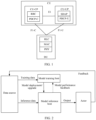
- model inference host may transmit model performance feedback (model performance feedback) in FIG. 2 to the model training host.
- the model inference host may also transmit, to an actor (actor), a related adjusted policy, that is, an output (output), which is uniformly planned by the actor (actor) and sent to a plurality of network entities for running.
- a related adjusted policy that is, an output (output)
- output which is uniformly planned by the actor (actor) and sent to a plurality of network entities for running.
- specific performance of the network entity namely, a feedback (feedback) is input into the data source again, and the data source stores the feedback.
- the CSI reported by the terminal device may include one or more of the following information: a channel quality indicator (channel quality indicator, CQI), a precoding matrix indicator (precoding matrix indicator, PMI), a CSI-RS resource indicator (CSI-RS resource indicator, CRI), an SS/PCH block resource indicator (SS/PBCH block resource indicator, SSBRI), a layer indicator (layer indicator, LI), a rank indicator (rank indicator, RI), or a layer 1 reference signal received power (layer 1 reference signal receiver power, L1-RSRP).
- a rank (rank) is a rank in an antenna matrix in a multi-input multi-output (multi-input multi-output, MIMO) scheme, and represents one or more parallel valid data streams.
- the RI indicates a quantity of valid data layers of a downlink data channel (physical downlink shared channel, PDSCH).
- CSI-RS compression is used as an example, and an implementation procedure is as follows.
- the network device reversely restores the original downlink channel matrix based on the dictionary, the decoder network, and the compression and quantization result sent by the terminal device.
- AI model-based beam management enhancement may include sub-scenarios such as beam sweeping matrix prediction and optimal beam prediction.
- the network device may perform P2 sweeping on the terminal device based on the beam, and the terminal device may send an identifier of the optimal beam to the network device.
- P2 sweeping means that the network device sends a reference signal in a narrow range through a narrow beam, and the terminal device selects the optimal beam based on measurement, and sends the information (for example, an ID of a CSI-RS beam) about the optimal beam to the network device.
- AI model-based positioning enhancement mainly aims to improve positioning accuracy.
- a level 0 level 0
- a level 1 level 1
- a level 2 level 2
- the level 1 also be referred to as a collaboration level 1, means signaling-based collaboration without model transfer (signaling-based collaboration without model transfer).
- the network device sends a dictionary to the terminal device, so that the terminal device can assist the network device in inference of the AI model, which affects the air interface to some extent.
- the AI model may also be deployed inside the terminal device, and the terminal device performs channel compression encoding on a downlink channel matrix through the AI model and the dictionary.
- the terminal device and the network device may jointly train the AI model, for example, in a federated learning manner.
- transmission of the AI model is not directly performed between the terminal device and the network device, but transmission of a parameter, a weight, and the like of the AI model may be performed.
- Level 1A signaling-based collaboration for single-sided model without model transfer (signaling-based collaboration for single-sided model without model transfer).
- Level 2 also referred to as a collaboration level 2 means signaling-based collaboration with model transfer (signaling-based collaboration with model transfer).
- the AI model is deployed on both the terminal device and the network device, and the terminal device and the network device may perform a process like inference based on the deployed AI model.
- transmission of the AI model can be directly performed between the terminal device and the network device.
- a biggest difference between the level 2 and the level 1 is that transmission of the AI model can be directly performed at the level 2.
- collaboration level may be further included.
- a future communication system may further support some collaboration levels. This is not limited in embodiments of this application.
- this application relates to a problem that the terminal device can download the AI model from the network device at the level 2.
- a terminal device needs to use a function of the AI model, and the terminal device needs to download the AI model from a network device, so that the terminal device can implement a function of the AI model.
- the foregoing process may include two cases.
- a specific implementation of the communication apparatus 11 is not limited in this application.
- the communication apparatus may determine that the terminal device does not complete downloading of the content of the AI model that needs to be downloaded by the terminal device.
- the content of the AI model that needs to be downloaded by the terminal device may be some content of the AI model, or may be all the content of the AI model. This is not limited in this application.
- the content of the AI model that needs to be downloaded by the terminal device may be classified into content of the AI model downloaded by the terminal device (namely, downloaded content of the AI model) and content of the AI model that is not downloaded by the terminal device (namely, undownloaded content of the AI model).
- the terminal device when the terminal device needs to implement one or more services based on the AI model, the terminal device cannot implement one or more services based on the downloaded content of the AI model.
- the communication apparatus may determine that the terminal device does not complete downloading of the content of the AI model.
- the target network device is a network device to which the terminal device is handed over after the terminal device completes cell handover.
- the terminal device successfully accesses the target network device, so that the terminal device and the target network device can communicate with each other.
- the target network device refer to the foregoing descriptions of the network device mentioned above. Details are not described herein again.
- the communication apparatus sends a first message to the target network device, where the first message indicates download progress of the AI model and/or the undownloaded content of the AI model.
- the communication apparatus may send the first message to the target network device in a process in which the terminal device performs cell handover or after the terminal device completes cell handover, so that the communication apparatus can transfer the download progress of the AI model to the target network device through the first message, and the target network device can learn of the downloaded content of the AI model, and/or can transfer the undownloaded content of the AI model to the target network device through the first message. In this way, the target network device can learn of the undownloaded content of the AI model.
- the first message may indicate the undownloaded content of the AI model. In this way, it is fully considered that the target network device may not store the undownloaded content of the AI model.
- the first message may indicate the download progress of the AI model.
- the download progress of the AI model may be determined based on the downloaded content of the AI model. In this way, information transmission is convenient, and transmission resources are reduced.
- the first message may indicate the undownloaded content of the AI model and the download progress of the AI model. In this way, the information transmission is ensured in two aspects.
- S104 The target network device sends the undownloaded content of the AI model to the terminal device.
- the target network device may send the undownloaded content of the AI model to the terminal device. In this way, a waste of a large quantity of air interface resources caused by repeated downloading of the AI model is avoided.
- the target network device may pre-store the content of the AI model that needs to be downloaded by the terminal device, and then the target network device may obtain the undownloaded content of the AI model.
- the communication apparatus may send the undownloaded content of the AI model to the target network device.
- the target network device may obtain the undownloaded content of the AI model from another network element other than the communication apparatus.
- the communication apparatus transfers the download progress of the AI model and/or the undownloaded content of the AI model to the target network device through the first message, so that the target network device can learn of how much content of the AI model is downloaded by the terminal device from a source network device (namely, the downloaded content of the AI model) and/or the content of the AI model that is not downloaded by the terminal device from the source network device (namely, the undownloaded content of the AI model). Then, after the terminal device completes cell handover, the target network device may send the undownloaded content of the AI model to the terminal device. In this way, a waste of a large quantity of air interface resources caused by repeated downloading of the AI model is avoided.
- the first message indicates the download progress of the AI model
- a manner 1 in which the target network device sends the undownloaded content of the AI model to the terminal device may be the same as or different from a manner 2 in which the source network device sends the downloaded content of the AI model to the terminal device. Therefore, the first message may indicate the download progress of the AI model in a plurality of manners.
- the source network device is a network device in a cell in which the terminal device is located before the terminal device performs cell handover.
- the terminal device successfully accesses the source network device, so that the terminal device and the source network device can communicate with each other.
- the terminal device completes cell handover or after the terminal device completes cell handover, the terminal device cannot successfully access the source network device, so that the terminal device and the source network device cannot communicate with each other.
- the source network device and the target network device are different network devices.
- the source network device refer to the foregoing descriptions of the network device mentioned above. Details are not described herein again.
- the source network device may provide the downloaded content of the AI model for the terminal device, that is, the terminal device downloads the downloaded content of the AI model from the source network device.
- the first message may include a first bit.
- the first bit indicates a location until which the content of the AI model is downloaded.
- the first bit indicates a location of the downloaded content of the AI model in the content that is of the AI model and that needs to be downloaded by the terminal device.
- the first message may further include an identifier of the AI model (model ID).
- model ID indicates a type of the AI model, and the identifier of the AI model can uniquely determine the AI model.
- the identifier of the AI model may be represented in a manner such as an identity document (identity document, ID) or a number of the AI model.
- a parameter structure of the first message may indicate the download progress of the AI model by using Table 1.
- "O” represents an optional parameter.
- "M” represents a mandatory parameter.
- INTEGER (0...4095) represents that a value range is 0 to 4095.
- INTEGER (0...262143) represents that a value range is 0 to 262143.
- INTEGER is an integer.
- Table 1 Information element/Group name Presence (presence) Information element reference type Semantics description Download progress of an AI model O >ID of the AI model M INTEGER (0...4095) >Select a segment manner M >>Manner 1 Both the manner 1 and the manner 2 are non-segment-based sending manners >>>First bit INTEGER (0...262143)
- An English name of an information element is IE, and a corresponding English full name is information element.
- An English full name of a group name is group name.
- An English full name of a reference type is type and reference.
- An English full name of semantics description is semantics description.
- the content of the AI model that needs to be downloaded by the terminal device may include M segments, where M is an integer greater than or equal to 2.
- M is an integer greater than or equal to 2.
- a specific value of M is not limited in this application.
- the first message may include an identifier and a bit of a k th segment, where k is a positive integer.
- the identifier of the k th segment indicates a segment until which the content of the AI model is downloaded, and the bit of the k th segment indicates a location until which the content of the AI model is downloaded in the k th segment.
- the identifier of the k th segment indicates that a segment until which the downloaded content of the AI model is located in the M segments is the k th segment.
- the bit of the k th segment indicates a location until which the downloaded content of the AI model is located in the k th segment.
- the first message may further include the identifier of the AI model.
- the identifier of the AI model refer to the foregoing descriptions of the identifier of the AI model mentioned above. Details are not described herein again.
- the first message may further include a segment quantity M of the content of the AI model.
- a parameter structure of the first message may indicate the download progress of the AI model by using Table 2.
- "O” represents an optional parameter.
- "M” represents a mandatory parameter.
- INTEGER (0...4095) represents that a value range is 0 to 4095.
- INTEGER INTEGER (1...32, ...) represents that a value range is 0 to 32.
- INTEGER is an integer.
- the content of the AI model that needs to be downloaded by the terminal device may include M segments, where M is an integer greater than or equal to 2.
- M is an integer greater than or equal to 2.
- a specific value of M is not limited in this application.
- the first message may include one or more of the following representation manners:
- segment set may be represented in a plurality of manners.
- the segment set may include one or more segments in the M segments in which downloaded content exists, the identifier of each segment indicates each segment, and the second bit of each segment indicates a location until which the content of the AI model is downloaded in each segment.
- the segment set may include one or more segments in which the downloaded content of the AI model exists in the M segments.
- the identifier of each segment indicates each segment included in the segment set.
- the second bit of each segment indicates a location of the downloaded content existing in each segment at which the downloaded content of the AI model is located.
- the M segments include a segment 1, a segment 2, a segment 3, and a segment 4. If segments of the downloaded content of the AI model in the downloaded content existing in the M segments include the segment 1, the segment 2, and the segment 4, the segment set may include the segment 1, the segment 2, and the segment 4.
- the source network device may determine that transmission of the content of the AI model that needs to be downloaded by the terminal device to the terminal device is completed. In this way, the source network device may determine that the terminal device does not complete downloading of the content of the AI.
- the context of the terminal device may include the downloaded content of the AI model.
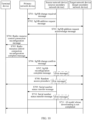
- an inter-gNB Xn handover procedure is described with reference to FIG. 6 .
- FIG. 6 is a flowchart of a communication method according to an embodiment of this application.
- FIG. 6 there is an Xn link between a source network device and a target network device. Therefore, the source network device and the target network device can communicate with each other.
- the source network device sends a handover request (handover request) message to the target network device through the Xn link.
- protocol data unit protocol data unit
- PDU protocol data unit
- the source network device sends a radio resource control reconfiguration (RRC reconfiguration) message to the terminal device.
- RRC reconfiguration radio resource control reconfiguration
- the radio resource control reconfiguration message is used to request the terminal device to be handed over to the target cell.
- S304 The source network device sends a serial number status transfer (SN (serial number) status transfer) message to the target network device through the Xn link.
- SN serial number
- the source network device may determine, based on a context of the terminal device, whether transmission of content of an AI model that needs to be downloaded by the terminal device to the terminal device is completed, to determine whether the terminal device completes downloading of the content of the AI model.
- the source network device When determining that the terminal device does not complete downloading of the content of the AI model, the source network device sends the first message to the target network device.
- the serial number status transfer message may reuse the serial number status transfer message in a related technology, and a serial number status transfer message indicating a meaning of the download progress of the AI model and/or the undownloaded content of the AI model is newly added.
- the source network device may send the serial number status transfer message and the newly added message to the target network device.
- the newly added message may indicate the download progress of the AI model and/or the undownloaded content of the AI model.
- the newly added message may be considered as the first message mentioned above, or the new message includes the first message mentioned above.
- the source network device may transfer, to the target network device, the content of the AI model whose downloading is completed by the terminal device, so that the target network device can learn that the content of the AI model does not need to be transmitted to the terminal device.
- the source network device may not transfer, to the target network device, the content of the AI model whose downloading is completed by the terminal device, so that the target network device does not need to transmit the content of the AI model to the terminal device by default.
- the terminal device completes cell handover from the source network device to the target network device. In this way, when the terminal device completes cell handover or after the terminal device completes cell handover, the terminal device successfully accesses the target network device, so that the terminal device and the target network device can communicate with each other.
- S306 When receiving the serial number status transfer message or the newly added message in S304 that indicates the download progress of the AI model and/or the undownloaded content of the AI model, the target network device sends, after the terminal device completes cell handover, an AI model (namely, the undownloaded content of the AI model) that is not complete downloading ofed to the terminal device.
- an AI model namely, the undownloaded content of the AI model
- the target network device may determine that the terminal device completes downloading of the content of the AI model. In this way, the target network device does not need to perform S306.
- the target network device may determine that the terminal device completes downloading of the content of the AI model. In this way, the target network device does not need to perform S306.
- the source network device may transfer the download progress of the AI model and/or the undownloaded content of the AI model to the target network device through the serial number status transfer message and/or the newly added message, so that the target network device can learn of how much content of the AI model and/or the undownloaded content of the AI model are/is downloaded by the terminal device from the source network device before the terminal device performs cell handover.
- the target network device may continue to transmit the undownloaded content of the AI model to the terminal device, to avoid a waste of air interface resources caused by re-downloading of the AI model.
- the communication apparatus is an AMF
- the AMF may serve as a communication bridge between the source network device and the target network device.
- FIG. 7 is a flowchart of a communication method according to an embodiment of this application. As shown in FIG. 7 , the communication method provided in this application may include the following steps.
- a source network device sends a second message to an AMF, where the second message indicates a terminal device to perform cell handover from the source network device to a target network device.
- the AMF determines, based on the second message, that the terminal device performs cell handover from the source network device to the target network device.
- the source network device can learn whether the terminal device performs cell handover.
- the source network device may send the second message to the AMF, to indicate, through the second message, the AMF that the terminal device performs cell handover from the source network device to the target network device.
- the AMF may determine, based on the second message, that the terminal device performs cell handover from the source network device to the target network device.
- the second message is not limited in this application.
- the second message may be represented in a form such as a letter, a digit, a character, or a binary.
- the source network device sends a third message to the AMF, where the third message indicates download progress of an AI model and/or undownloaded content of the AI model.
- the AMF determines, based on the third message, that the terminal device does not complete downloading of content of the AI model.
- the source network device can determine whether the terminal device does not complete downloading of the content of the AI model.
- the source network device may send the third message to the AMF, so that the source network device notifies the AMF of the download progress of the AI model and/or the undownloaded content of the AI model through the third message.
- the AMF may determine, based on the third message, that the terminal device does not complete downloading of the content of the AI model.
- the third message may be represented in a form such as a letter, a digit, a character, or a binary.
- the third message may carry the undownloaded content of the AI model.
- the second message and the third message may be sent through a same message, or may be sent through different messages. This is not limited in this application.
- S405 The AMF sends a first message to the target network device.
- S405 is similar to the implementation of S103 in the embodiment shown in FIG. 4 . Details are not described herein again in this application.
- the target network device sends the undownloaded content of the AI model to the terminal device.
- S406 is similar to the implementation of S104 in the embodiment shown in FIG. 4 . Details are not described herein again in this application.
- the AMF may serve as a communication apparatus, and transfer the download progress of the AI model and/or the undownloaded content of the AI model to the target network device through the first message, so that the target network device can send the undownloaded content of the AI model to the terminal device.
- an inter-gNB NG handover procedure is described with reference to FIG. 8 .
- FIG. 8 is a flowchart of a communication method according to an embodiment of this application.
- a source network device and a target network device do not belong to a same AMF, or a source network device and a target network device belong to a same AMF, but there is no Xn link between the source network device and the target network device. Therefore, the source network device and the target network device need to communicate with each other through the AMF.
- the inter-gNB NG handover procedure may include the following steps.
- S501 The source network device sends a handover required (handover required) message to the AMF through an NG link. In this way, the AMF can determine that the terminal device performs cell handover.
- the handover required message is used to initiate a cell handover request.
- the handover required message may include an ID of the target network device, a list of PDU sessions for performing data forwarding, and the like.
- the handover required message may indicate the terminal device to perform cell handover from the source network device to the target network device.
- the handover required message may be considered as the second message mentioned above, or the handover required message includes the second message mentioned above.
- the source network device may also send a newly added message to the AMF to indicate the terminal device to perform cell handover from the source network device to the target network device.
- the newly added message may be considered as the second message, or the newly added message includes the second message mentioned above.
- the AMF sends a handover request (handover request) message to the target network device.
- the target network device is a target network device in which a target cell selected by the terminal device is located.
- the handover request message is used to initiate the cell handover request.
- the target network device After performing admission control (admission control), the target network device sends a handover request acknowledge (handover request acknowledge) message to the AMF.
- admission control admission control
- handover request acknowledge handover request acknowledge
- the handover request acknowledge message indicates that the cell handover is allowed.
- the handover request acknowledge message needs to carry a list of failed PDU sessions.
- the AMF sends a handover command (handover command) message to the source network device through the NG link.
- the handover command message includes an address and a list of tunnel endpoint identifiers (tunnel endpoint identifiers, TEIDs) used for forwarding, and the list of TEIDs includes a list of bearers that need to be released.
- tunnel endpoint identifiers tunnel endpoint identifiers, TEIDs
- the source network device sends a radio resource control reconfiguration (RRC reconfiguration) message to the terminal device.
- RRC reconfiguration radio resource control reconfiguration
- the radio resource control reconfiguration message is used to request the terminal device to be handed over to the target cell.
- the source network device sends an uplink radio access network status transfer (uplink RAN status transfer) message to the AMF through the NG link.
- uplink radio access network status transfer uplink RAN status transfer
- the uplink radio access network status transfer message carries a PDCP SN serial number, and the PDCP SN serial number indicates to determine whether the terminal device completes downloading of content of an AI model.
- the uplink radio access network status transfer message may further indicate download progress of the AI model and/or undownloaded content of the AI model.
- the uplink radio access network status transfer message may be considered as the third message mentioned above, or the uplink radio access network status transfer message includes the third message mentioned above.
- the source network device may also send, to the AMF, a newly added message indicating the download progress of the AI model and/or the undownloaded content of the AI model.
- the newly added message may be considered as the third message, or the newly added message includes the third message mentioned above.
- the AMF sends a downlink radio access status transfer (downlink RAN status transfer) message to the target network device.
- the AMF may determine, based on the PDCP SN serial number, whether the terminal device completes downloading of the content of the AI model.
- the AMF When determining that the terminal device does not complete downloading of the content of the AI model, the AMF sends a first message to the target network device.
- the downlink radio access network status transfer message may indicate the download progress of the AI model and/or the undownloaded content of the AI model.
- the downlink radio access network status transfer message may be considered as the first message mentioned above, or the downlink radio access network status transfer message includes the first message mentioned above.
- the downlink radio access network status transfer message may reuse the downlink radio access network status transfer message in the related technology, and a downlink radio access network status transfer message indicating a meaning of the download progress of the AI model and/or the undownloaded content of the AI model is newly added.
- the AMF may send the downlink radio access network status transfer message and the newly added message to the target network device.
- the newly added message may indicate the download progress of the AI model and/or the undownloaded content of the AI model.
- the newly added message may be considered as the first message mentioned above, or the newly added message includes the first message mentioned above.
- the AMF may transfer, to the target network device, the content of the AI model whose downloading is completed by the terminal device, so that the target network device can learn that the content of the AI model does not need to be transmitted to the terminal device.
- the AMF may not transfer, to the target network device, the content of the AI model whose downloading is completed by the terminal device, so that the target network device does not need to transmit the content of the AI model to the terminal device by default.
- the terminal device sends a radio resource control reconfiguration complete (RRC reconfiguration complete) message to the target network device. In this way, the terminal device completes handover to the target cell on an air interface.
- RRC reconfiguration complete radio resource control reconfiguration complete
- the terminal device completes cell handover from the source network device to the target network device. In this way, when the terminal device completes cell handover or after the terminal device completes cell handover, the terminal device successfully accesses the target network device, so that the terminal device and the target network device can communicate with each other.
- the target network device When receiving the downlink radio access network status transfer message or the newly added message in S507 that indicates the download progress of the AI model and/or the undownloaded content of the AI model, the target network device sends, after the terminal device completes cell handover, an AI model (namely, the undownloaded content of the AI model) that is not complete downloading ofed to the terminal device.
- an AI model namely, the undownloaded content of the AI model
- the target network device may determine that the terminal device completes downloading of the content of the AI model. In this way, the target network device does not need to perform S509.
- the target network device may determine that the terminal device completes downloading of the content of the AI model. In this way, the target network device does not need to perform S509.
- the AMF may transfer the download progress of the AI model and/or the undownloaded content of the AI model to the target network device through the downlink radio access network status transfer message and/or the newly added message, so that the target network device can learn of how much content of the AI model and/or the undownloaded content of the AI model are/is downloaded by the terminal device from the source network device before the terminal device performs cell handover.
- the target network device may continue to transmit the undownloaded content of the AI model to the terminal device, to avoid a waste of air interface resources caused by re-downloading of the AI model.
- a communication apparatus is a primary network device
- the communication apparatus is the primary network device
- both the source network device and the target network device are secondary network devices.
- the source network device is a source secondary network device
- the target network device is a target secondary network device.
- the primary network device may serve as a communication bridge between the source network device and the target network device.
- the following describes a specific process in which the primary network device implements the communication method in this application.
- FIG. 9 is a flowchart of a communication method according to an embodiment of this application. As shown in FIG. 9 , the communication method provided in this application may include the following steps.
- a primary network device determines that a terminal device performs cell handover from a source network device to a target network device.
- the source network device can learn whether the terminal device performs cell handover, and the source network device can determine whether the terminal device does not complete downloading of content of an AI model.
- related information of the foregoing procedure is synchronized between the source network device and the primary network device.
- the primary network device can learn whether the terminal device performs cell handover, and the primary network device can determine whether the terminal device does not complete downloading of the content of the AI model.
- the primary network device determines that the terminal device performs cell handover from the source network device to the target network device.
- the primary network device determines that the terminal device does not complete downloading of the content of the AI model.
- the primary network device may determine that the terminal device does not complete downloading of the content of the AI model.
- S603 The primary network device sends a first message to the target network device.
- S603 is similar to the implementation of S103 in the embodiment shown in FIG. 4 . Details are not described herein again in this application.
- the target network device sends undownloaded content of the AI model to the terminal device.
- S604 is similar to the implementation of S104 in the embodiment shown in FIG. 4 . Details are not described herein again in this application.
- the primary network device may serve as a communication apparatus, and transfer download progress of the AI model and/or the undownloaded content of the AI model to the target network device through the first message, so that the target network device can send the undownloaded content of the AI model to the terminal device.
- FIG. 10 is a flowchart of a communication method according to an embodiment of this application.
- a source network device and a target network device need to communicate with each other through a primary network device.
- the handover procedure in the MR-DC scenario may include the following steps.
- S701 The source network device sends a SgNB change required (SgNB change required) message to the primary network device.
- the primary network device may learn that a terminal device performs cell handover.
- S701 is an optional step.
- Cell handover may be triggered by the source network device or the primary network device. If cell handover is triggered by the source network device, the source network device performs S701. If cell handover is triggered by the primary network device, S701 may be omitted.
- the SgNB change required message is used to initiate a change procedure, and the SgNB change required message may include ID information of the target network device.
- the SgNB change required message may further include a secondary cell group (secondary cell group, SCG) configuration (supporting an incremental configuration) and a measurement result related to the target network device.
- SCG secondary cell group
- S702 The primary network device sends a SgNB addition request (SgNB addition request) message to the target network device.
- SgNB addition request SgNB addition request
- S703 The target network device sends a SgNB addition request acknowledge (SgNB addition request acknowledge) message to the primary network device.
- SgNB addition request acknowledge SgNB addition request acknowledge
- the primary network device requests, through a SgNB addition (SgNB addition) procedure, the target network device to allocate resources to the terminal device.
- the allocating resources to the terminal device may include: receiving, from the source network device, a measurement result related to the target network device.
- the target network device provides a forwarding address and an indication including a full-RRC configuration or an incremental RRC configuration for the primary network device.
- the primary network device sends a radio resource control connection reconfiguration (RRC connection reconfiguration) message to the terminal device.
- RRC connection reconfiguration radio resource control connection reconfiguration
- the terminal device sends a radio resource control connection reconfiguration complete (RRC connection reconfiguration complete) message to the primary network device.
- RRC connection reconfiguration complete radio resource control connection reconfiguration complete
- the primary network device triggers the terminal device to apply a new configuration.
- the primary network device indicates the new configuration to the terminal device through a radio resource control connection reconfiguration message in an NR RRC configuration message generated by the target network device. If necessary, the terminal device applies the new configuration.
- the terminal device may send the radio resource control connection reconfiguration complete message to the primary network device.
- the radio resource control connection reconfiguration complete message sent by the primary network device may include an encoded NR RRC response message of the target network device.
- the terminal device performs a reconfiguration failure procedure.
- the primary network device determines to release a source network device resource. If data forwarding needs to be performed, the primary network device provides a data forwarding address for the source network device. If the source network device terminates direct data forwarding to be used by a bearer, the primary network device provides, for the source network device, the data forwarding address received from the target network device. In this way, the primary network device sends a SgNB change confirm (SgNB change confirm) message to the source network device.
- SgNB change confirm SgNB change confirm
- the SgNB change confirm message is used to trigger the source network device to stop providing user data for the terminal device.
- the SgNB change confirm message is further used to start data forwarding in a proper case.
- S707 If a radio resource control connection reconfiguration process succeeds, the primary network device sends a SgNB reconfiguration complete (SgNB reconfiguration complete) message to the target network device.
- SgNB reconfiguration complete SgNB reconfiguration complete
- the SgNB reconfiguration complete message indicates reconfiguration completion.
- the primary network device may further determine whether the terminal device completes downloading of content of an AI model.
- the SgNB reconfiguration complete message further indicates download progress of the AI model and/or undownloaded content of the AI model.
- the SgNB reconfiguration complete message may be considered as the first message mentioned above, or the SgNB reconfiguration complete message includes the first message mentioned above.
- S710 The primary network device sends the serial number status transfer message to the target network device.
- the serial number status transfer message is used to transfer a status.
- the primary network device may further determine whether the terminal device completes downloading of content of an AI model.
- the primary network device When determining that the terminal device does not complete downloading of the content of the AI model, the primary network device sends a first message to the target network device.
- the serial number status transfer message further indicates the download progress of the AI model and/or the undownloaded content of the AI model.
- the serial number status transfer message is the first message mentioned above.
- the serial number status transfer message may reuse the serial number status transfer message in the related technology, and a serial number status transfer message indicating a meaning of the download progress of the AI model and/or the undownloaded content of the AI model is newly added.
- the primary network device may send the serial number status transfer message and the newly added message to the target network device.
- the newly added message may indicate the download progress of the AI model and/or the undownloaded content of the AI model.
- the newly added message may be considered as the first message mentioned above, or the newly added message includes the first message mentioned above.
- the primary network device may transfer, to the target network device, the content of the AI model whose downloading is completed by the terminal device, so that the target network device can learn that the content of the AI model does not need to be transmitted to the terminal device.
- the primary network device may not transfer, to the target network device, the content of the AI model whose downloading is completed by the terminal device, so that the target network device does not need to transmit the content of the AI model to the terminal device by default.
- one or more messages may be selected from the SgNB reconfiguration complete message and the newly added message in S707, and the serial number status transfer message and the newly added message in S710 to indicate the download progress of the AI model and/or the undownloaded content of the AI model. This is not limited in this application.
- the target network device When receiving one or more messages in the SgNB reconfiguration complete message in S707, the newly added message in S707, the serial number status transfer message in S710, or the newly added message in S710 that indicate the download progress of the AI model and/or the undownloaded content of the AI model, the target network device sends, after the terminal device completes cell handover, an AI model (namely, the undownloaded content of the AI model) that is not complete downloading ofed to the terminal device.
- an AI model namely, the undownloaded content of the AI model
- the target network device may determine that the terminal device completes downloading of the content of the AI model. In this way, the target network device does not need to perform S306.
- the target network device may determine that the terminal device completes downloading of the content of the AI model. In this way, the target network device does not need to perform S306.
- the primary network device may transfer the download progress of the AI model and/or the undownloaded content of the AI model to the target network device through the SgNB reconfiguration complete message or the serial number status transfer message and/or the newly added message, so that the target network device can learn of how much content of the AI model and/or the undownloaded content of the AI model are/is downloaded by the terminal device from the source network device before the terminal device performs cell handover.
- the target network device may continue to transmit the undownloaded content of the AI model to the terminal device, to avoid a waste of air interface resources caused by re-downloading of the AI model.
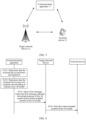
- FIG. 11 is a diagram of an architecture of a communication network according to an embodiment of this application.
- the terminal device 21 may communicate with a target network device 22.
- the terminal device 21 may trigger the target network device 22 to send content of an AI model to the terminal device 21, and the target network device 22 sends the content of the AI model to the terminal device 21.
- terminal device 21 refer to the foregoing descriptions of the terminal device mentioned above.
- target network device 22 refer to the foregoing descriptions of the network device mentioned above.
- AI model refer to the foregoing descriptions of the AI model mentioned above. Details are not described herein again.
- FIG. 12 is a flowchart of a communication method according to an embodiment of this application. As shown in FIG. 12 , the communication method provided in this application may include the following steps.
- S801 A terminal device determines to perform cell handover.
- S802 The terminal device determines that content of an AI model is not complete downloading ofed.
- determining, by the terminal device, the content of the AI model that is not downloaded refer to the descriptions of determining, by a communication apparatus, the content of the AI model that is not complete downloading ofed in S102 in the embodiment in FIG. 4 . Details are not described herein again.
- the terminal device sends a first message to a target network device, where the first message indicates download progress of the AI model.
- the target network device is a network device to which the terminal device is handed over after the terminal device completes cell handover.
- the terminal device successfully accesses the target network device, so that the terminal device and the target network device can communicate with each other.
- the target network device refer to the foregoing descriptions of the network device mentioned above. Details are not described herein again.
- the terminal device may learn of downloaded content of the AI model received by the terminal device, but cannot learn of undownloaded content of the AI model. Therefore, the terminal device may send the first message to the target network device, and can transfer the download progress of the AI model to the target network device through the first message, so that the target network device can learn of the downloaded content of the AI model.
- the terminal device and the target network device cannot communicate with each other. Therefore, the first message is sent by the terminal device to the target network device when the terminal device completes cell handover or after the terminal device completes cell handover.
- S804 The target network device sends the undownloaded content of the AI model to the terminal device.
- the target network device may send the undownloaded content of the AI model to the terminal device. In this way, a waste of a large quantity of air interface resources caused by repeated downloading of the AI model is avoided.
- the target network device may pre-store the content of the AI model that needs to be downloaded by the terminal device, and then the target network device may obtain the undownloaded content of the AI model.
- the terminal device may send the undownloaded content of the AI model to the target network device.
- the target network device may obtain the undownloaded content of the AI model from another network element other than the terminal device.
- the terminal device when completing cell handover or after completing cell handover, transfers the download progress of the AI model to the target network device through the first message, so that the target network device can learn of how much content (namely, the downloaded content of the AI model) of the AI model downloaded by the terminal device from the source network device. Then, after the terminal device completes cell handover, the target network device may send the undownloaded content of the AI model to the terminal device. In this way, a waste of a large quantity of air interface resources caused by repeated downloading of the AI model is avoided.
- the terminal device serving as the communication apparatus, may implement the communication method in this application, and the communication method in this application may be applicable to various handover scenarios such as inter-gNB Xn handover, inter-gNB NG handover, MgNB handover, SgNB handover, and an MR-DC scenario.
- various handover scenarios such as inter-gNB Xn handover, inter-gNB NG handover, MgNB handover, SgNB handover, and an MR-DC scenario.
- the terminal device may send the first message mentioned in FIG. 12 to the target network device when completing cell handover or after completing cell handover.
- the terminal device may transfer the download progress of the AI model to the target network device through the radio resource control reconfiguration complete message in S305.
- the radio resource control reconfiguration complete message may indicate the download progress of the AI model.
- the radio resource control reconfiguration complete message may be considered as the first message mentioned in FIG. 12 , or the radio resource control reconfiguration complete message includes the first message mentioned in FIG. 12 .
- the terminal device may transfer the download progress of the AI model to the target network device through the newly added message.
- the newly added message may indicate the download progress of the AI model.
- the newly added message may be considered as the first message mentioned in FIG. 12 , or the newly added message includes the first message mentioned in FIG. 12 .
- the target network device when receiving the radio resource control reconfiguration complete message in S305 or when the newly added message sent after S305 indicates the download progress of the AI model, the target network device sends, after the terminal device completes cell handover, an AI model (namely, the undownloaded content of the AI model) that is not complete downloading ofed to the terminal device.
- an AI model namely, the undownloaded content of the AI model
- the terminal device may send the first message mentioned in FIG. 12 to the target network device when completing cell handover or after completing cell handover.
- the terminal device may transfer the download progress of the AI model to the target network device through the radio resource control reconfiguration complete message in S508.
- the radio resource control reconfiguration complete message may indicate the download progress of the AI model.
- the radio resource control reconfiguration complete message may be considered as the first message mentioned in FIG. 12 , or the radio resource control reconfiguration complete message includes the first message mentioned in FIG. 12 .
- the terminal device may transfer the download progress of the AI model to the target network device through the newly added message.
- the newly added message may indicate the download progress of the AI model.
- the newly added message may be considered as the first message mentioned in FIG. 12 , or the newly added message includes the first message mentioned in FIG. 12 .
- the target network device when receiving the radio resource control reconfiguration complete message in S508 or when the newly added message sent after S508 indicates the download progress of the AI model, the target network device sends, after the terminal device completes cell handover, an AI model (namely, the undownloaded content of the AI model) that is not complete downloading ofed to the terminal device.
- an AI model namely, the undownloaded content of the AI model
- the terminal device may send the first message mentioned in FIG. 12 to the target network device when completing cell handover or after completing cell handover.
- the terminal device may transfer the download progress of the AI model to the target network device through a message in the random access procedure in S708 or a newly added message sent after S708.
- the message in the random access procedure may indicate the download progress of the AI model.
- the message in the random access procedure may be considered as the first message mentioned in FIG. 12 , or the message in the random access procedure includes the first message mentioned in FIG. 12 .
- the terminal device may transfer the download progress of the AI model to the target network device through the newly added message.
- the newly added message may indicate the download progress of the AI model.
- the newly added message may be considered as the first message mentioned in FIG. 12 , or the newly added message includes the first message mentioned in FIG. 12 .
- the target network device when receiving the message in S708 or when the message sent after S708 indicates the download progress of the AI model, the target network device sends, after the terminal device completes cell handover, an AI model (namely, the undownloaded content of the AI model) that is not complete downloading ofed to the terminal device.
- an AI model namely, the undownloaded content of the AI model
- the first message mentioned in FIG. 12 and the first message mentioned in FIG. 4 to FIG. 10 are usually sent through different messages.
- any one of the source network device, the AMF, the primary network device, or the terminal device may transfer, to the target network device by reusing an existing message in the related technology, content indicated by the first message.
- the first message mentioned in FIG. 12 and the first message mentioned in FIG. 4 to FIG. 10 may be sent through a same message.
- any one of the source network device, the AMF, the primary network device, or the terminal device may transfer, to the target network device through a newly added same message, content indicated by the first message.
- transmission of the first message may be performed through a signaling radio bearer (signaling radio bearer, SRB) or a data radio bearer (data radio bearer, DRB).
- SRB signaling radio bearer
- DRB data radio bearer
- the SRB is a radio bearer used to perform transmission on an RRC message and a network attached storage (network attached storage, NAS) message.
- the DRB is a radio bearer used to perform transmission on user data. There is only one type of DRB. According to a protocol, each terminal device has a maximum of eight DRBs used to perform transmission on different services.
- the SRB may be one or more of an SRB 0, an SRB 1, an SRB 2, an SRB 3, or an SRB 4.
- the SRB 0, the SRB 1, the SRB 2, the SRB 3, and the SRB 4 are existing SRBs in the related technology.
- the SRB 0 is used to carry RRC signaling before an RRC connection is successfully established. Transmission of the RRC signaling is performed through a common control channel (common control channel, CCCH) logic channel in a transparent mode (transparent mode, TM) at an RLC layer.
- CCCH common control channel
- TM transparent mode
- the SRB 1 is used to carry the RRC signaling after the RRC connection is successfully established and NAS signaling before the SRB 2 is established. Transmission of the RRC signaling and the NAS signaling is performed through a dedicated control channel (dedicated control channel, DCCH) logic channel in an AM at the RLC layer.
- DCCH dedicated control channel
- the SRB 2 is used to carry the NAS signaling and an RRC message for recording measurement information. Transmission of the NAS signaling and the RRC message is performed through the DCCH logic channel in the AM at the RLC layer. A priority of the SRB 2 is lower than that of the SRB 1. The SRB 2 can be established only after a security mode is activated.
- the SRB 3 is used to carry a specific RRC message when the terminal device is in (NG) EN-DC or NR-DC, and transmission of the specific RRC message is performed through the DCCH logical channel.
- the (NG) EN-DC (E-UTRA NR dual connectivity with covering E-UTRA connected to EPC or 5GC) is E-UTRANR dual connectivity, and is E-UTRA that covers an EPC or a 5GC connection.
- the EPC (evolved packet core) is a covered packet core network.
- the EN-DC (E-UTRANR dual connectivity with E-UTRA connected to EPC) is E-UTRA and NR dual connectivity with the E-UTRA connected to the EPC.
- the E-UTRA (evolved universal terrestrial radio access) is evolved universal terrestrial radio access.
- the NR-DC namely, NR-NR DC refers to 5G and 5G dual connectivity.
- the SRB 4 is used for an RRC message including application layer measurement report information. All messages use the DCCH logical channel.
- the SRB 4 can only be configured by a network after AS security is activated.
- the SRB may be one or more SRBs other than an SRB 0, an SRB 1, an SRB 2, an SRB 3, and an SRB 4, for example, a newly introduced SRB 5.
- the target network device When transmission of the first message is performed through a DRB on an air interface between the terminal device and the target network device, after a PDU session between the target network device, the terminal device, and a core network element is established, the target network device initiates a DRB establishment procedure, and the terminal device establishes the DRB.
- the core network element may include a network element participating in PDU session establishment, for example, an AMF and a user plane function entity (user plane function, UPF).
- AMF user plane function entity
- UPF user plane function
- the target network device After the target network device receives the first message, the target network device initiates a DRB establishment procedure, and the terminal device establishes the DRB.
- this application further provides a corresponding communication apparatus (sometimes also referred to as a communication device) and a communication system.
- the communication apparatus includes a corresponding module or unit configured to perform each part in the foregoing embodiments.
- the module or unit may be software, hardware, or a combination of software and hardware.
- this application further provides a communication apparatus.
- FIG. 13 is a diagram of a structure of a communication apparatus according to an embodiment of this application.
- the communication apparatus 100 may exist independently, or may be integrated into another device, and may communicate with the network device mentioned above, to implement operations corresponding to the communication apparatus in the method embodiments in FIG. 1 to FIG. 10 .
- the communication apparatus 100 may include a processing unit 101 and a transceiver unit 102.
- the processing unit 101 is configured to perform data processing.
- the transceiver unit 102 may implement a corresponding communication function.
- the transceiver unit 102 may also be referred to as a communication interface or a communication unit.
- the communication apparatus 100 may further include a storage unit.
- the storage unit may be configured to store instructions and/or data.
- the processing unit 101 may read the instructions and/or the data in the storage unit, to enable the communication apparatus 100 to implement the foregoing method embodiments.
- the communication apparatus 100 may be configured to perform an action performed by the communication apparatus in the foregoing method embodiments.
- the communication apparatus 100 may be a communication apparatus or a component that can be configured in the communication apparatus.
- the processing unit 101 is configured to perform a processing-related operation of the communication apparatus in the foregoing method embodiment.
- the transceiver unit 102 is configured to perform a receiving-related operation of the communication apparatus in the foregoing method embodiment.
- the transceiver unit 102 may include a sending unit and a receiving unit.
- the sending unit is configured to perform a sending operation in the foregoing method embodiments.
- the receiving unit is configured to perform a receiving operation in the foregoing method embodiments.
- the communication apparatus 100 may include the sending unit, but does not include the receiving unit, or the communication apparatus 100 may include the receiving unit, but does not include the sending unit. Specifically, this may depend on whether the foregoing solution performed by the communication apparatus 100 includes a sending action and a receiving action.
- the communication apparatus 100 is configured to perform an action performed by the communication apparatus in the embodiment shown in FIG. 4 .
- the communication apparatus 100 may include a processing unit 101 and a transceiver unit 102.
- the processing unit 101 is configured to determine that a terminal device performs cell handover.
- the processing unit 101 is further configured to determine that the terminal device does not complete downloading of content of an artificial intelligence model.
- the transceiver unit 102 is configured to send a first message to a target network device, where the target network device is a network device to which the terminal device is handed over after the terminal device completes cell handover, and the first message indicates download progress of the artificial intelligence model and/or undownloaded content of the artificial intelligence model, to trigger the target network device to send the undownloaded content of the artificial intelligence model to the terminal device.
- the communication apparatus 100 is a source network device.
- the transceiver unit 102 is further configured to: before the communication apparatus 100 determines that the terminal device performs cell handover, send the content of the artificial intelligence model to the terminal device.
- the processing unit 101 is configured to determine that the terminal device performs cell handover from the source network device to the target network device.
- the communication apparatus 100 is an access and mobility management function entity
- the communication apparatus 100 is a primary network device, and both the source network device and the target network device are secondary network devices.
- the processing unit 101 is configured to determine that the terminal device performs cell handover from the source network device to the target network device.
- the processing unit 101 in the foregoing embodiments may be implemented by at least one processor or a processor-related circuit.
- the transceiver unit 102 may be implemented by a transceiver or a transceiver-related circuit.
- the transceiver unit 102 may also be referred to as a communication unit or a communication interface.
- the storage unit may be implemented by at least one storage.
- this application further provides a communication apparatus.
- FIG. 14 is a diagram of a structure of a communication apparatus according to an embodiment of this application.
- the communication apparatus 200 may exist independently, or may be integrated into another device, and may communicate with the communication apparatus mentioned above, to implement operations corresponding to the target network device in the method embodiments in FIG. 1 to FIG. 10 .
- the communication apparatus 200 may include a transceiver unit 201.
- the communication apparatus 200 may further include a processing unit.
- the transceiver unit 201 may implement a corresponding communication function, and the processing unit is configured to process data.
- the transceiver unit 201 may also be referred to as a communication interface or a communication unit.
- the communication apparatus 200 may further include a storage unit.
- the storage unit may be configured to store instructions and/or data.
- the processing unit may read the instructions and/or the data in the storage unit, to enable the communication apparatus 200 to implement the foregoing method embodiments.
- the communication apparatus 200 may be configured to perform an action performed by the target network device in the foregoing method embodiments.
- the communication apparatus 200 may be a target network device or a component that can be configured in the target network device.
- the transceiver unit 201 is configured to perform a receiving-related operation of the target network device in the foregoing method embodiments, and the processing unit is configured to perform a processing-related operation of the target network device in the foregoing method embodiments.
- the transceiver unit 201 may include a sending unit and a receiving unit.
- the sending unit is configured to perform a sending operation in the foregoing method embodiments.
- the receiving unit is configured to perform a receiving operation in the foregoing method embodiments.
- the communication apparatus 200 may include the sending unit, but does not include the receiving unit, or the communication apparatus 200 may include the receiving unit, but does not include the sending unit. Specifically, this may depend on whether the foregoing solution performed by the communication apparatus 200 includes a sending action and a receiving action.
- the communication apparatus 200 is configured to perform an action performed by the target network device in the embodiment shown in FIG. 4 .
- the communication apparatus 200 may include a transceiver unit 201.
- the transceiver unit 201 is configured to receive a first message sent by a communication apparatus, where the first message is sent by the communication apparatus when the communication apparatus determines that a terminal device performs cell handover and determines that the terminal device does not complete downloading of content of an artificial intelligence model, and the first message indicates download progress of the artificial intelligence model and/or undownloaded content of the artificial intelligence model.
- the transceiver unit 201 is further configured to send the undownloaded content of the artificial intelligence model to the terminal device.
- the communication apparatus 200 is a source network device.
- the first message is sent by the source network device when the source network device determines that the terminal device performs cell handover from the source network device to the target network device, and determines that the terminal device does not complete downloading of the content of the artificial intelligence model.
- the communication apparatus 200 is an access and mobility management function entity.
- the first message is sent by the access and mobility management function entity when the access and mobility management function entity determines, based on a second message, that the terminal device performs cell handover from a source network device to the target network device, and determines, based on a third message, that the terminal device does not complete downloading of the content of the artificial intelligence model, the second message and the third message are received by the access and mobility management function entity from the source network device, the second message indicates the terminal device to perform cell handover from the source network device to the target network device, and the third message indicates the download progress of the artificial intelligence model and/or the undownloaded content of the artificial intelligence model.
- the communication apparatus 200 is a primary network device, and both the source network device and the target network device are secondary network devices.
- the first message is sent by the primary network device when the primary network device determines that the terminal device performs cell handover from the source network device to the target network device, and determines that the terminal device does not complete downloading of the content of the artificial intelligence model.
- the processing unit in the foregoing embodiments may be implemented by at least one processor or a processor-related circuit.
- the transceiver unit 201 may be implemented by a transceiver or a transceiver-related circuit.
- the transceiver unit may also be referred to as a communication unit or a communication interface.
- the storage unit may be implemented by at least one storage.
- this application further provides a communication apparatus.
- FIG. 15 is a diagram of a structure of a communication apparatus according to an embodiment of this application.
- the communication apparatus 300 may exist independently, or may be integrated into another device, and may communicate with the network device mentioned above, to implement operations corresponding to the terminal device in the method embodiments in FIG. 1, FIG. 2 , FIG. 11, and FIG. 12 .
- the communication apparatus 300 may include a processing unit 301 and a transceiver unit 302.
- the processing unit 301 is configured to perform data processing.
- the transceiver unit 302 may implement a corresponding communication function.
- the transceiver unit 302 may also be referred to as a communication interface or a communication unit.
- the communication apparatus 300 may further include a storage unit.
- the storage unit may be configured to store instructions and/or data.
- the processing unit 301 may read the instructions and/or the data in the storage unit, to enable the communication apparatus 300 to implement the foregoing method embodiments.
- the communication apparatus 300 may be configured to perform an action performed by the terminal device in the foregoing method embodiments.
- the communication apparatus 300 may be a terminal device or a component that can be configured in the terminal device.
- the processing unit 301 is configured to perform a processing-related operation of the terminal device in the foregoing method embodiment.
- the transceiver unit 302 is configured to perform a receiving-related operation of the terminal device in the foregoing method embodiment.
- the transceiver unit 302 may include a sending unit and a receiving unit.
- the sending unit is configured to perform a sending operation in the foregoing method embodiments.
- the receiving unit is configured to perform a receiving operation in the foregoing method embodiments.
- the communication apparatus 300 may include the sending unit, but does not include the receiving unit, or the communication apparatus 300 may include the receiving unit, but does not include the sending unit. Specifically, this may depend on whether the foregoing solution performed by the communication apparatus 300 includes a sending action and a receiving action.
- the communication apparatus 300 is configured to perform an action performed by the terminal device in the embodiment shown in FIG. 12 .
- the communication apparatus 300 may include a processing unit 301 and a transceiver unit 302.
- the processing unit 301 is configured to determine to perform cell handover.
- the processing unit 301 is further configured to determine that content of an artificial intelligence model is not complete downloading ofed.
- the transceiver unit 302 is configured to send a first message to a target network device, where the target network device is a network device to which the terminal device is handed over after the terminal device completes cell handover, and the first message indicates download progress of the artificial intelligence model.
- the transceiver unit 302 is further configured to receive undownloaded content that is of the artificial intelligence model and that is sent by the target network device.
- the transceiver unit 302 is further configured to: before the terminal device determines to perform cell handover, receive the content of the artificial intelligence model from the source network device.
- the processing unit 301 is configured to determine to perform cell handover from the source network device to the target network device.
- the processing unit 301 in the foregoing embodiments may be implemented by at least one processor or a processor-related circuit.
- the transceiver unit 302 may be implemented by a transceiver or a transceiver-related circuit.
- the transceiver unit 302 may also be referred to as a communication unit or a communication interface.
- the storage unit may be implemented by at least one storage.
- this application further provides a communication apparatus.
- FIG. 16 is a diagram of a structure of a communication apparatus according to an embodiment of this application.
- the communication apparatus 400 may exist independently, or may be integrated into another device, and may communicate with the terminal device mentioned above, to implement operations corresponding to the target network device in the method embodiments in FIG. 1, FIG. 2 , FIG. 11, and FIG. 12 .
- the communication apparatus 400 may include a transceiver unit 401.
- the communication apparatus 400 may further include a processing unit.
- the transceiver unit 401 may implement a corresponding communication function, and the processing unit is configured to process data.
- the transceiver unit 401 may also be referred to as a communication interface or a communication unit.
- the communication apparatus 400 may further include a storage unit.
- the storage unit may be configured to store instructions and/or data.
- the processing unit may read the instructions and/or the data in the storage unit, to enable the communication apparatus 400 to implement the foregoing method embodiments.
- the communication apparatus 400 may be configured to perform an action performed by the target network device in the foregoing method embodiments.
- the communication apparatus 400 may be a target network device or a component that can be configured in the target network device.
- the transceiver unit 401 is configured to perform a receiving-related operation of the target network device in the foregoing method embodiments, and the processing unit is configured to perform a processing-related operation of the target network device in the foregoing method embodiments.
- the transceiver unit 401 may include a sending unit and a receiving unit.
- the sending unit is configured to perform a sending operation in the foregoing method embodiments.
- the receiving unit is configured to perform a receiving operation in the foregoing method embodiments.
- the communication apparatus 400 may include the sending unit, but does not include the receiving unit.
- the communication apparatus 400 may include the receiving unit, but does not include the sending unit. Specifically, this may depend on whether the foregoing solution performed by the communication apparatus 400 includes a sending action and a receiving action.
- the communication apparatus 400 is configured to perform an action performed by the target network device in the embodiment shown in FIG. 12 .
- the communication apparatus 400 may include a transceiver unit 401.
- the transceiver unit 401 is configured to receive a first message sent by a terminal device, where the first message is sent by the terminal device when the terminal device determines to perform cell handover and determines that content of an artificial intelligence model is not complete downloading ofed, and the first message indicates download progress of the artificial intelligence model.
- the transceiver unit 401 is further configured to send the undownloaded content of the artificial intelligence model to the terminal device.
- the processing unit in the foregoing embodiments may be implemented by at least one processor or a processor-related circuit.
- the transceiver unit 401 may be implemented by a transceiver or a transceiver-related circuit.
- the transceiver unit may also be referred to as a communication unit or a communication interface.
- the storage unit may be implemented by at least one storage.
- the first message includes a first bit, and the first bit indicates a location until which the content of the artificial intelligence model is downloaded.
- the content of the artificial intelligence model includes M segments, and M is an integer greater than or equal to 2;
- the content of the artificial intelligence model includes M segments, and M is an integer greater than or equal to 2; and the first message includes one or more of the following representation manners:
- the first message further includes an identifier of the artificial intelligence model.
- the first message further includes a segment quantity M of the content of the artificial intelligence model.
- the first message includes: the undownloaded content of the artificial intelligence model; or the identifier of the artificial intelligence model and the undownloaded content of the artificial intelligence model.
- transmission of the first message is performed through a signaling radio bearer or a data radio bearer.
- transmission of the first message is performed through the signaling radio bearer between the terminal device and the target network device;
- transmission of the first message is performed through a data radio bearer on an air interface between the terminal device and the target network device; establishment of the data radio bearer is initiated by the target network device after a protocol data unit session between the target network device, the terminal device, and a core network element is established; or establishment of the data radio bearer is initiated by the target network device after the target network device receives the first message.
- each functional module may be obtained through division based on the foregoing method examples.
- each functional module may be obtained through division in correspondence to each function, or two or more functions may be integrated into one processing module.
- the integrated module may be implemented in a form of hardware, or may be implemented in a form of a software functional module.
- module division is an example, and is merely a logical function division. In actual implementation, another division manner may be used.
- this application further provides a communication apparatus.
- FIG. 17 is a diagram of a hardware structure of a communication apparatus according to an embodiment of this application.
- the communication apparatus 500 includes a processor 501.
- the processor 501 is coupled to a storage 502.
- the storage 502 is configured to store a computer program or instructions and/or data.
- the processor 501 is configured to execute the computer program or instructions and/or the data stored in the storage 502, to perform the method in the foregoing method embodiments.
- the communication apparatus 500 includes one or more processors 501.
- the communication apparatus 500 may further include the storage 502.
- the communication apparatus 500 includes one or more storages 502.
- the storage 502 and the processor 501 may be integrated together, or separately disposed.
- the communication apparatus 500 may further include a transceiver 503.
- the transceiver 503 is configured to receive and/or send a signal.
- the processor 501 is configured to control the transceiver 503 to receive and/or send the signal.
- the communication apparatus 500 is configured to implement an operation performed by the communication apparatus in the foregoing method embodiments.
- the processor 501 is configured to implement a processing-related operation performed by the communication apparatus in the foregoing method embodiment
- the transceiver 503 is configured to implement a receiving and sending-related operation performed by the communication apparatus in the foregoing method embodiment.
- the communication apparatus 500 is configured to implement an operation performed by the terminal device in the foregoing method embodiments.
- the processor 501 is configured to implement a processing-related operation performed by the terminal device in the foregoing method embodiment
- the transceiver 503 is configured to implement a receiving and sending-related operation performed by the terminal device in the foregoing method embodiment.
- the communication apparatus 500 is configured to implement an operation performed by the target network device in the foregoing method embodiments.
- the processor 501 is configured to implement a processing-related operation performed by the target network device in the foregoing method embodiment
- the transceiver 503 is configured to implement a transceiver-related operation performed by the target network device in the foregoing method embodiment.
- a component that is in the transceiver 503 and that is configured to receive power may be considered as a receiving unit
- a component that is in the transceiver 503 and that is configured to implement a sending function may be considered as a sending unit.
- the transceiver 503 may include a receiver and a transmitter.
- the transceiver 503 may also be referred to as a transceiver machine, a transceiver unit, a transceiver circuit, or the like.
- the receiver may also be referred to as a receiver machine, a receiving unit, a receiver, a receive circuit, or the like.
- the transmitter may also be referred to as a transmitter machine, a transmitter, a transmitting unit, a transmit circuit, or the like.
- the processor 501 has a processing function, and the processor 501 may be referred to as a processing unit.
- the storage 502 is configured to store computer program code and data, and the storage 502 may also be referred to as a storage unit.
- this application further provides a communication apparatus.
- the communication apparatus 600 may be a communication apparatus, a terminal device, or a target network device, or may be a communication apparatus, a terminal device, or a chip of a target network device.
- the communication apparatus 600 may be configured to perform operations performed by the communication apparatus, the terminal device, or the target network device in the foregoing method embodiments.
- FIG. 18 is a diagram of a hardware structure of a communication apparatus according to an embodiment of this application.
- the communication apparatus 600 includes a part 610, a part 620, and a part 630.
- the part 610 is mainly configured to perform baseband processing, control a base station, and the like.
- the part 610 is usually a control center of the base station, and may be usually referred to as a processor or a processing unit, and is configured to control the communication apparatus, the terminal device, or the target network device to perform a processing operation on a side of the communication apparatus, the terminal device, or the target network device in the foregoing method embodiments.
- the part 620 is mainly configured to store computer program code and data, and may usually be a storage or a storage unit.
- the part 630 is mainly configured to receive and send a radio frequency signal, and perform conversion between a radio frequency signal and a baseband signal.
- the part 630 may be usually referred to as a transceiver unit, a transceiver machine, a transceiver circuit, a transceiver, or the like.
- the transceiver unit in the part 630 may also be referred to as the transceiver machine, the transceiver, or the like, and includes an antenna 633 and a radio frequency circuit (not shown in the figure).
- the radio frequency circuit is mainly configured to perform radio frequency processing.
- a component configured to implement a receiving function may be considered as a receiver, and a component configured to implement a sending function may be considered as a transmitter.
- the part 630 includes a receiver 632 and a transmitter 631.
- the receiver may also be referred to as a receiving unit, a receiver, a receiving circuit, or the like
- the transmitter may be referred to as a transmitting unit, a sending unit, a transmitter, a transmitting circuit, or the like.
- the part 610 and the part 620 may include one or more boards, and each board may include one or more processors and one or more storages.
- the processor is configured to read and execute a program in the storage, to implement a baseband processing function and control the base station. If there are a plurality of boards, the boards may be interconnected with each other to enhance a processing capability.
- a plurality of boards may share one or more processors, or a plurality of boards share one or more storages, or a plurality of boards share one or more processors at the same time.
- the transceiver unit in the part 630 is configured to perform a receiving and sending-related process performed by the communication apparatus or the target network device in the embodiment shown in FIG. 4 .
- the processor in the part 610 is configured to perform a processing-related process performed by the communication apparatus or the target network device in the embodiment shown in FIG. 4 .
- the transceiver unit in the part 630 is configured to perform a receiving and sending-related process performed by the terminal device or the target network device in the embodiment shown in FIG. 12 .
- the processor in the part 610 is configured to perform a processing-related process performed by the terminal device or the target network device in the embodiment shown in FIG. 12 .
- FIG. 18 is merely an example rather than a limitation.
- the communication apparatus, the terminal device, or the target network device that includes the processor, the storage, and the transceiver may not depend on the structure shown in FIG. 18 .
- the chip When the communication apparatus 600 is the chip, the chip includes a transceiver, a storage, and a processor.
- the transceiver may be an input/output circuit or a communication interface.
- the processor is a processor, a microprocessor, or an integrated circuit integrated on the chip.
- a sending operation of the communication apparatus, the terminal device, or the target network device may be understood as an output of a chip
- a receiving operation of the communication apparatus, the terminal device, or the target network device in the foregoing method embodiments may be understood as an input of the chip.
- this application further provides a computer-readable storage medium, and the computer-readable storage medium stores computer instructions used to implement the method performed by the communication apparatus, the terminal device, or the target network device, or the method performed by the network device in the foregoing method embodiments.
- the computer program when executed by a computer, the computer is enabled to implement the method performed by the communication apparatus, the method performed by the terminal device, or the method performed by the target network device in the foregoing method embodiments.
- this application further provides a computer program product including instructions.
- the instructions When the instructions are executed by a computer, the computer is enabled to implement the method performed by the communication apparatus, the method performed by the terminal device, or the method performed by the target network device in the foregoing method embodiments.
- this application further provides a communication system.
- the communication system includes a communication apparatus and a target network device.
- the communication system refer to the communication system shown in the embodiment in FIG. 3 .
- the communication system includes a terminal device and a target network device.
- the communication system refer to the communication system shown in the embodiment in FIG. 11 .
- this application further provides a chip apparatus, including a processor, configured to invoke a computer program or computer instructions stored in a memory, to enable the processor to perform the method in the foregoing embodiments.
- an input of the chip apparatus corresponds to a receiving operation in the foregoing embodiment
- an output of the chip apparatus corresponds to a sending operation in the foregoing embodiment
- the processor is coupled to the memory over an interface.
- the chip apparatus further includes the memory, and the memory stores the computer program or the computer instructions.
- the processor mentioned anywhere above may be a general-purpose central processing unit, a microprocessor, an application-specific integrated circuit (application-specific integrated circuit, ASIC), or one or more integrated circuits configured to control execution of a program of the method in the foregoing embodiments.
- the memory mentioned anywhere above may be a read-only memory (read-only memory, ROM), another type of static storage device that can store static information and instructions, a random access memory (random access memory, RAM), or the like.
- the terminal device or the network device may include a hardware layer, an operating system layer running on the hardware layer, and an application layer running on the operating system layer.
- the hardware layer may include hardware such as a central processing unit (central processing unit, CPU), a memory management unit (memory management unit, MMU), and memory (also referred to as main memory).
- An operating system at the operating system layer may be any one or more computer operating systems that implement service processing by using a process (process), for example, a Linux operating system, a Unix operating system, an Android operating system, an iOS operating system, or a Windows operating system.
- the application layer may include applications such as a browser, an address book, word processing software, and instant messaging software.
- the disclosed system, apparatus, and method may be implemented in other manners.
- the described apparatus embodiment is merely an example.
- division into the units is merely logical function division and may be other division in actual implementation.
- a plurality of units or components may be combined or integrated into another system, or some features may be ignored or not performed.
- the displayed or discussed mutual couplings or direct couplings or communication connections may be implemented over some interfaces.
- the indirect couplings or communication connections between the apparatuses or units may be implemented in electronic, mechanical, or other forms.
- the units described as separate parts may or may not be physically separate, and parts displayed as units may or may not be physical units, in other words, may be located in one position, or may be distributed on a plurality of network units. Some or all of the units may be selected based on actual requirements to achieve the objectives of the solutions of embodiments.
- functional units in embodiments of this application may be integrated into one processing unit, each of the units may exist alone physically, or two or more units are integrated into one unit.
- the integrated unit may be implemented in a form of hardware, or may be implemented in a form of a software functional unit.
- the integrated unit When the integrated unit is implemented in the form of a software functional unit and sold or used as an independent product, the integrated unit may be stored in a computer-readable storage medium. Based on such an understanding, the part essentially contributing to the technical solutions of this application or all or some of the technical solutions may be implemented in a form of a software product.
- the computer software product is stored in a storage medium and includes a plurality of instructions for instructing a computer device (which may be a personal computer, a server, or a network device) to perform all or some of the processes of the methods in embodiments of this application.
- the foregoing storage medium includes any medium that can store program code, for example, a USB flash disk, a removable hard disk, a read-only memory, a random access memory, a magnetic disk, or an optical disc.
Landscapes
- Engineering & Computer Science (AREA)
- Computer Networks & Wireless Communication (AREA)
- Signal Processing (AREA)
- Mobile Radio Communication Systems (AREA)
Applications Claiming Priority (2)
| Application Number | Priority Date | Filing Date | Title |
|---|---|---|---|
| CN202211194332.9A CN117835340A (zh) | 2022-09-28 | 2022-09-28 | 通信方法和装置 |
| PCT/CN2023/120791 WO2024067408A1 (zh) | 2022-09-28 | 2023-09-22 | 通信方法和装置 |
Publications (2)
| Publication Number | Publication Date |
|---|---|
| EP4583578A1 true EP4583578A1 (de) | 2025-07-09 |
| EP4583578A4 EP4583578A4 (de) | 2025-12-10 |
Family
ID=90476132
Family Applications (1)
| Application Number | Title | Priority Date | Filing Date |
|---|---|---|---|
| EP23870639.4A Pending EP4583578A4 (de) | 2022-09-28 | 2023-09-22 | Kommunikationsverfahren und -vorrichtung |
Country Status (4)
| Country | Link |
|---|---|
| US (1) | US20250227581A1 (de) |
| EP (1) | EP4583578A4 (de) |
| CN (1) | CN117835340A (de) |
| WO (1) | WO2024067408A1 (de) |
Families Citing this family (1)
| Publication number | Priority date | Publication date | Assignee | Title |
|---|---|---|---|---|
| WO2026016102A1 (zh) * | 2024-07-17 | 2026-01-22 | Oppo广东移动通信有限公司 | 无线通信方法、终端设备以及网络设备 |
Family Cites Families (6)
| Publication number | Priority date | Publication date | Assignee | Title |
|---|---|---|---|---|
| JP5080644B2 (ja) * | 2007-06-18 | 2012-11-21 | エルジー エレクトロニクス インコーポレイティド | ハンドオーバ中のダウンリンクパケットデータコンバージェンスプロトコル動作 |
| WO2010139088A1 (zh) * | 2009-06-01 | 2010-12-09 | 上海贝尔股份有限公司 | 服务续传方法、用户设备和基站 |
| GB2511562B (en) * | 2012-03-02 | 2015-08-12 | Seven Networks Inc | Providing data to a mobile application accessible at a mobile device via different network connections without interruption and mobile device which hands over |
| EP4080912B1 (de) * | 2019-12-31 | 2024-03-20 | Huawei Technologies Co., Ltd. | Multicast-sende- und -empfangsverfahren und -geräte |
| CN113873538B (zh) * | 2020-06-30 | 2025-05-06 | 华为技术有限公司 | 一种模型数据传输方法及通信装置 |
| US12574803B2 (en) * | 2020-10-21 | 2026-03-10 | Interdigital Patent Holdings, Inc. | Multicast-broadcast services mobility and service continuity |
-
2022
- 2022-09-28 CN CN202211194332.9A patent/CN117835340A/zh active Pending
-
2023
- 2023-09-22 WO PCT/CN2023/120791 patent/WO2024067408A1/zh not_active Ceased
- 2023-09-22 EP EP23870639.4A patent/EP4583578A4/de active Pending
-
2025
- 2025-03-25 US US19/089,891 patent/US20250227581A1/en active Pending
Also Published As
| Publication number | Publication date |
|---|---|
| EP4583578A4 (de) | 2025-12-10 |
| US20250227581A1 (en) | 2025-07-10 |
| CN117835340A (zh) | 2024-04-05 |
| WO2024067408A1 (zh) | 2024-04-04 |
Similar Documents
| Publication | Publication Date | Title |
|---|---|---|
| US11838787B2 (en) | Functional architecture and interface for non-real-time ran intelligent controller | |
| US11683720B2 (en) | Communication method and communications device | |
| CN114846844B (zh) | 用于切换的方法和装置 | |
| KR102491526B1 (ko) | 이중 연결을 위한 자동 이웃 관계 개선 기법 | |
| EP4580230A1 (de) | Kommunikationsverfahren und -vorrichtung | |
| US11877327B2 (en) | Method and apparatus for transmitting and receiving connection information in wireless communication system | |
| CN110505714B (zh) | 多链接通信方法、设备和终端 | |
| WO2024040476A1 (en) | Rrc procedure design for wireless ai/ml | |
| EP4185006A1 (de) | Verfahren und vorrichtung zur kommunikation | |
| EP4633212A1 (de) | Kommunikationsverfahren und -vorrichtung | |
| WO2024073969A1 (en) | Methods and apparatuses for ai model management | |
| WO2024061522A1 (en) | Ue initiated model-updates for two-sided ai/ml model | |
| US20250227581A1 (en) | Communication method and apparatus | |
| EP4515941B1 (de) | Verfahren für benutzergeräteinitiierten aperiodischen l1-messbericht für erkannte zellen auf basis von l3-messungen | |
| EP4572172A1 (de) | Kommunikationsverfahren und -vorrichtung | |
| US20180213546A1 (en) | Method of interworking between networks and device | |
| CN117639864A (zh) | 量化方法和装置 | |
| US20240244505A1 (en) | Communication apparatus, base station and method | |
| CN121751222A (zh) | 一种模型监测方法及装置 | |
| CN119922528A (zh) | 一种通信方法及装置 | |
| WO2025093280A1 (en) | Model transfer in a network | |
| WO2025201191A1 (zh) | 一种通信方法及装置 | |
| CN120419260A (zh) | 通信方法和通信设备 | |
| CN119631368A (zh) | 用于由在双连接模式下操作的用户装备进行应用层测量报告的方法和系统 | |
| WO2026061059A1 (zh) | 一种模型注册及访问的方法和装置 |
Legal Events
| Date | Code | Title | Description |
|---|---|---|---|
| STAA | Information on the status of an ep patent application or granted ep patent |
Free format text: STATUS: THE INTERNATIONAL PUBLICATION HAS BEEN MADE |
|
| PUAI | Public reference made under article 153(3) epc to a published international application that has entered the european phase |
Free format text: ORIGINAL CODE: 0009012 |
|
| STAA | Information on the status of an ep patent application or granted ep patent |
Free format text: STATUS: REQUEST FOR EXAMINATION WAS MADE |
|
| 17P | Request for examination filed |
Effective date: 20250402 |
|
| AK | Designated contracting states |
Kind code of ref document: A1 Designated state(s): AL AT BE BG CH CY CZ DE DK EE ES FI FR GB GR HR HU IE IS IT LI LT LU LV MC ME MK MT NL NO PL PT RO RS SE SI SK SM TR |
|
| REG | Reference to a national code |
Ref country code: DE Ref legal event code: R079 Free format text: PREVIOUS MAIN CLASS: H04W0036000000 Ipc: H04W0036020000 |
|
| A4 | Supplementary search report drawn up and despatched |
Effective date: 20251106 |
|
| RIC1 | Information provided on ipc code assigned before grant |
Ipc: H04W 36/02 20090101AFI20251031BHEP Ipc: H04W 36/00 20090101ALN20251031BHEP |
|
| DAV | Request for validation of the european patent (deleted) | ||
| DAX | Request for extension of the european patent (deleted) |