EP4583601A1 - Kommunikationsverfahren, -vorrichtung und -system - Google Patents
Kommunikationsverfahren, -vorrichtung und -system Download PDFInfo
- Publication number
- EP4583601A1 EP4583601A1 EP23870256.7A EP23870256A EP4583601A1 EP 4583601 A1 EP4583601 A1 EP 4583601A1 EP 23870256 A EP23870256 A EP 23870256A EP 4583601 A1 EP4583601 A1 EP 4583601A1
- Authority
- EP
- European Patent Office
- Prior art keywords
- resource
- data
- terminal device
- determining
- initial
- Prior art date
- Legal status (The legal status is an assumption and is not a legal conclusion. Google has not performed a legal analysis and makes no representation as to the accuracy of the status listed.)
- Pending
Links
Images







Classifications
-
- H—ELECTRICITY
- H04—ELECTRIC COMMUNICATION TECHNIQUE
- H04W—WIRELESS COMMUNICATION NETWORKS
- H04W72/00—Local resource management
- H04W72/50—Allocation or scheduling criteria for wireless resources
- H04W72/56—Allocation or scheduling criteria for wireless resources based on priority criteria
- H04W72/563—Allocation or scheduling criteria for wireless resources based on priority criteria of the wireless resources
-
- H—ELECTRICITY
- H04—ELECTRIC COMMUNICATION TECHNIQUE
- H04W—WIRELESS COMMUNICATION NETWORKS
- H04W72/00—Local resource management
- H04W72/02—Selection of wireless resources by user or terminal
-
- H—ELECTRICITY
- H04—ELECTRIC COMMUNICATION TECHNIQUE
- H04W—WIRELESS COMMUNICATION NETWORKS
- H04W72/00—Local resource management
- H04W72/50—Allocation or scheduling criteria for wireless resources
- H04W72/54—Allocation or scheduling criteria for wireless resources based on quality criteria
- H04W72/542—Allocation or scheduling criteria for wireless resources based on quality criteria using measured or perceived quality
-
- H—ELECTRICITY
- H04—ELECTRIC COMMUNICATION TECHNIQUE
- H04W—WIRELESS COMMUNICATION NETWORKS
- H04W72/00—Local resource management
- H04W72/20—Control channels or signalling for resource management
- H04W72/25—Control channels or signalling for resource management between terminals via a wireless link, e.g. sidelink
-
- H—ELECTRICITY
- H04—ELECTRIC COMMUNICATION TECHNIQUE
- H04W—WIRELESS COMMUNICATION NETWORKS
- H04W72/00—Local resource management
- H04W72/50—Allocation or scheduling criteria for wireless resources
- H04W72/56—Allocation or scheduling criteria for wireless resources based on priority criteria
- H04W72/566—Allocation or scheduling criteria for wireless resources based on priority criteria of the information or information source or recipient
Definitions
- Embodiments of this application relate to the field of wireless communication, and in particular, to a communication method and apparatus, and a system.
- Cellular vehicle-to-everything (Cellular Vehicle-To-Everything, C-V2X for short) communication is a V2X communication technology developed based on a cellular system. V2X communication has great potential in reducing vehicle collision accidents to further reduce a corresponding number of casualties. Further, a vehicle-to-vehicle communication technology supported by V2X may be further applied to device-to-device (Device-to-Device, D2D for short) communication in any system.
- used bands may be classified into licensed bands and unlicensed bands.
- a user uses a spectrum resource based on scheduling of a central node.
- a transmit node needs to use a spectrum resource through contention. Specifically, the transmit node contends for a channel through listen before talk LBT (Listen before Talk).
- a transmit end UE selects a transmission resource for communication in a resource selection window based on a result of performing sensing in a sensing window of the transmit end UE.
- This application provides a communication method and apparatus, and a system. According to the method, continuous channel resources can be occupied for data transmission, to reduce a risk that a channel is preempted by another user and channel contention is performed again, and improve transmission performance.
- a terminal device in embodiments of this application may be a device that implements a terminal function or a component (for example, a chip system) in a device.
- this application provides a communication method.
- the method may include: A terminal device determines an available resource set S A based on N parameter sets, where S A is located in a resource selection window; and sends N pieces of data on a resource in S A , where the N parameter sets correspond to the N pieces of data, data i corresponds to a parameter set i, N is a positive integer greater than 1, i is an integer greater than or equal to 0 and less than N, and the parameter set i includes at least one of the following parameters: a sending priority prio Tx,i , a data delay budget PDB i , a frequency domain resource unit L subCH,i , or a channel access priority class CAPC i .
- a common available resource set S A is shared by a plurality of pieces of data, so that the terminal device selects continuous time units from the available resource set S A to perform transmission of the plurality of pieces of data. Therefore, continuous use of time units is improved, and a risk that a channel is preempted by another terminal device is reduced, thereby improving data transmission performance.
- the terminal device obtains a data set and/or a reference set corresponding to the data set, where the data set includes the N pieces of data.
- the determining S A based on the first parameter set includes:
- the first SCI may be first-stage SCI, second-stage SCI, or first-stage SCI and second-stage SCI. This is not limited in this application.
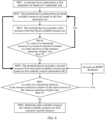
- the method further includes: after performing step b, if a ratio of a set of remaining resources to S A Initial is less than a first threshold, performing step a again.
- the method further includes: after performing step c, if a ratio of a set of remaining resources to S A Initial is less than the first threshold, increasing Th RSRP by a first step size, and performing step c again based on increased Th RSRP , until a ratio of a set of remaining resources to S A Initial is greater than or equal to the first threshold.
- the method further includes: determining Th RSRP , where Th RSRP is determined based on prio Tx and a priority prio Rx indicated in the first SCI.
- the N pieces of data are used as a whole, the initial available resource set is determined by using a same parameter, and the first resource and/or the second resource are/is excluded by using a same parameter.
- a same available resource set can be determined for the plurality of pieces of data, and continuous slot resources are selected for the plurality of pieces of data in the set, so that data can be sent on continuous resources in S A , a risk that a resource is preempted by another terminal device is reduced, and a probability of continuously sending data is improved.
- the data transmission performance is finally improved.
- the determining S A based on the first parameter set includes:
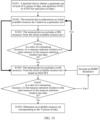
- the method further includes: after performing step e, if a ratio of a set of remaining resources to S A Initial is less than a second threshold i corresponding to any parameter set i, performing step d again.
- the method further includes: after performing step f, if a ratio of a set of remaining resources corresponding to any parameter set i to S A Initial is less than a second threshold i corresponding to the any parameter set i, increasing Th RSRP,i by a first step size, and performing step f again based on increased Th RSRP,i , until ratios of sets of remaining resources corresponding to all parameter sets to S A Initial are greater than or equal to corresponding second thresholds i.
- the method further includes: determining Th RSRP,i , where Th RSRP,i is determined based on prio Tx,i and a priority prio Rx indicated in first SCI.
- an available resource set i corresponding to each piece of data i is first obtained, and then each available resource set i is processed to obtain the available resource set S A corresponding to the N pieces of data.
- a conventional technology is reused as much as possible, to reduce complexity.
- this application provides a communication method.
- the method may include: A second terminal device receives fourth SCI from a first terminal device, where the fourth SCI carries information about a reserved resource, and information about a data priority and/or information about a CAPC.
- the second terminal device determines, based on the fourth SCI of the first terminal device that is sensed, that the data priority and/or the CAPC of the first terminal device meet/meets a COT sharing condition.
- the second terminal device determines an available resource set S A .
- the second terminal device sends COT sharing indication information to the first terminal device, to indicate a resource that is able to be shared.
- the second terminal device sends N pieces of data on at least one resource in S A .
- the COT sharing condition is that a priority and/or a CAPC that is of reserved data and that is in the fourth SCI of the first terminal device is higher than a data priority of at least one of the N pieces of data and/or a CAPC.
- a priority and/or a CAPC that is of reserved data and that is in the fourth SCI of the first terminal device is higher than a data priority of at least one of the N pieces of data and/or a CAPC.
- the COT sharing condition refer to an implementation of the second terminal device.
- the COT sharing condition is not limited in this application.
- the second terminal device determines a resource (set) S A , i shared that is reserved by the first terminal device in S A,i of each piece of data i of the N pieces of data and that is able to be shared.
- the second terminal device reports, to a MAC layer, S A,i of each piece of data i of the N pieces of data and corresponding S A , i shared .
- the second terminal device obtains M pieces of data, where M is greater than or equal to N.
- the determining S A includes determining one S A,i for each piece of data i of the M pieces of data.
- the second terminal device determines a resource (set) S A , i shared that is reserved by the first terminal device in S A,i of each piece of data i of the M pieces of data and that is able to be shared.
- the second terminal device reports, to the MAC layer, S A,i of each piece of data i of the M pieces of data and corresponding S A , i shared .
- the first terminal device includes a plurality of terminal devices.
- S A includes a resource (set) S A , i , k shared that is reserved by a terminal device k in the first terminal device in S A,i of each piece of data i of the M pieces of data and that is able to be shared.
- S A , i , k shared is a resource (set) that is reserved by the terminal device k corresponding to S A,i of each piece of data i, and that meets the COT sharing condition.
- the COT sharing condition is that the priority and/or the CAPC that is of the reserved data and that is in the fourth SCI of the first terminal device is higher than a data priority of the data i and/or a CAPC, where k is an integer greater than or equal to 0.
- the COT sharing condition refer to an implementation of the second terminal device.
- the COT sharing condition is not limited in this application.
- the reporting S A , k shared to the MAC layer includes: reporting information about a time-frequency resource reserved by the terminal device k corresponding to S A , and reporting a priority, a CAPC, a source identifier (source ID), a destination identifier (destination ID), and HARQ feedback-related information that are of data reserved by the terminal device k corresponding to S A , k shared .
- that the second terminal device sends N pieces of data on at least one resource in S A includes: The second terminal device sends the data i on at least one resource in S A,i .
- that the second terminal device sends N pieces of data on at least one resource in S A includes: The second terminal device sends the N pieces of data on the at least one resource in S A .
- the MAC layer selects a resource, and selects the at least one resource to send the data i. Specifically, how the MAC layer selects the at least one resource is up to a MAC layer implementation.
- a new transmission (initial transmission) resource of the N pieces of data is first selected to perform transmission of the N pieces of data, and then a retransmission resource is selected to perform transmission of one or more of the N pieces of data.
- all resources in one piece of COT are new transmission resources, and are used to perform transmission of the N pieces of data.
- all resources in one piece of COT are retransmission resources. This is not limited in this application. It may be understood that, when all resources in one piece of COT are retransmission resources, the COT is used to perform transmission of data that has been transmitted for one or more times in one or more pieces of COT before the COT and that is in the N pieces of data.
- that the MAC layer of the second terminal device performs resource preemption based on S A,i reported by the PHY layer, and S A , i , k shared and corresponding information that are reported by the PHY layer includes: The MAC layer preempts, by using data of a high data priority of the second terminal device, a resource that is reserved for data of a low data priority of the first terminal device and that is in the resource (set) S A , i , k shared that is able to be shared. In this case, it may be understood that the second terminal device finally does not share a part of or all resources in S A , i , k shared .
- that the MAC layer of the second terminal device performs COT sharing based on S A reported by a PHY layer, and S A , k shared and corresponding information that are reported by the PHY layer includes: when S A , k shared and S A , j shared meet a sharing condition and time-frequency resources overlap, if data priorities of data in a plurality of terminal devices for reserving a resource are different, the MAC layer may share, in COT, a resource reserved for data with a high data priority; or if data priorities of data in a plurality of terminal devices for reserving a resource are the same, the MAC layer randomly selects, in COT for sharing, a resource reserved for data, where j is a terminal device j in the first terminal device, and j is an integer greater than or equal to 0.
- the second terminal device after selecting the resource, notifies another terminal device of reservation information (for example, the data i) of the resource by using SCI; and notifies another terminal device of information about the shared resource (for example, a resource shared with the first terminal device), including a source identifier (source ID), a destination identifier (destination ID), and a time-frequency resource position.
- reservation information for example, the data i
- destination ID destination identifier
- the COT sharing indication information may be carried in first-stage SCI, second-stage SCI, or a MAC CE, or may be carried in a combination of at least two pieces of information. This is not limited in this application.
- the fourth SCI may be first-stage SCI, second-stage SCI, or first-stage SCI and second-stage SCI. This is not limited in this application.
- the at least one resource for sending the N pieces of data and the resource shared with the first terminal device may be continuous resources in time domain, that is, continuous slots.
- a same available resource set may be determined for a plurality of pieces of data (including data of a terminal device and data sent in shared COT), and continuous slot resources are further selected for the plurality of pieces of data in the set, so that data can be sent on continuous resources in S A , a risk that a resource is preempted by another terminal device is reduced, and a probability of continuously sending data is improved. In addition, data transmission performance is finally improved.
- this application provides a communication apparatus, and includes a processor and a transceiver.
- the processor is configured to determine an available resource set S A based on N parameter sets, where S A is located in a resource selection window.
- the transceiver is configured to send N pieces of data on a resource in S A , where the N parameter sets correspond to the N pieces of data, data i corresponds to a parameter set i, N is a positive integer greater than 1, i is an integer greater than or equal to 0 and less than N, and the parameter set i includes at least one of the following parameters: a sending priority prio Tx,i , a data delay budget PDB i , a frequency domain resource unit L subCH,i , or a channel access priority class CAPC i .
- the processor is configured to obtain a data set, where the data set includes the N pieces of data.
- the determining S A based on the first parameter set includes:
- the processor is further configured to: after performing step b, if a ratio of a set of remaining resources to S A Initial is less than a first threshold, perform step a again.
- the processor is further configured to: after performing step c, if a ratio of a set of remaining resources to S A Initial is less than the first threshold, increase Th RSRP by a first step size, and perform step c again based on increased Th RSRP , until a ratio of a set of remaining resources to S A Initial is greater than or equal to the first threshold.
- the NR-U device maintains the size CW p of the contention window, and adjusts the value of CW p before step 1 according to the following steps:
- the mini-slot, the slot, the subframe, the frame, the RE, the RB, and the sub-channel in embodiments of this application refer to related technical specifications of the 3rd generation partnership project (3rd generation partnership project, 3GPP).
- the base station notifies the transmit terminal device of a time-frequency resource of sidelink data by using downlink control information (downlink control information, DCI), and the transmit terminal device sends, after receiving the DCI, sidelink control information (sidelink control information, SCI) and data to the receive terminal device on the indicated resource.
- DCI downlink control information
- SCI sidelink control information
- sidelink transmission resources of the terminal devices are centrally scheduled by the base station, so that a collision can be avoided.
- a resource used for SL transmission is determined by the transmit terminal device through channel sensing (also referred to as channel sensing) and selection, and a core of the mode 2 is a resource reservation process.
- the terminal device may work in a scenario without network coverage.
- the mode 2 supports resource reservation, and resource reservation information is indicated in SCI.
- a higher layer triggers SL resource selection.
- the transmit terminal device determines a candidate resource in a resource selection window (resource selection window, RSW) based on resource reservation information that is of another terminal device and that is sensed in a sensing window (sensing window), to perform transmission of a TB.
- RSW resource selection window
- the TB carries the data that needs to be sent. For example, assuming that the SL resource selection is triggered in the slot n, specific steps of resource assignment in the mode 2 are as follows:
- Step (1) Determine the resource selection window.
- a slot range of the resource selection window is slots [ n + T 1 , n + T 2 ] .
- T 1 is determined based on a capability of a terminal device
- T 2 is determined based on a packet delay budget (packet delay budget, PDB).
- T 2min (configured by the higher layer) is less than a remaining PDB (data packet delay), T 2min ⁇ T 2 ⁇ PDB (data packet delay), selection of T 2 is implemented based on an implementation. If T 2min (configured by the higher layer) is not less than a remaining PDB (data packet delay) (that is, T 2min ⁇ remaining PDB), T 2 is equal to the remaining PDB.
- T proc , 1 SL indicates a delay in selecting a resource and sending data by the terminal device, and includes a processing delay in determining the resource selection window by the terminal device.
- Table 4 ⁇ SL T proc , 1 SL (Slot) 0 3 1 5 2 9 3 17 ⁇ SL indicates the subcarrier spacing SCS, and one value of ⁇ SL indicates one type of SCS.
- Step (4) Determine an initial candidate resource set S A Initial .
- a first terminal device may reserve, by using first-stage SCI, a resource used for transmission, and a second terminal device may sense and decode the first-stage SCI in a sensing window, to determine a location of the resource reserved by the first terminal device, for example, a slot.
- the second terminal device may send COT sharing indication information to the first terminal device, to authorize the first terminal device to set that COT preempted by the second terminal device is used at an indicated location (for example, a slot).
- a specific time gap exists between a slot for sending the COT sharing indication information and a to-be-shared slot, to ensure that the first terminal device has abundant processing time.
- an available resource set 1 of data 1 includes a slot n+T 1 to a slot n+T 1 +4
- an available resource set 2 of data 2 includes the slot n+T 1 +1 to a slot n+T 1 +5
- an available resource set 3 of data 3 includes the slot n+T 1 +1 to a slot n+T 1 +6
- an available resource set 4 of data 4 includes the slot n+T 1 +1 to the slot n+T 1 +6
- an available resource set 6 of data 5 includes the slot n+T 1 to the slot n+T 1 +6.
- the second terminal device determines a resource (set) S A , i shared that is reserved by the first terminal device in S A,i of each piece of data i of the M pieces of data and that is able to be shared.
- a resource (set) S A i shared that is reserved by the first terminal device in S A,i of each piece of data i of the M pieces of data and that is able to be shared.
- the second terminal device reports, to the MAC layer, S A of the M pieces of data and corresponding S A shared .
- the MAC layer reports, to the MAC layer, S A of the M pieces of data and corresponding S A shared .
- the HARQ feedback-related information includes one or more of the following: a HARQ process number (process number), a new data indicator (New data indicator), a redundancy version (Redundancy version), a HARQ feedback enabled/disabled indicator feedback enabled/disabled indicator, a unicast/multicast broadcast type indicator (Cast type indicator), a channel state information request (CSI request), a zone identifier (Zone ID), and a communication range requirement (Communication range requirement).
- the second terminal device determines that S A includes a resource (set) S A , k shared that is reserved by a terminal device k in the first terminal device in S A and that is able to be shared.
- S A , k shared is a resource (set) that is reserved by the terminal device k corresponding to S A , and that meets the COT sharing condition.
- the COT sharing condition is that a priority and/or a CAPC that is of reserved data and that is in the fourth SCI of the first terminal device is higher than a data priority of the data i and/or a CAPC, where k is an integer greater than or equal to 0.
- the COT sharing condition refer to an implementation of the second terminal device.
- the COT sharing condition is not limited in this application.
- the available resource set S A of the second terminal device includes a slot n+T 1 to a slot n+T 1 +8. If a resource reserved by a terminal device 0 in the first terminal device is a resource in the slot n+T 1 +2, and a resource reserved by a terminal device 1 in the first terminal device is a resource in the slot n+T 1 +3, the second terminal device determines that the slots n+T 1 +2 and n+T 1 +3 may be shared with the terminal device 0 and the terminal device 1 in the first terminal device. In this case, as shown in FIG.
- the second terminal device ensures, as much as possible, that the slots occupied for transmission of the data 0 and the data 1 and the slots shared with the first terminal device are logically or physically continuous slots, to reduce a probability that a slot is preempted by another terminal device.
- the second terminal device reports, to the MAC layer, S A and corresponding S A , k shared .
- the MAC layer For a specific manner, refer to the foregoing descriptions.
- the reporting S A , k shared to the MAC layer includes: reporting information about a time-frequency resource reserved by the terminal device k corresponding to S A , and reporting a priority, a CAPC, a source identifier (source ID), a destination identifier (destination ID), and HARQ feedback-related information that are of data reserved by the terminal device k corresponding to S A , k shared .
- the MAC layer of the second terminal device selects a resource, to select the foregoing at least one resource to send the N pieces of data.
- a new transmission (initial transmission) resource of the N pieces of data is first selected to perform transmission of the N pieces of data, and then a retransmission resource is selected to perform transmission of one or more of the N pieces of data.
- all resources in one piece of COT are new transmission resources, and are used to perform transmission of the N pieces of data.
- all resources in one piece of COT are retransmission resources. This is not limited in this application. It may be understood that, when all resources in one piece of COT are retransmission resources, the COT is used to perform transmission of data that has been transmitted for one or more times in one or more pieces of COT before the COT and that is in the N pieces of data.
- the method before the second terminal device sends the COT sharing indication information to the first terminal device (S1104), the method further includes: The MAC layer of the second terminal device performs COT sharing based on S A,i reported by a PHY layer, and S A , i , k shared and corresponding information that are reported by the PHY layer. This specifically includes: The MAC layer shares, in COT, a resource that is in S A , i , k shared and that is reserved for data that has a higher data priority than the data i. The shared resource needs to meet a CAPC that is reported from the PHY layer and whose value is less than or equal to that of data i with a minimum CAPC value in the COT.
- the second terminal device has three pieces of data.
- a priority is 1, a CAPC is 2, and the available resource set S A,0 includes the slot n+T 1 to the slot n+T 1 +8;
- a priority is 2, a CAPC is 2, the available resource set S A,1 includes the slot n+T 1 to the slot n+T 1 +3 and the slot n+T 1 +5 to the slot n+T 1 +7; and for data 3, a priority is 3, a CAPC is 3, and the available resource set S A,2 includes the slot n+T 1 , the slot n+T 1 +5, and the slot n+T 1 +6.
- the second terminal device ensures, as much as possible, that the slots occupied for transmission of the data 0 and the data 1 and the slots shared with the first terminal device are logically or physically continuous slots, to reduce a probability that a slot is preempted by another terminal device.
- the MAC layer of the second terminal device performs the COT sharing based on S A,i reported by the PHY layer, and S A , i , k shared and corresponding information that are reported by the PHY layer includes: when S A , i , k shared and S A , i , j shared meet a sharing condition and time-frequency resources overlap, if data priorities of data of the first terminal device are different, the MAC layer may share, in COT, a resource reserved for data with a high data priority; or if data priorities of data of the first terminal device are the same, the MAC layer randomly selects, in COT for sharing, a resource reserved for data, where j is a terminal device j in the first terminal device, and j is an integer greater than or equal to 0.
- the MAC layer of the second terminal device performs resource preemption based on S A,i reported by the PHY layer, and S A , i , k shared and corresponding information that are reported by the PHY layer includes: The MAC layer preempts, by using data of a high data priority of the second terminal device, a resource that is reserved for data of a low data priority of the first terminal device and that is in the resource (set) S A , i , k shared that is able to be shared. In this case, it may be understood that the second terminal device finally does not share a part of or all resources in S A , i , k shared .
- the method before the second terminal device sends the COT sharing indication information to the first terminal device (S1104), the method includes: The MAC layer of the second terminal device performs COT sharing based on S A reported by a PHY layer, and S A , k shared and corresponding information that are reported by the PHY layer. This specifically includes: The MAC layer shares, in COT, a resource that is in S A , k shared and that is reserved for data that has a higher data priority than the data i. The shared resource needs to meet a CAPC that is reported from the PHY layer and whose value is less than or equal to that of data i with a minimum CAPC value in the COT.
- the second terminal device sends the COT sharing indication information to the first terminal device (S1104)
- that the MAC layer of the second terminal device performs COT sharing based on S A reported by a PHY layer, and S A , k shared and corresponding information that are reported by the PHY layer includes: when S A , k shared and S A , j shared meet a sharing condition and time-frequency resources overlap, if data priorities of data in a plurality of terminal devices for reserving a resource are different, the MAC layer may share, in COT, a resource reserved for data with a high data priority; or if data priorities of data in a plurality of terminal devices for reserving a resource are the same, the MAC layer randomly selects, in COT for sharing, a resource reserved for data, where j is a terminal device j in the first terminal device, and j is an integer greater than or equal to 0.
- the MAC layer of the second terminal device performs resource preemption based on S A reported by the PHY layer, and S A , k shared and corresponding information that are reported by the PHY layer includes: The MAC layer preempts, by using data of a high data priority, a resource that is reserved for data of a low data priority and that is in the resource (set) S A , k shared that is able to be shared. In this case, it may be understood that the second terminal device finally does not share a part of or all resources in S A , k shared .
- the second terminal device after selecting the resource, notifies another terminal device of reservation information (for example, the data i) of the resource by using SCI; and notifies another terminal device of information about the shared resource (for example, a resource shared with the first terminal device) (that is, step S1104), including a source identifier (source ID), a destination identifier (destination ID), and a time-frequency resource position.
- reservation information for example, the data i
- the shared resource for example, a resource shared with the first terminal device
- mode 2 continuous transmission and COT sharing may be supported and configured by using signaling.
- the signaling may include higher layer signaling such as RRC signaling or MAC layer signaling, or may include physical layer signaling such as DCI, or may be a combination of higher layer signaling and physical layer signaling. This is not limited in this application.
- Steps S1102 and S1103 may be implemented by the processing unit 402 of the communication apparatus 400, or may be implemented by the processor 502 of the communication apparatus 500.
- Steps S1101, S1104, and S1105 may be implemented by controlling the communication unit 403 by the processing unit 402 of the communication apparatus 400, or may be implemented by controlling the transceiver 503 by the processor 502 of the communication apparatus 500.
- the terminal device may perform resource reselection and preemption again.
- the terminal device may perform resource reselection and preemption again.
- each country or region has a specific requirement on an occupied channel bandwidth (occupied channel bandwidth, OCB) corresponding to a channel, and it is generally specified that the OCB is at least 80% of a normal bandwidth. For example, if a channel bandwidth is 20 MHz, for occupying the 20 MHz channel, the terminal device needs to occupy at least a bandwidth of 16 MHz.
- occupied channel bandwidth occupied channel bandwidth
- the interlace and the sub-channel may be interchangeably used.
- a terminal device after a terminal device performs LBT on a channel, to avoid interference of different channels, the terminal device does not send data on an entire channel bandwidth that is occupied, but reserves a part of a frequency domain resource as a guard bandwidth (guard band), and sends data on a remaining frequency domain resource.
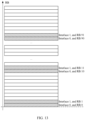
- An available resource used to send data may be referred to as a resource block set (RB set). It may be understood that an RB 0 to an RB 99 shown in FIG. 13 are an RB set.
- the channel and the RB set may be interchangeably used.
- a terminal device After performing LBT on a channel, a terminal device (referred to as the terminal device 1) performs data transmission in COT.
- One piece of COT may include a plurality of slots.
- the terminal device 1 may perform data transmission in the plurality of slots included in the COT.
- a part of slots in the COT may be shared with another terminal device (referred to as the terminal device 2) for data transmission.
- a period of time is reserved in a slot before the shared slot and is not used for data transmission, so that the terminal device 2 performs LBT in the gap, and then use the shared slot for data transmission.
- a length of the gap may be one OFDM symbol or 25 ⁇ s. This is not limited in this application.
- the terminal device 1 may perform data transmission in the total slots without reserving a gap.
- the terminal device 1 performs continuous data transmission in the plurality of slots included in the COT on a channel (RB set) in an interlaced RB manner
- another terminal device referred to as the terminal device 2
- the continuous data transmission of the terminal device 1 affects the LBT performed by the terminal device 2.
- data transmission of the terminal device 2 in the shared COT is affected.
- an embodiment of this application provides a communication method, an apparatus, and a system.
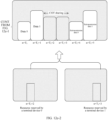
- a terminal device 1 when performing continuous data transmission in a plurality of slots, a terminal device 1 can perform data transmission in a gap only when all frequency domain resources of a channel are occupied. In other words, if the terminal device 1 performs continuous data transmission on a part of channels in an interlace manner, the terminal device 1 needs to reserve a period of time as a gap before each slot ends. In this period, the terminal device 1 cannot perform data transmission.
- impact that is of occupying the plurality of slots by the terminal device 1 to continuously send data and that is on LBT and data transmission of another terminal device that uses a same channel resource can be avoided, thereby improving resource utilization of an entire channel, and improving system performance.
- the terminal device 1 performs LBT in a slot n-1 (slot n-1), to obtain COT and a slot n to a slot n+2, and performs continuous data transmission in a slot in the COT.
- automatic gain control Auto Gain Control, AGC
- shared COT obtained by a terminal device 2 is the slot n+1 and the slot n+2. For example, if the COT is shared with a terminal device 3, the terminal device 2 needs to perform LBT in a period of time before the slot n ends, to perform data transmission in the slot n+1 and the slot n+2.
- the terminal device 1 cannot perform data transmission in a period of time (Gap) before the slot n ends, so that the terminal device 2 performs the LBT and obtains the shared COT in this period.
- the terminal device 2 if performing continuous data transmission in the shared COT, the terminal device 2 cannot perform data transmission in a period of time before the slot n+1 and the slot n+2 end, so that another terminal device performs LBT, and perform data transmission by using a resource in the slot n+2 and a slot after the slot n+2.
- the terminal device may continue to perform data transmission in gap time before the slot n ends (not shown in FIG. 14 ), to improve data transmission performance of the terminal device 1.
- the terminal device 2 may continue to perform data transmission in gap time before the slot n+1 ends (not shown in FIG. 14 ), to improve data transmission performance of the terminal device 2.
- the method may be implemented by controlling the communication unit 403 by the processing unit 402 of the communication apparatus 400, or may be implemented by controlling the transceiver 503 by the processor 502 of the communication apparatus 500.
- continuous slots mentioned in this application are logically continuous slots, and may be physically continuous slots or discrete slots. This is not limited in this application.
- These computer program instructions may be provided for a general-purpose computer, a dedicated computer, an embedded processor, or a processor of any other programmable data processing device to generate a machine, so that the instructions executed by a computer or a processor of any other programmable data processing device generate an apparatus for implementing a specific function in one or more procedures in the flowcharts and/or in one or more blocks in the block diagrams.
- These computer program instructions may be stored in a computer-readable memory that can instruct the computer or any other programmable data processing device to work in a specific manner, so that the instructions stored in the computer-readable memory generate an artifact that includes an instruction apparatus.
- the instruction apparatus implements a specific function in one or more procedures in the flowcharts and/or in one or more blocks in the block diagrams.
Landscapes
- Engineering & Computer Science (AREA)
- Computer Networks & Wireless Communication (AREA)
- Signal Processing (AREA)
- Quality & Reliability (AREA)
- Mobile Radio Communication Systems (AREA)
Applications Claiming Priority (3)
| Application Number | Priority Date | Filing Date | Title |
|---|---|---|---|
| CN202211199994 | 2022-09-29 | ||
| CN202211377739.5A CN117835184A (zh) | 2022-09-29 | 2022-11-04 | 一种通信方法、装置和系统 |
| PCT/CN2023/117640 WO2024067017A1 (zh) | 2022-09-29 | 2023-09-08 | 一种通信方法、装置和系统 |
Publications (2)
| Publication Number | Publication Date |
|---|---|
| EP4583601A1 true EP4583601A1 (de) | 2025-07-09 |
| EP4583601A4 EP4583601A4 (de) | 2026-01-07 |
Family
ID=90476024
Family Applications (1)
| Application Number | Title | Priority Date | Filing Date |
|---|---|---|---|
| EP23870256.7A Pending EP4583601A4 (de) | 2022-09-29 | 2023-09-08 | Kommunikationsverfahren, -vorrichtung und -system |
Country Status (3)
| Country | Link |
|---|---|
| US (1) | US20250227748A1 (de) |
| EP (1) | EP4583601A4 (de) |
| WO (1) | WO2024067017A1 (de) |
Families Citing this family (3)
| Publication number | Priority date | Publication date | Assignee | Title |
|---|---|---|---|---|
| US20220417917A1 (en) * | 2021-06-28 | 2022-12-29 | Apple Inc. | Assisted indication of resource reservation in side-link |
| WO2024235759A1 (en) * | 2023-05-12 | 2024-11-21 | Fraunhofer-Gesellschaft zur Förderung der angewandten Forschung e.V. | Channel access blocking reduction for a sidelink communication on resources of an unlicensed spectrum |
| US12507264B2 (en) * | 2023-05-12 | 2025-12-23 | Qualcomm Incorporated | Physical sidelink feedback channel transmissions for wideband transmission opportunities in shared frequency bands |
Family Cites Families (6)
| Publication number | Priority date | Publication date | Assignee | Title |
|---|---|---|---|---|
| CN111148223B (zh) * | 2018-11-02 | 2022-11-18 | 华为技术有限公司 | 通信方法和通信装置 |
| WO2021034763A1 (en) * | 2019-08-16 | 2021-02-25 | Hyukjin Chae | Sidelink sensing in a wireless network |
| WO2021134283A1 (zh) * | 2019-12-30 | 2021-07-08 | Oppo广东移动通信有限公司 | 选择资源的方法及设备 |
| CN113519172B (zh) * | 2020-02-12 | 2024-05-24 | 苹果公司 | 资源重选和预占的方法 |
| CN113543236B (zh) * | 2020-04-16 | 2024-08-27 | 维沃移动通信有限公司 | 资源选择方法、装置及用户设备 |
| CN113840379B (zh) * | 2020-06-24 | 2024-11-15 | 华为技术有限公司 | 一种通信方法及装置 |
-
2023
- 2023-09-08 EP EP23870256.7A patent/EP4583601A4/de active Pending
- 2023-09-08 WO PCT/CN2023/117640 patent/WO2024067017A1/zh not_active Ceased
-
2025
- 2025-03-27 US US19/092,919 patent/US20250227748A1/en active Pending
Also Published As
| Publication number | Publication date |
|---|---|
| US20250227748A1 (en) | 2025-07-10 |
| WO2024067017A1 (zh) | 2024-04-04 |
| EP4583601A4 (de) | 2026-01-07 |
Similar Documents
| Publication | Publication Date | Title |
|---|---|---|
| US12593312B2 (en) | Sidelink resource reselection method and apparatus | |
| US20240031999A1 (en) | Method and Apparatus of Partial Sensing for Resource Selection in Sidelink Communications | |
| KR102697818B1 (ko) | V2x에서 단말 타입에 기초한 자원 풀 결정 방법 및 장치 | |
| US20250227748A1 (en) | Communication method and apparatus, and system | |
| US20250056612A1 (en) | Resource determining method and apparatus | |
| US20230254831A1 (en) | Resource determining method and apparatus | |
| US20230254898A1 (en) | Methods and apparatus for sidelink communications on unlicensed frequency bands | |
| US20250247866A1 (en) | Sharing of channel occupancy time by user devices for a sidelink communication in an unlicensed spectrum | |
| US20250234362A1 (en) | Sidelink communication method and apparatus | |
| EP4546914A1 (de) | Kommunikationsverfahren und kommunikationsvorrichtung | |
| CN107295567A (zh) | 一种基于帧结构的无限资源冲突检测方法 | |
| US20240373460A1 (en) | Sidelink transmission method and apparatus | |
| WO2024103843A1 (en) | Systems and methods for device-to-device communications | |
| EP4514003A1 (de) | Von einem benutzergerät ausgeführtes verfahren und benutzergerät | |
| EP4500804A1 (de) | Verfahren und vorrichtung zur durchführung von sidelink-kommunikationen | |
| EP4236516A1 (de) | Verfahren und vorrichtung zur auswahl von sidelink-ressourcen | |
| US20250227725A1 (en) | Communication method, communication apparatus, and system | |
| US20240340935A1 (en) | Sidelink communication method and apparatus | |
| EP4694501A1 (de) | Kommunikationsverfahren und -vorrichtung | |
| EP4543119A1 (de) | Ressourcenkonfigurationsverfahren und -vorrichtung | |
| CN117835184A (zh) | 一种通信方法、装置和系统 | |
| US20250151092A1 (en) | Method for sidelink communication and terminal device | |
| EP4543112A1 (de) | Ressourcenauswahlverfahren und erstes endgerät | |
| EP4576912A1 (de) | Verfahren und vorrichtung zur sidelink-kommunikation | |
| US20260136324A1 (en) | Systems and methods for device-to-device communications |
Legal Events
| Date | Code | Title | Description |
|---|---|---|---|
| STAA | Information on the status of an ep patent application or granted ep patent |
Free format text: STATUS: THE INTERNATIONAL PUBLICATION HAS BEEN MADE |
|
| PUAI | Public reference made under article 153(3) epc to a published international application that has entered the european phase |
Free format text: ORIGINAL CODE: 0009012 |
|
| STAA | Information on the status of an ep patent application or granted ep patent |
Free format text: STATUS: REQUEST FOR EXAMINATION WAS MADE |
|
| 17P | Request for examination filed |
Effective date: 20250403 |
|
| AK | Designated contracting states |
Kind code of ref document: A1 Designated state(s): AL AT BE BG CH CY CZ DE DK EE ES FI FR GB GR HR HU IE IS IT LI LT LU LV MC ME MK MT NL NO PL PT RO RS SE SI SK SM TR |
|
| A4 | Supplementary search report drawn up and despatched |
Effective date: 20251205 |
|
| DAV | Request for validation of the european patent (deleted) | ||
| DAX | Request for extension of the european patent (deleted) | ||
| RIC1 | Information provided on ipc code assigned before grant |
Ipc: H04W 72/02 20090101AFI20251201BHEP |