EP4583633A2 - Procédé de demande et de réponse pour sonder un mld, station et point d'accès - Google Patents
Procédé de demande et de réponse pour sonder un mld, station et point d'accès Download PDFInfo
- Publication number
- EP4583633A2 EP4583633A2 EP25154016.7A EP25154016A EP4583633A2 EP 4583633 A2 EP4583633 A2 EP 4583633A2 EP 25154016 A EP25154016 A EP 25154016A EP 4583633 A2 EP4583633 A2 EP 4583633A2
- Authority
- EP
- European Patent Office
- Prior art keywords
- mld
- link
- communication parameter
- bssid
- station
- Prior art date
- Legal status (The legal status is an assumption and is not a legal conclusion. Google has not performed a legal analysis and makes no representation as to the accuracy of the status listed.)
- Pending
Links
Images











Classifications
-
- H—ELECTRICITY
- H04—ELECTRIC COMMUNICATION TECHNIQUE
- H04W—WIRELESS COMMUNICATION NETWORKS
- H04W48/00—Access restriction; Network selection; Access point selection
- H04W48/08—Access restriction or access information delivery, e.g. discovery data delivery
- H04W48/14—Access restriction or access information delivery, e.g. discovery data delivery using user query or user detection
-
- H—ELECTRICITY
- H04—ELECTRIC COMMUNICATION TECHNIQUE
- H04L—TRANSMISSION OF DIGITAL INFORMATION, e.g. TELEGRAPHIC COMMUNICATION
- H04L43/00—Arrangements for monitoring or testing data switching networks
- H04L43/12—Network monitoring probes
-
- H—ELECTRICITY
- H04—ELECTRIC COMMUNICATION TECHNIQUE
- H04W—WIRELESS COMMUNICATION NETWORKS
- H04W24/00—Supervisory, monitoring or testing arrangements
- H04W24/02—Arrangements for optimising operational condition
-
- H—ELECTRICITY
- H04—ELECTRIC COMMUNICATION TECHNIQUE
- H04W—WIRELESS COMMUNICATION NETWORKS
- H04W76/00—Connection management
- H04W76/10—Connection setup
- H04W76/11—Allocation or use of connection identifiers
-
- H—ELECTRICITY
- H04—ELECTRIC COMMUNICATION TECHNIQUE
- H04W—WIRELESS COMMUNICATION NETWORKS
- H04W76/00—Connection management
- H04W76/10—Connection setup
- H04W76/15—Setup of multiple wireless link connections
-
- H—ELECTRICITY
- H04—ELECTRIC COMMUNICATION TECHNIQUE
- H04W—WIRELESS COMMUNICATION NETWORKS
- H04W48/00—Access restriction; Network selection; Access point selection
- H04W48/08—Access restriction or access information delivery, e.g. discovery data delivery
- H04W48/12—Access restriction or access information delivery, e.g. discovery data delivery using downlink control channel
-
- H—ELECTRICITY
- H04—ELECTRIC COMMUNICATION TECHNIQUE
- H04W—WIRELESS COMMUNICATION NETWORKS
- H04W8/00—Network data management
- H04W8/005—Discovery of network devices, e.g. terminals
-
- H—ELECTRICITY
- H04—ELECTRIC COMMUNICATION TECHNIQUE
- H04W—WIRELESS COMMUNICATION NETWORKS
- H04W84/00—Network topologies
- H04W84/02—Hierarchically pre-organised networks, e.g. paging networks, cellular networks, WLAN [Wireless Local Area Network] or WLL [Wireless Local Loop]
- H04W84/10—Small scale networks; Flat hierarchical networks
- H04W84/12—WLAN [Wireless Local Area Networks]
Definitions
- This application relates to the field of communication technologies, and in particular, to request and response methods for probing an MLD in a wireless local area network, a station, and an access point.
- an orthogonal frequency division multiple access (Orthogonal Frequency Division Multiple access, OFDMA) technology is further used in the Institute of Electrical and Electronics Engineers (Institute of Electrical and Electronics Engineers, IEEE) 802.11ax standard based on an existing orthogonal frequency division multiplexing (Orthogonal Frequency Division Multiplexing, OFDM) technology.
- OFDMA orthogonal Frequency Division Multiple access
- the OFDMA technology supports a plurality of nodes to simultaneously send and receive data, to achieve multi-station diversity gains.
- 802.11ax standard workers expand an operating range of 802.11ax-compliant devices from 2.4 GHz and 5 GHz to 2.4 GHz, 5 GHz, and 6 GHz in the 802.11ax project authorization request (Project Authorization Request, PAR).
- IEEE 802.11 next-generation Wi-Fi protocol (extremely high throughput, EHT) devices need to be forward compatible. Therefore, they also support operating spectrums of 802.11 ax-compliant devices, that is, 2.4 GHz, 5 GHz, and 6 GHz frequency bands. Channel division is performed based on the newly opened free 6 GHz frequency band, and a supportable bandwidth may exceed a maximum bandwidth 160 MHz supported in 5 GHz, for example, may be 320 MHz.
- a peak throughput may also be increased by using more streams, for example, increasing a quantity of streams to 16, through cooperation with a plurality of frequency bands (2.4 GHz, 5 GHz, and 6 GHz), or in another manner, in addition to using an ultrahigh bandwidth.
- a peak throughput may be further increased through cooperation of a plurality of channels or in another manner. This reduces a service transmission delay.
- a plurality of frequency bands or a plurality of channels are collectively referred to as a plurality of links.
- a different basic service set (basic service set, BSS) is usually established for each of the plurality of links, and communication with a station in a BSS to which the link belongs can be performed on only one link at the same time.
- BSS basic service set
- Main functions of 802.11ax and an earlier multiple (multiple) basic service set identifier (basic service set identifier, BSSID) technology are to virtualize one physical AP into a plurality of logical APs, that is, forming a plurality of virtual networks. Each virtual network is used to manage a different station. Similar to AP products in a current Wi-Fi scenario, an AP can be virtualized into a home AP (home AP) and a guest AP (guest AP).
- home AP home AP
- guest AP guest AP
- multi-link device multi-link device
- MLD multi-link device
- Embodiments of this application disclose a requesting method for probing a multi-link device in a WLAN, a response method for probing a multi-link device, and a related apparatus.
- a first aspect of this application provides a station in a wireless local area network WLAN, including:
- a second aspect of this application provides a requesting method for probing an access point multi-link device, where the method is executed by a station in a wireless local area network WLAN, and the method includes:
- the probe request frame further carries a field indicating a link identifier of the AP MLD, and the field indicating the link identifier of the AP MLD indicates the first AP to feed back a communication parameter of a corresponding link in the AP MLD in which the first AP is located.
- any one of the multi-link element, the request MLD element, and the known MLD element further carries the indication information indicates to request the some information elements of the AP MLD.
- the probe request frame carries second indication information
- the second indication information indicates the second AP to feed back the communication parameter that is of the AP MLD and that is related to the second AP.
- the second indication information is carried in the probe request frame, the second indication information indicates an MLD identifier or an MLD address, and the MLD identifier or the MLD address indicates the second AP to feed back a communication parameter of an AP MLD corresponding to the MLD identifier or the MLD address.
- the second indication information is carried in the probe request frame, and the second indication information indicates, in a bitmap manner, the AP MLD related to the second AP that is requested.
- the indicating, in the bitmap manner, the requested AP MLD may be performing indication by using a BSSID identifier bitmap field.
- the second indication information carries any one of the following elements: a multi-link element multi-link element, a request MLD element request MLD element, and a known MLD element known MLD element.
- the non-AP STA when a non-AP STA wants to request a communication parameter of an AP MLD, the non-AP STA may send a probe request frame to an AP configured as a transmitted BSSID AP.
- the transmitted BSSID AP may reply a communication parameter of an MLD in which another AP belonging to a same MSSID set is located and/or a communication parameter of an MLD in which another AP collocated with the transmitted BSSID AP is located. Therefore, a technical problem in the conventional technology that the MLD communication parameter of the another AP cannot be obtained by sending the probe request frame is resolved.
- a fifth aspect of this application provides a first access point AP in a wireless local area network WLAN, where the first AP is a nontransmitted basic service set identifier nontransmitted BSSID AP, and the first AP includes: a transceiver, configured to receive a probe request frame from a station, where the probe request frame is used to request the first AP to feed back a communication parameter of an AP MLD in which the first AP is located, and the communication parameter of the AP MLD is communication parameters of a plurality of links supported by the first AP.
- the transceiver is further configured to request a second AP that belongs to a same MBSSID set as the first AP to assist the first AP to feed back a probe response frame to the station, where the probe response frame carries the communication parameter of the AP MLD.
- a sixth aspect of this application provides a response method for probing an access point multi-link device, where the method is applied to a first access point AP in a wireless local area network WLAN, the first AP is a nontransmitted basic service set identifier nontransmitted BSSID AP, and the method includes:
- a seventh aspect of this application provides a second access point AP in a wireless local area network WLAN, where the second AP is a transmitted basic service set identifier transmitted BSSID AP, and the second AP includes:
- An eighth aspect of this application provides a response method for probing an access point multi-link device, where the method is applied to a second access point AP in a wireless local area network WLAN, the second AP is a transmitted basic service set identifier transmitted BSSID AP, and the method includes:
- the probe response frame carries some information elements in the communication parameter that is of the AP MLD and that is related to the second AP.
- a nontransmitted BSSID AP may feed back, by using another AP collocated with the nontransmitted BSSID AP or another AP belonging to a same MBSSID set as the non-AP AP, a communication parameter of an AP MLD in which the nontransmitted BSSID AP is located to a non-AP STA.
- a ninth aspect of this application provides a second access point AP in a wireless local area network WLAN, where the second AP is a transmitted basic service set identifier transmitted BSSID AP, and the second AP includes:
- the nontransmitted BSSID profile includes an element or elements of one or more APs or DMG STAs having a nontransmitted BSSID
- the nontransmitted BSSID profile includes but is not limited to the following elements:
- a non-AP STA can initiate active scanning to discover an AP, so that the STA can select an appropriate AP to associate with.
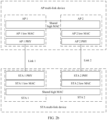
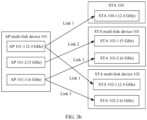
- a logical non-AP STA (hereinafter referred to as a non-AP STA) of the non-AP STA or the non-AP STA MLD establishes a multi-link transmission channel with the AP MLD. This can also be implemented through active scanning.
- the AP MLD 1 is used as an example.
- MAC addresses of the AP 21 and the AP 31 are BSSID_11, BSSID_21, and BSSID _31 respectively (Before 802.11ax, a BSSID of a BSS established by an AP is a MAC address of the AP, and may change subsequently.
- the MAC address of the AP is used as the BSSID of the BSS established by the AP).
- the AP 11 is a member in a multiple BSSID set 1, and the multiple BSSID set 1 further includes the AP 12 whose MAC address is BSSID _12 in the AP MLD 2.
- the AP 21 is a member in a multiple BSSID set 2, and the multiple BSSID set 2 further includes the AP 22 whose MAC address is BSSID _22 in the AP MLD 2 and the AP 23 whose MAC address is BSSID _23 in the AP MLD 3.
- the AP 31 is a member in a multiple BSSID set 3, and the multiple BSSID set 3 further includes the AP 33 whose MAC address is BSSID _33 in the AP MLD 3.
- This embodiment of this application further relates to a collocated AP MLD or a collocated AP, which means that virtual APs belonging to a same physical AP form a collocated AP, or virtual AP MLDs form a collocated AP MLD.
- the AP11 and the AP23 do not belong to a same MBSSID set, the AP11 and the AP23 physically belong to a same physical AP.
- the AP11 and the AP23 are considered as collocated, and the AP MLD 1 in which the AP11 is located and the AP MLD 3 in which the AP23 is located are collocated.
- all APs, or the AP MLD 1, the AP MLD 2, and the AP MLD 3 can be collocated.
- the non-AP STA or the non-AP STA MLD may send a probe request frame to an AP of a transmitted BSSID, to request the AP of the transmitted BSSID to reply with a communication parameter of the nontransmitted BSSID AP.
- the AP of the nontransmitted BSSID and the AP of the transmitted BSSID may belong to different AP MLDs.
- the APs of the multiple nontransmitted BSSIDs may also belong to different AP MLDs.
- the transmitted BSSID AP may reply with communication parameters of other nontransmitted BSSID APs in the multiple BSSID set together with or separately to the non-AP STA by using a probe response frame.
- the transmitted BSSID AP may reply with a communication parameter of another nontransmitted BSSID AP in the multiple BSSID set, and a communication parameter of an AP MLD in which another AP is located to the non-AP STA together with or separately by using the probe response frame, where the another AP is collocated (collocated) with the transmitted BSSID AP.
- the non-AP STA may carry indication information in the probe request frame, to indicate the communication parameter that the non-AP STA expects to receive from the AP MLD, or may request, in a default manner, the AP MLD to reply with all communication parameters.
- a communication parameter of an AP MLD is information used by a non-AP STA or a non-AP STA MLD to subsequently associate with the AP MLD or information used to establish multi-link communication.
- the communication parameter of the AP MLD in this embodiment of this application may be communication parameters corresponding to all links supported by the AP MLD, or may be communication parameters corresponding to some links supported by the AP MLD.
- the communication parameter of the AP MLD is also referred to as an association parameter of the AP MLD or complete information of the AP MLD, and refers to complete information of a plurality of links included in the MLD.
- the complete information of the link is information that should be carried only when the probe response frame is sent on the link.
- the communication parameter may not include the high throughput capabilities (High high throughput capabilities, HT capabilities), the HT operation (HT operation), the very high throughput capabilities (very high throughput capabilities, VHT capabilities), or the VHT operation (VHT operation).
- the communication parameter further includes: elements such as timestamp and a beacon frame interval fields (timestamp and Beacon interval fields), a DSSS parameter set (DSSS parameter set), an IBSS parameter set (IBSS parameter set), a country (Country), a channel switch announcement (channel switch announcement), an extended channel switch announcement (extended channel switch announcement), a wide bandwidth channel switch (wide bandwidth channel switch), a transmit power envelope (transmit power envelope), supported operating classes (supported operating classes), IBSS DFS, ERP information (ERP information), an SIG beacon compatibility (S1G beacon compatibility), a short beacon interval (short beacon interval), SIG capabilities (S1G capabilities), and an SIG operation (S1G operation (11ah)).
- elements such as timestamp and Beacon interval fields
- a DSSS parameter set DSSS parameter set
- IBSS parameter set IBSS parameter set
- a country Counterry
- a channel switch announcement channel switch announcement
- an extended channel switch announcement extended channel switch announcement
- wide bandwidth channel switch
- the probe response frame needs to carry communication parameters of all links supported by the AP MLD.
- the probe response frame may carry communication parameters of only some links supported by the AP MLD.
- a scenario of this embodiment is described.
- a plurality of AP MLDs are included, for example, a first AP MLD and a second AP MLD.
- a logical AP of the first AP MLD is a first AP, and is configured as a nontransmitted BSSID.
- a logical AP of the second AP MLD is referred to as a second AP, and is configured as a transmitted BSSID.
- the first AP and the second AP may operate on a same link and belong to a same MBSSID set.
- a non-AP STA (which may be a single-link non-AP STA or a logical non-AP STA in a non-AP STA MLD, which is not limited in this application) obtains a communication parameter of the first AP MLD by using a nontransmitted BSSID AP, to establish a multi-link channel with the first AP MLD.
- a plurality of APs or the plurality of AP MLDs in this scenario may be collocated (collocated).
- a communication parameter of the AP MLD is described in detail in the foregoing fourth point, and details are not described in this embodiment again.
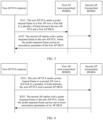
- the method includes but is not limited to the following steps.
- Step S101 Anon-AP STA sends a probe request frame to a first AP over a first link in a plurality of links between the non-AP STA and a first AP MLD.
- the first AP is configured as a nontransmitted BSSID, that is, the first AP is a nontransmitted BSSID AP
- the first AP cannot directly reply with a probe request response frame to the non-AP STA. Therefore, a second AP that is configured as a transmitted BSSID and that belongs to a same MBSSID set may help the first AP respond to the probe request frame.
- Step S102 The second AP replies with the probe response frame to the non-AP STA, where the probe response frame carries the communication parameter of the first AP MLD. Specifically, for the foregoing explicit indication manner or implicit indication manner, the second AP replies with the probe response frame in the non-AP STA, where the probe response frame carries the communication parameter of the first AP MLD.
- the non-AP STA when the non-AP STA wants to request a communication parameter of an AP MLD, the non-AP STA may send a probe request frame to a logical AP of the AP MLD. Even if the logical AP is configured as a nontransmitted BSSID, another transmitted BSSID AP belonging to a same MSSID set may respond to the probe request frame, to reply with the communication parameter of the AP MLD. This can resolve a technical problem in the conventional technology that a communication parameter of an AP MLD on another link cannot be obtained by sending the probe request frame.
- a non-AP STA wants to learn a communication parameter of an AP MLD 2, to establish a multi-link communication connection to the AP MLD 2. Specifically, the non-AP STA wants to obtain a communication parameter corresponding to a link 1 of the AP MLD 2 and a communication parameter corresponding to a link 2.
- the non-AP STA sends a probe request frame to an AP 12, where the probe request frame requests, by default, the AP 12 to reply with a communication parameter of the AP MLD 2 in which AP12 is located.
- the first indication information is carried in the probe request frame, and the first indication information indicates the AP 12 to reply with the communication parameter of the AP MLD 2 in which AP12 is located.
- the AP 12 cannot directly reply to the non-AP STA. Therefore, the AP 12 responds to the probe request frame by using the AP 11 that belongs to a same MSSID set 1 as the AP 12. (A BSSID of the AP 11 is configured as a transmitted BSSID.)
- the AP 11 carries, in the probe response frame replied to the non-AP STA, the communication parameters of the plurality of links supported by the AP MLD 2.
- the plurality of links supported by the AP MLD 2 herein may be all links supported by the AP MLD 2, for example, the link 1 and the link 2, or may be some links supported by the AP MLD 2.
- FIG. 6 shows a probing method based on a multi-link device and an MBSSID according to an embodiment of this application.
- the method may be applied between stations, between an access point and a station, and between access points.
- communication between an access point and a station is used as an example in this embodiment of this application.
- Embodiment 2 an implementation scenario of this embodiment is similar to that of Embodiment 1, and details are not described herein again.
- a difference from Embodiment 1 lies in that, in Embodiment 2, a non-AP STA wants to obtain a communication parameter of one or more AP MLD by using a transmitted BSSID AP, to separately establish a multi-link channel with the one or more MLDs.
- the non-AP STA may set the second indication information carried in the probe request frame to different values, to request communication parameters of different AP MLDs.
- the second AP replies with a probe response frame to the non-AP STA in the probe response frame, where the probe response frame carries the communication parameters of the MLDs of all the other APs.
- the second AP replies with the probe response frame to the non-AP STA in the probe response frame, and the probe response frame carries a communication parameter of an MLD in which another nontransmitted BSSID AP is located.
- the second AP when the second indication information requests one or more specific MLDs, the second AP replies with a probe response frame to the non-AP STA in the probe response frame, where the probe response frame carries a communication parameter of the MLD corresponding to the MLD identifier indicated by the second indication information.
- the second indication information may also be set to different values, to indicate that when communication parameters of different AP MLDs are requested, the second AP replies with the probe response frame to the non-AP STA in the probe response frame, where the probe response frame carries the communication parameter of the MLD requested by the second indication information.
- the second AP feeds back, by using the probe response frame, the communication parameter of the AP MLD in which the second AP is located.
- the second AP is the AP 21, and the AP 21 feeds back a communication parameter of an AP MLD in which the AP 21 is located, that is, the AP MLD 1.
- the second indication information is set to a third value, and the second AP feeds back communication parameters of all AP MLDs by using the probe response frame.
- the second AP is the AP 21, and all the AP MLDs are the AP 21 and AP MLDs in which the AP 22 and the AP 23 that belongs to a same MBSSID set 2 as the AP 21 are respectively located.
- the AP 21 feeds back communication parameters of the AP MLD 1 in which the AP 23 is located, the AP MLD 2 in which the AP 22 is located, and the AP MLD 3 in which the AP 23 is located.
- the non-AP STA when a non-AP STA wants to request a communication parameter of an AP MLD, the non-AP STA may send a probe request frame to an AP configured as a transmitted BSSID AP.
- the transmitted BSSID AP may reply a communication parameter of an MLD in which another AP belonging to a same MSSID set is located and/or a communication parameter of an MLD in which another AP collocated with the transmitted BSSID AP is located. Therefore, a technical problem in the conventional technology that the MLD communication parameter of the another AP cannot be obtained by sending the probe request frame is resolved.
- a non-AP STA wants to learn communication parameters of one or more AP MLDs, to establish a multi-link communication connection.
- the AP21 in the MSSID set 2 is configured as a transmitted BSSID
- the AP22 and the AP23 are configured as nontransmitted BSSIDs.
- the non-AP STA wants to obtain the communication parameter of the AP MLD 1 in which the AP 21 is located, the non-AP STA sends the probe request frame to the AP 21, where the probe request frame is used to request, by default, the communication parameter of the AP MLD 1 in which the AP 21 is located, or carries the second indication information, which indicates that the communication parameter of the AP MLD 1 in which the AP 21 is located is requested. Because a BSSID of the AP 21 is configured as a transmitted BSSID, the AP 21 may directly reply with the probe response frame, and carry the communication parameter of the AP MLD 1 in the probe response frame. Specifically, the communication parameter of the AP MLD 1 may be communication parameters of a link 1, a link 2, and a link 3 supported by the AP MLD 1, or may be communication parameters of all or some links supported by the non-AP STA.
- the non-AP STA wants to obtain a communication parameter of an AP MLD other than the AP MLD 1 in which the AP 21 is located, for example, wants to obtain a communication parameter of the AP MLD 2 and/or the AP MLD 3.
- the non-AP STA sends the probe request frame to the AP 21, where the probe request frame is used to request, by default, a communication parameter of an MLD other than the AP MLD 1 in which the AP 21 is located, or carries the second indication information, to indicate to request the communication parameter of the MLD other than the AP MLD 1 in which the AP 21 is located.
- the AP 21 may directly reply with the probe response frame, and carry, in the probe response frame, the communication parameter of the MLD other than the AP MLD 1 in which the AP 21 is located.
- an MLD identifier indicated by the second indication information is the AP MLD 2 and the AP MLD 3.
- the AP 21 carries communication parameters of the AP MLD 2 and the AP MLD 3 in the probe request response frame.
- the second indication information is "allnontransmitted MLD required”
- the AP 21 carries the communication parameters of the AP MLD 2 and the AP MLD 3 in the probe request response frame.
- the MLD identifier indicated by the second indication information is the AP MLD 2
- the AP 21 carries the communication parameter of the AP MLD 2 in the probe request response frame.
- the non-AP STA wants to obtain communication parameters of the AP MLD 1 in which the AP 21 is located and another AP MLD, for example, wants to obtain communication parameters of all or some MLDs of the AP MLD 1, the AP MLD 2, and the AP MLD 3.
- the non-AP STA sends the probe request frame to the AP 21, where the probe request frame is used to request, by default, communication parameters of the AP MLD 1 in which the AP 21 is located and another MLD, or carries the second indication information, to indicate to request the communication parameters of the AP MLD 1 in which the AP 21 is located and the another MLD.
- the AP 21 may directly reply with a probe response frame, and carries, in the probe response frame, the AP MLD 1 in which the AP 21 is located and the communication parameter of the another MLD. Specifically, similar to the foregoing description, the AP 21 may carry communication parameters of the AP MLD 1, the AP MLD 2 and/or the AP MLD 3 in the probe response frame based on the indication of the second indication information.
- the AP 21 carries, in the probe response frame replied to the non-AP STA, the communication parameters of the plurality of links supported by the one or more AP MLDs.
- This embodiment of this application further describes several elements that are in a probe request frame and that are used to implement AP MLD probe request.
- the element may carry the first indication information in Embodiment 1, or carry the second indication information in Embodiment 2.
- Embodiment 3 further describes an element that is in a probe response frame and that is used to carry a communication parameter of an AP MLD.
- a probe request frame in this embodiment includes a plurality of types of the following fields: Table 4 No. Information 1 HT capabilities (HT capabilities) 2 VHT capabilities (VHT capabilities). This field does not exist when a frequency band is 6 GHz. 3 HE capabilities (HE capabilities) 4 EHT capabilities (EHT capabilities) 5 Known BSSID (known BSSID) 6 HE 6 GHz frequency band capabilities (HE 6 GHz band capabilities) 7 Short SSID list (short SSID list) 8 Requested MLD element (requested MLD element) 9 Multi-link element (multi-link element) 10 Known MLD element (known MLD element) 11 MLD address or MLD identifier (MLD address or MLD ID) 12 BSSID index bitmap (BSSID index bitmap)
- the first indication information and the second indication information may be implemented in various forms.
- the first indication information and the second indication information may be carried in the probe request frame as separate elements, for example, a multi-link element (multi-link element) and a requested MLD element (requested MLD element).
- a known MLD element (known MLD element) may be carried in the probe request frame in a form of an MLD address, an MLD identifier, or a BSSID index bitmap for indication. This is described in detail below.
- a probe request frame sent by a non-AP STA carries the multi-link element, to request a communication parameter of an AP MLD.
- one or more multi-link elements are carried in the probe request frame sent by the non-AP STA, to request communication parameters of a plurality of AP MLDs.
- one piece of indication information may be carried in one multi-link element to request the communication parameters of the plurality of AP MLDs, or a plurality of pieces of indication information may be respectively carried in a plurality of multi-link elements to request the communication parameters of the plurality of AP MLDs.
- one multi-link element may be used to request the communication parameters of the plurality of AP MLDs, or a plurality of multi-link elements (carrying no indication information) may be used to request the communication parameters of the plurality of AP MLDs
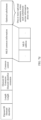
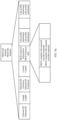
- FIG. 7a is a schematic diagram of a structure of a multi-link element.
- the multi-link element includes an element identifier, a length, an element identifier extension field, a common control field, an MLD common information field, and one or more optional subelements.
- the common control field includes a virtual MLD field and a special MLD field.
- the common control field further includes an MLD address present field.
- the MLD common information field includes an MLD address field.
- the common control field further includes an authentication algorithm present field, to indicate whether there is an authentication algorithm field in the MLD common information field.
- a probe request frame carries second indication information
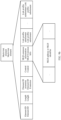
- the second indication information may be carried in the multi-link element shown in FIG. 7a to FIG. 7c .
- an MLD address in the multi-link element may be set to an address of the AP MLD in which the second AP is located, indicating that the second indication information requests a communication parameter of the AP MLD in which the second AP is located.
- the non-AP STA requests a communication parameter of another AP MLD other than the second AP MLD in which the second AP is located, and the probe request frame may carry THE second indication information, which is specifically a multi-link element.
- the multi-link element may be shown in FIG. 9c .
- An "other MLD required" field included in the multi-link element indicates whether to request the communication parameter of the another MLD other than the second AP MLD in which the second AP is located.
- the second AP that receives the probe request frame feeds back, by default, to a non-AP MLD, a communication parameter of an AP MLD other than the AP MLD in which the second AP is located.
- another AP MLD includes an AP MLD in which another nontransmitted BSSID AP belonging to a same MBSSID set as the second AP is located and/or an AP MLD in which another AP collocated with the second AP is located.
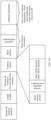
- the multi-link element may be shown in FIG. 9d .
- An "all nontransmitted MLD required" field included in the multi-link element indicates, by default, that a communication parameter of an AP MLD in which another nontransmitted BSSID AP belonging to the same MBBID set as the second AP is located, other than the second AP MLD of in which the second AP is located is requested.
- the second AP receiving the probe request frame feeds back, by default, to the non-AP MLD, a communication parameter of another nontransmitted BSSID AP MLD other than AP MLD in which the second AP is located.
- 1 bit may be used to indicate whether a request is made. For example, 1 indicates that a request is made, and 0 indicates that no request is made.
- the non-AP STA requests communication parameters of the second AP MLD in which the second AP is located and another AP MLD.
- the probe request frame may carry the second indication information, which is specifically the multi-link element.
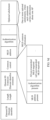
- the multi-link element may be shown in FIG. 9e .
- An "all MLD required" field included in the multi-link element indicates, by default, that the communication parameters of the second AP MLD in which the second AP is located and the another AP MLD are requested.
- the second AP receiving the probe request frame feeds back, by default, to the non-AP MLD, the communication parameters of the second AP MLD in which the second AP is located and the another AP MLD
- the "all MLD required" request includes the second AP and the AP MLD in which the another nontransmitted BSSID AP belonging to the same MBSSID set as the second AP is located, and the AP MLD in which the another AP collocated with the second AP is located.
- the "all MLD required" may be indicated by using one bit, for example, 1 indicates a request is made, and 0 indicates no request is made.
- an "other MLD required" field shown in FIG. 9c may be further used.
- this is implemented by setting an MLD address or an MLD identifier in the multi-link element of the probe request frame to an address or an identifier of the second AP.
- the multi-link element may carry an MLD address or an MLD identifier.
- the MLD address or the MLD identifier indicates an address of an MLD in which the second AP receiving the probe request frame is located.
- the non-AP STA wants to obtain a communication parameter of one or more specific AP MLDs by using the probe request frame.
- the the one or more AP MLDs may be the AP MLD in which the second AP is located, or one or more of AP MLDs in which other APs that belong to the same MBSSID set as the second AP are located, or one or more of AP MLDs where other APs collocated with the second AP are located.
- the second indication information is the MLD identifier or the MLD address
- the MLD identifier or the MLD address indicates one or more MLDs.
- the MLD identifier or the MLD address may be specifically an MLD MAC address, an MLD index, an MLD ID, or a BSSID index.
- the MLD identifier or the MLD address is carried in the probe request frame (in this case, the multi-link element does not need to be carried).
- the MLD identifier or the MLD address is carried in the multi-link element in the probe request frame.
- the probe request frame, or the MLD address or the MLD identifier in the multi-link element in the probe request frame is set to an address or an identifier of the AP MLD that the probe request frame needs to request.
- the non-AP STA may want to obtain communication parameters of a plurality of AP MLDs by using the probe request frame by carrying a plurality of MLD addresses or identifiers in the probe request frame, or by carrying a plurality of MLD addresses or identifiers in one multi-link element in the probe request frame, or respectively carrying a plurality of MLD addresses or identifiers in a plurality of multi-link elements in the probe request frame.
- the second indication information is a BSSID index bitmap, and each bit of the BSSID index bitmap corresponds to one AP MLD.
- a corresponding bit is set to 0 or 1 to indicate whether to request a communication parameter of an AP MLD corresponding to the corresponding bit.
- the BSSID index bitmap is carried in the probe request frame (in this case, the multi-link element does not need to be carried).
- the BSSID index bitmap is carried in the multi-link element in the probe request frame.
- the non-AP STA wants to obtain a communication parameter of an AP MLD by using the probe request frame may be implemented by using the probe request frame or the multi-link element in the probe request frame.
- the probe request frame or a corresponding bit in a BSSID index bitmap in the multi-link element in the probe request frame is set to 1 to indicate a to-be-requested AP MLD.
- the following describes a specific implementation of a signaling structure of a requested MLD element.
- the requested MLD element may be used in the foregoing Embodiment 1 and Embodiment 2.
- Manner 5 When the value of the 1 bit is 1, it indicates that the AP MLD in which the second AP is located is requested, and 0 indicates that the communication parameter of the another AP MLD is requested.
- the "another AP MLD” herein includes an AP MLD in which another nontransmitted BSSID AP belonging to the same MBSSID set as the second AP is located and the AP MLD in which the another AP collocated with the second AP is located.
- the request type When the request type is indicated by using a plurality of bits, for example, 3 bits, the request type may have eight values in total.
- a third value indicates the communication parameter of the AP MLD in which the second AP is located and the communication parameter of the another AP MLD in which the another AP belonging to the same MBSSID set as the second AP is located.
- a sixth value indicates that the communication parameter of the another AP MLD other than the AP MLD in which the second AP is located is requested.
- the "another AP MLD” herein includes the AP MLD in which the another AP collocated with the second AP is located.
- a seventh value indicates that the communication parameter of the AP MLD in which the second AP is located and the communication parameter of the another AP MLD are requested.
- the "another AP MLD" herein includes the AP MLD in which the another nontransmitted BSSID AP belonging to the same MBSSID set as the second AP is located and the AP MLD in which the another AP collocated with the second AP is located.
- the first value and the eighth value may use only some of the parameters, or two bits are used to indicate some of the parameters
- the request type field is carried in a common information field of the requested MLD element.
- the request type field may be further carried in another field, for example, a control field. Details are not described herein.
- FIG. 11a is merely an example.
- a name of the requested MLD element or a field included in the requested MLD element may alternatively be implemented in another manner. This is not limited in this embodiment of this application.
- FIG. 11b is a schematic diagram of another structure of a request MLD element.
- the structure of the request MLD element is similar to the structure of the request MLD element provided in FIG. 11a , and a difference lies in that:
- "request the MLD configuration” includes a "BSSID index bitmap (BSSID index bitmap) "field.
- Each bit in the bitmap corresponds to one AP MLD, and a bit is set to 0 or 1 to indicate whether to request a corresponding AP MLD. For example, a bit is set to 1 to indicate requesting an AP to feed back a communication parameter that is of the AP MLD and that corresponds to the bit.
- the "request MLD configuration” indicates requested communication parameters of different AP MLDs. In this case, the "request type field” may alternatively not exist.
- the link profile subelement or the link profile element carried in the probe request frame indicates the communication parameter of the AP or the link that requests an AP MLD.
- the link profile subelement or the link profile element carried in the probe response frame is used to carry the communication parameter of the AP of the AP MLD or the link.
- the following describes a specific implementation of a signaling structure of a known MLD element.
- the known MLD element may be used in the foregoing Embodiment 1 and Embodiment 2.
- one or more known MLD elements are carried in a probe request frame sent by a non-AP STA, to request a communication parameter of an AP MLD.
- FIG. 12a shows a structure of a known MLD element.
- the known MLD element includes fields such as "element ID”, “length”, “element ID extension”, “common information”, and “known MLD configuration", where the "common information” field optionally further includes a “request type” subfield.
- the "known MLD configuration” subfield may exist or not exist. When the "known MLD configuration" subfield exists, an "MLD address” field is included.
- FIG. 12c shows a structure of another known MLD element.
- the known MLD element includes fields such as “element ID”, “length”, “element ID extension”, and “multilink element”.
- the “multilink element” carries “MLD common information” and “link profile subelement”.
- the "MLD common information” may carry "MLD address or MLD identifier”
- the "link profile subelement” indicates a known link in a plurality of links in the AP MLD corresponding to the "MLD address or MLD identifier”.
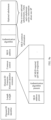
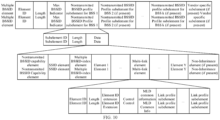
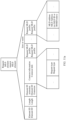
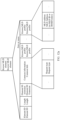
- the transmitted BSSID AP carries, in the multiple BSSID element, a nontransmitted BSSID profile (nontransmitted BSSID profile) corresponding to the nontransmitted BSSID AP, to carry a communication parameter of the nontransmitted BSSID AP, and carries, in the multi-link element included in the nontransmitted BSSID profile corresponding to the nontransmitted BSSID AP, a communication parameter of another AP in the AP MLD in which the nontransmitted BSSID AP is located.
- a nontransmitted BSSID profile nontransmitted BSSID profile
- the probe request frame requests the communication parameter of the AP MLD 1 in which the AP 21 is located
- the communication parameter of the AP MLD 1 is carried in the multi-link element in the probe response frame.
- communication parameters of the AP 11, the AP 21, and the AP 31 may be separately carried in three link profile subelements in the multi-link element.
- the communication parameters of the AP MLD 2 and the AP MLD 3 may be carried in the multiple BSSID element in the probe response frame.
- two nontransmitted BSSID profiles corresponding to the AP 21 are carried in the multiple BSSID element to respectively carry communication parameters of the AP 22 and the AP 23.
- the link profile subelement of the multi-link element is carried in the nontransmitted BSSID profile corresponding to the AP 22 to carry information about the AP 12.
- the link profile subelement of the multi-link element is carried in the nontransmitted BSSID profile corresponding to the AP 23 to carry a communication parameter of the AP 33.
- the non-AP MLD may carry an identifier list of an information element in the probe request frame, to request the AP MLD to reply with content of a corresponding information element.
- the information element identifier list is carried by using a probing element, for example, a "list of element IDs (list of element IDs)". Each element ID corresponds to a requested information element.
- the non-AP STA may directly carry a non-inheritance element in the probe request to carry some requested information elements.
- a communication parameter of each AP includes content of an information element corresponding to an element ID carried in the list of element IDs.
- the access point AP for example, an AP in an AP multi-link device
- the station may be divided into function modules based on the foregoing method examples.
- the functional modules may be obtained through division based on corresponding functions, or two or more functions may be integrated into one processing module.
- the integrated module may be implemented in a form of hardware, or may be implemented in a form of a software functional module. It should be noted that, in the embodiments of this application, division into the modules is an example, and is merely logical function division. In an actual implementation, another division manner may be used.
- FIG. 14 is a possible schematic diagram of a structure of a communication apparatus 1400.
- the communication apparatus 1400 may be a multi-link device, or a chip or a processing system in a multi-link device.
- the communication apparatus 1400 may perform operations of the multi-link device in the foregoing method embodiments.
- the communication apparatus 1400 includes a processing unit 1401 and a transceiver unit 1402.
- the communication apparatus 1400 is the foregoing access point AP (for example, an AP in an AP multi-link device) or the station.
- the communication apparatus 1400 is the access point or a chip in the access point.
- the processing unit 1401 may be configured to control and manage an action of the communication apparatus 1400. For example, a probe request frame is generated. For another example, an operation of the transceiver unit 1402 is controlled.
- the processing unit 1401 may further execute a program or instructions stored in the storage unit, so that the communication apparatus 1400 implements the method and functions in any one of the foregoing embodiments.
- the processing unit 1401 may control the transceiver unit to perform step S101 in FIG. 5 , S201 in FIG. 6 , or another process of the technology described in this specification. All related content of the steps in the foregoing method embodiments may be cited in function descriptions of the corresponding functional modules. Details are not described herein again.
- the transceiver unit 1402 may be configured to perform step S101 in FIG. 5 , step S201 in FIG. 6 , or another process of the technology described in this specification. All related content of the steps in the foregoing method embodiments may be cited in function descriptions of the corresponding functional modules. Details are not described herein again.
- the communication apparatus 1400 may be the communication apparatus shown in FIG. 15
- the processing unit 1401 may be the processor 1501 in FIG. 11
- the transceiver unit 1402 may be the transceiver 1503 in FIG. 15
- the communication apparatus 1400 may further include a memory.
- the memory is configured to store corresponding program code and data that are for the communication apparatus 1400 to perform any one of the foregoing communication methods between multi-link devices. Descriptions of all related content of the components in FIG. 15 may be cited in function description of corresponding components of the communication apparatus 1400, and details are not described herein again.
Landscapes
- Engineering & Computer Science (AREA)
- Computer Networks & Wireless Communication (AREA)
- Signal Processing (AREA)
- Computer Security & Cryptography (AREA)
- Mobile Radio Communication Systems (AREA)
- Small-Scale Networks (AREA)
- Radar Systems Or Details Thereof (AREA)
Applications Claiming Priority (3)
| Application Number | Priority Date | Filing Date | Title |
|---|---|---|---|
| CN202010634151.8A CN113891343B (zh) | 2020-07-02 | 2020-07-02 | 探测mld的请求和响应方法及站点,接入点 |
| EP21834380.4A EP4171099B1 (fr) | 2020-07-02 | 2021-07-02 | Procédés de demande pour sonder un dispositif de point d'accès à liaisons multiples (ap mld) exécutés par une station dans un dispositif non-point d'accès à liaisons multiples (non-ap mld) et stations correspondantes dans un non-ap mld |
| PCT/CN2021/104327 WO2022002265A1 (fr) | 2020-07-02 | 2021-07-02 | Procédés de demande et de réponse pour la détection de mld, station et point d'accès |
Related Parent Applications (1)
| Application Number | Title | Priority Date | Filing Date |
|---|---|---|---|
| EP21834380.4A Division EP4171099B1 (fr) | 2020-07-02 | 2021-07-02 | Procédés de demande pour sonder un dispositif de point d'accès à liaisons multiples (ap mld) exécutés par une station dans un dispositif non-point d'accès à liaisons multiples (non-ap mld) et stations correspondantes dans un non-ap mld |
Publications (2)
| Publication Number | Publication Date |
|---|---|
| EP4583633A2 true EP4583633A2 (fr) | 2025-07-09 |
| EP4583633A3 EP4583633A3 (fr) | 2025-09-24 |
Family
ID=79012786
Family Applications (2)
| Application Number | Title | Priority Date | Filing Date |
|---|---|---|---|
| EP25154016.7A Pending EP4583633A3 (fr) | 2020-07-02 | 2021-07-02 | Procédé de demande et de réponse pour sonder un mld, station et point d'accès |
| EP21834380.4A Active EP4171099B1 (fr) | 2020-07-02 | 2021-07-02 | Procédés de demande pour sonder un dispositif de point d'accès à liaisons multiples (ap mld) exécutés par une station dans un dispositif non-point d'accès à liaisons multiples (non-ap mld) et stations correspondantes dans un non-ap mld |
Family Applications After (1)
| Application Number | Title | Priority Date | Filing Date |
|---|---|---|---|
| EP21834380.4A Active EP4171099B1 (fr) | 2020-07-02 | 2021-07-02 | Procédés de demande pour sonder un dispositif de point d'accès à liaisons multiples (ap mld) exécutés par une station dans un dispositif non-point d'accès à liaisons multiples (non-ap mld) et stations correspondantes dans un non-ap mld |
Country Status (11)
| Country | Link |
|---|---|
| US (2) | US12003399B2 (fr) |
| EP (2) | EP4583633A3 (fr) |
| JP (2) | JP7581387B2 (fr) |
| KR (1) | KR20230028536A (fr) |
| CN (4) | CN116234061B (fr) |
| AU (2) | AU2021301000B2 (fr) |
| BR (1) | BR112022027116A2 (fr) |
| CA (1) | CA3188573A1 (fr) |
| MX (3) | MX2023000219A (fr) |
| PL (1) | PL4171099T3 (fr) |
| WO (1) | WO2022002265A1 (fr) |
Families Citing this family (12)
| Publication number | Priority date | Publication date | Assignee | Title |
|---|---|---|---|---|
| CN116234061B (zh) * | 2020-07-02 | 2023-12-08 | 华为技术有限公司 | 探测mld的请求方法及站点 |
| CN112512135B (zh) * | 2020-08-31 | 2025-02-14 | 中兴通讯股份有限公司 | 一种多链路设备、通信方法及存储介质 |
| US12120760B2 (en) * | 2020-10-23 | 2024-10-15 | Nxp Usa, Inc. | Multi-link device (MLD) setup and multi-link operation (MLO) |
| EP4404684A4 (fr) * | 2021-09-13 | 2025-01-01 | LG Electronics Inc. | Procédé et dispositif de transmission ou de réception des informations relatives à un point d'accès dans un système lan sans fil |
| US20230104554A1 (en) * | 2021-10-04 | 2023-04-06 | Mediatek Singapore Pte. Ltd. | Assisted multi-link beacon and groupcast reception in a wireless network |
| EP4520128A4 (fr) * | 2022-05-06 | 2026-03-11 | Nokia Technologies Oy | Identification et découverte de dispositif |
| EP4543133A1 (fr) * | 2022-06-20 | 2025-04-23 | LG Electronics Inc. | Procédé et dispositif de transmission et de réception d'informations basées sur l'héritage dans un système de résau local sans fil |
| TW202433996A (zh) * | 2022-10-27 | 2024-08-16 | 南韓商韋勒斯標準與技術協會公司 | 使用多鏈路的無線通訊方法及無線通訊終端 |
| CN115835417A (zh) * | 2022-11-24 | 2023-03-21 | 北京小米移动软件有限公司 | 一种通信方法、装置及存储介质 |
| US20240306228A1 (en) * | 2023-03-10 | 2024-09-12 | Samsung Electronics Co., Ltd. | TUNNELED DIRECT LINK SETUP LATENCY MANAGEMENT FOR NON-COLLOCATED APs |
| WO2024243808A1 (fr) * | 2023-05-30 | 2024-12-05 | Nokia Shanghai Bell Co., Ltd. | Recommandation de point d'accès |
| CN119485797A (zh) * | 2023-08-11 | 2025-02-18 | 中兴通讯股份有限公司 | 信息分配方法、设备及存储介质 |
Family Cites Families (12)
| Publication number | Priority date | Publication date | Assignee | Title |
|---|---|---|---|---|
| KR101632222B1 (ko) * | 2012-10-29 | 2016-06-21 | 엘지전자 주식회사 | 무선랜 시스템에서 고속 링크 동기화 방법 및 장치 |
| AU2014263433B2 (en) * | 2013-05-06 | 2016-02-11 | Lg Electronics Inc. | Method and apparatus for active scanning in wireless LAN |
| US10237891B1 (en) * | 2016-02-22 | 2019-03-19 | Marvell International Ltd. | Multiple basic service set support |
| CN107205259B (zh) * | 2016-03-17 | 2020-11-17 | 华为技术有限公司 | 一种无线局域网的扫描方法及无线接入点 |
| CN108810879B (zh) * | 2017-04-28 | 2023-04-07 | 中兴通讯股份有限公司 | 一种无线帧传输的方法及装置 |
| WO2019140412A1 (fr) * | 2018-01-12 | 2019-07-18 | Marvell World Trade Ltd. | Support d'ensembles de services de base multiples |
| US11057826B2 (en) * | 2018-08-24 | 2021-07-06 | Qualcomm Incorporated | Scanning enhancements for next generation Wi-Fi channels |
| GB2576723B (en) * | 2018-08-28 | 2022-03-09 | Canon Kk | Improved access to random resource units by a plurality of BSSs |
| US11445431B2 (en) * | 2019-07-12 | 2022-09-13 | Qualcomm Incorporated | Multi-link communication |
| CN119922755A (zh) * | 2020-03-27 | 2025-05-02 | 华为技术有限公司 | 无线局域网中应用于多链路设备的通信方法及装置 |
| CN116234061B (zh) * | 2020-07-02 | 2023-12-08 | 华为技术有限公司 | 探测mld的请求方法及站点 |
| GB2607334B (en) * | 2021-06-03 | 2025-05-21 | Canon Kk | Communication methods and device to signal EMLMR links and associated EMLMR links sets |
-
2020
- 2020-07-02 CN CN202211668592.5A patent/CN116234061B/zh active Active
- 2020-07-02 CN CN202010634151.8A patent/CN113891343B/zh active Active
- 2020-07-02 CN CN202411687463.XA patent/CN119485404A/zh active Pending
-
2021
- 2021-07-02 WO PCT/CN2021/104327 patent/WO2022002265A1/fr not_active Ceased
- 2021-07-02 EP EP25154016.7A patent/EP4583633A3/fr active Pending
- 2021-07-02 AU AU2021301000A patent/AU2021301000B2/en active Active
- 2021-07-02 CN CN202180044639.8A patent/CN115769622A/zh active Pending
- 2021-07-02 PL PL21834380.4T patent/PL4171099T3/pl unknown
- 2021-07-02 BR BR112022027116A patent/BR112022027116A2/pt unknown
- 2021-07-02 JP JP2022581626A patent/JP7581387B2/ja active Active
- 2021-07-02 EP EP21834380.4A patent/EP4171099B1/fr active Active
- 2021-07-02 CA CA3188573A patent/CA3188573A1/fr active Pending
- 2021-07-02 KR KR1020237003169A patent/KR20230028536A/ko active Pending
- 2021-07-02 MX MX2023000219A patent/MX2023000219A/es unknown
-
2022
- 2022-12-30 US US18/091,924 patent/US12003399B2/en active Active
-
2023
- 2023-01-02 MX MX2026001471A patent/MX2026001471A/es unknown
- 2023-01-02 MX MX2026001470A patent/MX2026001470A/es unknown
-
2024
- 2024-05-08 US US18/658,433 patent/US20240364612A1/en active Pending
- 2024-10-30 JP JP2024191172A patent/JP2025028847A/ja active Pending
- 2024-12-02 AU AU2024267103A patent/AU2024267103A1/en active Pending
Also Published As
| Publication number | Publication date |
|---|---|
| CN116234061A (zh) | 2023-06-06 |
| JP2025028847A (ja) | 2025-03-05 |
| CN113891343A (zh) | 2022-01-04 |
| MX2023000219A (es) | 2023-02-09 |
| US12003399B2 (en) | 2024-06-04 |
| AU2021301000A1 (en) | 2023-02-16 |
| KR20230028536A (ko) | 2023-02-28 |
| AU2024267103A1 (en) | 2024-12-19 |
| CN116234061B (zh) | 2023-12-08 |
| MX2026001470A (es) | 2026-03-02 |
| WO2022002265A1 (fr) | 2022-01-06 |
| EP4171099B1 (fr) | 2025-02-26 |
| CN115769622A (zh) | 2023-03-07 |
| AU2021301000B2 (en) | 2024-09-05 |
| EP4583633A3 (fr) | 2025-09-24 |
| CN119485404A (zh) | 2025-02-18 |
| US20240364612A1 (en) | 2024-10-31 |
| BR112022027116A2 (pt) | 2023-03-07 |
| JP7581387B2 (ja) | 2024-11-12 |
| JP2023532740A (ja) | 2023-07-31 |
| CN113891343B (zh) | 2024-11-29 |
| US20230148056A1 (en) | 2023-05-11 |
| EP4171099A4 (fr) | 2023-12-20 |
| EP4171099A1 (fr) | 2023-04-26 |
| PL4171099T3 (pl) | 2025-05-12 |
| MX2026001471A (es) | 2026-03-02 |
| CA3188573A1 (fr) | 2022-01-06 |
Similar Documents
| Publication | Publication Date | Title |
|---|---|---|
| EP4171099B1 (fr) | Procédés de demande pour sonder un dispositif de point d'accès à liaisons multiples (ap mld) exécutés par une station dans un dispositif non-point d'accès à liaisons multiples (non-ap mld) et stations correspondantes dans un non-ap mld | |
| US11902887B2 (en) | Access point AP multi-link device discovery method and related apparatus | |
| EP4117381B1 (fr) | Procédé de communication appliqué à un dispositif à liaisons multiples dans un réseau local sans fil, et dispositif | |
| EP4145933B1 (fr) | Procédé de signalisation d'échange d'informations dans un réseau local sans fil, et appareil de communication |
Legal Events
| Date | Code | Title | Description |
|---|---|---|---|
| PUAI | Public reference made under article 153(3) epc to a published international application that has entered the european phase |
Free format text: ORIGINAL CODE: 0009012 |
|
| STAA | Information on the status of an ep patent application or granted ep patent |
Free format text: STATUS: THE APPLICATION HAS BEEN PUBLISHED |
|
| AC | Divisional application: reference to earlier application |
Ref document number: 4171099 Country of ref document: EP Kind code of ref document: P |
|
| AK | Designated contracting states |
Kind code of ref document: A2 Designated state(s): AL AT BE BG CH CY CZ DE DK EE ES FI FR GB GR HR HU IE IS IT LI LT LU LV MC MK MT NL NO PL PT RO RS SE SI SK SM TR |
|
| REG | Reference to a national code |
Ref country code: DE Ref legal event code: R079 Free format text: PREVIOUS MAIN CLASS: H04W0084120000 Ipc: H04W0076150000 |
|
| PUAL | Search report despatched |
Free format text: ORIGINAL CODE: 0009013 |
|
| AK | Designated contracting states |
Kind code of ref document: A3 Designated state(s): AL AT BE BG CH CY CZ DE DK EE ES FI FR GB GR HR HU IE IS IT LI LT LU LV MC MK MT NL NO PL PT RO RS SE SI SK SM TR |
|
| RIC1 | Information provided on ipc code assigned before grant |
Ipc: H04W 76/15 20180101AFI20250820BHEP Ipc: H04W 8/00 20090101ALN20250820BHEP Ipc: H04W 48/12 20090101ALN20250820BHEP Ipc: H04W 84/12 20090101ALN20250820BHEP |
|
| STAA | Information on the status of an ep patent application or granted ep patent |
Free format text: STATUS: REQUEST FOR EXAMINATION WAS MADE |
|
| 17P | Request for examination filed |
Effective date: 20260324 |