ES2720507T3 - Process and device for melting and refining glass - Google Patents
Process and device for melting and refining glass Download PDFInfo
- Publication number
- ES2720507T3 ES2720507T3 ES15723265T ES15723265T ES2720507T3 ES 2720507 T3 ES2720507 T3 ES 2720507T3 ES 15723265 T ES15723265 T ES 15723265T ES 15723265 T ES15723265 T ES 15723265T ES 2720507 T3 ES2720507 T3 ES 2720507T3
- Authority
- ES
- Spain
- Prior art keywords
- glass
- downstream
- furnace
- conditioning basin
- oven
- Prior art date
- Legal status (The legal status is an assumption and is not a legal conclusion. Google has not performed a legal analysis and makes no representation as to the accuracy of the status listed.)
- Active
Links
- 239000011521 glass Substances 0.000 title claims abstract description 288
- 238000002844 melting Methods 0.000 title claims abstract description 68
- 230000008018 melting Effects 0.000 title claims abstract description 68
- 238000007670 refining Methods 0.000 title claims abstract description 64
- 238000000034 method Methods 0.000 title claims abstract description 37
- 230000008569 process Effects 0.000 title claims abstract description 35
- 230000003750 conditioning effect Effects 0.000 claims abstract description 100
- 238000011144 upstream manufacturing Methods 0.000 claims abstract description 57
- 239000006060 molten glass Substances 0.000 claims abstract description 30
- 230000007423 decrease Effects 0.000 claims abstract description 25
- 238000004519 manufacturing process Methods 0.000 claims abstract description 19
- 239000007800 oxidant agent Substances 0.000 claims description 13
- 239000005357 flat glass Substances 0.000 claims description 10
- 230000001590 oxidative effect Effects 0.000 claims description 10
- 230000003247 decreasing effect Effects 0.000 claims description 6
- 238000005188 flotation Methods 0.000 claims description 6
- 229910052751 metal Inorganic materials 0.000 claims description 6
- 239000002184 metal Substances 0.000 claims description 6
- XLYOFNOQVPJJNP-UHFFFAOYSA-N water Substances O XLYOFNOQVPJJNP-UHFFFAOYSA-N 0.000 claims 2
- 230000004888 barrier function Effects 0.000 description 20
- 238000001816 cooling Methods 0.000 description 15
- 230000007547 defect Effects 0.000 description 14
- 239000000463 material Substances 0.000 description 12
- 230000004927 fusion Effects 0.000 description 11
- 238000007664 blowing Methods 0.000 description 7
- QVGXLLKOCUKJST-UHFFFAOYSA-N atomic oxygen Chemical compound [O] QVGXLLKOCUKJST-UHFFFAOYSA-N 0.000 description 5
- 238000005265 energy consumption Methods 0.000 description 5
- 230000003287 optical effect Effects 0.000 description 5
- 229910052760 oxygen Inorganic materials 0.000 description 5
- 239000001301 oxygen Substances 0.000 description 5
- 239000002994 raw material Substances 0.000 description 5
- 230000009466 transformation Effects 0.000 description 5
- 230000015572 biosynthetic process Effects 0.000 description 4
- 235000008733 Citrus aurantifolia Nutrition 0.000 description 3
- MYMOFIZGZYHOMD-UHFFFAOYSA-N Dioxygen Chemical compound O=O MYMOFIZGZYHOMD-UHFFFAOYSA-N 0.000 description 3
- CDBYLPFSWZWCQE-UHFFFAOYSA-L Sodium Carbonate Chemical compound [Na+].[Na+].[O-]C([O-])=O CDBYLPFSWZWCQE-UHFFFAOYSA-L 0.000 description 3
- 235000011941 Tilia x europaea Nutrition 0.000 description 3
- 238000010276 construction Methods 0.000 description 3
- 230000000694 effects Effects 0.000 description 3
- 238000010030 laminating Methods 0.000 description 3
- 239000004571 lime Substances 0.000 description 3
- ATJFFYVFTNAWJD-UHFFFAOYSA-N Tin Chemical compound [Sn] ATJFFYVFTNAWJD-UHFFFAOYSA-N 0.000 description 2
- 238000004132 cross linking Methods 0.000 description 2
- 238000010438 heat treatment Methods 0.000 description 2
- 239000002245 particle Substances 0.000 description 2
- VEMKTZHHVJILDY-UHFFFAOYSA-N resmethrin Chemical compound CC1(C)C(C=C(C)C)C1C(=O)OCC1=COC(CC=2C=CC=CC=2)=C1 VEMKTZHHVJILDY-UHFFFAOYSA-N 0.000 description 2
- 238000003860 storage Methods 0.000 description 2
- 239000003643 water by type Substances 0.000 description 2
- PMZURENOXWZQFD-UHFFFAOYSA-L Sodium Sulfate Chemical compound [Na+].[Na+].[O-]S([O-])(=O)=O PMZURENOXWZQFD-UHFFFAOYSA-L 0.000 description 1
- PNEYBMLMFCGWSK-UHFFFAOYSA-N aluminium oxide Inorganic materials [O-2].[O-2].[O-2].[Al+3].[Al+3] PNEYBMLMFCGWSK-UHFFFAOYSA-N 0.000 description 1
- 229910000323 aluminium silicate Inorganic materials 0.000 description 1
- 230000001174 ascending effect Effects 0.000 description 1
- 239000004566 building material Substances 0.000 description 1
- 239000003795 chemical substances by application Substances 0.000 description 1
- 238000002485 combustion reaction Methods 0.000 description 1
- 230000029087 digestion Effects 0.000 description 1
- 239000000835 fiber Substances 0.000 description 1
- 239000002803 fossil fuel Substances 0.000 description 1
- 239000000446 fuel Substances 0.000 description 1
- 239000007789 gas Substances 0.000 description 1
- 230000003993 interaction Effects 0.000 description 1
- 238000003475 lamination Methods 0.000 description 1
- 239000007791 liquid phase Substances 0.000 description 1
- 230000007246 mechanism Effects 0.000 description 1
- 239000000203 mixture Substances 0.000 description 1
- 230000004048 modification Effects 0.000 description 1
- 238000012986 modification Methods 0.000 description 1
- 238000005192 partition Methods 0.000 description 1
- 238000012545 processing Methods 0.000 description 1
- 230000001737 promoting effect Effects 0.000 description 1
- 238000004513 sizing Methods 0.000 description 1
- 229910052938 sodium sulfate Inorganic materials 0.000 description 1
- 235000011152 sodium sulphate Nutrition 0.000 description 1
- 239000000126 substance Substances 0.000 description 1
- 238000012360 testing method Methods 0.000 description 1
Classifications
-
- C—CHEMISTRY; METALLURGY
- C03—GLASS; MINERAL OR SLAG WOOL
- C03B—MANUFACTURE, SHAPING, OR SUPPLEMENTARY PROCESSES
- C03B5/00—Melting in furnaces; Furnaces so far as specially adapted for glass manufacture
- C03B5/04—Melting in furnaces; Furnaces so far as specially adapted for glass manufacture in tank furnaces
-
- C—CHEMISTRY; METALLURGY
- C03—GLASS; MINERAL OR SLAG WOOL
- C03B—MANUFACTURE, SHAPING, OR SUPPLEMENTARY PROCESSES
- C03B18/00—Shaping glass in contact with the surface of a liquid
- C03B18/02—Forming sheets
-
- C—CHEMISTRY; METALLURGY
- C03—GLASS; MINERAL OR SLAG WOOL
- C03B—MANUFACTURE, SHAPING, OR SUPPLEMENTARY PROCESSES
- C03B5/00—Melting in furnaces; Furnaces so far as specially adapted for glass manufacture
- C03B5/16—Special features of the melting process; Auxiliary means specially adapted for glass-melting furnaces
- C03B5/18—Stirring devices; Homogenisation
- C03B5/182—Stirring devices; Homogenisation by moving the molten glass along fixed elements, e.g. deflectors, weirs, baffle plates
-
- C—CHEMISTRY; METALLURGY
- C03—GLASS; MINERAL OR SLAG WOOL
- C03B—MANUFACTURE, SHAPING, OR SUPPLEMENTARY PROCESSES
- C03B5/00—Melting in furnaces; Furnaces so far as specially adapted for glass manufacture
- C03B5/16—Special features of the melting process; Auxiliary means specially adapted for glass-melting furnaces
- C03B5/23—Cooling the molten glass
-
- Y—GENERAL TAGGING OF NEW TECHNOLOGICAL DEVELOPMENTS; GENERAL TAGGING OF CROSS-SECTIONAL TECHNOLOGIES SPANNING OVER SEVERAL SECTIONS OF THE IPC; TECHNICAL SUBJECTS COVERED BY FORMER USPC CROSS-REFERENCE ART COLLECTIONS [XRACs] AND DIGESTS
- Y02—TECHNOLOGIES OR APPLICATIONS FOR MITIGATION OR ADAPTATION AGAINST CLIMATE CHANGE
- Y02P—CLIMATE CHANGE MITIGATION TECHNOLOGIES IN THE PRODUCTION OR PROCESSING OF GOODS
- Y02P40/00—Technologies relating to the processing of minerals
- Y02P40/50—Glass production, e.g. reusing waste heat during processing or shaping
- Y02P40/57—Improving the yield, e-g- reduction of reject rates
Landscapes
- Chemical & Material Sciences (AREA)
- Engineering & Computer Science (AREA)
- Materials Engineering (AREA)
- Organic Chemistry (AREA)
- Glass Melting And Manufacturing (AREA)
- Glass Compositions (AREA)
Abstract
Un proceso para fabricar vidrio fundido en un dispositivo que comprende de aguas arriba a aguas abajo un horno (1) para fundir y refinar vidrio equipado con quemadores (7) elevados de fuego transversal, después una cuenca de acondicionamiento que comprende uno o más compartimentos (4, 5), comprendiendo dicho horno una zona (2) de fusión y una zona (3) de refinamiento, siendo el fondo de la zona de refinamiento y el fondo de la cuenca de acondicionamiento suficientemente profundos para que un mismo bucle (15) de recirculación, denominado bucle aguas abajo, pase a través de la zona de refinamiento y a través de todos los compartimentos (4, 5) de la cuenca de acondicionamiento, suministrándose a dicha cuenca de acondicionamiento vidrio por el horno, comprendiendo dicho proceso fundir vidrio en el horno de fusión y refinamiento, siendo las dimensiones del dispositivo tales que K es mayor de 3.5, donde**Fórmula** en la cual**Fórmula** en la cual Sf representa el área bajo la llama en el horno; x0 es la abscisa en la dirección de flujo general del vidrio del extremo del área bajo llama (10) en el horno; x1 es la abscisa en la dirección de flujo general del vidrio del extremo de la cuenca de acondicionamiento; σ(x) representa el área de la sección de paso del vidrio del dispositivo en la abscisa x; P(x) representa el perímetro de la sección de paso del vidrio del dispositivo en la abscisa x; y ΣiKSi representa la suma de KSi debidos a un elemento (17) singular en el dispositivo aguas abajo del área bajo la llama en el horno, un elemento singular que produce, de aguas arriba a aguas abajo y a través de menos de dos metros en la dirección de flujo del vidrio, una disminución en la sección de paso del vidrio de más del 10%, después un incremento en la sección de paso del vidrio de más de 10%, en donde**Fórmula** representando σi el área de la sección de paso del vidrio justo aguas arriba del elemento singular Si, representando σSi el área de la sección de paso mínima producida por el elementos singular Si.A process for manufacturing molten glass in a device comprising from upstream to downstream a furnace (1) for melting and refining glass equipped with raised burners (7) of transverse fire, then a conditioning basin comprising one or more compartments ( 4, 5), said furnace comprising a melting zone (2) and a refining zone (3), the bottom of the refining zone and the bottom of the conditioning basin being sufficiently deep for the same loop (15) of recirculation, called downstream loop, passes through the refining zone and through all compartments (4, 5) of the conditioning basin, said glass conditioning basin being supplied through the oven, said process comprising melting glass into the melting and refining furnace, the dimensions of the device being such that K is greater than 3.5, where ** Formula ** in which ** Formula ** in which Sf represents the area under the flame a in the oven; x0 is the abscissa in the general flow direction of the glass of the end of the area under flame (10) in the oven; x1 is the abscissa in the general flow direction of the glass at the end of the conditioning basin; σ (x) represents the area of the glass passage section of the device at the abscissa x; P (x) represents the perimeter of the glass passage section of the device at the abscissa x; and ΣiKSi represents the sum of KSi due to a singular element (17) in the device downstream of the area under the flame in the furnace, a singular element that produces, from upstream to downstream and through less than two meters in the glass flow direction, a decrease in the glass passage section of more than 10%, then an increase in the glass passage section of more than 10%, where ** Formula ** representing σi the area of the glass passage section just upstream of the singular element Si, representing σSi the area of the minimum passage section produced by the singular element Si.
Description
DESCRIPCIÓNDESCRIPTION
Proceso y dispositivo para fundir y refinar vidrioProcess and device for melting and refining glass
La invención se refiere a un proceso y dispositivo para fundir, refinar y acondicionar vidrio fundido que consumen poca energía y son capaces de suministrar un vidrio de alta calidad que puede, en particular, suministrarse a una cámara de flotación de vidrio con el fin de fabricar vidrio plano.The invention relates to a process and device for melting, refining and conditioning molten glass that consume little energy and are capable of supplying high quality glass that can, in particular, be supplied to a glass flotation chamber for the purpose of manufacturing flat glass
Un dispositivo para fundir y formar vidrio se compone en sucesión de una zona de carga, una zona de fusión y refinamiento, una zona de acondicionamiento y por último una zona de formación. La zona de carga sirve para introducir materia prima en el horno. La zona de fusión es el lugar donde la materia prima se transforma en un vidrio fundido. Con el fin de obtener un vidrio fundido de calidad óptima en términos de fusión, uniformidad y remoción de burbujas, es necesario lograr temperaturas muy altas en la zona de fusión, gracias a combustibles fósiles o energía eléctrica. La zona de acondicionamiento entonces sirve para enfriar el vidrio para llevarlo a la temperatura de formación, mucho menor que las temperaturas experimentadas por el vidrio durante su producción.A device for melting and forming glass is composed in succession of a loading zone, a melting and refining zone, a conditioning zone and finally a forming zone. The loading area serves to introduce raw material into the oven. The fusion zone is the place where the raw material is transformed into a molten glass. In order to obtain a molten glass of optimum quality in terms of melting, uniformity and removal of bubbles, it is necessary to achieve very high temperatures in the melting zone, thanks to fossil fuels or electrical energy. The conditioning zone then serves to cool the glass to bring it to the formation temperature, much lower than the temperatures experienced by the glass during its production.
Un dispositivo para fabricar vidrio debe conducir a un vidrio de alta calidad, es decir, un vidrio que contiene tan poco como sea posible material sin fundir y la menor cantidad posible de burbujas, con una alta productividad pero con un consumo de energía y costo de construcción tan bajos como sea posible. El costo de construcción de tales instalaciones hace que la innovación en este campo sea difícil y lenta. Esta es la razón por la que los presentes inventores han llevado a cabo un estudio profundo de mecanismos de convección en el vidrio fundido que tienen lugar en las cuencas sucesivas que reciben el vidrio con el fin de encontrar las dimensiones y el modo de operación más adecuados.A device for manufacturing glass should lead to high quality glass, that is, a glass that contains as little as possible unmelted material and as few bubbles as possible, with high productivity but with energy consumption and cost of Construction as low as possible. The cost of building such facilities makes innovation in this field difficult and slow. This is why the present inventors have carried out an in-depth study of convection mechanisms in molten glass that take place in the successive basins that receive the glass in order to find the most appropriate dimensions and mode of operation .
El documento EP650934 muestra un dispositivo para fundir vidrio que comprende una cuenca de refinamiento y fusión de fondo plano que suministra a un canal de flujo que es suficientemente poco profundo para evitar que se forme una celda de recirculación de vidrio fundido. La cuenca de fusión y refinamiento es el asiento de dos bucles de circulación convectiva. No se proporciona ninguna cuenca de acondicionamiento aguas abajo de la zona de refinamiento. No existe contraflujo alguno del vidrio aguas abajo de la zona de refinamiento. Se crean defectos necesariamente aguas abajo de la zona de refinamiento.EP650934 shows a device for melting glass comprising a flat-bottomed refining and melting basin that supplies a flow channel that is shallow enough to prevent a molten glass recirculation cell from forming. The basin of fusion and refinement is the seat of two loops of convective circulation. No conditioning basin is provided downstream of the refining zone. There is no counterflow of the glass downstream of the refining zone. Defects are necessarily created downstream of the refining zone.
El documento FR-A-2951156 muestra un horno de vidrio plano que comprende un depósito que contiene un baño de vidrio en fusión, un cuello, una salida por la que se evacúa el vidrio en fusión, un bucle de recirculación aguas abajo del vidrio en fusión que se forma en el baño entre una zona interna del horno más caliente y la salida a una temperatura menor, atravesando este bucle el cuello, el horno comprende un medio de ajuste del ancho de paso del vidrio en el bucle de recirculación aguas abajo, estando este medio de ajuste sumergido en el baño y extendiéndose verticalmente por la mayor parte de la profundidad del baño.Document FR-A-2951156 shows a flat glass furnace comprising a tank containing a melting glass bath, a neck, an outlet through which the melting glass is evacuated, a recirculation loop downstream of the glass in melting that is formed in the bath between an internal zone of the hottest oven and the outlet at a lower temperature, crossing this loop through the neck, the oven comprises a means of adjusting the passage width of the glass in the downstream recirculation loop, this adjustment means being submerged in the bath and extending vertically for most of the depth of the bath.
El documento EP2168923 muestra un dispositivo para preparar vidrio fundido que comprende un horno de fusión y refinamiento cuyo fondo se eleva gradualmente entre una pequeña zona de fusión y una zona de refinamiento grande mediante una pluralidad de escalones. El flujo de la salida de vidrio de este horno es un flujo de pistón. El documento FR2299277 muestra un dispositivo para fundir y refinar vidrio que comprende una cuenca de acondicionamiento en cuyo interior interviene un flujo de pistón. Aunque un contraflujo hacia la zona de refinamiento interviene parcialmente en la cuenca de refinamiento, esta zona de contraflujo es demasiado corta para obtener un efecto suficiente teniendo en cuenta la probabilidad de aparición de defectos en el resto del dispositivo. Además, esta zona es tan corta que debe ser necesario contener medios de refrigeración poderosos antes de que el vidrio penetre en la zona de flujo de pistón, lo que también puede considerarse para formar el inicio de un canal.EP2168923 shows a device for preparing molten glass comprising a melting and refining furnace whose bottom is gradually raised between a small melting zone and a large refining zone by a plurality of steps. The flow of the glass outlet of this oven is a piston flow. Document FR2299277 shows a device for melting and refining glass comprising a conditioning basin in which a piston flow intervenes. Although a counterflow towards the refinement zone is partially involved in the refinement basin, this counterflow zone is too short to obtain a sufficient effect taking into account the probability of defects occurring in the rest of the device. In addition, this area is so short that it must be necessary to contain powerful cooling means before the glass penetrates the piston flow zone, which can also be considered to form the start of a channel.
El documento US3261677 muestra un horno que comprende una zona de refinamiento que es tan poco profunda que ningún contraflujo puede tener lugar en la misma. La ausencia de contraflujo hacia la zona de fusión es poco propicia para la digestión de defectos. En esta ubicación muy poco profunda, el fondo se encuentra necesariamente a una temperatura muy alta (de alrededor de 1470°C) promoviendo el desgaste de materiales refractarios del fondo y es propicio para la generación de defectos en el vidrio.US3261677 shows a furnace comprising a refining zone that is so shallow that no counterflow can take place therein. The absence of counterflow towards the fusion zone is not conducive to the digestion of defects. In this very shallow location, the bottom is necessarily at a very high temperature (around 1470 ° C) promoting the wear of refractory bottom materials and is conducive to the generation of defects in the glass.
El documento CN201250173Y muestra un dispositivo para fundir vidrio que comprende un horno de fusión seguido por un cuello y después por una sección de enfriamiento. El fondo del horno comprende un escalón de 250 a 350 mm. Un punto caliente se encuentra en el centro del baño de fusión. Se detiene el contraflujo desde el punto caliente hasta la sección de enfriamiento.Document CN201250173Y shows a device for melting glass comprising a melting furnace followed by a neck and then by a cooling section. The bottom of the oven comprises a step of 250 to 350 mm. A hot spot is in the center of the melting bath. The backflow stops from the hot spot to the cooling section.
El documento CN102320721 muestra un horno que suministra directamente (sin extremo de trabajo) a un canal biselado como se ve desde arriba. No existe contraflujo en el canal. El vidrio se encuentra necesariamente demasiado caliente en la entrada de este canal. Se requerirá un soplado muy intenso para enfriar suficientemente el vidrio en este canal y esto resultará en la calidad óptica del vidrio degradada. De manera específica, la intensidad de soplado ASouff será de alrededor de 193% si se expresa como en los ejemplos de la presente solicitud.Document CN102320721 shows an oven that directly supplies (without working end) to a beveled channel as seen from above. There is no backflow in the channel. The glass is necessarily too hot at the entrance of this channel. Very intense blowing will be required to sufficiently cool the glass in this channel and this will result in the optical quality of the degraded glass. Specifically, the ASouff blow intensity will be around 193% if expressed as in the examples of the present application.
Los gradientes de temperatura en el horno conducen a un flujo de convección del vidrio en el horno. De este modo, un bucle o celda de convección comienza con la fusión, del lote cargado, sumergiéndose a continuación hacia el fondo del horno hasta el punto caliente en el fondo donde el vidrio se eleva hacia la superficie. Un segundo bucle de circulación, aguas abajo del primero, denominado bucle aguas abajo, puede formarse desde el punto caliente del fondo del horno de fusión/refinamiento, que se eleva y circula en la superficie hasta la salida de horno y que sale del horno con el fin de pasar en la cuenca de acondicionamiento. El vidrio en el horno está más caliente que en la cuenca de acondicionamiento. Es recomendable que la temperatura de fondo en el horno de fusión y refinamiento sea menor que 1400°C. Gracias a una profundidad suficiente del vidrio en el horno de fusión y refinamiento, permitiendo dicha profundidad la formación de celdas de recirculación, la temperatura del fondo puede permanecer por debajo de 1400°C.The temperature gradients in the oven lead to a convection flow of the glass in the oven. In this way, a loop or convection cell begins with the fusion of the loaded batch, then submerged into the bottom of the oven to the hot spot at the bottom where the glass rises to the surface. A second circulation loop, downstream of the first, called the downstream loop, can be formed from the hot spot at the bottom of the melting / refining furnace, which rises and circulates on the surface to the furnace outlet and exits the oven with in order to pass in the conditioning basin. The glass in the oven is hotter than in the conditioning basin. It is recommended that the bottom temperature in the melting and refining furnace be less than 1400 ° C. Thanks to a sufficient depth of the glass in the melting and refining furnace, said depth allowing the formation of recirculation cells, the bottom temperature can remain below 1400 ° C.
Los términos aguas arriba y aguas abajo en la presente solicitud desde luego se refieren a la dirección de flujo del vidrio, el cual fluye desde aguas arriba hasta aguas abajo.The terms upstream and downstream in the present application of course refer to the direction of flow of the glass, which flows from upstream to downstream.
Los términos “celda” y “bucle” son sinónimos en el presente contexto. La posición de los bucles de recirculación del vidrio con frecuencia se ha descrito en patentes de técnica anterior pero se ha prestado muy poca atención a su intensidad y a sus interacciones mutuas. Ahora se ha descubierto que un bucle de recirculación puede tener un flujo que representa varias veces la demanda del dispositivo de fusión y que la modificación de un bucle de recirculación en términos de su posición o su intensidad tiene repercusiones en las características de un bucle de recirculación próximo. De este modo, se ha observado que los parámetros geométricos del dispositivo para fabricar vidrio fundido y la manera en que tal dispositivo se opera, impactan directamente en la posición y equilibrio respectivo de las dos celdas, y en su intensidad convectiva. Cuanto mayor sea la intensidad de un bucle de recirculación, más energía requiere este mismo bucle a partir del horno. A estos fenómenos de recirculación en el vidrio fundido se agregan aquellos relacionados con la evolución de burbujas en el vidrio, las cuales se desea que se remuevan al hacer que emigren hacia la superficie del vidrio, pero que también pueden absorberse por el vidrio en zonas más frías. Además, la concentración de agente de refinamiento (con más frecuencia sulfato de sodio) disminuye a medida que el vidrio fluye debido a que se consume gradualmente, y en una tasa que incrementa a medida que la temperatura del vidrio incrementa. Antes de llegar al dispositivo de formación, en particular de vidrio plano, el vidrio debe enfriarse a una temperatura apropiada para su formación. Éste es el papel desempeñado por una cuenca de acondicionamiento. La cuenca de acondicionamiento puede comprender sólo un único compartimento, pero en general comprende al menos dos compartimentos. La cuenca de acondicionamiento por lo tanto puede comprender una pluralidad de compartimentos dispuestos en serie uno detrás del otro y en los que el vidrio puede pasar en sucesión. De manera más general, la cuenca de acondicionamiento consiste de dos compartimentos sucesivos, el primero de estos se denomina el cuello o cintura y el segundo de estos se denomina el extremo de trabajo. Generalmente, el horno de fusión/refinamiento se abre directamente en el cuello. Generalmente, el cuello se abre directamente en el extremo de trabajo. Un cuello no contiene quemadores y por lo general no tiene medios de calentamiento. El extremo de trabajo se equipa con un dispositivo para soplar aire a la superficie del vidrio con el fin de llevar al vidrio a la temperatura correcta. El aire soplado en el extremo de trabajo por lo general pasa en el cuello que lo precede, de este modo también contribuye con el enfriamiento del vidrio. La sección de paso y el ancho de paso del vidrio disminuye en gran medida cuando se pasa del horno a la cuenca de acondicionamiento, la cual por lo general comienza con un cuello, y aumenta en gran medida cuando se pasa de un cuello a un extremo de trabajo. La sección de paso del vidrio se relaciona con la geometría del dispositivo. Esto es especialmente cierto con respecto a la altura del vidrio debido a que tal dispositivo tiene un depósito dedicado, construido a partir de bloques refractarios denominados “bloques de depósito”, para hacer contacto con el vidrio y contenerlo. La altura de vidrio en el dispositivo por lo general corresponde con la distancia entre el nivel superior de los bloques de depósito disminuido por un margen de seguridad por lo general comprendido entre 30 y 130 mm, y el nivel del fondo. Aquellos con experiencia en la técnica denominan el conjunto de bloques que hacen contacto con el vidrio como “infraestructura”. El término “superestructura” se utiliza para referirse a los materiales dispuestos sobre la infraestructura. El material de la superestructura, que se ubica por encima de los bloques de depósito de la infraestructura y que no hace contacto con el vidrio pero sí con la atmósfera del horno, por lo general tiene una naturaleza diferente a la de los bloques de depósito de la infraestructura. Incluso si el material utilizado por la superestructura es idéntico al de la infraestructura, aquellos con experiencia en la técnica diferenciaran inmediatamente entre estas dos porciones de la construcción. La presencia de bloques de depósito es característica de un material elaborado para recibir el vidrio fundido y se refiere a la longitud total del dispositivo, es decir, tanto el horno como la cuenca de acondicionamiento. De este modo, en el dispositivo y el proceso de acuerdo con la invención, la altura de vidrio (utilizada en el cálculo de la sección de paso del vidrio) por lo general es igual a la altura de los bloques de depósito disminuida por 30 a 130 mm, en particular 80 mm (la mitad del margen de 30 a 130 mm). De este modo, la presente solicitud también se relaciona con un dispositivo cuyos bloques de depósito son tales que existe un nivel de la superficie del vidrio a una distancia comprendida entre 30 y 130 mm bajo el nivel superior de los bloques de depósito, de modo que el valor K de acuerdo con la invención es mayor que 3.5 y de preferencia mayor que 5.5 e incluso de más preferencia mayor que 7.5. En particular, el valor K puede ser mayor que 9, o incluso mayor que 10.5, o incluso mayor que 13.The terms "cell" and "loop" are synonymous in the present context. The position of the glass recirculation loops has often been described in prior art patents but very little attention has been paid to their intensity and their mutual interactions. It has now been discovered that a recirculation loop can have a flow that represents the demand of the fusion device several times and that the modification of a recirculation loop in terms of its position or intensity has repercussions on the characteristics of a recirculation loop next. Thus, it has been observed that the geometric parameters of the device for manufacturing molten glass and the manner in which such a device is operated directly impact the respective position and balance of the two cells, and their convective intensity. The higher the intensity of a recirculation loop, the more energy this same loop requires from the oven. To these phenomena of recirculation in molten glass are added those related to the evolution of bubbles in the glass, which are desired to be removed by causing them to migrate to the surface of the glass, but which can also be absorbed by the glass in more areas cold In addition, the concentration of refining agent (more often sodium sulfate) decreases as the glass flows because it is consumed gradually, and at a rate that increases as the temperature of the glass increases. Before reaching the forming device, in particular flat glass, the glass must be cooled to a temperature suitable for its formation. This is the role played by a conditioning basin. The conditioning basin may comprise only a single compartment, but generally comprises at least two compartments. The conditioning basin can therefore comprise a plurality of compartments arranged in series one behind the other and in which the glass can pass in succession. More generally, the conditioning basin consists of two successive compartments, the first of these is called the neck or waist and the second of these is called the working end. Generally, the melting / refining oven opens directly on the neck. Generally, the neck opens directly at the working end. A neck does not contain burners and usually has no heating means. The working end is equipped with a device for blowing air to the surface of the glass in order to bring the glass to the correct temperature. The air blown at the working end usually passes in the neck that precedes it, thus also contributing to the cooling of the glass. The passage section and the passage width of the glass decreases greatly when it is passed from the oven to the conditioning basin, which usually begins with a neck, and greatly increases when it is passed from a neck to one end of work. The passage section of the glass is related to the geometry of the device. This is especially true with respect to the height of the glass because such a device has a dedicated deposit, constructed from refractory blocks called "deposit blocks", to make contact with the glass and contain it. The glass height in the device generally corresponds to the distance between the upper level of the deposit blocks decreased by a safety margin generally between 30 and 130 mm, and the bottom level. Those with experience in the art call the set of blocks that make contact with the glass as “infrastructure”. The term "superstructure" is used to refer to the materials arranged on the infrastructure. The material of the superstructure, which is located above the infrastructure storage blocks and does not make contact with the glass but with the furnace atmosphere, generally has a different nature than the deposit blocks of the infrastructure Even if the material used by the superstructure is identical to that of the infrastructure, those skilled in the art will immediately differentiate between these two portions of the construction. The presence of deposit blocks is characteristic of a material made to receive molten glass and refers to the total length of the device, that is, both the furnace and the conditioning basin. Thus, in the device and the process according to the invention, the glass height (used in the calculation of the glass passage section) is generally equal to the height of the storage blocks decreased by 30 to 130 mm, in particular 80 mm (half the range of 30 to 130 mm). Thus, the present application also relates to a device whose deposit blocks are such that there is a level of the surface of the glass at a distance between 30 and 130 mm below the upper level of the deposit blocks, so that The K value according to the invention is greater than 3.5 and preferably greater than 5.5 and even more preferably greater than 7.5. In particular, the K value may be greater than 9, or even greater than 10.5, or even greater than 13.
Después de la cuenca de acondicionamiento, el vidrio pasa en un canal que suministra por sí mismo a un dispositivo de formación. La altura (o profundidad) del vidrio en el canal es mucho menor que su altura (o profundidad) en la cuenca de acondicionamiento justo antes del canal, de modo que ninguna recirculación de vidrio tiene lugar en el canal. Por lo tanto, el flujo de vidrio en el canal es un flujo de pistón. Esto no evita que el vidrio pueda seguir trayectorias curvas en este canal, tal como en forma de bobina; sin embargo, la trayectoria siempre va de aguas arriba a aguas abajo. Este canal es de manera ventajosa tan corto como sea posible. En efecto, los defectos que son propensos a aparecer en el canal debido al contacto entre el vidrio y las paredes y el fondo del canal se incorporarán inevitablemente en el vidrio que pasa en el dispositivo de formación debido a que no existe contraflujo en el canal. Por lo tanto, la probabilidad de que aparezcan defectos en el canal disminuye si la longitud del canal disminuye. La longitud del canal por lo general se comprende en el margen que se extiende de 0.3 a 10 m y de manera más general en el margen que se extiende de 0.8 a 6 m. El extremo aguas abajo del canal corresponde con la abscisa, en el eje longitudinal del dispositivo, en el que el vidrio rompe el contacto con el fondo refractario del canal. En el caso de una cámara de flotación para elaborar vidrio plano, esto corresponde con el extremo del borde a través del cual el vidrio se vierte en el metal fundido. En el caso de un dispositivo de laminación en que el vidrio se pasa entre rodillos de laminación, esto corresponde con el punto donde el vidrio hace contacto con un rodillo de laminación. El canal puede corresponder especialmente con la porción 14 de las Figs. 1 y 2 del documento EP650933, o con el canal en las Figs. 1 y 2 en el documento EP616983 A1, con o sin sus agitadores 15 a 18 y cuyas porciones 13, 14 medias se acortarán o incluso se retirarán. Además, el fondo del canal puede ser ligeramente ascendente hacia la dirección aguas abajo con una pendiente comprendida entre 0 y 6° a la horizontal, por lo general sin que el ascenso supere 100 mm.After the conditioning basin, the glass passes in a channel that supplies itself to a forming device. The height (or depth) of the glass in the channel is much less than its height (or depth) in the conditioning basin just before the channel, so that no glass recirculation takes place in the channel. Therefore, the flow of glass in the channel is a flow of piston. This does not prevent the glass from following curved paths in this channel, such as in the form of a coil; however, the trajectory always goes from waters Up to downstream. This channel is advantageously as short as possible. Indeed, defects that are prone to appear in the channel due to contact between the glass and the walls and the bottom of the channel will inevitably be incorporated into the glass that passes into the forming device because there is no backflow in the channel. Therefore, the probability of defects in the channel decreases if the length of the channel decreases. The length of the channel is generally comprised in the range that extends from 0.3 to 10 m and more generally in the range that extends from 0.8 to 6 m. The downstream end of the channel corresponds to the abscissa, on the longitudinal axis of the device, in which the glass breaks contact with the refractory bottom of the channel. In the case of a flotation chamber for making flat glass, this corresponds to the end of the edge through which the glass is poured into the molten metal. In the case of a laminating device in which the glass is passed between laminating rollers, this corresponds to the point where the glass makes contact with a laminating roller. The channel may correspond especially with portion 14 of Figs. 1 and 2 of EP650933, or with the channel in Figs. 1 and 2 in EP616983 A1, with or without its stirrers 15 to 18 and whose middle portions 13, 14 will be shortened or even removed. In addition, the bottom of the channel can be slightly ascending towards the downstream direction with a slope between 0 and 6 ° to the horizontal, usually without the ascent exceeding 100 mm.
Con respecto al paso del vidrio desde el horno de fusión/refinamiento hacia la cuenca de acondicionamiento, pudiendo comenzar esta última con un compartimento de tipo cuello, el ancho de paso del vidrio se disminuye bruscamente por al menos 30% y por lo general por al menos 50% por las paredes aguas abajo del horno que forman un ángulo con la dirección de flujo del vidrio de al menos 40° e incluso al menos 60° y por lo general de 90°. Esta disminución se obtiene con las dos paredes ubicadas en cada lado del eje longitudinal medio del dispositivo. La cuenca de acondicionamiento es más larga que 2 m de longitud, y por lo general más larga que 5 m de longitud, en la dirección de flujo general del vidrio, es decir, desde aguas arriba hasta aguas abajo a lo largo del eje longitudinal medio del dispositivo.With respect to the passage of the glass from the melting / refining furnace to the conditioning basin, the latter being able to start with a neck-type compartment, the passage width of the glass is sharply decreased by at least 30% and usually by the minus 50% by the walls downstream of the furnace that form an angle with the direction of flow of the glass of at least 40 ° and even at least 60 ° and usually 90 °. This decrease is obtained with the two walls located on each side of the middle longitudinal axis of the device. The conditioning basin is longer than 2 m in length, and generally longer than 5 m in length, in the general flow direction of the glass, that is, from upstream to downstream along the middle longitudinal axis Of the device.
Viniendo desde el horno, la entrada de la cuenca de acondicionamiento por lo general se protege por una pantalla térmica que se desciende desde el techo hasta el vidrio. Generalmente, esa pantalla no se sumerge en el vidrio. Sirve principalmente para separar la atmósfera caliente del horno de fusión/refinamiento de la atmósfera fría aguas abajo del horno y marca el inicio de la cuenca de acondicionamiento. Sin embargo, es posible que la pantalla térmica se sumerja en el vidrio.Coming from the oven, the entrance of the conditioning basin is usually protected by a thermal screen that descends from the ceiling to the glass. Generally, that screen is not submerged in glass. It mainly serves to separate the hot atmosphere from the melting / refining furnace from the cold atmosphere downstream of the oven and marks the beginning of the conditioning basin. However, it is possible that the thermal screen is submerged in the glass.
La cuenca de acondicionamiento puede comprender un extremo de trabajo equipado con un dispositivo para soplar el vidrio. Por lo general el extremo de trabajo se precede por un cuello. El extremo de trabajo y el cuello que lo precede difieren entre sí en un incremento neto del ancho de paso del vidrio, como se ve desde arriba. Este incremento de ancho por lo general se obtiene con paredes que forman un ángulo de más de 40° y por lo general más de 60° y por lo general un ángulo de 90° con las paredes laterales del cuello. Este incremento de ancho se obtiene con las dos paredes ubicadas en cada lado del eje longitudinal medio del dispositivo. El ancho por lo general se incrementa por al menos 30% y de manera más general por al menos 50%. En el caso donde el vidrio se transforma en vidrio plano en una cámara de flotación sobre un metal fundido, por lo general estaño, se recomienda que el vidrio se lleve a una temperatura comprendida entre 1000°C y 1400°C en la salida de la cuenca de acondicionamiento, es decir, por lo general en la salida del extremo de trabajo. Esta temperatura puede depender de la composición del vidrio. El soplado de refrigeración en un extremo de trabajo no debe ser demasiado intenso debido a que podría crear defectos ópticos en la superficie del vidrio. Ésta es la razón por la que, de manera convencional, en la técnica se proporciona un extremo de trabajo grande con el fin de evitar la necesidad de soplar demasiado aire sobre un área pequeña de vidrio y correr el riesgo de crear defectos ópticos en el mismo. Un cuello es más largo que 2 m de longitud y por lo general más largo que 4 m de longitud, en la dirección de flujo general del vidrio, es decir, a lo largo del eje longitudinal medio del dispositivo. Un extremo de trabajo es más largo que 2 m de longitud, y por lo general más largo que 5 m de longitud, en la dirección de flujo general del vidrio, es decir, a lo largo del eje longitudinal medio del dispositivo.The conditioning basin may comprise a working end equipped with a device for blowing the glass. Usually the working end is preceded by a neck. The working end and the neck that precedes it differ from each other in a net increase in the passage width of the glass, as seen from above. This increase in width is usually obtained with walls that form an angle of more than 40 ° and usually more than 60 ° and usually an angle of 90 ° with the side walls of the neck. This increase in width is obtained with the two walls located on each side of the middle longitudinal axis of the device. The width usually increases by at least 30% and more generally by at least 50%. In the case where the glass is transformed into flat glass in a flotation chamber on a molten metal, usually tin, it is recommended that the glass be brought to a temperature between 1000 ° C and 1400 ° C at the exit of the conditioning basin, that is, usually at the exit of the working end. This temperature may depend on the composition of the glass. The cooling blow at one working end should not be too intense because it could create optical defects on the glass surface. This is the reason why, in a conventional manner, a large working end is provided in the art in order to avoid the need to blow too much air over a small area of glass and run the risk of creating optical defects therein. . A neck is longer than 2 m in length and generally longer than 4 m in length, in the general flow direction of the glass, that is, along the middle longitudinal axis of the device. A working end is longer than 2 m in length, and generally longer than 5 m in length, in the general flow direction of the glass, that is, along the middle longitudinal axis of the device.
En el contexto de la presente solicitud, la expresión “superficie de vidrio” o “superficie del vidrio” se utiliza para referirse a la superficie superior del vidrio que hace contacto con la atmósfera del horno o del dispositivo de acondicionamiento, dependiendo de las circunstancias. Todos los fenómenos de convección del vidrio fundido en un dispositivo para fabricar vidrio fundido se relacionan con la variación en la temperatura en tal dispositivo desde aguas arriba hasta aguas abajo, es decir, en la zona de fusión, la zona de refinamiento, la cuenca de acondicionamiento, y con la geometría de sus diversos elementos. La zona de fusión es la zona más aguas arriba del horno y comprende al menos el primer quemador aguas arriba del horno. La zona de refinamiento es la zona más aguas abajo del horno, aguas arriba de la cuenca de acondicionamiento. Tal dispositivo es un sistema particularmente complejo y es difícil de modelar. De manera específica, se pretende que combine las siguientes ventajas:In the context of the present application, the expression "glass surface" or "glass surface" is used to refer to the upper surface of the glass that makes contact with the oven atmosphere or the conditioning device, depending on the circumstances. All the convection phenomena of molten glass in a device for manufacturing molten glass are related to the variation in temperature in such device from upstream to downstream, that is, in the melting zone, the refining zone, the basin of conditioning, and with the geometry of its various elements. The melting zone is the zone upstream of the oven and comprises at least the first burner upstream of the oven. The refinement zone is the most downstream zone of the furnace, upstream of the conditioning basin. Such a device is a particularly complex system and is difficult to model. Specifically, it is intended to combine the following advantages:
a) vidrio de alta calidad; un vidrio de alta calidad se obtiene al asegurar que el vidrio permanece tanto tiempo como sea posible en una temperatura mayor; de este modo existe una mayor oportunidad de fundir partículas que son difíciles de fundir, y además una temperatura mayor promueve la remoción de burbujas;a) high quality glass; a high quality glass is obtained by ensuring that the glass remains as long as possible at a higher temperature; in this way there is a greater opportunity to melt particles that are difficult to melt, and in addition a higher temperature promotes the removal of bubbles;
b) bajo consumo de energía; se consume energía al calentar el dispositivo pero también al enfriar el vidrio fundido en la cuenca de acondicionamiento, y en particular en el extremo de trabajo, con el fin de llevar el vidrio a una temperatura apropiada para transformación.b) low energy consumption; Energy is consumed by heating the device but also by cooling the molten glass in the conditioning basin, and in particular at the working end, in order to bring the glass to a appropriate temperature for transformation.
Estos objetivos son difíciles de conciliar debido a que el criterio a) demanda a temperaturas altas e intensidades convectivas altas que hacen que una porción grande del vidrio pase desde aguas abajo hasta aguas arriba en el contraflujo, encontrándose el vidrio aguas abajo ya relativamente frío, mientras que el criterio b) es consistente con proporcionar el menor calor posible y tener la menor necesidad posible para enfriamiento. Aparte de este compromiso de propiedades que se debe encontrar, también se pretende reducir lo más posible el costo de construcción, lo que implica que el área de la pared, el fondo y el techo de los diversos elementos del dispositivo para preparar vidrio, y en particular de la cuenca de acondicionamiento y de manera más particular del extremo de trabajo, sea tan pequeña como sea posible. De manera específica, en la técnica anterior, el extremo de trabajo en ocasiones tiene un tamaño similar al del horno.These objectives are difficult to reconcile because the criteria a) demand at high temperatures and high convective intensities that cause a large portion of the glass to pass from downstream to upstream in the counterflow, the glass being downstream already relatively cold, while that criterion b) is consistent with providing the least possible heat and having the least possible need for cooling. Apart from this commitment of properties that must be found, it is also intended to reduce as much as possible the construction cost, which implies that the area of the wall, the bottom and the ceiling of the various elements of the device for preparing glass, and in particular of the conditioning basin and more particularly of the working end, be as small as possible. Specifically, in the prior art, the working end is sometimes similar in size to the oven.
La invención se relaciona principalmente con un proceso para preparar vidrio fundido mediante un dispositivo para preparar vidrio fundido que comprende, desde aguas arriba hasta aguas abajo, un horno de fusión y refinamiento, después una cuenca de acondicionamiento. La invención también se relaciona con un dispositivo para preparar vidrio fundido que comprende, desde aguas arriba hasta aguas abajo, un horno de fusión y refinamiento, después una cuenca de acondicionamiento. El horno se equipa con quemadores elevados de fuego transversal, comprendiendo cada quemador una entrada de oxidante y una entrada de combustible. El horno por lo general se equipa con al menos 2 quemadores de fuego transversal en cada pared lateral y por lo general tiene de 3 a 10 quemadores de fuego transversal en cada pared lateral. La potencia de cada quemador de fuego transversal del horno por lo general oscila de 2 a 12 megavatios. Las paredes laterales, las cuales por lo general son paralelas entre sí, por lo general se separan entre sí por una distancia de 7 a 16 metros.The invention relates mainly to a process for preparing molten glass by means of a device for preparing molten glass comprising, from upstream to downstream, a melting and refining furnace, then a conditioning basin. The invention also relates to a device for preparing molten glass comprising, from upstream to downstream, a melting and refining furnace, then a conditioning basin. The oven is equipped with high transverse fire burners, each burner comprising an oxidizer inlet and a fuel inlet. The oven is usually equipped with at least 2 transverse fire burners on each side wall and usually has 3 to 10 transverse fire burners on each side wall. The power of each furnace transverse fire burner usually ranges from 2 to 12 megawatts. The side walls, which are usually parallel to each other, usually separate from each other by a distance of 7 to 16 meters.
El oxidante puede ser rico en oxígeno, incluso puede ser oxígeno puro (oxidante que contiene de 80 a 100 % en volumen de O2) o puede basarse en aire (oxidante que contiene de 10 a 30% en volumen de O2) o incluso puede ser aire o aire rico en oxígeno o aire pobre en oxígeno y especialmente aire diluido con gases de escape de combustión. Los quemadores de fuego transversal se insertan en las paredes laterales (también denominadas “muros laterales”) del horno de fusión/refinamiento. En el caso donde el oxidante se basa en aire (oxidante que comprende 10 a 30 % en volumen de O2), se colocan pares de quemadores en las paredes laterales del horno que se orientan unos hacia otros y operan en modo inverso como se conoce en la técnica.The oxidant can be rich in oxygen, it can even be pure oxygen (oxidant that contains 80 to 100% by volume of O 2 ) or it can be based on air (oxidant that contains 10 to 30% by volume of O 2 ) or even it can be oxygen-rich air or air or oxygen-poor air and especially air diluted with combustion exhaust gases. The transverse fire burners are inserted into the side walls (also called "side walls") of the melting / refining furnace. In the case where the oxidant is based on air (oxidant comprising 10 to 30% by volume of O 2 ), pairs of burners are placed on the side walls of the furnace that are oriented towards each other and operate in reverse mode as is known in the technique
En el caso donde el oxidante que suministra a los quemadores de fuego transversal es oxígeno puro, los quemadores se colocan ya sea cara a cara o escalonados. En este caso, por lo general no se proporciona un regenerador para calentar el oxígeno puro antes de que se inyecte en el horno.In the case where the oxidant that supplies the crossfire burners is pure oxygen, the burners are placed either face to face or staggered. In this case, a regenerator is generally not provided to heat the pure oxygen before it is injected into the oven.
Las materias primas vitrificables se introducen aguas arriba en el horno de fusión con el fin de que pasen bajo las llamas de los quemadores de fuego transversal.The vitrifiable raw materials are introduced upstream into the melting furnace so that they pass under the flames of the crossfire burners.
Con el fin de determinar las dimensiones adecuadas para el proceso y el dispositivo de acuerdo con la invención, se ha llevado a cabo un trabajo sustancial de modelado de los fenómenos de convección y de transferencias térmicas. De este modo, la invención se relaciona principalmente con un proceso para fabricar vidrio fundido mediante un dispositivo para fabricar vidrio fundido que comprende desde aguas arriba hasta aguas abajo un horno para fundir y refinar vidrio equipado con quemadores elevados de fuego transversal, y una cuenca de acondicionamiento a la que suministra directamente el horno. La cuenca de acondicionamiento conduce el vidrio a un canal de suministro de un dispositivo de formación. Las dimensiones del dispositivo de fabricación son tales que K es mayor que 3.5, dondeIn order to determine the appropriate dimensions for the process and the device according to the invention, a substantial work of modeling the phenomena of convection and thermal transfers has been carried out. Thus, the invention relates mainly to a process for manufacturing molten glass by means of a device for manufacturing molten glass comprising from upstream to downstream a furnace for melting and refining glass equipped with elevated transverse fire burners, and a basin of conditioning to which the oven directly supplies. The conditioning basin conducts the glass to a supply channel of a forming device. The dimensions of the manufacturing device are such that K is greater than 3.5, where

en la quein which

en la quein which
Sf representa el área bajo la llama en el horno de fusión/refinamiento;Sf represents the area under the flame in the melting / refining furnace;
x0 es la abscisa en la dirección de flujo general del vidrio del extremo del área bajo la llama en el horno;x 0 is the abscissa in the general flow direction of the glass at the end of the area under the flame in the oven;
x1 es la abscisa en la dirección de flujo general del vidrio del extremo de la cuenca de acondicionamiento; a(x) representa el área de la sección de paso del vidrio del dispositivo en la abscisa x;x 1 is the abscissa in the general flow direction of the glass at the end of the conditioning basin; a (x) represents the area of the glass passage section of the device at the abscissa x;
P(x) representa el perímetro de la sección de paso del vidrio del dispositivo en la abscisa x; yP (x) represents the perimeter of the glass passage section of the device at the abscissa x; Y
£¡Ks¡ representa la suma de Ks¡ debidos a un elemento singular en el dispositivo aguas abajo del área bajo la llama en el horno, un elemento singular que produce, desde aguas arriba hasta aguas abajo y a través de menos de 2 m en la dirección de flujo del vidrio, una disminución en la sección de paso del vidrio de más de 10%, después un incremento en la sección de paso del vidrio de más de 10%, donde£ ¡Ks¡ represents the sum of Ks¡ due to a singular element in the device downstream of the area under the flame in the furnace, a singular element that produces, from upstream to downstream and through less than 2 m in the glass flow direction, a decrease in the glass passage section of more than 10%, then an increase in the glass passage section of more than 10%, where

representando a¡ el área de la sección de paso del vidrio justo aguas arriba del elemento singular S¡, y representando as¡ el área de la sección de paso mínima producido por el elemento singular S¡.representing the area of the glass passage section just upstream of the singular element S, and thus representing the area of the minimum passage section produced by the singular element S.
La invención también se relaciona con el dispositivo de la reivindicación 16.The invention also relates to the device of claim 16.
En todas las fórmulas, las unidades utilizadas son unidades las del sistema internacional. Las secciones de paso del vidrio se miden en planos ortogonales a la dirección de flujo general del vidrio.In all formulas, the units used are units of the international system. The glass passage sections are measured in orthogonal planes to the general flow direction of the glass.
De preferencia, K es mayor que 5.5 e incluso de más preferencia mayor que 7.5 e incluso de más preferencia mayor que 9, o incluso mayor que 10.5, o incluso mayor que 13. Generalmente, K es menor que 30.Preferably, K is greater than 5.5 and even more preferably greater than 7.5 and even more preferably greater than 9, or even greater than 10.5, or even greater than 13. Generally, K is less than 30.
Un valor K alto refleja un bucle de recirculación aguas arriba más intenso en el horno de fusión/refinamiento y un bucle aguas abajo menos intenso en la cuenca de acondicionamiento.A high K value reflects a more intense upstream recirculation loop in the melting / refining furnace and a less intense downstream loop in the conditioning basin.
Un elemento singular sobresale en el flujo de vidrio, al igual que, por ejemplo, un escalón colocado en el fondo o una barrera sumergida en el vidrio. Este elemento singular produce una sección de paso mínima para el vidrio.A singular element stands out in the glass flow, as, for example, a step placed at the bottom or a barrier submerged in the glass. This singular element produces a minimum passage section for the glass.
Los valores de la abscisa incrementan en la dirección desde aguas arriba hasta aguas abajo.The abscissa values increase in the direction from upstream to downstream.
Los elementos singulares también se tienen en cuenta en la fórmula (2) debido a que provocan que la altura o ancho del paso para el vidrio varíe, y por lo tanto que la sección de paso del vidrio y el perímetro de la sección de paso varíen. Generalmente, todas las secciones de paso de vidrio en el dispositivo o proceso de acuerdo con la invención tienen una forma rectangular o cuadrada, incluyendo al nivel de un elemento singular. De manera específica, un elemento singular sobresale en el vidrio desde el fondo o desde una o ambas paredes laterales, o desde la parte superior, y eso en la totalidad del o de los lados del cuadrado o rectángulo que forma la sección de paso del vidrio y desde el cual sobresale el elemento singular. Sin embargo, no se excluye que la sección de paso pueda ser una forma más compleja.The singular elements are also taken into account in the formula (2) because they cause the height or width of the passage for the glass to vary, and therefore that the passage section of the glass and the perimeter of the passage section vary . Generally, all the glass passage sections in the device or process according to the invention have a rectangular or square shape, including at the level of a singular element. Specifically, a singular element protrudes in the glass from the bottom or from one or both side walls, or from the top, and that on all of the side or sides of the square or rectangle that forms the passage section of the glass and from which the singular element stands out. However, it is not excluded that the passage section can be a more complex form.
El área bajo la llama Sf en el horno de fusión/refinamiento es una noción bien conocida en la técnica. Es igual al área de vidrio continua bajo el cuadrilátero más pequeño que cubre los límites exteriores de las entradas de oxidante de los quemadores elevados de fuego transversal o de fuego no transversal en extremos en el horno de fusión/refinamiento, siendo el lado aguas arriba de este cuadrilátero paralelo a la pared aguas arriba del horno y formando un segmento que se extiende desde una pared lateral a la otra pared lateral, siendo el lado aguas abajo de ese cuadrilátero también paralelo a la pared aguas arriba del horno y formando un segmento que se extiende desde una pared lateral a la otra pared lateral. La abscisa x0 de la fórmula (2) corresponde con el lado aguas abajo del cuadrilátero del área bajo la llama. Este cuadrilátero por lo general tiene dos de sus lados superpuestos en las paredes laterales del horno. Generalmente, las paredes laterales del horno son paralelas y ortogonales a la pared aguas arriba, y este cuadrilátero es en este caso un cuadrado o un rectángulo. El horno puede comprender sólo quemadores elevados de fuego transversal. Sin embargo, además de los quemadores elevados de fuego transversal, el horno puede comprender al menos un quemador de oxígeno, en particular en el techo o transversal. Éste también es un quemador elevado debido a que su llama se crea en la atmósfera del horno. Tal quemador de oxígeno puede incrementar el área bajo la llama que se tendrá en cuenta en las fórmulas (2) y (3) si se ubica fuera del área bajo la llama de las entradas de oxidante de los quemadores elevados de fuego transversal. Sf es el área de vidrio bajo el cuadrilátero más pequeño como se define en lo anterior que cubre los límites exteriores de las entradas de oxidante de todos los quemadores elevados, incluyendo aquellos de los quemadores de oxígeno.The area under the flame Sf in the melting / refining furnace is a notion well known in the art. It is equal to the area of continuous glass under the smallest quadrilateral that covers the outer limits of the oxidizer inlets of the elevated transverse or non-transverse fire burners at ends in the melting / refining furnace, the upstream side being this quadrilateral parallel to the wall upstream of the oven and forming a segment that extends from a side wall to the other side wall, the downstream side of that quadrilateral also being parallel to the wall upstream of the oven and forming a segment that is extends from one side wall to the other side wall. The abscissa x 0 of the formula (2) corresponds to the downstream side of the quadrilateral of the area under the flame. This quadrilateral usually has two of its sides superimposed on the oven side walls. Generally, the oven side walls are parallel and orthogonal to the upstream wall, and this quadrilateral is in this case a square or a rectangle. The furnace may comprise only high transverse fire burners. However, in addition to the elevated transverse fire burners, the furnace may comprise at least one oxygen burner, in particular on the roof or transverse. This is also an elevated burner because its flame is created in the oven atmosphere. Such an oxygen burner can increase the area under the flame that will be taken into account in formulas (2) and (3) if it is located outside the area under the flame of the oxidizer inlets of the elevated transverse fire burners. Sf is the area of glass under the smallest quadrilateral as defined above that covers the outer limits of the oxidant inlets of all raised burners, including those of oxygen burners.
La presencia de un elemento singular, tal como un escalón o barrera, primero provoca que la sección de paso disminuya y después incremente en la dirección de flujo del vidrio, esta disminución e incremento ocurre a través de una distancia menor que 2 metros en la dirección de flujo general del vidrio (es decir, a lo largo del eje longitudinal medio del dispositivo). Un elemento singular puede, por ejemplo, consistir de un escalón fijo en el fondo del horno. También puede ser una cuestión de una barrera metálica refrigerada por agua, soportada por la superestructura e introducida desde el lado, sumergiéndose dicha barrera en el vidrio con el fin de disminuir la sección de paso del vidrio. Cuando el vidrio se encuentra con el escalón o la barrera, la sección del vidrio disminuye sustancialmente. Una vez que el vidrio ha pasado el escalón o la barrera, la sección del vidrio incrementa. Debido al elemento singular, la sección de paso de vidrio por lo tanto primero disminuye e incrementa de manera subsiguiente, desde aguas arriba hasta aguas abajo. El elemento singular también puede proceder de particiones o una compuerta dispuesta en las paredes laterales del dispositivo.The presence of a singular element, such as a step or barrier, first causes the passage section to decrease and then increase in the direction of flow of the glass, this decrease and increase occurs over a distance less than 2 meters in the direction general flow of the glass (i.e. along the middle longitudinal axis of the device). A singular element may, for example, consist of a fixed step at the bottom of the oven. It can also be a matter of a water-cooled metal barrier, supported by the superstructure and introduced from the side, said barrier being submerged in the glass in order to decrease the passage section of the glass. When the glass meets the step or barrier, the glass section decreases substantially. Once the glass has passed the step or barrier, the glass section increases. Due to the singular element, the glass passage section therefore first decreases and subsequently increases, from upstream to downstream. The singular element can also come from partitions or a gate arranged on the side walls of the device.
Un Ksi corresponde con un elemento singular. Para determinar si un elemento singular se encuentra presente, conviene medir la variación de sección aguas arriba y la variación de sección aguas abajo, producidas de manera sucesiva por dicho elemento singular. La variación de sección aguas arriba se aprecia al medir la diferencia en sección entre la sección justo aguas arriba del elemento singular (denominada la sección aguas arriba del elemento singular) y la sección mínima asi debida al elemento singular, en relación con la sección justo aguas arriba del elemento singular. La variación de sección aguas abajo se aprecia al medir la diferencia en sección entre la sección justo aguas abajo del elemento singular (denominada la sección aguas abajo del elemento singular) y la sección mínima asi debida al elemento singular, en relación con la sección mínima debida al elemento singular. Si estas dos variaciones son mayores que 10%, está presente un elemento singular cuyo Ksi debe calcularse e ingresarse en el cálculo de K del dispositivo.A Ksi corresponds to a singular element. In order to determine if a singular element is present, it is convenient to measure the upstream section variation and the downstream section variation, produced successively by said singular element. The variation of the upstream section can be seen by measuring the difference in section between the section just upstream of the singular element (called the section upstream of the singular element) and the minimum section thus due to the singular element, in relation to the just waters section above the singular element. The variation of the downstream section can be seen by measuring the difference in section between the section just downstream of the singular element (called the downstream section of the singular element) and the minimum section thus due to the singular element, in relation to the minimum section due to the singular element. If these two variations are greater than 10%, a singular element is present whose Ksi must be calculated and entered into the K calculation of the device.
Un elemento singular comienza, en la dirección de flujo del vidrio, en el punto donde dicho elemento comienza a disminuir la sección de paso del vidrio mediante una pared que forma un ángulo con la dirección de flujo general del vidrio mayor que 40° (ángulo dentro del elemento singular). Generalmente, este ángulo es de 90°. Un elemento singular termina, en la dirección de flujo del vidrio, en el punto donde termina de aumentar la sección de paso del vidrio mediante una pared que forma un ángulo mayor que 40° (ángulo dentro del elemento singular) con la dirección de flujo general del vidrio. Generalmente, este ángulo es de 90°. La distancia entre el inicio del elemento singular y el final del elemento singular es menor que 2 metros a lo largo del eje longitudinal medio del dispositivo para que pueda considerarse que está presente un elemento singular.A singular element begins, in the direction of flow of the glass, at the point where said element begins to decrease the passage section of the glass by means of a wall that forms an angle with the general flow direction of the glass greater than 40 ° (angle within of the singular element). Generally, this angle is 90 °. A singular element ends, in the direction of flow of the glass, at the point where it finishes increasing the passage section of the glass by a wall that forms an angle greater than 40 ° (angle within the singular element) with the general flow direction of glass Generally, this angle is 90 °. The distance between the beginning of the singular element and the end of the singular element is less than 2 meters along the middle longitudinal axis of the device so that a singular element can be considered to be present.
La influencia de las dimensiones del dispositivo se aprecia en términos de calidad Q, del consumo y de la posibilidad de utilizar una cuenca de acondicionamiento pequeña y en particular un extremo de trabajo pequeño. El factor K, tal como se describe en lo anterior, tiene en cuenta parámetros esenciales que permiten dimensionar un dispositivo o proceso de acuerdo con la invención de bajo consumo de energía mientras que se conserva una excelente calidad del vidrio. El factor K ayuda a determinar dispositivos en los que es posible utilizar una cuenca de acondicionamiento pequeña. De acuerdo con la invención, K es mayor que 3.5, de preferencia mayor que 5.5 e incluso de más preferencia mayor que 7.5.The influence of the dimensions of the device can be seen in terms of quality Q, consumption and the possibility of using a small conditioning basin and in particular a small working end. The K factor, as described in the foregoing, takes into account essential parameters that allow for sizing a device or process according to the invention of low energy consumption while preserving excellent glass quality. The K factor helps determine devices in which it is possible to use a small conditioning basin. According to the invention, K is greater than 3.5, preferably greater than 5.5 and even more preferably greater than 7.5.
Los flujos de vidrio en un dispositivo para fabricar vidrio fundido se han modelado numéricamente utilizando un paquete de software de hidrodinámica disponible comercialmente. Dependiendo en la geometría del dispositivo, el paquete de software calcula el flujo de energía que debe imponerse a la superficie libre del vidrio para asegurar que la temperatura de superficie máxima del vidrio sea igual a 1590°C en el horno de fusión/refinamiento, y que la temperatura del vidrio en la salida del extremo de trabajo sea igual a 1130°C. El vidrio considerado es un vidrio de sosa y cal estándar con un contenido de Fe2O3 en peso de 700 ppm y un contenido de FeO en peso de 180 ppm. Las pérdidas térmicas del depósito y el fondo fueron estándar (4 kW/m2). Los ensayos llevados a cabo en dispositivos de fusión reales confirmaron la relevancia del factor K de acuerdo con la invención.Glass flows in a device for manufacturing molten glass have been numerically modeled using a commercially available hydrodynamics software package. Depending on the geometry of the device, the software package calculates the energy flow that must be imposed on the free surface of the glass to ensure that the maximum surface temperature of the glass is equal to 1590 ° C in the melting / refining furnace, and that the temperature of the glass at the outlet of the working end is equal to 1130 ° C. The glass considered is a standard soda and lime glass with a Fe 2 O 3 content by weight of 700 ppm and a FeO content by weight of 180 ppm. The thermal losses of the tank and the bottom were standard (4 kW / m2). The tests carried out on real fusion devices confirmed the relevance of the K factor according to the invention.
La calidad Q se determinó de la siguiente manera. Aquellos con experiencia en la técnica conocen que la calidad de un vidrio fundido se mejora al dejarlo en altas temperaturas, y de manera más precisa a temperaturas mayores que la temperatura en la que tiene lugar el refinamiento químico del vidrio, durante más tiempo. Con base en los flujos calculados utilizando el modelo numérico, se realizó un seguimiento de 100,000 partículas desde la pared aguas arriba del horno. El criterio de calidad Q considerado es el tiempo promedio de permanencia por encima de 1400°C, en relación con un caso de referencia.The quality Q was determined as follows. Those with experience in the art know that the quality of a molten glass is improved by leaving it at high temperatures, and more precisely at temperatures greater than the temperature at which the chemical refinement of the glass takes place, for longer. Based on the flows calculated using the numerical model, 100,000 particles were tracked from the wall upstream of the oven. The quality criterion Q considered is the average residence time above 1400 ° C, in relation to a reference case.
El consumo se determinó de la siguiente manera: se trata de la cantidad de energía que entra en el vidrio a nivel de su superficie libre en el horno de fusión/refinamiento para que la temperatura de superficie máxima del vidrio se igual a 1590°C en el horno de fusión/refinamiento y que la temperatura del vidrio en la salida de la cuenca de acondicionamiento sea igual a 1130°C, además de la energía para fundir la materia prima hasta su transformación en fase líquida, y esto en términos relativos en relación con un caso de referencia (ejemplo No. 1 en la Tabla 1). La posibilidad de utilizar una cuenca de acondicionamiento pequeña y en particular un extremo de trabajo pequeño se determinó considerando la influencia del tamaño de la cuenca de acondicionamiento en la calidad Q y el consumo, pero también en la energía de soplado necesaria para el enfriamiento. Resulta muy ventajoso tener la capacidad de emplear un extremo de trabajo pequeño debido a que un extremo de trabajo pequeño requiere menos material para construirse y por lo tanto es menos costoso. Además, el área de contacto de material de construcción con el vidrio es más pequeña en el caso de una cuenca de acondicionamiento pequeña, por lo tanto disminuye el riesgo de que se crean defectos en el vidrio.The consumption was determined as follows: it is the amount of energy that enters the glass at the level of its free surface in the melting / refining furnace so that the maximum surface temperature of the glass is equal to 1590 ° C in the melting / refining furnace and that the temperature of the glass at the exit of the conditioning basin is equal to 1130 ° C, in addition to the energy to melt the raw material until its transformation into a liquid phase, and this in relative terms in relation with a reference case (example No. 1 in Table 1). The possibility of using a small conditioning basin and in particular a small working end was determined considering the influence of the conditioning basin size on quality Q and consumption, but also on the blowing energy necessary for cooling. It is very advantageous to have the ability to use a small working end because a small working end requires less material to be constructed and therefore is less expensive. In addition, the contact area of building material with glass is smaller in the case of a small conditioning basin, therefore decreasing the risk of defects in the glass.
De acuerdo con la invención, se ha descubierto que el tamaño de la cuenca de acondicionamiento, y en particular de un extremo de trabajo, puede disminuirse enormemente en particular debido a la intensidad relativa baja de la celda de convección aguas abajo lo que equivale a tener menos vidrio para acondicionar, y lo que se traduce en un valor K apropiado.According to the invention, it has been found that the size of the conditioning basin, and in particular of a working end, can be greatly reduced in particular due to the low relative intensity of the downstream convection cell which is equivalent to having less glass to condition, and what translates into a K value appropriate.
De acuerdo con la invención, el fondo del compartimento de refinamiento y el fondo de la cuenca de acondicionamiento son suficientemente profundos para que un mismo bucle de recirculación (denominado bucle aguas abajo) pase a través de estos dos elementos. Este bucle pasa a través de todos los compartimentos de la cuenca de acondicionamiento, en particular por lo general a través de un cuello seguido por un extremo de trabajo. De preferencia, este bucle aguas abajo se extiende hasta el extremo de la cuenca de acondicionamiento, por lo general un extremo de trabajo, es decir, hasta el canal, sin entrar al canal. La existencia de este bucle de recirculación es esencial sin dejar de ser de intensidad moderada. De manera específica, se ha observado que el contraflujo de este bucle contiene la mayoría de los defectos que se originan de la zona de refinamiento, además de aquellos generados en la cuenca de acondicionamiento, y que regresarlos a la zona de refinamiento del horno por lo general provoca que desaparezcan. Se acepta por aquellos con experiencia en la técnica que una cuenca de acondicionamiento grande, y en particular un extremo de trabajo grande es necesario con el fin de proporcionar al vidrio el tiempo para que repose lo suficiente para que las burbujas tengan tiempo de escapar, y con el fin de permitir que el vidrio se enfríe a la temperatura requerida para su transformación. En cambio, se ha descubierto que es mejor tener una cuenca de acondicionamiento pequeña, y en particular un extremo de trabajo pequeño, que se someta posiblemente a un enfriamiento un poco más intenso, debido a que el área de material que hace contacto con el vidrio se minimiza de este modo y es el origen de menos defectos. El tamaño pequeño de la cuenca de acondicionamiento también se hace posible gracias a la baja intensidad del bucle de recirculación que pasa a través de ella. De manera específica, esta baja intensidad significa que la celda de recirculación transfiere menos calor desde el horno hasta la cuenca de acondicionamiento, la cual necesita por tanto un enfriamiento más moderado. De preferencia, el bucle de recirculación que pasa a través de la cuenca de acondicionamiento se extiende hasta el canal pero no pasa en el canal. De acuerdo con esta posibilidad, el bucle de recirculación aguas abajo se extiende hasta la abscisa x - la cual puede corresponder con el extremo aguas abajo de un extremo de trabajo. Eso significa que en cualquier plano vertical transversal al eje longitudinal del horno en la cuenca de acondicionamiento existen puntos en el vidrio que tienen un componente de velocidad longitudinal negativa, es decir, que apunta desde aguas abajo hasta aguas arriba. Tales puntos forman parte de un contraflujo. Una velocidad se considera positiva si se dirige en la dirección de flujo del vidrio, desde aguas arriba hasta aguas abajo. De manera específica, pueden formarse burbujas a través de toda la cuenca de acondicionamiento, hasta su extremo, como resultado del contacto entre el vidrio y los materiales de dicha cuenca. Por lo tanto existe una competencia entre la velocidad de ascenso de las burbujas y su arrastre por el vidrio, especialmente hacia aguas arriba. Es posible evaluar el porcentaje de burbujas residuales que entran al canal mediante un cálculo de modelado conocido por aquellos con experiencia en la técnica en el que 100,000 burbujas se colocan aleatoriamente en el fondo de la cuenca de acondicionamiento y se mueven bajo el efecto de convección del vidrio y de su tendencia a elevarse bajo el efecto del principio de Arquímedes.In accordance with the invention, the bottom of the refining compartment and the bottom of the conditioning basin are deep enough for the same recirculation loop (called the downstream loop) to pass through these two elements. This loop passes through all the compartments of the conditioning basin, in particular usually through a neck followed by a working end. Preferably, this downstream loop extends to the end of the conditioning basin, usually a working end, that is, to the channel, without entering the channel. The existence of this recirculation loop is essential while remaining of moderate intensity. Specifically, it has been observed that the backflow of this loop contains most of the defects that originate from the refining zone, in addition to those generated in the conditioning basin, and that returning them to the furnace refining zone so general causes them to disappear. It is accepted by those skilled in the art that a large conditioning basin, and in particular a large working end, is necessary in order to provide the glass with the time to rest long enough for the bubbles to have time to escape, and in order to allow the glass to cool to the temperature required for its transformation. On the other hand, it has been discovered that it is better to have a small conditioning basin, and in particular a small working end, that is possibly subjected to a slightly more intense cooling, because the area of material that makes contact with the glass It is minimized in this way and is the source of fewer defects. The small size of the conditioning basin is also made possible by the low intensity of the recirculation loop that passes through it. Specifically, this low intensity means that the recirculation cell transfers less heat from the oven to the conditioning basin, which therefore needs more moderate cooling. Preferably, the recirculation loop that passes through the conditioning basin extends to the channel but does not pass in the channel. According to this possibility, the downstream recirculation loop extends to the abscissa x - which can correspond to the downstream end of a working end. That means that in any vertical plane transverse to the longitudinal axis of the furnace in the conditioning basin there are points in the glass that have a component of negative longitudinal velocity, that is, pointing from downstream to upstream. Such points are part of a counterflow. A speed is considered positive if it is directed in the direction of flow of the glass, from upstream to downstream. Specifically, bubbles can form throughout the conditioning basin, to its end, as a result of the contact between the glass and the materials of said basin. Therefore there is a competition between the speed of ascent of the bubbles and their dragging through the glass, especially upstream. It is possible to evaluate the percentage of residual bubbles entering the channel through a modeling calculation known to those with experience in the art in which 100,000 bubbles are placed randomly at the bottom of the conditioning basin and move under the convection effect of the glass and its tendency to rise under the effect of the Archimedes principle.
El paso desde la cuenca de acondicionamiento hasta el canal se realiza por una disminución brusca en el ancho de paso del vidrio y por una disminución en la profundidad de vidrio. Esa disminución puede lograrse especialmente por paredes colocadas ortogonales al eje del dispositivo.The passage from the conditioning basin to the canal is carried out by a sharp decrease in the passage width of the glass and by a decrease in the glass depth. This decrease can be achieved especially by walls placed orthogonal to the axis of the device.
De preferencia, el material utilizado para la cuenca de acondicionamiento, en particular para un extremo de trabajo y de manera opcional para un cuello, es un material para hacer contacto con el vidrio fundido y que no genera defectos en el vidrio. Lo mismo ocurre para el canal que lleva vidrio desde la cuenca de acondicionamiento al dispositivo de transformación. En este canal, el flujo del vidrio es un flujo de pistón sin celda de recirculación. Sin embargo, un material de este tipo, tal como alúmina pura, vendida especialmente bajo el nombre comercial de Jargal, es extremadamente costoso y, por un lado, se utiliza escasamente y, por otro lado, en las zonas de flujo más aguas abajo antes de que el dispositivo para transformar el vidrio.Preferably, the material used for the conditioning basin, in particular for a working end and optionally for a neck, is a material for making contact with the molten glass and which does not generate defects in the glass. The same goes for the channel that carries glass from the conditioning basin to the transformation device. In this channel, the glass flow is a piston flow without a recirculation cell. However, a material of this type, such as pure alumina, sold especially under the trade name of Jargal, is extremely expensive and, on the one hand, is used sparingly and, on the other hand, in the most downstream flow areas before that the device to transform the glass.
El horno de fusión/refinamiento puede comprender un compartimento de fusión y un compartimiento de refinamiento de diferentes profundidades de fondo respectivas. El compartimiento de fusión está situado aguas arriba del compartimento de refinamiento (con referencia a la dirección de flujo del vidrio) y por lo general ocupa un área de fondo mayor que la del compartimento de refinamiento y puede ser más profundo que el fondo del compartimento de refinamiento. El fondo del compartimiento de fusión por lo general es esencialmente plano. El fondo del compartimiento de refinamiento por lo general también es esencialmente plano. El paso desde el fondo de la zona de fusión hasta el fondo de la zona de refinamiento puede ser abrupto, es decir, consiste de un escalón vertical. Sin embargo, puede ser un paso más gradual, del tipo de pendiente inclinada o una sucesión de escalones, que puede realizarse a lo largo de una distancia por lo general a lo sumo de 1 m. El horno de fusión/refinamiento por lo general comprende cuatro paredes: una pared aguas arriba, una pared aguas abajo y dos paredes laterales. Por lo general, las dos paredes laterales son paralelas y permanecen separadas entre sí por la misma distancia a través de la longitud total del horno. La diferencia en profundidad y por lo tanto en altura de vidrio entre los fondos de las dos zonas del horno puede provocar que se forme una celda de reticulación muy intensa en la zona de fusión (zona aguas arriba del horno). De este modo el fondo de la zona de fusión es suficientemente profundo para que la intensidad conectiva de la celda de reticulación aguas arriba, en la zona de fusión, de preferencia se comprenda entre 3 y 5 veces la demanda del horno. El bucle de recirculación aguas abajo es de mucho menos intensidad. Debe observarse que la transparencia del vidrio puede influir en la intensidad conectiva, dando un vidrio más transparente por lo general lugar a una intensidad conectiva más alta. La intensidad conectiva de un bucle de recirculación es igual a la proporción de la tasa de flujo de vidrio que circula desde aguas arriba a aguas abajo en este bucle (tasa de flujo hacia delante) a la demanda del dispositivo y por lo tanto del proceso.The melting / refining furnace may comprise a melting compartment and a refining compartment of different respective bottom depths. The melting compartment is located upstream of the refinement compartment (with reference to the direction of flow of the glass) and generally occupies a bottom area greater than that of the refining compartment and may be deeper than the bottom of the compartment of refinement. The bottom of the fusion compartment is usually essentially flat. The bottom of the refinement compartment is usually also essentially flat. The passage from the bottom of the melting zone to the bottom of the refining zone can be abrupt, that is, it consists of a vertical step. However, it can be a more gradual step, of the type of steep slope or a succession of steps, which can be carried out over a distance usually at most 1 m. The melting / refining furnace generally comprises four walls: an upstream wall, a downstream wall and two side walls. Typically, the two side walls are parallel and remain separated from each other by the same distance across the total length of the oven. The difference in depth and therefore in glass height between the bottoms of the two furnace zones can cause a very intense cross-linking cell to form in the melting zone (zone upstream of the furnace). In this way the bottom of the melting zone is deep enough so that the connective intensity of the cross-linking cell upstream in the melting zone is preferably between 3 and 5 times the furnace demand. The downstream recirculation loop is much less intense. It should be noted that the transparency of the glass can influence the connective intensity, giving a more transparent glass generally resulting in a higher connective intensity. The connective intensity of a recirculation loop is equal to the proportion of the glass flow rate that flows from upstream to downstream in this loop (rate of forward flow) to the demand of the device and therefore of the process.
La proporción de la altura de vidrio en la zona de fusión a la altura de vidrio en la zona de refinamiento puede comprenderse especialmente entre 1.2 y 2. Algunas obstrucciones (escalones de altura más pequeña que 50 cm) puede colocarse en el fondo de la zona de fusión y en el fondo de la zona de refinamiento. Por lo general, la proporción entre la longitud y el ancho del horno de fusión/refinamiento se comprende en el margen que se extiende de 2 a 4.The proportion of the height of the glass in the melting zone at the height of the glass in the refining zone can be especially between 1.2 and 2. Some obstructions (steps of height smaller than 50 cm) can be placed at the bottom of the area of fusion and at the bottom of the refinement zone. In general, the ratio between the length and width of the melting / refining furnace is comprised in the range from 2 to 4.
El dispositivo utilizado para transformar el vidrio, que sigue al dispositivo o proceso de acuerdo con la invención, puede ser un dispositivo para transformar en vidrio hueco, o para transformar en fibra, pero de manera más general es un dispositivo para transformar en vidrio plano, del tipo en el que el vidrio se hace flotar en un baño de metal fundido tal como estaño, o del tipo de laminación. A ese dispositivo de transformación le suministra un canal al que a su vez le suministra la cuenca de acondicionamiento. El flujo de vidrio en el canal es un flujo de pistón.The device used to transform the glass, which follows the device or process according to the invention, can be a device to transform into hollow glass, or to transform into fiber, but more generally it is a device to transform into flat glass, of the type in which the glass is floated in a molten metal bath such as tin, or of the type of lamination. This transformation device is supplied with a channel to which the conditioning basin is supplied. The glass flow in the channel is a piston flow.
La invención hace posible producir y utilizar un dispositivo de fusión que comprende un horno de fusión/refinamiento y una cuenca de acondicionamiento de modo que la proporción del área bajo la llama del horno al área de la cuenca de acondicionamiento es mayor que 1.4 e incluso mayor de 1.6 e incluso mayor que 1.8. De preferencia, la proporción del área bajo la llama del horno al área de la cuenca de acondicionamiento (Sf/Scond) es menor que 4 e incluso de más preferencia menor que 3.The invention makes it possible to produce and use a fusion device comprising a melting / refining furnace and a conditioning basin so that the proportion of the area under the furnace flame to the area of the conditioning basin is greater than 1.4 and even greater 1.6 and even greater than 1.8. Preferably, the proportion of the area under the furnace flame to the area of the conditioning basin (Sf / Scond) is less than 4 and even more preferably less than 3.
El dispositivo y el proceso de acuerdo con la invención pueden utilizarse para fundir cualquier tipo de vidrio, sin importar si es tintado o no, especialmente vidrio de sosa y cal, aluminosilicatos, borosilicatos, entre otros.The device and the process according to the invention can be used to melt any type of glass, regardless of whether it is tinted or not, especially soda and lime glass, aluminosilicates, borosilicates, among others.
La presente invención se relaciona con cualquier proceso y dispositivo que comprende o utiliza un horno de vidrio que comprende quemadores de fuego transversal, especialmente para fundir vidrio con vistas a formarlo en vidrio plano en una unidad de flotación. La invención se relaciona de manera más particular con procesos y dispositivos cuyo horno de fusión/refinamiento tiene una capacidad de 500 a 1500 m3 de vidrio y de manera más particular de 700 a 1400 m3 de vidrio. La invención se relaciona de manera más particular con procesos y dispositivos cuya demanda es de 400 a 1300 toneladas de vidrio por día. La invención se relaciona de manera más particular con procesos y dispositivos cuyo horno presenta una altura de vidrio comprendida en el margen que se extiende de 0.8 a 2 metros (zona de fusión y zona de refinamiento), pudiendo esta altura variar de aguas arriba a aguas abajo, y una cuenca de acondicionamiento cuya altura de vidrio se comprende en el margen que se extiende de 0.4 a 1.40 metros, pudiendo esta altura variar de aguas arriba a aguas abajo.The present invention relates to any process and device that comprises or uses a glass furnace comprising transverse fire burners, especially for melting glass with a view to forming it in flat glass in a flotation unit. The invention relates more particularly to processes and devices whose melting / refining furnace has a capacity of 500 to 1500 m3 of glass and more particularly of 700 to 1400 m3 of glass. The invention relates more particularly to processes and devices whose demand is 400 to 1300 tons of glass per day. The invention relates more particularly to processes and devices whose furnace has a glass height in the range ranging from 0.8 to 2 meters (melting zone and refining zone), this height being able to vary from upstream to upstream below, and a conditioning basin whose glass height is comprised in the range that extends from 0.4 to 1.40 meters, this height may vary from upstream to downstream.
La invención se relaciona en particular con un proceso para preparar vidrio utilizando el dispositivo de acuerdo con la invención. La invención se relaciona de manera más particular con dispositivos y procesos cuya temperatura de superficie máxima del vidrio en el horno se comprende entre 1350 y 1650°C y la temperatura del vidrio que sale de la cuenca de acondicionamiento se comprende entre 1000 y 1400°C.The invention relates in particular to a process for preparing glass using the device according to the invention. The invention relates more particularly to devices and processes whose maximum surface temperature of the glass in the oven is comprised between 1350 and 1650 ° C and the temperature of the glass leaving the conditioning basin is comprised between 1000 and 1400 ° C .
Las figuras descritas a continuación no son a escala.The figures described below are not to scale.
La Fig. 1 muestra un dispositivo de acuerdo con la invención, en a) como se ve desde arriba y en b) como se ve desde el lado. Comprende, de aguas arriba a aguas abajo, un horno 1, que comprende una zona para introducir materia prima 20, una zona 2 de fusión, una zona 3 de refinamiento y una cuenca de acondicionamiento que comprende un cuello 4 y un extremo 5 de trabajo. El extremo de trabajo suministra vidrio fundido a una temperatura apropiada a la unidad de transformación mediante el canal 6 dentro del cual el flujo del vidrio es un flujo de pistón. El horno 1 de fusión/refinamiento se equipa con quemadores elevados de fuego transversal, 6 entradas de aire de los cuales se muestran con la referencia 7. Las dos paredes 11 y 12 laterales están equipadas simétricamente con quemadores de fuego transversal enfrentados, esos quemadores se operan alternativamente, “en modo inverso”, como se conoce la técnica. Los límites exteriores de las cuatro entradas (8, 9) de aire exteriores forman las esquinas del cuadrilátero 10, sombreado en la a), y representan, como se ve desde arriba, el área bajo la llama o Sf. La letra x0 indica la abscisa del extremo del área bajo la llama en el horno (lado aguas abajo del cuadrilátero que representa el área bajo la llama) y la letra x1 indica la abscisa del extremo de la cuenca de acondicionamiento, en el eje AA' longitudinal medio del dispositivo (A que es aguas arriba y A' que es aguas abajo) que corresponde con la dirección de flujo general del vidrio. Bajo el nivel de la superficie del vidrio 13 fundido giran dos celdas 14 y 15 de convección. La primera 14, denominada el bucle de recirculación aguas arriba, es relativamente intensa en el compartimiento de fusión y pasa especialmente bajo el primer quemador 9 aguas arriba. La segunda 15, denominada el bucle de recirculación aguas abajo, es menos intensa y pasa a través de la zona de refinamiento del horno, después a través del cuello y el extremo del trabajo, pero no pasa en el canal 6. Una obstrucción 16 refuerza aquí el límite entre, y la formación de, las dos celdas 14 y 15 de convección. El paso desde el horno al cuello se realiza por una disminución brusca en el ancho y en la sección de paso del vidrio, aquí mediante las paredes 19 y 19' que forman un ángulo de 90° con la dirección de flujo media del vidrio. El paso desde el cuello hasta el extremo de trabajo se realiza por un incremento brusco del ancho en la sección de paso de vidrio aquí mediante las paredes 18 y 18' que forman un ángulo de 90° con la dirección de flujo media del vidrio. Una barrera 17 sumergible en el inicio del cuello disminuye la sección de paso de vidrio y forma un elemento singular cuyo Ksí conviene calcular. La superficie del vidrio 60 en el extremo de trabajo, es decir, la superficie que hace contacto con la atmósfera en el extremo de trabajo, se somete al aire soplado en este último con el fin de enfriar el vidrio. Este aire pasa desde el extremo de trabajo al dispositivo de acondicionamiento pero entra lo menos posible en el horno de fusión/refinamiento.Fig. 1 shows a device according to the invention, in a) as seen from above and in b) as seen from the side. It comprises, from upstream to downstream, a furnace 1, comprising a zone for introducing raw material 20, a melting zone 2, a refining zone 3 and a conditioning basin comprising a neck 4 and a working end 5 . The working end supplies molten glass at an appropriate temperature to the processing unit through the channel 6 within which the glass flow is a piston flow. The melting / refining furnace 1 is equipped with elevated transverse fire burners, 6 air inlets of which are shown with reference 7. The two side walls 11 and 12 are symmetrically equipped with facing transverse fire burners, those burners are they operate alternately, "in reverse mode", as the technique is known. The outer limits of the four outer air inlets (8, 9) form the corners of the quadrilateral 10, shaded in a), and represent, as seen from above, the area under the flame or Sf. The letter x 0 indicates the abscissa of the end of the area under the flame in the oven (downstream side of the quadrilateral that represents the area under the flame) and the letter x 1 indicates the abscissa of the end of the conditioning basin, on the axis AA 'mean longitudinal of the device (A that is upstream and A' that is downstream) that corresponds to the general flow direction of the glass. Two convection cells 14 and 15 rotate below the surface of the molten glass 13. The first 14, called the upstream recirculation loop, is relatively intense in the fusion compartment and passes especially under the first upstream burner 9. The second 15, called the downstream recirculation loop, is less intense and passes through the furnace refinement zone, then through the neck and the end of the work, but does not pass in channel 6. An obstruction 16 reinforces here the boundary between, and the formation of, the two convection cells 14 and 15. The passage from the furnace to the neck is carried out by a sharp decrease in the width and in the passage section of the glass, here by means of walls 19 and 19 'that form an angle of 90 ° with the direction of average flow of the glass. The passage from the neck to the working end is carried out by a sharp increase in the width in the glass passage section here by means of the walls 18 and 18 'that form an angle of 90 ° with the direction of average flow of the glass. A submersible barrier 17 at the beginning of the neck decreases the glass passage section and forms a singular element whose Ksí should be calculated. The surface of the glass 60 at the working end, that is, the surface that makes contact with the atmosphere at the working end, is subjected to the air blown in the latter in order to cool the glass. This air passes from the working end to the device conditioning but enters as little as possible in the melting / refining oven.
La Fig. 2 muestra una vista desde arriba del paso desde la zona 21 de refinamiento de un horno a la cuenca de acondicionamiento, que se compone de un cuello 22, después de un extremo 23 de trabajo. Las flechas en el eje AA' longitudinal medio simbolizan el flujo del vidrio desde aguas arriba a aguas abajo. El dispositivo es simétrico a ambos lados del eje AA'. En el paso desde el horno al cuello, el ancho del paso del vidrio se disminuye bruscamente por las paredes 24 y 24' del horno que forman un ángulo a con la dirección de flujo del vidrio de al menos 40° a ambos lados del eje AA' del dispositivo. En el paso del cuello al extremo de trabajo, el ancho del paso de vidrio se incrementa netamente por medio de las paredes 25 y 25' que forman un ángulo p de más de 40° con la dirección del flujo del vidrio. Este incremento del ancho se produce a ambos lados del eje longitudinal medio del dispositivo. La Fig. 3 muestra un escalón 30 que disminuye claramente la sección de paso del vidrio, cuya superficie se representa con el número 31 y cuya dirección de flujo se muestra por flechas, pudiendo encontrarse dicho escalón en una cuenca de acondicionamiento y en particular en un cuello o en un extremo de trabajo. Se trata de un elemento singular cuyo Ks conviene calcular. El elemento singular comienza en el punto 32 (es un punto en la figura pero de hecho es una línea perpendicular a la dirección general de flujo del vidrio) en donde una pared 33 que forma un ángulo 8 mayor de 40° con la dirección de flujo general del vidrio comienza a disminuir la sección de paso del vidrio. El elemento singular termina en el punto 34 en la ubicación donde una pared 35 que forma un ángulo y mayor que 40° con la dirección de flujo general del vidrio termina de incrementar la sección de paso del vidrio. La distancia entre el punto 32 y el punto 34 es menor que 2 m paralela a la dirección de flujo general del vidrio mostrada por las flechas horizontales. Este escalón es el origen de una sección 36 de paso mínima de vidrio.Fig. 2 shows a top view of the passage from the refinement zone 21 of an oven to the conditioning basin, which is composed of a neck 22, after a working end 23. The arrows on the middle longitudinal axis AA 'symbolize the flow of the glass from upstream to downstream. The device is symmetrical on both sides of the AA 'axis. In the passage from the furnace to the neck, the width of the glass passage is sharply decreased by the walls 24 and 24 'of the furnace that form an angle a with the direction of flow of the glass of at least 40 ° on both sides of the axis AA ' Of the device. In the passage of the neck to the working end, the width of the glass passage is clearly increased by means of the walls 25 and 25 'that form an angle p of more than 40 ° with the direction of the glass flow. This increase in width occurs on both sides of the middle longitudinal axis of the device. Fig. 3 shows a step 30 that clearly decreases the passage section of the glass, whose surface is represented by the number 31 and whose flow direction is shown by arrows, said step being found in a conditioning basin and in particular in a neck or at one end of work. It is a singular element whose Ks should be calculated. The singular element begins at point 32 (it is a point in the figure but in fact it is a line perpendicular to the general direction of flow of the glass) where a wall 33 forming an angle 8 greater than 40 ° with the direction of flow General glass begins to decrease the passage section of the glass. The singular element ends at point 34 at the location where a wall 35 that forms an angle and greater than 40 ° with the general flow direction of the glass finishes increasing the passage section of the glass. The distance between point 32 and point 34 is less than 2 m parallel to the general flow direction of the glass shown by the horizontal arrows. This step is the origin of a section 36 of minimum glass passage.
La Fig. 4 muestra una barrera 40 sumergida en el vidrio, cuya superficie se representa con el número 41, y cuya dirección de flujo se muestra por flechas, pudiendo dicha barrera ubicarse en una cuenca de acondicionamiento en particular en un cuello o en un extremo de trabajo. Se trata de un elemento singular cuyo Ksí conviene calcular. El elemento singular comienza en el punto 42 en donde una pared 43 que forma un ángulo ^ mayor que 40° con la dirección de flujo general del vidrio, comienza a disminuir la sección de paso del vidrio. El elemento singular termina en el punto 44 en el lugar donde una pared 45 que forma un ángulo ^ mayor que 40° con la dirección de flujo general del vidrio termina de aumentar la sección de paso del vidrio. La distancia entre el punto 42 y el punto 44 es menor que 2 m paralela a la dirección de flujo general del vidrio mostrada por las flechas horizontales. Esta barrera es el origen de una sección 46 de paso mínima de vidrio.Fig. 4 shows a barrier 40 submerged in the glass, whose surface is represented by the number 41, and whose flow direction is shown by arrows, said barrier being able to be located in a particular conditioning basin on a neck or at one end of work. This is a unique element whose K itself should be calculated. The singular element begins at point 42 where a wall 43 that forms an angle ^ greater than 40 ° with the general flow direction of the glass, begins to decrease the passage section of the glass. The singular element ends at point 44 at the place where a wall 45 that forms an angle ^ greater than 40 ° with the general flow direction of the glass finishes increasing the passage section of the glass. The distance between point 42 and point 44 is less than 2 m parallel to the general flow direction of the glass shown by the horizontal arrows. This barrier is the origin of a section 46 of minimum glass passage.
La Fig. 5a) muestra un plano en sección transversal del dispositivo ortogonal a la dirección de flujo del vidrio en una abscisa x. Puede tratarse especialmente de una sección transversal en el cuello o en el extremo de trabajo. El vidrio 50 fluye de manera ortogonal al plano de la figura. El vidrio se contiene por el fondo 51 y los bloques 52 y 52' de depósito, formando el fondo y los bloques de depósito parte de la infraestructura del dispositivo. Una barrera 53 se sumerge en el vidrio sólo por una parte de la distancia entre los bloques de depósito, en el plano de la sección de paso del vidrio. El sistema que mantiene la barrera no se muestra, ni el techo que cubre el interior del dispositivo. El nivel 55 de vidrio que hace contacto con la atmósfera interna se ubica por debajo del nivel 56 superior de los bloques de depósito por una distancia 57 denominada un margen de seguridad. Los elementos 54 y 54' se apoyan sobre los bloques de depósito y forman parte de la superestructura. La Fig. 5b) explica lo que se entiende por las expresiones “área de la sección de paso de flujo del vidrio en la abscisa x” y “perímetro de la sección de paso del vidrio del dispositivo en la abscisa x”, como se aplican en el caso en la Fig. 5a). El área de la sección de paso de vidrio es el área de la zona sombreada en la Fig. 5b). El perímetro de la sección de paso de vidrio es la suma de la longitud de los segmentos AB, BC, CD, DE, EF, FG, GH y HA.Fig. 5a) shows a cross-sectional plane of the device orthogonal to the flow direction of the glass in an x abscissa. It can be especially a cross section in the neck or at the working end. The glass 50 flows orthogonally to the plane of the figure. The glass is contained by the bottom 51 and the deposit blocks 52 and 52 ', the bottom and the deposit blocks forming part of the infrastructure of the device. A barrier 53 is submerged in the glass only for a part of the distance between the deposit blocks, in the plane of the glass passage section. The system that maintains the barrier is not shown, nor is the roof covering the inside of the device. The glass level 55 that makes contact with the internal atmosphere is located below the upper level 56 of the deposit blocks by a distance 57 called a safety margin. Elements 54 and 54 'rest on the deposit blocks and form part of the superstructure. Fig. 5b) explains what is understood by the terms "area of the flow passage section of the glass in the abscissa x" and "perimeter of the glass passage section of the device in the abscissa x", as they apply in the case in Fig. 5a). The area of the glass passage section is the area of the shaded area in Fig. 5b). The perimeter of the glass passage section is the sum of the length of segments AB, BC, CD, DE, EF, FG, GH and HA.
EJEMPLOS 1 a 19EXAMPLES 1 to 19
Todos los ejemplos se llevan a cabo en un dispositivo tal como se muestra en la Fig. 1 y que comprende un horno de fusión/refinamiento seguido por una cuenca de acondicionamiento compuesta de un cuello seguido de un extremo de trabajo. Las tablas 1 y 2 proporcionan las dimensiones de los diversos elementos de dispositivo y los resultados. Todos los hornos de los ejemplos tuvieron un área bajo la llama Sf de 326.3 m2. Se pretendió que todos los ejemplos proporcionaran una demanda de 900 toneladas por día de vidrio fundido, a la temperatura de superficie máxima de vidrio de 1590°C en el horno y a la temperatura en la salida del extremo de trabajo de 1130°C. El vidrio fue vidrio de sosa y cal estándar con un contenido en peso de 700 ppm de Fe2O3 y 180 ppm de FeO. En todos los ejemplos, con excepción de los ejemplos5, 8 y 19, una barrera de 50 mm de espesor mantenida por la superestructura del cuello y sumergida en el vidrio una profundidad de 400 mm se colocó en el cuello de manera que la cara aguas arriba de esta barra se ubicara a 3.2 metros desde la entrada del cuello. En el caso del ejemplo 5, no hubo barrera alguna (Ks=0). En el ejemplo 8, la barrera se sumergió en el vidrio a una profundidad de 350 mm. En el ejemplo 19, la barrera se sumergió en el vidrio a una profundidad de 500 mm. En su caso, la barrera fue el único elemento singular para que el que fue necesario calcular un Ksí.All examples are carried out in a device as shown in Fig. 1 and comprising a melting / refining furnace followed by a conditioning basin composed of a neck followed by a working end. Tables 1 and 2 provide the dimensions of the various device elements and the results. All the furnaces in the examples had an area under the flame S f of 326.3 m 2 . It was intended that all examples provide a demand of 900 tons per day of molten glass, at the maximum glass surface temperature of 1590 ° C in the oven and at the outlet temperature of the working end of 1130 ° C. The glass was standard soda glass and lime with a weight content of 700 ppm Fe 2 O 3 and 180 ppm FeO. In all the examples, with the exception of examples 5, 8 and 19, a 50 mm thick barrier maintained by the neck superstructure and submerged in the glass a depth of 400 mm was placed in the neck so that the upstream face This bar will be located 3.2 meters from the entrance of the neck. In the case of example 5, there was no barrier (K s = 0). In example 8, the barrier was submerged in the glass at a depth of 350 mm. In example 19, the barrier was submerged in the glass at a depth of 500 mm. In his case, the barrier was the only singular element for which it was necessary to calculate a Ksí.
Para todos los ejemplos:For all examples:
- la longitud de la zona de fusión fue de 26675 mm;- the length of the melting zone was 26675 mm;
- el ancho de las zonas de fusión y refinamiento fue de 13000 mm; - the width of the fusion and refinement zones was 13000 mm;
- la longitud de la zona de refinamiento fue de 17000 mm;- the length of the refining zone was 17000 mm;
- la distancia entre el extremo del área bajo la llama y la entrada del cuello fue de 14075 mm;- the distance between the end of the area under the flame and the neck entrance was 14075 mm;
- hf representa la altura de vidrio en la zona de fusión;- h f represents the height of glass in the melting zone;
- ha representa la altura de vidrio en la zona de refinamiento;- h a represents the height of glass in the refining zone;
- Vfa representa el volumen de vidrio en el horno;- V fa represents the volume of glass in the oven;
- Lc representa la longitud del cuello;- L c represents the length of the neck;
- Ic representa el ancho del cuello;- I c represents the width of the neck;
- hc representa la altura de vidrio en el cuello;- h c represents the height of glass in the neck;
- Lb representa la longitud del extremo de trabajo;- L b represents the length of the working end;
- Ib representa el ancho del extremo de trabajo;- I b represents the width of the working end;
- hb representa la altura de vidrio en el extremo de trabajo;- h b represents the height of glass at the working end;
- AQ representa la calidad del vidrio en relación con la calidad del vidrio del ejemplo 1 (caso de referencia) es decir la diferencia entre la calidad del vidrio del ejemplo i en cuestión y la calidad del vidrio del Ejemplo 1, la suma se divide entre la calidad del ejemplo 1 AQ=(Qi-Q1)/Q1; es el tiempo promedio de permanencia por encima de 1400°C el que se considera. Esta AQ se multiplica por 100 en la tabla 1 con el fin de expresar resultado en porcentaje.- AQ represents the quality of the glass in relation to the quality of the glass of example 1 (reference case) ie the difference between the quality of the glass of the example i in question and the quality of the glass of Example 1, the sum is divided by the quality of example 1 AQ = (Q i -Q 1 ) / Q 1 ; It is the average residence time above 1400 ° C that is considered. This AQ is multiplied by 100 in table 1 in order to express result in percentage.
- AConso representa el consumo de energía de todo el dispositivo en relación con el consumo del ejemplo 1, es decir, la diferencia entre el consumo del ejemplo i en cuestión y el consumo del ejemplo 1, la suma se divide entre el consumo del ejemplo 1: AConso=(Consoi-Conso-i )/Conso1; este AConso se multiplica por 100 en la Tabla 1 con el fin de expresar el resultado en porcentaje.- AConso represents the energy consumption of the entire device in relation to the consumption of example 1, that is, the difference between the consumption of the example i in question and the consumption of example 1, the sum is divided by the consumption of example 1 : AConso = (Conso i -Conso- i ) / Conso 1 ; this AConso is multiplied by 100 in Table 1 in order to express the result in percentage.
- ASouff representa la intensidad de soplado de refrigeración del extremo de trabajo en relación con la intensidad de soplado de refrigeración del extremo de trabajo del Ejemplo 1, es decir, la diferencia de entre la intensidad de soplado de refrigeración del extremo de trabajo del ejemplo i en cuestión y la intensidad de soplado de refrigeración del extremo de trabajo del Ejemplo 1, la suma se divide entre la intensidad de soplado de refrigeración del extremo de trabajo del Ejemplo 1: ASouff=(Souffi-Souff1)/Souff1; este ASouff se multiplica por 100 en la Tabla 2 con el fin de expresar el resultado en porcentaje. - ASouff represents the cooling blow intensity of the working end in relation to the cooling blow intensity of the working end of Example 1, that is, the difference between the cooling blow intensity of the working end of example i in question and the cooling blow intensity of the working end of Example 1, the sum is divided by the cooling blow intensity of the working end of Example 1: ASouff = (Souff i- Souff 1 ) / Souff 1 ; This ASouff is multiplied by 100 in Table 2 in order to express the result in percentage.

Tabla 1Table 1
Los valores de Ka y de Ks debidos a la barrera sumergible (donde K=Ka+Ks ), al igual que las características del área de cuenca de acondicionamiento y las características de soplado se detallan en la Tabla 2, representando Osc la sección de paso mínima del vidrio producida por la barrera en el cuello de cómo elemento singular, representando Sc el área de vidrio que hace contacto con la atmósfera en el cuello, representando Sb el área de vidrio que hace contacto con la atmosfera en el extremo de trabajo, representando Scond el área del vidrio que hace contacto con la atmosfera en la cuenca de acondicionamiento (donde Scond=Sc+Sb), y representando Sf/Scond la proporción del área bajo las llamas al área de vidrio que hace contacto con la atmósfera en la cuenca de acondicionamiento. The values of K a and Ks due to the submersible barrier (where K = K a + K s ), as well as the characteristics of the conditioning basin area and the blowing characteristics are detailed in Table 2, representing O sc the minimum passage section of the glass produced by the barrier in the neck as a single element, representing S c the area of glass that makes contact with the atmosphere in the neck, representing S b the area of glass that makes contact with the atmosphere in the working end, representing S cond the area of the glass that makes contact with the atmosphere in the conditioning basin (where S cond = S c + S b ), and representing S f / S cond the proportion of the area under the flames at glass area that makes contact with the atmosphere in the conditioning basin.

Tabla 2Table 2
Los ejemplos se numeran de 1 a 19 según el incremento del factor K. Se observa que existe una correlación con la calidad de AQ obtenida para el vidrio, llevando los ejemplos 3 a 19 a una calidad de vidrio mejor. Como puede verse, es recomendable que K sea mayor de 3.5 y de preferencia mayor de 5.5 e incluso de preferencia mayor que 7.5. Los consumos de energía de los ejemplos 3 a 19 también son buenos. Los extremos de trabajo pequeños de 114.75 m2 por lo general son suficientes, con excepción del Ejemplo 2 que necesita una intensidad de soplado demasiado alta. Para la intensidad del soplado utilizada en el Ejemplo 1, el riesgo de que parezcan defectos ópticos en la superficie del vidrio es bajo. En cambio, este riesgo es real en el caso del Ejemplo 2, debido a que un área de cuenca de acondicionamiento de 148.35 m2 requiere un ASouff mayor que el 119% del Ejemplo 1. Se observará que si ASouff es mayor que el 90% del Ejemplo 1, entonces el riesgo de que aparezcan defectos ópticos en la superficie es demasiado alto, lo que es el caso para el Ejemplo 2. De preferencia, ASouff es menor que el 85% del Ejemplo 1. Con el fin de lograr esto, conviene que K sea suficientemente alto de acuerdo con la presente invención, y que la proporción del área bajo la llama al área de la cuenca de acondicionamiento (Sf/Scond) sea menor que 4 y de preferencia menor que 3, e incluso de más preferencia menor que 2.5. En el caso del Ejemplo 10, el área de la cuenca de acondicionamiento es muy grande y por lo tanto su producción es costosa, explicando esta área alta la intensidad de soplado reducida. En esta configuración, el área de la cuenca de acondicionamiento podría disminuirse.The examples are numbered from 1 to 19 according to the increase of the K factor. It is observed that there is a correlation with the quality of AQ obtained for the glass, taking examples 3 to 19 to a better glass quality. As can be seen, it is recommended that K be greater than 3.5 and preferably greater than 5.5 and even preferably greater than 7.5. The energy consumption of examples 3 to 19 are also good. The small working ends of 114.75 m2 are generally sufficient, with the exception of Example 2, which needs a blowing intensity that is too high. For the blowing intensity used in Example 1, the risk of looking like optical defects on the glass surface is low. On the other hand, this risk is real in the case of Example 2, because a conditioning basin area of 148.35 m2 requires an ASouff greater than 119% of Example 1. It will be observed that if ASouff is greater than 90% of Example 1, so the risk of optical defects on the surface is too high, which is the case for Example 2. Preferably, ASouff is less than 85% of Example 1. With In order to achieve this, it is convenient that K be sufficiently high in accordance with the present invention, and that the proportion of the area under the flame to the area of the conditioning basin (Sf / Scond) be less than 4 and preferably less than 3 , and even more preferably less than 2.5. In the case of Example 10, the area of the conditioning basin is very large and therefore its production is expensive, this high area explaining the reduced blow intensity. In this configuration, the area of the conditioning basin could be reduced.
En todos los ejemplos, la temperatura de fondo fue menor de 1360°C.In all examples, the background temperature was less than 1360 ° C.
En todos los ejemplos con la excepción del ejemplo 7, el vidrio contuvo burbujas residuales en una cantidad menor del 50%. El ejemplo 7 corresponde con el Ejemplo 4 con excepción de que la profundidad del extremo de trabajo fue de 600 mm. Debido a la profundidad pequeña del extremo de trabajo, la celda de recirculación que pasa a través de la cuenca de acondicionamiento pasa a través del cuello y a través de una buena parte de extremo de trabajo pero no llega hasta la entrada del canal. En los últimos 7 metros del extremo de trabajo, el flujo del vidrio fue un flujo de pistón. En la entrada del canal, el vidrio contuvo burbujas residuales en una cantidad de 60%.In all examples with the exception of example 7, the glass contained residual bubbles in an amount less than 50%. Example 7 corresponds to Example 4 except that the depth of the working end was 600 mm. Due to the small depth of the working end, the recirculation cell that passes through the conditioning basin passes through the neck and through a good part of the working end but does not reach the entrance of the channel. In the last 7 meters of the working end, the glass flow was a piston flow. At the entrance of the channel, the glass contained residual bubbles in an amount of 60%.
EJEMPLO 20EXAMPLE 20
El dispositivo tiene las mismas dimensiones que el dispositivo del Ejemplo 1, con excepción de que no hay barrera y la profundidad del extremo de trabajo disminuye por 50% (a 0.72 m) y el ancho del extremo de trabajo disminuye a 6 metros. El valor de K es de 10.22. El bucle de recirculación que pasa a través de la cuenca de acondicionamiento pasa a través del cuello y una porción del extremo de trabajo pero no se extiende hasta el canal debido a que no hay recirculación en los últimos 7 metros del extremo de trabajo, siendo entonces el flujo un flujo de pistón. En la entrada de canal, el vidrio contiene 50.4% de burbujas residuales. Los demás resultados son los siguientes. ASouff = 24%, Sf/Scond=2.41 y AQ = -8. The device has the same dimensions as the device of Example 1, except that there is no barrier and the depth of the working end decreases by 50% (at 0.72 m) and the width of the working end decreases to 6 meters. The value of K is 10.22. The recirculation loop that passes through the conditioning basin passes through the neck and a portion of the working end but does not extend to the channel because there is no recirculation in the last 7 meters of the working end, then being The flow a piston flow. At the channel entrance, the glass contains 50.4% residual bubbles. The other results are as follows. ASouff = 24%, Sf / Scond = 2.41 and AQ = -8.
Claims (31)
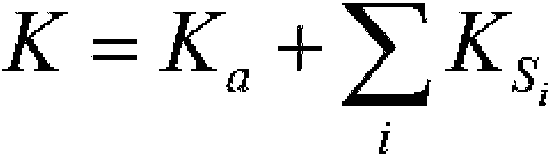


Applications Claiming Priority (3)
| Application Number | Priority Date | Filing Date | Title |
|---|---|---|---|
| FR1453902A FR3020357B1 (en) | 2014-04-29 | 2014-04-29 | GLASS MELTING AND REFINING DEVICE |
| FR1453903A FR3020358B1 (en) | 2014-04-29 | 2014-04-29 | GLASS MELTING AND REFINING PROCESS |
| PCT/FR2015/051107 WO2015166172A1 (en) | 2014-04-29 | 2015-04-23 | Method and device for melting and refining glass |
Publications (1)
| Publication Number | Publication Date |
|---|---|
| ES2720507T3 true ES2720507T3 (en) | 2019-07-22 |
Family
ID=53189078
Family Applications (1)
| Application Number | Title | Priority Date | Filing Date |
|---|---|---|---|
| ES15723265T Active ES2720507T3 (en) | 2014-04-29 | 2015-04-23 | Process and device for melting and refining glass |
Country Status (13)
| Country | Link |
|---|---|
| US (1) | US10414682B2 (en) |
| EP (1) | EP3137426B1 (en) |
| KR (1) | KR102223423B1 (en) |
| CN (1) | CN106232533B (en) |
| BR (1) | BR112016023953B1 (en) |
| EA (1) | EA032521B1 (en) |
| ES (1) | ES2720507T3 (en) |
| MX (1) | MX381758B (en) |
| PL (1) | PL3137426T3 (en) |
| SA (1) | SA516380138B1 (en) |
| TR (1) | TR201905071T4 (en) |
| WO (1) | WO2015166172A1 (en) |
| ZA (1) | ZA201606979B (en) |
Families Citing this family (5)
| Publication number | Priority date | Publication date | Assignee | Title |
|---|---|---|---|---|
| US10807896B2 (en) * | 2018-03-15 | 2020-10-20 | Owens-Brockway Glass Container Inc. | Process and apparatus for glass manufacture |
| MY200759A (en) | 2019-01-30 | 2024-01-14 | Schott Ag | Device and process for producing a glass product and glass product |
| US11697608B2 (en) * | 2019-10-01 | 2023-07-11 | Owens-Brockway Glass Container Inc. | Selective chemical fining of small bubbles in glass |
| CN112919775B (en) * | 2021-04-25 | 2022-11-01 | 中国建材桐城新能源材料有限公司 | Stepped kiln pool of flat glass transverse flame melting kiln |
| US20250034020A1 (en) * | 2021-11-30 | 2025-01-30 | Saint-Gobain Glass France | Hybrid glass-manufacturing furnace with three convection currents for feeding a float unit |
Family Cites Families (12)
| Publication number | Priority date | Publication date | Assignee | Title |
|---|---|---|---|---|
| ES283844A1 (en) | 1962-01-11 | 1963-03-01 | Glaverbel | Improvements in glass ovens with glass tuning compartment in fusion (Machine-translation by Google Translate, not legally binding) |
| GB1531742A (en) | 1975-01-31 | 1978-11-08 | Pilkington Brothers Ltd | Manufacture of glass |
| GB8710298D0 (en) * | 1987-04-30 | 1987-06-03 | Glaverbel | Glass-melting furnace |
| FR2703042B1 (en) | 1993-03-23 | 1995-06-09 | Saint Gobain Vitrage Int | FLOW CHANNEL FOR TRANSFERRING MOLTEN GLASS. |
| FR2711982B1 (en) | 1993-11-02 | 1996-01-19 | Saint Gobain Vitrage | Transfer and conditioning channel for molten glass. |
| FR2711981B1 (en) | 1993-11-02 | 1996-01-05 | Saint Gobain Vitrage | Glass melting device. |
| FR2737487B1 (en) * | 1995-08-03 | 1998-01-09 | Saint Gobain Vitrage | DEVICE FOR MELTING VITRIFIABLE MATERIALS |
| JP5195753B2 (en) | 2007-07-02 | 2013-05-15 | 旭硝子株式会社 | Glass melting kiln and glass product manufacturing method |
| CN201250173Y (en) * | 2008-06-12 | 2009-06-03 | 江苏华尔润集团有限公司 | Stepped refiner bottom structure of large-scale float glass melting furnace |
| FR2951156B3 (en) | 2009-10-14 | 2011-09-16 | Fives Stein | IMPROVEMENTS IN THE CONTROL OF GLASS CONVECTION IN A GLASS OVEN EQUIPPED WITH A CORSET |
| FR2973797B1 (en) | 2011-04-06 | 2018-10-05 | Fives Stein | GLASS OVEN, IN PARTICULAR FOR CLEAR OR ULTRA-CLEAR GLASS, WITH SIDE SECONDARY RECIRCULATIONS |
| CN102320721A (en) | 2011-08-11 | 2012-01-18 | 华尔润玻璃产业股份有限公司 | Float horizontal-flame glass melting furnace |
-
2015
- 2015-04-23 KR KR1020167030060A patent/KR102223423B1/en active Active
- 2015-04-23 US US15/307,258 patent/US10414682B2/en active Active
- 2015-04-23 BR BR112016023953-9A patent/BR112016023953B1/en active IP Right Grant
- 2015-04-23 ES ES15723265T patent/ES2720507T3/en active Active
- 2015-04-23 WO PCT/FR2015/051107 patent/WO2015166172A1/en not_active Ceased
- 2015-04-23 MX MX2016014158A patent/MX381758B/en unknown
- 2015-04-23 CN CN201580023325.4A patent/CN106232533B/en active Active
- 2015-04-23 EP EP15723265.3A patent/EP3137426B1/en active Active
- 2015-04-23 EA EA201692183A patent/EA032521B1/en not_active IP Right Cessation
- 2015-04-23 PL PL15723265T patent/PL3137426T3/en unknown
- 2015-04-23 TR TR2019/05071T patent/TR201905071T4/en unknown
-
2016
- 2016-10-11 ZA ZA2016/06979A patent/ZA201606979B/en unknown
- 2016-10-25 SA SA516380138A patent/SA516380138B1/en unknown
Also Published As
| Publication number | Publication date |
|---|---|
| MX2016014158A (en) | 2017-02-13 |
| BR112016023953B1 (en) | 2022-08-16 |
| WO2015166172A1 (en) | 2015-11-05 |
| EP3137426A1 (en) | 2017-03-08 |
| KR20160146757A (en) | 2016-12-21 |
| MX381758B (en) | 2025-03-13 |
| EA201692183A1 (en) | 2017-03-31 |
| KR102223423B1 (en) | 2021-03-05 |
| US10414682B2 (en) | 2019-09-17 |
| CN106232533A (en) | 2016-12-14 |
| BR112016023953A2 (en) | 2017-08-15 |
| EP3137426B1 (en) | 2019-03-13 |
| CN106232533B (en) | 2019-01-22 |
| SA516380138B1 (en) | 2020-08-18 |
| ZA201606979B (en) | 2022-05-25 |
| US20170050874A1 (en) | 2017-02-23 |
| PL3137426T3 (en) | 2019-07-31 |
| EA032521B1 (en) | 2019-06-28 |
| BR112016023953A8 (en) | 2021-05-11 |
| TR201905071T4 (en) | 2019-05-21 |
Similar Documents
| Publication | Publication Date | Title |
|---|---|---|
| ES2720507T3 (en) | Process and device for melting and refining glass | |
| ES2384582T3 (en) | Submerged burner oven and air burner | |
| ES2262734T3 (en) | METHOD FOR CONTROLLING THE ATMOSPHERE IN THE REFINED AREA OF A GLASS FOUNDING OVEN. | |
| ES2440568T3 (en) | Procedure for the non-polluting casting and refining of a glass melt for a starting glass of a lithium aluminum silicate glass ceramic (LAS) | |
| ES2720223T3 (en) | Method and apparatus for melting solid raw batch material using submerged combustion burners | |
| TWI274046B (en) | A method for refining a glass melt and an apparatus for melting and refining a glass melt | |
| US6871514B2 (en) | Method of making glass, a method and device for the control and setting of the redox state of redox fining agents in a glass melt | |
| ES2717293T3 (en) | Process for the manufacture of vitrified material by fusion | |
| US20100126218A1 (en) | Method of reducing redox ratio of molten glass and the glass made thereby | |
| KR880013828A (en) | Energy saving method for melting glass and glass melting for carrying out the method | |
| KR102393960B1 (en) | Apparatus and method for forming a glass article | |
| ES2636774T3 (en) | Fibrification procedure of vitrifiable materials | |
| CN102503078A (en) | Two-slot type glass tank | |
| KR101971755B1 (en) | Apparatus for producing molten glass, method for producing molten glass, and method for producing plate glass using said apparatus and method | |
| JP2024542163A (en) | Electric melting hybrid glass manufacturing furnace for supplying float units | |
| JP5947880B2 (en) | Glass furnace with secondary side recirculation, especially for transparent or ultra-transparent glass | |
| KR102260096B1 (en) | Melting method, and production method for alkali-free glass plate | |
| ES2564839T3 (en) | Glass furnace, in particular for clear or ultra-clear glass, with reduction of primary recirculation | |
| ES2254352T3 (en) | PROCEDURE FOR COMBUSTION OF CARBONATED MATERIAL. | |
| ES2983046T3 (en) | Submerged burner furnace with self-heating wall | |
| US3362808A (en) | Glass-melting furnace | |
| EP3907196A1 (en) | Furnace for simultaneous continuous melting of multiple glasses | |
| ES3055717T3 (en) | Electric glass furnace, methods for the melting and manufacture of glass by means of said furnace | |
| WO2012093183A1 (en) | Method and unit for melting glass at low temperatures | |
| ES2224873B1 (en) | PROCESS AND OVEN OF FUSION OF FRIES IN TWO STAGES. |