ES2765801T3 - Assistive device for docking maneuvers in a dock - Google Patents
Assistive device for docking maneuvers in a dock Download PDFInfo
- Publication number
- ES2765801T3 ES2765801T3 ES16806230T ES16806230T ES2765801T3 ES 2765801 T3 ES2765801 T3 ES 2765801T3 ES 16806230 T ES16806230 T ES 16806230T ES 16806230 T ES16806230 T ES 16806230T ES 2765801 T3 ES2765801 T3 ES 2765801T3
- Authority
- ES
- Spain
- Prior art keywords
- vehicle
- dock
- road
- rear wheels
- angle
- Prior art date
- Legal status (The legal status is an assumption and is not a legal conclusion. Google has not performed a legal analysis and makes no representation as to the accuracy of the status listed.)
- Active
Links
- 238000003032 molecular docking Methods 0.000 title claims abstract description 76
- 238000013459 approach Methods 0.000 claims description 24
- 230000006870 function Effects 0.000 claims description 12
- 230000001105 regulatory effect Effects 0.000 claims description 9
- 238000000034 method Methods 0.000 claims description 6
- VBCVPMMZEGZULK-NRFANRHFSA-N indoxacarb Chemical compound C([C@@]1(OC2)C(=O)OC)C3=CC(Cl)=CC=C3C1=NN2C(=O)N(C(=O)OC)C1=CC=C(OC(F)(F)F)C=C1 VBCVPMMZEGZULK-NRFANRHFSA-N 0.000 claims 1
- 238000012360 testing method Methods 0.000 description 8
- 230000002441 reversible effect Effects 0.000 description 5
- 230000008859 change Effects 0.000 description 4
- 230000007704 transition Effects 0.000 description 4
- 230000006399 behavior Effects 0.000 description 3
- 230000000295 complement effect Effects 0.000 description 3
- 230000000007 visual effect Effects 0.000 description 3
- 238000012937 correction Methods 0.000 description 2
- 238000001514 detection method Methods 0.000 description 2
- 230000007613 environmental effect Effects 0.000 description 2
- 230000007257 malfunction Effects 0.000 description 2
- 102220047090 rs6152 Human genes 0.000 description 2
- 238000010276 construction Methods 0.000 description 1
- 238000006073 displacement reaction Methods 0.000 description 1
- 239000000446 fuel Substances 0.000 description 1
- 238000012806 monitoring device Methods 0.000 description 1
- 230000003287 optical effect Effects 0.000 description 1
- 238000005457 optimization Methods 0.000 description 1
- 230000002028 premature Effects 0.000 description 1
- 230000008569 process Effects 0.000 description 1
- 230000000750 progressive effect Effects 0.000 description 1
- 230000000717 retained effect Effects 0.000 description 1
- 230000035807 sensation Effects 0.000 description 1
- 239000000725 suspension Substances 0.000 description 1
Classifications
-
- B—PERFORMING OPERATIONS; TRANSPORTING
- B62—LAND VEHICLES FOR TRAVELLING OTHERWISE THAN ON RAILS
- B62D—MOTOR VEHICLES; TRAILERS
- B62D15/00—Steering not otherwise provided for
- B62D15/02—Steering position indicators ; Steering position determination; Steering aids
- B62D15/027—Parking aids, e.g. instruction means
-
- B—PERFORMING OPERATIONS; TRANSPORTING
- B60—VEHICLES IN GENERAL
- B60K—ARRANGEMENT OR MOUNTING OF PROPULSION UNITS OR OF TRANSMISSIONS IN VEHICLES; ARRANGEMENT OR MOUNTING OF PLURAL DIVERSE PRIME-MOVERS IN VEHICLES; AUXILIARY DRIVES FOR VEHICLES; INSTRUMENTATION OR DASHBOARDS FOR VEHICLES; ARRANGEMENTS IN CONNECTION WITH COOLING, AIR INTAKE, GAS EXHAUST OR FUEL SUPPLY OF PROPULSION UNITS IN VEHICLES
- B60K35/00—Instruments specially adapted for vehicles; Arrangement of instruments in or on vehicles
- B60K35/10—Input arrangements, i.e. from user to vehicle, associated with vehicle functions or specially adapted therefor
-
- B—PERFORMING OPERATIONS; TRANSPORTING
- B60—VEHICLES IN GENERAL
- B60Q—ARRANGEMENT OF SIGNALLING OR LIGHTING DEVICES, THE MOUNTING OR SUPPORTING THEREOF OR CIRCUITS THEREFOR, FOR VEHICLES IN GENERAL
- B60Q9/00—Arrangement or adaptation of signal devices not provided for in one of main groups B60Q1/00 - B60Q7/00, e.g. haptic signalling
-
- B—PERFORMING OPERATIONS; TRANSPORTING
- B60—VEHICLES IN GENERAL
- B60R—VEHICLES, VEHICLE FITTINGS, OR VEHICLE PARTS, NOT OTHERWISE PROVIDED FOR
- B60R16/00—Electric or fluid circuits specially adapted for vehicles and not otherwise provided for; Arrangement of elements of electric or fluid circuits specially adapted for vehicles and not otherwise provided for
- B60R16/02—Electric or fluid circuits specially adapted for vehicles and not otherwise provided for; Arrangement of elements of electric or fluid circuits specially adapted for vehicles and not otherwise provided for electric constitutive elements
- B60R16/037—Electric or fluid circuits specially adapted for vehicles and not otherwise provided for; Arrangement of elements of electric or fluid circuits specially adapted for vehicles and not otherwise provided for electric constitutive elements for occupant comfort, e.g. for automatic adjustment of appliances according to personal settings, e.g. seats, mirrors, steering wheel
- B60R16/0373—Voice control
-
- B—PERFORMING OPERATIONS; TRANSPORTING
- B62—LAND VEHICLES FOR TRAVELLING OTHERWISE THAN ON RAILS
- B62D—MOTOR VEHICLES; TRAILERS
- B62D15/00—Steering not otherwise provided for
- B62D15/02—Steering position indicators ; Steering position determination; Steering aids
- B62D15/021—Determination of steering angle
- B62D15/024—Other means for determination of steering angle without directly measuring it, e.g. deriving from wheel speeds on different sides of the car
-
- B—PERFORMING OPERATIONS; TRANSPORTING
- B62—LAND VEHICLES FOR TRAVELLING OTHERWISE THAN ON RAILS
- B62D—MOTOR VEHICLES; TRAILERS
- B62D7/00—Steering linkage; Stub axles or their mountings
- B62D7/06—Steering linkage; Stub axles or their mountings for individually-pivoted wheels, e.g. on king-pins
- B62D7/14—Steering linkage; Stub axles or their mountings for individually-pivoted wheels, e.g. on king-pins the pivotal axes being situated in more than one plane transverse to the longitudinal centre line of the vehicle, e.g. all-wheel steering
- B62D7/142—Steering linkage; Stub axles or their mountings for individually-pivoted wheels, e.g. on king-pins the pivotal axes being situated in more than one plane transverse to the longitudinal centre line of the vehicle, e.g. all-wheel steering specially adapted for particular vehicles, e.g. tractors, carts, earth-moving vehicles, trucks
-
- B—PERFORMING OPERATIONS; TRANSPORTING
- B62—LAND VEHICLES FOR TRAVELLING OTHERWISE THAN ON RAILS
- B62D—MOTOR VEHICLES; TRAILERS
- B62D7/00—Steering linkage; Stub axles or their mountings
- B62D7/06—Steering linkage; Stub axles or their mountings for individually-pivoted wheels, e.g. on king-pins
- B62D7/14—Steering linkage; Stub axles or their mountings for individually-pivoted wheels, e.g. on king-pins the pivotal axes being situated in more than one plane transverse to the longitudinal centre line of the vehicle, e.g. all-wheel steering
- B62D7/15—Steering linkage; Stub axles or their mountings for individually-pivoted wheels, e.g. on king-pins the pivotal axes being situated in more than one plane transverse to the longitudinal centre line of the vehicle, e.g. all-wheel steering characterised by means varying the ratio between the steering angles of the steered wheels
-
- B—PERFORMING OPERATIONS; TRANSPORTING
- B62—LAND VEHICLES FOR TRAVELLING OTHERWISE THAN ON RAILS
- B62D—MOTOR VEHICLES; TRAILERS
- B62D7/00—Steering linkage; Stub axles or their mountings
- B62D7/06—Steering linkage; Stub axles or their mountings for individually-pivoted wheels, e.g. on king-pins
- B62D7/14—Steering linkage; Stub axles or their mountings for individually-pivoted wheels, e.g. on king-pins the pivotal axes being situated in more than one plane transverse to the longitudinal centre line of the vehicle, e.g. all-wheel steering
- B62D7/15—Steering linkage; Stub axles or their mountings for individually-pivoted wheels, e.g. on king-pins the pivotal axes being situated in more than one plane transverse to the longitudinal centre line of the vehicle, e.g. all-wheel steering characterised by means varying the ratio between the steering angles of the steered wheels
- B62D7/159—Steering linkage; Stub axles or their mountings for individually-pivoted wheels, e.g. on king-pins the pivotal axes being situated in more than one plane transverse to the longitudinal centre line of the vehicle, e.g. all-wheel steering characterised by means varying the ratio between the steering angles of the steered wheels characterised by computing methods or stabilisation processes or systems, e.g. responding to yaw rate, lateral wind, load, road condition
Landscapes
- Engineering & Computer Science (AREA)
- Mechanical Engineering (AREA)
- Chemical & Material Sciences (AREA)
- Combustion & Propulsion (AREA)
- Transportation (AREA)
- Mathematical Physics (AREA)
- Physics & Mathematics (AREA)
- Theoretical Computer Science (AREA)
- Human Computer Interaction (AREA)
- Steering Control In Accordance With Driving Conditions (AREA)
- Steering-Linkage Mechanisms And Four-Wheel Steering (AREA)
- Power Steering Mechanism (AREA)
- Electric Propulsion And Braking For Vehicles (AREA)
Abstract
Vehículo de carretera (3) que incluye ruedas delanteras (11) montadas en un eje de dirección delantero (4) y ruedas traseras (9) montadas en un eje trasero (5), caracterizado porque incluye un dispositivo de asistencia (1) para maniobras de atraque en una dársena (2), y porque el eje trasero (5) es un eje de dirección y está equipado con una dirección (7), estando el dispositivo de asistencia (1) previsto para funcionar según un modo carretera o según un modo atraque, e incluye los siguientes medios: - un dispositivo de control de dirección (10) previsto para controlar el ángulo de giro AAR de las ruedas traseras (9); - un sensor de distancia (16) proporcionado en la parte trasera del vehículo (3) para medir la distancia DARdársena desde la parte trasera del vehículo (3) con respecto a la dársena (2); en el que: - en modo carretera, las ruedas traseras (9) están rectas, o su ángulo de giro AAR está controlado por el dispositivo de control de dirección (10) en función del ángulo de giro AAV de las ruedas delanteras (11); - en modo atraque, el ángulo de giro de las ruedas traseras (9) está controlado por el dispositivo de control de dirección (10) en función de las distancias medidas por el sensor de distancia (16) y en función del ángulo de giro AAV de las ruedas delanteras (11).Road vehicle (3) that includes front wheels (11) mounted on a front steering axle (4) and rear wheels (9) mounted on a rear axle (5), characterized in that it includes an assistance device (1) for maneuvers mooring in a dock (2), and because the rear axle (5) is a steering axle and is equipped with a steering (7), the assistance device (1) being designed to operate according to a road mode or according to a docking mode, and includes the following means: - a steering control device (10) provided to control the angle of rotation AAR of the rear wheels (9); - a distance sensor (16) provided at the rear of the vehicle (3) to measure the distance DAR dock from the rear of the vehicle (3) with respect to the dock (2); in which: - in road mode, the rear wheels (9) are straight, or their steering angle AAR is controlled by the steering control device (10) as a function of the steering angle AAV of the front wheels (11) ; - in docking mode, the turning angle of the rear wheels (9) is controlled by the steering control device (10) as a function of the distances measured by the distance sensor (16) and as a function of the turning angle AAV the front wheels (11).
Description
DESCRIPCIÓNDESCRIPTION
Dispositivo de asistencia para maniobras de atraque en una dársenaAssistive device for docking maneuvers in a dock
Campo técnicoTechnical field
La presente invención se refiere a un vehículo de carretera que incluye un dispositivo de asistencia para las maniobras de atraque en una dársena.The present invention relates to a road vehicle that includes an assist device for docking maneuvers in a dock.
La invención se refiere a cualquier tipo de vehículo con ejes articulados, más particularmente un vehículo de carretera de transporte público del tipo autobús, que incluye un aparato que facilita al conductor las maniobras de aproximación y de salida de una dársena, de manera que el vehículo no colisione con su entorno y que permanezca lo más cerca posible de la dársena al final de la maniobra de aproximación.The invention relates to any type of vehicle with articulated axles, more particularly a bus-type public transport road vehicle, which includes an apparatus that facilitates the driver's approach and departure maneuvers of a dock, so that the vehicle do not collide with your surroundings and stay as close to the dock as possible at the end of the approach maneuver.
Estado de la técnicaState of the art
Se conoce, particularmente en el campo de los vehículos especiales de transporte por carretera, por ejemplo, en el campo de vehículos madereros, equipar vehículos con ejes de dirección que el conductor puede controlar durante maniobras difíciles. Este tipo de dispositivo habitualmente se controla mediante un control remoto, abandonando el conductor su posición de conducción para controlar los diferentes desplazamientos de los ejes desde el exterior del vehículo.It is known, particularly in the field of special road transport vehicles, for example in the field of logging vehicles, to equip vehicles with steered axles that the driver can control during difficult maneuvers. This type of device is usually controlled by a remote control, leaving the driver in his driving position to control the different movements of the axles from outside the vehicle.
Por lo tanto, este tipo de dispositivo no es adecuado para conducir en un entorno urbano donde es particularmente peligroso para el conductor abandonar su posición de conducción.Therefore, this type of device is not suitable for driving in an urban environment where it is particularly dangerous for the driver to leave his driving position.
También se conoce equipar los vehículos de carretera con diversos sensores o cámaras que permitan ayudar al conductor durante maniobras difíciles proporcionándole mucha información visual o sonora, en particular sobre la presencia, la posición y la distancia de los obstáculos situados alrededor de su vehículo.It is also known to equip road vehicles with various sensors or cameras that allow the driver to be assisted during difficult maneuvers by providing him with a lot of visual or sound information, in particular on the presence, position and distance of obstacles located around his vehicle.
A veces, estos sensores o cámaras están asociados con una inteligencia electrónica para controlar el eje delantero del vehículo automáticamente.Sometimes these sensors or cameras are associated with electronic intelligence to automatically control the front axle of the vehicle.
Por lo tanto, existen dispositivos anticolisión y dispositivos de corrección de trayectoria que actúan en la dirección de avance del vehículo a alta velocidad para evitar accidentes.Therefore, there are anti-collision devices and trajectory correction devices that act in the forward direction of the vehicle at high speed to avoid accidents.
Los dispositivos anticolisión y los dispositivos de corrección de trayectoria también se conocen para vehículos en los que las ruedas del eje trasero se pueden girar ligeramente, según un ángulo de giro cuyo valor absoluto suele ser inferior a 2°. Este ángulo de giro muy limitado no permite que el conductor reciba asistencia para maniobras de atraque a baja velocidad.Anti-collision devices and trajectory correction devices are also known for vehicles in which the wheels of the rear axle can be turned slightly, according to a turning angle whose absolute value is usually less than 2 °. This very limited turning angle does not allow the driver to receive assistance for low speed docking maneuvers.
Sin embargo, no hay sensores asociados con la inteligencia electrónica para controlar automáticamente un eje de dirección trasero de un vehículo de carretera para ayudar al conductor a realizar maniobras a baja velocidad, en particular maniobras de atraque en la dársena.However, there are no sensors associated with electronic intelligence to automatically control a rear steering axle of a road vehicle to assist the driver in performing low-speed maneuvers, particularly docking maneuvers in the dock.
De hecho, las maniobras de atraque en una dársena con un vehículo de transporte público son a menudo difíciles en las zonas urbanas. Debido a la presencia de peatones que probablemente caminen en los espacios reservados para el autobús, los coches mal estacionados que a veces invaden estos espacios en las paradas del autobús o diversos obstáculos urbanos, a veces dificultan que el conductor realice maniobras de aproximación y de salida de una dársena para que el vehículo no choque con su entorno y esté lo más cerca posible de la dársena al final de la maniobra de aproximación. El documento FR 2916721 A1 se considera la técnica anterior más cercana.In fact, docking maneuvers in a dock with a public transport vehicle are often difficult in urban areas. Due to the presence of pedestrians who are likely to walk in spaces reserved for the bus, poorly parked cars that sometimes invade these spaces at bus stops or various urban obstacles, sometimes make it difficult for the driver to perform approach and exit maneuvers of a dock so that the vehicle does not collide with its surroundings and is as close as possible to the dock at the end of the approach maneuver. FR 2916721 A1 is considered the closest prior art.
Descripción de la invenciónDescription of the Invention
Por lo tanto, el objeto de la presente invención es abordar los inconvenientes del estado de la técnica, proponiendo un nuevo vehículo de carretera que incluye un dispositivo de asistencia para las maniobras de atraque en una dársena. Este dispositivo de asistencia funciona automáticamente cuando se inicia. Por lo tanto, durante las maniobras de atraque en una dársena, el conductor no se encargará del dispositivo de asistencia cuando se active. El conductor conducirá su vehículo de manera convencional, orientando el eje de dirección delantero de la manera habitual con su volante, mientras que el dispositivo de asistencia de la invención se ocupa de orientar un eje trasero que está modificado para que sea el eje de dirección, sin que el conductor tenga que preocuparse de ello.Therefore, the object of the present invention is to address the drawbacks of the state of the art, proposing a new road vehicle that includes an assistance device for docking maneuvers in a dock. This assistive device works automatically when started. Therefore, during docking maneuvers in a dock, the driver will not be in charge of the assistive device when activated. The driver will drive his vehicle in a conventional manner, orienting the front steering axle in the usual way with his steering wheel, while the assistive device of the invention is concerned with orienting a rear axle which is modified to be the steering axle, without the driver having to worry about it.
Según esta invención, las ruedas del eje trasero pueden girarse según un ángulo cuyo valor absoluto es muy superior a 2°, por ejemplo, superior a 10°, preferentemente superior a 20° e incluso más preferentemente superior a 30°. El hecho de que el eje trasero sea el eje director permite que el vehículo de carretera realice maniobras de atraque en una distancia más corta, lo cual es particularmente ventajoso cuando los espacios reservados en las paradas de autobús para vehículos de transporte público son de tamaño reducido.According to this invention, the wheels of the rear axle can be rotated at an angle whose absolute value is much greater than 2 °, for example, greater than 10 °, preferably greater than 20 ° and even more preferably greater than 30 °. The fact that the rear axle is the steer axle allows the road vehicle to perform docking maneuvers in a shorter distance, which is particularly advantageous when spaces reserved at bus stops for public transport vehicles are small.
Esto también permite acercarse a la parte trasera del vehículo lo más cerca posible de la dársena durante las maniobras de aproximación para que el vehículo esté lo más cerca posible de la dársena como perfectamente en paralelo a la misma. Esto es particularmente importante en el campo de los vehículos de transporte público capaces de transportar pasajeros en silla de ruedas, con cochecitos de bebé o carritos de la compra.This also allows the rear of the vehicle to be approached as close to the dock as possible during approach maneuvers so that the vehicle is as close to the dock as perfectly parallel to it. This is particularly important in the field of public transport vehicles capable of transporting passengers in wheelchairs, with baby carriages or shopping carts.
Otro objeto de la presente invención es proponer un nuevo procedimiento de atraque en una dársena para un vehículo de carretera equipado con el dispositivo de asistencia de la invención.Another object of the present invention is to propose a new docking procedure in a dock for a road vehicle equipped with the assistance device of the invention.
Según la invención, los objetos asignados a la invención se logran con la ayuda de un vehículo de carretera que incluye ruedas delanteras montadas en un eje de dirección delantero y ruedas traseras montadas en un eje trasero, caracterizado por que incluye un dispositivo de asistencia para maniobras de atraque en una dársena, y porque el eje trasero es un eje de dirección y está equipado con una dirección, estando el dispositivo de asistencia previsto para funcionar según un modo carretera o según un modo atraque, e incluye los siguientes medios:According to the invention, the objects assigned to the invention are achieved with the help of a road vehicle that includes front wheels mounted on a front steering axle and rear wheels mounted on a rear axle, characterized in that it includes an assistance device for maneuvers berthing in a dock, and because the rear axle is a steering axle and is equipped with a steering, the assistance device being intended to operate in a road mode or in a berthing mode, and includes the following means:
- un dispositivo de control de dirección previsto para controlar el ángulo de giro Aar de las ruedas traseras;- a steering control device provided to control the turning angle A ar of the rear wheels;
- un sensor de distancia proporcionado en la parte trasera del vehículo para medir la distancia DARdársena desde la parte trasera del vehículo con respecto a la dársena;- a distance sensor provided at the rear of the vehicle to measure the distance DAR basin from the rear of the vehicle with respect to the basin;
en el que:in which:
- en modo carretera, las ruedas traseras están rectas, o su ángulo de giro Aar está controlado por el dispositivo de control de dirección en función del ángulo de giro Aav de las ruedas delanteras;- in road mode, the rear wheels are straight, or their turning angle A ar is controlled by the steering control device depending on the turning angle A av of the front wheels;
- en modo atraque, el ángulo de giro de las ruedas traseras está controlado por el dispositivo de control de dirección en función de las distancias medidas por el sensor de distancia y el ángulo de las ruedas delanteras Aav.- in docking mode, the turning angle of the rear wheels is controlled by the steering control device as a function of the distances measured by the distance sensor and the angle of the front wheels A av .
Por lo tanto, el dispositivo de asistencia controla el giro de las ruedas traseras de forma totalmente automática, para optimizar y facilitar las diferentes maniobras realizadas por el conductor al atracar en una dársena.Therefore, the assistance device controls the rotation of the rear wheels fully automatically, to optimize and facilitate the different maneuvers performed by the driver when docking in a dock.
Según una variante de la invención, el dispositivo de asistencia comprende además los siguientes medios:According to a variant of the invention, the assist device further comprises the following means:
- un sensor de distancia proporcionado en la parte delantera para medir la distancia DAVdársena de la parte delantera del vehículo con respecto a la dársena;- a distance sensor provided at the front to measure the distance DAV dock from the front of the vehicle with respect to the dock;
- un sensor de distancia proporcionado en la parte trasera del vehículo para medir la distancia DARent desde la parte trasera del vehículo con respecto a los demás obstáculos del entorno;- a distance sensor provided at the rear of the vehicle to measure the DARent distance from the rear of the vehicle with respect to other obstacles in the environment;
en el que:in which:
- en modo carretera, las ruedas traseras están rectas, o su ángulo de giro Aar está controlado por el dispositivo de control de dirección en función del ángulo de giro Aav de las ruedas delanteras;- in road mode, the rear wheels are straight, or their turning angle A ar is controlled by the steering control device depending on the turning angle A av of the front wheels;
- en modo atraque, el ángulo de giro de las ruedas traseras está controlado por el dispositivo de control de dirección en función de las distancias medidas por los sensores de distancia y en función del ángulo de giro Aav de las ruedas delanteras.- in docking mode, the angle of rotation of the rear wheels is controlled by the steering control device as a function of the distances measured by the distance sensors and as a function of the angle of rotation A to av of the front wheels.
Por lo tanto, gracias a los sensores de distancia complementarios, el dispositivo de asistencia controla el giro de las ruedas traseras de más optimizada para facilitar las diferentes maniobras realizadas por el conductor al atracar en una dársena.Therefore, thanks to the complementary distance sensors, the assistance device controls the rotation of the rear wheels, which is more optimized to facilitate the different maneuvers carried out by the driver when docking in a dock.
Según un ejemplo de implementación de la invención, el dispositivo de asistencia comprende además un sensor de distancia proporcionado en la parte delantera del vehículo para medir la distancia DAVent de la parte delantera del vehículo con respecto a los demás obstáculos del entorno.According to an exemplary implementation of the invention, the assist device further comprises a distance sensor provided at the front of the vehicle to measure the DAVent distance from the front of the vehicle with respect to other obstacles in the environment.
Según un ejemplo adicional de implementación de la invención, las ruedas traseras pueden girarse según un ángulo cuyo valor absoluto es superior a 10°, preferentemente superior a 20° y más preferentemente superior a 30°. Este ángulo de giro, que es superior al de los ejes de dirección traseros existentes, permite optimizar las diferentes maniobras de atraque con respecto a los vehículos de la técnica anterior.According to a further example of implementation of the invention, the rear wheels can be turned at an angle whose absolute value is greater than 10 °, preferably greater than 20 ° and more preferably greater than 30 °. This angle of rotation, which is higher than that of the existing rear steering axles, allows optimizing the different docking maneuvers with respect to the prior art vehicles.
Según un ejemplo de implementación de la invención, en modo carretera, el dispositivo de control de dirección controla el ángulo de giro Aar de las ruedas traseras de manera que las ruedas traseras estén primero rectas, después, más allá de un cierto ángulo de giro de las ruedas delanteras, las ruedas traseras se regulan en cuanto al giro de manera proporcional y lineal con respecto a la instrucción de giro recibida por las ruedas delanteras.According to an example of implementation of the invention, in road mode, the steering control device controls the turning angle A ar of the rear wheels so that the rear wheels are first straight, then beyond a certain turning angle Of the front wheels, the rear wheels are regulated in turn proportionally and linearly with respect to the turn instruction received by the front wheels.
Según un ejemplo complementario de implementación de la invención, en modo carretera, el eje trasero se fija con las ruedas traseras rectas cuando la velocidad del vehículo es superior a la velocidad máxima del modo carretera Svar. According to a complementary implementation example of the invention, in road mode, the rear axle is fixed with the rear wheels straight when the vehicle speed is higher than the maximum speed of the road mode S var .
Esto permite evitar cualquier riesgo de comportamiento peligroso del vehículo cuando circula a una velocidad determinada.This allows to avoid any risk of dangerous behavior of the vehicle when it circulates at a certain speed.
Según un ejemplo de implementación de la invención, el dispositivo de asistencia cambia automáticamente del modo atraque al modo carretera cuando la velocidad del vehículo es superior a una velocidad máxima para el atraque VMÁxAtraque o cuando el ángulo de giro Aav de las ruedas delanteras es superior a un ángulo de giro asalidaAtraque de salida del atraque. Esto permite particularmente evitar cualquier riesgo de comportamiento peligroso del vehículo cuando circula a una velocidad determinada.According to an exemplary implementation of the invention, the assist device automatically switches from docking mode to highway mode when the vehicle speed is greater than a maximum speed for docking VMÁxHorning or when the turning angle A to av of the front wheels is greater at an angle of departure turn Berth departure berth. This particularly makes it possible to avoid any risk of dangerous behavior of the vehicle when driving at a certain speed.
Según un ejemplo adicional de implementación de la invención, el dispositivo de asistencia incluye sensores que permiten medir el ángulo de giro Aav de las ruedas delanteras y el ángulo de giro Aar de las ruedas traseras. Estos sensores permiten proporcionar la información necesaria para el funcionamiento del dispositivo de asistencia, en particular en modo carretera.According to a further example of implementation of the invention, the assist device includes sensors that allow the angle of rotation A av of the front wheels and the angle of rotation A ar of the rear wheels to be measured. These sensors make it possible to provide the information necessary for the operation of the assistive device, particularly in road mode.
Según este ejemplo de implementación de la invención, cuando el eje delantero incluye una caja de dirección, el ángulo de giro Aav de las ruedas delanteras puede medirse por un sensor de ángulo que está conectado a esta caja de dirección.According to this example of implementation of the invention, when the front axle includes a steering box, the angle of rotation A av of the front wheels can be measured by an angle sensor that is connected to this steering box.
Igualmente, cuando el dispositivo de control de dirección incluye un accionador con vástago móvil, el ángulo de giro Aar de las ruedas traseras puede medirse por un sensor de posición conectado al accionador del dispositivo de control de dirección, estando el ángulo de giro Aar de las ruedas traseras calculado en función de la posición del vástago del accionador.Likewise, when the steering control device includes an actuator with a movable stem, the angle of rotation A ar of the rear wheels can be measured by a position sensor connected to the actuator of the steering control device, the angle of rotation A ar being of the rear wheels calculated according to the position of the actuator stem.
Según un ejemplo de implementación de la invención, los sensores de distancia se proporcionan en el lado derecho del vehículo, particularmente en el caso en el que el vehículo está destinado a circular por la derecha.According to an example of implementation of the invention, the distance sensors are provided on the right side of the vehicle, particularly in the case where the vehicle is intended to circulate on the right.
Según un ejemplo adicional de implementación de la invención, los sensores de distancia proporcionados en la parte delantera del vehículo se proporcionan delante de las ruedas delanteras, el sensor de distancia con respecto a la dársena proporcionado en la parte trasera del vehículo se proporciona delante de las ruedas traseras, y el sensor de entorno trasero se proporciona detrás de las ruedas traseras. Esto permite que los sensores se sitúen lo más cerca posible de los obstáculos que tienen que detectar.According to a further example of implementation of the invention, the distance sensors provided at the front of the vehicle are provided in front of the front wheels, the distance sensor with respect to the dock provided at the rear of the vehicle is provided in front of the front wheels. rear wheels, and the rear environment sensor is provided behind the rear wheels. This allows the sensors to be placed as close as possible to the obstacles they have to detect.
Según un ejemplo complementario de implementación de la invención, la información de distancia en la parte delantera y la parte trasera que se recibe por los sensores de distancia se transmite al conductor de manera visual, lo que lo ayuda en su conducción.According to a complementary example of implementation of the invention, the distance information at the front and rear that is received by the distance sensors is transmitted to the driver visually, which helps them to drive.
Según un ejemplo de implementación de la invención, el dispositivo de asistencia incluye un conmutador de modo atraque/carretera que hace cambiar el dispositivo de asistencia del modo carretera al modo atraque y viceversa cuando se acciona.In accordance with an exemplary implementation of the invention, the assist device includes a dock / road mode switch that switches the assist device from road mode to dock mode and vice versa when operated.
Según este ejemplo de implementación de la invención, el conmutador de modo atraque/carretera puede acccionarse manualmente por el conductor por medio de un botón proporcionado en la cabina del conductor del vehículo.According to this example of implementation of the invention, the dock / road mode switch can be manually operated by the driver by means of a button provided in the driver's cabin of the vehicle.
El conmutador de modo atraque/carretera puede accionarse también por un diálogo sin contacto entre la infraestructura y el vehículo. Por lo tanto, el conductor no necesita preocuparse por accionar el conmutador de modo atraque/carretera, esto se hace automáticamente, por ejemplo, cuando el vehículo se acerca o abandona una dársena equipada con un dispositivo de diálogo sin contacto con el vehículo.The dock / road mode switch can also be actuated by a contactless dialogue between the infrastructure and the vehicle. Therefore, the driver does not need to worry about operating the dock / road mode switch, this is done automatically, for example, when the vehicle approaches or leaves a dock equipped with a dialogue device without contact with the vehicle.
Según un ejemplo de implementación de la invención, el conmutador de modo atraque/carretera no permite que el dispositivo de asistencia cambie del modo carretera al modo atraque mientras que el vehículo circule a una velocidad superior a la velocidad máxima para el atraque VMÁxAtraque. Esto permite evitar cualquier riesgo de comportamiento peligroso del vehículo cuando circula a una velocidad determinada.According to an exemplary implementation of the invention, the dock / road mode switch does not allow the assist device to change from road mode to dock mode while the vehicle is traveling at a speed greater than the maximum speed for docking VMÁxAtraqueque. This allows to avoid any risk of dangerous behavior of the vehicle when it circulates at a certain speed.
Según un ejemplo de implementación de la invención, el dispositivo de asistencia incluye también una inteligencia a bordo que controla el dispositivo de control de dirección del eje trasero.According to an exemplary implementation of the invention, the assist device also includes an on-board intelligence that controls the rear axle steering control device.
Esta inteligencia a bordo está, por ejemplo, conectada a sensores de distancia, a sensores que permiten medir el ángulo de giro Aav de las ruedas delanteras y el ángulo de giro Aar de las ruedas traseras, y al conmutador de modo atraque/carretera.This on-board intelligence is, for example, connected to distance sensors, to sensors that measure the turning angle A av of the front wheels and the turning angle A ar of the rear wheels, and to the dock / road mode switch .
La inteligencia a bordo puede incluir una memoria en la que se almacenan las fórmulas matemáticas utilizadas por el dispositivo de asistencia para controlar el ángulo de giro de las ruedas traseras en modo carretera y en modo atraque, así como los valores de las constantes utilizadas en estas fórmulas.On-board intelligence can include a memory in which the mathematical formulas used by the assistive device to control the angle of rotation of the rear wheels in road mode and in dock mode are stored, as well as the values of the constants used in these formulas.
Los objetos asignados a la invención se logran también con la ayuda de un procedimiento de atraque en una dársena para un vehículo de carretera, como se ha descrito anteriormente, caracterizado por que comprende las siguientes etapas:The objects assigned to the invention are also achieved with the help of a docking procedure in a dock for a road vehicle, as described above, characterized in that it comprises the following stages:
a) una fase de marcha, cuando el vehículo circula de manera convencional, en la que el dispositivo de asistencia se cambia al modo carretera, y en la que las ruedas traseras están rectas o reguladas en la dirección delantera; b) una fase de aproximación, cuando el vehículo inicia su atraque en una dársena, en la que el dispositivo de asistencia se cambia al modo atraque, en la que las ruedas traseras permanecen en modo carretera mientras que el detector de distancia delantero no haya detectado la dársena, y en la que, cuando el detector de distancia delantero detecta la dársena, las ruedas traseras se controlan por el dispositivo de asistencia y se giran de manera que el eje trasero se desplace en la dirección de la dársena;a) a driving phase, when the vehicle circulates in a conventional manner, in which the assist device is switched to road mode, and in which the rear wheels are straight or regulated in the front direction; b) an approach phase, when the vehicle begins docking in a dock, in which the assist device is switched to docking mode, in which the rear wheels remain in road mode while the front distance detector has not detected the dock, and in which, when the front dock detector detects the dock, the rear wheels are controlled by the assist device and rotated so that the rear axle moves in the direction of the dock;
c) una fase de detención, cuando el vehículo se atraca en la dársena;c) a stop phase, when the vehicle is docked in the dock;
d) una fase de salida, cuando el vehículo abandona la dársena, en la que el dispositivo de asistencia se cambia al modo atraque y en la que las ruedas traseras se giran de manera que el eje trasero se aleje de la dársena; e) una fase de marcha, cuando el vehículo circula de manera convencional después de haber terminado de abandonar la dársena, en la que el dispositivo de asistencia se cambia al modo carretera y en la que las ruedas traseras están rectas o reguladas en la dirección delantera.d) an exit phase, when the vehicle leaves the dock, in which the assist device is switched to docking mode and in which the rear wheels are turned so that the rear axle is moved away from the dock; e) a driving phase, when the vehicle circulates in a conventional manner after it has finished leaving the dock, in which the assist device is switched to road mode and in which the rear wheels are straight or regulated in the front direction .
Según este procedimiento de atraque, durante la fase de detención, cuando el vehículo está atracado en la dársena, las ruedas traseras pueden girarse de manera que se devuelvan a la posición no girada. De hecho, esto permite que el vehículo esté lo más cerca posible de la dársena, y las ruedas giradas a veces pueden dificultar la apertura de las puertas laterales de dicho vehículo.According to this docking procedure, during the stop phase, when the vehicle is docked in the dock, the rear wheels can be turned so that they are returned to the non-turned position. In fact, this allows the vehicle to be as close to the dock as possible, and turned wheels can sometimes make it difficult to open the vehicle's side doors.
Este proceso facilita considerablemente las maniobras de atraque para el conductor. Por lo tanto, este atraque se optimiza de forma automática por el dispositivo de asistencia, permitiendo en particular que el vehículo atraque en paralelo y cerca de una dársena de una manera mucho más fácil y segura y en una distancia mucho más corta que con los vehículos convencionales.This process considerably facilitates docking maneuvers for the driver. Therefore, this docking is optimized automatically by the assistive device, in particular allowing the vehicle to dock in parallel and close to a dock in a much easier and safer way and in a much shorter distance than with vehicles. conventional.
Gracias a la invención, el espacio entre el vehículo y la dársena se reduce para facilitar el acceso al vehículo. Dado que la distancia a la dársena está bajo control, los flancos de las ruedas ya no rozan contra la dársena, lo que evita su desgaste prematuro.Thanks to the invention, the space between the vehicle and the dock is reduced to facilitate access to the vehicle. Since the distance to the dock is under control, the sidewalls of the wheels no longer rub against the dock, preventing premature wear.
Del mismo modo, la longitud necesaria para llevar a cabo el atraque se reduce, lo que permite que el vehículo atraque incluso cuando el espacio disponible no sea suficiente para un vehículo convencional.Similarly, the length required to dock is reduced, allowing the vehicle to dock even when the available space is not sufficient for a conventional vehicle.
Al optimizar el tiempo y el número de maniobras necesarias para el atraque, la invención también permite optimizar el consumo de combustible del vehículo.By optimizing the time and number of maneuvers required for docking, the invention also enables the vehicle's fuel consumption to be optimized.
Finalmente, los sensores de la invención permiten una asistencia visual a la conducción que es independiente del clima y la visibilidad.Finally, the sensors of the invention allow visual driving assistance that is independent of weather and visibility.
Breve descripción de los dibujosBrief description of the drawings
Otras características y ventajas de la presente invención se harán más evidente tras la lectura de la siguiente descripción, hecha con referencia a los dibujos adjuntos, dados a modo de ejemplos no limitativos, en los que: Other features and advantages of the present invention will become more apparent upon reading the following description, made with reference to the accompanying drawings, given by way of non-limiting example, in which:
- la figura 1 es un gráfico que ilustra la ley matemática que proporciona el ángulo de giro de las ruedas traseras con respecto al ángulo de giro de las ruedas delanteras cuando el eje trasero funciona en modo carretera;- Figure 1 is a graph illustrating the mathematical law that provides the angle of rotation of the rear wheels with respect to the angle of rotation of the front wheels when the rear axle operates in road mode;
- la figura 2 es una vista esquemática que ilustra un vehículo de carretera equipado con un dispositivo de asistencia para maniobras de atraque en una dársena según una primera variante de la invención;FIG. 2 is a schematic view illustrating a road vehicle equipped with an assistance device for docking maneuvers in a dock according to a first variant of the invention;
- la figura 3 es una vista esquemática que ilustra un vehículo de carretera equipado con un dispositivo de asistencia para maniobras de atraque en una dársena según una segunda variante de la invención; yFIG. 3 is a schematic view illustrating a road vehicle equipped with an assistance device for docking maneuvers in a dock according to a second variant of the invention; and
- las figuras 4 a 11 son vistas esquemáticas que ilustran las maniobras de aproximación y salida de una dársena para un vehículo de carretera equipado con un dispositivo de asistencia según la invención, en las que la trayectoria del eje delantero se muestra como una línea de puntos.Figures 4 to 11 are schematic views illustrating the approach and departure maneuvers of a dock for a road vehicle equipped with an assistance device according to the invention, in which the path of the front axle is shown as a dotted line .
Modo(s) para realizar la invenciónMode (s) for carrying out the invention
A los elementos estructural y funcionalmente idénticos presentes en varias figuras separadas se les asigna la misma referencia numérica o alfanumérica.Structurally and functionally identical elements present in several separate figures are assigned the same numerical or alphanumeric reference.
El dispositivo de asistencia (1) para las maniobras de atraque en una dársena (2) según la invención se proporciona para un vehículo de carretera (3) que incluye un eje de dirección delantero (4) equipado con una dirección convencional (6) accionada por el volante del vehículo (3). La dirección de avance (6) está asistida, por ejemplo, por una caja de dirección asistida hidráulicamente con asistencia variable (no mostrada).The assistance device (1) for docking maneuvers in a dock (2) according to the invention is provided for a road vehicle (3) that includes a front steering axle (4) equipped with a conventional powered steering (6) by the steering wheel of the vehicle (3). The forward direction (6) is assisted, for example, by a hydraulically assisted steering box with variable assistance (not shown).
En la siguiente descripción, por razones de conveniencia, se ha utilizado el término "dársena" para designar cualquier tipo de borde, peldaño de acceso al vehículo o cualquier otro medio físico, fijo o móvil en relación con el suelo, en el que se paran los pasajeros antes de entrar en un vehículo. Además, el término "dársena" no debe interpretarse de manera limitante, sino que se refiere a cualquier tipo similar de borde.In the following description, for reasons of convenience, the term "dock" has been used to designate any type of edge, access step to the vehicle or any other physical, fixed or mobile means in relation to the ground, in the Passengers stop before entering a vehicle. Furthermore, the term "dock" should not be construed as limiting, but refers to any similar type of border.
El dispositivo de asistencia (1) de la invención se proporciona preferentemente para un vehículo de carretera (3) de transporte público, por ejemplo, un autobús, pero puede adaptarse a cualquier tipo de vehículo de carretera (3). El dispositivo de asistencia (1) según la invención también se proporciona para hacer funcionar el eje trasero (5) de un vehículo de carretera (3) según dos modos, concretamente, un modo carretera y un modo atraque. Según la invención, el eje trasero (5) también es el eje de dirección y está equipado con una dirección (7), pero no se controla por el conductor del vehículo de carretera (3). De hecho, la dirección trasera (7) se controla de forma totalmente automática mediante el dispositivo de asistencia (1) según la invención.The assistive device (1) of the invention is preferably provided for a public transport road vehicle (3), for example a bus, but can be adapted to any type of road vehicle (3). The assist device (1) according to the invention is also provided to operate the rear axle (5) of a road vehicle (3) in two modes, namely, a road mode and a dock mode. According to the invention, the rear axle (5) is also the steering axle and is equipped with a steering (7), but is not controlled by the driver of the road vehicle (3). In fact, the rear direction (7) is controlled fully automatically by the assistance device (1) according to the invention.
Para controlar el ángulo de giro de las ruedas traseras (9) en sus dos modos de funcionamiento, el dispositivo de asistencia (1) según la invención comprende un dispositivo de control de dirección (10) del eje trasero (5). Este dispositivo de control de dirección (10) comprende un accionador, preferentemente en forma de un cilindro hidráulico asociado con un distribuidor proporcional, o en forma de un cilindro eléctrico.To control the angle of rotation of the rear wheels (9) in its two modes of operation, the assistance device (1) according to the invention comprises a steering control device (10) for the rear axle (5). This steering control device (10) comprises an actuator, preferably in the form of a hydraulic cylinder associated with a proportional distributor, or in the form of an electric cylinder.
En general, en modo carretera, las ruedas traseras (9) están primero rectas, después, más allá de un cierto ángulo de giro de las ruedas delanteras (11), las ruedas traseras (9) se regulan en cuanto al giro de manera proporcional con respecto a la instrucción de giro recibida por las ruedas delanteras (11).In general, in road mode, the rear wheels (9) are first straight, then, beyond a certain angle of rotation of the front wheels (11), the rear wheels (9) are regulated as far as the turn is concerned with respect to the turning instruction received by the front wheels (11).
Según una variante menos ventajosa de la invención, en modo carretera, las ruedas traseras (9) están siempre rectas, como en un vehículo convencional.According to a less advantageous variant of the invention, in road mode, the rear wheels (9) are always straight, as in a conventional vehicle.
Por ruedas rectas se entiende ruedas que no están giradas, es decir, con un ángulo de giro de 0° correspondiente a las ruedas alineadas en la dirección longitudinal del vehículo.By straight wheels is meant wheels that are not turned, that is, with a turning angle of 0 ° corresponding to the wheels aligned in the longitudinal direction of the vehicle.
En el modo atraque, el ángulo de giro de las ruedas traseras (9) está controlado por el dispositivo de asistencia (1) en función de las distancias desde el vehículo (3) con respecto a la dársena (2) y a otros obstáculos del entorno.In docking mode, the angle of rotation of the rear wheels (9) is controlled by the assistance device (1) depending on the distances from the vehicle (3) with respect to the dock (2) and other obstacles in the environment .
Los dos modos de funcionamiento del dispositivo de asistencia (1) de la invención se describirán ahora con más detalle.The two modes of operation of the assist device (1) of the invention will now be described in more detail.
Modo carreteraRoad mode
En el modo carretera, el eje trasero (5) se proporciona para la marcha normal del vehículo (3) por la carretera (8), según una velocidad máxima que respecta los límites de velocidad del código de circulación. En este modo, las ruedas traseras (9) se regulan a la posición de las ruedas delanteras (11) mediante una ley matemática que tiene en cuenta el ángulo de giro de las ruedas delanteras (11). Esta ley matemática que rige el modo carretera se muestra en la figura 1.In road mode, the rear axle (5) is provided for the normal running of the vehicle (3) on the road (8), according to a maximum speed that respects the speed limits of the highway code. In this mode, the rear wheels (9) are regulated to the position of the front wheels (11) by a mathematical law that takes into account the angle of rotation of the front wheels (11). This mathematical law governing road mode is shown in Figure 1.
En modo carretera, el vehículo (3) puede circular a una velocidad cuyo valor es incompatible con las maniobras requeridas al atracar en una dársena (2). Por ejemplo, aunque esto puede estar autorizado por el código de circulación, no es posible que un vehículo (3) atraque en una dársena a una velocidad de 50 km/h.In road mode, the vehicle (3) can circulate at a speed whose value is incompatible with the maneuvers required when docking in a dock (2). For example, although this may be authorized by the highway code, it is not possible for a vehicle (3) to dock in a dock at a speed of 50 km / h.
En el modo carretera, las ruedas traseras (9) están rectas hasta que las ruedas delanteras (11) se giran en una dirección u otra más allá de cierto ángulo, denominado umbral de desbloqueo SAR-desbloq, a partir del cual las ruedas traseras (9) se giran automáticamente por el dispositivo de asistencia (1) de la invención según un ángulo de giro proporcional al de las ruedas delanteras (11).In road mode, the rear wheels (9) are straight until the front wheels (11) are turned in one direction or the other beyond a certain angle, called the S AR- unlock threshold , from which the rear wheels (9) are automatically rotated by the assistance device (1) of the invention according to an angle of rotation proportional to that of the front wheels (11).
Por lo tanto, como se muestra en la figura 1, cuando el ángulo de giro Aav de las ruedas delanteras (11) alcanza el umbral SAR-desbloq, las ruedas (9) del eje trasero (5) también se giran, según un ángulo Aar proporcional al ángulo de giro Aav de las ruedas delanteras (11).Therefore, as shown in Figure 1, when the turning angle A av of the front wheels (11) reaches the threshold S AR-unlock , the wheels (9) of the rear axle (5) are also rotated, according to an angle A ar proportional to the angle of rotation A av of the front wheels (11).
Según una realización preferida de la invención, la regulación de las ruedas traseras (9) con respecto a las ruedas delanteras se lleva a cabo gradualmente, lo que da como resultado una curva en la transición entre la posición vertical de las ruedas traseras (9) y su posición de giro regulado. Esta transición se obtiene mediante una ley polinómica de grado 2.According to a preferred embodiment of the invention, the regulation of the rear wheels (9) with respect to the front wheels is carried out gradually, resulting in a curve in the transition between the vertical position of the rear wheels (9) and its regulated turning position. This transition is obtained by means of a degree 2 polynomial law.
Se continuación se proporcionan las leyes matemáticas que rigen el modo carretera:The following are the mathematical laws that govern road mode:
Si I AavI < AAVmixx SAR_desbloq — If I AavI <AAVmixx SAR_ unlock -
a continuación then
A ar - 0A ar - 0
Sil AavI> AAVmáxx SAR_desbloq+ 2Sil A av I> AAVmáxx SAR_desbloq + 2
a continuaciónthen
AA.„R = k a i x sign \ (A A„.W) x V (IA a,yV| - A, A,V.ma .x xS A..R,-.desb ..loq -42^) f A A. „ R = k a i x sign \ (A A „. W ) x V (IA a , y V | - A, A , V. Ma . X xS A .. R , -. Desb .. loq -4 2 ^) f
Sil AavI> AAVmáxx SAR_desbloq+ 2Sil A av I> AAVmáxx SAR_desbloq + 2
a continuaciónthen
v Sv S
AV-inax AR-desbloqAV-inax AR-unlock

con:with:
AAR— i ■' v[ ’rAAR— i ■ 'v [’r
1^ ^ 2 X(A AV-máx—AW-máx^ ^AR-dcsbloír)1 ^ ^ 2 X (A AV-max — AW-max ^ ^ AR-dcsbloír)
v A T r 2v A T r 2
en las que los términos utilizados tienen el siguiente significado:in which the terms used have the following meaning:
- Aav : ángulo de giro de las ruedas delanteras (11), expresado en grados- A av : angle of rotation of the front wheels (11), expressed in degrees
- AAv-máx : ángulo de giro máximo de las ruedas delanteras (11), expresado en grados- AAv-max: maximum turning angle of the front wheels (11), expressed in degrees
- Aar : ángulo de giro de las ruedas traseras (9), expresado en grados- A ar : angle of rotation of the rear wheels (9), expressed in degrees
- AAR-máx : ángulo de giro máximo de las ruedas traseras (9), expresado en grados- AAR-max: maximum turning angle of the rear wheels (9), expressed in degrees
- ATr : rango de ángulo para la transición, expresado en grados,- ATr: angle range for the transition, expressed in degrees,
- SAR-desbloq : umbral de desbloqueo de las ruedas traseras (9), expresado en porcentaje.- SAR-unlock: threshold for unlocking the rear wheels (9), expressed as a percentage.
En el contexto de esta descripción, se considera que un ángulo de giro de 0 para las ruedas corresponde a las ruedas rectas, alineadas según el eje longitudinal del vehículo.In the context of this description, a turning angle of 0 for the wheels is considered to correspond to the straight wheels, aligned along the longitudinal axis of the vehicle.
El ángulo de giro máximo AAR-máx de las ruedas traseras (9) depende intrínsecamente del vehículo (3) y su construcción. Por lo general, está entre aproximadamente -35° y 35°.The maximum turning angle AAR-max of the rear wheels (9) intrinsically depends on the vehicle (3) and its construction. Usually it is between about -35 ° and 35 °.
El ángulo de giro Aav de las ruedas delanteras (11) se mide preferentemente por un sensor de ángulo (12) que está conectado a una caja de dirección (13) del eje delantero (4), mientras que el ángulo de giro Aar de las ruedas traseras (9) se mide preferentemente por un sensor de posición (14) conectado al accionador del dispositivo de control de dirección (10) para medir el desplazamiento lineal. Por medio de un regulador proporcional integral derivativo (PID), el sensor de posición (14) calcula a continuación el ángulo de giro Aar de las ruedas traseras (9) en función de la posición del vástago del accionador.The angle of rotation A av of the front wheels (11) is preferably measured by an angle sensor (12) that is connected to a steering box (13) of the front axle (4), while the angle of rotation A ar The rear wheels (9) is preferably measured by a position sensor (14) connected to the actuator of the steering control device (10) to measure linear displacement. By means of a derivative integral proportional regulator (PID), the position sensor (14) then calculates the angle of rotation A ar of the rear wheels (9) as a function of the position of the actuator stem.
Según une variante de la invención (no mostrada), el ángulo de giro Aav de las ruedas delanteras (11) se mide por un sensor de ángulo que se aloja en el pivote de al menos una de las ruedas delanteras (11), mientras que el ángulo de giro Aar de las ruedas traseras (9) se mide por un sensor de ángulo que se aloja en el pivote de al menos una de las ruedas traseras (9).According to a variant of the invention (not shown), the angle of rotation A av of the front wheels (11) is measured by an angle sensor that is housed in the pivot of at least one of the front wheels (11), while that the angle of rotation A ar of the rear wheels (9) is measured by an angle sensor that is housed in the pivot of at least one of the rear wheels (9).
El rango de ángulo para la transición ATr está entre 0° y 40°. Por defecto, es de 6°, pero se puede ajustar empíricamente mediante pruebas en condiciones reales para cada tipo de vehículo (3).The angle range for the ATr transition is between 0 ° and 40 °. By default, it is 6 °, but it can be empirically adjusted through tests in real conditions for each type of vehicle (3).
El umbral de desbloqueo SAR-desbloq de las ruedas traseras (9) se selecciona en función del grado de control deseado para el eje trasero (5). Cuanto más bajo es el umbral SAR-desbloq, más le puede parecer al conductor que la parte trasera del vehículo (3) va a la deriva. Por el contrario, cuanto más alto es el umbral SAR-desbloq, más se aproximará la sensación de conducción a la de un vehículo convencional sin dispositivo de asistencia (1) para las maniobras de atraque, y mayor será el movimiento del volante. El umbral de desbloqueo SAR-desbloq de las ruedas traseras (9) se selecciona preferentemente para que sea del 25 %, pero puede ser, por ejemplo, superior al 25 %, pudiendo obtenerse el valor definitivo retenido empíricamente mediante pruebas en condiciones reales para cada tipo de vehículo (3).The rear wheels SAR-unlock threshold (9) is selected based on the desired degree of control for the rear axle (5). The lower the SAR-unlock threshold, the more it may appear to the driver that the rear of the vehicle (3) is drifting. Conversely, the higher the SAR-unlock threshold is, the closer the driving sensation will be to that of a conventional vehicle without an assistive device (1) for docking maneuvers, and the greater the movement of the steering wheel. The SAR-unlock threshold for the rear wheels (9) is preferably selected to be 25%, but may be, for example, greater than 25%, and the final value empirically retained can be obtained by testing in real conditions for each type of vehicle (3).
En modo carretera, también es posible regular las ruedas traseras (9) gracias a una ley matemática modificada que tiene en cuenta la velocidad del vehículo (3). In road mode, it is also possible to regulate the rear wheels (9) thanks to a modified mathematical law that takes into account the speed of the vehicle (3).
Según esta ley matemática modificada, el ángulo de giro Aar de las ruedas traseras (9) se multiplica por un coeficiente kvei que depende de la velocidad del vehículo, según las siguientes fórmulas:According to this modified mathematical law, the turning angle A ar of the rear wheels (9) is multiplied by a coefficient kvei that depends on the speed of the vehicle, according to the following formulas:
A AR = A AR * kvelA AR = A AR * kvel
con:with:
kvel = máx (0 ; m ín ( l; (Pv* V)+ (-SVAR * pv))kvel = max (0; m ín (l; (Pv * V) + (-SVAR * pv))
en las que los términos utilizados tienen el siguiente significado:in which the terms used have the following meaning:
- Aar : ángulo de giro de las ruedas traseras (9), expresado en grados y calculado según las leyes matemáticas anteriores- A ar : angle of rotation of the rear wheels (9), expressed in degrees and calculated according to the previous mathematical laws
- A'ar : ángulo de giro de las ruedas traseras (9), teniendo en cuenta la velocidad, expresado en grados- A ' ar : angle of rotation of the rear wheels (9), taking into account the speed, expressed in degrees
- Aav : ángulo de giro de las ruedas delanteras (11), expresado en grados- A av : angle of rotation of the front wheels (11), expressed in degrees
- pv : pendiente de regulación de la velocidad, entre -1 y 0- pv: speed regulation slope, between -1 and 0
- Svar : velocidad máxima del modo carretera, expresada en km/h.- S var : maximum speed of road mode, expressed in km / h.
- V : Velocidad del vehículo, expresada en km/h- V: Vehicle speed, expressed in km / h
La velocidad máxima del modo carretera Svar representa la velocidad máxima por encima de la cual el eje trasero (5) se fija con las ruedas traseras (9) rectas (0°) cuando el dispositivo de asistencia (1) está en modo carretera. De hecho, por encima de una cierta velocidad del vehículo (3), se considera que sería peligroso dirigir el eje trasero (5) ya que esto podría causar la inestabilidad del vehículo (3) en la parte trasera cuando el conductor toma una curva. La velocidad máxima del modo carretera Svar es de 40 km/h por defecto en las zonas urbanas, pero se puede ajustar empíricamente mediante pruebas en condiciones reales para cada tipo de vehículo (3) teniendo en cuenta los detalles de la ruta en la que está previsto que circule.The maximum speed of the road mode S var represents the maximum speed above which the rear axle (5) is fixed with the rear wheels (9) straight (0 °) when the assist device (1) is in road mode. In fact, above a certain speed of the vehicle (3), it is considered that it would be dangerous to steer the rear axle (5) since this could cause the instability of the vehicle (3) in the rear when the driver takes a curve. The maximum speed of the S var road mode is 40 km / h by default in urban areas, but it can be empirically adjusted through tests in real conditions for each type of vehicle (3) taking into account the details of the route on which It is scheduled to circulate.
La pendiente de regulación de la velocidad está entre -1 y 0. Por defecto, es igual a -0,1, pero se puede ajustar empíricamente mediante pruebas en condiciones reales para cada tipo de vehículo (3).The speed regulation slope is between -1 and 0. By default, it is equal to -0.1, but it can be empirically adjusted through tests in real conditions for each type of vehicle (3).
Modo atraqueDocking mode
En el modo atraque, el eje trasero (5) se proporciona para facilitar el atraque de un vehículo (3) a velocidad reducida en una dársena (2). En este modo, el giro de las ruedas (9) del eje trasero (5) se controla automáticamente por el dispositivo de asistencia (1) según la invención, con un ángulo grande que permite la optimización del atraque del vehículo (3) en la dársena (2).In docking mode, the rear axle (5) is provided to facilitate docking of a vehicle (3) at reduced speed in a dock (2). In this mode, the rotation of the wheels (9) of the rear axle (5) is automatically controlled by the assistance device (1) according to the invention, with a large angle that optimizes the docking of the vehicle (3) in the dock (2).
En el modo atraque, el vehículo (3) debe circular a una velocidad reducida que sea compatible con las maniobras requeridas al atracar en una dársena (2). De hecho, cuando un vehículo atraca en una dársena, generalmente conduce lentamente para no chocar con su entorno.In docking mode, the vehicle (3) must travel at a reduced speed that is compatible with the maneuvers required when docking in a dock (2). In fact, when a vehicle docks in a dock, it generally drives slowly so as not to collide with its surroundings.
Esta velocidad reducida también permite asegurar el dispositivo de asistencia (1) en caso de un defecto de funcionamiento.This reduced speed also makes it possible to secure the assist device (1) in the event of a malfunction.
Para optimizar el atraque del vehículo (3), el dispositivo de asistencia (1) según la invención comprende varios sensores que permiten localizar el vehículo (3) con respecto a su entorno, particularmente con respecto a otros vehículos, y con respecto a la dársena (2) en la que el conductor desea atracar.To optimize the docking of the vehicle (3), the assistance device (1) according to the invention comprises several sensors that allow the vehicle (3) to be located with respect to its surroundings, particularly with respect to other vehicles, and with respect to the dock. (2) where the driver wishes to dock.
Cabe apreciar que algunas dársenas no están equipadas con bordes específicos y que en este caso es la acera la que actúa como dársena (2). Además, una dársena puede tener la misma altura que una acera y no es posible distinguir la dársena (2) y la acera en términos de altura. Para otras dársenas (2), por el contrario, la acera puede situarse más alta o más baja que la dársena (2).It should be noted that some docks are not equipped with specific edges and that in this case it is the sidewalk that acts as a dock (2). Also, a dock can be the same height as a sidewalk and it is not possible to distinguish dock (2) and sidewalk in terms of height. For other docks (2), on the other hand, the sidewalk may be higher or lower than the dock (2).
Según una primera variante de la invención mostrada en la figura 2, el dispositivo de asistencia (1) comprende al menos un sensor de distancia (16) situado en la parte posterior del vehículo (3) y proporcionado para detectar y medir específicamente la distancia DARdársena desde la parte trasera del vehículo (3) a la dársena (2).According to a first variant of the invention shown in Figure 2, the assist device (1) comprises at least one distance sensor (16) located at the rear of the vehicle (3) and provided to specifically detect and measure the DARdársena distance from the rear of the vehicle (3) to the dock (2).
Según una segunda variante de la invención mostrada en la figura 3, el dispositivo de asistencia (1) comprende también al menos un sensor de distancia (17) situado en la parte delantera y al menos un sensor de distancia (18) situado en la parte trasera, estando cada uno proporcionado para detectar y medir la distancia DAVent, DARent a otros obstáculos del entorno (coches, peatones, etc.). Según esta segunda variante de la invención, el dispositivo de asistencia (1) comprende también al menos un sensor de distancia (15) situado en la parte delantera del vehículo (3) y proporcionado para detectar y medir específicamente la distancia DAVdársena a la dársena (2) en la parte delantera del vehículo (3).According to a second variant of the invention shown in Figure 3, the assist device (1) also comprises at least one distance sensor (17) located in the front part and at least one distance sensor (18) located in the front part rear, each being provided to detect and measure the distance DAVent, DARent to other obstacles in the environment (cars, pedestrians, etc.). According to this second variant of the invention, the assist device (1) also comprises at least one distance sensor (15) located at the front of the vehicle (3) and provided to specifically detect and measure the distance DAV dock to the dock ( 2) at the front of the vehicle (3).
El sensor de distancia (17) con respecto al entorno situado en la parte delantera puede ser opcional porque el dispositivo de asistencia (1) según la invención no tiene en cuenta esta distancia para controlar el giro de las ruedas traseras (9) y el conductor no necesita esta información si la visibilidad es buena porque puede estimarla él mismo desde su posición de conducción.The distance sensor (17) with respect to the environment located in the front can be optional because the assistance device (1) according to the invention does not take this distance into account to control the rotation of the rear wheels (9) and the driver You do not need this information if visibility is good because you can estimate it yourself from your driving position.
En estas dos variantes de la invención, los sensores de distancia (15, 16, 17, 18) pueden ser de cualquier tipo. Por lo tanto, pueden ser dispositivos de radar, láser, infrarrojos, ultrasónicos u ópticos, como cámaras.In these two variants of the invention, the distance sensors (15, 16, 17, 18) can be of any type. Therefore, they can be radar, laser, infrared, ultrasonic, or optical devices, such as cameras.
Del mismo modo, en estas dos variantes, además de medir la distancia entre la dársena (2) y el vehículo (3), los sensores de distancia (15, 16) a la dársena también se pueden proporcionar para medir la altura de los obstáculos, en particular la altura de la dársena (2). Esto permite, por ejemplo, en el caso de los vehículos de transporte público, ajustar la altura del vehículo (3) en función de la de la dársena (2) para que el suelo del vehículo (3) esté al mismo nivel que desde la dársena (2).Similarly, in these two variants, in addition to measuring the distance between the dock (2) and the vehicle (3), the distance sensors (15, 16) to the dock can also be provided to measure the height of obstacles , in particular the height of the dock (2). This allows, for example, in the case of public transport vehicles, to adjust the height of the vehicle (3) based on that of the dock (2) so that the floor of the vehicle (3) is at the same level as from the dock (2).
Por lo tanto, se puede prever utilizar los sensores de distancia (15, 16) a la dársena, u otros sensores específicos, para medir la altura de la dársena de manera que el vehículo (3) pueda ajustar su altura y/o desplegar un rampa cuando sea necesario para facilitar el ascenso y el descenso de los pasajeros. Este ajuste de la altura del vehículo (3) se realiza, por ejemplo, actuando sobre la suspensión del mismo. El ajuste de altura del vehículo (3) puede ser automático durante la fase de detención del vehículo (3) y/o puede activarse manualmente por el conductor o los usuarios, por ejemplo, mediante un botón situado en el exterior del vehículo para que sea accesible para una persona discapacitada en silla de ruedas.Therefore, provision can be made to use the distance sensors (15, 16) to the dock, or other specific sensors, to measure the height of the dock so that the vehicle (3) can adjust its height and / or display a ramp when necessary to facilitate the loading and unloading of passengers. This adjustment of the height of the vehicle (3) is carried out, for example, by acting on the suspension of the vehicle. The height adjustment of the vehicle (3) can be automatic during the stopping phase of the vehicle (3) and / or can be activated manually by the driver or the users, for example, by means of a button located on the outside of the vehicle to make it accessible to a disabled person in a wheelchair.
En el caso de la variante mencionada anteriormente de la invención, los sensores de distancia (15, 17) proporcionados en la parte delantera del vehículo (3), además de medir la distancia DAVdársena de la parte delantera del vehículo (3) con respecto a la dársena (2) y la distancia DAVent de la parte delantera del vehículo (3) con respecto a los demás obstáculos del entorno para controlar el giro de las ruedas traseras (9) de forma optimizada, también proporcionan asistencia a la conducción para el conductor. De hecho, mediante información de retorno progresiva, prereferentemente visual, el conductor puede optimizar la colocación de las ruedas delanteras (11) que dirige con la ayuda del volante del vehículo (3).In the case of the aforementioned variant of the invention, the distance sensors (15, 17) provided at the front of the vehicle (3), in addition to measuring the distance DAVdársena of the front of the vehicle (3) with respect to the dock (2) and the DAVent distance from the front of the vehicle (3) with respect to other obstacles in the environment to control the rotation of the rear wheels (9) in an optimized way, also provide driving assistance for the driver . In fact, by means of progressive return information, preferably visual, the driver can optimize the placement of the front wheels (11) that he steers with the help of the vehicle's steering wheel (3).
Gracias a la información de los sensores de distancia (16, 18) y del sensor de ángulo de las ruedas (14) en la parte trasera del vehículo (3), el conductor también recibe información sobre el ángulo de giro Aar de las ruedas traseras (9), sobre la distancia DARdársena desde la parte trasera del vehículo (3) con respecto a la dársena (2), y sobre la distancia DARent desde la parte trasera del vehículo (3) con respecto a los demás obstáculos del entorno para una mayor optimización del atraque.Thanks to the information from the distance sensors (16, 18) and the wheel angle sensor (14) in the rear of the vehicle (3), the driver also receives information about the turning angle A ar of the wheels (9), on the DARent distance from the rear of the vehicle (3) with respect to the dock (2), and on the DARent distance from the rear of the vehicle (3) with respect to other obstacles in the environment to further optimization of berthing.
En el caso de la segunda variante de la invención, para la parte delantera y para la parte trasera, el mismo sensor de distancia puede cumplir la función de un sensor de distancia (15, 16) proporcionado para detectar y medir específicamente la distancia DARdársena, DAVdársena a la dársena (2) y la de un sensor (17, 18) proporcionado para detectar y medir la distancia DARent, DAVent a otros obstáculos del entorno.In the case of the second variant of the invention, for the front and for the rear, the same distance sensor can fulfill the function of a distance sensor (15, 16) provided to specifically detect and measure the DARdársena distance, DAV dock to dock (2) and that of a sensor (17, 18) provided to detect and measure the DARent, DAVent distance to other obstacles in the environment.
Sin embargo, la mayoría de las veces son sensores de distancia distintos, ya que los sensores (15, 16) proporcionados para detectar y medir específicamente la distancia DARdársena, DAVdársena al muelle (2) no están necesariamente situados a la misma altura en el vehículo (3) que los sensores (17, 18) proporcionados para detectar y medir la distancia DARent, DAVent a otros obstáculos del entorno. Por lo tanto, los sensores de distancia (15, 16) proporcionados para detectar y medir específicamente la distancia DARdársena, DAVdársena a la dársena (2) pueden proporcionarse a un nivel más bajo que los sensores de distancia (17, 18) proporcionados para detectar y medir la distancia DARent, DAVent a otros obstáculos del entorno.However, most of the time they are different distance sensors, since the sensors (15, 16) provided to specifically detect and measure the distance DARdársena, DAVdársena to the dock (2) are not necessarily located at the same height in the vehicle (3) that the sensors (17, 18) provided to detect and measure the distance DARent, DAVent to other obstacles in the environment. Therefore, the distance sensors (15, 16) provided to specifically detect and measure the distance DARdársena, DAVdársena to the dock (2) can be provided at a lower level than the distance sensors (17, 18) provided to detect and measure the distance DARent, DAVent to other obstacles in the environment.
De hecho, ciertos obstáculos del entorno, tal como los bajos de un automóvil (19) situado en la carretera (8) por ejemplo, pueden estar situados más alto que la dársena (2), pero sin tocar el suelo y no se detectarán por un sensor de distancia situado demasiado bajo, mientras que otros obstáculos del entorno pueden estar situados más bajos que la dársena (2) y no se detectarán por un sensor de distancia situado demasiado alto.In fact, certain environmental obstacles, such as the underbody of a car (19) located on the road (8) for example, can be located higher than the dock (2), but without touching the ground and will not be detected by a distance sensor located too low, while other obstacles in the environment may be located lower than the dock (2) and will not be detected by a distance sensor located too high.
Según una variante adicional de la invención, se puede prever una redundancia de sensores (15, 16, 17, 18), por ejemplo, proporcionando sensores de distancia (17, 18) con respecto al entorno y/o sensores de distancia (15, 16) a la dársena proporcionados tanto en la parte delantera como en la parte trasera de las ruedas (9, 11) del vehículo (3). According to a further variant of the invention, a redundancy of sensors (15, 16, 17, 18) can be provided, for example, by providing distance sensors (17, 18) with respect to the environment and / or distance sensors (15, 16) to the dock provided both at the front and at the rear of the wheels (9, 11) of the vehicle (3).
Para un vehículo de transporte público destinado a circular por el lado derecho de la carretera (8), los sensores de distancia (15, 16, 17, 18) de la invención se proporcionan en el lado derecho del vehículo (3).For a public transport vehicle intended to circulate on the right side of the road (8), the distance sensors (15, 16, 17, 18) of the invention are provided on the right side of the vehicle (3).
Preferentemente, los sensores de distancia delanteros (15, 17) de la invención se proporcionan delante de las ruedas delanteras (11), mientras que el sensor trasero de distancia a la dársena (16) se proporciona delante de las ruedas traseras (9) y el sensor de distancia al entorno trasero (18) se proporciona detrás de las ruedas traseras (9). Preferably, the front distance sensors (15, 17) of the invention are provided in front of the front wheels (11), while the rear dock distance sensor (16) is provided in front of the rear wheels (9) and the rear environment distance sensor (18) is provided behind the rear wheels (9).
Los sensores de distancia a la dársena (15, 16) se proporcionan preferentemente delante de las ruedas (9, 11) porque el atraque del vehículo (3) generalmente se hace en marcha de avance.The dock distance sensors (15, 16) are preferably provided in front of the wheels (9, 11) because the docking of the vehicle (3) is generally carried out in forward gear.
Los sensores de distancia al entorno (17, 18) se sitúan preferentemente en los extremos delantero y trasero del vehículo (3) para situarse lo más cerca posible de los obstáculos del entorno que deben detectar.The distance sensors to the environment (17, 18) are preferably located at the front and rear ends of the vehicle (3) to be as close as possible to the environmental obstacles that they must detect.
Además del sensor de distancia al entorno trasero (18), se puede instalar un segundo sensor opcional (no mostrado) del mismo tipo en la parte delantera de las ruedas traseras (9) para mejorar la precisión de detección del entorno. In addition to the rear environment distance sensor (18), an optional second sensor (not shown) of the same type can be installed on the front of the rear wheels (9) to improve detection accuracy of the environment.
De manera general, los sensores de distancia (15, 16, 17, 18) se proporcionan en el vehículo (3) para detectar y localizar los obstáculos lo mejor posible de manera que el vehículo de carretera (3) no choque con su entorno, y que, durante la fase de aproximación de la dársena (2), el ángulo de giro Aar de las ruedas traseras (9) se optimice a fin de que las ruedas (9, 11) del vehículo (3) no choquen con la dársena (2), que la parte trasera del vehículo (3) no se acerque a la dársena (2) más rápido que la parte delantera del vehículo (3), y que el vehículo (3) se encuentre en paralelo a la dársena (2) al finalizar la fase de aproximación, con los ejes delantero (6) y trasero (5) situados lo más cerca posible de la dársena (2).Generally, distance sensors (15, 16, 17, 18) are provided in the vehicle (3) to detect and locate obstacles as best as possible so that the road vehicle (3) does not collide with its surroundings, and that, during the approach phase of the dock (2), the turning angle A ar of the rear wheels (9) is optimized so that the wheels (9, 11) of the vehicle (3) do not collide with the dock (2), that the rear of the vehicle (3) does not approach the dock (2) faster than the front of the vehicle (3), and that the vehicle (3) is parallel to the dock ( 2) at the end of the approach phase, with the front (6) and rear (5) axles located as close as possible to the dock (2).
La información de distancia que se recibe por los sensores de distancia (15, 16, 17, 18) situados en la parte delantera y trasera del vehículo (3) se transmite al conductor, preferentemente visualmente, y no audible debido al ruido ambiental que habitualmente hay en los vehículos de transporte público. Por lo tanto el conductor conoce en tiempo real el posicionamiento de su vehículo (3) en relación con la dársena (2) y el entorno.The distance information received by the distance sensors (15, 16, 17, 18) located at the front and rear of the vehicle (3) is transmitted to the driver, preferably visually, and is not audible due to the ambient noise that is usually there are in public transport vehicles. Therefore, the driver knows in real time the positioning of his vehicle (3) in relation to the dock (2) and the environment.
Los sensores de distancia DAVdársena, DARdársena, DAVent y DARent se proporcionan preferentemente con un rango de detección de entre 0 y 1,5 metros.The DAVdársena, DARdársena, DAVent and DARent distance sensors are preferably provided with a detection range of between 0 and 1.5 meters.
Para las dos variantes de la invención, el dispositivo de asistencia (1) según la invención incluye también un conmutador de modo atraque/carretera (20) que hace cambiar el dispositivo de asistencia (1) del modo carretera al modo atraque y viceversa cuando se acciona.For both variants of the invention, the assist device (1) according to the invention also includes a dock / road mode switch (20) that switches the assist device (1) from road mode to dock mode and vice versa when act.
Este conmutador de modo atraque/carretera (20) se acciona preferentemente de forma manual por medio de un botón (21) proporcionado en la cabina del conductor del vehículo (3), permitiendo así al conductor cambiar el dispositivo de asistencia (1) del modo carretera al modo atraque y viceversa.This dock / road mode switch (20) is preferably actuated manually by means of a button (21) provided in the driver's cabin of the vehicle (3), thus allowing the driver to change the assist device (1) from the mode highway to docking mode and vice versa.
Según una variante de la invención, este conmutador de modo atraque/carretera (20) puede accionarse igualmente por un diálogo sin contacto entre la infraestructura (suelo, dársena, baliza, etc.) y el vehículo (3).According to a variant of the invention, this dock / road mode switch (20) can also be actuated by a contactless dialogue between the infrastructure (ground, dock, beacon, etc.) and the vehicle (3).
Por las razones de seguridad ya mencionadas anteriormente, este conmutador de modo atraque/carretera (20) no permite cambiar el dispositivo de asistencia (1) del modo carretera al modo atraque mientras que el vehículo circule a una velocidad que corresponde a la del modo carretera. De hecho, el dispositivo de asistencia (1) no puede cambiarse accidentalmente del modo carretera al modo atraque cuando el vehículo circula a una velocidad en la que esto sería peligroso, y el dispositivo de asistencia (1) cambia automáticamente al modo carretera en el caso de exceder esta velocidad.For the safety reasons already mentioned above, this dock / road mode switch (20) does not allow changing the assist device (1) from road mode to dock mode while the vehicle is traveling at a speed corresponding to that of road mode . In fact, the assist device (1) cannot be accidentally switched from road mode to dock mode when the vehicle is traveling at a speed at which this would be dangerous, and the assist device (1) automatically switches to road mode in the event of exceeding this speed.
Por lo tanto, el conmutador de modo atraque/carretera (20) no permite cambiar al modo atraque mientras que el vehículo circule a una velocidad superior a la velocidad máxima para el atraque VMÁXAtraque.Therefore, the dock / road mode switch (20) does not allow switching to dock mode while the vehicle is traveling at a speed greater than the maximum speed for docking VMÁXAtraqueque.
Además, cuando la velocidad del vehículo (3) es superior a la velocidad máxima para el atraque VMÁXAtraque, el dispositivo de asistencia (1) cambia automáticamente al modo carretera.Furthermore, when the vehicle speed (3) is higher than the maximum speed for the VMÁXAtraque docking, the assist device (1) automatically switches to road mode.
Esta velocidad máxima para el atraque VMÁXAtraque es por defecto de 25 km/h, pero se puede ajustar empíricamente mediante pruebas en condiciones reales para cada tipo de vehículo, en función de las especificidades del entorno en el que se espera que circule.This maximum speed for docking VMÁXAtraque is by default 25 km / h, but it can be empirically adjusted through tests in real conditions for each type of vehicle, depending on the specificities of the environment in which it is expected to circulate.
Finalmente, como se muestra esquemáticamente en las figuras 2 y 3, el dispositivo de asistencia (1) según la invención incluye también une inteligencia a bordo (22), que está particularmente conectada a todos los sensores (12, 14, 15, 16, 17, 18) de la invención, al dispositivo de control de dirección (10) del eje trasero (5) y al conmutador de modo atraque/carretera (20).Finally, as shown schematically in Figures 2 and 3, the assistance device (1) according to the invention also includes an on-board intelligence (22), which is particularly connected to all the sensors (12, 14, 15, 16, 17, 18) of the invention, to the rear axle steering control device (10) (5) and to the dock / road mode switch (20).
Esta inteligencia a bordo (22) incluye particularmente una memoria (no mostrada) en la que se almacenan las fórmulas matemáticas utilizadas por el dispositivo de asistencia (1) según la invención, así como los valores de las constantes utilizadas en estas fórmulas. Por supuesto, se proporcionan medios (no mostrados) para poder comprender y modificar estas fórmulas matemáticas y estas constantes en la inteligencia a bordo (22), ya sea directamente o a distancia. This on-board intelligence (22) particularly includes a memory (not shown) in which the mathematical formulas used by the assistive device (1) according to the invention are stored, as well as the values of the constants used in these formulas. Of course, means are provided (not shown) to be able to understand and modify these mathematical formulas and these constants in on-board intelligence (22), either directly or remotely.
La inteligencia a bordo (22) puede incluir medios (no mostrados) para transmitir información al conductor, preferentemente de manera visual. Onboard intelligence 22 may include means (not shown) for transmitting information to the driver, preferably visually.
Preferentemente, el dispositivo de asistencia (1) según la invención incluye también dispositivo de monitorización (no mostrado) del eje trasero (5), proporcionado para detectar cualquier anomalía a su nivel, por ejemplo, un fallo electrónico, fallo hidráulico, mal funcionamiento general, una inconsistencia, etc. En caso de que se detecte una anomalía, el eje trasero (5) se coloca en la posición de seguridad, fijando las ruedas traseras (9) en su posición central, en paralelo al eje longitudinal del vehículo.Preferably, the assistance device (1) according to the invention also includes a rear axle monitoring device (not shown) (5), provided to detect any anomaly at its level, for example, an electronic failure, hydraulic failure, general malfunction , an inconsistency, etc. In the event that an anomaly is detected, the rear axle (5) is placed in the safety position, fixing the rear wheels (9) in their central position, parallel to the longitudinal axis of the vehicle.
Se apreciará que la primera variante de la invención, que comprende, por ejemplo, un solo sensor de distancia (16) a la dársena (2) situado en la parte trasera del vehículo (3), es una versión rudimentaria y simplificada de la invención, mientras que la segunda variante de la invención, que incluye muchos otros sensores de distancia (15, 17, 18), es una versión más elaborada y más compleja de la invención. Por lo tanto, la primera variante de la invención es menos costosa que la segunda, pero también proporciona asistencia menos optimizada para el conductor durante sus maniobras de aproximación y salida de una dársena (2).It will be appreciated that the first variant of the invention, comprising, for example, a single distance sensor (16) to the dock (2) located at the rear of the vehicle (3), is a rudimentary and simplified version of the invention. , while the second variant of the invention, which includes many other distance sensors (15, 17, 18), is a more elaborate and complex version of the invention. Therefore, the first variant of the invention is less expensive than the second, but also provides less optimized assistance for the driver during his approach maneuvers and departure from a dock (2).
Ahora se hará hincapié en el funcionamiento del dispositivo de asistencia (1) para las maniobras de atraque en una dársena (2) según estas dos variantes de la invención durante las diferentes fases encontradas durante un atraque. Fase de marchaThe emphasis will now be on the operation of the assist device (1) for docking maneuvers in a dock (2) according to these two variants of the invention during the different phases encountered during a docking. March phase
Cuando el vehículo (3) circula a una velocidad normal, para desplazarse rápidamente de un lugar a otro, el dispositivo de asistencia (1) según la invención cambia al modo carretera. Las ruedas traseras (9) están rectas, como en un vehículo convencional (figura 4), o con una posición regulada en relación con las ruedas delanteras (11) si el conductor gira las ruedas delanteras (11) más allá de un cierto ángulo de giro SAR-desbloq.When the vehicle (3) circulates at a normal speed, to move quickly from one place to another, the assistance device (1) according to the invention changes to the road mode. The rear wheels (9) are straight, as in a conventional vehicle (figure 4), or in a regulated position in relation to the front wheels (11) if the driver turns the front wheels (11) beyond a certain angle of SAR-unlocked twist.
Fase de aproximaciónApproach phase
Durante la fase de aproximación durante el atraque en una dársena (2), el conductor conduce su vehículo (3) a velocidad reducida y el dispositivo de asistencia (1) según la invención se cambia a modo atraque.During the approach phase during docking in a dock (2), the driver drives his vehicle (3) at reduced speed and the assist device (1) according to the invention is switched to docking mode.
Por lo tanto, la fase de aproximación se inicia cuando el vehículo circula a una velocidad inferior a la velocidad máxima para el atraque VMÁXAtraque y el conmutador de modo atraque/carretera (20) se ha accionado manualmente por el conductor para cambiar el dispositivo de asistencia (1) del modo carretera al modo atraque.Therefore, the approach phase starts when the vehicle is traveling at a speed lower than the maximum speed for docking VMÁX Dock and the dock / road mode switch (20) has been manually operated by the driver to change the assistive device (1) from highway mode to docking mode.
El eje trasero (5) se regula de modo que se acerque lo más posible a la dársena (2) siempre que el detector de distancia trasera (16) no haya detectado la dársena (2) (figuras 4 y 5). El ángulo de giro Aar de las ruedas (9) del eje trasero (5) es entonces proporcional al ángulo de giro Aav de las ruedas (11) del eje delantero (4) multiplicado por una relación angular RAtraqueSimpl, como se proporciona en la siguiente fórmula:The rear axle (5) is adjusted so that it is as close as possible to the dock (2) as long as the rear distance detector (16) has not detected the dock (2) (Figures 4 and 5). The angle of rotation A ar of the wheels (9) of the rear axle (5) is then proportional to the angle of rotation A av of the wheels (11) of the front axle (4) multiplied by an angular ratio RAtraqueSimpl, as provided in the following formula:
A AR = A Av * R A traqueSim pl A AR = A Av * RA traqueSim pl
La relación angular RAtraqueSimpl está preferentemente entre 0 y 10. Su valor predeterminado es igual a 2, pero se puede ajustar empíricamente mediante pruebas en situaciones reales para cada tipo de vehículo.The angle ratio RAtraqueSimpl is preferably between 0 and 10. Its default value is equal to 2, but it can be empirically adjusted by testing in real situations for each type of vehicle.
Cuando el detector de distancia trasero (16) detecta la dársena (2), el eje trasero (5) se controla en modo atraque y las ruedas traseras (9) se giran de manera que el eje trasero (5) llegue lo más cerca posible de la dársena (2) sin chocar con ésta última (figura 6). Esta operación puede hacer que el vehículo (3) se desplace como un cangrejo. El giro de las ruedas traseras (9) está adaptado en función de la distancia DARdársena desde la parte trasera del vehículo (3) con respecto a la dársena (2), para que las ruedas (9, 11) del vehículo (3) no choquen con la dársena (2).When the rear distance detector (16) detects the dock (2), the rear axle (5) is controlled in docking mode and the rear wheels (9) are turned so that the rear axle (5) comes as close as possible of dock (2) without colliding with the latter (figure 6). This operation can cause the vehicle (3) to move like a crab. The rotation of the rear wheels (9) is adapted as a function of the distance DAR dock from the rear of the vehicle (3) with respect to the dock (2), so that the wheels (9, 11) of the vehicle (3) do not collide with the dock (2).
Por lo tanto, el ángulo de giro Aar de las ruedas traseras (9) se calcula en función de la distancia medida anterior, como se indica en la siguiente fórmula:Therefore, the turning angle A ar of the rear wheels (9) is calculated based on the distance measured above, as indicated in the following formula:
A \ r = U lit l ( A av * RAtraqueSimpl. f ( DARdársena ))A \ r = U lit l (A av * RAtraqueSimpl. F (DARdársena))
f(DARdársena) es una ley polinómica de grado 2 de tipof (DARdársena) is a polynomial law of degree 2 of type
(a,dársenaAR *X ) A (fodársenaA R *X) cdársenaAR (a, basinAR * X) A (basinA R * X ) c basinAR
Los factores de la fórmula anterior se pueden ajustar empíricamente mediante pruebas en situación real para cada tipo de vehículo (3) teniendo en cuenta las especificidades del tipo de lugar donde realiza sus maniobras de atraque. Por defecto, estos factores tienen los siguientes valores: The factors of the previous formula can be empirically adjusted by real-situation tests for each type of vehicle (3) taking into account the specificities of the type of place where it performs its docking maneuvers. By default, these factors have the following values:
a 'dársenaAR - 0.0305 a 'dársenaAR - 0.0305
^dársenaAlt — - 6.381^ dockAlt - - 6,381
nn
'^dársenaA R — -44 '^ dock A R - -44
Fase de aproximación (para la variante mencionada anteriormente)Approach phase (for the variant mentioned above)
Durante la fase de aproximación durante el atraque en una dársena (2), el conductor conduce su vehículo (3) a velocidad reducida y el dispositivo de asistencia (1) según la invención se cambia a modo atraque.During the approach phase during docking in a dock (2), the driver drives his vehicle (3) at reduced speed and the assist device (1) according to the invention is switched to docking mode.
Las ruedas del eje trasero (5) permanecen controladas en modo carretera siempre que el detector de distancia delantero (15) no haya detectado la dársena (2) (figura 5).The wheels of the rear axle (5) remain controlled in road mode as long as the front distance detector (15) has not detected the dock (2) (figure 5).
Cuando el detector de distancia delantero (15) detecta la dársena (2), el eje trasero (5) se controla en modo atraque y las ruedas traseras (9) se giran de manera que el eje trasero (5) llegue lo más cerca posible de la dársena (2) (figura 6).When the front distance detector (15) detects the dock (2), the rear axle (5) is controlled in docking mode and the rear wheels (9) are rotated so that the rear axle (5) comes as close as possible from the dock (2) (figure 6).
Esta operación puede hacer que el vehículo (3) se desplace como un cangrejo si el entorno lo permite, o bien que se mueva de una manera más convencional en caso de que se evite un obstáculo.This operation can make the vehicle (3) move like a crab if the environment allows it, or it can move in a more conventional way in case an obstacle is avoided.
El giro de las ruedas traseras (9) está adaptado en función de las siguientes medidas:The turning of the rear wheels (9) is adapted according to the following measures:
- la distancia DARent desde la parte trasera del vehículo (3) con respecto a los demás obstáculos del entorno, para que el vehículo (3) no choque con su entorno;- the DARent distance from the rear of the vehicle (3) with respect to the other obstacles in the environment, so that the vehicle (3) does not collide with its surroundings;
- la distancia DARdársena desde la parte trasera del vehículo (3) con respecto a la dársena (2), para que las ruedas (9, 11) del vehículo (3) no choquen con la dársena (2);- the distance DAR dock from the rear of the vehicle (3) with respect to the dock (2), so that the wheels (9, 11) of the vehicle (3) do not collide with the dock (2);
- la distancia DAVdársena de la parte delantera del vehículo (3) con respecto a la dársena (2), para que la parte trasera del vehículo (3) no se acerque a la dársena (2) más rápido que la parte delantera del vehículo (3).- the distance DAV dock from the front of the vehicle (3) with respect to the dock (2), so that the rear of the vehicle (3) does not approach the dock (2) faster than the front of the vehicle ( 3).
Por lo tanto, el ángulo de giro Aar de las ruedas traseras (9) se calcula en función de las tres distancias medidas anteriores, como se indica en las siguientes tres fórmulas:Therefore, the angle of rotation A ar of the rear wheels (9) is calculated based on the three measured distances above, as indicated in the following three formulas:
AaR = mín (f(DARent) ; f(DARdársena) ; f(DAVdársena))AaR = min (f (D ARent ); f (D ARdársena ); f (D AVdársena ))
f(DARent) es una ley polinómica de grado 2 de tipo:f (D ARent ) is a degree 2 polynomial law of type:

f(DARdársena) es una ley polinómica de grado 2 de tipo:f (DARdársena) is a polynomial law of degree 2 of type:

f(DAVdársena) es una ley polinómica de grado 1 de tipo:f (D AVdársena ) is a polynomial law of degree 1 of type:
3 -dársenaAV * ( DAVdársena DARdársena) A bdársenaAV 3- dockAV * (DAVdársena DARdársena) A bdársenaAV
Los diferentes factores de las tres fórmulas anteriores son interdependientes entre sí y están intrínsecamente relacionados con el tipo de vehículo (3) equipado con el dispositivo de asistencia (1) según la invención.The different factors of the three previous formulas are interdependent on each other and are intrinsically related to the type of vehicle (3) equipped with the assistance device (1) according to the invention.
Estos factores se pueden ajustar empíricamente mediante pruebas en situación real para cada tipo de vehículo (3) teniendo en cuenta las especificidades del tipo de lugar donde realiza sus maniobras de atraque.These factors can be empirically adjusted through real-situation tests for each type of vehicle (3) taking into account the specificities of the type of place where it performs its docking maneuvers.
Por defecto, estos factores tienen los siguientes valores: By default, these factors have the following values:
b ent 4 .4b ent 4 .4
C e n t = - 5 0C e n t = - 5 0
^ d á rse n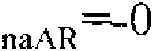
^ d á r s e n a A R - 6.J> 81^ d a r s e n a A R - 6.J> 81
C dársenaAR = - 4 4 C dock AR = - 4 4
^dársenaAV ^ .5^ dockAV ^ .5
b^ dársena AV =ob ^ dock AV = o
Fase de detenciónDetention phase
Cuando el vehículo (3) está atracado en la dársena (2), marca una detención en el lugar. Entra temporalmente en la fase de detención.When the vehicle (3) is docked in the dock (2), it marks a stop in place. Temporarily enters the detention phase.
En el caso de un vehículo de transporte público, el conductor autoriza a abrir las puertas.In the case of a public transport vehicle, the driver authorizes the doors to be opened.
Durante la fase de detención, las ruedas traseras (9) se controlan preferentemente de manera recta para que puedan situarse lo más cerca posible de la dársena (2), pero esto puede aumentar el desgaste de los neumáticos, también esta orientación recta de las ruedas traseras (9) puede ser opcional.During the stopping phase, the rear wheels (9) are preferably controlled in a straight way so that they can be placed as close as possible to the dock (2), but this can increase tire wear, also this straight orientation of the wheels rear (9) can be optional.
El vehículo (3) está situado lo más cerca posible de la dársena (2), tanto en la parte delantera como en la parte trasera, para facilitar el ascenso y el descenso de los pasajeros (figura 7).The vehicle (3) is located as close as possible to the dock (2), both at the front and at the rear, to facilitate the loading and unloading of passengers (figure 7).
Fase de salidaExit phase
Una vez que los pasajeros han subido y bajado, el vehículo (3) puede abandonar la dársena (2).Once the passengers have got on and off, the vehicle (3) can leave the dock (2).
Cuando se trata de un vehículo de transporte público, el conductor condena la apertura de las puertas, lo que inicia la fase de salida. Por razones obvias de seguridad, esta fase solo puede ser eficaz una vez que las puertas están cerradas y bloqueadas.When it comes to a public transport vehicle, the driver condemns the opening of the doors, which initiates the departure phase. For obvious security reasons, this phase can only be effective once the doors are closed and locked.
Por lo tanto, el eje trasero (5) permanece bloqueado con las ruedas traseras (9) preferentemente en posición recta siempre que las puertas no estén bloqueadas.Therefore, the rear axle (5) remains locked with the rear wheels (9) preferably in a straight position as long as the doors are not locked.
Una vez que las puertas están bloqueadas, la tracción vuelve a estar disponible para el conductor que puede abandonar la dársena (2).Once the doors are locked, traction is again available to the driver who can leave the dock (2).
El dispositivo de asistencia (1) según la invención se cambia a continuación al modo de atraque.The assist device (1) according to the invention is then switched to docking mode.
Durante esta fase de salida, el dispositivo de asistencia (1) de la invención prohíbe al eje trasero (5) girar las ruedas traseras (9) en la dirección de la dársena (2). De hecho, las ruedas traseras (9) se giran en la dirección opuesta (figura 8) de manera proporcional a la instrucción de giro recibida por las ruedas (11) del eje delantero (4) según la siguiente fórmula:During this departure phase, the assistance device (1) of the invention prohibits the rear axle (5) from turning the rear wheels (9) in the direction of the dock (2). In fact, the rear wheels (9) are turned in the opposite direction (figure 8) in proportion to the turning instruction received by the wheels (11) of the front axle (4) according to the following formula:
AAR =A AV salida A AR = A AV output
en la que ksalida es un porcentaje de proporcionalidad expresado como un porcentaje.where ksalida is a percentage of proportionality expressed as a percentage.
Por defecto, ksalida se elige con un valor igual al 20 %. Como anteriormente, este valor se puede ajustar empíricamente. Según una variante de la invención, después de la fase de salida, las ruedas traseras (9) no se giran de manera proporcional a la instrucción de giro recibida por las ruedas (11) del eje delantero (4), sino que se giran según un ángulo de giro fijo, por ejemplo, igual a 5° a la izquierda.By default, ksalida is chosen with a value equal to 20%. As before, this value can be empirically adjusted. According to a variant of the invention, after the exit phase, the rear wheels (9) are not rotated proportionally to the rotation instruction received by the wheels (11) of the front axle (4), but are rotated according to a fixed turning angle, for example, equal to 5 ° to the left.
Según una variante adicional de la invención, las ruedas traseras (9) se giran de la misma manera que durante la fase de aproximación pero de manera inversa. Por lo tanto, el eje trasero (5) abandona la dársena (2) lo más rápido posible sin chocar nunca con su entorno y sin alejarse de la dársena (2) más rápidamente que el eje delantero (6).According to a further variant of the invention, the rear wheels (9) are rotated in the same way as during the approach phase but in reverse. Therefore, the rear axle (5) leaves the dock (2) as quickly as possible. without ever colliding with its surroundings and without leaving the dock (2) faster than the front axle (6).
Fase de marchaMarch phase
Cuando el vehículo (3) ha terminado de abandonar la dársena (2) (figura 9), la fase de salida se completa y el dispositivo de asistencia (1) según la invención se cambia al modo carretera (figura 10). El vehículo (3) vuelve a estar a continuación en la fase de marcha (figura 11).When the vehicle (3) has finished leaving the dock (2) (figure 9), the departure phase is completed and the assistance device (1) according to the invention is switched to road mode (figure 10). The vehicle (3) is then in the driving phase again (Figure 11).
Una vez que el vehículo (3) ha terminado su fase de salida, el cambio del dispositivo de asistencia (1) de la invención al modo carretera se puede hacer manualmente por el conductor por medio de un conmutador de modo atraque/carretera (20), automáticamente cuando la velocidad del vehículo (3) es superior a la velocidad máxima para el atraque VMÁXAtraque (por defecto, igual a 10 km/h), o automáticamente cuando el ángulo de giro Aav a la derecha de las ruedas delanteras (11) es superior a un ángulo de giro asalidaAtraque de salida del atraque.Once the vehicle (3) has completed its departure phase, the change of the assist device (1) of the invention to road mode can be done manually by the driver by means of a dock / road mode switch (20) , automatically when the speed of the vehicle (3) is higher than the maximum speed for docking VMÁXAtraque (by default, equal to 10 km / h), or automatically when the turning angle A av to the right of the front wheels (11 ) is greater than a departure turn angle of berthing berth.
El ángulo de giro asalidaAtraque de salida del atraque se puede expresar en ángulo absoluto o en porcentaje con respecto al ángulo de giro máximo AAv-máx de las ruedas delanteras (11). Este ángulo asalidaAtraque es preferentemente igual a 5° hacia la derecha, pudiéndose ajustar empíricamente este valor.The turning angle of departure Berth departure berth can be expressed in absolute angle or in percentage with respect to the maximum turning angle AAv-max of the front wheels (11). This launch angle is preferably equal to 5 ° to the right, and this value can be empirically adjusted.
Marcha atrásReverse
El dispositivo de asistencia (1) para maniobras de atraque en una dársena (2) según la primera variante de la invención también está diseñado para poder usarse durante la marcha atrás del vehículo (3) que lo equipa, para todos los modos de conducción del eje trasero (5).The assistance device (1) for docking maneuvers in a dock (2) according to the first variant of the invention is also designed to be used during the reverse gear of the vehicle (3) that equips it, for all modes of driving the rear axle (5).
En fase de marcha, el dispositivo de asistencia (1) está en modo carretera y no es necesario modificar la regla de control.In the running phase, the assist device (1) is in road mode and it is not necessary to modify the control rule.
En la fase de aproximación, siempre que el detector de distancia trasero (16) no detecte la dársena (2), la regla de control no se modifica. Cuando el detector de distancia trasero (16) detecta la dársena (2), entonces la regla de control se invierte, es decir, las ruedas traseras (9) se controlan para acercarse a la dársena, sin chocar en ningún momento con ésta última.In the approach phase, as long as the rear distance detector (16) does not detect the dock (2), the control rule is not modified. When the rear distance detector (16) detects the dock (2), then the control rule is reversed, that is, the rear wheels (9) are controlled to approach the dock, without ever colliding with the latter.
En la fase de detención y en la fase de salida, la regla de control se invierte como anteriormente.In the stop phase and the exit phase, the control rule is reversed as before.
Marcha atrás (para la variante mencionada anteriormente)Reverse (for the variant mentioned above)
El dispositivo de asistencia (1) para maniobras de atraque en una dársena (2) según la segunda variante de la invención también se proporciona también durante la marcha atrás del vehículo (3) que lo equipa, para todos los modos de conducción del eje trasero (5).The assistance device (1) for docking maneuvers in a dock (2) according to the second variant of the invention is also provided during reverse gear of the vehicle (3) that equips it, for all driving modes of the rear axle (5).
En fase de marcha, el dispositivo de asistencia (1) está en modo carretera y no es necesario modificar la regla de control.In the running phase, the assist device (1) is in road mode and it is not necessary to modify the control rule.
En la fase de aproximación, siempre que el detector de distancia delantero (15) no detecte la dársena (2), la regla de control no se modifica. Cuando el detector de distancia delantero (15) detecta la dársena (2), entonces la regla de control se invierte, es decir, las ruedas traseras (9) se controlan para acercarse a la dársena, sin chocar en ningún momento con ésta última.In the approach phase, as long as the front distance detector (15) does not detect the dock (2), the control rule is not modified. When the front distance detector (15) detects the dock (2), then the control rule is reversed, that is, the rear wheels (9) are controlled to approach the dock, without ever colliding with the latter.
En la fase de detención y en la fase de salida, la regla de control se invierte como anteriormente.In the stop phase and the exit phase, the control rule is reversed as before.
Resulta evidente que la presente descripción no se limita a los ejemplos descritos explícitamente, sino que también incluye otras realizaciones y/o implementaciones. It is evident that the present description is not limited to the explicitly described examples, but also includes other embodiments and / or implementations.
Claims (21)
Applications Claiming Priority (2)
| Application Number | Priority Date | Filing Date | Title |
|---|---|---|---|
| FR1560531A FR3043049B1 (en) | 2015-11-03 | 2015-11-03 | ASSISTANCE DEVICE FOR DOCKING APPROACHES AT DOCK LEVEL |
| PCT/FR2016/052788 WO2017077223A1 (en) | 2015-11-03 | 2016-10-27 | Device to assist with manoeuvres for parking alongside a platform |
Publications (1)
| Publication Number | Publication Date |
|---|---|
| ES2765801T3 true ES2765801T3 (en) | 2020-06-11 |
Family
ID=55646682
Family Applications (1)
| Application Number | Title | Priority Date | Filing Date |
|---|---|---|---|
| ES16806230T Active ES2765801T3 (en) | 2015-11-03 | 2016-10-27 | Assistive device for docking maneuvers in a dock |
Country Status (18)
| Country | Link |
|---|---|
| US (1) | US20180319439A1 (en) |
| EP (1) | EP3371035B1 (en) |
| JP (1) | JP6845248B2 (en) |
| KR (1) | KR20180093901A (en) |
| CN (1) | CN108290608B (en) |
| BR (1) | BR112018008871A2 (en) |
| CA (1) | CA3003916A1 (en) |
| CO (1) | CO2018005482A2 (en) |
| EC (1) | ECSP18041810A (en) |
| ES (1) | ES2765801T3 (en) |
| FR (1) | FR3043049B1 (en) |
| IL (1) | IL258948A (en) |
| MX (1) | MX382874B (en) |
| PL (1) | PL3371035T3 (en) |
| PT (1) | PT3371035T (en) |
| RU (1) | RU2719494C2 (en) |
| SG (1) | SG11201803554SA (en) |
| WO (1) | WO2017077223A1 (en) |
Families Citing this family (8)
| Publication number | Priority date | Publication date | Assignee | Title |
|---|---|---|---|---|
| FR3072069B1 (en) * | 2017-10-10 | 2019-09-20 | Commissariat A L'energie Atomique Et Aux Energies Alternatives | METHOD FOR AUTOMATICALLY DRIVING A VEHICLE, IN PARTICULAR A BUS IN A STORAGE CENTER, AND DEVICE IMPLEMENTING SAID METHOD |
| JP7077739B2 (en) * | 2018-04-11 | 2022-05-31 | 株式会社ジェイテクト | Four-wheel steering device |
| JP7374602B2 (en) * | 2019-03-29 | 2023-11-07 | 日立建機株式会社 | work vehicle |
| CN111746393A (en) * | 2019-03-29 | 2020-10-09 | 比亚迪股份有限公司 | Vehicle control method, vehicle control device, and vehicle |
| CN112193243B (en) * | 2020-10-20 | 2022-01-28 | 河北工业大学 | Multi-steering mode control method based on obstacle avoidance system |
| RU202907U1 (en) * | 2020-11-27 | 2021-03-12 | Акционерное общество "Автомобильный завод "УРАЛ" | TRAINING HYDRAULIC DRIVE SYSTEM FOR REAR STEERED AXLE OF VEHICLE |
| CN113753032B (en) * | 2021-10-20 | 2022-12-02 | 中国第一汽车股份有限公司 | Parking control method, device and system |
| CN119551061B (en) * | 2024-12-10 | 2025-12-26 | 潍柴雷沃智慧农业科技股份有限公司 | A tractor four-wheel steering electro-hydraulic control system, method, equipment and medium |
Family Cites Families (18)
| Publication number | Priority date | Publication date | Assignee | Title |
|---|---|---|---|---|
| JPS5981269A (en) * | 1982-10-30 | 1984-05-10 | Mazda Motor Corp | 4-wheel steering device of vehicle |
| JPS61135866A (en) * | 1984-12-04 | 1986-06-23 | Daihatsu Motor Co Ltd | Four-wheel steering device |
| JPS6331881A (en) * | 1986-07-25 | 1988-02-10 | Nippon Denso Co Ltd | Bumper-to-bumper parking controller for vehicle |
| JPS63312270A (en) * | 1987-06-15 | 1988-12-20 | Fuji Heavy Ind Ltd | Method of controlling rear wheel steering operation for automobile |
| JPH02136377A (en) * | 1988-11-18 | 1990-05-24 | Toyota Motor Corp | Rear wheel steering device for front/rear wheel steered vehicle |
| JPH0396482A (en) * | 1989-09-08 | 1991-04-22 | Jidosha Kiki Co Ltd | Four-wheel steering device |
| DE10128792B4 (en) * | 2001-05-08 | 2005-06-09 | Daimlerchrysler Ag | Collision protection for vehicles |
| US6804592B2 (en) * | 2001-10-18 | 2004-10-12 | Delphi Technologies, Inc. | Four wheel steering compensation for low coefficient of friction surface |
| US20060235590A1 (en) * | 2005-02-11 | 2006-10-19 | Farhad Bolourchi | Parking assist utilizing steering system |
| DE102005025203A1 (en) * | 2005-05-25 | 2006-12-07 | Valeo Schalter Und Sensoren Gmbh | Parking method for parking a motor vehicle in a parking-space uses a longitudinal axis parallel to the vehicle's longitudinal axis |
| JP2007030700A (en) * | 2005-07-27 | 2007-02-08 | Aisin Seiki Co Ltd | Parking assistance device |
| DE102006027114A1 (en) * | 2006-06-12 | 2007-12-13 | Robert Bosch Gmbh | Control device and method for driver assistance |
| JP2008143430A (en) * | 2006-12-12 | 2008-06-26 | Toyota Motor Corp | Parking assistance device |
| JP2008201178A (en) * | 2007-02-16 | 2008-09-04 | Toyota Motor Corp | Parking assistance device |
| FR2916721B1 (en) * | 2007-06-04 | 2009-07-31 | Renault Sas | MOTORIZED VEHICLE WITH FOUR WHEELS HAVING TWO REAR WHEELS. |
| DE102010021761B4 (en) * | 2010-05-27 | 2016-02-11 | Audi Ag | Method and device for adjusting steering angles of a four-wheel steering system for a motor vehicle |
| CN102514620A (en) * | 2011-11-24 | 2012-06-27 | 华南农业大学 | Tractor identical-track steering mechanism and steering method thereof |
| RU2561188C2 (en) * | 2013-12-31 | 2015-08-27 | Федеральное государственное бюджетное образовательное учреждение высшего профессионального образования "Московский автомобильно-дорожный государственный технический университет (МАДИ)" | Urban vehicle |
-
2015
- 2015-11-03 FR FR1560531A patent/FR3043049B1/en not_active Expired - Fee Related
-
2016
- 2016-10-27 BR BR112018008871-4A patent/BR112018008871A2/en not_active Application Discontinuation
- 2016-10-27 US US15/772,927 patent/US20180319439A1/en not_active Abandoned
- 2016-10-27 PT PT168062305T patent/PT3371035T/en unknown
- 2016-10-27 KR KR1020187015168A patent/KR20180093901A/en not_active Withdrawn
- 2016-10-27 ES ES16806230T patent/ES2765801T3/en active Active
- 2016-10-27 SG SG11201803554SA patent/SG11201803554SA/en unknown
- 2016-10-27 CN CN201680069855.7A patent/CN108290608B/en not_active Expired - Fee Related
- 2016-10-27 EP EP16806230.5A patent/EP3371035B1/en active Active
- 2016-10-27 JP JP2018541567A patent/JP6845248B2/en not_active Expired - Fee Related
- 2016-10-27 PL PL16806230T patent/PL3371035T3/en unknown
- 2016-10-27 RU RU2018120304A patent/RU2719494C2/en active
- 2016-10-27 WO PCT/FR2016/052788 patent/WO2017077223A1/en not_active Ceased
- 2016-10-27 MX MX2018005303A patent/MX382874B/en unknown
- 2016-10-27 CA CA3003916A patent/CA3003916A1/en not_active Abandoned
-
2018
- 2018-04-26 IL IL258948A patent/IL258948A/en unknown
- 2018-05-25 CO CONC2018/0005482A patent/CO2018005482A2/en unknown
- 2018-06-01 EC ECIEPI201841810A patent/ECSP18041810A/en unknown
Also Published As
| Publication number | Publication date |
|---|---|
| RU2018120304A3 (en) | 2020-02-28 |
| RU2018120304A (en) | 2019-12-05 |
| ECSP18041810A (en) | 2018-07-31 |
| FR3043049B1 (en) | 2017-12-08 |
| SG11201803554SA (en) | 2018-05-30 |
| MX382874B (en) | 2025-03-13 |
| EP3371035B1 (en) | 2019-10-16 |
| WO2017077223A1 (en) | 2017-05-11 |
| BR112018008871A2 (en) | 2019-04-24 |
| CN108290608B (en) | 2021-08-17 |
| US20180319439A1 (en) | 2018-11-08 |
| CN108290608A (en) | 2018-07-17 |
| JP2018536588A (en) | 2018-12-13 |
| CA3003916A1 (en) | 2017-05-11 |
| EP3371035A1 (en) | 2018-09-12 |
| FR3043049A1 (en) | 2017-05-05 |
| IL258948A (en) | 2018-06-28 |
| PL3371035T3 (en) | 2020-05-18 |
| PT3371035T (en) | 2020-01-22 |
| CO2018005482A2 (en) | 2018-08-10 |
| KR20180093901A (en) | 2018-08-22 |
| RU2719494C2 (en) | 2020-04-20 |
| JP6845248B2 (en) | 2021-03-17 |
| MX2018005303A (en) | 2018-08-15 |
Similar Documents
| Publication | Publication Date | Title |
|---|---|---|
| ES2765801T3 (en) | Assistive device for docking maneuvers in a dock | |
| US8818700B2 (en) | Motorised vehicle with controlled inclination | |
| ES2732944T3 (en) | Control procedure of a highway car convoy to make a reverse gear | |
| ES2387946T3 (en) | Vehicle driving assistance system for lane change assistance | |
| US20100324808A1 (en) | Motorised vehicle with controlled inclination | |
| DE102013206815B4 (en) | Vehicle lateral control system | |
| CN105939920B (en) | The method of active front steering system and the vehicle for controlling traveling | |
| US20230205225A1 (en) | Road-based vehicle guidance system | |
| CN109131320B (en) | Trajectory-Based Guidance for Motor Vehicles | |
| US10820473B2 (en) | Work vehicle control system | |
| CN104487318B (en) | Method and system for lane keeping assistance for a vehicle | |
| CN110891804A (en) | vehicle | |
| ES3033850T3 (en) | Braking and signaling schemes for autonomous vehicle system | |
| US6161484A (en) | Transport installation with optical and mechanical guiding | |
| ES2713706T3 (en) | Procedure to assist a driver of a motor vehicle in a parking maneuver in a parking spot with a curb, driver assistance system and motor vehicle | |
| ES3028013T3 (en) | Method for providing and operating a vehicle convoy | |
| BR102015010218A2 (en) | system and method for driving a vehicle | |
| US20220340161A1 (en) | Always-on motion controller | |
| ES2992893B2 (en) | METHOD AND DIRECTIONAL CONTROL SYSTEM FOR PERFORMING REVERSE MANEUVERS OF A VEHICLE ASSEMBLY WITH MORE THAN ONE JOINT | |
| CN117980164A (en) | Method, computing device and assistance system for a vehicle for assisting during a coupling process with a trailer | |
| CN212765901U (en) | driverless car | |
| Kurkure et al. | A Review on Parallel Parking of the Vehicle |