ES2865402T3 - 4'-fluoronucleosides, 4'-fluoronucleotides and analogues thereof for the treatment of HCV - Google Patents
4'-fluoronucleosides, 4'-fluoronucleotides and analogues thereof for the treatment of HCV Download PDFInfo
- Publication number
- ES2865402T3 ES2865402T3 ES13864403T ES13864403T ES2865402T3 ES 2865402 T3 ES2865402 T3 ES 2865402T3 ES 13864403 T ES13864403 T ES 13864403T ES 13864403 T ES13864403 T ES 13864403T ES 2865402 T3 ES2865402 T3 ES 2865402T3
- Authority
- ES
- Spain
- Prior art keywords
- optionally substituted
- compound
- alkyl
- hydrogen
- mmol
- Prior art date
- Legal status (The legal status is an assumption and is not a legal conclusion. Google has not performed a legal analysis and makes no representation as to the accuracy of the status listed.)
- Active
Links
- 238000011282 treatment Methods 0.000 title description 46
- 150000001875 compounds Chemical class 0.000 claims abstract description 573
- 150000003839 salts Chemical class 0.000 claims abstract description 263
- 125000000217 alkyl group Chemical group 0.000 claims abstract description 250
- -1 amino acid ester Chemical class 0.000 claims abstract description 202
- 229910052739 hydrogen Inorganic materials 0.000 claims abstract description 135
- 239000001257 hydrogen Substances 0.000 claims abstract description 135
- 125000004435 hydrogen atom Chemical group [H]* 0.000 claims abstract description 72
- 125000001072 heteroaryl group Chemical group 0.000 claims abstract description 58
- 125000003107 substituted aryl group Chemical group 0.000 claims abstract description 53
- 125000005913 (C3-C6) cycloalkyl group Chemical group 0.000 claims abstract description 52
- 150000001413 amino acids Chemical class 0.000 claims abstract description 51
- UFHFLCQGNIYNRP-UHFFFAOYSA-N Hydrogen Chemical compound [H][H] UFHFLCQGNIYNRP-UHFFFAOYSA-N 0.000 claims abstract description 45
- 125000003342 alkenyl group Chemical group 0.000 claims abstract description 27
- 125000000304 alkynyl group Chemical group 0.000 claims abstract description 26
- 229910052717 sulfur Inorganic materials 0.000 claims abstract description 21
- 125000000882 C2-C6 alkenyl group Chemical group 0.000 claims abstract description 16
- 125000003601 C2-C6 alkynyl group Chemical group 0.000 claims abstract description 16
- 229910052760 oxygen Inorganic materials 0.000 claims abstract description 16
- 125000002950 monocyclic group Chemical group 0.000 claims abstract description 14
- 125000004430 oxygen atom Chemical group O* 0.000 claims abstract description 13
- 125000002915 carbonyl group Chemical group [*:2]C([*:1])=O 0.000 claims abstract description 12
- 150000002431 hydrogen Chemical class 0.000 claims abstract 28
- 102220467179 Epsin-2_R8A_mutation Human genes 0.000 claims abstract 2
- 102220497245 Serine-tRNA ligase, cytoplasmic_R9A_mutation Human genes 0.000 claims abstract 2
- 241000711549 Hepacivirus C Species 0.000 claims description 134
- 229940024606 amino acid Drugs 0.000 claims description 79
- 239000008194 pharmaceutical composition Substances 0.000 claims description 79
- 235000001014 amino acid Nutrition 0.000 claims description 76
- 125000000623 heterocyclic group Chemical group 0.000 claims description 69
- 125000003118 aryl group Chemical group 0.000 claims description 64
- 239000003795 chemical substances by application Substances 0.000 claims description 54
- 208000015181 infectious disease Diseases 0.000 claims description 35
- 239000003112 inhibitor Substances 0.000 claims description 35
- 230000000694 effects Effects 0.000 claims description 28
- 229910052736 halogen Inorganic materials 0.000 claims description 27
- 150000002367 halogens Chemical class 0.000 claims description 27
- 125000000392 cycloalkenyl group Chemical group 0.000 claims description 26
- 125000002496 methyl group Chemical group [H]C([H])([H])* 0.000 claims description 24
- IWUCXVSUMQZMFG-AFCXAGJDSA-N Ribavirin Chemical compound N1=C(C(=O)N)N=CN1[C@H]1[C@H](O)[C@H](O)[C@@H](CO)O1 IWUCXVSUMQZMFG-AFCXAGJDSA-N 0.000 claims description 23
- 229960000329 ribavirin Drugs 0.000 claims description 23
- HZCAHMRRMINHDJ-DBRKOABJSA-N ribavirin Natural products O[C@@H]1[C@H](O)[C@@H](CO)O[C@H]1N1N=CN=C1 HZCAHMRRMINHDJ-DBRKOABJSA-N 0.000 claims description 23
- 125000004093 cyano group Chemical group *C#N 0.000 claims description 21
- 125000000852 azido group Chemical group *N=[N+]=[N-] 0.000 claims description 20
- NINIDFKCEFEMDL-UHFFFAOYSA-N Sulfur Chemical compound [S] NINIDFKCEFEMDL-UHFFFAOYSA-N 0.000 claims description 18
- 230000010076 replication Effects 0.000 claims description 18
- 108010050904 Interferons Proteins 0.000 claims description 17
- 102000014150 Interferons Human genes 0.000 claims description 17
- 101800001014 Non-structural protein 5A Proteins 0.000 claims description 17
- 239000011593 sulfur Substances 0.000 claims description 17
- 229940079322 interferon Drugs 0.000 claims description 16
- 230000000840 anti-viral effect Effects 0.000 claims description 15
- QVGXLLKOCUKJST-UHFFFAOYSA-N atomic oxygen Chemical compound [O] QVGXLLKOCUKJST-UHFFFAOYSA-N 0.000 claims description 14
- 230000002401 inhibitory effect Effects 0.000 claims description 14
- 239000001301 oxygen Substances 0.000 claims description 14
- 125000003277 amino group Chemical group 0.000 claims description 12
- 125000000171 (C1-C6) haloalkyl group Chemical group 0.000 claims description 10
- 239000003085 diluting agent Substances 0.000 claims description 10
- 125000001188 haloalkyl group Chemical group 0.000 claims description 10
- 235000004279 alanine Nutrition 0.000 claims description 9
- 125000005843 halogen group Chemical group 0.000 claims description 8
- YZCKVEUIGOORGS-OUBTZVSYSA-N Deuterium Chemical group [2H] YZCKVEUIGOORGS-OUBTZVSYSA-N 0.000 claims description 7
- QNAYBMKLOCPYGJ-REOHCLBHSA-N L-alanine Chemical compound C[C@H](N)C(O)=O QNAYBMKLOCPYGJ-REOHCLBHSA-N 0.000 claims description 7
- 101800001554 RNA-directed RNA polymerase Proteins 0.000 claims description 7
- 239000000546 pharmaceutical excipient Substances 0.000 claims description 7
- 108091005804 Peptidases Proteins 0.000 claims description 6
- 239000004365 Protease Substances 0.000 claims description 6
- 125000001153 fluoro group Chemical group F* 0.000 claims description 6
- 101000668432 Homo sapiens Protein RCC2 Proteins 0.000 claims description 5
- 102100039972 Protein RCC2 Human genes 0.000 claims description 5
- 102100037486 Reverse transcriptase/ribonuclease H Human genes 0.000 claims description 5
- KZSNJWFQEVHDMF-UHFFFAOYSA-N Valine Natural products CC(C)C(N)C(O)=O KZSNJWFQEVHDMF-UHFFFAOYSA-N 0.000 claims description 5
- 229910052805 deuterium Inorganic materials 0.000 claims description 5
- 229930182817 methionine Natural products 0.000 claims description 5
- 229910052757 nitrogen Inorganic materials 0.000 claims description 5
- 239000004474 valine Substances 0.000 claims description 5
- 102100022987 Angiogenin Human genes 0.000 claims description 4
- 101100086314 Chlamydomonas reinhardtii RAA2 gene Proteins 0.000 claims description 4
- 101100086315 Chlamydomonas reinhardtii RAA3 gene Proteins 0.000 claims description 4
- 101000757236 Homo sapiens Angiogenin Proteins 0.000 claims description 4
- 101000951234 Homo sapiens Solute carrier family 49 member 4 Proteins 0.000 claims description 4
- 102100037945 Solute carrier family 49 member 4 Human genes 0.000 claims description 4
- 125000005017 substituted alkenyl group Chemical group 0.000 claims description 4
- 125000000547 substituted alkyl group Chemical group 0.000 claims description 4
- 125000004426 substituted alkynyl group Chemical group 0.000 claims description 4
- 125000005346 substituted cycloalkyl group Chemical group 0.000 claims description 4
- 101000668416 Homo sapiens Regulator of chromosome condensation Proteins 0.000 claims description 3
- 102100039977 Regulator of chromosome condensation Human genes 0.000 claims description 3
- GCFAUZGWPDYAJN-UHFFFAOYSA-N cyclohexyl 3-phenylprop-2-enoate Chemical compound C=1C=CC=CC=1C=CC(=O)OC1CCCCC1 GCFAUZGWPDYAJN-UHFFFAOYSA-N 0.000 claims description 3
- 239000003937 drug carrier Substances 0.000 claims description 3
- 208000034100 susceptibility to 1 basal cell carcinoma Diseases 0.000 claims description 3
- RFGUWOCFYCYEDM-ZOMNBDOOSA-N 8v42y78hru Chemical compound OP([C@@]12C[C@H]1CCCCCCC[C@@H](C(=O)N1[C@H](C(N2)=O)C[C@H](C1)OC=1C2=CC=C(C(=C2N=C(C=1)C=1N=C(NC(C)C)SC=1)Cl)OC)NC(=O)OC1CCCC1)(=O)CC1=C(F)C=CC=C1F RFGUWOCFYCYEDM-ZOMNBDOOSA-N 0.000 claims description 2
- OLROWHGDTNFZBH-XEMWPYQTSA-N Alisporivir Chemical compound CC[C@@H]1NC(=O)[C@H]([C@H](O)[C@H](C)C\C=C\C)N(C)C(=O)[C@H](C(C)C)N(C)C(=O)[C@H](CC(C)C)N(C)C(=O)[C@H](CC(C)C)N(C)C(=O)[C@@H](C)NC(=O)[C@H](C)NC(=O)[C@H](CC(C)C)N(C)C(=O)[C@H](C(C)C)NC(=O)[C@H](C(C)C)N(CC)C(=O)[C@@H](C)N(C)C1=O OLROWHGDTNFZBH-XEMWPYQTSA-N 0.000 claims description 2
- OTXAMWFYPMNDME-FQQWJMKMSA-N CC[C@@H]1C[C@]1(NC(=O)[C@@H]1C[C@H](CN1C(=O)[C@@H](NC(=O)O[C@@H]1C[C@@H]2C[C@@H]2C1)C(C)(C)C)Oc1cc(nc2c(Cl)c(OCCN3CCOCC3)ccc12)-c1csc(NC(C)C)n1)C(O)=O Chemical compound CC[C@@H]1C[C@]1(NC(=O)[C@@H]1C[C@H](CN1C(=O)[C@@H](NC(=O)O[C@@H]1C[C@@H]2C[C@@H]2C1)C(C)(C)C)Oc1cc(nc2c(Cl)c(OCCN3CCOCC3)ccc12)-c1csc(NC(C)C)n1)C(O)=O OTXAMWFYPMNDME-FQQWJMKMSA-N 0.000 claims description 2
- 101100033027 Danio rerio rbbp4 gene Proteins 0.000 claims description 2
- 101100110056 Homo sapiens ASPSCR1 gene Proteins 0.000 claims description 2
- 108091007780 MiR-122 Proteins 0.000 claims description 2
- YEPBUHWNLNKZBW-UEMKMYPFSA-N O=C([C@]12NC(=O)[C@H]3N(C(N(C)CCCC\C=C/[C@@H]1C2)=O)CC[C@@H](C3)OC=1C2=CC=C(C(=C2N=C(C=1)C=1SC=C(N=1)C(F)(F)F)C)OC)NS(=O)(=O)C1(C)CC1 Chemical compound O=C([C@]12NC(=O)[C@H]3N(C(N(C)CCCC\C=C/[C@@H]1C2)=O)CC[C@@H](C3)OC=1C2=CC=C(C(=C2N=C(C=1)C=1SC=C(N=1)C(F)(F)F)C)OC)NS(=O)(=O)C1(C)CC1 YEPBUHWNLNKZBW-UEMKMYPFSA-N 0.000 claims description 2
- MHFMTUBUVQZIRE-WINRQGAFSA-N Sovaprevir Chemical compound C([C@H](C(=O)N1[C@@H](C[C@H](C1)OC=1C2=CC=C(C=C2N=C(C=1)C=1C=CC=CC=1)OC)C(=O)N[C@]1([C@@H](C1)C=C)C(=O)NS(=O)(=O)C1CC1)C(C)(C)C)C(=O)N1CCCCC1 MHFMTUBUVQZIRE-WINRQGAFSA-N 0.000 claims description 2
- 102100029773 Tether containing UBX domain for GLUT4 Human genes 0.000 claims description 2
- XJBILYMRFVHPJB-XJQUKVTJSA-N [(2r,3s,4s,5r)-5-(4-amino-2-oxopyrimidin-1-yl)-2-azido-4-methyl-3-(2-methylpropanoyloxy)oxolan-2-yl]methyl 2-methylpropanoate Chemical compound C[C@H]1[C@H](OC(=O)C(C)C)[C@](COC(=O)C(C)C)(N=[N+]=[N-])O[C@H]1N1C(=O)N=C(N)C=C1 XJBILYMRFVHPJB-XJQUKVTJSA-N 0.000 claims description 2
- 108010058359 alisporivir Proteins 0.000 claims description 2
- 229960001418 dasabuvir Drugs 0.000 claims description 2
- NBRBXGKOEOGLOI-UHFFFAOYSA-N dasabuvir Chemical compound C1=C(C(C)(C)C)C(OC)=C(C=2C=C3C=CC(NS(C)(=O)=O)=CC3=CC=2)C=C1N1C=CC(=O)NC1=O NBRBXGKOEOGLOI-UHFFFAOYSA-N 0.000 claims description 2
- UDMJANYPQWEDFT-ZAWFUYGJSA-N deldeprevir Chemical compound C([C@@H]1C(=O)N2[C@H](C(N[C@@]3(C[C@H]3\C=C/CCCCC1)C(=O)NS(=O)(=O)C1CC1)=O)C[C@H](C2)OC=1C2=CC=C(C(=C2N=C(C=1)C=1SC=C(N=1)C(C)C)C)OC)C(=O)N1CCCC(F)(F)C1 UDMJANYPQWEDFT-ZAWFUYGJSA-N 0.000 claims description 2
- VRTWBAAJJOHBQU-KMWAZVGDSA-N ledipasvir Chemical compound COC(=O)N[C@@H](C(C)C)C(=O)N([C@@H](C1)C=2NC(=CN=2)C=2C=C3C(F)(F)C4=CC(=CC=C4C3=CC=2)C=2C=C3NC(=NC3=CC=2)[C@H]2N([C@@H]3CC[C@H]2C3)C(=O)[C@@H](NC(=O)OC)C(C)C)CC21CC2 VRTWBAAJJOHBQU-KMWAZVGDSA-N 0.000 claims description 2
- 108091051828 miR-122 stem-loop Proteins 0.000 claims description 2
- UAUIUKWPKRJZJV-MDJGTQRPSA-N paritaprevir Chemical compound C1=NC(C)=CN=C1C(=O)N[C@@H]1C(=O)N2C[C@H](OC=3C4=CC=CC=C4C4=CC=CC=C4N=3)C[C@H]2C(=O)N[C@]2(C(=O)NS(=O)(=O)C3CC3)C[C@@H]2\C=C/CCCCC1 UAUIUKWPKRJZJV-MDJGTQRPSA-N 0.000 claims description 2
- 229960002754 paritaprevir Drugs 0.000 claims description 2
- KDESEECZHLTGMH-QMMMGPOBSA-N propan-2-yl (2s)-2-amino-4-methylpentanoate Chemical compound CC(C)C[C@H](N)C(=O)OC(C)C KDESEECZHLTGMH-QMMMGPOBSA-N 0.000 claims 2
- QDQVXVRZVCTVHE-YFKPBYRVSA-N propan-2-yl (2s)-2-aminopropanoate Chemical compound CC(C)OC(=O)[C@H](C)N QDQVXVRZVCTVHE-YFKPBYRVSA-N 0.000 claims 2
- IGLFLAMJRDARAK-YUMQZZPRSA-N propan-2-yl (2s,3s)-2-amino-3-methylpentanoate Chemical compound CC[C@H](C)[C@H](N)C(=O)OC(C)C IGLFLAMJRDARAK-YUMQZZPRSA-N 0.000 claims 2
- AQHMBDAHQGYLIU-XNFHFXFQSA-N (3s,6s,9s,12r,15s,18s,21s,24s,27r,30s,33s)-27-[2-(dimethylamino)ethylsulfanyl]-30-ethyl-33-[(e,1r,2r)-1-hydroxy-2-methylhex-4-enyl]-24-(2-hydroxy-2-methylpropyl)-1,4,7,10,12,15,19,25,28-nonamethyl-6,9,18-tris(2-methylpropyl)-3,21-di(propan-2-yl)-1,4,7,10, Chemical compound CC[C@@H]1NC(=O)[C@H]([C@H](O)[C@H](C)C\C=C\C)N(C)C(=O)[C@H](C(C)C)N(C)C(=O)[C@H](CC(C)C)N(C)C(=O)[C@H](CC(C)C)N(C)C(=O)[C@@H](C)NC(=O)[C@H](C)NC(=O)[C@H](CC(C)C)N(C)C(=O)[C@H](C(C)C)NC(=O)[C@H](CC(C)(C)O)N(C)C(=O)[C@@H](SCCN(C)C)N(C)C1=O AQHMBDAHQGYLIU-XNFHFXFQSA-N 0.000 claims 1
- YQUCBFIQSJVCOR-JOCHJYFZSA-N (7r)-14-cyclohexyl-7-{[2-(dimethylamino)ethyl](methyl)amino}-7,8-dihydro-6h-indolo[1,2-e][1,5]benzoxazocine-11-carboxylic acid Chemical compound C([C@@H](CN1C2=CC(=CC=C22)C(O)=O)N(C)CCN(C)C)OC3=CC=CC=C3C1=C2C1CCCCC1 YQUCBFIQSJVCOR-JOCHJYFZSA-N 0.000 claims 1
- 108010030583 (melle-4)cyclosporin Proteins 0.000 claims 1
- MAQDQJWCSSCURR-UHFFFAOYSA-N 4-[5-(cyclopropanecarbonylamino)-2-(trifluoromethoxy)phenyl]-n-[4-[(4-propylsulfonylpiperazin-1-yl)methyl]phenyl]benzamide Chemical compound C1CN(S(=O)(=O)CCC)CCN1CC(C=C1)=CC=C1NC(=O)C1=CC=C(C=2C(=CC=C(NC(=O)C3CC3)C=2)OC(F)(F)F)C=C1 MAQDQJWCSSCURR-UHFFFAOYSA-N 0.000 claims 1
- 102220632799 Immunoglobulin heavy variable 1-69_R11A_mutation Human genes 0.000 claims 1
- 102220475869 Keratin, type I cytoskeletal 10_R12A_mutation Human genes 0.000 claims 1
- 108010090287 SCY-635 Proteins 0.000 claims 1
- 229950004789 alisporivir Drugs 0.000 claims 1
- ZTTKEBYSXUCBSE-QDFUAKMASA-N beclabuvir Chemical compound C1([C@@H]2C[C@@]2(CN2C3=CC(=CC=C33)C(=O)NS(=O)(=O)N(C)C)C(=O)N4[C@@H]5CC[C@H]4CN(C)C5)=CC(OC)=CC=C1C2=C3C1CCCCC1 ZTTKEBYSXUCBSE-QDFUAKMASA-N 0.000 claims 1
- 229950010541 beclabuvir Drugs 0.000 claims 1
- WVROWPPEIMRGAB-UHFFFAOYSA-N bit225 Chemical compound C1=NN(C)C=C1C1=CC=CC2=CC(C(=O)NC(N)=N)=CC=C12 WVROWPPEIMRGAB-UHFFFAOYSA-N 0.000 claims 1
- CJXAEXPPLWQRFR-UHFFFAOYSA-N clemizole Chemical compound C1=CC(Cl)=CC=C1CN1C2=CC=CC=C2N=C1CN1CCCC1 CJXAEXPPLWQRFR-UHFFFAOYSA-N 0.000 claims 1
- 229950002020 clemizole Drugs 0.000 claims 1
- BVAZQCUMNICBAQ-PZHYSIFUSA-N elbasvir Chemical compound COC(=O)N[C@@H](C(C)C)C(=O)N1CCC[C@H]1C1=NC(C=2C=C3O[C@H](N4C5=CC=C(C=C5C=C4C3=CC=2)C=2N=C(NC=2)[C@H]2N(CCC2)C(=O)[C@@H](NC(=O)OC)C(C)C)C=2C=CC=CC=2)=CN1 BVAZQCUMNICBAQ-PZHYSIFUSA-N 0.000 claims 1
- JYLMWUZJMRNMDA-SPRBZRACSA-N methyl n-[(2s)-1-[(2s)-2-[5-[6-[2-[(2s)-1-[(2s)-2-(methoxycarbonylamino)-3-methylbutanoyl]pyrrolidin-2-yl]-3h-benzimidazol-5-yl]naphthalen-2-yl]-1h-imidazol-2-yl]pyrrolidin-1-yl]-3-methyl-1-oxobutan-2-yl]carbamate;dihydrochloride Chemical compound Cl.Cl.COC(=O)N[C@@H](C(C)C)C(=O)N1CCC[C@H]1C1=NC=C(C=2C=C3C=CC(=CC3=CC=2)C=2C=C3NC(=NC3=CC=2)[C@H]2N(CCC2)C(=O)[C@@H](NC(=O)OC)C(C)C)N1 JYLMWUZJMRNMDA-SPRBZRACSA-N 0.000 claims 1
- CEICQMBWAQAIQX-UHFFFAOYSA-N n-[3,5-dichloro-4-[2-(trifluoromethoxy)phenyl]phenyl]-2-(4-ethylsulfonylphenyl)acetamide Chemical compound C1=CC(S(=O)(=O)CC)=CC=C1CC(=O)NC1=CC(Cl)=C(C=2C(=CC=CC=2)OC(F)(F)F)C(Cl)=C1 CEICQMBWAQAIQX-UHFFFAOYSA-N 0.000 claims 1
- XMZSTQYSBYEENY-RMKNXTFCSA-N n-[4-[(e)-2-[3-tert-butyl-5-(2,4-dioxopyrimidin-1-yl)-2-methoxyphenyl]ethenyl]phenyl]methanesulfonamide Chemical compound C1=C(N2C(NC(=O)C=C2)=O)C=C(C(C)(C)C)C(OC)=C1\C=C\C1=CC=C(NS(C)(=O)=O)C=C1 XMZSTQYSBYEENY-RMKNXTFCSA-N 0.000 claims 1
- ICIJBYYMEBOTQP-UHFFFAOYSA-N n-[5-tert-butyl-3-(methanesulfonamido)-2-methoxyphenyl]-2-[4-(2-morpholin-4-ylethoxy)naphthalen-1-yl]-2-oxoacetamide;hydrochloride Chemical compound Cl.C1=C(C(C)(C)C)C=C(NS(C)(=O)=O)C(OC)=C1NC(=O)C(=O)C(C1=CC=CC=C11)=CC=C1OCCN1CCOCC1 ICIJBYYMEBOTQP-UHFFFAOYSA-N 0.000 claims 1
- RPJPZDVUUKWPGT-FOIHOXPVSA-N nim811 Chemical compound CC[C@H](C)[C@@H]1N(C)C(=O)CN(C)C(=O)[C@H](CC)NC(=O)[C@H]([C@H](O)[C@H](C)C\C=C\C)N(C)C(=O)[C@H](C(C)C)N(C)C(=O)[C@H](CC(C)C)N(C)C(=O)[C@H](CC(C)C)N(C)C(=O)[C@@H](C)NC(=O)[C@H](C)NC(=O)[C@H](CC(C)C)N(C)C(=O)[C@H](C(C)C)NC1=O RPJPZDVUUKWPGT-FOIHOXPVSA-N 0.000 claims 1
- LSYBRGMTRKJATA-IVEWBXRVSA-N odalasvir Chemical compound C1=C2NC([C@H]3N([C@H]4CCCC[C@H]4C3)C(=O)[C@H](C(C)C)NC(=O)OC)=NC2=CC=C1C(C(CC1)=CC=2)=CC=2CCC2=CC=C1C=C2C1=CC=C(N=C(N2)[C@H]3N([C@H]4CCCC[C@H]4C3)C(=O)[C@@H](NC(=O)OC)C(C)C)C2=C1 LSYBRGMTRKJATA-IVEWBXRVSA-N 0.000 claims 1
- PIDFDZJZLOTZTM-KHVQSSSXSA-N ombitasvir Chemical compound COC(=O)N[C@@H](C(C)C)C(=O)N1CCC[C@H]1C(=O)NC1=CC=C([C@H]2N([C@@H](CC2)C=2C=CC(NC(=O)[C@H]3N(CCC3)C(=O)[C@@H](NC(=O)OC)C(C)C)=CC=2)C=2C=CC(=CC=2)C(C)(C)C)C=C1 PIDFDZJZLOTZTM-KHVQSSSXSA-N 0.000 claims 1
- 229960000518 ombitasvir Drugs 0.000 claims 1
- UOBYJVFBFSLCTQ-UHFFFAOYSA-N tmc647055 Chemical compound C12=CC=C(C(NS(=O)(=O)N(C)CCOCCN(C)C3=O)=O)C=C2N2CC3=CC3=CC(OC)=CC=C3C2=C1C1CCCCC1 UOBYJVFBFSLCTQ-UHFFFAOYSA-N 0.000 claims 1
- 150000002148 esters Chemical class 0.000 abstract description 7
- 125000004169 (C1-C6) alkyl group Chemical group 0.000 abstract 4
- 102220465933 Beta-1,3-glucuronyltransferase LARGE2_R15A_mutation Human genes 0.000 abstract 1
- 102220518365 Casein kinase I isoform gamma-2_R12A_mutation Human genes 0.000 abstract 1
- 102220518288 Casein kinase I isoform gamma-2_R13A_mutation Human genes 0.000 abstract 1
- 102220518364 Casein kinase I isoform gamma-2_R14A_mutation Human genes 0.000 abstract 1
- 102220531732 Piwi-like protein 1_R10A_mutation Human genes 0.000 abstract 1
- 102220531498 Piwi-like protein 1_R11A_mutation Human genes 0.000 abstract 1
- 125000001475 halogen functional group Chemical group 0.000 abstract 1
- XEKOWRVHYACXOJ-UHFFFAOYSA-N Ethyl acetate Chemical compound CCOC(C)=O XEKOWRVHYACXOJ-UHFFFAOYSA-N 0.000 description 424
- 239000000203 mixture Substances 0.000 description 260
- 239000000243 solution Substances 0.000 description 200
- OKKJLVBELUTLKV-UHFFFAOYSA-N Methanol Chemical compound OC OKKJLVBELUTLKV-UHFFFAOYSA-N 0.000 description 199
- YMWUJEATGCHHMB-UHFFFAOYSA-N Dichloromethane Chemical compound ClCCl YMWUJEATGCHHMB-UHFFFAOYSA-N 0.000 description 158
- VYPSYNLAJGMNEJ-UHFFFAOYSA-N Silicium dioxide Chemical compound O=[Si]=O VYPSYNLAJGMNEJ-UHFFFAOYSA-N 0.000 description 114
- WYURNTSHIVDZCO-UHFFFAOYSA-N Tetrahydrofuran Chemical compound C1CCOC1 WYURNTSHIVDZCO-UHFFFAOYSA-N 0.000 description 102
- 239000000741 silica gel Substances 0.000 description 97
- 229910002027 silica gel Inorganic materials 0.000 description 97
- 239000007787 solid Substances 0.000 description 95
- 239000012044 organic layer Substances 0.000 description 88
- UIIMBOGNXHQVGW-UHFFFAOYSA-M Sodium bicarbonate Chemical class [Na+].OC([O-])=O UIIMBOGNXHQVGW-UHFFFAOYSA-M 0.000 description 81
- JUJWROOIHBZHMG-UHFFFAOYSA-N Pyridine Chemical compound C1=CC=NC=C1 JUJWROOIHBZHMG-UHFFFAOYSA-N 0.000 description 76
- 238000006243 chemical reaction Methods 0.000 description 76
- XLYOFNOQVPJJNP-UHFFFAOYSA-N water Substances O XLYOFNOQVPJJNP-UHFFFAOYSA-N 0.000 description 75
- 239000007832 Na2SO4 Substances 0.000 description 70
- PMZURENOXWZQFD-UHFFFAOYSA-L Sodium Sulfate Chemical compound [Na+].[Na+].[O-]S([O-])(=O)=O PMZURENOXWZQFD-UHFFFAOYSA-L 0.000 description 70
- 229910052938 sodium sulfate Inorganic materials 0.000 description 70
- 235000011152 sodium sulphate Nutrition 0.000 description 70
- YXFVVABEGXRONW-UHFFFAOYSA-N Toluene Chemical compound CC1=CC=CC=C1 YXFVVABEGXRONW-UHFFFAOYSA-N 0.000 description 66
- 238000000034 method Methods 0.000 description 60
- 239000012267 brine Substances 0.000 description 53
- HPALAKNZSZLMCH-UHFFFAOYSA-M sodium;chloride;hydrate Chemical compound O.[Na+].[Cl-] HPALAKNZSZLMCH-UHFFFAOYSA-M 0.000 description 53
- WEVYAHXRMPXWCK-UHFFFAOYSA-N Acetonitrile Chemical compound CC#N WEVYAHXRMPXWCK-UHFFFAOYSA-N 0.000 description 50
- 235000017557 sodium bicarbonate Nutrition 0.000 description 40
- 229910000030 sodium bicarbonate Inorganic materials 0.000 description 40
- UMJSCPRVCHMLSP-UHFFFAOYSA-N pyridine Natural products COC1=CC=CN=C1 UMJSCPRVCHMLSP-UHFFFAOYSA-N 0.000 description 38
- ZMANZCXQSJIPKH-UHFFFAOYSA-N Triethylamine Chemical compound CCN(CC)CC ZMANZCXQSJIPKH-UHFFFAOYSA-N 0.000 description 37
- 238000004895 liquid chromatography mass spectrometry Methods 0.000 description 36
- 238000002330 electrospray ionisation mass spectrometry Methods 0.000 description 34
- LFQSCWFLJHTTHZ-UHFFFAOYSA-N Ethanol Chemical compound CCO LFQSCWFLJHTTHZ-UHFFFAOYSA-N 0.000 description 32
- 239000002904 solvent Substances 0.000 description 31
- CSCPPACGZOOCGX-UHFFFAOYSA-N Acetone Chemical compound CC(C)=O CSCPPACGZOOCGX-UHFFFAOYSA-N 0.000 description 30
- 239000002585 base Substances 0.000 description 26
- 230000003612 virological effect Effects 0.000 description 26
- 238000010898 silica gel chromatography Methods 0.000 description 24
- VHYFNPMBLIVWCW-UHFFFAOYSA-N 4-Dimethylaminopyridine Chemical group CN(C)C1=CC=NC=C1 VHYFNPMBLIVWCW-UHFFFAOYSA-N 0.000 description 22
- CSNNHWWHGAXBCP-UHFFFAOYSA-L Magnesium sulfate Chemical compound [Mg+2].[O-][S+2]([O-])([O-])[O-] CSNNHWWHGAXBCP-UHFFFAOYSA-L 0.000 description 22
- 210000004027 cell Anatomy 0.000 description 22
- 125000000753 cycloalkyl group Chemical group 0.000 description 22
- 239000002777 nucleoside Substances 0.000 description 22
- 230000009467 reduction Effects 0.000 description 22
- KRKNYBCHXYNGOX-UHFFFAOYSA-N citric acid Chemical compound OC(=O)CC(O)(C(O)=O)CC(O)=O KRKNYBCHXYNGOX-UHFFFAOYSA-N 0.000 description 21
- 239000000706 filtrate Substances 0.000 description 21
- 150000003833 nucleoside derivatives Chemical class 0.000 description 21
- SQGYOTSLMSWVJD-UHFFFAOYSA-N silver(1+) nitrate Chemical compound [Ag+].[O-]N(=O)=O SQGYOTSLMSWVJD-UHFFFAOYSA-N 0.000 description 21
- 239000003814 drug Substances 0.000 description 20
- 230000000670 limiting effect Effects 0.000 description 20
- VLKZOEOYAKHREP-UHFFFAOYSA-N n-Hexane Chemical class CCCCCC VLKZOEOYAKHREP-UHFFFAOYSA-N 0.000 description 20
- 125000001424 substituent group Chemical group 0.000 description 20
- 239000000460 chlorine Substances 0.000 description 18
- RAXXELZNTBOGNW-UHFFFAOYSA-N imidazole Natural products C1=CNC=N1 RAXXELZNTBOGNW-UHFFFAOYSA-N 0.000 description 18
- QGZKDVFQNNGYKY-UHFFFAOYSA-N Ammonia Chemical compound N QGZKDVFQNNGYKY-UHFFFAOYSA-N 0.000 description 16
- 229910052799 carbon Inorganic materials 0.000 description 16
- 125000001495 ethyl group Chemical group [H]C([H])([H])C([H])([H])* 0.000 description 16
- 238000004679 31P NMR spectroscopy Methods 0.000 description 15
- OKTJSMMVPCPJKN-UHFFFAOYSA-N Carbon Chemical compound [C] OKTJSMMVPCPJKN-UHFFFAOYSA-N 0.000 description 15
- 125000004429 atom Chemical group 0.000 description 15
- 125000001449 isopropyl group Chemical group [H]C([H])([H])C([H])(*)C([H])([H])[H] 0.000 description 15
- 125000004432 carbon atom Chemical group C* 0.000 description 14
- RIOQSEWOXXDEQQ-UHFFFAOYSA-N triphenylphosphine Chemical compound C1=CC=CC=C1P(C=1C=CC=CC=1)C1=CC=CC=C1 RIOQSEWOXXDEQQ-UHFFFAOYSA-N 0.000 description 14
- KDCGOANMDULRCW-UHFFFAOYSA-N 7H-purine Chemical compound N1=CNC2=NC=NC2=C1 KDCGOANMDULRCW-UHFFFAOYSA-N 0.000 description 13
- VEXZGXHMUGYJMC-UHFFFAOYSA-N Hydrochloric acid Chemical compound Cl VEXZGXHMUGYJMC-UHFFFAOYSA-N 0.000 description 13
- 239000012299 nitrogen atmosphere Substances 0.000 description 13
- 125000001997 phenyl group Chemical group [H]C1=C([H])C([H])=C(*)C([H])=C1[H] 0.000 description 13
- MCTWTZJPVLRJOU-UHFFFAOYSA-N 1-methyl-1H-imidazole Chemical compound CN1C=CN=C1 MCTWTZJPVLRJOU-UHFFFAOYSA-N 0.000 description 12
- 238000005160 1H NMR spectroscopy Methods 0.000 description 12
- 208000037265 diseases, disorders, signs and symptoms Diseases 0.000 description 12
- 125000000959 isobutyl group Chemical group [H]C([H])([H])C([H])(C([H])([H])[H])C([H])([H])* 0.000 description 12
- 230000004044 response Effects 0.000 description 12
- DHKHKXVYLBGOIT-UHFFFAOYSA-N acetaldehyde Diethyl Acetal Natural products CCOC(C)OCC DHKHKXVYLBGOIT-UHFFFAOYSA-N 0.000 description 11
- 125000004122 cyclic group Chemical group 0.000 description 11
- 201000010099 disease Diseases 0.000 description 11
- 125000002887 hydroxy group Chemical group [H]O* 0.000 description 11
- 229910052943 magnesium sulfate Inorganic materials 0.000 description 11
- 235000019341 magnesium sulphate Nutrition 0.000 description 11
- 125000006239 protecting group Chemical group 0.000 description 11
- 125000000999 tert-butyl group Chemical group [H]C([H])([H])C(*)(C([H])([H])[H])C([H])([H])[H] 0.000 description 11
- RYHBNJHYFVUHQT-UHFFFAOYSA-N 1,4-Dioxane Chemical compound C1COCCO1 RYHBNJHYFVUHQT-UHFFFAOYSA-N 0.000 description 10
- VFTFKUDGYRBSAL-UHFFFAOYSA-N 15-crown-5 Chemical compound C1COCCOCCOCCOCCO1 VFTFKUDGYRBSAL-UHFFFAOYSA-N 0.000 description 10
- YYROPELSRYBVMQ-UHFFFAOYSA-N 4-toluenesulfonyl chloride Chemical compound CC1=CC=C(S(Cl)(=O)=O)C=C1 YYROPELSRYBVMQ-UHFFFAOYSA-N 0.000 description 10
- NLXLAEXVIDQMFP-UHFFFAOYSA-N Ammonia chloride Chemical compound [NH4+].[Cl-] NLXLAEXVIDQMFP-UHFFFAOYSA-N 0.000 description 10
- 229940124683 HCV polymerase inhibitor Drugs 0.000 description 10
- JGFZNNIVVJXRND-UHFFFAOYSA-N N,N-Diisopropylethylamine (DIPEA) Chemical compound CCN(C(C)C)C(C)C JGFZNNIVVJXRND-UHFFFAOYSA-N 0.000 description 10
- HOPRXXXSABQWAV-UHFFFAOYSA-N anhydrous collidine Natural products CC1=CC=NC(C)=C1C HOPRXXXSABQWAV-UHFFFAOYSA-N 0.000 description 10
- PASDCCFISLVPSO-UHFFFAOYSA-N benzoyl chloride Chemical compound ClC(=O)C1=CC=CC=C1 PASDCCFISLVPSO-UHFFFAOYSA-N 0.000 description 10
- UTBIMNXEDGNJFE-UHFFFAOYSA-N collidine Natural products CC1=CC=C(C)C(C)=N1 UTBIMNXEDGNJFE-UHFFFAOYSA-N 0.000 description 10
- 125000000113 cyclohexyl group Chemical group [H]C1([H])C([H])([H])C([H])([H])C([H])(*)C([H])([H])C1([H])[H] 0.000 description 10
- 229940079593 drug Drugs 0.000 description 10
- 235000019439 ethyl acetate Nutrition 0.000 description 10
- 125000004108 n-butyl group Chemical group [H]C([H])([H])C([H])([H])C([H])([H])C([H])([H])* 0.000 description 10
- 125000004123 n-propyl group Chemical group [H]C([H])([H])C([H])([H])C([H])([H])* 0.000 description 10
- 238000004007 reversed phase HPLC Methods 0.000 description 10
- 210000002966 serum Anatomy 0.000 description 10
- AKHNMLFCWUSKQB-UHFFFAOYSA-L sodium thiosulfate Chemical compound [Na+].[Na+].[O-]S([O-])(=O)=S AKHNMLFCWUSKQB-UHFFFAOYSA-L 0.000 description 10
- GFYHSKONPJXCDE-UHFFFAOYSA-N sym-collidine Natural products CC1=CN=C(C)C(C)=C1 GFYHSKONPJXCDE-UHFFFAOYSA-N 0.000 description 10
- OBOHMJWDFPBPKD-UHFFFAOYSA-N 1-[chloro(diphenyl)methyl]-4-methoxybenzene Chemical compound C1=CC(OC)=CC=C1C(Cl)(C=1C=CC=CC=1)C1=CC=CC=C1 OBOHMJWDFPBPKD-UHFFFAOYSA-N 0.000 description 9
- 241000700605 Viruses Species 0.000 description 9
- 125000002947 alkylene group Chemical group 0.000 description 9
- 239000003153 chemical reaction reagent Substances 0.000 description 9
- 239000006260 foam Substances 0.000 description 9
- 125000004051 hexyl group Chemical group [H]C([H])([H])C([H])([H])C([H])([H])C([H])([H])C([H])([H])C([H])([H])* 0.000 description 9
- IXCSERBJSXMMFS-UHFFFAOYSA-N hydrogen chloride Substances Cl.Cl IXCSERBJSXMMFS-UHFFFAOYSA-N 0.000 description 9
- 229910000041 hydrogen chloride Inorganic materials 0.000 description 9
- 125000001147 pentyl group Chemical group C(CCCC)* 0.000 description 9
- 229940002612 prodrug Drugs 0.000 description 9
- 239000000651 prodrug Substances 0.000 description 9
- 230000002829 reductive effect Effects 0.000 description 9
- 235000019345 sodium thiosulphate Nutrition 0.000 description 9
- IJGRMHOSHXDMSA-UHFFFAOYSA-N Atomic nitrogen Chemical compound N#N IJGRMHOSHXDMSA-UHFFFAOYSA-N 0.000 description 8
- 108010047761 Interferon-alpha Proteins 0.000 description 8
- 102000006992 Interferon-alpha Human genes 0.000 description 8
- CZPWVGJYEJSRLH-UHFFFAOYSA-N Pyrimidine Chemical compound C1=CN=CN=C1 CZPWVGJYEJSRLH-UHFFFAOYSA-N 0.000 description 8
- 235000019270 ammonium chloride Nutrition 0.000 description 8
- 125000001995 cyclobutyl group Chemical group [H]C1([H])C([H])([H])C([H])(*)C1([H])[H] 0.000 description 8
- 125000001511 cyclopentyl group Chemical group [H]C1([H])C([H])([H])C([H])([H])C([H])(*)C1([H])[H] 0.000 description 8
- 125000001559 cyclopropyl group Chemical group [H]C1([H])C([H])([H])C1([H])* 0.000 description 8
- UYTPUPDQBNUYGX-UHFFFAOYSA-N guanine Chemical compound O=C1NC(N)=NC2=C1N=CN2 UYTPUPDQBNUYGX-UHFFFAOYSA-N 0.000 description 8
- 238000004519 manufacturing process Methods 0.000 description 8
- 238000000746 purification Methods 0.000 description 8
- 230000002459 sustained effect Effects 0.000 description 8
- 231100000419 toxicity Toxicity 0.000 description 8
- 230000001988 toxicity Effects 0.000 description 8
- QTBSBXVTEAMEQO-UHFFFAOYSA-N Acetic acid Chemical compound CC(O)=O QTBSBXVTEAMEQO-UHFFFAOYSA-N 0.000 description 7
- OKKJLVBELUTLKV-MZCSYVLQSA-N Deuterated methanol Chemical compound [2H]OC([2H])([2H])[2H] OKKJLVBELUTLKV-MZCSYVLQSA-N 0.000 description 7
- 241001465754 Metazoa Species 0.000 description 7
- 101100030361 Neurospora crassa (strain ATCC 24698 / 74-OR23-1A / CBS 708.71 / DSM 1257 / FGSC 987) pph-3 gene Proteins 0.000 description 7
- 229910019142 PO4 Inorganic materials 0.000 description 7
- 239000000872 buffer Substances 0.000 description 7
- 208000019425 cirrhosis of liver Diseases 0.000 description 7
- 238000002648 combination therapy Methods 0.000 description 7
- 239000012043 crude product Substances 0.000 description 7
- BHEPBYXIRTUNPN-UHFFFAOYSA-N hydridophosphorus(.) (triplet) Chemical compound [PH] BHEPBYXIRTUNPN-UHFFFAOYSA-N 0.000 description 7
- 230000003908 liver function Effects 0.000 description 7
- BDAGIHXWWSANSR-UHFFFAOYSA-N methanoic acid Natural products OC=O BDAGIHXWWSANSR-UHFFFAOYSA-N 0.000 description 7
- OHDXDNUPVVYWOV-UHFFFAOYSA-N n-methyl-1-(2-naphthalen-1-ylsulfanylphenyl)methanamine Chemical compound CNCC1=CC=CC=C1SC1=CC=CC2=CC=CC=C12 OHDXDNUPVVYWOV-UHFFFAOYSA-N 0.000 description 7
- 125000003729 nucleotide group Chemical group 0.000 description 7
- 150000002972 pentoses Chemical group 0.000 description 7
- 235000021317 phosphate Nutrition 0.000 description 7
- 229920006395 saturated elastomer Polymers 0.000 description 7
- 239000000377 silicon dioxide Substances 0.000 description 7
- 239000011734 sodium Substances 0.000 description 7
- GEHJYWRUCIMESM-UHFFFAOYSA-L sodium sulfite Chemical compound [Na+].[Na+].[O-]S([O-])=O GEHJYWRUCIMESM-UHFFFAOYSA-L 0.000 description 7
- 235000010265 sodium sulphite Nutrition 0.000 description 7
- 239000001226 triphosphate Substances 0.000 description 7
- IAZDPXIOMUYVGZ-UHFFFAOYSA-N Dimethylsulphoxide Chemical compound CS(C)=O IAZDPXIOMUYVGZ-UHFFFAOYSA-N 0.000 description 6
- DHMQDGOQFOQNFH-UHFFFAOYSA-N Glycine Chemical compound NCC(O)=O DHMQDGOQFOQNFH-UHFFFAOYSA-N 0.000 description 6
- OAICVXFJPJFONN-UHFFFAOYSA-N Phosphorus Chemical group [P] OAICVXFJPJFONN-UHFFFAOYSA-N 0.000 description 6
- KYQCOXFCLRTKLS-UHFFFAOYSA-N Pyrazine Chemical compound C1=CN=CC=N1 KYQCOXFCLRTKLS-UHFFFAOYSA-N 0.000 description 6
- ISAKRJDGNUQOIC-UHFFFAOYSA-N Uracil Chemical compound O=C1C=CNC(=O)N1 ISAKRJDGNUQOIC-UHFFFAOYSA-N 0.000 description 6
- ANCLJVISBRWUTR-UHFFFAOYSA-N diaminophosphinic acid Chemical compound NP(N)(O)=O ANCLJVISBRWUTR-UHFFFAOYSA-N 0.000 description 6
- 229940042399 direct acting antivirals protease inhibitors Drugs 0.000 description 6
- 125000001183 hydrocarbyl group Chemical group 0.000 description 6
- 238000000338 in vitro Methods 0.000 description 6
- 238000001727 in vivo Methods 0.000 description 6
- 229910000069 nitrogen hydride Inorganic materials 0.000 description 6
- 239000000137 peptide hydrolase inhibitor Substances 0.000 description 6
- 239000010452 phosphate Substances 0.000 description 6
- PTMHPRAIXMAOOB-UHFFFAOYSA-L phosphoramidate Chemical compound NP([O-])([O-])=O PTMHPRAIXMAOOB-UHFFFAOYSA-L 0.000 description 6
- 229910052698 phosphorus Inorganic materials 0.000 description 6
- 239000000047 product Substances 0.000 description 6
- 239000011541 reaction mixture Substances 0.000 description 6
- 238000009097 single-agent therapy Methods 0.000 description 6
- 235000011178 triphosphate Nutrition 0.000 description 6
- UNXRWKVEANCORM-UHFFFAOYSA-N triphosphoric acid Chemical compound OP(O)(=O)OP(O)(=O)OP(O)(O)=O UNXRWKVEANCORM-UHFFFAOYSA-N 0.000 description 6
- 108091032973 (ribonucleotides)n+m Proteins 0.000 description 5
- QBWKPGNFQQJGFY-QLFBSQMISA-N 3-[(1r)-1-[(2r,6s)-2,6-dimethylmorpholin-4-yl]ethyl]-n-[6-methyl-3-(1h-pyrazol-4-yl)imidazo[1,2-a]pyrazin-8-yl]-1,2-thiazol-5-amine Chemical compound N1([C@H](C)C2=NSC(NC=3C4=NC=C(N4C=C(C)N=3)C3=CNN=C3)=C2)C[C@H](C)O[C@H](C)C1 QBWKPGNFQQJGFY-QLFBSQMISA-N 0.000 description 5
- KUEFXPHXHHANKS-UHFFFAOYSA-N 5-nitro-1h-1,2,4-triazole Chemical compound [O-][N+](=O)C1=NC=NN1 KUEFXPHXHHANKS-UHFFFAOYSA-N 0.000 description 5
- 102100036475 Alanine aminotransferase 1 Human genes 0.000 description 5
- 108010082126 Alanine transaminase Proteins 0.000 description 5
- 108010003415 Aspartate Aminotransferases Proteins 0.000 description 5
- 102000004625 Aspartate Aminotransferases Human genes 0.000 description 5
- 101710107035 Gamma-glutamyltranspeptidase Proteins 0.000 description 5
- 101710173228 Glutathione hydrolase proenzyme Proteins 0.000 description 5
- 229940122604 HCV protease inhibitor Drugs 0.000 description 5
- KFZMGEQAYNKOFK-UHFFFAOYSA-N Isopropanol Chemical compound CC(C)O KFZMGEQAYNKOFK-UHFFFAOYSA-N 0.000 description 5
- 238000008050 Total Bilirubin Reagent Methods 0.000 description 5
- 208000036142 Viral infection Diseases 0.000 description 5
- 125000003545 alkoxy group Chemical group 0.000 description 5
- 230000008901 benefit Effects 0.000 description 5
- 125000001797 benzyl group Chemical group [H]C1=C([H])C([H])=C(C([H])=C1[H])C([H])([H])* 0.000 description 5
- MSJFTQLFJNMAIK-UHFFFAOYSA-N bis(propan-2-yloxycarbonyloxymethyl) phosphate;triethylazanium Chemical compound CC[NH+](CC)CC.CC(C)OC(=O)OCOP([O-])(=O)OCOC(=O)OC(C)C MSJFTQLFJNMAIK-UHFFFAOYSA-N 0.000 description 5
- 229940125846 compound 25 Drugs 0.000 description 5
- 230000003247 decreasing effect Effects 0.000 description 5
- 235000011180 diphosphates Nutrition 0.000 description 5
- 235000019253 formic acid Nutrition 0.000 description 5
- 238000004108 freeze drying Methods 0.000 description 5
- 102000006640 gamma-Glutamyltransferase Human genes 0.000 description 5
- 208000019423 liver disease Diseases 0.000 description 5
- 239000012074 organic phase Substances 0.000 description 5
- NBIIXXVUZAFLBC-UHFFFAOYSA-K phosphate Chemical compound [O-]P([O-])([O-])=O NBIIXXVUZAFLBC-UHFFFAOYSA-K 0.000 description 5
- 239000002243 precursor Substances 0.000 description 5
- 239000000126 substance Substances 0.000 description 5
- 125000004646 sulfenyl group Chemical group S(*)* 0.000 description 5
- 238000011269 treatment regimen Methods 0.000 description 5
- FTVLMFQEYACZNP-UHFFFAOYSA-N trimethylsilyl trifluoromethanesulfonate Chemical compound C[Si](C)(C)OS(=O)(=O)C(F)(F)F FTVLMFQEYACZNP-UHFFFAOYSA-N 0.000 description 5
- 230000009385 viral infection Effects 0.000 description 5
- LMDZBCPBFSXMTL-UHFFFAOYSA-N 1-ethyl-3-(3-dimethylaminopropyl)carbodiimide Chemical compound CCN=C=NCCCN(C)C LMDZBCPBFSXMTL-UHFFFAOYSA-N 0.000 description 4
- 238000004293 19F NMR spectroscopy Methods 0.000 description 4
- 125000002103 4,4'-dimethoxytriphenylmethyl group Chemical group [H]C1=C([H])C([H])=C(C([H])=C1[H])C(*)(C1=C([H])C([H])=C(OC([H])([H])[H])C([H])=C1[H])C1=C([H])C([H])=C(OC([H])([H])[H])C([H])=C1[H] 0.000 description 4
- OIVLITBTBDPEFK-UHFFFAOYSA-N 5,6-dihydrouracil Chemical compound O=C1CCNC(=O)N1 OIVLITBTBDPEFK-UHFFFAOYSA-N 0.000 description 4
- 108020004774 Alkaline Phosphatase Proteins 0.000 description 4
- 102000002260 Alkaline Phosphatase Human genes 0.000 description 4
- 239000004475 Arginine Substances 0.000 description 4
- 102000004163 DNA-directed RNA polymerases Human genes 0.000 description 4
- QOSSAOTZNIDXMA-UHFFFAOYSA-N Dicylcohexylcarbodiimide Chemical compound C1CCCCC1N=C=NC1CCCCC1 QOSSAOTZNIDXMA-UHFFFAOYSA-N 0.000 description 4
- KDXKERNSBIXSRK-UHFFFAOYSA-N Lysine Natural products NCCCCC(N)C(O)=O KDXKERNSBIXSRK-UHFFFAOYSA-N 0.000 description 4
- 239000004472 Lysine Substances 0.000 description 4
- 241000124008 Mammalia Species 0.000 description 4
- NBIIXXVUZAFLBC-UHFFFAOYSA-N Phosphoric acid Chemical compound OP(O)(O)=O NBIIXXVUZAFLBC-UHFFFAOYSA-N 0.000 description 4
- NQRYJNQNLNOLGT-UHFFFAOYSA-N Piperidine Chemical compound C1CCNCC1 NQRYJNQNLNOLGT-UHFFFAOYSA-N 0.000 description 4
- YZCKVEUIGOORGS-IGMARMGPSA-N Protium Chemical compound [1H] YZCKVEUIGOORGS-IGMARMGPSA-N 0.000 description 4
- FAPWRFPIFSIZLT-UHFFFAOYSA-M Sodium chloride Chemical compound [Na+].[Cl-] FAPWRFPIFSIZLT-UHFFFAOYSA-M 0.000 description 4
- QAOWNCQODCNURD-UHFFFAOYSA-N Sulfuric acid Chemical compound OS(O)(=O)=O QAOWNCQODCNURD-UHFFFAOYSA-N 0.000 description 4
- 239000002253 acid Substances 0.000 description 4
- 239000004480 active ingredient Substances 0.000 description 4
- ODKSFYDXXFIFQN-UHFFFAOYSA-N arginine Natural products OC(=O)C(N)CCCNC(N)=N ODKSFYDXXFIFQN-UHFFFAOYSA-N 0.000 description 4
- UCMIRNVEIXFBKS-UHFFFAOYSA-N beta-alanine Chemical compound NCCC(O)=O UCMIRNVEIXFBKS-UHFFFAOYSA-N 0.000 description 4
- 230000004071 biological effect Effects 0.000 description 4
- 230000015572 biosynthetic process Effects 0.000 description 4
- 238000004440 column chromatography Methods 0.000 description 4
- 230000007423 decrease Effects 0.000 description 4
- 238000010828 elution Methods 0.000 description 4
- 125000005842 heteroatom Chemical group 0.000 description 4
- 230000007062 hydrolysis Effects 0.000 description 4
- 238000006460 hydrolysis reaction Methods 0.000 description 4
- FDGQSTZJBFJUBT-UHFFFAOYSA-N hypoxanthine Chemical compound O=C1NC=NC2=C1NC=N2 FDGQSTZJBFJUBT-UHFFFAOYSA-N 0.000 description 4
- DRAVOWXCEBXPTN-UHFFFAOYSA-N isoguanine Chemical compound NC1=NC(=O)NC2=C1NC=N2 DRAVOWXCEBXPTN-UHFFFAOYSA-N 0.000 description 4
- 201000007270 liver cancer Diseases 0.000 description 4
- 208000014018 liver neoplasm Diseases 0.000 description 4
- IUYHWZFSGMZEOG-UHFFFAOYSA-M magnesium;propane;chloride Chemical compound [Mg+2].[Cl-].C[CH-]C IUYHWZFSGMZEOG-UHFFFAOYSA-M 0.000 description 4
- 239000003550 marker Substances 0.000 description 4
- 108091064355 mitochondrial RNA Proteins 0.000 description 4
- 239000002773 nucleotide Substances 0.000 description 4
- 150000002905 orthoesters Chemical class 0.000 description 4
- 239000011574 phosphorus Substances 0.000 description 4
- 230000036470 plasma concentration Effects 0.000 description 4
- 230000008569 process Effects 0.000 description 4
- QDRKDTQENPPHOJ-UHFFFAOYSA-N sodium ethoxide Chemical compound [Na+].CC[O-] QDRKDTQENPPHOJ-UHFFFAOYSA-N 0.000 description 4
- 239000000725 suspension Substances 0.000 description 4
- FPGGTKZVZWFYPV-UHFFFAOYSA-M tetrabutylammonium fluoride Chemical compound [F-].CCCC[N+](CCCC)(CCCC)CCCC FPGGTKZVZWFYPV-UHFFFAOYSA-M 0.000 description 4
- 230000001225 therapeutic effect Effects 0.000 description 4
- 125000002813 thiocarbonyl group Chemical group *C(*)=S 0.000 description 4
- RYYWUUFWQRZTIU-UHFFFAOYSA-K thiophosphate Chemical compound [O-]P([O-])([O-])=S RYYWUUFWQRZTIU-UHFFFAOYSA-K 0.000 description 4
- 210000001519 tissue Anatomy 0.000 description 4
- JOXIMZWYDAKGHI-UHFFFAOYSA-N toluene-4-sulfonic acid Chemical compound CC1=CC=C(S(O)(=O)=O)C=C1 JOXIMZWYDAKGHI-UHFFFAOYSA-N 0.000 description 4
- PYOKUURKVVELLB-UHFFFAOYSA-N trimethyl orthoformate Chemical compound COC(OC)OC PYOKUURKVVELLB-UHFFFAOYSA-N 0.000 description 4
- MTCFGRXMJLQNBG-REOHCLBHSA-N (2S)-2-Amino-3-hydroxypropansäure Chemical compound OC[C@H](N)C(O)=O MTCFGRXMJLQNBG-REOHCLBHSA-N 0.000 description 3
- VIJSPAIQWVPKQZ-BLECARSGSA-N (2s)-2-[[(2s)-2-[[(2s)-2-[[(2s)-2-[[(2s)-2-[[(2s)-2-acetamido-5-(diaminomethylideneamino)pentanoyl]amino]-4-methylpentanoyl]amino]-4,4-dimethylpentanoyl]amino]-4-methylpentanoyl]amino]propanoyl]amino]-5-(diaminomethylideneamino)pentanoic acid Chemical compound NC(=N)NCCC[C@@H](C(O)=O)NC(=O)[C@H](C)NC(=O)[C@H](CC(C)C)NC(=O)[C@H](CC(C)(C)C)NC(=O)[C@H](CC(C)C)NC(=O)[C@H](CCCNC(N)=N)NC(C)=O VIJSPAIQWVPKQZ-BLECARSGSA-N 0.000 description 3
- WFDIJRYMOXRFFG-UHFFFAOYSA-N Acetic anhydride Chemical compound CC(=O)OC(C)=O WFDIJRYMOXRFFG-UHFFFAOYSA-N 0.000 description 3
- DCXYFEDJOCDNAF-UHFFFAOYSA-N Asparagine Natural products OC(=O)C(N)CC(N)=O DCXYFEDJOCDNAF-UHFFFAOYSA-N 0.000 description 3
- CURLTUGMZLYLDI-UHFFFAOYSA-N Carbon dioxide Chemical compound O=C=O CURLTUGMZLYLDI-UHFFFAOYSA-N 0.000 description 3
- 102000004190 Enzymes Human genes 0.000 description 3
- 108090000790 Enzymes Proteins 0.000 description 3
- 239000004471 Glycine Substances 0.000 description 3
- DGAQECJNVWCQMB-PUAWFVPOSA-M Ilexoside XXIX Chemical compound C[C@@H]1CC[C@@]2(CC[C@@]3(C(=CC[C@H]4[C@]3(CC[C@@H]5[C@@]4(CC[C@@H](C5(C)C)OS(=O)(=O)[O-])C)C)[C@@H]2[C@]1(C)O)C)C(=O)O[C@H]6[C@@H]([C@H]([C@@H]([C@H](O6)CO)O)O)O.[Na+] DGAQECJNVWCQMB-PUAWFVPOSA-M 0.000 description 3
- 102100040018 Interferon alpha-2 Human genes 0.000 description 3
- 108010079944 Interferon-alpha2b Proteins 0.000 description 3
- XUJNEKJLAYXESH-REOHCLBHSA-N L-Cysteine Chemical compound SC[C@H](N)C(O)=O XUJNEKJLAYXESH-REOHCLBHSA-N 0.000 description 3
- ONIBWKKTOPOVIA-BYPYZUCNSA-N L-Proline Chemical compound OC(=O)[C@@H]1CCCN1 ONIBWKKTOPOVIA-BYPYZUCNSA-N 0.000 description 3
- ODKSFYDXXFIFQN-BYPYZUCNSA-P L-argininium(2+) Chemical compound NC(=[NH2+])NCCC[C@H]([NH3+])C(O)=O ODKSFYDXXFIFQN-BYPYZUCNSA-P 0.000 description 3
- DCXYFEDJOCDNAF-REOHCLBHSA-N L-asparagine Chemical compound OC(=O)[C@@H](N)CC(N)=O DCXYFEDJOCDNAF-REOHCLBHSA-N 0.000 description 3
- CKLJMWTZIZZHCS-REOHCLBHSA-N L-aspartic acid Chemical compound OC(=O)[C@@H](N)CC(O)=O CKLJMWTZIZZHCS-REOHCLBHSA-N 0.000 description 3
- WHUUTDBJXJRKMK-VKHMYHEASA-N L-glutamic acid Chemical compound OC(=O)[C@@H](N)CCC(O)=O WHUUTDBJXJRKMK-VKHMYHEASA-N 0.000 description 3
- ZDXPYRJPNDTMRX-VKHMYHEASA-N L-glutamine Chemical compound OC(=O)[C@@H](N)CCC(N)=O ZDXPYRJPNDTMRX-VKHMYHEASA-N 0.000 description 3
- HNDVDQJCIGZPNO-YFKPBYRVSA-N L-histidine Chemical compound OC(=O)[C@@H](N)CC1=CN=CN1 HNDVDQJCIGZPNO-YFKPBYRVSA-N 0.000 description 3
- AGPKZVBTJJNPAG-WHFBIAKZSA-N L-isoleucine Chemical compound CC[C@H](C)[C@H](N)C(O)=O AGPKZVBTJJNPAG-WHFBIAKZSA-N 0.000 description 3
- ROHFNLRQFUQHCH-YFKPBYRVSA-N L-leucine Chemical compound CC(C)C[C@H](N)C(O)=O ROHFNLRQFUQHCH-YFKPBYRVSA-N 0.000 description 3
- KDXKERNSBIXSRK-YFKPBYRVSA-N L-lysine Chemical compound NCCCC[C@H](N)C(O)=O KDXKERNSBIXSRK-YFKPBYRVSA-N 0.000 description 3
- FFEARJCKVFRZRR-BYPYZUCNSA-N L-methionine Chemical compound CSCC[C@H](N)C(O)=O FFEARJCKVFRZRR-BYPYZUCNSA-N 0.000 description 3
- COLNVLDHVKWLRT-QMMMGPOBSA-N L-phenylalanine Chemical compound OC(=O)[C@@H](N)CC1=CC=CC=C1 COLNVLDHVKWLRT-QMMMGPOBSA-N 0.000 description 3
- AYFVYJQAPQTCCC-GBXIJSLDSA-N L-threonine Chemical compound C[C@@H](O)[C@H](N)C(O)=O AYFVYJQAPQTCCC-GBXIJSLDSA-N 0.000 description 3
- QIVBCDIJIAJPQS-VIFPVBQESA-N L-tryptophane Chemical compound C1=CC=C2C(C[C@H](N)C(O)=O)=CNC2=C1 QIVBCDIJIAJPQS-VIFPVBQESA-N 0.000 description 3
- OUYCCCASQSFEME-QMMMGPOBSA-N L-tyrosine Chemical compound OC(=O)[C@@H](N)CC1=CC=C(O)C=C1 OUYCCCASQSFEME-QMMMGPOBSA-N 0.000 description 3
- KZSNJWFQEVHDMF-BYPYZUCNSA-N L-valine Chemical compound CC(C)[C@H](N)C(O)=O KZSNJWFQEVHDMF-BYPYZUCNSA-N 0.000 description 3
- ROHFNLRQFUQHCH-UHFFFAOYSA-N Leucine Natural products CC(C)CC(N)C(O)=O ROHFNLRQFUQHCH-UHFFFAOYSA-N 0.000 description 3
- AFVFQIVMOAPDHO-UHFFFAOYSA-N Methanesulfonic acid Chemical compound CS(O)(=O)=O AFVFQIVMOAPDHO-UHFFFAOYSA-N 0.000 description 3
- PCNDJXKNXGMECE-UHFFFAOYSA-N Phenazine Natural products C1=CC=CC2=NC3=CC=CC=C3N=C21 PCNDJXKNXGMECE-UHFFFAOYSA-N 0.000 description 3
- ONIBWKKTOPOVIA-UHFFFAOYSA-N Proline Natural products OC(=O)C1CCCN1 ONIBWKKTOPOVIA-UHFFFAOYSA-N 0.000 description 3
- RWRDLPDLKQPQOW-UHFFFAOYSA-N Pyrrolidine Chemical compound C1CCNC1 RWRDLPDLKQPQOW-UHFFFAOYSA-N 0.000 description 3
- 125000005631 S-sulfonamido group Chemical group 0.000 description 3
- MTCFGRXMJLQNBG-UHFFFAOYSA-N Serine Natural products OCC(N)C(O)=O MTCFGRXMJLQNBG-UHFFFAOYSA-N 0.000 description 3
- WQDUMFSSJAZKTM-UHFFFAOYSA-N Sodium methoxide Chemical compound [Na+].[O-]C WQDUMFSSJAZKTM-UHFFFAOYSA-N 0.000 description 3
- AYFVYJQAPQTCCC-UHFFFAOYSA-N Threonine Natural products CC(O)C(N)C(O)=O AYFVYJQAPQTCCC-UHFFFAOYSA-N 0.000 description 3
- 239000004473 Threonine Substances 0.000 description 3
- QIVBCDIJIAJPQS-UHFFFAOYSA-N Tryptophan Natural products C1=CC=C2C(CC(N)C(O)=O)=CNC2=C1 QIVBCDIJIAJPQS-UHFFFAOYSA-N 0.000 description 3
- 125000002252 acyl group Chemical group 0.000 description 3
- 229960001230 asparagine Drugs 0.000 description 3
- 235000009582 asparagine Nutrition 0.000 description 3
- 229940009098 aspartate Drugs 0.000 description 3
- XSCHRSMBECNVNS-UHFFFAOYSA-N benzopyrazine Natural products N1=CC=NC2=CC=CC=C21 XSCHRSMBECNVNS-UHFFFAOYSA-N 0.000 description 3
- KGNDCEVUMONOKF-UGPLYTSKSA-N benzyl n-[(2r)-1-[(2s,4r)-2-[[(2s)-6-amino-1-(1,3-benzoxazol-2-yl)-1,1-dihydroxyhexan-2-yl]carbamoyl]-4-[(4-methylphenyl)methoxy]pyrrolidin-1-yl]-1-oxo-4-phenylbutan-2-yl]carbamate Chemical compound C1=CC(C)=CC=C1CO[C@H]1CN(C(=O)[C@@H](CCC=2C=CC=CC=2)NC(=O)OCC=2C=CC=CC=2)[C@H](C(=O)N[C@@H](CCCCN)C(O)(O)C=2OC3=CC=CC=C3N=2)C1 KGNDCEVUMONOKF-UGPLYTSKSA-N 0.000 description 3
- 235000011089 carbon dioxide Nutrition 0.000 description 3
- 125000002843 carboxylic acid group Chemical group 0.000 description 3
- 229940125833 compound 23 Drugs 0.000 description 3
- XUJNEKJLAYXESH-UHFFFAOYSA-N cysteine Natural products SCC(N)C(O)=O XUJNEKJLAYXESH-UHFFFAOYSA-N 0.000 description 3
- 235000018417 cysteine Nutrition 0.000 description 3
- 238000011161 development Methods 0.000 description 3
- 239000001177 diphosphate Substances 0.000 description 3
- XPPKVPWEQAFLFU-UHFFFAOYSA-J diphosphate(4-) Chemical compound [O-]P([O-])(=O)OP([O-])([O-])=O XPPKVPWEQAFLFU-UHFFFAOYSA-J 0.000 description 3
- 125000004185 ester group Chemical group 0.000 description 3
- 238000009472 formulation Methods 0.000 description 3
- 229930195712 glutamate Natural products 0.000 description 3
- ZDXPYRJPNDTMRX-UHFFFAOYSA-N glutamine Natural products OC(=O)C(N)CCC(N)=O ZDXPYRJPNDTMRX-UHFFFAOYSA-N 0.000 description 3
- 125000004438 haloalkoxy group Chemical group 0.000 description 3
- HNDVDQJCIGZPNO-UHFFFAOYSA-N histidine Natural products OC(=O)C(N)CC1=CN=CN1 HNDVDQJCIGZPNO-UHFFFAOYSA-N 0.000 description 3
- 239000012456 homogeneous solution Substances 0.000 description 3
- 125000002768 hydroxyalkyl group Chemical group 0.000 description 3
- 230000006872 improvement Effects 0.000 description 3
- 238000010348 incorporation Methods 0.000 description 3
- 229960000310 isoleucine Drugs 0.000 description 3
- AGPKZVBTJJNPAG-UHFFFAOYSA-N isoleucine Natural products CCC(C)C(N)C(O)=O AGPKZVBTJJNPAG-UHFFFAOYSA-N 0.000 description 3
- 230000002503 metabolic effect Effects 0.000 description 3
- 230000004048 modification Effects 0.000 description 3
- 238000012986 modification Methods 0.000 description 3
- 125000001624 naphthyl group Chemical group 0.000 description 3
- COLNVLDHVKWLRT-UHFFFAOYSA-N phenylalanine Natural products OC(=O)C(N)CC1=CC=CC=C1 COLNVLDHVKWLRT-UHFFFAOYSA-N 0.000 description 3
- 230000026731 phosphorylation Effects 0.000 description 3
- 238000006366 phosphorylation reaction Methods 0.000 description 3
- 125000002924 primary amino group Chemical group [H]N([H])* 0.000 description 3
- HNJBEVLQSNELDL-UHFFFAOYSA-N pyrrolidin-2-one Chemical compound O=C1CCCN1 HNJBEVLQSNELDL-UHFFFAOYSA-N 0.000 description 3
- 238000000926 separation method Methods 0.000 description 3
- 229910052708 sodium Inorganic materials 0.000 description 3
- 125000000475 sulfinyl group Chemical group [*:2]S([*:1])=O 0.000 description 3
- 125000000472 sulfonyl group Chemical group *S(*)(=O)=O 0.000 description 3
- 208000024891 symptom Diseases 0.000 description 3
- 230000002195 synergetic effect Effects 0.000 description 3
- 238000003786 synthesis reaction Methods 0.000 description 3
- 229960002935 telaprevir Drugs 0.000 description 3
- BBAWEDCPNXPBQM-GDEBMMAJSA-N telaprevir Chemical compound N([C@H](C(=O)N[C@H](C(=O)N1C[C@@H]2CCC[C@@H]2[C@H]1C(=O)N[C@@H](CCC)C(=O)C(=O)NC1CC1)C(C)(C)C)C1CCCCC1)C(=O)C1=CN=CC=N1 BBAWEDCPNXPBQM-GDEBMMAJSA-N 0.000 description 3
- 108010017101 telaprevir Proteins 0.000 description 3
- 125000003396 thiol group Chemical group [H]S* 0.000 description 3
- BRNULMACUQOKMR-UHFFFAOYSA-N thiomorpholine Chemical compound C1CSCCN1 BRNULMACUQOKMR-UHFFFAOYSA-N 0.000 description 3
- 125000005039 triarylmethyl group Chemical group 0.000 description 3
- 150000003852 triazoles Chemical class 0.000 description 3
- 125000000025 triisopropylsilyl group Chemical group C(C)(C)[Si](C(C)C)(C(C)C)* 0.000 description 3
- LENZDBCJOHFCAS-UHFFFAOYSA-N tris Chemical compound OCC(N)(CO)CO LENZDBCJOHFCAS-UHFFFAOYSA-N 0.000 description 3
- OUYCCCASQSFEME-UHFFFAOYSA-N tyrosine Natural products OC(=O)C(N)CC1=CC=C(O)C=C1 OUYCCCASQSFEME-UHFFFAOYSA-N 0.000 description 3
- 229940035893 uracil Drugs 0.000 description 3
- 125000000391 vinyl group Chemical group [H]C([*])=C([H])[H] 0.000 description 3
- 230000029812 viral genome replication Effects 0.000 description 3
- AOSZTAHDEDLTLQ-AZKQZHLXSA-N (1S,2S,4R,8S,9S,11S,12R,13S,19S)-6-[(3-chlorophenyl)methyl]-12,19-difluoro-11-hydroxy-8-(2-hydroxyacetyl)-9,13-dimethyl-6-azapentacyclo[10.8.0.02,9.04,8.013,18]icosa-14,17-dien-16-one Chemical compound C([C@@H]1C[C@H]2[C@H]3[C@]([C@]4(C=CC(=O)C=C4[C@@H](F)C3)C)(F)[C@@H](O)C[C@@]2([C@@]1(C1)C(=O)CO)C)N1CC1=CC=CC(Cl)=C1 AOSZTAHDEDLTLQ-AZKQZHLXSA-N 0.000 description 2
- SZUVGFMDDVSKSI-WIFOCOSTSA-N (1s,2s,3s,5r)-1-(carboxymethyl)-3,5-bis[(4-phenoxyphenyl)methyl-propylcarbamoyl]cyclopentane-1,2-dicarboxylic acid Chemical compound O=C([C@@H]1[C@@H]([C@](CC(O)=O)([C@H](C(=O)N(CCC)CC=2C=CC(OC=3C=CC=CC=3)=CC=2)C1)C(O)=O)C(O)=O)N(CCC)CC(C=C1)=CC=C1OC1=CC=CC=C1 SZUVGFMDDVSKSI-WIFOCOSTSA-N 0.000 description 2
- IUSARDYWEPUTPN-OZBXUNDUSA-N (2r)-n-[(2s,3r)-4-[[(4s)-6-(2,2-dimethylpropyl)spiro[3,4-dihydropyrano[2,3-b]pyridine-2,1'-cyclobutane]-4-yl]amino]-3-hydroxy-1-[3-(1,3-thiazol-2-yl)phenyl]butan-2-yl]-2-methoxypropanamide Chemical compound C([C@H](NC(=O)[C@@H](C)OC)[C@H](O)CN[C@@H]1C2=CC(CC(C)(C)C)=CN=C2OC2(CCC2)C1)C(C=1)=CC=CC=1C1=NC=CS1 IUSARDYWEPUTPN-OZBXUNDUSA-N 0.000 description 2
- STBLNCCBQMHSRC-BATDWUPUSA-N (2s)-n-[(3s,4s)-5-acetyl-7-cyano-4-methyl-1-[(2-methylnaphthalen-1-yl)methyl]-2-oxo-3,4-dihydro-1,5-benzodiazepin-3-yl]-2-(methylamino)propanamide Chemical compound O=C1[C@@H](NC(=O)[C@H](C)NC)[C@H](C)N(C(C)=O)C2=CC(C#N)=CC=C2N1CC1=C(C)C=CC2=CC=CC=C12 STBLNCCBQMHSRC-BATDWUPUSA-N 0.000 description 2
- QFLWZFQWSBQYPS-AWRAUJHKSA-N (3S)-3-[[(2S)-2-[[(2S)-2-[5-[(3aS,6aR)-2-oxo-1,3,3a,4,6,6a-hexahydrothieno[3,4-d]imidazol-4-yl]pentanoylamino]-3-methylbutanoyl]amino]-3-(4-hydroxyphenyl)propanoyl]amino]-4-[1-bis(4-chlorophenoxy)phosphorylbutylamino]-4-oxobutanoic acid Chemical compound CCCC(NC(=O)[C@H](CC(O)=O)NC(=O)[C@H](Cc1ccc(O)cc1)NC(=O)[C@@H](NC(=O)CCCCC1SC[C@@H]2NC(=O)N[C@H]12)C(C)C)P(=O)(Oc1ccc(Cl)cc1)Oc1ccc(Cl)cc1 QFLWZFQWSBQYPS-AWRAUJHKSA-N 0.000 description 2
- UDQTXCHQKHIQMH-KYGLGHNPSA-N (3ar,5s,6s,7r,7ar)-5-(difluoromethyl)-2-(ethylamino)-5,6,7,7a-tetrahydro-3ah-pyrano[3,2-d][1,3]thiazole-6,7-diol Chemical compound S1C(NCC)=N[C@H]2[C@@H]1O[C@H](C(F)F)[C@@H](O)[C@@H]2O UDQTXCHQKHIQMH-KYGLGHNPSA-N 0.000 description 2
- HUWSZNZAROKDRZ-RRLWZMAJSA-N (3r,4r)-3-azaniumyl-5-[[(2s,3r)-1-[(2s)-2,3-dicarboxypyrrolidin-1-yl]-3-methyl-1-oxopentan-2-yl]amino]-5-oxo-4-sulfanylpentane-1-sulfonate Chemical compound OS(=O)(=O)CC[C@@H](N)[C@@H](S)C(=O)N[C@@H]([C@H](C)CC)C(=O)N1CCC(C(O)=O)[C@H]1C(O)=O HUWSZNZAROKDRZ-RRLWZMAJSA-N 0.000 description 2
- SPEUIVXLLWOEMJ-UHFFFAOYSA-N 1,1-dimethoxyethane Chemical compound COC(C)OC SPEUIVXLLWOEMJ-UHFFFAOYSA-N 0.000 description 2
- LBUJPTNKIBCYBY-UHFFFAOYSA-N 1,2,3,4-tetrahydroquinoline Chemical compound C1=CC=C2CCCNC2=C1 LBUJPTNKIBCYBY-UHFFFAOYSA-N 0.000 description 2
- VDFVNEFVBPFDSB-UHFFFAOYSA-N 1,3-dioxane Chemical compound C1COCOC1 VDFVNEFVBPFDSB-UHFFFAOYSA-N 0.000 description 2
- WNXJIVFYUVYPPR-UHFFFAOYSA-N 1,3-dioxolane Chemical compound C1COCO1 WNXJIVFYUVYPPR-UHFFFAOYSA-N 0.000 description 2
- IMLSAISZLJGWPP-UHFFFAOYSA-N 1,3-dithiolane Chemical compound C1CSCS1 IMLSAISZLJGWPP-UHFFFAOYSA-N 0.000 description 2
- WORJRXHJTUTINR-UHFFFAOYSA-N 1,4-dioxane;hydron;chloride Chemical compound Cl.C1COCCO1 WORJRXHJTUTINR-UHFFFAOYSA-N 0.000 description 2
- KQZLRWGGWXJPOS-NLFPWZOASA-N 1-[(1R)-1-(2,4-dichlorophenyl)ethyl]-6-[(4S,5R)-4-[(2S)-2-(hydroxymethyl)pyrrolidin-1-yl]-5-methylcyclohexen-1-yl]pyrazolo[3,4-b]pyrazine-3-carbonitrile Chemical compound ClC1=C(C=CC(=C1)Cl)[C@@H](C)N1N=C(C=2C1=NC(=CN=2)C1=CC[C@@H]([C@@H](C1)C)N1[C@@H](CCC1)CO)C#N KQZLRWGGWXJPOS-NLFPWZOASA-N 0.000 description 2
- FHPJZSIIXUQGQE-JVZYCSMKSA-N 1-[(2r,3r,4s,5r)-5-azido-3,4-dihydroxy-5-(hydroxymethyl)oxolan-2-yl]pyrimidine-2,4-dione Chemical compound O[C@@H]1[C@H](O)[C@](CO)(N=[N+]=[N-])O[C@H]1N1C(=O)NC(=O)C=C1 FHPJZSIIXUQGQE-JVZYCSMKSA-N 0.000 description 2
- WZZBNLYBHUDSHF-DHLKQENFSA-N 1-[(3s,4s)-4-[8-(2-chloro-4-pyrimidin-2-yloxyphenyl)-7-fluoro-2-methylimidazo[4,5-c]quinolin-1-yl]-3-fluoropiperidin-1-yl]-2-hydroxyethanone Chemical compound CC1=NC2=CN=C3C=C(F)C(C=4C(=CC(OC=5N=CC=CN=5)=CC=4)Cl)=CC3=C2N1[C@H]1CCN(C(=O)CO)C[C@@H]1F WZZBNLYBHUDSHF-DHLKQENFSA-N 0.000 description 2
- ONBQEOIKXPHGMB-VBSBHUPXSA-N 1-[2-[(2s,3r,4s,5r)-3,4-dihydroxy-5-(hydroxymethyl)oxolan-2-yl]oxy-4,6-dihydroxyphenyl]-3-(4-hydroxyphenyl)propan-1-one Chemical compound O[C@@H]1[C@H](O)[C@@H](CO)O[C@H]1OC1=CC(O)=CC(O)=C1C(=O)CCC1=CC=C(O)C=C1 ONBQEOIKXPHGMB-VBSBHUPXSA-N 0.000 description 2
- FCEHBMOGCRZNNI-UHFFFAOYSA-N 1-benzothiophene Chemical compound C1=CC=C2SC=CC2=C1 FCEHBMOGCRZNNI-UHFFFAOYSA-N 0.000 description 2
- BAXOFTOLAUCFNW-UHFFFAOYSA-N 1H-indazole Chemical compound C1=CC=C2C=NNC2=C1 BAXOFTOLAUCFNW-UHFFFAOYSA-N 0.000 description 2
- JAPYIBBSTJFDAK-UHFFFAOYSA-N 2,4,6-tri(propan-2-yl)benzenesulfonyl chloride Chemical compound CC(C)C1=CC(C(C)C)=C(S(Cl)(=O)=O)C(C(C)C)=C1 JAPYIBBSTJFDAK-UHFFFAOYSA-N 0.000 description 2
- FQMZXMVHHKXGTM-UHFFFAOYSA-N 2-(1-adamantyl)-n-[2-[2-(2-hydroxyethylamino)ethylamino]quinolin-5-yl]acetamide Chemical compound C1C(C2)CC(C3)CC2CC13CC(=O)NC1=CC=CC2=NC(NCCNCCO)=CC=C21 FQMZXMVHHKXGTM-UHFFFAOYSA-N 0.000 description 2
- 125000003821 2-(trimethylsilyl)ethoxymethyl group Chemical group [H]C([H])([H])[Si](C([H])([H])[H])(C([H])([H])[H])C([H])([H])C(OC([H])([H])[*])([H])[H] 0.000 description 2
- IMSODMZESSGVBE-UHFFFAOYSA-N 2-Oxazoline Chemical compound C1CN=CO1 IMSODMZESSGVBE-UHFFFAOYSA-N 0.000 description 2
- FZWGECJQACGGTI-UHFFFAOYSA-N 2-amino-7-methyl-1,7-dihydro-6H-purin-6-one Chemical compound NC1=NC(O)=C2N(C)C=NC2=N1 FZWGECJQACGGTI-UHFFFAOYSA-N 0.000 description 2
- TVTJUIAKQFIXCE-HUKYDQBMSA-N 2-amino-9-[(2R,3S,4S,5R)-4-fluoro-3-hydroxy-5-(hydroxymethyl)oxolan-2-yl]-7-prop-2-ynyl-1H-purine-6,8-dione Chemical compound NC=1NC(C=2N(C(N(C=2N=1)[C@@H]1O[C@@H]([C@H]([C@H]1O)F)CO)=O)CC#C)=O TVTJUIAKQFIXCE-HUKYDQBMSA-N 0.000 description 2
- NPRYCHLHHVWLQZ-TURQNECASA-N 2-amino-9-[(2R,3S,4S,5R)-4-fluoro-3-hydroxy-5-(hydroxymethyl)oxolan-2-yl]-7-prop-2-ynylpurin-8-one Chemical compound NC1=NC=C2N(C(N(C2=N1)[C@@H]1O[C@@H]([C@H]([C@H]1O)F)CO)=O)CC#C NPRYCHLHHVWLQZ-TURQNECASA-N 0.000 description 2
- SNDPXSYFESPGGJ-UHFFFAOYSA-N 2-aminopentanoic acid Chemical compound CCCC(N)C(O)=O SNDPXSYFESPGGJ-UHFFFAOYSA-N 0.000 description 2
- XAWJSDHWXDVXDH-UHFFFAOYSA-N 2-dichlorophosphoryloxypropane Chemical compound CC(C)OP(Cl)(Cl)=O XAWJSDHWXDVXDH-UHFFFAOYSA-N 0.000 description 2
- VKIGAWAEXPTIOL-UHFFFAOYSA-N 2-hydroxyhexanenitrile Chemical compound CCCCC(O)C#N VKIGAWAEXPTIOL-UHFFFAOYSA-N 0.000 description 2
- KLDLRDSRCMJKGM-UHFFFAOYSA-N 3-[chloro-(2-oxo-1,3-oxazolidin-3-yl)phosphoryl]-1,3-oxazolidin-2-one Chemical compound C1COC(=O)N1P(=O)(Cl)N1CCOC1=O KLDLRDSRCMJKGM-UHFFFAOYSA-N 0.000 description 2
- BMYNFMYTOJXKLE-UHFFFAOYSA-N 3-azaniumyl-2-hydroxypropanoate Chemical compound NCC(O)C(O)=O BMYNFMYTOJXKLE-UHFFFAOYSA-N 0.000 description 2
- NHQDETIJWKXCTC-UHFFFAOYSA-N 3-chloroperbenzoic acid Chemical compound OOC(=O)C1=CC=CC(Cl)=C1 NHQDETIJWKXCTC-UHFFFAOYSA-N 0.000 description 2
- OSWFIVFLDKOXQC-UHFFFAOYSA-N 4-(3-methoxyphenyl)aniline Chemical compound COC1=CC=CC(C=2C=CC(N)=CC=2)=C1 OSWFIVFLDKOXQC-UHFFFAOYSA-N 0.000 description 2
- 125000004172 4-methoxyphenyl group Chemical group [H]C1=C([H])C(OC([H])([H])[H])=C([H])C([H])=C1* 0.000 description 2
- VRJHQPZVIGNGMX-UHFFFAOYSA-N 4-piperidinone Chemical compound O=C1CCNCC1 VRJHQPZVIGNGMX-UHFFFAOYSA-N 0.000 description 2
- RYYIULNRIVUMTQ-UHFFFAOYSA-N 6-chloroguanine Chemical compound NC1=NC(Cl)=C2N=CNC2=N1 RYYIULNRIVUMTQ-UHFFFAOYSA-N 0.000 description 2
- HCCNBKFJYUWLEX-UHFFFAOYSA-N 7-(6-methoxypyridin-3-yl)-1-(2-propoxyethyl)-3-(pyrazin-2-ylmethylamino)pyrido[3,4-b]pyrazin-2-one Chemical compound O=C1N(CCOCCC)C2=CC(C=3C=NC(OC)=CC=3)=NC=C2N=C1NCC1=CN=CC=N1 HCCNBKFJYUWLEX-UHFFFAOYSA-N 0.000 description 2
- LRFVTYWOQMYALW-UHFFFAOYSA-N 9H-xanthine Chemical compound O=C1NC(=O)NC2=C1NC=N2 LRFVTYWOQMYALW-UHFFFAOYSA-N 0.000 description 2
- 229930024421 Adenine Natural products 0.000 description 2
- GFFGJBXGBJISGV-UHFFFAOYSA-N Adenine Chemical compound NC1=NC=NC2=C1N=CN2 GFFGJBXGBJISGV-UHFFFAOYSA-N 0.000 description 2
- USFZMSVCRYTOJT-UHFFFAOYSA-N Ammonium acetate Chemical compound N.CC(O)=O USFZMSVCRYTOJT-UHFFFAOYSA-N 0.000 description 2
- 239000005695 Ammonium acetate Substances 0.000 description 2
- BPYKTIZUTYGOLE-IFADSCNNSA-N Bilirubin Chemical compound N1C(=O)C(C)=C(C=C)\C1=C\C1=C(C)C(CCC(O)=O)=C(CC2=C(C(C)=C(\C=C/3C(=C(C=C)C(=O)N\3)C)N2)CCC(O)=O)N1 BPYKTIZUTYGOLE-IFADSCNNSA-N 0.000 description 2
- 241000282693 Cercopithecidae Species 0.000 description 2
- 229940126657 Compound 17 Drugs 0.000 description 2
- RTZKZFJDLAIYFH-UHFFFAOYSA-N Diethyl ether Chemical class CCOCC RTZKZFJDLAIYFH-UHFFFAOYSA-N 0.000 description 2
- IAZDPXIOMUYVGZ-WFGJKAKNSA-N Dimethyl sulfoxide Chemical compound [2H]C([2H])([2H])S(=O)C([2H])([2H])[2H] IAZDPXIOMUYVGZ-WFGJKAKNSA-N 0.000 description 2
- 238000002965 ELISA Methods 0.000 description 2
- YLQBMQCUIZJEEH-UHFFFAOYSA-N Furan Chemical compound C=1C=COC=1 YLQBMQCUIZJEEH-UHFFFAOYSA-N 0.000 description 2
- 241000282412 Homo Species 0.000 description 2
- UGQMRVRMYYASKQ-UHFFFAOYSA-N Hypoxanthine nucleoside Natural products OC1C(O)C(CO)OC1N1C(NC=NC2=O)=C2N=C1 UGQMRVRMYYASKQ-UHFFFAOYSA-N 0.000 description 2
- SIKJAQJRHWYJAI-UHFFFAOYSA-N Indole Chemical compound C1=CC=C2NC=CC2=C1 SIKJAQJRHWYJAI-UHFFFAOYSA-N 0.000 description 2
- 206010067125 Liver injury Diseases 0.000 description 2
- 108060004795 Methyltransferase Proteins 0.000 description 2
- YNAVUWVOSKDBBP-UHFFFAOYSA-N Morpholine Chemical compound C1COCCN1 YNAVUWVOSKDBBP-UHFFFAOYSA-N 0.000 description 2
- 241000699670 Mus sp. Species 0.000 description 2
- UFWIBTONFRDIAS-UHFFFAOYSA-N Naphthalene Chemical compound C1=CC=CC2=CC=CC=C21 UFWIBTONFRDIAS-UHFFFAOYSA-N 0.000 description 2
- GRYLNZFGIOXLOG-UHFFFAOYSA-N Nitric acid Chemical compound O[N+]([O-])=O GRYLNZFGIOXLOG-UHFFFAOYSA-N 0.000 description 2
- 241000283973 Oryctolagus cuniculus Species 0.000 description 2
- WYNCHZVNFNFDNH-UHFFFAOYSA-N Oxazolidine Chemical compound C1COCN1 WYNCHZVNFNFDNH-UHFFFAOYSA-N 0.000 description 2
- GLUUGHFHXGJENI-UHFFFAOYSA-N Piperazine Chemical compound C1CNCCN1 GLUUGHFHXGJENI-UHFFFAOYSA-N 0.000 description 2
- 241000720974 Protium Species 0.000 description 2
- KAESVJOAVNADME-UHFFFAOYSA-N Pyrrole Chemical compound C=1C=CNC=1 KAESVJOAVNADME-UHFFFAOYSA-N 0.000 description 2
- SMWDFEZZVXVKRB-UHFFFAOYSA-N Quinoline Chemical compound N1=CC=CC2=CC=CC=C21 SMWDFEZZVXVKRB-UHFFFAOYSA-N 0.000 description 2
- 241000700159 Rattus Species 0.000 description 2
- 229920002684 Sepharose Polymers 0.000 description 2
- DKGAVHZHDRPRBM-UHFFFAOYSA-N Tert-Butanol Chemical compound CC(C)(C)O DKGAVHZHDRPRBM-UHFFFAOYSA-N 0.000 description 2
- ZMZDMBWJUHKJPS-UHFFFAOYSA-M Thiocyanate anion Chemical compound [S-]C#N ZMZDMBWJUHKJPS-UHFFFAOYSA-M 0.000 description 2
- YTPLMLYBLZKORZ-UHFFFAOYSA-N Thiophene Chemical compound C=1C=CSC=1 YTPLMLYBLZKORZ-UHFFFAOYSA-N 0.000 description 2
- RYYWUUFWQRZTIU-UHFFFAOYSA-N Thiophosphoric acid Chemical group OP(O)(S)=O RYYWUUFWQRZTIU-UHFFFAOYSA-N 0.000 description 2
- 206010066901 Treatment failure Diseases 0.000 description 2
- HEDRZPFGACZZDS-MICDWDOJSA-N Trichloro(2H)methane Chemical compound [2H]C(Cl)(Cl)Cl HEDRZPFGACZZDS-MICDWDOJSA-N 0.000 description 2
- 239000007983 Tris buffer Substances 0.000 description 2
- LJOOWESTVASNOG-UFJKPHDISA-N [(1s,3r,4ar,7s,8s,8as)-3-hydroxy-8-[2-[(4r)-4-hydroxy-6-oxooxan-2-yl]ethyl]-7-methyl-1,2,3,4,4a,7,8,8a-octahydronaphthalen-1-yl] (2s)-2-methylbutanoate Chemical compound C([C@H]1[C@@H](C)C=C[C@H]2C[C@@H](O)C[C@@H]([C@H]12)OC(=O)[C@@H](C)CC)CC1C[C@@H](O)CC(=O)O1 LJOOWESTVASNOG-UFJKPHDISA-N 0.000 description 2
- SPXSEZMVRJLHQG-XMMPIXPASA-N [(2R)-1-[[4-[(3-phenylmethoxyphenoxy)methyl]phenyl]methyl]pyrrolidin-2-yl]methanol Chemical compound C(C1=CC=CC=C1)OC=1C=C(OCC2=CC=C(CN3[C@H](CCC3)CO)C=C2)C=CC=1 SPXSEZMVRJLHQG-XMMPIXPASA-N 0.000 description 2
- MXZNUGFCDVAXLG-CHWSQXEVSA-N [(2S)-1-[(2R)-3-methyl-2-(pyridine-4-carbonylamino)butanoyl]pyrrolidin-2-yl]boronic acid Chemical compound CC(C)[C@@H](NC(=O)c1ccncc1)C(=O)N1CCC[C@@H]1B(O)O MXZNUGFCDVAXLG-CHWSQXEVSA-N 0.000 description 2
- 239000008351 acetate buffer Substances 0.000 description 2
- 125000002777 acetyl group Chemical group [H]C([H])([H])C(*)=O 0.000 description 2
- 230000000996 additive effect Effects 0.000 description 2
- 229960000643 adenine Drugs 0.000 description 2
- 230000002411 adverse Effects 0.000 description 2
- 150000003973 alkyl amines Chemical class 0.000 description 2
- 125000004414 alkyl thio group Chemical group 0.000 description 2
- QWCKQJZIFLGMSD-UHFFFAOYSA-N alpha-aminobutyric acid Chemical compound CCC(N)C(O)=O QWCKQJZIFLGMSD-UHFFFAOYSA-N 0.000 description 2
- 229910000147 aluminium phosphate Inorganic materials 0.000 description 2
- 150000001412 amines Chemical class 0.000 description 2
- 235000019257 ammonium acetate Nutrition 0.000 description 2
- 229940043376 ammonium acetate Drugs 0.000 description 2
- 238000010171 animal model Methods 0.000 description 2
- 239000005557 antagonist Substances 0.000 description 2
- 239000003443 antiviral agent Substances 0.000 description 2
- 239000007864 aqueous solution Substances 0.000 description 2
- CBHOOMGKXCMKIR-UHFFFAOYSA-N azane;methanol Chemical compound N.OC CBHOOMGKXCMKIR-UHFFFAOYSA-N 0.000 description 2
- CUFNKYGDVFVPHO-UHFFFAOYSA-N azulene Chemical compound C1=CC=CC2=CC=CC2=C1 CUFNKYGDVFVPHO-UHFFFAOYSA-N 0.000 description 2
- 230000004888 barrier function Effects 0.000 description 2
- IOJUPLGTWVMSFF-UHFFFAOYSA-N benzothiazole Chemical compound C1=CC=C2SC=NC2=C1 IOJUPLGTWVMSFF-UHFFFAOYSA-N 0.000 description 2
- 229940000635 beta-alanine Drugs 0.000 description 2
- 125000002619 bicyclic group Chemical group 0.000 description 2
- 229960000517 boceprevir Drugs 0.000 description 2
- LHHCSNFAOIFYRV-DOVBMPENSA-N boceprevir Chemical compound O=C([C@@H]1[C@@H]2[C@@H](C2(C)C)CN1C(=O)[C@@H](NC(=O)NC(C)(C)C)C(C)(C)C)NC(C(=O)C(N)=O)CC1CCC1 LHHCSNFAOIFYRV-DOVBMPENSA-N 0.000 description 2
- 125000000484 butyl group Chemical group [H]C([*])([H])C([H])([H])C([H])([H])C([H])([H])[H] 0.000 description 2
- 239000006227 byproduct Substances 0.000 description 2
- RYYVLZVUVIJVGH-UHFFFAOYSA-N caffeine Chemical compound CN1C(=O)N(C)C(=O)C2=C1N=CN2C RYYVLZVUVIJVGH-UHFFFAOYSA-N 0.000 description 2
- 125000002837 carbocyclic group Chemical group 0.000 description 2
- 150000001718 carbodiimides Chemical class 0.000 description 2
- 239000003054 catalyst Substances 0.000 description 2
- 210000000170 cell membrane Anatomy 0.000 description 2
- 239000012230 colorless oil Substances 0.000 description 2
- 229940125773 compound 10 Drugs 0.000 description 2
- 229940126543 compound 14 Drugs 0.000 description 2
- 229940126142 compound 16 Drugs 0.000 description 2
- 229940125782 compound 2 Drugs 0.000 description 2
- 229940126208 compound 22 Drugs 0.000 description 2
- 229940125851 compound 27 Drugs 0.000 description 2
- 229940127204 compound 29 Drugs 0.000 description 2
- 229940126214 compound 3 Drugs 0.000 description 2
- 229940125877 compound 31 Drugs 0.000 description 2
- 229940125878 compound 36 Drugs 0.000 description 2
- 229940125807 compound 37 Drugs 0.000 description 2
- 229940125936 compound 42 Drugs 0.000 description 2
- 229940127271 compound 49 Drugs 0.000 description 2
- 229940125898 compound 5 Drugs 0.000 description 2
- 229940126545 compound 53 Drugs 0.000 description 2
- 230000008878 coupling Effects 0.000 description 2
- 238000010168 coupling process Methods 0.000 description 2
- 238000005859 coupling reaction Methods 0.000 description 2
- PAFZNILMFXTMIY-UHFFFAOYSA-N cyclohexylamine Chemical compound NC1CCCCC1 PAFZNILMFXTMIY-UHFFFAOYSA-N 0.000 description 2
- OPTASPLRGRRNAP-UHFFFAOYSA-N cytosine Chemical compound NC=1C=CNC(=O)N=1 OPTASPLRGRRNAP-UHFFFAOYSA-N 0.000 description 2
- ZVTDLPBHTSMEJZ-JSZLBQEHSA-N danoprevir Chemical compound O=C([C@@]12C[C@H]1\C=C/CCCCC[C@@H](C(N1C[C@@H](C[C@H]1C(=O)N2)OC(=O)N1CC2=C(F)C=CC=C2C1)=O)NC(=O)OC(C)(C)C)NS(=O)(=O)C1CC1 ZVTDLPBHTSMEJZ-JSZLBQEHSA-N 0.000 description 2
- 230000003111 delayed effect Effects 0.000 description 2
- CSJLBAMHHLJAAS-UHFFFAOYSA-N diethylaminosulfur trifluoride Chemical compound CCN(CC)S(F)(F)F CSJLBAMHHLJAAS-UHFFFAOYSA-N 0.000 description 2
- XBDQKXXYIPTUBI-UHFFFAOYSA-N dimethylselenoniopropionate Natural products CCC(O)=O XBDQKXXYIPTUBI-UHFFFAOYSA-N 0.000 description 2
- 230000002255 enzymatic effect Effects 0.000 description 2
- CCIVGXIOQKPBKL-UHFFFAOYSA-M ethanesulfonate Chemical compound CCS([O-])(=O)=O CCIVGXIOQKPBKL-UHFFFAOYSA-M 0.000 description 2
- SLVAPEZTBDBAPI-GDLZYMKVSA-N filibuvir Chemical compound CCC1=NC(CC)=CC(CC[C@]2(OC(=O)C(CC3=NN4C(C)=CC(C)=NC4=N3)=C(O)C2)C2CCCC2)=C1 SLVAPEZTBDBAPI-GDLZYMKVSA-N 0.000 description 2
- 230000006870 function Effects 0.000 description 2
- BTCSSZJGUNDROE-UHFFFAOYSA-N gamma-aminobutyric acid Chemical compound NCCCC(O)=O BTCSSZJGUNDROE-UHFFFAOYSA-N 0.000 description 2
- 239000000499 gel Substances 0.000 description 2
- 230000014509 gene expression Effects 0.000 description 2
- 150000004795 grignard reagents Chemical class 0.000 description 2
- 231100000234 hepatic damage Toxicity 0.000 description 2
- 125000004475 heteroaralkyl group Chemical group 0.000 description 2
- GNOIPBMMFNIUFM-UHFFFAOYSA-N hexamethylphosphoric triamide Chemical compound CN(C)P(=O)(N(C)C)N(C)C GNOIPBMMFNIUFM-UHFFFAOYSA-N 0.000 description 2
- 150000004677 hydrates Chemical class 0.000 description 2
- 239000007924 injection Substances 0.000 description 2
- 238000002347 injection Methods 0.000 description 2
- 108010010648 interferon alfacon-1 Proteins 0.000 description 2
- AWJUIBRHMBBTKR-UHFFFAOYSA-N isoquinoline Chemical compound C1=NC=CC2=CC=CC=C21 AWJUIBRHMBBTKR-UHFFFAOYSA-N 0.000 description 2
- 150000002540 isothiocyanates Chemical class 0.000 description 2
- ZLVXBBHTMQJRSX-VMGNSXQWSA-N jdtic Chemical compound C1([C@]2(C)CCN(C[C@@H]2C)C[C@H](C(C)C)NC(=O)[C@@H]2NCC3=CC(O)=CC=C3C2)=CC=CC(O)=C1 ZLVXBBHTMQJRSX-VMGNSXQWSA-N 0.000 description 2
- 239000010410 layer Substances 0.000 description 2
- 239000002502 liposome Substances 0.000 description 2
- 210000004185 liver Anatomy 0.000 description 2
- 230000008818 liver damage Effects 0.000 description 2
- LROBJRRFCPYLIT-UHFFFAOYSA-M magnesium;ethyne;bromide Chemical compound [Mg+2].[Br-].[C-]#C LROBJRRFCPYLIT-UHFFFAOYSA-M 0.000 description 2
- 238000002483 medication Methods 0.000 description 2
- 125000000956 methoxy group Chemical group [H]C([H])([H])O* 0.000 description 2
- 150000007522 mineralic acids Chemical class 0.000 description 2
- UHOVQNZJYSORNB-UHFFFAOYSA-N monobenzene Natural products C1=CC=CC=C1 UHOVQNZJYSORNB-UHFFFAOYSA-N 0.000 description 2
- 150000004712 monophosphates Chemical class 0.000 description 2
- 125000001971 neopentyl group Chemical group [H]C([*])([H])C(C([H])([H])[H])(C([H])([H])[H])C([H])([H])[H] 0.000 description 2
- 229910017604 nitric acid Inorganic materials 0.000 description 2
- 150000007524 organic acids Chemical class 0.000 description 2
- KJIFKLIQANRMOU-UHFFFAOYSA-N oxidanium;4-methylbenzenesulfonate Chemical compound O.CC1=CC=C(S(O)(=O)=O)C=C1 KJIFKLIQANRMOU-UHFFFAOYSA-N 0.000 description 2
- 229940002988 pegasys Drugs 0.000 description 2
- 108010092853 peginterferon alfa-2a Proteins 0.000 description 2
- 108010092851 peginterferon alfa-2b Proteins 0.000 description 2
- 229940106366 pegintron Drugs 0.000 description 2
- 230000035515 penetration Effects 0.000 description 2
- HMFHBZSHGGEWLO-UHFFFAOYSA-N pentofuranose Chemical group OCC1OC(O)C(O)C1O HMFHBZSHGGEWLO-UHFFFAOYSA-N 0.000 description 2
- 239000012071 phase Substances 0.000 description 2
- 125000002467 phosphate group Chemical group [H]OP(=O)(O[H])O[*] 0.000 description 2
- 230000003389 potentiating effect Effects 0.000 description 2
- 239000000843 powder Substances 0.000 description 2
- 125000001436 propyl group Chemical group [H]C([*])([H])C([H])([H])C([H])([H])[H] 0.000 description 2
- 238000010992 reflux Methods 0.000 description 2
- YGSDEFSMJLZEOE-UHFFFAOYSA-N salicylic acid Chemical compound OC(=O)C1=CC=CC=C1O YGSDEFSMJLZEOE-UHFFFAOYSA-N 0.000 description 2
- 125000003808 silyl group Chemical group [H][Si]([H])([H])[*] 0.000 description 2
- JTZZSQYMACOLNN-VDWJNHBNSA-N simeprevir Chemical compound O=C([C@@]12C[C@H]1\C=C/CCCCN(C)C(=O)[C@H]1[C@H](C(N2)=O)C[C@H](C1)OC=1C2=CC=C(C(=C2N=C(C=1)C=1SC=C(N=1)C(C)C)C)OC)NS(=O)(=O)C1CC1 JTZZSQYMACOLNN-VDWJNHBNSA-N 0.000 description 2
- 239000011780 sodium chloride Substances 0.000 description 2
- 239000012453 solvate Substances 0.000 description 2
- 239000007858 starting material Substances 0.000 description 2
- 238000003756 stirring Methods 0.000 description 2
- KZNICNPSHKQLFF-UHFFFAOYSA-N succinimide Chemical compound O=C1CCC(=O)N1 KZNICNPSHKQLFF-UHFFFAOYSA-N 0.000 description 2
- ILMRJRBKQSSXGY-UHFFFAOYSA-N tert-butyl(dimethyl)silicon Chemical group C[Si](C)C(C)(C)C ILMRJRBKQSSXGY-UHFFFAOYSA-N 0.000 description 2
- BCNZYOJHNLTNEZ-UHFFFAOYSA-N tert-butyldimethylsilyl chloride Chemical compound CC(C)(C)[Si](C)(C)Cl BCNZYOJHNLTNEZ-UHFFFAOYSA-N 0.000 description 2
- HJUGFYREWKUQJT-UHFFFAOYSA-N tetrabromomethane Chemical compound BrC(Br)(Br)Br HJUGFYREWKUQJT-UHFFFAOYSA-N 0.000 description 2
- VDZOOKBUILJEDG-UHFFFAOYSA-M tetrabutylammonium hydroxide Chemical compound [OH-].CCCC[N+](CCCC)(CCCC)CCCC VDZOOKBUILJEDG-UHFFFAOYSA-M 0.000 description 2
- DPKBAXPHAYBPRL-UHFFFAOYSA-M tetrabutylazanium;iodide Chemical compound [I-].CCCC[N+](CCCC)(CCCC)CCCC DPKBAXPHAYBPRL-UHFFFAOYSA-M 0.000 description 2
- 229940124597 therapeutic agent Drugs 0.000 description 2
- 238000002560 therapeutic procedure Methods 0.000 description 2
- CBDKQYKMCICBOF-UHFFFAOYSA-N thiazoline Chemical compound C1CN=CS1 CBDKQYKMCICBOF-UHFFFAOYSA-N 0.000 description 2
- RWQNBRDOKXIBIV-UHFFFAOYSA-N thymine Chemical compound CC1=CNC(=O)NC1=O RWQNBRDOKXIBIV-UHFFFAOYSA-N 0.000 description 2
- 230000009466 transformation Effects 0.000 description 2
- 238000000844 transformation Methods 0.000 description 2
- IMFACGCPASFAPR-UHFFFAOYSA-N tributylamine Chemical compound CCCCN(CCCC)CCCC IMFACGCPASFAPR-UHFFFAOYSA-N 0.000 description 2
- AVBGNFCMKJOFIN-UHFFFAOYSA-N triethylammonium acetate Chemical compound CC(O)=O.CCN(CC)CC AVBGNFCMKJOFIN-UHFFFAOYSA-N 0.000 description 2
- 125000005423 trihalomethanesulfonamido group Chemical group 0.000 description 2
- 125000005152 trihalomethanesulfonyl group Chemical group 0.000 description 2
- 125000000026 trimethylsilyl group Chemical group [H]C([H])([H])[Si]([*])(C([H])([H])[H])C([H])([H])[H] 0.000 description 2
- 125000002221 trityl group Chemical group [H]C1=C([H])C([H])=C([H])C([H])=C1C([*])(C1=C(C(=C(C(=C1[H])[H])[H])[H])[H])C1=C([H])C([H])=C([H])C([H])=C1[H] 0.000 description 2
- 239000003981 vehicle Substances 0.000 description 2
- OGNSCSPNOLGXSM-UHFFFAOYSA-N (+/-)-DABA Natural products NCCC(N)C(O)=O OGNSCSPNOLGXSM-UHFFFAOYSA-N 0.000 description 1
- YJLIKUSWRSEPSM-WGQQHEPDSA-N (2r,3r,4s,5r)-2-[6-amino-8-[(4-phenylphenyl)methylamino]purin-9-yl]-5-(hydroxymethyl)oxolane-3,4-diol Chemical compound C=1C=C(C=2C=CC=CC=2)C=CC=1CNC1=NC=2C(N)=NC=NC=2N1[C@@H]1O[C@H](CO)[C@@H](O)[C@H]1O YJLIKUSWRSEPSM-WGQQHEPDSA-N 0.000 description 1
- HLQXYDHLDZTWDW-KAWPREARSA-N (2r,4s,5r)-1-(4-tert-butyl-3-methoxybenzoyl)-4-(methoxymethyl)-2-(pyrazol-1-ylmethyl)-5-(1,3-thiazol-2-yl)pyrrolidine-2-carboxylic acid Chemical compound C([C@]1(C[C@@H]([C@@H](N1C(=O)C=1C=C(OC)C(=CC=1)C(C)(C)C)C=1SC=CN=1)COC)C(O)=O)N1C=CC=N1 HLQXYDHLDZTWDW-KAWPREARSA-N 0.000 description 1
- IOQORVDNYPOZPL-VQTJNVASSA-N (5S,6R)-5-(4-chlorophenyl)-6-cyclopropyl-3-[6-methoxy-5-(4-methylimidazol-1-yl)pyridin-2-yl]-5,6-dihydro-2H-1,2,4-oxadiazine Chemical compound ClC1=CC=C(C=C1)[C@@H]1NC(=NO[C@@H]1C1CC1)C1=NC(=C(C=C1)N1C=NC(=C1)C)OC IOQORVDNYPOZPL-VQTJNVASSA-N 0.000 description 1
- HEVMDQBCAHEHDY-UHFFFAOYSA-N (Dimethoxymethyl)benzene Chemical compound COC(OC)C1=CC=CC=C1 HEVMDQBCAHEHDY-UHFFFAOYSA-N 0.000 description 1
- JBSNALXXNTWUEC-SFQUDFHCSA-N (e)-3-[4-[[1-[(3-cyclopentyl-1-methyl-2-pyridin-2-ylindole-6-carbonyl)amino]cyclobutanecarbonyl]amino]phenyl]prop-2-enoic acid Chemical compound C12=CC=C(C(=O)NC3(CCC3)C(=O)NC=3C=CC(\C=C\C(O)=O)=CC=3)C=C2N(C)C(C=2N=CC=CC=2)=C1C1CCCC1 JBSNALXXNTWUEC-SFQUDFHCSA-N 0.000 description 1
- ZYZCALPXKGUGJI-DDVDASKDSA-M (e,3r,5s)-7-[3-(4-fluorophenyl)-2-phenyl-5-propan-2-ylimidazol-4-yl]-3,5-dihydroxyhept-6-enoate Chemical compound C=1C=C(F)C=CC=1N1C(\C=C\[C@@H](O)C[C@@H](O)CC([O-])=O)=C(C(C)C)N=C1C1=CC=CC=C1 ZYZCALPXKGUGJI-DDVDASKDSA-M 0.000 description 1
- PFKFTWBEEFSNDU-UHFFFAOYSA-N 1,1'-Carbonyldiimidazole Substances C1=CN=CN1C(=O)N1C=CN=C1 PFKFTWBEEFSNDU-UHFFFAOYSA-N 0.000 description 1
- UGUHFDPGDQDVGX-UHFFFAOYSA-N 1,2,3-thiadiazole Chemical compound C1=CSN=N1 UGUHFDPGDQDVGX-UHFFFAOYSA-N 0.000 description 1
- JYEUMXHLPRZUAT-UHFFFAOYSA-N 1,2,3-triazine Chemical compound C1=CN=NN=C1 JYEUMXHLPRZUAT-UHFFFAOYSA-N 0.000 description 1
- BBVIDBNAYOIXOE-UHFFFAOYSA-N 1,2,4-oxadiazole Chemical compound C=1N=CON=1 BBVIDBNAYOIXOE-UHFFFAOYSA-N 0.000 description 1
- YGTAZGSLCXNBQL-UHFFFAOYSA-N 1,2,4-thiadiazole Chemical compound C=1N=CSN=1 YGTAZGSLCXNBQL-UHFFFAOYSA-N 0.000 description 1
- ZEWJFUNFEABPGL-UHFFFAOYSA-N 1,2,4-triazole-3-carboxamide Chemical group NC(=O)C=1N=CNN=1 ZEWJFUNFEABPGL-UHFFFAOYSA-N 0.000 description 1
- KTZQTRPPVKQPFO-UHFFFAOYSA-N 1,2-benzoxazole Chemical compound C1=CC=C2C=NOC2=C1 KTZQTRPPVKQPFO-UHFFFAOYSA-N 0.000 description 1
- CIISBYKBBMFLEZ-UHFFFAOYSA-N 1,2-oxazolidine Chemical compound C1CNOC1 CIISBYKBBMFLEZ-UHFFFAOYSA-N 0.000 description 1
- LKLLNYWECKEQIB-UHFFFAOYSA-N 1,3,5-triazinane Chemical compound C1NCNCN1 LKLLNYWECKEQIB-UHFFFAOYSA-N 0.000 description 1
- BGJSXRVXTHVRSN-UHFFFAOYSA-N 1,3,5-trioxane Chemical compound C1OCOCO1 BGJSXRVXTHVRSN-UHFFFAOYSA-N 0.000 description 1
- BCMCBBGGLRIHSE-UHFFFAOYSA-N 1,3-benzoxazole Chemical compound C1=CC=C2OC=NC2=C1 BCMCBBGGLRIHSE-UHFFFAOYSA-N 0.000 description 1
- SILNNFMWIMZVEQ-UHFFFAOYSA-N 1,3-dihydrobenzimidazol-2-one Chemical compound C1=CC=C2NC(O)=NC2=C1 SILNNFMWIMZVEQ-UHFFFAOYSA-N 0.000 description 1
- BDNKZNFMNDZQMI-UHFFFAOYSA-N 1,3-diisopropylcarbodiimide Chemical compound CC(C)N=C=NC(C)C BDNKZNFMNDZQMI-UHFFFAOYSA-N 0.000 description 1
- 125000006091 1,3-dioxolane group Chemical class 0.000 description 1
- IVJFXSLMUSQZMC-UHFFFAOYSA-N 1,3-dithiole Chemical compound C1SC=CS1 IVJFXSLMUSQZMC-UHFFFAOYSA-N 0.000 description 1
- QVFHFKPGBODJJB-UHFFFAOYSA-N 1,3-oxathiane Chemical compound C1COCSC1 QVFHFKPGBODJJB-UHFFFAOYSA-N 0.000 description 1
- WJJSZTJGFCFNKI-UHFFFAOYSA-N 1,3-oxathiolane Chemical compound C1CSCO1 WJJSZTJGFCFNKI-UHFFFAOYSA-N 0.000 description 1
- JBYHSSAVUBIJMK-UHFFFAOYSA-N 1,4-oxathiane Chemical compound C1CSCCO1 JBYHSSAVUBIJMK-UHFFFAOYSA-N 0.000 description 1
- MAUZREPGYMCMTD-UHFFFAOYSA-N 1,5,7-triazaspiro[3.5]non-8-en-6-one Chemical compound N1C(=O)NC=CC11NCC1 MAUZREPGYMCMTD-UHFFFAOYSA-N 0.000 description 1
- GWCTUYUNVJTNJR-UHFFFAOYSA-N 1-cyclohexyl-2-(4-phenylmethoxyphenyl)benzimidazole-5-carboxylic acid Chemical compound C=1C=C(OCC=2C=CC=CC=2)C=CC=1C1=NC2=CC(C(=O)O)=CC=C2N1C1CCCCC1 GWCTUYUNVJTNJR-UHFFFAOYSA-N 0.000 description 1
- HYZJCKYKOHLVJF-UHFFFAOYSA-N 1H-benzimidazole Chemical compound C1=CC=C2NC=NC2=C1 HYZJCKYKOHLVJF-UHFFFAOYSA-N 0.000 description 1
- JECYNCQXXKQDJN-UHFFFAOYSA-N 2-(2-methylhexan-2-yloxymethyl)oxirane Chemical compound CCCCC(C)(C)OCC1CO1 JECYNCQXXKQDJN-UHFFFAOYSA-N 0.000 description 1
- HUHXLHLWASNVDB-UHFFFAOYSA-N 2-(oxan-2-yloxy)oxane Chemical class O1CCCCC1OC1OCCCC1 HUHXLHLWASNVDB-UHFFFAOYSA-N 0.000 description 1
- FUOOLUPWFVMBKG-UHFFFAOYSA-N 2-Aminoisobutyric acid Chemical compound CC(C)(N)C(O)=O FUOOLUPWFVMBKG-UHFFFAOYSA-N 0.000 description 1
- JXZYSNWHGBGZAI-GOSISDBHSA-N 2-[(1r)-5-cyano-8-methyl-1-propyl-4,9-dihydro-3h-pyrano[3,4-b]indol-1-yl]acetic acid Chemical compound N1C2=C(C)C=CC(C#N)=C2C2=C1[C@@](CCC)(CC(O)=O)OCC2 JXZYSNWHGBGZAI-GOSISDBHSA-N 0.000 description 1
- XQCZBXHVTFVIFE-UHFFFAOYSA-N 2-amino-4-hydroxypyrimidine Chemical compound NC1=NC=CC(O)=N1 XQCZBXHVTFVIFE-UHFFFAOYSA-N 0.000 description 1
- ASJSAQIRZKANQN-CRCLSJGQSA-N 2-deoxy-D-ribose Chemical group OC[C@@H](O)[C@@H](O)CC=O ASJSAQIRZKANQN-CRCLSJGQSA-N 0.000 description 1
- 125000000954 2-hydroxyethyl group Chemical group [H]C([*])([H])C([H])([H])O[H] 0.000 description 1
- DGMOBVGABMBZSB-UHFFFAOYSA-N 2-methylpropanoyl chloride Chemical compound CC(C)C(Cl)=O DGMOBVGABMBZSB-UHFFFAOYSA-N 0.000 description 1
- RVBUGGBMJDPOST-UHFFFAOYSA-N 2-thiobarbituric acid Chemical compound O=C1CC(=O)NC(=S)N1 RVBUGGBMJDPOST-UHFFFAOYSA-N 0.000 description 1
- BCHZICNRHXRCHY-UHFFFAOYSA-N 2h-oxazine Chemical compound N1OC=CC=C1 BCHZICNRHXRCHY-UHFFFAOYSA-N 0.000 description 1
- MJLKDGVTOWEQFA-UHFFFAOYSA-N 2h-pyran-2-sulfonic acid Chemical compound OS(=O)(=O)C1OC=CC=C1 MJLKDGVTOWEQFA-UHFFFAOYSA-N 0.000 description 1
- WSGYTJNNHPZFKR-UHFFFAOYSA-N 3-hydroxypropanenitrile Chemical compound OCCC#N WSGYTJNNHPZFKR-UHFFFAOYSA-N 0.000 description 1
- QOXOZONBQWIKDA-UHFFFAOYSA-N 3-hydroxypropyl Chemical group [CH2]CCO QOXOZONBQWIKDA-UHFFFAOYSA-N 0.000 description 1
- WEQPBCSPRXFQQS-UHFFFAOYSA-N 4,5-dihydro-1,2-oxazole Chemical compound C1CC=NO1 WEQPBCSPRXFQQS-UHFFFAOYSA-N 0.000 description 1
- NYPIRLYMDJMKGW-VPCXQMTMSA-N 4-amino-1-[(2r,3r,4r,5r)-3-fluoro-4-hydroxy-5-(hydroxymethyl)-3-methyloxolan-2-yl]pyrimidin-2-one Chemical compound C[C@@]1(F)[C@H](O)[C@@H](CO)O[C@H]1N1C(=O)N=C(N)C=C1 NYPIRLYMDJMKGW-VPCXQMTMSA-N 0.000 description 1
- ODLGMSQBFONGNG-JVZYCSMKSA-N 4-amino-1-[(2r,3r,4s,5r)-5-azido-3,4-dihydroxy-5-(hydroxymethyl)oxolan-2-yl]pyrimidin-2-one Chemical compound O=C1N=C(N)C=CN1[C@H]1[C@H](O)[C@H](O)[C@](CO)(N=[N+]=[N-])O1 ODLGMSQBFONGNG-JVZYCSMKSA-N 0.000 description 1
- NSPMIYGKQJPBQR-UHFFFAOYSA-N 4H-1,2,4-triazole Chemical compound C=1N=CNN=1 NSPMIYGKQJPBQR-UHFFFAOYSA-N 0.000 description 1
- MRUWJENAYHTDQG-UHFFFAOYSA-N 4H-pyran Chemical compound C1C=COC=C1 MRUWJENAYHTDQG-UHFFFAOYSA-N 0.000 description 1
- UCZQXJKDCHCTAI-UHFFFAOYSA-N 4h-1,3-dioxine Chemical compound C1OCC=CO1 UCZQXJKDCHCTAI-UHFFFAOYSA-N 0.000 description 1
- LQLQRFGHAALLLE-UHFFFAOYSA-N 5-bromouracil Chemical compound BrC1=CNC(=O)NC1=O LQLQRFGHAALLLE-UHFFFAOYSA-N 0.000 description 1
- WTDWVLJJJOTABN-UHFFFAOYSA-N 5-cyclopropyl-2-(4-fluorophenyl)-6-[(2-hydroxyethyl)(methylsulfonyl)amino]-n-methyl-1-benzofuran-3-carboxamide Chemical compound C1=C2C(C(=O)NC)=C(C=3C=CC(F)=CC=3)OC2=CC(N(CCO)S(C)(=O)=O)=C1C1CC1 WTDWVLJJJOTABN-UHFFFAOYSA-N 0.000 description 1
- LRSASMSXMSNRBT-UHFFFAOYSA-N 5-methylcytosine Chemical compound CC1=CNC(=O)N=C1N LRSASMSXMSNRBT-UHFFFAOYSA-N 0.000 description 1
- SXQMWXNOYLLRBY-UHFFFAOYSA-N 6-(methylamino)purin-8-one Chemical compound CNC1=NC=NC2=NC(=O)N=C12 SXQMWXNOYLLRBY-UHFFFAOYSA-N 0.000 description 1
- ZCYVEMRRCGMTRW-UHFFFAOYSA-N 7553-56-2 Chemical compound [I] ZCYVEMRRCGMTRW-UHFFFAOYSA-N 0.000 description 1
- VKKXEIQIGGPMHT-UHFFFAOYSA-N 7h-purine-2,8-diamine Chemical compound NC1=NC=C2NC(N)=NC2=N1 VKKXEIQIGGPMHT-UHFFFAOYSA-N 0.000 description 1
- PVRFQJIRERYGTQ-DSQUMVBZSA-N 9-[(2s,4ar,6r,7r,7ar)-7-fluoro-7-methyl-2-oxo-2-propan-2-yloxy-4,4a,6,7a-tetrahydrofuro[3,2-d][1,3,2]dioxaphosphinin-6-yl]-6-ethoxypurin-2-amine Chemical compound C([C@H]1O2)O[P@@](=O)(OC(C)C)O[C@H]1[C@](F)(C)[C@@H]2N1C(N=C(N)N=C2OCC)=C2N=C1 PVRFQJIRERYGTQ-DSQUMVBZSA-N 0.000 description 1
- 241000251468 Actinopterygii Species 0.000 description 1
- 206010002942 Apathy Diseases 0.000 description 1
- 208000006820 Arthralgia Diseases 0.000 description 1
- 241000283690 Bos taurus Species 0.000 description 1
- WKBOTKDWSSQWDR-UHFFFAOYSA-N Bromine atom Chemical compound [Br] WKBOTKDWSSQWDR-UHFFFAOYSA-N 0.000 description 1
- COVZYZSDYWQREU-UHFFFAOYSA-N Busulfan Chemical compound CS(=O)(=O)OCCCCOS(C)(=O)=O COVZYZSDYWQREU-UHFFFAOYSA-N 0.000 description 1
- ISMDILRWKSYCOD-GNKBHMEESA-N C(C1=CC=CC=C1)[C@@H]1NC(OCCCCCCCCCCCNC([C@@H](NC(C[C@@H]1O)=O)C(C)C)=O)=O Chemical compound C(C1=CC=CC=C1)[C@@H]1NC(OCCCCCCCCCCCNC([C@@H](NC(C[C@@H]1O)=O)C(C)C)=O)=O ISMDILRWKSYCOD-GNKBHMEESA-N 0.000 description 1
- 125000000041 C6-C10 aryl group Chemical group 0.000 description 1
- 125000005915 C6-C14 aryl group Chemical group 0.000 description 1
- DCERHCFNWRGHLK-UHFFFAOYSA-N C[Si](C)C Chemical compound C[Si](C)C DCERHCFNWRGHLK-UHFFFAOYSA-N 0.000 description 1
- 241000282472 Canis lupus familiaris Species 0.000 description 1
- 241000283707 Capra Species 0.000 description 1
- 241000700198 Cavia Species 0.000 description 1
- ZAMOUSCENKQFHK-UHFFFAOYSA-N Chlorine atom Chemical compound [Cl] ZAMOUSCENKQFHK-UHFFFAOYSA-N 0.000 description 1
- 229940126639 Compound 33 Drugs 0.000 description 1
- 241000938605 Crocodylia Species 0.000 description 1
- 241000238424 Crustacea Species 0.000 description 1
- XDTMQSROBMDMFD-UHFFFAOYSA-N Cyclohexane Chemical compound C1CCCCC1 XDTMQSROBMDMFD-UHFFFAOYSA-N 0.000 description 1
- 229930105110 Cyclosporin A Natural products 0.000 description 1
- PMATZTZNYRCHOR-CGLBZJNRSA-N Cyclosporin A Chemical compound CC[C@@H]1NC(=O)[C@H]([C@H](O)[C@H](C)C\C=C\C)N(C)C(=O)[C@H](C(C)C)N(C)C(=O)[C@H](CC(C)C)N(C)C(=O)[C@H](CC(C)C)N(C)C(=O)[C@@H](C)NC(=O)[C@H](C)NC(=O)[C@H](CC(C)C)N(C)C(=O)[C@H](C(C)C)NC(=O)[C@H](CC(C)C)N(C)C(=O)CN(C)C1=O PMATZTZNYRCHOR-CGLBZJNRSA-N 0.000 description 1
- 108010036949 Cyclosporine Proteins 0.000 description 1
- 102000002004 Cytochrome P-450 Enzyme System Human genes 0.000 description 1
- 108010015742 Cytochrome P-450 Enzyme System Proteins 0.000 description 1
- 101710118188 DNA-binding protein HU-alpha Proteins 0.000 description 1
- UQBOJOOOTLPNST-UHFFFAOYSA-N Dehydroalanine Chemical compound NC(=C)C(O)=O UQBOJOOOTLPNST-UHFFFAOYSA-N 0.000 description 1
- XBPCUCUWBYBCDP-UHFFFAOYSA-N Dicyclohexylamine Chemical compound C1CCCCC1NC1CCCCC1 XBPCUCUWBYBCDP-UHFFFAOYSA-N 0.000 description 1
- LCGLNKUTAGEVQW-UHFFFAOYSA-N Dimethyl ether Chemical class COC LCGLNKUTAGEVQW-UHFFFAOYSA-N 0.000 description 1
- 206010013710 Drug interaction Diseases 0.000 description 1
- 241000283086 Equidae Species 0.000 description 1
- 108090000371 Esterases Proteins 0.000 description 1
- VGGSQFUCUMXWEO-UHFFFAOYSA-N Ethene Chemical compound C=C VGGSQFUCUMXWEO-UHFFFAOYSA-N 0.000 description 1
- 239000005977 Ethylene Substances 0.000 description 1
- PIICEJLVQHRZGT-UHFFFAOYSA-N Ethylenediamine Chemical compound NCCN PIICEJLVQHRZGT-UHFFFAOYSA-N 0.000 description 1
- 241000282326 Felis catus Species 0.000 description 1
- 241000710781 Flaviviridae Species 0.000 description 1
- PXGOKWXKJXAPGV-UHFFFAOYSA-N Fluorine Chemical compound FF PXGOKWXKJXAPGV-UHFFFAOYSA-N 0.000 description 1
- GHASVSINZRGABV-UHFFFAOYSA-N Fluorouracil Chemical compound FC1=CNC(=O)NC1=O GHASVSINZRGABV-UHFFFAOYSA-N 0.000 description 1
- 239000007818 Grignard reagent Substances 0.000 description 1
- NYHBQMYGNKIUIF-UUOKFMHZSA-N Guanosine Chemical compound C1=NC=2C(=O)NC(N)=NC=2N1[C@@H]1O[C@H](CO)[C@@H](O)[C@H]1O NYHBQMYGNKIUIF-UUOKFMHZSA-N 0.000 description 1
- 238000010268 HPLC based assay Methods 0.000 description 1
- 206010019233 Headaches Diseases 0.000 description 1
- 208000005176 Hepatitis C Diseases 0.000 description 1
- 241001272567 Hominoidea Species 0.000 description 1
- 206010020751 Hypersensitivity Diseases 0.000 description 1
- WRYCSMQKUKOKBP-UHFFFAOYSA-N Imidazolidine Chemical compound C1CNCN1 WRYCSMQKUKOKBP-UHFFFAOYSA-N 0.000 description 1
- 206010022998 Irritability Diseases 0.000 description 1
- LPHGQDQBBGAPDZ-UHFFFAOYSA-N Isocaffeine Natural products CN1C(=O)N(C)C(=O)C2=C1N(C)C=N2 LPHGQDQBBGAPDZ-UHFFFAOYSA-N 0.000 description 1
- AHLPHDHHMVZTML-BYPYZUCNSA-N L-Ornithine Chemical compound NCCC[C@H](N)C(O)=O AHLPHDHHMVZTML-BYPYZUCNSA-N 0.000 description 1
- RHGKLRLOHDJJDR-BYPYZUCNSA-N L-citrulline Chemical compound NC(=O)NCCC[C@H]([NH3+])C([O-])=O RHGKLRLOHDJJDR-BYPYZUCNSA-N 0.000 description 1
- LRQKBLKVPFOOQJ-YFKPBYRVSA-N L-norleucine Chemical compound CCCC[C@H]([NH3+])C([O-])=O LRQKBLKVPFOOQJ-YFKPBYRVSA-N 0.000 description 1
- FYYHWMGAXLPEAU-UHFFFAOYSA-N Magnesium Chemical compound [Mg] FYYHWMGAXLPEAU-UHFFFAOYSA-N 0.000 description 1
- PEEHTFAAVSWFBL-UHFFFAOYSA-N Maleimide Chemical compound O=C1NC(=O)C=C1 PEEHTFAAVSWFBL-UHFFFAOYSA-N 0.000 description 1
- 101710159910 Movement protein Proteins 0.000 description 1
- 208000000112 Myalgia Diseases 0.000 description 1
- MBBZMMPHUWSWHV-BDVNFPICSA-N N-methylglucamine Chemical compound CNC[C@H](O)[C@@H](O)[C@H](O)[C@H](O)CO MBBZMMPHUWSWHV-BDVNFPICSA-N 0.000 description 1
- 238000005481 NMR spectroscopy Methods 0.000 description 1
- 206010028813 Nausea Diseases 0.000 description 1
- RHGKLRLOHDJJDR-UHFFFAOYSA-N Ndelta-carbamoyl-DL-ornithine Natural products OC(=O)C(N)CCCNC(N)=O RHGKLRLOHDJJDR-UHFFFAOYSA-N 0.000 description 1
- 101710144128 Non-structural protein 2 Proteins 0.000 description 1
- 101710144111 Non-structural protein 3 Proteins 0.000 description 1
- 101710144117 Non-structural protein 4 Proteins 0.000 description 1
- 101800001020 Non-structural protein 4A Proteins 0.000 description 1
- 101800001019 Non-structural protein 4B Proteins 0.000 description 1
- 101710199667 Nuclear export protein Proteins 0.000 description 1
- AHLPHDHHMVZTML-UHFFFAOYSA-N Orn-delta-NH2 Natural products NCCCC(N)C(O)=O AHLPHDHHMVZTML-UHFFFAOYSA-N 0.000 description 1
- UTJLXEIPEHZYQJ-UHFFFAOYSA-N Ornithine Natural products OC(=O)C(C)CCCN UTJLXEIPEHZYQJ-UHFFFAOYSA-N 0.000 description 1
- ZCQWOFVYLHDMMC-UHFFFAOYSA-N Oxazole Chemical compound C1=COC=N1 ZCQWOFVYLHDMMC-UHFFFAOYSA-N 0.000 description 1
- 229910018894 PSCl3 Inorganic materials 0.000 description 1
- 241000282579 Pan Species 0.000 description 1
- 241001494479 Pecora Species 0.000 description 1
- 102000035195 Peptidases Human genes 0.000 description 1
- 241000288906 Primates Species 0.000 description 1
- WTKZEGDFNFYCGP-UHFFFAOYSA-N Pyrazole Chemical compound C=1C=NNC=1 WTKZEGDFNFYCGP-UHFFFAOYSA-N 0.000 description 1
- 206010037660 Pyrexia Diseases 0.000 description 1
- 206010041349 Somnolence Diseases 0.000 description 1
- 208000001871 Tachycardia Diseases 0.000 description 1
- DHXVGJBLRPWPCS-UHFFFAOYSA-N Tetrahydropyran Chemical compound C1CCOCC1 DHXVGJBLRPWPCS-UHFFFAOYSA-N 0.000 description 1
- 206010043391 Thalassaemia beta Diseases 0.000 description 1
- YPWFISCTZQNZAU-UHFFFAOYSA-N Thiane Chemical compound C1CCSCC1 YPWFISCTZQNZAU-UHFFFAOYSA-N 0.000 description 1
- FZWLAAWBMGSTSO-UHFFFAOYSA-N Thiazole Chemical compound C1=CSC=N1 FZWLAAWBMGSTSO-UHFFFAOYSA-N 0.000 description 1
- GSEJCLTVZPLZKY-UHFFFAOYSA-N Triethanolamine Chemical compound OCCN(CCO)CCO GSEJCLTVZPLZKY-UHFFFAOYSA-N 0.000 description 1
- LEHOTFFKMJEONL-UHFFFAOYSA-N Uric Acid Chemical compound N1C(=O)NC(=O)C2=C1NC(=O)N2 LEHOTFFKMJEONL-UHFFFAOYSA-N 0.000 description 1
- TVWHNULVHGKJHS-UHFFFAOYSA-N Uric acid Natural products N1C(=O)NC(=O)C2NC(=O)NC21 TVWHNULVHGKJHS-UHFFFAOYSA-N 0.000 description 1
- 241000251539 Vertebrata <Metazoa> Species 0.000 description 1
- 206010047700 Vomiting Diseases 0.000 description 1
- MLESJYFEMSJZLZ-MAAOGQSESA-N [(2r,3r,4r,5r)-5-(4-amino-2-oxopyrimidin-1-yl)-4-fluoro-4-methyl-3-(2-methylpropanoyloxy)oxolan-2-yl]methyl 2-methylpropanoate Chemical compound C[C@@]1(F)[C@H](OC(=O)C(C)C)[C@@H](COC(=O)C(C)C)O[C@H]1N1C(=O)N=C(N)C=C1 MLESJYFEMSJZLZ-MAAOGQSESA-N 0.000 description 1
- RAJFQMDUVDHLII-PYZPAVLJSA-N [(2r,3s,4r,5r)-5-(4-amino-2-oxopyrimidin-1-yl)-2-azido-3,4-bis(2-methylpropanoyloxy)oxolan-2-yl]methyl 2-methylpropanoate;hydrochloride Chemical compound Cl.CC(C)C(=O)O[C@@H]1[C@H](OC(=O)C(C)C)[C@](COC(=O)C(C)C)(N=[N+]=[N-])O[C@H]1N1C(=O)N=C(N)C=C1 RAJFQMDUVDHLII-PYZPAVLJSA-N 0.000 description 1
- SMNRFWMNPDABKZ-WVALLCKVSA-N [[(2R,3S,4R,5S)-5-(2,6-dioxo-3H-pyridin-3-yl)-3,4-dihydroxyoxolan-2-yl]methoxy-hydroxyphosphoryl] [[[(2R,3S,4S,5R,6R)-4-fluoro-3,5-dihydroxy-6-(hydroxymethyl)oxan-2-yl]oxy-hydroxyphosphoryl]oxy-hydroxyphosphoryl] hydrogen phosphate Chemical compound OC[C@H]1O[C@H](OP(O)(=O)OP(O)(=O)OP(O)(=O)OP(O)(=O)OC[C@H]2O[C@H]([C@H](O)[C@@H]2O)C2C=CC(=O)NC2=O)[C@H](O)[C@@H](F)[C@@H]1O SMNRFWMNPDABKZ-WVALLCKVSA-N 0.000 description 1
- 238000010521 absorption reaction Methods 0.000 description 1
- WETWJCDKMRHUPV-UHFFFAOYSA-N acetyl chloride Chemical compound CC(Cl)=O WETWJCDKMRHUPV-UHFFFAOYSA-N 0.000 description 1
- 239000012346 acetyl chloride Substances 0.000 description 1
- 230000004913 activation Effects 0.000 description 1
- 125000002015 acyclic group Chemical group 0.000 description 1
- 239000000443 aerosol Substances 0.000 description 1
- 125000003158 alcohol group Chemical group 0.000 description 1
- 125000001931 aliphatic group Chemical group 0.000 description 1
- 229910052783 alkali metal Inorganic materials 0.000 description 1
- 229910052784 alkaline earth metal Inorganic materials 0.000 description 1
- 125000004453 alkoxycarbonyl group Chemical group 0.000 description 1
- 125000004448 alkyl carbonyl group Chemical group 0.000 description 1
- 125000005907 alkyl ester group Chemical group 0.000 description 1
- 229910021529 ammonia Inorganic materials 0.000 description 1
- 150000003863 ammonium salts Chemical class 0.000 description 1
- 238000004458 analytical method Methods 0.000 description 1
- 208000007502 anemia Diseases 0.000 description 1
- 230000000340 anti-metabolite Effects 0.000 description 1
- 230000000118 anti-neoplastic effect Effects 0.000 description 1
- 229940100197 antimetabolite Drugs 0.000 description 1
- 239000002256 antimetabolite Substances 0.000 description 1
- 229940121357 antivirals Drugs 0.000 description 1
- 230000004596 appetite loss Effects 0.000 description 1
- 239000008346 aqueous phase Substances 0.000 description 1
- 125000005098 aryl alkoxy carbonyl group Chemical group 0.000 description 1
- 125000005099 aryl alkyl carbonyl group Chemical group 0.000 description 1
- 125000003710 aryl alkyl group Chemical group 0.000 description 1
- 238000003556 assay Methods 0.000 description 1
- 206010003549 asthenia Diseases 0.000 description 1
- 229960002118 asunaprevir Drugs 0.000 description 1
- XRWSZZJLZRKHHD-WVWIJVSJSA-N asunaprevir Chemical compound O=C([C@@H]1C[C@H](CN1C(=O)[C@@H](NC(=O)OC(C)(C)C)C(C)(C)C)OC1=NC=C(C2=CC=C(Cl)C=C21)OC)N[C@]1(C(=O)NS(=O)(=O)C2CC2)C[C@H]1C=C XRWSZZJLZRKHHD-WVWIJVSJSA-N 0.000 description 1
- 230000002238 attenuated effect Effects 0.000 description 1
- HNYOPLTXPVRDBG-UHFFFAOYSA-N barbituric acid Chemical compound O=C1CC(=O)NC(=O)N1 HNYOPLTXPVRDBG-UHFFFAOYSA-N 0.000 description 1
- QRUDEWIWKLJBPS-UHFFFAOYSA-N benzotriazole Chemical compound C1=CC=C2N[N][N]C2=C1 QRUDEWIWKLJBPS-UHFFFAOYSA-N 0.000 description 1
- 239000012964 benzotriazole Substances 0.000 description 1
- 125000003236 benzoyl group Chemical group [H]C1=C([H])C([H])=C(C([H])=C1[H])C(*)=O 0.000 description 1
- 125000000051 benzyloxy group Chemical group [H]C1=C([H])C([H])=C(C([H])=C1[H])C([H])([H])O* 0.000 description 1
- 125000001584 benzyloxycarbonyl group Chemical group C(=O)(OCC1=CC=CC=C1)* 0.000 description 1
- 238000004166 bioassay Methods 0.000 description 1
- 210000004369 blood Anatomy 0.000 description 1
- 239000008280 blood Substances 0.000 description 1
- 238000004820 blood count Methods 0.000 description 1
- 230000037396 body weight Effects 0.000 description 1
- GDTBXPJZTBHREO-UHFFFAOYSA-N bromine Substances BrBr GDTBXPJZTBHREO-UHFFFAOYSA-N 0.000 description 1
- 229910052794 bromium Inorganic materials 0.000 description 1
- 150000001649 bromium compounds Chemical class 0.000 description 1
- HQABUPZFAYXKJW-UHFFFAOYSA-N butan-1-amine Chemical compound CCCCN HQABUPZFAYXKJW-UHFFFAOYSA-N 0.000 description 1
- 229960001948 caffeine Drugs 0.000 description 1
- VJEONQKOZGKCAK-UHFFFAOYSA-N caffeine Natural products CN1C(=O)N(C)C(=O)C2=C1C=CN2C VJEONQKOZGKCAK-UHFFFAOYSA-N 0.000 description 1
- 239000011575 calcium Substances 0.000 description 1
- 159000000007 calcium salts Chemical class 0.000 description 1
- 150000001720 carbohydrates Chemical class 0.000 description 1
- 150000001721 carbon Chemical group 0.000 description 1
- 150000004649 carbonic acid derivatives Chemical class 0.000 description 1
- 239000000969 carrier Substances 0.000 description 1
- 230000015556 catabolic process Effects 0.000 description 1
- 230000004663 cell proliferation Effects 0.000 description 1
- 230000001413 cellular effect Effects 0.000 description 1
- WPMJNLCLKAKMLA-VVPTUSLJSA-N chembl3039503 Chemical compound C1C[C@@H](C)CC[C@@H]1C(=O)N(C1=C(SC(=C1)C#CC(C)(C)C)C(O)=O)[C@@H]1CC[C@@H](O)CC1 WPMJNLCLKAKMLA-VVPTUSLJSA-N 0.000 description 1
- ZTRJLSWOQIDJIS-XMMPIXPASA-N chembl469738 Chemical compound CS(=O)(=O)NC1=CC=C2NC(C=3C(=O)[C@](C4=CC=CC=C4C=3O)(C)CCC(C)C)=NS(=O)(=O)C2=C1 ZTRJLSWOQIDJIS-XMMPIXPASA-N 0.000 description 1
- NQCHDRUXWVTXLD-RUZDIDTESA-N chembl469739 Chemical compound CS(=O)(=O)NC1=CC=C2NC(C=3C(=O)[C@](C4=CC=CC=C4C=3O)(C)CCC(C)(C)C)=NS(=O)(=O)C2=C1 NQCHDRUXWVTXLD-RUZDIDTESA-N 0.000 description 1
- 229910052729 chemical element Inorganic materials 0.000 description 1
- 229910052801 chlorine Inorganic materials 0.000 description 1
- 150000001805 chlorine compounds Chemical class 0.000 description 1
- 125000001309 chloro group Chemical group Cl* 0.000 description 1
- 125000004218 chloromethyl group Chemical group [H]C([H])(Cl)* 0.000 description 1
- IJOOHPMOJXWVHK-UHFFFAOYSA-N chlorotrimethylsilane Chemical compound C[Si](C)(C)Cl IJOOHPMOJXWVHK-UHFFFAOYSA-N 0.000 description 1
- 238000004587 chromatography analysis Methods 0.000 description 1
- 229960001265 ciclosporin Drugs 0.000 description 1
- PJZPDFUUXKKDNB-KNINVFKUSA-N ciluprevir Chemical compound N([C@@H]1C(=O)N2[C@H](C(N[C@@]3(C[C@H]3\C=C/CCCCC1)C(O)=O)=O)C[C@H](C2)OC=1C2=CC=C(C=C2N=C(C=1)C=1N=C(NC(C)C)SC=1)OC)C(=O)OC1CCCC1 PJZPDFUUXKKDNB-KNINVFKUSA-N 0.000 description 1
- 229960002173 citrulline Drugs 0.000 description 1
- 235000013477 citrulline Nutrition 0.000 description 1
- 238000003776 cleavage reaction Methods 0.000 description 1
- 208000010877 cognitive disease Diseases 0.000 description 1
- 229940125904 compound 1 Drugs 0.000 description 1
- 229940126540 compound 41 Drugs 0.000 description 1
- 229940124301 concurrent medication Drugs 0.000 description 1
- LBJNMUFDOHXDFG-UHFFFAOYSA-N copper;hydrate Chemical compound O.[Cu].[Cu] LBJNMUFDOHXDFG-UHFFFAOYSA-N 0.000 description 1
- 238000002425 crystallisation Methods 0.000 description 1
- 230000008025 crystallization Effects 0.000 description 1
- 125000000582 cycloheptyl group Chemical group [H]C1([H])C([H])([H])C([H])([H])C([H])([H])C([H])(*)C([H])([H])C1([H])[H] 0.000 description 1
- FNIATMYXUPOJRW-UHFFFAOYSA-N cyclohexylidene Chemical group [C]1CCCCC1 FNIATMYXUPOJRW-UHFFFAOYSA-N 0.000 description 1
- JLQNHALFVCURHW-UHFFFAOYSA-N cyclooctasulfur Chemical compound S1SSSSSSS1 JLQNHALFVCURHW-UHFFFAOYSA-N 0.000 description 1
- 125000000640 cyclooctyl group Chemical group [H]C1([H])C([H])([H])C([H])([H])C([H])([H])C([H])(*)C([H])([H])C([H])([H])C1([H])[H] 0.000 description 1
- PWAPCRSSMCLZHG-UHFFFAOYSA-N cyclopentylidene Chemical group [C]1CCCC1 PWAPCRSSMCLZHG-UHFFFAOYSA-N 0.000 description 1
- 229940104302 cytosine Drugs 0.000 description 1
- 231100000135 cytotoxicity Toxicity 0.000 description 1
- 230000003013 cytotoxicity Effects 0.000 description 1
- FKRSSPOQAMALKA-CUPIEXAXSA-N daclatasvir Chemical compound COC(=O)N[C@@H](C(C)C)C(=O)N1CCC[C@H]1C1=NC(C=2C=CC(=CC=2)C=2C=CC(=CC=2)C=2N=C(NC=2)[C@H]2N(CCC2)C(=O)[C@@H](NC(=O)OC)C(C)C)=CN1 FKRSSPOQAMALKA-CUPIEXAXSA-N 0.000 description 1
- 229960005449 daclatasvir Drugs 0.000 description 1
- 229950002891 danoprevir Drugs 0.000 description 1
- 238000006731 degradation reaction Methods 0.000 description 1
- 239000005549 deoxyribonucleoside Substances 0.000 description 1
- 230000001419 dependent effect Effects 0.000 description 1
- 238000001514 detection method Methods 0.000 description 1
- MHDVGSVTJDSBDK-UHFFFAOYSA-N dibenzyl ether Chemical class C=1C=CC=CC=1COCC1=CC=CC=C1 MHDVGSVTJDSBDK-UHFFFAOYSA-N 0.000 description 1
- WGLUMOCWFMKWIL-UHFFFAOYSA-N dichloromethane;methanol Chemical compound OC.ClCCl WGLUMOCWFMKWIL-UHFFFAOYSA-N 0.000 description 1
- 235000005911 diet Nutrition 0.000 description 1
- 230000037213 diet Effects 0.000 description 1
- 125000001028 difluoromethyl group Chemical group [H]C(F)(F)* 0.000 description 1
- 125000006009 dihaloalkoxy group Chemical group 0.000 description 1
- 125000004982 dihaloalkyl group Chemical group 0.000 description 1
- SNQXJPARXFUULZ-UHFFFAOYSA-N dioxolane Chemical compound C1COOC1 SNQXJPARXFUULZ-UHFFFAOYSA-N 0.000 description 1
- XPPKVPWEQAFLFU-UHFFFAOYSA-N diphosphoric acid Chemical compound OP(O)(=O)OP(O)(O)=O XPPKVPWEQAFLFU-UHFFFAOYSA-N 0.000 description 1
- LOKCTEFSRHRXRJ-UHFFFAOYSA-I dipotassium trisodium dihydrogen phosphate hydrogen phosphate dichloride Chemical compound P(=O)(O)(O)[O-].[K+].P(=O)(O)([O-])[O-].[Na+].[Na+].[Cl-].[K+].[Cl-].[Na+] LOKCTEFSRHRXRJ-UHFFFAOYSA-I 0.000 description 1
- 208000035475 disorder Diseases 0.000 description 1
- 239000002552 dosage form Substances 0.000 description 1
- 238000012377 drug delivery Methods 0.000 description 1
- 241001493065 dsRNA viruses Species 0.000 description 1
- 230000008030 elimination Effects 0.000 description 1
- 238000003379 elimination reaction Methods 0.000 description 1
- 230000001804 emulsifying effect Effects 0.000 description 1
- 125000002587 enol group Chemical group 0.000 description 1
- 238000011156 evaluation Methods 0.000 description 1
- 238000002474 experimental method Methods 0.000 description 1
- 239000000284 extract Substances 0.000 description 1
- LLGDPTDZOVKFDU-XUHJSTDZSA-N faldaprevir Chemical compound N([C@H](C(=O)N1[C@@H](C[C@H](C1)OC=1C2=CC=C(C(=C2N=C(C=1)C=1N=C(NC(=O)C(C)C)SC=1)Br)OC)C(=O)N[C@]1([C@@H](C1)C=C)C(O)=O)C(C)(C)C)C(=O)OC1CCCC1 LLGDPTDZOVKFDU-XUHJSTDZSA-N 0.000 description 1
- 206010016256 fatigue Diseases 0.000 description 1
- 229950011045 filibuvir Drugs 0.000 description 1
- 238000001914 filtration Methods 0.000 description 1
- 238000003818 flash chromatography Methods 0.000 description 1
- 239000011737 fluorine Substances 0.000 description 1
- 229910052731 fluorine Inorganic materials 0.000 description 1
- 125000004216 fluoromethyl group Chemical group [H]C([H])(F)* 0.000 description 1
- 229960002949 fluorouracil Drugs 0.000 description 1
- 239000011888 foil Substances 0.000 description 1
- 230000037406 food intake Effects 0.000 description 1
- 125000002485 formyl group Chemical group [H]C(*)=O 0.000 description 1
- 239000012634 fragment Substances 0.000 description 1
- 239000012458 free base Substances 0.000 description 1
- JKFAIQOWCVVSKC-UHFFFAOYSA-N furazan Chemical compound C=1C=NON=1 JKFAIQOWCVVSKC-UHFFFAOYSA-N 0.000 description 1
- ZZUFCTLCJUWOSV-UHFFFAOYSA-N furosemide Chemical compound C1=C(Cl)C(S(=O)(=O)N)=CC(C(O)=O)=C1NCC1=CC=CO1 ZZUFCTLCJUWOSV-UHFFFAOYSA-N 0.000 description 1
- 229960003692 gamma aminobutyric acid Drugs 0.000 description 1
- OBMNJSNZOWALQB-NCQNOWPTSA-N grazoprevir Chemical compound O=C([C@@H]1C[C@@H]2CN1C(=O)[C@@H](NC(=O)O[C@@H]1C[C@H]1CCCCCC1=NC3=CC=C(C=C3N=C1O2)OC)C(C)(C)C)N[C@]1(C(=O)NS(=O)(=O)C2CC2)C[C@H]1C=C OBMNJSNZOWALQB-NCQNOWPTSA-N 0.000 description 1
- 231100000869 headache Toxicity 0.000 description 1
- 208000034737 hemoglobinopathy Diseases 0.000 description 1
- FFUAGWLWBBFQJT-UHFFFAOYSA-N hexamethyldisilazane Chemical compound C[Si](C)(C)N[Si](C)(C)C FFUAGWLWBBFQJT-UHFFFAOYSA-N 0.000 description 1
- 125000006038 hexenyl group Chemical group 0.000 description 1
- 210000005260 human cell Anatomy 0.000 description 1
- WJRBRSLFGCUECM-UHFFFAOYSA-N hydantoin Chemical compound O=C1CNC(=O)N1 WJRBRSLFGCUECM-UHFFFAOYSA-N 0.000 description 1
- 229940091173 hydantoin Drugs 0.000 description 1
- ZMZDMBWJUHKJPS-UHFFFAOYSA-N hydrogen thiocyanate Natural products SC#N ZMZDMBWJUHKJPS-UHFFFAOYSA-N 0.000 description 1
- BZUIJMCJNWUGKQ-BDAKNGLRSA-N hypusine Chemical compound NCC[C@@H](O)CNCCCC[C@H](N)C(O)=O BZUIJMCJNWUGKQ-BDAKNGLRSA-N 0.000 description 1
- 150000002460 imidazoles Chemical class 0.000 description 1
- MTNDZQHUAFNZQY-UHFFFAOYSA-N imidazoline Chemical compound C1CN=CN1 MTNDZQHUAFNZQY-UHFFFAOYSA-N 0.000 description 1
- 230000001900 immune effect Effects 0.000 description 1
- PZOUSPYUWWUPPK-UHFFFAOYSA-N indole Natural products CC1=CC=CC2=C1C=CN2 PZOUSPYUWWUPPK-UHFFFAOYSA-N 0.000 description 1
- RKJUIXBNRJVNHR-UHFFFAOYSA-N indolenine Natural products C1=CC=C2CC=NC2=C1 RKJUIXBNRJVNHR-UHFFFAOYSA-N 0.000 description 1
- 239000012678 infectious agent Substances 0.000 description 1
- 229940090438 infergen Drugs 0.000 description 1
- 239000004615 ingredient Substances 0.000 description 1
- 208000018337 inherited hemoglobinopathy Diseases 0.000 description 1
- 230000005764 inhibitory process Effects 0.000 description 1
- 229960003358 interferon alfacon-1 Drugs 0.000 description 1
- 229940047124 interferons Drugs 0.000 description 1
- 238000007918 intramuscular administration Methods 0.000 description 1
- 239000007928 intraperitoneal injection Substances 0.000 description 1
- 238000007913 intrathecal administration Methods 0.000 description 1
- 238000001990 intravenous administration Methods 0.000 description 1
- 238000007914 intraventricular administration Methods 0.000 description 1
- 239000011630 iodine Substances 0.000 description 1
- 229910052740 iodine Inorganic materials 0.000 description 1
- 238000001871 ion mobility spectroscopy Methods 0.000 description 1
- 230000007794 irritation Effects 0.000 description 1
- WNZQDUSMALZDQF-UHFFFAOYSA-N isobenzofuranone Natural products C1=CC=C2C(=O)OCC2=C1 WNZQDUSMALZDQF-UHFFFAOYSA-N 0.000 description 1
- 238000010829 isocratic elution Methods 0.000 description 1
- 239000012948 isocyanate Substances 0.000 description 1
- IQPQWNKOIGAROB-UHFFFAOYSA-N isocyanate group Chemical group [N-]=C=O IQPQWNKOIGAROB-UHFFFAOYSA-N 0.000 description 1
- 150000002513 isocyanates Chemical class 0.000 description 1
- 238000006317 isomerization reaction Methods 0.000 description 1
- 125000000555 isopropenyl group Chemical group [H]\C([H])=C(\*)C([H])([H])[H] 0.000 description 1
- 125000003253 isopropoxy group Chemical group [H]C([H])([H])C([H])(O*)C([H])([H])[H] 0.000 description 1
- 125000000654 isopropylidene group Chemical group C(C)(C)=* 0.000 description 1
- ZLTPDFXIESTBQG-UHFFFAOYSA-N isothiazole Chemical compound C=1C=NSC=1 ZLTPDFXIESTBQG-UHFFFAOYSA-N 0.000 description 1
- 230000000155 isotopic effect Effects 0.000 description 1
- CTAPFRYPJLPFDF-UHFFFAOYSA-N isoxazole Chemical compound C=1C=NOC=1 CTAPFRYPJLPFDF-UHFFFAOYSA-N 0.000 description 1
- 150000002576 ketones Chemical class 0.000 description 1
- 238000002372 labelling Methods 0.000 description 1
- 150000003951 lactams Chemical class 0.000 description 1
- 150000002596 lactones Chemical class 0.000 description 1
- CFHGBZLNZZVTAY-UHFFFAOYSA-N lawesson's reagent Chemical compound C1=CC(OC)=CC=C1P1(=S)SP(=S)(C=2C=CC(OC)=CC=2)S1 CFHGBZLNZZVTAY-UHFFFAOYSA-N 0.000 description 1
- 210000000265 leukocyte Anatomy 0.000 description 1
- 239000007788 liquid Substances 0.000 description 1
- DLEDOFVPSDKWEF-UHFFFAOYSA-N lithium butane Chemical compound [Li+].CCC[CH2-] DLEDOFVPSDKWEF-UHFFFAOYSA-N 0.000 description 1
- 230000005976 liver dysfunction Effects 0.000 description 1
- 230000005923 long-lasting effect Effects 0.000 description 1
- 208000019017 loss of appetite Diseases 0.000 description 1
- 235000021266 loss of appetite Nutrition 0.000 description 1
- 238000005461 lubrication Methods 0.000 description 1
- 239000011777 magnesium Substances 0.000 description 1
- 229910052749 magnesium Inorganic materials 0.000 description 1
- 206010025482 malaise Diseases 0.000 description 1
- 238000000691 measurement method Methods 0.000 description 1
- 230000007246 mechanism Effects 0.000 description 1
- 230000010534 mechanism of action Effects 0.000 description 1
- 230000004060 metabolic process Effects 0.000 description 1
- 229910052751 metal Inorganic materials 0.000 description 1
- 239000002184 metal Substances 0.000 description 1
- VNWKTOKETHGBQD-UHFFFAOYSA-N methane Natural products C VNWKTOKETHGBQD-UHFFFAOYSA-N 0.000 description 1
- 229940098779 methanesulfonic acid Drugs 0.000 description 1
- TUDYPXFSYJRWDP-UHFFFAOYSA-N methoxy methyl carbonate Chemical compound COOC(=O)OC TUDYPXFSYJRWDP-UHFFFAOYSA-N 0.000 description 1
- NSPJNIDYTSSIIY-UHFFFAOYSA-N methoxy(methoxymethoxy)methane Chemical compound COCOCOC NSPJNIDYTSSIIY-UHFFFAOYSA-N 0.000 description 1
- 125000000325 methylidene group Chemical group [H]C([H])=* 0.000 description 1
- 230000004898 mitochondrial function Effects 0.000 description 1
- 230000022886 mitochondrial translation Effects 0.000 description 1
- 238000002156 mixing Methods 0.000 description 1
- 230000000897 modulatory effect Effects 0.000 description 1
- 125000006682 monohaloalkyl group Chemical group 0.000 description 1
- 239000000178 monomer Substances 0.000 description 1
- IRGSDUKBHFNZBP-UHFFFAOYSA-N n,n-dimethyl-n'-(5-sulfanylidene-1,2,4-dithiazolidin-3-yl)methanimidamide Chemical compound CN(C)C=NC1NC(=S)SS1 IRGSDUKBHFNZBP-UHFFFAOYSA-N 0.000 description 1
- MZRVEZGGRBJDDB-UHFFFAOYSA-N n-Butyllithium Substances [Li]CCCC MZRVEZGGRBJDDB-UHFFFAOYSA-N 0.000 description 1
- 125000004370 n-butenyl group Chemical group [H]\C([H])=C(/[H])C([H])([H])C([H])([H])* 0.000 description 1
- 125000001326 naphthylalkyl group Chemical group 0.000 description 1
- 230000008693 nausea Effects 0.000 description 1
- 230000003472 neutralizing effect Effects 0.000 description 1
- 125000003835 nucleoside group Chemical group 0.000 description 1
- 210000000056 organ Anatomy 0.000 description 1
- 230000004768 organ dysfunction Effects 0.000 description 1
- 235000005985 organic acids Nutrition 0.000 description 1
- 150000007530 organic bases Chemical class 0.000 description 1
- 150000002894 organic compounds Chemical class 0.000 description 1
- 125000002524 organometallic group Chemical group 0.000 description 1
- 125000001181 organosilyl group Chemical class [SiH3]* 0.000 description 1
- 229960003104 ornithine Drugs 0.000 description 1
- WCPAKWJPBJAGKN-UHFFFAOYSA-N oxadiazole Chemical compound C1=CON=N1 WCPAKWJPBJAGKN-UHFFFAOYSA-N 0.000 description 1
- HXNFUBHNUDHIGC-UHFFFAOYSA-N oxypurinol Chemical compound O=C1NC(=O)N=C2NNC=C21 HXNFUBHNUDHIGC-UHFFFAOYSA-N 0.000 description 1
- 238000004806 packaging method and process Methods 0.000 description 1
- 229910052763 palladium Inorganic materials 0.000 description 1
- FJKROLUGYXJWQN-UHFFFAOYSA-N papa-hydroxy-benzoic acid Natural products OC(=O)C1=CC=C(O)C=C1 FJKROLUGYXJWQN-UHFFFAOYSA-N 0.000 description 1
- 230000001575 pathological effect Effects 0.000 description 1
- 230000007170 pathology Effects 0.000 description 1
- 125000002255 pentenyl group Chemical group C(=CCCC)* 0.000 description 1
- 230000000737 periodic effect Effects 0.000 description 1
- 239000008177 pharmaceutical agent Substances 0.000 description 1
- 239000000825 pharmaceutical preparation Substances 0.000 description 1
- 229940127557 pharmaceutical product Drugs 0.000 description 1
- 230000000144 pharmacologic effect Effects 0.000 description 1
- UYWQUFXKFGHYNT-UHFFFAOYSA-N phenylmethyl ester of formic acid Natural products O=COCC1=CC=CC=C1 UYWQUFXKFGHYNT-UHFFFAOYSA-N 0.000 description 1
- 239000002953 phosphate buffered saline Substances 0.000 description 1
- PTMHPRAIXMAOOB-UHFFFAOYSA-N phosphoramidic acid Chemical group NP(O)(O)=O PTMHPRAIXMAOOB-UHFFFAOYSA-N 0.000 description 1
- 125000005642 phosphothioate group Chemical group 0.000 description 1
- LFSXCDWNBUNEEM-UHFFFAOYSA-N phthalazine Chemical compound C1=NN=CC2=CC=CC=C21 LFSXCDWNBUNEEM-UHFFFAOYSA-N 0.000 description 1
- JTHRRMFZHSDGNJ-UHFFFAOYSA-N piperazine-2,3-dione Chemical compound O=C1NCCNC1=O JTHRRMFZHSDGNJ-UHFFFAOYSA-N 0.000 description 1
- 239000000902 placebo Substances 0.000 description 1
- 229940068196 placebo Drugs 0.000 description 1
- 229920003023 plastic Polymers 0.000 description 1
- 239000004033 plastic Substances 0.000 description 1
- XAEFZNCEHLXOMS-UHFFFAOYSA-M potassium benzoate Chemical compound [K+].[O-]C(=O)C1=CC=CC=C1 XAEFZNCEHLXOMS-UHFFFAOYSA-M 0.000 description 1
- LPNYRYFBWFDTMA-UHFFFAOYSA-N potassium tert-butoxide Chemical compound [K+].CC(C)(C)[O-] LPNYRYFBWFDTMA-UHFFFAOYSA-N 0.000 description 1
- RYXIBQLRUHDYEE-UHFFFAOYSA-M potassium;5-(cyclohexen-1-yl)-3-[(4-methoxycyclohexyl)-(4-methylcyclohexanecarbonyl)amino]thiophene-2-carboxylate Chemical compound [K+].C1CC(OC)CCC1N(C1=C(SC(=C1)C=1CCCCC=1)C([O-])=O)C(=O)C1CCC(C)CC1 RYXIBQLRUHDYEE-UHFFFAOYSA-M 0.000 description 1
- 239000002244 precipitate Substances 0.000 description 1
- 238000002953 preparative HPLC Methods 0.000 description 1
- 239000000955 prescription drug Substances 0.000 description 1
- TTZHDVOVKQGIBA-IAAJYNJHSA-N propan-2-yl (2s)-2-[[[(2r,3r,4r,5r)-5-(2,4-dioxopyrimidin-1-yl)-4-fluoro-3-hydroxy-4-methyloxolan-2-yl]methoxy-phenoxyphosphoryl]amino]propanoate Chemical compound N1([C@@H]2O[C@@H]([C@H]([C@]2(F)C)O)COP(=O)(N[C@@H](C)C(=O)OC(C)C)OC=2C=CC=CC=2)C=CC(=O)NC1=O TTZHDVOVKQGIBA-IAAJYNJHSA-N 0.000 description 1
- 125000001325 propanoyl group Chemical group O=C([*])C([H])([H])C([H])([H])[H] 0.000 description 1
- 235000019260 propionic acid Nutrition 0.000 description 1
- WYVAMUWZEOHJOQ-UHFFFAOYSA-N propionic anhydride Chemical compound CCC(=O)OC(=O)CC WYVAMUWZEOHJOQ-UHFFFAOYSA-N 0.000 description 1
- QQONPFPTGQHPMA-UHFFFAOYSA-N propylene Natural products CC=C QQONPFPTGQHPMA-UHFFFAOYSA-N 0.000 description 1
- 125000004805 propylene group Chemical group [H]C([H])([H])C([H])([*:1])C([H])([H])[*:2] 0.000 description 1
- 238000007828 protein synthesis assay Methods 0.000 description 1
- 235000018102 proteins Nutrition 0.000 description 1
- 102000004169 proteins and genes Human genes 0.000 description 1
- 108090000623 proteins and genes Proteins 0.000 description 1
- 150000003212 purines Chemical class 0.000 description 1
- USPWKWBDZOARPV-UHFFFAOYSA-N pyrazolidine Chemical compound C1CNNC1 USPWKWBDZOARPV-UHFFFAOYSA-N 0.000 description 1
- DNXIASIHZYFFRO-UHFFFAOYSA-N pyrazoline Chemical compound C1CN=NC1 DNXIASIHZYFFRO-UHFFFAOYSA-N 0.000 description 1
- PBMFSQRYOILNGV-UHFFFAOYSA-N pyridazine Chemical compound C1=CC=NN=C1 PBMFSQRYOILNGV-UHFFFAOYSA-N 0.000 description 1
- 150000003222 pyridines Chemical class 0.000 description 1
- JWVCLYRUEFBMGU-UHFFFAOYSA-N quinazoline Chemical compound N1=CN=CC2=CC=CC=C21 JWVCLYRUEFBMGU-UHFFFAOYSA-N 0.000 description 1
- IUVKMZGDUIUOCP-BTNSXGMBSA-N quinbolone Chemical compound O([C@H]1CC[C@H]2[C@H]3[C@@H]([C@]4(C=CC(=O)C=C4CC3)C)CC[C@@]21C)C1=CCCC1 IUVKMZGDUIUOCP-BTNSXGMBSA-N 0.000 description 1
- 238000003127 radioimmunoassay Methods 0.000 description 1
- 229910052705 radium Inorganic materials 0.000 description 1
- 238000011160 research Methods 0.000 description 1
- 239000002342 ribonucleoside Substances 0.000 description 1
- 125000000548 ribosyl group Chemical group C1([C@H](O)[C@H](O)[C@H](O1)CO)* 0.000 description 1
- 229920002477 rna polymer Polymers 0.000 description 1
- 229910052701 rubidium Inorganic materials 0.000 description 1
- FGHMGRXAHIXTBM-TWFJNEQDSA-N s-[2-[[(2r,3r,4r,5r)-5-(2-amino-6-oxo-3h-purin-9-yl)-3,4-dihydroxy-4-methyloxolan-2-yl]methoxy-(benzylamino)phosphoryl]oxyethyl] 3-hydroxy-2,2-dimethylpropanethioate Chemical compound C([C@@H]1[C@H]([C@@](C)(O)[C@H](N2C3=C(C(NC(N)=N3)=O)N=C2)O1)O)OP(=O)(OCCSC(=O)C(C)(CO)C)NCC1=CC=CC=C1 FGHMGRXAHIXTBM-TWFJNEQDSA-N 0.000 description 1
- 229960004889 salicylic acid Drugs 0.000 description 1
- 229930195734 saturated hydrocarbon Natural products 0.000 description 1
- 230000007017 scission Effects 0.000 description 1
- 125000002914 sec-butyl group Chemical group [H]C([H])([H])C([H])([H])C([H])(*)C([H])([H])[H] 0.000 description 1
- DEKOYVOWOVJMPM-RLHIPHHXSA-N setrobuvir Chemical compound N1([C@H]2[C@@H]3CC[C@@H](C3)[C@H]2C(O)=C(C1=O)C=1NC2=CC=C(C=C2S(=O)(=O)N=1)NS(=O)(=O)C)CC1=CC=C(F)C=C1 DEKOYVOWOVJMPM-RLHIPHHXSA-N 0.000 description 1
- 208000007056 sickle cell anemia Diseases 0.000 description 1
- 229960002091 simeprevir Drugs 0.000 description 1
- SSERCMQZZYTNBY-UHFFFAOYSA-M sodium;3-[(4-hydroxycyclohexyl)-(4-methylcyclohexanecarbonyl)amino]-5-phenylthiophene-2-carboxylate Chemical compound [Na+].C1CC(C)CCC1C(=O)N(C1=C(SC(=C1)C=1C=CC=CC=1)C([O-])=O)C1CCC(O)CC1 SSERCMQZZYTNBY-UHFFFAOYSA-M 0.000 description 1
- 229960002063 sofosbuvir Drugs 0.000 description 1
- TTZHDVOVKQGIBA-IQWMDFIBSA-N sofosbuvir Chemical compound N1([C@@H]2O[C@@H]([C@H]([C@]2(F)C)O)CO[P@@](=O)(N[C@@H](C)C(=O)OC(C)C)OC=2C=CC=CC=2)C=CC(=O)NC1=O TTZHDVOVKQGIBA-IQWMDFIBSA-N 0.000 description 1
- 239000008259 solid foam Substances 0.000 description 1
- 239000011877 solvent mixture Substances 0.000 description 1
- 241000894007 species Species 0.000 description 1
- 229910001220 stainless steel Inorganic materials 0.000 description 1
- 239000010935 stainless steel Substances 0.000 description 1
- 238000011272 standard treatment Methods 0.000 description 1
- 230000000707 stereoselective effect Effects 0.000 description 1
- 238000007920 subcutaneous administration Methods 0.000 description 1
- 238000006467 substitution reaction Methods 0.000 description 1
- 229960002317 succinimide Drugs 0.000 description 1
- 125000000446 sulfanediyl group Chemical group *S* 0.000 description 1
- 150000003871 sulfonates Chemical class 0.000 description 1
- 150000003460 sulfonic acids Chemical class 0.000 description 1
- 230000001629 suppression Effects 0.000 description 1
- 230000004083 survival effect Effects 0.000 description 1
- 238000013268 sustained release Methods 0.000 description 1
- 239000012730 sustained-release form Substances 0.000 description 1
- 230000002194 synthesizing effect Effects 0.000 description 1
- 238000010189 synthetic method Methods 0.000 description 1
- 230000006794 tachycardia Effects 0.000 description 1
- 125000001981 tert-butyldimethylsilyl group Chemical group [H]C([H])([H])[Si]([H])(C([H])([H])[H])[*]C(C([H])([H])[H])(C([H])([H])[H])C([H])([H])[H] 0.000 description 1
- DVFXLNFDWATPMW-IWOKLKJTSA-N tert-butyldiphenylsilyl Chemical compound O=C1NC(=O)C(C)=CN1[C@@H]1O[C@H](CO[Si](C=2C=CC=CC=2)(C=2C=CC=CC=2)C(C)(C)C)[C@@H](OP(O)(=O)OC[C@@H]2[C@H](C[C@@H](O2)N2C3=C(C(NC(N)=N3)=O)N=C2)OP(O)(=O)OC[C@@H]2[C@H](C[C@@H](O2)N2C3=C(C(NC(N)=N3)=O)N=C2)OP(O)(=O)OC[C@@H]2[C@H](C[C@@H](O2)N2C3=C(C(NC(N)=N3)=O)N=C2)OP(O)(=O)OC[C@@H]2[C@H](CC(O2)N2C3=NC=NC(N)=C3N=C2)OP(O)(=O)OC[C@@H]2[C@H](C[C@@H](O2)N2C3=C(C(NC(N)=N3)=O)N=C2)O)C1 DVFXLNFDWATPMW-IWOKLKJTSA-N 0.000 description 1
- 125000000037 tert-butyldiphenylsilyl group Chemical group [H]C1=C([H])C([H])=C([H])C([H])=C1[Si]([H])([*]C(C([H])([H])[H])(C([H])([H])[H])C([H])([H])[H])C1=C([H])C([H])=C([H])C([H])=C1[H] 0.000 description 1
- 238000012360 testing method Methods 0.000 description 1
- 125000000383 tetramethylene group Chemical group [H]C([H])([*:1])C([H])([H])C([H])([H])C([H])([H])[*:2] 0.000 description 1
- 150000003536 tetrazoles Chemical class 0.000 description 1
- VLLMWSRANPNYQX-UHFFFAOYSA-N thiadiazole Chemical compound C1=CSN=N1.C1=CSN=N1 VLLMWSRANPNYQX-UHFFFAOYSA-N 0.000 description 1
- 229930192474 thiophene Natural products 0.000 description 1
- WQYSXVGEZYESBR-UHFFFAOYSA-N thiophosphoryl chloride Chemical compound ClP(Cl)(Cl)=S WQYSXVGEZYESBR-UHFFFAOYSA-N 0.000 description 1
- 229940113082 thymine Drugs 0.000 description 1
- 230000000699 topical effect Effects 0.000 description 1
- 231100000027 toxicology Toxicity 0.000 description 1
- 231100000041 toxicology testing Toxicity 0.000 description 1
- 125000005270 trialkylamine group Chemical group 0.000 description 1
- 125000000876 trifluoromethoxy group Chemical group FC(F)(F)O* 0.000 description 1
- 125000002023 trifluoromethyl group Chemical group FC(F)(F)* 0.000 description 1
- 125000004952 trihaloalkoxy group Chemical group 0.000 description 1
- 125000004385 trihaloalkyl group Chemical group 0.000 description 1
- FIQMHBFVRAXMOP-UHFFFAOYSA-N triphenylphosphane oxide Chemical compound C=1C=CC=CC=1P(C=1C=CC=CC=1)(=O)C1=CC=CC=C1 FIQMHBFVRAXMOP-UHFFFAOYSA-N 0.000 description 1
- 238000001665 trituration Methods 0.000 description 1
- 229940116269 uric acid Drugs 0.000 description 1
- 229920002554 vinyl polymer Polymers 0.000 description 1
- 230000005727 virus proliferation Effects 0.000 description 1
- 230000008673 vomiting Effects 0.000 description 1
- 230000036642 wellbeing Effects 0.000 description 1
- 229940075420 xanthine Drugs 0.000 description 1
Classifications
-
- C—CHEMISTRY; METALLURGY
- C07—ORGANIC CHEMISTRY
- C07H—SUGARS; DERIVATIVES THEREOF; NUCLEOSIDES; NUCLEOTIDES; NUCLEIC ACIDS
- C07H19/00—Compounds containing a hetero ring sharing one ring hetero atom with a saccharide radical; Nucleosides; Mononucleotides; Anhydro-derivatives thereof
- C07H19/02—Compounds containing a hetero ring sharing one ring hetero atom with a saccharide radical; Nucleosides; Mononucleotides; Anhydro-derivatives thereof sharing nitrogen
- C07H19/04—Heterocyclic radicals containing only nitrogen atoms as ring hetero atom
- C07H19/06—Pyrimidine radicals
- C07H19/10—Pyrimidine radicals with the saccharide radical esterified by phosphoric or polyphosphoric acids
-
- C—CHEMISTRY; METALLURGY
- C07—ORGANIC CHEMISTRY
- C07H—SUGARS; DERIVATIVES THEREOF; NUCLEOSIDES; NUCLEOTIDES; NUCLEIC ACIDS
- C07H19/00—Compounds containing a hetero ring sharing one ring hetero atom with a saccharide radical; Nucleosides; Mononucleotides; Anhydro-derivatives thereof
- C07H19/02—Compounds containing a hetero ring sharing one ring hetero atom with a saccharide radical; Nucleosides; Mononucleotides; Anhydro-derivatives thereof sharing nitrogen
- C07H19/04—Heterocyclic radicals containing only nitrogen atoms as ring hetero atom
- C07H19/16—Purine radicals
- C07H19/20—Purine radicals with the saccharide radical esterified by phosphoric or polyphosphoric acids
- C07H19/213—Purine radicals with the saccharide radical esterified by phosphoric or polyphosphoric acids containing cyclic phosphate
-
- A—HUMAN NECESSITIES
- A61—MEDICAL OR VETERINARY SCIENCE; HYGIENE
- A61K—PREPARATIONS FOR MEDICAL, DENTAL OR TOILETRY PURPOSES
- A61K31/00—Medicinal preparations containing organic active ingredients
- A61K31/70—Carbohydrates; Sugars; Derivatives thereof
- A61K31/7042—Compounds having saccharide radicals and heterocyclic rings
- A61K31/7052—Compounds having saccharide radicals and heterocyclic rings having nitrogen as a ring hetero atom, e.g. nucleosides, nucleotides
- A61K31/706—Compounds having saccharide radicals and heterocyclic rings having nitrogen as a ring hetero atom, e.g. nucleosides, nucleotides containing six-membered rings with nitrogen as a ring hetero atom
- A61K31/7064—Compounds having saccharide radicals and heterocyclic rings having nitrogen as a ring hetero atom, e.g. nucleosides, nucleotides containing six-membered rings with nitrogen as a ring hetero atom containing condensed or non-condensed pyrimidines
- A61K31/7076—Compounds having saccharide radicals and heterocyclic rings having nitrogen as a ring hetero atom, e.g. nucleosides, nucleotides containing six-membered rings with nitrogen as a ring hetero atom containing condensed or non-condensed pyrimidines containing purines, e.g. adenosine, adenylic acid
-
- A—HUMAN NECESSITIES
- A61—MEDICAL OR VETERINARY SCIENCE; HYGIENE
- A61P—SPECIFIC THERAPEUTIC ACTIVITY OF CHEMICAL COMPOUNDS OR MEDICINAL PREPARATIONS
- A61P31/00—Antiinfectives, i.e. antibiotics, antiseptics, chemotherapeutics
- A61P31/12—Antivirals
- A61P31/14—Antivirals for RNA viruses
-
- A—HUMAN NECESSITIES
- A61—MEDICAL OR VETERINARY SCIENCE; HYGIENE
- A61P—SPECIFIC THERAPEUTIC ACTIVITY OF CHEMICAL COMPOUNDS OR MEDICINAL PREPARATIONS
- A61P31/00—Antiinfectives, i.e. antibiotics, antiseptics, chemotherapeutics
- A61P31/12—Antivirals
- A61P31/20—Antivirals for DNA viruses
-
- C—CHEMISTRY; METALLURGY
- C07—ORGANIC CHEMISTRY
- C07H—SUGARS; DERIVATIVES THEREOF; NUCLEOSIDES; NUCLEOTIDES; NUCLEIC ACIDS
- C07H19/00—Compounds containing a hetero ring sharing one ring hetero atom with a saccharide radical; Nucleosides; Mononucleotides; Anhydro-derivatives thereof
- C07H19/02—Compounds containing a hetero ring sharing one ring hetero atom with a saccharide radical; Nucleosides; Mononucleotides; Anhydro-derivatives thereof sharing nitrogen
- C07H19/04—Heterocyclic radicals containing only nitrogen atoms as ring hetero atom
- C07H19/06—Pyrimidine radicals
-
- C—CHEMISTRY; METALLURGY
- C07—ORGANIC CHEMISTRY
- C07H—SUGARS; DERIVATIVES THEREOF; NUCLEOSIDES; NUCLEOTIDES; NUCLEIC ACIDS
- C07H19/00—Compounds containing a hetero ring sharing one ring hetero atom with a saccharide radical; Nucleosides; Mononucleotides; Anhydro-derivatives thereof
- C07H19/02—Compounds containing a hetero ring sharing one ring hetero atom with a saccharide radical; Nucleosides; Mononucleotides; Anhydro-derivatives thereof sharing nitrogen
- C07H19/04—Heterocyclic radicals containing only nitrogen atoms as ring hetero atom
- C07H19/16—Purine radicals
-
- C—CHEMISTRY; METALLURGY
- C07—ORGANIC CHEMISTRY
- C07H—SUGARS; DERIVATIVES THEREOF; NUCLEOSIDES; NUCLEOTIDES; NUCLEIC ACIDS
- C07H19/00—Compounds containing a hetero ring sharing one ring hetero atom with a saccharide radical; Nucleosides; Mononucleotides; Anhydro-derivatives thereof
- C07H19/02—Compounds containing a hetero ring sharing one ring hetero atom with a saccharide radical; Nucleosides; Mononucleotides; Anhydro-derivatives thereof sharing nitrogen
- C07H19/04—Heterocyclic radicals containing only nitrogen atoms as ring hetero atom
- C07H19/16—Purine radicals
- C07H19/173—Purine radicals with 2-deoxyribosyl as the saccharide radical
-
- C—CHEMISTRY; METALLURGY
- C07—ORGANIC CHEMISTRY
- C07H—SUGARS; DERIVATIVES THEREOF; NUCLEOSIDES; NUCLEOTIDES; NUCLEIC ACIDS
- C07H19/00—Compounds containing a hetero ring sharing one ring hetero atom with a saccharide radical; Nucleosides; Mononucleotides; Anhydro-derivatives thereof
- C07H19/02—Compounds containing a hetero ring sharing one ring hetero atom with a saccharide radical; Nucleosides; Mononucleotides; Anhydro-derivatives thereof sharing nitrogen
- C07H19/04—Heterocyclic radicals containing only nitrogen atoms as ring hetero atom
- C07H19/16—Purine radicals
- C07H19/20—Purine radicals with the saccharide radical esterified by phosphoric or polyphosphoric acids
-
- C—CHEMISTRY; METALLURGY
- C07—ORGANIC CHEMISTRY
- C07H—SUGARS; DERIVATIVES THEREOF; NUCLEOSIDES; NUCLEOTIDES; NUCLEIC ACIDS
- C07H19/00—Compounds containing a hetero ring sharing one ring hetero atom with a saccharide radical; Nucleosides; Mononucleotides; Anhydro-derivatives thereof
- C07H19/02—Compounds containing a hetero ring sharing one ring hetero atom with a saccharide radical; Nucleosides; Mononucleotides; Anhydro-derivatives thereof sharing nitrogen
- C07H19/04—Heterocyclic radicals containing only nitrogen atoms as ring hetero atom
- C07H19/16—Purine radicals
- C07H19/20—Purine radicals with the saccharide radical esterified by phosphoric or polyphosphoric acids
- C07H19/207—Purine radicals with the saccharide radical esterified by phosphoric or polyphosphoric acids the phosphoric or polyphosphoric acids being esterified by a further hydroxylic compound, e.g. flavine adenine dinucleotide or nicotinamide-adenine dinucleotide
Landscapes
- Chemical & Material Sciences (AREA)
- Health & Medical Sciences (AREA)
- Organic Chemistry (AREA)
- Life Sciences & Earth Sciences (AREA)
- General Health & Medical Sciences (AREA)
- Molecular Biology (AREA)
- Biotechnology (AREA)
- Engineering & Computer Science (AREA)
- Biochemistry (AREA)
- Genetics & Genomics (AREA)
- Virology (AREA)
- Public Health (AREA)
- Veterinary Medicine (AREA)
- Animal Behavior & Ethology (AREA)
- Pharmacology & Pharmacy (AREA)
- Medicinal Chemistry (AREA)
- Oncology (AREA)
- Communicable Diseases (AREA)
- Chemical Kinetics & Catalysis (AREA)
- General Chemical & Material Sciences (AREA)
- Nuclear Medicine, Radiotherapy & Molecular Imaging (AREA)
- Epidemiology (AREA)
- Pharmaceuticals Containing Other Organic And Inorganic Compounds (AREA)
- Saccharide Compounds (AREA)
- Medicines That Contain Protein Lipid Enzymes And Other Medicines (AREA)
- Measuring Or Testing Involving Enzymes Or Micro-Organisms (AREA)
Abstract
Un compuesto de fórmula (I), o una sal farmacéuticamente aceptable del mismo, que tiene la estructura: **(Ver fórmula)** en la que: B1 se selecciona del grupo que consiste en un siguiente opcionalmente sustituido **(Ver fórmula)** R1 se selecciona del grupo que consiste en un alquilo C1-6 opcionalmente sustituido, un alquenilo C2-6 opcionalmente sustituido, un alquinilo C2-6 opcionalmente sustituido y un cicloalquilo C3-6 opcionalmente sustituido; **(Ver fórmula)** cada -------- está ausente y Rp está ausente; R2 es halo, N3, -OR7A o -N(R7BR7C); R3 es -OH u -OC(=O)R8; o R2 y R3 es cada uno un átomo de oxígeno, que están unidos conjuntamente por un grupo carbonilo; R4 es hidrógeno o **(Ver fórmula)** R5A se selecciona del grupo que consiste en O-, OH, un aminoácido N-ligado opcionalmente sustituido, un éster de aminoácido N-ligado opcionalmente sustituido, **(Ver fórmula)** y R5B se selecciona del grupo que consiste en O-, OH, un -O-arilo opcionalmente sustituido, un -O-heteroarilo opcionalmente sustituido, un -O-heterociclilo opcionalmente sustituido, un aminoácido N-ligado opcionalmente sustituido, un éster de aminoácido N-ligado opcionalmente sustituido, **(Ver fórmula)** R6B y R6C se seleccionan independientemente del grupo que consiste en hidrógeno, un alquilo C1-6 sin sustituir, un alquenilo C3-6 sin sustituir, un alquinilo C3-6 sin sustituir y un cicloalquilo C3-6 sin sustituir; R7A es hidrógeno o -C(=O)R12; R7B y R7C son independientemente hidrógeno o un alquilo C1-6 opcionalmente sustituido; R8 y R12 son independientemente un alquilo C1-6 opcionalmente sustituido o un cicloalquilo C3-6 opcionalmente sustituido; R9, R10 y R11 independientemente están ausentes o son hidrógeno; R8A, R9A, R11A, R12A, R8B, R9B, R11B y R12B se seleccionan independientemente del grupo que consiste en hidrógeno, un alquilo C1-24 opcionalmente sustituido y un arilo opcionalmente sustituido; R10A, R10B, R13A y R13B se seleccionan independientemente del grupo que consiste en hidrógeno, un alquilo C1-24 opcionalmente sustituido, un arilo opcionalmente sustituido, un -O-alquilo C1-24 opcionalmente sustituido, un -O-arilo opcionalmente sustituido, un -O-heteroarilo opcionalmente sustituido y un -O-heterociclilo monocíclico opcionalmente sustituido; R14A, R14B, R15A y R15B se seleccionan independientemente del grupo que consiste en hidrógeno, un alquilo C1-24 opcionalmente sustituido y un arilo opcionalmente sustituido; n es 0 o 1; p y q son independientemente 1 o 2; s y t son independientemente 3, 4 o 5; Z1, Z1A y Z1B son independientemente O o S; y con la condición de que cuando R4 es **(Ver fórmula)** y R5A es O- u OH, entonces R5B sea O-, OH o **(Ver fórmula)** un aminoácido N-ligado opcionalmente sustituido o un éster de aminoácido N-ligado opcionalmente sustituido, o una sal farmacéuticamente aceptable de los anteriores.A compound of formula (I), or a pharmaceutically acceptable salt thereof, having the structure: ** (See formula) ** wherein: B1 is selected from the group consisting of an optionally substituted following ** (See formula ) ** R1 is selected from the group consisting of optionally substituted C1-6 alkyl, optionally substituted C2-6 alkenyl, optionally substituted C2-6 alkynyl, and optionally substituted C3-6 cycloalkyl; ** (See formula) ** each -------- is absent and Rp is absent; R2 is halo, N3, -OR7A or -N (R7BR7C); R3 is -OH or -OC (= O) R8; or R2 and R3 is each an oxygen atom, which are joined together by a carbonyl group; R4 is hydrogen or ** (See formula) ** R5A is selected from the group consisting of O-, OH, an optionally substituted N-linked amino acid, an optionally substituted N-linked amino acid ester, ** (See formula) * * and R5B is selected from the group consisting of O-, OH, an optionally substituted -O-aryl, an optionally substituted -O-heteroaryl, an optionally substituted -O-heterocyclyl, an optionally substituted N-linked amino acid, an ester of optionally substituted N-linked amino acid, ** (See formula) ** R6B and R6C are independently selected from the group consisting of hydrogen, an unsubstituted C1-6 alkyl, an unsubstituted C3-6 alkenyl, an unsubstituted C3-6 alkynyl substituted and an unsubstituted C 3-6 cycloalkyl; R7A is hydrogen or -C (= O) R12; R7B and R7C are independently hydrogen or optionally substituted C1-6 alkyl; R8 and R12 are independently optionally substituted C1-6 alkyl or optionally substituted C3-6 cycloalkyl; R9, R10, and R11 independently are absent or hydrogen; R8A, R9A, R11A, R12A, R8B, R9B, R11B, and R12B are independently selected from the group consisting of hydrogen, an optionally substituted C1-24 alkyl, and an optionally substituted aryl; R10A, R10B, R13A, and R13B are independently selected from the group consisting of hydrogen, optionally substituted C1-24 alkyl, optionally substituted aryl, optionally substituted -O-C1-24 alkyl, optionally substituted -O-aryl, -O-optionally substituted heteroaryl and an optionally substituted monocyclic -O-heterocyclyl; R14A, R14B, R15A, and R15B are independently selected from the group consisting of hydrogen, an optionally substituted C1-24 alkyl, and an optionally substituted aryl; n is 0 or 1; p and q are independently 1 or 2; s and t are independently 3, 4 or 5; Z1, Z1A and Z1B are independently O or S; and provided that when R4 is ** (See formula) ** and R5A is O- or OH, then R5B is O-, OH or ** (See formula) ** an optionally substituted N-linked amino acid or a optionally substituted N-linked amino acid ester, or a pharmaceutically acceptable salt of the foregoing.
Description
DESCRIPCIÓNDESCRIPTION
4'-fluoronucleósidos, 4'-fluoronucleótidos y análogos de los mismos para el tratamiento del VHC4'-fluoronucleosides, 4'-fluoronucleotides and analogues thereof for the treatment of HCV
Referencia a lista de secuenciasSequence List Reference
La presente solicitud se presenta junto con una lista de secuencias en formato electrónico. La lista de secuencias se proporciona como un archivo denominado SEQLISTING_065.TXT, creado el 19 de diciembre de 2013, que es de 1 Kb de tamaño.The present application is submitted together with a sequence listing in electronic form. The sequence listing is provided as a file named SEQLISTING_065.TXT, created on December 19, 2013, which is 1Kb in size.
AntecedentesBackground
CampoCountryside
La presente solicitud se refiere a los campos de química, bioquímica y medicina. Más particularmente, en este documento se divulgan análogos nucleotídicos, composiciones farmacéuticas que incluyen uno o más análogos nucleotídicos y métodos de síntesis de los mismos. También se divulgan en este documento métodos de tratamiento de enfermedades y/o afecciones con un análogos nucleotídico, en solitario o en politerapia con uno o más agentes distintos.The present application relates to the fields of chemistry, biochemistry and medicine. More particularly, nucleotide analogs, pharmaceutical compositions including one or more nucleotide analogs, and methods of synthesizing the same are disclosed herein. Also disclosed herein are methods of treating diseases and / or conditions with a nucleotide analog, alone or in combination with one or more other agents.
El documento US2005009737 se refiere a análogos nucleosídicos fluorados modificados. El documento WO2008121634 se refiere a profármacos de fosforamidato de nucleósidos. El documento WO2009152095 se refiere a fosfatos de nucleósidos cíclicos. El documento WO2012088155 se refiere a análogos nucleotídicos cíclicos. El documento WO2014209979 se refiere a nucleósidos sustituidos, nucleótidos y análogos de los mismos. El documento WO2014186637 se refiere a derivados nucleosídicos 4'-fluoro-2'-metilsustituidos. El documento WO2014099941 se refiere a 4'-fluoronucleósidos para el tratamiento del VHC. El documento WO2013092481A1 se refiere a derivados nucleosídicos 2',4'-difluoro-2'-metilsustituidos como inhibidores de la replicación del ARN del VHC.US2005009737 refers to modified fluorinated nucleoside analogs. WO2008121634 relates to nucleoside phosphoramidate prodrugs. WO2009152095 refers to cyclic nucleoside phosphates. WO2012088155 refers to cyclic nucleotide analogs. WO2014209979 refers to substituted nucleosides, nucleotides and analogs thereof. WO2014186637 refers to 4'-fluoro-2'-methyl substituted nucleoside derivatives. WO2014099941 refers to 4'-fluoronucleosides for the treatment of HCV. WO2013092481A1 refers to 2 ', 4'-difluoro-2'-methyl substituted nucleoside derivatives as inhibitors of HCV RNA replication.
DescripciónDescription
Los análogos nucleosídicos son una clase de compuestos que han demostrado ejercer actividad antivírica y antineoplásica tanto in vitro como in vivo y, por tanto, han sido objeto de amplia investigación para el tratamiento de infecciones víricas. Los análogos nucleosídicos habitualmente son compuestos terapéuticamente inactivos que se convierten por enzimas del hospedador o víricas en sus respectivos antimetabolitos activos que, a su vez, pueden inhibir las polimerasas implicadas en la proliferación vírica o celular. La activación se produce mediante una diversidad de mecanismos, tales como la adición de uno o más grupos fosfato y, o en combinación con, otros procesos metabólicos.Nucleoside analogs are a class of compounds that have been shown to exert antiviral and antineoplastic activity both in vitro and in vivo and, therefore, have been the subject of extensive research for the treatment of viral infections. Nucleoside analogs are usually therapeutically inactive compounds that are converted by host or viral enzymes to their respective active antimetabolites which, in turn, can inhibit polymerases involved in viral or cell proliferation. Activation occurs through a variety of mechanisms, such as the addition of one or more phosphate groups and, or in combination with, other metabolic processes.
SumarioSummary
De acuerdo con un primer aspecto,According to a first aspect,
se proporciona un compuesto de fórmula (I) como se define en la reivindicación 1 adjunta o una sal farmacéuticamente aceptable del mismo. De acuerdo con un segundo aspecto, se proporciona una composición farmacéutica como se define en la reivindicación 28 adjunta, que comprende una cantidad eficaz del compuesto de fórmula (I), o una sal farmacéuticamente aceptable del mismo, y un vehículo, diluyente, excipiente o combinación de los mismos farmacéuticamente aceptable. De acuerdo con un tercer aspecto, se proporciona el compuesto de fórmula (I), o una sal farmacéuticamente aceptable del mismo, para su uso en la mejora o tratamiento de una infección por VHC como se define en la reivindicación 29 adjunta. De acuerdo con un cuarto aspecto, se proporciona el compuesto de fórmula (I), o una sal farmacéuticamente aceptable del mismo, para su uso en la inhibición de la actividad polimerasa de NS5B de un virus de la hepatitis C como se define en la reivindicación 30 adjunta. De acuerdo con un quinto aspecto, se proporciona el compuesto de fórmula (I), o una sal farmacéuticamente aceptable del mismo, para su uso en la inhibición de la replicación de un virus de la hepatitis C como se define en la reivindicación 31 adjunta.there is provided a compound of formula (I) as defined in appended claim 1 or a pharmaceutically acceptable salt thereof. According to a second aspect, there is provided a pharmaceutical composition as defined in appended claim 28, comprising an effective amount of the compound of formula (I), or a pharmaceutically acceptable salt thereof, and a carrier, diluent, excipient or pharmaceutically acceptable combination thereof. According to a third aspect, the compound of formula (I), or a pharmaceutically acceptable salt thereof, is provided for use in the amelioration or treatment of an HCV infection as defined in appended claim 29. According to a fourth aspect, the compound of formula (I), or a pharmaceutically acceptable salt thereof, is provided for use in inhibiting the NS5B polymerase activity of a hepatitis C virus as defined in claim 30 attached. According to a fifth aspect, the compound of formula (I), or a pharmaceutically acceptable salt thereof, is provided for use in inhibiting the replication of a hepatitis C virus as defined in appended claim 31.
También se divulga en este documento un método de mejora y/o tratamiento de una infección por el virus de la hepatitis C (VHC), que puede incluir administrar a un sujeto identificado por padecer la infección de VHC una cantidad eficaz de uno o más compuestos de fórmula (I), o una sal farmacéuticamente aceptable del mismo, o una composición farmacéutica que incluye uno o más compuestos de fórmula (I), o una sal farmacéuticamente aceptable de los mismos. También se describe en este documento el uso de uno o más compuestos de fórmula (I), o una sal farmacéuticamente aceptable del mismo, en la fabricación de un medicamento para mejorar y/o tratar una infección por VHC. También se describe en este documento uno o más compuestos de fórmula (I), o una sal farmacéuticamente aceptable de los mismos, o una composición farmacéutica que incluye uno o más compuestos de fórmula (I), o una sal farmacéuticamente aceptable de los mismos, que puede usarse para mejorar y/o tratar una infección por VHC. Also disclosed herein is a method of ameliorating and / or treating a hepatitis C virus (HCV) infection, which may include administering to a subject identified as having HCV infection an effective amount of one or more compounds. of formula (I), or a pharmaceutically acceptable salt thereof, or a pharmaceutical composition that includes one or more compounds of formula (I), or a pharmaceutically acceptable salt thereof. Also described herein is the use of one or more compounds of formula (I), or a pharmaceutically acceptable salt thereof, in the manufacture of a medicament for ameliorating and / or treating an HCV infection. Also described herein is one or more compounds of formula (I), or a pharmaceutically acceptable salt thereof, or a pharmaceutical composition that includes one or more compounds of formula (I), or a pharmaceutically acceptable salt thereof, that can be used to improve and / or treat an HCV infection.
También se divulga en este documento un método de mejora y/o tratamiento de una infección por VHC, que puede incluir poner en contacto una célula infectada con el virus de la hepatitis C con una cantidad eficaz de uno o más compuestos descritos en este documento, o una sal farmacéuticamente aceptable de uno o más compuestos descritos en este documento, o una composición farmacéutica que incluye uno o más compuestos descritos en este documento, o una sal farmacéuticamente aceptable de los mismos. También se describe en este documento el uso de uno o más compuestos descritos en este documento, o una sal farmacéuticamente aceptable de uno o más compuestos descritos en este documento, en la fabricación de un medicamento para mejorar y/o tratar una infección por VHC, que puede incluir poner en contacto una célula infectada con el virus de la hepatitis C con una cantidad eficaz de dicho uno o más compuestos. También se describe en este documento uno o más compuestos descritos en este documento, o una sal farmacéuticamente aceptable de uno o más compuestos descritos en este documento, o una composición farmacéutica que incluye uno o más compuestos descritos en este documento, o una sal farmacéuticamente aceptable de los mismos, que pueden usarse para mejorar y/o tratar una infección por VHC poniendo en contacto una célula infectada con el virus de la hepatitis C con una cantidad eficaz de dicho uno o más compuestos.Also disclosed herein is a method of ameliorating and / or treating an HCV infection, which may include contacting a hepatitis C virus infected cell with an effective amount of one or more compounds disclosed herein, or a pharmaceutically acceptable salt of one or more compounds disclosed herein, or a pharmaceutical composition that includes one or more compounds disclosed herein, or a pharmaceutically acceptable salt thereof. Also described herein is the use of one or more compounds disclosed herein, or a pharmaceutically acceptable salt of one or more compounds disclosed herein, in the manufacture of a medicament for ameliorating and / or treating an HCV infection, which may include contacting a hepatitis C virus infected cell with an effective amount of said one or more compounds. Also described herein is one or more compounds disclosed herein, or a pharmaceutically acceptable salt of one or more compounds disclosed herein, or a pharmaceutical composition that includes one or more compounds disclosed herein, or a pharmaceutically acceptable salt. thereof, which can be used to ameliorate and / or treat an HCV infection by contacting a cell infected with the hepatitis C virus with an effective amount of said one or more compounds.
También se divulga en este documento un método de inhibición de la replicación de un virus de la hepatitis C, que puede incluir poner en contacto una célula infectada con el virus de la hepatitis C con una cantidad eficaz de uno o más compuestos descritos en este documento, o una sal farmacéuticamente aceptable de uno o más compuestos descritos en este documento, o una composición farmacéutica que incluye uno o más compuestos descritos en este documento, o una sal farmacéuticamente aceptable de los mismos. También se describe en este documento el uso de uno o más compuestos descritos en este documento, o una sal farmacéuticamente aceptable de uno o más compuestos descritos en este documento, en la fabricación de un medicamento para inhibir la replicación de un virus de la hepatitis C, que puede incluir poner en contacto una célula infectada con el virus de la hepatitis C con una cantidad eficaz de dicho uno o más compuestos. También se describe en este documento uno o más compuestos descritos en este documento, o una sal farmacéuticamente aceptable de uno o más compuestos descritos en este documento, o una composición farmacéutica que incluye uno o más compuestos descritos en este documento, o una sal farmacéuticamente aceptable de los mismos, que pueden usarse para inhibir la replicación de un virus de la hepatitis C poniendo en contacto una célula infectada con el virus de la hepatitis C con una cantidad eficaz de dicho uno o más compuestos.Also disclosed herein is a method of inhibiting the replication of a hepatitis C virus, which may include contacting a cell infected with the hepatitis C virus with an effective amount of one or more compounds described herein. , or a pharmaceutically acceptable salt of one or more compounds described herein, or a pharmaceutical composition that includes one or more compounds described herein, or a pharmaceutically acceptable salt thereof. Also disclosed herein is the use of one or more compounds disclosed herein, or a pharmaceutically acceptable salt of one or more compounds disclosed herein, in the manufacture of a medicament for inhibiting the replication of a hepatitis C virus. , which may include contacting a hepatitis C virus infected cell with an effective amount of said one or more compounds. Also described herein is one or more compounds disclosed herein, or a pharmaceutically acceptable salt of one or more compounds disclosed herein, or a pharmaceutical composition that includes one or more compounds disclosed herein, or a pharmaceutically acceptable salt. thereof, which can be used to inhibit the replication of a hepatitis C virus by contacting a cell infected with the hepatitis C virus with an effective amount of said one or more compounds.
También se divulga en este documento un método de mejora y/o tratamiento de una infección por VHC, que puede incluir administrar a un sujeto identificado por padecer la infección de VHC una cantidad eficaz de un compuesto descrito en este documento o una sal farmacéuticamente aceptable del mismo (por ejemplo, uno o más compuestos de fórmula (I), o una sal farmacéuticamente aceptable de los mismos), o una composición farmacéutica que incluye un compuesto descrito en este documento, o una sal farmacéuticamente aceptable del mismo, en combinación con un agente seleccionado de un interferón, ribavirina, un inhibidor de la proteasa de VHC, un inhibidor de la polimerasa de VHC, un inhibidor de NS5A, otro compuesto antivírico, un compuesto de fórmula (AA), un compuesto de fórmula (BB) y un compuesto de fórmula (CC), o una sal farmacéuticamente aceptable de cualquiera de los anteriores. También se divulga en este documento un método de mejora y/o tratamiento de una infección por VHC, que puede incluir poner en contacto una célula infectada con la infección de VHC con una cantidad eficaz de un compuesto descrito en este documento o una sal farmacéuticamente aceptable del mismo (por ejemplo, uno o más compuestos de fórmula (I), o una sal farmacéuticamente aceptable de los mismos), o una composición farmacéutica que incluye un compuesto descrito en este documento, en combinación con un agente seleccionado de un interferón, ribavirina, un inhibidor de la proteasa de VHC, un inhibidor de la polimerasa de VHC, un inhibidor de NS5A, otro compuesto antivírico, un compuesto de fórmula (AA), un compuesto de fórmula (BB) y un compuesto de fórmula (CC), o una sal farmacéuticamente aceptable de cualquiera de los anteriores. También se divulga en este documento un método de inhibición de la replicación de un virus de la hepatitis C, que puede incluir administrar a un sujeto identificado por padecer una infección de VHC una cantidad eficaz de un compuesto descrito en este documento o una sal farmacéuticamente aceptable del mismo (por ejemplo, un compuesto de fórmula (I), o una sal farmacéuticamente aceptable del mismo), o una composición farmacéutica que incluye un compuesto descrito en este documento, o una sal farmacéuticamente aceptable del mismo, en combinación con un agente seleccionado de un interferón, ribavirina, un inhibidor de la proteasa de VHC, un inhibidor de la polimerasa de VHC, un inhibidor de NS5A, otro compuesto antivírico, un compuesto de fórmula (AA), un compuesto de fórmula (BB) y un compuesto de fórmula (CC), o una sal farmacéuticamente aceptable de cualquiera de los anteriores. El agente puede ser un compuesto, o una sal farmacéuticamente aceptable del mismo, seleccionado de compuesto 1001-1016, 2001-2012, 3001-3014, 4001-4012, 5001-5012, 6001-6078, 7000-7027 y 8000-8016, o una composición farmacéutica que incluye uno o más de los compuestos mencionados anteriormente, o una sal farmacéuticamente aceptable de los anteriores. El método puede incluir administrar un segundo agente seleccionado de un interferón, ribavirina, un inhibidor de la proteasa de VHC, un inhibidor de la polimerasa de VHC, un inhibidor de NS5A, otro compuesto antivírico, un compuesto de fórmula (AA), un compuesto de fórmula (BB) y un compuesto de fórmula (CC), o una sal farmacéuticamente aceptable de cualquiera de los anteriores.Also disclosed herein is a method of ameliorating and / or treating an HCV infection, which may include administering to a subject identified as having HCV infection an effective amount of a compound described herein or a pharmaceutically acceptable salt of itself (for example, one or more compounds of formula (I), or a pharmaceutically acceptable salt thereof), or a pharmaceutical composition that includes a compound described herein, or a pharmaceutically acceptable salt thereof, in combination with a agent selected from an interferon, ribavirin, an HCV protease inhibitor, an HCV polymerase inhibitor, an NS5A inhibitor, another antiviral compound, a compound of formula (AA), a compound of formula (BB), and a compound of formula (CC), or a pharmaceutically acceptable salt of any of the foregoing. Also disclosed herein is a method of ameliorating and / or treating an HCV infection, which may include contacting a cell infected with the HCV infection with an effective amount of a compound described herein or a pharmaceutically acceptable salt. thereof (for example, one or more compounds of formula (I), or a pharmaceutically acceptable salt thereof), or a pharmaceutical composition that includes a compound described herein, in combination with an agent selected from an interferon, ribavirin , an HCV protease inhibitor, an HCV polymerase inhibitor, an NS5A inhibitor, another antiviral compound, a compound of formula (AA), a compound of formula (BB) and a compound of formula (CC), or a pharmaceutically acceptable salt of any of the foregoing. Also disclosed herein is a method of inhibiting the replication of a hepatitis C virus, which may include administering to a subject identified as having an HCV infection an effective amount of a compound described herein or a pharmaceutically acceptable salt. thereof (for example, a compound of formula (I), or a pharmaceutically acceptable salt thereof), or a pharmaceutical composition that includes a compound described herein, or a pharmaceutically acceptable salt thereof, in combination with a selected agent of an interferon, ribavirin, an HCV protease inhibitor, an HCV polymerase inhibitor, an NS5A inhibitor, another antiviral compound, a compound of formula (AA), a compound of formula (BB) and a compound of formula (CC), or a pharmaceutically acceptable salt of any of the above. The agent can be a compound, or a pharmaceutically acceptable salt thereof, selected from compound 1001-1016, 2001-2012, 3001-3014, 4001-4012, 5001-5012, 6001-6078, 7000-7027 and 8000-8016, or a pharmaceutical composition that includes one or more of the compounds mentioned above, or a pharmaceutically acceptable salt of the foregoing. The method may include administering a second agent selected from an interferon, ribavirin, an HCV protease inhibitor, an HCV polymerase inhibitor, an NS5A inhibitor, another antiviral compound, a compound of formula (AA), a compound of formula (BB) and a compound of formula (CC), or a pharmaceutically acceptable salt of any of the foregoing.
Breve descripción de los dibujosBrief description of the drawings
La figura 1 muestra inhibidores ejemplares de la proteasa de VHC.Figure 1 shows exemplary HCV protease inhibitors.
La figura 2 muestra inhibidores nucleosídicos ejemplares de la polimerasa de VHC.Figure 2 shows exemplary nucleoside inhibitors of HCV polymerase.
La figura 3 muestra inhibidores no nucleosídicos ejemplares de la polimerasa de VHC. Figure 3 shows exemplary non-nucleoside inhibitors of HCV polymerase.
La figura 4 muestra inhibidores ejemplares de NS5A.Figure 4 shows exemplary inhibitors of NS5A.
La figura 5 muestra otros antivíricos ejemplares.Figure 5 shows other exemplary antivirals.
La figura 6 muestra compuestos ejemplares de fórmula (CC) y alfa-tiotrifosfatos de los mismos, en los que la fórmula (CC) y los alfa-tiotrifosfatos de los mismos se describen en este documento.Figure 6 shows exemplary compounds of formula (CC) and alpha-thiotriphosphates thereof, wherein formula (CC) and alpha-thiotriphosphates thereof are described herein.
La figura 7 muestra compuestos ejemplares de fórmula (AA), en los que la fórmula (AA) se describe en este documento.Figure 7 shows exemplary compounds of formula (AA), in which formula (AA) is described herein.
La figura 8 muestra compuestos ejemplares de fórmula (BB), en los que la fórmula (BB) se describe en este documento.Figure 8 shows exemplary compounds of formula (BB), in which formula (BB) is described herein.
La figura 9 muestra compuestos ejemplares de fórmula (I), en los que la fórmula (I) se describe en este documento.Figure 9 shows exemplary compounds of formula (I), in which formula (I) is described herein.
La figura 10 muestra los geles de la evaluación de la incorporación de varios compuestos con una base de uracilo por la ARN polimerasa mitocondrial humana.Figure 10 shows the gels from evaluating the incorporation of various uracil-based compounds by human mitochondrial RNA polymerase.
La figura 11 muestra los geles de la evaluación de la incorporación de varios compuestos con una base de guanina por la ARN polimerasa mitocondrial humana.Figure 11 shows the gels from evaluating the incorporation of various guanine-based compounds by human mitochondrial RNA polymerase.
La figuras 12A-D muestran los resultados de la inhibición de ensayos de síntesis proteínica mitocondrial. Figures 12A-D show the results of the inhibition of mitochondrial protein synthesis assays.
Descripción detalladaDetailed description
DefinicionesDefinitions
Salvo que se definan de otro modo, todos los términos técnicos y científicos usados en este documento tienen los mismos significados que los comprendidos normalmente por los expertos en la materia. En el caso de que haya una pluralidad de definiciones para un término en este documento, las de esta en sección prevalecerán salvo que se indique de otro modo.Unless defined otherwise, all technical and scientific terms used in this document have the same meanings as commonly understood by those of ordinary skill in the art. In the event that there are a plurality of definitions for a term in this document, those in this section will prevail unless otherwise indicated.
Como se usa en este documento, cualquier grupo "R" tal como, sin limitación, R1, R2, R3, R4, R5A, R5B, R6A, R6B, R6C, R6D, R6E, R6F, R6G, R6H, R7A, R7B, R8, R9, R10, R11, R12, R13, R14, R15, R16, R17, R18, RA1, RA2, RA3 y RA4 representa sustituyentes que pueden estar fijados al átomo indicado. Un grupo R puede estar sustituido o sin sustituir. Si dos grupos "R" se describen "tomados conjuntamente", los grupos R y los átomos a los que están fijados pueden formar un cicloalquilo, cicloalquenilo, arilo, heteroarilo o heterociclo. Por ejemplo, sin limitación, si Ra y Rb de un grupo NRa Rb se indican "tomados conjuntamente", significa que están unidos covalentemente entre sí para formar un anillo:As used herein, any "R" group such as, without limitation, R1, R2, R3, R4, R5A, R5B, R6A, R6B, R6C, R6D, R6E, R6F, R6G, R6H, R7A, R7B, R8, R9, R10, R11, R12, R13, R14, R15, R16, R17, R18, RA1, RA2, RA3 and RA4 represent substituents that may be attached to the indicated atom. A group R can be substituted or unsubstituted. If two "R" groups are described "taken together", the R groups and the atoms to which they are attached can form a cycloalkyl, cycloalkenyl, aryl, heteroaryl, or heterocycle. For example, without limitation, if Ra and Rb of an NRa Rb group are indicated "taken together", it means that they are covalently linked to each other to form a ring:

Además, si dos grupos "R" se describen "tomados conjuntamente" con el uno o más átomos a los que están fijados para formar un anillo como alternativa, los grupos R no se limitan a las variables o sustituyentes definidos previamente. Furthermore, if two "R" groups are described "taken together" with the one or more atoms to which they are attached to alternatively form a ring, the R groups are not limited to previously defined variables or substituents.
Siembre que un grupo se describe "opcionalmente sustituido", ese grupo puede estar sin sustituir o sustituido con uno o más de los sustituyentes indicados. Asimismo, cuando un grupo se describe "sin sustituir o sustituido", si está sustituido, el uno o más sustituyentes pueden seleccionarse de uno o más de los sustituyentes indicados. Si no se indican sustituyentes, se entiende que el grupo indicado "opcionalmente sustituido" o "sustituido" puede estar sustituido con uno o más grupos seleccionados individual e independientemente de alquilo, alquenilo, alquinilo, cicloalquilo, cicloalquenilo, arilo, heteroarilo, heterociclilo, aril(alquilo), heteroaril(alquilo), (heterociclil)alquilo, hidroxi, alcoxi, acilo, ciano, halógeno, tiocarbonilo, O-carbamilo, N-carbamilo, O-tiocarbamilo, N-tiocarbamilo, C-amido, N-amido, S-sulfonamido, N-sulfonamido, C-carboxi, O-carboxi, isocianato, tiocianato, isotiocianato, nitro, sililo, sulfenilo, sulfinilo, sulfonilo, haloalquilo, haloalcoxi, trihalometanosulfonilo, trihalometanosulfonamido, un amino, un grupo amino monosustituido y un grupo amino disustituido.Whenever a group is described as "optionally substituted", that group may be unsubstituted or substituted with one or more of the indicated substituents. Likewise, when a group is described "unsubstituted or substituted", if substituted, the one or more substituents may be selected from one or more of the indicated substituents. If no substituents are indicated, it is understood that the indicated group "optionally substituted" or "substituted" may be substituted with one or more groups selected individually and independently from alkyl, alkenyl, alkynyl, cycloalkyl, cycloalkenyl, aryl, heteroaryl, heterocyclyl, aryl (alkyl), heteroaryl (alkyl), (heterocyclyl) alkyl, hydroxy, alkoxy, acyl, cyano, halogen, thiocarbonyl, O-carbamyl, N-carbamyl, O-thiocarbamyl, N-thiocarbamyl, C-amido, N-amido, S-sulfonamido, N-sulfonamido, C-carboxy, O-carboxy, isocyanate, thiocyanate, isothiocyanate, nitro, silyl, sulfenyl, sulfinyl, sulfonyl, haloalkyl, haloalkoxy, trihalomethanesulfonyl, trihalomethanesulfonamido, an amino group, an amino group and a monosubstituted amino group disubstituted amino.
Como se usa en este documento, "Ca a Cb" en que "a" y "b" son número enteros, se refiere al número de átomos de carbono en un grupo alquilo, alquenilo o alquinilo, o el número de átomos de carbono en el anillo de un grupo cicloalquilo, cicloalquenilo, arilo, heteroarilo o heterociclilo. Es decir, el alquilo, alquenilo, alquinilo, anillo del cicloalquilo, anillo del cicloalquenilo, anillo del arilo, anillo del heteroarilo o anillo del heterociclilo puede contener de "a" a "b", incluidos, átomos de carbono. Por tanto, por ejemplo, un grupo "alquilo C1 a C4" se refiere a todos los grupos alquilo que tienen de 1 a 4 carbonos, es decir, CH3-, CH3CH2-, CH3CH2CH2-, (CH3)2CH-, CH3CH2CH2CH2-, CH3CH2CH(CH3) y (CH3)3C-. Si no se indican "a" y "b" con respecto a un grupo alquilo, alquenilo, alquinilo, cicloalquilo, cicloalquenilo, arilo, heteroarilo o heterociclilo, debe asumirse el intervalo más amplio descrito en estas definiciones.As used herein, "Ca to Cb" where "a" and "b" are integers, refers to the number of carbon atoms in an alkyl, alkenyl, or alkynyl group, or the number of carbon atoms in the ring of a cycloalkyl, cycloalkenyl, aryl, heteroaryl, or heterocyclyl group. That is, the alkyl, alkenyl, alkynyl, cycloalkyl ring, cycloalkenyl ring, aryl ring, heteroaryl ring, or heterocyclyl ring can contain from "a" to "b", inclusive, carbon atoms. Thus, for example, a group "C 1 to C 4 alkyl" refers to all alkyl groups having 1 to 4 carbons, ie CH 3 -, CH 3 CH 2 -, CH 3 CH 2 CH 2 -, (CH 3 ) 2 CH-, CH 3 CH 2 CH 2 CH 2 -, CH 3 CH 2 CH (CH 3 ) and (CH 3 ) 3 C-. If "a" and "b" are not indicated with respect to an alkyl, alkenyl, alkynyl, cycloalkyl, cycloalkenyl, aryl, heteroaryl, or heterocyclyl group, the broader range described in these definitions should be assumed.
Como se usa en este documento, "alquilo" se refiere a una cadena hidrocabonada lineal o ramificada que comprende un grupo hidrocarbonado completamente saturado (sin dobles o triples enlaces). El grupo alquilo puede tener de 1 a 20 átomos de carbono (siempre que aparezca en este documento, un intervalo numérico tal como "de 1 a 20" se refiere a cada número entero en el intervalo dado; por ejemplo, "de 1 a 20 átomos de carbono" significa que el grupo alquilo puede consistir en 1 átomo de carbono, 2 átomos de carbono, 3 átomos de carbono, etc., hasta e incluyendo 20 átomos de carbono, aunque la presente definición también cubre la existencia del término "alquilo" donde no se indica intervalo numérico). El grupo alquilo también puede ser un alquilo de tamaño medio que tiene de 1 a 10 átomos de carbono. El grupo alquilo también podría ser un alquilo inferior que tenga de 1 a 6 átomos de carbono. El grupo alquilo de los compuestos puede indicarse como "alquilo C1-C4" o denominaciones similares. A modo de ejemplo solamente, "alquilo C1 -C4" indica que hay de uno a cuatro átomos de carbono en la cadena alquilo, es decir, la cadena alquilo se selecciona de metilo, etilo, propilo, iso-propilo, n-butilo, iso-butilo, sec-butilo y t-butilo. Los grupos alquilo típicos incluyen, aunque sin limitación, metilo, etilo, propilo, isopropilo, butilo, isobutilo, butilo terciario, pentilo y hexilo. El grupo alquilo puede estar sustituido o sin sustituir.As used herein, "alkyl" refers to a straight or branched hydrocarbon chain comprising a fully saturated hydrocarbon group (no double or triple bonds). The alkyl group can have from 1 to 20 carbon atoms (whenever it appears herein, a numerical range such as "1 to 20" refers to each integer in the given range; for example, "1 to 20 carbon atoms "means that the alkyl group may consist of 1 carbon atom, 2 carbon atoms, 3 carbon atoms, etc., up to and including 20 carbon atoms, although the present definition also covers the existence of the term" alkyl "where no numerical range is indicated). The alkyl group can also be a medium-sized alkyl having 1 to 10 carbon atoms. The alkyl group could also be a lower alkyl having 1 to 6 carbon atoms. The alkyl group of the compounds may be indicated as "C 1 -C 4 alkyl" or similar designations. By way of example only, "C 1 -C 4 alkyl" indicates that there are one to four carbon atoms in the alkyl chain, that is, the alkyl chain is selected from methyl, ethyl, propyl, iso-propyl, n- butyl, iso-butyl, sec-butyl and t-butyl. Typical alkyl groups include, but are not limited to, methyl, ethyl, propyl, isopropyl, butyl, isobutyl, tertiary butyl, pentyl, and hexyl. The alkyl group can be substituted or unsubstituted.
Como se usa en este documento, "alquenilo" se refiere a un grupo alquilo que contiene en la cadena hidrocarbonada lineal o ramificada uno o más dobles enlaces. Un grupo alquenilo puede estar sin sustituir o sustituido.As used herein, "alkenyl" refers to an alkyl group containing one or more double bonds in the straight or branched hydrocarbon chain. An alkenyl group can be unsubstituted or substituted.
Como se usa en este documento, "alquinilo" se refiere a un grupo alquilo que contiene en la cadena hidrocarbonada lineal o ramificada uno o más triples enlaces. Un grupo alquinilo puede estar sin sustituir o sustituido.As used herein, "alkynyl" refers to an alkyl group containing one or more triple bonds in the straight or branched hydrocarbon chain. An alkynyl group can be unsubstituted or substituted.
Como se usa en este documento, "cicloalquilo" se refiere a un sistema de anillo hidrocarbonado mono- o multicíclico completamente saturado (sin dobles o triples enlaces). Cuando está compuesto de dos o más anillos, los anillos pueden unirse juntos de una manera condensada. Los grupos cicloalquilo puede contener de 3 a 10 átomos en el uno o más anillo o de 3 a 8 átomos en el uno o más anillos. Un grupo cicloalquilo puede estar sin sustituir o sustituido. Los grupos cicloalquilo típicos incluyen, aunque sin limitación, ciclopropilo, ciclobutilo, ciclopentilo, ciclohexilo, cicloheptilo y ciclooctilo.As used herein, "cycloalkyl" refers to a fully saturated mono- or multicyclic hydrocarbon ring system (no double or triple bonds). When it is composed of two or more rings, the rings can be joined together in a condensed manner. Cycloalkyl groups can contain 3 to 10 atoms in the one or more ring or 3 to 8 atoms in the one or more rings. A cycloalkyl group can be unsubstituted or substituted. Typical cycloalkyl groups include, but are not limited to, cyclopropyl, cyclobutyl, cyclopentyl, cyclohexyl, cycloheptyl, and cyclooctyl.
Como se usa en este documento, "cicloalquenilo" se refiere a un sistema de anillo hidrocarbonado mono- o multicíclico que contiene uno o más dobles enlaces en al menos un anillo; aunque, si hay más de uno, los dobles enlaces no pueden formar un sistema de electrones pi completamente deslocalizado por todos los anillos (de lo contrario el grupo sería "arilo", como se define en este documento). Cuando está compuesto de dos o más anillos, los anillos pueden conectarse juntos de una manera condensada. Un cicloalquenilo puede contener de 3 a 10 átomos en el uno o más anillos o de 3 a 8 átomos en el uno o más anillos. Un grupo cicloalquenilo puede estar sin sustituir o sustituido. As used herein, "cycloalkenyl" refers to a mono- or multicyclic hydrocarbon ring system containing one or more double bonds in at least one ring; although, if there is more than one, the double bonds cannot form a pi electron system completely delocalized by all the rings (otherwise the group would be "aryl", as defined in this document). When it is composed of two or more rings, the rings can be connected together in a condensed manner. A cycloalkenyl can contain 3 to 10 atoms in the one or more rings or 3 to 8 atoms in the one or more rings. A cycloalkenyl group can be unsubstituted or substituted.
Como se usa en este documento, "arilo" se refiere a un sistema de anillo aromático monocíclico o multicíclico carbocíclico (todo de carbono) (incluyendo sistemas de anillo condensados donde dos anillos carbocíclicos comparten un enlace químico) que tiene un sistema de electrones pi completamente deslocalizado por todos los anillos. El número de átomos de carbono en un grupo arilo puede variar. Por ejemplo, el grupo arilo puede ser un grupo arilo C6-C14, un grupo arilo C6-C10 o un grupo arilo C6. Ejemplos de grupos arilo incluyen, aunque sin limitación, benceno, naftaleno y azuleno. Un grupo arilo puede estar sustituido o sin sustituir.As used herein, "aryl" refers to a carbocyclic (all carbon) monocyclic or multicyclic aromatic ring system (including fused ring systems where two carbocyclic rings share a chemical bond) that has a fully pi electron system. delocalized by all rings. The number of carbon atoms in an aryl group can vary. For example, the aryl group can be a C 6 -C 14 aryl group, a C 6 -C 10 aryl group, or a C 6 aryl group. Examples of aryl groups include, but are not limited to, benzene, naphthalene, and azulene. An aryl group can be substituted or unsubstituted.
Como se usa en este documento, "heteroarilo" se refiere a un sistema de anillo aromático monocíclico, bicíclico y tricíclico (un sistema de anillo con sistema de electrones pi completamente deslocalizado) que contiene uno o más heteroátomos (por ejemplo, de 1 a 5 heteroátomos), es decir, un elemento distinto de carbono, incluyendo, aunque sin limitación, nitrógeno, oxígeno y azufre. El número de átomos en el uno o más anillos de un grupo heteroarilo puede variar. Por ejemplo, el grupo heteroarilo puede contener de 4 a 14 átomos en el uno o más anillos, de 5 a 10 átomos en el uno o más anillos o de 5 a 6 átomos en el uno o más anillos. Además, el término "heteroarilo" incluye sistemas de anillo condensados donde dos anillos, tal como al menos un anillo arilo y al menos un anillo heteroarilo, o al menos dos anillos heteroarilo, comparten al menos un enlace químico. Ejemplos de anillos heteroarilo incluyen, aunque sin limitación, furano, furazano, tiofeno, benzotiofeno, ftalazina, pirrol, oxazol, benzoxazol, 1,2,3-oxadiazol, 1,2,4-oxadiazol, tiazol, 1,2,3-tiadiazol, 1,2,4-tiadiazol, benzotiazol, imidazol, bencimidazol, indol, indazol, pirazol, benzopirazol, isoxazol, benzoisoxazol, isotiazol, triazol, benzotriazol, tiadiazol, tetrazol, piridina, piridazina, pirimidina, pirazina, purina, pteridina, quinolina, isoquinolina, quinazolina, quinoxalina, cinolina y triazina. Un grupo heteroarilo puede estar sustituido o sin sustituir.As used herein, "heteroaryl" refers to a monocyclic, bicyclic, and tricyclic aromatic ring system (a completely delocalized pi electron system ring system) containing one or more heteroatoms (eg, 1 to 5 heteroatoms), that is, an element other than carbon, including, but not limited to, nitrogen, oxygen, and sulfur. The number of atoms in the one or more rings of a heteroaryl group can vary. For example, the heteroaryl group may contain 4 to 14 atoms in the one or more rings, 5 to 10 atoms in the one or more rings, or 5 to 6 atoms in the one or more rings. Furthermore, the term "heteroaryl" includes fused ring systems where two rings, such as at least one aryl ring and at least one heteroaryl ring, or at least two heteroaryl rings, share at least one chemical bond. Examples of heteroaryl rings include, but are not limited to, furan, furazan, thiophene, benzothiophene, phthalazine, pyrrole, oxazole, benzoxazole, 1,2,3-oxadiazole, 1,2,4-oxadiazole, thiazole, 1,2,3- thiadiazole, 1,2,4-thiadiazole, benzothiazole, imidazole, benzimidazole, indole, indazole, pyrazole, benzopyrazole, isoxazole, benzoisoxazole, isothiazole, triazole, benzotriazole, thiadiazole, tetrazole, pyridine, pyridazine, pyrimidine, pyrazine, purine, pyrimidine, pyrazine, purine, pyrimidine, pyrazine, purine, quinoline, isoquinoline, quinazoline, quinoxaline, cinoline, and triazine. A heteroaryl group can be substituted or unsubstituted.
Como se usa en este documento, "heterociclilo" o "heteroaliciclilo" se refiere a sistema de anillo monocíclico, bicíclico y tricíclico de tres, cuatro, cinco, seis, siete, ocho, nueve, diez, hasta 18 miembros, en el que los átomos de carbono junto con de 1 a 5 heteroátomos constituyen dicho sistema de anillo. Un heterociclo puede contener opcionalmente uno o más enlaces insaturados situados de tal manera, sin embargo, que no se produce un sistema de electrones pi completamente deslocalizado por todos los anillos. El uno o más heteroátomos son un elemento distinto de carbono incluyendo, aunque sin limitación, oxígeno, azufre y nitrógeno. Un heterociclo puede contener además una o más funcionalidades carbonilo o tiocarbonilo, de modo que hace que la definición incluya sistemas oxo y sistemas tio tales como lactamas, lactonas, imidas cíclicas, tioimidas cíclicas y carbamatos cíclicos. Cuando está compuesto de dos o más anillos, los anillos pueden unirse juntos de una manera condensada. Además, cualquier nitrógeno en un heteroaliciclilo puede estar cuaternizado. Los grupos heterociclilo o heteroalicíclicos pueden estar sin sustituir o sustituidos. Ejemplos de dichos grupos "heterociclilo" o "heteroaliciclilo" incluyen, aunque sin limitación, 1,3-dioxina, 1,3-dioxano, 1,4-dioxano, 1,2-dioxolano, 1,3-dioxolano, 1,4-dioxolano, 1,3-oxatiano, 1,4-oxatiino, 1,3-oxatiolano, 1,3-ditiol, 1,3-ditiolano, 1,4-oxatiano, tetrahidro-1,4-tiazina, 2H-1,2-oxazina, maleimida, succinimida, ácido barbitúrico, ácido tiobarbitúrico, dioxopiperazina, hidantoína, dihidrouracilo, trioxano, hexahidro-1,3,5-triazina, imidazolina, imidazolidina, isoxazolina, isoxazolidina, oxazolina, oxazolidina, oxazolidinona, tiazolina, tiazolidina, morfolina, oxirano, W-óxido de piperidina, piperidina, piperazina, pirrolidina, pirrolidona, pirrolidiona, 4-piperidona, pirazolina, pirazolidina, 2-oxopirrolidina, tetrahidropirano, 4H-pirano, tetrahidrotiopirano, tiamorfolina, sulfóxido de tiamorfolina, sulfona de tiamorfolina y sus análogos benzocondensados (por ejemplo, bencimidazolidinona, tetrahidroquinolina y 3,4-metilenodioxifenilo).As used herein, "heterocyclyl" or "heteroalicyclyl" refers to a monocyclic, bicyclic, and tricyclic ring system of three, four, five, six, seven, eight, nine, ten, up to 18 members, in which the carbon atoms together with 1 to 5 heteroatoms make up such a ring system. A heterocycle may optionally contain one or more unsaturated bonds positioned in such a way, however, that a completely delocalized pi electron system is not produced by all the rings. The one or more heteroatoms are an element other than carbon including, but not limited to, oxygen, sulfur, and nitrogen. A heterocycle may further contain one or more carbonyl or thiocarbonyl functionalities, so the definition is made to include oxo systems and thio systems such as lactams, lactones, cyclic imides, cyclic thioimides, and cyclic carbamates. When it is composed of two or more rings, the rings can be joined together in a condensed way. Also, any nitrogen in a heteroalicyclyl can be quaternized. Heterocyclyl or heteroalicyclic groups can be unsubstituted or substituted. Examples of such "heterocyclyl" or "heteroalicyclyl" groups include, but are not limited to, 1,3-dioxin, 1,3-dioxane, 1,4-dioxane, 1,2-dioxolane, 1,3-dioxolane, 1,4 -dioxolane, 1,3-oxathian, 1,4-oxathiino, 1,3-oxathiolane, 1,3-dithiol, 1,3-dithiolane, 1,4-oxathian, tetrahydro-1,4-thiazine, 2H-1 , 2-oxazine, maleimide, succinimide, barbituric acid, thiobarbituric acid, dioxopiperazine, hydantoin, dihydrouracil, trioxane, hexahydro-1,3,5-triazine, imidazoline, imidazolidine, isoxazoline, isoxazolidine, oxazoline, thiazoline, oxazolidine, oxazolidonazoline, oxazolidine, oxazoline, thiazoline, oxazolidiazoline , morpholine, oxirane, piperidine W-oxide, piperidine, piperazine, pyrrolidine, pyrrolidone, pyrrolidione, 4-piperidone, pyrazoline, pyrazolidine, 2-oxopyrrolidine, tetrahydropyran, 4H-pyran, tetrahydrothiopyran, thiamorpholine, thyrrolidone sulfopyran, thiamorpholine sulfuriamorphoxide and their benzofused analogs (eg, benzimidazolidinone, tetrahydroquinoline, and 3,4-methylenedioxyphenyl).
Como se usa en este documento, "aralquilo" y "aril(alquilo)" se refieren a un grupo arilo conectado, como sustituyente, mediante un grupo alquileno inferior. El grupo alquileno inferior y arilo de un aril(alquilo) puede estar sustituido o sin sustituir. Ejemplos incluyen, aunque sin limitación, bencilo, 2-fenilalquilo, 3-fenilalquilo y naftilalquilo.As used herein, "aralkyl" and "aryl (alkyl)" refer to an aryl group connected, as a substituent, by a lower alkylene group. The aryl and lower alkylene group of an aryl (alkyl) may be substituted or unsubstituted. Examples include, but are not limited to, benzyl, 2-phenylalkyl, 3-phenylalkyl, and naphthylalkyl.
Como se usa en este documento, "heteroaralquilo" y "heteroaril(alquilo)" se refieren a un grupo heteroarilo conectado, como sustituyente, mediante un grupo alquileno inferior. El grupo alquileno inferior y heteroarilo del heteroaralquilo puede estar sustituido o sin sustituir. Ejemplos incluyen, aunque sin limitación, 2-tienilalquilo, 3-tienilalquilo, furilalquilo, tienilalquilo, pirrolilalquilo, piridilalquilo, isoxazolilalquilo, imidazolilalquilo y sus análogos benzocondensados.As used herein, "heteroaralkyl" and "heteroaryl (alkyl)" refer to a heteroaryl group connected, as a substituent, by a lower alkylene group. The lower alkylene and heteroaryl group of the heteroaralkyl may be substituted or unsubstituted. Examples include, but are not limited to, 2-thienylalkyl, 3-thienylalkyl, furylalkyl, thienylalkyl, pyrrolylalkyl, pyridylalkyl, isoxazolylalkyl, imidazolylalkyl, and their benzofused analogs.
Un "(heteroaliciclil)alquilo" y "(heterociclil)alquilo" se refieren a un grupo heterocíclico o heteroaliciclilio conectado, como sustituyente, mediante un grupo alquileno inferior. El alquileno inferior y heterociclilo de un (heteroaliciclil)alquilo puede estar sustituido o sin sustituir. Ejemplos incluyen, aunque sin limitación, tetrahidro-2H-piran-4-il)metilo, (piperidin-4-il)etilo, (piperidin-4-il)propilo, (tetrahidro-2H-tiopiran-4-il)metilo y (1,3-tiazinan-4-il)metilo.A "(heteroalicyclyl) alkyl" and "(heterocyclyl) alkyl" refer to a heterocyclic or heteroalicyclic group connected, as a substituent, by a lower alkylene group. The lower alkylene and heterocyclyl of a (heteroalicyclyl) alkyl can be substituted or unsubstituted. Examples include, but are not limited to, tetrahydro-2H-pyran-4-yl) methyl, (piperidin-4-yl) ethyl, (piperidin-4-yl) propyl, (tetrahydro-2H-thiopyran-4-yl) methyl and (1,3-thiazinan-4-yl) methyl.
"Grupos alquileno inferior" son grupos fijación de -CH2- de cadena lineal, que forman enlaces para conectar fragmentos moleculares mediante sus átomos de carbono terminales. Ejemplos incluyen, aunque sin limitación metileno (-CH2-), etileno (-CH2CH2-), propileno (-CH2CH2CH2-) y butileno (-CH2CH2CH2CH2-). Un grupo alquileno inferior puede sustituirse remplazando uno o más hidrógenos del grupo alquileno inferior con uno o más sustituyentes enumerados en la definición de "sustituido"."Lower alkylene groups" are straight chain -CH 2 - binding groups, which form bonds to connect molecular fragments through their terminal carbon atoms. Examples include, but are not limited to, methylene (-CH 2 -), ethylene (-CH 2 CH 2 -), propylene (-CH 2 CH 2 CH 2 -), and butylene (-CH 2 CH 2 CH 2 CH 2 -). A lower alkylene group can be substituted by replacing one or more hydrogens of the lower alkylene group with one or more substituents listed in the definition of "substituted".
Como se usa en este documento, "alcoxi" se refiere a la fórmula -OR, en la que R es un alquilo, un alquenilo, un alquinilo, un cicloalquilo, un cicloalquenilo, arilo, heteroarilo, heterociclilo, aril(alquilo), (heteroaril)alquilo o (heterociclil)alquilo como se define en este documento. Una lista no limitante de alcoxis es metoxi, etoxi, n-propoxi, 1-metiletoxi (isopropoxi), n-butoxi, iso-butoxi, sec-butoxi, terc-butoxi, fenoxi y benzoxi. Un alcoxi puede estar sustituido o sin sustituir.As used herein, "alkoxy" refers to the formula -OR, where R is an alkyl, an alkenyl, an alkynyl, a cycloalkyl, a cycloalkenyl, aryl, heteroaryl, heterocyclyl, aryl (alkyl), ( heteroaryl) alkyl or (heterocyclyl) alkyl as defined herein. A non-limiting list of alkoxy is methoxy, ethoxy, n-propoxy, 1-methylethoxy (isopropoxy), n-butoxy, iso-butoxy, sec-butoxy, tert-butoxy, phenoxy, and benzoxy. An alkoxy can be substituted or unsubstituted.
Como se usa en este documento, "acilo" se refiere a un hidrógeno, alquilo, alquenilo, alquinilo o arilo conectado, como sustituyente, mediante un grupo carbonilo. Ejemplos incluyen formilo, acetilo, propanoílo, benzoílo y acrilo. Un acilo puede estar sustituido o sin sustituir.As used herein, "acyl" refers to a hydrogen, alkyl, alkenyl, alkynyl, or aryl connected, as a substituent, by a carbonyl group. Examples include formyl, acetyl, propanoyl, benzoyl, and acryl. An acyl can be substituted or unsubstituted.
Como se usa en este documento, "hidroxialquilo" se refiere a un grupo alquilo en que uno o más de los átomos de hidrógeno están remplazados por un grupo hidroxi. Grupos hidroxialquilo ejemplares incluyen, aunque sin limitación, 2-hidroxietilo, 3-hidroxipropilo, 2-hidroxipropilo y 2,2-dihidroxietilo. Un hidroxialquilo puede estar sustituido o sin sustituir.As used herein, "hydroxyalkyl" refers to an alkyl group in which one or more of the hydrogen atoms are replaced by a hydroxy group. Exemplary hydroxyalkyl groups include, but are not limited to, 2-hydroxyethyl, 3-hydroxypropyl, 2-hydroxypropyl, and 2,2-dihydroxyethyl. A hydroxyalkyl can be substituted or unsubstituted.
Como se usa en este documento, "haloalquilo" se refiere a un grupo alquilo en que uno o más de los átomos de hidrógeno están remplazados por un halógeno (por ejemplo, monohaloalquilo, dihaloalquilo y trihaloalquilo). Dichos grupos incluyen, aunque sin limitación, clorometilo, fluorometilo, difluorometilo, trifluorometilo, 1-cloro-2-fluorometilo y 2-fluoroisobutilo. Un haloalquilo puede estar sustituido o sin sustituir.As used herein, "haloalkyl" refers to an alkyl group in which one or more of the hydrogen atoms are replaced by a halogen (eg, monohaloalkyl, dihaloalkyl, and trihaloalkyl). Such groups include, but are not limited to, chloromethyl, fluoromethyl, difluoromethyl, trifluoromethyl, 1-chloro-2-fluoromethyl, and 2-fluoroisobutyl. A haloalkyl can be substituted or unsubstituted.
Como se usa en este documento, "haloalcoxi" se refiere a un grupo -O-alquilo en que uno o más de los átomos de hidrógeno están remplazados por un halógeno (por ejemplo, monohaloalcoxi, dihaloalcoxi y trihaloalcoxi). Dichos grupos incluyen, aunque sin limitación, clorometoxi, fluorometoxi, difluorometoxi, trifluorometoxi, 1-cloro-2-fluorometoxi y 2-fluoroisobutoxi. Un haloalcoxi puede estar sustituido o sin sustituir.As used herein, "haloalkoxy" refers to an -O-alkyl group in which one or more of the hydrogen atoms are replaced by a halogen (eg, monohaloalkoxy, dihaloalkoxy, and trihaloalkoxy). Such groups include, but are not limited to, chloromethoxy, fluoromethoxy, difluoromethoxy, trifluoromethoxy, 1-chloro-2-fluoromethoxy, and 2-fluoroisobutoxy. A haloalkoxy can be substituted or unsubstituted.
Un grupo "sulfenilo" se refiere a un grupo "-SR" en que R puede ser hidrógeno, alquilo, alquenilo, alquinilo, cicloalquilo, cicloalquenilo, arilo, heteroarilo, heterociclilo, aril(alquilo), (heteroaril)alquilo o (heterociclil)alquilo. Un sulfenilo puede estar sustituido o sin sustituir.A "sulfenyl" group refers to a group "-SR" where R can be hydrogen, alkyl, alkenyl, alkynyl, cycloalkyl, cycloalkenyl, aryl, heteroaryl, heterocyclyl, aryl (alkyl), (heteroaryl) alkyl, or (heterocyclyl) I rent. A sulfenyl can be substituted or unsubstituted.
Un grupo "sulfinilo" se refiere a un grupo "-S(=O)-R" en que R puede ser igual a como se define con respecto a sulfenilo. Un sulfinilo puede estar sustituido o sin sustituir.A "sulfinyl" group refers to a group "-S (= O) -R" in which R may be the same as defined with respect to sulfenyl. A sulfinyl can be substituted or unsubstituted.
Un grupo "sulfonilo" se refiere a un grupo "SO2 R" en que R puede ser igual a como se define con respecto a sulfenilo. Un sulfonilo puede estar sustituido o sin sustituir. A "sulfonyl" group refers to a "SO 2 R" group in which R may be the same as defined with respect to sulfenyl. A sulfonyl can be substituted or unsubstituted.
Un grupo "O-carboxi" se refiere a un grupo "RC(=O)O-" en que R puede ser hidrógeno, alquilo, alquenilo, alquinilo, cicloalquilo, cicloalquenilo, arilo, heteroarilo, heterociclilo, aril(alquilo), (heteroaril)alquilo o (heterociclil)alquilo, como se define en este documento. Un O-carboxi puede estar sustituido o sin sustituir.An "O-carboxy" group refers to a "RC (= O) O-" group in which R can be hydrogen, alkyl, alkenyl, alkynyl, cycloalkyl, cycloalkenyl, aryl, heteroaryl, heterocyclyl, aryl (alkyl), ( heteroaryl) alkyl or (heterocyclyl) alkyl, as defined herein. An O-carboxy can be substituted or unsubstituted.
Los términos "éster" y "C-carboxi" se refieren a un grupo "-C(=O)OR" en que R puede ser igual a como se define con respecto a O-carboxi. Un éster y C-carboxi puede estar sustituido o sin sustituir.The terms "ester" and "C-carboxy" refer to a group "-C (= O) OR" where R may be the same as defined with respect to O-carboxy. An ester and C-carboxy can be substituted or unsubstituted.
Un grupo "tiocarbonilo" se refiere a un grupo "-C(=S)R" en que R puede ser igual a como se define con respecto a O-carboxi. Un tiocarbonilo puede estar sustituido o sin sustituir.A "thiocarbonyl" group refers to a "-C (= S) R" group in which R may be the same as defined with respect to O-carboxy. A thiocarbonyl can be substituted or unsubstituted.
Un grupo "trihalometanosulfonilo" se refiere a un grupo "X3CSO2-", en el que cada X es un halógeno.A "trihalomethanesulfonyl" group refers to a group "X 3 CSO 2 -", where each X is a halogen.
Un grupo "trihalometanosulfonamido" se refiere a un grupo "X3CS(O)2N(Ra )-", en el que cada X es un halógeno, y Ra es hidrógeno, alquilo, alquenilo, alquinilo, cicloalquilo, cicloalquenilo, arilo, heteroarilo, heterociclilo, aril(alquilo), (heteroaril)alquilo o (heterociclil)alquilo.A "trihalomethanesulfonamido" group refers to a group "X 3 CS (O) 2 N (R a ) -", wherein each X is a halogen, and R a is hydrogen, alkyl, alkenyl, alkynyl, cycloalkyl, cycloalkenyl , aryl, heteroaryl, heterocyclyl, aryl (alkyl), (heteroaryl) alkyl or (heterocyclyl) alkyl.
El término "amino", como se usa en este documento, se refiere a un grupo -NH2.The term "amino", as used herein, refers to a -NH 2 group.
Como se usa en este documento, el término "hidroxi" se refiere a un grupo -OH.As used herein, the term "hydroxy" refers to an -OH group.
Un grupo "ciano" se refiere a un grupo "-CN".A "cyano" group refers to a "-CN" group.
El término "azido", como se usa en este documento, se refiere a un grupo -N3.The term "azido", as used herein, refers to a -N 3 group.
Un grupo "isocianato" se refiere a un grupo "-NCO".An "isocyanate" group refers to an "-NCO" group.
Un grupo "tiocianato" se refiere a un grupo "-CNS".A "thiocyanate" group refers to a "-CNS" group.
Un grupo "isotiocianato" se refiere a un grupo "-NCS".An "isothiocyanate" group refers to a "-NCS" group.
Un grupo "mercapto" se refiere a un grupo "-SH".A "mercapto" group refers to a "-SH" group.
Un grupo "carbonilo" se refiere a un grupo C=O.A "carbonyl" group refers to a C = O group.
Un grupo "S-sulfonamido" se refiere a un grupo "-SO2N(Ra Rb)" en que Ra y Rb pueden ser independientemente hidrógeno, alquilo, alquenilo, alquinilo, cicloalquilo, cicloalquenilo, arilo, heteroarilo, heterociclilo, aril(alquilo), (heteroaril)alquilo o (heterociclil)alquilo. Un S-sulfonamido puede estar sustituido o sin sustituir.An "S-sulfonamido" group refers to a group "-SO 2 N (R a R b )" in which R a and R b can independently be hydrogen, alkyl, alkenyl, alkynyl, cycloalkyl, cycloalkenyl, aryl, heteroaryl, heterocyclyl, aryl (alkyl), (heteroaryl) alkyl or (heterocyclyl) alkyl. An S-sulfonamido can be substituted or unsubstituted.
Un grupo "N-sulfonamido" se refiere a un grupo "RSO2N(Ra )-" en que R y Ra pueden ser independientemente hidrógeno, alquilo, alquenilo, alquinilo, cicloalquilo, cicloalquenilo, arilo, heteroarilo, heterociclilo, aril(alquilo), (heteroaril)alquilo o (heterociclil)alquilo. Un N-sulfonamido puede estar sustituido o sin sustituir.An "N-sulfonamido" group refers to a "RSO 2 N (R a ) -" group in which R and R a can independently be hydrogen, alkyl, alkenyl, alkynyl, cycloalkyl, cycloalkenyl, aryl, heteroaryl, heterocyclyl, aryl (alkyl), (heteroaryl) alkyl or (heterocyclyl) alkyl. An N-sulfonamido can be substituted or unsubstituted.
Un grupo "O-carbamilo" se refiere a un grupo "-OC(=O)N(Ra Rb )" en que Ra y Rb pueden ser independientemente hidrógeno, alquilo, alquenilo, alquinilo, cicloalquilo, cicloalquenilo, arilo, heteroarilo, heterociclilo, aril(alquilo), (heteroaril)alquilo o (heterociclil)alquilo. Un O-carbamilo puede estar sustituido o sin sustituir.An "O-carbamyl" group refers to a group "-OC (= O) N (R a R b )" in which R a and R b can independently be hydrogen, alkyl, alkenyl, alkynyl, cycloalkyl, cycloalkenyl, aryl , heteroaryl, heterocyclyl, aryl (alkyl), (heteroaryl) alkyl or (heterocyclyl) alkyl. An O-carbamyl can be substituted or unsubstituted.
Un grupo "N-carbamilo" se refiere a un grupo "ROC(=O)N(Ra )-" en que R y Ra pueden ser independientemente hidrógeno, alquilo, alquenilo, alquinilo, cicloalquilo, cicloalquenilo, arilo, heteroarilo, heterociclilo, aril(alquilo), (heteroaril)alquilo o (heterociclil)alquilo. Un N-carbamilo puede estar sustituido o sin sustituir.An "N-carbamyl" group refers to a "ROC (= O) N (R a ) -" group where R and R a can independently be hydrogen, alkyl, alkenyl, alkynyl, cycloalkyl, cycloalkenyl, aryl, heteroaryl, heterocyclyl, aryl (alkyl), (heteroaryl) alkyl or (heterocyclyl) alkyl. An N-carbamyl can be substituted or unsubstituted.
Un grupo "O-tiocarbamilo" se refiere a un grupo "-OC(=S)-N(Ra Rb )" en que Ra y Rb pueden ser independientemente hidrógeno, alquilo, alquenilo, alquinilo, cicloalquilo, cicloalquenilo, arilo, heteroarilo, heterociclilo, aril(alquilo), (heteroaril)alquilo o (heterociclil)alquilo. Un O-tiocarbamilo puede estar sustituido o sin sustituir.An "O-thiocarbamyl" group refers to a group "-OC (= S) -N (R a R b )" in which R a and R b can independently be hydrogen, alkyl, alkenyl, alkynyl, cycloalkyl, cycloalkenyl, aryl, heteroaryl, heterocyclyl, aryl (alkyl), (heteroaryl) alkyl or (heterocyclyl) alkyl. An O-thiocarbamyl can be substituted or unsubstituted.
Un grupo "N-tiocarbamilo" se refiere a un grupo "ROC(=S)N(Ra )-" en que R y Ra pueden ser independientemente hidrógeno, alquilo, alquenilo, alquinilo, cicloalquilo, cicloalquenilo, arilo, heteroarilo, heterociclilo, aril(alquilo), (heteroaril)alquilo o (heterociclil)alquilo. Un N-tiocarbamilo puede estar sustituido o sin sustituir.An "N-thiocarbamyl" group refers to a "ROC (= S) N (R a ) -" group in which R and R a can independently be hydrogen, alkyl, alkenyl, alkynyl, cycloalkyl, cycloalkenyl, aryl, heteroaryl, heterocyclyl, aryl (alkyl), (heteroaryl) alkyl or (heterocyclyl) alkyl. An N-thiocarbamyl can be substituted or unsubstituted.
Un grupo "C-amido" se refiere a un grupo "-C(=O)N(Ra Rb)" en que Ra y Rb pueden ser independientemente hidrógeno, alquilo, alquenilo, alquinilo, cicloalquilo, cicloalquenilo, arilo, heteroarilo, heterociclilo, aril(alquilo), (heteroaril)alquilo o (heterociclil)alquilo. Un C-amido puede estar sustituido o sin sustituir.A "C-amido" group refers to a group "-C (= O) N (R a R b )" where R a and R b can independently be hydrogen, alkyl, alkenyl, alkynyl, cycloalkyl, cycloalkenyl, aryl , heteroaryl, heterocyclyl, aryl (alkyl), (heteroaryl) alkyl or (heterocyclyl) alkyl. A C-amido can be substituted or unsubstituted.
Un grupo "N-amido" se refiere a un grupo "RC(=O)N(Ra )-" en que R y Ra pueden ser independientemente hidrógeno, alquilo, alquenilo, alquinilo, cicloalquilo, cicloalquenilo, arilo, heteroarilo, heterociclilo, aril(alquilo), (heteroaril)alquilo o (heterociclil)alquilo. Un N-amido puede estar sustituido o sin sustituir. An "N-amido" group refers to a group "RC (= O) N (R a ) -" in which R and R a can independently be hydrogen, alkyl, alkenyl, alkynyl, cycloalkyl, cycloalkenyl, aryl, heteroaryl, heterocyclyl, aryl (alkyl), (heteroaryl) alkyl or (heterocyclyl) alkyl. An N-amido can be substituted or unsubstituted.
La expresión "átomo de halógeno" o "halógeno", como se usa en este documento, significa uno cualquiera de los átomos radioestables de la columna 7 de la Tabla Periódica de los Elementos, tales como flúor, cloro, bromo y yodo. The term "halogen atom" or "halogen", as used herein, means any one of the radiostable atoms in column 7 of the Periodic Table of the Elements, such as fluorine, chlorine, bromine and iodine.
Cuando no se especifica los números de sustituyentes (por ejemplo, haloalquilo), puede haber uno o más sustituyentes presentes. Por ejemplo "haloalquilo" puede incluir uno o más de los mismos halógenos o diferentes. Como otro ejemplo, "alcoxifenilo C1-C3" puede incluir uno o más de los mismos grupos alcoxi o diferentes que contienen uno, dos o tres átomos.When the numbers of substituents are not specified (eg, haloalkyl), there may be one or more substituents present. For example "haloalkyl" can include one or more of the same or different halogens. As another example, "C 1 -C 3 alkoxyphenyl" can include one or more of the same or different alkoxy groups containing one, two, or three atoms.
Como se usa en este documento, las abreviaturas para cualquier grupo protector, aminoácidos y otros compuestos son, salvo que se indique de otro modo, de acuerdo con su uso común, abreviaturas reconocidas o la Comisión sobre Nomenclatura Bioquímica de la IUPAC-IUB (véase, Biochem. 11:942-944 (1972)).As used herein, abbreviations for any protecting groups, amino acids, and other compounds are, unless otherwise indicated, in accordance with common usage, recognized abbreviations or the IUPAC-IUB Commission on Biochemical Nomenclature (see , Biochem. 11: 942-944 (1972)).
El término "nucleósido" se usa en este documento en su sentido habitual comprendido por los expertos en la materia, y se refiere a un compuesto que está compuesto por un resto de pentosa opcionalmente sustituido o resto de pentosa modificado adherido a una base heterocíclica o tautómero de la misma mediante un enlace N-glucosídico, tal como adherido mediante la posición 9 de una base de purina o la posición 1 de una base de pirimidina. Ejemplos incluyen, aunque sin limitación, un ribonucleósido que comprende un resto de ribosa y un desoxirribonucleósido que comprende un resto de desoxirribosa. Un resto de pentosa modificado es un resto de pentosa en que un átomo de oxígeno se ha remplazado con un carbono y/o un carbono se ha remplazado con un azufre o un átomo de oxígeno. Un "nucleósido" es un monómero que puede tener una base y/o resto glucídico sustituidos. Además, un nucleósido puede incorporarse en polímeros y oligómeros más grandes de ADN y/o ARN. En algunos casos, el nucleósido puede ser un fármaco de análogos nucleosídico.The term "nucleoside" is used herein in its usual sense understood by those skilled in the art, and refers to a compound that is comprised of an optionally substituted pentose moiety or modified pentose moiety attached to a heterocyclic base or tautomer. thereof by an N-glucosidic bond, such as attached through the 9-position of a purine base or the 1-position of a pyrimidine base. Examples include, but are not limited to, a ribonucleoside comprising a ribose residue and a deoxyribonucleoside comprising a deoxyribose residue. A modified pentose residue is a pentose residue in which an oxygen atom has been replaced with a carbon and / or a carbon has been replaced with a sulfur or an oxygen atom. A "nucleoside" is a monomer that may have a substituted carbohydrate base and / or moiety. Furthermore, a nucleoside can be incorporated into larger DNA and / or RNA polymers and oligomers. In some cases, the nucleoside may be a nucleoside analog drug.
El término "nucleótido" se usa en este documento en su sentido habitual comprendido por los expertos en la materia, y se refiere a un nucleósido que tiene un éster de fosfato unido al resto de pentosa, por ejemplo, en la posición 5'. The term "nucleotide" is used herein in its usual sense understood by those of skill in the art, and refers to a nucleoside having a phosphate ester attached to the pentose moiety, eg, at the 5 'position.
Como se usa en este documento, la expresión "base heterocíclica" se refiere a un heterociclilo que contiene nitrógeno opcionalmente sustituido que puede adherirse a un resto de pentosa opcionalmente sustituido o resto de pentosa modificado. En algunas realizaciones, la base heterocíclica puede seleccionarse de una base de purina opcionalmente sustituida, una base de pirimidina opcionalmente sustituida y una base de triazol opcionalmente sustituida (por ejemplo, un 1,2,4-triazol). La expresión "base de purina" se usa en este documento en su sentido habitual comprendido por los expertos en la materia, e incluye sus tautómeros. Asimismo, la expresión "base de pirimidina" se usa en este documento en su sentido habitual comprendido por los expertos en la materia, e incluye sus tautómeros. Una lista no limitante de bases de purina opcionalmente sustituidas incluye purina, adenina, guanina, hipoxantina, xantina, aloxantina, 7-alquilguanina (por ejemplo, 7-metilguanina), teobromo, cafeína, ácido úrico e isoguanina. Ejemplos de bases de pirimidina incluyen, aunque sin limitación, citosina, timina, uracilo, 5,6-dihidrouracilo y 5-alquilcitosina (por ejemplo, 5-metilcitosina). Un ejemplo de una base de triazol opcionalmente sustituida es 1,2,4-triazol-3-carboxamida. Otros ejemplos no limitantes de bases heterocíclicas incluyen diaminopurina, 8-oxo-N6-alquiladenina (por ejemplo, 8-oxo-N6-metiladenina), 7-desazaxantina, 7-desazaguanina, 7-desazaadenina, N4 ,N4-etanocitosina, N6 ,N6-etano-2,6-diaminopurina, 5-halouracilo (por ejemplo, 5-fluorouracilo y 5-bromouracilo), seudoisocitosina, isocitosina, isoguanina y otras bases heterocíclicas descritas en las patentes de Estados unidos n.° 5432272 y 7125855. En algunas realizaciones, una base heterocíclica puede estar opcionalmente sustituida con una amina o uno o más grupos protectores de enol.As used herein, the term "heterocyclic base" refers to an optionally substituted nitrogen-containing heterocyclyl that can adhere to an optionally substituted pentose moiety or modified pentose moiety. In some embodiments, the heterocyclic base can be selected from an optionally substituted purine base, an optionally substituted pyrimidine base, and an optionally substituted triazole base (eg, a 1,2,4-triazole). The term "purine base" is used herein in its ordinary sense understood by those of skill in the art, and includes its tautomers. Also, the term "pyrimidine base" is used herein in its ordinary sense understood by those of skill in the art, and includes its tautomers. A non-limiting list of optionally substituted purine bases includes purine, adenine, guanine, hypoxanthine, xanthine, alloxanthine, 7-alkylguanine (eg, 7-methylguanine), theobromo, caffeine, uric acid, and isoguanine. Examples of pyrimidine bases include, but are not limited to, cytosine, thymine, uracil, 5,6-dihydrouracil, and 5-alkylcytosine (eg, 5-methylcytosine). An example of an optionally substituted triazole base is 1,2,4-triazole-3-carboxamide. Other non-limiting examples of heterocyclic bases include diaminopurine, 8-oxo-N 6 -alkyladenine (eg, 8-oxo-N 6 -methyladenine), 7-desazaxanthine, 7-desazaguanine, 7-desazaadenine, N 4 , N 4 - ethanocytosine, N 6 , N 6 -ethane-2,6-diaminopurine, 5-halouracil (eg, 5-fluorouracil and 5-bromouracil), pseudoisocytosine, isocytosine, isoguanine and other heterocyclic bases described in US Pat. 5432272 and 7125855. In some embodiments, a heterocyclic base may be optionally substituted with an amine or one or more enol protecting groups.
La expresión "aminoácido -N-ligado" se refiere a un aminoácido que está adherido al resto indicado mediante un grupo amino de la cadena principal o grupo amino monosustituido. Cuando el aminoácido está adherido en un aminoácido -N-ligado, uno de los hidrógenos forma parte del grupo amino de la cadena principal o grupo amino monosustituido no está presente y el aminoácido se adhiere mediante el nitrógeno. Los aminoácidos N-ligados pueden estar sustituidos o sin sustituir.The term "-N-linked amino acid" refers to an amino acid that is attached to the indicated residue by a main chain amino group or monosubstituted amino group. When the amino acid is attached to an -N-linked amino acid, one of the hydrogens is part of the main chain amino group or monosubstituted amino group is not present and the amino acid is attached by nitrogen. The N-linked amino acids can be substituted or unsubstituted.
La expresión "derivado de éster de aminoácido -N-ligado" se refiere a un aminoácido en que un grupo ácido carboxílico de la cadena principal se ha convertido en un grupo éster. En algunas realizaciones, el grupo éster tiene una fórmula seleccionada de alquil-O-C(=O)-, cicloalquil-O-C(=O)-, aril-O-C(=O)- y aril(alquil)-O-C(=O)-. Una lista no limitante de grupos éster incluye versiones sustituidas y sin sustituir de los siguientes: metil-O-C(=O)-, etil-O-C(=O)-, n-propil-O-C(=O)-, isopropil-O-C(=O)-, n-butil-O-C(=O)-, isobutil-O-C(=O)-, terc-butil-O-C(=O)-, neopentil-O-C(=o)-, ciclopropil-O-C(=O)-, ciclobutil-O-C(=O)-, ciclopentil-O-C(=O)-, ciclohexil-O-C(=O)-, fenil-O-C(=O)-, bencil-O-C(=O)- y naftil-O-C(=O)-. Los derivados de éster de aminoácido N-ligado pueden estar sustituido o sin sustituir.The term "-N-linked amino acid ester derivative" refers to an amino acid in which a carboxylic acid group on the main chain has been converted to an ester group. In some embodiments, the ester group has a formula selected from alkyl-OC (= O) -, cycloalkyl-OC (= O) -, aryl-OC (= O) - and aryl (alkyl) -OC (= O) - . A non-limiting list of ester groups includes substituted and unsubstituted versions of the following: methyl-OC (= O) -, ethyl-OC (= O) -, n-propyl-OC (= O) -, isopropyl-OC ( = O) -, n-butyl-OC (= O) -, isobutyl-OC (= O) -, tert-butyl-OC (= O) -, neopentyl-OC (= o) -, cyclopropyl-OC (= O) -, cyclobutyl-OC (= O) -, cyclopentyl-OC (= O) -, cyclohexyl-OC (= O) -, phenyl-OC (= O) -, benzyl-OC (= O) - and naphthyl -OC (= O) -. The N-linked amino acid ester derivatives can be substituted or unsubstituted.
La expresión "aminoácido -O-ligado" se refiere a un aminoácido que está adherido al resto indicado mediante el hidroxi de su grupo ácido carboxílico de la cadena principal. Cuando el aminoácido está adherido en un aminoácido -O-ligado, el hidrógeno que forma parte del hidroxi de su grupo ácido carboxílico de la cadena principal no está presente y el aminoácido se adhiere mediante el oxígeno. Los aminoácidos O-ligados pueden estar sustituidos o sin sustituir. The term "-O-linked amino acid" refers to an amino acid that is attached to the indicated residue by the hydroxy of its backbone carboxylic acid group. When the amino acid is attached to an -O-linked amino acid, the hydrogen that is part of the hydroxy of its backbone carboxylic acid group is not present and the amino acid is attached by oxygen. The O-linked amino acids can be substituted or unsubstituted.
Como se usa en este documento, el término "aminoácido" se refiere a cualquier aminoácido (tanto aminoácidos convencionales como no convencionales), incluyendo, aunque sin limitación, a-aminoácidos, p-aminoácidos, y aminoácidos y 5-aminoácidos. Ejemplos de aminoácidos adecuados incluyen, aunque sin limitación, alanina, asparagina, aspartato, cisteína, glutamato, glutamina, glicina, prolina, serina, tirosina, arginina, histidina, isoleucina, leucina, lisina, metionina, fenilalanina, treonina, triptófano y valina. Ejemplos adicionales de aminoácidos adecuados incluyen, aunque sin limitación, ornitina, hipusina, ácido 2-aminoisobutírico, deshidroalanina, ácido gammaaminobutírico, citrulina, beta-alanina, alfa-etilglicina, alfa-propilglicina y norleucina.As used herein, the term "amino acid" refers to any amino acid (both conventional and non-conventional amino acids), including, but not limited to, a-amino acids, p-amino acids, and amino acids and 5-amino acids. Examples of suitable amino acids include, but are not limited to, alanine, asparagine, aspartate, cysteine, glutamate, glutamine, glycine, proline, serine, tyrosine, arginine, histidine, isoleucine, leucine, lysine, methionine, phenylalanine, threonine, tryptophan, and valine. Additional examples of suitable amino acids include, but are not limited to, ornithine, hypusine, 2-aminoisobutyric acid, dehydroalanine, gamma-aminobutyric acid, citrulline, beta-alanine, alpha-ethylglycine, alpha-propylglycine, and norleucine.
Los términos "fosforotioato" y "fosfotioato" se refieren a un compuesto de la fórmula generalThe terms "phosphorothioate" and "phosphothioate" refer to a compound of the general formula

sus formas protonadas (por ejemplo,their protonated forms (for example,

) y sus tautómeros (tales como) and its tautomers (such as

).).
Como se usa en este documento, el término "fosfato" se usa en su sentido habitual comprendido por los expertos en la materia, e incluye sus formas protonadas (por ejemplo,As used herein, the term "phosphate" is used in its usual sense understood by those of skill in the art, and includes its protonated forms (eg,

). Como se usa en este documento, los términos "monofosfato", "difosfato" y "trifosfato" se usan en su sentido habitual comprendido por los expertos en la materia, e incluyen formas protonadas.). As used herein, the terms "monophosphate", "diphosphate" and "triphosphate" are used in their usual sense understood by those of skill in the art, and include protonated forms.
Las expresiones "grupo protector" y "grupos protectores", como se usan en este documento, se refieren a cualquier átomo o grupo de átomos que se añade a una molécula para evitar que los grupos existentes en la molécula experimenten reacciones químicas indeseadas. Ejemplos de restos de grupo protector se describen en T. W. Greene y P. G. M. Wuts, Protective Groups in Organic Synthesis, 3. Ed. John Wiley & Sons, 1999, y en J.F.W. McOmie, Protective Groups in Organic Chemistry Plenum Press, 1973. El resto de grupo protector puede elegirse de tal manera que sea estable a determinadas condiciones de reacción y se elimine fácilmente en una fase conveniente usando metodología conocida de la técnica. Una lista no limitante de grupos protectores incluye bencilo; bencilo sustituido; alquilcarbonilos y alcoxicarbonilos (por ejemplo, t-butoxicarbonilo (BOC), acetilo o isobutirilo); arilalquilcarbonilos y arilalcoxicarbonilos (por ejemplo, benciloxicarbonilo); éter metílico sustituido (por ejemplo, éter metoximetílico); éter etílico sustituido; un éter bencílico sustituido; éter tetrahidropiranílico; sililos (por ejemplo, trimetilsililo, trietilsililo, triisopropilsililo, t-butildimetilsililo, tri-/'so-propilsililoximetilo, [2-(trimetilsilil)etoxi]metilo o t-butildifenilsililo); ésteres (por ejemplo, éster benzoato); carbonatos (por ejemplo, carbonato de metoximetilo); sulfonatos (por ejemplo, tosilato o mesilato); cetal acíclico (por ejemplo, dimetil acetal); cetales cíclicos (por ejemplo, 1,3-dioxano, 1,3-dioxolanos y los descritos en este documento); acetal acíclico; acetal cíclico (por ejemplo, los descritos en este documento); hemiacetal acíclico; hemiacetal cíclico; ditiocetales cíclicos (por ejemplo, 1,3-ditiano o 1,3-ditiolano); otoésteres (por ejemplo, los descritos en este documento) y grupos triarilmetilo (por ejemplo, tritilo; monometoxitritilo (MMTr); 4,4'-dimetoxitritilo (DMTr); 4,4',4''-trimetoxitritilo (TMTr); y los descritos en este documento).The terms "protecting group" and "protecting groups", as used herein, refer to any atom or group of atoms that is added to a molecule to prevent existing groups in the molecule from undergoing unwanted chemical reactions. Examples of protecting group moieties are described in TW Greene and PGM Wuts, Protective Groups in Organic Synthesis, 3. Ed. John Wiley & Sons, 1999, and in JFW McOmie, Protective Groups in Organic Chemistry Plenum Press, 1973. The remainder of Protecting group can be chosen such that it is stable under certain reaction conditions and is easily removed in a convenient phase using technique known in the art. A non-limiting list of protecting groups includes benzyl; substituted benzyl; alkylcarbonyls and alkoxycarbonyls (eg, t-butoxycarbonyl (BOC), acetyl, or isobutyryl); arylalkylcarbonyls and arylalkoxycarbonyls (eg, benzyloxycarbonyl); substituted methyl ether (eg, methoxymethyl ether); substituted ethyl ether; a substituted benzyl ether; tetrahydropyranyl ether; silyls (eg, trimethylsilyl, triethylsilyl, triisopropylsilyl, t-butyldimethylsilyl, tri - / 'so-propylsilyloxymethyl, [2- (trimethylsilyl) ethoxy] methyl or t-butyldiphenylsilyl); esters (eg, benzoate ester); carbonates (eg, methoxymethyl carbonate); sulfonates (eg tosylate or mesylate); acyclic ketal (eg, dimethyl acetal); cyclic ketals (eg 1,3-dioxane, 1,3-dioxolanes and those described herein); acyclic acetal; cyclic acetal (eg, those described herein); acyclic hemiacetal; cyclic hemiacetal; cyclic dithioketals (eg 1,3-dithiano or 1,3-dithiolane); otoesters (for example, described herein) and triarylmethyl groups (eg, trityl; monomethoxytrityl (MMTr); 4,4'-dimethoxytrityl (DMTr); 4,4 ', 4 "-trimethoxytrityl (TMTr); and those described herein) .
La expresión "sal farmacéuticamente aceptable" se refiere a una sal de un compuesto que no provoca irritación importante a un organismo al que se administra y no anula la actividad biológica y propiedades del compuesto. En algunas realizaciones, la sal es una sal de adición de ácido del compuesto. Las sales farmacéuticas pueden obtenerse haciendo reaccionar un compuesto con ácidos inorgánicos tales como ácido hidrácido (por ejemplo, ácido clorhídrico o ácido bromhídrico), ácido sulfúrico, ácido nítrico y ácido fosfórico. También pueden obtenerse sales farmacéuticas haciendo reaccionar un compuesto con un ácido orgánico tal como ácidos carboxílicos o sulfónicos alifáticos o aromáticos, por ejemplo, ácido fórmico, acético, succínico, láctico, málico, tartárico, cítrico, ascórbico, nicotínico, metanosulfónico, etanosulfónico, p-toluenosulfónico, salicílico o naftalenosulfónico. También pueden obtenerse sales farmacéuticas haciendo reaccionar un compuesto con una base para formar una sal tal como una sal de amonio, una sal de metal alcalino, tal como una sal de sodio o potasio, una sal de metal alcalinotérreo, tal como una sal de calcio o magnesio, una sal de bases orgánicos tales como diciclohexilamina, N-metil-D-glucamina, tris(hidroximetil)metilamina, alquilamina C1-C7 , ciclohexilamina, trietanolamina, etilendiamina y sales con aminoácidos tales como arginina y lisina.The term "pharmaceutically acceptable salt" refers to a salt of a compound that does not cause significant irritation to an organism to which it is administered and does not nullify the biological activity and properties of the compound. In some embodiments, the salt is an acid addition salt of the compound. Pharmaceutical salts can be obtained by reacting a compound with inorganic acids such as hydracid acid (eg, hydrochloric acid or hydrobromic acid), sulfuric acid, nitric acid, and phosphoric acid. Pharmaceutical salts can also be obtained by reacting a compound with an organic acid such as aliphatic or aromatic carboxylic or sulfonic acids, for example, formic, acetic, succinic, lactic, malic, tartaric, citric, ascorbic, nicotinic, methanesulfonic, ethanesulfonic acid, p -toluenesulfonic, salicylic or naphthalenesulfonic. Pharmaceutical salts can also be obtained by reacting a compound with a base to form a salt such as an ammonium salt, an alkali metal salt, such as a sodium or potassium salt, an alkaline earth metal salt, such as a calcium salt. or magnesium, a salt of organic bases such as dicyclohexylamine, N-methyl-D-glucamine, tris (hydroxymethyl) methylamine, C 1 -C 7 alkylamine, cyclohexylamine, triethanolamine, ethylenediamine and salts with amino acids such as arginine and lysine.
Los términos y expresiones usadas en esta solicitud, y variaciones de las mismas, especialmente en las reivindicaciones adjuntas, salvo que se indique expresamente de otro modo, deben interpretarse de forma indefinida, en lugar de limitante. Como ejemplos de los anterior, el término "incluyendo" debe leerse indicando "incluyendo, sin limitación", "incluyendo, aunque sin limitación", o similares; el término "comprendiendo", como se usa en este documento es sinónimo de "incluyendo", "conteniendo" o "caracterizado por" y es inclusivo o indefinido y no excluye elementos o etapas del método adicionales no indicadas; el término "teniendo" debe interpretarse como "teniendo al menos"; el término "incluye" debe interpretarse como "incluye, aunque sin limitación"; el término "ejemplo" se usa para proporcionar casos ejemplares del elemento en análisis, no una lista exhaustiva o limitante del mismo; y el uso de términos como "preferiblemente", "preferido", "deseado" o "deseable" y palabras de significado similar no debe entenderse que impliquen que determinadas características sean cruciales, esenciales o incluso importante para la estructura o función, sino que, en su lugar, se pretende simplemente que resalten características alternativas o adicionales que pueden utilizarse o no en una realización particular. Además, el término "comprendiendo" debe interpretarse de forma sinónima a las expresiones "teniendo al menos" o "incluyendo al menos". Cuando se usa en el contexto de un proceso, el término "comprendiendo" significa que el proceso incluye al menos las etapas indicadas, pero puede incluir etapas adicionales. Cuando se usa en el contexto de un compuesto, composición o dispositivo, el término "comprendiendo" significa que el compuesto, composición o dispositivo incluye al menos las características o componentes indicados, pero también puede incluir características o componentes adicionales. Asimismo, un grupo de elementos unidos con la conjunción "y" no debe leerse como si requiriera que todos esos elementos estuvieran presentes en la agrupación, sino que, en su lugar, debe leerse como "y/o", salvo que se indique expresamente de otro modo. Asimismo, un grupo de elementos unidos con la conjunción "o" no debe leerse como si requiriera exclusividad mutua entre ese grupo, sino que, en su lugar, debe leerse como "y/o", salvo que se indique expresamente de otro modo.The terms and expressions used in this application, and variations thereof, especially in the appended claims, unless expressly indicated otherwise, are to be construed indefinitely, rather than limitingly. As examples of the foregoing, the term "including" should be read as indicating "including, without limitation", "including, but not limited to", or the like; the term "comprising" as used herein is synonymous with "including", "containing" or "characterized by" and is inclusive or undefined and does not exclude additional elements or method steps not indicated; the term "having" should be interpreted as "having at least"; the term "includes" should be construed as "includes, but is not limited to"; the term "example" is used to provide exemplary cases of the item under analysis, not an exhaustive or limiting list of it; and the use of terms such as "preferably", "preferred", "desired" or "desirable" and words of similar meaning should not be understood to imply that certain characteristics are crucial, essential or even important to the structure or function, but rather, instead, they are simply intended to highlight alternative or additional features that may or may not be used in a particular embodiment. Furthermore, the term "comprising" should be interpreted synonymously with the expressions "having at least" or "including at least". When used in the context of a process, the term "comprising" means that the process includes at least the indicated steps, but may include additional steps. When used in the context of a compound, composition, or device, the term "comprising" means that the compound, composition, or device includes at least the indicated features or components, but may also include additional features or components. Likewise, a group of elements joined with the conjunction "and" should not be read as requiring all of those elements to be present in the grouping, but instead should be read as "and / or", unless expressly stated else. Also, a group of items joined with the conjunction "or" should not be read as requiring mutual exclusivity between that group, but should instead be read as "and / or", unless expressly stated otherwise.
Con respecto al uso de sustancialmente cualquier término plural y/o singular en este documento, los expertos en la materia pueden transformar el plural en el singular y/o el singular en el plural según sea apropiado para el contexto y/o aplicación. Las diversas permutaciones de singular/plural pueden exponerse expresamente en este documento por motivos de claridad. El artículo indefinido "un/o" o "una" no excluye una pluralidad. Un solo procesador u otra unidad puede cumplir las funciones de varios elementos indicados en las reivindicaciones. El simple hecho de que determinadas medidas se indiquen en reivindicaciones dependientes mutuamente diferentes no indica que una combinación de estas medidas no pueda usarse en beneficio. Cualquier signo de referencia en las reivindicaciones no debe interpretarse como limitante del alcance.With respect to the use of substantially any plural and / or singular term herein, those skilled in the art may transform the plural into the singular and / or the singular into the plural as appropriate to the context and / or application. The various singular / plural permutations may be expressly set forth herein for the sake of clarity. The indefinite article "un / o" or "una" does not exclude a plurality. A single processor or other unit can fulfill the functions of several elements indicated in the claims. The mere fact that certain measures are set forth in mutually different dependent claims does not indicate that a combination of these measures cannot be used to your advantage. Any reference signs in the claims should not be construed as limiting the scope.
Se entiende que, en cualquier compuesto descrito en este documento que tenga uno o más centro quirales, si no se indica expresamente una estereoquímica absoluta, entonces cada centro puede ser independientemente de configuración R o configuración S o una mezcla de las mismas. Por tanto, los compuestos proporcionados en este documento puede ser enantioméricamente puros, enantioméricamente enriquecidos, mezcla racémica, diastereoisoméricamente puros, diastereoisoméricamente enriquecidos o una mezcla estereoisomérica. Además, se entiende que, en cualquier compuesto descrito en este documento que tenga uno o más dobles enlaces que generan isómeros geométricos que pueden definirse como E o Z, cada doble enlace puede ser independientemente E o Z una mezcla de los mismos.It is understood that, in any compound described herein having one or more chiral centers, if absolute stereochemistry is not expressly stated, then each center may independently be of the R-configuration or S-configuration or a mixture thereof. Thus, the compounds provided herein can be enantiomerically pure, enantiomerically enriched, racemic mixture, diastereoisomerically pure, diastereoisomerically enriched, or a stereoisomeric mixture. Furthermore, it is understood that, in any compound described herein that has one or more double bonds that generate geometric isomers that can be defined as E or Z, each double bond can independently be E or Z a mixture thereof.
Asimismo, se entiende que, en cualquier compuesto descrito, también se pretende que todas las formas tautoméricas estén incluidas. Por ejemplo, se pretende que estén incluidos todos los tautómeros de un grupo fosfato y fosforotioato. Ejemplos de tautómeros de un fosforotioato incluyen los siguientes: Likewise, it is understood that, in any compound described, all tautomeric forms are also intended to be included. For example, all tautomers of a phosphate and phosphorothioate group are intended to be included. Examples of tautomers of a phosphorothioate include the following:

yand
OHOh
S = P — OS = P - O
O 1H V O 1 H V
Además, se pretende que estén incluidos todos los tautómeros de bases heterocíclicas conocidas en la técnica, incluyendo tautómeros de bases de purina y bases de pirimidina naturales y no naturales.In addition, all heterocyclic base tautomers known in the art are intended to be included, including natural and non-natural purine base tautomers and pyrimidine bases.
Debe entenderse que cuando los compuestos divulgados en este documento tienen valencias vacantes, entonces las valencias tienen que ocuparse con hidrógenos o isótopos de los mismos, por ejemplo, hidrógeno-1 (protio) e hidrógeno-2 (deuterio).It should be understood that when the compounds disclosed herein have vacancies, then the valences have to be filled with hydrogens or isotopes thereof, eg, hydrogen-1 (protium) and hydrogen-2 (deuterium).
Se entiende que los compuestos descritos en este documento pueden marcarse isotópicamente. La sustitución con isótopos tales como deuterio puede producir determinadas ventajas terapéuticas resultantes de mayor estabilidad metabólica, tal como, por ejemplo, semivida in vivo aumentada o requisitos de dosificación reducidos. Cada elemento químico representado en una estructura del compuesto puede incluir cualquier isótopo de dicho elemento. Por ejemplo, en una estructura del compuesto un átomo de hidrógeno puede divulgarse o entenderse explícitamente presente en el compuesto. En cualquier posición del compuesto en que un átomo de hidrógeno pueda estar presente, el átomo de hidrógeno puede ser cualquier isótopo de hidrógeno incluyendo, aunque sin limitación, hidrógeno-1 (protio) e hidrógeno-2 (deuterio). Por tanto, una referencia en este documento a un compuesto abarca todas las posibles formas isotópicas salvo que el contexto indique claramente otra cosa.It is understood that the compounds described herein can be isotopically labeled. Substitution with isotopes such as deuterium can produce certain therapeutic benefits resulting from increased metabolic stability, such as, for example, increased in vivo half-life or reduced dosage requirements. Each chemical element represented in a compound structure can include any isotope of that element. For example, in a compound structure a hydrogen atom may be explicitly disclosed or understood to be present in the compound. In any position of the compound where a hydrogen atom may be present, the hydrogen atom can be any isotope of hydrogen including, but not limited to, hydrogen-1 (protium) and hydrogen-2 (deuterium). Thus, a reference herein to a compound encompasses all possible isotopic forms unless the context clearly indicates otherwise.
Se entiende que los métodos y combinaciones descritas en este documento incluyen formas cristalinas (también conocidas como polimorfos, que incluyen las diferentes dispositivos de empaquetado cristalino de la misma composición elemental de un compuesto), fase amorfas, sales, solvatos e hidratos. En algunas realizaciones, los compuestos descritos en este documento existen en formas solvatadas con disolventes farmacéuticamente aceptables tales como agua, etanol o similares. En otras realizaciones, los compuestos descritos en este documento existen en forma no solvatada. Los solvatos contienen cantidades estequiométricas o no estequiométricas de un disolvente, y pueden formarse durante el proceso de cristalización con disolventes farmacéuticamente aceptables tales como agua, etanol o similares. Se forma hidratos cuando el disolvente es agua, o se forma alcoholatos cuando el disolvente es alcohol. Además, los compuestos proporcionados en este documento pueden existir en formas no solvatadas así como solvatadas. En general, las formas solvatadas se consideran equivalentes a las formas no solvatadas para los propósitos de los compuestos y métodos proporcionados en este documento.The methods and combinations described herein are understood to include crystalline forms (also known as polymorphs, which include the different crystalline packaging devices of the same elemental composition of a compound), amorphous phases, salts, solvates, and hydrates. In some embodiments, the compounds described herein exist in solvated forms with pharmaceutically acceptable solvents such as water, ethanol, or the like. In other embodiments, the compounds described herein exist in unsolvated form. Solvates contain stoichiometric or non-stoichiometric amounts of a solvent, and can be formed during the crystallization process with pharmaceutically acceptable solvents such as water, ethanol, or the like. Hydrates are formed when the solvent is water, or alcoholates are formed when the solvent is alcohol. Furthermore, the compounds provided herein can exist in unsolvated as well as solvated forms. In general, solvated forms are considered equivalent to unsolvated forms for the purposes of the compounds and methods provided herein.
Cuando se proporciona un intervalo de valores, se entiende que el límite superior e inferior, y cada valor intermedio entre el límite superior e inferior está englobado dentro de las realizaciones.When a range of values is provided, it is understood that the upper and lower limits, and each value in between the upper and lower limits, is encompassed within the embodiments.
CompuestosCompounds
Algunas realizaciones divulgadas en este documento se refieren a un compuesto de fórmula (I) o una sal farmacéuticamente aceptable del mismo:Some embodiments disclosed herein refer to a compound of formula (I) or a pharmaceutically acceptable salt thereof:

en la que: B1 puede seleccionarse de un siguiente opcionalmente sustituido where: B1 can be selected from a following optionally substituted

y un siguiente opcionalmente sustituidoand an optionally substituted next

R1 puede seleccionarse de un alquilo Ci -6 opcionalmente sustituido, un alquenilo C2-6 opcionalmente sustituido, un alquinilo C2-6 opcionalmente sustituido y un cicloalquilo C3-6 opcionalmente sustituido; cada --------está ausente y Rp está ausente; R2 puede ser halo, N3, -Or7A o -N(R7BR7C); R3 puede ser -OH u -OC(=O)R8 ; o R2 y R3 puede ser cada uno un átomo de oxígeno, que están unidos conjuntamente por un grupo carbonilo; y R4 puede ser hidrógeno oR 1 may be selected from optionally substituted C 1-6 alkyl, optionally substituted C 2-6 alkenyl, optionally substituted C 2-6 alkynyl, and optionally substituted C 3-6 cycloalkyl; each -------- is absent and R p is absent; R 2 can be halo, N 3 , -Or7A or -N (R 7B R 7C ); R 3 can be -OH or -OC (= O) R 8 ; or R 2 and R 3 can each be an oxygen atom, which are joined together by a carbonyl group; and R 4 can be hydrogen or

R5A puede seleccionarse de O-, OH, un aminoácido N-ligado opcionalmente sustituido, un éster de aminoácido N-ligado opcionalmente sustituido,R5A can be selected from O-, OH, an optionally substituted N-linked amino acid, an optionally substituted N-linked amino acid ester,

R5B puede seleccionarse de O-, OH, un -O-arilo opcionalmente sustituido, un -O-heteroarilo opcionalmente sustituido, un -O-hete rociclilo opcionalmente sustituido, un aminoácido N-ligado opcionalmente sustituido, un éster de aminoácido N-ligado opcionalmente sustituido,R5B can be selected from O-, OH, an optionally substituted -O-aryl, an optionally substituted -O-heteroaryl, an optionally substituted -O-hete rocyclyl, an optionally substituted N-linked amino acid, an optionally N-linked amino acid ester replaced,

R6B, y R6C pueden seleccionarse independientemente de hidrógeno, un alquilo C1-6 sin sustituir, un alquenilo C3-6 sin sustituir, un alquinilo C3-6 sin sustituir y un cicloalquilo C3-6 sin sustituir; R7A puede ser hidrógeno o -C(=O)R12; R7B y R7C pueden ser independientemente hidrógeno o un alquilo C1-6 opcionalmente sustituido; R8 y R12 pueden ser independientemente un alquilo Ci -6 opcionalmente sustituido o un cicloalquilo C3-6 opcionalmente sustituido; R9 , R10 y R11 pueden estar independientemente ausentes o ser hidrógeno; R8A, R9A, R11A , R12A, R8B, R9B, R11B y R12B pueden seleccionarse independientemente de hidrógeno, un alquilo C1-24 opcionalmente sustituido y un arilo opcionalmente sustituido; R10A, R10B, R13A y R13B pueden seleccionarse independientemente de hidrógeno, un alquilo C1-24 opcionalmente sustituido, un arilo opcionalmente sustituido, un -O-alquilo C1-24 opcionalmente sustituido, un -O-arilo opcionalmente sustituido, un -O-heteroarilo opcionalmente sustituido y un -O-heterociclilo monocíclico opcionalmente sustituido; R14A, R14B, R15A y R15B pueden seleccionarse independientemente de hidrógeno, un alquilo C1-24 opcionalmente sustituido y un arilo opcionalmente sustituido; n puede ser 0 o 1; p y q pueden ser independientemente 1 o 2; s y t pueden ser independientemente 3, 4 o 5; Z1, Z1A y Z1B pueden ser independientemente O (oxígeno) o S (azufre); y con la condición de que cuando R4 esR 6B, and R 6C may be independently selected from hydrogen, C 1-6 alkyl, unsubstituted C 3-6 alkenyl, unsubstituted C 3-6 alkynyl unsubstituted C 3-6 cycloalkyl and unsubstituted; R 7A can be hydrogen or -C (= O) R 12 ; R 7B and R 7C may independently be hydrogen or optionally substituted C 1-6 alkyl; R 8 and R 12 can be independently an optionally substituted C 1-6 alkyl or optionally substituted C 3-6 cycloalkyl; R 9 , R 10 and R 11 may independently be absent or be hydrogen; R 8A , R 9A , R 11A , R 12A , R 8B , R 9B , R 11B and R 12B can be independently selected from hydrogen, an optionally substituted C 1-24 alkyl and an optionally substituted aryl; R 10A , R 10B , R 13A and R 13B can be independently selected from hydrogen, optionally substituted C 1-24 alkyl, optionally substituted aryl, optionally substituted -O-C 1-24 alkyl, optionally substituted -O-aryl , an optionally substituted -O-heteroaryl and an optionally substituted monocyclic -O-heterocyclyl; R 14A , R 14B , R 15A and R 15B can be independently selected from hydrogen, optionally substituted C 1-24 alkyl and optionally substituted aryl; n can be 0 or 1; p and q can be independently 1 or 2; s and t can be independently 3, 4 or 5; Z 1 , Z 1A and Z 1B can independently be O (oxygen) or S (sulfur); and with the condition that when R 4 is

un aminoácido N-ligado opcionalmente sustituido o un éster de aminoácido N-ligado opcionalmente sustituido, o una sal farmacéuticamente aceptable de los anteriores.an optionally substituted N-linked amino acid or an optionally substituted N-linked amino acid ester, or a pharmaceutically acceptable salt of the foregoing.
Los sustituyentes adheridos al carbono 2' pueden variar. En algunas realizaciones, R2 puede ser halo. Por ejemplo, R2 puede ser fluoro o cloro. En otras realizaciones, R2 puede ser N3. En algunas realizaciones, R2 puede ser -OH. En otras realizaciones, R2 puede ser OR7A, en el que R7A puede ser -C(=O)R12, y R12 puede ser un alquilo C1-6 opcionalmente sustituido. Grupos alquilo adecuados incluyen, aunque sin limitación, variantes opcionalmente sustituidas de los siguientes: metilo, etilo, n-propilo, isopropilo, n-butilo, isobutilo, terc-butilo, pentilo (ramificado y de cadena lineal) y hexilo (ramificado y de cadena lineal). Aún en otras realizaciones más, R2 puede ser OR7A, en el que R7A puede ser -C(=O)R12, y R12 puede ser un cicloalquilo C3-6 opcionalmente sustituido. Grupos cicloalquilo adecuados incluyen, aunque sin limitación, variantes opcionalmente sustituidas de los siguientes: ciclopropilo, ciclobutilo, ciclopentilo y ciclohexilo. En alguna realización, R2 puede ser -N(R7BR7C), en el que R7B y R7C pueden ser independientemente hidrógeno o un alquilo C1-6 opcionalmente sustituido. En algunas realizaciones, R7B y R7C pueden ser ambos hidrógeno, de modo que R2 puede ser -NH2. En otras realizaciones, al menos uno de R7B y R7C puede ser un alquilo C1-6 opcionalmente sustituido. En algunas realizaciones, R7B y R7C pueden ser ambos un alquilo C1-6 opcionalmente sustituido. En algunas realizaciones, R7B y R7C pueden ser iguales. En otras realizaciones, R7B y R7C pueden ser diferentes.The substituents attached to the 2 'carbon can vary. In some embodiments, R 2 can be halo. For example, R 2 can be fluoro or chloro. In other embodiments, R 2 can be N 3 . In some embodiments, R 2 can be -OH. In other embodiments, R 2 can be OR 7A , where R 7A can be -C (= O) R 12 , and R 12 can be an optionally substituted C 1-6 alkyl. Suitable alkyl groups include, but are not limited to, optionally substituted variants of the following: methyl, ethyl, n-propyl, isopropyl, n-butyl, isobutyl, tert-butyl, pentyl (branched and straight chain) and hexyl (branched and straight chain). linear chain). In still other embodiments, R 2 may be OR 7A , where R 7A may be -C (= O) R 12 , and R 12 may be an optionally substituted C 3-6 cycloalkyl. Suitable cycloalkyl groups include, but are not limited to, optionally substituted variants of the following: cyclopropyl, cyclobutyl, cyclopentyl, and cyclohexyl. In some embodiment, R 2 may be -N (R 7B R 7C ), where R 7B and R 7C may independently be hydrogen or an optionally substituted C 1-6 alkyl. In some embodiments, R 7B and R 7C can both be hydrogen, so R 2 can be -NH 2 . In other embodiments, at least one of R 7B and R 7C may be an optionally substituted C 1-6 alkyl. In some embodiments, R 7B and R 7C can both be optionally substituted C 1-6 alkyl. In some embodiments, R 7B and R 7C can be the same. In other embodiments, R 7B and R 7C may be different.
Diversos sustituyentes pueden adherirse al carbono 3' del anillo de pentosa. En algunas realizaciones, R3 puede ser -OH. En otras realizaciones, R3 puede ser -OC(=O)R8 , en el que R8 puede ser un alquilo C1-6 opcionalmente sustituido tal como los descritos en este documento. En otras realizaciones más, R3 puede ser -OC(=O)R8 , en el que R8 puede ser un cicloalquilo C3-6 opcionalmente sustituido. Ejemplos de grupos cicloalquilo C3-6 opcionalmente sustituidos adecuados se describen en este documento.Various substituents can adhere to the 3 'carbon of the pentose ring. In some embodiments, R 3 can be -OH. In other embodiments, R 3 may be -OC (= O) R 8 , where R 8 may be an optionally substituted C 1-6 alkyl such as those described herein. In still other embodiments, R 3 may be -OC (= O) R 8 , where R 8 may be an optionally substituted C 3-6 cycloalkyl. Examples of suitable optionally substituted C 3-6 cycloalkyl groups are described herein.
En algunas realizaciones, R2 y R3 cada uno puede ser un átomo de oxígeno y los átomos de oxígeno pueden unirse conjuntamente por un grupo carbonilo. En otras realizaciones, R2 y R3 pueden ser ambos -OH. En otras realizaciones, R2 puede ser halo y R3 puede ser -OH. En otras realizaciones más, R2 puede ser halo y R3 puede ser -OC(=O)R8. In some embodiments, R 2 and R 3 can each be an oxygen atom and the oxygen atoms can be joined together by a carbonyl group. In other embodiments, R 2 and R 3 can both be -OH. In other embodiments, R 2 can be halo and R 3 can be -OH. In still other embodiments, R 2 can be halo and R 3 can be -OC (= O) R 8 .
En algunas realizaciones, R1 puede ser un alquilo C1-6 opcionalmente sustituido. En algunas realizaciones, R1 puede ser un alquilo C1-6 sin sustituir. Por ejemplo, R1 puede ser metilo sin sustituir, etilo sin sustituir, n-propilo sin sustituir, isopropilo sin sustituir, n-butilo sin sustituir, isobutilo sin sustituir, terc-butilo sin sustituir, pentilo sin sustituir (ramificado y de cadena lineal) o hexilo sin sustituir (ramificado y de cadena lineal). En algunas realizaciones, R1 puede ser un alquilo C1-6 sustituido. Sustituyentes adecuados se describen en este documento. Como un ejemplo, R1 puede ser un alquilo C1-6 halosustituido (tal como -CF3 o -CH2CH2F). En otras realizaciones, R1 puede ser un alquenilo C2-6 opcionalmente sustituido. Grupos alquenilo adecuados incluyen, aunque sin limitación, variantes opcionalmente sustituidas de los siguientes: etenilo, n-propenilo, isopropenilo, n-butenilo, isobutenilo, terc-butenilo, pentenilo (ramificado y de cadena lineal), hexenilo (ramificado y de cadena lineal), vinilo y alenilo. En otras realizaciones más, R1 puede ser un alquinilo C2-6 opcionalmente sustituido. Aun en otras realizaciones más, R1 puede ser un cicloalquilo C3-6 opcionalmente sustituido, tal como los descritos en este documento. In some embodiments, R 1 can be an optionally substituted C 1-6 alkyl. In some embodiments, R 1 can be unsubstituted C 1-6 alkyl. For example, R 1 can be unsubstituted methyl, unsubstituted ethyl, unsubstituted n-propyl, unsubstituted isopropyl, unsubstituted n-butyl, unsubstituted isobutyl, unsubstituted tert-butyl, unsubstituted pentyl (branched and straight chain ) or unsubstituted hexyl (branched and straight chain). In some embodiments, R 1 can be a substituted C 1-6 alkyl. Suitable substituents are described in this document. As an example, R 1 can be a C 1-6 halosubstituted alkyl (such as -CF 3 or -CH 2 CH 2 F). In other embodiments, R 1 can be an optionally substituted C 2-6 alkenyl. Suitable alkenyl groups include, but are not limited to, optionally substituted variants of the following: ethenyl, n-propenyl, isopropenyl, n-butenyl, isobutenyl, tert-butenyl, pentenyl (branched and straight chain), hexenyl (branched and straight chain) ), vinyl and alenyl. In still other embodiments, R 1 may be an optionally substituted C 2-6 alkynyl. In still other embodiments, R 1 may be an optionally substituted C 3-6 cycloalkyl, such as those described herein.
Am bos------están ausentes y puede entenderse que la fórmula (I), por lo tanto, tiene la estructura:Both ------ are absent and formula (I) can therefore be understood to have the structure:

En algunas realizaciones, R4 puede ser hidrógeno. En otras realizaciones, R4 puede serIn some embodiments, R4 can be hydrogen. In other embodiments, R4 may be

En algunas realizaciones, el compuesto de fórmula (I) puede ser un monofosfato. En otras realizaciones, el compuesto de fórmula (I) puede ser un tiomonofosfato. En algunas realizaciones, el compuesto de fórmula (I) puede ser un difosfato. En otras realizaciones, el compuesto de fórmula (I) puede ser un alfa-tiodifosfato. En algunas realizaciones, el compuesto de fórmula (I) puede ser un trifosfato. En otras realizaciones, el compuesto de fórmula (I) puede ser un alfa-tiotrifosfato. En algunas realizaciones, R4 puede serIn some embodiments, the compound of formula (I) can be a monophosphate. In other embodiments, the compound of formula (I) can be a thiomonophosphate. In some embodiments, the compound of formula (I) can be a diphosphate. In other embodiments, the compound of formula (I) can be an alpha-thiodiphosphate. In some embodiments, the compound of formula (I) can be a triphosphate. In other embodiments, the compound of formula (I) can be an alpha-thiotriphosphate. In some embodiments, R4 may be
B puede ser O- u OH. En otras realizaciones, R4 puede serB can be O- or OH. In other embodiments, R4 may be

y n puede ser 0. En otras realizaciones más, R4 puede serand n can be 0. In still other embodiments, R4 can be

y n puede ser 1. Los sustituyentes adheridos al fósforo pueden variar. En algunas realizaciones, un compuesto de fórmula (I) puede ser un fosforoamidato. En otras realizaciones, un compuesto de fórmula (I) puede ser un tiofosforoamidato. En otras realizaciones más, un compuesto de fórmula (I) puede ser un fosforbisamidato. Aun en otras realizaciones más, un compuesto de fórmula (I) puede ser un tiofosforbisamidato.and n can be 1. The substituents attached to the phosphor can vary. In some embodiments, a compound of formula (I) can be a phosphoramidate. In other embodiments, a compound of formula (I) can be a thiophosphoramidate. In still other embodiments, a compound of formula (I) can be a phosphorbisamidate. In still other embodiments, a compound of formula (I) can be a thiophosphorbisamidate.
En algunas realizaciones, R5A puede ser un aminoácido N-ligado opcionalmente sustituido. Diversos aminoácidos son adecuados, incluyendo los descritos en este documento. Ejemplos de aminoácidos adecuados incluyen, aunque sin limitación, alanina, asparagina, aspartato, cisteína, glutamato, glutamina, glicina, prolina, serina, tirosina, arginina, histidina, isoleucina, leucina, lisina, metionina, fenilalanina, treonina, triptófano y valina. En otras realizaciones, R5A puede ser un éster de aminoácido N-ligado opcionalmente sustituido. Ejemplos de ésteres de aminoácidos N-ligados incluyen, aunque sin limitación, ésteres de cualquiera de los siguiente aminoácidos: alanina, asparagina, aspartato, cisteína, glutamato, glutamina, glicina, prolina, serina, tirosina, arginina, histidina, isoleucina, leucina, lisina, metionina, fenilalanina, treonina, triptófano y valina. Ejemplos adicionales de ésteres de aminoácidos N-ligados incluyen, aunque sin limitación, un éster de cualquiera de los siguientes aminoácidos: alfa-etilglicina, alfa-propilglicina y beta-alanina. En algunas realizaciones, el éster de aminoácido N-ligado puede ser un éster de alquilo C1-6, por ejemplo, un éster isopropílico de alanina. En otras realizaciones, el éster de aminoácido N-ligado puede ser un éster de cicloalquilo C3-6 , tal como un éster ciclohexílico de alanina.In some embodiments, R 5A can be an optionally substituted N-linked amino acid. Various amino acids are suitable, including those described herein. Examples of suitable amino acids include, but are not limited to, alanine, asparagine, aspartate, cysteine, glutamate, glutamine, glycine, proline, serine, tyrosine, arginine, histidine, isoleucine, leucine, lysine, methionine, phenylalanine, threonine, tryptophan, and valine. In other embodiments, R 5A can be an optionally substituted N-linked amino acid ester. Examples of N-linked amino acid esters include, but are not limited to, esters of any of the following amino acids: alanine, asparagine, aspartate, cysteine, glutamate, glutamine, glycine, proline, serine, tyrosine, arginine, histidine, isoleucine, leucine, lysine, methionine, phenylalanine, threonine, tryptophan, and valine. Additional examples of N-linked amino acid esters include, but are not limited to, an ester of any of the following amino acids: alpha-ethylglycine, alpha-propylglycine, and beta-alanine. In some embodiments, the N-linked amino acid ester can be a C 1-6 alkyl ester, for example, an isopropyl ester of alanine. In other embodiments, the N-linked amino acid ester can be a C 3-6 cycloalkyl ester, such as a cyclohexyl ester of alanine.
En algunas realizaciones, R5A puede tener la estructuraIn some embodiments, R 5A may have the structure

en la que R13 puede seleccionarse de hidrógeno, un alquilo C1-6 opcionalmente sustituido, un cicloalquilo C3-6 opcionalmente sustituido, un arilo opcionalmente sustituido, un aril(alquilo C 1-6) opcionalmente sustituido y un haloalquilo opcionalmente sustituido; R14 puede seleccionarse de hidrógeno, un alquilo C1-6 opcionalmente sustituido, un haloalquilo C1-6 opcionalmente sustituido, un cicloalquilo C3-6 opcionalmente sustituido, un arilo C6 opcionalmente sustituido, un arilo C10 opcionalmente sustituido y un aril(alquilo C1-6) opcionalmente sustituido; y R15 puede ser hidrógeno o un alquilo C1-4 opcionalmente sustituido; o R14 y R15 pueden tomarse juntos para formar un cicloalquilo C3-6 opcionalmente sustituido.wherein R 13 may be selected from hydrogen, optionally substituted C 1-6 alkyl, optionally substituted C 3-6 cycloalkyl, optionally substituted aryl, optionally substituted aryl (C 1-6 alkyl), and optionally substituted haloalkyl; R 14 may be selected from hydrogen, optionally substituted C 1-6 alkyl, optionally substituted C 1-6 haloalkyl, optionally substituted C 3-6 cycloalkyl, optionally substituted C 6 aryl, optionally substituted C 10 aryl, and aryl (C 1-6 alkyl) optionally substituted; and R 15 can be hydrogen or an optionally substituted C 1-4 alkyl; or R 14 and R 15 can be taken together to form an optionally substituted C 3-6 cycloalkyl.
Cuando R14 está sustituido, R14 puede estar sustituido con uno o más sustituyentes seleccionados de N-amido, mercapto, alquiltio, un arilo opcionalmente sustituido, hidroxi, un heteroarilo opcionalmente sustituido, O-carboxi y amino. En algunas realizaciones, R14 puede ser un alquilo C1-6 sin sustituir, tal como los descritos en este documento. En algunas realizaciones, R14 puede ser hidrógeno. En otras realizaciones, R14 puede ser metilo. En algunas realizaciones, R13 puede ser un alquilo C1-6 opcionalmente sustituido. Ejemplos de alquilo C1-6 opcionalmente sustituido incluyen variantes opcionalmente sustituidas de los siguientes: metilo, etilo, n-propilo, isopropilo, n-butilo, isobutilo, terc-butilo, pentilo (ramificado y de cadena lineal) y hexilo (ramificado y de cadena lineal). En algunas realizaciones, R13 puede ser metilo o isopropilo. En algunas realizaciones, R13 puede ser etilo o neopentilo. En otras realizaciones, R13 puede ser un cicloalquilo C3-6 opcionalmente sustituido. Ejemplos de cicloalquilo C3-6 opcionalmente sustituido incluyen variantes opcionalmente sustituidas de los siguientes: ciclopropilo, ciclobutilo, ciclopentilo y ciclohexilo. En algunas realizaciones, R13 puede ser un ciclohexilo opcionalmente sustituido. En otras realizaciones más, R13 puede ser un arilo opcionalmente sustituido, tal como fenilo y naftilo. Aun en otras realizaciones más, R13 puede ser un aril(alquilo C1-6) opcionalmente sustituido. En algunas realizaciones, R13 puede ser un bencilo opcionalmente sustituido. En algunas realizaciones, R13 puede ser un haloalquilo C1-6 opcionalmente sustituido, por ejemplo, CF3. En algunas realizaciones, R15 puede ser hidrógeno. En otras realizaciones, R15 puede ser un alquilo C1-4 opcionalmente sustituido, tales como metilo, etilo, n-propilo, isopropilo, n-butilo, isobutilo o terc-butilo. En algunas realizaciones, R15 puede ser metilo. En algunas realizaciones, R14 y R15 pueden tomarse juntos para formar un cicloalquilo C3-6 opcionalmente sustituido. Ejemplos de cicloalquilo C3-6 opcionalmente sustituido incluyen variantes opcionalmente sustituidas de los siguientes: ciclopropilo, ciclobutilo, ciclopentilo y ciclohexilo. Dependiendo de los grupos que se seleccionen para R14 y R15, el carbono al se adhieren R14 y R15 puede ser un centro quiral. En alguna realización, el carbono al que se adhieren R14 y R15 puede ser un centro quiral (R). En otras realizaciones, el carbono al que se adhieren R14 y R15 puede ser un centro quiral (S).When R 14 is substituted, R 14 may be substituted with one or more substituents selected from N-amido, mercapto, alkylthio, an optionally substituted aryl, hydroxy, an optionally substituted heteroaryl, O-carboxy, and amino. In some embodiments, R 14 may be an unsubstituted C 1-6 alkyl, such as those described herein. In some embodiments, R 14 can be hydrogen. In other embodiments, R 14 can be methyl. In some embodiments, R 13 can be an optionally substituted C 1-6 alkyl. Examples of optionally substituted C 1-6 alkyl include optionally substituted variants of the following: methyl, ethyl, n-propyl, isopropyl, n-butyl, isobutyl, tert-butyl, pentyl (branched and straight chain) and hexyl (branched and linear chain). In some embodiments, R 13 can be methyl or isopropyl. In some embodiments, R 13 can be ethyl or neopentyl. In other embodiments, R 13 may be an optionally substituted C 3-6 cycloalkyl. Examples of optionally substituted C 3-6 cycloalkyl include optionally substituted variants of the following: cyclopropyl, cyclobutyl, cyclopentyl, and cyclohexyl. In some embodiments, R 13 can be an optionally substituted cyclohexyl. In still other embodiments, R 13 can be an optionally substituted aryl, such as phenyl and naphthyl. In still other embodiments, R 13 may be an optionally substituted aryl (C 1-6 alkyl). In some embodiments, R 13 can be optionally substituted benzyl. In some embodiments, R 13 may be an optionally substituted C 1-6 haloalkyl, for example CF 3 . In some embodiments, R 15 can be hydrogen. In other embodiments, R 15 can be an optionally substituted C 1-4 alkyl, such as methyl, ethyl, n-propyl, isopropyl, n-butyl, isobutyl, or tert-butyl. In some embodiments, R 15 can be methyl. In some embodiments, R 14 and R 15 can be taken together to form an optionally substituted C 3-6 cycloalkyl. Examples of optionally substituted C 3-6 cycloalkyl include optionally substituted variants of the following: cyclopropyl, cyclobutyl, cyclopentyl, and cyclohexyl. Depending on the groups selected for R 14 and R 15 , the carbon to which R 14 and R 15 are attached may be a chiral center. In some embodiment, the carbon to which R 14 and R 15 adhere can be a chiral center (R). In other embodiments, the carbon to which R 14 and R 15 adhere can be a chiral center (S).
Ejemplos de gruposExamples of groups

adecuados incluyen los siguientes: Suitable include the following:

En algunas realizaciones, R5B puede ser un -O-arilo opcionalmente sustituido. Por ejemplo, R5B puede ser un -O-fenilo opcionalmente sustituido. Cuando el fenilo está sustituido, el anillo puede estar sustituido 1, 2, 3 o más de 3 veces. Grupos fenilo monosustituidos adecuados incluyen, fenilo orto-sustituido, fenilo meta-sustituido y fenilo para-sustituido. En otras realizaciones, R5B puede ser un -O-arilo sin sustituir. Como alternativa, R5B puede ser un -O-naftilo opcionalmente sustituido. En otras realizaciones, R5B puede ser un -O-heteroarilo opcionalmente sustituido. Por ejemplo, R5B puede ser un -O-quinolinilo opcionalmente sustituido. En otras realizaciones más, R5B puede ser un -O-heterociclilo opcionalmente sustituido.In some embodiments, R5B can be an optionally substituted -O-aryl. For example, R5B can be an optionally substituted -O-phenyl. When phenyl is substituted, the ring can be substituted 1, 2, 3, or more than 3 times. Suitable monosubstituted phenyl groups include, ortho-substituted phenyl, meta-substituted phenyl, and para-substituted phenyl. In other embodiments, R5B can be an unsubstituted -O-aryl. Alternatively, R5B can be an optionally substituted -O-naphthyl. In other embodiments, R5B can be an optionally substituted -O-heteroaryl. For example, R5B can be an optionally substituted -O-quinolinyl. In still other embodiments, R5B may be an optionally substituted -O-heterocyclyl.
En algunas realizaciones, R5B es un aminoácido N-ligado opcionalmente sustituido, tal como los descritos para R5A. En otras realizaciones, R5B es un éster de aminoácido N-ligado opcionalmente sustituido, por ejemplo, los descritos en este documento. En algunas realizaciones, R5B puede tener la estructuraIn some embodiments, R5B is an optionally substituted N-linked amino acid, such as those described for R5A. In other embodiments, R5B is an optionally substituted N-linked amino acid ester, eg, those described herein. In some embodiments, R5B may have the structure

en la que R16 puede seleccionarse de hidrógeno, un alquilo C1-6 opcionalmente sustituido, un cicloalquilo C3-6 opcionalmente sustituido, un arilo opcionalmente sustituido, un aril(alquilo C1-6) opcionalmente sustituido y un haloalquilo opcionalmente sustituido; R17 puede seleccionarse de hidrógeno, un alquilo C1-6 opcionalmente sustituido, un haloalquilo C1-6 opcionalmente sustituido, un cicloalquilo C3-6 opcionalmente sustituido, un arilo C6 opcionalmente sustituido, un arilo C10 opcionalmente sustituido y un aril(alquilo C1-6) opcionalmente sustituido; y R18 puede ser hidrógeno o un alquilo C1-4 opcionalmente sustituido; o R17 y R18 pueden tomarse juntos para formar un cicloalquilo C3-6 opcionalmente sustituido. wherein R 16 may be selected from hydrogen, optionally substituted C 1-6 alkyl, optionally substituted C 3-6 cycloalkyl, optionally substituted aryl, optionally substituted aryl (C 1-6 alkyl), and optionally substituted haloalkyl; R 17 may be selected from hydrogen, optionally substituted C 1-6 alkyl, optionally substituted C 1-6 haloalkyl, optionally substituted C 3-6 cycloalkyl, optionally substituted C 6 aryl, optionally substituted C 10 aryl, and aryl (C 1-6 alkyl) optionally substituted; and R 18 can be hydrogen or an optionally substituted C 1-4 alkyl; or R 17 and R 18 can be taken together to form an optionally substituted C 3-6 cycloalkyl.
Cuando R17 está sustituido, R17 puede estar sustituido con uno o más sustituyentes seleccionados de N-amido, mercapto, alquiltio, un arilo opcionalmente sustituido, hidroxi, un heteroarilo opcionalmente sustituido, O-carboxi y amino. En algunas realizaciones, R17 puede ser un alquilo C1-6 sin sustituir, tal como los descritos en este documento. En algunas realizaciones, R17 puede ser hidrógeno. En otras realizaciones, R17 puede ser metilo. En algunas realizaciones, R16 puede ser un alquilo C1-6 opcionalmente sustituido. Ejemplos de alquilo C1-6 opcionalmente sustituido incluyen variantes opcionalmente sustituidas de los siguientes: metilo, etilo, n-propilo, isopropilo, n-butilo, isobutilo, terc-butilo, pentilo (ramificado y de cadena lineal) y hexilo (ramificado y de cadena lineal). En algunas realizaciones, R16 puede ser metilo o isopropilo. En algunas realizaciones, R16 puede ser etilo o neopentilo. En otras realizaciones, R16 puede ser un cicloalquilo C3-6 opcionalmente sustituido. Ejemplos de cicloalquilo C3-6 opcionalmente sustituido incluyen variantes opcionalmente sustituidas de los siguientes: ciclopropilo, ciclobutilo, ciclopentilo y ciclohexilo. En algunas realizaciones, R16 puede ser un ciclohexilo opcionalmente sustituido. En otras realizaciones más, R16 puede ser un arilo opcionalmente sustituido, tal como fenilo y naftilo. Aun en otras realizaciones más, R16 puede ser un aril(alquilo C1-6) opcionalmente sustituido. En algunas realizaciones, R16 puede ser un bencilo opcionalmente sustituido. En algunas realizaciones, R16 puede ser un haloalquilo C1-6 opcionalmente sustituido, por ejemplo, CF3. En algunas realizaciones, R18 puede ser hidrógeno. En otras realizaciones, R18 puede ser un alquilo C1-4 opcionalmente sustituido, tales como metilo, etilo, n-propilo, isopropilo, n-butilo, isobutilo o terc-butilo. En algunas realizaciones, R18 puede ser metilo. En algunas realizaciones, R17 y R18 pueden tomarse juntos para formar un cicloalquilo C3-6 opcionalmente sustituido. Ejemplos de cicloalquilo C3-6 opcionalmente sustituido incluyen variantes opcionalmente sustituidas de los siguientes: ciclopropilo, ciclobutilo, ciclopentilo y ciclohexilo. Dependiendo de los grupos que se seleccionen para R17 y R18, el carbono al se adhieren R17 y R18 puede ser un centro quiral. En alguna realización, el carbono al que se adhieren R17 y R18 puede ser un centro quiral (R). En otras realizaciones, el carbono al que se adhieren R17 y R18 puede ser un centro quiral (S).When R 17 is substituted, R 17 may be substituted with one or more substituents selected from N-amido, mercapto, alkylthio, an optionally substituted aryl, hydroxy, an optionally substituted heteroaryl, O-carboxy, and amino. In some embodiments, R 17 can be an unsubstituted C 1-6 alkyl, such as those described herein. In some embodiments, R 17 can be hydrogen. In other embodiments, R 17 can be methyl. In some embodiments, R 16 can be an optionally substituted C 1-6 alkyl. Examples of optionally substituted C 1-6 alkyl include optionally substituted variants of the following: methyl, ethyl, n-propyl, isopropyl, n-butyl, isobutyl, tert-butyl, pentyl (branched and straight chain) and hexyl (branched and linear chain). In some embodiments, R 16 can be methyl or isopropyl. In some embodiments, R 16 can be ethyl or neopentyl. In other embodiments, R 16 may be an optionally substituted C 3-6 cycloalkyl. Examples of optionally substituted C 3-6 cycloalkyl include optionally substituted variants of the following: cyclopropyl, cyclobutyl, cyclopentyl, and cyclohexyl. In some embodiments, R 16 can be an optionally substituted cyclohexyl. In still other embodiments, R 16 can be an optionally substituted aryl, such as phenyl and naphthyl. In still other embodiments, R 16 may be an optionally substituted aryl (C 1-6 alkyl). In some embodiments, R 16 can be optionally substituted benzyl. In some embodiments, R 16 may be an optionally substituted C 1-6 haloalkyl, eg, CF 3 . In some embodiments, R 18 can be hydrogen. In other embodiments, R 18 can be an optionally substituted C 1-4 alkyl, such as methyl, ethyl, n-propyl, isopropyl, n-butyl, isobutyl, or tert-butyl. In some embodiments, R 18 can be methyl. In some embodiments, R 17 and R 18 can be taken together to form an optionally substituted C 3-6 cycloalkyl. Examples of optionally substituted C 3-6 cycloalkyl include optionally substituted variants of the following: cyclopropyl, cyclobutyl, cyclopentyl, and cyclohexyl. Depending on the groups selected for R 17 and R 18 , the carbon to which R 17 and R 18 are attached may be a chiral center. In some embodiment, the carbon to which R 17 and R 18 adhere can be a chiral center (R). In other embodiments, the carbon to which R 17 and R 18 adhere can be a chiral center (S).
Ejemplos de gruposExamples of groups

adecuados incluyen los siguientes:Suitable include the following:


En algunas realizaciones, R5A puede ser un aminoácido N-ligado opcionalmente sustituido o un éster de aminoácido N-ligado opcionalmente sustituido y R5B puede ser un -O-arilo opcionalmente sustituido. En otras realizaciones, R5A puede ser un aminoácido N-ligado opcionalmente sustituido o un éster de aminoácido N-ligado opcionalmente sustituido y R5B puede ser un -O-heteroarilo opcionalmente sustituido. En algunas realizaciones, R5A puede ser un aminoácido N-ligado opcionalmente sustituido o un éster de aminoácido N-ligado opcionalmente sustituido y R5A puede ser un aminoácido N-ligado opcionalmente sustituido o un éster de aminoácido N-ligado opcionalmente sustituido. En algunas realizaciones, R5A puede serIn some embodiments, R5A can be an optionally substituted N-linked amino acid or an optionally substituted N-linked amino acid ester and R5B can be an optionally substituted -O-aryl. In other embodiments, R5A can be an optionally substituted N-linked amino acid or an optionally substituted N-linked amino acid ester and R5B can be an optionally substituted -O-heteroaryl. In some embodiments, R5A can be an optionally substituted N-linked amino acid or an optionally substituted N-linked amino acid ester and R5A can be an optionally substituted N-linked amino acid or an optionally substituted N-linked amino acid ester. In some embodiments, R5A may be

Cuando R5A esWhen R5A is
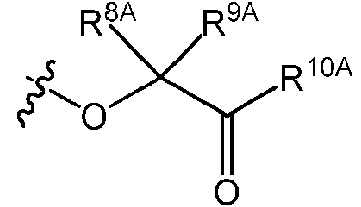
R8A y R9A pueden seleccionarse independientemente de hidrógeno, un alquilo C1-24 opcionalmente sustituido y un arilo opcionalmente sustituido; y R10A puede seleccionarse de hidrógeno, un alquilo C1-24 opcionalmente sustituido, un arilo opcionalmente sustituido, un -O-alquilo C1-24 opcionalmente sustituido, un -O-arilo opcionalmente sustituido, un -O-heteroarilo opcionalmente sustituido y un -O-heterociclilo monocíclico opcionalmente sustituido. En algunas realizaciones, R8A y R9A pueden ser hidrógeno. En otras realizaciones, al menos uno de R8A y R9A puede ser un alquilo C1-24 opcionalmente sustituido o un arilo opcionalmente sustituido. En algunas realizaciones, R10A puede ser hidrógeno. En otras realizaciones, R10A puede ser un alquilo C1-24 opcionalmente sustituido. En algunas realizaciones, R10A puede ser un alquilo C1-4 sin sustituir. En otras realizaciones más, R10A puede ser un arilo opcionalmente sustituido. Aun en otras realizaciones más, R10A puede ser -O-alquilo C1-24, un -O-arilo opcionalmente sustituido, un -O-heteroarilo opcionalmente sustituido o un -O-heterociclilo monocíclico opcionalmente sustituido. En algunas realizaciones, R10A puede ser un -O-alquilo C1-4 sin sustituir.R 8A and R 9A can be independently selected from hydrogen, optionally substituted C 1-24 alkyl and optionally substituted aryl; and R 10A may be selected from hydrogen, optionally substituted C 1-24 alkyl, optionally substituted aryl, optionally substituted -O-C 1-24 alkyl, optionally substituted -O-aryl, optionally substituted -O-heteroaryl and an optionally substituted monocyclic -O-heterocyclyl. In some embodiments, R 8A and R 9A can be hydrogen. In other embodiments, at least one of R 8A and R 9A may be an optionally substituted C 1-24 alkyl or an optionally substituted aryl. In some embodiments, R 10A can be hydrogen. In other embodiments, R 10A may be an optionally substituted C 1-24 alkyl. In some embodiments, R 10A can be unsubstituted C 1-4 alkyl. In still other embodiments, R 10A may be an optionally substituted aryl. In still other embodiments, R 10A may be -O-C 1-24 alkyl, an optionally substituted -O-aryl, an optionally substituted -O-heteroaryl, or an optionally substituted monocyclic -O-heterocyclyl. In some embodiments, R 10A can be an unsubstituted -O-C 1-4 alkyl.
En algunas realizaciones, R5B puede serIn some embodiments, R5B can be

Cuando R5B esWhen R5B is

R8B y R9B pueden seleccionarse independientemente de hidrógeno, un alquilo C1-24 opcionalmente sustituido y un arilo opcionalmente sustituido; y R10B puede seleccionarse de hidrógeno, un alquilo C1-24 opcionalmente sustituido, un arilo opcionalmente sustituido, un -O-alquilo C1-24 opcionalmente sustituido, un -O-arilo opcionalmente sustituido, un -O-heteroarilo opcionalmente sustituido y un -O-heterociclilo monocíclico opcionalmente sustituido. En algunas realizaciones, R8B y R9B pueden ser hidrógeno. En otras realizaciones, al menos uno de R8B y R9B puede ser un alquilo C1-24 opcionalmente sustituido o un arilo opcionalmente sustituido. En algunas realizaciones, R10B puede ser hidrógeno. R 8B and R 9B can be independently selected from hydrogen, optionally substituted C 1-24 alkyl and optionally substituted aryl; and R 10B can be selected from hydrogen, optionally substituted C 1-24 alkyl, optionally substituted aryl, optionally substituted -O-C 1-24 alkyl, optionally substituted -O-aryl, optionally substituted -O-heteroaryl and an optionally substituted monocyclic -O-heterocyclyl. In some embodiments, R 8B and R 9B can be hydrogen. In other embodiments, at least one of R 8B and R 9B may be an optionally substituted C 1-24 alkyl or an optionally substituted aryl. In some embodiments, R 10B can be hydrogen.
En otras realizaciones, R10B puede ser un alquilo C1-24 opcionalmente sustituido. En algunas realizaciones, R10B puede ser un alquilo C1-4 sin sustituir. En otras realizaciones más, R10B puede ser un arilo opcionalmente sustituido. Aun en otras realizaciones más, R10B puede ser -O-alquilo C1-24, un -O-arilo opcionalmente sustituido, un -O-heteroarilo opcionalmente sustituido o un -O-heterociclilo monocíclico opcionalmente sustituido. En algunas realizaciones, R10B puede ser un -O-alquilo C1-4 sin sustituir. En algunas realizaciones, R5A puede serIn other embodiments, R 10B may be an optionally substituted C 1-24 alkyl. In some embodiments, R 10B can be unsubstituted C 1-4 alkyl. In still other embodiments, R 10B can be an optionally substituted aryl. In still other embodiments, R 10B may be -O-C 1-24 alkyl, an optionally substituted -O-aryl, an optionally substituted -O-heteroaryl, or an optionally substituted monocyclic -O-heterocyclyl. In some embodiments, R 10B may be an unsubstituted -O-C 1-4 alkyl. In some embodiments, R 5A may be

y R5B puede serand R5B can be

En algunas realizaciones, R5A puede serIn some embodiments, R5A may be

en el que R11A y R12A pueden seleccionarse independientemente de hidrógeno, un alquilo C1-24 opcionalmente sustituido y un arilo opcionalmente sustituido; R13A puede seleccionarse independientemente de hidrógeno, un alquilo C1-24 opcionalmente sustituido, un arilo opcionalmente sustituido, un -O-alquilo C1-24 opcionalmente sustituido, un -O-arilo opcionalmente sustituido, un -O-heteroarilo opcionalmente sustituido y un -O-heterociclilo monocíclico opcionalmente sustituido; y Z 1A puede ser independientemente O (oxígeno) o S (azufre). En algunas realizaciones, R11A y R12A pueden ser hidrógeno. En otras realizaciones, al menos uno de R11A y R12A puede ser un alquilo C1-24 opcionalmente sustituido o un arilo opcionalmente sustituido. En algunas realizaciones, R13A puede ser un alquilo C1-24 opcionalmente sustituido. En algunas realizaciones, R13A puede ser un alquilo C1-4 sin sustituir. En otras realizaciones, R13A puede ser un arilo opcionalmente sustituido. En otras realizaciones más, R13A puede ser un -O alquilo C1-24 opcionalmente sustituido, un -O-arilo opcionalmente sustituido, un -O-heteroarilo opcionalmente sustituido o un -O-heterociclilo monocíclico opcionalmente sustituido. En algunas realizaciones, R13A puede ser un -O-alquilo C1-4 sin sustituir. En algunas realizaciones, Z 1A puede ser O (oxígeno). En otras realizaciones, Z 1A puede ser o S (azufre). wherein R 11A and R 12A may be independently selected from hydrogen, optionally substituted C 1-24 alkyl and optionally substituted aryl; R 13A can be independently selected from hydrogen, optionally substituted C 1-24 alkyl, optionally substituted aryl, optionally substituted -O-C 1-24 alkyl, optionally substituted -O-aryl, optionally substituted -O-heteroaryl and an optionally substituted monocyclic -O-heterocyclyl; and Z 1A can independently be O (oxygen) or S (sulfur). In some embodiments, R 11A and R 12A can be hydrogen. In other embodiments, at least one of R 11A and R 12A may be an optionally substituted C 1-24 alkyl or optionally substituted aryl. In some embodiments, R 13A may be an optionally substituted C 1-24 alkyl. In some embodiments, R 13A can be unsubstituted C 1-4 alkyl. In other embodiments, R 13A can be an optionally substituted aryl. In still other embodiments, R 13A may be an optionally substituted -O-C 1-24 alkyl, an optionally substituted -O-aryl, an optionally substituted -O-heteroaryl, or an optionally substituted monocyclic -O-heterocyclyl. In some embodiments, R 13A may be an unsubstituted -O-C 1-4 alkyl. In some embodiments, Z 1A can be O (oxygen). In other embodiments, Z 1A can be or S (sulfur).
En algunas realizaciones, R5B puede serIn some embodiments, R 5B may be

en el que R11B y R12B pueden seleccionarse independientemente de hidrógeno, un alquilo C1-24 opcionalmente sustituido y un arilo opcionalmente sustituido; R13B puede seleccionarse independientemente de hidrógeno, un alquilo C1-24 opcionalmente sustituido, un arilo opcionalmente sustituido, un -O-alquilo C1-24 opcionalmente sustituido, un -O-arilo opcionalmente sustituido, un -O-heteroarilo opcionalmente sustituido y un -O-heterociclilo monocíclico opcionalmente sustituido; y Z 1B puede ser independientemente O (oxígeno) o S (azufre). En algunas realizaciones, R11B y R12B pueden ser hidrógeno. En otras realizaciones, al menos uno de R11B y R12B puede ser un alquilo C1-24 opcionalmente sustituido o un arilo opcionalmente sustituido. En algunas realizaciones, R13B puede ser un alquilo C1-24 opcionalmente sustituido. En algunas realizaciones, R13B puede ser un alquilo C1-4 sin sustituir. En otras realizaciones, R13B puede ser un arilo opcionalmente sustituido. En otras realizaciones más, R13B puede ser un -O alquilo C1-24 opcionalmente sustituido, un -O-arilo opcionalmente sustituido, un -O-heteroarilo opcionalmente sustituido o un -O-heterociclilo monocíclico opcionalmente sustituido. En algunas realizaciones, R13B puede ser un -O-alquilo C1-4 sin sustituir. En algunas realizaciones, Z 1B puede ser O (oxígeno). En otras realizaciones, Z 1B puede ser o S (azufre). En algunas realizaciones, R5A puede ser wherein R 11B and R 12B can be independently selected from hydrogen, optionally substituted C 1-24 alkyl and optionally substituted aryl; R 13B may be independently selected from hydrogen, optionally substituted C 1-24 alkyl, optionally substituted aryl, optionally substituted -O-C 1-24 alkyl, optionally substituted -O-aryl, optionally substituted -O-heteroaryl and an optionally substituted monocyclic -O-heterocyclyl; and Z 1B can independently be O (oxygen) or S (sulfur). In some embodiments, R 11B and R 12B can be hydrogen. In other embodiments, at least one of R 11B and R 12B may be an optionally substituted C 1-24 alkyl or an optionally substituted aryl. In some embodiments, R 13B may be an optionally substituted C 1-24 alkyl. In some embodiments, R 13B can be unsubstituted C 1-4 alkyl. In other embodiments, R 13B can be an optionally substituted aryl. In still other embodiments, R 13B may be an optionally substituted -O C 1-24 alkyl, an optionally substituted -O-aryl, an optionally substituted -O-heteroaryl, or an optionally substituted monocyclic -O-heterocyclyl. In some embodiments, R 13B can be an unsubstituted -O-C 1-4 alkyl. In some embodiments, Z 1B can be O (oxygen). In other embodiments, Z 1B can be or S (sulfur). In some embodiments, R 5A may be
y R5B puede serand R5B can be

En algunas realizaciones, R5A puede serIn some embodiments, R5A may be

En algunas realizaciones, R14A puede ser hidrógeno. En otras realizaciones, R14A puede ser un alquilo C1-24 opcionalmente sustituido. En otras realizaciones más, R14A puede ser un arilo opcionalmente sustituido. En algunas realizaciones, R14A puede ser un alquilo C1-6, por ejemplo, metilo, etilo, n-propilo, isopropilo, n-butilo, isobutilo, tercbutilo, pentilo (ramificado y de cadena lineal) y hexilo (ramificado y de cadena lineal). En algunas realizaciones, p puede ser 1. En otras realizaciones, p puede ser 2.In some embodiments, R 14A can be hydrogen. In other embodiments, R 14A may be an optionally substituted C 1-24 alkyl. In still other embodiments, R 14A may be an optionally substituted aryl. In some embodiments, R 14A can be a C 1-6 alkyl, for example, methyl, ethyl, n-propyl, isopropyl, n-butyl, isobutyl, tert-butyl, pentyl (branched and straight chain) and hexyl (branched and straight chain). linear chain). In some embodiments, p can be 1. In other embodiments, p can be 2.
En algunas realizaciones, R5B puede serIn some embodiments, R 5B may be

En algunas realizaciones, R14B puede ser hidrógeno. En otras realizaciones, R14B puede ser un alquilo C1-24 opcionalmente sustituido. En otras realizaciones más, R14B puede ser un arilo opcionalmente sustituido. En algunas realizaciones, R14B puede ser un alquilo C1-6, por ejemplo, metilo, etilo, n-propilo, isopropilo, n-butilo, isobutilo, tercbutilo, pentilo (ramificado y de cadena lineal) y hexilo (ramificado y de cadena lineal). En algunas realizaciones, q puede ser 1. En otras realizaciones, q puede ser 2. En algunas realizaciones, R5A puede serIn some embodiments, R 14B can be hydrogen. In other embodiments, R 14B may be an optionally substituted C 1-24 alkyl. In still other embodiments, R 14B may be an optionally substituted aryl. In some embodiments, R 14B can be a C 1-6 alkyl, for example, methyl, ethyl, n-propyl, isopropyl, n-butyl, isobutyl, tert-butyl, pentyl (branched and straight chain) and hexyl (branched and straight chain). linear chain). In some embodiments, q may be 1. In other embodiments, q may be 2. In some embodiments, R 5A may be

En algunas realizaciones, R5A puede serIn some embodiments, R5A may be

En algunas realizaciones, R15A puede ser hidrógeno. En otras realizaciones, R15A puede ser un alquilo C1-24 opcionalmente sustituido. En otras realizaciones más, R15A puede ser un arilo opcionalmente sustituido, por ejemplo, un fenilo opcionalmente sustituido. En algunas realizaciones, R15A puede ser un alquilo C1-6 opcionalmente sustituido. En algunas realizaciones, R15A puede ser un alquilo C1-6 sin sustituir. En algunas realizaciones, s puede ser 3. En otras realizaciones, s puede ser 4. En otras realizaciones más, s puede ser 5.In some embodiments, R 15A can be hydrogen. In other embodiments, R 15A may be an optionally substituted C 1-24 alkyl. In still other embodiments, R 15A may be an optionally substituted aryl, for example, an optionally substituted phenyl. In some embodiments, R 15A can be an optionally substituted C 1-6 alkyl. In some embodiments, R 15A can be unsubstituted C 1-6 alkyl. In some embodiments, s can be 3. In other embodiments, s can be 4. In still other embodiments, s can be 5.
En algunas realizaciones, R5B puede ser In some embodiments, R 5B may be

En algunas realizaciones, R15B puede ser hidrógeno. En otras realizaciones, R15B puede ser un alquilo C1-24 opcionalmente sustituido. En otras realizaciones más, R15B puede ser un arilo opcionalmente sustituido, por ejemplo, un fenilo opcionalmente sustituido. En algunas realizaciones, R15B puede ser un alquilo C1-6 opcionalmente sustituido. En algunas realizaciones, R15B puede ser un alquilo C1-6 sin sustituir. En algunas realizaciones, t puede ser 3. En otras realizaciones, t puede ser 4. En otras realizaciones más, t puede ser 5. En algunas realizaciones, R5A puede serIn some embodiments, R 15B can be hydrogen. In other embodiments, R 15B may be an optionally substituted C 1-24 alkyl. In still other embodiments, R 15B may be an optionally substituted aryl, eg, an optionally substituted phenyl. In some embodiments, R 15B can be an optionally substituted C 1-6 alkyl. In some embodiments, R 15B can be unsubstituted C 1-6 alkyl. In some embodiments, t can be 3. In other embodiments, t can be 4. In still other embodiments, t can be 5. In some embodiments, R 5A can be

En algunas realizaciones, R5A y/o R5B puede ser un grupo isopropiloxicarboniloximetoxi (POC). En algunas realizaciones, R5A y/o R5B pueden ser un pivaloiloximetoxi (POM). En algunas realizaciones, R5A y R5B pueden ser ambos un grupo isopropiloxicarboniloximetoxi (POC), y formar un profármaco bis(isopropiloxicarboniloximetoxi) (bis(POC)). En otras realizaciones, R5A y R5B pueden ser ambos un grupo pivaloiloximetoxi (POM), y formar un profármaco bis(pivaloiloximetoxi) (bis(POM)). En otras realizaciones más, R5A y R5B pueden ser ambos un grupo S-aciltioetilo (SATE)-O- y formar un profármaco éster de SATE. En algunas realizaciones, R5A y R5B pueden ser iguales. En otras realizaciones, R5B y R5B pueden ser diferentes.In some embodiments, R5A and / or R5B can be an isopropyloxycarbonyloxymethoxy (POC) group. In some embodiments, R5A and / or R5B can be a pivaloyloxymethoxy (POM). In some embodiments, R5A and R5B can both be an isopropyloxycarbonyloxymethoxy (POC) group, and form a bis (isopropyloxycarbonyloxymethoxy) (bis (POC)) prodrug. In other embodiments, R5A and R5B can both be a pivaloyloxymethoxy (POM) group, and form a bis (pivaloyloxymethoxy) (bis (POM)) prodrug. In still other embodiments, R5A and R5B can both be an S-acylthioethyl (SATE) -O- group and form a SATE ester prodrug. In some embodiments, R5A and R5B can be the same. In other embodiments, R5B and R5B may be different.
La base nucleotídica puede variar. En algunas realizaciones, B1 puede ser guanina. En algunas realizaciones, B1 puede ser uno siguiente opcionalmente sustituidoThe nucleotide base can vary. In some embodiments, B1 can be guanine. In some embodiments, B1 may be an optionally substituted next

En otras realizaciones, B1 puede ser un siguiente opcionalmente sustituidoIn other embodiments, B1 may be an optionally substituted following

en el que R6B, puede seleccionarse de hidrógeno, un alquilo C1-6 sin sustituir, un alquenilo C3-6 sin sustituir, un alquinilo C3-6 sin sustituir y un cicloalquilo C3-6 sin sustituir. En algunas realizaciones, B1 puede ser sin sustituirwherein R 6B may be selected from hydrogen, C 1-6 alkyl, unsubstituted C 3-6 alkenyl, unsubstituted C 3-6 alkynyl unsubstituted C 3-6 cycloalkyl and unsubstituted. In some embodiments, B 1 can be unsubstituted

En algunas realizaciones, R6B puede ser un alquilo C i -6 sin sustituir. Por ejemplo, R6B puede ser metilo, etilo, n-propilo, isopropilo, n-butilo, isobutilo, terc-butilo, pentilo (ramificado y de cadena lineal) o hexilo (ramificado y de cadena lineal). En algunas realizaciones, R6B puede ser un alquenilo C3-6 sin sustituir. En otras realizaciones, R6B puede ser un alquinilo C3-6 sin sustituir. En otras realizaciones más, R6B puede ser un cicloalquilo C3-6 sin sustituir, por ejemplo, ciclopropilo, ciclobutilo, ciclopentilo o ciclohexilo.In some embodiments, R 6B can be an unsubstituted C 1-6 alkyl. For example, R 6B can be methyl, ethyl, n-propyl, isopropyl, n-butyl, isobutyl, tert-butyl, pentyl (branched and straight chain), or hexyl (branched and straight chain). In some embodiments, R 6B can be an unsubstituted C 3-6 alkenyl. In other embodiments, R 6B can be an unsubstituted C 3-6 alkynyl. In still other embodiments, R 6B may be an unsubstituted C 3-6 cycloalkyl, eg, cyclopropyl, cyclobutyl, cyclopentyl, or cyclohexyl.
En algunas realizaciones, B1 puede ser uno siguiente opcionalmente sustituidoIn some embodiments, B 1 may be the next optionally substituted

en el que R6C, puede seleccionarse de hidrógeno, un alquilo C1-6 sin sustituir, un alquenilo C3-6 sin sustituir, un alquinilo C3-6 sin sustituir y un cicloalquilo C3-6 sin sustituir. En algunas realizaciones, B1 puede ser sin sustituirwherein R 6C can be selected from hydrogen, C 1-6 alkyl, unsubstituted C 3-6 alkenyl, unsubstituted C 3-6 alkynyl unsubstituted C 3-6 cycloalkyl and unsubstituted. In some embodiments, B 1 can be unsubstituted

En algunas realizaciones, R6C puede ser hidrógeno. En algunas realizaciones, R6C puede ser un alquilo C1-6 sin sustituir. Por ejemplo, R6C puede ser metilo, etilo, n-propilo, isopropilo, n-butilo, isobutilo, terc-butilo, pentilo (ramificado y de cadena lineal) o hexilo (ramificado y de cadena lineal). En algunas realizaciones, R6C puede ser un etilo. En algunas realizaciones, R6C puede ser un alquenilo C3-6 sin sustituir. En otras realizaciones, R6C puede ser un alquinilo C3-6 sin sustituir. En otras realizaciones, R6C puede ser un cicloalquilo C3-6 sin sustituir, por ejemplo, ciclopropilo, ciclobutilo, ciclopentilo o ciclohexilo.In some embodiments, R 6C can be hydrogen. In some embodiments, R 6C can be unsubstituted C 1-6 alkyl. For example, R 6C can be methyl, ethyl, n-propyl, isopropyl, n-butyl, isobutyl, tert-butyl, pentyl (branched and straight chain), or hexyl (branched and straight chain). In some embodiments, R 6C can be an ethyl. In some embodiments, R 6C can be an unsubstituted C 3-6 alkenyl. In other embodiments, R 6C can be an unsubstituted C 3-6 alkynyl. In other embodiments, R 6C may be an unsubstituted C 3-6 cycloalkyl, eg, cyclopropyl, cyclobutyl, cyclopentyl, or cyclohexyl.
En algunas realizaciones, Z1 puede ser O (oxígeno). En otras realizaciones, Z1 puede ser S (azufre).In some embodiments, Z 1 can be O (oxygen). In other embodiments, Z 1 can be S (sulfur).
En algunas realizaciones, R2 no es halo. En algunas realizaciones, R2 no es fluoro. En algunas realizaciones, R5B no es un -O-arilo opcionalmente sustituido. En algunas realizaciones, R5B no es un -O-arilo sin sustituir. En algunas realizaciones, R5A no es un éster isopropílico de N-alanina En algunas realizaciones, R1 no es un alquilo C1-6 opcionalmente sustituido. Por ejemplo, R1 no es un alquilo C1-6 sin sustituir, tal como metilo. En algunas realizaciones; R3 es OH u -OC(=O)R8 ; R2 es F; y R1 es metilo, etilo o etenilo; entonces R4 no puede seleccionarse de H yIn some embodiments, R 2 is not halo. In some embodiments, R 2 is not fluoro. In some embodiments, R 5B is not an optionally substituted -O-aryl. In some embodiments, R 5B is not an unsubstituted -O-aryl. In some embodiments, R 5A is not an isopropyl ester of N-alanine. In some embodiments, R 1 is not an optionally substituted C 1-6 alkyl. For example, R 1 is not an unsubstituted C 1-6 alkyl, such as methyl. In some embodiments; R 3 is OH or -OC (= O) R 8 ; R 2 is F; and R 1 is methyl, ethyl, or ethenyl; then R 4 cannot be selected from H and

en el que R5B es un -O-arilo sin sustituir; R5A eswherein R5B is an unsubstituted -O-aryl; R5A is

y Z1 es oxígeno. En algunas realizaciones, un compuesto de fórmula (I) no es un compuesto del documento WO 2013/092481 (presentado el 17 de diciembre de 2012).and Z1 is oxygen. In some embodiments, a compound of formula (I) is not a compound of WO 2013/092481 (filed December 17, 2012).
Estructuras ejemplares de un compuesto de fórmula (I) incluyen las siguientes: Exemplary structures of a compound of formula (I) include the following:

o una sal farmacéuticamente aceptable de los anteriores. En algunas realizaciones de este párrafo, R3 puede ser OH. En algunas realizaciones de este párrafo, R6C puede ser un alquilo C1-6 sin sustituir, tal como CH2CH3. En algunas realizaciones de este párrafo, R4 puede ser H. En otras realizaciones de este párrafo, R4 puede ser un grupo fosforoamidato. En otras realizaciones más de este párrafo, R4 puede ser un grupo fosfato (tal como un mono-, di- o trifosfato). Aun en otras realizaciones más de este párrafo, R4 puede ser un grupo tiofosforoamidato. En algunas realizaciones de este párrafo, R4 puede ser un grupo tiofosfato (tal como un alfa-tiomono-, alfa-tiodi- o alfa-tiotrifosfato). En algunas realizaciones de este párrafo, Rp1 puede ser -O-etilo, -O-isopropilo o -O-isobutilo.or a pharmaceutically acceptable salt of the foregoing. In some embodiments of this paragraph, R 3 can be OH. In some embodiments of this paragraph, R 6C can be an unsubstituted C 1-6 alkyl, such as CH 2 CH 3 . In some embodiments of this paragraph, R 4 can be H. In other embodiments of this paragraph, R 4 can be a phosphoramidate group. In still other embodiments of this paragraph, R 4 may be a phosphate group (such as a mono-, di-, or triphosphate). In still other embodiments of this paragraph, R 4 may be a thiophosphoramidate group. In some embodiments of this paragraph, R 4 can be a thiophosphate group (such as an alpha-thiomono-, alpha-thiodi-, or alpha-thiotriphosphate). In some embodiments of this paragraph, R p1 can be -O-ethyl, -O-isopropyl, or -O-isobutyl.
Ejemplos de compuestos de fórmula (I) incluyen los siguientes:Examples of compounds of formula (I) include the following:

y and

o una sal farmacéuticamente aceptable de los anteriores.or a pharmaceutically acceptable salt of the foregoing.
Ejemplos adicionales de compuestos de fórmula (I) incluyen los siguientes: Additional examples of compounds of formula (I) include the following:

o una sal farmacéuticamente aceptable de los anteriores.or a pharmaceutically acceptable salt of the foregoing.
Ejemplos adicionales de compuestos de fórmula (I) incluyen los siguientes: Additional examples of compounds of formula (I) include the following:

o una sal farmacéuticamente aceptable de los anteriores.or a pharmaceutically acceptable salt of the foregoing.
Como se describe en este documento, un compuesto de fórmula (I), o una sal farmacéuticamente aceptable del mismo, puede tener R4 que seaAs described herein, a compound of formula (I), or a pharmaceutically acceptable salt thereof, may have R4 which is

R5A que sea un aminoácido N-ligado opcionalmente sustituido o un éster de aminoácido N-ligado opcionalmente sustituido; y R5B que sea un -O-arilo opcionalmente sustituido, un -O-heteroarilo opcionalmente sustituido, un -O-heterociclilo opcionalmente sustituido, un aminoácido N-ligado opcionalmente sustituido o un éster de aminoácido N-ligado opcionalmente sustituido. Neutralizando la carga en el fosfato o tiofosfato, puede facilitarse la penetración de la membrana celular como resultado de la lipofilia aumentada del compuesto. Una vez absorbidos y captados dentro de la célula, los grupos adheridos al fósforo pueden eliminarse fácilmente por esterasas, proteasas y/u otras enzimas. En algunas realizaciones, los grupos adheridos al fósforo pueden eliminarse por hidrólisis simple. Dentro de la célula, el fosfato así liberado después puede metabolizarse por enzimas celulares en el difosfato o el trifosfato activo. Asimismo, el tiofosfato puede metabolizarse en el alfa-tiodifosfato o el alfa-tiotrifosfato. Además, en algunas realizaciones, variar los sustituyentes en un compuesto descrito en este documento, tal como compuesto de fórmula (I), puede ayudar a mantener la eficacia de dicho compuesto reduciendo los efectos indeseables, tal como la isomerización.R 5A being an optionally substituted N-linked amino acid or an optionally substituted N-linked amino acid ester; and R 5B being an optionally substituted -O-aryl, an optionally substituted -O-heteroaryl, an optionally substituted -O-heterocyclyl, an optionally substituted N-linked amino acid, or an optionally substituted N-linked amino acid ester. By neutralizing the charge on the phosphate or thiophosphate, penetration of the cell membrane can be facilitated as a result of the increased lipophilicity of the compound. Once absorbed and taken up into the cell, the groups attached to phosphorus can be easily removed by esterases, proteases and / or other enzymes. In some embodiments, groups attached to phosphorus can be removed by simple hydrolysis. Inside the cell, the phosphate thus released can then be metabolized by cellular enzymes to the active diphosphate or triphosphate. Also, thiophosphate can be metabolized to alpha-thiodiphosphate or alpha-thiotriphosphate. Furthermore, in some embodiments, varying the substituents on a compound described herein, such as a compound of formula (I), can help maintain the efficacy of said compound by reducing undesirable effects, such as isomerization.
En algunas realizaciones, la fosforilación de un tio-monofosfato de un compuesto de fórmula (I), o sal farmacéuticamente aceptable del mismo, puede ser estereoselectiva. Por ejemplo, un tio-monofosfato de un compuesto de fórmula (I) puede fosforilarse para dar un compuesto alfa-tiodifosfato y/o alfa-tiotrifosfato que puede enriquecerse en el diastereoisómero (R) o (S) con respecto al átomo 5'-O-fósforo. Por ejemplo, una de la configuración (R) y (S) con respecto al átomo 5'-O-fósforo del compuesto alfa-tiodifosfato y/o alfa-tiotrifosfato puede estar presente en una cantidad >50 %, >75 %, >90 %, >95 % o >99 % en comparación con la cantidad de la otra de la configuración (R) o (S) con respecto al átomo 5'-O-fósforo. En algunas realizaciones, la fosforilación de un compuesto de fórmula (I), o sal farmacéuticamente aceptable del mismo, puede dar como resultado la formación de un compuesto que tiene la configuración (R) en el átomo 5'-O-fósforo. En algunas realizaciones, la fosforilación de un compuesto de fórmula (I), o sal farmacéuticamente aceptable del mismo, puede dar como resultado la formación de un compuesto que tiene la configuración (S) en el átomo 5'-O-fósforo.In some embodiments, the phosphorylation of a thio-monophosphate of a compound of formula (I), or pharmaceutically acceptable salt thereof, can be stereoselective. For example, a thio-monophosphate of a compound of formula (I) can be phosphorylated to give an alpha-thiodiphosphate and / or alpha-thiotriphosphate compound that can be enriched in the (R) or (S) diastereoisomer with respect to the 5'- atom. O-phosphor. For example, one of the ( R) and (S) configuration with respect to the 5'-O-phosphorus atom of the compound alpha-thiodiphosphate and / or alpha-thiotriphosphate may be present in an amount>50%,>75%,>90%,> 95% or> 99% compared to the amount of the other of the (R) or (S) configuration with respect to the 5'-O-phosphorus atom. In some embodiments, phosphorylation of a compound of formula (I), or pharmaceutically acceptable salt thereof, can result in the formation of a compound having the (R) configuration at the 5'-O-phosphorous atom. In some embodiments, phosphorylation of a compound of formula (I), or pharmaceutically acceptable salt thereof, can result in the formation of a compound having the (S) configuration at the 5'-O-phosphorous atom.
En algunas realizaciones, un compuesto de fórmula (I), o una sal farmacéuticamente aceptable del mismo, puede actuar como un terminado de cadena de la replicación del VHC. Por ejemplo, compuestos de fórmula (I) pueden contener un resto en la posición del carbono 2', de modo que el compuesto se incorpora en una cadena de ARN del VHC sin observar que se produzca elongación adicional. Por ejemplo, un compuesto de fórmula (I) puede contener una modificación del carbono 2', en la que R1 es un grupo que no es hidrógeno seleccionado de un alquilo C i -6 opcionalmente sustituido, un alquenilo C2-6 opcionalmente sustituido, un alquinilo C2-6 opcionalmente sustituido y un cicloalquilo C3-6 opcionalmente sustituido.In some embodiments, a compound of formula (I), or a pharmaceutically acceptable salt thereof, can act as a chain terminator of HCV replication. For example, compounds of formula (I) may contain a moiety at the 2 'carbon position, such that the compound is incorporated into a HCV RNA strand without observing that further elongation occurs. For example, a compound of formula (I) may contain a modification of the 2 'carbon, wherein R 1 is a non-hydrogen group selected from an optionally substituted C i -6 alkyl, an optionally substituted C 2-6 alkenyl , an optionally substituted C 2-6 alkynyl and an optionally substituted C 3-6 cycloalkyl.
En algunas realizaciones, un compuesto de fórmula (I), o una sal farmacéuticamente aceptable del mismo, puede tener estabilidad metabólica y/o plasmática aumentada. En algunas realizaciones, un compuesto de fórmula (I), o una sal farmacéuticamente aceptable del mismo, puede ser más resistente a hidrólisis y/o más resistente a transformaciones enzimáticas. Por ejemplo, un compuesto de fórmula (I), o una sal farmacéuticamente aceptable del mismo, puede tener estabilidad metabólica aumentada, estabilidad plasmática aumentada, puede ser más resistente a hidrólisis y/o pude ser más resistente a transformaciones enzimáticas en comparación con un compuesto que es idéntico en estructura, pero que tiene un hidrógeno en lugar del fluoro en la posición 4'. En algunas realizaciones, un compuesto de fórmula (I), o una sal farmacéuticamente aceptable del mismo, puede tener propiedades mejoradas. Una lista no limitante de propiedades ejemplares incluyen, aunque sin limitación, semivida biológica aumentada, biodisponibilidad aumentada, potencia aumentada, una respuesta in vivo mantenida, intervalos de dosificación aumentados, cantidades de dosificación disminuidas, citotoxicidad disminuida, reducción en las cantidades necesarias para tratar afecciones patológicas, reducción en la carga vírica, reducción en el tiempo hasta la seroconversión (es decir, el virus llega a ser indetectable en el suero del paciente), respuesta vírica mantenida aumentada, una reducción de la morbilidad o mortalidad en los desenlaces clínicos, cumplimiento aumentado del paciente, hepatopatías disminuidas (tales como fibrosis hepática, cirrosis hepática y/o cáncer de hígado) y compatibilidad con otras medicaciones. En algunas realizaciones, un compuesto de fórmula (I), o una sal farmacéuticamente aceptable del mismo, puede tener una semivida biológica de más de 24 horas. En algunas realizaciones, un compuesto de fórmula (I), o una sal farmacéuticamente aceptable del mismo, puede tener una semivida biológica mayor que un compuesto que es idéntico en estructura, pero que tiene un hidrógeno en lugar del fluoro en la posición 4'. En algunas realizaciones, un compuesto de fórmula (I), o una sal farmacéuticamente aceptable del mismo, puede tener una actividad antivírica más potente (por ejemplo, una CE50 menor en un ensayo de replicón de VHC) en comparación con el tratamiento de referencia actual. En algunas realizaciones, un compuesto de fórmula (I), o una sal farmacéuticamente aceptable del mismo, no inhibe significativamente la función mitocondrial de la ARN polimerasa mitocondrial. Por ejemplo, un compuesto de fórmula (I), o una sal farmacéuticamente aceptable del mismo, se incorpora en la ARN polimerasa mitocondrial humana menos de un 10 % en comparación con el 5'-trifosfato nucleotídico natural con la misma B1. In some embodiments, a compound of formula (I), or a pharmaceutically acceptable salt thereof, may have increased metabolic and / or plasma stability. In some embodiments, a compound of formula (I), or a pharmaceutically acceptable salt thereof, may be more resistant to hydrolysis and / or more resistant to enzymatic transformations. For example, a compound of formula (I), or a pharmaceutically acceptable salt thereof, may have increased metabolic stability, increased plasma stability, may be more resistant to hydrolysis and / or may be more resistant to enzymatic transformations compared to a compound. which is identical in structure, but has a hydrogen in place of the fluoro at the 4 'position. In some embodiments, a compound of formula (I), or a pharmaceutically acceptable salt thereof, may have improved properties. A non-limiting list of exemplary properties includes, but is not limited to, increased biological half-life, increased bioavailability, increased potency, a sustained in vivo response, increased dosage ranges, decreased dosage amounts, decreased cytotoxicity, decreased amounts needed to treat conditions. pathological, reduction in viral load, reduction in time to seroconversion (i.e., virus becomes undetectable in patient serum), increased sustained viral response, reduced morbidity or mortality in clinical outcomes, compliance increased patient, decreased liver disease (such as liver fibrosis, liver cirrhosis and / or liver cancer) and compatibility with other medications. In some embodiments, a compound of formula (I), or a pharmaceutically acceptable salt thereof, can have a biological half-life of more than 24 hours. In some embodiments, a compound of formula (I), or a pharmaceutically acceptable salt thereof, may have a longer biological half-life than a compound that is identical in structure, but has a hydrogen in place of the fluoro at the 4 'position. In some embodiments, a compound of formula (I), or a pharmaceutically acceptable salt thereof, may have more potent antiviral activity (eg, a lower EC 50 in an HCV replicon assay) compared to the reference treatment. current. In some embodiments, a compound of formula (I), or a pharmaceutically acceptable salt thereof, does not significantly inhibit the mitochondrial function of mitochondrial RNA polymerase. For example, a compound of formula (I), or a pharmaceutically acceptable salt thereof, is incorporated into human mitochondrial RNA polymerase less than 10% compared to natural nucleotide 5'-triphosphate with the same B1.
Además, en algunas realizaciones, la presencia de un tiofosforoamidato, fosforoamidato, tiofosforbisamidato o fosforbisamidato en un compuesto de fórmula (I) puede aumentar la estabilidad del compuesto inhibiendo su degradación. Además, en algunas realizaciones, la presencia de un tiofosforoamidato, fosforoamidato, tiofosforbisamidato o fosforbisamidato puede hacer que el compuesto sea más resistente a escisión in vivo y proporcionar eficacia prolongada mantenida. En algunas realizaciones, un tiofosforoamidato, fosforoamidato, tiofosforbisamidato o fosforbisamidato puede facilitar la penetración de la membrana celular por un compuesto de fórmula (I) haciendo que el compuesto sea más lipófilo. En algunas realizaciones, un tiofosforoamidato, fosforoamidato, tiofosforbisamidato o fosforbisamidato puede tener biodisponibilidad oral mejorada, estabilidad acuosa mejorada y/o riesgo reducido de toxicidad relacionada con subproductos. En algunas realizaciones, por motivos de comparación, un compuesto de fórmula (I) puede compararse con un compuesto que sea idéntico en estructura, pero que tenga un hidrógeno en lugar del fluoro en la posición 4'.Furthermore, in some embodiments, the presence of a thiophosphoramidate, phosphoramidate, thiophosphorbisamidate or phosphorbisamidate in a compound of formula (I) can increase the stability of the compound by inhibiting its degradation. Furthermore, in some embodiments, the presence of a thiophosphoramidate, phosphoramidate, thiophosphorbisamidate, or phosphorbisamidate can make the compound more resistant to cleavage in vivo and provide sustained long-lasting efficacy. In some embodiments, a thiophosphoramidate, phosphoramidate, thiophosphorbisamidate, or phosphorbisamidate can facilitate cell membrane penetration by a compound of formula (I) by making the compound more lipophilic. In some embodiments, a thiophosphoramidate, phosphoramidate, thiophosphorbisamidate, or phosphorbisamidate may have improved oral bioavailability, improved aqueous stability, and / or reduced risk of by-product related toxicity. In some embodiments, for the sake of comparison, a compound of formula (I) can be compared to a compound that is identical in structure, but has a hydrogen in place of the fluoro at the 4 'position.
SíntesisSynthesis
Los compuestos de fórmula (I) y los descritos en este documento pueden prepararse de diversas maneras. Se muestran rutas sintéticas generales para el compuesto de fórmula (I), y algunos ejemplos de materiales de partida usados para sintetizar los compuestos de fórmula (I) en el esquema 1 y 2, y se describen en este documento. Las rutas mostradas y descritas en este documento son ilustrativas solamente y no se pretende que, no debe interpretarse que, limiten el alcance de las reivindicaciones de ninguna manera. Los expertos en la materia podrán reconocer modificaciones de las síntesis divulgadas e idear rutas alternativas basándose en las divulgaciones de este documento; estando todas estas modificaciones y rutas alternativas dentro del alcance de las reivindicaciones.The compounds of formula (I) and those described herein can be prepared in various ways. General synthetic routes for the compound of formula (I), and some examples of starting materials used to synthesize the compounds of formula (I) are shown in Scheme 1 and 2, and are described herein. The routes shown and described herein are illustrative only and are not intended, should not be construed, to limit the scope of the claims in any way. Those skilled in the art will be able to recognize modifications of the disclosed syntheses and devise alternative routes based on the disclosures in this document; all such modifications and alternative routes being within the scope of the claims.
Los compuestos de fórmula (I) pueden prepararse usando diversos métodos conocidos por los expertos en la materia. Se muestran ejemplos de métodos en los esquemas 1 y 2. Los precursores adecuados que contienen fósforo pueden obtenerse comercialmente o prepararse por métodos sintéticos conocidos por los expertos en la materia. Se muestran ejemplos de estructuras generales de precursores que contienen fósforo en los esquemas 1 y 2, e incluyen fosforocloridatos y tiofosforocloridatos. Los fosforocloridatos y tiofosforocloridatos adecuados están disponibles en el mercado y/o pueden prepararse sintéticamente.Compounds of formula (I) can be prepared using various methods known to those of skill in the art. Examples of methods are shown in Schemes 1 and 2. Suitable phosphorus-containing precursors can be obtained commercially or prepared by synthetic methods known to those of skill in the art. Examples of general structures of phosphorous-containing precursors are shown in Schemes 1 and 2, and include phosphorous chloridates and thiophosphorous chloridates. Suitable phosphorous chloridates and thiophosphorous chloridates are commercially available and / or can be prepared synthetically.

Se muestra un método para formar un compuesto de fórmula (I) en el esquema 1. En el esquema 1, R1a, R2a, R3a y B1a pueden ser iguales que R1, R2, R3 y B1 como se describen en este documento para la fórmula (I). En algunas realizaciones, un compuesto de fórmula (I) puede generarse a partir de un compuesto de fórmula (A) y un compuesto de fórmula (B) o un compuesto de fórmula (A) y un compuesto de fórmula (C) usando un reactivo organometálico, tal como un reactivo de Grignard. Los reactivos de Grignard adecuados son conocidos por los expertos en la materia e incluyen, aunque sin limitación, cloruros de alquilmagnesio y bromuros de alquilmagnesio. En otras realizaciones, puede usarse una base apropiada para formar un compuesto de fórmula (I). Ejemplos de bases adecuadas incluyen, aunque sin limitación, una base de amina, tal como una alquilamina (incluyendo mono-, di- y trialquilaminas (por ejemplo, trietilamina)), piridinas opcionalmente sustituidas (por ejemplo, colidina) e imidazoles opcionalmente sustituidos (por ejemplo, N-metilimidazol)).A method for forming a compound of formula (I) is shown in Scheme 1. In Scheme 1, R1a, R2a, R3a and B1a may be the same as R1, R2, R3 and B1 as described herein for the formula (I). In some embodiments, a compound of formula (I) can be generated from a compound of formula (A) and a compound of formula (B) or a compound of formula (A) and a compound of formula (C) using a reagent organometallic, such as a Grignard reagent. Suitable Grignard reagents are known to those of skill in the art and include, but are not limited to, alkylmagnesium chlorides and alkylmagnesium bromides. In other embodiments, an appropriate base can be used to form a compound of formula (I). Examples of suitable bases include, but are not limited to, an amine base, such as an alkylamine (including mono-, di-, and trialkylamines (eg, triethylamine)), optionally substituted pyridines (eg, collidine), and optionally substituted imidazoles ( for example, N-methylimidazole)).
Cuando los compuestos de fórmula (I) tienen Z1 que sea azufre, el azufre puede añadirse de diversas maneras. En algunas realizaciones, el azufre puede formar parte del precursor que contiene fósforo, por ejemplo,When the compounds of formula (I) have Z1 which is sulfur, the sulfur can be added in various ways. In some embodiments, the sulfur can be part of the phosphorus-containing precursor, for example,

Como alternativa, uno de los oxígenos adheridos al fósforo puede intercambiarse con un azufre usando un reactivo de sulfuración. Los agentes de sulfuración adecuados son conocidos por los expertos en la materia e incluyen, aunque sin limitación, reactivo de Lawesson de azufre elemental, ciclooctaazufre, 1, 1 -dióxido de 3H-1,2-benzoditiol-3-ona (reactivo de Beaucage), 3-((N,N-dimetilaminometiliden)amino)-3H-1,2,4-ditiazol-5-tiona (DDTT) y tetrasulfuro de bis(3-trietoxisilil)propilo (TEST).Alternatively, one of the oxygens attached to the phosphor can be exchanged with a sulfur using a sulfiding reagent. Suitable sulfurizing agents are known to those skilled in the art and include, but are not limited to, Lawesson's reagent for elemental sulfur, cyclooctasulfur, 1,1-3H-1,2-benzodithiol-3-one dioxide (Beaucage's reagent ), 3 - ((N, N-dimethylaminomethylidene) amino) -3H-1,2,4-dithiazole-5-thione (DDTT) and bis (3-triethoxysilyl) propyl tetrasulfide (TEST).

Un precursor que contiene fósforo puede acoplarse al nucleósido, por ejemplo, un compuesto de fórmula (A). Después del acoplamiento del precursor que contiene fósforo, puede escindirse cualquier grupo saliente en condiciones adecuadas, tal como hidrólisis. En el esquema 2, R1a, R2a, R3a y B1a pueden ser iguales que R1, R2, R3 y B1 como se describen en este documento para la fórmula (I). Pueden añadirse grupos que contienen fósforo adicionales usando métodos conocidos por los expertos en la materia, por ejemplo, usando un pirofosfato. Si se desea, puede usarse una o más bases durante la adición de cada grupo que contiene fósforo. En este documento se describen ejemplos de bases adecuadas.A phosphorous-containing precursor can be coupled to the nucleoside, for example, a compound of formula (A). After coupling of the phosphorous-containing precursor, any leaving groups can be cleaved under suitable conditions, such as hydrolysis. In Scheme 2, R1a, R2a, R3a and B1a can be the same as R1, R2, R3 and B1 as described herein for formula (I). Additional phosphorous-containing groups can be added using methods known to those of skill in the art, for example, using a pyrophosphate. If desired, one or more bases can be used during the addition of each phosphorous-containing group. Examples of suitable bases are described in this document.
Como se describe en este documento, en algunas realizaciones, R2 y R3 cada uno puede ser un átomo de oxígeno, en los que los átomos de oxígeno se unen conjuntamente por un grupo carbonilo. El grupo -O-C(=O)-O- puede formarse usando métodos conocidos por los expertos en la materia. Por ejemplo, un compuesto de fórmula (I), en la que R2 y R3 son ambos grupos hidroxi, puede tratarse con 1,1'-carbonildiimidazol (CDI).As described herein, in some embodiments, R2 and R3 can each be an oxygen atom, where the oxygen atoms are joined together by a carbonyl group. The group -O-C (= O) -O- can be formed using methods known to those of skill in the art. For example, a compound of formula (I), in which R2 and R3 are both hydroxy groups, can be treated with 1,1'-carbonyldiimidazole (CDI).
En algunas realizaciones, R2 y/o R3 pueden ser -OC(=O)R12 y -OC(=O)R8, respectivamente. Los grupos -OC(=O)R12 y -OC(=O)R8 puede formarse en las posiciones 2' y 3' usando diversos métodos conocidos por los expertos en la materia. Como un ejemplo, un compuesto de fórmula (I), en la que R2 y R3 son ambos grupos hidroxi, puede tratarse con un anhídrido de alquilo (por ejemplo, anhídrido acético y anhídrido propiónico) o un cloruro de ácido de alquilo (por ejemplo, cloruro de acetilo). Si se desea, puede usarse un catalizador para facilitar la reacción. Un ejemplo de catalizador adecuado es 4-dimetilaminopiridina (DMAP). Como alternativa, los grupos -OC(=O)R12 y -OC(=O)R8 puede formarse en las posiciones 2' y 3' haciendo reaccionar un ácido de alquilo (por ejemplo, ácido acético y ácido propiónico) en presencia de una carbodiimida o un reactivo de acoplamiento. Ejemplos de carbodiimidas incluyen, aunque sin limitación, N,N'-diciclohexilcarbodiimida (DCC), N,N'-diisopropilcarbodiimida (DIC) y 1-etil-3-(3-dimetilaminopropil)carbodiimida (EDC).In some embodiments, R2 and / or R3 can be -OC (= O) R12 and -OC (= O) R8, respectively. The groups -OC (= O) R12 and -OC (= O) R8 can be formed at the 2 'and 3' positions using various methods known to those of skill in the art. As an example, a compound of formula (I), in which R2 and R3 are both hydroxy groups, can be treated with an alkyl anhydride (for example, acetic anhydride and propionic anhydride) or an alkyl acid chloride (for example , acetyl chloride). If desired, a catalyst can be used to facilitate the reaction. An example of a suitable catalyst is 4-dimethylaminopyridine (DMAP). Alternatively, the groups -OC (= O) R12 and -OC (= O) R8 can be formed at the 2 'and 3' positions by reacting an alkyl acid (e.g. acetic acid and propionic acid) in the presence of a carbodiimide or a coupling reagent. Examples of carbodiimides include, but are not limited to limitation, N, N'-dicyclohexylcarbodiimide (DCC), N, N'-diisopropylcarbodiimide (DIC) and 1-ethyl-3- (3-dimethylaminopropyl) carbodiimide (EDC).
Para reducir la formación de productos secundarios, uno o más de los grupos adheridos al anillo de pentosa pueden protegerse con uno o más grupos protectores adecuados. Como un ejemplo, si R2 y/o R3 son grupos hidroxi, el uno o más grupos hidroxi pueden protegerse con grupos protectores adecuados, tales como grupos triarilmetilo y/o sililo. Ejemplos de grupos triarilmetilo incluyen, aunque sin limitación, tritilo, monometoxitritilo (MMTr), 4,4'-dimetoxitritilo (DMTr), 4,4',4''-trimetoxitritilo (TMTr), 4,4',4''-tris-(benzoiloxi)tritilo (TBTr), 4,4',4''-tris(4,5-dicloroftalimido)tritilo (CPTr), 4,4',4''-tris(levuliniloxi)tritilo (TLTr), p-anisil-1-naftilfenilmetilo, di-o-anisil-1 -naftilmetilo, p-tolildifenilmetilo, 3-(imidazolilmetil)-4,4'-dimetoxitritilo, 9-fenilxanten-9-ilo (Pixilo), 9-(p-metoxifenil)xanten-9-ilo (Mox), 4-deciloxitritilo, 4-hexadeciloxitritilo, 4,4'-dioctadeciltritilo, 9-(4-octadeciloxifenil)xanten-9-ilo, 1, 1 '-bis-(4-metoxifenil)-1 '-pirenilmetilo, 4,4',4''-tris-(terc-butilfenil)metilo (TTTr) y 4,4'-di-3,5-hexadienoxitritilo. En este documento se describen ejemplos de grupos sililo adecuados e incluyen trimetilsililo (TMS), ferc-butildimetilsililo (TBDMS), triisopropilsililo (TIPS), tercbutildifenilsililo (TBDPS), tri-/'so-propilsililoximetilo y [2-(trimetilsilil)etoxi]metilo. Como alternativa, R2 y/o R3 pueden protegerse por un solo grupo protector aquiral o quiral, por ejemplo, formando un ortoéster, un acetal cíclico o un cetal cíclico. Ortoésteres adecuados incluyen metoximetileno acetal, etoximetileno acetal, ortoéster de 2-oxaciclopentilideno, ortoéster de dimetoximetileno, ortoéster de 1-metoxietilideno, ortoéster de 1-etoxietilideno, ortoéster de metilideno, ortoéster de ftalida, ortoéster de 1,2-dimetoxietilideno y ortoéster de alfa-metoxibencilideno; acetales cíclicos adecuados incluyen metileno acetal, etilideno acetal, t-butilmetilideno acetal, 3-(benciloxi)propil acetal, bencilideno acetal, 3,4-dimetoxibencilideno acetal y p-acetoxibencilideno acetal; y cetales cíclicos adecuados incluyen 1-tbutiletilideno cetal, 1 -feniletilideno cetal, isopropilideno cetal, ciclopentilideno cetal, ciclohexilideno cetal, cicloheptilideno cetal y 1-(4-metoxifenil)etilideno cetal.To reduce the formation of by-products, one or more of the groups attached to the pentose ring can be protected with one or more suitable protecting groups. As an example, if R2 and / or R3 are hydroxy groups, the one or more hydroxy groups can be protected with suitable protecting groups, such as triarylmethyl and / or silyl groups. Examples of triarylmethyl groups include, but are not limited to, trityl, monomethoxytrityl (MMTr), 4,4'-dimethoxytrityl (DMTr), 4,4 ', 4 "- trimethoxytrityl (TMTr), 4,4', 4" - tris- (benzoyloxy) trityl (TBTr), 4,4 ', 4' '- tris (4,5-dichlorophthalimido) trityl (CPTr), 4,4', 4 '' - tris (levulinyloxy) trityl (TLTr), p-anisyl-1-naphthylphenylmethyl, di-o-anisyl-1 -naphthylmethyl, p-tolyldiphenylmethyl, 3- (imidazolylmethyl) -4,4'-dimethoxytrityl, 9-phenylxanthen-9-yl (Pixyl), 9- (p -methoxyphenyl) xanthen-9-yl (Mox), 4-decyloxytrityl, 4-hexadecyloxytrityl, 4,4'-dioctadecyltrityl, 9- (4-octadecyloxyphenyl) xanthen-9-yl, 1, 1'-bis- (4- methoxyphenyl) -1'-pyrenylmethyl, 4,4 ', 4 "-tris- (tert-butylphenyl) methyl (TTTr) and 4,4'-di-3,5-hexadienexytrityl. Examples of suitable silyl groups are described herein and include trimethylsilyl (TMS), tert-butyldimethylsilyl (TBDMS), triisopropylsilyl (TIPS), tert-butyldiphenylsilyl (TBDPS), tri - / 'so-propylsilyloxymethyl and [2- (trimethylsilyl) ethoxy] methyl. Alternatively, R2 and / or R3 can be protected by a single achiral or chiral protecting group, for example, by forming an orthoester, cyclic acetal, or cyclic ketal. Suitable orthoesters include methoxymethylene acetal, ethoxymethylene acetal, 2-oxacyclopentylidene orthoester, dimethoxymethylene orthoester, 1-methoxyethylidene orthoester, 1-ethoxyethylidene orthoester, methylidene orthoester, phthalide orthoester, alpha-1,2-dimethoxyethylidene orthoester, and alpha-1,2-dimethoxyethylidene orthoester -methoxybenzylidene; Suitable cyclic acetals include methylene acetal, ethylidene acetal, t-butylmethylidene acetal, 3- (benzyloxy) propyl acetal, benzylidene acetal, 3,4-dimethoxybenzylidene acetal and p-acetoxybenzylidene acetal; and suitable cyclic ketals include 1-t-butylethylidene ketal, 1-phenylethylidene ketal, isopropylidene ketal, cyclopentylidene ketal, cyclohexylidene ketal, cycloheptylidene ketal, and 1- (4-methoxyphenyl) ethylidene ketal.
Composiciones farmacéuticasPharmaceutical compositions
Algunas realizaciones descritas en este documento se refieren a una composición farmacéutica, que puede incluir una cantidad eficaz de uno o más compuestos descritos en este documento (por ejemplo, un compuesto de fórmula (I)), o una sal farmacéuticamente aceptable del mismo) y un vehículo, diluyente, excipiente o combinación de los mismos farmacéuticamente aceptable. En algunas realizaciones, la composición farmacéutica puede incluir un solo diastereoisómero de un compuesto de fórmula (I), o una sal farmacéuticamente aceptable del mismo (por ejemplo, un solo diastereoisómero está presente en la composición farmacéutica a una concentración de más de un 99 % en comparación con la concentración total de los otros diastereoisómeros). En otras realizaciones, la composición farmacéutica puede incluir una mezcla de diastereoisómeros de un compuesto de fórmula (I), o una sal farmacéuticamente aceptable del mismo. Por ejemplo, la composición farmacéutica puede incluir una concentración de un diastereoisómero de >50 %, >60 %, >70 %, >80 %, >90 %, >95 % o >98 %, en comparación con la concentración total de los otros diastereoisómeros. En algunas realizaciones, la composición farmacéutica incluye una mezcla 1:1 de dos diastereoisómeros de un compuesto de fórmula (I), o una sal farmacéuticamente aceptable del mismo.Some embodiments described in this document refer to a pharmaceutical composition, which may include an effective amount of one or more compounds described in this document (for example, a compound of formula (I)), or a pharmaceutically acceptable salt thereof) and a pharmaceutically acceptable carrier, diluent, excipient or combination thereof. In some embodiments, the pharmaceutical composition may include a single diastereoisomer of a compound of formula (I), or a pharmaceutically acceptable salt thereof (eg, a single diastereoisomer is present in the pharmaceutical composition at a concentration of greater than 99% compared to the total concentration of the other diastereoisomers). In other embodiments, the pharmaceutical composition can include a mixture of diastereoisomers of a compound of formula (I), or a pharmaceutically acceptable salt thereof. For example, the pharmaceutical composition may include a concentration of a diastereoisomer of> 50%,> 60%,> 70%,> 80%,> 90%,> 95% or> 98%, compared to the total concentration of the other diastereoisomers. In some embodiments, the pharmaceutical composition includes a 1: 1 mixture of two diastereoisomers of a compound of formula (I), or a pharmaceutically acceptable salt thereof.
La expresión "composición farmacéutica" se refiere a una mezcla de uno o más compuestos divulgados en este documento con otros componentes químicos, tales como diluyentes o vehículos. La composición farmacéutica facilita la administración del compuesto a un organismo. Las composiciones farmacéuticas también pueden obtenerse haciendo reaccionar compuestos con ácidos inorgánicos u orgánicos tales como ácido clorhídrico, ácido bromhídrico, ácido sulfúrico, ácido nítrico, ácido fosfórico, ácido metanosulfónico, ácido etanosulfónico, ácido p-toluenosulfónico y ácido salicílico. Las composiciones farmacéuticas en general se adaptarán a la vía de administración pretendida específica. Una composición farmacéutica es adecuada para aplicaciones humanas y/o veterinarias.The term "pharmaceutical composition" refers to a mixture of one or more compounds disclosed herein with other chemical components, such as diluents or carriers. The pharmaceutical composition facilitates the administration of the compound to an organism. The pharmaceutical compositions can also be obtained by reacting compounds with inorganic or organic acids such as hydrochloric acid, hydrobromic acid, sulfuric acid, nitric acid, phosphoric acid, methanesulfonic acid, ethanesulfonic acid, p-toluenesulfonic acid and salicylic acid. Pharmaceutical compositions in general will be tailored to the specific intended route of administration. A pharmaceutical composition is suitable for human and / or veterinary applications.
La expresión "fisiológicamente aceptable" define un vehículo, diluyente o excipiente que no anula la actividad biológica y las propiedades del compuesto.The term "physiologically acceptable" defines a carrier, diluent or excipient that does not nullify the biological activity and properties of the compound.
Como se usa en este documento, un "vehículo" se refiere a un compuesto que facilita la incorporación de un compuesto a células o tejidos. Por ejemplo, sin limitación, el dimetilsulfóxido (DMSO) es un vehículo utilizado normalmente que facilita la captación de muchos compuestos orgánicos en células o tejidos de un sujeto.As used herein, a "carrier" refers to a compound that facilitates the incorporation of a compound into cells or tissues. For example, without limitation, dimethylsulfoxide (DMSO) is a commonly used vehicle that facilitates the uptake of many organic compounds in cells or tissues of a subject.
Como se usa en este documento, un "diluyente" se refiere a un ingrediente en una composición farmacéutica que carece de actividad farmacológica, pero que puede ser farmacéuticamente necesario o deseable. Por ejemplo, un diluyente puede usarse para aumentar el volumen de un fármaco potente cuya masa es demasiado pequeña para su fabricación y/o administración. También puede ser un líquido para la disolución de un fármaco a administrar por inyección, ingesta o inhalación. Una forma común de diluyente en la técnica es una solución acuosa tamponada tal como, sin limitación, solución salina tamponada con fosfato que imite la composición de la sangre humana.As used herein, a "diluent" refers to an ingredient in a pharmaceutical composition that lacks pharmacological activity, but which may be pharmaceutically necessary or desirable. For example, a diluent can be used to bulk up a potent drug whose mass is too small for manufacture and / or administration. It can also be a liquid for dissolving a drug to be administered by injection, ingestion or inhalation. A common form of diluent in the art is a buffered aqueous solution such as, without limitation, phosphate buffered saline that mimics the composition of human blood.
Como se usa en este documento, un "excipiente" se refiere a una sustancia inerte que se añade a una composición farmacéutica para proporcionar, sin limitación, volumen, consistencia, estabilidad, capacidad de unión, lubricación, capacidad disgregante, etc., a la composición. Un "diluyente" es un tipo de excipiente.As used herein, an "excipient" refers to an inert substance that is added to a pharmaceutical composition to provide, without limitation, bulk, consistency, stability, binding ability, lubrication, disintegration ability, etc., to the composition. A "diluent" is a type of excipient.
Las composiciones farmacéuticas descritas en este documento pueden administrarse a un paciente humano per se, o en composiciones farmacéuticas donde se mezclan con otros ingredientes activos, como en politerapia, o vehículos, diluyentes, excipientes o combinaciones de los mismos. La formulación apropiada depende de la vía de administración elegida. Las técnicas para formulación y administración de los compuestos descritos en este documento son conocidos por los expertos en la materia.The pharmaceutical compositions described in this document can be administered to a human patient per se, or in pharmaceutical compositions where they are mixed with other active ingredients, as in combination therapy, or vehicles, diluents, excipients or combinations thereof. The appropriate formulation depends on the chosen route of administration. Techniques for formulation and administration of the compounds described herein are known to those of skill in the art.
Las composiciones farmacéuticas divulgadas en este documento pueden fabricarse de una manera que sea conocida en sí misma, por ejemplo, por medio de procesos convencionales de mezcla, disolución, granulación, fabricación de grageas, levigación, emulsión, encapsulación, inclusión o formación de comprimidos. Además, los ingredientes activos están contenidos en una cantidad eficaz para conseguir su propósito pretendido. Muchos de los compuestos usados en las combinaciones farmacéuticas divulgadas en este documento pueden proporcionarse como sales con contraiones farmacéuticamente compatibles.The pharmaceutical compositions disclosed herein can be manufactured in a manner that is known per se, for example, by means of conventional mixing, dissolving, granulating, dragee-making, levigating, emulsifying, encapsulating, embedding or tableting processes. Furthermore, the active ingredients are contained in an effective amount to achieve their intended purpose. Many of the compounds used in the pharmaceutical combinations disclosed herein can be provided as salts with pharmaceutically compatible counterions.
Existen en la técnica múltiples técnicas de administración de un compuesto incluyendo, aunque sin limitación, suministro oral, rectal, tópico, en aerosol, por inyección y parenteral, incluyendo inyecciones intramusculares, subcutáneas, intravenosas, intramedulares, inyecciones intratecal, intraventriculares directas, intraperitoneales, intranasales e intraoculares.There are multiple techniques for administering a compound in the art including, but not limited to, oral, rectal, topical, aerosol, injection, and parenteral delivery, including intramuscular, subcutaneous, intravenous, intramedullary, intrathecal, direct intraventricular, intraperitoneal injections, intranasal and intraocular.
También se puede administrar el compuesto de manera local en lugar de sistémica, por ejemplo, mediante inyección del compuesto directamente en la zona infectada, a menudo en una formulación de absorción retardada o de liberación mantenida. Además, se puede administrar el compuesto en un sistema dirigido de suministro de fármacos, por ejemplo, en un liposoma recubierto con un anticuerpo específico de tejido. Los liposomas se dirigirán a y se captarán selectivamente por el órgano.The compound can also be administered locally rather than systemically, for example, by injecting the compound directly into the infected site, often in a sustained release or delayed absorption formulation. In addition, the compound can be administered in a targeted drug delivery system, for example, in a liposome coated with a tissue-specific antibody. The liposomes will target and be selectively taken up by the organ.
Las composiciones, si se desea, pueden presentarse en un envase o dispositivo dosificador que puede contener una o más formas de dosificación unitarias que contiene el ingrediente activo. El envase puede comprender, por ejemplo, lámina metálica o de plástico, tal como un envase alveolado. El envase o dispositivo dosificador puede estar acompañado por instrucciones para su administración. El envase o dosificador también puede estar acompañado de un aviso asociado al recipiente en forma prescrita por una agente gubernamental que regula la fabricación, uso o venta de productos farmacéuticos, que es un aviso que refleja la aprobación por parte de la agencia de la forma del fármaco para administración humana o veterinaria. Dicho aviso, por ejemplo, puede ser el etiquetado aprobado por la Food and Drug Administration estadounidense para medicamentos de venta con receta o el prospecto aprobado. Las composiciones que pueden incluir un compuesto descrito en este documento formulado en un vehículo farmacéutico compatible también pueden prepararse, colocarse en un recipiente apropiado y etiquetarse para el tratamiento de una afección indicada.The compositions, if desired, may be presented in a container or dispenser device that may contain one or more unit dosage forms containing the active ingredient. The package may comprise, for example, metal or plastic foil, such as a blister pack. The container or dosing device may be accompanied by instructions for its administration. The container or dispenser may also be accompanied by a notice associated with the container as prescribed by a government agent that regulates the manufacture, use, or sale of pharmaceutical products, which is a notice that reflects the agency's approval of the form of the drug for human or veterinary administration. Such a notice, for example, may be the labeling approved by the US Food and Drug Administration for prescription drugs or the approved package insert. Compositions that may include a compound described herein formulated in a compatible pharmaceutical carrier may also be prepared, placed in an appropriate container, and labeled for the treatment of an indicated condition.
Métodos de usoMethods of use
También se divulga en este documento un método de tratamiento y/o mejora de una enfermedad o afección, que puede incluir administrar a un sujeto una cantidad eficaz de uno o más compuestos descritos en este documento, tal como un compuesto de fórmula (I), o una sal farmacéuticamente aceptable del mismo, o una composición farmacéutica que incluye un compuesto descrito en este documento, o una sal farmacéuticamente aceptable del mismo. También se divulga en este documento un método de tratamiento y/o mejora de una enfermedad o afección, que puede incluir administrar a un sujeto identificado por padecer la enfermedad o afección una cantidad eficaz de uno o más compuestos descritos en este documento, tal como un compuesto de fórmula (I), o una sal farmacéuticamente aceptable del mismo, o una composición farmacéutica que incluye un compuesto descrito en este documento, o una sal farmacéuticamente aceptable del mismo.Also disclosed herein is a method of treating and / or ameliorating a disease or condition, which may include administering to a subject an effective amount of one or more compounds disclosed herein, such as a compound of formula (I), or a pharmaceutically acceptable salt thereof, or a pharmaceutical composition that includes a compound described herein, or a pharmaceutically acceptable salt thereof. Also disclosed herein is a method of treating and / or ameliorating a disease or condition, which may include administering to a subject identified as having the disease or condition an effective amount of one or more compounds described herein, such as a compound of formula (I), or a pharmaceutically acceptable salt thereof, or a pharmaceutical composition that includes a compound described herein, or a pharmaceutically acceptable salt thereof.
También se divulga en este documento un método de mejora o tratamiento de una infección por VHC, que puede incluir administrar a un sujeto identificado por padecer una infección por VHC una cantidad eficaz de uno o más compuestos descritos en este documento (por ejemplo, un compuesto de fórmula (I)), o una composición farmacéutica que incluye uno o más compuestos descritos en este documento, o una sal farmacéuticamente aceptable de los mismos. También se describe en este documento el uso de uno o más compuestos descritos en este documento, o una sal farmacéuticamente aceptable de un compuesto descrito en este documento, en la fabricación de un medicamento para mejorar y/o tratar una infección por VHC, que puede incluir administrar a un sujeto identificado por padecer una infección por VHC una cantidad eficaz de uno o más compuestos descritos en este documento. También se describe en este documento uno o más compuestos descritos en este documento, o una sal farmacéuticamente aceptable de un compuesto descrito en este documento, que puede usarse para mejorar y/o tratar una infección por VHC administrando a un sujeto identificado por padecer una infección por VHC una cantidad eficaz de uno o más compuestos descritos en este documento.Also disclosed herein is a method of ameliorating or treating an HCV infection, which may include administering to a subject identified as having an HCV infection an effective amount of one or more compounds described herein (e.g., a compound of formula (I)), or a pharmaceutical composition that includes one or more compounds described herein, or a pharmaceutically acceptable salt thereof. Also described herein is the use of one or more compounds disclosed herein, or a pharmaceutically acceptable salt of a compound disclosed herein, in the manufacture of a medicament for ameliorating and / or treating an HCV infection, which may including administering to a subject identified as having an HCV infection an effective amount of one or more compounds described herein. Also described herein is one or more compounds disclosed herein, or a pharmaceutically acceptable salt of a compound disclosed herein, which can be used to ameliorate and / or treat an HCV infection by administering to a subject identified as having an infection. by HCV an effective amount of one or more compounds described herein.
También se divulgan en este documento métodos de mejora y/o tratamiento de una infección por VHC, que puede incluir poner en contacto una célula infectada con el virus de la hepatitis C con una cantidad eficaz de uno o más compuestos descritos en este documento, o una sal farmacéuticamente aceptable de un compuesto descrito en este documento, o una composición farmacéutica que incluye uno o más compuestos descritos en este documento, o una sal farmacéuticamente aceptable de los mismos. También se describe en este documento el uso de uno o más compuestos descritos en este documento, o una sal farmacéuticamente aceptable de un compuesto descrito en este documento, en la fabricación de un medicamento para mejorar y/o tratar una infección por VHC, que puede incluir poner en contacto una célula infectada con el virus de la hepatitis C con una cantidad eficaz de dicho uno o más compuestos. También se describe en este documento uno o más compuestos descritos en este documento, o una sal farmacéuticamente aceptable de un compuesto descrito en este documento, que puede usarse para mejorar y/o tratar una infección por VHC, poniendo en contacto una célula infectada con el virus de la hepatitis C con una cantidad eficaz de dicho uno o más compuestos.Also disclosed herein are methods of ameliorating and / or treating an HCV infection, which may include contacting a hepatitis C virus infected cell with an effective amount of one or more compounds described herein, or a pharmaceutically acceptable salt of a compound described herein, or a pharmaceutical composition that includes one or more compounds described herein, or a pharmaceutically acceptable salt thereof. Also described herein is the use of one or more compounds disclosed herein, or a pharmaceutically acceptable salt of a compound disclosed herein, in the manufacture of a medicament for ameliorating and / or treating an HCV infection, which may include contacting a cell infected with the hepatitis C virus with an effective amount of said one or more compounds. Also described herein is one or more compounds disclosed herein, or a pharmaceutically acceptable salt of a compound disclosed herein, which can be used to ameliorate and / or treat an HCV infection, by contacting an infected cell with the hepatitis C virus with an effective amount of said one or more compounds.
También se divulgan en este documento métodos de inhibición de la replicación de un virus de la hepatitis C, que puede incluir poner en contacto una célula infectada con el virus de la hepatitis C con una cantidad eficaz de uno o más compuestos descritos en este documento, o una sal farmacéuticamente aceptable de un compuesto descrito en este documento, o una composición farmacéutica que incluye uno o más compuestos descritos en este documento, o una sal farmacéuticamente aceptable de los mismos. También se describe en este documento el uso de uno o más compuestos descritos en este documento, o una sal farmacéuticamente aceptable de un compuesto descrito en este documento, en la fabricación de un medicamento para inhibir la replicación de un virus de la hepatitis C, que puede incluir poner en contacto una célula infectada con el virus de la hepatitis C con una cantidad eficaz de dicho uno o más compuestos. También se describe en este documento un compuesto descrito en este documento, o una sal farmacéuticamente aceptable de un compuesto descrito en este documento, que puede usarse para inhibir la replicación de un virus de la hepatitis C, poniendo en contacto una célula infectada con el virus de la hepatitis C con una cantidad eficaz de dicho uno o más compuestos.Also disclosed herein are methods of inhibiting the replication of a hepatitis C virus, which may include contacting a cell infected with the hepatitis C virus with an effective amount of one or more compounds described herein, or a pharmaceutically acceptable salt of a compound described herein, or a pharmaceutical composition that includes one or more compounds described herein, or a pharmaceutically acceptable salt thereof. Also disclosed herein is the use of one or more compounds disclosed herein, or a pharmaceutically acceptable salt of a compound disclosed herein, in the manufacture of a medicament for inhibiting the replication of a hepatitis C virus, which it may include contacting a cell infected with the hepatitis C virus with an effective amount of said one or more compounds. Also described herein is a compound disclosed herein, or a pharmaceutically acceptable salt of a compound disclosed herein, which can be used to inhibit the replication of a hepatitis C virus by contacting an infected cell with the virus. of hepatitis C with an effective amount of said one or more compounds.
En algunas realizaciones, el compuesto puede ser un compuesto de fórmula (I), o una sal farmacéutica aceptable del mismo, en la que R4 es hidrógeno. En otras realizaciones, el compuesto puede ser un compuesto de fórmula (I), en la que el compuesto de fórmula (I) es un mono-, di- o trifosfato, o una sal farmacéuticamente aceptable de los anteriores. En otras realizaciones más, el compuesto puede ser un compuesto de fórmula (I), en la que el compuesto de fórmula (I) es un tiomonofosfato, alfa-tiodifosfato o alfa-tiotrifosfato, o una sal farmacéuticamente aceptable de los anteriores. Aun en otras realizaciones más, el compuesto puede ser un compuesto de fórmula (I), en la que el compuesto de fórmula (I) es fosforoamidato o fosforbisamidato, o una sal farmacéuticamente aceptable de los anteriores. En algunas realizaciones, el compuesto puede ser un compuesto de fórmula (I), en la que el compuesto de fórmula (I) es tiofosforoamidato o tiofosforbisamidato, o una sal farmacéuticamente aceptable de los anteriores. El compuesto de fórmula (I), o una sal farmacéutica aceptable del mismo, que puede usarse para mejorar y/o tratar una infección vírica (por ejemplo, una infección por VHC) y/o inhibir la replicación de un virus (tal como un virus VHC) puede ser cualquiera de las realizaciones proporcionadas en cualquiera de las realizaciones descritas en cualquiera de los párrafos empezando con el primer párrafo bajo el subencabezado "Compuestos" hasta el párrafo que empieza "Ejemplos adicionales de compuestos de fórmula (I) incluyen los siguientes:In some embodiments, the compound may be a compound of formula (I), or a pharmaceutical acceptable salt thereof, wherein R4 is hydrogen. In other embodiments, the compound may be a compound of formula (I), wherein the compound of formula (I) is a mono-, di-, or triphosphate, or a pharmaceutically acceptable salt of the foregoing. In still other embodiments, the compound may be a compound of formula (I), wherein the compound of formula (I) is a thiomonophosphate, alpha-thiodiphosphate or alpha-thiotriphosphate, or a pharmaceutically acceptable salt of the foregoing. In still other embodiments, the compound may be a compound of formula (I), wherein the compound of formula (I) is phosphoramidate or phosphorbisamidate, or a pharmaceutically acceptable salt of the foregoing. In some embodiments, the compound can be a compound of formula (I), wherein the compound of formula (I) is thiophosphoramidate or thiophosphorbisamidate, or a pharmaceutically acceptable salt of the foregoing. The compound of formula (I), or a pharmaceutical acceptable salt thereof, which can be used to ameliorate and / or treat a viral infection (for example, an HCV infection) and / or inhibit the replication of a virus (such as a HCV virus) can be any of the embodiments provided in any of the embodiments described in any of the paragraphs starting with the first paragraph under the subheading "Compounds" through the starting paragraph "Additional examples of compounds of formula (I) include the following :

El VHC es un virus de ARN de hebra positiva con envuelta de la familia Flaviviridae. Ha diversas proteínas no estructurales de VHC, tales como NS2, NS3, NS4, NS4A, NS4B, NS5A y NS5B. Se cree que NS5B es una ARN polimerasa dependiente de ARN implicada en la replicación del ARN del VHC.HCV is an enveloped positive-strand RNA virus of the Flaviviridae family. It has various non-structural HCV proteins, such as NS2, NS3, NS4, NS4A, NS4B, NS5A, and NS5B. NS5B is believed to be an RNA-dependent RNA polymerase involved in the replication of HCV RNA.
En este documento se describe un método de inhibición de la actividad de la polimerasa NS5B, que puede incluir poner en contacto una célula infectada con virus de la hepatitis C con una cantidad eficaz de un compuesto de fórmula (I), o una sal farmacéutica aceptable del mismo. También se describe en este documento un método de inhibición de la actividad de la polimerasa NS5B, que puede incluir administrar a un sujeto infectado con virus de la hepatitis C una cantidad eficaz de un compuesto de fórmula (I), o una sal farmacéutica aceptable del mismo. Un compuesto de fórmula (I), o una sal farmacéuticamente aceptable del mismo, puede inhibir una ARN polimerasa dependiente de ARN y, por tanto, inhibir la replicación del ARN del VHC. Un compuesto de fórmula (I), o una sal farmacéuticamente aceptable del mismo, puede inhibir una polimerasa de VHC (por ejemplo, polimerasa NS5B).This document describes a method of inhibiting NS5B polymerase activity, which may include contacting a cell infected with hepatitis C virus with an effective amount of a compound of formula (I), or a pharmaceutical acceptable salt. of the same. Also described herein is a method of inhibiting NS5B polymerase activity, which may include administering to a subject infected with hepatitis C virus an effective amount of a compound of formula (I), or a pharmaceutical acceptable salt of the same. A compound of formula (I), or a pharmaceutically acceptable salt thereof, can inhibit an RNA-dependent RNA polymerase and thus inhibit the replication of HCV RNA. A compound of formula (I), or a pharmaceutically acceptable salt thereof, can inhibit an HCV polymerase (eg, NS5B polymerase).
En este documento se describe un método de tratamiento de una afección seleccionada de fibrosis hepática, cirrosis hepática y cáncer de hígado en un sujeto que padece una o más de las afecciones hepáticas mencionadas anteriormente, que puede incluir administrar al sujeto una cantidad eficaz de un compuesto o una composición farmacéutica descritos en este documento (por ejemplo, un compuesto de fórmula (I), o una sal farmacéutica aceptable del mismo), en el que la afección hepática está provocada por una infección por VHC. También se describe en este documento un método de aumento de la función hepática en un sujeto que tiene una infección por VHC, que puede incluir administrar al sujeto una cantidad eficaz de un compuesto o una composición farmacéutica descrita en este documento (por ejemplo, un compuesto de fórmula (I), o una sal farmacéutica aceptable del mismo). También se contempla un método para reducir o eliminar daños hepáticos adicionales provocados por el virus en un sujeto que tiene una infección por VHC, administrando al sujeto una cantidad eficaz de un compuesto o una composición farmacéutica descrita en este documento (por ejemplo, un compuesto de fórmula (I), o una sal farmacéutica aceptable del mismo). Este método puede incluir ralentizar o detener la progresión de la hepatopatía. La evolución de la enfermedad puede invertirse, y se contempla estasis o mejora en la función hepática. En algunas realizaciones, puede tratarse la fibrosis hepática, cirrosis hepática y/o cáncer de hígado; puede aumentarse la función hepática; pueden reducirse o eliminarse los daños hepáticos provocados por el virus; puede ralentizarse o detenerse la progresión de la hepatopatía; puede invertirse la evolución de la hepatopatía y/o puede mejorarse o mantener la función hepática poniendo en contacto una célula infectada con el virus de la hepatitis C con una cantidad eficaz de un compuesto descrito en este documento (por ejemplo, un compuesto de fórmula (I), o una sal farmacéuticamente aceptable del mismo.)Described herein is a method of treating a selected condition of liver fibrosis, liver cirrhosis, and liver cancer in a subject suffering from one or more of the aforementioned liver conditions, which may include administering to the subject an effective amount of a compound. or a pharmaceutical composition described herein (for example, a compound of formula (I), or a pharmaceutical acceptable salt thereof), wherein the liver condition is caused by an HCV infection. Also described herein is a method of increasing liver function in a subject having an HCV infection, which may include administering to the subject an effective amount of a compound or a pharmaceutical composition described herein (e.g., a compound of formula (I), or a pharmaceutical acceptable salt thereof). Also contemplated is a method of reducing or eliminating additional liver damage caused by the virus in a subject having an HCV infection, by administering to the subject an effective amount of a compound or composition. disclosed herein (eg, a compound of formula (I), or a pharmaceutical acceptable salt thereof). This method may include slowing or stopping the progression of liver disease. The course of the disease can be reversed, and stasis or improvement in liver function is contemplated. In some embodiments, liver fibrosis, liver cirrhosis, and / or liver cancer can be treated; liver function may be increased; liver damage caused by the virus can be reduced or eliminated; the progression of liver disease may be slowed or stopped; the course of liver disease can be reversed and / or liver function can be improved or maintained by contacting a cell infected with hepatitis C virus with an effective amount of a compound described herein (for example, a compound of formula ( I), or a pharmaceutically acceptable salt thereof.)
Hay una diversidad de genotipos de VHC, y una diversidad de subtipos dentro de cada genotipo. Por ejemplo, actualmente se sabe que hay once (numerados del 1 al 11) genotipos principales de VHC, aunque otros han clasificados los genotipos como 6 genotipos principales. Cada uno de estos genotipos se subdivide además en subtipos (1a-1c; 2a-2c; 3a-3b; 4a-4e; 5a; 6a; 7a-7b; 8a-8b; 9a; 10a; y 11a). En algunas realizaciones, una cantidad eficaz de un compuesto de fórmula (I), o una sal farmacéutica aceptable del mismo, o una composición farmacéutica que incluye una cantidad eficaz de un compuesto de fórmula (I), o una sal farmacéutica aceptable del mismo, puede ser eficaz para tratar al menos un genotipo de VHC. En algunas realizaciones, un compuesto descrito en este documento (por ejemplo, un compuesto de fórmula (I), o una sal farmacéutica aceptable del mismo) puede ser eficaz para tratar los 11 genotipos de VHC. En algunas realizaciones, un compuesto descrito en este documento (por ejemplo, un compuesto de fórmula (I), o una sal farmacéutica aceptable del mismo) puede ser eficaz para tratar 3 o más, 5 o más, 7 o más, o 9 o más genotipos de VHC. En algunas realizaciones, un compuesto de fórmula (I), o una sal farmacéutica aceptable del mismo puede ser más eficaz contra un número mayor de genotipos de VHC que el tratamiento de referencia. En algunas realizaciones, un compuesto de fórmula (I), o una sal farmacéutica aceptable del mismo, puede ser más eficaz contra un genotipo de VHC particular que el tratamiento de referencia (tal como el genotipo 1,2, 3, 4, 5 y/o 6).There is a diversity of HCV genotypes, and a diversity of subtypes within each genotype. For example, it is currently known that there are eleven (numbered 1 to 11) major HCV genotypes, although others have classified the genotypes as 6 major genotypes. Each of these genotypes is further subdivided into subtypes (1a-1c; 2a-2c; 3a-3b; 4a-4e; 5a; 6a; 7a-7b; 8a-8b; 9a; 10a; and 11a). In some embodiments, an effective amount of a compound of formula (I), or a pharmaceutical acceptable salt thereof, or a pharmaceutical composition that includes an effective amount of a compound of formula (I), or a pharmaceutical acceptable salt thereof, it can be effective in treating at least one HCV genotype. In some embodiments, a compound described herein (eg, a compound of formula (I), or a pharmaceutical acceptable salt thereof) may be effective in treating all 11 HCV genotypes. In some embodiments, a compound described herein (for example, a compound of formula (I), or a pharmaceutical acceptable salt thereof) may be effective to treat 3 or more, 5 or more, 7 or more, or 9 or more HCV genotypes. In some embodiments, a compound of formula (I), or a pharmaceutical acceptable salt thereof, may be more effective against a greater number of HCV genotypes than the reference treatment. In some embodiments, a compound of formula (I), or a pharmaceutical acceptable salt thereof, may be more effective against a particular HCV genotype than the reference treatment (such as genotype 1,2, 3, 4, 5 and / or 6).
Los expertos en la materia conocen diversos indicadores para determinar la eficacia de un método para tratar una infección por VHC. Ejemplos de indicadores adecuados incluyen, aunque sin limitación, una reducción en la carga vírica, una reducción en la replicación vírica, una reducción en el tiempo hasta seroconversión (virus indetectable en el suero del paciente), un aumento en la tasa de respuesta vírica mantenida al tratamiento, una reducción de la morbilidad o mortalidad en desenlaces clínicos, una reducción en la tasa de disminución de la función hepática; estasis en la función hepática; mejora en la función hepática; reducción en uno o más marcadores de disfunción hepática, incluyendo la alanina transaminasa, la aspartato transaminasa, la bilirrubina total, la bilirrubina conjugada, la gamma glutamil transpeptidasa y/u otro indicador de respuesta de la enfermedad. Asimismo, un tratamiento satisfactorio con una cantidad eficaz de un compuesto o una composición farmacéutica descrita en este documento (por ejemplo, un compuesto de fórmula (I), o una sal farmacéutica aceptable del mismo) puede reducir la incidencia de cáncer de hígado en sujetos infectados por VHC.Various indicators are known to those of skill in the art to determine the efficacy of a method for treating an HCV infection. Examples of suitable indicators include, but are not limited to, a reduction in viral load, a reduction in viral replication, a reduction in time to seroconversion (undetectable virus in patient serum), an increase in the rate of sustained viral response. upon treatment, a reduction in morbidity or mortality in clinical outcomes, a reduction in the rate of decline in liver function; stasis in liver function; improvement in liver function; reduction in one or more markers of liver dysfunction, including alanine transaminase, aspartate transaminase, total bilirubin, conjugated bilirubin, gamma glutamyl transpeptidase and / or other indicator of disease response. Likewise, successful treatment with an effective amount of a compound or a pharmaceutical composition described herein (for example, a compound of formula (I), or a pharmaceutical acceptable salt thereof) can reduce the incidence of liver cancer in subjects. infected with HCV.
En algunas realizaciones, una cantidad eficaz de un compuesto de fórmula (I), o una sal farmacéuticamente aceptable del mismo, es una cantidad que es eficaz para reducir las concentraciones víricas de VHC hasta niveles indetectables, por ejemplo, hasta aproximadamente 100 a aproximadamente 500, hasta aproximadamente 50 a aproximadamente 100, hasta aproximadamente 10 a aproximadamente 50 o hasta aproximadamente 15 a aproximadamente 25 unidades internacionales/ml de suero. En algunas realizaciones, una cantidad eficaz de un compuesto de fórmula (I), o una sal farmacéuticamente aceptable del mismo, es una cantidad que es eficaz para reducir la carga vírica de VHC en comparación con la carga vírica de VHC antes de la administración del compuesto de fórmula (I), o una sal farmacéuticamente aceptable del mismo. Por ejemplo, en la que la carga vírica de VHC se mide antes de la administración del compuesto de fórmula (I), o una sal farmacéuticamente aceptable del mismo, y de nuevo después de completarse la pauta de tratamiento con el compuesto de fórmula (I), o una sal farmacéuticamente aceptable del mismo (por ejemplo, 1 mes después de completarse). En algunas realizaciones, una cantidad eficaz de un compuesto de fórmula (I), o una sal farmacéuticamente aceptable del mismo, puede ser una cantidad que es eficaz para reducir la carga vírica de VHC hasta menos de aproximadamente 25 unidades internacionales/ml de suero. En algunas realizaciones, una cantidad eficaz de un compuesto de fórmula (I), o una sal farmacéuticamente aceptable del mismo, es una cantidad que es eficaz para conseguir una reducción en la concentración vírica de VHC en el suero de un sujeto en el intervalo de aproximadamente 1,5-log a aproximadamente 2,5-log de reducción, aproximadamente 3-log a aproximadamente 4-log de reducción o más de aproximadamente 5-log de reducción en comparación con la carga vírica antes de la administración del compuesto de fórmula (I), o una sal farmacéuticamente aceptable del mismo. Por ejemplo, la carga vírica de VHC puede medirse antes de la administración del compuesto de fórmula (I), o una sal farmacéuticamente aceptable del mismo, y de nuevo después de completarse la pauta de tratamiento con el compuesto de fórmula (I), o una sal farmacéuticamente aceptable del mismo (por ejemplo, 1 mes después de completarse).In some embodiments, an effective amount of a compound of formula (I), or a pharmaceutically acceptable salt thereof, is an amount that is effective in reducing HCV viral concentrations to undetectable levels, for example, up to about 100 to about 500 , up to about 50 to about 100, up to about 10 to about 50, or up to about 15 to about 25 international units / ml of serum. In some embodiments, an effective amount of a compound of formula (I), or a pharmaceutically acceptable salt thereof, is an amount that is effective in reducing the HCV viral load compared to the HCV viral load prior to administration of the compound of formula (I), or a pharmaceutically acceptable salt thereof. For example, wherein the HCV viral load is measured prior to administration of the compound of formula (I), or a pharmaceutically acceptable salt thereof, and again after completion of the treatment regimen with the compound of formula (I ), or a pharmaceutically acceptable salt thereof (eg, 1 month after completion). In some embodiments, an effective amount of a compound of formula (I), or a pharmaceutically acceptable salt thereof, may be an amount that is effective in reducing the HCV viral load to less than about 25 international units / ml of serum. In some embodiments, an effective amount of a compound of formula (I), or a pharmaceutically acceptable salt thereof, is an amount that is effective to achieve a reduction in the HCV viral concentration in the serum of a subject in the range of about 1.5-log to about 2.5-log reduction, about 3-log to about 4-log reduction, or more than about 5-log reduction compared to viral load prior to administration of compound of formula (I), or a pharmaceutically acceptable salt thereof. For example, the HCV viral load can be measured prior to administration of the compound of formula (I), or a pharmaceutically acceptable salt thereof, and again after completion of the treatment regimen with the compound of formula (I), or a pharmaceutically acceptable salt thereof (eg, 1 month after completion).
En algunas realizaciones, un compuesto de fórmula (I), o una sal farmacéuticamente aceptable del mismo, puede provocar al menos una reducción de 1, 2, 3, 4, 5, 10, 15, 20, 25, 50, 75, 100 veces o más en la replicación del virus de la hepatitis C con respecto a los niveles pretratamiento en un sujeto, determinados después de completarse la pauta de tratamiento (por ejemplo, 1 mes después de completarse). En algunas realizaciones, un compuesto de fórmula (I), o una sal farmacéuticamente aceptable del mismo, puede provocar una reducción de la replicación del virus de la hepatitis C con respecto a los niveles pretratamiento en el intervalo de aproximadamente 2 a aproximadamente 5 veces, de aproximadamente 10 a aproximadamente 20 veces, de aproximadamente 15 a aproximadamente 40 veces o de aproximadamente 50 a aproximadamente 100 veces. En algunas realizaciones, un compuesto de fórmula (I), o una sal farmacéuticamente aceptable del mismo, puede provocar una reducción de la replicación del virus de hepatitis C en el intervalo de 1 a 1,5 log, de 1,5 log a 2 log, de 2 log a 2,5 log, de 2,5 a 3 log, de 3 log a 3,5 log o de 3,5 a 4 log más de reducción de la replicación del virus de la hepatitis C en comparación con la reducción del virus de la hepatitis C conseguido por interferón pegilado en combinación con ribavirina, administrado de acuerdo con el tratamiento de referencia, o puede conseguir la misma reducción que el tratamiento de referencia en un periodo más corto de tiempo, por ejemplo, en un mes, dos meses o tres meses, en comparación con la reducción conseguida después de seis meses de tratamiento de referencia con ribavirina e interferón pegilado.In some embodiments, a compound of formula (I), or a pharmaceutically acceptable salt thereof, can cause at least a reduction of 1, 2, 3, 4, 5, 10, 15, 20, 25, 50, 75, 100 times or more in hepatitis C virus replication relative to pretreatment levels in a subject, determined after completion of the treatment regimen (eg, 1 month after completion). In some embodiments, a compound of formula (I), or a pharmaceutically acceptable salt thereof, can cause a reduction in replication of the hepatitis C virus relative to pretreatment levels in the range of about 2 to about 5 times, about 10 to about 20 times, about 15 to about 40 times, or about 50 to about 100 times. In some embodiments, a compound of formula (I), or a pharmaceutically acceptable salt thereof, can cause a reduction in replication of the hepatitis C virus in the range of 1 to 1.5 log, 1.5 log to 2 log, 2 log to 2.5 log, 2.5 to 3 log, 3 log to 3.5 log, or 3.5 to 4 log more reduction in hepatitis C virus replication compared to the reduction of hepatitis C virus achieved by pegylated interferon in combination with ribavirin, administered according to the reference treatment, or can achieve the same reduction as the reference treatment in a shorter period of time, for example, in a month, two months or three months, compared to the reduction achieved after six months of baseline treatment with ribavirin and pegylated interferon.
En algunas realizaciones, una cantidad eficaz de un compuesto de fórmula (I), o una sal farmacéuticamente aceptable del mismo, es una cantidad que es eficaz para conseguir una respuesta vírica mantenida, por ejemplo, ARN del VHC no detectable o sustancialmente no detectable (por ejemplo, menos de aproximadamente 500, menos de aproximadamente 200, menos de aproximadamente 100, menos de aproximadamente 25 o menos de aproximadamente 15 unidades internacionales por mililitro de suero) se encuentra en el suero del sujeto durante un periodo de al menos aproximadamente un mes, al menos aproximadamente dos meses, al menos aproximadamente tres meses, al menos aproximadamente cuatro meses, al menos aproximadamente cinco meses o al menos aproximadamente seis meses después de cesar el tratamiento.In some embodiments, an effective amount of a compound of formula (I), or a pharmaceutically acceptable salt thereof, is an amount that is effective in achieving a sustained viral response, for example, undetectable or substantially undetectable HCV RNA ( for example, less than about 500, less than about 200, less than about 100, less than about 25, or less than about 15 international units per milliliter of serum) is found in the subject's serum for a period of at least about one month , at least about two months, at least about three months, at least about four months, at least about five months, or at least about six months after stopping treatment.
En algunas realizaciones, una cantidad eficaz de un compuesto de fórmula (I), o una sal farmacéuticamente aceptable del mismo, puede reducir el nivel de un marcador de fibrosis hepática en al menos aproximadamente un 10 %, al menos aproximadamente un 20 %, al menos aproximadamente un 25 %, al menos aproximadamente un 30 %, al menos aproximadamente un 35 %, al menos aproximadamente un 40 %, al menos aproximadamente un 45 %, al menos aproximadamente un 50 %, al menos aproximadamente un 55 %, al menos aproximadamente un 60 %, al menos aproximadamente un 65 %, al menos aproximadamente un 70 %, al menos aproximadamente un 75 % o al menos aproximadamente un 80 % o más, en comparación con el nivel del marcador en un sujeto no tratado, o con un sujeto tratado con placebo. Los métodos de medición de marcadores séricos son conocidos por los expertos en la materia e incluyen métodos inmunológicos, por ejemplo, ensayo de inmunoadsorción enzimática (ELISA), radioinmunoensayos y similares, usando anticuerpo específico para un marcador sérico dado. Una lista no limitante de ejemplos de marcadores incluye medir los niveles de alanina aminotransferasa (ALT), aspartato aminotransferasa (AST), fosfatasa alcalina (ALP), gamma-glutamil transpeptidasa (GGT) y bilirrubina total (TBIL) en suero usando métodos conocidos. En general, un nivel de ALT de menos de aproximadamente 45 UI/l (unidades internacionales/litro), uno de AST en el intervalo de 10-34 UI/l, de ALP en el intervalo de 44-147 UI/l, de GGT en el intervalo de 0-51 UI/l, de TBIL en el intervalo de 0,3-1,9 mg/dl se considera normal. En algunas realizaciones, una cantidad eficaz de un compuesto de fórmula (I), o una sal farmacéuticamente aceptable del mismo, puede ser una cantidad eficaz para reducir los niveles de ALT, AST, ALP, GGT y/o TBIL hasta lo que se considere un nivel normal.In some embodiments, an effective amount of a compound of formula (I), or a pharmaceutically acceptable salt thereof, can reduce the level of a liver fibrosis marker by at least about 10%, at least about 20%, when less about 25%, at least about 30%, at least about 35%, at least about 40%, at least about 45%, at least about 50%, at least about 55%, at least about 60%, at least about 65%, at least about 70%, at least about 75%, or at least about 80% or more, compared to the level of the marker in an untreated subject, or with a subject treated with placebo. Serum marker measurement methods are known to those of skill in the art and include immunological methods, eg, enzyme-linked immunosorbent assay (ELISA), radioimmunoassays, and the like, using antibody specific for a given serum marker. A non-limiting list of examples of markers includes measuring serum levels of alanine aminotransferase (ALT), aspartate aminotransferase (AST), alkaline phosphatase (ALP), gamma-glutamyl transpeptidase (GGT), and total bilirubin (TBIL) using known methods. In general, an ALT level of less than approximately 45 IU / L (international units / liter), one of AST in the range of 10-34 IU / L, of ALP in the range of 44-147 IU / L, of GGT in the range of 0-51 IU / l, TBIL in the range of 0.3-1.9 mg / dl is considered normal. In some embodiments, an effective amount of a compound of formula (I), or a pharmaceutically acceptable salt thereof, may be an amount effective to reduce the levels of ALT, AST, ALP, GGT and / or TBIL to what is considered a normal level.
Los sujetos que se diagnostican clínicamente con infección por VHC incluyen sujetos "nulitratados" (por ejemplo, sujetos no tratados previamente para VHC, particularmente los que no han recibido previamente tratamiento basado en IFN-alfa y/o basado en ribavirina) e individuos que han fracasado en el tratamiento previo para VHC (sujetos con "fracaso en el tratamiento"). Los sujetos con fracaso en el tratamiento incluyen "los que no responden" (es decir, sujetos en los que la concentración de VHC no se redujo significativa o suficientemente mediante un tratamiento previo para VHC (< 0,5 log UI/ml), por ejemplo, una monoterapia con IFN-alfa previa, una politerapia con IFN-alfa y ribavirina previa o una politerapia con IFN-alfa pegilado y ribavirina previa); y "los recidivantes" (es decir, sujetos que se trataron previamente para VHC, por ejemplo, que recibieron una monoterapia con IFN-alfa previa, una politerapia con IFN-alfa y ribavirina previa o una politerapia con IFN-alfa pegilado y ribavirina previa, cuya concentración de VHC disminuyó y, posteriormente, aumentó).Subjects who are clinically diagnosed with HCV infection include "null-treated" subjects (eg, HCV naïve subjects, particularly those who have not previously received IFN-alpha and / or ribavirin-based treatment) and individuals who have failed prior HCV treatment ("treatment failure" subjects). Subjects with treatment failure include "non-responders" (ie, subjects in whom the HCV concentration was not significantly or sufficiently reduced by prior HCV treatment (<0.5 log IU / ml), for For example, a prior IFN-alpha monotherapy, a prior IFN-alpha and ribavirin combination therapy, or a prior pegylated IFN-alpha and ribavirin combination therapy); and "relapsers" (that is, subjects who were previously treated for HCV, for example, who received a prior IFN-alpha monotherapy, a prior IFN-alpha and ribavirin combination therapy, or a prior pegylated IFN-alpha and ribavirin combination therapy , whose HCV concentration decreased and subsequently increased).
En algunas realizaciones, un compuesto de fórmula (I), o una sal farmacéuticamente aceptable del mismo, puede administrarse a un sujeto con fracaso en el tratamiento que padece VHC. En algunas realizaciones, un compuesto de fórmula (I), o una sal farmacéuticamente aceptable del mismo, pude administrarse a un sujeto que no responde que padece VHC. En algunas realizaciones, un compuesto de fórmula (I), o una sal farmacéuticamente aceptable del mismo, puede administrarse a un sujeto recidivante que padece VHC.In some embodiments, a compound of formula (I), or a pharmaceutically acceptable salt thereof, can be administered to a treatment-failed subject suffering from HCV. In some embodiments, a compound of formula (I), or a pharmaceutically acceptable salt thereof, can be administered to an unresponsive subject suffering from HCV. In some embodiments, a compound of formula (I), or a pharmaceutically acceptable salt thereof, can be administered to a relapsed subject suffering from HCV.
Después de un periodo de tiempo, los agentes infecciosos pueden desarrollar resistencia a uno o más agentes terapéuticos. El término "resistencia", como se usa en este documento, se refiere a una cepa vírica que presenta una respuesta retardada, atenuada y/o nula a uno o más agentes terapéuticos. Por ejemplo, después de tratamiento con un agente antivírico, la carga vírica de un sujeto infectado con un virus resistente puede reducirse hasta un grado menor en comparación con la cantidad en la reducción de la carga vírica mostrada por un sujeto infectado con una cepa no resistente. En algunas realizaciones, un compuesto de fórmula (I), o una sal farmacéuticamente aceptable del mismo, puede administrarse a un sujeto infectado con una cepa de VHC que es resistente a uno o más agentes anti-VHC diferentes (por ejemplo, un agente usado en un tratamiento de referencia convencional). En algunas realizaciones, el desarrollo de cepas de VHC resistentes se retarda cuando un sujeto se trata con un compuesto de fórmula (I), o una sal farmacéuticamente aceptable del mismo, en comparación con el desarrollo de cepas de VHC resistentes a otros fármacos contra VHC (tal como un agente usado en un tratamiento de referencia convencional). After a period of time, infectious agents can develop resistance to one or more therapeutic agents. The term "resistance", as used herein, refers to a viral strain that exhibits a delayed, attenuated, and / or no response to one or more therapeutic agents. For example, after treatment with an antiviral agent, the viral load of a subject infected with a resistant virus may be reduced to a lesser degree compared to the amount in reduction in viral load exhibited by a subject infected with a non-resistant strain. . In some embodiments, a compound of formula (I), or a pharmaceutically acceptable salt thereof, can be administered to a subject infected with a strain of HCV that is resistant to one or more other anti-HCV agents (eg, an agent used in a conventional reference treatment). In some embodiments, the development of resistant HCV strains is retarded when a subject is treated with a compound of formula (I), or a pharmaceutically acceptable salt thereof, compared to the development of HCV strains resistant to other HCV drugs. (such as an agent used in a conventional reference treatment).
En algunas realizaciones, una cantidad eficaz de un compuesto de fórmula (I), o una sal farmacéuticamente aceptable del mismo, puede administrarse a un sujeto para el que están contraindicadas otras medicaciones anti-VHC. Por ejemplo, la administración de interferón alfa pegilado en combinación con ribavirina está contraindicada en sujetos con hemoglobinopatías (por ejemplo, talasemia mayor, anemia falciforme) y otros sujetos en riesgo de los efectos secundarios hemáticos del tratamiento actual. En algunas realizaciones, un compuesto de fórmula (I), o una sal farmacéuticamente aceptable del mismo, puede proporcionarse a un sujeto que es hipersensible a interferón y/o ribavirina.In some embodiments, an effective amount of a compound of formula (I), or a pharmaceutically acceptable salt thereof, can be administered to a subject for whom other anti-HCV medications are contraindicated. For example, the administration of pegylated interferon alpha in combination with ribavirin is contraindicated in subjects with hemoglobinopathies (eg, thalassemia major, sickle cell anemia) and other subjects at risk for the hematic side effects of current treatment. In some embodiments, a compound of formula (I), or a pharmaceutically acceptable salt thereof, can be provided to a subject who is hypersensitive to interferon and / or ribavirin.
Algunos sujetos que se tratan para VHC experimentan un repunte de la carga vírica. La expresión "repunte de la carga vírica", como se usa en este documento, se refiere a un aumento mantenido de >0,5 log UI/ml de la carga vírica por encima de la cifra mínima antes del final del tratamiento, donde la cifra mínima es una disminución >0,5 log UI/ml desde el estado basal. En algunas realizaciones, un compuesto de fórmula (I), o una sal farmacéuticamente aceptable del mismo, puede administrarse a un sujeto que experimenta repunte de la carga vírica, o puede evitar dicho repunte de la carga vírica cuando se usa para tratar al sujeto.Some subjects being treated for HCV experience a surge in viral load. The term "rebound in viral load" as used herein refers to a sustained increase of> 0.5 log IU / ml in viral load above the trough before the end of treatment, where the The lowest figure is a decrease> 0.5 log IU / ml from baseline. In some embodiments, a compound of formula (I), or a pharmaceutically acceptable salt thereof, can be administered to a subject experiencing spike in viral load, or can prevent such spike in viral load when used to treat the subject.
El tratamiento de referencia para tratar el VHC se ha asociado con varios efectos secundarios (acontecimientos adversos). En algunas realizaciones, un compuesto de fórmula (I), o una sal farmacéuticamente aceptable del mismo, puede disminuir el número y/o gravedad de los efectos secundarios que pueden observarse en pacientes con VHC que se están tratando con ribavirina e interferón pegilado de acuerdo con el tratamiento de referencia. Ejemplos de efectos secundarios incluyen, aunque sin limitación, fiebre, malestar general, taquicardia, escalofríos, cefalea, artralgias, mialgias, fatiga, apatía, pérdida de apetito, náuseas, vómitos, trastornos cognitivos, astenia, somnolencia, ausencia de iniciativa, irritabilidad, confusión, depresión, depresión grave, ideas de suicidio, anemia, recuentos bajos de glóbulos blancos y debilitamiento del cabello. En algunas realizaciones, un compuesto de fórmula (I), o una sal farmacéuticamente aceptable del mismo, puede proporcionarse a un sujeto que interrumpió un tratamiento contra VHC a causa de uno o más efectos adversos o efectos secundarios asociados con uno o más agentes contra VHC distintos (por ejemplo, un agente usado en un tratamiento de referencia convencional).The standard treatment for treating HCV has been associated with several side effects (adverse events). In some embodiments, a compound of formula (I), or a pharmaceutically acceptable salt thereof, can decrease the number and / or severity of side effects that may be observed in HCV patients who are being treated with ribavirin and pegylated interferon accordingly. with the reference treatment. Examples of side effects include, but are not limited to, fever, malaise, tachycardia, chills, headache, arthralgia, myalgia, fatigue, apathy, loss of appetite, nausea, vomiting, cognitive disorders, asthenia, drowsiness, lack of initiative, irritability, confusion, depression, severe depression, suicidal thoughts, anemia, low white blood cell counts, and thinning of the hair. In some embodiments, a compound of formula (I), or a pharmaceutically acceptable salt thereof, can be provided to a subject who discontinued anti-HCV treatment because of one or more adverse effects or side effects associated with one or more anti-HCV agents. different (for example, an agent used in a conventional reference treatment).
La tabla 1 proporciona algunas realizaciones del porcentaje de mejora obtenido usando un compuesto de fórmula (I), o una sal farmacéuticamente aceptable del mismo, en comparación con el tratamiento de referencia. Ejemplos incluyen los siguientes: en algunas realizaciones, un compuesto de fórmula (I), o una sal farmacéuticamente aceptable del mismo, provoca un porcentaje de pacientes que no responden que es un 10 % menor que el porcentaje de pacientes que no responden que reciben el tratamiento de referencia; en algunas realizaciones, un compuesto de fórmula (I), o una sal farmacéuticamente aceptable del mismo, provoca un número de efectos secundarios que está en el intervalo de aproximadamente un 10 % a aproximadamente 30 % menor en comparación con el número de efectos secundarios experimentados por un sujeto que recibe el tratamiento de referencia; y en algunas realizaciones, un compuesto de fórmula (I), o una sal farmacéuticamente aceptable del mismo, provoca una gravedad de un efecto secundario (tal como uno de los descritos en este documento) que es un 25 % menor en comparación con la gravedad del mismo efectos secundarios experimentado por un sujeto que recibe el tratamiento de referencia. Los métodos para cuantificar la gravedad de un efecto secundario son conocidos por los expertos en la materia.Table 1 provides some embodiments of the percent improvement obtained using a compound of formula (I), or a pharmaceutically acceptable salt thereof, compared to the reference treatment. Examples include the following: in some embodiments, a compound of formula (I), or a pharmaceutically acceptable salt thereof, causes a percentage of non-responding patients that is 10% less than the percentage of non-responding patients receiving the referral treatment; In some embodiments, a compound of formula (I), or a pharmaceutically acceptable salt thereof, causes a number of side effects that is in the range of about 10% to about 30% less compared to the number of side effects experienced. by a subject receiving the referral treatment; and in some embodiments, a compound of formula (I), or a pharmaceutically acceptable salt thereof, causes a severity of a side effect (such as one of those described herein) that is 25% less compared to severity. of the same side effects experienced by a subject receiving the reference treatment. Methods for quantifying the severity of a side effect are known to those of skill in the art.
Tabla 1Table 1


Como se usa en este documento, un "sujeto" se refiere a un animal que es el objeto de tratamiento, observación o experimento. "Animal" incluye vertebrados e invertebrados de sangre fría y caliente tales como peces, crustáceos, reptiles y, en particular, mamíferos. "Mamífero" incluye, sin limitación, ratones, ratas, conejos, cobayas, perros, gatos, ovejas, cabras, vacas, caballos, primates, tales como monos, chimpancés y simios y, en particular, seres humanos. En algunas realizaciones, el sujeto es humano.As used herein, a "subject" refers to an animal that is the object of treatment, observation, or experiment. "Animal" includes hot and cold blooded vertebrates and invertebrates such as fish, crustaceans, reptiles and, in particular, mammals. "Mammal" includes, without limitation, mice, rats, rabbits, guinea pigs, dogs, cats, sheep, goats, cows, horses, primates, such as monkeys, chimpanzees, and apes, and in particular, humans. In some embodiments, the subject is human.
Como se usa en este documento, los términos "tratar", "tratamiento", "terapéutico" o "terapia" no significan necesariamente la cura o supresión total de la enfermedad o afección. Cualquier alivio de cualquier signo o síntoma indeseado de una enfermedad o afección, a cualquier grado, puede considerarse tratamiento y/o terapia. Además, el tratamiento puede incluir actos que pueden empeorar la sensación global del paciente de bien estar o aspecto. As used herein, the terms "treat", "treatment", "therapeutic" or "therapy" do not necessarily mean the total cure or suppression of the disease or condition. Any relief of any unwanted signs or symptoms of a disease or condition, to any degree, may be considered treatment and / or therapy. In addition, treatment may include acts that may worsen the patient's overall sense of well-being or appearance.
Las expresiones "cantidad terapéuticamente eficaz" y "cantidad eficaz" se usan para indicar una cantidad de un compuesto activo, o agente farmacéutico, que provoca la respuesta biológica o medicinal indicada. Por ejemplo, una cantidad eficaz de compuesto puede ser la cantidad necesaria para prevenir, aliviar o mejorar síntomas de la enfermedad o prolongar la supervivencia del sujeto que se esté tratando. Esta respuesta puede producirse en un tejido, sistema, animal o ser humano e incluye el alivio de los signos o síntomas de la enfermedad que se esté tratando. La determinación de una cantidad eficaz pertenece a las capacidades de los expertos en la materia, en vista de la divulgación proporcionada en este documento. La cantidad eficaz de los compuestos divulgados en este documento requerida como dosis dependerá de la vía de administración, el tipo de animal, incluyendo ser humano, que se esté tratando, y las características físicas del animal específico en consideración. La dosis puede adaptarse para conseguir un efecto deseado, pero dependerá de factores tales como el peso, la dieta, la medicación simultánea y otros factores que reconocerán los expertos en las materias médicas.The terms "therapeutically effective amount" and "effective amount" are used to denote an amount of an active compound, or pharmaceutical agent, that elicits the indicated biological or medicinal response. For example, an effective amount of compound may be the amount necessary to prevent, alleviate, or ameliorate symptoms of the disease or prolong survival of the subject being treated. This response can occur in a tissue, system, animal or human and includes alleviation of the signs or symptoms of the disease being treated. Determination of an effective amount is within the skills of those skilled in the art, in view of the disclosure provided herein. The effective amount of the compounds disclosed herein required as a dose will depend on the route of administration, the type of animal, including human, being treated, and the physical characteristics of the specific animal under consideration. The dosage can be adapted to achieve a desired effect, but will depend on factors such as weight, diet, concurrent medication, and other factors that will be recognized by those of ordinary skill in the medical field.
Como será fácilmente evidente para los expertos en la materia, la dosificación in vivo útil a administrar y el modo particular de administración variarán dependiendo de la edad, peso, la gravedad de la afección y la especie de mamífero tratada, los compuestos particulares empleados y el uso específico para el que se emplean estos compuestos. La determinación de los niveles de dosificación eficaces, que son los niveles de dosificación necesarios para conseguir el resultado deseado, puede realizarla un experto en la materia usando métodos de rutina, por ejemplo, ensayos clínicos en seres humanos y estudios in vitro. As will be readily apparent to those skilled in the art, the useful in vivo dosage to be administered and the particular mode of administration will vary depending on age, weight, severity of the condition and the species of mammal treated, the particular compounds employed, and the specific use for which these compounds are used. Determination of effective dosage levels, which are the dosage levels necessary to achieve the desired result, can be performed by one of skill in the art using routine methods, eg, human clinical trials and in vitro studies.
La dosificación puede variar ampliamente, dependiendo de los efectos deseados y la indicación terapéutica. Como alternativa, las dosificaciones pueden basase y calcularse sobre el área superficial del paciente, como entienden los expertos en la materia. Aunque la dosificación exacta se determinará en una base fármaco a fármaco, en la mayoría de los casos, pueden hacerse algunas generalizaciones con respecto a la dosificación. La pauta de dosificación diaria para un paciente humano adulto puede ser, por ejemplo, una dosis oral entre 0,01 mg y 3000 mg de cada ingrediente activo, preferiblemente entre 1 mg y 700 mg, por ejemplo, de 5 a 200 mg. La dosificación puede ser una sola o una serie de dos o más administradas en el transcurso de uno o más días, según necesite el sujeto. En algunas realizaciones, los compuestos se administrarán durante un periodo de tratamiento continuo, por ejemplo, durante una semana o más, o durante meses o años. En algunas realizaciones, un compuesto de fórmula (I), o una sal farmacéuticamente aceptable del mismo, puede administrarse menos frecuentemente en comparación con la frecuencia de administración de un agente dentro del tratamiento de referencia. En algunas realizaciones, un compuesto de fórmula (I), o una sal farmacéuticamente aceptable del mismo, puede administrarse una vez al día. Por ejemplo, un compuesto de fórmula (I), o una sal farmacéuticamente aceptable del mismo, puede administrarse una vez al día a un sujeto que padece una infección por VHC. En algunas realizaciones, el tiempo total de pauta de tratamiento con un compuesto de fórmula (I), o una sal farmacéuticamente aceptable del mismo, puede ser menor en comparación con el tiempo total de la pauta de tratamiento con el tratamiento de referencia.Dosage can vary widely, depending on the desired effects and the therapeutic indication. Alternatively, dosages can be based and calculated on the surface area of the patient, as understood by those of skill in the art. Although the exact dosage will be determined on a drug-by-drug basis, in most cases some generalizations can be made regarding dosage. The daily dosage regimen for an adult human patient may be, for example, an oral dose between 0.01mg and 3000mg of each active ingredient, preferably between 1mg and 700mg, for example 5-200mg. The dosage can be a single or a series of two or more administered over the course of one or more days, as needed by the subject. In some embodiments, the compounds will be administered over a period of continuous treatment, for example, for a week or more, or for months or years. In some embodiments, a compound of formula (I), or a pharmaceutically acceptable salt thereof, can be administered less frequently compared to the frequency of administration of an agent within the reference treatment. In some embodiments, a compound of formula (I), or a pharmaceutically acceptable salt thereof, can be administered once daily. For example, a compound of formula (I), or a pharmaceutically acceptable salt thereof, can be administered a once a day to a subject suffering from HCV infection. In some embodiments, the total treatment regimen time with a compound of formula (I), or a pharmaceutically acceptable salt thereof, may be less compared to the total treatment regimen time with the reference treatment.
En casos donde las dosificaciones humanas para los compuestos se han establecido para al menos alguna afección, pueden usarse esas mismas dosificaciones, o dosificaciones que están entre aproximadamente un 0,1 % y un 500 %, más preferiblemente entre aproximadamente un 25 % y un 250 % de la dosificación humana establecida. Cuando no se establece dosificación humana, como será el caso para composiciones farmacéuticas recién descubiertas, una dosificación humana adecuada puede deducirse a partir de los valores de DE50 o DI50, u otros valores apropiados derivados de estudios in vitro o in vivo, habilitados por estudios de toxicidad y estudios de eficacia en animales. In cases where human dosages for the compounds have been established for at least some condition, those same dosages can be used, or dosages that are between about 0.1% and 500%, more preferably between about 25% and 250%. % of established human dosage. When no human dosage is established, as will be the case for newly discovered pharmaceutical compositions, a suitable human dosage can be deduced from ED 50 or ID 50 values, or other appropriate values derived from in vitro or in vivo studies, enabled by toxicity studies and efficacy studies in animals.
En casos de administración de una sal farmacéuticamente aceptable, las dosificaciones pueden calcularse como la base libre. Como entenderán los expertos en la materia, en determinadas situaciones puede ser necesario administrar los compuestos divulgados en este documento en cantidades que excedan, o incluso excedan mucho, el intervalo de dosificación preferido indicado anteriormente para tratar de forma eficaz y agresiva, particularmente agresiva, enfermedades o infecciones.In cases of administration of a pharmaceutically acceptable salt, the dosages can be calculated as the free base. As those skilled in the art will understand, in certain situations it may be necessary to administer the compounds disclosed herein in amounts that exceed, or even greatly exceed, the preferred dosage range indicated above to effectively and aggressively treat, particularly aggressive, diseases. or infections.
La cantidad e intervalo de dosificación puede ajustarse individualmente para proporcionar niveles plasmáticos del resto activo que sean suficientes para mantener los efectos moduladores, o la concentración eficaz mínima (CEM). La CEM variará para cada compuesto, pero puede estimarse a partir de datos in vitro. Las dosificaciones necesarias para conseguir la CEM dependerán de las características del individuo y la vía de administración. Sin embargo, pueden usarse ensayos de HPLC o bioensayos para determinar concentraciones plasmáticas. Los intervalos de dosificación también pueden determinarse usando el valor de CEM. Las composiciones deben administrarse usando una pauta que mantenga los niveles plasmáticos por encima de la CEM durante un 10-90 % del tiempo, preferiblemente entre un 30-90 % y mucho más preferiblemente entre un 50-90 %. En casos de administración local o captación selectiva, la concentración local eficaz del fármaco puede no estar relacionada con la concentración plasmática.The dosage amount and range can be individually adjusted to provide plasma levels of the active moiety that are sufficient to maintain modulatory effects, or the minimum effective concentration (CEM). The EMC will vary for each compound, but can be estimated from in vitro data. The dosages necessary to achieve EMF will depend on the characteristics of the individual and the route of administration. However, HPLC assays or bioassays can be used to determine plasma concentrations. Dosage ranges can also be determined using the EMF value. The compositions should be administered using a regimen that maintains plasma levels above the EMF for 10-90% of the time, preferably between 30-90% and most preferably between 50-90%. In cases of local administration or selective uptake, the effective local concentration of the drug may not be related to the plasma concentration.
Debe apreciarse que el médico a cargo sabría la manera y el momento de terminar, interrumpir o ajustar la administración debido a toxicidad o disfunciones orgánicas. A la inversa, el médico a cargo también sabría ajustar el tratamiento a niveles mayores si la respuesta clínica no fuera adecuada (excluyendo la toxicidad). La magnitud de una dosis administrada en el control del trastorno de interés variará con la gravedad de la afección a tratar y con la vía de administración. La gravedad de la afección puede evaluarse, por ejemplo, en parte, por métodos de evaluación pronósticos convencionales. Además, la dosis y, quizás, la frecuencia de dosis, también variarán de acuerdo con la edad, peso corporal y respuesta del paciente individual. Puede usarse un programa comparable al analizado anteriormente en medicina veterinaria.It should be appreciated that the attending physician would know how and when to terminate, interrupt, or adjust administration due to toxicity or organ dysfunctions. Conversely, the attending physician would also know how to adjust the treatment to higher levels if the clinical response is not adequate (excluding toxicity). The magnitude of a dose administered in controlling the disorder of interest will vary with the severity of the condition to be treated and with the route of administration. The severity of the condition can be assessed, for example, in part, by conventional prognostic evaluation methods. Furthermore, the dose, and perhaps the frequency of doses, will also vary according to the age, body weight, and response of the individual patient. A program comparable to the one discussed above in veterinary medicine can be used.
Los compuestos divulgados en este documento pueden evaluarse para la eficacia y la y toxicidad usando métodos conocidos. Por ejemplo, la toxicología de un compuesto particular, o de un subconjunto de los compuestos, que comparten determinados restos químicos, puede establecerse determinando la toxicidad in vitro hacia una línea celular, tal como una línea celular de mamífero y, preferiblemente, humana. los resultados de dichos estudios a menudo son predictivos de toxicidad en animales, tales como mamíferos o, más específicamente, seres humanos. Como alternativa, la toxicidad de compuestos particulares en un modelo animal, tal como ratones, ratas, conejos o monos, puede determinarse usando métodos conocidos. La eficacia de un compuesto particular puede establecerse usando varios métodos reconocidos, tales como métodos in vitro, modelos animales o ensayos clínicos en seres humanos. Cuando se selecciona un modelo para determinar la eficacia, el experto en la materia puede guiarse mediante el estado de la técnica para elegir un modelo, dosis, vía de administración y/o pauta apropiados.The compounds disclosed herein can be evaluated for efficacy and toxicity using known methods. For example, the toxicology of a particular compound, or of a subset of the compounds, that share certain chemical moieties, can be established by determining toxicity in vitro towards a cell line, such as a mammalian and preferably human cell line. the results of such studies are often predictive of toxicity in animals, such as mammals or, more specifically, humans. Alternatively, the toxicity of particular compounds in an animal model, such as mice, rats, rabbits, or monkeys, can be determined using known methods. The efficacy of a particular compound can be established using a number of recognized methods, such as in vitro methods, animal models, or human clinical trials. When selecting a model to determine efficacy, the person skilled in the art can be guided by the state of the art to choose an appropriate model, dose, route of administration and / or schedule.
PoliterapiasPolytherapies
En algunas realizaciones, los compuestos divulgados en este documento, tales como un compuesto de fórmula (I), o una sal farmacéuticamente aceptable del mismo, o una composición farmacéutica que incluye un compuesto descrito en este documento, o una sal farmacéuticamente aceptable del mismo, pueden usarse en combinación con uno o más agentes adicionales. Ejemplos de agentes adicionales que pueden usarse en combinación con un compuesto de fórmula (I), o una sal farmacéuticamente aceptable del mismo, o una composición farmacéutica que incluye un compuesto de fórmula (I), o una sal farmacéuticamente aceptable del mismo incluyen, aunque sin limitación, agentes usados simultáneamente en un tratamiento de referencia convencional para tratar el VHC, inhibidores de la proteasa del VHC, inhibidores de la polimerasa del VHC, inhibidores de NS5A, otros compuestos antivíricos, compuestos de fórmula (AA), (incluyendo sales farmacéuticamente aceptables y composiciones farmacéuticas que pueden incluir un compuesto de fórmula (AA), o una sal farmacéuticamente aceptable del mismo), compuestos de fórmula (BB) (incluyendo sales farmacéuticamente aceptables y composiciones farmacéuticas que pueden incluir un compuesto de fórmula (BB), o una sal farmacéuticamente aceptable del mismo), compuestos de fórmula (CC) (incluyendo sales farmacéuticamente aceptables y composiciones farmacéuticas que pueden incluir un compuesto de fórmula (CC), o una sal farmacéuticamente aceptable del mismo) y/o combinaciones de los mismos. En algunas realizaciones, un compuesto de fórmula (I), o una sal farmacéuticamente aceptable del mismo, o una composición farmacéutica que incluye un compuesto de fórmula (I), o una sal farmacéuticamente aceptable del mismo, puede usarse con uno, dos, tres o más agentes adicionales descritos en este documento. Una lista no limitante de ejemplos de combinaciones de un compuesto de fórmula (I), o una sal farmacéuticamente aceptable del mismo, o una composición farmacéutica que incluye un compuesto de fórmula (I), o una sal farmacéuticamente aceptable del mismo, se proporciona en las tablas A, B, C, D y E.In some embodiments, the compounds disclosed herein, such as a compound of formula (I), or a pharmaceutically acceptable salt thereof, or a pharmaceutical composition that includes a compound disclosed herein, or a pharmaceutically acceptable salt thereof, they can be used in combination with one or more additional agents. Examples of additional agents that can be used in combination with a compound of formula (I), or a pharmaceutically acceptable salt thereof, or a pharmaceutical composition that includes a compound of formula (I), or a pharmaceutically acceptable salt thereof include, but are not limited to without limitation, agents used concurrently in a standard reference treatment to treat HCV, HCV protease inhibitors, HCV polymerase inhibitors, NS5A inhibitors, other antiviral compounds, compounds of formula (AA), (including pharmaceutically salts acceptable salts and pharmaceutical compositions that may include a compound of formula (AA), or a pharmaceutically acceptable salt thereof), compounds of formula (BB) (including pharmaceutically acceptable salts and pharmaceutical compositions that may include a compound of formula (BB), or a pharmaceutically acceptable salt thereof), compounds of formula (CC) (including pharmaceutically acceptable salts s and pharmaceutical compositions which may include a compound of formula (CC), or a pharmaceutically acceptable salt thereof) and / or combinations thereof. In some embodiments, a compound of formula (I), or a pharmaceutically acceptable salt thereof, or a pharmaceutical composition that includes a compound of formula (I), or a pharmaceutically acceptable salt thereof, can be used with one, two, three or more additional agents described in this document. A non-limiting list of examples of combinations of a compound of formula (I), or a pharmaceutically acceptable salt thereof, or a pharmaceutical composition that includes a compound of formula (I), or a pharmaceutically acceptable salt thereof, is provided in Tables A, B, C, D and E.
En algunas realizaciones, un compuesto de fórmula (I), o una sal farmacéuticamente aceptable del mismo, o una composición farmacéutica que incluye un compuesto de fórmula (I), o una sal farmacéuticamente aceptable del mismo, puede usarse en combinación con uno o más agentes usados simultáneamente en un tratamiento de referencia convencional. Por ejemplo, para el tratamiento de VHC, un compuesto divulgado en este documento puede usarse en combinación con interferón-alfa-2a pegilado (marca comercial PEGASYS®) y ribavirina, interferón-alfa-2b pegilado (marca comercial PEG-INTRON®) y ribavirina, interferón-alfa-2a pegilado, interferón-alfa-2b pegilado o ribavirina. In some embodiments, a compound of formula (I), or a pharmaceutically acceptable salt thereof, or a pharmaceutical composition that includes a compound of formula (I), or a pharmaceutically acceptable salt thereof, can be used in combination with one or more agents used simultaneously in a conventional reference treatment. For example, for the treatment of HCV, a compound disclosed herein can be used in combination with pegylated interferon-alpha-2a (PEGASYS® trademark) and ribavirin, pegylated interferon-alpha-2b (PEG-INTRON® trademark) and ribavirin, pegylated interferon-alpha-2a, pegylated interferon-alpha-2b, or ribavirin.
En algunas realizaciones, un compuesto de fórmula (I), o una sal farmacéuticamente aceptable del mismo, o una composición farmacéutica que incluye un compuesto de fórmula (I), o una sal farmacéuticamente aceptable del mismo, puede sustituirse en el lugar de un agente usado simultáneamente en un tratamiento de referencia convencional. Por ejemplo, para el tratamiento de VHC, un compuesto de fórmula (I), o una sal farmacéuticamente aceptable del mismo, o una composición farmacéutica que incluye un compuesto de fórmula (I), o una sal farmacéuticamente aceptable del mismo, puede usarse en lugar de ribavirina.In some embodiments, a compound of formula (I), or a pharmaceutically acceptable salt thereof, or a pharmaceutical composition that includes a compound of formula (I), or a pharmaceutically acceptable salt thereof, can be substituted in the place of an agent. used simultaneously in a conventional reference treatment. For example, for the treatment of HCV, a compound of formula (I), or a pharmaceutically acceptable salt thereof, or a pharmaceutical composition that includes a compound of formula (I), or a pharmaceutically acceptable salt thereof, can be used in instead of ribavirin.
En algunas realizaciones, un compuesto de fórmula (I), o una sal farmacéuticamente aceptable del mismo, o una composición farmacéutica que incluye un compuesto de fórmula (I), o una sal farmacéuticamente aceptable del mismo, puede usarse en combinación con un interferón, tal como un interferón pegilado. Ejemplos de interferones adecuados incluyen, aunque sin limitación, interferón-alfa-2a pegilado (marca comercial PEGASYS®), interferón-alfa-2b pegilado (marca comercial PEG-INTRON®), interferón alfacon-1 (marca comercial INFERGEN®), interferón lambda pegilado y/o una combinación de los mismos.In some embodiments, a compound of formula (I), or a pharmaceutically acceptable salt thereof, or a pharmaceutical composition that includes a compound of formula (I), or a pharmaceutically acceptable salt thereof, can be used in combination with an interferon, such as a pegylated interferon. Examples of suitable interferons include, but are not limited to, pegylated interferon-alpha-2a (trademark PEGASYS®), pegylated interferon-alpha-2b (trademark PEG-INTRON®), interferon alfacon-1 (trademark INFERGEN®), interferon pegylated lambda and / or a combination thereof.
En algunas realizaciones, un compuesto de fórmula (I), o una sal farmacéuticamente aceptable del mismo, o una composición farmacéutica que incluye un compuesto de fórmula (I), o una sal farmacéuticamente aceptable del mismo, puede usarse en combinación con un inhibidor de la proteasa de VHC. Una lista no limitante de inhibidores de la proteasa de VHC ejemplares incluyen los siguientes: VX-950 (TELAPREVIR®), MK-5172, ABT-450, BILN-2061, BI-201335, BMS-650032, SCH 503034 (BOCEPREVIR®), GS-9256, GS-9451, IDX-320, ACH-1625, ACH-2684, TMC-435, ITMN-191 (DANOPREVIR®) y/o una combinación de los mismos. Inhibidores adicionales de la proteasa de VHC adecuados para su uso en combinación con un compuesto de fórmula (I), o una sal farmacéuticamente aceptable del mismo, o una composición farmacéutica que incluye un compuesto de fórmula (I), o una sal farmacéuticamente aceptable del mismo, incluyen VP-19744, PSI-879, VCH-759/VX-759, HCV-371, IDX-375, GL-60667, JTK-109, PSI-6130, R1479, R-1626, R-7182, MK-0608, INX-8014, INX-8018, A-848837, A-837093, BILB-1941, VCH-916, VCH-716, GSK-71185, GSK-625433, XTL-2125 y los divulgados en la publicación PCT n.° WO 2012/142085, que incluye la divulgación de inhibidores de la proteasa de VHC, inhibidores de la polimerasa de VHC e inhibidores de NS5A. Una lista no limitante de inhibidores de la proteasa de VHC ejemplares incluye los compuestos numerados 1001-1016 en la figura 1.In some embodiments, a compound of formula (I), or a pharmaceutically acceptable salt thereof, or a pharmaceutical composition that includes a compound of formula (I), or a pharmaceutically acceptable salt thereof, can be used in combination with an inhibitor of HCV protease. A non-limiting list of exemplary HCV protease inhibitors includes the following: VX-950 (TELAPREVIR®), MK-5172, ABT-450, BILN-2061, BI-201335, BMS-650032, SCH 503034 (BOCEPREVIR®) , GS-9256, GS-9451, IDX-320, ACH-1625, ACH-2684, TMC-435, ITMN-191 (DANOPREVIR®) and / or a combination thereof. Additional HCV protease inhibitors suitable for use in combination with a compound of formula (I), or a pharmaceutically acceptable salt thereof, or a pharmaceutical composition that includes a compound of formula (I), or a pharmaceutically acceptable salt of same, include VP-19744, PSI-879, VCH-759 / VX-759, HCV-371, IDX-375, GL-60667, JTK-109, PSI-6130, R1479, R-1626, R-7182, MK -0608, INX-8014, INX-8018, A-848837, A-837093, BILB-1941, VCH-916, VCH-716, GSK-71185, GSK-625433, XTL-2125 and those disclosed in PCT publication n WO 2012/142085, which includes the disclosure of HCV protease inhibitors, HCV polymerase inhibitors and NS5A inhibitors. A non-limiting list of exemplary HCV protease inhibitors includes compounds numbered 1001-1016 in Figure 1.
En algunas realizaciones, un compuesto de fórmula (I), o una sal farmacéuticamente aceptable del mismo, o una composición farmacéutica que incluye un compuesto de fórmula (I), o una sal farmacéuticamente aceptable del mismo, puede usarse en combinación con un inhibidor de la polimerasa de VHC. En algunas realizaciones, el inhibidor de la polimerasa de VHC puede ser un inhibidor nucleosídico. En otras realizaciones, el inhibidor de la polimerasa de VHC puede ser un inhibidor no nucleosídico. Ejemplos de inhibidores nucleosídicos adecuados incluyen, aunque sin limitación, RG7128, PSI-7851, PSI-7977, iNx -189, PSI-352938, PSI-661, 4'-azidouridina (incluyendo profármacos conocidos de 4'-azidouridina), GS-6620, IDX-184 y TMC649128 y/o combinaciones de los mismos. Una lista no limitante de inhibidores nucleosídicos ejemplares incluye los compuestos numerados 2001-2012 en la figura 2. Ejemplos de inhibidores no nucleosídicos adecuados incluyen, aunque sin limitación, ABT-333, ANA-598, VX-222, HCV-796, BI-207127, GS-9190, PF-00868554 (FILIBUVIR®), VX-497 y/o combinaciones de los mismos. Una lista no limitante de inhibidores no nucleosídicos ejemplares incluye los compuestos numerados 3001-3014 en la figura 3. Inhibidores adicionales de la polimerasa de VHC adecuados para su uso en combinación con un compuesto de fórmula (I), o una sal farmacéuticamente aceptable del mismo, o una composición farmacéutica que incluye un compuesto de fórmula (I), o una sal farmacéuticamente aceptable del mismo, incluyen VX-500, VX-813, VBY-376, TMC-435350, EZ-058, EZ-063, GS-9132, ACH-1095, IDX-136, IDX-316, ITMN-8356, ITMN-8347, ITMN-8096, ITMN-7587, VX-985 y los divulgados en la publicación PCT n.° WO 2012/142085.In some embodiments, a compound of formula (I), or a pharmaceutically acceptable salt thereof, or a pharmaceutical composition that includes a compound of formula (I), or a pharmaceutically acceptable salt thereof, can be used in combination with an inhibitor of HCV polymerase. In some embodiments, the HCV polymerase inhibitor can be a nucleoside inhibitor. In other embodiments, the HCV polymerase inhibitor can be a non-nucleoside inhibitor. Examples of suitable nucleoside inhibitors include, but are not limited to, RG7128, PSI-7851, PSI-7977, iNx -189, PSI-352938, PSI-661, 4'-azidouridine (including known prodrugs of 4'-azidouridine), GS- 6620, IDX-184 and TMC649128 and / or combinations thereof. A non-limiting list of exemplary nucleoside inhibitors includes the compounds numbered 2001-2012 in Figure 2. Examples of suitable non-nucleoside inhibitors include, but are not limited to, ABT-333, ANA-598, VX-222, HCV-796, BI- 207127, GS-9190, PF-00868554 (FILIBUVIR®), VX-497 and / or combinations thereof. A non-limiting list of exemplary non-nucleoside inhibitors includes compounds numbered 3001-3014 in Figure 3. Additional HCV polymerase inhibitors suitable for use in combination with a compound of formula (I), or a pharmaceutically acceptable salt thereof. , or a pharmaceutical composition that includes a compound of formula (I), or a pharmaceutically acceptable salt thereof, include VX-500, VX-813, VBY-376, TMC-435350, EZ-058, EZ-063, GS- 9132, ACH-1095, IDX-136, IDX-316, ITMN-8356, ITMN-8347, ITMN-8096, ITMN-7587, VX-985 and those disclosed in PCT Publication No. WO 2012/142085.
En algunas realizaciones, un compuesto de fórmula (I), o una sal farmacéuticamente aceptable del mismo, o una composición farmacéutica que incluye un compuesto de fórmula (I), o una sal farmacéuticamente aceptable del mismo, puede usarse en combinación con un inhibidor de NS5A. Ejemplos de inhibidores de NS5A incluyen BMS-790052, PPI-461, ACH-2928, GS-5885, BMS-824393 y/o combinaciones de los mismos. Una lista no limitante de inhibidores de NS5A ejemplares incluye los compuestos numerados 4001-4012 en la figura 4. Inhibidores adicionales de NS5A adecuados para su uso en combinación con un compuesto de fórmula (I), o una sal farmacéuticamente aceptable del mismo, o una composición farmacéutica que incluye un compuesto de fórmula (I), o una sal farmacéuticamente aceptable del mismo, incluyen A-832, PPI-1301 y los divulgados en la publicación PCT n.° WO 2012/142085. In some embodiments, a compound of formula (I), or a pharmaceutically acceptable salt thereof, or a pharmaceutical composition that includes a compound of formula (I), or a pharmaceutically acceptable salt thereof, can be used in combination with an inhibitor of NS5A. Examples of NS5A inhibitors include BMS-790052, PPI-461, ACH-2928, GS-5885, BMS-824393, and / or combinations thereof. A non-limiting list of exemplary NS5A inhibitors includes compounds numbered 4001-4012 in Figure 4. Additional NS5A inhibitors suitable for use in combination with a compound of formula (I), or a pharmaceutically acceptable salt thereof, or a Pharmaceutical composition including a compound of formula (I), or a pharmaceutically acceptable salt thereof, include A-832, PPI-1301 and those disclosed in PCT Publication No. WO 2012/142085.
En algunas realizaciones, un compuesto de fórmula (I), o una sal farmacéuticamente aceptable del mismo, o una composición farmacéutica que incluye un compuesto de fórmula (I), o una sal farmacéuticamente aceptable del mismo, puede usarse en combinación con otros compuestos antivíricos. Ejemplos de otros compuestos antivíricos incluyen, aunque sin limitación, Debio-025, MIR-122, ciclosporina A y/o combinaciones de los mismos. Una lista no limitante de otros compuestos antivíricos ejemplares incluye los compuestos numerados 5001 -5012 en la figura 5.In some embodiments, a compound of formula (I), or a pharmaceutically acceptable salt thereof, or a pharmaceutical composition that includes a compound of formula (I), or a pharmaceutically acceptable salt thereof, can be used in combination with other antiviral compounds. . Examples of other antiviral compounds include, but are not limited to, Debio-025, MIR-122, cyclosporin A, and / or combinations thereof. A non-limiting list of other exemplary antiviral compounds includes compounds numbered 5001-5012 in Figure 5.
En algunas realizaciones, un compuesto de fórmula (I), o una sal farmacéuticamente aceptable del mismo, o una composición farmacéutica que incluye un compuesto de fórmula (I), o una sal farmacéuticamente aceptable del mismo, puede usarse en combinación con un compuesto de fórmula (AA), o una sal farmacéuticamente aceptable del mismo, o una composición farmacéutica que incluye un compuesto de fórmula (AA), o una sal farmacéuticamente aceptable del mismo (véase la publicación de Estados Unidos n.° 2013/0164261, publicada el 27 de junio de 2013):In some embodiments, a compound of formula (I), or a pharmaceutically acceptable salt thereof, or a pharmaceutical composition that includes a compound of formula (I), or a pharmaceutically acceptable salt thereof, can be used in combination with a compound of formula (AA), or a pharmaceutically acceptable salt thereof, or a pharmaceutical composition that includes a compound of formula (AA), or a pharmaceutically acceptable salt thereof (see United States Publication No. 2013/0164261, published on June 27, 2013):

en la que: BM1 puede ser una base heterocíclica opcionalmente sustituida o una base heterocíclica opcionalmente sustituida con un grupo amino protegido; RAA1 puede seleccionarse de O-, OH, un aminoácido N-ligado opcionalmente sustituido y un éster de aminoácido N-ligado opcionalmente sustituido; RAA2 puede estar ausente o seleccionarse de hidrógeno, un arilo opcionalmente sustituido, un heteroarilo opcionalmente sustituido, un heterociclilo opcionalmente sustituido ywherein: BM1 can be an optionally substituted heterocyclic base or a heterocyclic base optionally substituted with a protected amino group; RAA1 can be selected from O-, OH, an optionally substituted N-linked amino acid and an optionally substituted N-linked amino acid ester; RAA2 may be absent or selected from hydrogen, an optionally substituted aryl, an optionally substituted heteroaryl, an optionally substituted heterocyclyl, and

en la que RAA6, RAA7 y RAA8 pueden estar independientemente ausentes o ser hidrógeno, y nAA puede ser 0 o 1; con la condición de que cuando RAA1 es O- u OH, entonces RAA2 esté ausente, sea hidrógeno owherein RAA6, RAA7, and RAA8 may independently be absent or hydrogen, and nAA may be 0 or 1; provided that when RAA1 is O- or OH, then RAA2 is absent, it is hydrogen or

RAA3 puede seleccionarse de hidrógeno, halógeno, -ORAA9 y -OC(=O)RAA10; RAA4 puede seleccionarse de halógeno, -ORAA11 y -OC(=O)RAA12; o RAA3 y RAA4 pueden ser ambos un átomo de oxígeno que están unidos conjuntamente por un grupo carbonilo; RAA5 puede seleccionarse de un alquilo C2-6 opcionalmente sustituido, un alquenilo C2-6 opcionalmente sustituido, un alquinilo C2-6 opcionalmente sustituido y un cicloalquilo C3-6 opcionalmente sustituido; o raa4 y raa5 juntos pueden formar -(alquil C1-6)-O- u -O-(alquilo C1-6)-; RAA9 y RAA11 pueden ser independientemente hidrógeno o un alquilo C1-6 opcionalmente sustituido; y RAA10 y RAA12 pueden ser independientemente un alquilo C1-6 opcionalmente sustituido o un cicloalquilo C3-6 opcionalmente sustituido. Una lista no limitante de ejemplos de compuestos de fórmula (AA) incluye los compuestos numerados 7000-7027 en la figura 7.RAA3 can be selected from hydrogen, halogen, -ORAA9 and -OC (= O) RAA10; RAA4 can be selected from halogen, -ORAA11 and -OC (= O) RAA12; or RAA3 and RAA4 can both be an oxygen atom that are linked together by a carbonyl group; RAA5 may be selected from optionally substituted C 2-6 alkyl, optionally substituted C 2-6 alkenyl, optionally substituted C 2-6 alkynyl, and optionally substituted C 3-6 cycloalkyl; or raa4 and raa5 together can form - (C 1-6 alkyl) -O- or -O- (C 1-6 alkyl) -; RAA9 and RAA11 can independently be hydrogen or optionally substituted C 1-6 alkyl; and RAA10 and RAA12 can independently be optionally substituted C 1-6 alkyl or optionally substituted C 3-6 cycloalkyl. A non-limiting list of examples of compounds of formula (AA) includes compounds numbered 7000-7027 in Figure 7.
En algunas realizaciones, un compuesto de fórmula (I), o una sal farmacéuticamente aceptable del mismo, o una composición farmacéutica que incluye un compuesto de fórmula (I), o una sal farmacéuticamente aceptable del mismo, puede usarse en combinación con un compuesto de fórmula (BB), o una sal farmacéuticamente aceptable del mismo, o una composición farmacéutica que incluye un compuesto de fórmula (BB), o una sal farmacéuticamente aceptable del mismo (véase la publicación de Estados Unidos n.° 2012/0165286, publicada el 28 de junio de 2012): In some embodiments, a compound of formula (I), or a pharmaceutically acceptable salt thereof, or a pharmaceutical composition that includes a compound of formula (I), or a pharmaceutically acceptable salt thereof, can be used in combination with a compound of formula (BB), or a pharmaceutically acceptable salt thereof, or a pharmaceutical composition that includes a compound of formula (BB), or a pharmaceutically acceptable salt thereof (see United States Publication No. 2012/0165286, published on June 28, 2012):

en la que BBB1 puede ser una base heterocíclica opcionalmente sustituida o una base heterocíclica opcionalmente sustituida con un grupo amino protegido; XBB puede ser O (oxígeno) o S (azufre); RBB1 puede seleccionarse de -ZBB-RBB9, un aminoácido N-ligado opcionalmente sustituido y un derivado de éster de aminoácido N-ligado opcionalmente sustituido; ZBB puede seleccionarse de O (oxígeno), S (azufre) y N(RBB10); RBB2 y RBB3 pueden seleccionarse independientemente de hidrógeno, un alquilo C1-6 opcionalmente sustituido, un alquenilo C2-6 opcionalmente sustituido, un alquinilo C2-6 opcionalmente sustituido, un haloalquilo C1-6 opcionalmente sustituido y un aril(alquilo C1-6) opcionalmente sustituido; o RBB2 y RBB3 pueden tomarse juntos para formar un grupo seleccionado de un cicloalquilo C3-6 opcionalmente sustituido, un cicloalquenilo C3-6 opcionalmente sustituido, un arilo C3-6 opcionalmente sustituido y un heteroarilo C3-6 opcionalmente sustituido; RBB4 puede seleccionarse de hidrógeno, halógeno, azido, ciano, un alquilo C1-6 opcionalmente sustituido, un alquenilo C2-6 opcionalmente sustituido, un alquinilo C2-6 opcionalmente sustituido y un alenilo opcionalmente sustituido; RBB5 puede ser hidrógeno o un alquilo C1-6 opcionalmente sustituido; RBB6 puede seleccionarse de hidrógeno, halógeno, azido, amino, ciano, un alquilo C1-6 opcionalmente sustituido, -ORBB11 y -OC(=O)RBB12; RBB7 puede seleccionarse de hidrógeno, halógeno, azido, ciano, un alquilo C1-6 opcionalmente sustituido, -ORBB13 y -OC(=O)RBB14; RBB8 puede seleccionarse de hidrógeno, halógeno, azido, ciano, un alquilo C1-6 opcionalmente sustituido, -ORBB15 y -OC(=O)RBB16; RBB9 puede seleccionarse de un alquilo opcionalmente sustituido, un alquenilo opcionalmente sustituido, un alquinilo opcionalmente sustituido, un cicloalquilo opcionalmente sustituido, un cicloalquenilo opcionalmente sustituido, un arilo opcionalmente sustituido, un heteroarilo opcionalmente sustituido, un heterociclilo opcionalmente sustituido, un aril(alquilo C1-6) opcionalmente sustituido, un heteroaril(alquilo C1-6) opcionalmente sustituido y un heterociclil(alquilo C1-6) opcionalmente sustituido; RBB10 puede seleccionarse de hidrógeno, un alquilo opcionalmente sustituido, un alquenilo opcionalmente sustituido, un alquinilo opcionalmente sustituido, un cicloalquilo opcionalmente sustituido, un cicloalquenilo opcionalmente sustituido, un arilo opcionalmente sustituido, un heteroarilo opcionalmente sustituido, un heterociclilo opcionalmente sustituido, un aril(alquilo C1-6) opcionalmente sustituido, un heteroaril(alquilo C1-6) opcionalmente sustituido y un heterociclil(alquilo C1-6) opcionalmente sustituido; RBB11, RBB13 y RBB15 pueden ser independientemente hidrógeno o un alquilo C1-6 opcionalmente sustituido; y RBB12, RBB14 y RBB16 pueden ser independientemente un alquilo C1-6 opcionalmente sustituido o un cicloalquilo C3-6 opcionalmente sustituido. En algunas realizaciones, al menos uno de RBB2 y RBB3 no es hidrógeno. Una lista no limitante de compuestos de fórmula (BB) ejemplares incluye el compuesto numerado 8000 8016 en la figura 8.wherein BBB1 can be an optionally substituted heterocyclic base or a heterocyclic base optionally substituted with a protected amino group; XBB can be O (oxygen) or S (sulfur); RBB1 can be selected from -ZBB-RBB9, an optionally substituted N-linked amino acid and an optionally substituted N-linked amino acid ester derivative; ZBB can be selected from O (oxygen), S (sulfur) and N (RBB10); RBB2 and RBB3 can be independently selected from hydrogen, optionally substituted C 1-6 alkyl, optionally substituted C 2-6 alkenyl, optionally substituted C 2-6 alkynyl, optionally substituted C 1-6 haloalkyl, and aryl (C 1-6 ) optionally substituted; RBB2 and RBB3 or they can be taken together to form a group selected from a C 3-6 cycloalkyl optionally substituted, cycloalkenyl optionally substituted C 3-6, aryl C 3-6 optionally substituted heteroaryl C 3-6 and optionally substituted; RBB4 can be selected from hydrogen, halogen, azido, cyano, optionally substituted C 1-6 alkyl, optionally substituted C 2-6 alkenyl, optionally substituted C 2-6 alkynyl, and optionally substituted alenyl; RBB5 can be hydrogen or an optionally substituted C 1-6 alkyl; RBB6 can be selected from hydrogen, halogen, azido, amino, cyano, an optionally substituted C 1-6 alkyl, -ORBB11 and -OC (= O) RBB12; RBB7 can be selected from hydrogen, halogen, azido, cyano, an optionally substituted C 1-6 alkyl, -ORBB13 and -OC (= O) RBB14; RBB8 can be selected from hydrogen, halogen, azido, cyano, an optionally substituted C 1-6 alkyl, -ORBB15 and -OC (= O) RBB16; RBB9 can be selected from an optionally substituted alkyl, an optionally substituted alkenyl, an optionally substituted alkynyl, an optionally substituted cycloalkyl, an optionally substituted cycloalkenyl, an optionally substituted aryl, an optionally substituted heteroaryl, an optionally substituted heterocyclyl, an aryl (C 1 alkyl -6 ) optionally substituted, an optionally substituted heteroaryl (C 1-6 alkyl) and an optionally substituted heterocyclyl (C 1-6 alkyl); RBB10 can be selected from hydrogen, optionally substituted alkyl, optionally substituted alkenyl, optionally substituted alkynyl, optionally substituted cycloalkyl, optionally substituted cycloalkenyl, optionally substituted aryl, optionally substituted heteroaryl, optionally substituted heterocyclyl, aryl (alkyl C 1-6 ) optionally substituted, an optionally substituted heteroaryl (C 1-6 alkyl) and an optionally substituted heterocyclyl (C 1-6 alkyl); RBB11, RBB13 and RBB15 can independently be hydrogen or an optionally substituted C 1-6 alkyl; and RBB12, RBB14 and RBB16 can independently be optionally substituted C 1-6 alkyl or optionally substituted C 3-6 cycloalkyl. In some embodiments, at least one of RBB2 and RBB3 is not hydrogen. A non-limiting list of exemplary compounds of formula (BB) includes compound numbered 8000 8016 in Figure 8.
En algunas realizaciones, un compuesto de fórmula (I), o una sal farmacéuticamente aceptable del mismo, o una composición farmacéutica que incluye un compuesto de fórmula (I), o una sal farmacéuticamente aceptable del mismo, puede usarse en combinación con un compuesto de fórmula (CC), o una sal farmacéuticamente aceptable del mismo, o una composición farmacéutica que incluye un compuesto de fórmula (CC), o una sal farmacéuticamente aceptable del mismo (véase la publicación de Estados Unidos n.° 2012/0071434, publicada el 22 de marzo de 2012):In some embodiments, a compound of formula (I), or a pharmaceutically acceptable salt thereof, or a pharmaceutical composition that includes a compound of formula (I), or a pharmaceutically acceptable salt thereof, can be used in combination with a compound of formula (CC), or a pharmaceutically acceptable salt thereof, or a pharmaceutical composition that includes a compound of formula (CC), or a pharmaceutically acceptable salt thereof (see United States Publication No. 2012/0071434, published on March 22, 2012):

en la que BCC1 puede ser una base heterocíclica opcionalmente sustituida o una base heterocíclica opcionalmente sustituida con un grupo amino protegido; RCC1 puede seleccionarse de O-, OH, un aminoácido N-ligado opcionalmente sustituido y un derivado de éster de aminoácido N-ligado opcionalmente sustituido; RCC2 puede seleccionarse de un arilo opcionalmente sustituido, un heteroarilo opcionalmente sustituido, un heterociclilo opcionalmente sustituido ywherein BCC1 can be an optionally substituted heterocyclic base or a heterocyclic base optionally substituted with a protected amino group; RCC1 can be selected from O-, OH, an optionally substituted N-linked amino acid and an optionally substituted N-linked amino acid ester derivative; RCC2 can be selected from an optionally substituted aryl, an optionally substituted heteroaryl, an optionally substituted heterocyclyl, and

en la que RCC19, RCC20 y RCC21 pueden estar independientemente ausentes o ser hidrógeno, y nCC puede ser 0 o 1; con la condición de que cuando RCC1 es O- u OH, entonces RCC2 seawherein RCC19, RCC20, and RCC21 may independently be absent or hydrogen, and nCC may be 0 or 1; provided that when RCC1 is O- or OH, then RCC2 is

RCC3a y RCC3b pueden seleccionarse independientemente de hidrógeno, deuterio, un alquilo C1-6 opcionalmente sustituido, un alquenilo C2-6 opcionalmente sustituido, un alquinilo C2-6 opcionalmente sustituido, un haloalquilo C1-6 opcionalmente sustituido y aril(alquilo C1-6); o RCC3a y RCC3b pueden tomarse juntos para formar un cicloalquilo C3-6 opcionalmente sustituido; RCC4 puede seleccionarse de hidrógeno, azido, un alquilo C1-6 opcionalmente sustituido, un alquenilo C2-6 opcionalmente sustituido y un alquinilo C2-6 opcionalmente sustituido; RCC5 puede seleccionarse de hidrógeno, halógeno, azido, ciano, un alquilo C1-6 opcionalmente sustituido, -ORCC10 y -OC(=O)CC11; RCC6 puede seleccionarse de hidrógeno, halógeno, azido, ciano, un alquilo C1-6 opcionalmente sustituido, -ORCC12 y -OC(=O)RCC13; RCC7 puede seleccionarse de hidrógeno, halógeno, azido, ciano, un alquilo C1-6 opcionalmente sustituido, -ORCC14 y -OC(=O)RCC15; o RCC6 y RCC7 pueden ser ambos átomos de oxígeno y unirse conjuntamente por un grupo carbonilo; RCC8 puede seleccionarse de hidrógeno, halógeno, azido, ciano, un alquilo C1-6 opcionalmente sustituido, -ORCC16 y -OC(=O)RCC17; RCC9 puede seleccionarse de hidrógeno, azido, ciano, un alquilo C1-6 opcionalmente sustituido y -ORCC18; RCC10, RCC12, RCC14 , RCC16 y RCC18 pueden seleccionarse independientemente de hidrógeno y un alquilo C1-6 opcionalmente sustituido; y RCC11, RCC13, RCC15 y rCC17 pueden seleccionarse independientemente de un alquilo C1-6 opcionalmente sustituido y un cicloalquilo C3-6 opcionalmente sustituido. En algunas realizaciones, cuando RCC3a, RCC3b, RCC4, RCC5, RCC7, RCC8 y RCC9 son todos hidrógeno, entonces RCC6 no es azido. En algunas realizaciones, RCC2 no puede serRCC3a and RCC3b can be independently selected from hydrogen, deuterium, optionally substituted C 1-6 alkyl, optionally substituted C 2-6 alkenyl, optionally substituted C 2-6 alkynyl, optionally substituted C 1-6 haloalkyl, and aryl C 1-6 ); or RCC3a and RCC3b can be taken together to form an optionally substituted C 3-6 cycloalkyl; RCC4 can be selected from hydrogen, azido, optionally substituted C 1-6 alkyl, optionally substituted C 2-6 alkenyl, and optionally substituted C 2-6 alkynyl; RCC5 can be selected from hydrogen, halogen, azido, cyano, an optionally substituted C 1-6 alkyl, -ORCC10 and -OC (= O) CC11; RCC6 can be selected from hydrogen, halogen, azido, cyano, optionally substituted C 1-6 alkyl, -ORCC12 and -OC (= O) RCC13; RCC7 can be selected from hydrogen, halogen, azido, cyano, optionally substituted C 1-6 alkyl, -ORCC14 and -OC (= O) RCC15; or RCC6 and RCC7 can both be oxygen atoms and joined together by a carbonyl group; RCC8 can be selected from hydrogen, halogen, azido, cyano, optionally substituted C 1-6 alkyl, -ORCC16 and -OC (= O) RCC17; RCC9 can be selected from hydrogen, azido, cyano, optionally substituted C 1-6 alkyl, and -ORCC18; RCC10, RCC12, RCC14, RCC16 and RCC18 can be independently selected from hydrogen and an optionally substituted C 1-6 alkyl; and RCC11, RCC13, RCC15 and rCC17 can be independently selected from optionally substituted C 1-6 alkyl and optionally substituted C 3-6 cycloalkyl. In some embodiments, when RCC3a, RCC3b, RCC4, RCC5, RCC7, RCC8, and RCC9 are all hydrogen, then RCC6 is not azido. In some embodiments, RCC2 cannot be

cuando RCC3a es hidrógeno, RCC3b es hidrógeno, RCC4 es H, RCC5 es OH o H, RCC6 es hidrógeno, OH u -OC(=O)CH3, RCC7 es hidrógeno, OH, OCH3 u -OC(=O)CH3, RCC8 es hidrógeno, OH u OCH3 , RCC9 es H y BCC1 es una adenina opcionalmente sustituido, una guanina opcionalmente sustituida, un uracilo opcionalmente sustituido o una hipoxantina opcionalmente sustituida. En algunas realizaciones, RCC2 no puede serwhen RCC3a is hydrogen, RCC3b is hydrogen, RCC4 is H, RCC5 is OH or H, RCC6 is hydrogen, OH or -OC (= O) CH3, RCC7 is hydrogen, OH, OCH 3 or -OC (= O) CH3, RCC8 is hydrogen, OH or OCH 3 , RCC9 is H, and BCC1 is optionally substituted adenine, optionally substituted guanine, optionally substituted uracil, or optionally substituted hypoxanthine. In some embodiments, RCC2 cannot be

Una lista no limitante de ejemplos de compuestos de fórmula (CC) incluye los compuestos numerados 6000-6078 en la figura 6.A non-limiting list of examples of compounds of formula (CC) includes compounds numbered 6000-6078 in Figure 6.
En este documento se describe un método de mejora o tratamiento de una infección por VHC, que puede incluir poner en contacto una célula infectada con la infección de VHC con una cantidad eficaz de un compuesto de fórmula (I), o una sal farmacéuticamente aceptable del mismo, en combinación con uno o más agentes seleccionados de un interferón, ribavirina, un inhibidor de la proteasa de VHC, un inhibidor de la polimerasa de VHC, un inhibidor de NS5A, un compuesto antivírico, un compuesto de fórmula (AA), un compuesto de fórmula (BB) y un compuesto de fórmula (CC), o una sal farmacéuticamente aceptable de cualquiera de los compuestos mencionados anteriormente.A method of ameliorating or treating an HCV infection is described herein, which may include contacting a cell infected with the HCV infection with an effective amount of a compound of formula (I), or a pharmaceutically acceptable salt of the itself, in combination with one or more agents selected from an interferon, ribavirin, an inhibitor of HCV protease, an inhibitor of HCV polymerase, an inhibitor of NS5A, an antiviral compound, a compound of formula (AA), a compound of formula (BB) and a compound of formula (CC), or a pharmaceutically acceptable salt of any of the compounds mentioned above.
En este documento se describe un método de mejora o tratamiento de una infección por VHC, que puede incluir administrar a un sujeto que padece la infección de VHC una cantidad eficaz de un compuesto de fórmula (I), o una sal farmacéuticamente aceptable del mismo, en combinación con uno o más agentes seleccionados de un interferón, ribavirina, un inhibidor de la proteasa de VHC, un inhibidor de la polimerasa de VHC, un inhibidor de NS5A, un compuesto antivírico, un compuesto de fórmula (AA), un compuesto de fórmula (BB) y un compuesto de fórmula (CC), o una sal farmacéuticamente aceptable de cualquiera de los compuestos mencionados anteriormente.Described herein is a method of ameliorating or treating an HCV infection, which may include administering to a subject suffering from HCV infection an effective amount of a compound of formula (I), or a pharmaceutically acceptable salt thereof, in combination with one or more agents selected from an interferon, ribavirin, an HCV protease inhibitor, an HCV polymerase inhibitor, an NS5A inhibitor, an antiviral compound, a compound of formula (AA), a compound of formula (BB) and a compound of formula (CC), or a pharmaceutically acceptable salt of any of the compounds mentioned above.
En este documento se describe un método de inhibición de la replicación de un virus de la hepatitis C, que puede incluir poner en contacto una célula infectada con el virus de la hepatitis C con una cantidad eficaz de un compuesto de fórmula (I), o una sal farmacéuticamente aceptable del mismo, en combinación con uno o más agentes seleccionados de un interferón, ribavirina, un inhibidor de la proteasa de VHC, un inhibidor de la polimerasa de VHC, un inhibidor de NS5A, un compuesto antivírico, un compuesto de fórmula (AA), un compuesto de fórmula (BB) y un compuesto de fórmula (CC), o una sal farmacéuticamente aceptable de cualquiera de los compuestos mencionados anteriormente.This document describes a method of inhibiting the replication of a hepatitis C virus, which may include contacting a cell infected with the hepatitis C virus with an effective amount of a compound of formula (I), or a pharmaceutically acceptable salt thereof, in combination with one or more agents selected from an interferon, ribavirin, an inhibitor of HCV protease, an inhibitor of HCV polymerase, an inhibitor of NS5A, an antiviral compound, a compound of the formula (AA), a compound of formula (BB) and a compound of formula (CC), or a pharmaceutically acceptable salt of any of the compounds mentioned above.
En este documento se describe un método de inhibición de la replicación de un virus de la hepatitis C, que puede incluir administrar a un sujeto infectado con el virus de la hepatitis C una cantidad eficaz de un compuesto de fórmula (I), o una sal farmacéuticamente aceptable del mismo, en combinación con uno o más agentes seleccionados de un interferón, ribavirina, un inhibidor de la proteasa de VHC, un inhibidor de la polimerasa de VHC, un inhibidor de NS5A, un compuesto antivírico, un compuesto de fórmula (AA), un compuesto de fórmula (BB) y un compuesto de fórmula (CC), o una sal farmacéuticamente aceptable de cualquiera de los compuestos mencionados anteriormente.This document describes a method of inhibiting the replication of a hepatitis C virus, which may include administering to a subject infected with the hepatitis C virus an effective amount of a compound of formula (I), or a salt pharmaceutically acceptable thereof, in combination with one or more agents selected from an interferon, ribavirin, an inhibitor of HCV protease, an inhibitor of HCV polymerase, an inhibitor of NS5A, an antiviral compound, a compound of formula (AA ), a compound of formula (BB) and a compound of formula (CC), or a pharmaceutically acceptable salt of any of the compounds mentioned above.
En algunas realizaciones, un compuesto de fórmula (I), o una sal farmacéuticamente aceptable del mismo, puede administrarse con uno o más agentes adicionales juntos en una sola composición farmacéutica. En algunas realizaciones, un compuesto de fórmula (I), o una sal farmacéuticamente aceptable del mismo, puede administrarse con uno o más agentes adicionales como dos o más composiciones farmacéuticas separadas. Por ejemplo, un compuesto de fórmula (I), o una sal farmacéuticamente aceptable del mismo, puede administrarse en una composición farmacéutica, y al menos uno de los agentes adicionales puede administrarse en una segunda composición farmacéutica. Si hay al menos dos agentes adicionales, uno o más de los agentes adicionales pueden estar en una primera composición farmacéutica que incluye un compuesto de fórmula (I), o una sal farmacéuticamente aceptable del mismo, y al menos uno de los otros agentes adicionales puede estar en una segunda composición farmacéutica. In some embodiments, a compound of formula (I), or a pharmaceutically acceptable salt thereof, can be administered with one or more additional agents together in a single pharmaceutical composition. In some embodiments, a compound of formula (I), or a pharmaceutically acceptable salt thereof, can be administered with one or more additional agents as two or more separate pharmaceutical compositions. For example, a compound of formula (I), or a pharmaceutically acceptable salt thereof, can be administered in one pharmaceutical composition, and at least one of the additional agents can be administered in a second pharmaceutical composition. If there are at least two additional agents, one or more of the additional agents may be in a first pharmaceutical composition that includes a compound of formula (I), or a pharmaceutically acceptable salt thereof, and at least one of the other additional agents may be in a second pharmaceutical composition.
La una o más cantidades de dosificación y una o más pautas de dosificación, cuando se usa un compuesto de fórmula (I), o una sal farmacéuticamente aceptable del mismo, o una composición farmacéutica que incluye un compuesto de fórmula (I), o una sal farmacéuticamente aceptable del mismo, y uno o más agentes adicionales están dentro del conocimiento de los expertos en la materia. Por ejemplo, cuando se realiza un tratamiento de referencia convencional usando cantidades de dosificación y pautas de dosificación reconocidas en la técnica, un compuesto de fórmula (I), o una sal farmacéuticamente aceptable del mismo, o una composición farmacéutica que incluye un compuesto de fórmula (I), o una sal farmacéuticamente aceptable del mismo, puede administrarse además de ese tratamiento, o en lugar de uno de los agentes de una politerapia, usando cantidades eficaces y protocolos de dosificación como se describen en este documento.The one or more dosage amounts and one or more dosage regimens, when using a compound of formula (I), or a pharmaceutically acceptable salt thereof, or a pharmaceutical composition that includes a compound of formula (I), or a pharmaceutically acceptable salt thereof, and one or more additional agents are within the knowledge of those of skill in the art. For example, when performing a conventional reference treatment using art-recognized dosage amounts and dosage regimens, a compound of formula (I), or a pharmaceutically acceptable salt thereof, or a pharmaceutical composition that includes a compound of formula (I), or a pharmaceutically acceptable salt thereof, can be administered in addition to that treatment, or in place of one of the agents of a combination therapy, using effective amounts and dosage protocols as described herein.
El orden de administración de un compuesto de fórmula (I), o una sal farmacéuticamente aceptable del mismo, con uno o más agentes adicionales puede variar. En algunas realizaciones, un compuesto de fórmula (I), o una sal farmacéuticamente aceptable del mismo, puede administrarse antes de todos los agentes adicionales. En otras realizaciones, un compuesto de fórmula (I), o una sal farmacéuticamente aceptable del mismo, puede administrarse antes de al menos un agente adicional. En otras realizaciones más, un compuesto de fórmula (I), o una sal farmacéuticamente aceptable del mismo, puede administrarse simultáneamente con uno o más agentes adicionales. Aun en otras realizaciones más, un compuesto de fórmula (I), o una sal farmacéuticamente aceptable del mismo, puede administrarse después de la administración de al menos un agente adicional. En algunas realizaciones, un compuesto de fórmula (I), o una sal farmacéuticamente aceptable del mismo, puede administrarse después de la administración de todos los agentes adicionales.The order of administration of a compound of formula (I), or a pharmaceutically acceptable salt thereof, with one or more additional agents may vary. In some embodiments, a compound of formula (I), or a pharmaceutically acceptable salt thereof, can be administered prior to all additional agents. In other embodiments, a compound of formula (I), or a pharmaceutically acceptable salt thereof, can be administered prior to at least one additional agent. In still other embodiments, a compound of formula (I), or a pharmaceutically acceptable salt thereof, can be administered simultaneously with one or more additional agents. In still other embodiments, a compound of formula (I), or a pharmaceutically acceptable salt thereof, can be administered after administration of at least one additional agent. In some embodiments, a compound of formula (I), or a pharmaceutically acceptable salt thereof, can be administered after the administration of all additional agents.
En algunas realizaciones, la combinación de un compuesto de fórmula (I), o una sal farmacéuticamente aceptable del mismo, en combinación con uno o más agentes adicionales de las figuras 1-8 (incluyendo sales farmacéuticamente aceptables y profármacos de los mismos) puede provocar un efecto aditivo. En algunas realizaciones, la combinación de un compuesto de fórmula (I), o una sal farmacéuticamente aceptable del mismo, en combinación con uno o más agentes adicionales de las figuras 1 -8 (incluyendo sales farmacéuticamente aceptables y profármacos de los mismos) puede provocar un efecto sinérgico. En algunas realizaciones, la combinación de un compuesto de fórmula (I), o una sal farmacéuticamente aceptable del mismo, en combinación con uno o más agentes adicionales de las figuras 1-8 (incluyendo sales farmacéuticamente aceptables y profármacos de los mismos) puede provocar un efecto fuertemente sinérgico. En algunas realizaciones, la combinación de un compuesto de fórmula (I), o una sal farmacéuticamente aceptable del mismo, en combinación con uno o más agentes adicionales de las figuras 1-8 (incluyendo sales farmacéuticamente aceptables y profármacos de los mismos) no es antagonista.In some embodiments, the combination of a compound of formula (I), or a pharmaceutically acceptable salt thereof, in combination with one or more additional agents of Figures 1-8 (including pharmaceutically acceptable salts and prodrugs thereof) can cause an additive effect. In some embodiments, the combination of a compound of formula (I), or a pharmaceutically acceptable salt thereof, in combination with one or more additional agents of Figures 1-8 (including pharmaceutically acceptable salts and prodrugs thereof) can cause a synergistic effect. In some embodiments, the combination of a compound of formula (I), or a pharmaceutically acceptable salt thereof, in combination with one or more additional agents of Figures 1-8 (including pharmaceutically acceptable salts and prodrugs thereof) can cause a strongly synergistic effect. In some embodiments, the combination of a compound of formula (I), or a pharmaceutically acceptable salt thereof, in combination with one or more additional agents of Figures 1-8 (including pharmaceutically acceptable salts and prodrugs thereof) is not antagonist.
Como se usa en este documento, el término "antagonista" significa que la actividad de la combinación de compuestos es menor en comparación con la suma de las actividades de los compuestos en combinación cuando la actividad de cada compuesto se determina individualmente (es decir, como un solo compuesto). Como se usa en este documento, la expresión "efecto sinérgico" significa que la actividad de la combinación de compuestos es mayor que la suma de las actividades individuales de los compuestos en la combinación cuando la actividad de cada compuesto se determina individualmente. Como se usa en este documento, la expresión "efecto aditivo" significa que la actividad de la combinación de compuestos es aproximadamente igual a la suma de las actividades individuales de los compuestos en la combinación cuando la actividad de cada compuesto se determina individualmente.As used herein, the term "antagonist" means that the activity of the combination of compounds is less compared to the sum of the activities of the compounds in combination when the activity of each compound is determined individually (i.e., as a single compound). As used herein, the term "synergistic effect" means that the activity of the combination of compounds is greater than the sum of the individual activities of the compounds in the combination when the activity of each compound is determined individually. As used herein, the term "additive effect" means that the activity of the combination of compounds is approximately equal to the sum of the individual activities of the compounds in the combination when the activity of each compound is determined individually.
Una posible ventaja de utilizar un compuesto de fórmula (I), o una sal farmacéuticamente aceptable del mismo, en combinación con uno o más agentes adicionales de las figuras 1-8 (incluyendo sales farmacéuticamente aceptables de los mismos) puede ser una reducción en la una o más cantidades requeridas de uno o más compuestos de las figuras 1-8 (incluyendo sales farmacéuticamente aceptables de los mismos) que son eficaces al tratar una afección patológica divulgada en este documento (por ejemplo, VHC), en comparación con la cantidad requerida para conseguir el mismo resultado terapéutico cuando uno o más compuestos de las figuras 1 -8 (incluyendo sales farmacéuticamente aceptables de los mismos) se administran sin un compuesto de fórmula (I), o una sal farmacéuticamente aceptable del mismo. Por ejemplo, la cantidad de un compuesto de las figuras 1-8 (incluyendo una sal farmacéuticamente aceptable del mismo), puede ser menor en comparación con la cantidad del compuesto de las figuras 1-8 (incluyendo una sal farmacéuticamente aceptable del mismo), necesaria para conseguir la misma reducción de carga vírica cuando se administra como monoterapia. Otra posible ventaja de utilizar un compuesto de fórmula (I), o una sal farmacéuticamente aceptable del mismo, en combinación con uno o más agentes adicionales de las figuras 1-8 (incluyendo sales farmacéuticamente aceptables de los mismos) es que el uso de dos o más compuestos que tienen diferente mecanismo de acción puede crear una mayor barrera al desarrollo de cepas víricas resistentes en comparación con la barrera cuando un compuesto se administra como monoterapia.A possible advantage of using a compound of formula (I), or a pharmaceutically acceptable salt thereof, in combination with one or more additional agents of Figures 1-8 (including pharmaceutically acceptable salts thereof) may be a reduction in the one or more required amounts of one or more compounds of Figures 1-8 (including pharmaceutically acceptable salts thereof) that are effective in treating a condition pathology disclosed herein (e.g., HCV), compared to the amount required to achieve the same therapeutic result when one or more compounds of Figures 1-8 (including pharmaceutically acceptable salts thereof) are administered without a compound of formula (I), or a pharmaceutically acceptable salt thereof. For example, the amount of a compound of Figures 1-8 (including a pharmaceutically acceptable salt thereof), may be less compared to the amount of the compound of Figures 1-8 (including a pharmaceutically acceptable salt thereof), necessary to achieve the same viral load reduction when given as monotherapy. Another possible advantage of using a compound of formula (I), or a pharmaceutically acceptable salt thereof, in combination with one or more additional agents of Figures 1-8 (including pharmaceutically acceptable salts thereof) is that the use of two or more compounds that have a different mechanism of action can create a greater barrier to the development of resistant viral strains compared to the barrier when a compound is administered as monotherapy.
Ventajas adicionales de utilizar un compuesto de fórmula (I), o una sal farmacéuticamente aceptable del mismo, en combinación con uno o más agentes adicionales de las figuras 1-8 (incluyendo sales farmacéuticamente aceptables de los mismos) pueden incluir de poca a ninguna resistencia cruzada entre un compuesto de fórmula (I), o una sal farmacéuticamente aceptable del mismo, y uno o más agentes adicionales de las figuras 1-8 (incluyendo sales farmacéuticamente aceptables de los mismos); diferentes rutas para la eliminación de un compuesto de fórmula (I), o una sal farmacéuticamente aceptable del mismo, y uno o más agentes adicionales de las figuras 1 -8 (incluyendo sales farmacéuticamente aceptables de los mismos); de pocas a ningunas toxicidades solapantes entre un compuesto de fórmula (I), o una sal farmacéuticamente aceptable del mismo, y uno o más agentes adicionales de las figuras 1-8 (incluyendo sales farmacéuticamente aceptables de los mismos); de pocos a ningunos efectos significativos sobre el citocromo P450; de pocas a ningunas interacciones farmacocinéticas entre un compuesto de fórmula (I), o una sal farmacéuticamente aceptable del mismo, y uno o más agentes adicionales de las figuras 1-8 (incluyendo sales farmacéuticamente aceptables de los mismos); mayor porcentaje de sujetos que consiguen una respuesta vírica mantenida en comparación con cuando un compuesto se administra como monoterapia y/o una disminución en el tiempo de tratamiento para conseguir una respuesta vírica mantenida en comparación con cuando un compuesto se administra como monoterapia.Additional advantages of using a compound of formula (I), or a pharmaceutically acceptable salt thereof, in combination with one or more additional agents of Figures 1-8 (including pharmaceutically acceptable salts thereof) may include little to no resistance. cross between a compound of formula (I), or a pharmaceutically acceptable salt thereof, and one or more additional agents of Figures 1-8 (including pharmaceutically acceptable salts thereof); different routes for the elimination of a compound of formula (I), or a pharmaceutically acceptable salt thereof, and one or more additional agents of Figures 1-8 (including pharmaceutically acceptable salts thereof); little to no overlapping toxicities between a compound of formula (I), or a pharmaceutically acceptable salt thereof, and one or more additional agents of Figures 1-8 (including pharmaceutically acceptable salts thereof); few to no significant effects on cytochrome P450; few to no pharmacokinetic interactions between a compound of formula (I), or a pharmaceutically acceptable salt thereof, and one or more additional agents of Figures 1-8 (including pharmaceutically acceptable salts thereof); higher percentage of subjects achieving a sustained viral response compared to when a compound is administered as monotherapy and / or a decrease in treatment time to achieve a sustained viral response compared to when a compound is administered as monotherapy.
Una lista no limitante de combinación ejemplar de compuestos de fórmula (I), o una sal farmacéuticamente aceptable de los mismos, o una composición farmacéutica que incluye un compuesto descrito en este documento, con uno o más agentes adicionales se proporciona en las tablas A, B, C, D y E. Cada compuesto X e Y numerado en las tablas A, B, C, D y E tiene un nombre y/o estructura correspondientes proporcionados en las figuras 1-8. Los compuestos numerados en las tablas A, B, C, D y E incluyen sales farmacéuticamente aceptables de los compuestos y composiciones farmacéuticas que contienen los compuestos o una sal farmacéuticamente aceptable de los mismos. Por ejemplo, 1001 incluye el compuesto correspondiente a 1001, sales farmacéuticamente aceptables del mismo, y composiciones farmacéuticas que incluyen compuesto 1001 y/o una sal farmacéuticamente aceptable del mismo. Las combinaciones ejemplificadas en las tablas A, B, C, D y E se denominan por la fórmula X:Y, que representa una combinación de un compuesto X con un compuesto Y. Por ejemplo, la combinación denominada 1001:9004 en la tabla A representa una combinación de compuesto 1001 con compuesto 9004, incluyendo sales farmacéuticamente aceptables de compuesto 1001 y/o 9004, y composiciones farmacéuticas que incluyen compuesto 1001 y 9004 (incluyendo composiciones farmacéuticas que incluyen sales farmacéuticamente aceptables de compuesto 1001 y/o compuesto 9004). Por tanto, la combinación denominada 1001:9004 en la tabla A representa la combinación de Telaprevir (compuesto 1001, como se muestra en la figura 1) yA non-limiting list of exemplary combination of compounds of formula (I), or a pharmaceutically acceptable salt thereof, or a pharmaceutical composition that includes a compound described herein, with one or more additional agents is provided in Tables A, B, C, D, and E. Each compound X and Y numbered in Tables A, B, C, D, and E has a corresponding name and / or structure provided in Figures 1-8. The compounds numbered in Tables A, B, C, D, and E include pharmaceutically acceptable salts of the compounds and pharmaceutical compositions containing the compounds or a pharmaceutically acceptable salt thereof. For example, 1001 includes the compound corresponding to 1001, pharmaceutically acceptable salts thereof, and pharmaceutical compositions that include compound 1001 and / or a pharmaceutically acceptable salt thereof. The combinations exemplified in Tables A, B, C, D, and E are named by the formula X: Y, which represents a combination of compound X with compound Y. For example, the combination named 1001: 9004 in Table A represents a combination of compound 1001 with compound 9004, including pharmaceutically acceptable salts of compound 1001 and / or 9004, and pharmaceutical compositions that include compound 1001 and 9004 (including pharmaceutical compositions that include pharmaceutically acceptable salts of compound 1001 and / or compound 9004). Therefore, the combination named 1001: 9004 in Table A represents the combination of Telaprevir (compound 1001, as shown in Figure 1) and

(compuesto 9004, como se muestra en la figura 9), incluyendo sales farmacéuticamente aceptables de compuesto 1001 y/o 9004, y composiciones farmacéuticas que incluyen compuesto 1001 y 9004 (incluyendo composiciones farmacéuticas que incluyen sales farmacéuticamente aceptables de compuesto 1001 y/o compuesto 9004). Cada una de las combinaciones proporcionadas en las tablas A, B, C, D y E puede usarse con uno, dos, tres o más agentes adicionales descritos en este documento. En algunas realizaciones descritas en este documento, la combinación de agentes puede usarse para tratar, mejorar y/o inhibir un virus y/o una infección vírica, en la que el virus puede ser VHC y la infección vírica puede ser una infección vírica por VHC. (compound 9004, as shown in Figure 9), including pharmaceutically acceptable salts of compound 1001 and / or 9004, and pharmaceutical compositions that include compound 1001 and 9004 (including pharmaceutical compositions that include pharmaceutically acceptable salts of compound 1001 and / or compound 9004). Each of the combinations provided in Tables A, B, C, D, and E can be used with one, two, three, or more additional agents described herein. In some embodiments described herein, the combination of agents can be used to treat, ameliorate, and / or inhibit a virus and / or a viral infection, wherein the virus can be HCV and the viral infection can be an HCV viral infection. .
Tabla A: Combinaciones ejemplares de un compuesto X con un compuesto Y.Table A: Exemplary combinations of a compound X with a compound Y.


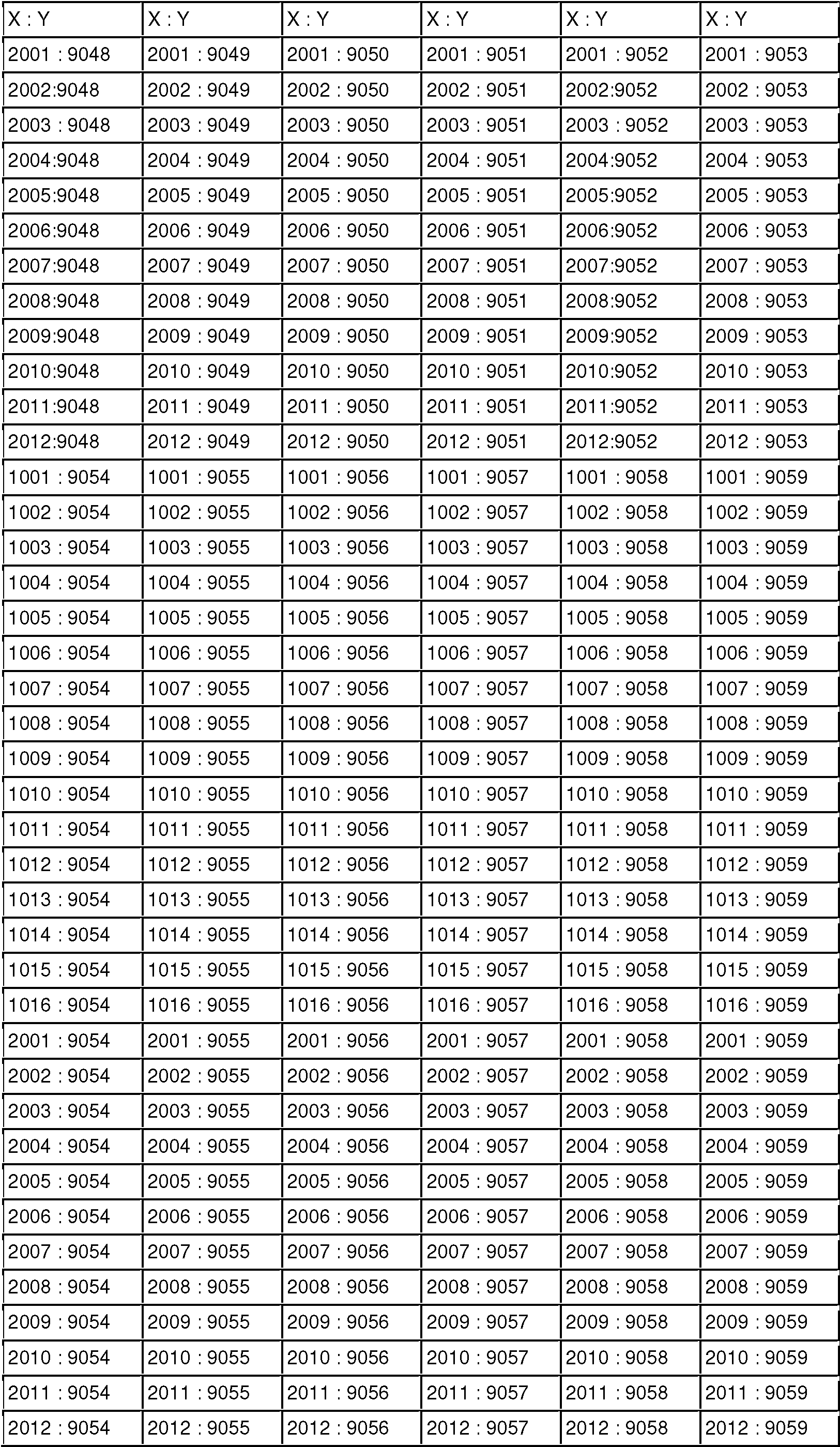


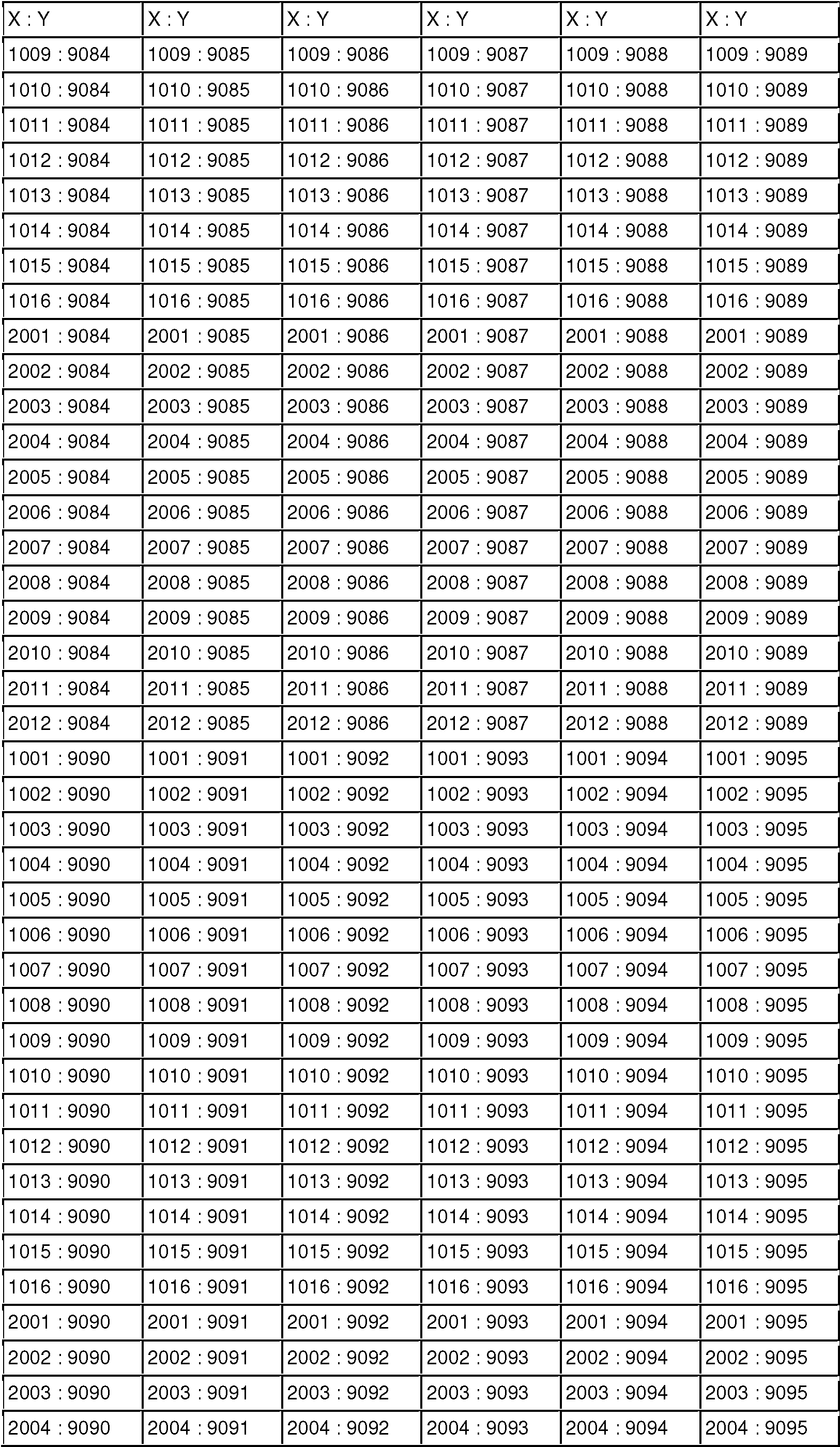


Tabla B: Combinaciones eem lares de un com uesto X con un com uesto Y.Table B: Typical combinations of a compound X with a compound Y.


Tabla C: Combinaciones eem lares de un com uesto X con un com uesto Y.Table C: Typical combinations of a compound X with a compound Y.


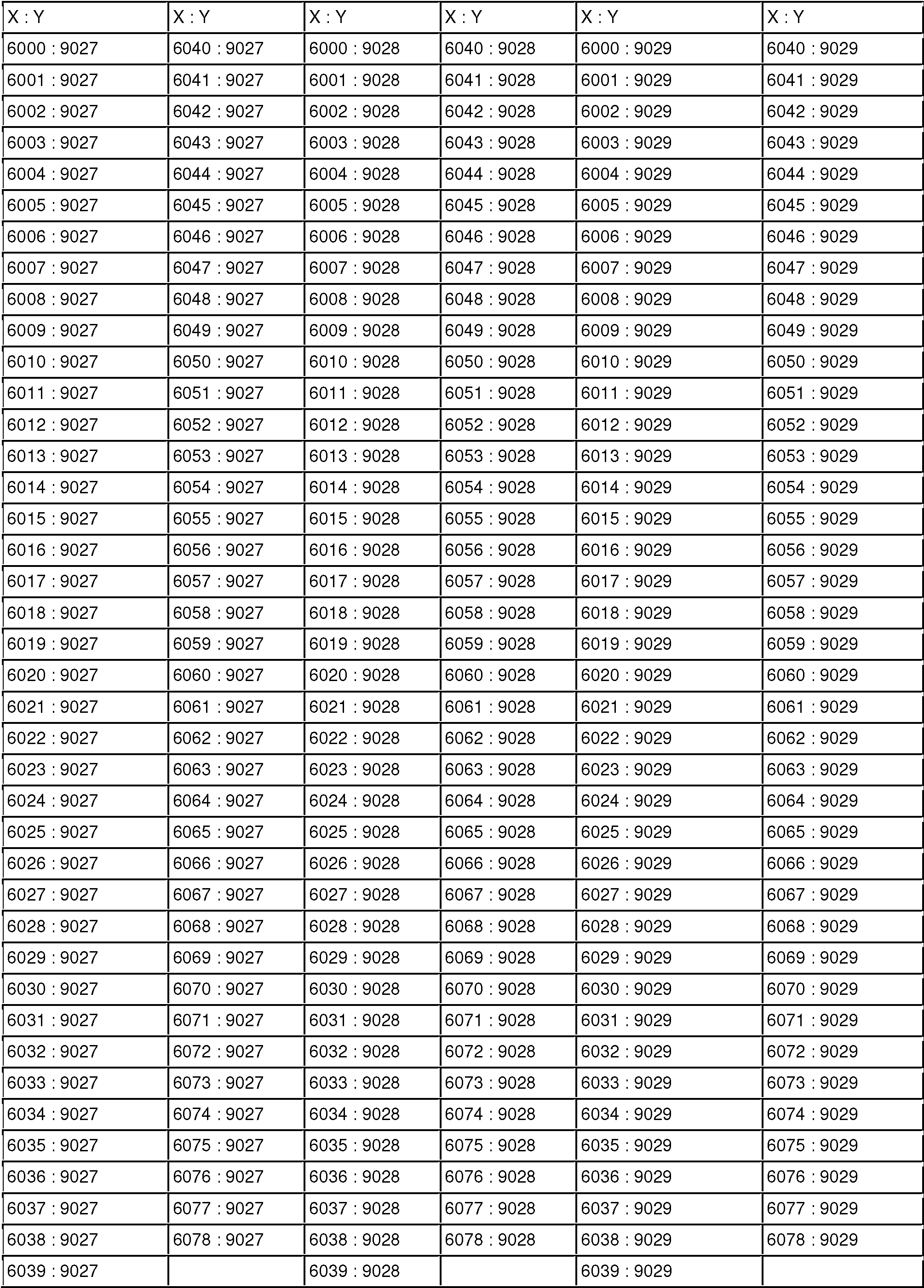


Tabla D: Combinaciones ejemplares de un compuesto X con un compuesto Y. Table D: Exemplary combinations of a compound X with a compound Y.
Tabla E: Combinaciones eem lares de un com uesto X con un com uesto Y.Table E: Typical combinations of a compound X with a compound Y.


EjemplosExamples
Se divulgan realizaciones adicionales en mayor detalle en los siguientes ejemplos, que no se pretende de ninguna manera que limiten el alcance de las reivindicaciones.Additional embodiments are disclosed in greater detail in the following examples, which are not intended in any way to limit the scope of the claims.
Ejemplo de referencia 1Reference example 1
2'-C-metil-4'-fluorour¡d¡na 1 2'-C-methyl-4'-fluorour¡d¡na 1

A una suspensión agitada de 1-1 (20 g, 77,5 mmol), PPh3 (30 g, 114,5 mmol), imidazol (10 g, 147 mmol) y piridina (90 ml) en THF anhidro (300 ml) se le añadió una solución de I2 (25 g, 98,4 mmol) en THF (100 ml) gota a gota a 0 °C. La mezcla se calentó hasta temperatura ambiente (T.A.) y se agitó a T.A. durante 10 h. La reacción se interrumpió mediante MeOH (100 ml). El disolvente se retiró, y el residuo se volvió a disolver en una mezcla de acetato de etilo (EA) y THF (2 l, 10:1). La fase orgánica se lavó con Na2S2O3 ac. saturado y la fase acuosa se extrajo con una mezcla de EA y THF (2 l, 10:1). La capa orgánica se combinó y se concentró para dar un residuo, que se purificó sobre una columna de gel de sílice (0-10 % de MeOH en DCM) para dar 1-2 (22,5 g, 78,9 %) como un sólido blanco. 1H RMN: (DMSO-ak, 400 MHz) 511,42 (s, 1 H), 7,59 (d, J = 8,4 Hz, 1H), 5,82 (s, 1H), 5,63 (d, J= 8,0 Hz, 1H), 5,50 (s, 1H), 5,23 (s, 1H), 3,77-3,79 (m, 1H), 3,40-3,62 (m, 3H), 0,97 (s, 3H).To a stirred suspension of 1-1 (20 g, 77.5 mmol), PPh3 (30 g, 114.5 mmol), imidazole (10 g, 147 mmol) and pyridine (90 ml) in anhydrous THF (300 ml) A solution of I 2 (25 g, 98.4 mmol) in THF (100 ml) was added dropwise at 0 ° C. The mixture was warmed to room temperature (RT) and stirred at RT for 10 h. The reaction was quenched with MeOH (100 ml). The solvent was removed, and the residue was redissolved in a mixture of ethyl acetate (EA) and THF (2 L, 10: 1). The organic phase was washed with aq Na2S2O3. saturated and the aqueous phase was extracted with a mixture of EA and THF (2 L, 10: 1). The organic layer was combined and concentrated to give a residue, which was purified on a silica gel column (0-10% MeOH in DCM) to give 1-2 (22.5 g, 78.9%) as a white solid. 1H NMR: (DMSO-ak, 400 MHz) 5 11.42 (s, 1H), 7.59 (d, J = 8.4 Hz, 1H), 5.82 (s, 1H), 5.63 (d, J = 8.0 Hz, 1H), 5.50 (s, 1H), 5.23 (s, 1H), 3.77-3.79 (m, 1H), 3.40-3, 62 (m, 3H), 0.97 (s, 3H).
A una solución agitada de 1-2 (24,3 g, 66,03 mmol) en MeOH anhidro (240 ml) se le añadió NaOMe (10,69 g, 198,09 mmol) a T.A. en atmósfera de N2. La mezcla se calentó a reflujo durante 3 h. El disolvente se retiró y el residuo se volvió a disolver en piridina anhidra (200 ml). A la mezcla se le añadió Ac2O (84,9 g, 833,3 mmol) a 0 °C. La mezcla se calentó hasta 60 °C y se agitó durante 10 h. El disolvente se retiró y el residuo se diluyó con DCM, se lavó con NaHCO3 saturado y salmuera. La capa orgánica se concentró y se purificó sobre una columna de gel de sílice (10 50 % de EA en PE) para dar 1-3 (15 g, 70,1 %) como un sólido blanco. 1H RMN: (CDCl3, 400 MHz) 58,82 (s, 1H), 7,23 (d, J = 2,0 Hz, 1H), 6,54 (s, 1H), 5,85 (s, 1 H), 5,77 (dd, J = 8,0, 2,0 Hz, 1 H), 4,69 (d, J = 2,4 Hz, 1 H), 4,58 (d, J = 2,8Hz, 1H), 2,07 (d, J = 5,2Hz, 6H), 1,45 (s, 3H).To a stirred solution of 1-2 (24.3 g, 66.03 mmol) in anhydrous MeOH (240 mL) was added NaOMe (10.69 g, 198.09 mmol) at RT under N 2 . The mixture was refluxed for 3 h. The solvent was removed and the residue was redissolved in anhydrous pyridine (200 ml). Ac 2 O (84.9 g, 833.3 mmol) was added to the mixture at 0 ° C. The mixture was heated to 60 ° C and stirred for 10 h. The solvent was removed and the residue was diluted with DCM, washed with saturated NaHCO3 and brine. The organic layer was concentrated and purified on a silica gel column (10 50% EA in PE) to give 1-3 (15 g, 70.1%) as a white solid. 1H NMR: (CDCl3, 400 MHz) 5 8.82 (s, 1H), 7.23 (d, J = 2.0 Hz, 1H), 6.54 (s, 1H), 5.85 (s, 1H), 5.77 (dd, J = 8.0, 2.0Hz, 1H), 4.69 (d, J = 2.4Hz, 1H), 4.58 (d, J = 2.8Hz, 1H), 2.07 (d, J = 5.2Hz, 6H), 1.45 (s, 3H).
A una solución enfriada en hielo de 1-3 (15 g, 46,29 mmol) en DCM anhidro (300 ml) se le añadió AgF (29,39 g, 231,4 mmol). Se añadió I2 (23,51 g, 92,58 mmol) en DCM anhidro (1,0 l) gota a gota a la solución. La mezcla de reacción se agitó a T.A. durante 5 h. La reacción se interrumpió con Na2S2O3 saturado y NaHCO3, y se extrajo con DCM. La capa orgánica se separó, se secó y se evaporó a sequedad. El residuo se purificó sobre una columna de gel de sílice (10 30 % de EA en PE) para dar 1-4 (9,5 g, 43,6 %) como un sólido blanco. 1H RMN (Metanol-d4, 400 MHz) 57,52 (d, J= 8,0 Hz, 1 H), 6,21 (s, 1 H), 5,80 (d, J= 17,2 Hz, 1H), 5,73 (d, J = 8,0 Hz, 1H), 3,58 (s, 1H), 3,54 (d, J = 6,8 Hz, 1H), 2,17 (s, 3H), 2,09 (s, 3H), 1,58 (s, 3H).To an ice-cold solution of 1-3 (15 g, 46.29 mmol) in anhydrous DCM (300 mL) was added AgF (29.39 g, 231.4 mmol). I 2 (23.51 g, 92.58 mmol) in anhydrous DCM (1.0 L) was added dropwise to the solution. The reaction mixture was stirred at RT for 5 h. The reaction was quenched with saturated Na2S2O3 and NaHCO3, and extracted with DCM. The organic layer was separated, dried and evaporated to dryness. The residue was purified on a silica gel column (10-30% EA in PE) to give 1-4 (9.5 g, 43.6%) as a white solid. 1H NMR (Methanol-d4, 400 MHz) 5 7.52 (d, J = 8.0 Hz, 1H), 6.21 (s, 1H), 5.80 (d, J = 17.2Hz , 1H), 5.73 (d, J = 8.0 Hz, 1H), 3.58 (s, 1H), 3.54 (d, J = 6.8 Hz, 1H), 2.17 (s , 3H), 2.09 (s, 3H), 1.58 (s, 3H).
A una solución de 1-4 (7,0 g, 14,89 mmol) en DMF anhidra (400 ml) se le añadieron NaOBz (21,44 g, 148,9 mmol) y 15-corona-5 (32,75 g, 148,9 mmol). La mezcla de reacción se agitó a 130 °C durante 6 h. El disolvente se retiró, se diluyó con EA y se lavó con agua y salmuera. La capa orgánica se evaporó y se purificó sobre una columna de gel de sílice (10-30 % de EA en PE) para dar 1-5 (2,8 g, 40,5 %). 1H RMN: (Cd CI3, 400 MHz) 58,84 (s, 1H), 8,04-8,06 (m, 2H), 7,59 (t, J= 7,2 Hz, 1H), 7,44-7,47 (m, 2H), 7,21 -7,26 (m, 1H), 6,21 (s, 1 H), 5,85 (d, J = 18 Hz, 1 H), 5,67 (d, J = 8,0 Hz, 1 H), 4,59-4,72 (m, 2H), 2,14 (s, 6H), 1,64 (d, J = 6,0 Hz, 3H). ESI-MS: m/z 444,9 [M-F+H]+.To a solution of 1-4 (7.0 g, 14.89 mmol) in anhydrous DMF (400 ml) was added NaOBz (21.44 g, 148.9 mmol) and 15-crown-5 (32.75 g, 148.9 mmol). The reaction mixture was stirred at 130 ° C for 6 h. The solvent was removed, diluted with EA, and washed with water and brine. The organic layer was evaporated and purified on a silica gel column (10-30% EA in PE) to give 1-5 (2.8 g, 40.5%). 1H NMR (CI3 CD, 400 MHz) 5 8.84 (s, 1H), 8.04 to 8.06 (m, 2H), 7.59 (t, J = 7.2 Hz, 1H), 7 , 44-7.47 (m, 2H), 7.21-7.26 (m, 1H), 6.21 (s, 1H), 5.85 (d, J = 18Hz, 1H), 5.67 (d, J = 8.0 Hz, 1H), 4.59-4.72 (m, 2H), 2.14 (s, 6H), 1.64 (d, J = 6.0 Hz, 3H). ESI-MS: m / z 444.9 [M-F + H] +.
Una mezcla de 1-5 (4,0 g; 8,6 mmol) y amoniaco líquido se mantuvo durante una noche a T.A. en una recipiente de acero inoxidable de alta presión. Después se evaporó el amoniaco y el residuo se purificó sobre sílice (columna de 50 g) con una mezcla de disolvente de CH2Cl2/MeOH (4-12 % de gradiente) para producir compuesto 1 como una espuma incolora (2,0 g; 84 % de rendimiento). IEN-EM: m/z 275,1 [M-H]-. A mixture of 1-5 (4.0 g, 8.6 mmol) and liquid ammonia was kept overnight at RT in a high pressure stainless steel container. Ammonia was then evaporated and the residue was purified on silica (50 g column) with a CH 2 Cl 2 / MeOH solvent mixture (4-12% gradient) to yield compound 1 as a colorless foam (2.0 g; 84% yield). ESI-MS: m / z 275.1 [MH] -.
Ejemplo de referencia 2Reference example 2
Compuesto 2Compound 2

A una solución de 1 (1,2 g; 4,3 mmol) en dioxano (30 ml) se le añadieron ácido p-toluenosulfónico monohidrato (820 mg; 1 equiv.) y ortoformiato de trimetilo (14 ml; 30 equiv.). La mezcla se agitó durante una noche a T.A. La mezcla después se neutralizó con amoniaco metanólico y el disolvente se evaporó. La purificación sobre columna de gel de sílice con el sistema de disolvente de CH2Cl2-MeOH (4-10 % de gradiente) produjo 2-1 (1,18 g, 87 %).To a solution of 1 (1.2 g, 4.3 mmol) in dioxane (30 ml) were added p-toluenesulfonic acid monohydrate (820 mg, 1 equiv.) And trimethyl orthoformate (14 ml, 30 equiv.) . The mixture was stirred overnight at RT. The mixture was then neutralized with methanolic ammonia and the solvent was evaporated. Purification on a silica gel column with the CH 2 Cl 2 -MeOH solvent system (4-10% gradient) yielded 2-1 (1.18 g, 87%).
A una solución helada de 2-1 (0,91 g; 2,9 mmol) en THF anhidro (20 ml) se le añadió cloruro de isopropilmagnesio (2,1 ml; 2 M en THF). La mezcla se agitó a 0 °C durante 20 min. Una solución de reactivo de fosforocloridato (2,2 g; 2,5 equiv.) en THF (2 ml) se añadió gota a gota. La mezcla se agitó durante una noche a T.A. La reacción se interrumpió con solución saturada de NH4Cl ac. y se agitó a T.A. durante 10 min. Después, la mezcla se diluyó con agua y CH2Cl2, y las dos capas se separaron. La capa orgánica se lavó con agua, NaHCO3 ac. semisaturado y salmuera, y se secó con Na2SO4. El residuo evaporado se purificó sobre columna de gel de sílice con el sistema de disolvente de CH2G 2-iPrOH (4-10 % de gradiente) para producir mezcla Rp/Sp de 2-2 (1,59 g; 93 %).Isopropylmagnesium chloride (2.1 ml, 2M in THF) was added to an ice-cold solution of 2-1 (0.91 g, 2.9 mmol) in anhydrous THF (20 ml). The mixture was stirred at 0 ° C for 20 min. A solution of phosphorouschloridate reagent (2.2 g; 2.5 equiv.) In THF (2 ml) was added dropwise. The mixture was stirred overnight at RT. The reaction was quenched with saturated aq NH4Cl. and stirred at RT for 10 min. The mixture was then diluted with water and CH 2 Cl 2 , and the two layers were separated. The organic layer was washed with water, aq NaHCO3. semi-saturated and brine, and dried over Na2SO4. The evaporated residue was purified on a silica gel column with the solvent system of CH 2 G 2 -iPrOH (4-10% gradient) to produce Rp / Sp mixture of 2-2 (1.59 g; 93%) .
Una mezcla de 2-2 (1,45 g; 2,45 mmol) y HCOOH ac. al 80 % (7 ml) se agitó a T.A. durante 1,5 h. El disolvente se evaporó y se coevaporó con tolueno. El residuo obtenido se disolvió en MeOH, se trató con Et3N (3 gotas) y el disolvente se evaporó. La purificación sobre columna de gel de sílice con el sistema de disolvente de CH2Cl2-MeOH (4-10 % de gradiente) produjo mezcla Rp/Sp de compuesto 2 (950 mg; 70 %). 31P-RMN (DMSO-d6): ó 3,52, 3,47. MS: m/z = 544 [M-1]-.A mixture of 2-2 (1.45 g, 2.45 mmol) and aq. 80% (7 ml) was stirred at RT for 1.5 h. The solvent was evaporated and co-evaporated with toluene. The residue obtained was dissolved in MeOH, treated with Et3N (3 drops) and the solvent was evaporated. Purification on a silica gel column with the CH 2 Cl 2 -MeOH solvent system (4-10% gradient) produced Rp / Sp mixture of compound 2 (950 mg; 70%). 31P-NMR (DMSO-d6): or 3.52, 3.47. MS: m / z = 544 [M-1] -.
Ejemplo de referencia 3Reference example 3
Compuesto 3 Compound 3

A una solución helada de 3-1 (80 mg; 015 mmol) en THF anhidro (2 ml) se le añadió cloruro de isopropilmagnesio (0,22 ml; 2 M en THF). La mezcla se agitó a 0 °C durante 20 min. Una solución del reactivo de fosforocloridato (0,16 g; 0,45 mmol) en THF (0,5 ml) se añadió gota a gota. La mezcla se agitó durante una noche a T.A. La reacción se interrumpió con solución saturada de NH4Cl ac. y se agitó a T.A. durante 10 min. La mezcla se diluyó con agua y CH2G 2 , y las dos capas se separaron. La capa orgánica se lavó con agua, NaHCO3 ac. semisaturado y salmuera, y se secó con Na2SO4. El residuo evaporado se purificó sobre columna de gel de sílice con el sistema de disolvente de CH2Cl2-MeOH (2-10 % de gradiente) para producir mezcla Rp/Sp de 3-2 (102 mg; 80 %).Isopropylmagnesium chloride (0.22 ml, 2M in THF) was added to an ice-cold solution of 3-1 (80 mg; 015 mmol) in anhydrous THF (2 ml). The mixture was stirred at 0 ° C for 20 min. A solution of the phosphorocloridate reagent (0.16 g, 0.45 mmol) in THF (0.5 ml) was added dropwise. The mixture was stirred overnight at RT. The reaction was quenched with saturated aq NH4Cl. and stirred at RT for 10 min. The mixture was diluted with water and CH 2 G 2 , and the two layers were separated. The organic layer was washed with water, aq NaHCO3. semi-saturated and brine, and dried over Na2SO4. The evaporated residue was purified on a silica gel column with the solvent system of CH 2 Cl 2 -MeOH (2-10% gradient) to produce Rp / Sp mixture of 3-2 (102 mg; 80%).
Una mezcla de 3-2 (100 mg; 0,12 mmol) en EtOH (3 ml) y Pd al 10 %/C (10 mg) se agitó en la atmósfera de H2 durante 1,5 h. La mezcla se filtró a través de una capa de Celite, se evaporó y se purificó sobre columna de gel de sílice con el sistema de disolvente de CH2Cl2-MeOH (4-10 %) para producir mezcla Rp/Sp de compuesto 3 (52 mg, 74 %). 31P-RMN (DMSO-de): 53,51,3,48. MS: m/z = 584 [M-1 ]-.A mixture of 3-2 (100 mg, 0.12 mmol) in EtOH (3 ml) and 10% Pd / C (10 mg) was stirred under H 2 for 1.5 h. The mixture was filtered through a pad of Celite, evaporated and purified on a silica gel column with the solvent system of CH 2 Cl 2 -MeOH (4-10%) to produce Rp / Sp mixture of compound 3 (52mg, 74%). 31P-NMR (DMSO-de): 53.51.3.48. MS: m / z = 584 [M-1] -.
Ejemplo de referencia 4Reference example 4
Compuestos 4 y 6Compounds 4 and 6

1 seco (14 mg, 0,05 mmol) se disolvió en la mezcla de PO(OMe)3 (0,750 ml) y piridina (0,5 ml). La mezcla se evaporó al vacío durante 15 min 42 °C de temperatura del baño, y después se enfrió hasta T.A. Se añadió N-metilimidazol (0,009 ml, 0,11 mmol) seguido de POCh (0,009 ml, 0,1 mmol). La mezcla se mantuvo a T.A. durante 45 min. Se añadió tributilamina (0,065 ml, 0,3 mmol) y sal de N-tetrabutil amonio de pirofosfato (100 mg). Se añadió aproximadamente 1 ml de DMF seca para obtener una solución homogénea. En 1 h, la reacción se interrumpió con tampón de acetato de amonio 2 M (1 ml, pH = 7,5), se diluyó con agua (10 ml) y se cargó en una columna HiLoad 16/10 con Q Sepharose High Performance. La separación se hizo en gradiente lineal de NaCl de 0 a 1 N en tampón TRIS 50 mM (pH 7,5). Las fracciones eluyeron en 60 % de tampón B que contenía compuesto 4 y en 80 % de tampón B que contenía compuesto 6. Las fracciones correspondientes se concentraron y el residuo se purificó por RP HPLC en columna Synergy de 4 micrómetros Hydro-RP (Phenominex). Se usó un gradiente lineal de metanol de 0 a 30 % en tampón de acetato de trietilamonio 50 mM (pH 7,5) para la elución. Las fracciones correspondientes se combinaron, se concentraron y se liofilizaron 3 veces para retirar el exceso de tampón. Compuesto 4 : 31P-RMN (D2O): -3,76 (s); MS: m/z 355,3 [M-H]-. Compuesto 6 : 31P-RMN (D20 ): -9,28(d, 1H, Pa), -12,31 (d, 1H, Py), -22,95(t, 1H, P|3); MS: m/z 515,0 [M-1]-. 1 dry (14 mg, 0.05 mmol) was dissolved in the mixture of PO (OMe) 3 (0.750 ml) and pyridine (0.5 ml). The mixture was evaporated in vacuo for 15 min 42 ° C bath temperature, and then cooled to RT. N-methylimidazole (0.009 ml, 0.11 mmol) was added followed by POCh (0.009 ml, 0.1 mmol). The mixture was kept at RT for 45 min. Tributylamine (0.065 ml, 0.3 mmol) and N-tetrabutyl ammonium pyrophosphate salt (100 mg) were added. Approximately 1 ml of dry DMF was added to obtain a homogeneous solution. Within 1 h, the reaction was quenched with 2M ammonium acetate buffer (1 mL, pH = 7.5), diluted with water (10 mL) and loaded onto a HiLoad 16/10 column with Q Sepharose High Performance . The separation was done in a linear gradient of NaCl from 0 to 1 N in 50 mM TRIS buffer (pH 7.5). Fractions eluted in 60% buffer B containing compound 4 and 80% buffer B containing compound 6 . The corresponding fractions were concentrated and the residue was purified by RP HPLC on a Synergy 4 micron Hydro-RP column (Phenominex). A linear gradient of 0 to 30% methanol in 50 mM triethylammonium acetate buffer (pH 7.5) was used for elution. The corresponding fractions were combined, concentrated, and lyophilized 3 times to remove excess buffer. Compound 4 : 31P-NMR (D 2 O): -3.76 (s); MS: mlz 355.3 [MH] -. Compound 6 : 31P-NMR (D 20 ): -9.28 (d, 1H, Pa), -12.31 (d, 1H, Py), -22.95 (t, 1H, P | 3); MS: m / z 515.0 [M-1] -.
Ejemplo de referencia 5Reference example 5
Compuesto 5Compound 5

El compuesto 5 se sintetizó como se describe para 2 en una escala de 0,1 mmol y con reactivo de éster neopentílico de fosforocloridato. El rendimiento fue de 36 mg (63 %). 31P-RMN (CDCta): 52,57 (s), 2,43 (s). MS: 572,6 [M-1]-. Compound 5 was synthesized as described for 2 on a 0.1 mmol scale and with phosphorocloridate neopentyl ester reagent. The yield was 36 mg (63%). 31P-NMR (CDCta): 52.57 (s), 2.43 (s). MS: 572.6 [M-1] -.
Ejemplo de referencia 6Reference example 6
Compuesto 7Compound 7

1 seco (14 mg, 0,05 mmol) se disolvió en la mezcla de PO(OMe)3 (0,750 ml) y piridina (0,5 ml). La mezcla se evaporó al vacío durante 15 min 42 °C de temperatura del baño, y después se enfrió hasta T.A. Se añadió N-metilimidazol (0,009 ml, 0,11 mmol) seguido de PSCl3 (0,01 ml, 0,1 mmol). La mezcla se mantuvo a T.A. durante 1 h. Se añadió tributilamina (0,065 ml, 0,3 mmol) y sal de N-tetrabutil amonio de pirofosfato (200 mg). Se añadió aproximadamente 1 ml de DMF seca para obtener una solución homogénea. En 2 h, la reacción se interrumpió con tampón de acetato de amonio 2 M (1 ml, pH = 7,5), se diluyó con agua (10 ml) y se cargó en una columna HiLoad 16/10 con Q Sepharose High Performance. La separación se hizo en gradiente lineal de NaCl de 0 a 1 N en tampón TRIS 50 mM (pH 7,5). Las fracciones eluyeron a 80 % de tampón B que contenía 7 (compuestos 7a y 7b). Las fracciones correspondientes se concentraron y el residuo se purificó por RP HPLC en columna Synergy de 4 micrómetros Hydro-RP (Phenominex). Se usó un gradiente lineal de metanol de 0 a 20 % en tampón de acetato de trietilamonio 50 mM (pH 7,5) para la elución. Se recogieron dos picos. Las fracciones correspondientes se combinaron, se concentraron y se liofilizaron 3 veces para retirar el exceso de tampón. Pico 1 (más polar): 31P-RMN (D2O): 42,68(d, 1H, Pa), -9,05(d, 1H, Py), -22,95(t, 1H, PP); MS 530,90 [M-1]-. Pico 2 (menos polar): 31P-RMN (D2O): 42,78(d, 1H, Pa), - 10,12(s a, 1H, Py), -23,94(t, 1H, PP); y MS 530,90 [M-1]-.1 dry (14 mg, 0.05 mmol) was dissolved in the mixture of PO (OMe) 3 (0.750 ml) and pyridine (0.5 ml). The mixture was evaporated in vacuo for 15 min 42 ° C bath temperature, and then cooled to RT. N-methylimidazole (0.009 ml, 0.11 mmol) was added followed by PSCl3 (0.01 ml, 0.1 mmol ). The mixture was kept at RT for 1 hr. Tributylamine (0.065 ml, 0.3 mmol) and N-tetrabutyl ammonium pyrophosphate salt (200 mg) were added. Approximately 1 ml of dry DMF was added to obtain a homogeneous solution. Within 2 h, the reaction was quenched with 2M ammonium acetate buffer (1 mL, pH = 7.5), diluted with water (10 mL) and loaded onto a HiLoad 16/10 column with Q Sepharose High Performance . The separation was done in a linear gradient of NaCl from 0 to 1 N in 50 mM TRIS buffer (pH 7.5). Fractions eluted at 80% buffer B containing 7 (compounds 7a and 7b ). The corresponding fractions were concentrated and the residue was purified by RP HPLC on a Synergy 4 micron Hydro-RP column (Phenominex). A linear gradient of 0 to 20% methanol in 50 mM triethylammonium acetate buffer (pH 7.5) was used for elution. Two peaks were collected. The corresponding fractions were combined, concentrated, and lyophilized 3 times to remove excess buffer. Peak 1 (more polar): 31P-NMR (D 2 O): 42.68 (d, 1H, Pa), -9.05 (d, 1H, Py), -22.95 (t, 1H, PP) ; MS 530.90 [M-1] -. Peak 2 (less polar): 31P-NMR (D 2 O): 42.78 (d, 1H, Pa), -10.12 (sa, 1H, Py), -23.94 (t, 1H, PP) ; and MS 530.90 [M-1] -.
Ejemplo de referencia 7Reference example 7
Compuesto 23 Compound 23

A una suspensión agitada de 23-1 (20,0 g, 81,3 mmol), imidazol (15,9 g, 234,0 mmol), PPh3 (53,5 g, 203,3 mmol) y piridina (90 ml) en THF anhidro (100 ml) se le añadió una solución de I2 (41,3 g, 162,6 mmol) en THF (150 ml) gota a gota a 0 °C. La mezcla se calentó lentamente hasta T.A. y se agitó durante 14 h. La reacción se interrumpió con Na2S2O3 ac. sat. (150 ml) y se extrajo con THF/EA (1/1) (100 ml x 3). La capa orgánica se secó sobre Na2SO4 y se concentró a baja presión. El residuo se recristalizó en EtOH para producir 23-2 puro (23 g, 79 %) como un sólido blanco.To a stirred suspension of 23-1 (20.0 g, 81.3 mmol), imidazole (15.9 g, 234.0 mmol), PPh3 (53.5 g, 203.3 mmol) and pyridine (90 ml ) in anhydrous THF (100 ml) a solution of I 2 (41.3 g, 162.6 mmol) in THF (150 ml) was added dropwise at 0 ° C. The mixture was slowly warmed to RT and stirred for 14 h. The reaction was quenched with aq Na2S2O3. sat. (150 ml) and extracted with THF / EA (1/1) (100 ml x 3). The organic layer was dried over Na2SO4 and concentrated under low pressure. The residue was recrystallized from EtOH to yield pure 23-2 (23g, 79%) as a white solid.
A una solución agitada de 23-2 (23 g, 65 mmol) en MeOH anhidro (200 ml) se le añadió NaOCH3 (10,5 g, 195 mmol) en MeOH (50 ml) a T.A. La mezcla se agitó a 60 °C durante 3 h y se inactivó con hielo seco. Precipitó un sólido y se retiró por filtración. El filtrado se concentró a una baja presión. El residuo se purificó sobre columna de gel de sílice (MeOH en DCM de 1 % a 10 %) para proporcionar 23-3 (13,1 g, 92,5 %) como una espuma sólida blanca.To a stirred solution of 23-2 (23 g, 65 mmol) in anhydrous MeOH (200 ml) was added NaOCH3 (10.5 g, 195 mmol) in MeOH (50 ml) at RT The mixture was stirred at 60 ° C for 3 h and quenched with dry ice. A solid precipitated and was filtered off. The filtrate was concentrated under low pressure. The residue was purified on a silica gel column (1% to 10% MeOH in DCM) to provide 23-3 (13.1 g, 92.5%) as a white solid foam.
A una solución agitada de 23-3 (12,0 g, 53 mmol) en CH3CN anhidro se le añadió TEA^3HF (8,5 g, 53 mmol) y NIS (10,2 g, 63,6 mmol) a 0 °C. La mezcla se agitó durante 30 min y se calentó lentamente hasta T.A. La mezcla se agitó durante otros 30 min. El sólido se retiró por filtración y se lavó con DCM para dar 23-4 (14 g, 73 %) como un sólido amarillo. ESI-MS: m/z 373,0 [M+H]+.To a stirred solution of 23-3 (12.0 g, 53 mmol) in anhydrous CH 3 CN was added TEA ^ 3HF (8.5 g, 53 mmol) and NIS (10.2 g, 63.6 mmol) at 0 ° C. The mixture was stirred for 30 min and slowly warmed to RT. The mixture was stirred for another 30 min. The solid was filtered off and washed with DCM to give 23-4 (14 g, 73%) as a yellow solid. ESI-MS: mlz 373.0 [M + H] +.
A una solución agitada de 23-4 (12,0 g, 32 mmol) y DMAP (1,2 g, 9,6 mmol) en piridina (100 ml) se le añadió Bz2O (21,7 g, 96 mmol) a T.A. La mezcla se agitó a 50 °C durante 16 h. La solución resultante se inactivó con agua y se concentró a sequedad a baja presión. El crudo se purificó sobre columna de gel de sílice (50 % de EA en PE) para dar 23-5 (15 g, 81 %) como un sólido blanco. IEN-To F-EM: m/z 581,0 [M+H]+.To a stirred solution of 23-4 (12.0 g, 32 mmol) and DMAP (1.2 g, 9.6 mmol) in pyridine (100 ml) was added Bz 2 O (21.7 g, 96 mmol ) at RT The mixture was stirred at 50 ° C for 16 h. The resulting solution was quenched with water and concentrated to dryness under low pressure. The crude was purified on a silica gel column (50% EA in PE) to give 23-5 (15 g, 81%) as a white solid. ESI-To F-MS: m / z 581.0 [M + H] +.
El hidróxido de tetra-butilamonio (288 ml como solución acuosa al 54-56 %, 576 mmol) se ajustó a pH ~4 añadiendo TFA (48 ml). La solución resultante se trató con una solución de 23-5 (14 g, 24 mmol) en DCM (200 ml). Se añadió ácido m-cloroperbenzoico (30 g, 60-70 %, 120 mmol) en porciones con agitación vigorosa y la mezcla se agitó durante una noche. La capa orgánica se separó y se lavó con salmuera. La solución resultante se secó sobre sulfato de magnesio y se concentró a presión reducida. El residuo se purificó por cromatografía en columna para dar 23-6 (7,5 g, 68 %).Tetra-butylammonium hydroxide (288 ml as 54-56% aqueous solution, 576 mmol) was adjusted to pH ~ 4 by adding TFA (48 ml). The resulting solution was treated with a solution of 23-5 (14 g, 24 mmol) in DCM (200 ml). M-Chloroperbenzoic acid (30 g, 60-70%, 120 mmol) was added in portions with vigorous stirring and the mixture was stirred overnight. The organic layer was separated and washed with brine. The resulting solution was dried over magnesium sulfate and concentrated under reduced pressure. The residue was purified by column chromatography to give 23-6 (7.5 g, 68%).
El compuesto 23-6 (5,0 g, 10,6 mmol) se trató con NH3^MeOH 7 N (100 ml) y la mezcla se agitó durante 5 h. Después, la mezcla se concentró a sequedad a baja presión. El residuo se lavó con DCM y el sólido se filtró para dar 23-7 (2,1 g, 75 %) como una espuma blanca. ESI-m S: m/z 263,0 [M+H]+.Compound 23-6 (5.0 g, 10.6 mmol) was treated with 7N NH3 ^ MeOH (100 mL) and the mixture was stirred for 5 h. The mixture was then concentrated to dryness under low pressure. The residue was washed with DCM and the solid was filtered to give 23-7 (2.1 g, 75%) as a white foam. ESI-m S: m / z 263.0 [M + H] +.
A una solución de 23-7 (2,1 g, 8,0 mmol) en piridina se le añadió TIDPSCl (2,5 g, 8,0 mmol) gota a gota a 0 °C y se agitó durante 12 h a T.A. La solución se inactivó con agua y se concentró a sequedad a baja presión. El crudo se purificó por cromatografía en columna (EA en PE de 10 % a 50 %) para dar 23-8 puro (1,6 g, 40 %) como una espuma blanca.To a solution of 23-7 (2.1 g, 8.0 mmol) in pyridine, TIDPSCl (2.5 g, 8.0 mmol) was added dropwise at 0 ° C and stirred for 12 h at RT. The solution was quenched with water and concentrated to dryness under low pressure. The crude was purified by column chromatography (EA in PE 10% to 50%) to give pure 23-8 (1.6 g, 40%) as a white foam.
Una solución de 23-8 (1,5 g, 3,0 mmol) e IBX (1,69 g, 6,0 mmol) en CH3CN anhidro (10 ml) se agitó a 80 °C durante 3 h. La mezcla se enfrió hasta T.A. y se filtró. El filtrado se concentró a sequedad a baja presión. El residuo se purificó por cromatografía en columna (EA en PE de 2 % a 50 %) para dar 23-9 puro (1,2 g, 80 %) como una espuma blanca. ESI-MS: m/z 503,0 [M+H]+ A solution of 23-8 (1.5 g, 3.0 mmol) and IBX (1.69 g, 6.0 mmol) in anhydrous CH 3 CN (10 ml) was stirred at 80 ° C for 3 h. The mixture was cooled to RT and filtered. The filtrate was concentrated to dryness under low pressure. The residue was purified by column chromatography (EA in PE 2% to 50%) to give pure 23-9 (1.2 g, 80%) as a white foam. ESI-MS: m / z 503.0 [M + H] +
El compuesto 23-9 (500 mg, 1 mmol) se disolvió en THF seco (8 ml). Se añadió bromuro de etinil magnesio (8 ml de solución 0,5 M en ciclohexano) a T.A. Después de 30 min, se añadió bromuro de etinil magnesio adicional (8 ml). La mezcla se dejó durante 30 min y después se inactivó con solución sat. de cloruro de amonio. El producto se extrajo con EA. Los extractos orgánicos se lavaron con salmuera, se secaron y se concentraron. El residuo se purificó por cromatografía ultrarrápida sobre gel de sílice en EA para eliminar el color oscuro. El compuesto amarillo se disolvió en THF (3 ml) y se trató con TBAF (1 ml, solución 2 M en THF) durante 30 min. El disolvente se evaporó y el residuo se sometió a cromatografía sobre gel de sílice en un cartucho Biotage (25 g). Se usó EA saturado con agua para elución isocrática. Cada fracción se analizó por CCF en DCM-MeOH (9:1 v/v). Las fracciones que contenía solamente el isómero con un alto Rf se concentraron para dar compuesto 23 puro (110 mg). MS: 285,1 [M-1]-.Compound 23-9 (500mg, 1mmol) was dissolved in dry THF (8ml). Ethinyl magnesium bromide (8 ml of 0.5 M solution in cyclohexane) was added at RT. After 30 min, additional ethynyl magnesium bromide (8 ml) was added. The mixture was left for 30 min and then quenched with sat. of ammonium chloride. The product was extracted with EA. The organic extracts were washed with brine, dried, and concentrated. The residue was purified by flash chromatography on silica gel in EA to remove the dark color. The yellow compound was dissolved in THF (3 ml) and treated with TBAF (1 ml, 2M solution in THF) for 30 min. The solvent was evaporated and the residue was chromatographed on silica gel on a Biotage cartridge (25 g). Water saturated EA was used for isocratic elution. Each fraction was analyzed by TLC in DCM-MeOH (9: 1 v / v). The fractions containing only the high Rf isomer were concentrated to give pure compound 23 (110 mg). MS: 285.1 [M-1] -.
Ejemplo de referencia 8Reference Example 8
Compuesto 22Compound 22

El compuesto 23 (57 mg, 0,2 mmol) se disolvió en CH3CN (2 ml), que contenía N-metilimidazol (40 ul). Se añadió el fosforocloridato (207 mg, 0,6 mmol) y la mezcla se mantuvo durante una noche a 40 °C. La mezcla se distribuyó entre agua y EA. La capa orgánica se separó, se lavó con salmuera, se secó y se evaporó. El producto se aisló por cromatografía sobre gel de sílice en gradiente de metanol en DCM de 0 % a 15 %. Se obtuvo compuesto 22 (46 mg, 39 %). MS: m/z 593,9 [M-1]-.Compound 23 (57 mg, 0.2 mmol) was dissolved in CH 3 CN (2 ml), containing N-methylimidazole (40 ul). Phosphorocloridate (207 mg, 0.6 mmol) was added and the mixture was kept overnight at 40 ° C. The mixture was distributed between water and EA. The organic layer was separated, washed with brine, dried and evaporated. The product was isolated by chromatography on gradient silica gel of methanol in DCM from 0% to 15%. Compound 22 (46 mg, 39%) was obtained. MS: m / z 593.9 [M-1] -.
Ejemplo de referencia 9Reference example 9
Compuesto 51Compound 51

A una solución de bis(isopropiloxicarboniloximetil)fosfato de trietilamonio (0,74 mmol) en THF se le añadió 51-1 (0,16 g; 0,49 mmol). La mezcla se evaporó y se hizo anhidra por coevaporación con piridina seguida de tolueno. El residuo se disolvió en THF anhidro y se enfrió en un baño de hielo. Se añadió diisopropiletil amina (0,34 ml), seguida de BOP-Cl (250 mg) y 3-nitro-1,2,4-triazol (112 mg) en THF (5 ml). La mezcla se agitó a 0 °C durante 90 min, se diluyó con EtOAc, se lavó con NaHCO3 ac. sat. y salmuera, y se secó (Na2SO4). El residuo se purificó sobre columna de sílice con 3-10 % de i-PrOH en DCM para dar 51-2 (0,2 g, 64 %).To a solution of triethylammonium bis (isopropyloxycarbonyloxymethyl) phosphate (0.74 mmol) in THF was added 51-1 (0.16 g, 0.49 mmol). The mixture was evaporated and made anhydrous by coevaporation with pyridine followed by toluene. The residue was dissolved in anhydrous THF and cooled in an ice bath. Diisopropylethyl amine (0.34 ml) was added, followed by BOP-Cl (250 mg) and 3-nitro-1,2,4-triazole (112 mg) in THF (5 ml). The mixture was stirred at 0 ° C for 90 min, diluted with EtOAc, washed with aq NaHCO3. sat. and brine, and dried (Na2SO4). The residue was purified on a silica column with 3-10% i-PrOH in DCM to give 51-2 (0.2 g, 64%).
Una solución de 51-2 (0,20 g; 0,31 mmol) en HCOOH ac. al 80 % se agitó a T.A. durante 2 h y después se concentró. El residuo se coevaporó con tolueno y después con MeOH que contenía una pequeña cantidad de Et3N (2 gotas). La purificación sobre gel de sílice (columna de 10 g) con CH2Cl2/MeOH (4-10 % de gradiente) estuvo seguida de purificación por RP-HPLC en 5 desarrollos en una columna Synergi Hydro RP de 250 x 30 mm (Phenomenex P/N 00G-4375-U0-AX) usando H2O y ACN ambos en TEAA 50 mM. El gradiente fue de 25-75 % de a Cn en 20 min a 24 ml/min, detección a 254 nm. El compuesto eluyó a los 16,0 minutos; y las fracciones puras se combinaron y liofilizaron. Se retiró el TEAA disolviendo el compuesto en DMSO (2 ml) y usando la misma columna y el mismo gradiente, usando solamente H2O y ACN. Las fracciones puras se combinaron y liofilizaron para dar compuesto 51 (18 mg). MS: m/z = 1197 [2M+1]+.A solution of 51-2 (0.20 g, 0.31 mmol) in aq. 80% was stirred at RT for 2 h and then concentrated. The residue was co-evaporated with toluene and then with MeOH containing a small amount of Et3N (2 drops). Purification on silica gel (10 g column) with CH 2 Cl 2 / MeOH (4-10% gradient) was followed by purification by RP-HPLC in 5 runs on a Synergi Hydro RP 250 x 30 mm column ( Phenomenex P / N 00G-4375-U0-AX) using H 2 O and ACN both in 50 mM TEAA. The gradient was 25-75% to Cn in 20 min at 24 ml / min, detection at 254 nm. The compound eluted at 16.0 minutes; and the pure fractions were combined and lyophilized. The TEAA was removed by dissolving the compound in DMSO (2 ml) and using the same column and the same gradient, using only H 2 O and ACN. The pure fractions were combined and lyophilized to give compound 51 (18 mg). MS: m / z = 1197 [2M + 1] +.
Ejemplo 10Example 10
C o m p u e s t o 8 C o m p u e s t 8

El compuesto 8-1 (5,0 g, 8,5 mmol) y 2-amino-6-cloropurina (3,0 g, 17,7 mmol) se concentraron conjuntamente con tolueno anhidro 3 veces. A una suspensión agitada de las mezclas anteriores en MeCN anhidro (50 ml) se le añadió DBU (7,5 g, 49 mmol) a 0 °C. La mezcla se agitó a 0 °C durante 15 min y después se añadió TMSOTf (15 g, 67,6 mmol) gota a gota a 0 °C. La mezcla se agitó a 0 °C durante 15 min. La mezcla se calentó a 70 °C durante una noche. La mezcla se enfrió hasta T.A. y se diluyó con EA (100 ml). La solución se lavó con solución sat. de NaHCO3 y salmuera. La capa orgánica se secó sobre Na2SO4 y se concentró a baja presión. El residuo se purificó por columna sobre gel de sílice (PE/EA: de 15/1 a 3/1) para dar 8-2 (2,5 g, 46,3 %) como una espuma blanca.Compound 8-1 (5.0 g, 8.5 mmol) and 2-amino-6-chloropurine (3.0 g, 17.7 mmol) were co-concentrated with anhydrous toluene 3 times. To a stirred suspension of the above mixtures in anhydrous MeCN (50 mL) was added DBU (7.5 g, 49 mmol) at 0 ° C. The mixture was stirred at 0 ° C for 15 min and then TMSOTf (15 g, 67.6 mmol) was added dropwise at 0 ° C. The mixture was stirred at 0 ° C for 15 min. The mixture was heated to 70 ° C overnight. The mixture was cooled to RT and diluted with EA (100 ml). The solution was washed with sat. NaHCO3 and brine. The organic layer was dried over Na2SO4 and concentrated under low pressure. The residue was purified by column on silica gel (PE / EA: 15/1 to 3/1) to give 8-2 (2.5 g, 46.3%) as a white foam.
A una solución de 8-2 (10 g, 15,7 mmol), AgNO3 (8,0 g, 47 mmol) y colidina (10 ml) en DCM anhidro (20 ml) se le añadió MMTrCl (14,5 g, 47 mmol) en pequeñas porciones en atmósfera de N2. La mezcla se agitó a T.A. durante una noche. La mezcla se filtró y el filtrado se lavó con NaHCO3 ac. sat. y salmuera. La capa orgánica se secó sobre Na2SO4 anhidro y se concentró a baja presión. El residuo se purificó por columna de gel de sílice (PE/ME = 20/1 a 8/1) para dar 8-3 (10 g, 70 %) como un sólido amarillo.To a solution of 8-2 (10 g, 15.7 mmol), AgNO3 (8.0 g, 47 mmol) and collidine (10 ml) in anhydrous DCM (20 ml) was added MMTrCl (14.5 g, 47 mmol) in small portions in a N 2 atmosphere. The mixture was stirred at RT overnight. The mixture was filtered and the filtrate was washed with aq NaHCO3. sat. and brine. The organic layer was dried over anhydrous Na2SO4 and concentrated under low pressure. The residue was purified by silica gel column (PE / ME = 20/1 to 8/1) to give 8-3 (10 g, 70%) as a yellow solid.
A una solución de 3-hidroxi-propionitrilo (3,51 g, 49,4 mmol) en THF anhidro (100 ml) se le añadió NaH (2,8 g, 70 mmol) a 0 °C, y la mezcla se agitó a T.A. durante 30 min. Se añadió una solución de 8-3 (8,5 g, 9,35 mmol) en THF anhidro (100 ml) a 0 °C y la mezcla se agitó a T.A. durante una noche. La reacción se interrumpió con agua y se extrajo con EA (100 ml). La capa orgánica se secó sobre Na2SO4 anhidro y se concentró a baja presión. El residuo se purificó por columna de gel de sílice (DCM/MeOH = 100/1 a 20/1) para dar 8-4 (4,5 g, 83 %) como un sólido blanco. To a solution of 3-hydroxy-propionitrile (3.51 g, 49.4 mmol) in anhydrous THF (100 ml) was added NaH (2.8 g, 70 mmol) at 0 ° C, and the mixture was stirred at RT for 30 min. A solution of 8-3 (8.5 g, 9.35 mmol) in anhydrous THF (100 ml) was added at 0 ° C and the mixture was stirred at RT overnight. The reaction was quenched with water and extracted with EA (100 ml). The organic layer was dried over anhydrous Na2SO4 and concentrated under low pressure. The residue was purified by silica gel column (DCM / MeOH = 100/1 to 20/1) to give 8-4 (4.5 g, 83%) as a white solid.
El compuesto 8-4 (1,5 g, 2,6 mmol) se concentró conjuntamente con piridina anhidra 3 veces. A una solución enfriada en hielo de 8-4 en piridina anhidra (30 ml) se le añadió TsCl (1,086 g, 5,7 mmol), y la mezcla se agitó a 0 °C durante 1 h. La reacción se interrumpió con agua y se extrajo con EA (80 ml). La capa orgánica se secó sobre Na2SO4 anhidro y se concentró a baja presión. El residuo se purificó por columna de gel de sílice (DCM/MeOH = 100/1 a 15/1) para dar 8-5 (1,4 g, 73%) como un sólido blanco.Compound 8-4 (1.5 g, 2.6 mmol) was co-concentrated with anhydrous pyridine 3 times. To an ice- cold solution of 8-4 in anhydrous pyridine (30 mL) was added TsCl (1.086 g, 5.7 mmol), and the mixture was stirred at 0 ° C for 1 hr. The reaction was quenched with water and extracted with EA (80 ml). The organic layer was dried over anhydrous Na2SO4 and concentrated under low pressure. The residue was purified by silica gel column (DCM / MeOH = 100/1 to 15/1) to give 8-5 (1.4 g, 73%) as a white solid.
A una solución de 8-5 (4,22 g, 5,7 mmol) en acetona (60 ml) se le añadió NaI (3,45 g, 23 mmol) y la mezcla se calentó a reflujo durante una noche. La reacción se interrumpió con Na2S2O3 ac. sat. y se extrajo con EA (100 ml). La capa orgánica se secó sobre Na2SO4 anhidro y se concentró a baja presión. El residuo se purificó por columna de gel de sílice (DCM/MeOH = 100/1 a 15/1) para dar 8-6 (4 g, 73 %) como un sólido blanco.To a solution of 8-5 (4.22 g, 5.7 mmol) in acetone (60 ml) was added NaI (3.45 g, 23 mmol) and the mixture was refluxed overnight. The reaction was quenched with aq Na2S2O3. sat. and extracted with EA (100 ml). The organic layer was dried over anhydrous Na2SO4 and concentrated under low pressure. The residue was purified by silica gel column (DCM / MeOH = 100/1 to 15/1) to give 8-6 (4 g, 73%) as a white solid.
A una solución de 8-6 (4,0 g, 5,8 mmol) en THF anhidro (60 ml) se le añadió DBU (3,67 g, 24 mmol) y la mezcla se agitó a 60 °C durante una noche. La mezcla se diluyó con EA (80 ml) y la solución se lavó con salmuera. La capa orgánica se secó sobre Na2SO4 anhidro y se concentró a baja presión. El residuo se purificó por columna de gel de sílice (DCM/MeOH = 100/1 a 20/1) para dar 8-7 (2 g, 61 %) como un sólido blanco.To a solution of 8-6 (4.0 g, 5.8 mmol) in anhydrous THF (60 ml) was added DBU (3.67 g, 24 mmol) and the mixture was stirred at 60 ° C overnight . The mixture was diluted with EA (80 ml) and the solution was washed with brine. The organic layer was dried over anhydrous Na2SO4 and concentrated under low pressure. The residue was purified by silica gel column (DCM / MeOH = 100/1 to 20/1) to give 8-7 (2 g, 61%) as a white solid.
A una solución enfriada en hielo de 8-7 (500 mg, 0,89 mmol) en DCM anhidro (20 ml) se le añadió AgF (618 mg, 4,9 mmol) y una solución de I2 (500 mg, 1,97 mmol) en DCM anhidro (20 ml). La mezcla se agitó a T.A. durante 3 h. La reacción se interrumpió con Na2S2O3 sat. y NaHCO3 acuoso, y la mezcla se extrajo con DCM (50 ml). La capa orgánica se separó, se secó sobre Na2SO4 anhidro y se concentró para dar 8-8 en bruto (250 mg) como un sólido amarillo. To an ice- cold solution of 8-7 (500 mg, 0.89 mmol) in anhydrous DCM (20 mL) was added AgF (618 mg, 4.9 mmol) and a solution of I 2 (500 mg, 1 , 97 mmol) in anhydrous DCM (20 ml). The mixture was stirred at RT for 3 h. The reaction was quenched with sat Na 2 S 2 O 3. and aqueous NaHCO 3 , and the mixture was extracted with DCM (50 ml). The organic layer was separated, dried over anhydrous Na 2 SO 4 and concentrated to give crude 8-8 (250mg) as a yellow solid.
A una solución de 8-8 en bruto (900 mg, 1,28 mmol) en DCM anhidro (50 ml) se le añadió DMAP (1,0 g, 8,2 mmol) y BzCl (795 mg, 5,66 mmol). La mezcla se agitó a T.A. durante una noche. La mezcla se lavó con NaHCO3 ac. sat. y salmuera. La capa orgánica se secó sobre Na2SO4 anhidro y se concentró a baja presión. El residuo se purificó por prep-CCF (DCM/MeOH = 15:1) para dar 8-9 (300 mg, 26 %) como un sólido blanco.To a solution of crude 8-8 (900mg, 1.28mmol) in anhydrous DCM (50ml) was added DMAP (1.0g, 8.2mmol) and BzCl (795mg, 5.66mmol) ). The mixture was stirred at RT overnight. The mixture was washed with aq NaHCO3. sat. and brine. The organic layer was dried over anhydrous Na2SO4 and concentrated under low pressure. The residue was purified by prep-TLC (DCM / MeOH = 15: 1) to give 8-9 (300mg, 26%) as a white solid.
A una solución de 8-9 en bruto (750 mg, 0,82 mmol) en HMPA anhidro (20 ml) se le añadió NaOBz (1,2 g, 8,3 mmol) y 15-corona-5 (1,8 g, 8,3 mmol). La mezcla se agitó a 60 °C durante 2 d. La mezcla se diluyó con EA y la solución se lavó con salmuera. La capa orgánica se secó sobre Na2SO4 anhidro y se concentró a baja presión. El residuo se purificó por prep-CCF (PE/EA = 1:1) para dar 8-10 en bruto (550 mg, 73 %) como un sólido blanco.To a solution of crude 8-9 (750 mg, 0.82 mmol) in anhydrous HMPA (20 ml) was added NaOBz (1.2 g, 8.3 mmol) and 15-crown-5 (1.8 g, 8.3 mmol). The mixture was stirred at 60 ° C for 2 d. The mixture was diluted with EA and the solution was washed with brine. The organic layer was dried over anhydrous Na2SO4 and concentrated under low pressure. The residue was purified by prep-TLC (PE / EA = 1: 1) to give crude 8-10 (550mg, 73%) as a white solid.
El 8-10 en bruto (550 mg, 0,6 mmol) se disolvió en NH3/MeOH (7 N, 50 ml). La mezcla se agitó a T.A. durante una noche. La mezcla se concentró y el residuo se purificó por columna de gel de sílice (DCM/MeOH de 100/1 a 20/1) para dar 8-11 (62 mg, 17 %) como un sólido blanco. ESI-m S: m/z 598,0 [M+H]+The crude 8-10 (550mg, 0.6mmol) was dissolved in NH3 / MeOH (7N, 50ml). The mixture was stirred at RT overnight. The mixture was concentrated and the residue was purified by silica gel column (DCM / MeOH 100/1 to 20/1) to give 8-11 (62 mg, 17%) as a white solid. ESI-m S: m / z 598.0 [M + H] +
Una solución de 8-11 (12 mg) en ácido fórmico al 80 % (0,5 ml) permaneció a T.A. durante 3,5 h y después se concentró. El residuo se coevaporó con MeOH/tolueno 4 veces en un vial y se trituró con EtOAc a 40 °C. La solución de EtOAc se retiró con pipeta. La etapa de trituración se repitió varias veces y el sólido restante se disolvió en MeOH. La solución se concentró y se secó para dar compuesto 8 como un sólido blanquecino (4,7 mg). ESI-MS: m/z 326,6 [M+H]+.A solution of 8-11 (12 mg) in 80% formic acid (0.5 ml) remained at RT for 3.5 h and was then concentrated. The residue was co-evaporated with MeOH / toluene 4 times in a vial and triturated with EtOAc at 40 ° C. The EtOAc solution was pipetted off. The trituration step was repeated several times and the remaining solid was dissolved in MeOH. The solution was concentrated and dried to give compound 8 as an off-white solid (4.7 mg). ESI-MS: mlz 326.6 [M + H] +.
Ejemplo 11Example 11
Compuestos 34 y 35 Compounds 34 and 35

A una suspensión agitada de 8-1 (50 g, 84,8 mmol) y 2-amino-6-cloropurina (28,6 g, 169,2 mmol) en MeCN anhidro (500 ml) se le añadió DBU (77,8 g, 508 mmol) a 0 °C. La mezcla se agitó a 0 °C durante 30 min y se añadió TMSOTf (150,5 g, 678 mmol) gota a gota a 0 °C. La mezcla se agitó a T.A. durante 20 min hasta que se formó una solución transparente. La mezcla se agitó a 90-110 °C durante una noche. La mezcla se enfrió hasta T.A. y se diluyó con EA. La solución se lavó con solución sat. de NaHCO3 y salmuera. La capa orgánica se secó sobre Na2SO4 y después se concentró a baja presión. El residuo se purificó por columna de gel de sílice (PE/EA = 2/1) para dar 34-1 (30 g, 55,5 %) como un sólido blanco.To a stirred suspension of 8-1 (50 g, 84.8 mmol) and 2-amino-6-chloropurine (28.6 g, 169.2 mmol) in anhydrous MeCN (500 ml) was added DBU (77, 8 g, 508 mmol) at 0 ° C. The mixture was stirred at 0 ° C for 30 min and TMSOTf (150.5 g, 678 mmol) was added dropwise at 0 ° C. The mixture was stirred at RT for 20 min until a clear solution formed. The mixture was stirred at 90-110 ° C overnight. The mixture was cooled to RT and diluted with EA. The solution was washed with sat. NaHCO3 and brine. The organic layer was dried over Na2SO4 and then concentrated under low pressure. The residue was purified by silica gel column (PE / EA = 2/1) to give 34-1 (30 g, 55.5%) as a white solid.
A una solución de 34-1 (30 g, 47,1 mmol) en DCM anhidro (300 ml) se le añadió colidina (30 ml), AgNO3 (24 g, 141,4 mmol) y MMTrCl (43,6 g, 141,4 mmol). La mezcla se agitó a T.A. durante una noche. La mezcla se filtró y el filtrado se lavó con agua y salmuera. La capa orgánica se secó sobre Na2SÜ4 anhidro y se concentró a baja presión. El residuo se purificó por columna de gel de sílice (PE/EA = 4/1) para dar 34-2 (35 g, 82 %) como un sólido blanco.To a solution of 34-1 (30 g, 47.1 mmol) in anhydrous DCM (300 ml) was added collidine (30 ml), AgNO3 (24 g, 141.4 mmol) and MMTrCl (43.6 g, 141.4 mmol). The mixture was stirred at RT overnight. The mixture was filtered and the filtrate was washed with water and brine. The organic layer was dried over anhydrous Na2SO4 and concentrated under low pressure. The residue was purified by silica gel column (PE / EA = 4/1) to give 34-2 (35 g, 82%) as a white solid.
A una solución agitada de 34-2 (35 g, 38,5 mmol) en EtOH anhidro (150 ml) se le añadió una solución de EtONa en EtOH (2 N, 150 ml). La mezcla se agitó a T.A. durante una noche y después se concentró a baja presión. El residuo se disolvió en EA (200 ml) y la solución se lavó con agua y salmuera. La capa orgánica se secó sobre Na2SO4 y se concentró a baja presión. El residuo se purificó por columna de gel de sílice (DCM/MeOH = 100/2) para dar 34-3 (19 g, 81 %) como un sólido blanco.To a stirred solution of 34-2 (35 g, 38.5 mmol) in anhydrous EtOH (150 mL) was added a solution of EtONa in EtOH (2N, 150 mL). The mixture was stirred at RT overnight and then concentrated under low pressure. The residue was dissolved in EA (200 ml) and the solution was washed with water and brine. The organic layer was dried over Na2SO4 and concentrated under low pressure. The residue was purified by silica gel column (DCM / MeOH = 100/2) to give 34-3 (19 g, 81%) as a white solid.
El compuesto 34-3 (19 g, 31,3 mmol) se concentró conjuntamente con piridina anhidra 3 veces. A una solución enfriada en hielo de 34-3 en piridina anhidra (120 ml) se le añadió una solución de TsCl (6 , 6 g, 34,6 mmol) en piridina (40 ml) gota a gota a 0 °C. La mezcla se agitó a 0 °C durante 16 h. La mezcla se inactivó con agua y la mezcla de reacción se concentró. El residuo se volvió a disolver en EA (200 ml). La solución se lavó con NaHCO3 ac. sat. y salmuera. La capa orgánica se secó sobre Na2SO4 anhidro y se filtró, y el filtrado se concentró. El residuo se purificó por columna de gel de sílice (DCM/MeOH = 100/1) para dar 34-4 (16 g, 67 %) como un sólido amarillo.Compound 34-3 (19 g, 31.3 mmol) was co-concentrated with anhydrous pyridine 3 times. To a solution of 34-3 ice cooled in anhydrous pyridine (120 ml) was added a solution of TsCl (6, 6 g, 34.6 mmol) in pyridine (40 ml) dropwise at 0 ° C. The mixture was stirred at 0 ° C for 16 h. The mixture was quenched with water and the reaction mixture was concentrated. The residue was redissolved in EA (200 ml). The solution was washed with aq NaHCO3. sat. and brine. The organic layer was dried over anhydrous Na2SO4 and filtered, and the filtrate was concentrated. The residue was purified by silica gel column (DCM / MeOH = 100/1) to give 34-4 (16 g, 67%) as a yellow solid.
A una solución de 34-4 (15 g, 19,7 mmol) en acetona (100 ml) se le añadió NaI (30 g, 197 mmol). La mezcla se calentó a reflujo durante una noche y después se concentró a baja presión. El residuo se purificó por columna de gel de sílice (DCM/MeOH = 100/1) para dar 34-5 (9 g, 63,7%) como un sólido blanco.To a solution of 34-4 (15 g, 19.7 mmol) in acetone (100 ml) was added NaI (30 g, 197 mmol). The mixture was refluxed overnight and then concentrated under low pressure. The residue was purified by silica gel column (DCM / MeOH = 100/1) to give 34-5 (9 g, 63.7%) as a white solid.
A una solución de 34-5 ( 8 g, 11,2 mmol) en THF anhidro (60 ml) se le añadió DBU (5,12 g, 33,5 mmol) y la mezcla se calentó a 60 °C durante una noche. La mezcla se diluyó con EA y se lavó con agua y salmuera. La capa orgánica se secó sobre Na2SO4 anhidro y se filtró, y el filtrado se concentró. El residuo se purificó por columna de gel de sílice (PE/acetona = 4/1) para dar 34-6 (5,7 g, 86 %) como un sólido blanco. 1H-RMN (CD3OH, 400MHz) 5 = 8,18 (s, 1H), 7,17-7,33 (m, 12H), 6,80 (d, J = 8 , 8 Hz, 2H), 5,98 (s, 1H), 5,40 (d, J = 8 , 6 Hz, 1H), 3,87 (m, 5H), 3,75 (s, 3H), 2,69 (s, 1H), 1,05 (s, 3H).To a solution of 34-5 (8 g, 11.2 mmol) in anhydrous THF (60 ml) was added DBU (5.12 g, 33.5 mmol) and the mixture was heated at 60 ° C overnight . The mixture was diluted with EA and washed with water and brine. The organic layer was dried over anhydrous Na 2 SO 4 and filtered, and the filtrate was concentrated. The residue was purified by silica gel column (PE / acetone = 4/1) to give 34-6 (5.7 g, 86 %) as a white solid. 1 H NMR (CD 3 OH, 400 MHz) 5 = 8.18 (s, 1H), 7.17 to 7.33 (m, 12H), 6.80 (d, J = 8, 8 Hz, 2H), 5.98 (s, 1H), 5.40 (d, J = 8, 6 Hz, 1H), 3.87 (m, 5H), 3.75 (s, 3H), 2.69 (s, 1H ), 1.05 (s, 3H).
A una solución enfriada en hielo de 34-6 (4,44 g, 7,5 mmol) en MeCN anhidro (45 ml) se le añadió TEA^3HF (1,23 g, 7,6 mmol) y NIS (2,16 g, 9,5 mmol). La mezcla se agitó a T.A. durante 2-3 h. La reacción se interrumpió con solución sat. de Na2SO3 y NaHCO3. La mezcla se extrajo con EA (3 x 100 ml). La capa orgánica se separó, se secó sobre Na2SO4 anhidro; y se concentró a baja presión. El residuo se purificó por columna de gel de sílice (DCM/acetona = 100/2) para dar 34-7 (4,4 g, 79,8 %) como un sólido blanco.To an ice- cold solution of 34-6 (4.44 g, 7.5 mmol) in anhydrous MeCN (45 ml) was added TEA ^ 3HF (1.23 g, 7.6 mmol) and NIS (2, 16 g, 9.5 mmol). The mixture was stirred at RT for 2-3 h. The reaction was quenched with sat. Na2SO3 and NaHCO3. The mixture was extracted with EA (3 x 100 ml). The organic layer was separated, dried over anhydrous Na2SO4; and concentrated under low pressure. The residue was purified by silica gel column (DCM / acetone = 100/2) to give 34-7 (4.4 g, 79.8%) as a white solid.
A una solución de 34-7 (5,36 g, 7,3 mmol) en DCM anhidro (50 ml) se le añadió DMAP (3,6 g, 29,8 mmol) y BzCl (3,1 g, 22,1 mmol) a 0 °C. La mezcla se agitó a T.A. durante una noche. La mezcla se lavó con NaHCO3 ac. sat. y salmuera. La capa orgánica se concentró y el residuo se purificó por columna de gel de sílice (PE/EA = 5/1) para dar34-8 (5,6 g, 81,3 %) como un sólido blanco.To a solution of 34-7 (5.36 g, 7.3 mmol) in anhydrous DCM (50 ml) was added DMAP (3.6 g, 29.8 mmol) and BzCl (3.1 g, 22, 1 mmol) at 0 ° C. The mixture was stirred at RT overnight. The mixture was washed with aq NaHCO3. sat. and brine. The organic layer was concentrated and the residue was purified by silica gel column (PE / EA = 5/1) to give 34-8 (5.6 g, 81.3%) as a white solid.
A una solución de 34-8 (5,0 g, 5,3 mmol) en DMF anhidra (150 ml) se le añadió NaOBz (7,64 g, 53 mmol) y 15-corona-5 (14 g, 68 mmol). La mezcla se agitó a 90-100 °C durante 48 h. La mezcla se diluyó con EA y se lavó con agua y salmuera. La capa orgánica se concentró y el residuo se purificó por columna de gel de sílice (PE/EA = 5/1) para dar 34-9 (3,9 g, 78,5 %) como un sólido blanco.To a solution of 34-8 (5.0 g, 5.3 mmol) in anhydrous DMF (150 ml) was added NaOBz (7.64 g, 53 mmol) and 15-crown-5 (14 g, 68 mmol). ). The mixture was stirred at 90-100 ° C for 48h. The mixture was diluted with EA and washed with water and brine. The organic layer was concentrated and the residue was purified by silica gel column (PE / EA = 5/1) to give 34-9 (3.9 g, 78.5%) as a white solid.
El compuesto 34-9 en NH3 en MeOH (7 N, 60 ml) se agitó a T.A. durante 18 h. La mezcla se concentró a baja presión. El residuo se purificó por columna de gel de sílice (DCM/acetona = 50/1) para dar 34-10 (500 mg, 74,7%) como un sólido blanco. IEN-EM: m/z 626,3 [M+H]+.Compound 34-9 in NH 3 in MeOH (7N, 60 mL) was stirred at RT for 18 h. The mixture was concentrated under low pressure. The residue was purified by silica gel column (DCM / acetone = 50/1) to give 34-10 (500 mg, 74.7%) as a white solid. ESI-MS: m / z 626.3 [M + H] +.
A una solución de 34-10 (350 mg, 0,56 mmol) en piridina anhidra (4 ml) se le añadió imidazol (50 mg, 0,72 mmol) y TBSCl (108 mg, 0,72 mmol) a 0 hasta 5 °C y se agitó a T.A. durante 15 h. La reacción se interrumpió con EtOH absoluto (0,5 ml). La solución se concentró a sequedad a presión reducida. El residuo se disolvió en EA (150 ml) y se lavó con agua, NaHCO3 sat. y salmuera. Las capas orgánicas combinadas se secaron sobre Na2SO4, se filtraron y se evaporaron a baja presión. El residuo se purificó por columna de gel de sílice (10-30 % de EA en hexanos) para dar 34-11 (338 mg, 81 , 8 %) como un sólido blanco.To a solution of 34-10 (350 mg, 0.56 mmol) in anhydrous pyridine (4 ml) was added imidazole (50 mg, 0.72 mmol) and TBSCl (108 mg, 0.72 mmol) at 0 until 5 ° C and stirred at RT for 15 h. The reaction was quenched with absolute EtOH (0.5 ml). The solution was concentrated to dryness under reduced pressure. The residue was dissolved in EA (150 ml) and washed with water, sat. NaHCO3. and brine. The combined organic layers were dried over Na2SO4, filtered and evaporated under low pressure. The residue was purified by silica gel column (10-30% EA in hexanes) to give 34-11 (338 mg, 81, 8%) as a white solid.
A una solución de compuesto 34-11 (328 mg, 0,44 mmol), AgNO3 (226 mg, 1 ,33 mmol) y colidina (0,59 ml, 4,84 mmol) en DCM anhidro (4 ml) se le añadió MMTrCl (410 mg, 1,33 mmol) en atmósfera de N2. La mezcla se agitó a T.A. durante una noche en atmósfera de N2 y se controló por CCF hasta completarse. La mezcla se filtró a través de filtro de Celite precompactado y el filtrado se lavó con agua, ácido cítrico acuoso al 50 % y salmuera. La capa orgánica se separó, se secó sobre Na2SO4 anhidro, se filtró y se concentró a baja presión. El residuo se purificó por columna de gel de sílice (EA en hexanos de 0 % a 30 %) para dar 34-12 (337 mg).To a solution of compound 34-11 (328 mg, 0.44 mmol), AgNO3 (226 mg, 1, 33 mmol) and collidine (0.59 mL, 4.84 mmol) in anhydrous DCM (4 mL) was added MMTrCl (410 mg, 1.33 mmol) under N 2 atmosphere. The mixture was stirred at RT overnight under N 2 and monitored by TLC to completion. The mixture was filtered through a pre-compacted Celite filter and the filtrate was washed with water, 50% aqueous citric acid, and brine. The organic layer was separated, dried over anhydrous Na2SO4, filtered, and concentrated under low pressure. The residue was purified by silica gel column (EA in hexanes 0% to 30%) to give 34-12 (337 mg).
A una solución de 34-12 (337 mg, 0,33 mmol) en THF anhidro (4 ml) se le añadió solución 1,0 M de TBAF (0,66 ml, 0,66 mmol) a 0 hasta 5 °C. La reacción se calentó lentamente hasta T.A. y se agitó durante 1 h. La mezcla se inactivó con gel de sílice y se filtró. Los disolventes se evaporaron para dar el producto en bruto, que se purificó por columna de gel de sílice (Ea en hexanos de 0 % a 50 %) para dar 34-13 (188 mg). To a solution of 34-12 (337 mg, 0.33 mmol) in anhydrous THF (4 ml) was added 1.0 M TBAF solution (0.66 ml, 0.66 mmol) at 0 to 5 ° C . The reaction was slowly warmed to RT and stirred for 1 hr. The mixture was quenched with silica gel and filtered. The solvents were evaporated to give the crude product, which was purified by column of silica gel (Ea in hexanes 0 % to 50%) to give 34-13 (188 mg).
A una solución agitada de 34-13 (180 mg, 0,16 mmol) en CH3CN anhidro (2,5 ml) se le añadió N-metilimidazol (132 gl, 1,6 mmol) a 0-5 °C (baño de hielo/agua) seguido de solución de fosforocloridato de fenil(ciclohexanoxi-L-alaninilo) (207 mg, 0,6 mmol, disuelto en 2 ml de CH3CN). La solución se agitó a T.A. durante 2,5 h y la mezcla se diluyó con EA seguido de la adición de agua (15 ml). La solución se lavó con H2O, solución de ácido cítrico acuoso al 50 % y salmuera. La capa orgánica se separó, se secó sobre MgSO4 anhidro y se filtró. El filtrado se concentró al vacío para dar un residuo, que se purificó sobre gel de sílice con 0 a 40 % de EA/hexanos para dar 34-14 (75,8 mg) y 34-15 (108 mg) como un isómero de elución más lenta.To a stirred solution of 34-13 (180 mg, 0.16 mmol) in anhydrous CH 3 CN (2.5 ml) was added N-methylimidazole (132 gl, 1.6 mmol) at 0-5 ° C ( ice / water bath) followed by phenyl phosphorocloridate (cyclohexanoxy-L-alaninyl) solution (207 mg, 0.6 mmol, dissolved in 2 ml CH 3 CN). The solution was stirred at RT for 2.5 h and the mixture was diluted with EA followed by the addition of water (15 ml). The solution was washed with H 2 O, 50% aqueous citric acid solution, and brine. The organic layer was separated, dried over anhydrous MgSO4, and filtered. The filtrate was concentrated in vacuo to give a residue, which was purified on silica gel with 0 to 40% EA / hexanes to give 34-14 (75.8 mg) and 34-15 (108 mg) as an isomer of slower elution.
El compuesto 34-14 (76 mg, 0,063 mmol) se disolvió en CH3CN anhidro (0,5 ml), y se añadió HCl 4 N en dioxano (47 gl) a 0 hasta 5 °C (baño de hielo/agua). La mezcla se agitó a T.A. durante 40 min, y se añadió EtOH anhidro (200 gl). Los disolventes se evaporaron a T.A. y se coevaporaron con tolueno 3 veces. El residuo se disolvió en CH3CN al 50 %/ H2O, se purificó en HPLC en fase inversa (C18) usando acetonitrilo y agua, y se liofilizó para dar compuesto 34 (26,6 mg). ESI-LCMS: m/z = 663,3 [M+H]+.Compound 34-14 (76 mg, 0.063 mmol) was dissolved in anhydrous CH 3 CN (0.5 ml), and 4N HCl in dioxane (47 gl) was added at 0 to 5 ° C (ice / water bath ). The mixture was stirred at RT for 40 min, and anhydrous EtOH (200 gl) was added. The solvents were evaporated at RT and coevaporated with toluene 3 times. The residue was dissolved in 50% CH 3 CN / H 2 O, purified on reverse phase HPLC (C18) using acetonitrile and water, and lyophilized to give compound 34 (26.6 mg). ESI-LCMS: m / z = 663.3 [M + H] +.
El compuesto 34-15 (108 mg, 0,089 mmol) se disolvió en CH3CN anhidro (0,7 ml), y se añadió HCl 4 N en dioxano (67 gl) a 0 hasta 5 °C (baño de hielo/agua). La mezcla se agitó a T.A. durante 60 min, y se añadió EtOH anhidro (200 gl). Los disolventes se evaporaron a T.A. y se coevaporaron con tolueno 3 veces. El residuo se disolvió en CH3CN al 50 %/ H2O, se purificó en HPLC en fase inversa (C18) usando acetonitrilo y agua, y se liofilizó para dar compuesto 35 (40,3 mg). ESI-LCMS: m/z = 663,2 [M+H]+.Compound 34-15 (108 mg, 0.089 mmol) was dissolved in anhydrous CH 3 CN (0.7 ml), and 4 N HCl in dioxane (67 gl) was added at 0 to 5 ° C (ice / water bath ). The mixture was stirred at RT for 60 min, and anhydrous EtOH (200 gl) was added. The solvents were evaporated at RT and coevaporated with toluene 3 times. The residue was dissolved in 50% CH 3 CN / H 2 O, purified on reverse phase HPLC (C18) using acetonitrile and water, and lyophilized to give compound 35 (40.3 mg). ESI-LCMS: m / z = 663.2 [M + H] +.
Ejemplo de referencia 12Reference example 12
Compuesto 25Compound 25

A una solución de 25-1 (260 mg, 1 mmol), PPh3 (780 mg, 3 mmol) y piridina (0,5 ml) en THF anhidro (8 ml) se le añadió I2 (504 mg, 2 mmol) a T.A., y la mezcla se agitó a T.A. durante 12 h. La mezcla se diluyó con EtOAc y se lavó con solución de HCl 1 M. La capa orgánica se secó sobre Na2SO4, se filtró y se concentró a baja presión. El residuo se purificó por columna de gel de sílice (5 % de MeOH en DCM) para dar 25-2 (190 mg, 85 %) como un sólido blanco. A una solución de 25-2 (190 mg, 0,52 mmol) en THF (4 ml) se le añadió DBU (760 mg, 5 mmol) a T.A. y la mezcla se calentó a 50 °C durante una noche. La mezcla se diluyó con EtOAc y se lavó con agua. La capa orgánica se secó sobre Na2SO4 anhidro y se concentró a baja presión. El residuo se purificó por columna de gel de sílice (30 % de EA en PE) para dar 25-3 (75 mg, 52 %) como un sólido blanco.To a solution of 25-1 (260 mg, 1 mmol), PPh3 (780 mg, 3 mmol) and pyridine (0.5 ml) in anhydrous THF (8 ml) was added I 2 (504 mg, 2 mmol) at RT, and the mixture was stirred at RT for 12 h. The mixture was diluted with EtOAc and washed with 1M HCl solution. The organic layer was dried over Na2SO4, filtered, and concentrated under low pressure. The residue was purified by silica gel column (5% MeOH in DCM) to give 25-2 (190 mg, 85%) as a white solid. To a solution of 25-2 (190 mg, 0.52 mmol) in THF (4 ml) was added DBU (760 mg, 5 mmol) at RT and the mixture was heated at 50 ° C overnight. The mixture was diluted with EtOAc and washed with water. The organic layer was dried over anhydrous Na2SO4 and concentrated under low pressure. The residue was purified by silica gel column (30% EA in PE) to give 25-3 (75 mg, 52%) as a white solid.
A una solución de 25-3 (200 mg, 0,82 mmol) en MeCN (anhidro, 4 ml) se le añadió NIS (337 mg, 1,5 mmol) y TEA^3HF (213 mg, 1,25 mmol) a T.A., y la mezcla se agitó a T.A. durante 7 h. La reacción se interrumpió con solución sat. de Na2SO3 y solución ac. sat. de NaHCO3. La mezcla se extrajo con EA. La capa orgánica se separó, se secó sobre Na2SO4 anhidro y se concentró a baja presión. El residuo se purificó por columna de gel de sílice (20 % de EA en PE) para dar 25-4 (300 mg, 62 %) como un sólido blanco.To a solution of 25-3 (200 mg, 0.82 mmol) in MeCN (anhydrous, 4 ml) was added NIS (337 mg, 1.5 mmol) and TEA ^ 3HF (213 mg, 1.25 mmol) at RT, and the mixture was stirred at RT for 7 h. The reaction was quenched with sat. Na2SO3 and solution aq. sat. NaHCO3. The mixture was extracted with EA. The organic layer was separated, dried over anhydrous Na2SO4, and concentrated under low pressure. The residue was purified by silica gel column (20% EA in PE) to give 25-4 (300mg, 62%) as a white solid.
A una solución de 25-4 (194 mg, 0,5 mmol) en piridina (5 ml) se le añadió BzCl (92 mg, 0,55 mmol) a 0 °C. La mezcla se agitó a T.A. durante 5 h y la reacción se interrumpió con agua. La mezcla se concentró a baja presión y el residuo se purificó por columna de gel de sílice (20 % de EA en PE) para dar 25-5 (397 mg, 81 %) como un sólido blanco. A una solución de 25-5 (1,05 g, 2,13 mmol) en DCM (12 ml) se le añadió una mezcla de TFA (0,5 ml) y Bu4NOH (1 ml), seguida de la adición de m-CPBA (1,3 g, 6 mmol) a T.A. La mezcla se agitó a T.A. durante 5 h. La mezcla se lavó con solución sat. de Na2SO3 y solución ac.de NaHCO3. La capa orgánica se secó sobre Na2SO4 anhidro y se concentró a baja presión. El residuo se purificó por columna de gel de sílice (30 % de EA en PE) para dar 25-6 (450 mg, 63 %) como un sólido blanco. To a solution of 25-4 (194 mg, 0.5 mmol) in pyridine (5 ml) was added BzCl (92 mg, 0.55 mmol) at 0 ° C. The mixture was stirred at RT for 5 h and the reaction was quenched with water. The mixture was concentrated under low pressure and the residue was purified by silica gel column (20% EA in PE) to give 25-5 (397 mg, 81%) as a white solid. To a solution of 25-5 (1.05 g, 2.13 mmol) in DCM (12 ml) was added a mixture of TFA (0.5 ml) and Bu 4 NOH (1 ml), followed by the addition of m-CPBA (1.3 g, 6 mmol) at RT. The mixture was stirred at RT for 5 h. The mixture was washed with sat. Na2SO3 and aq. NaHCO3 solution. The organic layer was dried over anhydrous Na2SO4 and concentrated under low pressure. The residue was purified by silica gel column (30% EA in PE) to give 25-6 (450mg, 63%) as a white solid.
El compuesto 25-6 (250 mg, 0,65 mmol) se disolvió en NH3/MeOH (5 ml). La mezcla se agitó a T.A. durante 5 h y después se concentró a baja presión. El residuo se purificó por columna de gel de sílice (5 % de MeOH en DCM) para dar compuesto 25 (120 mg, 66 %) como un polvo blanco. ESI-MS: m/z 279,0 [M+H]+.Compound 25-6 (250mg, 0.65mmol) was dissolved in NH3 / MeOH (5ml). The mixture was stirred at RT for 5 h and then concentrated under low pressure. The residue was purified by silica gel column (5% MeOH in DCM) to give compound 25 (120mg, 66%) as a white powder. ESI-MS: mlz 279.0 [M + H] +.
Ejemplo de referencia 13Reference Example 13
Compuesto 31Compound 31

A una solución agitada de compuesto 25 (100 mg, 0,36 mmol) en THF anhidro (3,0 ml) se le añadió N-metilimidazol (236 pl, 2,87 mmol) a 0 °C (baño de hielo seco/acetona) seguido de una solución del fosforocloridato (329 mg, 1,08 mmol, disuelto en 2 ml de THF). La solución se agitó a 0 °C durante 1 h, la temperatura de reacción se elevó hasta 10 °C durante la siguiente 1 h y la solución se dejó a 10 °C durante las siguientes 4 h. La mezcla se enfrió hasta 0 a 5 °C, se diluyó con EA y se añadió agua (15 ml). La solución se lavó con H2O, solución de ácido cítrico acuoso al 50 % y salmuera. La capa orgánica se separó, se secó sobre MgSO4 anhidro y se filtró. El filtrado se concentró al vacío para dar un residuo, que se disolvió en CH3CN al 25 %/H2O. El residuo se purificó en HPLC en fase inversa (C18) usando acetonitrilo y agua, seguido de liofilización para dar una mezcla de dos isómeros de compuesto 31 (17,5 mg). MS: m/z 546,05 [M-H]-.To a stirred solution of compound 25 (100 mg, 0.36 mmol) in anhydrous THF (3.0 ml) was added N-methylimidazole (236 μl, 2.87 mmol) at 0 ° C (dry ice bath / acetone) followed by a solution of the phosphorocloridate (329 mg, 1.08 mmol, dissolved in 2 ml of THF). The solution was stirred at 0 ° C for 1 h, the reaction temperature was raised to 10 ° C during the next 1 h, and the solution was left at 10 ° C for the next 4 h. The mixture was cooled to 0 to 5 ° C, diluted with EA and water (15 ml) was added. The solution was washed with H 2 O, 50% aqueous citric acid solution, and brine. The organic layer was separated, dried over anhydrous MgSO4, and filtered. The filtrate was concentrated in vacuo to give a residue, which was dissolved in 25% CH 3 CN / H 2 O. The residue was purified on reverse phase HPLC (C18) using acetonitrile and water, followed by lyophilization to give a mixture of two isomers of compound 31 (17.5 mg). MS: m / z 546.05 [MH] -.
Ejemplo de referencia 14Reference Example 14
Compuesto 27Compound 27

A una solución de compuesto 25 (139 mg, 0,5 mmol) en piridina (5 ml) se le añadió BzCl (92 mg, 0,55 mmol) a 0 °C. La mezcla se agitó a T.A. durante 5 h, se diluyó con EtOAc y se lavó con solución de HCl 1 N. La capa orgánica se secó sobre Na2SO4 anhidro y se concentró a baja presión. El residuo se purificó por columna de gel de sílice (20 % de EA en PE) para dar 27-1 (274 mg, 79 %) como un sólido blanco.To a solution of compound 25 (139 mg, 0.5 mmol) in pyridine (5 ml) was added BzCl (92 mg, 0.55 mmol) at 0 ° C. The mixture was stirred at RT for 5 h, diluted with EtOAc and washed with 1N HCl solution. The organic layer was dried over anhydrous Na2SO4 and concentrated under low pressure. The residue was purified by silica gel column (20% EA in PE) to give 27-1 (274mg, 79%) as a white solid.
A una solución de 27-1 (490 mg, 1 mmol), DMAP (244 mg, 2 mmol) y TEA (205 mg, 2,1 mmol) en MeCN (10 ml) se le añadió TPSCl (604 mg, 2 mmol) a 0 °C. La mezcla se agitó a T.A. durante 2 h. y después se añadió NH4OH ac. a T.A. La mezcla se agitó durante 0,5 h, se diluyó con EtOAc y se lavó con NaHCO3 ac. sat. y salmuera. La capa orgánica se secó sobre Na2SO4 anhidro y se concentró a baja presión. El residuo se purificó por columna de gel de sílice (30 % de EA en PE) para dar 27-2 (250 mg, 41 %) como un sólido blanco.To a solution of 27-1 (490 mg, 1 mmol), DMAP (244 mg, 2 mmol) and TEA (205 mg, 2.1 mmol) in MeCN (10 ml) was added TPSCl (604 mg, 2 mmol). ) at 0 ° C. The mixture was stirred at RT for 2 h. and then NH 4 OH aq. at RT The mixture was stirred for 0.5 h, diluted with EtOAc and washed with aq NaHCO3. sat. and brine. The organic layer was dried over anhydrous Na2SO4 and concentrated under low pressure. The residue was purified by silica gel column (30% EA in PE) to give 27-2 (250mg, 41%) as a white solid.
El compuesto 27-2 (250 mg, 0,51 mmol) se disolvió en NH3/MeOH (15 ml). La mezcla se agitó a T.A. durante 5 h y después se concentró a baja presión. El residuo se purificó por columna de gel de sílice (5 % de DCM en DCM) para dar compuesto 27 (95 mg, 66 %) como un polvo blanco. ESI-MS: m/z 278,1 [M+H]+.Compound 27-2 (250mg, 0.51mmol) was dissolved in NH3 / MeOH (15ml). The mixture was stirred at RT for 5 h and then concentrated under low pressure. The residue was purified by silica gel column (5% DCM in DCM) to give compound 27 (95mg, 66%) as a white powder. ESI-MS: mlz 278.1 [M + H] +.
Ejemplo 15Example 15
Compuesto 29 Compound 29

A una solución de compuesto 29-1 (30 g, 0,08 mol) en THF anhidro (300 ml) se le añadió una solución de tri-tercbutoxialuminohidruro de litio (120 ml, 0,12 mol) gota a gota a -78 °C en atmósfera de N2. La mezcla se agitó a -20 °C durante 1 h. La reacción se interrumpió con NH4Cl ac. sat. y después se filtró. El filtrado se extrajo con EA (3 x 300 ml). La capa orgánica se secó sobre Na2SO4 anhidro y se concentró a baja presión. El residuo se purificó por columna de gel de sílice (10 % de EA en PE) para dar 29-2 (26 g, 86 %) como un aceite incoloro.To a solution of compound 29-1 (30 g, 0.08 mol) in anhydrous THF (300 ml) was added a solution of lithium tri-tertbutoxyaluminohydride (120 ml, 0.12 mol) dropwise at -78 ° C in N 2 atmosphere. The mixture was stirred at -20 ° C for 1 hr. The reaction was quenched with aq. NH4Cl. sat. and then it leaked. The filtrate was extracted with EA (3 x 300 ml). The organic layer was dried over anhydrous Na2SO4 and concentrated under low pressure. The residue was purified by silica gel column (10% EA in PE) to give 29-2 (26 g, 86%) as a colorless oil.
A una solución agitada de PPh3 (37,7 g, 0,144 mol) en DCM (100 ml) se le añadió compuesto 29-2 (27 g, 0,072 mol) a -20 °C en atmósfera de N2. Después de agitar la mezcla a T.A. durante 15 min, se añadió CBr4 (42 g, 0,129 mol) mientras se mantenía la temperatura de reacción entre -25 y -20 °C en atmósfera de N2. Después, la mezcla se agitó por debajo de -17 °C durante 20 min. Se añadió gel de sílice a la solución, y después se purificó por separación ultrarrápida en columna de gel de sílice para dar el producto oleoso en bruto. El crudo se purificó por columna de gel de sílice (EA en PE de 2 % a 20 %) para dar 29-3 (isómero a, 17 g, 55 %) como un aceite incoloro.To a stirred solution of PPh3 (37.7 g, 0.144 mol) in DCM (100 ml) was added compound 29-2 (27 g, 0.072 mol) at -20 ° C under N 2 atmosphere. After stirring the mixture at RT for 15 min, CBr4 (42 g, 0.129 mol) was added while maintaining the reaction temperature between -25 and -20 ° C under N 2 atmosphere. The mixture was then stirred below -17 ° C for 20 min. Silica gel was added to the solution, and then purified by flash column separation of silica gel to give the crude oily product. The crude was purified by silica gel column (EA in PE 2% to 20%) to give 29-3 (α- isomer, 17 g, 55%) as a colorless oil.
Una mezcla de 6-Cl-guanina (11,6 g, 68,8 mmol) y t-BuOK (8,2 g, 73 mmol) en t-BuOH (200 ml) y MeCN (150 ml) se agitó a 35 °C durante 30 min y después se añadió 29-3 (10 g, 22,9 mmol) en MeCN (100 ml) a T.A. La mezcla se calentó a 50 °C durante una noche. La reacción se interrumpió con una solución de NH4Cl (5 g) en agua (40 ml) y la mezcla se filtró. El filtrado se evaporó a baja presión. El residuo se purificó por columna de gel de sílice (20% de EA en PE) para dar 29-4 (6 g, 42 %) como un sólido amarillo.A mixture of 6-Cl-guanine (11.6 g, 68.8 mmol) and t-BuOK (8.2 g, 73 mmol) in t-BuOH (200 ml) and MeCN (150 ml) was stirred at 35 ° C for 30 min then 29-3 (10 g, 22.9 mmol) in MeCN (100 mL) was added at RT. The mixture was heated to 50 ° C overnight. The reaction was quenched with a solution of NH4Cl (5 g) in water (40 ml) and the mixture was filtered. The filtrate was evaporated under low pressure. The residue was purified by silica gel column (20% EA in PE) to give 29-4 (6g, 42%) as a yellow solid.
A una solución de 29-4 (12,5 g, 23,8 mol) en DCM (50 ml) se le añadió AgNO3 (8,1 g, 47,6 mmol), colidina (5,77 g, 47,6 mmol) y MMTrCl (11 g, 35,7 mmol). La mezcla se agitó a T.A. durante una noche. La reacción se interrumpió con MeOH (5 ml), se filtró y se concentró a baja presión. El residuo se purificó por columna de gel de sílice (5 % de MeOH en DCM) para dar el intermedio (16 g, 86 %) como un sólido amarillo. A una solución de HOCH2CH2CN (4,7 g, 66 mmol) en THF (200 ml) se le añadió NaH (3,7 g, 92 mmol) a 0 °C. La mezcla se agitó a T.A. durante 30 min. Se añadió una solución del intermedio (10,5 g, 13 mmol) en THF (50 ml) y la mezcla de reacción se agitó a T.A. durante 12 h. La reacción se interrumpió con MeOH (2 ml), se diluyó con EA (100 ml) y se lavó con salmuera. La capa orgánica se secó sobre Na2SO4 anhidro y se concentró a baja presión. El residuo se purificó por columna de gel de sílice (5 % de MeOH en DCM) para dar 29-5 (5,8 g, 77 %) como un sólido amarillo.To a solution of 29-4 (12.5 g, 23.8 mol) in DCM (50 ml) was added AgNO3 (8.1 g, 47.6 mmol), collidine (5.77 g, 47.6 mmol) and MMTrCl (11 g, 35.7 mmol). The mixture was stirred at RT overnight. The reaction was quenched with MeOH (5 mL), filtered, and concentrated under low pressure. The residue was purified by a silica gel column (5% MeOH in DCM) to give the intermediate (16 g, 86%) as a yellow solid. To a solution of HOCH 2 CH 2 CN (4.7 g, 66 mmol) in THF (200 ml) was added NaH (3.7 g, 92 mmol) at 0 ° C. The mixture was stirred at RT for 30 min. A solution of the intermediate (10.5 g, 13 mmol) in THF (50 ml) was added and the reaction mixture was stirred at RT for 12 h. The reaction was quenched with MeOH (2 ml), diluted with EA (100 ml), and washed with brine. The organic layer was dried over anhydrous Na2SO4 and concentrated under low pressure. The residue was purified by silica gel column (5% MeOH in DCM) to give 29-5 (5.8 g, 77%) as a yellow solid.
A una solución de PPh3 (7,0 g, 26,6 mmol) en piridina anhidra (100 ml) se le añadió I2 (6,3 g, 24,9 mmol) y se agitó a T.A. durante 30 min. La mezcla se trató con una solución de 29-5 (9,5 g, 16,6 mmol) en piridina (40 ml). La mezcla se agitó a T.A. durante una noche. La reacción se interrumpió con solución sat. de Na2S2O3 y la mezcla se extrajo con EA. La capa orgánica se lavó con salmuera, se secó sobre Na2SO4 anhidro y se concentró a baja presión. El residuo se purificó por columna de gel de sílice (30 % de EA en PE) para dar 29-6 (7 g, 66 %) como un sólido amarillo. To a solution of PPh3 (7.0 g, 26.6 mmol) in anhydrous pyridine (100 ml) was added I 2 (6.3 g, 24.9 mmol) and stirred at RT for 30 min. The mixture was treated with a solution of 29-5 (9.5 g, 16.6 mmol) in pyridine (40 ml). The mixture was stirred at RT overnight. The reaction was quenched with sat. Na2S2O3 and the mixture was extracted with EA. The organic layer was washed with brine, dried over anhydrous Na2SO4, and concentrated under low pressure. The residue was purified by silica gel column (30% EA in PE) to give 29-6 (7g, 66%) as a yellow solid.
A una solución de 29-6 (7,5 g, 11 mmol) en THF seco (50 ml) se le añadió DBU (5,4 g, 33 mmol) y la mezcla se calentó a reflujo durante 4 h. La mezcla se diluyó con EA (3 x 100 ml) y se lavó con salmuera. La capa orgánica se secó sobre Na2SO4 anhidro y se concentró a baja presión. El residuo se purificó por columna de gel de sílice (30 % de EA en PE) para dar 29-7 (4,0 g, 67 %) como un sólido blanco.To a solution of 29-6 (7.5 g, 11 mmol) in dry THF (50 ml) was added DBU (5.4 g, 33 mmol) and the mixture was refluxed for 4 h. The mixture was diluted with EA (3 x 100 ml) and washed with brine. The organic layer was dried over anhydrous Na2SO4 and concentrated under low pressure. The residue was purified by silica gel column (30% EA in PE) to give 29-7 (4.0 g, 67%) as a white solid.
A una solución enfriada en hielo de 29-7 (3,0 g, 5,4 mmol) en MeCN anhidro (20 ml) se le añadió TEA^3HF (0,65 g, 4,1 mmol) y NIS (1,53 g, 6,78 mmol) a T.A., y la mezcla de reacción se agitó a T.A. durante 2 h. La mezcla se diluyó con EA (50 ml) y se lavó con solución sat. de Na2S2O3 y NaHCO3 ac. La capa orgánica se secó sobre Na2SO4 anhidro y se concentró a sequedad a baja presión. El residuo se purificó por prep-HPLC (0,1 % de HCOOH en agua y MeCN) para separar los dos isómeros (aproximadamente 1:1). El NOE mostró que el polar era 29-8 (0,6 g, 16 %) como un sólido blanco.To an ice- cold solution of 29-7 (3.0 g, 5.4 mmol) in anhydrous MeCN (20 ml) was added TEA ^ 3HF (0.65 g, 4.1 mmol) and NIS (1, 53 g, 6.78 mmol) at RT, and the reaction mixture was stirred at RT for 2 h. The mixture was diluted with EA (50 ml) and washed with sat. Na2S2O3 and NaHCO3 aq. The organic layer was dried over anhydrous Na2SO4 and concentrated to dryness under low pressure. The residue was purified by prep-HPLC (0.1% HCOOH in water and MeCN) to separate the two isomers (approximately 1: 1). The NOE showed the polar to be 29-8 (0.6g, 16%) as a white solid.
A una solución de 29-8 (0,7 g, 1 mmol) en piridina seca (10 ml) se le añadió BzCl (147 mg, 1,05 mmol) a 0 °C. La mezcla se agitó a T.A. durante 3 h. Después, la mezcla se diluyó con EA y se lavó con NaHCO3 ac. sat. y salmuera. La capa orgánica se secó sobre Na2SO4 y se evaporó a baja presión. El residuo se purificó por columna de gel de sílice (20 % de EA en PE) para dar 29-9 (0,65 g, 81 %) como un sólido blanco.To a solution of 29-8 (0.7 g, 1 mmol) in dry pyridine (10 ml) was added BzCl (147 mg, 1.05 mmol) at 0 ° C. The mixture was stirred at RT for 3 h. The mixture was then diluted with EA and washed with aq NaHCO3. sat. and brine. The organic layer was dried over Na2SO4 and evaporated under low pressure. The residue was purified by silica gel column (20% EA in PE) to give 29-9 (0.65 g, 81%) as a white solid.
A una solución de 29-9 (0,65 g, 0,8 mmol) en DMF seca (40 ml) se le añadió NaOBz (1,15 g, 8 mmol) y 15-corona-5 (1,77 g, 8 mmol). La mezcla se agitó a 100 °C durante 48 h. El disolvente se evaporó a baja presión y el residuo se disolvió en EA (30 ml) y se lavó con agua y salmuera. La capa orgánica se secó sobre Na2SO4 y se concentró a baja presión. El residuo se purificó por columna de gel de sílice (20 % de EA en PE) para dar 29-10 (500 mg, 78 %) como un sólido blanco.To a solution of 29-9 (0.65 g, 0.8 mmol) in dry DMF (40 ml) was added NaOBz (1.15 g, 8 mmol) and 15-crown-5 (1.77 g, 8 mmol). The mixture was stirred at 100 ° C for 48 h. The solvent was evaporated under low pressure and the residue was dissolved in EA (30 ml) and washed with water and brine. The organic layer was dried over Na2SO4 and concentrated under low pressure. The residue was purified by silica gel column (20% EA in PE) to give 29-10 (500mg, 78%) as a white solid.
El compuesto 29-10 (400 mg, 0,5 mmol) en NH3/MeOH (7 N, 100 ml) se agitó a T.A. durante 18 h. La mezcla se concentró a baja presión y el residuo se purificó por columna de gel de sílice (5 % de MeOH en DCM) para dar 29-11 (220 mg, 63 %) como un sólido blanco. Es I-MS: m/z 590,3 [M+H]+.Compound 29-10 (400 mg, 0.5 mmol) in NH 3 / MeOH (7 N, 100 mL) was stirred at RT for 18 h. The mixture was concentrated under low pressure and the residue was purified by column of silica gel (5% MeOH in DCM) to give 29-11 (220 mg, 63%) as a white solid. It is I-MS: m / z 590.3 [M + H] +.
El compuesto 29-11 (59 mg, 0,1 mmol) se disolvió en TFA al 50 % en metanol (10 ml) y la mezcla se mantuvo a T.A. durante 2 h. El disolvente se evaporó y se coevaporó con una mezcla de metanol/tolueno para retirar los restos del ácido. El residuo se suspendió en CH3CN (1 ml) y se centrifugó. El precipitado se lavó con CH3CN (1 ml) y se secó. Se obtuvo compuesto 29 como un sólido incoloro (21 mg, 65 %. MS: m/z 316,2 [M-1]-.Compound 29-11 (59 mg, 0.1 mmol) was dissolved in 50% TFA in methanol (10 ml) and the mixture was kept at RT for 2 h. The solvent was evaporated and co-evaporated with a methanol / toluene mixture to remove traces of acid. The residue was suspended in CH 3 CN (1 ml) and centrifuged. The precipitate was washed with CH 3 CN (1 ml) and dried. Compound 29 was obtained as a colorless solid (21 mg, 65%. MS: m / z 316.2 [M-1] -.
Ejemplo de referencia 16Reference Example 16
Compuestos 42 y 43Compounds 42 and 43

Un EtONa recién preparado en EtOH seco (2 N, 150 ml) se añadió a una solución de 29-4 (13,67 g, 17,15 mmol) en EtOH (50 ml) a 0 °C. La mezcla se agitó a T.A. durante 1 h y después se concentró a baja presión. El residuo se purificó por columna de gel de sílice (5 % de MeOH en DCM) para dar 42-1 (10 g, 98 %) como un sólido amarillo. A una solución de PPh3 (2,73 g, 10,4 mol) en piridina anhidra (60 ml) se le añadió I2 (2,48 g, 9,76 mmol) a T.A. y la mezcla de reacción se agitó a T.A. durante 30 min. Se añadió una solución de 42-1 (3,9 g, 6,51 mmol) en piridina (10 ml). La mezcla se agitó a T.A. durante una noche. La reacción se interrumpió con solución sat. de Na2S2O3 y NaHCO3 ac. y después se extrajo con EA (100 ml). La capa orgánica se secó sobre Na2SO4 anhidro y se evaporó a baja presión. El residuo se purificó por columna de gel de sílice (2 % de MeOH en DCM) para dar 42-2 (3,0 g, 75 %) como un sólido amarillo.Freshly prepared EtONa in dry EtOH (2N, 150 mL) was added to a solution of 29-4 (13.67 g, 17.15 mmol) in EtOH (50 mL) at 0 ° C. The mixture was stirred at RT for 1 h and then concentrated under low pressure. The residue was purified by a silica gel column (5% MeOH in DCM) to give 42-1 (10 g, 98%) as a yellow solid. To a solution of PPh3 (2.73 g, 10.4 mol) in anhydrous pyridine (60 ml) was added I 2 (2.48 g, 9.76 mmol) at RT and the reaction mixture was stirred at RT for 30 min. A solution of 42-1 (3.9 g, 6.51 mmol) in pyridine (10 ml) was added. The mixture was stirred at RT overnight. The reaction was quenched with sat. Na2S2O3 and NaHCO3 aq. and then extracted with EA (100 ml). The organic layer was dried over anhydrous Na2SO4 and evaporated under low pressure. The residue was purified by a silica gel column (2% MeOH in DCM) to give 42-2 (3.0 g, 75%) as a yellow solid.
A una solución de 42-2 en THF seco (300 ml) se le añadió DBU (14,0 g, 91,8 mmol) y la mezcla se calentó a reflujo durante 3 h. La mezcla se concentró a baja presión. El residuo se disolvió en EA (100 ml) y se lavó con salmuera. La capa orgánica se secó sobre Na2SÜ4 anhidro y se evaporó a baja presión. El residuo se purificó por columna de gel de sílice (20 % de EA en PE) para dar 42-3 (0,6 g, 37,5 %) como un sólido blanco.To a solution of 42-2 in dry THF (300 mL) was added DBU (14.0 g, 91.8 mmol) and the mixture was heated under reflux for 3 h. The mixture was concentrated under low pressure. The residue was dissolved in EA (100 ml) and washed with brine. The Organic layer was dried over anhydrous Na2SO4 and evaporated under low pressure. The residue was purified by silica gel column (20% EA in PE) to give 42-3 (0.6 g, 37.5%) as a white solid.
A una solución enfriada en hielo de 42-3 (2,0 g, 3,44 mmol) en MeCN anhidro (20 ml) se le añadió NIS (0,975 g, 4,3 mmol) y TEA^3HF (0,82 g, 5,16 mmol) a 0 °C. La mezcla se agitó a T.A. durante 2 h. La reacción se interrumpió con Na2SÜ3 sat. y solución acuosa de NaHCÜ3, y después se concentró a baja presión. El residuo se disolvió en EA (50 ml), se lavó con salmuera, se secó sobre Na2SÜ4 anhidro y se evaporó a baja presión. El residuo se purificó por columna de gel de sílice (20 % de EA en PE) para dar 42-4 (1,5 g, 60 %) como un sólido blanco.To an ice- cold solution of 42-3 (2.0 g, 3.44 mmol) in anhydrous MeCN (20 mL) was added NIS (0.975 g, 4.3 mmol) and TEA ^ 3HF (0.82 g , 5.16 mmol) at 0 ° C. The mixture was stirred at RT for 2 h. The reaction was quenched with sat. Na2SO3. and aqueous NaHCO3 solution, and then concentrated under low pressure. The residue was dissolved in EA (50 ml), washed with brine, dried over anhydrous Na2SO4 and evaporated under low pressure. The residue was purified by silica gel column (20% EA in PE) to give 42-4 (1.5 g, 60%) as a white solid.
A una solución de 42-4 (1 g, 1,37 mmol) en piridina seca (100 ml) se le añadió BzCl (0,23 g, 1,65 mmol) a 0 °C. La reacción se agitó durante 30 min y se comprobó por CLEM. La mezcla se concentró a baja presión y el residuo se disolvió en EA (50 ml). La solución se lavó con salmuera. La capa orgánica se secó sobre MgSÜ4 y se evaporó a baja presión. El residuo se purificó por cromatografía en columna de gel de sílice (10 % de EA en PE) para dar 42-5 (0,9 g, 78 %) como un sólido blanco.To a solution of 42-4 (1 g, 1.37 mmol) in dry pyridine (100 ml) was added BzCl (0.23 g, 1.65 mmol) at 0 ° C. The reaction was stirred for 30 min and checked by LCMS. The mixture was concentrated under low pressure and the residue was dissolved in EA (50 ml). The solution was washed with brine. The organic layer was dried over MgSO4 and evaporated under low pressure. The residue was purified by silica gel column chromatography (10% EA in PE) to give 42-5 (0.9 g, 78%) as a white solid.
A una solución de 42-5 (2 g, 2,4 mmol) en DMF seca (40 ml) se le añadió NaOBz (3,46 g, 24 mmol) y 15-corona-5 (4,5 ml). La mezcla se agitó a 95 °C durante 72 h. Después, la mezcla se diluyó con EA (100 ml) y se lavó con agua y salmuera. La fase orgánica se secó sobre MgSO4 y se concentró a baja presión. El residuo se purificó por columna de gel de sílice (15 % de EA en PE) para dar 42-6 (1,5 g, 75 %) como un sólido blanco.To a solution of 42-5 (2 g, 2.4 mmol) in dry DMF (40 ml) was added NaOBz (3.46 g, 24 mmol) and 15-crown-5 (4.5 ml). The mixture was stirred at 95 ° C for 72 h. The mixture was then diluted with EA (100 ml) and washed with water and brine. The organic phase was dried over MgSO4 and concentrated under low pressure. The residue was purified by silica gel column (15% EA in PE) to give 42-6 (1.5 g, 75%) as a white solid.
El compuesto 42-6 (1,35 g, 1,64 mmol) en NH3/MeOH (150 ml) se agitó a T.A. durante 18 h. La mezcla se concentró a baja presión y el residuo se purificó por columna de gel de sílice (5 % de MeOH en DCM) para dar 42-7 (0,9 g, 90%) como un sólido blanco. ESI-MS: m/z 618,3 [M+H]+.Compound 42-6 (1.35 g, 1.64 mmol) in NH3 / MeOH (150 mL) was stirred at RT for 18 h. The mixture was concentrated under low pressure and the residue was purified by silica gel column (5% MeOH in DCM) to give 42-7 (0.9 g, 90%) as a white solid. ESI-MS: m / z 618.3 [M + H] +.
A una solución de 42-7 (99 mg, 0,16 mmol) en DCM (1,0 ml), se le añadió trietilamina (92,7 pl, 0,64 mmol) a T.A. La mezcla se enfrió hasta 0 a 5 °C (baño de hielo/agua) y fosforodicloridato de isopropilo recién preparado y destilado (36,6 pl, 0,2 mmol, preparado de acuerdo con un procedimiento, Reddy et al. J. Org. Chem. 2011,76 (10), 3782-3790) se añadió a la mezcla. La mezcla se agitó a 0 hasta 5 °C (baño de hielo/agua) durante 15 min, seguido de la adición de N-metilimidazol (26,3 pl, 0,32 mmol). Después, la mezcla se agitó durante 1 h a 0 hasta 5 °C. La CCF mostró ausencia de 42-7. Se añadió EA (100 ml), seguido de agua. La capa orgánica se lavó con H2O, solución acuosa saturada de NH4Cl y salmuera. La capa orgánica se separó, se secó sobre MgSO4 anhidro y se filtró. El filtrado se concentró al vacío para dar un residuo, que se purificó sobre gel de sílice con 0 a 10 % de iPrOH/ DCM para dar una mezcla de 42-a y 42-b (61,5 mg).To a solution of 42-7 (99 mg, 0.16 mmol) in DCM (1.0 mL), triethylamine (92.7 µL, 0.64 mmol) was added at RT. The mixture was cooled to 0 to 5 ° C (ice / water bath) and freshly prepared and distilled isopropyl phosphorodichloridate (36.6 µl, 0.2 mmol, prepared according to a procedure, Reddy et al. J. Org. Chem. 2011.76 (10 ), 3782-3790) was added to the mixture. The mixture was stirred at 0-5 ° C (ice / water bath) for 15 min, followed by the addition of N-methylimidazole (26.3 µl, 0.32 mmol). The mixture was then stirred for 1 hr at 0 to 5 ° C. TLC showed absence of 42-7 . EA (100 ml) was added, followed by water. The organic layer was washed with H 2 O, saturated aqueous NH4Cl, and brine. The organic layer was separated, dried over anhydrous MgSO4, and filtered. The filtrate was concentrated in vacuo to give a residue, which was purified on silica gel with 0-10% iPrOH / DCM to give a mixture of 42-a and 42-b (61.5 mg).
Una mezcla de 42-a y 42-b (61,5 mg, 0,085 mmol) se disolvió en CH3CN anhidro (0,5 ml) y se añadió HCl 4 N en dioxano (64 pl) a 0 hasta 5 °C (baño de hielo/agua). La mezcla se agitó a T.A. durante 40 min, y se añadió EtOH anhidro (200 pl). Los disolventes se evaporaron a T.A. y se coevaporaron con tolueno 3 veces. El residuo se disolvió en CH3CN al 50 %/H2O, se purificó en HPLC en fase inversa (C18) usando acetonitrilo y agua, seguido de liofilización para dar compuesto 42 (1,8 mg) y compuesto 43 (14,5 mg).A mixture of 42-a and 42-b (61.5 mg, 0.085 mmol) was dissolved in anhydrous CH 3 CN (0.5 ml) and 4N HCl in dioxane (64 µl) was added at 0 to 5 ° C (ice / water bath). The mixture was stirred at RT for 40 min, and anhydrous EtOH (200 µl) was added. The solvents were evaporated at RT and coevaporated with toluene 3 times. The residue was dissolved in 50% CH 3 CN / H 2 O, purified on reverse phase HPLC (C18) using acetonitrile and water, followed by lyophilization to give compound 42 (1.8 mg) and compound 43 (14, 5 mg).
Compuesto 42 : 1H RMN (CD3OD-d4, 400 MHz) 58,0 (s, 1H), 6,69 (d, J = 16,0 Hz, 1H),5,9-5,6 (s a, 1H), 4,94-4,85 (m, 1H), 4,68-4,52 (m, 3H), 1,49-1,3 (m, 12H); 19F RMN (CD3OD<U) 5-122,8 (s), -160,06 (s); 31P RMN (CD3OD<U) 5-7,97 (s). ESI-LCMS: m/z = 450,1 [M+H]+; Compuesto 43:1H RMN (CD3OD-d4, 400 MHz) 57,96 (s, 1H), 6,68 (s, 1H), 6,69 (d, J= 16,8 Hz, 1H), 6,28-6,1 (s a, 1H), 4,81-4,5 (m, 4H), 1,45-1,39 (m, 12H); 31P RMN (CD3OD<U) 5-5,84 (s). ESI-LCMS: m/z = 450,0 [M+H]+.Compound 42: 1H NMR (CD3OD-d4, 400 MHz) 5 8.0 (s, 1H), 6.69 (d, J = 16.0 Hz, 1H), 5.9 to 5.6 (bs, 1H ), 4.94-4.85 (m, 1H), 4.68-4.52 (m, 3H), 1.49-1.3 (m, 12H); 19F NMR (CD3OD <U) 5-122.8 (s), -160.06 (s); 31P NMR (CD3OD <U) 5-7.97 (s). ESI-LCMS: m / z = 450.1 [M + H] +; Compound 43 : 1H NMR (CD3OD-d4, 400 MHz) 57.96 (s, 1H), 6.68 (s, 1H), 6.69 (d, J = 16.8 Hz, 1H), 6.28 -6.1 (brs, 1H), 4.81-4.5 (m, 4H), 1.45-1.39 (m, 12H); 31P NMR (CD3OD <U) 5-5.84 (s). ESI-LCMS: m / z = 450.0 [M + H] +.
Ejemplo 17Example 17
Compuestos 32 y 33 Compounds 32 and 33

A una solución de 42-7 (0,47 g, 0,65 mol) en DCM (3 ml) se le añadió AgNÜ3 (0,22 g, 1,29 mmol), colidina (0,15 g, 1,29 mmol) y MMTrCl (0,3 g, 0,974 mmol) a 0 °C. La mezcla se agitó a T.A. durante una noche. La mezcla se filtró y el filtro se lavó con solución ac. sat. de NaHCÜ3 y salmuera. La capa orgánica se separó, se secó sobre Na2SÜ4 anhidro y se concentró a baja presión. El residuo se purificó por columna de gel de sílice para dar 32-1 (0,55, 85 %) como un sólido blanco.To a solution of 42-7 (0.47 g, 0.65 mol) in DCM (3 ml) was added AgNÜ3 (0.22 g, 1.29 mmol), collidine (0.15 g, 1.29 mmol) and MMTrCl (0.3 g, 0.974 mmol) at 0 ° C. The mixture was stirred at RT overnight. The mixture was filtered and the filter was washed with aq. sat. NaHCÜ3 and brine. The organic layer was separated, dried over anhydrous Na2SO4, and concentrated under low pressure. The residue was purified by silica gel column to give 32-1 (0.55, 85%) as a white solid.
A una solución de 32-1 (0,5 g, 0,5 mmol) en DMF seca (10 ml) se le añadió NaÜBz (0,72 g, 5 mmol) y 15-corona-5 (0,9 ml). La mezcla se agitó a 95 °C durante 72 h. La mezcla se diluyó con EA y se lavó con agua y salmuera. La fase orgánica se secó sobre MgSÜ4 y se concentró a baja presión. El residuo se purificó por columna de gel de sílice (10 % de EA en PE) para dar 32-2 (0,3 g, 60 %) como un sólido blanco.To a solution of 32-1 (0.5 g, 0.5 mmol) in dry DMF (10 ml) was added NaÜBz (0.72 g, 5 mmol) and 15-crown-5 (0.9 ml) . The mixture was stirred at 95 ° C for 72 h. The mixture was diluted with EA and washed with water and brine. The organic phase was dried over MgSO4 and concentrated under low pressure. The residue was purified by silica gel column (10% EA in PE) to give 32-2 (0.3 g, 60%) as a white solid.
El compuesto 32-2 (0,3 g, 0,3 mmol) en NH3/MeÜH (30 ml) se agitó a T.A. durante 18 h. La mezcla se concentró a baja presión y el residuo se purificó por columna de gel de sílice (20% de EA en PE) para dar 32-3 (145 mg, 56 %) como un sólido blanco. IEN-Cl EM: m/z 890,5 [M+H]+.Compound 32-2 (0.3 g, 0.3 mmol) in NH3 / MeHH (30 ml) was stirred at RT for 18 h. The mixture was concentrated under low pressure and the residue was purified by column of silica gel (20% EA in PE) to give 32-3 (145 mg, 56%) as a white solid. CI-ESI MS: m / z 890.5 [M + H] +.
A una solución agitada de 32-3 (161 mg, 0,16 mmol) en CH3CN anhidro (2,0 ml) se le añadió N-metilimidazol (118 pl, 2,87 mmol) a 0 hasta 5 °C (baño de hielo/agua) seguido de solución de 32-4 (186 mg, 0,54 mmol, disuelto en 2 ml de CH3CN). La solución se agitó a 0 hasta 5 °C durante 4 h. La mezcla se diluyó con EA y se añadió agua (15 ml). La solución se lavó con H2Ü, solución de ácido cítrico acuoso al 50 % y salmuera. La capa orgánica se separó, se secó sobre MgSÜ4 anhidro y se filtró. El filtrado se concentró al vacío para dar un residuo, que se purificó sobre gel de sílice con 0 a 40 % de EA/hexanos para dar 32-5 (82,6 mg) como el isómero de elución más rápida y 32-6 (106 mg) como el isómero de elución más lenta.To a stirred solution of 32-3 (161 mg, 0.16 mmol) in anhydrous CH 3 CN (2.0 ml) was added N-methylimidazole (118 µl, 2.87 mmol) at 0 to 5 ° C ( ice / water bath) followed by solution of 32-4 (186 mg, 0.54 mmol, dissolved in 2 ml of CH 3 CN). The solution was stirred at 0 to 5 ° C for 4 h. The mixture was diluted with EA and water (15 ml) was added. The solution was washed with H 2 * , 50% aqueous citric acid solution, and brine. The organic layer was separated, dried over anhydrous MgSO4 and filtered. The filtrate was concentrated in vacuo to give a residue, which was purified on silica gel with 0 to 40% EA / hexanes to give 32-5 (82.6 mg) as the fastest eluting isomer and 32-6 ( 106 mg) as the slowest eluting isomer.
El compuesto 32-5 (82,6 mg, 0,07 mmol) se disolvió en CH3CN anhidro (0,5 ml), y se añadió HCl 4 N en dioxano (35 pl) a 0 hasta 5 °C. La mezcla se agitó a T.A. durante 1 h y se añadió EtÜH anhidro (100 pl). Los disolventes se evaporaron a T.A. y se coevaporaron con tolueno 3 veces. El residuo se disolvió en CH3CN al 50 %/H2Ü y se purificó en HPLC en fase inversa (C18) usando acetonitrilo y agua, seguido de liofilización para dar compuesto 32 (19,4 mg).Compound 32-5 (82.6 mg, 0.07 mmol) was dissolved in anhydrous CH 3 CN (0.5 ml), and 4N HCl in dioxane (35 µl) was added at 0 to 5 ° C. The mixture was stirred at RT for 1 h and anhydrous EtHH (100 µl) was added. The solvents were evaporated at RT and coevaporated with toluene 3 times. The residue was dissolved in 50% CH 3 CN / H 2 Ü and purified on reverse phase HPLC (C18) using acetonitrile and water, followed by lyophilization to give compound 32 (19.4 mg).
1H RMN (CD3ÜD-d4, 400 MHz) 57,9 (s, 1H), 7,32-7,28 (t, J = 8,0 Hz, 2H), 7,2-7,12 (m, 3H), 6,43 (d, J= 17,6 Hz, 1H), 4,70-4,63 (m, 2H), 4,55-4,4 (m, 3H), 3,94-3,9 (m, 1H), 1,79-1,67 (m, 4H), 1,53-1,49 (m, 1H), 1,45-1,22 (m, 15H);31P RMN (CD3ÜD-d4) 54,06 (s); ESI-LCMS: m/z = 655,2 [M+H]+, 653,15 [M-H]-.1H NMR (d4-CD3ÜD, 400 MHz) 5 7.9 (s, 1H), 7.32-7.28 (t, J = 8.0 Hz, 2H), 7.2 to 7.12 (m, 3H), 6.43 (d, J = 17.6 Hz, 1H), 4.70-4.63 (m, 2H), 4.55-4.4 (m, 3H), 3.94-3 , 9 (m, 1H), 1.79-1.67 (m, 4H), 1.53-1.49 (m, 1H), 1.45-1.22 (m, 15H); 31P NMR ( CD3ÜD-d4) 5 4.06 (s); ESI-LCMS: m / z = 655.2 [M + H] +, 653.15 [MH] -.
El compuesto 32-6 (100 mg, 0,083 mmol) se disolvió en CH3CN anhidro (0,5 ml) y se añadió HCl 4 N en dioxano (50 pl) a 0 hasta 5 °C. Siguiendo el procedimiento para obtener compuesto 32, se obtuvo compuesto 33 (31,8 mg). 1H RMN (CD3ÜD-d4, 400 MHz) 57,93 (s, 1H), 7,33-7,29 (m, 2H), 7,24-7,14 (m, 3H), 6,41 (d, J= 17,6 Hz, 1H), 4,70-4,60 (m, 2H), 4,54-4,49 (m, 2H), 4,44-4,39 (m, 1H), 3,92-3,89 (m, 1H), 1,77-1,66 (m, 4H), 1,54-1,24 (m, 16H);31P RMN (CD3ÜD-d4) 53,91 (s); ESI-LCMS: m/z = 655,2 [M+H]+, 653,1 [M-H]-. Compound 32-6 (100 mg, 0.083 mmol) was dissolved in anhydrous CH 3 CN (0.5 ml) and 4N HCl in dioxane (50 µl) was added at 0 to 5 ° C. Following the procedure to obtain compound 32 , compound 33 (31.8 mg) was obtained. 1H NMR (d4-CD3ÜD, 400 MHz) 5 7.93 (s, 1H), 7.33-7.29 (m, 2H), 7.24 to 7.14 (m, 3H), 6.41 ( d, J = 17.6 Hz, 1H), 4.70-4.60 (m, 2H), 4.54-4.49 (m, 2H), 4.44-4.39 (m, 1H) , 3.92-3.89 (m, 1H), 1.77-1.66 (m, 4H), 1.54-1.24 (m, 16H); 31P NMR (CD3ÜD-d4) 5 3. 91 (s); ESI-LCMS: m / z = 655.2 [M + H] +, 653.1 [MH] -.
Ejemplo 18Example 18
Compuesto 53Compound 53

El compuesto 53-1 (70 mg, 58 %) se preparó a partir de 32-3 (90 mg; 0,1 mmol) y bis(isopropiloxicarboniloximetil)fosfato de trietilamonio (0,2 mmol) con DIPEA (87 pl), BopCl (44 mg) y 3-nitro-1,2,4-triazol (29 mg) en THF (2 ml) de acuerdo con un método descrito para el compuesto 51-2. La purificación se hizo con el sistema de disolvente de hexanos/EtOAc, 20-80 % de gradiente.Compound 53-1 (70 mg, 58%) was prepared from 32-3 (90 mg, 0.1 mmol) and triethylammonium bis (isopropyloxycarbonyloxymethyl) phosphate (0.2 mmol) with DIPEA (87 µl), BopCl (44 mg) and 3-nitro-1,2,4-triazole (29 mg) in THF (2 ml) according to a method described for compound 51-2. Purification was done with hexanes / EtOAc solvent system, 20-80% gradient.
El compuesto 53 (25 mg, 64 %) se preparó a partir de 53-1 (70 mg) en acetonitrilo (0,6 ml) y HCl 4 N/dioxano (50 pl) de acuerdo con un método descrito para el compuesto 51. MS: m/z = 658 [M+1]+.Compound 53 (25 mg, 64%) was prepared from 53-1 (70 mg) in acetonitrile (0.6 ml) and 4 N HCl / dioxane (50 µl) according to a method described for compound 51 MS: m / z = 658 [M + 1] +.
Ejemplo 19Example 19
Compuestos 40 y 41 Compounds 40 and 41


A una mezcla de 6-Cl-guanina presililada (usando HMDS y (NH4)2SÜ4) (25,2 g, 150 mmol) en DCE (300 ml) se le añadió 40-1 (50 g, 100 mmol) y TMSOTf (33,3 g, 150 mmol) a 0 °C. La mezcla se agitó a 70 °C durante 16 h y después se concentró a baja presión. El residuo se volvió a disolver en EA y se lavó con NaHCÜ3 ac. sat. y salmuera. La capa orgánica se secó sobre Na2SÜ4 anhidro y se concentró a baja presión. El residuo se purificó sobre columna de gel de sílice (PE/EA = 2/1) para dar 40-2 puro (45 g, 73 %) como un sólido blanco.To a mixture of presilylated 6-Cl-guanine (using HMDS and (NH4) 2SO4) (25.2 g, 150 mmol) in DCE (300 ml) was added 40-1 (50 g, 100 mmol) and TMSOTf ( 33.3 g, 150 mmol) at 0 ° C. The mixture was stirred at 70 ° C for 16h and then concentrated under low pressure. The residue was redissolved in EA and washed with aq NaHCO3. sat. and brine. The organic layer was dried over anhydrous Na2SO4 and concentrated under low pressure. The residue was purified on a silica gel column (PE / EA = 2/1) to give pure 40-2 (45 g, 73%) as a white solid.
A una solución de 40-2 (45 g, 73,4 mmol) en EtÜH (73 ml) se le añadió EtONa (1 N en EtÜH, 360 ml). La mezcla se agitó a T.A. durante 16 h. Después, la mezcla se concentró para dar un residuo, que se purificó por columna de gel de sílice (DCM/MeÜH = 10/1) para dar 40-3 puro (19 g, 83 %) como un sólido blanco.To a solution of 40-2 (45 g, 73.4 mmol) in EtHH (73 mL) was added EtONa (1N in EtUH, 360 mL). The mixture was stirred at RT for 16h. The mixture was then concentrated to give a residue, which was purified by silica gel column (DCM / MeHH = 10/1) to give pure 40-3 (19 g, 83%) as a white solid.
A una solución de 40-3 (19 g, 61,1 mmol) en piridina (120 ml) se le añadió TIPDSCL (19,2 g, 61 mmol) gota a gota a 0 °C. La mezcla se agitó a T.A. durante 16 h y después se concentró a baja presión. El residuo se volvió a disolver en EA y se lavó con NaHCÜ3 ac. sat. La capa orgánica se secó sobre Na2SÜ4 anhidro y se concentró a baja presión. El residuo se purificó por columna de gel de sílice (DCM/MeÜH = 20/1) para dar 40-4 puro (22 g, 65 %) como un sólido blanco.To a solution of 40-3 (19 g, 61.1 mmol) in pyridine (120 ml) was added TIPDSCL (19.2 g, 61 mmol) dropwise at 0 ° C. The mixture was stirred at RT for 16 h and then concentrated under low pressure. The residue was redissolved in EA and washed with aq NaHCO3. sat. The organic layer was dried over anhydrous Na2SO4 and concentrated under low pressure. The residue was purified by silica gel column (DCM / MeHH = 20/1) to give pure 40-4 (22 g, 65%) as a white solid.
A una solución de 40-4 (22 g, 39,8 mmol) en DMF/piridina (5/1, 100 ml) se le añadió TMSCl (12,9 g, 119 mmol) gota a gota a 0 °C. La mezcla se agitó a T.A. durante 1 h y después se trató con cloruro de isobutirilo (5,4 g, 50 mmol). La mezcla se agitó a T.A. durante 3 h y después se inactivó por NH4ÜH. La mezcla se concentró a baja presión. El residuo se disolvió en EA (200 ml). La solución se lavó con NaHCÜ3 ac. sat. y después la capa orgánica se secó y se concentró a baja presión. El residuo se purificó por columna de gel de sílice (DCM/MeÜH = 50/1) para dar 40-5 puro (15 g, 60 %) como un sólido blanco.To a solution of 40-4 (22 g, 39.8 mmol) in DMF / pyridine (5/1, 100 mL) was added TMSCl (12.9 g, 119 mmol) dropwise at 0 ° C. The mixture was stirred at RT for 1 h and then treated with isobutyryl chloride (5.4 g, 50 mmol). The mixture was stirred at RT for 3 h and then quenched by NH 4 ÜH. The mixture was concentrated under low pressure. The residue was dissolved in EA (200 ml). The solution was washed with aq NaHCO3. sat. and then the organic layer was dried and concentrated under low pressure. The residue was purified by silica gel column (DCM / MeHH = 50/1) to give pure 40-5 (15 g, 60%) as a white solid.
A una solución de 40-5 (15 g, 24,1 mmol) en DCM (100 ml) se le añadió PDC (13,5 g, 26 mmol) y Ac2Ü (9,8 g, 96 mmol) a 0 °C. La mezcla se agitó a T.A. durante 16 h. La reacción se interrumpió por NaHCÜ3 ac. sat. y después se extrajo con EA. La capa orgánica se secó sobre Na2SÜ4 anhidro y se concentró a baja presión. El residuo se disolvió en t Hf anhidro (100 ml). A una solución de TMSCCH (12 g, 112 mmol) en THF (200 ml) se le añadió n-BuLi (2,5 N, 44 ml) a -78 °C. La mezcla se agitó a -78 °C durante 15 min y 0 °C durante 15 min. La mezcla se trató con una solución de cetona en bruto en THF a -78 °C y se agitó a -30 °C durante 2 h. La reacción se interrumpió por NH4Cl ac. sat. y después se extrajo por EA. La capa orgánica combinada se secó sobre Na2SÜ4 anhidro y se concentró a baja presión. El residuo se purificó por columna de gel de sílice (PE/EA = 10/1) para dar 40-6 puro (3,1 g, 18 %) como un sólido blanco.To a solution of 40-5 (15 g, 24.1 mmol) in DCM (100 ml) was added PDC (13.5 g, 26 mmol) and 2 Ü Ac (9.8 g, 96 mmol) at 0 ° C. The mixture was stirred at RT for 16h. The reaction was quenched by NaHCO3 aq. sat. and then extracted with EA. The organic layer was dried over anhydrous Na2SO4 and concentrated under low pressure. The residue was dissolved in anhydrous tHf (100 ml). To a solution of TMSCCH (12 g, 112 mmol) in THF (200 ml) was added n-BuLi (2.5 N, 44 ml) at -78 ° C. The mixture was stirred at -78 ° C for 15 min and 0 ° C for 15 min. The mixture was treated with a crude ketone solution in THF at -78 ° C and stirred at -30 ° C for 2 h. The reaction was quenched by aq NH4Cl. sat. and then extracted by EA. The combined organic layer was dried over anhydrous Na2SO4 and concentrated under low pressure. The residue was purified by silica gel column (PE / EA = 10/1) to give pure 40-6 (3.1 g, 18%) as a white solid.
A una solución de 40-6 (7 g, 7,5 mmol) y piridina (1,4 g, 17 mmol) en DCM (35 ml) se le añadió DAST (5,6 g, 35 mmol) a -78 °C. La mezcla se agitó a -78 °C durante 3 h. La reacción se interrumpió por NaHCÜ3 ac. sat. y después se extrajo con EA. La capa orgánica combinada se secó sobre anhidro y se concentró a baja presión. El residuo se purificó por columna de gel de sílice (PE/EA = 10/1) para dar 40-7 puro (3,1 g, 18 %) como un sólido blanco. To a solution of 40-6 (7 g, 7.5 mmol) and pyridine (1.4 g, 17 mmol) in DCM (35 ml) was added DAST (5.6 g, 35 mmol) at -78 ° C. The mixture was stirred at -78 ° C for 3 h. The reaction was quenched by NaHCO3 aq. sat. and then extracted with EA. The combined organic layer was dried over anhydrous and concentrated under low pressure. The residue was purified by silica gel column (PE / EA = 10/1) to give pure 40-7 (3.1 g, 18%) as a white solid.
El compuesto 40-7 (4,1 g, 5,7 mmol) en NH3 sat./MeOH (100 ml) se agitó a T.A. durante 16 h y se concentró a baja presión. El residuo se volvió a disolver en DCM anhidro (300 ml) y se trató con AgNO3 (27,0 g, 160 mmol), colidina (22 ml) y MMTrCl (23,0 g, 75,9 mmol) en pequeñas porciones en atmósfera de N2. La mezcla se agitó a T.A. durante 16 h. La mezcla se filtró y el filtrado se lavó con solución sat. de NaHCO3 y salmuera. La capa orgánica se separó, se secó sobre Na2SO4 anhidro y se concentró a baja presión. El residuo se purificó por columna de gel de sílice (PE/EA = 10/1) para dar el intermedio puro. El intermedio se disolvió en una solución de TBAF/THF (1 N, 20 ml). La mezcla se agitó a T.A. durante 2 h y después se concentró a baja presión. El residuo se purificó por columna de gel de sílice (DCM/MeOH = 50/1) para dar 40-8 puro (3,0 g, 86 %) como un sólido blanco.Compound 40-7 (4.1 g, 5.7 mmol) in sat NH 3 / MeOH (100 mL) was stirred at RT for 16 h and concentrated under low pressure. The residue was redissolved in anhydrous DCM (300 ml) and treated with AgNO3 (27.0 g, 1 60 mmol), collidine (22 ml) and MMTrCl (23.0 g, 75.9 mmol) in small portions in N 2 atmosphere. The mixture was stirred at RT for 16h. The mixture was filtered and the filtrate was washed with sat. NaHCO3 and brine. The organic layer was separated, dried over anhydrous Na2SO4, and concentrated under low pressure. The residue was purified by silica gel column (PE / EA = 10/1) to give the pure intermediate. The intermediate was dissolved in a TBAF / THF solution (1 N, 20 ml). The mixture was stirred at RT for 2 h and then concentrated under low pressure. The residue was purified by silica gel column (DCM / MeOH = 50/1) to give pure 40-8 (3.0 g, 86 %) as a white solid.
A una solución de 40-8 (3,0 g, 4,9 mmol) en THF (50 ml) se le añadió imidazol (840 mg, 12 mmol), PPh3 (3,2 g, 12 mmol) y I2 (2,4 g, 9,2 mmol) a 0 °C. La mezcla se agitó a T.A. durante 16 h. La reacción se interrumpió por Na2S2O3 ac. sat. y después se extrajo con EA. La capa orgánica combinada se secó sobre Na2SO4 anhidro y se concentró a baja presión. El residuo se purificó por columna de gel de sílice (PE/EA = 2/1) para dar 40-9 en bruto (4,2 g, >100 %, que contenía TPPO) como un sólido blanco.To a solution of 40-8 (3.0 g, 4.9 mmol) in THF (50 ml) was added imidazole (840 mg, 12 mmol), PPh3 (3.2 g, 12 mmol) and I 2 ( 2.4 g, 9.2 mmol) at 0 ° C. The mixture was stirred at RT for 16h. The reaction was quenched by aq Na2S2O3. sat. and then extracted with EA. The combined organic layer was dried over anhydrous Na2SO4 and concentrated under low pressure. The residue was purified by silica gel column (PE / EA = 2/1) to give crude 40-9 (4.2 g,> 100%, containing TPPO) as a white solid.
A una solución de 40-9 en bruto en THF anhidro (30 ml) se le añadió DBU (2,7 g, 18 mmol) y se calentó hasta 80 °C. La mezcla se agitó durante 1 h y se comprobó por CLEM. La mezcla se inactivó por agua y se extrajo con EA. La capa orgánica se secó sobre Na2SO4 anhidro y se filtró, y el filtrado se concentró a baja presión. El residuo se purificó por columna de gel de sílice (PE/EA = 2/1) para dar 40-10 (2,0 g, 69%) como un sólido blanco.To a solution of crude 40-9 in anhydrous THF (30 ml) was added DBU (2.7 g, 18 mmol) and heated to 80 ° C. The mixture was stirred for 1 hr and checked by LCMS. The mixture was quenched by water and extracted with EA. The organic layer was dried over anhydrous Na2SO4 and filtered, and the filtrate was concentrated under low pressure. The residue was purified by silica gel column (PE / EA = 2/1) to give 40-10 (2.0 g, 69%) as a white solid.
A una solución enfriada en hielo de 40-10 (2,0 g, 3,38 mmol) en MeCN anhidro (15 ml) se le añadió NIS (777 mg, 3,5 mmol) y NEt3^3 HF (536 g, 3,3 mmol) a 0 °C. La mezcla se agitó a T.A. durante 16 h y se comprobó por CLEM. Después de completarse, la mezcla se inactivó por Na2SO3 sat. y solución sat. de NaHCO3 y se extrajo con EA. La capa orgánica se separó, se secó sobre Na2SO4 anhidro y se concentró a baja presión. El residuo se purificó por cromatografía en columna sobre gel de sílice (PE/EA = 10/1 a 3/1) para dar 40-11 (2,1 g, 84,0 %) como un sólido blanco.To an ice cold solution of 40-10 (2.0 g, 3.38 mmol) in anhydrous MeCN (15 ml) was added NIS (777 mg, 3.5 mmol) and NEt3 ^ 3 HF (536 g, 3.3 mmol) at 0 ° C. The mixture was stirred at RT for 16 h and checked by LCMS. After completion, the mixture was quenched by sat. Na2SO3. and sat solution. NaHCO3 and extracted with EA. The organic layer was separated, dried over anhydrous Na2SO4, and concentrated under low pressure. The residue was purified by silica gel column chromatography (PE / EA = 10/1 to 3/1) to give 40-11 (2.1 g, 84.0%) as a white solid.
A una solución de 40-11 en bruto (2,1 g, 2,85 mmol) en DCM anhidro (100 ml) se le añadió DMAP (490 mg, 4 mmol) y BzCl (580 mg, 4 mmol) a 0 °C. La mezcla se agitó durante una noche y se comprobó por CLEM. La reacción se lavó con solución sat. de NaHCO3. La capa orgánica se secó sobre Na2SO4 anhidro y se concentró a baja presión. El residuo se purificó por cromatografía en columna sobre gel de sílice (PE/EA = 8/1 a 3/1) para dar 40-12 (2,0 g, 83,4 %) como un sólido blanco.To a solution of crude 40-11 (2.1 g, 2.85 mmol) in anhydrous DCM (100 ml) was added DMAP (490 mg, 4 mmol) and BzCl (580 mg, 4 mmol) at 0 ° C. The mixture was stirred overnight and checked by LCMS. The reaction was washed with sat. NaHCO3. The organic layer was dried over anhydrous Na2SO4 and concentrated under low pressure. The residue was purified by silica gel column chromatography (PE / EA = 8/1 to 3/1) to give 40-12 (2.0 g, 83.4%) as a white solid.
A una solución de 40-12 (2,0 g, 2,4 mmol) en DMF anhidra (60 ml) se le añadió NaOBz (3,3 g, 23,0 mmol) y 15-corona-5 (5,11 g, 23 mmol). La mezcla se agitó a 110 °C durante 36 h. La reacción se interrumpió por agua y la mezcla se extrajo con EA. La capa orgánica se secó sobre Na2SO4 anhidro y se concentró a baja presión. El residuo se purificó por columna de gel de sílice (PE/EA = 5/1 a 3/1) para dar 40-13 (830 mg, 42,0 %) como un sólido blanco. IEN-EM: m/z 836,11 [M+H]+.To a solution of 40-12 (2.0 g, 2.4 mmol) in anhydrous DMF (60 ml) was added NaOBz (3.3 g, 23.0 mmol) and 15-crown-5 (5.11 g, 23 mmol). The mixture was stirred at 110 ° C for 36 h. The reaction was quenched with water and the mixture was extracted with EA. The organic layer was dried over anhydrous Na2SO4 and concentrated under low pressure. The residue was purified by silica gel column (PE / EA = 5/1 to 3/1) to give 40-13 (830 mg, 42.0%) as a white solid. ESI-MS: m / z 836.11 [M + H] +.
Una solución de 40-13 (831 mg, 1,0 mmol) en n-butilamina anhidra (4 ml) se agitó a T.A. durante 3 h en atmósfera de N2. La reacción se controló por CCF. El disolvente se evaporó al vacío y el residuo se purificó por columna de gel de sílice (MeOH en DCM de 0 % a 10 %) para dar el producto en bruto, que se volvió a purificar usando columna de gel de sílice para dar 40-14 como un sólido rosa claro (563 mg).A solution of 40-13 (831 mg, 1.0 mmol) in anhydrous n-butylamine (4 ml) was stirred at RT for 3 h under N 2 atmosphere. The reaction was monitored by TLC. The solvent was evaporated in vacuo and the residue was purified by a silica gel column (MeOH in DCM 0% to 10%) to give the crude product, which was purified again using a silica gel column to give 40- 14 as a light pink solid (563 mg).
A una solución de 40-14 (560 mg, 0,89 mmol) en piridina anhidra (5 ml) se le añadió imidazol (78,6 mg, 1,16 mmol) y TBSCl (202 mg, 1,34 mmol) a 0 hasta 5 °C. La mezcla se agitó a T.A. durante 15 h. La reacción se interrumpió añadiendo EtOH absoluto (0,3 ml). La solución se concentró a sequedad a presión reducida y se coevaporó con tolueno 3 veces. El residuo se disolvió en EA (150 ml) y se lavó con agua, NaHCO3 sat. y salmuera. La capa orgánica combinada se secó sobre Na2SO4, se filtró y se evaporó a baja presión. El residuo se purificó por columna de gel de sílice (0-20 % de EA en hexanos) para dar 40-15 (303 mg) como un sólido blanco.To a solution of 40-14 (560 mg, 0.89 mmol) in anhydrous pyridine (5 ml) was added imidazole (78.6 mg, 1.16 mmol) and TBSCl (202 mg, 1.34 mmol) to 0 to 5 ° C. The mixture was stirred at RT for 15h. The reaction was quenched by adding absolute EtOH (0.3 ml). The solution was concentrated to dryness under reduced pressure and co-evaporated with toluene 3 times. The residue was dissolved in EA (150 ml) and washed with water, sat. NaHCO3. and brine. The combined organic layer was dried over Na2SO4, filtered and evaporated under low pressure. The residue was purified by silica gel column (0-20% EA in hexanes) to give 40-15 (303 mg) as a white solid.
A una solución de 40-15 (303 mg, 0,41 mmol), AgNO3 (208 mg, 1,23 mmol) y colidina (0,55 ml, 4,51 mmol) en DCM anhidro (4 ml) se le añadió MMTrCl (378 mg, 1,3 mmol) en atmósfera de N2. La mezcla se agitó a T.A. durante una noche en atmósfera de N2 y se controló por CCF. La mezcla se filtró a través de filtro de Celite precompactado y el filtrado se lavó con agua y ácido cítrico acuoso al 50 % y salmuera. La capa orgánica se separó, se secó sobre Na2SO4 anhidro, se filtró y se concentró a baja presión. El residuo se purificó por columna de gel de sílice (EA en hexanos de 0 % a 30 %) para dar 40-16 (374 mg, 90 %).To a solution of 40-15 (303 mg, 0.41 mmol), AgNO3 (208 mg, 1.23 mmol) and collidine (0.55 ml, 4.51 mmol) in anhydrous DCM (4 ml) was added MMTrCl (378 mg, 1.3 mmol) under N 2 atmosphere. The mixture was stirred at RT overnight under N 2 and monitored by TLC. The mixture was filtered through a precompacted Celite filter and the filtrate was washed with water and 50% aqueous citric acid and brine. The organic layer was separated, dried over anhydrous Na2SO4, filtered, and concentrated under low pressure. The residue was purified by silica gel column (EA in hexanes 0% to 30%) to give 40-16 (374 mg, 90%).
A una solución de 40-16 (374 mg, 0,37 mmol) en THF anhidro (4 ml) se le añadió solución 1,0 M de TBAF (0,74 ml, 0,74 mmol) a 0 hasta 5 °C. La mezcla se agitó a T.A. durante 1 h. La mezcla se inactivó con gel de sílice y se filtró. Los disolventes se evaporaron para dar el producto en bruto, que se purificó por columna de gel de sílice (EA en hexanos de 0 % a 50 %) para dar 40-17 (265 mg).To a solution of 40-16 (374 mg, 0.37 mmol) in anhydrous THF (4 ml) was added 1.0 M solution of TBAF (0.74 ml, 0.74 mmol) at 0 to 5 ° C . The mixture was stirred at RT for 1 hr. The mixture was quenched with silica gel and filtered. The solvents were evaporated to give the crude product, which was purified by column of silica gel (EA in hexanes 0 % to 50%) to give 40-17 (265 mg).
A una solución agitada de 40-17 (187,5 mg, 0,16 mmol) en CH3CN anhidro (2,5 ml) se le añadió N-metilimidazol (136 pl, 1, 66 mmol) a 0-5 °C (baño de hielo/agua) seguido de solución de fosforocloridato de fenil(ciclohexanoxi-L-alaninilo) (214 mg, 0,62 mmol, disuelto en 0,5 ml de CH3CN). La solución se agitó a T.A. durante 3 h y después se diluyó con EA seguido de la adición de agua (15 ml). La solución se lavó con H2O, solución de ácido cítrico acuoso al 50 % y salmuera. La capa orgánica se separó, se secó sobre MgSO4 anhidro y se filtró. El filtrado se concentró al vacío para dar un residuo, que se purificó sobre gel de sílice con 0 a 40 % de EA/hexanos para dar (isómeros individuales) de 40-18 (108 mg). La elución de la última fracción dio (isómeros individuales) de 40-19 (120 mg) como un sólido vítreo. To a stirred solution of 40-17 (187.5 mg, 0.16 mmol) in anhydrous CH 3 CN (2.5 ml) was added N-methylimidazole (136 µl , 1.66 mmol) at 0-5 ° C (ice / water bath) followed by phenyl phosphorouschloridate (cyclohexanoxy-L-alaninyl) solution (214 mg, 0.62 mmol, dissolved in 0.5 ml CH 3 CN). The solution was stirred at RT for 3 h and then diluted with EA followed by the addition of water (15 ml). The solution was washed with H 2 O, 50% aqueous citric acid solution, and brine. The organic layer was separated, dried over anhydrous MgSO4, and filtered. The filtrate was concentrated in vacuo to give a residue, which was purified on silica gel with 0 to 40% EA / hexanes to give (individual isomers) 40-18 (108 mg). Elution of the last fraction gave (individual isomers) 40-19 (120 mg) as a glassy solid.
El compuesto 40-18 (108 mg, 0,089 mmol) se disolvió en CH3CN anhidro (0,5 ml), y se añadió HCl 4 N en dioxano (67 gl) a 0 hasta 5 °C (baño de hielo/agua). La mezcla se agitó a T.A. durante 40 min, y se añadió EtOH anhidro (200 gl). Los disolventes se evaporaron a T.A. y se coevaporaron con tolueno 3 veces. El residuo se disolvió en CH3CN al 50 %/H2O, se purificó en HPLC en fase inversa (C18) usando acetonitrilo y agua, seguido de liofilización para dar compuesto 40 (26,6 mg) como una espuma blanca. 1H RMN (CD3ODd4, 400 MHz) 57,89 (s, 1H), 7,33-7,29 (m, 2H), 7,20-7,13 (m, 3H), 7,17 (m, 1H), 6,62 (d, J = 15,6 Hz, 1H), 5,39 (t, J= 25,2 Hz, 1H), 4,75-4,42 (m, 6H), 3,92 (t, J= 8,8 Hz, 1 H), 3,24 (d, J = 5,6 Hz, 1H), 1,76-1,51 (m, 5H), 1,45-1,25 (m, 12H);31P RMN (CD3OD-d4) 54,04 (s); ESI-LCMS: m/z = 665,2 [M+H]+.Compound 40-18 (108 mg, 0.089 mmol) was dissolved in anhydrous CH 3 CN (0.5 ml), and 4 N HCl in dioxane (67 gl) was added at 0 to 5 ° C (ice / water bath ). The mixture was stirred at RT for 40 min, and anhydrous EtOH (200 gl) was added. The solvents were evaporated at RT and coevaporated with toluene 3 times. The residue was dissolved in 50% CH 3 CN / H 2 O, purified on reverse phase HPLC (C18) using acetonitrile and water, followed by lyophilization to give compound 40 (26.6 mg) as a white foam. 1H NMR (CD3ODd4, 400 MHz) 5 7.89 (s, 1H), 7.33-7.29 (m, 2H), 7.20 to 7.13 (m, 3H), 7.17 (m, 1H), 6.62 (d, J = 15.6 Hz, 1H), 5.39 (t, J = 25.2 Hz, 1H), 4.75-4.42 (m, 6H), 3, 92 (t, J = 8.8Hz, 1H), 3.24 (d, J = 5.6Hz, 1H), 1.76-1.51 (m, 5H), 1.45-1, 25 (m, 12H); 31P NMR (CD3OD-d4) 5 4.04 (s); ESI-LCMS: m / z = 665.2 [M + H] +.
El compuesto 41 (44,4 mg, isómero individual) se obtuvo de acuerdo con el procedimiento descrito para el compuesto 40 usando 40-19. 1H RMN (CD3OD-d4, 400 MHz) 57,93 (s, 1H), ), 7,32 (t, J = 8,0 Hz, 1H), 7,24 (d, J = 7,6 Hz, 2H), 7,16 (t, J = 7,6 Hz, 1 H), 6,61 (d, J = 16,0 Hz, 1H), 4,68-4,60 (m, 2H), 4,54-4,39 (m, 3H), 3,93-3,89 (m, 1H), 3,24 (d, J= 5,6 Hz, 1H), 1,75-1,5 (m, 5H), 1,48-1,23 (m, 12H); 19F RMN (CD3OD-d4) 5 -122,95 (s), -155,84-155,99 (m); 31P RMN (CD3OD-d4) 53,94 (s); ESI-LCMS: m/z = 665,15 [M+H]+.Compound 41 (44.4 mg, single isomer) was obtained according to the procedure described for compound 40 using 40-19. 1H NMR (CD3OD-d4, 400 MHz) 5 7.93 (s, 1H),), 7.32 (t, J = 8.0 Hz, 1H), 7.24 (d, J = 7.6Hz , 2H), 7.16 (t, J = 7.6 Hz, 1H), 6.61 (d, J = 16.0 Hz, 1H), 4.68-4.60 (m, 2H), 4.54-4.39 (m, 3H), 3.93-3.89 (m, 1H), 3.24 (d, J = 5.6 Hz, 1H), 1.75-1.5 ( m, 5H), 1.48-1.23 (m, 12H); 19F NMR (CD 3 OD-d 4) 5 -122.95 (s), -155.84 to 155.99 (m); 31P NMR (CD3OD-d4) 5 3.94 (s); ESI-LCMS: m / z = 665.15 [M + H] +.
Ejemplo 20Example 20
Compuesto 49Compound 49

A una solución de bis(isopropiloxicarboniloximetil)fosfato de trietilamonio (0,33 mmol, preparado a partir de 110 mg de bis(POC)fosfato y 46 gl de EfeN) en THF se le añadió 49-1 (91 mg, 0,11 mmol). La mezcla se evaporó y se hizo anhidra por coevaporación con piridina seguida de tolueno. El residuo se disolvió en THF anhidro (1,5 ml) y se enfrió en un baño de hielo. Se añadió diisopropiletil amina (0,19 ml, 10 equiv.), seguida de BOP-Cl (0,14 g, 5 equiv.) y 3-nitro-1,2,4-triazol (63 mg, 5 equiv.). La mezcla se agitó a 0 °C durante 90 min, se diluyó con EtOAc (30 ml), se lavó con NaHCO3 ac. sat. y salmuera, y se secó (Na2SO4). El residuo se purificó sobre sílice (columna de 10 g) con el sistema de disolvente de CH2Cl2/i-PrOH (2-10 % de gradiente) para obtener 49-2 (13 mg, 10 %) y 49-3 (95 mg, 58 %).To a solution of triethylammonium bis (isopropyloxycarbonyloxymethyl) phosphate (0.33 mmol, prepared from 110 mg of bis (POC) phosphate and 46 gl of EpheN) in THF was added 49-1 (91 mg, 0.11 mmol). The mixture was evaporated and made anhydrous by coevaporation with pyridine followed by toluene. The residue was dissolved in anhydrous THF (1.5 ml) and cooled in an ice bath. Diisopropylethyl amine (0.19 ml, 10 equiv.) Was added, followed by BOP-Cl (0.14 g, 5 equiv.) And 3-nitro-1,2,4-triazole (63 mg, 5 equiv.) . The mixture was stirred at 0 ° C for 90 min, diluted with EtOAc (30 mL), washed with aq NaHCO3. sat. and brine, and dried (Na2SO4). The residue was purified on silica (10 g column) with the solvent system of CH 2 Cl 2 / i-PrOH (2-10% gradient) to obtain 49-2 (13 mg, 10%) and 49-3 (95mg, 58%).
Una solución de 49-2 y 49-3 (13 mg y 95 mg, respectivamente) en HCOOH ac. al 80 % (3 ml) se agitó a T.A. durante 3 h, después se evaporó y se coevaporó con tolueno. El residuo se purificó sobre sílice (columna de 10 g) con CH2Cl2/MeOH (4-10 % de gradiente) para obtener compuesto 49 en rendimiento (42 mg, 94 %). MS: m/z=628 [M+1)+. A solution of 49-2 and 49-3 (13 mg and 95 mg, respectively) in aq. HCOOH. 80% (3 ml) was stirred at RT for 3 h, then evaporated and co-evaporated with toluene. The residue was purified on silica (10 g column) with CH 2 Cl 2 / MeOH (4-10% gradient) to obtain compound 49 in yield (42 mg, 94%). MS: m / z = 628 [M + 1) +.
Ejemplo 21Example 21
Compuesto 52Compound 52

El compuesto 52-2 (158 mg, 50 %) se preparó a partir de 52-1 (0,21 g; 0,35 mmol) y bis(isopropiloxicarboniloximetil)fosfato de trietilamonio (0,54 mmol) con DIPEA (0,18 ml), BopCl (178 mg) y 3-nitro-1,2,4-triazol (80 mg) en THF (4 ml).Compound 52-2 (158 mg, 50%) was prepared from 52-1 (0.21 g, 0.35 mmol) and triethylammonium bis (isopropyloxycarbonyloxymethyl) phosphate (0.54 mmol) with DIPEA (0, 18 ml), BopCl (178 mg) and 3-nitro-1,2,4-triazole (80 mg) in THF (4 ml).
Una solución de 52-2 (158 mg) en acetonitrilo (1 ml) y HCl (4 N/dioxano; 85 pl) se agitó a T.A. durante 30 min. La reacción se interrumpió con MeOH y se concentró. El residuo se purificó sobre gel de sílice (columna de 10 g) con CH2Cl2/i-PrOH (3-10 % de gradiente) para dar compuesto 52 (85 mg, 76 %). MS: m/z = 656 [M+1)+.A solution of 52-2 (158 mg) in acetonitrile (1 ml) and HCl (4 N / dioxane; 85 µl) was stirred at RT for 30 min. The reaction was quenched with MeOH and concentrated. The residue was purified on silica gel (10 g column) with CH 2 Cl 2 / i-PrOH (3-10% gradient) to give compound 52 (85 mg, 76%). MS: m / z = 656 [M + 1) +.
Ejemplo 22Example 22
Compuesto 11Compound 11

Una mezcla de 11-1 (170 mg, 0,19 mmol) y amoniaco metanólico (7 N; 3 ml) se agitó a T.A. durante 8 h, se concentró y se purificó sobre gel de sílice (columna de 10 g) con CH2Cl2/MeOH (4-11 % de gradiente) para dar 11-2 (100 mg, 90 %).A mixture of 11-1 (170 mg, 0.19 mmol) and methanolic ammonia (7 N; 3 ml) was stirred at RT for 8 h, concentrated and purified on silica gel (10 g column) with CH 2 Cl 2 / MeOH (4-11% gradient) to give 11-2 (100 mg, 90%).
El compuesto 11-2 se hizo anhidro por coevaporación con piridina, seguida de tolueno. A una solución de 11-2 (24 mg, 0,04 mmol) y N-metilimidazol (17 pl, 5 equiv.) en acetonitrilo (1 ml) se le añadió el fosforocloridato (50 mg, 3,5 equiv.) en 2 porciones en intervalos de 6 h. La mezcla se agitó a T.A. durante 1 d y se evaporó. La purificación sobre sílice (columna de 10 g) con CH2Cl2/MeOH (4-12 % de gradiente) produjo 11-3 (10 mg, 28 %).Compound 11-2 was made anhydrous by coevaporation with pyridine, followed by toluene. To a solution of 11-2 (24 mg, 0.04 mmol) and N-methylimidazole (17 µl, 5 equiv.) In acetonitrile (1 ml) was added phosphorocloridate (50 mg, 3.5 equiv.) In 2 servings at 6-hour intervals. The mixture was stirred at RT for 1 d and evaporated. Purification on silica (10 g column) with CH 2 Cl 2 / MeOH (4-12% gradient) yielded 11-3 (10 mg, 28%).
Una solución de 11-3 (9 mg, 0,01 mmol) en ácido fórmico al 80 % se agitó 3 h a T.A. La mezcla se evaporó y se purificó sobre sílice (columna de 10 g) con CH2Cl2/MeOH (5-15 % de gradiente) para dar compuesto 11 (3 mg, 50 %). MS: m/z = 624 [M-1]-. A solution of 11-3 (9 mg, 0.01 mmol) in 80% formic acid was stirred 3 h at RT. The mixture was evaporated and purified on silica (10 g column) with CH 2 Cl 2 / MeOH (5 -15% gradient) to give compound 11 (3mg, 50%). MS: m / z = 624 [M-1] -.
Ejemplo de referencia 23Reference Example 23
Compuesto 14Compound 14

Una mezcla de 14-1 (1,2 g, 4,3 mmol), PTSA monohidrato (0,82 g, 1 equiv.) y ortoformiato de trimetilo (14 ml, 30 equiv.) en dioxano (30 ml) se agitó durante una noche a T.A. La reacción se neutralizó con NH37 N/MeOH y se retiró un sólido blanco por filtración. El residuo se disolvió en THF (10 ml) y se trató con AcOH ac. al 80 % (5 ml). La mezcla se mantuvo a T.A. durante 45 min y después se evaporó. El residuo se purificó sobre gel de sílice (columna de 25 g) con CH2Cl2/MeOH (4-10 % de gradiente) para dar 14-2 (1,18 g, 87 %).A mixture of 14-1 (1.2 g, 4.3 mmol), PTSA monohydrate (0.82 g, 1 equiv.) And trimethyl orthoformate (14 ml, 30 equiv.) In dioxane (30 ml) was stirred overnight at RT. The reaction was quenched with 7N NH 3 / MeOH and a white solid was filtered off. The residue was dissolved in THF (10 ml) and treated with aq. AcOH. 80% (5 ml). The mixture was kept at RT for 45 min and then evaporated. The residue was purified on silica gel (25 g column) with CH 2 Cl 2 / MeOH (4-10% gradient) to give 14-2 (1.18 g, 87%).
El compuesto 14-3 (137 mg, 75%) se preparó a partir de 14-2 (93 mg, 0,29 mmol) y bis(isopropiloxicarboniloximetil)fosfato de trietilamonio (0,44 mmol) con DIPEA (0,2 ml), BopCl (147 mg) y 3-nitro-1,2,4-triazol ( 66 mg) en THF (3 ml). La purificación se hizo con el sistema de disolvente de CH2Cl2/i-PrOH (3-10 % de gradiente).Compound 14-3 (137 mg, 75%) was prepared from 14-2 (93 mg, 0.29 mmol) and triethylammonium bis (isopropyloxycarbonyloxymethyl) phosphate (0.44 mmol) with DIPEA (0.2 ml ), BopCl (147 mg) and 3-nitro-1,2,4-triazole (66 mg) in THF (3 ml). Purification was done with the CH 2 Cl 2 / i-PrOH solvent system (3-10% gradient).
Una solución de 14-3 (137 mg) en HCOOH ac. al 80 % se agitó a T.A. durante 2 h y después se concentró. El residuo se coevaporó con tolueno y después MeOH que contenía una pequeña cantidad de Et3N (2 gotas). La purificación sobre sílice (columna de 25 g) con CH2Cl2/MeOH (4-10 % de gradiente) dio compuesto 14 (100 mg, 77 %). MS: m/z = 1175 [2M-1]-.A solution of 14-3 (137 mg) in aq. HCOOH. 80% was stirred at RT for 2 h and then concentrated. The residue was co-evaporated with toluene and then MeOH containing a small amount of Et 3 N (2 drops). Purification on silica (25 g column) with CH 2 Cl 2 / MeOH (4-10% gradient) gave compound 14 (100 mg, 77%). MS: m / z = 1175 [2M-1] -.
Ejemplo 24Example 24
Compuesto 16 Compound 16
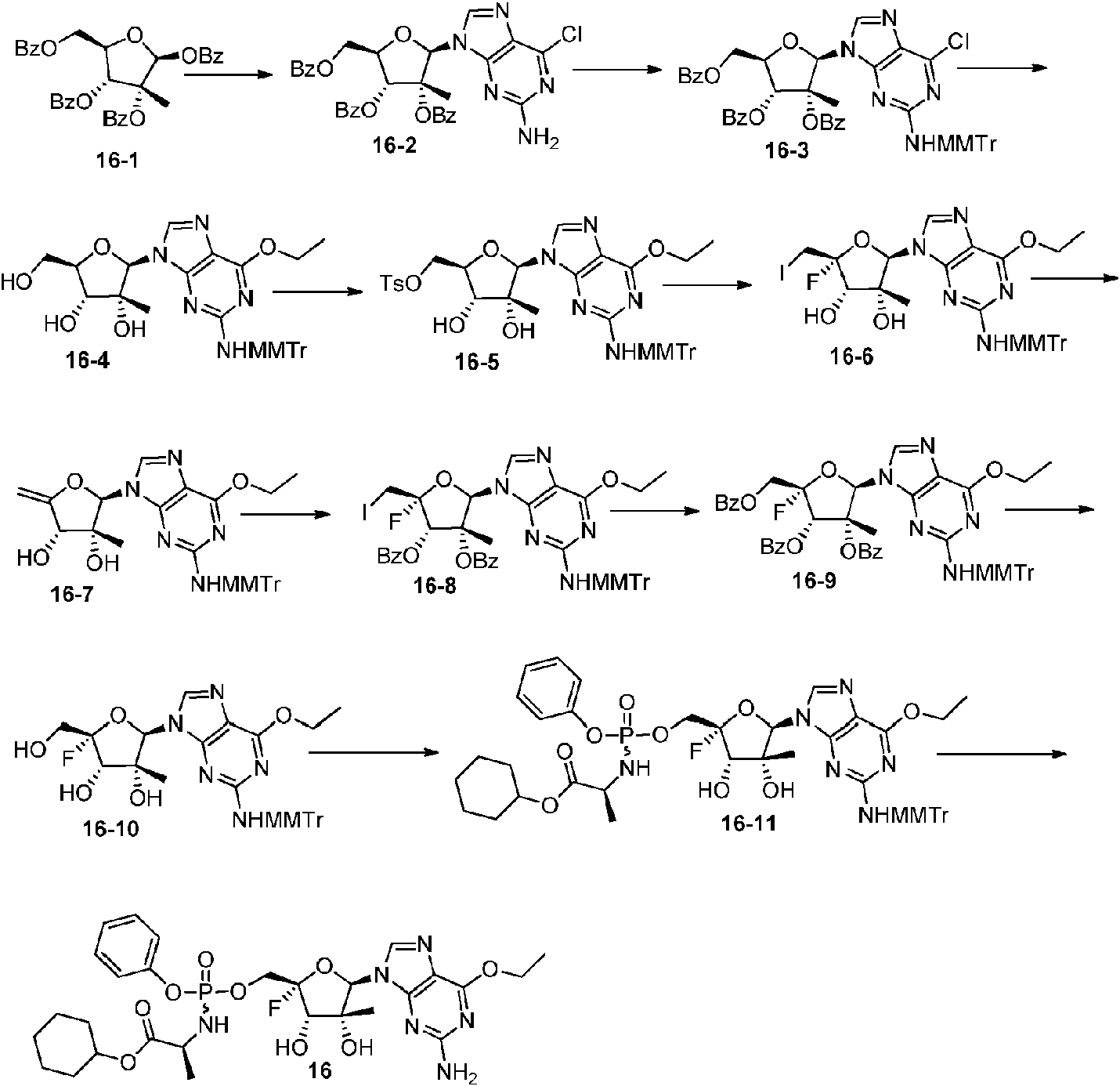
El compuesto 16-1 (50 g, 86,0 mmol) y 6-Cl-guanina (16,1 g, 98,2 mmol) se coevaporaron con tolueno anhidro 3 veces. A una solución de 10-1 en MeCN (200 ml) se le añadió DBU (39,5 g, 258,0 mmol) a 0 °C. La mezcla se agitó a 0 °C durante 30 min y después se añadió TMSOTf (95,5 g, 430,0 mmol) gota a gota a 0 °C. La mezcla se agitó a 0 °C durante 30 min. La mezcla se calentó hasta 70 °C y se agitó durante una noche. La solución se enfrió hasta T.A. y se diluyó con EA (100 ml). La solución se lavó con solución sat. de NaHCO3 y salmuera. La capa orgánica se secó sobre Na2SO4 y se concentró a baja presión. El residuo se purificó por columna sobre gel de sílice (EA en PE de 10 % a 40 %) para dar 16-2 (48,0 g, rendimiento: 88,7 %) como una espuma amarilla. ESI-MS: m/z 628 [M+H]+.Compound 16-1 (50 g, 86.0 mmol) and 6-Cl-guanine (16.1 g, 98.2 mmol) were coevaporated with anhydrous toluene 3 times. To a solution of 10-1 in MeCN (200 ml) was added DBU (39.5 g, 258.0 mmol) at 0 ° C. The mixture was stirred at 0 ° C for 30 min and then TMSOTf (95.5 g, 430.0 mmol) was added dropwise at 0 ° C. The mixture was stirred at 0 ° C for 30 min. The mixture was heated to 70 ° C and stirred overnight. The solution was cooled to RT and diluted with EA (100 ml). The solution was washed with sat. NaHCO3 and brine. The organic layer was dried over Na2SO4 and concentrated under low pressure. The residue was purified by column on silica gel (EA in PE 10% to 40%) to give 16-2 (48.0 g, yield: 88.7%) as a yellow foam. ESI-MS: m / z 628 [M + H] +.
A una solución de 16-2 (48,0 g, 76,4 mol), AgNO3 (50,0 g, 294,1 mmol) y colidina (40 ml) en DCM anhidro (200 ml) se le añadió MMTrCl (46,0 g, 149,2 mmol) en pequeñas porciones en atmósfera de N2. La mezcla se agitó a T.A. durante 3 h en atmósfera de N2. La reacción se controló por CCF. La mezcla se filtró y el filtro se lavó con solución sat. de NaHCO3 y salmuera. La capa orgánica se secó sobre Na2SO4 anhidro y se concentró a baja presión. El residuo se purificó por columna de gel de sílice (EA en PE de 5 % a 50 %) para dar 16-3 en bruto (68 g, 98 %). ESI-MS: m/z 900,1 [M+H]+.To a solution of 16-2 (48.0 g, 76.4 mol), AgNO3 (50.0 g, 294.1 mmol) and collidine (40 ml) in anhydrous DCM (200 ml) was added MMTrCl (46 , 0 g, 149.2 mmol) in small portions under N 2 atmosphere. The mixture was stirred at RT for 3 h under N 2 atmosphere. The reaction was monitored by TLC. The mixture was filtered and the filter was washed with sat. NaHCO3 and brine. The organic layer was dried over anhydrous Na2SO4 and concentrated under low pressure. The residue was purified by silica gel column (EA in PE 5% to 50%) to give crude 16-3 (68 g, 98%). ESI-MS: mlz 900.1 [M + H] +.
Se disolvió sodio (8,7 g, 378,0 mmol) en EtOH seco (100 ml) a 0 °C y se calentó lentamente hasta T.A. El compuesto 16-3 (68,0 g, 75,6 mmol) se trató con solución de NaOEt recién preparada y se agitó durante una noche a T.A. La reacción se controló por CCF y la mezcla se concentró a baja presión. La mezcla se diluyó con H2O (100 ml) y se extrajo con EA (3 x 100 ml). La capa orgánica se secó sobre Na2SO4 anhidro y se evaporó a baja presión. El residuo se purificó por cromatografía en columna sobre gel de sílice (MeOH en DCM de 1 % a 5 %) para dar 16-4 (34,0 g, 75,2 %) como un sólido amarillo. ESI-MS: m/z 598 [M+H]+.Sodium (8.7 g, 378.0 mmol) was dissolved in dry EtOH (100 mL) at 0 ° C and slowly warmed to RT. Compound 16-3 (68.0 g, 75.6 mmol) was treated with Freshly prepared NaOEt solution and stirred overnight at RT. The reaction was monitored by TLC and the mixture was concentrated under low pressure. The mixture was diluted with H 2 O (100 ml) and extracted with EA (3 x 100 ml). The organic layer was dried over anhydrous Na2SO4 and evaporated under low pressure. The residue was purified by silica gel column chromatography (1% to 5% MeOH in DCM) to give 16-4 (34.0 g, 75.2%) as a yellow solid. ESI-MS: mlz 598 [M + H] +.
El compuesto 16-4 (32,0 g, 53,5 mmol) se coevaporó con piridina anhidra 3 veces. A una solución enfriada en hielo de 16-4 en piridina anhidra (100 ml) se le añadió TsCl (11,2 g, 58,9 mmol) en piridina (50 ml) gota a gota a 0 °C. La mezcla se agitó durante 18 h a 0 °C. La reacción se comprobó por CLEM (aproximadamente el 70 % era el producto deseado). La reacción se interrumpió con H2O y la solución se concentró a baja presión. El residuo se disolvió en EA (100 ml) y se lavó con solución sat. de NaHCO3. La capa orgánica se secó sobre Na2SO4 anhidro y se evaporó a baja presión. El residuo se purificó por cromatografía en columna sobre gel de sílice (MeOH en DCM de 1 % a 5 %) para dar 16-5 en bruto (25,0 g, 62,2 %) como un sólido amarillo. ESI-MS: m/z 752 [M+H]+.Compound 16-4 (32.0 g, 53.5 mmol) was co-evaporated with anhydrous pyridine 3 times. To an ice- cold solution of 16-4 in anhydrous pyridine (100 ml) was added TsCl (11.2 g, 58.9 mmol) in pyridine (50 ml) dropwise at 0 ° C. The mixture was stirred for 18 h at 0 ° C. The reaction was checked by LCMS (approximately 70% was the desired product). The reaction was quenched with H 2 O and the solution was concentrated under low pressure. The residue was dissolved in EA (100 ml) and washed with sat. NaHCO3. The organic layer was dried over anhydrous Na2SO4 and evaporated under low pressure. The residue was purified by silica gel column chromatography (1% to 5% MeOH in DCM) to give crude 16-5 (25.0 g, 62.2%) as a yellow solid. ESI-MS: m / z 752 [M + H] +.
A una solución de 16-5 (23,0 g, 30,6 mmol) en acetona (150 ml) se le añadió NaI (45,9 g, 306,0 mmol) y TBAI (2,0 g), y se calentó a reflujo durante una noche. La reacción se controló por CLEM. Después de completarse la reacción, la mezcla se concentró a baja presión. El residuo se disolvió en EA (100 ml), se lavó con salmuera y se secó sobre Na2SÜ4 anhidro. La solución orgánica se evaporó a baja presión. El residuo se purificó por cromatografía en columna sobre gel de sílice (DCM: MeÜH = 100:1 a 20:1) para dar el producto en bruto. A una solución del producto en bruto en THF seco (200 ml) se le añadió DBU (14,0 g, 91,8 mmol) y se calentó hasta 60 °C. La mezcla se agitó durante una noche y se comprobó por CLEM. La reacción se interrumpió con NaHCÜ3 sat. y la solución se extrajo con EA (100 ml). La capa orgánica se secó sobre Na2SÜ4 anhidro y se evaporó a baja presión. El residuo se purificó por cromatografía en columna sobre gel de sílice (MeÜH en DCM de 1 % a 5 %) para dar 16-6 (12,0 g, 67,4%) como un sólido amarillo. ESI-MS: m/z 580 [M+H]+.To a solution of 16-5 (23.0 g, 30.6 mmol) in acetone (150 ml) was added NaI (45.9 g, 306.0 mmol) and TBAI (2.0 g), and refluxed overnight. The reaction was monitored by LCMS. After completion of the reaction, the mixture was concentrated under low pressure. The residue was dissolved in EA (100 ml), washed with brine and dried over anhydrous Na2SO4. The organic solution was evaporated under low pressure. The residue was purified by silica gel column chromatography (DCM: MeHH = 100: 1 to 20: 1) to give the crude product. To a solution of the crude product in dry THF (200 ml) was added DBU (14.0 g, 91.8 mmol) and heated to 60 ° C. The mixture was stirred overnight and checked by LCMS. The reaction was quenched with sat. NaHCO3. and the solution was extracted with EA (100 ml). The organic layer was dried over anhydrous Na2SO4 and evaporated under low pressure. The residue was purified by silica gel column chromatography (MeHH in DCM 1% to 5%) to give 16-6 (12.0 g, 67.4%) as a yellow solid. ESI-MS: m / z 580 [M + H] +.
A una solución enfriada en hielo de 16-6 (8,0 g, 13,8 mmol) en MeCN seco (100 ml) se le añadió NIS (3,9 g, 17,2 mmol) y TEA^3HF (3,3 g, 20,7 mmol) a 0 °C. La mezcla se agitó a T.A. durante 18 h y se comprobó por CLEM. Después de completarse la reacción, la reacción se interrumpió con Na2SÜ3 sat. y solución sat. de NaHCÜ3. La solución se extrajo con EA. La capa orgánica se secó sobre Na2SÜ4 anhidro y se evaporó a baja presión. El residuo se purificó por cromatografía en columna sobre gel de sílice (EA en PE de 10 % a 50 %) para dar 16-7(7,2 g, 72,0 %) como un sólido. ESI-MS: m/z 726 [M+H]+.To an ice- cold solution of 16-6 (8.0 g, 13.8 mmol) in dry MeCN (100 ml) was added NIS (3.9 g, 17.2 mmol) and TEA ^ 3HF (3, 3 g, 20.7 mmol) at 0 ° C. The mixture was stirred at RT for 18 h and checked by LCMS. After completion of the reaction, the reaction was quenched with sat. Na2SO3. and sat solution. by NaHCÜ3. The solution was extracted with EA. The organic layer was dried over anhydrous Na 2 SÜ 4 and evaporated under low pressure. The residue was purified by silica gel column chromatography (EA in PE 10% to 50%) to give 16-7 (7.2 g, 72.0%) as a solid. ESI-MS: m / z 726 [M + H] +.
A una solución de 16-7 en bruto (7,2 g, 9,9 mmol) en DCM seco (100 ml) se le añadió DMAP (3,6 g, 29,8 mmol) y BzCl (2,8 g, 19,8 mmol) a 0 °C. La mezcla se agitó durante una noche y se comprobó por CLEM. La mezcla se lavó con solución sat. de NaHCÜ3. La capa orgánica se secó sobre Na2SÜ4 anhidro y se evaporó a baja presión. El residuo se purificó por cromatografía en columna sobre gel de sílice (EA en PE de 10 % a 30%) para dar 16-8(8,0 g, 86,4 %) como un sólido. ESI-MS: m/z 934 [M+H]+.To a solution of crude 16-7 (7.2 g, 9.9 mmol) in dry DCM (100 mL) was added DMAP (3.6 g, 29.8 mmol) and BzCl (2.8 g, 19.8 mmol) at 0 ° C. The mixture was stirred overnight and checked by LCMS. The mixture was washed with sat. by NaHCÜ3. The organic layer was dried over anhydrous Na2SO4 and evaporated under low pressure. The residue was purified by silica gel column chromatography (EA in PE 10% to 30%) to give 16-8 (8.0 g, 86.4%) as a solid. ESI-MS: m / z 934 [M + H] +.
A una solución de 16-8 (7,5 g, 8,0 mmol) en DMF seca (100 ml) se le añadió NaÜBz (11,5 g, 80,0 mmol) y 15-corona-5 (15,6 ml). La mezcla se agitó durante 36 h a 90 °C. La mezcla se diluyó con H2Ü (100 ml) y se extrajo con EA (3 x 150 ml). La capa orgánica se secó sobre Na2SÜ4 anhidro y se evaporó a baja presión. El residuo se purificó por cromatografía en columna sobre gel de sílice (EA en PE de 10 % a 30 %) para dar 16-9 en bruto (6,0 g, 80,0 %) como un sólido. ESI-MS: m/z 928 [M+H]+.To a solution of 16-8 (7.5 g, 8.0 mmol) in dry DMF (100 ml) was added NaÜBz (11.5 g, 80.0 mmol) and 15-crown-5 (15.6 ml). The mixture was stirred for 36 h at 90 ° C. The mixture was diluted with H 2 Ü (100 ml) and extracted with EA (3 x 150 ml). The organic layer was dried over anhydrous Na2SO4 and evaporated under low pressure. The residue was purified by silica gel column chromatography (EA in PE 10% to 30%) to give crude 16-9 (6.0 g, 80.0%) as a solid. ESI-MS: m / z 928 [M + H] +.
El compuesto 16-9 (4,0 g, 4,3 mmol) se coevaporó con tolueno anhidro 3 veces y se trató con NH3/MeÜH (50 ml, 4 N) a T.A. La mezcla se agitó durante 18 h a T.A. La reacción se controló por CLEM y la mezcla se concentró a baja presión. El residuo se purificó por cromatografía en columna sobre gel de sílice (EA en PE de 30 % a 50 %) para dar 16-10 (1,9 g, 71,7 %) como un sólido. IEN-EM: m/z 616 [M+H]+.Compound 16-9 (4.0 g, 4.3 mmol) was co-evaporated with anhydrous toluene 3 times and treated with NH 3 / MeHH (50 ml, 4 N) at RT. The mixture was stirred for 18 h at RT. It was monitored by LCMS and the mixture was concentrated under low pressure. The residue was purified by silica gel column chromatography (EA in PE 30% to 50%) to give 16-10 (1.9 g, 71.7%) as a solid. ESI-MS: m / z 616 [M + H] +.
El compuesto 16-10 (300,0 mg, 0,49 mmol) se coevaporó con tolueno anhidro 3 veces y se disolvió en MeCN (2 ml). La mezcla se trató con NMI (120,5 mg, 1,47 mmol) y el reactivo de fosforocloridato (338,1 mg, 0,98 mmol) en MeCN (1 ml) a 0 °C. La mezcla se agitó durante 18 h a T.A. La reacción se controló por CLEM. La mezcla se diluyó con solución de NaHCÜ3 al 10 % y se extrajo con EA. El residuo se purificó por cromatografía en columna sobre gel de sílice (EA en PE de 30 % a 50 %) para dar 16-11 (240 mg, 53,3 %) como un sólido. ESI-MS: m/z 925 [M+H]+.Compound 16-10 (300.0 mg, 0.49 mmol) was co-evaporated with anhydrous toluene 3 times and dissolved in MeCN (2 ml). The mixture was treated with NMI (120.5 mg, 1.47 mmol) and phosphorocloridate reagent (338.1 mg, 0.98 mmol) in MeCN (1 ml) at 0 ° C. The mixture was stirred for 18 h at RT. The reaction was monitored by LCMS. The mixture was diluted with 10% NaHCO3 solution and extracted with EA. The residue was purified by silica gel column chromatography (EA in PE 30% to 50%) to give 16-11 (240mg, 53.3%) as a solid. ESI-MS: m / z 925 [M + H] +.
El compuesto 16-11 (240,0 mg, 0,26 mmol) se trató con AcÜH al 80 % (10 ml) y la mezcla se agitó durante 18 h a T.A. La reacción se controló por CLEM. La mezcla se concentró a baja presión. El residuo se purificó por cromatografía en columna sobre gel de sílice (MeÜH en DCM de 1 % a 3 %) para dar compuesto 16 (87,6 mg, 51,7 %) como un sólido. ESI-MS: m/z 653 [M+H]+.Compound 16-11 (240.0 mg, 0.26 mmol) was treated with 80% AcHL (10 mL) and the mixture was stirred for 18 h at RT. The reaction was monitored by LCMS. The mixture was concentrated under low pressure. The residue was purified by silica gel column chromatography (MeHH in DCM 1% to 3%) to give compound 16 (87.6 mg, 51.7%) as a solid. ESI-MS: m / z 653 [M + H] +.
Ejemplo de referencia 25Reference Example 25
Compuesto 30Compound 30

A una solución agitada de compuesto 25 (60 mg, 0,22 mmol) en THF anhidro (2,0 ml) se le añadió N-metilimidazol (0,142 ml, 1,73 mmol) a 0 °C (baño de hielo seco/acetona) seguido de solución de fosforocloridato de fenil(ciclohexanoxi-L-alaninilo) (235 mg, 0,68 mmol) disuelto en THF (2 ml). La solución resultante se agitó a 0 °C durante 1 h y la temperatura se elevó hasta 10 °C durante la siguiente 1 h. La reacción se dejó a 10 °C durante 3 h. La mezcla se enfrió hasta 0 a 5 °C, se diluyó con EA y se añadió agua (5 ml). La solución se lavó con H2Ü y salmuera. La capa orgánica se separó, se secó sobre Na2SÜ4 anhidro y se filtró. El filtrado se concentró al vacío para dar un residuo, que se disolvió en CH3CN al 25 %/H2Ü. El compuesto se purificó en HPLC en fase inversa (C18) usando acetonitrilo y agua, seguido de liofilización para dar una espuma blanca. El producto se volvió a disolver en EtÜAc, se lavó con solución de ácido cítrico acuoso al 50 %, se secó sobre MgSÜ4 anhidro y se filtró. El filtrado se concentró al vacío y se liofilizó para dar dos isómeros (Rp/Sp) de compuesto 30 (6,3 mg). MS: m/z 586,05 [M-H]-.To a stirred solution of compound 25 (60 mg, 0.22 mmol) in anhydrous THF (2.0 ml) was added N-methylimidazole (0.142 ml, 1.73 mmol) at 0 ° C (dry ice bath / acetone) followed by solution of phenyl phosphorouschloridate (cyclohexanoxy-L-alaninyl) (235 mg, 0.68 mmol) dissolved in THF (2 ml). The resulting solution was stirred at 0 ° C for 1 h and the temperature was raised to 10 ° C for the next 1 h. The reaction was left at 10 ° C for 3 h. The mixture was cooled to 0 to 5 ° C, diluted with EA and water (5 ml) was added. The solution was washed with H 2 * and brine. The organic layer was separated, dried over anhydrous Na2SO4 and filtered. The filtrate was concentrated in vacuo to give a residue, which was dissolved in 25% CH 3 CN / H 2 Ü. The compound was purified on reverse phase HPLC (C18) using acetonitrile and water, followed by lyophilization to give a white foam. The product was redissolved in EtÜAc, washed with 50% aqueous citric acid solution, dried over anhydrous MgSO4 and filtered. The filtrate was concentrated in vacuo and lyophilized to give two isomers ( Rp / Sp ) of compound 30 (6.3 mg). MS: m / z 586.05 [MH] -.
Ejemplo 26Example 26
Compuesto 17Compound 17

El compuesto 17-1 (50 g, 86,0 mmol) y 6-Cl-guanina (16,1 g, 98,2 mmol) se coevaporaron con tolueno anhidro 3 veces. A una solución de 17-1 (50 g, 86,0 mmol) y 6-Cl-guanina (16,1 g, 98,2 mmol) en MeCN (200 ml) se le añadió DBU (39,5 g, 258,0 mmol) a 0 °C. La mezcla se agitó a 0 °C durante 30 min y se añadió TMSOTf (95,5 g, 430,0 mmol) gota a gota a 0 °C. La mezcla se agitó a 0 °C durante 30 min hasta que se observó una solución transparente. La mezcla se calentó hasta 70 °C y se agitó durante una noche. La solución se enfrió hasta T.A. y se diluyó con EA (100 ml). La solución se lavó con solución sat. de NaHCÜ3 y salmuera. La capa orgánica se secó sobre Na2SÜ4 y se concentró a baja presión. El residuo se purificó por columna sobre gel de sílice (EA en PE de 10 % a 40 %) para dar 17-2 (48,0 g, 88,7 %) como una espuma amarilla. ESI-MS: m/z 628 [M+H]+.Compound 17-1 (50 g, 86.0 mmol) and 6-Cl-guanine (16.1 g, 98.2 mmol) were coevaporated with anhydrous toluene 3 times. To a solution of 17-1 (50 g, 86.0 mmol) and 6-Cl-guanine (16.1 g, 98.2 mmol) in MeCN (200 ml) was added DBU (39.5 g, 258 , 0 mmol) at 0 ° C. The mixture was stirred at 0 ° C for 30 min and TMSOTf (95.5 g, 430.0 mmol) was added dropwise at 0 ° C. The mixture was stirred at 0 ° C for 30 min until a clear solution was observed. The mixture was heated to 70 ° C and stirred overnight. The solution was cooled to RT and diluted with EA (100 ml). The solution was washed with sat. NaHCÜ3 and brine. The organic layer was dried over Na2SO4 and concentrated under low pressure. The residue was purified by column on silica gel (EA in PE 10% to 40%) to give 17-2 (48.0 g, 88.7%) as a yellow foam. ESI-MS: m / z 628 [M + H] +.
A una solución de 17-2 (48,0 g, 76,4 mol), AgNÜ3 (50,0 g, 294,1 mmol) y colidina (40 ml) en DCM anhidro (200 ml) se le añadió MMTrCl (46,0 g, 149,2 mmol) en pequeñas porciones en atmósfera de N2. La mezcla se agitó a T.A. durante 3 h en atmósfera de N2. La finalización de la reacción se determinó por CCF. Después de la filtración, el filtrado se lavó con solución sat. de NaHCÜ3 y salmuera. La capa orgánica se secó sobre Na2Sü4 anhidro y se concentró a baja presión. El residuo se purificó por columna de gel de sílice (EA en PE de 5 % a 50 %) para dar 17-3 en bruto (68 g, 98 %). ESI-MS: m/z 900,1 [M+H]+.To a solution of 17-2 (48.0 g, 76.4 mol), AgNÜ3 (50.0 g, 294.1 mmol) and collidine (40 ml) in anhydrous DCM (200 ml) was added MMTrCl (46 , 0 g, 149.2 mmol) in small portions under N 2 atmosphere. The mixture was stirred at RT for 3 h under N 2 atmosphere. Completion of the reaction was determined by TLC. After filtration, the filtrate was washed with sat. NaHCÜ3 and brine. The organic layer was dried over anhydrous Na2Sü4 and concentrated under low pressure. The residue was purified by silica gel column (EA in PE 5% to 50%) to give crude 17-3 (68 g, 98%). ESI-MS: mlz 900.1 [M + H] +.
Se disolvió sodio (8,7 g, 378,0 mmol) en EtÜH seco (100 ml) a 0 °C y se calentó lentamente hasta T.A. El compuesto 17-3 (68,0 g, 75,6 mmol) se trató con solución de NaÜEt recién preparada y se agitó durante una noche a T.A. La finalización de la reacción se determinó por CCF y CLEM. La mezcla se concentró a baja presión, se diluyó con H2Ü (100 ml) y se extrajo con EA (3 x 100 ml). La capa orgánica se secó sobre Na2SÜ4 anhidro y se evaporó a baja presión. El residuo se purificó por cromatografía en columna sobre gel de sílice (MeÜH en DCM de 1 % a 5 %) para dar 17-4 (34,0 g, 75,2 %) como un sólido amarillo. ESI-MS: m/z 598 [M+H]+.Sodium (8.7 g, 378.0 mmol) was dissolved in dry EtHH (100 ml) at 0 ° C and slowly warmed to RT. Compound 17-3 (68.0 g, 75.6 mmol) was treated with NaEt solution freshly prepared and stirred overnight at RT. Completion of the reaction was determined by TLC and LCMS. The mixture was concentrated under low pressure, diluted with H 2 Ü (100 ml) and extracted with EA (3 x 100 ml). The organic layer was dried over anhydrous Na2SO4 and evaporated under low pressure. The residue was purified by silica gel column chromatography (MeHH in DCM 1% to 5%) to give 17-4 (34.0 g, 75.2%) as a yellow solid. ESI-MS: mlz 598 [M + H] +.
El compuesto 17-4 (32,0 g, 53,5 mmol) se coevaporó con piridina anhidra 3 veces. A una solución enfriada en hielo de 17-4 (32,0 g, 53,5 mmol) en piridina anhidra (100 ml) se le añadió una solución de TsCl (11,2 g, 58,9 mmol) en piridina (50 ml) gota a gota a 0 °C. La mezcla se agitó durante 18 h a 0 °C. La reacción se controló por CLEM y se inactivó con H2Ü. La solución se concentró a baja presión y el residuo se disolvió en EA (100 ml), y se lavó con solución sat. de NaHCÜ3. La capa orgánica se secó sobre Na2SÜ4 anhidro y se evaporó a baja presión. El residuo se purificó por cromatografía en columna sobre gel de sílice (MeOH en DCM de 1 % a 5 %) para dar 17-5 en bruto (25,0 g, 62,2 %) como un sólido amarillo. ESI-MS: m/z 752 [M+H]+.Compound 17-4 (32.0 g, 53.5 mmol) was co-evaporated with anhydrous pyridine 3 times. To an ice- cold solution of 17-4 (32.0 g, 53.5 mmol) in anhydrous pyridine (100 ml) was added a solution of TsCl (11.2 g, 58.9 mmol) in pyridine (50 ml) dropwise at 0 ° C. The mixture was stirred for 18 h at 0 ° C. The reaction was monitored by LCMS and quenched with H 2 Ü. The solution was concentrated under low pressure and the residue was dissolved in EA (100 ml), and washed with sat. by NaHCÜ3. The organic layer was dried over anhydrous Na2SO4 and evaporated under low pressure. The residue was purified by column chromatography on silica gel (1% to 5% MeOH in DCM) to give crude 17-5 (25.0 g, 62.2%) as a yellow solid. ESI-MS: m / z 752 [M + H] +.
A una solución de 17-5 (23,0 g, 30,6 mmol) en acetona (150 ml) se le añadió NaI (45,9 g, 306,0 mmol) y TBAI (2,0 g), y la mezcla se calentó a reflujo durante una noche. La finalización de la reacción se determinó por CLEm . La mezcla se concentró a baja presión y el residuo se disolvió en EA (100 ml). La solución se lavó con salmuera y se secó sobre Na2SO4 anhidro. La solución orgánica se evaporó a baja presión y el residuo se purificó por cromatografía en columna sobre gel de sílice (DCM: MeOH = 100:1 a 20:1) para dar un producto en bruto. A una solución del producto en bruto en THF seco (200 ml) se le añadió DBU (14,0 g, 91,8 mmol) y la mezcla se calentó hasta 60 °C y se agitó durante una noche. La reacción se controló por CLEM. La reacción se interrumpió con solución sat. de NaHCO3 y la solución se extrajo con EA (100 ml). La capa orgánica se secó sobre Na2SO4 anhidro y se evaporó a baja presión. El residuo se purificó por cromatografía en columna sobre gel de sílice (MeOH en DCM de 1 % a 5 %) para dar 17-6 (12,0 g, 67,4 %) como un sólido amarillo. ESI-MS: m/z 580 [M+H]+.To a solution of 17-5 (23.0 g, 30.6 mmol) in acetone (150 ml) was added NaI (45.9 g, 306.0 mmol) and TBAI (2.0 g), and the mixture was refluxed overnight. Completion of the reaction was determined by CLEm. The mixture was concentrated under low pressure and the residue was dissolved in EA (100 ml). The solution was washed with brine and dried over anhydrous Na2SO4. The organic solution was evaporated under low pressure and the residue was purified by silica gel column chromatography (DCM: MeOH = 100: 1 to 20: 1) to give a crude product. To a solution of the crude product in dry THF (200 ml) was added DBU (14.0 g, 91.8 mmol) and the mixture was heated to 60 ° C and stirred overnight. The reaction was monitored by LCMS. The reaction was quenched with sat. NaHCO3 solution and the solution was extracted with EA (100 ml). The organic layer was dried over anhydrous Na2SO4 and evaporated under low pressure. The residue was purified by silica gel column chromatography (1% to 5% MeOH in DCM) to give 17-6 (12.0 g, 67.4%) as a yellow solid. ESI-MS: m / z 580 [M + H] +.
A una solución enfriada en hielo de 17-6 (8,0 g, 13,8 mmol) en MeCN anhidro (100 ml) se le añadió NIS (3,9 g, 17,2 mmol) y TEA^3HF (3,3 g, 20,7 mmol) a 0 °C. La mezcla se agitó a T.A. durante 18 h y la reacción se comprobó por CLEM. Después de completarse la reacción, la reacción se interrumpió con solución sat. de Na2SO3 y solución sat. de NaHCO3. La solución se extrajo con EA (3 x 100 ml). La capa orgánica se secó sobre Na2SO4 anhidro y se evaporó a baja presión. El residuo se purificó por cromatografía en columna sobre gel de sílice (EA en PE de 10 % a 50%) para dar 17-7 (7,2 g, 72,0 %) como un sólido. ESI-MS: m/z 726 [M+H]+.To an ice- cold solution of 17-6 (8.0 g, 13.8 mmol) in anhydrous MeCN (100 ml) was added NIS (3.9 g, 17.2 mmol) and TEA ^ 3HF (3, 3 g, 20.7 mmol) at 0 ° C. The mixture was stirred at RT for 18 h and the reaction was checked by LCMS. After completion of the reaction, the reaction was quenched with sat. Na2SO3 and sat solution. NaHCO3. The solution was extracted with EA (3 x 100 ml). The organic layer was dried over anhydrous Na2SO4 and evaporated under low pressure. The residue was purified by silica gel column chromatography (EA in PE 10% to 50%) to give 17-7 (7.2 g, 72.0%) as a solid. ESI-MS: m / z 726 [M + H] +.
A una solución de 17-7 (7,2 g, 9,9 mmol) en DCM seco (100 ml) se le añadió DMAP (3,6 g, 29,8 mmol) y BzCl (2,8 g, 19,8 mmol) a 0 °C. La mezcla se agitó durante una noche y se comprobó por CLEM. La mezcla se lavó con solución sat. de NaHCO3. La capa orgánica se secó sobre Na2SO4 anhidro y se evaporó a baja presión. El residuo se purificó por cromatografía en columna sobre gel de sílice (EA en PE de 10 % a 30 %) para dar 17-8 (8,0 g, 86,4 %) como un sólido. ESI-MS: m/z 934 [M+H]+.To a solution of 17-7 (7.2 g, 9.9 mmol) in dry DCM (100 ml) was added DMAP (3.6 g, 29.8 mmol) and BzCl (2.8 g, 19, 8 mmol) at 0 ° C. The mixture was stirred overnight and checked by LCMS. The mixture was washed with sat. NaHCO3. The organic layer was dried over anhydrous Na2SO4 and evaporated under low pressure. The residue was purified by silica gel column chromatography (EA in PE 10% to 30%) to give 17-8 (8.0 g, 86.4%) as a solid. ESI-MS: m / z 934 [M + H] +.
A una solución de 17-8 (7,5 g, 8,0 mmol) en DMF seca (100 ml) se le añadió NaOBz (11,5 g, 80,0 mmol) y 15-corona-5 (15,6 ml). La mezcla se agitó durante 36 h a 90 °C. La mezcla se diluyó con H2O (100 ml) y se extrajo con EA (3 x 150 ml). La capa orgánica se secó sobre Na2SO4 anhidro y se evaporó a baja presión. El residuo se purificó por cromatografía en columna sobre gel de sílice (EA en PE de 10 % a 30 %) para dar 17-9 en bruto (6,0 g, 80,0 %) como un sólido. ESI-MS: m/z 928 [M+H]+.To a solution of 17-8 (7.5 g, 8.0 mmol) in dry DMF (100 ml) was added NaOBz (11.5 g, 80.0 mmol) and 15-crown-5 (15.6 ml). The mixture was stirred for 36 h at 90 ° C. The mixture was diluted with H 2 O (100 ml) and extracted with EA (3 x 150 ml). The organic layer was dried over anhydrous Na2SO4 and evaporated under low pressure. The residue was purified by silica gel column chromatography (EA in PE 10% to 30%) to give crude 17-9 (6.0 g, 80.0%) as a solid. ESI-MS: m / z 928 [M + H] +.
El compuesto 17-9 (4,0 g, 4,3 mmol) se coevaporó con tolueno anhidro 3 veces y se trató con NH3/MeOH (50 ml, 4 N) a T.A. La mezcla se agitó durante 18 h a T.A. La finalización de la reacción se determinó por CLEM. La mezcla se concentró a baja presión y el residuo se purificó por cromatografía en columna sobre gel de sílice (EA en PE de 30 % a 50 %) para dar producto 17-10 (1,9 g, 71,7 %) como un sólido. ESI-MS: m/z 616 [M+H]+.Compound 17-9 (4.0 g, 4.3 mmol) was co-evaporated with anhydrous toluene 3 times and treated with NH 3 / MeOH (50 ml, 4 N) at RT. The mixture was stirred for 18 h at RT. of the reaction was determined by LCMS. The mixture was concentrated under low pressure and the residue was purified by silica gel column chromatography (EA in PE 30% to 50%) to give product 17-10 (1.9 g, 71.7%) as a solid. ESI-MS: m / z 616 [M + H] +.
El compuesto 17-10 (300,0 mg, 0,49 mmol) se coevaporó con tolueno anhidro 3 veces y se disolvió en MeCN (2 ml). La mezcla se trató con NMI (120,5 mg, 1,47 mmol) y el reactivo de fosforocloridato (326,3 mg, 0,98 mmol) en MeCN (1 ml) a 0 °C. La mezcla se agitó durante 18 h a T.A. y se controló por CLEM. La mezcla se diluyó con solución de NaHCO3 al 10 % y se extrajo con EA (3 x 30 ml). El residuo se purificó por cromatografía en columna sobre gel de sílice (EA en PE de 30 % a 50 %) para dar 17-11 (210 mg, 47,5 %) como un sólido. ESI-MS: m/z 913,0 [M+H]+. Compound 17-10 (300.0 mg, 0.49 mmol) was co-evaporated with anhydrous toluene 3 times and dissolved in MeCN (2 ml). The mixture was treated with NMI (120.5 mg, 1.47 mmol) and phosphorocloridate reagent (326.3 mg, 0.98 mmol) in MeCN (1 ml) at 0 ° C. The mixture was stirred for 18 h at RT and monitored by LCMS. The mixture was diluted with 10% NaHCO3 solution and extracted with EA (3 x 30 ml). The residue was purified by silica gel column chromatography (EA in PE 30% to 50%) to give 17-11 (210mg, 47.5%) as a solid. ESI-MS: m / z 913.0 [M + H] +.
El compuesto 17-11 (210 mg, 0,26 mmol) se trató con AcOH al 80 % (15 ml) y la mezcla se agitó durante 18 h a T.A. La finalización de la reacción se determinó por CLEM. La mezcla se concentró a baja presión y el residuo se purificó por cromatografía en columna sobre gel de sílice (MeOH en DCM de 1 % a 3 %) para dar compuesto 17 (71,8 mg, 48,7 %) como un sólido. ESI-MS: m/z 641,3 [M+H]+.Compound 17-11 (210 mg, 0.26 mmol) was treated with 80% AcOH (15 ml) and the mixture was stirred for 18 h at RT. Completion of the reaction was determined by LCMS. The mixture was concentrated under low pressure and the residue was purified by silica gel column chromatography (1% to 3% MeOH in DCM) to give compound 17 (71.8 mg, 48.7%) as a solid. ESI-MS: m / z 641.3 [M + H] +.
Ejemplo 27Example 27
Compuestos 9, 12, 15, 26, 28, 38, 44, 46, 50, 63, 64, 69 y 76Compounds 9, 12, 15, 26, 28, 38, 44, 46, 50, 63, 64, 69 and 76
Los compuestos 9, 12, 15, 26, 28, 38, 44, 46, 50, 63, 64, 69 y 76 se prepararon de una manera similar al método para preparar el compuesto 6. Después de la adición de POCh, la mezcla se mantuvo a T.A. durante 20-40 min. La reacción se controló por CLEM y se vigiló mediante la aparición del correspondiente 5'-monofosfato nucleosídico. Después de completarse la reacción, se añadió sal de tetrabutilamonio de pirofosfato (150 mg), seguida de DMF (0,5 ml) para obtener una solución homogénea. Después de 1,5 h a temperatura ambiente, la reacción se diluyó con agua (10 ml). El trifosfato (eluido a 75-80 % de B) se obtuvo como se describe para el compuesto 6.Compounds 9, 12, 15, 26, 28, 38, 44, 46, 50, 63, 64, 69, and 76 were prepared in a similar manner to the method for preparing compound 6 . After the addition of POCh, the mixture was kept at RT for 20-40 min. The reaction was monitored by LCMS and monitored for the appearance of the corresponding nucleoside 5'-monophosphate. After completion of the reaction, pyrophosphate tetrabutylammonium salt (150 mg) was added, followed by DMF (0.5 ml) to obtain a homogeneous solution. After 1.5 h at room temperature, the reaction was diluted with water (10 ml). Triphosphate (eluted at 75-80% B) was obtained as described for compound 6 .


Los siguientes compuestos de referencia también pueden prepararse usando un método similar al método descrito en el ejemplo 27: The following reference compounds can also be prepared using a method similar to the method described in Example 27:

Ejemplo 28Example 28
Compuesto 10Compound 10

El compuesto 10-1 (5 g, 8,79 mmol) se coevaporó con piridina anhidra. A una solución enfriada en hielo de 10-1 en piridina anhidra (15 ml) se le añadió TsCl (3,43 g, 17,58 mmol) y se agitó durante 1 h a 0 °C. La reacción se comprobó por CLEM y CCF. La reacción se interrumpió con H2O y se extrajo con EA. La fase orgánica se secó sobre Na2SO4 anhidro y se evaporó a baja presión. El compuesto 10-2 (6,35 g, 100 %) se usó para la siguiente etapa directamente. Compound 10-1 (5 g, 8.79 mmol) was co-evaporated with anhydrous pyridine. To an ice- cold solution of 10-1 in anhydrous pyridine (15 mL) was added TsCl (3.43 g, 17.58 mmol) and stirred for 1 h at 0 ° C. The reaction was checked by LCMS and TLC. The reaction was quenched with H 2 O and extracted with EA. The organic phase was dried over anhydrous Na2SO4 and evaporated under low pressure. Compound 10-2 (6.35 g, 100%) was used for the next step directly.
A una solución de 10-2 (31,77 g, 43,94 mmol) en acetona (300 ml) se le añadió NaI (65,86 g, 439,4 mmol) y se calentó a reflujo durante una noche. La reacción se comprobó por CLEM. La reacción se interrumpió con solución sat. de Na2S2O3 y se extrajo con EA. La capa orgánica se secó sobre Na2SO4 anhidro y se evaporó a baja presión. El residuo se purificó por cromatografía en columna sobre gel de sílice (MeOH en DCM de 1 % a 6 %) para dar 10-3 (11,5 g, 38 %) como un sólido blanco.To a solution of 10-2 (31.77 g, 43.94 mmol) in acetone (300 ml) was added NaI (65.86 g, 439.4 mmol) and heated under reflux overnight. The reaction was checked by LCMS. The reaction was quenched with sat. Na2S2O3 and extracted with EA. The organic layer was dried over anhydrous Na2SO4 and evaporated under low pressure. The residue was purified by silica gel column chromatography (1% to 6% MeOH in DCM) to give 10-3 (11.5 g, 38%) as a white solid.
A una solución de 10-3 (11,5 g, 16,94 mmol) en THF seco (120 ml) se le añadió DBU (12,87 g, 84,68 mmol) y se calentó hasta 60 °C. La reacción se agitó durante una noche y se comprobó por CLEM. La reacción se interrumpió con solución sat. de NaHCO3 y se extrajo con EA. La fase orgánica se secó sobre Na2SO4 anhidro y se evaporó a baja presión. El residuo se purificó por cromatografía en columna sobre gel de sílice (MeOH en DCM de 1 % a 5 %) para dar 10-4 (5,5 g, 54 %) como un sólido blanco.To a solution of 10-3 (11.5 g, 16.94 mmol) in dry THF (120 ml) was added DBU (12.87 g, 84.68 mmol) and heated to 60 ° C. The reaction was stirred overnight and checked by LCMS. The reaction was quenched with sat. NaHCO3 and extracted with EA. The organic phase was dried over anhydrous Na2SO4 and evaporated under low pressure. The residue was purified by silica gel column chromatography (1% to 5% MeOH in DCM) to give 10-4 (5.5 g, 54%) as a white solid.
A una solución enfriada en hielo de 10-4 (500 mg, 0,90 mmol) en DCM seco (20 ml) se le añadió AgF (618 mg, 4,9 mmol) y una solución de I2 (500 mg, 1,97 mmol) en DCM seco (20 ml). La reacción se agitó durante 3 h y se comprobó por CLEM. La reacción se interrumpió con solución sat. de Na2S2O3 y solución sat. de NaHCO3 y la mezcla se extrajo con DCM. La capa orgánica se secó por Na2SÜ4 anhidro y se evaporó a baja presión para dar 10-5 en bruto (420 mg, 66 %).To an ice- cold solution of 10-4 (500 mg, 0.90 mmol) in dry DCM (20 ml) was added AgF (618 mg, 4.9 mmol) and a solution of I 2 (500 mg, 1 , 97 mmol) in dry DCM (20 ml). The reaction was stirred for 3 hr and checked by LCMS. The reaction was quenched with sat. Na2S2O3 and sat solution. NaHCO3 and the mixture was extracted with DCM. The organic layer was dried over anhydrous Na2SO4 and evaporated under low pressure to give crude 10-5 (420 mg, 66%).
A una solución de 10-5 en bruto (250 mg, 0,36 mmol) en DCM seco (8 ml) se le añadió DMAP (0,28 g, 2,33 mmol), TEA (145 mg, 1,44 mmol) y BzCl (230 mg, 1,62 mmol) en una solución de DCM (2 ml). La reacción se agitó durante una noche y se comprobó por CLEM. La mezcla se lavó con solución sat. de NaHCÜ3 y salmuera. La capa orgánica se evaporó a baja presión. El residuo se purificó por prep-CCF para dar 10-6 en bruto (150 mg, 46 %).To a solution of crude 10-5 (250 mg, 0.36 mmol) in dry DCM (8 ml) was added DMAP (0.28 g, 2.33 mmol), TEA (145 mg, 1.44 mmol ) and BzCl (230 mg, 1.62 mmol) in a DCM solution (2 ml). The reaction was stirred overnight and checked by LCMS. The mixture was washed with sat. NaHCÜ3 and brine. The organic layer was evaporated under low pressure. The residue was purified by prep-TLC to give crude 10-6 (150mg, 46%).
A una solución de 10-6 en bruto (650 mg, 0,72 mmol) en HMPA seco (20 ml) se le añadió NaÜBz (1,03 g, 7,2 mmol) y 15-corona-5 (1,59 g, 7,2 mmol). La reacción se agitó durante 2 d a 60 °C. La mezcla se diluyó con H2O y se extrajo con EA. La capa orgánica se evaporó a baja presión. El residuo se purificó por prep-CCF para dar 10-7 (210 mg, 32,4 %). IEN-EM: m/z: 900,4 [M+H]+.To a solution of crude 10-6 (650 mg, 0.72 mmol) in dry HMPA (20 ml) was added NaÜBz (1.03 g, 7.2 mmol) and 15-crown-5 (1.59 g, 7.2 mmol). The reaction was stirred for 2 d at 60 ° C. The mixture was diluted with H 2 O and extracted with EA. The organic layer was evaporated under low pressure. The residue was purified by prep-TLC to give 10-7 (210mg, 32.4%). ESI-MS: m / z: 900.4 [M + H] +.
Una mezcla de 10-7 (25 mg) y BuNH2 (0,8 ml) se agitó durante una noche a T.A. La mezcla se evaporó y se purificó sobre gel de sílice (columna de 10 g) con CH2Cl2/MeOH (4-15 % de gradiente) para producir 10-8 (15 mg, 91 %). Una mezcla de 10-8 (15 mg, 0,02 mmol) en ACN (0,25 ml) y HCl 4 N/dioxano (19 ul) se agitó a T.A. durante 45 min. La mezcla se diluyó con MeÜH y se evaporó. El residuo en bruto se trató con MeCN y el sólido se filtró para producir compuesto 10 (7 mg). EM: m/z = 314 [M-1]-.A mixture of 10-7 (25 mg) and BuNH 2 (0.8 ml) was stirred overnight at RT The mixture was evaporated and purified on silica gel (10 g column) with CH 2 Cl 2 / MeOH (4-15% gradient) to yield 10-8 (15mg, 91%). A mixture of 10-8 (15mg, 0.02mmol) in ACN (0.25ml) and 4N HCl / dioxane (19ul) was stirred at RT for 45 min. The mixture was diluted with MeHH and evaporated. The crude residue was treated with MeCN and the solid was filtered to give compound 10 (7 mg). MS: m / z = 314 [M-1] -.
Ejemplo de referencia 29Reference Example 29
Compuestos 36 y 37Compounds 36 and 37

A una solución de 36-1 (150 mg, 0,24 mmol) en DCM (2,0 ml), se le añadió trietilamina (141 pl, 2,0 mmol) a T.A. La mezcla se enfrió hasta 0 a 5 °C (baño de hielo/agua) y fosforodicloridato de isopropilo recién preparado y destilado (45 pl, 0,26 mmol, preparado de acuerdo con un procedimiento, Reddy et al. J. Ürg. Chem. 2011,76 (10), 3782-3790) se añadió. La mezcla se agitó a 0 hasta 5 °C (baño de hielo/agua) durante 15 min, seguido de N-metilimidazol (40 pl, 0,49 mmol). La mezcla se agitó durante 1 h a 0 hasta 5 °C. La CCF mostró la ausencia de material de partida 36-1. Se añadió EA (100 ml), seguido de agua. La capa orgánica se lavó con H2Ü, solución ac. sat. de NH4Cl y salmuera. La capa orgánica se separó, se secó sobre MgSÜ4 anhidro y se filtró. El filtrado se concentró al vacío para dar un residuo, que se purificó sobre gel de sílice con 0 a 10 % de iPrÜH/DCM para dar 36-2a (16,9 mg, isómero de elución más rápida) y 36-2b (72,7 mg, isómero de elución más lenta).To a solution of 36-1 (150 mg, 0.24 mmol) in DCM (2.0 ml), triethylamine (141 µl, 2.0 mmol) was added at RT. The mixture was cooled to 0 to 5 ° C (ice / water bath) and freshly prepared and distilled isopropyl phosphorodichloridate (45 µl, 0.26 mmol, prepared according to a procedure, Reddy et al. J. Ürg. Chem. 2011.76 (10), 3782- 3790) was added. The mixture was stirred at 0-5 ° C (ice / water bath) for 15 min, followed by N-methylimidazole (40 µl, 0.49 mmol). The mixture was stirred for 1 hr at 0 to 5 ° C. TLC showed the absence of starting material 36-1 . EA (100 ml) was added, followed by water. The organic layer was washed with H 2 Ü, aq. sat. NH4Cl and brine. The organic layer was separated, dried over anhydrous MgSO4 and filtered. The filtrate was concentrated in vacuo to give a residue, which was purified on silica gel with 0-10% iPrHH / DCM to give 36-2a (16.9 mg, faster eluting isomer) and 36-2b (72 , 7 mg, slower eluting isomer).
Los compuestos 36-2a y 36-2b se desprotegieron usando un procedimiento descrito en este documento. Se obtuvieron compuesto 36 (7,3 mg, isómeros individuales a partir de 36-2a (16,5 mg, 0,0235 mmol)) y compuesto 37 (29,0 mg, isómeros individuales a partir de 36-2b (72,7 mg, 0,1 mmol)).Compounds 36-2a and 36-2b were deprotected using a procedure described herein. Compound 36 (7.3 mg, individual isomers from 36-2a (16.5 mg, 0.0235 mmol)) and compound 37 (29.0 mg, individual isomers from 36-2b (72, 7 mg, 0.1 mmol)).
Compuesto 36 : 1H RMN (CD3ÜD-d4, 400 MHz) 57,94 (s, 1H), 6,32 (s, 1H), 6,00-5,9 (s a, 1H), 4,9-4,487 (m, 1H), 4,83 4,77 (m, 1H), 4,65-4,50 (m, 3H), 1,45-1,39 (s, 9H), 1,2 (s, 3H),; 19F RMN (CD3ÜD-d4) 5 -120,3 (s); 31P RMN (CD3ÜD-d4) 5 -5,19 (s); ESI-LCMS: m/z = 448,05 [M+H]+. Compuesto 37: 1H RMN (CD3ÜD-d4, 400 MHz) 57,98 (s, 1H), 6,34 (s, 1 H), 5,78-5,64 (s a, 1H), 4,95-4,48 (m, 2H), 4,62-4,52 (m, 3H), 1,48-1,42 (s, 9H), 1,1 (s, 3H),; 19F RMN (CD3ÜD-d4) 5-121,3 (s); 31P RMN (CD3ÜD-d4) 5-7,38 (s); ESI-LCMS: m/z = 448,05 [M+H]+.Compound 36: 1H NMR (CD3ÜD-d4, 400 MHz) 5 7.94 (s, 1H), 6.32 (s, 1H), 6.00 to 5.9 (brs, 1H), 4.9 to 4.487 (m, 1H), 4.83 4.77 (m, 1H), 4.65-4.50 (m, 3H), 1.45-1.39 (s, 9H), 1.2 (s, 3H) ,; 19F NMR (CD3ÜD-d4) 5 -120.3 (s); 31P NMR (CD 3 Ud-d4) 5 -5.19 (s); ESI-LCMS: m / z = 448.05 [M + H] +. Compound 37: 1H NMR (CD3ÜD-d4, 400 MHz) 5 7.98 (s, 1H), 6.34 (s, 1H), 5.78 to 5.64 (brs, 1H), 4,95- 4.48 (m, 2H), 4.62-4.52 (m, 3H), 1.48-1.42 (s, 9H), 1.1 (s, 3H) ,; 19F NMR (CD3ÜD-d4) 5-121.3 (s); 31P NMR (CD3ÜD-d4) 5-7.38 (s); ESI-LCMS: m / z = 448.05 [M + H] +.
Ejemplo de referencia 30Reference example 30
Compuesto 48 Compound 48

A una solución de 48-1 (600 mg, 1,29 mmol) en CH3CN anhidro (4 ml) se le añadió DMAP (315 mg, 2,59 mmol), TEA (391 mg, 3,87 mmol) y TPSCl (782 mg, 2,58 mmol). La mezcla se agitó durante 3 h en atmósfera de N2. Se añadió una solución de NH3 en THF (2 ml) y se agitó durante 1 h. La reacción se interrumpió con solución sat. de NH4Cl y se extrajo con EA. La capa orgánica se secó sobre Na2SO4 anhidro y se concentró a sequedad a baja presión. El residuo se purificó por cromatografía en columna para proporcionar 48-2 (370 mg, 62 %) como una espuma sólida blanca. El compuesto 48-2 (370 mg, 1,48 mmol) en amonio metanólico se agitó a T.A. durante 4 h. La solución se concentró a sequedad para dar compuesto 48 (200 mg, 91 %) como un sólido blanco. ESI-MS: m/z 275,9 [M+H]+.To a solution of 48-1 (600 mg, 1.29 mmol) in anhydrous CH 3 CN (4 ml) was added DMAP (315 mg, 2.59 mmol), TEA (391 mg, 3.87 mmol) and TPSCl (782 mg, 2.58 mmol). The mixture was stirred for 3 h under N 2 atmosphere. A solution of NH 3 in THF (2 ml) was added and stirred for 1 h. The reaction was quenched with sat. NH4Cl and extracted with EA. The organic layer was dried over anhydrous Na2SO4 and concentrated to dryness under low pressure. The residue was purified by column chromatography to provide 48-2 (370 mg, 62%) as a white solid foam. Compound 48-2 (370 mg, 1.48 mmol) in methanolic ammonium was stirred at RT for 4 h. The solution was concentrated to dryness to give compound 48 (200mg, 91%) as a white solid. ESI-MS: mlz 275.9 [M + H] +.
Ejemplo de referencia 31Reference Example 31
Compuestos 18 y 19Compounds 18 and 19

Los diastereoisómeros de compuesto 2 se separaron por RP-HPLC. Un gradiente de 10-43 % de ACN en H2O durante 26 min en una columna Synergi Hydro RP de 30 x 250 m de 4u de partícula (Phenomenex PN 00G-4375-U0-AX) eluyó compuesto 19 (29,5 min) y compuesto 18 (30,1 min). Las fracciones puras se liofilizaron para producir un polvo blanco. Compuesto 19: 301P-RMN (DMSO-d6) 3,448 ppm; MS: m/z: 544 [M-1]-; Compuesto 18: 31P-RMN (DMSO-d6) 3,538 ppm; MS: m/z: 544 [M-1]-.Compound 2 diastereoisomers were separated by RP-HPLC. A gradient of 10-43% ACN in H 2 O over 26 min on a Synergi Hydro RP column of 30 x 250 m of 4u particle (Phenomenex PN 00G-4375-U0-AX) eluted compound 19 (29.5 min ) and compound 18 (30.1 min). The pure fractions were lyophilized to produce a white powder. Compound 19 : 301P-NMR (DMSO-d6) 3,448 ppm; MS: m / z: 544 [M-1] -; Compound 18: 31P-NMR (DMSO-d6) 3.538 ppm; MS: m / z: 544 [M-1] -.
Ejemplo de referencia 32Reference Example 32
Compuestos 20 y 21Compounds 20 and 21

Los diastereoisómeros de compuesto 3 se separaron por RP-HPLC. Un gradiente de 25-52 % de ACN en H2O durante 26 min en una columna Synergi Hydro RP de 30 x 250 m de 4u de partícula (Phenomenex PN 00G-4375-U0-AX) eluyó compuesto 21 (24,8 min) y compuesto 20 (25,3 min). Las fracciones puras se liofilizaron para producir un polvo blanco. Compuesto 21: 31P-RMN (DMSO-d6) 3,492 ppm; MS: m/z: 584 [M-1]-. Compuesto 20: 31P-RMN (DMSO-d6) 3,528 ppm; MS: m/z: 584 [M-1]-.Compound 3 diastereoisomers were separated by RP-HPLC. A gradient of 25-52% ACN in H 2 O over 26 min on a Synergi Hydro RP column of 30 x 250 m of 4u particle (Phenomenex PN 00G-4375-U0-AX) eluted compound 21 (24.8 min ) and compound 20 (25.3 min). The pure fractions were lyophilized to produce a white powder. Compound 21 : 31P-NMR (DMSO-d6) 3.492 ppm; MS: m / z: 584 [M-1] -. Compound 20: 31P-NMR (DMSO-d6) 3.528 ppm; MS: m / z: 584 [M-1] -.
Ejemplo de referencia 33Reference Example 33
Compuesto 13 Compound 13

El compuesto 2-1 (32 mg, 0,1 mmol) se disolvió en THF seco (3 ml) y se añadió solución 2 M de bromuro de isopropilmagnesio en THF (0,1 ml) a 0 °C. La reacción se dejó durante 1 h a T.A. y se añadió tiofosforocloridato de fenil(isopropil-L-alaninilo) (0,3 mmol). La mezcla se dejó durante una noche a T.A. El análisis de CLEM mostró aproximadamente un 20 % de material de partida sin reaccionar. Se añadió la misma cantidad de reactivo de Grignard y tiofosforocloridato, y la mezcla se calentó a 37 °C durante 4 h. La reacción se interrumpió con NH4Cl. El producto se extrajo con EA, se lavó con salmuera, se secó sobre Na2SÜ4 y se evaporó. El aceite resultante se disolvió en ácido fórmico al 80 % (4 ml) y en 1 h se evaporó. El compuesto 13 se purificó por RP HPLC en gradiente de metanol en agua de 30 % a 95 % en columna Synergy 4u Hydro-RP (Phenominex) produciendo un sólido incoloro. Compuesto 13 (7 mg, rendimiento del 12,5 %). MS: m/z: 560,0 [M-1 ]-.Compound 2-1 (32 mg, 0.1 mmol) was dissolved in dry THF (3 ml) and 2M solution of isopropylmagnesium bromide in THF (0.1 ml) was added at 0 ° C. The reaction was left for 1 h at RT and phenyl thiophosphorouschloridate (isopropyl-L-alaninyl) (0.3 mmol) was added. The mixture was left overnight at RT. LCMS analysis showed approximately 20% unreacted starting material. The same amount of Grignard's reagent and thiophosphorouschloridate were added, and the mixture was heated at 37 ° C for 4 h. The reaction was quenched with NH4Cl. The product was extracted with EA, washed with brine, dried over Na2SO4 and evaporated. The resulting oil was dissolved in 80% formic acid (4 ml) and evaporated within 1 h. Compound 13 was purified by RP HPLC on a 30% to 95% water methanol gradient on a Synergy 4u Hydro-RP column (Phenominex) yielding a colorless solid. Compound 13 (7mg, 12.5% yield). MS: m / z: 560.0 [M-1] -.
Ejemplo de referencia 34Reference Example 34
Compuesto 39, sal de bis-litioCompound 39, bis-lithium salt

El compuesto 39-1 se sintetizó usando un procedimiento similar para preparar compuesto 2 usando clorhidrato de éster bencílico de alanina. CLEM: m/z 592 [M-1]-.Compound 39-1 was synthesized using a similar procedure to prepare compound 2 using alanine benzyl ester hydrochloride. LCMS: m / z 592 [M-1] -.
A una solución de 39-1 (1,1 g, 1,85 mmol) en dioxano (15 ml) y agua (3 ml) se le añadió acetato de trietilamonio acuoso (2 M, 2 ml, 4 mmol) seguido de Pd-C (10 %, 100 mg). La mezcla se hidrogenó (globo) durante 2 h y se controló por HPLC. El catalizador se retiró por filtración y el filtrado se concentró a sequedad. El residuo se suspendió en solución al 3 % de perclorato de litio en acetona (25 ml). El sólido se aisló por filtración, se aclaró con acetona y se secó al vacío para dar compuesto 39 (sal de bis-litio) (731 mg, 90 %). LCm S: m/z 426 [M-1]-.To a solution of 39-1 (1.1 g, 1.85 mmol) in dioxane (15 ml) and water (3 ml) was added aqueous triethylammonium acetate (2 M, 2 ml, 4 mmol) followed by Pd -C (10%, 100 mg). The mixture was hydrogenated (balloon) for 2 h and monitored by HPLC. The catalyst was filtered off and the filtrate was concentrated to dryness. The residue was suspended in 3% solution of lithium perchlorate in acetone (25 ml). The solid was isolated by filtration, rinsed with acetone, and dried in vacuo to give compound 39 (bis-lithium salt) (731 mg, 90%). LCm S: m / z 426 [M-1] -.
Ejemplo de referencia 35Reference Example 35
Compuesto 55Compound 55

El compuesto 1 (40 mg, 0,14 mmol) y bis(pivaloiloximetil)fosfato de trietilamonio (0,21 mmol, preparado a partir de 80 mg de bis(pivaloiloximetil)fosfato y 30 pl de Et3N) se hicieron anhidros por coevaporación con piridina, seguida de tolueno. El residuo evaporado se disolvió en THF anhidro (2 ml) y se enfrió en un baño de hielo. Se añadieron diisopropiletil amina (73 pl, 3 equiv.), BopCl (71 mg, 2 equiv.) y 3-nitro-1,2,4-triazol (32 mg, 2 equiv.). La mezcla se agitó a 0 °C durante 90 min. Después, la mezcla se diluyó con EtOAc, se lavó con NaHCÜ3 ac. sat. y salmuera, y se secó (Na2SÜ4). La purificación sobre columna de gel de sílice con el sistema de disolvente de CH2Cl2/i-PrOH (4-10 % de gradiente) seguido de purificación por RP-HPLC (A: agua, B: MeCN) produjo compuesto 55 (13 mg, 16 %). MS: m/z = 1167 [2M-1].Compound 1 (40 mg, 0.14 mmol) and triethylammonium bis (pivaloyloxymethyl) phosphate (0.21 mmol, prepared from 80 mg of bis (pivaloyloxymethyl) phosphate and 30 μl of Et3N) were made anhydrous by coevaporation with pyridine, followed by toluene. The evaporated residue was dissolved in anhydrous THF (2 ml) and cooled in an ice bath. Diisopropylethyl amine (73 µl, 3 equiv.), BopCl (71 mg, 2 equiv.) And 3-nitro-1,2,4-triazole (32 mg, 2 equiv.) Were added. The mixture was stirred at 0 ° C for 90 min. The mixture was then diluted with EtOAc, washed with aq NaHCO3. sat. and brine, and it dried (Na2SO4). Purification on a silica gel column with the CH 2 Cl 2 / i-PrOH solvent system (4-10% gradient) followed by purification by RP-HPLC (A: water, B: MeCN) yielded compound 55 ( 13 mg, 16%). MS: m / z = 1167 [2M-1].
Ejemplo de referencia 36Reference Example 36
Compuesto 45Compound 45

El compuesto 45-1 (15,0 g, 25,55 mmol) se trató con HOAc al 90 % (150 ml) a T.A. La mezcla se agitó a 110 °C durante 12 h y después se concentró a baja presión. El residuo se disolvió en dCm y la solución se lavó con salmuera. La fase orgánica se secó sobre Na2SO4 anhidro y después se concentró a baja presión. El residuo se purificó por cromatografía en columna (5 % de MeOH en DCM) para dar 45-2 (11,0 g, 88,9 %) como un sólido blanco.Compound 45-1 (15.0 g, 25.55 mmol) was treated with 90% HOAc (150 ml) at RT. The mixture was stirred at 110 ° C for 12 h and then concentrated under low pressure. The residue was dissolved in dCm and the solution was washed with brine. The organic phase was dried over anhydrous Na2SO4 and then concentrated under low pressure. The residue was purified by column chromatography (5% MeOH in DCM) to give 45-2 (11.0 g, 88.9%) as a white solid.
El compuesto 45-2 (12,0 g, 24,79 mmol) se trató con NH3 en MeOH (200 ml, 7 M) a T.A. La solución se agitó a T.A. durante 12 h y después se concentró a baja presión. El residuo se purificó por cromatografía en columna (10 % de MeOH en DCM) para dar 45-3 (6,5 g, 95,0 %) como un sólido blanco.Compound 45-2 (12.0 g, 24.79 mmol) was treated with NH 3 in MeOH (200 mL, 7 M) at RT. The solution was stirred at RT for 12 h and then concentrated under low pressure. The residue was purified by column chromatography (10% MeOH in DCM) to give 45-3 (6.5 g, 95.0%) as a white solid.
A una suspensión agitada de 45-3 (4,3 g, 15,58 mmol), PPh3 (8,16 g, 31,15 mmol), imidazol (2,11 g, 31,15 mmol) y piridina (15 ml) en THF anhidro (45 ml) se le añadió una solución de I2 (7,91 g, 31,15 mmol) en THF (100 ml) gota a gota a 0 °C. La mezcla se calentó lentamente hasta T.A. y se agitó durante una noche. La mezcla se inactivó con MeOH (100 ml). El disolvente se retiró a baja presión y el residuo se volvió a disolver en una mezcla de EA y THF (0,2 l, 10:1). La fase orgánica se lavó con Na2S2O3 ac. sat. (2x). La fase acuosa se extrajo con una mezcla de EA y THF (0,2 l, 10:1,2x). La fase orgánica concentrada se secó sobre Na2SO4 anhidro. El residuo se purificó sobre una columna de gel de sílice (0-10 % de MeOH en DCM) para producir 45-4 (5,1 g, 85,0 %) como un sólido blanco.To a stirred suspension of 45-3 (4.3 g, 15.58 mmol), PPh3 (8.16 g, 31.15 mmol), imidazole (2.11 g, 31.15 mmol) and pyridine (15 ml ) in anhydrous THF (45 ml) a solution of I 2 (7.91 g, 31.15 mmol) in THF (100 ml) was added dropwise at 0 ° C. The mixture was slowly warmed to RT and stirred overnight. The mixture was quenched with MeOH (100 ml). The solvent was removed under low pressure and the residue was redissolved in a mixture of EA and THF (0.2 L, 10: 1). The organic phase was washed with aq Na2S2O3. sat. (2x). The aqueous phase was extracted with a mixture of EA and THF (0.2 l, 10: 1.2x). The concentrated organic phase was dried over anhydrous Na2SO4. The residue was purified on a silica gel column (0-10% MeOH in DCM) to yield 45-4 (5.1 g, 85.0%) as a white solid.
El compuesto 45-4 (800 mg, 2,07 mmol) se disolvió en una mezcla de DBU (4 ml) y THF (4 ml) a T.A. en atmósfera de N2. La solución se agitó a T.A. durante 1 h. La mezcla se neutralizó con HOAc y se extrajo con una mezcla de EA y THF (10:1, 40 ml). La fase orgánica se lavó con salmuera y se secó sobre Na2SO4 anhidro. La fase orgánica concentrada se purificó por cromatografía en columna (0-10 % de MeOH en DCM) para dar 45-5 (240 mg, 44,9 %) como un sólido blanco.Compound 45-4 (800 mg, 2.07 mmol) was dissolved in a mixture of DBU (4 ml) and THF (4 ml) at RT under N 2 atmosphere. The solution was stirred at RT for 1 hr. The mixture was neutralized with HOAc and extracted with a mixture of EA and THF (10: 1, 40 ml). The organic phase was washed with brine and dried over anhydrous Na2SO4. The concentrated organic phase was purified by column chromatography (0-10% MeOH in DCM) to give 45-5 (240mg, 44.9%) as a white solid.
A una solución enfriada en hielo de 45-5 (1,20 g, 4,65 mmol) en MeCN anhidro (12 ml) se le añadió NIS (1,57 g, 6,97 mmol) y TEA^3HF (1,12 g, 6,97 mmol) en atmósfera de N2. La mezcla se agitó a T.A. durante 5 h. La reacción se interrumpió con solución sat. de NaHCO3 y se extrajo con EA (3 x 100 ml). La fase orgánica se secó sobre Na2SO4 anhidro y se evaporó a sequedad a baja presión. El residuo se purificó sobre una columna de gel de sílice (0-5 % de MeOH en DCM) para dar 45-6 (0,91 g, 48,6 %) como un sólido blanco.To an ice cold solution of 45-5 (1.20 g, 4.65 mmol) in anhydrous MeCN (12 ml) was added NIS (1.57 g, 6.97 mmol) and TEA ^ 3HF (1, 12 g, 6.97 mmol) under N 2 atmosphere. The mixture was stirred at RT for 5 h. The reaction was quenched with sat. NaHCO3 solution and extracted with EA (3 x 100 ml). The organic phase was dried over anhydrous Na2SO4 and evaporated to dryness under low pressure. The residue was purified on a silica gel column (0-5% MeOH in DCM) to give 45-6 (0.91 g, 48.6%) as a white solid.
A una solución agitada de 45-6 (1,2 g, 2,97 mmol) en DCM anhidro (12 ml) se le añadió BzCl (0,83 g, 5,94 mmol), TEA (0,6 g, 5,94 mmol) y DMAP (0,72 g, 5,94 mmol) sucesivamente a T.A. La mezcla se agitó a T.A. durante 12 h. La reacción se interrumpió con agua y se extrajo con EA (3 x 60 ml). La fase orgánica se concentró a baja presión. El residuo se purificó por cromatografía en columna (0-5 % de MeOH en DCM) para dar 45-7 (1,2 g, 66,2 %) como un sólido blanco.To a stirred solution of 45-6 (1.2 g, 2.97 mmol) in anhydrous DCM (12 mL) was added BzCl (0.83 g, 5.94 mmol), TEA (0.6 g, 5 , 94 mmol) and DMAP (0.72 g, 5.94 mmol) successively at RT. The mixture was stirred at RT for 12 h. The reaction was quenched with water and extracted with EA (3 x 60 ml). The organic phase was concentrated under low pressure. The residue was purified by column chromatography (0-5% MeOH in DCM) to give 45-7 (1.2 g, 66.2%) as a white solid.
Se neutralizó hidróxido de tetra-butil amonio (25,78 ml, 51,78 mmol) con TFA (4,3 ml) a pH = 4 y la solución se añadió a una solución de 45-7 (1,09 g, 2,14 mmol) en DCM (30 ml). Se añadió m-CPBA (1,85 g, 10,74 mmol) en porciones en agitación vigorosa y la mezcla se agitó durante 12 h. La mezcla se diluyó con EA (100 ml) y se lavó con bicarbonato de sodio sat. La fase orgánica se concentró a baja presión. El residuo se purificó por cromatografía en columna (50 % de EA en PE) para dar 45-8 (350 mg, 41,1 %) como un sólido blanco. Tetra-butyl ammonium hydroxide (25.78 ml, 51.78 mmol) was neutralized with TFA (4.3 ml) to pH = 4 and the solution was added to a solution of 45-7 (1.09 g, 2 , 14 mmol) in DCM (30 ml). M-CPBA (1.85 g, 10.74 mmol) was added in portions with vigorous stirring and the mixture was stirred for 12 h. The mixture was diluted with EA (100 ml) and washed with sat. Sodium bicarbonate. The organic phase was concentrated under low pressure. The residue was purified by column chromatography (50% EA in PE) to give 45-8 (350mg, 41.1%) as a white solid.
El compuesto 45-8 (280 mg, 0,704 mmol) se trató con NH3 en MeOH (10 ml, 7 M) a T.A. La mezcla se agitó a T.A. durante 2 h. La mezcla se concentró a baja presión. El residuo se purificó por cromatografía en columna (0-10 % de MeOH en DCM) para dar compuesto 45 (110 mg, 53,1 %) como un sólido blanco. IEN-LCMS: m/z 295,1 [M+H]+. Ejemplo de referencia 37 Compound 45-8 (280 mg, 0.704 mmol) was treated with NH 3 in MeOH (10 mL, 7 M) at RT. The mixture was stirred at RT for 2 h. The mixture was concentrated under low pressure. The residue was purified by column chromatography (0-10% MeOH in DCM) to give compound 45 (110 mg, 53.1%) as a white solid. ESI-LCMS: m / z 295.1 [M + H] +. Reference example 37
Compuesto 54Compound 54

A una solución enfriada en hielo de 54-1 (10 g, 42 mmol) en MeCN anhidro (200 ml) se le añadió TEA^3HF (10 g, 62,5 mmol) y NIS (28 g, 126 mmol). La mezcla se agitó a T.A. durante 1,5 h y se controló por CLEM. Después de completarse la reacción, la mezcla se concentró a baja presión. El residuo se purificó por cromatografía en columna sobre gel de sílice (15 % de MeCN en DCM) para dar 54-2 (12 g, 74 %) como un sólido amarillo.To an ice- cold solution of 54-1 (10 g, 42 mmol) in anhydrous MeCN (200 ml) was added TEA ^ 3HF (10 g, 62.5 mmol) and NIS (28 g, 126 mmol). The mixture was stirred at RT for 1.5 h and monitored by LCMS. After completion of the reaction, the mixture was concentrated under low pressure. The residue was purified by silica gel column chromatography (15% MeCN in DCM) to give 54-2 (12 g, 74%) as a yellow solid.
A una solución de 54-2 (22 g, 57 mmol) en DCM anhidro (200 ml) se le añadió DMAP (21 g, 171 mmol) y BzCl (17,6 g, 125 mol). La mezcla se agitó durante 5 h a T.A. y se controló por CLEM. La solución se lavó con solución sat. de NaHCO3 y salmuera y se extrajo con EA. La fase orgánica se secó sobre Na2SO4 anhidro y se filtró. El filtrado se concentró a baja presión. El residuo se purificó por cromatografía en columna de gel de sílice (20 % de EA en PE) para dar 54-3 (30 g, 88 %) como una espuma blanca.To a solution of 54-2 (22 g, 57 mmol) in anhydrous DCM (200 ml) was added DMAP (21 g, 171 mmol) and BzCl (17.6 g, 125 mol). The mixture was stirred for 5 h at RT and monitored by LCMS. The solution was washed with sat. NaHCO3 and brine and extracted with EA. The organic phase was dried over anhydrous Na2SO4 and filtered. The filtrate was concentrated under low pressure. The residue was purified by silica gel column chromatography (20% EA in PE) to give 54-3 (30 g, 88%) as a white foam.
A una solución de 54-3 (6,5 g, 11 mmol) en DMF anhidra (270 ml) se le añadió NaOBz (15,8 g, 110 mmol) y 15-corona-5 (29 g, 132 mmol). La mezcla se agitó a 95 °C durante 48 h. El precipitado se retiró por filtración y el disolvente orgánico se retiró a baja presión. El residuo se disolvió en EA (200 ml) y la solución se lavó con solución sat. de NaHCO3 y salmuera. La capa orgánica se secó sobre Na2SO4 anhidro y se filtró. El filtrado se concentró a baja presión. El residuo se purificó por cromatografía en columna sobre gel de sílice (20 % de EA en PE) para dar 54-4 (3 g en bruto, 46,1 %) como un aceite.To a solution of 54-3 (6.5 g, 11 mmol) in anhydrous DMF (270 ml) was added NaOBz (15.8 g, 110 mmol) and 15-crown-5 (29 g, 132 mmol). The mixture was stirred at 95 ° C for 48 h. The precipitate was filtered off and the organic solvent was removed under low pressure. The residue was dissolved in EA (200 ml) and the solution was washed with sat. NaHCO3 and brine. The organic layer was dried over anhydrous Na2SO4 and filtered. The filtrate was concentrated under low pressure. The residue was purified by silica gel column chromatography (20% EA in PE) to give 54-4 (3g crude, 46.1%) as an oil.
El compuesto 54-4 (3 g, en bruto) se trató con NH3 en MeOH (120 ml, 7 M). La mezcla se agitó durante 3 h y se controló por CCF. La solución se concentró a baja presión. El residuo se purificó por cromatografía en columna sobre gel de sílice (10 % de isopropanol en DCM) para dar 54-5 (1,0 g, 67 %) como un sólido blanco. 1H-RMN (CD3OD, 400MHz) 5= 1,19(s, 3H), 3,76-3,82 (m, 2H), 4,02 (d, J= 19,8 Hz, 1 H), 5,70 (d, J= 8,07 Hz, 1H), 6,27 (s, 1 H), 7,89 (d, J = 8,07 Hz, 1 H).Compound 54-4 (3 g, crude) was treated with NH 3 in MeOH (120 ml, 7 M). The mixture was stirred for 3 h and monitored by TLC. The solution was concentrated under low pressure. The residue was purified by silica gel column chromatography (10% isopropanol in DCM) to give 54-5 (1.0 g, 67%) as a white solid. 1 H NMR (CD 3 OD, 400MHz) 5 = 1.19 (s, 3H), 3.76 to 3.82 (m, 2H), 4.02 (d, J = 19.8 Hz, 1H) , 5.70 (d, J = 8.07Hz, 1H), 6.27 (s, 1H), 7.89 (d, J = 8.07Hz, 1H).
El compuesto 54-5 (100 mg, 0,36 mmol) se coevaporó con tolueno 3 veces. A una solución agitada de 54-5 (100 mg, 0,36 mmol) en una mezcla de MeCN (1,0 ml) y NMI (295 mg, 3,6 mmol) se le añadió una solución de 54-C (255,6 mg, 0,72 mmol, preparación descrita a continuación) en MeCN (0,5 ml) a 0 °C. La mezcla se agitó a T.A. durante una noche. La reacción se interrumpió con agua y se diluyó con EA (20 ml). La capa orgánica se lavó con agua y salmuera. La capa orgánica se secó sobre Na2SO4 anhidro. La fase orgánica se concentró a baja presión. El residuo se purificó sobre una columna de gel de sílice (5 % de /-PrOH en DCM) para dar el producto en bruto. El producto se purificó por prep-HPLC (0,1 % de HCOOH en agua y MeCN) para dar compuesto 54 (46,7 mg, 23,3 %) como un sólido blanco. ESI-LCMS: m/z 618 [M+Na]+.Compound 54-5 (100 mg, 0.36 mmol) was coevaporated with toluene 3 times. To a stirred solution of 54-5 (100 mg, 0.36 mmol) in a mixture of MeCN (1.0 ml) and NMI (295 mg, 3.6 mmol) was added a solution of 54-C (255 , 6 mg, 0.72 mmol, preparation described below) in MeCN (0.5 ml) at 0 ° C. The mixture was stirred at RT overnight. The reaction was quenched with water and diluted with EA (20 ml). The organic layer was washed with water and brine. The organic layer was dried over anhydrous Na2SO4. The organic phase was concentrated under low pressure. The residue was purified on a silica gel column (5% / -PrOH in DCM) to give the crude product. The product was purified by prep-HPLC (0.1% HCOOH in water and MeCN) to give compound 54 (46.7 mg, 23.3%) as a white solid. ESI-LCMS: m / z 618 [M + Na] +.
A una solución agitada de 54-A (2,0 g, 13,16 mmol) y naftalen-1-ol (1,89 g, 13,16 mmol) en DCM anhidro (100 ml) se le añadió una solución de TEA (1,33 g, 13,16 mmol) en DCM (20 ml) gota a gota a -78 °C. Después de la adición, la mezcla se calentó gradualmente hasta T.A. y se agitó durante 2 h. La solución se enfrió hasta -78 °C y se añadió clorhidrato de 2-aminopropanoato de (S)-isopropilo (2,20 g, 13,16 mmol) en DCM (20 ml), seguido de TEA (2,66 g, 26,29 mmol) en DCM (20 ml) gota a gota. La mezcla se calentó gradualmente hasta T.A. y se agitó durante 2 h. El disolvente orgánico se retiró a baja presión. El residuo se disolvió en éter metil-butílico. El precipitado se filtró y el filtrado se concentró a baja presión. El residuo se purificó sobre una columna de gel de sílice (DCM anhidro) para dar 54-C (1,0 g, 24,8 %) como un aceite incoloro.To a stirred solution of 54-A (2.0 g, 13.16 mmol) and naphthalen-1-ol (1.89 g, 13.16 mmol) in anhydrous DCM (100 ml) was added a solution of TEA (1.33 g, 13.16 mmol) in DCM (20 ml) dropwise at -78 ° C. After the addition, the mixture was gradually warmed to RT and stirred for 2 h. The solution was cooled to -78 ° C and added (S) -isopropyl 2-aminopropanoate hydrochloride (2.20 g, 13.16 mmol) in DCM (20 ml), followed by TEA (2.66 g, 26.29 mmol) in DCM (20 ml) drop by drop. The mixture was gradually warmed to RT and stirred for 2 h. The organic solvent was removed under low pressure. The residue was dissolved in methyl butyl ether. The precipitate was filtered off and the filtrate was concentrated under low pressure. The residue was purified on a silica gel column (anhydrous DCM) to give 54-C (1.0 g, 24.8%) as a colorless oil.
Ejemplo de referencia 38Reference Example 38
Compuestos 56 y 57Compounds 56 and 57

A una solución de 54-5 (300 mg, 1,08 mmol) y NMI (892 mg, 10 mmol) en MeCN anhidro (4 ml) se le añadió una solución de 57-C (736 mg, 2,17 mmol, preparación descrita a continuación) en MeCN anhidro (1 ml) gota a gota a 0 °C. La mezcla se agitó a T.A. durante una noche. La reacción se interrumpió con agua y se diluyó con EA (30 ml). La capa orgánica se lavó con agua y salmuera. La fase orgánica se secó sobre Na2SO4 anhidro y se concentró a baja presión. El residuo se purificó por una columna de gel de sílice (iPrOH en DCM de 1 % a 5 %) para dar compuesto 56 en bruto (276 mg, en bruto). El compuesto 56 en bruto (96 mg) se purificó por prep-HPLC (0,1 % de HCOOH en agua y MeCN) para dar compuesto 56 puro (46 mg, 47,9 %) como un sólido blanco. ESI-LCMS: m/z 560 [M - F]+.To a solution of 54-5 (300 mg, 1.08 mmol) and NMI (892 mg, 10 mmol) in anhydrous MeCN (4 ml) was added a solution of 57-C (736 mg, 2.17 mmol, preparation described below) in anhydrous MeCN (1 ml) dropwise at 0 ° C. The mixture was stirred at RT overnight. The reaction was quenched with water and diluted with EA (30 ml). The organic layer was washed with water and brine. The organic phase was dried over anhydrous Na2SO4 and concentrated under low pressure. The residue was purified on a silica gel column (iPrOH in DCM 1% to 5%) to give crude compound 56 (276 mg, crude). Crude compound 56 (96mg) was purified by prep-HPLC (0.1% HCOOH in water and MeCN) to give pure compound 56 (46mg, 47.9%) as a white solid. ESI-LCMS: m / z 560 [MF] +.
A una solución de compuesto 56 (180 mg, 0,31 mmol) en piridina anhidra (6 ml) se le añadió anhídrido acético (158 mg, 1,54 mmol) gota a gota a 0 °C. La mezcla se agitó a T.A. durante una noche. La solución se inactivó con agua y se concentró a baja presión. El residuo se disolvió en EA (10 ml) y se lavó con salmuera. La capa orgánica se secó sobre Na2SO4 anhidro. La fase orgánica se concentró a baja presión. El residuo se purificó por columna de gel de sílice (/-PrOH en DCM de 1 % a 3 %) para dar compuesto 57 en bruto (172 mg). El compuesto 57 se purificó por prep-HPLC (0,1 % de HCOOH en agua y MeCN) para dar compuesto 57 puro (46 mg, 23,8 %) como un sólido blanco. ESI-LCMS: m/z 602,3 [M-F]+.To a solution of compound 56 (180 mg, 0.31 mmol) in anhydrous pyridine (6 ml) was added acetic anhydride (158 mg, 1.54 mmol) dropwise at 0 ° C. The mixture was stirred at RT overnight. The solution was quenched with water and concentrated under low pressure. The residue was dissolved in EA (10 ml) and washed with brine. The organic layer was dried over anhydrous Na 2 SO 4. The organic phase was concentrated under low pressure. The residue was purified by silica gel column (/ -PrOH in DCM 1% to 3%) to give crude compound 57 (172 mg). Compound 57 was purified by prep-HPLC (0.1% HCOOH in water and MeCN) to give pure compound 57 (46mg, 23.8%) as a white solid. ESI-LCMS: m / z 602.3 [MF] +.
El compuesto 56-C (1,02 g, 23 %, un aceite incoloro) se preparó usando un procedimiento similar a la preparación de 54-C usando 54-A (2,00 g, 13,16 mmol) y 4-clorofenol (1,68 g, 13,16 mmol).Compound 56-C (1.02 g, 23%, a colorless oil) was prepared using a similar procedure to the 54-C preparation using 54-A (2.00 g, 13.16 mmol) and 4-chlorophenol (1.68 g, 13.16 mmol).
Ejemplo de referencia 39Reference Example 39
Compuesto 61Compound 61

El compuesto 25 (109 mg, 0,39 mmol) y bis(isopropiloxicarboniloximetil)fosfato de trietilamonio (0,6 mmol, preparado a partir de 195 mg de bis(isopropiloxicarboniloximetil)fosfato y 85 pl of EfeN) se hicieron anhidros por coevaporación con piridina, seguida de tolueno. El residuo se disolvió en THF anhidro (3 ml) y se enfrió en un baño de hielo. Se añadieron diisopropiletil amina (0,2 ml, 3 equiv.), BopCl (190 mg, 2 equiv.) y 3-nitro-1,2,4-triazol (81 mg, 2 equiv.) y la mezcla se agitó a 0 °C durante 90 min. La mezcla se diluyó con EtOAc, se lavó con NaHCO3 ac. sat. y salmuera, y se secó (Na2SO4). La purificación sobre columna de gel de sílice con CH2Cl2/i-PrOH (4-10 % de gradiente) seguido de purificación por RP-HPLC (A: 0,1 % de HCOOH en agua, B: 0,1 % de HCOOH en MeCN) produjo compuesto 61 (28 mg, 12 %). 1H-RMN (CDCI3): 57,24 (d, 1H), 6,6 (a, 1H), 5,84 (d, 1H), 5,65-5,73 (m, 4H), 4,94 (m, 2H), 4,38 (m, 2H), 4,1 (b, 1H), 2,88 (d, 1H), 1,47 (d, 3H), 1,33 (m, 12H).Compound 25 (109 mg, 0.39 mmol) and triethylammonium bis (isopropyloxycarbonyloxymethyl) phosphate (0.6 mmol, prepared from 195 mg of bis (isopropyloxycarbonyloxymethyl) phosphate and 85 µl of EpheN) were made anhydrous by coevaporation with pyridine, followed by toluene. The residue was dissolved in anhydrous THF (3 ml) and cooled in an ice bath. Diisopropylethyl amine (0.2 ml, 3 equiv.), BopCl (190 mg, 2 equiv.) And 3-nitro-1,2,4-triazole (81 mg, 2 equiv.) Were added and the mixture was stirred at 0 ° C for 90 min. The mixture was diluted with EtOAc, washed with aq NaHCO3. sat. and brine, and dried (Na2SO4). Purification on a silica gel column with CH 2 Cl 2 / i-PrOH (4-10% gradient) followed by purification by RP-HPLC (A: 0.1% HCOOH in water, B: 0.1% of HCOOH in MeCN) produced compound 61 (28 mg, 12%). 1H-NMR (CDCI 3 ): 57.24 (d, 1H), 6.6 (a, 1H), 5.84 (d, 1H), 5.65-5.73 (m, 4H), 4, 94 (m, 2H), 4.38 (m, 2H), 4.1 (b, 1H), 2.88 (d, 1H), 1.47 (d, 3H), 1.33 (m, 12H ).
Ejemplo 40Example 40
Compuesto 74Compound 74

Se disolvió nucleósido seco (0,05 mmol) en una mezcla de PO(OMe)3 (0,7 ml) y piridina (0,3 ml). La mezcla se evaporó al vacío durante 15 min a 42 °C, después se enfrió hasta T.A. Se añadió N-metilimidazol (0,009 ml, 0,11 mmol) seguido de POCl3 (0,009 ml, 0,11 mmol). La mezcla se mantuvo a T.A. durante 20-40 min y se controló durante la formación de compuesto 74 por CLEM. La reacción se interrumpió con agua y se aisló por RP HPLC en columna Synergy de 4 micrómetros Hydro-RP (Phenominex). Se usó un gradiente lineal de metanol de 0 a 30 % en tampón de acetato de trietilamonio 50 mM (pH 7,5) para la elución. Las fracciones correspondientes se combinaron, se concentraron y se liofilizaron 3 veces para retirar el exceso de tampón. MS: m/z 396,5 [M-1]-.Dry nucleoside (0.05 mmol) was dissolved in a mixture of PO (OMe) 3 (0.7 ml) and pyridine (0.3 ml). The mixture was evaporated in vacuo for 15 min at 42 ° C, then cooled to RT. N-methylimidazole (0.009 ml, 0.11 mmol) was added followed by POCl3 (0.009 ml, 0.11 mmol). The mixture was kept at RT for 20-40 min and monitored for formation of compound 74 by LCMS. The reaction was quenched with water and isolated by RP HPLC on a Synergy 4 micron Hydro-RP column (Phenominex). A linear gradient of 0 to 30% methanol in 50 mM triethylammonium acetate buffer (pH 7.5) was used for elution. The corresponding fractions were combined, concentrated, and lyophilized 3 times to remove excess buffer. MS: m / z 396.5 [M-1] -.
Ejemplo 41Example 41
Compuesto 68Compound 68

El nucleósido (140 mg, 0,42 mmol) se disolvió en n-butilamina (0,5 ml). La mezcla se mantuvo durante 2 h a T.A. y después la amina se evaporó. El residuo se disolvió en EtOAc y la capa orgánica se lavó dos veces con ácido cítrico al 10 %, se secó sobre Na2SO4 y se evaporó. El residuo se purificó por cromatografía en columna sobre gel de sílice en gradiente lineal de metanol en DCM de 0 % a 12 % sobre 10 volúmenes de columna. Las fracciones que contenían el producto se concentraron y se trataron con HCOOH al 80 % durante 1 h a T.A. La mezcla se evaporó a sequedad y se suspendió en CH3CN. El precipitado se separó, se lavó con CH3CN (1 ml) y se secó para producir compuesto 68 (27 mg, 50 %). MS: m/z 326,5 [M-1]-.The nucleoside (140 mg, 0.42 mmol) was dissolved in n-butylamine (0.5 ml). The mixture was kept for 2 h at RT and then the amine was evaporated. The residue was dissolved in EtOAc and the organic layer was washed twice with 10% citric acid, dried over Na2SO4 and evaporated. The residue was purified by linear gradient column chromatography on silica gel in DCM from 0% to 12% over 10 column volumes. The fractions containing the product were concentrated and treated with 80% HCOOH for 1 h at RT. The mixture was evaporated to dryness and suspended in CH 3 CN. The precipitate was separated, washed with CH 3 CN (1 ml) and dried to give compound 68 (27 mg, 50%). MS: m / z 326.5 [M-1] -.
Ejemplo de referencia 42Reference Example 42
Compuesto 62Compound 62

El compuesto 45 (30 mg, 0,1 mmol) se disolvió en una mezcla de CH3CN (2 ml) y N-metilimidazol (200 ul). Se añadió fosforocloridato (100 mg, 0,3 mmol) y la mezcla se mantuvo durante 5 d a T.A. La mezcla se distribuyó entre agua y EA. La capa orgánica se separó, se lavó con salmuera, se secó y se evaporó. El fosforoam idato se aisló por cromatografía sobre gel de sílice en un gradiente de metanol en DCM de 3 % a 10 %. Las fracciones correspondientes se concentraron y se volvieron a purificar por RP HPLC en columna Synergy de 4 micrómetros Hydro-RP (Phenominex). Se usó un gradiente lineal de metanol en DCM de 3 % a 95 % que contenía ácido fórmico al 0,1 % para la elución. Se obtuvo compuesto 62 como una mezcla de isómeros Rp y Rs (9 mg, 16 %). MS: m/z 562,1[M-1 ]-.Compound 45 (30 mg, 0.1 mmol) was dissolved in a mixture of CH 3 CN (2 ml) and N-methylimidazole (200 ul). Phosphorocloridate (100 mg, 0.3 mmol) was added and the mixture was kept for 5 days at RT. The mixture was partitioned between water and EA. The organic layer was separated, washed with brine, dried and evaporated. Phosphoram idate was isolated by chromatography on silica gel in a gradient of methanol in DCM from 3% to 10%. The corresponding fractions were concentrated and re-purified by RP HPLC on a Synergy 4 micron Hydro-RP column (Phenominex). A linear gradient of 3% to 95% methanol in DCM containing 0.1% formic acid was used for elution. Compound 62 was obtained as a mixture of Rp and Rs isomers (9 mg, 16%). MS: m / z 562.1 [M-1] -.
Ejemplo de referencia 43Reference example 43
Compuesto 72 Compound 72

El compuesto 47 (30 mg, 0,1 mmol) se disolvió en una mezcla de CH3CN (2 ml) y N-metilimidazol (200 ul). Se añadió fosforocloridato (100 mg, 0,3 mmol) y la mezcla se mantuvo durante una noche a 40 °C. La temperatura se aumentó hasta 65 °C y se calentó durante 1 h. La mezcla se distribuyó entre agua y EA. La capa orgánica se separó, se lavó con salmuera, se secó y se evaporó. El azido-fosforamidato se purificó por RP HPLC en columna Synergy de 4 micrómetros Hydro-RP (Phenominex). Se usó un gradiente lineal de metanol de 30 % a 100 % en tampón de acetato de trietilamonio 50 mM (pH 7,5) para la elución. El azido-fosforamidato (8 mg) se disolvió en piridina/Et3N (3 ml, 8:1 v/v) y se enfrió hasta 0 °C. Se burbujeó gas H2S a través de la solución durante 10 min y la reacción se mantuvo durante 1 h a T.A. Los disolventes se evaporaron y el residuo se aisló por RP HPLC. Las fracciones correspondientes se combinaron, se concentraron y se liofilizaron 3 veces para retirar el exceso de tampón, para proporcionar compuesto 72 (1,2 mg) como una mezcla de isómeros Rp y Rs. m S: m/z 544,1 [M+1 ]+.Compound 47 (30 mg, 0.1 mmol) was dissolved in a mixture of CH 3 CN (2 ml) and N-methylimidazole (200 ul). Phosphorocloridate (100 mg, 0.3 mmol) was added and the mixture was kept overnight at 40 ° C. The temperature was increased to 65 ° C and heated for 1 hr. The mixture was distributed between water and EA. The organic layer was separated, washed with brine, dried and evaporated. The azido-phosphoramidate was purified by RP HPLC on a Synergy 4 micron Hydro-RP column (Phenominex). A linear gradient of methanol from 30% to 100% in 50 mM triethylammonium acetate buffer (pH 7.5) was used for elution. The azido-phosphoramidate (8 mg) was dissolved in pyridine / Et3N (3 ml, 8: 1 v / v) and cooled to 0 ° C. H 2 S gas was bubbled through the solution for 10 min and the reaction was held for 1 h at RT. The solvents were evaporated and the residue was isolated by RP HPLC. The corresponding fractions were combined, concentrated, and lyophilized 3 times to remove excess buffer, to provide compound 72 (1.2 mg) as a mixture of Rp and Rs isomers. m S: m / z 544.1 [M + 1] +.
Ejemplo de referencia 44Reference Example 44
Compuesto 65Compound 65

A una solución de 65-1 (23,0 g, 39,5 mmol) en tolueno anhidro (200 ml) se le añadió DAST (31,9 g, 198 mmol) gota a gota a -78 °C y la solución se agitó a -78 °C durante 3 h. La mezcla se inactivó con NaHCÜ3 sat., se extrajo con EA (2 x 200 ml) y se secó sobre Na2SÜ4 anhidro. La solución se concentró a sequedad a baja presión. El residuo se purificó sobre una columna de gel de sílice (50 % de EA en PE) para dar 65-2 (16,5 g, 71 %) como una espuma amarilla. To a solution of 65-1 (23.0 g, 39.5 mmol) in anhydrous toluene (200 ml) was added DAST (31.9 g, 198 mmol) dropwise at -78 ° C and the solution was stirred at -78 ° C for 3 h. The mixture was quenched with sat. NaHCO3, extracted with EA (2 x 200 mL), and dried over anhydrous Na2SO4. The solution was concentrated to dryness under low pressure. The residue was purified on a silica gel column (50% EA in PE) to give 65-2 (16.5 g, 71%) as a yellow foam.
Una mezcla de 65-2 (16,0 g, 27,4 mmol) y NH4 F (3,0 g, 82,2 mmol) en metanol (100 ml) se agitó a 70 °C durante 12 h. La reacción se enfrió y la sal se retiró por filtración. El filtrado se concentró a sequedad a baja presión. El residuo se purificó sobre una columna de gel de sílice (3 % de MeÜH en DCM) para dar 65-3 (5,1 g, 69,0 %) como una espuma blanca.A mixture of 65-2 (16.0 g, 27.4 mmol) and NH 4 F (3.0 g, 82.2 mmol) in methanol (100 ml) was stirred at 70 ° C for 12 h. The reaction was cooled and the salt was filtered off. The filtrate was concentrated to dryness under low pressure. The residue was purified on a silica gel column (3% MeHH in DCM) to give 65-3 (5.1 g, 69.0%) as a white foam.
A una suspensión agitada de 65-3 (4,1 g, 15,2 mmol), PPh3 (8,0 g, 30,4 mmol), imidazol (2,1 g, 30,4 mmol) y piridina (18,2 ml) en THF anhidro (40 ml) se le añadió gota a gota una solución de I2 (5,8 g, 22,8 mmol) en THF (20 ml) a 0 °C. La mezcla se agitó a T.A. durante 12 h. La reacción se interrumpió con MeÜH (100 ml) y el disolvente se retiró a presión reducida. El residuo se purificó sobre una columna de gel de sílice (4 % de MeÜH en DCM) para dar 65-4 puro (4,4 g, 77 %) como un sólido blanco. ESI-MS: m/z 381,1 [M+1]+.To a stirred suspension of 65-3 (4.1 g, 15.2 mmol), PPh3 (8.0 g, 30.4 mmol), imidazole (2.1 g, 30.4 mmol) and pyridine (18, 2 ml) in anhydrous THF (40 ml) a solution of I 2 (5.8 g, 22.8 mmol) in THF (20 ml) was added dropwise at 0 ° C. The mixture was stirred at RT for 12 h. The reaction was quenched with MeHH (100 ml) and the solvent was removed under reduced pressure. The residue was purified on a silica gel column (4% MeHH in DCM) to give pure 65-4 (4.4g, 77%) as a white solid. ESI-MS: m / z 381.1 [M + 1] +.
A una solución agitada de 65-4 (2,5 g, 0,7 mmol) en THF anhidro (3 ml) se le añadió DBU (2,1 g, 14 mmol) a T.A. y la mezcla se agitó a T.A. durante 1 h. La reacción se interrumpió con HÜAc y se diluyó con 2-Me-tetrahidrofurano. La solución se lavó con salmuera, se secó sobre Na2SÜ4 anhidro y se concentró a sequedad a baja presión. El residuo se purificó sobre una columna de gel de sílice (5 % de MeÜH en DCM) para dar 65-5 (1 ,1 g, 68,9 %) como una espuma blanca. To a stirred solution of 65-4 (2.5 g, 0.7 mmol) in anhydrous THF (3 mL) was added DBU (2.1 g, 14 mmol) at RT and the mixture was stirred at RT for 1 h. The reaction was quenched with HÜAc and diluted with 2-Me-tetrahydrofuran. The solution was washed with brine, dried over anhydrous Na2SO4, and concentrated to dryness under low pressure. The residue was purified on a silica gel column (5% meuh in DCM) to give 65-5 (1, 1 g, 68.9%) as a white foam.
A una solución agitada de 65-5 (800 mg, 3,17 mmol) en CH3CN anhidro (10 ml) se le añadió TEA^3HF (510 mg, 3,17 mmol) y NIS (785 mg, 3,49 mmol) a 0 °C. La mezcla se agitó durante 30 min, se calentó gradualmente hasta T.A. y se agitó durante 1 h. La mezcla se inactivó con solución sat. de NaHCO3 y solución de Na2S2O3 y se extrajo con EA (2 x 20 ml). La capa orgánica se secó sobre Na2SO4 anhidro y se concentró a sequedad a baja presión. El residuo se purificó sobre una columna de gel de sílice para dar 65-6 puro (695 mg, 57,9 %) como un sólido amarillo.To a stirred solution of 65-5 (800 mg, 3.17 mmol) in anhydrous CH 3 CN (10 mL) was added TEA ^ 3HF (510 mg, 3.17 mmol) and NIS (785 mg, 3.49 mmol) at 0 ° C. The mixture was stirred for 30 min, gradually warmed to RT and stirred for 1 hr. The mixture was quenched with sat. NaHCO3 solution and Na2S2O3 solution and extracted with EA (2 x 20 ml). The organic layer was dried over anhydrous Na2SO4 and concentrated to dryness under low pressure. The residue was purified on a silica gel column to give pure 65-6 (695mg, 57.9%) as a yellow solid.
A una solución agitada de 65-6 (650 mg, 1,63 mmol) en piridina (3 ml) se le añadió BzCl (507 mg, 3,59 mmol) a 0 °C y se agitó a T.A. durante 12 h. La mezcla se inactivó con agua y se concentró a sequedad a presión reducida. El residuo se purificó sobre una columna de gel de sílice (50 % de EA en PE) para producir 65-7 (550 mg, 67 %) como una espuma blanca.To a stirred solution of 65-6 (650mg, 1.63mmol) in pyridine (3ml) was added BzCl (507mg, 3.59mmol) at 0 ° C and stirred at T.A. for 12 h. The mixture was quenched with water and concentrated to dryness under reduced pressure. The residue was purified on a silica gel column (50% EA in PE) to yield 65-7 (550mg, 67%) as a white foam.
Se neutralizó hidróxido de tetrabutilamonio (9 ml como solución acuosa al 54-56 %, 72 mmol) con TFA a pH ~4 (1,5 ml) y la mezcla se añadió a una solución de 65-7 (375 mg, 0,75 mmol) en DCM (9 ml). Se añadió ácido mcloroperbenzoico (924 mg, 60-70 %, 3,75 mmol) en pociones con agitación vigorosa y la mezcla se agitó durante una noche. La mezcla se lavó con salmuera, se secó sobre sulfato de magnesio y se concentró a presión reducida. El residuo se purificó por cromatografía en columna (50 % de EA en PE) para dar 65-8 (230 mg, 78,8 %) como una espuma blanca. ESI-MS: m/z 393,1 [M+1]+.Tetrabutylammonium hydroxide (9 ml as 54-56% aqueous solution, 72 mmol) was neutralized with TFA at pH ~ 4 (1.5 ml) and the mixture was added to a solution of 65-7 (375 mg, 0, 75 mmol) in DCM (9 ml). Mchloroperbenzoic acid (924 mg, 60-70%, 3.75 mmol) was added in potions with vigorous stirring and the mixture was stirred overnight. The mixture was washed with brine, dried over magnesium sulfate, and concentrated under reduced pressure. The residue was purified by column chromatography (50% EA in PE) to give 65-8 (230mg, 78.8%) as a white foam. ESI-MS: m / z 393.1 [M + 1] +.
El compuesto 65-8 (120 mg, 0,24 mmol) se trató con NH3^MeOH 7 N (20 ml) y se agitó durante 5 h. La mezcla se concentró a sequedad a baja presión. El residuo se purificó sobre una columna de gel de sílice (15 % de propan-2-ol en DCM) para producir compuesto 65 (53 mg, 60,2 %) como un sólido blanco. ESI-MS: m/z 288,8 [M+1]+.Compound 65-8 (120 mg, 0.24 mmol) was treated with 7N NH3 ^ MeOH (20 mL) and stirred for 5 h. The mixture was concentrated to dryness under low pressure. The residue was purified on a silica gel column (15% propan-2-ol in DCM) to yield compound 65 (53 mg, 60.2%) as a white solid. ESI-MS: mlz 288.8 [M + 1] +.
Ejemplo de referencia 45Reference example 45
Compuesto 70Composite 70

A una solución de 70-1 (3,0 g, 18,0 mmol) y POCh (1,35 g, 9,0 mmol) en DCM (80 ml) se le añadió TEA (3,6 g, 36,0 mmol) en DCM (20 ml) gota a gota a 0 °C. La mezcla se agitó a 0 °C durante 2 h. Se añadió una solución de pentafluorofenol (1,65 g, 9,0 mmol) y TEA (0,9 g, 9,0 mmol) en DCM (20 ml) gota a gota a 0 °C y la mezcla se agitó a 0 °C durante 15 h. Después de completarse la reacción, la mezcla se concentró a presión reducida. El residuo se lavó por TBME y se filtró. El filtrado se concentró a presión reducida y el residuo se purificó por cromatografía sobre gel de sílice (20 % de EA en PE) para dar 70-2 (2,7 g, 62,7 %) como un sólido blanco. ESI-m S: m/z 491,1 [M+1)+.To a solution of 70-1 (3.0 g, 18.0 mmol) and POCh (1.35 g, 9.0 mmol) in DCM (80 ml) was added TEA (3.6 g, 36.0 mmol) in DCM (20 ml) dropwise at 0 ° C. The mixture was stirred at 0 ° C for 2 h. A solution of pentafluorophenol (1.65 g, 9.0 mmol) and TEA (0.9 g, 9.0 mmol) in DCM (20 ml) was added dropwise at 0 ° C and the mixture was stirred at 0 ° C for 15 h. After completion of the reaction, the mixture was concentrated under reduced pressure. The residue was washed by TBME and filtered. The filtrate was concentrated under reduced pressure and the residue was purified by silica gel chromatography (20% EA in PE) to give 70-2 (2.7 g, 62.7%) as a white solid. ESI-m S: m / z 491.1 [M + 1) +.
A una solución agitada de 1-((3aR,4R,6S,6aS)-6-fluoro-6-(hidroximetil)-2-metoxi-3a-metiltetrahidrofuro[3,4-d][1,3]dioxol-4-il)pirimidin-2,4(1 H,3H)-diona (150 mg, 0,47 mmol) en THF anhidro (2 ml) se le añadió una solución de t-BuMgCl (0,46 ml, 1 M en THF) gota a gota a 0 °C. La mezcla se agitó a T.A. durante 40 min y se volvió a enfriar hasta 0 °C. Se añadió una solución de 70-2 (462 mg, 0,94 mmol) y la mezcla se agitó a T.A. durante 4 h. La mezcla se inactivó con H2O y se extrajo con EA. La capa orgánica se secó sobre Na2SO4 y se concentró a presión reducida. El residuo se purificó sobre una columna de gel de sílice (50 % de EA en PE) para dar 70-3 como una espuma blanca (230 mg, 78 %).To a stirred solution of 1 - ((3aR, 4R, 6S, 6aS) -6-fluoro-6- (hydroxymethyl) -2-methoxy-3a-methyltetrahydrofuro [3,4-d] [1,3] dioxol-4 -yl) pyrimidine-2,4 (1H, 3H) -dione (150 mg, 0.47 mmol) in anhydrous THF (2 ml) was added a solution of t-BuMgCl (0.46 ml, 1 M in THF) dropwise at 0 ° C. The mixture was stirred at RT for 40 min and recooled to 0 ° C. A solution of 70-2 (462 mg, 0.94 mmol) was added and the mixture was stirred at RT for 4 h. The mixture was quenched with H 2 O and extracted with EA. The organic layer was dried over Na2SO4 and concentrated under reduced pressure. The residue was purified on a silica gel column (50% EA in PE) to give 70-3 as a white foam (230mg, 78%).
El compuesto 70-3 (230 mg, 0,37 mmol) se disolvió en solución acuosa de HCOOH al 80 % (20 ml) y la mezcla se agitó a T.A. durante 24 h. El disolvente se retiró a baja presión. El residuo se purificó sobre una columna de gel de sílice para dar el producto en bruto, que se purificó por RP HPLC (sistema de HCOOH) para dar compuesto 70 como una mezcla de dos isómeros P (75 mg, 33 %). ESI-TOF-MS: m/z 583,0 [M+H]+.Compound 70-3 (230 mg, 0.37 mmol) was dissolved in 80% HCOOH aqueous solution (20 ml) and the mixture was stirred at T.A. for 24 h. The solvent was removed under low pressure. The residue was purified on a silica gel column to give the crude product, which was purified by RP HPLC (HCOOH system) to give compound 70 as a mixture of two P isomers (75 mg, 33%). ESI-TOF-MS: m / z 583.0 [M + H] +.
Ejemplo de referencia 46Reference Example 46
Compuesto 75 Compound 75

A una solución de 75-1 (120 g, 0,26 mol) en CH3CN (2,0 l) se le añadió IBX (109 g, 0,39 mol) y se calentó a reflujo durante 12 h. La reacción se controló por CCF y CLEM. Después de enfriar hasta T.A., la mezcla se filtró y el filtrado se concentró a baja presión. El producto en bruto se usó directamente para la siguiente etapa.To a solution of 75-1 (120 g, 0.26 mol) in CH 3 CN (2.0 L) was added IBX (109 g, 0.39 mol) and heated under reflux for 12 h. The reaction was monitored by TLC and LCMS. After cooling to RT, the mixture was filtered and the filtrate was concentrated under low pressure. The crude product was used directly for the next stage.
El compuesto 75-2 (130 g, 0,26 mol) se coevaporó con tolueno anhidro tres veces para retirar e1H2O. A una solución de 75-2 en THF (300 ml) se le añadió gota a gota bromuro de vinil magnesio (700 ml, 0,78 mol, 1 N en THF) durante 30 min a -78 °C. La mezcla se agitó durante aproximadamente 1 h a T.A. Después de consumirse el material de partida, la mezcla se vertió en una solución sat. de NH4CL La capa orgánica se lavó con salmuera, se secó con Na2SO4 anhidro y se filtró. La solución se concentró a baja presión para obtener el producto en bruto. A una solución de este producto en bruto (170 g, 0,346 mol) en CH2G 2 anhidro se le añadió TEA (105 g, 1,04 mol) y DMAP (84 g, 0,69 mol). Se añadió cloruro de benzoílo (146 g, 1,04 mol) lentamente a T.A. durante 12 h. La mezcla se diluyó con CH2G 2 y después se lavó con NaHCO3 ac. sat. La fase ac. combinada se extrajo con DCM (100 ml) y la fase orgánica combinada se secó con Na2SO4. Después de la filtración, la solución se evaporó a sequedad a presión reducida y el residuo se purificó por cromatografía en columna para dar 75-3 (107 g, 52 %).Compound 75-2 (130 g, 0.26 mol) was co-evaporated with anhydrous toluene three times to remove 1H 2 O. To a solution of 75-2 in THF (300 ml) was added vinyl magnesium bromide dropwise. (700 ml, 0.78 mol, 1 N in THF) for 30 min at -78 ° C. The mixture was stirred for about 1 hr at RT. After the starting material was consumed, the mixture was poured into a sat. NH 4 CL The organic layer was washed with brine, dried over anhydrous Na2SO4 and filtered. The solution was concentrated under low pressure to obtain the crude product. To a solution of this crude product (170 g, 0.346 mol) in anhydrous CH 2 G 2 was added TEA (105 g, 1.04 mol) and DMAP (84 g, 0.69 mol). Benzoyl chloride (146 g, 1.04 mol) was added slowly at RT over 12 h. The mixture was diluted with CH 2 G 2 and then washed with aq NaHCO3. sat. The ac phase. The combined was extracted with DCM (100 ml) and the combined organic phase was dried over Na2SO4. After filtration, the solution was evaporated to dryness under reduced pressure and the residue was purified by column chromatography to give 75-3 (107 g, 52%).
Se disolvieron uracilo (44,8 g, 0,4 mol) (coevaporado con tolueno dos veces) y NOBSA (81,4 g, 0,4 mol) en CH3CN (500 ml). La mezcla se calentó a reflujo durante 1,5 h y después se enfrió lentamente hasta T.A. La mezcla se trató con 75-3 (59 g, 0,1 mol) y TMSOTf (155 g, 0,7 mol), y después se calentó hasta 60-70 °C durante 12 h. La mezcla se neutralizó con una solución sat. de NaHCO3 y se extrajo con EA (3 x 1000 ml). La solución se secó sobre MgSO4 anhidro y se evaporó a baja presión. El residuo se purificó usando una columna de gel de sílice para dar 75-4 puro (40 g, 69 %) como un sólido blanco.Uracil (44.8 g, 0.4 mol) (coevaporated with toluene twice) and NOBSA (81.4 g, 0.4 mol) were dissolved in CH 3 CN (500 ml). The mixture was refluxed for 1.5 h and then slowly cooled to RT The mixture was treated with 75-3 (59 g, 0.1 mol) and TMSOTf (155 g, 0.7 mol), and then heated up to 60-70 ° C for 12 h. The mixture was neutralized with a sat. Solution. NaHCO3 solution and extracted with EA (3 x 1000 ml). The solution was dried over anhydrous MgSO4 and evaporated under low pressure. The residue was purified using a silica gel column to give pure 75-4 (40g, 69%) as a white solid.
A una solución de 75-4 (50 g, 0,086 mol) en DMF se le añadió PMBCl (16 g, 0,1 mol) y K2CO3 (17,8 g, 0,13 mol) a 0 °C y la mezcla se agitó a T.A. durante 12 h. La mezcla se inactivó con agua (100 ml) y se extrajo con EA (3 x 200 ml). La fase orgánica se concentró a baja presión para dar 75-5 en bruto (65 g) que se usó en la siguiente etapa sin purificación adicional. To a solution of 75-4 (50 g, 0.086 mol) in DMF was added PMBCl (16 g, 0.1 mol) and K 2 CO 3 (17.8 g, 0.13 mol) at 0 ° C and the mixture was stirred at RT for 12 h. The mixture was quenched with water (100 ml) and extracted with EA (3 x 200 ml). The organic phase was concentrated under low pressure to give crude 75-5 (65 g) which was used in the next step without further purification.
A una solución de 75-5 en bruto (65 g, 0,086 mol) en MeOH/DCM (4/1) (200 ml) se le añadió NaOMe (16,8 g, 0,3 mol), y la mezcla se agitó a T.A. durante 2,5 h. La reacción se interrumpió con hielo seco y después se concentró a baja presión. El residuo se disolvió en EA (200 ml) y se lavó con salmuera. La capa orgánica se concentró a baja presión y el residuo se purificó usando una columna de gel de sílice usando MeOH al 1 % en CH2Cl2 para dar 75-6 como una espuma amarilla (25 g, 75 %).To a solution of crude 75-5 (65 g, 0.086 mol) in MeOH / DCM (4/1) (200 ml) was added NaOMe (16.8 g, 0.3 mol), and the mixture was stirred at RT for 2.5 h. The reaction was quenched with dry ice and then concentrated under low pressure. The residue was dissolved in EA (200 ml) and washed with brine. The organic layer was concentrated under low pressure and the residue was purified using a silica gel column using 1% MeOH in CH 2 Cl 2 to give 75-6 as a yellow foam (25 g, 75%).
A una solución de 75-6 (25,5 g, 0,065 mol) en DMF se le añadió NaH (10,5 g, 0,26 mol) lentamente a 0 °C y la mezcla se agitó durante 30 min. Se añadió BnBr (36,3 g, 0,21 mol) y la mezcla se agitó a T.A. durante 12 h. La reacción se interrumpió con NH4Cl (ac.) sat. y después se extrajo con EA (3 x 100 ml). La solución se secó sobre MgSO4 anhidro y se evaporó a baja presión. El residuo se purificó por una columna de gel de sílice usando EA al 10 % en PE para dar 75-7 (20 g, 46 %) como un sólido blanco.To a solution of 75-6 (25.5 g, 0.065 mol) in DMF was added NaH (10.5 g, 0.26 mol) slowly at 0 ° C and the mixture was stirred for 30 min. BnBr (36.3 g, 0.21 mol) was added and the mixture was stirred at RT for 12 h. The reaction was quenched with sat. NH4Cl (aq.). and then extracted with EA (3 x 100 ml). The solution was dried over anhydrous MgSO4 and evaporated under low pressure. The residue was purified on a silica gel column using 10% EA in PE to give 75-7 (20g, 46%) as a white solid.
A una solución de 75-7 (20 g, 0,03 mol) y NMMO (7 g, 0,06 mol) en THF:H2O (5:1) (100 ml) se le añadió OsO4 (2,6 g, 0,01 mol) a T.A. y la mezcla se agitó a T.A. durante 24 h. La mezcla se inactivó con una solución sat. de Na2S2O3 y se extrajo con EA (3 x 100 ml). La capa orgánica se lavó con salmuera y se secó sobre MgSO4 anhidro. La solución se evaporó a baja presión para dar el compuesto en bruto, que se usó en la siguiente etapa sin purificación adicional. To a solution of 75-7 (20 g, 0.03 mol) and NMMO (7 g, 0.06 mol) in THF: H 2 O (5: 1) (100 ml) was added OsO4 (2.6 g, 0.01 mol) at RT and the mixture was stirred at RT for 24 h. The mixture was quenched with a sat. Na2S2O3 and extracted with EA (3 x 100 ml). The organic layer was washed with brine and dried over anhydrous MgSO4. The solution was evaporated under low pressure to give the crude compound, which was used in the next step without further purification.
A una solución del diol en bruto (0,03 mol) en MeOH:H2O:THF (170 ml:30 ml:50 ml) se le añadió NaIO4 (9,6 g, 0,045 mol) y la mezcla se agitó a T.A. durante 2 h. Después de la filtración, el filtrado se usó directamente en la siguiente etapa. Esta solución se trató con NaBH4 (1,8 g, 0,048 mol) a 0 °C y la mezcla se agitó a T.A. durante 30 min. La mezcla se inactivó con MeOH y se evaporó a baja presión. El residuo se disolvió en EA (100 ml) y se lavó con salmuera. La solución se evaporó a baja presión y el residuo se purificó por una columna de gel de sílice usando EA al 20 % en EA para dar 75-8 (12 g, 61 % en tres etapas).To a solution of the crude diol (0.03 mol) in MeOH: H 2 O: THF (170 ml: 30 ml: 50 ml) was added NaIO4 (9.6 g, 0.045 mol) and the mixture was stirred at RT for 2 h. After filtration, the filtrate was used directly in the next step. This solution was treated with NaBH4 (1.8 g, 0.048 mol) at 0 ° C and the mixture was stirred at RT for 30 min. The mixture was quenched with MeOH and evaporated under low pressure. The residue was dissolved in EA (100 ml) and washed with brine. The solution was evaporated under low pressure and the residue was purified on a silica gel column using 20% EA in EA to give 75-8 (12 g, 61% in three steps).
A una solución de 75-8 (14 g, 21 mmol) y DMAP (5,1 g, 42 mmol) en DCM (100 ml) se le añadió MsCl (3,1 g, 27 mmol) a 0 °C y la mezcla se agitó a T.A. durante 40 min. La reacción se interrumpió con NaHCO3 (ac.) sat. y se lavó con solución de HCl (0,2 N). La fase orgánica se secó sobre MgSO4 anhidro y se evaporó a baja presión. El residuo se purificó por una columna de gel de sílice usando EA al 5 % en PE para dar el producto misolato (14 g, 90 %). El producto MsO (41 g, 55 mmol) se trató con TBAF (1 N en THF, 500 ml) y la mezcla se agitó a 70-80 °C durante 3 d. La mezcla se concentró a baja presión y el residuo se disolvió en EA (200 ml). La solución se lavó con salmuera, se secó sobre MgSO4 anhidro y se evaporó a baja presión. El residuo se purificó por cromatografía usando EA al 10 % en PE para dar 75-9 (9,9 g, 27 %).To a solution of 75-8 (14 g, 21 mmol) and DMAP (5.1 g, 42 mmol) in DCM (100 ml) was added MsCl (3.1 g, 27 mmol) at 0 ° C and the The mixture was stirred at RT for 40 min. The reaction was quenched with sat. NaHCO3 (aq.). and washed with HCl solution (0.2N). The organic phase was dried over anhydrous MgSO4 and evaporated under low pressure. The residue was purified on a silica gel column using 5% EA in PE to give the misolate product (14 g, 90%). The MsO product (41 g, 55 mmol) was treated with TBAF (1 N in THF, 500 ml) and the mixture was stirred at 70-80 ° C for 3 d. The mixture was concentrated under low pressure and the residue was dissolved in EA (200 ml). The solution was washed with brine, dried over anhydrous MgSO4, and evaporated under low pressure. The residue was purified by chromatography using 10% EA in PE to give 75-9 (9.9 g, 27%).
A una solución de 75-9 (6,3 g, 9,45 mmol) en CH3CN:H2O (3:1,36 ml:12 ml) se le añadió CAN (15,5 g, 28,3 mmol) y la mezcla se agitó a T.A. durante una noche. La mezcla se extrajo con EA (3 x 50 ml). La solución se secó sobre MgSO4 anhidro y se evaporó a baja presión. El residuo se purificó por cromatografía usando EA al 20 % en PE para dar 75-10 (3,6 g, 71 %) como un sólido blanco.To a solution of 75-9 (6.3 g, 9.45 mmol) in CH 3 CN: H 2 O (3: 1.36 ml: 12 ml) was added CAN (15.5 g, 28.3 mmol) and the mixture was stirred at RT overnight. The mixture was extracted with EA (3 x 50 ml). The solution was dried over anhydrous MgSO4 and evaporated under low pressure. The residue was purified by chromatography using 20% EA in PE to give 75-10 (3.6 g, 71%) as a white solid.
A una solución de 75-10 (2,4 g, 4,4 mmol) en DCM anhidro (10 ml) se le añadió lentamente BCh (1 N, 30 ml de CH2Cl2) a -70 °C y la mezcla se agitó durante 2 h. a -70 °C. La mezcla se inactivó con la adición lenta de MeOH a -70 °C y la mezcla se concentró a baja presión. El residuo se purificó por cromatografía usando EA al 50 % en PE para dar 75 11 (1,2 g, 86 %) como un sólido blanco. IEN-EM: m/z 277,1 [M+H]+.To a solution of 75-10 (2.4 g, 4.4 mmol) in anhydrous DCM (10 ml) was slowly added BCh (1 N, 30 ml CH 2 Cl 2 ) at -70 ° C and the mixture stirred for 2 h. at -70 ° C. The mixture was quenched with the slow addition of MeOH at -70 ° C and the mixture was concentrated under low pressure. The residue was purified by chromatography using 50% EA in PE to give 75 11 (1.2 g, 86%) as a white solid. ESI-MS: m / z 277.1 [M + H] +.
A una solución de PPh3 (3,37 g, 12,8 mmol) en piridina (15 ml) se le añadió I2 (3,06 g, 12 mmol) a 0 °C y la mezcla se agitó a T.A. durante 30-40 min. La mezcla se enfrió hasta 0 °C y después se trató con 75-11 (2,2 g, 8 mmol) en Py. (5 ml). La mezcla se agitó a T.A. en atmósfera de N2 durante 12 h. La mezcla se inactivó con Na2S2O3 (ac.) sat. y se extrajo con CH2Cl2 (3 x 50 ml). La fase orgánica se secó sobre MgSO4 anhidro y después se concentró a baja presión. El residuo se purificó por cromatografía usando MeOH al 1-2 % en CH2Cl2 para producir 75-12 (1,8 g, 58 %) como un sólido blanco.To a solution of PPh3 (3.37 g, 12.8 mmol) in pyridine (15 ml) was added I 2 (3.06 g, 12 mmol) at 0 ° C and the mixture was stirred at RT for 30- 40 min. The mixture was cooled to 0 ° C and then treated with 75-11 (2.2 g, 8 mmol) in Py. (5 ml). The mixture was stirred at RT under N 2 for 12 h. The mixture was quenched with sat. Na2S2O3 (aq.). and extracted with CH 2 Cl 2 (3 x 50 ml). The organic phase was dried over anhydrous MgSO4 and then concentrated under low pressure. The residue was purified by chromatography using 1-2% MeOH in CH 2 Cl 2 to yield 75-12 (1.8 g, 58%) as a white solid.
A una solución de 75-12 (1,35 g, 3,5 mmol) en THF:CH3CN (10 ml:5 ml) se le añadió DBU (1,06 g, 7 mmol) y la mezcla se agitó a 60-70 °C durante 2 h. La mezcla se concentró a baja presión y el residuo se disolvió en EA (20 ml). La solución se lavó con solución de HCl al 10 % y salmuera. La fase orgánica se secó sobre MgSO4 anhidro y se concentró a baja presión. El residuo se purificó por cromatografía usando EA al 30 % en PE para dar 75-13 (0,5 g, 55 %). To a solution of 75-12 (1.35 g, 3.5 mmol) in THF: CH3CN (10 ml: 5 ml) was added DBU (1.06 g, 7 mmol) and the mixture was stirred at 60- 70 ° C for 2 h. The mixture was concentrated under low pressure and the residue was dissolved in EA (20 ml). The solution was washed with 10% HCl solution and brine. The organic phase was dried over anhydrous MgSO4 and concentrated under low pressure. The residue was purified by chromatography using 30% EA in PE to give 75-13 (0.5 g, 55%).
A una solución de 75-13 (670 mg, 2,6 mmol) en CH3CN (6 ml) se le añadió NIS (730 mg, 3,25 mmol) y 3HF^TEA (335 mg, 2,1 mmol) a 0 °C y la mezcla se agitó a T.A. durante 2 h. La mezcla se inactivó con NaHCO3 (ac.) sat. y solución de Na2S2O3 (ac.). La mezcla se extrajo con EA (3 x 20 ml), se secó sobre MgSO4 anhidro y se concentró a baja presión. El residuo se purificó por cromatografía usando MeOH al 1-2 % en CH2Cl2 para dar 75-14 (1,2 g, 80 %).To a solution of 75-13 (670 mg, 2.6 mmol) in CH 3 CN (6 ml) was added NIS (730 mg, 3.25 mmol) and 3HF ^ TEA (335 mg, 2.1 mmol) at 0 ° C and the mixture was stirred at RT for 2 h. The mixture was quenched with sat. NaHCO3 (aq.). and Na2S2O3 solution (aq.). The mixture was extracted with EA (3 x 20 ml), dried over anhydrous MgSO4 and concentrated under low pressure. The residue was purified by chromatography using 1-2% MeOH in CH 2 Cl 2 to give 75-14 (1.2 g, 80%).
A una solución de 75-14 (1,0 g, 2,47 mmol), DMAP (0,75 g, 6,2 mmol) y TEA (0,75 g, 7,42 mmol) en DCM (10 ml) se le añadió BzCl (1,15 g, 8,16 mmol) en DCM (1 ml) a 0 °C y la mezcla se agitó a T.A. durante 12 h. La mezcla se diluyó con CH2Cl2 (10 ml) y después se lavó con solución de HCl (0,1 N, 20 ml) y salmuera. La fase orgánica se secó sobre MgSO4 anhidro y se concentró a baja presión. El residuo se purificó por cromatografía usando EA al 20 % en PE para producir 75-15 (850 mg, pureza ~80 %). To a solution of 75-14 (1.0 g, 2.47 mmol), DMAP (0.75 g, 6.2 mmol) and TEA (0.75 g, 7.42 mmol) in DCM (10 ml) BzCl (1.15 g, 8.16 mmol) in DCM (1 ml) was added at 0 ° C and the mixture was stirred at RT for 12 h. The mixture was diluted with CH 2 Cl 2 (10 mL) and then washed with HCl solution (0.1 N, 20 mL) and brine. The organic phase was dried over anhydrous MgSO4 and concentrated under low pressure. The residue was purified by chromatography using 20% EA in PE to yield 75-15 (850mg, purity ~ 80%).
A una solución de 75-15 (600 mg, 1 mmol) en DMF (25 ml) se le añadió BzONa (1,45 g, 10 mmol), 15-corona-5 (2,2 g, 10 mmol) y la mezcla se agitó a 90-100 °C durante 24 h. La mezcla se concentró a baja presión y el residuo se disolvió en EA (20 ml) y se lavó con salmuera. La fase orgánica se secó sobre MgSO4 anhidro y después se concentró a baja presión. El residuo se purificó por cromatografía usando EA al 15 % en PE para dar 75-16 (275 mg, 37 %) como una espuma amarilla clara.To a solution of 75-15 (600 mg, 1 mmol) in DMF (25 ml) was added BzONa (1.45 g, 10 mmol), 15-crown-5 (2.2 g, 10 mmol) and the mixture was stirred at 90-100 ° C for 24 h. The mixture was concentrated under low pressure and the residue was dissolved in EA (20 ml) and washed with brine. The organic phase was dried over anhydrous MgSO4 and then concentrated under low pressure. The residue was purified by chromatography using 15% EA in PE to give 75-16 (275mg, 37%) as a light yellow foam.
El compuesto 75-16 (250 mg, 0,41 mmol) se trató con NH3^MeOH (7 N, 5 ml) y la mezcla se agitó a T.A. durante 15 h. La mezcla se concentró a baja presión y el residuo se purificó por prep-HPLC para dar compuesto 75 (33 mg, 25 %) como un sólido blanco. ESI-MS: m/z 295,1 [M+H]+.Compound 75-16 (250 mg, 0.41 mmol) was treated with NH3 ^ MeOH (7N, 5 mL) and the mixture was stirred at RT for 15 h. The mixture was concentrated under low pressure and the residue was purified by prep-HPLC to give compound 75 (33mg, 25%) as a white solid. ESI-MS: mlz 295.1 [M + H] +.
Ejemplo de referencia 47Reference example 47
Compuesto 73Compound 73

A una solución de IBX (133,33 g, 476 mmol) en CH3CN seco (2 l) se le añadió 73-1 (100,0 g, 216 mol) a T.A. La mezcla se calentó a reflujo y se agitó durante 12 h. La mezcla se filtró y el filtrado se concentró a baja presión para dar 73-2 como un aceite amarillo (90,0 g, 90,4 %).To a solution of IBX (133.33 g, 476 mmol) in dry CH 3 CN (2 L) was added 73-1 (100.0 g, 216 mol) at RT. The mixture was heated to reflux and stirred for 12 h. The mixture was filtered and the filtrate was concentrated under low pressure to give 73-2 as a yellow oil (90.0 g, 90.4%).
El compuesto 73-2 (50,0 g, 108,70 mmol) se coevaporó con tolueno anhidro dos veces para retirar e1H2O. Se añadió bromuro de etinil magnesio (800 ml, 400,0 mmol) gota a gota en una solución de 73-2 en THF (500 ml) durante 20 min a -78 °C. La mezcla se agitó durante aproximadamente 10 min a -78 °C. Cuando se hubo consumido el material de partida, se retiró el baño de refrigeración de hielo-acetona. La mezcla se inactivó con una solución sat. de NH4Cl con agitación y después se calentó hasta T.A. La mezcla se extrajo con EA, se filtró a través de Celite y se lavó con salmuera. La fase orgánica combinada se secó sobre Na2SO4 anhidro, se filtró y se concentró a baja presión para dar 73-3 en bruto como un aceite amarillo intenso (48,0 g, rendimiento: 90,8 %).Compound 73-2 (50.0 g, 108.70 mmol) was co-evaporated with anhydrous toluene twice to remove the 1H 2 O. Ethinyl magnesium bromide (800 mL, 400.0 mmol) was added dropwise into a solution. 73-2 in THF (500 ml) for 20 min at -78 ° C. The mixture was stirred for approximately 10 min at -78 ° C. When the starting material had been consumed, the ice-acetone cooling bath was removed. The mixture was quenched with a sat. NH4Cl with stirring and then warmed to RT. The mixture was extracted with EA, filtered through Celite, and washed with brine. The combined organic phase was dried over anhydrous Na2SO4, filtered and concentrated under low pressure to give crude 73-3 as a deep yellow oil (48.0 g, yield: 90.8%).
El compuesto 73-3 (200,0 g, 411,52 mmol) se disolvió en CH2 G 2 anhidro (2000 ml) y después se añadieron DMAP (100,41 g, 823,05 mmol) y Et3N (124,94 g, 1,23 mol) a T.A. La mezcla se trató con cloruro de benzoílo (173,46 g, 1,23 mol) a 0 °C. Después de agitar durante 12 h a T.A., la reacción se interrumpió con H2O. La fase ac. combinada se extrajo con DCM. La fase orgánica combinada se secó sobre Na2SO4 anhidro, se filtró y se evaporó a sequedad a presión reducida para dar un aceite negro. El aceite se purificó por cromatografía en columna usando EA al 7 %-20 % en PE como eluyente para dar un aceite amarillo. El residuo se trituró con CH3OH y se filtró. La torta de filtro se concentró al vacío para dar 73-4 como un sólido blanco (30,0 g, 36,4 %). Compound 73-3 (200.0 g, 411.52 mmol) was dissolved in anhydrous CH 2 G 2 (2000 ml) and then DMAP (100.41 g, 823.05 mmol) and Et3N (124.94 g, 1.23 mol) at RT The mixture was treated with benzoyl chloride (173.46 g, 1.23 mol) at 0 ° C. After stirring for 12 h at RT, the reaction was quenched with H 2 O. The aq. combined was extracted with DCM. The combined organic phase was dried over anhydrous Na2SO4, filtered and evaporated to dryness under reduced pressure to give a black oil. The oil was purified by column chromatography using 7% -20% EA in PE as eluent to give a yellow oil. The residue was triturated with CH 3 OH and filtered. The filter cake was concentrated in vacuo to give 73-4 as a white solid (30.0 g, 36.4%).
El uracilo (34,17 g, 305,08 mmol) se coevaporó con tolueno anhidro dos veces para retirar e1H2O. A una suspensión agitada de uracilo en MeCN anhidro (150 ml) se le añadió N,O-BSA (123,86 g, 610,17 mmol) a T.A. La mezcla se calentó a reflujo durante 1,5 h y después se enfrió a T.A. Se añadió el compuesto 73-4 (90 g, 152,54 mmol, que se coevaporó con tolueno anhidro dos veces para retirar el H2O). Después se añadió TMSOTf (237,05 g, 1,07 mol) a T.A. La mezcla se calentó a 70 °C y después se agitó durante una noche y después se controló por CLEM. La mezcla se enfrió hasta T.A. y se inactivó con una solución sat. de NaHCO3. La solución se extrajo con EA. La capa orgánica se secó sobre Na2SO4 y después se concentró a baja presión. El residuo se purificó usando una columna de gel de sílice eluida con EA al 10 %-50 % en PE para dar 73-5 como un sólido blanco (45 g, 50,9 %).The uracil (34.17 g, 305.08 mmol) was co-evaporated with anhydrous toluene twice to remove the 1H 2 O. To a stirred suspension of uracil in anhydrous MeCN (150 mL) was added N, O-BSA (123, 86 g, 610.17 mmol) at RT The mixture was heated under reflux for 1.5 h and then cooled to RT Compound 73-4 (90 g, 152.54 mmol) was added, which was co-evaporated with anhydrous toluene twice to remove H 2 O). TMSOTf (237.05 g, 1.07 mol) was then added at RT. The mixture was heated to 70 ° C and then stirred overnight and then monitored by LCMS. The mixture was cooled to RT and quenched with a sat. NaHCO3. The solution was extracted with EA. The organic layer was dried over Na2SO4 and then concentrated under low pressure. The residue was purified using a silica gel column eluted with 10% -50% EA in PE to give 73-5 as a white solid (45g, 50.9%).
El compuesto 73-5 (50 g, 86,21 mmol) se trató con NH3 en MeOH (1 l) a T.A. y después se agitó durante 48 h. La mezcla se concentró a baja presión y el residuo se purificó por cromatografía en columna (10 % de MeOH en DCM) para dar 73-6 (12,6 g, 54,55 %) como un sólido blanco.Compound 73-5 (50 g, 86.21 mmol) was treated with NH 3 in MeOH (1 L) at RT and then stirred for 48 h. The mixture was concentrated under low pressure and the residue was purified by column chromatography (10% MeOH in DCM) to give 73-6 (12.6 g, 54.55%) as a white solid.
A una solución de ciclopentanona (100 g, 1,189 mmol) y ortoformiato de trimetilo (150 ml) en MeOH (600 ml) se le añadió TsOHH 2O (1,13 g, 5,9 mmol) y la mezcla se agitó a T.A. durante 30 min. La reacción se interrumpió con NaOMe (0,32 g, 5,9 mmol) y H2O, y la solución se extrajo por n-hexano. La capa orgánica se secó sobre Na2SO4 anhidro y después se concentró a baja presión. El ciclopentil dimetoxi acetal y 73-6 (20 g, 74,63 mmol) se disolvió en DCE (200 ml) y después se trató con T s O H ^ O (0,71 g, 3,73 mmol). La mezcla se agitó a 50 °C durante 12 h y después se concentró a baja presión. El residuo se purificó por cromatografía en columna sobre gel de sílice (1-10 % de MeOH en DCM) para dar 73-7 (15,4 g, 61,8 %) como un sólido blanco.To a solution of cyclopentanone (100 g, 1.189 mmol) and trimethyl orthoformate (150 ml) in MeOH (600 ml) was added TsOHH 2 O (1.13 g, 5.9 mmol) and the mixture was stirred at RT for 30 min. The reaction was quenched with NaOMe (0.32 g, 5.9 mmol) and H 2 O, and the solution was extracted by n-hexane. The organic layer was dried over anhydrous Na 2 SO 4 and then concentrated under low pressure. The cyclopentyl dimethoxy acetal and 73-6 (20 g, 74.63 mmol) were dissolved in DCE (200 ml) and then treated with T s OH ^ O (0.71 g, 3.73 mmol). The mixture was stirred at 50 ° C for 12 h and then concentrated under low pressure. The residue was purified by silica gel column chromatography (1-10% MeOH in DCM) to give 73-7 (15.4 g, 61.8%) as a white solid.
El compuesto 73-7 (20,0 g, 0,06 mol) se coevaporó con piridina anhidra tres veces para retirar e1H2O. A una solución enfriada en hielo de 73-7 en piridina anhidra (100 ml) se le añadió TsCl (22,8 g, 0,12 mol) a 0 °C y la mezcla se agitó durante una noche y se controló por CLEM y CCF. La reacción se interrumpió con H2O y se extrajo con EA. La fase orgánica se secó sobre NaSO4 anhidro y se evaporó a baja presión. El residuo se purificó por cromatografía en columna sobre gel de sílice (DCM: MeOH = 100:1 a 15:1) para dar 78-8 (20,0 g, 69,0 %) como un sólido blanco. Compound 73-7 (20.0 g, 0.06 mol) was co-evaporated with anhydrous pyridine three times to remove 1H 2 O. To an ice- cold solution of 73-7 in anhydrous pyridine (100 ml) was added TsCl (22.8 g, 0.12 mol) at 0 ° C and the mixture was stirred overnight and monitored by LCMS and TLC. The reaction was quenched with H 2 O and extracted with EA. The organic phase was dried over anhydrous NaSO4 and evaporated under low pressure. The residue was purified by silica gel column chromatography (DCM: MeOH = 100: 1 to 15: 1) to give 78-8 (20.0 g, 69.0%) as a white solid.
A una solución de 73-8 (20,0 g, 0,04 mol) en acetona (200 ml) se le añadió Nal (31,0 g, 0,2 mol) y se calentó a reflujo durante una noche y se controló por CLEM. La mezcla se inactivó con una solución sat. de Na2S2O3 y se extrajo con EA. La fase orgánica se secó sobre Na2SO4 anhidro y se evaporó a baja presión. El residuo se purificó por cromatografía en columna sobre gel de sílice (DCM: MeOH = 100:1 a 15:1) para dar 73-9 (15,0 g, 83,3 %) como un sólido blanco.To a solution of 73-8 (20.0 g, 0.04 mol) in acetone (200 ml) was added Nal (31.0 g, 0.2 mol) and refluxed overnight and monitored by CLEM. The mixture was quenched with a sat. Na2S2O3 and extracted with EA. The organic phase was dried over anhydrous Na2SO4 and evaporated under low pressure. The residue was purified by silica gel column chromatography (DCM: MeOH = 100: 1 to 15: 1) to give 73-9 (15.0 g, 83.3%) as a white solid.
A 73-9 (30,0 g, 0,068 mol) en dioxano (60 ml) en tubo precintado se le añadió CuBr (4,9 g, 0,034 mol), /'-Pr2NH (13,6 g, 0,135 mol) y (CH2O)n (5,1 g, 0,17 mol) en atmósfera de N2. La mezcla se calentó a reflujo durante 16 h. La mezcla se diluyó con EtOAc y se lavó con una solución sat. de NH4Cl y salmuera. La solución se secó sobre MgSO4 anhidro y se concentró a presión reducida. El residuo se purificó por cromatografía en columna (DCM: MeOH = 100:1 a 15:1) para dar 73-10 (10,0 g, 32,3 %) como un sólido blanco.To 73-9 (30.0 g, 0.068 mol) in dioxane (60 ml) in a sealed tube was added CuBr (4.9 g, 0.034 mol), / '- Pr 2 NH (13.6 g, 0.135 mol ) and (CH 2 O) n (5.1 g, 0.17 mol) under N 2 atmosphere. The mixture was refluxed for 16 h. The mixture was diluted with EtOAc and washed with a sat. Solution. NH4Cl and brine. The solution was dried over anhydrous MgSO4 and concentrated under reduced pressure. The residue was purified by column chromatography (DCM: MeOH = 100: 1 to 15: 1) to give 73-10 (10.0 g, 32.3%) as a white solid.
El compuesto 73-10 (10 g, 21,83 mmol) se trató con HCOOH (80 %) en H2O a T.A. La solución se agitó a 60 °C durante 2 h y después se concentró a baja presión. El residuo se purificó por cromatografía en columna (1 %-10 % de MeOH en DCM) para dar 73-11 (5,1 g, 58,55 %) como un sólido blanco.Compound 73-10 (10 g, 21.83 mmol) was treated with HCOOH (80%) in H 2 O at RT. The solution was stirred at 60 ° C for 2 h and then concentrated under low pressure. The residue was purified by column chromatography (1% -10% MeOH in DCM) to give 73-11 (5.1 g, 58.55%) as a white solid.
El compuesto 73-11 (5 g, 12,79 mmol) se disolvió en MeOH anhidro (100 ml) y se trató con NaOMe (4,83 g, 89,5 mmol) a T.A. La solución se agitó a 60 °C durante 36 h. La mezcla se inactivó con CO2 y después se concentró a baja presión. El residuo se purificó por cromatografía en columna (0-10 % de MeOH en DCM) para dar 73-12 (2,3 g, 68,05 %) como un sólido amarillo. 1H-RMN (CDCh, 400 MHz) 5 = 7,29 (d, J= 8 Hz 1H), 6,10 (s, 1H), 5,71 (d, J = 8 .0 Hz 1H), 5,18 (t, J = 6,4 Hz, 1H), 4,79-4,84 (m, 1H), 4,61 (d, J = 8,0 Hz, 2H), 4,39 (s, 1H), 3,45 (s, 1H).Compound 73-11 (5 g, 12.79 mmol) was dissolved in anhydrous MeOH (100 ml) and treated with NaOMe (4.83 g, 89.5 mmol) at RT. The solution was stirred at 60 ° C for 36 h. The mixture was quenched with CO 2 and then concentrated under low pressure. The residue was purified by column chromatography (0-10% MeOH in DCM) to give 73-12 (2.3 g, 68.05%) as a yellow solid. 1H-NMR (CDCh, 400 MHz) 5 = 7.29 (d, J = 8 Hz 1H), 6.10 (s, 1H), 5.71 (d, J = 8.0 Hz 1H), 5, 18 (t, J = 6.4 Hz, 1H), 4.79-4.84 (m, 1H), 4.61 (d, J = 8.0 Hz, 2H), 4.39 (s, 1H ), 3.45 (s, 1H).
A una solución enfriada en hielo de 73-12 (1,5 g, 5,68 mmol) en MeCN anhidro (15 ml) se le añadió NIS (1,66 g, 7,39 mmol) y TEA^3HF (0,73 g, 4,55 mmol) en atmósfera de N2. La mezcla se agitó a T.A. durante 1 h. La reacción se interrumpió con NaHCO3 sat. y solución sat. de Na2SO3 y se extrajo con EA (3 x 100 ml). La fase orgánica se secó sobre Na2SO4 anhidro y se evaporó a sequedad a baja presión. El residuo se purificó sobre una columna de gel de sílice (0-5 % de MeOH en DCM) para dar 73-13 (1,08 g, 46,2 %) como un sólido amarillo.To an ice- cold solution of 73-12 (1.5 g, 5.68 mmol) in anhydrous MeCN (15 ml) was added NIS (1.66 g, 7.39 mmol) and TEA ^ 3HF (0, 73 g, 4.55 mmol) under N 2 atmosphere. The mixture was stirred at RT for 1 hr. The reaction was quenched with sat. NaHCO3. and sat solution. Na2SO3 and extracted with EA (3 x 100 ml). The organic phase was dried over anhydrous Na2SO4 and evaporated to dryness under low pressure. The residue was purified on a silica gel column (0-5% MeOH in DCM) to give 73-13 (1.08 g, 46.2%) as a yellow solid.
A una solución agitada de 73-13 (1 g, 2,44 mmol) en DCM anhidro (10 ml) se le añadió DMAP (0,60 g, 4,88 mmol) y Et3N (0,74 g, 7,32 mmol) a T.A. La mezcla se trató con cloruro de benzoílo (0,79 g, 5,61 mmol) a 0 °C y después se agitó a T.A. durante 3 h. La reacción se interrumpió con agua y se extrajo con EA (3 x 60 ml). La fase orgánica se concentró a baja presión y el residuo se purificó por cromatografía en columna (0-10 % de MeOH en DCM) para dar 73-14 (0,9 g, 59,6 %) como un sólido blanco.To a stirred solution of 73-13 (1 g, 2.44 mmol) in anhydrous DCM (10 mL) was added DMAP (0.60 g, 4.88 mmol) and Et3N (0.74 g, 7.32 mmol) at RT The mixture was treated with benzoyl chloride (0.79 g, 5.61 mmol) at 0 ° C and then stirred at RT for 3 h. The reaction was quenched with water and extracted with EA (3 x 60 ml). The organic phase was concentrated under low pressure and the residue was purified by column chromatography (0-10% MeOH in DCM) to give 73-14 (0.9 g, 59.6%) as a white solid.
Se trató Bu4NOH (55 % en H2O, 13,74 ml) con TFA (para ajustar pH = 3-4). La mezcla se enfrió hasta T.A. A una solución de 73-14 (0,9 g, 1,46 mmol) en DCM (9 ml) se le añadió m-CPBA (80 %, 1,57 g, 7,28 mmol) a T.A. La mezcla se agitó a 25 °C durante 48 h. La mezcla se lavó con NaHCO3 ac. sat. La capa orgánica se pasó a través de una columna de Al2O3 anhidro y la solución se concentró a baja presión. El residuo se purificó por una columna de gel de sílice (30 % de EA en PE) para dar 73-15 (0,26 g, 35,1 %) como un sólido amarillo. Bu4NOH (55% in H 2 O, 13.74 ml) was treated with TFA (to adjust pH = 3-4). The mixture was cooled to RT. To a solution of 73-14 (0.9 g, 1.46 mmol) in DCM (9 ml) was added m-CPBA (80%, 1.57 g, 7.28 mmol) at RT The mixture was stirred at 25 ° C for 48 h. The mixture was washed with aq NaHCO3. sat. The organic layer was passed through a column of anhydrous Al2O3 and the solution was concentrated under low pressure. The residue was purified on a silica gel column (30% EA in PE) to give 73-15 (0.26g, 35.1%) as a yellow solid.
El compuesto 73-15 (0,25 g, 0,49 mmol) se disolvió en NH3/MeOH (5 ml, 7 M) y la mezcla se agitó a T.A. durante 24 h en atmósfera de N2. La mezcla se concentró a baja presión a T.A. y el residuo se purificó por una columna de gel de sílice (5 % de MeOH en DCM) para dar 73-16 (100 g, 67,75 %) como un sólido blanco. 1H-RMN (CD3OD, 400 MHz) 5 = 7,83 (d, J = 8 Hz 1 H), 6,29 (s, 1H), 5,67 (d, J = 6 .0 Hz 1H), 5,12 (t, J = 6,8 Hz, 1H), 4,99-5,01 (m, 1H), 4,38 (d, J = 19,6 Hz 1H), 3,74-3,81 (m, 2H), 3,35 (s, 1H).Compound 73-15 (0.25 g, 0.49 mmol) was dissolved in NH3 / MeOH (5 ml, 7 M) and the mixture was stirred at RT for 24 h under N 2 atmosphere. The mixture was concentrated under low pressure at RT and the residue was purified on a silica gel column (5% MeOH in DCM) to give 73-16 (100 g, 67.75%) as a white solid. 1H-NMR (CD 3 OD, 400 MHz) 5 = 7.83 (d, J = 8 Hz 1H), 6.29 (s, 1H), 5.67 (d, J = 6.0 Hz 1H) , 5.12 (t, J = 6.8 Hz, 1H), 4.99-5.01 (m, 1H), 4.38 (d, J = 19.6 Hz 1H), 3.74-3 , 81 (m, 2H), 3.35 (s, 1H).
El compuesto 73-16 (100 mg, 0,33 mmol) se coevaporó con tolueno tres veces para retirar e1H2O. A una solución agitada de 73-16 (100 mg, 0,33 mmol) en una mezcla de MeCN (1,0 ml) y NMI (271 mg, 3,3 mmol) se le añadió una solución de 73-C (216,5 mg, 0,66 mmol) en MeCN (0,5 ml) a 0 °C. La mezcla se agitó a T.A. durante una noche y después la reacción se interrumpió con agua. La mezcla se diluyó con EA (20 ml) y la capa orgánica se lavó con agua y salmuera, y se secó sobre Na2SO4 anhidro. La fase orgánica se concentró a baja presión y el residuo se purificó sobre una columna de gel de sílice (5 % de /-PrOH en DCM) para dar el producto en bruto. El producto en bruto se purificó por prep-HPLC (0,1 % de HCOOH en agua y MeCN) para dar compuesto 73 (35,6 mg, 19,0 %) como un sólido blanco. ESI-LCMS: m/z 592 [M+Na]+.Compound 73-16 (100 mg, 0.33 mmol) was co-evaporated with toluene three times to remove 1H 2 O. To a stirred solution of 73-16 (100 mg, 0.33 mmol) in a mixture of MeCN (1 , 0 ml) and NMI (271 mg, 3.3 mmol) was added a solution of 73-C (216.5 mg, 0.66 mmol) in MeCN (0.5 ml) at 0 ° C. The mixture was stirred at RT overnight and then the reaction was quenched with water. The mixture was diluted with EA (20 ml) and the organic layer was washed with water and brine, and dried over anhydrous Na2SO4. The organic phase was concentrated under low pressure and the residue was purified on a silica gel column (5% / -PrOH in DCM) to give the crude product. The crude product was purified by prep-HPLC (0.1% HCOOH in water and MeCN) to give compound 73 (35.6 mg, 19.0%) as a white solid. ESI-LCMS: m / z 592 [M + Na] +.
A una solución agitada de 73-A (2,0 g, 13,16 mmol) y fenol (1,22 g, 13,16 mmol) en DCM anhidro (100 ml) se le añadió una solución de TEA (1,33 g, 13,16 mmol) en DCM (20 ml) gota a gota a -78 °C. La mezcla se calentó gradualmente hasta T.A. y después se agitó durante 2 h. La solución se volvió a enfriar hasta -78 °C y se añadió clorhidrato de 2-aminopropanoato de (S)-isopropilo (2,20 g, 13,16 mmol) en DCM (20 ml), seguido de la adición gota a gota de TEA (2,66 g, 26,29 mmol) en DCM (20 ml). La mezcla se calentó gradualmente hasta T.A. y después se agitó durante 2 h. El disolvente orgánico se retiró a baja presión y el residuo se disolvió en éter metil-butílico. El precipitado se filtró y el filtrado se concentró a baja presión. El residuo se purificó sobre una columna de gel de sílice (DCM anhidro) para dar 73-C (0,9 g, 22,3 %) como un aceite incoloro.To a stirred solution of 73-A (2.0 g, 13.16 mmol) and phenol (1.22 g, 13.16 mmol) in anhydrous DCM (100 ml) was added a solution of TEA (1.33 g, 13.16 mmol) in DCM (20 ml) dropwise at -78 ° C. The mixture was gradually warmed to RT and then stirred for 2 h. The solution was recooled to -78 ° C and (S) -isopropyl 2-aminopropanoate hydrochloride (2.20 g, 13.16 mmol) in DCM (20 mL) was added, followed by dropwise addition of TEA (2.66 g, 26.29 mmol) in DCM (20 ml). The mixture was gradually warmed to RT and then stirred for 2 h. The organic solvent was removed under low pressure and the residue was dissolved in methyl butyl ether. The precipitate was filtered off and the filtrate was concentrated under low pressure. The residue was purified on a silica gel column (anhydrous DCM) to give 73-C (0.9 g, 22.3%) as a colorless oil.
Ejemplo 48Example 48
Compuesto 66Compound 66

El compuesto 66-2 (2648 g, 7,3 mol) se disolvió en diclorometano anhidro (10 l) y la solución se enfrió hasta -40 °C con agitación en atmósfera de N2. El compuesto 66-1 (1 kg, 7,69 mol) se disolvió en CH2 G 2 anhidro (3 l) y se añadió a la solución de 66-2 durante 30 min a -40 °C. La mezcla agitada se dejó calentar hasta T.A. durante una noche. La mezcla se concentró a presión reducida a sequedad y el residuo se suspendió en TMBE (6 l). La suspensión se filtró para retirar el Ph3PO y el filtrado se concentró a presión reducida para producir 66-3 en bruto (1230 g, 78,6 %). 1H RMN (400 Hz) (CDCh): 56,65 (dt, J = 7,6 Hz, 1H), 4,82 (dd, J = 14,8, 7,6 Hz, 1H), 4,20-4,10 (m, 3H), 3,59 (t, J= 8,0 Hz, 1H), 1,86 (d, J= 1,2 Hz, 3H), 1,41 (s, 3H), 1,37 (s, 3H), 1,26 (t, J= 6,8 Hz, 3H).Compound 66-2 (2648 g, 7.3 mol) was dissolved in anhydrous dichloromethane (10 L) and the solution was cooled to -40 ° C with stirring under N 2 atmosphere. Compound 66-1 (1 kg, 7.69 mol) was dissolved in anhydrous CH 2 G 2 (3 L) and added to the solution of 66-2 over 30 min at -40 ° C. The stirred mixture was allowed to warm to RT overnight. The The mixture was concentrated under reduced pressure to dryness and the residue was suspended in TMBE (6 L). The suspension was filtered to remove Ph3PO and the filtrate was concentrated under reduced pressure to yield crude 66-3 (1230 g, 78.6%). 1H NMR (400 Hz) (CDCh): 56.65 (dt, J = 7.6 Hz, 1H), 4.82 (dd, J = 14.8, 7.6 Hz, 1H), 4.20- 4.10 (m, 3H), 3.59 (t, J = 8.0 Hz, 1H), 1.86 (d, J = 1.2 Hz, 3H), 1.41 (s, 3H), 1.37 (s, 3H), 1.26 (t, J = 6.8Hz, 3H).
Se disolvió 66-3 en bruto (1230 g, 5,74 mol) en acetona (30 l) a 0-5 °C. Se añadió KMnO4 (1107 g, 5,17 mol) en una porción. Después de agitarse a 0-5 °C durante 5 h, la reacción se interrumpió con sulfito de sodio ac. sat. (20 l). Después de 30 min, se formó una suspensión incolora. El sólido se retiró por filtración y se lavó con EA (6 l). El filtrado se extrajo con EA (3 x 2 l). Los extractos combinados se secaron sobre Na2SO4, se filtraron y se concentraron a presión reducida para dar un residuo sólido blanco. El residuo se disolvió en EA y se añadió PE para dar un precipitado. El sólido se recogió por filtración y se recristalizó 3 veces para dar 66-4 (770 g, 53,6 %) como un sólido blanco. Crude 66-3 (1230 g, 5.74 mol) was dissolved in acetone (30 L) at 0-5 ° C. KMnO4 (1107 g, 5.17 mol) was added in one portion. After being stirred at 0-5 ° C for 5 h, the reaction was quenched with aq. Sodium sulfite. sat. (20 l). After 30 min, a colorless suspension formed. The solid was filtered off and washed with EA (6 L). The filtrate was extracted with EA (3 x 2 L). The combined extracts were dried over Na2SO4, filtered, and concentrated under reduced pressure to give a white solid residue. The residue was dissolved in EA and PE was added to give a precipitate. The solid was collected by filtration and recrystallized 3 times to give 66-4 (770 g, 53.6%) as a white solid.
A una solución agitada de 66-4 (770 g, 3,1 mol) en DCM anhidro (5 l) y trietilamina (1,1 l, 8,05 mol) a 0 °C se le añadió lentamente cloruro de sulfurilo (300 ml, 3,6 mmol). La mezcla se agitó a T.A. durante 2 h, se diluyó con DCM (3 l) y se lavó con NaHCO3 ac. sat. y salmuera. La fase orgánica se secó sobre Na2SO4 anhidro, se filtró y se concentró a presión reducida. El residuo se purificó por una columna de gel de sílice usando PE:EA = 1:0 a 10:1 como eluyente para dar 66-5 (490 g, 50,6 %) como un aceite.To a stirred solution of 66-4 (770 g, 3.1 mol) in anhydrous DCM (5 L) and triethylamine (1.1 L, 8.05 mol) at 0 ° C was slowly added sulfuryl chloride (300 ml, 3.6 mmol). The mixture was stirred at RT for 2 h, diluted with DCM (3 L) and washed with aq NaHCO3. sat. and brine. The organic phase was dried over anhydrous Na2SO4, filtered and concentrated under reduced pressure. The residue was purified on a silica gel column using PE: EA = 1: 0 to 10: 1 as eluent to give 66-5 (490 g, 50.6%) as an oil.
Se añadió fluoruro de tetraetilamonio hidrato (650 g, 3,7 mol) a una solución de 66-5 (490 g, 1,6 mol) en dioxano anhidro (3 l) y la mezcla se calentó hasta 120 °C durante 16 h. La mezcla después se enfrió hasta temperatura ambiente. Se añadió 2,2-dimetoxipropano (3 l) seguido de ácido clorhídrico ac. conc. (200 ml). La mezcla se agitó durante 3 h a temperatura ambiente. El disolvente se concentró hasta A del volumen original y después se diluyó con EA (3 l). La mezcla se lavó con bicarbonato de sodio ac. sat. frío y salmuera. La capa acuosa combinada se extrajo de nuevo con EA (1 l). La capa orgánica combinada se secó sobre Na2SO4 anhidro, se filtró y se concentró a baja presión para dar 66-6 en bruto (220 g, 70,8 %).Tetraethylammonium fluoride hydrate (650 g, 3.7 mol) was added to a solution of 66-5 (490 g, 1.6 mol) in anhydrous dioxane (3 L) and the mixture was heated to 120 ° C for 16 h . The mixture was then cooled to room temperature. 2,2-Dimethoxypropane (3 L) was added followed by aq. Hydrochloric acid. conc. (200 ml). The mixture was stirred for 3 h at room temperature. The solvent was concentrated to original volume A and then diluted with EA (3 L). The mixture was washed with aq. Sodium bicarbonate. sat. cold and brine. The combined aqueous layer was re-extracted with EA (1 L). The combined organic layer was dried over anhydrous Na2SO4, filtered and concentrated under low pressure to give crude 66-6 (220 g, 70.8%).
Se disolvió 66-6 en bruto (220 g, 0,89 mol) en etanol (2 l) y HCl ac. conc. (60 ml). La solución se agitó a temperatura ambiente durante 48 h y después se concentró a presión reducida seguido de coevaporaciones con tolueno 3 veces para dar 66-7 como un sólido amarillo pálido (110 g). Crude 66-6 (220 g, 0.89 mol) was dissolved in ethanol (2 L) and aq. HCl. conc. (60 ml). The solution was stirred at room temperature for 48 h and then concentrated under reduced pressure followed by coevaporations with toluene 3 times to give 66-7 as a pale yellow solid (110 g).
El compuesto 66-7 (110 g) se disolvió en piridina anhidra (1 l). Se añadió cloruro de benzoílo (200 ml, 1,67 mol) lentamente a 0-5 °C. La mezcla se agitó a temperatura ambiente durante 45 min. La reacción se interrumpió con hielo y MeOH para formar un precipitado. Después de la filtración, el filtrado se lavó con MeOH para dar 66-8 (200 g, 61,2 %) como un sólido blanco.Compound 66-7 (110 g) was dissolved in anhydrous pyridine (1 L). Benzoyl chloride (200 ml, 1.67 mol) was added slowly at 0-5 ° C. The mixture was stirred at room temperature for 45 min. The reaction was quenched with ice and MeOH to form a precipitate. After filtration, the filtrate was washed with MeOH to give 66-8 (200 g, 61.2%) as a white solid.
A una solución de 66-8 (100 g, 269 mmol) en THF anhidro (1000 ml) se le añadió gota a gota una solución de tri-tercbutoxialuminohidruro de litio (400 ml, 1 M, 0,4 mol) a -78 °C en atmósfera de N2 durante 30 min. La solución se agitó a -20 °C durante 1 h y la CCF (PE: EA = 3:1) mostró que la reacción se había completado. La mezcla se inactivó con NH4Cl sat. y se diluyó con EA. Después de la filtración, el filtrado se extrajo con EA. Las capas combinadas se secaron sobre Na2SO4 y se concentraron a baja presión. El residuo se purificó por una columna de gel de sílice (PE: EA = 20:1) para dar 66-9 (100 g, 100 %) como un aceite incoloro.To a solution of 66-8 (100 g, 269 mmol) in anhydrous THF (1000 ml) was added dropwise a solution of lithium tri-tertbutoxyaluminohydride (400 ml, 1 M, 0.4 mol) at -78 ° C under N 2 atmosphere for 30 min. The solution was stirred at -20 ° C for 1 h and TLC (PE: EA = 3: 1) showed the reaction to be complete. The mixture was quenched with sat. NH4Cl. and diluted with EA. After filtration, the filtrate was extracted with EA. The combined layers were dried over Na2SO4 and concentrated under low pressure. The residue was purified on a silica gel column (PE: EA = 20: 1) to give 66-9 (100 g, 100%) as a colorless oil.
A una solución agitada de PPh3 (140 g, 382 mol) en CH2Cl2 (1000 ml) se le añadió 66-9 (100 g, 269 mmol) a -20 °C en atmósfera de N2. Después de agitar durante 15 min, se añadió CBr4 (177 g, 382 mol) gota a gota mientras se mantenía la temperatura entre -25 y -20 °C en atmósfera de N2. La mezcla se agitó por debajo de -17 °C durante 20 min. Se añadió gel de sílice a la mezcla. La mezcla se filtró a través de columna de gel de sílice frío y se lavó con PE: EA (50:1 a 4:1). Los filtrados combinados se concentraron a presión reducida a T.A. para dar el producto oleoso en bruto. El residuo se purificó por una columna de gel de sílice una segunda vez (PE: EA = 50:1 a 4:1) para dar 66-10 (isómero a, 64 g, rendimiento: 55 %) como un aceite incoloro.To a stirred solution of PPh 3 (140 g, 382 mol) in CH 2 Cl 2 (1000 ml) was added 66-9 (100 g, 269 mmol) at -20 ° C under N 2 atmosphere. After stirring for 15 min, CBr4 (177 g, 382 mol) was added dropwise while maintaining the temperature between -25 and -20 ° C under N 2 atmosphere. The mixture was stirred below -17 ° C for 20 min. Silica gel was added to the mixture. The mixture was filtered through a cold silica gel column and washed with PE: EA (50: 1 to 4: 1). The combined filtrates were concentrated under reduced pressure at RT to give the crude oily product. The residue was purified by a silica gel column a second time (PE: EA = 50: 1 to 4: 1) to give 66-10 (α- isomer, 64 g, yield: 55%) as a colorless oil.
Una mezcla de 6-cloro-guanina (55,8 g, 316,5 mol) y t-BuOK (39,5 g, 352,7 mmol) en t-BuOH (500 ml) y MeCN (280 ml) se agitó durante 30 min. El compuesto 66-10 (48 g, 105,5 mmol) se añadió a T.A. y la mezcla se calentó hasta 50 °C y se agitó durante una noche. La reacción se controló por CCF (PE:EA = 2:1). La mezcla se inactivó con NH4Cl sólido. Después de agitar durante 1 h, la mezcla se filtró y se lavó con MeCN. El filtrado se evaporó a baja presión y el residuo se purificó por una columna de gel de sílice para dar 66-11 (33 g, 57 %).A mixture of 6-chloro-guanine (55.8 g, 316.5 mol) and t-BuOK (39.5 g, 352.7 mmol) in t-BuOH (500 ml) and MeCN (280 ml) was stirred for 30 min. Compound 66-10 (48 g, 105.5 mmol) was added at RT and the mixture was heated to 50 ° C and stirred overnight. The reaction was monitored by TLC (PE: EA = 2: 1). The mixture was quenched with solid NH4Cl. After stirring for 1 h, the mixture was filtered and washed with MeCN. The filtrate was evaporated under low pressure and the residue was purified on a silica gel column to give 66-11 (33 g, 57%).
A una solución de 66-11 (49 g, 93,1 mol) en CH2CL (200 ml) se le añadió AgNO3 (31,7 g, 186 mmol), colidina (22,5 g, 186 mmol) y MMTrCl (43 g, 140 mmol) en pequeñas pociones en atmósfera de N2 a 0 °C. La mezcla se agitó a T.A. y se controló por CCF (PE:EA = 4:1). Después de la filtración, la fase orgánica se lavó con NaHCO3 acuoso y salmuera. La capa orgánica se secó sobre Na2SO4 anhidro y se concentró a baja presión. El residuo se purificó por una columna de gel de sílice (PE:ME = 20:1 a 1:1) para dar 66-12 (70 g, 94,2 %).To a solution of 66-11 (49 g, 93.1 mol) in CH 2 CL (200 ml) was added AgNO3 (31.7 g, 186 mmol), collidine (22.5 g, 186 mmol) and MMTrCl (43 g, 140 mmol) in small potions in a N 2 atmosphere at 0 ° C. The mixture was stirred at RT and monitored by TLC (PE: EA = 4: 1). After filtration, the organic phase was washed with aqueous NaHCO3 and brine. The organic layer was dried over anhydrous Na2SO4 and concentrated under low pressure. The residue was purified on a silica gel column (PE: ME = 20: 1 to 1: 1) to give 66-12 (70 g, 94.2%).
Se disolvió sodio (10,1 g, 439 mmol) en EtOH seco (600 ml) a 70 °C y después se enfrió hasta 0 °C. A una solución de 66-12 (70 g, 87,7 mmol) se le añadió una solución de NaOEt recién preparada en porciones a 0 °C y la mezcla se agitó durante 1 h a T.A. Después de que la CCF y CLEM mostraran que la reacción se había completado, la reacción se interrumpió con dióxido de carbono. La mezcla se evaporó a baja presión y el residuo se purificó usando cromatografía en columna sobre gel de sílice (DCM: MeOH = 100:1 a 20:1) para dar 66-13 (50 g, rendimiento del 5 %) como un sólido amarillo.Sodium (10.1 g, 439 mmol) was dissolved in dry EtOH (600 ml) at 70 ° C and then cooled to 0 ° C. To a solution of 66-12 (70 g, 87.7 mmol) a freshly prepared NaOEt solution was added in portions at 0 ° C and the mixture was stirred for 1 h at RT After TLC and LCMS showed that the reaction was complete, the reaction was quenched with carbon dioxide. The mixture was evaporated under low pressure and the residue was purified using Silica gel column chromatography (DCM: MeOH = 100: 1 to 20: 1) to give 66-13 (50 g, 5% yield) as a yellow solid.
Una mezcla de PPh3 (35 g, 133,5 mol) y I2 (31,75 g, 125 mmol) en piridina anhidra (600 ml) se agitó durante 30 min y después se añadió una solución de 66-13 (50 g, 83,3 mmol) en piridina (100 ml) a 0 °C. La mezcla se agitó durante una noche a T.A. y se controló por CCF (DCM:MeOH = 50:1). La reacción se interrumpió con una solución sat. de NaHCO3 y se extrajo con DCM (3 x 50 ml). La fase orgánica se secó sobre MgSO4 anhidro y se evaporó a baja presión. El residuo se purificó usando cromatografía en columna sobre gel de sílice (DCM: MeOH = 200:1 a 50:1) para dar 66 14 (50 g, 84,7 %).A mixture of PPh3 (35 g, 133.5 mol) and I 2 (31.75 g, 125 mmol) in anhydrous pyridine (600 ml) was stirred for 30 min and then a solution of 66-13 (50 g , 83.3 mmol) in pyridine (100 ml) at 0 ° C. The mixture was stirred overnight at RT and monitored by TLC (DCM: MeOH = 50: 1). The reaction was quenched with a sat. Solution. NaHCO3 solution and extracted with DCM (3 x 50 ml). The organic phase was dried over anhydrous MgSO4 and evaporated under low pressure. The residue was purified using silica gel column chromatography (DCM: MeOH = 200: 1 to 50: 1) to give 66 14 (50 g, 84.7%).
A una solución de 66-14 (37 g, 52,1 mmol) en THF seco (400 ml) se le añadió DBU (16 g, 105 mmol). La mezcla se calentó a reflujo y se agitó durante 3 h. La reacción se controló por CLEM. La reacción se interrumpió con una solución sat. de NaHCO3 y se extrajo con EA. Las capas orgánicas combinadas se secaron sobre Na2SO4 anhidro y se evaporaron a baja presión. El residuo se purificó usando cromatografía en columna sobre gel de sílice (PE:EA = 10:1 a 5:1) para dar 66-15 (25 g, 61,1 %) como un sólido blanco.To a solution of 66-14 (37 g, 52.1 mmol) in dry THF (400 ml) was added DBU (16 g, 105 mmol). The mixture was heated to reflux and stirred for 3 h. The reaction was monitored by LCMS. The reaction was quenched with a sat. Solution. NaHCO3 and extracted with EA. The combined organic layers were dried over anhydrous Na2SO4 and evaporated under low pressure. The residue was purified using silica gel column chromatography (PE: EA = 10: 1 to 5: 1) to give 66-15 (25 g, 61.1%) as a white solid.
A una solución enfriada en hielo de 66-15 (26 g, 44,6 mmol) en MeCN seco (300 ml) se le añadió NIS (12,68 g, 56 mmol) y NEt3 • 3HF (10,6 g, 67 mmol) a 0 °C. La reacción se agitó a T.A. durante 2 h y se controló por CLEM. Después de completarse la reacción, la reacción se interrumpió con Na2SO3 sat. y solución sat. de NaHCO3 y se extrajo con EA. La capa orgánica se separó, se secó sobre Na2SO4 anhidro y se evaporó a baja presión. El residuo se purificó usando cromatografía en columna sobre gel de sílice (PE: EA = 8:1 a 1:1) para dar 66-16 (21 g, 64,4 %) como un sólido blanco.To an ice- cold solution of 66-15 (26 g, 44.6 mmol) in dry MeCN (300 mL) was added NIS (12.68 g, 56 mmol) and NEt3 • 3HF (10.6 g, 67 mmol) at 0 ° C. The reaction was stirred at RT for 2 h and monitored by LCMS. After completion of the reaction, the reaction was quenched with sat. Na2SO3. and sat solution. NaHCO3 and extracted with EA. The organic layer was separated, dried over anhydrous Na2SO4 and evaporated under low pressure. The residue was purified using silica gel column chromatography (PE: EA = 8: 1 to 1: 1) to give 66-16 (21 g, 64.4%) as a white solid.
A una solución de 66-16 (21 g, 28,8 mol) en CH2Cl2 (150 ml) se le añadió AgNO3 (9,8 g, 59,6 mmol) y colidina (7 g, 59,8 mmol) y MMTrCl (13,1 g, 42,5 mmol) en pequeñas porciones en atmósfera de N2 a 0 °C. La mezcla se agitó a T.A. y la reacción se controló por CCF (PE:EA = 2:1). Después de la filtración, la solución se lavó con NaHCO3 ac. sat. y salmuera. La capa orgánica se separó, se secó sobre Na2SO4 anhidro y se concentró a baja presión. El residuo se purificó por una columna de gel de sílice para dar 66-17 (25 g, rendimiento del 86,5 %).AgNO3 (9.8 g, 59.6 mmol) and collidine (7 g, 59.8 mmol) were added to a solution of 66-16 (21 g, 28.8 mol) in CH 2 Cl 2 (150 ml). ) and MMTrCl (13.1 g, 42.5 mmol) in small portions under N 2 atmosphere at 0 ° C. The mixture was stirred at RT and the reaction was monitored by TLC (PE: EA = 2: 1). After filtration, the solution was washed with aq NaHCO3. sat. and brine. The organic layer was separated, dried over anhydrous Na2SO4, and concentrated under low pressure. The residue was purified on a silica gel column to give 66-17 (25 g, 86.5% yield).
A una solución de 66-17 (22 g, 22 mmol) en DMF seca (500 ml) se le añadió NaOBz (31,9 g, 220 mmol) y 15-corona-5 (48,4 g, 220 mmol) y la mezcla se agitó durante 72 h a 95 °C. La mezcla se diluyó con EA, se lavó con agua y salmuera y se secó sobre MgSO4. La capa orgánica se evaporó a baja presión y el residuo se purificó usando una cromatografía en columna sobre gel de sílice para dar 66-18 (15 g, 68,8 %) como un sólido blanco.To a solution of 66-17 (22 g, 22 mmol) in dry DMF (500 ml) was added NaOBz (31.9 g, 220 mmol) and 15-crown-5 (48.4 g, 220 mmol) and the mixture was stirred for 72 h at 95 ° C. The mixture was diluted with EA, washed with water and brine, and dried over MgSO4. The organic layer was evaporated under low pressure and the residue was purified using silica gel column chromatography to give 66-18 (15 g, 68.8%) as a white solid.
El compuesto 66-18 (15,2 g, 15,3 mmol) se coevaporó con tolueno anhidro 3 veces para retirar e1H2O. El compuesto se trató con NH3 en MeOH (7 N, 200 ml) a T.A. La mezcla se agitó durante 18 h a T.A. y la reacción se controló por CLEM. El residuo se concentró a baja presión y se purificó usando cromatografía en columna sobre gel de sílice para dar 66-19 (11 g, 81 %) como un sólido blanco.Compound 66-18 (15.2 g, 15.3 mmol) was co-evaporated with anhydrous toluene 3 times to remove 1H 2 O. The compound was treated with NH 3 in MeOH (7 N, 200 mL) at RT. stirred for 18 h at RT and the reaction was monitored by LCMS. The residue was concentrated under low pressure and purified using silica gel column chromatography to give 66-19 (11 g, 81%) as a white solid.
A una solución agitada de 66-20 (14 g, 15,73 mmol) en CH3CN anhidro (150 ml) se le añadió N-metilimidazol (23,5 g, 283,9 mmol) a 0 hasta 5 °C (baño de hielo/agua) seguido de una solución de fosforocloridato de fenil(ciclohexanoxi-L-alaninilo) (16,33 g, 47,2 mmol, disuelto en 50 ml de CH3CN). La solución se agitó a 0 hasta 5 °C durante 12 h y después se diluyó con EA. La solución se lavó con solución de ácido cítrico acuoso al 50 % y salmuera. La capa orgánica se separó, se secó sobre MgSO4 anhidro y se filtró. El filtrado se concentró a baja presión y el residuo se purificó sobre gel de sílice con PE: EA = 5:1 como eluyente para dar 66-20 (17,62 g, 93,4 %) como un sólido blanco. El compuesto 66-20 (17,62 g, 14,7 mmol) se disolvió en AcOH al 80 % (200 ml) y la mezcla se agitó durante una noche a T.A. Después de la retirada de los disolventes, el residuo se purificó sobre gel de sílice usando PE:EA = 2:1 como eluyente para dar el producto en bruto, que se purificó mediante HPLC en fase inversa usando acetonitrilo y agua para dar compuesto 66 (5,25 g, rendimiento del 66 %) como un sólido blanco. ESI-LCMS: m/z 655 [M+H]+.To a stirred solution of 66-20 (14 g, 15.73 mmol) in anhydrous CH 3 CN (150 mL) was added N-methylimidazole (23.5 g, 283.9 mmol) at 0 to 5 ° C ( ice / water bath) followed by a solution of phenyl phosphorocloridate (cyclohexanoxy-L-alaninyl) (16.33 g, 47.2 mmol, dissolved in 50 ml of CH 3 CN). The solution was stirred at 0-5 ° C for 12 h and then diluted with EA. The solution was washed with 50% aqueous citric acid solution and brine. The organic layer was separated, dried over anhydrous MgSO4, and filtered. The filtrate was concentrated under low pressure and the residue was purified on silica gel with PE: EA = 5: 1 as eluent to give 66-20 (17.62 g, 93.4%) as a white solid. Compound 66-20 (17.62 g, 14.7 mmol) was dissolved in 80% AcOH (200 ml) and the mixture was stirred overnight at RT. After removal of solvents, the residue was purified over silica gel using PE: EA = 2: 1 as eluent to give the crude product, which was purified by reverse phase HPLC using acetonitrile and water to give compound 66 (5.25 g, 66% yield) as a solid White. ESI-LCMS: m / z 655 [M + H] +.
Ejemplo de referencia 49Reference Example 49
Compuesto 67Compound 67

A una solución del nucleósido (300 mg, 1,09 mmol) y esponja de protones (467 mg, 2,18 mmol) en CH3CN anhidro (5 ml) a 0 °C en atmósfera de N2 se le añadió gota a gota una solución de oxicloruro de fósforo (330 mg, 2,18 mmol) en CH3CN anhidro (1 ml). La mezcla se agitó a 0 °C durante 30 min y se añadieron la sal de cloruro de hidrógeno de 2aminopropanoato de (S)-etilo (998 mg, 6,52 mmol) y trietilamina (1,5 ml, 10,87 mmol) a 0 °C. La mezcla se agitó durante una noche a 30 °C. La reacción se interrumpió con agua y se extrajo con EA (3 x 20 ml). La capa orgánica se concentró a baja presión y el residuo se purificó por HPLC en fase inversa para dar compuesto 67 (20 mg, 3 %) como un sólido blanco. ESI-LCMS: m/z 535 [M-F]+.To a solution of the nucleoside (300 mg, 1.09 mmol) and proton sponge (467 mg, 2.18 mmol) in anhydrous CH 3 CN (5 ml) at 0 ° C under N 2 atmosphere was added dropwise to drop a solution of phosphorous oxychloride (330 mg, 2.18 mmol) in anhydrous CH 3 CN (1 ml). The mixture was stirred at 0 ° C for 30 min and the hydrogen chloride salt of (S) -ethyl 2-aminopropanoate (998 mg, 6.52 mmol) and triethylamine (1.5 ml, 10.87 mmol) at 0 ° C. The mixture was stirred overnight at 30 ° C. The reaction was quenched with water and extracted with EA (3 x 20 ml). The organic layer was concentrated under low pressure and the residue was purified by reverse phase HPLC to give compound 67 (20mg, 3%) as a white solid. ESI-LCMS: m / z 535 [MF] +.
Ejemplo de referencia 50Reference example 50
Compuesto 59Compound 59

A una solución de hidrosulfuro de sodio (4,26 g, 76,0 mmol) en EtOH (100 ml) se le añadió cloruro de t-butirilo (76,2 mmol; 9,35 ml) gota a gota a 0 °C y la mezcla se agitó a T.A. durante 1 h. Se añadió una solución de 2-(2-cloroetoxi)etanol (57 mmol; 6,0 ml) y TEA (21 ml, 120 mmol) y la mezcla se calentó a reflujo durante 60 h. La mezcla se filtró y después se concentró a un pequeño volumen. El residuo se disolvió en EA y después se lavó con agua, NaHCO3 ac. sat. y salmuera. La fase orgánica se secó sobre Na2SO4, se filtró y se concentró al vacío. El producto en bruto (10,0 g) se aisló y se purificaron 5 gramos por cromatografía en columna ultrarrápida de gel de sílice usando un gradiente de 0 a 100 % de EA en hexano para dar 59-3 (4,5 g, 22 mmol) como un aceite incoloro transparente. 1H-RMN (CDCh): 3,70-3,74 (m, 2H), 3,5-3,65 (m, 4H), 3,1 (t, 2H), 1,25 (s, 9H).To a solution of sodium hydrosulfide (4.26 g, 76.0 mmol) in EtOH (100 ml) was added t-butyryl chloride (76.2 mmol, 9.35 ml) dropwise at 0 ° C and the mixture was stirred at RT for 1 hr. A solution of 2- (2-chloroethoxy) ethanol (57 mmol, 6.0 ml) and TEA (21 ml, 120 mmol) were added and the mixture was refluxed for 60 h. The mixture was filtered and then concentrated to a small volume. The residue was dissolved in EA and then washed with water, aq NaHCO3. sat. and brine. The organic phase was dried over Na2SO4, filtered and concentrated in vacuo. The crude product (10.0 g) was isolated and 5 grams purified by flash column chromatography on silica gel using a gradient from 0 to 100% EA in hexane to give 59-3 (4.5 g, 22 mmol) as a clear colorless oil. 1H-NMR (CDCh): 3.70-3.74 (m, 2H), 3.5-3.65 (m, 4H), 3.1 (t, 2H), 1.25 (s, 9H) .
Una solución de 59-3 (4,5 g; 21,8 mmol) y trietilamina (6,7 ml, 87,2 mmol) en tetrahidrofurano (50 ml) se añadió gota a gota durante 1 h a una solución agitada de N,N-diisopropilfosforodicloridita (2,0 ml, 10,9 mmol) en THF (50 ml) en atmósfera de argón a -78 °C. La mezcla se agitó a T.A. durante 2 h y después se diluyó con EA (200 ml). La mezcla se lavó con NaCl ac. sat. y se secó sobre Na2SO4. Después de la filtración, el filtrado se evaporó a presión reducida para dar un aceite amarillo pálido. La purificación por cromatografía en columna ultrarrápida usando un gradiente de EA (0-5 %) en hexano que contenía trietilamina al 5 % produjo 59-4 (2,5 g, 4,25 mmol) como un aceite incoloro transparente. 1H-RMN (CDCh): 3,70-3,82 (m, 4H), 3,57-3,65 (m, 10H), 3,1 (t, 4H), 1,25 (s, 18H), 1,17 (t, 12H); 31P-RMN (CDCh): 148,0 ppm.A solution of 59-3 (4.5 g, 21.8 mmol) and triethylamine (6.7 ml, 87.2 mmol) in tetrahydrofuran (50 ml) was added dropwise over 1 h to a stirred solution of N, N-diisopropylphosphorodichloridite (2.0 ml, 10.9 mmol) in THF (50 ml) under argon atmosphere at -78 ° C. The mixture was stirred at RT for 2 h and then diluted with EA (200 ml). The mixture was washed with aq NaCl. sat. and dried over Na2SO4. After filtration, the filtrate was evaporated under reduced pressure to give a pale yellow oil. Purification by flash column chromatography using a gradient of EA (0-5%) in hexane containing 5% triethylamine yielded 59-4 (2.5 g, 4.25 mmol) as a clear colorless oil. 1H-NMR (CDCh): 3.70-3.82 (m, 4H), 3.57-3.65 (m, 10H), 3.1 (t, 4H), 1.25 (s, 18H) , 1.17 (t, 12H); 31P-NMR (CDCh): 148.0 ppm.
El compuesto 59-5 (285 mg, 0,9 mmol) y DCI (175 mg, 1,5 mmol) se coevaporaron dos veces con ACN y después se disolvieron en ACN (5 ml). Se añadió compuesto 59-4 (790 mg, 1,35 mmol) en ACN (4 ml) y la reacción se controló por CCF. Después de 15 min, se añadió hidroperóxido de terc-butilo (0,5 ml de solución 5,5 M en decano) y la mezcla se agitó durante 10 min. La mezcla se diluyó con EA (25 ml), se lavó con NaHCO3 ac sat. y solución sat. de NaCl ac., se secó sobre Na2SO4, se filtró y se concentró. La purificación por cromatografía en columna ultrarrápida usando un gradiente de EA (0-100 %) en hexano produjo 59-6 (0,17 g, 0,22 mmol) como un sólido blanco. El compuesto 59-6 se disolvió en HCOOh ac. al 80 % (5 ml). Después de 30 min a T.A., el disolvente se retiró y se coevaporó dos veces con tolueno. El residuo se disolvió en metanol (10 ml) y se añadió TEA (0,2 ml). Después de 2 min a T.A., el disolvente se retiró al vacío. La purificación por cromatografía en columna ultrarrápida usando un gradiente de metanol (0-15 %) en DCM produjo compuesto 59 (90 mg). 1H-RMN (CDCh): 7,40 (d, 1H), 6,1 (s, 1H), 5,83 (d, 1H), 4,3 (t, 2H), 4,1-4,2 (m, 6H), 3,70-3,82 (m, 4H), 3,57-3,65 (m, 4H), 3,1 (t, 4H) 1,61 (s, 8H), 1,3 (s, 3H), 1,23 (s, 18H). 31P-RMN (CDCh): -1,55 ppm.Compound 59-5 (285 mg, 0.9 mmol) and DCI (175 mg, 1.5 mmol) were coevaporated twice with ACN and then dissolved in ACN (5 ml). Compound 59-4 (790mg, 1.35mmol ) in ACN (4ml) was added and the reaction monitored by TLC. After 15 min, tert-butyl hydroperoxide (0.5 ml of 5.5 M solution in decane) was added and the mixture was stirred for 10 min. The mixture was diluted with EA (25 mL), washed with sat aq NaHCO3. and sat solution. NaCl solution, dried over Na2SO4, filtered and concentrated. Purification by flash column chromatography using a gradient of EA (0-100%) in hexane yielded 59-6 (0.17 g, 0.22 mmol) as a white solid. Compound 59-6 was dissolved in aq HCOOh. 80% (5 ml). After 30 min at RT, the solvent was removed and coevaporated twice with toluene. The residue was dissolved in methanol (10 ml) and TEA (0.2 ml) was added. After 2 min at RT, the solvent was removed in vacuo. Purification by flash column chromatography using a gradient of methanol (0-15%) in DCM yielded compound 59 (90 mg). 1H-NMR (CDCh): 7.40 (d, 1H), 6.1 (s, 1H), 5.83 (d, 1H), 4.3 (t, 2H), 4.1-4.2 (m, 6H), 3.70-3.82 (m, 4H), 3.57-3.65 (m, 4H), 3.1 (t, 4H) 1.61 (s, 8H), 1 , 3 (s, 3H), 1.23 (s, 18H). 31P-NMR (CDCh): -1.55 ppm.
Ejemplo de referencia 51Reference Example 51
Compuesto 60Composite 60

El compuesto 60-1 (6,0 g, 31,6 mmol) se preparó usando un procedimiento similar al usado para preparar 59-3 usando 4-clorobutanol. El compuesto 60-1 se obtuvo como un aceite incoloro transparente. 1H-RMN (CDCh): 3,67 (s, 2H), 2,86 (m, 2H), 1,65 (m, 4H), 1,25 (s, 9H).Compound 60-1 (6.0 g, 31.6 mmol) was prepared using a similar procedure to that used to prepare 59-3 using 4-chlorobutanol. Compound 60-1 was obtained as a clear colorless oil. 1H-NMR (CDCh): 3.67 (s, 2H), 2.86 (m, 2H), 1.65 (m, 4H), 1.25 (s, 9H).
El compuesto 60-2 (2,14 g, 4,0 mmol) se preparó usando un procedimiento similar al usado para preparar 59-4. El compuesto 60-2 se obtuvo como un aceite incoloro transparente. 1H-RMN (CDCh): 3,67 (m, 6H), 2,86 (t, 4H), 1,65 (m, 8H), 1,25 (s, 18H), 1,17 (t, 12H). 31P-RMN (CDCh): 143,7 ppm.Compound 60-2 (2.14 g, 4.0 mmol) was prepared using a similar procedure to that used to prepare 59-4 . Compound 60-2 was obtained as a clear colorless oil. 1H-NMR (CDCh): 3.67 (m, 6H), 2.86 (t, 4H), 1.65 (m, 8H), 1.25 (s, 18H), 1.17 (t, 12H ). 31P-NMR (CDCh): 143.7 ppm.
El compuesto 60-3 (0,23 g, 0,22 mmol) se preparó usando un procedimiento similar al usado para preparar 59-6 usando 59-5 y 60-2. El compuesto 60-3 se obtuvo como un sólido blanco. Usando un procedimiento similar al usado para preparar compuesto 59, se usó 60-3 para preparar compuesto 60 (170 mg). 1H-RMN (CDCh): 7,40 (d, 1H), 6,1 (s, 1H), 5,83 (d, 1 H), 4,3 (t, 2H), 4,1-4,2 (m, 6H), 2,8 (t, 4H), 1,78 (m, 4H), 1,69 (s, 8H), 1,3 (s, 3H), 1,23 (s, 18H). 31P-RMN (CDCh): -1,56 ppm.Compound 60-3 (0.23 g, 0.22 mmol) was prepared using a similar procedure to that used to prepare 59-6 using 59-5 and 60-2 . Compound 60-3 was obtained as a white solid. Using a procedure similar to that used to prepare compound 59, 60-3 was used to prepare compound 60 (170 mg). 1H-NMR (CDCh): 7.40 (d, 1H), 6.1 (s, 1H), 5.83 (d, 1H), 4.3 (t, 2H), 4.1-4, 2 (m, 6H), 2.8 (t, 4H), 1.78 (m, 4H), 1.69 (s, 8H), 1.3 (s, 3H), 1.23 (s, 18H ). 31P-NMR (CDCh): -1.56 ppm.
Ejemplo de referencia 52Reference example 52
Compuesto 58 Compound 58
El compuesto 58-1 se preparó de acuerdo con el procedimiento descrito en Lefebre et al. J. Med. Chem. (1995) 38:3941-3950, que describe la preparación de 58-1.Compound 58-1 was prepared according to the procedure described in Lefebre et al. J. Med. Chem. (1995) 38: 3941-3950, which describes the preparation of 58-1 .
El compuesto 58-2 (0,33 g, 0,5 mmol) se preparó usando un procedimiento similar al usado para preparar 59-6 usando 59-5 y 58-1. El compuesto 58-2 se obtuvo como un sólido blanco. Usando un procedimiento similar al usado para preparar compuesto 59, se usó 58-2 para preparar compuesto 58 (130 mg). 1H-RMN (CDCh): 7,40 (d, 1H), 6,1 (s, 1H), 5,83 (d, 1 H), 4,3 (t, 2H), 4,1-4,2 (m, 6H), 3,2 (t, 4H), 1,69 (s, 4H), 1,3 (s, 3H), 1,23 (s, 18H); 31P-RMN (CDCta): -2,4 ppm.Compound 58-2 (0.33 g, 0.5 mmol) was prepared using a similar procedure to that used to prepare 59-6 using 59-5 and 58-1 . Compound 58-2 was obtained as a white solid. Using a similar procedure to that used to prepare compound 59, 58-2 was used to prepare compound 58 (130mg). 1H-NMR (CDCh): 7.40 (d, 1H), 6.1 (s, 1H), 5.83 (d, 1H), 4.3 (t, 2H), 4.1-4, 2 (m, 6H), 3.2 (t, 4H), 1.69 (s, 4H), 1.3 (s, 3H), 1.23 (s, 18H); 31P-NMR (CDCta): -2.4 ppm.
Ejemplo de referencia 53Reference Example 53
Compuesto 47Compound 47

El compuesto 47-1 (1,0 g, 3,53 mmol) se coevaporó con piridina anhidra 3 veces para retirar e1H2O. A una solución enfriada en hielo de 47-1 en piridina anhidra (9 ml) se le añadió TsCl (808 mg, 4,24 mmol) en piridina (3 ml) gota a gota a 0 °C y la mezcla se agitó durante 18 h a 0 °C. La reacción se controló por CLEM y después se interrumpió con H2O. Después de la concentración a baja presión, el residuo se disolvió en EA (50 ml). La solución se lavó con solución sat. de NaHCO3 y salmuera. La capa orgánica se secó sobre Na2SO4 anhidro y se filtró. El filtrado se evaporó a baja presión y el residuo se purificó por cromatografía en columna sobre gel de sílice (1 % de MeOH en DCM) para dar 47 2 (980 mg, 63 %) como un sólido blanco.Compound 47-1 (1.0 g, 3.53 mmol) was coevaporated with anhydrous pyridine 3 times to remove 1H 2 O. To an ice- cold solution of 47-1 in anhydrous pyridine (9 ml) was added TsCl (808 mg, 4.24 mmol) in pyridine (3 ml) dropwise at 0 ° C and the mixture was stirred for 18 h at 0 ° C. The reaction was monitored by LCMS and then quenched with H 2 O. After concentration under low pressure, the residue was dissolved in EA (50 ml). The solution was washed with sat. NaHCO3 and brine. The organic layer was dried over anhydrous Na2SO4 and filtered. The filtrate was evaporated under low pressure and the residue was purified by silica gel column chromatography (1% MeOH in DCM) to give 47 2 (980 mg, 63%) as a white solid.
A una solución de 47-2 (980 mg, 2,24 mmol) en acetona (10 ml) se le añadió Nal (1,01 g, 6,73 mmol) y la mezcla se calentó a reflujo durante una noche. La reacción se controló por CLEM. Después de completarse la reacción, la mezcla se concentró a baja presión. El residuo se disolvió en EA (50 ml). La solución se lavó con salmuera y se secó sobre Na2SO4 anhidro. La solución se evaporó a baja presión y el residuo se purificó por cromatografía en columna sobre gel de sílice (1 % de MeOH en DCM) para dar 47-3 (700 mg, 79 %) como un sólido.To a solution of 47-2 (980 mg, 2.24 mmol) in acetone (10 ml) was added Nal (1.01 g, 6.73 mmol) and the mixture was refluxed overnight. The reaction was monitored by LCMS. After completion of the reaction, the mixture was concentrated under low pressure. The residue was dissolved in EA (50 ml). The solution was washed with brine and dried over anhydrous Na2SO4. The solution was evaporated under low pressure and the residue was purified by silica gel column chromatography (1% MeOH in DCM) to give 47-3 (700mg, 79%) as a solid.
A una solución de 47-3 (700 mg, 1,78 mmol) en THF seco (9 ml) se le añadió DBU (817 mg, 5,34 mmol) y la mezcla se calentó hasta 60 °C. La mezcla se agitó durante una noche y se controló por CLEM. La reacción se interrumpió con NaHCO3 sat. y se extrajo con EA (3 x 50 ml). La fase orgánica se secó sobre Na2SO4 anhidro y se filtró. El filtrado se evaporó a baja presión y el residuo se purificó por cromatografía en columna sobre gel de sílice (1 % de MeOH en DCM) para dar 47-4 (250 mg, 53 %) como un sólido blanco.To a solution of 47-3 (700 mg, 1.78 mmol) in dry THF (9 ml) was added DBU (817 mg, 5.34 mmol) and the mixture was heated to 60 ° C. The mixture was stirred overnight and monitored by LCMS. The reaction was quenched with sat. NaHCO3. and extracted with EA (3 x 50 ml). The organic phase was dried over anhydrous Na2SO4 and filtered. The filtrate was evaporated under low pressure and the residue was purified by silica gel column chromatography (1% MeOH in DCM) to give 47-4 (250mg, 53%) as a white solid.
A una solución helada de 47-4 (250 mg, 0,94 mmol) en MeCN seco (5 ml) se le añadió NEt3-3HF (151 mg, 0,94 mmol) y NIS (255 mg, 1,13 mmol). La mezcla se agitó a T.A., durante 3 h. y se comprobó por CLEM. La reacción se interrumpió con Na2S2O3 sat. y solución sat. de NaHCO3 y se extrajo con EA (3 x 50 ml). La capa orgánica se separó, se secó sobre Na2SO4 anhidro y se evaporó a baja presión. El residuo se purificó por cromatografía en columna sobre gel de sílice (2 % de acetona en DCM) para dar 47-5 (170 mg, 44 %).To an ice-cold solution of 47-4 (250mg, 0.94mmol) in dry MeCN (5ml) was added NEt3-3HF (151mg, 0.94mmol) and NIS (255mg, 1.13mmol) . The mixture was stirred at RT for 3 h. and it was checked by CLEM. The reaction was quenched with sat. Na2S2O3. and sat solution. NaHCO3 solution and extracted with EA (3 x 50 ml). The organic layer was separated, dried over anhydrous Na2SO4 and evaporated under low pressure. The residue was purified by silica gel column chromatography (2% acetone in DCM) to give 47-5 (170 mg, 44%).
A una solución de 47-5 (270 mg, 0,65 mmol) en DCM seco (4 ml) se le añadió DMAP (158,6 mg, 1,3 mmol) y BzCl (137 mg, 0,98 mmol). La mezcla se agitó durante 4-5 h a T.A. y se comprobó por CLEM. La mezcla se diluyó con CH2CI2 y se lavó con solución sat. de NaHCÜ3 y salmuera. La capa orgánica se evaporó a baja presión y el residuo se purificó por cromatografía en columna sobre gel de sílice (20 % de EA en PE) para dar 47-6 (290 mg, 86 %) como un sólido.To a solution of 47-5 (270 mg, 0.65 mmol) in dry DCM (4 ml) was added DMAP (158.6 mg, 1.3 mmol) and BzCl (137 mg, 0.98 mmol). The mixture was stirred for 4-5 h at RT and checked by LCMS. The mixture was diluted with CH 2 CI 2 and washed with sat. NaHCÜ3 and brine. The organic layer was evaporated under low pressure and the residue was purified by silica gel column chromatography (20% EA in PE) to give 47-6 (290mg, 86%) as a solid.
A una solución de 47-6 (900 mg, 1,74 mmol) en DMF seca (45 ml) se le añadió NaÜBz (2,5 g, 17,4 mmol) y 15-corona-5 (4,5 g, 20,9 mmol). La mezcla se agitó durante 48 h a 90-100 °C. La mezcla se diluyó con EA (100 ml) y se lavó con salmuera. La capa orgánica se evaporó a baja presión y el residuo se purificó por cromatografía en columna sobre gel de sílice (20 % de EA en PE) para dar 47-7 (500 mg, 56 %) como un sólido.To a solution of 47-6 (900 mg, 1.74 mmol) in dry DMF (45 ml) was added NaÜBz (2.5 g, 17.4 mmol) and 15-crown-5 (4.5 g, 20.9 mmol). The mixture was stirred for 48 h at 90-100 ° C. The mixture was diluted with EA (100 ml) and washed with brine. The organic layer was evaporated under low pressure and the residue was purified by silica gel column chromatography (20% EA in PE) to give 47-7 (500mg, 56%) as a solid.
A una solución de 47-7 (500 mg, 0,98 mmol) en CH3CN anhidro (5 ml) se le añadió TPSCl (741 mg, 2,45 mmol), DMAP (299,6 mg, 2,45 mmol) y NEt3 (248 mg, 2,45 mmol) a T.A. y la mezcla se agitó durante una noche. La mezcla después se trató con NH3 en THF (5 ml) y después se agitó durante otros 30 min. La mezcla se diluyó con EA (100 ml). La solución se lavó con solución de AcÜH al 0,5 %. El disolvente orgánico se secó sobre MgSÜ4 anhidro y se concentró a baja presión. El producto en bruto se purificó por cromatografía en columna sobre gel de sílice (2 % de acetona en DCM) para dar 47-8 (257 mg, 51,6 %) como un sólido blanco. ESI-MS: m/z 509 [M+H]+.To a solution of 47-7 (500 mg, 0.98 mmol) in anhydrous CH 3 CN (5 mL) was added TPSCl (741 mg, 2.45 mmol), DMAP (299.6 mg, 2.45 mmol ) and NEt3 (248 mg, 2.45 mmol) at RT and the mixture was stirred overnight. The mixture was then treated with NH 3 in THF (5 ml) and then stirred for another 30 min. The mixture was diluted with EA (100 ml). The solution was washed with 0.5% AcÜH solution. The organic solvent was dried over anhydrous MgSO4 and concentrated under low pressure. The crude product was purified by silica gel column chromatography (2% acetone in DCM) to give 47-8 (257 mg, 51.6%) as a white solid. ESI-MS: m / z 509 [M + H] +.
El compuesto 47-8 (80 mg, 0,16 mmol) se disolvió en n-butilamina (3 ml). La mezcla se mantuvo durante una noche a T.A. y se evaporó. El residuo se cristalizó en metanol para dar compuesto 47 (30 mg). Las aguas madre se purificaron por RP HPLC en columna Synergy de 4 micrómetros Hydro-RP (Phenominex). Se usó un gradiente lineal de metanol de 0 a 30 % en tampón de acetato de trietilamonio 50 mM (pH 7,5) para la elución. Las fracciones correspondientes se combinaron, se concentraron y se liofilizaron 3 veces para retirar el exceso de tampón para producir compuesto 47 adicional (13 mg). Compuesto 47 (rendimiento total 43 mg, 73 %). MS: m/z 299,7 [M-1]-.Compound 47-8 (80mg, 0.16mmol) was dissolved in n-butylamine (3ml). The mixture was kept overnight at RT and evaporated. The residue was crystallized from methanol to give compound 47 (30mg). The mother liquors were purified by RP HPLC on a Synergy 4 micron Hydro-RP column (Phenominex). A linear gradient of 0 to 30% methanol in 50 mM triethylammonium acetate buffer (pH 7.5) was used for elution. The corresponding fractions were combined, concentrated, and lyophilized 3 times to remove excess buffer to yield additional compound 47 (13 mg). Compound 47 (total yield 43 mg, 73%). MS: m / z 299.7 [M-1] -.
Ejemplo 54Example 54
Compuesto 83Composite 83

A una solución agitada de POCl3 (2,0 g, 13 mmol) en DCM anhidro (10 ml) se le añadió 1 -naftol (1,88 g, 13 mmol) a -70 °C y TEA (1,31 g, 13 mmol) en DCM (3 ml) gota a gota a -70 °C. La mezcla se calentó gradualmente hasta T.A. y se agitó durante 1 h. Se obtuvo 83-1 en bruto.To a stirred solution of POCl3 (2.0 g, 13 mmol) in anhydrous DCM (10 ml) was added 1 -naphthol (1.88 g, 13 mmol) at -70 ° C and TEA (1.31 g, 13 mmol) in DCM (3 ml) dropwise at -70 ° C. The mixture was gradually heated to T.A. and stirred for 1 hr. 83-1 was obtained crude.
A una solución agitada de clorhidrato de 2-aminopropanoato de (S)-isopropilo (2,17 g, 13 mmol) en DCM (10 ml) se le añadió 83-1 en bruto a -70 °C. Se añadió TEA (2,63 g, 26 mmol) a la solución agitada gota a gota a -70 °C. La mezcla se calentó gradualmente hasta T.A. y se agitó durante 2 h. La reacción se controló por CLEM y se interrumpió con npropilamina. La mezcla se concentró a baja presión y el residuo se purificó por una columna de gel de sílice (PE:MTBE = 5:1 ~1:1) para dar 83-2 puro (1,6 g, 35 %).To a stirred solution of (S) -isopropyl 2-aminopropanoate hydrochloride (2.17 g, 13 mmol) in DCM (10 mL) was added crude 83-1 at -70 ° C. TEA (2.63 g, 26 mmol) was added to the stirred solution dropwise at -70 ° C. The mixture was gradually warmed to RT and stirred for 2 h. The reaction was monitored by LCMS and quenched with n-propylamine. The mixture was concentrated under low pressure and the residue was purified on a silica gel column (PE: MTBE = 5: 1 ~ 1: 1) to give pure 83-2 (1.6 g, 35%).
A una solución de 83-(A) (300 mg, 0,337 mmol) y NMI (276 mg, 3,37 mmol) en CH3CN anhidro (4 ml) se le añadió 83 2 (240 mg, 0,674 mol, en DCM (5 ml)) a 0 °C. La mezcla se agitó a T.A. durante 10 h. La reacción se controló por CLEM. La reacción se interrumpió con agua y se extrajo con CH2CL (3 x 20 ml). La fase orgánica se secó sobre MgSO4 anhidro y se concentró a baja presión. El residuo se purificó por sil-gel (PE:EA = 5:1 ~2:1) para dar 83-3 (380 mg, 93 %).To a solution of 83- (A) (300 mg, 0.337 mmol) and NMI (276 mg, 3.37 mmol) in anhydrous CH 3 CN (4 ml) was added 83 2 (240 mg, 0.674 mol, in DCM (5 ml)) at 0 ° C. The mixture was stirred at RT for 10 h. The reaction was monitored by LCMS. The reaction was quenched with water and extracted with CH 2 CL (3 x 20 mL). The organic phase was dried over anhydrous MgSO4 and concentrated under low pressure. The residue was purified by sil-gel (PE: EA = 5: 1 ~ 2: 1) to give 83-3 (380 mg, 93%).
El compuesto 83-3 (380 mg, 0,314 mmol) se disolvió en CH3COOH (80 %, 8 ml) y se agitó a 40-50 °C durante 2,5 h. La reacción se controló por CLEM. La mezcla se concentró a baja presión y el residuo se purificó por cromatografía (PE:EA = 1:1~EA) para dar compuesto 83 en bruto. El producto en bruto se purificó por prep-HPLC (sistema neutro, NH4 HCO3) para dar compuesto 83 puro (70 mg, 80 %) como un sólido blanco. ESI-MS: m/z 665,1 [M+H]+. Compound 83-3 (380 mg, 0.314 mmol) was dissolved in CH 3 COOH (80%, 8 ml) and stirred at 40-50 ° C for 2.5 h. The reaction was monitored by LCMS. The mixture was concentrated under low pressure and the residue was purified by chromatography (PE: EA = 1: 1 ~ EA) to give crude compound 83. The crude product was purified by prep-HPLC (neutral system, NH 4 HCO 3 ) to give pure compound 83 (70 mg, 80%) as a white solid. ESI-MS: m / z 665.1 [M + H] +.
Ejemplo de referencia 55Reference Example 55
Compuesto 79Compound 79

Una solución de 79-1 (16,70 g, 0,363 mol) y TEA (36,66 g, 0,363 mol) en CH2CI2 (150 ml) se añadió gota a gota a una solución agitada de POCl3 (55,65 g, 0,363 mol) en DCM (100 ml) durante 25 min a -78 °C. Después de agitar la mezcla durante 2 h a T.A., la sal de clorhidrato de trietilamina se filtró y se lavó con CH2G 2 (100 ml). El filtrado se concentró a baja presión y el residuo se destiló a alto vacío (~10 mm de Hg) con un colector de fracciones de cabezal para vacas. El producto se recogió entre 45 °C (temperatura del cabezal de destilación) como un líquido incoloro (30,5 g, 50 % de rendimiento). 1H-RMN (400 MHz, CDCb) 5 = 4,44 (cd, J=10,85, 7,17 Hz, 2 H), 1,44 - 1,57 (m, 3 H); 31P-RMN (162 MHz, CDCl3) 5 = 6,75 (s a., 1 P).A solution of 79-1 (16.70 g, 0.363 mol) and TEA (36.66 g, 0.363 mol) in CH 2 CI 2 (150 ml) was added dropwise to a stirred solution of POCl3 (55.65 g, 0.363 mol) in DCM (100 ml) for 25 min at -78 ° C. After stirring the mixture for 2 h at RT, the triethylamine hydrochloride salt was filtered and washed with CH 2 G 2 (100 ml). The filtrate was concentrated under low pressure and the residue was distilled under high vacuum (~ 10 mm Hg) with a head fraction collector for cows. The product was collected between 45 ° C (distillation head temperature) as a colorless liquid (30.5 g, 50% yield). 1H-NMR (400MHz, CDCb) 5 = 4.44 (cd, J = 10.85, 7.17 Hz, 2H), 1.44-1.57 (m, 3H); 31P-NMR (162 MHz, CDCl3) 5 = 6.75 (bs, 1P).
A una suspensión agitada de 83-A (93 mg, 0,15 mmol) en CH2G 2 (1 ml) se le añadió TEA (61 mg, 0,15 mmol) a T.A. La mezcla se enfrió hasta -20 °C y después se trató con una solución de 79-2 (35 mg, 0,21 mmol) gota a gota durante un periodo de 10 min. La mezcla se agitó a esta temperatura durante 15 min y después se trató con NMI (27 mg, 0,33 mmol). La mezcla se agitó a -20 °C y después se calentó lentamente hasta T.A. La mezcla se agitó durante una noche. La mezcla se suspendió en EA (15 ml), se lavó con salmuera (10 ml) y se secó sobre sulfato de sodio anhidro. La solución se concentró a baja presión y el residuo se purificó por cromatografía (DCM: MeOH = 100:1) para dar 79-3 (60 mg, rendimiento: 56 %) como un sólido.To a stirred suspension of 83-A (93 mg, 0.15 mmol) in CH 2 G 2 (1 ml) was added TEA (61 mg, 0.15 mmol) at RT The mixture was cooled to -20 ° C and then treated with a solution of 79-2 (35 mg, 0.21 mmol) dropwise over a period of 10 min. The mixture was stirred at this temperature for 15 min and then treated with NMI (27 mg, 0.33 mmol). The mixture was stirred at -20 ° C and then slowly warmed to RT. The mixture was stirred overnight. The mixture was suspended in EA (15 ml), washed with brine (10 ml), and dried over anhydrous sodium sulfate. The solution was concentrated under low pressure and the residue was purified by chromatography (DCM: MeOH = 100: 1) to give 79-3 (60 mg, yield: 56%) as a solid.
Una solución de 79-3 (60 mg, 0,085 mmol) en AcOH acuoso al 80 % (2 ml) se agitó a T.A. durante 2 h. La mezcla se concentró a presión reducida y el residuo se purificó por una columna de gel de sílice eluyendo con DCM/MeOH = 50/1 y prep-HPLC para dar compuesto 79 (23 mg, 62 %) como un sólido blanco. ESI-MS: m/z 436,3 [M+H]+.A solution of 79-3 (60 mg, 0.085 mmol) in 80% aqueous AcOH (2 mL) was stirred at RT for 2 h. The mixture was concentrated under reduced pressure and the residue was purified on a silica gel column eluting with DCM / MeOH = 50/1 and prep-HPLC to give compound 79 (23mg, 62%) as a white solid. ESI-MS: mlz 436.3 [M + H] +.
Ejemplo de referencia 56Reference example 56
Compuesto 80Compound 80

El compuesto 80-2 se preparó usando un procedimiento similar al de la preparación de 79-2 usando una solución de iso-butanol (23,9 g, 322,98 mmol) y POCl3 (49,5 g, 322,98 mmol). El compuesto 80-2 (26 g, 42 % de rendimiento) se obtuvo como un líquido incoloro. 1H-RMN (400 MHz, CDCh) 5 = 4,10 (dd, J=9,04, 6,39 Hz, 2 H), 2,09 (cd, J=13,24, 6,67, 6,67, 6,67, 6,67 Hz, 1 H), 1,01 (d, J=6,62 Hz, 6 H); 31P-RMN (162 MHz, CDCh) 5 = 7,06 (s a., 1 P).Compound 80-2 was prepared using a similar procedure to that of the preparation of 79-2 using a solution of iso-butanol (23.9 g, 322.98 mmol) and POCl3 (49.5 g, 322.98 mmol) . Compound 80-2 (26 g, 42% yield) was obtained as a colorless liquid. 1H-NMR (400 MHz, CDCh) 5 = 4.10 (dd, J = 9.04, 6.39 Hz, 2H), 2.09 (cd, J = 13.24, 6.67, 6, 67, 6.67, 6.67 Hz, 1H), 1.01 (d, J = 6.62 Hz, 6H); 31P-NMR (162 MHz, CDCh) 5 = 7.06 (bs, 1P).
A una suspensión agitada de 83-A (310 mg, 0,5 mmol) en CH2G 2 (3 ml) se le añadió TEA (202 mg, 2 mmol) a T.A. La mezcla se enfrió hasta -20 °C y después se trató con 80-2 (134 mg, 0,7 mmol). La mezcla se agitó a esta temperatura durante 15 min y después se trató con NMI (90 mg, 1,1 mmol). La mezcla se agitó a -20 °C durante 1 h. y después se calentó lentamente hasta T.A. durante una noche. La mezcla se suspendió en EA (15 ml), se lavó con salmuera (10 ml) y se secó sobre sulfato de sodio anhidro. La fase orgánica se concentró a baja presión y el residuo se purificó por columna de gel de sílice (DCM: MeOH = 100:1) para dar 80-3 (310 mg, rendimiento: 84 %) como un sólido.To a stirred suspension of 83-A (310 mg, 0.5 mmol) in CH 2 G 2 (3 ml) was added TEA (202 mg, 2 mmol) at RT The mixture was cooled to -20 ° C and then treated with 80-2 (134 mg, 0.7 mmol). The mixture was stirred at this temperature for 15 min and then treated with NMI (90 mg, 1.1 mmol). The mixture was stirred at -20 ° C for 1 hr. and then slowly warmed to RT overnight. The mixture was suspended in EA (15 ml), washed with brine (10 ml), and dried over anhydrous sodium sulfate. The organic phase was concentrated under low pressure and the residue was purified by a silica gel column (DCM: MeOH = 100: 1) to give 80-3 (310 mg, yield: 84%) as a solid.
Una solución de 80-3 (310 mg, 0,43 mmol) en AcOH acuoso al 80 % (4 ml) se agitó a T.A. durante 2 h. La mezcla se concentró a baja presión y el residuo se purificó por una columna de gel de sílice eluyendo con DCM/MeOH = 50/1 y prep-HPLC para dar compuesto 80 (79 mg, 50 %) como un sólido blanco. ESI-MS: m/z 464,0 [M+H]+.A solution of 80-3 (310 mg, 0.43 mmol) in 80% aqueous AcOH (4 mL) was stirred at RT for 2 h. The mixture was concentrated under low pressure and the residue was purified by a silica gel column eluting with DCM / MeOH = 50/1 and prep-HPLC to give compound 80 (79 mg, 50%) as a white solid. ESI-MS: m / z 464.0 [M + H] +.
Ejemplo de referencia 57Reference Example 57
C o m p u e s t o 81 C o m p u e s t 81

El compuesto 81-2 se preparó usando un procedimiento similar al de la preparación de 79-2 usando una solución de alcohol isopropílico (21 g, 350 mmol) y POCl3 (53,6 g, 350 mmol). El compuesto 81-2 (40,5 g, 65 % de rendimiento) se obtuvo como un líquido incoloro. 1H-RMN (400 MHz, CDCh) ó = 4,94 - 5,10 (m, 1 H), 1,48 (d, J=6,17 Hz, 6 H); 31P-RMN (162 MHz, CDCh) ó = 5,58 (s a., 1 P).Compound 81-2 was prepared using a similar procedure to that of the preparation of 79-2 using a solution of isopropyl alcohol (21 g, 350 mmol) and POCl3 (53.6 g, 350 mmol). Compound 81-2 (40.5 g, 65% yield) was obtained as a colorless liquid. 1H-NMR (400MHz, CDCh) or = 4.94-5.10 (m, 1H), 1.48 (d, J = 6.17Hz, 6H); 31P-NMR (162 MHz, CDCh) or = 5.58 (s a., 1 P).
El compuesto 81-3 se preparó usando un procedimiento similar al de la preparación de 80-3 usando 81-2 (124 mg, 0,7 mmol) y 83-A (310 mg, 0,5 mmol). El compuesto 81-3 (300 mg, 83 %) se obtuvo como un sólido.Compound 81-3 was prepared using a similar procedure to that of preparation 80-3 using 81-2 (124 mg, 0.7 mmol) and 83-A (310 mg, 0.5 mmol). Compound 81-3 (300mg, 83%) was obtained as a solid.
El compuesto 81 se preparó usando un procedimiento similar al de la preparación de compuesto 80 usando 81-3 (300 mg, 0,41 mmol) en AcOh acuoso al 80 % (4 ml). El compuesto 81 (80 mg, 43 %) se obtuvo como un sólido blanco. ESI-MS: m/z 450,0 [M+H]+.Compound 81 was prepared using a similar procedure to that of the preparation of compound 80 using 81-3 (300 mg, 0.41 mmol) in 80% aqueous AcOh (4 ml). Compound 81 (80mg, 43%) was obtained as a white solid. ESI-MS: m / z 450.0 [M + H] +.
Ejemplo de referencia 58Reference Example 58
Compuesto 82Compound 82


A una solución enfriada en hielo de 82-1 (50 g, 204,9 mmol) en Py seco (400 ml) se le añadió TIPDSCI (70,78 g, 225,4 mmol) gota a gota. La mezcla se agitó a T.A. durante 16 h y después se concentró a baja presión. El residuo se purificó por cromatografía usando EA al 20 % en PE para generar 82-2 (111,5 g, 100 %) como un sólido blanco.To an ice- cold solution of 82-1 (50 g, 204.9 mmol) in dry Py (400 ml) was added TIPDSCI (70.78 g, 225.4 mmol) dropwise. The mixture was stirred at RT for 16 h and then concentrated under low pressure. The residue was purified by chromatography using 20% EA in PE to generate 82-2 (111.5 g, 100%) as a white solid.
A una solución de 82-2 (50 g, 103 mmol) en CH3CN anhidro (400 ml) se le añadió IBX (43 g, 153 mmol) a T.A. La mezcla se calentó a reflujo durante una noche y se controló por CCF (PE:EA = 1:1). El precipitado se retiró por filtración y el filtrado se concentró para dar 82-3 en bruto (50 g, 99 %) como un sólido blanco.To a solution of 82-2 (50 g, 103 mmol) in anhydrous CH 3 CN (400 mL) was added IBX (43 g, 153 mmol) at RT The mixture was refluxed overnight and monitored by TLC (PE: EA = 1: 1). The precipitate was filtered off and the filtrate was concentrated to give crude 82-3 (50 g, 99%) as a white solid.
A una solución de trimetilsililacetileno (20 g, 200 mmol) en THF anhidro (400 ml) se le añadió gota a gota n-BuLi (80 ml, 200 ml) a -78 °C. La mezcla se agitó a -78 °C durante 30 min y después se calentó hasta T.A. durante 10 min. Se añadió compuesto 82-3 (30 g, 60 mmol) en THF (100 ml) a la mezcla gota a gota a -78 °C. La mezcla se agitó a -78 °C durante 1 h y después se calentó lentamente hasta T.A. La mezcla se agitó durante 20 min y después la reacción se interrumpió con una solución sat. de NH4Cl a -78 °C. La mezcla se diluyó con EA. La fase orgánica se lavó con salmuera, se secó sobre Na2SÜ4 anhidro y se concentró a baja presión. El residuo se purificó por cromatografía en columna sobre gel de sílice (15 % de EA en PE) para dar 82-4 como un sólido blanco (14 g, 50 %).To a solution of trimethylsilylacetylene (20 g, 200 mmol) in anhydrous THF (400 ml) was added n-BuLi (80 ml, 200 ml) dropwise at -78 ° C. The mixture was stirred at -78 ° C for 30 min and then warmed to RT for 10 min. Compound 82-3 (30 g, 60 mmol) in THF (100 ml) was added to the mixture dropwise at -78 ° C. The mixture was stirred at -78 ° C for 1 h and then slowly warmed to RT. The mixture was stirred for 20 min and then the reaction was quenched with a sat. Solution. NH4Cl at -78 ° C. The mixture was diluted with EA. The organic phase was washed with brine, dried over anhydrous Na2SO4, and concentrated under low pressure. The residue was purified by silica gel column chromatography (15% EA in PE) to give 82-4 as a white solid (14 g, 50%).
El compuesto 82-4 (14 g, 24 mmol) se disolvió en tolueno anhidro (100 ml) en atmósfera de N2 y se enfrió hasta -78 °C. Se añadió DAST (19 g, 120 mmol) gota a gota a -78 °C y la agitación se continuó durante 1,5 h. La mezcla se diluyó con EA y se vertió en una solución sat. de NaHCÜ3. La capa orgánica se lavó con salmuera, se secó sobre Na2SÜ4 anhidro y se concentró a baja presión. El residuo se purificó por cromatografía en gel de sílice (20 % de EA en PE) para dar 82-5 como un sólido blanco (12 g, 81 %).Compound 82-4 (14 g, 24 mmol) was dissolved in anhydrous toluene (100 ml) under N 2 and cooled to -78 ° C. DAST (19 g, 120 mmol) was added dropwise at -78 ° C and stirring was continued for 1.5 h. The mixture was diluted with EA and poured into a sat. Solution. by NaHCÜ3. The organic layer was washed with brine, dried over anhydrous Na2SO4, and concentrated under low pressure. The residue was purified by silica gel chromatography (20% EA in PE) to give 82-5 as a white solid (12g, 81%).
Una mezcla de 82-5 (12 g, 20 mmol) y NH4 F (11 g, 30 mmol) en MeÜH (150 ml) se calentó a reflujo durante 2 h. Después de enfriar hasta T.A., la mezcla se concentró a baja presión y el residuo se purificó por cromatografía en columna sobre gel de sílice (5 % de MeÜH en DCM) para dar 82-6 (3,1 g, 58 %) como un sólido blanco.A mixture of 82-5 (12 g, 20 mmol) and NH 4 F (11 g, 30 mmol) in MeHH (150 ml) was refluxed for 2 h. After cooling to RT, the mixture was concentrated under low pressure and the residue was purified by column chromatography on silica gel (5% MeHH in DCM) to give 82-6 (3.1 g, 58%) as a white solid.
A una solución de 82-6 (3,1 g, 11,6 mmol) en Py seco (50 ml) se le añadió imidazol (3,1 g, 46,4 mmol) y TBSCl (5,2 g, 34,8 mmol). La mezcla se agitó a 50-60 °C durante 3 h. La mezcla se concentró a baja presión y el residuo se disolvió en EA (100 ml). La solución se lavó con salmuera, se secó sobre Na2SÜ4 anhidro y se concentró a baja presión. El residuo se purificó por cromatografía en gel de sílice (20 % de EA en PE) para dar 82-7 como un sólido blanco (5 g, 86 %).To a solution of 82-6 (3.1 g, 11.6 mmol) in dry Py (50 ml) was added imidazole (3.1 g, 46.4 mmol) and TBSCl (5.2 g, 34, 8 mmol). The mixture was stirred at 50-60 ° C for 3 h. The mixture was concentrated under low pressure and the residue was dissolved in EA (100 ml). The solution was washed with brine, dried over anhydrous Na2SO4, and concentrated under low pressure. The residue was purified by silica gel chromatography (20% EA in PE) to give 82-7 as a white solid (5 g, 86%).
A una solución de 82-7 (4,5 g, 9 mmol) en 1,4-dioxano (45 ml) se le añadió CuBr (643 mg, 4,5 mmol), diciclohexilamina (3,3 g, 18 mmol) y paraformaldehído (675 mg, 22,5 mmol). La mezcla se calentó a reflujo durante 24 h y después se enfrió a T.A. La reacción se interrumpió con una solución sat. de NH4CL La mezcla se extrajo con EA (3 x 100 ml). La capa orgánica se lavó con salmuera, se secó sobre Na2SÜ4 anhidro y se concentró a baja presión. El residuo se purificó por cromatografía en columna sobre gel de sílice (15 % de EA en PE) para dar 82-8 como un sólido blanco (2,0 g, 43 %).To a solution of 82-7 (4.5 g, 9 mmol) in 1,4-dioxane (45 ml) was added CuBr (643 mg, 4.5 mmol), dicyclohexylamine (3.3 g, 18 mmol) and paraformaldehyde (675 mg, 22.5 mmol). The mixture was refluxed for 24 h and then cooled to RT. The reaction was quenched with a sat. NH 4 CL The mixture was extracted with EA (3 x 100 ml). The organic layer was washed with brine, dried over anhydrous Na2SO4, and concentrated under low pressure. The residue was purified by silica gel column chromatography (15% EA in PE) to give 82-8 as a white solid (2.0 g, 43%).
Una mezcla de 82-8 (2 g, 4 mmol) y NH4 F (2,2 g, 60 mmol) en MeÜH (20 ml) se calentó a reflujo durante una noche. Después de enfriar hasta T.A., la mezcla se concentró a baja presión y el residuo se purificó por cromatografía en columna sobre gel de sílice (5 % de MeÜH en DCM) para dar 82-9 (946 mg, 83 %) como un sólido blanco.A mixture of 82-8 (2 g, 4 mmol) and NH 4 F (2.2 g, 60 mmol) in MeHH (20 ml) was refluxed overnight. After cooling to RT, the mixture was concentrated under low pressure and the residue was purified by column chromatography on silica gel (5% MeHH in DCM) to give 82-9 (946 mg, 83%) as a white solid .
A una suspensión agitada de 82-9 (946 mg, 3,33 mmol), PPh3 (1,3 g, 5 mmol), imidazol (453 mg, 6,66 mmol) y piridina (3 ml) en THF anhidro (12 ml) se le añadió una solución de I2 (1 g, 4,33 mmol) en THF (4 ml) gota a gota a 0 °C. La mezcla se calentó hasta T.A. y se agitó durante 16 h. La reacción se interrumpió con una solución sat. de Na2S2Ü3 ac. y se extrajo con EA (3 x 60 ml). La capa orgánica se secó sobre Na2SÜ4 y se concentró a baja presión. El residuo se purificó sobre una columna de gel de sílice (2 % de MeÜH en DCM a 5 % de MeÜH en DCM) para producir 82-10 (2,1 g, en bruto) como un sólido blanco.To a stirred suspension of 82-9 (946 mg, 3.33 mmol), PPh3 (1.3 g, 5 mmol), imidazole (453 mg, 6.66 mmol) and pyridine (3 ml) in anhydrous THF (12 ml) a solution of I 2 (1 g, 4.33 mmol) in THF (4 ml) was added dropwise at 0 ° C. The mixture was warmed to RT and stirred for 16 h. The reaction was quenched with a sat. Solution. of Na2S2Ü3 ac. and extracted with EA (3 x 60 ml). The organic layer was dried over Na2SO4 and concentrated under low pressure. The residue was purified on a silica gel column (2% MeÜH in DCM to 5% MeÜH in DCM) to yield 82-10 (2.1 g, crude) as a white solid.
A una solución de 82-10 (2,1 g, 5,3 mmol) en THF (15 ml) se le añadió DBU (15 g, 100 mmol) y la mezcla se agitó durante 30 min. La mezcla se diluyó con EA y se neutralizó con ácido acético. La solución se lavó con salmuera, se secó sobre Na2SÜ4 anhidro y se concentró a baja presión. El residuo se purificó por cromatografía en columna sobre gel de sílice (1,5 % de MeOH en DCM) para dar 82-11 como un sólido blanco (800 mg, 90 %). To a solution of 82-10 (2.1 g, 5.3 mmol) in THF (15 ml) was added DBU (15 g, 100 mmol) and the mixture was stirred for 30 min. The mixture was diluted with EA and neutralized with acetic acid. The solution was washed with brine, dried over anhydrous Na 2 SÜ 4 and concentrated under low pressure. The residue was purified by silica gel column chromatography (1.5% MeOH in DCM) to give 82-11 as a white solid (800mg, 90%).
A una solución enfriada en hielo de 82-11 (800 mg, 3 mmol) en MeCN seco (1,5 ml) se le añadió NEt3^ 3HF (484 mg, 3 mmol) y NIS (1,68 g, 7,5 mmol). La mezcla se agitó a T.A. durante 30 min y la reacción se controló por CLEM. La reacción se interrumpió con Na2S2O3 sat. y solución sat. de NaHCO3 y se extrajo con EA (3 x 50 ml). La capa orgánica se secó sobre Na2SO4 anhidro y se concentró a baja presión. El residuo se purificó por una columna de gel de sílice (25 % de EA en PE) para producir 82-12 (850 mg, 68 %) como un sólido blanco. To an ice-cold solution of 82-11 (800 mg, 3 mmol) in dry MeCN (1.5 ml) was added NEt 3 ^ 3HF (484 mg, 3 mmol) and NIS (1.68 g, 7, 5 mmol). The mixture was stirred at RT for 30 min and the reaction was monitored by LCMS. The reaction was quenched with sat Na 2 S 2 O 3. and sat solution. NaHCO 3 and extracted with EA (3 x 50 ml). The organic layer was dried over anhydrous Na 2 SO 4 and concentrated under low pressure. The residue was purified on a silica gel column (25% EA in PE) to yield 82-12 (850mg, 68%) as a white solid.
A una solución de 82-12 (850 mg, 2 mmol) en DCM seco (10 ml) se le añadió DMAP (488 mg, 4 mmol) y BzCl (422 mg, 3 mol). La mezcla se agitó durante 4-5 h a T.A. y la reacción se controló por CLEM. La mezcla se diluyó con CH 2 G 2 (40 ml) y se lavó con una solución sat. de NaHCO3. La capa orgánica se secó sobre Na2SO4 anhidro y se filtró. El filtrado se evaporó a baja presión y el residuo se purificó por cromatografía en columna sobre gel de sílice (20 % de EA en PE) para dar 82-13 (900 mg, 87 %) como una espuma blanca. To a solution of 82-12 (850 mg, 2 mmol) in dry DCM (10 ml) was added DMAP (488 mg, 4 mmol) and BzCl (422 mg, 3 mol). The mixture was stirred for 4-5 h at RT and the reaction was monitored by LCMS. The mixture was diluted with CH 2 G 2 (40 ml) and washed with a sat. Solution. NaHCO 3 . The organic layer was dried over anhydrous Na 2 SO 4 and filtered. The filtrate was evaporated under low pressure and the residue was purified by silica gel column chromatography (20% EA in PE) to give 82-13 (900mg, 87%) as a white foam.
Se ajustó hidróxido de tetrabutilamonio (21 ml como solución acuosa al 54-56 %, ~42 mmol, 24 equiv.) con TFA a pH ~4 (~3,5 ml) y la solución se trató con una solución de 82-13 (900 mg, 1,7 mmol) en DCM (21 ml). Se añadió ácido mcloroperbenzoico (2,1 g, 60-70 %, ~8,75 mmol, ~5 equiv.) en porciones en agitación vigorosa y la mezcla se agitó durante una noche. La mezcla se diluyó con CH 2 Cl 2 (30 ml) y se lavó con una solución saturada de NaHCO3. La capa orgánica se lavó con salmuera, se secó sobre sulfato de magnesio anhidro y se concentró a presión reducida. El residuo se purificó por cromatografía en columna (40-70 % de EA en PE) para dar 82-14 como un aceite. El residuo se purificó por CCF (50 % de EA en PE) para dar 82-14 en bruto (350 mg 50 %). Tetrabutylammonium hydroxide (21 ml as a 54-56% aqueous solution, ~ 42 mmol, 24 equiv.) Was adjusted with TFA at pH ~ 4 (~ 3.5 ml) and the solution was treated with a solution of 82-13 (900mg, 1.7mmol) in DCM (21ml). Mchloroperbenzoic acid (2.1 g, 60-70%, ~ 8.75 mmol, ~ 5 equiv.) Was added in portions with vigorous stirring and the mixture was stirred overnight. The mixture was diluted with CH 2 Cl 2 (30 ml) and washed with a saturated NaHCO 3 solution. The organic layer was washed with brine, dried over anhydrous magnesium sulfate, and concentrated under reduced pressure. The residue was purified by column chromatography (40-70% EA in PE) to give 82-14 as an oil. The residue was purified by TLC (50% EA in PE) to give crude 82-14 (350mg 50%).
El compuesto 82-14 (350 mg, 0,86 mg) se trató con NH 3 7 N en MeOH (15 ml). La mezcla se agitó durante 2-3 h y se controló por CCF. La mezcla se concentró a baja presión y el residuo se purificó por cromatografía en columna sobre gel de sílice (5 % de isopropanol en DCM) para dar 82-15 (250 mg, 96 %) como un sólido blanco. 1H RMN (CD 3 OD, 400 M Hz) 5 = 7,75 (d, J = 7,9 Hz, 1H), 6,60-6,35 (m, 1H), 5,72 (d, J = 8,2 Hz, 1H), 5,37-5,25 (m, 1H), 5,17-5,06 (m, 1H), 5,04-4,94 (m, 1 H), 4,59-4,29 (m, 1H), 3,87-3,70 (m, 2H) . Compound 82-14 (350mg, 0.86mg) was treated with 7N NH 3 in MeOH (15 ml). The mixture was stirred for 2-3 hrs and monitored by TLC. The mixture was concentrated under low pressure and the residue was purified by silica gel column chromatography (5% isopropanol in DCM) to give 82-15 (250mg, 96%) as a white solid. 1 H NMR (CD 3 OD, 400 M Hz) 5 = 7.75 (d, J = 7.9 Hz, 1H), 6.60-6.35 (m, 1H), 5.72 (d, J = 8.2 Hz, 1H), 5.37-5.25 (m, 1H), 5.17-5.06 (m, 1H), 5.04-4.94 (m, 1H), 4 , 59-4.29 (m, 1H), 3.87-3.70 (m, 2H).
A una solución agitada de 82-16 (3,79 g, 18 mmol) y 82-17 (3 g, 18 mmol) en DCM anhidro (60 ml) se le añadió una solución de TEA (4 g, 39 mmol) en DCM (40 ml) gota a gota a -78 °C y la mezcla se agitó durante 2 h. La mezcla se concentró a baja presión y el residuo se disolvió en éter metil-butílico. El precipitado se retiró por filtración y el filtrado se concentró para dar el producto en bruto. El residuo se purificó por cromatografía en columna seca (DCM anhidro) para dar 82-18 puro como un aceite incoloro (3 g, 54 %).To a stirred solution of 82-16 (3.79 g, 18 mmol) and 82-17 (3 g, 18 mmol) in anhydrous DCM (60 ml) was added a solution of TEA (4 g, 39 mmol) in DCM (40 ml) dropwise at -78 ° C and the mixture was stirred for 2 h. The mixture was concentrated under low pressure and the residue was dissolved in methyl butyl ether. The precipitate was filtered off and the filtrate was concentrated to give the crude product. The residue was purified by dry column chromatography (anhydrous DCM) to give 82-18 pure as a colorless oil (3 g, 54%).
El compuesto 82-15 (200 mg, 0,66 mmol) se coevaporó con tolueno 3 veces para retirar e1H 2 O. El compuesto 82-15 se trató con MeCN (1,5 ml) y NMI (541 mg, 6,6 mmol). La mezcla se agitó a T.A. y después se añadió 82-18 (403 mg, 1,32 mmol) en MeCN (0,5 ml). El residuo se purificó por una columna de gel de sílice (5 % de iPrOH en DCM) para dar el producto en bruto, que se purificó por HPLC (0,1 % de HCOOH en agua y MeCN) para dar compuesto 82 (33 mg, 9 %). ESI-LCMS: m/z 594 [M+Na]+. Compound 82-15 (200 mg, 0.66 mmol) was co-evaporated with toluene 3 times to remove 1H 2 O. Compound 82-15 was treated with MeCN (1.5 ml) and NMI (541 mg, 6.6 mmol). The mixture was stirred at RT and then 82-18 (403mg, 1.32mmol) in MeCN (0.5ml) was added. The residue was purified by a silica gel column (5% iPrOH in DCM) to give the crude product, which was purified by HPLC (0.1% HCOOH in water and MeCN) to give compound 82 (33 mg , 9%). ESI-LCMS: m / z 594 [M + Na] + .
Ejemplo 59Example 59
Compuesto 84Composite 84

A una solución agitada de POCh (2,0 g, 13 mmol) en DCM anhidro (10 ml) se le añadió 1 -naftol (1,88 g, 13 mmol) a -70 °C y TEA (1,31 g, 13 mmol) en DCM (3 ml) gota a gota a -70 °C. La mezcla se calentó gradualmente hasta T.A. y se agitó durante 1 h. Se obtuvo una solución en bruto de 84-1. To a stirred solution of POCh (2.0 g, 13 mmol) in anhydrous DCM (10 ml) was added 1 -naphthol (1.88 g, 13 mmol) at -70 ° C and TEA (1.31 g, 13 mmol) in DCM (3 ml) dropwise at -70 ° C. The mixture was gradually heated to T.A. and stirred for 1 hr. A crude solution of 84-1 was obtained.
A una solución agitada de clorhidrato de 2-aminopropanoato de (S)-isobutilo (2,35 g, 13 mmol) en DCM (20 ml) se le añadió TEA (2,63 g, 26 mmol) y una solución en bruto de 84-1 a -70 °C. La mezcla se calentó gradualmente hasta T.A. y se agitó durante 2 h. La reacción se controló por CLEM y se interrumpió con n-propilamina. El disolvente se evaporó a baja presión y el residuo se purificó por cromatografía (PE:MTBE = 5:1~1:1) para dar 84-2 puro (1,8 g, 37 %). A una solución de 83-A (300 mg, 0,337 mmol) y NMI (276 mg, 3,37 mmol) en CH3CN anhidro (4 ml) se le añadió 84 2 (249 mg, 0,674 mol, en DCM (5 ml)) a 0 °C. La mezcla se agitó a T.A. durante 10 h. La reacción se controló por CLEM y después se interrumpió con H2O. La mezcla se extrajo con CH2Cl2 (3 x 20 ml). La fase orgánica se secó sobre MgSO4 anhidro y se concentró a baja presión. El residuo se purificó por cromatografía usando PE:EA = 5:1 ~2:1 como eluyente para dar 84-3 (360 mg, 87 %).To a stirred solution of (S) -isobutyl 2-aminopropanoate hydrochloride (2.35 g, 13 mmol) in DCM (20 ml) was added TEA (2.63 g, 26 mmol) and a crude solution of 84-1 to -70 ° C. The mixture was gradually warmed to RT and stirred for 2 h. The reaction was monitored by LCMS and quenched with n-propylamine. The solvent was evaporated under low pressure and the residue was purified by chromatography (PE: MTBE = 5: 1 ~ 1: 1) to give pure 84-2 (1.8 g, 37%). To a solution of 83-A (300 mg, 0.337 mmol) and NMI (276 mg, 3.37 mmol) in anhydrous CH 3 CN (4 mL) was added 84 2 (249 mg, 0.674 mol, in DCM (5 ml)) at 0 ° C. The mixture was stirred at RT for 10 h. The reaction was monitored by LCMS and then quenched with H 2 O. The mixture was extracted with CH 2 Cl 2 (3 x 20 mL). The organic phase was dried over anhydrous MgSO4 and concentrated under low pressure. The residue was purified by chromatography using PE: EA = 5: 1 ~ 2: 1 as eluent to give 84-3 (360mg, 87%).
El compuesto 84-3 (360 mg, 0,294 mmol) se disolvió en CH3COOH (80 %, 8 ml) y se agitó a 40-50 °C durante 2,5 h. La reacción se controló por CLEM y después se interrumpió con MeO. La mezcla se concentró a baja presión y el residuo se purificó por cromatografía usando PE:EA = 1:1 como eluyente para generar compuesto 84 en bruto. El producto se purificó por prep-HPLC (sistema neutro, NH4 HCO3) para dar compuesto 84 (70 mg, 75 %) como un sólido blanco. ESI-MS: m/z 679,2 [M+H]+.Compound 84-3 (360 mg, 0.294 mmol) was dissolved in CH 3 COOH (80%, 8 ml) and stirred at 40-50 ° C for 2.5 h. The reaction was monitored by LCMS and then quenched with MeO. The mixture was concentrated under low pressure and the residue was purified by chromatography using PE: EA = 1: 1 as eluent to generate crude compound 84. The product was purified by prep-HPLC (neutral system, NH 4 HCO 3 ) to give compound 84 (70 mg, 75%) as a white solid. ESI-MS: mlz 679.2 [M + H] +.
Ejemplo 60Example 60
Compuesto 85Composite 85

A una solución agitada de POCl3 (2,0 g, 13 mmol) en DCM anhidro (10 ml) se le añadió fenol (1,22 g, 13 mmol) a -70 °C y TEA (1,31 g, 13 mmol) en DCM (3 ml) gota a gota a -70 °C. La mezcla se calentó gradualmente hasta T.A. y se agitó durante 1 h. Se obtuvo una solución en bruto de 85-1.To a stirred solution of POCl3 (2.0 g, 13 mmol) in anhydrous DCM (10 ml) was added phenol (1.22 g, 13 mmol) at -70 ° C and TEA (1.31 g, 13 mmol ) in DCM (3 ml) dropwise at -70 ° C. The mixture was gradually warmed to RT and stirred for 1 hr. A crude solution of 85-1 was obtained .
El compuesto 85 se preparó usando un procedimiento similar al de la preparación de compuesto 84 usando 85-2 (205 mg, 0,674 mol, en DCM (5 ml) obtenido a partir de clorhidrato de 2-aminopropanoato de (S)-isopropilo y 85-1) y 83-A (300 mg, 0,337 mmol). El compuesto 85 (50 mg, 74 %) se obtuvo como un sólido blanco. ESI-MS: m/z 615,2 [M+H]+.Compound 85 was prepared using a similar procedure to that of the preparation of compound 84 using 85-2 (205 mg, 0.674 mol, in DCM (5 ml) obtained from (S) -isopropyl 2-aminopropanoate hydrochloride and 85 -1 ) and 83-A (300 mg, 0.337 mmol). Compound 85 (50mg, 74%) was obtained as a white solid. ESI-MS: m / z 615.2 [M + H] +.
Ejemplo 61Example 61
Compuesto 86Compound 86

El compuesto 86 se preparó usando un procedimiento similar al de la preparación de compuesto 84 usando 86-2 (214 mg, 0,674 mol, en DCM (5 ml) obtenido a partir de clorhidrato de 2-aminopropanoato de (S)-isobutilo y 86-1) y 83-A (300 mg, 0,337 mmol). El compuesto 86 (70 mg, 87 %) se obtuvo como un sólido blanco. IEN-EM: m/z 629,2 [M+H]+. Compound 86 was prepared using a similar procedure to that of the preparation of compound 84 using 86-2 (214 mg, 0.674 mol, in DCM (5 ml) obtained from (S) -isobutyl 2-aminopropanoate hydrochloride and 86 -1 ) and 83-A (300 mg, 0.337 mmol). Compound 86 (70mg, 87%) was obtained as a white solid. ESI-MS: m / z 629.2 [M + H] +.
Ejemplo 62Example 62
Compuesto 87Compound 87

El compuesto 87 se preparó usando un procedimiento similar al de la preparación de compuesto 84 usando 87-2 (223 mg, 0,674 mol, DCM (5 ml) obtenido a partir de clorhidrato de 2-aminopropanoato de (S)-ciclopentilo y 87-1) y 83-A (300 mg, 0,337 mmol). El compuesto 87 (62 mg, 71 %) se obtuvo como un sólido blanco. ESI-MS: m/z 641,2 [M+H]+.Compound 87 was prepared using a similar procedure to that of the preparation of compound 84 using 87-2 (223 mg, 0.674 mol, DCM (5 ml) obtained from 87- (S) -cyclopentyl 2-aminopropanoate hydrochloride. 1 ) and 83-A (300 mg, 0.337 mmol). Compound 87 (62mg, 71%) was obtained as a white solid. ESI-MS: m / z 641.2 [M + H] +.
Ejemplo 63Example 63
Compuesto 88Composite 88

El compuesto 88 se preparó usando un procedimiento similar al de la preparación de compuesto 84 usando 88-2 (223 mg, 0,674 mol, DCM (5 ml), obtenido a partir de clorhidrato de 2-aminopropanoato de (S)-3-pentilo y 88-1) y 83-A (300 mg, 0,337 mmol). El compuesto 88 (42 mg, 60%) se obtuvo como un sólido blanco. IEN-EM: m/z 643,2 [M+H]+. Ejemplo 64 Compound 88 was prepared using a similar procedure to that of the preparation of compound 84 using 88-2 (223 mg, 0.674 mol, DCM (5 ml), obtained from (S) -3-pentyl 2-aminopropanoate hydrochloride and 88-1 ) and 83-A (300 mg, 0.337 mmol). Compound 88 (42 mg, 60%) was obtained as a white solid. ESI-MS: m / z 643.2 [M + H] +. Example 64
Compuesto 89Composite 89

Una solución agitada de tricloruro de fosforilo (1,00 g, 6,58 mmol) y 5-quinolina (955 mg, 6,58 mmol) en DCM anhidro (50 ml) se trató con una solución de TEA (665 mg, 6,58 mmol) en DCM (10 ml) a -78 °C. La mezcla se calentó gradualmente hasta T.A. y se agitó durante 2 h. La solución se enfrió hasta -78 °C y después se trató con clorhidrato de 2-aminopropanoato de (S)-neopentilo (1,28 g, 6,58 mmol). Se añadió TEA (1,33 g, 13,16 mmol) gota a gota a -78 °C. La mezcla se calentó gradualmente hasta T.A. y se agitó durante 2 h. La mezcla se concentró a baja presión y el residuo se disolvió en éter metil-butílico. El precipitado se retiró por filtración y el filtrado se concentró a baja presión. El residuo se purificó por una columna de gel de sílice (AcOEt puro) para dar 89-1 como un aceite incoloro (500 mg, 20 %).A stirred solution of phosphoryl trichloride (1.00 g, 6.58 mmol) and 5-quinoline (955 mg, 6.58 mmol) in anhydrous DCM (50 ml) was treated with a solution of TEA (665 mg, 6 , 58 mmol) in DCM (10 ml) at -78 ° C. The mixture was heated gradually up to RT and stirred for 2 h. The solution was cooled to -78 ° C and then treated with (S) -neopentyl 2-aminopropanoate hydrochloride (1.28 g, 6.58 mmol). TEA (1.33 g, 13.16 mmol) was added dropwise at -78 ° C. The mixture was gradually warmed to RT and stirred for 2 h. The mixture was concentrated under low pressure and the residue was dissolved in methyl butyl ether. The precipitate was filtered off and the filtrate was concentrated under low pressure. The residue was purified on a silica gel column (AcOEt neat) to give 89-1 as a colorless oil (500 mg, 20%).
A una solución de 89-2 (300 mg, 0,337 mmol) y NMI (276,6 mg, 3,37 mmol) en CH3CN anhidro (0,9 ml) se le añadió 89-1 (388 mg, 1,011 mmol) en CH3CN (0,3 ml) gota a gota a 0 °C. La mezcla se agitó a T.A. durante una noche. La reacción se interrumpió con agua y se extrajo con AcOEt. La fase orgánica se lavó con salmuera, se secó sobre sulfato de sodio anhidro y se concentró a baja presión. El residuo se purificó por columna de gel de sílice (33 % de EA en PE) para dar 89-3 como un polvo amarillo (300 mg, 71,9 %).To a solution of 89-2 (300 mg, 0.337 mmol) and NMI (276.6 mg, 3.37 mmol) in anhydrous CH 3 CN (0.9 ml) was added 89-1 (388 mg, 1.011 mmol). ) in CH 3 CN (0.3 ml) dropwise at 0 ° C. The mixture was stirred at RT overnight. The reaction was quenched with water and extracted with AcOEt. The organic phase was washed with brine, dried over anhydrous sodium sulfate, and concentrated under low pressure. The residue was purified by silica gel column (33% EA in PE) to give 89-3 as a yellow powder (300mg, 71.9%).
El compuesto 89-3 (300 mg, 0,243 mmol) se disolvió en CH3COOH al 80 % (3 ml) y la mezcla se agitó a 60 °C durante 2,5 h. La mezcla se repartió entre AcOEt y agua. La capa de fase orgánica se lavó con salmuera, se secó sobre sulfato de sodio y se concentró a baja presión. El residuo se purificó por columna de gel de sílice (50 % de EA en PE) para dar compuesto 89 como un polvo amarillo (81 mg, producto en bruto). El producto en bruto (81 mg) se purificó por RP HPLC para dar compuesto 89 como un sólido blanco. (28,7 mg, 17,1 %). IEN-CLEM: m/z 694,1 [M+H]+.Compound 89-3 (300 mg, 0.243 mmol) was dissolved in 80% CH 3 COOH (3 ml) and the mixture was stirred at 60 ° C for 2.5 h. The mixture was partitioned between AcOEt and water. The organic phase layer was washed with brine, dried over sodium sulfate, and concentrated under low pressure. The residue was purified by silica gel column (50% EA in PE) to give compound 89 as a yellow powder (81 mg, crude product). The crude product (81 mg) was purified by RP HPLC to give compound 89 as a white solid. (28.7 mg, 17.1%). ESI-LCMS: m / z 694.1 [M + H] +.
Ejemplo 65Example 65
Compuesto 90Composite 90

El compuesto 90-1 se preparó usando un procedimiento similar al de la preparación de compuesto 89-1 usando tricloruro de fosforilo (2,00 g, 13,16 mmol), 1-naftol (1,882 g, 13,16 mmol) y clorhidrato de 2-aminopropanoato de (S)-neopentilo (2,549 g, 13,16 mmol). El compuesto 90-1 (600 mg, 12 %) se obtuvo como un aceite incoloro.Compound 90-1 was prepared using a similar procedure to that of the preparation of compound 89-1 using phosphoryl trichloride (2.00 g, 13.16 mmol), 1-naphthol (1.882 g, 13.16 mmol) and hydrochloride (S) -neopentyl 2-aminopropanoate (2.549 g, 13.16 mmol). Compound 90-1 (600mg, 12%) was obtained as a colorless oil.
Una solución de 90-2 (230 mg 0,26 mmol) y NMI (212 mg 2,60 mmol) en CH3CN anhidro (1 ml) se trató con una solución de 90-1 (300 mg 0,78 mmol) en CH3CN anhidro (0,5 ml) a T.A. La mezcla se agitó a T.A. durante una noche. La reacción se interrumpió con agua y se extrajo con EA ( 3 x 20 ml). La capa orgánica se lavó con salmuera, se secó con sulfato de sodio anhidro y se concentró a baja presión. El residuo se purificó por una columna de gel de sílice (CH3OH en CH2G 2 de 1 % a 5 %) para dar 90-3 (300 mg, 93 %) como un sólido blanco.A solution of 90-2 (230 mg 0.26 mmol) and NMI (212 mg 2.60 mmol) in anhydrous CH 3 CN (1 ml) was treated with a solution of 90-1 (300 mg 0.78 mmol) in anhydrous CH 3 CN (0.5 mL) at RT. The mixture was stirred at RT overnight. The reaction was quenched with water and extracted with EA (3 x 20 ml). The organic layer was washed with brine, dried over anhydrous sodium sulfate, and concentrated under low pressure. The residue was purified on a silica gel column (CH 3 OH in CH 2 G 2 1% to 5%) to give 90-3 (300 mg, 93%) as a white solid.
El compuesto 90-3 (300 mg, 0,24 mmol) se disolvió en CH3COOH (80 %, 5 ml). La mezcla se agitó a 60 °C durante 2,5 h. La mezcla se diluyó con EA (30 ml) y se lavó con salmuera. La fase orgánica se secó sobre sulfato de sodio anhidro y se concentró a baja presión. El residuo se purificó por una columna de gel de sílice (CH3OH en CH2G 2 de 1 % a 5 %) para dar compuesto 90 en bruto (105 mg). El producto en bruto se purificó por HPLC (0,1 % de NH4 HCO3 en agua y CH3CN) para dar compuesto 90 (45 mg, 26 %) como un sólido blanco. ESI-LCMS: m/z 693,2 [M+H]+. Ejemplo 66 Compound 90-3 (300 mg, 0.24 mmol) was dissolved in CH 3 COOH (80%, 5 ml). The mixture was stirred at 60 ° C for 2.5 h. The mixture was diluted with EA (30 ml) and washed with brine. The organic phase was dried over anhydrous sodium sulfate and concentrated under low pressure. The residue was purified on a silica gel column (CH 3 OH in CH 2 G 2 1% to 5%) to give crude compound 90 (105 mg). The crude product was purified by HPLC (0.1% NH 4 HCO 3 in water and CH 3 CN) to give compound 90 (45 mg, 26%) as a white solid. ESI-LCMS: m / z 693.2 [M + H] +. Example 66
Compuesto 91 Composite 91

Una solución agitada de 91-1 (2,00 g, 13,99 mmol) y 91-2 (2,00 g, 13,99 mmol) en DCM anhidro (8 ml) se trató con una solución de TEA (3,11 g, 30,8 mmol) en DCM (20 ml) gota a gota a -78 °C. La mezcla se agitó durante 2 h a -78 °C y después se calentó gradualmente hasta T.A. El disolvente orgánico se retiró a baja presión y el residuo se disolvió en éter metil-butílico. El precipitado se retiró por filtración y el filtrado se concentró a baja presión. El residuo se purificó sobre una columna de gel de sílice (DCM seco) para dar 91-3 como un aceite incoloro (1 g, 20,96 %).A stirred solution of 91-1 (2.00 g, 13.99 mmol) and 91-2 (2.00 g, 13.99 mmol) in anhydrous DCM (8 ml) was treated with a solution of TEA (3, 11 g, 30.8 mmol) in DCM (20 ml) dropwise at -78 ° C. The mixture was stirred for 2 h at -78 ° C and then gradually warmed to RT. The organic solvent was removed under low pressure and the residue was dissolved in methyl butyl ether. The precipitate was filtered off and the filtrate was concentrated under low pressure. The residue was purified on a silica gel column (dry DCM) to give 91-3 as a colorless oil (1 g, 20.96%).
El compuesto 91-4 (260 mg, 0,29 mmol) se coevaporó con tolueno 3 veces para retirar e1H2O. Se trató 91-4 secó con MeCN (0,8 ml) y NMI (240 mg, 2,9 mmol) y después se agitó durante 10 min. La mezcla se trató con una solución de 91-3 (291 mg, 0,87 mmol) en MeCN (0,4 ml) y después se concentró a baja presión. El residuo se purificó sobre una columna de gel de sílice (75 % de EA en PE) para dar 91-5 (300 mg, 86 %) como un sólido blanco.Compound 91-4 (260 mg, 0.29 mmol) was coevaporated with toluene 3 times to remove 1H 2 O. 91-4 was treated and dried with MeCN (0.8 ml) and NMI (240 mg, 2.9 mmol). ) and then stirred for 10 min. The mixture was treated with a solution of 91-3 (291 mg, 0.87 mmol) in MeCN (0.4 ml) and then concentrated under low pressure. The residue was purified on a silica gel column (75% EA in PE) to give 91-5 (300mg, 86%) as a white solid.
El compuesto 91 -5 (300 mg, 0,25 mmol) se trató con CH3COOH (5 ml, 80 %) y se agitó a 50 °C durante 3 h. La mezcla se diluyó con EA. La solución se lavó con salmuera, se secó sobre Na2SO4 anhidro y se concentró a baja presión. El residuo se purificó por cromatografía en columna sobre gel de sílice (67 % de EA en PE) para dar compuesto 91 en bruto, que se purificó por HPLC. El producto se secó por liofilización para dar compuesto 91 (30 mg, 18,5 %) como un sólido blanco. IEN-CLEM: m/z 643 [M+H]+.Compound 91 -5 (300 mg, 0.25 mmol) was treated with CH 3 COOH (5 ml, 80%) and stirred at 50 ° C for 3 h. The mixture was diluted with EA. The solution was washed with brine, dried over anhydrous Na 2 SO 4, and concentrated under low pressure. The residue was purified by silica gel column chromatography (67% EA in PE) to give crude compound 91 , which was purified by HPLC. The product was dried by lyophilization to give compound 91 (30mg, 18.5%) as a white solid. ESI-LCMS: m / z 643 [M + H] +.
Ejemplo de referencia 67Reference Example 67
Compuesto 77Compound 77

A una solución de 1,1-dimetoxiciclopentano (19,3 g, 148,52 mmol) y 77-1 (10,0 g, 37,13 mmol) en DCE (100 ml) se le añadió TsOH-H2O (0,7 g, 3,71 mmol). La mezcla se agitó a 50 °C durante 12 h. La mezcla se neutralizó con Et3N y se concentró a baja presión. El residuo se purificó por cromatografía en columna sobre gel de sílice (1-10 % de MeOH en DCM) para dar 77-2 (8,7 g, 70,1 %) como un sólido blanco.To a solution of 1,1-dimethoxycyclopentane (19.3 g, 148.52 mmol) and 77-1 (10.0 g, 37.13 mmol) in DCE (100 ml), TsOH-H 2 O ( 0.7 g, 3.71 mmol). The mixture was stirred at 50 ° C for 12 h. The mixture was neutralized with Et3N and concentrated under low pressure. The residue was purified by silica gel column chromatography (1-10% MeOH in DCM) to give 77-2 (8.7 g, 70.1%) as a white solid.
El compuesto 77-2 (20,0 g, 0,06 mol) se coevaporó con piridina anhidra 3 veces para retirar e1H2O. A una solución enfriada en hielo de 77-2 en piridina anhidra (100 ml) se le añadió TsCl (22,8 g, 0,12 mol) a 0 °C y la mezcla se agitó durante una noche. La reacción se controló por CLEM y CCF. La reacción se interrumpió con H2O y la mezcla se extrajo con EA (3 x 200 ml). La solución se secó sobre Na2SO4 anhidro y se evaporó a baja presión. El residuo se purificó por cromatografía en columna sobre gel de sílice (DCM: MeOH = 100:1 a 15:1) para dar 77-3 (20,0 g, 69,0 %) como un sólido blanco.Compound 77-2 (20.0 g, 0.06 mol) was coevaporated with anhydrous pyridine 3 times to remove 1H 2 O. To an ice- cold solution of 77-2 in anhydrous pyridine (100 mL) was added TsCl (22.8 g, 0.12 mol) at 0 ° C and the mixture was stirred overnight. The reaction was monitored by LCMS and TLC. The reaction was quenched with H 2 O and the mixture was extracted with EA (3 x 200 ml). The solution was dried over anhydrous Na2SO4 and evaporated under low pressure. The residue was purified by silica gel column chromatography (DCM: MeOH = 100: 1 to 15: 1) to give 77-3 (20.0 g, 69.0%) as a white solid.
A una solución de 77-3 (20,0 g, 0,04 mol) en acetona (200 ml) se le añadió NaI (31,0 g, 0,2 mol) y la mezcla se calentó a reflujo durante una noche. La reacción se controló por CLEM. La reacción se interrumpió con una solución sat. de Na2S2O3. La solución se extrajo con EA (3 x 200 ml). La capa orgánica se secó sobre Na2SO4 anhidro y se evaporó a baja presión. El residuo se purificó por cromatografía en columna sobre gel de sílice (DCM: MeOH = 100:1 a 15:1) para dar 77-4 (15,0 g, 83,3 %) como un sólido blanco.To a solution of 77-3 (20.0 g, 0.04 mol) in acetone (200 ml) was added NaI (31.0 g, 0.2 mol) and the mixture was refluxed overnight. The reaction was monitored by LCMS. The reaction was quenched with a sat. Solution. of Na2S2O3. The solution was extracted with EA (3 x 200 ml). The organic layer was dried over anhydrous Na2SO4 and evaporated under low pressure. The residue was purified by silica gel column chromatography (DCM: MeOH = 100: 1 to 15: 1) to give 77-4 (15.0 g, 83.3%) as a white solid.
El compuesto 77-4 (13,4 g, 30,16 mmol) se trató con HCOOH (80 %) en H2O a T.A. La solución se agitó a 60 °C durante 2 h. La mezcla se concentró a baja presión. El residuo se purificó por cromatografía en columna (1 %-10 % de MeOH en DCM) para dar 77-5 (9,1 g, 80,0 %) como un sólido blanco.Compound 77-4 (13.4 g, 30.16 mmol) was treated with HCOOH (80%) in H 2 O at RT. The solution was stirred at 60 ° C for 2 h. The mixture was concentrated under low pressure. The residue was purified by column chromatography (1% -10% MeOH in DCM) to give 77-5 (9.1 g, 80.0%) as a white solid.
A una solución de 77-5 (5,0 g, 13,22 mmol) en CH3CN/THF anhidro (50 ml, 1:1, v:v) se le añadió DBU (6,0 g, 39,66 mmol) a T.A. La solución se agitó a 50 °C durante 1,5 h. La reacción se interrumpió con HCOOH a 0 °C y después se concentró a baja presión. El residuo se purificó por cromatografía en columna (50 %-70 % de EA en PE) para dar 77 6 (3,3 g, 48,1 %) como un sólido blanco.To a solution of 77-5 (5.0 g, 13.22 mmol) in anhydrous CH 3 CN / THF (50 mL, 1: 1, v: v) was added DBU (6.0 g, 39.66 mmol) at RT The solution was stirred at 50 ° C for 1.5 h. The reaction was quenched with HCOOH at 0 ° C and then concentrated under low pressure. The residue was purified by column chromatography (50% -70% EA in PE) to give 77 6 (3.3 g, 48.1%) as a white solid.
A una solución enfriada con hielo de 77-6 (2,1 g, 8,39 mmol) en MeCN anhidro (21 ml) se le añadió NIS (2,4 g, 10,49 mmol) y TEA^31V (1,0 g, 6,29 mmol) en atmósfera de N2. La mezcla se agitó a T.A. durante 1 h. La reacción se interrumpió con NaHCO3 sat. y solución sat. de Na2SO3 y se extrajo con EA (3 x 100 ml). La fase orgánica se secó sobre Na2SO4 anhidro y se evaporó a sequedad a baja presión. El residuo se purificó sobre una columna de gel de sílice (30 %-50 % de eA en PE) para dar 77-7 (1,3 g, 39,3 %) como un sólido amarillo claro.To an ice- cold solution of 77-6 (2.1 g, 8.39 mmol) in anhydrous MeCN (21 ml) was added NIS (2.4 g, 10.49 mmol) and TEA ^ 31V (1, 0 g, 6.29 mmol) under N 2 atmosphere. The mixture was stirred at RT for 1 hr. The reaction was quenched with sat. NaHCO3. and sat solution. Na2SO3 and extracted with EA (3 x 100 ml). The organic phase was dried over anhydrous Na2SO4 and evaporated to dryness under low pressure. The residue was purified on a silica gel column (30% -50% eA in PE) to give 77-7 (1.3 g, 39.3%) as a light yellow solid.
A una solución agitada de 77-7 (3,2 g, 8,08 mmol) en DCM anhidro (32 ml) se le añadió DMAP (2,5 g, 20,20 mmol) y Et3N (2,5 g, 24,24 mmol) a T.A. La mezcla se trató con BzCl (3,7 g, 26,66 mmol) a 0 °C y después se agitó a T.A. durante una noche. La reacción se interrumpió con agua y se extrajo con EA (3 x 60 ml). La fase orgánica se concentró a baja presión y el residuo se purificó por cromatografía en columna (20 %-30 % de EA en PE) para dar 77-8 (1,8 g, 31,6 %) como un sólido blanco.To a stirred solution of 77-7 (3.2 g, 8.08 mmol) in anhydrous DCM (32 ml) was added DMAP (2.5 g, 20.20 mmol) and Et3N (2.5 g, 24 , 24 mmol) at RT. The mixture was treated with BzCl (3.7 g, 26.66 mmol) at 0 ° C and then stirred at RT overnight. The reaction was quenched with water and extracted with EA (3 x 60 ml). The organic phase was concentrated under low pressure and the residue was purified by column chromatography (20% -30% EA in PE) to give 77-8 (1.8 g, 31.6%) as a white solid.
Se ajustó Bu4NOH (8,0 g, 13,74 ml, 55 % en H2O) a pH = 3-4 con TFA y después se enfrió hasta T.A. A una solución de 77-8 (600 mg, 0,85 mmol) en DCM (10 ml) se le añadió la solución de Bu4NOH y m-CPBA (917 mg, 4,25 mmol, 80 %) a T.A. La mezcla se agitó a 25 °C durante 48 h y después se lavó con una solución sat. de NaHCO3. La capa orgánica se pasó directamente a través de columna de A W 3 básico y el disolvente se concentró a baja presión. El residuo se purificó por una columna de gel de sílice (20 %-30 % de eA en PE) para dar 77-9 (123 mg, 24,3 %) como un sólido blanco.Bu4NOH (8.0 g, 13.74 ml, 55% in H 2 O) was adjusted to pH = 3-4 with TFA and then cooled to RT A solution of 77-8 (600 mg, 0.85 mmol ) in DCM (10 ml), the solution of Bu4NOH and m-CPBA (917 mg, 4.25 mmol, 80%) was added at RT The mixture was stirred at 25 ° C for 48 h and then washed with a sat solution . NaHCO3. The organic layer was passed directly through a basic AW 3 column and the solvent was concentrated under low pressure. The residue was purified on a silica gel column (20% -30% eA in PE) to give 77-9 (123mg, 24.3%) as a white solid.
A una solución de 77-9 (300 mg, 0,50 mmol) en EA/hexano (20 ml, 1:1, v:v) se le añadió catalizador de Lindlar (200 mg) en atmósfera de N2. La mezcla se agitó en atmósfera de H2 (275,79 kPa (40 Psi)) a 2 °C durante 1,5 h. La suspensión se filtró y el filtrado se trató con catalizador de Lindlar (200 mg) en atmósfera de N2 y se agitó en atmósfera de H2 (275,79 kPa (40 Psi)) a 25 °C durante 1,5 h. La mezcla se filtró y el filtrado se concentró a baja presión para dar 77-10 en bruto (287 mg) como un sólido blanco.To a solution of 77-9 (300 mg, 0.50 mmol) in EA / hexane (20 ml, 1: 1, v: v) was added Lindlar's catalyst (200 mg) under N 2 atmosphere. The mixture was stirred under an atmosphere of H 2 (275.79 kPa (40 Psi)) at 2 ° C for 1.5 h. The suspension was filtered and the filtrate was treated with Lindlar's catalyst (200 mg) under N 2 atmosphere and stirred under H 2 atmosphere (275.79 kPa (40 Psi)) at 25 ° C for 1.5 h. The mixture was filtered and the filtrate was concentrated under low pressure to give crude 77-10 (287 mg) as a white solid.
El compuesto 77-10 (287 mg, 0,48 mmol) se disolvió en NH3/MeOH (30 ml, 7 M). La mezcla se agitó a T.A. durante 24 h en atmósfera de N2 y después se concentró a baja presión. El residuo se purificó por prep-HPLC (0,1 % de HCOOH en agua y MeCN) para dar 77-11 (50 mg, 34,7 % en dos etapas) como un sólido blanco. 1H-RMN (CD3OD, 400 MHz) 5 = 7,86 (d, J = 8,0 Hz 1H), 6,26 (s, 1H), 5,62-5,86 (m, 1H), 5,49 (d, J = 17,1 Hz, 1 H), 5,30 (d, J= 10,5 Hz, 1H), 4,41 (d, J= 19,3 Hz, 1 H), 3,71-3,86 (m, 1H).Compound 77-10 (287mg, 0.48mmol ) was dissolved in NH3 / MeOH (30ml, 7M). The mixture was stirred at RT for 24 h under N 2 and then concentrated under low pressure. The residue was purified by prep-HPLC (0.1% HCOOH in water and MeCN) to give 77-11 (50 mg, 34.7% in two steps) as a white solid. 1 H NMR (CD 3 OD, 400 MHz) 5 = 7.86 (d, J = 8.0Hz 1H), 6.26 (s, 1H), 5.62 to 5.86 (m, 1H), 5.49 (d, J = 17.1 Hz, 1H), 5.30 (d, J = 10.5 Hz, 1H), 4.41 (d, J = 19.3 Hz, 1H), 3.71-3.86 (m, 1H).
El compuesto 77-11 (113 mg, 0,39 mmol) se coevaporó con tolueno 3 veces para retirar e1H2O. A una solución agitada de 77-11 (113 mg, 0,39 mmol) en una mezcla de MeCN (0,5 ml) y NMI (320 mg, 3,90 mmol) se le añadió una solución de 73-C (256 mg, 0,66 mmol) en MeCN (0,5 ml) a 0 °C. La mezcla se agitó a T.A. durante una noche y después se concentró a baja presión. El residuo se purificó sobre una columna de gel de sílice (5 % de MeOH en DCM) para dar compuesto 77 en bruto, que se purificó por prep-HPLC (0,1 % de HCOOH en agua y MeCN) para dar compuesto 77 (45 mg, 20,1 %) como un sólido blanco. ESI-m S: m/z 538,2 [M-F]+ESI-MS: m/z 580,2 [M+Na]+. Compound 77-11 (113 mg, 0.39 mmol) was co-evaporated with toluene 3 times to remove 1H 2 O. To a stirred solution of 77-11 (113 mg, 0.39 mmol) in a mixture of MeCN (0 , 5 ml) and NMI (320 mg, 3.90 mmol) was added a solution of 73-C (256 mg, 0.66 mmol) in MeCN (0.5 ml) at 0 ° C. The mixture was stirred at RT overnight and then concentrated under low pressure. The residue was purified on a silica gel column (5% MeOH in DCM) to give crude compound 77, which was purified by prep-HPLC (0.1% HCOOH in water and MeCN) to give compound 77 ( 45 mg, 20.1%) as a white solid. ESI-m S: m / z 538.2 [MF] + ESI-MS: m / z 580.2 [M + Na] +.
Ejemplo de referencia 68Reference Example 68
Compuesto 78Compound 78

A una solución de 77-9 (300 mg, 0,50 mmol) en MeOH (30 ml) se le añadió Pd/C húmedo (300 mg, 10 %) en atmósfera de N2. La mezcla se agitó en atmósfera de H2 (1 atm.) a 25 °C durante 1,5 h. La suspensión se filtró y después se concentró a baja presión para dar 78-1 en bruto (307 mg) como un sólido blanco.To a solution of 77-9 (300 mg, 0.50 mmol) in MeOH (30 ml) was added wet Pd / C (300 mg, 10%) under N 2 atmosphere. The mixture was stirred under H 2 (1 atm.) At 25 ° C for 1.5 h. The suspension was filtered and then concentrated under low pressure to give crude 78-1 (307 mg) as a white solid.
El compuesto 78-1 (307 mg, 0,48 mmol) se disolvió en NH3/MeOH (30 ml, 7 M). La mezcla se agitó a T.A. durante 24 h en atmósfera de N2 , después se concentró a baja presión. El residuo se purificó por prep-HPLC (0,1 % de HCOOH en agua y MeCN) para dar 78-2 (30 mg, 21 % en dos etapas) como un sólido blanco.Compound 78-1 (307mg, 0.48mmol ) was dissolved in NH3 / MeOH (30ml, 7M). The mixture was stirred at RT for 24 h under N 2 , then concentrated under low pressure. The residue was purified by prep-HPLC (0.1% HCOOH in water and MeCN) to give 78-2 (30 mg, 21% in two steps) as a white solid.
El compuesto 78-2 (91 mg, 0,31 mmol) se coevaporó con tolueno 3 veces para retirar e1H2O. A una solución agitada de 78-2 (91 mg, 0,31 mmol) en una mezcla de MeCN (0,5 ml) y NMI (254 mg, 3,90 mmol) se le añadió una solución de 73-C (203 mg, 0,66 mmol) en MeCN (0,5 ml) a 0 °C. La mezcla se agitó a T.A. durante una noche y después se concentró a baja presión. El residuo se purificó sobre una columna de gel de sílice (5 % de MeOH en DCM) para dar el compuesto 78 en bruto, que se purificó por prep-HPLC (0,1 % de HCOOH en agua y MeCN) para dar compuesto 78 (30 mg, 17 %) como un sólido blanco. ESI-MS: m/z 540,1 [M-F]+.Compound 78-2 (91 mg, 0.31 mmol) was coevaporated with toluene 3 times to remove 1H 2 O. To a stirred solution of 78-2 (91 mg, 0.31 mmol) in a mixture of MeCN (0 , 5 ml) and NMI (254 mg, 3.90 mmol) was added a solution of 73-C (203 mg, 0.66 mmol) in MeCN (0.5 ml) at 0 ° C. The mixture was stirred at RT overnight and then concentrated under low pressure. The residue was purified on a silica gel column (5% MeOH in DCM) to give crude compound 78 , which was purified by prep-HPLC (0.1% HCOOH in water and MeCN) to give compound 78 (30mg, 17%) as a white solid. ESI-MS: m / z 540.1 [MF] +.
Ejemplo de referencia 69Reference Example 69
Compuestos adicionales de fórmula (I)Additional compounds of formula (I)
Las síntesis anteriores son ejemplares y pueden usarse como punto de partida para preparar una gran cantidad de compuestos adicionales. A continuación se proporcionan ejemplos de compuestos de fórmula (I) que pueden prepararse de diversas maneras, incluyendo los esquemas sintéticos mostrados y descritos en este documento. Los expertos en la materia podrán reconocer modificaciones de las síntesis divulgadas e idear rutas basándose en las divulgaciones de este documento; estando todas estas modificaciones y rutas alternativas dentro del alcance de las reivindicaciones. The above syntheses are exemplary and can be used as a starting point to prepare a large number of additional compounds. Examples of compounds of formula (I) that can be prepared in various ways, including the synthetic schemes shown and described herein, are provided below. Those skilled in the art will be able to recognize modifications of the disclosed syntheses and devise routes based on the disclosures in this document; all such modifications and alternative routes being within the scope of the claims.

Ejemplo 70Example 70
Ensayo de replicón de VHCHCV Replicon Assay
CélulasCells
Se cultivaron células Huh-7 que contenían el replicón de VHC subgenómico autorreplicante con un indicador de luciferasa (LUC) estable en medio de Eagle modificado por Dulbecco (DMEM) que contenían L-glutamina 2 mM y complementado con suero bovino fetal (FBS) inactivado por calor al 10 %, penicilina-estreptomicina al 1 %, aminoácidos no esenciales al 1 % y 0,5 mg/ml de G418.Huh-7 cells containing the self-replicating subgenomic HCV replicon were grown with a stable luciferase reporter (LUC) in Dulbecco's Modified Eagle's Medium (DMEM) containing 2 mM L-glutamine and supplemented with inactivated fetal calf serum (FBS). by heat 10%, penicillin-streptomycin 1%, non-essential amino acids 1% and 0.5 mg / ml of G418.
Determinación de actividad anti-VHCDetermination of anti-HCV activity
La determinación de la concentración inhibidora del 50 % (CE50) de los compuestos en células de replicón de VHC se realizó por el siguiente procedimiento. En el primer día, se sembraron 5000 células de replicón de VHC por pocillo en una placa de 96 pocillos. En el siguiente día, los compuestos de ensayo se solubilizaron en DMSO al 100 % hasta 100x la concentración de ensayo final deseada. Cada compuesto entones se diluyó en serie (1:3) hasta 9 concentraciones diferentes. Los compuestos en DMSO al 100 % se reducen hasta DMSO al 10 % diluyendo 1:10 en medio de cultivo celular. Los compuestos se diluyeron hasta DMSO al 10 % con medio de cultivo celular, que se usaron para dosificar las células de replicón de VHC en formato de 96 pocillos. La concentración de DMSO final fue de un 1 %. Las células de replicón de VHC se incubaron a 37 °C durante 72 h. A las 72 h, las células se procesaron cuando las células aún son subconfluyentes. Los compuestos que reducen la señal de LUC se determinan por ensayo de luciferasa Bright-Glo (Promega, Madison, WI). El % de inhibición se determinó para cada concentración de compuesto en relación a las células de control (replicón de VHC sin tratar) para calcular la CE50.Determination of the 50% inhibitory concentration (EC 50 ) of the compounds in HCV replicon cells was carried out by the following procedure. On the first day, 5000 HCV replicon cells were seeded per well in a 96-well plate. On the next day, the test compounds were solubilized in 100% DMSO to 100x the desired final test concentration. Each compound was then serially diluted (1: 3) to 9 different concentrations. Compounds in 100% DMSO are reduced to 10% DMSO by diluting 1:10 in cell culture medium. Compounds were diluted to 10% DMSO with cell culture medium, which was used to dose HCV replicon cells in 96-well format. The final DMSO concentration was 1%. The HCV replicon cells were incubated at 37 ° C for 72 h. At 72 h, the cells were processed while the cells are still subconfluent. Compounds that reduce LUC signal are determined by Bright-Glo Luciferase Assay (Promega, Madison, WI). The% inhibition was determined for each compound concentration relative to the control cells (untreated HCV replicon) to calculate the EC 50 .
Los compuestos de fórmula (I) son activo en el ensayo de replicón. La actividad antivírica de compuestos ejemplares se muestra en la tabla 2, donde "A" indica una CE50 <1 pM, "B" indica una CE50 >1 pM y <10 pM y "C" indica una CE50 >10 pM y <100 pM.Compounds of formula (I) are active in the replicon assay. The antiviral activity of exemplary compounds is shown in Table 2, where "A" indicates an EC 50 <1 pM, "B" indicates an EC 50 > 1 pM and <10 pM and "C" indicates an EC 50 > 10 pM. and <100 pM.
Tabla 2*Table 2 *


Ejemplo 71Example 71
Ensayo de inhibición de NS5BNS5B inhibition assay
La actividad enzimática de NS5B570-Con1 (Delta-21) se midió como una incorporación de NMP tritiado en productos de ARN insolubles en ácido. La secuencia de ARN de IRES complementaria (cIRES) se usó como molde, correspondiente a 377 nucleótidos desde el extremo 3' del ARN de hebra (-) del VHC de la cepa Con-1, con un contenido de bases del 21 % de Ade, 23 % de Ura, 28 % de Cyt y 28 % de Gua. El ARN de cIRES se transcribió in vitro usando un kit de transcripción de T7 (Ambion, Inc.) y se purificó usando el kit Qiagen RNeasy maxi. Las reacciones de polimerasa de VHC contenían NS5B570-Con1 50 nM, A r N de cIRES 50 nM, aproximadamente 0,5 pCi de NTP tritiado, 1 pM de NTP radioinactivo competidor, NaCl 20 mM, Tris-HCl 40 mM (pH 8,0), ditiotreitol 4 mM y MgCl24 mM. Se incubaron reacciones convencionales durante 2 h a 37 °C, en presencia de concentración creciente de inhibidor. Al final de la reacción, se precipitó el ARN con TCA al 10 % y los productos de ARN insolubles en ácido se filtraron en una placa de 96 pocillos de exclusión por tamaño. Después de lavar la placa, se añadió líquido de centelleo y los productos de ARN radiomarcados se detectaron de acuerdo con procedimientos convencionales con un contador de centelleo Trilux Topcount. Se calculó la concentración de compuesto a la que se redujo la tasa catalizada por enzima en un 50 % (CI50) ajustando los datos a una regresión no lineal (sigmoidea). Los valores de CI50 se obtuvieron de la media de varios experimentos independientes y se muestran en la tabla 3. Los compuestos de fórmula (I) mostraron actividad en este ensayo. Un valor de "A" en la tabla a continuación indica una CI50 de <1 pM, un valor de "B" indica una CI50 >1 pM y <10 pM, y un valor de "C" indica un valor de CI50 de >10 pM y <100 pM.The enzymatic activity of NS5B570-Con1 (Delta-21) was measured as an incorporation of tritiated NMP into acid-insoluble RNA products. The complementary IRES RNA sequence (cIRES) was used as a template, corresponding to 377 nucleotides from the 3 'end of the HCV (-) strand RNA of the Con-1 strain, with a base content of 21% Ade , 23% of Ura, 28% of Cyt and 28% of Gua. CIRES RNA was transcribed in vitro using a T7 transcription kit (Ambion, Inc.) and purified using the Qiagen RNeasy maxi kit. The HCV polymerase reactions contained 50 nM NS5B570-Con1, 50 nM cIRES A r N, approximately 0.5 pCi tritiated NTP, 1 pM competitor radioinactive NTP, 20 mM NaCl, 40 mM Tris-HCl (pH 8, 0), 4 mM dithiothreitol and 4 mM MgCl 2 . Conventional reactions were incubated for 2 h at 37 ° C, in the presence of increasing inhibitor concentration. At the end of the reaction, the RNA was precipitated with 10% TCA and the acid-insoluble RNA products were filtered into a 96-well size exclusion plate. After washing the plate, scintillation liquid was added and radiolabeled RNA products were detected according to standard procedures with a Trilux Topcount scintillation counter. The compound concentration at which the enzyme-catalyzed rate was reduced by 50% (IC 50 ) was calculated by fitting the data to a non-linear (sigmoid) regression. IC 50 values were obtained from the average of several independent experiments and are shown in Table 3. Compounds of formula (I) showed activity in this assay. A value of "A" in the table below indicates an IC 50 of <1 pM, a value of "B" indicates an IC 50 > 1 pM and <10 pM, and a value of "C" indicates an IC value. 50 of> 10 pM and <100 pM.
Tabla 3*Table 3 *

Ejemplo 72Example 72
Evaluación de la inhibición de la función m itocondrialAssessment of inhibition of mitochondrial function
Se cree que la disfunción asociada a fármacos de la mitocondria desempeña una función en la etiología de los diversos síntomas adversos que se producen en pacientes tratados con nucleósidos/nucleótidos antivíricos. Por esta razón, la evaluación de los compuestos para su potencial de inhibir la función mitocondrial es útil. Para evaluar el potencial de análogos nucleotídicos/nucleosídicos de interferir con las funciones mitocondriales normales y mostrar toxicidad mitocondrial, se midió lo siguiente: (1) la capacidad de los nucleótidos de incorporarse por la ARN polimerasa mitocondrial humana in vitro y (2) la inhibición celular de la síntesis de la proteína codificada por ADN mitocondrial (ADNmt), citocromo c oxidasa (COX-I), con respecto a la proteína mitocondrial codificada por ADN nuclear (ADNn) subunidad A de succinato deshidrogenasa (SDH-A) en células HepG2. Se estudiaron compuestos de control y compuestos de fórmula (I) en estos ensayos.Drug-associated dysfunction of the mitochondria is believed to play a role in the etiology of the various adverse symptoms that occur in patients treated with antiviral nucleosides / nucleotides. For this reason, evaluating compounds for their potential to inhibit mitochondrial function is helpful. To assess the potential of nucleotide / nucleoside analogs to interfere with normal mitochondrial functions and show mitochondrial toxicity, the following were measured: (1) the ability of nucleotides to be incorporated by human mitochondrial RNA polymerase in vitro and (2) the inhibition of the synthesis of the protein encoded by mitochondrial DNA (mtDNA), cytochrome c oxidase (COX-I), with respect to the mitochondrial protein encoded by nuclear DNA (DNAn) subunit A of succinate dehydrogenase (SDH-A) in HepG2 cells . Control compounds and compounds of formula (I) were studied in these assays.
Ensayo bioquímicoBiochemical test
Arnold et al. "Sensitivity of Mitochondrial Transcription and Resistance of RNA Polymerase II Dependent Nuclear Transcription to Antiviral Ribonucleosides" PLoS Pathog (2012) 8(11): e1003030. doi: 10. 1371/journal.ppat.1003030. Arnold et al. "Sensitivity of Mitochondrial Transcription and Resistance of RNA Polymerase II Dependent Nuclear Transcription to Antiviral Ribonucleosides" PLoS Pathog (2012) 8 (11): e1003030. doi: 10. 1371 / journal.ppat.1003030.
Evaluación de la incorporación de nucleótidos por ARN polimerasa mitocondrial humana (HMRP) Evaluation of nucleotide incorporation by human mitochondrial RNA polymerase (HMRP)
Ensayo de DdRp con ARN polimerasa m itocondrial humanaHuman mitochondrial RNA polymerase DdRp assay
El ensayo de DdRp con ARN polimerasa mitocondrial humana se realizó en condiciones de renovación individual donde la concentración de enzima está en exceso del cebador/molde. Se usó el cebador/molde de 33P-ARN/ADN a una concentración de 100 nM, junto con enzima 320 nM. Las reacciones de 10 gl convencionales se realizaron a 30 °C durante 1 minuto con 100 gM de cada 5'-trifosfato nucleotídico (NTP), MgCl210 mM, NaCl 50 mM, Tris 40 mM, pH 7,5 y DTT 1 mM. La reacción se detuvo añadiendo 20 gl de tinte de carga de formamida que contenía EDTA 50 mM. Los productos de ARN se resolvieron por electroforesis en geles de secuenciación de poliacrilamida con TBE urea al 22,5 % que se exploraron usando un TYPHOON PhosphorImager.The human mitochondrial RNA polymerase DdRp assay was performed under individual turnover conditions where the enzyme concentration is in excess of the primer / template. The 33P-RNA / DNA primer / template was used at a concentration of 100nM, together with 320nM enzyme. Standard 10 gl reactions were performed at 30 ° C for 1 minute with 100 gM of each nucleotide 5'-triphosphate (NTP), 10 mM MgCl 2 , 50 mM NaCl, 40 mM Tris, pH 7.5 and 1 mM DTT . The reaction was stopped by adding 20 gl of formamide loading dye containing 50 mM EDTA. RNA products were resolved by electrophoresis on 22.5% TBE urea polyacrylamide sequencing gels that were scanned using a TYPHOON PhosphorImager.
ResultadosResults
Como se muestra en ambas figuras 10 y 11, se demostró que los nucleótidos naturales apropiados eran buenos sustratos para su incorporación por HMRP en cada molde. El molde en la figura 10 se diseñó para medir la incorporación de análogos de UTP. Cebador/molde: (SEQ ID NO: 1) UUUUGCCGCGCC y (SEQ ID NO: 2) GGGAATGCTAGGCGCGGC. En los carriles de control de agua, en los que no se añadieron nucleótidos, no se observó incorporación como se indica por la ausencia de banda de producto. Como se muestra en la figura 10, el UTP y 3'-desoxi-UTP fueron sustratos eficaces para la incorporación como se indica por la banda de producto prominente. Se evaluó el potencial de incorporación errónea usando el nucleótido de control CTP. Como se proporciona en la figura 10, el CTP se incorporó a un grado menor con respecto al UTP. En contraste con el UTP y 3'-desoxi-UTP, los compuestos de fórmula (I) y 2'-Me-2'-F-UTP no fueron sustratos eficaces para su incorporación por HMRP como se demuestra por la ausencia de banda de producto.As shown in both Figures 10 and 11, the appropriate natural nucleotides were shown to be good substrates for incorporation by HMRP into each template. The template in Figure 10 was designed to measure the incorporation of UTP analogs. Primer / template: (SEQ ID NO: 1) UUUUGCCGCGCC and (SEQ ID NO: 2) GGGAATGCTAGGCGCGGC. In the water control lanes, in which no nucleotides were added, no incorporation was observed as indicated by the absence of product band. As shown in Figure 10, UTP and 3'-deoxy-UTP were effective substrates for incorporation as indicated by the prominent product band. The potential for misincorporation was evaluated using the control nucleotide CTP. As provided in Figure 10, CTP was incorporated to a lesser degree relative to UTP. In contrast to UTP and 3'-deoxy-UTP, the compounds of formula (I) and 2'-Me-2'-F-UTP were not effective substrates for their incorporation by HMRP as demonstrated by the absence of band of product.
La hebra de molde mostrada en la figura 11 se diseñó para medir la incorporación de análogos de GTP. Cebador/molde: (SEQ ID NO: 3) UUUUGCCGCGCC y (SEQ ID NO: 4) GGGAATGCACGGCGCGGC. En los carriles de control de agua no se observó incorporación como se indica por la ausencia de banda de producto. Se descubrió que el GTP y 3'-desoxi-GTP eran sustratos eficaces para su incorporación como se demuestra por las bandas de producto intensas. Se evaluó el potencial de incorporación errónea usando el nucleótido de control ATP. Como se muestra por la ausencia de banda de producto en la figura 11, el ATP de control fue un mal sustrato para su incorporación. El análogo nucleotídico 2'-Me-GTP (el metabolito nucleotídico del profármaco de monofosfato INX-0189/BMS-986094) se ensayó y se descubrió que era un buen sustrato para su incorporación por HMRP como se indica por la banda de producto. El análogo nucleotídico 2'-Me-2'-F-GTP (metabolito nucleotídico del profármaco de monofosfato GS-938) se ensayó y también se descubrió que se incorporaba por HMRP. Por el contrario, los compuestos de fórmula (I) no fueron sustratos eficaces para su incorporación en la hebra de molde por HMRP como se indica por la ausencia de bandas de producto en la figura 11.The template strand shown in Figure 11 was designed to measure the incorporation of GTP analogs. Primer / template: (SEQ ID NO: 3) UUUUGCCGCGCC and (SEQ ID NO: 4) GGGAATGCACGGCGCGGC. In the water control lanes no incorporation was observed as indicated by the absence of product band. GTP and 3'-deoxy-GTP were found to be effective substrates for incorporation as demonstrated by the strong product bands. The potential for misincorporation was evaluated using the control nucleotide ATP. As shown by the absence of product band in Figure 11, the control ATP was a poor substrate for its incorporation. The nucleotide analog 2'-Me-GTP (the nucleotide metabolite of the monophosphate prodrug INX-0189 / BMS-986094) was tested and found to be a good substrate for incorporation by HMRP as indicated by the product band. The nucleotide analog 2'-Me-2'-F-GTP (nucleotide metabolite of monophosphate prodrug GS-938) was tested and was also found to be incorporated by HMRP. In contrast, compounds of formula (I) were not effective substrates for incorporation into the template strand by HMRP as indicated by the absence of product bands in Figure 11.
Evaluación de la inhibición de la síntesis m itocondrial de proteínas - Ensayo celularEvaluation of the inhibition of mitochondrial protein synthesis - Cell assay
Principio del ensayoTest principle
Los kits de ELISA MitoBiogenesis™ In Cell (n.° cat. MS643) se obtuvieron de Mitosciences, OR, EE. UU. El kit de ELISA MitoBiogenesis™ In Cell es un ensayo de 96 pocillos doble que relaciona tanto una proteína mitocondrial codificada por ADNmt como una codificada por ADNn. Las células se sembraron en microplacas de 96 pocillos y después de la exposición a los compuestos durante varios duplicaciones celulares, se midieron los niveles de las dos proteínas mitocondrial simultáneamente en cada pocillo. Las dos proteínas ensayadas eran cada subunidad de diferentes complejos enzimáticos de fosforilación oxidativa, siendo una proteína la subunidad I del complejo IV (citocromo c oxidasa; COX I) que está codificada por ADNmt y siendo la otra la subunidad de 70 kDa del complejo II (subunidad A de la succinato deshidrogenasa; SDH A) que está codificada por ADNn. El complejo IV incluye varias proteínas que están codificadas por el ADNmt, mientras que las proteínas del complejo II están completamente codificadas por ADNn. Para controlar la densidad de células presentes al final del periodo de cultivo, se evaluó el número de células por tinción con Janus Green y los niveles de COX I/SDH A se normalizaron a la densidad celular final.The MitoBiogenesis ™ In Cell ELISA Kits (Cat # MS643) were obtained from Mitosciences, OR, USA The MitoBiogenesis ™ In Cell ELISA Kit is a dual 96-well assay that relates to both a mitochondrial protein encoded by MtDNA as one encoded by nDNA. The cells were seeded in 96-well microplates and after exposure to the compounds for several cell duplications, the levels of the two mitochondrial proteins were measured simultaneously in each well. The two proteins tested were each subunit of different oxidative phosphorylation enzyme complexes, one protein being subunit I of complex IV (cytochrome c oxidase; COX I) which is encoded by mtDNA and the other being the 70 kDa subunit of complex II (A subunit of succinate dehydrogenase; SDH A) that is encoded by nDNA. Complex IV includes several proteins that are encoded by mtDNA, while complex II proteins are completely encoded by nDNA. To monitor the density of cells present at the end of the culture period, the number of cells was evaluated by Janus Green staining and the COX I / SDH A levels were normalized to the final cell density.
Formato de ensayo en placa de 96 pocilios para células HepG296-well plate assay format for HepG2 cells
En el primer día, se sembraron 1000 células HepG2 por pocillo en una placa de 96 pocillos. En el siguiente día, los compuestos a ensayar se solubilizaron en DMSO al 100 % hasta 100x la concentración de ensayo final deseada. Cada compuesto se diluyó en serie (1:3) hasta 9 concentraciones distintas. Los compuestos en DMSO al 100 % se redujeron hasta DMSO al 10 % (v/v) diluyendo 1:10 en medio de cultivo celular. Se usó una alícuota de 10 gl de los compuestos diluidos hasta DMSO al 10 % (v/v) con medio de cultivo celular para dosificar las células por duplicado. La concentración de DMSO final fue de un 1 % (v/v). Las células y los pocillos sin tratar que no contenían células se incluyeron en la placa para que sirvieran como controles. Las células entonces se incubaron con compuestos y se observaron durante 8 días a 37 °C y 5 % de CO2. Las placas se procesaron como se describe a continuación en el procedimiento de ensayo.On the first day, 1000 HepG2 cells were seeded per well in a 96-well plate. On the next day, test compounds were solubilized in 100% DMSO to 100x the desired final test concentration. Each compound was serially diluted (1: 3) to 9 different concentrations. Compounds in 100% DMSO were reduced to 10% (v / v) DMSO by diluting 1:10 in cell culture medium. A 10 gl aliquot of compounds diluted to 10% (v / v) DMSO with cell culture medium was used to dose cells in duplicate. The final DMSO concentration was 1% (v / v). Cells and untreated wells containing no cells were plated to serve as controls. The cells were then incubated with compounds and observed for 8 days at 37 ° C and 5% CO 2 . Plates were processed as described in the Assay Procedure below.
Formato de ensayo discontinuo para células HepG2Discontinuous assay format for HepG2 cells
Se empleó un procedimiento de cultivo celular alternativo para ensayar el potenciar de mediar la toxicidad mitocondrial a concentraciones mayores de las que se pueden conseguir en el formato de placa de 96 pocillos. Se cultivaron células HepG2 en medio/DMSO en solitario o en una serie de concentraciones de compuesto en placa de 15 cm2 o placas de 6 pocillos a una densidad de siembra celular inicial de 5 x 10⁶ y 5 x 10⁴ células/ml, respectivamente. Las células entonces se incubaron y se observaron durante 8 días a 37 °C y 5 % de CO2. Después de 8 días, las células se recogieron por tratamiento con tripsina, se contaron y se sembraron en placas de 96 pocillos a una densidad de 25000 células/pocillo en 16 pocillos duplicados. Se dejó que las células se adhirieran durante una noche y después las placas se procesaron como se describe a continuación en el procedimiento de ensayo.An alternative cell culture procedure was employed to test the potency of mediating mitochondrial toxicity at concentrations higher than those achievable in the 96-well plate format. HepG2 cells were grown in medium / DMSO alone or in a series of compound concentrations in 15 cm2 plates or 6-well plates at an initial cell seeding density of 5x10⁶ and 5x10⁴ cells / ml, respectively. The cells were then incubated and observed for 8 days at 37 ° C and 5% CO 2 . After 8 days, cells were harvested by trypsin treatment, counted, and seeded in 96-well plates at a density of 25,000 cells / well in 16 duplicate wells. The cells were allowed to adhere overnight and then the plates were processed as described below in the assay procedure.
Procedimiento de ensayoTest procedure
El ensayo se realizó de acuerdo con las instrucciones del fabricante. En resumen, después del final del periodo de cultivo, el medio de cultivo celular se aspiró suavemente de los pocillos de la placa y se remplazó con 100 gl de solución de paraformaldehído al 4 % (v/v) en solución salina tamponada con fosfato (PBS, Electron Microscopy Sciences n.° cat. 15713). Después de 20 min de incubación a T.A., la solución se retiró y los pocillos se lavaron 3x con 300 gl de PBS. Después del lavado final, el PBS se retiró y los pocillos se recubrieron con 100 gl de PBS. Las placas entonces se precintaron y se almacenaron a 4 °C hasta usarse. Para realizar el ensayo, el recubrimiento de PBS se retiró por transferencia en un paño de papel y se añadieron 100 gl de ácido acético al 0,5 % (v/v) a cada pocillo para bloquear la actividad fosfatasa alcalina endógena. Después de 5 min de incubación a T.A., la solución de ácido acético se retiró y las células se lavaron una vez con 200 gl de PBS. Después, se añadieron 100 gl de tampón de permeabilización (Triton X 100 al 0,1 % (v/v)) a cada pocillo. Después de 30 min de incubación a T.A., el tampón de permeabilización se retiró y cada pocillo se bloqueó con 200 gl de solución de bloqueo 2x durante 2 h a T.A. La solución de bloqueo 2x entonces se retiró y se añadieron 100 gl de solución de anticuerpo primario que contenía anticuerpos anti-COX I y anti-SDH A en solución de bloqueo 1x a cada pocillo. Las placas entonces se precintaron y se incubaron durante una noche a 4 °C. La solución de anticuerpo primario/bloqueo se retiró y la placa se lavó 3x con 250 gl de Tween 20 al 0,05 % (v/v) en PBS. Después, se añadieron 100 gl de solución de anticuerpo secundario que contenía anticuerpo anti-SDH A marcado con fosfatasa alcalina (AP) y anticuerpo anti-COX I marcado con peroxidasa de rábano rusticano (HRP) y se incubaron durante 1 h a T.A. La placa entonces se lavó 4x con 250 gl de Tween 20 al 0,05 % (v/v) en PBS. Después de transferencia a placa seca, se añadieron 100 gl de reactivo de detección de AP a cada pocillo y la placa se incubó en la oscuridad durante 30 min a T.A. Después se midió la densidad óptica de cada pocillo a 405 nm. Después se retiró el reactivo de detección de AP y se remplazó con 100 gl de reactivo de detección de HRP y la placa se incubó en la oscuridad durante 30 min más a T.A. Después se midió la densidad óptica de cada pocillo a 600 nm. Después se retiró el reactivo de detección de HRP y entonces se tiñó cada pocillo con 50 gl de tinte Janus Green 1 x durante 5 min a T.A. Después de retirar el tinte, las placas se lavaron 5x en agua ultrapura para retirar cualquier tinte restante. El tinte Janus Green después se solubilizó mediante la adición de 100 gl de HCl 0,5 M y se incubó durante 10 min. Después se midió la densidad óptica de cada pocillo a 595 nm.The test was carried out according to the manufacturer's instructions. Briefly, after the end of the culture period, the cell culture medium was gently aspirated from the plate wells and replaced with 100 gl of 4% (v / v) paraformaldehyde solution in phosphate buffered saline ( PBS, Electron Microscopy Sciences Cat # 15713). After 20 min incubation at T.A., the solution was removed and the wells were washed 3x with 300 gl of PBS. After the final wash, the PBS was removed and the wells were coated with 100 gl of PBS. The plates were then sealed and stored at 4 ° C until used. To perform the assay, the PBS coating was removed by blotting onto a paper cloth and 100 gl of 0.5% (v / v) acetic acid was added to each well to block endogenous alkaline phosphatase activity. After a 5 min incubation at T.A., the acetic acid solution was removed and the cells were washed once with 200 gl of PBS. Then, 100 gl of permeabilization buffer (0.1% (v / v) Triton X 100) was added to each well. After 30 min incubation at T.A., the permeabilization buffer was removed and each well was blocked with 200 gl of 2x blocking solution for 2 h at T.A. The 2x blocking solution was then removed and 100 µl of primary antibody solution containing anti-COX I and anti-SDH A antibodies in 1x blocking solution was added to each well. The plates were then sealed and incubated overnight at 4 ° C. The primary / blocking antibody solution was removed and the plate was washed 3x with 250 gl of 0.05% (v / v) Tween 20 in PBS. Then, 100 gl of secondary antibody solution containing alkaline phosphatase (AP) -labeled anti-SDH A antibody and horseradish peroxidase (HRP) -labeled anti-COX I antibody were added and incubated for 1 h at T.A. The plate was then washed 4x with 250 gl of 0.05% (v / v) Tween 20 in PBS. After transfer to dry plate, 100 gl of AP detection reagent was added to each well and the plate was incubated in the dark for 30 min at T.A. The optical density of each well was then measured at 405 nm. The AP detection reagent was then removed and replaced with 100 gl of HRP detection reagent and the plate was incubated in the dark for an additional 30 min at T.A. The optical density of each well was then measured at 600 nm. The HRP detection reagent was then removed and each well was then stained with 50 gl of Janus Green dye 1x for 5 min at T.A. After removing the dye, the plates were washed 5x in ultrapure water to remove any remaining dye. The Janus Green dye was then solubilized by the addition of 100 gl of 0.5 M HCl and incubated for 10 min. The optical density of each well was then measured at 595 nm.
Análisis de datosAnalysis of data
Se calculó el promedio de todas las mediciones de fondo duplicadas de cada condición experimental y se restó de los valores experimentales de la misma condición. Entonces se representaron las señales de SDH A y COX I como una relación (COX I/SDH A) y se normalizaron a la intensidad de tinción de Janus Green para corregir las diferencias en la densidad celular. The average of all duplicate background measurements for each experimental condition was calculated and subtracted from the experimental values for the same condition. The SDH A and COX I signals were then plotted as a ratio (COX I / SDH A) and normalized to Janus Green staining intensity to correct for differences in cell density.
ResultadosResults
Se ensayó el compuesto de control d4T y se descubrió que no inhibía la síntesis mitocondrial de proteínas a concentraciones hasta 100 pM como se muestra en las figuras 12A-D. Se ensayó el compuesto de control ddC y se descubrió que inhibía fuertemente la síntesis mitocondrial de proteínas. Véanse las figuras 12A-D. Como se demuestra en la figura 12A, se ensayó el profármaco de monofosfato nucleosídico INX-08189/BMS-986094 (que libera 2'-Me-GTP) en el ensayo y se descubrió que inhibía fuertemente la síntesis mitocondrial de proteínas. Por el contrario, se ensayaron los compuestos de fórmula (I) y se descubrió que no inhibían la sistemas mitocondrial de proteínas a concentraciones hasta 100 pM como se muestra en las figuras 12B-D.Control compound d4T was tested and found not to inhibit mitochondrial protein synthesis at concentrations up to 100 pM as shown in Figures 12A-D. The control compound ddC was tested and found to strongly inhibit mitochondrial protein synthesis. See Figures 12A-D. As demonstrated in Figure 12A, nucleoside monophosphate prodrug INX-08189 / BMS-986094 (releasing 2'-Me-GTP) was tested in the assay and found to strongly inhibit mitochondrial protein synthesis. In contrast, compounds of formula (I) were tested and found not to inhibit the mitochondrial protein systems at concentrations up to 100 pM as shown in Figures 12B-D.
Ejemplo 73Example 73
Combinación de compuestosCompound combination
Ensayo de combinaciónCombination test
Se ensayaron dos o más compuestos de ensayo en combinación entre sí usando un replicó de VHC del genotipo de VHC 1b albergado en células Huh7 con un indicador de luciferasa (LUC) estable. Las células se cultivaron en condiciones convencionales en medio de Eagle modificado por Dulbecco (DMEM; Mediatech Inc, Herndon, VA) que contenía suero bovino fetal (FBS; Mediatech Inc, Herndon, VA) inactivado por calor al 10 %, L-glutamina 2 mM y aminoácidos no esenciales (JRH Biosciences). Las células de replicón de VHC se sembraron en una placa de 96 pocillos a una densidad de 104 células por pocillo en DMEM con FBS al 10 %. En el siguiente día, el medio de cultivo se remplazó con DMEM que contenía nada de compuesto como control, los compuestos de ensayo diluidos en serie en presencia de FBS al 2 % y DMSO al 0,5 %, o una combinación de compuesto 18 con uno o más compuestos de ensayo diluidos en serie en presencia de FBS al 2 % y DMSO al 0,5 %. Las células se incubaron con nada de compuesto como control, con los compuestos de ensayo o la combinación de compuestos durante 72 h. Se examinaron los efectos directos de la combinación de los compuestos de ensayo usando un indicador basado en luciferasa (LUC) determinado por el ensayo de luciferasa Bright-Glo (Promega, Madison, WI). Se determinaron curvas de respuesta a dosis para los compuestos individuales y combinaciones de relación fija de dos o más compuestos de ensayo.Two or more test compounds were tested in combination with each other using an HCV replica of the HCV genotype 1b harbored in Huh7 cells with a stable luciferase reporter (LUC). Cells were grown under standard conditions in Dulbecco's Modified Eagle's Medium (DMEM; Mediatech Inc, Herndon, VA) containing 10% heat-inactivated fetal calf serum (FBS; Mediatech Inc, Herndon, VA), L-glutamine 2 mM and non-essential amino acids (JRH Biosciences). The HCV replicon cells were seeded in a 96-well plate at a density of 104 cells per well in DMEM with 10% FBS. On the next day, the culture medium was replaced with DMEM containing no compound as a control, the test compounds serially diluted in the presence of 2% FBS and 0.5% DMSO, or a combination of compound 18 with one or more test compounds diluted serially in the presence of 2% FBS and 0.5% DMSO. The cells were incubated with no compound as a control, with the test compounds or the combination of compounds for 72 h. The direct effects of combining the test compounds were examined using a luciferase-based indicator (LUC) determined by the Bright-Glo Luciferase Assay (Promega, Madison, WI). Dose response curves were determined for the individual compounds and fixed ratio combinations of two or more test compounds.
El método utilizado para evaluar los efectos de combinación usó un programa denominado MacSynergy II. El programa informático MacSynergy II lo proporcionó amablemente el Dr. M. Prichard (Universidad de Michigan). El modelo de Prichard permite un examen tridimensional de las interacciones de los fármacos y un cálculo del volumen de sinergia (unidades: pM2%) generado a partir del desarrollo del ensayo de replicón usando una combinación de damero de dos o más inhibidores. Los volúmenes de sinergia (volúmenes positivos) o antagonismo (valores negativos) representan la cantidad relativa de sinergia o antagonismo por cambio en las concentraciones de los dos fármacos. Los volúmenes de sinergia y antagonismo se definen basándose en el modelo de independencia de Bliss. En este modelo, volúmenes de sinergia de menos de -25 indican interacciones antagónicas, volúmenes en el intervalo de -25 - 25 indican comportamiento aditivo, volúmenes en el intervalo de 25 - 100 indican comportamiento sinérgico y volúmenes >100 indican fuerte comportamiento sinérgico. La determinación del comportamiento aditivo, sinérgico y fuertemente sinérgico in vitro para combinaciones de compuestos puede ser de utilidad en predecir beneficios terapéuticos para administrar las combinaciones de compuestos in vivo a pacientes infectados.The method used to evaluate the combination effects used a program called MacSynergy II. MacSynergy II software was kindly provided by Dr. M. Prichard (University of Michigan). The Prichard model allows a three-dimensional examination of drug interactions and a calculation of the volume of synergy (units: pM2%) generated from the development of the replicon assay using a checkerboard combination of two or more inhibitors. The volumes of synergy (positive volumes) or antagonism (negative values) represent the relative amount of synergy or antagonism per change in the concentrations of the two drugs. Synergy and antagonism volumes are defined based on the Bliss independence model. In this model, synergistic volumes of less than -25 indicate antagonistic interactions, volumes in the range of -25 - 25 indicate additive behavior, volumes in the range of 25-100 indicate synergistic behavior, and volumes> 100 indicate strong synergistic behavior. Determination of additive, synergistic, and strongly synergistic behavior in vitro for combinations of compounds may be useful in predicting therapeutic benefits for administering the combinations of compounds in vivo to infected patients.
Los resultados del volumen de sinergia para las combinaciones se proporcionan en la tabla 4.The synergy volume results for the combinations are provided in Table 4.
Tabla 4Table 4

Aunque lo anterior se ha descrito en algún detalle a modo de ilustraciones y ejemplos por motivos de claridad y comprensión, los expertos en la materia entenderán que pueden hacerse numerosas y diversas modificaciones sin alejarse de la presente divulgación. Por lo tanto, debe entenderse claramente que las formas divulgadas en este documento son solamente ilustrativas y no se pretende que limiten el alcance de la presente divulgación, sino que en Although the foregoing has been described in some detail by way of illustrations and examples for the sake of clarity and understanding, those skilled in the art will understand that numerous and various modifications can be made without departing from the present disclosure. Therefore, it should be clearly understood that the forms disclosed herein are illustrative only and are not intended to limit the scope of the present disclosure, but rather
Claims (32)


Applications Claiming Priority (3)
| Application Number | Priority Date | Filing Date | Title |
|---|---|---|---|
| US201261745466P | 2012-12-21 | 2012-12-21 | |
| US201361890125P | 2013-10-11 | 2013-10-11 | |
| PCT/US2013/076740 WO2014100505A1 (en) | 2012-12-21 | 2013-12-19 | Substituted nucleosides, nucleotides and analogs thereof |
Publications (1)
| Publication Number | Publication Date |
|---|---|
| ES2865402T3 true ES2865402T3 (en) | 2021-10-15 |
Family
ID=50975302
Family Applications (1)
| Application Number | Title | Priority Date | Filing Date |
|---|---|---|---|
| ES13864403T Active ES2865402T3 (en) | 2012-12-21 | 2013-12-19 | 4'-fluoronucleosides, 4'-fluoronucleotides and analogues thereof for the treatment of HCV |
Country Status (31)
| Country | Link |
|---|---|
| US (12) | US9249174B2 (en) |
| EP (3) | EP2935303B1 (en) |
| JP (4) | JP6284547B2 (en) |
| KR (4) | KR102788773B1 (en) |
| CN (2) | CN110684067A (en) |
| AP (1) | AP2015008533A0 (en) |
| AU (3) | AU2013361200A1 (en) |
| BR (1) | BR112015014457A2 (en) |
| CA (1) | CA2894542C (en) |
| CL (2) | CL2015001699A1 (en) |
| CY (1) | CY1124742T1 (en) |
| DK (1) | DK2935303T3 (en) |
| EA (1) | EA201590943A1 (en) |
| EC (1) | ECSP15031144A (en) |
| ES (1) | ES2865402T3 (en) |
| GE (1) | GEP201706757B (en) |
| HR (1) | HRP20210510T1 (en) |
| HU (1) | HUE053946T2 (en) |
| IL (3) | IL296551B2 (en) |
| LT (1) | LT2935303T (en) |
| MX (1) | MX2015007925A (en) |
| PE (1) | PE20151433A1 (en) |
| PH (1) | PH12015501423A1 (en) |
| PL (1) | PL2935303T3 (en) |
| PT (1) | PT2935303T (en) |
| RS (1) | RS61767B1 (en) |
| SG (2) | SG11201504554UA (en) |
| SI (1) | SI2935303T1 (en) |
| SM (1) | SMT202100259T1 (en) |
| TW (2) | TW201900182A (en) |
| WO (1) | WO2014100505A1 (en) |
Families Citing this family (88)
| Publication number | Priority date | Publication date | Assignee | Title |
|---|---|---|---|---|
| WO2011035250A1 (en) | 2009-09-21 | 2011-03-24 | Gilead Sciences, Inc. | Processes and intermediates for the preparation of 1'-substituted carba-nucleoside analogs |
| ES2524356T3 (en) | 2010-07-22 | 2014-12-05 | Gilead Sciences, Inc. | Methods and compounds to treat infections caused by Paramyxoviridae virus |
| EP2619215B1 (en) | 2010-09-22 | 2018-09-05 | Alios Biopharma, Inc. | Azido nucleosides and nucleotide analogs |
| EP2655392B1 (en) | 2010-12-22 | 2018-04-18 | Alios Biopharma, Inc. | Cyclic nucleotide analogs |
| US8980865B2 (en) | 2011-12-22 | 2015-03-17 | Alios Biopharma, Inc. | Substituted nucleotide analogs |
| SG10201610936RA (en) | 2011-12-22 | 2017-02-27 | Alios Biopharma Inc | Substituted nucleosides, nucleotides and analogs thereof |
| US8916538B2 (en) | 2012-03-21 | 2014-12-23 | Vertex Pharmaceuticals Incorporated | Solid forms of a thiophosphoramidate nucleotide prodrug |
| US9441007B2 (en) | 2012-03-21 | 2016-09-13 | Alios Biopharma, Inc. | Substituted nucleosides, nucleotides and analogs thereof |
| USRE48171E1 (en) | 2012-03-21 | 2020-08-25 | Janssen Biopharma, Inc. | Substituted nucleosides, nucleotides and analogs thereof |
| EP2827876A4 (en) | 2012-03-22 | 2015-10-28 | Alios Biopharma Inc | Pharmaceutical combinations comprising a thionucleotide analog |
| HUE029038T2 (en) | 2012-05-25 | 2017-01-30 | Janssen Sciences Ireland Uc | Uracyl spirooxetane nucleosides |
| UA111305C2 (en) | 2012-12-21 | 2016-04-11 | Пфайзер Інк. | Condensed with lactams of aryl and heteroaryl |
| US9598457B2 (en) | 2012-12-21 | 2017-03-21 | Alios Biopharma, Inc. | Substituted nucleosides, nucleotides and analogs thereof |
| GEP201706757B (en) | 2012-12-21 | 2017-10-25 | Alios Biopharma Inc | Substituted nucleosides, nucleotides and analogs thereof |
| EP2981542B1 (en) | 2013-04-01 | 2021-09-15 | Idenix Pharmaceuticals LLC | 2',4'-fluoro nucleosides for the treatment of hcv |
| AU2014248116A1 (en) | 2013-04-05 | 2015-11-12 | Alios Biopharma, Inc. | Hepatitis C viral infection treatment using a combination of compounds |
| US20180200280A1 (en) * | 2013-05-16 | 2018-07-19 | Riboscience Llc | 4'-Fluoro-2'-Methyl Substituted Nucleoside Derivatives as Inhibitors of HCV RNA Replication |
| MA46490A1 (en) * | 2013-05-16 | 2021-04-30 | Riboscience Llc | Substituted 4'- fluoro-2 '- methyl nucleoside derivatives |
| EP3424938B1 (en) | 2013-06-26 | 2020-07-22 | Janssen BioPharma, Inc. | 4'-azidoalkyl-substituted nucleosides, nucleotides and analogs thereof |
| HK1224229A1 (en) | 2013-06-26 | 2017-08-18 | Alios Biopharma, Inc. | Substituted nucleosides, nucleotides and analogs thereof |
| JP6306164B2 (en) * | 2013-10-04 | 2018-04-04 | エルジー エレクトロニクス インコーポレイティド | ACK / NACK transmission method and apparatus for terminal in wireless communication system |
| JP6562908B2 (en) * | 2013-10-11 | 2019-08-21 | ヤンセン バイオファーマ インク. | Substituted nucleosides, substituted nucleotides and analogs thereof |
| MA39317A1 (en) | 2014-02-06 | 2018-01-31 | Riboscience Llc | 4'-difluoromethyl substituted nucleoside derivatives used as inhibitors of influenza virus rna replication |
| AP2016009605A0 (en) | 2014-06-17 | 2016-12-31 | Pfizer | Substituted dihydroisoquinolinone compounds |
| BR112016029994A2 (en) * | 2014-06-24 | 2017-08-22 | Alios Biopharma Inc | methods of preparing substituted nucleotide analogs |
| HUE051986T2 (en) | 2014-06-24 | 2021-04-28 | Janssen Biopharma Inc | Substituted nucleosides, nucleotides and analogs thereof for use in the treatment of viral infection |
| TN2016000566A1 (en) | 2014-06-24 | 2018-04-04 | Alios Biopharma Inc | Substituted nucleosides, nucleotides and analogs thereof |
| HK1243714A1 (en) | 2014-10-28 | 2018-07-20 | Alios Biopharma, Inc. | Methods of preparing substituted nucleoside analogs |
| TWI740546B (en) | 2014-10-29 | 2021-09-21 | 美商基利科學股份有限公司 | Methods for the preparation of ribosides |
| CN104478976A (en) * | 2014-11-12 | 2015-04-01 | 苏州明锐医药科技有限公司 | Preparation method for sofosbuvir |
| MA41441A (en) | 2014-12-19 | 2017-12-12 | Alios Biopharma Inc | SUBSTITUTED NUCLEOSIDES, NUCLEOTIDES AND ANALOGUES OF THEM |
| MA41213A (en) | 2014-12-19 | 2017-10-24 | Alios Biopharma Inc | SUBSTITUTED NUCLEOSIDES, NUCLEOTIDES AND ANALOGUES OF THEM |
| IL296496B2 (en) | 2014-12-26 | 2024-10-01 | Univ Emory | N4-hydroxycytidine, history and related antiviral uses |
| WO2016134054A1 (en) * | 2015-02-18 | 2016-08-25 | Abbvie Inc. | Anti-viral compounds |
| GEP20217282B (en) | 2015-03-06 | 2021-08-10 | Atea Pharmaceuticals Inc | β-D-2'-DEOXY-2'α-FLUORO-2'-β-C-SUBSTITUTED-2-MODIFIED-N6-SUBSTITUTED PURINE NUCLEOTIDES FOR HCV TREATMENT |
| EA036776B1 (en) | 2015-03-11 | 2020-12-21 | Янссен Байофарма, Инк. | Azapyridone compounds and methods of use thereof |
| CN106146433B (en) * | 2015-03-26 | 2019-04-26 | 常州制药厂有限公司 | A kind of preparation method of the intermediate of Suo Feibuwei |
| MX2018002707A (en) | 2015-09-02 | 2018-08-01 | Abbvie Inc | Anti-viral tetrahydrofurane derivatives. |
| HRP20220355T1 (en) | 2015-09-16 | 2022-05-13 | Gilead Sciences, Inc. | Methods for treating coronaviridae infections |
| CN109311885A (en) | 2016-03-24 | 2019-02-05 | 诺华股份有限公司 | Alkynyl nucleoside analogs as inhibitors of human rhinovirus |
| JP7129703B2 (en) * | 2016-04-28 | 2022-09-02 | エモリー ユニバーシティー | Alkyne-Containing Nucleotide and Nucleoside Therapeutic Compositions and Uses Associated Therewith |
| CN107337702B (en) * | 2016-04-29 | 2021-11-05 | 江苏豪森药业集团有限公司 | Crystalline HCV inhibitor and preparation method and application thereof |
| EP3455219A4 (en) | 2016-05-10 | 2019-12-18 | C4 Therapeutics, Inc. | AMINE-LINKED C3-GLUTARIMIDE DEGRONIMERS FOR THE DEGRADATION OF TARGET PROTEINS |
| CN109562107A (en) | 2016-05-10 | 2019-04-02 | C4医药公司 | Heterocycle degron body for target protein degradation |
| CN109641874A (en) | 2016-05-10 | 2019-04-16 | C4医药公司 | C for target protein degradation3The glutarimide degron body of carbon connection |
| EP4483875A3 (en) | 2016-05-10 | 2025-04-02 | C4 Therapeutics, Inc. | Spirocyclic degronimers for target protein degradation |
| CN106083773B (en) * | 2016-05-31 | 2019-06-14 | 杭州惠诺医药科技有限公司 | The preparation method of the fluoro- 2- methyl-D-ribo-gamma lactone of 3,5- dibenzoyl -2- deoxidation -2- |
| US10202412B2 (en) | 2016-07-08 | 2019-02-12 | Atea Pharmaceuticals, Inc. | β-D-2′-deoxy-2′-substituted-4′-substituted-2-substituted-N6-substituted-6-aminopurinenucleotides for the treatment of paramyxovirus and orthomyxovirus infections |
| WO2018013937A1 (en) | 2016-07-14 | 2018-01-18 | Atea Pharmaceuticals, Inc. | Beta-d-2'-deoxy-2'-alpha-fluoro-2'-beta-c-substituted-4'-fluoro-n6-substituted-6-amino-2-substituted purine nucleotides for the treatment of hepatitis c virus infection |
| WO2018017989A1 (en) * | 2016-07-22 | 2018-01-25 | Janssen Pharmaceuticals, Inc. | Combination therapy regimen for treatment of selected hcv genotypes |
| US20190169221A1 (en) | 2016-08-12 | 2019-06-06 | Janssen Biopharma, Inc. | Substituted nucleosides, nucleotides and analogs thereof |
| PT3512863T (en) | 2016-09-07 | 2022-03-09 | Atea Pharmaceuticals Inc | 2'-substituted-n6-substituted purine nucleotides for rna virus treatment |
| CN110248951B (en) | 2017-02-01 | 2022-10-28 | 阿堤亚制药公司 | Nucleotide hemisulfate salt for treating hepatitis C virus |
| CN116036112A (en) | 2017-03-14 | 2023-05-02 | 吉利德科学公司 | Methods of Treating Feline Coronavirus Infection |
| WO2018204198A1 (en) | 2017-05-01 | 2018-11-08 | Gilead Sciences, Inc. | Crystalline forms of (s) 2 ethylbutyl 2 (((s) (((2r,3s,4r,5r) 5 (4 aminopyrrolo[2,1-f] [1,2,4]triazin-7-yl)-5-cyano-3,4-dihydroxytetrahydrofuran-2 yl)methoxy)(phenoxy) phosphoryl)amino)propanoate |
| EP3641762B1 (en) | 2017-06-20 | 2026-02-18 | C4 Therapeutics, Inc. | N/o-linked degrons and degronimers for protein degradation |
| EP4512475A3 (en) | 2017-07-11 | 2025-05-14 | Gilead Sciences, Inc. | Compositions comprising an rna polymerase inhibitor and cyclodextrin for treating viral infections |
| AU2018335411B2 (en) * | 2017-09-21 | 2024-06-27 | Riboscience Llc | 4'-fluoro-2'-methyl substituted nucleoside derivatives as inhibitors of HCV RNA replication |
| US11110180B2 (en) | 2017-10-04 | 2021-09-07 | Avidity Biosciences Inc. | Nucleic acid-polypeptide compositions and uses thereof |
| KR102626210B1 (en) | 2017-12-07 | 2024-01-18 | 에모리 유니버시티 | N4-hydroxycytidine and derivatives and anti-viral uses related thereto |
| IL277160B2 (en) * | 2018-03-07 | 2024-10-01 | Univ Emory | Nucleotide and nucleoside medical preparations containing 4-halogen and uses related to them |
| WO2019200005A1 (en) | 2018-04-10 | 2019-10-17 | Atea Pharmaceuticals, Inc. | Treatment of hcv infected patients with cirrhosis |
| WO2019237297A1 (en) * | 2018-06-14 | 2019-12-19 | Janssen Pharmaceuticals, Inc. | Processes for preparing compounds/intermediates useful in the treatment of viral infections |
| WO2020219464A1 (en) * | 2019-04-22 | 2020-10-29 | Ligand Pharmaceuticals, Inc. | Cyclic phosphate compounds |
| CA3142283A1 (en) * | 2019-06-06 | 2020-12-10 | Avidity Biosciences, Inc. | Nucleic acid-polypeptide compositions and uses thereof |
| EP3999519A4 (en) | 2019-07-17 | 2023-08-16 | Nucorion Pharmaceuticals, Inc. | Cyclic deoxyribonucleotide compounds |
| WO2021140471A1 (en) * | 2020-01-10 | 2021-07-15 | Janssen Biopharma, Inc. | Method for synthesis of 2'-alkyl- or 2'-alkenyl- or 2'-alkynyl-4'-fluoro-adenosine derivatives and intermediates thereof |
| AU2021214911A1 (en) | 2020-01-27 | 2022-07-21 | Gilead Sciences, Inc. | Methods for treating SARS CoV-2 infections |
| TWI874791B (en) | 2020-02-18 | 2025-03-01 | 美商基利科學股份有限公司 | Antiviral compounds |
| TWI794742B (en) | 2020-02-18 | 2023-03-01 | 美商基利科學股份有限公司 | Antiviral compounds |
| AU2021224588B2 (en) | 2020-02-18 | 2024-07-18 | Gilead Sciences, Inc. | Antiviral compounds |
| US10874687B1 (en) | 2020-02-27 | 2020-12-29 | Atea Pharmaceuticals, Inc. | Highly active compounds against COVID-19 |
| CN118994170A (en) | 2020-03-12 | 2024-11-22 | 吉利德科学公司 | Process for preparing 1' -cyanonucleosides |
| EP4132651B1 (en) | 2020-04-06 | 2026-03-18 | Gilead Sciences, Inc. | Inhalation formulations of 1'-cyano substituted carbanucleoside analogs |
| EP4139319A4 (en) | 2020-04-21 | 2024-06-19 | Ligand Pharmaceuticals, Inc. | Benzyloxy phosph(on)ate compounds |
| ES3041698T3 (en) | 2020-05-29 | 2025-11-13 | Gilead Sciences Inc | Remdesivir for the treatment of viral infections |
| CA3187821A1 (en) | 2020-06-24 | 2021-12-30 | Gilead Sciences, Inc. | 1'-cyano nucleoside analogs and uses thereof |
| MX2023002233A (en) | 2020-08-24 | 2023-03-15 | Gilead Sciences Inc | Phospholipid compounds and uses thereof. |
| WO2022047065A2 (en) | 2020-08-27 | 2022-03-03 | Gilead Sciences, Inc. | Compounds and methods for treatment of viral infections |
| TWI811812B (en) | 2020-10-16 | 2023-08-11 | 美商基利科學股份有限公司 | Phospholipid compounds and uses thereof |
| US12274700B1 (en) | 2020-10-30 | 2025-04-15 | Accencio LLC | Methods of treating symptoms of coronavirus infection with RNA polymerase inhibitors |
| JP7688152B2 (en) | 2021-04-16 | 2025-06-03 | ギリアード サイエンシーズ, インコーポレイテッド | Method for preparing carbanucleosides using amides |
| CN113234102A (en) * | 2021-05-18 | 2021-08-10 | 宁波大学 | Three-coordinate phosphorus derivative and intermediate and preparation method thereof |
| BR112023026356A2 (en) | 2021-06-17 | 2024-03-05 | Atea Pharmaceuticals Inc | METHOD FOR TREATING HEPATITIS C VIRUS OR A CONDITION RESULTING FROM A HEPATITIS C INFECTION, COMBINATION, USE OF THE COMBINATION, PHARMACEUTICAL COMPOSITION, AND, KIT FOR TREATMENT OF HEPATITIS C VIRUS |
| JP7719954B2 (en) | 2021-08-18 | 2025-08-06 | ギリアード サイエンシーズ, インコーポレイテッド | Phospholipid compounds and methods for producing and using same |
| TW202525810A (en) | 2022-03-02 | 2025-07-01 | 美商基利科學股份有限公司 | Compounds and methods for treatment of viral infections |
| US20250282812A1 (en) | 2022-04-20 | 2025-09-11 | Shanghai Institute Of Materia Medica , Chinese Academy Of Sciences | Antiviral nucleoside analogue, and pharmaceutical composition and use thereof |
| US12357577B1 (en) | 2024-02-02 | 2025-07-15 | Gilead Sciences, Inc. | Pharmaceutical formulations and uses thereof |
Family Cites Families (210)
| Publication number | Priority date | Publication date | Assignee | Title |
|---|---|---|---|---|
| US112966A (en) * | 1871-03-21 | Improvement in hay and cotton-presses | ||
| US3817978A (en) | 1971-06-16 | 1974-06-18 | Syntex Inc | 4-fluoro nucleosides and sugar intermediates, and methods of preparing |
| US3852267A (en) | 1972-08-04 | 1974-12-03 | Icn Pharmaceuticals | Phosphoramidates of 3{40 ,5{40 -cyclic purine nucleotides |
| DE3239986A1 (en) | 1982-10-28 | 1984-05-03 | Robert Bosch Gmbh, 7000 Stuttgart | HAND MACHINE TOOL WITH A DISC-SHAPED TOOL |
| US4713383A (en) | 1984-10-01 | 1987-12-15 | Ciba-Geigy Corporation | Triazoloquinazoline compounds, and their methods of preparation, pharmaceutical compositions, and uses |
| US5679342A (en) | 1987-11-18 | 1997-10-21 | Chiron Corporation | Hepatitis C virus infected cell systems |
| US5712088A (en) | 1987-11-18 | 1998-01-27 | Chiron Corporation | Methods for detecting Hepatitis C virus using polynucleotides specific for same |
| US6171782B1 (en) | 1987-11-18 | 2001-01-09 | Chiron Corporation | Antibody compositions to HCV and uses thereof |
| US5698390A (en) | 1987-11-18 | 1997-12-16 | Chiron Corporation | Hepatitis C immunoassays |
| US5714596A (en) | 1987-11-18 | 1998-02-03 | Chiron Corporation | NANBV diagnostics: polynucleotides useful for screening for hepatitis C virus |
| IN167775B (en) | 1988-06-24 | 1990-12-22 | Hoechst India | |
| US6027729A (en) | 1989-04-20 | 2000-02-22 | Chiron Corporation | NANBV Diagnostics and vaccines |
| DE3932052A1 (en) | 1989-09-26 | 1991-04-04 | Basf Ag | OXAZOL- BZW. thiazolecarboxamides |
| MY106399A (en) | 1990-07-24 | 1995-05-30 | Pfizer | Cephalosporins and homologeus, preparation and pharmaceutical composition |
| US5432272A (en) | 1990-10-09 | 1995-07-11 | Benner; Steven A. | Method for incorporating into a DNA or RNA oligonucleotide using nucleotides bearing heterocyclic bases |
| JP2889408B2 (en) | 1991-09-17 | 1999-05-10 | 富士写真フイルム株式会社 | Azomethine compound and thermal transfer dye-providing material containing the same |
| GB9202791D0 (en) | 1992-02-11 | 1992-03-25 | British Bio Technology | Compounds |
| AU729657B2 (en) | 1992-05-11 | 2001-02-08 | Ribozyme Pharmaceuticals, Inc. | Method and reagent for inhibiting viral replication |
| DE4232852A1 (en) | 1992-09-30 | 1994-03-31 | Bayer Ag | Imidazolinyl pyridazines |
| ZA943999B (en) | 1993-06-09 | 1995-02-03 | Lonza Ag | Quaternary ammonium and waterproofing/preservative compositions |
| JPH09506335A (en) | 1993-09-22 | 1997-06-24 | ザ、ウェルカム、ファンデーション、リミテッド | Bis (aminobenzimidazolyl) alkanes as antiviral agents |
| DE4341161A1 (en) | 1993-12-02 | 1995-06-08 | Michael Prof Dr Zeppezauer | Membrane-active agent for disrupting DNA biosynthesis |
| JPH07242544A (en) | 1994-03-01 | 1995-09-19 | Takeda Chem Ind Ltd | Antineoplastic agent |
| PT879056E (en) | 1996-01-23 | 2002-10-31 | Ribapharm Inc | MODIFICATION OF TH1 / TH2 CYTOKINES EXPRESSION THROUGH RIBAVIRIN IN T ACTIVATED LYMPHOCYTES |
| DE69729887T2 (en) | 1996-10-16 | 2005-07-28 | ICN Pharmaceuticals, Inc., Costa Mesa | Purine L nucleosides, analogs and their use |
| AU738170B2 (en) | 1996-10-16 | 2001-09-13 | Icn Pharmaceuticals, Inc. | Monocyclic L-nucleosides, analogs and uses thereof |
| CA2303299C (en) | 1997-09-12 | 2016-02-23 | Exiqon A/S | Oligonucleotide analogues |
| EP1058686B1 (en) | 1998-02-25 | 2006-11-02 | Emory University | 2'-fluoronucleosides |
| US20030203862A1 (en) | 1998-03-26 | 2003-10-30 | Miraglia Loren J. | Antisense modulation of MDM2 expression |
| WO1999061583A2 (en) | 1998-05-28 | 1999-12-02 | Incara Pharmaceuticals Corp. | Carbohydrate-based scaffold compounds, combinatorial libraries and methods for their construction |
| DE19855963A1 (en) | 1998-12-04 | 2000-06-08 | Herbert Schott | Amphiphilic glyceryl nucleotides, process for their preparation and their use |
| US6432975B1 (en) | 1998-12-11 | 2002-08-13 | Targacept, Inc. | Pharmaceutical compositions and methods for use |
| NZ514348A (en) | 1999-05-04 | 2004-05-28 | Exiqon As | L-ribo-LNA analogues |
| US6495677B1 (en) | 2000-02-15 | 2002-12-17 | Kanda S. Ramasamy | Nucleoside compounds |
| PY0111577A (en) | 2000-05-23 | 2017-01-02 | Idenix Cayman Ltd | METHODS AND COMPOSITIONS FOR THE TREATMENT OF HEPATITIS C VIRUS |
| AP2006003708A0 (en) | 2000-05-26 | 2006-08-31 | Idenix Cayman Ltd | Methods and compositions for treating flavivirusesand pestiviruses |
| US6815542B2 (en) | 2000-06-16 | 2004-11-09 | Ribapharm, Inc. | Nucleoside compounds and uses thereof |
| UA72612C2 (en) | 2000-07-06 | 2005-03-15 | Pyrido[2.3-d]pyrimidine and pyrimido[4.5-d]pyrimidine nucleoside analogues, prodrugs and method for inhibiting growth of neoplastic cells | |
| GB0019124D0 (en) | 2000-08-03 | 2000-09-27 | Pfizer | Novel process |
| JP2004533406A (en) | 2000-10-18 | 2004-11-04 | フアーマセツト・リミテツド | Modified nucleosides for treating viral infections and abnormal cell proliferation |
| SI1355916T1 (en) * | 2001-01-22 | 2007-04-30 | Merck & Co Inc | Nucleoside derivatives as inhibitors of rna-dependent rna viral polymerase |
| US8481712B2 (en) | 2001-01-22 | 2013-07-09 | Merck Sharp & Dohme Corp. | Nucleoside derivatives as inhibitors of RNA-dependent RNA viral polymerase |
| GB0114286D0 (en) | 2001-06-12 | 2001-08-01 | Hoffmann La Roche | Nucleoside Derivatives |
| US6962991B2 (en) | 2001-09-12 | 2005-11-08 | Epoch Biosciences, Inc. | Process for the synthesis of pyrazolopyrimidines |
| AU2002330154A1 (en) | 2001-09-28 | 2003-04-07 | Centre National De La Recherche Scientifique | Methods and compositions for treating hepatitis c virus using 4'-modified nucleosides |
| EP1438054A4 (en) | 2001-09-28 | 2006-07-26 | Idenix Cayman Ltd | METHOD AND COMPOSITIONS FOR THE TREATMENT OF FLAVIVIRES AND PESTIVERS WITH 4'-MODIFIED NUCLEOSIDE |
| AU2002351077A1 (en) | 2001-11-05 | 2003-05-19 | Exiqon A/S | Oligonucleotides modified with novel alpha-l-rna analogues |
| AT411065B (en) | 2001-12-27 | 2003-09-25 | Dsm Fine Chem Austria Gmbh | METHOD FOR PRODUCING HETEROCYCLIC (R) - AND (S) -CYANHYDRINES |
| WO2003068244A1 (en) | 2002-02-13 | 2003-08-21 | Merck & Co., Inc. | Methods of inhibiting orthopoxvirus replication with nucleoside compounds |
| US20120041184A1 (en) | 2002-02-20 | 2012-02-16 | Leonid Beigelman | RNA INTERFERENCE MEDIATED INHIBITION OF HUMAN IMMUNODEFICIENCY VIRUS (HIV) GENE EXPRESSION USING SHORT INTERFERING NUCLEIC ACID (siNA) |
| WO2003073989A2 (en) | 2002-02-28 | 2003-09-12 | Biota, Inc. | Nucleoside 5'-monophosphate mimics and their prodrugs |
| WO2003099840A1 (en) | 2002-05-24 | 2003-12-04 | Isis Pharmaceuticals, Inc. | Oligonucleotides having modified nucleoside units |
| AU2003269892A1 (en) | 2002-06-27 | 2004-01-19 | Isis Pharmaceuticals, Inc. | Nucleoside derivatives as inhibitors of rna-dependent rna viral polymerase |
| PT1523489E (en) | 2002-06-28 | 2014-06-24 | Centre Nat Rech Scient | MODIFIED 2 'AND 3' NUCLEOUS PROPERTIES FOR THE TREATMENT OF FLAVIRIDAE INFECTIONS |
| US7608600B2 (en) | 2002-06-28 | 2009-10-27 | Idenix Pharmaceuticals, Inc. | Modified 2′ and 3′-nucleoside prodrugs for treating Flaviviridae infections |
| AU2003269902A1 (en) | 2002-07-16 | 2004-02-02 | Isis Pharmaceuticals, Inc. | Nucleoside derivatives as inhibitors of rna-dependent rna viral polymerase |
| WO2004014312A2 (en) | 2002-08-08 | 2004-02-19 | Sirna Therapeutics, Inc. | Small-mer compositions and methods of use |
| WO2004037159A2 (en) | 2002-10-23 | 2004-05-06 | Obetherapy Biotechnology | Compounds, compositions and methods for modulating fat metabolism |
| US7393954B2 (en) | 2002-12-12 | 2008-07-01 | Reliable Biopharmaceutical Corporation | Process for the production of pentostatin aglycone and pentostatin |
| AU2003225705A1 (en) | 2003-03-07 | 2004-09-30 | Ribapharm Inc. | Cytidine analogs and methods of use |
| EP1613261A4 (en) | 2003-04-09 | 2011-01-26 | Novo Nordisk As | INTRACELLULAR FORMATION OF PEPTIDE CONJUGATES |
| MXPA05011103A (en) | 2003-04-16 | 2005-12-12 | Hoffmann La Roche | Quinazoline compounds useful as p38 kinase inhibitors. |
| US20040259934A1 (en) | 2003-05-01 | 2004-12-23 | Olsen David B. | Inhibiting Coronaviridae viral replication and treating Coronaviridae viral infection with nucleoside compounds |
| EP1656093A2 (en) | 2003-05-14 | 2006-05-17 | Idenix (Cayman) Limited | Nucleosides for treatment of infection by corona viruses, toga viruses and picorna viruses |
| US20040229839A1 (en) | 2003-05-14 | 2004-11-18 | Biocryst Pharmaceuticals, Inc. | Substituted nucleosides, preparation thereof and use as inhibitors of RNA viral polymerases |
| WO2004106356A1 (en) | 2003-05-27 | 2004-12-09 | Syddansk Universitet | Functionalized nucleotide derivatives |
| BRPI0419345B8 (en) * | 2003-05-30 | 2021-05-25 | Gilead Pharmasset Llc | use of (2'r)-2'-deoxy-2'-fluor-2'-c-methyl nucleoside and a pharmaceutical composition comprising it |
| EP1644479A4 (en) | 2003-06-16 | 2008-04-23 | Mark W Grinstaff | MACROMOLECULES AND FUNCTIONAL SYNTHETIC MOLECULES FOR GENES ADMINISTRATION |
| DK1658302T3 (en) | 2003-07-25 | 2010-11-22 | Idenix Pharmaceuticals Inc | Purine nucleoside analogues for the treatment of diseases caused by Flavirividae, including hepatitis C |
| KR20060123707A (en) | 2003-08-27 | 2006-12-04 | 바이오타, 인코포레이티드 | New Tricyclic Nucleosides or Nucleotides as Therapeutic Agents |
| WO2005034878A2 (en) | 2003-10-08 | 2005-04-21 | President And Fellows Of Harvard College | Pyrovalerone analogs and therapeutic uses thereof |
| WO2006000922A2 (en) | 2004-06-23 | 2006-01-05 | Idenix (Cayman) Limited | 5-aza-7-deazapurine derivatives for treating infections with flaviviridae |
| CA2571079A1 (en) | 2004-06-24 | 2006-02-02 | Merck & Co., Inc. | Nucleoside aryl phosphoramidates for the treatment of rna-dependent rna viral infection |
| EP1828217A2 (en) | 2004-12-16 | 2007-09-05 | Febit Biotech GmbH | Polymerase-independent analysis of the sequence of polynucleotides |
| EP1858889A1 (en) | 2005-03-08 | 2007-11-28 | Biota Scientific Management Pty. Ltd. | Bicyclic nucleosides and nucleotides as therapeutic agents |
| WO2007144686A1 (en) | 2005-03-09 | 2007-12-21 | Idenix (Cayman) Limited | Nucleosides with non-natural bases as anti-viral agents |
| US7250416B2 (en) | 2005-03-11 | 2007-07-31 | Supergen, Inc. | Azacytosine analogs and derivatives |
| EP1877054A2 (en) | 2005-03-30 | 2008-01-16 | Sirtris Pharmaceuticals, Inc. | Nicotinamide riboside and analogues thereof |
| EP1876894A1 (en) | 2005-04-26 | 2008-01-16 | The Board of Trustees of the University of Illinois | Nucleoside compounds and methods of use thereof |
| JP2009504704A (en) | 2005-08-15 | 2009-02-05 | エフ.ホフマン−ラ ロシュ アーゲー | Antiviral 4'-substituted pronucleotide phosphoramidate |
| EP2010553A1 (en) | 2006-04-03 | 2009-01-07 | AstraZeneca AB | Substituted adenines and the uses thereof |
| GB0614947D0 (en) | 2006-07-27 | 2006-09-06 | Isis Innovation | Epitope reduction therapy |
| MX2009003452A (en) * | 2006-10-10 | 2009-04-14 | Medivir Ab | Hcv nucleoside inhibitor. |
| US20120135091A1 (en) | 2007-01-18 | 2012-05-31 | Roth Mark B | Methods and compositions for enhancing lifespan involving sirtuin-modulating compounds and chalcogenides |
| KR20100014878A (en) | 2007-01-31 | 2010-02-11 | 앨리오스 바이오파마 인크. | 2-5a analogs and their methods of use |
| JP2008214305A (en) | 2007-03-07 | 2008-09-18 | Kotobuki Seiyaku Kk | Substituted amine derivatives and pharmaceutical compositions containing the same as active ingredients |
| WO2008117047A1 (en) | 2007-03-27 | 2008-10-02 | Astrazeneca Ab | Pyrazolo[3, 4-d]pyrimidine derivatives as antibacterial compounds |
| US7964580B2 (en) | 2007-03-30 | 2011-06-21 | Pharmasset, Inc. | Nucleoside phosphoramidate prodrugs |
| US20080255038A1 (en) | 2007-04-11 | 2008-10-16 | Samuel Earl Hopkins | Pharmaceutical compositions |
| EP1980568A1 (en) | 2007-04-13 | 2008-10-15 | Eberhard Karls Universität Tübingen | Ethinylated hetero dinucleotide phosphate analoga, method for their manufacture and application thereof |
| PL2014771T3 (en) | 2007-06-25 | 2015-05-29 | Anadys Pharmaceuticals Inc | Continuous enzymatic hydrolysis process |
| GB0712494D0 (en) | 2007-06-27 | 2007-08-08 | Isis Innovation | Substrate reduction therapy |
| EP2019100A1 (en) | 2007-07-19 | 2009-01-28 | Santhera Pharmaceuticals (Schweiz) AG | Substituted heteroarylpiperidine derivatives as melanocortin-4 receptor modulators |
| US20090076062A1 (en) | 2007-09-13 | 2009-03-19 | Juergen Klaus Maibaum | Organic Compounds |
| GB0718575D0 (en) | 2007-09-24 | 2007-10-31 | Angeletti P Ist Richerche Bio | Nucleoside derivatives as inhibitors of viral polymerases |
| WO2009058800A2 (en) | 2007-10-29 | 2009-05-07 | President And Fellows Of Harvard College | Synthesis of nucleosides |
| US20090318380A1 (en) | 2007-11-20 | 2009-12-24 | Pharmasset, Inc. | 2',4'-substituted nucleosides as antiviral agents |
| US8293720B2 (en) | 2007-12-20 | 2012-10-23 | Dogwood Pharmaceuticals, Inc. | Substituted 4-{3-[6-amino-9-(3, 4-dihydroxy-tetrahydro-furan-2-yl)-9H-purin-2-yl]-prop-2-ynyl}-piperidine-1-carboxylic acid esters as A2AR agonists |
| US20090181921A1 (en) | 2007-12-21 | 2009-07-16 | Alios Biopharma Inc. | 2-5a analogs and their methods of use |
| US20090176732A1 (en) | 2007-12-21 | 2009-07-09 | Alios Biopharma Inc. | Protected nucleotide analogs |
| ATE551342T1 (en) | 2008-02-22 | 2012-04-15 | Irm Llc | HETEROCYCLIC COMPOUNDS AND COMPOSITIONS AS C-KIT AND PDGFR KINASE INHIBITORS |
| WO2009129120A2 (en) | 2008-04-15 | 2009-10-22 | Rfs Pharma, Llc | Nucleoside derivatives for treatment of caliciviridae infections, including norovirus infections |
| US8173621B2 (en) | 2008-06-11 | 2012-05-08 | Gilead Pharmasset Llc | Nucleoside cyclicphosphates |
| EP2313102A2 (en) | 2008-07-03 | 2011-04-27 | Biota Scientific Management | Bycyclic nucleosides and nucleotides as therapeutic agents |
| GB0815968D0 (en) | 2008-09-03 | 2008-10-08 | Angeletti P Ist Richerche Bio | Antiviral agents |
| US20110171192A1 (en) | 2008-09-05 | 2011-07-14 | Hiroshi Tomiyama | Substituted amine derivative and medicinal composition comprising same as the active ingredient |
| TW201023858A (en) | 2008-09-18 | 2010-07-01 | Ortho Mcneil Janssen Pharm | Synergistic combinations of a macrocyclic inhibitor of HCV and a nucleoside |
| TW201026715A (en) | 2008-12-23 | 2010-07-16 | Pharmasset Inc | Nucleoside phosphoramidates |
| CL2009002206A1 (en) * | 2008-12-23 | 2011-08-26 | Gilead Pharmasset Llc | Compounds derived from pyrrolo - (2-3-d] -pyrimidin-7 (6h) -tetrahydrofuran-2-yl phosphonamidate, pharmaceutical composition; and its use in the treatment of viral diseases. |
| JP6104504B2 (en) | 2008-12-23 | 2017-03-29 | ギリアド ファーマセット エルエルシー | Nucleoside analogues |
| GB0900914D0 (en) | 2009-01-20 | 2009-03-04 | Angeletti P Ist Richerche Bio | Antiviral agents |
| WO2010088924A1 (en) | 2009-02-06 | 2010-08-12 | Telormedix Sa | Pharmaceutical compositions comprising imidazoquinolin(amines) and derivatives thereof suitable for local administration |
| EP2393815A4 (en) | 2009-02-06 | 2012-11-21 | Rfs Pharma Llc | NUCLEOSIDE MONOPHOSPHATE PURINE PRODRUGS FOR THE TREATMENT OF CANCER AND VIRAL INFECTIONS |
| US20100240604A1 (en) | 2009-03-20 | 2010-09-23 | Alios Biopharma, Inc. | Protected nucleotide analogs |
| AU2010226466A1 (en) | 2009-03-20 | 2011-10-20 | Alios Biopharma, Inc. | Substituted nucleoside and nucleotide analogs |
| TWI583692B (en) | 2009-05-20 | 2017-05-21 | 基利法瑪席特有限責任公司 | Nucleoside phosphoramidates |
| EP2264169A1 (en) | 2009-06-15 | 2010-12-22 | Qiagen GmbH | Modified siNA |
| US20100331397A1 (en) | 2009-06-24 | 2010-12-30 | Alios Biopharma, Inc. | 2-5a analogs and their methods of use |
| WO2011005860A2 (en) | 2009-07-07 | 2011-01-13 | Alnylam Pharmaceuticals, Inc. | 5' phosphate mimics |
| TW201111378A (en) | 2009-09-11 | 2011-04-01 | Bayer Schering Pharma Ag | Substituted (heteroarylmethyl) thiohydantoins |
| WO2011039221A2 (en) * | 2009-09-29 | 2011-04-07 | Centocor Ortho Biotech Products L.P. | Phosphoramidate derivatives of nucleosides |
| US20150018301A1 (en) | 2009-11-06 | 2015-01-15 | The Johns Hopkins University | LRRK-2-Mediated Neuronal Toxicity |
| US20130137728A1 (en) | 2010-03-24 | 2013-05-30 | MUSC Foundation for Research and Development | Compositions and Methods for the Treatment of Degenerative Diseases |
| PL3290428T3 (en) | 2010-03-31 | 2022-02-07 | Gilead Pharmasset Llc | Tablet comprising crystalline (s)-isopropyl 2-(((s)-(((2r,3r,4r,5r)-5-(2,4-dioxo-3,4-dihydropyrimidin-1 (2h)-yl)-4-fluoro-3-hydroxy-4-methyltetrahydrofuran-2-yl)methoxy)(phenoxy)phosphoryl)amino)propanoate |
| WO2011133871A2 (en) | 2010-04-22 | 2011-10-27 | Alnylam Pharmaceuticals, Inc. | 5'-end derivatives |
| FR2960234B1 (en) | 2010-05-18 | 2013-11-01 | Inst Francais Du Petrole | A METHOD FOR DIMERIZING ETHYLENE TO BUTENE-1 USING A COMPOSITION COMPRISING A TITANIUM-BASED COMPLEX AND A HETEROATOMY-FUNCTIONALIZED ALCOXY LIGAND |
| FR2960235B1 (en) | 2010-05-18 | 2013-11-01 | Inst Francais Du Petrole | OLEFIN OLIGOMERIZATION METHOD USING A COMPOSITION COMPRISING AN ORGANOMETALLIC COMPLEX CONTAINING A HETEROATOMY FUNCTIONALIZED ALCOXY LIGAND |
| EA025311B1 (en) | 2010-07-19 | 2016-12-30 | Гайлид Сайэнсиз, Инк. | Methods for the preparation of diasteromerically pure phosphoramidate prodrugs |
| ES2524356T3 (en) | 2010-07-22 | 2014-12-05 | Gilead Sciences, Inc. | Methods and compounds to treat infections caused by Paramyxoviridae virus |
| WO2012016713A1 (en) | 2010-08-05 | 2012-02-09 | Ruprecht-Karls-Universität Heidelberg | Tumour targeting with polypeptides |
| WO2012025857A1 (en) | 2010-08-23 | 2012-03-01 | Hetero Research Foundation | Cycloalkyl methoxybenzyl phenyl pyran derivatives as sodium dependent glucose co transporter (sglt2) inhibitors |
| TW201305185A (en) | 2010-09-13 | 2013-02-01 | 吉李德科學股份有限公司 | 2'-fluoro substituted carbon-nucleoside analog for antiviral therapy |
| WO2012040126A1 (en) | 2010-09-22 | 2012-03-29 | Alios Biopharma, Inc. | Substituted nucleotide analogs |
| EP2619215B1 (en) | 2010-09-22 | 2018-09-05 | Alios Biopharma, Inc. | Azido nucleosides and nucleotide analogs |
| GEP20156313B (en) | 2010-09-22 | 2015-07-10 | Alios Biopharma Inc | Substituted nucleotide analogs |
| WO2012041965A1 (en) | 2010-09-29 | 2012-04-05 | Universidad Nacional De Quilmes | Process for producing dialkylphosphotriesters of nucleosides by enzymatic transesterification and deprotection thereof for producing nucleoside monophosphates |
| US20120082795A1 (en) | 2010-10-01 | 2012-04-05 | Ppg Industries Ohio, Inc. | Method for using a primer comprising a self-emulsified polyester microgel |
| WO2012074547A2 (en) | 2010-11-29 | 2012-06-07 | New York University | STEROID COMPOUNDS AS RORγt MODULATORS AND USES THEREOF |
| EP2655392B1 (en) | 2010-12-22 | 2018-04-18 | Alios Biopharma, Inc. | Cyclic nucleotide analogs |
| CN103403014B (en) | 2011-01-03 | 2016-07-06 | 河南美泰宝生物制药有限公司 | O-(benzyl being substituted) phosphoramidate compounds and therapeutic use thereof |
| US9289445B2 (en) | 2011-01-20 | 2016-03-22 | University Of Rochester | Compositions and methods for treating or preventing a retrovirus infection |
| WO2012161799A1 (en) | 2011-02-24 | 2012-11-29 | Georgia Health Sciences University Research Institute, Inc | Epidithiodioxopiperazines and uses thereof in treating cancer |
| ES2744587T3 (en) | 2011-04-13 | 2020-02-25 | Gilead Sciences Inc | 1-Substituted pyrimidine N-nucleoside analogs for antiviral treatment |
| EP2696681B1 (en) | 2011-04-13 | 2018-10-03 | Merck Sharp & Dohme Corp. | 2'-substituted nucleoside derivatives and methods of use thereof for the treatment of viral diseases |
| WO2012167133A2 (en) | 2011-06-01 | 2012-12-06 | The Regents Of The University Of California | Inhibitors of anandamide transport and their therapeutic uses |
| FR2977586B1 (en) | 2011-07-08 | 2013-07-12 | Rhodia Operations | PROCESS FOR PRODUCING COMPOUNDS COMPRISING NITRIL FUNCTIONS |
| DE102011108874A1 (en) | 2011-07-28 | 2013-01-31 | Hydac System Gmbh | control device |
| CA2843885C (en) | 2011-08-01 | 2020-03-10 | Mbc Pharma, Inc. | Vitamin b6 derivatives of nucleotides, acyclonucleotides and acyclonucleoside phosphonates |
| US8575119B2 (en) | 2011-09-23 | 2013-11-05 | Enanta Pharmaceuticals, Inc. | 2′-chloroacetylenyl substituted nucleoside derivatives |
| CN103102345B (en) | 2011-11-14 | 2015-06-03 | 广东东阳光药业有限公司 | Aminoquinazoline derivative, salts thereof and application method |
| FR2982858B1 (en) | 2011-11-18 | 2013-11-29 | Rhodia Operations | PROCESS FOR PRODUCING COMPOUNDS COMPRISING NITRIL FUNCTIONS |
| FR2984322B1 (en) | 2011-12-16 | 2013-12-20 | Rhodia Operations | PROCESS FOR PRODUCING COMPOUNDS COMPRISING NITRIL FUNCTIONS |
| UA111761C2 (en) * | 2011-12-20 | 2016-06-10 | Рібосаєнс Ллс | 2 ', 4'-DIFTOR-2'-METHYL-SUBSTITUTED NUCLEOSIDE DERIVATIVES AS INHIBITORS OF Hepatitis C Virus PHK Replication |
| US8980865B2 (en) | 2011-12-22 | 2015-03-17 | Alios Biopharma, Inc. | Substituted nucleotide analogs |
| SG10201610936RA (en) | 2011-12-22 | 2017-02-27 | Alios Biopharma Inc | Substituted nucleosides, nucleotides and analogs thereof |
| WO2013138210A1 (en) | 2012-03-14 | 2013-09-19 | Ning Xi | Substituted cyclic compounds and methods of use |
| US8916538B2 (en) | 2012-03-21 | 2014-12-23 | Vertex Pharmaceuticals Incorporated | Solid forms of a thiophosphoramidate nucleotide prodrug |
| RS58437B1 (en) | 2012-03-21 | 2019-04-30 | Alios Biopharma Inc | Substituted nucleosides, nucleotides and analogs thereof |
| WO2013142159A1 (en) | 2012-03-21 | 2013-09-26 | Alios Biopharma, Inc. | Pharmaceutical combinations comprising a thionucleotide analog |
| USRE48171E1 (en) | 2012-03-21 | 2020-08-25 | Janssen Biopharma, Inc. | Substituted nucleosides, nucleotides and analogs thereof |
| US9441007B2 (en) | 2012-03-21 | 2016-09-13 | Alios Biopharma, Inc. | Substituted nucleosides, nucleotides and analogs thereof |
| HK1203513A1 (en) | 2012-03-21 | 2015-10-30 | 艾丽奥斯生物制药有限公司 | Methods of preparing substituted nucleotide analogs |
| EP2827876A4 (en) | 2012-03-22 | 2015-10-28 | Alios Biopharma Inc | Pharmaceutical combinations comprising a thionucleotide analog |
| AP3913A (en) | 2012-05-22 | 2016-11-26 | Idenix Pharamaceuticals Inc | D-amino acid compounds for liver disease |
| EP2676987A1 (en) | 2012-06-21 | 2013-12-25 | Universidad De Burgos | Cross-linked aramid |
| EP2870169A1 (en) | 2012-07-03 | 2015-05-13 | Bristol-Myers Squibb Company | Process for preparing diastereomerically enriched phosphoramidate derivatives of nucleoside compounds for treatment of viral infections |
| US9724351B2 (en) | 2012-08-23 | 2017-08-08 | Alios Biopharma, Inc. | Compounds for the treatment of paramoxyvirus viral infections |
| WO2014047117A1 (en) | 2012-09-18 | 2014-03-27 | Bristol-Myers Squibb Company | Process for preparing phosphoramidate derivatives of nucleoside compounds for treatment of viral infections |
| RU2650107C2 (en) | 2012-09-26 | 2018-04-09 | Мерк Патент Гмбх | Quinazolinone derivatives as parp inhibitors |
| WO2014048939A1 (en) | 2012-09-26 | 2014-04-03 | F. Hoffmann-La Roche Ag | Cyclic ether pyrazol-4-yl-heterocyclyl-carboxamide compounds and methods of use |
| MX2015005500A (en) | 2012-10-29 | 2016-02-09 | Cocrystal Pharma Inc | Pyrimidine nucleotides and their monophosphate prodrugs for treatment of viral infections and cancer. |
| EP2935304A1 (en) | 2012-12-19 | 2015-10-28 | IDENIX Pharmaceuticals, Inc. | 4'-fluoro nucleosides for the treatment of hcv |
| HK1217325A1 (en) | 2012-12-20 | 2017-01-06 | 奥尔德拉医疗公司 | Peri-carbinols |
| US8993555B2 (en) | 2012-12-21 | 2015-03-31 | Epizyme, Inc. | PRMT5 inhibitors and uses thereof |
| CA2895808A1 (en) | 2012-12-21 | 2014-06-26 | Quanticel Pharmaceuticals, Inc. | Histone demethylase inhibitors |
| CN104870466B (en) | 2012-12-21 | 2018-05-18 | 霍夫曼-拉罗奇有限公司 | Peptides as oxytocin agonists |
| GEP201706757B (en) | 2012-12-21 | 2017-10-25 | Alios Biopharma Inc | Substituted nucleosides, nucleotides and analogs thereof |
| SMT201800230T1 (en) | 2012-12-21 | 2018-07-17 | Plexxikon Inc | Compounds and methods for kinase modulation, and indications therefor |
| FR3000065A1 (en) | 2012-12-21 | 2014-06-27 | Univ Lille Ii Droit & Sante | BICYCLIC COMPOUNDS HAVING ACTIVITY POTENTIATING THE ACTIVITY OF AN ACTIVE ANTIBIOTIC AGAINST MYCOBACTERIA-PHARMACEUTICAL COMPOSITION AND PRODUCT COMPRISING SUCH COMPOUNDS |
| US9233974B2 (en) | 2012-12-21 | 2016-01-12 | Gilead Sciences, Inc. | Antiviral compounds |
| JP2016506401A (en) | 2012-12-21 | 2016-03-03 | サノフイ | Exendin-4 derivatives as dual GLP1 / GIP or three-way GLP1 / GIP / glucagon agonists |
| US9598457B2 (en) | 2012-12-21 | 2017-03-21 | Alios Biopharma, Inc. | Substituted nucleosides, nucleotides and analogs thereof |
| UA111305C2 (en) | 2012-12-21 | 2016-04-11 | Пфайзер Інк. | Condensed with lactams of aryl and heteroaryl |
| LU92126B1 (en) | 2012-12-31 | 2014-07-01 | Cesa Alliance Sa | Pharmaceutical compound for the prevention and treatment of a disorder or disease of memory, neurodegenerative or neuronal |
| TW201526899A (en) | 2013-02-28 | 2015-07-16 | Alios Biopharma Inc | Pharmaceutical compositions |
| BR112015020914B1 (en) | 2013-03-04 | 2020-03-17 | Bayer Animal Health Gmbh | HALOGEN-SUBSTITUTED COMPOUNDS, THEIR USE, PHARMACEUTICAL COMPOSITIONS, AND PROCESS OF PREPARING COMPOSITIONS FOR PROTECTION OF AGRICULTURAL CROPS |
| WO2014164533A1 (en) | 2013-03-11 | 2014-10-09 | Vertex Pharmaceuticals Incorporated | Methods of stereoselective synthesis of substituted nucleoside analogs |
| AU2014248116A1 (en) | 2013-04-05 | 2015-11-12 | Alios Biopharma, Inc. | Hepatitis C viral infection treatment using a combination of compounds |
| MA46490A1 (en) * | 2013-05-16 | 2021-04-30 | Riboscience Llc | Substituted 4'- fluoro-2 '- methyl nucleoside derivatives |
| EP3424938B1 (en) | 2013-06-26 | 2020-07-22 | Janssen BioPharma, Inc. | 4'-azidoalkyl-substituted nucleosides, nucleotides and analogs thereof |
| HK1224229A1 (en) | 2013-06-26 | 2017-08-18 | Alios Biopharma, Inc. | Substituted nucleosides, nucleotides and analogs thereof |
| PH12021550330A1 (en) | 2013-08-21 | 2022-09-28 | Janssen Biopharma Inc | Antiviral compounds |
| KR102323515B1 (en) | 2013-09-12 | 2021-11-05 | 얀센 바이오파마, 인코퍼레이트. | Aza-pyridone compounds and uses thereof |
| LT3030549T (en) | 2013-09-12 | 2019-06-25 | Janssen Biopharma, Inc. | Pyridazinone compounds and uses thereof |
| JP6562908B2 (en) | 2013-10-11 | 2019-08-21 | ヤンセン バイオファーマ インク. | Substituted nucleosides, substituted nucleotides and analogs thereof |
| TN2016000566A1 (en) | 2014-06-24 | 2018-04-04 | Alios Biopharma Inc | Substituted nucleosides, nucleotides and analogs thereof |
| HUE051986T2 (en) | 2014-06-24 | 2021-04-28 | Janssen Biopharma Inc | Substituted nucleosides, nucleotides and analogs thereof for use in the treatment of viral infection |
| JP2017525681A (en) | 2014-07-22 | 2017-09-07 | アリオス バイオファーマ インク. | Paramyxovirus therapy |
| JP2017523988A (en) | 2014-08-05 | 2017-08-24 | アリオス バイオファーマ インク. | Combination therapy to treat paramyxovirus |
| HK1243714A1 (en) | 2014-10-28 | 2018-07-20 | Alios Biopharma, Inc. | Methods of preparing substituted nucleoside analogs |
| MA41213A (en) | 2014-12-19 | 2017-10-24 | Alios Biopharma Inc | SUBSTITUTED NUCLEOSIDES, NUCLEOTIDES AND ANALOGUES OF THEM |
| MA41614A (en) | 2015-02-25 | 2018-01-02 | Alios Biopharma Inc | ANTIVIRAL COMPOUNDS |
| EA036776B1 (en) | 2015-03-11 | 2020-12-21 | Янссен Байофарма, Инк. | Azapyridone compounds and methods of use thereof |
| AU2017231824B2 (en) | 2016-03-09 | 2021-07-01 | Alios Biopharma, Inc. | Acyclic antivirals |
| WO2017156407A1 (en) | 2016-03-10 | 2017-09-14 | Alios Biopharma, Inc. | Method of preparing aza-pyridone compounds |
| WO2017223231A1 (en) | 2016-06-21 | 2017-12-28 | Alios Biopharma, Inc. | (s)-8-(benzhydryl )-6-isopropyl-3,5-dioxo- 5, 6,7,8,-tetrahydro-3h-pyrazino-[1,2-b]pyridazin-yl-isobutyrate antiviral agent for use in treating influenza |
| WO2018081449A1 (en) | 2016-10-27 | 2018-05-03 | Alios Biopharma, Inc. | Methods for treating respiratory syncytial virus infection |
| WO2018222774A1 (en) | 2017-05-30 | 2018-12-06 | Alios Biopharma, Inc. | Methods for treating pneumoviruses |
| AU2019398792A1 (en) | 2018-12-12 | 2021-06-10 | Janssen Biopharma, Inc. | Cyclopentyl nucleoside analogs as anti-virals |
| CA3122470A1 (en) | 2018-12-12 | 2020-06-18 | Janssen Biopharma, Inc. | Cyclobutyl nucleoside analogs as anti-virals |
-
2013
- 2013-12-19 GE GEAP201313892A patent/GEP201706757B/en unknown
- 2013-12-19 AU AU2013361200A patent/AU2013361200A1/en not_active Abandoned
- 2013-12-19 SG SG11201504554UA patent/SG11201504554UA/en unknown
- 2013-12-19 KR KR1020237015721A patent/KR102788773B1/en active Active
- 2013-12-19 PL PL13864403T patent/PL2935303T3/en unknown
- 2013-12-19 PE PE2015001032A patent/PE20151433A1/en unknown
- 2013-12-19 EP EP13864403.4A patent/EP2935303B1/en active Active
- 2013-12-19 IL IL296551A patent/IL296551B2/en unknown
- 2013-12-19 KR KR1020207029698A patent/KR102327888B1/en active Active
- 2013-12-19 ES ES13864403T patent/ES2865402T3/en active Active
- 2013-12-19 WO PCT/US2013/076740 patent/WO2014100505A1/en not_active Ceased
- 2013-12-19 KR KR1020157019672A patent/KR102168621B1/en active Active
- 2013-12-19 CN CN201910638928.5A patent/CN110684067A/en active Pending
- 2013-12-19 US US14/135,488 patent/US9249174B2/en active Active
- 2013-12-19 KR KR1020217037049A patent/KR102532198B1/en active Active
- 2013-12-19 SM SM20210259T patent/SMT202100259T1/en unknown
- 2013-12-19 HU HUE13864403A patent/HUE053946T2/en unknown
- 2013-12-19 DK DK13864403.4T patent/DK2935303T3/en active
- 2013-12-19 AP AP2015008533A patent/AP2015008533A0/en unknown
- 2013-12-19 EP EP20216445.5A patent/EP3912984A1/en active Pending
- 2013-12-19 MX MX2015007925A patent/MX2015007925A/en active IP Right Grant
- 2013-12-19 SI SI201331877T patent/SI2935303T1/en unknown
- 2013-12-19 LT LTEP13864403.4T patent/LT2935303T/en unknown
- 2013-12-19 CN CN201380072742.9A patent/CN105073766A/en active Pending
- 2013-12-19 PT PT138644034T patent/PT2935303T/en unknown
- 2013-12-19 CA CA2894542A patent/CA2894542C/en active Active
- 2013-12-19 HR HRP20210510TT patent/HRP20210510T1/en unknown
- 2013-12-19 JP JP2015549746A patent/JP6284547B2/en active Active
- 2013-12-19 US US14/135,484 patent/US9243022B2/en active Active
- 2013-12-19 BR BR112015014457A patent/BR112015014457A2/en not_active Application Discontinuation
- 2013-12-19 EA EA201590943A patent/EA201590943A1/en unknown
- 2013-12-19 SG SG10201802325TA patent/SG10201802325TA/en unknown
- 2013-12-19 RS RS20210536A patent/RS61767B1/en unknown
- 2013-12-19 EP EP18168337.6A patent/EP3421482A1/en not_active Withdrawn
- 2013-12-20 TW TW107131086A patent/TW201900182A/en unknown
- 2013-12-20 TW TW102147608A patent/TWI641615B/en not_active IP Right Cessation
-
2015
- 2015-06-10 IL IL239324A patent/IL239324B/en active IP Right Grant
- 2015-06-17 CL CL2015001699A patent/CL2015001699A1/en unknown
- 2015-06-19 PH PH12015501423A patent/PH12015501423A1/en unknown
- 2015-07-20 EC ECIEPI201531144A patent/ECSP15031144A/en unknown
- 2015-08-26 US US14/836,896 patent/US20160024136A1/en not_active Abandoned
- 2015-08-26 US US14/836,822 patent/US20160039858A1/en not_active Abandoned
- 2015-08-26 US US14/836,784 patent/US20160016987A1/en not_active Abandoned
-
2016
- 2016-09-02 US US15/256,345 patent/US10144755B2/en active Active
- 2016-09-02 US US15/256,337 patent/US10112966B2/en active Active
-
2017
- 2017-07-04 CL CL2017001769A patent/CL2017001769A1/en unknown
- 2017-12-20 JP JP2017243925A patent/JP6637023B2/en active Active
-
2018
- 2018-05-14 AU AU2018203337A patent/AU2018203337B2/en active Active
- 2018-10-16 US US16/161,705 patent/US10487104B2/en active Active
- 2018-11-28 US US16/203,409 patent/US10683320B2/en active Active
-
2019
- 2019-11-22 US US16/692,858 patent/US10793591B2/en active Active
- 2019-12-19 JP JP2019229193A patent/JP7196054B2/en active Active
-
2020
- 2020-01-23 AU AU2020200499A patent/AU2020200499B2/en active Active
- 2020-05-25 IL IL274901A patent/IL274901B2/en unknown
- 2020-10-05 US US17/063,545 patent/US11485753B2/en active Active
-
2021
- 2021-05-12 CY CY20211100406T patent/CY1124742T1/en unknown
-
2022
- 2022-06-09 US US17/836,763 patent/US12173025B2/en active Active
- 2022-09-20 JP JP2022149411A patent/JP2022180507A/en active Pending
Also Published As
Similar Documents
| Publication | Publication Date | Title |
|---|---|---|
| AU2020200499B2 (en) | Substituted nucleosides, nucleotides and analogs thereof | |
| HK40064928A (en) | 4’-fluoro-nucleosides, 4’-fluoro-nucleotides and analogs thereof for the treatment of hcv | |
| HK1216536B (en) | 4'-fluoro-nucleosides, 4'-fluoro-nucleotides and analogs thereof for the treatment of hcv | |
| OA17338A (en) | Substituted nucleosides, nucleotides and analogs thereof. |