ES2929112T3 - Procedure for cleaning surfaces - Google Patents
Procedure for cleaning surfaces Download PDFInfo
- Publication number
- ES2929112T3 ES2929112T3 ES18723669T ES18723669T ES2929112T3 ES 2929112 T3 ES2929112 T3 ES 2929112T3 ES 18723669 T ES18723669 T ES 18723669T ES 18723669 T ES18723669 T ES 18723669T ES 2929112 T3 ES2929112 T3 ES 2929112T3
- Authority
- ES
- Spain
- Prior art keywords
- acid
- weight
- group
- potassium
- cleaning
- Prior art date
- Legal status (The legal status is an assumption and is not a legal conclusion. Google has not performed a legal analysis and makes no representation as to the accuracy of the status listed.)
- Active
Links
- 238000004140 cleaning Methods 0.000 title claims abstract description 95
- 238000000034 method Methods 0.000 title claims abstract description 39
- JRKICGRDRMAZLK-UHFFFAOYSA-L peroxydisulfate Chemical compound [O-]S(=O)(=O)OOS([O-])(=O)=O JRKICGRDRMAZLK-UHFFFAOYSA-L 0.000 claims abstract description 30
- 239000002253 acid Substances 0.000 claims abstract description 27
- UEZVMMHDMIWARA-UHFFFAOYSA-M phosphonate Chemical compound [O-]P(=O)=O UEZVMMHDMIWARA-UHFFFAOYSA-M 0.000 claims abstract description 24
- 150000008044 alkali metal hydroxides Chemical class 0.000 claims abstract description 21
- KRVSOGSZCMJSLX-UHFFFAOYSA-L chromic acid Substances O[Cr](O)(=O)=O KRVSOGSZCMJSLX-UHFFFAOYSA-L 0.000 claims abstract description 21
- AWJWCTOOIBYHON-UHFFFAOYSA-N furo[3,4-b]pyrazine-5,7-dione Chemical compound C1=CN=C2C(=O)OC(=O)C2=N1 AWJWCTOOIBYHON-UHFFFAOYSA-N 0.000 claims abstract description 20
- 229910000462 iron(III) oxide hydroxide Inorganic materials 0.000 claims abstract description 17
- 238000004659 sterilization and disinfection Methods 0.000 claims abstract description 16
- 229910001854 alkali hydroxide Inorganic materials 0.000 claims abstract description 14
- 159000000011 group IA salts Chemical class 0.000 claims abstract description 14
- 229910052751 metal Inorganic materials 0.000 claims abstract description 12
- 239000002184 metal Substances 0.000 claims abstract description 12
- 102000004169 proteins and genes Human genes 0.000 claims abstract description 6
- 108090000623 proteins and genes Proteins 0.000 claims abstract description 6
- 150000001720 carbohydrates Chemical class 0.000 claims abstract description 5
- 239000000919 ceramic Substances 0.000 claims abstract description 4
- 239000011521 glass Substances 0.000 claims abstract description 4
- XLYOFNOQVPJJNP-UHFFFAOYSA-M hydroxide Chemical compound [OH-] XLYOFNOQVPJJNP-UHFFFAOYSA-M 0.000 claims abstract description 3
- 239000004519 grease Substances 0.000 claims abstract 2
- 239000000243 solution Substances 0.000 claims description 67
- HEMHJVSKTPXQMS-UHFFFAOYSA-M Sodium hydroxide Chemical compound [OH-].[Na+] HEMHJVSKTPXQMS-UHFFFAOYSA-M 0.000 claims description 33
- CHQMHPLRPQMAMX-UHFFFAOYSA-L sodium persulfate Chemical compound [Na+].[Na+].[O-]S(=O)(=O)OOS([O-])(=O)=O CHQMHPLRPQMAMX-UHFFFAOYSA-L 0.000 claims description 25
- WMFOQBRAJBCJND-UHFFFAOYSA-M Lithium hydroxide Chemical compound [Li+].[OH-] WMFOQBRAJBCJND-UHFFFAOYSA-M 0.000 claims description 20
- ABLZXFCXXLZCGV-UHFFFAOYSA-N phosphonic acid group Chemical group P(O)(O)=O ABLZXFCXXLZCGV-UHFFFAOYSA-N 0.000 claims description 20
- 150000003839 salts Chemical class 0.000 claims description 20
- 239000007864 aqueous solution Substances 0.000 claims description 18
- 235000013305 food Nutrition 0.000 claims description 10
- 125000003545 alkoxy group Chemical group 0.000 claims description 8
- KMUONIBRACKNSN-UHFFFAOYSA-N potassium dichromate Chemical compound [K+].[K+].[O-][Cr](=O)(=O)O[Cr]([O-])(=O)=O KMUONIBRACKNSN-UHFFFAOYSA-N 0.000 claims description 8
- DBVJJBKOTRCVKF-UHFFFAOYSA-N Etidronic acid Chemical compound OP(=O)(O)C(O)(C)P(O)(O)=O DBVJJBKOTRCVKF-UHFFFAOYSA-N 0.000 claims description 7
- KWYUFKZDYYNOTN-UHFFFAOYSA-M Potassium hydroxide Chemical compound [OH-].[K+] KWYUFKZDYYNOTN-UHFFFAOYSA-M 0.000 claims description 7
- YSMRWXYRXBRSND-UHFFFAOYSA-N TOTP Chemical compound CC1=CC=CC=C1OP(=O)(OC=1C(=CC=CC=1)C)OC1=CC=CC=C1C YSMRWXYRXBRSND-UHFFFAOYSA-N 0.000 claims description 6
- 239000012286 potassium permanganate Substances 0.000 claims description 6
- YDONNITUKPKTIG-UHFFFAOYSA-N [Nitrilotris(methylene)]trisphosphonic acid Chemical compound OP(O)(=O)CN(CP(O)(O)=O)CP(O)(O)=O YDONNITUKPKTIG-UHFFFAOYSA-N 0.000 claims description 5
- DUYCTCQXNHFCSJ-UHFFFAOYSA-N dtpmp Chemical compound OP(=O)(O)CN(CP(O)(O)=O)CCN(CP(O)(=O)O)CCN(CP(O)(O)=O)CP(O)(O)=O DUYCTCQXNHFCSJ-UHFFFAOYSA-N 0.000 claims description 5
- NFDRPXJGHKJRLJ-UHFFFAOYSA-N edtmp Chemical compound OP(O)(=O)CN(CP(O)(O)=O)CCN(CP(O)(O)=O)CP(O)(O)=O NFDRPXJGHKJRLJ-UHFFFAOYSA-N 0.000 claims description 5
- JRKICGRDRMAZLK-UHFFFAOYSA-N peroxydisulfuric acid Chemical compound OS(=O)(=O)OOS(O)(=O)=O JRKICGRDRMAZLK-UHFFFAOYSA-N 0.000 claims description 5
- DAFQZPUISLXFBF-UHFFFAOYSA-N tetraoxathiolane 5,5-dioxide Chemical compound O=S1(=O)OOOO1 DAFQZPUISLXFBF-UHFFFAOYSA-N 0.000 claims description 5
- 125000000217 alkyl group Chemical group 0.000 claims description 4
- ROOXNKNUYICQNP-UHFFFAOYSA-N ammonium persulfate Chemical compound [NH4+].[NH4+].[O-]S(=O)(=O)OOS([O-])(=O)=O ROOXNKNUYICQNP-UHFFFAOYSA-N 0.000 claims description 4
- 239000012935 ammoniumperoxodisulfate Substances 0.000 claims description 4
- JZBWUTVDIDNCMW-UHFFFAOYSA-L dipotassium;oxido sulfate Chemical compound [K+].[K+].[O-]OS([O-])(=O)=O JZBWUTVDIDNCMW-UHFFFAOYSA-L 0.000 claims description 4
- 229910052757 nitrogen Inorganic materials 0.000 claims description 4
- 125000004433 nitrogen atom Chemical group N* 0.000 claims description 4
- 125000004430 oxygen atom Chemical group O* 0.000 claims description 4
- 125000004437 phosphorous atom Chemical group 0.000 claims description 4
- 229910052698 phosphorus Inorganic materials 0.000 claims description 4
- USHAGKDGDHPEEY-UHFFFAOYSA-L potassium persulfate Chemical compound [K+].[K+].[O-]S(=O)(=O)OOS([O-])(=O)=O USHAGKDGDHPEEY-UHFFFAOYSA-L 0.000 claims description 4
- UMPKMCDVBZFQOK-UHFFFAOYSA-N potassium;iron(3+);oxygen(2-) Chemical compound [O-2].[O-2].[K+].[Fe+3] UMPKMCDVBZFQOK-UHFFFAOYSA-N 0.000 claims description 4
- 125000005385 peroxodisulfate group Chemical group 0.000 claims description 3
- 230000002378 acidificating effect Effects 0.000 claims description 2
- 125000006656 (C2-C4) alkenyl group Chemical group 0.000 claims 2
- 125000006527 (C1-C5) alkyl group Chemical group 0.000 claims 1
- 239000010794 food waste Substances 0.000 abstract description 3
- 230000000249 desinfective effect Effects 0.000 abstract description 2
- MHAJPDPJQMAIIY-UHFFFAOYSA-N Hydrogen peroxide Chemical compound OO MHAJPDPJQMAIIY-UHFFFAOYSA-N 0.000 description 30
- 239000007800 oxidant agent Substances 0.000 description 11
- XLYOFNOQVPJJNP-UHFFFAOYSA-N water Substances O XLYOFNOQVPJJNP-UHFFFAOYSA-N 0.000 description 11
- 239000000203 mixture Substances 0.000 description 10
- 238000004519 manufacturing process Methods 0.000 description 9
- XEEYBQQBJWHFJM-UHFFFAOYSA-N Iron Chemical compound [Fe] XEEYBQQBJWHFJM-UHFFFAOYSA-N 0.000 description 8
- 230000000694 effects Effects 0.000 description 8
- 239000012535 impurity Substances 0.000 description 6
- 150000002894 organic compounds Chemical class 0.000 description 6
- 230000001590 oxidative effect Effects 0.000 description 5
- 239000010935 stainless steel Substances 0.000 description 5
- 229910001220 stainless steel Inorganic materials 0.000 description 5
- 239000000126 substance Substances 0.000 description 5
- -1 alkali metal salts Chemical class 0.000 description 4
- 229910052742 iron Inorganic materials 0.000 description 4
- CWYNVVGOOAEACU-UHFFFAOYSA-N Fe2+ Chemical compound [Fe+2] CWYNVVGOOAEACU-UHFFFAOYSA-N 0.000 description 3
- OKKJLVBELUTLKV-UHFFFAOYSA-N Methanol Chemical compound OC OKKJLVBELUTLKV-UHFFFAOYSA-N 0.000 description 3
- 229910052783 alkali metal Inorganic materials 0.000 description 3
- 235000014633 carbohydrates Nutrition 0.000 description 3
- 230000015556 catabolic process Effects 0.000 description 3
- 238000006243 chemical reaction Methods 0.000 description 3
- 239000003795 chemical substances by application Substances 0.000 description 3
- 230000000052 comparative effect Effects 0.000 description 3
- 238000006731 degradation reaction Methods 0.000 description 3
- 239000012153 distilled water Substances 0.000 description 3
- QAOWNCQODCNURD-UHFFFAOYSA-N Sulfuric acid Chemical compound OS(O)(=O)=O QAOWNCQODCNURD-UHFFFAOYSA-N 0.000 description 2
- ZCDOYSPFYFSLEW-UHFFFAOYSA-N chromate(2-) Chemical compound [O-][Cr]([O-])(=O)=O ZCDOYSPFYFSLEW-UHFFFAOYSA-N 0.000 description 2
- 239000012459 cleaning agent Substances 0.000 description 2
- 239000003814 drug Substances 0.000 description 2
- 229940079593 drug Drugs 0.000 description 2
- 239000003925 fat Substances 0.000 description 2
- 230000003647 oxidation Effects 0.000 description 2
- 238000007254 oxidation reaction Methods 0.000 description 2
- BASFCYQUMIYNBI-UHFFFAOYSA-N platinum Chemical compound [Pt] BASFCYQUMIYNBI-UHFFFAOYSA-N 0.000 description 2
- 150000003254 radicals Chemical class 0.000 description 2
- 235000012431 wafers Nutrition 0.000 description 2
- 238000005406 washing Methods 0.000 description 2
- LCPVQAHEFVXVKT-UHFFFAOYSA-N 2-(2,4-difluorophenoxy)pyridin-3-amine Chemical compound NC1=CC=CN=C1OC1=CC=C(F)C=C1F LCPVQAHEFVXVKT-UHFFFAOYSA-N 0.000 description 1
- 241000203069 Archaea Species 0.000 description 1
- 241000894006 Bacteria Species 0.000 description 1
- 229940122361 Bisphosphonate Drugs 0.000 description 1
- 235000005940 Centaurea cyanus Nutrition 0.000 description 1
- 240000004385 Centaurea cyanus Species 0.000 description 1
- 235000008733 Citrus aurantifolia Nutrition 0.000 description 1
- 241000195493 Cryptophyta Species 0.000 description 1
- 241000196324 Embryophyta Species 0.000 description 1
- 241000233866 Fungi Species 0.000 description 1
- UFHFLCQGNIYNRP-UHFFFAOYSA-N Hydrogen Chemical compound [H][H] UFHFLCQGNIYNRP-UHFFFAOYSA-N 0.000 description 1
- DGAQECJNVWCQMB-PUAWFVPOSA-M Ilexoside XXIX Chemical compound C[C@@H]1CC[C@@]2(CC[C@@]3(C(=CC[C@H]4[C@]3(CC[C@@H]5[C@@]4(CC[C@@H](C5(C)C)OS(=O)(=O)[O-])C)C)[C@@H]2[C@]1(C)O)C)C(=O)O[C@H]6[C@@H]([C@H]([C@@H]([C@H](O6)CO)O)O)O.[Na+] DGAQECJNVWCQMB-PUAWFVPOSA-M 0.000 description 1
- PWHULOQIROXLJO-UHFFFAOYSA-N Manganese Chemical compound [Mn] PWHULOQIROXLJO-UHFFFAOYSA-N 0.000 description 1
- GXCLVBGFBYZDAG-UHFFFAOYSA-N N-[2-(1H-indol-3-yl)ethyl]-N-methylprop-2-en-1-amine Chemical compound CN(CCC1=CNC2=C1C=CC=C2)CC=C GXCLVBGFBYZDAG-UHFFFAOYSA-N 0.000 description 1
- YZCKVEUIGOORGS-IGMARMGPSA-N Protium Chemical compound [1H] YZCKVEUIGOORGS-IGMARMGPSA-N 0.000 description 1
- QAOWNCQODCNURD-UHFFFAOYSA-L Sulfate Chemical compound [O-]S([O-])(=O)=O QAOWNCQODCNURD-UHFFFAOYSA-L 0.000 description 1
- 235000011941 Tilia x europaea Nutrition 0.000 description 1
- 241000700605 Viruses Species 0.000 description 1
- SPIDMIKLEMNARN-UHFFFAOYSA-N [Mn+6] Chemical compound [Mn+6] SPIDMIKLEMNARN-UHFFFAOYSA-N 0.000 description 1
- 238000010306 acid treatment Methods 0.000 description 1
- 150000007513 acids Chemical class 0.000 description 1
- 239000003513 alkali Substances 0.000 description 1
- 239000012670 alkaline solution Substances 0.000 description 1
- 125000003342 alkenyl group Chemical group 0.000 description 1
- 125000003277 amino group Chemical group 0.000 description 1
- 150000001450 anions Chemical class 0.000 description 1
- 150000005840 aryl radicals Chemical class 0.000 description 1
- 235000013405 beer Nutrition 0.000 description 1
- 235000013361 beverage Nutrition 0.000 description 1
- 230000015572 biosynthetic process Effects 0.000 description 1
- 150000004663 bisphosphonates Chemical class 0.000 description 1
- JOPOVCBBYLSVDA-UHFFFAOYSA-N chromium(6+) Chemical compound [Cr+6] JOPOVCBBYLSVDA-UHFFFAOYSA-N 0.000 description 1
- 150000001875 compounds Chemical class 0.000 description 1
- 238000011109 contamination Methods 0.000 description 1
- 239000000645 desinfectant Substances 0.000 description 1
- 238000001035 drying Methods 0.000 description 1
- CIWXFRVOSDNDJZ-UHFFFAOYSA-L ferroin Chemical compound [Fe+2].[O-]S([O-])(=O)=O.C1=CN=C2C3=NC=CC=C3C=CC2=C1.C1=CN=C2C3=NC=CC=C3C=CC2=C1.C1=CN=C2C3=NC=CC=C3C=CC2=C1 CIWXFRVOSDNDJZ-UHFFFAOYSA-L 0.000 description 1
- PCHJSUWPFVWCPO-UHFFFAOYSA-N gold Chemical compound [Au] PCHJSUWPFVWCPO-UHFFFAOYSA-N 0.000 description 1
- 229910052737 gold Inorganic materials 0.000 description 1
- 239000010931 gold Substances 0.000 description 1
- 238000010438 heat treatment Methods 0.000 description 1
- 239000001257 hydrogen Substances 0.000 description 1
- 229910052739 hydrogen Inorganic materials 0.000 description 1
- 150000004679 hydroxides Chemical class 0.000 description 1
- 238000007654 immersion Methods 0.000 description 1
- BAUYGSIQEAFULO-UHFFFAOYSA-L iron(2+) sulfate (anhydrous) Chemical compound [Fe+2].[O-]S([O-])(=O)=O BAUYGSIQEAFULO-UHFFFAOYSA-L 0.000 description 1
- FOKDVQZWYLHGGQ-UHFFFAOYSA-N iron(6+) Chemical compound [Fe+6] FOKDVQZWYLHGGQ-UHFFFAOYSA-N 0.000 description 1
- 229910000359 iron(II) sulfate Inorganic materials 0.000 description 1
- 239000004571 lime Substances 0.000 description 1
- 229910052748 manganese Inorganic materials 0.000 description 1
- 239000011572 manganese Substances 0.000 description 1
- 238000005259 measurement Methods 0.000 description 1
- 229910001092 metal group alloy Inorganic materials 0.000 description 1
- 150000002739 metals Chemical class 0.000 description 1
- 244000005700 microbiome Species 0.000 description 1
- 235000013336 milk Nutrition 0.000 description 1
- 239000008267 milk Substances 0.000 description 1
- 210000004080 milk Anatomy 0.000 description 1
- 150000002978 peroxides Chemical class 0.000 description 1
- 229910052697 platinum Inorganic materials 0.000 description 1
- XAEFZNCEHLXOMS-UHFFFAOYSA-M potassium benzoate Chemical compound [K+].[O-]C(=O)C1=CC=CC=C1 XAEFZNCEHLXOMS-UHFFFAOYSA-M 0.000 description 1
- 239000002994 raw material Substances 0.000 description 1
- 229910052708 sodium Inorganic materials 0.000 description 1
- 239000011734 sodium Substances 0.000 description 1
- 239000007787 solid Substances 0.000 description 1
Classifications
-
- C—CHEMISTRY; METALLURGY
- C11—ANIMAL OR VEGETABLE OILS, FATS, FATTY SUBSTANCES OR WAXES; FATTY ACIDS THEREFROM; DETERGENTS; CANDLES
- C11D—DETERGENT COMPOSITIONS; USE OF SINGLE SUBSTANCES AS DETERGENTS; SOAP OR SOAP-MAKING; RESIN SOAPS; RECOVERY OF GLYCEROL
- C11D3/00—Other compounding ingredients of detergent compositions covered in group C11D1/00
- C11D3/39—Organic or inorganic per-compounds
- C11D3/3942—Inorganic per-compounds
-
- C—CHEMISTRY; METALLURGY
- C11—ANIMAL OR VEGETABLE OILS, FATS, FATTY SUBSTANCES OR WAXES; FATTY ACIDS THEREFROM; DETERGENTS; CANDLES
- C11D—DETERGENT COMPOSITIONS; USE OF SINGLE SUBSTANCES AS DETERGENTS; SOAP OR SOAP-MAKING; RESIN SOAPS; RECOVERY OF GLYCEROL
- C11D3/00—Other compounding ingredients of detergent compositions covered in group C11D1/00
- C11D3/02—Inorganic compounds ; Elemental compounds
- C11D3/04—Water-soluble compounds
- C11D3/044—Hydroxides or bases
-
- C—CHEMISTRY; METALLURGY
- C11—ANIMAL OR VEGETABLE OILS, FATS, FATTY SUBSTANCES OR WAXES; FATTY ACIDS THEREFROM; DETERGENTS; CANDLES
- C11D—DETERGENT COMPOSITIONS; USE OF SINGLE SUBSTANCES AS DETERGENTS; SOAP OR SOAP-MAKING; RESIN SOAPS; RECOVERY OF GLYCEROL
- C11D17/00—Detergent materials or soaps characterised by their shape or physical properties
- C11D17/0008—Detergent materials or soaps characterised by their shape or physical properties aqueous liquid non soap compositions
-
- C—CHEMISTRY; METALLURGY
- C11—ANIMAL OR VEGETABLE OILS, FATS, FATTY SUBSTANCES OR WAXES; FATTY ACIDS THEREFROM; DETERGENTS; CANDLES
- C11D—DETERGENT COMPOSITIONS; USE OF SINGLE SUBSTANCES AS DETERGENTS; SOAP OR SOAP-MAKING; RESIN SOAPS; RECOVERY OF GLYCEROL
- C11D3/00—Other compounding ingredients of detergent compositions covered in group C11D1/00
- C11D3/02—Inorganic compounds ; Elemental compounds
- C11D3/04—Water-soluble compounds
- C11D3/06—Phosphates, including polyphosphates
-
- C—CHEMISTRY; METALLURGY
- C11—ANIMAL OR VEGETABLE OILS, FATS, FATTY SUBSTANCES OR WAXES; FATTY ACIDS THEREFROM; DETERGENTS; CANDLES
- C11D—DETERGENT COMPOSITIONS; USE OF SINGLE SUBSTANCES AS DETERGENTS; SOAP OR SOAP-MAKING; RESIN SOAPS; RECOVERY OF GLYCEROL
- C11D3/00—Other compounding ingredients of detergent compositions covered in group C11D1/00
- C11D3/39—Organic or inorganic per-compounds
- C11D3/3902—Organic or inorganic per-compounds combined with specific additives
- C11D3/3905—Bleach activators or bleach catalysts
- C11D3/3907—Organic compounds
- C11D3/393—Phosphorus, boron- or silicium-containing compounds
-
- C—CHEMISTRY; METALLURGY
- C11—ANIMAL OR VEGETABLE OILS, FATS, FATTY SUBSTANCES OR WAXES; FATTY ACIDS THEREFROM; DETERGENTS; CANDLES
- C11D—DETERGENT COMPOSITIONS; USE OF SINGLE SUBSTANCES AS DETERGENTS; SOAP OR SOAP-MAKING; RESIN SOAPS; RECOVERY OF GLYCEROL
- C11D3/00—Other compounding ingredients of detergent compositions covered in group C11D1/00
- C11D3/48—Medical, disinfecting agents, disinfecting, antibacterial, germicidal or antimicrobial compositions
-
- C—CHEMISTRY; METALLURGY
- C11—ANIMAL OR VEGETABLE OILS, FATS, FATTY SUBSTANCES OR WAXES; FATTY ACIDS THEREFROM; DETERGENTS; CANDLES
- C11D—DETERGENT COMPOSITIONS; USE OF SINGLE SUBSTANCES AS DETERGENTS; SOAP OR SOAP-MAKING; RESIN SOAPS; RECOVERY OF GLYCEROL
- C11D7/00—Compositions of detergents based essentially on non-surface-active compounds
- C11D7/02—Inorganic compounds
- C11D7/04—Water-soluble compounds
- C11D7/06—Hydroxides
-
- C—CHEMISTRY; METALLURGY
- C11—ANIMAL OR VEGETABLE OILS, FATS, FATTY SUBSTANCES OR WAXES; FATTY ACIDS THEREFROM; DETERGENTS; CANDLES
- C11D—DETERGENT COMPOSITIONS; USE OF SINGLE SUBSTANCES AS DETERGENTS; SOAP OR SOAP-MAKING; RESIN SOAPS; RECOVERY OF GLYCEROL
- C11D7/00—Compositions of detergents based essentially on non-surface-active compounds
- C11D7/02—Inorganic compounds
- C11D7/04—Water-soluble compounds
- C11D7/10—Salts
-
- C—CHEMISTRY; METALLURGY
- C11—ANIMAL OR VEGETABLE OILS, FATS, FATTY SUBSTANCES OR WAXES; FATTY ACIDS THEREFROM; DETERGENTS; CANDLES
- C11D—DETERGENT COMPOSITIONS; USE OF SINGLE SUBSTANCES AS DETERGENTS; SOAP OR SOAP-MAKING; RESIN SOAPS; RECOVERY OF GLYCEROL
- C11D7/00—Compositions of detergents based essentially on non-surface-active compounds
- C11D7/22—Organic compounds
- C11D7/34—Organic compounds containing sulfur
-
- C—CHEMISTRY; METALLURGY
- C11—ANIMAL OR VEGETABLE OILS, FATS, FATTY SUBSTANCES OR WAXES; FATTY ACIDS THEREFROM; DETERGENTS; CANDLES
- C11D—DETERGENT COMPOSITIONS; USE OF SINGLE SUBSTANCES AS DETERGENTS; SOAP OR SOAP-MAKING; RESIN SOAPS; RECOVERY OF GLYCEROL
- C11D7/00—Compositions of detergents based essentially on non-surface-active compounds
- C11D7/22—Organic compounds
- C11D7/36—Organic compounds containing phosphorus
-
- C—CHEMISTRY; METALLURGY
- C11—ANIMAL OR VEGETABLE OILS, FATS, FATTY SUBSTANCES OR WAXES; FATTY ACIDS THEREFROM; DETERGENTS; CANDLES
- C11D—DETERGENT COMPOSITIONS; USE OF SINGLE SUBSTANCES AS DETERGENTS; SOAP OR SOAP-MAKING; RESIN SOAPS; RECOVERY OF GLYCEROL
- C11D2111/00—Cleaning compositions characterised by the objects to be cleaned; Cleaning compositions characterised by non-standard cleaning or washing processes
- C11D2111/10—Objects to be cleaned
- C11D2111/14—Hard surfaces
Landscapes
- Chemical & Material Sciences (AREA)
- Life Sciences & Earth Sciences (AREA)
- Engineering & Computer Science (AREA)
- Chemical Kinetics & Catalysis (AREA)
- Oil, Petroleum & Natural Gas (AREA)
- Wood Science & Technology (AREA)
- Organic Chemistry (AREA)
- Inorganic Chemistry (AREA)
- Detergent Compositions (AREA)
- Apparatus For Disinfection Or Sterilisation (AREA)
Abstract
Método para limpiar y/o desinfectar superficies, preferiblemente superficies metálicas, cerámicas y/o de vidrio, que están sucias con depósitos de grasa, depósitos de proteínas, depósitos de carbohidratos y/o residuos de alimentos quemados, que comprende la etapa de llevar la superficie a limpiar en contacto con una solución de limpieza acuosa que incluye al menos un hidróxido alcalino, al menos un persulfato y opcionalmente al menos un fosfonato orgánico a una temperatura de 10°C a 80°C. La invención también se refiere a un kit para la limpieza y/o desinfección de superficies, preferentemente superficies metálicas, que comprende: a) un recipiente que incluye al menos un hidróxido alcalino, b) un recipiente que incluye al menos un persulfato y opcionalmente al menos un fosfonato orgánico; y opcionalmente c) un recipiente que incluye al menos una sal alcalina de ácido permangánico, ácido férrico y/o ácido crómico. (Traducción automática con Google Translate, sin valor legal)Method for cleaning and/or disinfecting surfaces, preferably metal, ceramic and/or glass surfaces, which are soiled with grease deposits, protein deposits, carbohydrate deposits and/or burnt food residues, comprising the step of carrying the surface to be cleaned in contact with an aqueous cleaning solution that includes at least one alkali hydroxide, at least one persulfate and optionally at least one organic phosphonate at a temperature of 10°C to 80°C. The invention also refers to a kit for cleaning and/or disinfection of surfaces, preferably metal surfaces, comprising: a) a container that includes at least one alkaline hydroxide, b) a container that includes at least one persulfate and optionally least one organic phosphonate; and optionally c) a container that includes at least one alkaline salt of permanganic acid, ferric acid and/or chromic acid. (Automatic translation with Google Translate, without legal value)
Description
DESCRIPCIÓNDESCRIPTION
Procedimiento para la limpieza de superficiesProcedure for cleaning surfaces
La presente invención se refiere a un procedimiento para la limpieza y/o desinfección de superficies según la reivindicación 1.The present invention refers to a procedure for cleaning and/or disinfection of surfaces according to claim 1.
La limpieza y la desinfección de superficies es de gran importancia, entre otras, en el área de generación de alimentos y producción farmacéutica. Sobre todo los dispositivos que entran en contacto con alimentos y medicamentos, o bien sus productos de partida, durante el proceso de producción deben limpiarse y desinfectarse a fondo con regularidad. Las disoluciones de limpieza a base de hidróxidos alcalinos o sustancias fuertemente oxidantes se utilizan en muchos procedimientos de limpieza. Para poder realizar una limpieza eficiente, la limpieza se realiza normalmente a temperaturas superiores a 80 °C. Como resultado, la limpieza y la desinfección de los sistemas de producción en particular genera costes elevados, ya que se requiere mucha energía térmica para llevar a cabo una limpieza eficiente. Algunos procedimientos para la limpieza y/o la desinfección de diferentes superficies se dan a conocer en los documentos US 3 908 680 A, US 2015/315518 A1, US 3 968 048 A, WO 02/31098 A1, US 2009/325841 A1, WO 2013/123317 A1 y WO 2015/119925 A1.Cleaning and disinfection of surfaces is of great importance, among others, in the area of food generation and pharmaceutical production. Especially devices that come into contact with food and medicines, or their starting products, must be thoroughly cleaned and disinfected regularly during the production process. Cleaning solutions based on alkali hydroxides or strongly oxidizing substances are used in many cleaning procedures. In order to perform efficient cleaning, cleaning is normally carried out at temperatures above 80 °C. As a result, cleaning and disinfection of production systems in particular generates high costs, since a lot of thermal energy is required to carry out efficient cleaning. Some procedures for cleaning and/or disinfection of different surfaces are disclosed in the documents US 3 908 680 A, US 2015/315518 A1, US 3 968 048 A, WO 02/31098 A1, US 2009/325841 A1, WO 2013/123317 A1 and WO 2015/119925 A1.
Por lo tanto, una tarea de la presente invención es proporcionar procedimientos y agentes que hagan posible limpiar y desinfectar eficazmente superficies sucias incluso a temperaturas más bajas de lo habitual.Therefore, one task of the present invention is to provide methods and agents that make it possible to effectively clean and disinfect dirty surfaces even at lower than usual temperatures.
Por lo tanto, la presente invención se refiere a un procedimiento para la limpieza y/o desinfección de superficies de metal, cerámica y/o vidrio que están contaminadas con depósitos de grasa, depósitos de proteínas, depósitos de carbohidratos y/o restos de alimentos quemados, que comprende el paso de puesta en contacto de la superficie a limpiar con una disolución de limpieza acuosa que comprende al menos un hidróxido de metal alcalino, al menos un persulfato y al menos un fosfonato orgánico a una temperatura de 10 °C a 80 °C, preferiblemente de 10 °C a 70 °C, particularmente preferiblemente de 10 °C a 60 °C.Therefore, the present invention refers to a procedure for cleaning and/or disinfection of metal, ceramic and/or glass surfaces that are contaminated with fat deposits, protein deposits, carbohydrate deposits and/or food remains. burnt, comprising the step of contacting the surface to be cleaned with an aqueous cleaning solution comprising at least one alkali metal hydroxide, at least one persulfate and at least one organic phosphonate at a temperature of 10 °C to 80 °C, preferably from 10 °C to 70 °C, particularly preferably from 10 °C to 60 °C.
Sorprendentemente, se ha demostrado que las disoluciones de limpieza acuosas que comprenden al menos un hidróxido de metal alcalino, al menos un persulfato y al menos un fosfonato orgánico ya muestran un excelente rendimiento de limpieza y desinfección a temperaturas de 60 °C y menos, que de otro modo solo es posible a temperaturas más altas de 70 °C hasta más de 80 °C con hidróxidos alcalinos y/o agentes oxidantes fuertes. Esta propiedad permite reducir significativamente los costes y el esfuerzo de los procedimientos de limpieza y desinfección, ya que hay que introducir una menor cantidad de energía térmica en comparación con procedimientos de limpieza convencionales. Por consiguiente, la disolución de limpieza acuosa tiene una temperatura de 10 °C a 80 °C, preferiblemente de 10 °C a 70 °C, particularmente preferiblemente de 10 °C a 60 °C, durante el proceso de limpieza o desinfección.Surprisingly, it has been shown that aqueous cleaning solutions comprising at least one alkali metal hydroxide, at least one persulfate and at least one organic phosphonate already show excellent cleaning and disinfection performance at temperatures of 60 °C and below, than otherwise it is only possible at higher temperatures from 70 °C up to more than 80 °C with alkali hydroxides and/or strong oxidizing agents. This property makes it possible to significantly reduce the costs and effort of cleaning and disinfection procedures, since a smaller amount of thermal energy has to be introduced in comparison with conventional cleaning procedures. Accordingly, the aqueous cleaning solution has a temperature of 10°C to 80°C, preferably 10°C to 70°C, particularly preferably 10°C to 60°C, during the cleaning or disinfection process.
Además, se demostró que los persulfatos en presencia de hidróxidos de metales alcalinos presentan una mayor estabilidad, especialmente estabilidad a la temperatura, que otros agentes oxidantes fuertes como el peróxido de hidrógeno. Esto muestra que la duración de la acción oxidante de los persulfatos en presencia de hidróxidos alcalinos persiste significativamente durante más tiempo que en los agentes oxidantes comparables. De este modo es posible reducir la cantidad de agente oxidante (es decir, persulfato) utilizado.Furthermore, it was shown that persulfates in the presence of alkali metal hydroxides exhibit higher stability, especially temperature stability, than other strong oxidizing agents such as hydrogen peroxide. This shows that the duration of the oxidizing action of persulfates in the presence of alkali hydroxides persists significantly longer than in comparable oxidizing agents. In this way it is possible to reduce the amount of oxidizing agent (ie persulfate) used.
Con el procedimiento según la invención se pueden limpiar y desinfectar diferentes superficies. La superficie a tratar debe ser esencialmente resistente frente a los agentes oxidantes, de modo que las superficies de cerámica, metal y vidrio puedan tratarse con la disolución de limpieza acuosa según la invención. Según una realización preferida de la presente invención, las superficies metálicas comprenden, o bien están constituidas por acero inoxidable y/u otros metales inertes (como por ejemplo platino, oro) o aleaciones metálicas, siendo particularmente preferidas superficies constituidas por acero inoxidable o que comprenden este, ya que estas se utilizan generalmente en las plantas de producción de la industria farmacéutica y en la producción de alimentos (incluida también la producción de bebidas como la fabricación de vino y cerveza). Las tuberías y recipientes de cualquier tipo se limpian o desinfectan de forma especialmente preferente con el procedimiento según la invención. En consecuencia, una superficie puede tener cualquier forma y ser parte de cualquier objeto.With the method according to the invention, different surfaces can be cleaned and disinfected. The surface to be treated must be substantially resistant to oxidizing agents, so that ceramic, metal and glass surfaces can be treated with the aqueous cleaning solution according to the invention. According to a preferred embodiment of the present invention, the metal surfaces comprise, or are made of, stainless steel and/or other inert metals (such as platinum, gold) or metal alloys, surfaces made of stainless steel or comprising this, since these are generally used in the production plants of the pharmaceutical industry and in the production of food (also including the production of beverages such as the manufacture of wine and beer). Pipelines and vessels of any kind are particularly preferably cleaned or disinfected with the method according to the invention. Consequently, a surface can have any shape and be part of any object.
Con el procedimiento según la invención se pueden eliminar de una superficie impurezas de cualquier tipo, en particular impurezas habituales de la industria alimentaria (por ejemplo, depósitos de grasas y proteínas, restos de alimentos quemados) y de la industria farmacéutica (por ejemplo, residuos de la producción de medicamentos). Los depósitos de grasa, los depósitos de proteínas, los depósitos de carbohidratos y los restos de alimentos quemados son impurezas comunes en la industria alimentaria, ya que los alimentos, o bien sus materias primas, contienen esencialmente grasas, carbohidratos y proteínas. En el procesamiento de alimentos, en muchos casos se utilizan temperaturas que favorecen los depósitos del alimento, o bien de sus componentes, a través de reacción química específica (por ejemplo, la reacción de Maillard).With the method according to the invention, impurities of any kind can be removed from a surface, in particular impurities common to the food industry (for example, fatty and protein deposits, burnt food residues) and from the pharmaceutical industry (for example, residues of drug production). Fatty deposits, protein deposits, carbohydrate deposits and burnt food residues are common impurities in the food industry, since food or its raw materials essentially contain fats, carbohydrates and proteins. In food processing, in many cases temperatures are used that favor the deposits of the food, or its components, through a specific chemical reaction (for example, the Maillard reaction).
Además del uso para la limpieza de superficies, el procedimiento según la invención también puede usarse para la desinfección de superficies. En este caso se destruyen o al menos se dañan células de todo tipo, en particular microorganismos como bacterias, arqueas, hongos, algas y protozoos, pero también células animales, humanas y vegetales, hasta el punto de que ya no son viables. Además, los virus también pueden volverse inofensivos con el procedimiento según la invención.In addition to its use for cleaning surfaces, the method according to the invention can also be used for disinfection of surfaces. In this case, cells of all kinds are destroyed or at least damaged, in particular microorganisms such as bacteria, archaea, fungi, algae and protozoa, but also animal, human and plant cells, to the point that they are no longer viable. In addition, viruses can also become harmless over time. process according to the invention.
El procedimiento según la invención se puede llevar a cabo por lotes (es decir, de forma discontinua) o de forma continua (por ejemplo, haciendo pasar la disolución de limpieza acuosa según la invención a través de tuberías o recipientes a limpiar). El procedimiento según la invención se usa de manera particularmente preferida como parte de un procedimiento CIP (procedimiento "Cleaning in Place", procedimiento de limpieza específico del sitio). Los procedimientos CIP generalmente comprenden varios pasos de procedimiento, como (1) lavado previo para eliminar la contaminación gruesa, (2) limpieza con un agente alcalino (generalmente un hidróxido alcalino), (3) eliminación del agente de limpieza mediante lavado con agua, (4) tratamiento ácido opcional para la eliminación de depósitos de cal, (5) eliminación opcional de ácido con agua y (6) desinfección. Al menos el paso (2) de un procedimiento CIP siempre se lleva a cabo a temperaturas de al menos 70 °C para permitir una limpieza eficiente del agente alcalino. El procedimiento según la invención se puede utilizar en lugar del paso (2) del procedimiento CIP descrito anteriormente. The process according to the invention can be carried out batchwise (ie batchwise) or continuously (for example by passing the aqueous cleaning solution according to the invention through pipes or vessels to be cleaned). The process according to the invention is particularly preferably used as part of a CIP process ("Cleaning in Place" process). CIP procedures generally comprise several process steps, such as (1) pre-washing to remove coarse contamination, (2) cleaning with an alkaline agent (usually a hydroxide alkali), (3) removal of the cleaning agent by washing with water, (4) optional acid treatment for the removal of lime deposits, (5) optional acid removal with water and (6) disinfection. At least step (2) of a CIP procedure is always carried out at temperatures of at least 70 °C to allow efficient cleaning of the alkaline agent. The process according to the invention can be used instead of step (2) of the CIP process described above.
Los "hidróxidos alcalinos", también denominados "hidróxidos de metales alcalinos", son hidróxidos de metales alcalinos y tienen la fórmula general MeOH (Me - metal alcalino). Los "hidróxidos alcalinos" se disuelven fácilmente en agua con un fuerte calentamiento bajo formación de disoluciones fuertemente alcalinas."Alkali hydroxides", also called "alkali metal hydroxides", are alkali metal hydroxides and have the general formula MeOH (Me - alkali metal). "Alkaline hydroxides" easily dissolve in water with strong heating under the formation of strongly alkaline solutions.
Los "persulfatos" son sales del ácido peroxodisulfúrico H2 S2O8 o del ácido peroxomonosulfúrico H2SO5 y presentan un potencial de oxidación elevado."Persulfates" are salts of peroxodisulfuric acid H 2 S 2 O 8 or peroxomonosulfuric acid H 2 SO 5 and have a high oxidation potential.
Los "fosfonatos" son compuestos orgánicos ("fosfonatos orgánicos") del ácido fosfónico (H3 PO3) y sales de este. Los compuestos de fosfonato orgánicos pueden presentar la estructura general R-PO(OH)2 , pudiendo ser R un resto alquilo o arilo u otro resto orgánico. Los fosfonatos también pueden comprender grupos amino, de modo que estos presentan la estructura general NR2-(CH2)x -PO(OH)2 , pudiendo ser R un radical alquilo o hidrógeno y x un número entero entre 0 y 5, preferiblemente 1 a 3. Si un fosfonato comprende más de uno de estos fosfonatos orgánicos, se habla de bisfosfonatos o polifosfonatos. Los fosfonatos orgánicos pueden ser ácidos o presentarse como sales, preferiblemente como sales de metales alcalinos."Phosphonates" are organic compounds ("organic phosphonates") of phosphonic acid (H 3 PO 3 ) and its salts. Organic phosphonate compounds can have the general structure R-PO(OH) 2 , where R can be an alkyl or aryl radical or other organic radical. Phosphonates can also comprise amino groups, such that they have the general structure NR 2 -(CH 2 ) x -PO(OH) 2 , where R can be an alkyl or hydrogen radical and x an integer between 0 and 5, preferably 1 to 3. If a phosphonate comprises more than one of these organic phosphonates, it is referred to as bisphosphonates or polyphosphonates. The organic phosphonates can be acidic or present as salts, preferably as alkali metal salts.
"Al menos uno", como se indica aquí, significa que la disolución de limpieza acuosa puede comprender, por ejemplo, una o más (por ejemplo, dos, tres, cuatro o cinco) sustancias diferentes de los grupos de sustancias, o bien compuestos indicados."At least one", as indicated herein, means that the aqueous cleaning solution may comprise, for example, one or more (for example, two, three, four or five) different substances from the substance groups, or compounds indicated.
Según una forma de realización preferida de la presente invención, la disolución acuosa comprende 0,1 % a 5 % en peso, preferiblemente 0,2 % a 3 % en peso, aún más preferiblemente 0,3 % a 1,5 % en peso, aún más preferiblemente 0,4 % en peso a 1 % en peso, más preferiblemente 0,4 % en peso a 0,8 % en peso, más preferiblemente 0,5 % en peso, del al menos un hidróxido de metal alcalino.According to a preferred embodiment of the present invention, the aqueous solution comprises 0.1% to 5% by weight, preferably 0.2% to 3% by weight, even more preferably 0.3% to 1.5% by weight. , still more preferably 0.4% by weight to 1% by weight, more preferably 0.4% by weight to 0.8% by weight, more preferably 0.5% by weight, of the at least one alkali metal hydroxide.
Según otra forma de realización preferida de la presente invención, la disolución acuosa comprende 0,1 % a 2 % en peso, preferiblemente 0,2 % a 1,5 % en peso, aún más preferiblemente 0,3 % a 1 % en peso, aún más preferiblemente 0,4 % a 0,8 % en peso. % en peso, aún más preferiblemente 0,4 % a 0,6 % en peso, aún más preferiblemente 0,5 % en peso, del al menos un persulfato.According to another preferred embodiment of the present invention, the aqueous solution comprises 0.1% to 2% by weight, preferably 0.2% to 1.5% by weight, even more preferably 0.3% to 1% by weight. , still more preferably 0.4% to 0.8% by weight. % by weight, even more preferably 0.4% to 0.6% by weight, even more preferably 0.5% by weight, of the at least one persulfate.
Según una forma de realización particularmente preferida de la presente invención, la disolución acuosa comprende 0,01 % en peso a 1 % en peso, preferiblemente 0,02 % en peso a 0,9 % en peso, aún más preferiblemente 0,05 % en peso a 0,8 % en peso, aún más preferiblemente 0,075 % a 0,7 % en peso, aún más preferiblemente 0,1 % a 0,6 % en peso, aún más preferiblemente 0,2 % a 0,6 % en peso, aún más preferiblemente 0,3 % en peso a 0,6 %, aún más preferiblemente 0,5 %, por peso de al menos un fosfonato orgánico.According to a particularly preferred embodiment of the present invention, the aqueous solution comprises 0.01% by weight to 1% by weight, preferably 0.02% by weight to 0.9% by weight, even more preferably 0.05% by weight to 0.8% by weight, even more preferably 0.075% to 0.7% by weight, even more preferably 0.1% to 0.6% by weight, even more preferably 0.2% to 0.6% by weight, even more preferably 0.3% by weight to 0.6%, even more preferably 0.5%, by weight of at least one organic phosphonate.
El al menos un hidróxido de metal alcalino se selecciona preferiblemente a partir del grupo constituido por hidróxido de sodio (NaOH), hidróxido de potasio (KOH) e hidróxido de litio (LiOH), siendo particularmente preferidos hidróxido de sodio e hidróxido de potasio.The at least one alkali metal hydroxide is preferably selected from the group consisting of sodium hydroxide (NaOH), potassium hydroxide (KOH) and lithium hydroxide (LiOH), with sodium hydroxide and potassium hydroxide being particularly preferred.
Según una forma de realización preferida de la presente invención, el al menos un persulfato es una sal del ácido peroxodisulfúrico o del ácido peroxomonosulfúrico.According to a preferred embodiment of the present invention, the at least one persulfate is a salt of peroxodisulfuric acid or peroxomonosulfuric acid.
Según otra forma de realización preferida de la presente invención, el al menos un persulfato es un peroxodisulfato seleccionado a partir del grupo constituido por peroxodisulfato de sodio, peroxodisulfato de potasio y peroxodisulfato de amonio, y/o un peroxomonosulfato seleccionado a partir del grupo que consiste en peroxomonosulfato de potasio. According to another preferred embodiment of the present invention, the at least one persulfate is a peroxodisulfate selected from the group consisting of sodium peroxodisulfate, potassium peroxodisulfate, and ammonium peroxodisulfate, and/or a peroxomonosulfate selected from the group consisting in potassium peroxomonosulfate.
Según una forma de realización preferida de la presente invención, el al menos un fosfonato orgánico comprende 1 a 4 grupos ácido fosfónico, estando unido un resto orgánico al átomo de fósforo de cada grupo ácido fosfónico, seleccionándose el resto orgánico a partir del grupo formado por un resto alquilo C1 a C5, que está opcionalmente sustituido y/o interrumpido por un átomo de nitrógeno o un átomo de oxígeno, un resto alquenilo C2 a C4 y un resto poli(alcoxi C2 a C4) que comprende 1 o 2 a 300, preferiblemente 2 a 200, aún más preferiblemente 2 a 100 unidades alcoxi.According to a preferred embodiment of the present invention, the at least one organic phosphonate comprises 1 to 4 phosphonic acid groups, an organic moiety being attached to the phosphorus atom of each phosphonic acid group, the organic moiety being selected from the group consisting of a C1 to C5 alkyl moiety, which is optionally substituted and/or interrupted by a nitrogen atom or an oxygen atom, a C2 to C4 alkenyl moiety and a poly(C2 to C4 alkoxy) moiety comprising 1 or 2 to 300, preferably 2 to 200, still more preferably 2 to 100 alkoxy units.
Según una forma de una realización particularmente preferida de la presente invención, el al menos un fosfonato se selecciona a partir del grupo constituido por ácido etidrónico, ácido 2-fosfonobutano-1,2,4-tricarboxílico (PBTC), aminotris(ácido metilenfosfónico) (ATMP) , dietilentriaminopenta(ácido metilenfosfónico) (DTPMP), etilendiaminotetra(ácido metilenfosfónico) (EDTMP) y una sal del mismo, preferiblemente una sal de metal alcalino, especialmente una sal de sodio o potasio. El al menos un fosfonato es de manera particularmente preferida ácido etidrónico y/o PBTC.According to a particularly preferred embodiment of the present invention, the at least one phosphonate is selected from the group consisting of etidronic acid, 2-phosphonobutane-1,2,4-tricarboxylic acid (PBTC), aminotris(methylenephosphonic acid) (ATMP), diethylenetriaminepenta(methylenephosphonic acid) (DTPMP), ethylenediaminetetra(methylenephosphonic acid) (EDTMP) and a salt thereof, preferably an alkali metal salt, especially a sodium or potassium salt. The at least one phosphonate is particularly preferably etidronic acid and/or PBTC.
Según una forma de realización preferida de la presente invención, la disolución acuosa de limpieza comprende al menos una sal, preferiblemente una sal alcalina, de ácido permangánico, ácido férrico y/o ácido crómico.According to a preferred embodiment of the present invention, the aqueous cleaning solution comprises at least one salt, preferably an alkaline salt, of permanganic acid, ferric acid and/or chromic acid.
Tanto el ácido permangánico (HMnO4), el ácido férrico (H2FeO4) y el ácido crómico (H2CrO4) como también sus sales, especialmente sus sales alcalinas, son conocidos por su fuerte efecto oxidante. Es decir, debido a su efecto oxidante, estos ácidos y sales están especialmente indicados para la limpieza y, sobre todo, la desinfección de superficies, ya que en dichos procedimientos se oxidan compuestos orgánicos. Además de las propiedades oxidantes, las sales de ácido permangánico, del ácido férrico y del ácido crómico se distinguen por el hecho de presentar un color específico según el grado de oxidación. Es decir, si el anión de ácido permangánico, ácido férrico y ácido crómico se reduce mediante reacción con un compuesto orgánico, por ejemplo, se produce un viraje de color. Mediante este viraje de color se puede identificar si en una disolución o en una superficie se presentan compuestos orgánicos y, por lo tanto, impurezas. Si no se produce un viraje de color o este es insignificante, no están presentes compuestos orgánicos. Como resultado, las sales de ácido permangánico, ácido férrico y ácido crómico se pueden usar particularmente bien para indicar la presencia de eventuales compuestos orgánicos/impurezas.Both permanganic acid (HMnO4), ferric acid (H2FeO4) and chromic acid (H2CrO4) as well as their salts, especially their alkaline salts, are known for their strong oxidizing effect. In other words, due to their oxidizing effect, these acids and salts are especially indicated for cleaning and, above all, disinfecting surfaces, since organic compounds are oxidized in these procedures. In addition to their oxidizing properties, the salts of permanganic acid, ferric acid and chromic acid are distinguished by the fact that they present a specific color depending on the degree of oxidation. That is, if the anion of permanganic acid, ferric acid and chromic acid is reduced by reaction with an organic compound, for example, a color change occurs. By means of this color change, it is possible to identify whether organic compounds and, therefore, impurities are present in a solution or on a surface. If there is no or insignificant color change, no organic compounds are present. As a result, the salts of permanganic acid, ferric acid and chromic acid can be used particularly well to indicate the presence of eventual organics/impurities.
En la reducción de un permanganato, el manganeso (VII) se reduce a manganeso (VI), cambiando el color de una disolución que contiene permanganato de violeta a verde. En la reducción de un cromato se reduce cromo (VI), cambiando el color de una disolución que contiene cromato de amarillo a verde. En la reducción de un ferrato se reduce hierro (VI), cambiando el color de una disolución que contiene ferrato de rojo a incoloro. Debido a las propiedades de cambio de color, las sales de ácido permangánico, ácido de hierro y/o ácido crómico son adecuadas como indicadores para la presencia de compuestos orgánicos.In the reduction of a permanganate, manganese(VII) is reduced to manganese(VI), changing the color of a solution containing permanganate from violet to green. In the reduction of a chromate, chromium(VI) is reduced, changing the color of a solution containing chromate from yellow to green. In the reduction of a ferrate, iron (VI) is reduced, changing the color of a solution containing ferrate from red to colorless. Due to the color changing properties, salts of permanganic acid, iron acid and/or chromic acid are suitable as indicators for the presence of organic compounds.
Según una forma de realización preferida de la presente invención, la al menos una sal alcalina de ácido permangánico, ácido férrico y/o ácido crómico se selecciona a partir del grupo constituido por permanganato de potasio, ferrato de potasio y dicromato de potasio, siendo particularmente preferido el permanganato de potasio. According to a preferred embodiment of the present invention, the at least one alkaline salt of permanganic acid, ferric acid and/or chromic acid is selected from the group consisting of potassium permanganate, potassium ferrate and potassium dichromate, being particularly potassium permanganate preferred.
Según una forma de realización preferida adicional de la presente invención, la disolución de limpieza acuosa comprende la al menos una sal de ácido permangánico, ácido de hierro y/o ácido crómico en una proporción de peso respecto a al menos un fosfonato orgánico de 1:50 a 1 :500, preferiblemente de 1:75 a 1:300, más preferiblemente de 1:100 a 1:200.According to a further preferred embodiment of the present invention, the aqueous cleaning solution comprises the at least one salt of permanganic acid, iron acid and/or chromic acid in a weight ratio with respect to at least one organic phosphonate of 1: 50 to 1:500, preferably 1:75 to 1:300, more preferably 1:100 to 1:200.
51 la disolución de limpieza acuosa según la invención contiene más de una sal de ácido permangánico, ácido férrico y/o ácido crómico y/o más de un fosfonato orgánico, la proporción ponderal se refiere a la totalidad de sales de ácido permangánico, ácido férrico y/o ácido crómico y/o a todos los fosfonatos orgánicos que se encuentran en esta disolución. 51 the aqueous cleaning solution according to the invention contains more than one salt of permanganic acid, ferric acid and/or chromic acid and/or more than one organic phosphonate, the proportion by weight refers to all of the salts of permanganic acid, ferric acid and/or chromic acid and/or all the organic phosphonates found in this solution.
Para aumentar la estabilidad de la disolución de limpieza acuosa, ciertos componentes se mezclan, o bien se proporcionan preferiblemente como una disolución acuosa poco antes del procedimiento de limpieza, o bien desinfección. La disolución acuosa de limpieza utilizada en el procedimiento según la invención se prepara por lo tanto preferiblemente mediante mezclado de una disolución acuosa A que comprende al menos un hidróxido alcalino con una disolución acuosa B que comprende al menos un persulfato y al menos un fosfonato orgánico antes de la limpieza de la superficie. Los procedimientos para la producción de tales disoluciones acuosas son suficientemente conocidos por el especialista.To increase the stability of the aqueous cleaning solution, certain components are mixed, or preferably provided as an aqueous solution shortly before the cleaning or disinfection procedure. The aqueous cleaning solution used in the process according to the invention is therefore preferably prepared by mixing an aqueous solution A comprising at least one alkali hydroxide with an aqueous solution B comprising at least one persulfate and at least one organic phosphonate before of surface cleaning. Processes for the production of such aqueous solutions are well known to the skilled person.
Según una forma de realización preferida de la presente invención, la disolución acuosa A se mezcla con la disolución acuosa B durante un máximo de 12 horas, preferiblemente un máximo de 8 horas, aún más preferiblemente un máximo de 6 horas, aún más preferiblemente un máximo de 4 horas, aún más preferiblemente un máximo de 2 horas, aún más preferiblemente un máximo de 1 hora antes de la limpieza de la disolución de limpieza acuosa. Las disoluciones acuosas A y B también pueden producirse mediante introducción de al menos un hidróxido alcalino, o bien de al menos un persulfato y de al menos un fosfonato orgánico en agua, eventualmente poco antes.According to a preferred embodiment of the present invention, aqueous solution A is mixed with aqueous solution B for a maximum of 12 hours, preferably a maximum of 8 hours, even more preferably a maximum of 6 hours, even more preferably a maximum 4 hours, even more preferably a maximum of 2 hours, even more preferably a maximum of 1 hour before cleaning with the aqueous cleaning solution. The aqueous solutions A and B can also be produced by introducing at least one alkali hydroxide or at least one persulfate and at least one organic phosphonate into water, optionally shortly beforehand.
Tras el mezclado de las disoluciones acuosas A y B para dar la solución acuosa de limpieza, a la disolución acuosa de limpieza se puede añadir la al menos una sal alcalina de ácido permangánico, ácido férrico y/o ácido crómico, como se define anteriormente. Como alternativa a esto, la al menos una sal alcalina de ácido permangánico, ácido de hierro y/o ácido crómico también se puede añadir primero a la disolución acuosa B.After mixing the aqueous solutions A and B to give the aqueous cleaning solution, the at least one alkaline salt of permanganic acid, ferric acid and/or chromic acid, as defined above, can be added to the aqueous cleaning solution. As an alternative to this, the at least one alkaline salt of permanganic acid, iron acid and/or chromic acid can also be added first to aqueous solution B.
Según una forma de realización particularmente preferida, la superficie a limpiar se pone en contacto con la disolución acuosa de limpieza a una temperatura de 10 °C a 55 °C, preferiblemente a una temperatura de 10 °C a 54 °C, aún más preferiblemente a una temperatura de 10 °C a 53 °C, aún más preferiblemente a una temperatura de 10 °C a 52 °C, aún más preferiblemente a una temperatura de 10 °C a 51 °C, aún más preferiblemente a una temperatura de 10 °C a 50° C, aún más preferiblemente a una temperatura de 10 °C a 49 °C, aún más preferiblemente a una temperatura de 10 °C a 48 °C, aún más preferiblemente a una temperatura de 10 °C a 47 °C, aún más preferiblemente a una temperatura de 10 °C a 46 °C, aún más preferiblemente a una temperatura de 10 °C a 45 °C, aún más preferiblemente a una temperatura de 10 °C a 40 °C, aún más preferiblemente a una temperatura de 10 °C a 35 °C, aún más preferiblemente a una temperatura de 10 °C a 30 °C, aún más preferiblemente a una temperatura de 20 °C a 60 °C, aún más preferiblemente a una temperatura de 20 °C a 59 °C, aún más preferiblemente a una temperatura de 20 °C a 58 °C, aún más preferiblemente a una temperatura de 20 °C a 57 °C, aún más preferiblemente a una temperatura de 20 °C a 56 °C, aún más preferiblemente a una temperatura de 20 °C a 55 °C, aún más preferiblemente a una temperatura de 20 °C a 54 °C, aún más preferiblemente a una temperatura de 20 °C a 53° C, aún más preferiblemente a una temperatura de 20 °C a 52 °C, aún más preferiblemente a una temperatura de 20 °C a 51 °C, aún más preferiblemente a una temperatura de 20 °C a 50 °C, aún más preferiblemente a una temperatura de 20 °C a 49 °C, aún más preferiblemente a una temperatura de 20 °C a 48 °C, aún más preferiblemente a una temperatura de 20 °C a 47 °C, aún más preferiblemente a una temperatura de 20 °C a 46 °C, aún más preferiblemente a una temperatura de 20 °C a 45 °C, aún más preferiblemente a una temperatura de 20 °C a 40 °C, aún más preferiblemente a una temperatura de 20 °C a 35 °C, aún más preferiblemente a una temperatura de 20 °C a 30 °C.According to a particularly preferred embodiment, the surface to be cleaned is brought into contact with the aqueous cleaning solution at a temperature of 10°C to 55°C, preferably at a temperature of 10°C to 54°C, even more preferably at a temperature of 10°C to 53°C, even more preferably at a temperature of 10°C to 52°C, even more preferably at a temperature of 10°C to 51°C, even more preferably at a temperature of 10 °C to 50 °C, even more preferably at a temperature of 10 °C to 49 °C, even more preferably at a temperature of 10 °C to 48 °C, even more preferably at a temperature of 10 °C to 47 °C C, even more preferably at a temperature of 10 °C to 46 °C, even more preferably at a temperature of 10 °C to 45 °C, even more preferably at a temperature of 10 °C to 40 °C, even more preferably at a temperature of 10 °C to 35 °C, even more preferably at a temperature of 10°C to 30°C, even more preferably at a temperature of 20°C to 60°C, even more preferably at a temperature of 20°C to 59°C, even more preferably at a temperature from 20°C to 58°C, even more preferably at a temperature from 20°C to 57°C, even more preferably at a temperature from 20°C to 56°C, even more preferably at a temperature from 20°C at 55°C, even more preferably at a temperature of 20°C to 54°C, even more preferably at a temperature of 20°C to 53°C, even more preferably at a temperature of 20°C to 52°C, even more preferably at a temperature of 20°C to 51°C, even more preferably at a temperature of 20°C to 50°C, even more preferably at a temperature of 20°C to 49°C, even more preferably at a temperature from 20 °C to 48 °C, even more preferably at a temperature from 20 °C to 47 °C, even more preferably at a temperature from 20 °C to 46 °C, even more preferably at a temperature at 20°C to 45°C, even more preferably at a temperature of 20°C to 40°C, even more preferably at a temperature of 20°C to 35°C, even more preferably at a temperature of 20°C at 30°C.
Preferiblemente, la superficie a limpiar se pone en contacto con la disolución de limpieza acuosa según la invención durante un tiempo determinado. Dependiendo del grado y tipo de impureza, la superficie a limpiar se pone en contacto preferiblemente durante al menos 1, preferiblemente durante al menos 2, aún más preferiblemente durante al menos 3, aún más preferiblemente durante al menos 4, aún más preferiblemente durante al menos 5, aún más preferiblemente durante al menos 10, aún más preferiblemente durante al menos 15, aún más preferiblemente durante al menos 20, aún más preferiblemente durante al menos 30, aún más preferiblemente durante al menos 40, aún más preferiblemente durante al menos 50, aún más preferiblemente durante al menos 60 minutos con la disolución acuosa de limpieza de la presente invención.Preferably, the surface to be cleaned is brought into contact with the aqueous cleaning solution according to the invention for a certain time. Depending on the degree and type of impurity, the surface to be cleaned is contacted preferably for at least 1, preferably for at least 2, even more preferably for at least 3, even more preferably for at least 4, even more preferably for at least 5, even more preferably for at least 10, even more preferably for at least 15, even more preferably for at least 20, even more preferably for at least 30, even more preferably for at least 40, even more preferably for at least 50, even more preferably for at least 60 minutes with the aqueous cleaning solution of the present invention.
Según una forma de realización preferida de la presente invención, la superficie a limpiar se pone en contacto con la disolución acuosa de limpieza durante un máximo de 240 minutos, preferiblemente durante un máximo de 210 minutos, aún más preferiblemente durante un máximo de 180 minutos, aún más preferiblemente durante un máximo de 150 minutos, aún más preferiblemente durante un máximo de 120 minutos.According to a preferred embodiment of the present invention, the surface to be cleaned is brought into contact with the aqueous cleaning solution for a maximum of 240 minutes, preferably for a maximum of 210 minutes, even more preferably for a maximum of 180 minutes, still more preferably for up to 150 minutes, still more preferably for up to 120 minutes.
De modo especialmente preferente, la superficie a limpiar pone en contacto con la disolución de limpieza acuosa durante 1 a 180 minutos, preferiblemente durante 5 a 150 minutos, aún más preferiblemente durante 5 a 120 minutos, aún más preferiblemente durante 5 a 90 minutos, aún más preferiblemente durante 5 a 80 minutos, aún más preferiblemente durante 5 a 70 minutos, incluso más preferiblemente durante 5 a 60 minutos.Especially preferably, the surface to be cleaned is brought into contact with the aqueous cleaning solution for 1 to 180 minutes, preferably 5 to 150 minutes, still more preferably 5 to 120 minutes, still more preferably 5 to 90 minutes, still more preferably 5 to 80 minutes, even more preferably 5 to 70 minutes, even more preferably 5 to 60 minutes.
Otro aspecto de la presente invención se refiere a un kit, según la reivindicación 13, para la limpieza y/o desinfección de superficies, preferiblemente de superficies metálicas, que comprendeAnother aspect of the present invention refers to a kit, according to claim 13, for cleaning and/or disinfection of surfaces, preferably metal surfaces, comprising
a) un recipiente que comprende al menos un hidróxido alcalino,a) a container comprising at least one alkali hydroxide,
b) un recipiente que comprende al menos un persulfato y al menos un fosfonato orgánico y opcionalmente b) a container comprising at least one persulfate and at least one organic phosphonate and optionally
c) un recipiente que comprende al menos una sal alcalina de ácido permangánico, ácido férrico y/o ácido crómico. c) a container comprising at least one alkaline salt of permanganic acid, ferric acid and/or chromic acid.
Como se ha descrito anteriormente, el kit según la invención se puede utilizar para la limpieza y/o desinfección de superficies. Los componentes a) a c) pueden estar presentes en los recipientes del kit según la invención en forma sólida o en forma de una disolución acuosa.As previously described, the kit according to the invention can be used for cleaning and/or disinfection of surfaces. Components a) to c) can be present in the containers of the kit according to the invention in solid form or in the form of an aqueous solution.
Según una forma de realización preferida de la presente invención, el al menos un hidróxido alcalino se selecciona a partir del grupo constituido por hidróxido de sodio (NaOH), hidróxido de potasio (KOH) e hidróxido de litio (LiOH). According to a preferred embodiment of the present invention, the at least one alkali hydroxide is selected from the group consisting of sodium hydroxide (NaOH), potassium hydroxide (KOH) and lithium hydroxide (LiOH).
Según otra forma de realización preferida de la presente invención, el al menos un persulfato es una sal del ácido peroxodisulfúrico o del ácido peroxomonosulfúrico.According to another preferred embodiment of the present invention, the at least one persulfate is a salt of peroxodisulfuric acid or peroxomonosulfuric acid.
Según una forma de realización particularmente preferida de la presente invención, el al menos un persulfato es un peroxodisulfato seleccionado a partir del grupo constituido por peroxodisulfato de sodio, peroxodisulfato de potasio y peroxodisulfato de amonio y/o un peroxomonosulfato seleccionado a partir del grupo constituido por peroxomonosulfato de potasio.According to a particularly preferred embodiment of the present invention, the at least one persulfate is a peroxodisulfate selected from the group consisting of sodium peroxodisulfate, potassium peroxodisulfate and ammonium peroxodisulfate and/or a peroxomonosulfate selected from the group consisting of potassium peroxomonosulfate.
Según una forma de realización particularmente preferida de la presente invención, el al menos un fosfonato orgánico comprende 1 a 4 grupos ácido fosfónico, estando unido un resto orgánico al átomo de fósforo de cada grupo ácido fosfónico, seleccionándose el resto orgánico a partir del grupo constituido por un radical alquilo C1 a C5 que está opcionalmente sustituido y/o interrumpido por un átomo de nitrógeno o un átomo de oxígeno, un resto alquenilo C2 a C4 y un resto poli(alcoxi C2 a C4) que comprende 1 o 2 a 300, preferiblemente 2 a 200, aún más preferiblemente 2 a 100 unidades alcoxi.According to a particularly preferred embodiment of the present invention, the at least one organic phosphonate comprises 1 to 4 phosphonic acid groups, an organic moiety being attached to the phosphorus atom of each phosphonic acid group, the organic moiety being selected from the group consisting of by a C1 to C5 alkyl radical which is optionally substituted and/or interrupted by a nitrogen atom or an oxygen atom, a C2 to C4 alkenyl radical and a poly(C2 to C4 alkoxy) radical comprising 1 or 2 to 300, preferably 2 to 200, still more preferably 2 to 100 alkoxy units.
El al menos un fosfonato orgánico se selecciona preferiblemente a partir del grupo constituido por ácido etidrónico, ácido 2-fosfonobutano-1,2,4-tricarboxílico, aminotris(ácido metilenfosfónico), dietilentriaminopenta(ácido metilenfosfónico), etilendiaminotetra(ácido metilenfosfónico) y una sal del mismo.The at least one organic phosphonate is preferably selected from the group consisting of etidronic acid, 2-phosphonobutane-1,2,4-tricarboxylic acid, aminotris(methylenephosphonic acid), diethylenetriaminepenta(methylenephosphonic acid), ethylenediaminetetra(methylenephosphonic acid) and a get out of it
Según una forma de realización preferida de la presente invención, la disolución acuosa de limpieza comprende al menos una sal alcalina de ácido permangánico, ácido férrico y/o ácido crómico. According to a preferred embodiment of the present invention, the aqueous cleaning solution comprises at least one alkaline salt of permanganic acid, ferric acid and/or chromic acid.
Según otra forma de realización preferida de la presente invención, la al menos una sal alcalina de ácido permangánico, ácido de hierro y/o ácido crómico se selecciona a partir del grupo constituido por permanganato de potasio, ferrato de potasio y dicromato de potasio.According to another preferred embodiment of the present invention, the at least one alkaline salt of permanganic acid, iron acid and/or chromic acid is selected from the group consisting of potassium permanganate, potassium ferrate and potassium dichromate.
La presente invención se ilustra con más detalle por medio de las siguientes figuras y ejemplos, sin limitarse a ellos. The present invention is illustrated in more detail by means of the following figures and examples, without being limited thereto.
La Fig. 1 muestra la degradación del persulfato en la disolución de limpieza con y sin fosfonatos a una temperatura de 40 °C, 60 °C y 80 °C durante un intervalo de tiempo de 60 minutos (véase el Ejemplo 1).Fig. 1 shows the degradation of persulfate in the cleaning solution with and without phosphonates at a temperature of 40 °C, 60 °C and 80 °C over a time interval of 60 minutes (see Example 1).
La Fig. 2 muestra la degradación del peróxido de hidrógeno en una disolución de limpieza comparativa con y sin fosfonatos a una temperatura de 40 °C, 60 °C y 80 °C durante un intervalo de tiempo de 60 minutos (véase el Ejemplo 1).Fig. 2 shows the degradation of hydrogen peroxide in a comparative cleaning solution with and without phosphonates at a temperature of 40 °C, 60 °C and 80 °C over a time interval of 60 minutes (see Example 1). .
Las Figuras 3 a 6 muestran el efecto de limpieza de la disolución de limpieza según la invención ("NaOH+PS+Fos") en comparación con una disolución de limpieza que comprende NaOH y una disolución de limpieza que comprende NaOH y el agente oxidante peróxido de hidrógeno ("NaOH+H2O2") a temperaturas de 20 °C, 40 °C, 60 °C y 80 °C durante un intervalo de tiempo de 60 minutos. La superficie a limpiar era una placa de acero inoxidable contaminada (véase el Ejemplo 2).Figures 3 to 6 show the cleaning effect of the cleaning solution according to the invention ("NaOH+PS+Fos") in comparison with a cleaning solution comprising NaOH and a cleaning solution comprising NaOH and the oxidizing agent peroxide of hydrogen ("NaOH+H 2 O 2 ") at temperatures of 20 °C, 40 °C, 60 °C and 80 °C during a time interval of 60 minutes. The surface to be cleaned was a contaminated stainless steel plate (see Example 2).
Las Figuras 7 y 8 muestran una comparación directa de la degradación de persulfatos y de peróxido de hidrógeno con y sin fosfonatos a 80° C durante un intervalo de tiempo de 60 minutos.Figures 7 and 8 show a direct comparison of the degradation of persulfates and hydrogen peroxide with and without phosphonates at 80°C over a 60 minute time interval.
Ejemplos:Examples:
Ejemplo 1: Estabilidad de los persulfatos en comparación con el peróxido de hidrógenoExample 1: Stability of persulfates compared to hydrogen peroxide
La estabilidad química de los agentes oxidantes en los agentes de limpieza es significativa para un rendimiento de limpieza eficiente. Para investigar la estabilidad de los persulfatos en la composición de referencia se calentó una composición (0,5 % en peso de peroxodisulfato de sodio, 1 % en peso de NaOH, 98,5 % en peso de agua destilada) durante 60 minutos a diferentes temperaturas (40 °C, 60 °C y 80 °C). Después de 15 minutos respectivamente se examinó la concentración de peroxodisulfato de sodio (persulfato de sodio), fijándose la concentración del agente oxidante en la composición acuosa con 100 % en el momento 0 minutos. Se utilizó como comparación una composición que comprende peróxido de hidrógeno como agente oxidante en lugar de peroxodisulfato de sodio. Esta composición comparativa comprendía 1 % en peso de peróxido de hidrógeno, 1 % en peso de NaOH, 98 % en peso de agua destilada. Los resultados de las mediciones se representan en las Tablas 1 y 2.The chemical stability of oxidizing agents in cleaning agents is significant for efficient cleaning performance. To investigate the stability of persulfates in the reference composition, a composition (0.5% by weight of sodium peroxodisulfate, 1% by weight of NaOH, 98.5% by weight of distilled water) was heated for 60 minutes at different temperatures. temperatures (40 °C, 60 °C and 80 °C). After 15 minutes in each case, the concentration of sodium peroxodisulfate (sodium persulfate) was examined, the concentration of the oxidizing agent in the aqueous composition being set at 100% at time 0 minutes. A composition comprising hydrogen peroxide as oxidizing agent instead of sodium peroxodisulfate was used for comparison. This comparative composition comprised 1% by weight of hydrogen peroxide, 1% by weight of NaOH, 98% by weight of distilled water. The results of the measurements are represented in Tables 1 and 2.
Tabla 1: resultados de la determinación de la cantidad de peroxodisulfato de sodio en la composición de referencia, que se temperó a 40 °C, 60 °C y 80 °C durante 60 minutos (véase la Fig. 1)Table 1: Results of the determination of the amount of sodium peroxodisulfate in the reference composition, which was tempered at 40 °C, 60 °C and 80 °C for 60 minutes (see Fig. 1)

Tabla 2: resultados de la determinación de la cantidad de peróxido de hidrógeno en la composición comparativa, que se temperó a 40 °C, 60 °C y 80 °C durante 60 minutos (véase la Fig. 2)Table 2: Results of determining the amount of hydrogen peroxide in the comparative composition, which was tempered at 40 °C, 60 °C and 80 °C for 60 minutes (see Fig. 2)

Para investigar la influencia de los fosfonatos sobre la estabilidad química de los agentes oxidantes se llevaron a cabo los ensayos anteriores con disoluciones de limpieza que contenían adicionalmente fosfonatos (0,35 % en peso de peroxodisulfato de sodio) en la disolución de limpieza.To investigate the influence of phosphonates on the chemical stability of oxidizing agents, the above tests were carried out with cleaning solutions that additionally contained phosphonates (0.35% by weight of sodium peroxodisulfate) in cleaning solution.
Tabla 3: resultados de la determinación de la cantidad de peroxodisulfato de sodio en la composición NaOH+PS+Fos (véase el Ejemplo 2), que se temperó a 40 °C, 60 °C y 80 °C durante 60 minutosTable 3: results of the determination of the amount of sodium peroxodisulfate in the composition NaOH+PS+Fos (see Example 2), which was tempered at 40 °C, 60 °C and 80 °C for 60 minutes

Tabla 4: resultados de la determinación de la cantidad de peróxido de hidrógeno en la composición NaOH+H2O2+Fos (véase el Ejemplo 2), que se temperó a 40 °C, 60 °C y 80 °C durante 60 minutos.Table 4: results of the determination of the amount of hydrogen peroxide in the composition NaOH+H 2 O 2 +Fos (see Example 2), which was tempered at 40 °C, 60 °C and 80 °C for 60 minutes .

Los resultados representados en las Tablas 1 a 4 se resumen en las siguientes dos Tablas 5 y 6 para una mejor visión general.The results represented in Tables 1 to 4 are summarized in the following two Tables 5 and 6 for a better overview.
Tabla 5: resultados de las Tablas 1 y 2.Table 5: results of Tables 1 and 2.
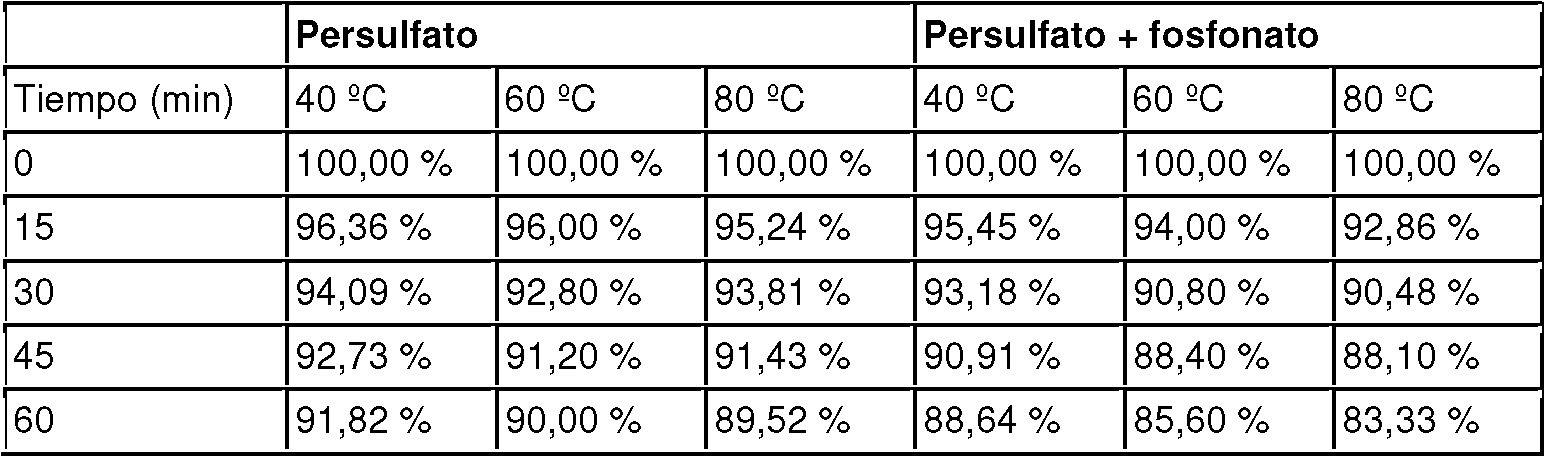
Tabla 6: resultados de las Tablas 3 y 4Table 6: results of Tables 3 and 4

Determinación de peróxido de hidrógeno:Determination of hydrogen peroxide:
Se disponen 10 ml de la disolución a examinar sobre su contenido en peróxido de hidrógeno en un matraz Erlenmeyer, se diluye con aproximadamente 40 ml de agua destilada y se mezcla sucesivamente con 5 ml de ácido sulfúrico al 50 % p.a. y 4 gotas de disolución indicadora de ferroína bajo rotación. La disolución de color naranja así preparada se titra con disolución 0,1 N de CeIV-(SO4 )2 - hasta cambio de color de violeta grisáceo a azul aciano. El consumo de disolución 0,1 N de CeIV-(SO4 )2 en ml es equivalente al contenido en peróxido de hidrógeno de la disolución desinfectante.10 ml of the solution to be examined for its hydrogen peroxide content are placed in an Erlenmeyer flask, diluted with approximately 40 ml of distilled water and successively mixed with 5 ml of 50% pa sulfuric acid and 4 drops of indicator solution of ferroin under rotation. The orange solution thus prepared is titrate with 0.1 N CeIV-(SO 4 ) 2 - solution until color change from grayish violet to cornflower blue. The consumption of 0.1 N CeIV-(SO 4 ) 2 solution in ml is equivalent to the hydrogen peroxide content of the disinfectant solution.
Determinación de persulfato:Determination of persulfate:
La disolución que contiene persulfato se reduce a sulfato con una disolución de hierro (II) (sulfato de hierro (II)). El hierro (II) se añade en exceso (cantidad fija). El exceso de hierro (II) se titra a continuación con una disolución de KMnO4 (véase también Jander-Jahr "MaBanalyse", 16a edición, Editorial DeGruyter).The persulfate-containing solution is reduced to sulfate with an iron(II) solution (iron(II) sulfate). Iron(II) is added in excess (fixed amount). The excess iron(II) is then titrated with a KMnO4 solution (see also Jander-Jahr "MaBanalyse", 16th edition, DeGruyter Publisher).
Ejemplo 2: efecto de limpiezaExample 2: cleaning effect
Para examinar el efecto de limpieza de la composición según la invención en comparación con las disoluciones de limpieza convencionales que contienen hidróxido de sodio, o bien hidróxido de sodio y peróxido de hidrógeno, se pusieron en contacto plaquitas de metal contaminadas con las correspondientes disoluciones de limpieza a diferentes temperaturas.In order to examine the cleaning effect of the composition according to the invention in comparison with conventional cleaning solutions containing sodium hydroxide or sodium hydroxide and hydrogen peroxide, contaminated metal plates were brought into contact with the corresponding cleaning solutions. at different temperatures.
Además de agua, una disolución de limpieza según la invención contenía 1 % en peso de NaOH, 0,5 % en peso de peroxodisulfato de sodio ("PS") y 0,3 % en peso de ácido etidrónico ("Fos") (NaOH+PS+Fos). Además de agua, una segunda disolución de limpieza contenía 1 % en peso de NaOH y 0,5 % en peso de peroxodisulfato de sodio (NaOH+PS), pero no fosfonato. La disolución de limpieza que comprendía hidróxido de sodio contenía 1 % en peso de NaOH en agua (NaOH). La disolución acuosa de limpieza que comprendía hidróxido de sodio y peróxido de hidrógeno contenía 1 % en peso de NaOH y 1 % en peso de una disolución de peróxido de hidrógeno al 0,3 % en peso (NaOH H2O2). Adicionalmente se preparó otra disolución de limpieza que contenía 1 % en peso de NaOH, 1 % en peso de una disolución de peróxido de hidrógeno al 0,3 % en peso y 0,3 % en peso de ácido etidrónico (NaOH+H2 O2+Fos).In addition to water, a cleaning solution according to the invention contained 1% by weight of NaOH, 0.5% by weight of sodium peroxodisulfate ("PS") and 0.3% by weight of etidronic acid ("Fos") ( NaOH+PS+Fos). In addition to water, a second cleaning solution contained 1 wt% NaOH and 0.5 wt% sodium peroxodisulfate (NaOH+PS), but no phosphonate. The cleaning solution comprising sodium hydroxide contained 1 wt% NaOH in water (NaOH). The aqueous cleaning solution comprising sodium hydroxide and hydrogen peroxide contained 1 wt% NaOH and 1 wt% 0.3 wt% hydrogen peroxide solution (NaOH H 2 O 2 ). Additionally, another cleaning solution was prepared containing 1% by weight of NaOH, 1% by weight of a 0.3% by weight hydrogen peroxide solution and 0.3% by weight of etidronic acid (NaOH+H 2 O 2 +Phos).
En primer lugar se sumergieron plaquitas planas de acero inoxidable de tamaño aproximadamente 10 x 10 cm en una disolución constituida por 70 % en peso de café de malta y 30 % en peso de leche. A continuación, las plaquitas se hornearon a 130 °C en un armario de secado durante 4 horas.First of all, flat stainless steel plates of size approximately 10 x 10 cm were immersed in a solution consisting of 70% by weight of coffee malt and 30% by weight of milk. The wafers were then baked at 130 °C in a drying cabinet for 4 hours.
A continuación, aproximadamente el 50 % de la superficie de las plaquitas metálicas se sumergió en baños de agua que comprendían disoluciones de limpieza NaOH+PS+Fos, NaOH, NaOH+PS, NaOH+H2O2+Fos o NaOH+H2O2. Se generó una circulación constante de la disolución de limpieza por medio de un agitador magnético. Las disoluciones de limpieza se incubaron a 20 °C, 40 °C, 50 °C y 60 °C durante una hora respectivamente. El efecto de limpieza se verificó y se documentó después de 15 minutos respectivamente.Next, approximately 50% of the surface of the metal wafers was immersed in water baths comprising cleaning solutions NaOH+PS+Fos, NaOH, NaOH+PS, NaOH+H 2 O 2 +Fos or NaOH+H 2 or 2 . A constant circulation of the cleaning solution was generated by means of a magnetic stirrer. The cleaning solutions were incubated at 20 °C, 40 °C, 50 °C and 60 °C for one hour respectively. The cleaning effect was verified and documented after 15 minutes respectively.
Las Figuras 3 a 6 muestran los resultados de limpieza de las disoluciones de limpieza NaOH+PS+Fos, NaOH+H2 O2 y NaOH a las diferentes temperaturas y en los diferentes momentos. Sorprendentemente, se demostró que el mejor efecto de limpieza ya se podía lograr a 20 °C con la disolución de limpieza NaOH+PS+Fos según la invención. El excelente efecto de limpieza de esta disolución de limpieza también se pudo observar a las temperaturas más altas de 40 °C, 50 °C y 60 °C. Si bien con la disolución de limpieza NaOH H2O2 se pudo conseguir una limpieza aceptable, esta era significativamente peor que en el caso de uso de la disolución de limpieza NaOH+PS+Fos. Los peores resultados se obtuvieron con la disolución de limpieza acuosa que comprendía 1 % en peso de NaOH.Figures 3 to 6 show the cleaning results of the NaOH+PS+Fos, NaOH+H 2 O 2 and NaOH cleaning solutions at different temperatures and at different times. Surprisingly, it was found that the best cleaning effect could already be achieved at 20 °C with the NaOH+PS+Fos cleaning solution according to the invention. The excellent cleaning effect of this cleaning solution could also be observed at the higher temperatures of 40 °C, 50 °C and 60 °C. Although acceptable cleaning could be achieved with the NaOH H 2 O 2 cleaning solution, it was significantly worse than in the case of using the NaOH+PS+Fos cleaning solution. The worst results were obtained with the aqueous cleaning solution comprising 1% by weight of NaOH.
Por medio de un software de procesamiento de imágenes se determinó la relación entre la superficie limpia y contaminada de las plaquitas de acero inoxidable en el área de inmersión para cuantificar el efecto de limpieza. En la siguiente tabla se indican los resultados de los ensayos de limpieza, significando 100 % completamente limpio (solo es visible la superficie metálica) y 0 % no limpio (no es visible una superficie metálica):Using image processing software, the relationship between the clean and contaminated surface of the stainless steel plates in the immersion area was determined to quantify the cleaning effect. The following table shows the results of the cleaning tests, meaning 100% completely clean (only the metal surface is visible) and 0% unclean (no metal surface is visible):

Los datos recopilados muestran que las disoluciones de limpieza que comprenden persulfatos desarrollan un efecto de limpieza más ventajoso que otros agentes oxidantes como el peróxido de hidrógeno. The collected data shows that cleaning solutions comprising persulfates develop a more advantageous cleaning effect than other oxidizing agents such as hydrogen peroxide.
Claims (15)
Applications Claiming Priority (2)
| Application Number | Priority Date | Filing Date | Title |
|---|---|---|---|
| ATA50349/2017A AT519894A1 (en) | 2017-04-29 | 2017-04-29 | CLEANING PROCESS |
| PCT/AT2018/060085 WO2018195576A1 (en) | 2017-04-29 | 2018-04-27 | Method for cleaning surfaces |
Publications (1)
| Publication Number | Publication Date |
|---|---|
| ES2929112T3 true ES2929112T3 (en) | 2022-11-24 |
Family
ID=62148056
Family Applications (1)
| Application Number | Title | Priority Date | Filing Date |
|---|---|---|---|
| ES18723669T Active ES2929112T3 (en) | 2017-04-29 | 2018-04-27 | Procedure for cleaning surfaces |
Country Status (7)
| Country | Link |
|---|---|
| EP (1) | EP3615647B1 (en) |
| AT (1) | AT519894A1 (en) |
| ES (1) | ES2929112T3 (en) |
| PL (1) | PL3615647T3 (en) |
| PT (1) | PT3615647T (en) |
| SI (1) | SI3615647T1 (en) |
| WO (1) | WO2018195576A1 (en) |
Family Cites Families (7)
| Publication number | Priority date | Publication date | Assignee | Title |
|---|---|---|---|---|
| US3908680A (en) * | 1973-10-12 | 1975-09-30 | Flow Pharma Inc | Methods for cleaning and bleaching plastic articles |
| US3968048A (en) * | 1975-02-14 | 1976-07-06 | The Drackett Company | Drain cleaning compositions |
| AT408987B (en) * | 2000-10-13 | 2002-04-25 | Thonhauser Gmbh Dipl Ing | Cleaner and disinfectant |
| US20090325841A1 (en) * | 2008-02-11 | 2009-12-31 | Ecolab Inc. | Use of activator complexes to enhance lower temperature cleaning in alkaline peroxide cleaning systems |
| SG11201404930SA (en) * | 2012-02-15 | 2014-09-26 | Advanced Tech Materials | Post-cmp removal using compositions and method of use |
| US11127587B2 (en) * | 2014-02-05 | 2021-09-21 | Entegris, Inc. | Non-amine post-CMP compositions and method of use |
| US20150315518A1 (en) * | 2014-04-30 | 2015-11-05 | John E. Walls | Cold water detergent composition and method |
-
2017
- 2017-04-29 AT ATA50349/2017A patent/AT519894A1/en not_active Application Discontinuation
-
2018
- 2018-04-27 EP EP18723669.0A patent/EP3615647B1/en active Active
- 2018-04-27 SI SI201830783T patent/SI3615647T1/en unknown
- 2018-04-27 ES ES18723669T patent/ES2929112T3/en active Active
- 2018-04-27 PL PL18723669.0T patent/PL3615647T3/en unknown
- 2018-04-27 PT PT187236690T patent/PT3615647T/en unknown
- 2018-04-27 WO PCT/AT2018/060085 patent/WO2018195576A1/en not_active Ceased
Also Published As
| Publication number | Publication date |
|---|---|
| PT3615647T (en) | 2022-10-28 |
| EP3615647B1 (en) | 2022-07-27 |
| SI3615647T1 (en) | 2023-01-31 |
| EP3615647A1 (en) | 2020-03-04 |
| PL3615647T3 (en) | 2022-11-21 |
| AT519894A1 (en) | 2018-11-15 |
| WO2018195576A1 (en) | 2018-11-01 |
Similar Documents
| Publication | Publication Date | Title |
|---|---|---|
| US5567444A (en) | Potentiated aqueous ozone cleaning and sanitizing composition for removal of a contaminating soil from a surface | |
| CN102165053B (en) | Granular cleaning and disinfecting compositions | |
| AU2020272127B2 (en) | Antimicrobial multi-purpose cleaner and methods of making and using the same | |
| JP7822125B2 (en) | Disinfecting and cleaning composition, its manufacturing method, and sterilizing and cleaning method using the same | |
| US20050079594A1 (en) | Method of removing a biofilm | |
| BR102013019428A2 (en) | CLEANING AND DISINFECTION AGENT FOR MEDICAL INSTRUMENTS | |
| JP5584613B2 (en) | Cleaning method for medical equipment | |
| BR112019025349A2 (en) | METHOD FOR TREATING WASHING CLOTHES, AND WASHING CLOTH ADDITIVE COMPOSITION. | |
| AU2020271558A1 (en) | Hard surface cleaning solution with rapid viricidal activity | |
| JP6424896B2 (en) | Use of phosphotartaric acid and its salts for water treatment in water delivery systems | |
| JP4244190B2 (en) | Cleaning and disinfection of surgical and medical equipment and instruments | |
| EP3423559B1 (en) | Non-enzymatic cleaner for reprocessing surgical instruments and flexible endoscopes | |
| RU2005102132A (en) | BACTERICIDAL COMPOSITIONS CONTAINING PHTHALE ALDEHYDE MIXTURES AND METHODS FOR USING THESE COMPOSITIONS FOR DISINFECTION OR STERILIZATION | |
| JP5562947B2 (en) | Composition for disinfection and decontamination of objects contaminated by prions and normal transmission factors | |
| CN110637079B (en) | Composition for cleaning surfaces | |
| JP7852496B2 (en) | Protein removal composition and method for producing the same | |
| ES2424014T3 (en) | Use of homopolymers of maleic acid and its salts as tartar and non-stick inhibitors | |
| ES2593459T3 (en) | Multifunctional composition for the treatment of water disinfection and use of this composition | |
| JP4130378B2 (en) | Disinfectant for medical equipment | |
| JP5266661B2 (en) | Detergent for artificial dialysis machine | |
| JP7786506B2 (en) | Peracetic acid composition for cleaning medical equipment and method for producing same | |
| ES2402725B1 (en) | LIQUID DETERGENT FOR THE ELIMINATION OF BIOFILMS IN SURFACES. | |
| WO2015171090A1 (en) | Use of oxidized humic acid its salts and derivatives in cleaning compositions | |
| JP2024151935A (en) | Bactericidal and rust-removing composition | |
| SU883166A1 (en) | Detergent disinfecting agent for cleaning milk equipment |