【0001】
【発明の属する技術分野】
本発明は、無線端末装置及び無線中継装置におけるデータ送信の遅延制御方式に関する。
【0002】
【従来の技術】
近年、宅内やオフィス内のネットワークインフラとしてIEEE(The Institute of Electrical and Electronics Engineers,Inc)によって標準化されたIEEE802.11b規格(2.4GHz帯、最大リンク速度11Mbps)やIEEE802.11a規格(5GHz帯、最大リンク速度54Mbps)に準拠した無線LANが急速に普及している。これは、有線LANと比較して新規配線が不要であることからPC等の情報端末装置の設置自由度が高く導入が容易であるといった利点に加えて、WECA(Wireless Ethernet(登録商標) Compatibilities Alliance)による無線LAN機器同士の接続性保証や有線LANと同等性能の通信速度が実現したためである。最近では駅やホテル、ファーストフード店といった公共施設においても無線LANによるネットワークインフラの整備が進み、利用者がいつでもどこでもインターネットにアクセスすることを可能とするホットスポットサービスに大きな注目が集まっている。
以下、図2を用いてIEEE802.11b規格やIEEE802.11a規格に準拠する無線LANを用いたネットワーク環境について説明する。図示するように、宅内やオフィス、ホットスポットといった屋内62のネットワークは、光ファイバやCATV、xDSL等といったブロードバンドネットワーク60との接続を行うブロードバンドルータ63やハブ64、そしてこれらを相互に接続するケーブル65からなる有線ネットワーク部66と、無線LAN接続インターフェイスを具備するデスクトップ型PCやノートブック型PC、PDA、携帯電話等の無線端末装置(図2では無線端末装置A67や無線端末装置B68として記載)からなる無線ネットワーク部69と、前記有線ネットワーク部66と前記無線ネットワーク部69とを相互に接続し、アクセスポイントとも呼ばれる無線中継装置70とから構成される。
【0003】
ところでこの無線ネットワーク部69に属する無線端末装置A67や無線端末装置B68が各端末装置間で通信を行ったり、ブロードバンドネットワーク60上の例えばコンテンツサーバ61と通信を行ったりする場合、まず前記無線端末装置A67や前記無線端末装置B68は無線中継装置70とアソシエーションと呼ばれる帰属プロセスを実施し、無線中継装置70に対して登録手続きを行う。そして前記帰属プロセスが無事完了すると、無線端末装置A67や無線端末装置B68からの送信データ、もしくは前記無線端末装置A67や前記無線端末装置B68への受信データはすべて前記無線中継装置70を経由してやり取りされる。
【0004】
次に図3を用いて、図2に示す無線端末装置A67と無線端末装置B68が無線中継装置70を経由してフレームデータを送信する際の基本MAC(Media Access Control)プロトコルについて説明する。ここでは、特にIEEE802.11規格で必須となっているDCF(Distributed Coordination Function)について説明する。
(1)まず無線端末装置A67は送信に先立ってチャネルをセンスし、他の無線端末装置が通信を行っていないことを確認する(時刻T0)。
(2)次に前記無線端末装置A67は、以下で説明するバックオフプロセスを実施してバックオフカウンタAを決定し、前記バックオフカウンタAが0になるまでデクリメントを行う。このデクリメント期間80ではフレームデータA81の送信は行わない。
(3)前記無線端末装置A67は、前記バックオフカウンタAが0になったところで再びチャネルをセンスし、チャネルがアイドル状態であった場合にはフレームデータA81を送信する(時刻T1)。
(4)そして前記無線端末装置A67は無線中継装置70からのACK85を待ち、一定時間82後にACK85を受信すると前記フレームデータA81が無事送信されたと判断する(時刻T3)。
(5)一方、無線端末装置B68も送信に先立ってチャネルをセンスし、他の無線端末装置が通信を行っていないことを確認する(時刻T0)。そしてバックオフプロセスを実施してバックオフカウンタBを決定し、前記バックオフカウンタBが0になるまでデクリメントを行う。
(6)前記無線端末装置B68は、バックオフカウンタBのデクリメント中に他の無線端末装置が通信を開始した(図3では無線端末装置A67によるフレームデータA81の送信)ことによりチャネルがビジー状態であることを検知すると、バックオフカウンタBのデクリメントを一時中断する(時刻T1)。
(7)次に前記無線端末装置B68は無線端末装置A67に対するACK85を受信すると、一定時間83後に前記バックオフカウンタBのデクリメントを再開する(時刻T5)。
(8)前記無線端末装置B68は前記バックオフカウンタBが0になるまでデクリメントを行い、このデクリメント期間84ではフレームデータB86の送信を行わない。そして前記バックオフカウンタBが0になったところで再びチャネルをセンスし、チャネルがアイドル状態であった場合にはフレームデータB86を送信する(時刻T6)。
【0005】
上記(1)から(8)に示すように、無線LANのMACプロトコルはまずどの無線端末装置も電波を発信していないことを確認し、次に各無線端末装置がバックオフプロセスを実施してバックオフカウンタを決定してデクリメントを開始する。そして前記バックオフカウンタが0になった時刻で送信機会を得てフレームデータを送出するというCSMA/CA(Carrier Sense Multiple Access/Contention Avoidance)方式を採用し、各無線端末装置から送信されるフレームデータの衝突を極力回避するようにしている。
【0006】
以下、無線端末装置が実施するバックオフプロセスについて説明する。バックオフプロセスは、各無線端末装置が送信を開始するまでの待ち時間をランダムに決定するための処理であり、その方法として有線LANでも使用されているBEB(Binary Exponential Backoff)アルゴリズムが採用されている。図3に示すバックオフカウンタAやバックオフカウンタBは、具体的に以下の式1から決定される。
(式1)バックオフカウンタ = Random × スロット時間
上記式1において、スロット時間はバックオフの単位時間であり、例えばIEEE802.11b規格では20μs、IEEE802.11a規格では9μsと規定されている。またRandomは[0、CW]間の任意の値を選択するための関数であり、CWパラメータは以下の式2から決定される。
(式2)CW = (aCWmin + 1)×2^bc − 1
上記式2において、bcパラメータはフレームデータの送信試行回数毎に最大aCWmaxまで1ずつ増加する値であり、無事送信が完了すると0にクリアされる。ここで上記式2におけるaCWminパラメータ及びaCWmaxパラメータは、各無線端末装置のMIB(Message Information Block)パラメータによって提供されるため、これより取得することが可能である。
【0007】
ところで無線LANに接続する無線端末装置がバックオフプロセスを実施し、バックオフカウンタを新規に決定したり、更新したりするのは以下に示す4つのケースである。
ケース1:新たに送信を試みる無線端末装置がチャネルをセンスし、そのチャネルがアイドル状態であった場合。
ケース2:前記無線端末装置のバックオフカウンタが0となり、送信を試みようとしたがチャネルがビジー状態であった場合。
ケース3:フレームデータを送信した無線端末装置が一定時間後に自身へのACKを受信出来なかった場合。
ケース4:前記無線端末装置が一定時間後にACKを受信したが、それが自身へのACKでなかった場合。
【0008】
前記ケース1は新規にバックオフカウンタを決定する場合である。このため前記式2におけるbcパラメータは0であり、バックオフカウンタはaCWminパラメータのみに依存する。一般的にaCWminパラメータの値は31であるため、バックオフカウンタは0〜31の間から選択することとなる。
一方、前記ケース2や前記ケース3、前記ケース4はバックオフカウンタを更新する場合である。このため上記式2におけるbcパラメータは送信の試行回数、すなわち再送回数に一致することから、例えばbcが10になったとき、バックオフカウンタは0〜32767の間から選択されることになる。
【0009】
このように、前記式2のbcパラメータが再送により増加するとこれに伴ってCWパラメータも大きくなるため、結果的に各無線端末装置におけるバックオフカウンタが非常に大きな値になる可能性がある。そしてバックオフカウンタが大きい場合には非常に長い期間フレームデータの送信を遅延しなければならず、またこのような場合にはバックオフカウンタをデクリメントしている最中に他の無線端末装置の送信が割り込む可能性が高くなるため更にフレームデータの送信に大きな遅延を引き起こすこととなる。したがってバックオフカウンタの増大は、無線中継装置に帰属するすべての無線端末装置の通信スループットを低下させてしまうという問題がある。
【0010】
従来、このようなリアルタイム性の要求されるデータ(リアルタイムデータ)はリアルタイム性が必要でないデータ(非リアルタイムデータ)よりも送信待ち時間が小さくなるようにパケットバッファを制御し、前記リアルタイムデータを優先的に送出する通信方式が特許文献1に開示されている。またリアルタイムデータが衝突した際のバックオフカウンタを制御し、常に非リアルタイムデータよりも再送信に関わる送信待ち時間が小さくなるようにメディアアクセスコントロール部を制御し、前記リアルタイムデータを優先的に送出する通信方式が特許文献2に開示されている。
【0011】
【特許文献1】
特開平8−79301号公報
【特許文献2】
特開2002−152223号公報
【0012】
【発明が解決しようとする課題】
しかし特許文献1によれば、通信ネットワークが混雑状況になり、再送が頻発した場合にはやはりリアルタイムデータの送信も待たされることになるため遅延が生じてしまう。このような通信スループットの悪化により、無線端末装置のユーザにおいては音声や動画像等のリアルタイム性が要求されるVoIPやストリーミング映像配信といった次世代アプリケーションを十分な音質や画質で利用することができない。
【0013】
また特許文献2によれば、例えば社内ネットワークのように特定の人物が利用し、前記ネットワークに接続する機器の用途、目的が明確な環境においては有効である。しかし、公衆に設置されたホットスポットのように不特定多数が利用する環境においては、バックオフパラメータを意図的に小さく設定した通信機器が持ち込まれる可能性があり、そのような機器が他の機器よりも常に優先的に通信を行うが可能であることから、通信帯域を占められてしまう危険性がある。このため無線LANによるインターネットアクセス環境やコンテンツを配信する提供者においては、VoIPやストリーミング映像配信といった次世代アプリケーションをユーザに提供できないばかりでなく、ユーザに応じたサービスや品質の差別化を図ることが困難になってしまう。
【0014】
そこで本発明は、無線ネットワーク部を構成する無線LAN接続インターフェイスを具備する無線端末装置と前記無線ネットワーク部と有線ネットワーク部を接続する無線中継装置において、前記無線中継装置と前記無線端末装置とが連携し、無線端末装置は無線中継装置に対して送信待ち時間によるスループット低下防止を要求することが可能であると共に、前記無線中継装置は、前記無線端末装置からの前記スループット低下防止の要求に対する許可を特定の無線端末装置に与えることが可能な無線中継装置及び無線端末装置の提供を目的とする。
【0015】
【課題を解決するための手段】
本目的を達成するための無線端末装置及び無線中継装置は、まず無線端末装置は、無線中継装置と通信するための無線LAN接続手段であるアンテナ部とRF部と変復調部とMAC部と、端末装置制御手段であるCPUとROMとRAMと、表示手段である表示コントローラ部と、周辺機器接続手段である周辺機器接続I/F部から構成され、さらに前記無線LAN接続手段のMAC部は、IEEE802.11規格に準拠する通信プロトコルを提供するMACプロトコル処理部とフレームデータの内容解析や生成を行うMACフレーム処理部と送受信するデータを一時的に格納する受信バッファと送信バッファと前記端末制御手段のCPUとROMとRAMと前記表示手段の表示コントローラ部と前記周辺機器接続手段の周辺機器接続I/F部を相互に接続する内部バスとインターフェイスするための内部バス接続I/F部からなり、さらに前記MACプロトコル処理部は送信遅延変更手段であるバックオフ制御部とタイマ部とバックオフパラメータ格納部とを具備することを特徴とし、一方無線中継装置は、無線端末装置と通信するための無線LAN接続手段であるアンテナ部とRF部と変復調部とMAC部と、中継装置制御手段であるCPUとROMとRAMと、表示手段である表示コントローラ部と、有線LAN接続手段である有線LAN接続I/F部から構成され、さらに前記無線LAN接続手段のMAC部は、IEEE802.11規格に準拠する通信プロトコルを提供するMACプロトコル処理部とフレームデータの内容解析や生成を行うMACフレーム処理部と有線LANから無線LANや無線LANから有線LANへ転送するデータを一時的に格納する受信バッファと送信バッファと前記端末制御手段のCPUとROMとRAMと前記表示手段の表示コントローラ部と前記有線LAN接続手段の有線LAN接続I/F部を相互に接続する内部バスとインターフェイスするための内部バス接続I/F部からなり、さらに前記MACプロトコル処理部は送信遅延制御手段である端末バックオフ制御部と端末管理テーブル部とを具備するを特徴とする。
【0016】
【発明の実施の形態】
以下、本発明の実施の形態について説明する。
【0017】
図1に本発明の実施形態に係わる無線端末装置31及び無線中継装置1の構成を示す。まず始めに無線端末装置31について説明する。図示するように無線端末装置31は、無線中継装置1と通信するための無線LAN接続手段であるアンテナ部41とRF部32と変復調部33とMAC部34と、端末装置制御手段であるCPU36とROM37とRAM38と、表示手段である表示コントローラ部39と、周辺機器接続手段である周辺機器接続I/F部40から構成され、さらに前記無線LAN接続手段のMAC部34は、MACフレーム処理部42と受信バッファ43と送信バッファ44と内部バス接続I/F部45と、送信遅延変更手段であるバックオフ制御部49とタイマ部50とバックオフパラメータ格納部51とを具備するMACプロトコル処理部48から構成される。そして前記無線LAN接続手段のMAC部34と、前記端末制御手段のCPU36とROM37とRAM38と、前記表示手段の表示コントローラ部39と前記周辺機器接続手段である周辺機器接続I/F部40は内部バス35で相互に接続され、必要なデータやコマンドが相互にやり取りできるようになっている。
【0018】
CPU36は、ROM37やRAM38に格納するソフトウェアプログラムで規定された処理を実行し、無線端末装置31の様々な動作を制御したり状態を管理したりする。ROM37及びRAM38は、前記CPU36の作業エリアとして機能したり、前記CPU36の動作手順を規定するソフトウェアプログラムやOSを格納したりするためのメモリとして使用する。特にRAM38は、送受信データを一時的に蓄えるバッファとしても使用する。表示コントローラ部39は、無線端末装置31の様々な状態や送受信するテキスト情報、映像情報等を外部に接続するモニタ装置への表示を制御する。周辺機器接続I/F部40は、キーボードやテンキー等使用者との直接的なインターフェイス機能を提供するデバイスや、HDDやメモリカード等の蓄積デバイスを接続するところである。
【0019】
次に前記無線端末装置31がデータを受信する場合を例にとり、各部の機能及び動作について説明する。まず無線端末装置31は、アンテナ部41にて受信した無線中継装置1からの電波をRF部32においてアナログ信号からディジタルデータに変換し、引き続き変復調部33において復調処理を行う。次にMAC部34のMACフレーム処理部42において、前記変復調部33にて復調したフレームデータの特定フィールドから前記フレームデータの種別を判断したり、前記フレームデータに付加されたチェックコードからエラー検査し、通信過程で発生したビット誤り等を検出したりする。エラー検査の結果、前記フレームデータに誤りがなくかつMACレイヤに関わるフレームデータである場合には前記フレームデータをMACプロトコル処理部48に転送する。一方、前記フレームデータに誤りがなくかつMACレイヤよりも上位レイヤに関するフレームデータである場合には受信バッファ43に転送する。ここでエラー検査の結果、誤りが検出された場合にはそのようなフレームデータを直ちに破棄する。ところでフレームデータを受信バッファに格納すると内部バスI/F部45が内部バス35のバス使用権を取得し、前記受信バッファ43に格納した前記フレームデータを内部バス35経由でRAM38に転送する。さらにMAC部34がRAM38にフレームデータを転送したことを例えば割込み信号を用いてCPU36に通知すると、前記割込み信号を検出した前記CPU36がRAM38にアクセスし、前記フレームデータの処理を実施する。
【0020】
一方、前記無線端末装置31がデータを送信する場合を例にとり、各部の機能及び動作について説明する。まず無線端末装置31において、CPU36が送信データを生成してRAM38に格納すると、MAC部34にレジスタ等を用いて送信データがRAM38に存在することを通知する。MAC部34がその通知を受けると、内部バスI/F部45は内部バス35の使用権を取得し、前記送信データを前記RAM38から内部バス35を経由して送信バッファ44に転送する。そしてMACフレーム処理部42が前記送信バッファ44から送信データを取得し、MACアドレスやチェックコード等の必要なヘッダ情報を付加してフレームデータを構成する。さらに前記フレームデータをMACプロトコル処理部48の指示に従って変復調部33に転送し、変調処理後にRF部32、アンテナ部41を経由して無線中継装置1へと送出する。またMACプロトコル処理部48が直接送信するフレームデータも、前記MACプロトコル処理部48が管理する送信機会に従ってMACフレーム処理部42において生成し、変復調部33で変調された後にRF部32、アンテナ部41を経由して無線中継装置1へと送出する。
【0021】
次に本発明に係わる無線端末装置31のMACフレーム処理部42及び送信遅延変更手段を備えるMACプロトコル処理部48が実施するバックオフパラメータ変更プロセスについて説明する。MACプロトコル処理部48は、無線中継装置1からのACK受信の確認やバックオフプロセスの実施といったIEEE802.11規格に準拠するMACプロトコルの実施に加えて、バックオフパラメータ変更要求46の発行及び前記バックオフパラメータ変更要求に対するバックオフパラメータ変更許可47の受付に関わる状態を管理するバックオフ制御部49と、前記バックオフ制御部49がバックオフプロセスの際に参照するaCWminパラメータやaCWmaxパラメータといったバックオフパラメータを格納するバックオフパラメータ格納部51と、前記バックオフ制御部49がバックオフパラメータ変更プロセスの際に参照するタイマ部50とを具備する。そして前記バックオフ制御部49は、無線中継装置1との帰属プロセス中や帰属プロセスが完了した後の動作期間中において、CPU36からの指示をトリガとしてMACフレーム処理部42に対しバックオフパラメータ変更要求46を発行する。前記指示の例として、MAC部34がトリガレジスタを具備し、バックオフ制御部49は前記トリガレジスタがセットされるとバックオフパラメータ変更要求46の発行に関わる処理を開始するとすると、CPU36がVoIP等のリアルタイム性が必要なアプリケーションを実行するのに先立って前記トリガレジスタをセットするという方法や、またCPU36は無線端末装置31の再送回数を監視しており、前記再送回数が一定回数以上に到達したことを検知すると前記トリガレジスタをセットするという方法がある。そしてMACフレーム処理部42は、前記バックオフパラメータ変更要求指示46を受信すると、無線中継装置1に対して、少なくとも無線端末装置31のMACアドレスと、MACプロトコル処理部48のバックオフパラメータ格納部51から取得したaCWminパラメータとaCWmaxパラメータとを含むバックオフパラメータ変更要求メッセージを生成して送信する。
【0022】
また前記MACフレーム処理部42は、一定時間内に前記無線中継装置1から前記バックオフパラメータ変更要求メッセージに対する、少なくとも変更許可フラグとaCWminパラメータとaCWmaxパラメータと無線端末装置31のMACアドレスとを含むバックオフパラメータ変更許可メッセージの受信すると、前記バックオフパラメータ変更許可メッセージのチェックコードを検査し、誤りがない場合にはバックオフパラメータ変更許可47を発行するとともに前記バックオフパラメータ変更許可メッセージをMACプロトコル処理部48に転送する。MACプロトコル処理部48のバックオフ制御部49では、前記バックオフパラメータ変更許可47を受信すると前記バックオフパラメータ変更許可メッセージの解析を開始し、そのMACアドレスが自身のMACアドレスであり、また変更許可フラグが変更許可を示すTRUEであった場合、前記バックオフパラメータ変更許可メッセージからaCWminパラメータとaCWmaxパラメータを抽出してバックオフパラメータ格納部51のaCWminパラメータとaCWmaxパラメータを更新する。以後、無線端末装置31は、前記バックオフパラメータ格納部51に格納した新しいバックオフパラメータを使用する。
【0023】
ところで前記MACプロトコル処理部48のバックオフ制御部49は、前記バックオフパラメータ変更要求メッセージを送出すると共にタイマ部50を起動し、一定時間内にバックオフパラメータ変更許可メッセージを受信しなかった場合には前記バックオフパラメータ変更要求メッセージの再送を実施する。また別途定義する再送の最大値を超過しても前記バックオフパラメータ変更許可メッセージを受信しなかった場合や、バックオフパラメータ変更許可メッセージの変更許可フラグが変更を許可しないFALSEであった場合には、前記バックオフパラメータ変更要求メッセージの発行を取りやめ、不要なトランザクションによる無線LANのトラフィック増加を防止する。
【0024】
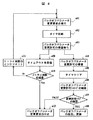
次に図4のフローチャートを用いて、前記バックオフ制御部49が実施するバックオフパラメータ変更プロセスの動作例について説明する。まずバックオフパラメータ変更要求を発行すると(ステップa01)、次にタイマを起動し(ステップa02)、バックオフパラメータ変更許可の受信を待つ(ステップa03)。次に前記タイマがタイムアウトする前にバックオフパラメータ変更許可を受信すると(ステップa04)、前記タイマを停止し(ステップa05)、受信した前記バックオフパラメータ変更許可メッセージの解析を開始する(ステップa06)。解析においては変更許可フラグを確認し(ステップa07)、前記変更許可フラグがTRUEであった場合には、前記バックオフパラメータ変更許可メッセージのバックオフパラメータを抽出し、対応するバックオフパラメータ格納部の値を更新する(ステップa08)。一方、前記変更許可フラグがFALSEであった場合には、再度バックオフパラメータ変更要求の発行は行わないようにする(ステップa14)。また前記タイマがタイムアウトする前にバックオフパラメータ変更許可を受信できず、タイムアウトを受信した場合(ステップa09)、リトライ回数を確認し(ステップa12)、前記リトライ回数が最大値を超えていなければ前記リトライ回数をインクリメントし(ステップa13)、再度バックオフパラメータ変更要求を発行する。一方、前記リトライ回数が最大値であった場合にはバックオフパラメータ変更要求の発行は行わないようにする(ステップa14)。以上、本発明の実施形態に係わる無線端末装置31の構成について説明した。
【0025】
次に無線中継装置1について説明する。図示するように無線中継装置1は、無線端末装置31と通信するための無線LAN接続手段であるアンテナ部11とRF部2と変復調部3とMAC部4と、中継装置制御手段であるCPU6とROM7とRAM8と、表示手段である表示コントローラ部9と、有線LAN接続手段である有線LAN接続I/F部10から構成され、さらに前記無線LAN接続手段のMAC部4は、MACフレーム処理部12と受信バッファ13と送信バッファ14と内部バス接続I/F部15と帰属する端末の送信遅延制御手段である端末バックオフ制御部20と端末管理テーブル部21とを具備するMACプロトコル処理部19から構成される。そして前記無線LAN接続手段のMAC部4と、前記端末制御手段のCPU6とROM7とRAM8と、前記表示手段の表示コントローラ部9と有線LAN接続手段である有線LAN接続I/F部10は内部バス5で相互に接続され、必要なデータやコマンドが相互にやり取りできるようになっている。
【0026】
CPU6は、ROM7やRAM8に格納するソフトウェアプログラムで規定された処理を実行し、無線中継装置1の様々な動作を制御したり、状態を管理したりする。ROM7及びRAM8は、前記CPU6の作業エリアとして機能したり、前記CPU6の動作手順を規定するソフトウェアプログラムやOSを格納したりするためのメモリとして使用する。特にRAM8は、有線LANから無線LANへのデータや無線LANから有線LANへブリッジングするデータを一時的に蓄えるバッファとしても使用する。表示コントローラ部9は、主に無線中継装置1の様々な状態を外部に接続する液晶ディスプレイ装置等への表示を制御する。次に前記無線中継装置1が無線端末装置31からデータを受信する場合を例にとり、各部の機能及び動作について説明する。まず無線中継装置1は、アンテナ部11にて受信した無線端末装置31からの電波をRF部2においてアナログ信号からディジタルデータに変換し、引き続き変復調部3において復調処理を行う。次に前記変復調部3にて復調したフレームデータをMAC部4のMACフレーム処理部12において、前記変復調部3にて復調したフレームデータの特定フィールドから前記フレームデータの種別を判断したり、前記フレームデータに付加されたチェックコードからエラー検査を行い、通信過程で発生したビット誤り等を検出したりする。エラー検査の結果、前記フレームデータに誤りがなくかつMACレイヤに関わるフレームデータである場合には前記フレームデータをMACプロトコル処理部19に転送する。一方、前記フレームデータに誤りがなくかつMACレイヤよりも上位レイヤに関するフレームデータである場合には受信バッファ13に転送する。ここでエラー検査の結果、誤りが検出された場合にはそのようなフレームデータを直ちに破棄する。ところでフレームデータを受信バッファ13に格納すると、内部バスI/F部15が内部バス5のバス使用権を取得し、前記受信バッファ13に格納した前記フレームデータを内部バス5経由でRAM8に転送する。さらにMAC部4がRAM8にフレームデータを転送したことを例えば割込み信号を用いてCPU6に通知すると、前記CPU6が前記割込み信号を検出してRAM8にアクセスし、前記フレームデータの処理を実施する。処理の結果、前記フレームデータが無線中継装置1へのデータでない場合には、内部バス5から有線LAN接続I/F部10を経由して有線LANにブリッジングする。
【0027】
一方、前記無線中継装置1が無線端末装置31にデータを送信する場合を例にとり、各部の機能及び動作について説明する。まず無線中継装置1は有線LAN接続I/F部10において有線LANから送信データを受け取ると、前記送信データを内部バス5経由でRAM8に転送する。また無線中継装置1自身がデータを送信する場合、CPU6が送信データを生成してRAM8に格納すると、MAC部4にレジスタ等を用いて送信データがRAM8に存在することを通知する。MAC部4がその通知を受けると、内部バスI/F部15は内部バス5の使用権を取得し、前記送信データを前記RAM8から内部バス5を経由して送信バッファ14に転送する。そしてMACフレーム処理部12が前記送信バッファ14から送信データを取得し、MACアドレスやチェックコード等の必要なヘッダ情報を付加してフレームデータを構成する。さらに前記フレームデータをMACプロトコル処理部19の指示に従って変復調部3に転送し、変調処理後にRF部2、アンテナ部11を経由して無線端末装置31へと送出する。またMACプロトコル処理部19が直接送信するフレームデータも、前記MACプロトコル処理部19が管理する送信機会に従ってMACフレーム処理部12において生成し、変復調部3で変調された後にRF部2、アンテナ部11を経由して無線端末装置31へと送出する。
【0028】
次に本発明に関わる無線中継装置1のMACフレーム処理部12及び帰属する無線端末装置の送信遅延制御手段を備えるMACプロトコル処理部19が実施するバックオフパラメータ変更プロセスについて説明する。MACプロトコル処理部19は、無線端末装置31へのACK送信といったIEEE802.11規格に準拠するMACプロトコルの実施に加えて、MACフレーム処理部12からのバックオフパラメータ変更要求18に対するバックオフパラメータ変更許可16及びバックオフパラメータ変更不許可17の発行を制御したり、受信したバックオフパラメータ変更要求メッセージに記述されたaCWmaxパラメータやaCWminパラメータといったバックオフパラメータを加工したりする端末バックオフ制御部20と、帰属する無線端末装置に関するMACアドレスと、バックオフパラメータ変更プロセスの受入有無と、現在のバックオフパラメータとを保持する端末管理テーブル部21とを具備する。
【0029】
MACフレーム処理部12は、無線端末装置31からのバックオフパラメータ変更要求メッセージを受信すると、まずチェックコードを検査し、エラーがなかった場合にはMACプロトコル処理分19に対してバックオフパラメータ変更要求18を発行する。次にMACプロトコル処理部19の端末バックオフ制御部20は、前記バックオフパラメータ変更要求18を受信するとまずバックオフパラメータ変更要求メッセージの内容を解析し、前記バックオフパラメータ変更要求メッセージに内に記述されたMACアドレスに基づき、端末管理テーブル21の該当フィールドを参照する。該当フィールド参照の結果、前記無線端末装置31に対するバックオフパラメータ変更プロセスの受入許可がある場合、バックオフパラメータ変更要求メッセージに含まれるaCWmaxパラメータとaCWminパラメータを抽出して加工し、端末管理テーブル21のaCWmaxパラメータとaCWminパラメータを更新する。そしてMACフレーム処理部12に対してバックオフパラメータ変更許可16を発行する。ここでバックオフパラメータの加工は、バックオフパラメータ変更要求メッセージに含まれるaCWmaxパラメータとaCWminパラメータを1/2や1/4等に小さくする処理を実施する。このようにバックオフパラメータを小さくすることによって、無線端末装置31は他の無線端末装置と比較して再送における送信待ち時間を小さくすることが可能である。
【0030】
さらにMACフレーム処理部12は前記バックオフパラメータ変更許可16を受信すると端末管理テーブル部21の該当するフィールドを参照し、変更許可フラグ(TRUE)と、無線端末装置のMACアドレスと、変更したバックオフパラメータとを取得し、少なくともこれらを含むバックオフパラメータ変更許可メッセージを生成して無線端末装置31へ送信する。一方、前記無線端末装置31に対するバックオフパラメータ変更プロセスの受入許可がない場合、受信したバックオフパラメータ変更要求メッセージを破棄し、MACフレーム処理部12に対してバックオフパラメータ変更不許可17を発行する。もしくは、前記無線端末装置31のMACプロトコル処理部48が備えるタイマ部50をタイムアウトさせるためにMACフレーム処理部12に対して何も発行しないこともできる。MACフレーム処理部12は前記バックオフパラメータ変更不許可17を受信した場合には端末管理テーブル部21の該当するフィールドを参照し、変更許可フラグ(FALSE)と、無線端末装置のMACアドレスとを取得し、少なくともこれらを含むバックオフパラメータ変更許可メッセージを生成して無線端末装置に送信する。
【0031】
次に図5を用いて、MACプロトコル処理部19の端末管理テーブル部21の構成例について説明する。図示するように、端末管理テーブル部21が格納する情報は無線中継装置1に帰属する無線端末装置のMACアドレスを格納するMACアドレスフィールド90と、前記MACアドレスフィールド90内のMACアドレスを有する無線端末装置からのバックオフパラメータ変更要求の受入有無を格納する変更許可フラグフィールド91と、前記MACアドレスフィールド90内のMACアドレスを有する無線端末装置の現在のバックオフパラメータを格納するバックオフパラメータフィールド92から成る。無線端末装置のMACアドレスを前記MACアドレスフィールド90に設定するには、帰属プロセスの際に順次登録していくという方法がある。また変更許可フラグフィールド91への変更許可/不許可を示すTRUE/FALSEを設定するには、帰属プロセスの際に帰属を要求してきた端末のMACアドレスを、図1に示す無線中継装置1のCPU36でも認識し、例えば非会員でも利用可能な会員制ホットスポットにおける無線LAN環境を例にとると、会員として登録したユーザや会員においても利用頻度の高いユーザについてはTRUEにし、一方非会員についてはFALSEに設定するという方法がある。このようにすることによって特定のユーザに対して快適な無線LAN利用環境を提供することが可能となる。
【0032】
次に図6のフローチャートを用いて、前記端末バックオフ制御部20が実施するバックオフパラメータ変更プロセスの動作例について説明する。まず端末バックオフ制御部20はバックオフパラメータ変更要求の受信待ちの状態にある(ステップa21)。このときバックオフパラメータ変更要求を受信すると(ステップa22)、受信したバックオフパラメータ変更要求メッセージに対応する端末管理テーブルを参照し(ステップa23)、変更許可フラグの状態を確認する(ステップa24)。確認の結果、変更許可を示すTRUEであった場合、前記バックオフパラメータ変更要求メッセージを解析してバックオフパラメータを抽出し(ステップa25)、前記バックオフパラメータの加工を行う(ステップa26)。加工後、MACフレーム処理部に対してバックオフパラメータ変更許可を発行する(ステップa27)。一方、前記端末管理テーブルの変更許可フラグを参照した結果、変更不許可を示すFALSEであった場合、MACフレーム処理部に対してバックオフパラメータ変更不許可を発行する(ステップa28)。以上、本発明の実施形態に係わる無線中継装置1の構成について説明した。
【0033】
【発明の効果】
本発明によれば、無線端末装置はアプリケーションの種類やトラフィックの混雑状況に応じてバックオフパラメータ変更要求メッセージを発行することが可能であり、前記バックオフパラメータ変更要求メッセージが無線中継装置において許可されれば、バックオフパラメータを小さな値に変更することが可能であるためデータ送信における待ち時間を短縮することができ、通信スループットの低下を防止することができる。また無線中継装置は、無線端末装置からの前記バックオフパラメータ変更要求メッセージを選択的に許可することが可能であるため、前記無線端末装置を使用するユーザに応じて提供するサービスを差別化することができる。
【図面の簡単な説明】
【図1】本発明の実施形態に係わる無線端末装置及び無線中継装置の構成図である。
【図2】無線LANによるネットワーク構成を説明する図である。
【図3】無線LANにおける基本的な通信手順であるMACプロトコルを説明する図である。
【図4】本発明の実施形態に係わる無線端末装置のバックオフパラメータ変更プロセスを示すフローチャートである。
【図5】本発明の実施形態に係わる無線中継装置の端末管理テーブルの構成例を説明する図である。
【図6】本発明の実施形態に係わる無線中継装置のバックオフパラメータ変更プロセスを示すフローチャートである。
【符号の説明】
1…無線中継装置、2…RF部(無線中継装置)、3…変復調部(無線中継装置)、4…MAC部(無線中継装置)、5…内部バス(無線中継装置)、6…CPU(無線中継装置)、7…ROM(無線中継装置)、8…RAM(無線中継装置)、9…表示コントローラ部(無線中継装置)、10…有線LAN接続I/F部(無線中継装置)、11…アンテナ部(無線中継装置)、12…MACフレーム処理部(無線中継装置)、13…受信バッファ(無線中継装置)、14…送信バッファ(無線中継装置)、15…内部バスI/F部(無線中継装置)、16…バックオフパラメータ変更許可(無線中継装置)、17…バックオフパラメータ変更不許可(無線中継装置)、18…バックオフパラメータ変更要求(無線中継装置)、19…MACプロトコル処理部(無線中継装置)、20…端末バックオフ制御部(無線中継装置)、21…端末管理テーブル部(無線中継装置)、31…無線端末装置、32…RF部(無線端末装置)、33…変復調部(無線端末装置)、34…MAC部(無線端末装置)、35…内部バス(無線端末装置)、36…CPU(無線端末装置)、37…ROM(無線端末装置)、38…RAM(無線端末装置)、39…表示コントローラ部(無線端末装置)、40…周辺機器接続I/F部(無線端末装置)、41…アンテナ部(無線端末装置)、42…MACフレーム処理部(無線端末装置)、43…受信バッファ(無線端末装置)、44…送信バッファ(無線端末装置)、45…内部バスI/F部(無線端末装置)、46…バックオフパラメータ変更要求(無線端末装置)、47…バックオフパラメータ変更許可(無線端末装置)、48…MACプロトコル処理部(無線端末装置)、49…バックオフ制御部(無線端末装置)、50…タイマ部(無線端末装置)、51…バックオフパラメータ格納部(無線端末装置)、60…ブロードバンドネットワーク、61…コンテンツサーバ、62…屋内、63…ブロードバンドルータ、64…ハブ、65…ケーブル、66…有線ネットワーク部、67…無線端末装置A、68…無線端末装置B、69…無線ネットワーク部、70…無線中継装置、80…デクリメント期間(バックオフカウンタA)、81…フレームデータA、82…一定時間(フレームデータAからACKまで)、83…一定時間(ACKからバックオフカウンタBのデクリメント開始まで)、84…デクリメント期間(バックオフカウンタB)、85…ACK、86…フレームデータB、90…MACアドレスフィールド、91…変更許可フラグフィールド、92…バックオフパラメータフィールド。[0001]
TECHNICAL FIELD OF THE INVENTION
The present invention relates to a data transmission delay control method in a wireless terminal device and a wireless relay device.
[0002]
[Prior art]
In recent years, as a network infrastructure in homes and offices, the IEEE 802.11b standard (2.4 GHz band, maximum link speed 11 Mbps) and the IEEE 802.11a (GHz 802.11a) have been standardized by IEEE (The Institute of Electrical and Electronics Engineers, Inc.). Wireless LANs conforming to a maximum link speed of 54 Mbps are rapidly becoming widespread. This has the advantage that the information terminal device such as a PC has a high degree of freedom in installation because it does not require new wiring compared to a wired LAN, and is easy to introduce. In addition, WECA (Wireless Ethernet (registered trademark) Compatibility Alliance) This is because a connection speed between wireless LAN devices and a communication speed equivalent to that of a wired LAN are realized. In recent years, network infrastructures using wireless LANs have been developed in public facilities such as stations, hotels, and fast food restaurants, and hot spot services that enable users to access the Internet anytime and anywhere have received a great deal of attention.
Hereinafter, a network environment using a wireless LAN conforming to the IEEE 802.11b standard or the IEEE 802.11a standard will be described with reference to FIG. As shown in the figure, an indoor network such as a home, an office, or a hot spot has a broadband router 63 and a hub 64 for connecting to a broadband network 60 such as an optical fiber, CATV, or xDSL, and a cable 65 for connecting these to each other. And a wireless terminal device such as a desktop PC, a notebook PC, a PDA, or a mobile phone (shown as a wireless terminal device A67 or a wireless terminal device B68 in FIG. 2) having a wireless LAN connection interface. And a wireless relay device 70 that connects the wired network unit 66 and the wireless network unit 69 to each other and is also called an access point.
[0003]
By the way, when the wireless terminal device A 67 or the wireless terminal device B 68 belonging to the wireless network unit 69 performs communication between the terminal devices or communicates with, for example, the content server 61 on the broadband network 60, first, the wireless terminal device A67 and the wireless terminal device B68 perform an affiliation process called association with the wireless relay device 70, and perform a registration procedure for the wireless relay device 70. When the belonging process is successfully completed, transmission data from the wireless terminal device A67 or the wireless terminal device B68, or received data to the wireless terminal device A67 or the wireless terminal device B68, all pass through the wireless relay device 70. Exchanged.
[0004]
Next, a basic MAC (Media Access Control) protocol when the wireless terminal device A67 and the wireless terminal device B68 shown in FIG. 2 transmit frame data via the wireless relay device 70 will be described with reference to FIG. Here, a DCF (Distributed Coordination Function), which is essential in the IEEE 802.11 standard, will be particularly described.
(1) First, the wireless terminal device A67 senses a channel prior to transmission, and confirms that another wireless terminal device is not communicating (time T0).
(2) Next, the wireless terminal device A67 determines a backoff counter A by performing a backoff process described below, and performs decrement until the backoff counter A becomes zero. During this decrement period 80, the transmission of the frame data A81 is not performed.
(3) When the backoff counter A becomes 0, the wireless terminal device A67 senses the channel again, and transmits the frame data A81 when the channel is idle (time T1).
(4) Then, the wireless terminal device A67 waits for the ACK85 from the wireless relay device 70, and upon receiving the ACK85 after a predetermined time 82, determines that the frame data A81 has been successfully transmitted (time T3).
(5) On the other hand, the wireless terminal device B68 also senses the channel prior to transmission, and confirms that no other wireless terminal devices are communicating (time T0). Then, the back-off process is performed to determine the back-off counter B, and the decrement is performed until the back-off counter B becomes zero.
(6) The wireless terminal device B68 is in a state in which the channel is busy due to the start of communication by another wireless terminal device while the back-off counter B is decremented (transmission of the frame data A81 by the wireless terminal device A67 in FIG. 3). When detecting that there is, the decrement of the back-off counter B is temporarily suspended (time T1).
(7) Next, upon receiving the ACK 85 for the wireless terminal device A67, the wireless terminal device B68 restarts the decrement of the back-off counter B after a predetermined time 83 (time T5).
(8) The wireless terminal device B68 decrements until the back-off counter B reaches 0, and does not transmit the frame data B86 during the decrement period 84. When the back-off counter B becomes 0, the channel is sensed again, and when the channel is in the idle state, the frame data B86 is transmitted (time T6).
[0005]
As shown in the above (1) to (8), the MAC protocol of the wireless LAN first confirms that none of the wireless terminal devices transmit radio waves, and then each wireless terminal device performs a back-off process. Determine the backoff counter and start decrementing. Then, a CSMA / CA (Carrier Sense Multiple Access / Contention Aidance) method of obtaining a transmission opportunity at the time when the back-off counter becomes 0 and transmitting the frame data is adopted, and the frame data transmitted from each wireless terminal device is adopted. Try to avoid collisions as much as possible.
[0006]
Hereinafter, the back-off process performed by the wireless terminal device will be described. The back-off process is a process for randomly determining a waiting time until each wireless terminal device starts transmission. As a method, a BEB (Binary Exponential Backoff) algorithm used in a wired LAN is employed. I have. The back-off counter A and the back-off counter B shown in FIG.
(Equation 1) Back-off counter = Random × slot time
In the above formula 1, the slot time is a unit time of back-off, and is defined as, for example, 20 μs in the IEEE802.11b standard and 9 μs in the IEEE802.11a standard. Random is a function for selecting an arbitrary value between [0, CW], and the CW parameter is determined from the following equation (2).
(Equation 2) CW = (aCWmin + 1) × 2 ^ bc−1
In the above equation 2, the bc parameter is a value that increases by 1 up to a maximum aCWmax every time the frame data is transmitted, and is cleared to 0 when the transmission is successfully completed. Here, the aCWmin parameter and the aCWmax parameter in the above Equation 2 are provided by MIB (Message Information Block) parameters of each wireless terminal device, and thus can be obtained therefrom.
[0007]
In the following four cases, a wireless terminal device connected to a wireless LAN performs a back-off process and newly determines or updates a back-off counter.
Case 1: When a wireless terminal device newly trying to transmit senses a channel and the channel is in an idle state.
Case 2: When the back-off counter of the wireless terminal device becomes 0 and an attempt is made to transmit, but the channel is busy.
Case 3: The wireless terminal device that has transmitted the frame data has failed to receive an ACK to itself after a predetermined time.
Case 4: The wireless terminal device receives an ACK after a certain period of time, but is not an ACK to itself.
[0008]
Case 1 is a case where a back-off counter is newly determined. Therefore, the bc parameter in Equation 2 is 0, and the backoff counter depends only on the aCWmin parameter. Since the value of the aCWmin parameter is generally 31, the back-off counter is selected from 0 to 31.
On the other hand, Case 2, Case 3, and Case 4 are cases where the back-off counter is updated. Therefore, the bc parameter in the above equation 2 matches the number of transmission attempts, that is, the number of retransmissions. For example, when bc becomes 10, the back-off counter is selected from 0 to 32767.
[0009]
As described above, when the bc parameter in the above equation 2 increases due to retransmission, the CW parameter also increases accordingly. As a result, the back-off counter in each wireless terminal apparatus may have a very large value. If the back-off counter is large, the transmission of frame data must be delayed for a very long time. In such a case, while the back-off counter is being decremented, the transmission of another wireless terminal device may be delayed. Is more likely to be interrupted, causing a further delay in the transmission of frame data. Therefore, there is a problem that the increase in the back-off counter decreases the communication throughput of all wireless terminal devices belonging to the wireless relay device.
[0010]
Conventionally, such data requiring real-time properties (real-time data) controls the packet buffer so that the transmission waiting time is shorter than data that does not require real-time properties (non-real-time data), and prioritizes the real-time data. Is disclosed in Japanese Patent Application Laid-Open Publication No. HEI 10-163556. It also controls the back-off counter when the real-time data collides, controls the media access control unit so that the transmission waiting time related to retransmission is always shorter than the non-real-time data, and sends out the real-time data preferentially. A communication method is disclosed in Patent Document 2.
[0011]
[Patent Document 1]
JP-A-8-79301
[Patent Document 2]
JP 2002-152223 A
[0012]
[Problems to be solved by the invention]
However, according to Patent Literature 1, when the communication network is in a congested state and retransmission frequently occurs, transmission of real-time data is also kept waiting, which causes a delay. Due to such deterioration of the communication throughput, the user of the wireless terminal device cannot use next-generation applications such as VoIP and streaming video distribution that require real-time characteristics such as voice and moving image with sufficient sound quality and image quality.
[0013]
According to Patent Document 2, for example, it is effective in an environment where a specific person uses such as an in-house network and the use and purpose of a device connected to the network are clear. However, in an environment where an unspecified number is used, such as a hot spot installed in the public, there is a possibility that a communication device in which the back-off parameter is intentionally set to a small value may be brought in. Since communication can always be performed with priority over communication, there is a risk that the communication band is occupied. For this reason, a wireless LAN Internet access environment and a provider that distributes contents cannot not only provide next-generation applications such as VoIP and streaming video distribution to users, but also attempt to differentiate services and quality according to users. It will be difficult.
[0014]
Therefore, the present invention provides a wireless terminal device having a wireless LAN connection interface constituting a wireless network unit and a wireless relay device connecting the wireless network unit and a wired network unit, wherein the wireless relay device and the wireless terminal device cooperate with each other. In addition, the wireless terminal device can request the wireless relay device to prevent a decrease in throughput due to a transmission waiting time, and the wireless relay device grants permission for the request to prevent the throughput from the wireless terminal device. An object is to provide a wireless relay device and a wireless terminal device that can be given to a specific wireless terminal device.
[0015]
[Means for Solving the Problems]
A wireless terminal device and a wireless relay device for achieving the object include, first, an antenna unit, an RF unit, a modem unit, a MAC unit, and a wireless LAN connection unit for communicating with the wireless relay device. It is composed of a CPU, a ROM and a RAM as device control means, a display controller as display means, and a peripheral device connection I / F as peripheral device connection means. .11 a MAC protocol processing unit that provides a communication protocol conforming to the standard, a MAC frame processing unit that analyzes and generates the contents of frame data, a reception buffer that temporarily stores data to be transmitted and received, a transmission buffer, and the terminal control unit. A CPU, a ROM, a RAM, a display controller of the display means, and a peripheral device connection I / O of the peripheral device connection means. And an internal bus connection I / F section for interfacing with an internal bus connecting the sections to each other. The MAC protocol processing section further includes a back-off control section, a timer section, and a back-off parameter storage section as transmission delay changing means. The wireless relay device comprises an antenna unit, an RF unit, a modem unit, a MAC unit, which are wireless LAN connection means for communicating with a wireless terminal device, and a CPU and a ROM, which are relay device control means. , A RAM, a display controller serving as display means, and a wired LAN connection I / F serving as wired LAN connection means. The MAC section of the wireless LAN connection means has a communication protocol conforming to the IEEE 802.11 standard. And a MAC frame processing unit for analyzing and generating the contents of frame data. A reception buffer and a transmission buffer for temporarily storing data to be transferred from a LAN to a wireless LAN or from a wireless LAN to a wired LAN; a CPU, a ROM and a RAM of the terminal control means; a display controller of the display means; And an internal bus connection I / F section for interfacing with an internal bus connecting the wired LAN connection I / F sections to each other. The MAC protocol processing section further includes a terminal back-off control section as transmission delay control means and a terminal. And a management table section.
[0016]
BEST MODE FOR CARRYING OUT THE INVENTION
Hereinafter, embodiments of the present invention will be described.
[0017]
FIG. 1 shows a configuration of a wireless terminal device 31 and a wireless relay device 1 according to an embodiment of the present invention. First, the wireless terminal device 31 will be described. As shown in the figure, the wireless terminal device 31 includes an antenna unit 41, an RF unit 32, a modem unit 33, a MAC unit 34, which are wireless LAN connection units for communicating with the wireless relay device 1, and a CPU 36, which is a terminal device control unit. It comprises a ROM 37 and a RAM 38, a display controller 39 as display means, and a peripheral device connection I / F unit 40 as peripheral device connection means. The MAC unit 34 of the wireless LAN connection means includes a MAC frame processing unit 42 A MAC protocol processing unit 48 including a reception buffer 43, a transmission buffer 44, an internal bus connection I / F unit 45, a backoff control unit 49 as a transmission delay changing unit, a timer unit 50, and a backoff parameter storage unit 51. Consists of The MAC unit 34 of the wireless LAN connection unit, the CPU 36, the ROM 37, and the RAM 38 of the terminal control unit, the display controller unit 39 of the display unit, and the peripheral device connection I / F unit 40 as the peripheral device connection unit are internally provided. They are interconnected by a bus 35 so that necessary data and commands can be exchanged with each other.
[0018]
The CPU 36 executes a process specified by a software program stored in the ROM 37 or the RAM 38, controls various operations of the wireless terminal device 31, and manages the state. The ROM 37 and the RAM 38 function as a work area of the CPU 36 and are used as a memory for storing a software program and an OS for defining an operation procedure of the CPU 36. In particular, the RAM 38 is also used as a buffer for temporarily storing transmission / reception data. The display controller 39 controls various states of the wireless terminal device 31 and display of text information and video information to be transmitted and received on a monitor device connected to the outside. The peripheral device connection I / F unit 40 connects devices such as a keyboard and numeric keys that provide a direct interface function with the user, and storage devices such as an HDD and a memory card.
[0019]
Next, the function and operation of each unit will be described, taking as an example the case where the wireless terminal device 31 receives data. First, the wireless terminal device 31 converts the radio wave from the wireless relay device 1 received by the antenna unit 41 from an analog signal to digital data in the RF unit 32, and subsequently performs demodulation processing in the modem unit 33. Next, in a MAC frame processing unit 42 of the MAC unit 34, the type of the frame data is determined from a specific field of the frame data demodulated by the modem unit 33, and an error check is performed based on a check code added to the frame data. , A bit error or the like generated in the communication process. As a result of the error check, if there is no error in the frame data and the frame data is related to the MAC layer, the frame data is transferred to the MAC protocol processing unit 48. On the other hand, if there is no error in the frame data and the frame data is related to a layer higher than the MAC layer, the frame data is transferred to the reception buffer 43. Here, if an error is detected as a result of the error check, such frame data is immediately discarded. When the frame data is stored in the receiving buffer, the internal bus I / F unit 45 acquires the right to use the internal bus 35, and transfers the frame data stored in the receiving buffer 43 to the RAM 38 via the internal bus 35. Further, when the MAC unit 34 notifies the CPU 36 of the transfer of the frame data to the RAM 38 using, for example, an interrupt signal, the CPU 36 that has detected the interrupt signal accesses the RAM 38 and executes the processing of the frame data.
[0020]
On the other hand, the function and operation of each unit will be described taking the case where the wireless terminal device 31 transmits data as an example. First, in the wireless terminal device 31, when the CPU 36 generates transmission data and stores it in the RAM 38, the CPU 36 notifies the MAC unit 34 that the transmission data exists in the RAM 38 using a register or the like. When the MAC unit 34 receives the notification, the internal bus I / F unit 45 acquires the right to use the internal bus 35 and transfers the transmission data from the RAM 38 to the transmission buffer 44 via the internal bus 35. Then, the MAC frame processing unit 42 acquires transmission data from the transmission buffer 44 and adds necessary header information such as a MAC address and a check code to form frame data. Further, the frame data is transferred to the modulation / demodulation unit 33 according to the instruction of the MAC protocol processing unit 48, and after modulation processing, is transmitted to the wireless relay device 1 via the RF unit 32 and the antenna unit 41. The frame data directly transmitted by the MAC protocol processing unit 48 is also generated in the MAC frame processing unit 42 according to the transmission opportunity managed by the MAC protocol processing unit 48, and after being modulated by the modem 33, the RF unit 32 and the antenna unit 41 To the wireless relay device 1 via
[0021]
Next, the backoff parameter changing process performed by the MAC frame processing unit 42 and the MAC protocol processing unit 48 including the transmission delay changing unit of the wireless terminal device 31 according to the present invention will be described. The MAC protocol processing unit 48 is configured to issue a back-off parameter change request 46 and to execute the back-off parameter change request 46, in addition to the implementation of the MAC protocol conforming to the IEEE802.11 standard such as the confirmation of ACK reception from the wireless relay apparatus 1 and the execution of a back-off process. A back-off control unit 49 that manages a state related to reception of a back-off parameter change permission 47 for an off-parameter change request; and a back-off parameter such as an aCWmin parameter and an aCWmax parameter that the back-off control unit 49 refers to during a back-off process. And a timer unit 50 to which the back-off control unit 49 refers during the back-off parameter changing process. The back-off control unit 49 issues a back-off parameter change request to the MAC frame processing unit 42 by using an instruction from the CPU 36 as a trigger during the belonging process with the wireless relay device 1 or during the operation period after the belonging process is completed. Issue 46. As an example of the instruction, when the MAC unit 34 includes a trigger register, and the back-off control unit 49 starts processing related to the issuance of the back-off parameter change request 46 when the trigger register is set, the CPU 36 sets the VoIP or the like. The method of setting the trigger register prior to executing an application requiring real-time processing, or the CPU 36 monitors the number of retransmissions of the wireless terminal device 31, and the number of retransmissions reaches a certain number or more. There is a method in which the trigger register is set when this is detected. Upon receiving the back-off parameter change request instruction 46, the MAC frame processing unit 42 instructs the wireless relay device 1 to at least store the MAC address of the wireless terminal device 31 and the back-off parameter storage unit 51 of the MAC protocol processing unit 48. A back-off parameter change request message including the aCWmin parameter and the aCWmax parameter acquired from is generated and transmitted.
[0022]
In addition, the MAC frame processing unit 42 transmits a back-off parameter including at least a change permission flag, an aCWmin parameter, an aCWmax parameter, and a MAC address of the wireless terminal device 31 to the back-off parameter change request message from the wireless relay device 1 within a predetermined time. Upon receipt of the off-parameter change permission message, the check code of the back-off parameter change permission message is checked, and if there is no error, a back-off parameter change permission 47 is issued and the back-off parameter change permission message is processed by MAC protocol processing. Transfer to the section 48. Upon receiving the back-off parameter change permission 47, the back-off control section 49 of the MAC protocol processing section 48 starts analyzing the back-off parameter change permission message, and its MAC address is its own MAC address. If the flag is TRUE indicating change permission, the aCWmin parameter and the aCWmax parameter are extracted from the backoff parameter change permission message, and the aCWmin parameter and the aCWmax parameter in the backoff parameter storage unit 51 are updated. Thereafter, the wireless terminal device 31 uses the new back-off parameter stored in the back-off parameter storage unit 51.
[0023]
By the way, the back-off control unit 49 of the MAC protocol processing unit 48 sends the back-off parameter change request message and starts the timer unit 50, and when the back-off parameter change permission message is not received within a predetermined time, Performs retransmission of the back-off parameter change request message. Also, when the backoff parameter change permission message is not received even if the maximum value of the retransmission defined separately is exceeded, or when the change permission flag of the backoff parameter change permission message is FALSE which does not permit the change, Cancel the issuance of the back-off parameter change request message to prevent an increase in wireless LAN traffic due to unnecessary transactions.
[0024]
Next, an operation example of a back-off parameter changing process performed by the back-off control unit 49 will be described with reference to the flowchart of FIG. First, when a back-off parameter change request is issued (step a01), a timer is started (step a02), and waits for reception of a back-off parameter change permission (step a03). Next, when a backoff parameter change permission is received before the timer times out (step a04), the timer is stopped (step a05), and analysis of the received backoff parameter change permission message is started (step a06). . In the analysis, the change permission flag is confirmed (step a07). If the change permission flag is TRUE, the backoff parameter of the backoff parameter change permission message is extracted, and the corresponding backoff parameter storage unit The value is updated (step a08). On the other hand, if the change permission flag is FALSE, the backoff parameter change request is not issued again (step a14). If the back-off parameter change permission cannot be received before the timer times out and a timeout is received (step a09), the number of retries is confirmed (step a12). If the number of retries does not exceed the maximum value, The number of retries is incremented (step a13), and a backoff parameter change request is issued again. On the other hand, if the number of retries is the maximum value, no backoff parameter change request is issued (step a14). The configuration of the wireless terminal device 31 according to the embodiment of the present invention has been described above.
[0025]
Next, the wireless relay device 1 will be described. As shown in the figure, the wireless relay device 1 includes an antenna unit 11 serving as a wireless LAN connection unit for communicating with a wireless terminal device 31, an RF unit 2, a modem unit 3, a MAC unit 4, a CPU 6 serving as a relay device control unit. It comprises a ROM 7, a RAM 8, a display controller 9 as display means, and a wired LAN connection I / F section 10 as wired LAN connection means, and the MAC section 4 of the wireless LAN connection means has a MAC frame processing section 12 A reception buffer 13, a transmission buffer 14, an internal bus connection I / F unit 15, a terminal back-off control unit 20, which is a transmission delay control unit of a terminal belonging to the MAC protocol processing unit 19, and a terminal management table unit 21. Be composed. The MAC unit 4 of the wireless LAN connection unit, the CPU 6, the ROM 7, and the RAM 8 of the terminal control unit, the display controller unit 9 of the display unit, and the wired LAN connection I / F unit 10 as a wired LAN connection unit are connected to an internal bus. 5, and necessary data and commands can be exchanged with each other.
[0026]
The CPU 6 executes processing specified by a software program stored in the ROM 7 or the RAM 8, controls various operations of the wireless relay device 1, and manages states. The ROM 7 and the RAM 8 function as a work area of the CPU 6 and are used as a memory for storing a software program and an OS for defining an operation procedure of the CPU 6. In particular, the RAM 8 is also used as a buffer for temporarily storing data from the wired LAN to the wireless LAN and data for bridging from the wireless LAN to the wired LAN. The display controller 9 mainly controls display of various states of the wireless relay device 1 on a liquid crystal display device or the like connected to the outside. Next, the function and operation of each unit will be described, taking as an example the case where the wireless relay device 1 receives data from the wireless terminal device 31. First, the wireless relay device 1 converts a radio wave from the wireless terminal device 31 received by the antenna unit 11 from an analog signal to digital data in the RF unit 2, and subsequently performs demodulation processing in the modem unit 3. Next, the frame data demodulated by the modem unit 3 is determined by the MAC frame processing unit 12 of the MAC unit 4 from the specific field of the frame data demodulated by the modem unit 3 to determine the type of the frame data, An error check is performed from the check code added to the data, and a bit error or the like generated in the communication process is detected. As a result of the error check, if there is no error in the frame data and the frame data is related to the MAC layer, the frame data is transferred to the MAC protocol processing unit 19. On the other hand, if there is no error in the frame data and the frame data is related to a layer higher than the MAC layer, the frame data is transferred to the reception buffer 13. Here, if an error is detected as a result of the error check, such frame data is immediately discarded. When the frame data is stored in the reception buffer 13, the internal bus I / F unit 15 acquires the right to use the internal bus 5, and transfers the frame data stored in the reception buffer 13 to the RAM 8 via the internal bus 5. . Further, when the MAC unit 4 notifies the CPU 6 of the transfer of the frame data to the RAM 8 using, for example, an interrupt signal, the CPU 6 detects the interrupt signal and accesses the RAM 8 to execute the processing of the frame data. As a result of the processing, if the frame data is not data to the wireless relay device 1, the frame data is bridged from the internal bus 5 to the wired LAN via the wired LAN connection I / F unit 10.
[0027]
On the other hand, the function and operation of each unit will be described by taking as an example a case where the wireless relay device 1 transmits data to the wireless terminal device 31. First, upon receiving transmission data from the wired LAN in the wired LAN connection I / F unit 10, the wireless relay device 1 transfers the transmission data to the RAM 8 via the internal bus 5. When the wireless relay device 1 itself transmits data, when the CPU 6 generates transmission data and stores it in the RAM 8, the CPU 6 notifies the MAC unit 4 that the transmission data exists in the RAM 8 using a register or the like. When the MAC unit 4 receives the notification, the internal bus I / F unit 15 obtains the right to use the internal bus 5 and transfers the transmission data from the RAM 8 to the transmission buffer 14 via the internal bus 5. Then, the MAC frame processing unit 12 acquires transmission data from the transmission buffer 14 and adds necessary header information such as a MAC address and a check code to form frame data. Further, the frame data is transferred to the modulation / demodulation unit 3 according to the instruction of the MAC protocol processing unit 19, and after modulation processing, is transmitted to the wireless terminal device 31 via the RF unit 2 and the antenna unit 11. Also, the frame data directly transmitted by the MAC protocol processing unit 19 is generated in the MAC frame processing unit 12 according to the transmission opportunity managed by the MAC protocol processing unit 19, and after being modulated by the modem 3, the RF unit 2 and the antenna unit 11 To the wireless terminal device 31 via
[0028]
Next, a backoff parameter changing process performed by the MAC frame processing unit 12 of the wireless relay device 1 and the MAC protocol processing unit 19 including the transmission delay control unit of the wireless terminal device belonging to the present invention will be described. The MAC protocol processing unit 19 permits the back-off parameter change in response to the back-off parameter change request 18 from the MAC frame processing unit 12 in addition to the implementation of the MAC protocol conforming to the IEEE 802.11 standard such as the transmission of the ACK to the wireless terminal device 31. A terminal back-off control unit 20 for controlling issuance of the back-off parameter change non-permission 16 and processing back-off parameters such as aCWmax parameter and aCWmin parameter described in the received back-off parameter change request message; The terminal management table unit 21 holds a MAC address of a wireless terminal device to which the terminal belongs, whether or not a backoff parameter change process has been accepted, and a current backoff parameter.
[0029]
Upon receiving the backoff parameter change request message from the wireless terminal device 31, the MAC frame processing unit 12 first checks the check code, and if there is no error, sends a backoff parameter change request to the MAC protocol processing unit 19. Issue 18. Next, upon receiving the back-off parameter change request 18, the terminal back-off control unit 20 of the MAC protocol processing unit 19 first analyzes the contents of the back-off parameter change request message, and describes the content in the back-off parameter change request message. The corresponding field of the terminal management table 21 is referred to based on the MAC address thus set. As a result of referring to the corresponding field, if the wireless terminal device 31 is permitted to accept the back-off parameter change process, the aCWmax parameter and the aCWmin parameter included in the back-off parameter change request message are extracted and processed. Update the aCWmax and aCWmin parameters. Then, a backoff parameter change permission 16 is issued to the MAC frame processing unit 12. Here, the processing of the back-off parameter is performed by reducing the aCWmax parameter and the aCWmin parameter included in the back-off parameter change request message to や or 4. By thus reducing the back-off parameter, the wireless terminal device 31 can reduce the transmission waiting time in retransmission as compared with other wireless terminal devices.
[0030]
Further, when the MAC frame processing unit 12 receives the back-off parameter change permission 16, the MAC frame processing unit 12 refers to a corresponding field of the terminal management table unit 21, and checks the change permission flag (TRUE), the MAC address of the wireless terminal device, and the changed back-off. It acquires the parameters and generates a backoff parameter change permission message including at least these parameters and transmits the message to the wireless terminal device 31. On the other hand, if the wireless terminal device 31 is not permitted to accept the backoff parameter change process, the received backoff parameter change request message is discarded, and the backoff parameter change disapproval 17 is issued to the MAC frame processing unit 12. . Alternatively, nothing can be issued to the MAC frame processing unit 12 in order to time out the timer unit 50 included in the MAC protocol processing unit 48 of the wireless terminal device 31. When the MAC frame processing unit 12 receives the back-off parameter change non-permission 17, the MAC frame processing unit 12 refers to a corresponding field of the terminal management table unit 21 and acquires a change permission flag (FALSE) and a MAC address of the wireless terminal device. Then, a backoff parameter change permission message including at least these is generated and transmitted to the wireless terminal device.
[0031]
Next, a configuration example of the terminal management table unit 21 of the MAC protocol processing unit 19 will be described with reference to FIG. As illustrated, the information stored in the terminal management table unit 21 includes a MAC address field 90 storing a MAC address of a wireless terminal device belonging to the wireless relay device 1 and a wireless terminal having a MAC address in the MAC address field 90. A change permission flag field 91 for storing whether a backoff parameter change request is received from the device, and a backoff parameter field 92 for storing the current backoff parameter of the wireless terminal device having the MAC address in the MAC address field 90. Become. In order to set the MAC address of the wireless terminal device in the MAC address field 90, there is a method of sequentially registering the MAC address during the belonging process. In addition, in order to set TRUE / FALSE indicating change permission / non-permission in the change permission flag field 91, the MAC address of the terminal that has requested belonging in the belonging process is replaced by the CPU 36 of the wireless relay device 1 shown in FIG. However, for example, in the case of a wireless LAN environment in a membership hot spot that can be used by non-members, for example, a user registered as a member or a user who frequently uses a member is set to TRUE, while a non-member is set to FALSE. There is a method of setting to. By doing so, it is possible to provide a comfortable environment for using the wireless LAN to a specific user.
[0032]
Next, an operation example of a back-off parameter changing process performed by the terminal back-off control unit 20 will be described with reference to a flowchart of FIG. First, the terminal backoff control unit 20 is in a state of waiting for reception of a backoff parameter change request (step a21). At this time, when a backoff parameter change request is received (step a22), the terminal management table corresponding to the received backoff parameter change request message is referred to (step a23), and the state of the change permission flag is confirmed (step a24). If the result of the confirmation is TRUE indicating change permission, the back-off parameter change request message is analyzed to extract a back-off parameter (step a25), and the back-off parameter is processed (step a26). After the processing, a backoff parameter change permission is issued to the MAC frame processing unit (step a27). On the other hand, as a result of referring to the change permission flag of the terminal management table, if the result is FALSE indicating that the change is not permitted, a backoff parameter change non-permission is issued to the MAC frame processing unit (step a28). The configuration of the wireless relay device 1 according to the embodiment of the present invention has been described above.
[0033]
【The invention's effect】
According to the present invention, the wireless terminal device can issue a back-off parameter change request message according to the type of application or traffic congestion, and the back-off parameter change request message is permitted in the wireless relay device. Then, since the back-off parameter can be changed to a small value, the waiting time in data transmission can be reduced, and a decrease in communication throughput can be prevented. Further, since the wireless relay device can selectively permit the back-off parameter change request message from the wireless terminal device, it is possible to differentiate a service provided according to a user who uses the wireless terminal device. Can be.
[Brief description of the drawings]
FIG. 1 is a configuration diagram of a wireless terminal device and a wireless relay device according to an embodiment of the present invention.
FIG. 2 is a diagram illustrating a network configuration using a wireless LAN.
FIG. 3 is a diagram illustrating a MAC protocol which is a basic communication procedure in a wireless LAN.
FIG. 4 is a flowchart illustrating a back-off parameter changing process of the wireless terminal device according to the embodiment of the present invention.
FIG. 5 is a diagram illustrating a configuration example of a terminal management table of the wireless relay device according to the embodiment of the present invention.
FIG. 6 is a flowchart illustrating a back-off parameter changing process of the wireless relay device according to the embodiment of the present invention.
[Explanation of symbols]
DESCRIPTION OF SYMBOLS 1 ... Wireless relay apparatus, 2 ... RF part (wireless relay apparatus), 3 ... Modulation / demodulation part (wireless relay apparatus), 4 ... MAC part (wireless relay apparatus), 5 ... internal bus (wireless relay apparatus), 6 ... CPU ( ROM (wireless relay device), 8 RAM (wireless relay device), 9 display controller unit (wireless relay device), 10 wired LAN connection I / F unit (wireless relay device), 11 ... Antenna unit (wireless relay device), 12 ... MAC frame processing unit (wireless relay device), 13 ... Reception buffer (wireless relay device), 14 ... Transmission buffer (wireless relay device), 15 ... Internal bus I / F unit ( Radio relay device), 16: Back-off parameter change permission (wireless relay device), 17: Back-off parameter change not permitted (wireless relay device), 18: Back-off parameter change request (wireless relay device), 19: MAC Protocol processing unit (wireless relay device), 20: terminal back-off control unit (wireless relay device), 21: terminal management table unit (wireless relay device), 31: wireless terminal device, 32: RF unit (wireless terminal device), 33: Modulator / demodulator (wireless terminal), 34: MAC (wireless terminal), 35: internal bus (wireless terminal), 36: CPU (wireless terminal), 37: ROM (wireless terminal), 38 ... RAM (wireless terminal device), 39: display controller unit (wireless terminal device), 40: peripheral device connection I / F unit (wireless terminal device), 41: antenna unit (wireless terminal device), 42: MAC frame processing unit ( 43: reception buffer (wireless terminal), 44: transmission buffer (wireless terminal), 45: internal bus I / F unit (wireless terminal), 46: back-off parameter change request 47: Back-off parameter change permission (wireless terminal device), 48: MAC protocol processing unit (wireless terminal device), 49: back-off control unit (wireless terminal device), 50: Timer unit (wireless terminal device) ), 51: Back-off parameter storage unit (wireless terminal device), 60: Broadband network, 61: Content server, 62: Indoor, 63: Broadband router, 64: Hub, 65: Cable, 66: Wired network unit, 67: Wireless terminal devices A, 68: Wireless terminal devices B, 69: Wireless network unit, 70: Wireless relay device, 80: Decrement period (back-off counter A), 81: Frame data A, 82: Fixed time (from frame data A) Until ACK), 83 ... fixed time (from ACK to start of decrement of back-off counter B) , 84: decrement period (back-off counter B), 85: ACK, 86: frame data B, 90: MAC address field, 91: change permission flag field, 92: back-off parameter field.