JP2004200802A - Image encoding apparatus and method, and encoded image decoding apparatus and method - Google Patents
Image encoding apparatus and method, and encoded image decoding apparatus and method Download PDFInfo
- Publication number
- JP2004200802A JP2004200802A JP2002364288A JP2002364288A JP2004200802A JP 2004200802 A JP2004200802 A JP 2004200802A JP 2002364288 A JP2002364288 A JP 2002364288A JP 2002364288 A JP2002364288 A JP 2002364288A JP 2004200802 A JP2004200802 A JP 2004200802A
- Authority
- JP
- Japan
- Prior art keywords
- run
- difference
- horizontal line
- image
- codeword
- Prior art date
- Legal status (The legal status is an assumption and is not a legal conclusion. Google has not performed a legal analysis and makes no representation as to the accuracy of the status listed.)
- Granted
Links
Images

Classifications
-
- H—ELECTRICITY
- H04—ELECTRIC COMMUNICATION TECHNIQUE
- H04N—PICTORIAL COMMUNICATION, e.g. TELEVISION
- H04N19/00—Methods or arrangements for coding, decoding, compressing or decompressing digital video signals
- H04N19/10—Methods or arrangements for coding, decoding, compressing or decompressing digital video signals using adaptive coding
- H04N19/169—Methods or arrangements for coding, decoding, compressing or decompressing digital video signals using adaptive coding characterised by the coding unit, i.e. the structural portion or semantic portion of the video signal being the object or the subject of the adaptive coding
- H04N19/186—Methods or arrangements for coding, decoding, compressing or decompressing digital video signals using adaptive coding characterised by the coding unit, i.e. the structural portion or semantic portion of the video signal being the object or the subject of the adaptive coding the unit being a colour or a chrominance component
-
- H—ELECTRICITY
- H04—ELECTRIC COMMUNICATION TECHNIQUE
- H04N—PICTORIAL COMMUNICATION, e.g. TELEVISION
- H04N1/00—Scanning, transmission or reproduction of documents or the like, e.g. facsimile transmission; Details thereof
- H04N1/41—Bandwidth or redundancy reduction
- H04N1/411—Bandwidth or redundancy reduction for the transmission or storage or reproduction of two-tone pictures, e.g. black and white pictures
- H04N1/413—Systems or arrangements allowing the picture to be reproduced without loss or modification of picture-information
- H04N1/417—Systems or arrangements allowing the picture to be reproduced without loss or modification of picture-information using predictive or differential encoding
- H04N1/4175—Systems or arrangements allowing the picture to be reproduced without loss or modification of picture-information using predictive or differential encoding involving the encoding of tone transitions with respect to tone transitions in a reference line
-
- H—ELECTRICITY
- H04—ELECTRIC COMMUNICATION TECHNIQUE
- H04N—PICTORIAL COMMUNICATION, e.g. TELEVISION
- H04N1/00—Scanning, transmission or reproduction of documents or the like, e.g. facsimile transmission; Details thereof
- H04N1/41—Bandwidth or redundancy reduction
- H04N1/411—Bandwidth or redundancy reduction for the transmission or storage or reproduction of two-tone pictures, e.g. black and white pictures
- H04N1/413—Systems or arrangements allowing the picture to be reproduced without loss or modification of picture-information
- H04N1/419—Systems or arrangements allowing the picture to be reproduced without loss or modification of picture-information in which encoding of the length of a succession of picture-elements of the same value along a scanning line is the only encoding step
-
- H—ELECTRICITY
- H04—ELECTRIC COMMUNICATION TECHNIQUE
- H04N—PICTORIAL COMMUNICATION, e.g. TELEVISION
- H04N19/00—Methods or arrangements for coding, decoding, compressing or decompressing digital video signals
- H04N19/42—Methods or arrangements for coding, decoding, compressing or decompressing digital video signals characterised by implementation details or hardware specially adapted for video compression or decompression, e.g. dedicated software implementation
- H04N19/423—Methods or arrangements for coding, decoding, compressing or decompressing digital video signals characterised by implementation details or hardware specially adapted for video compression or decompression, e.g. dedicated software implementation characterised by memory arrangements
- H04N19/426—Methods or arrangements for coding, decoding, compressing or decompressing digital video signals characterised by implementation details or hardware specially adapted for video compression or decompression, e.g. dedicated software implementation characterised by memory arrangements using memory downsizing methods
-
- H—ELECTRICITY
- H04—ELECTRIC COMMUNICATION TECHNIQUE
- H04N—PICTORIAL COMMUNICATION, e.g. TELEVISION
- H04N19/00—Methods or arrangements for coding, decoding, compressing or decompressing digital video signals
- H04N19/50—Methods or arrangements for coding, decoding, compressing or decompressing digital video signals using predictive coding
- H04N19/593—Methods or arrangements for coding, decoding, compressing or decompressing digital video signals using predictive coding involving spatial prediction techniques
-
- H—ELECTRICITY
- H04—ELECTRIC COMMUNICATION TECHNIQUE
- H04N—PICTORIAL COMMUNICATION, e.g. TELEVISION
- H04N19/00—Methods or arrangements for coding, decoding, compressing or decompressing digital video signals
- H04N19/90—Methods or arrangements for coding, decoding, compressing or decompressing digital video signals using coding techniques not provided for in groups H04N19/10-H04N19/85, e.g. fractals
- H04N19/93—Run-length coding
Landscapes
- Engineering & Computer Science (AREA)
- Multimedia (AREA)
- Signal Processing (AREA)
- Compression Of Band Width Or Redundancy In Fax (AREA)
- Compression, Expansion, Code Conversion, And Decoders (AREA)
- Compression Or Coding Systems Of Tv Signals (AREA)
- Color Television Systems (AREA)
Abstract
【課題】高解像度画像中に文字情報が含まれる場合であっても、ラインメモリの容量少なくして、且つ効率的に画像を符号化圧縮すること。
【解決手段】水平方向にM(M:1以上の任意整数)ブロックに等分割されている画像に対しブロック更新の度に、そのブロック内での水平ライン各々について、順次、その水平ラインと隣接直前水平ラインとにおける、相対応する画素位置の色コード間での差分をラインメモリ41及び排他的論理和回路42で検出し、また、回路42からの、水平ライン対応の差分からラン終了検出回路43でランを検出の上、コード作成・出力回路44でランレングス符号化するに際しては、最初のランに対する符号語には、そのランでの差分の情報が含まれる状態として、最初のラン以外のラン各々に対する符号語には、そのランでの差分の情報の代わりに、直前ランでの差分の当該ランでの差分への遷移の種別を示す遷移種別情報が含まれる状態として、それぞれランレングス符号化されるようにした。
【選択図】 図4An object of the present invention is to reduce the capacity of a line memory and efficiently encode and compress an image even when character information is included in a high-resolution image.
Each time a block is updated in an image equally divided into M (M: an arbitrary integer equal to or more than 1) blocks in the horizontal direction, each horizontal line in the block is sequentially adjacent to the horizontal line. A line memory 41 and an exclusive OR circuit 42 detect a difference between color codes at corresponding pixel positions with respect to the immediately preceding horizontal line, and a run-end detecting circuit from a difference corresponding to the horizontal line from the circuit 42. When the run is detected at 43 and run-length encoding is performed at the code generation / output circuit 44, the code word for the first run includes information on the difference in the run, and the code word for the first run is set to a state other than the first run. The code word for each run shall contain transition type information indicating the type of transition of the difference in the previous run to the difference in the run, instead of the information on the difference in the run. Were to be respectively run-length encoding.
[Selection diagram] Fig. 4
Description
【0001】
【発明の属する技術分野】
本発明は、例えば高解像度画像中の画素各々に、色コードが対応付けされてなる画像を効率的にランレングス符号化圧縮するための画像符号化装置及び方法、更には、その符号化圧縮された画像を復号化伸長するための符号化画像復号化装置及び方法に関する。
【0002】
【従来の技術】
一般に、映画等の動画や、風景、人物、生物等の静止画に、字幕や歌詞、ライナーノート(liner note:音楽鑑賞の参考にするための解説文であり、多くの場合、CDやレコードのパッケージに同梱・印刷されたものを指す)、タイトル等の文字情報が併せて表示される場合、動画や静止画は一般的に自然画像であることが多く、カラー静止画像の圧縮方式であるJPEG(Joint Photographic Expert Group)や、カラー動画像の圧縮方式であるMPEG(Moving Picture Expert Group)等の圧縮方法により予め圧縮記憶されているのが望ましいといえる。しかしながら、文字情報は人工的に作成されていることが多く、また、使用されている色の種別数も少なくて済まされることから、多くの場合、文字情報圧縮に有利なランレングス符号化により圧縮された状態として記憶されている。
【0003】
換言すれば、ディスク装置等からテレビ等の表示装置に、映画の字幕や音楽の歌詞、ライナーノート等の文字情報が静止画として表示されるに際しては、それら文字情報はランレングス符号化により予め圧縮された状態として、ディスク等の記憶媒体上に記録されている。
【0004】
例えば、文字を白色とし、文字の縁取りに黒、赤の2色、残りの地の部分を透明色として、これら白色、黒色、赤色、透明色をそれぞれ2進数「11」、「10」、「01」、「00」で表し、1画面上の画素各々にそれら2進数の何れか1つが対応付けされるようにすれば、文字情報を含む画像が容易に作成されることになる。その際、それら2進数「11」,「10」,「01」,「00」は色コードと称されている。また、YCbCr系等で表した実際の色データと色コードとの対応をパレットと呼ぶことにする。
【0005】
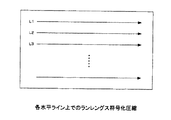
ランレングス符号化圧縮では、図8に示すように、先ず水平(走査)ラインL1上での画素各々の色コードが左側から右側に向かって順次調べられ、同一色コードが連続する回数がランレングスとして符号化される。その後は、引き続き水平ラインL2,L3,… … …についても、順次同様にして、同一色コードが連続する回数が調べられた上、その回数が符号化されている。
【0006】
以上のような水平方向でのランレングス符号化圧縮による場合、水平方向に同一色コードが長く連続している場合、即ち、文字の横方向の線に関しては圧縮率が上がるものの、文字の縦方向の線や横方向の線の太さに起因する相関は利用されていないことになる。
【0007】
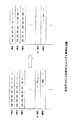
垂直方向の相関を簡単に利用する方法として、上側からN(N=2,3,4,… … …)番目の水平ラインがランレングス符号化圧縮される際に、この水平ライン上の画素各々の色コードがそのままランレングス符号化圧縮されるのではなく、直前隣接水平ラインであるN−1番目の水平ライン上の画素各々の色コードとの間で差分を求め、同一差分が連続する回数をランレングス符号化圧縮することが考えられる(差分ランレングス符号化圧縮)。具体的には、図9に示すように、N−1番目の水平ライン上の、左側からi(i=1,2,3,… … …)番目の画素の色コードをPN-1,iとすれば、N−1番目の水平ライン上の、左側からi番目の画素での差分DN,iは、DN,i=PN-1,i∧PN,iとして求められるが、このようにして、N−1番目の水平ライン上の差分が求められた上、ランレングス符号化圧縮されるようにしたものである。因みに、上記式中での記号∧は排他的論理和演算であることを示す。なお、1(N=1)番目の水平ラインについては、その水平ライン上の画素各々の色コードはそのままランレングス符号化圧縮される。
【0008】
因みに、この種の技術に関連するものとしては、特許文献1が挙げられる。この特許文献1には、差分演算が主走査方向のみならず、副走査方向に対しても行われることが記載されている。
【0009】
【特許文献1】
特開昭64―7715号公報
【0010】
【発明が解決しようとする課題】
ところで、HDTV(High Definition TV)等、高解像度表示装置で画像が表示される場合を想定し、その1画面当りの画素数が、例えば水平方向1920画素、垂直方向1080画素であったとすれば、文字情報画像の差分ランレングス符号化圧縮やその復号化伸長の際に必要とされるラインメモリ(例えばシフトレジスタ)のメモリ容量としては、実に、1920×2ビット要されることになる。換言すれば、高解像度画像であっても、ラインメモリのメモリ容量を少なくして、文字情報画像の差分ランレングス符号化圧縮やその復号化伸長を行う必要がある。
【0011】
本発明の目的は、高解像度画像中に文字情報が含まれる場合であっても、ラインメモリの容量少なくして、且つ効率的に画像が符号化圧縮され得る画像符号化装置を提供することにある。
本発明の他の目的は、高解像度画像中に文字情報が含まれる場合であっても、経済的に、且つ効率的に画像が符号化圧縮され得る画像符号化方法を提供することにある。
【0012】
本発明の更なる他の目的は、高解像度画像中に文字情報が含まれる場合であっても、効率的に符号化圧縮されている画像がラインメモリの容量少なくして、復号化伸長され得る符号化画像復号化装置を提供することにある。
本発明の更に異なる他の目的は、高解像度画像中に文字情報が含まれる場合であっても、効率的に符号化圧縮されている画像が経済的に復号化伸長され得る符号化画像復号化方法を提供することにある。
【0013】
【課題を解決するための手段】
本発明の画像符号化装置は、色コード差分検出手段で、水平方向にM(M:1以上の任意整数)ブロックに等分割されている画像に対しブロック更新の度に、該ブロック内での分割後水平ライン各々について、順次、該分割後水平ラインと隣接直前分割後水平ラインとにおける、相対応する画素位置の色コード間での差分が検出されるようにし、また、その色コード差分検出手段からの、分割後水平ライン対応の差分をランレングス符号化手段によりラン毎にランレングス符号化するに際しては、最初のランに対する符号語には、該ランが特殊ランである場合を除き該ランでの差分の情報が含まれる状態として、上記最初のラン以外のラン各々に対する符号語には、該ランでの差分の情報の代わりに、直前ランでの差分の当該ランでの差分への遷移の種別を示す遷移種別情報が含まれる状態として、それぞれランレングス符号化されるようにしたものである。
【0014】
以上のように、画像は水平方向にMブロックに等分割された上、分割後水平ライン単位に差分ランレングス符号化圧縮が行われていることから、例えば原水平ラインが15等分に分割されているとすれば、ラインメモリのメモリ容量も1/15で済まされるものである。
【0015】
以上に加え、ランレングス符号化手段では、直前ランでの差分の当該ランでの差分「00」への遷移に際しては、遷移種別情報は1ビットとして、差分「00」以外の差分への遷移に際しては、遷移種別情報は2ビットとして、最初のラン以外のラン各々がランレングス符号化されたり、長さ1のランに対する符号語は最短語長として、分割後水平ライン上の差分がある画素位置から最終画素位置まで全て「00」として連続している特殊ランの場合には、該特殊ランに対する特定符号語は語長一定として、分割後水平ライン上の差分がある画素位置から最終画素位置まで全て「00」以外のもので、且つ同一として連続しているランの場合は、該ランに対する特定符号語は、上記特殊ランに対する特定符号語の語長よりも差分情報の分だけ、長い語長として、それぞれのランがランレングス符号化されることで、画像は効率的に符号化圧縮されている。
【0016】
【発明の実施の形態】
以下、本発明の一実施の形態を図1から図7により説明する。なお、この実施の形態でも、文字を白色とし、文字の縁取りに黒、赤の2色、残りの地の部分を透明色として、これら白色、黒色、赤色、透明色をそれぞれ、色コードとしての2進数「11」、「10」、「01」、「00」で表し、1画面上の画素各々にそれら2進数の何れか1つが対応付けされることで、文字情報を含む画像が構成されているものとする。
【0017】
先ずラインメモリのメモリ容量が低減化されるべく、1画面を(原)水平ライン方向に等分割することが考えられる。図1に示す例では、(原)水平ライン上の1920個の画素は、その(原)水平ラインが15等分されることで、1画面は15ブロックに分割されている。これにより(原)水平ライン上の差分に対しての差分ランレングス符号化圧縮が行われる代わりに、各ブロック内で、分割後水平ライン(以下、特に断らない限り、単に水平ラインと称す)単位に、順次、差分ランレングス符号化圧縮が行われるとすれば、ラインメモリのメモリ容量としては、1/15の128×2ビットで済まされることになる。
【0018】
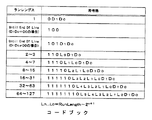
以上のように、水平ライン単位に差分ランレングス符号化圧縮が行われているが、この際でのランレングスと符号語(コード)の対応関係について説明すれば、図2にその一例での対応関係をコードブックとして示す。隣接直前水平ラインとの間での差分に対し差分ランレングス符号化圧縮が施される場合、詳細な説明は省略するが、図示のように、一般に、長さが1のランの出現頻度が最大となることから、長さ1のランに対する符号語(差分D1 D0 の情報を含む)は最短一定語長として設定されている。出現頻度が大なる程に、短い長さの符号語が設定されていれば、その分、ランレングス符号化上、圧縮率の向上が図れるからである。
【0019】
また、同一差分「00」がある画素位置(最初の画素位置を含む)から最終画素位置まで連続する特殊ランが頻度大として出現するにも拘らず、その差分が「00」の特殊ラン(D1 D0 =00のUntil End Of Line が該当)に対する特定符号語と、差分が「00」以外の差分で、且つその差分がある画素位置(最初の画素位置を含む)から最終画素位置まで同一として連続するラン(D1 D0 ≠00のUntil End Of Line が該当)に対する特定符号語とを同一語長として設定することは不利であることから、特殊ランに対する特定符号語(語頭符号100からのみ構成)は、D1 D0 ≠00のUntil End Of Line に対する特定符号語(語頭符号101と差分D1 D0 の情報から構成)より短く設定されるようにした。これは、先の場合と同様な理由、即ち、一般に、出現頻度が大なる程に、短い長さの符号語が設定されていれば、その分、ランレングス符号化上、圧縮率の向上が図れるからに他ならない。
【0020】
結局、本例では、長さが1のランに対する符号語は3ビットとして、差分が「00」の特殊ランに対する特定符号語も3ビットとして、差分が「00」以外の差分で、且つその差分がある画素位置から最終画素位置まで同一として連続しているランに対する特定符号語は5ビットとして、それぞれ構成されている。また、上記ラン以外のランに対する符号語は、語頭符号、ランレングス情報及び差分D1 D0 の情報から構成される。例えばランレングスが4〜7に対する符号語は「1110L1 L0 D1 D0 」として設定されているが、L1 L0 =「00」、「01」、「10」、「11」がそれぞれランレングス4,5,6,7に相当するようになっている。因みに、語頭符号一般は、0と1からなるビットパターン列として構成される。
【0021】
結局、水平ライン単位に差分ランレングス符号化圧縮が行われる場合、最大ランレングスは128であることから、図2に示すようなコードブックを使用すれば、如何なるランレングスでも確実に符号化されることになる。換言すれば、差分D1 D0 の情報が同一である符号語を連続して使用することなく符号化できる。因みに、D1 D0 =「00」のUntil End Of Line に対する特定符号語と、D1 D0 ≠「00」のUntil End Of Line に対する特定符号語とは、水平ラインの最初の画素位置から最終画素位置まで同一差分である場合に使用される場合が想定されているが、最初の画素位置以外の途中画素位置から最終画素位置まで同一差分である場合にも使用可能となっている。換言すれば、最初の画素位置以外の途中画素位置から最終画素位置まで同一差分である場合には、語長が短い特定符号語を使用する方が有利である。
【0022】
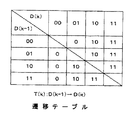
以上のように、何れの水平ライン内でも、差分D1 D0 の情報が同一である符号語が連続して使用されることはない。このことは、水平ライン内でk(k=0,1,2… … …)番目の符号語に含まれている差分D1 D0 の情報をD(k)とすれば、k≧1では、D(k)≠D(k−1)であることを意味しており、D(k−1)からD(k)への遷移T(k)としては、図3に遷移テーブルとして示すように、D(k−1)の4種類の差分に対して3通りの態様となる。したがって、k≧1でのみ、2ビット固定長の差分D1 D0 の情報に代えて、T(k)(T(k)=「0」、「10」又は「11」)を遷移種別情報として用い、k=0、即ち、水平ライン内での最初の符号語には、差分D1 D0 の情報をそのまま含ませることが考えられる。
【0023】
一般に、差分Until End Of Line が一旦、「00」以外のものとなった後は、次のランでは、差分D1 D0 が「00」に戻る頻度が、別の「00」以外の差分になる頻度よりも大きくなる傾向にある。この傾向は、色コードそのものではなく、色コードの差分の遷移を符号化しているため、既述のパレットの作り方には依存しない。したがって、図3に示すように、「00」ではないD(k−1)からD(k)=「00」への遷移に対応する遷移種別情報T(k)としては、符号化圧縮上、ビット長の短い「0」が有利となる。コードブックに用意されている符号語に加え、遷移種別情報が併せて採用される場合には、コードブックのみによる場合に比し、符号化圧縮データ量が、典型的な場合で約10%削減され得ることが判った。
【0024】
因みに、以上の遷移種別情報T(k)が用いられる符号化圧縮で、D1 D0 =「00」のUntil End Of Line に対する特定符号語を、水平ライン内での2番目以降のランに使用する場合、その特定符号語には、そもそも、差分の情報が含まれていないので、遷移種別情報T(k)を生成しないで、その特定符号語「100」をそのまま使用する。
【0025】
ところで、図2に示すコードブックによる場合、ランレングスの長さは最大128とされていることから、この範囲内で差分ランレングス符号化圧縮が行われることになる。もしも、ランレングスの長さが最大1920となるべく、コードブックに符号語が設定されていれば、(原)水平ラインは何等等分割される必要がないことは明らかである。
【0026】
尤も、本発明からは外れるが、工夫次第では、水平ラインの長さが大きく、ランレングスの長さが129以上に亘る場合であっても、図2に示す符号語のみによる差分ランレングス符号化圧縮が可能となっている。例えばコードブックに用意されている符号語のうち、そのランレングスが最長の符号語(Until End Of Line に対応する符号語を除く)をCm,Cmが表すランレングスをRmとすれば、Rmより長いランRを符号化するには、一般に、これらの間には、R=(Rm+Rm+… … …+Rm+Rm)+Rr=Rm×Q+Rrなる関係が成立する。但し、Rr<Rmである。したがって、CmをQ回繰り返した後に、残りであるRrに対応する符号語を用いるようにすればよい。この場合、差分情報が同一であるランが連続することになるが、符号語Cmの次の符号語には、差分情報D1 D0 の代わりに遷移種別情報を用いることはせず、差分情報D1 D0 をそのまま含ませるという例外規則を設けることにより、k≧1で、D(k)=D(k−1)となっても符号化可能である。
【0027】
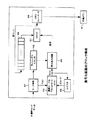
以上、本発明に係る差分ランレングス符号化圧縮の理論的背景について説明した。次に、本発明の画像符号化装置等について具体的に説明すれば、図4に画像符号化装置の一例でのブロック構成を示す。この構成と動作について、図1を参照しつつ、説明すれば、先ずラインメモリ(一般にシフトレジスタとして構成され、そのメモリ容量は、例えば128×2ビット)41はリセットされた状態で、ブロック1内での1番目の水平ライン上の(非圧縮)色コードデータがシリアルデータとして入力される。その色コードデータは順次、ラインメモリ41にシフトインされる一方では、ラインメモリ41から順次、シフトアウトされるデータ「0」と排他的論理和回路42で排他的論理和される。この結果、1番目の水平ライン上の色コードデータに対する差分はその色コードデータそのものとして得られ、また、その色コードデータはラインメモリ41に格納されることになる。
【0028】
次に、ブロック1内での2番目の水平ライン上の色コードデータがシリアルデータとして入力されるが、その色コードデータは順次、ラインメモリ41にシフトインされる一方では、ラインメモリ41から順次、シフトアウトされる、1番目の水平ライン上の色コードデータと排他的論理和回路42で排他的論理和される。この結果、2番目の水平ライン上の色コードデータに対する差分はその排他的論理和の結果として得られ、また、その2番目の水平ライン上の色コードデータはラインメモリ41に格納されることになる。以下、3番目以降の水平ライン上の色コードデータに対しても同様な処理が繰り返されるが、最後の水平ライン上の色コードデータに対する処理が終了した時点で、ラインメモリ41は一旦、リセットされた上、次には、ブロック2内での各水平ライン上の色コードデータに対して、順次、ブロック1内での処理と同様な処理が行われる。このようにして、ブロック1からブロック15まで同様な処理繰り返し行われることで、色コードの差分が検出される。
【0029】
一方、以上の差分検出に並行して、排他的論理和回路42からの差分はシリアルデータとしてラン終了検出回路43に入力された上、同一差分の不連続位置からラン終了が検出されているが、そのラン終了検出処理は128×2ビットを1データ区間として、データ区間毎にラン終了検出処理が行われる。データ区間内でランが検出される度に、そのランはコード作成・出力回路44で、既述のコードブック441及び遷移テーブル442に基づき(水平ラインの最初のランの場合と、D1 D0 =「00」のUntil End Of Line に対する特定符号語を使用する場合は、コードブック441のみ参照)、該当する符号語(コード)に変換された上、動画や静止画とともに、ディスク等の記憶媒体に圧縮記憶される。因みに、ランが2データ区間に亘るような場合でも、そのランは途中で強制的に分断された上、分断されたラン毎に符号化される。
【0030】
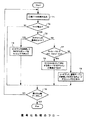
また、水平ライン各々についての差分は既に得られているか、又は順次得られているものとして、水平ライン単位、即ち、128×2ビットを1データ区間として行われる、ソフトウェア処理による差分ランレングス符号化処理の一例でのフローを図5に示す。図示のように、先ずブロック1内での1番目水平ライン上での一連の差分がその先頭ビットから読込みされる度に、ランが終了したか否か(同一差分が連続しているか否か)が判断される(処理51,52)。その判断で、もしも、同一差分が連続していなく、ラン終りと判断されたならば、次には、そのランが水平ラインの最初のランであるか否かが判断される(処理52,53)。もしも、最初のランであれば、その差分の情報とランレングスに基づきコードブックが参照されることで、そのランは該当する符号語として変換出力される(処理53,54)。また、もしも、最初のランでないと判断された場合は、そのランの差分情報が「00」で水平ラインの最終画素位置まで続いているか否か、すなわち、D1 D0 =「00」のUntil End Of Line で符号化可能か否かが判断される(処理57)。もしも、D1 D0 =「00」のUntil End Of Lineで符号化可能であれば、そのランはその特定符号語として変換出力される(処理58)。また、もしも、D1 D0 =「00」のUntil End Of Line で符号化可能でないと判断された場合には、遷移テーブルをも参照の上、そのランは該当する符号語として変換出力される(処理53,55)。
【0031】
その後は、その水平ライン上での、未だ読込みされていない差分の存否が判断されるが、未だ読込みされていない差分が存在する場合は、処理51に戻るが、それが存在しない場合には、一連の処理は終了される(処理56)。このような符号化処理がブロック15内での最後の水平ラインについてまで、繰り返し行われる。
【0032】
以上のようにして、文字情報を含む画像は本発明による符号化圧縮方法により符号化圧縮された上、動画や静止画とともに記録媒体としてのディスク等に記憶される。動画や静止画が再生表示される際には、その動画や静止画とともにディスク等から読み出された後、復号化装置で復号化処理された上、一時記憶装置を介し表示装置上で動画や静止画とともに再生表示されるが、図6に符号化画像復号化装置の一例でのブロック構成を示す。この構成と動作について、図1を参照しつつ、説明すれば、ディスク等の記憶媒体の再生に際しては、ブロック1内の1番目の水平ラインに対する一連の符号語列が先ず読み出され、最後には、ブロック15内の最後の水平ラインに対する一連の符号語列が読み出されるようにして、水平ライン単位に順次復号化伸長が行われる。
【0033】
より具体的に説明すれば、図6に示すように、ラインメモリ(一般にシフトレジスタとして構成され、そのメモリ容量は、例えば128×2ビット)66はリセットされた状態で、先ずブロック1内での1番目の水平ラインに対する一連の符号語列が圧縮色コードデータとしてシリアルにコード抽出回路61に入力される。コード抽出回路61では、コードブックを参照の上、符号語(コード)が順次、抽出されているが、最初には先ず最初のランに対する符号語が抽出される。この符号語にはランレングス情報及び差分の情報が含まれているが、このうち、ランレングス情報は差分出力回数制御用のランレングスカウンタ63に設定される一方、差分の情報は遷移テーブル62に設定される。最初のランに対する符号語の場合には、遷移テーブル62に設定されている差分が、ランレングスカウンタ63により示される回数分、差分出力回路65を介し出力される。その差分はまた、レジスタ64に設定される。
【0034】
最初のランに対する符号語が抽出された後は、特定符号語「100」の場合を除いては、ランレングス情報及び遷移種別情報を含む符号語が順次、抽出されることになるが、その抽出の度に、ランレングス情報はランレングスカウンタ63に設定される一方、遷移種別情報は遷移テーブル62に設定される。これにより、遷移テーブル62では、その遷移種別情報とレジスタ64からの差分とからは、その抽出された符号語での差分の情報が復元された上、遷移テーブル62からのその差分が、ランレングスカウンタ63により示される回数分、差分出力回路65を介し出力される一方、その差分はまた、レジスタ64に設定される。特定符号語「100」が抽出された場合は、遷移テーブル62からの差分出力が「00」になり、この差分が差分出力回路65を介して水平ラインの最終画素の分まで出力される。
【0035】
一方、以上の差分の復元に同時並行して、排他的論理和回路67では、差分出力回路65から順次、出力される、128×2ビット分の差分とラインメモリ66から順次、シフトアウトされる、128×2ビット分のデータ「0」とが同期した状態で排他的論理和されており、その結果はまた、ラインメモリ66にシフトインされる。これにより、ブロック1内での1番目の水平ラインに対する一連の符号語列が復号化伸長される。換言すれば、元の1番目の水平ライン上での色コードが再現された上、メモリコントローラ68による制御下に、外部メモリ(一時記憶装置)6に一時記憶される。
【0036】
その後、ブロック1内での2番目の水平ラインに対する一連の符号語列がシリアルにコード抽出回路61に入力された上、先の場合と同様に処理されることで、差分出力回路65からは、順次、128×2ビット分の差分が出力される。このようにして出力される差分とラインメモリ66から順次、シフトアウトされる、元の第1番目の水平ライン上での色コードとが同期した状態で排他的論理和され、その結果はまた、ラインメモリ66にシフトインされる。これにより、元の2番目の水平ライン上での色コードが再現された上、外部メモリ6に一時記憶される。以下、ブロック1内での3番目以降の水平ラインに対する一連の符号語列各々に対しても同様な処理が繰り返し行われるが、最後の水平ラインに対する一連の符号語列が処理された時点で、ラインメモリ66は一旦、リセットされた後、ブロック2内での1番目の水平ラインに対する一連の符号語列が圧縮色コードデータとしてシリアルにコード抽出回路61に入力される。
【0037】
結局、ブロック1〜15毎に、同様な処理が繰り返されることで、外部メモリ6には全体としての画像が記憶されることになるが、この文字情報画像は、後に表示装置に読み出された上、別の動画や静止画と重畳されて再生表示される場合もある。
【0038】
最後に、ソフトウェア処理による、符号化文字情報画像に対する復号化処理の一例でのフローを図7に示す。これによる場合、先ずブロック1内での1番目の水平ラインに対する一連の符号語列が圧縮色コードデータとして1ビット単位に読込まれるが、その読込みの度に、コードブックを参照の上、符号語(コード)抽出されたか否かが判断される(処理71,72)。もしも、抽出されなかった場合には、その水平ライン上の圧縮色コードデータの存否が判断されるが、存在している場合には、更に、1ビット分、読込まれる(処理76,71)。このような処理が繰り返されるうちに、先ず最初のランに対する符号語が抽出されるが、この符号語に対しては、コードブックが参照されることで、対応する色コードがランレングス回に亘って出力される(処理72〜74)。
【0039】
その後、その水平ライン上の圧縮色コードデータの存否が判断されるが、存在している場合には、更に、1ビット分、読込まれる(処理76,71)。このような処理が繰り返されるうちに、最初のランに対する符号語以外の符号語が順次、抽出されるようになるが、これら符号語各々に対しては、特定符号語「100」を除き、コードブック及び遷移テーブルが参照されることで、対応する色コードがランレングス回に亘って出力される(処理73,75)。特定符号語「100」に対しては、D1D0=「00」として対応する色コードが水平ラインの最終画素の分まで出力される(処理77,78)。このような処理が繰り返されるうちに、やがて、その水平ライン上での未だ読込みされていない圧縮色コードデータは存在しなくなることで、一連の処理は終了される(処理76)。このような復号化処理がブロック15内での最後の水平ラインについてまで、繰り返し行われているものである。
【0040】
以上、本発明者によってなされた発明を実施の形態に基き具体的に説明したが、本発明は上記実施の形態に限定されるものではなく、その要旨を逸脱しない範囲内で種々変更可能であることはいうまでもない。
【0041】
【発明の効果】
高解像度画像中に文字情報が含まれる場合であっても、ラインメモリの容量少なくして、且つ効率的に画像が符号化圧縮され得る画像符号化装置が提供される。
高解像度画像中に文字情報が含まれる場合であっても、経済的に、且つ効率的に画像が符号化圧縮され得る画像符号化方法が提供される。
【0042】
高解像度画像中に文字情報が含まれる場合であっても、効率的に符号化圧縮されている画像がラインメモリの容量少なくして、復号化伸長され得る符号化画像復号化装置が提供される。
高解像度画像中に文字情報が含まれる場合であっても、効率的に符号化圧縮されている画像が経済的に復号化伸長され得る符号化画像復号化方法が提供される。
【図面の簡単な説明】
【図1】差分ランレングス符号化圧縮/符号化伸長用ラインメモリのメモリ容量を低減化すべく、1画面を水平ライン方向にブロック分割することを説明するための図である。
【図2】本発明に係る、ランレングスと符号語の一例での対応関係をコードブックとして示す図である。
【図3】連続する2つの符号語間での差分情報の遷移態様と遷移種別情報との関係を遷移テーブルとして示す図である。
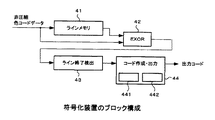
【図4】本発明の画像符号化装置の一例でのブロック構成を示す図である。
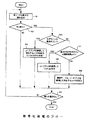
【図5】同じく、符号化処理の一例でのフローを示す図である。
【図6】本発明の符号化画像復号化装置の一例でのブロック構成を示す図である。
【図7】同じく、復号化処理の一例でのフローを示す図である。
【図8】各水平ライン上でのランレングス符号化圧縮を説明するための図である。
【図9】各水平ライン上での差分ランレングス符号化圧縮を説明するための図である。
【符号の説明】
41,66…ラインメモリ、42,67…排他的論理和回路、43…ラン終了検出回路、44…コード作成・出力回路、441…コードブック、442,62…遷移テーブル、61…コード抽出回路、63…ランレングスカウンタ、64…レジスタ、65…差分出力回路[0001]
TECHNICAL FIELD OF THE INVENTION
The present invention provides, for example, an image encoding apparatus and method for efficiently run-length encoding and compressing an image in which a color code is associated with each pixel in a high-resolution image, and further, the encoded and compressed image. The present invention relates to a coded image decoding apparatus and method for decoding and expanding a decoded image.
[0002]
[Prior art]
In general, subtitles, lyrics, and liner notes (liner notes are commentary texts for reference to music appreciation), and are often used for CDs and records. When character information such as a title and the like is displayed together with the packaged and printed information, a moving image or a still image is generally a natural image in many cases, and is a compression method of a color still image. It can be said that it is desirable that the image data be compressed and stored in advance by a compression method such as JPEG (Joint Photographic Expert Group) or MPEG (Moving Picture Expert Group) which is a compression method of a color moving image. However, since character information is often created artificially and the number of types of colors used is small, compression is often performed by run-length encoding which is advantageous for character information compression. It is stored as the state that was performed.
[0003]
In other words, when character information such as subtitles of a movie, lyrics of music, and liner notes are displayed as still images from a disk device or the like to a display device such as a television, the character information is compressed in advance by run-length encoding. The recorded state is recorded on a storage medium such as a disk.
[0004]
For example, the character is white, the outline of the character is black and red, and the remaining ground portion is a transparent color. These white, black, red, and transparent colors are binary numbers "11", "10", and "10", respectively. If one of these binary numbers is associated with each pixel on one screen, represented by “01” and “00”, an image including character information can be easily created. At this time, the binary numbers “11”, “10”, “01”, and “00” are called color codes. The correspondence between the actual color data and the color code represented by the YCbCr system or the like is called a palette.
[0005]
In the run length coding compression, as shown in FIG. 8, first, the color code of each pixel on the horizontal (scanning) line L1 is sequentially examined from left to right, and the number of times the same color code continues is determined by the run length. Is encoded as Thereafter, for the horizontal lines L2, L3,..., The number of times that the same color code continues is checked in the same manner, and the number of times is encoded.
[0006]
In the case of the run-length encoding compression in the horizontal direction as described above, when the same color code is long and continuous in the horizontal direction, that is, the compression ratio increases for the horizontal line of the character, but the vertical direction of the character The correlation caused by the thickness of the line and the line in the horizontal direction is not used.
[0007]
As a method of easily using the correlation in the vertical direction, when the N-th (N = 2, 3, 4,...) Horizontal line from the upper side is compressed by run-length coding, each pixel on this horizontal line is Is not directly compressed by run-length coding, but the difference between the color code of each pixel on the (N-1) th horizontal line, which is the immediately preceding horizontal line, is obtained, and the number of times the same difference continues Can be considered to be run-length coded and compressed (differential run-length coded compression). Specifically, as shown in FIG. 9, the color code of the i-th (i = 1, 2, 3,...) Pixel from the left on the (N-1) -th horizontal line is P N-1, i , The difference D at the i-th pixel from the left on the (N-1) -th horizontal line N, i Is D N, i = P N-1, i ∧P N, i In this way, the difference on the (N-1) th horizontal line is obtained, and then run-length encoding and compression are performed. Incidentally, the symbol ∧ in the above expression indicates that the operation is an exclusive OR operation. For the first (N = 1) -th horizontal line, the color code of each pixel on the horizontal line is run-length encoded and compressed as it is.
[0008]
Incidentally,
[0009]
[Patent Document 1]
JP-A-64-7715
[0010]
[Problems to be solved by the invention]
By the way, assuming that an image is displayed on a high-resolution display device such as an HDTV (High Definition TV) and the number of pixels per screen is, for example, 1920 pixels in the horizontal direction and 1080 pixels in the vertical direction, Actually, 1920 × 2 bits are required as the memory capacity of the line memory (for example, the shift register) required for the differential run-length encoding compression and decoding expansion of the character information image. In other words, even for a high-resolution image, it is necessary to reduce the memory capacity of the line memory and perform differential run-length encoding compression and decoding expansion of the character information image.
[0011]
An object of the present invention is to provide an image encoding apparatus capable of efficiently encoding and compressing an image with a reduced line memory capacity even when character information is included in a high-resolution image. is there.
It is another object of the present invention to provide an image encoding method that can economically and efficiently encode and compress an image even when character information is included in a high-resolution image.
[0012]
It is still another object of the present invention to efficiently encode and compress an image even if character information is included in a high-resolution image, and decode and expand the image with a reduced line memory capacity. An encoded image decoding device is provided.
Still another object of the present invention is to provide a coded image decoding system that can efficiently decode and decompress an image that has been efficiently coded and compressed even when character information is included in a high-resolution image. It is to provide a method.
[0013]
[Means for Solving the Problems]
The image encoding apparatus according to the present invention uses a color code difference detection unit to update an image equally divided into M (M: an arbitrary integer equal to or greater than 1) blocks in the horizontal direction each time the blocks are updated. For each divided horizontal line, a difference between color codes of corresponding pixel positions between the divided horizontal line and the immediately preceding divided horizontal line is sequentially detected, and the color code difference detection is performed. When the difference corresponding to the horizontal line after division from the means is run-length encoded by the run-length encoding means for each run, the code word for the first run includes the run word except when the run is a special run. As a state in which the information of the difference in the run is included, the code word for each of the runs other than the first run is replaced with the difference of the immediately preceding run instead of the information of the difference in the run. As a state that includes a transition type information indicating the type of transition, is obtained so as to be run-length encoding, respectively.
[0014]
As described above, since an image is equally divided into M blocks in the horizontal direction and differential run-length coding compression is performed in units of horizontal lines after division, for example, an original horizontal line is divided into 15 equal parts. If so, the memory capacity of the line memory can be reduced to 1/15.
[0015]
In addition to the above, the run-length encoding means sets the transition type information to 1 bit when transitioning the difference in the immediately preceding run to the difference “00” in the run, Means that the transition type information is 2 bits, each run other than the first run is run-length encoded, or the code word for a run of
[0016]
BEST MODE FOR CARRYING OUT THE INVENTION
An embodiment of the present invention will be described below with reference to FIGS. Also in this embodiment, the characters are white, the borders of the characters are black and red, and the rest of the ground is transparent, and these white, black, red, and transparent colors are used as color codes, respectively. An image including character information is represented by representing each of the binary numbers “11”, “10”, “01”, and “00” with each pixel on one screen, and by associating one of those binary numbers. It is assumed that
[0017]
First, in order to reduce the memory capacity of the line memory, one screen may be equally divided in the (original) horizontal line direction. In the example shown in FIG. 1, the 1920 pixels on the (original) horizontal line are divided into 15 blocks by dividing the (original) horizontal line into 15 equal parts. As a result, instead of performing difference run-length encoding compression on the difference on the (original) horizontal line, a divided horizontal line (hereinafter, simply referred to as a horizontal line unless otherwise specified) is used in each block. If differential run-length encoding compression is performed sequentially, the memory capacity of the line memory will be 1/15 of 128 × 2 bits.
[0018]
As described above, differential run-length encoding compression is performed in units of horizontal lines. The correspondence between run lengths and codewords (codes) at this time will be described. FIG. The relationship is shown as a codebook. When the difference between the adjacent horizontal line and the immediately preceding horizontal line is subjected to differential run-length encoding compression, a detailed description is omitted, but as shown in the figure, the frequency of occurrence of a run having a length of 1 is generally the highest. Therefore, the code word for the run of length 1 (difference D 1 D 0 Is set as the shortest constant word length. This is because, as the appearance frequency increases, the shorter the length of the code word is set, the more the compression rate can be improved in the run-length encoding.
[0019]
Also, despite the fact that a special run that continues from the pixel position (including the first pixel position) having the same difference “00” to the last pixel position appears with high frequency, the special run (D 1 D 0 = 00 Until End Of Line), and the difference is a difference other than "00", and the difference continues from the pixel position (including the first pixel position) to the last pixel position as the same. Run (D 1 D 0 Since it is disadvantageous to set the same code length as the specific code word for the Until End Of Line of $ 00), the specific code word for the special run (consisting only of the prefix 100) is D 1 D 0 The specific codeword (the
[0020]
After all, in this example, the code word for a run having a length of 1 is 3 bits, the specific code word for a special run having a difference of “00” is also 3 bits, and the difference is a difference other than “00”. A specific codeword for a run that is identical and continues from a certain pixel position to the last pixel position is configured as 5 bits. The code words for runs other than the above-mentioned run are a prefix code, run length information, and a difference D. 1 D 0 Information. For example, the code word for
[0021]
As a result, when differential run-length coding compression is performed in units of horizontal lines, since the maximum run length is 128, any run length can be reliably encoded by using a code book as shown in FIG. Will be. In other words, the difference D 1 D 0 Can be encoded without successively using codewords having the same information. By the way, D 1 D 0 = Specific codeword for Until End Of Line of “00” and D 1 D 0 特定 The specific codeword for the Until End Of Line of “00” is assumed to be used when the same difference from the first pixel position to the last pixel position of the horizontal line is used, but other than the first pixel position Can be used even when the same difference is found from the halfway pixel position to the last pixel position. In other words, when the same difference is found from the intermediate pixel position other than the first pixel position to the last pixel position, it is more advantageous to use a specific codeword having a short word length.
[0022]
As described above, in any horizontal line, the difference D 1 D 0 Are not used successively. This means that the difference D included in the k-th (k = 0, 1, 2,...) Codeword in the horizontal line is obtained. 1 D 0 Is D (k), if k ≧ 1, it means that D (k) −1D (k−1), and the transition from D (k−1) to D (k) As for T (k), as shown in a transition table in FIG. 3, there are three modes for four types of differences of D (k-1). Therefore, only when k ≧ 1, the 2-bit fixed length difference D 1 D 0 , T (k) (T (k) = “0”, “10” or “11”) is used as transition type information, and k = 0, that is, the first codeword in the horizontal line Contains the difference D 1 D 0 May be included as it is.
[0023]
In general, once the difference Until End Of Line becomes something other than “00”, the difference D 1 D 0 Tend to return to “00” more frequently than the difference becomes another difference other than “00”. This tendency does not depend on the above-described method of creating the palette because the transition of the difference between the color codes is encoded instead of the color code itself. Therefore, as shown in FIG. 3, as the transition type information T (k) corresponding to the transition from D (k−1) other than “00” to D (k) = “00”, "0" having a short bit length is advantageous. When the transition type information is employed in addition to the codewords prepared in the codebook, the amount of coded compressed data is reduced by about 10% in a typical case as compared with the case where only the codebook is used. It turned out that it could be.
[0024]
Incidentally, the coding compression using the above transition type information T (k) is 1 D 0 = When the specific codeword for the Until End Of Line of “00” is used in the second and subsequent runs in the horizontal line, the specific codeword does not include any information on the difference in the first place. The specific code word “100” is used as it is without generating the type information T (k).
[0025]
By the way, in the case of the code book shown in FIG. 2, since the maximum run length is 128, the differential run length coding compression is performed within this range. If codewords are set in the codebook so that the length of the run length is at most 1920, it is obvious that the (original) horizontal line does not need to be divided at all.
[0026]
Although it deviates from the present invention, depending on the device, even if the length of the horizontal line is large and the length of the run length is 129 or more, differential run-length coding using only the codeword shown in FIG. Compression is possible. For example, among codewords prepared in the code book, Cm is the codeword having the longest run length (excluding the codeword corresponding to Until End Of Line), and Rm is the runlength represented by Cm. In order to encode a long run R, a relationship of R = (Rm + Rm +... + Rm + Rm) + Rr = Rm × Q + Rr is generally established between them. However, Rr <Rm. Therefore, after repeating Cm Q times, the codeword corresponding to the remaining Rr may be used. In this case, the runs having the same difference information are continuous, but the codeword next to the codeword Cm includes the difference information D. 1 D 0 Is not used in place of the transition type information. 1 D 0 Is provided as it is, encoding is possible even if k ≧ 1 and D (k) = D (k−1).
[0027]
The theoretical background of the differential run-length encoding compression according to the present invention has been described above. Next, the image encoding apparatus of the present invention will be specifically described. FIG. 4 shows a block configuration of an example of the image encoding apparatus. This configuration and operation will be described with reference to FIG. 1. First, the line memory (generally configured as a shift register, the memory capacity of which is, for example, 128 × 2 bits) 41 is reset in the
[0028]
Next, the color code data on the second horizontal line in the
[0029]
On the other hand, in parallel with the above difference detection, the difference from the exclusive OR
[0030]
Also, assuming that the difference for each horizontal line has already been obtained or that it has been obtained sequentially, difference run-length coding by software processing is performed in units of horizontal lines, that is, 128 × 2 bits as one data section. FIG. 5 shows a flow of an example of the processing. As shown in the drawing, each time a series of differences on the first horizontal line in
[0031]
Thereafter, it is determined whether or not there is a difference that has not been read yet on the horizontal line. If there is a difference that has not been read yet, the process returns to step 51. A series of processing ends (processing 56). Such an encoding process is repeatedly performed up to the last horizontal line in the
[0032]
As described above, the image including the character information is encoded and compressed by the encoding and compressing method according to the present invention, and then stored together with the moving image and the still image on a disk or the like as a recording medium. When a moving image or a still image is reproduced and displayed, the moving image or the still image is read out from a disk or the like together with the moving image or the still image, and then decoded by a decoding device, and then is displayed on a display device via a temporary storage device. FIG. 6 shows a block configuration of an example of the encoded image decoding apparatus, which is reproduced and displayed together with a still image. This configuration and operation will be described with reference to FIG. 1. When reproducing a storage medium such as a disk, a series of code word strings for the first horizontal line in the
[0033]
More specifically, as shown in FIG. 6, the line memory (generally configured as a shift register, the memory capacity of which is, for example, 128 × 2 bits) 66 is first reset in the
[0034]
After the codeword for the first run is extracted, codewords including run-length information and transition type information are sequentially extracted except for the specific codeword “100”. Each time, the run length information is set in the
[0035]
On the other hand, at the same time as the restoration of the above difference, the exclusive OR
[0036]
Thereafter, a series of codeword strings for the second horizontal line in the
[0037]
Eventually, the same process is repeated for each of the
[0038]
Finally, FIG. 7 shows a flow of an example of a decoding process for an encoded character information image by software processing. In this case, first, a series of code word strings for the first horizontal line in
[0039]
Thereafter, the presence or absence of the compressed color code data on the horizontal line is determined. If the compressed color code data does exist, one bit is further read (processes 76 and 71). While such processing is repeated, codewords other than the codeword for the first run are sequentially extracted. For each of these codewords, except for the specific codeword “100”, the codeword is extracted. By referring to the book and the transition table, the corresponding color code is output over the run length times (
[0040]
As described above, the invention made by the inventor has been specifically described based on the embodiment. However, the invention is not limited to the above embodiment, and can be variously modified without departing from the gist of the invention. Needless to say.
[0041]
【The invention's effect】
Provided is an image encoding apparatus capable of efficiently encoding and compressing an image with a reduced line memory capacity even when character information is included in a high-resolution image.
Provided is an image encoding method that can economically and efficiently encode and compress an image even when character information is included in a high-resolution image.
[0042]
Provided is an encoded image decoding device that can efficiently decode and decompress an image that has been efficiently encoded and compressed, even if character information is included in the high-resolution image, with a reduced line memory capacity. .
Provided is a coded image decoding method that can efficiently decode and decompress an image that has been efficiently coded and compressed even when character information is included in a high-resolution image.
[Brief description of the drawings]
FIG. 1 is a diagram for explaining that one screen is divided into blocks in a horizontal line direction in order to reduce the memory capacity of a line memory for differential run-length encoding compression / encoding and decompression.
FIG. 2 is a diagram showing, as a codebook, a correspondence relationship between run lengths and codewords according to an embodiment of the present invention.
FIG. 3 is a diagram illustrating, as a transition table, a relationship between a transition mode of difference information and transition type information between two consecutive codewords.
FIG. 4 is a diagram illustrating a block configuration of an example of an image encoding device according to the present invention.
FIG. 5 is a diagram illustrating a flow of an example of an encoding process.
FIG. 6 is a diagram illustrating a block configuration of an example of an encoded image decoding device according to the present invention.
FIG. 7 is a diagram showing a flow of an example of a decoding process.
FIG. 8 is a diagram for explaining run-length encoding compression on each horizontal line.
FIG. 9 is a diagram for explaining differential run-length encoding compression on each horizontal line.
[Explanation of symbols]
41, 66 ... line memories, 42, 67 ... exclusive OR circuit, 43 ... run end detection circuit, 44 ... code creation / output circuit, 441 ... code book, 442, 62 ... transition table, 61 ... code extraction circuit, 63: run length counter, 64: register, 65: difference output circuit
Claims (8)
水平方向にM(M:1以上の任意整数)ブロックに等分割されている画像に対しブロック更新の度に、該ブロック内での分割後水平ライン各々について、順次、該分割後水平ラインと隣接直前分割後水平ラインとにおける、相対応する画素位置の色コード間での差分を検出する色コード差分検出手段と、
該色コード差分検出手段からの、分割後水平ライン対応の差分をラン毎にランレングス符号化するに際して、最初のランに対する符号語には、該ランが特殊ランである場合を除き該ランでの差分の情報が含まれる状態として、上記最初のラン以外のラン各々に対する符号語には、該ランが特殊ランである場合を除き、該ランでの差分の情報の代わりに、直前ランでの差分の当該ランでの差分への遷移の種別を示す遷移種別情報が含まれる状態として、それぞれランレングス符号化するランレングス符号化手段と
を含む画像符号化装置。An image coding apparatus for an image, wherein a color code of a 2-bit configuration is associated with each pixel on the image,
Every time a block is updated in an image that is equally divided into M (M: an arbitrary integer equal to or greater than 1) blocks in the horizontal direction, each divided horizontal line in the block is sequentially adjacent to the divided horizontal line. A color code difference detection unit that detects a difference between color codes of corresponding pixel positions in the horizontal line after the immediately preceding division,
When the difference corresponding to the divided horizontal line from the color code difference detection means is run-length encoded for each run, the code word for the first run includes a code word for the run except for the case where the run is a special run. As a state in which the difference information is included, the codeword for each of the runs other than the first run is replaced with the difference in the immediately preceding run instead of the difference information in the run, unless the run is a special run. And a run-length encoding unit for performing run-length encoding as a state including transition type information indicating a type of transition to a difference in the run.
上記ランレングス符号化手段で、長さ1のランに対する符号語は最短一定語長として、分割後水平ライン上の差分が、ある画素位置から最終画素位置まで全て「00」として連続している特殊ランの場合には、該特殊ランに対する特定符号語は差分情報を含まない一定語長として、分割後水平ライン上の差分が、ある画素位置から最終画素位置まで全て「00」以外のもので、且つ同一として連続しているランの場合は、該ランに対する特定符号語は、上記特殊ランに対する特定符号語の語長よりも差分情報の分だけ、長い語長として、それぞれのランがランレングス符号化される一方、直前ランでの差分の当該ランでの差分「00」への遷移に際しては、遷移種別情報は1ビットとして、差分「00」以外の差分への遷移に際しては、遷移種別情報は2ビットとして、最初のランと特殊ラン以外のラン各々がランレングス符号化される画像符号化装置。In the image encoding device according to claim 1,
In the run length encoding means, a code word for a run having a length of 1 has a minimum constant word length, and the difference on a horizontal line after division is continuous as "00" from a certain pixel position to the last pixel position. In the case of a run, the specific codeword for the special run has a fixed word length that does not include the difference information, and the differences on the divided horizontal lines are all other than “00” from a certain pixel position to the last pixel position. In addition, in the case of runs that are continuous as the same, the specific codeword for the run has a word length longer by the difference information than the word length of the specific codeword for the special run, and each run has a run length code. On the other hand, at the time of the transition of the difference in the immediately preceding run to the difference “00” in the current run, the transition type information is 1 bit, and when the transition to the difference other than the difference “00” is performed, the transition is performed. Another information as 2 bits, the image coding apparatus run each other than the first run and special run are run-length encoding.
水平方向にM(M:1以上の任意整数)ブロックに等分割されている画像に対しブロック更新の度に、該ブロック内での分割後水平ライン各々について、順次、該分割後水平ラインと隣接直前分割後水平ラインとにおける、相対応する画素位置の色コード間での差分を検出する色コード差分検出ステップと、
該色コード差分検出ステップにより得られる、分割後水平ライン対応の差分をラン毎にランレングス符号化するに際して、最初のランに対する符号語には、該ランが特殊ランである場合を除き該ランでの差分の情報が含まれる状態として、上記最初のラン以外のラン各々に対する符号語には、該ランが特殊ランである場合を除き該ランでの差分の情報の代わりに、直前ランでの差分の当該ランでの差分への遷移の種別を示す遷移種別情報が含まれる状態として、それぞれランレングス符号化するランレングス符号化ステップと
を含む画像符号化方法。An image coding method for an image in which a color code of a 2-bit configuration is associated with each pixel on the image,
Every time a block is updated in an image that is equally divided into M (M: an arbitrary integer equal to or greater than 1) blocks in the horizontal direction, each divided horizontal line in the block is sequentially adjacent to the divided horizontal line. A color code difference detecting step of detecting a difference between color codes of corresponding pixel positions in the horizontal line after the immediately preceding division;
When the difference corresponding to the divided horizontal line obtained by the color code difference detection step is run-length encoded for each run, a code word for the first run includes a code word corresponding to the first run unless the run is a special run. Is included in the codeword for each of the runs other than the first run, instead of the difference information of the run, except for the case where the run is a special run, A run-length encoding step of performing run-length encoding as a state including transition type information indicating the type of transition to a difference in the run.
上記ランレングス符号化ステップで、長さ1のランに対する符号語は最短一定語長として、分割後水平ライン上の差分が、ある画素位置から最終画素位置まで全て「00」として連続している特殊ランの場合には、該特殊ランに対する特定符号語は語長一定として、分割後水平ライン上の差分が、ある画素位置から最終画素位置まで全て「00」以外のもので、且つ同一として連続しているランの場合は、該ランに対する特定符号語は、上記特殊ランに対する特定符号語の語長よりも差分情報の分だけ、長い語長として、それぞれのランがランレングス符号化される一方、直前ランでの差分の当該ランでの差分「00」への遷移に際しては、遷移種別情報は1ビットとして、差分「00」以外の差分への遷移に際しては、遷移種別情報は2ビットとして、最初のランと特殊ラン以外のラン各々がランレングス符号化される画像符号化方法。The image encoding method according to claim 3,
In the run length encoding step, the code word for the run of length 1 is the shortest constant word length, and the difference on the horizontal line after division is continuous as "00" from a certain pixel position to the last pixel position. In the case of a run, the specific codeword for the special run is assumed to be of a fixed word length, and the differences on the horizontal line after division are all other than “00” from a certain pixel position to the last pixel position, and are continuously the same. In the case of a run, the specific codeword for the run is longer than the word length of the specific codeword for the special run by the amount of difference information, and each run is run-length encoded as a longer word length. In the transition of the difference in the immediately preceding run to the difference “00” in the run, the transition type information is 1 bit, and in the transition to the difference other than the difference “00”, the transition type information is 2 bits. As bets, picture coding method run each other than the first run and special run are run-length encoding.
外部から順次入力される、分割後水平ライン対応の符号語列から符号語を順次抽出する符号語抽出手段と、
該符号語抽出手段により抽出された符号語を復号化する復号化手段と
を含む符号化画像復号化装置。When an image in which a 2-bit color code is associated with each pixel on the image is equally divided in the horizontal direction into M (M: an arbitrary integer equal to or more than 1) blocks, block updating is performed on the image. For each of the divided horizontal lines in the block, a difference between the color codes of the corresponding pixel positions in the divided horizontal line and the immediately preceding divided horizontal line is sequentially detected, When the difference corresponding to the horizontal line after the division is run-length coded for each run, the code word for the first run includes information on the difference in the run except when the run is a special run. The code word for each of the runs other than the first run includes a transition of the difference of the immediately preceding run to the difference of the current run instead of the information of the difference of the run except when the run is a special run. Type As a state that includes a transition type information indicating, an encoded image decoding apparatus coding an image formed by each run-length encoding,
Codeword extracting means for sequentially extracting codewords from a codeword string corresponding to a horizontal line after division sequentially input from the outside,
A decoding means for decoding the codeword extracted by the codeword extraction means.
上記復号化手段で、分割後水平ラインの最初の符号語と特殊ランに対する特定符号語以外の符号語各々が復号化されるに際しては、該符号語に対する差分の情報は、該符号語に含まれている遷移種別情報と直前符号語に対する差分の情報とに基づき、復元される符号化画像復号化装置。The encoded image decoding device according to claim 5,
When the decoding unit decodes each of the first codeword of the divided horizontal line and the codewords other than the specific codeword for the special run, information on the difference with respect to the codeword is included in the codeword. An encoded image decoding device that is restored based on the transition type information and the difference information with respect to the immediately preceding code word.
外部から順次入力される、分割後水平ライン対応の符号語列から符号語を順次抽出する符号語抽出ステップと、
該符号語抽出ステップにより抽出された符号語を復号化する復号化ステップとを含む符号化画像復号化方法。When an image in which a 2-bit color code is associated with each pixel on the image is equally divided in the horizontal direction into M (M: an arbitrary integer equal to or more than 1) blocks, block updating is performed on the image. For each of the divided horizontal lines in the block, a difference between the color codes of the corresponding pixel positions in the divided horizontal line and the immediately preceding divided horizontal line is sequentially detected, When the difference corresponding to the horizontal line after the division is run-length coded for each run, the code word for the first run includes information on the difference in the run except when the run is a special run. In the code word for each of the runs other than the first run and the special run, instead of the information on the difference in the run, transition type information indicating the type of transition of the difference in the immediately preceding run to the difference in the run is included. Contains As condition, a respective run-length encoded encoded image decoding method of encoding an image comprising,
A codeword extraction step of sequentially inputting a codeword from a codeword string corresponding to a horizontal line after division sequentially input from the outside,
A decoding step of decoding the codeword extracted by the codeword extraction step.
上記復号化ステップで、分割後水平ラインの最初の符号語と特殊ランに対する特定符号語以外の符号語が復号化されるに際しては、該符号語に対する差分の情報は、該符号語に含まれている遷移種別情報と直前符号語に対する差分の情報とに基づき、復元される符号化画像復号化方法。The encoded image decoding method according to claim 7,
In the decoding step, when a codeword other than the first codeword of the divided horizontal line and the specific codeword for the special run is decoded, information of a difference with respect to the codeword is included in the codeword. A coded image decoding method which is restored based on the transition type information and the difference information with respect to the immediately preceding code word.
Priority Applications (9)
| Application Number | Priority Date | Filing Date | Title |
|---|---|---|---|
| JP2002364288A JP3729172B2 (en) | 2002-12-16 | 2002-12-16 | Image encoding apparatus and method, and encoded image decoding apparatus and method |
| CA 2476549 CA2476549A1 (en) | 2002-12-16 | 2003-12-11 | Image encoding device and method, and encoded image decoding device and method |
| EP03780730A EP1575263A4 (en) | 2002-12-16 | 2003-12-11 | IMAGE ENCODING DEVICE AND METHOD, AND CODED IMAGE DECODING DEVICE AND METHOD |
| PCT/JP2003/015895 WO2004056085A1 (en) | 2002-12-16 | 2003-12-11 | Image encoding device and method, and encoded image decoding device and method |
| NZ534636A NZ534636A (en) | 2002-12-16 | 2003-12-11 | Image coding apparatus and method thereof and coded image decoding apparatus and method thereof |
| US10/503,957 US7154420B2 (en) | 2002-12-16 | 2003-12-11 | Image coding apparatus and method thereof and coded image decoding apparatus and method thereof |
| AU2003289325A AU2003289325B2 (en) | 2002-12-16 | 2003-12-11 | Image encoding device and method, and encoded image decoding device and method |
| CNB2003801002305A CN1333575C (en) | 2002-12-16 | 2003-12-11 | Image encoding device and method, and encoded image decoding device and method |
| KR1020047012618A KR20050083553A (en) | 2002-12-16 | 2003-12-11 | Image encoding device and method, and encoded image decoding device and method |
Applications Claiming Priority (1)
| Application Number | Priority Date | Filing Date | Title |
|---|---|---|---|
| JP2002364288A JP3729172B2 (en) | 2002-12-16 | 2002-12-16 | Image encoding apparatus and method, and encoded image decoding apparatus and method |
Publications (2)
| Publication Number | Publication Date |
|---|---|
| JP2004200802A true JP2004200802A (en) | 2004-07-15 |
| JP3729172B2 JP3729172B2 (en) | 2005-12-21 |
Family
ID=32588230
Family Applications (1)
| Application Number | Title | Priority Date | Filing Date |
|---|---|---|---|
| JP2002364288A Expired - Fee Related JP3729172B2 (en) | 2002-12-16 | 2002-12-16 | Image encoding apparatus and method, and encoded image decoding apparatus and method |
Country Status (9)
| Country | Link |
|---|---|
| US (1) | US7154420B2 (en) |
| EP (1) | EP1575263A4 (en) |
| JP (1) | JP3729172B2 (en) |
| KR (1) | KR20050083553A (en) |
| CN (1) | CN1333575C (en) |
| AU (1) | AU2003289325B2 (en) |
| CA (1) | CA2476549A1 (en) |
| NZ (1) | NZ534636A (en) |
| WO (1) | WO2004056085A1 (en) |
Cited By (1)
| Publication number | Priority date | Publication date | Assignee | Title |
|---|---|---|---|---|
| JP2012049087A (en) * | 2010-08-30 | 2012-03-08 | Toshiba Corp | Secondary battery device and vehicle |
Families Citing this family (10)
| Publication number | Priority date | Publication date | Assignee | Title |
|---|---|---|---|---|
| US20060291751A1 (en) * | 2004-12-16 | 2006-12-28 | Peyman Milanfar | Robust reconstruction of high resolution grayscale images from a sequence of low-resolution frames (robust gray super-resolution) |
| US8462377B2 (en) * | 2007-07-25 | 2013-06-11 | Aptina Imaging Corporation | Method, apparatus, and system for reduction of line processing memory size used in image processing |
| JP2010136181A (en) * | 2008-12-05 | 2010-06-17 | Sony Corp | Image processing apparatus, image processing method, and program |
| JP2012253689A (en) * | 2011-06-06 | 2012-12-20 | Sony Corp | Signal transmitter, signal transmission method, signal receiver, signal reception method and signal transmission system |
| JP2015141370A (en) * | 2014-01-30 | 2015-08-03 | セイコーエプソン株式会社 | Image display device and method for controlling image display device |
| CN110198446B (en) * | 2019-07-18 | 2021-06-22 | 格兰菲智能科技有限公司 | Image processing method and image processing apparatus |
| DE102019219828A1 (en) | 2019-12-17 | 2021-06-17 | Robert Bosch Gesellschaft mit beschränkter Haftung | Method for creating at least one coding rule for coding an image recorded by an optical sensor, method for coding an image recorded by an optical sensor and information processing unit |
| CN112600564A (en) * | 2020-12-18 | 2021-04-02 | 上海集成电路研发中心有限公司 | Run length decoding circuit, control method, electronic device and readable storage medium |
| JP7276948B1 (en) * | 2022-04-26 | 2023-05-18 | 株式会社セレブレクス | Video data identification circuit and panel system controller |
| CN116208172B (en) * | 2023-05-04 | 2023-07-25 | 山东阁林板建材科技有限公司 | A Data Management System for Construction Projects |
Family Cites Families (10)
| Publication number | Priority date | Publication date | Assignee | Title |
|---|---|---|---|---|
| US3833900A (en) * | 1972-08-18 | 1974-09-03 | Ibm | Image compaction system |
| US4914508A (en) * | 1988-04-27 | 1990-04-03 | Universal Video Communications Corp. | Method and system for compressing and statistically encoding color video data |
| JPH0262671A (en) * | 1988-08-30 | 1990-03-02 | Toshiba Corp | Color editing processor |
| JPH05183765A (en) * | 1991-12-27 | 1993-07-23 | Canon Inc | Data processing system and device usable in the system |
| JPH05236284A (en) * | 1992-02-21 | 1993-09-10 | Fujitsu Ltd | Compression decoding system for picture data |
| JPH05308530A (en) * | 1992-04-01 | 1993-11-19 | Nec Corp | Facsimile equipment |
| JPH08274947A (en) * | 1995-03-30 | 1996-10-18 | Fuji Xerox Co Ltd | Image rotation method and image rotation device |
| JP3660416B2 (en) * | 1996-01-31 | 2005-06-15 | 株式会社東芝 | Image data encoding / decoding system |
| US6327383B2 (en) * | 1997-01-14 | 2001-12-04 | Seiko Epson Corporation | Multi-color image encoding apparatus and method, multi-color image decoding apparatus and method |
| JP4034385B2 (en) * | 1997-01-14 | 2008-01-16 | セイコーエプソン株式会社 | Multi-color image encoding apparatus and method, and multi-color image decoding apparatus and method |
-
2002
- 2002-12-16 JP JP2002364288A patent/JP3729172B2/en not_active Expired - Fee Related
-
2003
- 2003-12-11 CN CNB2003801002305A patent/CN1333575C/en not_active Expired - Fee Related
- 2003-12-11 EP EP03780730A patent/EP1575263A4/en not_active Withdrawn
- 2003-12-11 AU AU2003289325A patent/AU2003289325B2/en not_active Ceased
- 2003-12-11 KR KR1020047012618A patent/KR20050083553A/en not_active Ceased
- 2003-12-11 NZ NZ534636A patent/NZ534636A/en unknown
- 2003-12-11 US US10/503,957 patent/US7154420B2/en not_active Expired - Fee Related
- 2003-12-11 WO PCT/JP2003/015895 patent/WO2004056085A1/en not_active Ceased
- 2003-12-11 CA CA 2476549 patent/CA2476549A1/en not_active Abandoned
Cited By (1)
| Publication number | Priority date | Publication date | Assignee | Title |
|---|---|---|---|---|
| JP2012049087A (en) * | 2010-08-30 | 2012-03-08 | Toshiba Corp | Secondary battery device and vehicle |
Also Published As
| Publication number | Publication date |
|---|---|
| US20060214819A1 (en) | 2006-09-28 |
| KR20050083553A (en) | 2005-08-26 |
| NZ534636A (en) | 2006-01-27 |
| AU2003289325B2 (en) | 2008-08-28 |
| CA2476549A1 (en) | 2004-07-01 |
| CN1333575C (en) | 2007-08-22 |
| WO2004056085A1 (en) | 2004-07-01 |
| EP1575263A1 (en) | 2005-09-14 |
| EP1575263A4 (en) | 2009-04-01 |
| JP3729172B2 (en) | 2005-12-21 |
| US7154420B2 (en) | 2006-12-26 |
| CN1692626A (en) | 2005-11-02 |
| AU2003289325A1 (en) | 2004-07-09 |
Similar Documents
| Publication | Publication Date | Title |
|---|---|---|
| JP3729172B2 (en) | Image encoding apparatus and method, and encoded image decoding apparatus and method | |
| JPH1075181A (en) | Huffman decoder | |
| JP2004096735A (en) | Variable length code decoding apparatus and method | |
| JP2016208356A (en) | Image compression device, image compression method, image decompression device and image decompression method | |
| JP4184339B2 (en) | Lossless data embedding | |
| JP3676078B2 (en) | Run-length encoding method and compression apparatus | |
| JP2934603B2 (en) | Method and apparatus for decoding variable length code | |
| US6067380A (en) | Image compression method | |
| Manz | Well Packed-Not a Bit Too Much | |
| JP3105330B2 (en) | Image data compression / decompression method | |
| JP2798025B2 (en) | Video coding method and apparatus | |
| JP4408933B2 (en) | Digital image or video file size reduction method | |
| JP3132836B2 (en) | Image data compression / decompression method | |
| KR100281258B1 (en) | Image display data compression method and apparatus | |
| JP3098046B2 (en) | Image data compression apparatus and method | |
| JPH05137112A (en) | Video signal recording / reproducing device | |
| JPH10200715A (en) | Image data storage method and image data storage device | |
| JPS60117879A (en) | Fill bit eliminating circuit | |
| JPH06178130A (en) | Data compressing device and data restoring device | |
| JPH06284296A (en) | High compression coder | |
| JPH06253153A (en) | Image encoding / decoding device | |
| KR940026928A (en) | Digital magnetic recording and reproducing apparatus and method | |
| JP2003102012A (en) | Image encoding device, image decoding device, image encoding method, and image decoding method | |
| JPH0937082A (en) | Fractal picture compressing device | |
| JPH10304399A (en) | Image compression method, image expansion method, image compressor, image expander and image recording medium |
Legal Events
| Date | Code | Title | Description |
|---|---|---|---|
| A621 | Written request for application examination |
Free format text: JAPANESE INTERMEDIATE CODE: A621 Effective date: 20040407 |
|
| TRDD | Decision of grant or rejection written | ||
| A01 | Written decision to grant a patent or to grant a registration (utility model) |
Free format text: JAPANESE INTERMEDIATE CODE: A01 Effective date: 20050913 |
|
| A61 | First payment of annual fees (during grant procedure) |
Free format text: JAPANESE INTERMEDIATE CODE: A61 Effective date: 20050926 |
|
| FPAY | Renewal fee payment (event date is renewal date of database) |
Free format text: PAYMENT UNTIL: 20081014 Year of fee payment: 3 |
|
| FPAY | Renewal fee payment (event date is renewal date of database) |
Free format text: PAYMENT UNTIL: 20091014 Year of fee payment: 4 |
|
| LAPS | Cancellation because of no payment of annual fees |