JP2004342105A - Portlet style conformity in pervasive agent - Google Patents
Portlet style conformity in pervasive agent Download PDFInfo
- Publication number
- JP2004342105A JP2004342105A JP2004141156A JP2004141156A JP2004342105A JP 2004342105 A JP2004342105 A JP 2004342105A JP 2004141156 A JP2004141156 A JP 2004141156A JP 2004141156 A JP2004141156 A JP 2004141156A JP 2004342105 A JP2004342105 A JP 2004342105A
- Authority
- JP
- Japan
- Prior art keywords
- portlet
- portal
- style
- rendering logic
- markup language
- Prior art date
- Legal status (The legal status is an assumption and is not a legal conclusion. Google has not performed a legal analysis and makes no representation as to the accuracy of the status listed.)
- Granted
Links
Images

Classifications
-
- H—ELECTRICITY
- H04—ELECTRIC COMMUNICATION TECHNIQUE
- H04L—TRANSMISSION OF DIGITAL INFORMATION, e.g. TELEGRAPHIC COMMUNICATION
- H04L69/00—Network arrangements, protocols or services independent of the application payload and not provided for in the other groups of this subclass
- H04L69/30—Definitions, standards or architectural aspects of layered protocol stacks
- H04L69/32—Architecture of open systems interconnection [OSI] 7-layer type protocol stacks, e.g. the interfaces between the data link level and the physical level
- H04L69/322—Intralayer communication protocols among peer entities or protocol data unit [PDU] definitions
- H04L69/329—Intralayer communication protocols among peer entities or protocol data unit [PDU] definitions in the application layer [OSI layer 7]
-
- G—PHYSICS
- G06—COMPUTING OR CALCULATING; COUNTING
- G06F—ELECTRIC DIGITAL DATA PROCESSING
- G06F16/00—Information retrieval; Database structures therefor; File system structures therefor
- G06F16/90—Details of database functions independent of the retrieved data types
- G06F16/95—Retrieval from the web
- G06F16/957—Browsing optimisation, e.g. caching or content distillation
- G06F16/9577—Optimising the visualization of content, e.g. distillation of HTML documents
-
- H—ELECTRICITY
- H04—ELECTRIC COMMUNICATION TECHNIQUE
- H04L—TRANSMISSION OF DIGITAL INFORMATION, e.g. TELEGRAPHIC COMMUNICATION
- H04L67/00—Network arrangements or protocols for supporting network services or applications
- H04L67/01—Protocols
- H04L67/02—Protocols based on web technology, e.g. hypertext transfer protocol [HTTP]
-
- H—ELECTRICITY
- H04—ELECTRIC COMMUNICATION TECHNIQUE
- H04L—TRANSMISSION OF DIGITAL INFORMATION, e.g. TELEGRAPHIC COMMUNICATION
- H04L67/00—Network arrangements or protocols for supporting network services or applications
- H04L67/2866—Architectures; Arrangements
- H04L67/30—Profiles
-
- H—ELECTRICITY
- H04—ELECTRIC COMMUNICATION TECHNIQUE
- H04L—TRANSMISSION OF DIGITAL INFORMATION, e.g. TELEGRAPHIC COMMUNICATION
- H04L67/00—Network arrangements or protocols for supporting network services or applications
- H04L67/2866—Architectures; Arrangements
- H04L67/30—Profiles
- H04L67/306—User profiles
Landscapes
- Engineering & Computer Science (AREA)
- Computer Networks & Wireless Communication (AREA)
- Signal Processing (AREA)
- Theoretical Computer Science (AREA)
- Databases & Information Systems (AREA)
- Computer Security & Cryptography (AREA)
- Physics & Mathematics (AREA)
- General Engineering & Computer Science (AREA)
- General Physics & Mathematics (AREA)
- Data Mining & Analysis (AREA)
- Information Transfer Between Computers (AREA)
- Document Processing Apparatus (AREA)
- Information Retrieval, Db Structures And Fs Structures Therefor (AREA)
- User Interface Of Digital Computer (AREA)
Abstract
Description
本発明は、ポータルおよびポートレットの分野に関し、より詳細には、パーベイシブ・エージェントの表示におけるポータル・ビューのスタイリングに関する。 The present invention relates to the field of portals and portlets, and more particularly, to styling portal views in the display of pervasive agents.
大規模なコンピュータ通信ネットワーク中でコンテンツを配信することには、困難がつきものである。特に、コンピュータ通信ネットワーク内で配信するのに利用可能なコンテンツの量は、コンピュータ通信ネットワークのサイズに比例して変わることが多い。極端な場合、インターネットは、ほとんどのエンドユーザからは容易にアクセスできない多量のコンテンツをホストする。ポータルは、ネットワークアドレス可能な単一場所のチャネル・パラダイムを介して、コンテンツを集約する問題に対する賢明な解決法を表すものである。このためポータルは、コンテンツ配信において人気のあるものになっている。 Delivering content in large computer communication networks is challenging. In particular, the amount of content available for distribution within a computer communication network often varies in proportion to the size of the computer communication network. In extreme cases, the Internet hosts large amounts of content that is not easily accessible to most end users. Portals represent a sensible solution to the problem of aggregating content via a network-addressable single-location channel paradigm. For this reason, portals have become popular in content distribution.
ポートレットは、ポータル・ページの一部として含まれる、目に見えるアクティブ・コンポーネントである。ウィンドウ環境のオペレーティング・システムのグラフィカル・ウィンドウ・パラダイムと同様、ポータル中の各ポートレットがポータル・ページの一部を占め、ポートレットは、ポータル・ページを介してポートレット・チャネルからの関連コンテンツを表示することができる。ポートレットは、電子メール・クライアントなどの単純なアプリケーションと、顧客関係管理システムからの予測出力などのより複雑なアプリケーションとの両方を含むことが知られている。典型的なポートレットは、ポータル・サーバを介して実行されるサーバ側スクリプトとして実装することができる。 Portlets are visible, active components that are included as part of a portal page. Each portlet in the portal occupies a portion of the portal page, similar to the graphical window paradigm of a windowed environment operating system, and the portlet displays relevant content from the portlet channel through the portal page Can be. Portlets are known to include both simple applications, such as e-mail clients, and more complex applications, such as predictive output from a customer relationship management system. A typical portlet can be implemented as a server-side script that runs through a portal server.
エンドユーザから見ると、ポートレットは、エンドユーザが加入することのできるコンテンツ・チャネルまたはアプリケーションである。これに比べて、コンテンツ・プロバイダから見ると、ポートレットは、個人に特化した形でコンテンツを加入エンドユーザに配信することのできる手段である。最後にポータルの視点からは、ポートレットは単に、ポータル・ページ内にレンダリングすることのできるコンポーネントである。いずれにしても、個々に選択可能かつ構成可能な1つまたは複数のポートレットをポータル内に提供することにより、ポータル・プロバイダは、統一されたインターフェースを介して、エンドユーザの好みに応じて個人に特化した形でコンテンツおよびアプリケーションを配信することができる。 From the perspective of an end user, a portlet is a content channel or application to which the end user can subscribe. In contrast, from a content provider's perspective, portlets are a means by which content can be delivered to subscribing end users in a personalized manner. Finally, from a portal perspective, a portlet is simply a component that can be rendered within a portal page. In any event, by providing one or more individually selectable and configurable portlets in the portal, the portal provider can provide a personalized, individualized view of the end user via a unified interface. Deliver content and applications in specialized ways.
従来、ポータルへのアクセスは、デスクトップ・ブラウザ・アプリケーションを介して行うことができる。ブラウザは、コンテンツにスタイルシートを適用してアプリケーション間の視覚体裁を適合させる能力を含めて、強力なレンダリング機能を提供することができるので、「リッチ・クライアント」と呼ばれてきた。しかし最近、ハンドヘルド・コンピュータや携帯電話などのパーベイシブ・デバイスが、消費者および企業の市場にかなり浸透し始めている。さらに、パーベイシブ・デバイスは、好まれるユーザ・インターフェースになってきた。したがって、資源の限られたこれらのデバイスにとって、ポータル・ソフトウェアがますますターゲットになっていくであろう。 Conventionally, access to the portal can be through a desktop browser application. Browsers have been called "rich clients" because they can provide powerful rendering capabilities, including the ability to apply style sheets to content to adapt the visual appearance between applications. Recently, however, pervasive devices, such as handheld computers and mobile phones, have begun to penetrate the consumer and business markets considerably. In addition, pervasive devices have become the preferred user interface. Therefore, portal software will be increasingly targeted for these devices with limited resources.
今日、カスケード・スタイルシート(CSS)などのスタイルシートが、デスクトップ・ポータル用の異種アプリケーションにまたがってカラーリングおよびスタイリングの方式を適合させるための統一機構を提供している。さらに、様々なスタイルシートを選択することにより、新しいテーマを動的にポータル・インターフェースに適用することができる。より具体的には、「スタイル・ガイドライン」を定義することによって新しいテーマを動的にポータル・インターフェースに適用することができ、スタイル・ガイドラインでは、ポートレット・ビューに含まれるハイパーテキスト・マークアップ言語(HTML)マークアップ・タグが、名前を特定のスタイリング方式に関連付けるクラス属性を含む。 Today, style sheets, such as Cascading Style Sheets (CSS), provide a unified mechanism for adapting coloring and styling schemes across heterogeneous applications for desktop portals. In addition, new themes can be dynamically applied to the portal interface by selecting various style sheets. More specifically, new themes can be dynamically applied to the portal interface by defining "style guidelines," which define the hypertext markup language ( HTML) markup tags include class attributes that associate a name with a particular styling scheme.
このようなマークアップ・タグの例として、<pclass="myTextStyle">My Text</p>を挙げることができる。スタイルシート定義「.myTextStyle{color:#000000;font-weight:bold; font-size:12pt;}」をクライアント側で適用することができ、テキスト「My Text」を12サイズの黒色ボールド・フォントとして表示することができる。しかし、従来のハンドヘルド・コンピュータなど、表示資源の限られたパーベイシブ・デバイスは、このスタイルシート・レンダリング機能をサポートしない。したがって、ポータルがパーベイシブ・デバイスをサポートする方向に移行するのに伴って、アプリケーションにまたがる一貫した視覚的集約を維持するため、ならびに様々なスタイリング・テーマに動的に適合する能力をサポートするために、これらの制限されたスタイリング機能に適応する方法が必要とされている。 An example of such a markup tag is <pclass = "myTextStyle"> My Text </ p>. The style sheet definition ".myTextStyle {color: # 000000; font-weight: bold; font-size: 12pt;}" can be applied on the client side, and the text "My Text" is used as a 12 size black bold font. Can be displayed. However, pervasive devices with limited display resources, such as conventional handheld computers, do not support this stylesheet rendering function. Therefore, as the portal moves toward supporting pervasive devices, to maintain a consistent visual aggregation across applications, and to support the ability to dynamically adapt to different styling themes. What is needed is a way to accommodate these limited styling features.
従来のポートレットは、モデル・ビュー・コントローラ方式で使用されるように構成されている。モデル・ビュー・コントローラ方式では、モデルがポートレットに関する基礎データを管理することができ、ビューがインターフェースを介してデータを提示することができ、コントローラがビューにおけるデータの使用および提示を管理することができる。モデル・ビュー・コントローラを用いてパーベイシブ・デバイスをサポートするには、コントローラが、パーベイシブ・デバイスの固有のタイプごとに適したビューを生成することが必要になる。しかし、固有のデバイス・タイプごとに複数のコントローラを生成することは、スケーラブルだとはとても思えない。別法として、要求元デバイスのユーザ・エージェントを、サポートされるデバイスのリストと比較することもできる。各デバイス・タイプごとにJava(R)サーバ・ページ(JSP)などの固有のレンダリング・ロジックを含め、それに従ってコンテンツをレンダリングすることもできる。しかしやはり、レンダリング・ロジックの複数のセットをポートレット・コードに組み込むことは、厄介であり、保守およびアップグレードが困難である。 Conventional portlets are configured to be used in a model-view-controller manner. In the model-view-controller approach, the model can manage the underlying data about the portlet, the view can present the data through an interface, and the controller can manage the use and presentation of the data in the view . Supporting pervasive devices with a model view controller requires that the controller generate appropriate views for each unique type of pervasive device. However, creating multiple controllers for each unique device type does not seem very scalable. Alternatively, the user agent of the requesting device may be compared to a list of supported devices. Each device type may also include its own rendering logic, such as a Java server page (JSP), and render the content accordingly. But again, incorporating multiple sets of rendering logic into portlet code is cumbersome and difficult to maintain and upgrade.
本発明は、ハンドヘルド・コンピューティング・デバイスを含めた異種パーベイシブ・エージェントにまたがってポートレットのスタイルを適合させるためのシステム、方法、および装置である。本発明によれば、レンダリング・ロジックの内容を、例えばサーバ・ページ・カスタム・タグを使用してコントローラによってコンパイルされる前にインターセプトすることができる。このレンダリング・ロジックを、特定のデバイスに対して記述された別指定の規則のセットに基づいて修正することができる。修正されたレンダリング・ロジックは、その後、実行されるようにポータル集約ロジックにサブミットすることができる。このようにして、レンダリング・ロジックに手動変更を加える必要なしに、また異種の各パーベイシブ・デバイス用に新しいコントローラを生み出す必要なしに、各ターゲット・パーベイシブ・デバイスの特殊化された固有の閲覧要件に対応することができる。 The present invention is a system, method, and apparatus for adapting portlet styles across heterogeneous pervasive agents, including handheld computing devices. According to the present invention, the contents of the rendering logic can be intercepted before being compiled by the controller using, for example, a server page custom tag. This rendering logic can be modified based on a different set of rules described for a particular device. The modified rendering logic can then be submitted to portal aggregation logic to be executed. In this way, the specialized and unique viewing requirements of each target pervasive device can be met without having to make manual changes to the rendering logic and without having to create a new controller for each heterogeneous pervasive device. Can respond.
ポータル・ビューをパーベイシブ・エージェント中で表示するためにポータル・スタイルに従ってレンダリングする方法は、ポータルのためのテーマを定義するスタイルシートをロードすることを含むことができる。定義されたテーマに関する視覚レンダリング属性を、特定タイプのパーベイシブ・エージェントに特有のマークアップ言語タグにマッピングすることができる。指定のポートレットのためのポートレット・レンダリング・ロジックを解析して、埋め込まれたスタイル属性参照を識別することができる。ポートレット・レンダリング・ロジック中の埋め込まれたスタイル属性参照のうちの選択された参照を、マークアップ言語タグのうちのマッピングされるタグで置き換えることができる。最後に、ポートレット・レンダリング・ロジックを、指定のポートレットのためのビューを生成する際に使用されるようにコンパイルすることができる。 A method of rendering a portal view according to a portal style for display in a pervasive agent can include loading a style sheet that defines a theme for the portal. Visual rendering attributes for a defined theme can be mapped to markup language tags that are specific to a particular type of pervasive agent. The portlet rendering logic for a given portlet can be parsed to identify embedded style attribute references. Selected ones of the embedded style attribute references in the portlet rendering logic can be replaced by mapped ones of the markup language tags. Finally, the portlet rendering logic can be compiled for use in generating views for a specified portlet.
特に、本発明の好ましい一態様では、サポートされないタグをポートレット・レンダリング・ロジックから除去することができる。これに関して、除去するステップは、サポートされないタグをサポートされるタグで置き換えるステップを含むことができる。あるいは、除去するステップは、サポートされないタグを削除するステップを含むことができる。本発明の別の好ましい態様では、ロードするステップは、ポートレットについてのユーザ・エージェントと、ポートレットについてのマークアップ言語タイプとのうちの一方を識別することを含むことができる。その後、ユーザ・エージェントとマークアップ言語タイプとのうちの識別された一方に対応するスタイルシートをロードすることができる。最後に、本発明の別の好ましい態様では、置き換えるステップはさらに、ポートレット・レンダリング・ロジック中のスタイル属性参照のうちの選択された参照をスクリプトレットで置き換えるステップを含むことができ、スクリプトレットは、視覚レンダリング属性のうちのマッピングされる属性に従って、一連のネストされたスタイル属性参照から複合タグを再帰的に分解するように構成される。 In particular, in one preferred aspect of the invention, unsupported tags can be removed from the portlet rendering logic. In this regard, removing may include replacing unsupported tags with supported tags. Alternatively, removing may include removing unsupported tags. In another preferred aspect of the invention, the step of loading may include identifying one of a user agent for the portlet and a markup language type for the portlet. Thereafter, the stylesheet corresponding to the identified one of the user agent and the markup language type can be loaded. Finally, in another preferred aspect of the invention, the replacing step may further comprise replacing a selected one of the style attribute references in the portlet rendering logic with a scriptlet, wherein the scriptlet comprises: It is configured to recursively decompose compound tags from a series of nested style attribute references according to the mapped attributes of the visual rendering attributes.
この発明の構成によれば、ポータル・サーバ・システムを提供することもできる。ポータル・サーバ・システムは、1つまたは複数のポートレットに結合されたポータルを備えることができ、各ポートレットは関連するポートレット・レンダリング・ロジックを有する。このシステムはまた、ポートレット・レンダリング・ロジックと通信可能にリンクされたポートレット・アグリゲータも備えることができる。最後に、ポートレット・アグリゲータに対する視覚サービス・エクステンションを備えることができる。視覚サービス・エクステンションは、ポートレット・レンダリング・ロジックを処理してポートレット・レンダリング・ロジック中の視覚スタイル属性をマークアップ言語タグに変換するようにプログラムすることができ、これらのマークアップ言語タグは、指定のタイプのパーベイシブ・エージェント中で表示されるようにレンダリングすることができる。いずれにしても、好ましくは、ポートレット・レンダリング・ロジックはJSPとすることができる。 According to the configuration of the present invention, a portal server system can be provided. The portal server system can include a portal coupled to one or more portlets, each portlet having associated portlet rendering logic. The system can also include a portlet aggregator communicatively linked to the portlet rendering logic. Finally, a visual service extension to the portlet aggregator can be provided. The visual service extension can be programmed to process the portlet rendering logic and translate visual style attributes in the portlet rendering logic into markup language tags, which are specified by the markup language tags. Can be rendered to be displayed in pervasive agents of this type. In any case, preferably, the portlet rendering logic can be JSP.
最後に、本発明によれば、ポータル・サーバを提供することができる。ポータル・サーバは、ポートレット・ビューを単一のポータル・ビューに集約するように構成されたポートレット・アグリゲータを備えることができる。さらに、このポータル・アグリゲータに対する視覚サービス・エクステンションも備えることができる。視覚サービス・エクステンションは、ポートレット・ビューのうちの選択されたポートレット・ビューのためのJSPなどのポートレット・レンダリング・ロジックを処理して、ポートレット・レンダリング・ロジック中の視覚スタイル属性をマークアップ言語タグに変換するようにプログラムすることができ、これらのマークアップ言語タグは、指定のタイプのパーベイシブ・エージェント中で表示されるようにレンダリングすることができる。この目的で、視覚サービス・エクステンションは、視覚スタイル属性からマークアップ言語タグへのマッピングを含むことができる。例えば、
<styleTag:stylestylebean="bean">
<p class="myTextStyle">MyText</p>
</styleTag:style>
このマークアップでは、スタイル・ビーンの"bean"がコンパイルの直後に制御権を得ることができ、コンパイルから、動的スタイル定義に従ってデバイス特有のマークアップを生成することができる。
Finally, according to the present invention, a portal server can be provided. The portal server may include a portlet aggregator configured to aggregate the portlet views into a single portal view. Further, a visual service extension for the portal aggregator can be provided. The visual service extension processes portlet rendering logic, such as JSP, for a selected one of the portlet views and converts visual style attributes in the portlet rendering logic to markup language tags. It can be programmed to translate, and these markup language tags can be rendered to be displayed in a specified type of pervasive agent. To this end, the visual service extension may include a mapping from visual style attributes to markup language tags. For example,
<styleTag: stylestylebean = "bean">
<p class = "myTextStyle"> MyText </ p>
</ styleTag: style>
This markup allows the style bean "bean" to gain control immediately after compilation, and from compilation to generate device-specific markup according to the dynamic style definition.
現時点で好ましい実施形態を図面に示すが、本発明は、図示するとおりの構成および手段に限定されないことを理解されたい。 While the presently preferred embodiments are illustrated in the drawings, it should be understood that the invention is not limited to the precise arrangements and means shown.
本発明は、ポータル・ビューを1つまたは複数のパーベイシブ・エージェント中で表示するために指定のスタイルに従ってレンダリングするためのシステム、方法、および装置である。本発明によれば、個々のポートレットのためのレンダリング・ロジックが、ポータル・サーバ内のポータル・アグリゲータ中の視覚サービスにアクセスすることができる。視覚サービスは、ポータルのためのスタイルシートをロードすることができ、関連するフォーマット規則に従って、視覚レンダリング属性を特定タイプのパーベイシブ・エージェントにマッピングすることができる。各ポートレットのためのレンダリング・ロジックは、ポートレットについてのビューを生成するときにこのマッピングを利用することができる。このようにして、ターゲット・パーベイシブ・エージェントの性質が様々であるにもかかわらず、ポータルのスケーラビリティおよび管理容易性を犠牲にする必要なしに、コンテンツをポータル中で適切に一貫してレンダリングすることができる。 The present invention is a system, method, and apparatus for rendering a portal view according to a specified style for display in one or more pervasive agents. According to the present invention, rendering logic for individual portlets can access visual services in a portal aggregator in a portal server. The visual service can load a stylesheet for the portal and map visual rendering attributes to specific types of pervasive agents according to the relevant formatting rules. The rendering logic for each portlet can make use of this mapping when generating a view for the portlet. In this way, despite the varying nature of target pervasive agents, content can be rendered properly and consistently in the portal without having to sacrifice the scalability and manageability of the portal. it can.
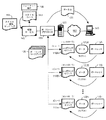
図1は、ポートレットのコンテンツをパーベイシブ・エージェント中で表示するためにレンダリングするように構成されたポータル・サーバ・システムの概略図である。ポータル・サーバ・システムはポータル135を含むことができ、ポータル135は、ポータル・サーバ130を介して、精選されたポートレット115A、115B、115nに通信可能に結合される。各ポートレット115A、115B、115nは、対応するレンダリング・ロジック110A、110B、110nを介して、ポートレット・データ120A、120B、120nに基づいてポートレット・マークアップ125の形でビューを生成することができる。とりわけ、レンダリング・ロジック110A、110B、110nは、JSPなどのアクティブ・マークアップとすることができ、JSPでは、論理スクリプトレットを埋め込んで特定のマークアップ言語タグを生成することができる。
FIG. 1 is a schematic diagram of a portal server system configured to render portlet content for display in a pervasive agent. The portal server system can include a portal 135, which is communicatively coupled via the
ポートレット・マークアップ125を受け取り、ポートレット・マークアップをポータル135中のビューに集約するために、ポートレット・アグリゲータ105を各ポートレット115A、115B、115nに結合することができる。これに関して、ポータル135はサーバ130に配置されているものとすることができ、クライアント・デバイス140が、サーバ130から、ローカル・コンピュータ通信ネットワーク、例えばイントラネット、やグローバル・コンピュータ通信ネットワーク、例えばインターネットなどのコンピュータ通信ネットワーク160を介してポータル135にアクセスすることができる。とりわけ、クライアント・デバイス140には、従来のように構成された表示資源と、限られた表示資源を有するパーベイシブ・デバイスとの両方を含めることができる。
本発明によれば、本明細書で視覚サービス145と呼ぶプログラマティック・スタイリング・サービスをポートレット・アグリゲータ105に結合することができ、個々のレンダリング・ロジック110A、110B、110nからアクセスすることができる。より具体的には、ポートレット・アグリゲータ105を拡張して、例えばスタイル・ビーンやスタイルシート・オブジェクトなどの視覚サービス145を、まだセッションが存在しない場合のHttpSessionやHttpRequestオブジェクトなどのポータル要求オブジェクトに挿入することができる。(スタイルシート・オブジェクトがスタイル・ビーンの代わりに挿入された場合、レンダリング・ロジック110A、110B、110nは、スタイルシート・オブジェクトに基づいてスタイル・ビーンを生成することができる。)それにより、ポートレット115A、115B、115nのレンダリング・ロジック110A、110B、110nは、視覚サービス145にアクセスすることができる。
In accordance with the present invention, a programmatic styling service, referred to herein as a
視覚サービス145はさらに、ポータル135に関する1つまたは複数の視覚テーマを定義する1つまたは複数のスタイルシート150に結合させることができる。視覚サービス145は、スタイルシート150をロードすると、ポータル135に関する現在のスタイリング属性を決定し、この構造から、内部スタイル−属性マッピング155を生成することができる。とりわけ、スタイルシート150が解析されるとき、スタイルシート150内で定義された各クラスは、複数のタグに当てはめることができる属性を含むことができる。例えば、クラス定義「.myText{background-color#EBEBEB; color:#666666;font-family:sans-serif; font-size:12pt;}」の場合に、<font>タグが生成されるものとすることができる。この定義のcolor、font-family、font-sizeの各要素は、<font>タグを介して指定される属性にマッピングするが、複数のタグがなおbackground-color属性を使用することができる。
The
スタイルシート中のどの属性を特定のマークアップ・タグと共に使用すべきか決定するために、スタイルシート150をフォーマット規則プロパティ・ファイル165で増強することができる。フォーマット規則プロパティ・ファイル165は、例えばキーと値の対によって定義された、新しい出力を生成するための規則のセットを含むことができる。キーは、この例ではタグ名とすることができ、値は、そのタグおよびレンダリングすべき任意の子孫タグと共に使用されるスタイルシート属性とすることができる。フォーマット規則プロパティ・ファイル165は、一度生成すれば、特定のマークアップDTDについて頻繁に変更する必要はない。
The
スタイル−属性マッピング155内で、スタイルシート属性名とマークアップ属性名との間のマッピングは、以下のような形をとる。
「style_sheet_attribute_name=html_attribute_name(s)」
したがって、例えば<font>タグの場合のマッピングは、以下のマッピングを含むことができる。
「font=font-family=face, color=color,font-size=size」
ここでfont-family、color、font-sizeの各要素は、<font>タグに当てはまる属性である。また、属性タグが生成されるとき、face要素は、スタイルシート中の要素font-familyの値に関する属性名を含むことができ、color要素は、スタイルシート中のcolor要素の値に関する属性名を含むことができ、size要素は、スタイルシート中のfont-size要素の値に関する属性名を含むことができる。
Within style-
"Style_sheet_attribute_name = html_attribute_name (s)"
Thus, for example, the mapping for the <font> tag can include the following mapping:
"Font = font-family = face, color = color, font-size = size"
Here, each element of font-family, color, and font-size is an attribute applicable to the <font> tag. When an attribute tag is generated, the face element can include an attribute name related to the value of the element font-family in the style sheet, and the color element includes an attribute name related to the value of the color element in the style sheet. The size element can include an attribute name for the value of the font-size element in the style sheet.
フォーマット規則プロパティ・ファイル165が前述の例に限定されないことは、当業者には理解されるであろう。そうではなく、ポータル135がレンダリングされることになるデバイスのタイプに従って、その他の規則を定義することもできる。例えば別の例としては、フォーマット規則プロパティ・ファイル165の中の規則は、テーブル行タグ、例えば「<td>.:td=background-color=bgcolor; descendants=font」をどのように処理するかを識別することができる。それにより、「<tdclass="myText">」などの単一のタグを、CSS使用不可デバイスに対して<tdbgcolor=#EBEBEB"> <font face="sans-serif"color=#666666" size="2">のように解釈することができることに留意されたい。 Those skilled in the art will understand that the format rule properties file 165 is not limited to the above example. Instead, other rules may be defined according to the type of device on which the portal 135 is to be rendered. For example, as another example, the rules in the format rule properties file 165 specify how to handle table row tags, eg, "<td> .: td = background-color = bgcolor; descendants = font". Can be identified. As a result, a single tag such as "<tdclass =" myText ">" is added to a CSS-disabled device as <tdbgcolor = # EBEBEB "> <font face =" sans-serif "color = # 666666" size = Note that it can be interpreted as "2">.
したがって、種々のデバイスに対する種々の規則を処理するために、まずフォーマット規則プロパティ・ファイル165中で、特定のユーザ・エージェントのサブストリングがサフィックスに付いた名前を検索することができる。これに関して、「_&」で始まるサフィックスは、ユーザ・エージェントのサブストリングを識別することができる。サブストリング内のスペースはアンダースコアで表すことができる。例えば、「Windows(R)CE」というフレーズをそのユーザ・エージェント・フィールド内に含む任意のデバイスに、name_&Windows_CE.propertiesを使用することができる。指定のユーザ・エージェントに対する特定のフォーマット規則をフォーマット規則プロパティ・ファイル165内で識別することができない場合は、マークアップ特有プロパティ・ファイルの検索を実施することができる。この結果、マークアップ特有プロパティ・ファイルのサフィックスにマークアップ名を付けることができる。 Thus, to process the various rules for the various devices, one can first look in the format rule properties file 165 for the name suffixed by the substring of the particular user agent. In this regard, a suffix beginning with "_ &" may identify a substring of the user agent. Spaces in substrings can be represented by underscores. For example, name_ & Windows_CE.properties can be used for any device that contains the phrase "Windows (R) CE" in its user agent field. If a particular formatting rule for a given user agent cannot be identified in the format rule properties file 165, a search for a markup-specific properties file can be performed. As a result, the markup name can be given to the suffix of the markup-specific property file.
例えば、特定のユーザ・エージェントに関するデバイス・プロパティが定義されていなかった任意のHTMLデバイスに、name_HTML.propertiesを使用することができる。どちらの定義もフォーマット規則プロパティ・ファイル165中になかった場合は、サフィックスなしのプロパティ定義、例えばname.propertiesを使用することができる。したがって、フォーマット規則プロパティ・ファイル165に「tag map」という名前が付いている場合、フォーマット規則の検索順は、以下の順番を含むことができる。
1)tagmap_&useragentsubstring.properties
2)tagmap_markup.properties
3)tagmap.properties
この結果、デバイス特有からマークアップ特有、ポータル全体まで、フォーマット規則に幅広い細分性をもたらすことができる。これらの規則はまた、画像や色などサポートされないエンティティをどのように処理するかをポータルに指示することもできる。
For example, name_HTML.properties can be used for any HTML device for which device properties for a particular user agent were not defined. If neither definition is in the format
1) tagmap_ & useragentsubstring.properties
2) tagmap_markup.properties
3) tagmap.properties
This can result in a wide range of granularity in formatting rules, from device specific to markup specific to the entire portal. These rules can also tell the portal how to handle unsupported entities such as images and colors.
図2は、図1のポータル・サーバ・システム内で、ポートレット・コンテンツをパーベイシブ・エージェント中で表示するためにレンダリングするプロセスを示すフロー・チャートである。ブロック210で開始し、ポートレット・アグリゲータと協同して、視覚サービスのインスタンスを生成することができる。具体的には、ポータル・ビューのレンダリングにおけるポートレット集約段階の間に、集約スタイル・オブジェクトをインスタンス化することができる。スタイル・オブジェクトがインスタンス化されると、ポートレットのレンダリング・ロジックが、ポートレット要求オブジェクトを介してスタイル・オブジェクトにアクセスすることができる。いずれにしてもブロック220で、ポートレット・アグリゲータは、ポータル・テーマ・スタイルシートをロードして、ポータルについての現在のスタイリング属性を決定することができる。ブロック230で、アグリゲータは、この構造からスタイル−属性マッピングを構築することができる。
FIG. 2 is a flow chart illustrating the process of rendering portlet content for display in a pervasive agent within the portal server system of FIG. Beginning at
各ポートレットごとに、パーベイシブ・エージェントなどの選択されたクライアント中でポートレット・ビューをポータル・テーマ・スタイルシートに従ってレンダリングするのに適した属性およびロジックで、レンダリング・ロジックをコンパイル前に修正することができる。具体的には、まず決定ブロック240で、サポートされない視覚要素への参照をレンダリング・ロジックから除去するかどうかを決定することができる。除去する場合は、ブロック250で、レンダリング・ロジックの内容を解析することができ、サポートされない要素をサポートされる要素に変更するか、または完全に削除することができる。
For each portlet, the rendering logic can be modified before compilation with attributes and logic suitable for rendering the portlet view in a selected client, such as a pervasive agent, according to the portal theme stylesheet . Specifically, a
例えば、<b>や<i>タグなど、任意のインライン・スタイリング・タグをレンダリング・ロジックから削除することができる。HTMLのようなマークアップ・ビューは、すでに従来のブラウザ用にオーサリングされているが、このようにしてマークアップ・ビューをサポートすることができる。さらに、開発者がレンダリング・ロジックに手動変更を行う必要なしに、従来のマークアップ・ビューをサポートすることができる。最後に、新たに生成されるビューは、最適化のために、XHTMLstrictなど、よりスタイリング制限的なマークアップ言語に適合することができる。 For example, any inline styling tags, such as <b> and <i> tags, can be removed from the rendering logic. Markup views such as HTML have already been authored for traditional browsers, but markup views can be supported in this way. In addition, traditional markup views can be supported without the developer having to make manual changes to the rendering logic. Finally, the newly created view can be adapted to a more styling-restricted markup language, such as XHTMLstrict, for optimization.
最後に、ブロック250でレンダリング・ロジックにスクラブ処理を施したかどうかにかかわらず、ブロック260で、ポータル・スタイル抽象化をビューに適用することができる。具体的には、前述のテーブル行(<td>)の例のように、レンダリング・ロジック内の単一のタグを複数のタグに拡張することができる。ポータル・スタイルシートのスタイリング属性をレンダリング・ロジック中にインラインするだけでは、スタイルシート・テーマを動的に選択できないことは、当業者には理解されるであろう。具体的には、レンダリング・ロジックを解析し修正した後、レンダリング・ロジックをサーブレットにコンパイルしてサーバ上にキャッシュすることができる。この結果、後でテーマ変更があっても、キャッシュされたサーブレットには適用されないことになる。
Finally, regardless of whether the rendering logic has been scrubbed at
複数タグの拡張と動的なスタイルシート・テーマ選択との両方を考慮するためには、前述のテーブル行の例に関して以下に述べるように、スタイル抽象化を再帰的にビューに適用することができる。前述の例では、JSPステートメント<tr class="myText">をスクリプトレット<%=styleBean.tag("tr","myText")%>で置き換えて、スタイル・ビーン集約サービスに影響を与えることができる。この抽象化により、JSPをサーブレットにコンパイルした後には動的な決定を行うことができる。 To account for both multi-tag extensions and dynamic style sheet theme selection, style abstractions can be applied recursively to views, as described below with respect to the example table row above. . In the example above, replacing the JSP statement <tr class = "myText"> with the scriptlet <% = styleBean.tag ("tr", "myText")%> could affect the style bean aggregation service. it can. This abstraction allows dynamic decisions to be made after compiling the JSP into a servlet.
いずれにしても、すべてのタグ属性およびクラス属性を見つけて、前述のスクリプトレットで置き換えることができる。JSPがコンパイルされると、スタイル・ビーンは、動的スタイリング能力を維持するために以下の再帰的な3段階プロセスを実施する。より具体的には、3段階プロセスは第1に、初期マークアップ・タグ・フラグメントをスクリプトレット呼出しの代わりに挿入することを含むことができる。第2に、挿入されたフラグメントに、スタイル・マップによって指定されるようにタグ属性を付加することができる。最後に、挿入されたタグを完成させるためにスタイル子孫を生み出すことができる。 In any case, you can find all tag and class attributes and replace them with the scriptlets described above. Once the JSP is compiled, Style Bean performs the following recursive three-step process to maintain dynamic styling capabilities. More specifically, the three-stage process can first include inserting an initial markup tag fragment instead of a scriptlet call. Second, tag attributes can be added to the inserted fragment as specified by the style map. Finally, style descendants can be created to complete the inserted tag.
例えば、まずスクリプトレット呼出しをマークアップ・タグの始まりの部分で置き換えることができる。「myText」の例では、マークアップ・タグ・フラグメント「<tr」を挿入することができる。その後、スタイル・マップに定義されるように、現在のスタイルシート・クラス名からの値で、現在のマークアップ・タグに属性を追加することができる。やはり「myText」の例では、マークアップ・タグ・フラグメント「bgcolor='EBEBEB'>」
を挿入することができる。最後に、スタイル・マップによって定義されるように次のスタイル子孫を決定することができる。すべての子孫が尽きるまで、次のスタイル子孫について前述の各ステップを再帰的に再処理することができる。
For example, a scriptlet call can first be replaced by the beginning of a markup tag. In the example of "myText", a markup tag fragment "<tr" can be inserted. The attribute can then be added to the current markup tag with the value from the current stylesheet class name, as defined in the style map. Again, in the "myText" example, the markup tag fragment "bgcolor = 'EBEBEB'>"
Can be inserted. Finally, the next style descendant can be determined as defined by the style map. The above steps can be recursively reprocessed for the next style descendant until all descendants are exhausted.
例えば、「myText」の例では、挿入されたタグ・フラグメントに付加される次のタグ・フラグメントは「font」を含むものとすることができる。したがって、「font」スタイル子孫について3段階プロセスを繰り返す結果、「<trbgcolor='EBEBEB'> <font face='sans-serif' color='#666666' size='2'>」となる。このタイプの再帰的アルゴリズムにより、スタイル・ビーン実装に変更を加えなくても、あるいはスタイル・ビーン実装の内部に特殊化されたコードがなくても、例えばCHTMLなどの新しいマークアップ・タイプをプラグインすることができるという、包括的な解決法が可能になる。 For example, in the example of "myText", the next tag fragment added to the inserted tag fragment may include "font". Therefore, as a result of repeating the three-step process for the "font" style descendants, "<trbgcolor = 'EBEBEB'> <font face = 'sans-serif' color = '# 666666' size = '2'>" is obtained. This type of recursive algorithm allows new markup types, such as CHTML, to be plugged in without any changes to the style bean implementation, or without specialized code inside the style bean implementation. A comprehensive solution is possible.
要約すると、ほとんどのパーベイシブ・デバイスでは、スタイルシート・レンダリングはサポートされない。しかしポータル技術は、アプリケーション間で一貫性のある視覚体裁を提供するために、スタイルシート・レンダリングを当然のこととして広く組み込んでいる。このため、パーベイシブ・デバイスのためのポータル・コンテンツのレンダリングに一貫性がなくなる。本発明のスタイル・ビーン・レンダリング技術を適用すれば、JSPのコンテンツを動的に変更することができ、それにより、ポータルのスタイル設定に忠実であり続けながらも、選択されたパーベイシブ・デバイスに互換性のあるスタイリング・タグを生成することができる。したがって本発明を用いることにより、ポータル開発者は、従来のクライアント用に1度だけポートレット・コードを書けばよく、コードによってパーベイシブ・デバイス中で正しいポータル体裁が生み出されるようにすることができる。 In summary, most pervasive devices do not support stylesheet rendering. However, portal technology naturally incorporates style sheet rendering in order to provide a consistent visual appearance between applications. This results in inconsistent rendering of portal content for pervasive devices. By applying the style bean rendering technology of the present invention, the contents of the JSP can be changed dynamically, thereby maintaining the styling of the portal while still being compatible with the selected pervasive device. Styling tags can be generated. Thus, by using the present invention, a portal developer can write portlet code only once for a traditional client and ensure that the code produces the correct portal appearance in a pervasive device.
本発明は、ハードウェア、ソフトウェア、またはハードウェアとソフトウェアの組合せにおいて実現することができる。本発明の実装形態は、1つのコンピュータ・システム内で中央化方式で実現することもでき、相互接続されたいくつかのコンピュータ・システムにわたって各種要素が散在する分散方式で実現することもできる。本明細書に述べた方法を実施するように適合されたものならどんな種類のコンピュータ・システムまたはその他の装置も、本明細書に述べた機能を実施するのに適している。 The invention can be implemented in hardware, software, or a combination of hardware and software. Implementations of the invention may be implemented in a centralized fashion within a single computer system, or in a distributed fashion where various elements are interspersed across several interconnected computer systems. Any type of computer system or other device adapted to perform the methods described herein is suitable for performing the functions described herein.
ハードウェアとソフトウェアの典型的な組合せの1つは、コンピュータ・プログラムを備えた汎用コンピュータ・システムとすることができ、コンピュータ・プログラムは、ロードされて実行されると、本明細書に述べた方法を実施するようにコンピュータ・システムを制御する。本発明はコンピュータ・プログラム製品に組み込むこともでき、このコンピュータ・プログラム製品は、本明細書に述べた方法の実施を可能にするすべての特徴を備え、また、コンピュータ・システムにロードされると、これらの方法を実施することができる。 One typical combination of hardware and software can be a general-purpose computer system with a computer program that, when loaded and executed, executes the methods described herein. Control the computer system to perform the following. The invention can also be incorporated in a computer program product, which comprises all the features that enable the implementation of the methods described herein and, when loaded into a computer system, These methods can be implemented.
このコンテキストにおけるコンピュータ・プログラムまたはアプリケーションとは、情報処理機能を有するシステムに特定の機能を実施させるように意図された命令セットを任意の言語、コード、または表記で任意に表現したものを意味し、命令セットは、特定の機能を直接に実施させるか、a)別の言語、コード、または表記に変換された後、あるいはb)異なる材料形式に再生された後、の一方または両方で実施させる。重要なことだが、本発明は、その趣旨または本質的な属性を逸脱することなく他の特定の形に組み入れることもでき、したがって、本発明の範囲を示すものとしては、前述の明細書ではなく添付の特許請求の範囲を参照すべきである。 A computer program or application in this context means an arbitrary set of instructions, in any language, code, or notation, intended to cause a system having information processing functions to perform a particular function, The instruction set may cause a specific function to be performed directly, or a) after being translated into another language, code, or notation, or b) after being replayed into a different material format. Importantly, the present invention may be embodied in other specific forms without departing from its spirit or essential attributes, and is thus intended to indicate the scope of the present invention rather than the foregoing specification. Reference should be made to the appended claims.
105 ポートレット・アグリゲータ
110A レンダリング・ロジック
110B レンダリング・ロジック
110n レンダリング・ロジック
115A ポートレット
115B ポートレット
115n ポートレット
120A データ
120B データ
120n データ
125 ポートレット・マークアップ
130 サーバ
135 ポータル
140 クライアント・デバイス
145 視覚サービス
150 スタイルシート
155 スタイル−属性マッピング
160 コンピュータ通信ネットワーク
165 フォーマット規則プロパティ・ファイル
105
Claims (20)
ポータルのためのテーマを定義するスタイルシートをロードするステップと、
前記定義されたテーマに関する視覚レンダリング属性を、特定タイプのパーベイシブ・エージェントに特有のマークアップ言語タグにマッピングするステップと、
指定のポートレットのためのポートレット・レンダリング・ロジックを解析して、埋め込まれたスタイル属性参照を識別するステップと、
前記ポートレット・レンダリング・ロジック中の前記埋め込まれたスタイル属性参照のうちの選択された参照を、前記マークアップ言語タグのうちのマッピングされるタグで置き換えるステップと、
前記ポートレット・レンダリング・ロジックを、前記指定のポートレットについてのビューを生成する際に使用されるようにコンパイルするステップと
を含む、方法。 A method of rendering a portal view according to a portal style for display in a pervasive agent,
Loading a style sheet that defines the theme for the portal;
Mapping the visual rendering attributes for the defined theme to markup language tags specific to a particular type of pervasive agent;
Parsing the portlet rendering logic for the specified portlet to identify embedded style attribute references;
Replacing selected ones of the embedded style attribute references in the portlet rendering logic with mapped ones of the markup language tags;
Compiling the portlet rendering logic for use in generating a view for the specified portlet.
前記ポートレットについてのユーザ・エージェントと、前記ポートレットについてのマークアップ言語タイプとのうちの一方を識別するステップと、
前記ユーザ・エージェントと前記マークアップ言語タイプとのうちの前記識別された一方に対応するスタイルシートをロードするステップと
を含む、請求項1に記載の方法。 The loading step comprises:
Identifying one of a user agent for the portlet and a markup language type for the portlet;
Loading a stylesheet corresponding to the identified one of the user agent and the markup language type.
前記ポートレット・レンダリング・ロジックに通信可能にリンクされたポートレット・アグリゲータと、
前記ポートレット・アグリゲータに対する視覚サービス・エクステンションとを備え、
前記視覚サービス・エクステンションは、前記ポートレット・レンダリング・ロジックを処理して前記ポートレット・レンダリング・ロジック中の視覚スタイル属性をマークアップ言語タグに変換するようにプログラムされ、前記マークアップ言語タグは、指定のタイプのパーベイシブ・エージェント中で表示されるようにレンダリングすることができる、
ポータル・サーバ・システム。 A portal coupled to a plurality of portlets, each having associated portlet rendering logic;
A portlet aggregator communicatively linked to said portlet rendering logic;
A visual service extension to the portlet aggregator,
The visual service extension is programmed to process the portlet rendering logic to convert visual style attributes in the portlet rendering logic into markup language tags, wherein the markup language tag is Can be rendered as displayed in a type of pervasive agent,
Portal server system.
前記ポータル・アグリゲータに対する視覚サービス・エクステンションとを備え、
前記視覚サービス・エクステンションは、前記ポートレット・ビューのうちの選択されたポートレット・ビューのためのポートレット・レンダリング・ロジックを処理して、前記ポートレット・レンダリング・ロジック中の視覚スタイル属性をマークアップ言語タグに変換するようにプログラムされ、前記マークアップ言語タグは、指定のタイプのパーベイシブ・エージェント中で表示されるようにレンダリングする、
ポータル・サーバ。 A portlet aggregator configured to aggregate the portlet views into a single portal view;
A visual service extension to the portal aggregator,
The visual service extension processes portlet rendering logic for a selected one of the portlet views to map visual style attributes in the portlet rendering logic to markup language tags. Programmed to convert, the markup language tag rendering to be displayed in a specified type of pervasive agent;
Portal server.
ポータルのためのテーマを定義するスタイルシートをロードするステップと、
前記定義されたテーマに関する視覚レンダリング属性を、特定タイプのパーベイシブ・エージェントに特有のマークアップ言語タグにマッピングするステップと、
指定のポートレットのためのポートレット・レンダリング・ロジックを解析して、埋め込まれたスタイル属性参照を識別するステップと、
前記ポートレット・レンダリング・ロジック中の前記埋め込まれたスタイル属性参照のうちの選択された参照を、前記マークアップ言語タグのうちのマッピングされるタグで置き換えるステップと、
前記ポートレット・レンダリング・ロジックを、前記指定のポートレットについてのビューを生成する際に使用されるようにコンパイルするステップと
をマシンに実施させるための命令のルーチン・セットを含む、マシン可読記憶装置。 A machine-readable storage storing a computer program for rendering a portal view according to a portal style for display in a pervasive agent, the computer program comprising:
Loading a style sheet that defines the theme for the portal;
Mapping the visual rendering attributes for the defined theme to markup language tags specific to a particular type of pervasive agent;
Parsing the portlet rendering logic for the specified portlet to identify embedded style attribute references;
Replacing selected ones of the embedded style attribute references in the portlet rendering logic with mapped ones of the markup language tags;
Compiling the portlet rendering logic for use in generating a view for the specified portlet; and a routine set of instructions for causing the machine to perform the steps.
前記ポートレットについてのユーザ・エージェントと、前記ポートレットについてのマークアップ言語タイプとのうちの一方を識別するステップと、
前記ユーザ・エージェントと前記マークアップ言語タイプとのうちの前記識別された一方に対応するスタイルシートをロードするステップと
を含む、請求項15に記載のマシン可読記憶装置。 The loading step comprises:
Identifying one of a user agent for the portlet and a markup language type for the portlet;
Loading a stylesheet corresponding to the identified one of the user agent and the markup language type.
Applications Claiming Priority (1)
| Application Number | Priority Date | Filing Date | Title |
|---|---|---|---|
| US10/439,867 US20040230901A1 (en) | 2003-05-15 | 2003-05-15 | Portlet style conformity on pervasive agents |
Publications (2)
| Publication Number | Publication Date |
|---|---|
| JP2004342105A true JP2004342105A (en) | 2004-12-02 |
| JP4170256B2 JP4170256B2 (en) | 2008-10-22 |
Family
ID=33417916
Family Applications (1)
| Application Number | Title | Priority Date | Filing Date |
|---|---|---|---|
| JP2004141156A Expired - Fee Related JP4170256B2 (en) | 2003-05-15 | 2004-05-11 | Method for rendering a portal view for display on a handheld computer or mobile phone, portal server system, and program |
Country Status (2)
| Country | Link |
|---|---|
| US (1) | US20040230901A1 (en) |
| JP (1) | JP4170256B2 (en) |
Families Citing this family (27)
| Publication number | Priority date | Publication date | Assignee | Title |
|---|---|---|---|---|
| US7831905B1 (en) * | 2002-11-22 | 2010-11-09 | Sprint Spectrum L.P. | Method and system for creating and providing web-based documents to information devices |
| US7146563B2 (en) * | 2003-05-29 | 2006-12-05 | International Business Machines Corporation | Maintaining screen and form state in portlets |
| US7277895B2 (en) * | 2003-08-22 | 2007-10-02 | Ora International, Inc. | System and method of parsing a template for generating presentation data |
| US7493563B2 (en) * | 2004-03-05 | 2009-02-17 | International Business Machines Corporation | Using content aggregation to build administration consoles |
| US7444633B2 (en) * | 2004-03-05 | 2008-10-28 | International Business Machines Corporation | Federating legacy/remote content into a central network console |
| US8327290B2 (en) * | 2004-04-06 | 2012-12-04 | International Business Machines Corporation | User task interface in a web application |
| US8181112B2 (en) * | 2004-05-21 | 2012-05-15 | Oracle International Corporation | Independent portlet rendering |
| US7788340B2 (en) * | 2004-11-22 | 2010-08-31 | Bea Systems Inc. | System and method for event based interportlet communications |
| US7574712B2 (en) * | 2004-11-22 | 2009-08-11 | Bea Systems, Inc. | User interface for configuring web services for remote portlets |
| US9071570B2 (en) * | 2005-03-30 | 2015-06-30 | International Business Machines Corporation | Method and apparatus to select and deliver portable portlets |
| US20060242571A1 (en) * | 2005-04-21 | 2006-10-26 | Xiaofan Lin | Systems and methods for processing derivative featurees in input files |
| US20060253411A1 (en) * | 2005-05-05 | 2006-11-09 | International Business Machines Corporation | Method, system and program product for inserting visual controls for data values in web content from a legacy web application without rewriting the legacy web application |
| US9218329B2 (en) | 2005-06-30 | 2015-12-22 | International Business Machines Corporation | Independent submission of forms in a portal view |
| US8214731B2 (en) * | 2005-06-30 | 2012-07-03 | International Business Machines Corporation | Independently refreshing portlet content in a portal view |
| CN100535900C (en) * | 2005-12-06 | 2009-09-02 | 国际商业机器公司 | Method and system for rendering asynchronous portal page |
| US8176416B1 (en) | 2006-03-17 | 2012-05-08 | Wells Fargo Bank, N.A. | System and method for delivering a device-independent web page |
| US20070240041A1 (en) * | 2006-04-05 | 2007-10-11 | Larry Pearson | Methods and apparatus for generating an aggregated cascading style sheet |
| US20080077851A1 (en) * | 2006-09-26 | 2008-03-27 | International Business Machines Corporation | Method and apparatus for inserting jsr 168 portlet content into a j2ee java server page |
| US20080127133A1 (en) * | 2006-11-28 | 2008-05-29 | International Business Machines Corporation | Aggregating portlets for use within a client environment without relying upon server resources |
| KR101547496B1 (en) * | 2008-07-24 | 2015-08-27 | 삼성전자주식회사 | Method and apparatus for reconstructing a web page |
| US20120005629A1 (en) * | 2010-06-30 | 2012-01-05 | Alcatel-Lucent Canada Inc. | Tightly coupled lists and forms for creating/viewing/editing data |
| US9002139B2 (en) | 2011-02-16 | 2015-04-07 | Adobe Systems Incorporated | Methods and systems for automated image slicing |
| US9600131B2 (en) * | 2011-05-31 | 2017-03-21 | Red Hat, Inc. | Integrated application that contains software modules coupled to a message bus |
| US9262385B2 (en) * | 2012-05-16 | 2016-02-16 | Sap Portals Israel Ltd | Automatic retrieval of themes and other digital assets from an organizational website |
| US9632988B2 (en) * | 2012-07-12 | 2017-04-25 | International Business Machines Corporation | Autonomous gadget management system |
| US20160127444A1 (en) * | 2014-11-03 | 2016-05-05 | International Business Machines Corporation | Web component display by cross device portal |
| CN108920147B (en) * | 2018-06-11 | 2021-12-14 | 京信网络系统股份有限公司 | A Web page construction method, apparatus, computing device and storage medium |
Family Cites Families (13)
| Publication number | Priority date | Publication date | Assignee | Title |
|---|---|---|---|---|
| EP0525258A1 (en) * | 1991-07-29 | 1993-02-03 | International Business Machines Corporation | Generation of rules-based computer programs |
| US5513342A (en) * | 1993-12-28 | 1996-04-30 | International Business Machines Corporation | Display window layout system that automatically accommodates changes in display resolution, font size and national language |
| US5897644A (en) * | 1996-09-25 | 1999-04-27 | Sun Microsystems, Inc. | Methods and apparatus for fixed canvas presentations detecting canvas specifications including aspect ratio specifications within HTML data streams |
| US6023714A (en) * | 1997-04-24 | 2000-02-08 | Microsoft Corporation | Method and system for dynamically adapting the layout of a document to an output device |
| US6110226A (en) * | 1998-02-19 | 2000-08-29 | Cygnus Solutions | Java development environment using optimizing ahead-of-time compiler |
| US6558431B1 (en) * | 1998-09-11 | 2003-05-06 | Macromedia, Inc. | Storing valid and invalid markup language in strict and relaxed tables respectively |
| WO2001052090A2 (en) * | 2000-01-14 | 2001-07-19 | Saba Software, Inc. | Method and apparatus for a web content platform |
| US6327628B1 (en) * | 2000-05-19 | 2001-12-04 | Epicentric, Inc. | Portal server that provides a customizable user Interface for access to computer networks |
| GB0023570D0 (en) * | 2000-09-26 | 2000-11-08 | Volantis Systems Ltd | Web server |
| US8112544B2 (en) * | 2000-12-29 | 2012-02-07 | International Business Machines Corporation | System and method for providing customizable options on a wireless device |
| US7240280B2 (en) * | 2001-10-24 | 2007-07-03 | Bea Systems, Inc. | System and method for application flow integration in a portal framework |
| US20040010598A1 (en) * | 2002-05-01 | 2004-01-15 | Bea Systems, Inc. | Portal setup wizard |
| US7103844B2 (en) * | 2002-06-26 | 2006-09-05 | International Business Machines Corporation | Portal/portlet application data synchronization |
-
2003
- 2003-05-15 US US10/439,867 patent/US20040230901A1/en not_active Abandoned
-
2004
- 2004-05-11 JP JP2004141156A patent/JP4170256B2/en not_active Expired - Fee Related
Also Published As
| Publication number | Publication date |
|---|---|
| JP4170256B2 (en) | 2008-10-22 |
| US20040230901A1 (en) | 2004-11-18 |
Similar Documents
| Publication | Publication Date | Title |
|---|---|---|
| JP4170256B2 (en) | Method for rendering a portal view for display on a handheld computer or mobile phone, portal server system, and program | |
| US11182535B2 (en) | Configuring a page for drag and drop arrangement of content artifacts in a page development tool | |
| KR101099272B1 (en) | Web page rendering mechanism using external programmatic themes | |
| US8700988B2 (en) | Selectively interpreted portal page layout template | |
| US7873668B2 (en) | Application data binding | |
| US7194683B2 (en) | Representing and managing dynamic data content for web documents | |
| US7712025B2 (en) | Document object model caching and validation | |
| US10296558B1 (en) | Remote generation of composite content pages | |
| US7523158B1 (en) | System and method for partial page updates using a proxy element | |
| US8890890B2 (en) | Pluggable web-based visualizations for applications | |
| US20030137538A1 (en) | Dynamic setting of navigation order in aggregated content | |
| US9646103B2 (en) | Client-side template engine and method for constructing a nested DOM module for a website | |
| US20040268249A1 (en) | Document transformation | |
| JP4791542B2 (en) | System, method, and program for independently refreshing portlet content in portal view (independent refresh of portlet content in portal view) | |
| JP2008508639A (en) | Document processing and management method for adding an exclusive plug-in for realizing a desired function | |
| JP2004510254A (en) | Network server | |
| US20100131585A1 (en) | Displaying information in a client/server system | |
| US20090019378A1 (en) | Extended cascading style sheets | |
| US20160012144A1 (en) | Javascript-based, client-side template driver system | |
| WO2016005885A2 (en) | Asynchronous initialization of document object model (dom) modules | |
| US10417317B2 (en) | Web page profiler | |
| US20150012819A1 (en) | Template-driven decoration engine | |
| US20160012023A1 (en) | Self-Referencing of Running Script Elements in Asynchronously Loaded DOM Modules | |
| US20070259676A1 (en) | Method and system for bridging communications between mobile devices and application modules | |
| US8230327B2 (en) | Identifying statements requiring additional processing when forwarding a web page description |
Legal Events
| Date | Code | Title | Description |
|---|---|---|---|
| A131 | Notification of reasons for refusal |
Free format text: JAPANESE INTERMEDIATE CODE: A131 Effective date: 20070904 |
|
| A521 | Written amendment |
Free format text: JAPANESE INTERMEDIATE CODE: A821 Effective date: 20071127 Free format text: JAPANESE INTERMEDIATE CODE: A523 Effective date: 20071127 |
|
| RD12 | Notification of acceptance of power of sub attorney |
Free format text: JAPANESE INTERMEDIATE CODE: A7432 Effective date: 20071127 |
|
| A521 | Written amendment |
Free format text: JAPANESE INTERMEDIATE CODE: A821 Effective date: 20071128 |
|
| A02 | Decision of refusal |
Free format text: JAPANESE INTERMEDIATE CODE: A02 Effective date: 20080206 |
|
| A521 | Written amendment |
Free format text: JAPANESE INTERMEDIATE CODE: A523 Effective date: 20080501 Free format text: JAPANESE INTERMEDIATE CODE: A821 Effective date: 20080501 |
|
| A911 | Transfer to examiner for re-examination before appeal (zenchi) |
Free format text: JAPANESE INTERMEDIATE CODE: A911 Effective date: 20080620 |
|
| TRDD | Decision of grant or rejection written | ||
| A01 | Written decision to grant a patent or to grant a registration (utility model) |
Free format text: JAPANESE INTERMEDIATE CODE: A01 Effective date: 20080729 |
|
| A521 | Written amendment |
Free format text: JAPANESE INTERMEDIATE CODE: A821 Effective date: 20080729 |
|
| RD14 | Notification of resignation of power of sub attorney |
Free format text: JAPANESE INTERMEDIATE CODE: A7434 Effective date: 20080729 |
|
| A01 | Written decision to grant a patent or to grant a registration (utility model) |
Free format text: JAPANESE INTERMEDIATE CODE: A01 |
|
| A61 | First payment of annual fees (during grant procedure) |
Free format text: JAPANESE INTERMEDIATE CODE: A61 Effective date: 20080806 |
|
| FPAY | Renewal fee payment (event date is renewal date of database) |
Free format text: PAYMENT UNTIL: 20110815 Year of fee payment: 3 |
|
| R150 | Certificate of patent or registration of utility model |
Free format text: JAPANESE INTERMEDIATE CODE: R150 |
|
| FPAY | Renewal fee payment (event date is renewal date of database) |
Free format text: PAYMENT UNTIL: 20120815 Year of fee payment: 4 |
|
| FPAY | Renewal fee payment (event date is renewal date of database) |
Free format text: PAYMENT UNTIL: 20130815 Year of fee payment: 5 |
|
| LAPS | Cancellation because of no payment of annual fees |