JP2004357185A - Portable communication equipment - Google Patents
Portable communication equipment Download PDFInfo
- Publication number
- JP2004357185A JP2004357185A JP2003155141A JP2003155141A JP2004357185A JP 2004357185 A JP2004357185 A JP 2004357185A JP 2003155141 A JP2003155141 A JP 2003155141A JP 2003155141 A JP2003155141 A JP 2003155141A JP 2004357185 A JP2004357185 A JP 2004357185A
- Authority
- JP
- Japan
- Prior art keywords
- search
- data
- input
- unit
- communication device
- Prior art date
- Legal status (The legal status is an assumption and is not a legal conclusion. Google has not performed a legal analysis and makes no representation as to the accuracy of the status listed.)
- Pending
Links
Images





Landscapes
- Mobile Radio Communication Systems (AREA)
- Telephone Function (AREA)
Abstract
【課題】容易な操作で、電話帳内の、ユーザの所望する電話番号等の情報が検索結果として得られる携帯通信機器を提供する。
【解決手段】S1051で、現在の検索の種類に応じたリスト内に、ユーザから入力された文字に対応するデータが無いと判断されると、S1053で、対応するデータがあるべき位置の次の位置にあるデータを先頭に、現在の検索の種類に応じたリストに挙げられた順に、データが取出される。たとえば、フリガナについて検索が行なわれ、フリガナ順リストにおいて、「サタケサン」、「タカギサン」とデータが並べられているときに、「ス」という文字が入力されたとすると、「ス」という頭文字のデータがあるべき位置は「サタケサン」と「タカギサン」の間の位置であり、「ス」という頭文字のデータがあるべき位置の次の位置にあるデータとは、「タカギサン」というフリガナを有するデータである。
【選択図】 図6Provided is a mobile communication device that can obtain information such as a telephone number desired by a user in a telephone directory as a search result by an easy operation.
If it is determined in step S1051 that there is no data corresponding to a character input by a user in a list corresponding to a current search type, in step S1053, a list next to a position where the corresponding data should be present. With the data at the position at the head, the data is extracted in the order listed in the list according to the type of the current search. For example, if a search is performed for readings and the data is listed as "Satakesan" and "Takagisan" in the reading order, and the character "S" is entered, the initial data "S" The position where there should be is the position between "Satakesan" and "Takagisan", and the data at the position next to the position where the initial data of "su" should be is the data with the reading "Takagisan" is there.
[Selection] Fig. 6
Description
【0001】
【発明の属する技術分野】
本発明は、携帯通信機器に関し、特に、名前とその名前に対応した電話番号とを関連付けて登録可能な電話帳を記憶する携帯通信機器に関する。
【0002】
【従来の技術】
従来から、名前とその名前に対応した種々の情報とを関連付けて登録可能な電話帳を記憶する通信機器については、種々の技術が開示されている。たとえば特許文献1には、タッチ入力部により入力された頭文字の1文字または2〜3文字に対応するすべての氏名とその電話番号や住所を、予め登録されたものからリストアップして電話帳のように表示させる多機能電話機が開示されている。
【0003】
また、電話帳を記憶する携帯通信機器については、特許文献2には、「国」等の1文字を入力されるごとにそれまで入力された文字列を含む名前が電話帳にあるかを検索し、あったときに、その名前の全文字列と対応する電話番号とを候補として表示し、さらに、表示された候補を確定して発信できるものが開示されている。
【0004】
【特許文献1】
特開平2−254842号公報
【0005】
【特許文献2】
特開2000−286949公報
【0006】
【発明が解決しようとする課題】
従来から、より容易な操作によって、ユーザの所望する電話番号等の情報が検索結果として得られることが切望されてきた。特に、携帯通信機器では、機器が携帯性を備えているため、装置が小型化されており、このことから、ユーザが操作を行なう部分も比較的小型化されている。このため、携帯通信機器では、より一層、より容易な操作によってユーザの所望する電話番号等の情報が検索結果として得られることが望まれる。
【0007】
本発明は上述したかかる実情に鑑み考え出されたものであり、その目的は、容易な操作で、電話帳内の、ユーザの所望する電話番号等の情報が検索結果として得られる携帯通信機器を提供することである。
【0008】
【課題を解決するための手段】
本発明のある局面に従った携帯通信機器は、名前とその名前に対応する電話番号とを関連付けて記憶する電話帳記憶手段と、仮名文字または数字を入力する文字入力手段と、前記電話帳記憶手段に記憶された名前の中から、前記入力手段に入力された仮名文字または数字に対応する名前を検索する検索手段とを含むことを特徴とする。
【0009】
また、本発明に従った携帯通信機器では、前記検索手段は、前記文字入力手段に複数の仮名文字または数字が入力された場合、当該入力された複数の仮名文字または数字のすべてに応じて、順次、検索結果に対する絞込みを行なうことが好ましい。
【0010】
また、本発明に従った携帯通信機器では、前記検索手段は、前記電話帳記憶手段に記憶された名前の中から、前記入力手段に入力された仮名文字または数字に対応する名前を検索できなかった場合には、当該入力された仮名文字または数字との対応関係が所定の条件に従って最も近い名前を検索結果とすることが好ましい。
【0011】
また、本発明に従った携帯通信機器は、前記入力手段に入力された仮名文字または数字と、前記検索手段による検索結果とを表示する表示手段をさらに含むことが好ましい。
【0012】
また、本発明に従った携帯通信機器では、前記検索手段は、複数種類の検索動作の中から1の種類の検索動作を実行可能であり、前記検索手段に検索動作を開始させるために操作される検索動作開始手段と、前記検索手段に対して、実行する検索動作の種類を指定する種類指定手段と、前記検索動作開始手段を操作されることにより前記検索手段に検索動作を開始させる検索制御手段とをさらに含み、前記検索制御手段は、前記検索動作開始手段が操作されることにより、予め定められた1の種類の検索動作で、前記検索手段に検索を開始させることが好ましい。
【0013】
また、本発明に従った携帯通信機器は、前記予め定められた1の種類は、前記検索手段が前回行なった検索動作の種類であることが好ましい。
【0014】
【発明の実施の形態】
以下、図面を参照しつつ、本発明の一実施の形態であるカメラ付携帯電話機(以下、携帯電話と略す)について説明する。なお、以下の説明では、同一の部品には、特記された場合を除き、同一の符号が付され、それらの名称および機能も同じである。したがって、それらについての詳細な説明は繰り返さない。
【0015】
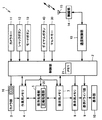
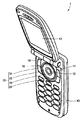
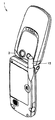
図1には、携帯電話1のブロック構成が示され、図2および図3には、携帯電話1の外観が示されている。まず、図1〜図3を参照して、携帯電話1の概略構成について説明する。
【0016】
携帯電話1は、被写体を撮影して画像データを出力するカメラ部3、液晶表示装置などからなる表示部10、カメラ部3を起動させるために操作されるカメラキー11、カメラ部3によるシャッタ動作のためおよび撮影して得られた画像データを保存するために操作されるシャッタボタン12、通信のためのアンテナ15、表示部10に表示された内容に対して指示を入力するマルチキー30、電話番号や文字(数字を含む)を入力するためい操作される複数のボタンからなるダイヤルボタン40、電話をかけるときや受けるときに使用するボタンであり一般電話機の受話器を上げる動作と同じ役割をする開始ボタン18、および、モードボタン19を備える。マルチキー30は、表示部10に表示されたカーソルを上下左右にそれぞれ移動させるための上キー31、下キー33、左キー32、および、右キー34とが一体的に構成されたものである。
【0017】
なお、各種操作のためのボタンやキーの種類および配置はこれに限定されない。例えば、表示部10に表示される操作メニューの中から操作すべき項目を選択するようにしてもよい。
【0018】
また、図2は、携帯電話1の、表示部10やシャッタボタン12等が備えられた面を示し、図3は、携帯電話1の、図2に示された面の裏面を示している。
【0019】
また、携帯電話1は、各部を制御するためにCPU(Central Processing Unit)などのマイクロプロセッサを含む制御部2、CCD(Charge Coupled Device)16を含むカメラ部3、RAM(Random Access Memory)からなる作業用メモリ4、圧縮処理部20を有し画像データを圧縮処理部20でエンコード(圧縮)して保存処理するための保存処理部5、フラッシュメモリからなる保存用メモリ7、RAMからなる表示用メモリ8、表示ドライバ部9、表示部10、カメラキー11、シャッタボタン12およびモードボタン19、アンテナ15を介した通信のための通信制御部13、および、無線部14を備える。制御部2は、携帯電話1の制御に用いるための各種プログラムデータ等を記録するためのメモリ21を備えている。
【0020】
携帯電話1は、周知の携帯電話機と同様に、通話機能、メール機能、Web接続機能(コンピュータ等のネットワークへの接続機能)、および、電話帳機能を有している。電話帳機能では、たとえば、人物等の名前、電話番号、メールアドレス、URL(Uniform Resource Locator)、画像を含む種々のデータを、それぞれの人物等について互いに関連付けて、電話帳として、保存用メモリ7に記憶させることができる。また、携帯電話1は、カメラ部3において撮影された画像データを保存するカメラ機能を有している。カメラ部3において撮影された画像データは、作業用メモリ4に一旦保存され、そして、圧縮処理部20でエンコードされて保存用メモリ7に保存される。
【0021】
携帯電話1は、電話帳機能において、保存用メモリ7に記憶された電話帳から、ユーザから入力された文字や数字に応じた名前をリストアップして、表示部10に表示させることができる。以下に、CPU2の実行する処理を、このような電話帳機能において名前をリストアップする点を中心に、説明する。
【0022】
なお、CPU2の処理の前提として、保存用メモリ7における、住所録データの保存態様を説明する。
【0023】
まず、保存用メモリ7には、複数の人についてのデータが、「住所録総合データ」として、保存されている。表1に、住所録総合データにおける、各人についてのデータの保存態様を示す。なお、表1には、各人についての複数の登録項目が、登録される内容とともに示されている。
【0024】
【表1】
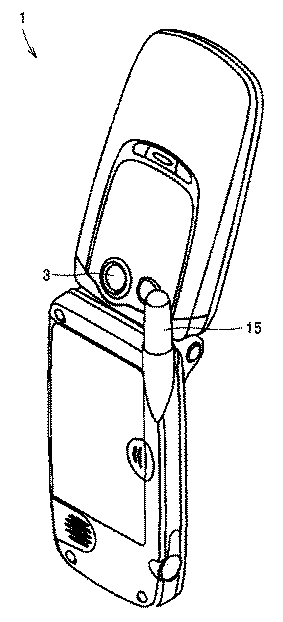
表1から理解されるように、住所録総合データとして、各人の姓名が全角16文字以内で登録され、フリガナが半角32文字以内で登録され、グループ情報が「指定なし」または「グループ1」〜「グループ19」のいずれかに指定されるように登録され、電話番号が26桁以内で登録され、メールアドレスが50バイト以内で登録され、パーソナルデータが全角30文字以内で登録され、シークレット設定が「ON」または「OFF」のいずれかで登録され、「シークレットコード」が登録しているアドレスで登録され、指定着信音としてその人からの電話の着信があった場合に指定される着信音の名称が登録され、指定メール着信音としてその人からのメール着信があった場合に指定される着信音の名称が登録され、指定着信ランプとしてその人からの電話の着信があった場合に指定されるランプ(携帯電話1に備えられたランプ、図1等では図示略)の点灯パターンがパターン1〜パターン8のいずれかで登録され、指定メール受信ランプとしてその人からのメール受信があった場合に指定されるランプ(携帯電話1に備えられたランプ、図1等では図示略)の点灯パターンがパターン1〜パターン8のいずれかで登録され、そして、その人から着信があった場合に表示部10に表示させる画像の名称がマイピクチャコール設定として登録される。なお、指定着信音、指定メール着信音、指定着信ランプ、指定メール受信ランプ、および、マイピクチャコール設定は、「設定なし」としておくこともできる。そして、これらの各人の住所録総合データは、それぞれ、各人ごとに、メモリ番号に関連付けられて、保存されている。なお、メモリ番号は、1〜登録可能な件数までの番号を表す3桁の数字(番号)として登録される。
【0026】
また、保存用メモリ7には、各人の住所録総合データのメモリ番号が種々の条件に応じた順に並べられたリストが保存されている。具体的には、保存用メモリ7には、このようなリストとして、表2に示す、住所録総合データにおけるメモリ番号について当該メモリ番号の順に並べられた「メモリ番号順リスト」と、表3に示す、住所録総合データにおけるフリガナについてのアイウエオ順であるフリガナ順に並べられた「フリガナ順リスト」と、表4に示す、住所録総合データにおけるグループについてグループに付けられた番号の小さい順に並べられたグループ順リストとが保存されている。
【0027】
【表2】
【表3】
【表4】
表3に示すように、住所録総合データに記憶されている各人のデータは、フリガナ順に並べられたとき、並べられたデータのメモリ番号は、029、031、002…となる。また、表4に示すように、住所録総合データに記憶されている各人のデータは、グループ順に並べられたとき、並べられたデータのメモリ番号は、010、030、039となる。
【0031】
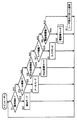
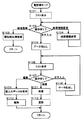
図4は、CPU2のメインルーチンのフローチャートである。
CPU2は、ステップS1(以下、「ステップ」を省略する)で、ユーザから通話機能を使用する旨の操作がなされたか否か判断し、そのような操作があったと判断するとS2で、発呼を行なったりする通話モードの処理を実行した後、S1に処理を戻す。一方、そのような操作がなかったと判断すると、S3に処理を進める。
【0032】
CPU2は、S3で、ユーザからメール機能を使用する旨の操作がなされたか否か判断し、そのような操作があったと判断するとS4で、メール作成や送信等のメールモードの処理を実行し、S1に処理を戻す。一方、そのような操作がなかったと判断すると、S5に処理を進める。
【0033】
CPU2は、S5で、ユーザからWeb接続機能を使用する旨の操作がなされたか否か判断し、そのような操作があったと判断するとS6で、インターネット等のネットワークに接続する等のWeb接続モードの処理を実行し、S1に処理を戻す。一方、そのような操作がなかったと判断すると、S7に処理を進める。
【0034】
CPU2は、S7で、カメラ機能を使用する旨の操作がなされたか否か判断し、そのような操作があったと判断するとS8で、カメラ部3により撮影される画像を作業用メモリ4に保存する等のカメラモードの処理を実行し、S1に処理を戻す。一方、そのような操作がなかったと判断すると、S9に処理を進める。
【0035】
CPU2は、S9で、電話帳機能を使用する旨の操作がなされたか否か判断し、そのような操作があったと判断するとS10で、保存用メモリ7に保存された電話帳データの検索や編集等を行なう電話帳モードの処理を実行し、S1に処理を戻す。一方、そのような操作がなかったと判断すると、S11で、ユーザにより操作された内容に従った処理を実行した後、S1に処理を戻す。
【0036】
図5は、上記したS10の電話帳モードの処理のサブルーチンのフローチャートである。
【0037】
まず、S101で、CPU2は、表示部10に電話帳に登録された名前のリストを表示させて、S102に処理を移行させる。S101では、表2〜表4に示したような、メモリ番号順、フリガナ順、または、グループ順の中の、前回電話帳モードで検索を行なった種類に対応する順で、リスト表示される。なお、携帯電話1では、メモリ番号順、フリガナ順、または、グループ順の、3種類での検索が可能である。そして、S101では、前回の検索で、メモリ番号について検索が行なわれた場合にはメモリ番号順でリスト表示され、フリガナについて検索が行なわれた場合にはフリガナ順でリスト表示され、グループについて検索が行なわれた場合にはグループ順でリスト表示される。また、携帯電話1では、リスト表示された段階で、当該リスト表示に対応した種類での検索に対しての条件を入力できる状態となっている。なお、電話帳モードにおける検索の内容については、後述する。
【0038】
S102では、CPU2は、ユーザが行なった操作の内容をチェックし、電話帳に新規の登録を行なう旨の操作がなされたと判断すればS103に、検索の種類を現在リスト表示が行なわれているものに対応する種類から変更する旨の操作がなされたと判断すればS104に、検索の条件の文字(仮名または数字)が入力されたと判断すればS105に、それぞれ処理を進める。
【0039】
S103では、CPU2は、電話帳に新規の人物等についての表1に示した各項目についての登録を行なう旨の処理を行なって、リターンする。
【0040】
S104では、CPU2は、入力された検索の種類に応じて表示部10におけるリスト表示の内容を変更する等の、検索の種類を変更するための処理を実行して、S102に処理を戻す。
【0041】
S105では、CPU2は、現在行なわれている検索の種類に応じたリストから、入力された条件に応じた場所のデータを取出し、S106に処理を進める。なお、検索の種類に応じたリストとは、メモリ番号順で検索が行なわれる場合には表2のメモリ番号順リストであり、フリガナ順で検索が行なわれている場合にはフリガナ順リストであり、グループ順で検索が行なわれている場合にはグループ順リストである。
【0042】
S106で、CPU2は、直前で取出されたデータの中の名前を、表示部10にリスト表示させて、S107に処理を進める。
【0043】
S107では、ユーザが行なった操作の内容をチェックし、現在リスト表示されている中の選択された一人のデータを編集する操作がなされたと判断すればS109に、さらに検索条件である文字(仮名または数字)が入力されたと判断すればS108に、現在リスト表示されている中の選択された一人に電話の発信をする旨の操作がなされたと判断すればS111に、それぞれ処理を進める。
【0044】
S109では、CPU2は、編集するべき人についての詳細なデータ(表1に示されたデータ)を表示部10に表示させた後、S110で、当該データに対してユーザの操作に従って編集を行なった後、リターンする。
【0045】
S108では、CPU2は、さらに入力された文字に応じて、それまでに取出したデータに対して絞込みを行なった後、S106に処理を戻す。以降のS106では、当該絞込みが行なわれた後のデータを、取出されたデータとして、リスト表示が行なわれる。
【0046】
S111では、CPU2は、選択された人に電話を発信する(発呼する)処理を行ない、そして、S112で、周知の通話処理を行なった後、リターンする。
【0047】
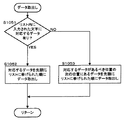
ここで、S105およびS108におけるデータ取出し処理について、そのサブルーチンのフローチャートである図6を参照して説明する。
【0048】
データ取出し処理では、CPU2は、まずS1051で、現在の検索の種類に応じたリスト内に、ユーザから入力された文字に対応するデータが有るか否かを判断する。ユーザから入力された文字に対応するデータとは、たとえば、フリガナについて検索が行なわれている場合には、ユーザから入力された仮名を頭文字とする名前である。そして、CPU2は、そのようなデータが有ると判断するとS1052に、無いと判断するとS1053に、それぞれ、処理を進める。
【0049】
S1052では、CPU2は、対応するデータを先頭に、現在の検索の種類に応じたリストに挙げられた順に、メモリ番号を取出すことにより、データの取出しを行ない、リターンする。
【0050】
一方、S1053では、CPU2は、対応するデータがあるべき位置の次の位置にあるデータを先頭に、現在の検索の種類に応じたリストに挙げられた順に、メモリ番号を取出すことにより、データの取出しを行ない、リターンする。対応するデータがあるべき位置の次の位置にあるデータとは、たとえば、フリガナについて検索が行なわれ、フリガナ順リストにおいて、「サタケサン」、「タカギサン」とデータが並べられているときに、「ス」という文字が入力された場合を考える。この場合、「ス」という文字を頭文字とするデータは無い。なお、「ス」という頭文字のデータがあるべき位置は「サタケサン」と「タカギサン」の間の位置である。そして、「ス」という頭文字のデータがあるべき位置の次の位置にあるデータとは、「タカギサン」というフリガナを有するデータである。したがって、当該データが、対応するデータがあるべき位置の次の位置にあるデータとされる。
【0051】
以下に、図7〜図17に示す表示部10の表示態様を参照して、電話帳モードの処理について説明する。
【0052】
図7は、フリガナ順の検索が行なわれる際に、S101の処理等において最初に表示される画面を示す図である。
【0053】
図7を参照して、表示部10内の欄71には、現在表示されているデータの対象を示す標題が示され、領域70には、当該標題に対応したデータ(電話帳の名前)が、フリガナ順リストに挙げられている順に、リスト表示されている。具体的には、領域70には、フリガナ順リストの最初のグループである「ア」〜「オ」に属するデータが、順に表示され、欄71には、「ア〜オ」という文字が表示されている。さらに、図7では、領域70内に表示された先頭のデータの上にカーソル72が表示されている。そして、欄73には、カーソル72を重ねられているデータについての電話番号が表示されている。
【0054】
図7に示された画面が表示されているときに、ユーザが、ダイヤルボタン40等を利用して仮名文字を入力すると、S105またはS108として説明したように、当該仮名文字に応じて、表示部10に表示されるリストが変更される。
【0055】
仮名文字として「サ」が入力された際に、表示部10に表示される画面を図8に示す。
【0056】
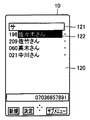
図8では、表示部10内には、欄81に、入力した仮名文字が、変換されることなく、表示されている。携帯電話1では、入力された仮名文字に対して、変換等の作業を要することなく、当該入力された仮名文字に対応したリスト表示が行なわれる。なお、データのリスト表示は、欄81と同時に表示されている、領域80で行なわれている。具体的には、領域80では、入力された仮名文字「サ」から先頭にフリガナの頭文字が50音順に、データが表示され、フリガナの頭文字が同じデータであれば、その次のフリガナが50音の早い順に、データが表示されている。
【0057】
図8では、発信またはデータ編集等の処理対象となるデータの上に、カーソル82が表示され、当該処理対象となるデータの電話番号が欄83に表示されている。
【0058】
カーソル82は、上キー31または下キー33を適宜操作することにより移動可能である。そして、カーソル82の移動に伴って、処理対象となるデータも変更可能である。
【0059】
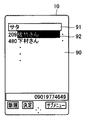
そして、図8に示された状態から、さらに、仮名文字を入力されると、表示部10の画面がさらに変更される。図8に示された状態から、仮名文字として、「タ」が入力された際の画面を図9に示す。
【0060】
図9では、表示部10内の欄91には、ここまで入力されてきた仮名文字の「サ」と「タ」が、連続して表示されている。また、領域90には、ここまで入力されてきた仮名文字の「サ」と「タ」が連続したもの、つまり、「サタ」を頭文字とするデータを先頭に、フリガナ順リストに挙げられている順に、データがリスト表示されている。
【0061】
図10は、グループ順の検索が行なわれる際に、S101の処理等において最初に表示される画面を示す図である。
【0062】
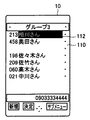
図10では、領域100に、指定可能なグループの一覧が表示されている。なお、選択可能なグループの上には、カーソル101が表示されている。カーソル101は、上キー31または下キー33を適宜操作することにより移動可能である。そして、カーソル101の移動に伴って、処理対象となるグループも変更可能である。図10に示された画面が表示された後、グループが選択されたときに表示される画面の一例を図11に示す。
【0063】
図11を参照して、表示部10の領域110には、選択されたグループについての、グループ順リスト内に挙げられた順でのリスト表示が行なわれている。この後は、上記したようなフリガナ順の検索とほぼ同様の処理が行なわれる。
【0064】
つまり、たとえば「サ」という仮名文字が入力されると、図12に示すように、表示部10内の欄121に「サ」という文字が表示され、領域120内には、グループ順リスト内での、「サ」という頭文字を持つデータから先頭に、データがリスト表示されている。
【0065】
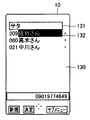
そして、さらに、「タ」という仮名文字が入力されると、図13に示すように、表示部10内の欄131に「サタ」と表示され、領域130には、「サタ」という頭文字を持つデータを先頭に、グループ順リスト内で挙げられている順に、データがリスト表示される。
【0066】
図14は、メモリ番号グループ順の検索が行なわれる際に、S101の処理等において最初に表示される画面を示す図である。
【0067】
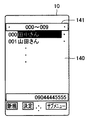
図14では、表示部10内の領域140に、メモリ番号順に、データがリスト表示されている。なお、リスト表示されるメモリ番号の範囲が、欄141に示されている。そして、この状態から、ユーザによるダイヤルボタン40等を用いた数字の入力の一例として、「3」が入力された場合に表示される画面を、図15に示す。
【0068】
図15では、表示部10内の欄151に、入力した「3」という数字が表示され、さらに、領域150には、メモリ番号の先頭が「3」であるものであって、メモリ番号の数が小さい順に、データがリスト表示されている。図15に示す状態から、さらに、「4」という数字が入力された場合に表示される画面を図16に示す。
【0069】
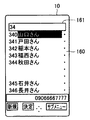
図16では、表示部10内の欄161に、現在入力されている数字のすべてが連続して、つまり、「34」という数字が、表示される。そして、領域160には、メモリ番号の先頭が「34」であるものであって、メモリ番号の数が小さい順に、データがリスト表示されている。図16に示す状態から、さらに、「5」という数字が入力された場合に表示される画面を図17に示す。
【0070】
図17では、表示部10内の欄171に、現在入力されている数字のすべてが連続して、つまり、「345」という数字が、表示される。そして、領域170には、メモリ番号が「345」であるものからメモリ番号の数が小さい順に、データがリスト表示されている。
【0071】
以上説明した各図におけるカーソル92,112,122,132,142,152,162,172は、カーソル82と同様、処理対象となるデータの上に表示されるものであり、上キー31または下キー33を適宜操作することにより移動可能である。そして、これらのカーソルの移動に伴って、各画面において処理対象となるデータも変更可能である。
【0072】
今回開示された実施の形態はすべての点で例示であって制限的なものではないと考えられるべきである。本発明の範囲は上記した説明ではなく特許請求の範囲によって示され、特許請求の範囲と均等の意味および範囲内でのすべての変更が含まれることが意図される。
【0073】
【発明の効果】
本発明によると、検索手段は、入力された仮名文字または数字を検索条件として、電話帳における名前を検索する。これにより、ユーザは、仮名文字を入力した場合には、仮名文字を入力するだけで、つまり、当該仮名文字に対して漢字変換等の変換作業を行なうことなく、検索結果を得ることができる。したがって、ユーザは、携帯通信機器において、容易な操作で、電話帳内の、所望する電話番号等の情報が検索結果として得ることができる。
【0074】
また、本発明によると、ユーザは、複数の仮名文字または数字を順次入力することにより、それに応じて、検索結果に対する絞込みが可能となる。これにより、携帯通信機器において検索結果を得る際の利便性が向上する。
【0075】
また、本発明によると、ユーザが仮名文字または数字を入力すれば、電話帳内の、それに対応する名前か、対応する名前がない場合には所定の条件に応じた名前が、検索結果とされる。つまり、ユーザは、仮名文字または数字を入力すれば、何らかの名前を、検索結果として得ることができる。したがって、たとえユーザが仮名文字または数字の入力を誤ったとしても、検索結果が全く得られないというのではなく、何らかの検索結果をユーザに与えることができるため、携帯通信機器の利便性を向上できる。
【0076】
また、本発明によると、検索の条件となる仮名文字または数字と検索結果とが同時に表示されるため、入力した仮名文字または数字と検索結果の双方をユーザが確認でき、携帯通信機器の利便性を向上できる。
【0077】
また、本発明によると、検索手段は複数種類の検索動作が可能であり、当該検索動作の種類は指定可能であり、かつ、検索動作開始手段が操作されると予め定められた種類の検索動作が実行される。つまり、当該検索動作の種類は指定可能であり、かつ、検索動作の種類を指定することなく検索動作を開始させることもできる。これにより、携帯通信機器の利便性を向上できる。
【0078】
また、本発明によると、検索動作の種類を指定しなければ、前回行なわれた種類で、検索動作を開始させることができる。つまり、複数種類の検索動作が可能であり、かつ、頻繁に実行させる種類の検索動作を実行させる場合には容易な操作で当該種類の検索動作を実行させることができる。これにより、携帯通信機器の利便性を向上できる。
【図面の簡単な説明】
【図1】本発明の一実施の形態であるカメラ付携帯電話機のブロック構成図である。
【図2】図1のカメラ付携帯電話機の外観図である。
【図3】図1のカメラ付携帯電話機の外観図である。
【図4】図1のカメラ付携帯電話機のCPUが実行するメインルーチンのフローチャートである。
【図5】図4に示された電話帳モードのサブルーチンのフローチャートである。
【図6】図5に示されたデータ取出し処理のサブルーチンのフローチャートである。
【図7】図1のカメラ付携帯電話機の表示部における表示態様の一例を示す図である。
【図8】図1のカメラ付携帯電話機の表示部における表示態様の一例を示す図である。
【図9】図1のカメラ付携帯電話機の表示部における表示態様の一例を示す図である。
【図10】図1のカメラ付携帯電話機の表示部における表示態様の一例を示す図である。
【図11】図1のカメラ付携帯電話機の表示部における表示態様の一例を示す図である。
【図12】図1のカメラ付携帯電話機の表示部における表示態様の一例を示す図である。
【図13】図1のカメラ付携帯電話機の表示部における表示態様の一例を示す図である。
【図14】図1のカメラ付携帯電話機の表示部における表示態様の一例を示す図である。
【図15】図1のカメラ付携帯電話機の表示部における表示態様の一例を示す図である。
【図16】図1のカメラ付携帯電話機の表示部における表示態様の一例を示す図である。
【図17】図1のカメラ付携帯電話機の表示部における表示態様の一例を示す図である。
【符号の説明】
2 制御部、3 カメラ部、4 作業用メモリ、5 保存処理部、7 保存用メモリ、8 表示用メモリ、10 表示部、11 カメラキー、12 シャッタボタン、13 通信制御部、14 無線部、15 アンテナ、18 開始ボタン、19 モードボタン、20 圧縮処理部、21 メモリ。[0001]
TECHNICAL FIELD OF THE INVENTION
The present invention relates to a portable communication device, and more particularly, to a portable communication device that stores a telephone directory that can be registered in association with a name and a telephone number corresponding to the name.
[0002]
[Prior art]
2. Description of the Related Art Conventionally, various technologies have been disclosed for communication devices that store a telephone directory that can be registered in association with a name and various information corresponding to the name. For example,
[0003]
Also, with respect to a portable communication device that stores a telephone directory,
[0004]
[Patent Document 1]
JP-A-2-254842 [0005]
[Patent Document 2]
JP 2000-286949 A
[Problems to be solved by the invention]
Conventionally, it has been desired that information such as a telephone number desired by a user be obtained as a search result by an easier operation. In particular, in portable communication devices, since the devices have portability, the size of the devices is reduced, and accordingly, the parts operated by the user are also relatively reduced in size. For this reason, in the portable communication device, it is desired that information such as a telephone number desired by the user can be obtained as a search result by an even easier operation.
[0007]
The present invention has been conceived in view of the above-described circumstances, and an object of the present invention is to provide a portable communication device in which information such as a telephone number desired by a user in a telephone directory can be obtained as a search result by an easy operation. To provide.
[0008]
[Means for Solving the Problems]
A portable communication device according to an aspect of the present invention includes a telephone directory storage unit that stores a name and a telephone number corresponding to the name in association with each other, a character input unit that inputs a kana character or a number, and the telephone directory storage. Search means for searching a name corresponding to a kana character or a number input to the input means from names stored in the means.
[0009]
Further, in the mobile communication device according to the present invention, when a plurality of kana characters or numbers are input to the character input unit, according to all of the input kana characters or numbers, It is preferable to narrow down the search results sequentially.
[0010]
Further, in the portable communication device according to the present invention, the search means cannot search a name corresponding to a kana character or a number input to the input means from names stored in the telephone directory storage means. In such a case, it is preferable that the name that is closest to the input kana character or number corresponding to the predetermined condition be the search result.
[0011]
Further, it is preferable that the portable communication device according to the present invention further includes display means for displaying a kana character or a number input to the input means and a search result by the search means.
[0012]
In the portable communication device according to the present invention, the search unit can execute one type of search operation from among a plurality of types of search operations, and is operated to start the search operation by the search unit. Search operation starting means, type specifying means for specifying the type of search operation to be performed on the search means, and search control for causing the search means to start the search operation by operating the search operation start means Preferably, the search control means causes the search means to start the search by one predetermined type of search operation when the search operation starting means is operated.
[0013]
Further, in the mobile communication device according to the present invention, it is preferable that the predetermined one type is a type of a search operation performed last time by the search unit.
[0014]
BEST MODE FOR CARRYING OUT THE INVENTION
Hereinafter, a camera-equipped mobile phone (hereinafter, abbreviated as a mobile phone) according to an embodiment of the present invention will be described with reference to the drawings. In the following description, the same components are denoted by the same reference numerals, unless otherwise specified, and have the same names and functions. Therefore, detailed description thereof will not be repeated.
[0015]
FIG. 1 shows a block configuration of the
[0016]
The
[0017]
The types and arrangement of buttons and keys for various operations are not limited to these. For example, an item to be operated may be selected from an operation menu displayed on the
[0018]
2 shows a surface of the
[0019]
The
[0020]
The
[0021]
In the telephone directory function, the
[0022]
As a premise of the processing of the
[0023]
First, the
[0024]
[Table 1]
As understood from Table 1, as the address book comprehensive data, each person's first and last name is registered within 16 full-width characters, reading is registered within 32 half-width characters, and the group information is "unspecified" or "
[0026]
The
[0027]
[Table 2]
[Table 3]
[Table 4]
As shown in Table 3, when the data of each person stored in the address book comprehensive data is arranged in reading order, the memory numbers of the arranged data are 029, 031, 002,. Further, as shown in Table 4, when the data of each person stored in the address book comprehensive data is arranged in the group order, the memory numbers of the arranged data are 010, 030, 039.
[0031]
FIG. 4 is a flowchart of a main routine of the
In step S1 (hereinafter, "step" is omitted), the
[0032]
In S3, the
[0033]
In step S5, the
[0034]
In S7, the
[0035]
In S9, the
[0036]
FIG. 5 is a flowchart of a subroutine of the processing in the telephone directory mode in S10 described above.
[0037]
First, in S101, the
[0038]
In S102, the
[0039]
In S103, the
[0040]
In S104, the
[0041]
In S105, the
[0042]
In S106, the
[0043]
In S107, the content of the operation performed by the user is checked, and if it is determined that the operation of editing the selected one of the data currently displayed in the list is performed, the character (the kana or the kana or the kana or If it is determined that the number has been input, the process proceeds to S108, and if it is determined that an operation to make a call to the selected person currently displayed in the list has been performed, the process proceeds to S111.
[0044]
In S109, the
[0045]
In S108, the
[0046]
In S111, the
[0047]
Here, the data fetch processing in S105 and S108 will be described with reference to FIG. 6, which is a flowchart of the subroutine.
[0048]
In the data fetching process, the
[0049]
In S1052, the
[0050]
On the other hand, in S1053, the
[0051]
Hereinafter, the process in the telephone directory mode will be described with reference to the display modes of the
[0052]
FIG. 7 is a diagram showing a screen displayed first in the processing of S101 and the like when the reading in the reading order is performed.
[0053]
Referring to FIG. 7, a
[0054]
When the user inputs a kana character using the
[0055]
FIG. 8 shows a screen displayed on the
[0056]
In FIG. 8, in the
[0057]
In FIG. 8, a
[0058]
The
[0059]
Then, when the kana character is further input from the state shown in FIG. 8, the screen of the
[0060]
In FIG. 9, the kana characters “sa” and “ta” input so far are continuously displayed in the
[0061]
FIG. 10 is a diagram showing a screen first displayed in the processing of S101 and the like when a search in group order is performed.
[0062]
In FIG. 10, a list of groups that can be specified is displayed in
[0063]
Referring to FIG. 11, in
[0064]
That is, for example, when the kana character “sa” is input, the character “sa” is displayed in the
[0065]
Further, when the kana character “TA” is input, as shown in FIG. 13, “Sata” is displayed in the
[0066]
FIG. 14 is a diagram showing a screen first displayed in the processing of S101 and the like when a search is performed in memory number group order.
[0067]
In FIG. 14, data is displayed in a list in the
[0068]
In FIG. 15, the input number “3” is displayed in a
[0069]
In FIG. 16, in the
[0070]
In FIG. 17, all of the numbers that are currently input are displayed continuously in the
[0071]
The
[0072]
The embodiments disclosed this time are to be considered in all respects as illustrative and not restrictive. The scope of the present invention is defined by the terms of the claims, rather than the description above, and is intended to include any modifications within the scope and meaning equivalent to the terms of the claims.
[0073]
【The invention's effect】
According to the present invention, the search means searches for a name in the telephone directory using the input kana character or number as a search condition. Thereby, when the user inputs the kana character, the search result can be obtained only by inputting the kana character, that is, without performing a conversion operation such as a kanji conversion on the kana character. Therefore, the user can obtain information such as a desired telephone number in the telephone directory as a search result by an easy operation on the portable communication device.
[0074]
Further, according to the present invention, by sequentially inputting a plurality of kana characters or numbers, the user can narrow down the search results accordingly. As a result, the convenience in obtaining the search result in the mobile communication device is improved.
[0075]
Further, according to the present invention, if the user inputs a kana character or a number, a corresponding name in the telephone directory or, if there is no corresponding name, a name according to a predetermined condition is determined as a search result. You. In other words, the user can obtain some name as a search result by inputting kana characters or numbers. Therefore, even if the user inputs a kana character or a number incorrectly, a search result can be given to the user instead of obtaining no search result at all, and the convenience of the portable communication device can be improved. .
[0076]
Further, according to the present invention, since the kana character or number serving as a search condition and the search result are displayed at the same time, the user can confirm both the input kana character or number and the search result, and the convenience of the portable communication device is improved. Can be improved.
[0077]
According to the present invention, the search means can perform a plurality of types of search operations, the type of the search operation can be designated, and a predetermined type of search operation is performed when the search operation start means is operated. Is executed. That is, the type of the search operation can be specified, and the search operation can be started without specifying the type of the search operation. Thereby, the convenience of the mobile communication device can be improved.
[0078]
According to the present invention, if the type of the search operation is not specified, the search operation can be started with the type performed last time. That is, a plurality of types of search operations are possible, and when a type of search operation that is frequently performed is performed, the type of search operation can be performed by an easy operation. Thereby, the convenience of the mobile communication device can be improved.
[Brief description of the drawings]
FIG. 1 is a block diagram of a camera-equipped mobile phone according to an embodiment of the present invention.
FIG. 2 is an external view of the camera-equipped mobile phone of FIG.
FIG. 3 is an external view of the camera-equipped mobile phone shown in FIG. 1;
FIG. 4 is a flowchart of a main routine executed by a CPU of the camera-equipped mobile phone of FIG. 1;
FIG. 5 is a flowchart of a subroutine of a telephone directory mode shown in FIG. 4;
FIG. 6 is a flowchart of a subroutine of a data extracting process shown in FIG. 5;
7 is a diagram illustrating an example of a display mode on a display unit of the camera-equipped mobile phone in FIG. 1;
8 is a diagram showing an example of a display mode on a display unit of the camera-equipped mobile phone of FIG. 1. FIG.
9 is a diagram illustrating an example of a display mode on a display unit of the camera-equipped mobile phone in FIG. 1. FIG.
10 is a diagram showing an example of a display mode on a display unit of the camera-equipped mobile phone of FIG. 1. FIG.
11 is a diagram illustrating an example of a display mode on a display unit of the camera-equipped mobile phone in FIG. 1;
12 is a diagram illustrating an example of a display mode on a display unit of the camera-equipped mobile phone in FIG. 1;
13 is a diagram showing an example of a display mode on a display unit of the camera-equipped mobile phone in FIG. 1. FIG.
14 is a diagram showing an example of a display mode on a display unit of the camera-equipped mobile phone in FIG. 1;
15 is a diagram showing an example of a display mode on a display unit of the camera-equipped mobile phone of FIG. 1. FIG.
16 is a diagram showing an example of a display mode on a display unit of the camera-equipped mobile phone in FIG. 1.
17 is a diagram showing an example of a display mode on a display unit of the camera-equipped mobile phone in FIG. 1;
[Explanation of symbols]
2 control unit, 3 camera unit, 4 work memory, 5 save processing unit, 7 save memory, 8 display memory, 10 display unit, 11 camera key, 12 shutter button, 13 communication control unit, 14 wireless unit, 15 Antenna, 18 start button, 19 mode button, 20 compression processing unit, 21 memory.
Claims (6)
仮名文字または数字を入力する文字入力手段と、
前記電話帳記憶手段に記憶された名前の中から、前記入力手段に入力された仮名文字または数字に対応する名前を検索する検索手段とを含む、携帯通信機器。Telephone directory storage means for storing a name and a telephone number corresponding to the name in association with each other;
Character input means for inputting kana characters or numbers;
A portable communication device comprising: a search unit that searches for a name corresponding to a kana character or a number input to the input unit from names stored in the telephone directory storage unit.
前記検索手段に検索動作を開始させるために操作される検索動作開始手段と、
前記検索手段に対して、実行する検索動作の種類を指定する種類指定手段と、
前記検索動作開始手段を操作されることにより前記検索手段に検索動作を開始させる検索制御手段とをさらに含み、
前記検索制御手段は、前記検索動作開始手段が操作されることにより、予め定められた1の種類の検索動作で、前記検索手段に検索を開始させる、請求項1〜請求項4のいずれかに記載の携帯通信機器。The search means can execute one type of search operation from a plurality of types of search operations,
Search operation start means operated to start the search operation by the search means;
Type specifying means for specifying the type of search operation to be performed for the search means;
Search control means for causing the search means to start a search operation by operating the search operation start means, further comprising:
5. The search control unit according to claim 1, wherein the search operation start unit is operated to cause the search unit to start a search by one predetermined type of search operation. 6. Mobile communication device as described.
Priority Applications (1)
| Application Number | Priority Date | Filing Date | Title |
|---|---|---|---|
| JP2003155141A JP2004357185A (en) | 2003-05-30 | 2003-05-30 | Portable communication equipment |
Applications Claiming Priority (1)
| Application Number | Priority Date | Filing Date | Title |
|---|---|---|---|
| JP2003155141A JP2004357185A (en) | 2003-05-30 | 2003-05-30 | Portable communication equipment |
Publications (1)
| Publication Number | Publication Date |
|---|---|
| JP2004357185A true JP2004357185A (en) | 2004-12-16 |
Family
ID=34049600
Family Applications (1)
| Application Number | Title | Priority Date | Filing Date |
|---|---|---|---|
| JP2003155141A Pending JP2004357185A (en) | 2003-05-30 | 2003-05-30 | Portable communication equipment |
Country Status (1)
| Country | Link |
|---|---|
| JP (1) | JP2004357185A (en) |
Cited By (3)
| Publication number | Priority date | Publication date | Assignee | Title |
|---|---|---|---|---|
| JP2011172098A (en) * | 2010-02-19 | 2011-09-01 | Nec Corp | Electronic apparatus, method and program of controlling electronic apparatus |
| JP2015106756A (en) * | 2013-11-28 | 2015-06-08 | 株式会社沖データ | Information processing device |
| JP2018087689A (en) * | 2018-02-21 | 2018-06-07 | シャープ株式会社 | Heating cooker |
-
2003
- 2003-05-30 JP JP2003155141A patent/JP2004357185A/en active Pending
Cited By (3)
| Publication number | Priority date | Publication date | Assignee | Title |
|---|---|---|---|---|
| JP2011172098A (en) * | 2010-02-19 | 2011-09-01 | Nec Corp | Electronic apparatus, method and program of controlling electronic apparatus |
| JP2015106756A (en) * | 2013-11-28 | 2015-06-08 | 株式会社沖データ | Information processing device |
| JP2018087689A (en) * | 2018-02-21 | 2018-06-07 | シャープ株式会社 | Heating cooker |
Similar Documents
| Publication | Publication Date | Title |
|---|---|---|
| US6879846B1 (en) | Destination calling control system and destination calling control method | |
| US8249229B2 (en) | Communication terminal, and dial registration method and dial registration program therefor | |
| JP2002164990A (en) | Mobile communication terminal | |
| EP0915604A2 (en) | Method and apparatus for searching a database | |
| US20050208977A1 (en) | Information processing apparatus and software | |
| US20100295791A1 (en) | Portable information terminal, character delivery method; and character temporary storage program product | |
| EP1718046A1 (en) | Method and apparatus for searching for a directory entry in a mobile communication terminal phone book | |
| JP4467519B2 (en) | Portable information terminal | |
| GB2392291A (en) | Portable telephone set which can extract data from images | |
| EP1924064B1 (en) | Portable telephone | |
| JP3997368B2 (en) | Information communication terminal | |
| JP2000112612A (en) | Electronics | |
| JP4497418B2 (en) | Communication terminal device and communication partner selection transmission method | |
| JP2003036212A (en) | Personal digital assistant with camera function | |
| JP2004199270A (en) | Mobile terminal equipment and function starting program | |
| CN103209262A (en) | Associative positioning method and system for mobile terminal contacts | |
| KR100608762B1 (en) | Telephone connection method by telephone number sequential search | |
| KR100652635B1 (en) | How to search phone book of mobile terminal | |
| JP3488404B2 (en) | Portable telephone device and display method thereof | |
| KR20050081090A (en) | Management method for phone book in mobile communication terminal | |
| JP2002290543A (en) | Mobile phone | |
| KR100999294B1 (en) | How to search phone book of mobile terminal | |
| JP2005151024A (en) | Portable telephone | |
| TWI314272B (en) | Method and system for retrieval and ip setting interface | |
| JP2004355518A (en) | Portable communication equipment |
Legal Events
| Date | Code | Title | Description |
|---|---|---|---|
| A621 | Written request for application examination |
Free format text: JAPANESE INTERMEDIATE CODE: A621 Effective date: 20050810 |
|
| A977 | Report on retrieval |
Free format text: JAPANESE INTERMEDIATE CODE: A971007 Effective date: 20070511 |
|
| A131 | Notification of reasons for refusal |
Free format text: JAPANESE INTERMEDIATE CODE: A131 Effective date: 20070522 |
|
| A521 | Written amendment |
Free format text: JAPANESE INTERMEDIATE CODE: A523 Effective date: 20070719 |
|
| A02 | Decision of refusal |
Free format text: JAPANESE INTERMEDIATE CODE: A02 Effective date: 20080805 |