JP2005201765A - Method for separating nuclides from solid fission product content - Google Patents
Method for separating nuclides from solid fission product content Download PDFInfo
- Publication number
- JP2005201765A JP2005201765A JP2004008204A JP2004008204A JP2005201765A JP 2005201765 A JP2005201765 A JP 2005201765A JP 2004008204 A JP2004008204 A JP 2004008204A JP 2004008204 A JP2004008204 A JP 2004008204A JP 2005201765 A JP2005201765 A JP 2005201765A
- Authority
- JP
- Japan
- Prior art keywords
- fission product
- temperature
- oxygen
- solid
- technetium
- Prior art date
- Legal status (The legal status is an assumption and is not a legal conclusion. Google has not performed a legal analysis and makes no representation as to the accuracy of the status listed.)
- Pending
Links
- 230000004992 fission Effects 0.000 title claims abstract description 84
- 239000007787 solid Substances 0.000 title claims abstract description 68
- 238000000034 method Methods 0.000 title claims abstract description 61
- 229910052760 oxygen Inorganic materials 0.000 claims abstract description 90
- QVGXLLKOCUKJST-UHFFFAOYSA-N atomic oxygen Chemical compound [O] QVGXLLKOCUKJST-UHFFFAOYSA-N 0.000 claims abstract description 89
- 239000001301 oxygen Substances 0.000 claims abstract description 89
- 229910052713 technetium Inorganic materials 0.000 claims abstract description 65
- 239000000463 material Substances 0.000 claims abstract description 63
- 229910052750 molybdenum Inorganic materials 0.000 claims abstract description 59
- GKLVYJBZJHMRIY-UHFFFAOYSA-N technetium atom Chemical compound [Tc] GKLVYJBZJHMRIY-UHFFFAOYSA-N 0.000 claims abstract description 45
- ZOKXTWBITQBERF-UHFFFAOYSA-N Molybdenum Chemical compound [Mo] ZOKXTWBITQBERF-UHFFFAOYSA-N 0.000 claims abstract description 42
- 239000011733 molybdenum Substances 0.000 claims abstract description 42
- 229910000510 noble metal Inorganic materials 0.000 claims abstract description 41
- 230000003647 oxidation Effects 0.000 claims abstract description 36
- 238000007254 oxidation reaction Methods 0.000 claims abstract description 36
- 230000008569 process Effects 0.000 claims abstract description 25
- 238000010438 heat treatment Methods 0.000 claims abstract description 14
- IOWOAQVVLHHFTL-UHFFFAOYSA-N technetium(vii) oxide Chemical compound [O-2].[O-2].[O-2].[O-2].[O-2].[O-2].[O-2].[Tc+7].[Tc+7] IOWOAQVVLHHFTL-UHFFFAOYSA-N 0.000 claims abstract description 8
- 229910000476 molybdenum oxide Inorganic materials 0.000 claims abstract description 5
- PQQKPALAQIIWST-UHFFFAOYSA-N oxomolybdenum Chemical compound [Mo]=O PQQKPALAQIIWST-UHFFFAOYSA-N 0.000 claims abstract description 5
- KDLHZDBZIXYQEI-UHFFFAOYSA-N Palladium Chemical compound [Pd] KDLHZDBZIXYQEI-UHFFFAOYSA-N 0.000 claims description 85
- 239000010948 rhodium Substances 0.000 claims description 82
- 229910052751 metal Inorganic materials 0.000 claims description 66
- 239000002184 metal Substances 0.000 claims description 63
- 229910052707 ruthenium Inorganic materials 0.000 claims description 61
- 229910052763 palladium Inorganic materials 0.000 claims description 57
- 229910052703 rhodium Inorganic materials 0.000 claims description 55
- 238000000926 separation method Methods 0.000 claims description 51
- 238000012958 reprocessing Methods 0.000 claims description 48
- 239000010814 metallic waste Substances 0.000 claims description 36
- 229910052768 actinide Inorganic materials 0.000 claims description 31
- 150000001255 actinides Chemical class 0.000 claims description 31
- 150000003839 salts Chemical class 0.000 claims description 20
- 239000002910 solid waste Substances 0.000 claims description 20
- KJTLSVCANCCWHF-UHFFFAOYSA-N Ruthenium Chemical compound [Ru] KJTLSVCANCCWHF-UHFFFAOYSA-N 0.000 claims description 18
- 239000002915 spent fuel radioactive waste Substances 0.000 claims description 18
- 229910052726 zirconium Inorganic materials 0.000 claims description 17
- QCWXUUIWCKQGHC-UHFFFAOYSA-N Zirconium Chemical compound [Zr] QCWXUUIWCKQGHC-UHFFFAOYSA-N 0.000 claims description 13
- MHOVAHRLVXNVSD-UHFFFAOYSA-N rhodium atom Chemical compound [Rh] MHOVAHRLVXNVSD-UHFFFAOYSA-N 0.000 claims description 12
- 239000002253 acid Substances 0.000 claims description 7
- 229910001338 liquidmetal Inorganic materials 0.000 claims description 7
- 230000001590 oxidative effect Effects 0.000 claims description 7
- 230000000903 blocking effect Effects 0.000 claims description 5
- 230000008016 vaporization Effects 0.000 claims description 4
- 239000000126 substance Substances 0.000 abstract description 7
- 238000012360 testing method Methods 0.000 description 51
- 238000006243 chemical reaction Methods 0.000 description 25
- XKRFYHLGVUSROY-UHFFFAOYSA-N Argon Chemical compound [Ar] XKRFYHLGVUSROY-UHFFFAOYSA-N 0.000 description 20
- MYMOFIZGZYHOMD-UHFFFAOYSA-N Dioxygen Chemical compound O=O MYMOFIZGZYHOMD-UHFFFAOYSA-N 0.000 description 20
- 229910001882 dioxygen Inorganic materials 0.000 description 20
- 239000007789 gas Substances 0.000 description 18
- 239000011261 inert gas Substances 0.000 description 17
- 239000007788 liquid Substances 0.000 description 16
- 230000009467 reduction Effects 0.000 description 13
- GRYLNZFGIOXLOG-UHFFFAOYSA-N Nitric acid Chemical compound O[N+]([O-])=O GRYLNZFGIOXLOG-UHFFFAOYSA-N 0.000 description 11
- 230000005496 eutectics Effects 0.000 description 11
- 229910017604 nitric acid Inorganic materials 0.000 description 11
- 229910052786 argon Inorganic materials 0.000 description 10
- 239000011521 glass Substances 0.000 description 9
- 150000002739 metals Chemical class 0.000 description 9
- 229910052702 rhenium Inorganic materials 0.000 description 9
- 239000002927 high level radioactive waste Substances 0.000 description 8
- 239000010970 precious metal Substances 0.000 description 8
- 238000002441 X-ray diffraction Methods 0.000 description 7
- 239000002699 waste material Substances 0.000 description 7
- 230000008859 change Effects 0.000 description 6
- 238000004090 dissolution Methods 0.000 description 6
- 239000000446 fuel Substances 0.000 description 6
- 230000005484 gravity Effects 0.000 description 6
- 239000000203 mixture Substances 0.000 description 6
- WUAPFZMCVAUBPE-UHFFFAOYSA-N rhenium atom Chemical compound [Re] WUAPFZMCVAUBPE-UHFFFAOYSA-N 0.000 description 6
- WMFOQBRAJBCJND-UHFFFAOYSA-M Lithium hydroxide Chemical compound [Li+].[OH-] WMFOQBRAJBCJND-UHFFFAOYSA-M 0.000 description 5
- 229910052778 Plutonium Inorganic materials 0.000 description 4
- 229910000310 actinide oxide Inorganic materials 0.000 description 4
- 238000000354 decomposition reaction Methods 0.000 description 4
- 238000004821 distillation Methods 0.000 description 4
- 239000000843 powder Substances 0.000 description 4
- 238000003860 storage Methods 0.000 description 4
- 230000004580 weight loss Effects 0.000 description 4
- HEMHJVSKTPXQMS-UHFFFAOYSA-M Sodium hydroxide Chemical compound [OH-].[Na+] HEMHJVSKTPXQMS-UHFFFAOYSA-M 0.000 description 3
- 229910052770 Uranium Inorganic materials 0.000 description 3
- 238000001816 cooling Methods 0.000 description 3
- 238000010586 diagram Methods 0.000 description 3
- 238000001914 filtration Methods 0.000 description 3
- 231100001252 long-term toxicity Toxicity 0.000 description 3
- 239000011159 matrix material Substances 0.000 description 3
- 239000012071 phase Substances 0.000 description 3
- 230000035484 reaction time Effects 0.000 description 3
- 238000011084 recovery Methods 0.000 description 3
- 238000007711 solidification Methods 0.000 description 3
- 230000008023 solidification Effects 0.000 description 3
- 239000000243 solution Substances 0.000 description 3
- XLYOFNOQVPJJNP-UHFFFAOYSA-N water Substances O XLYOFNOQVPJJNP-UHFFFAOYSA-N 0.000 description 3
- LFQSCWFLJHTTHZ-UHFFFAOYSA-N Ethanol Chemical compound CCO LFQSCWFLJHTTHZ-UHFFFAOYSA-N 0.000 description 2
- VEXZGXHMUGYJMC-UHFFFAOYSA-N Hydrochloric acid Chemical compound Cl VEXZGXHMUGYJMC-UHFFFAOYSA-N 0.000 description 2
- 229910052793 cadmium Inorganic materials 0.000 description 2
- 230000003247 decreasing effect Effects 0.000 description 2
- 238000005868 electrolysis reaction Methods 0.000 description 2
- 230000008018 melting Effects 0.000 description 2
- 238000002844 melting Methods 0.000 description 2
- 239000011824 nuclear material Substances 0.000 description 2
- 238000009377 nuclear transmutation Methods 0.000 description 2
- SJLOMQIUPFZJAN-UHFFFAOYSA-N oxorhodium Chemical compound [Rh]=O SJLOMQIUPFZJAN-UHFFFAOYSA-N 0.000 description 2
- 229910003445 palladium oxide Inorganic materials 0.000 description 2
- JQPTYAILLJKUCY-UHFFFAOYSA-N palladium(ii) oxide Chemical compound [O-2].[Pd+2] JQPTYAILLJKUCY-UHFFFAOYSA-N 0.000 description 2
- 238000005191 phase separation Methods 0.000 description 2
- OYEHPCDNVJXUIW-UHFFFAOYSA-N plutonium atom Chemical compound [Pu] OYEHPCDNVJXUIW-UHFFFAOYSA-N 0.000 description 2
- WCUXLLCKKVVCTQ-UHFFFAOYSA-M potassium chloride Inorganic materials [Cl-].[K+] WCUXLLCKKVVCTQ-UHFFFAOYSA-M 0.000 description 2
- 239000002994 raw material Substances 0.000 description 2
- 229910003450 rhodium oxide Inorganic materials 0.000 description 2
- 239000007790 solid phase Substances 0.000 description 2
- 238000002076 thermal analysis method Methods 0.000 description 2
- 238000012795 verification Methods 0.000 description 2
- 238000004017 vitrification Methods 0.000 description 2
- 239000003039 volatile agent Substances 0.000 description 2
- 239000013585 weight reducing agent Substances 0.000 description 2
- 229910013618 LiCl—KCl Inorganic materials 0.000 description 1
- FAPWRFPIFSIZLT-UHFFFAOYSA-M Sodium chloride Chemical compound [Na+].[Cl-] FAPWRFPIFSIZLT-UHFFFAOYSA-M 0.000 description 1
- 238000009825 accumulation Methods 0.000 description 1
- 229910045601 alloy Inorganic materials 0.000 description 1
- 239000000956 alloy Substances 0.000 description 1
- PNEYBMLMFCGWSK-UHFFFAOYSA-N aluminium oxide Inorganic materials [O-2].[O-2].[O-2].[Al+3].[Al+3] PNEYBMLMFCGWSK-UHFFFAOYSA-N 0.000 description 1
- 238000004458 analytical method Methods 0.000 description 1
- 239000007864 aqueous solution Substances 0.000 description 1
- 230000015572 biosynthetic process Effects 0.000 description 1
- BDOSMKKIYDKNTQ-UHFFFAOYSA-N cadmium atom Chemical compound [Cd] BDOSMKKIYDKNTQ-UHFFFAOYSA-N 0.000 description 1
- 238000010494 dissociation reaction Methods 0.000 description 1
- 230000005593 dissociations Effects 0.000 description 1
- 238000009826 distribution Methods 0.000 description 1
- 238000012812 general test Methods 0.000 description 1
- KWGKDLIKAYFUFQ-UHFFFAOYSA-M lithium chloride Chemical compound [Li+].[Cl-] KWGKDLIKAYFUFQ-UHFFFAOYSA-M 0.000 description 1
- 238000011068 loading method Methods 0.000 description 1
- 238000012986 modification Methods 0.000 description 1
- 230000004048 modification Effects 0.000 description 1
- 230000033116 oxidation-reduction process Effects 0.000 description 1
- 239000010908 plant waste Substances 0.000 description 1
- 239000001103 potassium chloride Substances 0.000 description 1
- 230000005855 radiation Effects 0.000 description 1
- 230000002285 radioactive effect Effects 0.000 description 1
- 239000012857 radioactive material Substances 0.000 description 1
- 238000007670 refining Methods 0.000 description 1
- 238000011160 research Methods 0.000 description 1
- 230000000630 rising effect Effects 0.000 description 1
- VSZWPYCFIRKVQL-UHFFFAOYSA-N selanylidenegallium;selenium Chemical compound [Se].[Se]=[Ga].[Se]=[Ga] VSZWPYCFIRKVQL-UHFFFAOYSA-N 0.000 description 1
- KKCBUQHMOMHUOY-UHFFFAOYSA-N sodium oxide Chemical compound [O-2].[Na+].[Na+] KKCBUQHMOMHUOY-UHFFFAOYSA-N 0.000 description 1
- 229910001948 sodium oxide Inorganic materials 0.000 description 1
- 239000002904 solvent Substances 0.000 description 1
- 238000000638 solvent extraction Methods 0.000 description 1
- 231100000419 toxicity Toxicity 0.000 description 1
- 230000001988 toxicity Effects 0.000 description 1
- JFALSRSLKYAFGM-UHFFFAOYSA-N uranium(0) Chemical compound [U] JFALSRSLKYAFGM-UHFFFAOYSA-N 0.000 description 1
- 238000009834 vaporization Methods 0.000 description 1
Images




Classifications
-
- Y—GENERAL TAGGING OF NEW TECHNOLOGICAL DEVELOPMENTS; GENERAL TAGGING OF CROSS-SECTIONAL TECHNOLOGIES SPANNING OVER SEVERAL SECTIONS OF THE IPC; TECHNICAL SUBJECTS COVERED BY FORMER USPC CROSS-REFERENCE ART COLLECTIONS [XRACs] AND DIGESTS
- Y02—TECHNOLOGIES OR APPLICATIONS FOR MITIGATION OR ADAPTATION AGAINST CLIMATE CHANGE
- Y02E—REDUCTION OF GREENHOUSE GAS [GHG] EMISSIONS, RELATED TO ENERGY GENERATION, TRANSMISSION OR DISTRIBUTION
- Y02E30/00—Energy generation of nuclear origin
- Y02E30/30—Nuclear fission reactors
-
- Y—GENERAL TAGGING OF NEW TECHNOLOGICAL DEVELOPMENTS; GENERAL TAGGING OF CROSS-SECTIONAL TECHNOLOGIES SPANNING OVER SEVERAL SECTIONS OF THE IPC; TECHNICAL SUBJECTS COVERED BY FORMER USPC CROSS-REFERENCE ART COLLECTIONS [XRACs] AND DIGESTS
- Y02—TECHNOLOGIES OR APPLICATIONS FOR MITIGATION OR ADAPTATION AGAINST CLIMATE CHANGE
- Y02W—CLIMATE CHANGE MITIGATION TECHNOLOGIES RELATED TO WASTEWATER TREATMENT OR WASTE MANAGEMENT
- Y02W30/00—Technologies for solid waste management
- Y02W30/50—Reuse, recycling or recovery technologies
Landscapes
- Manufacture And Refinement Of Metals (AREA)
Abstract
【課題】簡単なプロセスで、固体状の核分裂生成物含有物からTc,Mo,貴金属元素を分離する。
【解決手段】TcとMoを含む固体状の核分裂生成物含有物を不活性雰囲気中で450℃〜600℃に昇温する第1の加熱工程S21と、450℃〜600℃の温度範囲でTcを酸化させて揮発させる酸化工程S22と、揮発した酸化テクネチウムを捕捉するテクネチウム捕捉工程S23と、酸化テクネチウムの揮発後に酸素雰囲気中で650℃以上に昇温しMoを酸化させて気化させる第2の加熱工程S24と、気化した酸化モリブデンを捕捉するモリブデン捕捉工程S25とを備えている。
【選択図】図1
To separate Tc, Mo and noble metal elements from a solid fission product containing substance by a simple process.
A first heating step S21 for heating a solid fission product-containing material containing Tc and Mo to 450 ° C. to 600 ° C. in an inert atmosphere, and Tc in a temperature range of 450 ° C. to 600 ° C. Oxidation step S22 that oxidizes and volatilizes, technetium capture step S23 that traps volatilized technetium oxide, and a second step in which the temperature is raised to 650 ° C. or higher in an oxygen atmosphere after volatilization of technetium oxide to oxidize and vaporize Mo A heating step S24 and a molybdenum capturing step S25 for capturing vaporized molybdenum oxide are provided.
[Selection] Figure 1
Description
本発明は、固体状の核分裂生成物含有物の核種分離方法に関する。更に詳しくは、本発明は、原子力産業に係り、湿式法の再処理工場の溶解工程で発生する不溶解残渣または乾式再処理で発生する金属廃棄物の成分の分離・低毒性化に好適な固体状の核分裂生成物含有物の核種分離方法に関するものである。 The present invention relates to a method for separating nuclides of a solid fission product-containing material. More specifically, the present invention relates to the nuclear industry, and is a solid suitable for separation and reduction in toxicity of insoluble residue generated in the dissolution process of a wet reprocessing plant or metal waste components generated in dry reprocessing. The present invention relates to a method for separating nuclides of a fission product-containing product.
なお、核分裂生成物含有物とは、核分裂生成物を含有する物を意味する。 The fission product-containing product means a product containing a fission product.
使用済み核燃料の湿式再処理では、固体状の不溶解残渣が発生する。つまり、湿式の再処理では使用済み核燃料を酸または溶媒に溶解する際に溶け残りが出ることがあり、この溶け残りが不溶解残渣となる。この不溶解残渣は、液体状の高レベル放射性廃棄物と一緒にガラス固化されている。 In wet reprocessing of spent nuclear fuel, a solid insoluble residue is generated. That is, in the wet reprocessing, undissolved residue may be produced when the spent nuclear fuel is dissolved in an acid or solvent, and this undissolved residue becomes an insoluble residue. This insoluble residue is vitrified together with liquid high-level radioactive waste.
また、研究段階の再処理方法として乾式再処理がある。この乾式処理では、固体状の金属廃棄物が発生する。例えば、金属電解法と呼ばれる乾式再処理では、使用済み核燃料中のウラン(U)やプルトニウム(Pu)を取り出す際に、使用済み核燃料に含まれる核分裂生成物(FP)等のうちジルコニウム(Zr),モリブデン(Mo),テクネチウム(Tc),ルテニウム(Ru),ロジウム(Rh),パラジウム(Pd)などの元素は、陽極に残ったりカドミウム(Cd)プール中に溶解・沈降する。Cdプールが無い場合でもこれらの蓄積が問題にならない程度の頻度で、電解槽の底を物理的または化学的に攫って取り出す。Cdプール中の物に関しては後に蒸留等の手段により取り出され、陽極に残った物は陽極とともに取り出されて、いずれも廃棄物(金属廃棄物)となる。さらに酸化物電解法と呼ばれる別方法の乾式再処理では、初めにUと共に取り出したMo,Tc,Ru,Rh,Pdなどの元素をUと分離して廃棄物(金属廃棄物)にすることが検討されている。このように乾式再処理では金属廃棄物が発生するので、金属廃棄物の処理処分方法が検討されている。 There is also dry reprocessing as a reprocessing method in the research stage. In this dry treatment, solid metal waste is generated. For example, in dry reprocessing called metal electrolysis, when extracting uranium (U) or plutonium (Pu) from spent nuclear fuel, zirconium (Zr) among fission products (FP) contained in the spent nuclear fuel. , Molybdenum (Mo), technetium (Tc), ruthenium (Ru), rhodium (Rh), palladium (Pd), etc. remain on the anode or dissolve and settle in the cadmium (Cd) pool. Even if there is no Cd pool, the bottom of the electrolytic cell is physically and chemically removed at such a frequency that accumulation of these does not become a problem. Items in the Cd pool are later taken out by means such as distillation, and those remaining on the anode are taken out together with the anode, and all become waste (metal waste). Further, in another dry reprocessing called an oxide electrolysis method, elements such as Mo, Tc, Ru, Rh, and Pd extracted together with U are first separated from U into waste (metal waste). It is being considered. As described above, since metal waste is generated in dry reprocessing, methods for treating and disposing of metal waste are being studied.
ところで、湿式再処理で発生する不溶解残渣や乾式再処理で発生する金属廃棄物には種々の核種が含まれている。例えばTcは半減期が比較的長いことから、ガラス固化する前に不溶解残渣から分離しておくことがより好ましい。また、Ru,Pd,Rhなどの貴金属元素は有用金属として分離回収することがより好ましい。さらに、Moは貴金属元素の分離回収の障害になるので、その前に不溶解残渣や不溶解残渣から分離しておくことがより好ましい。しかも、簡単なプロセスで分離できることが望まれている。 By the way, various nuclides are contained in the insoluble residue generated by wet reprocessing and the metal waste generated by dry reprocessing. For example, since Tc has a relatively long half-life, it is more preferable to separate it from the insoluble residue before vitrification. Further, it is more preferable that noble metal elements such as Ru, Pd and Rh are separated and recovered as useful metals. Furthermore, since Mo becomes an obstacle to the separation and recovery of the noble metal element, it is more preferable to separate it from the insoluble residue and the insoluble residue before that. In addition, it is desired to be able to separate by a simple process.
本発明は、簡単なプロセスで、不溶解残渣や金属廃棄物等の固体状の核分裂生成物含有物からTc,Mo,貴金属元素を分離することができる固体状の核分裂生成物含有物の核種分離方法を提供することを目的とする。 The present invention is a simple process that can separate Tc, Mo and noble metal elements from solid fission product containing materials such as insoluble residue and metal waste. It aims to provide a method.
かかる目的を達成するために本発明では、固体状の核分裂生成物含有物から、まず長期毒性が問題となるTcを単独で分離し、次に分量の多いMoをやはり単独で分離する。 In order to achieve such an object, in the present invention, first, Tc, which has a long-term toxicity problem, is separated from the solid fission product-containing material, and then Mo having a large amount is also separated alone.
固体状の核分裂生成物含有物が湿式再処理で発生した不溶解残渣である場合、TcとMoを分離した不溶解残渣は基本的にRu,Pd,Rhであるが、UやPu等のアクチニド元素が少量混入する場合があり核物質の管理上の問題となり得る。そこでTcとMoを分離した不溶解残渣を不活性気流中で昇温してRu,Pd,Rhを酸化物から金属に戻し、酸化物のまま残るアクチニド元素を酸に溶解することで液体として分離する。残った固相はRu,Pd,Rhの混合物なので、既存の方法で元素分離を行って有用金属として利用することができる。 When the solid fission product-containing material is an insoluble residue generated by wet reprocessing, the insoluble residue obtained by separating Tc and Mo is basically Ru, Pd, Rh, but actinides such as U and Pu. A small amount of elements may be mixed, which may cause problems in the management of nuclear materials. Therefore, the insoluble residue from which Tc and Mo are separated is heated in an inert gas stream to return Ru, Pd, Rh from the oxide to the metal, and the actinide element remaining in the oxide is separated into a liquid by dissolving in the acid. To do. Since the remaining solid phase is a mixture of Ru, Pd, and Rh, element separation can be performed by an existing method and used as a useful metal.
また、固体状の核分裂生成物含有物が乾式再処理で発生した金属廃棄物である場合、不溶解残渣とは異なり、この金属廃棄物にUやPuが混入している可能性はほとんどないが、金属燃料の燃料マトリックスであるZrが残っている。したがって、TcとMoを分離した金属廃棄物は基本的にZr,Ru,Pd,Rhである。そこでTcとMoを分離した金属廃棄物を不活性気流中で昇温してRu,Pd,Rhを酸化物から金属に戻した後、溶融塩/液体金属系に移送し、酸化物のまま残るZrを溶融塩に移行させて分離する。残った固相はRu,Pd,Rhの混合物なので、既存の方法で元素分離を行って有用金属として利用することができる。 In addition, when the solid fission product-containing material is a metal waste generated by dry reprocessing, unlike the insoluble residue, there is almost no possibility that U or Pu is mixed in this metal waste. Zr which is the fuel matrix of the metal fuel remains. Therefore, the metal waste from which Tc and Mo are separated is basically Zr, Ru, Pd, and Rh. Therefore, after raising the temperature of the metal waste from which Tc and Mo have been separated in an inert gas stream to return Ru, Pd, and Rh from oxide to metal, they are transferred to the molten salt / liquid metal system and remain as oxides. Zr is transferred to the molten salt and separated. Since the remaining solid phase is a mixture of Ru, Pd, and Rh, element separation can be performed by an existing method and used as a useful metal.
ここで、固体状の核分裂生成物含有物からのTcの単独分離は、核分裂生成物含有物を不活性雰囲気中で450℃〜600℃に昇温して、酸素ガスを流し、酸素ガスと共に流出する酸化テクネチウムTc2O7を冷却トラップや化学トラップで捕捉することで達成される。 Here, the single separation of Tc from the solid fission product-containing material is performed by raising the fission product-containing material to 450 ° C. to 600 ° C. in an inert atmosphere, flowing oxygen gas, and flowing out together with oxygen gas. This is achieved by capturing technetium oxide Tc 2 O 7 to be trapped by a cold trap or a chemical trap.
また、Moの単独分離は、Tcを除去した残りを不活性雰囲気中で650℃以上に昇温して酸素ガスを流し、酸素ガスと共に流出する酸化モリブデンMoO3を冷却トラップや化学トラップで捕捉することで達成される。 In addition, in the case of Mo separation, the remainder after removing Tc is heated to 650 ° C. or higher in an inert atmosphere to flow oxygen gas, and molybdenum oxide MoO 3 flowing out together with oxygen gas is captured by a cooling trap or chemical trap. Is achieved.
Moを除去した核分裂生成物含有物を昇温したままで酸素ガスを絶ち不活性気流中で保持すると、貴金属元素であるRu,Pd,Rhの主なものは金属へと還元されるがアクチニド元素(不溶解残渣の場合)やZr(金属廃棄物の場合)は酸化物のままで残る。そこで対象が不溶解残渣である場合には、この残留物を酸に浸すとアクチニドの酸化物が溶解し、それ以外の元素は固体のまま残るので、固液分離を行えばRu,Pd,Rhとアクチニドの分離を達成することができる。一方、対象が金属廃棄物の場合には、例えば塩化リチウム(LiCl)−塩化カリウム(KCl)共晶塩が溶融した状態で底にCdをしいたところへこの残留物を入れると、Ru,Pd,RhがCdに溶解・沈降し、Zrの酸化物は溶融塩の側に移行するので、Ru,Pd,Rhを含むCdを取り出して蒸留等により分離すれば、Ru,Pd,RhとZrの分離を達成することが出来る。 If the fission product-containing material from which Mo has been removed is kept warm and the oxygen gas is held in an inert gas stream, the precious metal elements Ru, Pd, and Rh are mainly reduced to metals, but the actinide element (In the case of insoluble residue) and Zr (in the case of metal waste) remain as oxides. Therefore, when the target is an insoluble residue, the actinide oxide is dissolved when the residue is immersed in an acid, and the other elements remain solid. Therefore, if solid-liquid separation is performed, Ru, Pd, Rh And actinide separation can be achieved. On the other hand, when the object is a metal waste, for example, when this residue is put into a place where Cd is added to the bottom in a state where lithium chloride (LiCl) -potassium chloride (KCl) eutectic salt is melted, Ru, Pd , Rh dissolves and settles in Cd, and the oxide of Zr moves to the molten salt side. If Cd containing Ru, Pd, Rh is taken out and separated by distillation or the like, Ru, Pd, Rh and Zr Separation can be achieved.
昇温の前に固体状の核分裂生成物含有物(不溶解残渣/金属廃棄物)に流す不活性ガスは、核分裂生成物含有物中のRuが昇温中に酸化されて揮発性の化合物RuO4を形成し散逸することを防止する。 The inert gas passed through the solid fission product-containing material (insoluble residue / metal waste) before the temperature rise is oxidized by Ru in the fission product-containing material during the temperature rise, resulting in a volatile compound RuO. 4 is prevented from forming and dissipating.
450〜600℃に昇温した後に流す酸素ガスはTc,Mo,Ruの全量をそれぞれTc2O7,MoO3,RuO2に転換し、アクチニド元素の全量を酸化物に転換し、さらにRh,Pdの一部または全部を酸化物に転換する。この温度で揮発性を有するのはTc2O7のみなので、排気系に設けた冷却トラップまたは化学トラップがTcの捕集の機能をする。次に温度を650℃以上に上げるとMoO3の揮発が始まるので、Tcを捕集したのと同様の新たなトラップが、Moの捕集の機能をする。Moの分離を終えた不溶解残渣にこの温度で流す不活性ガスは、Ru,Rh,Pdの酸化物を分解して金属に戻す機能を有する。 The oxygen gas that flows after raising the temperature to 450 to 600 ° C. converts the total amount of Tc, Mo, Ru to Tc 2 O 7 , MoO 3 , RuO 2 , converts the total amount of actinide elements to oxides, and further converts Rh, Part or all of Pd is converted to oxide. Since only Tc 2 O 7 has volatility at this temperature, a cooling trap or a chemical trap provided in the exhaust system functions to collect Tc. Next, when the temperature is raised to 650 ° C. or higher, volatilization of MoO 3 starts, and a new trap similar to the one that collects Tc functions as a Mo collection. The inert gas that is allowed to flow at this temperature through the insoluble residue after the separation of Mo has a function of decomposing Ru, Rh, and Pd oxides and returning them to metal.
対象が湿式再処理の不溶解残渣の場合、混入する可能性のあるアクチニド元素は不活性ガスを流しても酸化物のままで残る。Ru,Rh,Pdの金属は硝酸に溶解しないが、アクチニドの酸化物は硝酸に溶解するので、この状態で温度を下げて不溶解残渣の残りを硝酸に浸し固液分離を行えば、Ru,Rh,Pdをアクチニド元素から分離することができる。硝酸に溶解したアクチニド元素は湿式再処理の主工程へ戻すことが可能である。Ru,Rh,Pdは相互分離するなどしてそれぞれ有用金属として利用することが出来る。 When the target is an insoluble residue obtained by wet reprocessing, an actinide element that may be mixed in remains as an oxide even when an inert gas is passed. Ru, Rh, and Pd metals do not dissolve in nitric acid, but actinide oxides dissolve in nitric acid. In this state, if the temperature is lowered and the remainder of the undissolved residue is immersed in nitric acid to perform solid-liquid separation, Ru, Rh and Pd can be separated from the actinide element. The actinide element dissolved in nitric acid can be returned to the main process of wet reprocessing. Ru, Rh, and Pd can be used as useful metals by separating each other.
対象が乾式再処理の金属廃棄物の場合、不活性ガスを流しても燃料マトリックスであるZrが酸化物ZrO2のままで残る。ZrO2は比重が5〜6g/cm3で液体Cd中には溶解しない。これに対しRu,Rh,Pdはいずれも比重が約12g/cm3で液体Cd中に一定量が溶解すると考えられる。そこで例えばLiCl−KClといった共晶塩と液体Cd(比重約9g/cm3)の二相を納めた容器にZrO2とRu,Pd,Rhの混合物を入れれば、Ru,Pd,Rhは液体Cdに溶解し、溶解しない部分が存在しても底に沈降する。これに対しZrO2は共晶塩と液体Cdの界面の共晶塩の側に分布するので、二相を分離すればZrをRu,Pd,Rhから分離することができる。液体Cd中のRu,Pd,Rhは例えば蒸留などの方法でを取り出して相互分離するなどすれば有用金属として利用することが出来る。ZrO2と共晶塩の相分離には例えば濾過のような方法を用いることができる。 When the object is a dry reprocessed metal waste, Zr as a fuel matrix remains as oxide ZrO 2 even when an inert gas is flowed. ZrO 2 has a specific gravity of 5 to 6 g / cm 3 and does not dissolve in liquid Cd. In contrast, it is considered that Ru, Rh, and Pd all have a specific gravity of about 12 g / cm 3 and a certain amount is dissolved in the liquid Cd. Therefore, for example, if a mixture of ZrO 2 and Ru, Pd, Rh is put into a container containing two phases of eutectic salt such as LiCl—KCl and liquid Cd (specific gravity about 9 g / cm 3 ), Ru, Pd, Rh are liquid Cd. Even if there is a part that does not dissolve, it settles to the bottom. On the other hand, since ZrO 2 is distributed on the eutectic salt side at the interface between the eutectic salt and the liquid Cd, Zr can be separated from Ru, Pd, and Rh by separating the two phases. Ru, Pd, and Rh in the liquid Cd can be used as useful metals by taking them out by a method such as distillation and separating them from each other. For the phase separation of ZrO 2 and the eutectic salt, a method such as filtration can be used.
なお、Tc、Mo、貴金属元素の分離は、これらの全てを一連のプロセスで順番に分離するようにしても良いが、例えば分離する必要がない場合や、もともと核分裂生成物含有物に含まれていない場合等には、それぞれを単独に行っても良く、又は選択的に組み合わせて行っても良い。即ち、Tcの分離のみでも良く、Moの分離のみでも良く、貴金属元素の分離のみでも良く、Tcの分離とMoの分離を組み合わせて行っても良く、Tcの分離と貴金属元素の分離を組み合わせて行っても良く、Moの分離と貴金属元素の分離を組み合わせて行っても良い。また、貴金属元素の分離として、例えばRh、Pd、Ruのうちいずれか一の元素の分離を単独で行っても良く、いずれか二の元素又は全ての元素の分離を組み合わせて行っても良い。 The separation of Tc, Mo, and noble metal elements may be performed by sequentially separating all of these elements in a series of processes. In the case where there is not, etc., each may be performed alone or in combination. That is, only Tc separation, only Mo separation, or only noble metal element separation may be performed, Tc separation and Mo separation may be combined, or Tc separation and noble metal element separation may be combined. Alternatively, the separation of Mo and the separation of the noble metal element may be performed in combination. As the separation of the noble metal element, for example, any one of Rh, Pd, and Ru may be separated alone, or any two elements or all elements may be separated.
即ち、請求項1記載の固体状の核分裂生成物含有物の核種分離方法は、テクネチウムとモリブデンを含む固体状の核分裂生成物含有物を不活性雰囲気中で450℃〜600℃に昇温する第1の加熱工程と、450℃〜600℃の温度範囲でテクネチウムを酸化させて揮発させる酸化工程と、揮発した酸化テクネチウムを捕捉するテクネチウム捕捉工程と、酸化テクネチウムの揮発後に酸素雰囲気中で650℃以上に昇温しモリブデンを酸化させて気化させる第2の加熱工程と、気化した酸化モリブデンを捕捉するモリブデン捕捉工程とを備えるものである。
That is, according to the method for separating nuclides of a solid fission product-containing material according to
また、請求項2記載の固体状の核分裂生成物含有物の核種分離方法は、核分裂生成物含有物は使用済み核燃料の再処理工程で生じた固体廃棄物であって貴金属元素を含むものであり、テクネチウムとモリブデンを分離した後、650℃以上の温度で酸素を遮断して酸化していた貴金属元素の少なくとも一部を金属に還元して回収するものである。
Further, in the method for separating nuclides of solid fission product-containing material according to
また、請求項3記載の固体状の核分裂生成物含有物の核種分離方法は、使用済み核燃料の再処理工程は湿式再処理工程であり、固体廃棄物はアクチニドを含む不溶解残渣であり、酸化していた貴金属元素の少なくとも一部を金属に還元した後、冷却して酸溶解し、溶解したアクチニドと不溶解の貴金属元素とを分離して回収するものである。
Further, in the method for separating nuclides of solid fission product-containing material according to
また、請求項4記載の固体状の核分裂生成物含有物の核種分離方法は、使用済み核燃料の再処理工程は乾式再処理工程であり、固体廃棄物はジルコニウムを含む金属廃棄物であり、酸化していた貴金属元素の少なくとも一部を金属に還元した後、溶融塩/液体金属系に移送し、溶融塩側に移行したジルコニウムと液体金属に移行した貴金属元素とを分離して回収するものである。
Further, in the method for separating nuclides of a solid fission product-containing material according to
また、請求項5記載の固体状の核分裂生成物含有物の核種分離方法は、請求項2から4のいずれか一つに記載の固体状の核分裂生成物含有物の核種分離方法において、酸素を遮断する温度が900℃以上であることを特徴とするものである。
Further, a method for separating nuclides of a solid fission product-containing material according to
また、請求項6記載の固体状の核分裂生成物含有物の核種分離方法は、テクネチウムを含む固体状の核分裂生成物含有物を450℃以上に昇温して酸素を供給し、テクネチウムを酸化させて揮発させることで分離回収するものである。
Further, in the method for separating nuclides of a solid fission product-containing material according to
また、請求項7記載の固体状の核分裂生成物含有物の核種分離方法は、モリブデンを含む固体状の核分裂生成物含有物を650℃以上に昇温して酸素を供給し、モリブデンを酸化させて気化させることで分離回収するものである。
Further, in the method for separating nuclides of a solid fission product-containing material according to
また、請求項8記載の固体状の核分裂生成物含有物の核種分離方法は、ロジウムを含む固体状の核分裂生成物含有物に酸素を供給しながらロジウム以外の核種を分離した後、900℃以上の温度で酸素を遮断し、酸素の供給で酸化したロジウムを金属に還元して回収するものである。
The method for separating nuclides of a solid fission product-containing material according to
また、請求項9記載の固体状の核分裂生成物含有物の核種分離方法は、パラジウムを含む固体状の核分裂生成物含有物に酸素を供給しながらパラジウム以外の核種を分離した後、700℃以上の温度で酸素を遮断し、酸素の供給で酸化したパラジウムを金属に還元して回収するものである。 The method for separating nuclides of a solid fission product-containing material according to claim 9 is characterized in that after separating nuclides other than palladium while supplying oxygen to the solid fission product-containing material containing palladium, 700 ° C. or higher At this temperature, oxygen is shut off, and palladium oxidized by supplying oxygen is reduced to metal and recovered.
さらに、請求項10記載の固体状の核分裂生成物含有物の核種分離方法は、ルテニウムを含む固体状の核分裂生成物含有物に酸素を供給しながらルテニウム以外の核種を分離した後、酸素の供給で酸化したRuO4を108℃以上の温度でRuO2又はRuに還元し、その後108℃未満の温度では酸素を遮断し、ルテニウムをRuO2又はRuの状態で残存させて回収するものである。
Furthermore, in the method for separating nuclides of a solid fission product-containing material according to
本発明によれば、固体状の核分裂生成物含有物からテクネチウムの分離を行うことができるので、テクネチウムの利用を図ることができると共に、残りの核分裂生成物含有物の長期毒性を低減することができる。例えば、固体状の核分裂生成物含有物が使用済み核燃料の固体廃棄物の場合には、高レベル廃棄物の長期毒性を低減することができる。また、廃棄すべき核分裂生成物含有物の量を減らすことができる。 According to the present invention, technetium can be separated from the solid fission product-containing material, so that technetium can be used and the long-term toxicity of the remaining fission product-containing material can be reduced. it can. For example, when the solid fission product content is a solid waste of spent nuclear fuel, the long-term toxicity of the high level waste can be reduced. In addition, the amount of fission product-containing material to be discarded can be reduced.
また、本発明によれば、固体状の核分裂生成物含有物からモリブデンの分離を行うことができるので、モリブデンの利用を図ることができると共に、例えば固体状の核分裂生成物含有物が使用済み核燃料の固体廃棄物の場合には固体状の核分裂生成物含有物中に残る貴金属元素の分離を容易にすることができる。また、廃棄すべき核分裂生成物含有物の量を減らすことができる。 Further, according to the present invention, molybdenum can be separated from the solid fission product-containing material, so that molybdenum can be used. For example, the solid fission product-containing material can be used as a spent nuclear fuel. In the case of this solid waste, it is possible to facilitate the separation of the noble metal element remaining in the solid fission product content. In addition, the amount of fission product-containing material to be discarded can be reduced.
また、本発明によれば、固体状の核分裂生成物含有物に残る貴金属元素を回収できるので、例えば従来は高レベル廃棄物として廃棄するしかなかった使用済み核燃料中の貴金属元素を回収し有用金属として利用を図ることができる。例えば、従来、湿式再処理工程の遠心清澄機で分離された不溶解残渣をわざわざ高レベル廃液等に混合してガラス固化しているが、不溶解残渣中の貴金属元素を分離回収しておくことで、湿式再処理工程のガラス固化プロセスから貴金属元素を除外することができるため、高レベル廃棄物の固化が容易になる。また、廃棄すべき核分裂生成物含有物の量を減らすことができる。乾式再処理で生じる金属廃棄物についても同様である。 Further, according to the present invention, since the noble metal element remaining in the solid fission product-containing material can be recovered, for example, the noble metal element in the spent nuclear fuel that has been conventionally disposed of as high-level waste can be recovered to be a useful metal. Can be used as. For example, conventionally, the insoluble residue separated by the centrifugal refining machine in the wet reprocessing step is purposely mixed with high-level waste liquid to solidify the glass, but the precious metal elements in the insoluble residue are separated and recovered. Thus, since the noble metal element can be excluded from the vitrification process of the wet reprocessing step, the solidification of the high-level waste is facilitated. In addition, the amount of fission product-containing material to be discarded can be reduced. The same applies to metal waste generated by dry reprocessing.
また、本発明によれば、湿式再処理工程で生じた不溶解残渣に含まれるアクチニドを分離回収できるので、アクチニドの有効利用を図ることができる。また、不溶解残渣に含まれるアクチニド、特にプルトニウムは量の把握が困難で核物質防護上の問題となる可能性があったが、本発明によれば、不溶解残渣からテクネチウム、モリブデン、貴金属元素の分離を行うことができるので、残りのアクチニドの計量が容易になる。また、廃棄すべき核分裂生成物含有物の量を減らすことができる。 Moreover, according to the present invention, since the actinide contained in the insoluble residue generated in the wet reprocessing step can be separated and recovered, effective use of the actinide can be achieved. In addition, the amount of actinides contained in insoluble residues, particularly plutonium, was difficult to grasp and could be a problem in the protection of nuclear materials, but according to the present invention, technetium, molybdenum, noble metal elements from insoluble residues Separation of the remaining actinides is facilitated. In addition, the amount of fission product-containing material to be discarded can be reduced.
また、本発明によれば、乾式再処理で生じた金属廃棄物に含まれるジルコニウムを分離回収できるので、ジルコニウムの有効利用を図ることができる。また、廃棄すべき核分裂生成物含有物の量を減らすことができる。 Moreover, according to the present invention, zirconium contained in metal waste generated by dry reprocessing can be separated and recovered, so that effective utilization of zirconium can be achieved. In addition, the amount of fission product-containing material to be discarded can be reduced.
さらに、本発明では、加熱や酸化などの簡単なプロセスや操作で、核種分離を行うことができる。 Furthermore, in the present invention, nuclide separation can be performed by a simple process or operation such as heating or oxidation.
以下、本発明の構成を図面に示す最良の形態に基づいて詳細に説明する。 Hereinafter, the configuration of the present invention will be described in detail based on the best mode shown in the drawings.
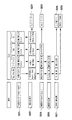
図1に本発明の固体状の核分裂生成物含有物の核種分離方法(以下、単に核種分離方法という)の第1の実施形態を、図2にその核種分離方法を実施する核種分離装置の一例をそれぞれ示す。 FIG. 1 shows a first embodiment of a nuclide separation method (hereinafter simply referred to as a nuclide separation method) of a solid fission product-containing material of the present invention, and FIG. 2 shows an example of a nuclide separation apparatus for carrying out the nuclide separation method. Respectively.
核種分離方法は、テクネチウムとモリブデンを含む固体状の核分裂生成物含有物を不活性雰囲気中で450℃〜600℃に昇温する第1の加熱工程S21と、450℃〜600℃の温度範囲でテクネチウムを酸化させて揮発させる酸化工程S22と、揮発した酸化テクネチウムを捕捉するテクネチウム捕捉工程S23と、酸化テクネチウムの揮発後に酸素雰囲気中で650℃以上に昇温しモリブデンを酸化させて気化させる第2の加熱工程S24と、気化した酸化モリブデンを捕捉するモリブデン捕捉工程S25とを備えている。ただし、テクネチウムとモリブデンを650℃以上に昇温して同時に揮発させ、装置内の温度差(450〜600℃の部位と650℃以上の部位の差)を利用してテクネチウムとモリブデンを相互に分離することも可能である。本実施形態では、核分裂生成物含有物は使用済み核燃料の再処理工程で生じた固体廃棄物であって貴金属元素を含むものであり、テクネチウムとモリブデンを分離した後、650℃以上の温度で酸素を遮断して(ステップS26)、酸化していた貴金属元素の少なくとも一部を金属に還元して回収する(ステップS29)。また、使用済み核燃料の再処理工程は湿式再処理工程であり、固体廃棄物はアクチニドを含む不溶解残渣であり、酸化していた貴金属元素の少なくとも一部を金属に還元した後、冷却して酸溶解し(ステップS27)、溶解したアクチニドと不溶解の貴金属元素とを分離して回収する(ステップS28、S29)。 The nuclide separation method includes a first heating step S21 in which a solid fission product-containing material containing technetium and molybdenum is heated to 450 ° C. to 600 ° C. in an inert atmosphere, and a temperature range of 450 ° C. to 600 ° C. An oxidation step S22 that oxidizes and volatilizes technetium, a technetium trapping step S23 that traps volatilized technetium oxide, and a second step in which molybdenum is oxidized and vaporized by raising the temperature to 650 ° C. or higher in an oxygen atmosphere after volatilization of technetium oxide. Heating step S24 and a molybdenum capturing step S25 for capturing vaporized molybdenum oxide. However, technetium and molybdenum are heated to 650 ° C or higher and volatilized at the same time, and technetium and molybdenum are separated from each other by utilizing the temperature difference in the device (difference between 450 to 600 ° C and 650 ° C or higher). It is also possible to do. In this embodiment, the fission product-containing material is a solid waste generated in the reprocessing process of spent nuclear fuel and contains a noble metal element. After separating technetium and molybdenum, oxygen is produced at a temperature of 650 ° C. or higher. (Step S26), and at least part of the oxidized noble metal element is reduced to metal and recovered (step S29). The spent nuclear fuel reprocessing step is a wet reprocessing step, and the solid waste is an insoluble residue containing actinides. At least part of the oxidized noble metal element is reduced to metal and then cooled. The acid is dissolved (step S27), and the dissolved actinide and the insoluble noble metal element are separated and recovered (steps S28 and S29).
より詳細に説明すると、例えば図2の反応容器1の不溶解残渣入口2より不溶解残渣を装荷し、バルブ3,4を開けて不活性ガス入口5より不活性ガス例えばArガスを反応容器1中に導入しながら、ヒーター6により反応容器1内の不溶解残渣の温度を450℃〜600℃まで昇温する(ステップS21)。反応容器1内の不溶解残渣の温度が450℃〜600℃に達したらバルブ7を開けて酸素ガス入口8より酸素ガスを反応容器1中へと導入する(ステップS22)。この際に反応容器1の排気系9の切替えバルブ10はテクネチウムトラップ11に接続しておく。酸素ガスの導入により不溶解残渣に含まれるテクネチウムが酸化し、Tc2O7となって揮発して排気系9からテクネチウムトラップ11へと流出する。Tc2O7はテクネチウムトラップ11によって捕捉される(ステップS23)。
More specifically, for example, the insoluble residue is loaded from the
十分な時間が経過して不溶解残渣中のテクネチウムがすべて除去されたら、切替えバルブ10をモリブデントラップ12側に切り替えて、反応容器1を650℃以上に昇温する(ステップS24)。これにより不溶解残渣中のモリブデンが酸化してMoO3となり、気化して排気系9より排出されてモリブデントラップ12に移行する。MoO3はモリブデントラップ12によって捕捉される(ステップ25)。
When sufficient time has elapsed and all the technetium in the insoluble residue has been removed, the switching
十分な時間が経過して不溶解残渣中のモリブデンがすべて除去されたら、バルブ7を閉じて酸素の供給を止め不活性ガスだけを供給する(ステップS26)。これにより反応容器1中の部分的もしくは全体的に酸化していたRu,Rh,Pdの一部は金属に戻る。しかし同じ反応容器1中のアクチニドは酸化されたまま残る。
When a sufficient amount of time has passed and all the molybdenum in the insoluble residue has been removed, the
そこでヒーター6の電源を切り、不溶解残渣の残りが充分に冷えたならば反応容器1の下の残留物出口13よりRu,Rh,Pdの金属及び酸化物とアクチニドの酸化物の混合物を取り出して溶解槽14へ払い出す。溶解槽14には硝酸を入れ、この硝酸にアクチニドの酸化物を溶解する(ステップS27)。Ru,Rh,Pdの金属及び酸化物は固体のまま溶け残る。そこで濾過装置を取り付けた溶解槽出口15を開いてアクチニドの硝酸溶液を流し出し、残ったRu,Rh,Pdの金属及び酸化物を水で洗浄して取り出す(ステップS29)。
Therefore, when the
なお、溶解条件によりRu,Rh,Pdの酸化物のいずれかが酸に溶解する場合には、当該酸化物を金属に還元しておくことで硝酸によって溶解されないようにしておき、アクチニドとの分離を行う。Ru,Rh,Pdの酸化物を還元する方法としては、例えば900℃以上の温度で酸素を遮断することで、酸化したRu、Rh、Pdを金属に還元する方法が考えられる。 When any of the oxides of Ru, Rh, and Pd is dissolved in an acid depending on the dissolution conditions, the oxide is reduced to a metal so that it is not dissolved by nitric acid, and separated from the actinide. I do. As a method for reducing an oxide of Ru, Rh, and Pd, for example, a method of reducing oxidized Ru, Rh, and Pd to a metal by blocking oxygen at a temperature of 900 ° C. or higher can be considered.
なお、ステップS27において、不溶解残渣は、溶解槽14の材質、硝酸の濃度等のパラメータによって決定される温度まで冷却する。例えば室温〜100℃程度の温度に冷却する。
In step S27, the insoluble residue is cooled to a temperature determined by parameters such as the material of the
このようにして分離した製品のうちテクネチウムは保管貯蔵か独自の廃棄体または核変換などの工程へと払い出す。モリブデンは廃棄物固化プロセスに回す。アクチニドの硝酸溶液は例えばPurexプロセス(湿式再処理)の主工程へ戻す(ステップS28)。Ru,Rh,Pdはさらに、例えば溶媒抽出法などによる元素分離を行って有用金属としての利用を図る(ステップS29)。 Of the products separated in this way, technetium is sent out to storage, storage, or a separate waste or transmutation process. Molybdenum is sent to the waste solidification process. The actinide nitric acid solution is returned to the main process of the Purex process (wet reprocessing), for example (step S28). Ru, Rh, and Pd are further used as useful metals by performing element separation by, for example, a solvent extraction method (step S29).
このように、昇温、酸化などの簡単なプロセスや操作でTc、Mo、貴金属元素(Ru、Rh、Pd)、アクチニドを分離することができる。しかも酸化した貴金属元素の多くを還元して分離回収することができる。 Thus, Tc, Mo, noble metal elements (Ru, Rh, Pd), and actinides can be separated by simple processes and operations such as temperature rise and oxidation. In addition, most of the oxidized noble metal elements can be reduced and separated and recovered.
なお、上述の説明では、ステップS24において650℃以上に昇温し、この温度でステップS26において酸素を遮断するようにしているが、ステップS26において酸素を遮断する温度を900℃以上としても良い。即ち、650℃以上の温度でMoO3を揮発分離した後、温度を900℃以上に上げてから酸素を遮断するようにしても良く、又はステップS24において温度を900℃以上に上げてMoO3の揮発分離を行い、この温度を維持しながらステップS26において酸素を遮断しても良い。900℃以上で酸素を遮断することで、ステップS22の酸素の供給によって酸化したRu、Rh、Pdを金属に還元することができ、Ru、Rh、Pdの全てを金属の状態で回収することができる(ステップS29)。 In the above description, the temperature is raised to 650 ° C. or higher in step S24, and oxygen is blocked at this temperature in step S26. However, the temperature for blocking oxygen in step S26 may be 900 ° C. or higher. That is, after MoO 3 is volatilized and separated at a temperature of 650 ° C. or higher, the temperature may be raised to 900 ° C. or higher and then oxygen may be shut off, or in step S24, the temperature is raised to 900 ° C. or higher and the MoO 3 Volatile separation may be performed, and oxygen may be shut off in step S26 while maintaining this temperature. By blocking oxygen at 900 ° C. or higher, it is possible to reduce Ru, Rh, and Pd oxidized by supplying oxygen in step S22 to metal, and to recover all of Ru, Rh, and Pd in the metal state. Yes (step S29).
次に、本発明の固体状の核分裂生成物含有物の核種分離方法の第2の実施形態について、図3及び図4に基づいて説明する。なお、ステップ26までは共通であり、共通部分の説明は省略する。 Next, a second embodiment of the method for separating nuclides of a solid fission product-containing material of the present invention will be described with reference to FIGS. Note that the steps up to step 26 are common, and description of common portions is omitted.
第1の実施形態では湿式再処理の不溶解残渣を対象にしていたのに対し、第2の実施形態では乾式再処理の金属廃棄物を対象にしている。即ち、本実施形態では、使用済み核燃料の再処理工程は乾式再処理工程であり、固体廃棄物はジルコニウムを含む金属廃棄物であり、酸化していた貴金属元素の少なくとも一部を金属に還元した後、溶融塩/液体金属系に移送し(ステップS31)、溶融塩側に移行したジルコニウムと液体金属に移行した貴金属元素とを分離して回収する(ステップS32、S29)。 In the first embodiment, the insoluble residue of wet reprocessing is targeted, whereas in the second embodiment, the metal waste of dry reprocessing is targeted. That is, in this embodiment, the spent nuclear fuel reprocessing step is a dry reprocessing step, the solid waste is a metal waste containing zirconium, and at least a part of the oxidized noble metal element is reduced to metal. Thereafter, the molten salt / liquid metal system is transferred (step S31), and the zirconium transferred to the molten salt side and the noble metal element transferred to the liquid metal are separated and recovered (steps S32 and S29).
なお、乾式再処理は例えば金属燃料を対象しており、乾式再処理で生じる金属廃棄物には金属燃料の燃料マトリックスであるジルコニウムが含まれている。即ち、湿式再処理の不溶解残渣と異なり、乾式再処理の金属廃棄物にはジルコニウムが含まれている。一方、処理プロセスの相違より、不溶解残渣にはアクチニドが残るか又はその可能性があるが、金属廃棄物にはアクチニドは殆ど残らない。 Note that dry reprocessing targets, for example, metal fuel, and metal waste generated by dry reprocessing contains zirconium, which is a fuel matrix of metal fuel. That is, unlike an insoluble residue obtained by wet reprocessing, zirconium is contained in dry reprocessed metal waste. On the other hand, due to differences in treatment processes, actinides may or may remain in the insoluble residue, but almost no actinides remain in the metal waste.
例えば図4の反応容器1の金属廃棄物入口2より金属廃棄物を装荷し、バルブ3,4を開けて不活性ガス入口5より不活性ガス例えばArガスを反応容器1中に導入しながら、ヒーター6により反応容器1内の金属廃棄物の温度を450℃〜600℃まで昇温する(ステップS21)。反応容器1内の金属廃棄物の温度が450℃〜600℃に達したらバルブ7を開けて酸素ガス入口8より酸素ガスを反応容器1中へと導入する(ステップS22)。この際に反応容器1の排気系9の切替えバルブ10はテクネチウムトラップ11に接続しておく。酸素ガスの導入により金属廃棄物に含まれるテクネチウムが酸化し、Tc2O7となって揮発して排気系9からテクネチウムトラップ11へと流出する。Tc2O7はテクネチウムトラップ11によって捕捉される(ステップS23)。
For example, while loading the metal waste from the
十分な時間が経過して金属廃棄物中のテクネチウムがすべて除去されたら、切替えバルブ10をモリブデントラップ12側に切り替えて、反応容器1を650℃以上に昇温する(ステップS24)。これにより金属廃棄物中のモリブデンが酸化してMoO3となり、気化して排気系9より排出されてモリブデントラップ12に移行する。MoO3はモリブデントラップ12によって捕捉される(ステップ25)。
When sufficient time has elapsed and all the technetium in the metal waste has been removed, the switching
十分な時間が経過して金属廃棄物中のモリブデンがすべて除去されたら、バルブ7を閉じて酸素の供給を止め不活性ガスだけを供給する(ステップS26)。これにより反応容器1中の部分的もしくは全体的に酸化していたRu,Rh,Pdの一部は金属に戻る。しかし同じ反応容器1中のZrは酸化されたまま残る。
When a sufficient amount of time has elapsed and all the molybdenum in the metal waste has been removed, the
次に、反応容器1の下の残留物出口13よりRu,Rh,Pdの金属及び酸化物とZrの酸化物の混合物(金属廃棄物の残り)を取り出して抽出器16へ払い出す(ステップS31)。抽出器16には、例えばLiCl−KCLといった共晶塩と液体Cd(比重約9g/cm3)の二層が納められており、Ru,Pd,Rh(いずれも比重が約12g/cm3)は液体Cdに溶解し、溶解しない部分が存在しても底に沈降する。これに対しZrO2は比重が5〜6g/cm3で液体Cd中には溶解せず、共晶塩と液体Cdの界面の共晶塩の側に分布する。このため、二相を分離すればZrをRu,Pd,Rhから分離することができる。液体Cd中のRu,Pd,Rhは例えば蒸留などの方法でを取り出して相互分離するなどすれば有用金属として利用することが出来る(ステップS29)。ZrO2と共晶塩の相分離には例えば濾過のような方法を用いる。なお、上記共晶塩は、共晶していない塩で代用しても良い。
Next, a mixture of Ru, Rh, Pd metal and oxide and Zr oxide (remaining metal waste) is taken out from the
このようにして分離した製品のうちテクネチウムは保管貯蔵か独自の廃棄体または核変換などの工程へと払い出す。モリブデンは廃棄物固化プロセスに回す。Zrは廃棄する(ステップS32)。Ru,Rh,Pdはさらに、一般的な元素分離を行って有用金属としての利用を図る(ステップS29)。 Of the products separated in this way, technetium is sent out to storage, storage, or a separate waste or transmutation process. Molybdenum is sent to the waste solidification process. Zr is discarded (step S32). Ru, Rh, and Pd are further used as useful metals by performing general element separation (step S29).
このように、昇温、酸化などの簡単なプロセスや操作でTc、Mo、貴金属元素(Ru、Rh、Pd)、Zrを分離することができる。しかも酸化した貴金属元素の多くを還元して分離回収することができる。 Thus, Tc, Mo, noble metal elements (Ru, Rh, Pd), and Zr can be separated by simple processes and operations such as temperature rise and oxidation. In addition, most of the oxidized noble metal elements can be reduced and separated and recovered.
このように、本発明では、使用済み核燃料の再処理工程で発生する固体廃棄物について核種分離を行うことができるので、処分する高レベル放射性廃棄物の量を減らすことができると共に、分離した核種の有効利用を図ることができる。 As described above, in the present invention, since the nuclide separation can be performed on the solid waste generated in the reprocessing step of the spent nuclear fuel, the amount of high-level radioactive waste to be disposed of can be reduced and the separated nuclide can be reduced. Can be used effectively.
また、Tcは長寿命の放射性核種であるが、再処理工程で発生する固体廃棄物からTcを分離することで、固体廃棄物に含まれる長寿命放射性核種を減らすことができ、高レベル放射性廃棄物としての固体廃棄物の処理処分や管理を容易にすることができる。 Tc is a long-lived radionuclide, but by separating Tc from the solid waste generated in the reprocessing process, the long-lived radionuclide contained in the solid waste can be reduced, resulting in high-level radioactive waste. Disposal and management of solid waste as a product can be facilitated.
また、Moは再処理工程で発生する固体廃棄物中に比較的多く含まれているが、固体廃棄物からMoを分離することで、後に行う貴金属元素の分離回収を容易にすることができる。 Further, Mo is contained in a relatively large amount in the solid waste generated in the reprocessing step, but separation and recovery of the noble metal element performed later can be facilitated by separating Mo from the solid waste.
また、再処理工程で発生する固体廃棄物から貴金属元素を分離回収できるので、例えば残りの廃棄物をガラス固化する場合に金属を含まない状態でその処理を行うことができるので、その処理を容易にすることができる。 In addition, since precious metal elements can be separated and recovered from solid waste generated in the reprocessing step, for example, when the remaining waste is vitrified, the treatment can be performed in a state that does not contain metal, so that the treatment is easy. Can be.
また、湿式再処理の不溶解残渣については、不溶解残渣に残っていたアクチニドを分離回収できるので、不溶解残渣に残っていた放射性核種を減らすことができ、不溶解残渣の処理処分や管理を容易にすることができると共に、核資源の有効活用を図ることができる。 In addition, for the insoluble residue of wet reprocessing, since the actinide remaining in the insoluble residue can be separated and recovered, the radionuclide remaining in the insoluble residue can be reduced, and the disposal and management of the insoluble residue can be performed. It can be facilitated and nuclear resources can be used effectively.
さらに、乾式再処理の金属廃棄物については、金属廃棄物に残っていたジルコニウムを分離回収できるので、高レベル放射性廃棄物の量を減らすことができると共に、分離した核種(ジルコニウム)の有効利用を図ることができる。 Furthermore, with regard to dry reprocessed metal waste, zirconium remaining in the metal waste can be separated and recovered, so the amount of high-level radioactive waste can be reduced and effective use of the separated nuclide (zirconium) can be achieved. Can be planned.
なお、上述の形態は本発明の好適な形態の一例ではあるがこれに限定されるものではなく本発明の要旨を逸脱しない範囲において種々変形実施可能である。例えば、上述の説明では、Tc、Mo、アクチニド、貴金属元素の分離(図1)、Tc、Mo、Zr、貴金属元素の分離(図3)を一連のプロセスで連続して順番に行っていたが、一部の核種の分離のみを行うようにしても良い。例えば、Moの分離が不要な場合や対象とする核分裂生成物含有物にMoが含まれていない場合等には、Moの分離は行わなくても良い。Tc、アクチニド、貴金属元素、Zrについても同様である。また、貴金属元素の分離としては、例えばRh、Pd、Ruのうちいずれか一の元素の分離を単独で行っても良く、いずれか二の元素又は全ての元素の分離を組み合わせて行っても良い。 The above-described embodiment is an example of a preferred embodiment of the present invention, but is not limited thereto, and various modifications can be made without departing from the scope of the present invention. For example, in the above description, separation of Tc, Mo, actinide, and noble metal elements (FIG. 1) and separation of Tc, Mo, Zr, and noble metal elements (FIG. 3) were performed sequentially in a series of processes. Alternatively, only some of the nuclides may be separated. For example, when the separation of Mo is unnecessary or when the target fission product-containing material does not contain Mo, the Mo separation may not be performed. The same applies to Tc, actinides, noble metal elements, and Zr. As the separation of the noble metal element, for example, any one of Rh, Pd, and Ru may be separated alone, or any two elements or all elements may be separated in combination. .
例えば、テクネチウムの分離のみを行う場合には、テクネチウムを含む固体状の核分裂生成物含有物を450℃以上に昇温して酸素を供給し、テクネチウムを酸化させて揮発させることで分離回収すれば良い。本願発明者らは、TcとReとが酸化と揮発の挙動がよく似ていることを利用し、Reを使用して試験を繰り返し行った結果、Re(即ちTc)が450℃以上で実用的な速度で揮発することを新たに知見し、当該発明をするに至ったものである。なお、その際、核分裂生成物含有物にルテニウムが含まれている場合には、核分裂生成物含有物の昇温は、少なくとも108℃までは不活性雰囲気中で行うようにすることが好ましい。108℃未満の温度では、酸素を供給しなければ不安定で揮発するRuO4の発生を防止することができ、たとえ核分裂生成物含有物にルテニウムが含まれていたとしてもテクネチウムを単独で分離回収することができるからである。ただし、核分裂生成物含有物にルテニウムが含まれていない場合や、テクネチウムにルテニウムの混入が許される場合等には、108℃までの昇温を酸素雰囲気中で行っても良い。 For example, when only technetium is separated, the solid fission product-containing product containing technetium is heated to 450 ° C. or higher, supplied with oxygen, oxidized and volatilized to volatilize technetium, and separated and recovered. good. The inventors of the present application have made practical use of Re (ie, Tc) of 450 ° C. or more as a result of repeating the test using Re using the fact that Tc and Re are similar in oxidation and volatilization behavior. It has been newly discovered that it volatilizes at a high speed, and the present invention has been made. In this case, when ruthenium is contained in the fission product-containing material, it is preferable to raise the temperature of the fission product-containing material in an inert atmosphere up to at least 108 ° C. If the temperature is lower than 108 ° C., generation of unstable and volatile RuO 4 can be prevented if oxygen is not supplied. Even if ruthenium is contained in the fission product content, technetium is separated and recovered by itself. Because it can be done. However, if the fission product-containing material does not contain ruthenium, or if technetium is allowed to contain ruthenium, the temperature may be raised to 108 ° C. in an oxygen atmosphere.
また、モリブデンの分離のみを行う場合には、モリブデンを含む固体状の核分裂生成物含有物を650℃以上に昇温して酸素を供給し、モリブデンを酸化させて気化させることで分離回収すれば良い。本願発明者らは、試験を繰り返し行った結果、Moが650℃以上で実用的な速度で揮発することを新たに知見し、当該発明をするに至ったものである。なお、核分裂生成物含有物にルテニウムが含まれている場合には、核分裂生成物含有物の昇温は、少なくとも108℃までは不活性雰囲気中で行うようにすることが好ましいことはTcの分離の場合と同様である。 In addition, when only separating molybdenum, if the solid fission product-containing material containing molybdenum is heated to 650 ° C. or higher, oxygen is supplied, and molybdenum is oxidized and vaporized for separation and recovery. good. As a result of repeated tests, the inventors of the present application have newly found that Mo volatilizes at a practical speed at 650 ° C. or higher, and have reached the present invention. When ruthenium is contained in the fission product-containing material, it is preferable to raise the temperature of the fission product-containing material in an inert atmosphere at least up to 108 ° C. It is the same as the case of.
また、貴金属元素のうちロジウムの分離のみを行う場合、即ち、ロジウムを含む固体状の核分裂生成物含有物に酸素を供給しながらロジウム以外の核種(例えばTcやMo)を分離した後、900℃以上の温度で酸素を遮断し、酸素の供給で酸化したロジウムを金属に還元して回収するようにしても良い。本願発明者らは、試験を繰り返し行った結果、酸化ロジウムは約900℃以上で酸素を断つと即ち不活性ガス雰囲気にすると金属に還元されることを新たに知見し、当該発明をするに至ったものである。 Further, when only rhodium is separated from the noble metal elements, that is, after separating nuclides other than rhodium (eg, Tc and Mo) while supplying oxygen to the solid fission product-containing material containing rhodium, the temperature is 900 ° C. Oxygen may be blocked at the above temperature, and rhodium oxidized by supplying oxygen may be reduced to metal and recovered. As a result of repeated tests, the inventors of the present application have newly found that rhodium oxide is reduced to metal when oxygen is cut off at about 900 ° C. or higher, that is, in an inert gas atmosphere, leading to the invention. It is a thing.
また、貴金属元素のうちパラジウムの分離のみを行う場合、即ち、パラジウムを含む固体状の核分裂生成物含有物に酸素を供給しながらパラジウム以外の核種(例えばTcやMo)を分離した後、700℃以上の温度で酸素を遮断し、酸素の供給で酸化したパラジウムを金属に還元して回収するようにしても良い。本願発明者らは、試験を繰り返し行った結果、酸化パラジウムは約700℃以上で酸素を断つと即ち不活性ガス雰囲気にすると金属に還元されることを新たに知見し、当該発明をするに至ったものである。 Further, when only the palladium is separated from the noble metal element, that is, after separating the nuclide other than palladium (for example, Tc and Mo) while supplying oxygen to the solid fission product-containing product containing palladium, 700 ° C. Oxygen may be blocked at the above temperature, and palladium oxidized by supplying oxygen may be reduced to metal and recovered. As a result of repeated tests, the inventors of the present application have newly found that palladium oxide is reduced to metal when oxygen is cut off at about 700 ° C. or higher, that is, in an inert gas atmosphere, leading to the invention. It is a thing.
また、貴金属元素のうち、ルテニウムの分離のみを行う場合、即ち、ルテニウムを含む固体状の核分裂生成物含有物に酸素を供給しながらルテニウム以外の核種(例えばTcやMo)を分離した後、酸素の供給で酸化したRuO4を108℃以上の温度でRuO2又はRuに還元し、その後108℃未満の温度では酸素を遮断し、ルテニウムをRuO2又はRuの状態で残存させて回収するようにしても良い。 Further, when only ruthenium is separated from noble metal elements, that is, after separating nuclides other than ruthenium (for example, Tc and Mo) while supplying oxygen to the solid fission product-containing material containing ruthenium, The oxidized RuO 4 is reduced to RuO 2 or Ru at a temperature of 108 ° C. or higher, and then the oxygen is cut off at a temperature lower than 108 ° C., so that ruthenium remains in the RuO 2 or Ru state and is recovered. May be.
さらに、上述の説明では、固体状の核分裂生成物含有物が使用済み核燃料の再処理工程で生じた固体廃棄物であったが、再処理工程で生じた固体廃棄物以外の核分裂生成物含有物、例えば使用済みの放射線源等に適用しても良い。 Furthermore, in the above description, the solid fission product content is a solid waste generated in the reprocessing process of the spent nuclear fuel, but the fission product content other than the solid waste generated in the reprocessing process. For example, it may be applied to a used radiation source.
試験を行い、以下の新たな知見を得た。即ち、テクネチウムの模擬物資であるレニウムが揮発する条件を示した。またテクネチウムは揮発するがモリブデンが揮発しない条件と、モリブデンも揮発する条件をそれぞれ示した。それらの条件におけるロジウムとパラジウムの酸化還元挙動を示し、これらの元素が揮発しないことを示した。またルテニウムが揮発せず最終的に金属で存在することも示した。 Tests were conducted and the following new findings were obtained. That is, the conditions under which rhenium, which is a simulated material for technetium, volatilizes are shown. Moreover, the conditions where technetium volatilizes but molybdenum does not volatilize and the conditions where molybdenum volatilizes are also shown. The redox behavior of rhodium and palladium under these conditions was shown, indicating that these elements did not volatilize. It was also shown that ruthenium does not volatilize and eventually exists as a metal.
(1.試験の一般的な方法と試料)
熱分析装置による酸化/還元挙動の観察試験と、ガラス製カラムを用いた反応/揮発の試験の2種類の試験を必要に応じて行った。
(1. General test method and sample)
Two types of tests were conducted as needed, an observation test of oxidation / reduction behavior using a thermal analyzer and a reaction / volatilization test using a glass column.
熱分析装置による観察試験では1試験あたり約30mgの金属粉末をアルミナ製のパンに乗せて装荷してアルゴンガスを流し、温度の変化と酸素の有無をパラメータとして、酸化による重量の増加と酸素の放出による重量の減少および酸化物の揮発による重量の減少を観察した。熱分析で生成した試料の一部はX線回折(XRD)装置により分析した。 In the observation test using a thermal analyzer, about 30 mg of metal powder per test was placed on an alumina pan, loaded with argon gas, and the change in temperature and the presence or absence of oxygen were used as parameters, and the increase in weight due to oxidation and the oxygen content. Weight loss due to release and weight loss due to oxide volatilization was observed. A part of the sample generated by thermal analysis was analyzed by an X-ray diffraction (XRD) apparatus.
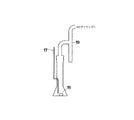
ガラス製カラムの概略を図5に示す。図5中符号17はガス入口、符号18は試料、負号19はコールドトラップである。試料18として試験の対象となる貴金属の単体、混合物または合金の約1gをカラムの底に予め装荷した。電気炉中でカラムを昇温しアルゴン(Ar)またはArと酸素の混合ガスをガス入口17から流した。試料18と接触したガスは、電気炉の外に配置されてファンで冷却されるコールドトラップ19を通り、さらにコールドトラップ19で捕集できなかった揮発物を捕集するために「硝酸」「水酸化ナトリウム(NaOH)または水酸化リチウム(LiOH)の水溶液」および「水で2倍に希釈した濃塩酸にエタノールを混ぜた溶液」の3段階の「化学トラップ」を経てドラフトへと放出された。カラムの底に残った試料18と各トラップで捕集された物質はプラズマ発光分析装置(ICP、Induced Coupled Plasma)で定量し、必要に応じてXRDによる同定を行った。
An outline of the glass column is shown in FIG. In FIG. 5,
貴金属FP(核分裂生成物)は非放射性物質で代用し、非放射性同位体の存在しないテクネチウム(Tc)に関しては酸化と揮発の挙動が良く似ているとされるレニウム(Re)で代用した。TcとReは何れも室温で酸素と共存するとVII価の酸化物M2O7(MはTcまたはRe)を形成し、また250℃以上では熱力学的に気体で存在する。このため本発明の検証としてはレニウムの利用で十分である考えた。またTcとモリブデン(Mo)を除去した残りの不溶解残渣中に含まれるアクチニド元素の酸化に関しては、アクチニド元素の酸化物が非常に安定であることから検証の必要はないと考えた。 The precious metal FP (fission product) was replaced with a non-radioactive material, and technetium (Tc) without a non-radioactive isotope was replaced with rhenium (Re), which has similar oxidation and volatilization behavior. When both Tc and Re coexist with oxygen at room temperature, a VII-valent oxide M 2 O 7 (M is Tc or Re) is formed, and at 250 ° C. or higher, it exists thermodynamically as a gas. For this reason, the use of rhenium was considered sufficient for the verification of the present invention. Further, regarding the oxidation of the actinide element contained in the remaining insoluble residue from which Tc and molybdenum (Mo) were removed, it was considered that verification was not necessary because the oxide of the actinide element was very stable.
(2.Reの酸化と揮発の挙動)
幾つかの条件でガラス製カラムでの試験を終えた後のReの分布を表1に示した。表1の1段目の結果でガラス製カラム内に固体が6.4%残留しているのは、試験時間(反応時間)が足りなかった為であると考えた。また、2段目の結果でガラス製カラム内の残留量が42.1%と極めて多いのは、試験温度(反応時間)が低すぎたからであると考えた。3段目の結果で試験時間が長いにもかかわらず残留量が20.0%と多いのは、Arの流量が多く、O2の流量が少なすぎたからであると考えた。これらの結果より、試験温度、試験時間、O2の流量がパラメータになると考えた。即ち、表中最下段(4段目)のように十分な反応時間と反応温度および酸素が存在すれば、レニウムはほぼ全量が揮発してトラップへと移行することが示された。これにより、450℃以上に昇温させてレニウムを酸化させることで、レニウムを実用的な速度で揮発させて分離回収できることが確認された。
(2. Re oxidation and volatility behavior)
Table 1 shows the Re distribution after the glass column test was completed under several conditions. As a result of the first stage of Table 1, 6.4% of the solid remained in the glass column because the test time (reaction time) was insufficient. In addition, it was thought that the reason why the residual amount in the glass column was as large as 42.1% as a result of the second stage was that the test temperature (reaction time) was too low. The reason why the residual amount was as large as 20.0% despite the long test time in the results of the third stage was thought to be that the flow rate of Ar was large and the flow rate of O 2 was too small. From these results, it was considered that the test temperature, test time, and O 2 flow rate were parameters. That is, it was shown that if sufficient reaction time, reaction temperature, and oxygen are present as in the lowermost stage (fourth stage) in the table, almost all rhenium volatilizes and moves to the trap. Thus, it was confirmed that rhenium can be volatilized at a practical rate and separated and recovered by raising the temperature to 450 ° C. or higher to oxidize rhenium.

なお表1とは別に事前に行った予備試験では、「温度:350℃、Arガスの流量:0.3L/分、酸素ガスの流量:0.1L/分、時間:1時間」の条件ではReの酸化率が約23%にとどまり揮発もほとんど見られないこと、この温度と酸素分圧で時間だけを長くしても高い酸化率は得られないことなどが示されている。 In addition, in a preliminary test conducted in advance separately from Table 1, in the conditions of “temperature: 350 ° C., Ar gas flow rate: 0.3 L / min, oxygen gas flow rate: 0.1 L / min, time: 1 hour” It has been shown that the oxidation rate of Re is only about 23% and almost no volatilization is observed, and that a high oxidation rate cannot be obtained even if only the time is increased at this temperature and oxygen partial pressure.
(3.Moの酸化と揮発の挙動)
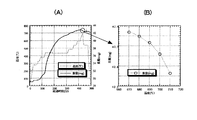
Moの酸化と揮発の挙動はまず熱分析装置を用いて調べられた。熱分析ではArを0.15L/分で、酸素を0.10L/分で流しながら徐々に昇温して酸化の著しくなる温度と揮発の著しくなる温度および酸素を絶った場合の挙動を調べた。結果を図6(A)(B)に示す。
(3. Mo oxidation and volatilization behavior)
The oxidation and volatilization behavior of Mo was first investigated using a thermal analyzer. In the thermal analysis, the temperature was raised gradually while flowing Ar at 0.15 L / min and oxygen at 0.10 L / min, and the temperature at which oxidation became remarkable, the temperature at which volatility became remarkable, and the behavior when oxygen was turned off were examined. . The results are shown in FIGS. 6 (A) and (B).
まず図6(A)から、Moの酸化による重量増加が低い温度から始まり特に400〜450℃以上で著しいことが示された。さらに温度が高くなるとMoO3の揮発による重量減少が見られ始めた。この様子を拡大したのが図6(B)である。これらの結果からMoO3の揮発がおおよそ650℃以上で顕著になることが示された。 First, FIG. 6A shows that the weight increase due to the oxidation of Mo starts at a low temperature and is particularly remarkable at 400 to 450 ° C. or more. As the temperature increased further, weight loss due to the volatilization of MoO 3 began to be observed. FIG. 6B is an enlarged view of this situation. From these results, it was shown that the volatility of MoO 3 becomes remarkable at about 650 ° C. or more.
従ってRe(即ちTc)とMoを分離するためには、まず450℃〜550℃でReを揮発させ、Reの揮発が終了した後で650℃以上に昇温してMoを揮発させれば良いことが示された。図6(A)に示す↓では温度約500℃で酸素の供給を絶っているが、これに伴う重量減少は見られず、この温度で酸素がなくてもMoO3は安定で分解されないことが示された。 Therefore, in order to separate Re (ie, Tc) and Mo, first, Re is volatilized at 450 ° C. to 550 ° C., and after the volatilization of Re is finished, the temperature is raised to 650 ° C. or more to volatilize Mo. It was shown that. In FIG. 6 (A), the supply of oxygen is cut off at a temperature of about 500 ° C., but there is no weight loss associated with this, and even if there is no oxygen at this temperature, MoO 3 is stable and not decomposed. Indicated.
つまり、Moの分離のみについては、650℃以上に昇温させてMoを酸化させることでMoO3を実用的な速度で気化させて分離できることが確認された。また、Re(即ちTc)とMoの分離については、まず450℃〜550℃でReを揮発させ、Reの揮発が終了した後で650℃以上に昇温してMoを揮発させれば良いことが確認された。 That is, for only the separation of Mo, it was confirmed that MoO 3 can be vaporized and separated at a practical rate by oxidizing Mo by raising the temperature to 650 ° C. or higher. As for separation of Re (ie, Tc) and Mo, it is only necessary to first volatilize Re at 450 ° C. to 550 ° C., and then volatilize Mo by raising the temperature to 650 ° C. or more after the completion of Re volatilization. Was confirmed.
(4.Rhの酸化と還元の挙動)
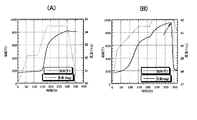
Rh単体の試験は熱分析装置を用いて行った。2回の試験の結果を図7(A)(B)に示す。図7(A)に示した試験では昇温の開始前から降温終了までの間、常に0.2L/分の流量のArと0.1L/分の酸素を流していた。Rhは温度が約600℃から酸化し始めた。Rhの酸化物としてはIII価のRh2O3のみが安定であるとされており、この前提に立つと降温を開始した時点の酸化率は約45%で、Rhは一部が酸化され一部が金属で残っていると考えられた。
(4. Behavior of oxidation and reduction of Rh)
The test of Rh alone was performed using a thermal analyzer. The results of the two tests are shown in FIGS. In the test shown in FIG. 7 (A), Ar at a flow rate of 0.2 L / min and oxygen at 0.1 L / min were always flowed from before the start of temperature increase to the end of temperature decrease. Rh began to oxidize at a temperature of about 600 ° C. As the oxide of Rh, only III-valent Rh 2 O 3 is considered to be stable. Under this assumption, the oxidation rate at the start of the temperature drop is about 45%, and Rh is partially oxidized. It was thought that the part remained with metal.
これに対し図7(B)に示した試験では、前述の試験と同様にArと酸素を流しながら昇温したあと降温する前に、図7(B)中に矢印で示した時点で酸素を流すのを止めてArのみを流している。酸素を止めた時点で重量が減少に転じているのは、生成したRh2O3が分解されて酸素を放出した結果であると考えられた。 On the other hand, in the test shown in FIG. 7B, oxygen is added at the time indicated by the arrow in FIG. The flow is stopped and only Ar is flowed. When the oxygen was stopped, the weight started to decrease because the generated Rh 2 O 3 was decomposed and oxygen was released.
図7(A)の試験の後に残った試料をXRDで観察した回折パターンを図8に示した。この図からも、Rh金属にArと酸素を流しながら1000℃まで昇温した試料にはRh金属とRh2O3が含まれることが確認された。なおRhについては後述の追加試験を行った。 A diffraction pattern obtained by observing a sample remaining after the test of FIG. 7A by XRD is shown in FIG. Also from this figure, it was confirmed that the sample heated to 1000 ° C. while flowing Ar and oxygen through Rh metal contains Rh metal and Rh 2 O 3 . For Rh, the following additional test was conducted.
(5.Pdの酸化と還元の挙動)
Pd単体の試験は熱分析装置を用いて行った。2回の試験の結果を図9(A)(B)に示す。図9(A)に示した試験では昇温の開始前から降温終了までの間、常に0.2L/分の流量のArと0.1L/分の酸素を流していた。Pdも約600℃から酸化し始めた。Pdの酸化物としてはII価のPdOのみが安定であるとされているが、この前提に立つと重量が最大になった際の酸化率は約30%で、Pdは一部が酸化され一部が金属で残っていると考えられた。しかしその後、温度が800℃を上回ると重量は急に減少に転じ、数分のうちには原料金属と同じ重量まで低下した。重量減少が原料の重さに達すると同時に終わり以後は定常であったことから、この重量減少は生成した酸化物などの揮発によるものではなく、PdOが高温で不安定になってPdとO2に分解されたものであると考えられた。
(5. Pd oxidation and reduction behavior)
The test of Pd alone was performed using a thermal analyzer. The results of the two tests are shown in FIGS. 9 (A) and 9 (B). In the test shown in FIG. 9 (A), Ar at a flow rate of 0.2 L / min and oxygen at 0.1 L / min were always flowed from before the start of temperature increase to the end of temperature decrease. Pd also began to oxidize from about 600 ° C. As the Pd oxide, only II-valent PdO is considered to be stable. However, based on this assumption, the oxidation rate when the weight is maximized is about 30%, and Pd is partially oxidized. It was thought that the part remained with metal. However, after that, when the temperature exceeded 800 ° C., the weight suddenly started to decrease, and within a few minutes, the weight decreased to the same weight as the raw metal. Since the weight reduction reached the weight of the raw material and was steady after the end, this weight reduction was not due to volatilization of the generated oxide or the like, but PdO became unstable at high temperatures and Pd and O 2 It was thought to have been decomposed into
これを受けて生成物の分解が起こらない温度で試験を行った結果が図9(B)である。この試験では最高温度を約750℃としたため、PdOの分解が起こらないままで酸化率が39%に達したが、以後の酸化は遅かった。この試験では次にこの750℃を維持したまま図中の矢印の時点で酸素の供給を止めてArのみを流した。この結果、酸素の欠如によるPdOの分解が起こって重量が減少し、原料の重量に戻った。なおPdについては後述の追加試験を行った。 FIG. 9B shows the result of the test conducted at such a temperature that the product does not decompose. In this test, the maximum temperature was about 750 ° C., so that the oxidation rate reached 39% without decomposition of PdO, but the subsequent oxidation was slow. In this test, the supply of oxygen was stopped at the time indicated by the arrow in the figure while maintaining this 750 ° C., and only Ar was allowed to flow. As a result, decomposition of PdO due to lack of oxygen occurred, the weight decreased, and the weight returned to the raw material. In addition, the below-mentioned additional test was done about Pd.
(6.Ruの酸化還元と揮発の挙動)
Ruの挙動はReと共にガラス製カラムに装荷した試験を行って調べた。試験では525mgのRu金属と500mgのRe金属の粉末をガラスカラムに装荷してまずArを0.15L/分で流しながら450℃まで昇温し、定常に達してから0.1L/分で酸素ガスを流した。この後6時間のあいだ酸素ガスを流しながら450℃に保持し、6時間後に酸素を流すのをやめて同時に降温を開始した。冷却後に調べたところ装荷したReは98%が揮発してトラップに捕捉されていることが分かった。一方で反応容器の中には549mgの固体が残っていた。この固体のXRD観察の結果を図10に示す。
(6. Ru oxidation-reduction and volatility behavior)
The behavior of Ru was examined by performing a test loaded with Re on a glass column. In the test, 525 mg of Ru metal and 500 mg of Re metal powder were loaded on a glass column, heated to 450 ° C. while flowing Ar at a rate of 0.15 L / min, and after reaching a steady state, oxygen was added at a rate of 0.1 L / min. Gas was flushed. Thereafter, the temperature was maintained at 450 ° C. while flowing oxygen gas for 6 hours. After 6 hours, the flow of oxygen was stopped and the temperature was lowered at the same time. As a result of examining after cooling, it was found that 98% of Re loaded was volatilized and trapped in the trap. On the other hand, 549 mg of solid remained in the reaction vessel. The result of XRD observation of this solid is shown in FIG.
この図から底に残っていたRuが主として金属であったことが分かった。またReを捕捉したトラップの分析ではRuは殆ど検出されなかった。反応容器底にあった固体の重量が装荷したRuとほぼ一致し若干これよりも多かったこと、Reはほぼ全量が揮発したこと、トラップでRuが検出されなかったこと、および図10のXRDパターンから、Ruは僅かに酸化されながら揮発せずに反応容器中に残留したものと考えられた。なおRuのIV価の酸化物RuO2は、上述の通り、高温での酸化と酸素の欠如による還元が示されたRh2O3,PdOよりも酸化物の生成自由エネルギーが小さく酸化物がより安定である。このことからRuについても酸素を流している間は一部が酸化物(RuO2)になっていたものと推測される。一方、Ruの酸化物RuO4は揮発性を有していることが知られている。。これらより、RuがRuO2又はRu金属であれば揮発させずに残存させて回収できるとの知見を得た。また、酸化物RuO4は108℃以上では不安定であり、RuO2又はRu金属に還元される。したがって、Ruの分離については、108℃以上にすることでRuO4を不安定にしてRuO2又はRu金属に還元し、その後、108℃未満で酸素を供給しなければ揮発性を有するRuO4の発生を防ぐことができ、Ruを残存させて回収できるとの知見を得た。即ち、酸素の供給で酸化したRuO4を108℃以上の温度でRuO2又はRuに還元し、その後108℃未満の温度では酸素を遮断し、ルテニウムをRuO2又はRuの状態で残存させて回収できるとの知見を得た。 From this figure, it was found that Ru remaining at the bottom was mainly metal. In addition, Ru was hardly detected in the analysis of the trap that captured Re. The weight of the solid at the bottom of the reaction vessel was almost the same as that of the loaded Ru and slightly higher than this, Re was almost completely volatilized, Ru was not detected in the trap, and the XRD pattern of FIG. From this, it was considered that Ru was slightly oxidized but did not volatilize and remained in the reaction vessel. As described above, Ru IV oxide RuO 2 has a lower free energy of formation of oxide than Rh 2 O 3 and PdO, which have been shown to be oxidized at a high temperature and reduced due to the lack of oxygen. It is stable. From this, it is presumed that a part of Ru was also an oxide (RuO 2 ) while oxygen was flowing. On the other hand, it is known that Ru oxide RuO 4 has volatility. . From these, it was found that if Ru is RuO 2 or Ru metal, it can be recovered without being volatilized. Further, the oxide RuO 4 is unstable at 108 ° C. or higher and is reduced to RuO 2 or Ru metal. Therefore, with respect to the separation of Ru, if RuO 4 is made unstable by reducing the temperature to 108 ° C. or higher and reduced to RuO 2 or Ru metal, and then oxygen is not supplied below 108 ° C., the volatility of RuO 4 is reduced. It was found that generation can be prevented and Ru can remain and be recovered. That is, RuO 4 oxidized by supplying oxygen is reduced to RuO 2 or Ru at a temperature of 108 ° C. or higher, and then the oxygen is shut off at a temperature lower than 108 ° C., and ruthenium remains in the state of RuO 2 or Ru. I learned that I can do it.
また、RhとPdについて、追加の試験を行った。 Further, additional tests were performed on Rh and Pd.
(Rhの追加試験と結果)
試験は熱分析装置(TG/DTA)に金属Rhの粉を45.3mg装荷して、まず0.15L/分のArガスと0.1L/分の酸素ガスを流しながら昇温し、酸化があるていど進行したところでガスを流したまま降温することで酸化物を得た。温度は約30分で1000℃まで昇温し、この温度で60分間保持したのち降温した。この際の経過時間に対する温度と重量の変化を図11(A)に示す。Rhは全量がRh2O3になった場合を100%とする「酸化率」が約43%になった。
(Rh additional test and results)
In the test, 45.3 mg of metal Rh powder was loaded on a thermal analyzer (TG / DTA), and the temperature was raised while flowing 0.15 L / min Ar gas and 0.1 L / min oxygen gas. As it progressed, the temperature was lowered while flowing the gas to obtain an oxide. The temperature was raised to 1000 ° C. in about 30 minutes, held at this temperature for 60 minutes, and then lowered. Changes in temperature and weight with respect to the elapsed time at this time are shown in FIG. The “oxidation rate” was about 43% when Rh was 100% when the total amount was Rh 2 O 3 .
試料が十分に冷えた後に酸素ガスを止めてArのみを流し続け、再び昇温した際の時間に対する温度と重量の変化を図11(B)に示す。酸素ガスを止めてもすぐには重量は減少せず、即ち酸素気流中でRh2O3となったRhは酸化物のままで存在した。しかし温度が約900℃に達すると重量が急に減少し始めた。Rhの融点は1970℃、Rh2O3の空気中における分解温度は1100℃とされておりRhが揮発する理由がないこと、また減少後に定常になった際の重量が原料金属の重量とほぼ一致したことから、重量の減少は酸素の解離に伴うRhの還元が理由と考えられた。以上からRh2O3がAr中で還元される温度は900℃であることが示された。 FIG. 11B shows changes in temperature and weight with respect to time when the sample was sufficiently cooled and oxygen gas was stopped and only Ar was allowed to flow and the temperature was raised again. Even when the oxygen gas was stopped, the weight did not decrease immediately. That is, Rh that became Rh 2 O 3 in the oxygen stream was present as an oxide. However, when the temperature reached about 900 ° C., the weight suddenly began to decrease. The melting point of Rh is 1970 ° C., the decomposition temperature of Rh 2 O 3 in air is 1100 ° C., there is no reason for Rh to volatilize, and the weight when it becomes steady after reduction is almost equal to the weight of the raw metal From the agreement, the decrease in weight was thought to be due to the reduction of Rh accompanying oxygen dissociation. From the above, it was shown that the temperature at which Rh 2 O 3 is reduced in Ar is 900 ° C.
これにより、900℃以上の温度で酸素を遮断し即ち不活性ガス雰囲気にし、酸化ロジウムを金属に還元して回収できることを確認できた。 Thus, it was confirmed that oxygen could be shut off at a temperature of 900 ° C. or higher, that is, an inert gas atmosphere, and rhodium oxide could be reduced and recovered.
(Pdの追加試験と結果)
試験は熱分析装置(TG/DTA)に金属Pdの粉を46.9mg装荷して、まず0.15L/分のArガスと0.1L/分の酸素ガスを流しながら昇温し、酸化があるていど進行したところでガスを流したまま降温することで酸化物を得た。温度は約25分で750℃まで昇温し、この温度で60分間保持したのち降温した。この際の経過時間に対する温度と重量の変化を図12(A)に示す。Pdは全量がPdOになった場合を100%とする「酸化率」が約32%になった。
(Additional test and result of Pd)
In the test, 46.9 mg of metal Pd powder was loaded on a thermal analyzer (TG / DTA), and the temperature was raised while flowing Ar gas of 0.15 L / min and oxygen gas of 0.1 L / min. As it progressed, the temperature was lowered while flowing the gas to obtain an oxide. The temperature was raised to 750 ° C. in about 25 minutes, held at this temperature for 60 minutes, and then lowered. Changes in temperature and weight with respect to the elapsed time at this time are shown in FIG. The “oxidation rate” of Pd was about 32%, assuming that the total amount of Pd was PdO was 100%.
試料が十分に冷えた後に酸素ガスを止めてArのみを流し続け、再び昇温した際の時間に対する温度と重量の変化を図12(B)に示す。酸素ガスを止めてもすぐには重量は減少せず、即ち酸素気流中でPdOとなったPdは酸化物のままで存在した。しかし温度が約700℃に達すると重量が急に減少し始めた。Pdの融点は1552℃、PdOは空気中約700℃まで安定であること、また減少後に定常になった際の重量が原料金属の重量とほぼ一致したことから、重量の減少は酸素の解離に伴うPdの還元が理由と考えられた。以上からPdOがAr中で還元される温度は700℃であることが示された。 FIG. 12B shows changes in temperature and weight with respect to time when the sample was sufficiently cooled and oxygen gas was stopped and only Ar was allowed to flow and the temperature was raised again. Even when the oxygen gas was stopped, the weight did not decrease immediately, that is, Pd that became PdO in the oxygen stream was present as an oxide. However, when the temperature reached about 700 ° C., the weight suddenly began to decrease. The melting point of Pd is stable up to 1552 ° C, PdO is stable up to about 700 ° C in air, and the weight when it becomes steady after the decrease is almost the same as the weight of the raw metal. The accompanying reduction of Pd was thought to be the reason. From the above, it was shown that the temperature at which PdO is reduced in Ar is 700 ° C.
これにより、700℃以上の温度で酸素を遮断し即ち不活性ガス雰囲気にし、酸化パラジウムを金属に還元して回収できることを確認できた。 Thus, it was confirmed that oxygen could be shut off at a temperature of 700 ° C. or higher, that is, an inert gas atmosphere, and palladium oxide could be reduced to metal and recovered.
S21 第1の加熱工程
S22 酸化工程
S23 テクネチウム捕捉工程
S24 第2の加熱工程
S25 モリブデン捕捉工程
S21 First heating step S22 Oxidation step S23 Technetium capturing step S24 Second heating step S25 Molybdenum capturing step
Claims (10)
Priority Applications (1)
| Application Number | Priority Date | Filing Date | Title |
|---|---|---|---|
| JP2004008204A JP2005201765A (en) | 2004-01-15 | 2004-01-15 | Method for separating nuclides from solid fission product content |
Applications Claiming Priority (1)
| Application Number | Priority Date | Filing Date | Title |
|---|---|---|---|
| JP2004008204A JP2005201765A (en) | 2004-01-15 | 2004-01-15 | Method for separating nuclides from solid fission product content |
Publications (1)
| Publication Number | Publication Date |
|---|---|
| JP2005201765A true JP2005201765A (en) | 2005-07-28 |
Family
ID=34821648
Family Applications (1)
| Application Number | Title | Priority Date | Filing Date |
|---|---|---|---|
| JP2004008204A Pending JP2005201765A (en) | 2004-01-15 | 2004-01-15 | Method for separating nuclides from solid fission product content |
Country Status (1)
| Country | Link |
|---|---|
| JP (1) | JP2005201765A (en) |
Cited By (3)
| Publication number | Priority date | Publication date | Assignee | Title |
|---|---|---|---|---|
| JP2010285680A (en) * | 2009-06-15 | 2010-12-24 | Toshiba Corp | Rare metal production method and system |
| JP2015127659A (en) * | 2013-12-27 | 2015-07-09 | 株式会社Ihi | High-level radioactive waste liquid glassification system |
| JP2019215299A (en) * | 2018-06-14 | 2019-12-19 | 国立研究開発法人日本原子力研究開発機構 | Insoluble residue processing process |
Citations (7)
| Publication number | Priority date | Publication date | Assignee | Title |
|---|---|---|---|---|
| JPS63243232A (en) * | 1987-03-31 | 1988-10-11 | Ishikawajima Harima Heavy Ind Co Ltd | Ruthenium recovery method from radioactive waste |
| JPH02201199A (en) * | 1989-01-28 | 1990-08-09 | Power Reactor & Nuclear Fuel Dev Corp | Treatment of high-radioactive waste |
| JPH04154924A (en) * | 1990-10-15 | 1992-05-27 | Univ Nagoya | Method for recovering platinum group elements from nuclear fuel reprocessing waste |
| JPH0691163A (en) * | 1993-01-18 | 1994-04-05 | Hitachi Ltd | Method for oxidizing or reducing dissolved substances |
| JPH1123793A (en) * | 1997-06-27 | 1999-01-29 | Toshiba Corp | Treatment method of ion exchange resin |
| JPH1164577A (en) * | 1997-08-15 | 1999-03-05 | Toshiba Corp | Molten salt electrolysis reprocessing method for spent fuel |
| JP2000061423A (en) * | 1998-08-17 | 2000-02-29 | Toshiba Corp | Waste treatment method and waste treatment device |
-
2004
- 2004-01-15 JP JP2004008204A patent/JP2005201765A/en active Pending
Patent Citations (7)
| Publication number | Priority date | Publication date | Assignee | Title |
|---|---|---|---|---|
| JPS63243232A (en) * | 1987-03-31 | 1988-10-11 | Ishikawajima Harima Heavy Ind Co Ltd | Ruthenium recovery method from radioactive waste |
| JPH02201199A (en) * | 1989-01-28 | 1990-08-09 | Power Reactor & Nuclear Fuel Dev Corp | Treatment of high-radioactive waste |
| JPH04154924A (en) * | 1990-10-15 | 1992-05-27 | Univ Nagoya | Method for recovering platinum group elements from nuclear fuel reprocessing waste |
| JPH0691163A (en) * | 1993-01-18 | 1994-04-05 | Hitachi Ltd | Method for oxidizing or reducing dissolved substances |
| JPH1123793A (en) * | 1997-06-27 | 1999-01-29 | Toshiba Corp | Treatment method of ion exchange resin |
| JPH1164577A (en) * | 1997-08-15 | 1999-03-05 | Toshiba Corp | Molten salt electrolysis reprocessing method for spent fuel |
| JP2000061423A (en) * | 1998-08-17 | 2000-02-29 | Toshiba Corp | Waste treatment method and waste treatment device |
Cited By (4)
| Publication number | Priority date | Publication date | Assignee | Title |
|---|---|---|---|---|
| JP2010285680A (en) * | 2009-06-15 | 2010-12-24 | Toshiba Corp | Rare metal production method and system |
| US8221609B2 (en) | 2009-06-15 | 2012-07-17 | Kabushiki Kaisha Toshiba | Process for producing rare metal and production system thereof |
| JP2015127659A (en) * | 2013-12-27 | 2015-07-09 | 株式会社Ihi | High-level radioactive waste liquid glassification system |
| JP2019215299A (en) * | 2018-06-14 | 2019-12-19 | 国立研究開発法人日本原子力研究開発機構 | Insoluble residue processing process |
Similar Documents
| Publication | Publication Date | Title |
|---|---|---|
| RU2403634C1 (en) | Method of spent fuel regeneration | |
| US8475747B1 (en) | Processing fissile material mixtures containing zirconium and/or carbon | |
| CN106796820B (en) | Reactivity control in molten salt reactor | |
| Souček et al. | Pyrochemical reprocessing of spent fuel by electrochemical techniques using solid aluminium cathodes | |
| JP3940632B2 (en) | Zirconium waste recycling system | |
| JP2016507008A (en) | Room temperature electrodeposition of actinides from ionic liquids | |
| JP3120002B2 (en) | Reprocessing of spent fuel | |
| JP3763980B2 (en) | Spent oxide fuel reduction device and reduction method thereof | |
| US20130233716A1 (en) | Room Temperature Electrodeposition of Actinides from Ionic Solutions | |
| CN104428429A (en) | Method for separating at least one first chemical element E1 from at least one second chemical element E2 involving the use of a medium containing special molten salts | |
| JP2005201765A (en) | Method for separating nuclides from solid fission product content | |
| JP4679070B2 (en) | Method for reprocessing spent oxide fuel | |
| Zhou et al. | Integrated model development for safeguarding pyroprocessing facility: Part II–Case studies and model integration | |
| US6767444B1 (en) | Method for processing spent (TRU, Zr)N fuel | |
| JP5017069B2 (en) | Reprocessing of spent fuel | |
| JP6253046B2 (en) | Cesium extraction method | |
| JP2018100910A (en) | Separating chemical species and elements chemical species and elements from the same vitrified object, and separating device for the same | |
| JPH09257985A (en) | Reprocessing of spent fuel | |
| Iizuka et al. | Development of treatment process for anode residue from molten salt electrorefining of spent metallic fast reactor fuel | |
| WO2003063178A1 (en) | Electrolytic reduction method | |
| JP2007303932A (en) | Method for dry reprocessing of spent oxide fuel | |
| Kulyako et al. | Dissolution of uranium, neptunium, plutonium and americium oxides in tri-n-butyl phosphate saturated with nitric acid | |
| JP2004028808A (en) | Reprocessing of spent fuel | |
| JPH07209483A (en) | Reprocessing method of spent fuel | |
| WO2011144937A1 (en) | Novel reprocessing method |
Legal Events
| Date | Code | Title | Description |
|---|---|---|---|
| A621 | Written request for application examination |
Free format text: JAPANESE INTERMEDIATE CODE: A621 Effective date: 20061115 |
|
| A977 | Report on retrieval |
Free format text: JAPANESE INTERMEDIATE CODE: A971007 Effective date: 20080403 |
|
| A131 | Notification of reasons for refusal |
Free format text: JAPANESE INTERMEDIATE CODE: A131 Effective date: 20081022 |
|
| A521 | Written amendment |
Free format text: JAPANESE INTERMEDIATE CODE: A523 Effective date: 20081222 |
|
| A02 | Decision of refusal |
Free format text: JAPANESE INTERMEDIATE CODE: A02 Effective date: 20090204 |