JP2005347325A - Solid-state imaging device and manufacturing method thereof - Google Patents
Solid-state imaging device and manufacturing method thereof Download PDFInfo
- Publication number
- JP2005347325A JP2005347325A JP2004162035A JP2004162035A JP2005347325A JP 2005347325 A JP2005347325 A JP 2005347325A JP 2004162035 A JP2004162035 A JP 2004162035A JP 2004162035 A JP2004162035 A JP 2004162035A JP 2005347325 A JP2005347325 A JP 2005347325A
- Authority
- JP
- Japan
- Prior art keywords
- element isolation
- layer
- semiconductor substrate
- formation region
- solid
- Prior art date
- Legal status (The legal status is an assumption and is not a legal conclusion. Google has not performed a legal analysis and makes no representation as to the accuracy of the status listed.)
- Granted
Links
Images






Classifications
-
- H—ELECTRICITY
- H10—SEMICONDUCTOR DEVICES; ELECTRIC SOLID-STATE DEVICES NOT OTHERWISE PROVIDED FOR
- H10F—INORGANIC SEMICONDUCTOR DEVICES SENSITIVE TO INFRARED RADIATION, LIGHT, ELECTROMAGNETIC RADIATION OF SHORTER WAVELENGTH OR CORPUSCULAR RADIATION
- H10F39/00—Integrated devices, or assemblies of multiple devices, comprising at least one element covered by group H10F30/00, e.g. radiation detectors comprising photodiode arrays
- H10F39/10—Integrated devices
- H10F39/12—Image sensors
-
- H—ELECTRICITY
- H10—SEMICONDUCTOR DEVICES; ELECTRIC SOLID-STATE DEVICES NOT OTHERWISE PROVIDED FOR
- H10F—INORGANIC SEMICONDUCTOR DEVICES SENSITIVE TO INFRARED RADIATION, LIGHT, ELECTROMAGNETIC RADIATION OF SHORTER WAVELENGTH OR CORPUSCULAR RADIATION
- H10F39/00—Integrated devices, or assemblies of multiple devices, comprising at least one element covered by group H10F30/00, e.g. radiation detectors comprising photodiode arrays
- H10F39/80—Constructional details of image sensors
- H10F39/807—Pixel isolation structures
-
- H—ELECTRICITY
- H10—SEMICONDUCTOR DEVICES; ELECTRIC SOLID-STATE DEVICES NOT OTHERWISE PROVIDED FOR
- H10F—INORGANIC SEMICONDUCTOR DEVICES SENSITIVE TO INFRARED RADIATION, LIGHT, ELECTROMAGNETIC RADIATION OF SHORTER WAVELENGTH OR CORPUSCULAR RADIATION
- H10F39/00—Integrated devices, or assemblies of multiple devices, comprising at least one element covered by group H10F30/00, e.g. radiation detectors comprising photodiode arrays
- H10F39/011—Manufacture or treatment of image sensors covered by group H10F39/12
- H10F39/014—Manufacture or treatment of image sensors covered by group H10F39/12 of CMOS image sensors
-
- H—ELECTRICITY
- H10—SEMICONDUCTOR DEVICES; ELECTRIC SOLID-STATE DEVICES NOT OTHERWISE PROVIDED FOR
- H10F—INORGANIC SEMICONDUCTOR DEVICES SENSITIVE TO INFRARED RADIATION, LIGHT, ELECTROMAGNETIC RADIATION OF SHORTER WAVELENGTH OR CORPUSCULAR RADIATION
- H10F39/00—Integrated devices, or assemblies of multiple devices, comprising at least one element covered by group H10F30/00, e.g. radiation detectors comprising photodiode arrays
- H10F39/011—Manufacture or treatment of image sensors covered by group H10F39/12
- H10F39/026—Wafer-level processing
-
- H—ELECTRICITY
- H10—SEMICONDUCTOR DEVICES; ELECTRIC SOLID-STATE DEVICES NOT OTHERWISE PROVIDED FOR
- H10F—INORGANIC SEMICONDUCTOR DEVICES SENSITIVE TO INFRARED RADIATION, LIGHT, ELECTROMAGNETIC RADIATION OF SHORTER WAVELENGTH OR CORPUSCULAR RADIATION
- H10F39/00—Integrated devices, or assemblies of multiple devices, comprising at least one element covered by group H10F30/00, e.g. radiation detectors comprising photodiode arrays
- H10F39/10—Integrated devices
- H10F39/12—Image sensors
- H10F39/18—Complementary metal-oxide-semiconductor [CMOS] image sensors; Photodiode array image sensors
-
- H—ELECTRICITY
- H10—SEMICONDUCTOR DEVICES; ELECTRIC SOLID-STATE DEVICES NOT OTHERWISE PROVIDED FOR
- H10F—INORGANIC SEMICONDUCTOR DEVICES SENSITIVE TO INFRARED RADIATION, LIGHT, ELECTROMAGNETIC RADIATION OF SHORTER WAVELENGTH OR CORPUSCULAR RADIATION
- H10F39/00—Integrated devices, or assemblies of multiple devices, comprising at least one element covered by group H10F30/00, e.g. radiation detectors comprising photodiode arrays
- H10F39/10—Integrated devices
- H10F39/12—Image sensors
- H10F39/18—Complementary metal-oxide-semiconductor [CMOS] image sensors; Photodiode array image sensors
- H10F39/182—Colour image sensors
-
- H—ELECTRICITY
- H10—SEMICONDUCTOR DEVICES; ELECTRIC SOLID-STATE DEVICES NOT OTHERWISE PROVIDED FOR
- H10F—INORGANIC SEMICONDUCTOR DEVICES SENSITIVE TO INFRARED RADIATION, LIGHT, ELECTROMAGNETIC RADIATION OF SHORTER WAVELENGTH OR CORPUSCULAR RADIATION
- H10F39/00—Integrated devices, or assemblies of multiple devices, comprising at least one element covered by group H10F30/00, e.g. radiation detectors comprising photodiode arrays
- H10F39/80—Constructional details of image sensors
- H10F39/803—Pixels having integrated switching, control, storage or amplification elements
- H10F39/8037—Pixels having integrated switching, control, storage or amplification elements the integrated elements comprising a transistor
-
- H—ELECTRICITY
- H10—SEMICONDUCTOR DEVICES; ELECTRIC SOLID-STATE DEVICES NOT OTHERWISE PROVIDED FOR
- H10F—INORGANIC SEMICONDUCTOR DEVICES SENSITIVE TO INFRARED RADIATION, LIGHT, ELECTROMAGNETIC RADIATION OF SHORTER WAVELENGTH OR CORPUSCULAR RADIATION
- H10F77/00—Constructional details of devices covered by this subclass
- H10F77/10—Semiconductor bodies
- H10F77/14—Shape of semiconductor bodies; Shapes, relative sizes or dispositions of semiconductor regions within semiconductor bodies
- H10F77/147—Shapes of bodies
-
- Y—GENERAL TAGGING OF NEW TECHNOLOGICAL DEVELOPMENTS; GENERAL TAGGING OF CROSS-SECTIONAL TECHNOLOGIES SPANNING OVER SEVERAL SECTIONS OF THE IPC; TECHNICAL SUBJECTS COVERED BY FORMER USPC CROSS-REFERENCE ART COLLECTIONS [XRACs] AND DIGESTS
- Y02—TECHNOLOGIES OR APPLICATIONS FOR MITIGATION OR ADAPTATION AGAINST CLIMATE CHANGE
- Y02E—REDUCTION OF GREENHOUSE GAS [GHG] EMISSIONS, RELATED TO ENERGY GENERATION, TRANSMISSION OR DISTRIBUTION
- Y02E10/00—Energy generation through renewable energy sources
- Y02E10/50—Photovoltaic [PV] energy
Landscapes
- Solid State Image Pick-Up Elements (AREA)
- Element Separation (AREA)
- Transforming Light Signals Into Electric Signals (AREA)
Abstract
Description
本発明は、ビデオカメラやデジタルスチルカメラ等に使用される固体撮像素子(イメージセンサ)及びその製造方法に関するものである。 The present invention relates to a solid-state imaging device (image sensor) used for a video camera, a digital still camera, and the like, and a manufacturing method thereof.
固体撮像素子(イメージセンサ)は、光電変換手段である複数の画素と、その画素の信号を選択読み出しするMOSトランジスタとを用いて、画素の信号を読み出す構成の半導体デバイスであり、例えば、ビデオカメラやデジタルスチルカメラ等に使用されている。
このうち、特に、CMOS(相補型MOS)プロセスで製造される、いわゆるCMOS型固体撮像素子(CMOSイメージセンサ)は、低電圧・低消費電力、多機能であり、かつ周辺回路とワン・チップ化できるSOC(システムオンチップ)というメリットを有する。
従って、携帯電話用のカメラや、デジタルスチルカメラやデジタルビデオカメラの撮像素子として注目されている。
A solid-state imaging device (image sensor) is a semiconductor device configured to read out pixel signals using a plurality of pixels as photoelectric conversion means and a MOS transistor that selectively reads out the signals of the pixels. For example, a video camera And digital still cameras.
Of these, the so-called CMOS type solid-state imaging device (CMOS image sensor) manufactured by the CMOS (complementary MOS) process is particularly low voltage, low power consumption, multi-function, and peripheral circuits and one-chip integration. It has the merit of being able to perform SOC (system on chip).
Therefore, it has been attracting attention as an imaging device for a mobile phone camera, a digital still camera, or a digital video camera.
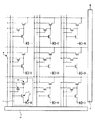
CMOS型固体撮像素子(CMOSイメージセンサ)の構成の一例の概略構成図(回路構成図)を図14に示す。
このCMOSイメージセンサは、同一の半導体基板上に、光電変換を行う複数のフォトダイオード2とフォトダイオード2を選択読み出しするMOSトランジスタ3からなる画素1を二次元状に配列された画素形成領域4と、画素選択と信号出力のための周辺回路5,6とを備えている。
以下、画素形成領域4以外の領域、即ち画素選択のための回路5と出力回路6とを含む領域を、「周辺回路形成領域」と呼ぶこととする。
画素形成領域4においては、各画素1が、フォトダイオード2と、転送用トランジスタ3、リセット用トランジスタ7、アンプトランジスタ8の3個のMOSトランジスタとにより構成されている。また、周辺回路形成領域においては、画素選択のための回路5と出力回路6とがCMOSトランジスタを用いて構成されている。
FIG. 14 shows a schematic configuration diagram (circuit configuration diagram) of an example of the configuration of a CMOS solid-state imaging device (CMOS image sensor).
This CMOS image sensor includes a pixel formation region 4 in which a plurality of photodiodes 2 that perform photoelectric conversion and a
Hereinafter, a region other than the pixel formation region 4, that is, a region including the pixel selection circuit 5 and the
In the pixel formation region 4, each
従来のCMOSイメージセンサは、周辺回路形成領域の各回路が、CMOSトランジスタで形成されている。
一方、画素形成領域においては、各画素を構成するMOSトランジスタはすべてNMOSトランジスタである。
この画素を構成するNMOSトランジスタは、通常、周辺回路形成領域で使用されるNMOSトランジスタと同一の素子分離構造とされる(例えば、特許文献1参照)。
In a conventional CMOS image sensor, each circuit in the peripheral circuit formation region is formed by a CMOS transistor.
On the other hand, in the pixel formation region, all MOS transistors constituting each pixel are NMOS transistors.
The NMOS transistor constituting this pixel usually has the same element isolation structure as the NMOS transistor used in the peripheral circuit formation region (see, for example, Patent Document 1).
ここで、従来のCMOSイメージセンサにおいて、周辺回路形成領域に用いられる素子分離構造の断面図を図13に示す。
半導体基板51内に、N型半導体ウェル領域52及びP型半導体ウェル領域53が形成されている。N型半導体ウェル領域内52にPMOSトランジスタ54が、P型半導体ウェル領域53内にNMOSトランジスタ55がそれぞれ形成されている。
そして、このトランジスタ54,55同士間は、半導体基板51内に形成された溝内に素子分離層が埋め込まれた、いわゆるSTI(Shallow Trench Isolation)から成る素子分離部56により電気的に分離されている。この素子分離部56は、素子分離層として、例えば酸化膜が埋め込まれている。
Here, FIG. 13 shows a cross-sectional view of an element isolation structure used in a peripheral circuit formation region in a conventional CMOS image sensor.
An N-type
The
さらに、従来のCMOSイメージセンサでは、画素を構成するNMOSトランジスタが、周辺回路形成領域で使用されるNMOSトランジスタと同一構造の素子分離部56で分離されているため、図14の画素形成領域4においても、同様に、図13に示した、半導体基板51内に素子分離層が埋め込まれた素子分離層56が形成されて、隣接する画素セル1と分離されている。
また、画素形成領域4の各画素セル1に形成されている、例えば転送用トランジスタ3、アンプトランジスタ8、リセットトランジスタ7等のトランジスタのソース/ドレイン拡散層も、それぞれ同様の構成の素子分離部56によって分離されている。
The source / drain diffusion layers of the transistors such as the
しかしながら、従来のCMOSイメージセンサでは、上述したように、半導体基板51内に形成された溝内に素子分離層を埋め込んで素子分離部56を形成しているため、半導体基板51に溝を形成する際のダメージや、さらに製造中の熱処理工程において半導体基板51と埋め込まれた絶縁層(素子分離層)56との熱膨張係数の違いから発生する応力等によって、半導体基板51に歪や結晶欠陥が発生することがある。
この歪や結晶欠陥により、不要な電荷(リーク電流、暗電流)が発生して、フォトダイオード2に侵入する。
フォトダイオード2に蓄積された電荷は、転送用トランジスタ3を介して転送されるため、歪や結晶欠陥により発生した電荷が、そのまま画素信号に対するノイズ信号となってしまう。
However, in the conventional CMOS image sensor, since the
Due to this strain and crystal defects, unnecessary charges (leakage current, dark current) are generated and enter the photodiode 2.
Since the charge accumulated in the photodiode 2 is transferred through the
さらに、シリコン基板のような単結晶基板に溝を形成すると、基板の表面だけでなく、溝の側壁にも単結晶の終端部が形成されることになるため、この終端部に形成された界面準位も、画像信号に対するノイズ信号の要因となる。 Further, when a groove is formed in a single crystal substrate such as a silicon substrate, a single crystal terminal portion is formed not only on the surface of the substrate but also on the side wall of the groove. The level is also a factor of a noise signal with respect to the image signal.
また、従来は、画素を構成するNMOSトランジスタが、周辺回路形成領域で使用されるNMOSトランジスタと同一構造の素子分離部56で分離されていたが、周辺回路形成領域に用いられるCMOSトランジスタは、微細化技術の最先端プロセスを採用しているケースが多く、さらには高速化、低消費電力、省スペースを主眼として設計されているために電源電圧も低電圧化しているケースも多い。
このため、素子分離部56を周辺回路形成領域のCMOSトランジスタの設計に合わせて最適化すると、画素形成領域4の素子分離部56が、上述の不要な電荷を発生しやすい構成となってしまうこともある。
Conventionally, the NMOS transistors constituting the pixels are separated by the
For this reason, when the
上述した問題の解決のために、本発明においては、画像信号に対するノイズを抑制することができ、かつ周辺回路形成領域において微細化を図ることができる構造の固体撮像素子及びその製造方法を提供するものである。 In order to solve the above-described problems, the present invention provides a solid-state imaging device having a structure capable of suppressing noise with respect to an image signal and capable of miniaturization in a peripheral circuit formation region, and a manufacturing method thereof. Is.
本発明の固体撮像素子は、光電変換素子から成る画素及び光電変換素子から信号電荷を読み出す選択トランジスタとを有して構成される画素形成領域と、周辺回路形成領域とが、同一の半導体基体に形成され、周辺回路形成領域においては、半導体基体に絶縁層が埋め込まれて成る素子分離層により第1の素子分離部が形成され、画素形成領域においては、半導体基体内に形成された素子分離領域と半導体基体から上方に突出した素子分離層とから成る第2の素子分離部が形成され、光電変換素子が第2の素子分離部の素子分離層の下まで延在して形成されているものである。 In the solid-state imaging device of the present invention, a pixel formation region including a pixel composed of a photoelectric conversion device and a selection transistor that reads signal charges from the photoelectric conversion device, and a peripheral circuit formation region are formed on the same semiconductor substrate. In the peripheral circuit formation region, a first element isolation portion is formed by an element isolation layer in which an insulating layer is embedded in a semiconductor substrate. In the pixel formation region, an element isolation region formed in the semiconductor substrate. And a device isolation layer that protrudes upward from the semiconductor substrate, and a photoelectric conversion element is formed to extend below the device isolation layer of the second device isolation portion It is.
本発明の固体撮像素子の製造方法は、光電変換素子から成る画素及び光電変換素子から信号電荷を読み出す選択トランジスタとを有して構成される画素形成領域と、周辺回路形成領域とが、同一の半導体基体に形成された固体撮像素子を製造する方法であって、半導体基体上にストッパー層を形成する工程と、周辺回路形成領域となる部分にストッパー層から半導体基体内まで達する溝を形成する工程と、この溝の内部に絶縁層を埋め込み、平坦化する工程と、画素形成領域となる部分にストッパー層から溝よりも浅い開口を形成する工程と、開口の内部に絶縁層を埋め込み、平坦化する工程とを有するものである。 In the method for manufacturing a solid-state imaging device according to the present invention, a pixel formation region configured to include a pixel composed of a photoelectric conversion device and a selection transistor that reads signal charges from the photoelectric conversion device, and a peripheral circuit formation region are the same. A method of manufacturing a solid-state imaging device formed on a semiconductor substrate, the step of forming a stopper layer on the semiconductor substrate, and the step of forming a groove reaching from the stopper layer to the inside of the semiconductor substrate in a portion to be a peripheral circuit formation region And a step of embedding and planarizing an insulating layer inside the groove, a step of forming an opening shallower than the groove from the stopper layer in a portion to be a pixel formation region, and embedding and planarizing the insulating layer inside the opening. And a process of performing.
上述の本発明の固体撮像素子の構成によれば、画素形成領域においては、半導体基体内に形成された素子分離領域と半導体基体から上方に突出した素子分離層とから成る第2の素子分離部が形成されているため、半導体基体内に形成された素子分離領域(不純物領域)により接合分離を行うことができる。そして、第2の素子分離部では、絶縁層を半導体基体内に深く埋め込んでいないので、素子分離部の周囲の半導体基体に結晶欠陥、ダメージ、界面準位が発生することを抑制し、これら結晶欠陥、ダメージ、界面準位に起因するノイズを低減することができる。
また、周辺回路形成領域においては、半導体基体に絶縁層が埋め込まれて成る素子分離層(STI構造)により第1の素子分離部が形成されているため、周辺回路の高速化、低消費電力化、省スペース化を同時に実現することが可能になる。
さらに、光電変換素子が第2の素子分離部の素子分離層の下まで延在して形成されていることにより、飽和電荷量を最大限に得ることができる。これにより、固体撮像素子の解像度等の特性を向上することが可能になる。
According to the above-described configuration of the solid-state imaging device of the present invention, in the pixel formation region, the second element isolation portion including the element isolation region formed in the semiconductor substrate and the element isolation layer protruding upward from the semiconductor substrate. Therefore, junction isolation can be performed by the element isolation region (impurity region) formed in the semiconductor substrate. In the second element isolation portion, since the insulating layer is not deeply embedded in the semiconductor substrate, the generation of crystal defects, damage, and interface states in the semiconductor substrate around the element isolation portion is suppressed. Noise due to defects, damage, and interface states can be reduced.
Further, in the peripheral circuit formation region, the first element isolation portion is formed by the element isolation layer (STI structure) formed by embedding an insulating layer in the semiconductor substrate, so that the peripheral circuit is increased in speed and power consumption. , Space saving can be realized at the same time.
Furthermore, since the photoelectric conversion element is formed so as to extend below the element isolation layer of the second element isolation part, the saturation charge amount can be maximized. This makes it possible to improve characteristics such as resolution of the solid-state imaging device.
上述の本発明の固体撮像素子の製造方法によれば、半導体基体上にストッパー層を形成し、このストッパー層から形成した溝や開口の内部に絶縁層を埋め込み、平坦化を行うことにより、平坦化によってストッパー層よりも上の絶縁層を除去して、溝の内部や開口の内部のみに絶縁層が残る。
そして、周辺回路形成領域となる部分では、ストッパー層から半導体基体内に達する溝を形成し、その内部に絶縁層を埋め込むので、半導体基体内に絶縁層が埋め込まれたSTI構造を形成することができ、このSTI構造の素子分離層から成る素子分離部を形成することができる。
また、画素形成領域となる部分では、ストッパー層から溝よりも浅い開口を形成し、その内部に絶縁層を埋め込むので、半導体基体内の深さが浅く、半導体基体から突出した絶縁層からなる素子分離層を形成することができる。半導体基体内の深さが浅いので、前述したノイズの発生を抑制することが可能になる。
According to the above-described method for manufacturing a solid-state imaging device of the present invention, a stopper layer is formed on a semiconductor substrate, an insulating layer is embedded in a groove or an opening formed from the stopper layer, and planarization is performed. By removing the insulating layer above the stopper layer, the insulating layer remains only in the groove and in the opening.
In the portion that becomes the peripheral circuit formation region, a groove reaching from the stopper layer into the semiconductor substrate is formed, and the insulating layer is embedded therein, so that an STI structure in which the insulating layer is embedded in the semiconductor substrate can be formed. In addition, an element isolation portion including an element isolation layer having this STI structure can be formed.
Further, in the portion that becomes the pixel formation region, an opening shallower than the groove is formed from the stopper layer, and the insulating layer is embedded therein, so that the element is made of an insulating layer that is shallow in the semiconductor substrate and protrudes from the semiconductor substrate. A separation layer can be formed. Since the depth in the semiconductor substrate is shallow, it is possible to suppress the generation of the noise described above.
上記本発明の固体撮像素子において、好ましくは、第2の素子分離部の素子分離層が、絶縁層から成り、半導体基体内の深さが50nm以下であり、かつ厚さが50nm〜150nmである構成とする。
このように構成したことにより、半導体基体内の深さが50nm以下であることから、ノイズの発生を充分に少なくすることができ、厚さが50nm〜150nmであることから、寄生MOSトランジスタのリーク電流を抑制すると共に、素子分離層上に形成されるゲート電極の加工が容易になる。
In the solid-state imaging device of the present invention, preferably, the element isolation layer of the second element isolation portion is made of an insulating layer, the depth in the semiconductor substrate is 50 nm or less, and the thickness is 50 nm to 150 nm. The configuration.
With this configuration, since the depth in the semiconductor substrate is 50 nm or less, the generation of noise can be sufficiently reduced, and the thickness is 50 nm to 150 nm. The current can be suppressed and the gate electrode formed on the element isolation layer can be easily processed.
上記本発明の固体撮像素子において、好ましくは、第1の素子分離部の最小分離幅が、第2の素子分離部の最小分離幅よりも小さい構成とする。
このように構成したことにより、最小分離幅が小さい第1の素子分離部により、周辺回路形成領域において、さらなる微細化を図り、高速化、低消費電力化、省スペース化を図ることができる。また、最小分離幅が大きい第2の素子分離部により、画素形成領域においては、ノイズの発生やリーク電流を充分に抑制することができる。
In the solid-state imaging device of the present invention, the minimum isolation width of the first element isolation unit is preferably smaller than the minimum isolation width of the second element isolation unit.
With this configuration, the first element isolation portion having a small minimum isolation width can achieve further miniaturization in the peripheral circuit formation region, thereby achieving high speed, low power consumption, and space saving. In addition, generation of noise and leakage current can be sufficiently suppressed in the pixel formation region by the second element isolation portion having a large minimum isolation width.
また、上記本発明の固体撮像素子において、第2の素子分離部の素子分離層が、導電層とその上の絶縁層の積層膜から成り、半導体基体内の深さが50nm以下であり、かつ厚さが30nm〜150nmである構成とすることも可能である。
このように構成したことにより、導電層によりシールド効果を持たせて、寄生MOSトランジスタのリーク電流を抑制することができるため、絶縁層のみで素子分離層を構成した場合よりも、素子分離層を薄く、例えば30nmとすることが可能になる。
Further, in the solid-state imaging device of the present invention, the element isolation layer of the second element isolation portion is composed of a laminated film of a conductive layer and an insulating layer thereon, and the depth in the semiconductor substrate is 50 nm or less, and A configuration in which the thickness is 30 nm to 150 nm is also possible.
With this configuration, the conductive layer can provide a shielding effect and suppress the leakage current of the parasitic MOS transistor. Therefore, the element isolation layer can be formed more than when the element isolation layer is configured only by the insulating layer. It can be made thin, for example, 30 nm.
また、上記本発明の固体撮像素子において、さらに第2の素子分離部の素子分離領域が、素子分離層の積層膜と自己整合して形成されている構成とすることも可能である。 In the solid-state imaging device of the present invention, the element isolation region of the second element isolation portion may be configured to be self-aligned with the stacked film of the element isolation layers.
上述の本発明によれば、画素形成領域においては、素子分離領域部の結晶欠陥、ダメージ、界面準位に起因するノイズを低減することができる。また、固体撮像素子の解像度等の特性を向上することが可能である。
さらに、周辺回路形成領域では、周辺回路の高速化、低消費電力化、省スペース化が同時に実現できる。また、固体撮像素子の微細化を図ることが可能になる。
According to the present invention described above, noise caused by crystal defects, damage, and interface states in the element isolation region can be reduced in the pixel formation region. In addition, it is possible to improve characteristics such as resolution of the solid-state imaging device.
Further, in the peripheral circuit formation region, it is possible to simultaneously realize high speed, low power consumption and space saving of the peripheral circuit. In addition, the solid-state image sensor can be miniaturized.
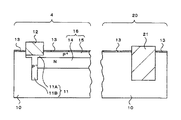
本発明の一実施の形態として、固体撮像素子の概略構成図(断面図)を図1に示す。
また、本実施の形態の固体撮像素子の回路構成図を図2に示す。本実施の形態の固体撮像素子は、先に図14に示した回路構成と同様の回路構成となっている。
As an embodiment of the present invention, FIG. 1 shows a schematic configuration diagram (cross-sectional view) of a solid-state imaging device.
Further, FIG. 2 shows a circuit configuration diagram of the solid-state imaging device of the present embodiment. The solid-state imaging device of the present embodiment has a circuit configuration similar to the circuit configuration previously shown in FIG.
この固体撮像素子は、例えばN型のシリコン基板から成る、同一の半導体基板10に、フォトダイオード2を有する画素セル1が多数形成された画素形成領域4と、周辺回路形成領域20とが形成されている。
In this solid-state imaging device, a pixel formation region 4 in which a large number of
図1に示すように、周辺回路形成領域20においては、図13に示した従来の素子分離部56の構成と同様に、半導体基板10に、シリコン酸化膜等の素子分離層21が埋め込まれた素子分離部が形成されている。即ち、この素子分離部は、いわゆるトレンチ素子分離(STI)構造となっている。図中13は、基板10の表面の薄い絶縁膜(例えばシリコン酸化膜)を示している。
As shown in FIG. 1, in the peripheral
画素形成領域4においては、半導体基板10内に形成されたN型の電荷蓄積領域14と、半導体基板10の表面付近に形成されたP型(P+)の正電荷蓄積領域15とによりセンサ部16が構成されている。
In the pixel formation region 4, a sensor unit is formed by an N-type
なお、図示しないが、画素形成領域4や周辺回路形成領域20において、それぞれ半導体基板10内にトランジスタのソース/ドレイン領域が形成され、半導体基板10上に絶縁膜13を介してトランジスタのゲート電極等が形成されている。また、画素形成領域4においては、さらに上方に、必要に応じて、カラーフィルタやオンチップレンズが形成されている。
Although not shown, transistor source / drain regions are formed in the
このCMOSイメージセンサの回路構成は、図2に示すように、同一の半導体基板上に、光電変換を行う複数のフォトダイオード2とフォトダイオード2を選択読み出しするMOSトランジスタ3からなる画素1を二次元状に配列された画素形成領域4と、画素選択と信号出力のための周辺回路5,6とを備えている。
画素形成領域4においては、各画素1が、フォトダイオード2と、転送用トランジスタ3、リセット用トランジスタ7、アンプトランジスタ8の3個のMOSトランジスタとにより構成されている。また、周辺回路形成領域においては、画素選択のための回路5と出力回路6とがCMOSトランジスタを用いて構成されている。
As shown in FIG. 2, the CMOS image sensor has a circuit configuration in which a
In the pixel formation region 4, each
本実施の形態の固体撮像素子においては、特に、画素形成領域4において、各画素セル1間及び各画素セル1内のトランジスタ3,7,8(図2の回路構成図参照)をそれぞれ分離する素子分離部の構成が、周辺回路形成領域20の素子分離部とは異なっている。
即ち、図1の断面図に示すように、画素形成領域4においては、半導体基板10内に、P型(P+)の不純物拡散層からなる素子分離領域11を形成すると共に、このP型の素子分離領域11の上方に、半導体基板10から突出した凸状の素子分離層(カバー層)12を形成して、これら素子分離領域11及び素子分離層(カバー層)12により素子分離部を構成している。
この凸状の素子分離層(カバー層)12は、例えばシリコン酸化膜等の絶縁層により形成することができる。
In the solid-state imaging device of the present embodiment, in particular, in the pixel formation region 4, the
That is, as shown in the cross-sectional view of FIG. 1, in the pixel formation region 4, an
The convex element isolation layer (cover layer) 12 can be formed of an insulating layer such as a silicon oxide film.
P型の素子分離領域11は、上部の幅の広い部分11Aと、下部の幅の狭い部分11Bとを有し、断面略T字状に形成されている。
The P-type
このように、P型の素子分離領域11を形成したことにより、接合分離による素子分離を行うことが可能になっている。
また、素子分離層(カバー層)12を形成したことにより、寄生MOSによるリーク電流をに抑制することができる。
Thus, by forming the P-type
Further, since the element isolation layer (cover layer) 12 is formed, the leakage current due to the parasitic MOS can be suppressed.
また、本実施の形態の固体撮像素子では、センサ部16の表面のP型の正電荷蓄積領域15が、素子分離領域11の上部11Aと接続して形成されていると共に、センサ部16のN型の電荷蓄積領域14が素子分離層(カバー層)12の下まで延在して、素子分離領域11の下部11Bと接する部分まで形成されている。
従来の画素形成領域の素子分離部にSTIを採用した構成においては、例えば前記特許文献1にも記載されているように、ノイズ低減を目的としてSTI構造の絶縁層の周囲に、P型の領域を形成していた。このP型の領域があるために、センサ部のN型の電荷蓄積領域を広く形成することができなかった。
これに対して、本実施の形態では、画素形成領域4において、STIによる素子分離の代わりに、素子分離領域11により素子分離を行うように構成したので、半導体基板10内の素子分離部の幅をSTIよりも狭めることが可能になり、これにより、センサ部16のN型の電荷蓄積領域14を広く形成して、素子分離層(カバー層)12の下まで延在して形成することができる。
このように素子分離層(カバー層)12の下まで延在して形成することにより、飽和電荷量Qsを増やすことができる。
In the solid-state imaging device of the present embodiment, the P-type positive
In the configuration in which the STI is used for the element isolation portion of the conventional pixel formation region, for example, as described in
On the other hand, in the present embodiment, in the pixel formation region 4, element isolation is performed by the
In this way, the saturation charge amount Qs can be increased by forming the element isolation layer (cover layer) 12 so as to extend below the element isolation layer (cover layer) 12.
画素形成領域4の素子分離層(カバー層)12は、半導体基板10内の深さを50nm以下とし、かつ厚さを50nmから150nmの範囲とすることが望ましい。
また、図1では、素子分離層(カバー層)12が、半導体基板10内に一部入り込んで形成されているが、半導体基板10上のみに素子分離層(カバー層)12が形成されている構成としてもよい。
The element isolation layer (cover layer) 12 in the pixel formation region 4 preferably has a depth in the
In FIG. 1, the element isolation layer (cover layer) 12 is partially formed in the
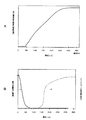
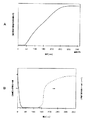
ここで、画素形成領域4において、シリコン酸化膜から成る素子分離層(カバー層)12のシリコン基板10内に形成された深さ(シリコン基板10の掘れ量)と、出力異常(ノイズ)を発生した画素の個数との関係を図3Aに示す。
Here, in the pixel formation region 4, the depth (the amount of digging of the silicon substrate 10) formed in the
図3Aに示すように、深さが50nmを超えると、出力異常を発生した画素の個数が増大する。これは、埋め込んだ素子分離層(シリコン酸化膜)12とシリコン基板10の間に生じる熱膨張係数の違いに起因する、ストレスや応力が無視できないレベルに達することを意味する。そして、深さをさらに増大させると、シリコン基板10の界面準位が増大して、制御不能なトラップ電荷が増大することも意味している。
なお、図中に示す「通常STI」は通常のSTI構造の素子分離層の厚さ350nmを示している。本実施の形態の構成により、通常のSTI構造の素子分離層よりも出力異常を発生した画素の個数を大幅に低減することができることがわかる。
As shown in FIG. 3A, when the depth exceeds 50 nm, the number of pixels in which output abnormality has occurred increases. This means that the stress or the stress due to the difference in thermal expansion coefficient generated between the buried element isolation layer (silicon oxide film) 12 and the
Note that “normal STI” shown in the drawing indicates a thickness of 350 nm of the element isolation layer having a normal STI structure. With the configuration of this embodiment, it can be seen that the number of pixels in which output abnormality has occurred can be significantly reduced as compared with an element isolation layer having a normal STI structure.
また、画素形成領域4の素子分離層(シリコン酸化膜)12の厚さと、素子分離能力(リーク電流の臨界値)及びゲートショート(短絡)の発生数との関係を図3Bに示す。実線が素子分離能力を示し、破線がゲートショートの発生数を示している。
図3Bに示すように、素子分離層12の厚さが50nm未満になると、素子分離能力を示す寄生MOSトランジスタのリーク電流が増大し、一方、厚さが150nmを超えるとゲート電極が著しくショートしやすくなり、歩留を著しく低下させる。これは、素子分離層12を厚くすると、素子分離層12の上に形成されるゲート電極の加工が難しくなるために、ゲートショートの発生数が増大するためである。
Further, FIG. 3B shows the relationship between the thickness of the element isolation layer (silicon oxide film) 12 in the pixel formation region 4, the element isolation capability (critical value of leakage current), and the number of occurrences of gate shorts. A solid line indicates the element isolation capability, and a broken line indicates the number of gate shorts.
As shown in FIG. 3B, when the thickness of the
従って、画素形成領域4に形成される素子分離層(カバー層)12は、半導体基板10内の深さが50nm以下であり、かつ厚さが50nm〜150nmの範囲であることが望ましい。
Therefore, it is desirable that the element isolation layer (cover layer) 12 formed in the pixel formation region 4 has a depth in the
また、好ましくは、周辺回路形成領域20の素子分離部の最小分離幅が、画素形成領域4の素子分離部の最小分離幅よりも小さい構成とする。
このように構成することにより、周辺回路形成領域20では、素子分離部の最小分離幅が小さいため、固体撮像素子のさらなる微細化を図り、高速化、低消費電力化、省スペース化を図ることができる。また、画素形成領域4では、素子分離部の最小分離幅が大きいためノイズの発生やリーク電流を充分に抑制することができる。
Preferably, the minimum isolation width of the element isolation portion in the peripheral
With this configuration, since the minimum isolation width of the element isolation portion is small in the peripheral
本実施の形態の固体撮像素子は、例えば次のようにして製造することができる。
まず、半導体基板10、例えばシリコン基板の表面を酸化して、シリコン酸化膜31を形成する。このシリコン酸化膜31の厚さは、例えば5nm〜20nmとする。
次に、シリコン酸化膜31上に、CVD(化学的気相成長)法により、シリコン窒化膜32を、例えば膜厚100nm〜200nmで形成する(以上、図4A参照)。なお、このシリコン窒化膜32は、後に形成するシリコン酸化膜をCMP(化学的機械的研摩)法により研磨する工程において、研磨ストッパーとなるものである。
The solid-state imaging device of the present embodiment can be manufactured as follows, for example.
First, the surface of the
Next, a
次に、周辺回路形成領域20において、通常の方法により、シリコン窒化膜32、シリコン酸化膜31、シリコン基板10をエッチングして、シリコン基板10に溝(トレンチ)34を形成した後に、さらに溝34の表面を酸化して酸化膜35を形成する(以上、図4B参照)。この酸化膜35の厚さは、例えば5nm〜20nmとする。
Next, in the peripheral
さらに、HDP(高密度プラズマ)法により、シリコン酸化膜36を形成する。これにより、溝34内を埋めてシリコン酸化膜36が形成される。
その後、CMP法等により表面の平坦化を行い、溝34内のみにシリコン酸化膜36を残す。これにより、周辺回路形成領域20に、シリコン酸化膜36から成る素子分離層21が形成される(以上図4C参照)。なお、図1の素子分離部21は、溝34の内壁のシリコン酸化膜35を含むので、以下の図では、シリコン酸化膜35とシリコン酸化膜36とを合わせて素子分離層21とする。
Further, a
Thereafter, the surface is flattened by CMP or the like, and the
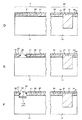
次に、図5Dに示すように、表面に、シリコン窒化膜37を、例えば30nm〜150nmの厚さで形成する。
なお、後の工程において、画素形成領域4の素子分離部(11,12)を形成した後に、シリコン窒化膜32,37の積層膜をホット燐酸液により除去することを考慮して、シリコン窒化膜37を形成する前に、フッ酸による前処理を施して、溝34内以外に残ったシリコン酸化膜36を除去することが望ましい。
Next, as shown in FIG. 5D, a
In consideration of removing the laminated film of the
次に、図5Eに示すように、画素形成領域4の素子分離部に対応する部分のシリコン窒化膜32,37の積層膜に開口38を形成する。
この開口38を形成する際の、シリコン基板10の掘れ量はできるだけ少なくすることが望ましく、深さ50nm以下に抑える。
Next, as shown in FIG. 5E, an
It is desirable to reduce the digging amount of the
続いて、開口38により露出したシリコン基板10の表面を酸化して、厚さ5nm〜20nmのシリコン酸化膜39を形成する。
さらに、P型不純物例えばボロンを、1×10¹²〜5×10¹³個/cm2の濃度でイオン注入することにより、素子分離領域(チャネルストップ層)11の上部11Aを形成する(以上図5F参照)。
Subsequently, the surface of the
Furthermore, a P-type impurity such as boron is ion-implanted at a concentration of 1 × 10 12 to 5 × 10 13 atoms / cm 2 to form the
次に、表面を覆って、CVD法によりシリコン酸化膜41を形成する。このシリコン酸化膜41は、シリコン窒化膜32,37の積層膜よりも薄く形成する。これにより、開口38の内壁に沿ってシリコン酸化膜41が形成され、開口38の中心部に空間が残る。
このシリコン酸化膜41は、HTO(High Temperature Oxide)が望ましい(以上図6G参照)。
Next, a
The
次に、レジストマスク(図示せず)を形成し、このレジストマスクを用いて、シリコン基板10内に、P型不純物例えば、ボロンを5×10¹²〜1×10¹⁴個/cm2の濃度でイオン注入することにより、素子分離領域11の下部11Bを形成する。ここで、開口38内のシリコン酸化膜41がイオン注入に対するマスクとして作用し、素子分離領域11の下部11Bの幅が、開口38の中心部の空間に対応する狭い幅となる。これにより、素子分離領域11の下部11Bは、上部11Aより狭い幅に形成され、断面がT字形状の素子分離領域11が形成される(以上図6H参照)。
Next, a resist mask (not shown) is formed, and using this resist mask, P-type impurities, for example, boron at a concentration of 5 × 10 12 to 1 × 10 14 atoms / cm 2 are formed in the
次に、シリコン酸化膜42を、HDP法により、例えば100nm〜200nmの厚さに形成する。これにより、開口38の中心部の空間がシリコン酸化膜42で埋められる。
続いて、CMP(化学的機械的研磨)法やエッチバック法を用いて、表面を平坦化することにより、シリコン窒化膜37上のシリコン酸化膜42を除去する。このとき、シリコン窒化膜37が、CMP又はエッチングのストッパー層として作用する。これにより、開口38内のシリコン酸化膜42のみが残る(以上図6I参照)。
Next, the
Subsequently, the
次に、ホット燐酸液を用いて、シリコン窒化膜37,32を除去する。
これにより、図7Jに示すように、画素形成領域4には、半導体基板10に凸状の絶縁膜(シリコン酸化膜39、シリコン酸化膜41、並びにシリコン酸化膜42)により素子分離層(カバー層)12が形成され、素子分離層(カバー層)12の下には、素子分離領域(チャネルストップ拡散層)11が形成される。
一方、同一のシリコン基板10の周辺回路形成領域20には、STIとして素子分離層21が形成される。
Next, the
As a result, as shown in FIG. 7J, in the pixel formation region 4, an element isolation layer (cover layer) is formed by a convex insulating film (
On the other hand, in the peripheral
その後は、図7Kに示すように、センサ部16のN型の電荷蓄積領域14や正電荷蓄積領域15、トランジスタのソース/ドレイン領域等を、半導体基板10へのイオン注入により順次形成する。
そして、半導体基板10の表面のシリコン酸化膜31上に、ゲート電極等を形成した後、必要に応じて、画素形成領域4にカラーフィルタやオンチップレンズ等を形成して、固体撮像素子を製造することができる。
Thereafter, as shown in FIG. 7K, the N-type
And after forming a gate electrode etc. on the
上述の製造方法によれば、従来のSTI形成工程に対して、必要最小限の工程を付加することにより、周辺回路形成領域20にはSTIとして素子分離層21を形成し、画素形成領域4には素子分離層(カバー層)12と接合分離の素子分離領域11とを形成することができる。
According to the above-described manufacturing method, the
上述の本実施の形態の固体撮像素子によれば、センサ部16のN型の電荷蓄積領域14が、素子分離層(カバー層)12の下まで延在して形成されていることにより、センサ部16即ち光電変換素子が素子分離層(カバー層)12の下まで延在しており、飽和電荷量を最大限に得ることができる。
これにより、固体撮像素子の解像度等の特性を向上することが可能になる。
According to the solid-state imaging device of the present embodiment described above, the N-type
This makes it possible to improve characteristics such as resolution of the solid-state imaging device.
また、画素形成領域4においては、半導体基板10内の素子分離領域11と素子分離層(カバー層)12とにより素子分離部が構成されている。
これにより、STI構造の素子分離部を構成した場合と比較して、素子分離部付近の結晶欠陥、ダメージ、界面準位に起因するノイズを低減することが可能である。
In the pixel formation region 4, an element isolation portion is configured by the
As a result, it is possible to reduce noise caused by crystal defects, damage, and interface states in the vicinity of the element isolation portion as compared with the case where the element isolation portion having the STI structure is configured.
さらに、周辺回路形成領域20では、従来のCMOSセンサの素子分離部と同様に、STI構造の素子分離層21が形成されているため、周辺回路の高速化や、消費電力の低減、並びに省スペース化を同時に実現することができる。
Further, in the peripheral
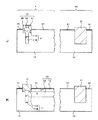
続いて、本発明の他の実施の形態として、固体撮像素子の概略構成図(断面図)を図8に示す。
本実施の形態の固体撮像素子においては、特に、図8に示すように、画素形成領域4の素子分離部の素子分離層(カバー層)12を、多結晶シリコン層17とシリコン酸化膜18との積層膜と、この積層膜の側壁に形成されたサイドウォール絶縁層19と、多結晶シリコン層17の下のシリコン酸化膜39とにより構成している。周辺回路形成領域は、図示しないが、図1に示した先の実施の形態と同様に、STIにより素子分離部を形成している。
Subsequently, as another embodiment of the present invention, a schematic configuration diagram (cross-sectional view) of a solid-state imaging device is shown in FIG.
In the solid-state imaging device of the present embodiment, in particular, as shown in FIG. 8, the element isolation layer (cover layer) 12 of the element isolation portion in the pixel formation region 4 is formed of a
また、画素形成領域4の素子分離部の素子分離領域11の下部11Bは、多結晶シリコン層17とシリコン酸化膜18との積層膜に対して、自己整合して形成されており、積層膜と同じ幅に形成されている。
The
さらに、先の実施の形態の固体撮像素子と同様に、センサ部16のN型の電荷蓄積領域14が、素子分離層(カバー層)12の下に延在して、素子分離領域11の下部11Bに接続して形成されている。
なお、画素形成領域4のその他の構成は、図1に示した先の形態と同様であるので、同一符号を付して重複説明を省略する。
Further, similarly to the solid-state imaging device of the previous embodiment, the N-type
The other configuration of the pixel formation region 4 is the same as that of the previous embodiment shown in FIG.
多結晶シリコン層17とシリコン酸化膜18との積層膜を用いて、素子分離層(カバー層)12を構成したことにより、導電層である多結晶シリコン層17によって、シールド効果を持たせることができる。このシールド効果により、寄生MOSによるリーク電流をさらに抑制することができるため、素子分離層12をシリコン酸化膜だけで形成した場合よりも、素子分離層12の厚さを薄く(例えば30nm程度)しても、リーク電流を抑制することが可能になる。
By forming the element isolation layer (cover layer) 12 using the laminated film of the
画素形成領域4の素子分離層(カバー層)12は、半導体基板10内の深さを50nm以下とし、かつ厚さを30nmから150nmの範囲とすることが望ましい。
また、図8では、素子分離層12が、半導体基板10内に一部入り込んで形成されているが、半導体基板10上のみに素子分離層12が形成されている構成としてもよい。
The element isolation layer (cover layer) 12 in the pixel formation region 4 preferably has a depth in the
In FIG. 8, the
本実施の形態の固体撮像素子は、例えば次のようにして製造することができる。
なお、以下の製造工程図において、周辺回路形成領域は、図示を省略する。
The solid-state imaging device of the present embodiment can be manufactured as follows, for example.
In the following manufacturing process diagrams, the peripheral circuit formation region is not shown.
まず、先の実施の形態の図5Dの状態から、図5E〜図5Fと同様の工程を経て、図9Aに示す状態にする。 First, the state shown in FIG. 9A is changed from the state shown in FIG. 5D to the state shown in FIG. 9A through the same steps as those shown in FIGS.
次に、図9Bに示すように、多結晶シリコン層17を、シリコン窒化膜32及びシリコン窒化膜37の積層膜よりも薄く、例えば10nm〜70nmの厚さに形成する。
これにより、開口38の内壁に沿って多結晶シリコン層17が形成され、開口38の中心部に空間が残る。
Next, as shown in FIG. 9B, the
As a result, the
次に、図9Cに示すように、多結晶シリコン層17とセルフアラインさせて、シリコン基板10内に、P型不純物例えばボロンを5×10¹²〜1×10¹⁴個/cm2の濃度でイオン注入することにより、素子分離領域11の下部11Bを形成する。ここで、開口38内の多結晶シリコン層17がイオン注入に対するマスクとして作用し、素子分離領域11の下部11Bの幅が、開口38の中心部の空間に対応する狭い幅となる。これにより、素子分離領域11の下部11Bは、上部11Aより狭い幅に形成され、断面がT字形状の素子分離領域11が形成される。
Next, as shown in FIG. 9C, ions of P-type impurities such as boron are ionized at a concentration of 5 × 10 12 to 1 × 10 14 atoms / cm 2 in the
次に、シリコン酸化膜18を、HDP法により、例えば100nm〜200nmの厚さに形成する。これにより、開口38の中心部の空間がシリコン酸化膜18で埋められる。
続いて、CMP法やエッチバック法を用いて、表面を平坦化することにより、多結晶シリコン層17上のシリコン酸化膜18を除去する。このとき、多結晶シリコン層17が、CMP又はエッチングのストッパー層として作用する。これにより、開口38内のシリコン酸化膜18のみが残る(以上図10D参照)。
Next, the
Subsequently, the
次に、図10Eに示すように、ドライエッチングまたはフッ硝酸液を用いて、多結晶シリコン層17の露出した部分を、エッチング除去する。これにより、シリコン酸化膜18とその下の多結晶シリコン層17が残る。
Next, as shown in FIG. 10E, the exposed portion of the
次に、図示しないが、多結晶シリコン層17の側壁を、約10nm〜20nmの厚さで酸化する。
続いて、図10Fに示すように、シリコン酸化膜43を、HDP法により、100nm〜200nmの厚さに形成する。
Next, although not shown, the sidewall of the
Subsequently, as shown in FIG. 10F, a
次に、CMP法やエッチバック法を用いて、シリコン酸化膜43に対して平坦化を行うことにより、図11Gに示すように、多結晶シリコン層17及びシリコン酸化膜18の積層膜の側壁に、シリコン酸化膜43から成るサイドウォール絶縁層19を形成する。このとき、シリコン窒化膜32,37がCMPやエッチングのストッパー層になる。なお、シリコン酸化膜18は、この工程により、図10Fの状態よりも薄くなっている。
Next, by planarizing the
続いて、600℃〜1000℃の温度でアニールを行い、シリコン酸化膜18,19を緻密化する。
Subsequently, annealing is performed at a temperature of 600 ° C. to 1000 ° C. to densify the
次に、ホット燐酸液を用いて、シリコン窒化膜37,32を除去する。
これにより、図11Hに示すように、半導体基板10に、シリコン酸化膜39・多結晶シリコン層17・シリコン酸化膜18・サイドウォール絶縁層19により素子分離層(カバー層)12が形成され、素子分離層(カバー層)12の下には、素子分離領域(チャネルストップ拡散層)11が形成される。
一方、同一のシリコン基板10の周辺回路形成領域には、STIから成る素子分離部が形成される。
Next, the
As a result, as shown in FIG. 11H, the element isolation layer (cover layer) 12 is formed on the
On the other hand, an element isolation portion made of STI is formed in a peripheral circuit formation region of the
その後は、センサ部16のN型の電荷蓄積領域14や正電荷蓄積領域15、トランジスタのソース/ドレイン領域等を、半導体基板10へのイオン注入により順次形成する。
そして、半導体基板10の表面のシリコン酸化膜31上に、ゲート電極等を形成した後、必要に応じて、画素形成領域4にカラーフィルタやオンチップレンズ等を形成して、固体撮像素子を製造することができる。
Thereafter, the N-type
And after forming a gate electrode etc. on the
上述の実施の形態によれば、素子分離層(カバー層)12が多結晶シリコン層17とその上のシリコン酸化膜18との積層膜を用いて形成されていることにより、導電層である多結晶シリコン層17により、素子分離層12の上に形成されるゲート電極の電界の影響をシールドして、リーク電流を抑制することができる。
これにより、シリコン酸化膜等の絶縁層のみにより素子分離層12を形成した場合と比較して、素子分離層12の厚さを薄くすることが可能になる。
According to the above-described embodiment, the element isolation layer (cover layer) 12 is formed by using the laminated film of the
This makes it possible to reduce the thickness of the
ここで、図8に示す本実施の形態において、画素形成領域4の素子分離層(カバー層)12のシリコン基板10内に形成された深さ(シリコン基板10の掘れ量)と、出力異常(ノイズ)を発生した画素の個数との関係を図12Aに示し、画素形成領域4の素子分離層12の厚さと、素子分離能力(リーク電流の臨界値)及びゲートショート(短絡)の発生数との関係を図12Bに示す。
図12Aに示すように、図3Aと同様に、深さが50nmを超えると、出力異常を発生した画素の個数が増大する。
また、図12Bに示すように、図3Bと同様に、素子分離層12の厚さが150nmを超えるとゲート電極が著しくショートしやすくなり、歩留を著しく低下させる。
さらに、図12Bに示すように、素子分離能力を示す寄生MOSトランジスタのリーク電流が増大する素子分離層12の厚さは、図3Bの50nm未満から30nm未満に減少している。即ち、多結晶シリコン層17等の導電層を素子分離層12に設けることにより、素子分離層12の厚さの範囲を30nm以上と薄くすることができることがわかる。
Here, in the present embodiment shown in FIG. 8, the depth (the amount of digging of the silicon substrate 10) formed in the
As shown in FIG. 12A, as in FIG. 3A, when the depth exceeds 50 nm, the number of pixels in which output abnormality has occurred increases.
Also, as shown in FIG. 12B, as in FIG. 3B, when the thickness of the
Further, as shown in FIG. 12B, the thickness of the
このように、素子分離層12は、最低30nmの厚さがあれば素子分離が可能となり、即ち素子分離層の厚さを約20nm薄くしても必要な性能を確保することが可能になる。
つまり、素子分離層12を絶縁膜のみで構成するよりも、素子分離層12を薄くすることが可能になるので、上層に形成するゲート電極の加工が容易になる。
As described above, the
In other words, since the
また、上述の実施の形態によれば、先の実施の形態と同様に、センサ部16のN型の電荷蓄積領域14が、素子分離層(カバー層)12の下に延在して形成されていることにより、飽和電荷量を大きくすることが可能になる。
これにより、固体撮像素子の解像度等の特性を向上することが可能になる。
Further, according to the above-described embodiment, the N-type
This makes it possible to improve characteristics such as resolution of the solid-state imaging device.
上述の実施の形態では、半導体基体として、シリコン基板等の半導体基板10を用いた場合を説明したが、その他にも、例えば半導体基板とその上の半導体エピタキシャル層とにより半導体基体を構成してもよい。
In the above-described embodiment, the case where the
本発明は、上述の実施の形態に限定されるものではなく、本発明の要旨を逸脱しない範囲でその他様々な構成が取り得る。 The present invention is not limited to the above-described embodiment, and various other configurations can be taken without departing from the gist of the present invention.
1 画素、2 フォトダイオード、4 画素形成領域、10 シリコン基板、11 素子分離領域、12 素子分離層(カバー層)、14 電荷蓄積領域、15 正電荷蓄積領域、16 センサ部、20 周辺回路形成領域、21 素子分離層 1 pixel, 2 photodiode, 4 pixel formation region, 10 silicon substrate, 11 element isolation region, 12 element isolation layer (cover layer), 14 charge storage region, 15 positive charge storage region, 16 sensor unit, 20 peripheral circuit formation region , 21 Device isolation layer
Claims (7)
前記周辺回路形成領域においては、前記半導体基体に絶縁層が埋め込まれて成る素子分離層により、第1の素子分離部が形成され、
前記画素形成領域においては、前記半導体基体内に形成された素子分離領域と、前記半導体基体から上方に突出した素子分離層とから成る第2の素子分離部が形成され、
前記光電変換素子が、前記第2の素子分離部の前記素子分離層の下まで延在して形成されている
ことを特徴とする固体撮像素子。 A pixel formation region configured to include a pixel composed of a photoelectric conversion element and a selection transistor that reads signal charges from the photoelectric conversion element, and a peripheral circuit formation region are formed on the same semiconductor substrate,
In the peripheral circuit formation region, a first element isolation portion is formed by an element isolation layer formed by embedding an insulating layer in the semiconductor substrate.
In the pixel formation region, a second element isolation portion is formed which includes an element isolation region formed in the semiconductor substrate and an element isolation layer protruding upward from the semiconductor substrate.
The photoelectric conversion element is formed so as to extend below the element isolation layer of the second element isolation part.
前記半導体基体上にストッパー層を形成する工程と、
前記周辺回路形成領域となる部分に、前記ストッパー層から前記半導体基体内まで達する溝を形成する工程と、
前記溝の内部に絶縁層を埋め込み、平坦化する工程と、
前記画素形成領域となる部分に、前記ストッパー層から前記溝よりも浅い開口を形成する工程と、
前記開口の内部に絶縁層を埋め込み、平坦化する工程とを有する
ことを特徴とする固体撮像素子の製造方法。 A solid-state imaging device in which a pixel formation region including a pixel composed of a photoelectric conversion element and a selection transistor that reads signal charges from the photoelectric conversion element, and a peripheral circuit formation region are formed on the same semiconductor substrate. A method of manufacturing comprising:
Forming a stopper layer on the semiconductor substrate;
Forming a groove reaching the semiconductor substrate from the stopper layer in a portion to be the peripheral circuit formation region;
Embedding and planarizing an insulating layer inside the groove;
Forming an opening shallower than the groove from the stopper layer in a portion to be the pixel formation region;
A method of manufacturing the solid-state imaging device, comprising: embedding an insulating layer in the opening and flattening the insulating layer.
Priority Applications (10)
| Application Number | Priority Date | Filing Date | Title |
|---|---|---|---|
| JP2004162035A JP4539176B2 (en) | 2004-05-31 | 2004-05-31 | Solid-state imaging device and manufacturing method thereof |
| TW094116368A TWI298200B (en) | 2004-05-31 | 2005-05-19 | Solid-state imaging device and method of manufacturing the same |
| US11/137,635 US7187023B2 (en) | 2004-05-31 | 2005-05-25 | Solid-state imaging device and method of manufacturing the same |
| KR1020050045595A KR101193366B1 (en) | 2004-05-31 | 2005-05-30 | Solid-state imaging device and method of manufacturing the same |
| US11/560,455 US7300810B2 (en) | 2004-05-31 | 2006-11-16 | Solid-state imaging device and method of manufacturing the same |
| US11/941,583 US7851838B2 (en) | 2004-05-31 | 2007-11-16 | Solid-state imaging device and method of manufacturing the same |
| US12/720,196 US8470620B2 (en) | 2004-05-31 | 2010-03-09 | Solid-state imaging device and method of manufacturing the same |
| US13/911,909 US8896038B2 (en) | 2004-05-31 | 2013-06-06 | Solid-state imaging device and method of manufacturing the same |
| US14/523,539 US9159764B2 (en) | 2004-05-31 | 2014-10-24 | Solid-state imaging device and method of manufacturing the same |
| US14/837,676 US9466630B2 (en) | 2004-05-31 | 2015-08-27 | Solid-state imaging device and method of manufacturing the same |
Applications Claiming Priority (1)
| Application Number | Priority Date | Filing Date | Title |
|---|---|---|---|
| JP2004162035A JP4539176B2 (en) | 2004-05-31 | 2004-05-31 | Solid-state imaging device and manufacturing method thereof |
Publications (2)
| Publication Number | Publication Date |
|---|---|
| JP2005347325A true JP2005347325A (en) | 2005-12-15 |
| JP4539176B2 JP4539176B2 (en) | 2010-09-08 |
Family
ID=35424220
Family Applications (1)
| Application Number | Title | Priority Date | Filing Date |
|---|---|---|---|
| JP2004162035A Expired - Lifetime JP4539176B2 (en) | 2004-05-31 | 2004-05-31 | Solid-state imaging device and manufacturing method thereof |
Country Status (4)
| Country | Link |
|---|---|
| US (7) | US7187023B2 (en) |
| JP (1) | JP4539176B2 (en) |
| KR (1) | KR101193366B1 (en) |
| TW (1) | TWI298200B (en) |
Cited By (12)
| Publication number | Priority date | Publication date | Assignee | Title |
|---|---|---|---|---|
| JP2008218968A (en) * | 2007-03-06 | 2008-09-18 | Taiwan Semiconductor Manufacturing Co Ltd | Semiconductor device manufacturing method and image sensor device |
| EP2109143A2 (en) | 2008-04-09 | 2009-10-14 | Sony Corporation | Solid-state imaging device, production method thereof, and electronic device |
| JP2009272597A (en) * | 2008-04-09 | 2009-11-19 | Sony Corp | Solid-state image pick-up device, manufacturing method therefor, and electronic equipment |
| JP2010041034A (en) * | 2008-07-10 | 2010-02-18 | Sony Corp | Solid-state imaging device, method of manufacturing the same, and image capturing apparatus |
| EP2466642A2 (en) | 2010-12-15 | 2012-06-20 | Canon Kabushiki Kaisha | Solid-state image sensor, method of manufacturing the same and camera |
| RU2456706C1 (en) * | 2008-05-09 | 2012-07-20 | Кэнон Кабусики Кайся | Photoelectric conversion device and image forming system using said device |
| US8390706B2 (en) | 2009-07-31 | 2013-03-05 | Sony Corporation | Solid-state imaging device with impurity diffusion element isolation region, method for manufacturing the same, and electronic apparatus incorporating same |
| US8564701B2 (en) | 2009-07-27 | 2013-10-22 | Sony Corporation | Solid-state imaging device having a buried photodiode and a buried floating diffusion positioned for improved signal charge transfer, and electronic apparatus including the solid-state imaging device |
| JP2014053434A (en) * | 2012-09-06 | 2014-03-20 | Canon Inc | Solid state image pickup device manufacturing method |
| US8785290B2 (en) | 2012-02-02 | 2014-07-22 | Canon Kabushiki Kaisha | Method for manufacturing semiconductor device having element isolation portions |
| JP2015103731A (en) * | 2013-11-27 | 2015-06-04 | ルネサスエレクトロニクス株式会社 | Semiconductor device and manufacturing method thereof |
| US9142580B2 (en) | 2012-08-10 | 2015-09-22 | Canon Kabushiki Kaisha | Image pickup apparatus and image pickup system |
Families Citing this family (18)
| Publication number | Priority date | Publication date | Assignee | Title |
|---|---|---|---|---|
| JP2004165462A (en) * | 2002-11-14 | 2004-06-10 | Sony Corp | Solid-state imaging device and method of manufacturing the same |
| US6949445B2 (en) * | 2003-03-12 | 2005-09-27 | Micron Technology, Inc. | Method of forming angled implant for trench isolation |
| JP4539176B2 (en) * | 2004-05-31 | 2010-09-08 | ソニー株式会社 | Solid-state imaging device and manufacturing method thereof |
| US7122840B2 (en) * | 2004-06-17 | 2006-10-17 | Taiwan Semiconductor Manufacturing Co., Ltd. | Image sensor with optical guard ring and fabrication method thereof |
| JP4496866B2 (en) * | 2004-07-08 | 2010-07-07 | ソニー株式会社 | Solid-state imaging device and manufacturing method thereof |
| JP4742602B2 (en) * | 2005-02-01 | 2011-08-10 | ソニー株式会社 | Solid-state imaging device and manufacturing method thereof |
| JP5272281B2 (en) * | 2005-09-22 | 2013-08-28 | ソニー株式会社 | Solid-state imaging device, manufacturing method thereof, and camera |
| KR100752646B1 (en) * | 2005-10-01 | 2007-08-29 | 삼성전자주식회사 | Image sensor and its manufacturing method |
| JP5320659B2 (en) | 2005-12-05 | 2013-10-23 | ソニー株式会社 | Solid-state imaging device |
| KR100761048B1 (en) * | 2006-08-24 | 2007-09-21 | 주식회사 쎄이미지 | High sensitivity CD image sensor and its manufacturing method |
| JP4480033B2 (en) * | 2007-02-16 | 2010-06-16 | シャープ株式会社 | Solid-state imaging device and electronic information device |
| JP5171158B2 (en) * | 2007-08-22 | 2013-03-27 | 浜松ホトニクス株式会社 | Solid-state imaging device and range image measuring device |
| US7732885B2 (en) * | 2008-02-07 | 2010-06-08 | Aptina Imaging Corporation | Semiconductor structures with dual isolation structures, methods for forming same and systems including same |
| KR20100007257A (en) * | 2008-07-11 | 2010-01-22 | 삼성전자주식회사 | Image sensor and method for manufacturing the same |
| CN102292834A (en) * | 2008-12-15 | 2011-12-21 | 因西亚瓦(控股)有限公司 | Silicon light emitting device utilising reach-through effects |
| JP5682174B2 (en) * | 2010-08-09 | 2015-03-11 | ソニー株式会社 | Solid-state imaging device, manufacturing method thereof, and electronic apparatus |
| JP5377549B2 (en) * | 2011-03-03 | 2013-12-25 | 株式会社東芝 | Solid-state imaging device |
| JP6789653B2 (en) | 2016-03-31 | 2020-11-25 | キヤノン株式会社 | Photoelectric converter and camera |
Citations (5)
| Publication number | Priority date | Publication date | Assignee | Title |
|---|---|---|---|---|
| JPS5815280A (en) * | 1981-07-21 | 1983-01-28 | Nec Corp | solid-state image sensor |
| JPS59130468A (en) * | 1983-12-14 | 1984-07-27 | Hitachi Ltd | solid state imaging device |
| JPH11274450A (en) * | 1998-03-19 | 1999-10-08 | Toshiba Corp | Solid-state imaging device |
| JP2004039832A (en) * | 2002-07-03 | 2004-02-05 | Sony Corp | Photoelectric conversion device and method of manufacturing the same |
| JP2004111488A (en) * | 2002-09-13 | 2004-04-08 | Matsushita Electric Ind Co Ltd | MOS type imaging device and camera incorporating the same |
Family Cites Families (14)
| Publication number | Priority date | Publication date | Assignee | Title |
|---|---|---|---|---|
| JPS62194668A (en) | 1986-02-21 | 1987-08-27 | Toshiba Corp | Manufacture of solid-state image pickup device |
| JP3024595B2 (en) | 1997-07-04 | 2000-03-21 | 日本電気株式会社 | Solid-state imaging device and method of manufacturing the same |
| JP3457551B2 (en) * | 1998-11-09 | 2003-10-20 | 株式会社東芝 | Solid-state imaging device |
| US6534335B1 (en) * | 1999-07-22 | 2003-03-18 | Micron Technology, Inc. | Optimized low leakage diodes, including photodiodes |
| US6504194B1 (en) * | 1999-12-01 | 2003-01-07 | Innotech Corporation | Solid state imaging device, method of manufacturing the same, and solid state imaging system |
| JP3688980B2 (en) * | 2000-06-28 | 2005-08-31 | 株式会社東芝 | MOS type solid-state imaging device and manufacturing method thereof |
| JP2003218337A (en) | 2002-01-18 | 2003-07-31 | Mitsubishi Electric Corp | Image sensor |
| JP3824965B2 (en) * | 2002-05-17 | 2006-09-20 | 東光株式会社 | Solid-state image sensor |
| US6744084B2 (en) * | 2002-08-29 | 2004-06-01 | Micro Technology, Inc. | Two-transistor pixel with buried reset channel and method of formation |
| JP2004119632A (en) * | 2002-09-25 | 2004-04-15 | Sharp Corp | Photodetector with built-in circuit and inspection method thereof |
| JP4046069B2 (en) * | 2003-11-17 | 2008-02-13 | ソニー株式会社 | Solid-state imaging device and manufacturing method of solid-state imaging device |
| JP4539176B2 (en) * | 2004-05-31 | 2010-09-08 | ソニー株式会社 | Solid-state imaging device and manufacturing method thereof |
| US7122840B2 (en) * | 2004-06-17 | 2006-10-17 | Taiwan Semiconductor Manufacturing Co., Ltd. | Image sensor with optical guard ring and fabrication method thereof |
| JP4530747B2 (en) * | 2004-07-16 | 2010-08-25 | 富士通セミコンダクター株式会社 | Solid-state imaging device and manufacturing method thereof |
-
2004
- 2004-05-31 JP JP2004162035A patent/JP4539176B2/en not_active Expired - Lifetime
-
2005
- 2005-05-19 TW TW094116368A patent/TWI298200B/en not_active IP Right Cessation
- 2005-05-25 US US11/137,635 patent/US7187023B2/en not_active Expired - Lifetime
- 2005-05-30 KR KR1020050045595A patent/KR101193366B1/en not_active Expired - Fee Related
-
2006
- 2006-11-16 US US11/560,455 patent/US7300810B2/en not_active Expired - Lifetime
-
2007
- 2007-11-16 US US11/941,583 patent/US7851838B2/en not_active Expired - Lifetime
-
2010
- 2010-03-09 US US12/720,196 patent/US8470620B2/en active Active
-
2013
- 2013-06-06 US US13/911,909 patent/US8896038B2/en not_active Expired - Lifetime
-
2014
- 2014-10-24 US US14/523,539 patent/US9159764B2/en not_active Expired - Lifetime
-
2015
- 2015-08-27 US US14/837,676 patent/US9466630B2/en not_active Expired - Fee Related
Patent Citations (5)
| Publication number | Priority date | Publication date | Assignee | Title |
|---|---|---|---|---|
| JPS5815280A (en) * | 1981-07-21 | 1983-01-28 | Nec Corp | solid-state image sensor |
| JPS59130468A (en) * | 1983-12-14 | 1984-07-27 | Hitachi Ltd | solid state imaging device |
| JPH11274450A (en) * | 1998-03-19 | 1999-10-08 | Toshiba Corp | Solid-state imaging device |
| JP2004039832A (en) * | 2002-07-03 | 2004-02-05 | Sony Corp | Photoelectric conversion device and method of manufacturing the same |
| JP2004111488A (en) * | 2002-09-13 | 2004-04-08 | Matsushita Electric Ind Co Ltd | MOS type imaging device and camera incorporating the same |
Cited By (25)
| Publication number | Priority date | Publication date | Assignee | Title |
|---|---|---|---|---|
| JP2008218968A (en) * | 2007-03-06 | 2008-09-18 | Taiwan Semiconductor Manufacturing Co Ltd | Semiconductor device manufacturing method and image sensor device |
| EP2109143A2 (en) | 2008-04-09 | 2009-10-14 | Sony Corporation | Solid-state imaging device, production method thereof, and electronic device |
| JP2009272597A (en) * | 2008-04-09 | 2009-11-19 | Sony Corp | Solid-state image pick-up device, manufacturing method therefor, and electronic equipment |
| US8728852B2 (en) | 2008-04-09 | 2014-05-20 | Sony Corporation | Solid-state imaging device, production method thereof, and electronic device |
| US8552353B2 (en) | 2008-05-09 | 2013-10-08 | Canon Kabushiki Kaisha | Photoelectric conversion apparatus and imaging system using the same |
| RU2456706C1 (en) * | 2008-05-09 | 2012-07-20 | Кэнон Кабусики Кайся | Photoelectric conversion device and image forming system using said device |
| US11600650B2 (en) | 2008-05-09 | 2023-03-07 | Canon Kabushiki Kaisha | Photoelectric conversion apparatus and imaging system using the same |
| US11114487B2 (en) | 2008-05-09 | 2021-09-07 | Canon Kabushiki Kaisha | Photoelectric conversion apparatus and imaging system using the same |
| US9419038B2 (en) | 2008-05-09 | 2016-08-16 | Canon Kabushiki Kaisha | Photoelectric conversion apparatus and imaging system using the same |
| US10727266B2 (en) | 2008-05-09 | 2020-07-28 | Canon Kabushiki Kaisha | Photoelectric conversion apparatus and imaging system using the same |
| US10636828B2 (en) | 2008-05-09 | 2020-04-28 | Canon Kabushiki Kaisha | Photoelectric conversion apparatus and imaging system using the same |
| US10283546B2 (en) | 2008-05-09 | 2019-05-07 | Canon Kabushiki Kaisha | Photoelectric conversion apparatus and imaging system using the same |
| JP2010041034A (en) * | 2008-07-10 | 2010-02-18 | Sony Corp | Solid-state imaging device, method of manufacturing the same, and image capturing apparatus |
| US8564701B2 (en) | 2009-07-27 | 2013-10-22 | Sony Corporation | Solid-state imaging device having a buried photodiode and a buried floating diffusion positioned for improved signal charge transfer, and electronic apparatus including the solid-state imaging device |
| US8390706B2 (en) | 2009-07-31 | 2013-03-05 | Sony Corporation | Solid-state imaging device with impurity diffusion element isolation region, method for manufacturing the same, and electronic apparatus incorporating same |
| JP2012142560A (en) * | 2010-12-15 | 2012-07-26 | Canon Inc | Solid-state imaging device, method for manufacturing the same, and camera |
| US8823853B2 (en) | 2010-12-15 | 2014-09-02 | Canon Kabushiki Kaisha | Solid-state image sensor, method of manufacturing the same and camera |
| EP2466642A3 (en) * | 2010-12-15 | 2013-08-21 | Canon Kabushiki Kaisha | Solid-state image sensor, method of manufacturing the same and camera |
| EP2466642A2 (en) | 2010-12-15 | 2012-06-20 | Canon Kabushiki Kaisha | Solid-state image sensor, method of manufacturing the same and camera |
| US8785290B2 (en) | 2012-02-02 | 2014-07-22 | Canon Kabushiki Kaisha | Method for manufacturing semiconductor device having element isolation portions |
| US9142580B2 (en) | 2012-08-10 | 2015-09-22 | Canon Kabushiki Kaisha | Image pickup apparatus and image pickup system |
| JP2014053434A (en) * | 2012-09-06 | 2014-03-20 | Canon Inc | Solid state image pickup device manufacturing method |
| JP2015103731A (en) * | 2013-11-27 | 2015-06-04 | ルネサスエレクトロニクス株式会社 | Semiconductor device and manufacturing method thereof |
| US9842877B2 (en) | 2013-11-27 | 2017-12-12 | Renesas Electronics Corporation | Semiconductor device and manufacturing method thereof |
| US10026767B2 (en) | 2013-11-27 | 2018-07-17 | Renesas Electronics Corporation | Semiconductor device and manufacturing method thereof |
Also Published As
| Publication number | Publication date |
|---|---|
| US7300810B2 (en) | 2007-11-27 |
| KR101193366B1 (en) | 2012-10-19 |
| US8470620B2 (en) | 2013-06-25 |
| US8896038B2 (en) | 2014-11-25 |
| US20070092985A1 (en) | 2007-04-26 |
| US9466630B2 (en) | 2016-10-11 |
| US20150364509A1 (en) | 2015-12-17 |
| US9159764B2 (en) | 2015-10-13 |
| TW200620638A (en) | 2006-06-16 |
| US7187023B2 (en) | 2007-03-06 |
| TWI298200B (en) | 2008-06-21 |
| US20050263804A1 (en) | 2005-12-01 |
| US20130264673A1 (en) | 2013-10-10 |
| US7851838B2 (en) | 2010-12-14 |
| KR20060046277A (en) | 2006-05-17 |
| JP4539176B2 (en) | 2010-09-08 |
| US20080073677A1 (en) | 2008-03-27 |
| US20150041872A1 (en) | 2015-02-12 |
| US20100167449A1 (en) | 2010-07-01 |
Similar Documents
| Publication | Publication Date | Title |
|---|---|---|
| JP4539176B2 (en) | Solid-state imaging device and manufacturing method thereof | |
| US7964426B2 (en) | Solid-state image pickup device and manufacturing method thereof | |
| KR100619396B1 (en) | CMOS Image sensor and its fabricating method | |
| JP4075797B2 (en) | Solid-state image sensor | |
| JP2009088447A (en) | Solid-state imaging device and manufacturing method thereof | |
| CN101714524A (en) | Method for fabricating of cmos image sensor | |
| JP6877872B2 (en) | Photoelectric converter and its manufacturing method | |
| TW201322431A (en) | Solid-state imaging device and method of manufacturing same | |
| US9029182B2 (en) | Method of manufacturing solid-state image sensor | |
| JP5240146B2 (en) | Solid-state image sensor | |
| JP4115446B2 (en) | Manufacturing method of CMOS image sensor | |
| US8823853B2 (en) | Solid-state image sensor, method of manufacturing the same and camera | |
| JP2006294756A (en) | Manufacturing method of semiconductor device |
Legal Events
| Date | Code | Title | Description |
|---|---|---|---|
| A621 | Written request for application examination |
Free format text: JAPANESE INTERMEDIATE CODE: A621 Effective date: 20070323 |
|
| A977 | Report on retrieval |
Free format text: JAPANESE INTERMEDIATE CODE: A971007 Effective date: 20100205 |
|
| A131 | Notification of reasons for refusal |
Free format text: JAPANESE INTERMEDIATE CODE: A131 Effective date: 20100316 |
|
| A521 | Request for written amendment filed |
Free format text: JAPANESE INTERMEDIATE CODE: A523 Effective date: 20100511 |
|
| TRDD | Decision of grant or rejection written | ||
| A01 | Written decision to grant a patent or to grant a registration (utility model) |
Free format text: JAPANESE INTERMEDIATE CODE: A01 Effective date: 20100601 |
|
| A01 | Written decision to grant a patent or to grant a registration (utility model) |
Free format text: JAPANESE INTERMEDIATE CODE: A01 |
|
| A61 | First payment of annual fees (during grant procedure) |
Free format text: JAPANESE INTERMEDIATE CODE: A61 Effective date: 20100614 |
|
| R151 | Written notification of patent or utility model registration |
Ref document number: 4539176 Country of ref document: JP Free format text: JAPANESE INTERMEDIATE CODE: R151 |
|
| FPAY | Renewal fee payment (event date is renewal date of database) |
Free format text: PAYMENT UNTIL: 20130702 Year of fee payment: 3 |
|
| R250 | Receipt of annual fees |
Free format text: JAPANESE INTERMEDIATE CODE: R250 |
|
| R250 | Receipt of annual fees |
Free format text: JAPANESE INTERMEDIATE CODE: R250 |
|
| R250 | Receipt of annual fees |
Free format text: JAPANESE INTERMEDIATE CODE: R250 |
|
| R250 | Receipt of annual fees |
Free format text: JAPANESE INTERMEDIATE CODE: R250 |
|
| R250 | Receipt of annual fees |
Free format text: JAPANESE INTERMEDIATE CODE: R250 |
|
| R250 | Receipt of annual fees |
Free format text: JAPANESE INTERMEDIATE CODE: R250 |
|
| R250 | Receipt of annual fees |
Free format text: JAPANESE INTERMEDIATE CODE: R250 |
|
| R250 | Receipt of annual fees |
Free format text: JAPANESE INTERMEDIATE CODE: R250 |
|
| EXPY | Cancellation because of completion of term |