JP2009201524A - Transgenic non-human animal producing heterologous antibody - Google Patents
Transgenic non-human animal producing heterologous antibody Download PDFInfo
- Publication number
- JP2009201524A JP2009201524A JP2009144731A JP2009144731A JP2009201524A JP 2009201524 A JP2009201524 A JP 2009201524A JP 2009144731 A JP2009144731 A JP 2009144731A JP 2009144731 A JP2009144731 A JP 2009144731A JP 2009201524 A JP2009201524 A JP 2009201524A
- Authority
- JP
- Japan
- Prior art keywords
- human
- sequence
- immunoglobulin
- transgene
- gene
- Prior art date
- Legal status (The legal status is an assumption and is not a legal conclusion. Google has not performed a legal analysis and makes no representation as to the accuracy of the status listed.)
- Withdrawn
Links
Images












































Classifications
-
- C—CHEMISTRY; METALLURGY
- C12—BIOCHEMISTRY; BEER; SPIRITS; WINE; VINEGAR; MICROBIOLOGY; ENZYMOLOGY; MUTATION OR GENETIC ENGINEERING
- C12N—MICROORGANISMS OR ENZYMES; COMPOSITIONS THEREOF; PROPAGATING, PRESERVING, OR MAINTAINING MICROORGANISMS; MUTATION OR GENETIC ENGINEERING; CULTURE MEDIA
- C12N15/00—Mutation or genetic engineering; DNA or RNA concerning genetic engineering, vectors, e.g. plasmids, or their isolation, preparation or purification; Use of hosts therefor
- C12N15/09—Recombinant DNA-technology
- C12N15/63—Introduction of foreign genetic material using vectors; Vectors; Use of hosts therefor; Regulation of expression
- C12N15/79—Vectors or expression systems specially adapted for eukaryotic hosts
- C12N15/85—Vectors or expression systems specially adapted for eukaryotic hosts for animal cells
- C12N15/8509—Vectors or expression systems specially adapted for eukaryotic hosts for animal cells for producing genetically modified animals, e.g. transgenic
-
- A—HUMAN NECESSITIES
- A01—AGRICULTURE; FORESTRY; ANIMAL HUSBANDRY; HUNTING; TRAPPING; FISHING
- A01K—ANIMAL HUSBANDRY; AVICULTURE; APICULTURE; PISCICULTURE; FISHING; REARING OR BREEDING ANIMALS, NOT OTHERWISE PROVIDED FOR; NEW BREEDS OF ANIMALS
- A01K67/00—Rearing or breeding animals, not otherwise provided for; New or modified breeds of animals
- A01K67/027—New or modified breeds of vertebrates
- A01K67/0275—Genetically modified vertebrates, e.g. transgenic
- A01K67/0276—Knock-out vertebrates
-
- A—HUMAN NECESSITIES
- A01—AGRICULTURE; FORESTRY; ANIMAL HUSBANDRY; HUNTING; TRAPPING; FISHING
- A01K—ANIMAL HUSBANDRY; AVICULTURE; APICULTURE; PISCICULTURE; FISHING; REARING OR BREEDING ANIMALS, NOT OTHERWISE PROVIDED FOR; NEW BREEDS OF ANIMALS
- A01K67/00—Rearing or breeding animals, not otherwise provided for; New or modified breeds of animals
- A01K67/027—New or modified breeds of vertebrates
- A01K67/0275—Genetically modified vertebrates, e.g. transgenic
- A01K67/0278—Knock-in vertebrates, e.g. humanised vertebrates
-
- A—HUMAN NECESSITIES
- A61—MEDICAL OR VETERINARY SCIENCE; HYGIENE
- A61P—SPECIFIC THERAPEUTIC ACTIVITY OF CHEMICAL COMPOUNDS OR MEDICINAL PREPARATIONS
- A61P35/00—Antineoplastic agents
-
- A—HUMAN NECESSITIES
- A61—MEDICAL OR VETERINARY SCIENCE; HYGIENE
- A61P—SPECIFIC THERAPEUTIC ACTIVITY OF CHEMICAL COMPOUNDS OR MEDICINAL PREPARATIONS
- A61P37/00—Drugs for immunological or allergic disorders
-
- C—CHEMISTRY; METALLURGY
- C07—ORGANIC CHEMISTRY
- C07K—PEPTIDES
- C07K14/00—Peptides having more than 20 amino acids; Gastrins; Somatostatins; Melanotropins; Derivatives thereof
- C07K14/435—Peptides having more than 20 amino acids; Gastrins; Somatostatins; Melanotropins; Derivatives thereof from animals; from humans
- C07K14/705—Receptors; Cell surface antigens; Cell surface determinants
- C07K14/70503—Immunoglobulin superfamily
- C07K14/7051—T-cell receptor (TcR)-CD3 complex
-
- C—CHEMISTRY; METALLURGY
- C07—ORGANIC CHEMISTRY
- C07K—PEPTIDES
- C07K16/00—Immunoglobulins [IG], e.g. monoclonal or polyclonal antibodies
-
- C—CHEMISTRY; METALLURGY
- C07—ORGANIC CHEMISTRY
- C07K—PEPTIDES
- C07K16/00—Immunoglobulins [IG], e.g. monoclonal or polyclonal antibodies
- C07K16/18—Immunoglobulins [IG], e.g. monoclonal or polyclonal antibodies against material from animals or humans
- C07K16/28—Immunoglobulins [IG], e.g. monoclonal or polyclonal antibodies against material from animals or humans against receptors, cell surface antigens or cell surface determinants
- C07K16/2803—Immunoglobulins [IG], e.g. monoclonal or polyclonal antibodies against material from animals or humans against receptors, cell surface antigens or cell surface determinants against the immunoglobulin superfamily
- C07K16/2812—Immunoglobulins [IG], e.g. monoclonal or polyclonal antibodies against material from animals or humans against receptors, cell surface antigens or cell surface determinants against the immunoglobulin superfamily against CD4
-
- C—CHEMISTRY; METALLURGY
- C07—ORGANIC CHEMISTRY
- C07K—PEPTIDES
- C07K16/00—Immunoglobulins [IG], e.g. monoclonal or polyclonal antibodies
- C07K16/18—Immunoglobulins [IG], e.g. monoclonal or polyclonal antibodies against material from animals or humans
- C07K16/28—Immunoglobulins [IG], e.g. monoclonal or polyclonal antibodies against material from animals or humans against receptors, cell surface antigens or cell surface determinants
- C07K16/30—Immunoglobulins [IG], e.g. monoclonal or polyclonal antibodies against material from animals or humans against receptors, cell surface antigens or cell surface determinants from tumour cells
- C07K16/3007—Carcino-embryonic Antigens
-
- C—CHEMISTRY; METALLURGY
- C07—ORGANIC CHEMISTRY
- C07K—PEPTIDES
- C07K16/00—Immunoglobulins [IG], e.g. monoclonal or polyclonal antibodies
- C07K16/42—Immunoglobulins [IG], e.g. monoclonal or polyclonal antibodies against immunoglobulins
- C07K16/4208—Immunoglobulins [IG], e.g. monoclonal or polyclonal antibodies against immunoglobulins against an idiotypic determinant on Ig
- C07K16/4241—Immunoglobulins [IG], e.g. monoclonal or polyclonal antibodies against immunoglobulins against an idiotypic determinant on Ig against anti-human or anti-animal Ig
- C07K16/4258—Immunoglobulins [IG], e.g. monoclonal or polyclonal antibodies against immunoglobulins against an idiotypic determinant on Ig against anti-human or anti-animal Ig against anti-receptor Ig
- C07K16/4266—Immunoglobulins [IG], e.g. monoclonal or polyclonal antibodies against immunoglobulins against an idiotypic determinant on Ig against anti-human or anti-animal Ig against anti-receptor Ig against anti-tumor receptor Ig
-
- C—CHEMISTRY; METALLURGY
- C12—BIOCHEMISTRY; BEER; SPIRITS; WINE; VINEGAR; MICROBIOLOGY; ENZYMOLOGY; MUTATION OR GENETIC ENGINEERING
- C12N—MICROORGANISMS OR ENZYMES; COMPOSITIONS THEREOF; PROPAGATING, PRESERVING, OR MAINTAINING MICROORGANISMS; MUTATION OR GENETIC ENGINEERING; CULTURE MEDIA
- C12N15/00—Mutation or genetic engineering; DNA or RNA concerning genetic engineering, vectors, e.g. plasmids, or their isolation, preparation or purification; Use of hosts therefor
-
- C—CHEMISTRY; METALLURGY
- C12—BIOCHEMISTRY; BEER; SPIRITS; WINE; VINEGAR; MICROBIOLOGY; ENZYMOLOGY; MUTATION OR GENETIC ENGINEERING
- C12N—MICROORGANISMS OR ENZYMES; COMPOSITIONS THEREOF; PROPAGATING, PRESERVING, OR MAINTAINING MICROORGANISMS; MUTATION OR GENETIC ENGINEERING; CULTURE MEDIA
- C12N15/00—Mutation or genetic engineering; DNA or RNA concerning genetic engineering, vectors, e.g. plasmids, or their isolation, preparation or purification; Use of hosts therefor
- C12N15/09—Recombinant DNA-technology
- C12N15/11—DNA or RNA fragments; Modified forms thereof; Non-coding nucleic acids having a biological activity
- C12N15/113—Non-coding nucleic acids modulating the expression of genes, e.g. antisense oligonucleotides; Antisense DNA or RNA; Triplex- forming oligonucleotides; Catalytic nucleic acids, e.g. ribozymes; Nucleic acids used in co-suppression or gene silencing
-
- C—CHEMISTRY; METALLURGY
- C12—BIOCHEMISTRY; BEER; SPIRITS; WINE; VINEGAR; MICROBIOLOGY; ENZYMOLOGY; MUTATION OR GENETIC ENGINEERING
- C12N—MICROORGANISMS OR ENZYMES; COMPOSITIONS THEREOF; PROPAGATING, PRESERVING, OR MAINTAINING MICROORGANISMS; MUTATION OR GENETIC ENGINEERING; CULTURE MEDIA
- C12N15/00—Mutation or genetic engineering; DNA or RNA concerning genetic engineering, vectors, e.g. plasmids, or their isolation, preparation or purification; Use of hosts therefor
- C12N15/09—Recombinant DNA-technology
- C12N15/63—Introduction of foreign genetic material using vectors; Vectors; Use of hosts therefor; Regulation of expression
- C12N15/79—Vectors or expression systems specially adapted for eukaryotic hosts
- C12N15/85—Vectors or expression systems specially adapted for eukaryotic hosts for animal cells
-
- C—CHEMISTRY; METALLURGY
- C12—BIOCHEMISTRY; BEER; SPIRITS; WINE; VINEGAR; MICROBIOLOGY; ENZYMOLOGY; MUTATION OR GENETIC ENGINEERING
- C12N—MICROORGANISMS OR ENZYMES; COMPOSITIONS THEREOF; PROPAGATING, PRESERVING, OR MAINTAINING MICROORGANISMS; MUTATION OR GENETIC ENGINEERING; CULTURE MEDIA
- C12N15/00—Mutation or genetic engineering; DNA or RNA concerning genetic engineering, vectors, e.g. plasmids, or their isolation, preparation or purification; Use of hosts therefor
- C12N15/09—Recombinant DNA-technology
- C12N15/87—Introduction of foreign genetic material using processes not otherwise provided for, e.g. co-transformation
-
- C—CHEMISTRY; METALLURGY
- C12—BIOCHEMISTRY; BEER; SPIRITS; WINE; VINEGAR; MICROBIOLOGY; ENZYMOLOGY; MUTATION OR GENETIC ENGINEERING
- C12N—MICROORGANISMS OR ENZYMES; COMPOSITIONS THEREOF; PROPAGATING, PRESERVING, OR MAINTAINING MICROORGANISMS; MUTATION OR GENETIC ENGINEERING; CULTURE MEDIA
- C12N15/00—Mutation or genetic engineering; DNA or RNA concerning genetic engineering, vectors, e.g. plasmids, or their isolation, preparation or purification; Use of hosts therefor
- C12N15/09—Recombinant DNA-technology
- C12N15/87—Introduction of foreign genetic material using processes not otherwise provided for, e.g. co-transformation
- C12N15/90—Stable introduction of foreign DNA into chromosome
-
- C—CHEMISTRY; METALLURGY
- C12—BIOCHEMISTRY; BEER; SPIRITS; WINE; VINEGAR; MICROBIOLOGY; ENZYMOLOGY; MUTATION OR GENETIC ENGINEERING
- C12N—MICROORGANISMS OR ENZYMES; COMPOSITIONS THEREOF; PROPAGATING, PRESERVING, OR MAINTAINING MICROORGANISMS; MUTATION OR GENETIC ENGINEERING; CULTURE MEDIA
- C12N15/00—Mutation or genetic engineering; DNA or RNA concerning genetic engineering, vectors, e.g. plasmids, or their isolation, preparation or purification; Use of hosts therefor
- C12N15/09—Recombinant DNA-technology
- C12N15/87—Introduction of foreign genetic material using processes not otherwise provided for, e.g. co-transformation
- C12N15/90—Stable introduction of foreign DNA into chromosome
- C12N15/902—Stable introduction of foreign DNA into chromosome using homologous recombination
- C12N15/907—Stable introduction of foreign DNA into chromosome using homologous recombination in mammalian cells
-
- C—CHEMISTRY; METALLURGY
- C12—BIOCHEMISTRY; BEER; SPIRITS; WINE; VINEGAR; MICROBIOLOGY; ENZYMOLOGY; MUTATION OR GENETIC ENGINEERING
- C12N—MICROORGANISMS OR ENZYMES; COMPOSITIONS THEREOF; PROPAGATING, PRESERVING, OR MAINTAINING MICROORGANISMS; MUTATION OR GENETIC ENGINEERING; CULTURE MEDIA
- C12N5/00—Undifferentiated human, animal or plant cells, e.g. cell lines; Tissues; Cultivation or maintenance thereof; Culture media therefor
- C12N5/10—Cells modified by introduction of foreign genetic material
- C12N5/12—Fused cells, e.g. hybridomas
- C12N5/16—Animal cells
- C12N5/163—Animal cells one of the fusion partners being a B or a T lymphocyte
-
- A—HUMAN NECESSITIES
- A01—AGRICULTURE; FORESTRY; ANIMAL HUSBANDRY; HUNTING; TRAPPING; FISHING
- A01K—ANIMAL HUSBANDRY; AVICULTURE; APICULTURE; PISCICULTURE; FISHING; REARING OR BREEDING ANIMALS, NOT OTHERWISE PROVIDED FOR; NEW BREEDS OF ANIMALS
- A01K2207/00—Modified animals
- A01K2207/15—Humanized animals
-
- A—HUMAN NECESSITIES
- A01—AGRICULTURE; FORESTRY; ANIMAL HUSBANDRY; HUNTING; TRAPPING; FISHING
- A01K—ANIMAL HUSBANDRY; AVICULTURE; APICULTURE; PISCICULTURE; FISHING; REARING OR BREEDING ANIMALS, NOT OTHERWISE PROVIDED FOR; NEW BREEDS OF ANIMALS
- A01K2217/00—Genetically modified animals
-
- A—HUMAN NECESSITIES
- A01—AGRICULTURE; FORESTRY; ANIMAL HUSBANDRY; HUNTING; TRAPPING; FISHING
- A01K—ANIMAL HUSBANDRY; AVICULTURE; APICULTURE; PISCICULTURE; FISHING; REARING OR BREEDING ANIMALS, NOT OTHERWISE PROVIDED FOR; NEW BREEDS OF ANIMALS
- A01K2217/00—Genetically modified animals
- A01K2217/07—Animals genetically altered by homologous recombination
- A01K2217/072—Animals genetically altered by homologous recombination maintaining or altering function, i.e. knock in
-
- A—HUMAN NECESSITIES
- A01—AGRICULTURE; FORESTRY; ANIMAL HUSBANDRY; HUNTING; TRAPPING; FISHING
- A01K—ANIMAL HUSBANDRY; AVICULTURE; APICULTURE; PISCICULTURE; FISHING; REARING OR BREEDING ANIMALS, NOT OTHERWISE PROVIDED FOR; NEW BREEDS OF ANIMALS
- A01K2217/00—Genetically modified animals
- A01K2217/07—Animals genetically altered by homologous recombination
- A01K2217/075—Animals genetically altered by homologous recombination inducing loss of function, i.e. knock out
-
- A—HUMAN NECESSITIES
- A01—AGRICULTURE; FORESTRY; ANIMAL HUSBANDRY; HUNTING; TRAPPING; FISHING
- A01K—ANIMAL HUSBANDRY; AVICULTURE; APICULTURE; PISCICULTURE; FISHING; REARING OR BREEDING ANIMALS, NOT OTHERWISE PROVIDED FOR; NEW BREEDS OF ANIMALS
- A01K2227/00—Animals characterised by species
- A01K2227/10—Mammal
- A01K2227/105—Murine
-
- A—HUMAN NECESSITIES
- A01—AGRICULTURE; FORESTRY; ANIMAL HUSBANDRY; HUNTING; TRAPPING; FISHING
- A01K—ANIMAL HUSBANDRY; AVICULTURE; APICULTURE; PISCICULTURE; FISHING; REARING OR BREEDING ANIMALS, NOT OTHERWISE PROVIDED FOR; NEW BREEDS OF ANIMALS
- A01K2267/00—Animals characterised by purpose
- A01K2267/01—Animal expressing industrially exogenous proteins
-
- A—HUMAN NECESSITIES
- A01—AGRICULTURE; FORESTRY; ANIMAL HUSBANDRY; HUNTING; TRAPPING; FISHING
- A01K—ANIMAL HUSBANDRY; AVICULTURE; APICULTURE; PISCICULTURE; FISHING; REARING OR BREEDING ANIMALS, NOT OTHERWISE PROVIDED FOR; NEW BREEDS OF ANIMALS
- A01K2267/00—Animals characterised by purpose
- A01K2267/03—Animal model, e.g. for test or diseases
- A01K2267/035—Animal model for multifactorial diseases
- A01K2267/0368—Animal model for inflammation
-
- A—HUMAN NECESSITIES
- A61—MEDICAL OR VETERINARY SCIENCE; HYGIENE
- A61K—PREPARATIONS FOR MEDICAL, DENTAL OR TOILETRY PURPOSES
- A61K38/00—Medicinal preparations containing peptides
-
- C—CHEMISTRY; METALLURGY
- C07—ORGANIC CHEMISTRY
- C07K—PEPTIDES
- C07K2317/00—Immunoglobulins specific features
- C07K2317/20—Immunoglobulins specific features characterized by taxonomic origin
- C07K2317/21—Immunoglobulins specific features characterized by taxonomic origin from primates, e.g. man
-
- C—CHEMISTRY; METALLURGY
- C07—ORGANIC CHEMISTRY
- C07K—PEPTIDES
- C07K2317/00—Immunoglobulins specific features
- C07K2317/20—Immunoglobulins specific features characterized by taxonomic origin
- C07K2317/24—Immunoglobulins specific features characterized by taxonomic origin containing regions, domains or residues from different species, e.g. chimeric, humanized or veneered
-
- C—CHEMISTRY; METALLURGY
- C07—ORGANIC CHEMISTRY
- C07K—PEPTIDES
- C07K2317/00—Immunoglobulins specific features
- C07K2317/50—Immunoglobulins specific features characterized by immunoglobulin fragments
- C07K2317/52—Constant or Fc region; Isotype
-
- C—CHEMISTRY; METALLURGY
- C07—ORGANIC CHEMISTRY
- C07K—PEPTIDES
- C07K2317/00—Immunoglobulins specific features
- C07K2317/50—Immunoglobulins specific features characterized by immunoglobulin fragments
- C07K2317/56—Immunoglobulins specific features characterized by immunoglobulin fragments variable (Fv) region, i.e. VH and/or VL
-
- C—CHEMISTRY; METALLURGY
- C07—ORGANIC CHEMISTRY
- C07K—PEPTIDES
- C07K2317/00—Immunoglobulins specific features
- C07K2317/90—Immunoglobulins specific features characterized by (pharmaco)kinetic aspects or by stability of the immunoglobulin
- C07K2317/92—Affinity (KD), association rate (Ka), dissociation rate (Kd) or EC50 value
-
- C—CHEMISTRY; METALLURGY
- C07—ORGANIC CHEMISTRY
- C07K—PEPTIDES
- C07K2319/00—Fusion polypeptide
-
- C—CHEMISTRY; METALLURGY
- C12—BIOCHEMISTRY; BEER; SPIRITS; WINE; VINEGAR; MICROBIOLOGY; ENZYMOLOGY; MUTATION OR GENETIC ENGINEERING
- C12N—MICROORGANISMS OR ENZYMES; COMPOSITIONS THEREOF; PROPAGATING, PRESERVING, OR MAINTAINING MICROORGANISMS; MUTATION OR GENETIC ENGINEERING; CULTURE MEDIA
- C12N2310/00—Structure or type of the nucleic acid
- C12N2310/10—Type of nucleic acid
- C12N2310/11—Antisense
- C12N2310/111—Antisense spanning the whole gene, or a large part of it
-
- C—CHEMISTRY; METALLURGY
- C12—BIOCHEMISTRY; BEER; SPIRITS; WINE; VINEGAR; MICROBIOLOGY; ENZYMOLOGY; MUTATION OR GENETIC ENGINEERING
- C12N—MICROORGANISMS OR ENZYMES; COMPOSITIONS THEREOF; PROPAGATING, PRESERVING, OR MAINTAINING MICROORGANISMS; MUTATION OR GENETIC ENGINEERING; CULTURE MEDIA
- C12N2800/00—Nucleic acids vectors
- C12N2800/20—Pseudochromosomes, minichrosomosomes
- C12N2800/206—Pseudochromosomes, minichrosomosomes of yeast origin, e.g. YAC, 2u
-
- C—CHEMISTRY; METALLURGY
- C12—BIOCHEMISTRY; BEER; SPIRITS; WINE; VINEGAR; MICROBIOLOGY; ENZYMOLOGY; MUTATION OR GENETIC ENGINEERING
- C12N—MICROORGANISMS OR ENZYMES; COMPOSITIONS THEREOF; PROPAGATING, PRESERVING, OR MAINTAINING MICROORGANISMS; MUTATION OR GENETIC ENGINEERING; CULTURE MEDIA
- C12N2800/00—Nucleic acids vectors
- C12N2800/70—Vectors containing special elements for cloning, e.g. topoisomerase, adaptor sites
-
- C—CHEMISTRY; METALLURGY
- C12—BIOCHEMISTRY; BEER; SPIRITS; WINE; VINEGAR; MICROBIOLOGY; ENZYMOLOGY; MUTATION OR GENETIC ENGINEERING
- C12N—MICROORGANISMS OR ENZYMES; COMPOSITIONS THEREOF; PROPAGATING, PRESERVING, OR MAINTAINING MICROORGANISMS; MUTATION OR GENETIC ENGINEERING; CULTURE MEDIA
- C12N2830/00—Vector systems having a special element relevant for transcription
- C12N2830/30—Vector systems having a special element relevant for transcription being an enhancer not forming part of the promoter region
-
- C—CHEMISTRY; METALLURGY
- C12—BIOCHEMISTRY; BEER; SPIRITS; WINE; VINEGAR; MICROBIOLOGY; ENZYMOLOGY; MUTATION OR GENETIC ENGINEERING
- C12N—MICROORGANISMS OR ENZYMES; COMPOSITIONS THEREOF; PROPAGATING, PRESERVING, OR MAINTAINING MICROORGANISMS; MUTATION OR GENETIC ENGINEERING; CULTURE MEDIA
- C12N2830/00—Vector systems having a special element relevant for transcription
- C12N2830/36—Vector systems having a special element relevant for transcription being a transcription termination element
-
- C—CHEMISTRY; METALLURGY
- C12—BIOCHEMISTRY; BEER; SPIRITS; WINE; VINEGAR; MICROBIOLOGY; ENZYMOLOGY; MUTATION OR GENETIC ENGINEERING
- C12N—MICROORGANISMS OR ENZYMES; COMPOSITIONS THEREOF; PROPAGATING, PRESERVING, OR MAINTAINING MICROORGANISMS; MUTATION OR GENETIC ENGINEERING; CULTURE MEDIA
- C12N2830/00—Vector systems having a special element relevant for transcription
- C12N2830/80—Vector systems having a special element relevant for transcription from vertebrates
- C12N2830/85—Vector systems having a special element relevant for transcription from vertebrates mammalian
Landscapes
- Health & Medical Sciences (AREA)
- Life Sciences & Earth Sciences (AREA)
- Genetics & Genomics (AREA)
- Chemical & Material Sciences (AREA)
- Engineering & Computer Science (AREA)
- Organic Chemistry (AREA)
- Zoology (AREA)
- Biotechnology (AREA)
- Biomedical Technology (AREA)
- Bioinformatics & Cheminformatics (AREA)
- General Health & Medical Sciences (AREA)
- Wood Science & Technology (AREA)
- Molecular Biology (AREA)
- General Engineering & Computer Science (AREA)
- Immunology (AREA)
- Biochemistry (AREA)
- Biophysics (AREA)
- Microbiology (AREA)
- Plant Pathology (AREA)
- Physics & Mathematics (AREA)
- Medicinal Chemistry (AREA)
- Proteomics, Peptides & Aminoacids (AREA)
- Cell Biology (AREA)
- Environmental Sciences (AREA)
- Veterinary Medicine (AREA)
- Animal Behavior & Ethology (AREA)
- Mycology (AREA)
- Biodiversity & Conservation Biology (AREA)
- Animal Husbandry (AREA)
- General Chemical & Material Sciences (AREA)
- Chemical Kinetics & Catalysis (AREA)
- Toxicology (AREA)
- Pharmacology & Pharmacy (AREA)
- Public Health (AREA)
- Nuclear Medicine, Radiotherapy & Molecular Imaging (AREA)
- Gastroenterology & Hepatology (AREA)
- Oncology (AREA)
- Preparation Of Compounds By Using Micro-Organisms (AREA)
- Micro-Organisms Or Cultivation Processes Thereof (AREA)
- Peptides Or Proteins (AREA)
Abstract
Description
本願は、米国特許出願No.08/544,404(1995年10月10日出願)の部分継続出願であり、これは、No.08/352,322(1994年12月7日出願)の部分継続出願であり、これは、No.08/209,741(1994年3月9日出願)の部分継続出願であり、これは、No.08/165,699(1993年12月10日出願)の部分継続出願であり、これは、No.08/161,739(1993年12月3日出願)の部分継続出願であり、これは、No.08/155,301(1993年11月18日出願)の部分継続出願であり、これは、No.08/096,762(1993年7月22日出願)の部分継続出願であり、これは、No.08/053,131(1993年4月26日出願)の部分継続出願であり、これは、No.07/990,860(1992年12月16日出願)の部分継続出願であり、これは、No.07/904,068(1992年6月23日出願)の部分継続出願であり、これは、No.07/853,408(1992年3月18日出願)の部分継続出願であり、これは、No.07/810,279(1991年12月17日出願)の部分継続出願であり、これは、No.07/575,962(1990年8月31日出願)(現在は放棄された)の部分継続出願であり、これは、No.07/574,748(1990年8月29日出願)(現在は放棄された)の部分継続出願である。本出願は、PCT出願No.PCT/US91/06185(1992年2月5日に出願した米国特許出願No.07/834,539に対応する)およびPCT出願No.PCT/US92/10983に対して、米国法、セクション119の、タイトル35の下に、外国の優先権を主張している。
This application is a partial continuation application of US Patent Application No. 08 / 544,404 (filed on October 10, 1995), which is a partial continuation application of No. 08 / 352,322 (filed on December 7, 1994) This is a partial continuation application of No. 08 / 209,741 (filed on March 9, 1994), which is a partial continuation application of No. 08 / 165,699 (filed on December 10, 1993). Is a partial continuation application of No. 08 / 161,739 (filed on Dec. 3, 1993), which is a partial continuation application of No. 08 / 155,301 (filed on Nov. 18, 1993), No. 08 / 096,762 (filed on July 22, 1993) which is a partial continuation application, which is a partial continuation application of No. 08 / 053,131 (filed on April 26, 1993). This is a partial continuation application of 07 / 990,860 (filed on December 16, 1992), which is a partial continuation application of No. 07 / 904,068 (filed on June 23, 1992). No. 07 / 810,279 (199) This is a partial continuation application of No. 07 / 575,962 (filed Aug. 31, 1990) (currently abandoned). .07 / 574,748 (filed Aug. 29, 1990) (currently abandoned). This application is based on PCT application No. PCT / US91 / 06185 (corresponding to US patent application No. 07 / 834,539 filed on Feb. 5, 1992) and PCT application No. PCT / US92 / 10983. The law, section 119, under
本発明は、異種抗体を産生することができるトランスジェニック非ヒト動物、そのようなトランスジェニック動物を産生するのに使うトランスジーン(transgene)、V−D−J組換えにおいて異種D遺伝子を機能的に再配列させることのできるトランスジーン、異種抗体を産生することのできる不死化B細抱、多数のイソタイプの異種抗体を産生せしめる方法およびそのためのトランスジーン、内因性免疫グロブリン遺伝子座の発現を不活性化または抑制する方法およびそのためのトランスジーン、生殖細胞系列の再配列された可変領域配列に比較すると可変領域配列が体細胞変異を含んで成る異種抗体を産生せしめる方法およびそのためのトランスジーン、ヒト一次配列を有する抗体を産生し且つヒト抗原に結合するトランスジェニック非ヒト動物、その様なトランスジュニック動物のB細胞から作られたハイブリドーマ、並びに該ハイブリドーマにより発現され6モノクローナル抗体に関する。 The present invention relates to transgenic non-human animals capable of producing heterologous antibodies, transgenes used to produce such transgenic animals, heterologous D genes functional in VDJ recombination. Transgenes that can be rearranged, immortalized B-cells that can produce heterologous antibodies, methods for producing heterologous antibodies of multiple isotypes, and transgenes therefor, the expression of endogenous immunoglobulin loci Methods for activating or inhibiting and transgenes therefor, methods for producing heterologous antibodies in which the variable region sequences comprise somatic mutations compared to germline rearranged variable region sequences and transgenes therefor, human Transgenic non-human producing antibodies having primary sequence and binding to human antigen Things, hybridomas made from B cells of such trans Ju Nick animals, as well as 6 monoclonal antibody expressed by the hybridoma.
ヒトにおけるモノクローナル抗体の生体内治療および診断用途の開発に直面する主な障害の1つは、非ヒト免疫グロブリンの本質的免疫原性である。例えば、免疫寛容性のヒト患者に治療量の齧歯類モノクローナル抗体を役与すると、患者は齧歯類免疫グロブリン配列に対して抗体を産生し、それらのヒト抗マウス抗体(HAMA)は治療抗体を中和し、急性毒性を引き起こし得る。よって、有望な治療および/または診断上の標的である特異的ヒト抗体と反応性であるヒト免疫グロブリンを作製することが望ましい。 One of the major obstacles facing the development of in vivo therapeutic and diagnostic applications of monoclonal antibodies in humans is the intrinsic immunogenicity of non-human immunoglobulin. For example, when providing a tolerant human patient with a therapeutic amount of a rodent monoclonal antibody, the patient produces antibodies against a rodent immunoglobulin sequence, and these human anti-mouse antibodies (HAMA) Can neutralize and cause acute toxicity. Thus, it is desirable to produce human immunoglobulins that are reactive with specific human antibodies that are promising therapeutic and / or diagnostic targets.
モノクローナル抗体を作製するための現在の技術は、動物(通常はラットまたはマウス)を抗原に予備暴露するか、または抗原で感作せしめ、該動物からB細胞を収得し、そしてハイブリドーマクローンのライブラリーを作製することを伴う。ハイブリドーマ集団を抗原結合特異性(イディオタイプ)についてスクリーニングし、更に免疫グロブリンクラス(イソタイプ)についてもスクリーニングすることにより、所望の抗体を分泌するハイブリドーマクローンを選択することが可能である。 Current techniques for producing monoclonal antibodies include pre-exposing or sensitizing an animal (usually a rat or mouse) to an antigen, obtaining B cells from the animal, and a library of hybridoma clones. With the production. By screening the hybridoma population for antigen-binding specificity (idiotype) and also for the immunoglobulin class (isotype), it is possible to select hybridoma clones that secrete the desired antibody.
しかしながら、モノクローナル抗体を作製する現行法を、ヒト抗原に対して結合特異性を有するヒト抗体を産生せしめる目的に適用すると、ヒトは典型的には自己抗原に対しては免疫応答を生じないであろうから、ヒト免役グロブリンを産生するBリンパ球を得ることは深刻な妨げになる。 However, when current methods of producing monoclonal antibodies are applied to produce human antibodies with binding specificity for human antigens, humans will typically not produce an immune response against self antigens. Therefore, obtaining B lymphocytes producing human immune globulin is a serious obstacle.
よって、ヒト抗原と特異的に反応するヒトモノクローナル抗体を作製する現行法は明らかに不十分である。ハイブリドーマを作製するためのB細胞源として非ヒト種を使用する場合にも、真の自己抗原に対するモノクローナル抗体を作製することに同じ制限が当てはまる。 Thus, current methods for producing human monoclonal antibodies that specifically react with human antigens are clearly inadequate. The same limitations apply to the production of monoclonal antibodies against true self-antigens when using non-human species as a B cell source for producing hybridomas.
機能的異種免疫グロブリントランスジーンを含有するトランスジェニック動物の作製は、自己抗原と反応する抗体を産生させることができる方法である。 The generation of transgenic animals containing functional heterologous immunoglobulin transgenes is a method that can produce antibodies that react with self-antigens.
しかしながら、療法上有用な抗体の発現、またはそのような抗体を産生するハイブリド−マクローンを得るためには、トランスジェニック動物がBリンパ球発生過程を経て成熟することのできるトランスジェニックB細胞を産生しなければならない。そのような成熟はトランスジェニックB細胞上の表面IgMの存在を必要とするが、療法利用にはIgM以外のイソタイプが所望される。 However, in order to obtain therapeutically useful antibody expression, or hybridoma clones producing such antibodies, the transgenic animals produce transgenic B cells that can mature through the B lymphocyte development process. There must be. Such maturation requires the presence of surface IgM on the transgenic B cells, but isotypes other than IgM are desired for therapeutic use.
よって、機能的V−D−J再配列を受けて組換え多様性と接合多様性を生じることのできるトランスジーンおよびそのようなトランスジーンを有する動物が要求される。更に、そのようなトランスジーンとトランスジェニック動物は、好ましくは、B細胞成熟に必要とされる第一のイソタイプから優れた療法的効用を有する次なるイソタイプへのイソタイプ転換を促進するシス作用性配列を含有する。 Thus, there is a need for transgenes that can undergo functional VD-J rearrangements and produce recombination diversity and mating diversity, and animals having such transgenes. Furthermore, such transgenes and transgenic animals preferably have a cis-acting sequence that facilitates isotype conversion from the first isotype required for B cell maturation to the next isotype with superior therapeutic utility. Containing.
多数の実験は、Ig遺伝子再配列に必要な特異的DNA配列を決定するためのトランスフェクトされた細胞系の使用を報告している〔LewisおよびGellert(l989),Cell,59.585-588〕。そのような報告は推定上の配列を同定し、そして再配列に使う組換え酵素へのそれらの配列の近づきやすさ(accesibility)が転写により変更されると結論づけている〔YancopoulosおよびAlt(1985),Cell,40,271-281〕。V(D)J結合のための配列は、報告によれば、高度に保存されたほぼ回文式のヘプタマーと、12または23bpのいずれかのスペーサーにより隔てられたあまり保存されていない高ATナノマーである〔Tonegawa(1983),Nature,302,575-581,Hesseら(1989),Genesin Oev.,3,1053-1061〕。効率的組換えは、伝えられるところによれば、異なる長さのスペーサー領域を有する組換えシグナル配列を含む部位の間でのみ起こる。 A number of experiments have reported the use of transfected cell lines to determine specific DNA sequences required for Ig gene rearrangements [Lewis and Gellert (l989), Cell, 59.585-588]. Such reports identify putative sequences and conclude that the accessibility of those sequences to the recombinase used for rearrangement is altered by transcription [Yancopoulos and Alt (1985) , Cell, 40, 271-281]. The sequence for V (D) J binding is reportedly reported to be a highly conserved nearly palindromic heptamer and a less conserved high AT nanomer separated by either a 12 or 23 bp spacer. [Tonegawa (1983), Nature, 302, 575-581, Hesse et al. (1989), Genesin Oev., 3, 1053-1061]. Efficient recombination will only occur between sites containing recombination signal sequences with spacer regions of different lengths.
Ig遺伝子再配列は、組織培養細胞において研究されているが、トランスジェニックマウスでは詳しく研究されていない。マウス中に導入された再配列試験構成物を記載している少数の報告が発表されているに過ぎない〔Buchiniら、Nature,326:409-411(1987)(再配列されていないニワトリλトランスジーン);Goodhartら、Proc.Natl.Acad.Sci.USA84:4229-4233(1987)(再配列されていないウサギκ遺伝子);およびBruggemannら、Proc.Natl.Acad.Sci.USA86:6709-6713(1989)(ハイブリッドマウス−ヒト重鎖)〕。 Ig gene rearrangements have been studied in tissue culture cells but have not been studied in detail in transgenic mice. Only a few reports have been published describing rearrangement test constructs introduced in mice [Buchini et al., Nature, 326: 409-411 (1987) (unrearranged chicken λ trans Gene); Goodhart et al., Proc. Natl. Acad. Sci. USA84: 4229-4233 (1987) (unrearranged rabbit kappa gene); and Bruggemann et al., Proc. Natl. Acad. Sci. USA86: 6709-6713 (1989) (hybrid mouse-human heavy chain)].
しかしながら、そのような実験の結果は変動的であり、場合によって、トランスジーンの不完全なまたは最小の再配列を生じることがある。 However, the results of such experiments are variable and in some cases may result in incomplete or minimal rearrangement of the transgene.
更に、分子のFc部分により抗体分子の多様な生物学的機能、例えばFcεを介したマスト細胞または好塩基球との相互作用、およびFcμまたはFcγによる補体の結合、が発揮され、イソタイプの変化により特定の特異性を有する機能的に多様な抗体を生成せしめることが更に望ましい。 In addition, the Fc portion of the molecule exerts various biological functions of the antibody molecule, such as interaction with mast cells or basophils via Fcε, and complement binding by Fcμ or Fcγ, resulting in isotype changes. It is further desirable to generate functionally diverse antibodies with specific specificity.
異種抗体の1または複数の鎖をコードするトランスジーンを含むトランスジェニック動物は作製されているけれども、好結果のイソタイプスイッチを受ける異種トランスジーンについての報告は全くない。イソタイプをスイッチすることのできないトランスジェニック動物は単一のイソタイプの異種抗体を産生するものに限定され、より詳しくは、B細胞成熟に不可欠であるイソタイプ、例えばIgMとおそらくIgDを産生するものに限定され、それらの抗体は療怯的効用が限定され得る。 Although transgenic animals have been generated that contain transgenes encoding one or more chains of heterologous antibodies, there are no reports of heterologous transgenes that undergo successful isotype switching. Transgenic animals that cannot switch isotypes are limited to those producing a single isotype of a heterologous antibody, and more particularly those isotypes essential for B cell maturation, such as those producing IgM and possibly IgD. Those antibodies may have limited therapeutic efficacy.
上記に基づくと、第二の種において産生される第一の種の遺伝子配列によってコードされる異種抗体を効率的に産生せしめる方法に対する要求が存在することは明らかである。より詳しくは、組換え多様性に貢献するDセグメントの全部または一部を含む機能的V−D−J遺伝子再配列を受けることができる異種免役グロブリントランスジーンおよびトランスジェニック動物に対する要求が当業界に存在する。更に、(1)機能的なB細胞発達が起こり、そして(2)療法上有用な異種抗体が産生されるようにV−D−J組換えとイソタイプスイッチングを支えることができるトランスジーンおよびトランスジェニック動物に対する要求が当業界に存在する。抗体が設計される特定の種において療法または診断用のモノクローナル抗体を産生するハイブリドーマを製造することができるB細胞源に対する要求も存在する。機能的V−D−J組換えおよび/またはイソタイプスイッチングを受けることができる異種免疫グロブリントランスジーンはそれらの要求を満たすことができる。 Based on the above, it is clear that there is a need for a method for efficiently producing a heterologous antibody encoded by a gene sequence of a first species produced in a second species. More specifically, there is a need in the art for a heterologous immune globulin transgene and a transgenic animal that can undergo a functional VDJ gene rearrangement that includes all or part of a D segment that contributes to recombinant diversity. Exists. In addition, transgenes and transgenes that can support VDJ recombination and isotype switching so that (1) functional B cell development occurs, and (2) therapeutically useful heterologous antibodies are produced. There is a need in the art for transgenic animals. There is also a need for a source of B cells that can produce hybridomas that produce monoclonal antibodies for therapy or diagnosis in the particular species for which the antibodies are designed. A heterologous immunoglobulin transgene capable of undergoing functional VDJ recombination and / or isotype switching can meet these needs.
上記目的に従って、異種抗体、例えばヒト抗体、を産生することができるトランスジェニック非ヒト動物が提洪される。 In accordance with the above objectives, transgenic non-human animals capable of producing heterologous antibodies, such as human antibodies, are proposed.
更に、異種抗体を発現することができるそのようなトランスジェニック動物からのB細胞であって、特定抗原に特異的なモノクローナル抗体の源を提供するために不死化されている前記B細胞を提供することが本発明の目的である。 Further provided is a B cell from such a transgenic animal capable of expressing a heterologous antibody, said B cell being immortalized to provide a source of monoclonal antibodies specific for a particular antigen. This is the object of the present invention.
この上記目的に従って、そのような異種モノクローナル抗体を産生することができるハイブリドーマ細胞を提供することが本発明の更なる目的である。 In accordance with this object, it is a further object of the present invention to provide hybridoma cells capable of producing such heterologous monoclonal antibodies.
更にまた、上述の非ヒトトランスジェニック動物の製造に有用な再配列されていないおよび再配列された異種免疫グロブリン重鎖および軽鎖トランスジーンを提供することが本発明の目的である。 Furthermore, it is an object of the present invention to provide unrearranged and rearranged heterologous immunoglobulin heavy and light chain transgenes useful for the production of the non-human transgenic animals described above.
更にまた、トランスジェニック動物中の内因性免疫グロブリン遺伝子座を破壊する方法を提供することが本発明の目的である。 Furthermore, it is an object of the present invention to provide a method for disrupting an endogenous immunoglobulin locus in a transgenic animal.
更にまた、上述のトランスジェニック非ヒト動物において異種抗体産生を誘導する方法を提供することが本発明の目的である。 Furthermore, it is an object of the present invention to provide a method for inducing heterologous antibody production in the above-described transgenic non-human animals.
本発明の更なる目的は、本発明の1または複数のトランスジーンを作製するために使われる免疫グロブリン可変領域遣伝子セグメントレパートリーを作製する方法を提供することである。 It is a further object of the present invention to provide a method of generating an immunoglobulin variable region gene segment repertoire used to generate one or more transgenes of the present invention.
上記の参考文献は、単に本出願の出願日より前のそれらの開示のために提供される。本発明者らが先行発明によってそのような開示より以前は権利がないと認めることと解釈してはならない。 The above references are provided solely for their disclosure prior to the filing date of the present application. We should not be construed as an admission that there is no right prior to such disclosure by the prior invention.
異種抗体、例えばヒト抗体を産生することのできるトランスジェニック非ヒト動物が提供される。そのような異種抗体は、IgG1,IgG2,IgG3,IgG4,IgM,IgA1,IgA2,IgAscc,IgDまたはIgEを含む様々なイソタイプのものであることができる。そのようなトランスジェニッグ非ヒト動物が免疫応答を行うには、B細胞の発達と抗原刺激成熟を果たすためにトランスジェニックB細胞および前B細胞が表面結合型免疫グロブリン、特にIgM(ことによるとIgD)イソタイプのものを産生することが必要である。そのようなIgM(またはIgD)表面結合型免疫グロブリンの発現はB細胞発達の抗原刺激成熟期の間にのみ要求され、一時期には一回スイッチしたイソタイプだけが産生されるが、成熟B細胞は他のイソタイプを産生し得る。 Transgenic non-human animals capable of producing heterologous antibodies, such as human antibodies, are provided. Such heterologous antibodies can be of various isotypes including IgG1, IgG2, IgG3, IgG4, IgM, IgA1, IgA2, IgAscc, IgD or IgE. In order for such a transgenic non-human animal to produce an immune response, transgenic B cells and pre-B cells must be surface-bound immunoglobulins, particularly IgM (possibly, to achieve B cell development and antigen-stimulated maturation. It is necessary to produce those of the IgD) isotype. Expression of such IgM (or IgD) surface-bound immunoglobulin is required only during the antigen-stimulated maturation phase of B cell development, and only one switched isotype is produced at a time, while mature B cells Other isotypes can be produced.
典型的には、B細胞系統の細胞は一時期に単一のイソタイプだけを産生するだろうが、μS(分泌型μ)およびμM(膜結合型μ)型、並びにμおよびδ免疫グロブリン鎖で天然に起こるような、シスまたはトランス二者択一RNAスプライシングは、単一細胞による複数のイソタイプの同時代発現をもたらし得る。従って、複数のイソタイプの異種抗体、特に療法上有用なIgG,IgAおよびIgMイソタイプの異種抗体を産生せしめるためには、イソタイプスイッチングが起こることが必要である。そのようなイソタイプスイッチングは古典的クラススイッチであってもよく、または1もしくは複数の非古典的イソタイプスイッチ機構から生じてもよい。 Typically, cells of the B cell lineage will produce only a single isotype at a time, but are native to μS (secretory μ) and μM (membrane bound μ) types, and μ and δ immunoglobulin chains. Cis or trans-alternative RNA splicing, such as occurs in, can result in the simultaneous expression of multiple isotypes by a single cell. Thus, isotype switching needs to occur in order to produce heterogeneous antibodies of multiple isotypes, particularly of the therapeutically useful IgG, IgA and IgM isotypes. Such isotype switching may be a classic class switch or may result from one or more non-classical isotype switch mechanisms.
本発明は、異種免疫グロブリントランスジーンおよびそのようなトランスジーンを有するトランスジェニック動物を提供し、ここで該トランスジェニック動物はイソタイプスイッチを受けることにより複数のイソタイプの異種抗体を産生することができる。古典的イソタイプスイッチは、トランスジーン中の少なくとも1つのスイッチ配列領域を巻き込む組換え現象によって起こる。非古典的イソタイプスイッチは、例えば、ヒトσμ配列とヒトΣμ配列の間の相同組換え(δ−関連欠失)により起こり得る。別の非古典的スイッチ機構、例えば特にトランスジーン間および/または染色体間組換えは、イソタイプスイッチを果たすことができる。 The present invention provides heterologous immunoglobulin transgenes and transgenic animals having such transgenes, where the transgenic animals can produce heteroantibodies of multiple isotypes by undergoing isotype switching. . Classical isotype switches occur by recombination events involving at least one switch sequence region in the transgene. Nonclassical isotype switching can occur, for example, by homologous recombination (δ-associated deletion) between human σμ and human Σμ sequences. Other non-classical switch mechanisms, such as intertransgene and / or interchromosomal recombination in particular, can effect isotype switching.
そのようなトランスジーンおよびトランスジェニック動物は、抗原刺激型B細胞成熟に必要である第一の免疫グロブリンイソタイプを産生し、そして療怯的および/または診断的効用を有する1または複数の第二の異種イソタイプをコードし産生するようにスイッチすることができる。よって本発明のトランスジェニック非ヒト動物は、一態様では、ヒト免疫グロブリン遣伝子配列によりコードされ且つ高親和力で特異的ヒト抗原に結合するIgG,IgAおよび/またはIgE抗体を産生することができる。 Such transgenes and transgenic animals produce a first immunoglobulin isotype that is required for antigen-stimulated B cell maturation and have one or more second and / or diagnostic utilities. Can be switched to encode and produce a heterogeneous isotype of Thus, the transgenic non-human animals of the present invention can, in one aspect, produce IgG, IgA and / or IgE antibodies that are encoded by human immunoglobulin gene sequences and that bind to specific human antigens with high affinity. .
本発明は、様々なイソタイプの異種抗体を発現することのできるトランスジェニック動物からのB細胞にも関し、そのようなB細胞は、特定抗原に対して特異的なモノクローナル抗体の源を提供するために不死化される。そのようなB細胞から誘導されたハイブリドーマ細胞は、そのような異種モノクローナル抗体の1つの源として働くことができる。 The present invention also relates to B cells from transgenic animals capable of expressing various isotypes of heterologous antibodies, since such B cells provide a source of monoclonal antibodies specific for a particular antigen. Immortalized. Hybridoma cells derived from such B cells can serve as one source of such heterologous monoclonal antibodies.
本発明は、上述の非ヒトトランスジェニック動物中でまたはそのようなトランスジェニック動物から外植されたB細胞系統のリンパ球中で生体内イソタイプスイッチを受けることができる、再配列されていないおよび再配列された異種免役グロブリン重鎖および軽鎖トランスジーンを提供する。そのようなイソタイプスイッチは自然に起こるか、またはトランスジェニック動物もしくは外植されたB細胞系統リンパ球をイソタイプスイッチ促進剤、例えばT細胞由来のリンホカイン(例えばIL-4およびIFNγ)で処理することによって誘導することができる。 The present invention is capable of undergoing an in vivo isotype switch in a non-human transgenic animal as described above or in lymphocytes of a B cell line explanted from such a transgenic animal and A rearranged heterologous immunoglobulin heavy chain and light chain transgene is provided. Such isotype switches occur naturally or treat transgenic animals or explanted B cell line lymphocytes with isotype switch promoters such as lymphokines derived from T cells (eg IL-4 and IFNγ). Can be induced.
更に、本発明は、上述のトランスジェニック非ヒト動物中での異種抗体産生を誘導する方法を包含し、ここでそのような抗体は様々なイソタイプのものであることができる。それらの方法は、異種抗体、特にスイッチされたイソタイプ(IgG.IgAおよびIgM)の異種抗体の産生のためにトランスジェニック非ヒト動物において抗原刺激型免疫応答を生じさせることを含む。 Furthermore, the present invention encompasses methods for inducing heterologous antibody production in the above-described transgenic non-human animals, wherein such antibodies can be of various isotypes. These methods involve generating an antigen-stimulated immune response in transgenic non-human animals for the production of heterologous antibodies, particularly heterologous antibodies of switched isotypes (IgG. IgA and IgM).
本発明は、トランスジェニック動物中で産生される異種免疫グロブリンおよび前記動物のB細胞から誘導されるモノクローナル抗I本クローンが多様なイソタイプのものであり得るように、トランスジーンがイソタイプスイッチを果たす配列を含む方法を提供する。 The present invention provides that the transgene performs an isotype switch so that the heterologous immunoglobulin produced in the transgenic animal and the monoclonal anti-I clones derived from the B cells of the animal can be of various isotypes. A method comprising a sequence is provided.
本発明は更に、特定のイソタイプ間のスイッチが、生殖細胞免疫グロブリン遣伝子座中で典型的に起こるよりもずっと高頻度もしくは低頻度でおこるかまたは異なる時間順序で起こるように、トランスジーンのイソタイプスイッチを促進する方法を提供する。スイッチ領域は、様々なCH遺伝子から移植しそしてトランスジーン構成物中の別のCH遺伝子に連結せしめることができる。そのような移植スイッチ配列は典型的には結合されたCH遺伝子とは独立的に機能し、そのため、トランスジーン構成物中でのスイッチは結合されたスイッチ領域の元の機能であろう。あるいはまた、スイッチ配列と共に、δ一結合欠失配列が様々なCH遺伝子に連結され、2つのδ−結合欠失配列の間の配列の欠失により非古典的スイッチを果たすことができる。よって、特定のCH遺伝子が異なるスイッチ配列に連結され、それによって天然に結合されたスイッチ領域を使用した時に起こるよりも頻繁にスイッチされるトランスジーンを作製することができる。 The present invention further provides for transgenes such that switching between specific isotypes occurs much more or less frequently than occurs typically in germline immunoglobulin loci or in a different time sequence. A method for facilitating isotype switching is provided. The switch region can be grafted from various CH genes and linked to another CH gene in the transgene construct. Such transplant switch sequences typically function independently of the associated CH gene, so the switch in the transgene construct will be the original function of the associated switch region. Alternatively, together with the switch sequence, a δ-linked deletion sequence can be linked to various CH genes to perform a non-classical switch by deletion of the sequence between the two δ-linked deletion sequences. Thus, transgenes can be created in which a particular CH gene is linked to a different switch sequence, thereby switching more frequently than occurs when using naturally linked switch regions.
本発明はまた、免疫グロブリントランスジーンを含有するトランスジェニック動物においてトランスジーン配列のイソタイプスイッチが起こったかどうかを決定する方法を提供する。 The present invention also provides a method for determining whether an isotype switch of a transgene sequence has occurred in a transgenic animal containing an immunoglobulin transgene.
本発明は、その内の幾つかは生殖細胞の免疫グロブリン遺伝子座配列(欠失を含んでもよい)のサブセットを含有する免疫グロブリントランスジーン構成物、および免疫グロブリントランスジーン構成物の作製方法を提供する。本発明は、免疫グロブリントランスジーンの容易なクローニングと作製のための特別な方法であって、2つのユニークNotl部位により隣接されたユニークXholおよびSalI制限部位を使用するベクターを必要とする方法を包含する。 The present invention provides immunoglobulin transgene constructs, some of which contain a subset of germline immunoglobulin locus sequences (which may include deletions), and methods of making immunoglobulin transgene constructs To do. The present invention includes a special method for the easy cloning and generation of immunoglobulin transgenes that requires a vector that uses a unique Xhol and SalI restriction site flanked by two unique Notl sites. To do.
本発明のトランスジーンは、少なくとも1つの可変遺伝子セグメント、1つの連結遺伝子セグメントおよび1つの定常領域遺伝子セグメントをコードするDNAを含んで成る重鎖トランスジーンを包含する。免疫グロブリン軽鎖トランスジーンは、少なくとも1つの可変遺伝子セグメント、1つの連結遺伝子セグメントおよび1つの定常領域遺伝子セグメントをコードするDNAを含んで成る。軽鎖および重鎖遺伝子セグメントをコードする遺伝子セグメントは、それらが誘導されるトランスジェニック非ヒト動物にとって異種であるか、またはトランスジェニック非ヒト動物から成らない種からの免疫グロブリン重鎖および軽鎖遺伝子セグメントをコードするDNAに相当する。 The transgenes of the present invention include heavy chain transgenes comprising DNA encoding at least one variable gene segment, one linking gene segment, and one constant region gene segment. The immunoglobulin light chain transgene comprises DNA encoding at least one variable gene segment, one linking gene segment, and one constant region gene segment. The gene segments encoding the light and heavy chain gene segments are heterologous to the transgenic non-human animal from which they are derived or are immunoglobulin heavy and light chain genes from a species that does not consist of the transgenic non-human animal Corresponds to the DNA encoding the segment.
本発明の一観点によれば、個々の遺伝子セグメントが再配列されておらず、即ち機能的な免疫グロブリン軽鎖または重鎖をコードするようには再配列されていないようなトランスジーンが作製される。そのような再配列されていないトランスジーンは、トランスジェニック非ヒト動物が抗原に暴露されると、前記動物中での該遺伝子セグメントの組換え(機能的再配列)並びに生成した再配列された免役グロブリン重鎖および/または軽鎖の発現を可能にする。 In accordance with one aspect of the present invention, a transgene is created in which individual gene segments are not rearranged, that is, not rearranged to encode a functional immunoglobulin light or heavy chain. The Such non-rearranged transgenes can be produced by recombination of the gene segment in the animal (functional rearrangement) as well as the rearranged immune gene produced when the transgenic non-human animal is exposed to the antigen. Allows expression of globulin heavy and / or light chains.
本発明の一観点によれば、異種重鎖および軽鎖免疫グロブリントランスジーンは、再配列された異種DNAの比較的大きい断片を含んで成る。そのような断片は、典型的には異種免疫グロブリン遺伝子座からのC,J(および重鎖の場合にはD)セグメントの実質的部分を含む。加えて、そのような断片は可変遺伝子セダメントの実質的部分も含んで成る。 According to one aspect of the invention, the heterologous heavy and light chain immunoglobulin transgene comprises a relatively large fragment of rearranged heterologous DNA. Such fragments typically comprise a substantial portion of C, J (and D in the case of heavy chains) segments from heterologous immunoglobulin loci. In addition, such fragments also comprise a substantial portion of the variable gene segment.
一態様では、そのようなトランスジーン構成物は、調節配列、例えばプロモーター、エンハンサー、クラススイッチ領域、組換えシグナル、異種DNAから誘導された対応配列等を含んで成る。あるいは、そのような調節配列を、本発明に使われる非ヒト動物と同一のまたは関連の種からのトランスジーン中に組み込むことができる。例えば、トランスジェニックマウスに使うために、齧歯類免疫グロブリンエンハンサー配列を有するトランスジーン中にヒト免疫グロブリン遺伝子セグメントを組み合わせることができる。 In one aspect, such transgene constructs comprise regulatory sequences such as promoters, enhancers, class switch regions, recombination signals, corresponding sequences derived from heterologous DNA, and the like. Alternatively, such regulatory sequences can be incorporated into a transgene from the same or related species as the non-human animal used in the present invention. For example, human immunoglobulin gene segments can be combined in a transgene having a rodent immunoglobulin enhancer sequence for use in a transgenic mouse.
本発明の方法では、生殖細胞再配列されていない軽鎖および重鎖免疫グロブリシトランスジーン−即ちD細胞分化中にVDJ結合を受けるもの−を抗原と接触せしめ、二次レパートリーB細胞における異種抗体の産生を誘導する。 In the method of the invention, non-germline rearranged light and heavy chain immunoglobulin transgenes, ie those that undergo VDJ binding during D cell differentiation, are contacted with an antigen to produce a heterologous antibody in a secondary repertoire B cell. Induces the production of
本発明に使われる非ヒト動物中の内因性免疫グロブリン遺伝子座を破壊するベクターおよび方法も本発明に包含される。そのようなベクターおよび方法は、トランスジーン、好ましくはポジティブ−ネガティブ(positive-negative)選別ベクターを使用し、該ベクターは、それが本発明において使用する非ヒト動物にとって内因性である重鎖および/または軽鎖免疫グロブリンをコードする遺伝子セグメントのクラスの機能的破壊を標的するように構成される。そのような内因性遺伝子セグメントとしては、多様性領域、連結領域および定常領域遺伝子セグメントが挙げられる。 Vectors and methods for disrupting endogenous immunoglobulin loci in non-human animals used in the present invention are also encompassed by the present invention. Such vectors and methods use a transgene, preferably a positive-negative selection vector, which is a heavy chain and / or that is endogenous to the non-human animal used in the present invention. Or configured to target functional disruption of a class of gene segments encoding light chain immunoglobulins. Such endogenous gene segments include diversity regions, linking regions and constant region gene segments.
本発明のこの観点によれば、ポジティブ−ネガティブ選別ベクターを少なくとも1つの非ヒト動物の胎児性幹細胞と接触させた後、ポジティブ−ネガティブ選別ベクターが相同組換えによって非ヒト動物のゲノム中に組み込まれている細胞を選択する。移植後、得られたトランスジェニック非ヒト動物は、該ベクターの相同組み込みの結果として、免疫グロブリン媒介の免疫応答を開始することが実質的に不可能である。そのような免疫不全非ヒト動物は、その後、免疫不全症の研究に使うことができ、または異種免役グロブリン重鎖および軽鎖トランスジーンの受容体として使うことができる。 According to this aspect of the invention, after contacting the positive-negative selection vector with at least one non-human animal embryonic stem cell, the positive-negative selection vector is integrated into the genome of the non-human animal by homologous recombination. Select cells. After transplantation, the resulting transgenic non-human animal is substantially unable to initiate an immunoglobulin-mediated immune response as a result of homologous integration of the vector. Such immunodeficient non-human animals can then be used in immunodeficiency studies or as receptors for heterologous immunoglobulin heavy and light chain transgenes.
本発明はまた、内因性免疫グロブリン遺伝子座を破壊することなく、1または複数の種の免疫グロブリン鎖の発現を抑制するのに有用なベクター、方法および組成物を提供する。そのような方法は、トランスジーンによってコードされる1または複数の免疫グロブリン鎖の発現を許容しながら、トランスジーンによってコードされる1または複数の免疫グロブリン鎖の発現を抑制するのに有用である。内因性免疫グロブリン鎖遺伝子座の遺伝的破壊とは異なり、免疫グロブリン鎖発現の抑制は、破壊された内因性Ig遺伝子座についてホモ接合性であるトランスジェニック動物の確立に必要である時間のかかる飼育を必要としない。 The present invention also provides vectors, methods and compositions useful for suppressing the expression of one or more species of immunoglobulin chains without destroying the endogenous immunoglobulin locus. Such methods are useful for suppressing the expression of one or more immunoglobulin chains encoded by the transgene while allowing expression of the one or more immunoglobulin chains encoded by the transgene. Unlike genetic disruption of the endogenous immunoglobulin chain locus, suppression of immunoglobulin chain expression is the time-consuming breeding necessary to establish transgenic animals that are homozygous for the disrupted endogenous Ig locus. Do not need.
内因性Ig遺伝子破壊法に比較した時の抑制法の追加の利点は、ある態様では、個体動物内で鎖抑制が可逆的であることである。例えば、Ig鎖抑制は、(1)内因性Ig鎖遺伝子配列に特異的にハイブリダイズするアンチセンスRNAをコードし発現するトランスジーン、(2)内因性Ig鎖遺伝子配列に特異的にハイブリダイズするアンチセンスズリゴヌクレオチド、および(3)内因性Ig鎖ポリペプチドに特異的に結合する免疫グロブリン、を使って達成することができる。 An additional advantage of the suppression method as compared to the endogenous Ig gene disruption method is that in certain embodiments, chain suppression is reversible within an individual animal. For example, Ig chain suppression is (1) a transgene that encodes and expresses an antisense RNA that specifically hybridizes to an endogenous Ig chain gene sequence, and (2) specifically hybridizes to an endogenous Ig chain gene sequence. This can be achieved using antisense oligonucleotides and (3) an immunoglobulin that specifically binds to an endogenous Ig chain polypeptide.
本発明は、機能的に分断された内因性重鎖対立遺伝子の同型接合対、機能的に分断された内因性軽鎖対立遺伝子の同型接合対、非相同免疫グロブリン重鎖トランスジーンの少なくとも1つのコピー、及び非相同免疫グロブリン重鎖トランスジーンの少なくとも1つのコピーを含み、ヒト抗原(例えばCO4)といった抗原での免疫化に続いて抗体応答を行なう、ヒト以外のトランスジェニック動物を提供する。本発明は同様に、前記機能的に分断された内因性重鎖対立遺伝子がJH領域相同組換えノックアウトであり、前記機能的に分断された内因性軽鎖対立遺伝子がJk領域相同組換えノックアウトであり、前記非相同免疫グロブリン重鎖トランスジーンがHC1又はHC2ヒトミニ遺伝子トランスジーンであり、前記非相同軽鎖トランスジーンがKC2又はKCleヒトκトランスジーンであり、前記抗原がヒト抗原であるような、ヒト以外のトランスジェニック動物をも提供する。 The invention relates to a homozygous pair of functionally disrupted endogenous heavy chain alleles, a homozygous pair of functionally disrupted endogenous light chain alleles, and at least one of a heterologous immunoglobulin heavy chain transgene. A non-human transgenic animal comprising a copy and at least one copy of a heterologous immunoglobulin heavy chain transgene, wherein the antibody response is followed by immunization with an antigen such as a human antigen (eg, CO 4) is provided. Similarly, the present invention also provides that the functionally disrupted endogenous heavy chain allele is a JH region homologous recombination knockout, and the functionally disrupted endogenous light chain allele is a Jk region homologous recombination knockout. The heterologous immunoglobulin heavy chain transgene is an HC1 or HC2 human minigene transgene, the heterologous light chain transgene is a KC2 or KCle human κ transgene, and the antigen is a human antigen, Non-human transgenic animals are also provided.
本発明は同様に、内因性ヒト免疫グロブリン遺伝子座を抑制、切除及び/又は機能的に分断するためのさまざまな実施態様をも提供している。 The present invention also provides various embodiments for repressing, excising and / or functionally disrupting endogenous human immunoglobulin loci.
本発明は同様に、ヒト配列重鎖可変領域及びマウス配列重鎖恒常領域を含むキメラ重鎖及びヒト配列重鎖の両方を発現するトランスジェニックマウスをも提供する。このようなキメラ重鎖は一般に、機能的に再配置されたヒトトランスジーンと内因性マウス重鎖恒常領域(γ1,γ2a,γ2b,γ3)の間でのトランススイッチにより産生される。標準的にはトランスジーンコードされたヒト配列軽鎖又は内因性マウス軽鎖と引合わされたこのようなキメラ重鎖を含む抗体は、予め定められた抗原での免疫化に応答して形成される。これらの実施態様のトランスジェニックマウスは、第1の時点でヒト配列重鎖を産生(発現)し、第2(次に続く)時点でヒト可変領域及びマウス恒常領域(例えば、γ1,γ2a,γ2b,γ3)から成るキメラ重鎖を産生(発現)するべくトランススイッチするB細胞を含むことができる;このようなヒト配列及びキメラ重鎖は軽鎖をもつ機能的抗体内に組込まれる:このような抗体は、かかるトランスジェニックマウスの血清中に存在する。 The invention also provides transgenic mice that express both chimeric and human sequence heavy chains, including human sequence heavy chain variable regions and mouse sequence heavy chain constant regions. Such chimeric heavy chains are generally produced by transswitching between a functionally rearranged human transgene and the endogenous mouse heavy chain constant region (γ1, γ2a, γ2b, γ3). Antibodies comprising such chimeric heavy chains, typically paired with transgene-encoded human sequence light chains or endogenous mouse light chains, are formed in response to immunization with a predetermined antigen . The transgenic mice of these embodiments produce (express) human sequence heavy chains at a first time point and human variable and mouse constant regions (eg, γ1, γ2a, γ2b at a second (following) time point. , Γ3) can include B cells that are transswitched to produce (express) a chimeric heavy chain; such human sequences and chimeric heavy chains are incorporated into a functional antibody with a light chain: Antibody is present in the sera of such transgenic mice.
かくして換言すると、これらの実施態様のトランスジェニックマウスは、ヒト配列重鎖を発現しその後、ヒト可変領域及び交互の恒常領域(例えばマウスγ1,γ2a,γ2b,γ3:ヒトγ,α,ε)から成るキメラ又はアイソタイプスイッチを受けた重鎖を発現するべくスイッチ(トランススイッチ又はシススイッチによる)するB細胞を含むことができ;かかるヒト配列及びキメラ又はアイソタイプスイッチされた重鎖は軽鎖を伴う機能的抗体(ヒト又はマウス)の中に組込まれ;かかる抗体はかかるトランスジェニックマウスの血清内に存在する。 Thus, in other words, the transgenic mice of these embodiments express human sequence heavy chains and then from human variable regions and alternating constitutive regions (eg, mouse γ1, γ2a, γ2b, γ3: human γ, α, ε). B cells that switch (by a transswitch or cis-switch) to express a chimeric or isotype-switched heavy chain comprising; such human sequences and chimeric or isotype-switched heavy chains function with a light chain Incorporated into a specific antibody (human or mouse); such an antibody is present in the sera of such transgenic mice.
本発明はまた、大きなトランスジーンを生じる方法を提供し、該方法は、次のことを含む:哺乳動物の細胞に、少なくとも3つのポリヌクレオチド種を導入することであって;第1のポリヌクレオチド種は、第2のポリヌクレオチド種と共有された配列一致(sequence identity)の組換え遺伝子領域(recombinogenic region)を有し、第2のポリヌクレオチド種は、第1のポリヌクレオチド種と共有された配列一致の組換え遺伝子領域および第3のポリヌクレオチド種と共有された配列一致の組換え遺伝子領域を有し、かつ第3のポリヌクレオチド種は、第2のポリヌクレオチド種と共有された配列一致の組換え遺伝子領域を有する。組換え遺伝子領域は、哺乳動物細胞(例えばES細胞)における、好ましくはまた非哺乳動物の真核細胞(例えばサッカロマイセスおよび他の酵母または菌の細胞)における、イン ビボでの相同組換えを生じるのに十分な実質的な配列一致の領域である。典型的には、組換え遺伝子領域は少なくとも50〜100,000ヌクレオチド長、好ましくは500ヌクレオチド〜10,000ヌクレオチド長で、たいてい80〜100%同一、しばしば95〜100%同一の、たいてい同質遺伝子である。 The present invention also provides a method of generating a large transgene, the method comprising: introducing at least three polynucleotide species into a mammalian cell; first polynucleotide The species has a recombinogenic region of sequence identity shared with the second polynucleotide species, the second polynucleotide species shared with the first polynucleotide species A sequence-matched recombinant gene region and a sequence-matched recombinant gene region shared with a third polynucleotide species, and the third polynucleotide species is sequence-shared with a second polynucleotide species Having a recombinant gene region. The recombinant gene region results in in vivo homologous recombination in mammalian cells (eg ES cells), preferably also in non-mammalian eukaryotic cells (eg Saccharomyces and other yeast or fungal cells). A region of substantial sequence matching sufficient for. Typically, the recombinant gene region is at least 50-100,000 nucleotides in length, preferably 500 nucleotides to 10,000 nucleotides in length, usually 80-100% identical, often 95-100% identical, mostly isogenic.
本明細書中に引用された参考文献は本出願の出願日より前にそれらの開示があったことを示すためだけに提供される。先行発明によって本発明者らがそのような開示よりも先であるという権利を与えられることを認めるものと解釈してはならない。 References cited herein are provided solely to show their disclosure prior to the filing date of the present application. It should not be construed as an admission that the inventors are entitled to antedate such disclosure by virtue of prior invention.
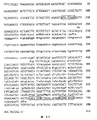
(化2)及び(化3)はベクターpGPeの配列を示す。 (Chemical Formula 2) and (Chemical Formula 3) show the sequence of the vector pGPe.
(化4)及び(化5)は遺伝子VH49.8の配列を示す。 (Chemical 4) and (Chemical 5) show the sequence of the gene VH49.8.
表1は本発明のトランスジェニックマウスの血清中のヒトIgMおよびIgGの検出を示す。 Table 1 shows the detection of human IgM and IgG in the serum of the transgenic mice of the present invention.
(化6)及び(化7)はVDJ接合の配列を示す。 (Chemical formula 6) and (Chemical formula 7) show the arrangement of VDJ junctions.
表2は、成人の末梢血リンパ球(PBL)において見つかるJセグメントに対する、pHC1トランスジーンによってコードされる転写物中に組み込まれたJセグメントの分布を示す。 Table 2 shows the distribution of J segments incorporated into transcripts encoded by the pHC1 transgene relative to J segments found in adult peripheral blood lymphocytes (PBL).
表3は、成人の末梢血リンパ球(PBL)において見つかるDセグメントに対する、pHC1トランスジーンによってコードされる転写物中に組み込まれたDセグメントの分布を示す。 Table 3 shows the distribution of D segments incorporated into transcripts encoded by the pHC1 transgene relative to D segments found in adult peripheral blood lymphocytes (PBL).
(化8)及び(化9)は、pHC1トランスジェニックマウス中またはヒトPBL中のフレーム内VDJ接合を有する転写物からのCDR3ペプチドの長さを示す。 (Chemical 8) and (Chemical 9) show the length of CDR3 peptides from transcripts with in-frame VDJ junctions in pHC1 transgenic mice or in human PBL.
表4は、pHC1トランスジェニックマウスから分析された30クローンのVDJ領域の推定アミノ酸配列を示す。 Table 4 shows the deduced amino acid sequence of the VDJ region of 30 clones analyzed from pHC1 transgenic mice.
表5は、指摘の実験において使用したライン112 のトランスジェニックマウスを示す;(+)は各トランスジーンの存在を示し、(++)は該動物がJHD突出トランスジーンについてホモ接合性であることを示す。 Table 5 shows the transgenic mice on line 112 used in the indicated experiment; (+) indicates the presence of each transgene and (++) indicates that the animal is homozygous for the JHD overhanging transgene. Show.
表6は、複数の0011マウスの遺伝子型を示す。 Table 6 shows the genotypes of multiple 0011 mice.
表7は、トランスジェニックマウスにおけるHC2重鎖トランスジーン内の体細胞突然変異の発生を示す。 Table 7 shows the occurrence of somatic mutations within the HC2 heavy chain transgene in transgenic mice.
表8は、トランスジーンVおよびJセグメント使用を示す。 Table 8 shows transgene V and J segment usage.
表11は、トランスジェニックマウスからのハイブリドーマにおけるヒト可変領域使用を示す。 Table 11 shows human variable region usage in hybridomas from transgenic mice.
表14は、YAC 4x17E1 でのヒト Vk セグメントの同定を示す。 Table 14 shows the identification of the human Vk segment with YAC 4x17E1.
表15、マウス系統KCo5−9272において発現したヒトVk遺伝子の同定。 Table 15. Identification of human Vk genes expressed in mouse strain KCo5-9272.
表16、ヒトIgGk抗-nCD4モノクローナル抗体についての分泌レベル。 Table 16. Secretion levels for human IgGk anti-nCD4 monoclonal antibody.
表17、ヒトCD4に結合するモノクローナル抗体についての速度および親和性(affinity)定数。 Table 17, Rate and affinity constants for monoclonal antibodies that bind to human CD4.
表18、ヒト抗ヒトCD4モノクローナル抗体の親和性(affinity)および速度定数。 Table 18, affinity and rate constants of human anti-human CD4 monoclonal antibodies.
表19、ヒト抗ヒトCD4モノクローナル抗体の結合力(avidity)および速度定数。 Table 19, avidity and rate constants of human anti-human CD4 monoclonal antibodies.
表20、抗CD4モノクローナル抗体について報告された結合力(avidity)および速度定数。 Table 20, avidity and rate constants reported for anti-CD4 monoclonal antibodies.
表21、フローサイトメトリーにより測定された、ヒト抗ヒトCD4モノクローナル抗体の親和性(avidity)定数。 Table 21, avidity constants of human anti-human CD4 monoclonal antibodies measured by flow cytometry.
表22、機能的転写のための部分ヌクレオチド配列。 Table 22, Partial nucleotide sequence for functional transcription.
表23、.ハイブリドーマ転写における生殖細胞系V(D)Jセグメント使用。 Table 23. Germline V (D) J segment use in hybridoma transcription.
表24、ミニジーン構成において使用されるプライマー、ベクターおよび産物。 Table 24. Primers, vectors and products used in the minigene configuration.
表25、末梢のチンパンジーのリンパ球でのヒト mAbs の効果。 Table 25, Effects of human mAbs on peripheral chimpanzee lymphocytes.
本発明のトランスジェニックマウスを、下記の表B及びCから選択されたヒト抗原により免疫する。トランスジェニックマウスは前記ヒト抗原に結合するヒト抗体を生産する。免疫されたトランスジェニックマウスからのB細胞を用いて、前記選択されたヒト抗原に対するモノクローナル抗体を分泌するハイフリドーマを作製する。 The transgenic mice of the invention are immunized with a human antigen selected from Tables B and C below. The transgenic mouse produces a human antibody that binds to the human antigen. B cells from the immunized transgenic mice are used to generate hyfrideomas that secrete monoclonal antibodies against the selected human antigens.
上述したように、有望な治療および/または診断上の標的である特異的ヒト抗原と反応するヒト免疫グロブリンを製造することが望ましい。しかしながら、ヒト抗原と特異的に結合するヒト免疫グロブリンは問題がある。 As mentioned above, it is desirable to produce human immunoglobulins that react with specific human antigens that are promising therapeutic and / or diagnostic targets. However, human immunoglobulins that specifically bind to human antigens are problematic.
第一に、B細胞源として働く免疫処置動物が、与えられた抗原に対して免疫応答を生じなければならない。動物が免疫応答を生じるには、与えられた抗原が外来でなければならず、且つ動物が該抗原に寛容性でなければならない。よって、例えばヒトタンパク質に結合するイディオタイプを有するヒトモノクローナル抗体を製造しようと所望するならば、自己寛容性がヒトタンパク質に対する実質的な免疫応答を生じるのを妨げるだろう。何故なら、免疫原性となり得る該抗原の唯一のエピトープが、ヒト集団の中のタンパク質の多形性に由来するもの(同種異系間エピトープ)であろうからである。 First, an immunized animal that serves as a source of B cells must generate an immune response against a given antigen. In order for an animal to generate an immune response, a given antigen must be foreign and the animal must be tolerant of the antigen. Thus, for example, if it is desired to produce a human monoclonal antibody having an idiotype that binds to a human protein, self-tolerance will prevent a substantial immune response against the human protein. This is because the only epitope of the antigen that can be immunogenic would be that derived from protein polymorphism in the human population (homologous epitope).
第二に、ハイブリドーマを形成させるためのB細胞の源として働く動物(一例ではヒト)が真正自己抗原に対して免疫応答を生じるならば、該動物において深刻な自己免疫病が発生し得る。ハイブリドーマ用のB細胞源としてヒトを使う場合には、そのような自己免疫化は現代の道徳的規範により非論理的であると見なされる。 Second, if an animal (in one example, a human) that serves as a source of B cells to form a hybridoma produces an immune response against a genuine self antigen, severe autoimmune disease can occur in the animal. When humans are used as a B cell source for hybridomas, such autoimmunization is considered illogical by modern moral norms.
かくして予め定められたヒト抗原に対する抗体応答を誘発できるヒト抗体分泌B細胞が必要とされることから、予め定められたヒト抗原と特異的反応性をもつヒト免疫グロブリン鎖を分泌するハイブリドーマを開発することには問題が多い。 Thus, since a human antibody-secreting B cell capable of inducing an antibody response to a predetermined human antigen is required, a hybridoma that secretes a human immunoglobulin chain having specific reactivity with a predetermined human antigen is developed. There are many problems.
ヒト抗原と特異的に反応するヒト抗体を得るのに利用することができる1つの方法論は、本発明のヒト免疫グロブリントランスジーン構成物を含有するトランスジェニックマウスの製造である。簡単に言えば、ヒト免疫グロブリン重鎖および軽鎖遺伝子座の全部もしくは部分を含有するトランスジーン、またはヒト重鎖および軽鎖遺伝子座の必須機能要素を含んで成る合成「小遺伝子座」(下記、並びに同時継続米国特許出願第08/352,322号(1994年12月7日出願)、第07/990,860号(1992年12月16日に出願)、第07/810,279号(1991年12月17日出願)、第07/904,068号(1992年6月23日に出願);第07/853,408号(1992年3月18日に出願)、第07/574,748号(1990年8月29日に出願)、第07/575,962号(1990年8月31日に出願)およびPCT/US91/06185号(1991年8月28日に出願)に記載されている)を含有するトランスジーンを使ってトランスジェニック非ヒト動物を作製する。 One methodology that can be utilized to obtain human antibodies that specifically react with human antigens is the production of transgenic mice containing the human immunoglobulin transgene constructs of the present invention. Briefly, a transgene containing all or part of a human immunoglobulin heavy and light chain locus, or a synthetic “small locus” comprising essential functional elements of a human heavy and light chain locus (see below). U.S. Patent Application Nos. 08 / 352,322 (filed December 7, 1994), 07 / 990,860 (filed December 16, 1992), 07 / 810,279 (December 17, 1991) Application), 07 / 904,068 (filed on June 23, 1992); 07 / 853,408 (filed on March 18, 1992), 07 / 574,748 (filed on August 29, 1990) No. 07 / 575,962 (filed Aug. 31, 1990) and PCT / US91 / 06185 (filed Aug. 28, 1991)). A human animal is produced.
そのようなトランスジェニック非ヒト動物は、ヒト免疫グロブリン遺伝子によりコードされる免疫グロブリン鎖を産生する能力を有し、その上、ヒト抗原に対して免疫応答を生じることができるだろう。よって、そのようなトランスジェニック非ヒト動物は特定のヒト抗原と反応する免疫血清の源として働くことができ、そのようなトランスジェニック動物からのB細胞をミエローマ細胞と融合せしめることにより、ヒト抗原と特異的に反応するモノクローナル抗体を分泌するハイブリドーマを製造することができる。 Such transgenic non-human animals will have the ability to produce immunoglobulin chains encoded by human immunoglobulin genes and will be able to generate an immune response against human antigens. Thus, such transgenic non-human animals can serve as a source of immune serum that reacts with specific human antigens, and by fusing B cells from such transgenic animals with myeloma cells, Hybridomas that secrete specifically reacting monoclonal antibodies can be produced.
様々な形の免疫グロブリン遺伝子を含有するトランスジェニックマウスの製造は以前に報告されている。トランスジェニックマウスの製造には、再配列されたマウス免疫グロブリン重鎖または軽鎖遺伝子が使われている。加えて、μまたはγ1定常領域を含む機能的に再配列されたヒトIg遺伝子がトランスジェニックマウス中で発現されている。しかしながら、トランスジーンが再配列されていない(再配列されないV−D−JまたはV−J)免疫グロブリン遺伝子を含んで成る実験は変動的であり、場合によって、トランスジーンの不完全なまたは最少の再配列を生じることがあった。しかし、トランスジーン中のCH遺伝子間での好結果のイソタイプスイッチを受ける再配列されたまたは再配列されていない免疫グロブリントランスジーンの例は1つも報告されていない。 The production of transgenic mice containing various forms of immunoglobulin genes has been reported previously. For the production of transgenic mice, rearranged mouse immunoglobulin heavy or light chain genes are used. In addition, a functionally rearranged human Ig gene containing a μ or γ1 constant region has been expressed in transgenic mice. However, experiments comprising immunoglobulin genes in which the transgene is not rearranged (VDJ or VJ that are not rearranged) are variable and, in some cases, incomplete or minimal of the transgene. Sometimes rearrangement occurred. However, no examples of rearranged or unrearranged immunoglobulin transgenes that undergo successful isotype switching between the CH genes in the transgene have been reported.
本発明は同様に、基本的にヒト恒常領域配列に対するポリペプチド結合におけるヒトVDJ配列から成るヒト免疫グロブリン鎖を含むモノクローナル抗体を分泌するハイブリドーマ候補を同定するための方法をも提供する。かかるハイブリドーマ候補は、(1)基本的にヒトVDJ領域とヒト恒常領域から成る免疫グロブリン鎖を発現するハイブリドーマクローン、及び(2)基本的にヒトVDJ領域及びマウス恒常領域から成るヘテロハイブリッド免疫グロブリン鎖を発現するトランススイッチされたハイブリドーマを含むハイブリドーマクローンのプールから同定される。個々の又はプールされたハイブリドーマクローンの上清は、予め定められた抗原結合特異性をもつ抗体を選択するための結合条件下で、標準的には固定基質(例えばマイクロタイターウェル)上に吸着により不動化される抗原である予め定められた抗原と接触させられる。 The present invention also provides a method for identifying candidate hybridomas that secrete monoclonal antibodies comprising human immunoglobulin chains consisting essentially of human VDJ sequences in polypeptide binding to human constant region sequences. Such hybridoma candidates include (1) a hybridoma clone that expresses an immunoglobulin chain consisting essentially of a human VDJ region and a human constant region, and (2) a heterohybrid immunoglobulin chain consisting essentially of a human VDJ region and a mouse constant region. From a pool of hybridoma clones containing a transswitched hybridoma expressing. The supernatant of individual or pooled hybridoma clones is typically adsorbed onto a fixed substrate (eg, microtiter wells) under binding conditions to select antibodies with a predetermined antigen binding specificity. It is contacted with a predetermined antigen that is an antigen to be immobilized.
ヒト恒常領域に特異的に結合する抗原も同様に、抗体が少なくとも1つのヒト恒常領域エピトープに選択的に結合するもののマウス恒常領域エピトープには結合しないような結合条件下で、ハイブリドーマ上清及び予め定められた抗原と接触させられ、かくして予め定められた抗原及び特異的にヒト恒常領域と結合する抗体に結合されたハイブリドーマ上清(トランスジェニックモノクローナル抗体)で基本的に構成されている複合体を形成する(そして、これは検出可能な標識又はリポーターで標識付け可能である)。このような複合体の形成の検出は、ヒト免疫グロブリン鎖を発現するハイブリドーマクローン又はプールを表わす)。 Similarly, an antigen that specifically binds to a human homeostasis region can also be prepared under the hybridoma supernatant and pre- A complex basically composed of a hybridoma supernatant (transgenic monoclonal antibody) that is brought into contact with a defined antigen and thus bound to an antibody that binds to a predetermined antigen and specifically to a human constant region. (And can be labeled with a detectable label or reporter). Detection of the formation of such a complex represents a hybridoma clone or pool that expresses a human immunoglobulin chain).
本発明の好ましい実施態様において、スクリーニングにおいて使用される抗ヒト定常領域免疫グロブリンは、非−μ、非−δイソタイプ、好ましくはαまたはε、より好ましくはγイソタイプ定常領域を特異的に認識する。γイソタイプのモノクローナル抗体が好ましい。というのは、(i)IgG免疫グロブリンの特性が、いくつかの治療的な適用について、IgM免疫グロブリンに対して好ましい(例えばIgMペンタマーに比べてIgGダイマーのより小さい大きさの故に)こと、および(ii)体細胞突然変異のプロセスが、μ定常領域から非μ(例えばγ)定常領域へのクラススウィッチに相関されることのためである。クラススウィッチを受けた免疫グロブリンの集団から選ばれた免疫グロブリン(例えばIgG)は、クラススウィッチを受けていない集団から選ばれた免疫グロブリン(例えばIgM)より高い親和性で抗体を結合する傾向にある。例えばロンベルグ(Lonberg)およびハスザー(Huszer)、Intern.Rev.Immunol.13:65-93(1995年)を見よ。 In a preferred embodiment of the invention, the anti-human constant region immunoglobulin used in the screening specifically recognizes non-μ, non-δ isotypes, preferably α or ε, more preferably γ isotype constant regions. A gamma isotype monoclonal antibody is preferred. Because (i) the properties of IgG immunoglobulins are favorable to IgM immunoglobulins for some therapeutic applications (eg because of the smaller size of IgG dimers compared to IgM pentamers), and (ii) because the process of somatic mutation is correlated with a class switch from a μ constant region to a non-μ (eg, γ) constant region. Immunoglobulins selected from a population of immunoglobulins that have undergone class switching (eg, IgG) tend to bind antibodies with higher affinity than immunoglobulins selected from populations that have not received class switching (eg, IgM). . See, for example, Lonberg and Huszer, Intern. Rev. Immunol. 13: 65-93 (1995).
1つの実施態様において、候補者のハイブリドーマがまず、γイソタイプ定常領域についてスクリーニングされ、次に、IgG発現ハイブリドーマのプールが、予め決められた抗原への特異的結合についてスクリーニングされる。 In one embodiment, candidate hybridomas are first screened for gamma isotype constant regions and then a pool of IgG expressing hybridomas is screened for specific binding to a predetermined antigen.
かくして、この方法によれば、本発明のトランスジェニックマウスは、予め決められた抗原で免疫されて、免疫応答を引起す。B細胞がマウスから集められ、不死細胞に融合されてハイブリドーマを生じる。ハイブリドーマはまずスクリーニングされて、非μ、非δイソタイプのIg(例えばIgG)を分泌する個々のハイブリドーマを同定する。このハイブリドーマの組は次に、関心のある、予め決められた抗原への特異的結合についてスクリーニングされる。スクリーニングは、例えば、ハーロー(Harlow)およびレイン(Lane)、Antibodies:アラボラトリーマニュアル、コールドスプリングハーバー(A Laboratory Manua1,ColdSprinq Harbor)、ニューヨーク(1988年)に記載されたような標準的技術を用いて行われる。この方法を用いると、高親和性(例えば約107M-1より大きいKa)の免疫グロブリンを実用的に効率的に同定することが可能である。 Thus, according to this method, the transgenic mice of the present invention are immunized with a predetermined antigen to elicit an immune response. B cells are collected from mice and fused to immortal cells to produce hybridomas. Hybridomas are first screened to identify individual hybridomas that secrete non-μ, non-δ isotype Igs (eg, IgG). This set of hybridomas is then screened for specific binding to a predetermined antigen of interest. Screening is performed using standard techniques such as those described in, for example, Harlow and Lane, Antibodies: Laboratory Manual, Cold Spring Harbor, New York (1988). Done. Using this method, it is possible to practically and efficiently identify immunoglobulins with high affinity (eg, greater than about 107 M −1 Ka).
定義
本明細書中で使用する時、用語「抗体」は、少なくとも2本の同一の軽ポリペプチド鎖と2本の同一の重ポリペプチド鎖を含んで成る糖タンパク質を言う。重および軽ポリペプチド鎖は各々、抗原と相互作用する結合ドメインを含む可変領域(通常はポリペプチド鎖のアミノ末端部分)を含有する。重および軽ポリペプチド鎖は各々、ポリペプチド鎖の定常領域(通常はカルボキン末端部分)も含んで成り、その配列の一部は、免疫系の種々の細胞、或る種の食細胞および典型的補体系の第一成分(Clq)を含む宿主組織への免疫グロブリンの結合を媒介する。
Definition
As used herein, the term “antibody” refers to a glycoprotein comprising at least two identical light polypeptide chains and two identical heavy polypeptide chains. Each heavy and light polypeptide chain contains a variable region (usually the amino-terminal portion of the polypeptide chain) containing a binding domain that interacts with an antigen. Each of the heavy and light polypeptide chains also comprises the constant region of the polypeptide chain (usually the carboxin terminal portion), part of which sequence is comprised of various cells of the immune system, certain phagocytes and typical Mediates immunoglobulin binding to host tissues containing the first component of the complement system (Clq).
本明細書中で使用する時、「異種抗体」は、そのような抗体を産生するトランスジェニック非ヒト生物に関連して定義される。それは、トランスジェニック非ヒト動物から成らない生物において見つかるものに対応するアミノ酸配列を有するかまたはDNA配列をコードする抗体である。 As used herein, a “heterologous antibody” is defined in relation to a transgenic non-human organism that produces such an antibody. It is an antibody having an amino acid sequence corresponding to that found in an organism that does not consist of a transgenic non-human animal or encoding a DNA sequence.
本明細書中で使用する時、「ヘテロハイブリッド抗体」は、異なる生物体起源の軽鎖と重鎖を有する抗体を言う。例えば、マウス軽鎖と会合されたヒト重鎖を有する抗体はヘテロハイブリッド抗体である。 As used herein, “heterohybrid antibody” refers to an antibody having light and heavy chains from different organisms. For example, an antibody having a human heavy chain associated with a mouse light chain is a heterohybrid antibody.
本明細書中で使用する時、「イソタイプ」は、重鎖定常領域遺伝子によりコ−ドされる抗体クラス(例えばIgMまたはIgG1)を言う。 As used herein, “isotype” refers to the antibody class (eg, IgM or IgG1) that is encoded by heavy chain constant region genes.
本明細書中で使用する時、「イソタイプスイッチ」は、抗体のクラスまたはイソタイプが或るIgクラスから別のIgクラスのうちの1つへ変化する現象を言う。 As used herein, an “isotype switch” refers to a phenomenon in which the class or isotype of an antibody changes from one Ig class to one of another Ig class.
本明細書中で使用する時、「非スイッチイソタイプ」は、イソタイプスイッチが起こらなかった時に産生される重鎖のクラスを言う。非スイッチイソタイブをコードするCH遺伝子は、典型的には磯能的に再配列されたVDJ遺伝子のすぐ下流の最初のCH遺伝子である。 As used herein, “non-switch isotype” refers to the class of heavy chains that are produced when no isotype switch occurs. The CH gene encoding the non-switched isotype is typically the first CH gene immediately downstream of the operably rearranged VDJ gene.
本明細書中で使用する時、用語「スイッチ配列」は、スイッチ組換えを招くそれらのDNA配列を言う。「スイッチ供与体」配列、典型的にはμスイッチ領域は、スイッチ組換え中に欠失されるであろう定常領域の5′(即ち上流)にあるだろう。「スイッチ受容体」領域は、欠失されるであろう定常領域と代替定常領域(例えばγ,ε等)との間であろう。組換えが常に起こる特異部位は1つもないので、典型的には最終遺伝子配列は構成物から予想不可能であろう。 As used herein, the term “switch sequence” refers to those DNA sequences that result in switch recombination. The “switch donor” sequence, typically the μ switch region, will be 5 ′ (ie upstream) of the constant region that will be deleted during switch recombination. The “switch receptor” region will be between the constant region that will be deleted and the alternative constant region (eg, γ, ε, etc.). Since there is no single site where recombination always occurs, typically the final gene sequence will not be predictable from the construct.
本明細書中で使用する時、「グリコシル化パターン」は、タンパク質、より詳しくは免疫グロブリンタンパク質に共有結合している炭化水素単位のパターンとして定義される。当業者が異種抗体のグリコゾル化パターンをトランスジーンのCH遺伝子が由来する種よりも非ヒトトランスジェニック動物の種の中のグリコシル化パターンに一層類似していると認識するような時には、異種抗体のグリコシル化パターンは、非ヒトトランスジェニック動物の種によって産生される抗体上に天然に存在するグリコシル化パターンと実質上類似していると特徴付けることができる。 As used herein, a “glycosylation pattern” is defined as a pattern of hydrocarbon units that are covalently linked to a protein, more specifically to an immunoglobulin protein. When one skilled in the art recognizes that the glycosolation pattern of the heterologous antibody is more similar to the glycosylation pattern in the species of the non-human transgenic animal than the species from which the transgene CH gene is derived, The glycosylation pattern can be characterized as being substantially similar to the glycosylation pattern that naturally occurs on antibodies produced by species of non-human transgenic animals.
本明細書中で使用する時、「特異的結合」は、抗体が(1)予め決定された抗原に少なくとも1×10⁷M-1の親和力で結合し、そして(2)予め決定された抗原以外の非特異的抗原(例えばBSA、カゼイン)への結合親和力よりも少なくとも2倍大きい親和力で、予め決定された抗原に優先的に結合する性質を言う。 As used herein, “specific binding” means that the antibody (1) binds to a predetermined antigen with an affinity of at least 1 × 10 7 M −1 and (2) other than the predetermined antigen. It refers to the property of preferentially binding to a predetermined antigen with an affinity that is at least two times greater than the binding affinity for a non-specific antigen (eg BSA, casein).
本明細書中で使用する時「天然に存在する」という用語は、対象物に用いた時に対象物が天然に見つけることができることを言う。例えば、天然源から単離することができ且つ人間によって実験室で故意に変更されていない、生物体(ウイルスを含む)中に存在するポリペプチドまたはポリヌクレオチド配列は、「天然に存在する」ものである。 The term “naturally occurring” as used herein refers to the ability of an object to be found in nature when used on the object. For example, a polypeptide or polynucleotide sequence present in an organism (including a virus) that can be isolated from a natural source and not intentionally altered by a human in the laboratory is “naturally occurring” It is.
本明細書中で使用する時「再配列された」という用語は、Vセグメントがそれぞれ本質的に完全なVHまたはVLドメインをコードする構造においてD−JまたはJセグメントのすぐ近くに位置する重鎖または軽鎖免疫グロブリン遺伝子座の配置を言う。再配列された免疫グロブリン遺伝子座は生殖細胞DNAとの比較によって同定することができ;再配列された遺伝子座は少なくとも1つのヘプタマー/ナノマー相同性要素を有するだろう。 As used herein, the term “rearranged” refers to a heavy chain located immediately adjacent to a DJ or J segment in a structure in which the V segment encodes an essentially complete VH or VL domain, respectively. Or refers to the arrangement of light chain immunoglobulin loci. A rearranged immunoglobulin locus can be identified by comparison to germline DNA; the rearranged locus will have at least one heptamer / nanomer homology element.
Vセグメントに関して本明細書中で使用する時、「再配列されていない」または「生殖細胞配置」なる用語は、DまたはJセグメントのすぐ近くになるようにVセグメントが組換えられない配置を言う。 As used herein with respect to a V segment, the term “unrearranged” or “germ cell arrangement” refers to an arrangement in which the V segment is not recombined so that it is in close proximity to the D or J segment. .
核酸については、「実質的相同性」ともいうのは、最適な形で整列され比較された場合、2つの核酸又はその指定配列が、少なくとも約80%のヌクレオチド、通常は少なくとも約90%〜95%、より好ましくは少なくとも約98〜99.5%のヌクレオチドにおいて適当なヌクレオチド挿入又は欠失を伴って同一であることを表わす。代替的には、選択的ハイブリダイゼーション条件下でストランドの補体に対しセグメントがハイブリッド形成するときに実質的な相同性が存在する。核酸は、全細胞中に、細胞リゼイト中に、又は部分的に精製された形又は実質的に純粋な形で存在しうる。核酸は、アルカリ/SDS処理、CSClバンディング、カラムクロマトグラフィー、アガロースゲル電気泳動及び当該技術分野において周知のその他の技術を含む標準的技術により、例えばその他の細胞核酸又はタンパク質といったその他の細胞成分はその他の汚染物質から精製された時点で、「分離され」又は「実質的に純粋な状態にされ」ている。F.Ausubel,et.al.,ed.「分子生物学における現在のプロトコル」、Greene,Publishing and Wiley-Interscience、ニューヨーク(1987)参照。 For nucleic acids, also referred to as “substantial homology”, when optimally aligned and compared, two nucleic acids or designated sequences thereof are at least about 80% nucleotides, usually at least about 90% to 95%. %, More preferably at least about 98-99.5% nucleotides with the appropriate nucleotide insertions or deletions. Alternatively, there is substantial homology when the segment hybridizes to the complement of the strand under selective hybridization conditions. The nucleic acid can be present in whole cells, in cell lysates, or in partially purified or substantially pure form. Nucleic acids can be obtained by standard techniques including alkaline / SDS treatment, CSCl banding, column chromatography, agarose gel electrophoresis and other techniques well known in the art, other cellular components such as other cellular nucleic acids or proteins, etc. When it is purified from the contaminants, it is “separated” or “substantially pure”. F. Ausubel, et. al., ed. See "Current Protocols in Molecular Biology", Greene, Publishing and Wiley-Interscience, New York (1987).
本発明の核酸組成物は、往々にして、cDNAゲノミック又は混合物のいずれかからの未変性配列(修正された制限部位などを除く)にあるものの、標準的技術に従って遣伝子配列を提供するべくそこからの突然変異を受けることができる。コーディング配列については、これらの突然変異は望まれるとおりにアミノ酸配列に影響を及ぼしうる。特に、未変性にD.J.結合スイッチと実質的に相同な又はこれらから誘導されたDNA配列及び本書に記されているその他のこのような配列が考慮される(ここで「誘導された」というのは、1つの配列がもう1つの配列と同一であるか又はそれから修正されたものであることを表わす)。 The nucleic acid compositions of the present invention are often in native sequences (excluding modified restriction sites, etc.) from either cDNA genomics or mixtures, but to provide gene sequences according to standard techniques. You can get a mutation from there. For coding sequences, these mutations can affect the amino acid sequence as desired. In particular, D. J. et al. DNA sequences that are substantially homologous to or derived from the binding switch and other such sequences described herein are considered (where “derived” means that one sequence is Indicating that it is identical to or modified from one sequence).
核酸は、他の核酸と機能的関係におかれたとき、それは「使用可能に連結される。」例えば、プロモーター又はエンハンサーは、それが配列の転写に影響を与えるとき、「作用可能に連結される。転写抑制配列に関し、作用可能に連結されるとは、連結されたDNA配列が隣接することを意味し、2つの蛋白質コード領域を連結するのに必要な場合、隣接しており、そしてリーディングフレーム内にある。スイッチ配列については、作用可能に連結されるとは、配列がスイッチ組換えを行うことができることを意味する。 A nucleic acid is “operably linked” when it is placed into a functional relationship with another nucleic acid. For example, a promoter or enhancer is “operably linked when it affects the transcription of a sequence. With respect to transcriptional repressor sequences, operably linked means that the linked DNA sequences are adjacent, if necessary to connect the two protein coding regions, are adjacent and reading. For switch sequences, operably linked means that the sequences can undergo switch recombination.
異種抗体を産生することのできるトランスジェニック非ヒト動物
異種抗体レパートリーによる外来抗原刺激に応答するトランスジェニック非ヒト動物のデザインは、トランスジェニック動物の内部に含まれた異種免疫グロブリントランスジーンがB細胞発達経路を通して正しく機能することを必要とする。好ましい態様では、異種重鎖トランスジーンの正しい機能がイソタイプスイッチを含む。従って、イソタイプスイッチを生じ且つ下記のうちの1つまたは複数をもたらすように本発明のトランスジーンが作製される:(1)高レベルで且つ細胞型特異的な発現、(2)機能的な遺伝子再配列、(3)対立遺伝子排除の活性化およびそれに対する応答、(4)十分な一次レパートリーの発現、(5)シグナル形質導入、(6)体細胞高度突然変異(hyper-mutation、および(7)免疫応答の間のトランスジーン抗体遺伝子座の優性化。
Transgenic non-human animals capable of producing heterologous antibodies
The design of transgenic non-human animals that respond to foreign antigen stimulation by a heterologous antibody repertoire requires that the heterologous immunoglobulin transgene contained within the transgenic animal function correctly through the B cell development pathway. In a preferred embodiment, the correct function of the heterologous heavy chain transgene includes an isotype switch. Thus, the transgene of the present invention is made to produce an isotype switch and result in one or more of the following: (1) high level and cell type specific expression, (2) functional Gene rearrangement, (3) activation and response to allelic exclusion, (4) expression of a sufficient primary repertoire, (5) signal transduction, (6) hyper-mutation, and ( 7) Domination of the transgene antibody locus during the immune response.
下記開示から明らかなように、上記の基準の全てを満たす必要はない。例えば、トランスジェニック動物の内因性免疫グロブリン遺伝子座が機能的に破壊されるそれらの態様では、トランスジーンは対立遺伝子排除を活性化する必要がない。更に、トランスジーンが機能的に再配列された重鎖および/または軽鎖免疫グロブリン遺伝子を含んで成る態様では、2番目の基準である機能的な遺伝子再配列は、少なくとも既に再配列されているトランスジーンには不要である。分子免疫学に関する背景につては、Fundamental Immunology,第2版(1989),Paul William E.編,Raven Press,N.Y.を参照のこと。これは参考として本明細書中に組み込まれる。 As will be apparent from the disclosure below, it is not necessary to meet all of the above criteria. For example, in those embodiments where the endogenous immunoglobulin locus of the transgenic animal is functionally disrupted, the transgene need not activate allelic exclusion. Further, in embodiments where the transgene comprises functionally rearranged heavy and / or light chain immunoglobulin genes, the second reference functional gene rearrangement is at least already rearranged. Not required for transgene. For background on molecular immunology, see Fundamental Immunology, 2nd edition (1989), edited by Paul William E., Raven Press, NY. checking ... This is incorporated herein by reference.
本発明の一観点では、トランジェニック動物の生殖細胞(ジャームライン)中に再配列された、再配列されていない、または再配列されたものと再配列されていないものとの組み合わせの、異種免疫グロブリン重鎖および軽鎖トランスジーンを含有する、トランスジェニック非ヒト動物が提供される。重鎖トランスジーンの各々は少なくとも1つのCH遺伝子を含んで成る。加えて、重鎖トランスジーンは、トランスジェニック動物のB細胞中で多数のCH遺伝子をコードする異種トランスジーンのイソタイプスイッチを支持することができる機能的イソタイプスイッチ配列を含んでもよい。そのようなスイッチ配列は、トランスジーンC H遺伝子の源として働く種からの生殖細胞免疫グロブリン遺伝子座に天然に存在するものであることができ、またはトランスジーン構成物を受け入れることになっている種(トランスジェニック動物)に存在するものから誘導することもできる。 In one aspect of the invention, heterologous immunization of rearranged, unrearranged, or a combination of rearranged and non-rearranged in germ cells (germ lines) of transgenic animals. Transgenic non-human animals are provided that contain globulin heavy and light chain transgenes. Each heavy chain transgene comprises at least one CH gene. In addition, the heavy chain transgene may comprise a functional isotype switch sequence capable of supporting a heterologous transgene isotype switch encoding multiple CH genes in the B cells of the transgenic animal. Such a switch sequence can be one that is naturally present in the germline immunoglobulin locus from the species that serves as the source of the transgene CH gene, or a species that is to accept the transgene construct. It can also be derived from those present in (transgenic animals).
例えば、トランスジェニックマウスを製造するのに使われるヒトトランスジーン構成物は、それがマウス重鎖遺伝子座中に天然に存在するものに類似したスイッチ配列を含むならば、より高頻度のイソタイプスイッチ現象をもたらすことができる。というのは、恐らくマウススイッチ配列はマウススイッチレコンビナーゼ酵素系が機能するように最適化されるが、一方ヒトスイッチ配列は最適化されないだろうからである。スイッチ配列は、常用のクローニング法により単離しクローニングすることができ、または免疫グロブリンスイッチ領域配列に関する発表された配列情報に基づいてデザインした重複合成オリゴヌクレオチドから初めから合成することができる(Mills ら、Nucl.Acids Res. 18.7305-7316(1991);Siderrasら、Intl. Immunol. 1:631-642(1989)、これらは参考として本明細書中に組み込まれる)。 For example, a human transgene construct used to produce a transgenic mouse will have a higher frequency isotype switch if it contains a switch sequence similar to that naturally occurring in the mouse heavy chain locus. Can bring about a phenomenon. This is probably because the mouse switch sequence is optimized for the function of the mouse switch recombinase enzyme system, while the human switch sequence is not optimized. The switch sequence can be isolated and cloned by routine cloning methods, or synthesized from overlapping synthetic oligonucleotides designed based on published sequence information regarding immunoglobulin switch region sequences (Mills et al., Nucl. Acids Res. 18.7305-7316 (1991); Siderras et al., Intl. Immunol. 1: 631-642 (1989), which are incorporated herein by reference).
上記トランスジェニック動物の各々について、機能的に再配列された異種重鎖および軽鎖免疫グロブリントランスジーンは、トランスジェニック動物の有意な率(少なくとも10パーセント)のB細胞中に検出される。 For each of the transgenic animals, functionally rearranged heterologous heavy and light chain immunoglobulin transgenes are detected in a significant percentage (at least 10 percent) of B cells in the transgenic animals.
本発明のトランスジーンは、少なくとも1つの可変遺伝子セグメント、1つの連結遺伝子セグメントおよび1つの定常領域遺伝子セグメントをコードするDNAを含んで成る重鎖トランスジーンを包含する。免疫グロブリン軽鎖トランスジーンは、少なくとも1つの可変遺伝子セグメント、1つの連結遺伝子セグメントおよび1つの定常領域遺伝子セグメントをコードするDNAを含んで成る。軽鎖および重鎖遺伝子セグメントをコードする遺伝子セグメントは、それらが誘導されるトランスジェニック非ヒト動物にとって異種であるか、またはトランスジェニック非ヒト動物から成らない種からの免疫グロブリン重鎖および軽鎖遺伝子セグメントをコードするDNAに相当する。 The transgenes of the present invention include heavy chain transgenes comprising DNA encoding at least one variable gene segment, one linking gene segment, and one constant region gene segment. The immunoglobulin light chain transgene comprises DNA encoding at least one variable gene segment, one linking gene segment, and one constant region gene segment. The gene segments encoding the light and heavy chain gene segments are heterologous to the transgenic non-human animal from which they are derived or are immunoglobulin heavy and light chain genes from a species that does not consist of the transgenic non-human animal Corresponds to the DNA encoding the segment.
本発明の一観点によれば、個々の遺伝子セグメントが再配列されておらず、即ち機能的な免疫グロブリン軽鎖または重鎖をコードするようには再配列されていないようなトランスジーンが作製される。そのような再配列されていないトランスジーンは、抗原に暴露されると、トランスジェニック非ヒト動物内でV,DおよびJ遺伝子セグメントの組換え(機能的再配列)を支持し、そして好ましくは結果として得られる再配列された免疫グロブリン重鎖中へのD領域遺伝子セグメントの全部または部分の組み込みを支持する。 In accordance with one aspect of the present invention, a transgene is created in which individual gene segments are not rearranged, that is, not rearranged to encode a functional immunoglobulin light or heavy chain. The Such an unrearranged transgene supports recombination (functional rearrangement) of the V, D and J gene segments in the transgenic non-human animal when exposed to the antigen, and preferably results in Supports the integration of all or part of the D region gene segment into the rearranged immunoglobulin heavy chain obtained as
本発明の別の観点によれば、該トランスジーンは、再配列された「小遺伝子座」を含んで成る。そのようなトランスジーンは、典型的にはC,DおよびJセグメントの実質的部分並びにVセグメントのサブセットを含んで成る。そのようなトランスジーン構成物では、様々な調節配列、例えばプロモーター、エンハンサー、クラススイッチ領域、RNAプロセシング用のスプライス供与体およびスプライス受容体、組換えシグナル等は、異種DNAから誘導された対応配列を含んで成る。 According to another aspect of the invention, the transgene comprises rearranged “small loci”. Such transgenes typically comprise a substantial portion of C, D and J segments and a subset of V segments. In such transgene constructs, various regulatory sequences, such as promoters, enhancers, class switch regions, splice donors and splice acceptors for RNA processing, recombination signals, etc., correspond to the corresponding sequences derived from heterologous DNA. Comprising.
あるいは、そのような調節配列を本発明に使われる非ヒト動物と同一のまたは関連の種からのトランスジーン中に組み込むことができる。例えば、トランスジェニックマウスに使うために、トランスジーン中にヒト免疫グロブリン遺伝子セグメントを齧歯類免疫グロブリンエンハンサー配列と組み合わせることができる。あるいは、トランスジーン中に合成調節配列を組み込むこともでき、この場合、そのような合成調節配列は哺乳類のゲノム中に天然に存在することが知られている機能的DNA配列とは相同でない。合成調節配列は共通規則に従ってデザインされ、例えば、スプライス受容体部位またはプロモーター/エンハンサーモチーフの許容配列を特定するものである。 Alternatively, such regulatory sequences can be incorporated into a transgene from the same or related species as the non-human animal used in the present invention. For example, human immunoglobulin gene segments can be combined with rodent immunoglobulin enhancer sequences in a transgene for use in transgenic mice. Alternatively, synthetic regulatory sequences can be incorporated into the transgene, where such synthetic regulatory sequences are not homologous to functional DNA sequences known to occur naturally in the mammalian genome. Synthetic regulatory sequences are designed according to common rules, such as specifying permissive sequences for splice receptor sites or promoter / enhancer motifs.
例えば、ミニ遺伝子座は、天然に発生する生殖細胞系Ig遺伝子座と異なり、可欠DNA部分(例えば介在配列;イントロン又はその一部分)の少なくとも1つの内部(すなわちこの部分の末端にはない)の欠失を有するゲノミック免疫グロブリン遺伝子座の一部分を含む。 For example, a minilocus is different from a naturally occurring germline Ig locus, in at least one interior (ie, not at the end of this part) of an essential DNA portion (eg, an intervening sequence; an intron or a portion thereof). Includes a portion of a genomic immunoglobulin locus having a deletion.
本発明はまた、重鎖および軽鎖トランスジーンを有する生殖細胞を含有するトランスジェニック動物にも関し、ここで前記トランスジーンの一方は再配列された遺伝子セグメントを含み、他方は再配列されていない遺伝子セグメントを含む。好ましい態様では、再配列されたトランスジーンが軽鎖免役グロブリントランスジーンであり、再配列されていないトランスジーンが重鎖免役グロブリントランスジーンである。 The present invention also relates to a transgenic animal containing germ cells having heavy and light chain transgenes, wherein one of the transgenes comprises a rearranged gene segment and the other is not rearranged. Contains gene segments. In a preferred embodiment, the rearranged transgene is a light chain immunoglobulin transgene and the non-rearranged transgene is a heavy chain immunoglobulin transgene.
抗体の構造および産生
全ての免役グロブリンの基本構造は、2つの軽鎖ポリペプチドと2つの重鎖ポリペプチドとから成る単位に基づく。各軽鎖は、可変軽鎖領域および定常軽鎖領域として知られる2つの領域を含んで成る。同様に、免疫グロブリン重鎖は、可変重鎖領域および定常重鎖領域と呼ばれる2つの領域を含んで成る。
Antibody structure and production
The basic structure of all immunoglobulins is based on units consisting of two light chain polypeptides and two heavy chain polypeptides. Each light chain comprises two regions known as a variable light region and a constant light region. Similarly, an immunoglobulin heavy chain comprises two regions called a variable heavy chain region and a constant heavy chain region.
重鎖または軽鎖の定常領域は、重鎖または軽鎖定常領域遺伝子(CH)セグメントと呼ばれるゲノム配列によりコードされる。特定の重鎖遺伝子セグメントの使用が免疫グロブリンのクラスを限定する。例えば、ヒトでは、μ定常領域遺伝子セグメントが抗体のIgMクラスを限定し、一方でγ,γ2,γ3またはγ4定常領域遺伝子セグメントが抗体のIgGクラス並びにIgGのサブクラスIgG1〜IgG4を限定する。同様に、α1またはα2定常領域遺伝子セグメントの使用が抗体のIgAクラス並びにIgA1およびIgA2サブクラスを限定する。δおよびε定常領域遺伝子セグメントがそれぞれIgDおよびIgE抗体クラスを限定する。 The heavy or light chain constant region is encoded by a genomic sequence called a heavy or light chain constant region gene (CH) segment. The use of specific heavy chain gene segments limits the class of immunoglobulins. For example, in humans, the μ constant region gene segment defines the antibody IgM class, while the γ, γ2, γ3, or γ4 constant region gene segment defines the antibody IgG class as well as the IgG subclasses Ig1 to IgG4. Similarly, the use of α1 or α2 constant region gene segments limits the IgA class and IgA1 and IgA2 subclasses of antibodies. The δ and ε constant region gene segments define the IgD and IgE antibody classes, respectively.
重鎖および軽鎖免疫グロブリンの可変領域は、一緒になって抗体の抗原結合領域を含む。広範囲の抗原を結合できるようにするために抗体のこの領域に多様性が必要なため、初期または一次レパートリー可変領域をコードするDNAは、特定の可変領域遺伝子セグメントのファミリーに由来する多数の異なるDNAセグメントを含んで成る。軽鎖可変領域の場合、そのようなファミリーは可変(V)遺伝子セグメントと連結(J)遺伝子セグメントを含んで成る。よって、軽鎖の初期可変領域は1つのV遺伝子セグメントと1つのJ遺伝子セグメントによってコードされ、各セグメントはその生物のゲノムDNA中に含まれるVおよびJ遺伝子セグメントのファミリーから選ばれる。重鎖可変領域の場合、重鎖の初期または一次レパートリー可変領域をコードするDNAは、1つの重鎖V遺伝子セグメント、1つの重鎖多様性(D)遺伝子セグメントおよび1つのJ遺伝子てグメントを含んで成り、各セグメントはゲノムDNA中の適当な免疫グロブリン遺伝子セグメントのV,DおよびJファミリーから選ばれる。 The variable regions of the heavy and light chain immunoglobulins together comprise the antigen binding region of the antibody. Because of the diversity required in this region of the antibody in order to be able to bind a wide range of antigens, the DNA encoding the initial or primary repertoire variable region is a large number of different DNAs derived from a particular variable region gene segment family. Comprising segments. In the case of the light chain variable region, such a family comprises a variable (V) gene segment and a linked (J) gene segment. Thus, the early variable region of the light chain is encoded by one V gene segment and one J gene segment, each segment being selected from a family of V and J gene segments contained in the organism's genomic DNA. In the case of the heavy chain variable region, the DNA encoding the initial or primary repertoire variable region of the heavy chain includes one heavy chain V gene segment, one heavy chain diversity (D) gene segment, and one J gene segment. Each segment is selected from the V, D and J families of appropriate immunoglobulin gene segments in genomic DNA.
抗体結合部位の形成に貢献する配列の多様性を増加させるために、重鎖トランスジーンが再配列されたV−D−J遺伝子配列中にD領域の全部または部分を組み込むことができる機能的V−D−J再配列を支持するシス作用性配列を含むことが好ましい。典型的には、発現されたトランスジーンによってコードされる重鎖(またはmRNA)の少なくとも約1%がV領域中に認識可能なD領域配列を含有する。好ましくは、トランスジーンによってコードされるV領域の少なくとも約10%、より好ましくは少なくとも約30%、最も好ましくは50%が認識可能なD領域配列を含有する。 To increase the diversity of sequences that contribute to the formation of antibody binding sites, a functional V that can incorporate all or part of the D region into the rearranged VDJ gene sequence of the heavy chain transgene. It preferably comprises a cis-acting sequence that supports DJ rearrangement. Typically, at least about 1% of the heavy chain (or mRNA) encoded by the expressed transgene contains a recognizable D region sequence in the V region. Preferably, at least about 10%, more preferably at least about 30%, and most preferably 50% of the V region encoded by the transgene contains a recognizable D region sequence.
認識可能なD領域配列は一般に、重鎖トランスジーンのD領域遺伝子セグメント中に存在する配列に相当する少なくとも約8個の連続するヌクレオチドおよび/またはそのようなD領域ヌクレオテド配列によりコードされるアミノ酸配列である。例えば、トランスジーンがD領域遺伝子DHQ52を含むならば、V遺伝子セグメント配列とJ遺伝子セグメント配列の間のV領域中に配列5-TAACTGGG-3’を含有するトランスジーンによってコードされるmRNAは、D領域配列、特にDHQ52配列を含むものとして認識可能である。同様に、例えば、トランスジーンがD領域遺伝子DHQ52を含むならば、V遺伝子セグメントアミノ酸配列とJ遺伝子セグメントアミノ酸配列の間のV領域中に置かれたアミノ酸配列-DAF-を含有するトランスジーンによってコードされる重鎖ポリペプチドは、D領域配列、特にDHQ5 2配列を含むものとして認識可能である。 The recognizable D region sequence is generally at least about 8 contiguous nucleotides corresponding to the sequences present in the D region gene segment of the heavy chain transgene and / or the amino acid sequence encoded by such a D region nucleotide sequence. It is. For example, if the transgene contains the D region gene DHQ52, the mRNA encoded by the transgene containing the sequence 5-TAACTGGG-3 ′ in the V region between the V gene segment sequence and the J gene segment sequence is D It can be recognized as comprising a region sequence, particularly a DHQ52 sequence. Similarly, for example, if the transgene contains the D region gene DHQ52, it is encoded by a transgene containing the amino acid sequence -DAF- placed in the V region between the V gene segment amino acid sequence and the J gene segment amino acid sequence. The resulting heavy chain polypeptide can be recognized as comprising a D region sequence, particularly a DHQ52 sequence.
しかしながら、D領域セグメントをさまざまな程度までのさまざまな読み取り枠内でのVDJジョイニング内に取り込むことができることから、特定のDセグメントの取込みを見極めるには、トランスジーン内に存在するD領域セグメントに対する重鎖可変領域のD領域部域の比較が必要である。その上、組換え中の潜在的エキソヌクレアーゼ消化は、V−D−J組換え中の不精確なV−D及びD−J連結を漂く可能性がある。 However, because D region segments can be captured in VDJ joining in various reading frames to varying degrees, to determine the capture of a particular D segment, the D region segment present in the transgene A comparison of the D region region of the heavy chain variable region is necessary. Moreover, potential exonuclease digestion during recombination can drift inaccurate VD and DJ connections during VDJ recombination.
しかしながら、体細胞突然変異またはN領域付加のために、幾つかのD領域は、認識可能であるが連続するD領域配列と全く同一には一致しないことがある。例えば、ヌクレズテド配列5′-CTAAXTGGGG-3′(ここでXはA,TまたはGであり、該配列は重鎖V領域中にあり、V領域遺伝子配列とJ領域遺伝子配列によって隣接されている)は、DH52配列5′-CTAACTGGG-3′に相当すると認識され得る。同様に、例えば、V領域中にありそしてアミノ末端側でトランスジーンV遺伝子配列によってコードされるアミノ酸配列により隣接されそしてカルボキン末端側でトランスジーンJ遺伝子配列によってコードされるアミノ酸配列により隣接されているポリペプチド配列-DAFDI-,-DYFDY-または-GAFDI-は、D領域配列として認識され得る。 However, due to somatic mutation or N region addition, some D regions may not be identical to the recognizable but contiguous D region sequence. For example, the nucleotide sequence 5'-CTAAXTGGGG-3 '(where X is A, T or G, which is in the heavy chain V region and is flanked by the V region gene sequence and the J region gene sequence) Can be recognized as corresponding to the DH52 sequence 5'-CTAACTGGG-3 '. Similarly, for example, in the V region and flanked by the amino acid sequence encoded by the transgene V gene sequence on the amino terminus and flanked by the amino acid sequence encoded by the transgene J gene sequence on the carboxykin end. The polypeptide sequence -DAFDI-, -DYFDY- or -GAFDI- can be recognized as a D region sequence.
従って、体細胞突然変異やN領域付加はトランスジーンD領域に由来する配列中に変異をもたらし得るので、認識可能なD領域配列の存在を決定するための指標として次の定義が与えられる。アミノ酸配列またはヌクレオチド配列は次のような場合にD領域として認識可能である:(1)該配列がV領域中に存在し、一方の側がV遺伝子配列(ヌクレオチド配列または推定アミノ酸配列)により隣接されており、そして他方の側がJ遺伝子配列(ヌクレオチド配列または推定アミノ酸配列)により隣接されており、且つ(2)該配列が既知のD遺伝子配列(ヌクレオチド配列または推定アミノ酸配列)と実質的に同じであるかまたは実質的に相同である場合。 Thus, somatic mutation and N region addition can result in mutations in the sequence derived from the transgene D region, and the following definition is given as an indicator for determining the presence of a recognizable D region sequence. An amino acid sequence or nucleotide sequence is recognizable as a D region when: (1) the sequence is present in the V region and one side is flanked by a V gene sequence (nucleotide sequence or deduced amino acid sequence). And the other side is flanked by a J gene sequence (nucleotide sequence or deduced amino acid sequence), and (2) the sequence is substantially the same as a known D gene sequence (nucleotide sequence or deduced amino acid sequence). If there is or is substantially homologous.
ここで使用する用語「実質的な同一」は、ポリペプチド配列が参照配列に比較して少なくとも50%の配列一致、しばしば少なくとも約80%の配列一致および、時には約90%より多い配列一致を有し、核酸配列が参照配列に比較して少なくとも70%の配列一致を有する、ポリペプチド配列またはヌクレオチド配列の特徴を表す。配列一致の%は、参照配列の合計35%未満である小さな欠失または付加を除いて計算される。参照配列は、より大きな配列のサブセット、例えば完全なD遺伝子であってもよい;しかしながら、参照配列はポリヌクレオチドの場合長さが少なくとも8ヌクレオチドであり、ポリペプチドの場合長さが少なくとも3アミノ酸残基である。典型的には、参照配列は少なくとも8〜12ヌクレオチドまたは少なくとも3〜4アミノ酸であり、好ましくは12〜15ヌクレオチドもしくはそれ以上または少なくとも5アミノ酸である。 As used herein, the term “substantially identical” means that a polypeptide sequence has at least 50% sequence match, often at least about 80% sequence match, and sometimes more than about 90% sequence match compared to a reference sequence. And represents a feature of a polypeptide or nucleotide sequence, wherein the nucleic acid sequence has at least 70% sequence identity compared to the reference sequence. The percent sequence match is calculated excluding minor deletions or additions that total less than 35% of the reference sequence. The reference sequence may be a larger subset of the sequence, eg the complete D gene; however, the reference sequence is at least 8 nucleotides in length for polynucleotides and at least 3 amino acid residues in the case of polypeptides. It is a group. Typically, the reference sequence is at least 8-12 nucleotides or at least 3-4 amino acids, preferably 12-15 nucleotides or more or at least 5 amino acids.
ここで使用する用語「実質的な相同」は、ポリペプチド配列が参照配列に対して少なくとも80%の相同性を有する、ポリペプチド配列の性質を表す。配列相同性の%は、同一アミノ酸または位置保存性アミノ酸置換を相同であるとして数えることにより算出される。位置保存性アミノ酸置換は、単一ヌクレオチド置換から生じ得るものである。単一ヌクレオチド置換により最初のアミノ酸のコドンと二番目のアミノ酸のコドンが異なり得る場合、最初のアミノ酸が二番目のアミノ酸と置き換えられる。例えば、配列-Lys-Glu-Arg-Val-は配列-Asn-Asp-Ser-Val-と実質的に相同である。何故なら、コドン配列-AAA-GAA-AGA-GUU-は、わずか3つの置換変異(2つの元のコドンのうちの3つに単一ヌクレオチド置換)を導入することによって-AAC-GAC-AGC-GUU-に変異せしめることができるからである。参照配列はより大きな配列のサブセット、例えば完全なD遺伝子であってもよい;しかしながら、参照配列は長さが少なくとも4アミノ酸残基である。典型的には参照配列は少なくとも5アミノ酸であり、好ましくは6アミノ酸またはそれ以上である。 The term “substantial homology” as used herein refers to the nature of a polypeptide sequence, wherein the polypeptide sequence has at least 80% homology to a reference sequence. The percent sequence homology is calculated by counting identical amino acids or position conservative amino acid substitutions as being homologous. Position conservative amino acid substitutions can result from single nucleotide substitutions. If the first amino acid codon and the second amino acid codon can differ by a single nucleotide substitution, the first amino acid is replaced with the second amino acid. For example, the sequence -Lys-Glu-Arg-Val- is substantially homologous to the sequence -Asn-Asp-Ser-Val-. Because the codon sequence -AAA-GAA-AGA-GUU- is introduced by introducing as few as three substitution mutations (single nucleotide substitution in three of the two original codons) -AAC-GAC-AGC- This is because it can be mutated to GUU-. The reference sequence may be a larger subset of the sequence, for example the complete D gene; however, the reference sequence is at least 4 amino acid residues in length. Typically the reference sequence is at least 5 amino acids, preferably 6 amino acids or more.
一次レパートリー
重鎖および軽鎖免疫グロブリン遺伝子をコードするDNAを作製する方法は、主としてB細胞を発達させることに存する。種々の免疫グロブリン遺伝子セグメントの結合前、V,D,Jおよび定常(C)遺伝子セグメントは、大部分、一次レパートリーB細胞の前駆体中にV,D,JおよびC遺伝子セグメントのクラスターとして見つかる。通常、重鎖または軽鎖の遺伝子セグメントの全てが単一の染色体上に比較的近くに密接して置かれている。様々な免疫グロブリン遺伝子セグメントの組換え前のそのようなゲノムDNAは、本明細書中「再配列されていない」ゲノムDNAと呼称される。B細胞分化の間に、V,D,J(または軽鎖遺伝子の場合はVとJのみ)の適当なファミリーメンバーのいずれか1つの遺伝子セグメントが組み換えられて機能的に再配列された重鎖および軽鎖免疫グロブリン遺伝子を形成する。
Primary repertoire
The method of producing DNA encoding heavy and light chain immunoglobulin genes consists mainly in developing B cells. Prior to combining the various immunoglobulin gene segments, the V, D, J and constant (C) gene segments are mostly found as clusters of V, D, J and C gene segments in the precursors of the primary repertoire B cells. Normally, all heavy or light chain gene segments are placed relatively close together on a single chromosome. Such genomic DNA prior to recombination of various immunoglobulin gene segments is referred to herein as “unrearranged” genomic DNA. Heavy chain in which any one gene segment of an appropriate family member of V, D, J (or V and J only for light chain genes) has been recombined and functionally rearranged during B cell differentiation And forms a light chain immunoglobulin gene.
そのような機能的再配列は、機能的な可変領域をコードするDNAを形成する可変領域セグメントの再配列である。この遺伝子セグメント再配列過程は連続的であると思われる。最初に、重鎖D−J接合が作られ、次いで重鎖V−DJ接合と軽鎖V−J接合が作られる。軽鎖および/または重鎖中の機能的可変領域のこの初期形態をコードするDN,へは、「機能的に再配列されたDNA」または「再配列されたDNA」と呼ばれる。重鎖の場合、そのようなDNAは「再配列された重鎖DNΛ」と呼はれ、そして軽鎖の場合、そのようなDNAは「再配列された軽鎖DNA」と呼ばれる。本発明のトランスジーンの機能的再配列を記述するためにも同様な用語が使われる。 Such functional rearrangements are rearrangements of variable region segments that form DNA encoding a functional variable region. This gene segment rearrangement process appears to be continuous. First, a heavy chain DJ junction is created, followed by a heavy chain V-DJ junction and a light chain VJ junction. To the DN, which encodes this early form of the functional variable region in the light and / or heavy chain, is referred to as “functionally rearranged DNA” or “rearranged DNA”. In the case of heavy chains, such DNA is referred to as “rearranged heavy chain DNΛ”, and in the case of light chains, such DNA is referred to as “rearranged light chain DNA”. Similar terms are used to describe the functional rearrangement of the transgene of the present invention.
機能的な重鎖および軽鎖可変領域を形成するための可変領域遺伝子セグメントの組換えは、組換え応答能のあるV,DおよびJセグメントに隣接する組換えシグナル配列(RSS)により媒介される。組換えを指令するのに必要且つ十分なRSSは、二分子対称ヘプタマー、高ATノナマー、および12塩基対または23塩基対のいずれかの中断スペーサー領域を含んで成る。それらのシグナルは、D−J(またはV−J)組換えを行いそして機能的に相互交換可能である異なる遺伝子座および種の間で保存されている。Oettingeら(1990),Science, 248,1517-1523およびその中に引用された参考文献を参照のこと。配列CACAGTGまたはその類似体を含んで成るヘプタマーの後に非保存性配列のスペーサー、次いで配列ACAAAAACCまたはその類似体を有するノナマーが存在する。それらの配列は、各VおよびD遺伝子セグメントのJ側、即ち下流側上に見つかる。生殖細胞型たおよび遺伝子セグメントの直前に、再び2つの組換えシグナル配列があり、最初にノナマーそして非保存性配列により隔てられて次にヘプタマーがある。VL,VHまたはDセグメントの後ろのヘプタマーおよびノナマー配列は、それらが組み換わるJL,DまたはJHセグメントの前方のものと相補的である。ヘプタマーとノナマー配列との間のスペーサーは12塩基対の長さかまたは22〜24塩基対の長さかのいずれかである。 Recombination of variable region gene segments to form functional heavy and light chain variable regions is mediated by recombination signal sequences (RSS) adjacent to the recombination-responsive V, D and J segments. . The necessary and sufficient RSS to direct recombination comprises a bimolecular symmetric heptamer, a high AT nonamer, and an interrupted spacer region of either 12 or 23 base pairs. These signals are conserved between different loci and species that undergo DJ (or VJ) recombination and are functionally interchangeable. See Oettinge et al. (1990), Science, 248, 1517-1523 and references cited therein. There is a heptamer comprising the sequence CACAGTG or an analog thereof followed by a non-conserved sequence spacer followed by a nonamer having the sequence ACAAAAACC or an analog thereof. Their sequences are found on the J side, ie downstream, of each V and D gene segment. There are again two recombination signal sequences immediately before the germline and gene segment, first separated by nonamers and non-conserved sequences, followed by heptamers. The heptamer and nonamer sequences after the VL, VH or D segment are complementary to those in front of the JL, D or JH segment to which they recombine. The spacer between the heptamer and nonamer sequences is either 12 base pairs long or 22-24 base pairs long.
V,DおよびJセグメントの再配列に加えて、軽鎖のVセグメントとJセグメントとの間および重鎖のDセグメントとJセグメントとの間の可変的祖換えによって、免疫グロブリン重鎖および軽鎖の一次レパートリーにおいて更なる多様性が生まれる。そのような様々な組換えは、そのようなセグメントが結合する正確な場所の変位(ずれ)によって生成される。軽鎖におけるそのようなずれは、典型的にはV遺伝子セグメントの最後のコドンの内部およびJセグメントの最初のコドンの内部に起こる。同様な結合のずれは、重鎖染色体上ではDセグメントとJHセグメントとの間に起こり、10ヌクレオチドほどの多数に及ぶことがある。更に、DセグメントとJHセグメントとの間およびVHセグメントとDセグメントとの間に、ゲノムDNAによりコードされない幾つかのヌクレオチドが挿入されることがある。それらのヌクレオチドの付加はN領域多様性として知られている。 In addition to rearrangement of the V, D and J segments, immunoglobulin heavy and light chains can be changed by variable reversion between the V and J segments of the light chain and between the D and J segments of the heavy chain. Further diversity is created in the primary repertoire. Such various recombination is generated by the displacement of the exact location where such segments join. Such a shift in the light chain typically occurs within the last codon of the V gene segment and within the first codon of the J segment. A similar bond shift occurs between the D and JH segments on the heavy chain chromosome and can be as many as 10 nucleotides. Furthermore, some nucleotides not encoded by genomic DNA may be inserted between the D and JH segments and between the VH and D segments. These nucleotide additions are known as N region diversity.
VJおよび/またはVDJ再配列の後、再配列された可変領域遺伝子セグメントおよび再配列された可変領域の下流に置かれた1または複数の定常領域遺伝子セグメントの転写は、一次RNA転写物を生成し、これが適当なRNAスプライシングを受けると、全長の重鎖または軽鎖免疫グロブリンをコードするmRNAを生じる。そのような重鎖および軽鎖は、B細胞の経膜領域中への免役グロブリンの挿入および/またはB細胞からの分泌を行うリーダー配列を含む。このシグナル配列をコードするDNAは、免役グロブリン重鎖または軽鎖の可変領域を形成するのに使うVセグメントの第一エクソンの内部に含まれる。コードされる免疫グロブリン重鎖および軽鎖ポリペプチド(これは互いとの適切な会合によって抗体分子を形成する)を生成するmRNAの翻訳を調節するためにmRNA中に適当な調節配列も存在する。 After VJ and / or VDJ rearrangement, transcription of the rearranged variable region gene segment and one or more constant region gene segments placed downstream of the rearranged variable region produces a primary RNA transcript. This, when subjected to appropriate RNA splicing, yields mRNA that encodes full-length heavy or light chain immunoglobulins. Such heavy and light chains contain leader sequences that insert and / or secrete immunoglobulins into the transmembrane region of the B cell. The DNA encoding this signal sequence is contained within the first exon of the V segment used to form the variable region of the immunoglobulin heavy or light chain. Appropriate regulatory sequences are also present in the mRNA to regulate the translation of the mRNA to produce the encoded immunoglobulin heavy and light chain polypeptides, which form antibody molecules by proper association with each other.
可変領域遺伝子セグメント中のそのような再配列およびそのような連結中に起こり得る可変的組換えの最終結果は、一次抗体レパートリーの生成である。一般に、この段階まで分化された各B細胞は、単一の一次レパートリー抗体を産生する。この分化過程の間に、機能的に再配列されたIg遺伝子内に含まれるもの以外の遺伝子セグメントの機能的再配列を抑制する細胞現象が起こる。二倍体B細胞がそのような単一特異性を維持する過程は、対立遺伝子排除と呼ばれる。 The net result of such rearrangements in variable region gene segments and variable recombination that can occur during such ligation is the production of a primary antibody repertoire. In general, each B cell differentiated to this stage produces a single primary repertoire antibody. During this differentiation process, cellular phenomena occur that suppress functional rearrangements of gene segments other than those contained within functionally rearranged Ig genes. The process by which diploid B cells maintain such monospecificity is called allelic exclusion.
二次レパートリー
一次レパートリーを含んで成る配列の組の中からの免疫グロブリンを発現するB細胞クローンは、外来抗原に応答させるのにすぐに利用できる。単純なVJおよびVDJ結合により生じる限定された多様性のため、いわゆる一次応答によって産生される抗体は比較的低い親和性のものである。2つの異なる型のB細胞がこの初期応答を作成する:一次抗体形成細胞の前駆体および二次レパトリ−B細胞の前駆体〔Lintonら、Cell,59:1049-1059(1989)〕。最初の型のB細胞は或る種の抗原に応答してIgM分泌性形質細胞に成熟する。他方のB細胞は、T細胞依存性成熟過程に入ることにより、抗原への初期暴露に応答する。
Secondary repertoire
B cell clones expressing immunoglobulin from within a set of sequences comprising a primary repertoire are readily available for responding to foreign antigens. Due to the limited diversity caused by simple VJ and VDJ binding, antibodies produced by so-called primary responses are of relatively low affinity. Two different types of B cells make this initial response: precursors of primary antibody forming cells and precursors of secondary repertoire-B cells [Linton et al., Cell, 59: 1049-1059 (1989)]. The first type of B cells mature into IgM secreting plasma cells in response to certain antigens. The other B cell responds to initial exposure to the antigen by entering a T cell-dependent maturation process.
抗原により感作されたB細胞クローンのT細胞依存性成熟の間に、細胞表面上の抗体分子の構造が2つの経路で変化する。第一は、定常領域が非IgMサブタイプにスイッチし、そして可変領域の配列が多数の単一アミノ酸置換により変更されて一層高い親和性の抗体分子を生成することができる。 During T cell-dependent maturation of B cell clones sensitized by antigen, the structure of antibody molecules on the cell surface changes in two ways. First, the constant region can be switched to a non-IgM subtype, and the sequence of the variable region can be altered by multiple single amino acid substitutions to generate higher affinity antibody molecules.
前に指摘したように、Ig重鎖または軽鎖の各可変領域は、抗原結合領域を含む。二次応答の間の体細胞突然変異は、アミノ酸および核酸配列決定により、3つの相補性決定領域(CDR1,CDR2およびCDR3;これは超可変領域1,2または3とも呼ばれる)を含むV領域の至るところで起こることが決定されている〔Kabatら、Sequences of Proteins of Immunological Interest(1991)U.S.Department of Health and Human Services,Washington,DC;これは参考として本明細書中に組み込まれる〕。CDR1とCDR2は可変遺伝子セグメント内部に位置し、一方CDR3は大部分がV遺伝子セグメントとJ遺伝子セグメントの間またはV,DおよびJ遺伝子セグメントの間の組換えの結果である。
As pointed out earlier, each variable region of an Ig heavy or light chain includes an antigen binding region. Somatic mutation during the secondary response is due to amino acid and nucleic acid sequencing of the V region containing three complementarity determining regions (CDR1, CDR2 and CDR3; also referred to as
CDR1,2または3を構成しない可変領域の部分は、一般に、FR1,FR2,FR3およびFR4と名付けられたフレームワーク領域と呼ばれる。図1を参照のこと。高度突然変異の間に、再配列されたDNAが変異されて異なるIg分子を有する新しいクローンを生じる。外来抗原に対して一層高い親和性を有するそれらのクローンがヘルパーT細胞によって選択的に増大されて、発現抗体の親和力成熟を引き起こす。クローン選択は、典型的にはCDR1,CDR2および/またはCDR3領域中に新規変異を含むクローンの発現をもたらす。しかしながら、抗原結合領域の特異性および親和性に影響を及ぼすようなそれらの領域の外側の変異も起こる。 The portion of the variable region that does not constitute CDR1, 2, or 3 is commonly referred to as the framework region named FR1, FR2, FR3, and FR4. See FIG. During hypermutation, the rearranged DNA is mutated to yield new clones with different Ig molecules. Those clones with higher affinity for foreign antigens are selectively augmented by helper T cells, causing affinity maturation of the expressed antibody. Clone selection typically results in the expression of clones containing new mutations in the CDR1, CDR2 and / or CDR3 regions. However, mutations outside these regions also occur that affect the specificity and affinity of the antigen binding regions.
異種抗体を産生することができるトランスジェニック非ヒト動物
本発明の1観点では、トランスジェニック非ヒト動物は、少なくとも1つの本発明の免疫グロブリントランスジーン(後述)を非ヒト動物の接合子または初期胚中に導入することにより製造される。本発明に有用である非ヒト動物は、一般に、免疫グロブリン遺伝子セグメントを再配列して一次抗体応答を生ぜしめることができる任意の哺乳類を包含する。そのような非ヒトトランスジェニック動物としては、例えば、トランスジェニックブタ、トランスジェニックラット、トランスジェニックウサギ、トランスジェニックウシ、および当業界で既知である他のトランスジェニック動物種、特に哺乳動物種が挙げられる。特に好ましい非ヒト動物はマウスまたは齧歯類の他のメンバーである。
Transgenic non-human animal capable of producing heterologous antibody
In one aspect of the invention, a transgenic non-human animal is produced by introducing at least one immunoglobulin transgene of the invention (described below) into a zygote or early embryo of the non-human animal. Non-human animals useful in the present invention generally include any mammal that can rearrange immunoglobulin gene segments to produce a primary antibody response. Such non-human transgenic animals include, for example, transgenic pigs, transgenic rats, transgenic rabbits, transgenic cows, and other transgenic animal species known in the art, particularly mammalian species. . Particularly preferred non-human animals are mice or other members of rodents.
しかしなから、本発明はマウスの使用に限定されない。むしろ、一次および二次抗体応答を開始することができる任意の非ヒト哺乳動物を使うことができる。そのような動物としては、非ヒト霊長類、例えばチンパンジー、ウシ、ヒツジおよびブタの種、齧歯科の他のメンバー、例えはラット、並びにウサギおよびモルモットが挙げられる。特に好ましい動物はマウス、ラット、ウサギおよびモルモットであり、最も好ましくはマウスである。 However, the present invention is not limited to the use of mice. Rather, any non-human mammal capable of initiating primary and secondary antibody responses can be used. Such animals include non-human primates such as chimpanzees, cows, sheep and pig species, other members of vaginal dentistry such as rats, and rabbits and guinea pigs. Particularly preferred animals are mice, rats, rabbits and guinea pigs, most preferably mice.
本発明の一態様では、ヒトゲノム由来の様々な遺伝子セグメントが再配列されていない形で重鎖および軽鎖トランスジーンに使われる。この態様では、そのようなトランスジーンがマウスに導入される。軽鎖および/または重鎖トランスジーンの再配列されていない遺伝子セグメントは、マウスゲノム中の円因性免疫グロブリン遺伝子セグメントと識別可能である、ヒト種に固有のDNA配列を有する。それらは生殖細胞やB細胞から成らない体細胞では再配列されていない形態でそしてB細胞では再配列された形態で容易に検出することができる。 In one aspect of the invention, various gene segments from the human genome are used in the heavy and light chain transgenes in an unrearranged form. In this embodiment, such a transgene is introduced into the mouse. The unrearranged gene segment of the light and / or heavy chain transgene has a DNA sequence unique to the human species that is distinguishable from the circular immunoglobulin gene segment in the mouse genome. They can easily be detected in unrearranged form in somatic cells that do not consist of germ cells or B cells and in rearranged form in B cells.
本発明の別の態様では、トランスジーンは、再配列された重鎖および/または軽鎖免疫グロブリントランスジーンを含んで成る。そのようなトランスジーンの機能的に再配列されたVDJまたはVJセグメントに相当する特定セグメントは、マウス中の内因性免疫グロブリン遺伝子セグメントから明らかに識別可能である免疫グロブリンDNA配列を含む。 In another aspect of the invention, the transgene comprises a rearranged heavy and / or light chain immunoglobulin transgene. Certain segments corresponding to functionally rearranged VDJ or VJ segments of such transgenes contain immunoglobulin DNA sequences that are clearly distinguishable from endogenous immunoglobulin gene segments in mice.
そういったDNA配列の相違は、マウスB細胞によりコードされるアミノ酸配列に比較するとそのようなヒト免疫グロブリントランスジーンによりコードされるアミノ酸配列にも反映される。よって、ヒト免疫グロブリン遺伝子セグメントによりコードされる免疫グロブリンエピトープに特異的な抗体を使って、本発明のトランスジェニック非ヒト動物において、ヒト免疫グロブリンアミノ酸配列を検出することができる。 Such DNA sequence differences are also reflected in the amino acid sequence encoded by such a human immunoglobulin transgene as compared to the amino acid sequence encoded by mouse B cells. Thus, human immunoglobulin amino acid sequences can be detected in the transgenic non-human animals of the present invention using antibodies specific for immunoglobulin epitopes encoded by human immunoglobulin gene segments.
ヒトまたは他の種由来の再配列されていないトランスジーンを含有するトランスジェニックB細胞は、適当な遺伝子セグメントを機能的に組換えると、機能的に再配列された軽鎖および重鎖可変領域を形成する。そのような再配列されたトランスジーンによりコードされる抗体は、本発明を実施するのに用いる非ヒト動物中で通常遭遇するものとは異種であるDNAおよび/またはアミノ酸配列を有することは容易に明らかであろう。 Transgenic B cells containing non-rearranged transgenes from humans or other species can be functionally recombined with the appropriate gene segment to produce functionally rearranged light and heavy chain variable regions. Form. Antibodies encoded by such rearranged transgenes can readily have DNA and / or amino acid sequences that are heterologous to those normally encountered in non-human animals used to practice the present invention. It will be clear.
再配列されていないトランスジーン
本明細書中で使用する時、「再配列されていない免疫グロブリン重鎖トランスジーン」は、少なくとも1つの可変遺伝子セグメント、1つの多様性遺伝子セグメント、1つの連結遺伝子セグメントおよび1つの定常領域遺伝子セグメントをコードするDNAを含んで成る。前記重鎖トランスジーンの各遺伝子セグメントは、前記トランスジーンが導入される非ヒト動物から成らない種の免疫グロブリン重鎖遺伝子セグメントをコードするDNAから誘導されるか、またはそれに相当する配列を有する。
Non-rearranged transgene
As used herein, an “unrearranged immunoglobulin heavy chain transgene” refers to at least one variable gene segment, one diversity gene segment, one linked gene segment, and one constant region gene segment. Comprising DNA encoding. Each gene segment of the heavy chain transgene has a sequence derived from or corresponding to a DNA encoding an immunoglobulin heavy chain gene segment of a species not comprising the non-human animal into which the transgene is introduced.
同様に、本明細書中で使用する時、「再配列されていない免疫グロブリン軽鎖トランスジーン」は、少なくとも1つの可変遺伝子セグメント、1つの連結遺伝子セグメントおよび少なくとも1つの定常領域遺伝子セグメントをコードするDNAを含んで成る。ここで、前記軽鎖トランスジーンの各遺伝子セグメントは、前記軽鎖トランスジーンが導入される非ヒト動物から成らない種の免疫グロブリン軽鎖遺伝子セグメントをコードするDNAから誘導されるか、またはそれに相当する配列を有する。 Similarly, as used herein, an “unrearranged immunoglobulin light chain transgene” encodes at least one variable gene segment, one linked gene segment, and at least one constant region gene segment. Comprising DNA. Here, each gene segment of the light chain transgene is derived from or equivalent to a DNA encoding an immunoglobulin light chain gene segment of a species not consisting of a non-human animal into which the light chain transgene is introduced. Have the sequence
本発明のこの観点でのそのような重鎖および軽鎖トランスジーンは、再配列されていない形態で上述の遺伝子セグメントを含有する。即ち、重鎖トランスジーン中のV,DおよびJセグメントの間および軽鎖トランスジーン中のVとJセグメントの間には、適当な組換えシグナル配列(RSS)が置かれる。加えて、そのようなトランスジーンは、定常領域遺伝子セグメントをVJまたはVDJ再配列された可変領域と結合するための適当なRNAスプライシングシグナルも含む。 Such heavy and light chain transgenes in this aspect of the invention contain the gene segments described above in an unrearranged form. That is, appropriate recombination signal sequences (RSS) are placed between the V, D and J segments in the heavy chain transgene and between the V and J segments in the light chain transgene. In addition, such transgenes also include an appropriate RNA splicing signal to join the constant region gene segment with the VJ or VDJ rearranged variable region.
複数のC領域遺伝子セグメント、例えばヒトゲノムからのCμおよびCγ1を含む重鎖トランスジーン内でのイソタイプスイッチを促進するために、各定常領域遺伝子セグメントの上流で且つ可変領域遺伝子セグメントの下流に、免疫グロブリンクラススイッチ、例えばIgMからIgGへのクラススイッチを考慮した前記定常領域間の組換えを可能にするため、下記に説明するような「スイッチ」領域が組み込まれる。そのような重鎖および軽鎖免疫グロブリントランスジーンは、可変領域遺伝子セグメントの上流に置かれたプロモーター領域を含む転写調節配列(典型的にはTATAモチーフを含む)も含有する。 In order to facilitate isotype switching within a heavy chain transgene containing multiple C region gene segments, eg, Cμ and Cγ1 from the human genome, immunization upstream of each constant region gene segment and downstream of the variable region gene segment In order to allow recombination between the constant regions taking into account the globulin class switch, eg the IgM to IgG class switch, a “switch” region as described below is incorporated. Such heavy and light chain immunoglobulin transgenes also contain transcriptional regulatory sequences (typically including a TATA motif) that include a promoter region located upstream of the variable region gene segment.
プロモーター領域は、下流配列に作用可能に連結されると該下流配列の転写を指令することができるDNA配列として大体定義することができる。プロモーターは、効率的転写を指令するために連結された追加のシス作用性配列の存在を必要とすることがある。更に好ましくは、繁殖不能性転写物の転写に関係する他の配列が含まれる。繁殖不能性転写物の発現に関係する配列の例は、Rothmanら、Intl.Immunol. 2: 621-627(1990);Reidら、Proc. Natl. Acad. Sci. USA86: 840-844(1989);Stavnezerら、Proc.Natl.Acad.Sci.USA85:7704-7708(1988)およびMillsら、Nucl.Acids Res. 18:7305-7316(1991)(この各々は参考として本明細書中に組み込まれる)を包含する、発表文献中に見つけることができる。 A promoter region can be broadly defined as a DNA sequence that can direct transcription of a downstream sequence when operably linked to the downstream sequence. A promoter may require the presence of additional cis-acting sequences linked to direct efficient transcription. More preferably, other sequences involved in the transcription of non-reproductive transcripts are included. Examples of sequences involved in the expression of non-reproductive transcripts are described in Rothman et al., Intl. Immunol. 2: 621-627 (1990); Reid et al., Proc. Natl. Acad. Sci. USA86: 840-844 (1989); Stavnezer et al., Proc. Natl. Acad. Sci. USA 85: 7704-7708 (1988) and Mills et al., Nucl. Acids Res. 18: 7305-7316 (1991), each of which is incorporated herein by reference, can be found in published literature.
それらの配列は、典型的にはスイッチ領域のすぐ上流の少なくとも約50bp、好ましくはスイッチ領域の上流の少なくとも約200bp、より好ましくはスイッチ領域の少なくとも約200〜1000bpまたはそれ以上を含む。適当な配列はヒトSγ1,Sγ2,Sγ3,Sγ4,Sα1,Sα2およびSεスイッチ領域のすぐ上流に存在するが、ヒトSγ1およびSγ3スイッチ領域のすぐ上流の配列が好ましい。それに代えて、又はそれと組合わせて、ネズミIgスイッチ配列を用いることができる。トランスジェニック非−ヒト動物と同じ種のIgスイッチ配列を用いるのが、しばしば有利である。特に、インターフェロン(IFN)誘導性転写調節要素、例えばIFN誘導性エンハンサーがトランスジーンスイッチ配列のすぐ上流に含まれるのが好ましい。 These sequences typically comprise at least about 50 bp immediately upstream of the switch region, preferably at least about 200 bp upstream of the switch region, more preferably at least about 200-1000 bp or more of the switch region. Suitable sequences are present immediately upstream of the human Sγ1, Sγ2, Sγ3, Sγ4, Sα1, Sα2 and Sε switch regions, but sequences immediately upstream of the human Sγ1 and Sγ3 switch regions are preferred. Alternatively, or in combination with it, a murine Ig switch arrangement can be used. It is often advantageous to use an Ig switch sequence of the same species as the transgenic non-human animal. In particular, an interferon (IFN) inducible transcriptional regulatory element, such as an IFN inducible enhancer, is preferably included immediately upstream of the transgene switch sequence.
プロモーターに加えて、主にB系列細胞中で機能する他の調節配列が使われる。例えば、軽鎖トランスジーン上の好ましくはJセグメントと定常領域遺伝子セグメントとの間に置かれた軽鎖エンハンサー配列は、トランスジーンの発現を増強し、それによって対立遺伝子排除を促進するために使われる。重鎖トランスジーンの場合、調節エンハンサーも使われる。そのような調節配列は、トランスジーンの転写および翻訳を最大にし、その結果対立遺伝子排除を誘導しそして比較的高いレベルのトランスジーン発現を提供するために用いられる。 In addition to the promoter, other regulatory sequences that function primarily in B-lineage cells are used. For example, a light chain enhancer sequence, preferably placed between the J segment and the constant region gene segment on the light chain transgene, is used to enhance transgene expression and thereby promote allelic exclusion. . In the case of heavy chain transgenes, regulatory enhancers are also used. Such regulatory sequences are used to maximize transgene transcription and translation, thereby inducing allelic exclusion and providing a relatively high level of transgene expression.
上述のプロモーターおよびエンハンサー調節配列は包括的に記載されているけれども、そのような調節配列は非ヒト動物に対して異種であることができ、異種トランスジーン免疫グロブリン遺伝子セグメントが得られるゲノムDNAから誘導することができる。あるいは、そのような調節遺伝子セグメントは、重鎖および軽鎖トランスジーンを含む、非ヒト動物または密接に関連した種のゲノム中の対応する調節配列から誘導される。 Although the promoter and enhancer regulatory sequences described above have been comprehensively described, such regulatory sequences can be heterologous to non-human animals and are derived from genomic DNA from which a heterologous transgene immunoglobulin gene segment is obtained. can do. Alternatively, such regulatory gene segments are derived from corresponding regulatory sequences in the genome of non-human animals or closely related species, including heavy and light chain transgenes.
好ましい態様では、遺伝子セグメントはヒトから誘導される。そのような重鎖および軽鎖トランスジーンを含有するトランスジェニック非ヒト動物は、そのような動物に投与される特異抗原に対してIg介在型免疫応答を開始することができる。そのような動物中では異種ヒト抗体を産生することのできるB細胞が産生される。不死化後、および適当なモノクローナル抗体(Mab)、例えばハイブリドーマの選択後、治療用ヒトモノクローナル抗体の源が提供される。そういったヒトMabは、ヒトに療法的に投与した時に実質的に減少された免疫原性を有する。 In a preferred embodiment, the gene segment is derived from a human. Transgenic non-human animals containing such heavy and light chain transgenes can initiate Ig-mediated immune responses against specific antigens administered to such animals. In such animals, B cells capable of producing heterologous human antibodies are produced. After immortalization and selection of an appropriate monoclonal antibody (Mab), eg, a hybridoma, a source of therapeutic human monoclonal antibody is provided. Such human Mabs have substantially reduced immunogenicity when administered therapeutically to humans.
好ましい態様はヒト遺伝子セグメントを含む重鎖および軽鎖トランスジーンの作製を開示するけれども、本発明はそれに限定されない。この点に関しては、本明細書中に記載される教示は、ヒト以外の種からの免疫グロブリン遺伝子セグメントの使用に合わせて容易に改変できると理解すべきである。例えば、本発明の抗体によるヒトの療法的処置に加えて、適切な遺伝子セグメントによりコードされた療法的抗体を用いて獣医科学において使用するためのモノクローナル抗体を生成せしめることができる。 Although preferred embodiments disclose the production of heavy and light chain transgenes comprising human gene segments, the invention is not so limited. In this regard, it should be understood that the teachings described herein can be readily modified for use with immunoglobulin gene segments from species other than humans. For example, in addition to therapeutic treatment of humans with the antibodies of the invention, therapeutic antibodies encoded by appropriate gene segments can be used to generate monoclonal antibodies for use in veterinary science.
再配列されたトランスジーン
別の態様では、トランスジェニック非ヒト動物は、トランスジェニック動物の生殖細胞中に機能的に少なくとも1つの再配列された異種重鎖免疫グロブリントランスジーンを含有する。そのような動物は上述のような再配列された重鎖トランスジーンを発現する一次レパートリーB細胞を含有する。そのようなB細胞は、好ましくは、抗原と接触すると体細胞突然変異を受け、該抗原に対して高い親和性を特異性を有する異種抗体を形成することができる。前記再配列されたトランスジーンは、少なくとも2つのCH遺伝子とイソタイプスイッチに必要な関連配列を含むだろう。
Rearranged transgene
In another aspect, the transgenic non-human animal contains at least one rearranged heterologous heavy chain immunoglobulin transgene functionally in the germ cells of the transgenic animal. Such animals contain primary repertoire B cells that express a rearranged heavy chain transgene as described above. Such B cells are preferably capable of undergoing somatic mutation when contacted with an antigen to form heterologous antibodies with high affinity and specificity for the antigen. The rearranged transgene will contain at least two CH genes and related sequences required for isotype switching.
本発明はまた、重鎖および軽鎖トランスジーンを有する生殖細胞を含み、前記トランスジーンのうちの一方が再配列された遺伝子セグメントを含み、他方が再配列されていない遺伝子セグメントを含む、トランスジェニック動物にも関する。そのような動物では、重鎖トランスジーンが少なくとも2つのCH遺伝子とイソタイプスイッチに必要な関連配列を有するだろう。 The present invention also includes germ cells having heavy and light chain transgenes, wherein one of the transgenes includes a rearranged gene segment and the other includes an unrearranged gene segment. Also related to animals. In such animals, the heavy chain transgene will have at least two CH genes and associated sequences required for isotype switching.
本発明は更に、本発明のトランスジーンにおいて使うことができる合成可変領域遺伝子セグメントレパートリーを作製する方法にも関する。該方法は、免疫グロブリンVセグメントDNAの集団を作製することを含んで成る。ここで前記VセグメントDNAの各々は免疫グロブリンVセグメントをコードし、そして各末端に制限エンドヌクレアーゼの開裂認識部位を含む。免疫グロブリンVセグメントDNAの前記集団は、その後、鎖状に連結されて合成免疫グロブリンVセグメントレパートリーを形成する。そのような合成可変領域重鎖トランスジーンは、少なくとも2つのCH遺伝子とイソタイプスイッチに必要な関連配列を有するだろう。 The invention further relates to a method of generating a synthetic variable region gene segment repertoire that can be used in the transgenes of the invention. The method comprises generating a population of immunoglobulin V segment DNA. Wherein each of the V segment DNAs encodes an immunoglobulin V segment and contains a restriction endonuclease cleavage recognition site at each end. The population of immunoglobulin V segment DNA is then linked in a chain to form a synthetic immunoglobulin V segment repertoire. Such a synthetic variable region heavy chain transgene will have at least two CH genes and associated sequences necessary for isotype switching.
イソタイプスイッチ
Bリンパ球の発達過程において、該細胞は、生産的に再配列されたVHおよびVL領域によって決定される結合特異性を有するIgMを最初に産生する。続いて、各B細胞とその子孫の細胞が同じLおよびH鎖V領域を有する抗体を合成するが、それらはH鎖のイソタイプをスイッチすることができる。
Isotype switch
During the development of B lymphocytes, the cells first produce IgM with binding specificity determined by productively rearranged VH and VL regions. Subsequently, each B cell and its progeny cells synthesize antibodies with the same L and H chain V regions, but they can switch the H chain isotype.
μまたはδ定常領域の使用は、大部分は、IgMおよびIgDを単一細胞中で同時発現できるようにする、交互スプライシングによって決定される。その他の重鎖イソタイプ(γ,αおよびε)は、遺伝子再配列現象がCμおよびCδエクソンを欠失させた後で本質的にのみ発現される。この遺伝子再配列過程はイソタイプスイッチと呼ばれ、典型的には各重鎖遺伝子(δを除く)のすぐ上流に置かれたいわゆるスイッチセグメントの間での組換えによって起こる。 The use of the μ or δ constant region is largely determined by alternating splicing, which allows IgM and IgD to be co-expressed in a single cell. The other heavy chain isotypes (γ, α and ε) are expressed essentially only after gene rearrangement has deleted Cμ and Cδ exons. This gene rearrangement process is called an isotype switch and typically occurs by recombination between so-called switch segments placed immediately upstream of each heavy chain gene (except δ).
個々のスイッチセグメントは長さが2〜10kbであり、主として短い反復配列から成る。組換えの正確な位置は個々のクラススイッチ現象ごとに異なる。cDNA由来のCHプローブを用いるサザンブロット法または溶液ハイブリダイゼーション速度論を使った実験は、スイッチが細胞からのCH配列の消失に関係し得ることを確証した。 Individual switch segments are 2-10 kb in length and consist primarily of short repeat sequences. The exact location of recombination varies from one individual class switch event to another. Experiments using Southern blotting or solution hybridization kinetics using a cDNA-derived CH probe confirmed that the switch could be related to the disappearance of the CH sequence from the cells.
μ遺伝子のスイッチ(S)領域、Sμは、コード配列の約1〜2kb5′側に位置し、そして(GAGCT)n(GGGGT)の形の配列の多数の縦列反復から成る。ここでnは通常2〜5であるが、17ほどの大きさに及ぶことができる。〔T.Nikaidoら、Nature,292: 845-848(1981)を参照のこと。〕
The switch (S) region of the μ gene, Sμ, is located approximately 1 to 2
他のCH遺伝子の5′にも、数キロ塩基対に及ぶ同様な内部反復性スイッチ配列が見つかっている。Sα領域は配列決定されており、縦列に反復した80bpの相同性単位から成ることが判明した。一方、S2a,S2bおよびS3は全て、互いに非常に類似している反復した49bpの相同性単位を含む〔P.Szurekら、J.Immunol,135: 620-626(1985)およびT.Nikaidoら、J.Biol.Chem. 257:7322-7329(1982)を参照のこと;これらは参考として本明細書中に組み込まれる〕。全ての配列決定されたS領域は、Sμ遺伝子の基本的反復配列であるペンタマーGAGCTおよびGGGGTの多数の存在を含む〔T.Nikaidoら、J.Biol.Chem. 257: 7322-7329(1982);これは参考として本明細書中に組み込まれる〕;他のS領域では、それらのペンタマーはSμのようには正確に縦列に反復されていないが代わりに大きな反復単位中に埋もれている。Sγ1領域は追加の高次構造を有し、即ち、2つの直接反復配列が49bpの縦列反復の2つのクラスターの各々に隣接する〔M.R.Mowattら、J .Immunol. 136: 2674-2683(1986)を参照のこと;これは引用して不明細書中に組み込まれる〕。 Similar internal repetitive switch sequences spanning several kilobase pairs have been found 5 'of other CH genes. The Sα region has been sequenced and found to consist of 80 bp homology units repeated in tandem. On the other hand, S2a, S2b and S3 all contain repeated 49 bp homologous units that are very similar to each other [P. Szurek et al., J. Immunol, 135: 620-626 (1985) and T. Nikaido et al. Biol. Chem. 257: 7322-7329 (1982); these are incorporated herein by reference. All sequenced S regions contain a large number of pentamer GAGCT and GGGGT, the basic repeats of the Sμ gene [T. Nikaido et al. Biol. Chem. 257: 7322-7329 (1982); which is incorporated herein by reference]; in other S regions, their pentamers are not exactly repeated in tandem like Sμ, but instead Buried in a large repeating unit. The Sγ1 region has an additional conformation, ie two direct repeats are flanked by each of two clusters of 49 bp tandem repeats [M. R. Mowatt et al. Immunol. 136: 2674-2683 (1986); which is incorporated herein by reference).
ヒトH鎖遺伝子のスイッチ領域はそれらのマウス同族体に非常に類似していることがわかっている。実際、CH遺伝子の5′側のヒトクローンとマウスクローンの間の類似性はS領域に限られることがわかっており、これは、それらの領域の生物学的重要性を確証する事実である。 It has been found that the switch regions of the human heavy chain gene are very similar to their mouse homologues. In fact, it has been found that the similarity between human clones and mouse clones 5 'to the CH gene is limited to the S region, which confirms the biological importance of these regions.
μ遺伝子とα遺伝子の間のスイッチ組換えは複合Sμ−Sα配列をもたらす。典型的には、組換えが常に起こるような特異部位はSμ領域中にも他のS領域中にも存在しない。 Switch recombination between the μ and α genes results in a composite Sμ-Sα sequence. Typically, there are no unique sites in the Sμ region or other S regions where recombination always occurs.
一般に、V−J組換えの酵素的機構とは異なり、スイッチ機構は、明らかに生殖細胞S前駆体の反復相同領域の種々の整列を適応させることができ、次いで該配列を異なる位置で一直線上に連結することができる。〔T.H. Rabbittsら、Nucleic Acids Res. 9: 4509-4524(1981)およびJ.Ravetchら、Proc.Natl.Acad. Sci. USA, 77:6734-6738(1980)を参照のこと;これらは参考として本明細書中に組み込まれる。〕 In general, unlike the enzymatic mechanism of VJ recombination, the switch mechanism can clearly accommodate various alignments of repetitive homologous regions of germline S precursors, which are then aligned in different positions. Can be linked to. [T.H. Rabbitts et al., Nucleic Acids Res. 9: 4509-4524 (1981) and J. Am. Ravetch et al., Proc. Natl. Acad. Sci. USA, 77: 6734-6738 (1980); these are incorporated herein by reference. ]
特定のイソタイプへのスイッチを選択的に活性化する機構の詳細は未知である。リンホカインやサイトカインのような外因性影響物質はイソタイプ特異的レコンビナーゼを増加調節するかもしれないが、この酵素機構はあらゆるイソタイプへのスイッチを触媒し、そして特異性がこの酵素機構の標的を特定のスイッチ領域に向けることにある可能性もある。 Details of the mechanism for selectively activating a switch to a particular isotype are unknown. Exogenous influencers such as lymphokines and cytokines may upregulate isotype-specific recombinases, but this enzyme mechanism catalyzes a switch to any isotype, and specificity switches the target of this enzyme mechanism to a specific switch It could be in an area.
T細胞由来のリンホカインIL-4およびIFNγは、幾つかのイソタイプの発現を特異的に促進することが証明されている T cell-derived lymphokines IL-4 and IFNγ have been shown to specifically promote expression of several isotypes.
IL-4はIgM,IgG2a,IgG2bおよびIgG3発現を減少させ、IgEおよびIgG1発現を増加させる;IFNγはIgG2a発現を選択的に刺激し拮抗する一方、IgEとIgG1発現の増加を誘導する〔Coffmanら、J.Immunol. 136: 949-954(1986)およびSnapperら、Science 236: 944-947(1987);これらは参考として本明細書中に組み込まれる〕。 IL-4 decreases IgM, IgG2a, IgG2b and IgG3 expression and increases IgE and IgG1 expression; IFNγ selectively stimulates and antagonizes IgG2a expression, while inducing increased IgE and IgG1 expression [Coffman et al. , J. et al. Immunol. 136: 949-954 (1986) and Snapper et al., Science 236: 944-947 (1987); these are incorporated herein by reference.
スイッチに関するT細胞作用に関係する実験のほとんどは、特定のスイッチ組換えを有する細胞において観察される増加が事前スイッチされた細胞または事前傾倒された細胞の選択を反映し得る可能性を無視することができなかった。しかし、最もありそうな説明はリンホカインが実際にスイッチ組換えを促進するというものである。 Most of the experiments related to T cell action on switches ignore the possibility that the increase observed in cells with specific switch recombination may reflect the selection of pre-switched or pre-tilted cells I could not. However, the most likely explanation is that lymphokines actually facilitate switch recombination.
クラススイッチの誘導は、スイッチセグメントの上流で始まる繁殖不能転写物(stelile transcript)に関係があるらしい〔Lutzekerら、Mol. Cell Biol. 8:18 49(1988);Stavnezer ら、Proc. Natl. Acad. Sci. USA 85:7704(1988):EsserおよびRadbruch,EMBO J. 8: 483(1989);Bertonら、Proc.Natl.Acad.Sci.USA 86:2829(1989);Rothmanら、Int.Immunol.2:621(1990);これらの各々は参考として本明細書中に組み込まれる〕。例えば、観察されるIL-4によるγ1繁殖不能転写物の誘導およびIFNγによる阻害は、IL-4がB細胞中でのγ1へのクラススイッチを促進し、IFNγがγ1発現を阻害するという観察結果と一致する。従って、繁殖不能転写物の転写に影響を及ぼす調節配列の包含は、イソタイプスイッチの速度にも影響を及ぼし得る。例えば、特定の繁殖不能転写物の転写を増加せしめることが、典型的には近隣のスイッチ配列を伴うイソタイプスイッチ組換えの頻度を増加させると期待できる。 Class switch induction seems to be related to stelile transcripts that begin upstream of the switch segment [Lutzeker et al., Mol. Cell Biol. 8:18 49 (1988); Stavnezer et al., Proc. Natl. Acad. Sci. USA 85: 7704 (1988): Esser and Radbruch, EMBO J. 8: 483 (1989); Berton et al., Proc. Natl. Acad.Sci. USA 86: 2829 (1989); Rothman et al., Int. Immunol. 2: 621 (1990); each of which is incorporated herein by reference]. For example, the observed induction of γ1 non-reproductive transcripts by IL-4 and inhibition by IFNγ promotes the observation that IL-4 promotes class switching to γ1 in B cells and IFNγ inhibits γ1 expression. Matches. Thus, the inclusion of regulatory sequences that affect transcription of non-reproductive transcripts can also affect the speed of isotype switching. For example, increasing transcription of a particular non-reproductive transcript can be expected to increase the frequency of isotype switch recombination, typically with neighboring switch sequences.
それらの理由により、トランスジーンがイソタイプに使用する予定の各スイッチ領域の約1〜2kb上流以内に転写調節配列を含むことが望ましい。それらの転写調節配列は、好ましくはプロモーターとエンハンサー要素を含み、より好ましくはスイッチ領域と生来関連している(即ち生殖細胞配置で存在する)5′隣接(即ち上流)領域を含む。この5′隣接領域は、典型的には長さが少なくとも50ヌクレオチド、好ましくは長さが少なくとも約200ヌクレオチド、より好ましくは少なくとも500〜1000ヌクレオチドである。 For those reasons, it is desirable to include transcriptional regulatory sequences within about 1-2 kb upstream of each switch region that the transgene intends to use for isotypes. These transcriptional regulatory sequences preferably include promoter and enhancer elements, and more preferably include a 5 'flanking (ie upstream) region that is naturally associated with the switch region (ie present in the germline configuration). This 5 'flanking region is typically at least 50 nucleotides in length, preferably at least about 200 nucleotides in length, more preferably at least 500-1000 nucleotides.
1つのスイッチ領域からの5′隣接配列をトランスジーン構成物用の別のスイッチ領域に作用可能に連結させることができる(例えば、ヒトSγ1スイッチからの5′隣接配列をSα1スイッチのすぐ上流に融合させることができ;ネズミSγ1フランキング領域をヒトγ1スイッチ配列の隣りに移殖することができ;あるいはネズミSγ1スイッチをヒトγ1コード領域に移植することができる)けれども、或る態様では、トランスジーン構成物中に含まれる各スイッチ領域が、天然に存在する生殖細胞配置においてすぐ上流に存在する5′隣接配列を有することが好ましい。 A 5 'flanking sequence from one switch region can be operably linked to another switch region for a transgene construct (eg, a 5' flanking sequence from a human Sγ1 switch is fused immediately upstream of a Sα1 switch. A murine Sγ1 flanking region can be grafted next to a human γ1 switch sequence; or a murine Sγ1 switch can be transplanted into a human γ1 coding region), but in some embodiments, the transgene It is preferred that each switch region included in the construct has a 5 'flanking sequence that is immediately upstream in the naturally occurring germline arrangement.
モノクローナル抗体
モノクローナル抗体は、当業者にとっては周知のさまざまな技術によって得ることができる。簡単に言うと、望ましい抗原で免疫化された動物からの脾細胞を、一般には骨髄腫細鉋との融合によって不死化させる。(Kchle及びMilstein,Eur.J.Immunol.,6 ; 511-519(1976)を参照のこと)。不死化の代替的方法としては、エプスタインーバーウイルス、オンコ遺伝子又はレトロウイルスでの形質転換、又はその他の当該技術分野において周知の方法が含まれる。
Monoclonal antibody
Monoclonal antibodies can be obtained by various techniques well known to those skilled in the art. Briefly, splenocytes from animals immunized with the desired antigen are immortalized, generally by fusion with myeloma cells. (See Kchle and Milstein, Eur. J. Immunol., 6; 511-519 (1976)). Alternative methods of immortalization include transformation with Epstein-Barr virus, oncogene or retrovirus, or other methods well known in the art.
単一の不死化された細胞から発生したコロニーは、抗原に対する望ましい特異性及び親和力を有する抗体の産生についてスクリーニングされ、かかる細胞により産生されるモノクローナル抗体の収量は、脊椎動物宿主の腹腔内への注入を含むさまざまな技術によって増強できる。免疫グロブリンを産生するための動物の免疫化、モノクローナル抗体の産生;プローブとしての使用を目的とした免疫グロブリンの標識付け,イムノアフィニティ精製及び免疫学的検定法を含め、これらの技術分野で有効なさまざまな技法が、例えば、Harlow及びLane、抗体:その研究室マニュアル、Cold Spring Habor, New York(1988)の中で論述されている。 Colonies arising from a single immortalized cell are screened for the production of antibodies with the desired specificity and affinity for the antigen, and the yield of monoclonal antibodies produced by such cells is increased into the peritoneal cavity of the vertebrate host. Can be enhanced by various techniques including injection. Immunization of animals to produce immunoglobulins, production of monoclonal antibodies; effective in these technical fields, including immunoglobulin labeling, immunoaffinity purification and immunoassays for use as probes Various techniques are discussed, for example, in Harlow and Lane, Antibodies: Its Laboratory Manual, Cold Spring Habor, New York (1988).
トランスジェニック一次レパートリー Transgenic primary repertoire
A.ヒト免疫グロブリン遺伝子座 A. Human immunoglobulin loci
トランスジーン機能のための重要な必要条件は、広範囲の抗原に対して二次免疫応答を開始させるのに十分な程度に多様である一次抗体レパートリーの作製である。再配列された重鎖遺伝子は、シグナルペプチドエクソン、可変領域エクソン、および各々が数個のエクソンによりコードされる多ドメイン定常領域の縦列整列領域から成る。定常領域遺伝子の各々は異なる免役グロブリンクラスの定常部分をコードする。B細胞発達の間に、定常領域に近いV領域が欠失されて新規重鎖クラスの発現をもたらす。各重鎖クラスについては、RNAスプライシングの別パターンが経膜型と分泌型の両方の免疫グロブリンをもたらす。 An important requirement for transgene function is the creation of a primary antibody repertoire that is sufficiently diverse to initiate a secondary immune response against a wide range of antigens. The rearranged heavy chain gene consists of a signal peptide exon, a variable region exon, and a tandemly aligned region of multidomain constant regions, each encoded by several exons. Each of the constant region genes encodes a constant part of a different immunoglobulin class. During B cell development, the V region near the constant region is deleted, resulting in the expression of a new heavy chain class. For each heavy chain class, an alternative pattern of RNA splicing results in both transmembrane and secretory immunoglobulins.
ヒト重鎖遺伝子座は、2Mbにわたる約200個のV遺伝子セグメント(今回のデーターは約50−100V遺伝子セグメントの存在を支持している。)、約40kbにわたる約30個のD遺伝子セグメント、3kbの範囲内に密集した6個のJセグメント、および約300kbにわたる9個の定常領域遺伝子セグメントから成ると予想される。全遺伝子座は、染色体14の長い方の腕の遠位部分約2.5Mbに及ぶ(図4)。 The human heavy chain locus has about 200 V gene segments spanning 2 Mb (the current data supports the presence of about 50-100 V gene segments), about 30 D gene segments spanning about 40 kb, 3 kb It is expected to consist of 6 J-segments closely packed in range and 9 constant region gene segments spanning about 300 kb. All loci span about 2.5 Mb of the distal portion of the longer arm of chromosome 14 (FIG. 4).
B.遺伝子断片トランスジーン B. Gene fragment transgene
1.重鎖トランスジーン
好ましい態様では、免疫グロブリン重鎖および軽鎖トランスジーンは、ヒト由来の再配列されていないゲノムDNAを含んで成る。重鎖の場合、好ましいトランスジーンは670〜830kbの長さを有するNotI断片を含んで成る。この断片の長さは、3′制限部位が実際にマッピングされていないため、不明瞭である。しかしながら、α1とψα遺伝子セグメントとの間にあることが知られている。この断片は、6つの既知VHファミリーの全部のメンバー、DおよびJ遺伝子セグメント、並びにμ,δ,γ3.γ1およびα1定常領域を含む。Bermanら、EMBOJ. 7:727-738(1988)。このトランスジーンを含有するトランスジェニックマウス系は、B細胞の発達に必要とされる重鎖クラス(IgM)を正しく発現し、そしてほとんどの抗原に対して二次応答を開始せしめのに十分な程多数のレパートリーと共に、少なくとも1つのスイッチされた重鎖クラス(IgG1)を発現する。
1. Heavy chain transgene
In a preferred embodiment, the immunoglobulin heavy and light chain transgenes comprise non-rearranged genomic DNA from a human. In the case of the heavy chain, the preferred transgene comprises a NotI fragment having a length of 670-830 kb. The length of this fragment is ambiguous because the 3 'restriction site is not actually mapped. However, it is known to be between the α1 and ψα gene segments. This fragment contains all six known VH family members, the D and J gene segments, and μ, δ, γ3. Includes γ1 and α1 constant regions. Berman et al., EMBOJ. 7: 727-738 (1988). The transgenic mouse line containing this transgene correctly expresses the heavy chain class (IgM) required for B cell development and is sufficient to initiate a secondary response to most antigens. It expresses at least one switched heavy chain class (IgG1) with multiple repertoires.
2.軽鎖トランスジーン
ヒト軽鎖遺伝子座からの必要な遺伝子セグメントおよび調節配列を全て含有するゲノム断片を同様に作製することができる。そのような構成物は本実施例中に記載のようにして作製される。
2. Light chain transgene
A genomic fragment containing all the necessary gene segments and regulatory sequences from the human light chain locus can be similarly generated. Such a construction is made as described in this example.
C.生体内組換えにより細胞内的に作製されるトランスジーン
単一DNA断片上の重鎖遺伝子座の全部または一部分を単離する必要はない。例えば、ヒト免疫グロブリン重鎖遺伝子座からの670-830 kb Not I 断片は、トランスジーン形成(transgenesis)の間に非ヒト動物の生体内で形成させることができる。そのような生体内トランスジーン作製は、2以上の重複するDNA断片を非ヒト動物の胎児性核に導入することにより行われる。DNA断片の重複部分は、実質的に相同であるDNA配列を有する。胎児性核内に含まれるレコンビナーゼに暴露されると、重複しているDNA断片が適切な方向において相同的に組み換わって670-830kbのNotl重鎖断片を形成する。
C. Transgenes produced intracellularly by in vivo recombination
It is not necessary to isolate all or part of the heavy chain locus on a single DNA fragment. For example, a 670-830 kb Not I fragment from a human immunoglobulin heavy chain locus can be formed in vivo in a non-human animal during transgenesis. Such in vivo transgene production is performed by introducing two or more overlapping DNA fragments into the fetal nucleus of a non-human animal. The overlapping portion of the DNA fragment has a DNA sequence that is substantially homologous. When exposed to a recombinase contained within the fetal nucleus, the overlapping DNA fragments are homologously recombined in the proper orientation to form a 670-830 kb Notl heavy chain fragment.
生体内トランスジーン作製は、そのサイズのために現存の技術による作製またば操作が因難であるかまたは不可能である多数の免疫グロブリントランスジーンを形成せしめるのに使うことができると理解すべきである。例えば、生体内トランスジーン作製は、YACベクター〔MurrayおよびSzostak, Nature 305:189-19 2 (1983)〕により繰作することができるDNA断片よりも大きい免疫グロブリントランスジーンを作製するのに有用である。そのような生体内トランスジーン作製は、トランスジェニック非ヒト動物から成らない種の実質的に完全な免疫グロブリン遺伝子座を非ヒト動物中に導入する場合にも使うことができる。 It should be understood that in vivo transgene production can be used to form a large number of immunoglobulin transgenes that are difficult or impossible to create or manipulate with existing technology because of their size. It is. For example, in vivo transgene production is useful for producing immunoglobulin transgenes larger than DNA fragments that can be reproduced with YAC vectors [Murray and Szostak, Nature 305: 189-192 (1983)]. is there. Such in vivo transgene production can also be used to introduce a substantially complete immunoglobulin locus of a species that does not consist of a transgenic non-human animal into the non-human animal.
ゲノム免疫グロブリントランスジーンを形成させることに加えて、実施例に記載の如く「小遣伝子座」トランスジーンを形成させるのにも生体内相同組換えを使うことかできる。 In addition to forming a genomic immunoglobulin transgene, in vivo homologous recombination can also be used to form a “pocket gene” transgene as described in the Examples.
生体内トランスジーン作製・を利用する好ましい態様では、各々の重複するDNA断片は、好ましくは第一のDNA断片の末端部分と第二のDNA断片の末端部分の間で重復する実質的に相同なDNA配列を有する。DNA断片のそのような重復部分は、好ましくは約500bp-約2000bp、最も好ましくは1.0kb〜2.0kbを含む。生体円でトランスジーンを形成させるための重複DNA断片の相同組換えは、1992年3月19日に公開された「哺乳類細胞における相同性組換え(homologous Recombination in Mammalian Cells)と称するPCT公開WO92/03917に更に詳しく記載されている。 In a preferred embodiment utilizing in vivo transgene production, each overlapping DNA fragment is preferably substantially homologous, preferably duplicated between the terminal portion of the first DNA fragment and the terminal portion of the second DNA fragment. Has a DNA sequence. Such overlapping portions of the DNA fragment preferably comprise about 500 bp to about 2000 bp, most preferably 1.0 kb to 2.0 kb. Homologous recombination of overlapping DNA fragments to form a transgene in a living circle was published on March 19, 1992, “PCT Publication WO92 / PCM called homologous Recombination in Mammalian Cells”. 03917 describes in more detail.
D.小遺伝子座トランスジーン
本明細書中で使用する時、「免疫グロブリン小遺伝子座」なる用語は、通常は約150kb未満、典型的には約25〜100kbのDNA配列であって、前記DNA配列が少なくとも1つの実質的不連続性(例えば、相同ゲノムDNA配列に関して、通常は少なくとも約2〜5kb、好ましくは10〜25kbミたはそれ以上の欠失)を有するような、次のものを各々少なくとも1つ含むDNA配列を言う:機能的可変(V)這伝子セグメント、機能的運結(J)領域セグメント、少すくとも1つの機能的定常(C)領域遣伝子セグメント、および重鎖小遺伝子座の場合には、機能的多様性(D)領域セグメント。軽鎖小遺伝子座トランスジーンは、長さが少なくとも25kb、典型的には50〜80kbであるだろう。重鎖トランスジーンは、スイッチ領域に作用可能に連結された2つの定常領域を有する、典型的には約70〜80kb、好ましくは少なくとも約60kbの長さであろう。更に、小遺伝子座の個々の要素は好ましくは生殖細胞(ジァームライン)配置にあり、そして小遺伝子座の該要素により完全にコードされる多様な抗原特異性を有する機能的抗体分子を発現するように、トランスジェニック動物の前駆体B細胞において遺伝子再配列を受けることができる。更に、少なくとも2つのCH遺伝子と必要なスイッチ配列とを含んで成る重鎖小遺伝子座は、典型的には、異なる免役グロブリンクラスの機能的抗体分子が生成されるように、イソタイプスイッチを受けることができる。そのようなイソタイプスイッチは、トランスジェニック非ヒト動物内に存在するB細胞中で生休内で起こるか、またはトランスジェニック非ヒト動物から外植されたB細胞系列の培養細胞中で起こり得る。
D. Small locus transgene As used herein, the term “immunoglobulin small locus” is usually a DNA sequence of less than about 150 kb, typically about 25-100 kb, wherein said DNA sequence is At least one of the following each having at least one substantial discontinuity (e.g., usually at least about 2-5 kb, preferably 10-25 kb or more deletions with respect to homologous genomic DNA sequences) A DNA sequence that includes one: a functional variable (V) gene segment, a functional junction (J) region segment, at least one functional constant (C) region gene segment, and a small heavy chain In the case of a locus, a functional diversity (D) region segment. The light chain small locus transgene will be at least 25 kb in length, typically 50-80 kb. A heavy chain transgene will have a length of about 70-80 kb, preferably at least about 60 kb, typically having two constant regions operably linked to the switch region. In addition, the individual elements of the small locus are preferably in germline arrangement and express functional antibody molecules with diverse antigen specificities that are fully encoded by the elements of the small locus. Gene rearrangement can be performed in the precursor B cells of transgenic animals. Furthermore, heavy chain small loci comprising at least two CH genes and the necessary switch sequences typically undergo isotype switching so that functional antibody molecules of different immunoglobulin classes are generated. be able to. Such isotype switching can occur in B cells that are present in transgenic non-human animals, or can occur in cultured cells of the B cell lineage explanted from the transgenic non-human animals.
他の好ましい態様では、免疫グロブリン重鎖および軽鎖トランスジーンはV-H , DおよびJH遺伝子セグメントを各々1つまたは復数並びにCH遺伝子を2つ以上含んで成る。適当なタイプの遺伝子セグメントの少なくとも1つが小遺伝子座トランスジーンに組み込まれる。重鎖トランスジーンのCHセグメントに関しては、トランスジーンが少なくとも1つのμ遣伝子セグメントと、少なくとも1つの他の定常領域遺伝子セグメント、より好ましくはγ遣伝子セグメント、最も好ましくはγ3またはγ1遺伝子セグメントとを含むことが好ましい。この優先性は、コードされる免疫グロブリンのIgM形とIgG形の間のクラススイッチおよび分泌形の高親和性非IgM免疫グロブリンの産生を考慮したものである。他の定常領域遺伝子セグメント、例えばIgD,IgAおよびIgEの産生をコードするものも使うことができる。 In other preferred embodiments, the immunoglobulin heavy and light chain transgenes comprise one or more VH, D, and JH gene segments, respectively, and two or more CH genes. At least one suitable type of gene segment is incorporated into the small locus transgene. With respect to the CH segment of the heavy chain transgene, the transgene comprises at least one μ gene segment and at least one other constant region gene segment, more preferably a γ gene segment, most preferably a γ3 or γ1 gene segment. Are preferably included. This preference takes into account the class switch between the IgM and IgG forms of the encoded immunoglobulin and the production of secreted forms of high affinity non-IgM immunoglobulin. Other constant region gene segments such as those encoding the production of IgD, IgA and IgE can also be used.
当業者は、重鎖CH遺伝子の発生の順序が該CH遺伝子の供与体として働く種の生殖細胞において見つかる天然に存在する空間的順序とは異なるであろうトランスジーンも作製するだろう。 One skilled in the art will also create a transgene in which the order of development of the heavy chain CH gene will differ from the naturally occurring spatial order found in the germ cells of the species that serve as the donor of the CH gene.
更に、当業者は、1つの種の複数の個体からCH遺伝子を選択することができ(例えば、同種異系CH遺伝子)、そしてイソタイプスイッチを受けることができる過剰のCH遣伝子として前記遣伝子をトランスジーン中に組み込むことができる。次いで、結果として生じたトランスジーン非ヒト勤動物は、或る態様では、トランスジーンCH遺伝子を得た前記種に象徴されるアロタイプの全てを包含する様々なクラスの抗体を生産することができる。 In addition, one skilled in the art can select a CH gene from multiple individuals of one species (eg, allogeneic CH gene) and the message as an excess of the CH gene that can undergo isotype switching. Genes can be incorporated into the transgene. The resulting transgene non-human animal can then produce, in one embodiment, various classes of antibodies that include all of the allotypes symbolized by the species from which the transgene CH gene was obtained.
更にまた、当業者は、異なる種からCH遺伝子を選択してトランスジーン中に組み込むことかできる。各CH遺伝子と共に機能的スイッチ配列が含まれるが、使用するスイッチ配列は必ずしもCH遺伝子の隣に天然に存在するものである必要はない。種間のCH遺伝子組み合わせは、様々な種からのCH這伝子に相当する多様はクラスの抗体を産生することのできるトランスジェニック非ヒト動物をもたらすだろう。腫間CHトランスジーンを含有するトランスジェニック非ヒト動物は、獣医学用のモノクローナルを産生するハイブリドーマを作製するためのB細胞の源として働くことができる。 Furthermore, those skilled in the art can select the CH gene from different species and incorporate it into the transgene. A functional switch sequence is included with each CH gene, but the switch sequence used need not necessarily be naturally occurring next to the CH gene. Interspecies CH gene combinations will result in transgenic non-human animals capable of producing a variety of classes of antibodies corresponding to CH genes from different species. Transgenic non-human animals containing an interstitial CH transgene can serve as a source of B cells to produce hybridomas producing veterinary monoclonals.
ヒトの重鎖j領域セグメントは、3kbのDNA長さにおいて密集した6個の機能的Jセグメントこ3個の偽遺伝子を含んで成る。それが比較的小さいサイズであることとそれらのセグメントがμ遺伝子およびδ遺伝子の5′部分と一緒に単一の23kb SFil/Soel断片として単離できること〔Sadoら、Biochem Biophys.Res.Commun. 154:246-271 (1988);これは参考として本明細書甲に組み込まれるjを仮定すれば、小遺伝子座構成物において全部のJ領域遺伝子セグメントを使うことが好ましい。更に、この断片はμ遺伝子とδ遺伝子の間の領域に広がるため、μ発現に必要とされるシス結合した3′調節要素の全部を含むことが適当である。 The human heavy chain j region segment comprises six functional J segments and three pseudogenes clustered in a 3 kb DNA length. It is relatively small in size and its segments can be isolated as a single 23 kb SFil / Soel fragment together with the 5 'portion of the μ and δ genes [Sado et al., Biochem Biophys. Res. Commun. 154 : 246-271 (1988); it is preferred to use the entire J region gene segment in the small locus construct, assuming j incorporated herein by reference. Furthermore, since this fragment spans the region between the μ and δ genes, it is appropriate to contain all of the cis-linked 3 ′ regulatory elements required for μ expression.
更に、この断片は完全なJ領域を含むため、重鎖エンハンサーとμスイッチ領域を含む〔Millsら、Nature 306:809(1983);YancopoulosおよびAlt,AnnRev Immunol. 4:339-368(1986);これらは参考として本明細書中に組み込まれる〕。それは、VDJ結合を開始させて一次レパートリーB細胞を形成させる転写開始部位も含む〔YancopoulosおよびAlt,Cell 40:271-281 (1985);これは参考として本明細書中に組み込まれる〕。あるいは、23kb SfiI/SpeI断片の代わりに、D領域の一部を含む36kb BssHII/SpeI断片を使うことができる。そのような断片の使用は、効率的D−j結合を促進させる5′隣接配列の量を増加させる。 In addition, since this fragment contains the complete J region, it contains a heavy chain enhancer and a μ switch region [Mills et al., Nature 306: 809 (1983); Yancopoulos and Alt, AnnRev Immunol. 4: 339-368 (1986); These are incorporated herein by reference]. It also includes a transcription initiation site that initiates VDJ binding to form primary repertoire B cells (Yancopoulos and Alt, Cell 40: 271-281 (1985); which is incorporated herein by reference). Alternatively, a 36 kb BssHII / SpeI fragment containing a part of the D region can be used instead of the 23 kb SfiI / SpeI fragment. The use of such fragments increases the amount of 5 'flanking sequences that promote efficient Dj binding.
ヒトD領域は、縦列に結合した4または5個の相同な9kbの亜領域から成る〔Siebenlistら、Nature 294:631-635(1981)〕。各亜領域は10個までの個々のDセグメントを含む。それらのセグメントの一部はマッピングされており、それを図4に示す。2つの異なる方策を使って小遺伝子座D領域を作製する。第一の方策は、1つまたは2つの反復D亜領賊を含む短いDNAの連続鎖の中に置かれたそれらのDセグメントのみを使うものである。候補となるのは、12個の個々のDセダメントを含む単一の15kb断片である。 The human D region consists of 4 or 5 homologous 9 kb subregions joined in tandem [Siebenlist et al., Nature 294: 631-635 (1981)]. Each subregion contains up to 10 individual D segments. Some of those segments are mapped and are shown in FIG. A small locus D region is created using two different strategies. The first strategy is to use only those D segments placed in a short continuous strand of DNA containing one or two repetitive D sub-bands. A candidate is a single 15 kb fragment containing 12 individual D segments.
DNAのこの断片は2つの連続するEcoRI断片から成り、そして完全に配列決定されている〔Ichiharaら、EMBO J. 7:4141-4150(1988)〕。 This fragment of DNA consists of two consecutive EcoRI fragments and has been fully sequenced [Ichihara et al., EMBO J. 7: 4141-4150 (1988)].
12のDセグメントが一次レバートリーに十分であろう。しかしなから、D領域の分散性質があるとすれば、別の方策は、幾つかの不連続D断片含有断片を一緒に連結して、より多数のセグメントを有する一層小型のDNA断片を作製することである。例えば、特徴的な隣接ノナマーまたはヘブタマー配列(前傾)の存在により、および文献への参照により、追加のDセグメント遺伝子を同定することができる。 Twelve D segments will be sufficient for the primary lever tree. However, given the dispersive nature of the D region, another strategy is to link several discontinuous D fragment-containing fragments together to create a smaller DNA fragment with a larger number of segments. That is. For example, additional D segment genes can be identified by the presence of characteristic flanking nonamer or hebutamer sequences (anteroposterior) and by reference to the literature.
重鎖小遺伝子座トランスジーンを作製するのには、少なくとも1つ、好ましくは複数のV遺伝子セグメントが使われる。隣接配列を伴うまたは伴わない、再配列されたまたは再配列されていないVセグメントは、「異種性抗体を生産することができるトランスジェニック非−ヒト動物」(Transgenic Non-Human AnimalC apable of Producing Heterologous Artibodies)と称する。1992年3月19日に公開されたPCT公開WO1092/03918に記載の通りに単離することができる。 To create a heavy chain small locus transgene, at least one and preferably multiple V gene segments are used. A rearranged or non-rearranged V segment with or without flanking sequences is referred to as a “Transgenic Non-Human Animal Capable of Producing Heterologous Artibodies”. ). It can be isolated as described in PCT publication WO1092 / 03918 published March 19, 1992.
隣接配列を伴うまたは伴わない、再配列されたまたは再配列されていないVセグメント、Dセグメント、JセグメントおよびC遺伝子は、1992年3月19日に公開されたPCT公開WO1092/03918に記載の通りに単することができる。 V-segments, D-segments, J-segments and C-genes with or without flanking sequences, rearranged or not rearranged, are as described in PCT Publication WO1092 / 03918 published 19 March 1992 It can be done easily.
小遺伝子座軽鎖トランスジーンは、ヒトλまたはκ免疫グロブリン遺伝子座から同様にして作製することができる。すなわち、例えば、複数のDNA断片、少なくとも2つ、3つまたは4つのDNA断片から、V,D,Jおよび定常領域配列(各配列はヒト遺伝子配列に実質的に相同である)をコードする、例えば約75kbの、免疫グロブリン重鎖小遺伝子座トランスジーン構成物を形成せしめることができる。好ましくは、前記配列は転写調節配列に作用可能に連結され、そして再配列を受けることができる。2以上の適当に置かれた定常領域配列(例えばμおよびγ)およびスイッチ領域では、スイッチ組換えも起こる。典型的な軽鎖トランスジーン構成物は、1990年8月29日出願の同時係属出願USS07/574,748に記載の通りに、ヒトDNAに実質的に相同であり且つ再配列を受けることのできる複数のDNA断片から同様に形成せしめることができる。 Small locus light chain transgenes can be similarly generated from human λ or κ immunoglobulin loci. That is, for example, encodes V, D, J and constant region sequences (each sequence is substantially homologous to a human gene sequence) from a plurality of DNA fragments, at least 2, 3 or 4 DNA fragments, For example, an immunoglobulin heavy chain small locus transgene construct of about 75 kb can be formed. Preferably, the sequence is operably linked to a transcriptional regulatory sequence and can undergo rearrangement. Switch recombination also occurs in two or more appropriately placed constant region sequences (eg, μ and γ) and switch regions. An exemplary light chain transgene construct comprises a plurality of substantially homologous human DNA and capable of undergoing rearrangement as described in co-pending application USS07 / 574,748 filed Aug. 29, 1990. It can be similarly formed from a DNA fragment.
E.イソタイプスイッチを受けることができるトランスジーン構成物
理想的には、クラススイッチを受けることになっているとランスジーン構成物は、繁殖不能転写物を調節するのに必要なシス作用性配列の全てを含むべきである。天然に存在するスイッチ領域並びに上流のプロモーターおよび調節配列(例えばIFN誘導性要素)は、イソタイプスイッチを受けることかできるトランスジーン構成物中に含まれる好ましいシス作用性配列である。スイッチ領域、好ましくはヒトγ1スイッチ領域のすぐ上流の少なくとも約50塩基対、好ましくは少なくとも約200塩基対、より好ましくは少なくとも500〜1000塩基対またはそれ以上の配列が、スイッチ配列、好ましくはヒトγ1スイッチ配列に作用可能に連結されるだろう。更に、スイッチ領域は、特定のスイッチ領域の隣に天然には存在しないCH遺伝子の上流に(且つ近隣に)連結せしめることができる。例えば、限定のつもりでないが、ヒトγ1スイッチ領域をヒトα2CH遺伝子の上流に連結してもよく、またはマウスγ1スイッチ領域をヒトCH遺伝子に連結してもよい。
E. Transgene composition capable of receiving an isotype switch
Ideally, the lance gene construct should be subject to class switching and should contain all of the cis-acting sequences necessary to regulate the non-reproductive transcript. Naturally occurring switch regions and upstream promoter and regulatory sequences (eg, IFN inducible elements) are preferred cis-acting sequences included in transgene constructs that are capable of undergoing isotype switching. A sequence of at least about 50 base pairs, preferably at least about 200 base pairs, more preferably at least 500-1000 base pairs or more immediately upstream of the switch region, preferably the human γ1 switch region, is a switch sequence, preferably human γ1 It will be operably connected to the switch array. Furthermore, the switch region can be linked upstream (and adjacent) to a non-naturally occurring CH gene next to a particular switch region. For example, without limitation, the human γ1 switch region may be linked upstream of the human α2CH gene, or the mouse γ1 switch region may be linked to the human CH gene.
トランスジェニックマウスにおいて非古典的イソタイプスイッチ(例えばδ−関連欠失)を得るための別法は、ヒトμ遺伝子に隣接する400bpの直接反復配列(σμおよびεμ)〔Yasuiら、Eur J. Immunol. 19:1399(1989)〕の包含を伴う。それらの二配列の間の相同組換えはIgD型のみのB細胞においてμ遺伝子を欠失せしめる。重鎖トランスジーンは、次の式によって表すことができる: An alternative method for obtaining nonclassical isotype switches (eg, δ-related deletions) in transgenic mice is the 400 bp direct repeat sequence (σμ and εμ) flanking the human μ gene [Yasui et al., Eur J. Immunol 19: 1399 (1989)]. Homologous recombination between these two sequences deletes the μ gene in IgD-only B cells. The heavy chain transgene can be represented by the following formula:
(VH)x-(D)y-(JH)z-(SO)m-(CI)n-[(T)-(SA)P-(C2)]q (VH) x- (D) y- (JH) z- (SO) m- (CI) n-[(T)-(SA) P- (C2)] q
上式中、VHは重鎖可変領域遺伝子でセグメントであり、Dは重鎖D(多様性)領域遺伝子セグメントであり、JHは重鎖J(連結)領域遺伝子セグメントであり、SOはイソタイブスイッチが起こるようなSd受容体領域セグメントとの組換え現象に参加することのできる供与体領域セグメントであり、CIはB細胞発達ににおいて使われるイソタイプ(例えばμまたはδ)をコート゛する重鎖定常領域遺伝子セグメントであり、Tは少なくともプロモーターを含有するシス作用性転写調節領域セグメントであり、S4はイソタイプスイッチが起こるような選択されたSO供与体領域セグメントとの組換え現象に参加することのできる受容体領肢セグメントであり、C2はμ以外のイソタイプ(例えばγ1,γ2,γ3,γ4,α1,α2,ε)をコードする封鎖定常領域遺伝子セグメントであり、x,y,z,m,n,pおよびqは整数であり、xは1〜100、nは0〜10、yは1〜50、pは1〜10、zは1〜50、qは0〜50、mは0〜10である。典型的には、トランスジーンがイソタイプスイッチを受けることができる時、qは少なくとも1であり、mは少なくとも1であり、nは少なくとも1であり、そしてmはnと等しいかまたはそれより大きくなければならない。 In the above formula, VH is a heavy chain variable region gene segment, D is a heavy chain D (diversity) region gene segment, JH is a heavy chain J (linked) region gene segment, and SO is an isotype switch. Is a donor region segment that can participate in recombination events with the Sd receptor region segment such that CI occurs and CI is a heavy chain constant region that coats an isotype (eg, μ or δ) used in B cell development A gene segment, T is a cis-acting transcriptional regulatory region segment containing at least a promoter, and S4 can participate in recombination events with a selected SO donor region segment such that isotype switching occurs. Receptor limb segment, C2 is a blockade constant region gene encoding an isotype other than μ (eg, γ1, γ2, γ3, γ4, α1, α2, ε) Child segment, x, y, z, m, n, p and q are integers, x is 1 to 100, n is 0 to 10, y is 1 to 50, p is 1 to 10, and z is 1 -50, q is 0-50, m is 0-10. Typically, when the transgene can undergo an isotype switch, q is at least 1, m is at least 1, n is at least 1, and m is equal to or greater than n. There must be.
VH, D, JH , SO , C1 , T, SA およびC2 セグメントは様々な種、好ましくは哺乳動物種、より好ましくはヒトおよびマウス生殖細胞DNAから選択することができる。 The VH, D, JH, SO, C1, T, SA and C2 segments can be selected from a variety of species, preferably mammalian species, more preferably human and mouse germline DNA.
VHセグメントは、ヒト生殖細胞中に天然に存在するVHセグメント、例えばVH251から選択することができる。典型的には、約2個のVHセグメント、好ましくは約4個、より好ましくは少なくとも約10個のVHセグメントが含まれる。 The VH segment can be selected from VH segments naturally occurring in human germ cells, such as VH251. Typically, about 2 VH segments are included, preferably about 4 and more preferably at least about 10 VH segments.
典型的には少なくとも1個のDセグメントか含まれるが、奸ましくは少なくとも10個のDセグメントか含まれ、態様によっては、10個以上のDセグメントが含まれる。幾つかの好ましい態様はヒトDセグメントを含む。 Typically, it includes at least one D segment, but preferably includes at least 10 D segments, and in some embodiments, includes 10 or more D segments. Some preferred embodiments include a human D segment.
典型的には少なくとも1個のJHセグメントがトランスジーンに含まれるが、約6個のJHセグメントを含むことが好ましく、幾つかの好ましい態様は約6個以上のJHセグメントを含み、非ヒトJHセグメントを1つも含まない。 Typically, at least one JH segment is included in the transgene, but preferably includes about 6 JH segments, some preferred embodiments include about 6 or more JH segments, and non-human JH segments. Is not included.
SOセグメントは該トランスジーンのSAセグメントとの組換え現象に参加することかできる供与体領域である。古典的なイソタイプスイッチでは、SOおよびSA領域はSμ,Sγ1,Sγ2,Sγ3,Sγ4,Sα,Sα2およびSEといったスイッチ領域である。好ましくは、スイッチ領或はマウスまたはヒトであり、より好ましくはSOがヒトまたはマウスSμであり、SAがヒトまたはマウスSγ1である。非古典的イソタイプスイッチ(δ関連欠失)でが、SOおよびSA領域は、好ましくはヒトμ遺伝子に隣接する400塩基対の直接復配列である。 The SO segment is a donor region that can participate in recombination events with the SA segment of the transgene. In a classic isotype switch, the SO and SA regions are switch regions such as Sμ, Sγ1, Sγ2, Sγ3, Sγ4, Sα, Sα2 and SE. Preferably, it is a switch region or mouse or human, more preferably, SO is human or mouse Sμ, and SA is human or mouse Sγ1. For non-classical isotype switches (δ-related deletions), the SO and SA regions are preferably 400 base pair direct rearrangements flanking the human μ gene.
C1セグメントは、典型的にはμまたはδ遺伝子であり、好ましくはμ遺伝子であり、より好ましくはヒトまたはマウスμ遺伝子である。 The C1 segment is typically a μ or δ gene, preferably a μ gene, more preferably a human or mouse μ gene.
Tセグメントは、典型的には天然に存在する(即ち生殖細胞)スイッチ領域に隣接する5′隣接配列を含む。Tセグメントは典型的には長さが少なくとも約50ヌクレオチド、好ましくは長さが少なくとも約200ヌクレオチド、より好ましくは長さが少なくとも500〜1000ヌクレオチドである。好ましくはTセグメントは、生殖細胞配置においてヒトまたはマウススイッチ領域のすぐ上流に存在する5′隣接配列である。前記Tセグメントが動物の生殖細胞に天然に存在しないシス作用性転写調節配列(例えばウイルスのエンハンサーおよひプロモーター、例えばSV40、アデノウイルス、および真核細胞に感染する他のウイルス中に見つかるもの)を含んでもよいことは当業者にとって明白である。 The T segment typically includes a 5 'flanking sequence adjacent to a naturally occurring (ie germline) switch region. A T segment is typically at least about 50 nucleotides in length, preferably at least about 200 nucleotides in length, more preferably at least 500-1000 nucleotides in length. Preferably, the T segment is a 5 'flanking sequence that lies immediately upstream of the human or mouse switch region in the germline configuration. Cis-acting transcriptional regulatory sequences where the T segment is not naturally present in the germ cells of the animal (such as those found in viral enhancers and promoters such as SV40, adenovirus, and other viruses that infect eukaryotic cells) It will be apparent to those skilled in the art that
C2セグメントは、典型的にはγ1,γ2,γ3,γ4,α1,α2またはεC11遺伝子であり、好ましくはそれらのイソタイプのヒトC11遺伝子であり、より好ましくはヒトγ1またはγ3遺云子である。様々な種からの下流(スイッチされる)イソタイプ遺伝子としてマウスγ24およびγ2bを使ってもよい。重鎖トランスジーンが免疫グロブリン重鎖小遺伝子座を含む場合、該トランスジーンの全長は典型的には150キロ塩基対未満であろう。 The C2 segment is typically a γ1, γ2, γ3, γ4, α1, α2 or εC11 gene, preferably a human C11 gene of their isotype, more preferably a human γ1 or γ3 gene. Mouse γ24 and γ2b may be used as downstream (switched) isotype genes from various species. If the heavy chain transgene contains an immunoglobulin heavy chain small locus, the total length of the transgene will typically be less than 150 kilobase pairs.
一般に、該トランスジーンは、生来の重鎖Ig遺伝子座以外のものであるだろう。例えば、不必要な領域の欠失または他の種からの対応領域との置換か存在するだろう。 In general, the transgene will be other than the native heavy chain Ig locus. For example, there may be unnecessary region deletions or substitutions with corresponding regions from other species.
F.Igトランスジーン中の機能的.イソタイプスイッチを決定する方法
トランスジェニック非ヒト動物におけるイソタイプスイッチの発生は、当業界で公知である任意の方法によって同定することができる。好ましい態様としては次のものが挙げられ、それらば単独でまたは組み合わせて使用される。
F. Methods for determining functional isotype switches in Ig transgenes
The occurrence of isotype switches in transgenic non-human animals can be identified by any method known in the art. Preferred embodiments include the following, which are used alone or in combination.
1. δ以外の少なくとも1つのトランスジーン下流CH遺伝子に相同である配列とトランスジーンVH−DH−JH再配列された遺伝子に相同である隣接配列とを含有するmRNA転写物の検出;そのような検出はノーザンハイブリダイゼーション、S1 ヌクレアーゼ保護アッセイ、PCR増幅、cDNAクローニングまたはその他の方法によることができる。 1. detection of mRNA transcripts containing sequences homologous to at least one transgene downstream CH gene other than δ and flanking sequences homologous to the transgene VH-DH-JH rearranged gene; Detection can be by Northern hybridization, S1 nuclease protection assay, PCR amplification, cDNA cloning or other methods.
2. トランスジェニック動物の血清中の、または該トランスジェニック動物のB細胞から作製したハイブリドーマ細胞の培養上清中の、下流CH 遺伝子によりコードされる免疫グロブリンタンパク質の検出。ここで免疫化学的方法により、そのようなタンパク質が機能的可変領域を含んで成ることを証明することもできる。 2. Detection of the immunoglobulin protein encoded by the downstream CH gene in the serum of the transgenic animal or in the culture supernatant of hybridoma cells made from the B cells of the transgenic animal. Here, it is also possible to prove by immunochemical methods that such proteins comprise functional variable regions.
3. トランスジェニック動物のB細胞からのDNA中の、またはハイブリドーマ細胞からのゲノムDNA中の、該トランスジーン中のイソタイプスイッチの発生と一致するDNA再配列の検出。そのような検出はサザンブロットハイブリダイゼーション、PCR増幅、ゲノムクローニングまたは他の方法によって達成することができる。 3. Detection of DNA rearrangements consistent with the occurrence of isotype switches in the transgene in DNA from B cells of transgenic animals or in genomic DNA from hybridoma cells. Such detection can be achieved by Southern blot hybridization, PCR amplification, genomic cloning or other methods.
4. イソタイプスイッチの他の徴候、例えば繁殖不能転写物の産生、スイッチに関与する特徴的な酵素の産生(例えば「スイッチレコンビナーゼ」)、あるいは現行技術によって検出、測定または観察され得る他の徴候の同定。 4. Other indications of isotype switching, such as the production of non-reproductive transcripts, the production of characteristic enzymes involved in the switch (eg “switch recombinase”), or others that can be detected, measured or observed by current techniques Identification of symptoms.
各々のトランスジェニック系列はトランスジーンの異なる組み込み部位とトランスジーン挿入断片の潜在的に異なる縦列整列を表し、そしてトランスジーンと隣接DNA配列の各々の異なる配置は遺伝子発現に影響を与え得るため、高レべルのヒト免疫グロブリン、特にIgGイノタイプのものを発現し、且つ最少コピー数の該トランスジーンを含有するマウスの系統を同定しそれを使用することが好ましい。単一コピーのトランスジェニック動物は、起こり得る不完全な対立遺伝子発現の問題を最少にする。 Since each transgenic line represents a different integration site of the transgene and a potentially different tandem alignment of the transgene insert, and each different arrangement of the transgene and adjacent DNA sequences can affect gene expression. It is preferable to identify and use strains of mice that express levels of human immunoglobulins, particularly those of the IgG inotype, and contain a minimal copy number of the transgene. Single copy transgenic animals minimize the problem of possible incomplete allelic expression.
トランスジーンは典型的には宿主染色体DNA中、最も普通には生殖細胞DNA中に組み込まれ、そしてその後の生殖細胞系列トランスジェニック飼育用動物の飼育によって繁殖される。しかしながら、実施者は、適宜および所望により、当業界において既知であるかまたは後に開発される他のベクターおよびトランスジェニック法に置換することができる。 Transgenes are typically integrated into host chromosomal DNA, most commonly into germline DNA, and are propagated by subsequent breeding of germline transgenic animals. However, practitioners can substitute other vectors and transgenic methods known in the art or later developed as appropriate and desired.
内因性非ヒト重鎖恒常領域遺伝子に対するトランススイッチが起こって、キメラ重鎖及びかかるキメラヒト/マウス重鎖を含む抗体を産生する可能性がある。かかるキメラ抗体は、本書で記述するいくつかの用途には望まれるかもしれないが、望ましくない場合もある。 A transswitch to an endogenous non-human heavy chain constant region gene can occur to produce chimeric heavy chains and antibodies containing such chimeric human / mouse heavy chains. Such chimeric antibodies may be desirable for some of the applications described herein, but may not be desirable.
G.内因性免疫グロブリン遺伝子鎖の機能的破壊
好結果に再配列された免疫グロブリン重鎖および軽鎖トランスジーンの発現は、トランスジェニック非ヒト動物中の内因性免疫グロブリン遺伝子の再配列を抑制することにより優性作用を有すると予想される。しかしながら、内因性抗体を欠く非ヒト動物を生成せしめる別の方注は、内因性免疫グロブリン遺伝子座を突然変異せしめることによるものである。胎児性幹細胞技術および相同組換えを使って、内因性免疫グロブリンレパ−トリ−を容易に排除することができる。下記はマウス免疫グロブリン遺伝子座の機能的破壊を説明する。しかしながら、開示されるベクターおよび方法は、他の非ヒト動物における使用に合わぜて容易に改変することができる。
G. Functional disruption of endogenous immunoglobulin gene chain
Expression of successfully rearranged immunoglobulin heavy and light chain transgenes is expected to have a dominant effect by suppressing rearrangement of endogenous immunoglobulin genes in transgenic non-human animals. However, another way to generate non-human animals that lack endogenous antibodies is by mutating the endogenous immunoglobulin loci. Using endogenous stem cell technology and homologous recombination, endogenous immunoglobulin repertoire can be easily eliminated. The following illustrates the functional disruption of the mouse immunoglobulin locus. However, the disclosed vectors and methods can be readily modified for use in other non-human animals.
簡単に言えば、この技術は、生殖細胞組織に分化することができる多分化能性細胞系における、相同組換えによる遺伝子の不活性化を包含する。マウス免疫グロブリンの変更コピーを含むDNA構成物を胎児性幹細胞の核に導入する。その細胞の一部において、導入されたDNAマウス遺伝子の内因性コピーと組み換わり、それを変更コピーで置き換える。新たに操作された遺伝的損傷を含む細胞を宿主マウス胚に注入し、それを受容体の雌に再移植する。それらの胚の一部が変異細胞系に完全に由来する生殖細胞を有するキメラマウスに発達する。従って、キメラマウスを交配することにより、導入された遺伝的損傷を含むマウスの新規系列を獲得することが可能である〔Capecchi (1989) Science, 244, 1288-1292により概説されている〕。 Briefly, this technique involves gene inactivation by homologous recombination in a pluripotent cell line that can differentiate into germline tissue. A DNA construct containing a modified copy of mouse immunoglobulin is introduced into the nucleus of fetal stem cells. In some of the cells, it will recombine with the endogenous copy of the introduced DNA mouse gene and replace it with the modified copy. Cells containing the newly engineered genetic lesion are injected into the host mouse embryo and reimplanted into the recipient female. Some of these embryos develop into chimeric mice with germ cells that are completely derived from the mutant cell line. Thus, by crossing chimeric mice, it is possible to obtain a new line of mice containing the introduced genetic lesion [reviewed by Capecchi (1989) Science, 244, 1288-1292].
マウスλ遺伝子座は免疫グロブリンのわずか5%に寄与するため、重鎖および/またはκ軽鎖遺伝子座の不活性化で十分である。それらの遺伝子座の各々を破壊するのには3つの方法があり、J領域の欠失、J−Cイント0ンエンハンサーの欠失、および終結コドンの導入による定常領域コード配列の破壊である。DNA構成物デザインの見地から、最後の方法の選択が最も簡単である。μ遺伝子の排除はB細胞の成熟を破壊し、それによっていずれかの機能的重鎖セグメントにクラススイッチすることを防ぐ。それらの遺伝子座を破壊(ノックアウト)する方策を下記に概説する。 Since the mouse λ locus contributes to only 5% of the immunoglobulin, inactivation of the heavy and / or κ light chain locus is sufficient. There are three ways to destroy each of these loci: deletion of the J region, deletion of the J-C into enhancer, and destruction of the constant region coding sequence by introduction of a termination codon. From the standpoint of DNA construct design, the last method is the simplest to choose. The elimination of the μ gene disrupts B cell maturation, thereby preventing class switching to any functional heavy chain segment. Strategies for destroying those loci are outlined below.
マウスμ-およびκ遺伝子を破壊するためには、Jaenischおよび共同研究者〔Zijlstraら(1989), Nature, 342, 435-433〕によりマウスβ2ミクログロブリン遺伝子の好結果の破壊に使われたデザインを基にした標的ベクターを用いる。プラスミドpnMClneoからネオマインン耐性遺伝子(neo)を標的遺伝子のコード領域中に挿入する。pMClneo挿入断片はneo発現を指令するのにハイブリッドワイルスプロモーター/エンハンサー配列を使う。このプロモーターは胎児性幹細胞中で活性である。従って、破壊(ノックアウト)構成物の組込みのための選択マーカーとしてneoを使うことができる。ランダム挿入現象に対する陰性選択マーカーしてHSVチミジンキナーゼ(tk)遺伝子を該構成物の末端に付加する(Zijlstraら、前掲)。 To disrupt the mouse μ- and κ genes, the design used by Jaenisch and co-workers [Zijlstra et al. (1989), Nature, 342, 435-433] to successfully destroy the mouse β2 microglobulin gene. Based on the target vector. A neomine resistance gene (neo) is inserted into the coding region of the target gene from the plasmid pnMClneo. The pMClneo insert uses a hybrid virus promoter / enhancer sequence to direct neo expression. This promoter is active in fetal stem cells. Thus, neo can be used as a selectable marker for incorporation of a disruption (knockout) construct. The HSV thymidine kinase (tk) gene is added to the end of the construct as a negative selection marker for random insertion events (Zijlstra et al., Supra).
重鎖遺伝子座を破壊するための好ましい方策はJ領域の削除である。この領或はマウスではかなり小さく、わずか1.3kbに及ぶ。遺伝子標的ベクタ−を作製するために、分泌されるA定常領域エクソンの全部含む15kbのKpnI断片をマウスゲノムライブラリ−から単離する。1.3kbのJ領賊をpMCleoからの1.1kb挿入断片により置き換える。次いで該KpnI断片の5′末端にHSV tk遺伝子を付加する。相同組換えによるこの構成物の正しい組込みは、neo遺伝子によるマウスJH領域の置換をもたらすだろう。neo遺伝子を基にしたプライマーとD頑域中のKpnI部位の5′のマウス配列に相同のプライマーとを使って、PCRにより組換え体をスクリーニングする。 A preferred strategy for destroying the heavy chain locus is deletion of the J region. In this region or mouse, it is quite small, only 1.3 kb. To generate the gene targeting vector, a 15 kb KpnI fragment containing all of the secreted A constant region exons is isolated from a mouse genomic library. Replace the 1.3 kb J bandit with the 1.1 kb insert from pMCleo. Next, the HSV tk gene is added to the 5 'end of the KpnI fragment. Correct integration of this construct by homologous recombination will result in replacement of the mouse JH region by the neo gene. Recombinants are screened by PCR using a primer based on the neo gene and a primer homologous to the mouse sequence 5 'of the KpnI site in the D hard region.
あるいは、μ遺伝子のコード領域を破壊することにより重鎖遺伝子座を破壊(ノックアウト)する。このアプローチは、上記のアプローチで使ったものと同じ15kbのKpnI断片を必要とする。pMIClneoからの1.1 kb挿入断片をエクソンII中のユニークBamHI部位のところに挿入し、そしてHSK tk遺伝子を3′KpnI末端に付加する。neo挿入断片の片側における二重交差(これはtk遺伝子を削除する)を選択する。それらは、選択されたクローンのプールからPCR増幅により検出される。PCRプライマーの一方はneo配列に由来し、そして他方は標的ベクターの外側のマウス配列に由来する。マウス免疫グロブリン遺伝子座の機能的破壊は実施例に記載される。 Alternatively, the heavy chain locus is destroyed (knocked out) by destroying the coding region of the μ gene. This approach requires the same 15 kb KpnI fragment used in the above approach. A 1.1 kb insert from pMIClneo is inserted at the unique BamHI site in exon II and the HSK tk gene is added to the 3'KpnI end. Select a double crossing on one side of the neo insert (which deletes the tk gene). They are detected by PCR amplification from a pool of selected clones. One of the PCR primers is derived from the neo sequence and the other is derived from the mouse sequence outside the target vector. Functional disruption of the mouse immunoglobulin locus is described in the examples.
G.内因性免疫グロブリン遺伝子座の発現の抑制
内因性Ig遺伝子座の機能的破壊に加えて、内因性Ig遺伝子座の発現を防ぐ別の方法は抑制である。内因性Ig遺伝子の抑制は、1または複数の組み込まれたトランスジーンから産生されるアンチセンスRNAにより、アンチセンスオリゴヌクレオチドにより、および/または1または複数の内因性Ig鎖に特異的な抗血清の投与により達成することができる。
G. Suppression of expression of endogenous immunoglobulin loci
In addition to functional disruption of the endogenous Ig locus, another way to prevent expression of the endogenous Ig locus is repression. Inhibition of the endogenous Ig gene can be achieved by antisense RNA produced by one or more integrated transgenes, by antisense oligonucleotides, and / or one or more endogenous Ig chains. It can be achieved by administration.
アンチセンスポリヌクレオチド
特定の遺伝子の発現を部分的または全体的に破壊するためにアンチセンスRNAトランスジーンを使うことができる〔Pepin ら(1991)Nature 355: 725 ; Hel ene.C.およびToulme. J. (1990) Bioch- mica Biophys. Acta 1049: 99 ; Sto ut, J. およびCaskey, T.(1990)Somat. Cell Mol. Genet. 1G: 369 ; Munirら (1990) Somat. Cell Mol. Genet. 16: 383 ; これらの各々は参考として本明細書中に組み込まれる]。
Antisense polynucleotide
Antisense RNA transgenes can be used to partially or totally disrupt the expression of specific genes [Pepin et al. (1991) Nature 355: 725; Helene. C. And Toulme. J. (1990) Bioch- mica Biophys. Acta 1049: 99; Sto ut, J. and Caskey, T. (1990) Somat. Cell Mol. Genet. 1G: 369; Munir et al. (1990) Somat. Cell Mol. Genet. 16: 383; each of which is incorporated herein by reference].
「アンチセンスポリヌクレオチド」は、(1)参照配列、例えば内因性IgのCHまたはCL領域配列の全部または一部に相捕的であり、且つ(2)相捕的な標的配列、例えば染色体遺伝子座またはIg mRNAに特異的にハイブリダイズするポリヌクレオチドである。そのような相補的アンチセンスポリヌクレオチドは、関連する標的配列への特異的ハイブリダイゼーションが該ポリヌクレオチドの機能的性質として保持される限り、ヌクレオチド置換、付那加、欠失または転位を含んでもよい。 An “antisense polynucleotide” is (1) complementary to a reference sequence, eg, all or part of an endogenous Ig CH or CL region sequence, and (2) an adaptive target sequence, eg, a chromosomal gene A polynucleotide that specifically hybridizes to a locus or Ig mRNA. Such complementary antisense polynucleotides may contain nucleotide substitutions, additional additions, deletions or rearrangements, as long as specific hybridization to the relevant target sequence is retained as a functional property of the polynucleotide.
相補的アンチセンスポリヌクレオチドとしては、個々のmRNA種に特異的にハイブリダイズしそして該mRNA種の転写および/またはRNAプロセシングおよび/またはコードされるポリペプチドの翻訳を防ぐことができる、可溶性アンチセンスRNAまたはDNAオリゴヌクレオチドが挙げられる〔Chingら、Proc. Nati . Acad.Sci. USA 86.10006-10010 (1989);Broderら、Ann. Int. Ned. 113:604-613 (1990);Loreauら、FEBS Letters 274: 53-56(1990);Holcenbergら、WO091/11535;U.S.S.N 07/530,165(「新規ヒトCRIPRO遺伝子」);WO091/09865;WO91/04753;WO90/13641およびEP386563;これらの各々は参考として本明細書中に組み込まれる〕。
Complementary antisense polynucleotides include soluble antisense that can specifically hybridize to individual mRNA species and prevent transcription and / or RNA processing of the mRNA species and / or translation of the encoded polypeptide. RNA or DNA oligonucleotides [Ching et al., Proc. Nati. Acad. Sci. USA 86.10006-10010 (1989); Broder et al., Ann. Int. Ned. 113: 604-613 (1990); Loreau et al., FEBS Letters 274: 53-56 (1990); Holcenberg et al., WO091 / 11535;
アンテセンス配列は、長さが少なくとも約15の連続ヌクレオチド、より好ましくは長さが約30以上の連続ヌクレオチドの少なくとも1つの免疫グロブリン遺伝子配列に相補的であるポリヌクレオチド配列である。しかしながら、或る態様では、アンチセンスポリヌクレオチドの特性として特異的ハイブリダイセーションが保持される限り、アンチセンス配列は,相補的免疫グロブリン遺伝子配列に比較して置換、付加または欠失を有することができる。一般的に、アンチセンス配列は、免疫グロブリン鎖をコードするか、またはDNA再配列後に免疫グロブリン鎖をコードする潜在能力を有する内因性免疫グロブリン遺伝子配列に相補的である。ある場合には、免疫グロブリン遺伝子列に一致するセンス配列が特に転写を妨害することによっで発現を抑制する働きをすることがある。 An antisense sequence is a polynucleotide sequence that is complementary to at least one immunoglobulin gene sequence of at least about 15 contiguous nucleotides in length, more preferably at least about 30 contiguous nucleotides in length. However, in certain embodiments, an antisense sequence may have substitutions, additions or deletions relative to a complementary immunoglobulin gene sequence, as long as specific hybridization is retained as a property of the antisense polynucleotide. it can. In general, the antisense sequence encodes an immunoglobulin chain or is complementary to an endogenous immunoglobulin gene sequence that has the potential to encode an immunoglobulin chain after DNA rearrangement. In some cases, sense sequences that correspond to immunoglobulin gene sequences may act to suppress expression, particularly by interfering with transcription.
従ってアンチセンスポリヌクレオチドは、コードされるポリペプチドの産生を阻害する。この点に関して、1または複数の内因性Ig遺伝子座の転写および/または翻訳を阻害するアンチセンスポリヌクレオチドは、内因性Ig遺伝子座によりコードされる免疫グロブリン鎖を産生する非ヒト動物の能力および/または特異性を変更することができる。 Antisense polynucleotides thus inhibit the production of the encoded polypeptide. In this regard, antisense polynucleotides that inhibit transcription and / or translation of one or more endogenous Ig loci and / or the ability of non-human animals to produce the immunoglobulin chains encoded by the endogenous Ig loci and / or Or the specificity can be changed.
アンチセンスポリヌクレオチドは、トランスフェクタント細胞またはトランスジェニック細胞中、例えば個体の造血幹細胞集団の全部または一部を再構成するのに使われるトランスジェニック多分化能性造血幹細胞中、あるいはトランスジェニック非ヒト動物中で異種発現カセットから生産され得る。あるいは、アンチセンスポリヌクレオチドは、試験管内では培地中または生体内では循環系もしくは間質液中のいずれかの外部環境に投与される可溶性オリゴヌクレオチドを含んで成ることができる。外部環境中に存在する可溶性アンチセンスオリゴヌクレオチドは、細胞質に接近しそして特定のmRNA種の翻訳を阻害することが証明されている。 Antisense polynucleotides can be present in transfectant cells or transgenic cells, such as in transgenic multipotent hematopoietic stem cells used to reconstitute all or part of an individual's hematopoietic stem cell population, or in transgenic non-transgenic cells. It can be produced from a heterologous expression cassette in a human animal. Alternatively, the antisense polynucleotide can comprise a soluble oligonucleotide that is administered to the external environment either in culture in vitro or in circulation or interstitial fluid in vivo. Soluble antisense oligonucleotides present in the external environment have been shown to access the cytoplasm and inhibit translation of certain mRNA species.
ある態様では、アンチセンスポリヌクレオチドがメチルホスホネート成分を含んで成るか、あるいはホスホロチオネートまたはO−メチルリボヌクレオチドを使用してもよく、そしてキメラオリゴヌクレオチドを使用してもよい〔Oagleら(1990) Nucleic Acids Res. 18: 4751〕。ある用途には、アンチセンスオリゴヌクレオチドはポリアミド核酸を含んてもよい〔Nielsenら(1991)Science 25 4: 1497〕。アンチセンスポリヌクレオチドに関する一般法については、Antisense RNA and DNA (1988),D.A. Helton編, Cold Spring Harbor Labo-ratory, Co ld Spring Harbor, NYを参照のこと。
In some embodiments, the antisense polynucleotide comprises a methyl phosphonate moiety, or phosphorothioate or O-methyl ribonucleotides may be used, and chimeric oligonucleotides may be used [Oagle et al. ( 1990) Nucleic Acids Res. 18: 4751]. For some applications, antisense oligonucleotides may include polyamide nucleic acids [Nielsen et al. (1991)
1または復数の配列に相補的なアンチセンスポリヌクレオチドを使って、転写、RNAプロセシング、および/または同起源のmRNA種の翻訳を阻害し、それによってコードされる各ポリペプチドの量を滅少させる。そのようなアンチセンスポリヌクレオチドは、生体内で1または復数の内因性Ig遺伝子座の形成を阻害することにより治療機能を提供することができる。 Antisense polynucleotides complementary to one or multiple sequences are used to inhibit transcription, RNA processing, and / or translation of cognate mRNA species, thereby reducing the amount of each polypeptide encoded Let Such antisense polynucleotides can provide a therapeutic function by inhibiting the formation of one or multiple endogenous Ig loci in vivo.
可溶性アンチセンスポリヌクレオチドとしてまたはアンチセンストランスジーンから転写されたアンチセンスRNAとしてのいずれにせよ、本発明のアンチセンスポリヌクレオチドは、生体内の生理的状態において内因性Ig配列に優先的にハイブリダイズするように選択される。最も典型的には、選択されたアンチセンスポリヌクレオチドは、本発明の重鎖または軽鎖トランスジーンによりコードされる異種Ig配列にそれほど多くはハイブリダイズしないだろう(即ち、アンチセンスオリゴヌクレオチドは約25〜35%以上トランスジーンIgf発現を阻害しないであろう)。 Either as a soluble antisense polynucleotide or as an antisense RNA transcribed from an antisense transgene, the antisense polynucleotides of the invention preferentially hybridize to endogenous Ig sequences in physiological conditions in vivo. Selected to do. Most typically, the selected antisense polynucleotide will not hybridize as much to the heterologous Ig sequence encoded by the heavy or light chain transgenes of the present invention (ie, the antisense oligonucleotide is about 25 to 35% or more will not inhibit transgene Igf expression).
坑血清抑制
内因性Ig鎖発現の部分的または完全な抑制は、マウスに1または復数の内因性Ig鎖に対する抗血清を注入することにより達成することができる〔(Weissら(1984) Proc. Natl. Acad. Sci. USA 81:211;これは参考として本明細書中に組み込まれる〕。抗血清は、1または復数の内因性Ig鎖とは特異的に反応するが本発明のIgトランスジーンによりコードされる異種Ig鎖とは最少の反応性を有するかまたは全く反応性を持たないように選択される。よって、Weissら(前掲)のものにより代表されるようなスケジュールに従った選択抗血清の投与は、内因性Ig鎖発現を抑制するが本発明のトランスジーンによりコードされる1または複数の異積Ig鎖の発現を許容する。
Antiserum suppression
Partial or complete suppression of endogenous Ig chain expression can be achieved by injecting mice with antisera against one or multiple endogenous Ig chains [(Weiss et al. (1984) Proc. Natl. Acad Sci. USA 81: 211; which is incorporated herein by reference.] Antisera react specifically with one or multiple endogenous Ig chains but are encoded by the Ig transgene of the present invention. The selected heteroserum is selected to have minimal or no reactivity with the heterologous Ig chain, so that the selected antisera according to the schedule as represented by Weiss et al. Administration suppresses endogenous Ig chain expression but allows expression of one or more heterogeneous Ig chains encoded by the transgene of the present invention.
抗体適切な抗体共給源としては、以下のものが含まれる:(1)特異的にマウスμ,γ,κ又は入鎖に結合するものの本発明のヒトIgトランスジ−ンによりコ−ドされるヒト免疫グロブリン鎖と反応しない、モノクロ−ナル抗体といったようなモノクロ−ナル抗体、(2)混合物が、内因性Ig鎖の単一種上の多重エピトープと、多重内因住Ig鎖(例えばマウスμ及ひマウスγ)と、又は多重エピトープ及び多重の鎖又は内因性免疫グロブリンと結合するような、かかるモノクローナル抗体の混合物;(3)ポリクローナル抗血清又はその混合物。標準的には、かかる抗血清(単鎖)は、内因性Ig鎖の単一種(例えばマウスμ,マウスγ,マウスκ,マウスλ)又は内因性Ig鎖の多重種)に結合するため単一特異性のものであり、最も好ましくは、かかる抗結清は、本発明のトランスジーンによりコードされたヒト免疫グロブリン鎖に対して無視できる結合力しか有していない:及び/又は(4)内因性Ig鎖の単一又は多重種に対し結合し、最も好ましくは不発明のトランスジーンによりコードされるヒト免疫グロブリン領に対して無視できるほどの結合力しかもたないポリクローナル抗血清とモノクロ−ナル抗体の混合物。一般にポリクローナル抗体が好まれ、かかる実質的に単一特異性のポリクローナル抗体は、有利には、ヒト以外の動物種(例えばマウス)から誘導される抗体での予備吸着及び/又ば例えば不動化されたヒトIgを含む親和性樹脂上での抗血清又はその精製分画のアフィニティクロマトグラフィ(ここで結合された分画は抗血清中の望ましい抗ヒトIgについて冨化されており、この結合分画は標準的には低pH又はカオトロピック塩溶液という条件で溶離される)によりヒト免疫グロブリンに対して生成された抗血清から産生できる。 Suitable antibody co-sources include the following: (1) Humans that specifically bind to murine mu, gamma, kappa or incoming chains but are encoded by the human Ig transgene of the present invention. A monoclonal antibody, such as a monoclonal antibody, that does not react with immunoglobulin chains, (2) a mixture comprising multiple epitopes on a single species of endogenous Ig chain and multiple endogenous Ig chains (eg mouse mu and mouse) γ) or a mixture of such monoclonal antibodies that bind to multiple epitopes and multiple chains or endogenous immunoglobulins; (3) polyclonal antisera or mixtures thereof. Typically, such antisera (single chain) is single because it binds to a single species of endogenous Ig chain (eg, mouse μ, mouse γ, mouse κ, mouse λ) or multiple species of endogenous Ig chains). Most preferably, such anti-contamination has negligible binding power to the human immunoglobulin chain encoded by the transgene of the invention: and / or (4) intrinsic Polyclonal antisera and monoclonal antibodies that bind to single or multiple species of sex Ig chains and most preferably have negligible binding to human immunoglobulin regions encoded by uninvented transgenes Mixture of. Polyclonal antibodies are generally preferred, and such substantially monospecific polyclonal antibodies are advantageously pre-adsorbed with antibodies derived from non-human animal species (eg, mice) and / or, eg, immobilized. Affinity chromatography of the antiserum or purified fraction thereof on an affinity resin containing human Ig (the fraction bound here has been hatched for the desired anti-human Ig in the antiserum and this bound fraction is It can be produced from antisera raised against human immunoglobulins (typically eluted at conditions of low pH or chaotropic salt solution).
内因性の(例えばマウスの)免疫グロブリン鎖を発現するリンパ球の抗体により誘導された細胞の枯渇を増強させるため、細胞分裂及び/又は補体固定を利用することができる。例えば、一実施態様においては、マウスIgを発現する外植された造血細胞及び/又はヒトIgトランスジーンを宿すトランスジェニックマウスから得たB−系列のリンパ球の半ビボ枯渇のために抗体が利用される。かくして、造結細胞及び/又はB系列リンパ球が、ヒトIgトランスジーンを宿す(好ましくはヒト重鎖トランスジーン及びヒト軽鎖トランスジーンの両方を宿す)ヒト以外のトランスジェニック動物から外植され、外植された細胞は、(1)内因性免疫グロブリン(例えばマウスμ及び/又はκ)に結合し、(2)トランスジーンによりコードされるヒト免疫グロブリン鎖に対する実質的な結合力に欠ける抗体(単数又は複数)と共にインキュベートされる。 Cell division and / or complement fixation can be utilized to enhance cell depletion induced by antibodies to lymphocytes expressing endogenous (eg, murine) immunoglobulin chains. For example, in one embodiment, antibodies are used for the semi-vivo depletion of B-lineage lymphocytes obtained from explanted hematopoietic cells expressing mouse Ig and / or transgenic mice harboring a human Ig transgene. Is done. Thus, hematopoietic cells and / or B lineage lymphocytes are explanted from a non-human transgenic animal that harbors a human Ig transgene (preferably that harbors both a human heavy chain and a human light chain transgene); Explanted cells (1) bind to endogenous immunoglobulins (eg, mouse μ and / or κ) and (2) antibodies lack substantial binding power to human immunoglobulin chains encoded by the transgene ( Incubate with one or more.
このような抗体は、明確化を期して「抑制抗体」と呼ばれる。外植された細胞集団は、抑制抗体(単複)に結合する細胞を選択的に枯渇させられる,このような枯渇は、(1)末結合細胞から抑制抗体結合細胞を除去するための物理的分離(例えば、抑制抗体に結合している細胞を不動化し除去するため固体支持体又は磁気ビードに抑制抗体を結合させることができる)、(2)抑制抗体により結合された細胞の抗体依存型細胞死滅(例えば、ADCC、補体固定、又は抑制抗体に連関された毒素による)、及び(3)抑制抗体により誘発されたクローンアネルギー、などのさまざまな方法により達成できる。 Such antibodies are called “suppressing antibodies” for clarity. The explanted cell population is selectively depleted of cells that bind to inhibitory antibody (s), such depletion is (1) physical separation to remove inhibitory antibody-binding cells from the terminally bound cells. (For example, the inhibitory antibody can be bound to a solid support or a magnetic bead to immobilize and remove cells bound to the suppressor antibody), (2) Antibody-dependent cell killing of cells bound by the suppressor antibody It can be achieved by various methods such as (eg, by ADCC, complement fixation, or toxin linked to suppressor antibody), and (3) clonal anergy induced by suppressor antibody.
往々にして、内因住Ig鎖産生の抗体抑制のために用いられる抗体は、補体を固定することができる。ウサギ又はモルモットといったように半ビボ/インビトロ枯渇のための便利な補体源と充分反応するようにかかる抗体を選択できることが往々にして好ましい。インビボ枯渇については、一般に抑制抗体がヒト以外のトランスジェニック動物種においてエフェクター機能を有することが好ましい。かくして、トランスジェニックマウスでの使用のためには、一般に、マウスエフェクター機能(例えば、ADCC及び補体固定)を含む抑制抗体が好ましい。 Often, antibodies used for antibody suppression of endogenous Ig chain production can immobilize complement. It is often preferred that such antibodies can be selected to react well with a convenient complement source for semi-vivo / in vitro depletion, such as rabbits or guinea pigs. For in vivo depletion, it is generally preferred that inhibitory antibodies have effector functions in non-human transgenic animal species. Thus, inhibitory antibodies that include mouse effector functions (eg, ADCC and complement fixation) are generally preferred for use in transgenic mice.
1変形実施態様においては、内因性免疫グロブリンを発現するリンパ球の半ビボ/インビトロ枯渇のために、予め定められた内因性免疫グロブリン鎖に特異的に結合する抑制抗体が用いられる。ヒト免疫グロブリントランスジーンを宿すヒト以外のトランスジェニック動物からの細胞外植体(例えばリンパ球試料)は抑制抗体と接触させられ、抑制抗体に特異的に結合する細胞は枯渇させられ(例えば、不動化、補体固定などにより)、かくして内因性(非ヒト)免疫グロブリンを発現する細胞(例えばマウスIgを発現するリンパ球)内で枯渇された細胞副次集団を生成する。 In one variant embodiment, inhibitory antibodies that specifically bind to a predetermined endogenous immunoglobulin chain are used for the half-vivo / in vitro depletion of lymphocytes expressing endogenous immunoglobulin. Cell explants (eg, lymphocyte samples) from non-human transgenic animals harboring a human immunoglobulin transgene are contacted with a suppressor antibody, and cells that specifically bind to the suppressor antibody are depleted (eg, immobile). Cell subpopulations depleted in cells expressing endogenous (non-human) immunoglobulin (eg, lymphocytes expressing mouse Ig).
結果として得られた枯渇したリンパ球集団(T細胞、ヒトIg−陽性B細胞など)は、内因性抗体を産生する能力が実質的に無い同じ種の免疫適合性ある(すなわちNHC適合性ある)ヒト以外の動物(例えばSCIOマウス、RAG-1又はRAG-2ノックアウトマウス)の体内へとトランスファさせることができる。再構成された動物(マウス)を次に抗原で免疫化させ(又は外稙体を提供したドナー動物を免疫化するのに使用した抗原を用いて再免疫化させる)、高親和性(親和性成熟した)抗体及びかかる抗体を産生するB細胞を得ることができる。かかるB細胞は、従来の細胞融合によりハイブリドーマを生成するのに使用でき、スクリーニングできる。抗体抑制はその他の内因性Igの失活/抑制方法(例えばJHノックアウト、CHノックアウト、D−領域切除、アンチセンス抑制、補償されたフレームシフト失活)と組合わせて使用することもできる。 The resulting depleted lymphocyte population (T cells, human Ig-positive B cells, etc.) is immunocompatible (ie, NHC compatible) of the same species that is substantially incapable of producing endogenous antibodies. It can be transferred into the body of non-human animals (eg SCIO mice, RAG-1 or RAG-2 knockout mice). The reconstituted animal (mouse) is then immunized with the antigen (or reimmunized with the antigen used to immunize the donor animal that provided the outer rod) and high affinity (affinity Mature) antibodies and B cells producing such antibodies can be obtained. Such B cells can be used and screened to generate hybridomas by conventional cell fusion. Antibody suppression can also be used in combination with other endogenous Ig inactivation / suppression methods (eg, JH knockout, CH knockout, D-region excision, antisense suppression, compensated frameshift inactivation).
完全な内因性Ig遺伝子座失活
或る種の実施態様では、ヒト可変領域及び非ヒト(例えばマウス)恒常領域を含むハイブリッド免疫グロブリン鎖が形成され得ないような形で(例えばトランスジーン及び内因性Ig配列の間のトランス切換えにより)、内因性Ig遺伝子座の完全な失活を行なうことが望ましい。JH領域においてのみ機能的に分断されている(原文with→whichの誤り)内因性重鎖対立遺伝子を支持するノックアウトマウスは、標準的にはトランスジーンによりコードされた再配置されたヒト可変領域(VDJ)が内因性マウス恒常領域に連鎖された融合タンパク質として発現されるトランススイッチを頻繁に示すが、その他のトランススイッチされた連結も可能である。
Complete endogenous Ig locus inactivation
In certain embodiments, a hybrid immunoglobulin chain comprising a human variable region and a non-human (eg, mouse) constant region cannot be formed (eg, by transswitching between the transgene and the endogenous Ig sequence). ) And complete inactivation of the endogenous Ig locus is desirable. Knockout mice supporting endogenous heavy chain alleles that are functionally disrupted only in the JH region (an error in text with → which) are typically rearranged human variable regions encoded by the transgene ( Although VDJ) frequently represents a transswitch expressed as a fusion protein linked to the endogenous mouse constant region, other transswitched linkages are possible.
この潜在的問題を克服するためには、一般に、制眼的な意味なく以下のものを含むさまざまな方法のうちのいずれかにより内因性重鎖遺伝子座を完全に失活することが望ましい:(1)少なくとも1つ、好ましくは全ての内因性重鎖恒常領域遺伝子を、相同組換えによって機能的に分断及び/又は欠失させること、(2)少なくとも1つ好ましくは全ての内因性重鎖恒常領域遺伝子を突然変異させて、終止コドン(又はフレームシフト)をコードし、切形又はフレームシフトされた産物(トランスススイッチされた場合)を産生すること、及び当業者にとっては明白なその他の方注及び戦略。重鎖恒常領域遺伝子及び/又はD−領域遺伝子の実質的部分又は全ての欠失は、特に「ヒット・エンド・ラン」タイプなどの相同組換えターゲティングベクターによる遂次欠失を含むさまざまな方法によって達成できる。同様にして、内因性軽鎖恒常領域遺伝子を切除するための少なくとも1つの内因性軽鎖遺伝子(例えばκ)の機能的分断及び/又は欠失が往々にして好ましい。 In order to overcome this potential problem, it is generally desirable to completely inactivate the endogenous heavy chain locus by any of a variety of methods, including the following, without an eye-catching meaning: 1) functionally disrupting and / or deleting at least one, preferably all endogenous heavy chain homeostasis genes by homologous recombination, (2) at least one preferably all endogenous heavy chain homeostasis Mutating a region gene to encode a stop codon (or frameshift) to produce a truncated or frameshifted product (when transswitched) and others apparent to those skilled in the art Notes and strategies. Deletion of substantial portions or all of heavy chain constant region genes and / or D-region genes can be achieved by a variety of methods including sequential deletions, particularly with homologous recombination targeting vectors such as the “hit-end-run” type. Can be achieved. Similarly, functional disruption and / or deletion of at least one endogenous light chain gene (eg, kappa) to excise the endogenous light chain constant region gene is often preferred.
頻繁に、非相同トランスジーンがJセグメント(単複)内のフレームシフト及びトランスジーン恒常領域遺伝子のうちの単数又は複数のもの(好ましくは全て)の初期領域(すなわちアミノ末端コーディング部分)内の補償フレームシフト(例えば原読取り枠を再生させるため)を含んでいるようなフレームシフトされたトランスジーンを利用することが好ましい。内因性IgH遺伝子座恒常遺伝子(補償フレームシフトを含まないもの)に対するトランススイッチは、切形又はミスセンス産物を結果としてもたらすことになり、その結果、トランススイッチされたB細胞は欠失されるか又は選択されなくなり、かくしてトランススイッチされた表現型は抑制されることになる。 Frequently, the heterologous transgene is frame shifted within the J segment (s) and the compensation frame within the initial region (ie, the amino terminal coding portion) of one or more (preferably all) of the transgene constant region genes. It is preferred to utilize a frame-shifted transgene that includes a shift (eg, to regenerate the original reading frame). A transswitch to the endogenous IgH locus constant gene (which does not include the compensation frameshift) will result in a truncated or missense product, so that the transswitched B cell is deleted or The phenotype that is not selected and thus trans-switched will be suppressed.
内因性Ig遺伝子産物発現(例えば、マウス重鎖及び軽鎖配列)及び/又はトランススイッチされた抗体(例えばヒト可変/マウス恒常キメラ抗体)の実質的に完全な機能的失活を実施するためにはアンチセンス抑制及び抗体抑制も同様に使用することができる。 To perform endogenous Ig gene product expression (eg, mouse heavy and light chain sequences) and / or substantially complete functional inactivation of transswitched antibodies (eg, human variable / mouse constitutive chimeric antibodies) Antisense suppression and antibody suppression can be used as well.
内因性(例えばマウスの)Ig鎖発現の基本的に完全な抑制を行なうためには、失活及び抑制戦略のさまざまな組台せを使用することが可能である。 In order to achieve essentially complete suppression of endogenous (eg mouse) Ig chain expression, a variety of inactivation and suppression strategies can be used.
(トランス−スイッチ)
いくつかの変形態様においては、トランススイッチされた免疫グロブリンを産生することが望ましい場合がある。例えば、このようなトランススイッチされた重鎖は、キメラのものでありうる(すなわち非マウス(ヒト)可変領域及びマウス恒常領域)。このようなトランススイッチされたキメラ免疫グロブリンを含む抗体は、非ヒト(例えばマウス)恒常領域を有することか望まれるさまざまな利用分野(例えば、ヒト恒常領域を結合しない二次抗体の結合のためといったようなマウス免疫学的決定因子の存在について宿主内のエフェクター機能の保持のため)のために使用することができる。1例を挙げると、或る種の抗体に関して、マウス可変領域能力範囲(レパートリー)に比べて、ヒト可変領域能力範囲が有利である可能性がある。
(Transformer switch)
In some variations, it may be desirable to produce a transswitched immunoglobulin. For example, such transswitched heavy chains can be chimeric (ie, non-mouse (human) variable regions and mouse homeostasis regions). Antibodies comprising such transswitched chimeric immunoglobulins may have non-human (eg, mouse) constant regions or may be used in a variety of applications where it is desired (eg, for binding secondary antibodies that do not bind human constant regions). For the retention of effector function in the host for the presence of such mouse immunological determinants). In one example, the human variable region capacity range may be advantageous for certain antibodies over the mouse variable region capacity range (repertoire).
おそらくは、ヒトVH,D,JH,VL及びJL遺伝子は、進化の間に、或る種の進化上重要な抗原を結合する免疫グロブリンをコードするその能力のために選択されてきたのであろう:マウスの能力範囲のための進化上選択的な圧力を提供した抗原は、ヒトの能力範囲を形作るのに進化的圧力を提供した抗原と全く異なるものである可能性がある。マウス恒常領域(例えばトランススイッチされたマウスの)アイソタイプと組合わされたときヒト可変領域能力範囲を有利なものにするその他の能力範囲の利点も存在しうる。マウス恒常領或の存在は、ヒト恒常領域に比べ利点を提供する可能性がある。 Presumably, the human VH, D, JH, VL and JL genes have been selected for their ability to encode immunoglobulins that bind certain evolutionary important antigens during evolution: Antigens that have provided evolutionary selective pressure for the range of capabilities of mice may be quite different from those that have provided evolutionary pressure to shape the range of human capabilities. There may also be other capacity range advantages that make the human variable region capacity range advantageous when combined with the mouse homeostasis (eg, transswitched mouse) isotype. Mouse homeostasis or presence may provide advantages over human homeostasis.
例えば、トランススイッチによりヒト可変領域に連鎖されたマウスγ恒常領域は、予め定められた抗原(例えばヒトIL−2レセプター)と反応性あるキメラ抗体(好ましくはモノクローナル)を、マウス内のTリンパ球が機能的ヒトIL−2レセプターを発現する移植細胞対宿主病のマウスモデルといったマウス疾病モデルの中でテストできるように、マウスエフェクター機能(例えばAOCC、マウス補体固定)を有する抗体を提供しうる。これに続いて、ヒト可変領域コーディング配列を(例えば供給源(ハイブリドーマクローン)からのcDNAクローニング又はPCR増復により)分離させ、望ましいヒト恒常領域をコードする配列にスプライシングして、免疫原性が好ましくは最小限にされているヒトの治療用途により適したものであるヒト配列抗体をコードすることが可能である。 For example, a mouse γ constant region linked to a human variable region by a transswitch is used to convert a chimeric antibody (preferably monoclonal) reactive with a predetermined antigen (eg, human IL-2 receptor) to T lymphocytes in the mouse. Antibodies with mouse effector functions (eg, AOCC, mouse complement fixation) can be provided so that can be tested in mouse disease models such as transplanted cell versus host disease mouse models expressing functional human IL-2 receptor . This is followed by separation of the human variable region coding sequence (eg, by cDNA cloning from a source (hybridoma clone) or PCR amplification) and splicing into a sequence encoding the desired human constant region, preferably for immunogenicity. Can encode human sequence antibodies that are more suitable for minimal human therapeutic applications.
結果として得られる完全にヒトのコーディング配列(単復)を有するポリヌクレオチド(単複)を宿主内で発現させ(例えば哺乳動物細胞中の発現ベクターから)、医薬品のため精製することが可能である。いくつかの利用分野では、マウス恒常領域をヒト恒常領域と置換することなく直接キメラ抗体を使用することができる。トランススイッチされたキメラ抗体のその他の変形態様及び用途は、当事者にとって明白であろう。 The resulting polynucleotide (s) with the fully human coding sequence (s) can be expressed in a host (eg, from an expression vector in a mammalian cell) and purified for pharmaceutical products. In some applications, the chimeric antibody can be used directly without replacing the mouse constant region with the human constant region. Other variations and uses of the transswitched chimeric antibody will be apparent to those skilled in the art.
本発明は、一般にヒト重鎖トランスジーンと内因性マウス重鎖恒常領域遺伝子の間のトランススイッチの結果として得られるキメラ抗体を発現するBリンパ球を含む、ヒト以外のトランスジェニック動物を提供する。このようなキメラ抗体は、一般にマウスのスイッチされた(すなわち非μ、非δ)アイソタイプであるマウス恒常領域とヒト配列可変領域を含む。予め定められた抗原に対するキメラ抗体を作ることのできるヒト以外のトランスジェニック動物は、通常、ヒト可変及びヒト恒常領域遺伝子をコードするヒト重鎖及びヒト軽鎖トランスジーンの両方が組込まれた場合、完全にヒトの配列の抗体を作る能力もある。 The present invention generally provides non-human transgenic animals comprising B lymphocytes expressing a chimeric antibody resulting from a transswitch between a human heavy chain transgene and an endogenous mouse heavy chain constant region gene. Such chimeric antibodies comprise a mouse constant region that is generally a murine switched (ie, non-μ, non-δ) isotype and a human sequence variable region. Non-human transgenic animals capable of making chimeric antibodies against a predetermined antigen usually have both human heavy and light chain transgenes encoding human variable and human constant region genes, There is also the ability to make fully human sequence antibodies.
最も標準的には、機能的に分断された重鎖遺伝子座及び/又は軽鎖遺伝子座について同型接合であるが、トランススイッチできる単数又は複数の内因性重鎖恒常領域遺伝子(例えばγ,α,ε)を保持し、頻繁にシス連鎖したエンハンサーを保持する。このようなマウスは、通常アシュバントと組合わせた形で予め定められた抗原を用いて免疫化され、マウス恒常領域配列に連鎖されたヒト配列可変領域から成る重鎖を含む検出可能な量のキメラ抗体を含む免疫応答が生み出される。標準的には、かかる免疫化された動物の血清ば少なくとも約1μg/ml往々にして約10μg/ml以上、頻繁には30μg/ml以上、そして最高50〜100μg/ml以上の濃度でこのようなキメラ抗体を含みうる。 Most typically, one or more endogenous heavy chain constant region genes that are homozygous for functionally disrupted heavy and / or light chain loci but that can be transswitched (eg, γ, α, ε) and frequently cis-linked enhancers. Such mice are usually immunized with a predetermined antigen in combination with Ashvant, and a detectable amount of a chimera comprising a heavy chain consisting of a human sequence variable region linked to a mouse constant region sequence. An immune response is generated that includes antibodies. Typically, such immunized animal sera have concentrations of at least about 1 μg / ml, often above about 10 μg / ml, frequently above 30 μg / ml, and at concentrations up to 50-100 μg / ml. Chimeric antibodies can be included.
キメラヒト可変/マウス恒常領域重鎖を含む抗体を含む抗血清は標準的に、ヒト可変/ヒト恒常領域(完全ヒト配列)重鎖を含む抗体をも含んでいる。トランススイッチされたキメラ抗体は通常、(1)ヒト可変領域とマウス恒常領域(標準的にはマウスガンマ)から成るキメラ重鎖及び(2)ヒトのトランスジーンコーディングを受けた軽鎖(標漂準的にはけカッパ)又はマウス軽鎖(標準的にはカッパノックアウトパックグラウンド内のラムダ)を含んでいる。 An antiserum comprising an antibody comprising a chimeric human variable / mouse constant region heavy chain typically also comprises an antibody comprising a human variable / human constant region (fully human sequence) heavy chain. Transswitched chimeric antibodies usually have (1) a chimeric heavy chain consisting of a human variable region and a mouse constitutive region (typically mouse gamma) and (2) a light chain (standard drift) that has undergone human transgene coding. Or kappa kappa) or mouse light chain (typically lambda in kappa knockout pack ground).
かかるトランススイッチされたキメラ抗体は、一般に、約1×10⁷ M-1以上、好ましくは5×10⁷ M-1以上、より好ましくは1×10n M-1〜1×10² M-1以上の親和力で予め定められた抗原(例えば免疫原)に結合する。頻繁には、予め定められた抗原は、ヒトタンパク質、例えばヒト細胞表面抗原(例えばCD4, CD8 ,IL−2レセプター、EGF レセプター、POGFレセプター)、その他のヒト生物学的巨大分子(例えばトロンボモジュリン、プロテインC、炭水化物抗原、シアリルールイス抗原、L−セレクチン)又は非ヒト疾病関連巨大分子(例えば細菌性 LPS 、ビリオン・カプシドタンパク質又は外被糖タンパク質)などである。 Such transswitched chimeric antibodies generally have an affinity of about 1 × 10 7 M −1 or more, preferably 5 × 10 7 M −1 or more, more preferably 1 × 10 n M −1 to 1 × 10 2 M −1 or more. Bind to a predetermined antigen (eg, an immunogen). Frequently, the predetermined antigen is a human protein, such as a human cell surface antigen (eg CD4, CD8, IL-2 receptor, EGF receptor, POGF receptor), other human biological macromolecules (eg thrombomodulin, protein C, a carbohydrate antigen, a sialyruleis antigen, L-selectin) or a non-human disease-related macromolecule (for example, bacterial LPS, virion capsid protein or coat glycoprotein).
本発明は、次のものを含むゲノムを含むヒト以外のトランスジェニック動物を提供する:すなわち、(1)(例えば、機能的スイッチ組換え配列、標準的には機能的エンハンサーに対するシス連鎖における)トランススイッチすることのできる少なくとも1つのマウス恒常領域遺伝子を含む同型接合で機能的に分断された内因性重鎖遺伝子、(2)機能的ヒト重鎖可変領域をコードし発現するよう再配置することができかつトランススイッチすることのできる(例えばシス連鎖されたRSSを有する)ヒト重鎖トランスジーン;さらに任意には(3)機能的ヒト軽鎖可変領域をコードするべく再配置しかつヒト配列軽鎖を発現することのできるヒト軽鎖(例えばカッパ)トランスジーン;さらに任意には、(4)同型接合で機能的に分断された内因性軽鎖遺伝子座(κ、好ましくはκ及びλ);そしてさらに任意に(5)ヒトトランスジーンによりコードされたヒト配列可変領域及ひ内因性マウス重鎖恒常領域遺伝子(例えばγ1,γ2a,γ2b,γ3)によりコードされたマウス恒常領域配列から成るキメラ重鎖を含む抗体を含む血清。 The present invention provides a non-human transgenic animal comprising a genome comprising: (1) trans (eg, in a cis linkage to a functional switch recombination sequence, typically a functional enhancer) A homozygous functionally disrupted endogenous heavy chain gene comprising at least one mouse constant region gene that can be switched; (2) rearrangement to encode and express a functional human heavy chain variable region; A human heavy chain transgene that can and can be transswitched (eg, having a cis-linked RSS); and optionally (3) a rearranged and human sequence light chain that encodes a functional human light chain variable region A human light chain (eg, kappa) transgene capable of expressing; and, optionally, (4) functionally disrupted by homozygosity An endogenous light chain locus (κ, preferably κ and λ); and optionally (5) a human sequence variable region encoded by a human transgene and an endogenous mouse heavy chain constant region gene (eg, γ1, γ2a, Serum containing an antibody comprising a chimeric heavy chain consisting of a mouse constant region sequence encoded by γ2b, γ3).
かかるトランスジェニックマウスはさらに、約1×10⁴ M-1以上、好ましくは約5×10⁴ M-1以上、より好ましくは1×10⁷ M-1〜1×10² M-1以上の親和力で、予め定められたヒト抗原(例えば、CD4,CD8,CBA)に結合するキメラ抗体を含む血清を含みうる。頻繁には、こうして産生されたモノクローナル抗体か少なくとも8×10⁷ M-1の親和力をもつハイプリドーマを作ることかできる。往々にして非ヒト抗体に結合することができる、マウス恒常領域とヒト可変領域から成る重鎖を含むキメラ抗体が同様に血清中に、又はハイプリドーマから分泌された抗体として、存在しうる。 Such transgenic mice are further predetermined with an affinity of about 1 × 10 4 M −1 or more, preferably about 5 × 10 4 M −1 or more, more preferably 1 × 10 7 M −1 to 1 × 10 2 M −1 or more. Serum containing a chimeric antibody that binds to a human antigen (eg, CD4, CD8, CBA) may be included. Frequently, monoclonal antibodies produced in this way can be made or a hyperidoma with an affinity of at least 8 × 10 7 M −1. Chimeric antibodies that contain heavy chains consisting of mouse constant regions and human variable regions that can often bind to non-human antibodies can also be present in the serum or as antibodies secreted from the hyperidoma.
いくつかの変形態様においては、無傷の重鎖恒常領域遺伝子を保持する失活した内因性マウス重鎖遺伝子座を有し、トランススイッチできるヒト重鎖トランスジーンを有し、任意には単数又は複数の失活した内因性マウス軽鎖遺伝子座を伴い、ヒト軽鎖トランスジーンをも有するトランスジェニックマウスを生成することが望ましい。かかるマウスは有利にも、トランススイッチにより、完全にヒトの重鎖を含む抗体及びキメラ(ヒト可変/マウス恒常)重鎖を含む抗体を交互に発現することのできるB細胞を産生することができる。このマウスの血清には、完全にヒトの重鎖を含む抗体及び、好ましくは完全にヒトの軽鎖と組合わせた状態でキメラ(ヒト可変/マウス恒常)重鎖を含む抗体を含む抗体が含まれる。ハイブリドーマは、このマウスのB細胞から生成されうる。 In some variations, the human heavy chain transgene has an inactivated endogenous mouse heavy chain locus that retains an intact heavy chain constant region gene, and can be transswitched, optionally singular or plural. It would be desirable to generate transgenic mice that have a human light chain transgene with an inactivated endogenous mouse light chain locus. Such mice can advantageously produce B cells capable of alternately expressing antibodies containing fully human heavy chains and antibodies containing chimeric (human variable / mouse constitutive) heavy chains by transswitching. . The mouse serum includes an antibody comprising a fully human heavy chain and an antibody comprising a chimeric (human variable / mouse constitutive) heavy chain, preferably in combination with a fully human light chain. It is. Hybridomas can be generated from the B cells of this mouse.
一般にこのようなキメラ抗体はトランススイッチにより生成でき、ここで、インピボで産生能あるV−D−J再配置によりコードされるヒト可変領域及びヒト恒常領域、標準的にはヒトμをコードするヒトトランスジーンは、非トランスジーン免疫グロブリン恒常遺伝子スイッチ配列(RSS)でのスイッチ組換えを受け、かくしで、標準的に内因性マウス免疫グロブリン重鎖恒常領域又は第2のトランスジーン上でコードされた非相同(例えばヒト)重鎖恒常領域である、前記トランスジーンによりコードされていないヒト重鎖恒常領域とトランスジーンコーデイングを受けたヒト可変領域を作動的に連結させる。シスースイッチというのは、トランスジーン内のRSS要索の組換えによるアイソタイプスイッチのことであるが、トランススイッチには、往々にしてトランスジーンを宿す染色体とは異なる染色体上で、トランスジーンRSSとこのトランスジーンの外側のRSS要その間での組換えが関与する。 In general, such chimeric antibodies can be generated by transswitching, where human variable regions and human constant regions encoded by VD-J rearrangements capable of production in vivo, typically humans encoding human μ. The transgene has undergone switch recombination with a non-transgene immunoglobulin constitutive gene switch sequence (RSS), and thus is typically encoded on the endogenous mouse immunoglobulin heavy chain constitutive region or a second transgene. A human heavy chain constant region, which is a non-homologous (eg, human) heavy chain constant region, which is not encoded by the transgene, and a human variable region subjected to transgene coding are operatively linked. The cis-switch is an isotype switch by recombination of RSS elements in the transgene, but the transswitch is often located on a different chromosome from the chromosome that harbors the transgene. Recombination between RSS elements outside the transgene is involved.
トランススイッチは、一般に、発現されたトランスジーン重鎖恒常領域遺伝子と、(非μアイソタイプ、標準的にはγの)内因性マウス恒常領域遺伝子のRSS又は往々にして別々の染色体上に組込まれている第2のトランスジーン上に含まれたヒト恒常領域遺伝子のRSSのいずれか一方の間で起こる。 The transswitch is generally integrated on the expressed transgene heavy chain homeostasis gene and the endogenous mouse homeostasis gene (non-μ isotype, typically γ) or often on separate chromosomes. Occurs between any one of the RSSs of the human constant region gene contained on the second transgene.
トランススイッチが第1の、発現されたトランスジーン重鎖恒常領域遺伝子(例えばμ)のRSSと、第2のトランスジーン上に含まれたヒト重鎖恒常領域遺伝子のRSSの間で起こる場合、実質的に完全にヒトの配列をもつ非キメラ抗体が産生される。制眼的な意味のない例として、ヒト重鎖恒常領域(例えば、γ1)及び作動的に連鎖されたRSS(例えばγIRSS)をコードするポリヌクレオチドを、トランスジーンコーディングと受けたヒトμ鎖を含む抗体を発現するトランスジェニックマウスのB細胞(又はB細胞集団)から生成されたハイブリドーマ細胞の集団内に導入(例えばトランスフェクション)することができる。 When the transswitch occurs between the RSS of the first expressed transgene heavy chain homeostasis gene (eg μ) and the RSS of the human heavy chain homeostasis gene contained on the second transgene, A non-chimeric antibody with a completely human sequence is produced. Non-optimal examples include human μ chains that have undergone transgene coding with a polynucleotide encoding a human heavy chain homeostasis region (eg, γ1) and an operably linked RSS (eg, γIRSS). It can be introduced (eg, transfected) into a population of hybridoma cells generated from the B cells (or B cell population) of transgenic mice expressing the antibody.
結果として得られたハイブリドーマ細胞を、導入されたポリヌクレオチドの存在について、及び/又は、ヒトμ鎖の可変領域(イディオタイプ/抗原反応性)を有しかつ導入されたポリヌクレオチド配列(例えば、ヒトγ1)によりコードされる恒常領域をもつ重鎖を含むトランススイッチされた抗体の発現について、選択することができる。トランスジーンにコードされたヒトμ鎖のRSSと下流のアイソタイプ(例えばγ1)をコードする導入されたポリヌクレオチドのRSSの間のトランススイッチ組換えは、かくしてトランススイッチされた抗体を生成することかできる。 The resulting hybridoma cells are analyzed for the presence of the introduced polynucleotide and / or with the variable region of the human μ chain (idiotype / antigen reactivity) and the introduced polynucleotide sequence (eg, human One can select for the expression of a transswitched antibody comprising a heavy chain with a constant region encoded by γ1). Transswitch recombination between the transgene-encoded human μ chain RSS and the downstream polynucleotide RSS encoding the downstream isotype (eg, γ1) can thus produce a transswitched antibody. .
本発明はと同様に、(1)トランススイッチすることのできる少なくとも1つのマウス恒常領域遺伝子(例えばγ2a, γ2b, γ1, γ3)を含む、同型接合で機能的に分離された内因性重鎖遺伝子座、(2)機能的ヒト重鎖可変領域をコードするべく再配置しヒト配列重鎖を発現することができ、かつアイソタイプスイッチ(及ビ/又はトランススイッチ)を受けることのできるヒト重鎖トランスジーン;さらに任意には(3)機能的ヒト軽(例えはカッパ)鎖可変領域をコードするべく再配置しヒト配列軽鎖を発現することができるヒト軽鎖(例えばカッパ)トランスジーン、そしてさらに任意には(4)同型接合で機能的に分断された内因性軽鎖遺伝子座(標準的にはκ、好ましくはκとλの両方)、そしてさらに任意には(5)ヒトトランスジーンによりコードされたヒト配列可変領域及び内因性マウス重鎖恒常領域遺伝子(例えば、γ1, γ2a, γ2b, γ3)によりコードされるマウス恒常領域配列から成るキメラ重鎖を含む抗体を含む血清、を含むゲノムを含むトランスジェニックマウスを予め定められた抗原で免疫化する段階を含む、このようなトランススイッチされたキメラ抗体を産生するための方法も提供している。 The present invention is similar to (1) an endogenous heavy chain gene functionally isolated in homozygote comprising at least one mouse constant region gene (eg, γ2a, γ2b, γ1, γ3) capable of being transswitched. Locus, (2) a human heavy chain trans that can be rearranged to encode a functional human heavy chain variable region to express a human sequence heavy chain and be subject to an isotype switch (and / or a transswitch). A gene; more optionally (3) a human light chain (eg, kappa) transgene that can be rearranged to express a functional human light (eg, kappa) chain variable region and express a human sequence light chain, and further Optionally (4) homozygous functionally disrupted endogenous light chain locus (typically κ, preferably both κ and λ), and more optionally (5) human traits A serum containing an antibody comprising a chimeric heavy chain comprising a human sequence variable region encoded by a sgene and a mouse constant region sequence encoded by an endogenous mouse heavy chain constant region gene (eg, γ1, γ2a, γ2b, γ3), Also provided is a method for producing such a transswitched chimeric antibody comprising immunizing a transgenic mouse comprising the containing genome with a predetermined antigen.
親和性標識:スイッチされたアイソタイプについての巽択
有利なことに、体細胞突然変異のプロセスは、トランススイッチ(及びシススイッチ)と結びつけられる。体細胞突然変異は、B細胞のクローン後代によりコードされる抗体親和力の範囲を拡張する。例えば、スイッチ(トランス−又はシス−)を受けたハイブリドーマ細胞により産生された抗体は、スイッチを受けなかったハイブリドーマ細胞内に存在するよりも広い抗原結合親和力範囲を示す。従って、第1のヒト重鎖恒常領域(例えばμ)に対するポリペプチド結合において第1のヒト重鎖可変領域を含む重鎖を含む第1の抗体を発現するハイブリドーマ細胞集団(標準的にはクローンの)を、第2の重鎖恒常領域(例えはヒトγ、 α又はε恒常領域)に対するポリペプチド結合において前記第1のヒト重鎖可変領域を含む重鎖を含む抗体を発現するハイブリドーマ細抱クローン変異株についてスクリーニングすることができる。
Affinity tag: selection for switched isotypes
Advantageously, the process of somatic mutation is associated with a transswitch (and a cisswitch). Somatic mutations extend the range of antibody affinities encoded by B cell clonal progeny. For example, an antibody produced by a hybridoma cell that has undergone a switch (trans- or cis-) exhibits a broader antigen binding affinity range than is present in a hybridoma cell that has not undergone a switch. Accordingly, a population of hybridoma cells (typically clones) expressing a first antibody comprising a heavy chain comprising a first human heavy chain variable region in polypeptide binding to a first human heavy chain constant region (eg, μ). A hybridoma-encapsulated clone that expresses an antibody comprising a heavy chain comprising the first human heavy chain variable region in a polypeptide binding to a second heavy chain constant region (eg, human γ, α or ε constant region). Mutant strains can be screened.
かかるクローン変異株は、インビトロでシススイッチを生成する天然クローン変異によって、又はT細胞誘導されたリンホカイン(例えばIL−4及びIFN- γ)といったアイソタイプスイッチを促進する作用物質の投与を通してといったようなクラススイッチ(トランス−又はシス−)の誘発によって、又はトランススイッチのための基質として役立つべき非相同(例えばヒト)重鎖恒常領域遺伝子及ひ機能的RSSを含むポリヌクレオチドの導入によって、又は上述のものの組合せなどによって、産生させることかできる。往々にして、作動的に連鎖されたRSSを伴うヒト下流アイソタイプ恒常領域(例えばγ1, γ3など)を含むポリヌクレオチドが同様に、ハイブリドーマ細胞内に導入され、トランス・スイッチメカニズムを介してアイソタイプスイッヂを促進する。 Such clonal variants are of the class such as by natural clonal mutations that generate cis-switches in vitro or through administration of agents that promote isotype switching such as T cell-induced lymphokines (eg IL-4 and IFN-γ). By induction of a switch (trans- or cis-), or by introduction of a polynucleotide comprising a heterologous (eg human) heavy chain constant region gene and functional RSS to serve as a substrate for the transswitch, or as described above It can be produced by a combination or the like. Often, polynucleotides containing human downstream isotype constitutive regions with operably linked RSS (eg, γ1, γ3, etc.) are also introduced into hybridoma cells and are isotyped via a trans-switch mechanism. Promote.
クラススイッチ及び親和性成熟は、本発明のトランスジェニック動物から誘導されたB細胞の同じ集団内で発生する。従って、クラススイッチされたB細胞(又はそれから誘導されたハイブリドーマ)の同定を、高親和力のモノクローナル抗体を得るための1つのスクリーニング段階として使用することができる。シス−スイッチ(トランスジーン内スイッチ)、トランススイッチ又はその両方といったクラススイッチ事象を容易にするため、さまざまなアプローチを利用することができる。例えば、付随するRSS要素及びスイッチ調節要素(例えば不稔写しプロモーター)を伴うμ及ひγの両方の恒常領域遺伝子を含む単一の連続ヒトゲノミックフラグメントを、トランスジーンとして使用することができる。 Class switching and affinity maturation occur within the same population of B cells derived from the transgenic animals of the invention. Thus, the identification of class-switched B cells (or hybridomas derived therefrom) can be used as one screening step to obtain high affinity monoclonal antibodies. Various approaches can be utilized to facilitate class switch events such as cis-switch (intratransgene switch), transformer switch, or both. For example, a single contiguous human genomic fragment containing both μ and γ constant region genes with associated RSS elements and switch regulatory elements (eg, cryptic promoters) can be used as a transgene.
しかしながら、望まれる単一の隣接するヒトゲノミックフラグメントの一部分は、例えばクローニング宿主などの中で複製されるときの不安定さの問題などにより、効果的にクローニングすることが困難でありうる:特にδとγ3の間の領域は、特にμ遺伝子、γ3遺伝子、V遺伝子、D遺伝子セグメント及びJ遺伝子セグメントを含む隣接するフラグメントのように効率良くクローニングしにくいことが判明する可能性がある。 However, a portion of the desired single contiguous human genomic fragment can be difficult to clone effectively, such as due to instability problems when replicated in, for example, a cloning host: The region between γ3 and γ3 may prove difficult to clone efficiently, particularly like adjacent fragments including the μ gene, γ3 gene, V gene, D gene segment and J gene segment.
同様に例として、ヒトμ遺伝子、ヒトγ3遺伝子、ヒトV遺伝子(単復)、ヒトD遺伝子セグメント及びヒトJ遺伝子セグメントから成り、介入する(イントロンの)又はその他の形で可欠な配列(例えば単数又は復数のV、D、及び/又はJセグメント及び/又は単数又は複数の非μ恒常領域遺伝子)の単数又は復数の欠失を伴う、不連続のヒトトランスジーン(ミニ遺伝子)、がある。このようなミニ遺伝子は、効率良い免疫グロブリンの発現及びスイッチのための必須要素の全てにまたがるゲノミックDNAの単一の隣接セグメントを分離することに比べて、いくつかの利点を有する。 Similarly, by way of example, a human μ gene, a human γ3 gene, a human V gene (single recovery), a human D gene segment and a human J gene segment, intervening (intron) or otherwise essential sequences (eg, Discontinuous human transgene (minigene) with singular or repetitive deletions of singular or recurrent V, D, and / or J segments and / or singular or multiple non-mu constant region genes) is there. Such minigenes have several advantages over isolating a single contiguous segment of genomic DNA that spans all of the essential elements for efficient immunoglobulin expression and switching.
例えば、このようなミニ遺伝子は、クローニングし難い配列(例えば、不安定配列、毒物配列など)を内含しうるDNAの大きい断片を分離する必要性を無くする。さらに、シス−又はトランス−スイッチのためのアイソタイプスイッチのために必要な要素(例えば、ヒトγ不稔写しプロモータ)を含むミニ遺伝子座は、有利にもインビボで体細胞突然変異及びクラススイッチを受けることができる。多くの真核性DNA配列がクローニングし難いものであることが立証されているため、可欠配列を削除することが有利であることが判明する。 For example, such minigenes eliminate the need to isolate large fragments of DNA that can contain sequences that are difficult to clone (eg, unstable sequences, toxic sequences, etc.). In addition, minilocus containing elements necessary for isotype switching for cis- or trans-switching (eg, human gamma sterilized promoter) are advantageously subject to somatic mutation and class switching in vivo. be able to. Since many eukaryotic DNA sequences have proven to be difficult to clone, it proves advantageous to delete the indispensable sequence.
一変形態様においては、高い結合親和力(例えば1×10⁷ M-1以上、好ましくは1×10⁸ M-1以上、より好ましくは1×10⁹ M-1以上)をもつ抗体を産生するハイブリドーマクローンは、産生力ある(枠内)V−D−J再配置を受けることができる内因性マウス重鎖遺伝子座が実質的に欠如しアイソタイプスイッチを行なうことのできる(以上参照)ヒト重鎖トランスジーンを宿すトランスジェニックマウスのB細胞から誘導されたハイブリドーマ細胞のプールから、ヒト(又はマウス)非μ重鎖恒常領域に対するポリペプチド結合においてヒト配列重鎖可変領域を含む重鎖を含む抗体を発現するハイブリドーマを選択することによって得られる。これらの抗体は、インビボ又は細胞培養中でのシス−スィッチ及び/又はトランス−スイッチの結果として産生される「スイッチされた重鎖」を含むことから、「スイッチされた抗体」と呼ばれる。 In one variation, a hybridoma clone producing an antibody with high binding affinity (eg, 1 × 10 7 M −1 or more, preferably 1 × 10 8 M −1 or more, more preferably 1 × 10 9 M −1 or more) Contains a human heavy chain transgene that is substantially devoid of endogenous mouse heavy chain loci capable of undergoing productive (in frame) VDJ rearrangement (see above). A hybridoma expressing an antibody comprising a heavy chain comprising a human sequence heavy chain variable region in polypeptide binding to a human (or mouse) non-μ heavy chain constant region from a pool of hybridoma cells derived from B cells of a transgenic mouse Obtained by choosing. These antibodies are called “switched antibodies” because they contain “switched heavy chains” produced as a result of cis-switches and / or trans-switches in vivo or in cell culture.
スイッチされた抗体を産生するハイブリドーマは、一般に、体細胞突然変異プロセスを受けており、このハイブリドーマのブールは一般により広い抗原結合親和力範囲を有することになり、この中から高親和力の抗体を分泌するハイブリドーマクローンを選択することができる。標準的には、予め決定された抗原について実質的な結合親和力(1×10⁷ M-1〜1×10⁸ M-1以上)をもつヒト配列抗体を分泌し、このヒト配列抗体がヒト免疫グロブリン可変領域(単復)を含んでいるようなハイブリドーマを、2段階プロセスを含む方方により選択することかできる。1つの段階は、(例えば、スイッチされた重鎖に特異的に結合しスイッチされていないアイソタイプ、例えばμ、に対して実質的に結合しない不動化された免疫グロブリンに対しハイブリドーマ細胞を結合することにより)、スイッチされた重領を含む免疫グロブリンを分泌するハイブリドーマ細胞を同定し分離することにある。 Hybridomas that produce switched antibodies generally have undergone a somatic mutation process, and the hybridoma boule will generally have a wider antigen-binding affinity range from which high-affinity antibodies are secreted. Hybridoma clones can be selected. Typically, a human sequence antibody having substantial binding affinity (1 × 10 7 M −1 to 1 × 10 8 M −1 or more) for a predetermined antigen is secreted, and this human sequence antibody is variable in human immunoglobulin. A hybridoma that includes a region (single recovery) can be selected by a method that includes a two-step process. One step is to bind the hybridoma cells to an immobilized immunoglobulin that specifically binds to a switched heavy chain and does not substantially bind to an unswitched isotype, eg, μ. ) To identify and isolate hybridoma cells that secrete immunoglobulins containing switched responsibilities.
もう1つの段階は、(例えばハイブリドーマクローン上清のELISA、標識づけされた抗原を用いたFACS分析などにより)実質的な結合親和力で予め定められた抗原に結合するハイブリドーマ細胞を同定することにある。標準的には、スイッチされた抗体を分泌するハイブリドーマの選択は,予め定められた抗原を結合するハイブリドーマ細胞を同定する前に行なわれる。予め定められた抗原に対する実質的な結合親和力をもつスイッチされた抗体を発現するハイブリドーマ細胞が分離され、標準的には個々の選択されたクローンとして当該技術分野において既知の適切な成長条件下で培養される。任意には、この方法には、モノクローナル抗体の発現に適した条件下で前記選択されたクローンを培養する段階が含まれる。このモノクローナル抗体を収集し、これを治療、予防及び/又は診断の目的で投与することができる。 Another step is to identify hybridoma cells that bind to the predetermined antigen with substantial binding affinity (eg, by ELISA of hybridoma clone supernatant, FACS analysis with labeled antigen, etc.). . Typically, selection of hybridomas that secrete switched antibodies is performed before identifying hybridoma cells that bind a predetermined antigen. Hybridoma cells expressing a switched antibody with substantial binding affinity for a predetermined antigen are isolated and cultured under appropriate growth conditions, typically known in the art as individual selected clones. Is done. Optionally, the method includes culturing the selected clone under conditions suitable for expression of the monoclonal antibody. This monoclonal antibody can be collected and administered for therapeutic, prophylactic and / or diagnostic purposes.
往々にして、選択されたハイブリドーマクローンは、予め定められた抗原に結合する(又はこれに対する結合力を付与する)免疫グロブリン(例えば可変領域)をコードする免疫グロブリン配列を分離するめたのDNA又はRNA原として役立ちうる。これに続いて、ヒト可変領域コーディング配列を分離し(例えばPCR増幅又は供給源(ハイブリドーマクローン)からのcDNAクローニングによる)、好ましくは免疫原性が最小限にされるヒトの治療用途により適したヒト配列抗体をコードするべく望ましいヒト恒常領域をコードする配列に対しスプライシングする。結果として得られた完全にヒトのコーディング配列(単復)をもつポリヌクレオチド(単複)を宿主細胞(例えば哺乳細胞内の発現ベクターから)の中で発現させ、医薬品のために精製することが可能である。 Often, the selected hybridoma clone is a DNA or RNA that isolates an immunoglobulin sequence encoding an immunoglobulin (eg, a variable region) that binds to (or confers binding to) a predetermined antigen. Can serve as a source. Following this, the human variable region coding sequence is isolated (eg, by PCR amplification or cDNA cloning from a source (hybridoma clone)), preferably a human that is more suitable for human therapeutic applications where immunogenicity is minimized. A sequence encoding the desired human constant region to encode a sequence antibody is spliced. The resulting polynucleotide (s) with the fully human coding sequence (single) can be expressed in a host cell (eg, from an expression vector in a mammalian cell) and purified for pharmaceuticals It is.
キセノ(異種)エンハンサー
ヒト免疫グロブリン(例えば重鎖)をコードすることのできる非相同トランスジーンは、有利にも、マウスゲノムから誘導されていない、及び/又は非相同トランスジーンのエキソンとシスで自然に結びつけられていないシス−連鎖されたエンハンサーを含んでいる。例えば、ヒトκトランスジーン(例えばκミニ遺伝子座)は有利にも、ヒトVK遺伝子、ヒトjK遺伝子、ヒトCK遺伝こ及びキセノエンハンサーを含んでいる可能性があり、標準的には、このキセノエンハンサーは、標準的にJK遺伝子とCK遺伝子の間にあるか又はCK遺伝子の下流に位置づけされた、ヒト重鎖イントロンエンハンサー及び/又はマウス重鎖イントロンエンハンサーを含む。例えば、マウス重鎖J−μイントロンエンハンサー(Banerjietal.(1983) Cell 33: 729)は、プラスミドpkVe2の0,9kbのkba 1フラグメント上で分離されうる(下記参照)。
Xeno (different) enhancer
A heterologous transgene capable of encoding a human immunoglobulin (eg, heavy chain) is advantageously not derived from the mouse genome and / or is not naturally associated in cis with an exon of the heterologous transgene. Contains cis-linked enhancers. For example, a human kappa transgene (eg, a kappa minilocus) may advantageously contain a human VK gene, a human jK gene, a human CK gene, and a xeno enhancer, typically this xeno enhancer. Comprises a human heavy chain intron enhancer and / or a mouse heavy chain intron enhancer, typically located between or located downstream of the JK and CK genes. For example, the mouse heavy chain J-μ intron enhancer (Banerjietal. (1983) Cell 33: 729) can be isolated on a 0.9 kb kba 1 fragment of plasmid pkVe2 (see below).
ヒト重鎖J−μイントロンエンハンサー(Hayday et al. (1984) Nature 307 3 34)は、1.4kbのMlu I/Hind IIIフラグメントとして分離されうる(下記参照)。基本的にマウスJ−μイントロンエンハンサーに対しシスで連鎖されたヒトJ−μイントロンエンハンサーで構成されている組合されたきせノエンハンサーといった、トランスジーンに対する転写的に活性なキセノエンハンサーの付加は、特にこのトランスジーンかヒトκといった軽鎖をコードする場合、トランスジーンの高い発現レベルを付与することかできる。同様に、ラット3′エンハンサーを、ヒト重鎖とコードできるミニ遺伝子座構成体内に有利にも含み入れることかできる。 The human heavy chain J-μ intron enhancer (Hayday et al. (1984) Nature 307 334) can be isolated as a 1.4 kb Mlu I / Hind III fragment (see below). The addition of a transcriptionally active xeno enhancer to a transgene, such as a combined kenono enhancer composed essentially of a human J-μ intron enhancer linked in cis to a mouse J-μ intron enhancer, is particularly When encoding a light chain such as this transgene or human kappa, a high expression level of the transgene can be conferred. Similarly, the rat 3 'enhancer can be advantageously included in a minilocus construct that can encode a human heavy chain.
核酸
「実質的相同性」なる用語は、2つの核酸またはデザインしたその配列を最適に整列しそして比較した時に、少なくとも約80%のヌクレオチド、通常は少なくとも約90%〜95%、より好ましくは少なくとも約98%〜99.5%のヌクレオチドが同一であることを指摘する。あるいは、セグメントが選択的ハイブリダイゼーション条件下でその鎖の相補体にハイブリダイズする時、実質的相同性が存在する。核酸は完全細胞中に、細胞溶解物中に、または部分的に精製されたもしくは実質的に純枠な形で、存在することかできる。
Nucleic acid
The term “substantial homology” refers to at least about 80% nucleotides, usually at least about 90% to 95%, more preferably at least about at least when two nucleic acids or their designed sequences are optimally aligned and compared. Note that 98% to 99.5% of the nucleotides are identical. Alternatively, substantial homology exists when a segment hybridizes to its strand complement under selective hybridization conditions. The nucleic acid can be present in complete cells, in cell lysates, or in partially purified or substantially pure frame form.
核酸は、標準技術により、例えばアルカリ/SOS処理、CsClバンド沈降、カラムクロマトグラフィー、アガロースゲル電気泳動および当業界で公知の他の方法により、他の細胞成分または他の汚染物、例えば他の細胞性核酸もしくはタンパク質から分離精製された時、「単離され」または「実質的に純粋にされ」る。F. Ausubelら編、Current Protocols in Molecular Biology, Greene Publishingand Wiley-Interscience, New York (1987)を参照のこと。 Nucleic acids can be analyzed by standard techniques such as alkaline / SOS treatment, CsCl band sedimentation, column chromatography, agarose gel electrophoresis and other methods known in the art, such as other cellular components or other contaminants such as other cells. When isolated and purified from a sex nucleic acid or protein, it is “isolated” or “substantially purified”. See F. Ausubel et al., Current Protocols in Molecular Biology, Greene Publishing and Wiley-Interscience, New York (1987).
本発明の核酸組成物は、遺伝子配列を提供するための標準技術に従って、しばしばcDNA、ゲノムDNAまたは混合物のいずれかからの生来の配列(修飾された制限部位等を除く)を変異せしめることができる。コード配列については、それらの変異は、所望であればアミノ酸配列に影響してもよい。特に生来のV,D,J,定常,スイッチおよび他の本明細書中に記載のそのような配列に実質的に相同であるかまたはそれから誘導されるDNA配列が考えられる(ここで、「誘導される」とは、ある配列が別の配列と同一であるかまたは変更されていることを指摘する)。 The nucleic acid compositions of the present invention can often mutate native sequences (excluding modified restriction sites, etc.) from either cDNA, genomic DNA or mixtures according to standard techniques for providing gene sequences. . For coding sequences, these variations may affect the amino acid sequence if desired. In particular, native V, D, J, constants, switches and other DNA sequences substantially homologous to or derived from such sequences described herein are contemplated (where “induction” "To be pointed out that one sequence is identical or altered with another sequence).
核酸はそれが別の核酸配列と機能的関係に置かれる時、「作用可能に連結される」という。例えば、プロモーターまたはエンハンサーがコード配列の転写に作用するならば、それらはコード配列に作用可能に連結されている。転写調節配列については、作用可能に連桔されるとは、連結されるDNA配列が連続であって、そして2種のタンパク質コード領域を連結することが必要な場合には、連続であって且つ読み枠内であることを意味する。スイッチ配列については、作用可能に連結されるとは、該配列がスイッチ組換えを行うことができることを意味する。 A nucleic acid is “operably linked” when it is placed into a functional relationship with another nucleic acid sequence. For example, if a promoter or enhancer affects transcription of a coding sequence, they are operably linked to the coding sequence. For transcriptional regulatory sequences, operably linked is continuous if the linked DNA sequences are continuous and it is necessary to link two protein coding regions, and Means that it is within the reading frame. For switch sequences, operably linked means that the sequences are capable of switch recombination.
特定の好ましい態様
本発明の好ましい態様は、実施例5,6,8または14に記載の軽鎖トランスジーンの単一のコピーを含有する動物と交配させた実施例12に記載のトランスジーン(例えばpHC1またはpHC2)の少なくとも1回のコピー、典型的には2〜10回のコピー、時には25〜50回以上のコピーを含有する動物、並びに実施例10に記載のJH欠失動物から繁殖させた子孫である。動物はそれらの3つの特性について同型接合に交配される。
Certain preferred embodiments
A preferred embodiment of the invention is a transgene as described in Example 12 (eg pHC1 or pHC2) mated with an animal containing a single copy of the light chain transgene as described in Example 5, 6, 8 or 14. Offspring bred from animals containing at least one copy, typically 2 to 10 copies, sometimes 25 to 50 copies or more, as well as JH-deficient animals as described in Example 10. Animals are mated to homozygotes for their three characteristics.
そのような動物は次の遺伝子型を有する:再配列されていないヒト重鎖小遺伝子座(実施例12に記載)の単一コピー(染色体の一倍体1組あたり)、再配列されたヒトκ軽鎖構成物(実施例14に記載)の単一コピー(染色体の一倍体1組あたり)、および機能的JHセグメントの全部を除去する各内因性マウス重鎖遺伝子座のところの欠失(実施例10に記載)。そのような動物は、jHセグメントの欠失について同型接合であるマウスと交配させる(実施例10)と、JH欠失について同型接合でありそしてヒト重鎖および軽鎖構成物については半接合である子孫を生産する。生じた動物に抗原を注入し、それらの抗原に対するヒトモノクローナル抗体の産生に使う。 Such animals have the following genotype: a single copy of the unrearranged human heavy chain small locus (described in Example 12) (per chromosome haploid set), rearranged human A single copy of the kappa light chain construct (described in Example 14) (per chromosome haploid set) and a deletion at each endogenous mouse heavy chain locus that removes all of the functional JH segments. (Described in Example 10). Such animals are mated with mice that are homozygous for the deletion of the jH segment (Example 10), are homozygous for the JH deletion and are semizygous for the human heavy and light chain constructs. Produce offspring. The resulting animals are injected with antigens and used to produce human monoclonal antibodies against those antigens.
そのような動物がら単離されたB細胞は、それらが各遺伝子の単一コピーのみを含むため、ヒト重鎖および軽鎖に関して単一特異性である。更に、それらはヒトまたはマウス重鎖に関して単一特異性であろう。というのは、実施例9および12に記載のようにして導入されたjH領域に広がる欠失によって、両万の内因性マウス重鎖遺伝子コピーが非機能的であるためである。更に、B細胞の実質的部分はヒトまたはマウス軽鎖に関して単一特異性であろう。何故なら、再配列されたヒトκ軽鎖遺伝子の単一コピーの発現が、B細胞の実質的部分における内因性マウスκおよびλ鎖遺伝子の再配列を対立的におよび同位的に排除するだろうからである。 B cells isolated from such animals are monospecific for human heavy and light chains because they contain only a single copy of each gene. Furthermore, they will be monospecific with respect to human or mouse heavy chains. This is because both tens of thousands of endogenous mouse heavy chain gene copies are non-functional due to deletions spanning the jH region introduced as described in Examples 9 and 12. Furthermore, a substantial portion of the B cells will be monospecific with respect to the human or mouse light chain. Because the expression of a single copy of the rearranged human kappa light chain gene would preclude allele and isotopically the rearrangement of endogenous mouse kappa and lambda chain genes in a substantial portion of the B cell. Because.
好ましい態様のトランスジェニックマウスは、理想的には生来のマウスのものと実質的に同じである、有意なレパートリーを有する免疫グロブリン産生を示すだろう。例えば、内因性Ig遺伝子が不活性化されている態様では、総免疫グロブリンレベルは約0.1〜10mg/ml血清、好ましくは0.5〜5mg/ml、理想的には少なくとも約1.O mg/mlの範囲であろう。IgMからIgGにスイッチすることができるトランスジーンをトランスジェニックマウスに導入した時、血清尾IgG対IgMの成熟マウス比は好ましくは約10:1である。もちろん、IgG対IgM比は、未成熟マウスではずっと低いだろう。一般に、脾臓およびリンパ節B細胞の約10%より多く、好ましくは40〜80%が、もっぱらヒトIgGタンパク質のみを発現する。 A preferred embodiment of a transgenic mouse will exhibit immunoglobulin production with a significant repertoire, ideally substantially the same as that of a native mouse. For example, in embodiments where the endogenous Ig gene is inactivated, the total immunoglobulin level is about 0.1-10 mg / ml serum, preferably 0.5-5 mg / ml, ideally at least about 1.O mg / ml. Will be in the ml range. When a transgene capable of switching from IgM to IgG is introduced into a transgenic mouse, the serum tail IgG to IgM mature mouse ratio is preferably about 10: 1. Of course, the IgG to IgM ratio will be much lower in immature mice. Generally, more than about 10%, preferably 40-80%, of spleen and lymph node B cells express exclusively human IgG protein.
レパートリーは理想的にば非トランスジェニックマウス中にしめされるものとほぼ等しく、通常は少なくとも約10%ほど高く、好ましくは25〜50%またはそれ以上高いだろう。マウスゲノム中に導入される異なるV,JおよびD領域の数に主として依存して、通常少なくとも約1000種の異なる免疫グロブリン(理想的にはIgG)、好ましくは104〜106またはそれ以上の免疫グロブリンが産生されるだろう。それらの免疫グロブリンば、典型的には、高抗原性タンパク質の約半分またはそれ以上を認識するだろう。 The repertoire is ideally about the same as that found in non-transgenic mice, usually at least about 10% higher, preferably 25-50% or higher. Usually depending on the number of different V, J and D regions introduced into the mouse genome, usually at least about 1000 different immunoglobulins (ideally IgG), preferably 104-106 or more immunoglobulins Will be produced. Those immunoglobulins will typically recognize about half or more of the highly antigenic protein.
抗原性タンパク質としては、ハトチトクロームC、ニワトリリゾチーム、アメリカヤマゴボウのマイトジェン(PWM)、ウシ血清アルブミン、アオガイヘモシアニン、インフルエンザ赤血球凝集素、スタフィロコッカスブロテインA、マッコウクジラミオグロビン、インフルエンザノイラミニダーゼおよびλリプレッサータンパク質が挙げられるがそれに限定されない。上記免疫グロブリンの幾つかは、予め選択された抗原に対して、少なくとも約107 M-1、好ましくは108 M-1〜 109 M-1またはそれ以上の親和性を示すだろう。 Antigenic proteins include pigeon chrome C, chicken lysozyme, American pokeweed mitogen (PWM), bovine serum albumin, blue hemocyanin, influenza hemagglutinin, staphylococcus brotein A, sperm whale myoglobin, influenza neuraminidase and λ Examples include, but are not limited to, a presser protein. Some of the above immunoglobulins will exhibit an affinity for a preselected antigen of at least about 107 M-1, preferably 108 M-1 to 109 M-1 or more.
いくつかの実施態様においては、予め定められた抗原タイプに対する抗対応答において表わされるV遺伝子の選択を制限する目的で、予め定められた能力範囲をもつマウスを生成することが好まれる可能性がある。予め定められた能力範囲をもつ重鎖トランスジーンは例ば、人間ににおける予め定められた抗原タイプに対する抗体応答で好んで用いられるヒトVH 遺伝子を含みうる。代替的には、さまざまな範囲により(例えば、予め定められた抗原に対する高い親和力のV領域をコードする確率が低い;対細胞突然変異及び親和力激化を受ける傾向が弱い;又は一定の人間に対する免疫原性をもつ)、規定された能力範囲からいくつかのVH 遺伝を除外することができる。 In some embodiments, it may be preferred to generate mice with a predetermined capacity range in order to limit the selection of the V gene represented in the anti-response to a predetermined antigen type. is there. A heavy chain transgene with a predetermined capacity range may include, for example, a human VH gene that is preferably used in humans for an antibody response to a predetermined antigen type. Alternatively, by varying ranges (eg, low probability of encoding a high affinity V region for a predetermined antigen; less prone to cell mutations and intensified affinity; or immunogens for certain humans Can exclude some VH inheritances from the defined range of abilities.
様々な重鎖または軽鎖遺伝子セグメントを含むトランスジーンの再配列の前に、それらの遺伝子セグメントは、例えばハイブリダイゼーションまたはDNA配列決定により、トランスジェニック動物以外の生物種に由来するものであると容易に同定することができる。 Prior to rearrangement of transgenes containing various heavy or light chain gene segments, those gene segments are easily derived from species other than transgenic animals, for example by hybridization or DNA sequencing. Can be identified.
本発明のトランスジェニックマウスは、ヒトの抗体が望ましいところの、予め決められた抗原、例えば膜通過蛋白質、細胞表面巨大分子または他の適当な抗原(例えばTNF、LPS等)で免疫され得る。マウスは、トランスジーン内スウィッチ組換え(シスースウィッチ)を経てクラススウィッチを受け、予め決められた抗原と反応する免疫グロブリンを発現するB細胞を生成する。免疫グロブリンは、ヒト配列抗体であり得、ここで、重鎖および軽鎖ポリペプチドがヒトトランスジーン配列によってエンコードされ、これは体細胞突然変異によって誘導される配列およびV領域組換えジョイント、ならびに生殖細胞系エンコード配列を含み;これらのヒト配列免疫グロブリンは、ヒトVLまたはVH遺伝子セグメントおよびヒトJLまたはJLセグメントによってエンコードされたポリペプチド配列に実質的に同一であるとされ得る。たとえ他の非生殖細胞系配列が、体細胞突然変異および分化V-JおよびV-D-J組換えジョイントの結果として存在し得るとしても。そのようなヒト配列抗体に関して、各鎖の可変領域は、ヒト生殖細胞系V、Jおよび重鎖の場合にはD遺伝子セグメントによって、典型的には少なくとも80%エンコードされており;しばしば少なくとも85%の可変領域が、トランスジーンに存在するヒト生殖細胞系配列によってエンコードされており;時には90または95%またはそれ以上の可変領域配列がトランスジーンに存在するヒト生殖細胞系配列によってエンコードされている。しかしながら、非生殖細胞系配列は体細胞突然変異およびVJおよびVDJ結合によって導入されるので、ヒト配列抗体はしばしば、マウスの生殖細胞系におけるヒトトランスジーンに見出されるように、ヒトV、D、またはJ遺伝子セグメントによってエンコードされるいくつかの可変領域配列(および、あまりしばしばではないが、定常領域配列),を有するであろう。典型的には、そのような非生殖細胞系配列(または個々のヌクレオチド配置)は、CRDの中もしくは近くに、または体細胞突然変異が集中する(cluster)ことが知られている領域に、集中するであろう。 The transgenic mice of the present invention can be immunized with a predetermined antigen, such as a transmembrane protein, cell surface macromolecule or other suitable antigen (eg, TNF, LPS, etc.) where human antibodies are desired. Mice undergo class switching via intragene switch recombination (cissis switching) to produce B cells that express immunoglobulins that react with a predetermined antigen. The immunoglobulin can be a human sequence antibody, wherein heavy and light chain polypeptides are encoded by human transgene sequences, which are derived from somatic mutations and V region recombination joints, as well as reproductive These human sequence immunoglobulins may be substantially identical to the polypeptide sequence encoded by the human VL or VH gene segment and the human JL or JL segment. Even though other non-germline sequences may exist as a result of somatic mutation and differentiation V-J and V-D-J recombination joints. For such human sequence antibodies, the variable region of each chain is typically encoded at least 80% by human germline V, J and in the case of the heavy chain by the D gene segment; often at least 85% Are encoded by human germline sequences present in the transgene; sometimes 90 or 95% or more variable region sequences are encoded by human germline sequences present in the transgene. However, since non-germline sequences are introduced by somatic mutation and VJ and VDJ binding, human sequence antibodies are often human V, D, or as found in human transgenes in the mouse germline. It will have several variable region sequences (and less often, constant region sequences) encoded by the J gene segment. Typically, such non-germline sequences (or individual nucleotide arrangements) are concentrated in or near the CRD, or in regions where somatic mutations are known to cluster. Will do.
予め決められた抗原に結合するヒト配列抗体は、ヒト配列γ鎖(例えばγ1、 γ2a、γ2Bまたはγ3)およびヒト配列軽鎖(例えばκ)を含むヒト抗体が生成されるようなイソタイプスウィッチから、結果として生じ得る。そのようなイソタイプスウィッチされたヒト配列抗体はしばしば、典型的には可変領域に、特に二次的な(引き続く)抗原チャレンジに続く、抗原によるB細胞の親和性突然変異および選択の結果として、しばしば CDR の約10残基内で、1またはそれ以上の体細胞突然変異を含む。これらの高親和性ヒト配列抗体は、少なくとも1x10 9 M-1、典型的には少なくとも5x10⁹M-1、しばしば1x10¹⁰ M-1より上、時には5x10¹⁰ M-1〜1x10¹¹ M-1またはそれ以上の結合親和性を有することができる。そのような高い親和性ヒト配列抗体は、ヒト抗原、例えばヒト CD4等のヒト巨大分子(例えばヒト膜通過または細胞表面蛋白質または他の細胞表面抗原)に対して高い結合親和性を有して、作られ得る。 Human sequence antibodies that bind to a predetermined antigen are derived from isotype switches such that human antibodies are generated that contain human sequence γ chains (eg, γ1, γ2a, γ2B, or γ3) and human sequence light chains (eg, κ). Can result. Such isotype-switched human sequence antibodies are often the result of affinity mutation and selection of B cells by antigen, typically following the variable region, particularly secondary (subsequent) antigen challenge. Often contains one or more somatic mutations within about 10 residues of the CDR. These high affinity human sequence antibodies have a binding affinity of at least 1 × 10 9 M-1, typically at least 5 × 10 9 M−1, often above 1 × 10 10 M−1, sometimes 5 × 10 10 M−1 to 1 × 10¹¹ M−1 or more. Can have sex. Such high affinity human sequence antibodies have a high binding affinity for human antigens, eg, human macromolecules such as human CD4 (eg, human transmembrane or cell surface proteins or other cell surface antigens), Can be made.
そのようなマウスからのB細胞は、ヒト蛋白質たとえば CD4 等を含む種々の抗原に対してモノクローナル高親和性(2x10⁹ M-1 より上)のヒト配列抗体を発現するハイブリドーマを生じるのに使用され得る。これらのハイブリドーマは、予め決められたヒト抗原への結合について、少なくとも2x10⁹M-1の親和性定数(Ka)を有する免疫グロブリンを含む組成物を生じるために使用され得る。ここで、前記免疫グロブリンは、つぎのものから成る: ヒト配列軽鎖であって、(1)ヒトVL遺伝予セグメントおよびヒトJLセグメントによりエンコードされたボリペプチド配列と実質的に同一のポリペプチド配列を含む軽鎖可変領域および(2)ヒトCL遺伝子セグメントによりエンコードされたポリペプチド配列と実質的に同一のポリぺプチド配列を含む軽鎖定常領域を含むヒト配列軽鎖:および ヒト配列重鎖であって、(1)ヒトVH遺伝子セグメント、任意的にはD領域、およびヒト JH セグメントによりエンコードされたポリペプチド配列と実質的に同一のポリペプチド配列を含む重鎖可変領域および(2)ヒト CH 遺伝子セグメントによりエンコードされたボリペプチド配列と実質的に同一のポリペプチド配列を含む定常領域を含むヒト配列重鎖。
しばしば、ヒト配列重鎖およびヒト配列軽鎖は、ヒト重鎖トランスジーンおよびヒト軽鎖トランスジーンによって、それぞれ別々にエンコードされ、マウス細胞のゲノムに組込まれる。しかしながら、両方の鎖が単一のトランスジーン上にエンコードされ得るか、または一方もしくは両方の鎖が多重トランスジーン上にエンコードされ得る。多重トランスジーンは、例えば、マウス生殖細胞におけるヒト重鎖トランスジーンと同じ遺伝子座で、組込まれていないVH配置を含む YA C からV遺伝子セグメントを誘導したヒト重鎖トランスジーン(例えばHC2)である。
B cells from such mice can be used to generate hybridomas that express human sequence antibodies of monoclonal high affinity (above 2x10⁹ M-1) against various antigens including human proteins such as CD4. . These hybridomas can be used to generate a composition comprising an immunoglobulin having an affinity constant (Ka) of at least 2 × 10 9 M −1 for binding to a predetermined human antigen. Wherein said immunoglobulin consists of: a human sequence light chain, (1) a polypeptide sequence substantially identical to a polypeptide sequence encoded by a human VL genetic pre-segment and a human JL segment A light chain variable region comprising: and (2) a human sequence light chain comprising a light chain constant region comprising a polypeptide sequence substantially identical to a polypeptide sequence encoded by a human CL gene segment: and a human sequence heavy chain A heavy chain variable region comprising (1) a human VH gene segment, optionally a D region, and a polypeptide sequence substantially identical to the polypeptide sequence encoded by the human JH segment; and (2) a human CH A human sequence heavy chain comprising a constant region comprising a polypeptide sequence substantially identical to a polypeptide sequence encoded by a gene segment.
Often, the human sequence heavy chain and the human sequence light chain are separately encoded and integrated into the genome of a mouse cell by a human heavy chain transgene and a human light chain transgene, respectively. However, both strands can be encoded on a single transgene, or one or both strands can be encoded on multiple transgenes. A multitransgene is, for example, a human heavy chain transgene (eg, HC2) derived from a YA C containing a non-integrated VH configuration at the same locus as a human heavy chain transgene in mouse germ cells. .
1つの実施態様において、組成物は、K定常領域を有するヒト配列軽鎖および γ定常領域を有するヒト配列重鎖を含む免疫グロブリンを含む。 In one embodiment, the composition comprises an immunoglobulin comprising a human sequence light chain having a K constant region and a human sequence heavy chain having a gamma constant region.
マウス(およびそれから誘導されたハイブリドーマ)は、予め決められたヒト抗原への結合について少なくとも1x10¹⁰ M-1の親和性定数(Ka)を有する免疫グロブリンのための供給源である。ここで、該免疫グロブリンは、次のものから成る: ヒト配列軽鎖であって、(1)ヒト VL遺伝子セグメントおよびヒトJL セグメントによりエンコードされたポリペプチド配列と実質的に同一のポリペプチド配列を含む軽鎖可変領域および(2)ヒトCL遺伝子セグメントによりエンコードされたポリペプチド配列と実質的に同一のポリペプチド配列を含む軽鎖定常領域を含むヒト配列軽鎖;および ヒト配列重鎖であって、(1)ヒトVH遺伝子セグメント、任意的にはD領域、およびヒトJH七グメントによりエンコードされたポリペプチド配列と実質的に同一のポリペプチド配列を含む重鎖可変領域および(2)ヒトCH遺伝子セグメントによりエンコードされたポリペプチド配列と実質的に同一のポリペプチド配列を含む定常領域を含むヒト配列重鎖。 Mice (and hybridomas derived therefrom) are a source for immunoglobulins that have an affinity constant (Ka) of at least 1 × 10 10 M −1 for binding to a predetermined human antigen. Wherein the immunoglobulin comprises: a human sequence light chain comprising (1) a polypeptide sequence substantially identical to the polypeptide sequence encoded by the human VL gene segment and the human JL segment. A light chain variable region comprising: (2) a human sequence light chain comprising a light chain constant region comprising a polypeptide sequence substantially identical to a polypeptide sequence encoded by a human CL gene segment; and a human sequence heavy chain, (1) a heavy chain variable region comprising a human VH gene segment, optionally a D region, and a polypeptide sequence substantially identical to a polypeptide sequence encoded by human JH heptament, and (2) a human CH gene A human sequence heavy chain comprising a constant region comprising a polypeptide sequence substantially identical to the polypeptide sequence encoded by the segment.
本発明は、次のものを含むトランスジーンマウスを提供する:機能的に分断された内因性の重鎖対立遺伝子のホモ接合の組、機能的に分断された内因性の軽鎖対立遺伝子のホモ接合の組、ヘテロガス免疫グロブリン軽鎖トランスジーンの少なくとも1のコピー、およびヘテロガス免疫グロブリン重鎖トランスジーンの少なくとも1のコピー。ここで、該動物は、ヒト抗原との免疫に続いて抗体応答をし、抗体応答は、予め決められたヒト抗原への結合について少なくとも2x10⁹ M-1の親和性定数 (Ka)を有する免疫グロブリンを含み、該免疫グロブリンは、次のものから成る: ヒト配列軽鎖であって、(1)ヒトVL遺伝子セグメントおよびヒトJLセグメントによりエンコードされたポリペプチド配列と実質的に同一のポリペプチド配列を含む軽鎖可変領域および(2)ヒトCL遺伝子セグメントによりエンコードされたポリペプチド配列と実質的に同一のポリペプチド配列を含む軽鎖定常領域を含むヒト配列軽鎖;および ヒト配列重鎖であって、(1)ヒトVH遺伝子セグメント、任意的にはD領域、およびヒトJHセグメントによりエンコードされたボリペプチド配列と実質的に同一のポリペプチド配列を含む重鎖可変領域および(2)ヒトCH遺伝子セグメントによりエンコードされたポリペプチド配列と実質的に同一のポリペプチド配列を含む定常領域を含むヒト配列重鎖。 The present invention provides a transgene mouse comprising: a functionally disrupted endogenous heavy chain allele homozygous set, a functionally disrupted endogenous light chain allele homology A junction set, at least one copy of a heterogas immunoglobulin light chain transgene, and at least one copy of a heterogas immunoglobulin heavy chain transgene. Wherein the animal responds with an antibody following immunization with a human antigen, the antibody response being an immunoglobulin having an affinity constant (Ka) of at least 2 × 10 9 M −1 for binding to a predetermined human antigen. Wherein the immunoglobulin consists of: a human sequence light chain comprising (1) a polypeptide sequence substantially identical to the polypeptide sequence encoded by the human VL gene segment and the human JL segment. A light chain variable region comprising: (2) a human sequence light chain comprising a light chain constant region comprising a polypeptide sequence substantially identical to a polypeptide sequence encoded by a human CL gene segment; and a human sequence heavy chain, (1) a polypeptide substantially identical to the polypeptide sequence encoded by the human VH gene segment, optionally the D region, and the human JH segment. Heavy chain variable region and (2) human sequence heavy chain comprises a constant region comprising the polypeptide sequence substantially identical to a polypeptide sequence encoded by a human CH gene segment comprising a plastid sequences.
そのようなトランスジェニックマウスは、ヒトの少なくとも1の体細胞系上に存在するヒトの表面もしくは膜通過蛋白質に結合するところのヒト配列免疫グロブリンを生成することができ、ここで、免疫グロブリンは、1.5x10 M-1〜1.8 x10¹⁰ M-1の親和性定数(Ka)で、該ヒトの表面もしくは膜通過蛋白質に結合する。そのようなヒトの表面もしくは膜通過蛋白質の1例はCD4であるが、他のものが所望の免疫原として使用され得る。 Such transgenic mice can produce human sequence immunoglobulins that bind to human surface or transmembrane proteins present on at least one somatic cell line of humans, where the immunoglobulins are It binds to the human surface or transmembrane protein with an affinity constant (Ka) of 1.5 x 10 M-1 to 1.8 x 10¹⁰ M-1. One example of such a human surface or transmembrane protein is CD4, but others can be used as the desired immunogen.
予め決められた抗原に対する高親和性のヒト配列抗体の発生は、組込まれたヒト免疫グロブリントランスジーンを含むゲノムを有するトランスジエニックマウスにおいてヒト可変領域遺伝子セグメントのレパートリーを広げるための方法によって促進され、該方法は、該組込まれたヒト免疫グロブリントランスジーンに存在しないV領域遺伝子セグメントを含むv遺伝子トランスジーンをゲノムに導入することを含む。しばしば、このV領域トランスジーンは、ヒトゲノムに自然に生じ得るような、または組換え法によって別々にスプライスされ得るような、ヒトのVHまたはVL(VK)遺伝子セグメント配置の部分を含む、酵母の人工的な染色体であり、これは、適切でない(out- of-order)または省略されたV遺伝子セグメントを包含し得る。しばしば、少なくとも5またはそれ以上の機能的v遺伝子セグメントがYACに含まれる。この変形において、Vレパートリー拡張法(V-repertoire expansion method)によって生成されたトランスジェニックマウスを作ることが可能であり、ここで、マウスは、V領域トランスジーンに存在するV領域遺伝子セグメントによってエンコードされた可変領域配列およびヒトIgトランスジーンにエンコードされたC領域を含む免疫グロブリン鎖を発現する。vレパートリー拡張法によって、少なくとも5の明瞭なV遺伝子を有するトランスジェニックマウスが生成されることができ、また、少なくとも約24のv遺伝子またはそれ以上を有するマウスが生成され得る。もちろん、いくつかのV遺伝子セグメントは非機能的であることができ(例えば偽遺伝子等)、これらのセグメントは保持されることができ、または所望なら当業者に入手可能な組換え法により削除されることができる。 Generation of high-affinity human sequence antibodies to a predetermined antigen is facilitated by a method for expanding the repertoire of human variable region gene segments in transgenic mice with a genome containing an integrated human immunoglobulin transgene. The method comprises introducing into the genome a v gene transgene comprising a V region gene segment that is not present in the integrated human immunoglobulin transgene. Often, this V region transgene contains a portion of a human VH or VL (VK) gene segment arrangement that can occur naturally in the human genome or can be spliced separately by recombinant methods. Chromosome, which may include out-of-order or omitted V gene segments. Often, at least 5 or more functional v gene segments are included in a YAC. In this variant, it is possible to make transgenic mice generated by the V-repertoire expansion method, where the mice are encoded by V region gene segments present in the V region transgene. An immunoglobulin chain comprising a variable region sequence and a C region encoded by a human Ig transgene. The v repertoire expansion method can generate transgenic mice with at least 5 distinct V genes and can also generate mice with at least about 24 v genes or more. Of course, some V gene segments can be non-functional (eg pseudogenes), these segments can be retained, or deleted if desired by recombinant methods available to those skilled in the art. Can.
マウス生殖細胞系が、JおよびC遺伝子セグメントを含むヒトIgトランスジーンにおいて実質的に存在しない、拡張されたVセグメントレパートリーを有する機能的YACを含むように処理されたなら、形質は増殖され、他の遺伝子バックグラウンドへと繁殖され得る。他の遺伝子バックグラウンドは、拡張されたVセグメントレパートリーを有する機能的YACが、異なるヒトIgトランスジーンを有するマウス生殖細胞系へと繁殖されるところのバックグラウンドを包含する。拡張されたVセグメントレパートリーを有する多重の機能的YACは、生殖細胞系へと繁殖されて、ヒトIgトランスジーン(または多重ヒトIgトランスジーン)と共に働き得る。ここで、YACトランスジーンと称するけれども、ゲノムに組込まれたときそのようなトランスジーンは、酵母の配列を実質的に欠き得る。それは、例えば酵母での自律性の複製に必要とされる配列であり、そのような配列は、もはや必要ではない、酵母での複製後に(すなわち、マウスES細胞またはマウスプロザイゴート(prozygote)に導入されるに先立って)、遺伝子工学(例えば制限消化およびパルス場ゲル電気泳動(pulsed-field qel electrophoresis)または他の適当な方法)によって任意的に除去され得る。 If the mouse germline was treated to contain a functional YAC with an expanded V segment repertoire that is substantially absent in the human Ig transgene containing the J and C gene segments, the trait is propagated and others Can be bred into a genetic background. Other genetic backgrounds include backgrounds in which functional YACs with an expanded V segment repertoire are bred into mouse germline with different human Ig transgenes. Multiple functional YACs with an expanded V segment repertoire can be propagated to germline and work with human Ig transgenes (or multiple human Ig transgenes). Although referred to herein as a YAC transgene, such a transgene can substantially lack yeast sequences when integrated into the genome. It is, for example, a sequence required for autonomous replication in yeast, and such a sequence is no longer necessary, after replication in yeast (ie introduced into mouse ES cells or mouse prozygote) Can be optionally removed by genetic engineering (eg, restriction digestion and pulsed-field qel electrophoresis or other suitable method).
本発明はまた、ヒト配列免疫グロブリン発現の形質を増殖させる方法を提供し、この方法は、ヒトIgトランスジーンを有し、かつ拡張されたVセグメントレパートリーを有する機能的YACを任意的にまた有するトランスジェニックマウスを繁殖させることを含む。VHおよびVL遺伝子セグメントの両方が、YACの上に存在し得る。トランスジェニックマウスは、実行する人が所望する任意のバックグラウンドへと繁殖され得、このバックグラウンドは、ヒトIgトランスジーンおよび/または他のヒトリンパ球蛋白質をエンコードするトランスジーンを含む、他のヒトトランスジーンを収容するバックグラウンドを包含する。 The present invention also provides a method of propagating human sequence immunoglobulin expression traits, which method optionally also has a functional YAC having a human Ig transgene and having an expanded V segment repertoire. Including breeding a transgenic mouse. Both VH and VL gene segments can be present on the YAC. The transgenic mice can be bred to any background desired by the practitioner, which background includes other human transgenes, including human Ig transgenes and / or transgenes encoding other human lymphocyte proteins. Includes a background containing the gene.
本発明はまた、拡張されたV領域レパートリーYACトランスジーンを有するトランスジェニックマウスにより生成された高親和性ヒト配列免疫グロブリンを提供する。 The present invention also provides a high affinity human sequence immunoglobulin produced by a transgenic mouse having an expanded V region repertoire YAC transgene.
上記に本発明のトランスジェニック動物の好ましい態様を記戴したけれども、他の態様は本明細書の開示により、そしてより特定的には実施例に記載のトランスジーンにより定義される。トランスジェニック動物の4つのカテゴリーが定義され得る I .再配列されていない重鎖免疫グロブリントランスジーンと再配列された軽鎖免疫グロブリントランスジーンとを含有するトランスジェニック動物。 Although preferred embodiments of the transgenic animals of the present invention have been described above, other embodiments are defined by the disclosure herein and more specifically by the transgene described in the Examples. Four categories of transgenic animals can be defined: A transgenic animal containing a non-rearranged heavy chain immunoglobulin transgene and a rearranged light chain immunoglobulin transgene.
II.再記列されていない重鎖免疫グロブリントランスジーンと再配列されていない軽鎖免疫グロブリントランスジーンとを含有するトランスジェニック動物。 II. A transgenic animal containing a heavy chain immunoglobulin transgene that has not been rearranged and a light chain immunoglobulin transgene that has not been rearranged.
III. 再配列された重鎖免疫グロブリントランスジーンと再配列されていない軽鎖免役グロブリントランスジーンとを含有するトランスジェニック動物。 III. A transgenic animal containing a rearranged heavy chain immunoglobulin transgene and an unrearranged light chain immunoglobulin transgene.
IV.再配列された重鎖免疫グロブリントランスジーンと再配列された軽鎖免疫ダロブリントランスジーンとを含有するトランスジェニック動物。 IV. A transgenic animal containing a rearranged heavy chain immunoglobulin transgene and a rearranged light chain immune dalobulin transgene.
トランスジェニック動物の上記カテゴリーの好ましい優先順序は、内因性軽鎖遺伝子(または少なくともκ遺伝子)が相同組換え(または他の方法)により破壊されている場合にはII>II>III>IVであり、そして内因性軽鎖遺伝子が破壊されておらず且つ対立遺伝子排除により優性になるに違いない場合には I>II> III>IVである。 The preferred order of preference for the above categories of transgenic animals is II> II> III> IV if the endogenous light chain gene (or at least the kappa gene) has been disrupted by homologous recombination (or other methods) And if the endogenous light chain gene has not been disrupted and must be dominant due to allelic exclusion, I> II> III> IV.
先に議論したように、本発明は、ヒトの疾病の処置において有用なヒト配列モノクローナル抗体を提供する。モノクローナル抗体の治療上の使用は、例えばラリックおよびボーラ、Journal of BiologicalResponse Modifiers,5:379−393 において議論されている。ヒトモノクローナル抗体の使用は、自己免疫疾患、癌、感染症、移植組織の拒絶、血液障害例えば凝固障害、および他の疾病の処置を包含する。 As discussed above, the present invention provides human sequence monoclonal antibodies useful in the treatment of human diseases. The therapeutic use of monoclonal antibodies is discussed, for example, in Laric and Bora, Journal of Biological Response Modifiers, 5: 379-393. The use of human monoclonal antibodies includes the treatment of autoimmune diseases, cancer, infections, transplant tissue rejection, blood disorders such as coagulation disorders, and other diseases.
本発明の抗体は、蛋白質の送り出しについて医療分野で公知の任意の方法により、患者に投与され得る。抗体は、非経口投与(すなわち皮下、筋肉内、または静脈内投与)に特に適している。本発明の薬剤組成物は、代替的薬剤送り出しアプローチを用いた投与にまた適している(例えばランガー、サイエンス、249:1 527−1533(1990))。 The antibody of the present invention can be administered to a patient by any method known in the medical field for protein delivery. The antibodies are particularly suitable for parenteral administration (ie subcutaneous, intramuscular or intravenous administration). The pharmaceutical compositions of the present invention are also suitable for administration using alternative drug delivery approaches (eg, Langer, Science, 249: 1 527-1533 (1990)).
非経口投与のための薬剤組成物は通常、受け入れ可能な担体、好ましくは水性担体中に溶解されたモノクローナル抗体の溶液を含む。種々の水性担体が使用でき、例えば水、緩衝された水、0.4%塩水、0.3%グリシンなどである。これらの溶液は、無菌であり、一般に微粒子物質を含まない。これらの組成物は、慣用の公知の滅菌技術によって滅菌され得る。組成物は、適当な生理的条件に必要とされるような、薬剤的に受け入れ可能な補助的物質、例えばpH調整剤および緩衝剤、緊張調整剤等、例えば酢酸ナトリウム、塩化ナトリウム、塩化カリウム、塩化カルシウム、乳酸ナトリウム等を含むことができる。これらの処方における抗体の濃度は、広く変わり得る。すなわち、約 0.5 重量%より下から、通常0.1 重量%以上、1.5 または 2.0 重量%までであり、選択された投与の特定の様式にしたがって、第1に流体体積、粘度などに基づいて選択されるであろう。非経口投与可能な組成物を実際に調製する方法は、当業者に公知であるかまたは明らかであり、より詳細には、例えばレミントンの薬学科学(Remington' s Pharmaceutical Scinences)、第17版、マックパブリッシングカンパニー、イーストン、ペンシルバニア(1985)に記載されている。 Pharmaceutical compositions for parenteral administration usually comprise a solution of monoclonal antibody dissolved in an acceptable carrier, preferably an aqueous carrier. A variety of aqueous carriers can be used, such as water, buffered water, 0.4% saline, 0.3% glycine and the like. These solutions are sterile and generally free of particulate matter. These compositions can be sterilized by conventional, well-known sterilization techniques. The composition comprises pharmaceutically acceptable auxiliary substances such as pH adjusting and buffering agents, tonicity adjusting agents such as sodium acetate, sodium chloride, potassium chloride, as required for the appropriate physiological conditions. Calcium chloride, sodium lactate and the like can be included. The concentration of antibody in these formulations can vary widely. That is, from below about 0.5 wt.%, Usually 0.1 wt.% Or more, up to 1.5 or 2.0 wt.%, Depending primarily on the fluid volume, viscosity, etc., according to the particular mode of administration selected. Will. Methods of actually preparing parenterally administrable compositions are known or will be apparent to those skilled in the art and are more particularly described in, for example, Remington's Pharmaceutical Sciences, 17th Edition, Mac Publishing Company, Easton, Pennsylvania (1985).
本発明の抗体またはその混合物を含む組成物は、予防的および/または治療的処置のために投与されることができる。治療的施与において、組成物は、治療するのに十分な量、または感染およびその合併症を少なくとも部分的に阻止するのに十分な量で患者に投与される。これを成し遂げるのに適切な量は、「治療的に有効な投与量」として定義される。この使用のために有効な量は一般に、約0.05 mg/kg体重〜約5mg/kg体重、好ましくは約0.2 mq/kq体重〜約1.5mg/kg体重の範囲である。 Compositions comprising the antibodies of the invention or mixtures thereof can be administered for prophylactic and / or therapeutic treatments. In therapeutic administration, the composition is administered to the patient in an amount sufficient to treat or an amount sufficient to at least partially prevent infection and its complications. An amount adequate to accomplish this is defined as a “therapeutically effective dose”. Effective amounts for this use generally range from about 0.05 mg / kg body weight to about 5 mg / kg body weight, preferably from about 0.2 mq / kq body weight to about 1.5 mg / kg body weight.
いくつかの例においては、本発明の免疫グロブリン分子を変性してその生物学的活性を変化させることが望ましいであろう。例えば、免疫グロブリンは、直接または間接に、他の化学療法薬と一緒にすることができる。種々の化学療法薬が標的にするために一緒にされ得る。例えば、一緒にされ得る抗炎症剤は、免疫調節薬、血小板活性化因子(PAF)拮抗剤、シクロオキシゲナーゼ阻害剤、リポキシゲナーゼ阻害剤およびロイコトリエン拮抗剤を包含する。いくつかの好ましい部分は、シクロスポリンA、インドメタシン、ナプロキセン、FK−506、マイコフェノール酸等を含む。同様に、抗酸化剤例えばスーパーオキシドジスムターゼが、リパーヒュージョン障害(reperfudion injury)の処置において有用である。同様に、抗がん剤たとえばダウノマイシン、ドキソルビシン、ビンブラスチン、ブレオマイシン等が標的にされ得る。 In some instances, it may be desirable to modify the immunoglobulin molecules of the present invention to alter its biological activity. For example, the immunoglobulin can be combined with other chemotherapeutic agents, either directly or indirectly. Various chemotherapeutic agents can be combined to target. For example, anti-inflammatory agents that can be combined include immunomodulators, platelet activating factor (PAF) antagonists, cyclooxygenase inhibitors, lipoxygenase inhibitors, and leukotriene antagonists. Some preferred moieties include cyclosporin A, indomethacin, naproxen, FK-506, mycophenolic acid and the like. Similarly, antioxidants such as superoxide dismutase are useful in the treatment of reperfudion injury. Similarly, anticancer agents such as daunomycin, doxorubicin, vinblastine, bleomycin and the like can be targeted.
本発明のモノクローナル抗体はまた、患者の部位に対して両親媒性のもの(例えばリポソーム)を標的にするのに使用され得る。これらの調製において、受け渡しされるべき薬剤が、ヒトモノクローナル抗体が埋め込まれるところのリポソームの部分として組込まれる。 The monoclonal antibodies of the invention can also be used to target those that are amphiphilic (eg, liposomes) to the patient site. In these preparations, the drug to be delivered is incorporated as part of the liposome where the human monoclonal antibody is embedded.
本発明のヒト配列モノクローナル抗体は、それらが向けられた、予め決められた抗原に特異的に結合するので、有用である。予め決められた抗原がヒト抗原(すなわち、ヒト蛋白質またはそのフラグメント)であるとき、本発明のヒト免疫グロブリンがまた非ヒト動物、特に薬剤試験(例えば生物学的活性、薬物動態学および安全の臨床前試験)のためによく使用される動物で見出されたコグネイト抗原に結合するなら、それは時には有利である。これらの動物は、マウス、ウサギ、ラット、イヌ、ブタ、および特に非ヒト霊長類例えばチンパンジー、無尾猿 (ape)および猿(monkey)(例えばレサスモンキー(Rhesus monkeyおよびシノモルガスモンキー(cynomolgus monkey))を含む。実験動物において抗原を認識する能力は、免疫グロブリンの生物分布での特異的結合の効果を測定するのに特に有用である。コグネイト抗原は、(i)ヒト抗原と実質的に同様の構造(例えばアミノ酸配列)を有する(すなわち、動物のコグネイト蛋白質のアミノ酸配列は、典型的にはヒト蛋白質に少なくとも約50%同一、通常少なくとも約70%同一、およびしばしば少なくとも約80%またはそれ以上同一である);(ii)ヒト抗原と実質的に同じ機能を有する;および(iii)ヒト抗原と同じ細胞区画にしばしば見出されるところの抗原である。ヒトおよび動物のコグネイト抗原は、典型的には(いつもではないが)同じ名前を有する。コグネイト抗原の例は、ヒトチューブリンおよびマウスチューブリン、ヒト CD4 およびレサス(Rhesus)CD4およびヒト IgG およびラット IgG を含む。 The human sequence monoclonal antibodies of the invention are useful because they specifically bind to a predetermined antigen to which they are directed. When the predetermined antigen is a human antigen (ie, a human protein or fragment thereof), the human immunoglobulins of the present invention can also be used in non-human animals, particularly in drug testing (eg, biological activity, pharmacokinetics and safety clinical It is sometimes advantageous if it binds to a cognate antigen found in animals often used for (pre-test). These animals include mice, rabbits, rats, dogs, pigs, and especially non-human primates such as chimpanzees, apees and monkeys (eg, Rhesus monkey and cynomolgus monkey). The ability to recognize antigens in laboratory animals is particularly useful for measuring the effect of specific binding on the biodistribution of immunoglobulins.Cognate antigens are (i) substantially equivalent to human antigens. Have the same structure (eg, amino acid sequence) (ie, the amino acid sequence of an animal cognate protein is typically at least about 50% identical to a human protein, usually at least about 70% identical, and often at least about 80% or more (Ii) has substantially the same function as a human antigen; and (iii) is often found in the same cellular compartment as a human antigen. Human and animal cognate antigens typically have (though not always) the same name Examples of cognate antigens are human tubulin and mouse tubulin, human CD4 and Rhesus CD4. And human IgG and rat IgG.
別の観点では、本発明は、人工遺伝子によってエンコードされた少なくとも1のポリペプチドを有する抗原結合ヒトmABを提供する。人工遺伝子は、細胞誘導された鋳型核酸ストランド(例えば細菌性の細胞または免疫もしくはハイブリドーマ細胞から得られた核酸鋳型)および人工遺伝子の(複製を経た)子孫を必要としない化学的または酵素的方法によってイン ビボで合成された、ポリペプチドをエンコードする核酸セグメント、すなわち完全に合成された核酸を含む。 In another aspect, the invention provides an antigen-binding human mAB having at least one polypeptide encoded by an artificial gene. Artificial genes are produced by chemical or enzymatic methods that do not require cell-derived template nucleic acid strands (eg, nucleic acid templates obtained from bacterial cells or immune or hybridoma cells) and progeny (through replication) of the artificial gene. It includes a nucleic acid segment that encodes a polypeptide, ie, a fully synthesized nucleic acid, synthesized in vivo.
短い核酸をプライマー、リンカー等として使用することは遺伝子工学においてルーチンであるが、化学的および/または酵素的手段によって、30、50またはそれ以上の塩基を長さに有する、完全に合成の蛋白質をエンコードする核酸を生成することがまた可能である。本発明の人工遺伝子は、合成核酸領域と細胞誘導核酸領域との両方を含み得る。人工遺伝子の合成核酸領域は一般に、少なくとも約 50塩基、しばしば少なくとも約100塩基、典型的には少なくとも約200塩基、よりたびたびには少なくとも約250塩基、通常300塩基または400塩基より多い塩基の長さがある。典型的には、合成核酸領域は、可変遺伝子セグメントまたはその部分例えば CDR領域をエンコードし、定常領域は、細胞誘導された核酸によってエンコードされる。免疫グロブリンポリペプチド(すなわち、免疫グロブリン重鎖および免疫グロブリン軽鎖)は、ポリペプチドをエンコードする人工遺伝子を用いて簡便に発現され得る。通常、人工遺伝子は、転写プロモーター配列、例えば免疫グロブリン遺伝子からまたはウィルス(例えばSV40、CMV、HIV、RSV)またはハイブリッドプロモーターから誘導されたプロモーター配列に動作可能に結合される。人工遺伝子は、他の配列例えばポリアデニル化配列およびイントロンにもまた結合され得る。免疫グロブリンポリペプチドを発現するための1つの方法は、免疫グロブリンポリペプチドの1つの領域(例えば可変領域またはその部分)をエンコードする合成核酸を、残留するセグメントまたは免疫グロブリン鎖の部分(例えばμ、γ、γ2、γ3、γ4、δ、ε、α1、α2定常領域)、および任意的にプロモーター(例えば CMV(サイトメガロウィルス)プロモーター)、ポリアデニル化もしくは他の配列をエンコードするベクターへ挿入することを含む。そのようなベクターは、細胞に導入されると、ベクター配列の細胞性転写および翻訳が免疫グロブリンボリペプチドをもたらすように構成される。 The use of short nucleic acids as primers, linkers, etc. is routine in genetic engineering, but by chemical and / or enzymatic means a fully synthetic protein having a length of 30, 50 or more bases is used. It is also possible to produce nucleic acids that encode. The artificial gene of the present invention can include both a synthetic nucleic acid region and a cell-derived nucleic acid region. Synthetic nucleic acid regions of artificial genes are generally at least about 50 bases, often at least about 100 bases, typically at least about 200 bases, more often at least about 250 bases, usually more than 300 or 400 bases in length. There is. Typically, a synthetic nucleic acid region encodes a variable gene segment or portion thereof, such as a CDR region, and a constant region is encoded by a cell-derived nucleic acid. Immunoglobulin polypeptides (ie, immunoglobulin heavy chains and immunoglobulin light chains) can be conveniently expressed using artificial genes that encode the polypeptides. Usually, the artificial gene is operably linked to a transcription promoter sequence, such as a promoter sequence derived from an immunoglobulin gene or from a virus (eg, SV40, CMV, HIV, RSV) or hybrid promoter. Artificial genes can also be linked to other sequences such as polyadenylation sequences and introns. One method for expressing an immunoglobulin polypeptide involves synthesizing a nucleic acid encoding one region (eg, a variable region or portion thereof) of an immunoglobulin polypeptide with a remaining segment or portion of an immunoglobulin chain (eg, μ, γ, γ2, γ3, γ4, δ, ε, α1, α2 constant regions), and optionally inserted into a vector encoding a promoter (eg CMV (cytomegalovirus) promoter), polyadenylation or other sequences Including. Such vectors are configured such that when introduced into a cell, cellular transcription and translation of the vector sequence results in an immunoglobulin polypeptide.
機能的ヒト配列免疫グロブリン重鎖および軽鎖遺伝子およびポリペプチドは、人工遺伝子を用いて構成され、予め決められた抗原に特異的に結合するような所望の特異性を有する免疫グロブリンを生成するために使用され得る。これは、予め決められた抗原で免疫されたトランスジェニック動物からの細胞またはその動物から誘導されたハイブリドーマによって発現されたボリペプチドと実質的に同様の免疫グロブリンポリペプチドをエンコードする人工遺伝子を構成することによって達成される。かくして、本発明は、免疫グロブリンポリペプチドをエンコードする人工遺伝子および、人工遺伝子を用いてヒト配列免疫グロブリンを生成する方法を提供する。 Functional human sequence immunoglobulin heavy and light chain genes and polypeptides are constructed using artificial genes to produce immunoglobulins with the desired specificity to specifically bind to a predetermined antigen Can be used. This constitutes an artificial gene that encodes an immunoglobulin polypeptide substantially similar to a polypeptide expressed by cells from a transgenic animal immunized with a predetermined antigen or a hybridoma derived from that animal. Is achieved. Thus, the present invention provides artificial genes that encode immunoglobulin polypeptides and methods for producing human sequence immunoglobulin using the artificial genes.
この方法に従って、トランスジェニック動物(例えば、機能的に分断された内因性の重鎖対立遺伝子のホモ接合の組、機能的に分断された内因性の軽鎖対立遺伝予のホモ接合の組、ヒト免疫グロブリン軽鎖トランスジーンの少なくとも1つのコピー、およびヒト免疫グロブリン重鎖トランスジーンの少なくとも1つのコピーを有するトランスジェニックマウス)が、予め決められた抗原、例えばヒト蛋白質で免疫される。核酸、好ましくは mRNA は次に、集められまたは、免疫グロブリン遺伝子転位が起こるところの細胞または細胞集団から分離され、免疫グロブリンの重鎖および/または軽鎖(特にVセグメント)をエンコードする核酸又はその部分の配列が決定される。この配列情報は、人工遺伝子の配列のための基礎として使用される。 According to this method, a transgenic animal (eg, a homozygous set of functionally disrupted endogenous heavy chain alleles, a homozygous set of functionally disrupted endogenous light chain alleles, human A transgenic mouse having at least one copy of an immunoglobulin light chain transgene and at least one copy of a human immunoglobulin heavy chain transgene) is immunized with a predetermined antigen, eg, a human protein. The nucleic acid, preferably mRNA, is then collected or separated from the cell or cell population in which the immunoglobulin gene translocation occurs and encodes the immunoglobulin heavy and / or light chain (especially the V segment) or nucleic acid thereof. The sequence of the parts is determined. This sequence information is used as the basis for the sequence of the artificial gene.
配列の決定は一般に、興味ある遺伝子または cDNA の少なくとも部分、例えば転位されたヒトトランスジーンまたは免疫グロブリンポリペプチドをエンコードする対応する cDNAの部分の分離を必要とする。通常、これは、ヒト免疫グロブリンポリペプチドをエンコードする DNA、または好ましくはmDNA(すなわち cD NA)のクローニングを必要とする。クローニングは、標準の技術(例えばサムブルックら、(1989年)、モレキュラークローニング:ア ラボラトリーガイド、第1 −3巻、コールド スプリングハーバープレスを見よ)を用いて行う。例えば、cD NA ライブラリーは、ポリA+ mRNA、好ましくは膜結合mRNA、および免疫グロブリンボリペプチド遺伝子配列に特異的なプローブを用いてスクリーニングされたライブラリーの逆転写によって構成される。しかしながら、好ましい実施態様において、ポリメラーゼ鎖反応(pcR)が、興味のある免疫グロブリン遺伝子セグメント(例えば軽鎖可変セグメント)をエンコードする cDNA(または全長さの cDNA の部分)の増幅に使用される。ヒト免疫グロブリンポリペプチド遺伝子の配列は当業者に容易に入手可能なので、ヒト免疫グロブリン遺伝子またはそのセグメントを特異的にハイブリッド化するまたは増幅するプローブまたはPCRプライマーは容易に設計され得る。テイラーら、Nuc. Acids. Res., 2 0:6287(1992年)を見よ。さらに、トランスジェニックマウスのヒトトランスジーンの配列はしばしば、実施する人には公知であり、プライマー配列は、トランスジーンの適当な領域にハイブリッド化するように選択され得る。増幅された配列は、任意の適当なベクターたとえば発現ベクター、ミニジーンベクター、またはファージ表示ベクターへと、容易にクローン化され得る。興味のある免疫グロブリンポリペプチドのある部分の配列を決定することが可能である限りは、使用される特定のクローン化の方法は重要ではないことが正しく認識される。ここで使用されるように、クローン化され、増幅され、標識を付けられた、またはさもなければ、興味のある核酸の配列が決定され得るようにバックグラウンド核酸から区別された核酸は、分離されたと考えられる。 Sequencing generally requires the separation of at least a portion of the gene or cDNA of interest, eg, the portion of the corresponding cDNA encoding a translocated human transgene or immunoglobulin polypeptide. This usually requires the cloning of DNA encoding human immunoglobulin polypeptides, or preferably cDNA (ie, cDNA). Cloning is performed using standard techniques (see, eg, Sambrook et al. (1989), Molecular Cloning: Laboratory Guide, Vols. 1-3, Cold Spring Harbor Press). For example, a cDNA library is constructed by reverse transcription of a library screened with probes specific for poly A + mRNA, preferably membrane-bound mRNA, and immunoglobulin polypeptide gene sequences. However, in a preferred embodiment, the polymerase chain reaction (pcR) is used to amplify cDNA (or part of the full length cDNA) encoding the immunoglobulin gene segment of interest (eg, light chain variable segment). Since the sequences of human immunoglobulin polypeptide genes are readily available to those skilled in the art, probes or PCR primers that specifically hybridize or amplify human immunoglobulin genes or segments thereof can be readily designed. See Taylor et al., Nuc. Acids. Res., 2 0: 6287 (1992). Furthermore, the sequence of the human transgene of the transgenic mouse is often known to the practitioner and the primer sequence can be selected to hybridize to the appropriate region of the transgene. The amplified sequence can be easily cloned into any suitable vector, such as an expression vector, minigene vector, or phage display vector. It will be appreciated that the particular cloning method used is not critical so long as it is possible to determine the sequence of a portion of the immunoglobulin polypeptide of interest. As used herein, nucleic acid that has been cloned, amplified, labeled, or otherwise distinguished from background nucleic acid so that the sequence of the nucleic acid of interest can be determined is separated. It is thought.
クローニングおよび配列に使用されるRNAの1つの供給源は、トランスジェニックマウスからB細胞を得、かつB細胞を不死細胞に融合することによって製造されるハイブリドーマである。ハイブリドーマを使用する利点は、それらが容易にスクリーニングされ、興味のあるヒトモノクローナル抗体を生成するハイブリドーマが選択されることである。あるいは、RNAが、免疫した動物のB細胞(または脾臓全部)から分離され得る。ハイブリドーマ以外の供給源が使用されるとき、特異的結合特性を有する免疫グロブリンまたは免疫グロブリンポリペプチドをエンコードする配列についてスクリーンニングするのが好ましい。そのようなスクリーニングの方法の1つは、ファージ表示技術の使用である。ファージ表示は、例えばダウアーら、国際特許出願WO 91/17271、マックカファーティら、国際特許出願WO 92/01047、およびカトンおよびコプロウスキー、Proc.Natl.Acad.Sci.USA、 87:6450-6454(1990年)に記載されている。ファージ表示技術を用いた1つの実施態様において、免疫されたトランスジェニックマウスからのcDNA(例えば全脾臓cDNA)が分離され、ポリメラーゼ鎖反応が、免疫グロブリンポリペプチドの部分、例えば CDR 領域をエンコードするcDNA 配列を増幅するのに使用され、かつ、増幅された配列は、ファージベクターに挿入される。興味のあるペプチド、例えば所望の結合特性を有する可変領域ペプチドをエンコードするcDNAは、パニング(panning)のような標準の技術によって同定される。 One source of RNA used for cloning and sequencing is a hybridoma produced by obtaining B cells from a transgenic mouse and fusing the B cells to immortal cells. The advantage of using hybridomas is that they are easily screened and hybridomas that produce human monoclonal antibodies of interest are selected. Alternatively, RNA can be isolated from B cells (or the entire spleen) of the immunized animal. When sources other than hybridomas are used, it is preferable to screen for sequences encoding immunoglobulins or immunoglobulin polypeptides having specific binding properties. One such screening method is the use of phage display technology. Phage display is described in, for example, Dauer et al., International Patent Application WO 91/17271, McCafati et al. Natl. Acad. Sci. USA, 87: 6450-6454 (1990). In one embodiment using phage display technology, cDNA from an immunized transgenic mouse (eg, whole spleen cDNA) is isolated and a polymerase chain reaction encodes a portion of an immunoglobulin polypeptide, eg, a CDR region. Used to amplify the sequence and the amplified sequence is inserted into a phage vector. A cDNA encoding a peptide of interest, eg, a variable region peptide having the desired binding characteristics, is identified by standard techniques such as panning.
次に、増幅されたまたはクローン化された核酸の配列が決定される。典型的には、免疫グロブリンポリペプチドの可変領域全部をエンコードする配列が決定されるが、しかし、時には可変領域の部分、例えばCDRをエンコードする部分のみを配列することが適当であろう。典型的には、配列された部分は、少なくとも30 塩基の長さであり、よりしばしば、可変領域の長さの少なくとも約3分の1または少なくとも約2分の1の長さについて基づいたコーディング(based coding)が配列されるであろう。 Next, the sequence of the amplified or cloned nucleic acid is determined. Typically, the sequence encoding the entire variable region of an immunoglobulin polypeptide is determined, but sometimes it may be appropriate to sequence only the portion of the variable region, eg, the portion encoding a CDR. Typically, the sequenced portion is at least 30 bases in length, more often coding based on a length of at least about one third or at least about one half of the length of the variable region ( based coding) will be ordered.
配列は、cDNAライブラリーから分離されたクローン上で、またはPCRが使用されるときは、増幅された配列のサブクローニングの後で、または増幅されたセグメントの直接PCR配列によって、行われることができる。配列は標準技術(例えばサムブルックら、(1989年)、モレキュラークローニング:ア ラボラトリーガイド、第1−3巻、コールド スプリング ハーバー プレスおよびサンガー、Fら、(1977年)、proc.Natl.Acad. Sci. USA 74:5463-5467を見よ)を用いて行われる。クローン化された核酸の配列を、ヒト免疫グロブリン遺伝子およびcDNAの公開された配列と比べることにより、配列された領域に依存して、(i)ハイブリドーマ免疫グロブリンポリペプチド(重鎖のイソタイプを含む)の生殖細胞系セグメント使用(usage)および(ii)重鎖および軽鎖可変領域の配列(N-領域添加および体細胞突然変異のプロセスから生じた配列を含む)を、当業者は容易に決定することができる。免疫グロブリン遺伝予配列情報の1つの供給源は、ナショナルセンターフォーバイオテクノロジーインフォメーション、ナショナルライブラリーオブメディシン、ナショナル インスティテューツ オブ ヘルス、ベセスダ、エムディーである。 Sequencing can be performed on clones isolated from the cDNA library, or after subcloning of the amplified sequence when PCR is used, or by direct PCR sequence of the amplified segment. Sequences can be obtained using standard techniques (eg Sambrook et al. (1989), Molecular Cloning: Laboratory Guide, Volumes 1-3, Cold Spring Harbor Press and Sanger, F et al. (1977), proc. Natl. Acad. Sci. USA 74: 5463-5467). By comparing the sequence of the cloned nucleic acid with the published sequences of human immunoglobulin genes and cDNAs, depending on the sequenced region, (i) a hybridoma immunoglobulin polypeptide (including heavy chain isotypes) Germline segment usage (ii) and (ii) sequences of heavy and light chain variable regions, including sequences resulting from N-region addition and somatic mutation processes, are readily determined by one of skill in the art be able to. One source of immunoglobulin genetic sequence information is the National Center for Biotechnology Information, National Library of Medicine, National Institutes of Health, Bethesda, and MD.
代替的な実施態様においては、興味のある免疫グロブリンのアミノ酸配列は、直接蛋白質配列によって決定することができる。 In an alternative embodiment, the amino acid sequence of the immunoglobulin of interest can be determined directly by the protein sequence.
免疫グロブリン発現遺伝子(すなわち、転位トランスジーン)の少なくとも一部分に一致するかまたは実質的に同様の配列を有する人工遺伝子を構成することができる。同様に、人工遺伝子は、転位トランスジーンの配列された部分によりエンコードされたポリペプチドに一致するかまたは実質的に同様であるところのポリペプチドをエンコードすることができる。遺伝子コードの縮重は同じポリペプチドが多重核酸配列によってエンコードされるのを許す。時には核酸配列を変えて、例えば制限部位を誘導する、コドンの使用(usage)を変えて特定の発現系を反映する、またはグリコシル化部位を除去することが望ましい。さらに、ハイブリドーマ配列における変化は、免疫グロブリンの特性(例えば結合特性)を変えるために導入され得る。例えば、重鎖および軽鎖可変領域のCDR 領域において特に、予め決められた抗原にたいしての免疫グロブリンの親和性を増加するために、変化が導入される。 An artificial gene can be constructed that corresponds to at least a portion of an immunoglobulin-expressed gene (ie, a translocation transgene) or has a substantially similar sequence. Similarly, an artificial gene can encode a polypeptide that matches or is substantially similar to a polypeptide encoded by a sequenced portion of a translocation transgene. The degeneracy of the genetic code allows the same polypeptide to be encoded by multiple nucleic acid sequences. Sometimes it is desirable to change the nucleic acid sequence, for example to introduce restriction sites, to change codon usage to reflect a particular expression system, or to remove glycosylation sites. Furthermore, changes in the hybridoma sequence can be introduced to alter the properties (eg, binding properties) of the immunoglobulin. For example, changes are introduced, particularly in the CDR regions of the heavy and light chain variable regions, to increase the affinity of the immunoglobulin for a predetermined antigen.
合成核酸を構成するための方法はよく知られている。完全に化学的合成が可能であるが、一般に混合した化学的−酵素的合成が行われ、この方法では、化学的に合成されたオリゴヌクレオチドがライゲーション反応および/またはポリメラーゼ鎖反応に使用されて、より長いポリヌクレオチドを作り上げる。もっとも好ましい実施態様において、ボリメラーゼ鎖反応は、増幅の結果が人工遺伝子のために望ましい配列を有するDNA であるように選ばれたオーバーラッププライマーを用いて行われる。本発明のオリゴヌクレオチドは、固相または溶液中で合成され得る。一般に、固相合成が好ましい。ホスファイトトリエステル、ホスホトリエステルおよびH-ホスホネート化学によるオリゴヌクレオチドの固相合成についての工程の詳細な記載は、広く入手可能である。例えば、イタクラ、米国特許第4,401,79 6号明細書:カルサーズら、米国特許第4,458,066号明細書および第4,500,707号明細書;ビユーケイジら、Tetrahedron Lett.,22:1859−1862;マッチューチら、J.Amer.Chem.Soc.,103:3185−3191(1981年);カルサーズら、GeneticE ngineering,4:1−17(1982年);ジョーンズ、第2章、アトキンソンら、第3章、およびスプロートら、第4章、ガイト編、オリゴヌクレオチド合成:ア プラクティカル アプローチ、IRLプレス、ワシントンD.C.(1984年);フレーラーら、Tetrahedron Lett.,27:469−472(1986年);フレーラーら、Nucleic A cids Res.,14:5399−5407(1986年);シンハら、Tetrahedron Lett.,24:584 3−5846(1983年);シンハら、Nucleic Acids Res.,12:4539−4557(1984年)を見よ。
Methods for constructing synthetic nucleic acids are well known. Although fully chemical synthesis is possible, generally mixed chemical-enzymatic synthesis takes place, in which chemically synthesized oligonucleotides are used for ligation and / or polymerase chain reactions, Create longer polynucleotides. In the most preferred embodiment, the polymerase chain reaction is performed using overlapping primers selected such that the result of the amplification is DNA having the desired sequence for the artificial gene. The oligonucleotides of the invention can be synthesized in solid phase or in solution. In general, solid phase synthesis is preferred. Detailed descriptions of the steps for solid phase synthesis of oligonucleotides by phosphite triester, phosphotriester and H-phosphonate chemistry are widely available. See, for example, Itakura, U.S. Pat. No. 4,401,796: Calthers et al., U.S. Pat. Nos. 4,458,066 and 4,500,707; View Cage et al., Tetrahedron Lett., 22: 1859-1862; Amer. Chem. Soc., 103: 3185-3191 (1981); Calthers et al., Genetic Engineering, 4: 1-17 (1982); Jones,
人工遺伝子は細胞に導入され、発現されて、免疫グロブリンポリペプチドを生成することができる。発現のための細胞タイプの選択は、多くの要因(例えば所望される蛋白質グリコシル化のレベル)に依存するが、ヒト免疫グロブリンを分泌することができる細胞が好ましい。特に好ましい細胞は、CHO細胞およびミエローマ誘導細胞例えばSP20およびNSO細胞系を含む。標準の細胞培養はよく知られており、また、ニューマンら、Biotechnology,10:1455−1460(1992年);ベビントンら、Biotechnology,10:169−175(1992年);コケットら、Biotech nology,8:662−667(1990年);カーターら、Biotechnology,10:163−167(1992年)に記載されている。核酸例えば人工遺伝子の導入方法はよく知られており、トランスフェクション(例えばエレクトロポレーションによってまたはリポソームが媒介する)および形質転換を含む。導入された遺伝子の発現のためのシステムは、一般に、サムブルックらの上記の文献に記載されている。 An artificial gene can be introduced into a cell and expressed to produce an immunoglobulin polypeptide. The choice of cell type for expression depends on a number of factors, such as the level of protein glycosylation desired, but cells capable of secreting human immunoglobulin are preferred. Particularly preferred cells include CHO cells and myeloma derived cells such as SP20 and NSO cell lines. Standard cell cultures are well known and are also described in Newman et al., Biotechnology, 10: 1455-1460 (1992); Bebington et al., Biotechnology, 10: 169-175 (1992); Coquette et al., Biotechnology, 8 : 662-667 (1990); Carter et al., Biotechnology, 10: 163-167 (1992). Methods for introducing nucleic acids such as artificial genes are well known and include transfection (eg, by electroporation or mediated by liposomes) and transformation. Systems for the expression of introduced genes are generally described in Sambrook et al., Supra.
免疫グロブリン(例えば IgG分子)がイン ビボで生成されるように、同じ細胞中で2つの免疫グロブリンポリペプチド(すなわち、重鎖および軽鎖)を発現することがしばしば望ましい。したがって、2つの人工遺伝子(すなわち、1つは重鎖をエンコードし、1つは軽鎖をエンコードする)を細胞に導入するのが時には望ましい。(この2つの人工遺伝子は単一のベクター上に導入され得る。)あるいは、1つの免疫グロブリンポリペプチドをエンコードする1つの人工遺伝子が、遺伝子的に操作されて他の免疫グロブリンポリペプチドを発現する細胞に導入され得る。 It is often desirable to express two immunoglobulin polypeptides (ie, heavy and light chains) in the same cell so that an immunoglobulin (eg, an IgG molecule) is generated in vivo. Thus, it is sometimes desirable to introduce two artificial genes (ie, one that encodes a heavy chain and one that encodes a light chain) into a cell. (The two artificial genes can be introduced on a single vector.) Alternatively, one artificial gene encoding one immunoglobulin polypeptide is genetically engineered to express another immunoglobulin polypeptide. It can be introduced into cells.
人工遺伝子がトランスフェクトされた細胞が増殖すると、人工遺伝子の合成核酸部分全部が、複製および転写のための鋳型としてふるまうことが明らかである。それにもかかわらず、子孫の遺伝子は、合成核酸由来であったであろう (すなわち、細胞誘導鋳型核酸ストランドを必要としない、化学的または酵素的方法によってインビトロで合成された、ポリペプチドをエンコードする核酸分子)。そして、ここで使用されているように、これはまた、人工遺伝子と考えられる。かくして、ハイブリドーマの、発現されたトランスジーンに対する人工遺伝子の合成部分の関係は、情報的結合(すなわち、配列情報)はあるが、直接物理的結合はないところのものである。 It is clear that when a cell transfected with an artificial gene proliferates, the entire synthetic nucleic acid portion of the artificial gene behaves as a template for replication and transcription. Nonetheless, the progeny gene would have been derived from a synthetic nucleic acid (ie, encode a polypeptide synthesized in vitro by chemical or enzymatic methods that do not require cell-derived template nucleic acid strands). Nucleic acid molecules). And as used here, this is also considered an artificial gene. Thus, the relationship of the synthetic portion of the artificial gene to the expressed transgene of the hybridoma is that which has information linkage (ie, sequence information) but no direct physical linkage.
本発明はまた、治療的および診断的な適用において、特にヒトの疾病の処置において有用な、抗 CD4 モノクローナル抗体を提供する。CD4は、胸腺細胞およびT細胞にまず発現される細胞表面蛋白質であり、これは、T細胞機能および抗原の MHC クラスII認識に含まれる。CD4 に向けられた抗体は、CD4 細胞の活性を減らすようにふるまい、かくして、望まない自己免疫反応、炎症性の応答および移植した器官の拒絶を減らす。 The present invention also provides anti-CD4 monoclonal antibodies useful in therapeutic and diagnostic applications, particularly in the treatment of human diseases. CD4 is a cell surface protein that is first expressed on thymocytes and T cells, and is involved in T cell function and MHC class II recognition of antigens. Antibodies directed against CD4 behave to reduce the activity of CD4 cells, thus reducing unwanted autoimmune responses, inflammatory responses, and rejection of transplanted organs.
実際に、抗 CD4 mAb の投与は、動物モデルにおいて、自己免疫疾患を防ぐ(ウォオフジーら、J.Exp.Med.,161:378−391 (1985年))または逆転させる(ウォフジーら、J.Immunol.,138:3247−3253(1987年)、ワルダーら、サイエンス、227:415−417 (1985年))ことが示された。ネズミまたはキメラの抗 CD4 m Ab の、リュウマチ様の関節炎患者への投与は、臨床的恩恵を示した(ノックスら、Blood, 77:20−30(19 91年);ゴールドベリーら、J.Autoimmunity,4:617−630;ヘルツォグら、ランセット、ii:1461−1462;ホーネフら、Arthritis Rheum.,34:129−140;ライターら、Arthritis Rheum.,34:525−536;ウェンディングら、J.Rheum.,3 8:325−327;ファンデル ルツベら、ArthritisRheum.,38:1097−1106;ファン デル ルッベら、Arthritis Rheum.,36:1375−1379;モァランドら、Arthri tis Rheum.,36:307−318およびチョイら、Arthritis andRheumatism,39(1): 52−56 (1996年))。さらに、上記したように、キメラ抗 CD4 mAbは、菌状息肉症の患者においていくらかの臨床的効力を示した(ノックスら、(1991年)Blood ,77:20)。抗 CD4 抗体はまた、ニューマンら、バイオテクノロジー、10:1455 −1460(1992年)において議論されている。 Indeed, administration of anti-CD4 mAb prevents or reverses autoimmune disease in animal models (Wofsey et al., J. Exp. Med., 161: 378-391 (1985)) (Wofsey et al., J. Immunol). ., 138: 3247-3253 (1987), Walder et al., Science, 227: 415-417 (1985)). Administration of murine or chimeric anti-CD4 m Ab to patients with rheumatoid arthritis has shown clinical benefit (Knox et al., Blood, 77: 20-30 (1991); Goldberry et al., J. Autoimmunity. 4: 617-630; Herzog et al., Lancet, ii: 1461-1462; Hornef et al., Arthritis Rheum., 34: 129-140; Reiter et al., Arthritis Rheum., 34: 525-536; Rheum., 3 8: 325-327; Van der Rubbe et al., Arthritis Rheum., 38: 1097-1106; Van der Rubbe et al., Arthritis Rheum., 36: 1375-1379; Moland et al., Arthri tis Rheum. -318 and Choi et al., Arthritis and Rheumatism, 39 (1): 52-56 (1996)). Furthermore, as noted above, the chimeric anti-CD4 mAb has shown some clinical efficacy in patients with mycosis fungoides (Knox et al. (1991) Blood, 77:20). Anti-CD4 antibodies are also discussed in Newman et al., Biotechnology, 10: 1455-1460 (1992).
方法および材料
トランスジェニックマススは、llogan ら、“Manipulating the Mouse Embryo A Laboratory Manual”, Cold Spring Harbor Laboratory (これは参考として本明細書中に組み込まれる)に従って誘導される。
Methods and Materials Transgenic masses are derived according to llogan et al., “Manipulating the Mouse Embryo A Laboratory Manual”, Cold Spring Harbor Laboratory, which is incorporated herein by reference.
胎児性幹細胞は、発表された方法に従って操作される〔Terato- carcinomas a nd embryonic stem cells : a practical approach, E.J. Robertson編, IRL, Press,Washington, D.C., 1987 ; Zjilstraら、Nature 342: 435-438 (1889)およびSchwartzberg, P.ら、Science 246:799-803 (1939) ; この各々は参考として本明細書中に組み込まれる〕。 Embryonic stem cells are manipulated according to published methods [Terato-carcinomas and embryonic stem cells: a practical approach, edited by EJ Robertson, IRL, Press, Washington, DC, 1987; Zjilstra et al., Nature 342: 435-438 (1889) and Schwartzberg, P. et al., Science 246: 799-803 (1939); each of which is incorporated herein by reference.
DNAクローニング方法は、J.Sambrookら、Molecular Cloning:A Laborator y Manual, 第2版, 1989, Cold Spring Harbor Labo-ratory Press, Cold Spri ng Harbor, N,Y,(これは参考として本明細書中に組み込まれる)に従って実施される。 DNA cloning methods are described in J. Org. Performed according to Sambrook et al., Molecular Cloning: A Laboratory Manual, Second Edition, 1989, Cold Spring Harbor Laboratories Press, Cold Spring Harbor, N, Y, which is incorporated herein by reference. The
オリゴヌクレオチドは、製造業者により与えられた規格書に従ってAppolied B iosystemsのオリゴヌクレオチド合成装置上で合成される。 Oligonucleotides are synthesized on an Applied Biosystems oligonucleotide synthesizer according to specifications provided by the manufacturer.
ハイブリドーマ細胞および抗体は、“Antibodies: A Laboratory Manual”, H aralow およびDavid Lane編,Cold Spring Harbor Labo-ratory 1988)(これは参考として本明細書中に組み込まれる)に従って操作される。 Hybridoma cells and antibodies are manipulated according to "Antibodies: A Laboratory Manual", Haralow and David Lane, Cold Spring Harbor Laboratories 1988), which is incorporated herein by reference.
[実施例1]
ゲノム重鎖ヒトIgトランスジーン
この実砲例は、マウスの接合子中にマイクロインジェクトされるヒトゲノム重鎖免疫グロブリントランスジーンのクローニングとマイクロインジェクションを記載する。
[Example 1]
Genomic heavy chain human Ig transgene
This live gun example describes the cloning and microinjection of a human genomic heavy chain immunoglobulin transgene that is microinjected into mouse zygotes.
Marzluff, W.Fら、“Transcription and Translation : A Pra-ctical Appro ach”, B.D. Hammes およびS.J. Higins編, 89-129頁, IRL Press,Oxford(1985 )により記載されたようにして、新鮮なヒト胎盤組織から核を単離する。単離された核(またはPBSで洗浄したヒト精母細胞)を低融点アガロース母材中に埋め込み、EDTAとプロティナーゼKで溶解せしめで高分子量DNAを暴露させ、このDNAを次いでM. FinneyによりCurrent Protocols in Moleculer Biology(F. Ausubeら編, John Wiley & Sons,増補4版,1938, 第2.5.1 章)中に記載された通りにアガロース中で制限酵素Not Iで消化する。 Fresh human placental tissue as described by Marzluff, WF et al., “Transcription and Translation: A Pra-ctical Approach”, BD Hammes and SJ Higins, pp. 89-129, IRL Press, Oxford (1985). Isolate nuclei from The isolated nucleus (or human spermatocytes washed with PBS) is embedded in a low melting point agarose matrix, dissolved in EDTA and proteinase K to expose high molecular weight DNA, which is then subjected to current by M. Finney. Digest with restriction enzyme Not I in agarose as described in Protocols in Moleculer Biology (edited by F. Ausube et al., John Wiley & Sons, 4th edition, 1938, Chapter 2.5.1).
次いでNot I消化さnたDNAを、Anand,R, ら、Nucl.Acids Res., 17:342 5-3433 (1989) により記載されたようにパルスフィールドゲル電気泳動により分画する。Not i断片に冨む画分をサザンブロットハイブリダイゼーションによりアッセイし、この断片によりコードされる1または復数の配列を検出する。そのような配列ば、重鎖Dセグメント、Jセグメント、μおよびγ1定常領域と一緒に8種のVH ファミリーの全部の代表物を含む〔この断片は、Bermanら (1988) 前掲によりHeLa細胞から87O kb断片として同定されているが、本発明者らはヒト胎盤および精子DNAからは830 kb断片としてであることを発見した〕。 The Not I digested DNA was then ligated to Anand, R, et al., Nucl. Fractionation by pulsed field gel electrophoresis as described by Acids Res., 17: 342 5-3433 (1989). The fraction encompassing the Not i fragment is assayed by Southern blot hybridization to detect one or the reciprocal sequence encoded by this fragment. Such a sequence contains all representatives of the eight VH families along with heavy chain D segment, J segment, μ and γ1 constant regions [this fragment is derived from HeLa cells by Berman et al. (1988) supra. Although identified as a kb fragment, the inventors have discovered that it is a 830 kb fragment from human placenta and sperm DNA].
このNot I断片を含む画分(図4参照)をプールし、そして酵母細胞中のベクターpYACNNの Not I部位にクロ−ニングする。プラスミドpYACNNは、pYAC-4 Ne o〔Cook,H.ら、Nucl.Acids Res. 16:11817(1988)]をEcoRIで消化しそしてオリゴヌクレオチド5′−AAT TGC GGC CGC−3′の存荘下で連結せしめることにより調製する。 Fractions containing this Not I fragment (see FIG. 4) are pooled and cloned into the Not I site of the vector pYACNN in yeast cells. Plasmid pYACNN is the pYAC-4 Neo [Cook, H. et al., Nucl. Acids Res. 16: 11817 (1988)] is prepared by digestion with EcoRI and ligation in the presence of oligonucleotide 5'-AAT TGC GGC CGC-3 '.
Brownsteinら(1989),Science, 244, 1348-1351およびGreen.E.ら、ProcNatl .Acad.Sci.USA 87:1213-1217(1990)(これらは参考として本明細書中に組み込まれる)により記載されたようにして、重鎮 Not I断片を含む YACクローンを単離する。M.Finncy.(前掲)により記載されたパルスフィールドゲル電気泳動により、高分子量酵母DNAからクローン化 Not I挿入断片を単離する。1Mmのスベルミンの添加によりこのDNAを凝縮さぜ、上述の単細胞胚の核に直接マイクロインジュクトする。 Brownstein et al. (1989), Science, 244, 1348-1351 and Green. E. Et al., ProcNatl. Acad. Sci. YAC clones containing heavy NotI fragments are isolated as described by USA 87: 1213-1217 (1990), which are incorporated herein by reference. M. Finncy. The cloned Not I insert is isolated from high molecular weight yeast DNA by pulse field gel electrophoresis as described by (supra). The DNA is condensed by the addition of 1 Mm subermin and microinjected directly into the nucleus of the single cell embryo described above.
[実施例2]
生体内相同組換えにより形成されるゲノムκ軽鎖ヒトIgトランスジーン ヒトκ軽鎖の地図はLorenz.Wら、Nucl.Acids Res. 15;9667-9677(1987)に記載されており、これは参考として本明細書中に組み込まれる。
[Example 2]
Genomic kappa light chain human Ig transgene formed by in vivo homologous recombination A map of the human kappa light chain can be found in Lorenz. W et al., Nucl. Acids Res. 15; 9667-9677 (1987), which is incorporated herein by reference.
全てのCκ、3′エンハンサー、全てのJセグメントおよび少なくとも5つの異なるVセクメントを含む450 kbの XhoI−Not I断片を実施例1に記載の如く単離し、そして単一の細胞胚の核の中にマイクロインジェクトする。 A 450 kb XhoI-NotI fragment containing all Cκ, 3 ′ enhancer, all J segments and at least 5 different V-sections was isolated as described in Example 1 and in the nucleus of a single cell embryo Microinject into
[実施例3]
生体内相同組換えにより形成されるゲノムκ軽鎖ヒトIgトランスジーン 前記成分の全部と少なくとも20個多いVセグメントとを含む750 kp MluI−N ot I断片を実施例1に記載の如く単離し、そしてBssHIIで消化して約400 kbの断片を生戊せしめる。
[Example 3]
Genomic kappa light chain human Ig transgene formed by in vivo
450 kb Xho I−Not I断片と約400 kb MIuI−BssHII断片は、Bss H II制限部位とXho I制限部位とにより眼定される配列重複を有する。マウス接合子のマイクロインジェクションによるそれらの2断片の相同組換えは、450 kb Xho I/Not I断片(実施例2)中に見つかるものよりも少なくとも15〜20個追加のVセグメントを含むトランスジーンをもたらす。 The 450 kb Xho I-Not I fragment and the approximately 400 kb MIuI-BssHII fragment have sequence duplication determined by the Bss H II restriction site and the Xho I restriction site. Homologous recombination of these two fragments by microinjection of mouse zygotes results in a transgene containing at least 15-20 additional V segments than those found in the 450 kb Xho I / Not I fragment (Example 2). Bring.
[実施例4]
重鎖小遺伝子座の作製 A.pGP1およびpGP2の作製 pBR322をEcoRI とSFtyIで消化し、下記のオリゴヌクレオチドと連結せしめることにより、図8に記載の制限部位を有する147塩基対の挿入断片を含むpGP1を作製する。それらのオリゴの概括的重複は図9にも示される。
[Example 4]
Production of heavy chain small locus A. Preparation of pGP1 and pGP2 By digesting pBR322 with EcoRI and SFtyI and ligating with the following oligonucleotides, pGP1 containing an insertion fragment of 147 base pairs having the restriction sites shown in FIG. 8 is prepared. The general overlap of these oligos is also shown in FIG.
オリゴヌクレオチドは下記のものである: オリゴ−1 5′−CTT GAG CCC GCC TAA TAG GCG GGC TTT TTT TTG CAT ACT GCG GCC−3′ オリゴ−2 5′−GCA ATG GCC TGG ATC CAT GGC GCG CTA GCA TCG ATA TCT AGA GCT CGA GCA−3′ オリゴ−3 5′−TGC AGA TCT GAA TTC CCG GGT ACC AAG CTT ACG CGT ACT AGT GCG GCC GCT−3′ オリゴ−4 5′−AAT TAG CGG CCG CAC TAG TAC GCG TAA GCT TGG TAC CCG GGA ATT−3′ オリゴ−5 5′−CAG ATC TGC ATG CTC GAG CTC TAG ATA TCG ATG CTA GCG CGC CAT GGA TCC−3′ オリゴ−6 5′−AGG CCA TTG CGC CCG CAG TAT GCA AAA AAA AGC CCG CTC ATT AGG CGG GCT−3′ このプラスミドは、マイクロインジェクション用のベクター配列から単離することができる大挿入断片を構築するための、稀少な切断性Not I部位により隣接された大きなポリリンカーを含む。このプラスミドは、pUC 系プラスミドに比べて比較的低コピー数であるpBR322に由来する(pGP1は複製開始点の近くにpBR322 コピー数調節領域を保持している)。低コピー数は挿入配列の潜在的毒性を減少させる。加えて、pGP1は、アンピシリン耐性遺伝子と前記ポリリンカーとの間に挿入された、trp由来の強力な転写ターミネーター配列〔Christie.G.E.ら、P roc.Natl.Acad.Sci.USA 78:4180(1981)〕も含む。これは、アンピシリンプロモーターから起こる読み通し転写を防ぐことにより、或る腫の挿入断片に関係する毒性を減少させる。 Oligonucleotides are: Oligo-1 5'-CTT GAG CCC GCC TAA TAG GCG GGC TTT TTT TTG CAT ACT GCG GCC-3 'Oligo-2 5'-GCA ATG GCC TGG ATC CAT GGC GCG CTA GCA TCG ATA TCT AGA GCT CGA GCA-3 'Oligo-3 5'-TGC AGA TCT GAA TTC CCG GGT ACC AAG CTT ACG CGT ACT AGT GCG GCC GCT-3' Oligo-4 5'-AAT TAG CGG CCG CAC TAG TAC GCG TAA GCT TGG TAC CCG GGA ATT-3 'Oligo-5 5'-CAG ATC TGC ATG CTC GAG CTC TAG ATA TCG ATG CTA GCG CGC CAT GGA TCC-3' Oligo-6 5'-AGG CCA TTG CGC CCG CAG TAT GCA AAA AAA AGC CCG CTC ATT AGG CGG GCT-3 'This plasmid is a large polyline flanked by rare cleavable Not I sites to construct large inserts that can be isolated from vector sequences for microinjection. Including cars. This plasmid is derived from pBR322, which has a relatively low copy number compared to the pUC plasmid (pGP1 retains the pBR322 copy number regulatory region near the origin of replication). Low copy number reduces the potential toxicity of the inserted sequence. In addition, pGP1 is a trp-derived strong transcription terminator sequence inserted between the ampicillin resistance gene and the polylinker [Christie. G. E. Et al., Proc. Natl. Acad. Sci. USA 78: 4180 (1981)]. This reduces the toxicity associated with certain tumor inserts by preventing read-through transcription from the ampicillin promoter.
ブラスミドpPG2は、ポリリンカー中に追加の制限部位(Sfi I)を導入するようにpGP1から誘導される。pGP1をMIuIと SpeIで消化し、該プラスミドのポリリンカー邪分の中の認識配列を切除する。 The plasmid pPG2 is derived from pGP1 to introduce an additional restriction site (Sfi I) in the polylinker. pGP1 is digested with MIuI and SpeI to excise the recognition sequence in the polylinker of the plasmid.
このように消化されたpGP1に次のアダプターオリゴヌクレオチドを連結せしめてpGP2を作製する。 The following adapter oligonucleotide is ligated to pGP1 digested in this way to prepare pGP2.
5′CGC GTG GCC GCA ATG GCC A 3′ 5′CTA GTG GCC ATT GCG GCC A 3′ pGP2は MIuI部位と Spe I部位の間に置かれた追加のSfiI部位を含むこと以外はpGP1と同じである。これは挿入断片をSfiIで並びにNot Iで完全に切除することを可能にする。B.pRE3(ラットエンハンサー3′)の作製 ラット定常領域の下流に置かれたエンハンサー配列を重鎮構成物中に導入する。 5'CGC GTG GCC GCA ATG GCC A 3 '5'CTA GTG GCC ATT GCG GCC A 3' pGP2 is the same as pGP1 except that it contains an additional SfiI site located between the MIuI and SpeI sites . This allows the insert to be completely excised with SfiI as well as NotI. B. Construction of pRE3 (rat enhancer 3 ') An enhancer sequence located downstream of the rat constant region is introduced into the heavyweight construct.
Petterssonら、Nature 344:165-168(1990)により記載された重鎖領域3′ エンハンザーを単離し、クロ−ニングする。次のオリゴヌクレオチド5′CAG GAT CCA CAT ATC AGT ACC TGA AAC AGG GCT TGC 3′ 5′GAG CAT GCA CAG GAC CTG GAG CAC ACA CAG CCT TCC 3′ を使って、ラットIGH 3′エンハンサー配列をPCR増幅せしめる。
The heavy chain region 3 'enhancer described by Pettersson et al., Nature 344: 165-168 (1990) is isolated and cloned. The following
こうして形成された3′エンハンサーをコードする二本鎖DNAをBamHIとSph Iで切断し、BamHI/SphIで切断されたpGP2中にクロ−ニングしてpRE3(ラットエンハンサ−3′)を得る。C.ヒトJ−μ領域のクローニング この領域の実質的部分を、λファージ挿入断片から単離された2以上の断片を組み合わせることによりクロ−ニングする。図9を参照のこと。 The double-stranded DNA encoding the 3 ′ enhancer thus formed is cleaved with BamHI and SphI and cloned into pGP2 cleaved with BamHI / SphI to obtain pRE3 (rat enhancer-3 ′). C. Cloning of the human J-μ region A substantial portion of this region is cloned by combining two or more fragments isolated from a λ phage insert. See FIG.
オリゴヌクレオチド GCA CTG TGT CCC TGT GTG ATG CTT TTG ATGTCT GGG GCCA AG を使って、全部のヒトjセグメントを含む6.3kbBamHI/HindIII 断片〔Mats uda ら、BMBO J. 7:1O47-1051(1988):Ravetechら、Cell 27:583-591(198 1)、これらは参考として本明細書中に組み込まれる〕をヒトゲノムDNAライブラリーから単離する。 Oligonucleotide GCA CTG TGT CCC TGT GTG ATG CTT TTG ATGTCT GGG GCCA AG was used to generate a 6.3 kb BamHI / HindIII fragment containing all human j segments [Mats uda et al., BMBO J. et al. 7: 1O47-1051 (1988): Ravetech et al., Cell 27: 583-591 (198 1), which are incorporated herein by reference] are isolated from human genomic DNA libraries.
オリゴヌクレオチド CAC CAA GTT GAC CAG CCT GGT CAC AGA CCTGAC CAC CTA TGAを使って、エンハンザー、スイッチおよび定常領域コードエクソンを含む隣接の10 kb HindIII/BamHI 断片〔Yasui ら、Eur.J.Immunol. 19:1399-1403 (1989)〕を同様にして単離する。 Oligonucleotides CAC CAA GTT GAC CAG CCT GGT CAC AGA CCTGAC CAC CTA TGA were used to place adjacent 10 kb HindIII / BamHI fragments containing enhancers, switches and constant region coding exons [Yasui et al., Eur. J. Immunol. 19: 1399-1403 (1989)] is isolated in the same manner.
プローブとしてクローンpMUM挿入断片(pMUMは、μ膜エクソン1オリゴヌクレオチド:CCT GTG GAC CAC CGC CTC CAC CTT CAT CGT CCT CTT CCT CCTを使ってヒトゲノムDNAライブラリーから単離された4 kb EcoRI/HindIII断片である)を使って隣接の3′1.5 kbBamHI 断片を同様に単雌し、そしてpUCl9中にクロ−ニングする。
Clone pMUM insert as probe (pMUM is a 4 kb EcoRI / HindIII fragment isolated from a human genomic DNA library using
pGP1をBamHIとBgl IIで消化した後、子ウシ腸アルカリホスファターゼで処理する。 pGP1 is digested with BamHI and BglII and then treated with calf intestinal alkaline phosphatase.
図9からの断片(a)および(b)を前記消化pGP1中にクロ−ニングする。次いで5′BamHI部位が BamHI/Bgl II融合により破壊されるように置かれたクローンを単離する。それをpMU と命名する(図10参照)。 Fragments (a) and (b) from FIG. 9 are cloned into the digested pGP1. A clone is then isolated in which the 5 'BamHI site has been placed so as to be destroyed by the BamHI / BglII fusion. Name it pMU (see Figure 10).
pMU をBamHI で消化し、図9からの断片(c)を挿入する。HindIII 消化により方向性を確認する。生じたプラスミドpHIG1(図10)は、およびCμセグメントをコードする18 kb 挿入断片を含有する。D.Cμ領域のクロ−ニング pGP1をBamHI とHindIIIで消化し、次いで子ウシ腸アルカリホスファターゼで処理する(https://www.nri-cyberpatent.co.jp/patent/cache/meisaisho?kind=t&year=2000&no=502324&userid=sgac1041&session=1395155103&service=1 - fig14#fig14図14)。このように処理された図14の断片(b)および図14の(c)を、BamHI/HindIIIで切断したpGP1中にクローニングする。HindIII消化により断片(c)の正しい方向を確認し、Cμ領域をコードする12 kb 挿入断片を含む pCONIを得る。 pMU is digested with BamHI and the fragment (c) from FIG. 9 is inserted. Confirm direction by HindIII digestion. The resulting plasmid pHIG1 (FIG. 10) contains an 18 kb insert encoding the Cμ segment. D. Cloning of Cμ region pGP1 is digested with BamHI and HindIII and then treated with calf intestinal alkaline phosphatase (https://www.nri-cyberpatent.co.jp/patent/cache/meisaisho?kind=t&year=2000&no = 502324 & userid = sgac1041 & session = 1395155103 & service = 1-fig14 # fig14Figure 14). The fragment (b) in FIG. 14 and the fragment (c) in FIG. 14 thus treated are cloned into pGP1 cut with BamHI / HindIII. The correct orientation of fragment (c) is confirmed by HindIII digestion to obtain pCONI containing a 12 kb insert encoding the Cμ region.
PHIGIは、Not I部位により隣接されたポリリンカ−ー中にSfiI3′部位と S peI5′部位を有する18 kb挿入断片内にJセグメント、スイッチおよびμ配列を含む故に、再配列されたVDJセグメントに使われるだろう。pCONIはJ領域を欠き12 kb 挿入断片のみを含むこと以外はpHIGIと同じである。再配列されたVDJセグメントを含む断片の作製におけるpCONIの使用については後で記載する。E.γ−1定常領域のクローニング(oREG2) ヒトγ−1領域のクローニングは図16に描写される。 PHIGI is used for rearranged VDJ segments because it contains a J segment, switch and μ sequence within an 18 kb insert with SfiI 3 'and SpeI 5' sites in a polylinker flanked by Not I sites. Will be. pCONI is the same as pHIGI except that it lacks the J region and contains only the 12 kb insert. The use of pCONI in the generation of fragments containing rearranged VDJ segments will be described later. E. Cloning of γ-1 constant region (oREG2) Cloning of the human γ-1 region is depicted in FIG.
Yamamuraら、Proc.Natl.Acad.Sci.USA 86:2152-2156(1986)は、組込み時に部分的に削除されたトランスジーン構成物からの膜結合ヒトγ−1の発現を報告している。彼らの結果は、3′BamHI 部位が、5kb未満のV−Cイントロンを有する経膜再配列されそしてスイッチされたγ遺伝子コピーを含む配列の輪郭となることを指摘している。従って、再配列されていないスイッチされていない遺伝子では、最初のγ−1定常エクソンの5′末端から5 kb未満のところで始まる配列中にスイッチ領域全体が含まれる。 Yamamura et al., Proc. Natl. Acad. Sci. USA 86: 2152-2156 (1986) reports expression of membrane-bound human γ-1 from a transgene construct that was partially deleted upon integration. Their results indicate that the 3'BamHI site outlines a sequence containing transmembrane rearranged and switched gamma gene copies with a VC intron of less than 5 kb. Thus, in an unswitched gene that has not been rearranged, the entire switch region is included in the sequence starting less than 5 kb from the 5 'end of the first γ-1 constant exon.
従ってそれは5′5.3 kb Hind III 断片中に含まれる〔EIIison,J.W.ら、Nu cleic.Acids Res. 10:4071-4079(1982);これは参考として本明細書中に組み込まれる〕。Takahash1ら、Cell 29:671-679(1982)(これは参考として本明細書中に組み込まれる)もまた、この断片がスイッチ配列を含むことを報告しており、この断片と7.7 kb Hind III−BamHI断片とを合わせると我々がトランスジーン構成物に必要とする配列の全部を含むに違いない。イントロン配列は、特定遺伝子のイントロン中に存在する少なくとも15の連続ヌクレオチドのヌクレオチド配列である。 It is therefore contained in the 5'5.3 kb Hind III fragment [EIIison, J.W. Et al., Nucleic. Acids Res. 10: 4071-4079 (1982); which is incorporated herein by reference]. Takahash1 et al., Cell 29: 671-679 (1982), which is incorporated herein by reference, also reports that this fragment contains a switch sequence, and this fragment and a 7.7 kb Hind III- When combined with the BamHI fragment, it must contain all of the sequences we need for the transgene construct. An intron sequence is a nucleotide sequence of at least 15 contiguous nucleotides present in an intron of a particular gene.
γ−1の第三エクソン(CH3)に特異的である次のオリゴヌクレオチドを使って、γ−1領域を含むファージクローンを同定し単離する。 The following oligonucleotides specific for the third exon of γ-1 (CH3) are used to identify and isolate phage clones containing the γ-1 region.
5′TGA GCC ACG AAG ACC CTG AGG TCA AGT TCA ACT GGT ACG TGG 3′ 7.7kb Hind III -Bgl II断片(図11中の断片(a))をHindIII/Bgl IIで切断されたpRE3中にクロ−ニングしてpREG1を作製する。上流の5.3 kb Hind III 断片(図11中の断片(b))をHindIII 消化されたpREG1中にクロ−ニングしてp REG2を作製する。BamHI/Spe I消化により正しい方向を確かめる。F.CγとCμの結合 上述したプラスミドpHIG1はヒトjセグメントとCμ定常領域エクソンを含む。Cμ定常領域遺伝子セグメントを含むトランスジーンを提供するために、pHIG エをSfi Iで消化した(図10)。プラスミドpREG2 もSfiIで消化し、ヒトCγエクソンとラット3′エンハンザー配列を含む13.5 kb挿入断片を得た。それらの配列を連結し、31.5 kb挿入断片上にヒトJセグメント、ヒトCμ定常領域、ヒトCγ1定常領域およびラット3′エンハンサー配列を含むプラスミドpH1G3′ を作製した(図12)。
5 ′ TGA GCC ACG AAG ACC CTG AGG TCA AGT TCA ACT
pCONI をSfiIで消化し、そしてpREG2 をSfi Iで消化して得られたヒトCγ領域とラット3′エンハンサーとを含むSfiI断片と連結せしめることにより、ヒトCμおよびヒトCγ1をコードするがJセグメントを含まない第二のプラスミドを作製する。得られたプラスミドpCON(図12)は、ヒトCμ、ヒトγ1およびラット3′エンハンサー配列を有する20 kbの Not I/Spe I挿入断片を含有する。G.Dセグメントのクローニング ヒトDセグメントをクローニングするための方策は図13に描写される。Dセグメントを含むヒトゲノムライブラリーからのファージクローンを、多様性領域配列〔Y.Ichihara ら、EMBO J. 7:4141-4150(1988)〕に特異的なプローブを使って同定しそして単離する。次のオリゴヌクレオチドを使用する。
Ligation of pCONI with SfiI and ligation with SfiI fragment containing human Cγ region and
OXP1: 5′−TGG TAT TAC TAT GGT TCG GGG AGT TAT TAT AAC CAC AGT GTC −3′ DXP4: 5′−GCC TGA AAT GGA GCC TCA GGG CAC AGT GGG CAC GGA CAC TGT −3′ DN4: 5′−GCA GGG AGG ACA TGT TTA GGA TCT GAG GCC GCA CCT GAC ACC −3′ オリゴ DXP1 を使って同定されたファージクローンから、DLR1,DXP1,DXP'1 およびUA1を含む5.2 kb XhoI断片(図13中の断片(b))を単離する。 OXP1: 5′-TGG TAT TAC TAT GGT TCG GGG AGT TAT TAT AAC CAC AGT GTC-3 ′ DXP4: 5′-GCC TGA AAT GGA GCC TCA GGG CAC AGT GGG CAC GGA CAC TGT-3 ′ DN4: 5′-GCA From a phage clone identified using GGG AGG ACA TGT TTA GGA TCT GAG GCC GCA CCT GAC ACC-3 ′ oligo DXP1 a 5.2 kb XhoI fragment containing DLR1, DXP1, DXP′1 and UA1 (fragment in FIG. 13 ( b)) is isolated.
オリゴ DXP4 を使って同定されたファージクローンから、DXR4,OA4およびOK4 を含む3.2 kb Xbe I断片(図13中の断片(c))を単離する。 A 3.2 kb Xbe I fragment (fragment (c) in FIG. 13) containing DXR4, OA4 and OK4 is isolated from the phage clone identified using oligo DXP4.
図13中の断片(b),(c)および(d)を結合し、pGP1のXba I/Xho I部位中にクローニングして、10.6 kb挿入断片を含むpHIG2 を形成せしめる。 Fragments (b), (c) and (d) in FIG. 13 are ligated and cloned into the Xba I / Xho I site of pGP1 to form pHIG2 containing the 10.6 kb insert.
このクロ−ニングは連続的に行われる。まず、図13の5.2 kb断片(b)と図13 の2.2 kb断片(d)を子ウシ腸アルカリホスファターゼで処理し、そしてXho I とXba Iで消化されたpGP1中にクロ−ニングする。生じたクローンを該5.2 kbおよび2.2 kb挿入断片を用いてスクリ−ニングする。5.2 kbおよひ2.2 kb挿入断片での試験に陽性であるそれらのクローンの半分が、BamHI 消化により確かめると正しい方向で5.2 kb挿入断片を有する。次いで図13の3.2 kb Xba I断片を、断片(b)と(d)を含むこの中間プラスミド中にクロ−ニングし、pHIG2 を形成せしめる。このプラスミドは、ユニーク5′Sfi I部位とユニーク3′Spe I部位を有するポリリンカー中にクローニングされた多様性セグメントを含む。完全なポリリンカーはNot I部位により隣接される。H.重鎖小遺伝子座の作製 下記は、1または複数のVセグメンントを含むヒト重鎖小遺伝子座の作製を説明する。 This cloning is performed continuously. First, the 5.2 kb fragment (b) in FIG. 13 and the 2.2 kb fragment (d) in FIG. 13 are treated with calf intestine alkaline phosphatase and cloned into pGP1 digested with Xho I and Xba I. The resulting clone is screened with the 5.2 kb and 2.2 kb inserts. Half of those clones that test positive with the 5.2 kb and 2.2 kb inserts have the 5.2 kb insert in the correct orientation as verified by BamHI digestion. The 3.2 kb Xba I fragment of FIG. 13 is then cloned into this intermediate plasmid containing fragments (b) and (d) to form pHIG2. This plasmid contains a diversity segment cloned in a polylinker with a unique 5 'Sfi I site and a unique 3' Spe I site. The complete polylinker is flanked by Not I sites. H. Production of Heavy Chain Small Locus The following describes the production of a human heavy chain small locus comprising one or more V segments.
Newkirkら、J.Clin.Invest. 81:1511-1518(1988)(これは参考として本明細書中に組み込まれる)のハイブリドーマ中に含まれるVセグメントとして同定されたものに相当する再配列されていないVセグメントを、次のオリゴヌクレオチド 5′−GAT CCT GGT TTA GTT AAA GAG GAT TTT ATT CAC CCC TGT GTC−3′ を使って単離する。 Newkirk et al. Clin. Invest. 81: 1511-1518 (1988) (which is incorporated herein by reference), an unrearranged V segment corresponding to that identified as the V segment contained in Oligonucleotide 5'-GAT CCT GGT TTA GTT AAA GAG GAT TTT ATT CAC CCC TGT GTC-3 '
再配列されていないVセグメントの制限地図を調べて、消化すると3′および5′隣接配列と一緒に再配列されていないVセグメントを含む約2 kbの長さを有するDNA断片を提供するユニーク制限部位を同定する。5′開始配列はプロモーターおよび他の調整配列を含み、一方3′隣接配列はV−DJ結合に必要な組換え配列を提供するだろう。この約3.0 kbVセグメント挿入断片をpGB2のポリリンカー中にクロ−ニングし、pVHIを形成せしめる。 A unique restriction that examines the restriction map of the non-rearranged V segment and, when digested, provides a DNA fragment having a length of about 2 kb containing the non-rearranged V segment along with 3 'and 5' flanking sequences Identify the site. The 5 'initiation sequence will contain a promoter and other regulatory sequences, while the 3' flanking sequence will provide the recombination sequences necessary for V-DJ binding. This approximately 3.0 kb V segment insert is cloned into the polylinker of pGB2 to form pVHI.
pVHIをSCiIで消化し、得られた断片をpHIG2のSfiI部位にクロ−ニングしてpHI G5′を作製する。pHIG2はDセグメントのみを含むので、生成したpHIG5′プラスミドはDセグメントと一緒に単一のVセグメントを含む。pHIG5に含まれる挿入断片のサイズは、10.6 kb÷Vセグメント挿入断片のサイズである。 pVHI is digested with SCiI and the resulting fragment is cloned into the SfiI site of pHIG2 to produce pHI G5 ′. Since pHIG2 contains only the D segment, the resulting pHIG5 'plasmid contains a single V segment along with the D segment. The size of the insert contained in pHIG5 is the size of 10.6 kb ÷ V segment insert.
Not IとSpeIでの消化によりpHIG5から挿入断片を切り出す。J.CμおよびC γ1セグメントを含むpHIG3′をSpeIとNot Iで消化し、そして上記配列とラット3′エンハンサーとを含む3kb断片を単離する。それらの2断片を一緒にして、Not Iで消化されたpGP1中に連結せしめ、Vセグメント、9つのDセグメント、6つの機能的なJセグメント、Cμ、Cγおよびラット3′エンハンザーを含むPHIGを作製する。この挿入断片のサイズは約43 kb÷Vセグメント挿入断片のサイズである。I.相同組換えによる重鎖小遺伝子座の作製 前の章で指摘したように、pHIG挿入断片は単一のVセグメントを使用すると約 43〜45 kbである。この挿入断片サイズは、プラスミドベクター中に容易にクローニングすることかできる限界かまたはそれに近い。より多数のVセグメントの使用に備えるために、接合子またはES細胞内での相同組換えによってラット3 ′エンハンサー配列、ヒトCμ、ヒトCγ1、ヒトJセグメント、ヒトDセグメントおよび多数のヒトVセグメントを含むトランスジーンを形成する、重複DNA断片の生体内相同組換えを下記に記載する。
The insert is excised from pHIG5 by digestion with Not I and SpeI. J. et al. PHIG3 ′ containing Cμ and Cγ1 segments is digested with SpeI and NotI and a 3 kb fragment containing the above sequence and the
ヒトJセグメントを含む6.3 kb BamHI/HindIII断片(図9中の断片(a)を参照のこと)を、次のアダブター: 5′GAT CCA AGC AGT 3′ 5′CTA GAC TGC TTG 3′ 5′CGC GTC GAA CTA 3′ 5′AGC TTA GTT CGA 3′ を使って、MIu I/SpeIで消化されたpHIG5′中にクローニングする。
A 6.3 kb BamHI / HindIII fragment containing the human J segment (see fragment (a) in FIG. 9) was added to the following adapter: 5′GAT
生成したプラスミドをpHIG5’0(重複)と命名する。このプラスミド中に含まれる挿入断片はヒトV,DおよびJセグメントを含む。pVH1からの単一Vセグメントが使われる時、この挿入断片のサイズは約17 kb÷2 kbである。この挿入断片を単離し、そしてヒトJ,Cμ,γ1およびラット3′エンハンサー配列を含むpHIG3′からの挿入断片と組み合わせる。両挿入断片は、2つのDNA断片の間の約6.3 kbの重復部分に備えるヒトJ配列を含む。これらをマウス接合子中に同時注入すると、生体内相同組換えが起こり、pHIG中に含まれる挿入断片と同等のトランスジーンを生成する。
The resulting plasmid is named pHIG5'0 (overlap). The insert contained in this plasmid contains human V, D and J segments. When a single V segment from pVH1 is used, the size of this insert is approximately 17 kb / 2 kb. This insert is isolated and combined with an insert from pHIG3 'containing human J, Cμ, γ1 and
このアプローチは生体内で形成されるトランスジーン中への多数のVセグメントの付加に備える。例えば、単一のVセグメントをpBIG5′中に組み込む代わりに、(1)単離されたゲノムDNA、(2)ゲノムDNAから誘導された連結DNA、または(3)合成VセグメントレパートリーをコードするDNA、上に含まれる多数のVセグメントをpHIG2のSfiI部位にクローニングしてpHIG5′VNを作製する。次いで図9のJでグメント断片(a)をpHIG5′VN中にクローニングし、そして挿入断片を単離する。この挿入断片は、pHIG3′から単離した挿入断片上に含まれるJセグメントと重複するJセグメントと多数のVセグメントを含むようになる。これをマウス接合子の核中に同時注入すると、相同組換えか起こり、多数のVセグメントおよび多数のJセグメント、多数のDセグメント、Cμ領域、Cγ1領域(全てヒト由来)並びにラット3′エンハンサー配列をコードするトランスジーンを生成する。
This approach provides for the addition of multiple V segments into the transgene formed in vivo. For example, instead of incorporating a single V segment into pBIG5 ', (1) isolated genomic DNA, (2) ligated DNA derived from genomic DNA, or (3) DNA encoding a synthetic V segment repertoire The VIG segment contained above is cloned into the SfiI site of pHIG2 to create pHIG5'VN. The fragment (a) is then cloned into pHIG5'VN at J in FIG. 9 and the insert is isolated. This insert will contain a J segment that overlaps the J segment contained on the insert isolated from pHIG 3 'and a number of V segments. When this is co-injected into the nucleus of a mouse zygote, homologous recombination occurs, and a number of V segments and a number of J segments, a number of D segments, a Cμ region, a Cγ1 region (all from humans) and a
[実施例5]
軽鎖小遺伝子座の作製 A.pEμlの作製 pEμlの作製は図16に描写される。オリゴ5′GAA TGG GAG TGA GGC TCT CTC ATA CCC TAT TCA CAA CTG ACT 3′ を使ってファージクローンから678 bpのXba I−EcoRI 断片〔J.Banerji ら、Ce li 33:729-740(1983)〕においてマウス重鎖エンハンサーを単離する。
[Example 5]
Generation of light chain small locus A. Production of pEμl The production of pEμl is depicted in FIG. 678 bp Xba I-EcoRI fragment from phage clones using oligo 5'GAA TGG GAG TGA GGC TCT CTC ATA CCC TAT TCA CAA CTG ACT 3 '[J. Banerji et al., Cel 33: 729-740 (1983)] The mouse heavy chain enhancer is isolated in
このEμ断片を、EcoRI 部位の平滑末端フィルインにより、EcoRV/Xba I消化されたpGP1中にクローニングする。生じたプラスミドをpEμlと命名する。B.κ軽鎖小遺伝子座の作製 κ構成物は、少なくとも1つのヒトVκセグメント、5つのヒトJκセグメント全部、ヒトJ−Cκエンハンサー、ヒトκ定常領域エクソン、および理想的にはヒト3′κエンハンサーを含む〔K.Meyerら、EMBO J. 8:1959-1964(1989)〕。マウスのκエンハンサーはCκから9 kb下流である。しかしながら、ヒトではまだ同定されていない。加えて、該構成物はマウス重J−CμエンハンサーのIコピーも含む。 This Eμ fragment is cloned into EcoRV / Xba I digested pGP1 by blunt end fill-in at the EcoRI site. The resulting plasmid is named pEμl. B. Generation of κ light chain small locus The κ construct contains at least one human Vκ segment, all five human Jκ segments, a human J-Cκ enhancer, a human κ constant region exon, and ideally a human 3′κ enhancer. Including [K. Meyer et al., EMBO J. 8: 1959-1964 (1989)]. The mouse κ enhancer is 9 kb downstream from Cκ. However, it has not yet been identified in humans. In addition, the construct also contains an I copy of the mouse heavy J-Cμ enhancer.
この小遺伝子座は次の4つの成分断片から作製される (a)マウス遺伝子座との類推によりヒトCκエクソンと3′ヒトエンハンサーとを含む16 kb Sma I断片: (b)5つのJセグメント全部を含む5′隣接5 kb SmaI断片: (c)ρεμ1から単離されたマウス重鎖イントロンエンハンサー(この配列は、B細胞発達のできるだけ初期に軽鎖構成物の発現を誘導するために含まれる。重鎖遣伝子は軽鎖遺伝子よりも初期に転写されるため、この重鎮エンハンサーはおそらくイントロンκエンハンサーよりも早い段階で活性であろう。);および (d)1または複数のVセグメントを含む断片。 This small locus is created from the following four component fragments: (a) 16 kb Sma I fragment containing human Cκ exon and 3 'human enhancer by analogy with the mouse locus: (b) all five J segments 5 'flanking 5 kb SmaI fragment containing: (c) Mouse heavy chain intron enhancer isolated from ρεμ1 (this sequence is included to induce expression of the light chain construct as early as possible in B cell development. Because the heavy chain gene is transcribed earlier than the light chain gene, this heavy chain enhancer will probably be active earlier than the intron kappa enhancer)); and (d) contains one or more V segments fragment.
この構成物の調整は次の通りである。ヒト胎盤DNAをSmaIで消化し、電気泳動によりアガロース上で分画する。同様に、ヒト胎盤DNAを BamHIで消化し、電気泳動により分画する。SmaIで消化したゲルから16 kb画分を単離し、同様にB amHIで消化したDNAを含むゲルから11 kb領域を単離する。 The adjustment of this component is as follows. Human placental DNA is digested with SmaI and fractionated on agarose by electrophoresis. Similarly, human placental DNA is digested with BamHI and fractionated by electrophoresis. A 16 kb fraction is isolated from a gel digested with SmaI and an 11 kb region is isolated from a gel containing DNA similarly digested with BamHI.
16 kb Sma I画分を、Xho Iで消化されXho I制限消化生成物をフィルインするためにクレノウ断片DNAポリメラーゼで処理されているラムダFIX II(Stra tagene.La Jo11a,Ca1ifornia)中にクローニングする。 The 16 kb Sma I fraction is cloned into lambda FIX II (Stra tagene. La Jo11a, Ca1ifornia) that has been digested with Xho I and treated with Klenow fragment DNA polymerase to fill in the Xho I restriction digest product.
16 kb Sma I画分の連結はSma I部位を破壊するがXho I部位はそのまま残す。 Ligation of the 16 kb Sma I fraction destroys the Sma I site but leaves the Xho I site intact.
11 kb BamHI 画分を、クローニング前にBamHIで消化したラムダFIX II(Strat agene.La Jolla.Callfornia)中にクローニングする。 The 11 kb BamHI fraction is cloned into Lambda FIX II (Stratagene. La Jolla. Callfornia) digested with BamHI prior to cloning.
各ライブラリーからのクローンを、Cκ特異的オリゴ5′GAA CTG TGG CTG CAC CAT CTG TCT TCA TCT TCC CGC CAT CTG 3′ を用いて探査する。
Clones from each library are probed using Cκ-
CκかSma Iに隣接するように、16 kb Xho I挿入断片をXho Iで切断されたpE μl中にサブクローニングする。生じたブラスミドをpKap1と命名する。 The 16 kb Xho I insert is subcloned into pE μl cut with Xho I so that it is adjacent to Cκ or Sma I. The resulting plasmid is designated pKap1.
上記Cκ特異的オリゴヌクレオチドを用いてλ EML3/BamIIIライブラリーを探査し、11 kbクローンを同定する。5 kb Sma I断片(図25の断片(b))をザブクローニングし、次いでSma Iで消化されたpKap1中に挿入する。正しい方向のJセグメント、CκおよびEμエンハンサーを含むそれらのプラスミドをpKap2と命名する。 The λ EML3 / BamIII library is probed with the Cκ-specific oligonucleotide and an 11 kb clone is identified. The 5 kb SmaI fragment (fragment (b) in FIG. 25) is subcloned and then inserted into pKap1 digested with SmaI. Those plasmids containing the correct orientation of the J segment, Cκ and Eμ enhancers are named pKap2.
その後、1または複数のVκセグメントをpKap2のMIuI中にサブクローニングし、ヒトVκセグメント、ヒトJκセグメント、ヒトCκセグメントおよびヒトEμエンハンサーをコードするプラスミドpKapHを生ぜしめる。pKapHを NotI 消化することによりこの挿入断片を切り出し、そしてアガロースゲル電気泳動により情製する。こうして精製された挿入断片を上述の如くマウス接合子の前核中にマイクロインジェクトする。C.生体内相同組換えによるκ軽鎖小遺伝子座の作製 11 kb BamHI断片を、その3′末端が Sfi I部位の方に向くように、BamHIで消化されたpGP1中にクローニングする。生じたプラスミドをpKAPintと命名する。p KAPint 中のBamHI 部位とSpe I部位との間のポリリンカー中に1または複数のV κセグメントを挿入してpKapHVを作製する。pkapHVの挿入断片をNot Iでの消化により切り出し、そして精製する。pKap2からの挿入断片をNot Iでの消化により切り出し、精製する。それらの2断片の各々は、pKapHVからの断片が、pK ap2がら得られる挿入断片中に含まれる5 kb SMa I断片と実質的に相同であるJ κセグメントを含む 5 kbのDNA配列を含むという点で、相同性領域を含有する。それ故に、それらの挿入断片は、マウス接合子中にマイクロインジェクトされると相同組換えして、Vκ,Jκ,およびCκをコードするトランスジーンを形成することができる。 Subsequently, one or more Vκ segments are subcloned into the MIuI of pKap2 to generate plasmid pKapH encoding human Vκ segment, human Jκ segment, human Cκ segment and human Eμ enhancer. The insert is excised by digesting pKapH with NotI and prepared by agarose gel electrophoresis. The thus purified insert is microinjected into the pronucleus of the mouse zygote as described above. C. Preparation of kappa light chain small locus by in vivo homologous recombination The 11 kb BamHI fragment is cloned into pGP1 digested with BamHI so that its 3 ′ end is directed towards the Sfi I site. The resulting plasmid is named pKAPint. pKapHV is generated by inserting one or more Vκ segments into the polylinker between the BamHI and SpeI sites in pKAPint. The pkapHV insert is excised by digestion with Not I and purified. The insert from pKap2 is excised by digestion with Not I and purified. Each of these two fragments contains a 5 kb DNA sequence that contains a Jκ segment that is substantially homologous to the 5 kb SMa I fragment contained in the insert from which pKap2 is derived. In terms, it contains a region of homology. Therefore, these inserts can be homologously recombined when microinjected into mouse zygotes to form transgenes encoding Vκ, Jκ, and Cκ.
[実施例6]
免疫グロブリンκ軽鎖遺伝子の再配列され発現されるコピーに相当するゲノムク ローンの単離 この実施例は、着目の免疫グロブリンを発現する培養細胞からの免役グロブリンκ軽鎖遺伝子のクローニングを記載する。そのような細胞は、与えられた免疫グロブリン遺伝子の多数の対立遺伝子を含み得る。例えば、ハイブリドーマは4コピーのκ軽鎖遺伝子を含み、その2コピーは融合相手の細胞系からのものであり、2コピーは着目の免疫グロブリンを発現するもとのB細胞からのものである。それらの4コピーのうち、数個が再配列することかできるという事実にもかかわらず、ただ1つだけが着目の免疫グロブリンをコードする。この実施例に記載の手順は、κ軽鎖の発現コピーの選択的クローニングを考慮したものである。A.二本鎖cDNA ヒトハイブリドーマもしくはリンパ腫からの細胞、または細胞表面形態もしくは分泌形態またはその両形態のκ軽鎖含有IgMを合成する他の細胞系を、ポリ_A- RNAの単離に使用する。次いで該RNAを、逆転写酵素を使ったオリゴdT開姑cDNAの合成に使用する。次で一本鎖cDNAを単離し、ポリヌクレオチドターミナルトランスフェラーゼ酵素を使って3′末端にG残基を付加する。次いでG末端が付けられた一本鎖cDNAを精製し、そしてプライマーとして次のオリゴヌクレオチド 5'−GAG GTA CAC TGA CAT ACT GGC ATG CCC CCC CCC CCC−3′ を使った第二鎖合成(DNAポリメラーゼ酵素により触媒される)のための鋳型として用いる。
[Example 6]
Isolation of a genomic clone corresponding to a rearranged and expressed copy of the immunoglobulin kappa light chain gene This example describes the cloning of the immunoglobulin globulin light chain gene from cultured cells expressing the immunoglobulin of interest. Such cells can contain multiple alleles of a given immunoglobulin gene. For example, the hybridoma contains 4 copies of the kappa light chain gene, 2 copies from the cell line of the fusion partner and 2 copies from the original B cell that expresses the immunoglobulin of interest. Of the four copies, only one encodes the immunoglobulin of interest, despite the fact that several can be rearranged. The procedure described in this example allows for the selective cloning of an expressed copy of the kappa light chain. A. Double-stranded cDNA Cells from human hybridomas or lymphomas, or other cell lines that synthesize kM light chain-containing IgM in cell surface form or secreted form or both forms are used for poly_A-RNA isolation. The RNA is then used for synthesis of oligo dT cleavage cDNA using reverse transcriptase. The single stranded cDNA is then isolated and a G residue is added to the 3 'end using a polynucleotide terminal transferase enzyme. The G-terminally attached single stranded cDNA is then purified and second strand synthesis (DNA polymerase using the following oligonucleotide 5'-GAG GTA CAC TGA CAT ACT GGC ATG CCC CCC CCC CCC-3 'as a primer. Used as a template for the enzyme).
二本鎮cDNAを単離し、発現される免疫グロブリン分子の重鎖および軽鎖をコードするmRNAの5′末端のヌクレオチド配列を決定するために使用する。次いで、それらの発現される遺伝子のゲノムクローンを単離する。発現される軽鎖遺伝子のクロ−ニング方法は、下記のB部に要約される。B.軽鎖 A部に記載された二本鎖cDNAを変性せしめ、次のオリゴヌクレオチドプライマ 5′−GAT CGC CAT ATC AGC TGG ATG AAG TCA TCA GAT GGC GGG AAG ATG AA G ACA GAT GGT GCA−3' を使った第3巡目のDNA合成のための鋳型として使用する。 A double-stranded cDNA is isolated and used to determine the nucleotide sequence of the 5 'end of the mRNA encoding the heavy and light chains of the expressed immunoglobulin molecule. The genomic clones of those expressed genes are then isolated. Methods for cloning the expressed light chain gene are summarized in part B below. B. Double-stranded cDNA described in the light chain part A is denatured and the following oligonucleotide primer 5'-GAT CGC CAT ATC AGC TGG ATG AAG TCA TCA GAT GGC GGG AAG ATG AA G ACA GAT GGT GCA-3 ' It is used as a template for DNA synthesis in the third round.
このプライマーは、κ軽鎖情報の定常部分に特異的な配列(TCA TCA GAT GGCG GG AAG ATG AAG ACA GAT GGT GCA)並びに新たに合成されるDNA鎖のPCR増幅のためのプライマーとして使うことができるユニーク配列(GTA CGC CAT ATC AGC TGG ATG AAG)を含む。この配列を、次の2つのオリゴヌクレオチドプライマー 5′−GAG CTA CAC TGA CAT ACT GGC ATG−3′ 5′−GTA CGC CAT ATC AGC TGG ATG AAG−3′ を使ってPCRにより増幅せしめる。 This primer can be used as a primer for PCR amplification of a sequence specific to the constant part of the kappa light chain information (TCA TCA GAT GGCG GG AAG ATG AAG ACA GAT GGT GCA) and newly synthesized DNA strand Contains a unique sequence (GTA CGC CAT ATC AGC TGG ATG AAG). This sequence is amplified by PCR using the following two oligonucleotide primers 5'-GAG CTA CAC TGA CAT ACT GGC ATG-3 '5'-GTA CGC CAT ATC AGC TGG ATG AAG-3'.
PCR増幅された配列をゲル電気泳動により精製し、そしてプライマーとして次のオリゴヌクレオチド 5′−GAG GTA CAC TGA CAT ACT GGC ATG−3′ を使うジデオキシ配列決定反応のための鋳型として使用する。 The PCR amplified sequence is purified by gel electrophoresis and used as a template for the dideoxy sequencing reaction using the following oligonucleotide 5'-GAG GTA CAC TGA CAT ACT GGC ATG-3 'as a primer.
次いで、該配列の最初の42ヌクレオチドを使って、免疫グロブリン情報が転写された遺伝子を単離するためのユニークプローブを合成する。このDNAの合成 42ヌクレオチドセグメントを、以後o−カッパと称することにする。
The first 42 nucleotides of the sequence are then used to synthesize a unique probe for isolating the gene from which the immunoglobulin information has been transcribed. This
Ig発現細胞系から単離しそして個別におよびSmaIを含む幾つか異なるの制限エンドヌクレアーゼと対に組み合わぜて消化したDNAのサザンブロットを、32P標識したユニークオリゴヌクレオチドo−カッパを用いて探査する。ユニーク制限エンドヌクレアーゼ部位は、再配列されたVセダメントの上流に同定される。 Southern blots of DNA isolated from Ig-expressing cell lines and digested individually and in combination with several different restriction endonucleases including SmaI are probed using 32P-labeled unique oligonucleotide o-kappa. A unique restriction endonuclease site is identified upstream of the rearranged V segment.
次いでIg発現細胞系からのDNAをSma Iおよび第二の酵素(Vセグメントの内側にSma I部位がある場合にはBamHI またはKpnI)で切断する。いずれかの生成した非平滑末端をT4 DNAポリメラーゼ酵素で処理し、平滑末端化DNA分子を与える。次いで制限部位をコードするリンカー(断片中にどの部位が存在しないかに応じてBamHI,EcoRI(または Xho I)を付加し、そして対応するリンカー酵素で切断してBamHI,EcoRIまたはXho I末端を有するDNA断片を与える。次いで該DNAをアガロースゲル電気泳動によりサイズ分画し、発現されるVセグメントを包含するDNA断片を含む画分をラムダEMBL3またはラムダFIX (Stratage ne,La Jolla,Califortia中にクローニングする。ユニークプローブo−カッパを使って、Vセグメント含有クローンを単離する。陽性クローンからDNAを単離し、そしてpKap1のポリリンカー中にサブクローニングする。生じたクローンをpRKLと命名する。
The DNA from the Ig expressing cell line is then cleaved with Sma I and a second enzyme (BamHI or KpnI if there is a Sma I site inside the V segment). Any generated non-blunt ends are treated with T4 DNA polymerase enzyme to give blunt-ended DNA molecules. Then a linker encoding the restriction site (depending on which site is not present in the fragment, add BamHI, EcoRI (or Xho I) and cleave with the corresponding linker enzyme to have a BamHI, EcoRI or Xho I end The DNA is then size-fractionated by agarose gel electrophoresis and the fraction containing the DNA fragment including the expressed V segment is cloned into lambda EMBL3 or lambda FIX (Stratagene, La Jolla, Califortia Isolate V segment containing clones using unique probe o-kappa Isolate DNA from positive clones and sub-clone into the polylinker of
[実施例7]
免疫グロブリン重鎖μ遺伝子の再配列され発現されるコピーに相当するゲノムロ ーンの単離 この実施例は、着目の免疫グロブリンを発現する培養細胞からの免疫グロブリンン重鎖μ遺伝子のクローニングを記載する。この実施例に記載の手順は、μ重鎖遺伝子の発現コピーの選択的クローニングを考慮したものである。
[Example 7]
Isolation of a genomic clone corresponding to a rearranged and expressed copy of an immunoglobulin heavy chain μ gene This example describes the cloning of an immunoglobulin heavy chain μ gene from cultured cells expressing the immunoglobulin of interest. To do. The procedure described in this example allows for the selective cloning of the expressed copy of the μ heavy chain gene.
上述した如く、二本鎖cDNAを調製し単離する。この二本鎖cDNAを変性せしめ、次のオリゴヌクレオチドプライマー 5′−GTA CGC CAT ATC AGC TGG ATG AAG ACA GGA CAC GAG GGG CAA AAG GG T TGG GGC GGA TGC−3′ を使った3巡目のDNA合成のための鋳型として使用する。 Double-stranded cDNA is prepared and isolated as described above. This double-stranded cDNA was denatured, and the third round DNA synthesis using the following oligonucleotide primer 5'-GTA CGC CAT ATC AGC TGG ATG AAG ACA GGA CAC GAG GGG CAA AAG GG T TGG GGC GGA TGC-3 ' Use as a mold for.
このプライマーは、μ重鎖情報の定常部分に特異的な配列(ACA GGA GAC GAGG GG GAA AAG GGT TGG GGC GGA TGC)並びに新たに合成されるDNA鎖のPCR増幅のためのプライマーとして使うことができるユニーク配列(GTA CGC CAT ATC AGC TGG ATG AAG)を含む。この配列を、次の2つのオリゴヌクレオチドプライマー: 5′−GAG GTA CAC TGA CAT ACT GGC ATG−3 ′ 5′−GTA CTC CAT ATC AGC TGG ATG AAG−3 ′ を使ってPCRにより増幅せしめる。 This primer can be used as a primer for PCR amplification of a sequence specific to the constant part of μ heavy chain information (ACA GGA GAC GAGG GG GAA AAG GGT TGG GGC GGA TGC) and newly synthesized DNA strand Contains a unique sequence (GTA CGC CAT ATC AGC TGG ATG AAG). This sequence is amplified by PCR using the following two oligonucleotide primers: 5'-GAG GTA CAC TGA CAT ACT GGC ATG-3 '5'-GTA CTC CAT ATC AGC TGG ATG AAG-3'.
PCR増幅された配列をゲル電気泳動により精製し、そしてプライマーとして次のオリゴヌクレオチド 5′−GAG GTA CAC TGA CAT ACT GGC ATG−3′ を使ったジデオキシ配列決定反応のための鋳型として使用する。 The PCR amplified sequence is purified by gel electrophoresis and used as a template for the dideoxy sequencing reaction using the following oligonucleotide 5'-GAG GTA CAC TGA CAT ACT GGC ATG-3 'as a primer.
次いで、該配列の最初の42ヌクレオチドを使って、免疫グロブリン情報が転写された遺伝子を単離するためのユニークプローブを合成する。このDNAの合成 42ヌクレオチドセグメントを、以後o−ミューと称することにする。
The first 42 nucleotides of the sequence are then used to synthesize a unique probe for isolating the gene from which the immunoglobulin information has been transcribed. This
Ig発現細胞系から単離しそして個別におよびMIuI(MIuIは、Jセグメントとμ CHI との間を開裂する稀少切断性酵素である)を含む幾つかの異なる制限エンドヌクレアーゼと対に組み合わせて消化したDNAのサザンプロットを、32P標識したユニークオリゴヌクレオチドo−ミューを用いて探査する。ユニーク制限エンドヌクレアーゼ部位は、再配列されたVセグメントの上流に同定される。 Isolated from Ig-expressing cell lines and digested individually and in combination with several different restriction endonucleases, including MIuI (MIuI is a rare cleavable enzyme that cleaves between the J segment and μ CHI) A Southern plot of DNA is probed using 32P-labeled unique oligonucleotide o-mu. A unique restriction endonuclease site is identified upstream of the rearranged V segment.
次いでIg発現細胞系からのDNAをMIuIと第二の酵素で切断する。次でMIuIまたはSpeIアダプターリンカーを末端に連結せしめ、切断して上流部位をMIuIまたは SpeI変換する。次いで該DNΛをアガロースゲル電気泳動によりサイズ分画し、発現されるVセグメントを包含するDNA断片を含む画分をプラスミドpGP1 中に直接クローニングする。ユニークプローブo−ミューを使ってVセグメント含有クローンを単離し、その挿入断片をMIuIでまたはMIu I/Spe I で切断されたプラスミドpCON2中にサブクローニングする。生じたクローンをpRM GHと命名する。 The DNA from the Ig expressing cell line is then cleaved with MIuI and a second enzyme. Next, the MIuI or SpeI adapter linker is ligated to the end, cleaved, and the upstream site is converted to MIuI or SpeI. The DNΛ is then size fractionated by agarose gel electrophoresis and the fraction containing the DNA fragment containing the expressed V segment is cloned directly into plasmid pGP1. A unique segment o-mu is used to isolate a V segment containing clone and the insert is subcloned into plasmid pCON2 cut with MIuI or MIuI / SpeI. The resulting clone is named pRM GH.
[実施例8]
ヒトκ小遺伝子座トランスジーンの作製 軽鎖小遺伝子座 κ軽鎖特異的オリゴヌクレオチドプローブを用いてヒトゲノムDNAファージライブラリーをスクリーニングし、Jκ−C領域に及ぶクローンを単離した。J κ1 を含む5.7 kb Cla I/Xho I断片をJκ2-5とCκを含む 13 kb XhoI断片と一緒にpGPlb中にクローニングし、そしてプラスミドpKcorを作製するのに使った。このプラスミドは、4.5 kbの5′隣接配列と9 kbの3′隣接配列と共に、J κ1-5、κインロトンエンハンサーおよびCκを含有する。それはVセグメントのクローニング用のユニークな5′Xho I部位と追加のシス作用性調節配列の挿入用のユニークな3′Sal I部位も有する。
[Example 8]
Production of human kappa small locus transgene Light chain small locus A genomic DNA phage library was screened using a kappa light chain specific oligonucleotide probe and a clone spanning the Jκ-C region was isolated. A 5.7 kb ClaI / XhoI fragment containing Jκ1 was cloned into pGPlb along with a 13 kb XhoI fragment containing Jκ2-5 and Cκ and used to generate plasmid pKcor. This plasmid contains Jκ1-5, the kappa inroton enhancer and Cκ, together with 4.5 kb of 5 ′ and 9 kb of 3 ′ flanking sequence. It also has a unique 5'Xho I site for cloning of the V segment and a unique 3'Sal I site for insertion of additional cis-acting regulatory sequences.
Vκ遺伝子 Vκ軽鎖特異的オリゴヌクレオチドプローブを用いてヒトゲノムDNAファージライブラリーをスクリーニングし、ヒトVκセグメントを含むクローンを単離した。DNA配列分析により機能的Vセグメントを同定した。それらのクローンは、TATAボックス、リーダーと可変性ペプチド(2つのシステイン残基を含む)をコードする転写解読枠、スプライス配列、および組換えヘプタマー−12 bスペーサー−ノナマー配列を含有する。該クローンのうちの3つをマッピングし、配列決定した。該クローンのうちの2つ、65.5と65.8が機能的であり、それらがTA TAボックス、リーダーと可変性ペプチド(2つのシステイン残基を含む)をコードする転写解読枠、スプライス配列、および組換えヘプタマー−12 bスペーサー−ノナマー配列を含有すると思われる。3つめのクローン65.4は、非規準的組換えヘプタマーを含むことからVκI偽遺伝子をコードすると思われる。 Vκ Gene A human genomic DNA phage library was screened using a Vκ light chain specific oligonucleotide probe and a clone containing a human Vκ segment was isolated. Functional V segments were identified by DNA sequence analysis. These clones contain a TATA box, a reading frame encoding a leader and a variable peptide (including two cysteine residues), a splice sequence, and a recombinant heptamer-12b spacer-nonamer sequence. Three of the clones were mapped and sequenced. Two of the clones, 65.5 and 65.8, are functional, they contain a TA TA box, a transcription frame encoding a leader and a variable peptide (including two cysteine residues), a splice sequence, and recombination It appears to contain the heptamer-12b spacer-nonamer sequence. The third clone 65.4 appears to encode a VκI pseudogene because it contains a non-canonical recombinant heptamer.
VkIIIファミリー遺伝子をコードする機能的クローンのうちの1つVκ 65-8 を使って軽鎖小遺伝子座構成物を作製した。 One of the functional clones encoding VkIII family genes, Vκ 65-8, was used to create a light chain small locus construct.
pkCI Vκ 65-8を含む7.5kb XhoI/Sa1 I断片を pKcorの5′Xho I部位に挿入することにより、κ軽鎖小遺伝子座pKC1(図38)を作製した。注入前にNotIでの消化により該トランスジーン挿入断片を単離した。 A kappa light chain small locus pKC1 (FIG. 38) was constructed by inserting a 7.5 kb XhoI / Sa1 I fragment containing pkCI Vκ 65-8 into the 5 ′ Xho I site of pKcor. The transgene insert was isolated by digestion with NotI prior to injection.
精製した挿入断片を、受精した(C57BL/6×CBA)F2マウス胚の前核中にマイクロインジェクトし、次いでHogan ら(Methods of Manipulating the Mouse Embryo ,1986.Cold Spring Harbor Laboratory,New York)に記載の通りに、生存している胚を偽妊娠に移した。注入された胚から発育したマウスを、尾部DNAのサザンプロット分折によりトランスジーン配列の存在について分析した。既知量のクローン化DNAを含有する対照標準に比較したバンド強度により、トランスジーンコピー数を評価した。それらの動物から血清を単離し、そしてHarlowおよび Lane(Antibodies:A Laboratory Manual,1988.Cold Spring Harbor Laborator y,New York)により記載された通りに、トランスジーンによりコードされるヒトIgκタンパク質の存在についてELISAにより分析した。 The purified insert is microinjected into the pronucleus of fertilized (C57BL / 6 × CBA) F2 mouse embryos and then transferred to Hogan et al. (Methods of Manipulating the Mouse Embryo, 1986. Cold Spring Harbor Laboratory, New York). Surviving embryos were transferred to pseudopregnancy as described. Mice that developed from the injected embryos were analyzed for the presence of transgene sequences by Southern plot analysis of tail DNA. Transgene copy number was assessed by band intensity compared to a control containing a known amount of cloned DNA. Serum was isolated from those animals and for the presence of the human Igκ protein encoded by the transgene as described by Harlow and Lane (Antibodies: A Laboratory Manual, 1988. Cold Spring Harbor Laboratories, New York). Analyzed by ELISA.
マイクロタイタープレートウエルをヒトIgκ(クローン 6E1,#0173.AMAC I nc.,Westbrook,MEヒト.IgM(クローン AF6.#0285.AMAC Inc., Westbrook ,ME)およびヒトIgGl(クローンJL512,#0280,AMAC Inc.,WesLbrook,ME)に特異的なマウスモノクローナル抗体でコーティングした。血清試料を該ウエル中に系列希釈し、そしてマウス免疫グロブリンとの交差反応性を最少にするために予備吸着されているアフィニディー精製済アルカリホスファターゼ接合ヤギ抗ヒトIg(多価)を使って特定の免疫グロブリンの存在を検出した。 Microtiter plate wells were isolated from human Igκ (clone 6E1, # 0173. AMAC Inc., Westbrook, ME human. IgM (clone AF6. # 0285. AMAC Inc., Westbrook, ME) and human IgGl (clone JL512, # 0280, Coated with a mouse monoclonal antibody specific for AMAC Inc., WesLbrook, ME) Serum samples are serially diluted into the wells and pre-adsorbed to minimize cross-reactivity with mouse immunoglobulins The presence of specific immunoglobulins was detected using Affinidi purified alkaline phosphatase conjugated goat anti-human Ig (multivalent).
図41は、8匹のマウス(I.D.=676.674,673,670.666,665.664 および49 6)からの血清のELISAアッセイの結果を示す。それらのマウスの最初の7匹は ρKClトランスジーン挿入断片が注入された胚から発育し、そして8番目のマウスはphClトランスジーン(前記)のマイクロインジェクションにより生まれたマウスに由来する。pKC1注入胚からの7匹のマウスのうちの2匹(I.D.#666と664 )は、DNAサザンプロット分析により分析するとトランスジーン挿入断片を含んでおらず、5匹(I.D.#676,674,673,670および665)は該トランスジーンを含んでいた。 FIG. 41 shows the results of ELISA assay of sera from 8 mice (ID = 676.674, 673, 670.666, 665.664 and 396). The first seven of these mice develop from embryos injected with the ρKCl transgene insert and the eighth mouse is derived from a mouse born by microinjection of the phCl transgene (described above). Two of seven mice (ID. # 666 and 664) from pKC1 injected embryos did not contain the transgene insert when analyzed by DNA Southern plot analysis, and five (ID. # 676,674). 673, 670 and 665) contained the transgene.
pKC1トランスジーン陽性動物の一匹を除く全てが検出可能なレベルのヒトIgκ タンパク質を発現し、残りの一匹の非発現性動物はDNAサザンプロット分析に基づくと遺伝的モザイクであるらしい。pHCl陽性トランスジェニックマウスはヒトIgMとIgGlを発現するがIgκを発現せず、これは該アッセイに使用する試薬の特異性を証明する。 All but one of the pKC1 transgene positive animals expressed detectable levels of human Igκ protein and the remaining one non-expressing animal appeared to be a genetic mosaic based on DNA Southern plot analysis. pHCl positive transgenic mice express human IgM and IgGl but not Igκ, demonstrating the specificity of the reagents used in the assay.
pkC2 Vκ65.5を含む8 kb XhoI/Sa1 I断片をpKC1の5′Xho I部位に挿入することにより、κ軽鎖小遺伝子座pKC2を作製した。2つのVκセグメントを含む生成トランスジーン挿入断片をマイクロインジェクション前にNotIでの消化により単離した。 The κ light chain small locus pKC2 was prepared by inserting an 8 kb XhoI / Sa1 I fragment containing pkC2 Vκ65.5 into the 5′XhoI site of pKC1. The resulting transgene insert containing two Vκ segments was isolated by digestion with NotI prior to microinjection.
pKVe2 この構成物は、Jκの5′に1.2 kbの追加配列を含みそしてVκ65.8の3′の 4.5 kbの配列を欠いていること以外は、pKC1と同じである。該構成物は更に、マウス重鎖J−mイントロンエノハンサー〔Banrji ら、Cell 33:729-740(1982)〕を含む0.91 kb Xba I断片と、下流に挿入されたヒト重鎖J−mイントロンエンハンサー〔Haydayら、Nature 307:334-340(1984)〕を含む゛1.4 kb MIuI−Hin dIII断片を含有する。この構成物を、対立遺伝子排除とイソタイプ排除を果たす軽鎖小遺伝子座の初期再配列を開始する可能性について試験する。異なるエンハンサー、即ちマウスまたはラットの3′κまたは重鎖エンハンサー〔Meyer およびNeuberger.EMBO J. 8:1959-1964(1989),Pettersonら、Nature 344:165-16 9(1990):これらは参考として本明細書中に組み込まれる〕を有する類似構成物を作製することができる。
pKVe2 This construct is identical to pKC1 except that it contains an additional 1.2 kb sequence 5 'to Jκ and lacks a 3' 4.5 kb sequence to Vκ65.8. The construct further comprises a 0.91 kb Xba I fragment containing the mouse heavy chain Jm intron enhancer [Banrji et al., Cell 33: 729-740 (1982)] and a human heavy chain Jm intron inserted downstream. Contains a 1.4 kb MIuI-HindI fragment containing the enhancer [Hayday et al., Nature 307: 334-340 (1984)]. This construct is tested for the possibility of initiating an initial rearrangement of the light chain small locus that performs allelic and isotype exclusion. Different enhancers, ie mouse or
再配列された軽鎖トランスジーン ヒトB細胞DNAからPCRにより増幅され機能的に再配列された軽鎖遺伝子を再構成するためにκ軽鎖発現カセットをデザインした。方策を図39に示す。PCR増幅させた軽鎖遺伝子を、κ軽鎖遺伝子65.5から単離した3.7 kbの5′隣接配列を含むベクターpK5nx中にクローニングする。次いで、Jκ2-4、Jκイントロンエンハンサー、Cκおよび9 kbの下流配列を含むベクターpK31sのユニークX hoI部位中に、5′転写調節配列に融合させたVJセグメントをクローニングする。生じたプラスミドは、再構成された機能的に再配列されたκ軽鎖トランスジーンを含有し、このトランスジーンは胚へのマイクロインジェクションのために Not Iで切り出すことができる。該プラスミドは追加のシス作用性調節配列の挿入のために3′末端にユニークSal I部位も含有する。 Rearranged light chain transgene A kappa light chain expression cassette was designed to reconstitute a functionally rearranged light chain gene amplified by PCR from human B cell DNA. The strategy is shown in FIG. The PCR amplified light chain gene is cloned into the vector pK5nx containing the 3.7 kb 5 'flanking sequence isolated from the kappa light chain gene 65.5. The VJ segment fused to the 5 'transcription regulatory sequence is then cloned into the unique XhoI site of the vector pK31s containing the Jκ2-4, Jκ intron enhancer, Cκ and 9 kb downstream sequence. The resulting plasmid contains a reconstituted functionally rearranged kappa light chain transgene, which can be excised with Not I for microinjection into the embryo. The plasmid also contains a unique Sal I site at the 3 'end for insertion of additional cis-acting regulatory sequences.
ヒト脾臓ゲノムDNA由来の再配列されたκ軽鎖遺伝子を増幅せしめるのに2つの合成オリゴヌクレオチド(o-130,o-131)を使った。オリゴヌクレオチドo- 130(gga ccc aga(g,c)ggg aac cat gga a(g,a)(g,a,T,c))は、VκIII ファミリー軽鎖遺伝子の5′領域に相補的でありそしてリーダー配列の最初のATCと重複している。オリゴヌクレオチド o-131(gtg caa tca att ctc gag ttt ga c tac aga c)は、Jκ1の約150 bp 3′よりの配列に相補的であり、Xho I部位を含む。それらの2つのオリゴヌクレオチドは、Jκ1セグメントに連結された再配列されたVκIII遺伝子に相当するヒト脾臓DNAからの0.7 kbのDNA断片を増幅する。 Two synthetic oligonucleotides (o-130, o-131) were used to amplify the rearranged kappa light chain gene derived from human spleen genomic DNA. Oligonucleotide o-130 (gga ccc aga (g, c) ggg aac cat gga a (g, a) (g, a, T, c)) is complementary to the 5 'region of the VκIII family light chain gene It overlaps with the first ATC in the leader sequence. Oligonucleotide o-131 (gtg caatca att ctc gag ttt gac tac aga c) is complementary to a sequence from about 150 bp 3 'of Jκ1 and contains an Xho I site. These two oligonucleotides amplify a 0.7 kb DNA fragment from human spleen DNA corresponding to the rearranged VκIII gene linked to the Jκ1 segment.
PCR増幅されたDNAをNcoIとXhoIで消化し、個々のPCR生成物をプラスミドpNNO3中にクローニングした。5つのクローンのDNA配列を決定すると、機能的VJ連結(転写解読枠)を有する2つのクローンが同定された。追加の機能的に再配列された軽鎖クローンも収集される。機能的に再配列されたクローンは上記軽鎖発現カセット(図39)中に個別にクローニングすることができる。再配列された軽鎖構成物を用いて生産されたトランスジェニックマウスを重鎖小遺伝子座トランスジェニックマウスと交配せしめることにより、一次レパートリーの多様性の全てが重鎖により与えられる完全にヒトの抗体のスペクトルを発現するマウス株を生産することができる。 PCR amplified DNA was digested with NcoI and XhoI and individual PCR products were cloned into plasmid pNNO3. Determination of the DNA sequence of five clones identified two clones with functional VJ linkage (transcription open reading frame). Additional functionally rearranged light chain clones are also collected. Functionally rearranged clones can be individually cloned into the light chain expression cassette (FIG. 39). A fully human antibody in which all of the diversity of the primary repertoire is conferred by the heavy chain by mating a transgenic mouse produced using the rearranged light chain construct with a heavy chain small locus transgenic mouse A mouse strain expressing the spectrum of can be produced.
軽鎖多様性の1つの起源は体細胞突然変異からであることができる。全ての軽鎖が様々な異なる重鎖と結合する能力に関して同等であるわけではないので、各々が異なる軽鎖構成物を含有する異なるマウス抹を生成せしめ試験することができる。この方策の利点は、再配列されていない軽鎖小遺伝子座の使用とは反対に、容易に重鎖と対を作りすぐに重鎖VDJ連結が起こるような軽鎖を有することから生まれる軽鎖対立遺伝子およびイソタイプ排除の増加である。この組み合わせは、完全にヒトの抗体を発現するB細胞の頻度の増加をもたらし、かくしてヒトIg発現性ハイプリドーマの単離を容易にすることができる。 One source of light chain diversity can be from somatic mutation. Since not all light chains are equivalent in their ability to bind to a variety of different heavy chains, different mouse patches can be generated and tested, each containing a different light chain component. The advantage of this strategy is that the light chain that results from having a light chain that easily pairs with the heavy chain and immediately undergoes heavy chain VDJ ligation, as opposed to the use of a non-rearranged light chain small locus Increased allele and isotype exclusion. This combination can result in an increased frequency of B cells that fully express human antibodies, thus facilitating the isolation of human Ig-expressing hyperidoma.
プラスミドpIGM1,pHCl,pIGH1,pKC1およびpKC2のNot I挿入断片をアガロースゲル電気泳動によりベクター配列から単離した。精製されたそれらの挿入断片を、受精した(C57BL/6×CBA)F2マウスの前核中にマイクロインジェクトし、そしてHogan らにより記載された通りに〔Hogan ら、Methods of Manipulating the Mouse Embryo,Cold Spring Harbor Laboratory.New York(1986)〕、生存している胚を偽妊娠雌中に移した。 Not I inserts of plasmids pIGM1, pHCl, pIGH1, pKC1 and pKC2 were isolated from the vector sequence by agarose gel electrophoresis. The purified inserts were microinjected into the pronucleus of fertilized (C57BL / 6 × CBA) F2 mice and as described by Hogan et al. [Hogan et al., Methods of Manipulating the Mouse Embryo, Cold Spring Harbor Laboratory. New York (1986)], surviving embryos were transferred into pseudopregnant females.
[実施例9]
相同組換えによるマウスκ軽鎖遺伝子の不活性化 この実施例は、胎児性幹(ES)細胞中での相同組換えによるマウス内因性κ遺伝子座の不活性化に次いで、不活性化されたκ対立遺伝子を有する標的ES細胞を初期マウス胚(胚盤胞)中に注入することによるマウス生殖細抱系中への変異遺伝子の導入を記載する。
[Example 9]
Inactivation of mouse κ light chain gene by homologous recombination This example was inactivated following inactivation of the mouse endogenous κ locus by homologous recombination in embryonic stem (ES) cells. Described is the introduction of a mutated gene into the mouse germline system by injecting target ES cells with a kappa allele into an early mouse embryo (blastocyst).
方策は、Jκ遺伝子とCκセグメントに及ぶ遺伝子座の4.5 kbセグメントが削除されそして選択マーカーneoにより置き換えられているマウスκ遺伝子座に相同なDNA配列を含むベクターを用いた相同組換えによりJκ遺伝子とCκ遺伝子を欠失せしめることである。 The strategy consists of homologous recombination with a vector comprising a DNA sequence homologous to the mouse κ locus in which the 4.5 kb segment of the locus spanning the Jκ gene and the Cκ segment has been deleted and replaced by the selectable marker neo. The deletion of the Cκ gene.
κ標的ベクターの作製 プラスミドpGEM7(KJ1)(M.A.Rudnicki,Whitehead Institute)は、クローニンダベクタ−7Zf(÷)中のマウスホスホグリセレートキナーゼ(pgk)プロモータ−〔Xba I/TaqI断片;Adra,C.N.ら、Gene 60:65-74(1987)]の転写調節下に、トランスフェクトされたES細胞の薬剤選択に使うネオマイシン耐性遺伝子(neo )を含む。このプラスミドは、マウスpgk 遺伝子の3′領域に由来する、neo遺伝子にとって異種のポリアデニル化部位〔Pvu II/HindIII 断片.Boer,PH.ら、 Biochem1cal Genetics 28:299-308(1990)〕も含む。このプラスミドをκ福的ベクターの作製のための出発点として使った。第一段階はneo発現カセットの3 ′のκ遺伝子座に相同な配列を挿入することであった。 Construction of kappa target vector Plasmid pGEM7 (KJ1) (MA. Rudnicki, Whitehead Institute) is a mouse phosphoglycerate kinase (pgk) promoter [Xba I / TaqI fragment; Adra, CN in Clonda vector-7Zf (÷). Et al., Gene 60: 65-74 (1987)], containing a neomycin resistance gene (neo) used for drug selection of transfected ES cells. This plasmid also contains a polyadenylation site [Pvu II / HindIII fragment. Boer, PH. Et al., Biochem1cal Genetics 28: 299-308 (1990)] derived from the 3 'region of the mouse pgk gene and heterologous to the neo gene. This plasmid was used as a starting point for the construction of the kappa lucky vector. The first step was to insert a sequence homologous to the 3 'kappa locus of the neo expression cassette.
Cκ遺伝子座に特異的なオリゴヌクレオチドプローブ5′−GGC TGA TGC TGC ACC AAC TGT ATC CAT CTT CCC ACC ATC CAG −3′ とJκ遺伝子でグメントに特異的なオリゴヌクレオチドプローブ5′-CTC ACG TTC GGT GCT GGG ACC AAG CTG GAG CTG AAA CGT AAG −3′ を使って、肝臓DNAから誘導されたゲノムファージライブラリーから、マウス κ鎖配列(図25a)を単離した。
Oligonucleotide probe specific for
陽性ファーンクローンから2断片において、即ち1.2 kb BgIII/Sac I断片と6 .3 kb SacI断片として、マウスCκセグメントの3′に及ぶ8 kb BgIII/SacI断片を単離し、それをBgIII/Sac Iで消化されたpGEM(KJ1)中にサブクローニングし、プラスミド pNEO-K3′を作製した(図25b)。 An 8 kb BgIII / SacI fragment spanning 3 ′ of the mouse Cκ segment was isolated in two fragments from a positive fern clone, ie as a 1.2 kb BgIII / SacI fragment and a 6.3 kb SacI fragment, which was isolated with BgIII / SacI Subcloning into digested pGEM (KJ1) generated plasmid pNEO-K3 ′ (FIG. 25b).
Jκ領域の5′に及ぶ1.2 kb EcoRI/Sph I断片も陽性ファージクローンから単離した。この断片のSphI部位にSphI/Xba I/Bgl II/EcoRI アダプターを連結せしめ、生じたEcoRI 断片をneo遺伝子および下流の3′κ配列と同じ5′−3′方向で、EcoRIで消化された pNEO-K3′に連結せしめ、pNEO-K5′3′(図25 c)を作製した。 A 1.2 kb EcoRI / Sph I fragment spanning 5 'of the Jκ region was also isolated from a positive phage clone. The SphI / XbaI / BglII / EcoRI adapter was ligated to the SphI site of this fragment, and the resulting EcoRI fragment was digested with EcoRI in the same 5′-3 ′ direction as the neo gene and the downstream 3′κ sequence. PNEO-K5'3 '(Fig. 25c) was prepared by linking to -K3'.
次いで、Mansourら、Nature 336:348-352(1988)(これは参考として本明細書中に組み込まれる)により記載されたようにして、相同組換え体を有するES クローンの富化に備えるために、該構成物中に単純ヘルペスウイルス(HSV)チミジンキナーゼ(TK)遺伝子を含めた。プラスミドpGEM7(TK)からHSV TKカセットを得た。このカセットは、pGEM(KJ1)について上述したのと同様に、マウスpgk プロモーターとポリアデニル化配列とにより隣接されたHSV TK遺伝子の構造配列を含む。pGEM7(TK)のEcoRI部位をBamHI部位に変更し、そしてTKカセットをBamHI /HindIII 断片として切り出し、pGP1b中にサブクローニングしてpGP1b-TKを作製した。このプラスミドをXho I部位のところで線状化し、Jκの5′からのゲノム配列とCκの3′からのゲノム配列とにより隣接されたneo遺伝子を含む、p NEO-K5’3’由来の XhoI断片をpGP1b-TK中に挿入し、標的ベクターJ/C K1(図25 d)を作製した。J/C K1を用いた相同組換え後のゲノムκ遺伝子座の推定構造を 図25eに示す。 Then, to prepare for enrichment of ES clones with homologous recombinants as described by Mansour et al., Nature 336: 348-352 (1988), which is incorporated herein by reference. The herpes simplex virus (HSV) thymidine kinase (TK) gene was included in the construct. The HSV TK cassette was obtained from plasmid pGEM7 (TK). This cassette contains the structural sequence of the HSV TK gene flanked by the mouse pgk promoter and polyadenylation sequence, as described above for pGEM (KJ1). The EcoRI site of pGEM7 (TK) was changed to a BamHI site, and the TK cassette was excised as a BamHI / HindIII fragment and subcloned into pGP1b to create pGP1b-TK. This plasmid is linearized at the Xho I site and contains the neo gene flanked by the genomic sequence from 5 'of Jκ and the genomic sequence from 3' of Cκ, the XhoI fragment from p NEO-K5'3 ' Was inserted into pGP1b-TK to prepare the target vector J / C K1 (FIG. 25d). The predicted structure of the genomic kappa locus after homologous recombination using J / C K1 is shown in FIG. 25e.
κ対立遺伝子の標的不活性化によるES細胞の作製および分析 使用したES細胞は、本質的には記載された通りに〔Robertson,E.J.,Terato carcinomas and Embryonic Stem Cells:A Practical Approach,E.J.Robertson 編(Oxford:IRL Press)71-112頁(1987)〕、分裂上不活性なSNL76/7 支持細胞層〔McMahonおよびBradley,A Cell 62:1073-1085(1990)〕上で増殖させたAB-1 系であった。他の適当なES系としては、E14系〔Hooperら、Nature 326:292-295 (1987)〕、D3系〔Doetschmanら、J.Embryol.Exp.Morph. 87:28-45(1985) 〕.、およびCCE 系〔Robertson ら、Neture 323:445:448(1986)〕が挙あげられるが、それらに限定されないい。特異的な標的変異を有するES細胞からマウス系統をうまく作製できるのは、ES細抱の多分化能性(即ち、宿主胚盤胞中に注入されれば、胚形成に参加することができ且つ生じた動物の生殖細胞に貢献することができるそれらの能力)に依存している。 Generation and analysis of ES cells by targeted inactivation of kappa alleles The ES cells used were essentially as described [Robertson, E. et al. J., Terato carcinomas and Embryonic Stem Cells: A Practical Approach, edited by EJ Robertson (Oxford: IRL Press) 71-112 (1987)], mitotically inactive SNL76 / 7 supporting cell layer [McMahon and Bradley, A Cell 62: 1073-1085 (1990)]. Other suitable ES systems include the E14 system [Hooper et al., Nature 326: 292-295 (1987)], the D3 system [Dotschman et al., J. Embryol. Exp. Morph. 87: 28-45 (1985)], and CCE systems [Robertson et al., Neture 323: 445: 448 (1986)], but are not limited thereto. The ability to successfully create mouse strains from ES cells with specific target mutations is the ability of ES cells to participate in embryogenesis when injected into the host blastocyst and Depending on their ability to contribute to the germ cells of the resulting animal).
任意の与えられたES細胞系の多分化能性は、培養時間およびそれに取り払った注意によって異なり得る。多分化能性についての唯一の決定的アッセイは、使用することになっているES細胞の特定集団がESゲノムの生殖細胞伝達を行うことができるキメラ体を生成することができるかどうかを決定することである。この理由により、遺伝子標的の前に、AB-I細胞の親集団の一部をC57O1/6J胚盤胞中に注入し、該細胞がキメラマウスを生成できるかどうか、およびそれらのキメラ体の大部分がESゲノムを子孫に伝達できるがどうかを確かめる。 The pluripotency of any given ES cell line can vary depending on the culture time and the attention taken away. The only definitive assay for pluripotency determines whether a specific population of ES cells to be used can generate chimeras that can perform germline transmission of the ES genome That is. For this reason, prior to gene targeting, a portion of the parental population of AB-I cells is injected into C57O1 / 6J blastocysts to determine if the cells can generate chimeric mice and the large size of those chimeras. See if the part can transmit the ES genome to offspring.
κ鎖不活性化ベクタ−J/C K1を NotIで消化し、そして記載された方法〔Hasty ,P.R.ら、Nature 350:243-246(1991)〕によりAB-1細胞中にエレクトロポレートぜしめた。エレクトロポレートされた細胞を100 mm皿上に2〜5×10⁵細胞/皿の密度で塗抹した。24時間後、G418(200μg/mlの活性成分)およびFIAU(0.5μ M)を培地に添加し、10〜11日に渡り薬剤耐性クローンを発達させた。クローンを採取し、トリプシン処理し、2部分に分け、更に増殖させた。次いで、各クローンからの細胞の半分を凍結させ、もう半分をベクターと標的配列との間の相同組換えについて分析した。 Kappa chain inactivation vector—J / C K1 was digested with NotI and the described method [Hasty, P.R. Et al., Nature 350: 243-246 (1991)] and electroporated into AB-1 cells. Electroporated cells were smeared onto 100 mm dishes at a density of 2-5 × 10 5 cells / dish. After 24 hours, G418 (200 μg / ml active ingredient) and FIAU (0.5 μM) were added to the medium and drug resistant clones were developed over 10-11 days. Clones were picked, trypsinized, divided into two parts and further expanded. Half of the cells from each clone were then frozen and the other half analyzed for homologous recombination between the vector and the target sequence.
サザンブロットハイブリダイゼーションによりDNA分析を行った。記載の如く〔Laird,P.W.ら、Nucl.Acids Res. 19:4293 (1991)〕クローンからDNAを単離し、XbaIで消化し、そして標特的プローブとして図25eに指摘の800 bpE coRI/Xba I断片を用いて探査した。このプローブは野生型遺伝子座中の3.7kb XbaI断片、および標的ベクターと相同組換えされた遺伝子座中の標徴的な1.8 k bバンドを検出した(図25aおよびeを参照のこと)。サザンブロット分析によりスクリーニングした 901個のG418およびFIAU体制クローンのうち、7つのクローンがκ遺伝子のうちの1つへの相同組換えを示す1.8 kb XbaIバンドを表した。それらの4つのクローンを更に BgIII.Sac IおよびPstI酵素で消化し、 κ遺伝子のうちの1つに該ベクターが相同的に組み込まれたことを確認した。標徴的800 bp EcoRI/Xba I断片(プローブA)を用いて探査すると、野生型DNAのBgIII.Sac IおよびPst I消化物がそれぞれ4.1,5.4,および7 kbの断片を生成し、一方標的されたκ対立遺伝子の存在はそれぞれ2.4,7.5および5.7 k bの断片により指摘された(図25aおよびeを参照のこと)。XbaI消化物により検出された7つの陽性クローンの全てが、κ軽鎖のところでの相同組換えに標徴的である期待の BgIII,Sac Iおよび Pst I制限断片を示した。 DNA analysis was performed by Southern blot hybridization. As described [Laird, P.W. et al., Nucl. Acids Res. 19: 4293 (1991)] DNA was isolated from the clones, digested with XbaI and probed with the 800 bp EcoRI / XbaI fragment indicated in Figure 25e as a specific probe. This probe detected a 3.7 kb XbaI fragment in the wild type locus and a signature 1.8 kb band in the locus homologously recombined with the target vector (see FIGS. 25a and e). Of the 901 G418 and FIAU-organized clones screened by Southern blot analysis, 7 clones represented a 1.8 kb XbaI band indicating homologous recombination to one of the kappa genes. Those four clones were further BgIII. Digestion with Sac I and Pst I enzymes confirmed that the vector was homologously integrated into one of the kappa genes. When probed with a marked 800 bp EcoRI / Xba I fragment (probe A), BgIII. Sac I and Pst I digests produced 4.1, 5.4, and 7 kb fragments, respectively, while the presence of the targeted kappa allele was indicated by the 2.4, 7.5, and 5.7 kb fragments, respectively (FIG. 25a). And e). All seven positive clones detected by the XbaI digest showed the expected BgIII, SacI and PstI restriction fragments that were indicative of homologous recombination at the kappa light chain.
不活性化されたκ鎖を有するマウスの作製 前の章で記載した標的されたESクローンのうちの5つを、記載の如く〔8radle y.A.,Teratocarcinomas and Embryonic Stem Cells:A Practical Approach,E .J.Robertson 編 (Oxford: IRL Press),113-151 頁(1987)〕C57B1/6J胚盤胞中に注入し、そして偽妊娠雌の子官に移し、注入ES細胞から誘導された細胞と宿主の胚盤胞との混合物に由来するキメラマウスを作製丁る。黒いC57B1/6J背景上において、ES細抱系由来のアグーチ皮膜着色の量により、キメラ体へのES細胞の貢献の程度を外観的に同定する。標的クローンの胚盤胞注入から得られた子孫のほぼ半分がキメラであり(即ち、アグーチ並びに黒い着色を示した)、それらの大部分が皮膜着色への過剰のES細胞の貢献(70%以上)を示した。A81 ES細胞はXY 細胞系であり、それらの高率キメラ体の大部分が、コロニー形成された雄ES細胞による雌胚の性転換のために雄であった。 Generation of mice with inactivated kappa chain Five of the targeted ES clones described in the previous chapter were isolated as described [8 radle y. A. , Teratocarcinomas and Embryonic Stem Cells: A Practical Approach, E.J. Edited by Robertson (Oxford: IRL Press), pp. 113-151 (1987)] injected into C57B1 / 6J blastocysts and transferred to pseudopregnant female subordinates, cells derived from injected ES cells and host embryos A chimera mouse derived from a mixture with a blastocyst is prepared. On the black C57B1 / 6J background, the degree of ES cell contribution to the chimera is visually identified by the amount of agouti coat coloring derived from the ES cell lineage system. Almost half of the progeny obtained from blastocyst injection of the target clones are chimeric (ie, showed agouti as well as black coloration), most of which contributed to excess ES cell contribution to coat coloration (> 70% )showed that. A81 ES cells are an XY cell line, and most of their high-rate chimeras were male due to sex reversal of female embryos by colonized male ES cells.
雄のキメラをC57BL/6Jと交配さぜ、ESゲノムの生殖細胞伝達の指標である優性のアグーチ皮膜色の存在について子孫を観察する。それらのクローンのうちの2つからのキメラ体が一貫してアグーチ子孫を生産した。κ遺伝子座の唯一のコピーが注入ESクローンに標的されたので、各アグーチ子孫は変異遺伝子座を受け継ぐ見込みを50%有した。尾部生検試料からのBgIII消化DNAのサザンブロット分析により、標的ESクローンの同定に用いたプローブ(プローブA、図25e)を使って、標的遣伝子のスクリーニングを行った。予想通り、アグーチ子孫の約50 %が4.1 kbの野生型バンドに加えて2.4 kbのハイブリダイズするBgIIIバンドを示した。この結果は、標的されたκ遺伝子座の生殖細胞伝達を証明する。 Male chimeras are mated with C57BL / 6J and the offspring are observed for the presence of a dominant agouti coat color, an indicator of germline transmission in the ES genome. Chimeras from two of those clones consistently produced agouti offspring. Since only one copy of the kappa locus was targeted to the injected ES clone, each agouti progeny had a 50% chance of inheriting the mutant locus. The target gene was screened by Southern blot analysis of BgIII-digested DNA from the tail biopsy sample using the probe (probe A, FIG. 25e) used to identify the target ES clone. As expected, about 50% of agouti offspring showed a 2.4 kb hybridizing BgIII band in addition to the 4.1 kb wild type band. This result demonstrates germline transmission of the targeted kappa locus.
該変異に対して同型接合性のマウスを生成せしめるために、異型接合体同士を交配し、そして上述のようにして子孫のκ遣伝子型を決定した。予想通り、異型接合体交配から3つの遺伝子型か誘導された:2コピーの正常κ遺伝子座を有する野生型マウス、1コピーの標的κ遺伝子と1つのNTκ遺伝子を有する異型接合体、およびκ変異に対して同型接合性であるマウス。それらの後者のマウスからのκ配列の欠失は、Jκに特異的なプローブ(ブローブC、図25a)を使ったサザンブロットハイブリダイゼーションにより確認した。該Jκプローブのハイブリダイゼーションは異型接合性子孫と野生型子孫からのDNA試料に観察されたが、一方で同型接合体には全くハイブリダイゼーションシグナルが検出されなかった。これは、標的変異の結果としての欠失によりκ遺伝子座の両方のコピーが不活性化されている新規マウス株の発生を証明する。 In order to generate mice homozygous for the mutation, heterozygotes were mated and the progeny of the offspring was determined as described above. As expected, three genotypes were derived from heterozygous mating: wild-type mice with two copies of the normal κ locus, heterozygotes with one copy of the target κ gene and one NTκ gene, and κ mutations Mice that are homozygous for. The deletion of the κ sequence from these latter mice was confirmed by Southern blot hybridization using a probe specific for Jκ (Brobe C, FIG. 25a). Hybridization of the Jκ probe was observed in DNA samples from heterozygous progeny and wild type progeny, while no hybridization signal was detected in homozygotes. This demonstrates the development of a new mouse strain in which both copies of the kappa locus are inactivated by deletion as a result of the targeted mutation.
[実施例10]
相同組換えによるマウス重鎖遺伝子の不活性化 この実施例は、胎児性幹(ES)細胞中での相同組換えによる内因性マウス免疫グロブリン重鎖遣伝子の活性化を記載する。方策は、JH領域が削除されそして選択マーカー遺伝子neoにより置き換えられている重鎖配列を含むベクターとの相同組換えにより内因性重鎖Jセグメントを欠失せしめることである。
[Example 10]
Inactivation of mouse heavy chain gene by homologous recombination This example describes the activation of endogenous mouse immunoglobulin heavy chain gene by homologous recombination in embryonic stem (ES) cells. The strategy is to delete the endogenous heavy chain J segment by homologous recombination with a vector containing the heavy chain sequence in which the JH region has been deleted and replaced by the selectable marker gene neo.
重鎖標的ベクターの作製 JH4特異的オリゴヌクレオチドプローブ 5′−ACT ATG CTA TGG ACT GGG GTC AAG GAA CCT CAG TCA CCG −3´ を使って、03 ES 細胞系〔Gossler ら、Proc.Natl.Acad.Sci.U.S.A.83:906 5-9069(1986)〕から誘導されたゲノムファージライブラリーから、JH領域を含むマウス重鎖配列(図26a)を単離した。 Construction of heavy chain target vector JH4-specific oligonucleotide probe 5'-ACT ATG CTA TGG ACT GGG GTC AAG GAA CCT CAG TCA CCG-3 'was used to generate the 03 ES cell line [Gossler et al., Proc. Natl. Acad. Sci. U.S.A. 83: 906 5-9069 (1986)], a mouse heavy chain sequence containing the JH region (FIG. 26a) was isolated from a genomic phage library.
JH領域に及ぶ3.5 kbのゲノムSac I/Stu I断片を陽性ファージクローンから単離し、それをSac.I/Sma Iで消化されたpUC18 中にサブクローニングした。生じたプラスミドをpuc18JHと命名した。トランスフェクトされたES細胞の薬剤選別に用いるネオマイシン耐性遺伝子(neo)は、プラスミド pGEM7 (KJI)の修復変形から誘導された。文献中の報告〔Yenofskiら、Proc.Natl.Acad.Sci.U.S. A.87: 3435-3439(1990)〕は、pGEM7(KJI)中に使用されるneo遺伝子の源として働いた pMClneo〔ThomasおよびCappechi.Cell 51: 503-512(1987)〕を含む幾つかの常用の発現ベクターの neoコード配列の点変異を証明している。 A 3.5 kb genomic Sac I / Stu I fragment spanning the JH region was isolated from a positive phage clone and subcloned into pUC18 digested with Sac. I / Sma I. The resulting plasmid was named puc18JH. The neomycin resistance gene (neo) used for drug selection of transfected ES cells was derived from a repair variant of plasmid pGEM7 (KJI). Reports in the literature [Yenofski et al., Proc. Natl. Acad. Sci.U.S. A. 87: 3435-3439 (1990)], which served as the source of the neo gene used in pGEM7 (KJI), pMClneo [Thomas and Cappechi. Cell 51: 503-512 (1987)] has demonstrated point mutations in the neo coding sequence of several common expression vectors.
この変異は neo遺伝子産物の活性を減少させるが、該変異を含む制限断片を野生型 neoクローンからの対応配列と置き換えることにより修復された。pGEM7(K Jl)中のHindlll部位を合成アダプターの付加によってSalI部位に変更し、そしてXba I/Sal Iでの消化によりneo 発現カセットを切り出した。次いで neo断片の両端をDNA polIのクレノウ形での処理により平滑末端化し、pUC13 JHの Nae I部位中にサブクローニングし、プラスミドpUC18 JH -neo(図26b)を作製した。 This mutation reduced the activity of the neo gene product, but was repaired by replacing the restriction fragment containing the mutation with the corresponding sequence from the wild-type neo clone. The Hindlll site in pGEM7 (K Jl) was changed to a SalI site by the addition of a synthetic adapter, and the neo expression cassette was excised by digestion with XbaI / SalI. Next, both ends of the neo fragment were blunt-ended by treatment with DNA pol I Klenow and subcloned into the Nae I site of pUC13 JH to produce plasmid pUC18 JH-neo (FIG. 26b).
標的ベクターの更なる作製は、プラスミドpGPlbの誘導体において行った。pGP lbを制限酵素 Not Iで消化し、アダプターとして次のオリゴヌクレオチド 5′ −GGC CGC TCG ACG ATA GCC TCG AGG CTA TAA ATC TAG AAG AAT TCC AGC AAA GC T TTG GC- 3´ と連結せしめた。
Further generation of the target vector was performed on a derivative of plasmid pGPlb. pGP lb was digested with restriction enzyme Not I and ligated with the following
生じたプラスミド(pGETと命名)を使ってマウス免疫グロブリン重鎖標的構成物を構築した。 The resulting plasmid (named pGET) was used to construct a mouse immunoglobulin heavy chain target construct.
Mansour ら、Nature 336: 348-352(1988)により記載されたようにして、相同組換え体を有するESクローンの冨化に備えるために、該構成物中に単純ヘルペスウイルス(HSV)チミジンキナーゼ(TK)遺伝子を含めた。プラスミドpGEM(TK)からE coRIとHindIIIでの消化によりHSV TK遺伝子を得た。このTK DNA断片をpGMTのEco RI 部位とHindIII部位との間にサブクローニングし、プラスミドpGMT-TK(図26 c)を作製した。 To prepare for the hatching of ES clones with homologous recombinants as described by Mansour et al., Nature 336: 348-352 (1988), herpes simplex virus (HSV) thymidine kinase ( TK) gene was included. HSV TK gene was obtained from plasmid pGEM (TK) by digestion with EcoRI and HindIII. This TK DNA fragment was subcloned between the Eco RI site and HindIII site of pGMT to prepare plasmid pGMT-TK (FIG. 26c).
標的配列に対する広範な相同性領域を提供するために、陽性ゲノムファージクローンから Xho IでのDNAの限定消化および Xba Iでの部分消化により、JH 領域の5′に位置する5.9 kbのゲノムXba I/Xho I断片を誘導した。図26aに示されるように、このXba I部位はゲノムDNA中には存在せず、むしろ陽性ファージクローン中のクローン化ゲノム重鎖挿入断片にすぐに隣接するファージ配列から誘導される。この断片をXba I/Xho Iで消化されたpGMT-TK中にサブクローニングし、プラスミド pGMT-TK-JH 5′(図27d)を作製した。
To provide a broad region of homology to the target sequence, a 5.9 kb genomic Xba I located 5 'of the JH region by limited digestion of DNA with Xho I and partial digestion with Xba I from a positive genomic phage clone. / Xho I fragment was induced. As shown in FIG. 26a, this Xba I site is not present in the genomic DNA, but rather is derived from a phage sequence immediately adjacent to the cloned genomic heavy chain insert in the positive phage clone. This fragment was subcloned into pGMT-TK digested with Xba I / Xho I to generate plasmid pGMT-TK-
作製の最終段階は、neo遺伝子および隣接するゲノム配列を含むpUC18 JH-neo からの2.8 kb EcoRI断片の切除を含んだ。この断片をクレノポリメラーゼにより平滑末端にし、同様に平滑末端化されたpGMT-TK-JH 5′のXhoI部位中にサブクローニングした。生じた構成物JH KOl(図27e)は、JH遺伝子座を隣接する6. 9 kbのゲノム配列を含み、neo 遣伝子が中に挿入されているJH 領域に及ぶ2.3 kbの欠失を有する。図27fは、標的用構成物との相同組換え後の内因性重鎖遺伝子の構造を示す。 The final stage of production involved excision of a 2.8 kb EcoRI fragment from pUC18 JH-neo containing the neo gene and flanking genomic sequences. This fragment was made blunt with Klenopolymerase and subcloned into the Xhol site of pGMT-TK-JH 5 'which was blunted in the same manner. The resulting construct JH KOl (Figure 27e) contains a 6.9 kb genomic sequence flanking the JH locus and has a 2.3 kb deletion spanning the JH region into which the neo gene is inserted. . FIG. 27f shows the structure of the endogenous heavy chain gene after homologous recombination with the targeting construct.
[実施例11]
標的されたES細胞の生産および分析 本質的には記載された通りに〔Robertson.E.J.(1987) Terato-carcinomas an d Embryonic Stem Cells:A Practical Approach, E.J.Robertson編 (Oxford: IRL Press),71-112頁〕、分裂上不活性なSNL76/7 支持細胞層〔McMahon および Bradley,Cell 62: 1073-1085(1990)〕上でAB-1 ES細胞を増殖させた。前の実施例に記載した通り、標的指向性構成物JH KOl によるES細胞のエレクトロポレーションの前に、ESゲノムの生殖細胞伝達能力を有することが証明されたAB-1由来のキメラの作製により、ES細胞の多分化能力を決定した。
[Example 11]
Production and analysis of targeted ES cells Essentially as described [Robertson. EJ (1987) Terato-carcinomas an d Embryonic Stem Cells: A Practical Approach, edited by EJ Robertson (Oxford: IRL Press), pp. 71-112], mitotically inactive SNL76 / 7 support cell layer [McMahon and Bradley, Cell 62 : 1073-1085 (1990)], AB-1 ES cells were grown. As described in the previous example, the production of an AB-1-derived chimera proved to have germ cell transmission ability of the ES genome prior to electroporation of ES cells with the targeting construct JH KOl. The pluripotency of ES cells was determined.
重鎖不活性化ベクタ−JH.KOl をNot Iで消化し、そして記載された方法〔Has ty ら、Nature 350: 243-246 (1991)〕にこよりAB-1細胞中にエレクトロポレートせしめた。エレクトロポレートされた細胞を100 mm皿上に1〜2×10⁵細胞/皿の密度で塗抹した。24時間後、G418(200 mg/mlの活性成分)およびFIAU(0.5m M)を培地に添加し、8〜10日間に渡り薬剤耐性クローンを発達させた。クローンを採取し、トリプシン処理し、2部分に分け、更に増殖させた。次いで、各クローンからの細胞の半分を凍結させ、もう半分をベクターと標的配列との間の相同組換えについて分析した。 The heavy chain inactivation vector-JH.KOl was digested with Not I and electroporated into AB-1 cells by the method described (Hasty et al. Nature 350: 243-246 (1991)). Electroporated cells were smeared on 100 mm dishes at a density of 1-2 × 10 5 cells / dish. After 24 hours, G418 (200 mg / ml active ingredient) and FIAU (0.5 mM) were added to the medium and drug resistant clones were developed over 8-10 days. Clones were picked, trypsinized, divided into two parts and further expanded. Half of the cells from each clone were then frozen and the other half analyzed for homologous recombination between the vector and the target sequence.
サザンプロットハイブリダイゼーションによりDNA分析を行った。記載の如く〔Laird ら、Nucl.Acids Res. 19:4293 (1991)〕クローンからDNAを単離し、Stu Iで消化し、そしてプローブAとして図27fに示される500 bp EcoRI/S tu I断片を用いて探査した。このプローブは野生型遣伝子座中の 4.7 kb StuI断片を検出し、一方で3 kbバンドは標的指向ベクターと内因性配列の相同組換えに標徴的である(図26aおよび27fを参照のこと)。サザンブロットハイブリダイゼーションによりスクリーニングした525 個のG418およびFITU二重耐性クローンのうち、12個が標的指向ベクターとの組換えに標徴的な3 kb断片を含むことがわかった。それらのクローンがJH 遣伝子座のところに期待の標的現象(図27fに示されるような)示すことは、HindIII、Spe IおよびHpa Iでの更なる消化により確認された。 DNA analysis was performed by Southern plot hybridization. As described [Laird et al., Nucl. Acids Res. 19: 4293 (1991)] DNA was isolated from the clones, digested with Stu I and probed with the 500 bp EcoRI / Stu I fragment shown in FIG. This probe detects a 4.7 kb StuI fragment in the wild type locus, while the 3 kb band is indicative for homologous recombination of the targeting vector and the endogenous sequence (see FIGS. 26a and 27f). thing). Of the 525 G418 and FITU double resistant clones screened by Southern blot hybridization, 12 were found to contain a 3 kb fragment characteristic of recombination with a targeting vector. It was confirmed by further digestion with HindIII, SpeI and HpaI that these clones showed the expected target phenomenon (as shown in FIG. 27f) at the JH gene locus.
Hindlll、Spe IおよびHpa Iで消化されたDNAのサザンプロットへのプローブA、(図27f参照)のハイブリダイゼーションは、野生型遣伝子座についてはそれぞれ2.3 kb、>10 kbおよび>10 kbのバンドをもたらし、一方標的された鎖遺伝子座についてはそれぞれ5.3 kb、3.8 kbおよび1.9 kbのバンドが予想される(図27f参照)。Stu I消化物により検出された12個の陽性クローンの全てが、標的JH遺伝子に標徴的な推定HindIII、Spe IおよびHpa Iバンドを示した。加えて、neo-持異的プローブ(プローブB、図27f)を使った12個のクローン全ての Stu I消化物のサザンプロット分析は3 kbの推定断片のみを生じ、それらのクローンが各々標的指向ベクターの単一コピーを含有することを証明した。 Hybridization of probe A, (see FIG. 27f) to a Southern plot of DNA digested with Hindlll, Spe I and Hpa I shows 2.3 kb,> 10 kb and> 10 kb for the wild type locus, respectively. A band is produced, while bands of 5.3 kb, 3.8 kb and 1.9 kb are expected for the targeted strand loci, respectively (see Figure 27f). All 12 positive clones detected by Stu I digests showed putative HindIII, SpeI and HpaI bands characteristic of the target JH gene. In addition, Southern plot analysis of Stu I digests of all 12 clones using the neo-clone probe (probe B, FIG. 27f) yielded only a 3 kb putative fragment, each of which was targeted. Proved to contain a single copy of the vector.
JH 欠失を有するマウスの作製 前の章で記載した標的されたESクローンのうちの3つを解凍し、記載の如く- 〔Bradley,A.(1987)Teratocarcinomas and EmbryonicStem Cells: A Practica lApprocach,E.J.Robertson編 (Oxford: IRL Press).113-151 頁(1987)〕C5 7B1/6J胚盤胞子中に注入し、そして偽妊娠雌の子官に移した。黒色C5781/6J背景上において、ES細胞系由来のアグーチ皮膜着色の量から、キメラ体へのES細胞の貢献の程度を外観的に同定する。2つの標的クローンの胚盤胞注入から得られた子孫のほぼ半分がキメラであり(即ち、アグーチ並びに黒い着色を示した)、3つ目の標的クローンはキメラ動物を生じなかった。それらのキメラ体の大部分が皮膜着色へのES細胞のかなりの貢献度(70%以上)を示した。ABl ES細胞はXY細胞系であり、キメラ体の大部分は、コロニー形成された雌胚が雄ES細胞により性転換されたために雄であった。雄キメラをC57BL/6J雌と交配させ、ESゲノムの生殖細胞伝達の標徴である優性のアグーテ皮膜色の存圧について子孫を観察する。 Generation of mice with JH deletion Three of the targeted ES clones described in the previous chapter were thawed and as described-[Bradley, A. et al. (1987) Teratocarcinomas and Embryonic Stem Cells: A Practica lApprocach, E. et al. J. Edited by Robertson (Oxford: IRL Press). 113-151 (1987)] C5 7B1 / 6J blastocysts were injected and transferred to pseudopregnant female cousins. On the black C5781 / 6J background, the degree of ES cell contribution to the chimera is visually identified from the amount of the agouti coat coloring derived from the ES cell line. Almost half of the progeny obtained from blastocyst injection of the two target clones were chimeric (ie, showed agouti as well as black coloration), and the third target clone did not yield a chimeric animal. The majority of these chimeras showed a significant contribution (> 70%) of ES cells to the coat coloration. ABl ES cells are an XY cell line, and the majority of chimeras were male because colonized female embryos were transsexualized by male ES cells. Male chimeras are mated with C57BL / 6J females and the offspring are observed for the presence of the dominant Agoute coat color, a sign of germline transmission in the ES genome.
それらのクローンのうちの両方からのキメラ体が一貫してアグーチ子孫を生産した。重鎖遺伝子座の唯一のコピーが注入ESクローン中に標的されたので、各アグーチ子孫は変異遺伝子座を受け継ぐ見込みを50%有した。尾部生検試料からの Stu I消化DNAのサザンブロット分析により、標的ESクローンの同定に用いたプローブ(プローブA、図27f)を使って、標的遺伝子のスクリーニングを行った。予想通り、アグーチ子孫の約50%が4.7 kbの野生型バンドに加えて約3 kbのハイブリダイズする。Stu Iバンドを示した。この結果は、標的されたJH 遺伝子座の生殖細胞伝達を証明する。 Chimeras from both of those clones consistently produced agouti offspring. Since only one copy of the heavy chain locus was targeted in the injected ES clone, each agouti progeny had a 50% chance of inheriting the mutant locus. Target genes were screened by Southern blot analysis of Stu I digested DNA from tail biopsy samples using the probe used to identify the target ES clone (probe A, FIG. 27f). As expected, about 50% of agouti offspring hybridize to about 3 kb in addition to the 4.7 kb wild type band. Stu I band was shown. This result demonstrates germline transmission of the targeted JH locus.
該変異に対して同型接合のマウスを作製するために、異型接合体同士を交配し、そして上述のようにして子孫の重鎖遺伝子型を決定した。予想通り、異型接合体交配から3つの遣伝子型が誘導された:2コピーの正常JH 遺伝子座を有する野生型マウス、該遺伝子の1つの標的コピーと1つの正常コピーを有する異型接合体、およびJH 変異に対して同型接合であるマウス。それらの後者のマウスからのJH 配列の欠失は、JH に特異的なプローブ(プローブC、図26)を使ったサザンブロットハイブリダイゼーションにより確認した。異型接合性子孫と野生型子孫からのDNA試料において4.7 kb断片へのJH プローブのハイブリダイゼーションが観察されたが、一方でJH 変異体同型接合体からの試料には全くシグナルが検出されなかった。これは、JH 配列の欠失により重鎖遺伝子の両方のコピーが変異されている新規マウス株の生成を証明する。 In order to generate mice homozygous for the mutation, heterozygotes were mated and the progeny heavy chain genotype determined as described above. As expected, three gene types were derived from heterozygous mating: wild-type mice with two copies of the normal JH locus, heterozygotes with one target copy of the gene and one normal copy, And mice that are homozygous for the JH mutation. The deletion of the JH sequence from these latter mice was confirmed by Southern blot hybridization using a probe specific for JH (probe C, FIG. 26). Hybridization of the JH probe to a 4.7 kb fragment was observed in DNA samples from heterozygous and wild type progeny, while no signal was detected in samples from JH mutant homozygotes. This demonstrates the generation of a new mouse strain in which both copies of the heavy chain gene are mutated due to deletion of the JH sequence.
[実施例12]
重鎖小遺伝子座トランジーン A.大型DNA配列をクローニングするためのプラスミドベクターの作製 1. pGPla プラスミドpBR322を EcoRIと StyIで消化し、そして次のオリゴヌクレオチドオリゴ−42 5′-caa gag ccc gcc taa tga gcg ggc ttt ttt ttg cat act gcg gcc gct −3′ オリゴ−43 5′−aat tag cgg ccg cag tat gca aaa aaa agc ccg ctc att ag g cgg gct −3′ と連結せしめた。
[Example 12]
Heavy chain small locus transgene Construction of a plasmid vector for cloning
生じたプラスミド pGPlaを、稀少切断性制限酵素 NotIにより切除することができる非常に大型DNA構成物をクローニングするために改変する。それは、tr pA遺伝子に由来する強力な転写終結シグナル〔Christieら、Proc.Natl.Acad.S ci.USA 78:4180 (1981)〕の下流に(アンピシリン耐性遺伝子AmpRに関して)N otI制限部位を含む。この終結シグナルは、AmpR遺伝子からの読み通し転写を排除することにより、NotI部位中に挿入されるコード配列の潜在的毒性を低下させる。加えて、このプラスミドは、pBR322コピー数調節領域を保持しているために pUCプラスミドに比較して低コピー数である。この低コピー数も挿入配列の潜在的毒性を更に低下させ、そしてDNA複製による大型挿入断片に対する選択を減少させる。ベクター pGPlb,pGPlc,pGPldおよびpGPlf はpGPla から誘導され、そして異なるポリリンカークローニング部位を含む。そのポリリンカー配列を下記に与える。 The resulting plasmid pGPla is modified to clone a very large DNA construct that can be excised with the rare cleavable restriction enzyme NotI. It is a strong transcription termination signal derived from the tr pA gene [Christie et al., Proc. Natl. Acad.S ci. USA 78: 4180 (1981)] (not related to the ampicillin resistance gene AmpR) contains a NotI restriction site. This termination signal reduces the potential toxicity of the coding sequence inserted into the NotI site by eliminating read-through transcription from the AmpR gene. In addition, this plasmid has a lower copy number compared to the pUC plasmid because it retains the pBR322 copy number regulatory region. This low copy number further reduces the potential toxicity of the insert and reduces the selection for large inserts by DNA replication. The vectors pGPlb, pGPlc, pGPld and pGPlf are derived from pGPla and contain different polylinker cloning sites. The polylinker sequence is given below.

それらの各プラスミドは大型トランスジーン挿入断片の作製に利用することができ、該挿入断片は NotIで切り出すことができ、その結果トランスジーンDNAをマイクロインジェクション前に、ベクター配列から精製することができる。 Each of these plasmids can be used to generate a large transgene insert, which can be excised with NotI, so that the transgene DNA can be purified from the vector sequence prior to microinjection.
2. pGPlb pGPlaを NotIで消化し、そして次のオリゴヌクレオチド:オリゴ−47 5′−ggc cgc aag ctt act gct gga tcc tta att aat cga tag tg a tct cga ggc−3′ オリゴ−43 5′−ggc cgc ctc gag atc act gat taa tta agg atc cag cag ta a gct tgc −3′ と連結せしめた。 2. pGPlb pGPla digested with NotI and the following oligonucleotide: oligo-47 5'-ggc cgc aag ctt act gct gga tcc tta att aat cga tag tg a tct cga ggc-3 'oligo-43 5'-ggc cgc ctc gag atc act gat taa tta agg atc cag cag ta a gct tgc -3 ′
生じたプラスミド pGPlbは、NotIにより隣接された短いポリリンカー領域を含む。これは、NotIにより切除することができる大型挿入断片の作製を容易にする。 The resulting plasmid pGPlb contains a short polylinker region flanked by NotI. This facilitates the creation of large inserts that can be excised with NotI.
3.pGPe 次のオリゴヌクレオチドオリゴ−44 5′−ctc cag gat cca gat atc agt acc tga aac agg gct tgc −3′ オリゴ−45 5′−ctc gag cat gca cag gac ctg gag cac aca cag cct tcc −3′ を使って、ポリメラーゼ連鎖反応技術によりラット肝臓DNA由来の免疫グロブリン重鎖3′エンハンサー〔S.Pettersonら、Nature344:165-168 (1990)〕を増幅せしめた。 3. pGPe Next oligonucleotide Oligo-44 5'-ctc cag gat cca gat atc agt acc tga aac agg gct tgc -3 'Oligo-45 5'-ctc gag cat gca cag gac ctg gag cac aca cag cct tcc -3' Using an immunoglobulin heavy chain 3 'enhancer [S. Petterson et al. Nature 344: 165-168 (1990)].
増幅生成物を BamHIとSph.Iで消化し、そして BamHI/Sph Iで消化されたpNN O3(pNNO3 は、記載順に次の制限部位:Not I,BamHI,Nco I,Cla I,EcoRV,X ba I,Sac I,Xho I,Sph I,Pst I,Bgl II,EcoRI,Sma I,Kpn I,HindIII および Not Iを有するポリリンカーを含む pUC由来のプラスミドである)中にクローニングした。生じたプラスミドpRE3を BamHIとHindIII で消化し、そしてラットIg重鎖3′エンハンサーを含む挿入断片を、BamHI/HindIIIで消化されたpGP lb中にクローニングした。生じたプラスミドpGPe(図28および(化2)及び(化3))は、配列をクローニングすることができそして次いで Not I消化によって3′エンハンサーと一緒に切り出すことがかできる幾つかのユニーク制限部位を含有する。 Amplification products were BamHI and Sph. PNN O3 digested with I and BamHI / Sph I (pNNO3 is the following restriction sites in the order listed: Not I, BamHI, Nco I, Cla I, EcoRV, Xba I, Sac I, Xho I, PUC-derived plasmid containing polylinker having Sph I, Pst I, Bgl II, EcoRI, Sma I, Kpn I, HindIII and Not I). The resulting plasmid pRE3 was digested with BamHI and HindIII and the insert containing the rat Ig heavy chain 3 'enhancer was cloned into pGP lb digested with BamHI / HindIII. The resulting plasmid pGPe (Figure 28 and (Chemical 2) and (Chemical 3)) has several unique restriction sites whose sequences can be cloned and then excised together with the 3 'enhancer by Not I digestion. Containing.
ベクターpGPeの配列 Vector pGPe sequence
B.IgMを発現する小遺伝子座トランスジーンpIGMlの作製
1. J−μ定常領域クローンの単離およびpJMlの作製
ファージベクターλEMBL3/SP6/T7(Clonetech Laboratories,Inc.,Palo Alt o,CA)中にクローニングしたヒト胎盤ゲノムDNAライブラリーを、ヒト重鎖J領域特異的オリゴヌクレオチド:オリゴ−1 5′−gga ctg tgt ccc tgt gtg atg ctt ttg atg tct ggg gcc aa g−3′ を用いてスクリーニングし、そしてファージクローンλ1.3を単離した。6つのJセグメント全部並びにDセグメントOHG52 および重鎖J−μイントロンエンハンサーを含む、6 kbのHindIII/Kpn I断片をこのクローンから単離した。同じライブラリーをヒトμ特異的オリゴヌクレオチド:オリゴ−2 5′−cac caa gtt gac ctg cct ggt cac aga cct gac cac cta t ga −3′ を用いてスクリーニングし、ファージクローンλ2.1を単離した。μスイッチ領域およびμ定常領域エクソンの全部を含む、10.5 kbのHindIII /Xho I断片をこのクローンから単離した。それらの2断片を、Kpn I/Xho Iで消化されたpNNO3 と一緒に連結せしめ、プラスミドpJMIを得た。
B. Construction of small locus transgene pIGMl expressing IgM
1. Isolation of J-μ constant region clone and construction of pJMl
A human placenta genomic DNA library cloned into the phage vector λEMBL3 / SP6 / T7 (Clonetech Laboratories, Inc., Palo Alto, Calif.) Was transformed into a human heavy chain J region specific oligonucleotide: Oligo-1 5′-gga ctg Screening with tgt ccc tgt gtg atg ctt ttg atg tct ggg gcc aa g-3 ′ and phage clone λ1.3 was isolated. A 6 kb HindIII / KpnI fragment was isolated from this clone, containing all six J segments and the D segment OHG52 and the heavy chain J-μ intron enhancer. The same library was screened with human μ-specific oligonucleotide: oligo-2 5′-cac caa gtt gac ctg cct ggt cac aga cct gac cac cta t ga −3 ′ and phage clone λ2.1 was isolated . A 10.5 kb HindIII / XhoI fragment containing the entire mu switch region and mu constant region exon was isolated from this clone. These two fragments were ligated together with pNNO3 digested with KpnI / XhoI, resulting in plasmid pJMI.
2. pJM2
ファージクローンλ2.1から4 kbのXho I断片を単離した。該断片は、ある種の IgO発現B細胞中でのμ遺伝子のδ関連欠失に関与するいわゆるΣμ要素〔HYasu iら、Eur.J.Immunol 19:1399 (1989);これは参考として本明細書中に組み込まれる〕を含む、pJMlの配列のすぐ下流の配列を含有する。この断片をDNAポリメラーゼIのクレノウ断片で処理し、そして Xho Iで切断されクレノウで処理されたpJMlと連結せしめる。生じたプラスミドpJM2(図29)は、内部の Xho I部位を失っているが、クレノウ酵素による不完全な反応の結果として3′Xh o Iを保持している。pJM2は完全なヒトJ領域、重鎖J−μイントロンエンハンサー、μスイッチ領域およびμ定常領域エクソン全部、並びにμ遺伝子のδ関連欠失に関与する2つの0.4 kbの直接反復σμおよびΣμを含有する。
2. pJM2
A 4 kb Xho I fragment was isolated from phage clone λ2.1. The fragment is a so-called Σμ element [HYasu i et al., Eur. J. Immunol 19: 1399 (1989); which is incorporated herein by reference) contains sequences immediately downstream of the sequence of pJMl. This fragment is treated with the Klenow fragment of DNA polymerase I and ligated with pJMl cut with Xho I and treated with Klenow. The resulting plasmid pJM2 (FIG. 29) has lost the internal Xho I site, but retains 3 ′ Xho I as a result of incomplete reaction with Klenow enzyme. pJM2 contains the complete human J region, heavy chain J-μ intron enhancer, all μ switch region and μ constant region exons, and two 0.4 kb direct repeats σμ and Σμ that are involved in the δ-related deletion of the μ gene .
3. D領域クローンの単離およびpOH1の作製
次のヒトD領域特異的オリゴヌクレオテドオリゴ−4 5′−tgg tat tac tat ggt tcg ggg agt tat tat aac cac agt gt c −3′ を用いて、ヒト胎盤ゲノムライブラリーをD領域クローンについてスクリーニングした。ファージクローンλ4.1とλ4.3を単離した。D要素DK1.DN1およびD M2〔Y.Ichihara ら、EMBO J.7: 4141 (1988)〕を含む5.5 kbの Xho I断片をファージクローンλ4.1から単離した。D要素DLR1,DXP1,DXP'1およびDA1を含む上流の隣接5.2 kb Xho I断片をファージクローンλ4.3から単離した。それらのD領域 Xho I断片の各々をプラスミドベクターρSP72(Promega,Madison、 WI)のSal I部位中にクローニングし、2配列を結合する Xho I部位を破壊した。次いで上流断片を Xho IとSma Iで切り出し、下流断片を EcoRVと Xho Iで切り出した。得られた単離断片を Sal Iで消化されたpSP2と一緒に連結せしめ、プラスミドpOH1を与えた。pOH1は、少なくとも7つのDセグメントを含みXho I(5 ′)およびEcoRV(3′)で切り出すことができる10.6kbの挿入断片を含有する。
3. Isolation of D region clone and construction of pOH1
The human placenta genomic library was screened for D region clones using the following human D region specific oligo-oligonucleotide-4-5'-tgg tat tac tat ggt tcg ggg agt tat tat aac cac agt gt c -3 ' . Phage clones λ4.1 and λ4.3 were isolated. D element DK1. DN1 and DM2 [Y. Ichihara et al., EMBO J. 7: 4141 (1988)] was isolated from phage clone λ4.1. An upstream flanking 5.2 kb Xho I fragment containing D elements DLR1, DXP1, DXP′1 and DA1 was isolated from phage clone λ4.3. Each of these D region Xho I fragments was cloned into the Sal I site of the plasmid vector ρSP72 (Promega, Madison, Wis.), Destroying the Xho I site joining the two sequences. The upstream fragment was then excised with Xho I and Sma I, and the downstream fragment was excised with EcoRV and Xho I. The resulting isolated fragment was ligated together with Sal I digested pSP2 to give plasmid pOH1. pOH1 contains a 10.6 kb insert that contains at least 7 D segments and can be excised with Xho I (5 ') and EcoRV (3').
4. pCOR1
プラスミドpJM2をAsp718(Kpn Iのアイソシゾマー)で消化し、そしてDNA-ポリメラーゼIのクレノウ断片を用いて突出末端をフィルインした。次いで生じた DNA をCla Iで消化し、挿入断片を単離した。この挿入断片をpOH1の XhoI/EcoR V 挿入断片および XhoI/Cla I消化pGPeと連結せしめ、pCOR1 を作製した(図30 )。
4.pCOR1
Plasmid pJM2 was digested with Asp718 (Kpn I isoschizomer) and the overhanging ends were filled in with the Klenow fragment of DNA-polymerase I. The resulting DNA was then digested with Cla I and the insert was isolated. This insert was ligated with the XhoI / EcoR V insert of pOH1 and the XhoI / ClaI digested pGPe to create pCOR1 (FIG. 30).
5. pVH251
2つのヒト重鎖可変領域セグメントVH 251 とVH 105〔Humphrise ら、Hatur e 331:446(1988)〕を含む10.3 kbのゲノムHindIII断片をpSP72中にサブクローニングし、プラスミドpVH251を与えた。
Five. pVH251
A 10.3 kb genomic HindIII fragment containing two human heavy chain variable region segments VH251 and VH105 [Humphrise et al., Nature 331: 446 (1988)] was subcloned into pSP72 to give plasmid pVH251.
6. pIGM1
プラスミドpCOR1 を XhoIで部分消化し、そしてpVH251の単離Xho I/Sal I挿入断片を上流の XhoI部位にクローニングし、プラスミド pIGM1(図31)を作製した。pIGM1 は、下記の配列要素の全邪が NotIでの消化によりベクター配列を含まない単一断片において単離することができそしてマウス胚の前核中にマイクロインジェクトすることができるように、2つの機能的ヒト可変領域セグメント、少なくとも8つのヒトDセグメント、6つのヒトJH セグメント全部、ヒトμ エンハンサー、ヒトσμ要素、ヒトμスイッチ領域、ヒトμコードエクソン全部およびヒトΣμ要素を、ラット重鎖3′エンハンサーと共に含有する。
6. pIGM1
Plasmid pCOR1 was partially digested with XhoI and the isolated XhoI / SalI insert of pVH251 was cloned into the upstream XhoI site, creating plasmid pIGM1 (FIG. 31). pIGM1 can be isolated in a single fragment that does not contain the vector sequence by digestion with NotI and can be microinjected into the pronucleus of mouse embryos by digestion with NotI. One functional human variable region segment, at least eight human D segments, all six human JH segments, a human μ enhancer, a human σμ element, a human μ switch region, all human μ code exons and a human Σμ element. 'Include with enhancer.
C.IgMとIgGを発現する小遺伝子座トランスジーンpHClの作製 C. Construction of a small locus transgene pHCl expressing IgM and IgG
1. γ定常領域クローンの単離
次のヒトIgG 定常領域遺伝子に特異的なオリゴヌクレオチドオリゴ−29 5′−cag cag gtg cac acc caa tgc cca tga gcc cag aca ctg ga c −3′ を用いてヒトゲノムライブラリーをスクリーニングした。ファージクローンλ29 4とλ29.5を単離した。γスイッチ領域を含むファージクローンλ29.4の 4 kbHi ndIII断片を使って、ファージベクターラムダ FIXTMIII (Stratagene,La JoIIa ,CA)中にクローニングされたヒト胎盤ゲノムDNAライブラリーを探査した。ファージクローンλSgl.13を里離した。異なるγクローンのサブクラスを決定するために、鋳型として上記3つのファージクローンの各々のサブクローンを使ってそしてプライマーとして次のオリゴヌクレオチドオリゴ−67 5′−tga gcc cag aca ctg gac −3′ を使って、ジデオキシ配列決定反応を実施した。
1. Isolation of γ constant region clones
The following human IgG constant region gene-specific oligonucleotide Oligo-29 5'-cag cag gtc cac acc caa tgc cca tga gcc cag aca ctg ga c -3 'was used to screen a human genomic library. Phage clones λ294 and λ29.5 were isolated. A 4 kb HindIII fragment of phage clone λ29.4 containing the γ switch region was used to probe a human placenta genomic DNA library cloned into the phage vector Lambda FIXTMIII (Stratagene, La JoIIa, Calif.). Phage clone λSgl.13 was isolated. To determine the subclass of different γ clones, use each subclone of the above three phage clones as a template and use the following oligonucleotide Oligo-67 5′-tga gcc cag aca ctg gac -3 ′ as a primer A dideoxy sequencing reaction was performed.
ファージクローンλ29.5とλS γ1.13は両方ともγ1サブクラスであると決定された。 Phage clones λ29.5 and λS γ1.13 were both determined to be γ1 subclasses.
2. oγel
γ1コード領域を含むファージクローンλ29.5の7.8 kb Hind III 断片をpUC1 8中にクローニングした。生じたプラスミドpLT1を Xho Iで消化し、クレノウ断片で処理し、そして再連結せしめて内邪Xho I部位を破壊した。生じたクローンp LTlxkをHindIIIで消化し、挿入断片を単離し、pSP72 中にクローニングしてプラスミドクローンpLTlxks を作製した。ポリリンカーXho I部位とヒト配列由来のB amHI 部位のところでのpLTlxksの消化は、γ1定常領域コードエクソンを含む7. 6 kb断片を与えた。この7.6 kb Xho I/BamHI 断片を、ファージクローンλ29.5 からの隣接の下流4.5 kb BamHI断片と一緒に、Xho I/BamHI で消化されたpGPe 中にクローニングし、プラスミド pγe1を作製した。pγe1は、ラット重鎖3′ エンハンサーに連結された、5 kbの下流配列と共にγ1定常領域コードエクソンの全部を含有する。
2.oγel
The 7.8 kb Hind III fragment of phage clone λ29.5 containing the γ1 coding region was cloned into pUC18. The resulting plasmid pLT1 was digested with Xho I, treated with Klenow fragment, and religated to destroy the endogenous Xho I site. The resulting clone pLTlxk was digested with HindIII, the insert was isolated and cloned into pSP72 to create the plasmid clone pLTlxks. Digestion of pLTlxks at the polylinker Xho I site and the BamHI site from the human sequence gave a 7.6 kb fragment containing the γ1 constant region coding exon. This 7.6 kb Xho I / BamHI fragment was cloned into pGPe digested with Xho I / BamHI together with the adjacent downstream 4.5 kb BamHI fragment from phage clone λ29.5 to create plasmid pγe1. pγe1 contains all of the γ1 constant region coding exons with a 5 kb downstream sequence linked to the rat
3. pγe2
γ1スイッチ領域とスイッチ前繁殖不能転写物(sterile trans-cript)〔P.Si derasら、International Immunol. 1:631(1989)〕の第一エクソンとを含む5.3 k bのHindIII 断片をファージクローンλSγ1.13から単離し、そして挿入断片の5 ′末端の近隣にポリリンカー Xho I部位を有するpSP71 中にクローニングし、プラスミドクローンpSγlsを作製した。pSγlsの Xho I/Sal I挿入断片をXho Iで消化されたpγe1中にクローニングし、プラスミドクローンpγe2を作製した(図 32)。pγe2は、ラット重鎖3′エンハンサーに連結された、下流の5kb配列と共に、γ1定常領域コードエクソン全部並びに上流のスイッチ領域および緊殖不能転写物エクソンを含有する。
3.pγe2
γ1 switch region and sterile trans-cript [P. Si deras et al., International Immunol. 1: 631 (1989)] and a 5.3 kb HindIII fragment was isolated from phage clone λSγ1.13 and a polylinker Xho I near the 5 ′ end of the insert. The plasmid clone pSγls was prepared by cloning into pSP71 having a site. The Xho I / Sal I insert of pSγls was cloned into pγe1 digested with Xho I to produce plasmid clone pγe2 (FIG. 32). pγe2 contains the entire γ1 constant region coding exon, as well as the upstream switch region and non-matchable transcript exons, along with a downstream 5 kb sequence linked to the rat
4. pHC1
プラスミドpIGM1 を Xho Iで消化し、43 kb 挿入断片を単離し、そして Xho I で消化されたpγe2中にクローニングし、プラスミドpHC1を作製した(図31)。
4.pHC1
Plasmid pIGM1 was digested with Xho I, the 43 kb insert was isolated and cloned into pγe2 digested with Xho I, creating plasmid pHC1 (FIG. 31).
pHC1は、下記の配列要素の全部が Not Iでの消化によりベクター配列を含まない単一断片において単離しそしてマウス胚の前核中にマイクロインジェクトしてトランスジェニック動物を作製することができるように、ラット重鎖3′エンハンサーと共に、2つの機能的ヒト可変領域セグメント、少なくとも8つのヒトDセグメント、6つのヒトJHセグメント全部、ヒトJ−μエンハンサー、ヒトσμ 要素、ヒトμスイッチ領域、ヒトμコードエクソン全部、ヒトΣμ要素、およびヒトγ1定常領域(関連のスイッチ領域および繁殖不能転写物関連エクソンを含む)を含有する。 pHC1 can be isolated in a single fragment that contains no vector sequence by digestion with Not I, and microinjected into the pronucleus of mouse embryos to produce transgenic animals. In addition to the rat heavy chain 3 'enhancer, two functional human variable region segments, at least eight human D segments, all six human JH segments, a human J-μ enhancer, a human σμ element, a human μ switch region, a human μ Contains all coding exons, the human Σμ element, and the human γ1 constant region, including related switch regions and non-reproductive transcript-related exons.
D.IgM とIgG を発現する小遺伝子鎖トランスジーンpHC2の作製 D. Construction of small gene chain transgene pHC2 expressing IgM and IgG
1.ヒト重鎖V領域遺伝子 VH49.8 の単離 ヒト胎盤ゲノムDNAライブラリーラムダ FIXTM II(Stratagene,La Jolla,C A)を、次のヒトVH1 ファミリー特異的オリゴヌクレオチド:オリゴ−49 5'-gtt aaa gag gat ttt att cac ccc tgt gtc ctc tcc aca ggt g tc−3' を用いてスクリーニングした。 1. Isolation of human heavy chain V region gene VH49.8 Human placenta genomic DNA library Lambda FIXTM II (Stratagene, La Jolla, Calif.) Was converted into the following human VH1 family specific oligonucleotide: Oligo-49 5'-gtt aaa gag gat ttt att cac ccc tgt gtc ctc tcc aca ggt g tc-3 ′
ファージクローンλ49.8を単離し、そして可変セグメントVH49.8を含む6.1 kb Xba I断片をpNNO3 中にサブクローニングし(ポリリンカー Cla I部位がVH49.8 の下流にそしてポリリンカー Xho I部位が上流にくるように)、プラスミドpVH4 9.8を作製した。この挿入断片の800 bp領域を配列決定すると、VH49.8は転写解読枠並びに完全なスプライシングシグナルおよび組換えシグナルを有することがわかり、よって該遺伝子が機能的であることを指摘する(表2)。 Phage clone λ49.8 was isolated and a 6.1 kb Xba I fragment containing variable segment VH49.8 was subcloned into pNNO3 (polylinker Cla I site downstream of VH49.8 and polylinker Xho I site upstream). Plasmid pVH4 9.8 was prepared. Sequencing the 800 bp region of this insert shows that VH49.8 has a transcription reading frame and complete splicing and recombination signals, thus indicating that the gene is functional (Table 2). .
ヒトVHIファミリー遺伝子VH49.8の配列 Sequence of human VHI family gene VH49.8
2.pV2
プラスミドpUCl2中にサブクローニングされたヒトVH IVファミリー遺伝子V H4-21〔I.Sanz ら、EMBO J.8: 3741 (1989)〕を含む4 kb Xba Iゲノム断片をS ma IとHindIII で切り出し、ポリメラーゼIのクレノウ断片で処理した。平滑末端化された断片を、Cla Iで消化されクレノウで処理されたpVH49.8 中にクローニングした。生じたプラスミド pV2は、挿入断片の3′末端のユニーク Sal I部位および5′末端のユニーク Xho I部位を使って、同じ方同でVH4-21[の上流に連結された、ヒト重鎖遺伝子VH49.8を含む。
2. pV2
Human VH IV family gene V H4-21 [I. Sanz et al., EMBO J. 8: 3741 (1989)] was excised with Sma I and HindIII and treated with the Klenow fragment of polymerase I. The blunt-ended fragment was cloned into pVH49.8 digested with ClaI and treated with Klenow. The resulting plasmid pV2 is the human heavy chain gene VH49, linked in the same way upstream of VH4-21 [using the unique Sal I site at the 3 'end and the unique Xho I site at the 5' end of the insert. Includes .8.
3.pSγ1-5'
近隣の上流3.1 kb Xba I断片と一緒に0.7 kb Xba I/HindIII 断片(プラスミド pγe2中の 5.3 kb γ1スイッチ領域含有断片のすぐ上流で且つそれに隣接した配列を表す)をファージクローンλSg1.13から単離し、そしてHindIII/XbaI で消化された pUCl8ベクター中にクローニングした。生じたプラスミドpSγ1-5' は、γ1イソタイプにスイッチする前のB細胞中に見つかる繁殖不能転写物(ste rile transcript)〔P. Siderasら、International Immunol.,1: 631 (1989)〕の開始部位の上流の配列を表す3.8 kb挿入断片を含む。該転写物はイソタイブスイッチの開始に関係があり、そして上流のシス作用性配列はしばしば転写調節に重要であるので、繁殖不能転写物の正しい発現および関連するスイッチ組換えを促進するためにそれらの配列がトランスジーン構成物中に含まれる。
3. pSγ1-5 '
A 0.7 kb Xba I / HindIII fragment (representing the sequence immediately upstream of and adjacent to the 5.3 kb γ1 switch region-containing fragment in plasmid pγe2) together with the adjacent upstream 3.1 kb Xba I fragment was isolated from phage clone λSg1.13. And cloned into pUCl8 vector digested with HindIII / XbaI. The resulting plasmid, pSγ1-5 ′, is the start site of a sterile transcript found in B cells before switching to the γ1 isotype [P. Sideras et al., International Immunol., 1: 631 (1989)]. Contains a 3.8 kb insert representing the sequence upstream. Since the transcripts are involved in the initiation of isotype switches, and upstream cis-acting sequences are often important for transcriptional regulation, they are used to promote correct expression of non-reproductive transcripts and related switch recombination. Are included in the transgene construct.
4.pVGEl
pSγ1-5'挿入断片を Sma IとHindIII で切り出し、クレノウ酵素で処理し、そして次のオリゴヌクレオチドリンカー 5′−ccg gtc gac cgg − 3′ と連結せしめた。この連結生成物を Sal Iで消化し、Sal Iで消化されたpV2 に連結せしめた。
Four. pVGEl
The pSγ1-5 ′ insert was excised with Sma I and HindIII, treated with Klenow enzyme, and ligated with the
生じたブラスミドpVP は、2つの機能的ヒト可変遺伝子セグメントVH49.8とVH 4-21(表2(化4)及び(化5)参照)の下流に連結された3.8 kbのγ1スイッチ5′隣接配列を含む。Sal Iでの部分消化および Xho Iでの完全消化の後、アガロースゲル上での15kb断片の精製により、pVP 挿入断片を単離する。次いで該挿入断片を pγe2の Xho I部位中にクローニングし、プラスミドクローンpVGE1 (図33)を作製する。pVGE1 は、ヒトγ1定常遺伝子および関連のスイッチ領域の上流に2つのヒト重鎖可変遺伝子セグメントを含有する。可変領域と定常領域との間のユニークSal I部位を用いて、D,Jおよびμ遺伝子セグメントをクローニングすることができる。γ1遺伝子の3′末端にラット重鎖3′エンハンザーが連結され、そして挿入断片全体は Not I部位により隣接される。 The resulting plasmid pVP is flanked by two functional human variable gene segments VH49.8 and VH 4-21 (see Table 2 (Chemical 4) and (Chemical 5)), 3.8 kb γ1 switch 5 'flanking. Contains an array. After partial digestion with Sal I and complete digestion with Xho I, the pVP insert is isolated by purification of a 15 kb fragment on an agarose gel. The insert is then cloned into the Xho I site of pγe2 to produce plasmid clone pVGE1 (FIG. 33). pVGE1 contains two human heavy chain variable gene segments upstream of the human γ1 constant gene and related switch regions. D, J and μ gene segments can be cloned using a unique Sal I site between the variable and constant regions. The rat heavy chain 3 'enhancer is linked to the 3' end of the γ1 gene and the entire insert is flanked by Not I sites.
5.pHC2
プラスミドクローンpVGE1をSal Iで消化し、pIGM1 のXho I挿入断片をその中にクローニングした。生じたクローンpHC2(図31)は、4つの機能的ヒト可変領域セグメント、少なくとも8つのDセグメント、6つのヒトJHセグメント全部、ヒトJ−μエンハンサー、ヒトσμ要素、ヒトμスイッチ領域、ヒトμコードエクソン全部、ヒトΣμ要素、およびヒトγ1定常領域(繁殖不能転写物開始部位の上流の4 kb隣接配列と共に、関連のスイッチ領域と繁殖不能転写物関連エクソンを含む)を含有する。
Five. pHC2
Plasmid clone pVGE1 was digested with Sal I and the Xho I insert of pIGM1 was cloned therein. The resulting clone pHC2 (FIG. 31) contains 4 functional human variable region segments, at least 8 D segments, all 6 human JH segments, human J-μ enhancer, human σμ element, human μ switch region, human μ code. Contains all exons, the human Σμ element, and the human γ1 constant region (including the associated switch region and the non-reproductive transcript-related exon, with a 4 kb flanking sequence upstream of the non-reproductive transcript start site).
それらのヒト配列は、前記配列要素全部を Not Iでの消化によりベクター配列を含まない単一鎖上に単離しそしてマウス胚の前核中にマイクロインジェクトしてトランスジェニック動物を生せしめることができるように、ラット重鎖3′エンハンサーに連結される。該挿入断片の5′末端のユニーク Xho I部位を使って、追加のヒト可変遺伝子セグメントをその中にクローニングし、この重鎖小遺伝子座の組換え多様性を更に増大させることができる。 These human sequences can be isolated on a single strand that does not contain vector sequences by digestion with Not I and microinjected into the pronucleus of mouse embryos to give rise to transgenic animals. Linked to the rat heavy chain 3 'enhancer so that it can. Using the unique Xho I site at the 5 'end of the insert, additional human variable gene segments can be cloned therein to further increase the recombinant diversity of this heavy chain small locus.
E.トランスジェニックマウス E. Transgenic mouse
プラスミドpIGM1 およびpHC1の Not I挿入断片をアガロースゲル電気泳動によりベクター配列から単離した。精製された挿入断片を、受精した(C57BL/6×CBA )F2マウスの胚の前核中にマイクロインジェクトし、そして生存している胚を、Hogan らにより記載された通りに(B.Hogan,F.Costantini およびE.Lacy ,Methods of Manipulating the Mouse Embryo,1986,Cold Spring Harbor Lab oratory.New York)偽妊娠した雌に移した。注入された胚から発育したマウスを、尾部DNAのサザンプロット分析によりトランスジーン配列の存在について分折した。既知量のクローン化DNΛを含有する対照標準物に比較したバンド強度により、トランスジーンコピー数を評価した。 Plasmids pIGM1 and NotI inserts of pHC1 were isolated from vector sequences by agarose gel electrophoresis. Purified inserts were microinjected into the pronuclei of fertilized (C57BL / 6 × CBA) F2 mouse embryos and surviving embryos were described as described by Hogan et al. (B. Hogan , F. Costantini and E. Lacy, Methods of Manipulating the Mouse Embryo, 1986, Cold Spring Harbor Laboratory (New York). Mice that developed from the injected embryos were resolved for the presence of the transgene sequence by Southern plot analysis of tail DNA. Transgene copy number was assessed by band intensity compared to a control containing a known amount of cloned DNΛ.
3〜8週齢において、それらの動物から血清を単離し、そしてHarlowおよびLa ne(E.Harlow およびD.Lane,Antibodies: A Laboratory Manual,1988,ColdS pring Harbor Laboratory, New York)により記載されたように、トランスジーンによりコードされるヒトIgMおよびIgG1の存在について ELISAによりアッセイした。マイクロタイタープレートのウエルを、ヒトIgMに特異的なマウスモノクローナル抗体(クローンAF6,#0285,AMAC,Inc.Westbrook, ME)およびヒトIgGに特異的なマウスモノクローナル抗体(クローンJL512,#0280,AMAC,I nc.Westbrook, ME)によりコーティングした。該ウエル中に血清試料を連続的に希釈し、予備吸着させることによってマスウ免疫グロブリンとの交差反応性を最小限にしたアフィニティー単離されたアルカリホスファターゼ接合ヤギ抗ヒトIg (多価)を用いて、特異的免疫グロブリンの存在を検出した。 Sera were isolated from these animals at 3-8 weeks of age and described by Harlow and Lane (E. Harlow and D. Lane, Antibodies: A Laboratory Manual, 1988, Cold Spring Harbor Laboratory, New York) As such, the presence of human IgM and IgG1 encoded by the transgene was assayed by ELISA. The wells of the microtiter plate were divided into mouse monoclonal antibodies specific to human IgM (clone AF6, # 0285, AMAC, Inc. Westbrook, ME) and mouse monoclonal antibodies specific to human IgG (clone JL512, # 0280, AMAC, Inc. Westbrook, ME). Using affinity-isolated alkaline phosphatase-conjugated goat anti-human Ig (multivalent) with serial dilution of serum samples in the wells and minimizing cross-reactivity with trout immunoglobulin The presence of specific immunoglobulin was detected.
表1と図34は、プラスミドpHC1のトランスジーン挿入断片を注入した胚から発育した2匹の動物の血清中のヒトIgMおよびIgG1の存在についてのELISAアッセイの結果を示す。このアッセイにより試験した対照の非トランスジェニックマウスは全て、ヒトIgMおよびIgGの発現について陰性であった。pIGN1 Not I挿入断片を含有する2系統のマウス(系統#6と15)はヒトIgMを発現するがヒトI gG1を発現しない。我々はpHC1挿入断片を含む6つの系のマウスを試験した。その結果、4系統(系#26,38,57および122)がヒトIgMとヒトIgG1の両方を発現し、2系統のマウス(系統#19および21)は検出可能なレベルのヒト免疫グロブリンを発現しなかった。
Table 1 and FIG. 34 show the results of an ELISA assay for the presence of human IgM and IgG1 in the sera of two animals developed from embryos injected with the transgene insert of plasmid pHC1. All control non-transgenic mice tested by this assay were negative for human IgM and IgG expression. Two strains of mice (
ヒト免疫グロブリンを発現しなかったpHC1トランスジェニックマウスは、マイクロインジェクトした胚から直接発育したものであり、該トランスジーンの存在についてモザイクであり得る、いわゆるG0マウスであった。サザンブロット分析は、それらのマウスの多くが細胞あたり該トランスジーンの1つまたは少数のコピーを含むことを示した。pIGM1トランスジェニック動物の血清中のヒトIgM、並びにpHC1トランスジェニック動物の血清中のヒトIgMとIgG1の検出は、トランスジーン配列がVDJ連結、転写およびイソタイプスイッチを指令することにおいて正しく機能しているという証拠を提供する。1匹の動物(#18)は、サザンブロット分折によりトランスジーンについて陰性であり、検出可能レベルのヒトIgMまたはIgG1を全く示さなかった。2番目の動物(#38)は、サザンブロッティングによりアッセイすると該トランスジーンの約5コピーを含んでおり、そして検出可能レベルのヒトIgMとIgG1の両方を示した。トランスジーンを注入した胚から発育した11匹の動物についてのELISAアッセイの結果を下表(表1)に要約する。 The pHC1 transgenic mice that did not express human immunoglobulin were so-called G0 mice that developed directly from microinjected embryos and could be mosaic for the presence of the transgene. Southern blot analysis showed that many of these mice contained one or a few copies of the transgene per cell. Detection of human IgM in the sera of pIGM1 transgenic animals and human IgM and IgG1 in the sera of pHC1 transgenic animals is functioning correctly in the transgene sequence directing VDJ ligation, transcription and isotype switching Provide evidence. One animal (# 18) was negative for the transgene by Southern blot analysis and showed no detectable levels of human IgM or IgG1. The second animal (# 38) contained approximately 5 copies of the transgene as assayed by Southern blotting and showed detectable levels of both human IgM and IgG1. The results of the ELISA assay for 11 animals developed from embryos injected with the transgene are summarized in the table below (Table 1).
表1は、組み込まれたトランスジーンDNAの存在と血清中のトランスジーンによりコードされる免疫グロブリンとの間の相関関係を示す。pHC1トランスジーンを含むことがわかった動物のうちの2匹は、検出可能なレベルのヒト免疫グロブリノを発現しなかった。それらは共に低コピー動物であり、該トランスジーンの完全なコピーが含まれていないか、または該動物が遺伝的モザイクを有している(動物#21について評価された細胞あたり<1コピーにより指摘される)ことがあり、そしてトランスジーン含有細胞が造血系統に移っていない場合がある。あるいは、トランスジーンがそれらの発現に至らないゲノム領域中に組み込まれている場合がある。pIGM1 トランスジェニック動物の血清中のヒトIgMの検出、並びにpHC1トランスジェニック動物の血清中のヒトIgMとIgG1の検出は、トランスジーン配列がVDJ結合、転写およびイソタイプスイッチを指令する上で正しく機能することを指摘する。 Table 1 shows the correlation between the presence of integrated transgene DNA and the immunoglobulin encoded by the transgene in serum. Two of the animals found to contain the pHC1 transgene did not express detectable levels of human immunoglobulino. They are both low copy animals and do not contain a complete copy of the transgene or the animals have a genetic mosaic (pointed by <1 copy per cell assessed for animal # 21) And transgene-containing cells may not have transferred to the hematopoietic lineage. Alternatively, the transgene may be integrated into a genomic region that does not lead to their expression. Detection of human IgM in the sera of pIGM1 transgenic animals and detection of human IgM and IgG1 in the sera of pHC1 transgenic animals function correctly in directing the transgene sequence to direct VDJ binding, transcription and isotype switching Point out that.
F.cDNAクローン F. cDNA clone
VDJ連結およびクラススイッチ、並びにB細胞発達および対立遺伝子排除におけるトランスジーンがコードするヒトB細胞レセプターの関与に関するpHC1トランスジーンの機能性を評価するために、トランスジェニックマウス脾臓mRNAから誘導した免疫グロブリンcDNAクローンの構造を調べた。DおよびJセグメント用法、N領域の付加、CDR3の長さ分布、並びに機能的mRNA分子をもたらす接合部の頻度に焦点を合わせて、該トランスジーンによりコードされる重鎖の総合的多様性を調べた。VH105 とVH251 を組み込んだIgM およびIgGをコードする転写物を調べた。 To evaluate the functionality of the pHC1 transgene with respect to the involvement of the transgene-encoded human B cell receptor in VDJ ligation and class switching, and B cell development and allelic exclusion, immunoglobulin cDNA derived from transgenic mouse spleen mRNA The structure of the clone was examined. Examining the overall diversity of the heavy chains encoded by the transgene, focusing on D and J segment usage, N-region addition, CDR3 length distribution, and the frequency of junctions that yield functional mRNA molecules It was. Transcripts encoding IgM and IgG incorporating VH105 and VH251 were examined.
第11週の雄第二世代57系列pHC1トランスジェニックマウスからポリアデニル化RNAを単離した。このRNAを使ってオリゴdT開始−本鎖cDNAを合成した。次いで得られたcDNAを、次の4つの合成オリゴヌクレオチドをプライマーとして使った4つの各PCR増幅反応のための鋳型として使用した:VH251特異的オリゴ−149 ctagct cga gtc caa gga gtc tgt gcc gag gtg cag ctg(g,a,t,c);VH105 特異的オリゴ−150 gtt gct cga gtg aaa ggt gtc cag tgt gag gtg ca g ctg(g,a,t,c);ヒトγ1特異的オリゴ−151 ggc gct cga gtt cca cga cac cg t cac cgg ttc;およびヒトμ特異的オリゴ−152 cct gct cga ggc agc caa cgg cca cgc tgc tcg。反応1はプライマー o-149とo-151 を使って VH251−γ1転写物を増幅せしめ、反応2はプライマー o-149とo-152 を使って VH251−μ転写物を増幅せしめ、反応3はプライマー o-150とo-151 を使ってVH105−γ1転写物を増幅せしめ、そして反応3はプライマーo-150 とo-152 を使って、VH105− μ転写物を増幅せしめた。
Polyadenylated RNA was isolated from the 11th week male
得られた0.5 kbのPCR産物をアガロースゲルから単離した。対応するELISA データ(図40)と一致しで、μ転写物産物はγ転写物産物よりも豊富であった。PCR産物を Xho Iで消化し、プラスミドpNN03 中にクローニングした。4つのPCR増幅の各々からの9個のクローンのミニプレプから二本鎖プラスミドDNAを単離し、そしてジデオキシ配列決定反応を実施した。該クローンのうちの2つがDまたはJセグメントを含まない欠失体であることがわかった。それらは正常のRNAスプライシング生成物からは誘導することができなかったので、おそらくPCR増幅中に導入された欠失から生じたのであろう。該DNA試料のうちの1つは、2つの個々のクローンの混合物であることがわかり、そして他の3つのクローンは読み取り可能なDNA配列を生成しなかった(おそらくDNA試料か十分に純粋でなかったためであろう)。 The resulting 0.5 kb PCR product was isolated from an agarose gel. Consistent with the corresponding ELISA data (Figure 40), the μ transcript product was more abundant than the γ transcript product. The PCR product was digested with Xho I and cloned into plasmid pNN03. Double stranded plasmid DNA was isolated from 9 clone minipreps from each of the 4 PCR amplifications and dideoxy sequencing reactions were performed. Two of the clones were found to be deletions that did not contain D or J segments. Since they could not be derived from normal RNA splicing products, they probably resulted from a deletion introduced during PCR amplification. One of the DNA samples was found to be a mixture of two individual clones, and the other three clones did not produce a readable DNA sequence (probably the DNA sample was not pure enough) Probably because of it).
残りの30個のクローンからのVDJ接合部のDNA配列を(化6)(及び化7)にまとめた。各配列はユニークであり、遺伝子再配列の単一経路が優性でないこと、またはトランスジーン発現性B細胞の単一クローンが優性でないことを示す。どの2配列も類似していないという事実は、免疫グロブリンの莫大な多様性が2個のVセグメント、10個のDセグメントおよび6個のJセグメントのみを含む小型の小遺伝子座から発現され得るという暗示でもある。該トランスジーン中に含まれるVセグメントの両方、6個のJセグメントの全部および10個のDセグメントの7個がVDJ接合部に使われる。 The DNA sequences of the VDJ junctions from the remaining 30 clones are summarized in (Chemical 6) (and Chemical 7). Each sequence is unique, indicating that a single pathway of gene rearrangement is not dominant or that a single clone of transgene-expressing B cells is not dominant. The fact that no two sequences are similar means that an enormous diversity of immunoglobulins can be expressed from a small small locus containing only 2 V segments, 10 D segments and 6 J segments. It is also an implicit. Both V segments contained in the transgene, all 6 J segments and 7 of 10 D segments are used in the VDJ junction.
加えて、両定常領域遺伝子(μとγ1)が転写物中に含まれる。VH105プライマーは実施した反応においてVH105に特異的であることがわかった。従って、反応3および4からのクローンの多くがVH251転写物を含んでいた。更に、連結反応3のPCR産物から単離されたクローンはIgGよりもむしろIgMをコードすることがわかった;しかしながら、これは、DNAを同一ゲル上で単離したため、反応4からのPCR産物による汚染を表すかもしれない。成人末梢血リンパ球(PBL)から免疫グロブリン重鎖配列を増幅せしめそしてVDJ接合部のDNA配列を決定した同様な実験が、細菌Yamadaらにより報告された〔J.Exp.Med.17 3:395-407(1991);これは参考として本明細書中に組み込まれる〕。このヒトPBLからのデータをpHC1トランスジェニックマウスからの我々のデータと比較した。
In addition, both constant region genes (μ and γ1) are included in the transcript. The VH105 primer was found to be specific for VH105 in the reactions performed. Therefore, many of the clones from
G.Jセグメント選択 G. J segment selection
表2は、成人PBL免疫グロブリン転写物中に見つかるJセグメントに対して、pHC1トランスジーンによりコードされる転写物中に取り込まれるJセグメントの分布を比較した。それらの分布プロフィールは非常に類似しており、両系ともJ4セグメントが優性セグメントであり、次いでJ6セグメントが優性である。J2はヒトPBL中およびトランスジェニック動物中で最も稀なセグメントである。 Table 2 compares the distribution of J segments incorporated into transcripts encoded by the pHC1 transgene versus J segments found in adult PBL immunoglobulin transcripts. Their distribution profiles are very similar, in both systems the J4 segment is the dominant segment and then the J6 segment is dominant. J2 is the rarest segment in human PBL and in transgenic animals.
H.Dセグメント選択 H. D segment selection
Yamadaらにより分析されたクローンの49%(82のうち40)が、pHClトランスジーン中に含まれるDセグメントを含んでいた。他の11クローンは、該著者らにより既知Dセグメントのいずれにも指定されなかった配列を含んだ。それらの指定されなかった11個のクローンのうちの2つは、pHCl構成物中に含まれるDlR2セグメントの逆位から誘導されるようだ。lchiharaら〔EMBO J. 7: 4141 (1988)〕により予想されそしてSanz 〔J.lmmunol.147:1720-1729(1991)〕により観察されたこの機構を、Yamadaら〔J.Exp.Med. 171:395-407(1991)〕は考慮に入れなかった。表2は、pHClトランスジェニックマウスについてのDセグメント分布と YamadaらによりヒトPBL転写物について観察されたものとの比較である。Yama daらのデータを、DlR2使用を包含しそしてpHClトランスジーン中にないDセグメントを除外するように再編集した。 49% (40 out of 82) of the clones analyzed by Yamada et al. Contained the D segment contained in the pHC1 transgene. The other 11 clones contained sequences that were not assigned to any of the known D segments by the authors. Two of those 11 undesignated clones appear to be derived from the inversion of the DlR2 segment contained in the pHCl construct. lchihara et al. [EMBO J. 7: 4141 (1988)] and Sanz [J.lmmunol. 147: 1720-1729 (1991)], this mechanism has been described by Yamada et al. [J. Exp. Med. 171: 395-407 (1991)] was not taken into account. Table 2 is a comparison of the D segment distribution for the pHC1 transgenic mice with that observed by Yamada et al. For the human PBL transcript. Yamada et al.'S data was re-edited to include DlR2 usage and to exclude D segments not in the pHC1 transgene.
表3は、Dセグメント組み込みの分布がトランスジェニックマウスとヒトPBLとにおいて非常に類似していることを証明する。2つの優性なヒトDてグメントOXP’1とDNlは、トランスジェニックマウス中にも高頻度で見つかる。2つの分布間の最も大きな相違点は、ヒトに比べてトランスジェニックマウス中でのDH Q52の高頻度である。DHQ52の高頻度はヒト胎児肝臓中のDセグメント分布を思い出させる。Sanzは重鎖転写物の14%がDHQ52配列を含んだことを報告している。p HCl中に見つからないDセグメントを分析から除外すれば、Sanzにより分析された胎児転写物の31%がDHQ52を含んでいる。これは、不発明者らがpHClトランスジェニックマウス中に観察した27%と同等である。 Table 3 demonstrates that the distribution of D segment incorporation is very similar in transgenic mice and human PBL. Two dominant human D genes, mentment OXP'1 and DNl, are also found frequently in transgenic mice. The biggest difference between the two distributions is the high frequency of DH Q52 in transgenic mice compared to humans. The high frequency of DHQ52 is reminiscent of the D segment distribution in the human fetal liver. Sanz reports that 14% of the heavy chain transcripts contained the DHQ52 sequence. If the D segment not found in pHCl is excluded from the analysis, 31% of the fetal transcripts analyzed by Sanz contain DHQ52. This is equivalent to the 27% observed by the inventors in the pHC1 transgenic mice.
I.VDJ接合部の機能性 I. VDJ junction functionality
表4は、pHClトランスジェニック動物から分析された30個のクローンからのVDJ領域の推定アミノ酸配列を示す。翻訳配列は、30個の、VDJ接合部のうちの23個(77%)が可変セグメントとJセグメントに関して枠内(in-frame)であることを示す。 Table 4 shows the deduced amino acid sequence of the VDJ region from 30 clones analyzed from pHC1 transgenic animals. The translated sequence indicates that 30 out of 30 VDJ junctions (77%) are in-frame with respect to the variable and J segments.
VDJ接合部の機能性 VDJ junction functionality
J.C0R3の長さ分布
表4は、pHClトランスジェニックマウス中の枠内VDJ接合部を有する転写物からのCDR3ペプチドの長さをヒトPBL中のそれと比較したものである。ヒトPBLデータは同じくYamadaらから得られたものである。両分布は類似しているが、トランスジェニックマウスの分布はヒトPBLから観察されたものよりもわずかに小さいCOR3ペプチドの方に偏っていた。トランスジェニックマウスにおける COR3の平均長さは10.3アミノ酸である。これはSanz 〔J.Immunol.147;1720-17 29(1991)〕によりヒトCDR3ペプチドについて報告された平均サイズと実質的に同じである。
J. et al. C0R3 length distribution
Table 4 compares the length of the CDR3 peptide from transcripts with in-frame VDJ junctions in pHC1 transgenic mice compared to that in human PBL. Human PBL data was also obtained from Yamada et al. Both distributions were similar, but the distribution of transgenic mice was biased towards a slightly smaller COR3 peptide than that observed from human PBL. The average length of COR3 in transgenic mice is 10.3 amino acids. This is Sanz [J. Immunol. 147; 1720-17 29 (1991)] is substantially the same as the average size reported for human CDR3 peptides.
[実施例13]
再配列された重鎖トランスジーン
[Example 13]
Rearranged heavy chain transgene
A.再配列されたヒト重鎖VDJセグメントの単離
ファージベクターλEMBL3/SP6/T7(C1onetech Laboralories,Inc.,Palo Alt o,CA)中にクローニングされた2種のヒト白血球ゲノムDNAライブラリーを、ヒト重鎖J−μイントロンエンハンサーを含むλl.3のl kb PacI/HindIII断片を用いてスクリーニングする。陽性クローンを、次のVH特異的オリゴヌクレオチド:オリゴ−7 5′−tca gtg aag gtt tcc tgc aag gca tct gga tac acc ttc ac c−3′ オリゴ−8 5′−tcc ctg aga ctc tcc tgt gca tct gga ttc acc ttc agt−3' の混合物とのハイブリダイゼーションについて試験する。
A. Isolation of rearranged human heavy chain VDJ segments
Two human leukocyte genomic DNA libraries cloned into the phage vector λEMBL3 / SP6 / T7 (C1onetech Laboralories, Inc., Palo Alto, Calif.) Were cloned into λl.3 containing the human heavy chain J-μ intron enhancer. Screen with l kb PacI / HindIII fragment. Positive clones were treated with the following VH specific oligonucleotide: Oligo-7 5'-tca gtg aag gtt tcc tgc aag gca tct gga tac acc ttc ac c-3 'Oligo-8 5'-tcc ctg aga ctc tcc tgt gca tct Test for hybridization with a mixture of gga ttc acc ttc agt-3 ′.
VプローブとJ−μプロ−ブの両方とハイブリダイズするクローンを単離し、そして再配列されたVDJセグメントのDNA配列を決定する。 Clones that hybridize with both the V-probe and the J-μ probe are isolated and the DNA sequence of the rearranged VDJ segment is determined.
B.再配列されたヒト重鎖トランスジーンの作製 B. Production of rearranged human heavy chain transgenes
機能的VJセグメントを含む断片(転写解読枠およびスプライスシグナル)を、プラスミト゛由来の XhoI部位が挿入断片配列の5′末端に隣接するように、プラスミドベクタ−pSP72中にサブクローニングする。機能的VDJセグメントを含むサブクローンをXholとPacI (PacIはJ−μイントロンエンハンサ−近くの部位を認識する稀少な切断酵素である)で消化し、そして挿入断片をXhoI/Pa cIで消化されたpHC2中にクローニングし、機能的、VDJセグメント、J−μイントロンエンハンサー、μスイッテ要索、μ定常領域コードエクソンおよひγ1定常領域(これは緊殖不能転写物関連配列、γ1スイッチおよびコードエクソンを含む)を有するトランスジーン構成物を作製する。上述したように、このトランスジーン構成物をNot Iで切り出し、そしてマウス胚の前核中にマイクロインジェクトしてトランスジェニック動物を作製する。 The fragment containing the functional VJ segment (transcription open frame and splice signal) is subcloned into the plasmid vector-pSP72 so that the XhoI site from the plasmid is adjacent to the 5 'end of the insert sequence. A subclone containing a functional VDJ segment was digested with Xhol and PacI (PacI is a rare cleavage enzyme that recognizes a site near the J-μ intron enhancer) and the insert was digested with XhoI / PacI cloned into pHC2, functional, VDJ segment, J-μ intron enhancer, μ switch search, μ constant region coding exon and γ1 constant region (this is a non-matchable transcript-related sequence, γ1 switch and coding exon A transgene construct is prepared. As described above, the transgene construct is excised with Not I and microinjected into the pronuclei of mouse embryos to produce transgenic animals.
[実施例14]
軽鎖トランスジーン
[Example 14]
Light chain transgene
A.プラスミドベクターの作製 A. Preparation of plasmid vector
1. プラスミドベクターpGPlc プラスミドベクターpGPlaをNo l消化し、そして次のオリゴヌクレオチドオリゴ−81 5′−ggc ctc atc ccg gag ctc gag gac gac aag ctt tcg agg atccg c−3' オリコ゛−82 5′ ggc cgc tcc tg aaa gt tgt cga cc cga gac ccg g gatgc−3' をその中に連結せしめる。生じたプラスミドpGP1cは、No l部位により隣接されたXmaI,Xhol,SalI,HindIIIおよびBamHI 制眼部位を有するポリリンンカ−を含む。 1. Plasmid vector pGPlc Plasmid vector pGPla was digested with No1 and the following oligonucleotide Oligo-81 5′-ggc ctc atc ccg gag ctc gag gac gac aag ctt tcg agg atccg c-3 ′ Oligo-82 5 ′ ggc cgc tcc tg aaa gt tgt cga cc cga gac ccg g gatgc-3 'is ligated therein. The resulting plasmid pGP1c contains a polylinker with XmaI, Xhol, SalI, HindIII and BamHI ocular sites flanked by No1 sites.
2. プラスミドベクタ−pGP1d プラスミドベクタ−pGP1a Not I 消化し、そして次のオリゴヌクレオチドオリコ゛−87 5′ −ggc cgc tgt cga caa gt tat cga tgg atc ctc g ag tgc−3′ オリコ゛−88 5′ −gg cgc act cga gga tcc atc gat aag ctt gtc gac a gc−3′ をその中に連結せしめる。生じたプラスミドpGP1d は、Not I部位により隣接されたSa1I,Hindlll,Cla I,BamIIIよびXho I制限部位を有するポリリンンカーを含む。 2. Plasmid vector-pGP1d Plasmid vector-pGP1a Not I digested and the following oligonucleotide oligo-87 5′-ggc cgc tgt cga caa gt tat tat cga tgg atc ctc g ag tgc-3 ′ orico-88 5′-gg cgc act cga gga tcc atc gat aag ctt gtc gac a gc-3 'is ligated therein. The resulting plasmid pGP1d contains a polylinker with Sa1I, Hindlll, ClaI, BamIII and XhoI restriction sites flanked by NotI sites.
B.JκおよびCκクローンの単離 B. Isolation of Jκ and Cκ clones
ファージベクターλEMBL3/SP6/T7(C1onetech Laboratories,Inc.,Palo A lto,CA)中にクロ−ニングされたヒト胎盤ゲノムDNAライブラリーを、ヒト κ軽鎖J領域特異的オリゴヌクレオチド:オリコ゛-36 5'-cac ctt cgg cca agg gac acg act gga gat taa acg taa gca−3′を用いてスクリ−ニングし、そしてファージクローン136.2と136.5を単離する。136.2からJκ1セグメントを含む7.4kb Xhol断片を単離し、プラスミドpNNO3 中にサブクロ−ニングしてプラスミドクローンp36.2を作製する。Cκ遺伝子セグメントと共にJκセグメント2〜5を含む近隣の13 kb Xho I断片をファージクローン136.5から単離し、そしてプラスミドpNNO3中にサブクロ−ニングしてプラスミドクロ−ンp36.5を作製する。それら2つのクローンを一緒にすると、J κ1の7.2 kb上流で始まりCκの9 kb下流で終わる領域に及ぶ。 A human placenta genomic DNA library cloned in a phage vector λEMBL3 / SP6 / T7 (C1onetech Laboratories, Inc., Palo Alto, Calif.) Was converted into a human κ light chain J region-specific oligonucleotide: Orico-36 5 Screen with '-cac ctt cgg cca agg gac acg act gga gat taa acg taa gca-3' and isolate phage clones 136.2 and 136.5. A 7.4 kb Xhol fragment containing Jκ1 segment is isolated from 136.2 and subcloned into plasmid pNNO3 to produce plasmid clone p36.2. A neighboring 13 kb Xho I fragment containing Jκ segments 2-5 along with the Cκ gene segment is isolated from phage clone 136.5 and subcloned into plasmid pNNO3 to produce plasmid clone p36.5. Together, these two clones span a region beginning 7.2 kb upstream of Jκ1 and ending 9 kb downstream of Cκ.
C.再配列された軽鎖トランスジーンの作製 C. Production of rearranged light chain transgenes
1. 再配列された可変セグメントを発現さぜるためのCκベクタ−pCK1 Cκ遺伝子を含むプラスミドクロ−ンp36.5の13 kb Xho I断片を、9 kbの下流配列と一緒に、該挿入断片の5′末端がプラスミドXho I部位に隣接した状態で、プラスミドベクタ−pGP1cのSal I部位中にクロ−ニングする。生じたクローンpCK1は、再配列された、VJκセグメントを含むクロ−ン化断片をユニーク5′Xho I部位に収容することができる。次いで該トランスジーンをNot Iで切り出し、ゲル電気泳勤によってべクター配列から精製する。得られたトランスジ−ン構成物は、ヒトJ−Cκイントロンエンハンサーを含むであろうし、ヒト3 ′κエンハンサーを含むことができる。
1. Cκ vector for expressing rearranged variable segments-
2. 再配列された可変セグメントを発現させるための重鎖エンハンサー含有C κベクターpCK2
マウス重鎖J−μイントロンエンハンサー〔J.Banerjiら、Cell33: 729-740( 1983)〕を含むマウスゲノムDNAの0.9kb Xbal断片をpUCl8中にサブクローニングし、プラスミドpJH22.lを作製した。このプラスミドをSphtにより線状化し、クレノウ酵素を用いて末端をフィルインした。クレノウ処理されたDNAを次いでトHindlll で消化し、そしてヒト重鎖μイントロンエンハンサー〔Haydayら、 Nature 307:334-340(1984)〕を含むファージクローンλ1.3 (前の実施例)の uI (クレノウ)/Hind1ll 断片をそれと連結した。
2. Heavy chain enhancer-containing Cκ vector pCK2 for expressing rearranged variable segments
Mouse heavy chain J-μ intron enhancer [J. A 0.9 kb Xbal fragment of mouse genomic DNA containing Banerji et al., Cell33: 729-740 (1983)] was subcloned into pUCl8 to produce plasmid pJH22.l. This plasmid was linearized with Spht and the ends were filled in using Klenow enzyme. The Klenow-treated DNA is then digested with Hindlll and the uI of phage clone λ1.3 (previous example) containing the human heavy chain μ intron enhancer [Hayday et al., Nature 307: 334-340 (1984)]. The Klenow / Hind1ll fragment was ligated to it.
生じたプラスミドpMHEl、両者が単一のBamHI/Hindlll 断片上に切除されるように、pUC18中に一緒に連結されたマウスとヒトの重鎖μイントロンエンハンサーから成る。この2.3 kb断片を単離し、pGPlc中にクロ−ニングしてpMHE2を作製する。pMHE2 を Sallで消化し、p36.5の13 kb XhoI挿入断片をその中にクロ−ニングする。生じたプラスミドpCK2は、マウスとヒトの重鎖J−μイントロンエンハンサーがトランスジーン挿入断片の3′末端に融合していること以外は、pC Klと同一である。最終トランスジーンの発現を調節するために 異なるエンハンサー、即ちマウスまたはラットの3′κまたは重鎖エンハンサー〔Meyer および Neubrrger,EMBD J.8:1959-1964 (1989);Pettersonら、Nature 344:165-168(1 990)〕を使って類似構成物を作製することができる。 The resulting plasmid, pMHEl, consists of a mouse and human heavy chain mu intron enhancer ligated together in pUC18 so that both are excised on a single BamHI / Hindlll fragment. This 2.3 kb fragment is isolated and cloned into pGPlc to produce pMHE2. pMHE2 is digested with Sall and the 13 kb XhoI insert of p36.5 is cloned therein. The resulting plasmid pCK2 is identical to pC K1 except that the mouse and human heavy chain J-μ intron enhancer is fused to the 3 ′ end of the transgene insert. To control the expression of the final transgene, different enhancers, ie mouse or rat 3'κ or heavy chain enhancers [Meyer and Neubrrger, EMBD J. et al. 8: 1959-1964 (1989); Petterson et al., Nature 344: 165-168 (1 990)] can be used to make similar constructs.
3.再配列されたκ軽鎖可変セグメントの単離
ファージベクターλEMBL3/SP6/T7(Clonetech Laboratories.Inc..Palo Alt o,CA)中にクロ−ニングされた2つのヒト白血球ゲノムDNAライブラリーを、 p36.5の3.5 kb Xho I/Sma I 断片を含むヒトκ軽鎮J領域を用いてスクリーニングした。陽性クローンを、次のVκ特異的オリゴヌクレオチドオリゴ−65 5′ −agg ttc agt ggc agt ggc agt ggg tct ggg aca gac ttc ctc accatc agc−3′ とのハイブリダイゼーションについて試験した。VプロープとJブローブの両方とハィブリダイズしたクローンを単離し、そして再配列されたVJκセグメントのDNA配列を決定する。
3. Isolation of rearranged kappa light chain variable segments
Two human leukocyte genomic DNA libraries cloned in the phage vector λEMBL3 / SP6 / T7 (Clonetech Laboratories. Inc. Palo Alto, Calif.), And the 3.5 kb Xho I / Sma I fragment of p36.5 Screening was performed using the human kappa light J region. Positive clones were tested for hybridization with the following Vκ-specific oligonucleotide oligo-65 5′-agg ttc agt ggc agt ggc agt ggg tct ggg aca gac ttc ctc accatc agc-3 ′. A clone hybridized with both the V probe and the J probe is isolated and the DNA sequence of the rearranged VJκ segment determined.
4.再配列されたヒト軽鎖構成物を含有するトランスジェニックマウスの作製
機能的VJセグメントを含む断片(転写解読枠およびスプライススグナル)をベクタ−pCK1およびpCK2の XhoI部位中にサブクロ−ニングし、再配列されたκ 軽鎖トランスジーンを作製する。Not lでの消化により該トランスジーン構成物をベクター配列から単離する。アガロースゲル上で精製した挿入断片をマウス胚の前核中にマイクロインジェクトし、トランスジェニックマウスを作製する。ヒトκ鎖を発現している動物を、重鎖小遺伝子を含有するトランスジェニック動物(実施例14)と交配し、ヒト抗体を完全に発現するマウスを作る。
Four. Generation of transgenic mice containing rearranged human light chain constructs
Fragments containing a functional VJ segment (transcription open frame and splice signal) are subcloned into the XhoI sites of vectors-pCK1 and pCK2 to create a rearranged kappa light chain transgene. The transgene construct is isolated from the vector sequence by digestion with Not l. The insert fragment purified on the agarose gel is microinjected into the pronucleus of the mouse embryo to produce a transgenic mouse. Animals expressing the human kappa chain are bred with transgenic animals containing the heavy chain small gene (Example 14) to produce mice that fully express human antibodies.
VJκ組合せの全部か、広域スペクトルの種々の重鎖VDJ組合せと安定な重鎖ー軽鎖複合体を形成できるわけではないので、それぞれ異なる再配列されたVJκクローンを使って幾つかの異なる軽鎖トランスジーン構成物を作製し、そして重鎖小遺伝子座トランスジーンを発現するマウスと交配させる。ニ重トランスジェニック(重鎖構成物と軽鎖構成物の両方)動物から、末梢血、脾臓およびリンパ節リンパ球を単離し、ヒトおよびマウスの重鎖および軽鎖免疫グロブリンに特異的な蛍光抗体(Pharmingen,San Diego,CA)で染色し、そしてFACScan 分析装置(Becton Dickinson,San Jose.CA)を使ってフローザイトメトリーにより分折する。最大数のB細胞の表面上に最高レベルのヒト重鎖/軽鎖複合体を生じ且つ免疫細胞区分に悪影響を与えない(BおよびT細胞サブセット特異的抗体を用いたフローサイトメトリー分折によりアッセイした時)再配列された軽鎖トランスジーン構成物を、ヒトモノクローナル抗体の産生のために選択する。 Since not all VJκ combinations or a broad spectrum of various heavy chain VDJ combinations can form stable heavy chain-light chain complexes, several different light chain sequences using different rearranged VJκ clones. A transgene construct is made and mated with a mouse expressing the heavy chain small locus transgene. Peripheral blood, spleen and lymph node lymphocytes are isolated from dual transgenic (both heavy and light chain components) animals and fluorescent antibodies specific for human and mouse heavy and light chain immunoglobulins (Pharmingen, San Diego, Calif.) And resolved by flow cytometry using a FACScan analyzer (Becton Dickinson, San Jose, Calif.). Produces the highest level of human heavy / light chain complexes on the surface of the largest number of B cells and does not adversely affect immune cell sorting (assayed by flow cytometric analysis using B and T cell subset specific antibodies) The rearranged light chain transgene construct is selected for production of human monoclonal antibodies.
D.再配列されていない軽鎖小遺伝子座トランスジーンの作製 D. Production of unrearranged light chain small locus transgenes
1. 小遺伝子座トランスジーンを作製するためのJκ,Cκ含有べクタ−pJCKl p36.5の13 kbのCκ含有 Xhol挿入断片をクレノウ酵素で処理し、Hindlllで消化されクレノウ処理されたプラスミドpGP1d中にクロ−ニングする。挿入断片の5′末端がべクター由来のClaI部位に隣接するようなプラスミドクローンを選択する。生じたプラスミドp36.5-IdをClaIで消化し、クレノウで処理する。 1. A 13 kb Cκ-containing Xhol insert of Jκ, Cκ-containing vector pJCKl p36.5 to produce a small locus transgene was treated with Klenow enzyme, cloned into Hindlll-digested Klenow-treated plasmid pGP1d -Ning. A plasmid clone is selected such that the 5 'end of the insert is adjacent to the vector-derived ClaI site. The resulting plasmid p36.5-Id is digested with ClaI and treated with Klenow.
p36.2 のJκl含有7.4 kb Xho I挿 入断片をクレノウで処理し、そしてClaIで消化されクレノウ処理されたp36.5-ld中にクロ−ニングする。p36.2挿入断片がp36.5挿入断片と同じ方向にあるクローンを選択する。このクローンpJCK1 (図35)は、7 .2kbの上流配列および9 kbの下流配列と一緒に、完全なヒトJκ領域およびCκ 領域を含む。 The Jκl-containing 7.4 kb XhoI insert of p36.2 is treated with Klenow and cloned into ClaI digested and Klenow-treated p36.5-ld. A clone is selected in which the p36.2 insert is in the same orientation as the p36.5 insert. This clone pJCK1 (FIG. 35) contains the complete human Jκ and Cκ regions together with a 7.2 kb upstream sequence and a 9 kb downstream sequence.
該挿入断片はヒトJ−Cκイントロンエンハンサーも含み、ヒト3′κエンハンサーを含むこともある。該挿入断片は、追加の3′隣接配列、例えば重鎖または軽鎖エンハンザーをクロ−ニングする目的でユニーク3′ Sal I 部位により隣接される。ユニーク:Xho I 部位は、再配列されていないVκ遺伝子セグメント中でクローニングする目的で該挿入断片の5′末端に置かれる。ユニークSal I およびXho I 部位は、最終のトランスジーン構成物をべクター配列から単離するために使われる Not I 部位により隣接される。 The insert also contains a human J-Cκ intron enhancer and may contain a human 3′κ enhancer. The insert is flanked by a unique 3 'Sal I site for the purpose of cloning additional 3' flanking sequences, such as heavy or light chain enhancers. Unique: The Xho I site is placed at the 5 'end of the insert for cloning purposes in a non-rearranged Vκ gene segment. Unique Sal I and Xho I sites are flanked by Not I sites that are used to isolate the final transgene construct from the vector sequence.
2.再配列されていなVκ遺伝子セグメントの単離およびヒトIg軽鎖タンパク質を発現するトランスジェニック動物の作製
Vκ特異的オリゴヌクレメチテドであるオリゴ−65(上述)を使って、ファージベタターλEMBL3/SPG/T7 (Clonetech Laboratories,Inc.PaloAlto.CA)中にクロ−ニングされたヒト胎盤ゲノムDNAを探査する。生じたタローンからの可変遺伝子セグメントを配列決定し、機能的と思われるクローンを選択する。機能性を判断するための基準は、転写解読格、完全なスプライス受容体および供与体配列、並びに完全な組換え配列を含むことである。
2. Isolation of non-rearranged Vκ gene segments and generation of transgenic animals expressing human Ig light chain protein
Exploration of human placenta genomic DNA cloned in phage betater λEMBL3 / SPG / T7 (Clonetech Laboratories, Inc. PaloAlto. CA) using Oligo-65 (described above), a Vκ-specific oligonucleotide To do. The variable gene segments from the resulting tarone are sequenced and clones that appear to be functional are selected. The criteria for determining functionality is to include a transcriptional decipherment, complete splice acceptor and donor sequences, and complete recombination sequences.
選択された可変遺伝子セグメントを含むDNA断片をプラスミドpJCKlのユニークXhol部位にクロ−ニングし、小遺伝子座構成物を作製する得られたクローンをNotIで消化し、挿入断片を単離し、そしてマウス胚の前.核中にマイクロインジェクトしてトランスジェニック動物を作製する。それらの動物のトランスジーンは、B細胞発達の際にV−J結合を受けるであろう。ヒトκ鎮を発現丁る動物を、重鎮小遣伝子座を含有丁るトランスジェニック動物と交配し、ヒト抗体を完全に発現するマウスを得る。 The DNA fragment containing the selected variable gene segment is cloned into the unique Xhol site of plasmid pJCKl, the resulting clone producing the small locus construct is digested with NotI, the insert fragment is isolated, and the mouse embryo Before. A transgenic animal is produced by microinjecting into the nucleus. The transgenes of these animals will undergo VJ binding during B cell development. An animal that expresses human κ is crossed with a transgenic animal that contains the heavy genera gene locus to obtain a mouse that fully expresses the human antibody.
[実施例15]
ゲノム重鎖ヒトIgトランスジーン
この実施例は、接合子中へのマイクロインジェクンョンまたはES細胞中への組み込みによりマウス生殖細胞中に導入される、ヒトゲノム重鎖免疫グロブリントランスジーンのクロ−ニングを記裁する。
[Example 15]
Genomic heavy chain human Ig transgene
This example marks the cloning of a human genomic heavy chain immunoglobulin transgene that is introduced into mouse germ cells by microinjection into zygotes or incorporation into ES cells.
Marzluff,W.F ら、(1985)Transcription and Translation:A Practrical Approa ch, B.D.Hammes およびS.J.Higgins偏,98-129頁,IRL Press,Oxord により記載されたようにして、新鮮なヒト胎盤組織から核を単離する。単離された核(またはPDSで洗浄したヒト精母細胞)を0.5%低融点アガロースブロック中に埋め込み、そして核については5OOmM EDTA.1% SOS 中の1mg/mlのプロテイナーゼKにより、精母細泡については5OOmM EDTA,1% SOS.10mM DTT中の 1mg/mlのプロテイナーゼKにより、50℃にて18時間溶解せしめる。該ブロックを40μg/mlのPM SF/TE中で50℃にて30分間インキュベートすることにより、プロテイナ−ゼKを不活性化する。次いでM.FinneyによりCurrent Protocols in MolecularBiology (F.Ausubelら偏,John Miley & Sons,増補4, 1988,例えば第2.5.1章)中に記載されたように、アガロース中で該DNAを制限酵素 Not Iで消化する。
Marzluff, WF et al. (1985) Transcription and Translation: A Practrical Approach, BDHammes and SJ Higgins, p. 98-129, IRL Press, Oxord. Release. Isolated nuclei (or human spermatocytes washed with PDS) were embedded in a 0.5% low melting point agarose block and for nuclei 5OOmM EDTA. With 1 mg / ml proteinase K in 1% SOS, 5OOmM EDTA, 1% SOS. Dissolve with 1 mg / ml proteinase K in 10 mM DTT at 50 ° C. for 18 hours. Proteinase K is inactivated by incubating the block in 40 μg / ml PM SF / TE at 50 ° C. for 30 minutes. M. The DNA is digested with the restriction enzyme Not I in agarose as described by Finney in Current Protocols in Molecular Biology (F. Ausubel et al., John Miley & Sons,
Not I 消化したDNAを、次いでAnandら、Nuc.Acids Rcs.17:3425-3433(1 989)により記載されたようにバルスフィールドゲル電気泳勤により分画する。NotI断片に冨む画分をサザンハイブリダイゼーションによりアッセイしの断片によってコードされる1または複数の配列を検出する。そのような配列は、重鎮Dセグメント、Jセグメントおよびγ1定常領域と共に6つのVHファミリー全部の代表物を含む〔この断片は、Bermanら(1988),前掲によればHeLa細鉋から67 0 kb断片として同定されているけれども、本発明者らはそれかヒト胎盤および精子DNAからのは330 kb断片であることを発見した〕。この Not I 断片を含む画分(図4参照)を記載の如く〔McCormickら、Tehnique 2:65-71(199O)〕べクタ−pYACNNの NotI部位中に連結せしめる。プラスミドpYACNNは、pYACneo(Clon tech)をEcoRIで消化しそしてオリコ゛ヌクレオチド5 ′-AAT TGC GGCCGC−3′ の存在下で連結せしめることにより、調製される。 Not I digested DNA was then analyzed by Anand et al., Nuc. Acids Rcs. 17: 3425-3433 (1 989) Fractionation by Barsfield gel electro swimming. The fraction encompassing the NotI fragment is assayed by Southern hybridization to detect one or more sequences encoded by the fragment. Such sequences include representatives of all six VH families along with heavyweight D segment, J segment and γ1 constant region [this fragment is a 670 kb fragment from HeLa cells according to Berman et al. (1988), supra. The present inventors have found that it is a 330 kb fragment from human placenta and sperm DNA. The fraction containing this Not I fragment (see FIG. 4) is ligated into the NotI site of the vector pYACNN as described [McCormick et al., Tehnique 2: 65-71 (199O)]. Plasmid pYACNN is prepared by digesting pYACneo (Clontech) with EcoRI and ligating in the presence of oligo nucleotide 5'-AAT TGC GGCCGC-3 '.
Traverら、Proc. Natl. Acad. Sci. USA 86:5898-5902 (1989) により言己載された通りに、重鎖Not I 断片を含むYAC ベクターを単離する。クローン化されたNotI挿入断片を、M.Finney(前掲)により記截されたようなパルスフィールドゲル電気泳動により高分子量酵母DNAから単離する。lmMスペルミンの添加によりDNAを濃縮し、上述した通り単細胞胚の核に直接マイクロインジェクトする。あるいは、DNAをパルスフィールドゲル電気泳動により単離し、そしてリポフェクション〔Gnirkeら、EMBD J 10:1629-1634(1991)〕によりES細胞中に導入するか、またはYAC をスフェロプラスト融合によりES細胞甲に導入する。 A YAC vector containing the heavy chain Not I fragment is isolated as described by Traver et al., Proc. Natl. Acad. Sci. USA 86: 5898-5902 (1989). The cloned NotI insert is isolated from high molecular weight yeast DNA by pulsed field gel electrophoresis as described by M. Finney (supra). DNA is concentrated by the addition of 1 mM spermine and microinjected directly into the nuclei of single cell embryos as described above. Alternatively, DNA can be isolated by pulsed field gel electrophoresis and introduced into ES cells by lipofection (Gnirke et al., EMBD J 10: 1629-1634 (1991)), or YAC can be introduced into ES cells by spheroplast fusion. To introduce.
[実施例16]
不連続ゲノム重鎖lgトランスジーン
VH6、Dセグメント、Jセグメント、μ定常領域および一部のγ定常領域を含むヒトゲノムDNAの85 kb Spel断片は、不質的には実施例1に記裁した通りのYAC クロ−ニングによって単離された。生殖細胞型可変領域由来の断片、例えは多コピーのV1〜V5を含む上記の670-830kb Not I 断片の上流の570 kb N ot I断片、を含有するYACを上述の如く単離る。〔Bermanら(1988),前掲は、各々が多数のVセグメントを含有する2つの570 kb Not I断片を検出した。j この2 断片を実施例Iに記載の如くマウス単細胞胚の核中に同時注入する。
[Example 16]
The 85 kb Spel fragment of human genomic DNA containing the discontinuous genomic heavy chain lg transgene VH6, D segment, J segment, μ constant region and some γ constant regions is unnaturally as described in Example 1. Isolated by YAC cloning. A YAC containing a fragment derived from a germline variable region, eg, a 570 kb Not I fragment upstream of the above 670-830 kb Not I fragment containing multiple copies of V1 to V5, is isolated as described above. [Berman et al. (1988), supra, detected two 570 kb Not I fragments, each containing multiple V segments. j The two fragments are co-injected into the nucleus of a mouse unicellular embryo as described in Example I.
典型的には、2つの異なるDNA断片の同時注入は、染色の体内の同一部位のところへの両断片の組込みをもたらす。従って、該2断片各々の少なくとも1コピーを含む生じたトランスジェニック動物の約50%が、定常領域含有断片の上流に挿入されたVセグメント断片を有する。それらの動物のうち、85 kb SpeI断片の位置に関する570 kb NotI断片の方向性に依存して、約50%がDNA逆位によりV−DJ結合を行い、そして約50%が欠失によりV−DJ結合を行うだろう。生じたトランスジェニック勤物からDNAを車離し、そしてサザンブロットハイブリダイゼーソョンにより両方のトランスジーンを含んでいることが示された動物(詳しくは、多数のヒトVセグメントとヒト定常領域遺伝子の両方を含む動物標準技術に従って、ヒト免疫グロブリンを発現する能力について試験する。 Typically, simultaneous injection of two different DNA fragments results in the integration of both fragments at the same site in the body of the stain. Thus, about 50% of the resulting transgenic animals containing at least one copy of each of the two fragments have a V segment fragment inserted upstream of the constant region containing fragment. Of those animals, depending on the orientation of the 570 kb NotI fragment relative to the position of the 85 kb SpeI fragment, about 50% will undergo V-DJ binding by DNA inversion and about 50% will V-DJ by deletion. DJ binding will be done. Animals that dislodged DNA from the resulting transgenic work and were shown to contain both transgenes by Southern blot hybridization (specifically, multiple human V segments and human constant region genes) Test for the ability to express human immunoglobulin according to animal standard techniques including both.
[実施例17]
トランスジェニックB細胞中の機能的に再配列された可変領域配列の同定
着目の抗原を使って、次の遺伝的特性:JHの欠失(実施例10)については内因性所有鎮遺伝子座中の同型接合性;再配列されていないヒト重鎖小遺伝子座トランスジーン(実施例5および14)の単コピーについては半接合性;および再配列されたヒトκ軽鎖トランスジーン(実施例6および14)の単一コピーにつては半接合性、を有するマウスを免疫化する〔HarlowおよびLane,Antibodies:A Labo ratory Manual,Cold Spring Harbor, New York (1988)を参照のこと〕。
[Example 17]
Identification of functionally rearranged variable region sequences in transgenic B cells
Using the antigen of interest, the following genetic characteristics: homozygosity in the endogenous possession locus for JH deletion (Example 10); non-rearranged human heavy chain small locus transgene ( Immunizing mice with semizygosity for single copies of Examples 5 and 14); and semizygous for single copies of rearranged human kappa light chain transgenes (Examples 6 and 14) (See Harlow and Lane, Antibodies: A Laboratory Manual, Cold Spring Harbor, New York (1988)).
免役化スケジュールの後、脾臓を取り出し、脾細胞を使ってハイブリドーマを調整する。着目の抗原と反応性である抗体を分泌する個々のハイブリド−マクロ−ンからの細胞を使ってゲノムDNAを調整する。ゲノムDNAの試料を、ユニークな6塩基対配列を認識する幾つかの異なる制限酵素で消化し、そしてアガロ−スゲル上で分固する。サザンブロットハイブリグイゼーションを凹って2〜10 kb範囲内の2つのDNA断片を同定する。該断片の一方は、再配列されたヒト重鎖VDJ配列の単一コピーを含み、もう一方は再配列されたヒト軽鎖VJ配列の単一コピーを含む。それらの2断片をアガロースゲル上でサイズ分画し、pUCl8 中に直接クロ−ニングする。クローン化された挿入断片を、定常碩域配列を含む重鎮および軽鎮発現カセット中にそれぞれサブクロ−ニングする。 After the immunization schedule, the spleen is removed and the hybridoma is prepared using splenocytes. Genomic DNA is prepared using cells from individual hybrid-macrones that secrete antibodies reactive with the antigen of interest. A sample of genomic DNA is digested with several different restriction enzymes that recognize a unique 6 base pair sequence and solidified on an agarose gel. Two DNA fragments within the 2-10 kb range are identified by concave Southern blot hybridization. One of the fragments contains a single copy of the rearranged human heavy chain VDJ sequence and the other contains a single copy of the rearranged human light chain VJ sequence. The two fragments are size fractionated on an agarose gel and cloned directly into pUCl8. The cloned insert is subcloned into heavy and light expression cassettes containing constant region sequences, respectively.
プラスミドクローンpγe1(実施例12)を重鎖発現カセットとして使用し、再配列されたVDJ配列を Xhol部位中にクロ−ニングする。プラスミドクローンp CK1を軽鎖発現カセットとして使用し、再配列されたVJ配列を XhoI部位中にクローニングする。生じたクローンを一緒に使ってSP。細胞をトランスフェクトせしめ、着目の抗原と反応する抗体を産生せしめる〔M.S.Coら、Proc.Natl.Ac ad.Scl USA 88:2869(1991)〕。 Plasmid clone pγe1 (Example 12) is used as a heavy chain expression cassette and the rearranged VDJ sequence is cloned into the Xhol site. Plasmid clone pCK1 is used as the light chain expression cassette and the rearranged VJ sequence is cloned into the XhoI site. Use the resulting clone together with SP. Cells are transfected to produce antibodies that react with the antigen of interest [MS Co et al., Proc. Natl. Ac ad. Scl USA 88: 2869 (1991)].
あるいは、上述のクローン化ハイブリドーマ細胞からmRNAを単離し、cDNAを合成するのに使う。発現されるヒト重鎖および軽鎖VDJおよび、Vj配列を、次いでPCRにより増幅し、クロ−ニングする〔J.W.Larrichら(1989)Bio1.Techn ologv.7:934-938〕。それらのクローンのヌクレオチド配列を決定した後、同じポリペプチドをコードするオリゴヌクレオチドを合成し、そしてC.Queenら、Pro c. Natl. Acad. Sci. USA 84:5454-5458 (1989)により記載されたようにして合成発現ベクターを作製する。 Alternatively, mRNA is isolated from the above-described cloned hybridoma cells and used to synthesize cDNA. The expressed human heavy and light chain VDJ and Vj sequences are then amplified by PCR and cloned [J. W. Larrich et al. (1989) Bio1. Techn ologv.7: 934-938]. After determining the nucleotide sequence of these clones, oligonucleotides encoding the same polypeptide were synthesized and described by C. Queen et al., Pro c. Natl. Acad. Sci. USA 84: 5454-5458 (1989). A synthetic expression vector is prepared as described above.
複合抗原によるトランスジェニック動物の免疫化
次の実験は、トランスジェニック動物がヒト赤皿球上の抗原のような複合抗原により好結果に免役化することができ、そして正常マウスにおいて観察される応答速度論に類似した速度論で応答することができることを証明する。
Immunization of transgenic animals with complex antigens
The next experiment shows that transgenic animals can be successfully immunized with complex antigens such as those on human erythrocytic spheres, and respond with kinetics similar to those observed in normal mice Prove that you can.
血液細胞は一般に適当な免役原であり、赤皿球と白皿球の表面上には多数の異なる型の抗原を含んで成る。 Blood cells are generally suitable immunogens and comprise a number of different types of antigens on the surface of red and white spheres.
ヒト血液による免疫化 一人の提供者からのヒト血液のチューブを収集し、機能的に破壊された内因性重鎖遺伝子座(JHD)を有し且つヒト重鎖小遺伝子構成物(HCI)を含有するトランスジェニックマウスを免疫化するのに使った。それらのマウスを系112と命名する。血液を洗浄し、50mlのハンクス溶液中に再懸濁し、1×10⁶細胞/mlに希釈した。次いで23ゲージの針と!ccの注射器を使って0.2ml(2×107細胞)を腹腔内注射した。この免疫化プロトコールを6週間に渡りほぼ毎週繰り返した。眼窩後方出血から採血し、血清を収集し、それを特異抗体について試験することにより、血清抗体価をモニタリングした。免疫前出血を対照として取った。まさしく最後の免疫化の時、血清またはハイブリドーマを得るためにそれらの動物を犠牲にする3日前に、ハイブリドーマの生産を増大させるために尾部静脈内への1 ×103細胞による免疫化を1回行った。 Human blood immunization Collects tubes of human blood from a single donor, has a functionally disrupted endogenous heavy chain locus (JHD) and contains human heavy chain small gene construct (HCI) Used to immunize transgenic mice. These mice are designated line 112. The blood was washed, resuspended in 50 ml Hanks solution and diluted to 1 × 10 6 cells / ml. Then with a 23 gauge needle! 0.2 ml (2 × 10 7 cells) was injected intraperitoneally using a cc syringe. This immunization protocol was repeated almost weekly for 6 weeks. Serum antibody titers were monitored by drawing blood from retroorbital bleeds, collecting serum, and testing it for specific antibodies. Preimmune bleeding was taken as a control. At the time of the very last immunization, 3 days before sacrificing those animals to obtain serum or hybridomas, one immunization with 1 x 10³ cells into the tail vein to increase hybridoma production It was.
動物 animal
マウス# 2343と2348は所望の表現型を有する:重鎖破壊背景上のヒト重鎖小遣伝子トランスジェニック。 Mice # 2343 and 2348 have the desired phenotype: human heavy chain gene transfer transgenic on heavy chain disruption background.
ハイブリドーマの作製
上述の通り免疫化された約16週齢のトランスジェニックマウス(表5)のマウス脾細胞を非分泌性HAT感受性ミエローマ細胞系X63 Ag8.653 から成る融合相手と融合せしめることにより、ハイブリドーマを作製した。ハイブリドーマクローンを培養し、血液細胞抗原に対して特異的な結合親和性を有する免疫グロブリンを含有するハイブリドーマ上清を、例えばフロ−ザイトメトリーにより、同定した。
Hybridoma production
Hybridomas were produced by fusing mouse spleen cells of approximately 16 weeks old transgenic mice immunized as described above (Table 5) with a fusion partner consisting of the non-secretory HAT-sensitive myeloma cell line X63 Ag8.653. . Hybridoma clones were cultured and hybridoma supernatants containing immunoglobulins having specific binding affinity for blood cell antigens were identified, for example, by flow cytometry.
フローサイトメトリー
フロ−サイトメトリーを使って血清とハイブリドーマ上清を試験した。提供者からの赤血球をハンクス溶液中で4回洗浄し、50,000個の細胞を1.1 mlのポリプロピレン微小菅中に入れた。細胞をハイブリドーマからの上清または抗血清と共に染色媒質〔フェノールレッドまたはビオチン(Irvlne Scientific)、3%新生ウシ血清、0.1%ナトリウムアジドを含まない1×RPMI培地〕中で氷上で30分間ィンキュベートした。対照は他の遺伝子型を有する同腰マウスから成った。次いで細胞をSorvall RT600B中で1000 rpmで5〜10分間4℃にて遠心することにより洗浄した。細胞を2回洗浄した後、蛍光生成試薬を使って細胞表面上の抗体を検出した。2種類のモノクローナル試薬を使って試験した。1つはFITCで標識されたマウス抗ヒトμ重鎖抗体(Pharmagen,San Diego,CA)であり、もう1つはPE で標識されたラット抗マワスκ軽鎖抗体(Becton-Dickenson,San Jose,CA)であった。それらの試薬は両方とも同様な結果を与えた。全血(赤血球と白血球)および白血球のみを標的細胞として使用した。両方の組が陽性結果を与えた。
Flow cytometry
Serum and hybridoma supernatants were tested using flow cytometry. Red blood cells from the donor were washed 4 times in Hanks' solution and 50,000 cells were placed in 1.1 ml polypropylene microtubules. Cells are incubated for 30 minutes on ice in staining medium (phenol red or biotin (Irvlne Scientific), 1% RPMI medium without 0.1% sodium azide) with supernatant or antiserum from hybridomas on ice did. Controls consisted of ipsilateral mice with other genotypes. Cells were then washed by centrifugation in Sorvall RT600B at 1000 rpm for 5-10 minutes at 4 ° C. After the cells were washed twice, antibodies on the cell surface were detected using a fluorescence generating reagent. Tested using two monoclonal reagents. One is a mouse anti-human μ heavy chain antibody labeled with FITC (Pharmagen, San Diego, Calif.), And the other is a rat anti-Mawas kappa light chain antibody labeled with PE (Becton-Dickenson, San Jose, Calif.). CA). Both of these reagents gave similar results. Whole blood (red blood cells and white blood cells) and only white blood cells were used as target cells. Both sets gave positive results.
トランスジェニックマウスおよび同腹対照の血清を提供者からの赤血球または他の個体がらの白血球のいずれかと共にインキュベートし、洗浄し、次いで抗ヒトIgM FITC 標識抗体により発色させ、フローサイトメーター中で分析した。結果は、ヒト小遺伝子座についてトランスジェニックであるマウス(マウス 2343 および2348)からの血清がヒトIgM反応性を示し、一方全ての同腹動物(2344,2 345.2346,2347)からの血清は該反応性を示さなかった。正常マウス血清(NS)とリン酸塩緩衝化塩溶液(PBS)を負の対照として使用した。赤血球は未濾過であり、白血球はリンパ球のみを含むように濾過された。比較を与えるためにx軸とy軸上に線が引かれている。融合体2348からの 100の上清に関してフローサイトメトリーを実施した。4つの上清が血球細胞抗原に対する陽性反応性を示した。 Sera from transgenic mice and littermate controls were incubated with either red blood cells from donors or leukocytes from other individuals, washed, then developed with anti-human IgM FITC-labeled antibody and analyzed in a flow cytometer. The results show that sera from mice that are transgenic for the human small locus (mouse 2343 and 2348) show human IgM reactivity, while sera from all litters (2344, 2 345.2346, 2347) It showed no reactivity. Normal mouse serum (NS) and phosphate buffered saline (PBS) were used as negative controls. Red blood cells were unfiltered and white blood cells were filtered to contain only lymphocytes. Lines are drawn on the x-axis and y-axis to give a comparison. Flow cytometry was performed on 100 supernatants from fusion 2348. Four supernatants showed positive reactivity to blood cell antigen.
[実施例18]
アンチセンスRNAによる内因性マウス免疫グロブリン発現の減少
A.アンチセンスIg配列の発現用のベクター
1. クローニングベクターpGPlh の作製
ベクターpGP1b(前の実施例に記載)をXho IとBamHIで消化し、そして次のオリゴヌクレオチド
5′- gat cct cga gac cag gta cca gat ctt gtg aat tcg −3′
5 - tcg acg aat tca caa gat ctg gta cct ggt ctc gag - 3′
と連結せしめてプラスミドpGPlhを作製した。このプラスミドは、次の制限部位:Not I,EcoRl,Bglll,Asp718,BamHI,Hind lll,Not Iを含むポリリンカーを含有する。
[Example 18]
Reduction of endogenous mouse immunoglobulin expression by antisense RNA
A. Vector for expression of antisense Ig sequences
1. Construction of cloning vector pGPlh The vector pGP1b (described in the previous example) is digested with Xho I and BamHI and the
5-tcg acg aat tca caa gat ctg gta cct ggt ctc gag-3 '
The plasmid pGPlh was prepared by ligation. This plasmid contains a polylinker containing the following restriction sites: Not I, EcoRl, Bglll, Asp718, BamHI, Hindll, Not I.
2.pBCElの作製
プロモーター−リーダー配列エクソン、第一イントロンおよびヒトVH−Vファミリー免疫グロブリン可変遺伝子セグメントの第二エクソンの一部を含む、pV H251(前の実施例に記載)の0.8 kb Xba I/Bgl 11断片を、Xba I/Bgl llで消化したベクターpXN03 中に挿入してプラスミドpVH251N を作製した。
2. pBCEl production
A 0.8 kb Xba
ヒト成長ホルモン遺伝子〔hGH ; Seeburg(1982)DNA l:239-249〕のコードエクソンを含む2.2 kb BamHI/EcoRI DNA断片を、BamHI/EcoRI で消化したpGH 1h中にクローニングした。生じたプラスミドをBamHIで消化し、そしてpVH251N のBammHI/EcoRI 断片をhGH 遣伝子と同じ方向において挿入し、プラスミドpVhg h を作製した。 A 2.2 kb BamHI / EcoRI DNA fragment containing the coding exon of the human growth hormone gene [hGH; Seeburg (1982) DNA l: 239-249] was cloned into pGH 1h digested with BamHI / EcoRI. The resulting plasmid was digested with BamHI, and the BammHI / EcoRI fragment of pVH251N was inserted in the same direction as the hGH gene, creating plasmid pVhgh.
マウス重鎖J−μイントロンエンハンサー〔Banerji ら(1983)Cell 33:729- 740〕を含むマウスゲノムDNAのO.9 kb Xba I断片をpUC18 中にサブクローニングしてプラスミドpJH22.1 を作製した。このプラスミドをSph Iで直鎖状にし、末端をクレノウ酵素でフィルインした。次いでクレノウ処理したDNAをHind lll で消化し、そしてヒト重鎖J−μイントロンエンハンサー〔Hayday ら(198 4)Nature 307:334-340〕を含むファージクローンλ1.3(上記実施例)の1.4kb Mlu I(クレノウ)/HIindlll断片をそれと運結せしめた。得られたプラスミド pMHE1は、単一の BamHI/Hindlll 断片において切り出すことができるようにpU Cl8中に一緒に連結されたマウスおよひヒトの重鎖」−μイントロンエンハンザーから成る。 A plasmid pJH22.1 was prepared by subcloning the O.9 kb Xba I fragment of mouse genomic DNA containing the mouse heavy chain J-μ intron enhancer [Banerji et al. (1983) Cell 33: 729-740] into pUC18. This plasmid was linearized with Sph I and the ends were filled in with Klenow enzyme. The Klenow-treated DNA was then digested with Hindlll and the 1.4 kb of phage clone λ1.3 (Example above) containing the human heavy chain J-μ intron enhancer [Hayday et al. (198 4) Nature 307: 334-340]. The Mlu I / HIindlll fragment was ligated with it. The resulting plasmid pMHE1 consists of a mouse and human heavy chain "-mu intron enhancer ligated together in pUCl8 so that it can be excised in a single BamHI / Hindlll fragment.
pMHE1 の BamHI/Hindlll断片を BamHI/Hindlll で切断されたpVhgh 中にクローニングし、B細胞発現ベクタ−pBCE1を作製した。このベクター(図42に描写)はユニーク Xho IおよびAsp718クローニング部位を含有し、その中にアンテセンスDNA断片をクロ−ニングすることができる。それらのアンチセンス配列の発現は、上流の重鎖プロモーター−エンハンサー組み合わせにより指令され、下流のhGH遺伝子配列はイントロン配列に加えてトランスジーン構成物の発現を促進するポリアデニル化配列を提洪する。pBCE1 から作製されたアンチセンストランスジーン構成物は Not Iでの消化によりベクター配列から分離することができる。B.IgM アンチセンストランスジーン構成物 下記オリゴヌクレオチド:
5′- cgc ggt acc gag agt cag tcc ttc cca aat gtc -3′
5′- cgc ctc gag aca gct gga atg ggc aca tgc aga -3′
を、基質としてマウス胛朦cDNAを使ったポリメラーゼ連鎖反応(PCR)によるマウス IgM定常領域配列の増幅のためのプライマーとして使用した。得られたO. 3 kbのPCR産物をAsp718と Xho Iで消化し、そしてAsp718/Xho Iで消化したpBCE1 中にクローニングしてアンチセンストランスジーン構成物pMAS1 を作製した。pMAS1 の精製済 Not I挿入断片を、単独でまたは1もしくは復数の別のトランスジーン構成物と組み合わせて、半日マウス胚の前核中にマイクロインジェクトし、トランスジェニックマウスを作製した。この構成物はマウスIgMのmR NAとハイブリダイズするB細胞中のRNA転写物を発現し、よってマウスIgMタンパク質の発現をダウンレギュレーションする。
The BamHI / Hindlll fragment of pMHE1 was cloned into pVhgh cut with BamHI / Hindlll to prepare a B cell expression vector-pBCE1. This vector (depicted in FIG. 42) contains unique Xho I and Asp718 cloning sites into which antisense DNA fragments can be cloned. Expression of these antisense sequences is dictated by the upstream heavy chain promoter-enhancer combination, and the downstream hGH gene sequence provides polyadenylation sequences that facilitate expression of the transgene construct in addition to intron sequences. The antisense transgene construct made from pBCE1 can be separated from the vector sequence by digestion with Not I. B. IgM antisense transgene constructs The following oligonucleotides:
5'- cgc ggt acc gag agt cag tcc ttc cca aat gtc -3 '
5'- cgc ctc gag aca gct gga atg ggc aca tgc aga-3 '
Was used as a primer for amplification of mouse IgM constant region sequences by polymerase chain reaction (PCR) using mouse 胛 朦 cDNA as a substrate. The resulting O.3 kb PCR product was digested with Asp718 and XhoI and cloned into pBCE1 digested with Asp718 / XhoI to produce the antisense transgene construct pMAS1. The purified Not I insert of pMAS1 alone or in combination with one or a number of other transgene constructs was microinjected into the pronucleus of half-day mouse embryos to generate transgenic mice. This construct expresses an RNA transcript in B cells that hybridizes with mouse IgM mRNA, thus down-regulating the expression of mouse IgM protein.
pMAS1 とpHCC1のようなヒト重鎖トランスジーン小遺伝子座とを含有する二重トランスジェニックマウス(両構成物の同時注入によるかまたは一重トランスジェニックマウスの交配により作製される)は、ヒト重鎖小遺伝子座のみについてトランスジェニックであるマウスよりも高い比率のB細胞上に、ヒトトランスジーンによってコードされるIgレセプターを発現するだろう。ヒト対マウスIgレセプター発現細胞の比は、一部はB細胞の分化と発展を促進する因子および細胞に対する2集団間の競争のためである。IgレセプターはB細胞発達において重要な役割を果たすので、表面上に減少したレベルのIgMを発現する(マウスIg特異的アンチセンスダウンレギュレーションのため)マウスIgレセプター発現B細胞も、ヒトレセプターを発現する細胞も競争しないだろう。
C.Igκアンチセンストランスジーン構成物
次の2つのオリゴヌクレオテド:
5′- cgc ggt acc gct gat gct gca cca act gta tcc -3′
5′- cgc ctc gag cta aca ctc att cct gtt gaa gct -3′
を、基質としてマウス脾臓cDNAを使ったポリメラーゼ連鎖反応(PCR)によるマウスIgκ定常領域配列の増幅のためのプライマーとして使用した。得られた0. 3 kbのPCR産物をAsp718とXho Iで消化し、そしてAsp718/Xho Iで消化した pBCE1 中にクローニングしてアンチセンストランスジーン構成物 pKAS1を作製した。pMAS1 の精製済Not I挿入断片を、単独でまたは1もしくは複数の別のトランスジーン構成物と組み合わせて、半日マウス胚の前核中にマイクロインジェクトし、トランスジェニックマウスを作製した。この構成物はマウスIgκ mRNA とハイブリダイズするB細胞中のRNA転写物を発現し、よってpMAS1 について上述したのと同様にマウスIgκタンパク質の発現をダウンレギュレーションする。
Double transgenic mice containing pMAS1 and a human heavy chain transgene small locus such as pHCC1 (created by co-injection of both components or by mating of single transgenic mice) It will express the Ig receptor encoded by the human transgene on a higher proportion of B cells than mice that are transgenic only for the locus. The ratio of human to mouse Ig receptor-expressing cells is due in part to factors that promote B cell differentiation and development and competition between the two populations for the cells. Because Ig receptors play an important role in B cell development, mouse Ig receptor-expressing B cells that express reduced levels of IgM on the surface (due to mouse Ig-specific antisense down-regulation) also express human receptors. The cells will not compete.
C. Igκ antisense transgene constructs The following two oligonucleotides:
5'- cgc ggt acc gct gat gct gca cca act gta tcc-3 '
5'- cgc ctc gag cta aca ctc att cct gtt gaa gct-3 '
Was used as a primer for amplification of mouse Igκ constant region sequences by polymerase chain reaction (PCR) using mouse spleen cDNA as a substrate. The resulting 0.3 kb PCR product was digested with Asp718 and XhoI and cloned into pBCE1 digested with Asp718 / XhoI to produce the antisense transgene construct pKAS1. The purified Not I insert of pMAS1 alone or in combination with one or more other transgene constructs was microinjected into the pronucleus of half-day mouse embryos to generate transgenic mice. This construct expresses an RNA transcript in B cells that hybridizes with mouse Igκ mRNA, thus down-regulating mouse Igκ protein expression as described above for pMAS1.
実施例19 この実施例は、本発明のトランスジェニックマウスにおける好結果の免疫化と免疫応答を証明する。 Example 19 This example demonstrates successful immunization and immune response in the transgenic mice of the present invention.
マウスの免疫化
1分子あたり 400以上のジニトロフェニル基と結合させたアオガイヘモシアニン(Calbiochem, La jotta, California) (KLH-ONP)を以前発表された方法(Practical Immunology,L.HudsonおよびF.C.Hay,B1ackwell Scientific出版,第9頁,1980年)に従ってミョウハン沈澱させた。ミョウバン沈殿させたKLH-DN P 400 μgを100μlのリン酸塩緩術化塩溶液(PBS)中の臭化ジメチルジオクタデシルアンモニウム 100μgと一緒に各マウスに腹腔内注射した。6日後に眼窩後洞出血により血清試料を収集した。
Immunization of mice Previously published methods (Practical Immunology, L. Hudson and FC) of the mussel hemocyanin (Calbiochem, La jotta, California) (KLH-ONP) conjugated with more than 400 dinitrophenyl groups per molecule. , Hay, B1ackwell Scientific publication,
血清中のヒト抗体反応性の分析
間接エンザイムリンクドイムノソルベントアッセイ(ELISA)を使って抗体の反応性および特異性を評価した。免疫原による抗体誘導を分析するために幾つかの標的抗原を試験した。タンパク質成分に対する反応性の同定にはアオガイヘモシアニン(Calbiochem)、ハブデンおよび/または修飾アミノ基に対する反応性の同定にはウシ血清アルブミン、そして全免疫原に対する反応性の同定にはKLH-DN P を・使用した。抗原へのヒト抗体結合は、マウス免疫グロブリンとの交差反応性を全く持たないIgMおよびIgGサブクラスに特異的な酵素接合(本により険出した。
Analysis of human antibody reactivity in serum
Indirect enzyme linked immunosorbent assay (ELISA) was used to assess antibody reactivity and specificity. Several target antigens were tested to analyze antibody induction by the immunogen. To identify reactivity to protein components, use the mussel hemocyanin (Calbiochem), to identify reactivity to hubden and / or modified amino groups, bovine serum albumin, and to identify reactivity to all immunogens, use KLH-DN P ·used. Human antibody binding to the antigen was shown by enzyme conjugation (books specific for IgM and IgG subclasses that have no cross-reactivity with mouse immunoglobulins.
簡単に言えば、PBS中5μg/mlのタンパク質を37℃にて一晩乾燥することによりマイクロタイタープレートを抗原コーティングした。PBS、5%ニワトリ血清、O.5% Tween-20中に希釈した血清試料をウエル中で室温にて1時間インキュベートし、次いで同希釈剤中の抗ヒトIgG FcおよびIgG F(ab')−西洋ワサヒペルオキシダーゼまたは抗ヒトIgM Fc−西洋ワサビペルオキシダーゼと共にインキュベートした。室温で1時間後、ABTS基質(Sigma,St.Louis,Missouri)の添加により酵素活性を評価し、30分後に415-490 nmで読み取った。 Briefly, microtiter plates were antigen coated by drying 5 μg / ml protein in PBS overnight at 37 ° C. Serum samples diluted in PBS, 5% chicken serum, 0.5% Tween-20 were incubated in the wells for 1 hour at room temperature and then anti-human IgG Fc and IgG F (ab ′) − in the same diluent. Incubated with horseradish peroxidase or anti-human IgM Fc-horseradish peroxidase. After 1 hour at room temperature, enzyme activity was assessed by addition of ABTS substrate (Sigma, St. Louis, Missouri) and read at 415-490 nm after 30 minutes.
トランスジェニックマウス中の免疫応答におけるヒト重鎖の関与
図43は、KLH-DNP による免疫化に対する3匹の同腹子マウスの応答を表す。第 1296号のマウスは再配列されていないヒトIgMおよびIgGトランスジーンを有し、マウスIg重鎖破壊について同型接合性であった。第1299号のマウスは無破壊の背景上にトランスジーンを有し、1301号のマウスはそれらの遺伝子組のいずれも遺伝しなかった。別の同腹子である第1297号のマウスはヒトトランスジーンを有し、マウス重鎖破壊に関して半接合性であった。それを非免疫化対照として実験に組み入れた。
Involvement of human heavy chain in immune response in transgenic mice FIG. 43 represents the response of 3 littermate mice to immunization with KLH-DNP. No. 1296 mice had unrearranged human IgM and IgG transgenes and were homozygous for mouse Ig heavy chain disruption. The 1299 mouse had a transgene on a non-destructive background, and the 1301 mouse did not inherit any of those gene sets. Another litter, No. 1297, had a human transgene and was semizygous for mouse heavy chain disruption. It was incorporated into the experiment as a non-immunized control.
結果は、ヒトIgGとIgM応答は両方ともタンパク質への接合という状況においてハプテンに対して発生したことを証明する。ヒトIgMはKLH に対しても発生したが、この時点では有意なレベルのヒトIgGは存在しなかった。同じマウスからの免疫前血清試料では、同じ標的抗原に対するヒト抗体の力価は有意でなかった。 The results demonstrate that both human IgG and IgM responses occurred to the hapten in the context of protein conjugation. Human IgM was also generated against KLH, but there was no significant level of human IgG at this point. In preimmune serum samples from the same mice, the titer of human antibodies against the same target antigen was not significant.
[実施例20]
この実施例は、本発明のトランスジェニックマウスにおけるヒト抗原による好結果の免疫化および免疫応答を証明し、そしてヒトトランスジーンの可変領域配列中に無作為でない体細胞変異が起こることを証明する。
[Example 20]
This example demonstrates successful immunization and immune response with human antigens in the transgenic mice of the present invention, and demonstrates that non-random somatic mutations occur in the variable region sequences of the human transgene.
ヒト糖タンパク質抗原に対するヒト免疫グロブリン重鎖を含んで成る抗体応答の証明
この実験に使用するトランスジェニックマウスは、機能的内因性(マウス)重鎖生産の欠失をもたらすJ領域のところへのトランスジーンの導入(前掲)により作製された機能的に破壊されたマウス免疫グロブリン重鎖遺伝子座について同型接合性であった。該トランスジェニックマウスは、少なくとも1つの完全な再配列されていないヒト重鎖小遺伝子座トランスジーン(HC1、前掲)も含み、該トランスジーンは単一の機能的VH遺伝子(VH 251)、ヒトμ定常領域遺伝子、およびヒトr1定常領域遣伝子を含んで成る。ヒト免疫グロブリントランスジーン産物を発現することが示されたトランスジェニックマウス(前掲)をヒト抗原による免疫化のため選択し、トランスジェニックマウスがヒト抗原免疫化に対して免疫応答を生じる能力を有することを証明した。HC1-26系統のマウス3匹とHC 1-57系統のマウス3匹(前掲)にヒト抗原を注射した。
Demonstration of an antibody response comprising a human immunoglobulin heavy chain to a human glycoprotein antigen Transgenic mice used in this experiment were transduced into the J region resulting in a loss of functional endogenous (mouse) heavy chain production. The functionally disrupted mouse immunoglobulin heavy chain locus produced by gene introduction (supra) was homozygous. The transgenic mouse also includes at least one complete non-rearranged human heavy chain small locus transgene (HC1, supra), which contains a single functional VH gene (VH251), human μ It comprises a constant region gene and a human r1 constant region gene. Transgenic mice that have been shown to express human immunoglobulin transgene products (supra) are selected for immunization with human antigens and the transgenic mice have the ability to generate an immune response against human antigen immunization Proved. Human antigens were injected into 3 mice of the HC1-26 strain and 3 mice of the HC 1-57 strain (supra).
ミョウバン上に不溶化された精製済ヒト癌胎児性抗原(CEA)100 μg を不児全フロイントアジュバント中で0日目に注射し、次いで更に7.14.21および2 8日目に不完全フロイントアジュバント中のミョンバン沈澱CEAを毎週注射した。CEAの注射前の各日に眼窩後方出血により血清試料を収集した。各グループ中の3匹のマウスの各々から同容量の血清を分析用にプールした。
100 μg of purified human carcinoembryonic antigen (CEA) insolubilized on alum is injected on
マイクロタイタープレート上に固定化したヒトCEAに結合したヒトμ鎖含有免疫グロブリンおよびヒトγ鎖含有免疫グロブリンをELISA アッセイにより測定した。ヒトμ鎖含有免段グロブリンおよびヒトγ鎖含有免疫グロブリンについての ELISAアッセイの結果をそれぞれ図44および45に示す。7日目までは両系統について有意なヒトμ鎖Ig抗体価が検出され、約21日目まで上昇が観察された。ヒトγ鎖Igについては、有意な抗体価は遅れ、前者がHC1-57系統で14日目そして後者はHC1-26系統で21日目に明らかになった。ヒトγ鎖Igの抗体価は、実験の間じゅう時間と共に増加を示し続けた。観察されたヒトμ鎖Ig応答は、平坦域に達した後、遅れて発生する上昇し続げるγ鎖応答と組み合わせると、親和性の成熟に伴って観察されるパターンに特徴的である。21日目の試料の分析は、無関係の抗原であるアオガイヘモシアニン(KLH)に対する反応性の欠失を示した。これは、抗体応答が特異的な形でCEAに対して向けられたことを指摘する。
Human μ chain-containing immunoglobulin and human γ chain-containing immunoglobulin bound to human CEA immobilized on a microtiter plate were measured by ELISA assay. The results of the ELISA assay for human μ-chain-containing immunoglobulin and human γ-chain-containing immunoglobulin are shown in FIGS. 44 and 45, respectively. By
それらのデータは、再配列されていないヒト免疫グロブリン遺伝子座に関してトランスジェニックである動物が、(1)ヒト抗原(例えばヒト糖タンパク質、CEA)に対して応答でき、(2)観察されたμからγへのクラススイッチにより例示されるようなイソタイプスイッチ(クラススイッチ)を受けることができ、そして(3)それらの体液性免疫応答における親和性の成熟の特徴を表すことを示す。一般に、それらのデータは、(1)ヒトIgトランスジェニックマウスが異種抗体を誘導する能力を有すること、(2)単一のトランスジーン重鎖可変領域が限定抗原に対して応答する能力を有すること、(3)一次方よび二次応答形成に典型的は時期に渡る応答速度論、(4)IgM からIgG への、トランスジーンによってコードされる体液性免疫応答のクラススイッチ、および(5)トランスジェニック動物がヒト抗原に対してヒト配列抗体を産生する能力を有することを指摘する。 Those data show that animals that are transgenic for unrearranged human immunoglobulin loci can respond to (1) human antigens (eg, human glycoprotein, CEA) and (2) from the observed μ It can be subjected to an isotype switch (class switch) as exemplified by the class switch to γ, and (3) represents a characteristic of affinity maturation in their humoral immune response. In general, these data show that (1) human Ig transgenic mice have the ability to induce heterologous antibodies, and (2) a single transgene heavy chain variable region has the ability to respond to restricted antigens. (3) chronological response kinetics typically for primary and secondary response formation, (4) class switch of the humoral immune response encoded by the transgene from IgM to IgG, and (5) trans It is pointed out that the transgenic animals have the ability to produce human sequence antibodies against human antigens.
ヒト重鎖トランスジーン小遺伝子座における体細胞変異の証明
HC1 トランスジーンの多重コピーを含有するHC1-57系統のトランスジェニックマウスを免役グロブリン重鎖欠失マウスと交配させ、HC1 トランスジーンを含み且つ内因性マウス重鎖の両対立遺伝子に破壊を含むマウスを得た(前掲)。それらのマウスは、マウスκおよびλ軽鎖と共にヒトμおよびγ1重鎖を発現する(前掲)。それらのマウスのうちの1匹を、1.5カ月の期間に渡る反復腹腔内注射により、ヒト癌胎児性抗原に対して高度免疫化した。このマウスを犠牲にし、脾臓、鼠径部および腸間膜のリンパ節、並びにパイヤー斑からリンパ系細胞を単離した。該細胞を合わせ、全RNAを単離した。該RNAから第一鎖cDNAを合成し、次の2つのオリゴヌクレオチドプライマー
149 5′- cta gtc cga gtc caa gga gtc tgt gcc gag gtg cag ctg(g/a/t/c) -3
151 5′- ggc gct cga gtt cca cga cac cgt cac cgg ttc -3’
を用いたPCR増幅のための鋳型として使用した。
Evidence for somatic mutations in the human heavy chain transgene small locus.
Transgenic mice of line HC1-57 containing multiple copies of the HC1 transgene are mated with immune globulin heavy chain-deficient mice, and mice that contain the HC1 transgene and contain disruptions in both alleles of the endogenous mouse heavy chain. Obtained (supra). These mice express human μ and γ1 heavy chains with mouse κ and λ light chains (supra). One of those mice was hyperimmunized against human carcinoembryonic antigen by repeated intraperitoneal injections over a period of 1.5 months. The mice were sacrificed and lymphoid cells were isolated from spleen, groin and mesenteric lymph nodes, and Payer's plaques. The cells were combined and total RNA was isolated. First strand cDNA is synthesized from the RNA, and the following two oligonucleotide primers
149 5'- cta gtc cga gtc caa gga gtc tgt gcc gag gtg cag ctg (g / a / t / c) -3
151 5'- ggc gct cga gtt cca cga cac cgt cac cgg ttc -3 '
Was used as a template for PCR amplification.
それらのプライマーはVH25l/γ1 cDNA配列を特異的に増幅する。増幅された配列を Xho Iで消化し、ベクターpNN03 中にクローニングした。23個のランダムクローンの挿入断片のDNA配列を図46〜51に示す;生殖細胞配列からの配列変異が指摘され、ドットは配列が生殖細胞と同じであることを示す。VH251 トランスジーンの生殖細胞配列と該cDNA配列との比較は、クローンのうちの3個が完全に未変異であり、他の23個は体細胞変異を含むことを明らかにした。 These primers specifically amplify the VH25l / γ1 cDNA sequence. The amplified sequence was digested with Xho I and cloned into the vector pNN03. The DNA sequences of the inserts of 23 random clones are shown in FIGS. 46-51; sequence variations from the germline sequence are pointed out and dots indicate that the sequence is the same as the germline. Comparison of the germline sequence of the VH251 transgene with the cDNA sequence revealed that 3 of the clones were completely unmutated and the other 23 contained somatic mutations.
3個の未変異配列のうちの1つは枠外(out-of-frame)VDJ連結に由来する。特定の位置において観察された体細胞変異は、ヒトリンパ球において観察されたものと同様な頻度で且つ同様な分布パターンで起こる〔Cai ら(1992)J.E xpMed.176:1073;これは参考として不明細書中に組み込まれる〕。体細胞変異の総体的頻度は約1%である;しかしアよがら、CORI同の頻度は約5%にまで及び、抗原結合に影響を及ぼすアミノ酸変化への選択を指摘する。これは、ヒト重細配列の抗原指令型親和性成熟を証明する。 One of the three unmutated sequences is derived from an out-of-frame VDJ linkage. Somatic mutations observed at specific locations occur with a similar frequency and similar distribution pattern as observed in human lymphocytes [Cai et al. (1992) J. MoI. E xpMed. 176: 1073; this is incorporated herein by reference). The overall frequency of somatic mutations is about 1%; however, according to CORI, the frequency of CORI is up to about 5%, indicating a choice for amino acid changes that affect antigen binding. This demonstrates antigen-directed affinity maturation of human heavy sequences.
[実施例21]
この実施例は、組み換わると完全なヒト軽鎖小遺伝子座トランスジーンを形成する2つの別々のボリヌクレオテドを同時導入することによる、好結果のトランスジーンの形成を証明する。
[Example 21]
This example demonstrates the formation of a successful transgene by co-introducing two separate borin nucleotides that when combined form a complete human light chain small locus transgene.
2つの重複DNA断片の同時注入による再配列されていない軽鎖小遺伝子座トラ ンスジーンの作製
1. 再配列されていない機能的Vκ遺伝子セグメントvκ65.3.vκ65.8およびvk6 5.15の単離
Vκ特異的オリゴヌクレオチドであるオリゴ-65(5’- agg ttc agt ggc agtg gg tct ggg aca gac ttc act ctc acc atc agc -3')を使って、ファージベクターλBMBL3/SP6/T7 (Clontech Laboratories, Inc., Palo Alto, CA)中にクローニングされたヒト胎盤ゲノムDNAライブラリーを探査した。陽性ファージクローンからのVκセグメントを含有するDNA断片をプラスミドベクター中にサブクローニングした。
Generation of unrearranged light chain small locus transgenes by co-injection of two overlapping DNA fragments
1. Unrearranged functional Vκ gene segment vκ65.3. Isolation of vκ65.8 and vk6 5.15 Using the Vκ-specific oligonucleotide Oligo-65 (5'- agg ttc agt ggc agtg gg tct ggg aca gac ttc act ctc acc atc agc -3 '), the phage vector λBMBL3 A human placenta genomic DNA library cloned into / SP6 / T7 (Clontech Laboratories, Inc., Palo Alto, Calif.) Was explored. A DNA fragment containing a Vκ segment from a positive phage clone was subcloned into a plasmid vector.
得られたクローンからの可変遺伝子断片を配列決定し、機能的であると思われるクローンを選択した。機能性を判断する基準は次のものを含む:転写解読枠、完全なスプライス受容体および供与体配列、並びに完全な組換え配列。この方法により単離された4つの異なるるプラスミドクローンからの4つの機能的Vκ遺伝子セグメント(vk65.3.vk65.5,vk65.8およびvk65.15)のDNA配列を 図52〜55に示す。4つのプラスミドクローン p65.3f,p65.5gl,p65.8およびp65 .15f) を下記に説明する。 Variable gene fragments from the resulting clones were sequenced and clones that appeared to be functional were selected. Criteria for determining functionality include: a transcription reading frame, complete splice acceptor and donor sequences, and complete recombination sequences. The DNA sequences of four functional Vκ gene segments (vk65.3.vk65.5, vk65.8 and vk65.15) from four different plasmid clones isolated by this method are shown in FIGS. Four plasmid clones p65.3f, p65.5gl, p65.8 and p65.15f) are described below.
(1 a)p65.3f
ファージクローンλ65.3の3 kb Xba I断片を、べクター由来のSal I部位が該挿入断片の3′末端に近位になり且つベクター由来の8amlll 部位が該挿入断片の5 ′末端に近位になるように pUC19中にサブクローニングした。このクローンの3 kb BamHl/Sal I挿入断片を pGPlf中にサブクローニングしてp65.3fを得た。
(1 a) p65.3f
A 3 kb Xba I fragment of phage clone λ65.3 is obtained with a vector-derived Sal I site proximal to the 3 ′ end of the insert and a vector derived 8 amlll site proximal to the 5 ′ end of the insert. Was subcloned into pUC19. The 3 kb BamHl / Sal I insert of this clone was subcloned into pGPlf to give p65.3f.
(1 b)p65.5gl
ファージクローンλ65.5の6.8 kb EcoRI断片を、ベクター由来のXho i部位が該挿入断片の5 ′末端に近位になり且つベクター由来の Sall部位が該挿入断片の3'末端に近位になるようにpGPlf中にサブクローニングした。得られたプラスミドをp65.5glと命名した。
(1 b) p65.5gl
The 6.8 kb EcoRI fragment of phage clone λ65.5, vector-derived Xhoi site is proximal to the 5 'end of the insert and vector-derived Sall site is proximal to the 3' end of the insert Was subcloned into pGPlf. The resulting plasmid was named p65.5gl.
(1 c)p65.8
ファージクローンλ65.3の6.5 kb Hindlll 断片をpSP72 中にクローニングしてp65.8 を得た。
(1 c) p65.8
The 6.5 kb Hindlll fragment of phage clone λ65.3 was cloned into pSP72 to yield p65.8.
(1 d)p65.15f
ファージクローンλ65.16 の10 kb EcoRI 断片をpUCl8 中にサブクローニングしてプラスミドp65.15.3を作製した。該プラスミド挿入断片中のVκ遺伝子セグメントを4.6 kb EcoRI/Hindlll 小断片にマッピングし、これをpGPlf 中にサブクローニングした。得られたクローン p65.15fは、挿入断片の5′および3′末端にそれぞれユニークXho I部位およびSal I部位が置かれている。
(1 d) p65.15f
The 10 kb EcoRI fragment of phage clone λ65.16 was subcloned into pUCl8 to produce plasmid p65.15.3. The Vκ gene segment in the plasmid insert was mapped to a 4.6 kb EcoRI / Hindlll small fragment and subcloned into pGPlf. The resulting clone p65.15f has unique Xho I and Sal I sites at the 5 'and 3' ends of the insert, respectively.
2. pkV4
p65.8 のXho I/Sal I挿入断片を p65.15fのXho I部位中にクローニングしてプラスミドpKV2を作製した。p65.5gl のXho I/Sal I挿入断片をpKV2の XhoI部位中にクローニングしてpKV3を作製した。pKV3のXho I/Sal I挿入断片をp65.3f の Xho I部位中にクローニングしてプラスミドpKV4を作製した。このプラスミドは、4つの機能的Vκ遺伝子セグメントを含む単一の21 kb Xho I/Sal1挿入断片を含有する。Not Iを使って挿入断片全体を切り出すことができる。
2. pkV4
The Xho I / Sal I insert of p65.8 was cloned into the Xho I site of p65.15f to create plasmid pKV2. The p65.5gl Xho I / Sal I insert was cloned into the XhoI site of pKV2 to generate pKV3. The Xho I / Sal I insert of pKV3 was cloned into the Xho I site of p65.3f to generate plasmid pKV4. This plasmid contains a single 21 kb Xho I / Sal1 insert containing four functional Vκ gene segments. You can use Not I to cut out the entire insert.
3.pKCIB
(3 a)pKcor
ヒトゲノムDNAファージλクローンに由来する2つの Xho I 断片をプラスミドベクター中にサブクローニングした。第一の断片である13 kb のJκ2−j κ5/Cκ含有断片をクレノウ酵素で処理し、そしてHndlll で消化されクレノウ処理されたプラスミドpGPld 中にクローニングした。挿入断片の5′末端がベクター由来のCla I部位に近いプラスミドクローン(pK-31)を選択した。第二の Xho I断片である、jκlを含有する7.4 kbのDNA断片を、3′挿入断片XhoI部位がベクターSal I部位への連結により破壊されるように、Xho I/Sal Iで消化された pSP72中にクロ.ーニングした。
3. pKCIB
(3 a) pKcor
Two Xho I fragments derived from the human genomic DNA phage λ clone were subcloned into a plasmid vector. The first fragment, a 13 kb Jκ2-jκ5 / Cκ-containing fragment, was treated with Klenow enzyme and cloned into Hndlll digested Klenow-treated plasmid pGPld. A plasmid clone (pK-31) was selected in which the 5 'end of the insert was close to the vector-derived Cla I site. A second Xho I fragment, a 7.4 kb DNA fragment containing jκl, was digested with Xho I / Sal I such that the 3 ′ insert XhoI site was destroyed by ligation to the vector Sal I site. Cloned in pSP72.
得られたクローンp36.2sは、Jκlの4.5 kb上流に挿入断片由来のCla I部位、およびJκ1とJκ2の間に天然に存在するXho I部位の少し下流にポリリンカー由来の Cla I部位を含有する。このクローンをCla Iで消化して4.7 kb断片を遊離せしめ、該断片を正しい5′−3′方向においで、Cla Iで消化されたpK-31 中にクローニングし、全部で5個のヒトJκセグメント、ヒトイントロンエンハンサー、Cκ、4.5 kbの5′隣接配列を含有するプラスミドを作製した。このプラスミドpKcor は、挿入断片のそれぞれ5′および3′側にユニークな隣接Xho I部位およびSal I部位を含有する。 The resulting clone, p36.2s, contains a Cla I site derived from the insert 4.5 kb upstream of Jκl and a Cla I site derived from the polylinker slightly downstream of the Xho I site that naturally exists between Jκ1 and Jκ2. To do. This clone was digested with ClaI to release a 4.7 kb fragment, which was placed in the correct 5'-3 'orientation and cloned into ClaI digested pK-31, resulting in a total of 5 human Jκ A plasmid containing the segment, human intron enhancer, Cκ, 4.5 kb of 5 ′ flanking sequence was generated. This plasmid pKcor contains unique flanking Xho I and Sal I sites on the 5 'and 3' sides of the insert, respectively.
(3 b) pKcorB
ヒト3′κエンハンサーを含有する4 kb BamHI断片〔Judde,J.G.およびMax, E.E.,Mol.Cell Biol.12:5206(1992);これは参考として本明細書中に組み込まれる〕を、5′末端がベクターのXho I部位に近位になるようにpGPlf 中にクローニングした。得られたブラスミド p24BfをXho Iで切断し、pKcor の17.7kb Xh o I/Sal I断片を該エンハンサー断片と同じ方向でその中にクローニングした。得られたブラスミドpKcorBは、該挿入断片の5′および3′末端にそれぞれユニークKho IおよびSa1 I部位を含有する。
(3 b) pKcorB
A 4 kb BamHI fragment containing the human 3′κ enhancer [Judde, JG. And Max, EE, Mol. Cell Biol. 12: 5206 (1992); which is incorporated herein by reference] was cloned into pGPlf with the 5 'end proximal to the Xho I site of the vector. The resulting plasmid p24Bf was cut with Xho I and the 17.7 kb Xho I / Sal I fragment of pKcor was cloned into it in the same direction as the enhancer fragment. The resulting plasmid pKcorB contains unique Kho I and Sa1 I sites at the 5 'and 3' ends of the insert, respectively.
(3 c)pKC1B
pKcorBの Xho I/Sal I挿入断片をp65.3fのSal I部位の中にクローニングして軽鎖小遺伝子座トランスジーンプラスミド pKCIBを作製した。このプラスミドは、5個のJκセグメント、ヒトイントロンエンハンサー、ヒトCκ、およびヒト3′κエンハンサーを含有する。この25 kb 挿入断片全体をNot I消化により単離することができる。
(3 c) pKC1B
The Xho I / Sal I insert of pKcorB was cloned into the Sal I site of p65.3f to generate the light chain small locus transgene plasmid pKCIB. This plasmid contains 5 Jκ segments, a human intron enhancer, a human Cκ, and a human 3′κ enhancer. The entire 25 kb insert can be isolated by Not I digestion.
4.Co4
プラスミドpKV4とpKClBからの2つの Not I挿入断片を各々2.5 μg/mlの濃度でマイクロインジェクション緩衝液中に混合し、そして上記実施例に記載のようにして半日マウス胚の前核中に同時注入した。生成したトランスジーン動物は、2断片が一緒に組み込まれたトランスジーン挿入断片(Co4 と命名、図56に示した組換えの生成物)を含有する。pKV4挿入断片の3′の3 kbとpKCIB挿入断片の5′の3 kbは全く同じである。幾つかの組み込み現象は3 kbの共通配列に渡って2断片の間で相同組換えが起こったことを表す。Co4 は遺伝子座はトランスジ- ェニックマウス中のヒト配列軽鎖のレパートリーの発現を指令するだろう。
Four. Co4
Two Not I inserts from plasmids pKV4 and pKClB were each mixed in microinjection buffer at a concentration of 2.5 μg / ml and co-injected into the pronucleus of half-day mouse embryos as described in the above examples did. The resulting transgene animal contains a transgene insert (designated Co4, the product of recombination shown in FIG. 56) in which the two fragments are incorporated together. The 3 ′ 3 kb of the pKV4 insert and the 5 ′ 3 kb of the pKCIB insert are exactly the same. Some integration events indicate that homologous recombination occurred between the two fragments over a 3 kb consensus sequence. Co4 will direct the expression of the repertoire of human sequence light chains in transgenic mice.
本発明の好ましい態様の今までの記載は、例示および説明のために与えられる。それらは排他的であるつもりはなく、また本発明を正確な開示形態に制限するつもりはない。上記教示に照らして多数の改良および変更が可能である。 The foregoing description of preferred embodiments of the present invention is provided for purposes of illustration and description. They are not intended to be exclusive and are not intended to limit the invention to the precise form disclosed. Many modifications and variations are possible in light of the above teaching.
本明細書中の全ての刊行物および特許出願は、あたかも各々の刊行物または特許出願が明確に且つ個別に参考として本明細書中に組み込まれると指摘されたかのように、参考として本明細書中に組み込まれる。 All publications and patent applications in this specification are hereby incorporated by reference as if it were pointed out that each publication or patent application was expressly and individually incorporated herein by reference. Embedded in.
[実施例22]
この例は、ヒトIgトランスジーンによりコードされるヒト免疫グロブリン鎖を含みかつ特異的免疫原と反応性をもつモノクローナル抗体を分泌するマウスのハイブリド−マクローンの産生の成功を実証している。
[Example 22]
This example demonstrates the successful production of a murine hybridoma clone that contains a human immunoglobulin chain encoded by the human Ig transgene and secretes a monoclonal antibody reactive with a specific immunogen.
ヒト重鎖トランスジーン産物を取込むモノクローナル抗体の生成
1.ヒト重鎖トランスジーンを宿すマウスの免疫化
内因性重鎖遺伝子(上記実施例20を参照)のノックアウト(すなわち機能的分断)について同型接合でトランスジーンをコードするヒト重鎖を含むマウスを、精製されたヒトCEAで免疫化し、その後適切な免疫応答期間の後に脾細胞を収穫した。従来の技術を用いて(Kohler及びMilstein,Eur.J.Immunol.,6:511 -519(1976),Harlow及びLane、「抗体:その研究所マニュアル、Cold SpringH arbor,New York(1988)参照)ハイブリドーマを生成するべく、マウスの脾細胞をマウス骨髄腫細胞と融合させた。免疫化のために用いられたマウスは、単一の機能的VH遺伝子(VH251)、ヒトD及びJセグメント、ヒトμ恒常領域、及びヒトγl恒常領域遺伝子を含むヒトの再配置されていない重鎖ミニ遺伝子座トランスジーンを内含していた。それが由来したトランスジェニック系統はHCl−57(上記)と呼称された。
Generation of monoclonal antibodies incorporating human heavy chain transgene products.
1. Immunization of mice harboring human heavy chain transgenes
Mice containing human heavy chains encoding the transgene homozygously for knockout (ie functional disruption) of the endogenous heavy chain gene (see Example 20 above) were immunized with purified human CEA and then appropriately Splenocytes were harvested after the immune response period. Using conventional techniques (see Kohler and Milstein, Eur. J. Immunol., 6: 511-519 (1976), Harlow and Lane, "Antibodies: Laboratory Manual, Cold Spring Harbor, New York (1988)). To generate hybridomas, mouse spleen cells were fused with mouse myeloma cells, and the mice used for immunization consisted of a single functional VH gene (VH251), human D and J segments, human μ. Contained a human non-rearranged heavy chain minilocus transgene containing the constant region and the human γl constant region gene The transgenic line from which it was derived was designated HCl-57 (above) .
ミョウバン上で不溶化させた精製ヒトガン胎児性抗原(CEA)(Cyrstal Ch em、シカゴ,IL又はScripps Labs,サンディエゴ,CA)を100μg、完全フロイントアジュバントの中で、0日目に注入し、その後さらに7日目、14日目、21日目及び28日目に不完全フロイントアジュバント中のミョウバン沈降したCEAを週に一度注入した。さらに20μgの可溶性CEAを83日目に静脈内で投与し、その後92日目に、不完全フロイントアジュバント中の50μgのミョウバン沈降させたCEAを注入した。骨髄腫細胞と脾細胞の融合に先立って血清試料中に、CEAに対するヒト重鎖応答を確認した。
100 μg of purified human carcinoembryonic antigen (CEA) insolubilized on alum (Cyrstal Chem, Chicago, IL or Scripps Labs, San Diego, Calif.), Injected at
95日目に動物を安楽死させ、脾臓を除去し、ポリエチレングリコールを用いてP3X63−Ag8.653マウス骨髄腫細胞(ATCC CRC 1580,Americn Typ e Culture Collection,Rockville,MO)と融合させた。2週間後、ELISAによりヒト重鎖μ又はγ恒常領域エピトープを含む、CEAと特異的に反応する抗体の存在について、融合ウエルからの上清をスクリーニングした。簡単に言うと、2.5μg/mlでPVCマイクロタイタープレート上に精製されたヒトCEAをコーティングさせ、これを、PBS、0.5%のTween、5%のニワトリ血清内で1:4又は1:5に希釈された培養上清と共にインキュベートした。
On
プレートを洗浄し、その後ひきつづき、ヒトIgG Fcに対し特異的なホースラディッシュベルオキシダーゼで接合されたヤギ抗血清又はヒトIgM Fc5Muに特異的なウサギ抗血清(Jackson Immuno Research.West Grove,PA)を付加した。さらに洗浄した後、ABTS基質の付加により、捕獲された抗体に結合された接合体の存在を確認した。独立した2つの融合ウエルがCEAに対する実質的な結合力をもつ抗体を含んでいることがわかった。クローニングの後、ELISAにより、ヒトμ鎖及びマウスκ鎖の存在について、両方のハイブリドーマが陽性であることがわかった。類似の検定を用いて、いかなるマウスIgGもIgMも検出されなかった。 The plate was washed and then subsequently added with goat antiserum conjugated with horseradish bell oxidase specific for human IgG Fc or rabbit antiserum specific for human IgM Fc5Mu (Jackson Immuno Research. West Grove, PA) did. After further washing, the presence of the conjugate bound to the captured antibody was confirmed by the addition of ABTS substrate. Two independent fusion wells were found to contain antibodies with substantial binding power to CEA. After cloning, ELISA revealed that both hybridomas were positive for the presence of human μ chain and mouse κ chain. Using a similar assay, no mouse IgG or IgM was detected.
2つの独立した親ハイブリドーマのサブクローニングの結果、92−09A−4F7−A5−2及び92−09Aa、−ID7−1−7−1と呼称される2つのクローンが得られた。両方の系統共、ブタぺスト条約に基づきATCC特許培養寄託所に寄託され、それぞれATCC呼称HB11307及びHB11308を受けた。これらの細胞系統からの培養上清に関し、ELISAを用いていくつかの精製された標的タンパク質に対する反応性についてテストすることによって、特異性を評価した。図57に示されているように、さまざまな抗原に対するモノクローナル抗体の反応性を決定するためのELISA検定は、CEA及びCEA関連抗原NCA−2のみが有意の反応性を示すことを立証したが、これは、ヘテロハイブリッド免疫グロブリン分子の可変領域について制限された反応性の発達を表わしている。 Subcloning of two independent parental hybridomas resulted in two clones designated 92-09A-4F7-A5-2 and 92-09Aa, -ID7-1-7-1. Both strains were deposited with the ATCC Patent Culture Depository under the Budapest Treaty and received ATCC designations HB11307 and HB11308, respectively. Specificity was assessed on culture supernatants from these cell lines by testing for reactivity against several purified target proteins using ELISA. As shown in FIG. 57, an ELISA assay to determine the reactivity of monoclonal antibodies to various antigens demonstrated that only CEA and CEA-related antigen NCA-2 showed significant reactivity. This represents a limited reactive development for the variable region of the heterohybrid immunoglobulin molecule.
[実施例23]
この例は、ヒトIgミニ遺伝子座トランスジーンによりコードされる再配置されたヒトVDJ遺伝子を、キメラヒト/マウスIg鎖をコードするべく例えばトランススイッチメカニズムによって、内因性Ig恒常領域遺伝子を含む写しとして転写させることができるということを立証している。
[Example 23]
This example transcribes a rearranged human VDJ gene encoded by a human Ig minilocus transgene as a transcript containing an endogenous Ig constant region gene, eg, by a transswitch mechanism, to encode a chimeric human / mouse Ig chain. It is proved that it can be made.
キメラヒト−マウス重鎖をコードするトランス−スイッチ写しの同定
内因性重鎖Jセグメント欠失について同型接合の高度免疫されたHCl系統57のトランスジェニックマウスからRNAを分離させた(上記)。本書に参考として内含されているTaylor et al.(1993)Nucleic Acids Res.20 :6287に従ってcDNAを合成し、以下の2つのプライマを用いてPCRにより増幅した o−149(ヒトVH251) :
5′−CTA GCT CGA GTC CAA GGA GTC TGT GCC GAG GTG CAG CTG(G,A,T,C)−3′
o−249(マウスガンマ):
5′−GGC GCT CGA GCT GGA CAG GG(A/C) TCC A(G/T)A GTT CCA −3′
Identification of a trans-switch transcript encoding a chimeric human-mouse heavy chain
RNA was isolated from highly immunized
5'-CTA GCT CGA GTC CAA GGA GTC TGT GCC GAG GTG CAG CTG (G, A, T, C) -3 '
o-249 (mouse gamma):
5'-GGC GCT CGA GCT GGA CAG GG (A / C) TCC A (G / T) A GTT CCA -3 '
オリゴヌクレオチドo−149は、HClでコードされた可変遺伝子セグメントVH251に特異的であり、一方o−249は、次のような特異性順序でマウス及びヒトの両方のガンマ配列に対しハイブリッド形成する Oligonucleotide o-149 is specific for the variable gene segment VH251 encoded by HCl, while o-249 hybridizes to both mouse and human gamma sequences in the following order of specificity:
マウスγ1=マウスγ2b=マウスγ3>マウスγ2a≫ヒトγ1 Mouse γ1 = mouse γ2b = mouse γ3> mouse γ2a >> human γ1
PCR産物から生成された無作為に選択した10個のクローンからのDNA配列を決定し、これらを図58に示す。2つのクローンが、ヒトVDJ及びマウス γ1を含んでいた:4つのクローンがヒトVDJ及びマウスγ2bを含んでいた。又4つのクローンがヒトVDJとマウスγ3を含んでいた。これらの結果は、トランスジェニックB細胞の一分画の中で、トランスジーンでコードされたヒトVDJが、クラススイッチ又は類似の組換えにより内因性マウス重鎖遺伝子座内に組換わったということを表している。 The DNA sequences from 10 randomly selected clones generated from the PCR products were determined and are shown in FIG. Two clones contained human VDJ and mouse γ1: 4 clones contained human VDJ and mouse γ2b. Four clones also contained human VDJ and mouse γ3. These results indicate that within a fraction of transgenic B cells, the transgene-encoded human VDJ has been recombined into the endogenous mouse heavy chain locus by class switching or similar recombination. Represents.
[実施例24]
この例は、ヒトIg鎖をコードし発現するクローンから、キメラヒト/マウスIg鎮をコードするクローンを弁別するためのハイブリドーマプールのスクリーニング方法について記述する。例えば、J領域で分断された内因性重鎖遺伝子座について同型接合でありヒトIg重鎖トランスジーンを含むトランスジェニックマウスから作られたハイブリドーマクローンのプールの中で、トランススイッチされたヒトVDj−マウス恒常領域重鎖をコードするハイブリドーマクローンを、ヒトVDJ−ヒト恒常領域重鎖を発現するハイブリドーマクローンから同定し分離することが可能である。
[Example 24]
This example describes a method for screening a hybridoma pool to distinguish clones encoding chimeric human / mouse Ig from clones encoding and expressing human Ig chains. For example, in a pool of hybridoma clones made from transgenic mice that are homozygous for the endogenous heavy chain locus disrupted in the J region and that contain the human Ig heavy chain transgene, the human VDj- mice that are transswitched Hybridoma clones encoding a constant region heavy chain can be identified and separated from a hybridoma clone expressing human VDJ-human constant region heavy chain.
キッメラIg鎖を除去するためのハイブリドーマのスクリーニング
スクリーニングプロセスには、単独で又は任意には組合わせた形で実施できる次の2つの段階が関与している:(1)予備的なELISAに基づくスクリーン及び(2)ハイブリドーマ候補の二次的分子特徴づけ。好ましくは、ヒトVDJ領域及びヒト恒常領域を発現するハイブリドーマ候補の初期同定のためには、予備的なELISAに基づくスクリーンが用いられる。
Screening of hybridomas to remove Kimmel Ig chains
The screening process involves two steps that can be performed alone or in any combination: (1) a preliminary ELISA-based screen and (2) secondary molecules of a hybridoma candidate. Characterization. Preferably, a preliminary ELISA-based screen is used for the initial identification of hybridoma candidates expressing human VDJ region and human constant region.
(例えば、トランスジェニックマウス内での抗体応答を惹起するのに用いられる免疫原などの)抗原との陽性の反応性を示すハイブリドーマを、マウスμ.γ ,κ及びλ及びヒトμ.γ及びκと特異的に反応するモノクローナル抗体のパネルを用いてテストした。ヒト重鎖及び軽鎖に対して陽性でありかつマウス鎖について陰性であるハイブリドーマだけが、ヒト免疫グロブリン鎖を発現するハイブリドーマ候補として同定される。かくして、ハイブリドーマ候補は、特定の抗原との反応性を有し、ヒト恒常領域の特徴であるエピトープを有することがわかる。 Hybridomas that show positive reactivity with an antigen (such as an immunogen used to elicit an antibody response in a transgenic mouse, for example) are injected into mouse μ. γ, κ and λ and human μ. Tested with a panel of monoclonal antibodies that react specifically with γ and κ. Only hybridomas that are positive for human heavy and light chains and negative for mouse chains are identified as candidate hybridomas that express human immunoglobulin chains. Thus, it can be seen that the candidate hybridoma has reactivity with a specific antigen and has an epitope that is characteristic of the human homeostasis region.
RNAをハイブリドーマ候補から分離し、最初のストランドのcDNAを合成するのに使用する。この最初のストランドのcDNAを次に、(1本鎖DNAを連結する)RNAリガーゼを用いて、予め定められた配列の唯一の1本鎖オリゴヌクレオチドに連結する。連結されたcDNAを次に、2組のオリゴヌクレオチドプラマーを用いてPCRにより2つの反応において増幅させる。セットH(重鎖)は、(ELISAの結果に応じて)ヒトμ又はヒトγ1のいずれかへと特異的にアニールするオリゴ、及び、オリゴ−X配列へとアニールするオリゴを含む。こうして、ヒトミニ遺伝子座内へトランス再配置している可能性のあるマウスVセグメントを含め、特別なVセグメントの検出に対抗する偏が防止される。第2の組のプライマ、つまりセットL(軽鎖)は、ヒトκへと特異的にアニールするオリゴと、オリゴ−Xへと特異的にアニールするオリゴを含む。PCR産物を分子クローニングし、ヒト及びマウスIg配列に対する配列比較に基づいてハイブリドーマが唯一のヒト抗体を産生しているか否かを確かめるため、そのいくつかのDNA配列を決定する。 RNA is isolated from hybridoma candidates and used to synthesize the first strand cDNA. This first strand cDNA is then ligated to a unique single stranded oligonucleotide of a predetermined sequence using RNA ligase (ligating single stranded DNA). The ligated cDNA is then amplified in two reactions by PCR using two sets of oligonucleotide plumers. Set H (heavy chain) includes oligos that specifically anneal to either human μ or human γ1 (depending on ELISA results) and oligos that anneal to oligo-X sequences. In this way, bias against the detection of special V segments, including mouse V segments that may be rearranged in transposition into the human minilocus, is prevented. The second set of primers, set L (light chain), includes an oligo that specifically anneals to human kappa and an oligo that specifically anneals to oligo-X. The PCR product is molecularly cloned and its DNA sequence determined to determine whether the hybridoma is producing the only human antibody based on sequence comparisons against human and mouse Ig sequences.
実施例25
この例は、ヒト軽鎖(κ)ミニ遺伝子座を宿すトランスジェニックマウスの産生を実証する。
Example 25
This example demonstrates the production of transgenic mice harboring a human light chain (κ) minilocus.
ヒトκミニ遺伝子座トランスジェニックスマウス
KCI
(上記のようなκ特異的オリゴヌクレオチドに対するハイブリダイゼーションによるヒトゲノミックDNAファージライブラリから分離された)ファージクローンからの13kbのXhoI Jκ2−Kκを含むフラグメントをクレノウ酵素で処理し、pK−31を産生するべくpGPldのクレノウ処理されたHind lll 部位にクローニングさせた。これにより、インサートXhoI部位が破壊され、唯一のポリリカー誘導されたXhoI部位はJκ2の隣り5′末端に位置つげされた。唯一のポリリカー誘導されたClaI部位をこのXhoI部位とインセット配列の間に位置設定し、一方唯一のポリリカー誘導されたSalI部位をインサートの3′末端に位置設定する。
Human κ minilocus transgenic mouse KCI
A fragment containing 13 kb XhoI Jκ2-Kκ from a phage clone (isolated from a human genomic DNA phage library by hybridization to a κ-specific oligonucleotide as described above) is treated with Klenow enzyme to produce pK-31. Therefore, the gene was cloned into the Klenow-treated Hind lll site of pGPld. This destroyed the insert XhoI site, and the only polylilic derived XhoI site was located at the adjacent 5 'end of Jκ2. A unique polyliqueli-derived ClaI site is located between this XhoI site and the inset sequence, while a unique polyliqueli-derived SalI site is located at the 3 'end of the insert.
jκl及び上流配列を含む7.5kbのXhoIフラグメントも同様に、(上述のようにκ特異的オリゴヌクレオチドに対するハイブリダイゼーションによりヒトゲノミックDNAファージライブラリーから分離された)ヒトゲノミックDNAファージクローンから分離した。この7.5kbのXhoIフラグメントをpSP72(Promega,Madison,Misconsin)のSall部位内にクローニングさせ、かくして両方のXhoI部位を破壊し、Jκ1の3′にポリリンカーClaI部位を位置づけた。結果として得られたクローンをClaIで消化させると、上流配列を4.5kbとJκ1を含む4.7kbのフラグメントが放出された。
A 7.5 kb XhoI fragment containing jκl and upstream sequences was also isolated from a human genomic DNA phage clone (isolated from a human genomic DNA phage library by hybridization to a κ-specific oligonucleotide as described above). This 7.5 kb XhoI fragment was cloned into the Sall site of pSP72 (Promega, Madison, Misconsin), thus destroying both XhoI sites and positioning the
この4.7kbのフラグメントをpK−31のClaI部位内にクローニングさせ、pKcor「を作り出した。残りの唯一の5′XhoI部位をポリリンカー配列から誘導する。再配置されていないヒトVκlll 遺伝子セグメント65.8(プラスミドp65.8、実施例21)を含む6.5kbのXhoI/Sall DNAフラグメントをpKcorのXhoI部位内にクローニングしてプラスミドpKC1を生成させた。pKC1のNotIインサートを1/2日目のマウス胎児内に微量注射してトランスジェニックマウスを生成した。2つの独立したpKC1誘導されたトランスジェニック系統を樹立し、重鎖及び軽鎖ミニ遺伝子座を両方共含むマウスを繁殖させるのに用いた。これらの系統KCl−673及びKC1−674は、サザンブロットハイブリダイゼーションにより、それぞれトランスジーンのおよそ1及び10〜20のコピーの組込みを含むものとして見積られた。 This 4.7 kb fragment was cloned into the ClaI site of pK-31, creating pKcor '. The remaining unique 5'XhoI site was derived from the polylinker sequence. Unrearranged human Vκlll gene segment 65 A 6.5 pI XhoI / Sall DNA fragment containing 8 (plasmid p65.8, Example 21) was cloned into the XhoI site of pKcor to generate plasmid pKC1. Transgenic mice were generated by microinjection into the mouse embryos of two independent pKC1-derived transgenic lines used to breed mice that contain both heavy and light chain minilocus. These lines KCl-673 and KC1-674 were Southern The lot hybridization was estimated as comprising incorporation of copies of approximately 1 and 10-20 of the transgene, respectively.
KCle
マウス及びヒト重鎖J−μイントロンエンハンサーを両方共含む2.3kbのインサートを切除するため、BamH[及びHindlllを用いてプラスミドpMHEl(実施13及び18)を消化した。このフラグメントをクレノウ処理し、Sallリンカー(New England Biolabs,Beverly.Massachusetts)に連結させ、pKCIの唯一の3′Sall部位の中にクローニングさせてプラスミドpKC1eを生成した。pKCleのNotlインサートを1/2日目のマウス胎児に微量注射してトランスジェニックマウスを生成した。4つの独立したpKCle誘導されたトランスジェニック系統を樹立し、重鎖及び軽鎖ミニ遺伝子座を両方共含むマウスを繁殖させるのに使用した。これらの系統KCle−1399.KCle−1403.KCle−1527及びKCle−1536は、サザンブロットハイブリダイゼーションにより、それぞれトランスジーンの約20〜50,5〜10,1〜5及び3〜5のコピーの組込みを含むものであると見積られた。
KCle
To excise the 2.3 kb insert containing both mouse and human heavy chain J-μ intron enhancer, plasmid pMHE1 (Examples 13 and 18) was digested with BamH [and Hindlll. This fragment was Klenow treated, ligated to a Sall linker (New England Biolabs, Beverly. Massachusetts) and cloned into the unique 3'Sall site of pKCI to generate plasmid pKC1e. Transgenic mice were generated by microinjecting the pKCle Notl insert into 1/2 day mouse embryos. Four independent pKCle derived transgenic lines were established and used to breed mice containing both heavy and light chain minilocus. These lines KCle-1399. KCle-1403. KCle-1527 and KCle-1536 were estimated by Southern blot hybridization to contain about 20-50, 5-10, 1-5 and 3-5 copies of the transgene, respectively.
oKC2
再配置されていないヒトVκlll遺伝子セグメント65.5(プラスミドp65.5gl、実施例21)を含む6.8kbのXhol/SalI DNAフラグメントをpKClの唯一の5′XhoI部位内にクローニングしてブラスミドpKC2を生成した。このミニ遺伝子座トランスジーンは、2つの異なる.機能的Vκlll遺伝子セグメントを含む。1/2日目のマウス胎児の中にpKC2のNOtIインサートを微量注射してトランスジェニックマウスを生成した。5つの独立したpKC2誘導されたトランスジェニック系統を樹立し、重鎖及び軽鎖ミニ遺伝子座の両方を含むマウスを繁殖させるのに用いた。これらの系統KC2−1573,KC2−1579,KC2−1588,KC2−1608及ひKC2−1610は、サザンブロットハイブリダイゼーションにより、それぞれトランスジーンの約1〜5,10〜50,1〜5,50〜100及び5〜20のコピーの組込みを含むものと見積られた。
oKC2
The 6.8 kb Xhol / SalI DNA fragment containing the unrearranged human Vκlll gene segment 65.5 (plasmid p65.5gl, Example 21) was cloned into the unique 5′XhoI site of pKCl to obtain the plasmid pKC2. Generated. This minilocus transgene contains two different .functional Vκlll gene segments. Transgenic mice were generated by microinjecting the pKC2 NOtI insert into
実施例26
この例は、ヒトκトランスジーンを支持するトランスジェニックマウスが、機能的ヒトκ鎖を含む抗体を形成する抗原誘発された抗体応答を発生させることができるということを示している。
Example 26
This example shows that transgenic mice supporting a human kappa transgene can generate an antigen-induced antibody response that forms an antibody containing a functional human kappa chain.
ヒトIgκ軽鎖と結びつけられた抗体応答
HCl−57ヒト重鎖及びKCleヒトκトランスジーンを含むトランスジェニックマウスを精製されたヒト可溶性CD4(ヒト糖タンパク質抗原で免疫化した。ポリスチレンラテックス粒子(Polysciences.Marrington,PA)に対する接合(コンジュゲーション)により不溶化された精製ヒトCD4(NEN Researchの製品、Westwood,MA)を20μg、0日目にジメチルジオクタデシル臭化アンモニウム(Cal bio chem,San Diego,CA)を伴う食塩水中で腹腔内注射し、その後20日目及び34日目にさらに注射を行なった。
Antibody Response Associated with Human Igκ Light Chain Transgenic mice containing HCl-57 human heavy chain and KCle human κ transgene were immunized with purified human soluble CD4 (human glycoprotein antigen. Polystyrene latex particles (Polysciences. 20 μg of purified human CD4 (NEN Research product, Westwood, Mass.) Insolubilized by conjugation to Marrington, Pa., Dimethyldioctadecyl ammonium bromide (Cal biochem, San Diego, Calif.) On
25日目と40日目に眼窩後方出血をとり、ELISAにより、ヒトIgM又はヒトIgG重鎖を含むCD4に対する抗体の存在についてスクリーニングした。簡単に言うと、PVCのマイクロタイタープレート上に2.5μg/mlで精製されたヒトCD4をコーティングし、PBS、0.5%Tween−20、5%のニワトリ血清中で1:4/1:5に希釈された培養上清と共にインキュベートさせた。プレートを洗浄し、その後、ヒトIgG Fcに特異的なホースラディッシュペルオキシダーゼ接合されたヤギ抗血清又はヒトIgM Fc5Muに特異的なウサギ抗血清(Jackson Immuno Research,Westr Grove,PA)を付与した ABTS基質の付加によるさらなる洗浄後に、捕獲された抗体に結合された接合体の存在を見極めた。両方の出血において、抗原との反応性をもつヒトμを検出したが、γ反応性は基本的に検出不能であった。40日目に、ヤギ抗ヒトκペルオキシダーゼ接合体(Sigma,St.Louis,MO)での同じ検定を用いて抗原反応性ヒトκ鎖についても試料をテストした。この時点でCD4を結合するκ反応性が検出された。検定の結果は、図59に示されている。
Retro-orbital bleeds were taken on
実施例27
この例は、機能的に分断されたマウス重鎖及び軽鎖遺伝子座(重鎖及びκ鎖遺伝子座)について同型接合であり、しかも、機能的ヒト重鎖及び機能的ヒト軽鎖をコードするべく産生的に再配置することのできるヒト軽鎖トランスジーンとヒト重鎖トランスジーンを並行して宿すマウスの生成の成功を示している。このようなマウスは「0011」マウスと呼ばれ、ここで最初の2ケタの2つのゼロはこのマウスに機能的な重鎖及び軽鎖遺伝子座が欠如していることを表わし、次の2ケタの1は、このマウスがヒト重鎖トランスジーン及びヒト軽鎖トランスジーンについて半接合であることを表わしている。この例は、かかる0011マウスに予め定められた抗原に対する特異的抗体応答を発生させる能力があること、又かかる抗体応答にアイソタイプスイッチが関与しうることを示している。
Example 27
This example is homozygous for a functionally disrupted mouse heavy and light chain locus (heavy and kappa chain loci) and yet encodes a functional human heavy chain and a functional human light chain. It shows the successful generation of mice harboring a human light chain transgene and a human heavy chain transgene that can be rearranged productively. Such mice are referred to as “0011” mice, where two zeros in the first two digits indicate that the mouse lacks functional heavy and light chain loci and the next two digits. 1 indicates that this mouse is hemizygous for the human heavy chain and human light chain transgenes. This example shows that such 0011 mice are capable of generating a specific antibody response against a predetermined antigen and that isotype switching can be involved in such antibody response.
0011/0012マウス:内因性Igノックアウト+ヒトIgトランスジーン
上述のHCl−26トランスジェニックマウス系統といったヒトHClトランスジーンも宿し、機能的JH領域が欠如した機能的に分断された内因性重鎖遺伝子座(JHD÷÷又はJHΔ÷÷と呼ばれる)について同型接合であったマウスを、機能的JH領域の欠如した機能的に分断された内因性カッパ鎖遺伝子座(ここではJKD÷÷又はJK△÷÷と呼ばれる、図9参照)について同型接合のマウスと同系交配させて、JHD÷÷/JKD÷÷と呼ばれるHClトランスジーンを含む機能的に分断された重鎖及びカッパ鎖遺伝子座(重鎖/カッパ鎖ノックアウト)について同型接合のマウスを産生した。
0011/0012 mouse: endogenous Ig knockout + human Ig transgene Functionally fragmented endogenous heavy chain gene that also harbors a human HCl transgene such as the HCl-26 transgenic mouse strain described above and lacks a functional JH region. Mice that were homozygous for the locus (referred to as JHD ÷÷ or JHΔ ÷÷) were treated with a functionally disrupted endogenous kappa chain locus (here JKD ÷÷ or JK △ ÷) that lacked a functional JH region. 9)), which are inbred with homozygous mice and functionally fragmented heavy chain and kappa chain loci (including heavy chain / kappa chain loci) containing the HCl transgene called JHD ÷÷ / JKD ÷÷. Homozygous mice were produced for kappa chain knockout).
かかるマウスを、同系交配により産生させ、ゲノミックDNAのサザンブロットにより評価されるとおりの遺伝子型に基づいて選択した。HCl−26÷/JKD+÷/JHD++マウスと呼ばれるこれらのマウスを、ヒトカッパ鎖トランスジーンを宿すマウス(系統KC2−1610,KCle−1399及びKCle−1527;実施例25参照).と同系交配させ、機能的に分断された重鎖及び軽鎖遺伝子座について同型接合でしかもHClトランスジーン及びKC2又KCleトランスジーンについで半接合である子孫マウスを同定するのに、ゲノミックDNAのサザンブロット分析を用いた。 Such mice were produced by inbreeding and selected based on genotype as assessed by Southern blot of genomic DNA. These mice, called HCl-26 ÷ / JKD + ÷ / JHD ++ mice, are inbred with mice harboring human kappa chain transgenes (strains KC2-1610, KCle-1399 and KCle-1527; see Example 25). Southern blot analysis of genomic DNA was used to identify offspring mice that were homozygous for the partially disrupted heavy and light chain loci and then hemizygous for the HCl and KC2 or KCle transgenes.
このようなマウスは番号で呼称され、以下の略号を用いてその遺伝子型に関して同定された:すなわち、HCl−26÷はHCl−26系統のヒト重鎖ミニ遺伝子座トランスジーン組込みに対する半接合を表わし;JHD+÷はJHノックアウトに対する同型接合を表わし;JKD÷÷はJκノックアウトに対する同型接合を表わし;KC2−1610÷は、系統KC2−1610の場合と同じように組込まれたKC2ヒトκトランスジーンについての半接合を麦わし:KCle−1527÷は、系統KCle−1527の場合と同じように組込まれたKCleヒトκトランスジーンについての半接合を表わし;KCle−1399÷は、系統KCle−1399の場合と同じように組込まれたKCleヒトκトランスジーンについての半接合を表わす。 Such mice were designated by number and identified with respect to their genotype using the following abbreviations: That is, HCl-26 ÷ represents a hemizygous for human heavy chain minilocus transgene integration of the HCl-26 strain. JHD + ÷ represents homozygosity for JH knockout; JKD ÷÷ represents homozygosity for Jκ knockout; KC2-1610 ÷ is for KC2 human kappa transgene integrated in the same way as for line KC2-1610 Hemizygous: KCle-1527 ÷ represents the hemizygous for the KCle human kappa transgene integrated in the same way as for line KCle-1527; KCle-1399 ÷ represents that for line KCle-1399 Represents hemizygotes for the similarly integrated KCle human kappa transgene .
結果して得られた個々の子孫には各々数字で表わした呼称(例えば6295.6907など。)が与えられ、各々JHノックアウト対立遺伝子、Jκノックアウト対立遺伝子、HCl−26トランスジーン及びκトランスジーン(KC2又はKCle)の存在について評価され、各遺伝子座において半接合(÷)又は同型接合(÷÷)のいずれかであることが決定された。表10は、子孫マウスのいくつかの番号呼称、性別及び遺伝子型を示している。 The resulting individual progeny are each given a numerical designation (eg, 62955.6907, etc.), each of which is a JH knockout allele, Jκ knockout allele, HCl-26 transgene and κ transgene ( KC2 or KCle) was evaluated for the presence and determined to be either hemizygous (÷) or homozygous (÷÷) at each locus. Table 10 shows some number designations, genders and genotypes of the offspring mice.
0011マウスにおける内因性Ig鎖の発現
(1)野生型マウス(7777)、(2)重鎖及びカッパノックアウト対立遺伝子について同型接合でヒト軽鎖トランスジーン(7656)を宿す0001マウス及び(3)重鎖及びカッパノックアウト対立遺伝子について同型接合でヒト軽鎖トランスジーン及びヒト重鎖トランスジーン(7655)を宿す0011マウスから外植されたリンパ球を選別するため、ヒトμ、マウスμ、ヒトκ、マウスκ、又はマウスλのいずれかと反応性ある抗体のパネルを用いたFACS分析を使用した。
Expression of endogenous Ig chains in 0011 mice (1) Wild type mice (7777), (2) 0001 mice that are homozygous for the heavy chain and kappa knockout alleles and harbor the human light chain transgene (7656) and (3) heavy Human μ, mouse μ, human κ, mouse to select lymphocytes explanted from 0011 mice that are homozygous for the chain and kappa knockout alleles and harbor the human light chain transgene and human heavy chain transgene (7655) FACS analysis using a panel of antibodies reactive with either kappa or mouse lambda was used.
我々は、Mishell 及びShiigi(Mishell,B.B.& Shiigi.S.M.(eds)細胞免疫 学における選択された方法。W.H.Freeman & Co.,New York,1980)により記述されているように、脾臓から単細胞懸濁液を調製し、NH4、Clで赤血球を溶解させた。リンパ球を以下の試薬で染色するヨウ化プロピジウム(分子プローブ、 Eugene,OR)、FITC接合された抗ヒトIgM(クローンG20−1271Ph armingen.サンディエゴ,CA)、FITC接合された抗マウスIgM(クローンR6−60. 2;Pharmingen,サンディエゴ,CA)、フィコエリトリン接合された抗ヒトIgκ(クローンHP6062;Cal Tag,サウスサンフランシスコ,CA)、FITC接合された抗マウスIgλ(クローンR26−46;Pharming en,サンディエゴ,CA)、FITC接合された抗マウスB220(クローンRA3−6B2;Pharmingen,サンディエゴ,CA)、及びCy−クロム接合された抗マウスB220(クローンRA3−6B2;Pharmingen,サンディエゴ,CA)。我々は、FACScanフロー血球計算器及びLYSISIIソフトウェア(Be ct on Dickinson,サンホゼ,CA)を用いて染色された細胞を分析した。 We selected single cells from the spleen as described by Mishell and Shiigi (Mishell, BB. & Shiigi. SM. (Eds) selected methods in cellular immunology. WHFreeman & Co., New York, 1980). Suspension was prepared and erythrocytes were lysed with NH4, Cl. Propidium iodide (molecular probe, Eugene, OR), FITC-conjugated anti-human IgM (clone G20-1271 Ph armingen. San Diego, Calif.), FITC-conjugated anti-mouse IgM (clone R6) -60.2; Pharmingen, San Diego, CA), phycoerythrin-conjugated anti-human Igκ (clone HP6062; Cal Tag, South San Francisco, CA), FITC-conjugated anti-mouse Igλ (clone R26-46; Pharming en, San Diego, CA) CA), FITC-conjugated anti-mouse B220 (clone RA3-6B2; Pharmingen, San Diego, CA), and Cy-chromium-conjugated anti-mouse B220 (clone RA3-6B2; Pharmingen, San Diego, CA). We analyzed stained cells using a FACScan flow cytometer and LYSISII software (Bect on Dickinson, San Jose, Calif.).
マクロファ−ジ及び残留赤血球を、前方及び側方散乱をゲ−ト・オンすることにより排除する。死濁細胞は、ヨウ化プロピジウム陽性細胞をゲート・アウトすることにより排除する。図60及び図61のフローサイトメトリーデータは、サザンブロットハイブリダイゼーションデータを確認し、マウス#7655がヒト μ及びヒトκの両方を発現し、あったとしても比較的わずかなマウスμ又はマウスκを発現することを実証している。それでも、B細胞の有意な分画(約70〜80%)がヒト重鎖及びマウスλ軽鎖から成るハイブリッドIgレセプターを発現すると思われる。
Macrophages and residual red blood cells are eliminated by gate-on forward and side scatter. Dead cells are eliminated by gating out propidium iodide positive cells. The flow cytometry data in FIG. 60 and FIG. 61 confirms Southern blot hybridization data, indicating that
図60は、細胞表面上でヒトμ又はマウスμを発現するB細胞の相対的分布を示す;0011マウス(7655)リンパ球はヒトμに対し陽性であるが、相対的にマウスμが欠如している;0001マウス(7656)リンパ球は、多くのヒトμ又はマウスμを発現しない;野生型マウス(7777)リンパ球はマウス μを発現するが、ヒトμが欠如している。 FIG. 60 shows the relative distribution of B cells expressing human μ or mouse μ on the cell surface; 0011 mouse (7655) lymphocytes are positive for human μ but relatively lacking mouse μ. 0001 mouse (7656) lymphocytes do not express many human μ or mouse μ; wild type mouse (7777) lymphocytes express mouse μ but lack human μ.
図61は、細胞表面上でヒトκ又はマウスκを発現するB細胞の相対的分布を示す;0011マウス(7655)リンパ球はヒトκについて陽性であるが、相対的マウスκが欠如している;0001マウス(7656)リンパ球は多くのヒトκ又はマウスκを発現しない;野生型マウス(7777)リンパ球はマウスκ を発現するが、ヒトκか欠如している。 FIG. 61 shows the relative distribution of B cells expressing human kappa or mouse kappa on the cell surface; 0011 mouse (7655) lymphocytes are positive for human kappa but lack relative mouse kappa 0001 mouse (7656) lymphocytes do not express much human kappa or mouse kappa; wild type mice (7777) lymphocytes express mouse kappa but lack human kappa.
図62は、細胞表面上でマウスλを発現するB細胞の相対的分布を示す;0011マウス(7655)リンパ球はマウスλについて陽性である;0001マウス(7656)リンパ球は、有意なマウスλを発現しない;野生型マウス(7777)リンパ球はマウスλを発現するが、0011マウス(7655)に比べ相対的に低いレベルにある。 FIG. 62 shows the relative distribution of B cells expressing mouse λ on the cell surface; 0011 mouse (7655) lymphocytes are positive for mouse λ; 0001 mouse (7656) lymphocytes are significant mouse λ. Wild type mouse (7777) lymphocytes express mouse λ, but are at relatively low levels compared to 0011 mouse (7655).
図63は、ヒトκ(トランスジーンでコードされたもの)に比べての内因性マウスλについて陽性のB細胞の相対的分布を示す。左上の図版は、機能的内因性重鎖及び軽鎖対立遺伝子を有しヒトトランスジーン(単複)が欠如している野生型マウスからの細胞の結果を示す;細胞はマウスラムダについて陽性である。右上の図版は、κノックアウトバックグラウンド(JKD÷÷)を有しKCle−1399系統のヒトκトランスジーンの組込みを宿すマウス(#5822)からの細胞を示す;細胞は、おおまかに比例する量でヒトκ又はマウスλについて陽性である。 FIG. 63 shows the relative distribution of B cells positive for endogenous mouse λ compared to human κ (transgene-encoded). The upper left graphic shows the results of cells from wild type mice with functional endogenous heavy and light chain alleles and lacking human transgene (s); the cells are positive for mouse lambda. The upper right picture shows cells from a mouse (# 5822) that harbors the integration of the KCle-1399 strain of the human κ transgene with a κ knockout background (JKD ÷÷); the cells are in roughly proportional quantities Positive for human κ or mouse λ.
左下図版は、κノックアウトバックグラウンド(JKD÷÷)を有しKC2−1610系統のヒトκトランスジーン組込みを宿すマウス(#7132)からの細胞を示すヒトκに対してよりマウスλに対してより多くの細胞が陽性であり、KC2−1610トランスジーン組込みがKCle−1399トランスジーン組込みほど効率が良くないということを表わしている可能性がある。右下図版は、ヒトκミニ遺伝子座トランスジーン(KCo4)を宿し機能的内因性マウスκ対立遺伝子か欠如しているマウスからの細胞を示す。 The lower left panel shows cells from a mouse (# 7132) with a kappa knockout background (JKD ÷÷) and harboring the human kappa transgene integration of line KC2-1610, more than for mouse kappa than for human kappa Many cells are positive, indicating that KC2-1610 transgene integration is not as efficient as KCle-1399 transgene integration. The lower right panel shows cells from a mouse harboring the human kappa minilocus transgene (KCo4) and lacking a functional endogenous mouse kappa allele.
図63に示されているデータは同様に、トランスジーン間の表現型の可変性をも実証している。かかる可変性は、組込まれたトランスジーンの結果もたらされる単数又は複数の表現型上の特徴(例えばアイソタイプスイッチ、高レベル発現、低マウスIgバックグラウンド)を発現する個々のトランスジーン及び/又はトランスジェニック系統について選択するのが望ましいことであるということを表わしている。−般に、(1)トランスジーン、(2)トランスジーン組込みの部位、及び/又は(3)遣伝的背景により異なっている多数の個別のトランスジェニック系統を形成するため、別々に単一又は多数のトランスジーン種(例えばpKCle.pKC2,KCo4)が利用される。 The data shown in FIG. 63 also demonstrates phenotypic variability between transgenes. Such variability may be caused by individual transgenes and / or transgenics that express one or more phenotypic characteristics (eg, isotype switch, high level expression, low mouse Ig background) resulting from the integrated transgene. It shows that it is desirable to select the system. In general, (1) a transgene, (2) a site of transgene integration, and / or (3) a single individual or separate to form a number of individual transgenic lines that differ depending on the genetic background. A number of transgene species (eg, pKCle.pKC2, KCo4) are utilized.
次のような望ましいパラメータについて個々のトランスジェニック系統を検査する:(1)予め定められた抗原に対する免疫応答を高める能力、(2)トランスジーンでコードされた恒常領域内のアイソタイプスイッチの頻度及び/又は内因性(例えばマウス)Ig恒常領域遣伝子に対するトランススイッチの頻度、(3)トランスジーンでコードされた免疫グロブリン鎖及び抗体の発現レベル、(4)内因性(例えばマウス)免疫グロブリン、免疫グロブリン配列の発現レベル、及び(5)産生的VDJ及びVJ再配置の頻度。標準的には、トランスジーンでコードされる(例えばヒト)免疫グロブリン鎖を最大濃度で産生するトランスジェニック系統が選択される;好ましくは、選択された系統は、トランスジェニック動物の血清中で少なくとも約40μg/mlのトランスジーンコードされた重鎖(例えばヒトμ又はヒトγ)及び/又は少なくとも約100μg/mlのトランスジーンコードされた軽鎖(例えばヒトκ)を産生する。 Individual transgenic lines are examined for desirable parameters such as: (1) the ability to enhance the immune response to a predetermined antigen, (2) the frequency of isotype switches within the transgene-encoded constant region and / or Or frequency of transswitch for endogenous (eg mouse) Ig constant region gene, (3) expression levels of immunoglobulin chains and antibodies encoded by the transgene, (4) endogenous (eg mouse) immunoglobulin, immunity Expression level of globulin sequences and (5) frequency of productive VDJ and VJ rearrangement. Typically, a transgenic line is selected that produces the highest concentration of a transgene-encoded (eg, human) immunoglobulin chain; preferably, the selected line is at least about in the serum of the transgenic animal. 40 μg / ml transgene-encoded heavy chain (eg human μ or human γ) and / or at least about 100 μg / ml transgene-encoded light chain (eg human κ) are produced.
マウスの免疫化を受けていない血清及び特異的抗原つまりヒトCD4での免疫化の後の血清の中のヒト及びマウス免疫グロブリン鎖の発現について、マウスを検査した。図64はさまざまな遺伝子型の別々の4匹の免疫化を受けていない0011マウスの血清の中に存在するヒトμ、ヒトγ、マウスμ、マウスγ、ヒト κ、マウスκ及びマウスλ鎖の相対的発現を示している(nt=テストせず);ヒトκが最も豊富な軽鎖として優勢であり、ヒトμ及びマウスγ(推定上はトランススイッチの産物)が最も豊富な重鎖であるが、系統間で可変性が存在しており、このことは、ヒト鎖の発現を可能にしながらマウス鎖の発現を最小限にする有利な遺伝子型組合せを同定するための選択段階の有用性を表わしている。マウス#6907及び7088は、ヒトμからヒトγへのアイソタイプスイッチ(トランスジーン内のシス・スイッチ)を示している。
Mice were examined for expression of human and mouse immunoglobulin chains in sera that had not been immunized and sera following immunization with a specific antigen, human CD4. FIG. 64 shows the presence of human μ, human γ, mouse μ, mouse γ, human κ, mouse κ and mouse λ chains present in the sera of four separate immunized 0011 mice of various genotypes. Shows relative expression (nt = not tested); human κ predominates as the most abundant light chain and human μ and mouse γ (presumably the product of the transswitch) are the most abundant heavy chains However, variability exists between strains, which makes the selection step useful for identifying advantageous genotype combinations that allow for expression of the human chain while minimizing mouse chain expression. It represents.
図65は、さまざまな0011遺伝子型のマウス内のヒトμ(huμ)、ヒト γ(huγ)、ヒトκ(huκ)、マウスμ(msμ)、マウスγ(msγ)、マウスκ(msκ)、及びマウスλ(msλ)についての血清免疫グロブリン鎖レベルを示している。 FIG. 65 shows human μ (huμ), human γ (huγ), human κ (huκ), mouse μ (msμ), mouse γ (msγ), mouse κ (msκ), and mice in various 0011 genotypes. Serum immunoglobulin chain levels for mouse λ (msλ) are shown.
0011マウス内の特異的抗体応答
0011マウス(#6295)を、次の免疫化計画に従って免疫原性用量のヒトCD4を用いて免疫化した:0日目、CD4マウス免疫血清100μlの腹腔内注入;1日目、100μl中DDAを伴いラテックス溶球上で20μgのヒトCD4(American Bio-Tech)を注入する;15日目、10μl中DDAを伴いラテックス溶球上で20μgのヒトCD4(American Bio-Tech)を注入する;29日目、100μl中DDAを伴いラテックス溶球上で20μgのヒトCDA(American Bio-Tech)を注入する;43日目、100μl中DDAを伴いラテックス溶球上で20μgのヒトCD4(American Bio-Tech )を注入する。
Specific antibody response in 0011 mice 0011 mice (# 6295) were immunized with an immunogenic dose of human CD4 according to the following immunization plan:
図67は、抗CD4応答におけるヒトμ、ヒトκ及びヒトγ鎖の存在を立証する3週間目及び7週間目のCD4免疫化に対する相対的抗体応答を示す。ヒトγ 鎖は、7週間目の血清中で著しく増大した発生量で存在し、野生型動物におけるァィソタイプスイッチのものと似た時間的関係で重鎖トランスジーン内でのシス−スイッチ(アイソタイプスイッチ)が発生していることを表わしている。 FIG. 67 shows the relative antibody response to CD4 immunization at 3 and 7 weeks demonstrating the presence of human μ, human κ and human γ chains in the anti-CD4 response. Human γ chains are present in significantly increased developmental amounts in the 7 week serum, and cis-switches within the heavy chain transgene in a temporal relationship similar to that of the biotype switch in wild type animals ( This indicates that an isotype switch has occurred.
図68は、さまざまなヒト重鎖及び軽鎖トランスジーンの概略的寄せ集めを示す。 FIG. 68 shows a schematic collection of various human heavy and light chain transgenes.
実施例28
この例は、マウスλ軽鎖遺伝子座のターゲティングされたノックアウトを提供する。
Example 28
This example provides a targeted knockout of the mouse λ light chain locus.
マウスラムダ軽鎖遺伝子座のターゲティングされた失活
Ig重鎖及びカッパ軽鎖遺伝子座とは異なり、マウスVλJλ及びCλ遺伝子セグメントは、5′−3′アレイの形に配置された3つのグループにまとめられておらず、その代りに散在させられている。最も5′の部分は2つのVセグメント(Vλ2及びVλX)で構成されており、これら2つのセグメントの後には、3′方向に続行して各々独自のJセグメント(Jλ2Cλ2及び遺伝子Jλ4Cλ4)と結びつけられた2つの恒常領域エキソンが続いている。次にくるのは最も広く用いられるVセグメント (Vλ1)であり、このセグメントの後には恒常領域エキソンの第2のクラスター(Jλ3Cλ3及びJλ1Cλ1)が続いている。全体として、遣伝子座は約200kbにまたがり、2つのクラスター間の間隔は〜20〜90kbである。
Targeted inactivation of the mouse lambda light chain locus Unlike the Ig heavy and kappa light chain loci, the mouse VλJλ and Cλ gene segments are grouped into three groups arranged in a 5′-3 ′ array. It is not, and instead is scattered. The most 5 'part is composed of two V segments (Vλ2 and VλX), and these two segments are followed in the 3' direction and associated with their own J segments (Jλ2Cλ2 and gene Jλ4Cλ4). Followed by two permanent domain exons. Next comes the most widely used V segment (Vλ1) followed by a second cluster of constant region exons (Jλ3Cλ3 and Jλ1Cλ1). Overall, the gene locus spans about 200 kb and the spacing between the two clusters is ˜20-90 kb.
ラムダ遺伝子座の発現には、優越してJλ2までのVλ2又はVλXの再配置そして稀にのみJλ3又はJλ1に対してさらに3′の再配置が関与する。Vλ 1はJλ3及びJλ1の両方と組換え可能である。かくして、遺伝子座の組換え及び発現を充分に削除するため、ラムダ遺伝子座を突然変異させることが可能である。 Expression of the lambda locus predominately involves a rearrangement of Vλ2 or VλX up to Jλ2, and rarely an additional 3 ′ rearrangement relative to Jλ3 or Jλ1. Vλ1 can recombine with both Jλ3 and Jλ1. Thus, it is possible to mutate the lambda locus to sufficiently eliminate recombination and expression of the locus.
2つのラムダ遣伝子クラスターの間の距離は、マウスIg重鎖及びカッパ軽鎖遺伝子座を失活させる上で用いられたとおりに、単一のち密なターゲッティングされた欠失の生成を介して遺伝子座の発現を失活することを困難にする。その代り、発現ラムダ軽鎖を削除することになる小さい単一の欠失は、Jλ2Cλ2からJλ1Cλ1までに広がる約120kbにまたがっている(図69)。こうしてラムダ恒常領或エキソンの全てならびにVλ1遺伝子セグメントが除去され、遺伝子座の失活が確保される。 The distance between the two lambda gene clusters is via the generation of a single dense targeted deletion, as used to inactivate the mouse Ig heavy chain and kappa light chain loci. It makes it difficult to inactivate the expression of the locus. Instead, a small single deletion that would delete the expressed lambda light chain spans about 120 kb spanning from Jλ2Cλ2 to Jλ1Cλ1 (FIG. 69). In this way, all of the lambda constant region or exon as well as the Vλ1 gene segment are removed, ensuring inactivation of the locus.
欠失された1201kbがPGK発現カセット内で選択可能な標識遣伝子neoと置換されている、置換型ターゲティングベクター(Thomas及びCapecehi(1987 )前掲書中)が構築される。このマーカーは、ラムダ遺伝子座に対する相同性を提供するため欠失にフランキングするゲノミックラムタダ配列内に埋め込まれており、同様に、ベクターを相同的に組込んだ細胞についての富化を可能にするため、相同性領域の1つの端部にHSV−tk遺伝子を含むこともできる。ターゲティングされている染色体DNAに対し同質遺伝子型のターゲティングベクターの使用が相同組換えの効率を増強することが報告されていることから、ラムダ遺伝子座ゲノミッククローン配列は、ターゲティングされているES系統と同質遺伝子型の系129/Svゲノミックファージライブラリのスクリーニングによって得られる。 A replacement targeting vector (Thomas and Capecehi (1987) supra) is constructed in which the deleted 1201 kb is replaced with a selectable marker gene neo in the PGK expression cassette. This marker is embedded within a genomic lambda sequence that flanks the deletion to provide homology to the lambda locus, and also allows enrichment for cells that have homologously integrated the vector. Therefore, the HSV-tk gene can also be included at one end of the homology region. It has been reported that the use of isogenic targeting vectors for targeted chromosomal DNA enhances the efficiency of homologous recombination, so that the lambda locus genomic clone sequence is homologous to the targeted ES strain. Obtained by screening genotype system 129 / Sv genomic phage library.
ラムダ遣伝子座に対する相同性の長さで相異のあるターゲティングベクターが構築される。第1のベクター(図70中のベクター1)は、合計約8〜12kb のラムダ遺伝子座配列によりフランキングされた標識遣伝子を含む。置換ベクターが数kbのDNAの付加又は検出を媒介するターゲティング事象については、これは、充分以上の相同性範囲であることが実証されてきた(Hasty et al.(199 1)、前掲書M中;Thomas et al.(1992)前掲書中)。フランキングラムダ配列をさらに約40〜60kb伴うベクターも又構築される(図70中のベクタ−2)。少なくとも80kbのヒト1gミニ遣伝子座が日常的にクロ−ニングされ、プラスミドベクタ−pGP1の中で増殖される(Taylor et al.(1993)前掲書中) ラムダ遣伝子座の失活のための代替的なアプローチでは、同じES細胞内において、例えば2つの恒常領域クラスタ一又は2つのV領域遺伝子座の突然変異といった2つの独立した突然変異が利用される。
Different targeting vectors are constructed with different lengths of homology to the lambda locus. The first vector (
恒常領域が両方共各々DNAの〜6kb内に内含されているのに対しV遺伝子座の1つは〜19kbにまたがっていることから、ターゲディングベクターは」λ2Cλ2/Jλ4Cλ4及びJλ3Cλ3/Jλ1Cλ1遺伝子座を独立して欠失するように構築される。図170に示されているように、各々のベクターは、各欠失にフランキングする合計〜8〜12kbのラムダ遺伝子座ゲノミックDNAによりとり囲まれた、PGK発現カセット内の選択可能なマーカー(例えばneo又はpac)から成る。陽性−陰性選択による相同組換え事象のため富化するべく、ターゲディングベクターに対し、HSV−tk遣伝子を付加することが可能である。 Since both of the constitutive regions are each contained within ˜6 kb of DNA whereas one of the V loci spans ˜19 kb, the targeting vectors are “λ2Cλ2 / Jλ4Cλ4 and Jλ3Cλ3 / Jλ1Cλ1 loci” Are independently deleted. As shown in FIG. 170, each vector contains a selectable marker (eg, PGK expression cassette) surrounded by a total of ˜8-12 kb lambda locus genomic DNA flanking each deletion. neo or pac). The HSV-tk gene can be added to the targeting vector to enrich for homologous recombination events due to positive-negative selection.
恒常領域遺伝子のうちの1つの欠失を支持するクローンが生成されるように、ES細胞を2つのベクターで逐次的にターゲッティングさせる。次にこれらのクローンを2つのベクターで逐次的にターゲティングさせて、恒常領域遺伝子座の1つの欠失を支持するクローンが生成されるようにし、その後これらのクローンを残りの機能的恒常領域クラスターの欠失を生成するべくターゲティングさせる。両方のターゲティング事象がかくして同じ細胞に対し向けられていることから、2つのターゲティングのために異なる選択可能なマーカーを使用することが好ましい。図70に示されている概略的な例においては、ベクターのうち一方はneo遺伝子を含み、もう一方はpac(ピュロマイシンN−アセチルトランスフェラーゼ)遺伝子を含んでいる。 ES cells are sequentially targeted with the two vectors so that a clone is generated that supports the deletion of one of the homeostatic region genes. These clones are then sequentially targeted with the two vectors so that clones are generated that support one deletion of the constant region locus, after which these clones are transferred to the remaining functional constant region cluster. Target to generate a deletion. Since both targeting events are thus directed to the same cell, it is preferable to use different selectable markers for the two targeting. In the schematic example shown in FIG. 70, one of the vectors contains the neo gene and the other contains the pac (puromycin N-acetyltransferase) gene.
第3の潜在的に優性な選択可能マーカーは、hyg(ハイグロマインンホスフォトランスフェラーゼ)遺伝子である。pac及びhyg遣伝子は両方共、Ig重鎖及びカッパ軽鎖遣伝子座の中にneo遺伝子座をターゲティングするためにうまく使用されるPGK発現構成体の中に挿入され得る。2つのラムダ恒常領域クラスターは密に連鎖されるされていることから、2つの突然変異が同じ染色体上にあることが重要である。好ましくは独立した2つのターゲティング事象により同じ対立遺伝子を突然変異させる確率は50%あり、突然変異の連鎖は、2重にターゲティングされたES細胞から誘導されたキメラの繁殖(交配)中のその同時分離により確立される。 A third potentially dominant selectable marker is the hyg (hygromain phosphotransferase) gene. Both the pac and hyg genes can be inserted into PGK expression constructs that are successfully used to target the neo locus within the Ig heavy and kappa light chain genes. Since the two lambda constant region clusters are closely linked, it is important that the two mutations are on the same chromosome. Preferably there is a 50% probability of mutating the same allele by two independent targeting events, and the linkage of mutations is its simultaneous during the propagation (crossing) of chimeras derived from doubly targeted ES cells. Established by separation.
実施例29
この例は、マウス重鎖遺伝子座のターゲティングされたノックアウトを提供する。
Example 29
This example provides a targeted knockout of the mouse heavy chain locus.
マウス重鎖遺伝子座のターゲティングされた失活
ES細胞内での遺伝子ターゲティングによりマウス重鎖遣伝子座恒常領域遺伝子のうちの少なくとも1つ好ましくは実質的に全てを欠失するために、図91に示された構造をもつ相同組換え遺伝子ターゲティングトランスジーンを使用する。図91は、ターゲティングトランスジーンの全体的概要図を示す。セグメント(a)は、欠失されるべき恒常領域遺伝子(単複)の上流にある(すなわち遺伝子に近接する)クローニングされたゲノミックDNA配列である:セグメント(b)は、pgk−neoといった正の選択マーカーを含みセグメント(c)は欠失すべき恒常領域遺伝子(単複)の下流にある(すなわち恒常領域遺伝子(単複)及びJH遺伝子に対し遠位にある)クローニングされたゲノミックDNA配列である;又任意のものであるセグメント(d)は、負の選択マーカー遺伝子(例えばHSV−tk)を含む。図71は、「免疫グロブリン遺伝子」、Honj oT.Alt,FW及びRabbits TH(eds)Academic Press,MY(1939)p129からとったマウス重鎖遣伝子座の地図を示す。
Targeted inactivation of the mouse heavy chain locus In order to delete at least one, and preferably substantially all, of the mouse heavy chain gene locus constant region genes by gene targeting in ES cells, FIG. A homologous recombination gene targeting transgene having the structure shown in FIG. FIG. 91 shows an overall schematic diagram of the targeting transgene. Segment (a) is a cloned genomic DNA sequence upstream of (ie in close proximity to) the constant region gene (s) to be deleted: segment (b) is a positive selection such as pgk-neo Segment (c) containing the marker is a cloned genomic DNA sequence downstream of the constant region gene (s) to be deleted (ie, distal to the constant region gene (s) and the JH gene); Segment (d), which is optional, contains a negative selectable marker gene (eg, HSV-tk). FIG. 71 shows an “immunoglobulin gene”, Honj oT. A map of the mouse heavy chain locus taken from Alt, FW and Rabbits TH (eds) Academic Press, MY (1939) p129 is shown.
ターゲティングトランスジーンは、図91に従った構造を有し、ここで(1)(a)セグメントは、クローンJH8.1の11.5kbのインサート(Chen eta l.(1993)Int.Immunol. 5.647)又は、マウスCμ遺伝子の上流にある少なくとも約1〜4kbの配列を含む同等の部分であり、(2)(b)セグメントは上述のとおりのpgk−neoであり、(3)(c)セグメントは、5′−gtg ttg cg t gta tca gct gaa acc tag aaa cag ggt gac cag −3′という配列をもつ末端標識づけされたオリゴヌクレオチドでマウスゲノミッククローンライブラリをスクリーニングすることにより分離されたマウスCα遺伝子のファージクローンから分離された4〜6kbのインサート又は図72に示された1674bpの配列を含んでおり、(4)(d)セグメントは上述のHSV−tk発現カセットを含んでいる。 The targeting transgene has a structure according to FIG. 91, where (1) (a) segment is a 11.5 kb insert of clone JH8.1 (Chen eta l. (1993) Int. Immunol. 647) or an equivalent portion comprising at least about 1-4 kb sequence upstream of the mouse Cμ gene, (2) (b) the segment is pgk-neo as described above, (3) (c) The segment was isolated by screening a mouse genomic clone library with an end-labeled oligonucleotide having the sequence 5'-gtg ttg cg t gta tca gct gaa acc tag aaa cag ggt gac cag -3 '. A 4-6 kb insert isolated from a phage clone of the gene or the 1674 bp sequence shown in FIG. 72; (4) (d) the segment is the above-mentioned HSV-tk Contains the current cassette.
代替的には、第1のターゲティングが相同性領域すなわち恒常領域遺伝子(単複)、第1種の正の選択マーカー遺伝子(pgk−neo)及びHSV−tk負の選択マーカーにフランキングする配列に相同なセグメント(a)及び(c)を含んでいる、単数又は複数の重鎖恒常領域遺伝子の段階的欠失を実施する。かくして、(a)セグメントは、Cγ3の上流にある領域に相同な少なくとも約1〜4kbの配列を含むことができ、(c)セグメントはCγ2aの上流にある領域に対して相同な少くなくとも約1〜4kbの配列を含むことができる。 Alternatively, the first targeting is homologous to the sequence flanking the homology region, ie, the homeostatic region gene (s), the first type of positive selectable marker gene (pgk-neo) and the HSV-tk negative selectable marker. A stepwise deletion of one or more heavy chain constant region genes containing the correct segments (a) and (c) is performed. Thus, (a) the segment can comprise at least about 1-4 kb of sequence homologous to the region upstream of Cγ3, and (c) the segment is at least about homologous to the region upstream of Cγ2a. It can contain a 1-4 kb sequence.
このターゲティングトランスジーンはCγ3,Cγ1.Cγ2b及びCγ2a遺伝子を欠失させる。この第1のターゲティングトランスジーンはES細胞内に導入され、適正にターゲティングされた組換え体が選択され(例えばG418で)、適正にターゲティングされたC碩域欠失を生み出す。次にHSV−tkカセットの喪失についての負の選択が行なわれる(例えばganciclovir又はFIAUで)。結果として得られる適正にターゲティングされた第1図のC欠失組換え体は、Cγ3.Cγ1.Cγ2b及びCγ2a遣伝子が欠如した重鎮遣伝子座を有する。 This targeting transgene is Cγ3, Cγ1. The Cγ2b and Cγ2a genes are deleted. This first targeting transgene is introduced into ES cells and properly targeted recombinants are selected (eg, at G418) to produce properly targeted C region deletions. A negative selection for the loss of the HSV-tk cassette is then made (eg with ganciclovir or FIAU). The resulting properly targeted C-deleted recombinant of FIG. Cγ1. It has a heavy constellation locus that lacks the Cγ2b and Cγ2a genes.
第2のターゲティングトランスジーンは、相同性領域すなわち、恒常領域遣伝子(単複)、第1の種とは異なる第2種の正の選択マーカー遣伝子(例gpt又はpae)及びHSV−tk負の選択マーカーにフランキングする配列と相同なセグメント(a)及び(c)を含んでいる。かくして、(a)セグメントは、C εの上流にある領域に対し相同な少なくとも約1〜4kbの配列を含むことができ、(c)セグメントは、Cαの上流にある領域に相同で少なくとも約1〜4kbの配列を含むことかできる。このターゲティングトランスジーンはCε及びCα遣伝子を欠失させる。 The second targeting transgene comprises a homology region, ie, a constant region gene (s), a second type of positive selection marker gene (eg gpt or pae) different from the first species, and HSV-tk. It contains segments (a) and (c) that are homologous to the sequence flanking the negative selectable marker. Thus, (a) the segment can comprise at least about 1-4 kb of sequence homologous to the region upstream of Cε, and (c) the segment is homologous to the region upstream of Cα and at least about 1 It can contain a ~ 4 kb sequence. This targeting transgene deletes the Cε and Cα genes.
この第2のターゲティングトランスジーンは、第1のターゲティング事象から得られた適正にターゲティングされたC−領域組換え型ES細胞の中へ導入される。第2のノックアウト事象のために適正にターゲティングされている(すなわち第2のターゲティングトランスジーンでの相同組換えによる)細胞は、第2種の正の選択マー力ー遺伝子に特異的な選択薬剤(例えば、gptについて選択するためのミコフェノール酸pacについて選択するためのピュロマイシン)を用いて選択される。その後、HSV−tkカセットの喪失についての負の選択が行なわれる(例えばganciclovir又はFIAUを用いて)。結果として得られるこれらの適正にターゲティングされた第2回目のC領取組換え体は、C γ3.Cγ1.Cγ2b.Cγ2a,Cε及びCα遺伝子が欠如した重鎖遺伝子座を有する。 This second targeting transgene is introduced into properly targeted C-region recombinant ES cells obtained from the first targeting event. Cells that are properly targeted for the second knockout event (ie, by homologous recombination with the second targeting transgene) are selected by a selective agent specific for the second type of positive selection force (a gene). For example, puromycin for selecting for mycophenolic acid pac for selecting for gpt). A negative selection is then made for the loss of the HSV-tk cassette (eg using ganciclovir or FIAU). The resulting properly targeted second round C-recombinant is Cγ3. Cγ1. Cγ2b. It has a heavy chain locus that lacks the Cγ2a, Cε, and Cα genes.
単数又は複数のC領域遺伝子が欠如した適正にターゲティングされた第1回又は第2回目の組換え型ES細胞を、上述のとおり、胚盤胞注入のために使用し、キメラマウスを産生する。ターゲティングされた重鎖対立遺伝子の生殖細胞系伝播が樹立され、結果として得られた創立者マウスの繁殖(交配)を行なってC領域ノックアウトに対して同型接合のマウスを生成する。このようなC領域ノックアウトマウスは、JHノックアウトマウスに比べていくつかの利点を有する:−例を挙げると、C領域ノックアウトマウスは、ヒト重鎖トランスジーンと内因性重鎖遺伝子座恒常領域の間のトランススイッチを受ける能力が低下しており(又はこの能力が完全に欠如している)、かくしてトランスジェニックマウス内のキメラヒト/マウス重鎖の頻度を減少している。μ及びデルタも同様に頻繁に相同ターゲティングによって欠失させられているものの、マウスガンマ遣伝子のノックアウトが好まれる。 Properly targeted first or second round of recombinant ES cells lacking one or more C region genes are used for blastocyst injection as described above to produce chimeric mice. Germline transmission of the targeted heavy chain allele is established, and the resulting founder mice are bred (crossed) to produce mice that are homozygous for the C region knockout. Such C region knockout mice have several advantages over JH knockout mice:-For example, C region knockout mice are located between the human heavy chain transgene and the endogenous heavy chain locus constant region. The ability to undergo a transswitch of is reduced (or completely lacks this ability), thus reducing the frequency of chimeric human / mouse heavy chains in transgenic mice. Although mu and delta are also frequently deleted by homologous targeting, mouse gamma gene knockouts are preferred.
内因性マウス重鎖遣伝子座内のその他のターゲティングされた病巣と合わせて、C領域ノックアウトを行なうことが可能である:中でも、マウス重鎮遺伝子座の産生的VDJ再配置を排除するため及びヒト重鎖トランスジーンとマウス重鎖遣伝子座の間のトランススイッチを排除又は削減するために、JHノックアウトとC領域欠失を組合わせることが可能である。いくつかの実施態様については、内因性重鎖遣伝子座の単数又は複数のC領域遺伝子が特定的に欠如しているもののその他のいくつかのC領域遺伝子を保持しているマウスを産生することが望ましい可能性がある。例えば、キメラヒト/マウスIgA、が有利な表現型を付与し実質的にマウスの望ましい有用性と干渉しない場合、このIgAのトランススイッチによる産生を可能にするべくマウスCα遺伝子を保持することが好ましい可能性がある。 C region knockouts can be performed in conjunction with other targeted foci within the endogenous mouse heavy chain locus: among others, to eliminate productive VDJ rearrangement of the mouse heavy gene locus and human To eliminate or reduce the transswitch between the heavy chain transgene and the mouse heavy chain locus, it is possible to combine JH knockout and C region deletion. For some embodiments, mice are produced that specifically lack one or more C region genes of the endogenous heavy chain locus but retain some other C region genes. It may be desirable. For example, if the chimeric human / mouse IgA confers an advantageous phenotype and does not substantially interfere with the desired utility of the mouse, it may be preferable to retain the mouse Cα gene to allow production of this IgA by a transswitch There is sex.
実施例30
この例は、ヒトトランスジーンを宿トランスジェニックマウスから得られるリンパ球試料からの内因性(マウス)免疫グロブリンを発現するリンパ球の半ピボ 枯渇を実証する。マウスIgを発現するリンパ球は、トランスジーン(単複)によりコードされるヒト免疫グロブリンに対する実質的結合力が欠如している抗マウス免疫グロブリン抗体に対する特異的結合により選択的に枯渇される。
Example 30
This example demonstrates half-pivo depletion of lymphocytes expressing endogenous (mouse) immunoglobulin from a lymphocyte sample obtained from a transgenic mouse harboring a human transgene. Lymphocytes expressing mouse Ig are selectively depleted by specific binding to anti-mouse immunoglobulin antibodies that lack substantial binding power to the human immunoglobulin encoded by the transgene (s).
マウスIg−発現B細胞の半ビボ枯渇
ヒト重鎖ミニ遺伝子座トランスジーン(HIC2)及びヒト軽鎖ミニ遺伝子座トランスジーン(KCo4)に対して同型接合のマウスをC57BL/6(B6)同系繁殖マウスと繁殖(交配)させ、2211マウス(すなわち、機能的内因性マウス重鎖遺伝子座に対し同型接合で、機能的内因性マウス軽鎖遺伝子座に対し同型接合で、かつヒト重鎖トランスジーンの1つのコピーとヒト軽鎖トランスジーンの1つのコピーを有するマウス)を得る。かかる2211マウスば同様にB6主要及び非主要組織適合抗原をも発現する。これらのマウスを、免疫原性用量の抗原でプライミングさせ、約1週間後に脾細胞を分離させる。
Half-vivo depletion of mouse Ig-expressing B cells C57BL / 6 (B6) syngeneic breeding mice were homozygous for human heavy chain minilocus transgene (HIC2) and human light chain minilocus transgene (KCo4) And 2211 mice (ie, homozygous for a functional endogenous mouse heavy chain locus, homozygous for a functional endogenous mouse light chain locus, and one of the human heavy chain transgenes). Mice with one copy and one copy of the human light chain transgene. These 2211 mice also express B6 major and minor major histocompatibility antigens. These mice are primed with an immunogenic dose of antigen and the splenocytes are isolated after about one week.
標準的方法(Wyso ckiet al.(1978). Proc.Natl.Acad.Sci.(U.S.A.)75;2844 ;MACS磁気細胞選別、Miltenyi Biotec Inc.Sunnyvale,CA)に従った固相連結されに抗体依存型細胞分離及び、それに続く、マウスIgに関し陽性の残留細胞を実質的に除去するための抗体依存型補体媒介の細胞溶解(「細胞免疫学におけ る選択された方法」、Mishell 88及びshiigi SM (eds),W.M.Freeman and Compa ny,New York,1980,p211〜212)によって、マウスIgに関して陽性のB細胞を除去する。枯渇された試料中の残りの細胞(例えば、ヒトIgについて陽住なB細胞、T細胞)を、好ましくは発生するB細胞に対する付加的な抗マウスIg抗体と合わせて、SCID/B6又はRAG/B6マウスに静脈内注射する。再構成されたマウスを次に、さらに抗原に対し免疫化させ、ハイブリド−マクローンを産生するための抗体及び親和力の成熟した細胞を得る。 Solid-phase linked and antibody dependent according to standard methods (Wyso ckiet al. (1978). Proc. Natl. Acad. Sci. (USA) 75; 2844; MACS magnetic cell sorting, Miltenyi Biotec Inc. Sunnyvale, CA) Type cell separation and subsequent antibody-dependent complement-mediated cell lysis to substantially eliminate residual cells positive for mouse Ig ("Selected Methods in Cellular Immunology", Mishell 88 and shiigi SM (eds), WM Freeman and Company, New York, 1980, p211-212) remove B cells positive for mouse Ig. The remaining cells in the depleted sample (eg, B cells positive for human Ig, T cells) are combined with additional anti-mouse Ig antibodies, preferably against developing B cells, to obtain SCID / B6 or RAG / B6 mice are injected intravenously. The reconstituted mice are then further immunized against the antigen to obtain antibodies and affinity matured cells for production of hybridoma clones.
実施例31
体細胞キメラ内の完全にヒトの抗体の産生
体細胞キメラマウス内で完全にヒトの抗体を産生するための方法が記述される。これらのマウスは、ヒト免疫グロブリン(Ig)重鎖及び軽鎖トランスジーンを有し、機能的マウスIg重鎖及びカッパ軽鎖遺伝子が欠如した胚幹(ES)細胞を、RAG−1又はRAG−2欠損マウスからの胚盤胞の中に導入することによって生成される。
Example 31
Production of fully human antibodies in somatic chimeras A method for producing fully human antibodies in somatic chimeric mice is described. These mice have human immunoglobulin (Ig) heavy and light chain transgenes, embryonic stem (ES) cells lacking functional mouse Ig heavy and kappa light chain genes, RAG-1 or RAG- Produced by introduction into blastocysts from 2 deficient mice.
RAG−1及びRAG−2欠損マウス(Mombaerts et al.(1992)Cell 68: 869;Shinkai et al.(1992)Cell 68:855)には、VDJ再配置を開始しIgsをコードする遺伝子セグメント及びT細胞レセプタ(TCR)を組立てることができないため、マウスB及びT細胞が欠如している。B及びT細胞の産生におけるこの欠陥は、RAG−2欠損動物から誘導された胚盤胞内への野生型ES細胞の注入によって補完できる。結果として得られたキメラマウスは、注入されたES細胞から完全に誘導された成熟したB及びT細胞を産生する(Chen et al(1 993)Proc.Natl.Acad.Sci. USA 90:4528)。 RAG-1 and RAG-2 deficient mice (Mombaerts et al. (1992) Cell 68: 869; Shinkai et al. (1992) Cell 68: 855) have VJJ rearrangement and Igs encoding gene segments and Mouse B and T cells are lacking because the T cell receptor (TCR) cannot be assembled. This deficiency in B and T cell production can be complemented by injection of wild type ES cells into blastocysts derived from RAG-2 deficient animals. The resulting chimeric mice produce mature B and T cells fully induced from injected ES cells (Chen et al (1 993) Proc. Natl. Acad. Sci. USA 90: 4528). .
キメラのB及び/又はT細胞全ての中に、規定の突然変異及び/又は外因性DNA構成体を導入するために、注入されたES細胞の遺伝子操作を使用する。Ch en et al. (1993), Proc.Natl.Acad.Sci. USA 90:4528−4532) RAG胚盤胞内に注入された時点で、B細胞が無い状態でT細胞を作るキメラを産生した、Ig重鎖遺伝子座の同型接合失活を有する生成されたES細胞(原文不明瞭)。突然変異体ES細胞内への再配置されたマウス重鎖のトランスフェクションの結果、B細胞の発達が救われ、キメラ内でB細胞及びT細胞の両方が再生されることになる。 Genetic engineering of injected ES cells is used to introduce defined mutations and / or exogenous DNA constructs into all chimeric B and / or T cells. Chen et al. (1993), Proc. Natl. Acad. Sci. USA 90: 4528-4532) When injected into a RAG blastocyst, a chimera that produces T cells in the absence of B cells was produced. , Generated ES cells with homozygous inactivation of the Ig heavy chain locus (original text unclear). Transfection of the rearranged mouse heavy chain into mutant ES cells results in B cell development being rescued and both B and T cells regenerated in the chimera.
マウスIg重鎖又はカッパ軽鎖の合成が無い状態で完全にヒトの抗体を発現するキメラマウスを生成することが可能である。マウスIg重鎖及びカッパ軽鎖遺伝子の両方の失活について同型接合であるES細胞の中に、ヒトIg重鎖及び軽鎖構成体を導入する。このときES細胞を、RAG2欠損マウスから誘導された胚盤胞の中に注入する。結果として得られるキメラは、マウスIg重鎖及びカッパ軽鎖遺伝子を発現することはできないもののヒトIg遺伝子は発現する注入されたES細胞から排他的に誘導されたB細胞を含んでいる。 It is possible to generate chimeric mice that express fully human antibodies in the absence of mouse Ig heavy chain or kappa light chain synthesis. Human Ig heavy and light chain constructs are introduced into ES cells that are homozygous for inactivation of both the mouse Ig heavy chain and kappa light chain genes. At this time, ES cells are injected into blastocysts derived from RAG2-deficient mice. The resulting chimera contains B cells exclusively derived from injected ES cells that express the mouse Ig heavy chain and kappa light chain genes but express the human Ig gene.
免疫グロブリン重鎖及びカッパ軽鎖遺伝子の失活について同型接合のES細胞の生成
それぞれ既知の手順に従った(Chen et al.(1993)EMBO J. 12:821;及びChen et al.(1993)Int.Immunol. 前掲書中)、ES細胞内でのIgJH及びJκ/C κ配列のターゲティングされた欠失により、失活されたIg重鎖及びカッパ軽鎖遺伝子座を支持するマウスを生成した。2つの突然変異体系のマウスを合わせて繁殖させて、両方のIg遺伝子座の失活について同型接合の系を生成した。この2重突然変異体の系を、ES細胞の誘導のために使用した。使用されたプロトコルは、基本的に、Robertson により記述されたものであった(1987、「奇形ガン腫及び胚幹細胞;1つの実践的アプローチ」中。
Generation of homozygous ES cells for inactivation of immunoglobulin heavy chain and kappa light chain genes, respectively, according to known procedures (Chen et al. (1993) EMBO J. 12: 821; and Chen et al. (1993) Int. Immunol., Supra), targeted deletion of IgJH and Jκ / Cκ sequences in ES cells generated mice supporting inactivated Ig heavy and kappa light chain loci. Two mutant strains of mice were bred together to generate homozygous lines for inactivation of both Ig loci. This double mutant system was used for the induction of ES cells. The protocol used was basically that described by Robertson (in 1987, “teratocarcinoma and embryonic stem cells; one practical approach”).
p71〜112。E.J.Robertson 編、IRLプレス)。簡単に言うと、同系接合の2重突然変異体マウスの自然交配により、胚盤胞が生成された。受胎した雌を妊娠2.5日目に卵巣摘出し、妊娠7日目に子官から「遅延した」胚盤胞を洗い流し、支持細胞上で培養して、それらの未分化状態の維持を助けた。その形態で同定できる胚盤胞の内部細胞質量からの幹細胞をとり出し、解離させ、支持細胞上で継代させた。正常な核型をもつ細胞を同定し、雄細胞系統は、キメラを生成しマウスの生殖細胞に寄与するその能力についてテストされることになる。雄キメラははるかに多くの子孫を産生できることから、雌系統よりも雄ES細胞の方が好ましい。
p71-112. E.J. Robertson, IRL Press). Briefly, blastocysts were generated by natural mating of double mutant mice in syngeneic zygote. Fetuses were ovariectomized on day 2.5 of gestation, and "delayed" blastocysts were washed out from the clerk on
マウスIg重鎖及びカッパ軽鎖欠損ES細胞内へのヒトIg遺伝子の導入
HCS及びKC−CO4といったミニ遺伝子座構成体又はJ1.3PといったYACクローンのいずれかとして、ヒト免疫グロブリン重鎖及び軽鎖遺伝子を突然変異体ES細胞内に導入する。ヒトIg DNAでのES細胞のトランスフェクションを、電気穿孔又は陽イオン脂質でのリポフェクションといった技術によって行なう。ヒトDNAを取込んだES細胞の選択を可能にするため、選択可能マーカーを構成体に連結させるか又はES細胞へと構成体と同時トランスフェクションさせる。突然変異体ES細胞は、Ig遺伝子失活を生成した遺伝子ターゲティング事象の結果としてネオマイシンホスフォトランスフェラーゼ(neo)遺伝子を含んでいることから、ヒトIg遺伝子をES細胞内に導入するため、ハイグロマイシンホスフォトランスフェラーゼ(hyg)又はピュロマイシンN−アセチルトランスフェラーゼ(pac)といったさまざまな選択可能なマーカーが使用される。
Introduction of human Ig genes into mouse Ig heavy chain and kappa light chain deficient ES cells Human immunoglobulin heavy and light chains as either minilocus constructs such as HCS and KC-CO4 or YAC clones such as J1.3P The gene is introduced into the mutant ES cell. Transfection of ES cells with human Ig DNA is performed by techniques such as electroporation or lipofection with cationic lipids. To allow selection of ES cells that have taken up human DNA, a selectable marker is linked to the construct or co-transfected into the ES cell. Mutant ES cells contain the neomycin phosphotransferase (neo) gene as a result of the gene targeting event that produced Ig gene inactivation, so that the hygromycin phosphine is introduced to introduce the human Ig gene into ES cells. A variety of selectable markers are used, such as photransferase (hyg) or puromycin N-acetyltransferase (pac).
ヒトIg重鎖及び軽鎖遺伝子は、異なる選択可能マーカーを用いて、突然変異体ES細胞内に同時に又は逐次的に導入することができる。トランスフェクションの後、適切な選択可能マーカーで細胞を選択し、ヒト遺伝子配列の組込みを確認し分析するべく凍結しDNA分析する目的で薬剤耐性コロニーを拡張させる。 Human Ig heavy and light chain genes can be introduced simultaneously or sequentially into mutant ES cells using different selectable markers. Following transfection, cells are selected with an appropriate selectable marker, and drug-resistant colonies are expanded for purposes of freezing and DNA analysis to confirm and analyze the integration of human gene sequences.
キメラの生成
記述されているとおり(Bradley,A.(1987),「奇形ガン腫及び胚幹細胞:1つの実践的アプローチ」中、p113〜151,E.J.Robertson編、IRLプレス)RAG−2胚盤胞内にヒトIg重鎖及び軽鎖遺伝子を含むESクローンを注入し、偽妊娠の雌の子官内にトランスファさせる、血清試料のELISA険定により、ヒト抗体の存在について子孫をスクリーニングする。ヒトモノクローナル抗体の免疫化及び産生のために陽性動物を使用する。
Chimera generation As described (Bradley, A. (1987), "teratocarcinoma and embryonic stem cells: one practical approach", p113-151, edited by EJ Robertson, IRL Press) In RAG-2 blastocysts The progeny are screened for the presence of human antibodies by ELISA titration of serum samples, which are injected with ES clones containing human Ig heavy and light chain genes and transferred into pseudopregnant female pups. Positive animals are used for immunization and production of human monoclonal antibodies.
実施例32
この例は、スイッチ組換えを受けるB細胞の欠失へと導くマウス重鎖遺伝子座内へのターゲティングされたフレームシフト突然変異の、ES細胞内の相同組換えを介しての導入について記述する。フレームシフトされたマウスは、ヒト配列免疫グロブリンをコードするマウス以外の(例えばヒトの)トランスジーンを宿すための適切な宿主である。
Example 32
This example describes the introduction of a targeted frameshift mutation into the mouse heavy chain locus that leads to deletion of B cells undergoing switch recombination via homologous recombination in ES cells. Frameshifted mice are suitable hosts for harboring non-mouse (eg, human) transgenes that encode human sequence immunoglobulins.
新しいフレームシフトされたマウスは、なかでも、重鎖トランスジーン(単複)及び/又は軽鎖トランスジーンによりコードされる非マウス(例えばヒト)配列免疫グロブリンを発現させるため、及び導入されたトランスジーンからのクラススイッチされた親和力が成熟したヒト配列抗体を発現するハイブリドーマの分離のために使用可能である。4つのマウスJH遺伝子セグメントのうちの1つの中、そしてマウスμ遺伝子の第1のエキソンの中に、フレームシフトを導入する。導入された2つのフレームシフト突然変異は、互いに補償し合い、かくして、機能的VDJ連結のためにB細胞がフレームシフトされたJHを使用するときの完全に機能的なマウスμ重鎖の発現を可能にする。残りのJH遺伝子内で補償されないμ内のフレームシフトのため、その他の3つのJHセグメントのいずれも機能的VDJジョイニングに使用することができない。代替的には、多数のマウスJH遺伝子の中に、補償するフレームシフトを工作することもできる。 New frame-shifted mice express, among other things, non-mouse (eg human) sequence immunoglobulins encoded by heavy chain transgene (s) and / or light chain transgenes and from introduced transgenes. These class-switched affinities can be used for the isolation of hybridomas expressing mature human sequence antibodies. A frameshift is introduced into one of the four mouse JH gene segments and into the first exon of the mouse μ gene. The two introduced frameshift mutations compensate for each other, thus resulting in fully functional mouse μ heavy chain expression when B cells use frameshifted JH for functional VDJ ligation. enable. None of the other three JH segments can be used for functional VDJ joining because of frame shifts within μ that are not compensated for in the remaining JH genes. Alternatively, compensating frame shifts can be engineered into multiple mouse JH genes.
補償されフレームシフトされた免疫グロブリン重鎖対立遺伝子に対し同型接合のマウスは、ほぼ生理学的レベルの末梢B細胞及び、マウスとヒトのμを両方共含むほぼ生理学的レベルの血清IgMを有する。しかしながら胚中心内に動員されたB細胞は、頻繁に、非μアイソタイプへのクラススイッチを受ける。内因性マウスμ鎖を発現するB細胞内のこのようなクラススイッチは、残りの非μCH 遺伝子が補償するフレームシフトを有していないことから、補償されていないフレームシフトmRNAの発現を導く。結果として得られるB細胞は、B細胞レセプタを発現せず、欠失される。従って、マウス重鎖を発現するB細胞はそれらがアイソタイプスイッチの起こる分化段階にひとたび達した時点で欠失される。しかしながら、アイソタイプスイッチの能力をもちかかるアイソタイプ制限フレームシフトを含まない、非マウス(例えばヒト)トランスジーンによりコードされる重鎖を発現するB細胞は、アイソタイプスイッチ及び/又は親和力成熟などを含むさらなる発達の能力をもつ。 Mice homozygous for the compensated, frameshifted immunoglobulin heavy chain allele have approximately physiological levels of peripheral B cells and approximately physiological levels of serum IgM, including both mouse and human μ. However, B cells recruited into the germinal center frequently undergo class switching to the non-μ isotype. Such class switching in B cells expressing endogenous mouse μ chain leads to the expression of uncompensated frameshift mRNA since the remaining non-μCH gene has no frameshift to compensate. The resulting B cells do not express the B cell receptor and are deleted. Therefore, B cells expressing mouse heavy chains are deleted once they reach the differentiation stage where isotype switching occurs. However, B cells expressing heavy chains encoded by non-mouse (eg, human) transgenes that have the ability of isotype switches and do not contain such isotype-restricted frameshifts can be further developed, including isotype switches and / or affinity maturation. Has the ability.
従って、フレームシフトを受けたマウスはマウス重鎖(μ)に関して二次応答が損なわれているが、トランスジーンコードされた重鎖に関しては有意な二次応答を有する。クラススイッチを受けることのできる重鎖トランスジーンがこの突然変異体バックグラウンド内に導入された場合、非−IgM二次応答は、B細胞を発現するトランスジーンにより支配される。かくしてこれらのフレームシフトされたマウスからハイブリドーマを発現する親和力成熟したヒト配列免疫グロブリンを分離することが可能である。さらに、フレームシフトされたマウスは一般に、ヒト重鎖トランスジーンが可変領域の制限された能力能囲しかコードできない場合に有利でありうるマウスIgMの免疫防御レベルを有する。 Thus, mice undergoing a frameshift have a impaired secondary response with respect to the mouse heavy chain (μ), but have a significant secondary response with respect to the transgene-encoded heavy chain. When a heavy chain transgene capable of undergoing class switching is introduced into this mutant background, the non-IgM secondary response is dominated by the transgene expressing B cells. Thus, it is possible to isolate affinity matured human sequence immunoglobulins expressing hybridomas from these frameshifted mice. Furthermore, frameshifted mice generally have murine IgM immunoprotective levels that can be advantageous when the human heavy chain transgene can only encode a limited capacity range of the variable region.
ヒト配列モノクローナル抗体を分泌するハイブリドーマを作るために、トランスジェニック突然変異体マウスを免疫化し、その脾臓を骨髄細胞系統と融合させ、結果として得られたハイブリドーマを、トランスジーンでコードされたヒト非μアイソタイプの発現についてスクリーニングする。さらに、フレームシフトしたマウスは、シススイッチのための活性基質として役立つ転写されたVDJに隣接した搬能的μスイッチ配列を含むことになり(Gu et al,(1993)Cell 73;11 55)、かくしてキメラヒト/マウス抗体を発現するトランススイッチされたB細胞レベルを低下させるため、JH欠失したマウスに比べ有利でありうる。
To make a hybridoma that secretes a human sequence monoclonal antibody, a transgenic mutant mouse is immunized, its spleen is fused with a bone marrow cell line, and the resulting hybridoma is transformed into a human non-μ encoded by the transgene. Screen for isotype expression. In addition, frameshifted mice will contain a portable mu switch sequence flanked by a transcribed VDJ that serves as an active substrate for the cis switch (Gu et al, (1993)
フレームシフトベクターの構築
2つの別々のフレームシフトベクターを構築する。これらのベクターのうちの1つは、マウスJ4遺伝子セグメントの3′末端で2つのヌクレオチドを導入するのに用いられ、もう1つのベクターは、マウスμ遺伝子のエキソン1の5′末端からこれらの同じ2つのヌクレオチドを欠失させるために用いられる。
1. JHベクター
ホスホグリセリン酸キナーゼプロモータの制御下でヘルペスチミジンキナーゼ遺伝子及びネオマイシン耐性遺伝子を含むプラスミドベクター内に、マウス重鎖J領域及びμイントロンエンハンサーを網羅する3.4kbのXhoI/EcoRIフラグメントをサブクローニングする(tk/neoカセット、Hasty et al. ,(1991)Nature 350:243)。次に以下のオリゴヌクレオチドプライマーを用いて2つの異なるPCRフラグメントを生成するための基質として、このクローンを使用する:
o−A1 5′-cca cac tct gca tgc agc aga agc ttt tct gat-3′
o−A2 5′-ggt gac tga ggt acc ttg acc cca gta gtc cag-3′
o−A3 5′-ggt tac ctc agt cac cgt ctc ctc aga ggt aat aat ggc ctc -3′
o-A4 5′-agg ctc cac cag acc tct cta gac agc aac tac-3′
SphI及びKponI消化される1.2kbのフラグメントを増幅するため、オリゴヌクレオチドo−A1及びo−A2を使用する。KpnI及びXbaIで消化される0.6kbのフラグメントを増幅するため、オリゴヌクレオチドo−A3及びo−A4を使用する。次にこれら2つの消化されたフラグメントを、SphI/XbaIで消化されたプラスミドAの中にクローニングし、プラスミドBを生成する。
Construction of a frameshift vector Two separate frameshift vectors are constructed. One of these vectors is used to introduce two nucleotides at the 3 ′ end of the mouse J4 gene segment and the other vector is the same from the 5 ′ end of
1. JH vector A subcloning 3.4 kb XhoI / EcoRI fragment covering mouse heavy chain J region and μ intron enhancer into a plasmid vector containing herpes thymidine kinase gene and neomycin resistance gene under the control of phosphoglycerate kinase promoter ( tk / neo cassette, Hasty et al., (1991) Nature 350: 243). This clone is then used as a substrate to generate two different PCR fragments using the following oligonucleotide primers:
o−
o−
o−
o-
Oligonucleotides o-A1 and o-A2 are used to amplify a 1.2 kb fragment that is digested with SphI and KponI. Oligonucleotides o-A3 and o-A4 are used to amplify a 0.6 kb fragment that is digested with KpnI and XbaI. These two digested fragments are then cloned into plasmid A digested with SphI / XbaI to generate plasmid B.
プラスミドBは、J4の末端に2ヌクレオチド挿入を含み、さらに挿入の上流に新しいKpnI部位を含む。挿入のための診断マーカーとして、KpnI部位を使用する。 Plasmid B contains a 2 nucleotide insertion at the end of J4 and a new KpnI site upstream of the insertion. The KpnI site is used as a diagnostic marker for insertion.
相同組換え効率を増大させるため、プラスミドの5′XhoI部位及び3′EcoRI部位の中に、付加的フランキング配列をクローニングすることができる。その後、SphI又はインサート内に単一の部位をもつもう1つの制限酵素で、結果として得られたプラスミドを消化し、胚幹細胞へと電気穿孔させ、これらの細胞を次に、Hasty et al (1991)、前掲書中、により記述されているとおりに、G418で選択させる。サザンプロットハイブリダイゼーションにより相同組換え体を同定し、次にHasty et al により記述されているとおりにFIAUにより選択させて、2塩基対挿入とJH4内の新たなKpnI部位のみを含む欠失されたサブクローンを得る。これらを、KpnI消化されたDNAのサザンブロットハイブリダイゼーションにより同定し、PCR増幅されたJH4 DNAのDNA配列分析により確認する。 To increase homologous recombination efficiency, additional flanking sequences can be cloned into the 5'XhoI and 3'EcoRI sites of the plasmid. The resulting plasmid is then digested with SphI or another restriction enzyme with a single site within the insert and electroporated into embryonic stem cells, which are then subjected to Hasty et al (1991 ), Select with G418 as described in the above. Homologous recombinants were identified by Southern plot hybridization and then selected by FIAU as described by Hasty et al, deleted with only 2 base pair insertions and a new KpnI site within JH4. Obtain a subclone. These are identified by Southern blot hybridization of KpnI digested DNA and confirmed by DNA sequence analysis of PCR amplified JH4 DNA.
結果として得られたマウスは、突然変異されていない配列:すなわち
...TGGGGTCAAGGA ACCTCAGTCACCGTCTCCTCAG gtaagaatggcctctcc.
TrpGlyGlnGlyThrSerValThrVAlSerSerGlu
から突然変異体配列すなわち、
...TGGGGTCAAGGTACCTCAGTCACCGTCTCCTCAGAGgtaagaatggcctctcc...
TrPGlyGlnGlyThrSerValThrVAlSerSerGlu
へと変換されたJH4セグメントを含む。
The resulting mouse has an unmutated sequence:
... TGGGGTCAAGGA ACCTCAGTCACCGTCTCCTCAG gtaagaatggcctctcc.
TrpGlyGlnGlyThrSerValThrVAlSerSerGlu
The mutant sequence from
... TGGGGTCAAGGTACCTCAGTCACCGTCTCCTCAGAGgtaagaatggcctctcc ...
TrPGlyGlnGlyThrSerValThrVAlSerSerGlu
Contains the JH4 segment converted to.
μエキソンlベクター
JHd遺伝子セグメント内への2塩基対挿入を工作するべく上述したものと類似のインビトロ突然変異誘発を用いて、第1のμエキソンの5′末端で2塩基対欠失を含むベクターを作り出すため、PCR産物及びゲノミックサブクローンを組立てる。さらに突然変異をマーキングするため、AをGに変更することにより新しいXmnI部位も下流に導入する。
μ exon l vector A vector containing a 2 base pair deletion at the 5 ′ end of the first μ exon using in vitro mutagenesis similar to that described above to engineer a 2 base pair insertion into the JHd gene segment. Assemble PCR products and genomic subclones. In order to further mark the mutation, a new XmnI site is also introduced downstream by changing A to G.
突然変異を受けていないμ遺伝子の配列は以下のとおりである:
...ctggtcctcagAGAGTCAGTCCTTCCCA AATGTCTTCCCCCTCGTC.
GluSerGlnSerPheProAsnValPheProLeuVal
突然変異を受げけたμ遺伝子の配列は以下のとおりである。
The sequence of the mu gene that has not been mutated is as follows:
... ctggtcctcagAGAGTCAGTCCTTCCCA AATGTCTTCCCCCTCGTC.
GluSerGlnSerPheProAsnValPheProLeuVal
The sequence of the mu gene that received the mutation is as follows.
XmnI
...ctggtcctcag_AGTCAGTCCTTCCCGAATGTCTTCCCCCTCGTC...
SerGlnSerPheProAsnValPheProLeuVal
突然変異体配列を含む相同組換えベクターを、JH4挿入を含むES細胞系統へと線形化させ電気穿孔させる。ネオマイシン耐性クローンから相同組換え体を同定する。JH挿入と同じ染色体上のフレームシフト挿入を含むこれらの相同組換え体を、KonI/BamHIで消化されたDNAのサザンブロットハイブリダイゼーションにより同定する。野生型11.3kbから突然変異体9kbまでのKpnI/BamHIを含むJ−μイントロンのサイズを減少させる新しいKpnI部位とJH4挿入を結びつける。次に、FIAUを用いて、挿入されたtk/neoカセットの欠失のために、結果として得られたクローンを選択する。突然変異体μエキソンを含むクローンを、XmnIで消化されたDNAのサザンブロットハイブリダイゼーションにより同定する。突然変異は、PCR増幅されたμ エキソンlDNAのDNA配列分析により確認される。
XmnI
... ctggtcctcag_AGTCAGTCCTTCCCGAATGTCTTCCCCCTCGTC ...
SerGlnSerPheProAsnValPheProLeuVal
A homologous recombination vector containing the mutant sequence is linearized and electroporated into an ES cell line containing the JH4 insertion. Homologous recombinants are identified from neomycin resistant clones. These homologous recombinants containing a frameshift insertion on the same chromosome as the JH insertion are identified by Southern blot hybridization of KonI / BamHI digested DNA. It combines a JK4 insertion with a new KpnI site that reduces the size of the J-μ intron containing KpnI / BamHI from wild type 11.3 kb to mutant 9 kb. The resulting clone is then selected for deletion of the inserted tk / neo cassette using FIAU. Clones containing mutant mu exons are identified by Southern blot hybridization of DNA digested with XmnI. Mutations are confirmed by DNA sequence analysis of PCR amplified μ exon lDNA.
フレームシフトされたマウスの生成
次に、JH4内の2塩基対挿入及びμエソキン1内の2塩基対欠失の両方を含むES細胞系統を、キメラを生成するべく偽妊娠の雌の体内に挿入される胚盤胞段階の胚の中に導入する。キメラ動物を繁殖させて生殖細胞系列の伝播を得、結果として得られた動物を同型接合まで繁殖させて、補償されたフレームシフトされた重鎖遺伝子座に対し同型接合でかつマウス重鎖を発現するB細胞内の二次体液性免疫応答が損なわれている突然変異体動物を得る。
Generation of frame-shifted mice Next, an ES cell line containing both a 2 base pair insertion in JH4 and a 2 base pair deletion in
例えばpHCI又はpHC2といったヒト重鎖トランスジーンを、フレームシフトされたマウスIgH遺伝子座をもつマウスの中にかかるヒトトランスジーンを宿すマワスを交雑育種することによってマウス重鎖フレームシフトバックグラウンドへと繁殖させることができる。同系交配及び戻し交配を介して、μ補償されフレームシフトされたマウスIgH対立遺伝子に対してマウスIgH遺伝子座で同型接合で(すなわちマウスの非μ鎖ではなくμ鎖のみの補償された枠内発現をすることのできる)しかも機能的ヒト重鎖トランスジーン(例えばpHCl又はpHC2)の少なくとも1つの組込みコピーを宿すマウスを産生させる。かかるマウスは任意には、上述のとおりの内因性マウスκ及び/又はλ遺伝子のノックアウトを内含していてよく、又任意には、ヒト又はその他の非マウス軽鎖トランスジーン(例、pKC1e,pKC2tよど)を含む可能性がある。 Breeding a human heavy chain transgene, such as pHCI or pHC2, into a mouse heavy chain frameshift background by crossbreeding Maus that harbors such a human transgene into a mouse with a frameshifted mouse IgH locus be able to. Via inbreeding and backcrossing, mu-compensated and frame-shifted mouse IgH alleles homozygous at the mouse IgH locus (ie, mu-compensated in-frame expression of only the mu chain rather than the mouse non-mu chain) Mice that harbor at least one integrated copy of a functional human heavy chain transgene (eg, pHCl or pHC2). Such mice may optionally include knockouts of endogenous mouse κ and / or λ genes as described above, and optionally human or other non-mouse light chain transgenes (eg, pKC1e, pKC2t).
代替的には、トランスジーン恒常領域遺伝子(単複)内のフレームシフトにより補償されるフレームシフトがトランスジーンJ遺伝子(単複)に含まれるように、ヒトトランスジーン(単複)(重鎖及び/又は軽鎖)にば補償フレームシャフトが含まれていてもよい、内因性恒常領域遺伝子に対するトランススイッチは、補償されす、切形の又はナンセンス産生を産生する;かかる補償されていないトランススイッチされた免疫グロブリンを発現するB細胞に対し選択を行ない、これを枯渇させる。 Alternatively, the human transgene (single) (heavy and / or light) is included in the transgene J gene (single) so that the frameshift compensated by the frameshift within the transgene constant region gene (s) is included. The transswitch for the endogenous homeostatic region gene, which may include a compensated frame shaft in the chain), produces compensated, truncated or nonsense production; such uncompensated transswitched immunoglobulin Selection is performed on B cells that express and depleted.
実施例33
D領域切除による内因性重鎖の失活
この例は、マウス生殖細胞系統免疫グロブリン重鎖D領域を非機能的な再配置されたVD」セグメントで置換するための正−負選択相同組換えベクターについて記述する。結果として得られる対立遺伝子は、対立遺伝子内重鎖クラススイッチを受けかくしてトランススイッチレベルを活性トランスジーン遺伝子座まで減少させている状態で、正常な非産生的対立遺伝子としてB細胞内で機能する。
Example 33
Inactivation of endogenous heavy chain by D region excision This example shows a positive-negative selection homologous recombination vector to replace the mouse germline immunoglobulin heavy chain D region with a non-functional rearranged VD segment. Describe. The resulting allele functions in the B cell as a normal, nonproductive allele, with an intra-allelic heavy chain class switch, thus reducing the transswitch level to the active transgene locus.
D領域ターゲティング構成体
マウスD領域の上流にある8〜15kbのDNAフラグメントを、Gen BankにリストアップされたDFL16.1セグメントに対する公表済み配列の約50の連続したヌクレオチドを含むオリゴヌクレオチドプローブを用いて、マウス系129ファージライブラリから分離し、サブクローニングする。DFL16.1は、上流Dセダメント(すなわち、V領域遺伝子クラスターに近位で、恒常領域遺伝子クラスタに遠位のもの)である。
D region targeting construct An 8-15 kb DNA fragment upstream of the mouse D region is used with an oligonucleotide probe containing approximately 50 contiguous nucleotides of the published sequence for the DFL16.1 segment listed in Gen Bank. Isolate from the mouse strain 129 phage library and subclone. DFL16.1 is the upstream D segment (ie, proximal to the V region gene cluster and distal to the constant region gene cluster).
同様に、JH3,JH4,Eμ,Sμ及びμ恒常領域の最初の2つのコーティングエキソンを含む9.5kbのBamHIフラグメントを、マウス系129ゲノミックファージライブラリーから分離しサブクローニングする。 Similarly, a 9.5 kb BamHI fragment containing the first two coating exons of the JH3, JH4, Eμ, Sμ and μ constant regions is isolated from the mouse strain 129 genomic phage library and subcloned.
次にマウスハイブリドーマ(あらゆる系)から5〜10kbの再配置されたVDJを分離し、停止コドンを含む合成リンカーをJセグメント内に挿入する。V置換再配副が可能であるため、枠外VDJ連結よりもJの内部の停止リンカーが好まれる。 The 5-10 kb rearranged VDJ is then isolated from the mouse hybridoma (any system) and a synthetic linker containing a stop codon is inserted into the J segment. Because a V substitution rearrangement is possible, a stop linker inside J is preferred over an out-of-frame VDJ linkage.
これら3つのフラグメントをPGKneo正の選択カセット及びPGKHSVtk負の選択カセットと合わせて組立てて、相同組換えにより129−誘導ES細胞(例えばABl)内のマウスD領域を削除するための正−負選択ベクターを形成する。ターゲティングベクターは、それ自体9.5kbのBamHIフラグメントに連結される再配置された5〜10kbの再配置済みVDJにそれ自体連結されている正の選択カセット(例えばPGKneo)に8〜15kbのDNAフラグメントを連結させることによって形成される。次に、ターゲティング構成体のいずれかの端部で負の選択カセット(例えばPGKHSVtk)を連結させる。かかるD領域ターゲティングベクターの構成は、図73に概略的に示されている。 A positive-negative selection vector for assembling these three fragments together with a PGKneo positive selection cassette and a PGKHSVtk negative selection cassette to delete the mouse D region in 129-induced ES cells (eg AB1) by homologous recombination Form. The targeting vector is an 8-15 kb DNA fragment in a positive selection cassette (eg PGKneo) itself linked to a rearranged 5-10 kb rearranged VDJ that is itself ligated to a 9.5 kb BamHI fragment. It is formed by connecting. Next, a negative selection cassette (eg, PGKHSVtk) is ligated at either end of the targeting construct. The structure of such a D region targeting vector is schematically shown in FIG.
D領域ターゲディング構成体を、AB1 ES細胞内にトランスファし、正及び負の選択を上述のとおりに行ない、適正にターゲディングされたES細胞をクローニングする。胚盤胞注入のために、適正にターゲティングされたES細胞クローンを使用し、キメラマウスを産生する。D領域失活された重鎖対立遺伝子を宿す創立者マウスを産生するため、キメラマウスを繁殖させる。機能的内因性重鎖遺伝子座が欠如した同型接合体を産生するため、子孫の同系交配を行なう。 The D region targeting construct is transferred into AB1 ES cells, positive and negative selection is performed as described above, and properly targeted ES cells are cloned. For blastocyst injection, properly targeted ES cell clones are used to produce chimeric mice. Chimeric mice are bred to produce founder mice harboring D region inactivated heavy chain alleles. Offspring are inbred to produce homozygotes that lack a functional endogenous heavy chain locus.
このような同型接合体を用いて、ヒトIgトランスジーン(例えばpHC1,pHC2.pKC2.pKC1e,KCo4)を宿マウスまで交雑育種し、(さらに、機能的D領域が欠如した同型接合体までもどし交配することにより)、機能的内因性重鎖遺伝子座が欠如しかつヒト重(鎖)トランスジーン(そして好ましくはヒト軽鎖トランスジーンも)を宿すマウスを生み出す。 Using such a homozygote, a human Ig transgene (eg, pHC1, pHC2.pKC2.pKC1e, KCo4) is cross-bred to the host mouse (and further back to the homozygote lacking a functional D region). To produce mice that lack a functional endogenous heavy chain locus and harbor a human heavy (chain) transgene (and preferably also a human light chain transgene).
いくつかの機能的内因性軽鎖遺伝子座(例えばλ遺伝子座)が残る実施態様においては、一般に、トランスジーンがヒト軽鎖(例えばκ)ポリペプチドの高レベル発現を誘導する転写制御配列を含み、かくしてトランスジーンの遺伝子座が残りの同因性軽鎖(例えばλ)遺伝子座と有効に競合できるようにすることが好ましい。例えば、Co4カッパ軽鎖トランスジーンは、トランスジェニック動物内の内因性λ遺伝子座と有効に競合する能力に関してpKC1に比べ一般に好まれている。 In embodiments where several functional endogenous light chain loci (eg, λ loci) remain, generally the transgene comprises transcriptional regulatory sequences that induce high level expression of human light chain (eg, κ) polypeptides. Thus, it is preferred to allow the transgene locus to effectively compete with the remaining cognate light chain (eg, λ) locus. For example, the Co4 kappa light chain transgene is generally preferred over pKC1 for its ability to effectively compete with the endogenous λ locus in transgenic animals.
実施例34
この例は、ヒトVκ遺伝子座の一部分を含む酵母人工染色体とヒトκ軽鎖ミニ遺伝子座の同時注入によるヒト軽鎖トランスジーンV遺伝子の能力範囲の拡張について記述する。
Example 34
This example describes the expansion of the human light chain transgene V gene capacity range by co-injection of a yeast artificial chromosome containing a portion of the human Vκ locus and a human κ light chain minilocus.
Vκ含有YAC DNAとκミニ遺伝子座の同時注入による機能的ヒト軽鎖Vセ グメントの導入
一般に入手可能なICRF YACライブラリーのクローン4×17E1から、増幅されていないYAC DNAとして、ヒトVκ遺伝子座の一部を含む約450kbのYACクローンを得た(Larin et a1.(1991)Proc.Natl.Acad.Sci(U.SA )88:4123;Imperial Cancer Research Fund、 ゲノム分析研究所、ロンドン. UK)。メーカーの仕様に従って標準的なパルフフィールドゲル電気泳動法により、予め増幅することなく、450kb]のYACクローンを分離した(CHEF DR−(I、電気泳動セル、Bio-Rad Laboratories,Richmond,CA)。臭化エチジウムを用いて6つの個別のバルスフィールドゲルを染色し、YACクローンDNAを含むゲル材料をゲルがら切除し、次に三角形のゲルトレイ内に流し込まれた新しい(標準ゲル緩衡液中の低融点アガロース)ゲル内にこれを埋込む。標準電気泳動緩衝液に加えて2MのNaOAcを伴う狭いアガロースゲルを用いて頂点において、結果として得られた三角形のゲル(6つの切除されたYAC含有ゲルブロックを内含する)を伸展させた。次にゲルを、標準ゲル緩衝液中に浸潰された電気泳動チャンバ内に入れた。
Introduction of functional human light chain V-segment by co-injection of Vκ-containing YAC DNA and κ minilocus From the publicly available ICRF
Y形状のゲルフォーマは、電流(流動?)が狭く高いソルトゲル部分までだけ流れるように、緩衝液の表面より上に立上っている。緩衝液内へのNaOAcの拡散を防ぐため、高ソルトゲル切片全体にわたり、アクリルのブロックを置いた。次に、YAC DNAを切片化された(埋込まれた)もとの切除ゲルから狭い高ソルトゲル部分内へと電気泳動させた。低ソルトゲルから高ソルトゲルへの遷移の時点で、三角形のゲルの頂点でDNAの移動を有効に停止させる抵抗の低下が存在する。 The Y-shaped gel former rises above the surface of the buffer so that the current (flow?) Flows only up to the narrow and high salt gel portion. Acrylic blocks were placed throughout the high salt gel sections to prevent NaOAc diffusion into the buffer. The YAC DNA was then electrophoresed from the sectioned (embedded) original excised gel into a narrow high salt gel section. At the point of transition from low salt gel to high salt gel, there is a drop in resistance that effectively stops DNA migration at the apex of the triangular gel.
電気泳動及び臭化エチジウムでの染色の後、濃縮したYAC DNAを残りのゲルから切り離し、アガロースをGELase(Epi Centre Technologies,Ma dison,Wisconsin)で消化した。次に、結果として得られたYAC含有液体に塩化セシウムを付加し、1.68g/mlの密度を得た。この溶液を36時間37000rpmで遠心分離し、あらゆる汚染物質からYAC DNAを分離した。結果として得られた密度勾配の0.5ml分画を分離し、5mMのTris(pH7.4)、5mMのNaCl、0.1MのEDTAに対してピークDNA分画を透析した。 After electrophoresis and staining with ethidium bromide, the concentrated YAC DNA was excised from the remaining gel and agarose was digested with GELase (Epi Center Technologies, Madison, Wisconsin). Next, cesium chloride was added to the resulting YAC-containing liquid to obtain a density of 1.68 g / ml. This solution was centrifuged for 36 hours at 37000 rpm to separate YAC DNA from any contaminants. The resulting 0.5 ml fraction of the density gradient was separated and the peak DNA fraction was dialyzed against 5 mM Tris (pH 7.4), 5 mM NaCl, 0.1 M EDTA.
透析の後、結果として得られたYAC DNAの0.65ml溶液の濃縮は、2 μg/mlのDNAを含んでいることがわかった。このYAC DNAを、20:1:1(マイクログラムYAC4×17El:KClB:KV4)の比率で、プラスミドpKClB及ひpKV4からの精製されたDNAインサートと混合した。半日のB6CBF2の胚の前後の中に、結果として得られた2μg/mlの溶液を注入し、95の存続する微量注入された胚を偽妊娠の雌の卵菅内に移送した。微量注入された胚から発達した12匹のマウスが生まれた。 After dialysis, the resulting concentration of a 0.65 ml solution of YAC DNA was found to contain 2 μg / ml DNA. This YAC DNA was mixed with the purified DNA inserts from plasmids pKClB and pKV4 at a ratio of 20: 1: 1 (microgram YAC4 × 17El: KClB: KV4). The resulting 2 μg / ml solution was injected before and after half-day B6CBF2 embryos and 95 surviving microinjected embryos were transferred into pseudopregnant female egg cages. Twelve mice developed from microinjected embryos were born.
実施例35
この例は、失活した内因性免疫グロブリン遺伝子座に対して同型接合でありかつHCl又はHC2重鎖トランスジーンを含む免疫化したトランスジェニックマウスの中でのクラススイッチ、体細胞突然変異及びB細胞発達について記述する ヒト配列生殖細胞系統配置ミニ遺伝子座が真正遺伝子座と置換できることを実証するために、我々は、ヒト生殖細胞系統−配置IgHトランスジーンを含む系を用いて、内因性IgHが欠如したマウス系を繁殖させた。2つのトランスジーンミニ遺伝子座HC1及びHC2は、それぞれ1つ及び4つの機能可変(V)セグメント、10及び16の多様性(D)セグメント、6つのジョイニング(JH)セグメント全て、及び両方のμ及びγ1垣常領域でグメントを含む。ミニ遺伝子座は、コーディングでグメントに密に連鎖されている--JH−μイントロンエンハンサー及びμ及びγ1スイッチ配列といった--ヒトシス作用性調節配列を含む。
Example 35
This example shows class switching, somatic mutations, and B cells in immunized transgenic mice that are homozygous for the inactivated endogenous immunoglobulin locus and contain the HCl or HC2 heavy chain transgene. In order to demonstrate that the human sequence germline-arranged minilocus describing development can replace the authentic locus, we used a system containing the human germline-arranged IgH transgene and lacked endogenous IgH. Breeding mouse strains. The two transgene minilocus HC1 and HC2 contain 1 and 4 function variable (V) segments, 10 and 16 diversity (D) segments, all 6 joining (JH) segments, and both μs, respectively. And γ1 in the normal region. The minilocus is closely linked to the gment with coding--including human cis-acting regulatory sequences such as JH-μ intron enhancer and μ and γ1 switch sequences.
これらは同様に、ラットIgH遺伝子座の3′末端から誘導された付加的なエンハンサー要累も含んでいる。我々は、HC1及びHC2トランスジェニックマウスを、記述のとおり(前出)JHセグメント(JHDマウス)が欠如し従って機能的重鎖再配置を受けることのできない幹細胞由来の突然変異マウスと交配させた。結果として得られたトランスジェニック−JHDマウスは、導入された重鎖配列に依存するB細胞を含んでいる。 These also contain additional enhancer sequences derived from the 3 'end of the rat IgH locus. We mated HC1 and HC2 transgenic mice with stem cell-derived mutant mice that lack the JH segment (JHD mice) as described (above) and thus cannot undergo functional heavy chain rearrangement. The resulting transgenic-JHD mice contain B cells that depend on the introduced heavy chain sequence.
免疫化及びハイブリドーマ
我々は、50〜100μgの抗原の腹腔内注入によりマウスを免疫化した。抗原には、ヒトのガン胎児性抗原(CEA;Crystal Chem,Chicago,IL)、ニワトリ卵白リゾチーム(HEL;Picrce.Rockford,IL)及びキーホールリンペットヘモシアニン(KLH;Pierce.Rockford,IL)が含まれていた。一次注入のために、我々は抗原を完全フロイントアジュバントと混合し、その後の注入については不完全フロイントアジュバント(Gibco BRL.Galthersburg,MD)を用いた。脾細胞を、非分泌性マウス骨髄腫P3X63−Ag8.653(ATCC,CRL158 0)と融合させた。
Immunization and hybridomas We immunized mice by intraperitoneal injection of 50-100 μg of antigen. Antigens include human carcinoembryonic antigen (CEA; Crystal Chem, Chicago, IL), chicken egg white lysozyme (HEL; Picrce. Rockford, IL) and keyhole limpet hemocyanin (KLH; Pierce. Rockford, IL). It was. For the primary injection we mixed the antigen with complete Freund's adjuvant and used incomplete Freund's adjuvant (Gibco BRL. Galthersburg, MD) for subsequent injections. Splenocytes were fused with nonsecretory mouse myeloma P3X63-Ag8.653 (ATCC, CRL1580).
我々は、ELISAにより、ヒト重鎖配列を含む特異的及び非特異的抗体の存在について血清試料及びハイブリドーマ上清を検定した。非特異的抗体の検出のために、我々は、ヒト重鎖アイソタイプ特異的抗体(マウスMAbαヒトIgGl、クローンHP6069、Cal bio chem,La Jolla,CA;マウスMAbαヒトIgM、クローンCH6、The Binding Site.Birmingham,UK)でマイクロタイターウエルをコーティングし、ペルオキシダーゼ接合抗血清(ポリクローナルヤギαヒトIgG(fc)からのホースラディッシュベルオキシダーゼ接合の親和性精製されたfabフラグメント、cat #109−036−098;親和性精製されたホースラディッシュペルオキシダーゼ接合されたボリクローナルウサギαヒトIgM(fc).cat #309−035−095。 We assayed serum samples and hybridoma supernatants by ELISA for the presence of specific and non-specific antibodies containing human heavy chain sequences. For detection of non-specific antibodies, we have identified human heavy chain isotype-specific antibodies (mouse MAbα human IgG1, clone HP6069, Cal biochem, La Jolla, CA; mouse MAbα human IgM, clone CH6, The Binding Site. Birmingham, UK) coated microtiter wells and affinity purified fab fragment of peroxidase conjugated antiserum (horseradish bell oxidase conjugate from polyclonal goat alpha human IgG (fc), cat # 109-036-098; affinity Sex-purified horseradish peroxidase conjugated volaclonal rabbit alpha human IgM (fc) .cat # 309-035-095.
jackson Immuno Research,West Grove,PA)を用いて発達させた。抗原特異的抗体の検出のため、我々はマイクロタイターウエルを抗原でコーティングし、ペルオキシダーゼ接合されたヒト重鎖アイソタイプ特異血清を用いて発達させた。我々は、過酸化水素及び2,2′−アジノ−ピス−(3−エチルベンズテアソリン−b−スルフォン酸、Sigma Chem.Co.,St.Louls,Mo)でのインキュベーションにより、結合ベルオキシダーゼを検出した。反応産物を415nmで吸収により測定し、490nmでの吸収について補正する。 jackson Immuno Research, West Grove, PA). For detection of antigen-specific antibodies, we developed microtiter wells coated with antigen and developed using peroxidase-conjugated human heavy chain isotype-specific serum. We obtained bound veroxidase by incubation with hydrogen peroxide and 2,2'-azino-pis- (3-ethylbenztheasolin-b-sulfonic acid, Sigma Chem. Co., St. Louls, Mo). Detected. The reaction product is measured by absorption at 415 nm and corrected for absorption at 490 nm.
フローサイトメトリー
我々は、脾臓、骨髄及び腹腔から単細胞懸濁液を調製し、Mishell及びShiigi により記述されているとおりにNH4Clで赤血球を溶解した。次の試薬でリンパ球を染色した:すなわち、フィコエリトリン接合された抗マウスIgκ(クロ−ンX36;Becton Oickinson.San Joss.CA),FITC接合された抗マウスIgD(クローンSBAI.Southern Biotech.AL).FITC接合された抗マウスCD5(クローン53−7.3;Becton Dickinson,San Jose.CA),FITC接合された抗マウスIgλ(クローンR26−46);Pharmingen,San Di ego,CA)及びCy−クロム接合された抗マウスB220(クローンRA3−6B2;Pharmingen,San Diego,CA)、我々はFACScanクローン血球計算器及びLYSISIIソフトウェア(Becton Dickinson,San Jose.CA)を用いて染色した細胞を分析した。前方及び側方散乱器上でのゲーティングにより、大部分のマクロファージ、好中球及び残留赤血球を排除する。
Flow cytometry We prepared single cell suspensions from spleen, bone marrow and peritoneal cavity, and lysed red blood cells with NH4Cl as described by Mishell and Shiigi. Lymphocytes were stained with the following reagents: phycoerythrin-conjugated anti-mouse Igκ (clone X36; Becton Oickinson. San Joss. CA), FITC-conjugated anti-mouse IgD (clone SBAI. Southern Biotech. AL). . FITC-conjugated anti-mouse CD5 (clone 53-7.3; Becton Dickinson, San Jose. CA), FITC-conjugated anti-mouse Igλ (clone R26-46); Pharmingen, San Di ego, CA) and Cy-chrome Conjugated anti-mouse B220 (clone RA3-6B2; Pharmingen, San Diego, Calif.), We analyzed stained cells using a FACScan clonal cytometer and LYSIS II software (Becton Dickinson, San Jose. Calif.). Gating on the forward and side scatterers eliminates most macrophages, neutrophils and residual red blood cells.
B細胞区画の救助
HC1トランスジェニック−JHD動物の腹腔内では、CD5+B細胞の正常レベル及び従来のCD5-B細胞の正常レベルの約4分の1が見られる。トランスジェニック腹腔CD5+B細胞は、正常な動物内での記述されたいわゆるB−1細胞に類似している:すなわち、これらは従来のB及びTリンパ球よりも大きく、脾臓内で見られる従来のB細胞よりも低いレベルのB220を発現し、より高い割合のλ軽鎖発現細胞を含んでいる。脾臓B細胞の90%以上がκを発現し、一方最高50%の腹腔B細胞がλを発現する。かくして、従来のB細胞のレベルは全ての組織内で均等に減少している一方で、自己更新の能力がはるかに大きいものとして報告されているB−1のレベルは、HC1トランスジュニック−JHD動物において正常であると思われる。
Rescue of the B cell compartment In the peritoneal cavity of HC1 transgenic-JHD animals, approximately one-fourth of the normal level of CD5 + B cells and the normal level of conventional CD5-B cells is seen. Transgenic peritoneal CD5 + B cells are similar to the so-called B-1 cells described in normal animals: they are larger than conventional B and T lymphocytes and are found in the spleen It expresses lower levels of B220 than any other B cell and contains a higher percentage of lambda light chain expressing cells. More than 90% of splenic B cells express κ, while up to 50% of peritoneal B cells express λ. Thus, while the level of conventional B cells is evenly reduced in all tissues, the level of B-1 reported as having a much greater capacity for self-renewal is the HC1 transgenic-JHD level. It appears to be normal in animals.
クラススイッチ
トランスジェニッタ−JHDマウスにおいては、抗原に対して反復的に露呈することにより、ヒトr1抗体ならびにμ抗体が結果として産生される。我々は、一週間の間隔でトランスジェニック−JHDマウス内にヒトCEAを注入し、4週間にわたり抗原特異的IgM及びIgG1の血清レベルを監視した(図74) 。1週間目に、検出可能なIgM応答があるがIgG1応答は全く無い。しかしながらIgG1応答は2週間後IgM応答よりも大きく、IgM応答が比較的恒常な状態にとどまっているのに対して増大し続けている。このパターン、すなわち初期のIgM応答とそれに続くIgG反応は、二次免免応答に典型的なものであり、これは、トランスジーン内に内含されているシス作用性配列が、クラススイッチを導くサイトカインに対し応答しているかもしれないということを示唆している。我々は、各々文献中で論述されてきた非μアイソタイプの発現について考えられる3つのメカニズムを考慮した。これらのメカニズムとはすなわち、μ 遺伝子の欠失が関与しない交互のスプライシング;フランキング反復配列間の相同組換えを介してのμ遺伝子の欠失が関与した「δ−型」スイッチ;そしてスイッチ領域間の非相同組換えである。以下で記述する我々の実験の結果はスイッチ領域組換えモデルを表わしている。
In class-switched transgeneta-JHD mice, repeated exposure to antigen results in the production of human r1 antibodies as well as μ antibodies. We injected human CEA into transgenic-JHD mice at weekly intervals and monitored serum levels of antigen-specific IgM and IgG1 over 4 weeks (FIG. 74). At
アイソタイプシフトを説明するのに2つのタイプの非欠失性交互スプライシングメカニズムを喚起することができる。第1に、μ及びγ1の両方をカバーする単一の写しをトランスジーンから発現させることが可能である;この写しは抗原に対する露出により誘発されたサイトカインに応答して交互にスプライグさせることができた。代替的には、サイトカイン誘発されたγ1の上流で開始する不稔写しを、μ写しにトランススプライシングさセることができた。これらのメカニズムのうちのいずれかがヒトγ1配列の発現の原因であったならば、μ及びγ1の両方を発現するハイブリドーマを分離できるということを期侍したであろう。しかしながら、ヒトμ又はヒトγ1のいずれかを発現する数百のハイブリドーマをスクリーニングしてきたものの、かかる二重産生者(μ+,γ1+)ハイブリドーマは全く発見されなかった。このことは、γ1の発現にμ遺伝子の欠失が供っていることを表わしている。 Two types of non-deletive alternating splicing mechanisms can be invoked to account for isotype shifts. First, a single copy covering both μ and γ1 can be expressed from the transgene; this copy can be alternately spliced in response to cytokines induced by exposure to the antigen. It was. Alternatively, an abortive transcript starting upstream of cytokine-induced γ1 could be trans-spliced into a μ-copy. If any of these mechanisms was responsible for the expression of the human γ1 sequence, it would have been expected that hybridomas expressing both μ and γ1 could be isolated. However, although hundreds of hybridomas expressing either human μ or human γ1 have been screened, no such double producer (μ +, γ1 +) hybridoma has been found. This indicates that the deletion of the μ gene is used for the expression of γ1.
μ遺伝子の欠失は、μとγ1スイッチ領域の間の非相同組換えによって、又はHC1及びHC2トランスジーン内に含まれている2つのフランキングする400bpの直接反復(σμ及びΣμ)の間の.相同組換えによって媒介されうる。σ μ及ひΣμの間の欠失組換えは、いくつかのヒトB細胞のIgD+,IgM-表現型の原因であることが報告されてきた。第1のメカニズムすなわち非相同スイッチ組換えは可変的な長さのスイッチ産物を産生するはずであるが、一方第2のメカニズムすなわちσμ/Σμ組換えはつねに同じ産物を生成するはずである。我々は、μを発現するもの1つとγ1を発現するもの2つの計3つのハイブリドーマ(図75)から分離したゲノミックDNAのサザンプロット分析を行なった。 Deletion of the μ gene can be due to non-homologous recombination between the μ and γ1 switch regions or between two flanking 400 bp direct repeats (σμ and Σμ) contained within the HC1 and HC2 transgenes. Can be mediated by homologous recombination. Deletion recombination between σμ and Σμ has been reported to be responsible for the IgD +, IgM− phenotype of several human B cells. The first mechanism, non-homologous switch recombination, should produce variable length switch products, while the second mechanism, σμ / Σμ recombination, should always produce the same product. We performed Southern Plot analysis of genomic DNA isolated from a total of three hybridomas (FIG. 75), one expressing μ and two expressing γ1.
γ1スイッチ領域のうち2つの中にのみトランスジーンγ1の上流にゲノミック再配置が発見される(図76)。さらに、観察した構造のうちいずれもσμと Σμの間の相同組換えと両立性がない。従って、我々の結果は、トランスジーンでコードされたμ及びγ1のスイッチ領域の間での欠失性非同組換えによって媒介されるγ1アイソタイプ発現のためのモデルと一貫性を有する。 Genomic rearrangements are found upstream of transgene γ1 only in two of the γ1 switch regions (FIG. 76). Furthermore, none of the observed structures are compatible with homologous recombination between σμ and Σμ. Our results are therefore consistent with a model for γ1 isotype expression mediated by deletional non-homologous recombination between the transgene encoded μ and γ1 switch regions.
トランススイッチ
ヒトγ1に加えて、HC1及びHC2トランスジェニック−JHDマウスの血清中にマウスγが見い出される。これらの動物から、マウスγ発現ハイブリドーマも得られた。非トランスジェニック同型接合JHD動物は、検出可能なレベルのマウス免疫グロブリンを発現しないことから、HC1及びHC2トランスジェニック−JHD動物内のマウスγの発現は、トランススイッチ現象のせいであると思われる。我々が分析したトランスジェニック・ハィブリドーマの全ては、マウス又はヒトのいずれかの恒常領域配列を発現するものの両方を発現することはない。従ってトランススプライシングメカニズムが関与する可能性は低い。トランススイッチ産物のcDNAクローンを分離するためのPCR増幅を用い、結果として得られるクローンのうちの10個のヌクレオチド配列を決定した(図7 7)。PCR増幅中の5′オリゴヌクレオチドはトランスジーンコードされたVH251に特異的であり、3′オリゴヌクレオテドはマウスγ1,γ2b及びγ 3配列に特異的である。これら3つのマウス恒常領域の全てを取込んだトランススイッチ産物の例が見られる。
Transswitch In addition to human γ1, mouse γ is found in the serum of HC1 and HC2 transgenic-JHD mice. Mouse γ-expressing hybridomas were also obtained from these animals. Since non-transgenic homozygous JHD animals do not express detectable levels of mouse immunoglobulin, the expression of mouse γ in HC1 and HC2 transgenic-JHD animals appears to be due to a transswitch phenomenon. All of the transgenic hybridomas we analyzed do not express both mouse or human expressing constant region sequences. Therefore, it is unlikely that a trans-splicing mechanism is involved. Using PCR amplification to isolate cDNA clones of the transswitch product, the nucleotide sequence of 10 of the resulting clones was determined (FIG. 77). The 5 'oligonucleotide during PCR amplification is specific for the transgene-encoded VH251, and the 3' oligonucleotide is specific for mouse γ1, γ2b and γ3 sequences. An example of a transswitch product that incorporates all three of these mouse constant regions can be seen.
体細胞突然変異
図7に示されているトランススイッチ産物の可変領域内のヌクレオチドの約1%が、生殖細胞系統コーディングを受けていない。これはおそらく、休細胞突然変異のせいであると思われる。突然変異を受けた配列は内因性遺伝子座にトランスロケートされていたため、これらの突然変異を導くシス作用性配列は、マウス γスイッチから3′のどこにでも位置設定することができた。しかしながら以下で論述するとおり、かかるトランスロケーションを受けなかったVDJでセグメント内の体細胞突然変異も観察される。そしてこの結果は、重鎖体細胞突然変異が必要とする配列がトランスジーン内に内含されているということを表わしている。
Somatic Mutation About 1% of the nucleotides in the variable region of the transswitch product shown in FIG. 7 are not subject to germline coding. This is probably due to a resting cell mutation. Since the mutated sequences were translocated to the endogenous locus, the cis-acting sequences leading to these mutations could be located anywhere 3 'from the mouse gamma switch. However, as discussed below, somatic mutations within the segment are also observed in VDJs that did not undergo such translocation. This result indicates that the sequence required for heavy chain somatic mutation is included in the transgene.
HC1及びHC2構成体が、トランスジェニック−JHDマウス円で体細胞突然変異が起こるのに充分なシス作用性配列を含んでいるか否かを決定するため、我々は、2つの独立したHC1トランスジェニック系統そして1つのHC2系統から誘導されたcDNAクローンを分離し部分的に配列決定した。トランスジェニック−JHDマウスからのγ1写しのいくつかが、広範な体細胞突然変異を伴うV領域を含んでいることがわかる。これらの突然変異を受けた写しの頻度は、免疫化の反復に伴って増大するように思われる。図78及び79は、2組のcDNA配列を示す:すなわち1組は、RNAを分離する5日前に抗原の一回の注入で免疫化したHC1(系統26)トランスジェニック−JHDマウスから誘導体されている; 第2の組は、RNAを分離する5カ月前から始めて異なる日に3回抗原を注入することによって高度免疫させたHC1(系統26)トランスジェニック−JHDマウスから誘導されている;第2の組は、RNAを分離する5カ月前から始めて異なる日に3回抗原を注入することによって高度免疫させたHC1(系統26)ソランスジェニック−JHDマウスから誘導されている(原文重複)。露呈後5日目から13のV領域のうちわずか2つだけがいずれかの生殖細胞系統コーディングを受けていないヌクレオチドを含んでいる。これらのVの各々は単一のヌクレオチド変更しか含まず、この試料について0.1%未満の全体的体細胞突然変異頻度を与えている。これとは対照的に、高度免疫された動物からの13のV配列のいすれも完全に生殖細胞系統ではなく、全体的体細胞突然変異頻度は16%である。
In order to determine whether the HC1 and HC2 constructs contain sufficient cis-acting sequences to cause somatic mutations in the transgenic-JHD mouse circle, we have two independent HC1 transgenic lines. A cDNA clone derived from one HC2 line was then isolated and partially sequenced. It can be seen that some of the γ1 transcripts from transgenic-JHD mice contain V regions with extensive somatic mutations. The frequency of transcripts undergoing these mutations appears to increase with repeated immunizations. Figures 78 and 79 show two sets of cDNA sequences: one set derivatized from HC1 (line 26) transgenic-JHD mice immunized with a single injection of
単一の組織試料から分離されたμ及びγ1写しの比較は、体細胞突然変異の頻度がクラススイッチを受けたトランスジーンコピーの場合よりも高いということを示している。我々は高度免疫したCH1系統57トランスジェニック−JHDマウスからの47の独立したμ及ひγ1cDNAクローンを分離し、部分的に配列決定した(図80及び81)。μcDNAクローンのほとんどは、生殖細胞系統配列との関係において修正されておらず、一方γ1クローンの半数以上は、多数の生殖細胞系統コーディングを受けていないヌクレオチドを含んでいる。γ1発現細胞は、μ発現細胞とは全く異なり、2つのプロセスは必ずしも連関されていないものの、クラススイッチと体細胞突然変異は、B細胞の同じ副次集団内で起こっている。
Comparison of μ and γ1 transcripts isolated from a single tissue sample indicates that the frequency of somatic mutations is higher than for transgene copies that have undergone class switching. We have isolated and partially sequenced 47 independent μ and γ1 cDNA clones from
高度免疫を受けていないCH1トランスジェニックマウス同にVH251遺伝子の広範な体細胞突然変異は見られないが、特定の実験を受けていないHC2トランスジェニックマウスにおいてはVH56p1及びVH51p1遺伝子の中で著しい体細胞突然変異が発見された。生後9週間の免疫化を受けていない雌のHC2トランスジェニック動物から脾臓及びリンパ節RNAを分離した。我々は、V及びγ1特異的プライマを用いてHC2トランスジーン内の4つのV領域の各々を取込むγ1写しを個別に増幅した。特異的PCR産物の各々の相対的収量はVH56p1≫VH51p1>VH4.21>VH251であった。この技術は厳密に定量的ではないものの、HC2マウス同でのVセグメントの使用における偏りを表わす可能性がある。 Extensive somatic mutations in the VH251 gene are not seen in CH1 transgenic mice that have not undergone hyperimmunity, but significant somatic cells among the VH56p1 and VH51p1 genes in HC2 transgenic mice that have not undergone specific experiments A mutation was discovered. Spleen and lymph node RNA were isolated from female HC2 transgenic animals not immunized 9 weeks of age. We individually amplified γ1 transcripts incorporating each of the four V regions within the HC2 transgene using V and γ1 specific primers. The relative yield of each specific PCR product was VH56p1 >> VH51p1> VH4.21> VH251. Although this technique is not strictly quantitative, it may represent a bias in the use of V segments in the same way as HC2 mice.
図82は、4つのV特異的プライマ全ての等モル混合物を用いたPCR増幅から誘導された、無作為にとり上げた23個のγ1cDNA配列を示している。ここでも又、VH56p1(19/23クローン)向かっての偏りが見られる。さらに、VH56p1配列は、V遺伝子セグメント内で2.1%の全体的頻度で、著しい体細胞突然変異を示している。CDR3配列を検査すると、19のうち17の個別のVH56p1クローンが固有のものであるけれども、それらがわずか7つの異なるVDJ組換え事象のみから誘導されている、ということかわかる。従って、特定の実験を受けていない動物において、恐らくは内因性病原体又は自己抗原によりVH56p1発現B細胞が選択されるように思われる。この同じ遺伝子がヒトの胎児能力範囲内で過剰表示されることが適切である可能性がある。 FIG. 82 shows 23 randomly selected γ1 cDNA sequences derived from PCR amplification using an equimolar mixture of all four V-specific primers. Again, there is a bias towards VH56p1 (19/23 clone). In addition, the VH56p1 sequence shows significant somatic mutations with an overall frequency of 2.1% within the V gene segment. Examination of the CDR3 sequence reveals that although 17 out of 19 individual VH56p1 clones are unique, they are derived from only 7 different VDJ recombination events. Thus, in animals that have not undergone a specific experiment, it appears that VH56p1-expressing B cells are probably selected by endogenous pathogens or autoantigens. It may be appropriate that this same gene is over-represented within human fetal capacity.
要約
上流シス作用性配列は、個々のスイッチ領域の機能性を規定し、クラススイッチには必要なものである。HC1トランスジーン内のクラススイッチが二次応答に関与する細胞に大幅に制限されており、全B細胞集団を横切って無作為に発生しないという我々の観察は、トランスジーンと共に内含される最低限の配列が充分なものであるということを示唆している。この構成体の中に内含されるγ配列は、γ1不稔写しの開始部位の上流わずか116個のヌクレオチドのところで始まっていることから、スイッチ調節領域はち密なものである。
Summary The upstream cis-acting sequence defines the functionality of individual switch regions and is necessary for class switches. Our observation that the class switch within the HC1 transgene is largely restricted to cells involved in secondary responses and does not occur randomly across the entire B cell population is the minimum involved with the transgene This suggests that the sequence is sufficient. The switch regulatory region is dense because the γ sequence contained within this construct begins at only 116 nucleotides upstream of the start site of the γ1 replication.
我々の結果から、これらの重要なシス作用性調節要素が個々のγ遺伝子に密に連鎖されているか又はHC1及びHC2トランスジーン内に含まれている3′重鎖エンハンサーと結びつけられているかであるということが立証される。HC1及びHC2インサートは、体細胞突然変異を受けている可能性の高い配列に対するマーカーとして役立ちうるトランスジーン自律性クラススイッチを受けていることから、我々は内因性遺伝子座へのトランスロケーションに由来したものでない高度に突然変異を受けた写しを容易に見い出すことができた。我々は、3つの独立したトランスジェニック系統(2つのHC1系統及び1つのHC2系統)の中に体細胞突然変異を受けたγ写しを見い出した。従って、トランスジーンの組込み部位にフランキングする配列がこのプロセスに影響を及ぼすという可能性は低い:その代り、トランスジーン配列は、体細胞突然変異を導くのに充分なものである。 Our results indicate whether these important cis-acting regulatory elements are tightly linked to individual γ genes or associated with 3 'heavy chain enhancers contained within the HC1 and HC2 transgenes. That is proved. Because the HC1 and HC2 inserts have undergone a transgene autonomous class switch that can serve as a marker for sequences likely to undergo somatic mutations, we derived from translocation to the endogenous locus It was easy to find a highly mutated copy that was not. We have found gamma transcripts that have undergone somatic mutations in three independent transgenic lines (two HC1 lines and one HC2 line). Thus, it is unlikely that sequences flanking the integration site of the transgene will affect this process: instead, the transgene sequence is sufficient to direct somatic mutation.
実施例36
この実施例は、失活した内因性免疫グロブリン遺伝子座について同型接合であり、ヒト配列重鎖及びヒト配列軽鎖をコードするトランスジーン配列を含むマウスからのハイブリドーマの生成について記述する。ここで記述されるハイブリドーマは、ヒト配列重鎖及びヒト配列軽鎖を含むモノクローナル抗体を分泌し、T細胞上で発現される予め定められた抗原に結合する。この実施例は同様に、ヒト由来の免役原ヒトCD4に応えてヒト配列抗体を作るマウスの能力、及びヒト抗原と反応性あるヒト配列モノクローナル抗体を分泌するハイブリドーマを作るための供給源としてのかかるマウスの適性をも立証する。
A.ヒトCD4抗原で免疫化されたHC1トランスジェニックマウスから誘導されたヒトIgモノクローナル抗体の生成
機能的に分断されたJH遺伝子座について同型接合でしかも、ヒト配列重鎖をコードするべく再配置可能なトランスジーン及びヒト配列軽鎖をコードするべく再配列可能なトランスジーンを宿すトランスジェニックマウスを免疫化した。マウスの遺伝子型はHC1−26+KCle−1536+JHD+/+JKD-であり、これはマウス重鎖失活に対する同型接合、及びHC1ヒト配列重鎖トランスジーン及びKCleヒト配列軽鎖トランスジーン生殖細胞系統コピーの存在を表わしていた。
Example 36
This example describes the generation of hybridomas from mice that are homozygous for an inactivated endogenous immunoglobulin locus and that contain a transgene sequence encoding a human sequence heavy chain and a human sequence light chain. The hybridoma described herein secretes a monoclonal antibody comprising a human sequence heavy chain and a human sequence light chain and binds to a predetermined antigen expressed on T cells. This example also illustrates the ability of mice to make human sequence antibodies in response to human-derived immunogenic human CD4, and as a source for making hybridomas that secrete human sequence monoclonal antibodies reactive with human antigens. Also prove the suitability of the mouse.
A. Generation of Human Ig Monoclonal Antibodies Derived from HC1 Transgenic Mice Immunized with Human CD4 Antigen Transforms that are homozygous for a functionally disrupted JH locus and that can be rearranged to encode human sequence heavy chains Transgenic mice harboring a transgene that can be rearranged to encode gene and human sequence light chains were immunized. The mouse genotype is HC1-26 + KCle-1536 + JHD + / + JKD-, which is homozygous for mouse heavy chain inactivation, and HC1 human sequence heavy chain light chain transgene and KCle human sequence light chain transgene reproduction. It represented the presence of a cell line copy.
マウスを、安定した形でトランスフェクションされたポリヌクレオチドによりコードされたマウスーヒトハイブリッドCD4分子を発現するEL4細胞系統(ATCC)の変異体で免疫化した。発現されたCD4分子は、実質的にヒト様のCD4配列を含む。100μlの完全フロイントアジュバント(CFA)を伴う100μlのPBSの中の約5×10⁵の細胞を、0日目に1腹腔内注入を介してマウス体内に導入した。7日目、14日目、21日目、28日目、60日目及び77日目に接種をくり返し行ない、18日目、35日目及び67日目にテスト出血を行なった。81日目に脾臓を除去し、標準的な方法(PEG融合)により約12×107の融合パートナ−細胞(P3×63Ag8.653細胞系統:ATCC)に対して約7.2×10⁷の脾細胞を融合させ、RPMI1640.15%FCS,4mMグルタミン、1mMのピルビン酸ナトリウムにHAT及びPSN培地を加えたものの中で培養させた。多数の融合を実施した。
Mice were immunized with a variant of the EL4 cell line (ATCC) expressing a mouse-human hybrid CD4 molecule encoded by a stably transfected polynucleotide. The expressed CD4 molecule contains a substantially human-like CD4 sequence. Approximately 5 × 10 5 cells in 100 μl PBS with 100 μl complete Freund's adjuvant (CFA) were introduced into the mouse body on
ハイブリドーマを成長させ、CHO細胞内で発現された精製組換え型可溶性ヒト配列CD4(Amcrican Bio-Technologics.Inc.(ABT).Cambridge,MA)及び/又はNEW-DuPontから得られるCD4といった市販の供給源に対する結合力について、ELISAを用いて上清をテストした。ABT試料は、ヒトCD4のV1 〜V3ドメインから成る精製された55kOのヒトCD4分子を含んでいた。検定プレートに対して、組換え型ヒト配列CD4(CHO−K1細胞内で産生されたもの)を吸着させ、ハイブリドーマ上清からの抗体を捕獲するのに用い、次に捕獲した抗体を、ヒトμ、ヒトκ、ヒトγ、マウスμ又はマウスκのいずれかを結合する抗体のパネルに対する結合力について評価した。 Commercial supplies such as purified recombinant soluble human sequence CD4 (Amcrican Bio-Technologics. Inc. (ABT). Cambridge, Mass.) And / or CD4 obtained from NEW-DuPont grown in hybridomas and expressed in CHO cells Supernatants were tested using ELISA for binding to the source. The ABT sample contained a purified 55 kO human CD4 molecule consisting of the V1 to V3 domains of human CD4. Recombinant human sequence CD4 (produced in CHO-K1 cells) is adsorbed to the assay plate and used to capture antibody from the hybridoma supernatant, which is then captured by human μ The binding power of the antibody binding to either human κ, human γ, mouse μ or mouse κ to the panel was evaluated.
1つのハイブリドーマを、1F2と呼ばれるその培養プレートウエルからサブクローニングした。ABT CD4調製物に対して結合された1F2抗体は、ヒトμ及ひヒトκについて陽性であり、ヒトγ、マウスγ及びマウスκについて陰性であった。
B.ヒトCDd及びヒトIEで免疫化されたHC2トランスジェニックマウスから誘導されたヒトIgモノクローナル抗体の生成
重鎖トランスジーンHC2は図 68 に示され、上で記述したきた(実施例34参照)。
One hybridoma was subcloned from its culture plate well called 1F2. The 1F2 antibody conjugated to the ABT CD4 preparation was positive for human μ and human κ and negative for human γ, mouse γ and mouse κ.
B. Generation of Human Ig Monoclonal Antibodies Derived from HC2 Transgenic Mice Immunized with Human CDd and Human IE The heavy chain transgene HC2 is shown in FIG. 68 and has been described above (see Example 34).
図68に記されているヒト軽鎖トランスジーンKCo4は、マウスゲノム内の単一部位での2つの個別にクローニングされたDNAフラグメントの同時組込みにより生成される。フラグメントは4つの機能的VKセグメント、5Jセグメント、CKエキソンそしてイントロン及び下流の両方のエンハンサー要素を含んでいる(実施例21参照)(Meyer及びNeuberge (1989),EM80 J.8 : 1959-1964: judde及びMax(1992).Mol.Cell Biol. 12:5206-5216)。2つのフラグメントは共通の3Kb配列を共有していることから(図67参照)、これらは、重複する配列の間の相同組換えの後、隣接する43kbのトランスジーンとしてゲノミックDNAの中に潜在的に組込まれうる。 The human light chain transgene KCo4 described in FIG. 68 is generated by the simultaneous integration of two individually cloned DNA fragments at a single site within the mouse genome. The fragment contains four functional VK segments, 5J segments, CK exons and both intron and downstream enhancer elements (see Example 21) (Meyer and Neuberge (1989), EM80 J. 8: 1959-1964: judde and Max (1992) Mol. Cell Biol. 12: 5206-5216). Since the two fragments share a common 3 Kb sequence (see Figure 67), they are potentially potential genomic DNA as a contiguous 43 kb transgene after homologous recombination between overlapping sequences. Can be incorporated into.
かかる組換え事象は、重複するDNAフラグメントの微量注入の時点で頻繁に発生することが立証されてきた(Pieper et al.(1992).Nucleic Aacids Res.2 0:1259-1264)。同時注入されたDNAは同様に接合体内に同時組込みされる傾向をもち、個々にクローニングされたフラグメント内に含まれた配列は、その後B細胞の発達中DNA再配置により連結されることになる。表8は、トランスジェニック系統のうち少なくとも2つからのトランスジーンインサートが機能的であることを示す。4つのトランスジーンコーディングを受けたVセグメントの各々及び5Jセグメントの各々を取込んだVJ連結の例が、この36クローンの組の中に表わされている。 Such recombination events have been demonstrated to occur frequently at the time of microinjection of overlapping DNA fragments (Pieper et al. (1992). Nucleic Aacids Res. 20: 1259-1264). Co-injected DNA also has a tendency to be co-integrated into the zygote, and sequences contained within individually cloned fragments will then be joined by DNA rearrangement during B cell development. Table 8 shows that transgene inserts from at least two of the transgenic lines are functional. An example of VJ ligation incorporating each of the four transgene-coded V segments and each of the 5J segments is represented in this set of 36 clones.
23の軽鎖ミニ遺伝子座陽性及び18の重鎖陽性マウスが、注射した胚から発達した。機能的マウス重鎖及びκ軽鎖遺伝子座が無い状態でヒト重鎖及びκ軽鎖を含むマウスを得るため、内因性マウス重鎖(系jHD)及びκ軽鎖遺伝子座(系JCKD)の中にターゲティングされた突然変異を含むマウスを用いて、これらのマウス及びその後代を繁殖させた。これらのマウスにおいて、あったとしても、マウスの軽鎖の寄与のみがマウスλ遺伝子座からのものである。 Twenty-three light chain minilocus positive and 18 heavy chain positive mice developed from the injected embryos. To obtain mice containing human heavy and kappa light chains in the absence of functional mouse heavy and kappa light chain loci, within the endogenous mouse heavy chain (system jHD) and kappa light chain loci (system JCKD) These mice and their progeny were bred using mice containing mutations targeted to. In these mice, if any, only the contribution of the mouse light chain is from the mouse λ locus.
表7は、体細胞突然変異がトランスジェニックマウスのトランスジーンコーディングを受けたヒト重鎖写しの可変領域の中で発生することを示している。HC2トランスジニニックマウスがらの23のcDNAクローンを部分的に配列決定して可変領域内の生殖細胞系統コーディングされていないヌクレオチドの頻度を決定した。データには各クローンからのVセグメントコドン17〜94の配列のみが含まれており、N領域は含まれていない。RNAは、マウス5250の脾臓及びリンパ節から分離した(HC2系統2550半接合、JHD同型接合)、記述されているとわり(参考)一本鎖cDNAを合成し、γ写しをPCRで増幅した。増幅したcDNAをプラスミドベクターにクローニングし、ジデオキシ読み終り方法により23の無作為にとり上げたクローンを部分的に配列法定した。PCR導入されたヌクレオチド変更の頻度は、恒常領域成配列から<0.2%として見積られる。
我々は、FACScanフロー血球計算器及びLYSISIIソフトウェア(Be cton Dickinson,San Jose.CA)を用いて染色した細胞を分析した。以下の試薬を用いて脾細胞を染色した;ヨウ化プロビシウム(分子プローブ、Eugene,OR)、フィコエリトリン接含されたα−ヒトIgκ(クローンHP6062;Caltag ,S.San Francisco,CA )、フィコエリトリン接合されたα−マウスIgκ(クローンX36;Becton Dickinson,San Jose.CA)、FITC接合されたα−マウスIgλ(クローンR26−46;Pharmingen,San diego,CA )、FiTC接合されたα−マウスIgμ(クローンR6−60 2;Pharmingen,San dieg o,CA )、FITC接合されたα−ヒトIgμ(クローンG20−127.Pharm ingen.San Dicgo,CA )、及びCy−クロム接合された抗−マウスB220(クローンRA3−6B2;Pharmingen.San Diego,CA )。
Table 7 shows that somatic mutations occur in the variable region of the human heavy chain transcript that received the transgene coding of transgenic mice. Twenty-three cDNA clones from HC2 transgenic mice were partially sequenced to determine the frequency of non-germline-encoded nucleotides within the variable region. The data includes only the sequence of V segment codons 17-94 from each clone and does not include the N region. RNA was isolated from the spleen and lymph nodes of mouse 5250 (
ヒトIgトランスジーンの発現
図83は、JHD及びJCKDの両方の突然変異について同型接合であるKCo4及びHC2マウスからの脾細胞のフロー血球計算法による分析を示す。ヒト配列HC2トランスジーンはJHD突然変異バックグラウンド内でのB細胞の発達を救助し、脾臓内のB220+細胞の相対的数を野生型動物の約半分まで回復させた。これらのB細胞はトランスジーンコーディングを受けた重鎖を用いた細胞表面免疫グロブリンレセプタを発現した。ヒトKCo4トランスジーンは同様に機能的であり、無傷の内因性λ軽鎖遣伝子座をうまく競合した。重鎖及び軽鎖ヒトトランスジーンを両方共含む(2重トランスジェニック)JHD/JCKD同型接合突然変異体マウスの中のB脾細胞のほぼ95%が、完全にヒト細胞表面IgMκを発現した。
Human Ig Transgene Expression FIG. 83 shows flow cytometric analysis of splenocytes from KCo4 and HC2 mice that are homozygous for both JHD and JCKD mutations. The human sequence HC2 transgene rescued B cell development within the JHD mutation background and restored the relative number of B220 + cells in the spleen to about half that of wild-type animals. These B cells expressed cell surface immunoglobulin receptors using transgene-encoded heavy chains. The human KCo4 transgene was similarly functional and successfully competed with the intact endogenous lambda light chain transgene locus. Almost 95% of B splenocytes in JHD / JCKD homozygous mutant mice containing both heavy and light chain human transgenes (double transgenic) fully expressed human cell surface IgMκ.
血清Igレベルを以下のとおりELISAによって決定した:ヒトμ:マウスMabαヒトIgM(クローンCH6、結合部位、Birmingham,UK)でコーティングされベルオキシダーゼ接合されたウサキαヒトIgM(fc)(cat#309−035−095,Jackson Immuno Research.West Grove,PA )で発達させられたマイクロタイターウエル。ヒトγ4:マウスMAbαヒトIgGl(クローンHP6069,Calblochem,La Jolla,CA)でコーティングされ、ベルオキシダーゼ接合されたヤギαヒトIgG(fc)(cat#109−036−098.Jackson Immuno Research,West Gvove,PA )で発達させられたマイクロタイターウエル。 Serum Ig levels were determined by ELISA as follows: human μ: mouse Mabα human IgM (clone CH6, binding site, Birmingham, UK) coated and veroxidase-conjugated Usaki α human IgM (fc) (cat # 309- 035-095, Jackson Immuno Research. West Grove, PA). Human γ4: goat α human IgG (fc) coated with mouse MAbα human IgGl (clone HP6069, Calblochem, La Jolla, Calif.) And conjugated with veroxidase (cat # 109-036-098. Jackson Immuno Research, West Gvove, Microtiter well developed in PA).
ヒトκ:マウスMabαヒトIgκ(cat#0173.AMAC.Inc,Igκ (cat#A7164,Sigma Chem.Co.,St Louis.NO )でコーティングされマイクロタイターウエル。マウスγ:ヤギαマウスIgG(cat#115−006−071.Jackson Immuno Research,West Grove,PA )でコーティングされたマイクロタイターウエル。マウスλ:ラットMAbαマウスIgλ(cat#02171D.Pharmingen,San Diego,CA )でコーティングされ、ペルオキシダーゼ接合されたウサギαマウスIgM(fc)(cat#309−035−095,Jackson Immuno Research,West Grove,PA )で発達させられたマイクロタイターウエル。結合したペルオキシダーゼを、過酸化水素及び2,2′−アジノ−ビス−13−エチルベンズチアゾリン−6−スルフォン酸、Sigma ChemCo ., St.Louis,MO )を用いたインキュベーションにより検出する。反応産物を、415nmでの吸収により測定する。 Human κ: Microtiter well coated with mouse Mabα human Igκ (cat # 0173. AMAC. Inc, Igκ (cat # A7164, Sigma Chem. Co., St Louis. NO) Mouse γ: goat α mouse IgG (cat # 115-006-071. Microtiter wells coated with Jackson Immuno Research, West Grove, PA) Mouse λ: coated with rat MAbα mouse Igλ (cat # 02171D. Pharmingen, San Diego, Calif.) And peroxidase conjugated Microtiter wells developed in rabbit alpha mouse IgM (fc) (cat # 309-035-095, Jackson Immuno Research, West Grove, Pa.) Bound peroxidase was combined with hydrogen peroxide and 2,2'-azino- Bis-13-ethylbenzthiazoline-6-sulfonic acid, Sigma ChemCo., St Detect by incubation with .Louis, MO). The reaction product is measured by absorption at 415 nm.
2重トランスジェニックマウスは、血清中で完全にヒトの抗体をも発現する。 Double transgenic mice also express fully human antibodies in serum.
図84は、いくつかの異なるトランスジェニック創立者動物から誘導された重及びカッパ軽鎖失活について同型接合である18の個々の2重トランスジェニックマウスに関する免疫グロブリンタンパク質の測定された血清レベルを示す。我々は、検出可能なレベルのヒトμγ1及びκを発見した。我々は以上で、発現されたヒトγ1がトランスジーンμ及びγ1スイッチ領域の間のゲノミック組換えによる真正なクラススイッチの結果として得られるということを示した。その上、我々は、トランスジーン内邪のクラススイッチが重鎖可変領戚の体細胞突然変異により達成されることを発見した。 FIG. 84 shows measured serum levels of immunoglobulin proteins for 18 individual double transgenic mice that are homozygous for heavy and kappa light chain inactivation derived from several different transgenic founder animals. . We have found detectable levels of human μγ1 and κ. We have shown above that the expressed human γ1 is obtained as a result of a genuine class switch by genomic recombination between the transgene μ and γ1 switch regions. In addition, we have found that the transgene internal class switch is achieved by somatic mutation of the heavy chain variable region.
ヒト免疫グロブリンに加えて、我々は血清内のマウスγ及びλをも発見した。内因性遺伝子座が完全に無傷であることからマウスλタンパク質の存在が予想される。我々は他の箇所で、マウスγ発現が、内因性重鎖遺伝子座内へのトランスジーンVDJセグメントのトランススイッチ組換えの結果であるということを示した。当初野生型重鎖対立遺伝子及び再配置されたVDJトランスジーンについて立証されていたこのトランススイッチ現象(Durdik et al.(1989),Proc.Natl .Acad.Sci.USA 86:2346-2350;Gerstein et al.(1990),細胞63:537-548)は、下流重鎖恒常領域及びそのそれぞれのスイッチ要累がなおも無傷であることから、突然変異体JHDバックグラウンド内で起こる。 In addition to human immunoglobulins, we have also found mouse γ and λ in the serum. The presence of the mouse λ protein is expected because the endogenous locus is completely intact. We have shown elsewhere that mouse gamma expression is the result of transswitch recombination of the transgene VDJ segment into the endogenous heavy chain locus. This transswitch phenomenon that was initially demonstrated for wild-type heavy chain alleles and rearranged VDJ transgenes (Durdik et al. (1989), Proc. Natl. Acad. Sci. USA 86: 2346-2350; Gerstein et al. al. (1990), cells 63: 537-548) occur within the mutant JHD background because the downstream heavy chain homeostasis region and its respective switch requirements are still intact.
2重トランスジェニックマウス内のヒトIgMκの血清濃度は約0.1mg/ml であり、動物間又ば系統間での偏差はほとんど無い。しかしながら、ヒトγ1、マウスγ及びマウスλレベルは0.1〜10マイクログラム/mlの範囲に及んでいる。個々の動物間で見られたγレベルの変動は、γが誘発可能な恒常領域であるという事実の結果である可能性がある。発現はおそらく、動物の健康、抗原に対する露呈そして場合によってはMHCタイプといった要因により左右されると思われる。マウスλ血清レベルは、個々のトランスジェニック系統と相関すると思われる唯一のパラメータである。 The serum concentration of human IgMκ in double transgenic mice is about 0.1 mg / ml, and there is almost no deviation between animals or strains. However, human γ1, mouse γ and mouse λ levels range from 0.1 to 10 micrograms / ml. The variation in γ levels seen between individual animals may be the result of the fact that γ is an inducible homeostatic region. Expression is likely dependent on factors such as animal health, antigen exposure, and possibly MHC type. Mouse λ serum levels are the only parameter that appears to correlate with individual transgenic lines.
1回の組込みあたりのトランスジーンのコピー数が最も少ない(約1〜2コピー)KCo4系統4436マウスは、最高の内因性λレベルを有し、一方KCo4系統の4437マウス(組込み一回あたり〜10コピー)は最低のλレベルを有する。これは、κトランスジーンに続いて内因性λが再配置し、血清λレベルが選択されずその代りに前駆体B細胞プールの相対的サイズを反映しているような1つのモデルと一貫性をもつ。多数の軽鎖インサートを含むトランスジーン遺伝子座は、1つ以上のV〜Jへの組換え事象を受げる磯会を有する可能性があり、そのうちの1つが機能的なものとなる確率は増大する。かくして、高いコピー系統は、より小さい潜在的λ細胞プールを有することになる。 The KCo4 strain 4436 mice with the least number of copies of the transgene per integration (approximately 1-2 copies) have the highest endogenous λ levels, whereas the 4437 mice of the KCo4 strain (-10 to 10 per integration) Copy) has the lowest λ level. This is consistent with one model in which the endogenous λ rearranges following the kappa transgene and serum λ levels are not selected but instead reflect the relative size of the precursor B cell pool. Have. A transgene locus containing a large number of light chain inserts may have an association to undergo one or more recombination events into VJ, and the probability that one of them will be functional Increase. Thus, a high copy line will have a smaller potential lambda cell pool.
ヒトCD4及びIgEでの免疫化
免疫応答に参加するトランスジェニックB細胞の能力をテストするために、我々はヒトタンパク質抗原で2重トランスジェニックマウスを免疫化し、ELISAにより抗原特異的免疫グロブリンの血清レベルを測定した。腹腔内注入により完全フロイントアジュバント内のポリスチレン溶球(cat#08226,Poly sciences Inc.,Warrington,PA )に共役結合された50μg(7)組換え型sCD4(cat,#013101,American Bio-Technologies lnc.,Cambridge ,MA )でマウスを免反化した。マウスの各々は、内因性μ及びκ遺云子座の分断について同型接合であり、ヒト重鎖トランスジーンHC2系統2500及びヒトκ軽鎖トランスジーンKCo4系統4437について半接合である。
Immunization with human CD4 and IgE To test the ability of transgenic B cells to participate in the immune response, we immunized double transgenic mice with human protein antigens, and serum levels of antigen-specific immunoglobulins by ELISA Was measured. 50 μg (7) recombinant sCD4 (cat, # 013101, American Bio-Technologies lnc) conjugated to polystyrene spheres (cat # 08226, Polysciences Inc., Warrington, Pa.) In complete Freund's adjuvant by intraperitoneal injection. ., Cambridge, MA). Each of the mice is homozygous for the disruption of the endogenous μ and κ locus and is semizygous for the human heavy chain
方法
血清試料を、組換え型sCD4でコーティングされたマイクロタイターウエルへと希釈させた。ベルオキシダーゼ接合されたウサギαヒトIgM(fc)(Ja ckson Immuno Research,West Grove,PA )又はベルオキシダーゼ接合されたヤギの抗ヒトIgκ(Sigma,St.Louis,MO)を用いて、ヒト抗体を検出した。
Method Serum samples were diluted into microtiter wells coated with recombinant sCD4. Human antibodies were prepared using either veroxidase-conjugated rabbit α-human IgM (fc) (Jackson Immuno Research, West Grove, PA) or veroxidase-conjugated goat anti-human Igκ (Sigma, St. Louis, MO). Detected.
図85は、組換えヒト可溶性CD4で免疫化されたトランスジェニックマウスの一次応答を示す。 FIG. 85 shows the primary response of transgenic mice immunized with recombinant human soluble CD4.
免疫化された4匹の動物は全て、抗原特異的ヒトIgM応答を1週間目に示す。CD4特異的血清抗体は、ヒトμ重鎖及びヒトκ軽鎖の両方を含んでいる。
All four immunized animals show an antigen-specific human IgM response at
HC2トランスジーンの二次応答に参加する能力を評価するため、我々は、抗原を反復的に注入することによりトランスジェニックマウスを高度免疫し、誘発された抗体の重鎖アイソタイプを監視した。ヒト重鎖トランスジーンHC2及びヒトκ軽鎖トランスジーンKCo4について同型接合であるマウスを、0日目に完全フロイントアジュバント内の25μgのヒトIgEκ(The Binding Site,i rmingham,UK)で免疫化した。その後、約一週間おきで不完全フロイントアジュバント中でIgEκをマウスに注入した。血清試料を1対10の割合で希釈させ、ヒトIgE,λでコーティングされたプレート上で抗原特異的ELISAを行なった。
To assess the ability of the HC2 transgene to participate in secondary responses, we hyperimmunized transgenic mice by repeatedly injecting antigen and monitoring the induced heavy chain isotype of the antibody. Mice homozygous for human heavy chain transgene HC2 and human kappa light chain transgene KCo4 were immunized on
図86は、これらの動物からの免疫応答の標準的時間的経過を示している。我々は、完全フロイントアジュバント中のヒトIgEを2重トランスジェニックマウスに注入し、その後週一回、不完全フロイントアジュバント内のIgEで追加免疫した。初期ヒト抗体応答はIgMκであり、その後抗原特異的ヒトIgGκ が現われた。これらのマウス内の誘発された血清抗体は、ヒトIgM又はBSAに対していかなる反応反応性も示さなかった。ヒトIgGの経時的発達、(原文抜け)。 FIG. 86 shows a standard time course of the immune response from these animals. We injected human IgE in complete Freund's adjuvant into double transgenic mice and then boosted once weekly with IgE in incomplete Freund's adjuvant. The initial human antibody response was IgMκ, followed by antigen-specific human IgGκ. Induced serum antibodies in these mice did not show any reactivity to human IgM or BSA. Development of human IgG over time.
我々は、重鎖トランスジーンのインビトロでのクラススイッチを受ける能力もテストした:同じ重鎖構成体(HC2、系統2550)について半接合である脾臓B細胞が精製された形の動物は、LPS及び組換え型マウスIL−4の存在下で、ヒトIgMからヒトIgG1へとスイッチする。しかしながら、インビトロスイッチは、LPS及び組換え型マウスIL−2又はLPS独自の存在下で起こらなかった。 We also tested the ability of the heavy chain transgene to undergo class switching in vitro: animals in purified form of splenic B cells that are hemizygous for the same heavy chain construct (HC2, line 2550) are LPS and Switch from human IgM to human IgG1 in the presence of recombinant mouse IL-4. However, in vitro switches did not occur in the presence of LPS and recombinant mouse IL-2 or LPS alone.
2重トランスジェニック/2重ノックアウト(0011)マウスの脾臓、リンパ節、腹膜及び骨髄内にヒトIgM発現細胞が見られる。腹腔には正常な数のB細胞が含まれているものの、骨髄及び脾臓中のトランスジェニックB細胞の絶対数は、正常値の約10〜50%である。トランスジーン依存性のB細胞の発達における遅延の結果として、減少がもたらされる可能性がある。2重トランスジェニック/2重ノックアウト(0011)マウスは同様に、これらのマウスにおけるヒトμ、γ1及びκのレベルが有意なものである状態で、血清中で完全にヒトの抗体を発現する。発現されたヒトγ1は、トランスジーンμとγ1のスイッチ領域の間でのゲノミック組換えによる真正のクラススイッチの結果として得られる。 Human IgM-expressing cells are found in the spleen, lymph nodes, peritoneum and bone marrow of double transgenic / double knockout (0011) mice. Although the abdominal cavity contains a normal number of B cells, the absolute number of transgenic B cells in the bone marrow and spleen is about 10-50% of the normal value. Reductions can result as a result of delays in transgene-dependent B cell development. Double transgenic / double knockout (0011) mice also express fully human antibodies in serum, with significant levels of human μ, γ1, and κ in these mice. The expressed human γ1 is obtained as a result of a genuine class switch by genomic recombination between the transgene μ and the switch region of γ1.
さらに、トランスジーン内のクラススイッチには、トランスジーンによりコードされた重鎖可変領域の体細胞突然変異が伴う。ヒト免疫グロブリンに加えて、これらのマウス内にはマウスμ及びマウスλが見られる。マウスμ発現は、トランスジーンVDJ遺伝子が内因性マウス重鎖遺伝子座内に組込まれるトランススイッチ組換えの結果であると思われる。もともと野生型重鎖対立遺伝子及び再配置されたVDJトランスジーンについて文献内に見られたトランススイッチは、マウス下流重鎖恒常領域及びそのそれぞれのスイッチ要素がなおも無傷であることから、我々のJH-/-バックグラウンド内で起こる。 In addition, class switches within the transgene are accompanied by somatic mutations in the heavy chain variable region encoded by the transgene. In addition to human immunoglobulins, mouse μ and mouse λ are found in these mice. Mouse μ expression appears to be the result of transswitch recombination in which the transgene VDJ gene is integrated into the endogenous mouse heavy chain locus. The transswitch originally found in the literature for wild-type heavy chain alleles and rearranged VDJ transgenes, because the mouse downstream heavy chain homeostasis region and its respective switch elements are still intact, -/-Happens in the background.
トランスジェニックB細胞の免疫応答に参加する能力を実証するため、我々は、ヒトタンパク質抗原で0011マウスを免疫化し、抗原特異的免疫グロブリンの血清レベルを監視した。初期ヒト抗体応答はIgMであり、その後抗原特異的ヒトIgGの発現が続く(図86及び図88)。ヒトIgG抗体が現われる前の遅延は、抗原に対する二次応答とクラススイッチの間の結びつきと一貫性をもつ ヒトCD4で免疫化されたトランスジェニックマウスにおいては、CD4抗原に対するヒトIgGの反応性は、2×10⁻²〜1.6X10⁻⁴の範囲の血清濃度で検出可能であった。 To demonstrate the ability of the transgenic B cells to participate in the immune response, we immunized 0011 mice with human protein antigens and monitored serum levels of antigen-specific immunoglobulins. The initial human antibody response is IgM followed by antigen-specific human IgG expression (FIGS. 86 and 88). The delay before the appearance of the human IgG antibody is consistent with the link between the secondary response to the antigen and the class switch. In transgenic mice immunized with human CD4, the reactivity of human IgG to the CD4 antigen is Detection was possible at serum concentrations ranging from 2 × 10 −2 to 1.6 × 10 −4.
抗ヒト体CD4ハイブリドーマの同定
ヒト重鎖トランスジーンHC2及びヒトκ軽鎖トランスジーンKCo4について同型接合のトランスジェニックマウスを、0日目に完全フロイントアジュバント内の組換え休ヒトCD4 20μgで免疫化した。その後、約一週間の間隔をおいて不完全フロイントアジュバント中のCD4をマウスに注入した。図88 は、トランスジェニックマウスの血清中のヒトCD4に対するヒト抗体応答を示す。血清試料を1:50で希釈し、ヒトCD4でコーティングされたプレート上で抗原特異性ELISAを行なった。各々のラインは、個々の試料の測定値を表わす。黒丸はIgMを、白丸はIgGを表わす。
Identification of anti-human CD4 hybridomas Transgenic mice homozygous for human heavy chain transgene HC2 and human kappa light chain transgene KCo4 were immunized on
我々は同様に、ヒトCD4免疫化に応答したマウスの一匹からハイブリドーマ細胞系統も分離した。クローニングされたハイブリドーマのうちの5つは、組換え型ヒトCD4に結合しその他の糖タンバク質抗原のパネルと交又反応しない(ELISAにより測定される通り)ヒトIgGκ(ヒトγ1/ヒトκ)抗体を分泌する。IgGκハイブリドーマ、4E4.2及び2C5.1の2つにより分泌されたモノクローナル抗体に対する免疫化用ヒトCD4抗原の結びつき及び解離の速度を測定した。実験的に誘導された結合定数(Ka)はそれぞれ抗体4E42及び2C5.1について約9×107M-1及び8×10-1であった。これらのKaの値、その他の者による臨床的試験に万いて用いられてきた(Chenet al. (1993)Int.Immunol.6.647)マウスIgG抗ヒトCD4抗休の範囲内に入る。 We also isolated a hybridoma cell line from one mouse that responded to human CD4 immunization. Five of the cloned hybridomas bind to recombinant human CD4 and do not cross-react with a panel of other glycoprotein antigens (as measured by ELISA) human IgGκ (human γ1 / human κ) antibody Secrete. The rate of association and dissociation of human CD4 antigen for immunization against monoclonal antibodies secreted by two IgGκ hybridomas, 4E4.2 and 2C5.1 was measured. Experimentally derived binding constants (Ka) were about 9 × 10 7 M −1 and 8 × 10 −1 for antibodies 4E42 and 2C5.1, respectively. These Ka values fall within the range of mouse IgG anti-human CD4 anti-leaves that have been used in clinical trials by others (Chenet al. (1993) Int. Immunol. 6.647).
ライン#749d(0012;HCl−26+;;JHD++,JKD++;KC2−1610++)のマウスを0日目、13日目、20日目、28日目、33日目及び47日目にヒトCD4で免疫化すると、ヒトκ及びヒトμ又はγから成る抗ヒトCD4抗体を産生した。
Mice in line # 749d (0012; HCl-26 + ;; JHD ++, JKD ++; KC2-1610 ++) were immunized with human CD4 on
28日目に、血清中にヒトμ及びヒトκが見られた。47日目までに、ヒトCD4に対する血清応答には、ヒトμ及びヒトγよらびにヒトκが含ミれていた。50日目に、P3×63−Ag8.653マウス骨髄腫細胞で脾細胞を融合させ、培養した。700のウエルのうち44(6.3%)がヒトγ及び/又はκ抗ヒトCD4モノクローナル抗体を含んでいた。これらのウエルのうち3つは、ヒト γ抗CD4モノクローナル抗体を含んでいることが確認されたが、ヒトκ鎖(おそらくはマウスλを発現する)が欠如していた。9つの1次ウエルは、完全にヒトのIgMκ抗−CD4モノクローナル抗体を含んでおり、さらなる特徴づけのため選択された。完全にヒトのIgMκ抗−CD4モノクローナル抗体を発現する1つのこのようなハイブリドーマを2CII−8と呼称した。
On
限界希釈法により一次ハイブリドーマをクローニングし、CD4に対して反応性あるヒトμ及びκモノクローナル抗体の分泌について評価した。9つのハイブリドーマのうち5つがCD4ELISAにおいて陽性にとどまった。ヒトCD4についてのこれらのヒトIgMκモノクローナル抗体の特異性は、オバルブミン、ウシ血清アルブミン、ヒト血清アルブミン、キーホールリンペットヘマシアニン及びガン胎児性抗原を含むその他の抗原との反応性が欠如していることによって実証された。 Primary hybridomas were cloned by limiting dilution and evaluated for the secretion of human μ and κ monoclonal antibodies reactive to CD4. Five of the nine hybridomas remained positive in the CD4 ELISA. The specificity of these human IgMκ monoclonal antibodies for human CD4 lacks reactivity with other antigens including ovalbumin, bovine serum albumin, human serum albumin, keyhole limpet hemocyanin and carcinoembryonic antigen. Proved by that.
これらのモノクローナル抗体が細胞表面上のCD4(例えば未変性CD4)を認識できるか否かを見極めるため、CD4+T細胞系統、SupT1との反応性について、これら5つのクローンの上清もテストした。5つのヒトIgMκモノクローナル抗体のうち4つがこれらのCD4+細胞と反応した。これらのIgM κモノクローナル抗体の特異性をさらに確実にするため、これらの抗体で、分離されたばかりのヒト末梢血リンパ球(PBL)を染色した。5つの一次ハイブリッドのうちの4つから誘導されたクローンからの上清はCD4+リンパ球のみに結合し、CD8÷リンパ球には結合しなかった(図87)。 To determine whether these monoclonal antibodies can recognize CD4 on the cell surface (eg, native CD4), the supernatants of these five clones were also tested for reactivity with the CD4 + T cell line, SupT1. Four of the five human IgMκ monoclonal antibodies reacted with these CD4 + cells. To further ensure the specificity of these IgM kappa monoclonal antibodies, these antibodies stained freshly isolated human peripheral blood lymphocytes (PBL). Supernatants from clones derived from 4 out of 5 primary hybrids bound only to CD4 + lymphocytes and not to CD8 ÷ lymphocytes (FIG. 87).
図87は、ヒトPBLとのIgMκ抗CDdモノクローナル抗体の反応性を示す。ヒトPBLを各クローンからの上清又はアイソタイプ整合された負の対照モノクローナル抗体及びそれに続くPEに接合されたマウス抗ヒトCD4モノクローナル抗体(上段)又はFITCに接合されたマウス抗ヒトCD8Ab(下段)のいずれかを用いてインキュベートした。それぞれFITC又はPEに接合されたマウス抗ヒトμで、あらゆる結合したヒトIgMκを検出した。クローンの1つ、2C11−8(右側)及び対照IgMκ(左側)についての代表的結果が示されている。予想通り、負の対照IgMκはT細胞と反応せず、ヤギ抗ヒトμは、おそらくはヒトB細胞である約10%のPBLと反応した。 FIG. 87 shows the reactivity of IgMκ anti-CDd monoclonal antibody with human PBL. Human PBL was obtained from the supernatant from each clone or an isotype matched negative control monoclonal antibody followed by a mouse anti-human CD4 monoclonal antibody conjugated to PE (top) or a mouse anti-human CD8 Ab conjugated to FITC (bottom). Either was used for incubation. Any bound human IgMκ was detected with mouse anti-human μ conjugated to FITC or PE, respectively. Representative results for one of the clones, 2C11-8 (right side) and control IgMκ (left side) are shown. As expected, the negative control IgMκ did not react with T cells, and the goat anti-human μ reacted with approximately 10% PBL, presumably human B cells.
IgMκ抗−CD4モノクローナル抗体の産生のレベルの高さ及び優れた成長は、発達のためのクローナルハイブリドーマ細胞を選択する上で重要な要因である。ハイブリドーマのlつ2C11−8からのデータは、最高5pg/細胞/日が産生されうることを示している(図89)。第2のクローンの場合にも類似の結果が見られた。−般に観察されるように、細胞が定常期成長に入るにつれて産生は劇的に増大する。図89は、細胞の成長及び小規模培養におけるヒトIgMκ 抗−CD4モノクローナル抗体の分泌を示す。総量2mlの甲に1mlあたり2×10⁵ 細胞の割合で重複培養を播種した。その後4日間24時間毎に、培養を収穫した。生存可能な細胞を計数することにより細胞の成長を決定し、全ヒトμ(上の図版)についてELISAによりIgMκ産生の量を計った。IgMκの量を細胞の数で除することにより、一日細胞一個あたりの産生を計算した(下の図版)。 High levels of IgMκ anti-CD4 monoclonal antibody production and excellent growth are important factors in selecting clonal hybridoma cells for development. Data from one of the hybridomas, 2C11-8, indicate that up to 5 pg / cell / day can be produced (FIG. 89). Similar results were seen with the second clone. -As is commonly observed, production increases dramatically as cells enter stationary phase growth. FIG. 89 shows cell growth and secretion of human IgMκ anti-CD4 monoclonal antibody in small scale culture. A duplicate culture was seeded at a rate of 2 × 10 5 cells per ml in a total volume of 2 ml. Cultures were then harvested every 24 hours for 4 days. Cell growth was determined by counting viable cells, and the amount of IgMκ production was measured by ELISA for total human μ (upper panel). The production per cell per day was calculated by dividing the amount of IgMκ by the number of cells (bottom plate).
図90は、ヒトIgMκ抗−CD4モノクローナル抗体のエピトープ地図作製を示す。IgMκ抗−CD4モノクローナル抗休2C11−8(HB 11668)により認識されるエピトープを位置設定するため競合結合フロー皿球計算実験を使用した。これらの研究のためには、CD4上の重復しないユニークエピトープに結合するマウス抗CD4モノクローナル抗体Leu3a及びRPA−T4を用いた。減少する濃度のRPA−TA又はLeu−3aのいずれかで予備インキュベートされその後ひきつづき2C11−8で染色させたCD4÷細抱のPE螢光を、PE接合されたヤギ抗ヒトIgMで検出した。Leu3aによるヒトIgMκ抗−CD4モノクローナル抗体2C11−8の結合については濃度依存性競合が存在したが、RPA−T4によるその結合については存在しなかった。かくして、2C11−8により認識されたエピトープは、モノクローナル抗体Leu3aにより認識されたエピトープと類似していたか又は同一であったが、RPA−T4により認識されたものとは全く異なっていた。 FIG. 90 shows the epitope mapping of human IgMκ anti-CD4 monoclonal antibody. Competition binding flow dish calculations were used to locate the epitope recognized by the IgMκ anti-CD4 monoclonal anti-rest 2C11-8 (HB 11668). For these studies, mouse anti-CD4 monoclonal antibodies Leu3a and RPA-T4 that bind to unique epitopes that do not duplicate on CD4 were used. CD4 / embryonic PE fluorescence pre-incubated with either decreasing concentrations of RPA-TA or Leu-3a and subsequently stained with 2C11-8 was detected with PE-conjugated goat anti-human IgM. There was a concentration-dependent competition for binding of human IgMκ anti-CD4 monoclonal antibody 2C11-8 by Leu3a, but not for its binding by RPA-T4. Thus, the epitope recognized by 2C11-8 was similar or identical to the epitope recognized by monoclonal antibody Leu3a, but completely different from that recognized by RPA-T4.
要約すると、我々は、未変性ヒトCD4と特異的に反応しヒトPBLSをCD4+ 及びCD4- 副次集団へと弁別するのに用いることのできるヒトIgMκモノクローナル抗体を分泌する複数のハイブリドーマクローンを産生した。これらの抗体のうち少なくとも1つはモノクローナル抗体Leu3aにより構成されたエピトープに又はその近くに結合する。このエピトープに対して誘導されたモノクローナル抗体は、混合型の白血球応答を阻害するものであることが示されてきた(Engleman et al.,J.Eyp.Med (1981) 153:193)。モノクローナル抗体Leu3aのキメラバージョンは、菌状患肉腫を患う患者においていくつかの臨床的効力を示した(Knox et al.(1991) Blood 77:20)。 In summary, we produce multiple hybridoma clones that specifically react with native human CD4 and secrete human IgMκ monoclonal antibodies that can be used to differentiate human PBLS into CD4 + and CD4− subpopulations. did. At least one of these antibodies binds to or near the epitope constituted by the monoclonal antibody Leu3a. Monoclonal antibodies directed against this epitope have been shown to inhibit mixed leukocyte responses (Engleman et al., J. Eyp. Med (1981) 153: 193). A chimeric version of the monoclonal antibody Leu3a has shown some clinical efficacy in patients with mycosisous sarcoma (Knox et al. (1991) Blood 77:20).
われわれは、3つの異なるハイブリドーマ細胞系(2C11.8、2C5.1および 4E4. 2)からcDNA クローンを分離し、これらの細胞系のそれぞれにおいて、発現された免疫グロブリン遺伝子のいくつかの部分的ヌクレオチド配列を決定した。 We have isolated cDNA clones from three different hybridoma cell lines (2C11.8, 2C5.1 and 4E4.2), and in each of these cell lines we have several partial nucleotides of the expressed immunoglobulin gene. The sequence was determined.
配列の分析のために、全 RNAを約 5x10⁶ハイブリドーマ細胞から分離した。オリゴdT での逆転写をプライミング(Priming)することにより、sscDNA を合成した。このsscDNA の部分を、二重 PCR 反応において使用した。この反応は、(i )HCl または HC2トランスジーン内に含まれる重鎖可変骨格領域および定常ヒトガンマ配列に特異的な単一の下流オリゴ、または(ii)KC2 またはKCo4 トランスジーン内に含まれる軽鎖可変骨格領域および定常ヒトカッパ配列に特異的な単一の下流オリゴについて特異性を有するオリゴのプールによってプライムされた。これらのPCR反応からの産物を適当な制限酵素によって消化し、ゲル精製し、そしてpNNO3 ベクターへと独立にクローン化した。DNAを分離し、手動のジデオキシおよび/または自動の蛍光配列化反応をdsDNAに行った。 Total RNA was isolated from approximately 5 × 10 6 hybridoma cells for sequence analysis. SscDNA was synthesized by priming reverse transcription with oligo dT. This portion of sscDNA was used in a double PCR reaction. This reaction can either be (i) a single downstream oligo specific for the heavy chain variable backbone region and constant human gamma sequence contained within the HCl or HC2 transgene, or (ii) a light chain contained within the KC2 or KCo4 transgene. Primed by a pool of oligos with specificity for a single downstream oligo specific for the variable backbone region and the constant human kappa sequence. The products from these PCR reactions were digested with appropriate restriction enzymes, gel purified and cloned independently into the pNNO3 vector. DNA was isolated and manual dideoxy and / or automated fluorescent sequencing reactions were performed on dsDNA.
3つのハイブリドーマ2C11.8、2C5.1および4E4.2の特性を以下の表11に示す。 The properties of the three hybridomas 2C11.8, 2C5.1 and 4E4.2 are shown in Table 11 below.
2つのIgGkハイブリドーマ 2C5.1および 4E4.2からの発現された重鎖および軽鎖配列のヌクレオチド配列分析は、それらが、同じプロゲニターB細胞から誘導された同胞クローンであることを示す。正確なヌクレオチド配列は予定運命体細胞突然変異によって異なるが、2つのクローンからの重鎖および軽鎖V(D)J接合は一致する。重鎖 VDJ結合配列は、
ヒト免疫グロブリン発現B細胞は、発生を経験し、かつマウス免疫系の状況において抗原に応答することを我々は推断した。抗原応答性は、免疫グロブリン重鎖イソタイプスウィッチおよび可変領域体細胞突然変異に至る。われわれはまた、慣用のハイブリドーマ技術を、これらのマウスからモノクローナルヒト配列抗体を得るために使用することができることを証明した。したがって、これらのトランスジェニックマウスは、ヒトターゲット抗原に対するヒト抗体の供給源を意味する。
実施例37
この実施例は、不活化された内因性重鎖およびκ鎖遺伝子座についてホモ接合であり、かつ多重下流ヒトCH遺伝子にイソタイプスウィッチ可能なトランスジーンを収容する、トランスジェニックマウスの生成を記載する。この実施例はまた、重複する相同の配列結合(図92をみよ)を含む多重DNAフラグメント(断片)の共ミクロ注入によって、大きいトラスジーン(例えば160kb)を集めるためのクローニング方法を証明し、これは、イン ビボで集められるべきフラグメントの組の、例えばミクロ注入されたES細胞またはそのクローン子孫において、遠位端での複数の相同領域の相同の組換えによって、2より多い重複するフラグメント(断片)からの大きなトランスジーンの構成を許す。この実施例はまた、とりわけ、トランッスジェニック動物から分離されたリンパ球が、例えばIL-4 およびLPS を用いて、イン ビトロでのイソタイプスウィッチを受けるために導入され得ることを示す。
We speculated that human immunoglobulin-expressing B cells undergo development and respond to antigens in the context of the mouse immune system. Antigen responsiveness leads to immunoglobulin heavy chain isotype switches and variable region somatic mutations. We have also demonstrated that conventional hybridoma technology can be used to obtain monoclonal human sequence antibodies from these mice. Thus, these transgenic mice represent a source of human antibodies against human target antigens.
Example 37
This example describes the generation of transgenic mice that are homozygous for inactivated endogenous heavy and kappa chain loci and that accommodate isotype-switchable transgenes in multiple downstream human CH genes. . This example also demonstrates a cloning method to collect large truss genes (
5つの異なるプラスミドクローンの組を、プラスミド挿入部が分離され得、実質的にべタター配列がないように;かつ挿入部は共におよそ150kbの長さに及ぶ重複配列の単一の重なった組を形成するように構成した。この組は、ヒトV、D、 J、μ、γ3およびγ1コード配列ならびにマウス重鎖3′エンハンサー配列を含む。5つのクローンは、5′から3′順で、pH3V4D、pCOR1xa、p11-14、pP1-570 および pHP-3aである(図92)。このクローンの組を生成するために、いくつかの異なるクローニングベクターを使用した。ベクターのいくつかは、大きいトランスジーンを構築する目的で特異的に設計された。これらのベクター(pGP1a、pGP1 b、pGP1c、pGP1d、pGP1f、pGP2a、およびpGP2b)は、pUCベクターより細胞当たりのコピ-数が低く保持された pBR322に基づくプラスミドである(ヤニッシュ−ペロンら、(1985年)Gene33:103-119)。これらのベクターはまた、ポリリンカーとプラスミドβラクターゼ遺伝子の3′末端との間にtrpA転写終止シグナルを含む。ポリリンカーは、まれな切断(rare cutting)酵素 NotI についての制限部位によって隣接され;かくして胎児ミクロ注入に先立つベクター配列から挿入部を分離することを見込む。NotI 部位の内部で、ポリリンカーは、どちらの末端でも、ユニークXhoI およびSalI 部位を含む。pGPl ベクターは、テイラーら、 (1992年)、NucleicAcids Res. 23:6287に記載されている。pGP2 ベクターを生成するために、pGPlfをまずAlwN I で消化し、合成オリゴヌクレオチドo-236 および o-237(o-236、5'-ggc gcg cct tgg cct aag agg cca−3':o-237、5′-cct ctt agg cca agg cgc gcc tgg- 3′)でライゲート(ligate)した。得られたプラスミドは pGP2a と呼ばれる。プラスミド pGP2a は次に、KpnI および EcoRI で消化され、オリゴヌクレオチド o-288 および o-289 (o-288、5'-aat tca gta tcg atg tgg tac-3';o-289、5'-c ac atc gat act g-3')でライゲートされて、pGP2b を作った(図 93A および 9 3B)。
A set of 5 different plasmid clones can be isolated so that the plasmid insert can be isolated and is substantially free of betater sequences; and the insert can be a single overlapping set of overlapping sequences spanning approximately 150 kb in length. Configured to form. This set includes human V, D, J, μ, γ3 and γ1 coding sequences and a mouse
pGP プラスミドを用いてトランスジーンを構成するための一般的スキームは、図 94(パスAおよびB)に略述されている。要素DNAフラグメントのすべてがまず、pGP ベクターにおいて同じ5'から3'定位方向で独立してクローン化される。挿入部 NotI、XhoI および SalI部位は、オリゴヌクレオチド突然変異生成によって、または可能なら、部分的消化、ポリメラーゼ充填および平滑末端連結反応によって壊される。これは、各挿入部の5'および3'末端に、ポリリンカー誘導 X hoIおよび SalI 部位のみを残す。個々の挿入部は次に、1つのクローンからXho I/salI フラグメントを分離し、かつ分離されたフラグメントを別のクローンの 5'XhoI または 3'SalI 部位に挿入する方法によって、段階的に結合されることができる(図 94、パス A)。形質転換体を次に、1以上の挿入部フラグメントを用いてフィルターハイブリッド化によってスクリーニングして、集められたクローンを得る。XhoI/SalI結合はいずれの酵素によっても裂くことができないので、得られた産物は、ユニーク 5'XhoI および 3'SalI部位を維持し、構成の段階で使用され得る。このスキームの変形は、ベクターpGP2a およびpGP2bを用いて行われる(図 94、パス B)。これらのプラスミドは、アンピシリン抵抗性遺伝子と複製のプラスミド源との間に SfiI部位を含む。SfiI およびXhoI またはSalI を用いての切断によって、薬剤抵抗性配列または複製の起源と共に、挿入部が分離され得る。合成の各段階において、1つのSfiI/XhoI フラグメントが、1つの SfiI/SalIフラグメントにライゲートされる。このスキームには、3つの利点がある:(i)アンピシリンの存在中で、両方のフラグメントからの配列がプラスミドの複製に必要とされるので、バックグラウンド形質転換体が減らされる;(ii)ライゲーションは単一の5'から3'定位方向でのみ起こり得る;および(iii) SfiI 末端が自己和合性でなく、SalIまたはXhoI と和合性でなく、かくして非生産的ライゲーションのレベルを下げる。このスキームの不都合は、挿入部SfiI 部位が NotI、XhoIおよび SalI と同様に除去されなければならないことである。これらの培地複写ベクターは、よく使われる pUC 誘導クローニングベクターより改良されている。これらのベクターの能力を比較して大きい DNA 挿入部を維持するために、ヒト JH/C μ領域を含む 43kb のXhoI フラグメントを、pSP72(プロメガ、マジソン、WI)、pUC19(BRL、グランド アイラインド、ニューヨーク)およびpGP1f の SalI 部位にライゲートした。形質転換体クローンをニトロセルロースに移し、挿入部を含むクローンを放射能標識したプローブでのハイブリッド化により選択した。正のクローンを 3mlの培地で一晩育て、DNA を分離した:得られたDNA のEcoRI 消化は、すべてのpSP72およびpUC19 誘導クローーンが挿入部を欠失した(図95 )が;18のpGP1f誘導クローンのうちの12が完全な挿入部を含んでいたことを示す。両方の定位方向が、これらの 12 のクローンにおいて示される。 The general scheme for constructing a transgene using the pGP plasmid is outlined in Figure 94 (paths A and B). All of the elemental DNA fragments are first cloned independently in the same 5 ′ to 3 ′ orientation in the pGP vector. Insert NotI, XhoI and SalI sites are destroyed by oligonucleotide mutagenesis or, if possible, by partial digestion, polymerase loading and blunt end ligation reactions. This leaves only the polylinker-derived XhoI and SalI sites at the 5 'and 3' ends of each insert. The individual inserts are then joined stepwise by separating the Xho I / salI fragment from one clone and inserting the separated fragment into the 5'XhoI or 3'SalI site of another clone. (Figure 94, path A). Transformants are then screened by filter hybridization with one or more insert fragments to obtain the collected clones. Since the XhoI / SalI bond cannot be cleaved by either enzyme, the resulting product maintains unique 5′XhoI and 3′SalI sites and can be used in the construction stage. A modification of this scheme is performed using the vectors pGP2a and pGP2b (FIG. 94, path B). These plasmids contain an SfiI site between the ampicillin resistance gene and the plasmid source of replication. Cleavage with SfiI and XhoI or SalI can separate the insert along with the drug resistance sequence or origin of replication. At each stage of synthesis, one SfiI / XhoI fragment is ligated to one SfiI / SalI fragment. This scheme has three advantages: (i) In the presence of ampicillin, background transformants are reduced because sequences from both fragments are required for plasmid replication; (ii) ligation Can only occur in a single 5 ′ to 3 ′ orientation; and (iii) the SfiI end is not self-compatible and not compatible with SalI or XhoI, thus reducing the level of nonproductive ligation. The disadvantage of this scheme is that the insert SfiI site must be removed as well as NotI, XhoI and SalI. These media replication vectors are an improvement over the commonly used pUC-derived cloning vectors. To compare the ability of these vectors to maintain a large DNA insert, a 43 kb XhoI fragment containing the human JH / C μ region was cloned into pSP72 (Promega, Madison, WI), pUC19 (BRL, Grand Eyelined, New York) and the SalI site of pGP1f. Transformant clones were transferred to nitrocellulose and clones containing the insert were selected by hybridization with a radiolabeled probe. Positive clones were grown overnight in 3 ml medium and DNA was isolated: EcoRI digestion of the resulting DNA showed that all pSP72 and pUC19-induced clones lacked the insert (Figure 95); 18 pGP1f induction Shows that 12 of the clones contained the complete insert. Both stereotaxic directions are shown in these 12 clones.
HCo7 トランスジーンを生成するために使用された5つのクローン(pH3V4D、p COR1xa、p11-14、pP1-570 および pHP-3a)の構成および分離を以下に略述する。 The construction and separation of the five clones used to generate the HCo7 transgene (pH3V4D, pCOR1xa, p11-14, pP1-570 and pHP-3a) are outlined below.
pH3V4D
生殖細胞系配置重鎖可変遺伝子セグメントを、VH1 およびVH3 クラスについての合成オリゴヌクレオチドプローブを用いて、ファージ1ゲノムDNA ライブラリーから分離した。VH1 クラスプローブは、o-49であった:
5'-gtt aaa gaggat ttt att cac ccc tgt gtc ctc tcc aca ggtgtc -3'
VH3 クラスプローブは、o-184 であった:
5'-gtt tgc agg tgt cca gtg t(c,g)aggt gca gct g(g,t)t ggagtc (t,c)(g,c) g -3'
正にハイブリッド化されたクローンを分離し、部分的に制限地図を作成し、サブクローン化し、そして部分的に配列した。ヌクレオチド配列から、o-49プローブで分離されたVH1 クローンの1つが、hv1263遺伝子の公開された配列に含まれたものと一致するアミノ酸配列を含む、VH 遺伝子セグメント、49.8 をエンコードすることが決定された(チェンら、(1989年)、Arthritis Rheum. 32:72) 。0-184プローブで分離されたVH3遺伝子のうちの3つ、184.3、184.14、および1 84.17は、VH 遺伝予 DP-50、DP-54 および DP-45 について公開されたものに含まれるものに一致するアミノ酸配列をエンコードする配列を含んでいた(トムリンソンら、(1992年)、J.Mol.Biol. 227:776)。これら4つのVH遺伝子は、pH3V4 Dプラスミドを構築するために使用された。
pH3V4D
Germline-aligned heavy chain variable gene segments were isolated from the
5'-gtt aaa gaggat ttt att cac ccc tgt gtc ctc tcc aca ggtgtc -3 '
The VH3 class probe was o-184:
5'-gtt tgc agg tgt cca gtg t (c, g) aggt gca gct g (g, t) t ggagtc (t, c) (g, c) g -3 '
Positively hybridized clones were isolated, partially restricted, subcloned, and partially sequenced. From the nucleotide sequence it was determined that one of the VH1 clones isolated with the o-49 probe encodes a VH gene segment, 49.8, containing an amino acid sequence that matches that contained in the published sequence of the hv1263 gene. (Chen et al. (1989), Arthritis Rheum. 32:72). Three of the VH3 genes isolated with the 0-184 probe, 184.3, 184.14, and 1 84.17, match those included in the published for the VH genetic prognosis DP-50, DP-54 and DP-45 The sequence encoding the amino acid sequence (Tomlinson et al. (1992), J. Mol. Biol. 227: 776). These four VH genes were used to construct the pH3V4 D plasmid.
184.3 遺伝子は、3kbのBamHI エフラグメント内に含まれるべきことが見出された。このフラグメントは、ポリリンカーの XhoI 部位が遺伝子の5'であり、かつ SalI 部位が3'であるように、プラスミドベクターpGP1f へとサブクローン化された。得られたプラスミドはp184.3.36f と呼ばれる。184.14遺伝子は、4 .8kb の HindIIIフラグメント内に含まれるべきことが見出された。このフラグメントは、遺伝子がさらに、遺伝子のゲノムXhoI 部位 0.7kb上流でおよびポリリンカーが誘導した遺伝子のsalI 部位3'でのXhoI/salI 消化によって3.5kbのフラグメントとして分離され得るような定位方向で、プラスミドベクターpUC19 へとサブクローン化された。得られたプラスミドはp184.14.1 と呼ばれる。184. 17遺伝予は、5.7kbの HindIII フラグメント内に含まれるべきことが見出された。このフラグメントは、ポリリンカー誘導XhoI およびSalI 部位がそれぞれ、遺伝子の5'および3'であるような定位方向で、プラスミドベクターpSP72(プロメガ、マジソン、WI)へとサブクローン化された。このプラスミドの挿入部は、XhoI での部分消化、クレノーフラグメント充填、および再ライゲーションによって除去された遺伝子の3'末端に XhoI 部位を含む。得られたプラスミドは p184.17SK と呼ばれる。49.8 遺伝子は、6.3kb の XbaI フラグメント内に含まれるべきことが見出された。このフラグメントは、ポリリンカー誘導 XhoI および ClaI 部位がそれぞれ、遺伝子の 5'および3'であるような定位方向で、プラスミドベクターpNNO3 へとサブクローン化されて、プラスミドpVH49.8 を作った(テイラーら、(1994年)、Internat ional Immunol, 6:579)。pVH49.8のXhoI/ClaI 挿入部を次に、pGP1f へとサブクローン化して、プラスミドp49.8fを作り、これは、ユニークXhoI および SalI 部位をそれぞれ49.8遺伝子の5'および3'末端に含む。
The 184.3 gene was found to be contained within a 3 kb BamHI fragment. This fragment was subcloned into the plasmid vector pGP1f so that the XhoI site of the polylinker is 5 ′ of the gene and the SalI site is 3 ′. The resulting plasmid is called p184.3.36f. It was found that the 184.14 gene should be contained within a 4.8 kb HindIII fragment. This fragment is oriented in such a way that the gene can be further separated as a 3.5 kb fragment by XhoI / salI digestion at 0.7 kb upstream of the gene's genomic XhoI site and at the polylinker-derived
p184.14.1 の 3.5kb の XhoI/SaII フラグメントを、p184.3.36fのXhoI 部位にクローン化して、プラスミド pRMVH1 を生じ、これは184.14および 184.3 遺伝子の両方を同じ定位方向に含む。このプラスミドを XhoI で消化し、そして p 184.17SKの 5.7kbの XhoI/SalIフラグメントを挿人してプラスミドpRMVH2 を作り、これは 5'から 3'へ、3つのVH 遺伝子、184.17、184.14および 184.3 を、すべて同じ定位方向で含む。プラスミドpRMVH2 を次にXhoI で切断し、そしてp4 9.8fの 6.3kbの XhoI/SalI 挿入部を挿入してプラスミドpH3VH4を作り、これは 5'から3'へ、4つのVH 遺伝子、49.8、184.17、184.14および184.3 を、すべて同じ定位方向で含む。 The 3.5 kb XhoI / SaII fragment of p184.14.1 was cloned into the XhoI site of p184.3.36f, resulting in plasmid pRMVH1, which contains both the 184.14 and 184.3 genes in the same orientation. This plasmid was digested with XhoI and the 5.7 kb XhoI / SalI fragment of p 184.17SK was inserted to create plasmid pRMVH2, which was transformed from 5 'to 3' with three VH genes, 184.17, 184.14 and 184.3. , All in the same orientation direction. Plasmid pRMVH2 was then cut with XhoI and the 6.3 kb XhoI / SalI insert of p4 9.8f was inserted to create plasmid pH3VH4, which was 5 ′ to 3 ′, 4 VH genes, 49.8, 184.17, 184.14 and 184.3 are all included in the same orientation direction.
ヒトD領域クローンpDH1 の10.6kb の XhoI/EcoRV 挿入部(前述した;例えば実施例12において)を、XhoI/EcoRV 消化 pGPe プラスミドベクターへとタローン化して新しいプラスミドpDH1eを作った。次にこのプラスミドをEcoRVで消化し、そしてSaIl 部位を含む合成リンカーフラグメント(5'- ccg gtc gac ccg -3')でライゲートした。得られたプラスミド、pDH1es は、XhoI 部位は5'末端にあり、Sa1l 部位は3'末端にあるように、XhoI およびSalI で除去され得る挿入部内にヒトD1 クラスターのほとんどを含む。この挿入部を分離し、pH3VH4 のSalI 部位にクローン化してプラスミド pH3VH4D を作り、これは4つの生殖細胞系配置ヒトVH 遺伝子セグメントおよび8つの生殖細胞系配置ヒトDセグメントを含み、すべてが同じ 5'から 3' への定位方向にある。このクローンの挿入部は、NotI での消化によって、ベクター配列を実質的に含まず、分離されることができる。 The 10.6 kb XhoI / EcoRV insert of human D region clone pDH1 (described above; eg, in Example 12) was talonicized into an XhoI / EcoRV digested pGPe plasmid vector to create a new plasmid pDH1e. This plasmid was then digested with EcoRV and ligated with a synthetic linker fragment (5'-ccg gtc gac ccg-3 ') containing a SaIl site. The resulting plasmid, pDH1es, contains most of the human D1 cluster in the insert that can be removed with XhoI and SalI such that the XhoI site is at the 5 ′ end and the Sa1l site is at the 3 ′ end. This insert is isolated and cloned into the SalI site of pH3VH4 to produce plasmid pH3VH4D, which contains 4 germline-arranged human VH gene segments and 8 germline-arranged human D segments, all of the same 5 ' It is in the direction of localization from to 3 '. The insert of this clone can be isolated substantially free of vector sequence by digestion with NotI.
pCOR1xa
9つのヒトDセグメント、6つのヒトJセグメント、Jμイントロン重鎖エンハンサー、μスウィッチ領域およびCμコードエクソンを含む32kb の XhoI 挿入部を含むプラスミドpCUR1(前記)を、XhoI で部分的に消化し、クレノ一処理し、そして合成SalI リンカーライゲートして、新しいプラスミドpCOR1xa を生じ、これはユニークXhoI 部位を 5'末端に有し、ユニークSalI 部位を 3'末端に有する。pCOR1およびpCOR1xa の両方が 0.6kbのラット重鎖 3'エンハンサーフラグメントを 3'末端に含み、これは、プラスミドがXhoI または XhoI/salIの代わりにNotI で消化されるなら、挿入部に含まれる。
pCOR1xa
Plasmid pCUR1 (described above) containing a 32 kb XhoI insert containing 9 human D segments, 6 human J segments, Jμ intron heavy chain enhancer, μ switch region and Cμ coding exon was partially digested with XhoI and Kleno. One treatment and synthetic SalI linker ligation yields a new plasmid pCOR1xa, which has a unique XhoI site at the 5 ′ end and a unique SalI site at the 3 ′ end. Both pCOR1 and pCOR1xa contain a 0.6 kb rat
pP1-570
ファージ P1 ライブラリー(Genome systems Inc.,セントルイス、ミズーリ州)を、次のオリゴヌクレオチドプライマー対を用いて PCRによってスクリーニングした:
5'- tca caa gcc cag caa cac caa g -3'
5'- aaa agc cag aag acc ctc tcc ctg -3'
このプライマー対を、ヒトγ遺伝子鋳型を有する216 bp PCR 産物を生成するようにデザインした。同定されたP1 クローンの1つはヒトγ3およびγ1遺伝子の両方を 80kb の挿入部内に含むことが見出された。このクローンの挿人部(図96に示す)は、NotIおよび Sa1Iでの消化によって、ベクター配列を実質的に含まず、分離することができる。
pP1-570
The phage P1 library (Genome systems Inc., St. Louis, MO) was screened by PCR using the following oligonucleotide primer pairs:
5'- tca caa gcc cag caa cac caa g -3 '
5'- aaa agc cag aag acc ctc tcc ctg -3 '
This primer pair was designed to generate a 216 bp PCR product with a human γ gene template. One of the identified P1 clones was found to contain both the human γ3 and γ1 genes within an 80 kb insert. The insert of this clone (shown in FIG. 96) can be isolated by digestion with NotI and Sa1I, substantially free of vector sequences.
p11-14
ヒトγ3/γ1 クローン P1−570 の制限酵素地図化は、挿入部の5'末端に近い 14kbのBamHエフラグメントを示した。この14kbのフラグメントを、ポリリンカー誘導SalI 部位が挿入部の 5'末端に隣接するように、プラスミドベクターpGP1f へサブクローン化した。得られたプラスミドはpB14 と呼ばれる。別に、プラスミドクローン pJ1NA(チョイら、(1993年)Nature Genetics 4:117)から誘導された、ヒトμ遺伝子の3'末端およびヒトδ遺伝子の5'末端をカバーする11kbの NdeI/SpeI ゲノムDNA フラグメントを、合成オリゴヌクレオチドアダプターを用いて、pBluescrlpt(Stratagene, LaJolla,CA)の SalI 部位へサブクローン化した。次に、得られたSalI挿入部を分離し、pJ1NA からのμフラグメントの5' から3'への相対的定位方向がP1−570からのγフラグメントと同じであるように、pB14のSalI 部位へクローン化した。得られたクローンはp11−14と呼ばれる。このクローンの挿入部は、NotI での消化によって、ベクター配列を実質的に含まず、分離することができる。
p11-14
Restriction enzyme mapping of human γ3 / γ1 clone P1-570 revealed a 14 kb BamH fragment near the 5 ′ end of the insert. This 14 kb fragment was subcloned into the plasmid vector pGP1f such that the polylinker-derived SalI site was adjacent to the 5 ′ end of the insert. The resulting plasmid is called pB14. Separately, an 11 kb NdeI / SpeI genomic DNA fragment covering the 3 ′ end of the human μ gene and the 5 ′ end of the human δ gene derived from the plasmid clone pJ1NA (Choy et al. (1993) Nature Genetics 4: 117) Was subcloned into the SalI site of pBluescrlpt (Stratagene, LaJolla, Calif.) Using a synthetic oligonucleotide adapter. The resulting SalI insert is then isolated and moved to the SalI site of pB14 so that the 5 'to 3' relative orientation of the μ fragment from pJ1NA is the same as the γ fragment from P1-570. Cloned. The resulting clone is called p11-14. The insert of this clone can be isolated by digestion with NotI, substantially free of vector sequences.
pHP-3a
マウス重鎖3'エンハンサー(ダリアバッハら、(1991年) Eur.J.Immunol.21:1499;リーべルソンら、(1991年)Nucleic acids Res. 19:933)をbalb/cマウスゲノムDNA ファージλライブラリーからクローン化した。プローブを得るために、全balb/cマウス胸腺DNAを、以下の2つのオリゴヌクレオチドを用いたPCR増幅のための鋳型として使用した:
cck76:5'−caa tag ggg tca tgg acc c -3’
cck77:5'- tca ttc tgt gca gag ttg gc -3’
得られた220bpの増幅産物を、TAクローニング(商標)キット(Invitrogen、サンジエゴ、CA)を用いてクローン化し、挿入部を、マウスファージλライブラリーをスクリーニングするために使用した。得られたファージクローンの1つからの正にハイブリッド化された5.8kbの HindエエエフラグメントをpGP1f へサブクローン化した。このサブクローンの挿入部、pHC3'ENfa の定位方向は、ポリリンカーXhoI部位が挿入部の 5'末端に隣接し、SalI 部位が 3'末端に隣接するような方向である。このHindII フラグメントの部分のヌクレオチド配列分析は、それが 3'重鎖エンハンサーを含むことを確認した。pHC3'ENfaの挿入部はエンハンサー配列のコアで、ECoR1 部位の約 1.9kb 上流にXhoI 部位を含む。この Xho I 部位は、部分消化、クレノー充填および再ライゲーションによって除去されて、クローン pH3'Efxを 作り、これはユニークXhoI および SalI 部位をそれぞれ、挿入部の 5'および3'末端に含む。
pHP-3a
The mouse
cck76: 5'−caa tag ggg tca tgg acc c -3 ′
cck77: 5'-tca ttc tgt gca gag ttg gc -3 '
The resulting 220 bp amplification product was cloned using a TA Cloning ™ kit (Invitrogen, San Diego, Calif.) And the insert was used to screen a mouse phage λ library. A positively hybridized 5.8 kb Hind air fragment from one of the resulting phage clones was subcloned into pGP1f. The orientation of this subclone insert, pHC3'ENfa, is such that the polylinker XhoI site is adjacent to the 5 'end of the insert and the SalI site is adjacent to the 3' end. Nucleotide sequence analysis of this HindII fragment portion confirmed that it contained a 3 'heavy chain enhancer. The insert of pHC3'ENfa is the core of the enhancer sequence and contains an XhoI site approximately 1.9 kb upstream of the ECoR1 site. This Xho I site is removed by partial digestion, Klenow filling and religation to create clone pH3'Efx, which contains unique XhoI and SalI sites at the 5 'and 3' ends of the insert, respectively.
ヒトγ3/γ1クローンP1−570の 3'末端を次のようにしてサブクローン化した:P1−570 DNA をNotI で消化し、クレノー処理し、次いでXhoI で消化し;そして13kb の末端フラグメントを分離し、プラスミドベクターpGP2b(BamHI で消化し、クレノー処理し、次いでXhoIで消化されている)へライゲートした。得られたプラスミド、pPX−3は挿人部の5'末端でポリリンカーXhoI 部位に隣接するポリリンカーNotI 部位を失った;しかし、XhoI 部位はそのまま残り、挿入部はNo tIおよびXhoI または、SalI およびXhoI での消化により分離され得る。pH3'Efx のXhoI/SalI 挿入部を含む3'エンハンサーを分離し、そしてpPX−3 の3'SalI 部位へライゲートして、プラスミドpHP-3a を作った。pHP-3a挿人部内にフラグメントを含むエンハンサーは、P1−570 クローンの3'末端として逆の定位方向でライゲートされる。したがって、pHP-3a は内部SalI 部位を含み、挿入部はXhoI およびNotIの消化によって分離される。これはエンハンサー要素であるので、5 ' から 3'方向は一般に機能のために重要でない。 The 3 ′ end of human γ3 / γ1 clone P1-570 was subcloned as follows: P1-570 DNA was digested with NotI, Klenow treated, then digested with XhoI; and the 13 kb end fragment was isolated And ligated into the plasmid vector pGP2b (digested with BamHI, treated with Klenow and then digested with XhoI). The resulting plasmid, pPX-3, lost the polylinker NotI site adjacent to the polylinker XhoI site at the 5 ′ end of the insert; however, the XhoI site remained intact and the insert was not NotI and XhoI or SalI. And can be isolated by digestion with XhoI. The 3 'enhancer containing the XhoI / SalI insert of pH3'Efx was isolated and ligated to the 3'SalI site of pPX-3, creating plasmid pHP-3a. An enhancer containing a fragment within the pHP-3a insert is ligated in the opposite orientation as the 3 'end of the P1-570 clone. Thus, pHP-3a contains an internal SalI site and the insert is separated by digestion with XhoI and NotI. Since this is an enhancer element, the 5 'to 3' direction is generally not important for function.
HCo7.
前核ミクロ注入用のHCo7 DNA 混合物を調製するために、上記した5つのプラスミドのそれぞれからのDNA を制限酵素で消化し、アガロースゲル上で分離した。クローンpH3V4D を NotI で切断し;pCOR1xaをNotI で切断し;p11-14をNotI で切断し;pP1-570 をNotI およびSalI で切断し;そしてpHP-3a をNotI および XhoI で切断した。DNA 挿入部を電気溶出し(electroeluted)、さらにEtBr なしの平衡CsCl 勾配上で精製した。挿入部を注入緩衝液中へ透析し、次のように混合した:50マイクロリットルのpH3V4D 挿入部@20.4ng/マイクロリットル;50 マイクロリットルのpCOR1xa 挿入部@20.8ng/マイクロリットル;50マイクロリットルのp11−14 挿入部@15.6ng/マイクロリットル;300マイクロリットルのp P1-570 挿人部@8.8ng/マイクロリットル;60マイクロリットルのpHP-3a 挿人部@10.8ng/マイクロリツトル;および1.49 ml の注入緩衝液。
HCo7.
To prepare an HCo7 DNA mixture for pronuclear microinjection, DNA from each of the five plasmids described above was digested with restriction enzymes and separated on an agarose gel. Clone pH3V4D was cut with NotI; pCOR1xa was cut with NotI; p11-14 was cut with NotI; pP1-570 was cut with NotI and SalI; and pHP-3a was cut with NotI and XhoI. The DNA insert was electroeluted and further purified on a balanced CsCl gradient without EtBr. The insert was dialyzed into injection buffer and mixed as follows: 50 microliter pH3V4D insert @ 20.4 ng / microliter; 50 microliter pCOR1xa insert @ 20.8 ng / microliter; 50 microliter p11-14 insert @ 15.6 ng / microliter; 300 microliter p P1-570 inserter @ 8.8 ng / microliter; 60 microliter pHP-3a inserter @ 10.8 ng / microliter; and 1.49 ml Injection buffer.
HCo7トランスジェニック動物
HCo7 DNA 混合物を、1/2日令の胚の前核にミクロ注入し、ホーガンらによって記載されている(マウスの胚の操作、コールド スプリング ハーバー ラボラトリーズ、コールド スプリング ハーバー NY)ように、この胚を偽妊娠したメスの卵管に移した。
HCo7 transgenic animals
The HCo7 DNA mixture was microinjected into the pronucleus of 1/2 day-old embryos and the embryos were described as described by Hogan et al. (Mouse Embryo Manipulation, Cold Spring Harbor Laboratories, Cold Spring Harbor NY). They were transferred to pseudopregnant female fallopian tubes.
テールチップDNA(tail tip DNA)を、ミクロ注入した胚から発生した202 の動物から分離した。ヒトμおよびDH 配列を含むプローブを用いた、このDNA のサザンブロット分析は、HCo7 トランスジーンの少なくとも一部を組込んだ22の創立動物を示した。図 97は、HCo7 DNAをミクロ注入された胚から発生した6 匹のGO 動物の血清におけるヒトμおよびヒトγ1の発現の分析を示す。ヒト免疫グロブリン蛋白質の血清濃度を、ロンバーグら、(1994年)nature 368:865 に記載されたELISA によって測定した。これら6匹のマウスのうちの4匹は、サザンブロット分析によるトランスジーンの組み込みの証拠を示し、これらのマウスのうちの3匹は、それらの血清中にヒトμおよびヒトγ1蛋白質の両方を発現した。ヒト免疫グロブリン蛋白質を発現しなかった1匹のトランスジェニックマウスが、サザンブロット分析により、トランスジーンの少数のコピーのみを含むことが決定され、全部のトランスジーンが組込まれなかったこと、またはこのマウスが遺伝モザイクであったことの可能性がある。創立HCo7 マウスのうちの2匹、#119 52および#11959は、ヒトκミニ遺伝子座(または小遺伝子座)(KCo4 系4436)トランスジェニックマウス(このマウスはまた、内因性重鎖およびκ軽鎖遺伝子座(ロンバーグら、前述)の分裂についてホモ接合であった)を用いて繁殖されて、2つの内因性遺伝子座分裂についてホモ接合であり、かつ2つの誘導されたヒトミニ遺伝子座、KCo4 およびHCo7 についてヘミ接合であるマウスを生じた。これらのいわゆる二重トランスジェニック/二重欠失マウスのうちの5匹を、ヒト IgM、ヒトIgG1 およびヒトIgG3 の発現について分析した。対照として、3匹の HC2/KCo4 二重トランスジェニック/二重欠失マウスを分析に含めた。この実験を図 98に示す。この図におけるELISA データを、ロンバーグら(前述)におけるように(ただしヒトIgG3 の欠失を除く)集め、コーティング抗体はヒト IgG3 (cat.#08041、ファーミンゲン、ラ ジョラ、CA)に対して向けられた特異的m Ab であり;IgG3 アッセイの他の詳細はIgG1 について公開されたものと同一であつた。HC2/KCo4 マウスがヒトIgM およびヒトIgG1 のみを発現し、一方HC2/KC o4 マウスはまた、これら2つのイソタイプのほかにヒトIgG3 を発現する。HCo7 マウスにおけるヒトγ3およびχ1の発現はまた、トランスジェニックマウスの脾臓から分離されたRNA から合成されたcDNA のPCR 増幅によって検出された。図 99は、トランスジェニックマウスの3つの異なる系統からの脾臓cDNA を用いて合成されたPCR 増幅産物を示す:系2550 はHC2 トランスジェニック系であり、系11959 および11952 はHCo7 トランスジェニック系である。単一の残された(st randed)cDNA を、テイラーら、(1992年)、NucleicAcidRes.20:6287 に記載されたように、脾臓RNA から合成した。このcDNAを次に、以下の2つのオリゴヌクレオチドを用いて、PCR増幅した: o-382:5'- gtc cag aat tcg gt(c,g,t) cag ctg gtg (c,g)agtct gg -3' o-383:5'-ggt ttc tcg agg aag agg aag act qac ggt cc-3’ このプライマーの対は、ヒトγ転写のヒンジ領域に及ぶPCR 産物の合成を支配する。ヒトγ1およびγ3ヒンジ領域の構造の違いの故に、PCR 増幅は、これら2つの転写の間を区別する。ヒトγ1鋳型は752 bpPCR 産物の合成を支配し、一方、ヒトγ3は893 bp 産物の合成を支配する。ヒトγ1鋳型のみが、HC2 系255 0 およびHCo7 系11959 脾臓で検出可能であるが、γ1およびγ3転写の両方が、HCo7 系11952脾臓で検出可能である。このアッセイの非定量性の故に、かつ個々の動物の間のγ3発現における違い(図98においてELISAによって示した)の故に、図99におけるHCo7系11959脾臓にγ3を観察することの不能は、γ3がこの系に発現されないことを示さない。HCo7/KCo4マウスから分離された牌臓細胞はまた、LPS およびIL4 での刺激によりイン ビトロで、IgG1 およびIgG3 の両方を発現するように誘導され得る。この実験は、図 100に示される。7周令のオスの HCo7/KCo4二重トランスジェニック/二重欠失マウス(#12496;系11959/ 4436)から分離された脾臓細胞を、単独で、および種々のサイトカインと結合して、胸腺非依存B細胞分裂促進因子、LPS に応答しての免疫グロブリン分泌について試験した。脾臓細胞は、T細胞による細胞障害性除去によって、B細胞が豊富にされた。B-豊富にされた細胞を、24のウェルプレート中で、RPMI-1640 中10 %FCS 2 ml中、2x10⁶細胞/ウエルで、培養した。LPS を、10 マイクログラム/ml で、すべてのウェルに添加した。IL-2 を50 単位/ml で添加し、IL-4 を15 ng/mlで添加し、IL-6を15 ng/ml で添加し、γIFN を100 単位/ml で添加した。培養物を37℃、5%CO2 で10日間インキュベートした後、上清をELI SA によつてヒトIqG1 およびIgG3 について分析した。ELIZAのためのすべての試薬は、ジャクソン イム ノロジカルズ(ウエスト グローブ、PA)からのポリクローナル抗血清であったが、ただし、キャプチャー抗ヒト IqMは、ザバインディングサイト(バーミンガム、UK)からのモノクローナル抗体であった。
実施例38
この実施例は、ヒトκ軽鎖ミニ遺伝子座および、多重ヒトVK セグメントを含む YAC クローンの共注入(co-injection)による、機能的ヒト軽鎖Vセグメントのマウスゲノムへの好結果の導入を説明する。この実施例は、YAC に含まれるVKセグメント遺伝子が、得られたマウスにおいてヒトκ鎖の発現されたレパートリーに寄与することを示す。この実施例は、トランスジーンエンコードヒト免疫グロブリン蛋白質のレパートリー拡張のための方法を証明し、詳細には、ヒト κ鎖可変領域レパートリーが、結合されていないポリヌクレオチド(ヒト免疫グロブリン可変領域セグメントを含む)の共導入(co-introduction)によってどのようにして拡張され得るかを示す。
Tail tip DNA was isolated from 202 animals that developed from microinjected embryos. Southern blot analysis of this DNA using probes containing human μ and DH sequences showed 22 founders that incorporated at least a portion of the HCo7 transgene. FIG. 97 shows an analysis of human μ and human γ1 expression in the sera of 6 GO animals developed from embryos microinjected with HCo7 DNA. Serum concentration of human immunoglobulin protein was measured by ELISA as described in Romberg et al. (1994) nature 368: 865. Four of these six mice show evidence of transgene integration by Southern blot analysis, and three of these mice express both human μ and human γ1 proteins in their sera. did. One transgenic mouse that did not express human immunoglobulin protein was determined by Southern blot analysis to contain only a small number of copies of the transgene, and the entire transgene was not integrated, or the mouse May have been a genetic mosaic. Two of the founder HCo7 mice, # 11952 and # 11959, are human kappa minilocus (or small locus) (KCo4 strain 4436) transgenic mice (this mouse also contains endogenous heavy and kappa light chains). Breeded using a locus (which was homozygous for division of the Lonberg et al., Supra) and homozygous for two endogenous locus divisions and two derived human minilocus, KCo4 and HCo7 Gave rise to mice that are hemizygous. Five of these so-called double transgenic / double deletion mice were analyzed for expression of human IgM, human IgG1 and human IgG3. As controls, three HC2 / KCo4 double transgenic / double deletion mice were included in the analysis. This experiment is shown in FIG. The ELISA data in this figure was collected as in Ronberg et al. (Excluding the deletion of human IgG3), and the coating antibody was directed against human IgG3 (cat. # 08041, Farmingen, La Jolla, CA). Specific details of the IgG3 assay were the same as those published for IgG1. HC2 / KCo4 mice express only human IgM and human IgG1, while HC2 / KCo4 mice also express human IgG3 in addition to these two isotypes. Human γ3 and χ1 expression in HCo7 mice was also detected by PCR amplification of cDNA synthesized from RNA isolated from the spleens of transgenic mice. FIG. 99 shows PCR amplification products synthesized with spleen cDNA from three different strains of transgenic mice:
Example 38
This example illustrates the successful introduction of a functional human light chain V segment into the mouse genome by co-injection of a human kappa light chain minilocus and a YAC clone containing multiple human VK segments. To do. This example shows that the VK segment gene contained in YAC contributes to the expressed repertoire of human kappa chains in the resulting mice. This example demonstrates a method for extending the repertoire of transgene-encoded human immunoglobulin proteins, in particular, the human kappa chain variable region repertoire contains unbound polynucleotides (including human immunoglobulin variable region segments). ) Shows how it can be expanded by co-introduction.
vK含有酵母人工染色体クローンDNAおよびκ軽鎖ミニ遺伝子座クローン DNA の共 注入による機能的ヒト軽鎖vセグメントの導入
I. クローン化されたヒトVK 遺伝子セグメントを含む酵母株の分析
全ゲノムDNAを、ヒトVK 遺伝子座(ICRF YAC ライブラリー デザイネーシヨン 4x17E1)の部分を含む、450kb の酵母人工染色体(YAC)を含む酵母株から分離した。このYACクローンに含まれるVK 遺伝子セグメントのいくつかの同一性を決定するために、一連のVK ファミリー特異的PCR 増幅反応のための基質として、ゲノムDNA を使用した。4組の増幅において、4つの異なる5'プライマーを、単一のコンセンサス3'プライマーとそれぞれ対にした。この5'プライマーは:o-270 (5'-gac atc cag ctg acc cag tct cc-3')、o-271 (5'-gat attcag ctg act cag tct cc-3')、o-272(5'−gaa att cag ctg acgcag tct cc-3') および o-273 ( 5'-gaa acg cag ctg acg cag tctcc-3')であった。これらのプライマーは、マークスら(Eur.J.Immunol. 1991.21,985)により、VR ファミリー特異的プライマーとして使用される。3'プライマー、o-274(5'-gca agc ttc tgt cccaga cc c act gcc act gaa cc-3')は、FR3 のためのコンセンサス配列に基づく。4組のプライマーのそれぞれが、YACクローン4x17E1を含む酵母ゲノムDNAからの期待された0.2kb のフラグメントの増幅を支配した。次に、異なる4組の増幅産物はゲル精製され、プラスミドベクターpSP72(プロメガ)の PvuII/HindIII 部位へクローン化された。11 の得られたクローンのヌクレオチド配列分析は、7つのはっきりとしたV遺伝子を同定した。これらの結果を以下の表14に示す。
Introduction of functional human light chain v-segment by co-injection of vK-containing yeast artificial chromosome clone DNA and kappa light chain minilocus clone DNA
I. Analysis of yeast strains containing cloned human VK gene segments Whole genomic DNA contains a 450 kb yeast artificial chromosome (YAC) containing part of the human VK locus (ICRF YAC Library Design 4x17E1) Isolated from yeast strain. Genomic DNA was used as a substrate for a series of VK family-specific PCR amplification reactions to determine the identity of some of the VK gene segments contained in this YAC clone. In four sets of amplifications, four different 5 ′ primers were each paired with a
YAC クローンから増幅された配列のすべてが、遠位のクラスターに地図を描かれるVK遺伝子に明白に割り当てられるか、またはそれらは遠位の遺伝子配列と適合し得る。配列はどれも近位のV遺伝子に明白に割り当てられないので、YAC 4x17E1 は遠位のVK領域からの配列を含むことが明白である。さらに、同定された配列のうちの1つ、クローン#7(VkO2)は、遠位のクラスターのJ近位末端の近くに地図を描き、一方、別の配列、クローン#1および4(VkL22)は、遠位のクラスターのJ遠位末端の近くに、300kb を超えて上流に地図を描く。かくして、450kb のYAC クローン4x17E1 が、対応するヒトゲノムフラグメントの非欠失コピーを示すなら、それは、少なくとも32の異なるVKセグメントを含む。しかし、これらのうちのいくつかは、非機能偽遺伝子である。
2. YAC 誘導VK遺伝子セグメントを含むトランスジェニックマウスの生成
胚の前核へのミクロ注入のための精製YAC DNA を得るために、全ゲノムDNA をアガロースゲル上で、サイズ分画(size fraction)をした。YAC 4x17E1を含む酵母細胞を、溶解に先立ってアガロース中に埋め込み、そしてYAC DNAを、標準パルスフィールドゲル電気泳動(製品明細:CHEF DR-II 電気泳動細胞、BIO-RAD ラボラトリーズ、リッチモンド CA)によって、酵母染色体DNA から分離した。6つの独立のパルスフィールドゲルを、エチジウムブロマイドで染色し、YAC クローン含有ゲル物質をゲルの残部から切り離した。次に、YAC 含有ゲル片を,三角形のゲルトレー中の新たな(低い融点の)アガロースゲルキャスト(cast)中に埋め込んだ。得られた三角形のゲルを、標準ゲル緩衝液の他に2モル/リットルの酢酸ナトリウムを含む細いゲルを用いて、頂点で広げた(図 101)。次に、ゲルを、標準ゲル緩衝液に浸した電気泳動チャンバー中に置いた。電流が細い高塩ゲル片にだけ流れることができるように、Y字形のゲル型を緩衝液の表面より上に上げた。プレキシグラスブロックを細い高塩ゲル片の上に置いて、NaOAcがゲル緩衝液へと拡散するのを防いだ。次に、YAC DNAを、元のゲル片から細い高塩ブロックへと電気泳動した。低塩ゲルから高塩ゲルへの移動の時点で、ゲルを通ったYA C DNAの移動を効果的に停止させる抵抗低下がある。これは、三角形のゲルの頂点でYAC DNAの濃縮に至る。電気泳動および染色に続いて、濃縮したYAC DNAをDN Aの残部から切り離し、アガロースをGELase(EPICENTRE Technologies)で消化した。次に、塩化セシウムをYAC DNA含有液体に添加して、1.68g/mlの密度を得た。この溶液を37,000 rpmで36時間遠心分離して、汚染物質からDNAを分離した。得られた密度勾配の0.5ml画分を分離し、ピークDNA含有画分を、5mMトリス( pH7.4)/5mMNaCl/0.1M EDTAに対して透析した。透析後、YAC DNAの得られた0 .65ml溶液の濃度は、2マイクログラム/mlであることがわかった。このDNAを、プラスミドpKC1BおよびpKV4からの精製DNA挿入部(ロンバーグら、1994年、ネイチャー 368、856)と、20:1:1(マイクログラムYAC4x17E1:KC1B:KV4)で混合した。得られた2マイクログラム/ml溶液を、半日マウス胚の前核に注入し、 95の生き残ったミクロ注入した胚を、偽妊娠したメスの卵管に移した。ミクロ注入した胚から発生した、39のマウスが生まれた。これらマウスのうちの2匹、# 9269および#9272を、トランスジェニック系を確立するために使用した。この系は、KCo5−9269およびKCo5−9272と称する。
All of the amplified sequences from the YAC clones can be unambiguously assigned to the VK gene mapped to the distal cluster, or they can match the distal gene sequence. It is clear that YAC 4x17E1 contains sequences from the distal VK region since none of the sequences are explicitly assigned to the proximal V gene. In addition, one of the identified sequences, clone # 7 (VkO2), maps near the J proximal end of the distal cluster, while another sequence,
2. Generation of Transgenic Mice Containing YAC-Induced VK Gene Segments To obtain purified YAC DNA for microinjection into the pronucleus of embryos, total genomic DNA was size fractionated on an agarose gel. Yeast cells containing YAC 4x17E1 were embedded in agarose prior to lysis, and YAC DNA was obtained by standard pulse field gel electrophoresis (product specification: CHEF DR-II electrophoresis cells, BIO-RAD Laboratories, Richmond CA). Isolated from yeast chromosomal DNA. Six independent pulse field gels were stained with ethidium bromide to separate the YAC clone-containing gel material from the rest of the gel. The YAC containing gel pieces were then embedded in a new (low melting) agarose gel cast in a triangular gel tray. The resulting triangular gel was spread at the apex using a thin gel containing 2 mol / liter sodium acetate in addition to the standard gel buffer (FIG. 101). The gel was then placed in an electrophoresis chamber soaked in standard gel buffer. The Y-shaped gel mold was raised above the surface of the buffer so that the current could only flow through the thin high salt gel pieces. A Plexiglas block was placed on a thin piece of high salt gel to prevent NaOAc from diffusing into the gel buffer. Next, YAC DNA was electrophoresed from the original gel piece into a thin high salt block. At the time of migration from the low salt gel to the high salt gel, there is a reduction in resistance that effectively stops the migration of YAC DNA through the gel. This leads to the concentration of YAC DNA at the apex of the triangular gel. Following electrophoresis and staining, concentrated YAC DNA was cut from the rest of the DNA and agarose was digested with GELase (EPICENTRE Technologies). Next, cesium chloride was added to the YAC DNA-containing liquid to obtain a density of 1.68 g / ml. This solution was centrifuged at 37,000 rpm for 36 hours to separate DNA from contaminants. The obtained 0.5 ml fraction of density gradient was separated, and the fraction containing peak DNA was dialyzed against 5 mM Tris (pH 7.4) / 5 mM NaCl / 0.1 M EDTA. After dialysis, the concentration of the resulting 0.65 ml solution of YAC DNA was found to be 2 microgram / ml. This DNA was mixed with purified DNA inserts from plasmids pKC1B and pKV4 (Lomberg et al., 1994, Nature 368, 856) at 20: 1: 1 (microgram YAC4x17E1: KC1B: KV4). The resulting 2 microgram / ml solution was injected into the pronuclei of half-day mouse embryos, and 95 surviving microinjected embryos were transferred to pseudopregnant female oviducts. 39 mice were born that developed from microinjected embryos. Two of these mice, # 9269 and # 9272, were used to establish a transgenic line. This system is referred to as KCo5-9269 and KCo5-9272.
系KCo5−9269およびKCo5−9272マウスからのゲノムDNAのサザンブロット分析を行って、YAC 4x17E1誘導VKセグメントがそれらのゲノム中に組込まれたかどうかを決定した。遠位のVKクラスターの中央からのVK遺伝子セグメント、VkA10(アセッション#:x12683;ストロービンガーら、1988、Biol.chem.Hoppe−Sey ler 369、601−607)を、サザンブロット分析のためのプローブとして選択した。クローン化したプローブを得るために、VkA1O遺伝子をまずPCRによって増幅した。2つのオリゴヌクレオチド、o-337(5'−cgg tta aca tag ccc tgg gac gag ac -3')およびo-338(5'−ggg tta act cattgc ctc caa agc ac -3')を、YAC 4x17E1から1kbフラグメントを増幅するためのプライマーとして使用した。増幅産物をゲル精製し、HincIIで消化し、そしてpUC18へクローン化して、プラスミドp17E1A10を得た。次に、このプラスミドの挿入部を、KCo5 −9269およびKCo5−9272 DNAのサザンブロットを調べるために使用した。ブロットは、KCo5−9272マウスDNAのみにおいて予想される制限フラグメントへのプローブのハイブリッド化を示した。このことは、VkA1O遺伝子が、KCo5−9272マウスのゲノムに組込まれ、KCo5−9269マウスには組込まれなかったことを示す。次に、系KCo5−9272マウスをHC2-2550/JHD/JKDマウスと交配して、内因性重鎖およびκ軽鎖遺伝子座の分断についてホモ接合であり、かつHC2およびKCo5トランスジーンについてヘミまたはホモ接合であるマウスを得た。内因性重鎖およびκ軽鎖遺伝子座の分断についてホモ接合で、ヒト重鎖およびκ軽鎖トランスジーンについてヘミまたはホモ接合である動物は、二重トランスジェニック/二重欠失マウスと称する。 Southern blot analysis of genomic DNA from lines KCo5-9269 and KCo5-9272 mice was performed to determine if YAC 4x17E1 derived VK segments were integrated into their genome. A VK gene segment from the center of the distal VK cluster, VkA10 (Accession #: x12683; Strobinger et al., 1988, Biol. Chem. Hoppe-Sey ler 369, 601-607) for Southern blot analysis Selected as a probe. To obtain a cloned probe, the VkA1O gene was first amplified by PCR. Two oligonucleotides, o-337 (5'-cgg tta aca tag ccc tgg gac gag ac-3 ') and o-338 (5'-ggg tta act cattgc ctc caa agc ac-3'), were obtained from YAC 4x17E1. Used as a primer to amplify a 1 kb fragment. The amplified product was gel purified, digested with HincII, and cloned into pUC18, resulting in plasmid p17E1A10. This plasmid insert was then used to examine Southern blots of KCo5-9269 and KCo5-9272 DNA. The blot showed probe hybridization to the expected restriction fragment in KCo5-9272 mouse DNA only. This indicates that the VkA1O gene was integrated into the genome of KCo5-9272 mice and not into KCo5-9269 mice. Line KCo5-9272 mice were then mated with HC2-2550 / JHD / JKD mice to be homozygous for disruption of the endogenous heavy and kappa light chain loci and hemi- or homozygous for the HC2 and KCo5 transgenes. Mice that were conjugated were obtained. Animals that are homozygous for disruption of the endogenous heavy and kappa light chain loci and hemi or homozygous for the human heavy and kappa light chain transgenes are referred to as double transgenic / double deletion mice.
cDNAクローニング実験を行って、YAC誘導Vk遺伝子のいずれかがKCo5−9272系マウスに発現されるかどうかを決定した。二重トランスジェニック/二重欠失マウス#12648(HC2-2550/KCo5−9272/JHD/JKD)を犠牲にし、全RNAを牌臓から分離した。1つのよられたcDNAをRNAから合成し、オリゴヌクレオチドo-270、o-27 1、o-272およびo-273を5'プライマーとして用い、かつCk特異的オリゴヌクレオチド、o-186(5'-tag aag gaa ttc agc agg cac acaaca gag gca gtt cca -3' )を3'プライマーとして用いて、4つの別々のPCR反応における鋳型として使用した。増幅産物をpCRIITAクローニングベクター(インビトロゲン)へクローン化した。19の挿入部のヌクレオチド配列を決定した。配列分析の結果を以下の表 15にまとめる。 A cDNA cloning experiment was performed to determine whether any of the YAC-derived Vk genes are expressed in KCo5-9272 strain mice. Total RNA was isolated from the spleen at the expense of double transgenic / double deletion mouse # 12648 (HC2-2550 / KCo5-9272 / JHD / JKD). A single cDNA was synthesized from RNA, using oligonucleotides o-270, o-271, o-272 and o-273 as 5 ′ primers and a Ck-specific oligonucleotide, o-186 (5 ′ -tag aag gaa ttc agc agg cac acaaca gag gca gtt cca-3 ') was used as a 3' primer and was used as a template in four separate PCR reactions. The amplified product was cloned into the pCRIITA cloning vector (Invitrogen). The nucleotide sequence of 19 inserts was determined. The results of the sequence analysis are summarized in Table 15 below.
★★YAC誘導トランスジーン配列によっで唯一にエンコードされたVk遺伝子
これらの結果は、少なくとも3のYAC誘導Vk遺伝子セグメント、A10、L18およびL24が、KCo5−9272系マウスの発現されたヒトレパートリーに寄与することを示す。
★★ Vk gene uniquely encoded by YAC-derived transgene sequences These results show that at least three YAC-induced Vk gene segments, A10, L18 and L24, are expressed in the expressed human repertoire of KCo5-9272 mice. It shows that it contributes.
骨髄および脾臓での種々のB220+細胞集団のサイズにおけるこの増加したレパートリーの効果を決定するために、KCo5−9272系マウスにおいて、フローサイトメトリー分折を行った。この分析の一部が、図102および図103に示されている。2匹の二重トランスジェニック/二重欠失マウス(一匹はKCo5トランスジーンを含み、一匹はKCo4トランスジーンを含む)をこの実験において比較した。これら2つのトランスジーンは、同じ結合および定常領域配列、ならびに同じイントロンおよび3'エンハンサー配列を共にする。それらはまた、4つの異なるクローン化されたV遺伝子セグメントを共にするが;KCo5トランスジーンは、KCo4トランスジーンには含まれない、YAC 4x17E1から誘導された追加のVセグメントを含む。細胞を、マウス#13534(HC2-2550/KCo5−9272/JHD/JKD)およびマウス#13449(HC2-2550/KCo4−4436/JHD/JKD)から分離した。骨髄細胞を、抗マウスB22O(カルタグ、サウス サンフランシスコ、CA)、抗マウスCD43(ファーミンゲン、ラ ジョラ、CA)および抗ヒトIgM(ジャクソン イムノロジック、ウエストグローブ、PA)で染色した。脾臓細胞を抗マウスB220および抗ヒトIg Mで染色した。 To determine the effect of this increased repertoire on the size of various B220 + cell populations in the bone marrow and spleen, flow cytometry analysis was performed in KCo5-9272 mice. Part of this analysis is shown in FIGS. Two double transgenic / double deletion mice (one containing KCo5 transgene and one containing KCo4 transgene) were compared in this experiment. These two transgenes share the same binding and constant region sequences, as well as the same intron and 3 ′ enhancer sequences. They also share four different cloned V gene segments; the KCo5 transgene contains an additional V segment derived from YAC 4x17E1, which is not included in the KCo4 transgene. Cells were isolated from mouse # 13534 (HC2-2550 / KCo5-9272 / JHD / JKD) and mouse # 13449 (HC2-2550 / KCo4-4436 / JHD / JKD). Bone marrow cells were stained with anti-mouse B22O (Caltag, South San Francisco, CA), anti-mouse CD43 (Pharmingen, La Jolla, CA) and anti-human IgM (Jackson Immunologic, West Grove, PA). Spleen cells were stained with anti-mouse B220 and anti-human Ig M.
図102は、KCo5およびKCo4マウスの骨髄におけるB細胞およびB細胞前駆体集団の比較を示す。骨髄中のB細胞の画分(B220+、IgM+)は、KCo5マウスにおいて(6%)は、KCo4マウスにおける(2%)より、約3倍高い。プレB細胞集団(B220+、CD43-、IgM-)がまた、KCo5マウスにおいて、より高い(9%、KCo4の4%に比べて)。さらに、プロB区画(B220+、CD43+)がこれらのマウスにおいて上昇している(Kco5では11%、KCo4では5%)。これら3つの区画のそれぞれは、 KCo5マウスでは、KCo4マウスにおけるより大きいが、そのレベルはなお、野生型マウスにおいて見出された約半分である。骨髄B細胞の数の増加はたぶん、増加したレパートリーサイズの直接の結果である。これらのマウスのより大きい第1のレパートリーは、内因性の抗原についていくらかの最小の閾値親和性を膜Igに提供し得る。次に、レセプターライゲーションが反応性Igを発現するそれらB細胞の増殖を見込むことができた。しかしながら、プレBおよびプロB細胞は軽鎖遺伝子を発現しないので、KCo5マウスにおけるこれら2つの区画の増加したサイズについての説明は直ぐに明らかではない。増加したB細胞の数は、これらの集団の拡張に、より助けとなる骨髄環境をつくるので、B細胞前駆体区画はKCo5マウスにおいてより大きくあり得る。この効果は、分泌された因子によって、またはB細胞と前駆細胞との間の細胞−細胞接触によって直接媒介されることができたか、または、さもなければ前駆細胞の生存または増殖を阻害するであろう因子または細胞の滴定によって、間接的に媒介されることができた。 FIG. 102 shows a comparison of B cell and B cell precursor populations in the bone marrow of KCo5 and KCo4 mice. The fraction of B cells in the bone marrow (B220 +, IgM +) is about 3 times higher in KCo5 mice (6%) than in KCo4 mice (2%). The pre-B cell population (B220 +, CD43-, IgM-) is also higher in KCo5 mice (9% compared to 4% for KCo4). Furthermore, the pro B compartment (B220 +, CD43 +) is elevated in these mice (11% for Kco5, 5% for KCo4). Each of these three compartments is larger in KCo5 mice than in KCo4 mice, but the level is still about half that found in wild-type mice. The increase in the number of bone marrow B cells is probably a direct result of the increased repertoire size. The larger first repertoire of these mice can provide membrane Ig with some minimal threshold affinity for endogenous antigen. Next, receptor ligation could allow for the proliferation of those B cells that expressed reactive Ig. However, since pre-B and pro-B cells do not express the light chain gene, an explanation for the increased size of these two compartments in KCo5 mice is not immediately clear. The B cell precursor compartment can be larger in KCo5 mice because the increased number of B cells creates a more conducive bone marrow environment for expansion of these populations. This effect could be mediated directly by secreted factors or by cell-cell contact between B cells and progenitor cells or otherwise inhibit progenitor cell survival or proliferation. It could be indirectly mediated by wax factor or cell titration.
図103は、KCo5およびKCo4マウスにおける脾臓B細胞(B220+、IgM+)集団の比較を示す。これらの2匹のマウスの間の主な違いは、B220曇っているB細胞集団の相対的サイズである(Kco5マウスでは6%、かつKCo4マウスでは13%)。B220曇っ ている細胞は、B220明るいB細胞より大きく、それらのより高い画分は、1つの軽鎖を発現する。これらは、通常、野生型マウスでの末梢B細胞集団を支配する、いわゆるB1細胞集団の特性である。KCo4マウスの脾臓は、B220曇っている細胞の変則的に高い画分を含み、一方、KCo5マウスは、これらの細胞のより普通の分布を有する。しかしながら、両方の系統が、脾臓のB細胞の通常の数の約1/2〜1/3を含む。
実施例39
この実施例は、高親和性の抗原特異的なヒトIgGモノクローナル抗体を分泌するハイブリドーマクローンを分離するために、実施例38のKCo5トランスジェニックマウスの好結果の使用を説明する。
FIG. 103 shows a comparison of splenic B cell (B220 +, IgM +) populations in KCo5 and KCo4 mice. The main difference between these two mice is the relative size of the B220 clouded B cell population (6% for Kco5 mice and 13% for KCo4 mice). B220 cloudy cells are larger than B220 bright B cells, and their higher fractions express one light chain. These are characteristics of the so-called B1 cell population that usually dominates the peripheral B cell population in wild-type mice. The spleen of KCo4 mice contains an unusually high fraction of B220 cloudy cells, while KCo5 mice have a more normal distribution of these cells. However, both lines contain about 1/2 to 1/3 of the usual number of splenic B cells.
Example 39
This example illustrates the successful use of the KCo5 transgenic mouse of Example 38 to isolate hybridoma clones that secrete high affinity antigen-specific human IgG monoclonal antibodies.
免疫化
二重欠失/二重トランスジェニックマウス(KCo5−9272/HC2-2550/JHD/JKD、#12657)を、8週間1週おきに、腹腔内に、4〜10x106照射T4D3細胞、ヒトCD 4を発現するネズミT細胞系(ドクタージェインパーンズ、スタンフォード大学)で免疫し、次いで2週間後、不完全フロイントアジュバント(シグマ)中の20 mgの可溶な組換えヒトCD4(sCD4;イントラセル)を腹腔内に1回注入した。このマウスを、20 mgのsCD4と融合するに先立って3日間に1度、静脈内に追加した。
Immunization Double deletion / double transgenic mice (KCo5-9272 / HC2-2550 / JHD / JKD, # 12657) were injected into the peritoneal cavity every other week for 8 weeks, 4-10x106 irradiated T4D3 cells, human CD Immunized with a murine T cell line expressing 4 (Doctor Jane Parnes, Stanford University), then 2 weeks later, 20 mg soluble recombinant human CD4 (sCD4; Intracell in incomplete Freund's adjuvant (Sigma) ) Was injected once intraperitoneally. The mice were added intravenously once every 3 days prior to fusion with 20 mg sCD4.
ハイブリドーマ融合
免疫したマウスからの脾臓リンパ球の単一細胞懸濁液を、1/6の数のP3X63-A g8.653非分泌マウスミエローマ細胞(ATCC CRL 1580) に、50%PEG(シグマ)を用いて融合した。平底ミクロ滴定プレートに、約2x10⁶ で、細胞を移植し、次いで、20%胎児クローン血清(HyClone)、18%「653」ならし培地、5%オリジエン(Origen)(IGEN)、4mM L-グルタミン、1mM ピルビン酸ナトリウム、5mM HEPES、0.055mM2-メルカプトエタノール、50単位/ml mMペニシリン、50mg/ml ストレプトマイシン、50mg/ml mMゲンタマイシンおよび1 xHAT(シグマ;融合の24時間後にHATを添加した)を含有する選択培地中で2週間インキュベートした。2週間後、HATをHTで置き換えた培地中で細胞を培養した。広範囲のハイブリドーマの成長または培地が使われたことが観察されたら、ウェルをELISAおよびフローサイトメトリーでスクリーニングした。
Hybridoma fusion Single cell suspension of splenic lymphocytes from immunized mice was transferred to 1/6 P3X63-A g8.653 non-secreting mouse myeloma cells (ATCC CRL 1580) with 50% PEG (Sigma) Fused together. Cells are transferred to flat bottom microtiter plates at approximately 2 × 10 6, then 20% fetal clonal serum (HyClone), 18% “653” conditioned medium, 5% Origen (IGEN), 4 mM L-glutamine, Contains 1 mM sodium pyruvate, 5 mM HEPES, 0.055 mM 2-mercaptoethanol, 50 units / ml mM penicillin, 50 mg / ml streptomycin, 50 mg / ml mM gentamicin and 1 xHAT (Sigma; HAT added 24 hours after fusion) Incubated in selective medium for 2 weeks. Two weeks later, the cells were cultured in a medium in which HAT was replaced with HT. When extensive hybridoma growth or media was observed used, wells were screened by ELISA and flow cytometry.
ELISAによるハイブリドーマのスクリーニング
抗CD4 mAbを検出するために、ミクロ滴定プレート (ファルコン)を、PBS中 2.5mg/mlのsCD4 50mlで、4℃にて1晩被覆し、PBS中5%のチキン血清100 mL で1時間室温にてブロックし、次いで室温にて1時間インキュベートした。インキュベーションはそれぞれ、ハイブリドーマからの上清の希釈1:4、セイヨウワサビペルオキシダーゼ(HRPO)結合ヤギ抗ヒトIgG(ジャクソン)のF(ab')2フラグメントの1,1000希釈または、HRPO結合ヤギ抗ヒトIgK抗体(シグマ)プラス1%通常のマウス血清の1:250希釈で行い、および最後に、0.0024%H2O2を有する、0.1Mのクエン酸燐酸緩衝液(pH4)中0.22mg/ml ABTSを用いて行った。最初以外はすべてのインキユベーション間で、プレートを洗浄緩衝液(PBS中0.5%Tween −20)で3〜6回洗浄した。希釈液(5%チキン血清を有する洗浄緩衝液)を使用して、上清およびHRPOコンジュゲートを希釈した。二重波長を用いて吸光度を測定した(490nmの参照波長でのODを415nmでのODから引いた)。
Screening of hybridomas by ELISA To detect anti-CD4 mAb, microtiter plates (Falcon) were coated overnight at 4 ° C. with 50 ml of 2.5 mg / ml sCD4 in PBS and 100% 5% chicken serum in PBS. Blocked with mL for 1 hour at room temperature, then incubated for 1 hour at room temperature. Each incubation was diluted 1: 4 in supernatant from the hybridoma, 1,1000 dilution of F (ab ') 2 fragment of horseradish peroxidase (HRPO) -conjugated goat anti-human IgG (Jackson) or HRPO-conjugated goat anti-human IgK. Performed at 1: 250 dilution of antibody (Sigma) plus 1% normal mouse serum and finally with 0.22 mg / ml ABTS in 0.1 M citrate phosphate buffer (pH 4) with 0.0024% H2O2. It was. Between all incubations except the first, the plates were washed 3-6 times with wash buffer (0.5% Tween-20 in PBS). Diluent (wash buffer with 5% chicken serum) was used to dilute the supernatant and HRPO conjugate. Absorbance was measured using a dual wavelength (OD at a reference wavelength of 490 nm was subtracted from OD at 415 nm).
マウスλ含有mAbを検出するために、以下のこと以外は、上記のELISAプロトコールを使用した。ミクロ滴定プレートのウェルを、100mlの1)1.25mg/mlヤギ抗マウスλ(ピアス)、2)1.25mg/ml ヤギ抗ヒトFcγ (ジャクソン)、または3)2.5mg/ml sCD4(ABT)で被覆した。検出段階について、ビオチンに結合した1:5000ヤギ抗マウス1(SBA)100ml を使用し、次いでHRPO(ジャクソン)に結合した1:1000ストレプトアビジン100 mlを使用した。ネズミおよびヒトのmAb標準を、示された濃度で使用した。関連のない抗原に対する交差反応性をさがすために、ウェルを、CEA(クリスタルケム)、KLH(カルバイオケム)、HSA(シグマ)、BSA(シグマ)またはOVA(シグマ;すべて2mg/ml、ただしCEAは2.5mg/mlであった)で被覆した。適当な抗体を滴定し、正の対照(ヒトIgM抗CEA(ジェンファーム)、ウサギ抗KL H(シグマ)、ヒツジ抗HSA(ザ バインディングサイト)、ヒツジ抗BSA(ザ バインディングサイト)およびヒツジ抗OVA(ザ バインデイングサイト))として使用した。どの結合された抗体も、ヤギ抗ヒトIgM、ロバ抗ウサギIgGまたはロバ抗ヒツジIgG(すべて、1:1000に希釈され、ジャクソンから得た)のHRPOコンジュゲートで検出された。さもなければ、標準ELISAプロトコールは、以下のようであった。 The ELISA protocol described above was used to detect mouse λ-containing mAbs with the following exceptions. The wells of the microtiter plate were washed with 100 ml of 1) 1.25 mg / ml goat anti-mouse λ (Pierce), 2) 1.25 mg / ml goat anti-human Fcγ (Jackson), or 3) 2.5 mg / ml sCD4 (ABT) Covered. For the detection step, 100 ml of 1: 5000 goat anti-mouse 1 (SBA) conjugated to biotin was used, followed by 100 ml of 1: 1000 streptavidin conjugated to HRPO (Jackson). Murine and human mAb standards were used at the indicated concentrations. To look for cross-reactivity to unrelated antigens, the wells were treated with CEA (Crystal Chem), KLH (Calbiochem), HSA (Sigma), BSA (Sigma) or OVA (Sigma; all 2 mg / ml, but CEA 2.5 mg / ml). Appropriate antibodies were titrated and positive controls (human IgM anti-CEA (Genfarm), rabbit anti-KL H (Sigma), sheep anti-HSA (the binding site), sheep anti-BSA (the binding site) and sheep anti-OVA ( The binding site)). Any bound antibody was detected with HRPO conjugates of goat anti-human IgM, donkey anti-rabbit IgG or donkey anti-sheep IgG (all diluted 1: 1000 and obtained from Jackson). Otherwise, the standard ELISA protocol was as follows:
フローサイトメトリーアッセイによるハイブリドーマスクリーニング
自生種細胞の表面CD4と反応性のmAbをさらにスクリーニングするために、5x 10⁵のSupT1細胞(ATCC CRL 1942)を、融合プレートからの使われた上清の1:2希釈を用いて氷上で30分間インキュベートし、冷染色緩衝液(0.1%BSA、0.02% NaN3、PBS中)で2回洗浄し、FITC結合ヤギ抗ヒトFcg(FITC−GaHuIgG;ジャクソン)のF(ab')2フラグメント1.5mg/mlで15分間インキュベートし、1回洗浄し、そしてFACScan(ベクトン−ディッキンソン)で直ちに分析した。
Hybridoma screening by flow cytometry assay To further screen mAb reactive with surface CD4 of indigenous cells, 5x10⁵ SupT1 cells (ATCC CRL 1942) were used in 1: 2 of the supernatant used from the fusion plate. Incubate with dilution for 30 minutes on ice, wash twice with cold staining buffer (0.1% BSA, 0.02% NaN3, in PBS) and FITC-conjugated goat anti-human Fcg (FITC-GaHuIgG; Jackson) F (ab ') The 2 fragments were incubated for 15 minutes at 1.5 mg / ml, washed once and immediately analyzed with a FACScan (Becton-Dickinson).
CD4反応性ハイブリドーマ
上記したELISAおよびフローサイトメトリー技術を用いて、自生種ヒトCD4と特異的に反応するヒトIgGを分泌する12のハイブリドーマクローンを同定した。これら12のクローンのうちの10をさらにサブクローン化した。これらサブクローンのうちの8つをヒトIgG1k分泌ハイブリドーマとして同定した。他の2つは、マウスλ軽鎖を発現した。8つの完全なヒトクローンのためのペアレントウェルは、1E11、2E4、4D1 、6C1、6G5、7G2、10C5および1G1であった。完全なヒトIgGkサブクローンのうちの3つ(4D1.4、6G5.1および10C5.6)の結合のフローサイトメトリーアッセイを 図104に示す。
CD4-reactive hybridomas Using the ELISA and flow cytometry techniques described above, 12 hybridoma clones secreting human IgG that specifically react with native human CD4 were identified. Ten of these 12 clones were further subcloned. Eight of these subclones were identified as human IgG1k secreting hybridomas. The other two expressed mouse lambda light chains. The parent wells for the eight complete human clones were 1E11, 2E4, 4D1, 6C1, 6G5, 7G2, 10C5 and 1G1. A flow cytometric assay for binding of three of the complete human IgGk subclones (4D1.4, 6G5.1 and 10C5.6) is shown in FIG.
図104は、IgGk抗nCD4モノクローナル抗体のnCD4+SupT1細胞への結合を示す。ログフェーズグロース培養(log phase growthculture)からの細胞を洗浄し、モノクローナル抗体なし、4E4.2(負の対照として)、キメラLeu3a(正の対照として)または10のヒトIgG抗nCD4モノクローナル抗体のうちの1つで染色した。どの結合したモノクローナル抗体も、FITC結合ヤギ抗ヒトFcγで検出された。10のモノクローナル抗体のすべてがSupT1細胞に結合した。ただし、そのうちの3つしか、データがここに示されていない。 FIG. 104 shows binding of IgGk anti-nCD4 monoclonal antibody to nCD4 + SupT1 cells. Wash cells from log phase growth culture, no monoclonal antibody, 4E4.2 (as negative control), chimeric Leu3a (as positive control) or 10 human IgG anti-nCD4 monoclonal antibodies Stained with one. Any bound monoclonal antibody was detected with FITC-conjugated goat anti-human Fcγ. All 10 monoclonal antibodies bound to SupT1 cells. However, only three of them have data shown here.
クローン化されたハイブリドーマによるヒト抗体分泌の分析
mAbの成長および分泌レベルを比べるために、サブクローンを複製培養物(2x1 05細胞/mlの初期密度で、24のウェルプレート中、HT培地中)に入れた。7日間毎日、各サブクローンについての複製培養物の1つを取り、細胞数、細胞生存度(トリパンブルー排除による)および上清中のmAbの量(全ヒトγについて定量的ELISAによる)を測定した。表16は、ハイブリドーマサブクローンのうちの7つによる抗体分泌についてのデータを示す。
Analysis of human antibody secretion by cloned hybridomas.
To compare mAb growth and secretion levels, subclones were placed in replicate cultures (in 24 well plates in HT medium at an initial density of 2 × 10 5 cells / ml). Take one replicate culture for each subclone daily for 7 days and determine cell number, cell viability (by trypan blue exclusion) and amount of mAb in the supernatant (by quantitative ELISA for total human γ) did. Table 16 shows data for antibody secretion by 7 of the hybridoma subclones.
pg/細胞/d=(pg/細胞)/7日
ヒトmAbの精製
個々のハイブリドーマクローンをHTおよびオリジェンなしの培地中で成長させ、FCSを徐々に減らして、最終1リットル培地中で約2〜3%までにした。ハイブリドーマの生存度が約30%より下に落ちたら、上清を取った。IgGk mAbを精製するために、使用した上清を遠心分離して細胞を除去し、超音波にて約50〜100m lに濃縮し、PBS、pH7.4で1:5に希釈し、そして5mlのプロテインA(ファルマシア)カラムに載せた。カラム体積の3〜5倍のPBSで洗浄した後、ヒトIgGk mA bを、0.1HCl、150 mM NaCl、pH2.8で溶出し、そして直ちに1Mトリス塩基で中和した。OD280>0.2の物質を含むカラム画分を集め、PBSに透析した。次に、OD280 を測定し、1.4の吸収係数(absorbtivitycoefficient)を使用して、ヒトIgGの蛋白質濃度を計算した。流れの中にmAbは検出されず、%回収率は93〜100%の範囲であった。3〜6mgの各精製mAbが得られ、純度>90%であった。
pg / cell / d = (pg / cell) / 7 days
Purification of human mAbs Individual hybridoma clones were grown in medium without HT and origen, and FCS was gradually reduced to about 2-3% in the final 1 liter medium. When the hybridoma viability dropped below about 30%, the supernatant was removed. To purify the IgGk mAb, the supernatant used is centrifuged to remove the cells, concentrated to about 50-100 ml with ultrasound, diluted 1: 5 with PBS, pH 7.4, and 5 ml. On a Protein A (Pharmacia) column. After washing with 3-5 column volumes of PBS, human IgGk mAb was eluted with 0.1 HCl, 150 mM NaCl, pH 2.8 and immediately neutralized with 1 M Tris base. Column fractions containing substances with OD280> 0.2 were collected and dialyzed against PBS. Next, the OD280 was measured and the protein concentration of human IgG was calculated using an absorbency coefficient of 1.4. No mAb was detected in the flow and the% recovery ranged from 93 to 100%. 3-6 mg of each purified mAb was obtained with a purity> 90%.
クローン化されたハイブリドーマからのモノクローナル抗体の分析
mAbの結合の特異性を調べるために、ヒトPBMCをフィコール上で分離し、以下のように染色した。染色緩衝液中のヒトPBMC(106)を氷上で30分間インキュベートし、別々の反応において、サブクローン化したハイブリドーマの3つ(4D1.4 、6G5.1および10C5.6)のそれぞれからの同体積の上清を用いて、またはイソタイプが合った負の対照mAbを用いて行い、2回洗浄し、そして、フィコエリトリン(PE)に結合したマウス抗ヒトCD 4mAb(Leu3a;ベクトン−ディッキンソン)10ml、PEに結合したマウス抗ヒトCD8 mA b(Leu2a;ベクトン−ディッキンソン)10mlまたはPEに結合したマウス抗ヒトCD 19mAb(SJ25−C1;カルタグ)5mlと一緒に1mg/mlのFITC−GaHuIgGを用いて、20分間氷上でインキュベートした。次に、ゲートリンパ球(gatedlymphocyte)をFACSc anフローサイトメーター(ベクトンディッキンソン、サン ジョゼ、CA)で分析した。3つの抗体すべてが、ヒトPBMCのCD4画分に特異的に結合することが見出された。
Analysis of monoclonal antibodies from cloned hybridomas.
To examine the specificity of mAb binding, human PBMCs were separated on Ficoll and stained as follows. Human PBMC (106) in staining buffer was incubated for 30 minutes on ice and in separate reactions, the same volume from each of the three subcloned hybridomas (4D1.4, 6G5.1 and 10C5.6). 10 ml of mouse
これら3つのmAbによって認識されるエピトープの位置を近づけるために、5x10⁵ SupT1細胞を、緩衝液、2.5mg/ml RPA-T4、または染色緩衝液中の2.5mg/m l Leu3aを用いて氷上で20分間、次いで10のヒトIgG mAb(1:2に希釈した上清中)のうちの1つを用いて30分間、そして最後に0.5mg/ml FITC結合ヤギ抗ヒト Fcγを用いてプレインキュベートして、結合したヒトIgGをいずれも検出した。最後の段階の前に2回、その後に1回、細胞を染色緩衝液で洗浄した。このブロッキングアッセイの結果を図105に示す。3つの抗体のどれも、RPA−T4とエピトープを共にしないが、6G5.1および10C5.6は、Leu3aによって認識されたのと同じ(または隣接する)エピトープを認識するようである。 To bring the epitopes recognized by these three mAbs closer together, 5 × 10 5 SupT1 cells were incubated for 20 minutes on ice with 2.5 mg / ml Leu3a in buffer, 2.5 mg / ml RPA-T4, or staining buffer. Then preincubated with one of 10 human IgG mAbs (in 1: 2 diluted supernatant) for 30 minutes and finally with 0.5 mg / ml FITC-conjugated goat anti-human Fcγ, Any bound human IgG was detected. Cells were washed with staining buffer twice before the last step and once thereafter. The results of this blocking assay are shown in FIG. None of the three antibodies share an epitope with RPA-T4, but 6G5.1 and 10C5.6 appear to recognize the same (or adjacent) epitope recognized by Leu3a.
速度および平衡定数の測定
ヒトsCD4(2500〜4200RU)を、製品の指示に従って、センサーチップ表面に、アミン基を介して共有結合によって固定した。抗体希釈物を、平衡に到達するまで、抗原結合センサーチップの上を流し、次いで緩衝液のみを流れるようにした。反応、結合および解離の各相について、結合した抗体の画分を時間に対してプロットした。結合曲線の導関数(dR/dt)を計算し、各濃度についての応答に対してプロットした。会合速度定数(k会合)を計算するために、それらの得られた線の勾配を、モノクローナル抗体の濃度に対してプロットした。このグラフからの線の勾配がk会合に対応した。解離速度定数(k解離)を、時間間隔に対しての応答(緩衝液の流れ相中)における低下の対数から、計算した。k会合をk解 離で除して、Kaを誘導した。KCo5/HC2二重トランスジェニック/二重欠失マウスから誘導された5つの異なる精製モノクローナル抗体および、市販の供給源(ベクトンディッキンソン、サン ジョゼ、CA)から得られた1つの精製抗体について測定した速度および親和性定数データを表17に示す。
Measurement of rate and equilibrium constant Human sCD4 (2500-4200RU) was covalently immobilized on the sensor chip surface via an amine group according to product instructions. Antibody dilutions were allowed to flow over the antigen binding sensor chip until equilibrium was reached, and then only buffer. For each phase of reaction, binding and dissociation, the fraction of bound antibody was plotted against time. The derivative of the binding curve (dR / dt) was calculated and plotted against the response for each concentration. In order to calculate the association rate constant (k association), the slope of those resulting lines was plotted against the concentration of the monoclonal antibody. The slope of the line from this graph corresponded to k association. The dissociation rate constant (k dissociation) was calculated from the logarithm of the decrease in response to the time interval (in the buffer flow phase). Ka was derived by dividing k-association by k-dissociation. Rates measured for five different purified monoclonal antibodies derived from KCo5 / HC2 double transgenic / double deletion mice and one purified antibody obtained from a commercial source (Becton Dickinson, San Jose, CA) And affinity constant data are shown in Table 17.
KCo5トランスジェニックマウスから誘導されたヒトモノクローナル抗体10C5.6 のインビトロでの効力を、マウス抗体Leu3aと比較するために、MLRアッセイを行った。2人の関連のないドナーからのヒトPBMCをフィコール上で分離し、各ドナーからのCD4+PBLを、製品の指示に従って、CD4カラム(ヒトCD4セレクト、バイオテックス ラボラトリーズ、インク.、カナダ)を用いて精製した。両方のドナーからのPBMCを、培地(次のものを含むRPMI 1640:10%加熱−不活化ヒトAB血清(NA BIから)、ヘペス、ピルビン酸ナトリウム、グルタミン、pen/strep、およびb- メルカプトエタノール(すべて製品の推奨濃度で使用))中の100mg/mlマイトマイシンc(アルドリッチ)を用いて、37℃で30分間処理した後、培地で3回洗浄することによって、不活化された刺激物細胞(stimulator cell)を得た。培地で希釈した種々の濃度のmAbまたは培地のみを、滅菌ろ過し、96ウェルの丸底プレートに、トリプル(triplicate)でウェル当たり100mlで加えた。次に、1人のドナーからの105CD4+PBL(培地中) 50mlおよび別のドナーからの105マイトマイシンC処理したPBMC(50mlの培地中)を、各ウェルに加えた。mAbのいかなる毒性または分裂促進因子効果についても対照するために、CD4+PBL反応物(respo nder)のみプラスmAbを有する対照プレートをセットした。刺激物のみの対照および培地バックグラウンド対照をまた含めた。37℃、5%CO2加湿インキュベータにて7日間の後、各ウェルから上清100mlを除去し、2Omlの比色分析試薬(セルタイター96AQキット、プロメガコーポレーション、マジソン、WI)を加えた。4〜6時間発色させ、490nmにてプレートを読んだ。図106に示されたこの実験の結果は、ヒトIgG1k抗体10C5.6は、このアッセイにおいて、ヒトPBMC CD4細胞の機能を妨げることにおいて、少なくともLeu3aと同様に有効であることを示す。
実施例40
ヒトIgGカッパ抗CD4モノクローナル抗体の結合特性
この実施例は、ヒトCD4で免疫したHC2/KCo5/JHD/JCKDトランスジェニックマウスから得たハイブリドーマクローンから誘導されたヒトIgGkモノクローナル抗体の結合特性を提供する。このモノクローナル抗体は、組換えおよび天然ヒトCD4 に対して高い結合力および親和性(avidity and affinity)を有することが示された。
To compare the in vitro potency of the human monoclonal antibody 10C5.6 derived from KCo5 transgenic mice with the mouse antibody Leu3a, an MLR assay was performed. Isolate human PBMC from two unrelated donors on Ficoll and use CD4 + PBL from each donor using CD4 columns (Human CD4 Select, Biotex Laboratories, Inc., Canada) according to product instructions. And purified. PBMCs from both donors were added to medium (RPMI 1640 containing: 10% heat-inactivated human AB serum (from NA BI), hepes, sodium pyruvate, glutamine, pen / strep, and b-mercaptoethanol. Inactivated stimulator cells (all used at recommended product concentrations)) were treated with 100 mg / ml mitomycin c (Aldrich) at 37 ° C. for 30 minutes and then washed 3 times with medium ( stimulator cells) were obtained. Only various concentrations of mAb or medium diluted in medium were sterile filtered and added to 96-well round bottom plates in triplicate at 100 ml per well. Next, 50 ml of 105CD4 + PBL from one donor (in medium) and 105 mitomycin C-treated PBMC from another donor (in 50 ml medium) were added to each well. To control for any toxic or mitogenic effects of mAbs, control plates with only CD4 + PBL responders plus mAbs were set. Stimulus-only controls and media background controls were also included. After 7 days in a 37 ° C., 5
Example 40
Binding Properties of Human IgG Kappa Anti-CD4 Monoclonal Antibody This example provides the binding properties of human IgGk monoclonal antibodies derived from hybridoma clones obtained from HC2 / KCo5 / JHD / JCKD transgenic mice immunized with human CD4. This monoclonal antibody has been shown to have high avidity and affinity for recombinant and native human CD4.
ヒトCD4と反応性のヒトIgGカッパモノクローナル抗体(mAb)を分泌する、10の個々のハイブリドーマ細胞系(1E11、1G2、6G5、10C5、1G1、6C1、2E4、7G2、1F 8および4D1)からの細胞を、 JHD/JCKD/HC2/KCo5トランスジェニックマウスから誘導した。細胞系を培地で成長させ、抗体蛋白質を上清から分離した(フィッシュワイルドら、1996年、ネイチャーバイオテクノロジー14、845-851)。プロテインAアフィニティクロマトグラフィーにより精製した抗体を結合定数を測定するために使用した。結果を表18 および19に示す。
Cells from 10 individual hybridoma cell lines (1E11, 1G2, 6G5, 10C5, 1G1, 6C1, 2E4, 7G2,
表18に示された速度および平衡定数は、センサーチップに結合されたヤギ抗ヒトIgG(Fc特異的)を使用し、飽和濃度のmAbを流して、次いで種々の抗原(rCD4 )濃度で、BIAcore(ファルマシア バイオセンサー)を用いて測定された。これらの定数は、精製したmAbを用いた3つの実験から誘導された。 The rates and equilibrium constants shown in Table 18 are determined using BIAcore using goat anti-human IgG (Fc specific) coupled to the sensor chip, flowing a saturating concentration of mAb, and then at various antigen (rCD4) concentrations. (Pharmacia Biosensor). These constants were derived from three experiments with purified mAbs.
(1)J.Cell.Biol.15E:A179
(2)J.Immunol.145:2839
(3)Clin.Immunol.Immunopath.64:248
(4)Biotechnology.10:1455
(5)Mol.Immunol.30:1443
(6)欧州特許出願#0626389A1
上記した結合力および親和性の測定は、組換えCD4(rCD4)を用いて行った。野生種CD4(nCD4)についてのヒトモノクローナル抗体の結合力を測定するために、変性されるべき抗体を必要としない、追加の結合アッセイを使用した。特異的に、抗体の連続希釈物を、SupT1細胞と共に、6時間氷上でインキュベートし、洗浄し、FITCヤギ抗ヒトFcγと結合したどの抗体をも検出した。Kaを、最大蛍光の1/2を与える抗体の濃度から測定した(4つのパラメータフィットを使用した)。その結果は、10のヒトモノクローナル抗体すべてが、Ka値>109M-1 で、nCD4に非常によく結合したことを証明する(表21)。ほとんどの抗体(キメラ Leu3aを含む)が、rCD4よりもnCD4に、あまりよく結合しなかった。このことは、抗原の密度の差ならびに2つの抗原の間の差異に帰することができた。
(1) J.Cell.Biol.15E: A179
(2) J.Immunol.145: 2839
(3) Clin.Immunol.Immunopath.64: 248
(4) Biotechnology.10: 1455
(5) Mol.Immunol. 30: 1443
(6) European patent application # 0626389A1
The above-described measurement of binding force and affinity was performed using recombinant CD4 (rCD4). To measure the binding power of the human monoclonal antibody for wild type CD4 (nCD4), an additional binding assay was used that did not require the antibody to be denatured. Specifically, serial dilutions of antibodies were incubated with SupT1 cells for 6 hours on ice, washed, and any antibody bound to FITC goat anti-human Fcγ detected. Ka was determined from the concentration of antibody giving half of the maximum fluorescence (using a four parameter fit). The results demonstrate that all 10 human monoclonal antibodies bound very well to nCD4 with Ka values> 109M-1 (Table 21). Most antibodies (including chimeric Leu3a) did not bind much better to nCD4 than rCD4. This could be attributed to the difference in antigen density as well as the difference between the two antigens.
実施例41
ヒトIgGκ抗CD4抗体をエンコードするヌクレオチド配列の同定 この実施例は、試験したハイブリドーマのそれぞれが1つの機能的重鎖または軽鎖RNA転写物のみを生成することを証明し、これは、適当な機能する対立遺伝子排除と一致する。さらに、重鎖および軽鎖CDRセグメントの配列分析は、免疫グロブリントランスジーンの体細胞突然変異が起こったことを示す。
Example 41
Identification of nucleotide sequences encoding human IgGκ anti-CD4 antibodies This example demonstrates that each of the tested hybridomas produces only one functional heavy or light chain RNA transcript, which is Consistent with allelic exclusion. In addition, sequence analysis of the heavy and light chain CDR segments indicates that an immunoglobulin transgene somatic mutation has occurred.
ヒトCD4と反応するヒトIgGκモノクローナル抗体を分泌し、 JHD/JCKD/HC2/KCo5トランスジェニックマウスから誘導された、5つの個々のハイブリドーマ細胞系(1E11、1G2、6G5、10C5および4D1)からの細胞が、個々の抗体のそれぞれをエンコードするRNAを分離するために使用された(フィッシュワイルドら、1996年、NatureBiotechnology 14、845-851)。RNAが、cDNAを合成するための基質として使用され、これは次に、ヒトVH、Vκ、Cγ、およびCκに特異的なプライマーを用いて、PCRによってヒトIgγおよびκ転写配列を増幅するために使用された(テイラーら、1992年、Nucleic AcidsRes.20、 6287-6295;ラリック、J.W.ら、(1989年)、 Bio/Technology 7.934-938;マークス、J.D.ら、(1991年)、Eur.J.Immunol.21 .985-991;テイラーら、1994年、Int.Immunol.6、579-591)。増幅されたIg重鎖およびκ軽鎖の配列を、細菌のプラスミドへクローン化し、ヌクレオチド配列を決定した。重鎖VDJおよび軽鎖VJ結合に広がる配列の分析は、5つのクローンのそれぞれについてフレーム内(in frame)重鎖および軽鎖転写を示し、いくつかの場合には、非機能的対立遺伝子を表している追加のフレーム外(out offrame )無菌転写物を示す。適当な機能する対立遺伝子排除と一致して、個々のクローンのそれぞれについて同定された1より多いユニーク機能的重鎖または軽鎖転写物がある場合はない。10の機能的転写物のそれぞれについて、部分ヌクレオチド配列が、以下の配列I.D.番号に割り当てられ:1E11 γ[配列I.D.No.1];1E11 κ[配列I.D.No.2];1G2γ[配列I.D.No.3];1G2κ[配列I.D.No.4];6G5 γ[配列I.D.No.5];6G5 κ[配列I.D.No.6];10C5γ[配列I.D.NO.7];10C5κ[ 配列I.D.No.8];4D1γ[配列I.D.No.9];4D1κ[配列I.D.No.10]、表22に示される。総ての配列が5'から3'への方向で示される。
Cells from five individual hybridoma cell lines (1E11, 1G2, 6G5, 10C5 and 4D1), which secrete human IgGκ monoclonal antibodies that react with human CD4 and were derived from JHD / JCKD / HC2 / KCo5 transgenic mice, Have been used to isolate RNA encoding each individual antibody (Fishwild et al., 1996,
実施例42
トランスフェクトされた細胞系におけるヒトIgGκ抗CD4抗体の発現のためのミニ ジーンの構成
この実施例は、免疫グロブリンポリペプチド(すなわち、免疫グロブリン重鎖または軽鎖)をエンコードする、完全に人工の遺伝子を作る方法を説明する。PC R増幅したV重鎖およびV軽鎖cDNA配列が完全な重鎖および軽鎖ミニジーンを再構成するために使用され得るように、プラスミドを構成した。
Example 42
Construction of a minigene for expression of a human IgGκ anti-CD4 antibody in a transfected cell line This example shows a fully artificial gene encoding an immunoglobulin polypeptide (ie, an immunoglobulin heavy or light chain) Explain how to make. The plasmid was constructed such that the PCR amplified V heavy and light chain cDNA sequences could be used to reconstitute the complete heavy and light chain minigene.
κ軽鎖プラスミド、pCK7-96は、κ定常領域およびポリアデニル化部位[配列ID No.11]を含む。それは、イニシエーターメチオニンの上流のHindIII部位を含む5'プライマーで増幅されたκ配列が、HindIIIおよびBbsIで消化されることができ、かつHindIIIおよびBbsIで消化されたpCK7-96へクローン化されて、ポリアデニル化部位と共に配列をコードする完全な軽鎖を再構成するように行われる。このカセットは、HindIII/NotIフラグメントとして分離され、転写プロモータ配列にライゲートされて、細胞へのトランスフェクションのための機能的ミニジーンを作ることができる。 The kappa light chain plasmid, pCK7-96, contains a kappa constant region and a polyadenylation site [SEQ ID No. 11]. It has been cloned into pCK7-96 that can be digested with HindIII and BbsI and the kappa sequence amplified with 5 'primer containing HindIII site upstream of initiator methionine and digested with HindIII and BbsI. This is done to reconstitute the complete light chain encoding sequence with a polyadenylation site. This cassette can be isolated as a HindIII / NotI fragment and ligated to a transcriptional promoter sequence to create a functional minigene for transfection into cells.
γ1重鎖プラスミド、pCG7−96は、ヒトガンマ1定常領域およびポリアデニル化部位[配列ID No.12]を含む。それは、イニシエーターメチオニンの上流のHind III部位を含む5'プライマーで増幅されたγ配列が、HindIIIおよびAgeIで消化されることができ、かつHindIIIおよびAgeIで消化されたpCG7-96へクローン化されて、ポリアデニル化部位と共に配列をコードする完全なγ1重鎖を再構成するように行われる。このカセットは、HindIII/SalIフラグメントとして分離され、転写プロモータ配列にライゲートされて、細胞へのトランスフェクションのための機能的ミニジーンを作ることができる。
The γ1 heavy chain plasmid, pCG7-96, contains a
以下の実施例は、ハイブリドーマからのヌクレオチド配列データがどのようにして、機能的Ig重鎖および軽鎖ミニジーンを再構成するために使用され得るかを説明する。ハイブリドーマ6G5および10C5からの重鎖および軽鎖転写物のヌクレオチド配列が、合成オリゴヌクレオチドの重複する組をデザインして、自然配列と一致するアミノ酸コードキャパシティーを有する合成V配列を作るために使用された。合成重鎖およびκ軽鎖配列(示されたHC6G5[配列I.D.No.61]およびL C6G5[配列I.D.No.62]は、3つの方法において自然配列と異なっていた:反復したヌクレオチド塩基の糸が中断されてオリゴヌクレオチド合成およびPRC増幅を促進する;最適翻訳開始部位がコザクの規則(Kozak、 1991年、J.Biol.Chem.266、19867−19870)に従って挿入された;およびHindIII 部位が翻訳開始部位の上流で操作された)。
A.合成κ軽鎖
軽鎖PCR反応1
以下のオリゴヌクレオチドをプールし:o-548[配列ID No.13]、o-549[配列ID No.14]、o-550[配列ID No.15]、o-551[配列IDNo.16]、o-552[配列ID No.17]、o- 563[配列ID No.18]、o-564[配列ID No.19]、o-565[配列ID No.20]、o-566[配列I D No.21]、o-567[配列ID No.22]、以下の2つのプライマーで増幅した:o-527[ 配列ID No.23]およびo-562[配列ID No.24]。
軽鎖PCR反応2
以下のオリゴヌクレオチドをプールし:o-553[配列ID No.25]、o-554[配列ID No.26]、o-555[配列ID No.27]、o-556[配列IDNo.28]、o-557[配列ID No.29]、o- 558[配列ID No.20]、o-559[配列ID No.31]、o-560[配列ID No.32]、o-561[配列I D No.33]、o-562[配列ID No.24]、そして以下の2つのプライマーで増幅した:o -552[配列ID No.17]およびo-493[配列ID No.34]。
軽鎖PCR反応3
次に軽鎖PCR反応1および2の産物をまとめ、かつ次の2つのプライマーで増幅した:o-493[配列ID No.34]およびo-527[配列IDNo.23]。
The following examples illustrate how nucleotide sequence data from hybridomas can be used to reconstitute functional Ig heavy and light chain minigenes. The nucleotide sequences of the heavy and light chain transcripts from hybridomas 6G5 and 10C5 are used to design overlapping sets of synthetic oligonucleotides to create a synthetic V sequence with amino acid coding capacity that matches the natural sequence. It was. Synthetic heavy and kappa light chain sequences (HC6G5 [SEQ ID No. 61] and L C6G5 [SEQ ID No. 62] shown differed from the natural sequence in three ways: repeated nucleotide bases The thread is interrupted to promote oligonucleotide synthesis and PRC amplification; the optimal translation start site was inserted according to Kozak's rules (Kozak, 1991, J. Biol. Chem. 266, 19607-19870); and the HindIII site is (Operated upstream of the translation start site).
A. Synthetic kappa light chain Light
Pool the following oligonucleotides: o-548 [Sequence ID No. 13], o-549 [Sequence ID No. 14], o-550 [Sequence ID No. 15], o-551 [Sequence ID No. 16] , O-552 [Sequence ID No.17], o-563 [Sequence ID No.18], o-564 [Sequence ID No.19], o-565 [Sequence ID No.20], o-566 [Sequence] ID No. 21], o-567 [Sequence ID No. 22], amplified with the following two primers: o-527 [Sequence ID No. 23] and o-562 [Sequence ID No. 24].
Light
Pool the following oligonucleotides: o-553 [Sequence ID No. 25], o-554 [Sequence ID No. 26], o-555 [Sequence ID No. 27], o-556 [Sequence ID No. 28] , O-557 [Sequence ID No. 29], o-558 [Sequence ID No. 20], o-559 [Sequence ID No. 31], o-560 [Sequence ID No. 32], o-561 [Sequence] Amplified with ID No. 33], o-562 [Sequence ID No. 24], and the following two primers: o-552 [Sequence ID No. 17] and o-493 [Sequence ID No. 34].
Light
The products of light
次に軽鎖PCR反応3の産物をHindIIIおよびBbsIで消化し、HindIII/BbsI消化p CK7−96[配列ID No.11]にクローン化して、pLC6G5[配列ID No.35]を生成した。
The product of light
B.合成γ重鎖
重鎖PCR反応1
以下のオリゴヌクレオチドをプールし:o-528[配列ID No.36]、 o-529[配列ID No.37]、o-530[配列ID No.38]、o-531[配例IDNo.39]、o-532[配列 ID No.40]、o-543[配列ID No.41]、o-544[配列ID No.42]、o-545[配列ID No.43] 、o-546[配列ID No.44]、o-547[配列ID No.45]、そして以下の2つのプライマーで増幅した:o-496[配列ID No.46]およびo-542[配列ID No.47]。
重鎖PCR反応2
以下のオリゴヌクレオチドをプールし:o-533[配列ID NO.48]、o-534[配列ID No.49]、o-535[配列ID No.50]、o-536[配列IDNo.51]、o-537[配列ID No.52]、o- 538[配列ID No.56]、o-539[配列ID No.53]、o-540[配列ID No.54]、o-541[配列I D No.55]、o-542[配列ID No.47]、ならびに、pCG7−96[配列ID No.12]の分離した439 bp BbsIフラグメント、そして以下の2つのプライマーで増幅した:o-490 [配列ID No.57]およびo-520[配列ID No.58]。
重鎖PCR反応3
次に重鎖反応1および2の産物をまとめ、かつ次の2つのプライマーで増幅した:o-520[配列ID No.58]およびo-521[配列ID No.59]。
B. Synthetic gamma heavy chain Heavy
The following oligonucleotides were pooled: o-528 [Sequence ID No. 36], o-529 [Sequence ID No. 37], o-530 [Sequence ID No. 38], o-531 [Example ID No. 39] ], O-532 [Sequence ID No. 40], o-543 [Sequence ID No. 41], o-544 [Sequence ID No. 42], o-545 [Sequence ID No. 43], o-546 [ Amplified with SEQ ID No. 44], o-547 [Sequence ID No. 45], and two primers: o-496 [Sequence ID No. 46] and o-542 [Sequence ID No. 47].
Heavy
Pool the following oligonucleotides: o-533 [SEQ ID NO. 48], o-534 [SEQ ID No. 49], o-535 [SEQ ID No. 50], o-536 [SEQ ID No. 51] , O-537 [Sequence ID No. 52], o-538 [Sequence ID No. 56], o-539 [Sequence ID No. 53], o-540 [Sequence ID No. 54], o-541 [Sequence] Amplified with ID No. 55], o-542 [Sequence ID No. 47], and a separated 439 bp BbsI fragment of pCG7-96 [Sequence ID No. 12], and the following two primers: o-490 [Sequence ID No. 57] and o-520 [Sequence ID No. 58].
Heavy
The products of
次に重鎖反応3の産物をHindIIIおよびAgeIで消化し、HindIII/AgeI消化pCG7 −96[配列ID No.12]にクローン化して、pHC6G5[配列ID No.60]を生成した。
The
ヒト抗CD4モノクローナル抗体の非ヒト霊長類リンパ球への結合
動物モデルにおいて、ヒト抗CD4モノクローナル抗体の前臨床的毒物学および薬物動力学的研究を行うことができるのは望ましい。いくつかの目的で、動物が、モノクローナル抗体でそれが認識されるように、ヒトCD4と交差反応性のエピトープを含むCD4を発現する非ヒト霊長類であることが更に望ましい。3匹の異なる非ヒト霊長類種、チンパンジー、アカゲザル(リーサスモンキー)(rhesus monkey)およびカニクイザル(シノモルガスモンキー)(cynomolgus monkey)を、ハイブリドーマ1E11、1G2、6G5、10C5および4D1からの5つの異なるヒト抗CD4モノクローナル抗体と交差反応性CD4エピトープについて試験した。チンパンジー、アカゲザルおよびカニクイザルの全血から末梢血リンパ球を分離した。分離した細胞を、これら5つのハイブリドーマのそれぞれからのヒト抗体(FITC-抗ヒトIgGで検出した)およびPE-抗CD8またはPE-抗CD4で二重染色した。染色した細胞を次に、フローサイトメトリーで分析して、ヒトモノクローナル抗体のそれぞれが、これら3種の非ヒト霊長類のそれぞれからのリンパ球の表面の内因性CD4 に結合したかどうか決定した。5つの抗体のうちの4つ、1E11、6G5、10C5および4D1が、チンパンジーのCD4細胞に結合することがわかった。さらに、5つの抗体のうちの4つ、1G2、6G5、10C5および4D1が、アカゲザルおよびカニクイザルの両方のCD4細胞に結合することがわかった。かくして、5つの抗体のうちの3つ、6G5、10C5および4D1が、試験した3種の非ヒト霊長類のそれぞれにおけるCD 4細胞に結合する。
実施例44
モノクローナル抗体(mAb)が患者において非欠乏または免疫抑制的であるかどうかを確実に予言することができる、インビボでのアッセイは知られていない。しかしながら、ヒトおよび非ヒト霊長類例えばチンパンジーおよびカニクイザルにおいて、3つの異なるmAbの、不足する(または不足しない)能力の間に相関関係が観察された(例えばM.ジョンカーら、Clin.Exp.Immunol.,93:301-307(1 993年);およびJ.A.パウエルソンら、Transplantation、57:788-793(1994年)) 。したがって、非ヒト霊長類においてヒトmAbを用いて研究を行った。
Binding of human anti-CD4 monoclonal antibodies to non-human primate lymphocytes It is desirable to be able to perform preclinical toxicology and pharmacokinetic studies of human anti-CD4 monoclonal antibodies in animal models. For some purposes, it is further desirable that the animal is a non-human primate that expresses CD4 that contains an epitope that is cross-reactive with human CD4, such that it is recognized by a monoclonal antibody. Three different non-human primate species, chimpanzee, rhesus monkey (rhesus monkey) and cynomolgus monkey (cynomolgus monkey), were selected from five hybridomas 1E11, 1G2, 6G5, 10C5 and 4D1. Different human anti-CD4 monoclonal antibodies and cross-reactive CD4 epitopes were tested. Peripheral blood lymphocytes were isolated from whole blood of chimpanzees, rhesus monkeys and cynomolgus monkeys. Separated cells were double-stained with human antibodies (detected with FITC-anti-human IgG) from each of these five hybridomas and PE-anti-CD8 or PE-anti-CD4. Stained cells were then analyzed by flow cytometry to determine whether each of the human monoclonal antibodies bound to endogenous CD4 on the surface of lymphocytes from each of these three non-human primates. Four of the five antibodies, 1E11, 6G5, 10C5 and 4D1, were found to bind to chimpanzee CD4 cells. In addition, four of the five antibodies, 1G2, 6G5, 10C5 and 4D1, were found to bind to both rhesus and cynomolgus CD4 cells. Thus, three of the five antibodies, 6G5, 10C5 and 4D1, bind to CD4 cells in each of the three non-human primates tested.
Example 44
There are no known in vivo assays that can reliably predict whether monoclonal antibodies (mAbs) are non-deficient or immunosuppressive in patients. However, in human and non-human primates such as chimpanzees and cynomolgus monkeys, a correlation was observed between the deficient (or deficient) abilities of three different mAbs (eg, M. Johncar et al., Clin. Exp. Immunol). , 93: 301-307 (1 993); and JA Powellson et al., Transplantation, 57: 788-793 (1994)). Therefore, studies were conducted using human mAbs in non-human primates.
この研究にチンパンジーを使用した。というのは、抗CD4 mAbのうちの1つ、1 E11はチンパンジーにおいてのみCD4を認識し、アカゲザルまたはカニクイザルでは認識しないからである。第2のmAb、 6G5は、チンパンジー、アカゲザルおよびカニクイザルにおいてCD4を認識する。第3のmAb、1G2は、チンパンジーにおいてCD4を認識しないが、アカゲザルおよびカニクイザルにおいてCD4を認識する。そのmAbはすでに、カニクイザルにおいてインビボで非欠乏であることが示された。 Chimpanzees were used for this study. This is because one of the anti-CD4 mAbs, 1E11, recognizes CD4 only in chimpanzees and not rhesus or cynomolgus monkeys. The second mAb, 6G5, recognizes CD4 in chimpanzees, rhesus monkeys and cynomolgus monkeys. The third mAb, 1G2, does not recognize CD4 in chimpanzees but recognizes CD4 in rhesus monkeys and cynomolgus monkeys. The mAb has already been shown to be non-deficient in vivo in cynomolgus monkeys.
末梢血中でCD4+T細胞数におけるヒトmAbの効果を調べるだけでなく、イン ビボでのT細胞機能におけるmAb投与の効果をまた評価した。これを行うために最も受け入れられるやり方は、抗原例えばツベルクリンまたは破傷風トキソイドに前感作された、かつ皮膚に過敏性反応を固定する動物を使用することである。 In addition to examining the effect of human mAb on CD4 + T cell counts in peripheral blood, the effect of mAb administration on T cell function in vivo was also evaluated. The most accepted way to do this is to use animals that have been pre-sensitized to an antigen such as tuberculin or tetanus toxoid and fix the hypersensitivity reaction to the skin.
3匹のオスのチンパンジーをこの研究に登録した。-7、-3および1日に、ベースライン全血試料を得た。1日に血液を採取した後、1匹のチンパンジー毎に、2mg/kgにて、2つのヒトmAbのうちの1つ(1E11または6G5)を静脈内注入した。第3のチンパンジーは、等体積/kgの緩衝液のみを受け入れた。血液を、注入後30分、2時間、8時間、24時間および48時間に採取した。2日に、皮膚反応性試験を行った。
Three male chimpanzees were enrolled in this study. Baseline whole blood samples were obtained at -7, -3 and 1 day. After blood was collected on
以下の表25に示された結果は、1E11が末梢血リンパ球の一時的欠乏を引起し、ほとんどのCD4+T細胞が欠乏されていることを明らかに証明している。6G5はリンパ球またはCD4+T細胞の欠乏を引起さなかったが、mAbの両方が、対照チンパンジーに比べて、破傷風トキソイドへの過敏性応答を阻害することができた。かくして、ヒトmAbは両方、インビボで免疫抑制的であるのが明らかであり、この免疫抑制は、必ずしもT細胞欠乏を必要としない。 The results shown in Table 25 below clearly demonstrate that 1E11 causes a temporary depletion of peripheral blood lymphocytes and that most CD4 + T cells are depleted. 6G5 did not cause lymphocyte or CD4 + T cell depletion, but both mAbs were able to inhibit the hypersensitive response to tetanus toxoid compared to control chimpanzees. Thus, both human mAbs appear to be immunosuppressive in vivo, and this immunosuppression does not necessarily require T cell depletion.
すべての公開物および特許出願は、各公開物または特許出願が詳細にかつ個々に示されたのと同じ程度に、参照することにより本明細書に組込まれている。一般に挙げられた出願USSN 08/544,404(1995 年10月10日出願)、USSN 08/352,322(1994年12月7日出願)、USSN 08/209,741(1 994年3月9日出願)、USSN 08/165,699(1993年12月10日出願)およびUSSN 08/16 1,739(1993年12月3日出願)(これは、08/155,301(1993年11月18日出願)の部分継続出願である)、国際特許出願WO92/03918、USSN 07/810,279(1991年12月1 7日出願)、USSN 07/853,408(1992年3月18日出願)、USSN 07/904,068(1992年6月23日出願)、USSN 07/990,860(1992年12月16日出願)、国際特許出願WO93/12227 およびUSSN08/053131(1993年4月26日出願)は、参照することにより本明細書に組込まれている。
All publications and patent applications are incorporated herein by reference to the same extent as each publication or patent application was shown in detail and individually. Commonly listed applications USSN 08 / 544,404 (filed on October 10, 1995), USSN 08 / 352,322 (filed on December 7, 1994), USSN 08 / 209,741 (filed on March 9, 994), USSN 08 / 165,699 (filed on Dec. 10, 1993) and USSN 08/16 1,739 (filed on Dec. 3, 1993) (this is a partial continuation of 08 / 155,301 (filed on Nov. 18, 1993)), International patent applications WO92 / 03918,
ここで、ヒト免疫グロブリンを発現するB細胞が発達を受け、マウス免疫系の情況の下で抗原に応答するという結論を下したい。抗原反応性は免疫グロブリン重鎖アイソタイプスイッチ及び可変領域体細胞突然変異を導く。我々は又、これらのマウスからモノクローナルヒト配列抗体を得るのに従来のハイブリドーマ技術を用いることができるということも実葵証してきた。従ってこれらのトランスジェニック抗体は、ヒト標的抗原に対するヒト抗体の供給源である。 Here, we conclude that B cells expressing human immunoglobulin have undergone development and respond to antigens in the context of the mouse immune system. Antigen reactivity leads to immunoglobulin heavy chain isotype switches and variable region somatic mutations. We have also demonstrated that conventional hybridoma technology can be used to obtain monoclonal human sequence antibodies from these mice. These transgenic antibodies are therefore a source of human antibodies against human target antigens.
本発明の.トランスジェニックマウスを、下記の表B及ひCから選択されたひト抗原により免疫する。トランスジェニックマウスは前記ヒト抗原に結合するヒト抗体を生産する。免疫されたトランスジェニックマウスからのB細胞を用いて、前記選択されたヒト抗原に対するモノクローナル抗体を分泌するハイブリドーマを作製する。 The transgenic mice of the invention are immunized with a human antigen selected from Tables B and C below. The transgenic mouse produces a human antibody that binds to the human antigen. Hybridomas that secrete monoclonal antibodies against the selected human antigens are produced using B cells from the immunized transgenic mice.
上記表Cは、本発明のトランスジェニックマウスを免疫し、そしてヒト抗原に対するモノクローナル抗体を産生するハイブリドーマを発生させるためのヒトの非−CD抗原の例のリストである。 Table C above lists examples of human non-CD antigens for immunizing transgenic mice of the present invention and generating hybridomas that produce monoclonal antibodies against human antigens.
本発明のトランスジェニックマウスを表Dから選択されたヒト−病原体又は抗原により免疫する。トランスジェニックマウスば、ヒト病厘i本と結台する抗i本を生産する。免疫されたトランスジェニックマウスからのB細胞を用いて、前記選択されたヒト病原体に対するモノクローナル抗体を分泌するハイブリドーマを作製する。 Transgenic mice of the invention are immunized with a human-pathogen or antigen selected from Table D. Transgenic mice produce anti-i mice that tie with i human disease. Hybridomas that secrete monoclonal antibodies against the selected human pathogens are generated using B cells from the immunized transgenic mice.
本発明を理解の明確化の目的で例示によって幾分詳細に記截してきたが、請求の範囲内で幾つかの変更および改良を行えることは明らかであろう。 Although the present invention has been described in some detail by way of illustration for purposes of clarity of understanding, it will be apparent that certain changes and modifications may be practiced within the scope of the claims.
Claims (6)
機能的に破壊された内因性重鎖対立遺伝子のホモ接合の一対、機能的に破壊された内因性軽鎖対立遺伝子のホモ接合の一対、ヒト免疫グロブリン軽鎖トランスジーンの少なくとも1コピー、およびヒト免疫グロブリン重鎖トランスジーンの少なくとも1コピーを含み、
該トランスジェニックマウスは、ヒト抗原での免疫化後に抗体応答を行い、該抗体応答は、少なくとも1.1×10⁹M−1の結合力定数(Ka)でヒト抗原に結合する免疫グロブリンを包含する、トランスジェニックマウス。 A transgenic mouse,
A homozygous pair of functionally disrupted endogenous heavy chain alleles, a homozygous pair of functionally disrupted endogenous light chain alleles, at least one copy of a human immunoglobulin light chain transgene, and human Comprising at least one copy of an immunoglobulin heavy chain transgene;
The transgenic mouse makes an antibody response after immunization with a human antigen, the antibody response comprising an immunoglobulin that binds to the human antigen with a binding force constant (Ka) of at least 1.1 × 10 9 M−1. Transgenic mice.
Applications Claiming Priority (1)
| Application Number | Priority Date | Filing Date | Title |
|---|---|---|---|
| US08/544,404 US5770429A (en) | 1990-08-29 | 1995-10-10 | Transgenic non-human animals capable of producing heterologous antibodies |
Related Parent Applications (1)
| Application Number | Title | Priority Date | Filing Date |
|---|---|---|---|
| JP2007198202A Division JP2007332152A (en) | 1995-10-10 | 2007-07-30 | Transgenic non-human animal capable of producing heterologous antibody |
Publications (1)
| Publication Number | Publication Date |
|---|---|
| JP2009201524A true JP2009201524A (en) | 2009-09-10 |
Family
ID=24172033
Family Applications (6)
| Application Number | Title | Priority Date | Filing Date |
|---|---|---|---|
| JP9515285A Withdrawn JP2000502324A (en) | 1995-10-10 | 1996-10-10 | Transgenic non-human animals capable of producing heterologous antibodies |
| JP2007198202A Pending JP2007332152A (en) | 1995-10-10 | 2007-07-30 | Transgenic non-human animal capable of producing heterologous antibody |
| JP2008113242A Withdrawn JP2008189691A (en) | 1995-10-10 | 2008-04-23 | Transgenic non-human animal producing heterologous antibody |
| JP2008121728A Expired - Lifetime JP4897736B2 (en) | 1995-10-10 | 2008-05-07 | Transgenic non-human animal capable of producing heterologous antibody |
| JP2009144731A Withdrawn JP2009201524A (en) | 1995-10-10 | 2009-06-17 | Transgenic non-human animal producing heterologous antibody |
| JP2011190446A Pending JP2011236257A (en) | 1995-10-10 | 2011-09-01 | Transgenic non-human animal capable of producing heterologous antibody |
Family Applications Before (4)
| Application Number | Title | Priority Date | Filing Date |
|---|---|---|---|
| JP9515285A Withdrawn JP2000502324A (en) | 1995-10-10 | 1996-10-10 | Transgenic non-human animals capable of producing heterologous antibodies |
| JP2007198202A Pending JP2007332152A (en) | 1995-10-10 | 2007-07-30 | Transgenic non-human animal capable of producing heterologous antibody |
| JP2008113242A Withdrawn JP2008189691A (en) | 1995-10-10 | 2008-04-23 | Transgenic non-human animal producing heterologous antibody |
| JP2008121728A Expired - Lifetime JP4897736B2 (en) | 1995-10-10 | 2008-05-07 | Transgenic non-human animal capable of producing heterologous antibody |
Family Applications After (1)
| Application Number | Title | Priority Date | Filing Date |
|---|---|---|---|
| JP2011190446A Pending JP2011236257A (en) | 1995-10-10 | 2011-09-01 | Transgenic non-human animal capable of producing heterologous antibody |
Country Status (13)
| Country | Link |
|---|---|
| US (1) | US5770429A (en) |
| EP (3) | EP1813672A3 (en) |
| JP (6) | JP2000502324A (en) |
| CN (3) | CN1286975C (en) |
| AT (1) | ATE466936T1 (en) |
| AU (1) | AU729290B2 (en) |
| CA (1) | CA2232813C (en) |
| DE (1) | DE69638184D1 (en) |
| DK (1) | DK0854917T3 (en) |
| ES (1) | ES2345580T3 (en) |
| IL (2) | IL124043A (en) |
| NZ (1) | NZ324076A (en) |
| WO (1) | WO1997013852A1 (en) |
Families Citing this family (1613)
| Publication number | Priority date | Publication date | Assignee | Title |
|---|---|---|---|---|
| US5770429A (en) * | 1990-08-29 | 1998-06-23 | Genpharm International, Inc. | Transgenic non-human animals capable of producing heterologous antibodies |
| US7084260B1 (en) * | 1996-10-10 | 2006-08-01 | Genpharm International, Inc. | High affinity human antibodies and human antibodies against human antigens |
| US7041871B1 (en) * | 1995-10-10 | 2006-05-09 | Genpharm International, Inc. | Transgenic non-human animals capable of producing heterologous antibodies |
| US6300129B1 (en) * | 1990-08-29 | 2001-10-09 | Genpharm International | Transgenic non-human animals for producing heterologous antibodies |
| US7105159B1 (en) | 1992-11-05 | 2006-09-12 | Sloan-Kettering Institute For Cancer Research | Antibodies to prostate-specific membrane antigen |
| US6090382A (en) | 1996-02-09 | 2000-07-18 | Basf Aktiengesellschaft | Human antibodies that bind human TNFα |
| MX336813B (en) * | 1996-02-09 | 2016-02-02 | Abbvie Biotechnology Ltd | Human antibodies that bind human tnf alpha. |
| US6805869B2 (en) | 1996-06-12 | 2004-10-19 | Shanghai Cp Guojian Pharmaceutical Co., Ltd. | Cellular vaccines and immunotherapeutics and methods for their preparation |
| US20050136066A1 (en) * | 1996-06-12 | 2005-06-23 | Yajun Guo | Cellular vaccines and immunotherapeutics and methods for their preparation |
| US7910096B2 (en) | 1996-11-15 | 2011-03-22 | Trustees Of Tufts College | Human neutralizing antibodies against hemolytic uremic syndrome |
| US7049101B1 (en) * | 1997-08-06 | 2006-05-23 | Diversa Corporation | Enzymes having high temperature polymerase activity and methods of use thereof |
| US7964192B1 (en) | 1997-12-02 | 2011-06-21 | Janssen Alzheimer Immunotherapy | Prevention and treatment of amyloidgenic disease |
| US7179892B2 (en) | 2000-12-06 | 2007-02-20 | Neuralab Limited | Humanized antibodies that recognize beta amyloid peptide |
| CA2333147C (en) | 1998-07-13 | 2012-02-07 | Board Of Regents, The University Of Texas System | Cancer treatment methods using antibodies to aminophospholipids |
| EP1520588B1 (en) | 1998-07-13 | 2014-12-24 | Board Of Regents, The University Of Texas System | Uses of antibodies to aminophospholipids for cancer treatment |
| CZ302706B6 (en) | 1998-12-23 | 2011-09-14 | Pfizer Inc. | Human monoclonal antibody, pharmaceutical composition containing thereof, cell line producing the antibody, isolated molecule encoding heavy or light chain of said antibody, host cell containing said isolated molecule and use of said antibody |
| US6682736B1 (en) * | 1998-12-23 | 2004-01-27 | Abgenix, Inc. | Human monoclonal antibodies to CTLA-4 |
| US7109003B2 (en) | 1998-12-23 | 2006-09-19 | Abgenix, Inc. | Methods for expressing and recovering human monoclonal antibodies to CTLA-4 |
| US6914128B1 (en) | 1999-03-25 | 2005-07-05 | Abbott Gmbh & Co. Kg | Human antibodies that bind human IL-12 and methods for producing |
| UA81216C2 (en) | 1999-06-01 | 2007-12-25 | Prevention and treatment of amyloid disease | |
| US6833268B1 (en) | 1999-06-10 | 2004-12-21 | Abgenix, Inc. | Transgenic animals for producing specific isotypes of human antibodies via non-cognate switch regions |
| US7605238B2 (en) | 1999-08-24 | 2009-10-20 | Medarex, Inc. | Human CTLA-4 antibodies and their uses |
| EP1212422B1 (en) | 1999-08-24 | 2007-02-21 | Medarex, Inc. | Human ctla-4 antibodies and their uses |
| US6794132B2 (en) | 1999-10-02 | 2004-09-21 | Biosite, Inc. | Human antibodies |
| US7135287B1 (en) | 1999-10-02 | 2006-11-14 | Biosite, Inc. | Human antibodies |
| US20070111259A1 (en) * | 1999-10-02 | 2007-05-17 | Medarex, Inc. | Human antibodies |
| US7820878B2 (en) * | 1999-11-19 | 2010-10-26 | Kyowa Hakko Kirin Co., Ltd. | Production of ungulates, preferably bovines that produce human immunoglobulins |
| US7074983B2 (en) | 1999-11-19 | 2006-07-11 | Kirin Beer Kabushiki Kaisha | Transgenic bovine comprising human immunoglobulin loci and producing human immunoglobulin |
| WO2001035735A1 (en) * | 1999-11-19 | 2001-05-25 | Hematech, Llc | Production of ungulates, preferably bovines that produce human immunoglobulins |
| US7414170B2 (en) * | 1999-11-19 | 2008-08-19 | Kirin Beer Kabushiki Kaisha | Transgenic bovines capable of human antibody production |
| US6680209B1 (en) | 1999-12-06 | 2004-01-20 | Biosite, Incorporated | Human antibodies as diagnostic reagents |
| CA2399148A1 (en) * | 2000-02-10 | 2001-08-16 | Abbott Laboratories | Antibodies that bind human interleukin-18 and methods of making and using |
| US7148061B2 (en) * | 2000-02-11 | 2006-12-12 | The United States Of America As Represented By The Department Of Health And Human Services | Identification of a novel domain in the tumor necrosis factor receptor family that mediates pre-ligand receptor assembly and function |
| US20010046496A1 (en) | 2000-04-14 | 2001-11-29 | Brettman Lee R. | Method of administering an antibody |
| US7560534B2 (en) | 2000-05-08 | 2009-07-14 | Celldex Research Corporation | Molecular conjugates comprising human monoclonal antibodies to dendritic cells |
| DK2990420T3 (en) | 2000-05-26 | 2017-04-03 | Immunex Corp | USE OF INTERLEUKIN-4 RECEPTOR ANTIBODIES AND COMPOSITIONS THEREOF |
| US6656700B2 (en) | 2000-05-26 | 2003-12-02 | Amersham Plc | Isoforms of human pregnancy-associated protein-E |
| US6686188B2 (en) * | 2000-05-26 | 2004-02-03 | Amersham Plc | Polynucleotide encoding a human myosin-like polypeptide expressed predominantly in heart and muscle |
| KR100919593B1 (en) | 2000-06-29 | 2009-09-29 | 아보트 러보러터리즈 | Dual specificity antibodies and methods of making them and composition comprising them |
| UA81743C2 (en) | 2000-08-07 | 2008-02-11 | Центокор, Инк. | HUMAN MONOCLONAL ANTIBODY WHICH SPECIFICALLY BINDS TUMOR NECROSIS FACTOR ALFA (TNFα), PHARMACEUTICAL MIXTURE CONTAINING THEREOF, AND METHOD FOR TREATING ARTHRITIS |
| US7288390B2 (en) | 2000-08-07 | 2007-10-30 | Centocor, Inc. | Anti-dual integrin antibodies, compositions, methods and uses |
| US6902734B2 (en) | 2000-08-07 | 2005-06-07 | Centocor, Inc. | Anti-IL-12 antibodies and compositions thereof |
| GB0020685D0 (en) * | 2000-08-22 | 2000-10-11 | Novartis Ag | Organic compounds |
| EP1184458A1 (en) * | 2000-08-28 | 2002-03-06 | U-BISys B.V. | Differentially expressed CD46 epitopes, proteinaceous molecules capable of binding thereto, and uses thereof |
| WO2002017856A2 (en) * | 2000-08-29 | 2002-03-07 | Vanderbilt University | Compositions and methods relating to hypertension |
| US20020123474A1 (en) * | 2000-10-04 | 2002-09-05 | Shannon Mark E. | Human GTP-Rho binding protein2 |
| US6596541B2 (en) | 2000-10-31 | 2003-07-22 | Regeneron Pharmaceuticals, Inc. | Methods of modifying eukaryotic cells |
| US6586251B2 (en) * | 2000-10-31 | 2003-07-01 | Regeneron Pharmaceuticals, Inc. | Methods of modifying eukaryotic cells |
| US20050144655A1 (en) | 2000-10-31 | 2005-06-30 | Economides Aris N. | Methods of modifying eukaryotic cells |
| AU2001297523B2 (en) | 2000-11-17 | 2007-01-18 | Sab, Llc | Expression of xenogenous (human) immunoglobulins in cloned, transgenic ungulates |
| CA2430013C (en) * | 2000-11-30 | 2011-11-22 | Medarex, Inc. | Transgenic transchromosomal rodents for making human antibodies |
| PE20020574A1 (en) | 2000-12-06 | 2002-07-02 | Wyeth Corp | HUMANIZED ANTIBODIES THAT RECOGNIZE THE AMYLOID PEPTIDE BETA |
| US7491534B2 (en) * | 2000-12-22 | 2009-02-17 | Kirin Holdings Kabushiki Kaisha | Methods for altering cell fate to generate T-cells specific for an antigen of interest |
| US20020142397A1 (en) * | 2000-12-22 | 2002-10-03 | Philippe Collas | Methods for altering cell fate |
| MXPA03005624A (en) * | 2000-12-22 | 2004-12-03 | Vaurox Llc | Methods for cloning mammals using reprogrammed donor chromatin or donor cells. |
| US7981420B2 (en) | 2000-12-22 | 2011-07-19 | Max-Planck-Gesellschaft Zur Foederung Der Wissenschaften E.V. | Therapeutic use of antibodies directed against repulsive guidance molecule (RGM) |
| ME00502B (en) | 2001-01-05 | 2011-10-10 | Amgen Fremont Inc | Antibodies to insulin-like growth factor i receptor |
| RU2003129528A (en) * | 2001-03-07 | 2005-04-10 | Мерк Патент ГмбХ (DE) | METHOD FOR EXPRESSION OF PROTEINS CONTAINING AN ANTIBODY HYBRID ISOTYPE AS A COMPONENT |
| WO2002076196A1 (en) * | 2001-03-22 | 2002-10-03 | Abbott Gmbh & Co. Kg | Transgenic animals expressing antibodies specific for genes of interest and uses thereof |
| US20040221327A1 (en) * | 2001-03-27 | 2004-11-04 | Gershwin M. Eric | Antibodies against autoantigens of primary billary cirrhosis and methods of making and using them |
| WO2002085924A2 (en) * | 2001-04-23 | 2002-10-31 | Abgenix, Inc. | ANTI-α3(IV)NC1 MONOCLONAL ANTIBODIES AND ANIMAL MODEL FOR HUMAN ANTI-GLOMERULAR BASEMENT MEMBRANE AUTOANTIBODY DISEASE |
| CN1789416B (en) * | 2001-05-11 | 2011-11-16 | 协和发酵麒麟株式会社 | Human artificial chromosome containing human antibody lambda light chain |
| US6989452B2 (en) * | 2001-05-31 | 2006-01-24 | Medarex, Inc. | Disulfide prodrugs and linkers and stabilizers useful therefor |
| GB0115256D0 (en) | 2001-06-21 | 2001-08-15 | Babraham Inst | Mouse light chain locus |
| US20040078837A1 (en) * | 2001-08-02 | 2004-04-22 | Shannon Mark E. | Four human zinc-finger-containing proteins: MDZ3, MDZ4, MDZ7 and MDZ12 |
| AR035119A1 (en) | 2001-08-16 | 2004-04-14 | Lilly Co Eli | ANTI-HTNFSF13B HUMAN ANTI-BODIES |
| US7247304B2 (en) | 2001-08-23 | 2007-07-24 | Genmab A/S | Methods of treating using anti-IL-15 antibodies |
| WO2003018631A2 (en) * | 2001-08-27 | 2003-03-06 | Novartis Ag | Nogo receptor homologues and their use |
| EP1440091A1 (en) * | 2001-10-22 | 2004-07-28 | Novartis AG | Nogo receptor homologues and their use |
| US20050215472A1 (en) * | 2001-10-23 | 2005-09-29 | Psma Development Company, Llc | PSMA formulations and uses thereof |
| JP5355839B2 (en) * | 2001-10-23 | 2013-11-27 | ピーエスエムエー デベロプメント カンパニー, エル.エル.シー. | PSMA antibodies and protein multimers |
| AR039067A1 (en) | 2001-11-09 | 2005-02-09 | Pfizer Prod Inc | ANTIBODIES FOR CD40 |
| DE60239634D1 (en) * | 2001-12-10 | 2011-05-12 | Novartis Ag | METHOD FOR THE TREATMENT OF PSYCHOSES AND SCHIZOPHRENIA BASED ON A POLYMORPHISM IN THE CNTF GEN |
| US6578724B1 (en) * | 2001-12-29 | 2003-06-17 | United States Can Company | Connector for use in packaging aerosol containers |
| SI1485477T1 (en) | 2002-02-25 | 2009-10-31 | Genentech Inc | Novel type-1 cytokine receptor glm-r |
| AU2003221506A1 (en) * | 2002-03-19 | 2003-09-29 | Novartis Ag | Methods for the identification of compounds useful for the suppression of chronic neuropathic pain and compositions thereof |
| PT1527100E (en) * | 2002-03-29 | 2009-08-25 | Schering Corp | Human monoclonal antibodies to interleukin-5 and methods and compositions comprising same |
| US7718776B2 (en) * | 2002-04-05 | 2010-05-18 | Amgen Inc. | Human anti-OPGL neutralizing antibodies as selective OPGL pathway inhibitors |
| US7357928B2 (en) | 2002-04-08 | 2008-04-15 | University Of Louisville Research Foundation, Inc. | Method for the diagnosis and prognosis of malignant diseases |
| US7541150B2 (en) * | 2002-04-08 | 2009-06-02 | University Of Louisville Research Foundation, Inc | Method for the diagnosis and prognosis of malignant diseases |
| NZ536420A (en) * | 2002-04-12 | 2008-04-30 | Medarex Inc | Methods of treatment using CTLA-4 antibodies |
| ATE514707T1 (en) | 2002-04-19 | 2011-07-15 | Univ Toronto | IMMUNOLOGICAL METHOD AND COMPOSITIONS FOR THE TREATMENT OF ALZHEIMER'S DISEASE |
| CN1668187A (en) | 2002-05-17 | 2005-09-14 | 赫马技术有限公司 | Transgenic ungulates capable of human antibody production |
| EP1506286B1 (en) | 2002-05-24 | 2014-03-19 | Merck Sharp & Dohme Corp. | Neutralizing human anti-igfr antibody |
| US20050121254A1 (en) * | 2002-05-29 | 2005-06-09 | Marcus Hofmann | Device for establishing noise in a motor vehicle |
| DE60331310D1 (en) * | 2002-06-26 | 2010-04-01 | Univ Louisville Res Found | PROCEDURE FOR APOPTOSE DETECTION |
| ITMI20021527A1 (en) | 2002-07-11 | 2004-01-12 | Consiglio Nazionale Ricerche | C5 COMPONENT ANTIBODIES OF COMPLEMENT AND THEIR USE |
| KR20120068769A (en) | 2002-07-15 | 2012-06-27 | 더 보드 오브 리전츠 오브 더 유니버시티 오브 텍사스 시스템 | Selected antibodies binding to anionic phospholipids and aminophospholipids and their use in treatment |
| USRE47770E1 (en) | 2002-07-18 | 2019-12-17 | Merus N.V. | Recombinant production of mixtures of antibodies |
| DK2314629T4 (en) | 2002-07-18 | 2023-02-06 | Merus Nv | RECOMBINANT PRODUCTION OF MIXTURES OF ANTIBODIES |
| KR101317045B1 (en) * | 2002-09-06 | 2013-10-16 | 암젠 인코포레이티드 | Therapeutic human anti-il-1r1 monoclonal antibody |
| EP1581648A2 (en) * | 2002-09-09 | 2005-10-05 | Nura, Inc. | G protein coupled receptors and uses thereof |
| US20080260744A1 (en) * | 2002-09-09 | 2008-10-23 | Omeros Corporation | G protein coupled receptors and uses thereof |
| EP1539946A4 (en) * | 2002-09-09 | 2006-03-15 | California Inst Of Techn | METHODS AND COMPOSITIONS FOR THE PRODUCTION OF HUMANIZED MOUSE |
| WO2004034988A2 (en) | 2002-10-16 | 2004-04-29 | Amgen Inc. | Human anti-ifn-ϝ neutralizing antibodies as selective ifn-ϝ pathway inhibitors |
| BRPI0315295C1 (en) * | 2002-10-17 | 2021-05-25 | Genmab As | isolated human monoclonal antibody, prokaryotic host cell, pharmaceutical composition, bispecific molecule, uses of an antibody, in vitro methods of detecting the presence of cd20 antigen or a cell expressing cd20 in a sample, kit, and expression vector |
| US20060200871A1 (en) * | 2002-10-21 | 2006-09-07 | Van Ness Brian G | Transgenic non-human animals with expanded mature b cell and plasma cell populations |
| US8506959B2 (en) | 2002-11-01 | 2013-08-13 | Neotope Biosciences Limited | Prevention and treatment of synucleinopathic and amyloidogenic disease |
| TW200509968A (en) | 2002-11-01 | 2005-03-16 | Elan Pharm Inc | Prevention and treatment of synucleinopathic disease |
| WO2004044161A2 (en) * | 2002-11-06 | 2004-05-27 | Fraunhofer Usa | Expression of foreign sequences in plants using trans-activation system |
| US7429690B2 (en) * | 2002-11-08 | 2008-09-30 | Kirin Holdings Kabushiki Kaisha | Transgenic bovines having reduced prion protein production |
| US7692063B2 (en) * | 2002-11-12 | 2010-04-06 | Ibio, Inc. | Production of foreign nucleic acids and polypeptides in sprout systems |
| US7683238B2 (en) * | 2002-11-12 | 2010-03-23 | iBio, Inc. and Fraunhofer USA, Inc. | Production of pharmaceutically active proteins in sprouted seedlings |
| US7438907B2 (en) | 2002-11-15 | 2008-10-21 | Genmab A/S | Human monoclonal antibodies against CD25 |
| US7285269B2 (en) | 2002-12-02 | 2007-10-23 | Amgen Fremont, Inc. | Antibodies directed to tumor necrosis factor |
| NZ541050A (en) | 2002-12-16 | 2010-06-25 | Genmab As | Human monoclonal antibodies against interleukin 8 (IL-8) |
| DE10303974A1 (en) | 2003-01-31 | 2004-08-05 | Abbott Gmbh & Co. Kg | Amyloid β (1-42) oligomers, process for their preparation and their use |
| ES2531125T3 (en) | 2003-02-03 | 2015-03-10 | Ibio Inc | System for gene expression in plants |
| WO2004084823A2 (en) | 2003-03-19 | 2004-10-07 | Abgenix, Inc. | Antibodies against t cell immunoglobulin domain and mucin domain 1 (tim-1) antigen and uses thereof |
| ES2383014T3 (en) * | 2003-04-02 | 2012-06-15 | F. Hoffmann-La Roche Ag | Antibodies against insulin-like growth factor I and their uses |
| US7358331B2 (en) | 2003-05-19 | 2008-04-15 | Elan Pharmaceuticals, Inc. | Truncated fragments of alpha-synuclein in Lewy body disease |
| PL2361928T3 (en) | 2003-05-19 | 2017-09-29 | Prothena Biosciences Limited | Truncated fragments of alpha-synuclein in Lewy body disease |
| WO2005026375A2 (en) | 2003-05-22 | 2005-03-24 | Fraunhofer Usa, Inc. | Recombinant carrier molecule for expression, delivery and purification of target polypeptides |
| US20100069614A1 (en) | 2008-06-27 | 2010-03-18 | Merus B.V. | Antibody producing non-human mammals |
| WO2004106375A1 (en) | 2003-05-30 | 2004-12-09 | Merus Biopharmaceuticals B.V. I.O. | Fab library for the preparation of anti vegf and anti rabies virus fabs |
| US9708410B2 (en) | 2003-05-30 | 2017-07-18 | Janssen Biotech, Inc. | Anti-tissue factor antibodies and compositions |
| KR20130065723A (en) | 2003-06-27 | 2013-06-19 | 암젠 프레몬트 인코포레이티드 | Antibodies directed to the deletion mutants of epidermal growth factor receptor and uses thereof |
| AR046071A1 (en) | 2003-07-10 | 2005-11-23 | Hoffmann La Roche | ANTIBODIES AGAINST RECEIVER I OF THE INSULINAL TYPE GROWTH FACTOR AND THE USES OF THE SAME |
| WO2005047459A2 (en) * | 2003-08-04 | 2005-05-26 | University Of Massachusetts | Sars nucleic acids, proteins, antibodies, and uses thereof |
| HN2004000285A (en) | 2003-08-04 | 2006-04-27 | Pfizer Prod Inc | ANTIBODIES DIRECTED TO c-MET |
| CN1838968A (en) | 2003-08-08 | 2006-09-27 | 艾伯吉尼斯公司 | Antibodies aimed to parathyroid hormone (PTH) and uses thereof |
| AR045563A1 (en) | 2003-09-10 | 2005-11-02 | Warner Lambert Co | ANTIBODIES DIRECTED TO M-CSF |
| US20050100965A1 (en) | 2003-11-12 | 2005-05-12 | Tariq Ghayur | IL-18 binding proteins |
| US7968684B2 (en) | 2003-11-12 | 2011-06-28 | Abbott Laboratories | IL-18 binding proteins |
| US7642341B2 (en) * | 2003-12-18 | 2010-01-05 | Merck Serono S.A. | Angiogenesis inhibiting molecules, their selection, production and their use in the treatment of cancer |
| EP1533617A1 (en) * | 2003-11-19 | 2005-05-25 | RMF Dictagene S.A. | Angiogenesis inhibiting molecules, their selection, production and their use in the treatment and diagnosis of cancer |
| PL1691837T3 (en) | 2003-12-10 | 2012-11-30 | Squibb & Sons Llc | Ip-10 antibodies and their uses |
| KR101225299B1 (en) | 2003-12-10 | 2013-01-24 | 메다렉스, 인코포레이티드 | Interferon alpha antibodies and their uses |
| MX370489B (en) * | 2004-01-09 | 2019-12-16 | Pfizer | ANTIBODIES TO MAdCAM. |
| EP1725254A4 (en) * | 2004-02-04 | 2008-02-13 | Univ Columbia | ANTI-CD3 AND ANTIGEN-SPECIFIC IMMUNOTHERAPY FOR THE TREATMENT OF AUTOIMMUNITY |
| AU2005235811B2 (en) | 2004-02-06 | 2011-11-03 | Morphosys Ag | Anti-CD38 human antibodies and uses therefor |
| DK2270045T3 (en) * | 2004-02-06 | 2015-04-07 | Univ Massachusetts | ANTIBODIES AGAINST CLOSTRIDIUM DIFFICILE TOXINES AND APPLICATIONS THEREOF |
| EP1769068B1 (en) * | 2004-02-20 | 2014-12-31 | iBio, Inc. | Systems and methods for clonal expression in plants |
| US20050260679A1 (en) * | 2004-03-19 | 2005-11-24 | Sirid-Aimee Kellerman | Reducing the risk of human anti-human antibodies through V gene manipulation |
| US7625549B2 (en) * | 2004-03-19 | 2009-12-01 | Amgen Fremont Inc. | Determining the risk of human anti-human antibodies in transgenic mice |
| US7794713B2 (en) | 2004-04-07 | 2010-09-14 | Lpath, Inc. | Compositions and methods for the treatment and prevention of hyperproliferative diseases |
| PT1737891E (en) | 2004-04-13 | 2013-04-16 | Hoffmann La Roche | Anti-p-selectin antibodies |
| US7850962B2 (en) * | 2004-04-20 | 2010-12-14 | Genmab A/S | Human monoclonal antibodies against CD20 |
| AU2005237494B2 (en) * | 2004-04-22 | 2010-06-10 | Kyowa Hakko Kirin Co., Ltd | Transgenic animals and uses thereof |
| US7691962B2 (en) * | 2004-05-19 | 2010-04-06 | Medarex, Inc. | Chemical linkers and conjugates thereof |
| JP4806680B2 (en) * | 2004-05-19 | 2011-11-02 | メダレックス インコーポレイテッド | Self-sacrificing linker and drug conjugate |
| TW200607523A (en) | 2004-06-01 | 2006-03-01 | Domantis Ltd | Drug compositions, fusions and conjugates |
| US7662381B2 (en) | 2004-06-21 | 2010-02-16 | Medarex, Inc. | Interferon alpha receptor 1 antibodies and their uses |
| AU2005259221B2 (en) | 2004-07-01 | 2011-02-10 | Innate Pharma | Antibodies binding to receptors KIR2DL1, -2, 3 but not KIR2DS4 and their therapeutic use |
| WO2006003179A2 (en) | 2004-07-01 | 2006-01-12 | Novo Nordisk A/S | Antibodies binding to receptors kir2dl1, -2, 3 but not kir2ds4 and their therapeutic use |
| ME00226B (en) | 2004-07-15 | 2011-02-10 | Medarex Llc | Human anti-ngf neutralizing antibodies as selective ngf pathway inhibitors |
| KR20080019733A (en) * | 2004-07-16 | 2008-03-04 | 화이자 프로덕츠 인코포레이티드 | Combination therapy for non-hematologic malignancies using anti-IGF-1AL antibody |
| WO2006015373A2 (en) | 2004-08-04 | 2006-02-09 | Amgen Inc | Antibodies to dkk-1 |
| GB0417487D0 (en) | 2004-08-05 | 2004-09-08 | Novartis Ag | Organic compound |
| EA013752B1 (en) | 2004-08-09 | 2010-06-30 | Элан Фармасьютикалз, Инк. | Prevention and treatment of synucleinopathic and amyloidogenic disease |
| TWI380996B (en) * | 2004-09-17 | 2013-01-01 | Hoffmann La Roche | Anti-ox40l antibodies |
| CA2958259C (en) * | 2004-10-22 | 2020-06-30 | Revivicor, Inc. | Ungulates with genetically modified immune systems |
| US20080026457A1 (en) * | 2004-10-22 | 2008-01-31 | Kevin Wells | Ungulates with genetically modified immune systems |
| US7423128B2 (en) | 2004-11-03 | 2008-09-09 | Amgen Fremont Inc. | Anti-properdin antibodies, and methods for making and using same |
| EP1824886B1 (en) | 2004-11-17 | 2010-12-22 | Amgen Inc. | Fully human monoclonal antibodies to il-13 |
| DE602005022928D1 (en) | 2004-11-30 | 2010-09-23 | Abgenix Inc | ANTIBODIES AGAINST GPNMB AND ITS USES |
| CN101128487B (en) | 2004-12-02 | 2012-10-10 | 杜门蒂斯有限公司 | Bispecific domain antibodies targeting serum albumin and GLP-1 or PYY |
| CA2592249C (en) | 2004-12-20 | 2014-07-29 | Amgen Fremont Inc. | Binding proteins specific for human matriptase |
| ZA200705695B (en) | 2004-12-21 | 2009-02-25 | Astrazeneca Ab | Antibodies directed to angiopoietin-2 and uses thereof |
| TWI306862B (en) * | 2005-01-03 | 2009-03-01 | Hoffmann La Roche | Antibodies against il-13 receptor alpha 1 and uses thereof |
| EP2361933A3 (en) | 2005-01-26 | 2012-05-02 | Amgen Fremont Inc. | Antibodies against interleukin-1 beta |
| GT200600031A (en) | 2005-01-28 | 2006-08-29 | ANTI-BETA ANTIBODY FORMULATION | |
| JP2008529556A (en) * | 2005-02-18 | 2008-08-07 | メダレックス, インク. | Human monoclonal antibody against prostate specific membrane antigen (PSMA) |
| ES2569409T3 (en) | 2005-03-08 | 2016-05-10 | Pfizer Products Inc. | Anti-CTLA-4 antibody compositions |
| JP5225069B2 (en) | 2005-03-23 | 2013-07-03 | ゲンマブ エー/エス | Antibodies against CD38 for the treatment of multiple myeloma |
| US7714016B2 (en) * | 2005-04-08 | 2010-05-11 | Medarex, Inc. | Cytotoxic compounds and conjugates with cleavable substrates |
| EP1877075A4 (en) * | 2005-04-25 | 2008-07-30 | Pfizer | ANTIBODIES DIRECTED AGAINST MYOSTATIN |
| CA2763671A1 (en) | 2005-04-26 | 2006-11-02 | Pfizer Inc. | P-cadherin antibodies |
| JO3058B1 (en) | 2005-04-29 | 2017-03-15 | Applied Molecular Evolution Inc | Anti-IL-6 Antibodies,Compositions,Methods and uses |
| DK2439273T3 (en) | 2005-05-09 | 2019-06-03 | Ono Pharmaceutical Co | HUMAN MONOCLONAL ANTIBODIES FOR PROGRAMMED DEATH-1 (PD-1) AND PROCEDURES FOR TREATMENT OF CANCER USING ANTI-PD-1 ANTIBODIES ALONE OR IN COMBINATION WITH OTHER IMMUNTER APPLICATIONS |
| EP1899376A2 (en) | 2005-06-16 | 2008-03-19 | The Feinstein Institute for Medical Research | Antibodies against hmgb1 and fragments thereof |
| ZA200710330B (en) * | 2005-06-17 | 2009-12-30 | Wyeth Corp | Methods of purifying FC region containing proteins |
| WO2007002633A2 (en) * | 2005-06-24 | 2007-01-04 | The Government Of The United States Of America, As Represented By The Secretary, Department Of Health And Human Services, National Institutes Of Health | Amelioration of inflammatory arthritis by targeting the pre-ligand assembly domain (plad) of tumor necrosis factor receptors |
| SI2452694T1 (en) | 2005-06-30 | 2019-05-31 | Janssen Biotech, Inc. | Anti-IL-23 antibodies, compositions, methods and uses |
| PT1907424E (en) | 2005-07-01 | 2015-10-09 | Squibb & Sons Llc | Human monoclonal antibodies to programmed death ligand 1 (pd-l1) |
| EP2397498A3 (en) | 2005-07-18 | 2013-11-27 | Amgen, Inc | Human anti-B7RP1 neutralizing antibodies |
| DK3248613T3 (en) | 2005-07-18 | 2022-03-14 | Seagen Inc | BETA-GLUCURONIDE-MEDICINE-LINKER CONJUGATES |
| WO2007009469A2 (en) | 2005-07-21 | 2007-01-25 | Genmab A/S | Potency assays for antibody drug substance binding to an fc receptor |
| JP2009502207A (en) * | 2005-08-03 | 2009-01-29 | フラウンホーファー ユーエスエー, インコーポレイテッド | Compositions and methods for the production of immunoglobulins |
| JP2009504659A (en) * | 2005-08-08 | 2009-02-05 | オンコノン・リミテッド・ライアビリティ・カンパニー | Antibody composition, method of treating neoplastic disease, and method of modulating fertility |
| AU2006281803B9 (en) * | 2005-08-18 | 2013-05-30 | Genmab A/S | Therapy with CD4 binding peptides and radiation |
| WO2007028030A2 (en) * | 2005-09-02 | 2007-03-08 | Picobella, Llc | Oncogenic regulatory rnas for diagnostics and therapeutics |
| NZ566774A (en) | 2005-09-07 | 2011-11-25 | Pfizer | Human monoclonal antibodies to activin receptor-like kinase-1 |
| EP2354163A3 (en) | 2005-09-26 | 2013-04-24 | Medarex, Inc. | Conjugates of duocarmycin and anti-CD70 or anti-PSMA antibodies |
| NZ566395A (en) | 2005-09-26 | 2012-03-30 | Medarex Inc | Human monoclonal antibodies to CD70 |
| EP1928905B1 (en) | 2005-09-30 | 2015-04-15 | AbbVie Deutschland GmbH & Co KG | Binding domains of proteins of the repulsive guidance molecule (rgm) protein family and functional fragments thereof, and their use |
| US20070118914A1 (en) * | 2005-10-06 | 2007-05-24 | Baylor Research Institute | Oncohumouse |
| CA2625681C (en) | 2005-10-12 | 2016-08-02 | Morphosys Ag | Generation and profiling of fully human hucal gold-derived therapeutic antibodies specific for human cd38 |
| UA92504C2 (en) | 2005-10-12 | 2010-11-10 | Эли Лилли Энд Компани | Anti-myostatin monoclonal antibody |
| WO2007045477A2 (en) | 2005-10-21 | 2007-04-26 | Novartis Ag | Human antibodies against il-13 and therapeutic uses |
| RS52100B (en) | 2005-10-26 | 2012-06-30 | Medarex, Inc. | PROCEDURES AND UNITS FOR PREPARING ANALOG CC-1065 |
| PL1940465T3 (en) | 2005-10-26 | 2013-01-31 | Novartis Ag | Novel use of anti il-1beta antibodies |
| US20070099246A1 (en) * | 2005-11-03 | 2007-05-03 | Sandy John D | Antibodies, assays and kits to quantitate cartilage destruction |
| EP1957115B8 (en) | 2005-11-10 | 2014-03-05 | Celldex Therapeutics, Inc. | Method of treating ovarian and renal cancer using antibodies against t cell immunoglobulin domain and mucin domain 1 (tim-1) antigen |
| WO2007059404A2 (en) | 2005-11-10 | 2007-05-24 | Medarex, Inc. | Duocarmycin derivatives as novel cytotoxic compounds and conjugates |
| BRPI0618609A2 (en) | 2005-11-16 | 2011-09-06 | Novartis Ag | biomarkers for anti-ago-antibody treatment in spinal cord damage |
| EP2468901B1 (en) | 2005-11-29 | 2017-04-05 | Cambridge Enterprise Limited | Markers for breast cancer |
| US8691224B2 (en) | 2005-11-30 | 2014-04-08 | Abbvie Inc. | Anti-Aβ globulomer 5F7 antibodies |
| HRP20140240T4 (en) | 2005-11-30 | 2017-02-24 | Abbvie Inc. | MONOCLONAL ANTIBODIES AGAINST AMYLOID BETA PROTEINS AND THEIR USE |
| US7977314B2 (en) | 2005-12-02 | 2011-07-12 | Amorfix Life Sciences Limited | Methods and compositions to treat and detect misfolded-SOD1 mediated diseases |
| US8110194B2 (en) | 2005-12-07 | 2012-02-07 | Medarex, Inc. | CTLA-4 antibody dosage escalation regimens |
| US8383118B2 (en) | 2005-12-08 | 2013-02-26 | Medarex, Inc. | Human monoclonal antibodies to fucosyl-GM1 and methods for using anti-fucosyl-GM1 |
| SI1960430T1 (en) | 2005-12-09 | 2015-01-30 | Ucb Pharma, S.A. | Antibody molecules having specificity for human il-6 |
| EP1963368B3 (en) | 2005-12-13 | 2020-06-10 | Eli Lilly And Company | Anti-il-17 antibodies |
| DK1979001T3 (en) | 2005-12-13 | 2012-07-16 | Medimmune Ltd | BINDING PROTEINS SPECIFIC TO INSULIN-LIKE GROWTH FACTORS AND APPLICATIONS THEREOF |
| AR056857A1 (en) | 2005-12-30 | 2007-10-24 | U3 Pharma Ag | DIRECTED ANTIBODIES TO HER-3 (RECEIVER OF THE HUMAN EPIDERMAL GROWTH FACTOR-3) AND ITS USES |
| SG10201400426XA (en) | 2006-01-12 | 2014-07-30 | Alexion Pharma Inc | Antibodies to ox-2/cd200 and uses thereof |
| US20090175886A1 (en) | 2006-01-17 | 2009-07-09 | Medarex, Inc. | Monoclonal antibodies against cd30 lacking in fucosyl and xylosyl residues |
| US20070166306A1 (en) * | 2006-01-17 | 2007-07-19 | Fey Georg H M | Anti-CD19 antibody composition and method |
| US20070178103A1 (en) * | 2006-01-30 | 2007-08-02 | Fey Georg H | CD19-specific immunotoxin and treatment method |
| KR20080106434A (en) * | 2006-02-13 | 2008-12-05 | 프라운호퍼 유에스에이, 인코포레이티드 | HPP antigen, vaccine composition and related methods |
| US8277816B2 (en) * | 2006-02-13 | 2012-10-02 | Fraunhofer Usa, Inc. | Bacillus anthracis antigens, vaccine compositions, and related methods |
| BRPI0707733B1 (en) * | 2006-02-13 | 2019-12-31 | Ibio, Inc. | isolated antigen, vaccine composition, use of said composition and method for producing an antigen protein |
| US7459280B2 (en) * | 2006-02-27 | 2008-12-02 | Picobella, Llc | Methods for diagnosing and treating kidney cancer |
| JP2009529915A (en) | 2006-03-20 | 2009-08-27 | ゾーマ テクノロジー リミテッド | Human antibodies and methods specific for gastrin substances |
| AU2007235496B2 (en) | 2006-03-31 | 2013-11-21 | E. R. Squibb & Sons, L.L.C. | Transgenic animals expressing chimeric antibodies for use in preparing human antibodies |
| WO2007117657A2 (en) | 2006-04-07 | 2007-10-18 | The Research Foundation Of State University Of New York | Transcobalamin receptor polypeptides, nucleic acids, and modulators thereof, and related methods of use in modulating cell growth and treating cancer and cobalamin deficiency |
| US9044461B2 (en) | 2006-04-07 | 2015-06-02 | The Research Foundation Of State University Of New York | Transcobalamin receptor polypeptides, nucleic acids, and modulators thereof, and related methods of use in modulating cell growth and treating cancer and cobalamin deficiency |
| KR20090029184A (en) * | 2006-04-07 | 2009-03-20 | 더 가브먼트 오브 더 유나이티드 스테이츠 오브 아메리카, 리프리젠티드 바이 더 세크러테리, 디파트먼트 오브 헬쓰 앤드 휴먼 서비씨즈 | Antibody Compositions and Methods of Treatment of Neoplastic Diseases |
| TW200813091A (en) | 2006-04-10 | 2008-03-16 | Amgen Fremont Inc | Targeted binding agents directed to uPAR and uses thereof |
| US7846724B2 (en) | 2006-04-11 | 2010-12-07 | Hoffmann-La Roche Inc. | Method for selecting CHO cell for production of glycosylated antibodies |
| US20080014203A1 (en) * | 2006-04-11 | 2008-01-17 | Silke Hansen | Antibodies against insulin-like growth factor I receptor and uses thereof |
| KR20110079922A (en) | 2006-04-14 | 2011-07-11 | 노파르티스 아게 | Use of IL-1 Antibody for the Treatment of Ophthalmic Disorders |
| US20070266448A1 (en) * | 2006-05-11 | 2007-11-15 | Alexander Lifke | Method for the production of antibodies |
| US7862812B2 (en) | 2006-05-31 | 2011-01-04 | Lpath, Inc. | Methods for decreasing immune response and treating immune conditions |
| WO2008042024A2 (en) | 2006-06-01 | 2008-04-10 | Elan Pharmaceuticals, Inc. | Neuroactive fragments of app |
| EP2064244B1 (en) | 2006-08-03 | 2019-06-05 | MedImmune Limited | ANTIBODIES DIRECTED TO alphaVbeta6 AND USES THEREOF |
| CL2007002225A1 (en) | 2006-08-03 | 2008-04-18 | Astrazeneca Ab | SPECIFIC UNION AGENT FOR A RECEIVER OF THE GROWTH FACTOR DERIVED FROM PLATES (PDGFR-ALFA); NUCLEIC ACID MOLECULA THAT CODIFIES IT; VECTOR AND CELL GUESTS THAT UNDERSTAND IT; CONJUGADO UNDERSTANDING THE AGENT; AND USE OF THE AGENT OF A |
| CA2659820A1 (en) * | 2006-08-04 | 2008-02-14 | Novartis Ag | Ephb3-specific antibody and uses thereof |
| US8350011B2 (en) | 2006-08-04 | 2013-01-08 | Medimmune Limited | Antibodies to ErbB2 |
| AR064801A1 (en) | 2006-08-18 | 2009-04-29 | Xoma Technology Ltd | PRLR SPECIFIC ANTIBODY (PROLACTIN RECEPTOR) AND ITS USES |
| CA2662350A1 (en) | 2006-09-05 | 2008-03-13 | Medarex, Inc. | Antibodies to bone morphogenic proteins and receptors therefor and methods for their use |
| WO2008037257A2 (en) | 2006-09-26 | 2008-04-03 | Genmab A/S | Anti-cd38 plus corticosteroids plus a non-corticosteroid chemotherapeutic for treating tumors |
| CA2663243A1 (en) * | 2006-09-28 | 2008-04-03 | Merck Serono S.A. | Junctional adhesion molecule-c (jam-c) binding compounds and methods of their use |
| MX2009003306A (en) | 2006-10-02 | 2009-04-23 | Medarex Inc | Human antibodies that bind cxcr4 and uses thereof. |
| AU2007319605B2 (en) | 2006-10-19 | 2011-02-17 | Csl Limited | Anti-IL-13R alpha 1 antibodies and their uses thereof |
| ES2425179T3 (en) * | 2006-10-25 | 2013-10-11 | The Rockefeller University | Methods for the treatment of disorders related to beta-amyloid and compositions therefor |
| EP2097447A4 (en) | 2006-11-15 | 2010-12-29 | Medarex Inc | Human monoclonal antibodies to btla and methods of use |
| US8455626B2 (en) | 2006-11-30 | 2013-06-04 | Abbott Laboratories | Aβ conformer selective anti-aβ globulomer monoclonal antibodies |
| US8481683B2 (en) | 2006-12-01 | 2013-07-09 | Medarex, Inc. | Human antibodies that bind CD22 and uses thereof |
| PT2099823E (en) | 2006-12-01 | 2014-12-22 | Seattle Genetics Inc | Variant target binding agents and uses thereof |
| WO2008070780A1 (en) | 2006-12-07 | 2008-06-12 | Novartis Ag | Antagonist antibodies against ephb3 |
| CL2007003622A1 (en) | 2006-12-13 | 2009-08-07 | Medarex Inc | Human anti-cd19 monoclonal antibody; composition comprising it; and tumor cell growth inhibition method. |
| MX2009006277A (en) | 2006-12-14 | 2009-07-24 | Medarex Inc | Human antibodies that bind cd70 and uses thereof. |
| EP3124045A3 (en) | 2006-12-20 | 2017-05-03 | Xoma (Us) Llc | Treatment of il-1 beta related diseases |
| US20080226635A1 (en) * | 2006-12-22 | 2008-09-18 | Hans Koll | Antibodies against insulin-like growth factor I receptor and uses thereof |
| US8440185B2 (en) * | 2006-12-26 | 2013-05-14 | The Johns Hopkins University | Compositions and methods for the treatment of immunologic disorders |
| US7989173B2 (en) | 2006-12-27 | 2011-08-02 | The Johns Hopkins University | Detection and diagnosis of inflammatory disorders |
| EP2124998B8 (en) * | 2006-12-27 | 2015-05-06 | The Johns Hopkins University | Methods for detecting inflammation and auto-immune diseases |
| TWI412367B (en) | 2006-12-28 | 2013-10-21 | 梅達雷克斯有限責任公司 | Chemical linker and cleavable substrate and conjugate thereof |
| KR20090100461A (en) * | 2007-01-16 | 2009-09-23 | 아보트 러보러터리즈 | How to treat psoriasis |
| KR101598229B1 (en) | 2007-02-16 | 2016-02-26 | 메리맥 파마슈티컬즈, 인크. | Antibodies to ERBB3 and uses thereof |
| JP5642972B2 (en) | 2007-02-21 | 2014-12-17 | ユニバーシティー オブ マサチューセッツUniversity of Massachusetts | Human antibody against hepatitis C virus (HCV) and use thereof |
| AR065404A1 (en) | 2007-02-21 | 2009-06-03 | Medarex Inc | PHARMACO-BINDING CONJUGATES, THOSE WHO JOIN POWERFUL CYTOTOXINS, PHARMACEUTICAL COMPOSITION THAT CONTAIN THEM AND THEIR USE TO DELAY OR STOP THE GROWTH OF A TUMOR IN A MAMMER |
| HUE043966T2 (en) | 2007-02-23 | 2019-09-30 | Prothena Biosciences Ltd | Prevention and treatment of synucleinopathic and amyloidogenic disease |
| PL2583978T3 (en) | 2007-02-23 | 2016-07-29 | Prothena Biosciences Ltd Co | Prevention and treatment of synucleinopathic and amyloidogenic disease |
| US8895004B2 (en) | 2007-02-27 | 2014-11-25 | AbbVie Deutschland GmbH & Co. KG | Method for the treatment of amyloidoses |
| ME00832B (en) | 2007-03-22 | 2012-03-20 | Ucb Biopharma Sprl | Binding proteins, including antibodies, antibody derivatives and antibody fragments, that specifically bind cd154 and uses thereof |
| ES2593484T3 (en) | 2007-03-29 | 2016-12-09 | Genmab A/S | Bispecific antibodies and their production methods |
| FI20075278A0 (en) | 2007-04-20 | 2007-04-20 | Biotie Therapies Corp | Novel completely human anti-VAP-1 monoclonal antibodies |
| US20080267977A1 (en) * | 2007-04-26 | 2008-10-30 | Friedrich-Alexander University Of Erlangen-Nuremberg | Combined immunological agent and sensitizing agent for the treatment of cancer |
| EP2152301A4 (en) * | 2007-04-28 | 2010-07-28 | Fraunhofer Usa Inc | TRYPANOSOME ANTIGENS, VACCINE COMPOSITIONS AND RELATED METHODS |
| AU2008247705B2 (en) | 2007-05-01 | 2012-02-09 | Hill's Pet Nutrition, Inc. | Methods and compositions for diagnosing osteoarthritis in a feline |
| CN104873972A (en) | 2007-05-29 | 2015-09-02 | 诺华股份有限公司 | New Indications For Anti- IL-1-beta Therapy |
| JP6071165B2 (en) | 2007-05-31 | 2017-02-01 | ゲンマブ エー/エス | Stable IgG4 antibody |
| WO2008145140A2 (en) | 2007-05-31 | 2008-12-04 | Genmab A/S | Transgenic animals producing monovalent human antibodies and antibodies obtainable from these animals |
| PL2602323T3 (en) | 2007-06-01 | 2018-06-29 | Open Monoclonal Technology, Inc. | Compositions and methods for inhibiting endogenous immunoglobin genes and producing transgenic human idiotype antibodies |
| CA2687896A1 (en) | 2007-06-05 | 2008-12-18 | Yale University | Antibody directed against the d4 ig-like domain of the kit receptor |
| WO2009009759A2 (en) | 2007-07-11 | 2009-01-15 | Fraunhofer Usa, Inc. | Yersinia pestis antigens, vaccine compositions, and related methods |
| ES2453592T3 (en) | 2007-08-02 | 2014-04-08 | Novimmune Sa | Anti-RANTES antibodies and methods of use thereof |
| JP5588866B2 (en) | 2007-08-10 | 2014-09-10 | メダレックス エル.エル.シー. | HCO 32 and HCO 27 and related examples |
| PL2188313T3 (en) | 2007-08-21 | 2018-04-30 | Amgen, Inc. | Human c-fms antigen binding proteins |
| US8865875B2 (en) | 2007-08-22 | 2014-10-21 | Medarex, L.L.C. | Site-specific attachment of drugs or other agents to engineered antibodies with C-terminal extensions |
| JOP20080381B1 (en) | 2007-08-23 | 2023-03-28 | Amgen Inc | Antigen Binding Proteins to Proprotein Convertase subtillisin Kexin type 9 (pcsk9) |
| EP2615114B1 (en) | 2007-08-23 | 2022-04-06 | Amgen Inc. | Antigen binding proteins to proprotein convertase subtilisin kexin type 9 (PCSK9) |
| JP5607530B2 (en) | 2007-09-04 | 2014-10-15 | コンピュゲン エルティーディー. | Polypeptides and polynucleotides and their use as drug targets for drug and biologics production |
| TW200918553A (en) | 2007-09-18 | 2009-05-01 | Amgen Inc | Human GM-CSF antigen binding proteins |
| EP2535349A1 (en) | 2007-09-26 | 2012-12-19 | UCB Pharma S.A. | Dual specificity antibody fusions |
| EP2497783A3 (en) | 2007-09-26 | 2013-04-17 | U3 Pharma GmbH | Heparin-binding epidermal growth factor-like growth factor antigen binding proteins |
| KR101680906B1 (en) | 2007-09-26 | 2016-11-30 | 추가이 세이야쿠 가부시키가이샤 | Modified antibody constant region |
| EP3136103B1 (en) | 2007-10-05 | 2018-08-29 | Affymetrix, Inc. | Highly multiplexed assays |
| TWI489993B (en) | 2007-10-12 | 2015-07-01 | Novartis Ag | Compositions and methods of use for antibodies against sclerostin |
| JO3076B1 (en) | 2007-10-17 | 2017-03-15 | Janssen Alzheimer Immunotherap | Immunotherapy regimes dependent on apoe status |
| BRPI0820327A2 (en) | 2007-11-02 | 2020-10-06 | Novartis Ag | molecules and methods for protein modulation related to low density 6 lipoprotein receptor (lrp6) |
| CN101888856B (en) | 2007-11-07 | 2014-08-27 | 塞尔德克斯医疗公司 | Antibody that binds to human dendritic and epithelial cells 205 (DEC-205) |
| CA2705152C (en) | 2007-11-09 | 2016-10-11 | Peregrine Pharmaceuticals, Inc. | Anti-vegf antibody compositions and methods |
| JP5769969B2 (en) | 2007-11-12 | 2015-08-26 | ユー3・ファーマ・ゲーエムベーハー | AXL antibody |
| EP2207568B1 (en) | 2007-11-16 | 2017-05-31 | The Rockefeller University | Antibodies specific for the protofibril form of beta-amyloid protein |
| EP2220247A4 (en) | 2007-11-16 | 2011-10-26 | Nuvelo Inc | ANTIBODIES DIRECTED AGAINST LRP6 |
| EP3115469B1 (en) | 2007-11-19 | 2020-04-29 | Celera Corporation | Lung cancer markers and uses thereof |
| AU2008337517B2 (en) | 2007-12-14 | 2014-06-26 | Novo Nordisk A/S | Antibodies against human NKG2D and uses thereof |
| US20090169549A1 (en) * | 2007-12-19 | 2009-07-02 | The Board Of Regents Of The University Of Texas System | Conformational isomers of alpha-synuclein, antibodies thereto and methods of their manufacture and use |
| SI2391650T1 (en) | 2007-12-20 | 2015-03-31 | Xoma (Us) Llc | Methods for the treatment of gout |
| DK2237803T3 (en) | 2007-12-28 | 2015-10-05 | Prothena Biosciences Ltd | Treatment and prophylaxis of amyloidosis |
| US20090226914A1 (en) * | 2007-12-31 | 2009-09-10 | Bates Paula J | Methods and products to target, capture and characterize stem cells |
| GB0800277D0 (en) | 2008-01-08 | 2008-02-13 | Imagination Tech Ltd | Video motion compensation |
| CA2711394A1 (en) | 2008-01-11 | 2009-07-16 | Synovex Corporation | Cadherin-11 antagonists and methods for the treatment of inflammatory joint disorders |
| KR101720760B1 (en) * | 2008-01-25 | 2017-03-28 | 오르후스 우니베르시테트 | Selective exosite inhibition of papp-a activity against igfbp-4 |
| EP2650017A3 (en) | 2008-02-05 | 2014-01-22 | Bristol-Myers Squibb Company | Alpha 5 - beta 1 antibodies and their uses |
| US8962803B2 (en) | 2008-02-29 | 2015-02-24 | AbbVie Deutschland GmbH & Co. KG | Antibodies against the RGM A protein and uses thereof |
| WO2009117289A2 (en) | 2008-03-18 | 2009-09-24 | Abbott Laboratories | Methods for treating psoriasis |
| WO2009117096A1 (en) | 2008-03-19 | 2009-09-24 | China Synthetic Rubber Corporation | Methods and agents for the diagnosis and treatment of hepatocellular carcinoma |
| BRPI0906261A2 (en) * | 2008-03-31 | 2015-07-07 | Genentech Inc | "Methods of Diagnosing an Asthma Subtype in a Patient Sample, Uses of a Therapeutic Agent, and Diagnostic Kits of an Asthma Subtype in a Patient Sample" |
| GB0807413D0 (en) | 2008-04-23 | 2008-05-28 | Ucb Pharma Sa | Biological products |
| EP2307456B1 (en) | 2008-06-27 | 2014-10-15 | Amgen Inc. | Ang-2 inhibition to treat multiple sclerosis |
| EP2147594B1 (en) * | 2008-06-27 | 2013-11-13 | Merus B.V. | Antibody producing non-human mammals |
| US20100173828A1 (en) * | 2008-07-25 | 2010-07-08 | Abbott Gmbh & Co. Kg | Aß(X - 38 .. 43) oligomers, and processes, compositions, and uses thereof |
| PY09026846A (en) | 2008-08-05 | 2015-09-01 | Novartis Ag | COMPOSITIONS AND METHODS FOR ANTIBODIES THAT TARGET THE C5 COMPLEMENT PROTEIN |
| AR072999A1 (en) | 2008-08-11 | 2010-10-06 | Medarex Inc | HUMAN ANTIBODIES THAT JOIN GEN 3 OF LYMPHOCYTARY ACTIVATION (LAG-3) AND THE USES OF THESE |
| KR20160116056A (en) | 2008-08-14 | 2016-10-06 | 테바 파마슈티컬즈 오스트레일리아 피티와이 엘티디 | Anti-il-12/il-23 antibodies |
| RU2547595C2 (en) | 2008-08-18 | 2015-04-10 | Пфайзер Инк | Anti-ccr2 antibodies |
| AU2009294415B2 (en) | 2008-09-19 | 2015-09-24 | Medimmune Llc | Antibodies directed to DLL4 and uses thereof |
| CN102224254A (en) | 2008-09-23 | 2011-10-19 | 哈佛大学校长及研究员协会 | Sirt4 and uses thereof |
| US8552154B2 (en) | 2008-09-26 | 2013-10-08 | Emory University | Anti-PD-L1 antibodies and uses therefor |
| US8734803B2 (en) | 2008-09-28 | 2014-05-27 | Ibio Inc. | Humanized neuraminidase antibody and methods of use thereof |
| AU2009298458B2 (en) | 2008-09-30 | 2015-10-08 | Ablexis, Llc | Non-human mammals for the production of chimeric antibodies |
| DK2348827T3 (en) | 2008-10-27 | 2015-07-20 | Revivicor Inc | IMMUNICIPLY COMPROMATED PETS |
| EP2346904B1 (en) | 2008-10-29 | 2017-04-12 | China Synthetic Rubber Corporation | Methods and agents for the diagnosis and treatment of hepatocellular carcinoma |
| CA2742802C (en) | 2008-11-10 | 2019-11-26 | Alexion Pharmaceuticals, Inc. | Methods and compositions for treating complement-associated disorders |
| RU2011126338A (en) * | 2008-11-28 | 2013-01-10 | Эбботт Лэборетриз | STABLE COMPOSITIONS OF ANTIBODIES AND METHODS FOR THEIR STABILIZATION |
| AU2009324092A1 (en) | 2008-12-03 | 2011-06-23 | Genmab A/S | Antibody variants having modifications in the constant region |
| US20110311450A1 (en) | 2008-12-08 | 2011-12-22 | Zurit Levine | Polypeptides and polynucleotides, and uses thereof as a drug target for producing drugs and biologics |
| UA109633C2 (en) | 2008-12-09 | 2015-09-25 | HUMAN ANTIBODY AGAINST TISSUE FACTOR | |
| JP5827127B2 (en) * | 2008-12-18 | 2015-12-02 | エラスムス・ユニヴァーシティ・メディカル・センター・ロッテルダム | Non-human transgenic animals expressing humanized antibodies and uses thereof |
| WO2010069858A1 (en) * | 2008-12-19 | 2010-06-24 | F. Hoffmann-La Roche Ag | Pharmaceutical composition |
| JO3382B1 (en) | 2008-12-23 | 2019-03-13 | Amgen Inc | Human cgrp receptor binding antibodies |
| CA2748158A1 (en) | 2008-12-23 | 2010-07-01 | Astrazeneca Ab | Targeted binding agents directed to .alpha.5.beta.1 and uses thereof |
| PT2374883T (en) | 2008-12-26 | 2016-10-20 | Kyowa Hakko Kirin Co Ltd | Anti-cd4 antibody |
| GB0900425D0 (en) | 2009-01-12 | 2009-02-11 | Ucb Pharma Sa | Biological products |
| WO2010085590A1 (en) | 2009-01-23 | 2010-07-29 | Biosynexus Incorporated | Opsonic and protective antibodies specific for lipoteichoic acid gram positive bacteria |
| NZ594315A (en) * | 2009-02-17 | 2013-05-31 | Ucb Pharma Sa | Antibody molecules having specificity for human ox40 |
| CN102341412B (en) | 2009-03-05 | 2018-01-05 | 梅达雷克斯有限责任公司 | Fully human antibody specific to CADM1 |
| DK2406289T3 (en) * | 2009-03-10 | 2017-05-01 | Baylor Res Inst | ANTIGEN PRESENTING CELL TARGETED ANTIVIRUS VACCINES |
| AU2010222942B2 (en) | 2009-03-10 | 2013-01-10 | Baylor Research Institute | Anti-CD40 antibodies and uses thereof |
| CN102770457A (en) * | 2009-03-10 | 2012-11-07 | 贝勒研究院 | Antigen presenting cell targeted vaccines |
| GB0904214D0 (en) | 2009-03-11 | 2009-04-22 | Ucb Pharma Sa | Biological products |
| NZ594343A (en) | 2009-03-25 | 2013-10-25 | Genentech Inc | Novel anti-alpha5beta1 antibodies and uses thereof |
| WO2010112034A2 (en) | 2009-04-02 | 2010-10-07 | Aarhus Universitet | Compositions and methods for treatment and diagnosis of synucleinopathies |
| EP3831407A1 (en) | 2009-04-08 | 2021-06-09 | LipUm AB | New methods for treatment of inflammatory diseases |
| US9062116B2 (en) | 2009-04-23 | 2015-06-23 | Infinity Pharmaceuticals, Inc. | Anti-fatty acid amide hydrolase-2 antibodies and uses thereof |
| JP2012524524A (en) | 2009-04-27 | 2012-10-18 | ノバルティス アーゲー | Composition of therapeutic antibodies specific for IL-12 receptor β1 subunit and methods of use |
| PE20120532A1 (en) | 2009-04-27 | 2012-05-18 | Novartis Ag | ANTI-ActRIIB ANTIBODIES |
| SG175436A1 (en) | 2009-05-04 | 2011-12-29 | Abbott Res Bv | Antibodies against nerve growth factor (ngf) with enhanced in vivo stability |
| CN102458437B (en) | 2009-05-05 | 2015-06-10 | 诺维莫尼公司 | Anti-il-17f antibodies and methods of use thereof |
| WO2010151632A1 (en) | 2009-06-25 | 2010-12-29 | Bristol-Myers Squibb Company | Protein purifacation by caprylic acid (octanoic acid ) precipitation |
| US9445581B2 (en) | 2012-03-28 | 2016-09-20 | Kymab Limited | Animal models and therapeutic molecules |
| DK3622815T3 (en) | 2009-07-08 | 2023-06-26 | Kymab Ltd | RODENT MODELS AND THERAPEUTIC MOLECULES |
| BR112012007875A2 (en) | 2009-07-31 | 2016-11-22 | Medarex Inc | fully human antibodies to btla |
| WO2011017294A1 (en) | 2009-08-07 | 2011-02-10 | Schering Corporation | Human anti-rankl antibodies |
| WO2011021146A1 (en) | 2009-08-20 | 2011-02-24 | Pfizer Inc. | Osteopontin antibodies |
| CA2772204A1 (en) | 2009-08-31 | 2011-03-03 | Amplimmune, Inc. | Methods and compositions for the inhibition of transplant rejection |
| SG179135A1 (en) * | 2009-09-14 | 2012-05-30 | Abbott Lab | Methods for treating psoriasis |
| EP2480561B1 (en) | 2009-09-23 | 2016-07-13 | E. R. Squibb & Sons, L.L.C. | Cation exchange chromatography |
| EP2480888B1 (en) | 2009-09-25 | 2016-11-30 | XOMA Technology Ltd. | Screening methods |
| GB201005063D0 (en) | 2010-03-25 | 2010-05-12 | Ucb Pharma Sa | Biological products |
| US8926976B2 (en) | 2009-09-25 | 2015-01-06 | Xoma Technology Ltd. | Modulators |
| US8784819B2 (en) | 2009-09-29 | 2014-07-22 | Ibio Inc. | Influenza hemagglutinin antibodies, compositions and related methods |
| US20120301463A1 (en) | 2009-09-30 | 2012-11-29 | President And Fellows Of Harvard College | Methods for Modulation of Autophagy Through the Modulation of Autophagy-Enhancing Gene Products |
| WO2011045704A1 (en) | 2009-10-12 | 2011-04-21 | Pfizer Inc. | Cancer treatment |
| SI2493922T1 (en) | 2009-10-26 | 2017-06-30 | F. Hoffmann-La Roche Ag | Method for the production of a glycosylated immunoglobulin |
| JO3244B1 (en) | 2009-10-26 | 2018-03-08 | Amgen Inc | Proteins bind to human IL-23 antigens |
| GB0922435D0 (en) | 2009-12-22 | 2010-02-03 | Ucb Pharma Sa | Method |
| CN102781963B (en) | 2009-10-27 | 2018-02-16 | Ucb医药有限公司 | Functionally modified NAv1.7 antibody |
| GB0922434D0 (en) | 2009-12-22 | 2010-02-03 | Ucb Pharma Sa | antibodies and fragments thereof |
| US9234037B2 (en) | 2009-10-27 | 2016-01-12 | Ucb Biopharma Sprl | Method to generate antibodies to ion channels |
| EP2493506B1 (en) | 2009-10-30 | 2019-04-10 | Janssen Biotech, Inc. | Il-17a antagonists |
| CA2780153A1 (en) | 2009-11-09 | 2011-05-12 | Alexion Pharmaceuticals, Inc. | Reagents and methods for detecting pnh type ii white blood cells and their identification as risk factors for thrombotic disorders |
| EP2896632B1 (en) | 2009-11-13 | 2017-10-25 | Daiichi Sankyo Europe GmbH | Material and methods for treating or preventing HER-3 associated diseases |
| CA3061784C (en) | 2009-11-13 | 2023-09-26 | Dana-Farber Cancer Institute, Inc. | Compositions, kits, and methods for the diagnosis, prognosis, monitoring, treatment and modulation of post-transplant lymphoproliferative disorders and hypoxia associated angiogenesis disorders using galectin-1 |
| US9260517B2 (en) | 2009-11-17 | 2016-02-16 | Musc Foundation For Research Development | Human monoclonal antibodies to human nucleolin |
| EP3255153A1 (en) | 2009-11-17 | 2017-12-13 | E. R. Squibb & Sons, L.L.C. | Methods for enhanced protein production |
| PL2504364T3 (en) | 2009-11-24 | 2017-12-29 | Medimmune Limited | Targeted binding agents against b7-h1 |
| WO2011068870A2 (en) | 2009-12-01 | 2011-06-09 | President And Fellows Of Harvard College | Modulation of nk cell antigen specific effector activity by modulation of cxcr6 (cd186) |
| EP2507265B1 (en) | 2009-12-01 | 2016-05-11 | Compugen Ltd. | Antibody specific for heparanase splice variant T5 and its use. |
| UA109888C2 (en) | 2009-12-07 | 2015-10-26 | ANTIBODY OR ANTIBODILITY ANTIBODY OR ITS BINDING TO THE β-CLOTE, FGF RECEPTORS AND THEIR COMPLEXES | |
| MX2012006560A (en) * | 2009-12-08 | 2012-10-05 | Abbott Gmbh & Co Kg | Monoclonal antibodies against the rgm a protein for use in the treatment of retinal nerve fiber layer degeneration. |
| ES2724975T3 (en) * | 2009-12-10 | 2019-09-18 | Regeneron Pharma | Mice that produce heavy chain antibodies |
| WO2011075185A1 (en) | 2009-12-18 | 2011-06-23 | Oligasis | Targeted drug phosphorylcholine polymer conjugates |
| SG182408A1 (en) | 2010-01-11 | 2012-08-30 | Alexion Pharma Inc | Biomarkers of immunomodulatory effects in humans treated with anti-cd200 antibodies |
| US20120021409A1 (en) * | 2010-02-08 | 2012-01-26 | Regeneron Pharmaceuticals, Inc. | Common Light Chain Mouse |
| SMT202600080T1 (en) | 2010-02-08 | 2026-03-09 | Regeneron Pharma | Common light chain mouse |
| US9796788B2 (en) | 2010-02-08 | 2017-10-24 | Regeneron Pharmaceuticals, Inc. | Mice expressing a limited immunoglobulin light chain repertoire |
| US20130045492A1 (en) | 2010-02-08 | 2013-02-21 | Regeneron Pharmaceuticals, Inc. | Methods For Making Fully Human Bispecific Antibodies Using A Common Light Chain |
| KR20130009760A (en) | 2010-02-10 | 2013-01-23 | 이뮤노젠 아이엔씨 | Cd20 antibodies and uses thereof |
| WO2011101328A2 (en) | 2010-02-18 | 2011-08-25 | Roche Glycart Ag | Treatment with a humanized igg class anti egfr antibody and an antibody against insulin like growth factor 1 receptor |
| US9556249B2 (en) | 2010-02-18 | 2017-01-31 | Genentech, Inc. | Neuregulin antagonists and use thereof in treating cancer |
| AU2011217848B8 (en) | 2010-02-18 | 2015-09-24 | The Regents Of The University Of California | Integrin aVB8 neutralizing antibody |
| TW201132813A (en) | 2010-03-03 | 2011-10-01 | Koo Foundation Sun Yat Sen Cancer Ct | Methods for classifying and treating breast cancers |
| PT3904391T (en) | 2010-03-10 | 2024-10-14 | Genmab As | Monoclonal antibodies against c-met |
| AU2011227335B2 (en) | 2010-03-17 | 2014-11-06 | Abbott Research B.V. | Anti-nerve growth factor (NGF) antibody compositions |
| AR080795A1 (en) | 2010-03-24 | 2012-05-09 | Genentech Inc | ANTI-LRP6 ANTIBODIES (PROTEIN RELATED TO THE LDL RECEIVER TYPE 6) |
| GB201005064D0 (en) | 2010-03-25 | 2010-05-12 | Ucb Pharma Sa | Biological products |
| ES2717883T3 (en) | 2010-03-25 | 2019-06-26 | Ucb Biopharma Sprl | DVD-LG molecules stabilized with disulfide |
| US10745467B2 (en) | 2010-03-26 | 2020-08-18 | The Trustees Of Dartmouth College | VISTA-Ig for treatment of autoimmune, allergic and inflammatory disorders |
| MX374075B (en) | 2010-03-26 | 2025-03-05 | Dartmouth College | REGULATORY T CELL MEDIATOR PROTEIN VISTA, VISTA BINDING AGENTS AND THEIR USE. |
| US20150231215A1 (en) | 2012-06-22 | 2015-08-20 | Randolph J. Noelle | VISTA Antagonist and Methods of Use |
| ES2984483T3 (en) | 2010-03-31 | 2024-10-29 | Ablexis Llc | Genetic engineering of mice for the production of chimeric antibodies |
| EA201690310A1 (en) | 2010-04-13 | 2016-12-30 | Селлдекс Терапьютикс Инк. | HUMAN CD27 ANTIBODIES AND THEIR APPLICATION |
| US8987419B2 (en) | 2010-04-15 | 2015-03-24 | AbbVie Deutschland GmbH & Co. KG | Amyloid-beta binding proteins |
| CA2796055A1 (en) | 2010-04-15 | 2011-10-20 | Amgen Inc. | Human fgf receptor and .beta.-klotho binding proteins |
| HRP20241208T1 (en) | 2010-04-20 | 2024-11-22 | Genmab A/S | HETERODIMER PROTEINS CONTAINING FC FRAGMENT OF ANTIBODIES AND PROCEDURES FOR THEIR PRODUCTION |
| MX340696B (en) | 2010-04-30 | 2016-07-21 | Alexion Pharma Inc | Anti-c5a antibodies and methods for using the antibodies. |
| EP2566512A1 (en) | 2010-05-04 | 2013-03-13 | Merrimack Pharmaceuticals, Inc. | Antibodies against epidermal growth factor receptor (egfr) and uses thereof |
| WO2011140151A1 (en) | 2010-05-04 | 2011-11-10 | Dyax Corp. | Antibodies against epidermal growth factor receptor (egfr) |
| EP2566892B1 (en) | 2010-05-06 | 2017-12-20 | Novartis AG | Compositions and methods of use for therapeutic low density lipoprotein-related protein 6 (lrp6) antibodies |
| PH12012502193A1 (en) | 2010-05-06 | 2021-08-09 | Novartis Ag | Compositions and methods of use for therapeutic low density lipoprotein - related protein 6 (lrp6) multivalent antibodies |
| EP2576621B1 (en) | 2010-05-27 | 2019-04-10 | Genmab A/S | Monoclonal antibodies against her2 |
| CA2800769C (en) | 2010-05-27 | 2021-11-02 | Genmab A/S | Monoclonal antibodies against her2 epitope |
| SMT202000031T1 (en) | 2010-06-09 | 2020-03-13 | Genmab As | ANTIBODIES AGAINST HUMAN CD38 |
| BR112012031727B1 (en) | 2010-06-15 | 2022-03-29 | Genmab A/S | DRUG-ANTIBODY CONJUGATE, PHARMACEUTICAL COMPOSITION, AND, USE OF DRUG-ANTIBODY CONJUGATE |
| RU2577986C2 (en) | 2010-06-18 | 2016-03-20 | Дженентек, Инк. | Antibodies against axl and their application |
| SG186397A1 (en) | 2010-06-22 | 2013-01-30 | Univ Colorado Regents | Antibodies to the c3d fragment of complement component 3 |
| US20130189268A1 (en) | 2010-06-22 | 2013-07-25 | Precision Biologics, Inc. | Colon and pancreas cancer specific antigens and antibodies |
| PT3034608T (en) * | 2010-06-22 | 2019-05-28 | Regeneron Pharma | Mice expressing an immunoglobulin hybrid light chain |
| WO2012006503A1 (en) | 2010-07-09 | 2012-01-12 | Genentech, Inc. | Anti-neuropilin antibodies and methods of use |
| RS57215B1 (en) | 2010-07-15 | 2018-07-31 | Adheron Therapeutics Inc | Humanized antibodies targeting the ec1 domain of cadherin-11 and related compositions and methods |
| WO2012010582A1 (en) | 2010-07-21 | 2012-01-26 | Roche Glycart Ag | Anti-cxcr5 antibodies and methods of use |
| SMT201700023T1 (en) | 2010-08-02 | 2017-03-08 | Regeneron Pharma | Mice that make binding proteins comprising vl domains |
| KR20130045914A (en) | 2010-08-03 | 2013-05-06 | 에프. 호프만-라 로슈 아게 | Chronic lymphocytic leukemia (cll) biomarkers |
| JP2013541937A (en) | 2010-08-05 | 2013-11-21 | エフ.ホフマン−ラ ロシュ アーゲー | Anti-MHC antibody-antiviral cytokine fusion protein |
| WO2012018404A2 (en) | 2010-08-06 | 2012-02-09 | U3 Pharma Gmbh | Use of her3 binding agents in prostate treatment |
| CA2806021C (en) | 2010-08-13 | 2019-05-21 | Roche Glycart Ag | Anti-fap antibodies and methods of use |
| EP2603529A1 (en) | 2010-08-13 | 2013-06-19 | Roche Glycart AG | Anti-tenascin-c a2 antibodies and methods of use |
| CA2808185A1 (en) | 2010-08-13 | 2012-02-16 | Genentech, Inc. | Antibodies to il-1.beta. and il-18, for treatment of disease |
| JP2013537416A (en) | 2010-08-13 | 2013-10-03 | メディミューン リミテッド | Monomer polypeptide containing mutant Fc region and method of use |
| EP3533803B1 (en) | 2010-08-14 | 2021-10-27 | AbbVie Inc. | Anti-amyloid-beta antibodies |
| US20130253035A1 (en) | 2010-08-16 | 2013-09-26 | Duke University | Camkk-beta as a target for treating cancer |
| WO2012022734A2 (en) | 2010-08-16 | 2012-02-23 | Medimmune Limited | Anti-icam-1 antibodies and methods of use |
| AU2011290672B2 (en) | 2010-08-20 | 2015-07-09 | Novartis Ag | Antibodies for epidermal growth factor receptor 3 (HER3) |
| GB201014033D0 (en) | 2010-08-20 | 2010-10-06 | Ucb Pharma Sa | Biological products |
| MX2013002084A (en) | 2010-08-31 | 2013-05-09 | Genentech Inc | BIOMARKERS AND TREATMENT METHODS. |
| WO2012035518A1 (en) | 2010-09-17 | 2012-03-22 | Compugen Ltd. | Compositions and methods for treatment of drug resistant multiple myeloma |
| ES2719624T3 (en) | 2010-09-23 | 2019-07-11 | Prec Biologics Inc | Peptidomimetics of colon and pancreas cancer |
| UA112062C2 (en) | 2010-10-04 | 2016-07-25 | Бьорінгер Інгельхайм Інтернаціональ Гмбх | CD33-Binding Agent |
| EP2625203A1 (en) | 2010-10-05 | 2013-08-14 | Novartis AG | Anti-il12rbeta1 antibodies and their use in treating autoimmune and inflammatory disorders |
| CA2815181C (en) | 2010-10-27 | 2020-09-15 | William Gleason Richards | Dkk1 antibodies and methods of use |
| AU2011319777B2 (en) | 2010-10-27 | 2016-12-08 | The Research Foundation For The State University Of New York | Compositions targeting the soluble extracellular domain of E-cadherin and related methods for cancer therapy |
| WO2012064836A1 (en) | 2010-11-10 | 2012-05-18 | Genentech, Inc. | Methods and compositions for neural disease immunotherapy |
| WO2012068463A2 (en) | 2010-11-18 | 2012-05-24 | Beth Israel Deaconess Medicall Center, Inc. | Methods of treating obesity by inhibiting nicotinamide n-methyl transferase (nnmt) |
| WO2012069466A1 (en) | 2010-11-24 | 2012-05-31 | Novartis Ag | Multispecific molecules |
| EP2648752B1 (en) | 2010-12-06 | 2017-02-15 | Seattle Genetics, Inc. | Humanized antibodies to liv-1 and use of same to treat cancer |
| RU2578468C2 (en) | 2010-12-16 | 2016-03-27 | Дженентек, Инк. | Methods for diagnosing and treating related to th2 inhibition |
| BR112013014527A2 (en) | 2010-12-20 | 2017-03-07 | Genentech Inc | isolated antibody, isolated nucleic acid, host cell, method for producing an antibody, immunoconjugate, pharmaceutical formulation, use of immunoconjugate, method for treating an individual who has mesothelin positive cancer, for inhibiting proliferation of a mesothelin positive cell, for detecting human mesothelin in a biological sample and for detecting mesothelin positive cancer |
| CN103261230A (en) | 2010-12-22 | 2013-08-21 | 霍夫曼-拉罗奇有限公司 | Anti-PCSK9 antibodies and methods of use |
| CA2822481A1 (en) | 2011-01-03 | 2012-07-12 | F. Hoffmann-La Roche Ag | A pharmaceutical composition of a complex of an anti-dig antibody and digoxigenin that is conjugated to a peptide |
| SG10201600531TA (en) | 2011-01-24 | 2016-02-26 | Univ Singapore | Pathogenic mycobacteria-derived mannose-capped lipoarabinomannan antigen binding proteins |
| WO2012106634A1 (en) | 2011-02-03 | 2012-08-09 | Alexion Pharmaceuticals, Inc. | Use of an anti-cd200 antibody for prolonging the survival of allografts |
| US8906635B2 (en) | 2011-02-28 | 2014-12-09 | Northshore University Healthsystem | Methods of diagnosing Clostridium difficile infection |
| EA201391248A1 (en) | 2011-03-01 | 2014-05-30 | Эмджен Инк. | BISPECIFIC BINDING AGENTS |
| CA2831294A1 (en) | 2011-03-25 | 2012-10-04 | Baylor Research Institute | Compositions and methods to immunize against hepatitis c virus |
| ES2692268T5 (en) | 2011-03-29 | 2025-02-26 | Roche Glycart Ag | Antibody fc variants |
| CA2828890A1 (en) | 2011-04-07 | 2012-10-11 | Genentech, Inc. | Anti-fgfr4 antibodies and methods of use |
| US8628773B2 (en) | 2011-04-07 | 2014-01-14 | Amgen Inc. | Antigen binding proteins |
| US9499610B2 (en) | 2011-04-08 | 2016-11-22 | H. Lundbeck A/S | Antibodies specific to pyroglutamated Aβ |
| US9150644B2 (en) | 2011-04-12 | 2015-10-06 | The United States Of America, As Represented By The Secretary, Department Of Health And Human Services | Human monoclonal antibodies that bind insulin-like growth factor (IGF) I and II |
| NZ713461A (en) | 2011-04-15 | 2017-02-24 | Compugen Ltd | Polypeptides and polynucleotides, and uses thereof for treatment of immune related disorders and cancer |
| DK2699598T3 (en) | 2011-04-19 | 2019-04-23 | Pfizer | COMBINATIONS OF ANTI-4-1BB ANTIBODIES AND ADCC-INducing ANTIBODIES FOR TREATMENT OF CANCER |
| AU2012245116A1 (en) | 2011-04-20 | 2013-11-07 | Genmab A/S | Bispecific antibodies against HER2 and CD3 |
| EP4520771A3 (en) | 2011-04-20 | 2025-07-16 | Genmab A/S | Bispecifc antibodies against her2 |
| CN103796678B (en) | 2011-04-20 | 2018-02-27 | 健玛保 | For HER2 bispecific antibody |
| US9062106B2 (en) | 2011-04-27 | 2015-06-23 | Abbvie Inc. | Methods for controlling the galactosylation profile of recombinantly-expressed proteins |
| JOP20200043A1 (en) | 2011-05-10 | 2017-06-16 | Amgen Inc | Ways to treat or prevent cholesterol disorders |
| US8679767B2 (en) | 2011-05-12 | 2014-03-25 | Genentech, Inc. | Multiple reaction monitoring LC-MS/MS method to detect therapeutic antibodies in animal samples using framework signature peptides |
| EA030462B1 (en) | 2011-05-16 | 2018-08-31 | Дженентек, Инк. | Fgfr1 agonists and methods of use thereof |
| WO2012158818A2 (en) | 2011-05-16 | 2012-11-22 | Fabion Pharmaceuticals, Inc. | Multi-specific fab fusion proteins and methods of use |
| CN103797029B (en) | 2011-05-17 | 2016-08-17 | 洛克菲勒大学 | Human immunodeficiency virus neutralizing antibodies and methods of use |
| ES2765874T3 (en) | 2011-05-25 | 2020-06-11 | Innate Pharma Sa | Anti-KIR antibodies for the treatment of inflammatory disorders |
| PL3446714T3 (en) | 2011-06-02 | 2021-11-22 | University Of Louisville Research Foundation, Inc. | Anti-nucleolin agent-conjugated nanoparticles |
| CN103732623B (en) | 2011-06-03 | 2017-09-29 | 佐马技术有限公司 | Antibodies specific for TGF‑β |
| US8691231B2 (en) | 2011-06-03 | 2014-04-08 | Merrimack Pharmaceuticals, Inc. | Methods of treatment of tumors expressing predominantly high affinity EGFR ligands or tumors expressing predominantly low affinity EGFR ligands with monoclonal and oligoclonal anti-EGFR antibodies |
| WO2012172495A1 (en) | 2011-06-14 | 2012-12-20 | Novartis Ag | Compositions and methods for antibodies targeting tem8 |
| US8623666B2 (en) | 2011-06-15 | 2014-01-07 | Hoffmann-La Roche Inc. | Method for detecting erythropoietin (EPO) receptor using anti-human EPO receptor antibodies |
| EP3281640A1 (en) | 2011-06-17 | 2018-02-14 | President and Fellows of Harvard College | Frizzled 2 as a target for therapeutic antibodies in the treatment of cancer |
| US20140227265A1 (en) | 2011-06-17 | 2014-08-14 | Amgen Inc. | Method of treating or ameliorating metabolic disorders using clec-2 |
| US9428574B2 (en) | 2011-06-30 | 2016-08-30 | Compugen Ltd. | Polypeptides and uses thereof for treatment of autoimmune disorders and infection |
| AR086823A1 (en) | 2011-06-30 | 2014-01-22 | Genentech Inc | ANTI-C-MET ANTIBODY FORMULATIONS, METHODS |
| JP6472999B2 (en) | 2011-07-01 | 2019-02-20 | ノバルティス アーゲー | Methods for treating metabolic disorders |
| AU2012279018B2 (en) | 2011-07-05 | 2017-06-08 | Children's Medical Center Corporation | N-terminal deleted GP120 immunogens |
| UA117901C2 (en) | 2011-07-06 | 2018-10-25 | Ґенмаб Б.В. | METHOD FOR STRENGTHENING THE EFFECTORAL FUNCTION OF THE ORIGINAL POLYEPEPTIDE, ITS OPTIONS AND THEIR APPLICATIONS |
| JP6454547B2 (en) | 2011-07-06 | 2019-01-16 | ゲンマブ エー/エス | Regulation of complement-dependent cytotoxicity by modification of the C-terminus of antibody heavy chain |
| WO2013010955A1 (en) | 2011-07-15 | 2013-01-24 | Morphosys Ag | Antibodies that are cross-reactive for macrophage migration inhibitory factor (mif) and d-dopachrome tautomerase (d-dt) |
| WO2013012855A1 (en) | 2011-07-18 | 2013-01-24 | Amgen Inc. | Apelin antigen-binding proteins and uses thereof |
| WO2013015821A1 (en) | 2011-07-22 | 2013-01-31 | The Research Foundation Of State University Of New York | Antibodies to the b12-transcobalamin receptor |
| US9120858B2 (en) | 2011-07-22 | 2015-09-01 | The Research Foundation Of State University Of New York | Antibodies to the B12-transcobalamin receptor |
| HUE047278T2 (en) | 2011-08-05 | 2020-04-28 | Regeneron Pharma | Humanized universal light chain mice |
| MX2014001766A (en) | 2011-08-17 | 2014-05-01 | Genentech Inc | Neuregulin antibodies and uses thereof. |
| KR20140068877A (en) | 2011-08-17 | 2014-06-09 | 제넨테크, 인크. | Inhibition of angiogenesis in refractory tumors |
| SG11201400916XA (en) | 2011-08-22 | 2014-06-27 | Cangene Corp | Clostridium difficile antibodies |
| JP6060162B2 (en) | 2011-08-23 | 2017-01-11 | ロシュ グリクアート アーゲー | Fc-free antibody comprising two Fab fragments and methods of use |
| WO2013026839A1 (en) | 2011-08-23 | 2013-02-28 | Roche Glycart Ag | Bispecific antibodies specific for t-cell activating antigens and a tumor antigen and methods of use |
| RU2014109038A (en) | 2011-08-23 | 2015-09-27 | Рош Гликарт Аг | ANTIBODIES TO CHONDROITINSULFATE PROTEOGLYCAN MELANOMA |
| WO2013040433A1 (en) | 2011-09-15 | 2013-03-21 | Genentech, Inc. | Methods of promoting differentiation |
| BR112014006394A2 (en) | 2011-09-19 | 2017-03-28 | Kymab Ltd | manipulation of immunoglobulin genetic diversity and therapeutic multi-antibodies |
| SG11201400724SA (en) | 2011-09-19 | 2014-04-28 | Genentech Inc | Combination treatments comprising c-met antagonists and b-raf antagonists |
| WO2013045916A1 (en) | 2011-09-26 | 2013-04-04 | Kymab Limited | Chimaeric surrogate light chains (slc) comprising human vpreb |
| WO2013052095A2 (en) | 2011-10-03 | 2013-04-11 | Duke University | Vaccine |
| US9663573B2 (en) | 2011-10-05 | 2017-05-30 | Genentech, Inc. | Methods of treating liver conditions using Notch2 antagonists |
| WO2013054307A2 (en) | 2011-10-14 | 2013-04-18 | Novartis Ag | Antibodies and methods for wnt pathway-related diseases |
| BR112014008862A2 (en) | 2011-10-14 | 2018-08-07 | Genentech Inc | isolated antibody that binds to htra1, isolated nucleic acid, host cell, immunoconjugate, pharmaceutical formulation, methods and uses |
| US9358250B2 (en) | 2011-10-15 | 2016-06-07 | Genentech, Inc. | Methods of using SCD1 antagonists |
| SG11201401181YA (en) | 2011-10-17 | 2014-04-28 | Regeneron Pharma | Restricted immunoglobulin heavy chain mice |
| WO2013059531A1 (en) | 2011-10-20 | 2013-04-25 | Genentech, Inc. | Anti-gcgr antibodies and uses thereof |
| WO2013059740A1 (en) | 2011-10-21 | 2013-04-25 | Foundation Medicine, Inc. | Novel alk and ntrk1 fusion molecules and uses thereof |
| SG11201401422VA (en) | 2011-10-27 | 2014-09-26 | Genmab As | Production of heterodimeric proteins |
| MX2014004991A (en) | 2011-10-28 | 2014-05-22 | Genentech Inc | Therapeutic combinations and methods of treating melanoma. |
| WO2013067057A1 (en) | 2011-11-01 | 2013-05-10 | Bionomics, Inc. | Anti-gpr49 antibodies |
| US9221907B2 (en) | 2011-11-01 | 2015-12-29 | Bionomics Inc. | Anti-GPR49 monoclonal antibodies |
| US10598653B2 (en) | 2011-11-01 | 2020-03-24 | Bionomics Inc. | Methods of blocking cancer stem cell growth |
| CN104053671A (en) | 2011-11-01 | 2014-09-17 | 生态学有限公司 | Antibodies and methods of treating cancer |
| WO2013068902A1 (en) | 2011-11-08 | 2013-05-16 | Pfizer Inc. | Methods of treating inflammatory disorders using anti-m-csf antibodies |
| WO2013068571A1 (en) | 2011-11-11 | 2013-05-16 | Ucb Pharma S.A. | Albumin binding antibodies and binding fragments thereof |
| TWI679212B (en) | 2011-11-15 | 2019-12-11 | 美商安進股份有限公司 | Binding molecules for e3 of bcma and cd3 |
| PE20141937A1 (en) | 2011-11-16 | 2014-12-18 | Amgen Inc | METHODS TO TREAT DISORDERS RELATED TO MUTANT VIII OF ELIMINATION OF EPIDERMAL GROWTH FACTOR |
| SG11201402485UA (en) | 2011-11-21 | 2014-06-27 | Genentech Inc | Purification of anti-c-met antibodies |
| US9253965B2 (en) | 2012-03-28 | 2016-02-09 | Kymab Limited | Animal models and therapeutic molecules |
| US20140348848A1 (en) | 2011-12-02 | 2014-11-27 | Dhananjay Kaul | Anti-il-1beta (interleukin-1beta) antibody-based prophylactic therapy to prevent complications leading to vaso-occlusion in sickle cell disease |
| CN104105709A (en) | 2011-12-05 | 2014-10-15 | 诺华股份有限公司 | Antibodies for epidermal growth factor receptor 3 (HER3) directed to domain II of HER3 |
| EP3590538A1 (en) | 2011-12-05 | 2020-01-08 | Novartis AG | Antibodies for epidermal growth factor receptor 3 (her3) |
| WO2013083497A1 (en) | 2011-12-06 | 2013-06-13 | F. Hoffmann-La Roche Ag | Antibody formulation |
| JP6635655B2 (en) | 2011-12-08 | 2020-01-29 | アムジエン・インコーポレーテツド | Human LCAT antigen binding proteins and their use in therapy |
| CA2855570A1 (en) | 2011-12-14 | 2013-06-20 | AbbVie Deutschland GmbH & Co. KG | Composition and method for the diagnosis and treatment of iron-related disorders |
| CA3204283A1 (en) | 2011-12-14 | 2013-06-20 | AbbVie Deutschland GmbH & Co. KG | Composition and method for the diagnosis and treatment of iron-related disorders |
| WO2013096516A1 (en) | 2011-12-19 | 2013-06-27 | Xoma Technology Ltd. | Methods for treating acne |
| SG10201605675WA (en) | 2011-12-20 | 2016-09-29 | Regeneron Pharma | Humanized light chain mice |
| ES2728278T3 (en) | 2011-12-21 | 2019-10-23 | Novartis Ag | Compositions comprising antibodies directed to factor P and C5 |
| ES2791758T3 (en) | 2011-12-22 | 2020-11-05 | Hoffmann La Roche | Organization of expression vectors, methods of generating novel production cells and their use for recombinant production of polypeptides |
| SG10201900915WA (en) | 2011-12-22 | 2019-03-28 | Hoffmann La Roche | Expression vector element combinations, novel production cell generation methods and their use for the recombinant production of polypeptides |
| CN104011080B (en) | 2011-12-22 | 2017-10-20 | 弗·哈夫曼-拉罗切有限公司 | Full-length antibody display system for eukaryotic cells and use thereof |
| AR089434A1 (en) | 2011-12-23 | 2014-08-20 | Genentech Inc | PROCEDURE TO PREPARE FORMULATIONS WITH HIGH CONCENTRATION OF PROTEINS |
| US9200072B2 (en) | 2012-01-18 | 2015-12-01 | Genentech Inc. | Anti-LRP5 antibodies and methods of use |
| JP2015506944A (en) | 2012-01-18 | 2015-03-05 | ジェネンテック, インコーポレイテッド | Methods of using FGF19 modifiers |
| EP3369746A1 (en) | 2012-01-27 | 2018-09-05 | AbbVie Deutschland GmbH & Co KG | Composition and method for diagnosis and treatment of diseases associated with neurite degeneration |
| CA2848985A1 (en) | 2012-02-01 | 2013-08-08 | Compugen Ltd. | C10rf32 antibodies, and uses thereof for treatment of cancer |
| KR102100388B1 (en) | 2012-02-06 | 2020-04-13 | 인히브릭스, 인크. | Cd47 antibodies and methods of use thereof |
| KR102148303B1 (en) | 2012-02-11 | 2020-08-26 | 제넨테크, 인크. | R-spondin translocations and methods using the same |
| MX360352B (en) | 2012-02-15 | 2018-10-30 | Hoffmann La Roche | Fc-receptor based affinity chromatography. |
| GB201203051D0 (en) | 2012-02-22 | 2012-04-04 | Ucb Pharma Sa | Biological products |
| GB201203071D0 (en) | 2012-02-22 | 2012-04-04 | Ucb Pharma Sa | Biological products |
| FR2987627B1 (en) | 2012-03-05 | 2016-03-18 | Splicos | USE OF RBM39 AS A BIOMARKER |
| DK2825558T3 (en) | 2012-03-13 | 2019-07-22 | Hoffmann La Roche | Combination therapy for the treatment of ovarian cancer |
| WO2013138681A1 (en) * | 2012-03-16 | 2013-09-19 | Regeneron Pharmaceuticals, Inc. | Mice that produce antigen-binding proteins with ph-dependent binding characteristics |
| US20130259867A1 (en) | 2012-03-27 | 2013-10-03 | Genentech, Inc. | Diagnosis and treatments relating to her3 inhibitors |
| GB2502127A (en) | 2012-05-17 | 2013-11-20 | Kymab Ltd | Multivalent antibodies and in vivo methods for their production |
| US10251377B2 (en) | 2012-03-28 | 2019-04-09 | Kymab Limited | Transgenic non-human vertebrate for the expression of class-switched, fully human, antibodies |
| AR090549A1 (en) | 2012-03-30 | 2014-11-19 | Genentech Inc | ANTI-LGR5 AND IMMUNOCATE PLAYERS |
| WO2013155447A1 (en) | 2012-04-13 | 2013-10-17 | Children's Medical Center Corporation | Tiki inhibitors |
| US9248181B2 (en) | 2012-04-20 | 2016-02-02 | Merus B.V. | Methods and means for the production of Ig-like molecules |
| US9067990B2 (en) | 2013-03-14 | 2015-06-30 | Abbvie, Inc. | Protein purification using displacement chromatography |
| WO2013158279A1 (en) | 2012-04-20 | 2013-10-24 | Abbvie Inc. | Protein purification methods to reduce acidic species |
| WO2013158273A1 (en) | 2012-04-20 | 2013-10-24 | Abbvie Inc. | Methods to modulate c-terminal lysine variant distribution |
| US9926373B2 (en) | 2012-04-27 | 2018-03-27 | Novo Nordisk A/S | Human CD30 ligand antigen binding proteins |
| US9090694B2 (en) | 2012-04-30 | 2015-07-28 | Janssen Biotech, Inc. | ST2L antibody antagonists |
| US9056910B2 (en) | 2012-05-01 | 2015-06-16 | Genentech, Inc. | Anti-PMEL17 antibodies and immunoconjugates |
| EA039663B1 (en) | 2012-05-03 | 2022-02-24 | Амген Инк. | Use of an anti-pcsk9 antibody for lowering serum cholesterol ldl and treating cholesterol related disorders |
| WO2013170191A1 (en) | 2012-05-11 | 2013-11-14 | Genentech, Inc. | Methods of using antagonists of nad biosynthesis from nicotinamide |
| US20130309223A1 (en) | 2012-05-18 | 2013-11-21 | Seattle Genetics, Inc. | CD33 Antibodies And Use Of Same To Treat Cancer |
| RU2625771C2 (en) | 2012-05-23 | 2017-07-18 | Дженентек, Инк. | Therapeutics selection method |
| WO2013176754A1 (en) | 2012-05-24 | 2013-11-28 | Abbvie Inc. | Novel purification of antibodies using hydrophobic interaction chromatography |
| MX2014014891A (en) * | 2012-06-05 | 2015-06-17 | Regeneron Pharma | Methods for making fully human bispecific antibodies using a common light chain. |
| NZ703724A (en) | 2012-06-11 | 2017-06-30 | Amgen Inc | Dual receptor antagonistic antigen-binding proteins and uses thereof |
| ME03551B (en) | 2012-06-12 | 2020-07-20 | Regeneron Pharma | HUMANIZED NON-HUMAN ANIMALS WITH RESTRICTED HEAVY CHAIN IMMUNGLOBULIN LOCI |
| EP2861624A1 (en) | 2012-06-15 | 2015-04-22 | F. Hoffmann-La Roche AG | Anti-pcsk9 antibodies, formulations, dosing, and methods of use |
| JP6285923B2 (en) | 2012-06-22 | 2018-02-28 | トラスティーズ・オブ・ダートマス・カレッジ | Novel VISTA-Ig constructs and use of VISTA-Ig for the treatment of autoimmune, allergic and inflammatory disorders |
| US9890215B2 (en) | 2012-06-22 | 2018-02-13 | King's College London | Vista modulators for diagnosis and treatment of cancer |
| EP2863948B1 (en) | 2012-06-22 | 2018-10-24 | Cytomx Therapeutics Inc. | Anti-jagged 1/jagged 2 cross-reactive antibodies, activatable anti-jagged antibodies and methods of use thereof |
| EP2867674B1 (en) | 2012-06-28 | 2018-10-10 | UCB Biopharma SPRL | A method for identifying compounds of therapeutic interest |
| UY34887A (en) | 2012-07-02 | 2013-12-31 | Bristol Myers Squibb Company Una Corporacion Del Estado De Delaware | OPTIMIZATION OF ANTIBODIES THAT FIX THE LYMPHOCYTE ACTIVATION GEN 3 (LAG-3) AND ITS USES |
| DK2869837T3 (en) | 2012-07-04 | 2016-09-26 | Hoffmann La Roche | Anti-theophylline antibodies and methods of use |
| EP2870180B1 (en) | 2012-07-04 | 2024-08-28 | F. Hoffmann-La Roche AG | Anti-biotin antibodies and methods of use |
| RU2684595C2 (en) | 2012-07-04 | 2019-04-09 | Ф.Хоффманн-Ля Рош Аг | Kovalent-related conjuates of antigen-antibody |
| US9803191B2 (en) | 2012-07-05 | 2017-10-31 | Genentech, Inc. | Expression and secretion system |
| EP3632462A1 (en) | 2012-07-06 | 2020-04-08 | Genmab B.V. | Dimeric protein with triple mutations |
| CN104736174B (en) | 2012-07-06 | 2019-06-14 | 根马布私人有限公司 | Dimeric protein with triple mutation |
| CN104428007B (en) | 2012-07-09 | 2018-03-16 | 基因泰克公司 | Immunoconjugates comprising anti-CD22 antibody |
| IN2014DN10652A (en) | 2012-07-09 | 2015-09-11 | Genentech Inc | |
| AR091703A1 (en) | 2012-07-09 | 2015-02-25 | Genentech Inc | ANTIBODIES AND IMMUNOCATE PLAYERS INCLUDING ANTI-CD22 ANTIBODIES |
| CN104411337A (en) | 2012-07-09 | 2015-03-11 | 基因泰克公司 | Immunoconjugates comprising anti-cd79b antibodies |
| SG11201408538PA (en) | 2012-07-13 | 2015-02-27 | Roche Glycart Ag | Bispecific anti-vegf/anti-ang-2 antibodies and their use in the treatment of ocular vascular diseases |
| WO2014018375A1 (en) | 2012-07-23 | 2014-01-30 | Xenon Pharmaceuticals Inc. | Cyp8b1 and uses thereof in therapeutic and diagnostic methods |
| KR20150038593A (en) | 2012-08-07 | 2015-04-08 | 제넨테크, 인크. | Combination therapy for the treatment of glioblastoma |
| CN103571872B (en) * | 2012-08-09 | 2016-11-23 | 山东国际生物科技园发展有限公司 | A kind of preparation method of the transgenic animal that can express people's antibody |
| US9512214B2 (en) | 2012-09-02 | 2016-12-06 | Abbvie, Inc. | Methods to control protein heterogeneity |
| HK1211981A1 (en) | 2012-09-02 | 2016-06-03 | Abbvie Inc. | Methods to control protein heterogeneity |
| US9376489B2 (en) | 2012-09-07 | 2016-06-28 | Novartis Ag | IL-18 binding molecules |
| US9381244B2 (en) | 2012-09-07 | 2016-07-05 | King's College London | VISTA modulators for diagnosis and treatment of cancer |
| RU2015117393A (en) | 2012-10-08 | 2016-12-10 | Роше Гликарт Аг | Deprived fc antibodies containing two Fab fragments, and methods for their use |
| UA118441C2 (en) | 2012-10-08 | 2019-01-25 | Протена Біосаєнсиз Лімітед | Antibodies recognizing alpha-synuclein |
| EP2914621B1 (en) | 2012-11-05 | 2023-06-07 | Foundation Medicine, Inc. | Novel ntrk1 fusion molecules and uses thereof |
| US11230589B2 (en) | 2012-11-05 | 2022-01-25 | Foundation Medicine, Inc. | Fusion molecules and uses thereof |
| CN104903349B (en) | 2012-11-08 | 2018-10-19 | 十一生物治疗股份有限公司 | IL-6 antagonists and its application |
| MA38165A1 (en) | 2012-11-08 | 2018-07-31 | Hoffmann La Roche | Her3 antigen binding proteins binding to her3 beta hairpin |
| CN104968367B (en) | 2012-11-13 | 2018-04-13 | 弗·哈夫曼-拉罗切有限公司 | Antihemagglutinin antibody and application method |
| CA2891280C (en) | 2012-11-24 | 2018-03-20 | Hangzhou Dac Biotech Co., Ltd. | Hydrophilic linkers and their uses for conjugation of drugs to cell binding molecules |
| WO2014084859A1 (en) | 2012-11-30 | 2014-06-05 | Novartis Ag | Molecules and methods for modulating tmem16a activities |
| DK2928921T3 (en) | 2012-12-05 | 2021-04-19 | Novartis Ag | COMPOSITIONS AND PROCEDURES FOR ANTIBODIES TARGETED EPO |
| TW201427989A (en) | 2012-12-18 | 2014-07-16 | Novartis Ag | Compositions and methods for long acting proteins |
| US10024844B2 (en) | 2012-12-20 | 2018-07-17 | Hospital For Special Surgery | Identification of an inhibitor of iRhom1 or an inhibitor of iRhom2 |
| GB201223276D0 (en) | 2012-12-21 | 2013-02-06 | Ucb Pharma Sa | Antibodies and methods of producing same |
| CA2896723C (en) | 2012-12-28 | 2024-02-13 | Precision Biologics, Inc. | Humanized monoclonal antibodies and methods of use for the diagnosis and treatment of colon and pancreas cancer |
| WO2014107739A1 (en) | 2013-01-07 | 2014-07-10 | Eleven Biotherapeutics, Inc. | Antibodies against pcsk9 |
| KR20200024345A (en) | 2013-01-10 | 2020-03-06 | 젠맵 비. 브이 | Human igg1 fc region variants and uses thereof |
| CA3150658A1 (en) | 2013-01-18 | 2014-07-24 | Foundation Medicine, Inc. | Methods of treating cholangiocarcinoma |
| WO2014116749A1 (en) | 2013-01-23 | 2014-07-31 | Genentech, Inc. | Anti-hcv antibodies and methods of using thereof |
| JO3519B1 (en) | 2013-01-25 | 2020-07-05 | Amgen Inc | Antibody combinations for CDH19 and CD3 |
| EP2948478B1 (en) | 2013-01-25 | 2019-04-03 | Amgen Inc. | Antibodies targeting cdh19 for melanoma |
| AU2014214863B2 (en) | 2013-02-06 | 2019-03-21 | Duke University | B cell lineage based immunogen design with humanized animals |
| NZ710695A (en) | 2013-02-06 | 2020-05-29 | Inhibrx Inc | Non-platelet depleting and non-red blood cell depleting cd47 antibodies and methods of use thereof |
| LT2953969T (en) | 2013-02-08 | 2019-12-10 | Novartis Ag | Anti-il-17a antibodies and their use in treating autoimmune and inflammatory disorders |
| MY178882A (en) | 2013-02-20 | 2020-10-21 | Regeneron Pharma | Non-human animals with modified immunoglobulin heavy chain sequences |
| JP2016509045A (en) | 2013-02-22 | 2016-03-24 | エフ・ホフマン−ラ・ロシュ・アクチェンゲゼルシャフト | How to treat cancer and prevent drug resistance |
| US20140242083A1 (en) | 2013-02-26 | 2014-08-28 | Roche Glycart Ag | Anti-mcsp antibodies |
| MX2015011428A (en) | 2013-03-06 | 2016-02-03 | Genentech Inc | Methods of treating and preventing cancer drug resistance. |
| HK1207960A1 (en) | 2013-03-12 | 2016-02-19 | Abbvie Inc. | Human antibodies that bind human tnf-alpha and methods of preparing the same |
| US9458246B2 (en) | 2013-03-13 | 2016-10-04 | Amgen Inc. | Proteins specific for BAFF and B7RP1 |
| US10501531B2 (en) | 2013-03-13 | 2019-12-10 | Prothena Biosciences Limited | Tau immunotherapy |
| PH12022550138A1 (en) | 2013-03-13 | 2023-03-06 | Amgen Inc | Proteins specific for baff and b7rp1 and uses thereof |
| US9017687B1 (en) | 2013-10-18 | 2015-04-28 | Abbvie, Inc. | Low acidic species compositions and methods for producing and using the same using displacement chromatography |
| US9562099B2 (en) | 2013-03-14 | 2017-02-07 | Genentech, Inc. | Anti-B7-H4 antibodies and immunoconjugates |
| EP3611189A1 (en) | 2013-03-14 | 2020-02-19 | Novartis AG | Antibodies against notch 3 |
| MX2015010854A (en) | 2013-03-14 | 2016-07-20 | Genentech Inc | Combinations of a mek inhibitor compound with an her3/egfr inhibitor compound and methods of use. |
| JP6436965B2 (en) | 2013-03-14 | 2018-12-12 | ジェネンテック, インコーポレイテッド | Anti-B7-H4 antibody and immunoconjugate |
| US9499614B2 (en) | 2013-03-14 | 2016-11-22 | Abbvie Inc. | Methods for modulating protein glycosylation profiles of recombinant protein therapeutics using monosaccharides and oligosaccharides |
| JP2016516046A (en) | 2013-03-14 | 2016-06-02 | ジェネンテック, インコーポレイテッド | Methods for treating cancer and methods for preventing cancer drug resistance |
| WO2014159579A1 (en) | 2013-03-14 | 2014-10-02 | Abbvie Inc. | MUTATED ANTI-TNFα ANTIBODIES AND METHODS OF THEIR USE |
| WO2014150877A2 (en) | 2013-03-15 | 2014-09-25 | Ac Immune S.A. | Anti-tau antibodies and methods of use |
| EP2970446A1 (en) | 2013-03-15 | 2016-01-20 | Amgen Research (Munich) GmbH | Antibody constructs for influenza m2 and cd3 |
| CA2906737C (en) | 2013-03-15 | 2023-08-15 | Amgen Inc. | Human pac1 antibodies |
| US9850297B2 (en) | 2013-03-15 | 2017-12-26 | Amgen Inc. | Secreted frizzle-related protein 5 (SFRP5) binding proteins |
| KR20150128849A (en) | 2013-03-15 | 2015-11-18 | 얀센 바이오테크 인코포레이티드 | Interferon alpha and omega antibody antagonists |
| US9469686B2 (en) | 2013-03-15 | 2016-10-18 | Abbott Laboratories | Anti-GP73 monoclonal antibodies and methods of obtaining the same |
| CA2905123A1 (en) | 2013-03-15 | 2014-09-18 | Genentech, Inc. | Methods of treating cancer and preventing cancer drug resistance |
| SG11201507427QA (en) | 2013-03-15 | 2015-10-29 | Genentech Inc | Compositions and methods for diagnosis and treatment of hepatic cancers |
| KR20150131177A (en) | 2013-03-15 | 2015-11-24 | 제넨테크, 인크. | Anti-crth2 antibodies and their use |
| BR112015023120A2 (en) | 2013-03-15 | 2017-11-21 | Genentech Inc | method for identifying an individual with a disease or dysfunction, method for predicting the responsiveness of an individual with a disease or dysfunction, method for determining the likelihood that an individual with a disease or dysfunction will exhibit benefit from treatment, method for selecting a therapy, Uses of a pd-11 Axis Binding Antagonist, Assay to Identify an Individual with a Disease, Diagnostic Kit, Method to Evaluate a Treatment Response, and Method to Monitor the Response of a Treated Individual |
| PL2970449T3 (en) | 2013-03-15 | 2020-04-30 | Amgen Research (Munich) Gmbh | Single chain binding molecules comprising n-terminal abp |
| US9788534B2 (en) | 2013-03-18 | 2017-10-17 | Kymab Limited | Animal models and therapeutic molecules |
| MX364861B (en) | 2013-04-29 | 2019-05-09 | Hoffmann La Roche | Fcrn-binding abolished anti-igf-1r antibodies and their use in the treatment of vascular eye diseases. |
| UA118029C2 (en) | 2013-04-29 | 2018-11-12 | Ф. Хоффманн-Ля Рош Аг | MODIFIED ANTIBODY TO CONTACT HUMAN FCRN AND METHODS OF ITS APPLICATION |
| WO2014177459A2 (en) | 2013-04-29 | 2014-11-06 | F. Hoffmann-La Roche Ag | Fc-receptor binding modified asymmetric antibodies and methods of use |
| US9783618B2 (en) | 2013-05-01 | 2017-10-10 | Kymab Limited | Manipulation of immunoglobulin gene diversity and multi-antibody therapeutics |
| US11707056B2 (en) | 2013-05-02 | 2023-07-25 | Kymab Limited | Animals, repertoires and methods |
| US9783593B2 (en) | 2013-05-02 | 2017-10-10 | Kymab Limited | Antibodies, variable domains and chains tailored for human use |
| EP3594240B1 (en) | 2013-05-20 | 2023-12-06 | F. Hoffmann-La Roche AG | Anti-transferrin receptor antibodies and methods of use |
| WO2014186877A1 (en) | 2013-05-24 | 2014-11-27 | Uger Marni Diane | FasR ANTIBODIES FOR DIAGNOSTIC AND THERAPEUTIC USE |
| US10183988B2 (en) | 2013-06-07 | 2019-01-22 | Duke University | Anti-Complement factor H antibodies |
| AR096601A1 (en) | 2013-06-21 | 2016-01-20 | Novartis Ag | ANTIBODIES OF LEXINED OXIDATED LDL RECEIVER 1 AND METHODS OF USE |
| CA2916259C (en) | 2013-06-28 | 2024-02-20 | Amgen Inc. | Methods for treating homozygous familial hypercholesterolemia |
| WO2015003114A1 (en) | 2013-07-05 | 2015-01-08 | University Of Washington Through Its Center For Commercialization | Soluble mic neutralizing monoclonal antibody for treating cancer |
| US9850302B2 (en) | 2013-07-12 | 2017-12-26 | Prothena Biosciences Limited | Antibodies that recognize IAPP |
| WO2015004633A1 (en) | 2013-07-12 | 2015-01-15 | Neotope Biosciences Limited | Antibodies that recognize islet-amyloid polypeptide (iapp) |
| US10077304B2 (en) | 2013-08-14 | 2018-09-18 | The Governing Council Of The University Of Toronto | Antibodies against frizzled receptor |
| HK1219280A1 (en) | 2013-08-14 | 2017-03-31 | Novartis Ag | Methods of treating sporadic inclusion body myositis |
| US10456470B2 (en) | 2013-08-30 | 2019-10-29 | Genentech, Inc. | Diagnostic methods and compositions for treatment of glioblastoma |
| TW201605896A (en) | 2013-08-30 | 2016-02-16 | 安美基股份有限公司 | GITR antigen binding proteins |
| US10617755B2 (en) | 2013-08-30 | 2020-04-14 | Genentech, Inc. | Combination therapy for the treatment of glioblastoma |
| WO2015035342A2 (en) | 2013-09-08 | 2015-03-12 | Oligasis Llc | Factor viii zwitterionic polymer conjugates |
| JP2016537399A (en) | 2013-09-17 | 2016-12-01 | ジェネンテック, インコーポレイテッド | Method using anti-LGR5 antibody |
| JP6595458B2 (en) | 2013-09-20 | 2019-10-23 | ブリストル−マイヤーズ スクイブ カンパニー | Combination of anti-LAG-3 antibody and anti-PD-1 antibody for treating tumor |
| WO2015048083A1 (en) | 2013-09-24 | 2015-04-02 | The Feinstein Institute For Medical Research | Peptides inhibiting cold-inducible rna binding protein activity |
| WO2015048531A1 (en) | 2013-09-26 | 2015-04-02 | Beth Israel Deaconess Medical Center, Inc. | Inhibition of sgk1 in the treatment of heart conditions |
| WO2015050959A1 (en) | 2013-10-01 | 2015-04-09 | Yale University | Anti-kit antibodies and methods of use thereof |
| AU2014330922A1 (en) | 2013-10-01 | 2016-03-03 | Kymab Limited | Animal models and therapeutic molecules |
| US9598667B2 (en) | 2013-10-04 | 2017-03-21 | Abbvie Inc. | Use of metal ions for modulation of protein glycosylation profiles of recombinant proteins |
| JP2016537965A (en) | 2013-10-11 | 2016-12-08 | ジェネンテック, インコーポレイテッド | NSP4 inhibitors and methods of use |
| BR112016008477A2 (en) | 2013-10-18 | 2017-10-03 | Genentech Inc | BODIES, NUCLEIC ACID, HOST CELL, METHOD OF PRODUCING AN ANTIBODY, IMMUNOCONJUGATE, PHARMACEUTICAL FORMULATION AND USES OF THE ANTIBODY |
| US9181337B2 (en) | 2013-10-18 | 2015-11-10 | Abbvie, Inc. | Modulated lysine variant species compositions and methods for producing and using the same |
| US8946395B1 (en) | 2013-10-18 | 2015-02-03 | Abbvie Inc. | Purification of proteins using hydrophobic interaction chromatography |
| US9085618B2 (en) | 2013-10-18 | 2015-07-21 | Abbvie, Inc. | Low acidic species compositions and methods for producing and using the same |
| AR098155A1 (en) | 2013-10-23 | 2016-05-04 | Genentech Inc | METHODS TO DIAGNOSTIC AND TREAT EOSYNOPHYL DISORDERS |
| US20150139988A1 (en) | 2013-11-15 | 2015-05-21 | Abbvie, Inc. | Glycoengineered binding protein compositions |
| LT3071597T (en) | 2013-11-21 | 2020-10-12 | F. Hoffmann-La Roche Ag | ANTIBODIES TO ALPHA-SUNUCLEIN AND THEIR USES |
| SG11201604784XA (en) | 2013-12-13 | 2016-07-28 | Genentech Inc | Anti-cd33 antibodies and immunoconjugates |
| IL263466B2 (en) | 2013-12-17 | 2023-10-01 | Genentech Inc | Anti-cd3 antibodies and methods of use |
| WO2015095423A2 (en) | 2013-12-17 | 2015-06-25 | Genentech, Inc. | Combination therapy comprising ox40 binding agonists and pd-1 axis binding antagonists |
| US9045545B1 (en) | 2014-07-15 | 2015-06-02 | Kymab Limited | Precision medicine by targeting PD-L1 variants for treatment of cancer |
| AU2014364593A1 (en) | 2013-12-17 | 2016-07-07 | Genentech, Inc. | Methods of treating cancer using PD-1 axis binding antagonists and an anti-CD20 antibody |
| US8986694B1 (en) | 2014-07-15 | 2015-03-24 | Kymab Limited | Targeting human nav1.7 variants for treatment of pain |
| US9914769B2 (en) | 2014-07-15 | 2018-03-13 | Kymab Limited | Precision medicine for cholesterol treatment |
| JP2017507900A (en) | 2013-12-17 | 2017-03-23 | ジェネンテック, インコーポレイテッド | Method for treating HER2-positive cancer using PD-1 axis binding antagonist and anti-HER2 antibody |
| US8992927B1 (en) | 2014-07-15 | 2015-03-31 | Kymab Limited | Targeting human NAV1.7 variants for treatment of pain |
| US9067998B1 (en) | 2014-07-15 | 2015-06-30 | Kymab Limited | Targeting PD-1 variants for treatment of cancer |
| TWI670283B (en) | 2013-12-23 | 2019-09-01 | 美商建南德克公司 | Antibodies and methods of use |
| WO2015097536A2 (en) | 2013-12-24 | 2015-07-02 | Janssen Pharmaceutical Nv | Anti-vista antibodies and fragments |
| US11014987B2 (en) | 2013-12-24 | 2021-05-25 | Janssen Pharmaceutics Nv | Anti-vista antibodies and fragments, uses thereof, and methods of identifying same |
| CN105899540B (en) | 2014-01-03 | 2020-02-07 | 豪夫迈·罗氏有限公司 | Bispecific anti-hapten/anti-blood-brain barrier receptor antibodies, complexes thereof and their use as blood-brain barrier shuttles |
| EP3089758B1 (en) | 2014-01-03 | 2021-01-27 | F.Hoffmann-La Roche Ag | Covalently linked helicar-anti-helicar antibody conjugates and uses thereof |
| WO2015103549A1 (en) | 2014-01-03 | 2015-07-09 | The United States Of America, As Represented By The Secretary Department Of Health And Human Services | Neutralizing antibodies to hiv-1 env and their use |
| BR112016014945A2 (en) | 2014-01-03 | 2018-01-23 | F. Hoffmann-La Roche Ag | conjugate, pharmaceutical formulation and use |
| ES2728932T3 (en) | 2014-01-09 | 2019-10-29 | Intra Cellular Therapies Inc | Organic compounds |
| TW201532513A (en) * | 2014-01-10 | 2015-09-01 | Alfur Fu-Hsin Hung | Transgenic animals capable of producing humanized IgE at much higher levels than mouse IgE |
| CN120939216A (en) | 2014-01-13 | 2025-11-14 | 贝勒研究院 | New vaccines against HPV and HPV-related diseases |
| RU2727639C2 (en) | 2014-01-15 | 2020-07-22 | Ф.Хоффманн-Ля Рош Аг | Variants of fc-region with modified ability to bind to fcrn and with preserved ability to bind with protein a |
| EP3096797A1 (en) | 2014-01-24 | 2016-11-30 | F. Hoffmann-La Roche AG | Methods of using anti-steap1 antibodies and immunoconjugates |
| PE20170255A1 (en) | 2014-01-24 | 2017-03-22 | Dana Farber Cancer Inst Inc | ANTIBODY MOLECULES BINDING AND USES OF PD-1 |
| CA2938466C (en) | 2014-02-08 | 2021-11-02 | Genentech, Inc. | Methods of treating alzheimer's disease |
| EP3102230B1 (en) | 2014-02-08 | 2021-04-28 | F. Hoffmann-La Roche AG | Methods of treating alzheimer's disease |
| EA201691610A8 (en) | 2014-02-12 | 2018-05-31 | Дженентек, Инк. | ANTI-JAGGED1 ANTIBODIES AND METHODS OF APPLICATION |
| AU2015218909A1 (en) | 2014-02-19 | 2016-08-04 | Emergent Biosolutions Canada Inc. | Marburg monoclonal antibodies |
| UA117608C2 (en) | 2014-02-21 | 2018-08-27 | Дженентек, Інк. | Anti-il-13/il-17 bispecific antibodies and uses thereof |
| US10464955B2 (en) | 2014-02-28 | 2019-11-05 | Hangzhou Dac Biotech Co., Ltd. | Charged linkers and their uses for conjugation |
| GB201403775D0 (en) | 2014-03-04 | 2014-04-16 | Kymab Ltd | Antibodies, uses & methods |
| KR20160131082A (en) | 2014-03-12 | 2016-11-15 | 프로테나 바이오사이언시즈 리미티드 | Anti-laminin4 antibodies specific for lg1-3 |
| TW201623331A (en) | 2014-03-12 | 2016-07-01 | 普羅帝納生物科學公司 | Anti-MCAM antibodies and associated methods of use |
| PT3116911T (en) | 2014-03-12 | 2019-09-04 | Prothena Biosciences Ltd | Anti-mcam (cd146, muc16) antibodies and associated methods of use |
| JP2017514458A (en) | 2014-03-12 | 2017-06-08 | プロセナ バイオサイエンシーズ リミテッド | Anti-laminin 4 antibody specific for LG4-5 |
| AU2015229035B2 (en) | 2014-03-14 | 2021-08-05 | Genentech, Inc. | Methods and compositions for secretion of heterologous polypeptides |
| KR102442436B1 (en) | 2014-03-14 | 2022-09-15 | 노파르티스 아게 | Antibody molecules to lag-3 and uses thereof |
| CA3124228C (en) | 2014-03-21 | 2024-05-14 | Regeneron Pharmaceuticals, Inc. | Non-human animals that make single domain binding proteins |
| WO2015140591A1 (en) | 2014-03-21 | 2015-09-24 | Nordlandssykehuset Hf | Anti-cd14 antibodies and uses thereof |
| CN106103478B (en) | 2014-03-21 | 2020-04-03 | 豪夫迈·罗氏有限公司 | In vitro prediction of antibody half-life in vivo |
| AU2015231025A1 (en) | 2014-03-21 | 2016-09-15 | Regeneron Pharmaceuticals, Inc. | Vl antigen binding proteins exhibiting distinct binding characteristics |
| RU2016141385A (en) | 2014-03-24 | 2018-04-28 | Дженентек, Инк. | CANCER TREATMENT WITH C-MET ANTAGONISTS AND THEIR CORRELATION WITH HGF EXPRESSION |
| SG11201607969XA (en) | 2014-03-31 | 2016-10-28 | Genentech Inc | Anti-ox40 antibodies and methods of use |
| KR20160146747A (en) | 2014-03-31 | 2016-12-21 | 제넨테크, 인크. | Combination therapy comprising anti-angiogenesis agents and ox40 binding agonists |
| SG11201608054YA (en) | 2014-04-02 | 2016-10-28 | Hoffmann La Roche | Method for detecting multispecific antibody light chain mispairing |
| CA2944649C (en) | 2014-04-04 | 2022-06-21 | Bionomics, Inc. | Humanized antibodies that bind lgr5 |
| CA2944402A1 (en) | 2014-04-08 | 2015-10-15 | Prothena Biosciences Limited | Blood-brain barrier shuttles containing antibodies recognizing alpha-synuclein |
| CA2941029C (en) | 2014-04-10 | 2021-02-16 | Obi Pharma Inc. | Antibodies, pharmaceutical compositions and uses thereof |
| EP3808778A1 (en) | 2014-04-18 | 2021-04-21 | Acceleron Pharma Inc. | Methods for increasing red blood cell levels and treating sickle-cell disease |
| TW201622746A (en) | 2014-04-24 | 2016-07-01 | 諾華公司 | Methods of improving or accelerating physical recovery after surgery for hip fracture |
| WO2015164615A1 (en) | 2014-04-24 | 2015-10-29 | University Of Oslo | Anti-gluten antibodies and uses thereof |
| ES2869459T3 (en) | 2014-05-16 | 2021-10-25 | Medimmune Llc | Molecules with altered neonate fc receptor binding that have enhanced therapeutic and diagnostic properties |
| WO2015179658A2 (en) | 2014-05-22 | 2015-11-26 | Genentech, Inc. | Anti-gpc3 antibodies and immunoconjugates |
| RU2016144405A (en) | 2014-05-23 | 2018-06-26 | Дженентек, Инк. | MiT BIOMARKERS AND WAYS OF THEIR APPLICATION |
| GB201409558D0 (en) | 2014-05-29 | 2014-07-16 | Ucb Biopharma Sprl | Method |
| PE20170441A1 (en) | 2014-06-06 | 2017-04-26 | Bristol Myers Squibb Co | ANTIBODIES AGAINST THE GLUCOCORTICOID-INDUCED TUMOR NECROSIS FACTOR RECEPTOR (GITR) AND ITS USES |
| CN106459202A (en) | 2014-06-11 | 2017-02-22 | 豪夫迈·罗氏有限公司 | Anti-lgR5 antibodies and uses thereof |
| US11123426B2 (en) | 2014-06-11 | 2021-09-21 | The Trustees Of Dartmouth College | Use of vista agonists and antagonists to suppress or enhance humoral immunity |
| CN107073121A (en) | 2014-06-13 | 2017-08-18 | 基因泰克公司 | Methods of treating and preventing cancer drug resistance |
| CN114699529A (en) | 2014-06-13 | 2022-07-05 | 阿塞勒隆制药公司 | Methods and compositions for treating ulcers |
| TWI695011B (en) | 2014-06-18 | 2020-06-01 | 美商梅爾莎納醫療公司 | Monoclonal antibodies against her2 epitope and methods of use thereof |
| GB201411320D0 (en) | 2014-06-25 | 2014-08-06 | Ucb Biopharma Sprl | Antibody construct |
| EP3161001A2 (en) | 2014-06-25 | 2017-05-03 | Novartis AG | Antibodies specific for il-17a fused to hyaluronan binding peptide tags |
| US20170327553A1 (en) | 2014-06-25 | 2017-11-16 | Novartis Ag | Compositions and methods for long acting proteins |
| EP3160990A2 (en) | 2014-06-25 | 2017-05-03 | Novartis AG | Compositions and methods for long acting proteins |
| US9840553B2 (en) | 2014-06-28 | 2017-12-12 | Kodiak Sciences Inc. | Dual PDGF/VEGF antagonists |
| TW201623329A (en) | 2014-06-30 | 2016-07-01 | 亞佛瑞司股份有限公司 | Vaccines and monoclonal antibodies targeting truncated variants of osteopontin and uses thereof |
| CN107073297B (en) | 2014-07-08 | 2021-09-14 | 纽约大学 | Tau imaging ligands and their use in diagnosis and treatment of tauopathies |
| CN107074925B (en) | 2014-07-10 | 2021-08-24 | 阿费里斯股份公司 | Substances and methods for the prevention and/or treatment of Huntington's disease |
| CN106488775A (en) | 2014-07-11 | 2017-03-08 | 基因泰克公司 | NOTCH pathway inhibition |
| SMT202000265T1 (en) | 2014-07-11 | 2020-07-08 | Genmab As | Antibodies binding axl |
| WO2016011052A1 (en) | 2014-07-14 | 2016-01-21 | Genentech, Inc. | Diagnostic methods and compositions for treatment of glioblastoma |
| US9139648B1 (en) | 2014-07-15 | 2015-09-22 | Kymab Limited | Precision medicine by targeting human NAV1.9 variants for treatment of pain |
| GB201412658D0 (en) | 2014-07-16 | 2014-08-27 | Ucb Biopharma Sprl | Molecules |
| GB201412659D0 (en) | 2014-07-16 | 2014-08-27 | Ucb Biopharma Sprl | Molecules |
| EP3174986A4 (en) | 2014-07-31 | 2018-01-17 | The Governing Council of the University of Toronto | Antibodies with high affinity for klotho |
| EP3174901B1 (en) | 2014-07-31 | 2019-06-26 | Amgen Research (Munich) GmbH | Optimized cross-species specific bispecific single chain antibody constructs |
| MX384418B (en) | 2014-07-31 | 2025-03-14 | Amgen Res Munich Gmbh | Bi-specific single-chain antibody construct with enhanced tissue distribution. |
| UY36245A (en) | 2014-07-31 | 2016-01-29 | Amgen Res Munich Gmbh | ANTIBODY CONSTRUCTS FOR CDH19 AND CD3 |
| US20170226209A1 (en) | 2014-08-01 | 2017-08-10 | INSERM (Institut National de la Santé et de la Recherche Médicale) | An anti-cd45rc antibody for use as drug |
| WO2016020880A2 (en) | 2014-08-07 | 2016-02-11 | Novartis Ag | Angiopoietin-like 4 antibodies and methods of use |
| WO2016020882A2 (en) | 2014-08-07 | 2016-02-11 | Novartis Ag | Angiopoetin-like 4 (angptl4) antibodies and methods of use |
| JO3663B1 (en) | 2014-08-19 | 2020-08-27 | Merck Sharp & Dohme | Anti-lag3 antibodies and antigen-binding fragments |
| MA40579A (en) | 2014-09-12 | 2016-03-17 | Genentech Inc | ANTI-CLL-1 ANTIBODIES AND IMMUNOCONJUGATES |
| WO2016040724A1 (en) | 2014-09-12 | 2016-03-17 | Genentech, Inc. | Anti-b7-h4 antibodies and immunoconjugates |
| LT3191135T (en) | 2014-09-12 | 2020-11-25 | Genentech, Inc. | ANTI-HER2 ANTIBODIES AND IMMUNOCONJUGATES |
| US20160075772A1 (en) | 2014-09-12 | 2016-03-17 | Regeneron Pharmaceuticals, Inc. | Treatment of Fibrodysplasia Ossificans Progressiva |
| WO2016044224A1 (en) | 2014-09-15 | 2016-03-24 | Amgen Inc. | Bi-specific anti-cgrp receptor/pac1 receptor antigen binding proteins and uses thereof |
| MX2017003472A (en) | 2014-09-17 | 2017-10-31 | Genentech Inc | Immunoconjugates comprising anti-her2 antibodies and pyrrolobenzodiazepines. |
| JP2017529841A (en) | 2014-09-19 | 2017-10-12 | リジェネロン・ファーマシューティカルズ・インコーポレイテッドRegeneron Pharmaceuticals, Inc. | Chimeric antigen receptor |
| HUE049175T2 (en) | 2014-09-23 | 2020-09-28 | Hoffmann La Roche | Method for using anti-CD79b immunoconjugates |
| JP2017531642A (en) | 2014-10-03 | 2017-10-26 | マサチューセッツ インスティテュート オブ テクノロジー | Antibodies that bind to Ebola glycoprotein and uses thereof |
| WO2016059220A1 (en) | 2014-10-16 | 2016-04-21 | INSERM (Institut National de la Santé et de la Recherche Médicale) | Tcr-activating agents for use in the treatment of t-all |
| JP2017536102A (en) | 2014-10-16 | 2017-12-07 | ジェネンテック, インコーポレイテッド | Anti-alpha-synuclein antibodies and methods of use |
| KR20210013299A (en) | 2014-10-17 | 2021-02-03 | 코디악 사이언시스 인코포레이티드 | Butyrylcholinesterase zwitterionic polymer conjugates |
| US10626176B2 (en) | 2014-10-31 | 2020-04-21 | Jounce Therapeutics, Inc. | Methods of treating conditions with antibodies that bind B7-H4 |
| WO2016073380A1 (en) | 2014-11-03 | 2016-05-12 | Genentech, Inc. | Method and biomarkers for predicting efficacy and evaluation of an ox40 agonist treatment |
| US10738078B2 (en) | 2014-11-03 | 2020-08-11 | Bristol-Myers Squibb Company | Use of caprylic acid precipitation for protein purification |
| CA2966523A1 (en) | 2014-11-03 | 2016-05-12 | Genentech, Inc. | Assays for detecting t cell immune subsets and methods of use thereof |
| SI3215527T1 (en) | 2014-11-05 | 2025-04-30 | Annexon, Inc. | Humanized anti-complement factor c1q antibodies and uses thereof |
| DK3215528T3 (en) | 2014-11-06 | 2019-10-07 | Hoffmann La Roche | Fc region variants with modified FcRn binding and methods of use |
| US20160152720A1 (en) | 2014-11-06 | 2016-06-02 | Genentech, Inc. | Combination therapy comprising ox40 binding agonists and tigit inhibitors |
| CA2960569A1 (en) | 2014-11-06 | 2016-05-12 | F. Hoffmann-Laroche Ag | Fc-region variants with modified fcrn- and protein a-binding properties |
| WO2016073894A1 (en) | 2014-11-07 | 2016-05-12 | Eleven Biotherapeutics, Inc. | Therapeutic agents with increased ocular retention |
| JP6594438B2 (en) | 2014-11-07 | 2019-10-23 | セセン バイオ, インコーポレイテッド | Improved IL-6 antibody |
| CN107105632A (en) | 2014-11-10 | 2017-08-29 | 豪夫迈·罗氏有限公司 | Nephrosis animal model and its therapeutic agent |
| CR20170240A (en) | 2014-11-10 | 2018-04-03 | Genentech Inc | ANTI-INTERLEUCINA-33 ANTIBODIES AND THEIR USES |
| WO2016077789A1 (en) | 2014-11-14 | 2016-05-19 | The Usa, As Represented By The Secretary, Department Of Health And Human Services | Neutralizing antibodies to ebola virus glycoprotein and their use |
| SG10201807625PA (en) | 2014-11-17 | 2018-10-30 | Genentech Inc | Combination therapy comprising ox40 binding agonists and pd-1 axis binding antagonists |
| WO2016081640A1 (en) | 2014-11-19 | 2016-05-26 | Genentech, Inc. | Anti-transferrin receptor / anti-bace1 multispecific antibodies and methods of use |
| US10508151B2 (en) | 2014-11-19 | 2019-12-17 | Genentech, Inc. | Anti-transferrin receptor antibodies and methods of use |
| JP6859259B2 (en) | 2014-11-19 | 2021-04-14 | ジェネンテック, インコーポレイテッド | Antibodies to BACEl and its use for neurological disease immunotherapy |
| EP4141032B1 (en) | 2014-11-20 | 2024-05-29 | F. Hoffmann-La Roche AG | Combination therapy of t cell activating bispecific antigen binding molecules and pd-1 axis binding antagonists |
| AU2015349878A1 (en) | 2014-11-21 | 2017-05-25 | Bristol-Myers Squibb Company | Antibodies against CD73 and uses thereof |
| MA41119A (en) | 2014-12-03 | 2017-10-10 | Acceleron Pharma Inc | METHODS OF TREATMENT OF MYELODYSPLASIC SYNDROMES AND SIDEROBLASTIC ANEMIA |
| CA2969730A1 (en) | 2014-12-05 | 2016-06-09 | Immunext, Inc. | Identification of vsig8 as the putative vista receptor and its use thereof to produce vista/vsig8 modulators |
| ES2744540T3 (en) | 2014-12-05 | 2020-02-25 | Hoffmann La Roche | Anti-CD79b antibodies and usage procedures |
| KR20170085595A (en) | 2014-12-10 | 2017-07-24 | 제넨테크, 인크. | Blood brain barrier receptor antibodies and methods of use |
| WO2016097865A1 (en) | 2014-12-19 | 2016-06-23 | Regenesance B.V. | Antibodies that bind human c6 and uses thereof |
| KR101860280B1 (en) | 2014-12-19 | 2018-05-21 | 추가이 세이야쿠 가부시키가이샤 | Anti-myostatin antibodies, polypeptides containing variant fc regions, and methods of use |
| BR112017011235A2 (en) | 2014-12-19 | 2018-02-06 | Chugai Pharmaceutical Co Ltd | anti-c5 antibodies and methods of use |
| UY36449A (en) | 2014-12-19 | 2016-07-29 | Novartis Ag | COMPOSITIONS AND METHODS FOR ANTIBODIES DIRECTED TO BMP6 |
| JP6180663B2 (en) | 2014-12-23 | 2017-08-16 | ブリストル−マイヤーズ スクイブ カンパニーBristol−Myers Squibb Company | Antibodies against TIGIT |
| PL3240801T3 (en) | 2014-12-31 | 2021-06-14 | Checkmate Pharmaceuticals, Inc. | Combination tumor immunotherapy |
| WO2016111947A2 (en) | 2015-01-05 | 2016-07-14 | Jounce Therapeutics, Inc. | Antibodies that inhibit tim-3:lilrb2 interactions and uses thereof |
| CN113956354A (en) | 2015-01-22 | 2022-01-21 | 中外制药株式会社 | Combinations and methods of use of two or more anti-C5 antibodies |
| TWI786505B (en) | 2015-01-28 | 2022-12-11 | 愛爾蘭商普羅佘納生物科技有限公司 | Anti-transthyretin antibodies |
| TWI718121B (en) | 2015-01-28 | 2021-02-11 | 愛爾蘭商普羅佘納生物科技有限公司 | Anti-transthyretin antibodies |
| TWI769570B (en) | 2015-01-28 | 2022-07-01 | 愛爾蘭商普羅佘納生物科技有限公司 | Anti-transthyretin antibodies |
| KR102605798B1 (en) | 2015-02-05 | 2023-11-23 | 추가이 세이야쿠 가부시키가이샤 | Antibodies comprising an ion concentration dependent antigen-binding domain, fc region variants, il-8-binding antibodies, and uses therof |
| US10711067B2 (en) | 2015-03-03 | 2020-07-14 | Xoma (Us) Llc | Treatment of post-prandial hyperinsulinemia and hypoglycemia after bariatric surgery |
| WO2016149088A1 (en) | 2015-03-13 | 2016-09-22 | Bristol-Myers Squibb Company | Use of alkaline washes during chromatography to remove impurities |
| MX2017011486A (en) | 2015-03-16 | 2018-06-15 | Genentech Inc | Methods of detecting and quantifying il-13 and uses in diagnosing and treating th2-associated diseases. |
| WO2016146833A1 (en) | 2015-03-19 | 2016-09-22 | F. Hoffmann-La Roche Ag | Biomarkers for nad(+)-diphthamide adp ribosyltransferase resistance |
| CA2979702A1 (en) | 2015-03-19 | 2016-09-22 | Regeneron Pharmaceuticals, Inc. | Non-human animals that select for light chain variable regions that bind antigen |
| ES2789348T3 (en) | 2015-03-20 | 2020-10-26 | Us Health | Neutralizing antibodies to GP120 and their uses |
| US20180105554A1 (en) | 2015-03-20 | 2018-04-19 | Bristol-Myers Squibb Company | Use of dextran sulfate to enhance protein a affinity chromatography |
| WO2016153983A1 (en) | 2015-03-20 | 2016-09-29 | Bristol-Myers Squibb Company | Use of dextran for protein purification |
| RS60614B1 (en) | 2015-03-23 | 2020-08-31 | Jounce Therapeutics Inc | Antibodies to icos |
| EP3770171A1 (en) | 2015-04-03 | 2021-01-27 | XOMA Technology Ltd. | Treatment of cancer using inhibitors of tgf-beta and pd-1 |
| MA41920B1 (en) | 2015-04-06 | 2021-05-31 | Acceleron Pharma Inc | Single-arm type i and type ii receptor fusion proteins and their uses |
| MA41919A (en) | 2015-04-06 | 2018-02-13 | Acceleron Pharma Inc | ALK4 HETEROMULTIMERS: ACTRIIB AND THEIR USES |
| SI3280441T1 (en) | 2015-04-07 | 2022-01-31 | Alector Llc | Anti-sortilin antibodies and methods of use thereof |
| KR20180002653A (en) | 2015-04-07 | 2018-01-08 | 제넨테크, 인크. | Antigen binding complexes having an agonistic activity activity and methods of use |
| ES2950399T3 (en) * | 2015-04-13 | 2023-10-09 | Regeneron Pharma | Inserted humanized Sirpa-IL15 mice and methods of using them |
| CN107750255B (en) | 2015-04-17 | 2022-08-30 | 安进研发(慕尼黑)股份有限公司 | Bispecific antibody constructs for CDH3 and CD3 |
| GB201506869D0 (en) | 2015-04-22 | 2015-06-03 | Ucb Biopharma Sprl | Method |
| GB201506870D0 (en) | 2015-04-22 | 2015-06-03 | Ucb Biopharma Sprl | Method |
| CN107810197B (en) | 2015-04-24 | 2022-10-25 | 豪夫迈·罗氏有限公司 | Methods of identifying bacteria comprising binding polypeptides |
| TWI799849B (en) | 2015-04-24 | 2023-04-21 | 美商安美基公司 | Methods for treating or preventing migraine headache |
| EP3288976B1 (en) | 2015-04-29 | 2020-04-08 | Regeneron Pharmaceuticals, Inc. | Treatment of fibrodysplasia ossificans progressiva |
| EP3288981A1 (en) | 2015-05-01 | 2018-03-07 | Genentech, Inc. | Masked anti-cd3 antibodies and methods of use |
| WO2016179194A1 (en) | 2015-05-04 | 2016-11-10 | Jounce Therapeutics, Inc. | Lilra3 and method of using the same |
| HK1251488A1 (en) | 2015-05-05 | 2019-02-01 | The University Of Louisville Research Foundation, Inc. | Anti-nucleolin agent-conjugated nanoparticles as radio-sensitizers and mri and/or x-ray contrast agents |
| HK1248577A1 (en) | 2015-05-11 | 2018-10-19 | F. Hoffmann-La Roche Ag | Compositions and methods of treating lupus nephritis |
| ES2835866T5 (en) | 2015-05-12 | 2024-12-02 | Hoffmann La Roche | Therapeutic and diagnostic procedures for cancer |
| DK3303396T5 (en) | 2015-05-29 | 2024-10-07 | Bristol Myers Squibb Co | ANTIBODIES AGAINST OX40 AND USES THEREOF |
| HK1250723A1 (en) | 2015-05-29 | 2019-01-11 | F. Hoffmann-La Roche Ag | Humanized anti-ebola virus glycoprotein antibodies and methods of use |
| ES2789500T5 (en) | 2015-05-29 | 2023-09-20 | Hoffmann La Roche | Therapeutic and diagnostic procedures for cancer |
| HK1249016A1 (en) | 2015-06-02 | 2018-10-26 | 豪夫迈‧罗氏有限公司 | Compositions and methods for using anti-il-34 antibodies to treat neurological diseases |
| WO2016196975A1 (en) | 2015-06-03 | 2016-12-08 | The United States Of America, As Represented By The Secretary Department Of Health & Human Services | Neutralizing antibodies to hiv-1 env and their use |
| NZ775762A (en) | 2015-06-05 | 2025-02-28 | Genentech Inc | Anti-tau antibodies and methods of use |
| EP3303387A2 (en) | 2015-06-05 | 2018-04-11 | Novartis AG | Antibodies targeting bone morphogenetic protein 9 (bmp9) and methods therefor |
| JP2018521019A (en) | 2015-06-08 | 2018-08-02 | ジェネンテック, インコーポレイテッド | Method of treating cancer using anti-OX40 antibody |
| MX2017015937A (en) | 2015-06-08 | 2018-12-11 | Genentech Inc | Methods of treating cancer using anti-ox40 antibodies and pd-1 axis binding antagonists. |
| CN108064246A (en) | 2015-06-15 | 2018-05-22 | 基因泰克公司 | Antibody and immune conjugate |
| DK3310814T5 (en) | 2015-06-16 | 2024-10-07 | Hoffmann La Roche | Humanized and affinity matured antibodies against FcRH5 and methods of use |
| EP3916018A1 (en) | 2015-06-16 | 2021-12-01 | Genentech, Inc. | Anti-cd3 antibodies and methods of use |
| US10501545B2 (en) | 2015-06-16 | 2019-12-10 | Genentech, Inc. | Anti-CLL-1 antibodies and methods of use |
| KR102689256B1 (en) | 2015-06-17 | 2024-07-30 | 제넨테크, 인크. | Methods for treating locally advanced or metastatic breast cancer using PD-1 axis binding antagonists and taxanes |
| CN107787331B (en) | 2015-06-17 | 2022-01-11 | 豪夫迈·罗氏有限公司 | anti-HER 2 antibodies and methods of use |
| GB201510758D0 (en) | 2015-06-18 | 2015-08-05 | Ucb Biopharma Sprl | Novel TNFa structure for use in therapy |
| CA2990360C (en) | 2015-06-24 | 2024-02-13 | Janssen Pharmaceutica Nv | Anti-vista antibodies and fragments |
| HUE057952T2 (en) | 2015-06-24 | 2022-06-28 | Hoffmann La Roche | Anti-transferrin receptor antibodies with customized affinity |
| EP3313885A1 (en) | 2015-06-29 | 2018-05-02 | H. Hoffnabb-La Roche Ag | Type ii anti-cd20 antibody for use in organ transplantation |
| CN107922500A (en) | 2015-06-29 | 2018-04-17 | 洛克菲勒大学 | The anti-CD 40 antibodies of agonist activity with enhancing |
| PL3319993T3 (en) | 2015-07-10 | 2020-07-27 | Genmab A/S | Axl-specific antibody-drug conjugates for cancer treatment |
| NZ739830A (en) | 2015-07-12 | 2021-12-24 | Hangzhou Dac Biotech Co Ltd | Bridge linkers for conjugation of cell-binding molecules |
| JO3711B1 (en) | 2015-07-13 | 2021-01-31 | H Lundbeck As | Antibodies specific for hyperphosphorylated tau and methods of use thereof |
| GB201512203D0 (en) | 2015-07-13 | 2015-08-19 | Lundbeck & Co As H | Agents,uses and methods |
| GB201512215D0 (en) | 2015-07-13 | 2015-08-19 | Lundbeck & Co As H | Agents,uses and methods |
| US9839687B2 (en) | 2015-07-15 | 2017-12-12 | Suzhou M-Conj Biotech Co., Ltd. | Acetylenedicarboxyl linkers and their uses in specific conjugation of a cell-binding molecule |
| GB201601075D0 (en) | 2016-01-20 | 2016-03-02 | Ucb Biopharma Sprl | Antibodies molecules |
| GB201601073D0 (en) | 2016-01-20 | 2016-03-02 | Ucb Biopharma Sprl | Antibodies |
| GB201601077D0 (en) | 2016-01-20 | 2016-03-02 | Ucb Biopharma Sprl | Antibody molecule |
| HRP20211058T8 (en) | 2015-07-29 | 2021-11-26 | Novartis Ag | Combination therapies comprising antibody molecules to lag-3 |
| TWI793062B (en) | 2015-07-31 | 2023-02-21 | 德商安美基研究(慕尼黑)公司 | Antibody constructs for dll3 and cd3 |
| TWI717375B (en) | 2015-07-31 | 2021-02-01 | 德商安美基研究(慕尼黑)公司 | Antibody constructs for cd70 and cd3 |
| TWI744242B (en) | 2015-07-31 | 2021-11-01 | 德商安美基研究(慕尼黑)公司 | Antibody constructs for egfrviii and cd3 |
| EA039859B1 (en) | 2015-07-31 | 2022-03-21 | Эмджен Рисерч (Мюник) Гмбх | Bispecific antibody constructs binding egfrviii and cd3 |
| TWI829617B (en) | 2015-07-31 | 2024-01-21 | 德商安美基研究(慕尼黑)公司 | Antibody constructs for flt3 and cd3 |
| TWI796283B (en) | 2015-07-31 | 2023-03-21 | 德商安美基研究(慕尼黑)公司 | Antibody constructs for msln and cd3 |
| US11236159B2 (en) | 2015-08-03 | 2022-02-01 | Novartis Ag | Methods of treating FGF21-associated disorders |
| CN108348578B (en) | 2015-08-04 | 2022-08-09 | 阿塞勒隆制药公司 | Methods for treating myeloproliferative disorders |
| CN105384825B (en) | 2015-08-11 | 2018-06-01 | 南京传奇生物科技有限公司 | A kind of bispecific chimeric antigen receptor and its application based on single domain antibody |
| WO2018028647A1 (en) | 2016-08-10 | 2018-02-15 | Legend Biotech Usa Inc. | Chimeric antigen receptors targeting bcma and methods of use thereof |
| WO2017027691A1 (en) | 2015-08-13 | 2017-02-16 | New York University | Antibody-based molecules selective for the {p}ser404 epitope of tau and their uses in the diagnosis and treatment of tauopathy |
| WO2017027685A2 (en) | 2015-08-13 | 2017-02-16 | New York University | Antibody-based molecules specific for the truncated asp421 epitope of tau and their uses in the diagnosis and treatment of tauopathy |
| BR112018004296B1 (en) | 2015-09-04 | 2020-05-05 | Primatope Therapeutics Inc | humanized anti-cd40 antibodies and their uses |
| HRP20210650T1 (en) | 2015-09-09 | 2021-05-28 | Novartis Ag | Thymic stromal lymphopoietin (tslp)-binding antibodies and methods of using the antibodies |
| EA038332B1 (en) | 2015-09-09 | 2021-08-10 | Новартис Аг | Thymic stromal lymphopoietin (tslp)-binding molecules and methods of using the molecules |
| CA2998174A1 (en) | 2015-09-15 | 2017-03-23 | Amgen Inc. | Tetravalent bispecific and tetraspecific antigen binding proteins and uses thereof |
| WO2017046774A2 (en) | 2015-09-16 | 2017-03-23 | Prothena Biosciences Limited | Use of anti-mcam antibodies for treatment or prophylaxis of giant cell arteritis, polymyalgia rheumatica or takayasu's arteritis |
| EP3350226A2 (en) | 2015-09-16 | 2018-07-25 | Prothena Biosciences Limited | Use of anti-mcam antibodies for treatment or prophylaxis of giant cell arteritis, polymyalgia rheumatica or takayasu's arteritis |
| UA120981C2 (en) | 2015-09-18 | 2020-03-10 | Чугаі Сейяку Кабусікі Кайся | ANTIBODY RELATING TO IL-8 AND ITS APPLICATION |
| PE20181363A1 (en) | 2015-09-23 | 2018-08-27 | Genentech Inc | OPTIMIZED VARIANTS OF ANTI-VEGF ANTIBODIES |
| JP6955487B2 (en) | 2015-09-24 | 2021-10-27 | アブビトロ, エルエルシー | HIV antibody composition and usage |
| PE20181046A1 (en) | 2015-09-25 | 2018-07-03 | Genentech Inc | ANTI-TIGIT ANTIBODIES AND METHODS OF USE |
| RU2638457C2 (en) | 2015-09-28 | 2017-12-13 | Общество С Ограниченной Ответственностью "Онкомакс" | Antibodies specifically binding type 1 receptor of fibroblast growth factor, antibodies application for oncological disease treatment, method for antibodies production |
| ES2895034T3 (en) | 2015-10-02 | 2022-02-17 | Hoffmann La Roche | Anti-PD1 Antibodies and Procedures for Use |
| CR20180243A (en) | 2015-10-02 | 2018-07-31 | Genentech Inc | PIRROLOBENZODIAZEPIN ANTIBODY-DRUG CONJUGATES AND METHODS OF USE |
| TWI873952B (en) | 2015-10-02 | 2025-02-21 | 瑞士商赫孚孟拉羅股份公司 | Bispecific anti-human cd20/human transferrin receptor antibodies and methods of use |
| AR106189A1 (en) | 2015-10-02 | 2017-12-20 | Hoffmann La Roche | BIESPECTIFIC ANTIBODIES AGAINST HUMAN A-b AND THE HUMAN TRANSFERRINE RECEIVER AND METHODS OF USE |
| MA43354A (en) | 2015-10-16 | 2018-08-22 | Genentech Inc | CONJUGATE DRUG CONJUGATES WITH CLOUDY DISULPHIDE |
| EP3365025B1 (en) | 2015-10-20 | 2020-07-15 | Genentech, Inc. | Calicheamicin-antibody-drug conjugates and methods of use |
| AU2016342269A1 (en) | 2015-10-22 | 2018-03-29 | Jounce Therapeutics, Inc. | Gene signatures for determining icos expression |
| CN116059350A (en) | 2015-10-27 | 2023-05-05 | Ucb生物制药有限责任公司 | Therapeutic Methods Using Anti-IL-17A/F Antibodies |
| EP3184547A1 (en) | 2015-10-29 | 2017-06-28 | F. Hoffmann-La Roche AG | Anti-tpbg antibodies and methods of use |
| US10407510B2 (en) | 2015-10-30 | 2019-09-10 | Genentech, Inc. | Anti-factor D antibodies and conjugates |
| MY196448A (en) | 2015-10-30 | 2023-04-12 | Genentech Inc | Anti-Htra1 Antibodies and Methods of use Thereof |
| WO2017079591A2 (en) | 2015-11-04 | 2017-05-11 | Acceleron Pharma Inc. | Methods for increasing red blood cell levels and treating ineffective erythropoiesis |
| CN118725134A (en) | 2015-11-08 | 2024-10-01 | 豪夫迈·罗氏有限公司 | Methods for screening multispecific antibodies |
| AU2016353553B2 (en) | 2015-11-09 | 2022-01-20 | The University Of British Columbia | Amyloid beta epitopes and antibodies thereto |
| EP3374381A4 (en) | 2015-11-09 | 2019-05-15 | The University Of British Columbia | EPITAOPES IN THE CENTRAL REGION OF BETA-AMYLOID AND RELATED CONFORMATIONAL ANTIBODIES |
| KR102776187B1 (en) | 2015-11-09 | 2025-03-07 | 더 유니버시티 오브 브리티쉬 콜롬비아 | N-terminal epitope in amyloid beta and conformationally-selective antibodies thereto |
| AU2016356780A1 (en) | 2015-11-19 | 2018-06-28 | Bristol-Myers Squibb Company | Antibodies against glucocorticoid-induced tumor necrosis factor receptor (GITR) and uses thereof |
| EP3380121B1 (en) | 2015-11-23 | 2023-12-20 | Acceleron Pharma Inc. | Actrii antagonist for use in treating eye disorders |
| SI3383920T1 (en) | 2015-11-30 | 2024-06-28 | The Regents Of The University Of California | Tumor-specific payload delivery and immune activation using a human antibody targeting a highly specific tumor cell surface antigen |
| WO2017095875A1 (en) | 2015-11-30 | 2017-06-08 | Bristol-Myers Squibb Company | Anti human ip-10 antibodies and their uses |
| GB201521393D0 (en) | 2015-12-03 | 2016-01-20 | Ucb Biopharma Sprl | Antibodies |
| GB201521391D0 (en) | 2015-12-03 | 2016-01-20 | Ucb Biopharma Sprl | Antibodies |
| GB201521389D0 (en) | 2015-12-03 | 2016-01-20 | Ucb Biopharma Sprl | Method |
| GB201521383D0 (en) | 2015-12-03 | 2016-01-20 | Ucb Biopharma Sprl And Ucb Celltech | Method |
| GB201521382D0 (en) | 2015-12-03 | 2016-01-20 | Ucb Biopharma Sprl | Antibodies |
| IL313608A (en) | 2015-12-09 | 2024-08-01 | Hoffmann La Roche | Type ii anti-cd20 antibody for reducing formation of anti-drug antibodies |
| EP3178848A1 (en) | 2015-12-09 | 2017-06-14 | F. Hoffmann-La Roche AG | Type ii anti-cd20 antibody for reducing formation of anti-drug antibodies |
| US11045547B2 (en) | 2015-12-16 | 2021-06-29 | Merck Sharp & Dohme Corp. | Anti-LAG3 antibodies and antigen-binding fragments |
| HUE065073T2 (en) | 2015-12-18 | 2024-04-28 | Chugai Pharmaceutical Co Ltd | Anti-c5 antibodies and methods of use |
| RU2018126297A (en) | 2015-12-18 | 2020-01-22 | Новартис Аг | ANTIBODIES AIMED AT CD32B AND WAYS TO USE THEM |
| AR107078A1 (en) | 2015-12-18 | 2018-03-21 | Chugai Pharmaceutical Co Ltd | ANTIMOSTATIN ANTIBODY, POLYPEPTIDES CONTAINING VARIANTS FC REGIONS AS WELL AS METHODS OF USE |
| UA127495C2 (en) | 2015-12-23 | 2023-09-13 | Амджен Інк. | Method of treating or ameliorating metabolic disorders using binding proteins for gastric inhibitory peptide receptor (gipr) in combination with glp-1 agonists |
| KR20250057128A (en) | 2015-12-30 | 2025-04-28 | 코디악 사이언시스 인코포레이티드 | Antibodies and conjugates thereof |
| KR20180097615A (en) | 2016-01-08 | 2018-08-31 | 에프. 호프만-라 로슈 아게 | Methods for the treatment of CEA-positive cancers using PD-1 axis-binding antagonists and anti-CEA / anti-CD3 bispecific antibodies |
| US20190016791A1 (en) | 2016-01-20 | 2019-01-17 | Genentech, Inc. | High dose treatments for alzheimer's disease |
| MA55746A (en) | 2016-01-21 | 2022-03-02 | Novartis Ag | MULTISPECIFIC MOLECULES TARGETING CLL-1 |
| RU2757314C2 (en) | 2016-01-22 | 2021-10-13 | Мерк Шарп И Доум Корп. | Antibodies against xi clotting factor |
| US20190038720A1 (en) | 2016-02-03 | 2019-02-07 | President And Fellows Of Harvard College | Methods of treating inflammatory bowel disease and parasite infection |
| EA201891753A1 (en) | 2016-02-03 | 2019-01-31 | Эмджен Рисерч (Мюник) Гмбх | BISPECIFIC CONSTRUCTIONS OF ANTIBODIES TO PSMA AND CD3, INVOLVING T-CELLS |
| IL313507A (en) | 2016-02-03 | 2024-08-01 | Amgen Res Munich Gmbh | Bcma and cd3 bispecific t cell engaging antibody constructs, compositions comprising same and uses thereof |
| GB201602413D0 (en) | 2016-02-10 | 2016-03-23 | Nascient Ltd | Method |
| WO2017137830A1 (en) | 2016-02-12 | 2017-08-17 | Janssen Pharmaceutica Nv | Anti-vista (b7h5) antibodies |
| CN108718522A (en) | 2016-02-23 | 2018-10-30 | 赛森生物股份有限公司 | IL-6 antagonist formulations and application thereof |
| JP6821693B2 (en) | 2016-02-29 | 2021-01-27 | ジェネンテック, インコーポレイテッド | Treatment and diagnosis for cancer |
| WO2017149513A1 (en) | 2016-03-03 | 2017-09-08 | Prothena Biosciences Limited | Anti-mcam antibodies and associated methods of use |
| EP3423494A1 (en) | 2016-03-04 | 2019-01-09 | Bristol-Myers Squibb Company | Combination therapy with anti-cd73 antibodies |
| US10537633B2 (en) | 2016-03-04 | 2020-01-21 | Jn Biosciences Llc | Antibodies to TIGIT |
| ES2985566T3 (en) | 2016-03-04 | 2024-11-06 | Univ Rockefeller | Antibodies against CD40 with enhanced agonist activity |
| WO2017153955A1 (en) | 2016-03-09 | 2017-09-14 | Prothena Biosciences Limited | Use of anti-mcam antibodies for treatment or prophylaxis of granulomatous lung diseases |
| WO2017153953A1 (en) | 2016-03-09 | 2017-09-14 | Prothena Biosciences Limited | Use of anti-mcam antibodies for treatment or prophylaxis of granulomatous lung diseases |
| JP7137474B2 (en) | 2016-03-15 | 2022-09-14 | メルサナ セラピューティクス,インコーポレイティド | NaPi2b targeting antibody-drug conjugates and methods of use thereof |
| US11767362B1 (en) | 2016-03-15 | 2023-09-26 | Chugai Seiyaku Kabushiki Kaisha | Methods of treating cancers using PD-1 axis binding antagonists and anti-GPC3 antibodies |
| EP3430058A4 (en) | 2016-03-15 | 2019-10-23 | Generon (Shanghai) Corporation Ltd. | MULTISPECIFIC FAB FUSION PROTEINS AND THEIR USE |
| WO2017161414A1 (en) | 2016-03-22 | 2017-09-28 | Bionomics Limited | Administration of an anti-lgr5 monoclonal antibody |
| CN109843919A (en) | 2016-03-25 | 2019-06-04 | 西雅图基因公司 | The method for being used to prepare the agent-linker and its intermediate of Pegylation |
| CN108700598A (en) | 2016-03-25 | 2018-10-23 | 豪夫迈·罗氏有限公司 | The drug of the total antibody of multichannel and antibody conjugate quantifies measuring method |
| CN109071653A (en) | 2016-03-29 | 2018-12-21 | 詹森生物科技公司 | Psoriasis is treated with the increased anti-antibody administration of IL12 and/or -23 interval |
| WO2017177013A1 (en) | 2016-04-06 | 2017-10-12 | Acceleron Pharma Inc. | Alk7 antagonists and uses thereof |
| WO2017175058A1 (en) | 2016-04-07 | 2017-10-12 | Janssen Pharmaceutica Nv | Anti-vista antibodies and fragments, uses thereof, and methods of identifying same |
| EP3865511A1 (en) | 2016-04-14 | 2021-08-18 | F. Hoffmann-La Roche AG | Anti-rspo3 antibodies and methods of use |
| KR20230119259A (en) | 2016-04-15 | 2023-08-16 | 이뮤넥스트, 인크. | Anti-human vista antibodies and use thereof |
| KR20190003958A (en) | 2016-04-15 | 2019-01-10 | 제넨테크, 인크. | Treatment and monitoring of cancer |
| MX2018012493A (en) | 2016-04-15 | 2019-06-06 | Genentech Inc | METHODS TO CONTROL AND TREAT CANCER. |
| US12297266B2 (en) | 2016-04-18 | 2025-05-13 | Celldex Therapeutics, Inc. | Agonistic antibodies that bind human CD40 and uses thereof |
| JOP20170091B1 (en) | 2016-04-19 | 2021-08-17 | Amgen Res Munich Gmbh | Giving a bispecific formulation that binds to CD33 and CD3 for use in a modality for the treatment of myeloid leukemia |
| MX2018013386A (en) | 2016-05-02 | 2019-02-28 | Prothena Biosciences Ltd | Antibodies recognizing tau. |
| MY198194A (en) | 2016-05-02 | 2023-08-09 | Prothena Biosciences Ltd | Antibodies Recognizing Tau |
| WO2017191101A1 (en) | 2016-05-02 | 2017-11-09 | F. Hoffmann-La Roche Ag | The contorsbody - a single chain target binder |
| MX392069B (en) | 2016-05-09 | 2025-03-21 | Bristol Myers Squibb Co | Tl1a antibodies and uses thereof |
| JP7089483B2 (en) | 2016-05-11 | 2022-06-22 | エフ・ホフマン-ラ・ロシュ・アクチェンゲゼルシャフト | Modified anti-tenascin antibody and usage |
| CN118436801A (en) | 2016-05-20 | 2024-08-06 | 豪夫迈·罗氏有限公司 | PROTAC antibody conjugates and methods of use thereof |
| EP3465221B1 (en) | 2016-05-27 | 2020-07-22 | H. Hoffnabb-La Roche Ag | Bioanalytical method for the characterization of site-specific antibody-drug conjugates |
| EP3252078A1 (en) | 2016-06-02 | 2017-12-06 | F. Hoffmann-La Roche AG | Type ii anti-cd20 antibody and anti-cd20/cd3 bispecific antibody for treatment of cancer |
| WO2018220099A1 (en) | 2017-06-02 | 2018-12-06 | F. Hoffmann-La Roche Ag | Type ii anti-cd20 antibody and anti-cd20/cd3 bispecific antibody for treatment of cancer |
| WO2017208210A1 (en) | 2016-06-03 | 2017-12-07 | Prothena Biosciences Limited | Anti-mcam antibodies and associated methods of use |
| KR102483193B1 (en) | 2016-06-03 | 2023-01-04 | 리제너론 파마슈티칼스 인코포레이티드 | Non-human animals expressing an exogenous terminal deoxynucleotide transferase |
| AU2017276604B2 (en) | 2016-06-06 | 2020-02-27 | F. Hoffmann-La Roche Ag | Fusion proteins for ophthalmology with increased eye retention |
| WO2017214024A1 (en) | 2016-06-06 | 2017-12-14 | Genentech, Inc. | Silvestrol antibody-drug conjugates and methods of use |
| IL315266A (en) | 2016-06-14 | 2024-10-01 | Merck Sharp ַ& Dohme Llc | Antibodies to coagulation factor XI |
| AU2017283787B2 (en) | 2016-06-15 | 2020-09-17 | Novartis Ag | Methods for treating disease using inhibitors of bone morphogenetic protein 6 (BMP6) |
| KR102376582B1 (en) | 2016-06-17 | 2022-03-18 | 추가이 세이야쿠 가부시키가이샤 | Anti-myostatin antibodies and methods of use |
| RU2769282C2 (en) | 2016-06-20 | 2022-03-30 | Кимаб Лимитед | Anti-pd-l1 and il-2 cytokines |
| JP7133477B2 (en) | 2016-06-24 | 2022-09-08 | ジェネンテック, インコーポレイテッド | Anti-polyubiquitin multispecific antibody |
| WO2018007922A2 (en) | 2016-07-02 | 2018-01-11 | Prothena Biosciences Limited | Anti-transthyretin antibodies |
| JP7016470B2 (en) | 2016-07-02 | 2022-02-07 | プロセナ バイオサイエンシーズ リミテッド | Anti-transthyretin antibody |
| WO2018007924A2 (en) | 2016-07-02 | 2018-01-11 | Prothena Biosciences Limited | Anti-transthyretin antibodies |
| WO2018007314A1 (en) | 2016-07-04 | 2018-01-11 | F. Hoffmann-La Roche Ag | Novel antibody format |
| ES2883182T3 (en) | 2016-07-06 | 2021-12-07 | Prothena Biosciences Ltd | Assay for the detection of total and phosphorylated alpha-synuclein in S129 |
| PH12018502613B1 (en) | 2016-07-12 | 2023-02-01 | H Lundbeck As | Antibodies specific for hyperphosphorylated tau and methods of use thereof |
| CN109757103B (en) | 2016-07-14 | 2024-01-02 | 百时美施贵宝公司 | Antibodies against TIM3 and their uses |
| DK3496739T3 (en) | 2016-07-15 | 2021-05-10 | Acceleron Pharma Inc | COMPOSITIONS INCLUDING ACTRIIA POLYPEPTIDES FOR USE IN THE TREATMENT OF PULMONAL HYPERTENSION |
| CN109476729A (en) | 2016-07-18 | 2019-03-15 | 英属哥伦比亚大学 | Antibodies to amyloid beta |
| WO2018014260A1 (en) | 2016-07-20 | 2018-01-25 | Nanjing Legend Biotech Co., Ltd. | Multispecific antigen binding proteins and methods of use thereof |
| MA45811A (en) | 2016-07-27 | 2019-06-05 | Acceleron Pharma Inc | METHODS AND COMPOSITIONS OF TREATMENT OF DISEASE. |
| US20190185578A1 (en) | 2016-07-29 | 2019-06-20 | Chugai Seiyaku Kabushiki Kaisha | Bispecific antibody exhibiting increased alternative fviii-cofactor-function activity |
| CN109803680B (en) | 2016-08-01 | 2024-05-17 | 佐马美国有限公司 | Parathyroid hormone receptor 1 (PTH 1R) antibodies and uses thereof |
| WO2018027204A1 (en) | 2016-08-05 | 2018-02-08 | Genentech, Inc. | Multivalent and multiepitopic anitibodies having agonistic activity and methods of use |
| EP3494991A4 (en) | 2016-08-05 | 2020-07-29 | Chugai Seiyaku Kabushiki Kaisha | COMPOSITION FOR PREVENTING OR TREATING DISEASES RELATING TO IL-8 |
| CN118108847A (en) | 2016-08-07 | 2024-05-31 | 诺华股份有限公司 | MRNA mediated immune method |
| WO2018029124A1 (en) | 2016-08-08 | 2018-02-15 | F. Hoffmann-La Roche Ag | Therapeutic and diagnostic methods for cancer |
| CN109689111B (en) | 2016-08-11 | 2024-04-05 | 基因泰克公司 | Pyrrolobenzodiazepine prodrugs and antibody conjugates thereof |
| US10947268B2 (en) | 2016-08-12 | 2021-03-16 | Bristol-Myers Squibb Company | Methods of purifying proteins |
| US10981976B2 (en) | 2016-08-31 | 2021-04-20 | University Of Rochester | Human monoclonal antibodies to human endogenous retrovirus K envelope (HERV-K) and use thereof |
| WO2018049248A1 (en) | 2016-09-09 | 2018-03-15 | Icellhealth Consulting Llc | Oncolytic virus equipped with bispecific engager molecules |
| WO2018053142A2 (en) | 2016-09-14 | 2018-03-22 | President And Fellows Of Harvard College | Methods and compositions for modulating erythropoiesis |
| SG10201607778XA (en) | 2016-09-16 | 2018-04-27 | Chugai Pharmaceutical Co Ltd | Anti-Dengue Virus Antibodies, Polypeptides Containing Variant Fc Regions, And Methods Of Use |
| CN109689682B (en) | 2016-09-19 | 2022-11-29 | 豪夫迈·罗氏有限公司 | Complement factor-based affinity chromatography |
| PT3528838T (en) | 2016-09-23 | 2023-09-04 | Hoffmann La Roche | Uses of il-13 antagonists for treating atopic dermatitis |
| AU2017335771A1 (en) | 2016-09-28 | 2019-02-28 | Musc Foundation For Research Development | Antibodies that bind interleukin-2 and uses thereof |
| GB201616596D0 (en) | 2016-09-29 | 2016-11-16 | Nascient Limited | Epitope and antibodies |
| CA3037961A1 (en) | 2016-09-30 | 2018-04-05 | Janssen Biotech, Inc. | Safe and effective method of treating psoriasis with anti-il23 specific antibody |
| CN110383068A (en) | 2016-10-03 | 2019-10-25 | 雅培实验室 | Improved method for assessing UCH-L1 status in patient samples |
| JP7050770B2 (en) | 2016-10-05 | 2022-04-08 | エフ・ホフマン-ラ・ロシュ・アクチェンゲゼルシャフト | Method for preparing antibody drug conjugate |
| CA3039074A1 (en) | 2016-10-05 | 2018-04-12 | Acceleron Pharma Inc. | Compositions and method for treating kidney disease |
| CA3038712A1 (en) | 2016-10-06 | 2018-04-12 | Genentech, Inc. | Therapeutic and diagnostic methods for cancer |
| WO2018068201A1 (en) | 2016-10-11 | 2018-04-19 | Nanjing Legend Biotech Co., Ltd. | Single-domain antibodies and variants thereof against ctla-4 |
| MX2019004371A (en) | 2016-10-13 | 2019-11-18 | Massachusetts Inst Technology | ANTIBODIES THAT BIND WITH THE ZIKA VIRUS ENVELOPE PROTEIN AND USES THEM. |
| WO2018081648A2 (en) | 2016-10-29 | 2018-05-03 | Genentech, Inc. | Anti-mic antibidies and methods of use |
| HRP20211703T1 (en) | 2016-11-02 | 2022-02-04 | Jounce Therapeutics, Inc. | Antibodies to pd-1 and uses thereof |
| WO2018083257A1 (en) | 2016-11-03 | 2018-05-11 | Psioxus Therapeutics Limited | Oncolytic adenovirus encoding transgenes |
| WO2018083258A1 (en) | 2016-11-03 | 2018-05-11 | Psioxus Therapeutics Limited | Oncolytic adenovirus encoding at least three transgenes |
| EP3534947A1 (en) | 2016-11-03 | 2019-09-11 | Kymab Limited | Antibodies, combinations comprising antibodies, biomarkers, uses & methods |
| US20180125920A1 (en) | 2016-11-09 | 2018-05-10 | The University Of British Columbia | Methods for preventing and treating A-beta oligomer-associated and/or -induced diseases and conditions |
| WO2018089829A1 (en) | 2016-11-10 | 2018-05-17 | Fortis Therapeutics, Inc. | Cd46-specific effector cells and uses thereof |
| JP2020500020A (en) | 2016-11-14 | 2020-01-09 | ノバルティス アーゲー | Compositions, methods, and therapeutic uses related to the fusogenic protein MINION |
| MX2019005552A (en) | 2016-11-14 | 2019-08-12 | Amgen Inc | Bispecific or biparatopic antigen binding proteins and uses thereof. |
| KR20220150408A (en) | 2016-11-14 | 2022-11-10 | 항저우 디에이씨 바이오테크 씨오, 엘티디 | Conjugation linkers, cell binding molecule-drug conjugates containing the likers, methods of making and uses such conjugates with the linkers |
| BR112018014281A2 (en) | 2016-11-15 | 2018-12-18 | H Lundbeck As | agents, uses and methods for the treatment of synucleinopathy |
| US11208474B2 (en) | 2016-11-16 | 2021-12-28 | Janssen Biotech, Inc. | Method of treating psoriasis with anti-IL23 specific antibody |
| TW201829463A (en) | 2016-11-18 | 2018-08-16 | 瑞士商赫孚孟拉羅股份公司 | anti-HLA-G antibody and use thereof |
| WO2018091720A1 (en) | 2016-11-21 | 2018-05-24 | INSERM (Institut National de la Santé et de la Recherche Médicale) | Methods and pharmaceutical compositions for the prophylactic treatment of metastases |
| UA128383C2 (en) | 2016-12-07 | 2024-07-03 | Дженентек, Інк. | ANTIBODY TO TAU PROTEIN AND METHOD OF ITS APPLICATION |
| MX2019006330A (en) | 2016-12-07 | 2019-09-26 | Genentech Inc | Anti-tau antibodies and methods of their use. |
| WO2018112032A1 (en) | 2016-12-13 | 2018-06-21 | President And Fellows Of Harvard College | Methods and compositions for targeting tumor-infiltrating tregs using inhibitors of ccr8 and tnfrsf8 |
| EP3555127B1 (en) | 2016-12-16 | 2024-12-18 | H. Lundbeck A/S | Agents, uses and methods |
| WO2018112364A1 (en) | 2016-12-16 | 2018-06-21 | Evelo Biosciences, Inc. | Combination therapies for treating melanoma |
| WO2018112360A1 (en) | 2016-12-16 | 2018-06-21 | Evelo Biosciences, Inc. | Combination therapies for treating cancer |
| GB201621635D0 (en) | 2016-12-19 | 2017-02-01 | Ucb Biopharma Sprl | Crystal structure |
| JP6931058B2 (en) | 2016-12-21 | 2021-09-01 | エフ.ホフマン−ラ ロシュ アーゲーF. Hoffmann−La Roche Aktiengesellschaft | Reuse of enzymes in in vitro glycan engineering of antibodies |
| KR102317884B1 (en) | 2016-12-21 | 2021-10-26 | 에프. 호프만-라 로슈 아게 | In vitro glycoengineering of antibodies |
| CN117887794A (en) | 2016-12-21 | 2024-04-16 | 豪夫迈·罗氏有限公司 | Methods for in vitro glycoengineering of antibodies |
| US10364286B2 (en) | 2016-12-22 | 2019-07-30 | H. Lundbeck A/S | Monoclonal anti-alpha-synuclein antibodies for preventing tau aggregation |
| JP7062669B2 (en) | 2016-12-23 | 2022-05-06 | ブリストル-マイヤーズ スクイブ カンパニー | Design of therapeutic immunoglobulin G4 for improved bioanalytic and bioprocessing properties |
| CN110267985B (en) | 2017-01-04 | 2023-05-23 | H.隆德贝克有限公司 | Antibodies specific for hyperphosphorylated tau protein for the treatment of ophthalmic diseases |
| WO2018129040A1 (en) | 2017-01-04 | 2018-07-12 | President And Fellows Of Harvard College | Modulating nudix homology domain (nhd) with nicotinamide mononucleotide analogs and derivatives of same |
| TW201833140A (en) | 2017-01-09 | 2018-09-16 | 美商莫瑞麥克製藥公司 | Anti-FGFR antibody and method of use |
| IL313587A (en) | 2017-01-17 | 2024-08-01 | Amgen Inc | Method for treating or ameliorating metabolic disorders using GLP-1 receptor agonists conjugated to gastric inhibitory peptide receptor antagonists |
| IL268049B2 (en) | 2017-01-19 | 2025-08-01 | Omniab Inc | Human antibodies from transgenic rodents with multiple heavy chain immunoglobulin loci |
| WO2018140121A1 (en) | 2017-01-30 | 2018-08-02 | Janssen Biotech, Inc. | Anti-tnf antibodies, compositions, and methods for the treatment of active psoriatic arthritis |
| SMT202500367T1 (en) | 2017-02-02 | 2025-11-10 | Amgen Res Munich Gmbh | Low ph pharmaceutical composition comprising t cell engaging antibody constructs |
| MX2019009377A (en) | 2017-02-07 | 2019-12-11 | Janssen Biotech Inc | ANTI-TNF ANTIBODIES, COMPOSITIONS AND METHODS FOR THE TREATMENT OF ACTIVE ANKYLOSING SPONDYLITIS. |
| KR102572663B1 (en) | 2017-02-08 | 2023-09-01 | 노파르티스 아게 | FGF21 Mimetic Antibodies and Uses Thereof |
| JP6995127B2 (en) | 2017-02-10 | 2022-02-04 | ジェネンテック, インコーポレイテッド | Anti-tryptase antibody, its composition, and its use |
| EP3580235B1 (en) | 2017-02-10 | 2024-05-01 | The United States of America, as represented by the Secretary, Department of Health and Human Services | Neutralizing antibodies to plasmodium falciparum circumsporozoite protein and their use |
| CA3051839A1 (en) | 2017-02-17 | 2018-08-23 | Bristol-Myers Squibb Company | Antibodies to alpha-synuclein and uses thereof |
| TW201837467A (en) | 2017-03-01 | 2018-10-16 | 美商建南德克公司 | For the diagnosis and treatment of cancer |
| MA49279A (en) | 2017-03-22 | 2020-02-05 | Hoffmann La Roche | ANTIBODY COMPOSITIONS OPTIMIZED FOR THE TREATMENT OF EYE DISORDERS |
| CA3261113A1 (en) | 2017-03-23 | 2025-10-27 | Abbott Laboratories | Methods for aiding in the diagnosis and determination of the extent of traumatic brain injury in a human subject using the early biomarker ubiquitin carboxy-terminal hydrolase l1 |
| KR102648564B1 (en) | 2017-03-24 | 2024-03-19 | 씨젠 인크. | Manufacturing process of glucuronide drug-linker and its intermediates |
| LT3600415T (en) | 2017-03-24 | 2025-12-29 | Novartis Ag | Antibody against activin receptor type ii receptor for use in treating heart failure |
| EP3601362A4 (en) | 2017-03-30 | 2020-12-16 | The Johns Hopkins University | SYSTEM FOR BINDING SUPRAMOLECULAR HIGH-AFFINITY PROTEIN FOR PURIFYING BIOMACROMOLECULES |
| WO2018180914A1 (en) | 2017-03-30 | 2018-10-04 | 日油株式会社 | Hydrophilic polymer derivative having self-immolative acetal linker and composite using same |
| EP3604385B1 (en) | 2017-03-30 | 2024-05-01 | NOF Corporation | Heterobifunctional monodispersed polyethylene glycol and conjugate using the same |
| MX2019011769A (en) | 2017-04-03 | 2019-11-07 | Hoffmann La Roche | Antibodies binding to steap-1. |
| JP7148539B2 (en) | 2017-04-03 | 2022-10-05 | エフ・ホフマン-ラ・ロシュ・アクチェンゲゼルシャフト | immunoconjugate |
| MY201482A (en) | 2017-04-03 | 2024-02-26 | Hoffmann La Roche | Immunoconjugates of an anti-pd-1 antibody with a mutant il-2 or with il-15 |
| KR102294136B1 (en) | 2017-04-05 | 2021-08-26 | 에프. 호프만-라 로슈 아게 | anti-LAG3 antibody |
| TWI788340B (en) | 2017-04-07 | 2023-01-01 | 美商必治妥美雅史谷比公司 | Anti-icos agonist antibodies and uses thereof |
| CA3059938A1 (en) | 2017-04-14 | 2018-10-18 | Kodiak Sciences Inc. | Complement factor d antagonist antibodies and conjugates thereof |
| WO2018191531A1 (en) | 2017-04-15 | 2018-10-18 | Abbott Laboratories | Methods for aiding in the hyperacute diagnosis and determination of traumatic brain injury in a human subject using early biomarkers |
| JOP20190248A1 (en) | 2017-04-21 | 2019-10-20 | Amgen Inc | Trem2 antigen binding proteins and uses thereof |
| EP3624820A1 (en) | 2017-04-21 | 2020-03-25 | H. Hoffnabb-La Roche Ag | Use of klk5 antagonists for treatment of a disease |
| SG11201909395TA (en) | 2017-04-27 | 2019-11-28 | Tesaro Inc | Antibody agents directed against lymphocyte activation gene-3 (lag-3) and uses thereof |
| ES3053676T3 (en) | 2017-04-28 | 2026-01-23 | Abbott Lab | Methods for aiding in the hyperacute diagnosis and determination of traumatic brain injury using early biomarkers on at least two samples from the same human subject |
| KR102784294B1 (en) | 2017-05-02 | 2025-03-19 | 프로테나 바이오사이언시즈 리미티드 | Tau recognition antibody |
| UY37726A (en) | 2017-05-05 | 2018-11-30 | Amgen Inc | PHARMACEUTICAL COMPOSITION THAT INCLUDES BISPECTIFIC ANTIBODY CONSTRUCTIONS FOR IMPROVED STORAGE AND ADMINISTRATION |
| US10865238B1 (en) | 2017-05-05 | 2020-12-15 | Duke University | Complement factor H antibodies |
| EP3625251A1 (en) | 2017-05-15 | 2020-03-25 | University Of Rochester | Broadly neutralizing anti-influenza monoclonal antibody and uses thereof |
| US10866251B2 (en) | 2017-05-25 | 2020-12-15 | Abbott Laboratories | Methods for aiding in the determination of whether to perform imaging on a human subject who has sustained or may have sustained an injury to the head using early biomarkers |
| CN110678200B (en) | 2017-05-30 | 2024-05-17 | 百时美施贵宝公司 | Compositions comprising an anti-LAG-3 antibody or an anti-LAG-3 antibody and an anti-PD-1 or anti-PD-L1 antibody |
| ES2965352T3 (en) | 2017-05-30 | 2024-04-12 | Bristol Myers Squibb Co | Treatment of lymphocyte activation gene 3 (LAG-3) positive tumors |
| JP7269182B2 (en) | 2017-05-30 | 2023-05-08 | アボット・ラボラトリーズ | Methods for aiding in the diagnosis and assessment of mild traumatic brain injury in human subjects using cardiac troponin I and early biomarkers |
| EP3630046B1 (en) | 2017-05-30 | 2024-12-25 | The Board of Regents of the University of Oklahoma | Anti-doublecortin-like kinase 1 antibodies and methods of use |
| JOP20190259A1 (en) | 2017-05-31 | 2019-10-31 | Amgen Inc | Anti-jagged1 antigen binding proteins |
| DK3630143T5 (en) | 2017-06-01 | 2024-09-02 | Akamis Bio Ltd | ONCOLYTIC VIRUS AND METHOD |
| WO2018229715A1 (en) | 2017-06-16 | 2018-12-20 | Novartis Ag | Compositions comprising anti-cd32b antibodies and methods of use thereof |
| EA201992502A1 (en) | 2017-06-20 | 2020-04-22 | Эмджен Инк. | METHOD FOR TREATING OR REDUCING THE INTENSITY OF METABOLIC DISORDERS WITH APPLICATION OF PROTEINS BINDING THE GASTROINhibitor PEPTIDE RECEPTOR (GIPR) IN COMBINATION WITH GL 1 AGONISTS |
| EP3642238A1 (en) | 2017-06-21 | 2020-04-29 | Amgen Inc. | Method of treating or ameliorating metabolic disorders using antagonistic binding proteins for gastric inhibitory peptide receptor (gipr)/glp-1 receptor agonist fusion proteins |
| CA3063659A1 (en) | 2017-06-28 | 2019-01-03 | Novartis Ag | Methods for preventing and treating urinary incontinence |
| US20210145828A1 (en) | 2017-06-29 | 2021-05-20 | Rutgers, The State University Of New Jersey | Compositions And Methods Targeting G12 Signaling For Bronchodilator Therapy |
| US11169159B2 (en) | 2017-07-03 | 2021-11-09 | Abbott Laboratories | Methods for measuring ubiquitin carboxy-terminal hydrolase L1 levels in blood |
| EP3652211A1 (en) | 2017-07-14 | 2020-05-20 | Pfizer Inc. | Antibodies to madcam |
| US12286469B2 (en) | 2017-07-18 | 2025-04-29 | The University Of British Columbia | Humanized antibodies binding to amyloid-beta (A-beta) |
| ES2984844T3 (en) | 2017-07-18 | 2024-10-31 | Univ British Columbia | Antibodies against beta amyloid |
| US10894833B2 (en) | 2017-07-20 | 2021-01-19 | H. Lundbeck A/S | Agents, uses and methods for treatment |
| JP7760242B2 (en) | 2017-07-21 | 2025-10-27 | ジェネンテック, インコーポレイテッド | Cancer treatment and diagnosis methods |
| US11174322B2 (en) | 2017-07-24 | 2021-11-16 | INSERM (Institut National de la Santé et de la Recherche Médicale) | Antibodies and peptides to treat HCMV related diseases |
| LT3661562T (en) | 2017-08-04 | 2024-10-25 | Amgen Inc. | METHOD OF CONJUGATION OF CYS-MAB |
| WO2019036631A1 (en) | 2017-08-18 | 2019-02-21 | The Johns Hopkins University | Supramolecular filamentous assemblies for protein purification |
| TW201922780A (en) | 2017-09-25 | 2019-06-16 | 美商健生生物科技公司 | Safe and effective method for treating lupus with anti-IL12/IL23 antibody |
| US10610585B2 (en) | 2017-09-26 | 2020-04-07 | Inserm (Institut National De La Sante Et De La Recherche Medicale) | Methods and compositions for treating and preventing HIV |
| PE20210005A1 (en) | 2017-09-29 | 2021-01-05 | Chugai Pharmaceutical Co Ltd | MULTISPECIFIC ANTIGEN BINDING MOLECULA THAT HAS SUBSTITUTE ACTIVITY OF THE COFACTOR FUNCTION OF BLOOD COAGULATION FACTOR VIII (FVIII) AND PHARMACEUTICAL FORMULATION THAT CONTAINS SUCH MOLECULA AS ACTIVE INGREDIENT |
| AU2018345807B2 (en) | 2017-10-06 | 2025-02-06 | Novo Nordisk A/S | Methods of detecting transthyretin |
| JP7230819B2 (en) | 2017-10-06 | 2023-03-01 | 小野薬品工業株式会社 | Bispecific antibody |
| WO2019081983A1 (en) | 2017-10-25 | 2019-05-02 | Novartis Ag | Antibodies targeting cd32b and methods of use thereof |
| WO2019086394A1 (en) | 2017-11-01 | 2019-05-09 | F. Hoffmann-La Roche Ag | The compbody - a multivalent target binder |
| MX2020004196A (en) | 2017-11-01 | 2020-11-09 | Hoffmann La Roche | Trifab-contorsbody. |
| JP2021502349A (en) | 2017-11-06 | 2021-01-28 | ヤンセン バイオテツク,インコーポレーテツド | A safe and effective way to treat psoriatic arthritis with anti-IL23 specific antibodies |
| TW201923089A (en) | 2017-11-06 | 2019-06-16 | 美商建南德克公司 | Diagnostic and therapeutic methods for cancer |
| EP4640703A3 (en) | 2017-11-14 | 2026-04-08 | Chugai Seiyaku Kabushiki Kaisha | Anti-c1s antibodies and methods of use |
| EP3721233A2 (en) | 2017-12-09 | 2020-10-14 | Abbott Laboratories | Methods for aiding in the diagnosis and evaluation of a subject who has sustained an orthopedic injury and that has or may have sustained an injury to the head, such as mild traumatic brain injury (tbi), using glial fibrillary acidic protein (gfap) and/or ubiquitin carboxy-terminal hydrolase l1 (uch-l1) |
| JP7379165B2 (en) | 2017-12-09 | 2023-11-14 | アボット・ラボラトリーズ | Methods for aiding in diagnosing and assessing traumatic brain injury in human subjects using a combination of GFAP and UCH-L1 |
| AU2018383679B2 (en) | 2017-12-11 | 2025-10-09 | Amgen Inc. | Continuous manufacturing process for bispecific antibody products |
| EP3498293A1 (en) | 2017-12-15 | 2019-06-19 | Institut National De La Sante Et De La Recherche Medicale (Inserm) | Treatment of monogenic diseases with an anti-cd45rc antibody |
| MX2020006119A (en) | 2017-12-21 | 2020-08-24 | Hoffmann La Roche | Antibodies binding to hla-a2/wt1. |
| EA202091540A1 (en) | 2017-12-22 | 2021-03-22 | Джаунс Терапьютикс, Инк. | ANTIBODIES TO LILRB2 |
| US20190211098A1 (en) | 2017-12-22 | 2019-07-11 | Genentech, Inc. | Use of pilra binding agents for treatment of a disease |
| CN117050184A (en) | 2017-12-28 | 2023-11-14 | 南京传奇生物科技有限公司 | Single domain antibodies to TIGIT and variants thereof |
| EP3732203A4 (en) | 2017-12-28 | 2021-12-15 | Nanjing Legend Biotech Co., Ltd. | ANTIBODIES AND VARIANTS THEREOF AGAINST PD-L1 |
| TW201940518A (en) | 2017-12-29 | 2019-10-16 | 美商安進公司 | Bispecific antibody construct directed to MUC17 and CD3 |
| JP7490565B2 (en) | 2017-12-29 | 2024-05-27 | アレクトル エルエルシー | Anti-TMEM106B antibodies and methods of use thereof |
| US12247060B2 (en) | 2018-01-09 | 2025-03-11 | Marengo Therapeutics, Inc. | Calreticulin binding constructs and engineered T cells for the treatment of diseases |
| CA3084370A1 (en) | 2018-01-12 | 2019-07-18 | Bristol-Myers Squibb Company | Combination therapy with anti-il-8 antibodies and anti-pd-1 antibodies for treating cancer |
| EP3737700A1 (en) | 2018-01-12 | 2020-11-18 | Bristol-Myers Squibb Company | Antibodies against tim3 and uses thereof |
| SG11202006610YA (en) | 2018-01-12 | 2020-08-28 | Amgen Inc | Pac1 antibodies and uses thereof |
| CN111699200B (en) | 2018-01-15 | 2023-05-26 | 南京传奇生物科技有限公司 | Single domain antibodies against PD-1 and variants thereof |
| EP3740505A1 (en) | 2018-01-16 | 2020-11-25 | Lakepharma Inc. | Bispecific antibody that binds cd3 and another target |
| WO2019145792A1 (en) | 2018-01-24 | 2019-08-01 | The Council Of The Queensland Institute Of Medical Research | Hpv immunotherapy |
| US11472874B2 (en) | 2018-01-31 | 2022-10-18 | Alector Llc | Anti-MS4A4A antibodies and methods of use thereof |
| WO2019150309A1 (en) | 2018-02-02 | 2019-08-08 | Hammack Scott | Modulators of gpr68 and uses thereof for treating and preventing diseases |
| IL325995A (en) | 2018-02-08 | 2026-03-01 | Genentech Inc | Bispecific antigen-binding molecules and methods of use |
| TWI890481B (en) | 2018-02-09 | 2025-07-11 | 日商小野藥品工業股份有限公司 | Bispecific antibody |
| TWI829667B (en) | 2018-02-09 | 2024-01-21 | 瑞士商赫孚孟拉羅股份公司 | Antibodies binding to gprc5d |
| JP7654402B2 (en) | 2018-02-09 | 2025-04-01 | アクセルロン ファーマ インコーポレイテッド | Methods for Treating Heterotopic Ossification - Patent application |
| KR20220098056A (en) | 2018-02-09 | 2022-07-08 | 제넨테크, 인크. | Therapeutic and diagnostic methods for mast cell-mediated inflammatory diseases |
| WO2019160866A2 (en) | 2018-02-13 | 2019-08-22 | Checkmate Pharmaceuticals, Inc. | Compositions and methods for tumor immunotherapy |
| GB201802486D0 (en) | 2018-02-15 | 2018-04-04 | Ucb Biopharma Sprl | Methods |
| CN111836831A (en) | 2018-02-26 | 2020-10-27 | 豪夫迈·罗氏有限公司 | Administration for Anti-TIGIT Antagonist Antibody and Anti-PD-L1 Antagonist Antibody Therapy |
| EP3758737A4 (en) | 2018-03-02 | 2022-10-12 | Kodiak Sciences Inc. | ANTI-IL-6 ANTIBODIES AND RELATED FUSION CONSTRUCTS AND CONJUGATES |
| MX2020009265A (en) | 2018-03-05 | 2020-10-01 | Janssen Biotech Inc | Methods of treating crohn's disease with anti-il23 specific antibody. |
| KR102542988B1 (en) | 2018-03-13 | 2023-06-13 | 니치유 가부시키가이샤 | Heterobifunctional compound having monodisperse polyethylene glycol in main chain and side chain |
| EP3765517A1 (en) | 2018-03-14 | 2021-01-20 | Elstar Therapeutics, Inc. | Multifunctional molecules that bind to calreticulin and uses thereof |
| US20200040103A1 (en) | 2018-03-14 | 2020-02-06 | Genentech, Inc. | Anti-klk5 antibodies and methods of use |
| CN112119090B (en) | 2018-03-15 | 2023-01-13 | 中外制药株式会社 | Anti-dengue virus antibodies cross-reactive to Zika virus and methods of use |
| EP3768715A1 (en) | 2018-03-23 | 2021-01-27 | Bristol-Myers Squibb Company | Antibodies against mica and/or micb and uses thereof |
| EP3772927B1 (en) | 2018-03-24 | 2025-01-15 | Regeneron Pharmaceuticals, Inc. | Genetically modified mice or rats for generating therapeutic antibodies against peptide-mhc complexes, methods of making and uses thereof |
| IL314733A (en) | 2018-03-26 | 2024-10-01 | Regeneron Pharma | Humanized rodents for testing therapeutic agents |
| JP2021519073A (en) | 2018-03-29 | 2021-08-10 | ジェネンテック, インコーポレイテッド | Regulation of lactogenic activity in mammalian cells |
| EP3774882A1 (en) | 2018-03-29 | 2021-02-17 | Bristol-Myers Squibb Company | Methods of purifying monomeric monoclonal antibodies |
| TW202003567A (en) | 2018-03-30 | 2020-01-16 | 大陸商南京傳奇生物科技有限公司 | Single-domain antibodies against LAG-3 and uses thereof |
| JP7104458B2 (en) | 2018-04-02 | 2022-07-21 | 上海博威生物医薬有限公司 | Lymphocyte activation gene-3 (LAG-3) -binding antibody and its use |
| TW202011029A (en) | 2018-04-04 | 2020-03-16 | 美商建南德克公司 | Methods for detecting and quantifying FGF21 |
| BR112020020479A2 (en) | 2018-04-09 | 2021-01-12 | Checkmate Pharmaceuticals | OLIGONUCLEOTIDE PACKAGING IN VIRUS-LIKE PARTICLES |
| AR114789A1 (en) | 2018-04-18 | 2020-10-14 | Hoffmann La Roche | ANTI-HLA-G ANTIBODIES AND THE USE OF THEM |
| AR115052A1 (en) | 2018-04-18 | 2020-11-25 | Hoffmann La Roche | MULTI-SPECIFIC ANTIBODIES AND THE USE OF THEM |
| CA3096703A1 (en) | 2018-05-03 | 2019-11-07 | University Of Rochester | Anti-influenza neuraminidase monoclonal antibodies and uses thereof |
| TW202506732A (en) | 2018-05-07 | 2025-02-16 | 丹麥商珍美寶股份有限公司 | Methods of treating cancer with a combination of an anti-pd-1 antibody and an anti-tissue factor antibody-drug conjugate |
| UA129352C2 (en) | 2018-05-07 | 2025-03-26 | Генмаб А/С | Methods of treating cancer with a combination of an anti-pd-1 antibody and an anti-tissue factor antibody-drug conjugate |
| US20190345245A1 (en) | 2018-05-11 | 2019-11-14 | Janssen Biotech, Inc. | Methods of Treating Crohn's Disease with Anti-IL23 Specific Antibody |
| JP7337099B2 (en) | 2018-05-25 | 2023-09-01 | アレクトル エルエルシー | ANTI-SIRPA ANTIBODY AND USES THEREOF |
| TWI869346B (en) | 2018-05-30 | 2025-01-11 | 瑞士商諾華公司 | Entpd2 antibodies, combination therapies, and methods of using the antibodies and combination therapies |
| EP3802604A1 (en) | 2018-05-31 | 2021-04-14 | Glyconex Inc. | Therapeutic antibodies binding to biantennary lewis b and lewis y antigens |
| EP3818085A4 (en) | 2018-06-01 | 2022-03-09 | Tayu Huaxia Biotech Medical Group Co., Ltd. | COMPOSITIONS AND THEIR USES FOR TREATING A DISEASE OR CONDITION |
| WO2019227490A1 (en) | 2018-06-01 | 2019-12-05 | Tayu Huaxia Biotech Medical Group Co., Ltd. | Compositions and methods for imaging |
| IL318469A (en) | 2018-06-14 | 2025-03-01 | Regeneron Pharma | Non-human animals capable of engineered dh-dh rearrangement and uses thereof |
| MX2020013808A (en) | 2018-06-18 | 2021-05-27 | UCB Biopharma SRL | GREMLIN-1 ANTAGONIST FOR THE PREVENTION AND TREATMENT OF CANCER. |
| MY205645A (en) | 2018-06-23 | 2024-11-02 | Genentech Inc | Methods of treating lung cancer with a pd-1 axis binding antagonist, a platinum agent, and a topoisomerase ii inhibitor |
| BR112020026819A2 (en) | 2018-06-29 | 2021-04-20 | Alector Llc | isolated antibodies, nucleic acid, vector, host cells, method of producing an antibody, pharmaceutical composition, methods for treating cancer and for treating a disease and uses of an antibody |
| CA3105448A1 (en) | 2018-07-03 | 2020-01-09 | Elstar Therapeutics, Inc. | Anti-tcr antibody molecules and uses thereof |
| GB201811368D0 (en) | 2018-07-11 | 2018-08-29 | Ucb Biopharma Sprl | Antibody |
| LT3618928T (en) | 2018-07-13 | 2023-04-11 | Alector Llc | ANTI-SORTILIN ANTIBODIES AND METHODS OF THEIR USE |
| AU2019302603A1 (en) | 2018-07-13 | 2021-01-14 | Nanjing Legend Biotech Co., Ltd. | Co-receptor systems for treating infectious diseases |
| EP3823727A2 (en) | 2018-07-17 | 2021-05-26 | Humabs Biomed SA | Antibodies against campylobacter species |
| WO2020018789A1 (en) | 2018-07-18 | 2020-01-23 | Genentech, Inc. | Methods of treating lung cancer with a pd-1 axis binding antagonist, an antimetabolite, and a platinum agent |
| US20200025776A1 (en) | 2018-07-18 | 2020-01-23 | Janssen Biotech, Inc. | Sustained Response Predictors After Treatment With Anti-IL23 Specific Antibody |
| CA3107186A1 (en) | 2018-07-30 | 2020-02-06 | Amgen Research (Munich) Gmbh | Prolonged administration of a bispecific antibody construct binding to cd33 and cd3 |
| WO2020025792A1 (en) | 2018-08-03 | 2020-02-06 | Amgen Research (Munich) Gmbh | Antibody constructs for cldn18.2 and cd3 |
| KR102259473B1 (en) | 2018-08-10 | 2021-06-02 | 추가이 세이야쿠 가부시키가이샤 | Anti-CD137 antigen binding molecules and uses thereof |
| TW202021618A (en) | 2018-08-17 | 2020-06-16 | 美商23與我有限公司 | Anti-il1rap antibodies and methods of use thereof |
| HRP20240821T1 (en) | 2018-08-27 | 2024-09-27 | Affimed Gmbh | Cryopreserved nk cells preloaded with an antibody construct |
| CR20210155A (en) | 2018-08-31 | 2021-05-10 | Alector Llc | Anti-cd33 antibodies and methods of use thereof |
| GB201814281D0 (en) | 2018-09-03 | 2018-10-17 | Femtogenix Ltd | Cytotoxic agents |
| EP3847196A4 (en) | 2018-09-07 | 2023-01-04 | ITabMed (HK) Limited | Bispecific antigen binding proteins and uses thereof |
| EP3850013A4 (en) | 2018-09-10 | 2022-10-05 | Nanjing Legend Biotech Co., Ltd. | SINGLE DOMAIN ANTIBODIES AGAINST CLL1 AND THEIR CONSTRUCTS |
| EP3853252A1 (en) | 2018-09-18 | 2021-07-28 | Merrimack Pharmaceuticals, Inc. | Anti-tnfr2 antibodies and uses thereof |
| AU2019342099A1 (en) | 2018-09-19 | 2021-04-08 | Genentech, Inc. | Therapeutic and diagnostic methods for bladder cancer |
| KR102739487B1 (en) | 2018-09-21 | 2024-12-10 | 제넨테크, 인크. | Diagnostic methods for triple-negative breast cancer |
| IL326284A (en) | 2018-09-24 | 2026-04-01 | Janssen Biotech Inc | Safe and effective method of treating ulcerative colitis with anti-il12/il23 antibody |
| TW202028244A (en) | 2018-10-09 | 2020-08-01 | 美商建南德克公司 | Methods and systems for determining synapse formation |
| JP7644706B2 (en) | 2018-10-11 | 2025-03-12 | アムジエン・インコーポレーテツド | Downstream processing of bispecific antibody constructs |
| UY38407A (en) | 2018-10-15 | 2020-05-29 | Novartis Ag | TREM2 STABILIZING ANTIBODIES |
| EP3867646A1 (en) | 2018-10-18 | 2021-08-25 | F. Hoffmann-La Roche AG | Diagnostic and therapeutic methods for sarcomatoid kidney cancer |
| GB201817311D0 (en) | 2018-10-24 | 2018-12-05 | Ucb Biopharma Sprl | Antibodies |
| GB201817309D0 (en) | 2018-10-24 | 2018-12-05 | Ucb Biopharma Sprl | Antibodies |
| JP7708662B2 (en) | 2018-10-24 | 2025-07-15 | エフ・ホフマン-ラ・ロシュ・アクチェンゲゼルシャフト | Conjugated chemical degraders and methods of use |
| MY195550A (en) | 2018-10-29 | 2023-01-31 | Hoffmann La Roche | Antibody Formulation |
| TWI844571B (en) | 2018-10-30 | 2024-06-11 | 丹麥商珍美寶股份有限公司 | Methods of treating cancer with a combination of an anti-vegf antibody and an anti-tissue factor antibody-drug conjugate |
| WO2020094609A1 (en) | 2018-11-06 | 2020-05-14 | INSERM (Institut National de la Santé et de la Recherche Médicale) | Methods and pharmaceutical compositions for the treatment of acute myeloid leukemia by eradicating leukemic stem cells |
| CN113316590B (en) | 2018-11-16 | 2025-02-28 | 百时美施贵宝公司 | Anti-NKG2A antibodies and uses thereof |
| IL283192B2 (en) | 2018-11-20 | 2025-10-01 | Janssen Biotech Inc | Safe and effective method of treating psoriasis with anti-il-23 specific antibody |
| EP3886869A4 (en) | 2018-11-28 | 2022-07-06 | Forty Seven, Inc. | GENETICALLY MODIFIED CSPH RESISTANT TO ABLATIVE TREATMENT |
| BR112021010908A2 (en) | 2018-12-06 | 2021-08-31 | Genentech, Inc. | METHOD FOR TREATMENT OF DIFFUSED LARGE B-CELL LYMPHOMA, KIT AND IMMUNOCONJUGATE |
| JP2022513198A (en) | 2018-12-10 | 2022-02-07 | ジェネンテック, インコーポレイテッド | Photocrosslinkable peptide for site-specific conjugation to Fc-containing proteins |
| EP3894543A1 (en) | 2018-12-14 | 2021-10-20 | INSERM (Institut National de la Santé et de la Recherche Médicale) | Isolated mhc-derived human peptides and uses thereof for stimulating and activating the suppressive function of cd8cd45rc low tregs |
| GB201820554D0 (en) | 2018-12-17 | 2019-01-30 | Univ Oxford Innovation Ltd | BTLA antibodies |
| GB201820547D0 (en) | 2018-12-17 | 2019-01-30 | Oxford Univ Innovation | Modified antibodies |
| MA54562A (en) | 2018-12-18 | 2021-10-27 | Janssen Biotech Inc | SAFE AND EFFECTIVE METHOD OF TREATING LUPUS WITH AN ANTI-IL12/IL23 ANTIBODY |
| AR117327A1 (en) | 2018-12-20 | 2021-07-28 | 23Andme Inc | ANTI-CD96 ANTIBODIES AND METHODS OF USE OF THEM |
| AR117453A1 (en) | 2018-12-20 | 2021-08-04 | Genentech Inc | CF OF MODIFIED ANTIBODIES AND METHODS TO USE THEM |
| US20220089694A1 (en) | 2018-12-20 | 2022-03-24 | The U.S.A., As Represented By The Secretary, Department Of Health And Human Services | Ebola virus glycoprotein-specific monoclonal antibodies and uses thereof |
| CA3120474A1 (en) | 2018-12-21 | 2020-06-25 | 23Andme, Inc. | Anti-il-36 antibodies and methods of use thereof |
| WO2020132810A1 (en) | 2018-12-24 | 2020-07-02 | Generon (Shanghai) Corporation Ltd. | Multispecific antigen binding proteins capable of binding cd19 and cd3, and use thereof |
| AU2020208193A1 (en) | 2019-01-14 | 2021-07-29 | BioNTech SE | Methods of treating cancer with a PD-1 axis binding antagonist and an RNA vaccine |
| JP7689074B2 (en) | 2019-01-15 | 2025-06-05 | ヤンセン バイオテツク,インコーポレーテツド | Anti-TNF antibodies, compositions, and methods for the treatment of juvenile idiopathic arthritis |
| GB201900732D0 (en) | 2019-01-18 | 2019-03-06 | Ucb Biopharma Sprl | Antibodies |
| CN113396162B (en) | 2019-01-22 | 2024-08-16 | 百时美施贵宝公司 | Antibodies against IL-7Rα subunit and uses thereof |
| BR112021014276A2 (en) | 2019-01-22 | 2021-09-28 | Genentech, Inc. | ISOLATED IGA ANTIBODIES, ISOLATED IGG-IGA FUSION MOLECULES, ISOLATED NUCLEIC ACID, HOST CELL, METHOD FOR PRODUCING AN ANTIBODY, TO TREAT AN INDIVIDUAL, TO INCREASE THE EXPRESSION OF DIMERS, TRIMERS OR TETRAMERS, TO INCREASE THE PRODUCTION OF POLYMERS, TO INCREASE The production of dimers, to increase the production of a polymer, to decrease the production of polymers, to increase the transient expression of an antibody, to express dimers of fusion molecules, to express dimers, trimers or tetramers, to purify an antibody, TO PURIFY AN OLIOMER STATE OF AN ANTIBODY, PHARMACEUTICAL COMPOSITION AND USE OF THE ANTIBODY |
| CN113795511B (en) | 2019-01-23 | 2024-07-23 | 大有华夏生物医药集团有限公司 | Anti-PD-L1 double antibody and its use |
| WO2020152544A1 (en) | 2019-01-23 | 2020-07-30 | Janssen Biotech, Inc. | Anti-tnf antibody compositions for use in methods for the treatment of psoriatic arthritis |
| WO2020153467A1 (en) | 2019-01-24 | 2020-07-30 | 中外製薬株式会社 | Novel cancer antigens and antibodies of said antigens |
| GB201901197D0 (en) | 2019-01-29 | 2019-03-20 | Femtogenix Ltd | G-A Crosslinking cytotoxic agents |
| US12109273B2 (en) | 2019-02-15 | 2024-10-08 | Wuxi Xdc Singapore Private Limited | Process for preparing antibody-drug conjugates with improved homogeneity |
| US11478553B2 (en) | 2019-02-15 | 2022-10-25 | Wuxi Biologies Ireland Limited | Process for preparing antibody-drug conjugates with improved homogeneity |
| WO2020169472A2 (en) | 2019-02-18 | 2020-08-27 | INSERM (Institut National de la Santé et de la Recherche Médicale) | Methods of inducing phenotypic changes in macrophages |
| CN119039441A (en) | 2019-02-21 | 2024-11-29 | 马伦戈治疗公司 | Antibody molecules that bind to NKP30 and uses thereof |
| GB2599228B (en) | 2019-02-21 | 2024-02-07 | Marengo Therapeutics Inc | Multifunctional molecules that bind to T cell related cancer cells and uses thereof |
| WO2020176748A1 (en) | 2019-02-27 | 2020-09-03 | Genentech, Inc. | Dosing for treatment with anti-tigit and anti-cd20 or anti-cd38 antibodies |
| CA3131953A1 (en) | 2019-03-01 | 2020-09-10 | Merrimack Pharmaceuticals, Inc. | Anti-tnfr2 antibodies and uses thereof |
| PH12021551720A1 (en) | 2019-03-01 | 2022-03-28 | Allogene Therapeutics Inc | Dll3 targeting chimeric antigen receptors and binding agents |
| JP7630834B2 (en) | 2019-03-03 | 2025-02-18 | プロセナ バイオサイエンシーズ リミテッド | Tau recognition antibody |
| WO2020185535A1 (en) | 2019-03-08 | 2020-09-17 | Genentech, Inc. | Methods for detecting and quantifying membrane-associated proteins on extracellular vesicles |
| CA3132199A1 (en) | 2019-03-12 | 2020-09-17 | President And Fellows Of Harvard College | Methods and compositions for treating cancer |
| EA202192505A1 (en) | 2019-03-14 | 2022-03-29 | Янссен Байотек, Инк. | METHODS FOR OBTAINING COMPOSITIONS OF ANTIBODIES TO TNF |
| KR20210141998A (en) | 2019-03-14 | 2021-11-23 | 얀센 바이오테크 인코포레이티드 | Method of making anti-TNF antibody composition |
| EP3938384A4 (en) | 2019-03-14 | 2022-12-28 | Janssen Biotech, Inc. | Manufacturing methods for producing anti-il12/il23 antibody compositions |
| WO2020183269A1 (en) | 2019-03-14 | 2020-09-17 | Janssen Biotech, Inc. | Manufacturing methods for producing anti-tnf antibody compositions |
| JP2022526493A (en) | 2019-03-18 | 2022-05-25 | ヤンセン バイオテツク,インコーポレーテツド | Treatment of Psoriasis in Pediatric Subjects Using Anti-IL12 / IL23 Antibodies |
| CN113677708A (en) | 2019-03-26 | 2021-11-19 | 亚狮康私人有限公司 | Treatment with anti-IL13R antibodies or binding fragments thereof |
| US12174161B2 (en) | 2019-03-29 | 2024-12-24 | Bristol-Myers Squibb Company | Methods of measuring hydrophobicity of chromatographic resins |
| TWI862565B (en) | 2019-04-04 | 2024-11-21 | 日商小野藥品工業股份有限公司 | Bispecific antibody |
| BR112021020867A2 (en) | 2019-04-19 | 2022-01-04 | Genentech Inc | Antibodies, nucleic acid, vector, host cell, method of producing an antibody, immunoconjugate, pharmaceutical formulation, uses of the antibody, method of treating an individual with cancer, and method of reducing clearance |
| WO2020219812A1 (en) | 2019-04-26 | 2020-10-29 | Allogene Therapeutics, Inc. | Methods of manufacturing allogeneic car t cells |
| CN114269376A (en) | 2019-05-03 | 2022-04-01 | 豪夫迈·罗氏有限公司 | Methods of treating cancer with anti-PD-L1 antibodies |
| EP3962523A2 (en) | 2019-05-03 | 2022-03-09 | The United States of America, as represented by the Secretary, Department of Health and Human Services | Neutralizing antibodies to plasmodium falciparum circumsporozoite protein and their use |
| AU2020275415B2 (en) | 2019-05-14 | 2026-01-15 | Genentech, Inc. | Methods of using anti-CD79B immunoconjugates to treat follicular lymphoma |
| EP4696320A2 (en) | 2019-05-15 | 2026-02-18 | Chugai Seiyaku Kabushiki Kaisha | Anti-c1s antibody |
| WO2020236974A1 (en) | 2019-05-21 | 2020-11-26 | University Of Georgia Research Foundation, Inc. | Antibodies that bind human metapneumovirus fusion protein and their use |
| JP7805788B2 (en) | 2019-05-23 | 2026-01-26 | ヤンセン バイオテツク,インコーポレーテツド | Method for treating inflammatory bowel disease with combined therapy of antibodies against IL-23 and TNF alpha |
| JP7500619B2 (en) | 2019-05-30 | 2024-06-17 | アムジエン・インコーポレーテツド | Engineering the hinge region to promote antibody dimerization |
| JP2022536279A (en) | 2019-06-03 | 2022-08-15 | ヤンセン バイオテツク,インコーポレーテツド | Anti-TNF antibody compositions and methods for treating psoriatic arthritis |
| MX2021014882A (en) | 2019-06-03 | 2022-03-25 | Janssen Biotech Inc | ANTI-TNF ANTIBODIES, COMPOSITIONS AND METHODS FOR THE TREATMENT OF ACTIVE ANKYLOSING SPONDILITIS. |
| MA56124A (en) | 2019-06-04 | 2022-04-13 | Janssen Biotech Inc | SAFE AND EFFECTIVE METHOD OF TREATING PSORIATIC ARTHRITIS USING AN ANTI-IL23 SPECIFIC ANTIBODY |
| EP3983441A1 (en) | 2019-06-11 | 2022-04-20 | Alector LLC | Anti-sortilin antibodies for use in therapy |
| US11066469B2 (en) | 2019-06-12 | 2021-07-20 | Novartis Ag | Natriuretic peptide receptor 1 antibodies and methods of use |
| US20220226269A1 (en) | 2019-06-12 | 2022-07-21 | President And Fellows Of Harvard College | Methods and compositions for modulation of an interspecies gut bacterial pathway for levodopa metabolism |
| MX2021014644A (en) | 2019-06-13 | 2022-04-06 | Amgen Inc | AUTOMATED BIOMASS-BASED PERFUSION CONTROL IN THE MANUFACTURING OF BIOLOGICAL PRODUCTS. |
| US20220363770A1 (en) | 2019-06-28 | 2022-11-17 | Amgen Inc. | Anti-cgrp receptor/anti-pac1 receptor bispecific antigen binding proteins |
| JP2022538139A (en) | 2019-07-02 | 2022-08-31 | エフ・ホフマン-ラ・ロシュ・アクチェンゲゼルシャフト | Immune complex comprising mutant interleukin-2 and anti-CD8 antibody |
| JP6881658B2 (en) | 2019-07-05 | 2021-06-02 | 小野薬品工業株式会社 | Blood cancer treatment with PD-1 / CD3 bispecific protein |
| AR119393A1 (en) | 2019-07-15 | 2021-12-15 | Hoffmann La Roche | ANTIBODIES THAT BIND NKG2D |
| AU2020323901A1 (en) | 2019-07-26 | 2022-02-24 | Amgen Inc. | Anti-IL13 antigen binding proteins |
| TW202118790A (en) | 2019-07-30 | 2021-05-16 | 日商小野藥品工業股份有限公司 | Bispecific antibody |
| CN114174338A (en) | 2019-07-31 | 2022-03-11 | 豪夫迈·罗氏有限公司 | Antibodies that bind to GPRC5D |
| CA3248329A1 (en) | 2019-07-31 | 2025-11-29 | F. Hoffmann-La Roche Ag | Antibodies binding to gprc5d |
| CA3145885A1 (en) | 2019-07-31 | 2021-02-04 | Jeonghoon Sun | Anti-ms4a4a antibodies and methods of use thereof |
| US20220332825A1 (en) | 2019-08-08 | 2022-10-20 | Ono Pharmaceutical Co., Ltd. | Bispecific protein |
| CA3149494A1 (en) | 2019-08-12 | 2021-02-18 | Purinomia Biotech, Inc. | Methods and compositions for promoting and potentiating t-cell mediated immune responses through adcc targeting of cd39 expressing cells |
| WO2021028752A1 (en) | 2019-08-15 | 2021-02-18 | Janssen Biotech, Inc. | Anti-tfn antibodies for treating type i diabetes |
| US20220306741A1 (en) | 2019-09-10 | 2022-09-29 | Amgen Inc. | Purification Method for Bispecific antigen-binding Polypeptides with Enhanced Protein L Capture Dynamic Binding Capacity |
| CN114340675A (en) | 2019-09-12 | 2022-04-12 | 豪夫迈·罗氏有限公司 | Compositions and methods for treating lupus nephritis |
| TW202124446A (en) | 2019-09-18 | 2021-07-01 | 瑞士商諾華公司 | Combination therapies with entpd2 antibodies |
| PH12022550646A1 (en) | 2019-09-18 | 2023-04-03 | Genentech Inc | Anti-klk7 antibodies, anti-klk5 antibodies, multispecific anti-klk5/klk7 antibodies, and methods of use |
| CN114502590A (en) | 2019-09-18 | 2022-05-13 | 诺华股份有限公司 | ENTPD2 antibodies, combination therapies, and methods of using these antibodies and combination therapies |
| CN114423454A (en) | 2019-09-20 | 2022-04-29 | 豪夫迈·罗氏有限公司 | Administration of anti-tryptase antibodies |
| JP7593323B2 (en) | 2019-09-26 | 2024-12-03 | 日油株式会社 | Heterobifunctional monodisperse polyethylene glycols with peptide linkers |
| US12590171B2 (en) | 2019-09-27 | 2026-03-31 | Nanjing GenScript Biotech Co., Ltd. | Anti-VHH domain antibodies and use thereof |
| WO2021058729A1 (en) | 2019-09-27 | 2021-04-01 | INSERM (Institut National de la Santé et de la Recherche Médicale) | Anti-müllerian inhibiting substance type i receptor antibodies and uses thereof |
| JP2022548978A (en) | 2019-09-27 | 2022-11-22 | ジェネンテック, インコーポレイテッド | Dosing for Treatment with Drugs Anti-TIGIT and Anti-PD-L1 Antagonist Antibodies |
| EP4034160A1 (en) | 2019-09-27 | 2022-08-03 | Janssen Biotech, Inc. | Anti-ceacam antibodies and uses thereof |
| EP4034560A1 (en) | 2019-09-27 | 2022-08-03 | INSERM (Institut National de la Santé et de la Recherche Médicale) | Anti-müllerian inhibiting substance antibodies and uses thereof |
| CA3157509A1 (en) | 2019-10-10 | 2021-04-15 | Kodiak Sciences Inc. | Methods of treating an eye disorder |
| WO2021076930A1 (en) | 2019-10-18 | 2021-04-22 | The Regents Of The University Of California | Plxdc activators and their use in the treatment of blood vessel disorders |
| WO2021076196A1 (en) | 2019-10-18 | 2021-04-22 | Genentech, Inc. | Methods of using anti-cd79b immunoconjugates to treat diffuse large b-cell lymphoma |
| WO2021091815A1 (en) | 2019-11-04 | 2021-05-14 | Seagen Inc. | Anti-cd30 antibody-drug conjugates and their use for the treatment of hiv infection |
| WO2021092079A1 (en) | 2019-11-05 | 2021-05-14 | Acceleron Pharma Inc. | Treatments for systemic sclerosis |
| KR20220092580A (en) | 2019-11-06 | 2022-07-01 | 제넨테크, 인크. | Diagnosis and treatment methods for the treatment of blood cancer |
| TW202132343A (en) | 2019-11-07 | 2021-09-01 | 丹麥商珍美寶股份有限公司 | Methods of treating cancer with a combination of an anti-pd-1 antibody and an anti-tissue factor antibody-drug conjugate |
| TW202131954A (en) | 2019-11-07 | 2021-09-01 | 丹麥商珍美寶股份有限公司 | Methods of treating cancer with a combination of a platinum-based agent and an anti-tissue factor antibody-drug conjugate |
| ES3040852T3 (en) | 2019-11-08 | 2025-11-05 | Amgen Inc | Engineering charge pair mutations for pairing of hetero-igg molecules |
| US20220396839A1 (en) | 2019-11-12 | 2022-12-15 | Foundation Medicine, Inc. | Methods of detecting a fusion gene encoding a neoantigen |
| US20220396599A1 (en) | 2019-11-13 | 2022-12-15 | Amgen Inc. | Method for Reduced Aggregate Formation in Downstream Processing of Bispecific Antigen-Binding Molecules |
| CA3152314A1 (en) | 2019-11-15 | 2021-05-20 | Andrea ALLMENDINGER | Prevention of visible particle formation in aqueous protein solutions |
| AU2020386005A1 (en) | 2019-11-19 | 2022-05-26 | Amgen Inc. | Novel multispecific antibody format |
| WO2021099600A1 (en) | 2019-11-22 | 2021-05-27 | INSERM (Institut National de la Santé et de la Recherche Médicale) | Inhibitors of adrenomedullin for the treatment of acute myeloid leukemia by eradicating leukemic stem cells |
| GB201917480D0 (en) | 2019-11-29 | 2020-01-15 | Univ Oxford Innovation Ltd | Antibodies |
| US20220409732A1 (en) | 2019-12-02 | 2022-12-29 | Regeneron Pharmaceuticals, Inc. | Peptide-mhc ii protein constructs and uses thereof |
| MX2022007231A (en) | 2019-12-13 | 2022-07-12 | Alector Llc | Anti-mertk antibodies and methods of use thereof. |
| WO2021119505A1 (en) | 2019-12-13 | 2021-06-17 | Genentech, Inc. | Anti-ly6g6d antibodies and methods of use |
| KR20220100963A (en) | 2019-12-18 | 2022-07-18 | 에프. 호프만-라 로슈 아게 | Antibodies that bind to HLA-A2/MAGE-A4 |
| GB201919062D0 (en) | 2019-12-20 | 2020-02-05 | Ucb Biopharma Sprl | Antibody |
| IL293640A (en) | 2019-12-20 | 2022-08-01 | Amgen Inc | Mesothelin-targeted cd40 agonistic multispecific antibody constructs for the treatment of solid tumors |
| GB201919061D0 (en) | 2019-12-20 | 2020-02-05 | Ucb Biopharma Sprl | Multi-specific antibody |
| GB201919058D0 (en) | 2019-12-20 | 2020-02-05 | Ucb Biopharma Sprl | Multi-specific antibodies |
| AU2020414409A1 (en) | 2019-12-27 | 2022-06-16 | Affimed Gmbh | Method for the production of bispecific FcyRIIl x CD30 antibody construct |
| UA128549C2 (en) | 2019-12-27 | 2024-08-07 | Чугаі Сейяку Кабусікі Кайся | Anti-ctla-4 antibody and use thereof |
| AU2020416273A1 (en) | 2020-01-03 | 2022-07-28 | Marengo Therapeutics, Inc. | Anti-TCR antibody molecules and uses thereof |
| CN115243763A (en) | 2020-01-08 | 2022-10-25 | 里珍纳龙药品有限公司 | Treatment of fibrodysplasia ossificans progressiva |
| CN110818795B (en) | 2020-01-10 | 2020-04-24 | 上海复宏汉霖生物技术股份有限公司 | anti-TIGIT antibodies and methods of use |
| US20230093169A1 (en) | 2020-01-22 | 2023-03-23 | Amgen Research (Munch) Gmbh | Combinations of antibody constructs and inhibitors of cytokine release syndrome and uses thereof |
| WO2021194481A1 (en) | 2020-03-24 | 2021-09-30 | Genentech, Inc. | Dosing for treatment with anti-tigit and anti-pd-l1 antagonist antibodies |
| WO2022050954A1 (en) | 2020-09-04 | 2022-03-10 | Genentech, Inc. | Dosing for treatment with anti-tigit and anti-pd-l1 antagonist antibodies |
| MX2022009391A (en) | 2020-01-31 | 2022-09-26 | Genentech Inc | Methods of inducing neoepitope-specific t cells with a pd-1 axis binding antagonist and an rna vaccine. |
| JP2023512684A (en) | 2020-02-03 | 2023-03-28 | ヴィア・バイオテクノロジー・インコーポレイテッド | Antibodies against SARS-COV-2 and methods of using same |
| AU2021220887B2 (en) | 2020-02-10 | 2024-11-21 | Shanghai Escugen Biotechnology Co., Ltd. | CLDN18.2 antibody and use thereof |
| JP7522482B2 (en) | 2020-02-10 | 2024-07-25 | 上海詩健生物科技有限公司 | Claudin 18.2 antibodies and uses thereof |
| TWI895351B (en) | 2020-02-12 | 2025-09-01 | 日商中外製藥股份有限公司 | Anti-CD137 antigen binding molecules for the treatment of cancer |
| EP4103612A1 (en) | 2020-02-13 | 2022-12-21 | UCB Biopharma SRL | Bispecific antibodies against cd9 |
| US20230151108A1 (en) | 2020-02-13 | 2023-05-18 | UCB Biopharma SRL | Bispecific antibodies against cd9 and cd137 |
| WO2021160267A1 (en) | 2020-02-13 | 2021-08-19 | UCB Biopharma SRL | Bispecific antibodies against cd9 and cd7 |
| WO2021160269A1 (en) | 2020-02-13 | 2021-08-19 | UCB Biopharma SRL | Anti cd44-ctla4 bispecific antibodies |
| ES2975410T3 (en) | 2020-02-13 | 2024-07-05 | UCB Biopharma SRL | Bispecific antibodies that bind to HVEM and CD9 |
| TWI890283B (en) | 2020-02-14 | 2025-07-11 | 美商基利科學股份有限公司 | Antibodies and fusion proteins that bind to ccr8 and uses thereof |
| BR112022017048A2 (en) | 2020-02-26 | 2022-11-16 | Vir Biotechnology Inc | ANTIBODIES AGAINST SARS-COV-2 AND METHODS FOR USING THEM |
| KR20220148209A (en) | 2020-02-28 | 2022-11-04 | 상하이 헨리우스 바이오테크, 인크. | Anti-CD137 constructs and uses thereof |
| KR20220145859A (en) | 2020-02-28 | 2022-10-31 | 상하이 헨리우스 바이오테크, 인크. | Anti-CD137 constructs, multispecific antibodies and uses thereof |
| TW202200615A (en) | 2020-03-12 | 2022-01-01 | 美商安進公司 | Method for treatment and prophylaxis of crs in patients |
| PE20230252A1 (en) | 2020-03-13 | 2023-02-07 | Genentech Inc | ANTI-INTERLEUKIN-33 ANTIBODIES AND ITS USES FOR THEM |
| CN117551194A (en) | 2020-03-19 | 2024-02-13 | 基因泰克公司 | Isotype-selective anti-TGF-β antibodies and methods of use |
| WO2021188851A1 (en) | 2020-03-19 | 2021-09-23 | Amgen Inc. | Antibodies against mucin 17 and uses thereof |
| AU2021242249A1 (en) | 2020-03-24 | 2022-08-18 | Genentech, Inc. | Tie2-binding agents and methods of use |
| JP2023518841A (en) | 2020-03-26 | 2023-05-08 | ジェネンテック, インコーポレイテッド | Modified mammalian cells with reduced host cell proteins |
| CN116075525A (en) | 2020-03-31 | 2023-05-05 | 艾莱克特有限责任公司 | Anti-MERTK antibodies and methods of use thereof |
| WO2021202235A1 (en) | 2020-04-01 | 2021-10-07 | University Of Rochester | Monoclonal antibodies against the hemagglutinin (ha) and neuraminidase (na) of influenza h3n2 viruses |
| WO2021202959A1 (en) | 2020-04-03 | 2021-10-07 | Genentech, Inc. | Therapeutic and diagnostic methods for cancer |
| WO2021203053A1 (en) | 2020-04-03 | 2021-10-07 | Vir Biotechnology, Inc. | Immunotherapy targeting a conserved region in sars coronaviruses |
| EP4136459A1 (en) | 2020-04-13 | 2023-02-22 | Abbott Laboratories | Methods, complexes and kits for detecting or determining an amount of a ss-coronavirus antibody in a sample |
| US20240059757A1 (en) | 2020-04-14 | 2024-02-22 | Vir Biotechnology, Inc. | Antibodies against sars-cov-2 and methods of using the same |
| AU2021256936A1 (en) | 2020-04-15 | 2022-07-21 | F. Hoffmann-La Roche Ag | Immunoconjugates |
| CN115916822A (en) | 2020-04-24 | 2023-04-04 | 基因泰克公司 | Methods of using anti-CD79b immunoconjugates |
| US20230265204A1 (en) | 2020-04-24 | 2023-08-24 | Hoffmann-La Roche Inc. | Enzyme and pathway modulation with sulfhydryl compounds and their derivatives |
| MX2021015024A (en) | 2020-04-28 | 2022-01-18 | Univ Rockefeller | ANTI-SARS-COV-2 ANTIBODIES WIDELY NEUTRALIZING AND METHODS OF USE THEREOF. |
| EP4143345A1 (en) | 2020-04-28 | 2023-03-08 | Genentech, Inc. | Methods and compositions for non-small cell lung cancer immunotherapy |
| CN115461363A (en) | 2020-05-01 | 2022-12-09 | 诺华股份有限公司 | Immunoglobulin variants |
| CN116096758A (en) | 2020-05-01 | 2023-05-09 | 诺华股份有限公司 | Engineered immunoglobulins |
| TW202200212A (en) | 2020-05-03 | 2022-01-01 | 中國大陸商聯寧(蘇州)生物製藥有限公司 | Antibody-drug conjugates comprising an anti-trop-2 antibody |
| US20210347880A1 (en) | 2020-05-05 | 2021-11-11 | Janssen Biotech, Inc. | Methods of Treating Crohn's Disease with Anti-IL23 Specific Antibody |
| WO2021226560A1 (en) | 2020-05-08 | 2021-11-11 | Vir Biotechnology, Inc. | Antibodies against sars-cov-2 |
| CA3180683A1 (en) | 2020-05-12 | 2021-11-18 | Inserm (Institut National De La Sante Et De La Recherche Medicale) | New method to treat cutaneous t-cell lymphomas and tfh derived lymphomas |
| KR20230012539A (en) | 2020-05-13 | 2023-01-26 | 디스크 메디슨, 인크. | Anti-hemojuvelin (HJV) antibodies to treat myelofibrosis |
| US20230192867A1 (en) | 2020-05-15 | 2023-06-22 | Bristol-Myers Squibb Company | Antibodies to garp |
| CN115605184A (en) | 2020-05-15 | 2023-01-13 | 豪夫迈·罗氏有限公司(Ch) | Prevention of visible particle formation in parenteral protein solutions |
| EP4153130A1 (en) | 2020-05-19 | 2023-03-29 | F. Hoffmann-La Roche AG | The use of chelators for the prevention of visible particle formation in parenteral protein solutions |
| CA3183756A1 (en) | 2020-05-19 | 2021-11-25 | Amgen Inc. | Mageb2 binding constructs |
| IL298389A (en) | 2020-05-21 | 2023-01-01 | Janssen Biotech Inc | A method for the treatment of inflammatory bowel diseases with a combined treatment of antibodies to il-23 and TNF alpha |
| US20240209085A1 (en) | 2020-05-29 | 2024-06-27 | Amgen Inc. | Adverse effects-mitigating administration of a bispecific construct binding to cd33 and cd3 |
| WO2021243204A1 (en) | 2020-05-29 | 2021-12-02 | 23Andme, Inc. | Anti-cd200r1 antibodies and methods of use thereof |
| MX2022015157A (en) | 2020-06-02 | 2023-01-16 | Arcus Biosciences Inc | ANTIBODIES FOR TIGIT. |
| CN116529260A (en) | 2020-06-02 | 2023-08-01 | 当康生物技术有限责任公司 | anti-CD 93 constructs and uses thereof |
| EP4157462A1 (en) | 2020-06-02 | 2023-04-05 | Dynamicure Biotechnology LLC | Anti-cd93 constructs and uses thereof |
| WO2021247925A1 (en) | 2020-06-03 | 2021-12-09 | Vir Biotechnology, Inc. | Structure-guided immunotherapy against sars-cov-2 |
| PE20240080A1 (en) | 2020-06-08 | 2024-01-16 | Hoffmann La Roche | ANTI-HBV ANTIBODIES AND METHODS OF USE |
| GB202008860D0 (en) | 2020-06-11 | 2020-07-29 | Univ Oxford Innovation Ltd | BTLA antibodies |
| JP2023529206A (en) | 2020-06-12 | 2023-07-07 | ジェネンテック, インコーポレイテッド | Methods and compositions for cancer immunotherapy |
| US20250263467A1 (en) | 2020-06-12 | 2025-08-21 | Vir Biotechnology, Inc. | Antibody therapies for sars-cov-2 infection |
| AU2021293038A1 (en) | 2020-06-16 | 2023-02-02 | F. Hoffmann-La Roche Ag | Methods and compositions for treating triple-negative breast cancer |
| KR20230024368A (en) | 2020-06-18 | 2023-02-20 | 제넨테크, 인크. | Treatment with anti-TIGIT antibodies and PD-1 axis binding antagonists |
| WO2021259880A1 (en) | 2020-06-22 | 2021-12-30 | Almirall, S.A. | Anti-il-36 antibodies and methods of use thereof |
| BR112022026508A2 (en) | 2020-06-24 | 2023-03-07 | Prothena Biosciences Ltd | ANTIBODIES THAT RECOGNIZE SORTILIN |
| CA3184747A1 (en) | 2020-06-24 | 2021-12-30 | Genentech, Inc. | Apoptosis resistant cell lines |
| EP4171652A1 (en) | 2020-06-29 | 2023-05-03 | Genmab A/S | Anti-tissue factor antibody-drug conjugates and their use in the treatment of cancer |
| CN116133689A (en) | 2020-07-07 | 2023-05-16 | 豪夫迈·罗氏有限公司 | Alternative Surfactants as Stabilizers for Therapeutic Protein Formulations |
| WO2022013745A1 (en) | 2020-07-13 | 2022-01-20 | Janssen Biotech, Inc. | Safe and effective method of treating psoriatic arthritis with anti-il23 specific antibody |
| PH12023550112A1 (en) | 2020-07-17 | 2024-06-24 | Genentech Inc | Anti-notch2 antibodies and methods of use |
| PE20231104A1 (en) | 2020-07-21 | 2023-07-19 | Genentech Inc | BRM ANTIBODY CONJUGATED CHEMICAL DEGRADATION INDUCERS AND METHODS THEREOF |
| GB2597532A (en) | 2020-07-28 | 2022-02-02 | Femtogenix Ltd | Cytotoxic compounds |
| US20230322935A1 (en) | 2020-07-29 | 2023-10-12 | Dynamicure Biotechnology Llc | Anti-cd93 constructs and uses thereof |
| US20220073603A1 (en) | 2020-07-30 | 2022-03-10 | Janssen Biotech, Inc. | Method of Treating Psoriasis in Pediatric Subjects with Anti-IL12/IL23 Antibody |
| CA3188349A1 (en) | 2020-08-04 | 2022-02-10 | A. Scott Muerhoff | Improved methods and kits for detecting sars-cov-2 protein in a sample |
| US11988671B2 (en) | 2020-08-04 | 2024-05-21 | Abbott Rapid Diagnostics International Unlimited Company | Assays for detecting SARS-CoV-2 |
| EP4192511A1 (en) | 2020-08-07 | 2023-06-14 | Fortis Therapeutics, Inc. | Immunoconjugates targeting cd46 and methods of use thereof |
| US20230322955A1 (en) | 2020-08-20 | 2023-10-12 | Amgen Inc. | Antigen binding proteins with non-canonical disulfide in fab region |
| CA3192344A1 (en) | 2020-08-28 | 2022-03-03 | Genentech, Inc. | Crispr/cas9 multiplex knockout of host cell proteins |
| US20220090060A1 (en) | 2020-09-11 | 2022-03-24 | Regeneron Pharmaceuticals, Inc. | Identification and production of antigen-specific antibodies |
| IL301269A (en) | 2020-09-14 | 2023-05-01 | Ichnos Sciences S A | Antibodies that bind to il1rap and uses thereof |
| AU2021344422A1 (en) | 2020-09-16 | 2023-05-04 | Gordon J. Freeman | Methods of treating an individual that has failed an anti-pd-1/anti-pd-l1 therapy |
| BR112023005684A2 (en) | 2020-09-28 | 2023-11-07 | Humabs Biomed Sa | ANTIBODIES AGAINST SARS-COV-2 |
| CN118146384A (en) | 2020-09-28 | 2024-06-07 | 安济盛生物医药有限公司 | Anti-sclerostin constructs and uses thereof |
| CN116406291A (en) | 2020-10-05 | 2023-07-07 | 基因泰克公司 | Administration of Therapy with Anti-FCRH5/Anti-CD3 Bispecific Antibody |
| US20230374162A1 (en) | 2020-10-07 | 2023-11-23 | Amgen Inc. | Rational selection of building blocks for the assembly of multispecific antibodies |
| CN116368154A (en) | 2020-10-08 | 2023-06-30 | 阿菲姆德股份有限公司 | trispecific binder |
| JP2023546071A (en) | 2020-10-13 | 2023-11-01 | アルミラル・ソシエダッド・アノニマ | Bispecific molecules and treatment methods using them |
| JP2023547795A (en) | 2020-10-15 | 2023-11-14 | ユーシービー バイオファルマ エスアールエル | Binding molecules that multimerize CD45 |
| WO2022084210A1 (en) | 2020-10-20 | 2022-04-28 | F. Hoffmann-La Roche Ag | Combination therapy of pd-1 axis binding antagonists and lrrk2 inhitibors |
| KR20230093282A (en) | 2020-10-23 | 2023-06-27 | 브리스톨-마이어스 스큅 컴퍼니 | LAG-3 antagonist therapy for lung cancer |
| WO2022093981A1 (en) | 2020-10-28 | 2022-05-05 | Genentech, Inc. | Combination therapy comprising ptpn22 inhibitors and pd-l1 binding antagonists |
| TW202227481A (en) | 2020-11-04 | 2022-07-16 | 美國洛克菲勒大學 | Neutralizing anti-sars-cov-2 antibodies |
| TWI874719B (en) | 2020-11-04 | 2025-03-01 | 美商建南德克公司 | Dosing for treatment with anti-cd20/anti-cd3 bispecific antibodies |
| AU2021374594B2 (en) | 2020-11-04 | 2026-03-05 | Genentech, Inc. | Dosing for treatment with anti-cd20/anti-cd3 bispecific antibodies and anti-cd79b antibody drug conjugates |
| JP7716473B2 (en) | 2020-11-04 | 2025-07-31 | ジェネンテック, インコーポレイテッド | Subcutaneous administration of anti-CD20/anti-CD3 bispecific antibodies |
| WO2022096704A1 (en) | 2020-11-06 | 2022-05-12 | Amgen Inc. | Antigen binding domain with reduced clipping rate |
| US20240002509A1 (en) | 2020-11-06 | 2024-01-04 | Novartis Ag | ANTIBODY Fc VARIANTS |
| UY39507A (en) | 2020-11-06 | 2022-03-31 | Amgen Res Munich Gmbh | POLYPEPTIDE CONSTRUCTIONS THAT SELECTIVELY BIND CLDN6 AND CD3 |
| TW202225188A (en) | 2020-11-06 | 2022-07-01 | 德商安美基研究(慕尼黑)公司 | Polypeptide constructs binding to cd3 |
| CR20230229A (en) | 2020-11-06 | 2023-09-05 | Amgen Res Munich Gmbh | BISPECIFIC ANTIGEN-BINDING MOLECULES WITH MULTIPLE TARGETS OF INCREASED SELECTIVITY |
| WO2022103773A1 (en) | 2020-11-10 | 2022-05-19 | Amgen Inc. | Novel linkers of multispecific antigen binding domains |
| IL302740A (en) | 2020-11-16 | 2023-07-01 | Hoffmann La Roche | High mannose glycoforms |
| AU2021383611A1 (en) | 2020-11-17 | 2023-06-29 | Peter Maccallum Cancer Institute | Methods of treating cancer with a combination of tucatinib and an anti-pd-1/anti-pd-l1 antibody |
| AU2021381778A1 (en) | 2020-11-23 | 2023-06-22 | Humabs Biomed Sa | Broadly neutralizing antibodies against influenza neuraminidase |
| CA3197537A1 (en) | 2020-11-23 | 2022-05-27 | Davide Corti | Antibodies against influenza a viruses |
| EP4247845A1 (en) | 2020-11-23 | 2023-09-27 | VIR Biotechnology, Inc. | Anti-influenza antibodies and combinations thereof |
| WO2022115486A1 (en) | 2020-11-25 | 2022-06-02 | Vir Biotechnology, Inc. | Antibodies that bind to multiple betacoronaviruses |
| US20220170948A1 (en) | 2020-12-01 | 2022-06-02 | Abbott Laboratories | Use of one or more biomarkers to determine traumatic brain injury (tbi) in a human subject having received a head computerized tomography scan that is negative for a tbi |
| WO2023102384A1 (en) | 2021-11-30 | 2023-06-08 | Abbott Laboratories | Use of one or more biomarkers to determine traumatic brain injury (tbi) in a subject having received a head computerized tomography scan that is negative for a tbi |
| WO2022116877A1 (en) | 2020-12-02 | 2022-06-09 | Shanghai Henlius Biotech, Inc. | ANTI-GARP/TGFβ ANTIBODIES AND METHODS OF USE |
| EP4255930A1 (en) | 2020-12-02 | 2023-10-11 | Alector LLC | Methods of use of anti-sortilin antibodies |
| AR124250A1 (en) | 2020-12-07 | 2023-03-01 | UCB Biopharma SRL | ANTIBODIES |
| EP4259661A1 (en) | 2020-12-14 | 2023-10-18 | Novartis AG | Reversal binding agents for anti-natriuretic peptide receptor 1 (npr1) antibodies and uses thereof |
| CN116848254B (en) | 2020-12-16 | 2026-03-17 | 瑞泽恩制药公司 | Mice expressing humanized Fcα receptor |
| MX2023007133A (en) | 2020-12-17 | 2023-06-27 | Hoffmann La Roche | Anti-hla-g antibodies and use thereof. |
| WO2022132904A1 (en) | 2020-12-17 | 2022-06-23 | The United States Of America, As Represented By The Secretary, Department Of Health And Human Services | Human monoclonal antibodies targeting sars-cov-2 |
| CA3165366A1 (en) | 2020-12-23 | 2022-06-30 | Regeneron Pharmaceuticals, Inc. | Nucleic acids encoding anchor modified antibodies and uses thereof |
| EP4271998A1 (en) | 2020-12-30 | 2023-11-08 | Abbott Laboratories | Methods for determining sars-cov-2 antigen and anti-sars-cov-2 antibody in a sample |
| WO2022148853A1 (en) | 2021-01-11 | 2022-07-14 | F. Hoffmann-La Roche Ag | Immunoconjugates |
| WO2022155324A1 (en) | 2021-01-15 | 2022-07-21 | The Rockefeller University | Neutralizing anti-sars-cov-2 antibodies |
| WO2022159842A1 (en) | 2021-01-25 | 2022-07-28 | Vir Biotechnology, Inc. | Antibody combination therapies for sars-cov-2 infection |
| CN117136197A (en) | 2021-02-09 | 2023-11-28 | 胡默波斯生物医学公司 | Antibodies against respiratory syncytial virus, human metapneumovirus and mouse pneumonia virus and methods of using the same |
| AU2022221297A1 (en) | 2021-02-09 | 2023-08-03 | The United States Of America, As Represented By The Secretary, Department Of Health And Human Services | Antibodies targeting the spike protein of coronaviruses |
| WO2022173689A1 (en) | 2021-02-09 | 2022-08-18 | University Of Georgia Research Foundation, Inc. | Human monoclonal antibodies against pneumococcal antigens |
| WO2022186773A1 (en) | 2021-03-01 | 2022-09-09 | Aslan Pharmaceuticals Pte Ltd | TREATMENT OF ATOPIC DERMATITIS EMPLOYING ANTI-IL-13Rα1 ANTIBODY OR BINDING FRAGMENT THEREOF IN AN ALLERGIC POPULATION |
| WO2022186772A1 (en) | 2021-03-01 | 2022-09-09 | Aslan Pharmaceuticals Pte Ltd | TREATMENT OF ATOPIC DERMATITIS EMPLOYING ANTI-IL-13Rα1 ANTIBODY OR BINDING FRAGMENT THEREOF |
| US20240181073A1 (en) | 2021-03-03 | 2024-06-06 | Sorrento Therapeutics, Inc. | Antibody-Drug Conjugates Comprising an Anti-BCMA Antibody |
| TW202302646A (en) | 2021-03-05 | 2023-01-16 | 美商當康生物科技有限公司 | Anti-vista constructs and uses thereof |
| EP4305062A1 (en) | 2021-03-12 | 2024-01-17 | Janssen Biotech, Inc. | Method of treating psoriatic arthritis patients with inadequate response to tnf therapy with anti-il23 specific antibody |
| WO2022192647A1 (en) | 2021-03-12 | 2022-09-15 | Genentech, Inc. | Anti-klk7 antibodies, anti-klk5 antibodies, multispecific anti-klk5/klk7 antibodies, and methods of use |
| IL305802A (en) | 2021-03-12 | 2023-11-01 | Janssen Biotech Inc | Safe and effective method of treating psoriatic arthritis with anti-il23 specific antibody |
| AU2022238526A1 (en) | 2021-03-15 | 2023-09-07 | F. Hoffmann-La Roche Ag | Compositions and methods of treating lupus nephritis |
| WO2022197947A1 (en) | 2021-03-18 | 2022-09-22 | Alector Llc | Anti-tmem106b antibodies and methods of use thereof |
| WO2022197877A1 (en) | 2021-03-19 | 2022-09-22 | Genentech, Inc. | Methods and compositions for time delayed bio-orthogonal release of cytotoxic agents |
| WO2022204202A1 (en) | 2021-03-23 | 2022-09-29 | Vir Biotechnology, Inc. | Antibodies that bind to multiple sarbecoviruses |
| JP2024511610A (en) | 2021-03-23 | 2024-03-14 | アレクトル エルエルシー | Anti-TMEM106B antibody for treatment and prevention of coronavirus infection |
| EP4314049A1 (en) | 2021-03-25 | 2024-02-07 | Dynamicure Biotechnology LLC | Anti-igfbp7 constructs and uses thereof |
| EP4067381A1 (en) | 2021-04-01 | 2022-10-05 | Julius-Maximilians-Universität Würzburg | Novel tnfr2 binding molecules |
| US20250282887A1 (en) | 2021-04-02 | 2025-09-11 | Amgen Inc. | Mageb2 binding constructs |
| EP4323399A4 (en) | 2021-04-14 | 2025-04-09 | Kodiak Sciences Inc. | PROCEDURE FOR TREATMENT OF AN EYE DISEASE |
| AR125344A1 (en) | 2021-04-15 | 2023-07-05 | Chugai Pharmaceutical Co Ltd | ANTI-C1S ANTIBODY |
| EP4326855A1 (en) | 2021-04-19 | 2024-02-28 | Genentech, Inc. | Modified mammalian cells |
| MX2023012324A (en) | 2021-04-20 | 2023-10-30 | Amgen Inc | Balanced charge distribution in electrostatic steering of chain pairing in multi-specific and monovalent igg molecule assembly. |
| CA3213632A1 (en) | 2021-04-30 | 2022-11-03 | F. Hoffmann-La Roche Ag | Dosing for combination treatment with anti-cd20/anti-cd3 bispecific antibody and anti-cd79b antibody drug conjugate |
| TW202244059A (en) | 2021-04-30 | 2022-11-16 | 瑞士商赫孚孟拉羅股份公司 | Dosing for treatment with anti-cd20/anti-cd3 bispecific antibody |
| IL308100A (en) | 2021-05-03 | 2023-12-01 | UCB Biopharma SRL | Antibodies |
| JP2024518369A (en) | 2021-05-06 | 2024-05-01 | アムジェン リサーチ (ミュニック) ゲゼルシャフト ミット ベシュレンクテル ハフツング | CD20 and CD22 targeted antigen binding molecules for use in proliferative diseases |
| EP4334343A2 (en) | 2021-05-06 | 2024-03-13 | The Rockefeller University | Neutralizing anti-sars- cov-2 antibodies and methods of use thereof |
| IL308351A (en) | 2021-05-12 | 2024-01-01 | Genentech Inc | Methods of using anti-cd79b immunoconjugates to treat diffuse large b-cell lymphoma |
| US20220381796A1 (en) | 2021-05-18 | 2022-12-01 | Abbott Laboratories | Methods of evaluating brain injury in a pediatric subject |
| CN117396599A (en) | 2021-05-21 | 2024-01-12 | 基因泰克公司 | Modified cells used to produce recombinant products of interest |
| KR20240035758A (en) | 2021-05-24 | 2024-03-18 | 비르 바이오테크놀로지, 인코포레이티드 | engineered polypeptides |
| CN113278071B (en) | 2021-05-27 | 2021-12-21 | 江苏荃信生物医药股份有限公司 | Anti-human interferon alpha receptor1 monoclonal antibody and application thereof |
| TW202306994A (en) | 2021-06-04 | 2023-02-16 | 日商中外製藥股份有限公司 | Anti-ddr2 antibodies and uses thereof |
| CA3216220A1 (en) | 2021-06-09 | 2022-12-15 | F. Hoffmann-La Roche Ag | Combination of a particular braf inhibitor (paradox breaker) and a pd-1 axis binding antagonist for use in the treatment of cancer |
| WO2022266034A1 (en) | 2021-06-14 | 2022-12-22 | Abbott Laboratories | Methods of diagnosing or aiding in diagnosis of brain injury caused by acoustic energy, electromagnetic energy, an over pressurization wave, and/or blast wind |
| WO2022266221A1 (en) | 2021-06-16 | 2022-12-22 | Alector Llc | Monovalent anti-mertk antibodies and methods of use thereof |
| EP4355786A1 (en) | 2021-06-16 | 2024-04-24 | Alector LLC | Bispecific anti-mertk and anti-pdl1 antibodies and methods of use thereof |
| US12227574B2 (en) | 2021-06-17 | 2025-02-18 | Amberstone Biosciences, Inc. | Anti-CD3 constructs and uses thereof |
| AR126220A1 (en) | 2021-06-25 | 2023-09-27 | Chugai Pharmaceutical Co Ltd | ANTI-CTLA-4 ANTIBODY |
| TWI879694B (en) | 2021-06-25 | 2025-04-01 | 日商中外製藥股份有限公司 | Use of anti-ctla-4 antibodies |
| EP4367136A1 (en) | 2021-07-09 | 2024-05-15 | Janssen Biotech, Inc. | Manufacturing methods for producing anti-tnf antibody compositions |
| US12534524B2 (en) | 2021-07-09 | 2026-01-27 | Janssen Biotech, Inc. | Manufacturing methods for producing anti-TNF antibody compositions |
| JP2024527581A (en) | 2021-07-09 | 2024-07-25 | ヤンセン バイオテツク,インコーポレーテツド | Method for producing anti-IL12/IL23 antibody composition |
| WO2023285878A1 (en) | 2021-07-13 | 2023-01-19 | Aviation-Ophthalmology | Methods for detecting, treating, and preventing gpr68-mediated ocular diseases, disorders, and conditions |
| US12240910B2 (en) | 2021-07-14 | 2025-03-04 | Genentech, Inc. | Anti-C-C motif chemokine receptor 8 (CCR8) antibodies and methods of use |
| EP4373859A1 (en) | 2021-07-22 | 2024-05-29 | F. Hoffmann-La Roche AG | Heterodimeric fc domain antibodies |
| WO2023004386A1 (en) | 2021-07-22 | 2023-01-26 | Genentech, Inc. | Brain targeting compositions and methods of use thereof |
| CA3216098A1 (en) | 2021-07-30 | 2023-02-02 | Uwe Reusch | Duplexbodies |
| CN117794953A (en) | 2021-08-03 | 2024-03-29 | 豪夫迈·罗氏有限公司 | Bispecific antibodies and methods of use |
| CN117897409A (en) | 2021-08-13 | 2024-04-16 | 基因泰克公司 | Administration of anti-tryptase antibodies |
| GB202111905D0 (en) | 2021-08-19 | 2021-10-06 | UCB Biopharma SRL | Antibodies |
| WO2023034750A1 (en) | 2021-08-30 | 2023-03-09 | Genentech, Inc. | Anti-polyubiquitin multispecific antibodies |
| JP2024534849A (en) | 2021-08-31 | 2024-09-26 | アボット・ラボラトリーズ | Method and system for diagnosing brain damage |
| CN118715440A (en) | 2021-08-31 | 2024-09-27 | 雅培实验室 | Method and system for diagnosing brain injury |
| JP2024533166A (en) | 2021-09-01 | 2024-09-12 | ヴィア・バイオテクノロジー・インコーポレイテッド | Antibody therapy for SARS-CoV-2 infection in pediatric subjects |
| WO2023034871A1 (en) | 2021-09-01 | 2023-03-09 | Vir Biotechnology, Inc. | High concentration antibody therapies for sars-cov-2 infection |
| CN113603775B (en) | 2021-09-03 | 2022-05-20 | 江苏荃信生物医药股份有限公司 | Anti-human interleukin-33 monoclonal antibody and application thereof |
| CN113683694B (en) | 2021-09-03 | 2022-05-13 | 江苏荃信生物医药股份有限公司 | Anti-human TSLP monoclonal antibody and application thereof |
| WO2023039442A1 (en) | 2021-09-08 | 2023-03-16 | Vir Biotechnology, Inc. | Broadly neutralizing antibody combination therapies for sars-cov-2 infection |
| WO2023048650A1 (en) | 2021-09-27 | 2023-03-30 | Aslan Pharmaceuticals Pte Ltd | TREATMENT OF PRURITIS EMPLOYING ANTI-IL13Rα1 ANTIBODY OR BINDING FRAGMENT THEREOF |
| WO2023048651A1 (en) | 2021-09-27 | 2023-03-30 | Aslan Pharmaceuticals Pte Ltd | Method for treatment of moderate to severe atoptic dematitis |
| WO2023056240A2 (en) | 2021-09-28 | 2023-04-06 | Frontaim Biomedicines, Inc. | Multiple formats of molecular complexes |
| JP2024538608A (en) | 2021-09-30 | 2024-10-23 | アボット・ラボラトリーズ | Method and system for diagnosing brain damage |
| WO2023056403A1 (en) | 2021-09-30 | 2023-04-06 | Genentech, Inc. | Methods for treatment of hematologic cancers using anti-tigit antibodies, anti-cd38 antibodies, and pd-1 axis binding antagonists |
| EP4413998A4 (en) | 2021-10-08 | 2026-02-25 | Chugai Pharmaceutical Co Ltd | METHOD FOR PRODUCING A PRE-FILLED SYRINGE FORMULATION |
| IL312005A (en) | 2021-10-14 | 2024-06-01 | Hoffmann La Roche | NEW INTERLEUKIN-7 IMMUNOCONJUGATES |
| CN118139648A (en) | 2021-10-14 | 2024-06-04 | 豪夫迈·罗氏有限公司 | Alternative PD1-IL7v immunoconjugates for treating cancer |
| WO2023069919A1 (en) | 2021-10-19 | 2023-04-27 | Alector Llc | Anti-cd300lb antibodies and methods of use thereof |
| EP4423126B1 (en) | 2021-10-29 | 2026-05-06 | Janssen Biotech, Inc. | Methods of treating crohn's disease with anti-il23 specific antibody |
| MX2024005080A (en) | 2021-10-29 | 2024-05-13 | Seagen Inc | Methods of treating cancer with a combination of an anti-pd-1 antibody and an anti-cd30 antibody-drug conjugate. |
| WO2023075702A1 (en) | 2021-10-29 | 2023-05-04 | Aslan Pharmaceuticals Pte Ltd | Anti-il-13r antibody formulation |
| IL312515A (en) | 2021-11-03 | 2024-07-01 | Affimed Gmbh | Bispecific CD16A binders |
| US20260070986A1 (en) | 2021-11-03 | 2026-03-12 | Affimed Gmbh | Bispecific cd16a binders |
| EP4426727A2 (en) | 2021-11-03 | 2024-09-11 | Hangzhou Dac Biotech Co., Ltd. | Specific conjugation of an antibody |
| EP4430072A1 (en) | 2021-11-10 | 2024-09-18 | Genentech, Inc. | Anti-interleukin-33 antibodies and uses thereof |
| EP4433501A1 (en) | 2021-11-15 | 2024-09-25 | Janssen Biotech, Inc. | Methods of treating crohn's disease with anti-il23 specific antibody |
| TW202337494A (en) | 2021-11-16 | 2023-10-01 | 美商建南德克公司 | Methods and compositions for treating systemic lupus erythematosus (sle) with mosunetuzumab |
| US20230159633A1 (en) | 2021-11-23 | 2023-05-25 | Janssen Biotech, Inc. | Method of Treating Ulcerative Colitis with Anti-IL23 Specific Antibody |
| AU2022399314A1 (en) | 2021-12-01 | 2024-06-20 | Chugai Seiyaku Kabushiki Kaisha | Method for preparing antibody-containing formulation |
| EP4448179A1 (en) | 2021-12-17 | 2024-10-23 | Abbott Laboratories | Systems and methods for determining uch-l1, gfap, and other biomarkers in blood samples |
| KR20240122784A (en) | 2021-12-17 | 2024-08-13 | 상하이 헨리우스 바이오테크, 인크. | Anti-OX40 antibodies and methods of use |
| KR20240116755A (en) | 2021-12-17 | 2024-07-30 | 상하이 헨리우스 바이오테크, 인크. | Anti-OX40 antibodies, multispecific antibodies and methods of use thereof |
| US20230322958A1 (en) | 2022-01-19 | 2023-10-12 | Genentech, Inc. | Anti-Notch2 Antibodies and Conjugates and Methods of Use |
| WO2023140780A1 (en) | 2022-01-24 | 2023-07-27 | Aslan Pharmaceuticals Pte Ltd. | Method of treating inflammatory disease |
| US20250333485A1 (en) | 2022-01-27 | 2025-10-30 | The Rockefeller University | Broadly neutralizing anti-sars-cov-2 antibodies targeting the n-terminal domain of the spike protein and methods of use thereof |
| US20250230412A1 (en) | 2022-02-01 | 2025-07-17 | President And Fellows Of Harvard College | Methods and compositions for treating cancer |
| WO2023150652A1 (en) | 2022-02-04 | 2023-08-10 | Abbott Laboratories | Lateral flow methods, assays, and devices for detecting the presence or measuring the amount of ubiquitin carboxy-terminal hydrolase l1 and/or glial fibrillary acidic protein in a sample |
| KR20240142563A (en) | 2022-02-10 | 2024-09-30 | 더 유나이티드 스테이츠 오브 어메리카, 애즈 리프리젠티드 바이 더 세크러테리, 디파트먼트 오브 헬쓰 앤드 휴먼 서비씨즈 | Human monoclonal antibodies broadly targeting coronaviruses |
| TW202337905A (en) | 2022-02-23 | 2023-10-01 | 新加坡商亞獅康私人有限公司 | Glycosylated form of anti-il13r antibody |
| EP4489790A1 (en) | 2022-03-10 | 2025-01-15 | Vivasor, Inc. | Antibody-drug conjugates and uses thereof |
| MX2024011468A (en) | 2022-03-23 | 2024-09-25 | Hoffmann La Roche | Combination treatment of an anti-cd20/anti-cd3 bispecific antibody and chemotherapy. |
| CA3245762A1 (en) | 2022-03-25 | 2023-09-28 | Shanghai Henlius Biologics Co., Ltd. | Anti-msln antibodies and methods of use |
| JP2025512860A (en) | 2022-03-30 | 2025-04-22 | ヤンセン バイオテツク,インコーポレーテツド | Methods for treating mild to moderate psoriasis with antibodies specific for IL-23 |
| IL315770A (en) | 2022-04-01 | 2024-11-01 | Genentech Inc | Dosing for treatment with anti-fcrh5/anti-cd3 bispecific antibodies |
| GB202205203D0 (en) | 2022-04-08 | 2022-05-25 | UCB Biopharma SRL | Combination with inhibitor |
| GB202205200D0 (en) | 2022-04-08 | 2022-05-25 | Ucb Biopharma Sprl | Combination with chemotherapy |
| WO2023201256A1 (en) | 2022-04-12 | 2023-10-19 | Vir Biotechnology, Inc. | High dose antibody therapies for sars-cov-2 infection |
| WO2023198727A1 (en) | 2022-04-13 | 2023-10-19 | F. Hoffmann-La Roche Ag | Pharmaceutical compositions of anti-cd20/anti-cd3 bispecific antibodies and methods of use |
| WO2023210670A1 (en) | 2022-04-26 | 2023-11-02 | 中外製薬株式会社 | Pharmaceutical-preparation-containing syringe equipped with filter |
| IL316174A (en) | 2022-04-26 | 2024-12-01 | Novartis Ag | Multispecific antibodies targeting il-13 and il-18 |
| IL316289A (en) | 2022-04-29 | 2024-12-01 | Purinomia Biotech Inc | Methods and compositions for treating eosinophil driven diseases and disorders |
| AU2023264069A1 (en) | 2022-05-03 | 2024-10-24 | Genentech, Inc. | Anti-ly6e antibodies, immunoconjugates, and uses thereof |
| WO2023213960A1 (en) | 2022-05-06 | 2023-11-09 | Genmab A/S | Methods of treating cancer with anti-tissue factor antibody-drug conjugates |
| JP2025517650A (en) | 2022-05-11 | 2025-06-10 | ジェネンテック, インコーポレイテッド | Administration for Treatment with Anti-FcRH5/Anti-CD3 Bispecific Antibody |
| EP4522651A1 (en) | 2022-05-12 | 2025-03-19 | Amgen Research (Munich) GmbH | Multichain multitargeting bispecific antigen-binding molecules of increased selectivity |
| EP4526342A1 (en) | 2022-05-18 | 2025-03-26 | Janssen Biotech, Inc. | Method for evaluating and treating psoriatic arthritis with il23 antibody |
| JP2025522295A (en) | 2022-05-23 | 2025-07-15 | ヒューマブス・バイオメッド・ソシエテ・アノニム | Broadly neutralizing antibodies against influenza neuraminidase |
| WO2023230448A1 (en) | 2022-05-23 | 2023-11-30 | Vir Biotechnology, Inc. | Combination immunotherapy for influenza |
| WO2023235699A1 (en) | 2022-05-31 | 2023-12-07 | Jounce Therapeutics, Inc. | Antibodies to lilrb4 and uses thereof |
| KR20250022049A (en) | 2022-06-07 | 2025-02-14 | 제넨테크, 인크. | Method for determining the efficacy of a treatment for lung cancer comprising an anti-PD-L1 antagonist and an anti-TIGIT antagonist antibody |
| WO2023245078A1 (en) | 2022-06-15 | 2023-12-21 | Humabs Biomed Sa | Anti-parvovirus antibodies and uses thereof |
| CN120167040A (en) | 2022-06-29 | 2025-06-17 | 雅培实验室 | Magnetic point-of-care system and assay for determining GFAP in biological samples |
| WO2024006472A1 (en) | 2022-06-30 | 2024-01-04 | Vir Biotechnology, Inc. | Antibodies that bind to multiple sarbecoviruses |
| AU2023305619A1 (en) | 2022-07-13 | 2025-01-23 | F. Hoffmann-La Roche Ag | Dosing for treatment with anti-fcrh5/anti-cd3 bispecific antibodies |
| KR20250040020A (en) | 2022-07-19 | 2025-03-21 | 제넨테크, 인크. | Dosage regimen for treatment with anti-FCRH5/anti-CD3 bispecific antibodies |
| TW202417504A (en) | 2022-07-22 | 2024-05-01 | 美商建南德克公司 | Anti-steap1 antigen-binding molecules and uses thereof |
| CN119836435A (en) | 2022-07-27 | 2025-04-15 | 胡默波斯生物医学公司 | Broadly neutralizing antibodies against RSV and MPV paramyxoviruses |
| WO2024026471A1 (en) | 2022-07-29 | 2024-02-01 | Alector Llc | Cd98hc antigen-binding domains and uses therefor |
| CN119497721A (en) | 2022-07-29 | 2025-02-21 | 艾莱克特有限责任公司 | Transferrin receptor antigen binding domain and its use |
| MA71628A (en) | 2022-07-29 | 2025-05-30 | Alector Llc | ANTI-GPNMB ANTIBODIES AND METHODS OF USE THEREOF |
| WO2024030829A1 (en) | 2022-08-01 | 2024-02-08 | The United States Of America, As Represented By The Secretary, Department Of Health And Human Services | Monoclonal antibodies that bind to the underside of influenza viral neuraminidase |
| TW202417488A (en) | 2022-08-23 | 2024-05-01 | 日商小野藥品工業股份有限公司 | Bispecific antibody |
| EP4590335A1 (en) | 2022-08-26 | 2025-07-30 | ASLAN Pharmaceuticals Pte Ltd | High concentration anti-il13r antibody formulation |
| WO2024050354A1 (en) | 2022-08-31 | 2024-03-07 | Washington University | Alphavirus antigen binding antibodies and uses thereof |
| EP4581366A1 (en) | 2022-09-01 | 2025-07-09 | Genentech, Inc. | Therapeutic and diagnostic methods for bladder cancer |
| US20260078192A1 (en) | 2022-09-06 | 2026-03-19 | Aslan Pharmaceuticals Pte Ltd | Treatment for sleep loss or sleep disturbance in patients with dermatitis |
| WO2024054822A1 (en) | 2022-09-07 | 2024-03-14 | The United States Of America, As Represented By The Secretary, Department Of Health And Human Services | Engineered sars-cov-2 antibodies with increased neutralization breadth |
| EP4584296A1 (en) | 2022-09-07 | 2025-07-16 | Dynamicure Biotechnology LLC | Anti-vista constructs and uses thereof |
| TW202421650A (en) | 2022-09-14 | 2024-06-01 | 美商安進公司 | Bispecific molecule stabilizing composition |
| WO2024059183A1 (en) | 2022-09-14 | 2024-03-21 | President And Fellows Of Harvard College | Methods and compositions for modulation of piezo1 in the treatment of cancer |
| JP2025532597A (en) | 2022-09-15 | 2025-10-01 | アボット・ラボラトリーズ | Biomarkers and methods for distinguishing between mild and very mild traumatic brain injury |
| WO2024077239A1 (en) | 2022-10-07 | 2024-04-11 | Genentech, Inc. | Methods of treating cancer with anti-c-c motif chemokine receptor 8 (ccr8) antibodies |
| WO2024086796A1 (en) | 2022-10-20 | 2024-04-25 | Alector Llc | Anti-ms4a4a antibodies with amyloid-beta therapies |
| CN115724975A (en) | 2022-10-20 | 2023-03-03 | 江苏荃信生物医药股份有限公司 | Human interleukin 36receptor monoclonal antibody and application thereof |
| KR20250093336A (en) | 2022-10-25 | 2025-06-24 | 제넨테크, 인크. | Treatment and Diagnosis Methods for Multiple Myeloma |
| JP2025537137A (en) | 2022-11-04 | 2025-11-14 | ギリアード サイエンシーズ, インコーポレイテッド | Anti-cancer therapy using a combination of anti-CCR8 antibodies, chemotherapy and immunotherapy |
| EP4615872A1 (en) | 2022-11-08 | 2025-09-17 | Genentech, Inc. | Compositions and methods of treating childhood onset idiopathic nephrotic syndrome |
| WO2024100170A1 (en) | 2022-11-11 | 2024-05-16 | F. Hoffmann-La Roche Ag | Antibodies binding to hla-a*02/foxp3 |
| WO2024112818A1 (en) | 2022-11-22 | 2024-05-30 | Humabs Biomed Sa | Engineered anti-sars-cov-2 antibodies and uses thereof |
| AU2023383916A1 (en) | 2022-11-22 | 2025-07-10 | Janssen Biotech, Inc. | Method of treating ulcerative colitis with anti-il23 specific antibody |
| TW202440623A (en) | 2022-11-28 | 2024-10-16 | 美商艾洛基因醫療公司 | Claudin 18.2 targeting chimeric antigen receptors and binding agents and uses thereof |
| WO2024118998A2 (en) | 2022-12-01 | 2024-06-06 | Vir Biotechnology, Inc. | Engineered anti-sars-cov-2 antibodies and methods of using the same |
| EP4588936A1 (en) | 2022-12-08 | 2025-07-23 | Changchun Bcht Biotechnology Co. | Antibodies specifically binding to rsv |
| WO2024129594A1 (en) | 2022-12-12 | 2024-06-20 | Genentech, Inc. | Optimizing polypeptide sialic acid content |
| WO2024137381A1 (en) | 2022-12-19 | 2024-06-27 | The United States Of America, As Represented By The Secretary, Department Of Health And Human Services | Monoclonal antibodies for treating sars-cov-2 infection |
| WO2024138151A1 (en) | 2022-12-22 | 2024-06-27 | The United States Of America, As Represented By The Secretary, Department Of Health And Human Services | Ebolavirus (sudan and zaire) antibodies from non-human primates and human vaccinees |
| WO2024148232A2 (en) | 2023-01-06 | 2024-07-11 | Alector Llc | Anti-il18 binding protein antibodies and methods of use thereof |
| TW202430641A (en) | 2023-01-18 | 2024-08-01 | 美商基利科學股份有限公司 | Human immunoglobulin binary light chain transgene constructs and uses thereof |
| TW202430558A (en) | 2023-01-18 | 2024-08-01 | 美商基利科學股份有限公司 | Human immunoglobulin heavy chain long cdr3 transgene constructs and uses thereof |
| TW202600011A (en) | 2023-01-18 | 2026-01-01 | 美商基利科學股份有限公司 | Chimeric transgenic immunoglobulin mice with an altered heavy chain locus and methods of making and using same |
| JP2026510546A (en) | 2023-01-18 | 2026-04-08 | ジェネンテック, インコーポレイテッド | Multispecific antibodies and their use |
| CR20250288A (en) | 2023-01-20 | 2025-08-29 | Hoffmann La Roche | Recombinant fc domain - il2 variant polypeptides and combination therapy with membrane-anchored antigen binding polypeptides |
| EP4658687A1 (en) | 2023-01-31 | 2025-12-10 | University of Rochester | Immune checkpoint blockade therapy for treating staphylococcus aureus infections |
| JP2026509243A (en) | 2023-03-10 | 2026-03-17 | ジェネンテック, インコーポレイテッド | Fusion with proteases and their use |
| CN120936626A (en) | 2023-03-31 | 2025-11-11 | 基因泰克公司 | Anti-αvβ8 integrin antibody and its usage |
| WO2024211475A1 (en) | 2023-04-04 | 2024-10-10 | Abbott Laboratories | Use of biomarkers to determine whether a subject has sustained, may have sustained or is suspected of sustaining a subacute acquired brain injury (abi) |
| WO2024211235A1 (en) | 2023-04-05 | 2024-10-10 | Sorrento Therapeutics, Inc. | Antibody-drug conjugates and uses thereof |
| CN121969398A (en) | 2023-04-05 | 2026-05-01 | 维硕公司 | Antibody-drug conjugates and their uses |
| CN121969397A (en) | 2023-04-05 | 2026-05-01 | 维硕公司 | Antibody-conjugated drugs and uses thereof |
| AU2024255423A1 (en) | 2023-04-10 | 2025-10-30 | Vir Biotechnology, Inc. | Antibodies that bind to multiple sarbecoviruses |
| WO2024214811A1 (en) | 2023-04-14 | 2024-10-17 | 中外製薬株式会社 | Method for stabilizing protein-containing pharmaceutical preparation |
| KR20260012304A (en) | 2023-04-17 | 2026-01-26 | 피크 바이오, 인크. | Antibodies and antibody-drug conjugates and methods of use and synthetic processes and intermediates |
| EP4713682A1 (en) | 2023-04-28 | 2026-03-25 | Abbott Point of Care Inc. | Improved assays, cartridges, and kits for detection of biomarkers, including brain injury biomarkers |
| AU2024270495A1 (en) | 2023-05-05 | 2025-10-09 | Genentech, Inc. | Dosing for treatment with anti-fcrh5/anti-cd3 bispecific antibodies |
| EP4709752A1 (en) | 2023-05-08 | 2026-03-18 | F. Hoffmann-La Roche AG | Targeted interferon alpha fusion proteins and methods of use |
| EP4709484A1 (en) | 2023-05-10 | 2026-03-18 | Genentech, Inc. | Methods and compositions for treating cancer |
| AU2024273454A1 (en) | 2023-05-16 | 2025-11-27 | F. Hoffmann-La Roche Ag | Pd-1-regulated il-2 immunocytokine and uses thereof |
| EP4713371A1 (en) | 2023-05-17 | 2026-03-25 | Institut National de la Santé et de la Recherche Médicale | Anti-cathepsin-d antibodies |
| WO2024248867A1 (en) | 2023-05-31 | 2024-12-05 | Genentech, Inc. | Methods of treating tgf beta-related disorders with anti-transforming growth factor beta 3 antibodies |
| UY40797A (en) | 2023-06-14 | 2024-12-31 | Amgen Inc | T CELL MASKING HOST MOLECULES |
| EP4731255A1 (en) | 2023-06-22 | 2026-04-29 | Genentech, Inc. | Treatment of multiple myeloma |
| EP4731668A1 (en) | 2023-06-22 | 2026-04-29 | Genentech, Inc. | Antibodies and uses thereof |
| WO2025010424A1 (en) | 2023-07-06 | 2025-01-09 | Vir Biotechnology, Inc. | Antibodies against staphylococcus antigens and methods of using the same |
| WO2025012417A1 (en) | 2023-07-13 | 2025-01-16 | Institut National de la Santé et de la Recherche Médicale | Anti-neurotensin long fragment and anti-neuromedin n long fragment antibodies and uses thereof |
| WO2025015321A1 (en) | 2023-07-13 | 2025-01-16 | Vir Biotechnology, Inc. | Broadly neutralizing antibodies against rsv and mpv paramyxoviruses |
| WO2025032158A1 (en) | 2023-08-08 | 2025-02-13 | Institut National de la Santé et de la Recherche Médicale | Method to treat tauopathies |
| WO2025038750A2 (en) | 2023-08-14 | 2025-02-20 | President And Fellows Of Harvard College | Methods and compositions for treating cancer |
| WO2025050009A2 (en) | 2023-09-01 | 2025-03-06 | Children's Hospital Medical Center | Identification of targets for immunotherapy in melanoma using splicing-derived neoantigens |
| WO2025045251A2 (en) | 2023-09-03 | 2025-03-06 | Kira Pharmaceuticals (Us) Llc | Multispecific constructs comprising anti-factor d moiety |
| AR133909A1 (en) | 2023-09-25 | 2025-11-12 | Hoffmann La Roche | ANTIBODY THAT BINDS TO C3bBb |
| WO2025073890A1 (en) | 2023-10-06 | 2025-04-10 | Institut National de la Santé et de la Recherche Médicale | Method to capture circulating tumor extracellular vesicles |
| WO2025106474A1 (en) | 2023-11-14 | 2025-05-22 | Genentech, Inc. | Therapeutic and diagnostic methods for treating cancer with anti-fcrh5/anti-cd3 bispecific antibodies |
| TW202540200A (en) | 2023-12-01 | 2025-10-16 | 美商基利科學股份有限公司 | Anti-fap-light fusion protein and use thereof |
| WO2025117384A1 (en) | 2023-12-01 | 2025-06-05 | The United States Of America, As Represented By The Secretary, Department Of Health And Human Services | Broadly neutralizing influenza hemagglutinin stem-directed antibodies |
| WO2025125386A1 (en) | 2023-12-14 | 2025-06-19 | F. Hoffmann-La Roche Ag | Antibodies that bind to folr1 and methods of use |
| WO2025133042A2 (en) | 2023-12-22 | 2025-06-26 | F. Hoffmann-La Roche Ag | Activatable fusion proteins and methods of use |
| TW202540204A (en) | 2024-01-26 | 2025-10-16 | 西班牙商阿爾米雷爾有限公司 | Bispecific molecules and methods of treatment using the same |
| WO2025166077A1 (en) | 2024-01-31 | 2025-08-07 | Alector Llc | Compositions comprising progranulin and uses thereof |
| WO2025166042A1 (en) | 2024-01-31 | 2025-08-07 | Alector Llc | Cd98hc antigen-binding domains and uses therefor |
| WO2025166045A1 (en) | 2024-01-31 | 2025-08-07 | Alector Llc | β-GLUCOCEREBROSIDASE ENZYMES, FUSION PROTEINS AND COMPLEXES COMPRISING THE SAME, AND METHODS OF USE THEREOF |
| WO2025166040A1 (en) | 2024-01-31 | 2025-08-07 | Alector Llc | Multi-specific binding proteins that bind to gpnmb and a blood brain barrier target and methods of use thereof |
| WO2025184208A1 (en) | 2024-02-27 | 2025-09-04 | Bristol-Myers Squibb Company | Anti-ceacam5 antibodies and uses thereof |
| WO2025194126A1 (en) | 2024-03-15 | 2025-09-18 | The United States Of America, As Represented By The Secretary, Department Of Health And Human Services | Respiratory syncytial virus (rsv) g and f antibodies with high rsv-neutralizing potency |
| CA3249015A1 (en) | 2024-03-20 | 2025-10-31 | Janssen Biotech, Inc. | Methods of treating crohn’s disease with anti-il23 specific antibody |
| WO2025196639A1 (en) | 2024-03-21 | 2025-09-25 | Seagen Inc. | Cd25 antibodies, antibody-drug conjugates, and uses thereof |
| WO2025202147A1 (en) | 2024-03-27 | 2025-10-02 | F. Hoffmann-La Roche Ag | Interleukin-7 immunoconjugates |
| WO2025226808A1 (en) | 2024-04-24 | 2025-10-30 | Genentech, Inc. | Compositions and methods of treating lupus nephritis |
| WO2025224297A1 (en) | 2024-04-26 | 2025-10-30 | Institut National de la Santé et de la Recherche Médicale | Antibodies having specificity to tgfbi and uses thereof |
| WO2025259871A1 (en) | 2024-06-14 | 2025-12-18 | Gilead Sciences, Inc. | Anti-ccr8 antibodies and uses thereof |
| WO2025262604A1 (en) | 2024-06-17 | 2025-12-26 | Janssen Biotech, Inc. | Methods of treating crohn's disease with anti-il23 specific antibody |
| WO2025264572A1 (en) | 2024-06-17 | 2025-12-26 | Alector Llc | Transferrin receptor antigen-binding domains and uses therefor |
| CA3258952A1 (en) | 2024-06-27 | 2026-03-01 | Janssen Biotech, Inc. | Methods of treating ulcerative colitis with anti-il23 specific antibody |
| WO2026019824A1 (en) | 2024-07-16 | 2026-01-22 | Gilead Sciences, Inc. | Human immunoglobulin common light chain transgene constructs and uses thereof |
| WO2026030464A1 (en) | 2024-07-30 | 2026-02-05 | Genentech, Inc. | Dosage regimen for reducing cytokine release syndrome (crs) with anti-fcrh5/anti-cd3 bispecific antibodies in multiple myeloma therapy |
| WO2026030428A2 (en) | 2024-08-01 | 2026-02-05 | Regeneron Pharmaceuticals, Inc. | Prostate-specific antigen peptides and uses thereof |
| WO2026027660A1 (en) | 2024-08-02 | 2026-02-05 | UCB Biopharma SRL | Formulations of anti-gremlin-1 antibodies |
| WO2026035843A2 (en) | 2024-08-06 | 2026-02-12 | Regeneron Pharmaceuticals, Inc. | Non-human animals having modified immunoglobulin heavy chain constant region locus and uses thereof |
| WO2026055183A1 (en) | 2024-09-03 | 2026-03-12 | Vir Biotechnology, Inc | Antiviral compositions and methods of using the same |
| WO2026072685A1 (en) | 2024-09-25 | 2026-04-02 | Genentech, Inc. | Compositions and methods of treating lupus nephritis |
Citations (4)
| Publication number | Priority date | Publication date | Assignee | Title |
|---|---|---|---|---|
| WO1994002602A1 (en) * | 1992-07-24 | 1994-02-03 | Cell Genesys, Inc. | Generation of xenogeneic antibodies |
| WO1994025585A1 (en) * | 1993-04-26 | 1994-11-10 | Genpharm International, Inc. | Transgenic non-human animals capable of producing heterologous antibodies |
| JP2000502324A (en) * | 1995-10-10 | 2000-02-29 | ジェンファーム インターナショナル,インコーポレイテッド | Transgenic non-human animals capable of producing heterologous antibodies |
| JP2007198202A (en) * | 2006-01-25 | 2007-08-09 | Toyota Motor Corp | Control device for internal combustion engine |
Family Cites Families (29)
| Publication number | Priority date | Publication date | Assignee | Title |
|---|---|---|---|---|
| US4204244A (en) * | 1978-01-23 | 1980-05-20 | Motorola, Inc. | Electromechanical pressure transducer |
| US4474893A (en) * | 1981-07-01 | 1984-10-02 | The University of Texas System Cancer Center | Recombinant monoclonal antibodies |
| US4714681A (en) * | 1981-07-01 | 1987-12-22 | The Board Of Reagents, The University Of Texas System Cancer Center | Quadroma cells and trioma cells and methods for the production of same |
| CH652145A5 (en) * | 1982-01-22 | 1985-10-31 | Sandoz Ag | METHOD FOR IN VITRO PRODUCTION OF HYBRID OMEN WHAT human monoclonal antibodies GENERATE. |
| US5104674A (en) * | 1983-12-30 | 1992-04-14 | Kraft General Foods, Inc. | Microfragmented ionic polysaccharide/protein complex dispersions |
| US4634666A (en) * | 1984-01-06 | 1987-01-06 | The Board Of Trustees Of The Leland Stanford Junior University | Human-murine hybridoma fusion partner |
| US5565354A (en) * | 1986-09-05 | 1996-10-15 | Sandoz Ltd. | Production of human monoclonal antibodies specific for hepatitis B surface antigen |
| US5001065A (en) * | 1987-05-27 | 1991-03-19 | Cetus Corporation | Human cell line and triomas, antibodies, and transformants derived therefrom |
| US5204244A (en) * | 1987-10-27 | 1993-04-20 | Oncogen | Production of chimeric antibodies by homologous recombination |
| GB8823869D0 (en) * | 1988-10-12 | 1988-11-16 | Medical Res Council | Production of antibodies |
| US5175384A (en) * | 1988-12-05 | 1992-12-29 | Genpharm International | Transgenic mice depleted in mature t-cells and methods for making transgenic mice |
| US5530101A (en) * | 1988-12-28 | 1996-06-25 | Protein Design Labs, Inc. | Humanized immunoglobulins |
| GB8909218D0 (en) * | 1989-04-22 | 1989-06-07 | Medical Res Council | Improvements in or relating to enhancers |
| WO1991000906A1 (en) * | 1989-07-12 | 1991-01-24 | Genetics Institute, Inc. | Chimeric and transgenic animals capable of producing human antibodies |
| GB8928874D0 (en) * | 1989-12-21 | 1990-02-28 | Celltech Ltd | Humanised antibodies |
| DE69120146T2 (en) * | 1990-01-12 | 1996-12-12 | Cell Genesys Inc | GENERATION OF XENOGENIC ANTIBODIES |
| WO1996033735A1 (en) * | 1995-04-27 | 1996-10-31 | Abgenix, Inc. | Human antibodies derived from immunized xenomice |
| GB9015198D0 (en) * | 1990-07-10 | 1990-08-29 | Brien Caroline J O | Binding substance |
| ATE158021T1 (en) * | 1990-08-29 | 1997-09-15 | Genpharm Int | PRODUCTION AND USE OF NON-HUMAN TRANSGENT ANIMALS FOR THE PRODUCTION OF HETEROLOGUE ANTIBODIES |
| US6300129B1 (en) * | 1990-08-29 | 2001-10-09 | Genpharm International | Transgenic non-human animals for producing heterologous antibodies |
| WO1993012227A1 (en) * | 1991-12-17 | 1993-06-24 | Genpharm International, Inc. | Transgenic non-human animals capable of producing heterologous antibodies |
| EP0571613B1 (en) * | 1991-12-13 | 2003-09-17 | Xoma Corporation | Methods and materials for preparation of modified antibody variable domains and therapeutic uses thereof |
| US5639641A (en) * | 1992-09-09 | 1997-06-17 | Immunogen Inc. | Resurfacing of rodent antibodies |
| CA2146647C (en) * | 1992-10-08 | 2009-05-05 | Marc Feldmann | Treatment of autoimmune and inflammatory disorders |
| US6955900B1 (en) * | 1993-02-02 | 2005-10-18 | The Scripps Research Institute | Methods for producing polypeptide binding sites, monoclonal antibodies and compositions thereof |
| US5653977A (en) * | 1993-09-09 | 1997-08-05 | Uab Research Foundation | Anti-idiotypic antibody that mimics the GD2 antigen |
| WO1996034096A1 (en) * | 1995-04-28 | 1996-10-31 | Abgenix, Inc. | Human antibodies derived from immunized xenomice |
| KR100308764B1 (en) * | 1995-08-29 | 2001-12-17 | 마나배게이사꾸 | Chimeric Animals and How to Make them |
| US20050266008A1 (en) * | 2004-03-29 | 2005-12-01 | Medarex, Inc. | Human anti-IRTA-5 antibodies |
-
1995
- 1995-10-10 US US08/544,404 patent/US5770429A/en not_active Expired - Lifetime
-
1996
- 1996-10-10 JP JP9515285A patent/JP2000502324A/en not_active Withdrawn
- 1996-10-10 ES ES96941938T patent/ES2345580T3/en not_active Expired - Lifetime
- 1996-10-10 EP EP07075027A patent/EP1813672A3/en not_active Withdrawn
- 1996-10-10 IL IL12404396A patent/IL124043A/en not_active IP Right Cessation
- 1996-10-10 CN CNB961975547A patent/CN1286975C/en not_active Expired - Lifetime
- 1996-10-10 EP EP96941938A patent/EP0854917B1/en not_active Expired - Lifetime
- 1996-10-10 CA CA2232813A patent/CA2232813C/en not_active Expired - Lifetime
- 1996-10-10 CN CN201210119281.3A patent/CN102827283B/en not_active Expired - Lifetime
- 1996-10-10 DK DK96941938.1T patent/DK0854917T3/en active
- 1996-10-10 NZ NZ324076A patent/NZ324076A/en not_active IP Right Cessation
- 1996-10-10 DE DE69638184T patent/DE69638184D1/en not_active Expired - Lifetime
- 1996-10-10 AT AT96941938T patent/ATE466936T1/en not_active IP Right Cessation
- 1996-10-10 CN CN2006101318430A patent/CN101002549B/en not_active Expired - Lifetime
- 1996-10-10 AU AU11149/97A patent/AU729290B2/en not_active Expired
- 1996-10-10 EP EP20090075555 patent/EP2186888A1/en not_active Withdrawn
- 1996-10-10 WO PCT/US1996/016433 patent/WO1997013852A1/en not_active Ceased
-
2005
- 2005-04-14 IL IL168028A patent/IL168028A/en not_active IP Right Cessation
-
2007
- 2007-07-30 JP JP2007198202A patent/JP2007332152A/en active Pending
-
2008
- 2008-04-23 JP JP2008113242A patent/JP2008189691A/en not_active Withdrawn
- 2008-05-07 JP JP2008121728A patent/JP4897736B2/en not_active Expired - Lifetime
-
2009
- 2009-06-17 JP JP2009144731A patent/JP2009201524A/en not_active Withdrawn
-
2011
- 2011-09-01 JP JP2011190446A patent/JP2011236257A/en active Pending
Patent Citations (5)
| Publication number | Priority date | Publication date | Assignee | Title |
|---|---|---|---|---|
| WO1994002602A1 (en) * | 1992-07-24 | 1994-02-03 | Cell Genesys, Inc. | Generation of xenogeneic antibodies |
| WO1994025585A1 (en) * | 1993-04-26 | 1994-11-10 | Genpharm International, Inc. | Transgenic non-human animals capable of producing heterologous antibodies |
| JP2000502324A (en) * | 1995-10-10 | 2000-02-29 | ジェンファーム インターナショナル,インコーポレイテッド | Transgenic non-human animals capable of producing heterologous antibodies |
| JP2007332152A (en) * | 1995-10-10 | 2007-12-27 | Genpharm Internatl Inc | Transgenic non-human animal capable of producing heterologous antibody |
| JP2007198202A (en) * | 2006-01-25 | 2007-08-09 | Toyota Motor Corp | Control device for internal combustion engine |
Non-Patent Citations (6)
| Title |
|---|
| INT. IMMUNOL., vol. 6, JPN4007001405, 1994, pages 579 - 591, ISSN: 0001406145 * |
| NATURE BIOTECHNOL., vol. 14, JPN4007001404, July 1996 (1996-07-01), pages 845 - 851, ISSN: 0002033119 * |
| NATURE GENET., vol. 7, JPN4007001013, 1994, pages 13 - 21, ISSN: 0001406144 * |
| NATURE, vol. 368, JPN4007001012, 1994, pages 856 - 859, ISSN: 0001406143 * |
| NUCL. ACIDS RES., vol. 20, JPN4007001407, 1992, pages 6287 - 6295, ISSN: 0001406147 * |
| PROC. NATL. ACAD. SCI. USA, vol. 90, JPN4007001406, 1993, pages 3720 - 3724, ISSN: 0001406146 * |
Also Published As
| Publication number | Publication date |
|---|---|
| CN102827283A (en) | 2012-12-19 |
| EP1813672A3 (en) | 2008-05-28 |
| CA2232813A1 (en) | 1997-04-17 |
| AU1114997A (en) | 1997-04-30 |
| JP4897736B2 (en) | 2012-03-14 |
| EP1813672A2 (en) | 2007-08-01 |
| AU729290B2 (en) | 2001-02-01 |
| DK0854917T3 (en) | 2010-08-30 |
| WO1997013852A1 (en) | 1997-04-17 |
| CN1199422A (en) | 1998-11-18 |
| EP0854917B1 (en) | 2010-05-05 |
| ATE466936T1 (en) | 2010-05-15 |
| JP2011236257A (en) | 2011-11-24 |
| DE69638184D1 (en) | 2010-06-17 |
| EP0854917A4 (en) | 2002-07-24 |
| IL168028A (en) | 2011-11-30 |
| JP2007332152A (en) | 2007-12-27 |
| EP0854917A1 (en) | 1998-07-29 |
| JP2000502324A (en) | 2000-02-29 |
| JP2008239630A (en) | 2008-10-09 |
| IL124043A (en) | 2005-08-31 |
| JP2008189691A (en) | 2008-08-21 |
| EP2186888A1 (en) | 2010-05-19 |
| CA2232813C (en) | 2013-12-17 |
| CN101002549A (en) | 2007-07-25 |
| CN101002549B (en) | 2012-05-30 |
| CN102827283B (en) | 2014-11-12 |
| NZ324076A (en) | 2000-05-26 |
| CN1286975C (en) | 2006-11-29 |
| US5770429A (en) | 1998-06-23 |
| ES2345580T3 (en) | 2010-09-27 |
Similar Documents
| Publication | Publication Date | Title |
|---|---|---|
| EP0854917B1 (en) | Transgenic non-human animals capable of producing heterologous antibodies | |
| AU747370B2 (en) | Transgenic non-human animals capable of producing heterologous antibo dies | |
| US7501552B2 (en) | Transgenic non-human animals for producing chimeric antibodies | |
| US8231877B2 (en) | Heterologous antibodies which bind human CD4 | |
| US5814318A (en) | Transgenic non-human animals for producing heterologous antibodies | |
| US5625126A (en) | Transgenic non-human animals for producing heterologous antibodies | |
| CA2161351C (en) | Transgenic non-human animals capable of producing heterologous antibodies | |
| WO1998024884A9 (en) | Transgenic non-human animals capable of producing heterologous antibodies | |
| WO1999045962A9 (en) | Transgenic non-human animals capable of producing heterologous antibodies | |
| WO1997013852A9 (en) | Transgenic non-human animals capable of producing heterologous antibodies | |
| JP2004008218A (en) | Transgenic nonhuman animal producing heteroantibody | |
| JPH08140528A (en) | Transgenic nonhuman animal capable of producing heteroantibody | |
| AU1318299A (en) | Transgenic non-human animals capable of producing heterologous antibodies |
Legal Events
| Date | Code | Title | Description |
|---|---|---|---|
| A621 | Written request for application examination |
Free format text: JAPANESE INTERMEDIATE CODE: A621 Effective date: 20090617 |
|
| A131 | Notification of reasons for refusal |
Free format text: JAPANESE INTERMEDIATE CODE: A131 Effective date: 20090901 |
|
| A601 | Written request for extension of time |
Free format text: JAPANESE INTERMEDIATE CODE: A601 Effective date: 20091126 |
|
| A602 | Written permission of extension of time |
Free format text: JAPANESE INTERMEDIATE CODE: A602 Effective date: 20091201 |
|
| A521 | Request for written amendment filed |
Free format text: JAPANESE INTERMEDIATE CODE: A523 Effective date: 20100301 |
|
| A02 | Decision of refusal |
Free format text: JAPANESE INTERMEDIATE CODE: A02 Effective date: 20110301 |
|
| A521 | Request for written amendment filed |
Free format text: JAPANESE INTERMEDIATE CODE: A523 Effective date: 20110701 |
|
| A521 | Request for written amendment filed |
Free format text: JAPANESE INTERMEDIATE CODE: A821 Effective date: 20110701 |
|
| A911 | Transfer to examiner for re-examination before appeal (zenchi) |
Free format text: JAPANESE INTERMEDIATE CODE: A911 Effective date: 20110726 |
|
| A912 | Re-examination (zenchi) completed and case transferred to appeal board |
Free format text: JAPANESE INTERMEDIATE CODE: A912 Effective date: 20110930 |
|
| A761 | Written withdrawal of application |
Free format text: JAPANESE INTERMEDIATE CODE: A761 Effective date: 20120328 |