JP2009242570A - Method and apparatus for producing fine particles - Google Patents
Method and apparatus for producing fine particles Download PDFInfo
- Publication number
- JP2009242570A JP2009242570A JP2008090492A JP2008090492A JP2009242570A JP 2009242570 A JP2009242570 A JP 2009242570A JP 2008090492 A JP2008090492 A JP 2008090492A JP 2008090492 A JP2008090492 A JP 2008090492A JP 2009242570 A JP2009242570 A JP 2009242570A
- Authority
- JP
- Japan
- Prior art keywords
- solution
- fine particles
- pigment
- dispersant
- mixing
- Prior art date
- Legal status (The legal status is an assumption and is not a legal conclusion. Google has not performed a legal analysis and makes no representation as to the accuracy of the status listed.)
- Granted
Links
Images
Classifications
-
- B—PERFORMING OPERATIONS; TRANSPORTING
- B01—PHYSICAL OR CHEMICAL PROCESSES OR APPARATUS IN GENERAL
- B01J—CHEMICAL OR PHYSICAL PROCESSES, e.g. CATALYSIS OR COLLOID CHEMISTRY; THEIR RELEVANT APPARATUS
- B01J19/00—Chemical, physical or physico-chemical processes in general; Their relevant apparatus
- B01J19/0093—Microreactors, e.g. miniaturised or microfabricated reactors
-
- B—PERFORMING OPERATIONS; TRANSPORTING
- B01—PHYSICAL OR CHEMICAL PROCESSES OR APPARATUS IN GENERAL
- B01F—MIXING, e.g. DISSOLVING, EMULSIFYING OR DISPERSING
- B01F33/00—Other mixers; Mixing plants; Combinations of mixers
- B01F33/30—Micromixers
- B01F33/301—Micromixers using specific means for arranging the streams to be mixed, e.g. channel geometries or dispositions
- B01F33/3012—Interdigital streams, e.g. lamellae
-
- C—CHEMISTRY; METALLURGY
- C09—DYES; PAINTS; POLISHES; NATURAL RESINS; ADHESIVES; COMPOSITIONS NOT OTHERWISE PROVIDED FOR; APPLICATIONS OF MATERIALS NOT OTHERWISE PROVIDED FOR
- C09B—ORGANIC DYES OR CLOSELY-RELATED COMPOUNDS FOR PRODUCING DYES, e.g. PIGMENTS; MORDANTS; LAKES
- C09B67/00—Influencing the physical, e.g. the dyeing or printing properties of dyestuffs without chemical reactions, e.g. by treating with solvents grinding or grinding assistants, coating of pigments or dyes; Process features in the making of dyestuff preparations; Dyestuff preparations of a special physical nature, e.g. tablets, films
- C09B67/0001—Post-treatment of organic pigments or dyes
- C09B67/0004—Coated particulate pigments or dyes
- C09B67/0008—Coated particulate pigments or dyes with organic coatings
- C09B67/0013—Coated particulate pigments or dyes with organic coatings with polymeric coatings
-
- C—CHEMISTRY; METALLURGY
- C09—DYES; PAINTS; POLISHES; NATURAL RESINS; ADHESIVES; COMPOSITIONS NOT OTHERWISE PROVIDED FOR; APPLICATIONS OF MATERIALS NOT OTHERWISE PROVIDED FOR
- C09B—ORGANIC DYES OR CLOSELY-RELATED COMPOUNDS FOR PRODUCING DYES, e.g. PIGMENTS; MORDANTS; LAKES
- C09B67/00—Influencing the physical, e.g. the dyeing or printing properties of dyestuffs without chemical reactions, e.g. by treating with solvents grinding or grinding assistants, coating of pigments or dyes; Process features in the making of dyestuff preparations; Dyestuff preparations of a special physical nature, e.g. tablets, films
- C09B67/0071—Process features in the making of dyestuff preparations; Dehydrating agents; Dispersing agents; Dustfree compositions
- C09B67/0084—Dispersions of dyes
- C09B67/0085—Non common dispersing agents
- C09B67/009—Non common dispersing agents polymeric dispersing agent
-
- B—PERFORMING OPERATIONS; TRANSPORTING
- B01—PHYSICAL OR CHEMICAL PROCESSES OR APPARATUS IN GENERAL
- B01J—CHEMICAL OR PHYSICAL PROCESSES, e.g. CATALYSIS OR COLLOID CHEMISTRY; THEIR RELEVANT APPARATUS
- B01J2219/00—Chemical, physical or physico-chemical processes in general; Their relevant apparatus
- B01J2219/00781—Aspects relating to microreactors
- B01J2219/00783—Laminate assemblies, i.e. the reactor comprising a stack of plates
-
- B—PERFORMING OPERATIONS; TRANSPORTING
- B01—PHYSICAL OR CHEMICAL PROCESSES OR APPARATUS IN GENERAL
- B01J—CHEMICAL OR PHYSICAL PROCESSES, e.g. CATALYSIS OR COLLOID CHEMISTRY; THEIR RELEVANT APPARATUS
- B01J2219/00—Chemical, physical or physico-chemical processes in general; Their relevant apparatus
- B01J2219/00781—Aspects relating to microreactors
- B01J2219/00801—Means to assemble
- B01J2219/00804—Plurality of plates
-
- B—PERFORMING OPERATIONS; TRANSPORTING
- B01—PHYSICAL OR CHEMICAL PROCESSES OR APPARATUS IN GENERAL
- B01J—CHEMICAL OR PHYSICAL PROCESSES, e.g. CATALYSIS OR COLLOID CHEMISTRY; THEIR RELEVANT APPARATUS
- B01J2219/00—Chemical, physical or physico-chemical processes in general; Their relevant apparatus
- B01J2219/00781—Aspects relating to microreactors
- B01J2219/00873—Heat exchange
-
- B—PERFORMING OPERATIONS; TRANSPORTING
- B01—PHYSICAL OR CHEMICAL PROCESSES OR APPARATUS IN GENERAL
- B01J—CHEMICAL OR PHYSICAL PROCESSES, e.g. CATALYSIS OR COLLOID CHEMISTRY; THEIR RELEVANT APPARATUS
- B01J2219/00—Chemical, physical or physico-chemical processes in general; Their relevant apparatus
- B01J2219/00781—Aspects relating to microreactors
- B01J2219/00889—Mixing
-
- B—PERFORMING OPERATIONS; TRANSPORTING
- B01—PHYSICAL OR CHEMICAL PROCESSES OR APPARATUS IN GENERAL
- B01J—CHEMICAL OR PHYSICAL PROCESSES, e.g. CATALYSIS OR COLLOID CHEMISTRY; THEIR RELEVANT APPARATUS
- B01J2219/00—Chemical, physical or physico-chemical processes in general; Their relevant apparatus
- B01J2219/00781—Aspects relating to microreactors
- B01J2219/0095—Control aspects
- B01J2219/00952—Sensing operations
- B01J2219/00954—Measured properties
- B01J2219/00961—Temperature
Landscapes
- Chemical & Material Sciences (AREA)
- Chemical Kinetics & Catalysis (AREA)
- Organic Chemistry (AREA)
- Dispersion Chemistry (AREA)
- Devices And Processes Conducted In The Presence Of Fluids And Solid Particles (AREA)
- Physical Or Chemical Processes And Apparatus (AREA)
Abstract
【課題】分散剤が溶解液の成分と反応することによる分解・劣化を抑制し、単分散性の高い微粒子を製造することができる。
【解決手段】
有機顔料を溶解助剤により溶媒に溶解させた溶解液L1と、該有機顔料の溶解度を変化させる貧溶媒L2とを混合することにより微粒子を製造する方法であって、溶解液L1、貧溶媒L2、及び微粒子を分散させるための分散剤溶液L3をそれぞれ独立した導入流路36A、36B、導入流路34、導入流路32A、32Bを介して1の混合流路30で合流させることにより微粒子を生成する。
【選択図】 図1Dispersion / degradation due to the reaction of a dispersant with a component of a solution can be suppressed, and fine particles with high monodispersibility can be produced.
[Solution]
A method for producing fine particles by mixing a solution L1 in which an organic pigment is dissolved in a solvent with a dissolution aid and a poor solvent L2 that changes the solubility of the organic pigment, wherein the solution L1 and the poor solvent L2 , And the dispersing agent solution L3 for dispersing the fine particles are merged in one mixing flow path 30 through the independent introduction flow paths 36A and 36B, the introduction flow path 34, and the introduction flow paths 32A and 32B. Generate.
[Selection] Figure 1
Description
本発明は、微粒子の製造方法及び装置に関し、特に、有機顔料を良溶媒に溶解させた溶解液を、該有機顔料に対する溶解性が低い貧溶媒と混合することにより有機顔料微粒子を製造するビルドアッププロセスに関する。 The present invention relates to a method and apparatus for producing fine particles, and in particular, build-up for producing organic pigment fine particles by mixing a solution obtained by dissolving an organic pigment in a good solvent with a poor solvent having low solubility in the organic pigment. About the process.
顔料は、鮮明な色調と高い着色力とを示し、多くの分野で広く使用されている。例えば、塗料、印刷インク、電子写真用トナー、インクジェットインク、カラーフィルター等を用途として挙げることができる。 Pigments exhibit vivid color tone and high coloring power, and are widely used in many fields. For example, paints, printing inks, electrophotographic toners, inkjet inks, color filters, and the like can be used as applications.
中でも、顔料は、染料に比べて耐水性や耐光性が高いことから、インクジェット用インクの色材として好適である。例えば、特許文献1には、有機顔料と分散剤とをアルカリ存在下の非プロトン性有機溶剤に溶解させた顔料溶液を用意し、該顔料溶液と水とを混合することにより有機顔料微粒子を製造するビルドアッププロセスが開示されている。通常、析出した有機顔料微粒子を安定に分散させるために、顔料溶液の方に分散剤を含有させている。顔料溶液と水との混合は、超音波振動子や各種攪拌装置により行えるほか、連続して流れる水の中で混合することもできる。 Among these, pigments are suitable as coloring materials for ink-jet inks because they have higher water resistance and light resistance than dyes. For example, in Patent Document 1, a pigment solution in which an organic pigment and a dispersant are dissolved in an aprotic organic solvent in the presence of an alkali is prepared, and organic pigment fine particles are produced by mixing the pigment solution and water. A build-up process is disclosed. Usually, in order to stably disperse the deposited organic pigment fine particles, a dispersant is contained in the pigment solution. The pigment solution and water can be mixed with an ultrasonic vibrator and various stirring devices, or can be mixed in continuously flowing water.
このようにして得られた有機顔料微粒子の分散液は、色材濃度等を調整した後、インクジェット用インクとして用いられる。あるいは、上記分散液を酸と接触させることにより有機顔料微粒子を凝集、分離した後、アルカリに再分散させることにより浮遊物等を取り除かれる。
ところで、上記特許文献1のように、通常、顔料溶液には、微粒子を安定に分散させるために分散剤を添加する。しかしながら、この分散剤は、有機顔料を溶解させる酸又はアルカリ剤によって分解され易いという問題があった。このような分散剤の分解・劣化が生じると、生成した有機顔料微粒子同士が凝集する等により、安定に分散させることができない虞があった。 By the way, as in Patent Document 1 above, a dispersant is usually added to the pigment solution in order to stably disperse the fine particles. However, this dispersant has a problem that it is easily decomposed by an acid or an alkali agent that dissolves the organic pigment. When such a decomposition / degradation of the dispersant occurs, there is a possibility that the organic pigment fine particles generated may not be stably dispersed due to aggregation.
本発明はこのような事情に鑑みてなされたもので、分散剤が原料溶液の成分と反応することによる分解・劣化を抑制し、単分散性の高い微粒子を製造することができる微粒子の製造方法及び装置を提供することを目的とする。 The present invention has been made in view of such circumstances, and a method for producing fine particles capable of producing fine particles with high monodispersibility by suppressing decomposition and deterioration due to the reaction of the dispersant with the components of the raw material solution. And an apparatus.
本発明の請求項1は前記目的を達成するために、微粒子形成材料及び該微粒子形成材料を溶解させる溶解助剤を含有させた良溶媒と、該微粒子形成材料に対する溶解性が相対的に低い貧溶媒と、を混合して微粒子を製造する方法であって、前記良溶媒、前記貧溶媒、及び前記微粒子を分散させるための分散剤溶液をそれぞれ独立した供給流路を介して1の合流領域で合流させることを特徴とする微粒子の製造方法を提供する。 According to a first aspect of the present invention, in order to achieve the above object, a good solvent containing a fine particle forming material and a solubilizing agent for dissolving the fine particle forming material, and a poor solubility in the fine particle forming material are relatively low. And a solvent for producing fine particles, wherein the good solvent, the poor solvent, and a dispersing agent solution for dispersing the fine particles are separated in one merge region through independent supply channels. Provided is a method for producing fine particles characterized by being merged.
請求項1によれば、微粒子を分散させるための分散剤溶液を、前記良溶媒、貧溶媒とは独立した供給流路から1の合流領域で合流させる。これにより、予め良溶媒又は貧溶媒に分散剤を混合しておかなくても、良溶媒、貧溶媒、及び分散剤溶液を1の合流領域内で瞬時に混合できる。したがって、分散剤が、良溶媒に含まれる溶解助剤によって分解されるのを抑制できる。 According to the first aspect, the dispersant solution for dispersing the fine particles is merged in one merge region from the supply flow path independent of the good solvent and the poor solvent. Thereby, even if it does not mix a dispersing agent with a good solvent or a poor solvent beforehand, a good solvent, a poor solvent, and a dispersing agent solution can be mixed instantaneously within the 1 confluence | merging area | region. Therefore, it can suppress that a dispersing agent is decomposed | disassembled by the dissolution aid contained in a good solvent.
請求項2は請求項1において、前記分散剤は、前記溶解助剤との反応性を有することを特徴とする。 A second aspect of the present invention is characterized in that, in the first aspect, the dispersant has reactivity with the dissolution aid.
請求項2によれば、予め分散剤を溶解助剤と混合しておく必要がないので、分散剤が溶解助剤によって分解されるのを抑制できる。これにより、分散剤としての機能を損なうことなく、生成した微粒子を安定に分散させることができる。 According to the second aspect, since it is not necessary to previously mix the dispersant with the dissolution aid, it is possible to prevent the dispersant from being decomposed by the dissolution aid. Thereby, the produced | generated microparticles | fine-particles can be disperse | distributed stably, without impairing the function as a dispersing agent.
請求項3は請求項1又は2において、前記溶解助剤は、酸又はアルカリ剤であることを特徴とする。 A third aspect of the present invention is characterized in that in the first or second aspect, the dissolution aid is an acid or an alkali agent.
請求項3によれば、溶解助剤としての酸又はアルカリ剤は、微粒子形成材料に対する反応性が高いものが多い。このような場合でも、微粒子形成材料の分解・劣化を最小限に抑えながら、微粒子形成材料を溶媒に溶解させることができる。 According to the third aspect, the acid or alkali agent as the dissolution aid is often highly reactive to the fine particle forming material. Even in such a case, the fine particle forming material can be dissolved in the solvent while minimizing the decomposition and deterioration of the fine particle forming material.
請求項4は請求項1〜3の何れか1項において、前記微粒子形成材料は、有機顔料であることを特徴とする。 According to a fourth aspect of the present invention, in any one of the first to third aspects, the fine particle forming material is an organic pigment.
請求項4によれば、有機顔料を溶解助剤によって良溶媒に十分に溶解させたものを貧溶媒と混合することで、有機顔料微粒子を生成することができる。また、分散剤を良溶媒、貧溶媒とは別に混合するので、生成した有機顔料微粒子同士の凝集を抑制し、単分散性の高い有機顔料微粒子を得ることができる。 According to the fourth aspect, organic pigment fine particles can be produced by mixing an organic pigment sufficiently dissolved in a good solvent with a solubilizing agent and a poor solvent. Further, since the dispersant is mixed separately from the good solvent and the poor solvent, aggregation of the produced organic pigment fine particles can be suppressed, and organic pigment fine particles having high monodispersibility can be obtained.
請求項5は請求項1〜4の何れか1項において、前記分散剤溶液は、前記良溶媒と前記貧溶媒との間から前記1の合流領域に供給することを特徴とする。 A fifth aspect of the present invention is characterized in that, in any one of the first to fourth aspects, the dispersant solution is supplied to the first merging region from between the good solvent and the poor solvent.
請求項5によれば、良溶媒と貧溶媒の間に分散剤溶液の流れを形成することで、析出した微粒子を即時に安定に分散させることができる。 According to the fifth aspect, by forming a flow of the dispersant solution between the good solvent and the poor solvent, the precipitated fine particles can be immediately and stably dispersed.
本発明の請求項6は前記目的を達成するために、微粒子を製造するための装置であって、微粒子形成材料及び該微粒子形成材料を溶解させる溶解助剤を含有する良溶媒と、該微粒子形成材料に対する溶解性が相対的に低い貧溶媒と、前記微粒子を分散させるための分散剤溶液の各溶液をそれぞれ独立して供給する複数の供給流路と、前記複数の供給流路と連通し、前記良溶媒、貧溶媒、及び分散剤溶液を合流させる1の合流領域と、を備えたことを特徴とする微粒子の製造装置を提供する。 Claim 6 of the present invention is an apparatus for producing fine particles, in order to achieve the above object, comprising a fine solvent and a good solvent containing a solubilizing agent for dissolving the fine particle forming material, and the fine particle formation. A poor solvent having a relatively low solubility in the material, a plurality of supply passages for independently supplying each solution of the dispersant solution for dispersing the fine particles, and the plurality of supply passages, An apparatus for producing fine particles, comprising: a confluence region for converging the good solvent, the poor solvent, and the dispersant solution.
請求項6によれば、微粒子形成材料を溶解させる溶解助剤を含む良溶媒と、該微粒子形成材料に対する溶解性が相対的に低い貧溶媒と、分散剤溶液の各溶液をそれぞれ独立して供給する。これにより、各液を合流させる前までの間に、溶解助剤と分散剤を接触させないようにすることができる。また、良溶媒、貧溶媒、及び分散剤溶液を1の合流領域内で瞬時混合できるので、分散剤が良溶媒中の溶解助剤によって直接分解されるのを抑制できる。 According to the sixth aspect, each of the good solvent containing the solubilizing agent for dissolving the fine particle forming material, the poor solvent having relatively low solubility in the fine particle forming material, and the dispersant solution is supplied independently. To do. Thereby, it is possible to prevent the dissolution aid and the dispersant from contacting each other before the liquids are joined. Moreover, since a good solvent, a poor solvent, and a dispersing agent solution can be mixed instantaneously within one confluence | merging area | region, it can suppress that a dispersing agent decomposes | disassembles directly with the dissolution aid in a good solvent.
請求項7は請求項6において、前記複数の供給流路は、それぞれ複数の流路に分岐する分岐部を備えたことを特徴とする。 A seventh aspect according to the sixth aspect is characterized in that in the sixth aspect, each of the plurality of supply flow paths includes a branch portion that branches into a plurality of flow paths.
請求項7によれば、良溶媒、貧溶媒、分散剤溶液をそれぞれ複数の流れに分岐させた後、互いに合流させる。このため、各液の接触面積を増やすことができ、微粒子を効率よく生成及び分散させることができる。 According to the seventh aspect, the good solvent, the poor solvent, and the dispersant solution are branched into a plurality of flows, and then merged with each other. For this reason, the contact area of each liquid can be increased, and fine particles can be efficiently generated and dispersed.
請求項8は請求項6又は7において、前記分散剤溶液の供給流路は、前記良溶媒の供給流路と前記貧溶媒の供給流路との間に設けられたことを特徴とする。 An eighth aspect according to the sixth or seventh aspect is characterized in that the supply channel for the dispersant solution is provided between the supply channel for the good solvent and the supply channel for the poor solvent.
請求項8によれば、良溶媒と貧溶媒の間に分散剤溶液の流れを形成できるので、析出した微粒子を分散剤と迅速に混合できる。これにより、析出した微粒子同士が凝集するのを抑制し、安定に分散させた状態に維持することができる。 According to the eighth aspect, since the flow of the dispersant solution can be formed between the good solvent and the poor solvent, the precipitated fine particles can be rapidly mixed with the dispersant. Thereby, it can suppress that the precipitated microparticles aggregate and can maintain in the state disperse | distributed stably.
本発明によれば、分散剤が原料溶液の成分と反応することによる分解・劣化を抑制し、単分散性の高い微粒子を製造することができる。 According to the present invention, it is possible to suppress decomposition / deterioration due to the reaction of the dispersant with the components of the raw material solution and to produce fine particles with high monodispersibility.
以下、添付図面に従って本発明に係る微粒子の製造方法及び装置の好ましい実施の形態について説明する。 Preferred embodiments of the method and apparatus for producing fine particles according to the present invention will be described below with reference to the accompanying drawings.
以下の各実施形態では、微粒子形成材料として有機顔料を用い、有機顔料微粒子を製造する例で説明する。なお、本発明はこれに限定されず、反応に使用する前の原料溶液が経時的に不安定な場合にも広く適用できることはいうまでもない。 In each of the following embodiments, an example in which organic pigments are produced using an organic pigment as the fine particle forming material will be described. The present invention is not limited to this, and it goes without saying that the present invention can be widely applied even when the raw material solution before use in the reaction is unstable over time.
まず、有機顔料微粒子の製造手順について説明する。 First, the manufacturing procedure of organic pigment fine particles will be described.
即ち、有機顔料の固形物を良溶媒で湿らせたスラリー溶液を調製する。微粒子を析出・生成するビルドアッププロセスでは、有機顔料を分子レベルまで完全に溶解させておく必要がある。このため、上記スラリー溶液に酸又はアルカリ剤を添加することで、有機顔料を良溶媒に溶解させた溶解液L1を調製する。そして、溶解液L1と、良溶媒に相溶するが有機顔料を溶解しない貧溶媒L2と、生成した微粒子を分散させるための分散剤溶液L3とを瞬時混合して溶解度を変化させることにより、有機顔料微粒子を析出・生成させる。なお、酸又はアルカリ剤は、使用する有機顔料の種類によって選定するものとする。 That is, a slurry solution is prepared by moistening a solid organic pigment with a good solvent. In the build-up process in which fine particles are precipitated and generated, it is necessary to completely dissolve the organic pigment to the molecular level. For this reason, the solution L1 in which the organic pigment is dissolved in a good solvent is prepared by adding an acid or an alkali agent to the slurry solution. Then, the solubility is changed by instantaneously mixing the solution L1, the poor solvent L2 compatible with the good solvent but not dissolving the organic pigment, and the dispersant solution L3 for dispersing the generated fine particles to change the solubility. Precipitate and generate pigment fine particles. In addition, an acid or an alkali agent shall be selected according to the kind of organic pigment to be used.
次に、本発明の微粒子の製造方法及び装置が適用されるマイクロデバイスの第1の実施形態について説明する。本実施形態は、平面型のマイクロデバイスを用いて上述した有機顔料微粒子を生成する例である。 Next, a first embodiment of a microdevice to which the method and apparatus for producing fine particles of the present invention is applied will be described. The present embodiment is an example in which the above-described organic pigment fine particles are generated using a planar microdevice.
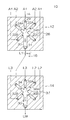
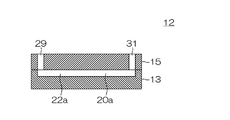
図1は、本実施形態のマイクロデバイス10の一例を示す平面図である。図2は、図1のマイクロデバイス10のa−a’線断面図である。
FIG. 1 is a plan view showing an example of the
図1に示すように、マイクロデバイス10は、主に、溶解液L1(原料溶液)を調製する調製部12と、該調製した溶解液L1と貧溶媒L2とを混合させて微粒子を生成する微粒子生成部14と、調製部12で調製した溶解液L1を微粒子生成部14に供給する連結管16と、より構成される。
As shown in FIG. 1, the
調製部12は、基板13の表面に、1本の混合溝20aと、該混合溝20aから放射状に分岐した5本の導入溝22a、22b、22c、24a、24bと、が形成されている。そして、図2に示すように、基板13上に蓋板15が被せられて一体化されることにより、1本の混合流路20と、該混合流路20から放射状に分岐した5本の導入流路22A、22B、22C、24A、24Bと、が形成される。
The
蓋板15には、混合溝20Aの出口側端部と導入溝22aの入口側端部に対向する位置に、厚み方向に貫通する孔29、31が形成されている。孔29は、アルカリ剤溶液A1を導入する孔であり、孔31は調製した溶解液L1を回収する孔である。その他の導入流路や液を導入又は回収する孔についても、同様に形成される。
The
導入流路22A、22B、22Cは、有機顔料を良溶媒に溶解させるためのアルカリ剤溶液A1を導入する流路であり、周方向に互いに等間隔となるように設けられている。導入流路24A、24Bは、有機顔料を良溶媒に溶解させたスラリー溶液A2を導入する流路であり、導入流路22A、22B或いは導入流路22B、22Cの間に周方向に等間隔に設けられている。即ち、混合流路20の反対側には第1の導入流路22Aが設けられ、該第1の導入流路22Aを挟んだ左右に、第1及び第2の導入流路24A、24BがV字状に配置される。さらに、混合流路20を挟んだ左右に、第2及び第3の導入流路22B、22Cが逆V字状に配設される。
The
混合流路20は、その入口部26が5本の導入流路と連通しており、導入流路22A、22B、22Cより導入したアルカリ剤溶液A1と導入流路24A、24Bより導入したスラリー溶液A2とを混合して、溶解液L1を調製する。
The mixing
導入流路22A、22B、22Cの流路幅は、特に限定はなく、例えば等価直径が1mm以下程度である。導入流路24A、24Bの流路幅は、有機顔料を良溶媒と混合させたスラリー溶液A2を詰まらせないように流すことができる大きさに設定される。例えば、スラリー溶液A2の粘度は20cP以下であることが好ましく、5cP以下であることが一層好ましい。粘度が20cP以下である場合、導入流路24A、24Bの流路幅(直径)は0.5mm〜6mmの範囲であることが好ましく、0.5mm〜2mmの範囲が一層好ましく、1mm〜2mmの範囲が特に好ましい。
The channel width of the
混合流路20の流路幅は、等価直径で0.5mm以上6mm以下、より好ましくは1mm以上6mm以下、特に好ましくは2mm以上6mm以下とすることができる。混合流路20の流路幅は、等価直径1mm以上の場合、遷移領域或いは乱流領域となるような流れ、即ちレイノルズ数Reが2000以上となるように設定されることが好ましい。
The channel width of the mixing
等価直径(equivalent diameter)は、相当(直)径とも呼ばれ、機械工学の分野で用いられる用語である。任意断面形状の配管(本発明では流路)に対し等価な円管を想定するとき、その等価円管の直径を等価直径という。等価直径(deq)は、A:配管の断面積、p:配管のぬれぶち長さ(周長)を用いて、deq=4A/pと定義される。円管に適用した場合、この等価直径は円管直径に一致する。等価直径は等価円管のデータを基に、その配管の流動あるいは熱伝達特性を推定するのに用いられ、現象の空間的スケール(代表的長さ)を表す。等価直径は、一辺aの正四角形管ではdeq=4a2/4a=a、一辺aの正三角形管では、deq=a/√3、流路高さhの平行平板間の流れではdeq=2h、となる(例えば、(社)日本機械学会編「機械工学事典」1997年、丸善(株)参照)。 Equivalent diameter, also called equivalent (straight) diameter, is a term used in the field of mechanical engineering. When an equivalent circular pipe is assumed for a pipe having an arbitrary cross-sectional shape (a flow path in the present invention), the diameter of the equivalent circular pipe is referred to as an equivalent diameter. The equivalent diameter (deq) is defined as deq = 4 A / p, using A: cross-sectional area of the pipe and p: wet wetting length (circumferential length) of the pipe. When applied to a circular tube, this equivalent diameter corresponds to the circular tube diameter. The equivalent diameter is used to estimate the flow or heat transfer characteristics of the pipe based on the data of the equivalent circular pipe, and represents the spatial scale (typical length) of the phenomenon. The equivalent diameter is deq = 4a 2 / 4a = a for a regular square tube with one side a, deq = a / √3 for a regular triangle tube with one side a, and deq = 2h for a flow between parallel plates with a channel height h. (For example, see "Mechanical Engineering Encyclopedia" edited by the Japan Society of Mechanical Engineers, 1997, Maruzen Co., Ltd.).
混合流路20の長さLは、特に制限はないが、アルカリ剤溶液A1とスラリー溶液A2とを充分に混合するのに適した長さに設定される。また、混合流路20において、混合に関わる入口部26(第1合流領域)の流路幅は最大でも30mmを超えないことが好ましい。
The length L of the mixing
各流路の断面形状は、本実施形態の半円形に特に限定されず、例えば矩形、円形、V字型、楕円形、台形等であってもよい。 The cross-sectional shape of each flow path is not particularly limited to the semicircular shape of the present embodiment, and may be, for example, rectangular, circular, V-shaped, elliptical, trapezoidal, or the like.
導入流路への各液の供給は、不図示の溶液供給手段(送液ポンプ等)が使用される。 For supplying each liquid to the introduction flow path, solution supply means (liquid feed pump or the like) (not shown) is used.
微粒子生成部14は、上記調製部12とほぼ同様に、1本の混合流路30と、該混合流路30から放射状に分岐した5本の導入流路32A、32B、34、36A、36B(供給流路)と、が設けられている。
In the same manner as the
導入流路32A、32Bは、分散剤溶液L3を導入する流路である。導入流路34は、溶解液L1を導入する流路である。導入流路36A、36Bは貧溶媒L2を導入する流路である。
The introduction channels 32A and 32B are channels for introducing the dispersant solution L3. The
混合流路30は、その入口部37(合流領域)が5本の導入流路と連通しており、導入流路32A、32Bから導入する分散剤溶液L3と、導入流路34から導入する溶解液L1と、導入流路36A、36Bから導入する貧溶媒L2と、を混合して有機顔料微粒子を生成する。
The mixing
混合流路30の流路幅は、混合流路20と同様とすることができる。また、5本の導入流路32A、32B、34、36A、36Bは、その流路幅の合計が混合流路30の流路幅よりも大きくなるように形成されることが好ましい。これにより、5本の導入流路32A、32B、34、36A、36Bを流れて混合流路30の入口部37に合流される5つの流れは、お互い同士で縮流し合って先細形状の流れとなる。そして、溶解液L1、貧溶媒L2、及び分散剤溶液L3の薄層が積層された複層流Lを形成しながら混合し、有機顔料微粒子を生成する。
The channel width of the mixing
混合流路30の長さは、混合流路20と同様に、有機顔料微粒子を生成するのに十分な長さに設定される。
Similar to the mixing
連結管16は、調製部12の混合流路20と微粒子生成部14の導入流路34A、34Bとを連通する、例えばシリコンチューブ、金属管等である。なお、調製部12と微粒子生成部14が同一の基板上に形成される場合、調製部12の混合流路20と微粒子生成部14の導入流路34A、34Bとを連通する流路を形成してもよい。
The
連結管16の流路径は、調製部12において生成される溶解液L1の流量に応じて設定される。なお、連結管16の途中に流量調整ポンプを設置し、溶解液L1の流量を調整できるように構成してもよい。
The flow path diameter of the connecting
マイクロデバイス10の装置本体は、マイクロドリル加工、マイクロ放電加工、めっきを利用したモールディング、射出成形、ドライエッチング、ウエットエッチング、及びホットエンボス加工等の精密加工技術を利用して製作することができる。
The apparatus main body of the
マイクロデバイス10の材質としては、特に限定されるものではなく、使用する各種溶液に対する耐食性を有し、上述の加工技術を適用できるものであればよい。具体的には、金属材料(鉄、アルミニウム、ステンレススチール、チタン、各種の金属等)、樹脂材料(アクリル樹脂、PDMS等)、ガラス(シリコン、パイレックス(登録商標)、石英ガラス等)や、石英ガラスやパイレックス(登録商標)ガラスにパリレン(パラキシレン蒸着)処理を行ったもの、フッ素系又は炭化水素系のシランカップリング処理を行ったものを好適に使用できる。
The material of the
また、必要に応じてマイクロデバイス10の装置本体を加熱する加熱手段(図示せず)が設けられる。このような加熱手段としては、金属抵抗線やPolysilicon等のヒータ構造を装置本体に作り込む方法等がある。金属抵抗線やPolysilicon等のヒータ構造の場合、加熱についてはこれを使用し、冷却については自然冷却でサーマルサイクルを行うことで温度を制御する。この場合の温度のセンシングについては、金属抵抗線の場合には同じ抵抗線をもう一つ作り込んでおき、その抵抗値の変化に基づいて温度検出を行い、Polysiliconの場合には、熱電対を用いて温度検出を行う方法が一般的に採用されている。また、ペルチェ素子を用いた温度制御機能を装置本体に組み込んでもよい。
Moreover, a heating means (not shown) for heating the apparatus main body of the
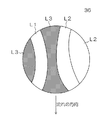
次に、マイクロデバイス10の作用について図1及び図3を参照しながら説明する。図3は、混合流路30の入口部37における各液の流れを説明する模式図である。
Next, the operation of the
あらかじめ、有機顔料と良溶媒を不図示の攪拌タンク内で混合し、スラリー溶液A2を調製しておく。このスラリー溶液A2の粘度は約20cpである。 In advance, an organic pigment and a good solvent are mixed in a stirring tank (not shown) to prepare a slurry solution A2. The viscosity of this slurry solution A2 is about 20 cp.
次いで、調製部12において、アルカリ剤溶液A1と上記スラリー溶液A2とを各導入流路を通じて混合流路20の入口部26で合流させ、混合させる。これにより、有機顔料をアルカリ剤により良溶媒に溶解させた溶解液L1を調製することができる。なお、混合流路20における溶解液L1の流れは、層流でも乱流でもよい。
Next, in the
この調製した溶解液L1を、連結管16を介して連続的に微粒子生成部14の導入流路34に供給する。一方、貧溶媒L2を不図示の供給手段により導入流路36A、36Bから供給し、分散剤溶液L3を導入流路32A、32Bから供給する。そして、混合流路30の入口部(合流部)37(において、溶解液L1と貧溶媒L2と分散剤溶液L3を合流させる。このとき、図3に示すように、左側から分散剤溶液L3、溶解液L1、分散剤溶液L3、貧溶媒L2の薄層が積層された複層流Lを形成する。これにより、溶解液L1、貧溶媒L2、及び分散剤溶液L3とを短時間且つ高効率で混合させ、有機顔料微粒子を析出、生成させる。
The prepared solution L1 is continuously supplied to the
このように、微粒子生成部14において、分散剤溶液L3を介して溶解液L1と貧溶媒L2とを瞬時混合することができる。このため、溶解液L1と貧溶媒L2とを混合することにより析出した微粒子を、分散剤と瞬時に混合することで微粒子同士の凝集を抑制できる。
Thus, in the fine particle production |
また、分散剤溶液L3を溶解液L1、貧溶媒L2とは別に供給するようにしたので、分散剤の水溶性、非水溶性を問わず、混合することができる。したがって、非水溶性の分散剤でも、溶解液L1に溶解させる必要がないので、分散剤が溶解剤によって分解されるのを抑制できる。 In addition, since the dispersant solution L3 is supplied separately from the solution L1 and the poor solvent L2, it can be mixed regardless of whether the dispersant is water-soluble or water-insoluble. Therefore, since it is not necessary to dissolve the water-insoluble dispersant in the solution L1, it is possible to prevent the dispersant from being decomposed by the solvent.
なお、混合流路30の入口部37に供給する複層流L(溶解液L1+貧溶媒L2)の総流量は、混合流路30の入口部37において溶解液L1と貧溶媒L2とが合流してから混合流路30を出るまでの滞在時間が10msec以下になるよう設定されることが好ましい。複層流Lの総流量を調整するには、上記した各種溶液の供給手段を制御するとよい。
The total flow rate of the multi-layer flow L (dissolved liquid L1 + poor solvent L2) supplied to the
本実施形態では、調製部12、微粒子生成部14において、それぞれ5本の導入流路を形成する例で説明したが、これに限定されず、各溶液につき1本以上の任意の数だけ導入流路を形成することができる。また、導入流路の配置態様についても、図1に限定されず、種々の態様を採ることができる。例えば、図1において、5本の導入流路のうち左側から2本を溶解液L1の導入流路とし、中央の1本を分散剤溶液L3の導入流路とし、右側の2本を貧溶媒L2の導入流路としてもよい。
In the present embodiment, the
また、調製部12及び微粒子生成部14において、各導入流路の合流部周辺の流路幅を小さくしてもよい。これにより、各液が合流・衝突する際の線速度を大きくすることができ、混合性能を一層高めることができる。
Moreover, in the
なお、調製部12及び微粒子生成部14において、種類の異なる溶液が交互に隣り合うように導入流路を配置する例を示したが、これに限定されず、任意に配置することができる。
In addition, in the
次に、第2の実施形態のマイクロデバイス40について説明する。
Next, the
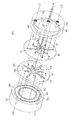
図4は、本実施形態のマイクロデバイス40の一例を示す分解斜視図である。
FIG. 4 is an exploded perspective view showing an example of the
同図に示すように、マイクロデバイス40は、主に、それぞれが円柱状体の供給要素42、合流要素44、混合要素46、及び排出要素48とより構成されている。マイクロデバイス40を構成する際は、これらの要素が円柱状となるように一体に締結して組み立てる。この組み立てには、例えば、各要素の周辺部に円柱を貫通する孔(不図示)を等間隔に設けてボルト/ナットでこれらの要素を一体に締結すればよい。
As shown in the figure, the
供給要素42の合流要素44に対向する面には、断面が矩形の環状チャンネル49および50が同心状に形成されている。図示した態様では、供給要素42をその厚さ(または高さ)方向に貫通してそれぞれの環状チャンネルに到る孔52、54が形成されている。
On the surface of the
合流要素44は、その厚さ方向に貫通する孔56が形成されている。この孔56は、マイクロデバイスを構成するために要素を締結した場合、供給要素42に対向する合流要素44の面に位置する孔56の端部が環状チャンネル49に開口するようになっている。図示した態様では、孔56は4つ形成され、これらが環状チャンネル49の周方向で等間隔に配置されている。
The
合流要素44には、孔56と同様に孔58が貫通して形成されている。孔58も、孔56と同様に、環状チャンネル50に開口するように形成されている。図示した態様では、孔58も環状チャンネル50の周方向で等間隔に配置され、かつ、孔56と孔58が交互に位置するように配置されている。
A hole 58 is formed through the
合流要素44の混合要素46に対向する面62には、マイクロチャンネル64、66が形成されている。このマイクロチャンネル64、66の一端は、孔56、58の開口部であり、他方の端部は、面62の中心68であり、全てのマイクロチャンネルはこの中心68に向かって孔から延在し、中心で合流している。マイクロチャンネルの断面は、例えば矩形であってよい。
Microchannels 64 and 66 are formed on the
混合要素46は、その中心に厚み方向に貫通する孔70が形成されている。また、混合要素46の排出要素48に対向する面には、中心の孔70から放射状に4本ずつ分岐する分岐チャンネル72、74がそれぞれ形成されている。分岐チャンネル72の端部は、排出要素48の混合要素46に対向する面に設けた環状チャンネル76と連通している。分岐チャンネル74の端部は、排出要素48の混合要素46に対向する面に設けられた環状チャンネル78と連通している。
The mixing
排出要素48は、その中心を通過して厚さ方向に貫通する孔80と、混合要素46に対向する面に形成された環状チャンネル76に連通し、貧溶媒L2を供給する孔82と、環状チャンネル78に連通し、分散剤溶液L3を供給する孔84と、がそれぞれ形成されている。孔80は、一端にて混合要素46の中心にある孔70に開口し、他端にてマイクロデバイスの外部に開口している。
The
本実施形態において、混合要素46に形成された孔70は、アルカリ剤溶液A1とスラリー溶液A2とを混合した後、溶解液L1として供給する機能を有する。同様に、排出要素48に形成された孔80は、溶解液L1と貧溶媒L2とを混合して微粒子を生成し、微粒子分散液LMとして供給する機能を有する。
In the present embodiment, the
各孔70、80の流路径は、上記第1の実施形態と同様に、等価直径が0.5mm以上6mm以下、より好ましくは1mm以上6mm以下、特に好ましくは2mm以上6mm以下とすることができる。各孔70、80の長さは、各液の混合に十分な長さに設定されればよく、混合要素46、排出要素48の厚さを変えることで調節できる。
As in the first embodiment, the channel diameter of each of the
このような構成とすることにより、孔52及び54の端部にてマイクロデバイスの外部から供給されるアルカリ剤溶液A1、スラリー溶液A2は、それぞれ孔52及び54を経由して環状チャンネル49及び50に流入する。
With such a configuration, the alkaline agent solution A1 and the slurry solution A2 supplied from the outside of the microdevice at the ends of the
環状チャンネル49に流入したアルカリ剤溶液A1は、該チャンネルと連通する孔56を経由してマイクロチャンネル64に入る。また、環状チャンネル50と孔58が連通し、環状チャンネル50に流入したスラリー溶液A2は、孔58を経由してマイクロチャンネル66に入る。そして、アルカリ剤溶液A1、スラリー溶液A2は、合流領域において4つに分割され、それぞれマイクロチャンネル64及び66に流入し、その後、中心68に向かって流れる。
The alkaline agent solution A1 flowing into the
そして、マイクロチャンネル64の中心軸とマイクチャンネル66の中心軸は、中心68にて交差する。これにより、アルカリ剤溶液A1とスラリー溶液A2が中心68で合流してから混合要素46の中心80に至るまでの間に、溶解液L1が調製される。
The central axis of the
一方、排出要素48の孔82から貧溶媒L2が供給され、分岐チャンネル72を流れて中心70に向かって流れる。貧溶媒L2は、環状チャンネル76から一辺が50μmの正方形断面を有する4本の分岐チャンネル72に分岐して流れる。これらの分岐チャンネル72は、混合チャンネルとして機能する孔70の端部に向かって(図示した態様では、混合要素46の中心部に向かって)流れる。一方、分散剤溶液L3は、環状チャンネル78から4本の分岐チャンネル74に分岐して流れ、孔70の端部に向かって流れる。
On the other hand, the poor solvent L 2 is supplied from the
これにより、排出チャンネルを流れる溶解液L1を包み込むように貧溶媒L2及び分散剤溶液L3が流れる過程において、溶解液L1と貧溶媒L2、及び分散剤溶液L3とが混合される。これにより、有機顔料微粒子を生成し、該有機顔料微粒子の分散液LMとしてマイクロデバイスから排出される。尚、混合要素46の中心部は、合流要素44の中心部に隣接しているので、中心部は実質的に合流領域として機能する。
Thereby, in the process in which the poor solvent L2 and the dispersant solution L3 flow so as to wrap the dissolved solution L1 flowing through the discharge channel, the dissolved solution L1, the poor solvent L2, and the dispersant solution L3 are mixed. Thereby, organic pigment fine particles are generated and discharged from the microdevice as a dispersion LM of the organic pigment fine particles. Since the central portion of the mixing
これにより、平均粒子径が100nm以下、好ましくは40nm以下の有機顔料微粒子を単分散性よく製造できる。 Thereby, organic pigment fine particles having an average particle diameter of 100 nm or less, preferably 40 nm or less can be produced with good monodispersity.
以上説明したように、本発明に係る微粒子の製造方法及び装置を採用することにより、溶解助剤を含有する溶解液L1と分散剤溶液L3とを、別々のチャンネルをそれぞれ流して孔70で合流させる。このように、溶解液L1と分散剤溶液L3とを微粒子生成反応を行う直前まで混合しなくてよいため、分散剤が溶解助剤によって分解されるのを抑制できる。また、通常、非水溶性の分散剤でも、溶解液L1に混合しておく必要がないため、有効に使用できる。
As described above, by employing the method and apparatus for producing fine particles according to the present invention, the dissolving liquid L1 and the dispersing agent solution L3 containing the solubilizing agent are respectively flowed through separate channels and merged in the
なお、上記第2の実施形態では、合流要素44や混合要素46において各液の流れをそれぞれ4つに分割する例を示したが、これに限定されず、任意に設定できる。
In the second embodiment, the example in which the flow of each liquid is divided into four in the merging
また、上記各実施形態において、分散剤溶液を微粒子形成と同時に混合する例を示したが、分散剤溶液L3と溶解液L1を混合した直後、貧溶媒L2と混合してもよい。 Moreover, in each said embodiment, although the example which mixes a dispersing agent solution simultaneously with microparticle formation was shown, you may mix with the poor solvent L2 immediately after mixing the dispersing agent solution L3 and the solution L1.
次に、本実施形態に使用される各種材料について説明する。 Next, various materials used in this embodiment will be described.
本実施形態に用いられる有機顔料は、色相的に限定されるものではなく、マゼンタ顔料、イエロー顔料、またはシアン顔料であることができる。詳しくは、ペリレン、ペリノン、キナクリドン、キナクリドンキノン、アントラキノン、アントアントロン、ベンズイミダゾロン、ジスアゾ縮合、ジスアゾ、アゾ、インダントロン、フタロシアニン、トリアリールカルボニウム、ジオキサジン、アミノアントラキノン、ジケトピロロピロール、チオインジゴ、イソインドリン、イソインドリノン、ピラントロンまたはイソビオラントロン系顔料またはそれらの混合物などのマゼンタ顔料、イエロー顔料、またはシアン顔料である。更に詳しくは、例えば、C.I.ピグメントレッド190(C.I.番号71140)、C.I.ピグメントレッド224(C.I.番号71127)、C.I.ピグメントバイオレット29(C.I.番号71129)等のペリレン系顔料、C.I.ピグメントオレンジ43(C.I.番号71105)、もしくはC.I.ピグメントレッド194(C.I.番号71100)等のペリノン系顔料、C.I.ピグメントバイオレット19(C.I.番号73900)、C.I.ピグメントバイオレット42、C.I.ピグメントレッド122(C.I.番号73915)、C.I.ピグメントレッド192、C.I.ピグメントレッド202(C.I.番号73907)、C.I.ピグメントレッド207(C.I.番号73900、73906)、もしくはC.I.ピグメントレッド209(C.I.番号73905)のキナクリドン系顔料、C.I.ピグメントレッド206(C.I.番号73900/73920)、C.I.ピグメントオレンジ48(C.I.番号73900/73920)、もしくはC.I.ピグメントオレンジ49(C.I.番号73900/73920)等のキナクリドンキノン系顔料、C.I.ピグメントイエロー147(C.I.番号60645)等のアントラキノン系顔料、C.I.ピグメントレッド168(C.I.番号59300)等のアントアントロン系顔料、C.I.ピグメントブラウン25(C.I.番号12510)、C.I.ピグメントバイオレット32(C.I.番号12517)、C.I.ピグメントイエロー180(C.I.番号21290)、C.I.ピグメントイエロー181(C.I.番号11777)、C.I.ピグメントオレンジ62(C.I.番号11775)、もしくはC.I.ピグメントレッド185(C.I.番号12516)等のベンズイミダゾロン系顔料、C.I.ピグメントイエロー93(C.I.番号20710)、C.I.ピグメントイエロー94(C.I.番号20038)、C.I.ピグメントイエロー95(C.I.番号20034)、C.I.ピグメントイエロー128(C.I.番号20037)、C.I.ピグメントイエロー166(C.I.番号20035)、C.I.ピグメントオレンジ34(C.I.番号21115)、C.I.ピグメントオレンジ13(C.I.番号21110)、C.I.ピグメントオレンジ31(C.I.番号20050)、C.I.ピグメントレッド144(C.I.番号20735)、C.I.ピグメントレッド166(C.I.番号20730)、C.I.ピグメントレッド220(C.I.番号20055)、C.I.ピグメントレッド221(C.I.番号20065)、C.I.ピグメントレッド242(C.I.番号20067)、C.I.ピグメントレッド248、C.I.ピグメントレッド262、もしくはC.I.ピグメントブラウン23(C.I.番号20060)等のジスアゾ縮合系顔料、C.I.ピグメントイエロー13(C.I.番号21100)、C.I.ピグメントイエロー83(C.I.番号21108)、もしくはC.I.ピグメントイエロー188(C.I.番号21094)等のジスアゾ系顔料、C.I.ピグメントレッド187(C.I.番号12486)、C.I.ピグメントレッド170(C.I.番号12475)、C.I.ピグメントイエロー74(C.I.番号11714)、C.I.ピグメントレッド48(C.I.番号15865)、C.I.ピグメントレッド53(C.I.番号15585)、C.I.ピグメントオレンジ64(C.I.番号12760)、もしくはC.I.ピグメントレッド247(C.I.番号15915)等のアゾ系顔料、C.I.ピグメントブルー60(C.I.番号69800)等のインダントロン系顔料、C.I.ピグメントグリーン7(C.I.番号74260)、C.I.ピグメントグリーン36(C.I.番号74265)、ピグメントグリーン37(C.I.番号74255)、ピグメントブルー16(C.I.番号74100)、C.I.ピグメントブルー75(C.I.番号74160:2)、もしくは15(C.I.番号74160)等のフタロシアニン系顔料、C.I.ピグメントブルー56(C.I.番号42800)、もしくはC.I.ピグメントブルー61(C.I.番号42765:1)等のトリアリールカルボニウム系顔料、C.I.ピグメントバイオレット23(C.I.番号51319)、もしくはC.I.ピグメントバイオレット37(C.I.番号51345)等のジオキサジン系顔料、C.I.ピグメントレッド177(C.I.番号65300)等のアミノアントラキノン系顔料、C.I.ピグメントレッド254(C.I.番号56110)、C.I.ピグメントレッド255(C.I.番号561050)、C.I.ピグメントレッド264、C.I.ピグメントレッド272(C.I.番号561150)、C.I.ピグメントオレンジ71、もしくはC.I.ピグメントオレンジ73等のジケトピロロピロール系顔料、C.I.ピグメントレッド88(C.I.番号73312)等のチオインジゴ系顔料、C.I.ピグメントイエロー139(C.I.番号56298)、C.I.ピグメントオレンジ66(C.I.番号48210)等のイソインドリン系顔料、C.I.ピグメントイエロー109(C.I.番号56284)、もしくはC.I.ピグメントオレンジ61(C.I.番号11295)等のイソインドリノン系顔料、C.I.ピグメントオレンジ40(C.I.番号59700)、もしくはC.I.ピグメントレッド216(C.I.番号59710)等のピラントロン系顔料、またはC.I.ピグメントバイオレット31(60010)等のイソビオラントロン系顔料である。
The organic pigment used in the present embodiment is not limited in hue, and may be a magenta pigment, a yellow pigment, or a cyan pigment. Specifically, perylene, perinone, quinacridone, quinacridonequinone, anthraquinone, anthanthrone, benzimidazolone, disazo condensation, disazo, azo, indanthrone, phthalocyanine, triarylcarbonium, dioxazine, aminoanthraquinone, diketopyrrolopyrrole, thioindigo, Magenta pigments such as isoindoline, isoindolinone, pyranthrone or isoviolanthrone pigments or mixtures thereof, yellow pigments, or cyan pigments. More specifically, for example, C.I. I. Pigment red 190 (C.I. No. 71140), C.I. I. Pigment red 224 (C.I. No. 71127), C.I. I. Perylene pigments such as CI Pigment Violet 29 (C.I. No. 71129); I. Pigment orange 43 (C.I. No. 71105) or C.I. I. Perinone pigments such as CI Pigment Red 194 (C.I. No. 71100); I. Pigment violet 19 (C.I. No. 73900), C.I. I.
好ましい顔料は、キナクリドン系、ジケトピロロピロール系、ジスアゾ縮合系、アゾ系、またはフタロシアニン系、ジオキサジン系顔料である。 Preferred pigments are quinacridone, diketopyrrolopyrrole, disazo condensation, azo, phthalocyanine, and dioxazine pigments.
本実施の形態で使用する分散剤としては、以下のものを使用することができる。 As the dispersant used in the present embodiment, the following can be used.
アニオン性分散剤(アニオン性界面活性剤)としては、N−アシル−N−アルキルタウリン塩、脂肪酸塩、アルキル硫酸エステル塩、アルキルベンゼンスルホン酸塩、アルキルナフタレンスルホン酸塩、ジアルキルスルホコハク酸塩、アルキルリン酸エステル塩、ナフタレンスルホン酸ホルマリン縮合物、ポリオキシエチレンアルキル硫酸エステル塩等を挙げることができる。なかでも、N−アシル−N−アルキルタウリン塩が好ましい。N−アシル−N−アルキルタウリン塩としては、特開平3−273067号明細書に記載されているものが好ましい。これらアニオン性分散剤は、1種単独であるいは2種以上を組み合わせて用いることができる。 Anionic dispersants (anionic surfactants) include N-acyl-N-alkyl taurine salts, fatty acid salts, alkyl sulfate esters, alkyl benzene sulfonates, alkyl naphthalene sulfonates, dialkyl sulfosuccinates, alkyl phosphorus Examples include acid ester salts, naphthalene sulfonic acid formalin condensate, polyoxyethylene alkyl sulfate ester salts, and the like. Of these, N-acyl-N-alkyltaurine salts are preferred. As the N-acyl-N-alkyl taurine salts, those described in JP-A-3-273067 are preferable. These anionic dispersants can be used alone or in combination of two or more.
カチオン性分散剤(カチオン性界面活性剤)には、四級アンモニウム塩、アルコキシル化ポリアミン、脂肪族アミンポリグリコールエーテル、脂肪族アミン、脂肪族アミンと脂肪族アルコールから誘導されるジアミンおよびポリアミン、脂肪酸から誘導されるイミダゾリンおよびこれらのカチオン性物質の塩が含まれる。これらカチオン性分散剤は、1種単独であるいは2種以上を組み合わせて用いることができる。 Cationic dispersants (cationic surfactants) include quaternary ammonium salts, alkoxylated polyamines, aliphatic amine polyglycol ethers, aliphatic amines, diamines and polyamines derived from aliphatic amines and fatty alcohols, fatty acids And imidazolines derived from these and salts of these cationic substances. These cationic dispersants can be used singly or in combination of two or more.
両イオン性分散剤は、前記アニオン性分散剤が分子内に有するアニオン基部分とカチオン性分散剤が分子内に有するカチオン基部分を共に分子内に有する分散剤である。 The amphoteric dispersant is a dispersant having both an anion group part in the molecule of the anionic dispersant and a cation group part in the molecule of the cationic dispersant.
ノニオン性分散剤(ノニオン性界面活性剤)としては、ポリオキシエチレンアルキルエーテル、ポリオキシエチレンアルキルアリールエーテル、ポリオキシエチレン脂肪酸エステル、ソルビタン脂肪酸エステル、ポリオキシエチレンソルビタン脂肪酸エステル、ポリオキシエチレンアルキルアミン、グリセリン脂肪酸エステルなどを挙げることができる。なかでも、ポリオキシエチレンアルキルアリールエーテルが好ましい。これらノニオン性分散剤は、1種単独であるいは2種以上を組み合わせて用いることができる。 Nonionic dispersants (nonionic surfactants) include polyoxyethylene alkyl ether, polyoxyethylene alkyl aryl ether, polyoxyethylene fatty acid ester, sorbitan fatty acid ester, polyoxyethylene sorbitan fatty acid ester, polyoxyethylene alkylamine, Examples thereof include glycerin fatty acid esters. Of these, polyoxyethylene alkylaryl ether is preferable. These nonionic dispersants can be used singly or in combination of two or more.
有機顔料性分散剤とは、親物質としての有機顔料から誘導され、その親構造を化学修飾することで製造される有機顔料性分散剤と定義する。例えば、糖含有有機顔料分散剤、ピペリジル含有有機顔料分散剤、ナフタレン又はペリレン誘導有機顔料分散剤、メチレン基を介して有機顔料親構造に連結された官能基を有する有機顔料分散剤、ポリマーで化学修飾された有機顔料親構造、スルホン酸基を有する有機顔料分散剤、スルホンアミド基を有する有機顔料分散剤、エーテル基を有する有機顔料分散剤、あるいはカルボン酸基、カルボン酸エステル基またはカルボキサミド基を有する有機顔料分散剤などがある。 The organic pigment dispersant is defined as an organic pigment dispersant which is derived from an organic pigment as a parent substance and is produced by chemically modifying the parent structure. For example, sugar-containing organic pigment dispersants, piperidyl-containing organic pigment dispersants, naphthalene or perylene-derived organic pigment dispersants, organic pigment dispersants having a functional group linked to the organic pigment parent structure via a methylene group, polymer chemistry Modified organic pigment parent structure, organic pigment dispersant having sulfonic acid group, organic pigment dispersant having sulfonamide group, organic pigment dispersant having ether group, or carboxylic acid group, carboxylic ester group or carboxamide group And organic pigment dispersants.
高分子分散剤としては、具体的には、ポリビニルピロリドン、ポリビニルアルコール、ポリビニルメチルエーテル、ポリエチレンオキシド、ポリエチレングリコール、ポリプロピレングリコール、ポリアクリルアミド、ビニルアルコール−酢酸ビニル共重合体、ポリビニルアルコール一部分ホルマール化物、ポリビニルアルコール一部分ブチラール化物、ビニルピロリドン−酢酸ビニル共重合体、ポリエチレンオキシド/プロピレンオキシドブロック共重合体、ポリアクリル酸塩、ポリビニル硫酸塩、ポリ(4−ビニルピリジン)塩、ポリアミド、ポリアリルアミン塩、縮合ナフタレンスルホン酸塩、スチレン−アクリル酸塩共重合物、スチレン−メタクリル酸塩共重合物、アクリル酸エステル−アクリル酸塩共重合物、アクリル酸エステル−メタクリル酸塩共重合物、メタクリル酸エステル−アクリル酸塩共重合物、メタクリル酸エステル―メタクリル酸塩共重合物、スチレン−イタコン酸塩共重合物、イタコン酸エステル−イタコン酸塩共重合物、ビニルナフタレン−アクリル酸塩共重合物、ビニルナフタレン−メタクリル酸塩共重合物、ビニルナフタレン−イタコン酸塩共重合物、セルロース誘導体、澱粉誘導体などが挙げられる。その他、アルギン酸塩、ゼラチン、アルブミン、カゼイン、アラビアゴム、トンガントゴム、リグニンスルホン酸塩などの天然高分子類も使用できる。なかでも、ポリビニルピロリドンが好ましい。これら高分子は、1種単独であるいは2種以上を組み合わせて用いることができる。また、アニオン性分散剤を水性媒体に含有させ、かつノニオン性分散剤および/または高分子分散剤を、有機顔料を溶解した溶液に含有させる態様を挙げることができる。 Specific examples of the polymer dispersant include polyvinyl pyrrolidone, polyvinyl alcohol, polyvinyl methyl ether, polyethylene oxide, polyethylene glycol, polypropylene glycol, polyacrylamide, vinyl alcohol-vinyl acetate copolymer, polyvinyl alcohol partially formalized product, polyvinyl Alcohol partially butyralized, vinyl pyrrolidone-vinyl acetate copolymer, polyethylene oxide / propylene oxide block copolymer, polyacrylate, polyvinyl sulfate, poly (4-vinylpyridine) salt, polyamide, polyallylamine salt, condensed naphthalene Sulfonate, Styrene-acrylate copolymer, Styrene-methacrylate copolymer, Acrylate ester-Acrylate copolymer, Acrylate ester Methacrylate copolymer, methacrylate ester-acrylate copolymer, methacrylate ester-methacrylate copolymer, styrene-itaconate copolymer, itaconate-itaconate copolymer, vinyl Examples thereof include naphthalene-acrylate copolymer, vinyl naphthalene-methacrylate copolymer, vinyl naphthalene-itaconate copolymer, cellulose derivative, starch derivative and the like. In addition, natural polymers such as alginate, gelatin, albumin, casein, gum arabic, tonganto gum and lignin sulfonate can also be used. Of these, polyvinylpyrrolidone is preferable. These polymers can be used alone or in combination of two or more. Further, an embodiment in which an anionic dispersant is contained in an aqueous medium and a nonionic dispersant and / or a polymer dispersant is contained in a solution in which an organic pigment is dissolved can be exemplified.
分散剤の配合量は、有機顔料の均一分散性および保存安定性をより一層向上させるために、有機顔料100質量部に対して0.1〜1000質量部の範囲であることが好ましく、より好ましくは1〜500質量部の範囲であり、更に好ましくは10〜250質量部の範囲である。0.1質量部未満であると有機顔料微粒子の分散安定性の向上が見られない場合がある。 In order to further improve the uniform dispersibility and storage stability of the organic pigment, the blending amount of the dispersant is preferably in the range of 0.1 to 1000 parts by weight, more preferably 100 parts by weight of the organic pigment. Is in the range of 1 to 500 parts by weight, more preferably in the range of 10 to 250 parts by weight. If the amount is less than 0.1 parts by mass, the dispersion stability of the organic pigment fine particles may not be improved.
なお、上記各実施形態で説明した微粒子の製造方法では、有機顔料微粒子を製造する例で説明したが、本発明の微粒子製造方法及び装置は、各種の反応に適用することができる。他の微粒子形成材料としては、二酸化チタン、炭酸カルシウム、酸化銅、酸化アルミニウム、酸化鉄、酸化クロム、バナジン酸ビスマス、ルチル型混合相顔料、ハロゲン化銀、シリカ、及びカーボンブラックなどがあるが、これらに限定されるものではない。 In the fine particle production method described in each of the above embodiments, the organic pigment fine particles are produced. However, the fine particle production method and apparatus of the present invention can be applied to various reactions. Other fine particle forming materials include titanium dioxide, calcium carbonate, copper oxide, aluminum oxide, iron oxide, chromium oxide, bismuth vanadate, rutile mixed phase pigment, silver halide, silica, and carbon black. It is not limited to these.
有機顔料は、アルカリ性又は酸性の水性媒体に均一に溶解されなければならないが、酸性で溶解するかアルカリ性で溶解するかは対象とする顔料がどちらの条件で均一に溶解し易いかで選択される。一般に、分子内にアルカリ性で解離可能な基を有する顔料の場合は、アルカリ性が用いられる。或いは、アルカリ性で解離する基が存在せず、プロトンが付加しやすい窒素原子を分子内に多く有するときは酸性が用いられる。例えば、キナクリドン、ジケトピロロピロール、ジスアゾ縮合系顔料はアルカリ性で、フタロシアニン系顔料は酸性で溶解される。 The organic pigment must be uniformly dissolved in an alkaline or acidic aqueous medium, but whether it dissolves in acid or alkaline is selected depending on which conditions the target pigment is easily dissolved . Generally, in the case of a pigment having an alkaline and dissociable group in the molecule, alkalinity is used. Alternatively, when there is no alkaline dissociating group and there are many nitrogen atoms in the molecule to which protons can easily be added, acidity is used. For example, quinacridone, diketopyrrolopyrrole, and disazo condensation pigments are alkaline, and phthalocyanine pigments are acidic.
アルカリ性で溶解させる場合に用いられる塩基は、水酸化リチウム、水酸化ナトリウム、水酸化カリウム、水酸化カルシウム、もしくは水酸化バリウム等の無機塩基、又はトリアルキルアミン、ジアザビシクロウンデセン(DBU)、金属アルコキシドなどの有機塩基であるが、好ましくは無機塩基である。 Bases used for alkaline dissolution are inorganic bases such as lithium hydroxide, sodium hydroxide, potassium hydroxide, calcium hydroxide, or barium hydroxide, or trialkylamine, diazabicycloundecene (DBU), An organic base such as a metal alkoxide is preferable, but an inorganic base is preferable.
使用される塩基の量は、顔料を均一に溶解可能な量であり、特に限定されないが、無機塩基の場合、好ましくは顔料に対して1.0〜30モル当量であり、より好ましくは2.0〜25モル当量であり、さらに好ましくは3〜20モル当量である。有機塩基の場合、好ましくは顔料に対して1.0〜100モル当量であり、より好ましくは5.0〜100モル当量であり、さらに好ましくは20〜100モル当量である。 The amount of the base used is an amount capable of uniformly dissolving the pigment, and is not particularly limited. However, in the case of an inorganic base, it is preferably 1.0 to 30 molar equivalents relative to the pigment, more preferably 2. It is 0-25 molar equivalent, More preferably, it is 3-20 molar equivalent. In the case of an organic base, it is preferably 1.0 to 100 molar equivalents relative to the pigment, more preferably 5.0 to 100 molar equivalents, and even more preferably 20 to 100 molar equivalents.
酸性で溶解させる場合に用いられる酸は、硫酸、塩酸、もしくは燐酸等の無機酸、又は酢酸、トリフルオロ酢酸、シュウ酸、メタンスルホン酸、もしくはトリフルオロメタンスルホン酸などの有機酸であるが、好ましくは無機酸である。特に好ましくは硫酸である。 Acids used for acid dissolution are inorganic acids such as sulfuric acid, hydrochloric acid, or phosphoric acid, or organic acids such as acetic acid, trifluoroacetic acid, oxalic acid, methanesulfonic acid, or trifluoromethanesulfonic acid. Is an inorganic acid. Particularly preferred is sulfuric acid.
使用される酸の量は、顔料を均一に溶解可能な量であり、特に限定されないが、塩基に比べて過剰量用いられる場合が多い。無機酸及び有機酸の場合を問わず、好ましくは顔料に対して3〜500モル当量であり、より好ましくは10〜500モル当量であり、さらに好ましくは30〜200モル当量である。 The amount of the acid used is an amount capable of uniformly dissolving the pigment, and is not particularly limited, but is often used in an excessive amount as compared with the base. Regardless of an inorganic acid or an organic acid, it is preferably 3 to 500 molar equivalents, more preferably 10 to 500 molar equivalents, and further preferably 30 to 200 molar equivalents with respect to the pigment.
本発明は、複数種の溶液を混合或いは反応させる技術に幅広く適用でき、特に、原料溶液が経時的に不安定な場合に好ましく適用できる。また、本実施形態では、貧溶媒、良溶媒を用いて微粒子形成材料の溶解度を変化させることにより微粒子を生成する例を示したが、これに限定されず、例えば、pH変化させることにより微粒子を生成することもできる。また、上記各実施形態では、平面型、積層型のマイクロデバイスについて例示したが、これに限定されず、原料溶液を調製する装置として、同芯状に多重円筒層流を形成する同芯状多重円筒管型マイクロデバイスを用いてもよい。 The present invention can be widely applied to a technique for mixing or reacting a plurality of types of solutions, and particularly preferably when the raw material solution is unstable over time. Further, in the present embodiment, an example in which the fine particles are generated by changing the solubility of the fine particle forming material using a poor solvent and a good solvent is not limited to this. For example, the fine particles are changed by changing pH. It can also be generated. Further, in each of the above embodiments, the planar type and the stacked type micro device are exemplified, but the invention is not limited to this, and as an apparatus for preparing a raw material solution, a concentric multi-layer flow that forms a multi-cylinder laminar flow concentrically A cylindrical tube type micro device may be used.
10、40…マイクロデバイス、12…調製部、14…微粒子生成部、16…連結管、20、30…混合流路、22A、22B、22C…導入流路、24A、24B…導入流路、32A、32B、32C…導入流路、34A、34B…導入流路、42…供給要素、44…合流要素、46…混合要素
DESCRIPTION OF
Claims (8)
前記溶解液、前記他の溶液、及び前記微粒子を分散させるための分散剤溶液をそれぞれ独立した供給流路を介して1の合流領域で合流させることにより微粒子を生成することを特徴とする微粒子の製造方法。 A method for producing fine particles by mixing a solution obtained by dissolving a fine particle forming material in a solvent with a dissolution aid and another solution that changes the solubility of the fine particle forming material,
The fine particles are produced by joining the dissolving solution, the other solution, and the dispersant solution for dispersing the fine particles in one merge region through independent supply channels. Production method.
溶媒中に微粒子形成材料及び該微粒子形成材料を溶解させる溶解助剤を含有する溶解液と、該微粒子形成材料の溶解度を変化させる他の溶液と、生成した微粒子を分散させるための分散剤溶液の各溶液とをそれぞれ独立して供給する複数の供給流路と、
前記複数の供給流路と連通し、前記溶解液、前記他の溶液及び前記分散剤溶液を合流させる1の合流領域と、
を備えたことを特徴とする微粒子の製造装置。 An apparatus for producing fine particles,
A solution containing a fine particle forming material and a dissolution aid for dissolving the fine particle forming material in a solvent, another solution for changing the solubility of the fine particle forming material, and a dispersant solution for dispersing the produced fine particles. A plurality of supply channels for supplying each solution independently;
One merge region that communicates with the plurality of supply channels and merges the solution, the other solution, and the dispersant solution;
An apparatus for producing fine particles, comprising:
Priority Applications (2)
| Application Number | Priority Date | Filing Date | Title |
|---|---|---|---|
| JP2008090492A JP5322475B2 (en) | 2008-03-31 | 2008-03-31 | Method and apparatus for producing fine particles |
| US12/414,225 US20090241801A1 (en) | 2008-03-31 | 2009-03-30 | Method and apparatus for producing fine particles |
Applications Claiming Priority (1)
| Application Number | Priority Date | Filing Date | Title |
|---|---|---|---|
| JP2008090492A JP5322475B2 (en) | 2008-03-31 | 2008-03-31 | Method and apparatus for producing fine particles |
Publications (2)
| Publication Number | Publication Date |
|---|---|
| JP2009242570A true JP2009242570A (en) | 2009-10-22 |
| JP5322475B2 JP5322475B2 (en) | 2013-10-23 |
Family
ID=41115178
Family Applications (1)
| Application Number | Title | Priority Date | Filing Date |
|---|---|---|---|
| JP2008090492A Expired - Fee Related JP5322475B2 (en) | 2008-03-31 | 2008-03-31 | Method and apparatus for producing fine particles |
Country Status (2)
| Country | Link |
|---|---|
| US (1) | US20090241801A1 (en) |
| JP (1) | JP5322475B2 (en) |
Families Citing this family (2)
| Publication number | Priority date | Publication date | Assignee | Title |
|---|---|---|---|---|
| KR101507999B1 (en) * | 2011-08-03 | 2015-04-07 | 인하대학교 산학협력단 | The preparation of monodisperse spheric particles via solution re-crystallization with RITP technique |
| WO2015184302A1 (en) | 2014-05-30 | 2015-12-03 | Microfluidics Corporation | Interaction chambers with reduced cavitation |
Citations (6)
| Publication number | Priority date | Publication date | Assignee | Title |
|---|---|---|---|---|
| JP2006263538A (en) * | 2005-03-23 | 2006-10-05 | Fuji Photo Film Co Ltd | Organic microparticle, method for producing dispersion of the microparticle, organic microparticle obtained thereby, and dispersion of the microparticle |
| JP2007014936A (en) * | 2005-01-07 | 2007-01-25 | Kri Inc | Method for producing microstructure and microreacter |
| JP2007090306A (en) * | 2005-09-30 | 2007-04-12 | Kri Inc | Method for manufacturing microstructure and microreactor |
| JP2007197490A (en) * | 2006-01-23 | 2007-08-09 | Fujifilm Corp | Method for producing azo pigment fine particles, azo pigment fine particles obtained thereby, colored photosensitive resin composition and photosensitive resin transfer material containing the same, and color filter and liquid crystal display device using them |
| JP2007231175A (en) * | 2006-03-01 | 2007-09-13 | Fujifilm Corp | Method for producing quinacridone pigment fine particles, quinacridone pigment fine particles obtained thereby, colored photosensitive resin composition and photosensitive resin transfer material containing the same, and color filter and liquid crystal display device using the same |
| JP2009132837A (en) * | 2007-11-30 | 2009-06-18 | Canon Inc | Method for producing pigment dispersion |
Family Cites Families (4)
| Publication number | Priority date | Publication date | Assignee | Title |
|---|---|---|---|---|
| DE10028104A1 (en) * | 2000-06-07 | 2001-12-13 | Clariant Gmbh | Process for the preparation of diketopyrrologyrrole pigments |
| DE10049201A1 (en) * | 2000-10-05 | 2002-04-11 | Clariant Gmbh | Process for the fine distribution of organic pigments by precipitation |
| JP4612788B2 (en) * | 2002-05-21 | 2011-01-12 | キヤノン株式会社 | Dispersion of particles containing water-insoluble colorant and method for producing the same |
| JP2005077219A (en) * | 2003-08-29 | 2005-03-24 | Fuji Photo Film Co Ltd | Method for promoting fluid mixing reaction of microdevice and microdevice |
-
2008
- 2008-03-31 JP JP2008090492A patent/JP5322475B2/en not_active Expired - Fee Related
-
2009
- 2009-03-30 US US12/414,225 patent/US20090241801A1/en not_active Abandoned
Patent Citations (6)
| Publication number | Priority date | Publication date | Assignee | Title |
|---|---|---|---|---|
| JP2007014936A (en) * | 2005-01-07 | 2007-01-25 | Kri Inc | Method for producing microstructure and microreacter |
| JP2006263538A (en) * | 2005-03-23 | 2006-10-05 | Fuji Photo Film Co Ltd | Organic microparticle, method for producing dispersion of the microparticle, organic microparticle obtained thereby, and dispersion of the microparticle |
| JP2007090306A (en) * | 2005-09-30 | 2007-04-12 | Kri Inc | Method for manufacturing microstructure and microreactor |
| JP2007197490A (en) * | 2006-01-23 | 2007-08-09 | Fujifilm Corp | Method for producing azo pigment fine particles, azo pigment fine particles obtained thereby, colored photosensitive resin composition and photosensitive resin transfer material containing the same, and color filter and liquid crystal display device using them |
| JP2007231175A (en) * | 2006-03-01 | 2007-09-13 | Fujifilm Corp | Method for producing quinacridone pigment fine particles, quinacridone pigment fine particles obtained thereby, colored photosensitive resin composition and photosensitive resin transfer material containing the same, and color filter and liquid crystal display device using the same |
| JP2009132837A (en) * | 2007-11-30 | 2009-06-18 | Canon Inc | Method for producing pigment dispersion |
Also Published As
| Publication number | Publication date |
|---|---|
| US20090241801A1 (en) | 2009-10-01 |
| JP5322475B2 (en) | 2013-10-23 |
Similar Documents
| Publication | Publication Date | Title |
|---|---|---|
| JP5001529B2 (en) | Method for producing organic pigment fine particles | |
| JP4587757B2 (en) | Organic pigment fine particles and method for producing the same | |
| US7503972B2 (en) | Organic pigment fine particles and method of producing same | |
| EP2103345B1 (en) | Method for mixing liquids and liquid mixing apparatus | |
| JP2007039643A (en) | Method for producing organic pigment dispersion, and organic pigment fine particles obtained thereby | |
| JP5264141B2 (en) | Method for producing pigment dispersion | |
| JP5322475B2 (en) | Method and apparatus for producing fine particles | |
| JP4896418B2 (en) | Method for producing organic fine particles and dispersion thereof, and organic fine particles obtained thereby and dispersion thereof | |
| JP5419251B2 (en) | Fine particle production method and fine particle production apparatus | |
| JP2008201914A (en) | Organic pigment mixed fine particle dispersion, solid thereof, and production method thereof | |
| JP2009242569A (en) | Method and apparatus for producing fine particles | |
| JP2008093564A (en) | Mixing apparatus and color material dispersion manufacturing apparatus | |
| JP2009227841A (en) | Method and apparatus for producing fine particles | |
| JP2011202081A (en) | Dispersion of particulate compound organic pigment, and method for producing the pigment | |
| JP2010077370A (en) | Manufacturing method of fine particle | |
| JP4606178B2 (en) | Method for producing organic pigment fine particles | |
| JP2006193655A (en) | Organic pigment fine particle and method for producing the same | |
| JP2010077365A (en) | Manufacturing method of fine particle | |
| JP2006281775A (en) | Liquid droplet ejecting head and image forming apparatus | |
| JP5336111B2 (en) | Method for producing organic pigment fine particle dispersion, ink for inkjet recording and organic paint using organic pigment fine particles obtained thereby | |
| US8263771B2 (en) | Method for manufacturing dispersion of quinoline derivative | |
| JP2008231269A (en) | Organic pigment fine particles and dispersion thereof, and method for producing organic pigment fine particle dispersion | |
| US20100077936A1 (en) | Method for producing particulates | |
| JP2010065128A (en) | Production method of producing fine-particles aggregate of organic pigment, method of producing dispersion of the aggregate, and ink for inkjet recording using the same | |
| JP2006281774A (en) | Liquid ejector and control method of droplet striking |
Legal Events
| Date | Code | Title | Description |
|---|---|---|---|
| A621 | Written request for application examination |
Free format text: JAPANESE INTERMEDIATE CODE: A621 Effective date: 20100707 |
|
| A131 | Notification of reasons for refusal |
Free format text: JAPANESE INTERMEDIATE CODE: A131 Effective date: 20130110 |
|
| A521 | Request for written amendment filed |
Free format text: JAPANESE INTERMEDIATE CODE: A523 Effective date: 20130305 |
|
| TRDD | Decision of grant or rejection written | ||
| A01 | Written decision to grant a patent or to grant a registration (utility model) |
Free format text: JAPANESE INTERMEDIATE CODE: A01 Effective date: 20130705 |
|
| A61 | First payment of annual fees (during grant procedure) |
Free format text: JAPANESE INTERMEDIATE CODE: A61 Effective date: 20130716 |
|
| R150 | Certificate of patent or registration of utility model |
Ref document number: 5322475 Country of ref document: JP Free format text: JAPANESE INTERMEDIATE CODE: R150 Free format text: JAPANESE INTERMEDIATE CODE: R150 |
|
| R250 | Receipt of annual fees |
Free format text: JAPANESE INTERMEDIATE CODE: R250 |
|
| R250 | Receipt of annual fees |
Free format text: JAPANESE INTERMEDIATE CODE: R250 |
|
| R250 | Receipt of annual fees |
Free format text: JAPANESE INTERMEDIATE CODE: R250 |
|
| R250 | Receipt of annual fees |
Free format text: JAPANESE INTERMEDIATE CODE: R250 |
|
| R250 | Receipt of annual fees |
Free format text: JAPANESE INTERMEDIATE CODE: R250 |
|
| R250 | Receipt of annual fees |
Free format text: JAPANESE INTERMEDIATE CODE: R250 |
|
| LAPS | Cancellation because of no payment of annual fees |