JP2010132995A - Aluminum alloy for piston of engine or compressor, and method for forging piston of engine or compressor - Google Patents
Aluminum alloy for piston of engine or compressor, and method for forging piston of engine or compressor Download PDFInfo
- Publication number
- JP2010132995A JP2010132995A JP2008311975A JP2008311975A JP2010132995A JP 2010132995 A JP2010132995 A JP 2010132995A JP 2008311975 A JP2008311975 A JP 2008311975A JP 2008311975 A JP2008311975 A JP 2008311975A JP 2010132995 A JP2010132995 A JP 2010132995A
- Authority
- JP
- Japan
- Prior art keywords
- range
- aluminum alloy
- weight
- forging
- piston
- Prior art date
- Legal status (The legal status is an assumption and is not a legal conclusion. Google has not performed a legal analysis and makes no representation as to the accuracy of the status listed.)
- Granted
Links
- 229910000838 Al alloy Inorganic materials 0.000 title claims abstract description 109
- 238000005242 forging Methods 0.000 title claims abstract description 62
- 238000000034 method Methods 0.000 title claims abstract description 24
- 239000000956 alloy Substances 0.000 claims abstract description 36
- 229910052742 iron Inorganic materials 0.000 claims abstract description 20
- 229910052759 nickel Inorganic materials 0.000 claims abstract description 19
- 238000001816 cooling Methods 0.000 claims abstract description 18
- 229910052802 copper Inorganic materials 0.000 claims abstract description 18
- 229910052749 magnesium Inorganic materials 0.000 claims abstract description 15
- 229910052710 silicon Inorganic materials 0.000 claims abstract description 15
- 229910052726 zirconium Inorganic materials 0.000 claims abstract description 14
- 229910052748 manganese Inorganic materials 0.000 claims abstract description 13
- 229910052719 titanium Inorganic materials 0.000 claims abstract description 13
- 239000012535 impurity Substances 0.000 claims abstract description 10
- 229910052787 antimony Inorganic materials 0.000 claims abstract description 8
- 229910052790 beryllium Inorganic materials 0.000 claims abstract description 8
- 238000001953 recrystallisation Methods 0.000 claims abstract description 7
- XEEYBQQBJWHFJM-UHFFFAOYSA-N Iron Chemical compound [Fe] XEEYBQQBJWHFJM-UHFFFAOYSA-N 0.000 claims description 41
- PXHVJJICTQNCMI-UHFFFAOYSA-N Nickel Chemical compound [Ni] PXHVJJICTQNCMI-UHFFFAOYSA-N 0.000 claims description 37
- 210000001787 dendrite Anatomy 0.000 claims description 21
- 239000010949 copper Substances 0.000 claims description 18
- RYGMFSIKBFXOCR-UHFFFAOYSA-N Copper Chemical compound [Cu] RYGMFSIKBFXOCR-UHFFFAOYSA-N 0.000 claims description 17
- FYYHWMGAXLPEAU-UHFFFAOYSA-N Magnesium Chemical compound [Mg] FYYHWMGAXLPEAU-UHFFFAOYSA-N 0.000 claims description 14
- 239000011777 magnesium Substances 0.000 claims description 14
- 239000010703 silicon Substances 0.000 claims description 14
- QCWXUUIWCKQGHC-UHFFFAOYSA-N Zirconium Chemical compound [Zr] QCWXUUIWCKQGHC-UHFFFAOYSA-N 0.000 claims description 13
- PWHULOQIROXLJO-UHFFFAOYSA-N Manganese Chemical compound [Mn] PWHULOQIROXLJO-UHFFFAOYSA-N 0.000 claims description 12
- RTAQQCXQSZGOHL-UHFFFAOYSA-N Titanium Chemical compound [Ti] RTAQQCXQSZGOHL-UHFFFAOYSA-N 0.000 claims description 12
- 239000011572 manganese Substances 0.000 claims description 12
- 239000010936 titanium Substances 0.000 claims description 12
- WATWJIUSRGPENY-UHFFFAOYSA-N antimony atom Chemical compound [Sb] WATWJIUSRGPENY-UHFFFAOYSA-N 0.000 claims description 7
- ATBAMAFKBVZNFJ-UHFFFAOYSA-N beryllium atom Chemical compound [Be] ATBAMAFKBVZNFJ-UHFFFAOYSA-N 0.000 claims description 7
- 229910045601 alloy Inorganic materials 0.000 abstract description 14
- 239000013078 crystal Substances 0.000 description 24
- 230000000694 effects Effects 0.000 description 18
- XUIMIQQOPSSXEZ-UHFFFAOYSA-N Silicon Chemical compound [Si] XUIMIQQOPSSXEZ-UHFFFAOYSA-N 0.000 description 12
- 239000000463 material Substances 0.000 description 12
- 229910000765 intermetallic Inorganic materials 0.000 description 11
- 229910052751 metal Inorganic materials 0.000 description 11
- 239000002184 metal Substances 0.000 description 11
- 229910052782 aluminium Inorganic materials 0.000 description 8
- XAGFODPZIPBFFR-UHFFFAOYSA-N aluminium Chemical compound [Al] XAGFODPZIPBFFR-UHFFFAOYSA-N 0.000 description 8
- 238000005266 casting Methods 0.000 description 8
- 239000000203 mixture Substances 0.000 description 7
- 238000007670 refining Methods 0.000 description 7
- 230000005484 gravity Effects 0.000 description 6
- 230000007423 decrease Effects 0.000 description 5
- 239000002245 particle Substances 0.000 description 5
- 238000002485 combustion reaction Methods 0.000 description 3
- 230000006835 compression Effects 0.000 description 3
- 238000007906 compression Methods 0.000 description 3
- 238000005096 rolling process Methods 0.000 description 3
- 230000000930 thermomechanical effect Effects 0.000 description 3
- 229910018084 Al-Fe Inorganic materials 0.000 description 2
- 229910018192 Al—Fe Inorganic materials 0.000 description 2
- 229910018507 Al—Ni Inorganic materials 0.000 description 2
- HCHKCACWOHOZIP-UHFFFAOYSA-N Zinc Chemical compound [Zn] HCHKCACWOHOZIP-UHFFFAOYSA-N 0.000 description 2
- 230000000052 comparative effect Effects 0.000 description 2
- 238000002425 crystallisation Methods 0.000 description 2
- 230000008025 crystallization Effects 0.000 description 2
- 230000007547 defect Effects 0.000 description 2
- WPBNNNQJVZRUHP-UHFFFAOYSA-L manganese(2+);methyl n-[[2-(methoxycarbonylcarbamothioylamino)phenyl]carbamothioyl]carbamate;n-[2-(sulfidocarbothioylamino)ethyl]carbamodithioate Chemical compound [Mn+2].[S-]C(=S)NCCNC([S-])=S.COC(=O)NC(=S)NC1=CC=CC=C1NC(=S)NC(=O)OC WPBNNNQJVZRUHP-UHFFFAOYSA-L 0.000 description 2
- 239000007769 metal material Substances 0.000 description 2
- 238000007781 pre-processing Methods 0.000 description 2
- 229910052720 vanadium Inorganic materials 0.000 description 2
- GPPXJZIENCGNKB-UHFFFAOYSA-N vanadium Chemical compound [V]#[V] GPPXJZIENCGNKB-UHFFFAOYSA-N 0.000 description 2
- 239000011701 zinc Substances 0.000 description 2
- 229910052725 zinc Inorganic materials 0.000 description 2
- 229910018575 Al—Ti Inorganic materials 0.000 description 1
- 229910018580 Al—Zr Inorganic materials 0.000 description 1
- VYZAMTAEIAYCRO-UHFFFAOYSA-N Chromium Chemical compound [Cr] VYZAMTAEIAYCRO-UHFFFAOYSA-N 0.000 description 1
- 229910002482 Cu–Ni Inorganic materials 0.000 description 1
- 229910017827 Cu—Fe Inorganic materials 0.000 description 1
- 229910019018 Mg 2 Si Inorganic materials 0.000 description 1
- 229910003271 Ni-Fe Inorganic materials 0.000 description 1
- 230000015572 biosynthetic process Effects 0.000 description 1
- 229910052804 chromium Inorganic materials 0.000 description 1
- 239000011651 chromium Substances 0.000 description 1
- 150000001875 compounds Chemical class 0.000 description 1
- 238000007796 conventional method Methods 0.000 description 1
- 238000005520 cutting process Methods 0.000 description 1
- 230000000593 degrading effect Effects 0.000 description 1
- 239000004744 fabric Substances 0.000 description 1
- 229910052738 indium Inorganic materials 0.000 description 1
- 238000009830 intercalation Methods 0.000 description 1
- 230000002687 intercalation Effects 0.000 description 1
- 238000004519 manufacturing process Methods 0.000 description 1
- 150000002736 metal compounds Chemical class 0.000 description 1
- 150000002739 metals Chemical class 0.000 description 1
- 238000001000 micrograph Methods 0.000 description 1
- 238000001556 precipitation Methods 0.000 description 1
- 238000003825 pressing Methods 0.000 description 1
- 238000005728 strengthening Methods 0.000 description 1
- 238000009864 tensile test Methods 0.000 description 1
- 230000007704 transition Effects 0.000 description 1
- 239000013585 weight reducing agent Substances 0.000 description 1
Images

Landscapes
- Pistons, Piston Rings, And Cylinders (AREA)
- Forging (AREA)
- Compressor (AREA)
Abstract
Description
本発明は、エンジンまたはコンプレッサーのピストンの鍛造に適したアルミニウム合金及び該アルミニウム合金を用いるエンジンまたはコンプレッサーのピストンの鍛造方法に関する。 The present invention relates to an aluminum alloy suitable for forging a piston of an engine or a compressor and a method for forging a piston of an engine or a compressor using the aluminum alloy.
内燃機関(エンジン)用ピストンは燃焼室内における燃焼エネルギーを動力に変換するための運動部品であり、コンプレッサー用ピストンは回転力を利用して圧縮空気を作るための運動部品である。前記ピストンは、いずれも運動部品であるので、軽量であると共に、優れた耐熱性、耐摩耗性、疲労強度特性及び耐久性を備えていることが必要とされる。そこで、前記ピストンとして、アルミニウム合金製の鍛造ピストンを用いることが検討されている。 The piston for the internal combustion engine (engine) is a moving part for converting combustion energy in the combustion chamber into power, and the piston for the compressor is a moving part for producing compressed air by using rotational force. Since all the pistons are moving parts, they are required to be lightweight and have excellent heat resistance, wear resistance, fatigue strength characteristics, and durability. Therefore, it has been studied to use a forged piston made of aluminum alloy as the piston.
鍛造に用いられるアルミニウムとして、例えば、JISに規定されているA4032合金、A2618合金等が知られている。 As aluminum used for forging, A4032 alloy, A2618 alloy, etc. which are prescribed by JIS are known, for example.
前記A4032合金は、全量に対し、11〜13.5重量%の範囲のケイ素と、1.0重量%以下の鉄と、0.5〜1.3重量%の範囲の銅と、0.8〜1.3重量%の範囲のマグネシウムと、0.6〜1.2重量%の範囲のマンガンと、0.1重量%以下のクロムと、0.25重量%以下の亜鉛と、0.5〜1.3重量%の範囲のニッケルと、不可避的不純物とを含み、残部アルミニウムからなる組成を備えるものである。しかし、前記A4032合金は、析出強化を企図した材料であるため、ピストンを鍛造した場合、該ピストンが高温に晒されると強度が低下するという問題がある。 The A4032 alloy is based on the total amount of silicon in the range of 11 to 13.5 wt%, iron of 1.0 wt% or less, copper in the range of 0.5 to 1.3 wt%, 0.8 Magnesium in the range of -1.3 wt%, manganese in the range of 0.6-1.2 wt%, chromium of 0.1 wt% or less, zinc of 0.25 wt% or less, 0.5 It contains nickel in the range of ˜1.3 wt% and unavoidable impurities, and has a composition composed of the balance aluminum. However, since the A4032 alloy is a material intended for precipitation strengthening, when the piston is forged, there is a problem that the strength decreases when the piston is exposed to a high temperature.
また、前記A2618合金は、全量に対し、0.1〜0.25重量%の範囲のケイ素と、0.9〜1.3重量%の範囲の鉄と、1.9〜2.7重量%の範囲の銅と、1.3〜1.8重量%の範囲のマグネシウムと、0.1重量%以下の亜鉛と、0.04〜0.1重量%の範囲のチタンと、0.9〜1.2重量%の範囲のニッケルと、不可避的不純物とを含み、残部アルミニウムからなる組成を備えるものである。しかし、前記A2618合金は、ケイ素の含有量が0.1〜0.25重量%と少ないため熱膨張率が大となり、ピストンの摺動性が低くなるという問題がある。 The A2618 alloy is 0.1 to 0.25% by weight of silicon, 0.9 to 1.3% by weight of iron, and 1.9 to 2.7% by weight based on the total amount. Copper in the range of 1.3 to 1.8% by weight of magnesium, zinc of 0.1% by weight or less, titanium in the range of 0.04 to 0.1% by weight, and 0.9 to It contains nickel in the range of 1.2% by weight and inevitable impurities, and has a composition composed of the balance aluminum. However, since the A2618 alloy has a low silicon content of 0.1 to 0.25% by weight, there is a problem that the coefficient of thermal expansion is large and the sliding property of the piston is low.
前記A4032合金または前記A2618合金の前記問題点を改良するために、種々の提案がなされている。例えば、全量に対し、10.0〜14.0重量%の範囲のケイ素と、3.0〜6.0重量%の範囲の銅と、0.1〜1.0重量%の範囲のマグネシウムと、0.6〜1.8重量%の範囲の鉄と、0.8〜3.0重量%の範囲のニッケルと、0.1〜0.7重量%の範囲のマンガンと、0.1〜0.7重量%の範囲のチタンと、0.05〜0.3重量%の範囲のジルコニウムと、0.05〜0.5重量%の範囲のバナジウムと、不可避的不純物とを含み、残部アルミニウムからなる組成を備えるアルミニウム合金が知られている(特許文献1参照)。しかしながら、このアルミニウム合金では、200℃以上の温度では強度を向上する効果が得られず、ピストンを鍛造した場合、高温条件下では該ピストンの天井部で十分な強度を得ることができないとの不都合がある。 Various proposals have been made to improve the problems of the A4032 alloy or the A2618 alloy. For example, with respect to the total amount, silicon in the range of 10.0 to 14.0% by weight, copper in the range of 3.0 to 6.0% by weight, and magnesium in the range of 0.1 to 1.0% by weight Iron in the range of 0.6-1.8 wt%, nickel in the range of 0.8-3.0 wt%, manganese in the range of 0.1-0.7 wt%, Titanium in the range of 0.7% by weight, zirconium in the range of 0.05 to 0.3% by weight, vanadium in the range of 0.05 to 0.5% by weight, and unavoidable impurities, the balance aluminum An aluminum alloy having a composition consisting of the following is known (see Patent Document 1). However, with this aluminum alloy, the effect of improving the strength cannot be obtained at a temperature of 200 ° C. or higher, and when the piston is forged, it is not possible to obtain a sufficient strength at the ceiling of the piston under high temperature conditions. There is.
また、全量に対し、12〜14重量%の範囲のケイ素と、3.0〜10.0重量%の範囲の銅と、0.7〜1.3重量%の範囲のマグネシウムと、1.5〜3.0重量%の範囲のニッケルと、0.1重量%以下の鉄と、0.5〜1.0重量%の範囲のマンガンと、0.05〜0.3重量%の範囲のバナジウムと、不可避的不純物とを含み、残部アルミニウムからなる組成を備え、鋳造による晶出物の最大長を200μm以下に制御して分散強化したアルミニウム合金が知られている。このアルミニウム合金は、溶湯を、樹枝状晶のデンドライトアーム間隔が20〜30μm相当の範囲となる冷却速度で鋳造することにより得られる、とされている(特許文献2参照)。しかしながら、このアルミニウム合金では、金属間化合物を晶出させる遷移元素金属を多量に添加するため、比重が大きくなり軽量化を妨げるばかりでなく、使用時の動的応力に対して粗大晶出物が原因となって切欠が発生するので、十分な強度が得られないとの不都合がある。
本発明は、かかる不都合を解消して、優れた鍛造性を備えると共に、鍛造後、高温において優れた機械的特性を備え、エンジンまたはコンプレッサーのピストンに適したアルミニウム合金を提供することを目的とする。 An object of the present invention is to provide an aluminum alloy that eliminates such inconvenience, has excellent forgeability, has excellent mechanical properties at high temperatures after forging, and is suitable for an engine or compressor piston. .
また、本発明の目的は、前記アルミニウム合金を用いるエンジンまたはコンプレッサーのピストンの鍛造方法を提供することにもある。 Another object of the present invention is to provide a method for forging a piston of an engine or a compressor using the aluminum alloy.
金属または合金では、結晶粒を微細化すれば、強度、靭性等の機械的特性が向上することが知られている。また、結晶粒の微細化は、金属材料の異方性を打ち消す上でも有効である。そこで、従来、加工熱処理により結晶粒を微細化する方法が知られている。前記加工熱処理は、強加工または繰り返し加工により歪みを導入することによって結晶粒を微細化するものである。 For metals or alloys, it is known that mechanical properties such as strength and toughness are improved when crystal grains are refined. Further, the refinement of crystal grains is effective in canceling the anisotropy of the metal material. Therefore, conventionally, a method for refining crystal grains by thermomechanical processing is known. The thermomechanical processing is to refine crystal grains by introducing strain by strong processing or repeated processing.
前記強加工によって、結晶粒を微細化する方法としては、圧縮ねじり法、ECAP(Equal Channel Angular Pressing)法、繰り返し圧延法等がある。前記圧縮ねじり法は、円柱状のコンテナに金属試料を装填し、パンチを用いて該金属試料の一端部に圧縮力、ねじり力を加えることにより強歪みを該金属試料に導入して、結晶粒を微細化するものである。また、前記ECAP法は、L型孔を有する金型内に棒状の金属試料を押し通すことにより、断面形状を変えることなく該金属試料を強歪み加工して、結晶粒を微細化するものである。また、前記繰り返し圧延法は、板材金属材料を圧延し、折り重ねた後で再度圧延を繰り返すことにより強歪みを該金属試料に導入して、結晶粒を微細化するものである。 As a method for refining crystal grains by the above-described strong processing, there are a compression torsion method, an ECAP (Equal Channel Angular Pressing) method, a repeated rolling method, and the like. In the compression torsion method, a metal sample is loaded into a cylindrical container, and a strong strain is introduced into the metal sample by applying a compressive force and a torsion force to one end of the metal sample using a punch, and crystal grains Is made finer. In the ECAP method, a rod-shaped metal sample is pushed through a mold having an L-shaped hole, whereby the metal sample is subjected to strong strain processing without changing the cross-sectional shape, thereby refining crystal grains. . In the repeated rolling method, a plate metal material is rolled, folded, and then rolled again to introduce strong strain into the metal sample to refine crystal grains.
ところが、前記従来の加工熱処理により結晶粒を微細化する方法は、いずれも、デンドライトアーム間隔等の加工前の素材の組織因子を考慮することなく、強加工により結晶粒を微細化するものであるので、大きな加工歪みを加えなければならず、しかも十分な効果が得られない。また、前記ECAP法は、原理的に装置の大型化が困難であり、前記繰り返し圧延法は、素材が薄板に限定されるので、ピストン用素材を製造することが難しいとの問題がある。 However, all of the conventional methods for refining crystal grains by thermomechanical processing are those that refining crystal grains by strong processing without considering the structure factor of the material before processing such as the dendrite arm spacing. Therefore, a large processing strain must be applied, and a sufficient effect cannot be obtained. In addition, the ECAP method is difficult in principle to increase the size of the apparatus, and the repeated rolling method has a problem that it is difficult to manufacture a piston material because the material is limited to a thin plate.
そこで、前記目的を達成するために、本発明のエンジンまたはコンプレッサーのピストン用アルミニウム合金は、全量に対し、7〜17重量%の範囲のケイ素と、0.5〜3重量%の範囲の銅と、0.4〜1.5重量%の範囲のマグネシウムと、0.6〜1.2重量%の範囲のマンガンと、0.8〜3重量%の範囲のニッケルと、0.05〜0.3重量%の範囲のジルコニウムと、0.15〜1.0重量%の範囲の鉄と、不可避的不純物とを含むアルミニウム合金を、12〜50℃/秒の範囲の冷却速度で冷却して凝固させた鋳造体であって、樹枝状晶のデンドライトアーム間隔が2〜18μmの範囲であることを特徴とする。 Therefore, in order to achieve the above object, the aluminum alloy for pistons of the engine or compressor of the present invention is based on the total amount of silicon in the range of 7 to 17% by weight and copper in the range of 0.5 to 3% by weight. , Magnesium in the range of 0.4 to 1.5 wt%, manganese in the range of 0.6 to 1.2 wt%, nickel in the range of 0.8 to 3 wt%, and 0.05 to 0. An aluminum alloy containing zirconium in the range of 3% by weight, iron in the range of 0.15 to 1.0% by weight and unavoidable impurities is cooled and solidified at a cooling rate in the range of 12 to 50 ° C./second. The dendritic arm has a dendrite arm interval in the range of 2 to 18 μm.
本発明のアルミニウム合金は、全量に対し、7〜17重量%の範囲のケイ素を含有することにより、ピストンの高温使用時における線膨張係数を抑制し、その寸法変化を小さくすると共に、高速での摺動に耐えるようにするという効果を得ることができる。ケイ素の含有量が全量に対し7重量%未満では、前記効果を十分に得ることができず、17重量%を超えると、初晶Siが多量に晶出し、鍛造性及び強度特性を劣化させ、ピストンとして十分な靭性及び加工性を得ることができない。 The aluminum alloy of the present invention contains silicon in the range of 7 to 17% by weight with respect to the total amount, thereby suppressing the coefficient of linear expansion when the piston is used at high temperature, reducing its dimensional change, and at high speed. The effect of enduring sliding can be obtained. When the content of silicon is less than 7% by weight based on the total amount, the above effect cannot be obtained sufficiently, and when it exceeds 17% by weight, primary Si is crystallized in a large amount, degrading forgeability and strength characteristics, Sufficient toughness and workability cannot be obtained as a piston.
本発明のアルミニウム合金は、全量に対し、0.5〜3重量%の範囲の銅を含有することにより、銅がアルミニウムに固溶して200℃程度までの材料強度を向上させることができる。銅の含有量が全量に対し0.5重量%未満では強度特性が著しく劣化し、3重量%を超えると、Al−Ni系金属間化合物の晶出を妨げ250℃以上での材料強度の向上を妨げると共に比重が増大し鍛造性が劣化する。 When the aluminum alloy of the present invention contains copper in the range of 0.5 to 3% by weight with respect to the total amount, copper can be dissolved in aluminum and the material strength up to about 200 ° C. can be improved. If the copper content is less than 0.5% by weight with respect to the total amount, the strength characteristics are remarkably deteriorated. If it exceeds 3% by weight, crystallization of the Al—Ni intermetallic compound is prevented and the material strength is improved at 250 ° C. or higher. And the specific gravity increases and forgeability deteriorates.
本発明のアルミニウム合金は、全量に対し、0.4〜1.5重量%の範囲のマグネシウムを含有することにより、マグネシウムがアルミニウムに固溶して生地を強化するることができると共に、Siと結びつきMg2Siを晶出して強度及び耐摩耗性を向上させるとの効果を得ることができる。マグネシウムの含有量が全量に対し0.4重量%未満では、前記効果を十分に得ることができず、1.5重量%を超えると靭性が低下する。 The aluminum alloy of the present invention contains magnesium in the range of 0.4 to 1.5% by weight with respect to the total amount, so that magnesium can be dissolved in aluminum to strengthen the dough, and Si and The effect of improving the strength and wear resistance by crystallization of Mg 2 Si can be obtained. If the magnesium content is less than 0.4% by weight relative to the total amount, the above effect cannot be obtained sufficiently, and if it exceeds 1.5% by weight, the toughness decreases.
本発明のアルミニウム合金は、全量に対し、0.6〜1.2重量%の範囲のマンガンを含有することにより、マンガンがアルミニウムに固溶して生地を強化することができると共に、Mn−Fe系の金属間化合物を形成する一方、Al−Feの針状金属間化合物の形成を抑制して靭性の低下を防止するとの効果を得ることができる。マンガンの含有量が全量に対し0.6重量%未満では、前記効果を十分に得ることができず、1.2重量%を超えると、Al−Mn−Fe系の粗大金属化合物が生成し、強度及び靭性を向上する効果が乏しくなる。 The aluminum alloy of the present invention contains manganese in the range of 0.6 to 1.2% by weight relative to the total amount, so that manganese can be solid-solved in aluminum and strengthen the fabric, and Mn-Fe While forming an intermetallic compound of the system, it is possible to obtain the effect of suppressing the formation of Al—Fe needle-like intermetallic compounds and preventing a decrease in toughness. If the manganese content is less than 0.6% by weight based on the total amount, the above effect cannot be obtained sufficiently, and if it exceeds 1.2% by weight, an Al—Mn—Fe based coarse metal compound is produced, The effect of improving strength and toughness becomes poor.
本発明のアルミニウム合金は、全量に対し、0.8〜3重量%の範囲のニッケルを含有することにより、Al−Ni系金属間化合物または共存する銅とのAl−Cu−Ni系3元金属間化合物を形成して高温強度を向上するとの効果を得ることができる。ニッケルの含有量が全量に対し0.8重量%未満では、前記効果を十分に得ることができず、3重量%を超えると晶出物が粗大化し、靭性が低下すると共に鍛造時に割れや欠陥等が発生する。また、銅に対するニッケルの比率をNi/Cu>1以上となるようにすることが好ましい。 The aluminum alloy of the present invention contains nickel in the range of 0.8 to 3% by weight with respect to the total amount, so that an Al—Cu—Ni ternary metal with Al—Ni intermetallic compound or coexisting copper is present. The effect of improving the high-temperature strength by forming an intercalation compound can be obtained. If the nickel content is less than 0.8% by weight based on the total amount, the above effect cannot be obtained sufficiently. If the nickel content exceeds 3% by weight, the crystallized material becomes coarse, the toughness decreases, and cracks and defects occur during forging. Etc. occur. Moreover, it is preferable that the ratio of nickel to copper is Ni / Cu> 1 or more.
本発明のアルミニウム合金は、全量に対し、0.05〜0.3重量%の範囲のジルコニウムを含有することにより、結晶粒を微細化すると共に耐熱性を向上するとの効果を得ることができる。ジルコニウムの含有量が全量に対し0.05重量%未満では前記効果を十分に得ることができず、0.3重量%を超えると粗大なAl−Zr系金属間化合物を晶出し、高温での強度特性や鍛造性が低下する。ジルコニウムの含有量は、高温強度特性及び鍛造性を良好にするために、0.1〜0.2重量%の範囲とすることが好ましい。 By containing zirconium in the range of 0.05 to 0.3% by weight with respect to the total amount of the aluminum alloy of the present invention, it is possible to obtain the effect of refining crystal grains and improving heat resistance. If the zirconium content is less than 0.05% by weight based on the total amount, the above effect cannot be obtained sufficiently. If the zirconium content exceeds 0.3% by weight, a coarse Al—Zr intermetallic compound is crystallized. Strength characteristics and forgeability are reduced. The zirconium content is preferably in the range of 0.1 to 0.2% by weight in order to improve the high temperature strength characteristics and forgeability.
本発明のアルミニウム合金は、全量に対し、0.15〜1.0重量%の範囲の鉄を含有することにより、Al−Fe系金属間化合物または共存する銅とのAl−Cu−Fe系3元金属間化合物を形成して高温強度を向上するとの効果を得ることができる。鉄の含有量が全量に対し0.15重量%未満では、前記効果を十分に得ることができず、1.0重量%を超えると晶出物が粗大化し、靭性が低下すると共に鍛造時に割れや欠陥等が発生する。 The aluminum alloy of the present invention contains iron in the range of 0.15 to 1.0% by weight with respect to the total amount, so that Al—Cu—Fe 3 with Al—Fe intermetallic compound or coexisting copper is present. The effect of improving the high-temperature strength by forming the original intermetallic compound can be obtained. If the iron content is less than 0.15% by weight based on the total amount, the above effect cannot be sufficiently obtained. If the iron content exceeds 1.0% by weight, the crystallized material becomes coarse, the toughness decreases and cracks occur during forging. And defects occur.
また、鉄の含有量は、ニッケルの含有量との合計が4重量%以下の範囲とすることが好ましい。鉄は、ニッケルと共にAl−Ni−Fe系金属間化合物を形成するが、鉄とニッケルとの含有量の合計が4重量%を超えると、晶出する前記金属間化合物が粗大化し、強度及び鍛造性を阻害することがある。 Further, the iron content is preferably in the range of 4 wt% or less in total with the nickel content. Iron forms an Al—Ni—Fe intermetallic compound with nickel, but if the total content of iron and nickel exceeds 4% by weight, the intermetallic compound that crystallizes becomes coarse, and strength and forging May inhibit sex.
本発明のアルミニウム合金は、前記組成を備えるアルミニウム合金を12〜50℃/秒の範囲の冷却速度で冷却して凝固させることにより、樹枝状晶のデンドライトアーム間隔が2〜18μmの範囲の鋳造体としたものである。前記鋳造体は、前記アルミニウム合金の冷却速度が12℃/秒未満では、前記樹枝状晶のデンドライトアーム間隔を18μm以下とすることができない。また、前記冷却速度を50℃/秒を超えるものとすることは、技術的に困難である。 The aluminum alloy of the present invention is a cast body in which the dendrite arm spacing is in the range of 2 to 18 μm by cooling and solidifying the aluminum alloy having the above composition at a cooling rate in the range of 12 to 50 ° C./second. It is what. In the cast body, if the cooling rate of the aluminum alloy is less than 12 ° C./second, the dendritic arm spacing of the dendritic crystals cannot be made 18 μm or less. Moreover, it is technically difficult to make the cooling rate exceed 50 ° C./second.
本発明のアルミニウム合金は、前記鋳造体において前記樹枝状晶のデンドライトアーム間隔が2〜18μmの範囲であることにより、優れた鍛造性を得ることができ、しかも鍛造したときに高温において優れた強度を得ることができる。前記樹枝状晶のデンドライトアーム間隔を2μm未満とすることは、技術的に困難である。また、前記樹枝状晶のデンドライトアーム間隔が18μmを超えると、十分な鍛造性と、高温における十分な強度特性とを得ることができない。 The aluminum alloy of the present invention can obtain excellent forgeability when the dendritic arm spacing of the dendritic crystals is in the range of 2 to 18 μm in the cast body, and has excellent strength at high temperatures when forged. Can be obtained. It is technically difficult to make the dendrite arm spacing less than 2 μm. Moreover, when the dendrite arm interval of the dendritic crystal exceeds 18 μm, sufficient forgeability and sufficient strength characteristics at high temperature cannot be obtained.
また、本発明のアルミニウム合金は、全量に対し、0.01〜0.3重量%の範囲のチタンを含むことが好ましい。本発明のアルミニウム合金は、さらに、全量に対し、0.01〜0.3重量%の範囲のチタンを含有することにより、結晶粒を微細化すると共に耐熱性を向上するとの効果を得ることができる。チタンの含有量が全量に対し0.01重量%未満では前記効果を十分に得ることができないことがあり、0.3重量%を超えると粗大なAl−Ti系金属間化合物を晶出し、高温での強度特性や鍛造性が低下することがある。チタンの含有量は、高温強度特性及び鍛造性を良好にするために、0.1〜0.2重量%の範囲とすることがさらに好ましい。 Moreover, it is preferable that the aluminum alloy of this invention contains the titanium of the range of 0.01 to 0.3 weight% with respect to the whole quantity. Further, the aluminum alloy of the present invention contains titanium in the range of 0.01 to 0.3% by weight with respect to the total amount, thereby obtaining the effect of refining crystal grains and improving heat resistance. it can. If the titanium content is less than 0.01% by weight based on the total amount, the above effect may not be sufficiently obtained. If the titanium content exceeds 0.3% by weight, a coarse Al—Ti intermetallic compound is crystallized out at a high temperature. Strength characteristics and forgeability may be reduced. The titanium content is more preferably in the range of 0.1 to 0.2% by weight in order to improve the high temperature strength characteristics and forgeability.
また、本発明のアルミニウム合金は、全量に対し、0.01〜0.3重量%の範囲のアンチモンまたは0.005〜0.1重量%の範囲のベリリウムを含むことが好ましい。 The aluminum alloy of the present invention preferably contains 0.01 to 0.3% by weight of antimony or 0.005 to 0.1% by weight of beryllium with respect to the total amount.
本発明のエンジンまたはコンプレッサーのピストンの鍛造方法は、前記アルミニウム合金の鋳造体を得る工程と、前記鋳造体に対して、200〜240℃の範囲の温度で、20〜45%の範囲の加工率の予備加工を施し、鍛造用アルミニウム合金素材を形成する工程と、前記鍛造用アルミニウム合金素材に対して該鍛造用アルミニウム合金の再結晶温度を超える温度で鍛造加工を施す工程とを備えることを特徴とする。 The method for forging a piston of an engine or a compressor according to the present invention includes a step of obtaining a cast body of the aluminum alloy, and a processing rate of 20 to 45% with respect to the cast body at a temperature of 200 to 240 ° C. And forging the aluminum alloy material for forging, and forging the aluminum alloy material for forging at a temperature exceeding the recrystallization temperature of the aluminum alloy for forging. And
本発明の鍛造方法によれば、前記樹枝状晶のデンドライトアーム間隔が2〜18μmの範囲である前記鋳造体に対し、200〜240℃の範囲の温度で、20〜45%の範囲の加工率の予備加工を施して圧縮負荷を付与することにより、結晶粒及びデンドライトアーム間隔がさらに微細化された鍛造用アルミニウム合金素材を形成することができる。そこで、前記鍛造用アルミニウム合金素材に対して該鍛造用アルミニウム合金の再結晶温度を超える温度で鍛造加工を施すことにより、優れた精度でエンジンまたはコンプレッサーのピストンを鍛造することができ、得られたピストンにおいて優れた高温強度を得ることができる。 According to the forging method of the present invention, the dendritic dendritic arm spacing is in the range of 2 to 18 μm, and the processing rate is in the range of 20 to 45% at a temperature in the range of 200 to 240 ° C. The forging aluminum alloy material in which the crystal grains and the dendrite arm interval are further refined can be formed by applying the pre-processing and applying a compressive load. Therefore, by forging the forging aluminum alloy material at a temperature exceeding the recrystallization temperature of the forging aluminum alloy, the piston of the engine or the compressor can be forged with excellent accuracy. Excellent high temperature strength can be obtained in the piston.
また、本発明の鍛造方法では、前記鍛造用アルミニウム合金素材を形成する工程と、該鍛造用アルミニウム合金素材に対して鍛造加工を施す工程とを、鍛造プレス内で一挙動で行うことにより、前記エンジンまたはコンプレッサーのピストンを効率よく鍛造することができるので好ましい。 In the forging method of the present invention, the step of forming the aluminum alloy material for forging and the step of forging the aluminum alloy material for forging are performed in one behavior in a forging press, This is preferable because the piston of the engine or the compressor can be efficiently forged.
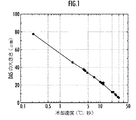
次に、添付の図面を参照しながら本発明の実施の形態についてさらに詳しく説明する。図1は本実施形態のアルミニウム合金における冷却速度と樹枝状晶のデンドライトアーム間隔との関係を示すグラフ、図2は本実施形態のアルミニウム合金の鋳造体から鍛造されたピストンと現用のアルミニウム合金の鋳造体から鍛造されたピストンとの疲労強度を示すグラフである。 Next, embodiments of the present invention will be described in more detail with reference to the accompanying drawings. FIG. 1 is a graph showing the relationship between the cooling rate and the dendrite arm spacing in the aluminum alloy of this embodiment, and FIG. 2 is a graph of the piston forged from the cast aluminum alloy of this embodiment and the current aluminum alloy. It is a graph which shows the fatigue strength with the piston forged from the casting.
本実施形態のアルミニウム合金は、エンジンまたはコンプレッサーのピストン用アルミニウム合金は、全量に対し、7〜17重量%の範囲のケイ素と、0.5〜3重量%の範囲の銅と、0.4〜1.5重量%の範囲のマグネシウムと、0.6〜1.2重量%の範囲のマンガンと、0.8〜3重量%の範囲のニッケルと、0.05〜0.3重量%の範囲のジルコニウムと、0.15〜1.0重量%の範囲の鉄と、不可避的不純物とを含むアルミニウム合金を、12〜50℃/秒の範囲の冷却速度で冷却して凝固させた鋳造体であって、樹枝状晶のデンドライトアーム間隔が2〜18μmの範囲である。 The aluminum alloy of the present embodiment is an engine or compressor piston aluminum alloy based on the total amount of silicon in the range of 7 to 17% by weight, copper in the range of 0.5 to 3% by weight, and 0.4 to Magnesium in the range of 1.5% by weight, manganese in the range of 0.6-1.2% by weight, nickel in the range of 0.8-3% by weight, and in the range of 0.05-0.3% by weight A cast body obtained by cooling and solidifying an aluminum alloy containing zirconium of 0.15 to 1.0% by weight of iron and unavoidable impurities at a cooling rate of 12 to 50 ° C./second. The dendritic arm dendrite arm spacing is in the range of 2-18 μm.
本実施形態のアルミニウム合金は、エンジンまたはコンプレッサーのピストン用アルミニウム合金において、前記ケイ素は、例えば、全量に対し8〜16重量%の範囲とすることができ、前記銅は、例えば、全量に対し1〜2.8重量%の範囲とすることができ、前記マグネシウムは、例えば、全量に対し0.8〜1重量%の範囲とすることができ、前記マンガンは、例えば、全量に対し0.6〜1重量%の範囲とすることができ、前記ニッケルは、例えば、全量に対し0.5〜2重量%の範囲とすることができ、前記ジルコニウムは、例えば、全量に対し0.1〜0.2重量%の範囲とすることができ、前記鉄は、例えば、全量に対し0.15〜0.8重量%の範囲とすることができる。 The aluminum alloy of the present embodiment is an aluminum alloy for pistons of engines or compressors. For example, the silicon can be in the range of 8 to 16% by weight with respect to the total amount, and the copper is, for example, 1 with respect to the total amount. The magnesium can be in the range of 0.8 to 1% by weight relative to the total amount, and the manganese is, for example, 0.6% relative to the total amount. The nickel can be, for example, in the range of 0.5 to 2% by weight relative to the total amount, and the zirconium can be, for example, 0.1 to 0% relative to the total amount. .2% by weight, and the iron can be, for example, 0.15 to 0.8% by weight with respect to the total amount.
ここで、前記鉄は任意に添加してもよく、リサイクル材を使用することにより不可避的に混入するものであってもよい。本実施形態のアルミニウム合金において、鉄の含有量が少ないと、高温における強度特性に及ぼす効果が少ないが、リサイクル材を使用する場合には、多ければ多いほどリサイクル材の品位を落として使えるメリットがある。 Here, the iron may be added arbitrarily, or may be inevitably mixed by using a recycled material. In the aluminum alloy of the present embodiment, if the iron content is small, the effect on the strength characteristics at high temperatures is small, but when using recycled materials, the greater the amount, the lower the quality of the recycled materials. is there.
また、本実施形態のアルミニウム合金は、全量に対し、0.01〜0.3重量%の範囲のチタンを含んでいてもよい。本実施形態のアルミニウム合金において、前記チタンは、例えば、全量に対し0.01〜0.25重量%の範囲とすることができる。 Moreover, the aluminum alloy of this embodiment may contain the titanium of the range of 0.01 to 0.3 weight% with respect to the whole quantity. In the aluminum alloy of the present embodiment, the titanium can be, for example, in the range of 0.01 to 0.25% by weight with respect to the total amount.
さらに、本実施形態のアルミニウム合金は、全量に対し、0.01〜0.3重量%の範囲のアンチモンまたは0.005〜0.1重量%の範囲のベリリウムを含んでいてもよい。本実施形態のアルミニウム合金は、前記範囲のアンチモンと、前記範囲のベリリウムとを両方とも含んでいてもよく、どちらか一方のみを含んでいてもよい。本実施形態のアルミニウム合金において、前記アンチモンは、例えば、全量に対し0.008〜0.01重量%の範囲とすることができ、前記ベリリウムは、例えば、全量に対し0.006〜0.01重量%の範囲とすることができる。 Furthermore, the aluminum alloy of the present embodiment may contain antimony in the range of 0.01 to 0.3% by weight or beryllium in the range of 0.005 to 0.1% by weight with respect to the total amount. The aluminum alloy of the present embodiment may contain both the range of antimony and the range of beryllium, or may contain only one of them. In the aluminum alloy of the present embodiment, the antimony can be, for example, in a range of 0.008 to 0.01% by weight with respect to the total amount, and the beryllium is, for example, 0.006 to 0.01% with respect to the total amount. It can be in the range of% by weight.
次に、本実施形態のアルミニウム合金の一例における冷却速度と前記樹枝状晶のデンドライトアーム間隔(DAS)との関係を図1に示す。図1に示すアルミニウム合金は、全量に対し、12重量%のケイ素と、2.5重量%の銅と、1重量%のマグネシウムと、1重量%の範囲のマンガンと、2重量%のニッケルと、0.13重量%のジルコニウムと、0.2重量%の鉄と不可避的不純物とを含む鋳造体である。 Next, FIG. 1 shows the relationship between the cooling rate and the dendrite arm spacing (DAS) of the dendritic crystals in an example of the aluminum alloy of the present embodiment. The aluminum alloy shown in FIG. 1 comprises 12% by weight of silicon, 2.5% by weight of copper, 1% by weight of magnesium, 1% by weight of manganese, 2% by weight of nickel, based on the total amount. , 0.13% by weight zirconium, 0.2% by weight iron and inevitable impurities.
図1から、前記組成のアルミニウム合金を、12〜50℃/秒の範囲の冷却速度で冷却して凝固させることにより、前記樹枝状晶のデンドライトアーム間隔が2〜18μmの範囲である鋳造体を得ることができることが明らかである。ここで、前記樹枝状晶のデンドライトアーム間隔は、試料をミクロ研磨した後、金属顕微鏡で100〜200倍に拡大して写真撮影し、撮影された画像から樹枝状晶の二次枝の間隔を測定し、その実測値に顕微鏡の倍率を乗じることにより算出した。
From FIG. 1, an aluminum alloy having the above composition is cooled and solidified at a cooling rate in the range of 12 to 50 ° C./second, thereby obtaining a cast body in which the dendrite arm spacing is in the range of 2 to 18 μm. It is clear that it can be obtained. Here, the dendritic arm spacing of the dendritic crystal is obtained by taking a photograph by enlarging the
また、本実施形態のエンジンまたはコンプレッサーのピストンの鍛造方法は、前記樹枝状晶のデンドライトアーム間隔が2〜18μmの範囲であるアルミニウム合金の鋳造体を得たのち、該鋳造体に対して、200〜240℃の範囲の温度で、20〜45%の範囲の加工率の予備加工を施して、鍛造用アルミニウム合金素材を形成し、さらに該鍛造用アルミニウム合金素材に対して該鍛造用アルミニウム合金の再結晶温度を超える温度、例えば400℃の温度で鍛造加工を施すものである。前記鍛造方法において、前記鍛造用アルミニウム合金素材を形成する工程と、該鍛造用アルミニウム合金素材に対して鍛造加工を施す工程とは、鍛造プレス内で一挙動で行うようにしてもよい。 The piston or forging method of the engine or compressor of the present embodiment is obtained by obtaining an aluminum alloy casting in which the dendritic arm spacing is in the range of 2 to 18 μm, A forging aluminum alloy material is formed at a temperature in the range of ˜240 ° C. with a working rate in the range of 20 to 45%, and the forging aluminum alloy material is further formed on the forging aluminum alloy material. Forging is performed at a temperature exceeding the recrystallization temperature, for example, a temperature of 400 ° C. In the forging method, the step of forming the aluminum alloy material for forging and the step of forging the aluminum alloy material for forging may be performed in one behavior in a forging press.
次に、本発明の実施例、比較例及び参考例を示す。 Next, examples of the present invention, comparative examples and reference examples will be shown.
まず、それぞれ表1に示す組成を備えるアルミニウム合金を鋳造し、12〜50℃/秒の冷却速度で凝固させて、試料1〜15の鋳造体を製造した。次に、各アルミニウム合金鋳造体の前記樹枝状晶のデンドライトアーム間隔(DAS)及び晶出物の粒子径を測定した。前記樹枝状晶のデンドライトアーム間隔は図1の場合と同一の方法で測定した。また、前記晶出物の粒子径は、例えば200〜400倍のミクロ写真の画像に任意の直線を引き、該直線にかかった晶出物の粒子径をスケールで測定し、その実測値に該画像の倍率を乗じることにより算出した。結果を、各アルミニウム合金の比重と共に表2に示す。 First, aluminum alloys each having the composition shown in Table 1 were cast and solidified at a cooling rate of 12 to 50 ° C./second to produce cast bodies of Samples 1 to 15. Next, the dendrite arm spacing (DAS) of the dendritic crystals and the crystallized particle size of each aluminum alloy casting were measured. The dendrite arm spacing of the dendrites was measured by the same method as in FIG. In addition, the particle size of the crystallized product is, for example, drawn on a 200 to 400 times microphotograph image, an arbitrary straight line is measured, and the particle size of the crystallized product applied to the straight line is measured on a scale. Calculated by multiplying the magnification of the image. The results are shown in Table 2 together with the specific gravity of each aluminum alloy.

表1及び表2において、試料1〜11は本発明の実施例であり、アルミニウム合金に含まれる成分のうち、ケイ素は全量に対し8〜16重量%の範囲、銅は全量に対し1〜2.8重量%の範囲、マグネシウムは全量に対し0.8〜1重量%の範囲、マンガンは全量に対し0.6〜1重量%の範囲、ニッケルは全量に対し0.5〜2重量%の範囲、ジルコニウムは全量に対し0.1〜0.2重量%の範囲、鉄は全量に対し0.15〜0.8重量%の範囲である。また、試料1〜11は、チタン、アンチモン、ベリリウムを含む場合には、チタンは全量に対し0.01〜0.25重量%の範囲、アンチモンは全量に対し0.008〜0.01重量%の範囲、ベリリウムは全量に対し0.006〜0.01重量%の範囲である。さらに、試料1〜11は樹枝状晶のデンドライトアーム間隔が2〜16μmの範囲であり、晶出物の粒子径が2〜40μmの範囲である。 In Tables 1 and 2, Samples 1 to 11 are examples of the present invention, and among components contained in the aluminum alloy, silicon is in the range of 8 to 16% by weight with respect to the total amount, and copper is 1 to 2 with respect to the total amount. .8% by weight, magnesium is 0.8 to 1% by weight, manganese is 0.6 to 1% by weight, nickel is 0.5 to 2% by weight. The range, zirconium is in the range of 0.1 to 0.2% by weight relative to the total amount, and iron is in the range of 0.15 to 0.8% by weight relative to the total amount. When Samples 1 to 11 contain titanium, antimony, and beryllium, titanium is in the range of 0.01 to 0.25% by weight with respect to the total amount, and antimony is 0.008 to 0.01% by weight with respect to the total amount. The beryllium is in the range of 0.006 to 0.01% by weight relative to the total amount. Further, in Samples 1 to 11, the dendritic dendrite arm interval is in the range of 2 to 16 μm, and the crystallized particle diameter is in the range of 2 to 40 μm.
表1及び表2において、試料12〜17は本発明の比較例であり、マンガン、ジルコニウムまたは鉄を全く含まない。また、試料12〜17は樹枝状晶のデンドライトアーム間隔が18μmより大きく、25〜40μmの範囲である。 In Tables 1 and 2, Samples 12 to 17 are comparative examples of the present invention and do not contain any manganese, zirconium or iron. Samples 12 to 17 have dendritic arm spacings larger than 18 μm and a range of 25 to 40 μm.
表1及び表2において、試料18、19は参考例である。試料18はJISのA4032合金であり、試料19はJISのAC8A合金である。また、試料18、19は樹枝状晶のデンドライトアーム間隔が18μmより大きく、38〜42μmの範囲である。 In Tables 1 and 2, Samples 18 and 19 are reference examples. Sample 18 is a JIS A4032 alloy and sample 19 is a JIS AC8A alloy. Samples 18 and 19 have a dendritic dendrite arm interval larger than 18 μm and in the range of 38 to 42 μm.
次に、試料1〜19のアルミニウム合金の鋳造体をピストンの形状に鍛造して、機械的特性及び鍛造性を評価した。結果を表3に示す。 Next, the aluminum alloy castings of Samples 1 to 19 were forged into the shape of a piston, and mechanical characteristics and forgeability were evaluated. The results are shown in Table 3.
前記機械的特性は、試料1〜19のアルミニウム合金の鋳造体から鍛造された各ピストンから試験片を切り出し、各試験片を300℃の温度に100時間保持した後、300℃の温度で引張試験を行い、引張張力及び伸びを測定した。 The mechanical properties were determined by cutting a test piece from each piston forged from the cast aluminum alloy samples 1 to 19, holding each test piece at a temperature of 300 ° C. for 100 hours, and then a tensile test at a temperature of 300 ° C. And tensile tension and elongation were measured.
また、前記鍛造性は、試料1〜19のアルミニウム合金の鋳造体を350℃に加熱してピストン形状に鍛造したときの割れの有無により評価した。表3において、○は割れが発生しなかったものを、×は割れが発生したものを、△は寸法または形状に不都合を生じたものを、それぞれ示す。 The forgeability was evaluated based on the presence or absence of cracks when the aluminum alloy castings of Samples 1 to 19 were heated to 350 ° C. and forged into a piston shape. In Table 3, ○ indicates that no cracks occurred, × indicates that cracks occurred, and Δ indicates that inconvenience occurred in dimensions or shape.
表3から、試料1〜11のアルミニウム合金の鋳造体から鍛造されたピストンは、JISのA4032合金(試料18)の鋳造体から鍛造されたピストンに比較して引張強度において優れており、JISのAC8A合金(試料19)の鋳造体から鍛造されたピストンに比較しても、引張強度及び伸びにおいて良好な結果を示すことが明らかである。 From Table 3, the piston forged from the cast body of the aluminum alloy of samples 1 to 11 is superior in tensile strength to the piston forged from the cast body of the JIS A4032 alloy (sample 18). It is clear that even in comparison with a piston forged from a cast of AC8A alloy (sample 19), good results in tensile strength and elongation are shown.
また、表3から、試料1〜11のアルミニウム合金の鋳造体は、試料12〜19のアルミニウム合金の鋳造体に比較して、優れた鍛造性を備えていることが明らかである。 Moreover, it is clear from Table 3 that the casts of the aluminum alloys of Samples 1 to 11 have superior forgeability as compared with the casts of the aluminum alloys of Samples 12 to 19.
さらに、表2及び表3から、試料1〜11のアルミニウム合金の鋳造体は、いずれも比重が2.75以下であり、優れた高温強度及び鍛造性を維持しながら、比重の増加を抑えることにより、軽量化が可能であることが明らかである。 Furthermore, from Table 2 and Table 3, the casts of the aluminum alloys of Samples 1 to 11 each have a specific gravity of 2.75 or less, and suppress an increase in specific gravity while maintaining excellent high-temperature strength and forgeability. Thus, it is clear that the weight can be reduced.
次に、試料3のアルミニウム合金の鋳造体から鍛造されたピストンと、試料18のアルミニウム合金の鋳造体から鍛造されたピストンとについて、250℃及び300℃で疲労強度試験を行った。結果を図2に示す。 Next, the fatigue strength test was performed at 250 ° C. and 300 ° C. for the piston forged from the cast aluminum alloy sample 3 and the piston forged from the cast aluminum alloy sample 18. The results are shown in FIG.
図2から、試料3のアルミニウム合金の鋳造体から鍛造されたピストンは、250℃及び300℃で、現用の試料18のアルミニウム合金の鋳造体から鍛造されたピストンに比較して疲労強度が高いことが明らかである。特に、300℃では、試料3のアルミニウム合金の鋳造体から鍛造されたピストンは、現用の試料18のアルミニウム合金の鋳造体から鍛造されたピストンに比較して、35%以上高い疲労限強度を示しており、疲労限強度が大幅に向上していることが明らかである。 From FIG. 2, the piston forged from the cast aluminum alloy sample 3 has higher fatigue strength than the piston forged from the cast aluminum alloy sample 18 at 250 ° C. and 300 ° C. Is clear. In particular, at 300 ° C., the piston forged from the cast aluminum alloy sample 3 exhibits a fatigue limit strength 35% higher than the piston forged from the cast aluminum alloy sample 18 currently used. It is clear that the fatigue limit strength is greatly improved.
次に、試料4のアルミニウム合金の鋳造体に対して、240℃の温度で、32%の加工率の予備加工を施して鍛造用アルミニウム合金素材を形成した。また、試料6のアルミニウム合金の鋳造体に対して、220℃の温度で、44%の加工率の予備加工を施して鍛造用アルミニウム合金素材を形成した。次に、各鍛造用アルミニウム合金素材の前記樹枝状晶のデンドライトアーム間隔(DAS)及び晶出物の粒子径を、表1の場合と全く同一の方法により測定した。結果を各鍛造用アルミニウム合金素材の比重と共に表4に示す。 Next, the aluminum alloy material for forging was formed by subjecting the aluminum alloy cast body of Sample 4 to preliminary processing at a processing rate of 32% at a temperature of 240 ° C. Further, the aluminum alloy material for forging was formed by subjecting the aluminum alloy cast body of Sample 6 to a preliminary processing at a processing rate of 44% at a temperature of 220 ° C. Next, the dendrite arm spacing (DAS) of the dendritic crystals and the particle size of the crystallized material of each forging aluminum alloy material were measured by the same method as in Table 1. The results are shown in Table 4 together with the specific gravity of each forging aluminum alloy material.
次に、前記各鍛造用アルミニウム合金素材に対して該鍛造用アルミニウム合金の再結晶温度を超える400℃の温度で鍛造加工を施してピストンの形状に鍛造し、前記各ピストンの機械的特性及び鍛造性を、表3の場合と全く同一の方法により評価した。結果を表4に示す。 Next, the forging process is performed on each of the forging aluminum alloy materials at a temperature of 400 ° C. exceeding the recrystallization temperature of the forging aluminum alloy to forge into the shape of the piston. The properties were evaluated by exactly the same method as in Table 3. The results are shown in Table 4.
表4から、試料4及び試料6のアルミニウム合金の鋳造体は、いずれも200〜240℃の範囲の温度で、20〜45%の範囲の加工率の予備加工を施して圧縮負荷を付与することにより、結晶粒及びデンドライトアーム間隔が、試料4及び試料6のアルミニウム合金の鋳造体に対してさらに微細化された鍛造用アルミニウム合金素材を形成することができることが明らかである。 From Table 4, the aluminum alloy castings of Sample 4 and Sample 6 are both subjected to a pre-processing with a processing rate in the range of 20 to 45% at a temperature in the range of 200 to 240 ° C. to give a compression load. Thus, it is clear that a forging aluminum alloy material in which the crystal grains and the dendrite arm interval are further refined with respect to the cast bodies of the aluminum alloys of Sample 4 and Sample 6 can be formed.
また、表4から、前記鍛造用アルミニウム合金素材に対して該鍛造用アルミニウム合金の再結晶温度を超える400℃の温度で鍛造加工を施すことにより、優れた精度でエンジンまたはコンプレッサーのピストンを鍛造することができ、得られたピストンにおいてさらに優れた高温強度を得ることができることが明らかである。 Also, from Table 4, the forging of the engine or compressor piston is performed with excellent accuracy by subjecting the forging aluminum alloy material to forging at a temperature of 400 ° C. exceeding the recrystallization temperature of the forging aluminum alloy. It is clear that even better high temperature strength can be obtained in the resulting piston.
なし。 None.
Claims (5)
樹枝状晶のデンドライトアーム間隔が2〜18μmの範囲であることを特徴とするエンジンまたはコンプレッサーのピストン用アルミニウム合金。 Silicon in the range of 7 to 17% by weight, copper in the range of 0.5 to 3% by weight, magnesium in the range of 0.4 to 1.5% by weight, and 0.6 to 1.2% with respect to the total amount. Manganese in the range of wt%, nickel in the range of 0.8 to 3 wt%, zirconium in the range of 0.05 to 0.3 wt%, and iron in the range of 0.15 to 1.0 wt% A cast body obtained by cooling and solidifying an aluminum alloy containing inevitable impurities at a cooling rate in the range of 12 to 50 ° C./second,
An aluminum alloy for pistons of engines or compressors, characterized in that the dendrite arm spacing is in the range of 2 to 18 µm.
前記鋳造体に対して、200〜240℃の範囲の温度で、20〜45%の範囲の加工率の予備加工を施し、鍛造用アルミニウム合金素材を形成する工程と、
前記鍛造用アルミニウム合金素材に対して該鍛造用アルミニウム合金の再結晶温度を超える温度で鍛造加工を施す工程とを備えることを特徴とするエンジンまたはコンプレッサーのピストンの鍛造方法。 Silicon in the range of 7 to 17% by weight, copper in the range of 0.5 to 3% by weight, magnesium in the range of 0.4 to 1.5% by weight, and 0.6 to 1.2% with respect to the total amount. Manganese in the range of wt%, nickel in the range of 0.8 to 3 wt%, zirconium in the range of 0.05 to 0.3 wt%, and iron in the range of 0.15 to 1.0 wt% Cooling the aluminum alloy containing inevitable impurities at a cooling rate in the range of 12 to 50 ° C./second and solidifying the aluminum alloy to obtain a cast body in which the dendrite arm spacing is in the range of 2 to 18 μm; ,
A step of preliminarily processing the cast body at a processing rate in the range of 20 to 45% at a temperature in the range of 200 to 240 ° C to form an aluminum alloy material for forging;
Forging a piston for an engine or a compressor, comprising a step of forging the aluminum alloy material for forging at a temperature exceeding a recrystallization temperature of the aluminum alloy for forging.
Priority Applications (1)
| Application Number | Priority Date | Filing Date | Title |
|---|---|---|---|
| JP2008311975A JP5449754B2 (en) | 2008-12-08 | 2008-12-08 | Forging piston for engine or compressor |
Applications Claiming Priority (1)
| Application Number | Priority Date | Filing Date | Title |
|---|---|---|---|
| JP2008311975A JP5449754B2 (en) | 2008-12-08 | 2008-12-08 | Forging piston for engine or compressor |
Publications (2)
| Publication Number | Publication Date |
|---|---|
| JP2010132995A true JP2010132995A (en) | 2010-06-17 |
| JP5449754B2 JP5449754B2 (en) | 2014-03-19 |
Family
ID=42344544
Family Applications (1)
| Application Number | Title | Priority Date | Filing Date |
|---|---|---|---|
| JP2008311975A Expired - Fee Related JP5449754B2 (en) | 2008-12-08 | 2008-12-08 | Forging piston for engine or compressor |
Country Status (1)
| Country | Link |
|---|---|
| JP (1) | JP5449754B2 (en) |
Cited By (4)
| Publication number | Priority date | Publication date | Assignee | Title |
|---|---|---|---|---|
| CN109642275A (en) * | 2016-08-29 | 2019-04-16 | 日本轻金属株式会社 | The manufacturing method of high-strength aluminum alloy, the piston for IC engine containing the alloy and piston for IC engine |
| EP3616810A4 (en) * | 2017-04-27 | 2020-07-22 | Koiwai Co., Ltd. | LAMINATED MOLD FROM HIGH-STRENGTH ALUMINUM AND MANUFACTURING METHOD THEREFOR |
| JP2022150384A (en) * | 2021-03-26 | 2022-10-07 | 本田技研工業株式会社 | Aluminum alloy, manufacturing method for additive-manufactured article, and additive-manufactured article |
| CN117444181A (en) * | 2023-11-01 | 2024-01-26 | 湖南江滨机器(集团)有限责任公司 | A diesel engine piston and its mold, casting method and diesel engine piston casting machine |
Citations (3)
| Publication number | Priority date | Publication date | Assignee | Title |
|---|---|---|---|---|
| JPH08170136A (en) * | 1994-12-16 | 1996-07-02 | Nissan Motor Co Ltd | Hypereutectic Al-Si alloy and hypereutectic Al-Si alloy castings |
| JP2003147496A (en) * | 2001-11-08 | 2003-05-21 | Kyushu Mitsui Alum Kogyo Kk | Method for producing semi-molten cast billet of aluminum alloy for transport apparatus |
| JP2008127579A (en) * | 2006-11-16 | 2008-06-05 | Toyama Gokin Kk | Aluminum alloy |
-
2008
- 2008-12-08 JP JP2008311975A patent/JP5449754B2/en not_active Expired - Fee Related
Patent Citations (3)
| Publication number | Priority date | Publication date | Assignee | Title |
|---|---|---|---|---|
| JPH08170136A (en) * | 1994-12-16 | 1996-07-02 | Nissan Motor Co Ltd | Hypereutectic Al-Si alloy and hypereutectic Al-Si alloy castings |
| JP2003147496A (en) * | 2001-11-08 | 2003-05-21 | Kyushu Mitsui Alum Kogyo Kk | Method for producing semi-molten cast billet of aluminum alloy for transport apparatus |
| JP2008127579A (en) * | 2006-11-16 | 2008-06-05 | Toyama Gokin Kk | Aluminum alloy |
Non-Patent Citations (1)
| Title |
|---|
| JPN6013017699; '過共晶Al-Si合金精密鍛造工法の開発' 軽金属学会講演概要 Vol.113th, 20071010, P.177-178 * |
Cited By (6)
| Publication number | Priority date | Publication date | Assignee | Title |
|---|---|---|---|---|
| CN109642275A (en) * | 2016-08-29 | 2019-04-16 | 日本轻金属株式会社 | The manufacturing method of high-strength aluminum alloy, the piston for IC engine containing the alloy and piston for IC engine |
| CN109642275B (en) * | 2016-08-29 | 2023-10-20 | 日本轻金属株式会社 | High-strength aluminum alloy, piston for internal combustion engine containing the same, and method for manufacturing piston for internal combustion engine |
| EP3616810A4 (en) * | 2017-04-27 | 2020-07-22 | Koiwai Co., Ltd. | LAMINATED MOLD FROM HIGH-STRENGTH ALUMINUM AND MANUFACTURING METHOD THEREFOR |
| JP2022150384A (en) * | 2021-03-26 | 2022-10-07 | 本田技研工業株式会社 | Aluminum alloy, manufacturing method for additive-manufactured article, and additive-manufactured article |
| JP7845826B2 (en) | 2021-03-26 | 2026-04-14 | 本田技研工業株式会社 | Aluminum alloy, method for manufacturing additively formed objects, and additively formed objects |
| CN117444181A (en) * | 2023-11-01 | 2024-01-26 | 湖南江滨机器(集团)有限责任公司 | A diesel engine piston and its mold, casting method and diesel engine piston casting machine |
Also Published As
| Publication number | Publication date |
|---|---|
| JP5449754B2 (en) | 2014-03-19 |
Similar Documents
| Publication | Publication Date | Title |
|---|---|---|
| CN102197153B (en) | Magnesium alloy and magnesium alloy casting | |
| JP5703881B2 (en) | High strength magnesium alloy and method for producing the same | |
| JP4433916B2 (en) | Magnesium alloy and magnesium alloy member for plastic working | |
| JP5215710B2 (en) | Magnesium alloy with excellent creep characteristics at high temperature and method for producing the same | |
| JP5860873B2 (en) | Castable heat resistant aluminum alloy | |
| JP4187018B2 (en) | Cast aluminum alloy with excellent relaxation resistance and heat treatment method | |
| JP4856597B2 (en) | Magnesium alloy excellent in strength and elongation at high temperature and method for producing the same | |
| JP5449754B2 (en) | Forging piston for engine or compressor | |
| JP2004162090A (en) | Heat resistant magnesium alloy | |
| JP2001020047A (en) | Stock for aluminum alloy forging and its production | |
| JP5356777B2 (en) | Magnesium alloy forging method | |
| JP5525444B2 (en) | Magnesium-based alloy and method for producing the same | |
| JP4341438B2 (en) | Aluminum alloy excellent in wear resistance and sliding member using the same alloy | |
| JP4929000B2 (en) | Magnesium alloy for plastic working and magnesium alloy plastic working member | |
| JP4958267B2 (en) | Magnesium alloy material and method for producing the same | |
| JP6743155B2 (en) | High-strength aluminum alloy, internal combustion engine piston made of the alloy, and method for manufacturing internal combustion engine piston | |
| JP4800864B2 (en) | compressor | |
| JP7698520B2 (en) | Aluminum alloys for forging | |
| JPH07197165A (en) | High wear resistance free-cutting aluminum alloy and its manufacturing method | |
| JP7565728B2 (en) | Aluminum alloy forged member and manufacturing method thereof | |
| JP5590413B2 (en) | High thermal conductivity magnesium alloy | |
| JP2006161103A (en) | Aluminum alloy member and manufacturing method thereof | |
| JP5607960B2 (en) | Heat-resistant magnesium alloy with excellent fatigue strength characteristics and heat-resistant parts for engines | |
| JP5415739B2 (en) | Magnesium alloy for forging | |
| JPH05287427A (en) | Wear resistant aluminum alloy for cold forging and its manufacture |
Legal Events
| Date | Code | Title | Description |
|---|---|---|---|
| A621 | Written request for application examination |
Free format text: JAPANESE INTERMEDIATE CODE: A621 Effective date: 20111027 |
|
| A131 | Notification of reasons for refusal |
Free format text: JAPANESE INTERMEDIATE CODE: A131 Effective date: 20130423 |
|
| A521 | Request for written amendment filed |
Free format text: JAPANESE INTERMEDIATE CODE: A523 Effective date: 20130624 |
|
| A131 | Notification of reasons for refusal |
Free format text: JAPANESE INTERMEDIATE CODE: A131 Effective date: 20130730 |
|
| A521 | Request for written amendment filed |
Free format text: JAPANESE INTERMEDIATE CODE: A523 Effective date: 20130927 |
|
| TRDD | Decision of grant or rejection written | ||
| A01 | Written decision to grant a patent or to grant a registration (utility model) |
Free format text: JAPANESE INTERMEDIATE CODE: A01 Effective date: 20131126 |
|
| A61 | First payment of annual fees (during grant procedure) |
Free format text: JAPANESE INTERMEDIATE CODE: A61 Effective date: 20131225 |
|
| R150 | Certificate of patent or registration of utility model |
Ref document number: 5449754 Country of ref document: JP Free format text: JAPANESE INTERMEDIATE CODE: R150 Free format text: JAPANESE INTERMEDIATE CODE: R150 |
|
| R250 | Receipt of annual fees |
Free format text: JAPANESE INTERMEDIATE CODE: R250 |
|
| R250 | Receipt of annual fees |
Free format text: JAPANESE INTERMEDIATE CODE: R250 |
|
| R250 | Receipt of annual fees |
Free format text: JAPANESE INTERMEDIATE CODE: R250 |
|
| R250 | Receipt of annual fees |
Free format text: JAPANESE INTERMEDIATE CODE: R250 |
|
| R250 | Receipt of annual fees |
Free format text: JAPANESE INTERMEDIATE CODE: R250 |
|
| R250 | Receipt of annual fees |
Free format text: JAPANESE INTERMEDIATE CODE: R250 |
|
| LAPS | Cancellation because of no payment of annual fees |