JP2011237232A - Object detector - Google Patents
Object detector Download PDFInfo
- Publication number
- JP2011237232A JP2011237232A JP2010107776A JP2010107776A JP2011237232A JP 2011237232 A JP2011237232 A JP 2011237232A JP 2010107776 A JP2010107776 A JP 2010107776A JP 2010107776 A JP2010107776 A JP 2010107776A JP 2011237232 A JP2011237232 A JP 2011237232A
- Authority
- JP
- Japan
- Prior art keywords
- light
- detection
- light receiving
- region
- floor surface
- Prior art date
- Legal status (The legal status is an assumption and is not a legal conclusion. Google has not performed a legal analysis and makes no representation as to the accuracy of the status listed.)
- Granted
Links
- 238000001514 detection method Methods 0.000 claims abstract description 198
- 239000011159 matrix material Substances 0.000 claims description 10
- 238000009434 installation Methods 0.000 description 7
- 238000000034 method Methods 0.000 description 5
- 238000010586 diagram Methods 0.000 description 2
- 238000012544 monitoring process Methods 0.000 description 2
- 230000003287 optical effect Effects 0.000 description 2
- 238000009792 diffusion process Methods 0.000 description 1
- 230000000694 effects Effects 0.000 description 1
- 230000007257 malfunction Effects 0.000 description 1
- XLYOFNOQVPJJNP-UHFFFAOYSA-N water Substances O XLYOFNOQVPJJNP-UHFFFAOYSA-N 0.000 description 1
Images
Landscapes
- Power-Operated Mechanisms For Wings (AREA)
- Geophysics And Detection Of Objects (AREA)
Abstract
Description
本発明は、検知光により物体を検出する物体検出装置に関し、特に、複数の検知領域を切り換えて物体を確実に検知するものに関する。 The present invention relates to an object detection apparatus that detects an object using detection light, and more particularly to an apparatus that reliably detects an object by switching a plurality of detection areas.
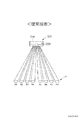
従来の物体検出装置である自動ドア開閉用起動センサ200について図9を用いて説明する。自動ドア開閉用起動センサ200は、基本的な構成として、赤外線発光部210と赤外線受光部220とを備え、図示しない自動ドアの無目もしくは天井に設置される。通常、赤外線発光部210と赤外線受光部220は、所定の周波数で同期的に制御される。
An automatic door opening /
赤外線発光部210は、図示しない例えば拡散レンズを介して自動ドア近傍の床面Fに赤外線をスポット光として照射する。通常、スポット光はm列×n行のマトリクス配列として照射される。作図の都合上、その1列に含まれる例えば8個のスポット光S1〜S8のみを示す。
The infrared
赤外線受光部220は、床面Fもしくは監視領域内に存在する人(物体)によって反射された赤外線を図示しない集光レンズを介して受光し、その受光量に比例した信号を図示しないドアコントローラに出力する。ドアコントローラは、常時、その出力信号の変動を監視し、図示しないドアエンジンを制御して自動ドアを開閉する(特許文献1)。
The infrared
前述の自動ドア開閉用起動センサ200には、以下に示すような改善すべき点がある。自動ドア開閉用起動センサ200は、床面Fに赤外線をスポット光として投光し、床面Fもしくは監視領域内に存在する人(物体)によって反射された赤外線を赤外線受光部220にて受光する。床面Fにおける赤外線の反射の状態は、床面Fの状態によって左右される。例えば、床面Fが乾いた状態と、水等が存在し、濡れている状態とでは、赤外線の反射状態が大きく異なる。あるときには、自動ドアの扉が開かない、あるときには、勝手に開くといった、誤動作を生じやすい、という改善すべき点がある。
The automatic door opening /
そこで、本発明は、複数の検知領域を切り換えて物体を確実に検知する物体検出装置の提供を目的とする。 SUMMARY OF THE INVENTION An object of the present invention is to provide an object detection device that detects an object reliably by switching a plurality of detection areas.
本発明における課題を解決するための手段及び発明の効果を以下に示す。 Means for solving the problems in the present invention and the effects of the invention will be described below.
本発明に係る物体検出装置は、所定の床面上の空間における物体の存在を検知し、扉の開閉を制御するための物体検知装置であって、前記床面に形成される第1の検知領域に対して検知光を投光する投光手段、前記投光手段が前記第1の検知領域に対して投光した前記検知光について、前記第1の検知領域からの第1の反射光を受光する第1の受光手段、前記投光手段が前記第1の検知領域に対して投光した前記検知光について、前記空間に形成される第2の検知領域からの第2の反射光を受光する第2の受光手段、前記第1の受光手段又は前記第2の受光手段のそれぞれにおける前記第1の反射光又は前記第2の反射光の受光量の変化から、前記第1の検知領域又は前記第2の検知領域に物体が存在すると判断すると、前記扉を開状態とする開状態情報を生成する扉開閉制御手段、前記扉が閉状態であるときに、前記第2の受光手段に前記第2の反射光を受光させ、前記第2の検知領域に物体が存在するとの判断に基づき前記第1の受光手段に前記第1の反射光を受光させる受光制御手段、を有する。 An object detection device according to the present invention is an object detection device for detecting the presence of an object in a space on a predetermined floor surface and controlling the opening and closing of a door, the first detection formed on the floor surface A light projecting means for projecting detection light to the area, and a first reflected light from the first detection area for the detection light projected by the light projecting means to the first detection area; A first light receiving means for receiving light, and a second reflected light from a second detection area formed in the space is received for the detection light projected by the light projecting means to the first detection area. From the change in the amount of received light of the first reflected light or the second reflected light in each of the second light receiving means, the first light receiving means, or the second light receiving means, the first detection region or When it is determined that an object is present in the second detection area, the door is opened. A door opening / closing control means for generating open state information, wherein when the door is in a closed state, the second light receiving means receives the second reflected light, and an object is present in the second detection region; And a light receiving control means for causing the first light receiving means to receive the first reflected light based on the determination.
これにより、扉閉状態においては、床面における第1の検知領域よりも、空間における第2の検知領域での物体の検知を優先して扉を開閉することができる。よって、床面の状態に影響されずに、扉の閉状態から開状態への開動作を行うことができる。また、扉の開状態においては、床面における第1の検知領域での検知を行うので、床面に近い領域での物体の検知に基づき扉の開閉動作を行うことができる。 Thereby, in the door closed state, it is possible to open and close the door in preference to the detection of the object in the second detection area in the space rather than the first detection area in the floor surface. Thus, the door can be opened from the closed state to the open state without being affected by the state of the floor surface. Further, since the detection is performed in the first detection area on the floor surface in the open state of the door, the door can be opened and closed based on the detection of the object in the area close to the floor surface.
本発明に係る物体検出装置では、前記受光制御装置は、前記第2の検知領域に物体が存在するとの判断に基づき、さらに、前記第2の受光手段に前記第2の反射光を受光させること、を特徴とする。 In the object detection device according to the present invention, the light reception control device further causes the second light receiving means to receive the second reflected light based on the determination that an object exists in the second detection region. It is characterized by.
これにより、扉の開状態の後は、床面上の第1の検知領域における検知と、空間の第2の検知領域における検知とを併せて行うことができる。よって、床面の状態に影響されることなく、また、床面近くの物体を見落とすことなく、確実に物体を検出することができる。 Thereby, after the door is opened, detection in the first detection region on the floor and detection in the second detection region of the space can be performed together. Therefore, the object can be reliably detected without being affected by the state of the floor surface and without overlooking the object near the floor surface.
本発明に係る物体検出装置では、前記投光手段及び前記第1の受光手段を複数有し、前記第2の受光手段は、一の前記投光手段に対応する前記第1の受光手段とは異なる前記第1の受光手段であること、を特徴とする。 The object detection apparatus according to the present invention includes a plurality of the light projecting means and the first light receiving means, and the second light receiving means is the first light receiving means corresponding to the one light projecting means. The first light receiving unit is different from the first light receiving unit.
これにより、床面に複数の第1の検知領域を形成すると共に、空間に複数の第2の検知領域を形成することができる。よって、広い範囲での物体の検知を行うことができる。 Thereby, a plurality of first detection areas can be formed on the floor surface, and a plurality of second detection areas can be formed in the space. Therefore, it is possible to detect an object in a wide range.
本発明に係る物体検出装置では、前記投光手段及び前記第1の受光手段は、それぞれマトリックス形状に配置されていること、を特徴とする。 The object detection apparatus according to the present invention is characterized in that the light projecting means and the first light receiving means are each arranged in a matrix shape.
これにより、床面近くの第1の検知領域と空間の第2の検知領域とを有する物体検出装置を簡易な構成で形成することができる。 Thereby, the object detection apparatus having the first detection area near the floor and the second detection area in the space can be formed with a simple configuration.
本発明に係る物体検出装置では、前記マトリックス形状に配置された前記投光手段が前記床面に形成する投光領域と、前記マトリックス形状に配置された前記第1の受光手段が前記床面に形成する受光領域とは、所定の方向にずれて形成されており、前記投光領域と前記受光領域との交差領域によって前記検知領域を形成すること、を特徴とする。 In the object detection apparatus according to the present invention, the light projecting area formed on the floor surface by the light projecting means arranged in the matrix shape, and the first light receiving means arranged in the matrix shape on the floor surface. The light receiving region to be formed is formed by shifting in a predetermined direction, and the detection region is formed by an intersection region between the light projecting region and the light receiving region.
これにより、床面近くの第1の検知領域と空間の第2の検知領域とを有する物体検出装置を簡易な構成で形成することができる。 Thereby, the object detection apparatus having the first detection area near the floor and the second detection area in the space can be formed with a simple configuration.
本発明に係る物体検出装置では、前記投光手段及び前記受光手段の相対的位置関係を調整することができる。これにより、所望の位置に、所望の大きさの第1の検知領域、第2の検知領域を形成することができる。 In the object detection apparatus according to the present invention, the relative positional relationship between the light projecting unit and the light receiving unit can be adjusted. Thereby, the 1st detection area | region and 2nd detection area | region of a desired magnitude | size can be formed in a desired position.
本発明に係る物体検出装置では、前記検知光の投光方向、前記第1の反射光及び前記第2の反射光の受光方向、又はその両方を調整することができる。これにより、所望の位置に、所望の大きさの第1の検知領域、第2の検知領域を形成することができる。
In the object detection apparatus according to the present invention, the light projecting direction of the detection light, the light receiving directions of the first reflected light and the second reflected light, or both can be adjusted. Thereby, the 1st detection area | region and 2nd detection area | region of a desired magnitude | size can be formed in a desired position.
以下、本発明の実施例について、図面を参照しながら詳細に説明していく。 Hereinafter, embodiments of the present invention will be described in detail with reference to the drawings.
第1 構成
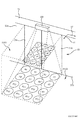
発明に係る物体検出装置の一実施例である自動ドアセンサ100を用いた自動ドアシステムの概要について図1を用いて説明する。自動ドアシステム50は、自動ドアセンサ100、フレーム51、固定壁53a、53b、ドアパネル55a、55b、及び駆動装置(図示せず)を有している。自動ドアシステム50は、ドアパネル55a、55bが左右に開閉する、いわゆる両引きの自動ドアシステムである。
1st structure The outline | summary of the automatic door system using the
フレーム51は、固定壁53a、53bの間に設置される。ドアパネル55a、55bは、固定壁53a、53b間をフレーム51の無目に沿って左右に開閉する。フレーム51の内部には、ドアパネル55a、55bを駆動するための駆動装置が内蔵されている。
The
自動ドアセンサ100は、フレーム51の無目に取り付けられる。
The
自動ドアセンサ100は、人等の物体が通過する所定の床面F100上に床面検知領域R1〜R16を形成する。また、自動ドアセンサ100は、床面F100上の空間A100に空間検知領域l1〜l12(図示せず)を形成する。なお、図1においては、空間検知領域l1〜l12の所定の断面における断面検知領域r1〜r12のみを示している。床面検知領域R1〜R16、空間検知領域l1〜l12については後述する。
The
自動ドアセンサ100は、ドアパネル55a、55bが閉状態において、空間検知領域l1〜l12(断面検知領域r1〜r12)に人体等の物体が存在すると判断すると、ドアパネル55a、55bの開動作を行うための扉開情報を駆動装置に送信する。また、ドアパネル55a、55bが開状態においては、床面検知領域R1〜R16及び空間検知領域l1〜l12での、物体の検知を行う。
When the
なお、以下においては、設置面である無目の前面と平行な方向を矢印a3方向、設置面に垂直な法線方向を矢印a1方向とする。 In the following, the direction parallel to the invisible front surface, which is the installation surface, is the arrow a3 direction, and the normal direction perpendicular to the installation surface is the arrow a1 direction.
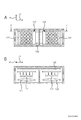
自動ドアセンサ100の内部構造について図2を用いて説明する。自動ドアセンサ100の内部構造の平面図を図2Aに、図2AにおけるP−P断面を図2Bに、それぞれ示す。自動ドアセンサ100は、投光ユニット110、受光ユニット120及び制御回路130を有している。
The internal structure of the
1.投光ユニット110
投光ユニット110は、投光素子群111及びレンズ113を有している。投光ユニット110は、投光素子群111及びレンズ113によって投光用光学系を形成する。
1.
The
投光素子群111は、矢印a3方向(設置面である無目の前面と平行な方向)に4個、矢印a1方向(設置面に垂直な法線方向)に4個、つまり4×4のマトッリクスを形成する16個の投光素子111−1〜111−16を有している。なお、図2においては、投光素子111−1〜111−16を各投光素子の内部に記述する数字によって表わしている。
There are four light projecting
レンズ113は、各投光素子111−1〜111−16が発光した赤外線を検知光として床面F100(図1参照)の所定の投光領域に投光する。レンズ113は、検知光が所定の投光領域に投光されるように調整されている。各投光素子111−1〜111−16によって形成される投光領域については後述する。
The
2.受光ユニット120
受光ユニット120は、受光素子群121及びレンズ123を有している。受光ユニット120は、受光素子群121及びレンズ123によって受光用光学系を形成する。
2.
The
受光素子群121は、矢印a3方向(設置面である無目の前面と平行な方向)に4個、矢印a1方向(設置面に垂直な法線方向)に4個、つまり4×4のマトッリクスを形成する16個の受光素子121−1〜121−16を有している。なお、図2においては、受光素子121−1〜121−16を各受光素子の内部に記述する数字によって表わしている。
The number of light receiving
レンズ123は、検知領域内の所定の受光領域から取得する検知光の反射光を、各受光素子121−1〜121−16に集光する。レンズ123は、各投光領域からの反射光が所定の受光素子121−1〜121−16に集光されるように調整されている。受光素子121−1〜121−16によって形成される受光領域については後述する。
The
3.制御回路130
制御回路130は、投光ユニット110が有する16個の投光素子111−1〜111−16を、所定の周期で、順次、発光させる。
3.
The
また、制御回路130は、ドアパネル55a、55bが閉状態のときは、空間検知領域l1〜l12に対応する投光素子を、順次、発光させ、発光させた投光素子に対応する受光素子での反射光の受光量に基づき人等の物体が検知領域に侵入したか否かを判断する空間検知を実行する。
Further, when the
制御回路130は、ドアパネル55a、55bが開状態のときは、投光ユニット110が有する16個の投光素子111−1〜111−16を、順次、発光させ、発光させた投光素子に対応する受光素子での反射光の受光量に基づき人等の物体が検知領域に侵入したか否かを判断する床面検知を実行する。また、制御回路130は、ドアパネル55a、55bが開状態のときは、床面検知に併せて、空間検知も実行する。
When the
第2 検知領域
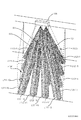
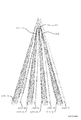
自動ドアセンサ100が床面F100に形成する床面検知領域R1〜R16及び検知空間A100に形成する空間検知領域l1〜l12について、図3〜図6を用いて説明する。図3には、自動ドアセンサ100の投光ユニット110によって投光される検知光、及び、受光ユニット120によって集光される反射光、それぞれを三角錐領域として現した状態を示している。図3では、投光ユニット110の投光素子111−1が投光する検知光は投光領域L111−1を、投光素子111−2が投光する検知光は投光領域L111−2を、・・・、投光素子111−16が投光する検知光は投光領域L111−16を、それぞれ通過することを示している。また、受光ユニット120の受光素子121−1が受光する反射光は受光領域L121−1を、受光素子121−2が受光する反射光は受光領域L121−2を、・・・、受光素子121−16が受光する反射光は受光領域L121−16を、それぞれ通過することを示している。
Second Detection Area The floor detection areas R1 to R16 formed on the floor F100 by the
1.床面検知領域R100
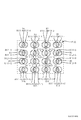
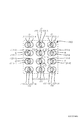
床面F100には、投光素子111−1〜111−16及び受光素子121−1〜121−16によって床面検知領域R1〜R16が形成される。床面検知領域R1〜R16について図4を用いて説明する。図4は、図3における床面F100の状態を示している。
1. Floor detection area R100
Floor surface detection regions R1 to R16 are formed on the floor surface F100 by the light projecting elements 111-1 to 111-16 and the light receiving elements 121-1 to 121-16. The floor detection areas R1 to R16 will be described with reference to FIG. FIG. 4 shows a state of the floor surface F100 in FIG.
床面F100には、16個の床面投光領域R111−1〜R111−16、及び、16個の床面受光領域R121−1〜R121−16が形成される。 On the floor surface F100, 16 floor surface light projecting regions R111-1 to R111-16 and 16 floor surface light receiving regions R121-1 to R121-16 are formed.
各床面投光領域R111−1〜R111−16は、レンズ113を介して各投光素子111−1〜111−16が発光した赤外線を検知光として集光することによって形成される。これによって、各投光素子111−1〜111−16が発光した赤外線からなる検知光はスポット光として集光され、各床面投光領域R111−1〜R111−16は、床面F100上において、所定の円形形状となる。
Each floor light projection region R111-1 to R111-16 is formed by condensing infrared rays emitted from the light projecting elements 111-1 to 111-16 as detection light via the
各床面受光領域R121−1〜R121−16は、各受光素子121−1〜121−16によって検知光の反射光を集光するようにレンズ123を調整することによって形成される。これによって、各受光素子121−1〜121−16は、床面F100上において、所定の円形形状となる床面受光領域R121−1〜R121−16から反射光を受光する。
Each of the floor surface light receiving regions R121-1 to R121-16 is formed by adjusting the
一の投光素子111−1と一の受光素子121−1とは、一対一で対応する。また、対応する投光素子111−1及び受光素子121−1は、同一領域に床面投光領域R111−1、床面受光領域R121−1を形成するのではなく、互いに矢印a3方向へずらして床面投光領域R111−1、床面受光領域R121−1を形成する。つまり、床面投光領域R111−1と床面受光領域R121−1との交差領域によって床面検知領域R1が形成される。他の床面投光領域R111−2〜R111−16、他の床面受光領域R121−2〜R121−16についても同様である。 There is a one-to-one correspondence between one light projecting element 111-1 and one light receiving element 121-1. Further, the corresponding light projecting element 111-1 and light receiving element 121-1 do not form the floor light projecting area R111-1 and the floor light receiving area R121-1 in the same area, but are shifted in the direction of the arrow a3. The floor surface light projecting region R111-1 and the floor surface light receiving region R121-1 are formed. That is, the floor surface detection region R1 is formed by the intersection region between the floor surface light projection region R111-1 and the floor surface light reception region R121-1. The same applies to the other floor surface light projecting regions R111-2 to R111-16 and the other floor surface light receiving regions R121-2 to R121-16.
2.空間検知領域l1〜l12
図3に示すように、例えば、投光領域L111−13は、床面F100において受光領域L121−13との交差領域である床面検知領域R13を形成する以外に、受光領域L121−14と空間A100において交差領域l10を形成する。投光領域L111−14は受光領域L121−15と交差領域l11を、投光領域L111−15は受光領域L121−16と交差領域l12を、それぞれ形成する。投光領域L111−1〜L111−3、投光領域L111−5〜L111−7、投光領域L111−9〜L111−11についても、同様である。
2. Spatial detection areas l1 to l12
As shown in FIG. 3, for example, the light projecting region L111-13 forms a space with the light receiving region L121-14 in addition to forming a floor surface detection region R13 that is an intersecting region with the light receiving region L121-13 on the floor surface F100. An intersection region l10 is formed at A100. The light projecting region L111-14 forms a light receiving region L121-15 and a crossing region l11, and the light projecting region L111-15 forms a light receiving region L121-16 and a crossing region l12. The same applies to the light projection areas L111-1 to L111-3, the light projection areas L111-5 to L111-7, and the light projection areas L111-9 to L111-11.
図5に、図3における空間A100における所定の断面f100の状態を示す。断面f100には、12個の断面投光領域r111−1〜r111−3、r111−5〜r111−7、r111−9〜r111−11、r111−13〜r111−15、及び、12個の断面受光領域12r121−2〜r121−4、r121−6〜r121−8、r121−10〜r121−12、r121−14〜r121−16が形成される。 FIG. 5 shows a state of a predetermined cross section f100 in the space A100 in FIG. The cross-section f100 includes 12 cross-section light emitting areas r111-1 to r111-3, r111-5 to r111-7, r111-9 to r111-11, r111-13 to r111-15, and 12 cross sections. The light receiving regions 12r121-2 to r121-4, r121-6 to r121-8, r121-10 to r121-12, and r121-14 to r121-16 are formed.
断面投光領域r111−1と断面受光領域r121−2との交差領域によって断面検知領域r1が形成される。また、断面投光領域r111−2と断面受光領域r121−3との交差領域によって断面検知領域r2が形成される。その他の断面検知領域r3〜r12についても同様である。 A cross-section detection region r1 is formed by an intersection region between the cross-section projection region r111-1 and the cross-section light reception region r121-2. In addition, a cross-section detection region r2 is formed by an intersection region between the cross-section projection region r111-2 and the cross-section light reception region r121-3. The same applies to the other cross-section detection regions r3 to r12.
図6に図3における正面図を示す。図6に示すように、投光領域L111−13と受光領域L121−14とは、空間Aに立体的な交差領域である空間検知領域l10を形成する。また、投光領域L111−14と受光領域L121−15とは空間検知領域l11を、投光領域L111−15と受光領域L121−16とは空間検知領域l12を、それぞれ形成する。ここで、図5に示す断面検知領域r10、r11、r12は、それぞれ図6に示す空間検知領域l10、l11、l12の一断面として現れる。 FIG. 6 shows a front view of FIG. As shown in FIG. 6, the light projecting region L111-13 and the light receiving region L121-14 form a space detection region l10 that is a three-dimensional intersection region in the space A. Further, the light projecting region L111-14 and the light receiving region L121-15 form a space detection region l11, and the light projecting region L111-15 and the light receiving region L121-16 form a space detection region l12. Here, the cross-section detection regions r10, r11, and r12 shown in FIG. 5 appear as one cross-section of the space detection regions l10, l11, and l12 shown in FIG.
さらに、投光領域L111−1と受光領域L121−2とは空間検知領域l1を、投光領域L111−2と受光領域L121−3とは空間検知領域l2を、投光領域L111−3と受光領域L121−4とは空間検知領域l3を、投光領域L111−5と受光領域L121−6とは空間検知領域l4を、投光領域L111−6と受光領域L121−7とは空間検知領域l5を、投光領域L111−7と受光領域L121−8とは空間検知領域l6を、投光領域L111−9と受光領域L121−10とは空間検知領域l7を、投光領域L111−10と受光領域L121−11とは空間検知領域l8を、投光領域L111−11と受光領域L121−12とは空間検知領域l9を、それぞれ形成する。なお、図3、図6には、空間検知領域l1〜l9を図示していない。
Further, the light projection area L111-1 and the light reception area L121-2 are the space detection area l1, the light projection area L111-2 and the light reception area L121-3 are the space detection area l2, and the light projection area L111-3 and the light reception area. The area L121-4 is the space detection area l3, the light projection area L111-5 and the light reception area L121-6 is the space detection area l4, and the light projection area L111-6 and the light reception area L121-7 are the space detection area l5. The light projection area L111-7 and the light reception area L121-8 are the
なお、図3から分かるように、空間Aにおいては、投光領域L111−1〜L111−16と受光領域L121−1〜L121−16との交差領域は、空間検知領域l1〜l12以外にも形成されるが、自動ドアセンサ100では、空間Aにおいて最も下層に形成される交差領域を空間検知領域l1〜l12としている。
As can be seen from FIG. 3, in the space A, the intersecting regions of the light projecting regions L111-1 to L111-16 and the light receiving regions L121-1 to L121-16 are formed in addition to the space detecting regions l1 to l12. However, in the
第3 制御回路130の動作
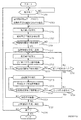
制御回路130の動作について図7に示すフローチャートを用いて説明する。制御回路130は、ドアパネル55a、55bが閉状態であるか否かを判断する(S701)。制御回路130は、ドアパネル55a、55bが閉状態であると判断すると、空間検知対応テーブルから、空間検知領域を形成する投光素子と受光素子の組み合わせを取得する(S703)。
Operation of
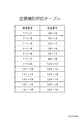
ここで、空間検知対応テーブルについて図8を用いて説明する。空間検知対応テーブルは、空間検知領域を形成する投光領域と受光領域との対応関係を示すテーブルである。空間検知対応テーブルは、投光素子列及び受光素子列を有している。投光素子列には、空間検知領域を形成する投光領域を生成する投光素子が記述される。受光素子列には、投光素子列に記述された投光素子ともに空間検知領域を形成する受光領域を形成する受光素子が記述される。 Here, the space detection correspondence table will be described with reference to FIG. The space detection correspondence table is a table showing a correspondence relationship between the light projecting area and the light receiving area forming the space detection area. The space detection correspondence table has a light projecting element array and a light receiving element array. In the light projecting element row, a light projecting element that generates a light projecting area that forms a space detection area is described. The light receiving element row describes a light receiving element that forms a light receiving region that forms a spatial detection region together with the light projecting elements described in the light projecting element row.
制御回路130は、スッテプS703で取得した投光素子を発光させる(S705)。制御回路130は、ステップS703で取得した投光素子に対応する受光素子から受光信号を取得する(S707)。
The
制御回路130は、取得した受光信号に基づき物体を検知していないと判断すると(S709)、ステップS705、S707の処理を繰り返す。これにより、ドアパネル55a、55bが閉状態にある場合には、空間検知領域での物体の検知が行われる。
When the
制御回路130は、ステップS707において、取得した受光信号に基づき物体を検知したと判断すると(S709)、ドアパネル55a、55bを開状態とする扉開情報を生成し、駆動装置へ送信する(711)。
If the
制御回路130は、一の投光素子を発光させる(S713)。制御回路130は、発光させた投光素子に対して床面検知領域を形成する受光素子から受光信号を取得する(S715)。制御回路130は、取得した受光信号に基づき、床面検知領域において物体を検知したと判断すると(S717)、順次、ステップS713〜S717の処理を実行する。
The
これにより、物体が閉状態でない場合には、床面検知領域での物体の検知が行われる。 Thereby, when the object is not in the closed state, the object is detected in the floor detection area.
制御回路130は、取得した受光信号に基づき、床面検知領域において物体を検知していないと判断すると(S717)、床面検知領域における投光素子、受光素子の全ての組み合わせについて、ステップS713〜S717の処理を繰り返す(S718)。これにより、物体が閉状態でない場合に、床面検知領域での物体の検知が行われる。
If the
制御回路130は、床面検知が終了したと判断すると、空間検知対応テーブルに記述されている投光素子の一つを発光させる(S719)。制御回路130は、空間検知対応テーブルにおいてステップS719で取得した投光素子に対応する受光素子から受光信号を取得する(S721)。
When the
制御回路130は、取得した受光信号に基づき物体を検知していないと判断すると(S723)、空間検知対応テーブルに記述されている投光素子、受光素子の全ての組み合わせについて、ステップS719〜S723の処理を繰り返す(S724)。これにより、物体が閉状態でない場合に、空間検知領域での物体の検知が行われる。
When determining that the object is not detected based on the acquired light reception signal (S723), the
制御回路130は、ドアパネル55a、55bが開状態となってから所定の時間が経過したか否かを判断する(725)。
The
制御回路130は、ドアパネル55a、55bが開状態となってから所定の時間が経過したと判断すると(725)、ドアパネル55a、55bを閉状態とする扉閉情報を生成し、駆動装置へ送信する(S727)。
When the
一方、制御回路130は、ドアパネル55a、55bが開状態となってから所定の時間が経過していないと判断すると(725)、順次、ステップS713〜S725の処理を実行する。
On the other hand, when the
これにより、物体が閉状態でない場合には、床面検知領域及び空間検知での物体の検知が行われる。このように、ドアパネル55a、55bの開閉状態によって空間検知領域での検知と床面検知領域での検知とを切り換えることによって、ドアパネル55a、55bが閉状態において床面F100の状態によって生ずるドアパネル55a、55bが開かない等の不具合を防止できると共に、ドアパネル55a、55bが開状態において床面F100に近い領域での検知を行うことによって、確実に物体を検出することができる。
Thereby, when the object is not in the closed state, the object is detected in the floor detection area and the space detection. Thus, by switching between detection in the space detection region and detection in the floor surface detection region depending on the open / closed state of the
[その他の実施例]
(1)床面検知領域R1〜R16 : 前述の実施例1においては、床面検知領域R1〜R16は、床面投光領域R111−1〜R111−16と床面受光領域R121−1〜R121−16とを矢印a3方向に互いにずらして形成し、両者の交差領域によって形成するとしたが、床面投光領域と床面受光領域との交差領域を形成できるものであれば、例示のものに限定されない。例えば、床面投光領域と床面受光領域とを完全に一致させるように形成してもよい。また、矢印a1方向(図1、図2参照)にずらして床面投光領域、床面受光領域を形成するようにしてもよい。また、床面投光領域、床面受光領域を任意の方向にずらして形成するようにしてもよい。
[Other Examples]
(1) Floor surface detection areas R1 to R16: In the above-described first embodiment, the floor surface detection areas R1 to R16 are the floor surface light projection areas R111-1 to R111-16 and the floor surface light reception areas R121-1 to R121. -16 are formed to be shifted from each other in the direction of the arrow a3 and formed by the intersection region between the two. However, if the intersection region between the floor surface light projection region and the floor surface light reception region can be formed, It is not limited. For example, you may form so that a floor surface light projection area | region and a floor surface light-receiving area may correspond completely. Moreover, you may make it form a floor surface light projection area | region and a floor surface light reception area | region, shifting to the arrow a1 direction (refer FIG. 1, FIG. 2). Further, the floor light projecting area and the floor light receiving area may be formed by shifting in an arbitrary direction.
(2)ドアパネル55a、55bの開状態における検知 : 前述の実施例1では、ドアパネル55a、55bの開状態においては、床面検知と空間検知とを併せて行うとしたが、床面検知のみを行うようにしてもよい。
(2) Detection in the open state of the
(3)投光ユニット110、受光ユニット120 : 前述の実施例1では、投光ユニット110は投光素子111−1〜111−16をマトリックス形状に配列するとしたが、所定の位置に投光領域L111−1〜L111−16を形成できるものであれば、例示のものに限定されない。受光ユニット120においても同様である。
(3)
(4)制御回路130の動作 : 前述の実施例1では、制御回路130の動作を図7に示すフローチャートにより実現するとしたが、ドアパネル55a、55bの開閉状態によって、空間検知、床面検知を切り換えることができるものであれば、例示のものに限定されない。
(4) Operation of the control circuit 130: In the first embodiment, the operation of the
(5)空間検知領域 : 前述の実施例1においては、投光領域L111−1〜L111−16と受光領域L121−1〜L121−16との交差領域のうち、空間Aにおいて最も下層に形成される交差領域を空間検知領域l1〜l12としたが、空間Aにおいて物体を検知できれば例示のものに限定されない。例えば、投光領域L111−1〜L111−16と受光領域L121−1〜L121−16とによって形成される交差領域を適当に組み合わせて空間検知領域を配置するようにしてもよい。 (5) Space detection area: In the above-described first embodiment, the space detection area is formed in the lowermost layer in the space A among the intersection areas of the light projection areas L111-1 to L111-16 and the light reception areas L121-1 to L121-16. However, the present invention is not limited to the illustrated example as long as an object can be detected in the space A. For example, the space detection area may be arranged by appropriately combining the intersection areas formed by the light projecting areas L111-1 to L111-16 and the light receiving areas L121-1 to L121-16.
(6)床面検知領域、空間検知領域の位置調整 : 前述の実施例1では、投光素子111−1〜111−16及び受光素子121−1〜121−16の位置関係、及び、投光素子111−1〜111−16の投光方向、受光素子121−1〜121−16の受光方向を固定していたが、これらを調整できるようにしてもよい。例えば、自動ドアセンサ100の設置作業者やユーザが、床面投光領域R111−1〜R111−16や床面受光領域R121−1〜R121−16等の位置を調整可能とするための調整手段を、自動ドアセンサ100に実装すればよい。その場合、投光素子、受光素子のいずれか、又は両者の投光方向や受光方向の角度の調整機能や、投光素子、受光素子のいずれか又は両者とレンズ113、123の位置の調整機能を付加すればよい。角度調整、位置調整を行うことで、投光領域と受光領域との交差領域の大きさを調整できる。また、投光領域と受光領域とを完全に一致させることもできる。さらに、調整量を示す目盛りを付加することによって、調整を容易にできる。
(6) Position adjustment of floor surface detection area and space detection area: In the first embodiment described above, the positional relationship between the light projecting elements 111-1 to 111-16 and the light receiving elements 121-1 to 121-16, and the light projection Although the light projecting direction of the elements 111-1 to 111-16 and the light receiving direction of the light receiving elements 121-1 to 121-16 are fixed, these may be adjusted. For example, an adjustment means for enabling an installation worker or a user of the
本発明に係る物体検出装置は、自動ドアシステムにおいて、人等の接近を検知するセンサとして用いることができる。
The object detection device according to the present invention can be used as a sensor for detecting the approach of a person or the like in an automatic door system.
100・・・・・自動ドアセンサ
110・・・・・投光ユニット
111−1〜111−16・・・・・投光素子
L111−1〜L111−16・・・投光領域
R111−1〜R111−16・・・床面投光領域
r111−1〜r111−16・・・断面投光領域
120・・・・・受光ユニット
121−1〜121−16・・・・・受光素子
L121−1〜L121−16・・・受光領域
R121−1〜R121−16・・・床面受光領域
r121−1〜r121−16・・・断面受光領域
R1〜R16・・・・床面検知領域
r1〜r12・・・・断面検知領域
l1〜l12・・・・空間検知領域
制御回路・・・・・130
DESCRIPTION OF
Claims (7)
前記床面に形成される第1の検知領域に対して検知光を投光する投光手段、
前記投光手段が前記第1の検知領域に対して投光した前記検知光について、前記第1の検知領域からの第1の反射光を受光する第1の受光手段、
前記投光手段が前記第1の検知領域に対して投光した前記検知光について、前記空間に形成される第2の検知領域からの第2の反射光を受光する第2の受光手段、
前記第1の受光手段又は前記第2の受光手段のそれぞれにおける前記第1の反射光又は前記第2の反射光の受光量の変化から、前記第1の検知領域又は前記第2の検知領域に物体が存在すると判断すると、前記扉を開状態とする開状態情報を生成する扉開閉制御手段、
前記扉が閉状態であるときに、前記第2の受光手段に前記第2の反射光を受光させ、前記第2の検知領域に物体が存在するとの判断に基づき前記第1の受光手段に前記第1の反射光を受光させる受光制御手段、
を有する物体検出装置。 An object detection device for detecting the presence of an object in a space on a predetermined floor and controlling opening and closing of a door,
Projection means for projecting detection light to the first detection area formed on the floor surface,
A first light receiving unit configured to receive a first reflected light from the first detection region with respect to the detection light projected by the light projecting unit onto the first detection region;
A second light receiving means for receiving the second reflected light from the second detection area formed in the space with respect to the detection light projected by the light projecting means to the first detection area;
From the change in the amount of received light of the first reflected light or the second reflected light in each of the first light receiving means or the second light receiving means, the first detection area or the second detection area. When it is determined that an object exists, door opening / closing control means for generating open state information for opening the door,
When the door is in a closed state, the second light receiving unit receives the second reflected light, and the first light receiving unit receives the second detection light based on the determination that an object is present in the second detection region. A light receiving control means for receiving the first reflected light;
An object detection apparatus having
前記受光制御装置は、
前記第2の検知領域に物体が存在するとの判断に基づき、さらに、前記第2の受光手段に前記第2の反射光を受光させること、
を特徴とする物体検出装置。 In the object detection apparatus according to claim 1,
The light reception control device includes:
Based on the determination that an object is present in the second detection region, the second light receiving means further receives the second reflected light.
An object detection device characterized by.
前記投光手段及び前記第1の受光手段を複数有し、
前記第2の受光手段は、
一の前記投光手段に対応する前記第1の受光手段とは異なる前記第1の受光手段であること、
を特徴とする物体検出装置。 In the object detection device according to claim 1 or 2,
A plurality of the light projecting means and the first light receiving means;
The second light receiving means is
The first light receiving means different from the first light receiving means corresponding to the one light projecting means,
An object detection device characterized by.
前記投光手段及び前記第1の受光手段は、それぞれマトリックス形状に配置されていること、
を特徴とする物体検出装置。 In the object detection apparatus according to claim 3,
The light projecting means and the first light receiving means are each arranged in a matrix shape;
An object detection device characterized by.
前記マトリックス形状に配置された前記投光手段が前記床面に形成する投光領域と、前記マトリックス形状に配置された前記第1の受光手段が前記床面に形成する受光領域とは、所定の方向にずれて形成されており、前記投光領域と前記受光領域との交差領域によって前記検知領域を形成すること、
を特徴とする物体検出装置。 In the object detection apparatus according to claim 4,
The light projecting area formed on the floor surface by the light projecting means arranged in the matrix shape and the light receiving area formed on the floor surface by the first light receiving means arranged in the matrix shape are predetermined Formed in a direction, the detection region is formed by the intersection region of the light projection region and the light receiving region,
An object detection device characterized by.
前記投光手段及び前記受光手段の相対的位置関係を調整することができること、
を特徴とする物体検出装置。 In any one of the object detection apparatuses according to claims 1 to 5,
The relative positional relationship between the light projecting means and the light receiving means can be adjusted;
An object detection device characterized by.
前記検知光の投光方向、前記第1の反射光及び前記第2の反射光の受光方向、又はその両方を調整することができること、
を特徴とする物体検出装置。
In any one of the object detection apparatus which concerns on Claims 1-6,
The light projecting direction of the detection light, the light receiving direction of the first reflected light and the second reflected light, or both can be adjusted,
An object detection device characterized by.
Priority Applications (1)
| Application Number | Priority Date | Filing Date | Title |
|---|---|---|---|
| JP2010107776A JP5668214B2 (en) | 2010-05-07 | 2010-05-07 | Object detection device |
Applications Claiming Priority (1)
| Application Number | Priority Date | Filing Date | Title |
|---|---|---|---|
| JP2010107776A JP5668214B2 (en) | 2010-05-07 | 2010-05-07 | Object detection device |
Publications (2)
| Publication Number | Publication Date |
|---|---|
| JP2011237232A true JP2011237232A (en) | 2011-11-24 |
| JP5668214B2 JP5668214B2 (en) | 2015-02-12 |
Family
ID=45325390
Family Applications (1)
| Application Number | Title | Priority Date | Filing Date |
|---|---|---|---|
| JP2010107776A Expired - Fee Related JP5668214B2 (en) | 2010-05-07 | 2010-05-07 | Object detection device |
Country Status (1)
| Country | Link |
|---|---|
| JP (1) | JP5668214B2 (en) |
Cited By (5)
| Publication number | Priority date | Publication date | Assignee | Title |
|---|---|---|---|---|
| JP2014157124A (en) * | 2013-02-18 | 2014-08-28 | Sumitomo Electric Ind Ltd | Person detection device |
| JP2017519289A (en) * | 2014-05-21 | 2017-07-13 | ユニバーサル シティ スタジオズ リミテッド ライアビリティ カンパニー | System and method for tracking vehicles in parking structures and intersections |
| JP2018137335A (en) * | 2017-02-22 | 2018-08-30 | 株式会社本田電子技研 | Automatic door open / close control sensor |
| JP2019091457A (en) * | 2014-05-21 | 2019-06-13 | ユニバーサル シティ スタジオズ リミテッド ライアビリティ カンパニー | Ride vehicle tracking and control system using passive tracking element |
| JP2020200625A (en) * | 2019-06-07 | 2020-12-17 | 太平洋セメント株式会社 | Concrete filling detection sensor and filling detection method for concrete |
Families Citing this family (1)
| Publication number | Priority date | Publication date | Assignee | Title |
|---|---|---|---|---|
| CN109339626B (en) * | 2018-09-26 | 2020-08-18 | 安徽龙运智能科技有限公司 | Integrated intelligent control device for interior and exterior windows |
Citations (5)
| Publication number | Priority date | Publication date | Assignee | Title |
|---|---|---|---|---|
| JPS60120192U (en) * | 1984-01-24 | 1985-08-14 | セルコ株式会社 | Automatic door sensor device |
| JPH01109287A (en) * | 1987-10-22 | 1989-04-26 | Nippon Air Brake Co Ltd | Automatic door opening and closing device |
| JPH02297091A (en) * | 1989-05-12 | 1990-12-07 | Matsushita Electric Works Ltd | Human body detector |
| JP2002322872A (en) * | 2001-04-27 | 2002-11-08 | Optex Co Ltd | Automatic door sensor |
| JP2006144244A (en) * | 2004-11-16 | 2006-06-08 | Optex Co Ltd | Automatic door sensor and opening-closing control method of automatic door |
-
2010
- 2010-05-07 JP JP2010107776A patent/JP5668214B2/en not_active Expired - Fee Related
Patent Citations (5)
| Publication number | Priority date | Publication date | Assignee | Title |
|---|---|---|---|---|
| JPS60120192U (en) * | 1984-01-24 | 1985-08-14 | セルコ株式会社 | Automatic door sensor device |
| JPH01109287A (en) * | 1987-10-22 | 1989-04-26 | Nippon Air Brake Co Ltd | Automatic door opening and closing device |
| JPH02297091A (en) * | 1989-05-12 | 1990-12-07 | Matsushita Electric Works Ltd | Human body detector |
| JP2002322872A (en) * | 2001-04-27 | 2002-11-08 | Optex Co Ltd | Automatic door sensor |
| JP2006144244A (en) * | 2004-11-16 | 2006-06-08 | Optex Co Ltd | Automatic door sensor and opening-closing control method of automatic door |
Cited By (8)
| Publication number | Priority date | Publication date | Assignee | Title |
|---|---|---|---|---|
| JP2014157124A (en) * | 2013-02-18 | 2014-08-28 | Sumitomo Electric Ind Ltd | Person detection device |
| JP2017519289A (en) * | 2014-05-21 | 2017-07-13 | ユニバーサル シティ スタジオズ リミテッド ライアビリティ カンパニー | System and method for tracking vehicles in parking structures and intersections |
| JP2019091457A (en) * | 2014-05-21 | 2019-06-13 | ユニバーサル シティ スタジオズ リミテッド ライアビリティ カンパニー | Ride vehicle tracking and control system using passive tracking element |
| JP2019109933A (en) * | 2014-05-21 | 2019-07-04 | ユニバーサル シティ スタジオズ リミテッド ライアビリティ カンパニー | System and method for tracking vehicles in parking structures and intersections |
| JP2018137335A (en) * | 2017-02-22 | 2018-08-30 | 株式会社本田電子技研 | Automatic door open / close control sensor |
| JP7049769B2 (en) | 2017-02-22 | 2022-04-07 | 株式会社本田電子技研 | Sensor for automatic door open / close control |
| JP2020200625A (en) * | 2019-06-07 | 2020-12-17 | 太平洋セメント株式会社 | Concrete filling detection sensor and filling detection method for concrete |
| JP7288809B2 (en) | 2019-06-07 | 2023-06-08 | 太平洋セメント株式会社 | Concrete filling detection sensor, concrete filling detection method |
Also Published As
| Publication number | Publication date |
|---|---|
| JP5668214B2 (en) | 2015-02-12 |
Similar Documents
| Publication | Publication Date | Title |
|---|---|---|
| JP5668214B2 (en) | Object detection device | |
| RU2619065C2 (en) | Commissioning of lighting systems | |
| US7741597B2 (en) | Motion sensor with LED alignment aid | |
| RU2536751C2 (en) | Automatic adjustment of lighting | |
| US20130145610A1 (en) | Commissioning of a building service system | |
| US20150009332A1 (en) | Apparatus, method and system for monitoring presence of persons in an area | |
| US11131747B2 (en) | Systems and methods for remotely controlled device position and orientation determination | |
| JP6999299B2 (en) | Lighting control method and equipment | |
| JP2012204269A (en) | Lighting control system | |
| JP5547531B2 (en) | Object detection device | |
| WO2014108815A2 (en) | Lighting control analyzer | |
| JP2013008453A (en) | Lighting system | |
| JP5938188B2 (en) | Object detection device that can freely set the detection range | |
| US12442690B2 (en) | Systems and methods for people counting using beam-forming passive infrared sensors having a dynamically configurable field of view | |
| JP2009115792A (en) | Active object detection device | |
| JP5903716B2 (en) | Active object detection device | |
| KR20190012443A (en) | Method of controlling image based on illuminance sensing and robot implementing thereof | |
| US20150084522A1 (en) | Lighting Control System and Lighting Control Method | |
| CN119856145A (en) | Position tracking system and method for head-mounted display system | |
| JP5191786B2 (en) | Automatic door sensor | |
| JP2017211289A (en) | Infrared source detection system, infrared source detection apparatus, and infrared source detection method | |
| JP2012155648A (en) | Guiding panel and guiding system | |
| CN119756595B (en) | Pyroelectric lens system and detection method of target detection object | |
| KR20120133512A (en) | Tracking cctv | |
| KR20090096138A (en) | Temperature control system for ondol heating using multiple temperature sensors |
Legal Events
| Date | Code | Title | Description |
|---|---|---|---|
| A621 | Written request for application examination |
Free format text: JAPANESE INTERMEDIATE CODE: A621 Effective date: 20130501 |
|
| A977 | Report on retrieval |
Free format text: JAPANESE INTERMEDIATE CODE: A971007 Effective date: 20140130 |
|
| A131 | Notification of reasons for refusal |
Free format text: JAPANESE INTERMEDIATE CODE: A131 Effective date: 20140218 |
|
| A521 | Request for written amendment filed |
Free format text: JAPANESE INTERMEDIATE CODE: A523 Effective date: 20140421 |
|
| TRDD | Decision of grant or rejection written | ||
| A01 | Written decision to grant a patent or to grant a registration (utility model) |
Free format text: JAPANESE INTERMEDIATE CODE: A01 Effective date: 20141104 |
|
| A61 | First payment of annual fees (during grant procedure) |
Free format text: JAPANESE INTERMEDIATE CODE: A61 Effective date: 20141113 |
|
| R150 | Certificate of patent or registration of utility model |
Ref document number: 5668214 Country of ref document: JP Free format text: JAPANESE INTERMEDIATE CODE: R150 |
|
| R250 | Receipt of annual fees |
Free format text: JAPANESE INTERMEDIATE CODE: R250 |
|
| R250 | Receipt of annual fees |
Free format text: JAPANESE INTERMEDIATE CODE: R250 |
|
| R250 | Receipt of annual fees |
Free format text: JAPANESE INTERMEDIATE CODE: R250 |
|
| R250 | Receipt of annual fees |
Free format text: JAPANESE INTERMEDIATE CODE: R250 |
|
| R250 | Receipt of annual fees |
Free format text: JAPANESE INTERMEDIATE CODE: R250 |
|
| R250 | Receipt of annual fees |
Free format text: JAPANESE INTERMEDIATE CODE: R250 |
|
| LAPS | Cancellation because of no payment of annual fees |