JP2011240468A - Contact type discriminating system for robot - Google Patents
Contact type discriminating system for robot Download PDFInfo
- Publication number
- JP2011240468A JP2011240468A JP2010117132A JP2010117132A JP2011240468A JP 2011240468 A JP2011240468 A JP 2011240468A JP 2010117132 A JP2010117132 A JP 2010117132A JP 2010117132 A JP2010117132 A JP 2010117132A JP 2011240468 A JP2011240468 A JP 2011240468A
- Authority
- JP
- Japan
- Prior art keywords
- feature amount
- robot
- contact
- contact type
- component
- Prior art date
- Legal status (The legal status is an assumption and is not a legal conclusion. Google has not performed a legal analysis and makes no representation as to the accuracy of the status listed.)
- Pending
Links
Images


Landscapes
- Manipulator (AREA)
Abstract
【課題】簡単な構成で接触の種類を判別することができるロボットの接触種類判別システムを提供する。
【解決手段】本発明に係るロボットの接触種類判別システム100は、ロボット1への接触によって外力が作用する際に、接触の種類を判別する接触種類判別システムである。接触種類判別システム100は、ロボット1に搭載された、外力の力学特性を示す3軸方向以上の成分を検出する第1の検出部110と、第1の検出部110の検出結果に基づいて特徴量を算出する特徴量算出部152と、特徴量と予め接触の種類に対応するように取得したサンプル特徴量とをパターンマッチングし、ロボット1への接触の種類を判別する接触種類判別部153と、を備える。
【選択図】図2A contact type discrimination system for a robot capable of discriminating the type of contact with a simple configuration.
A robot contact type discrimination system according to the present invention is a contact type discrimination system that discriminates a contact type when an external force is applied by contact with a robot. The contact type discriminating system 100 is characterized by a first detection unit 110 that is mounted on the robot 1 and that detects components in three or more directions indicating the dynamic characteristics of external force, and a detection result of the first detection unit 110. A feature amount calculation unit 152 that calculates the amount, a contact type determination unit 153 that pattern-matches the feature amount and the sample feature amount acquired in advance so as to correspond to the type of contact, and determines the type of contact with the robot 1; .
[Selection] Figure 2
Description
本発明は、ロボットの接触種類判別システム及び当該接触種類判別システムを備えたロボット、ロボットの接触種類判別方法に関する。 The present invention relates to a robot contact type discrimination system, a robot including the contact type discrimination system, and a robot contact type discrimination method.
従来からロボットへの接触を検出することが可能なロボットが開示されている。例えば、特許文献1乃至4のロボットは、外郭表面に所謂タッチセンサを設けることで、ロボットへの人の接触を検出する構成とされている。
Conventionally, a robot capable of detecting contact with a robot has been disclosed. For example, the robots of
しかし、例えばアーム部への接触を検出するには、アーム部全域にタッチセンサを設ける必要がある。そのため、配線の取り回しが複雑になったり、タッチセンサからの検出結果の処理が複雑になったりする。 However, for example, in order to detect contact with the arm portion, it is necessary to provide a touch sensor over the entire arm portion. For this reason, the wiring arrangement becomes complicated, and the processing of the detection result from the touch sensor becomes complicated.
そこで、特許文献5のロボットは、関節部に各軸トルクセンサを設け、各軸トルクセンサからの出力の変化に基づいてアーム部への接触を検出する。
Therefore, the robot of
ロボットハンドを有するアーム部に人が接触する場合としては、握手する場合、ハンド部を握って引っ張る場合、ハンド部を握ってロボットを誘導する場合、ハンド部に物を手渡す場合、アーム部を叩く場合等が想定される。
しかし、特許文献5のロボットは、単にロボットへの接触があったか否かを検出することができる構成とされているだけで、接触の種類を判別することができる構成とされていない。
When a person comes into contact with an arm unit having a robot hand, when shaking hands, holding and pulling the hand unit, guiding the robot by holding the hand unit, handing an object to the hand unit, hitting the arm unit Cases are assumed.
However, the robot disclosed in
本発明の目的は、このような問題を解決するためになされたものであり、簡単な構成で接触の種類を判別することができるロボットの接触種類判別システム及び当該接触種類判別システムを備えたロボット、並びにロボットの接触種類判別方法を提供することである。 An object of the present invention is made to solve such a problem, and is a robot contact type discrimination system capable of discriminating the type of contact with a simple configuration, and a robot equipped with the contact type discrimination system. And a method for discriminating the contact type of a robot.
本発明に係るロボットの接触種類判別システムは、ロボットへの接触によって外力が作用する際に、前記接触の種類を判別する接触種類判別システムであって、前記ロボットに搭載された、前記外力の力学特性を示す3軸方向以上の成分を検出する第1の検出部と、前記第1の検出部の検出結果に基づいて特徴量を算出する特徴量算出部と、前記特徴量と、予め前記接触の種類に対応するように取得したサンプル特徴量と、をパターンマッチングし、前記ロボットへの接触の種類を判別する接触種類判別部と、を備える。
このように、第1の検出部として外力の力学特性を示す3軸方向以上の成分を検出可能な力センサを用いることにより、少ないセンサでロボットへの接触の種類を判別可能とした。そのため、ロボットの構成の簡素化に寄与できる。すなわち、配線の本数を減少でき、しかも演算量を軽減することができる。
A contact type determination system for a robot according to the present invention is a contact type determination system for determining the type of contact when an external force is applied by contact with the robot, and is a dynamic type of the external force mounted on the robot. A first detection unit that detects components in three or more axial directions indicating characteristics; a feature amount calculation unit that calculates a feature amount based on a detection result of the first detection unit; the feature amount; and the contact in advance A contact type determining unit that pattern-matches the sample feature amounts acquired so as to correspond to the type of the robot and determines the type of contact with the robot.
As described above, by using a force sensor capable of detecting components in three or more axial directions indicating the dynamic characteristics of external force as the first detection unit, it is possible to determine the type of contact with the robot with a small number of sensors. Therefore, it can contribute to simplification of the configuration of the robot. That is, the number of wirings can be reduced and the amount of calculation can be reduced.
前記特徴量算出部は、前記第1の検出部が検出した前記外力の力学特性である力成分の水平成分と鉛直成分を算出し、算出した前記水平成分と前記鉛直成分とを特徴量とし、前記接触種類判別部は、予め前記接触の種類及び前記特徴量に対応するように取得した、外力の力学特性である力成分の水平成分と鉛直成分とをサンプル特徴量に用いて、前記特徴量と、前記サンプル特徴量と、をパターンマッチングし、前記ロボットへの接触の種類を判別すること、が好ましい。
このとき、前記特徴量算出部は、前記水平成分と前記鉛直成分との微分成分及び積分成分を特徴量とすること、が好ましい。
The feature amount calculation unit calculates a horizontal component and a vertical component of a force component that are mechanical characteristics of the external force detected by the first detection unit, and uses the calculated horizontal component and the vertical component as a feature amount. The contact type determination unit uses the horizontal component and the vertical component of the force component, which are mechanical characteristics of external force, acquired in advance so as to correspond to the contact type and the feature amount, as the sample feature amount, and the feature amount. It is preferable to pattern-match the sample feature quantity and determine the type of contact with the robot.
At this time, it is preferable that the feature quantity calculation unit uses a differential component and an integral component of the horizontal component and the vertical component as a feature quantity.
または、前記特徴量算出部は、前記第1の検出部が検出した前記外力の力学特性であるモーメントの水平軸回りの成分と鉛直軸回りの成分を算出し、算出した前記水平軸回りの成分と前記鉛直軸回りの成分とを特徴量とし、前記接触種類判別部は、予め前記接触の種類及び前記特徴量に対応するように取得した、外力の力学特性であるモーメントの水平軸回りの成分と鉛直軸回りの成分とをサンプル特徴量に用いて、前記特徴量と、前記サンプル特徴量と、をパターンマッチングし、前記ロボットへの接触の種類を判別すること、が好ましい。
このとき、前記特徴量算出部は、前記水平軸回り成分と前記鉛直軸回り成分との微分成分及び積分成分を特徴量とすること、が好ましい。
Alternatively, the feature amount calculation unit calculates a component around the horizontal axis and a component around the vertical axis of the moment, which is a mechanical characteristic of the external force detected by the first detection unit, and calculates the calculated component around the horizontal axis And the component around the vertical axis as a feature amount, and the contact type determination unit acquires in advance the component around the horizontal axis of the moment, which is the mechanical characteristic of the external force, acquired so as to correspond to the type of contact and the feature amount. It is preferable that the feature amount and the sample feature amount are pattern-matched using the component around the vertical axis and the component around the vertical axis as the sample feature amount to determine the type of contact with the robot.
At this time, it is preferable that the feature amount calculation unit uses a differential component and an integral component of the component around the horizontal axis and the component around the vertical axis as the feature amount.
または、前記特徴量算出部は、前記第1の検出部が検出した前記外力の力学特性である力成分の値をフーリエ変換して算出した前記外力の周波数特性を特徴量とし、前記接触種類判別部は、予め前記接触の種類及び前記特徴量に対応するように取得した、外力の周波数特性をサンプル特徴量に用いて、前記特徴量と、前記サンプル特徴量と、をパターンマッチングし、前記ロボットへの接触の種類を判別すること、が好ましい。
このとき、前記特徴量算出部は、前記外力の周波数特性の微分成分及び積分成分を特徴量とすること、が好ましい。
Alternatively, the feature quantity calculation unit uses the frequency characteristic of the external force calculated by Fourier transforming the value of the force component, which is the dynamic characteristic of the external force detected by the first detection unit, as the feature quantity, and determines the contact type The pattern matching is performed on the feature quantity and the sample feature quantity using the frequency characteristics of the external force acquired in advance so as to correspond to the type of contact and the feature quantity as the sample feature quantity, and the robot It is preferable to discriminate the type of contact.
At this time, it is preferable that the feature amount calculation unit uses the differential component and the integral component of the frequency characteristic of the external force as the feature amount.
または、前記特徴量算出部は、前記第1の検出部が検出した前記外力を示すベクトルを通る直線と前記ロボットの表面の交点又は前記外力が作用する位置を算出し、算出した前記交点又は前記位置を特徴量とし、前記接触種類判別部は、予め前記接触の種類及び前記特徴量に対応するように取得した、外力を示すベクトルを通る直線と前記ロボットの表面の交点又は外力が作用する位置をサンプル特徴量に用いて、前記特徴量と、前記サンプル特徴量と、をパターンマッチングし、前記ロボットへの接触の種類を判別すること、が好ましい。 Alternatively, the feature amount calculation unit calculates an intersection of a straight line passing through a vector indicating the external force detected by the first detection unit and the surface of the robot or a position where the external force acts, and calculates the intersection or the calculated The position where the position is a feature amount, and the contact type determination unit is obtained in advance so as to correspond to the type of contact and the feature amount. Is preferably used as a sample feature amount, and the feature amount and the sample feature amount are pattern-matched to determine the type of contact with the robot.
加えて、前記特徴量算出部は、前記ロボットの所定部位における予め設定されている目標位置の軌道からの変位を算出し、算出した前記変位を特徴量とし、前記接触種類判別部は、予め前記接触の種類及び前記特徴量に対応するように取得した、前記ロボットの所定部位における予め設定されている目標位置の軌道からの変位をサンプル特徴量に用いて、前記特徴量と、前記サンプル特徴量と、をパターンマッチングし、前記ロボットへの接触の種類を判別すること、が好ましい。 In addition, the feature amount calculation unit calculates a displacement from a trajectory of a predetermined target position in a predetermined part of the robot, uses the calculated displacement as a feature amount, and the contact type determination unit The feature amount and the sample feature amount are obtained by using, as a sample feature amount, a displacement from a trajectory of a preset target position at a predetermined part of the robot, which is acquired so as to correspond to the type of contact and the feature amount. And pattern matching to determine the type of contact with the robot.
さらに、前記ロボットの周辺情報を検出する第2の検出部を備え、前記特徴量算出部は、前記第2の検出部の検出結果に基づいて、前記ロボットに接触する人の顔の位置又は顔の向き又は手の位置又は手の向きの少なくとも一つを算出し、前記顔の位置又は前記顔の向き又は前記手の位置又は前記手の向きの少なくとも一つを特徴量とし、前記接触種類判別部は、予め前記接触の種類及び前記特徴量に対応するように取得した、人の顔の位置又は顔の向き又は手の位置又は手の向きの少なくとも一つをサンプル特徴量に用いて、前記特徴量と、前記サンプル特徴量と、をパターンマッチングし、前記ロボットへの接触の種類を判別すること、が好ましい。
このとき、前記特徴量算出部は、前記顔の位置又は前記顔の向き又は前記手の位置又は前記手の向きの少なくとも一つの微分成分及び積分成分を特徴量とすること、が好ましい。
Furthermore, a second detection unit that detects peripheral information of the robot is provided, and the feature amount calculation unit is configured to detect the position or face of a person's face in contact with the robot based on the detection result of the second detection unit. At least one of the orientation of the hand, the position of the hand or the orientation of the hand, and the contact type determination using at least one of the face position or the face orientation or the hand position or the hand orientation as a feature amount The part is acquired in advance so as to correspond to the type of contact and the feature amount, and uses at least one of a human face position or face orientation or hand position or hand orientation as a sample feature amount, and It is preferable to perform pattern matching between the feature quantity and the sample feature quantity to determine the type of contact with the robot.
At this time, it is preferable that the feature quantity calculation unit uses at least one differential component and integral component of the face position or the face orientation or the hand position or the hand orientation as a feature quantity.
さらに、人の音声を検出する第3の検出部を備え、前記特徴量算出部は、前記第3の検出部の検出結果に基づいて音声認識を行い、音声の大きさ又は単語の使用頻度又は会話の内容を特徴量とし、前記接触種類判別部は、予め前記接触の種類及び前記特徴量に対応するように取得した、音声の大きさ又は単語の使用頻度又は会話の内容をサンプル特徴量に用いて、前記特徴量と、前記サンプル特徴量と、をパターンマッチングし、前記ロボットへの接触の種類を判別すること、が好ましい。 Furthermore, a third detection unit that detects human voice is provided, and the feature amount calculation unit performs voice recognition based on a detection result of the third detection unit, and determines a voice size or a word usage frequency or The content of conversation is used as a feature amount, and the contact type determination unit uses, as a sample feature amount, the volume of speech, the frequency of use of words, or the content of conversation acquired in advance so as to correspond to the type of contact and the feature amount. Preferably, the feature quantity and the sample feature quantity are pattern-matched to determine the type of contact with the robot.
前記接触種類判別部は、MTシステム、又はk−NN法、又はSVMを用いて、前記特徴量と、前記サンプル特徴量と、をパターンマッチングすること、が好ましい。 The contact type determination unit preferably performs pattern matching between the feature quantity and the sample feature quantity using an MT system, a k-NN method, or SVM.
前記第1乃至3のいずれかの検出部の検出結果に基づいて、前記パターンマッチングする前記サンプル特徴量を選定するマッチング選定部を備えること、が好ましい。
本発明に係るロボットは、上述のロボットの接触種類判別システムを備える。
It is preferable that a matching selection unit that selects the sample feature quantity to be subjected to the pattern matching is provided based on a detection result of any one of the first to third detection units.
A robot according to the present invention includes the above-described robot contact type discrimination system.
本発明に係るロボットの接触種類判別方法は、ロボットへの接触によって外力が作用する際に、前記接触の種類を判別する接触種類判別方法であって、前記外力が作用する位置より前記ロボットの基幹側に配置された、前記外力の力学特性を示す3軸方向以上の成分を検出する第1の検出部の検出結果に基づいて特徴量を算出する工程と、前記特徴量と、予め前記接触の種類に対応するように取得したサンプル特徴量と、をパターンマッチングし、前記ロボットへの接触の種類を判別する工程と、を備える。
このように、第1の検出部として外力の力学特性を示す3軸方向以上の成分を検出可能な力センサを用いることにより、少ないセンサでロボットへの接触の種類を判別可能とした。そのため、ロボットの構成の簡素化に寄与できる。すなわち、配線の本数を減少でき、しかも演算量を軽減することができる。
ここで、前記特徴量を算出する工程は、前記第1の検出部の検出結果をダウンサンプリングして得た結果に基づいて特徴量を算出する工程を備えること、が好ましい。
The contact type determination method for a robot according to the present invention is a contact type determination method for determining the type of contact when an external force is applied by contact with the robot, and is based on a position of the robot based on a position at which the external force is applied. A step of calculating a feature amount based on a detection result of a first detection unit that is disposed on a side and detects a component in three or more axial directions indicating the mechanical characteristics of the external force; the feature amount; Pattern matching the sample feature quantities acquired so as to correspond to the types, and determining the type of contact with the robot.
As described above, by using a force sensor capable of detecting components in three or more axial directions indicating the dynamic characteristics of external force as the first detection unit, it is possible to determine the type of contact with the robot with a small number of sensors. Therefore, it can contribute to simplification of the configuration of the robot. That is, the number of wirings can be reduced and the amount of calculation can be reduced.
Here, it is preferable that the step of calculating the feature amount includes a step of calculating the feature amount based on a result obtained by down-sampling the detection result of the first detection unit.
以上、説明したように、本発明によると、簡単な構成で接触の種類を判別することができる。 As described above, according to the present invention, the type of contact can be determined with a simple configuration.
以下、本発明を実施するための最良の形態について、添付図面を参照しながら説明する。
但し、本発明が以下の実施の形態に限定される訳ではない。また、説明を明確にするため、以下の記載及び図面は、適宜、簡略化されている。
The best mode for carrying out the present invention will be described below with reference to the accompanying drawings.
However, the present invention is not limited to the following embodiment. In addition, for clarity of explanation, the following description and drawings are simplified as appropriate.
<第1の実施の形態>
本発明に係る第1の実施の形態のロボットの接触種類判別システム及び当該接触種類判別システムを備えたロボット、ロボットの接触種類判別方法を、以下に説明する。
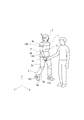
本実施の形態のロボット1は、図1に示すように、所謂ヒューマノイドロボットである。ロボット1は、頭部2、胴体部3、アーム部4、脚部5等を備える。ロボット1は、頭部2と胴体部3、胴体部3とアーム部4、アーム部4と脚部5の連結部が可動な構成とされている。アーム部4は、ハンド部4a、下腕部4b、上腕部4c等を備え、各関節部が可動な構成とされている。脚部5は、足部5a、下腿部5b、上腿部5c等を備え、各関節部が可動な構成とされている。なお、ロボット1は、ヒューマノイドロボットに限定されない。
<First Embodiment>
A robot contact type discrimination system, a robot provided with the contact type discrimination system, and a robot contact type discrimination method according to the first embodiment of the present invention will be described below.
The
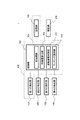
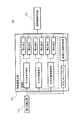
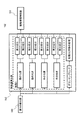
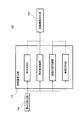
このロボット1の制御系は、図2に示すように、第1の検出部110、第2の検出部120、第3の検出部130、第4の検出部140、制御部150、記憶部160、駆動部170を備える。このようなロボット1の要素を用いてロボットの接触種類判別システム(以下、単に接触種類判別システムと云う場合がある。)100は実現できる。すなわち、接触種類判別システム100は、第1の検出部110、制御部150、記憶部160を備える。なお、第2の検出部120、第3の検出部130、第4の検出部140の説明は、他の実施の形態で説明する。
As shown in FIG. 2, the control system of the
第1の検出部110は、外力の力学特性を示す3軸方向(X・Y・Z軸方向)以上の成分を検出可能な力センサである。本実施の形態の第1の検出部110としては、6軸力センサを用いている。6軸力センサは、X・Y・Z軸方向の力成分に加えて、X軸回りのモーメント、Y軸回りのモーメント、Z軸回りのモーメントを検出する。第1の検出部110は、検出した検出結果(検出信号)を制御部150に出力する。第1の検出部110は、1か所に作用する外力が複数の第1の検出部110に分散して伝わらず、1か所の第1の検出部110で略全て検出することができる部分に配置される。例えば、第1の検出部110は、ロボット1の手首部分、上腕部分、足裏と足首との間の部分にそれぞれ配置される。
The
制御部150は、前処理部151、特徴量算出部152、接触種類判別部153を備える。制御部150には、第1の検出部110から検出信号が入力される。制御部150は、CPU(Central Processing Unit)、ROM(Read Only Memory)、RAM(Random Access Memory)等を有する演算処理装置である。
The
前処理部151は、第1の検出部110から入力される検出信号を平坦化するために、当該検出信号をフィルタリングするローパスフィルタである。前処理部151は、平坦化した検出信号を特徴量算出部152に出力する。
The
特徴量算出部152は、前処理部151から入力される検出信号に基づいて特徴量を算出する。例えば、特徴量算出部152は、前処理部151から入力される検出信号に基づいて、人が接触して作用した外力の力学特性である力成分の水平成分と鉛直成分を算出する。具体的に云うと、特徴量算出部152は、図3に示すように、第1の検出部110が検出した3軸方向の力成分をワールド座標系に置き換える。そして、特徴量算出部152は、ワールド座標系に置き換えた3軸方向の力成分に基づいて、外力の水平成分(X軸とY軸とを含む平面上に作用する外力の分割成分)と鉛直成分(X軸とZ軸とを含む平面上に作用する外力の分割成分)とを算出する。なお、図3は、本実施の形態の接触種類判別システムの処理動作の主要部のみを示している。
The feature
特徴量算出部152は、上述のように外力のワールド座標系での水平成分と鉛直成分をまとめてベクトルSfiltered(t)とし、当該ベクトルSfiltered(t)に対する微分成分udiff(t)及び積分成分uinteg(t)を算出する。
ここで、微分成分udiff(t)は[数1]で表され、積分成分uinteg(t)は[数2]で表される。

Here, the differential component u diff (t) is expressed by [ Equation 1], and the integral component u integ (t) is expressed by [ Equation 2].
特徴量算出部152は、微分成分udiff(t)及び積分成分uinteg(t)を特徴量とし、[数3]に示すようにベクトルuとする。
特徴量算出部152は、少なくてとも前処理部151から検出信号が入力されている間、断続的に上述の処理を行う。特徴量算出部152は、ベクトルuを接触種類判別部153に出力する。
The feature
接触種類判別部153は、特徴量と、予め接触の種類に対応するように取得したサンプル特徴量と、をパターンマッチングし、ロボット1への接触の種類を判別する。ここで、接触種類判別部153は、例えばMT(マハラノビス・タグチ)システムを用いて、ロボット1への接触の種類を判別する。
The contact
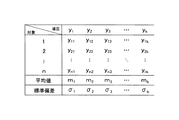
すなわち、接触種類判別部153は、記憶部160からサンプル特徴量を読み出す。記憶部160には、接触の種類に対応するサンプル特徴量が格納されている。例えば、判別するロボット1への接触の種類として、握手する場合、ハンド部4aを握って引っ張る場合、ハンド部4aを握ってロボット1を誘導する場合、ハンド部4aに物を手渡す場合、アーム部4を叩く場合を想定する。ここで、人がハンド部4aを握って握手し、そのときに作用する外力の力学特性である力成分のワールド座標系での水平成分と鉛直成分の微分成分及び積分成分をサンプル特徴量としたベクトルyを算出する。このベクトルyは例えば10ミリ秒毎(但し、算出間隔は任意に設定できる。)に算出し、そのときのベクトルyの平均値m、標準偏差σを算出する。この平均値m、標準偏差σ、及び[数4]を用いて基準化する。そのため、特徴量算出部152は、ベクトルyに対応するようにベクトルuを10ミリ秒毎に算出する。
但し、i(i=1,2,・・・n)は、10ミリ秒毎にベクトルyを算出する際の算出順番を示す。j(j=1,2,・・・k)は、一つの接触の種類において複数回サンプリング(例えば、握手を複数回サンプリング)する際のサンプリングの順番を示している。
That is, the contact
Here, i (i = 1, 2,... N) indicates the calculation order when the vector y is calculated every 10 milliseconds. j (j = 1, 2,..., k) indicates the sampling order when sampling a plurality of times (for example, sampling a handshake a plurality of times) for one contact type.
[数4]を用いて基準化されたYij、[数5]及び[数6]で表される相関係数行列Rを用いて、逆行列R-1を算出する。
このような工程を、握手に対して複数回繰り返し、図4に示すテンプレートを生成する。さらに接触の種類毎に複数回繰り返し、図4に示すテンプレートを接触の種類毎に生成する。このように生成したテンプレートは記憶部160に格納されている。
Such a process is repeated a plurality of times for the handshake to generate the template shown in FIG. Furthermore, it repeats several times for every kind of contact, and the template shown in FIG. 4 is produced | generated for every kind of contact. The template generated in this way is stored in the
接触種類判別部153は、記憶部160から平均値m、標準偏差σを読み出し、ベクトルuを[数7]を用いて基準化する。つまり、接触種類判別部153は、算出した10ミリ秒毎のベクトルuに対し、予め算出した全ての平均値m、標準偏差σを用いて基準化する。
接触種類判別部153は、記憶部160から逆関数R-1を読み出し、逆行列R-1、[数7]を用いて基準化されたU、Uの転置行列UT及び[数8]を用いて、マハラノビス距離D2を算出する。
このとき、接触種類判別部153は、マラハノビス距離D2が最も小さくなった際の逆行列R-1が属する接触の種類が、実際に人がロボット1へ接触した種類であると、判別する。このように、第1の検出部110として外力の力学特性を示す3軸方向以上の成分を検出可能な力センサを用いることにより、少ないセンサでロボットへの接触の種類を判別可能とした。そのため、ロボットの構成の簡素化に寄与できる。すなわち、配線の本数を減少でき、しかも制御部150の演算量を軽減することができる。
At this time, the contact
また、接触種類判別部153は、MTシステムを用いて接触の種類を判別するので、少ない計算量で高い精度で接触の種類を判別することができる。但し、上記実施の形態では、MTシステムを用いたが、k−nn法(k nearest neighbors)を用いても良く、SVM(Support Vector Machine)のように学習機能を備えたシステムを用いて接触の種類を判別しても良い。
Further, since the contact
ちなみに、特徴量算出部152は、図3に示すように、第1の検出部110の検出信号に基づいて特徴量を算出するのに加えて、第1の検出部110の検出信号をダウンサンプリングした後に特徴量を算出することが好ましい。接触種類判別部153は、第1の検出部110の検出信号に基づいて算出した特徴量を用いたパターンマッチングに加えて、第1の検出部110の検出信号をダウンサンプリングした後に算出した特徴量と、予め当該ダウンサンプリングした後に算出した特徴量に対応するようにサンプリングされたサンプル特徴量と、をパターンマッチングし、接触の種類を判別する。これにより、接触動作が変化した場合であっても、良好に接触の種類を判別することができる。
Incidentally, as shown in FIG. 3, the feature
本実施の形態では、外力の力学特性である力成分の水平成分と鉛直成分の微分成分及び積分成分を特徴量として用いているが、この限りでない。すなわち、6軸力センサは、上述のようにX軸回りのモーメント、Y軸回りのモーメント、Z軸回りのモーメントを検出することができるので、このような外力の力学特性であるモーメントの水平軸回りの成分と鉛直軸回りの成分の微分成分及び積分成分を特徴量として用いても、略同様に実施できる。 In the present embodiment, the horizontal component and vertical component differential component and integral component, which are the mechanical characteristics of the external force, are used as feature quantities, but this is not restrictive. That is, since the 6-axis force sensor can detect the moment about the X-axis, the moment about the Y-axis, and the moment about the Z-axis as described above, the horizontal axis of the moment which is the dynamic characteristic of such external force Even if the differential component and the integral component of the component around the vertical axis and the component around the vertical axis are used as the feature amount, it can be implemented in substantially the same manner.
本実施の形態では、外力の力学特性である力成分の水平成分と鉛直成分、又はモーメントの水平軸回りの成分と鉛直軸回りの成分の微分成分及び積分成分を特徴量として用いているが、この限りでない。すなわち、外力の力学特性である力成分の水平成分と鉛直成分、又はモーメントの水平軸回りの成分と鉛直軸回りの成分を特徴量として用いても良い。 In the present embodiment, the horizontal component and the vertical component of the force component, which are the mechanical characteristics of the external force, or the differential component and the integral component of the component around the horizontal axis of the moment and the component around the vertical axis are used as the feature amount. This is not the case. That is, the horizontal component and vertical component of the force component, which are the mechanical characteristics of the external force, or the component around the horizontal axis and the component around the vertical axis of the moment may be used as the feature amount.
記憶部160は、ロボット1の制御を司るプログラム、及び上述した接触の種類に応じたテンプレート等が格納されている。駆動部170は、ロボット1の各関節部に設けられた、電動モータや減速機等である。駆動部170は、制御部150の制御信号に基づいて制御される。
The
上述の接触種類判別システム100を用いて、本実施の形態のロボットの接触種類判別方法(以下、単に接触種類判別方法と云う場合がある。)は、以下のように実施される。なお、上述の接触種類判別システム100の説明と重複する説明は省略する。
Using the contact
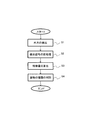
先ず、図5に示すように、ロボット1に外力が作用すると、外力が作用した位置より当該ロボット1の基幹側に配置された第1の検出部110は検出信号を制御部150に出力する(S1)。
次に、制御部150の前処理部151は、第1の検出部110から入力された検出信号をフィルタリングし、平坦化した当該検出信号を特徴量算出部152に出力する(S2)。
First, as shown in FIG. 5, when an external force is applied to the
Next, the
次に、特徴量算出部152は、前処理部151から入力された検出信号に基づいて、外力の力学特性である力成分のワールド座標系での水平成分と鉛直成分を算出する。さらに特徴量算出部152は、外力の力学特性である力成分のワールド座標系での水平成分と鉛直成分の微分成分及び積分成分を特徴量とし、接触種類判別部153に出力する(S3)。
Next, the feature
接触種類判別部153は、特徴量算出部152から入力された、特徴量である外力の力学特性である力成分のワールド座標系での水平成分及び鉛直成分の微分成分及び積分成分と、記憶部160から読み出したサンプル特徴量と、をパターンマッチングし、最も近いサンプル特徴量が属する接触の種類が、実際に人がロボット1へ接触した種類であると、判別する(S4)。
The contact
<第2の実施の形態>
本発明に係る第2の実施の形態の接触種類判別システム及び接触種類判別方法を、以下に説明する。なお、第1の実施の形態の接触種類判別システム及び接触種類判別方法と重複する説明は省略する。
<Second Embodiment>
A contact type discrimination system and a contact type discrimination method according to the second embodiment of the present invention will be described below. In addition, the description which overlaps with the contact type discrimination | determination system and contact type discrimination method of 1st Embodiment is abbreviate | omitted.
本実施の形態の接触種類判別システム及び接触種類判別方法は、第1の検出部110が検出した外力の力学特性である力成分の値をフーリエ変換することで、当該外力の周波数特性を算出し、この外力の周波数特性を特徴量として用いる。すなわち、例えば握手する場合、ハンド部4aを握って引っ張る場合、ハンド部4aを握ってロボット1を誘導する場合、ハンド部4aに物を手渡す場合、アーム部4を叩く場合では、ロボット1に生じる振動(周波数)は異なるはずである。そこで、本実施の形態の特徴量算出部152は、接触することによって作用する外力の周波数特性を算出し、当該外力の周波数特性を特徴量とする。そのため、記憶部160には、予め接触の種類毎に複数回サンプリングを実施し、その際の周波数特性をサンプル特徴量として格納している。
The contact type discrimination system and the contact type discrimination method according to the present embodiment calculate the frequency characteristic of the external force by Fourier transforming the value of the force component that is the dynamic characteristic of the external force detected by the
接触種類判別部153は、記憶部160からサンプル特徴量を読み出して、外力の周波数特性である特徴量と、サンプル特徴量と、をパターンマッチングし、最も近いサンプル特徴量が属する接触の種類が、実際に人がロボット1へ接触した種類であると、判別する。
The contact
これにより、本実施の形態の接触種類判別システム及び接触種類判別方法も、第1の検出部110として、外力の力学特性を示す3軸方向以上の成分を検出可能な力センサを用いることにより、少ないセンサでロボットへの接触の種類を判別可能とした。そのため、ロボットの構成の簡素化に寄与できる。すなわち、配線の本数を減少でき、しかも制御部150の演算量を軽減することができる。
Thereby, the contact type discrimination system and the contact type discrimination method of the present embodiment also use a force sensor capable of detecting components in three or more axial directions indicating the dynamic characteristics of the external force as the
本実施の形態でも、接触種類判別部153はMTシステムを用いて、接触の種類を判別することが好ましい。これにより、少ない計算量で高い精度で接触の種類を判別することができる。勿論、k−nn法を用いても良く、SVMのように学習機能を備えたシステムを用いても良く、要するに一般的なパターン認識の技術を用いることができる。
Also in this embodiment, it is preferable that the contact
本実施の形態でも、特徴量算出部152は第1の検出部110の検出信号に基づいて特徴量を算出するのに加えて、第1の検出部110の検出信号をダウンサンプリングした後に特徴量を算出することが好ましい。接触種類判別部153は、第1の検出部110の検出信号に基づいて算出した特徴量を用いたパターンマッチングに加えて、第1の検出部110の検出信号をダウンサンプリングした後に算出した特徴量と、予め当該ダウンサンプリングした後に算出した特徴量に対応するようにサンプリングされたサンプル特徴量と、をパターンマッチングし、接触の種類を判別する。これにより、接触動作が変化した場合であっても、良好に接触の種類を判別することができる。
Also in the present embodiment, the feature
本実施の形態では、外力の周波数特性を特徴量としたが、外力の周波数特性の微分特性及び積分特性を特徴量として用いても良い。
本実施の形態では、外力の周波数特性に基づく特徴量のみで接触の種類を判別しているが、図6に示すように、外力の力学特性である力成分(及び/又はモーメント)の水平成分(水平軸回りの成分)と鉛直成分(鉛直軸回りの成分)の微分成分及び積分成分を特徴量とする、第1の実施の形態の接触種類判別システム及び接触種類判別方法と組み合わせると、より精度の高い接触の種類の判別を行うことができる。なお、図6は、本実施の形態の接触種類判別システムの処理動作の主要部のみを示している。
In the present embodiment, the frequency characteristic of the external force is used as the feature quantity, but the differential characteristic and the integral characteristic of the frequency characteristic of the external force may be used as the feature quantity.
In this embodiment, the type of contact is determined only by the feature amount based on the frequency characteristic of the external force. However, as shown in FIG. 6, the horizontal component of the force component (and / or moment) that is the dynamic characteristic of the external force is shown. When combined with the contact type discriminating system and the contact type discriminating method of the first embodiment, wherein the differential component and the integral component of the (component around the horizontal axis) and the vertical component (component around the vertical axis) are feature quantities, It is possible to determine the type of contact with high accuracy. FIG. 6 shows only the main part of the processing operation of the contact type determination system of the present embodiment.
<第3の実施の形態>
本発明に係る第3の実施の形態の接触種類判別システム及び接触種類判別方法を、以下に説明する。なお、第1の実施の形態の接触種類判別システム及び接触種類判別方法と重複する説明は省略する。
<Third Embodiment>
A contact type discrimination system and a contact type discrimination method according to the third embodiment of the present invention will be described below. In addition, the description which overlaps with the contact type discrimination | determination system and contact type discrimination method of 1st Embodiment is abbreviate | omitted.
本実施の形態の接触種類判別システム及び接触種類判別方法は、外力を示すベクトルを通る直線とロボット1の表面の交点又は外力が作用する位置(座標)を特徴量として用いる。すなわち、特徴量算出部152は、第1の検出部110が検出した検出結果に基づいて、
外力を示すベクトルを通る直線とロボット1の表面の交点又は外力が作用する座標を算出し、外力を示すベクトルを通る直線とロボット1の表面の交点又は外力が作用する座標を特徴量とする。そのため、記憶部160には、予め接触の種類毎に複数回サンプリングを実施し、その際の外力を示すベクトルを通る直線とロボット1の表面の交点又は外力が作用する座標をサンプル特徴量として格納している。なお、外力を示すベクトルを通る直線とロボット1の表面の交点又は外力が作用する座標の算出方法は、例えば日本ロボット学会誌 Vol22 No5、pp616〜624,2004に開示されている算出方法等を用いることができる。
The contact type discriminating system and the contact type discriminating method according to the present embodiment use, as the feature amount, an intersection between a straight line passing through a vector indicating an external force and the surface of the
A point of intersection between the straight line passing through the vector indicating the external force and the surface of the
接触種類判別部153は、記憶部160からサンプル特徴量を読み出して、特徴量と、サンプル特徴量と、をパターンマッチングし、最も近いサンプル特徴量が属する接触の種類が、実際に人がロボット1へ接触した種類であると、判別する。
The contact
これにより、本実施の形態の接触種類判別システム及び接触種類判別方法も、第1の検出部110として、外力の力学特性を示す3軸方向以上の成分を検出可能な力センサを用いることにより、少ないセンサでロボットへの接触の種類を判別可能とした。そのため、ロボットの構成の簡素化に寄与できる。すなわち、配線の本数を減少でき、しかも制御部150の演算量を軽減することができる。
Thereby, the contact type discrimination system and the contact type discrimination method of the present embodiment also use a force sensor capable of detecting components in three or more axial directions indicating the dynamic characteristics of the external force as the
本実施の形態でも、接触種類判別部153はMTシステムを用いて、接触の種類を判別することが好ましい。これにより、高い精度で接触の種類を判別することができる。勿論、k−nn法を用いても良く、SVMのように学習機能を備えたシステムを用いても良く、要するに一般的なパターン認識の技術を用いることができる。
Also in this embodiment, it is preferable that the contact
本実施の形態でも、特徴量算出部152は第1の検出部110の検出信号に基づいて特徴量を算出するのに加えて、第1の検出部110の検出信号をダウンサンプリングした後に特徴量を算出することが好ましい。接触種類判別部153は、第1の検出部110の検出信号に基づいて算出した特徴量を用いたパターンマッチングに加えて、第1の検出部110の検出信号をダウンサンプリングした後に算出した特徴量と、予め当該ダウンサンプリングした後に算出した特徴量に対応するようにサンプリングされたサンプル特徴量と、をパターンマッチングし、接触の種類を判別する。これにより、接触動作が変化した場合であっても、良好に接触の種類を判別することができる。
Also in the present embodiment, the feature
本実施の形態では、外力を示すベクトルを通る直線とロボット1の表面の交点又は外力が作用する座標のみを特徴量として接触の種類を判別しているが、外力の力学特性である力成分(及び/又はモーメント)の水平成分(水平軸回りの成分)と鉛直成分(鉛直軸回りの成分)の微分成分及び積分成分を特徴量とする、第1の実施の形態の接触種類判別システム及び接触種類判別方法と組み合わせると、より精度の高い接触の種類の判別を行うことができる。
In the present embodiment, the type of contact is determined using only the intersection of the straight line passing through the vector indicating the external force and the surface of the
<第4の実施の形態>
本発明に係る第4の実施の形態の接触種類判別システム及び接触種類判別方法を、以下に説明する。なお、第1の実施の形態の接触種類判別システム及び接触種類判別方法と重複する説明は省略する。
<Fourth embodiment>
A contact type discrimination system and a contact type discrimination method according to the fourth embodiment of the present invention will be described below. In addition, the description which overlaps with the contact type discrimination | determination system and contact type discrimination method of 1st Embodiment is abbreviate | omitted.
本実施の形態の接触種類判別システム101及び接触種類判別方法は、図7に示すように、第1の実施の形態の接触種類判別システム及び接触種類判別方法で用いた特徴量に加えて、ロボット1の所定部位における予め設定されている目標位置が連続する軌道からの変位の微分成分及び積分成分を特徴量として用いる。なお、図7は、本実施の形態の接触種類判別システムの処理動作の主要部のみを示している。
As shown in FIG. 7, the contact
すなわち、接触種類判別システム101は、角度を検出可能な第2の検出部120を備える。第2の検出部120としては、ポテンショメータやエンコーダ等の角度センサを用いることができる。第2の検出部120は、ロボット1の各関節部に搭載されている。第2の検出部120は、検出信号を制御部150に出力する。
That is, the contact
制御部150は、ロボット1の所定部位として手先位置が予め設定されている軌道から、どれ位の変位が生じているかを算出する。すなわち、制御部150の特徴量算出部152は、第2の検出部120の検出結果やアーム部4の各要素の長さ等に基づいてロボット1の手先位置の座標(ワールド座標系又はベース座標系のどちらでも良い。)を算出する。ここで、ロボット1のハンド部4aの手先位置は、予め動作に応じて目標位置(目標座標)が設定されており、この目標座標が連続する軌道上を移動するようにインピーダンス制御やコンプライアンス制御される。そこで、特徴量算出部152は、現在の手先位置の座標と、予め設定されている軌道と、の変位を算出する。さらに特徴量算出部152は、算出した当該変位の微分成分及び積分成分を特徴量とする。そのため、記憶部160には、予め接触の種類毎に複数回サンプリングを実施し、その際に取得した、ロボット1の手先位置の座標と、予め設定されている軌道と、の変位の微分成分及び積分成分をサンプル特徴量として格納している。但し、本実施の形態では、当該変位の微分成分及び積分成分を特徴量としたが、当該変位を特徴量として用いても良い。
The
接触種類判別部153は、記憶部160からサンプル特徴量を読み出して、特徴量と、サンプル特徴量と、をパターンマッチングし、最も近いサンプル特徴量が属する接触の種類が、実際に人がロボット1へ接触した種類であると、判別する。
The contact
このように接触種類判別システム101及び接触種類判別方法は、第1の実施の形態の接触種類判別システム及び接触種類判別方法で用いた特徴量に加え、さらにロボット1の所定部位における予め設定されている目標位置の軌道からの変位の微分成分及び積分成分をサンプル特徴量とするので、接触の種類の判別の精度をより向上させることができる。
As described above, the contact
本実施の形態でも、接触種類判別部153はMTシステムを用いて、接触の種類を判別することが好ましい。これにより、高い精度で接触の種類を判別することができる。勿論、k−nn法を用いても良く、SVMのように学習機能を備えたシステムを用いても良く、要するに一般的なパターン認識の技術を用いることができる。
Also in this embodiment, it is preferable that the contact
本実施の形態でも、特徴量算出部152は第2の検出部120の検出信号に基づいて特徴量を算出するのに加えて、第2の検出部120の検出信号をダウンサンプリングした後に特徴量を算出することが好ましい。接触種類判別部153は、第2の検出部120の検出信号に基づいて算出した特徴量を用いたパターンマッチングに加えて、第2の検出部120の検出信号をダウンサンプリングした後に算出した特徴量と、予め当該ダウンサンプリングした後に算出した特徴量に対応するようにサンプリングされたサンプル特徴量と、をパターンマッチングし、接触の種類を判別する。これにより、接触動作が変化した場合であっても、良好に接触の種類を判別することができる。
Also in the present embodiment, the feature
<第5の実施の形態>
本発明に係る第5の実施の形態の接触種類判別システム及び接触種類判別方法を、以下に説明する。なお、第1の実施の形態の接触種類判別システム及び接触種類判別方法と重複する説明は省略する。
<Fifth embodiment>
A contact type discrimination system and a contact type discrimination method according to the fifth embodiment of the present invention will be described below. In addition, the description which overlaps with the contact type discrimination | determination system and contact type discrimination method of 1st Embodiment is abbreviate | omitted.
本実施の形態の接触種類判別システム102及び接触種類判別方法は、図8に示すように、第1の実施の形態の接触種類判別システム及び接触種類判別方法で用いた特徴量に加えて、人の顔や手先位置等を特徴量として用いる。なお、図8は、本実施の形態の接触種類判別システムの処理動作の主要部のみを示している。
As shown in FIG. 8, the contact
すなわち、接触種類判別システム102は、ロボット1の周辺情報を検出する第3の検出部130を備える。第3の検出部130としては、撮像素子としてCCD(charge coupled device)やCMOS(complementary metal oxide semiconductor)等を備えるビジョンセンサ(例えばステレオカメラ)等の撮像センサやレーザレンジファインダ等の測距センサを用いることができる。第3の検出部130は、人の顔や手を検出するのに適したロボット1の所定の位置に配置されており、例えば上下左右に検出領域を振ることができる構成とされている。第3の検出部130は、検出信号を制御部150に出力する。
That is, the contact
制御部150は、ロボット1に接触する人の顔の位置、顔の向き、手の位置、手の向きを算出する。すなわち、制御部150の特徴量算出部152は、入力された検出信号に基づいて顔中心を検出し、当該顔中心のベース座標系での座標の微分成分及び積分成分を特徴量とする。このとき、特徴量算出部152は、第3の検出部130から顔までの距離の微分成分及び積分成分を特徴量としても良い。
The
また、特徴量算出部152は、入力された検出信号に基づいて、ベース座標系における、顔の正面方向の単位ベクトルと、人の顔中心からロボット1の所定の部位(例えば手先位置)への単位ベクトルとの内積を算出し、当該内積の微分成分及び積分成分を特徴量とする。
In addition, the feature
また、特徴量算出部152は、入力された検出信号に基づいて、人の手先位置のベース座標系での座標を検出し、当該手先位置の座標の微分成分及び積分成分を特徴量とする。
Further, the feature
また、特徴量算出部152は、入力された検出信号に基づいて、ベース座標系における、人の掌の法線単位ベクトルと、人の掌中心からロボット1の所定の部位(例えば手先位置)への単位ベクトルとの内積を算出し、当該内積の微分成分及び積分成分を特徴量とする。
Further, the feature
そのため、記憶部160には、予め接触の種類毎に複数回サンプリングを実施し、その際に取得した、人の顔の位置又は顔の向き又は手の位置又は手の向きの微分成分及び積分成分をサンプル特徴量として格納している。
Therefore, the
接触種類判別部153は、記憶部160からサンプル特徴量を読み出して、特徴量と、サンプル特徴量と、をパターンマッチングし、最も近いサンプル特徴量が属する接触の種類が、実際に人がロボット1へ接触した種類であると、判別する。
The contact
このように接触種類判別システム102及び接触種類判別方法は、第1の実施の形態の接触種類判別システム及び接触種類判別方法で用いた特徴量に加え、さらにロボット1に接触する人の顔の位置又は顔の向き又は手の位置又は手の向きの微分成分及び積分成分を特徴量とするので、接触の種類の判別の精度をより向上させることができる。
As described above, the contact
本実施の形態でも、接触種類判別部153はMTシステムを用いて、接触の種類を判別することが好ましい。これにより、高い精度で接触の種類を判別することができる。勿論、k−nn法を用いても良く、SVMのように学習機能を備えたシステムを用いても良く、要するに一般的なパターン認識の技術を用いることができる。
Also in this embodiment, it is preferable that the contact
本実施の形態でも、特徴量算出部152は第3の検出部130の検出信号に基づいて特徴量を算出するのに加えて、第3の検出部130の検出信号をダウンサンプリングした後に特徴量を算出することが好ましい。接触種類判別部153は、第3の検出部130の検出信号に基づいて算出した特徴量を用いたパターンマッチングに加えて、第3の検出部130の検出信号をダウンサンプリングした後に算出した特徴量と、予め当該ダウンサンプリングした後に算出した特徴量に対応するようにサンプリングされたサンプル特徴量と、をパターンマッチングし、接触の種類を判別する。これにより、接触動作が変化した場合であっても、良好に接触の種類を判別することができる。
Also in the present embodiment, the feature
本実施の形態では、人の顔の位置、顔の向き、手の位置、手の向きの全ての微分成分及び積分成分を特徴量として用いているが、これらの少なくとも1つの微分成分及び積分成分を特徴量として用いれば良い。 In the present embodiment, all the differential components and integral components of the human face position, face orientation, hand position, and hand orientation are used as feature quantities. However, at least one of these differential components and integral components is used. May be used as a feature amount.
本実施の形態では、人の顔の位置、顔の向き、手の位置、手の向きの微分成分及び積分成分を特徴量として用いているが、人の顔の位置、顔の向き、手の位置、手の向きを特徴量として用いても良い。 In the present embodiment, the position of the person's face, the orientation of the face, the position of the hand, the differential component and the integral component of the orientation of the hand are used as the feature quantity, but the position of the person's face, the orientation of the face, the hand You may use a position and the direction of a hand as a feature-value.
<第6の実施の形態>
本発明に係る第6の実施の形態の接触種類判別システム及び接触種類判別方法を、以下に説明する。なお、第1の実施の形態の接触種類判別システム及び接触種類判別方法と重複する説明は省略する。
<Sixth Embodiment>
A contact type discrimination system and a contact type discrimination method according to the sixth embodiment of the present invention will be described below. In addition, the description which overlaps with the contact type discrimination | determination system and contact type discrimination method of 1st Embodiment is abbreviate | omitted.
本実施の形態の接触種類判別システム103及び接触種類判別方法は、図9に示すように、第1の実施の形態の接触種類判別システム及び接触種類判別方法で用いた特徴量に加えて、人が発する音声の大きさ又は人が発する音声に含まれる単語の使用頻度又は会話の内容等を特徴量として用いる。なお、図9は、本実施の形態の接触種類判別システムの処理動作の主要部のみを示している。
As shown in FIG. 9, the contact
すなわち、接触種類判別システム103は、人の音声を検出する第4の検出部140を備える。第4の検出部140としては、一般的な集音マイクを用いることができる。第4の検出部140は、ロボット1に搭載されている。第4の検出部140は検出信号を制御部150に出力する。
That is, the contact
制御部150は、人が発している声の大きさ、声の周波数帯や単語の使用頻度、会話の内容等を検出する。すなわち、制御部150の特徴量算出部152は、入力された検出信号に基づいて、声の大きさ、声の周波数帯及び単語の使用頻度、会話の内容等を検出し、当該声の大きさ、声の周波数帯及び単語の使用頻度、会話の内容度を特徴量とする。例えば、人がロボット1に握手をする場合は「こんにちは」と発言したり、人がロボット1に物を渡す場合は「どうぞ」と発言したり、人がロボット1を誘導する場合は「こちらへ」と発言したりするので、これらの単語の使用頻度を特徴量とする。また、人が感情的になっている場合は、声が大きくなったり、声の周波数帯が高くなったりするので、これらを特徴量とする。そのため、記憶部160には、予め接触の種類毎に複数回サンプリングを実施し、その際に取得した、声の大きさ、声の周波数帯及び単語の使用頻度、会話の内容をサンプル特徴量として格納している。なお、どの様な単語を特徴量とするかは、任意で設定することができ、しかも声の大きさ、声の周波数帯及び単語の使用頻度、会話の内容等と接触の種類との対応関係も、任意で設定することができる。
The
接触種類判別部153は、記憶部160からサンプル特徴量を読み出して、特徴量と、サンプル特徴量と、をパターンマッチングし、最も近いサンプル特徴量が属する接触の種類が、実際に人がロボット1へ接触した種類であると、判別する。
The contact
このように接触種類判別システム103及び接触種類判別方法も、第1の実施の形態の接触種類判別システム及び接触種類判別方法で用いた特徴量に加え、さらに声の大きさ、声の周波数帯及び単語の使用頻度、会話の内容等を特徴量とするので、接触の種類の判別の精度をより向上させることができる。
As described above, the contact
本実施の形態でも、接触種類判別部153はMTシステムを用いて、接触の種類を判別することが好ましい。これにより、高い精度で接触の種類を判別することができる。勿論、k−nn法を用いても良く、SVMのように学習機能を備えたシステムを用いても良く、要するに一般的なパターン認識の技術を用いることができる。
Also in this embodiment, it is preferable that the contact
以上、本発明に係る接触種類判別システム及び接触種類判別方法、並びにロボットの実施の形態を説明したが、上記の構成に限らず、本発明の技術的思想を逸脱しない範囲で、変更することが可能である。 The contact type discrimination system, the contact type discrimination method, and the embodiment of the robot according to the present invention have been described above. However, the present invention is not limited to the above configuration, and can be changed without departing from the technical idea of the present invention. Is possible.
上記実施の形態では、第1の検出部110として6軸力センサを用いたが、少なくとも外力の力学特性を示す3軸方向以上の成分を検出可能な力センサを用いれば、略同様に実施できる。
In the above embodiment, a six-axis force sensor is used as the
上記実施の形態では、記憶部160に格納されている全てのテンプレートについてパターンマッチングを実行しているが、予めパターンマッチングするテンプレートを絞り込むことが好ましい。例えば、第1の実施の形態を例に説明すると、図2に示すように、制御部150はマッチング選択部154を備える。マッチング選択部154には、第1の検出部110から検出信号が入力される。マッチング選択部154には、予め閾値が設定されており、当該閾値と、入力される力成分やモーメントと、が比較される。つまり、握手程度であれば、比較的力成分やモーメントは小さいので、入力される力成分やモーメントが閾値より大きいと、マッチング選択部154は接触の種類として握手以外であることが判断できる。そのため、マッチング選択部154は、入力される力成分やモーメントが閾値より大きいと、接触の種類として握手に属するテンプレートとのパターンマッチングを省略するように、接触種類判別部153に指示する。このようにパターンマッチングの回数を減らすことで、制御部150の負担を軽減することができる。この場合、第2及び第3の実施の形態でも、同様にマッチング選択部154を用いてパターンマッチングの回数を減らすことが可能である。
In the above embodiment, pattern matching is executed for all templates stored in the
第4の実施の形態では、マッチング選択部154が、例えば第2の検出部120の検出結果やアーム部4の各要素の長さ等に基づいてロボット1の手先位置の座標を算出する。そして、マッチング選択部154は、算出した手先位置の座標と予め設定されている軌道との変位と、閾値とを比較する。つまり、ロボット1が引っ張られると、当該変位は比較的大きくなるので、当該変位が閾値より小さいと、マッチング選択部154は接触の種類としてロボット1を引っ張る動作以外であることが判断できる。そのため、マッチング選択部154は、当該変位が閾値より小さいと、接触の種類としてロボット1を引っ張る動作に属するテンプレートとのパターンマッチングを省略するように、接触種類判別部153に指示する。
In the fourth embodiment, the
第5の実施の形態では、マッチング選択部154が、例えば第3の検出部130から入力される画像情報から顔が正面を向いた画像を検出できるか否かを判定する。つまり、握手であれば顔が正面を向いた画像を検出できる可能性が高いので、マッチング選択部154は入力される画像情報から顔が正面を向いた画像を検出できないと、接触の種類として握手に属するテンプレートとのパターンマッチングを省略するように、接触種類判別部153に指示する。
In the fifth embodiment, the
第6の実施の形態では、マッチング選択部154が、例えば第4の検出部140から入力される音声から声の大きさを算出し、算出した声の大きさと、閾値と、を比較する。つまり、握手であれば人が発する声の大きさは比較的小さい可能性が高いので、マッチング選択部154は算出した声の大きさが閾値より大きいと、接触の種類として握手に属するテンプレートとのパターンマッチングを省略するように、接触種類判別部153に指示する。
In the sixth embodiment, the
上記実施の形態では、第1の実施の形態を中心に他の実施の形態と組み合わせているが、組み合わせは適宜、設定される。 In the said embodiment, although it combines with other embodiment centering on 1st Embodiment, the combination is set suitably.
1 ロボット、2 頭部、3 胴体部
4 アーム部、4a ハンド部、4b 下腕部、4c 上腕部
5 脚部、5a 足部、5b 下腿部、5c 上腿部
100 接触種類判別システム
101 接触種類判別システム
102 接触種類判別システム
103 接触種類判別システム
110 第1の検出部
120 第2の検出部
130 第3の検出部
140 第4の検出部
150 制御部、151 前処理部、152 特徴量算出部、153 接触種類判別部、154 マッチング選択部
160 記憶部
170 駆動部
DESCRIPTION OF
Claims (17)
前記ロボットに搭載された、前記外力の力学特性を示す3軸方向以上の成分を検出する第1の検出部と、
前記第1の検出部の検出結果に基づいて特徴量を算出する特徴量算出部と、
前記特徴量と、予め前記接触の種類に対応するように取得したサンプル特徴量と、をパターンマッチングし、前記ロボットへの接触の種類を判別する接触種類判別部と、
を備えることを特徴とするロボットの接触種類判別システム。 A contact type discrimination system for discriminating the type of contact when an external force acts by contact with a robot,
A first detector that is mounted on the robot and detects a component in three or more axial directions indicating the dynamic characteristics of the external force;
A feature amount calculation unit that calculates a feature amount based on a detection result of the first detection unit;
A contact type determination unit that pattern-matches the feature amount and a sample feature amount acquired in advance to correspond to the type of contact, and determines the type of contact with the robot;
A robot contact type discrimination system comprising:
前記接触種類判別部は、予め前記接触の種類及び前記特徴量に対応するように取得した、外力の力学特性である力成分の水平成分と鉛直成分とをサンプル特徴量に用いて、前記特徴量と、前記サンプル特徴量と、をパターンマッチングし、前記ロボットへの接触の種類を判別することを特徴とする請求項1に記載のロボットの接触種類判別システム。 The feature amount calculation unit calculates a horizontal component and a vertical component of a force component that are mechanical characteristics of the external force detected by the first detection unit, and uses the calculated horizontal component and the vertical component as a feature amount.
The contact type determination unit uses the horizontal component and the vertical component of the force component, which are mechanical characteristics of external force, acquired in advance so as to correspond to the contact type and the feature amount, as the sample feature amount, and the feature amount. 2. The robot contact type discrimination system according to claim 1, wherein the type of contact with the robot is discriminated by pattern matching the sample feature quantity.
前記接触種類判別部は、予め前記接触の種類及び前記特徴量に対応するように取得した、外力の力学特性であるモーメントの水平軸回りの成分と鉛直軸回りの成分とをサンプル特徴量に用いて、前記特徴量と、前記サンプル特徴量と、をパターンマッチングし、前記ロボットへの接触の種類を判別することを特徴とする請求項1乃至3のいずれか1項に記載のロボットの接触種類判別システム。 The feature amount calculation unit calculates a component around a horizontal axis and a component around a vertical axis of a moment, which is a mechanical characteristic of the external force detected by the first detection unit, and calculates the component around the horizontal axis and the calculated component around the horizontal axis The component around the vertical axis is used as a feature value.
The contact type discriminating unit uses a component around a horizontal axis and a component around a vertical axis, which are mechanical characteristics of external force, acquired in advance so as to correspond to the type of contact and the feature amount, as sample feature amounts. The robot contact type according to any one of claims 1 to 3, wherein the feature amount and the sample feature amount are pattern-matched to determine the type of contact with the robot. Discriminating system.
前記接触種類判別部は、予め前記接触の種類及び前記特徴量に対応するように取得した、外力の周波数特性をサンプル特徴量に用いて、前記特徴量と、前記サンプル特徴量と、をパターンマッチングし、前記ロボットへの接触の種類を判別することを特徴とする請求項1乃至5のいずれか1項に記載のロボットの接触種類判別システム。 The feature amount calculation unit uses the frequency characteristic of the external force calculated by Fourier transforming the value of the force component, which is the dynamic characteristic of the external force detected by the first detection unit, as a feature amount,
The contact type determination unit uses the frequency characteristics of external force acquired in advance to correspond to the contact type and the feature amount as a sample feature amount, and performs pattern matching between the feature amount and the sample feature amount. The contact type determination system for a robot according to claim 1, wherein the type of contact with the robot is determined.
前記接触種類判別部は、予め前記接触の種類及び前記特徴量に対応するように取得した、外力を示すベクトルを通る直線と前記ロボットの表面の交点又は外力が作用する位置をサンプル特徴量に用いて、前記特徴量と、前記サンプル特徴量と、をパターンマッチングし、前記ロボットへの接触の種類を判別することを特徴とする請求項1乃至7のいずれか1項に記載のロボットの接触種類判別システム。 The feature amount calculation unit calculates an intersection of a straight line passing through the vector indicating the external force detected by the first detection unit and the surface of the robot or a position where the external force acts, and calculates the calculated intersection or the position. As feature quantity,
The contact type discriminating unit uses, as a sample feature amount, an intersection of a straight line passing through a vector indicating an external force and a position where the external force acts, which is acquired in advance so as to correspond to the contact type and the feature amount. The contact type of the robot according to claim 1, wherein the feature type and the sample feature quantity are pattern-matched to determine the type of contact with the robot. Discriminating system.
前記接触種類判別部は、予め前記接触の種類及び前記特徴量に対応するように取得した、前記ロボットの所定部位における予め設定されている目標位置の軌道からの変位をサンプル特徴量に用いて、前記特徴量と、前記サンプル特徴量と、をパターンマッチングし、前記ロボットへの接触の種類を判別することを特徴とする請求項2乃至8のいずれか1項に記載のロボットの接触種類判別システム。 The feature amount calculation unit calculates a displacement from a trajectory of a preset target position in a predetermined part of the robot, and uses the calculated displacement as a feature amount.
The contact type determination unit uses a displacement from a trajectory of a preset target position in a predetermined part of the robot, which is acquired in advance so as to correspond to the type of contact and the feature amount, as a sample feature amount, 9. The robot contact type discrimination system according to claim 2, wherein the feature quantity and the sample feature quantity are subjected to pattern matching to discriminate a type of contact with the robot. .
前記特徴量算出部は、前記第2の検出部の検出結果に基づいて、前記ロボットに接触する人の顔の位置又は顔の向き又は手の位置又は手の向きの少なくとも一つを算出し、前記顔の位置又は前記顔の向き又は前記手の位置又は前記手の向きの少なくとも一つを特徴量とし、
前記接触種類判別部は、予め前記接触の種類及び前記特徴量に対応するように取得した、人の顔の位置又は顔の向き又は手の位置又は手の向きの少なくとも一つをサンプル特徴量に用いて、前記特徴量と、前記サンプル特徴量と、をパターンマッチングし、前記ロボットへの接触の種類を判別することを特徴とする請求項2乃至9のいずれか1項に記載のロボットの接触種類判別システム。 A second detector for detecting peripheral information of the robot;
The feature amount calculation unit calculates at least one of a face position or a face direction, a hand position or a hand direction of a person in contact with the robot based on the detection result of the second detection unit, The feature amount is at least one of the position of the face or the orientation of the face, the position of the hand or the orientation of the hand,
The contact type determination unit uses, as a sample feature amount, at least one of a human face position, a face orientation, a hand position, or a hand orientation acquired in advance so as to correspond to the contact type and the feature amount. The robot contact according to any one of claims 2 to 9, wherein the feature amount and the sample feature amount are used for pattern matching to determine a type of contact with the robot. Type discrimination system.
前記特徴量算出部は、前記第3の検出部の検出結果に基づいて音声認識を行い、音声の大きさ又は単語の使用頻度又は会話の内容を特徴量とし、
前記接触種類判別部は、予め前記接触の種類及び前記特徴量に対応するように取得した、音声の大きさ又は単語の使用頻度又は会話の内容をサンプル特徴量に用いて、前記特徴量と、前記サンプル特徴量と、をパターンマッチングし、前記ロボットへの接触の種類を判別することを特徴とする請求項2乃至11のいずれか1項に記載のロボットの接触種類判別システム。 A third detector for detecting human voice;
The feature amount calculation unit performs voice recognition based on the detection result of the third detection unit, and uses the volume of the voice or the frequency of use of words or the content of conversation as a feature amount,
The contact type discriminating unit, which is acquired in advance so as to correspond to the type of contact and the feature amount, uses the volume of speech or the frequency of use of words or the content of conversation as a sample feature amount, and the feature amount, The robot contact type determination system according to any one of claims 2 to 11, wherein the sample feature amount is pattern-matched to determine the type of contact with the robot.
前記外力が作用する位置より前記ロボットの基幹側に配置された、前記外力の力学特性を示す3軸方向以上の成分を検出する第1の検出部の検出結果に基づいて特徴量を算出する工程と、
前記特徴量と、予め前記接触の種類に対応するように取得したサンプル特徴量と、をパターンマッチングし、前記ロボットへの接触の種類を判別する工程と、
を備えることを特徴とするロボットの接触種類判別方法。 A contact type determination method for determining the type of contact when an external force is applied by contact with a robot,
A step of calculating a feature amount based on a detection result of a first detection unit that detects a component in three or more axial directions indicating a dynamic characteristic of the external force, which is disposed on the fundamental side of the robot from a position where the external force acts. When,
Pattern matching the feature amount and the sample feature amount acquired in advance to correspond to the type of contact, and determining the type of contact with the robot;
A method for discriminating the contact type of a robot.
Priority Applications (1)
| Application Number | Priority Date | Filing Date | Title |
|---|---|---|---|
| JP2010117132A JP2011240468A (en) | 2010-05-21 | 2010-05-21 | Contact type discriminating system for robot |
Applications Claiming Priority (1)
| Application Number | Priority Date | Filing Date | Title |
|---|---|---|---|
| JP2010117132A JP2011240468A (en) | 2010-05-21 | 2010-05-21 | Contact type discriminating system for robot |
Publications (1)
| Publication Number | Publication Date |
|---|---|
| JP2011240468A true JP2011240468A (en) | 2011-12-01 |
Family
ID=45407657
Family Applications (1)
| Application Number | Title | Priority Date | Filing Date |
|---|---|---|---|
| JP2010117132A Pending JP2011240468A (en) | 2010-05-21 | 2010-05-21 | Contact type discriminating system for robot |
Country Status (1)
| Country | Link |
|---|---|
| JP (1) | JP2011240468A (en) |
Cited By (7)
| Publication number | Priority date | Publication date | Assignee | Title |
|---|---|---|---|---|
| WO2016035759A1 (en) * | 2014-09-03 | 2016-03-10 | インターマン株式会社 | Humanoid robot |
| JP2017075955A (en) * | 2016-11-28 | 2017-04-20 | セイコーエプソン株式会社 | Force detection device and robot |
| JP2018515351A (en) * | 2015-05-20 | 2018-06-14 | カヴォス・バガテル・フェアヴァルツングス・ゲーエムベーハー ウント ツェーオー カーゲーCavos Bagatelle Verwaltungs Gmbh & Co.Kg | Open-loop and closed-loop control of robot actuators considering environmental contact |
| JP2018144149A (en) * | 2017-03-03 | 2018-09-20 | 本田技研工業株式会社 | Abnormal contact detection method and contact region identification method for mobile robot |
| JP2018181338A (en) * | 2017-04-18 | 2018-11-15 | フォルヴェルク・ウント・ツェーオー、インターホールディング・ゲーエムベーハーVorwerk & Compagnie Interholding Gesellshaft Mit Beschrankter Haftung | Method for operating a self-travelling vehicle |
| JP2019177478A (en) * | 2019-07-26 | 2019-10-17 | ファナック株式会社 | Human cooperative type robot |
| JP2021142608A (en) * | 2020-03-12 | 2021-09-24 | キヤノン株式会社 | Robot device, control device, information processing device, control method, article manufacturing method, program, and recording medium |
-
2010
- 2010-05-21 JP JP2010117132A patent/JP2011240468A/en active Pending
Cited By (11)
| Publication number | Priority date | Publication date | Assignee | Title |
|---|---|---|---|---|
| WO2016035759A1 (en) * | 2014-09-03 | 2016-03-10 | インターマン株式会社 | Humanoid robot |
| JPWO2016035759A1 (en) * | 2014-09-03 | 2017-07-13 | インターマン株式会社 | Humanoid robot |
| US10195748B2 (en) | 2014-09-03 | 2019-02-05 | Interman Corporation | Humanoid robot |
| JP2018515351A (en) * | 2015-05-20 | 2018-06-14 | カヴォス・バガテル・フェアヴァルツングス・ゲーエムベーハー ウント ツェーオー カーゲーCavos Bagatelle Verwaltungs Gmbh & Co.Kg | Open-loop and closed-loop control of robot actuators considering environmental contact |
| JP2017075955A (en) * | 2016-11-28 | 2017-04-20 | セイコーエプソン株式会社 | Force detection device and robot |
| JP2018144149A (en) * | 2017-03-03 | 2018-09-20 | 本田技研工業株式会社 | Abnormal contact detection method and contact region identification method for mobile robot |
| JP2018181338A (en) * | 2017-04-18 | 2018-11-15 | フォルヴェルク・ウント・ツェーオー、インターホールディング・ゲーエムベーハーVorwerk & Compagnie Interholding Gesellshaft Mit Beschrankter Haftung | Method for operating a self-travelling vehicle |
| JP2019177478A (en) * | 2019-07-26 | 2019-10-17 | ファナック株式会社 | Human cooperative type robot |
| JP7015279B2 (en) | 2019-07-26 | 2022-02-02 | ファナック株式会社 | Human cooperative robot |
| JP2021142608A (en) * | 2020-03-12 | 2021-09-24 | キヤノン株式会社 | Robot device, control device, information processing device, control method, article manufacturing method, program, and recording medium |
| JP7483420B2 (en) | 2020-03-12 | 2024-05-15 | キヤノン株式会社 | ROBOT SYSTEM, CONTROL DEVICE, INFORMATION PROCESSING DEVICE, CONTROL METHOD, INFORMATION PROCESSING METHOD, PROGRAM, AND RECORDING MEDIUM |
Similar Documents
| Publication | Publication Date | Title |
|---|---|---|
| US10828782B2 (en) | Robot system, robot, and robot control apparatus | |
| US11090814B2 (en) | Robot control method | |
| US8965581B2 (en) | Robot apparatus, assembling method, and recording medium | |
| JP6431017B2 (en) | Human cooperative robot system with improved external force detection accuracy by machine learning | |
| JP6816364B2 (en) | Controls, robots, and robot systems | |
| CN113696186A (en) | Mechanical arm autonomous moving and grabbing method based on visual-touch fusion under complex illumination condition | |
| JP4679677B2 (en) | Action recognition device | |
| CN107263435A (en) | People collaborates the robot system of type | |
| CN111867791B (en) | Control device, control method, and program | |
| JP2008307207A (en) | Motion measurement device | |
| CN102246125A (en) | Mobile devices with motion gesture recognition | |
| JPWO2007088735A1 (en) | Robot system | |
| JP2010064155A (en) | Holding device | |
| JP2009066683A (en) | Robot hand, control method, and program | |
| US20180215044A1 (en) | Image processing device, robot control device, and robot | |
| CN116494239B (en) | Soft robotic arm control methods, devices, soft robotic arms and electronic equipment | |
| CN116507460A (en) | Information processing device, information processing method, and program | |
| JP2015074061A (en) | Robot control device, robot system, robot, robot control method and robot control program | |
| JP2014188640A (en) | Robot and robot control method | |
| CN111730608B (en) | Control device, robot, control method and storage medium | |
| JP5218209B2 (en) | Method for detecting relative movement between multiple objects | |
| JP2013043250A (en) | Device and method for controlling robot arm, robot, control program, and integrated electronic circuit | |
| JP4137601B2 (en) | Robot hand control method, robot hand | |
| US20210362322A1 (en) | Method for controlling a manipulation robot and device implementing such a method | |
| CN115990882B (en) | Safety control method and system for robot |